by Michael Forbes-Smith
The Fascinating Story Of The Only English Pope
Presentation by Adrian Waddingham CBE for the Friends Of Arundel Cathedral on 14th March 2026
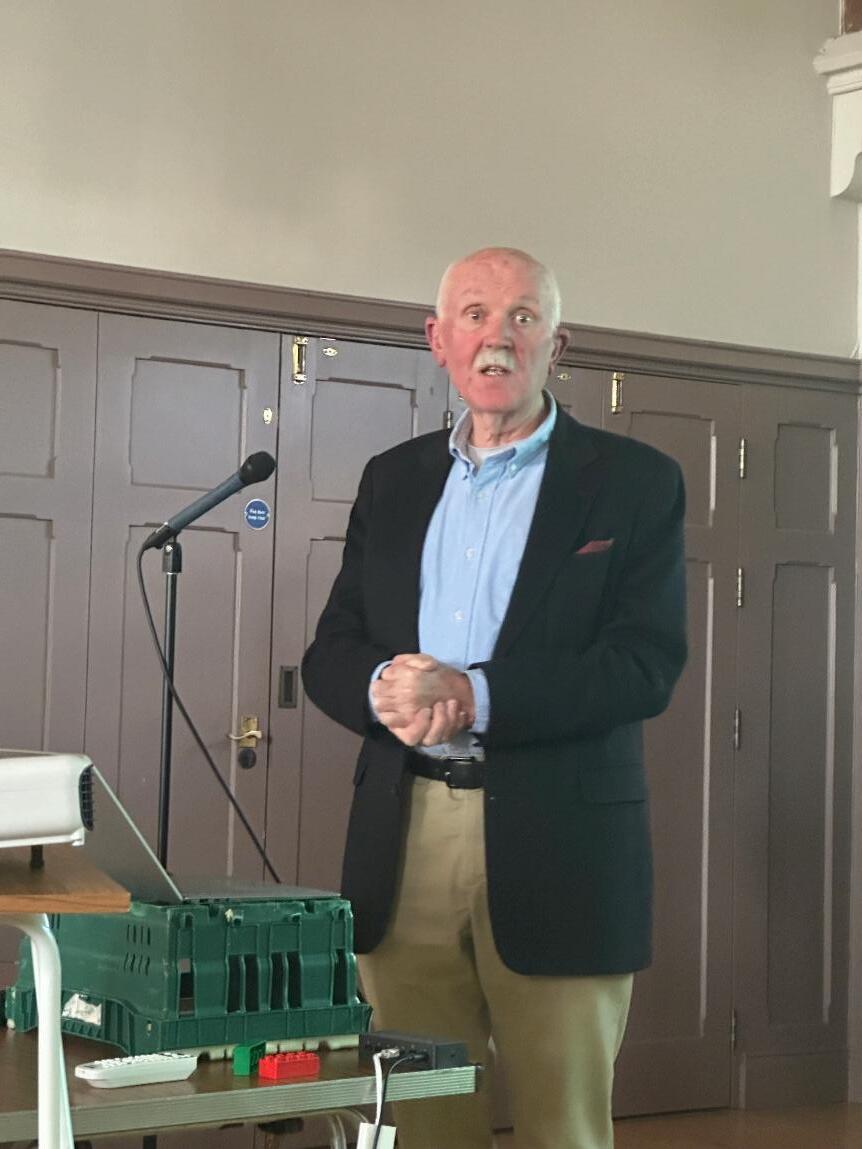
It was a great pleasure to come to the Cathedral Centre to hear Adrian Waddingham recount the story of Nicholas Breakspear, “the only English Pope”. He gave an excellent presentation: Waddingham is a convincing and persuasive speaker who held the complete attention of a full house with ease.
Adrian presenting
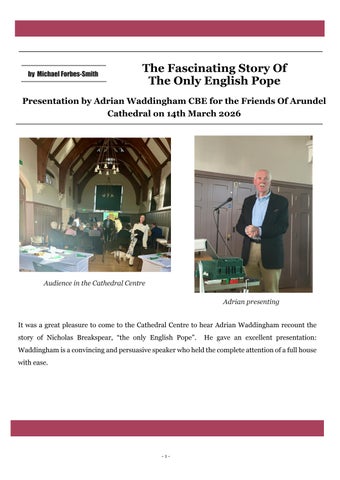
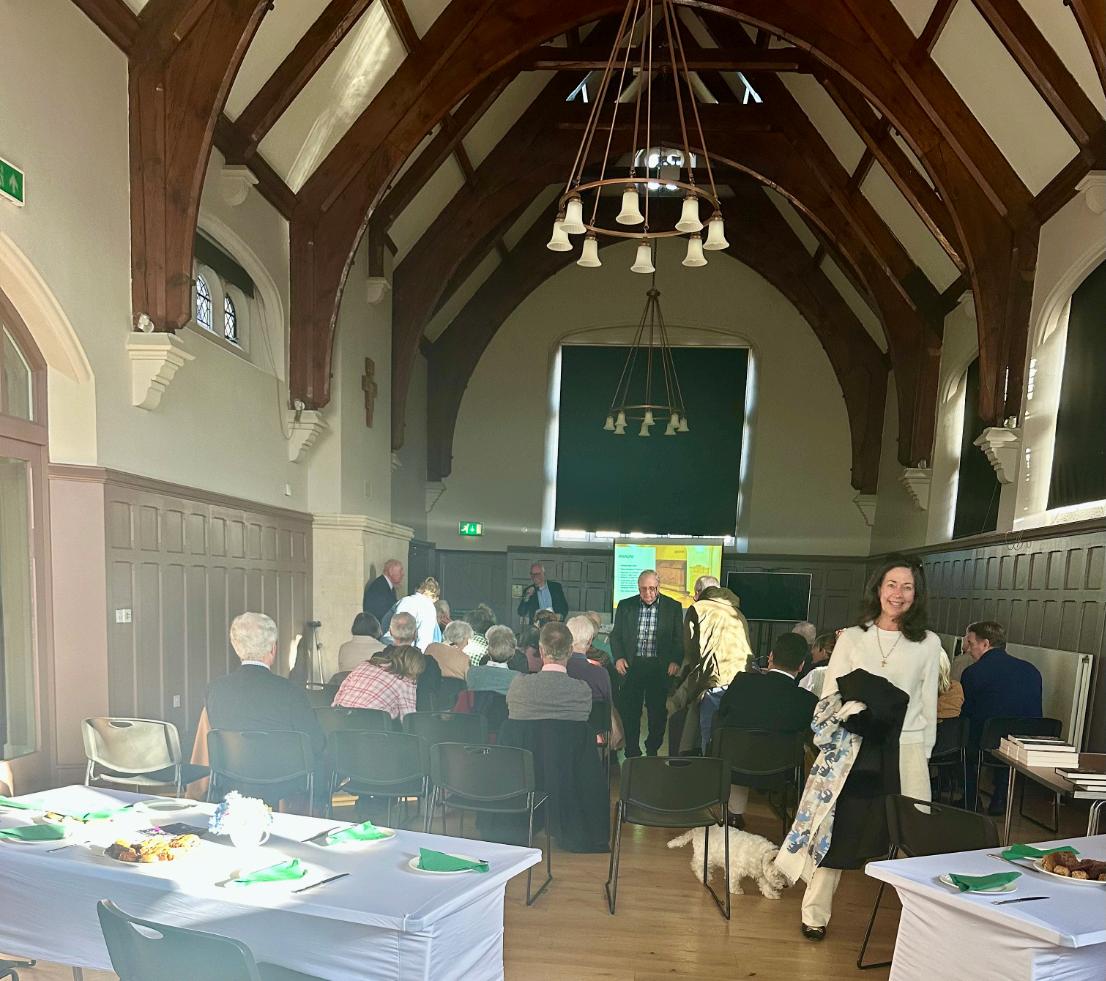
Audience in the Cathedral Centre
Waddingham made the most of the sketchy details of Nicholas’ early life. I think he rather downgraded Nicholas’ ancestry – I suspect his father would certainly have provided for his offspring when entering the Church: he settled his other son in St Albans in due course. Be that as it may, there is no doubt, as Waddingham avers, that the refusal of the Abbot of St Albans to accept the teenage Nicholas into the monastery was the making of him. Again, it is a little difficult to visualise Nicholas as completely penniless as he pursued his way first to Surrey and then Paris – the idea of Nicholas and Thomas Beckett studying together at Merton Priory is intriguing: if he did it certainly didn’t affect his later dealings with Henry II as Pope. But these early years show a self-confidence and determination without which a youth of slender means would never have advanced – even with the introductions and the monastic hospitality he enjoyed along the way.
So, via the schools at Arles, Nicholas then found his way to St Ruf’s in Avignon, a community of Canon Regulars, living under the Augustinian Rule. Waddingham claims that this means Pope Leo is the second Augustinian pope. But Nicholas was a Canon Regular, not an Augustinian friar, like Pope Leo. In fact five Popes have been Canons Regular and Gregory VIII was a Norbertine, all following St Augustine’s rule: it depends on whether you categorise them as true Augustinians or not. The Vatican line would seem to be not!
Waddingham painted a fascinating and engrossing picture of Nicholas’ progress. Quite why the Canons at St Ruf’s did not foresee the disciplinarian in the precociously talented Nicholas is unclear – was he perhaps trying to bring St Ruf’s into closer conformity with the regular Augustinian communities he knew? But their “murmuring” (in the monastic vocabulary) to the gentle but strict Pope Eugenius then in exile in Paris was the beginning of Nicholas’ long and devoted service to him, first in Spain and then Scandinavia. Waddingham’s talk was enlivened by many wonderful asides – that there should be a “Breakspear Square” in Trondheim but no street name in his honour in England was particularly piquant, I thought. And I entirely support his parting shot that Arundel Cathedral ought to have a statue of him!
And so we come to his election as Pope Hadrianus IV (all my sources name him Hadrian rather than Adrian – the English language equivalent). In his book, Waddingham rightly lays stress on the fact that he was elected unanimously (in a conclave of 16) which, though shortly returned from the far North, demonstrates just how eminent he had already become.
My own view is that the emphasis on Adrian’s Englishness is a post-Reformation phenomenon: till then England was as central as any other European power to the Faith. Saxon kings were “protectors” of the Basilica of St Paul’s Without the Walls from 597AD: King Ine of Wessex has a good claim to have founded the first Roman hospice for foreign pilgrims around 727AD. King Henry VIII
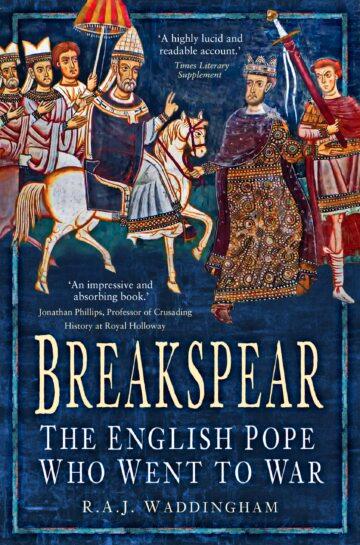
Adrian Waddingham's book on Breakspear
received the title “Defender of the Faith” from the Pope before he reneged. So the fact that Hadrian/Adrian was English would have been irrelevant - he was the most able and obvious candidate. And since the English hierarchy was reestablished there have only been 12 English cardinals including now our own Archbishop Richard Moth (though Cardinal Pole was certainly “papabile” in the 16th century).
Back to the presentation. As Waddingham described so eloquently, Hadrian was no slouch in establishing his authority: as John Julius Norwich says in “The Popes”, “energy and force were desperately needed”. First, he put Rome under interdict, closing down all its churches within weeks of his coronation until the Romans got rid of the firebrand Arnold of Brescia who was holding the City hostage. It’s difficult to imagine just how draconian that was in its day: but it worked. And then there was his first, and successful, confrontation with the Emperor Frederick Barbarossa.
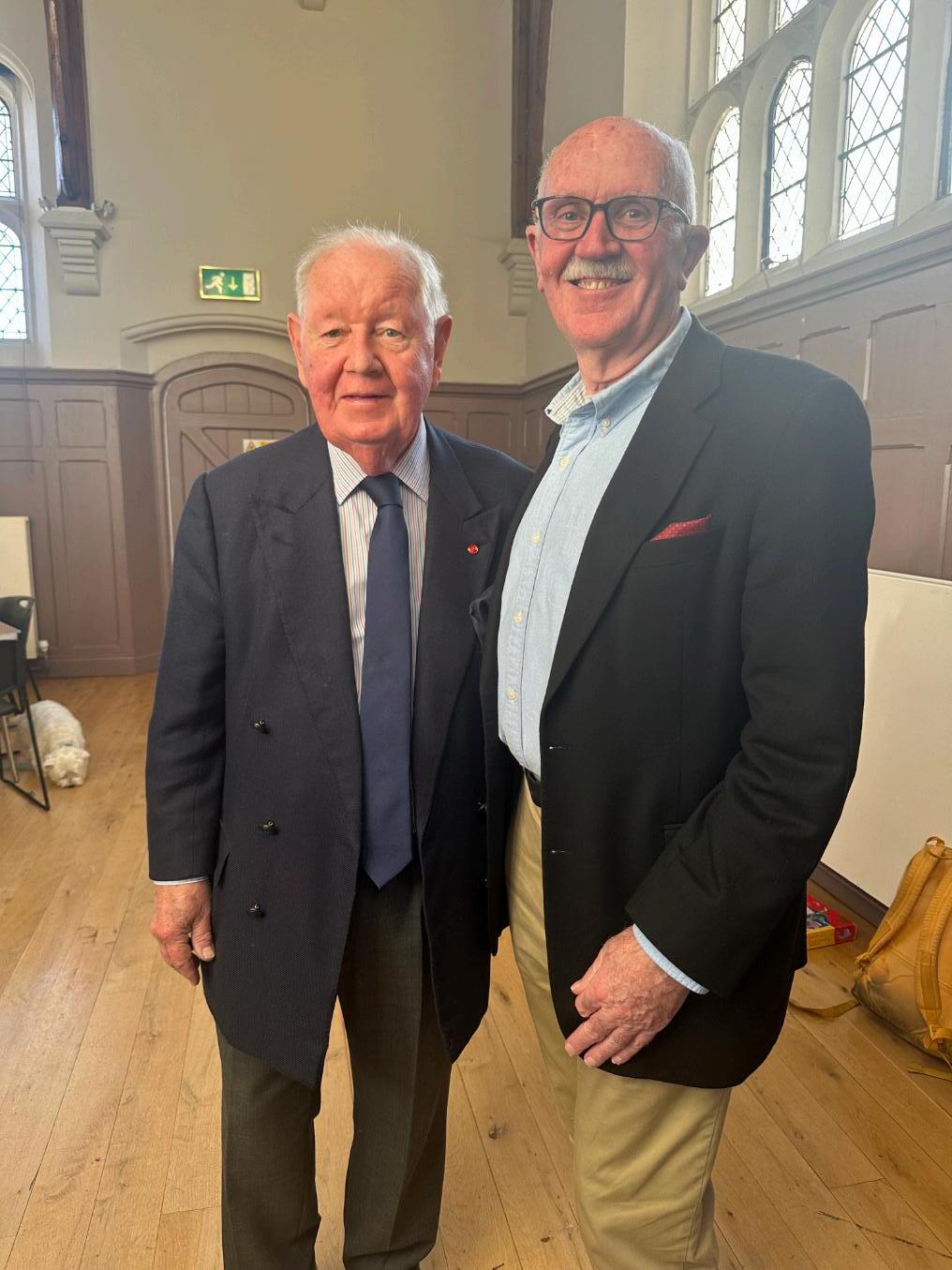
Patrick Burgess with Adrian Waddingham
Waddingham’s book is a treasure of information both central and tangential to Adrian’s immediate progress. But, no criticism implied, it is focussed on the person rather than the times. And the times certainly were tumultuous throughout Europe – quite as much as the 19th-21st Centuries. “[t]he seeds of the sixteenthcentury Reformation and Renaissance were sown in a more far-reaching renaissance and reform …. when expanding agricultural wealth was spawning vast social and political changes” as Timothy McDermott puts it. The
“Medieval Agricultural Revolution” was a technological step-change, with the mouldboard plough (first recorded in England in Liminge Monastery in Kent in the 7th Century), open field crop rotation, the move to cereals and the establishment of villages (both easier to tax by emerging aristocracies). It all came a cropper in the 13th Century but was in mid-swing during Adrian’s pontificate together with - probably what stimulated - the “Gregorian” church reforms on simony, celibacy, proper canonical elections, the authority of the pope and so forth that characterised the times. The “murmuring” of St Ruf’s comes back to mind while Arnold of Brescia was certainly one of the wilder religious “reformers” of a tempestuous age. Add to that
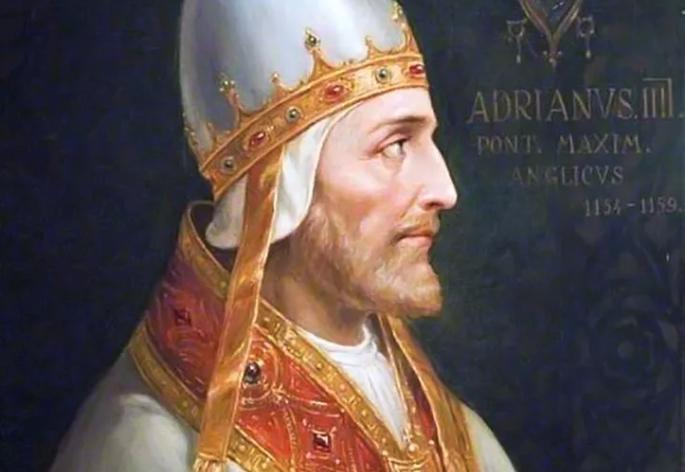
Pope Adrian IV
Barbarossa and William of Sicily, with Hadrian having to play off one against the other. At his sadly premature end he was allied to the Sicilian-based incipient Lombard League. What his next move would have been we will never know.
Waddingham is not quite right over the papal succession. Hadrian had chosen his acolytes well – his Chancellor, Roland was elected as Alexander III by all but the three pro-imperialist cardinals among the 30-odd cardinal electors. How Victor IV managed for a few years to claim the papacy is a mystery, but Alexander proved his mettle in the end and went on to become one of the greatest of medieval popes, demonstrating Hadrian’s earlier perspicacity.
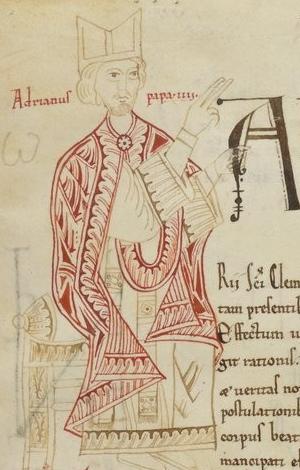
Pope Adrian IV, servus servorum dei, as depicted on a Benedictine chater, c.11501200 AD
All in all, a riveting afternoon which, as you can see, sent me off on my own frolics into the life and times of Pope Hadrianus IV.