by Barbara Isbister
Carlo Acutis - The First Millennial Saint
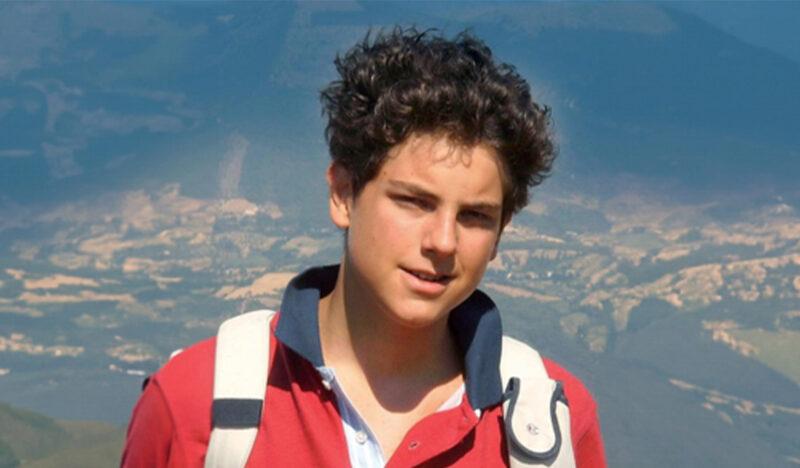
Carlo Acutis was born on 3rd May, 1991, making him a ‘millennial.’ The term is generally attributed to those born between 1981 and 1996. What is far more significant is that he is expected to be the first millennial saint, having been the first millennial to be beatified by the Catholic Church on 10th October, 2020 by Pope Francis and was due to be canonised on 27th April 2025.
History will be made in St. Peter’s Square as the Catholic Church canonises a 15-year-old Italian boy who used his short life to serve God and others in extraordinary ways. His elevation to sainthood will mark an important milestone for the Catholic Church and for young people seeking models of
holiness in today’s world. As the Church prepares to officially recognize Carlo as a saint, his story resonates deeply, not only because of his remarkable spiritual maturity, but also because of how he embraced the internet as a tool for evangelization.
Born in London in 1991 to Italian parents, Antonia Salzano and Andrea Acutis, Carlo was brought up in Milan. He exhibited an unusual devotion to his faith from early childhood, despite the fact that his parents were not particularly devout. Even as a young boy, he showed a deep love for the Eucharist, requesting to receive Holy Communion earlier than usual. After his first Holy Communion, aged seven, he told his mother:
‘To always be united to Jesus: This is my life plan.’
He called the Eucharist: ‘My highway to heaven.’
His devotion grew with him. He made every effort to attend Mass daily, taking his parents with him and inspiring them to return to practising the Catholic faith, prayed the Rosary faithfully, and spent hours in Eucharistic adoration. His devotion to the Eucharist would lead to inspiring a deep conversion for his mother. In addition, his Hindu au pair, Rajesh Mohur converted and was baptised. Carlo taught him to pray the rosary. Rajesh was most impressed by Carlo’s devotion and love for the poor. Despite being born into a fairly wealthy family, he lived a life of simplicity, regularly giving food and sleeping bags to the homeless, defending bullied classmates, and offering kindness where it was most needed.
What made Carlo especially unique was his intuitive understanding of the internet’s power, and its potential for good. He loved animals, liked video games, Spiderman and Pokémon, but limited his play to less than two hours per week. A self-taught computer programmer, he developed websites and digital projects aimed at spreading the Catholic faith. Most notably, with help from his family, he created a comprehensive online catalogue of Eucharistic miracles from around the world, aiming to revive belief in the Real Presence of Christ in the Eucharist. His project, which he began at the age of 11, was released in 2005 during the Year of the Eucharist proclaimed by Pope John Paul II. It has since been translated into multiple languages and exhibited globally, impacting millions. It was this harmony between modern technology and timeless faith that led many to nickname him ‘God’s influencer.’ Carlo believed that the scientific evidence from Eucharistic miracles would help people to understand that Jesus is
Carlo Acutis - credit Crux/Wikimedia Commons
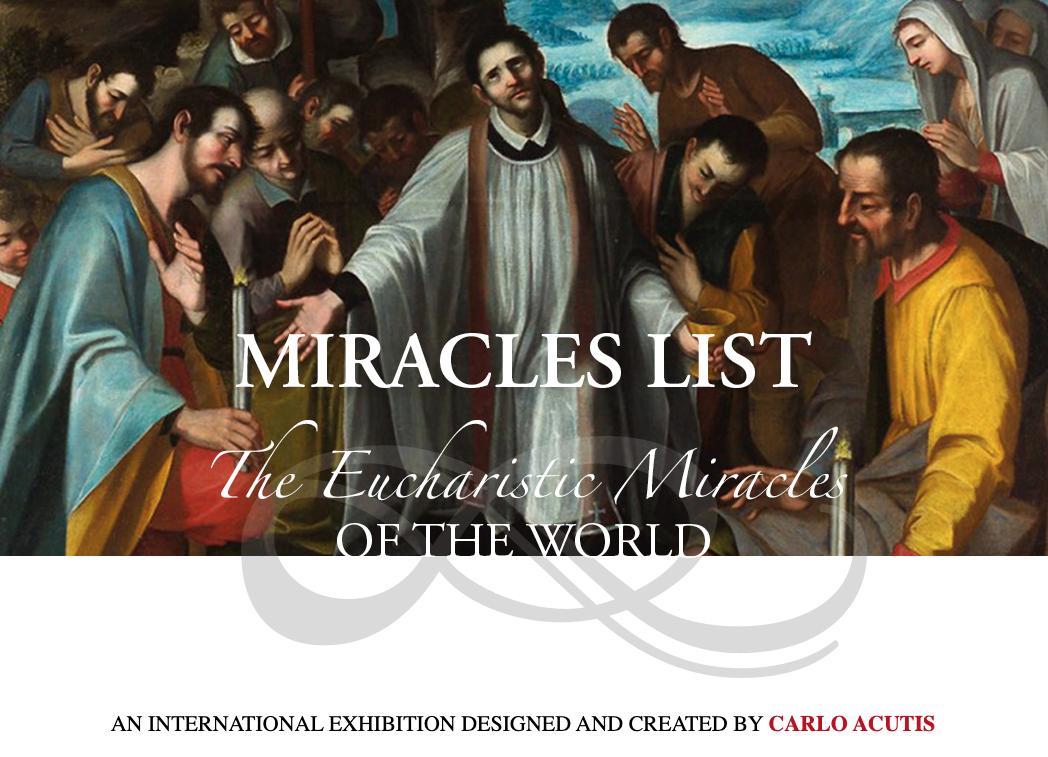
Detail from the Catalogue of Eucharistic Miracles website which Carlo created: www.miracolieucaristici.org
really present in the Eucharist and would result in them returning to Mass. Carlo’s life, however, was short. In 2006, at the age of 15, he was diagnosed with an aggressive form of leukaemia. Before he died he said to his mother:
‘I offer all my suffering to the Lord for the Pope (Benedict XVI) and for the Church in order not to go to purgatory but to go straight to heaven.’
He displayed a level of acceptance and peace that astonished those around him. Just days before his death, he told his mother:
‘I’m happy to die because I’ve lived my life without wasting even a minute of it on things that don’t please God.’
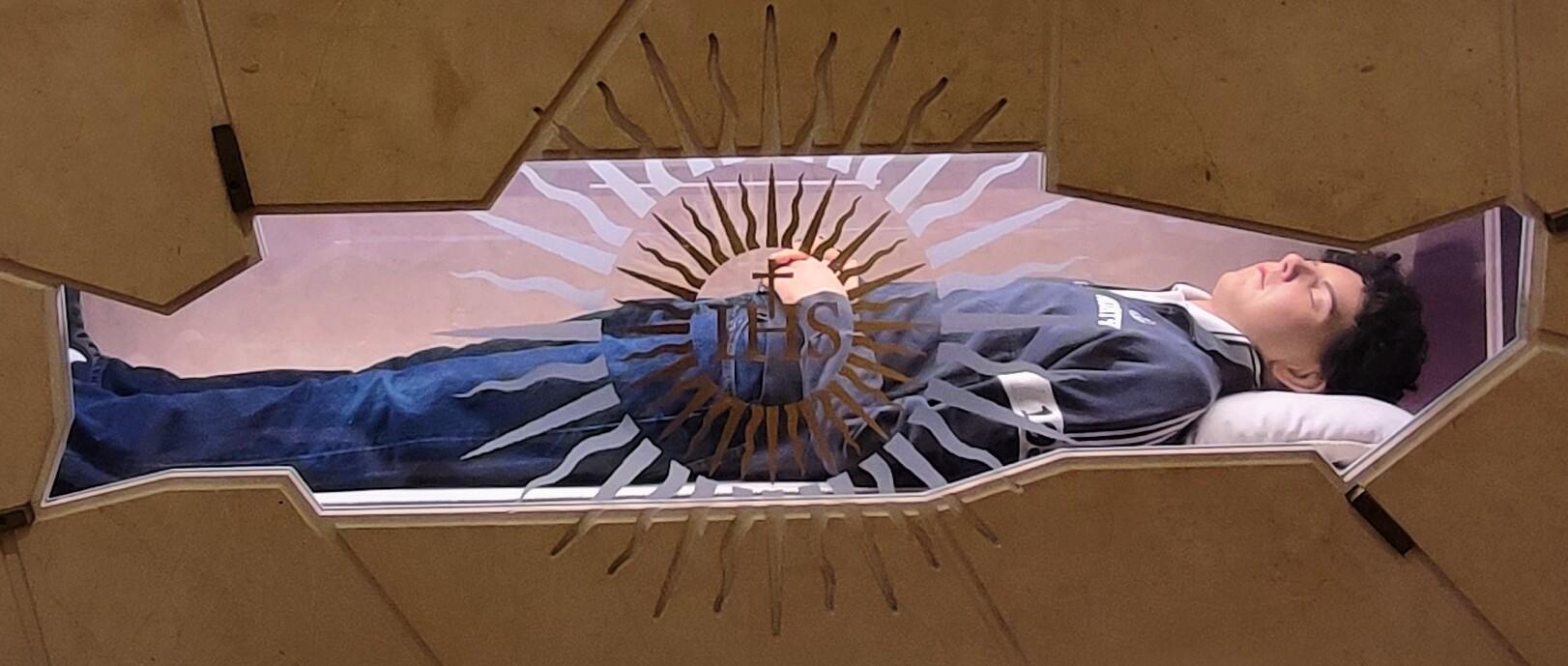
He died on October 12, 2006, and was laid to rest in Assisi, according to his wish, as he had a strong devotion to St. Francis. His body is displayed in a glass tomb wearing jeans and
Nike trainers. It was thought that his body was incorrupt. However, the Bishop of Assisi later confirmed that it is not incorrupt.
In 2013, the Church officially opened the cause for his canonisation. He was declared Venerable in 2018, a recognition of his virtue. But to be declared a saint, the Church requires two confirmed miracles attributed to the candidate’s intercession: signs of divine confirmation that the individual is indeed in heaven and able to intercede for those on earth. In Carlo’s case, two miracles have now been formally recognized by the Vatican.
The first occurred in Brazil in 2013 and led to his beatification in 2020. A three-year-old boy named Mattheus Vianna, born with a congenital defect that caused a serious and lifethreatening pancreatic condition, was completely and inexplicably healed after prayers were made for Carlo’s intercession. The
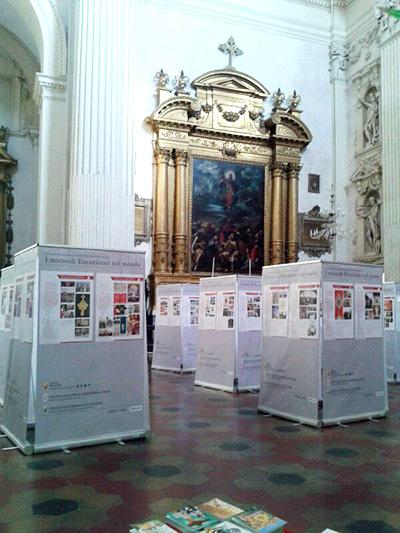
Exhibition Of Eucharistic Miracles: Credit Carloacutis.com
healing stunned doctors and was deemed medically inexplicable by the Vatican’s rigorous investigation. This miracle marked Carlo’s transition from Venerable to Blessed.
The second miracle took place in 2022. It was officially recognised by Pope Francis and ultimately paved the way for his
canonisation. Valeria Valverde, a 21-year-old university student from Costa Rica studying in Florence, suffered a traumatic brain injury in a bicycle accident. Her mother, upon hearing the news, flew to Assisi and prayed at Carlo’s tomb. Shortly after, Valeria began to show signs of dramatic improvement. Within days, she regained consciousness, then mobility and speech; an outcome that had seemed medically impossible. This second miracle met all the Church’s criteria, allowing the canonisation to be scheduled for April 2025.
The canonisation ceremony was planned to take place in the heart of Rome during the Jubilee
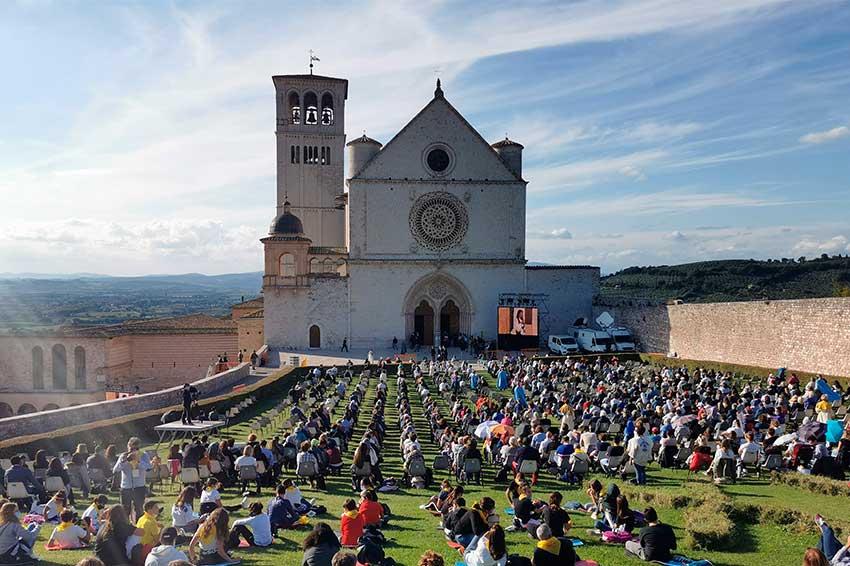
Beatification Mass of Carlo Acutis in Assisi, Italy, Oct. 10, 2020. Mass was inside the church but the congregation were outside because of Covid restrictions: Credit Catholic Weekly
Year celebration, specifically aligned with the Jubilee of Adolescents on 27th April 2025; an event Pope Francis instituted to highlight the vitality and importance of youth in the Church. The canonisation was to be celebrated by Pope Francis and more than eighty thousand young pilgrims from around the world were expected to attend. Following the death of Pope Francis on 21st April, 2025, resulting in sede vacante, the canonisation was postponed. The Church’s Jubilee of Youth in Rome is scheduled for 28th July to 3rd August, when the canonisation of another young person, Blessed Pier Giorgio Frassati is due to take place. Both events will not only celebrate their sanctity, but also affirm the Church’s love for and embrace of modern youth culture.
Carlo Acutis’s canonisation carries a weight that extends beyond his personal holiness. As the first millennial to be
canonised, he becomes a symbol for a new generation of saints: people shaped by the digital world but not defined by it. His story proves that it is not only possible to live a holy life in the 21st century, but also to do so while engaging fully with the tools and culture of the age. In a world where social media often serves as a platform for self-promotion, Carlo used it to glorify God. In a time when many struggle with purpose, he found his in Christ and shared it widely.
His canonisation is a reminder of the importance of
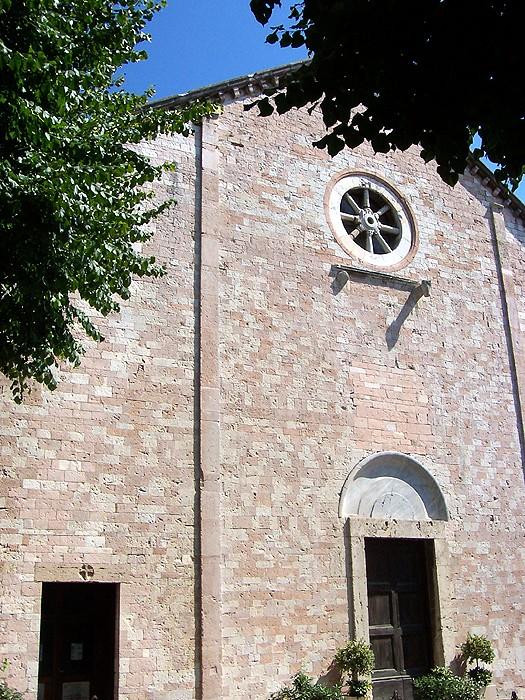
Frontage of Santa Maria Maggiore Church in Assisi. By Geobia : Wikimedia Commons
digital evangelization. Carlo’s online exhibition of Eucharistic miracles has had a far-reaching impact, prompting renewed devotion among Catholics and inviting the curious to explore the faith. His legacy has inspired dioceses, schools, and parishes to take digital catechesis seriously, and his life is often used as a model in youth ministry programs. He is increasingly viewed as a patron of the internet and computer programmers.
Even in death, Carlo continues to evangelize. His tomb in Assisi has become a popular pilgrimage destination, particularly for young people who see in him not only as a saint, but as
message: that sanctity is not out of reach. That it belongs to every generation, even one raised on smartphones and social media. Carlo’s life reminds us that sainthood is not about perfection, but about direction—and he knew exactly where he was headed.
Update after this article was written:
The Vatican has announced that Pope Leo XIV will canonise Blessed Carlo Acutis and Blessed Pier Giorgio Frassati together on 7th September 2025.
a peer; someone who understood their world and used it to grow closer to God. His body, now displayed in a glass tomb, draws thousands each year. His beatification Mass in 2020 attracted global attention and was watched by millions online, a fitting tribute to a boy who once said, ‘The Eucharist is my highway to heaven.’
In canonising Carlo Acutis, the Church is not just elevating one young man. It is canonising a
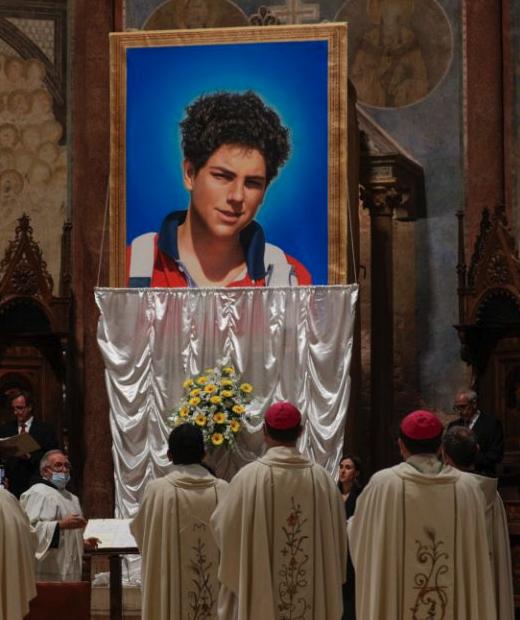
Carlo Acutis Beatification: Credit carloacutis.com
Carlos in his tomb in Santa Maria Maggiore Church in Assisi: By Dobroš : Wikipedia