






The Manufacturing Issue




Danish biosciences company Novonesis investing heavily in











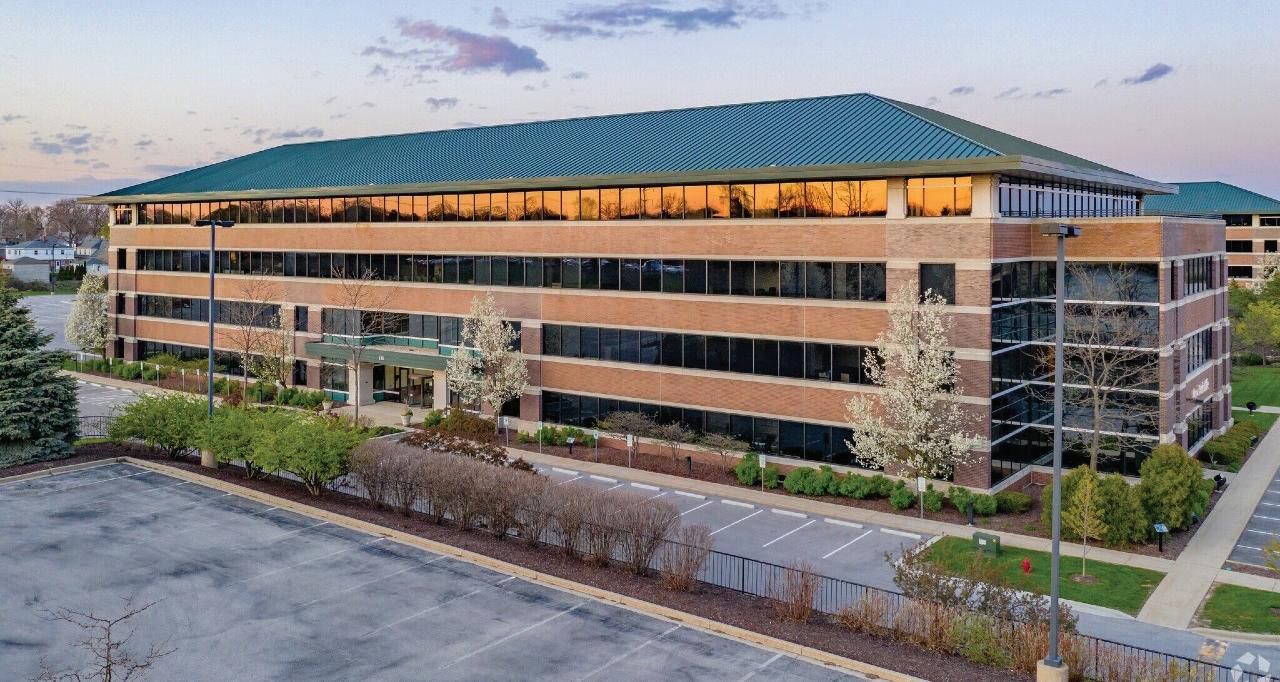
The City of Milwaukee taking control of former Northridge Mall property and demolishing the existing buildings creates an opportunity for a new development to bring needed investment on the far northwest side of the city. Teams of developers will share their ideas for transforming the site before the audience has a chance to pick their favorite.
Confirmed Speakers:
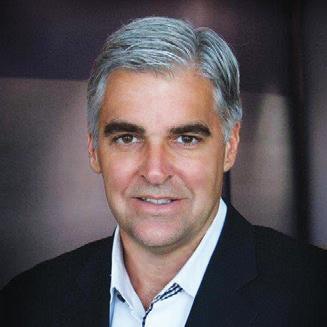
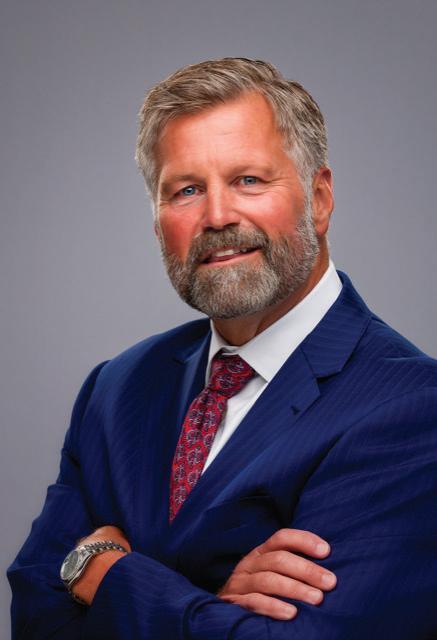
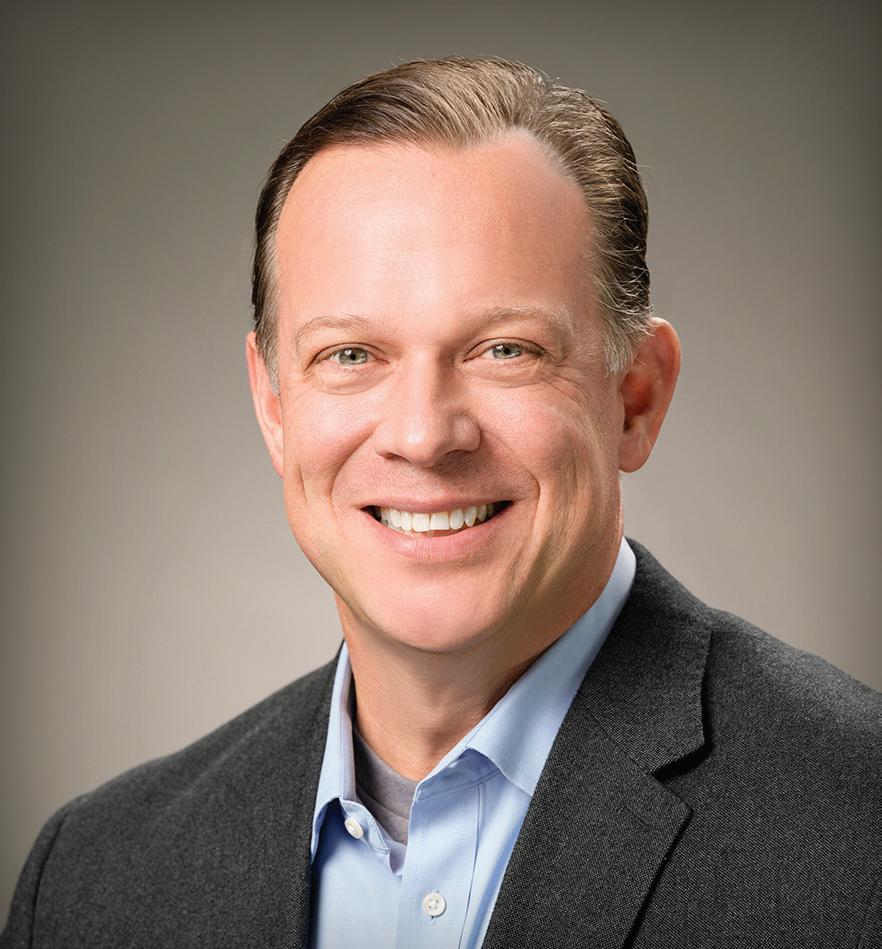
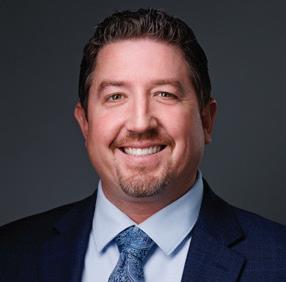
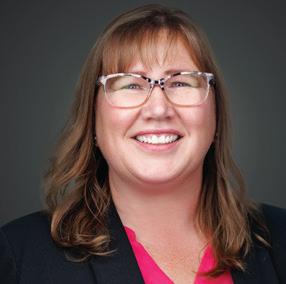
Scott Lurie, Founder, F Street (1)
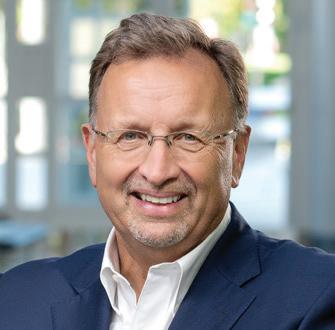
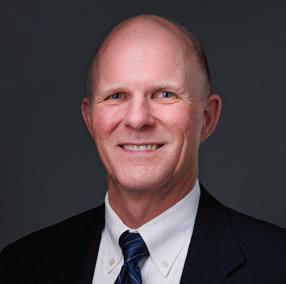
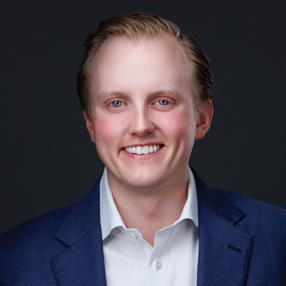
Bob Monnat, Senior Partner, Mandel Group (2)
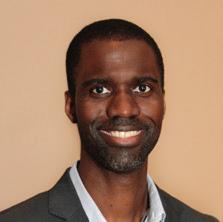
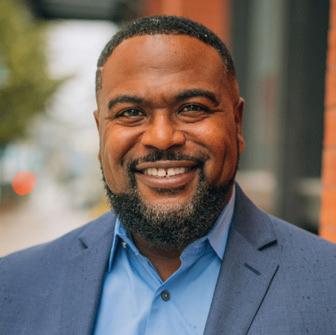
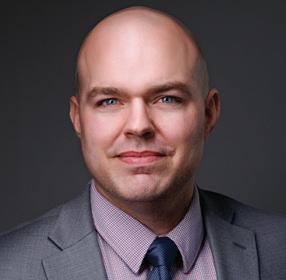
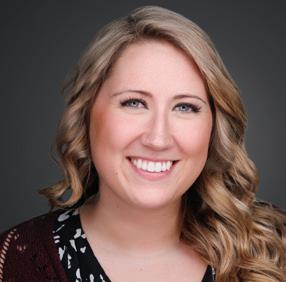
• Team Member: Michael Adetoro, Managing Partner, FIT Investment Group, LLC (3)
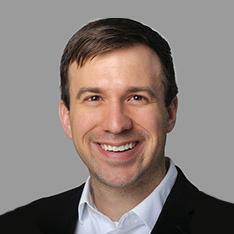
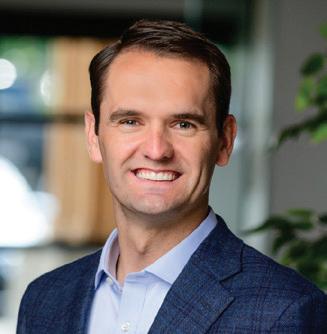
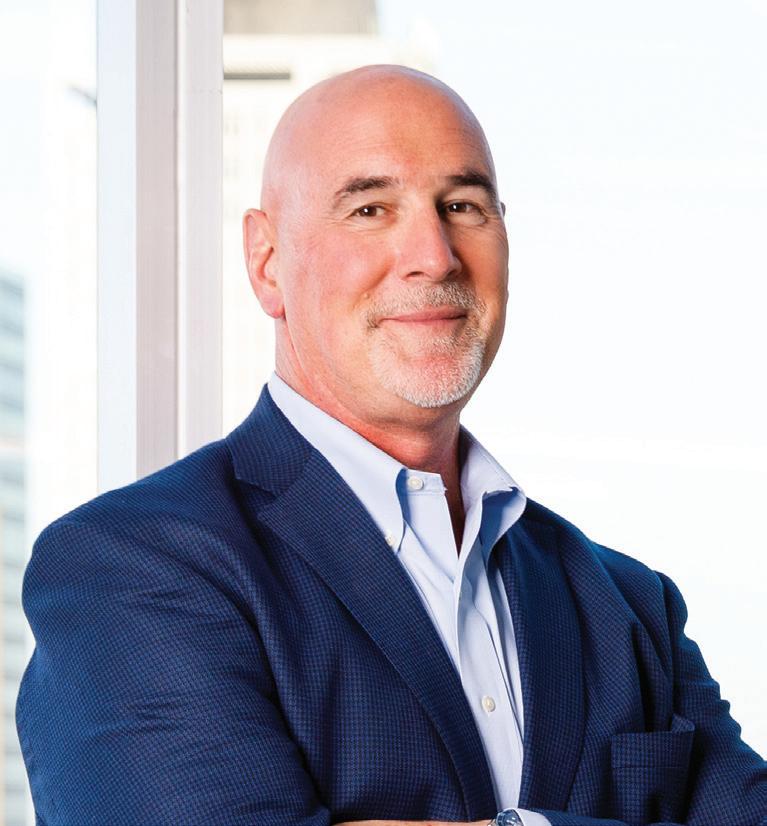
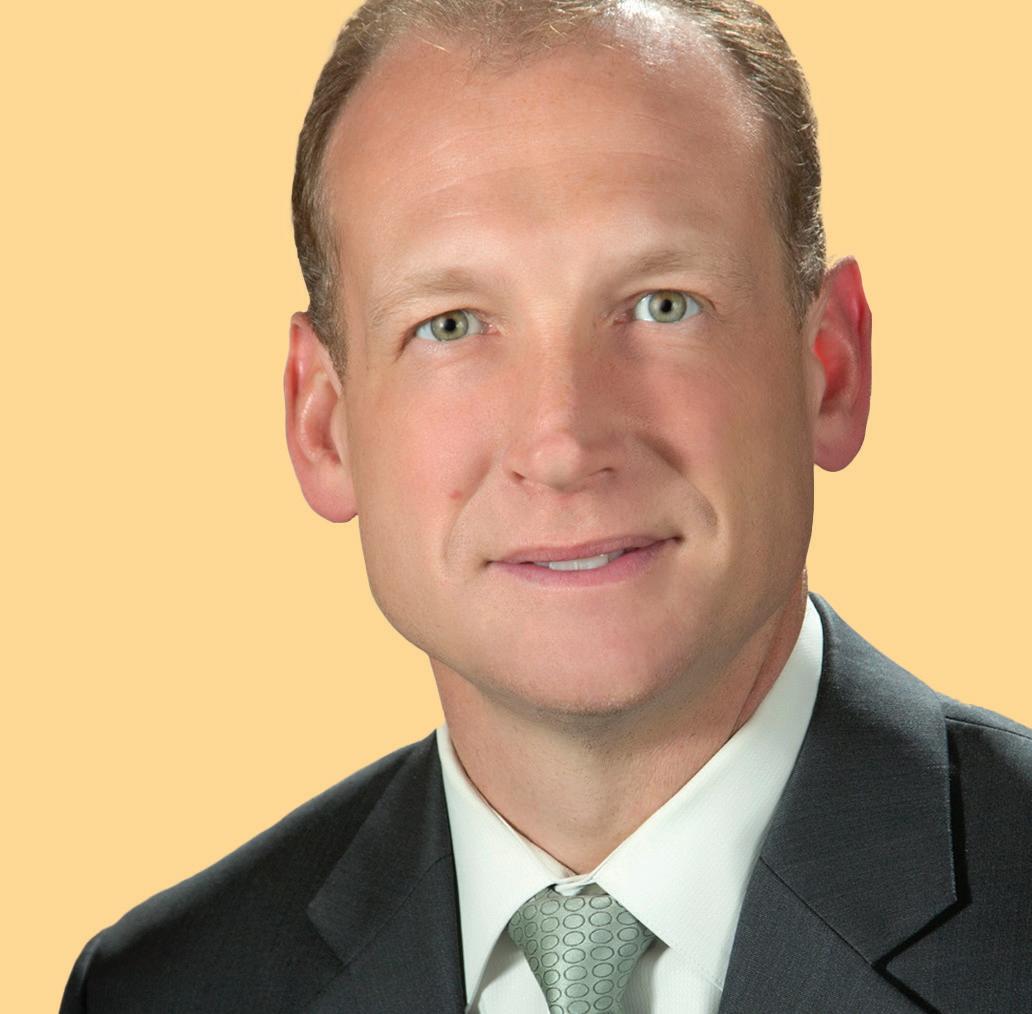
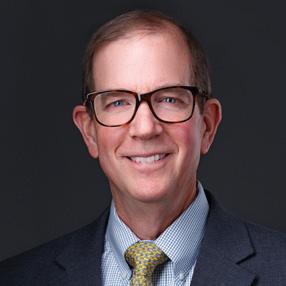
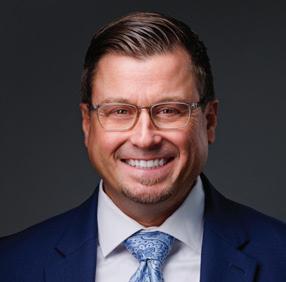
• Scott Yauck, President and CEO, Cobalt Partners (4)
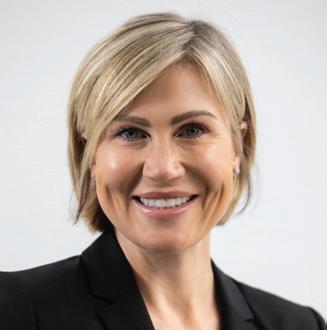
Team Member: Stephanie Mercado, Supplier Diversity Supervisor, Michels Corporation (5)
Moderator: Andy Hunt, Director for the Vieth Institute for Real Estate Leadership, Marquette University College of Business Administration (6)
Update on Milwaukee’s Development with Q&A
Lafayette Crump, Milwaukee City Development Commissioner (7)
Current State of Capital Markets
Billy Fox, Senior Vice President at MLG Capital (8)
BizTimes and Commercial Association of Realtors Wisconsin Annual Member Survey Results
Tracy Johnson, President & CEO, CARW (9)
Networking Reception


The program concludes with an engaging networking reception, featuring an open bar and a selection of light hors d’oeuvres. This is your chance to mingle with the speakers and fellow attendees, exchange ideas, and build valuable professional connections in a relaxed and inviting atmosphere.







By Maredithe Meyer, staff writer
Ulysses “Junior” Bridgeman has joined the ownership group of the Milwaukee Bucks, the team officially announced recently, confirming earlier reports by national outlets.
Bridgeman, an East Chicago, Indiana-native who spent 10 seasons as a player with the Bucks in the 1970s and ‘80s, is now a
BY THE NUMBERS
“significant minority” owner of the team, according to a news release. He joins Bucks majority owners Wes Edens, Jamie Dinan, Mike Fascitelli, and Dee and Jimmy Haslam, the owners of the Cleveland Browns who purchased their Bucks ownership share in 2023 from Marc Lasry.
After an NBA career marked
American Family Insurance announced it will increase the minimum wage for its employees to
$25 PER HOUR.

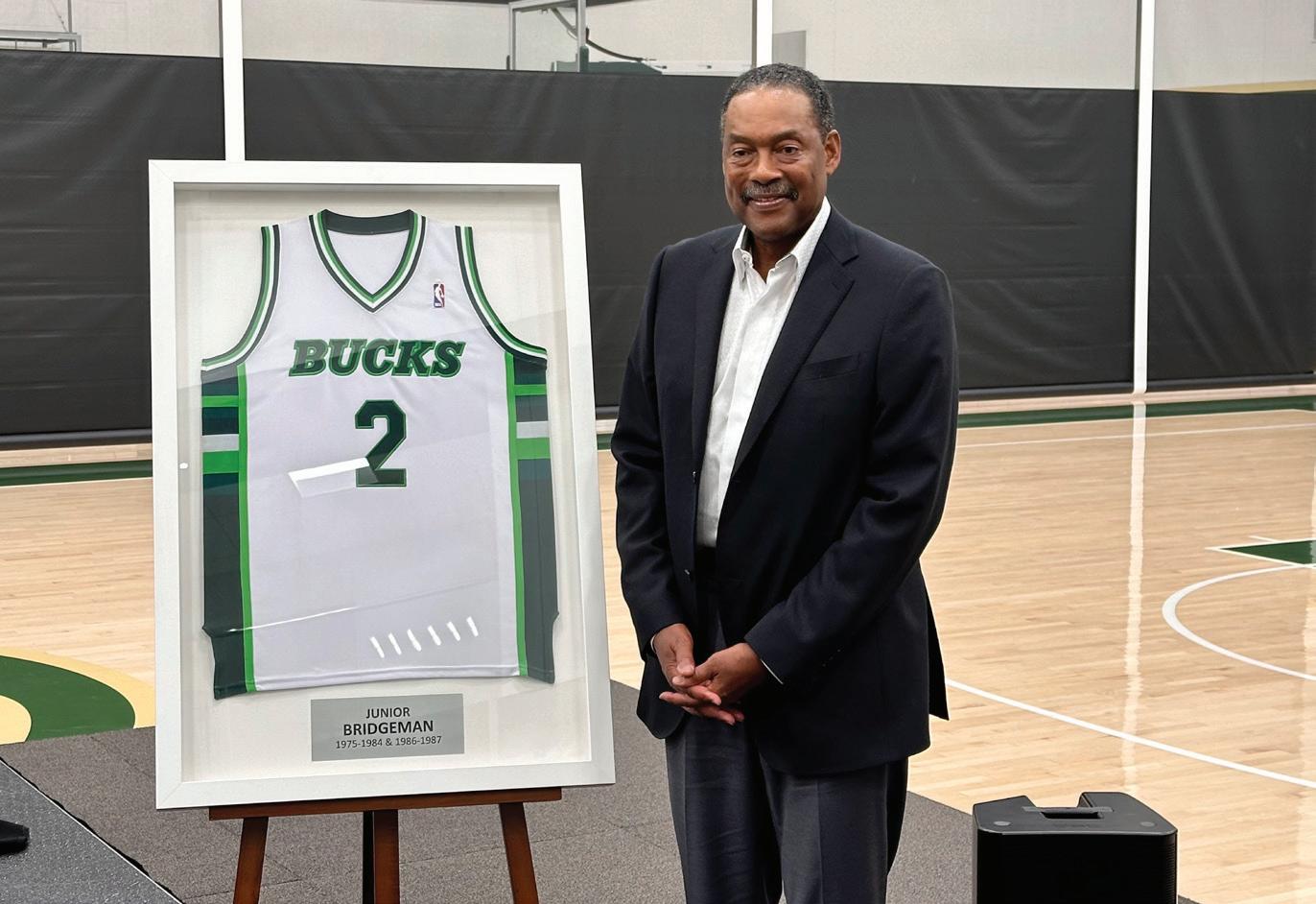
Junior Bridgeman stands next to his retired no. 2 jersey at a recent press conference announcing his ownership stake in the Milwaukee Bucks.
by 711 games played and eight postseason appearances with the Bucks, Bridgeman went on to excel in the business world. He began investing in restaurants and eventually became the owner and CEO of Bridgeman Foods, which operated more than 450 Wendy’s and Chili’s restaurants in 20 states until 2016. In 2017, Bridgeman Foods acquired Lenexa, Kansas-based Heartland Coca-Cola Bottling Company LLC, making Bridgeman an independent bottler for Coca-Cola.
The Bucks and Bridgeman Foods have been partners for more than 25 years and together created the “Bucks Win You Win” offer for a free Wendy’s frosty following a Bucks victory.
Bridgeman is also the current owner of Ebony and Jet magazines, both of which he purchased out of bankruptcy in 2020. He has served on the boards of at least 15 organizations, including the PGA of America, Churchill Downs, Meijer Inc. and his alma mater, the University of Louisville.
“It is a momentous occasion for our organization and the city of Milwaukee to welcome Junior Bridgeman to the Bucks’ ownership group,” said Edens, the Haslams, Dinan and Fascitelli in a statement. “Junior’s retired no. 2 jersey hangs in Fiserv Forum with other Bucks legends, a constant reminder of Junior’s impact on
the Bucks’ great history. After his playing career, Junior became one of our country’s most successful business leaders and his story of hard work and perseverance serves as an inspiration to our players and athletes everywhere. We are proud that Junior’s professional life has come full circle as he returns to the Bucks family.”
CNBC initially reported Bridgeman was buying a 10% stake in the Bucks, a transaction that would value the team at $4 billion.
The Bucks did not disclose Bridgeman’s ownership stake, but Jimmy Haslam during a press conference explained how the deal came to fruition: “About a year ago, there were some owners that had small percentages – half percent, 1% – that wanted to tender their stock, so the (Bucks franchise) bought them in and resold those to Junior.”
“I’m overjoyed to return to the Bucks, where I spent the heart of my NBA playing career, to join their world-class ownership group,” Bridgeman said in a statement. “I want to thank Dee and Jimmy, Wes, Jamie and Mike for their friendship and support in welcoming me back to Milwaukee. I hope that my life journey serves as an inspiration to current and future players who dream of joining an NBA ownership group. I look forward to cheering the Bucks on this season alongside our great fans.”





















TO CUT
Regional CFO, Wintrust Financial Corp.
“The Federal Reserve’s decision to lower interest rates by a half-percentage point should have a positive impact on the manufacturing industry. Lower interest rates directly benefit manufacturing companies by lowering interest payments on working capital lines of credit and reducing the cost of financing equipment purchases for growth or technology improvement.”
Head of U.S. commercial banking, Wisconsin region, BMO Harris Bank
“The manufacturing base in southeastern Wisconsin has been resilient, especially the past few years. As we talk to our clients, there clearly has been tremendous noise to make outlooks unpredictable. Many of our clients continue to make decisions consistent with their strategic plan, which includes significant capex spending and M&A, regardless of the rate environment. Lowering rates will help accelerate capex spending and M&A.”
CEO, Johnson Financial Group
“The Fed’s decision to cut rates by 50 basis points provides relief to borrowers and may spur manufacturers to consider additional investment and/or expansion. However, interest rates are just one lever impacting manufacturing. There are many other factors impacting consumer and business sentiment, including a pretty big election in November.”

Chief experience officer, Landmark Credit Union
“Cutting interest rates can lower borrowing costs, stimulating investment and expansion in southeastern Wisconsin’s manufacturing sector. This may boost production, encourage new projects, and increase customer and ultimately consumer demand, potentially leading to job growth and a stronger local economy.”
President and CEO, Spring Bank
“The decision for the Federal Reserve to cut interest rates will give manufactures the ability to make the needed investments in their businesses to better serve the needs of their customers. It will also give their customers more relief and confidence to move forward with purchases, as some were waiting on the sidelines for these cuts.”





President and CEO Generac





“Understand that success is earned in almost every
situation/company.
Working hard is only part of it – learning the business you are working in is absolutely critical to your ability to make an impact.”
This Q&A is an extended profile from Wisconsin 275, a special publication from BizTimes Media highlighting the most influential business leaders in the state. Visit: biztimes.com/wisconsin275 for more.

What was your first job, and what did you learn from it?
“My first job was working for the Milwaukee Journal Sentinel at their branch office in Hartland ‘subbing’ papers, which is the process of putting together the different sections of the Sunday morning edition – from the comics to the classified ads, etc. We would receive deliveries beginning Friday and through the weekend culminating in the final assembly process beginning at 1 a.m. on Sunday mornings. It was my first real exposure to business and really helped me to understand the importance of working hard and finding ways to be efficient, particularly as we were paid on a piece rate basis. The more papers you could put together, the more you could earn. Really a great ‘first’ job that I have fond memories of to this day.”
What are some of your favorite destinations or places to visit?
“Pelican Lake, Wisconsin. My wife’s family has had a place on the lake for nearly 70 years and it’s just a great place to unwind, disconnect and de-stress.”
What’s your hobby or passion?
“I don’t really have many, with one exception: I’m a nerdy AFOL, which stands for Adult Fan of Lego. I grew up in the 1970s and 1980s putting together Lego sets and building just about anything I could think of. I spent an enormous amount of time as a kid building and the creativity that it sparked was amazing. Today I still enjoy building – I use it more as a way to relax now, but I still really enjoy taking an idea and trying to make it come to life with those magical little bits of plastic.”
What is your favorite Wisconsin restaurant?
“Ristorante Bartolotta in Tosa. My wife and I are big fans of all things Italian – the food, the wine and the atmosphere there make us feel like we are in Italy!”
What was your first car? How long did you drive it for?
“A 1981 Mercury Capri with T-tops. I bought it used when I turned 16 and drove it all the way through college, putting more than 200,000 miles on it.”
If you could take a one-year sabbatical, what would you do?
“I would spend it learning photography and trying my hand at creating some great pictures!”
What’s the toughest business challenge you’ve had to overcome?
“The transition from a founder-owned and -led company to a private equity-owned and -operated company. Our founder, Bob Kern, sold the company to a New York private equity firm in late 2006 and it took our team and me personally some time to adapt to a completely different approach to business. It was a difficult transition, but in the end, I believe it was the catalyst for the company we have become today.”
What advice would you give to a young professional?
“Understand that success is earned in almost every situation/company. Working hard is only part of it – learning the business you are working in is absolutely critical to your ability to make an impact. Learn everything you can about the company’s products, its customers, its markets, its suppliers, its operations, etc., and it will give you the knowledge you need to truly make a difference.”
What is one thing you would change about Wisconsin to make it even better?
“Make the winters milder and shorter!”
As you enter your office, what would you choose to be your walk-up or theme song?
“AC/DC’s ‘Thunderstruck’ – I can’t think of a better song to help get me energized about the day ahead!”




President
5910 Washington Ave., Racine ohdanishbakery.com











• Peter Olesen recently took the helm of O&H Danish Bakery. The maker of kringle pastries and other baked goods – sold locally and nationwide – was founded in 1949 by Peter’s great-grandfather, Christian Olesen, was passed down to his grandfather, Ray Olesen, and then was led by his father, Eric Olesen, since 1982.
• Eric and Peter began formally planning for O&H’s latest generational succession in fall 2023.
• The fourth-generation leader and University of Wisconsin alum officially joined his family’s company in 2012 as vice president, but O&H has been “a way of life” and source of pride for as long as he can remember. Olesen has memories of going to preschool in the morning and then spending afternoons at the bakery while his mother decorated cakes.
• Olesen credits his grandfather for his own work ethic and teaching the “importance of every role in the company, from sanitation to grounds, baking, packaging,” in creating a top-notch experience for the customer. “I hope that legacy lives on.”
• Working in management consulting as his first job out of college, Olesen learned the critical value of cash flow to “the life cycle of a business.” He carried that knowledge with him as he joined O&H and sought to understand the company “top-down, bottom-up.”


• As president, Olesen remains focused on opportunities for growth “I’m proud to guide the ship.”





















































President and CEO, Abacus Architects


Halbur is the newly named chief executive officer at Sheboygan-based Abacus Architects. He has been with the firm for more than 11 years and has been a leader in implementing the firm’s software technology. Here are a few key pieces of tech that he uses to make his day-to-day tasks easier.

“Revit helps our firm rapidly model and design projects. We help support our clients in making decisions. The Enscape plug-in for the software helps our Abacus Architects team walk clients through their project, all while making sure they are happy with everything before the shovel goes in the ground. We also use Revit to minimize construction challenges in the field. Revit can even be used to model up tricky details and conditions and work out solutions.”



• He and is partial to Colectivo’s Blue Heeler blend. prudent “I’m proud to guide the ship.”























takes his coffee black































“We use BQE Core to help track everything including time, billing and our company’s financial health. BQE Core is a great tool to better understand the numbers. The software is perfect for setting budgets and schedules. We can easily and efficiently track Abacus Architects’ projects to see if all is going as planned as well as making sure we are not running into overages in real time.”



















“Truth be told, I never liked reading. But I absolutely love listening to books. I happen to be on the road often, so I try to take advantage of that time to better my understanding of what I need to do to be a better leader, Christian, husband and father.”






“I use MyFitnessPal to track food and exercise throughout the day. Admittedly, that has fallen to the wayside in current months, but I use it a ton to help with my fitness goals and keep myself on track. It helps me to hit goals and keep accountable. Feeling healthy is extremely important in life and makes everything easier.”
The Republican National Convention amassed
1 trillion
total earned media impressions and an advertising value of $2 billion, according to Visit Milwaukee.
Wisconsin added
3,600 private sector jobs in August.
Wisconsin’s unemployment rate was 2.9% in August. The Universities










• Allen J. Carlson, former CEO of Sun Hydraulics Corp.
• Timothy L. Christen, former chairman and CEO of Baker Tilly US LLP
• Steven L. Fisher, former division chief financial officer for Caterpillar Inc.
• Jennifer J. Kent, chief legal officer and corporate secretary for Kohl’s Corp.
• Jay O. Rothman, president of the Universities of Wisconsin
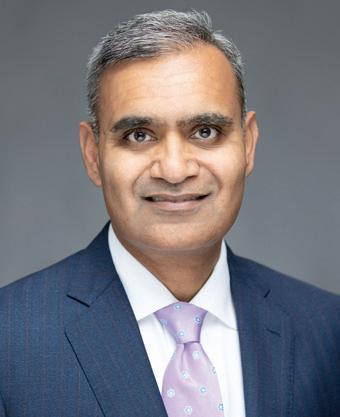
• Jag A. Reddy, president and CEO of Mayville Engineering
• Robert L. McCormick, former president and chief executive officer of Douglas Dynamics



By Ashley Smart, staff writer
career working with technology. He launched his own business at age 16. The constant ebb and flow of the tech industry caused Musaev to lose interest after a few years. He began searching for a more profitable and predictable kind of business to transform under his leadership.
A chance encounter with a member of the Mr. Lid leadership team sparked his interest.
“I was looking at the brand for a little while, but I wasn’t ready to commit until I realized what the vision was,” said Musaev. “Mr. Lid is not just a container with the lid attached. We’re trying to turn this into the next hot accessory.”
To reach this milestone, Mr. Lid is using more modern marketing tactics, like social media campaigns, and plans to add partnerships with other consumer brands.
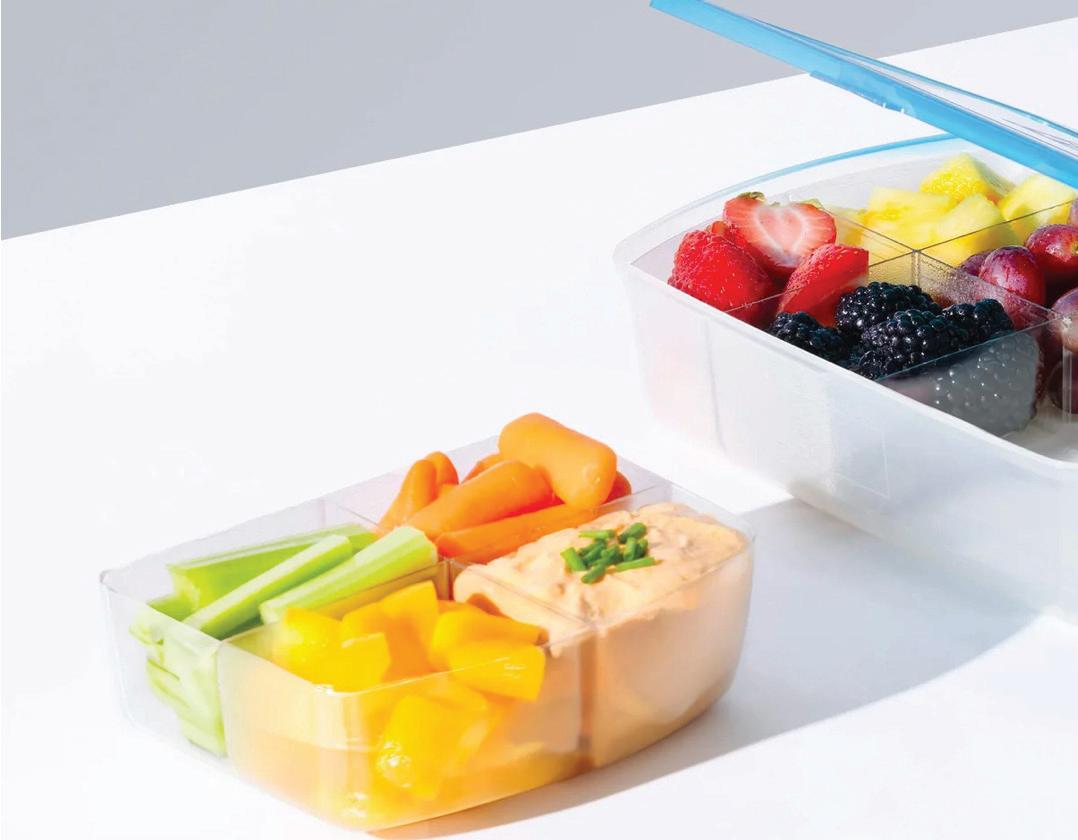
Musaev wants customers to associate Mr. Lid with organization generally, not just food storage. Recent social media campaigns have shown the products storing golf balls and tees. More colors and different designs will also launch soon as part of the overall effort to make Mr. Lid containers a go-to accessory.
THE NEWEST CEO of Mr. Lid, a brand of plastic storage containers founded by Sussex IM, wants to turn the company’s products into the next storage phenomenon.
Pall Musaev, a serial entrepreneur, purchased the Mr. Lid brand in late 2023. The company’s storage containers come with attached lids. Sussex IM, an injection molding company in Sussex, filed a patent in 2010 for the containers, which are water-tight, easily stacked and durable.
“The benefit of the product was obvious – containers with attached lids,” said Musaev. “What
was hidden beneath a great product was a team of manufacturing expertise that was located here in the USA that could take this great product and bring it to the world.”
Sussex IM continues to make the containers while Musaev focuses on the marketing and brand development side of the business. There are plans to increase production capacity in the coming months, but Musaev declined to share more specific information.
“There is no interest in moving the manufacturing from Sussex IM,” he said.
Musaev began his professional
Young consumers are already involved in sustainable practices – using products like reusable shopping totes and water bottles – so marketing Mr. Lid to that demographic made sense, Musaev explained. That megatrend coupled with the popularity of other reusable storage items like Stanley cups creates a large opportunity for the Mr. Lid brand, he said.
“When I bought the company, the whole point was to refresh the brand and align it with today’s values,” said Musaev.
Mr. Lid has existed for more than a decade and already has a built-in base of loyal customers. Musaev bought the business with the intent of shining an even brighter light on the brand.
Sales have grown 10-fold in the past year alone, according to Musaev.
A line of Mr. Lid containers using a new material, instead of the company’s traditional plastic, is also being tested. Trying to promote sustainability with a plastic product is a unique challenge for Mr. Lid.
“We believe keeping items out of the landfill, and even out of recycling, is the goal here,” said Musaev. “We’re always looking at new materials. We’re trying to solve the plastic problem with a plastic product. That’s a big headwind for us but we think we have a solution.”
Getting Mr. Lid products in big-box retailers is still a long-term goal for the company.
To that end, Musaev recently attended Walmart’s annual Open Call event where entrepreneurs are invited to pitch innovative, shelf-ready products to secure deals that could range from a few local stores to hundreds of locations. The Open Call finalists, as well as their final deals, will be unveiled in the coming weeks.







DOWNTOWN Milwaukee’s Deer District is filling up as multiple projects make their way through the development pipeline, and the Milwaukee Bucks – the lead developer for the district – seek to fill in the final pieces.
What started a decade ago as
a series of vacant lots and an arena that was not up to NBA standards, the 30-acre district has been built up into a new downtown neighborhood with hospitality, entertainment, retail and residential development – plus Deer District’s $524 million crown jewel, Fiserv

Forum.
Following the COVID-19 pandemic and the subsequent economic fallout, momentum is strong in Deer District with a significant portion of the remaining land to be filled in the coming years.
FPC Live’s music venue under construction on the former Bradley Center site in Deer District.
At the northern end of the district, the Bucks are in talks with a Chicago developer to potentially build more than 200,000 square feet of office space on the north half of what’s known as Block 6, sharing the lot with The Trade hotel, which opened in May 2023.
Chicago-based North Wells Capital – the firm that redeveloped downtown Milwaukee’s former Boston Store building, now occupied by a Kohl’s store and Fiserv’s corporate headquarters – is the firm interested in developing the office building, according to commercial real estate industry sources.
The Bucks have long included an office building in Deer District’s master plan, but no office building plans have moved forward there so far.
“Our intent for Deer District has always been to have a best-in-class office building. We continuously are exploring this potential and there has been significant interest as of late,” a Bucks spokesperson said, but did not comment further.
As part of the plans, the Bucks would move their offices to the building from the nearby

A historic downtown Milwaukee office building was sold to a Chicago-area investor for more than $10 million less than its assessed value.
The building known as CityCenter735 was sold by an affiliate of Stevens Pointbased Compass Properties, which had owned the property since 2002. The building’s new owner is E.A. Staples & Associates, a boutique commercial real estate firm with a focus on unique commercial value-add acquisition opportunities.
Built in 1912, the 428,000-square-foot class B office building has around 135,000 square feet of space available.
The sale also included the 76,000-square-foot building at 731 N. Water St., which has Gold’s Gym as its primary tenant. As part of the ownership change, Gold’s Gym will be transformed into a club called East Bank Athletic and Social.
SALE PRICE: $17.4 million
ASSESSED VALUE: $28.1 million
ADDRESS: 735 N. Water St., Milwaukee

Schlitz Park complex. Meanwhile, North Wells Capital and Milwaukee-based commercial real estate firm Founders 3 are in talks with other potential anchor tenants to occupy the building, sources said.
If built, the building could be the first office development in downtown Milwaukee since the COVID-19 pandemic rattled the office market. Office brokers said the possibility of a new office building downtown is a result of the flight to quality trend as more companies opt for higher-quality office space – often in downtown Milwaukee –and the supply of existing class A downtown office space, especially contiguous space, fills up.
On a site next to the potential office building site, Milwaukee-based commercial real estate firm J. Jeffers & Co. is moving ahead on its planned development on what’s known as Block 5, located east of Block 6, across Vel R. Phillips Avenue from The Trade and just west of the Aloft hotel.
The firm is on track for an August 2025 closing and groundbreaking for the project’s 260 apartment units, according to chief executive officer Josh Jeffers, up from the 210 units initially proposed due to a redesign that would add efficiency to the building. The five-story building would also include a 26,000-square-foot space for a new Milwaukee Area Technical College athletic facility. Jeffers is working with the U.S. Department of Housing and Urban Development to secure construction financing for the market-rate project, he said.
After a few delays – and despite earlier skepticism from some about whether or not it would happen – Madison-based concert promoter FPC Live started construction on its $60 million indoor music venue this spring. The building is being built on the northeast portion of Block 3, which is the former Bradley Center site south
of Fiserv Forum.
The venue, which will have a capacity for 4,500 people in a ballroom-style setting, was originally proposed for the site in May 2022 and underwent a contentious zoning approval process before project leaders scrapped their initial plans for a two-venue facility in the face of increased construction costs and higher interest rates.
Slated for a fall 2025 opening, it’s estimated that the first shows for the venue will be announced early next year.
Assuming all of these projects make it to the finish line, the lion’s share of Deer District would be developed, with only smaller parcels available. The last significant piece of developable land is also located on Block 3, and the Bucks quietly released a request for proposals last month for the site.
According to a source, the RFP seeking a development on Block 3 did not identify a preferred use for the land, so long as the project “meets design standards in Deer District.” The Bucks confirmed that an RFP was sent out, but said the request was for primarily residential uses.
Block 3 is also where Madison-based North Central Group, which developed The Trade hotel, was reportedly planning a second Deer District hotel. North Central Group did not respond to requests for comment on the status of that project and detailed plans for the hotel have never been released publicly.

TURPIN
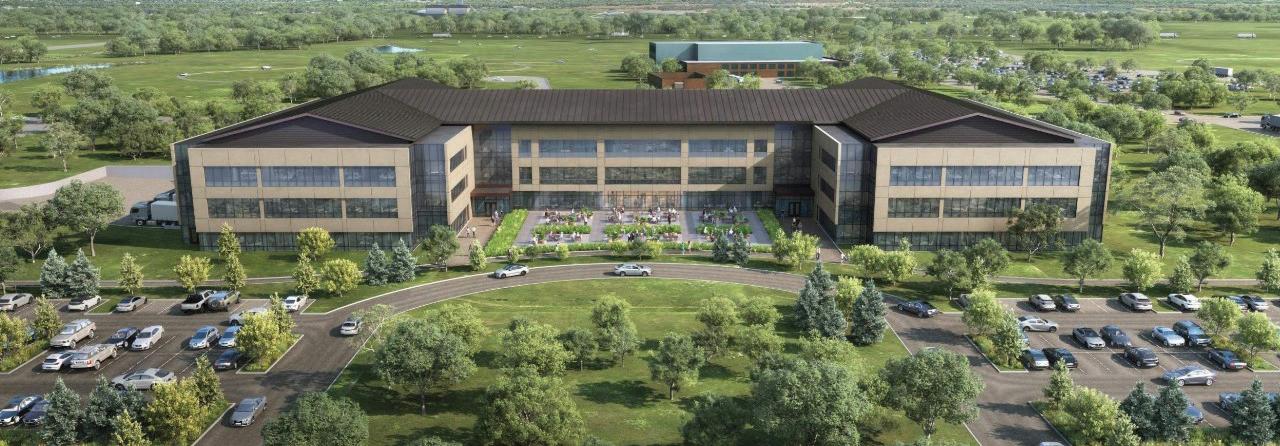
Uline received final approval from the Village of Pleasant Prairie to build a 366,000-square-foot, three-story office building near its corporate headquarters complex.
With the approval, the company may now submit applications for building permits and proceed with full construction, the village said in a news release. Construction is expected to be completed by the spring of 2026.
The building is planned for a 44.8-acre site in the Prairie Highlands Corporate Park. The facility could house up to 1,300 employees. Site plans include parking for 1,067 vehicles.
Founded in 1980, the company moved its headquarters from Illinois to Pleasant Prairie in 2010 and has since grown its presence to eight buildings in Pleasant Prairie, including two office buildings and six warehouse buildings.
LOCATION: 9900 128th Ave., Pleasant Prairie
DEVELOPERS: Uline
SIZE: 366,000 square feet








BY ASHLEY SMART, staff writer













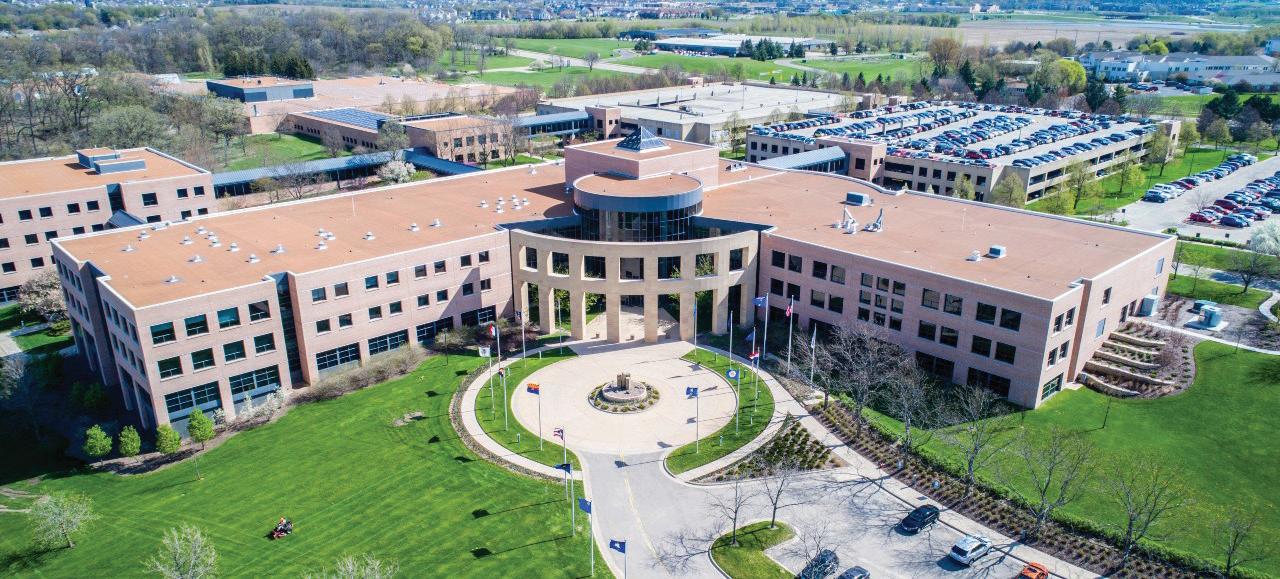
Novonesis believes in harnessing the power of nature, and the company is investing millions of dollars into its West Allis facility to do just that.
Officially formed earlier this year through a merger of Danish companies Chr. Hansen and Novozymes, Novonesis specializes in fermentation. Through the fermentation process, Novonesis develops and manufactures cultures, enzymes and probiotics for a variety of foods, confectionery goods, beverages, dietary supplements, animal feed, plant protection and more.
These products, known as biosolutions, are used in more than 30 different industries and offer an all-natural solution to everyday tasks like storing food and doing laundry.
The core of Novonesis’ business, its food and health biosolutions, began nearly 150 years ago when Danish scientist Christian Ditlev Ammentorp Hansen began using an enzyme called rennet to improve the process of manufacturing cheese. Rennet allows milk to coagulate.
“In many ways, we were born global,” said Theis Bacher, vice president of food and beverage, North America at Novonesis. “Our enzyme, used for making cheese, was highly perishable. We had factories in Europe, but shipping to many parts of the world would take six to eight weeks. So, more than 140 years ago, we started building factories all over the world and established a global footprint and that is today a tremendous competitive advantage for us.”
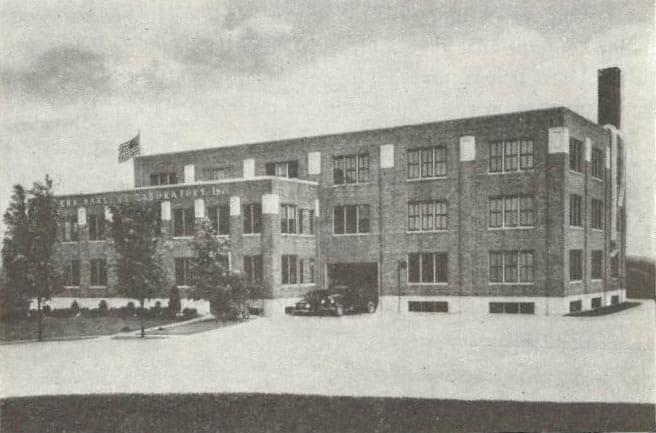
Chr. Hansen opened its West Allis facility in 1929. The facility became the company’s North American headquarters and was expanded to double its capacity in 1978.
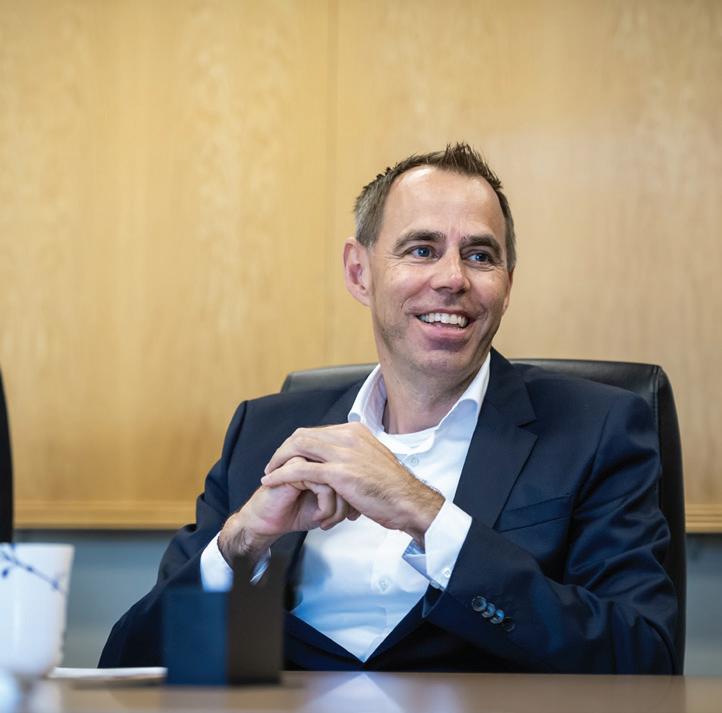
“We’re a major player in the world’s food ecosystem. It’s probably 2 (billion) to 3 billion people that on a daily basis consume a yogurt or eat another product that use our biosolutions.”
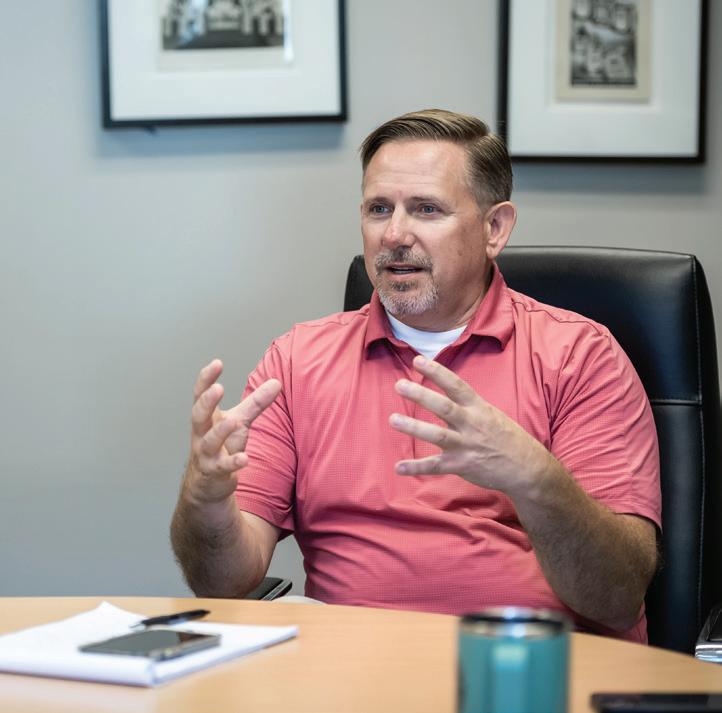
“I envision down the road, there’ll be even more applications for enzymes. People could use them for vector targeting disease, that could be something coming down the line.”

“If you follow the cheese trail, it just makes sense,” said Keith Grover, head of Novonesis’ West Allis and Madison plants. “Christian Hansen was developing rennet extraction. He had a very strong product and thought globally – more so than any other entrepreneur. Wisconsin became America’s Dairyland, so he followed that trail.”
Since the West Allis plant opened 95 years ago, Chr. Hansen, and now Novonesis, have continued to invest millions of dollars at the site (located at 9015 W. Maple St.), which has become a critical part of the company’s operations.
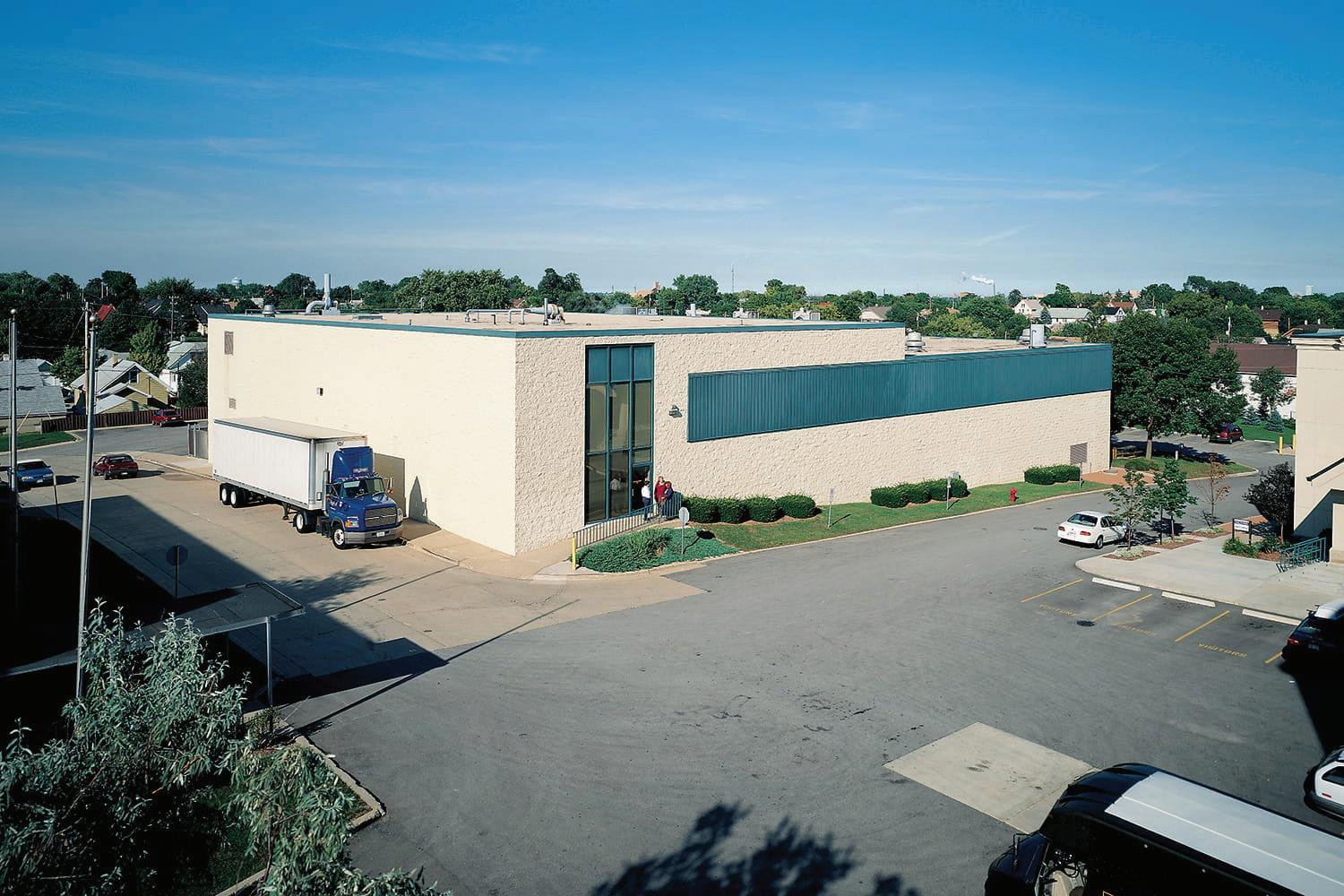
In 2021, Chr. Hansen completed a $25 million, 20,000-square-foot expansion project on the west side of its campus. That expansion added fermentation capacity and warehouse space.
Finally, in May, the newly formed entity Novonesis submitted plans for a third phase of the project, which includes construction of a two-story, 50,000-square-foot building to house new fermentation equipment.
Including that phase of expansion, which will be completed next year, $165 million will have been invested in the West Allis facility within the past five years.
“There are more investments coming. There’s another roughly $100 million flowing to just this site alone,” said Bacher. “We are investing in Milwaukee more than in any other of our global sites because of the people here. They have a very high skill level, and there is good access to raw materials.”
Photos by Valerie Hill
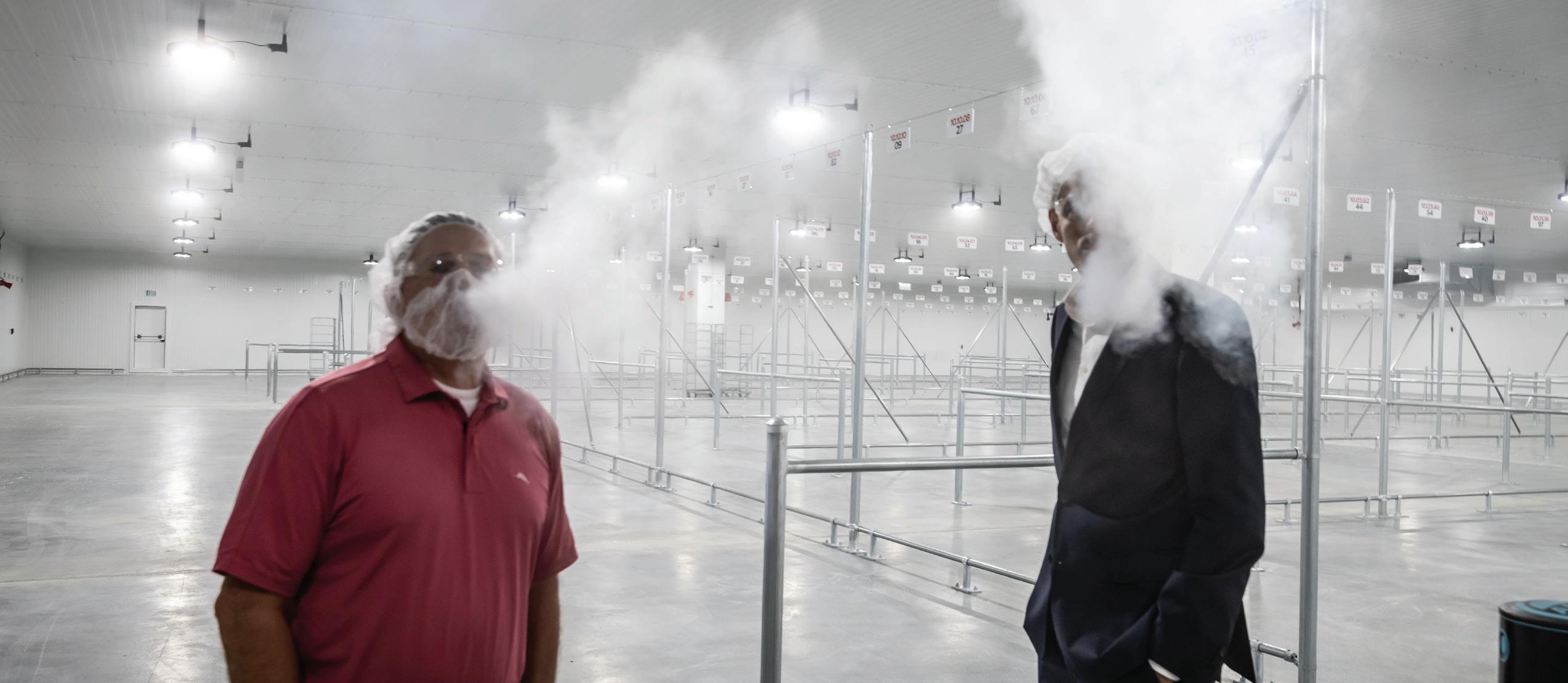
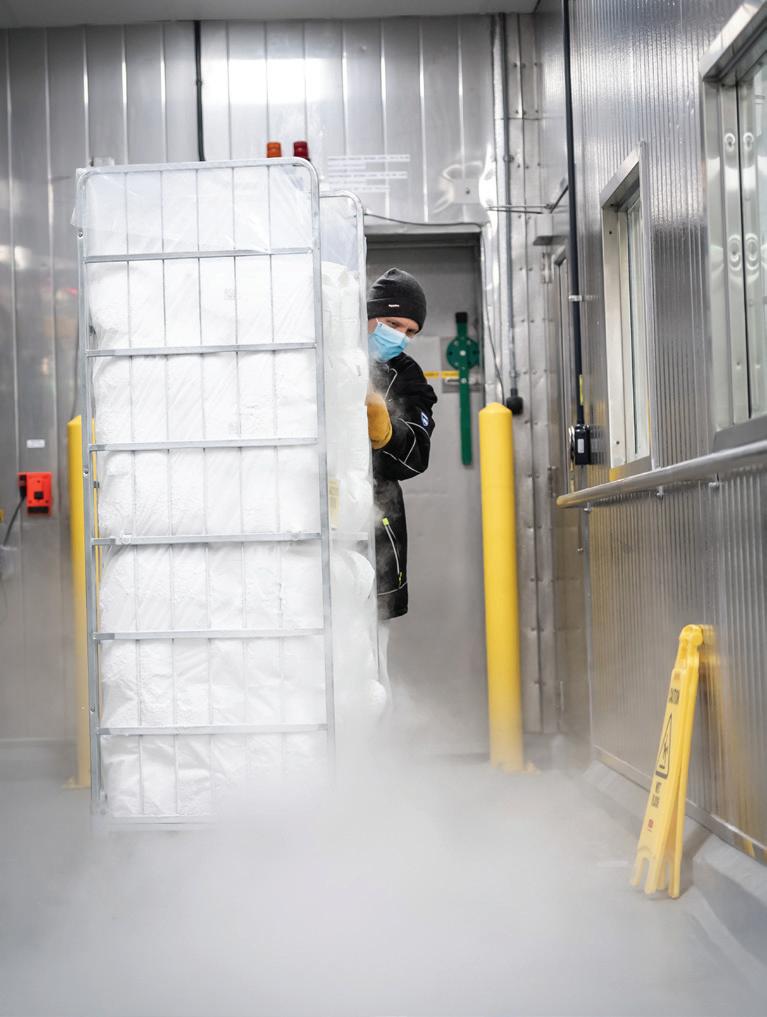
Then, in 2023, the company began phase two of the expansion project: a two-story, 81,000-squarefoot addition. This $35 million investment involved construction of a two-story building to the east of the existing facility. The space houses a 27,000-square-foot freezer – set at a frigid minus 67 degrees Fahrenheit – for product storage and space for future labs.
The latest expansion to Novonesis’ fermentation facility will be finished by fall 2026. It will double the company’s production capacity and become the largest fermentation site of lactic bacteria in the world.
Grover estimates Novonesis’ workforce, which includes 460 people in metro Milwaukee, will grow between 10% and 15% following the expansion.
‘A major player in the world’s food ecosystem’
Novonesis has an annual revenue of approximately 3.7 billion euros (equal to $4.1 billion USD), including the equivalent of about $1.4 billion driven by its food and health biosolutions category.
The company’s growth – and the continued need for investment to boost production – can be directly linked to an increase in consumer demand for products that contain cultures, enzymes and probiotics, according to Bacher.
“There has been a lot of market growth for several of the fermented product categories we are in,” said Bacher. “Pizza, peperoni, cheese, yogurt ... all these products are seeing healthy market growth and that, of course, benefits us.”
In the U.S., annual dairy consumption hit an all-time high of 12.4 pounds per person in 2021, according to data from the USDA Economic Research Service. This continued a 50-year growth trend for the industry.
“We’re a major player in the world’s food ecosystem,” said Bacher. “It’s probably 2 (billion) to 3 billion people that on a daily basis consume a yogurt or eat another product that use our biosolutions.”
For the first half of 2024, Novonesis reported 8% organic sales growth in its food and beverage business, largely driven by sales of fresh dairy and cheese.
Novonesis’ catalogue of cultures – including live bacteria, yeasts and molds used in food production – and enzymes specifically target dairy and cheese manufacturers. The use of different cultures and enzymes can change everything from texture and flavor to thickness and color.
Novonesis leans heavily on its library of 40,000 ready-to-use bacterial strains to create custom solutions for its customers.
“You can change the bacteria in unlimited ways,” said Bacher. “That’s why, when you go to France, there are 3,000 kinds of cheese. The main difference is the culture you add. That is what decides if a cheese is a mozzarella or a cheddar. It changes the whole profile.”
The greatest challenge modern cheesemakers face is everyday viruses that attack the enzymes used in their products, said Theis. To combat these viruses, Novonesis has created more robust bacterial strains that allow them to withstand any attacks.
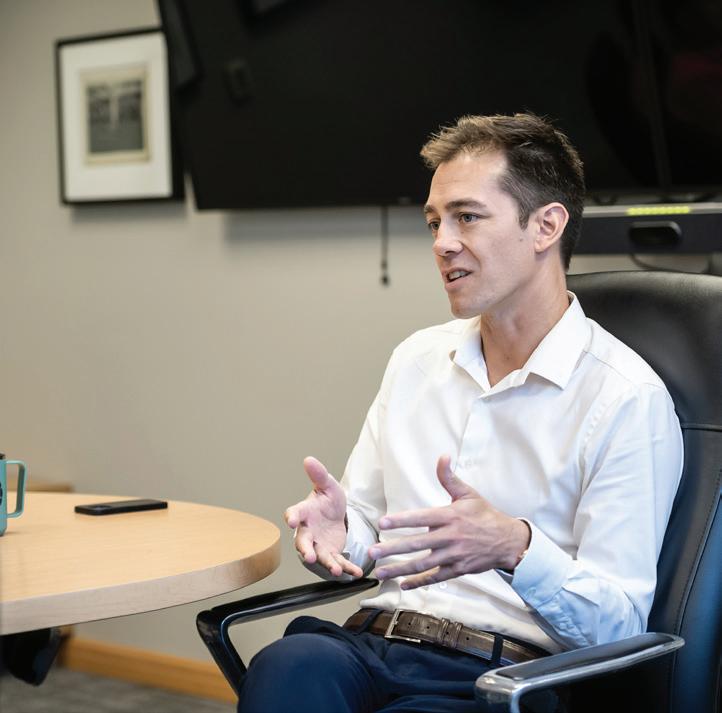
“We have a library of over 40,000 bacterial strains, which is probably the largest in the world,” said Julien Biolley, director of marketing and business development, North America at Novonesis. “We try to look at the genes of each of these strains to understand the differences and potential so when a manufacturer comes to us with a challenge, we can look to see if we have something we can leverage.”
To further catalyze growth, Novonesis has branched into new industries, including bioenergy, household care, plant health and more. In total, the
“We try to look at the genes of each of these strains to understand the differences and potential so when a manufacturer comes to us with a challenge, we can look to see if we have something we can leverage.”

company serves 30 different industries.
In addition to its food and health biosolutions, Novonesis operates a planetary health biosolutions segment.
The company’s mission is to use good bacteria to find sustainable solutions for customers. From promoting healthier soil and animal welfare to lowering emissions, Novonesis claims a biosolution can be found for just about any modern problem.
“I think that we actually bring the technology to a lot of different industries,” said Biolley. “Take the insulin industry, now it’s all made by fermentation. Think about agriculture, a lot of pest control and herbicides are chemical products today. We are looking at if we can create any biology solutions to replace all these chemicals.”
Novonesis’ West Allis facility serves as the North American hub for the company’s food division following the merger between Chr. Hansen and Novozymes.
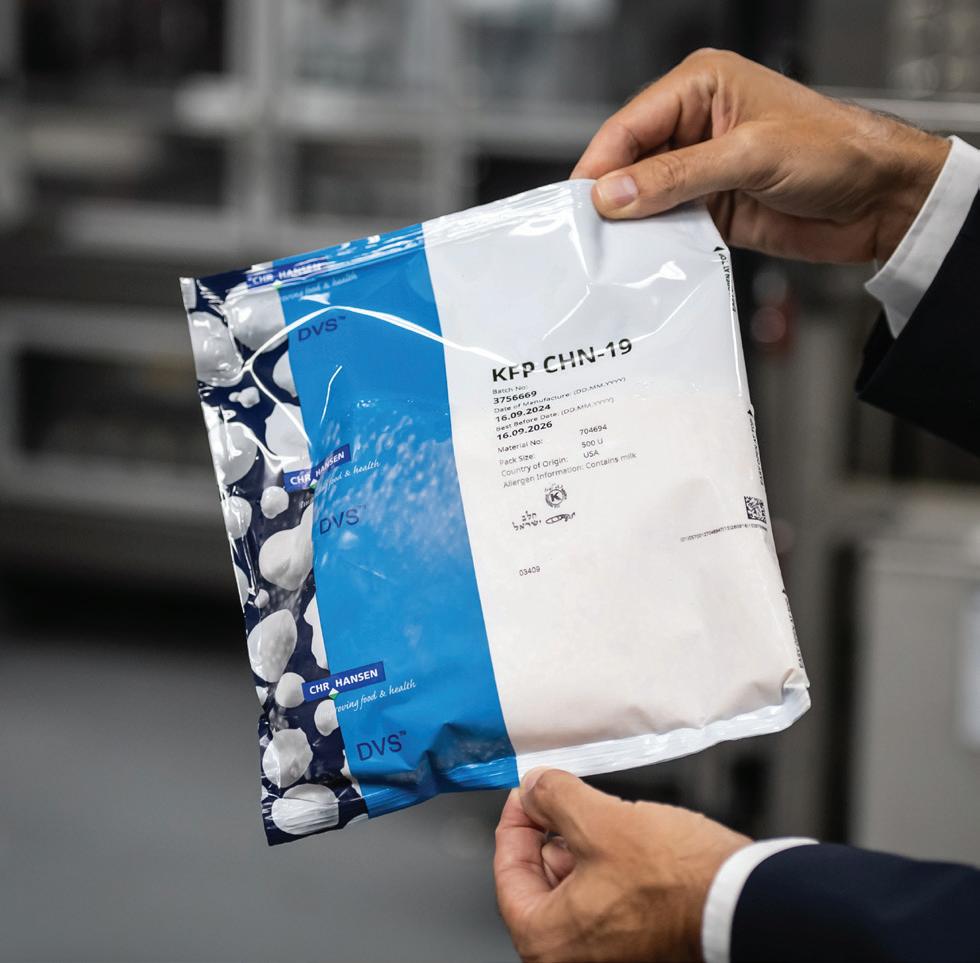
The site is capable of producing more than 140 different bacterial cultures. Only about 60 of those cultures are manufactured on a regular basis. Because the plant makes food biosolutions for the entirety of North America, it isn’t specialized to one segment of that division. However, the site does manufacture a large quantity of cultures that are later used to make Italian cheeses like mozzarella.
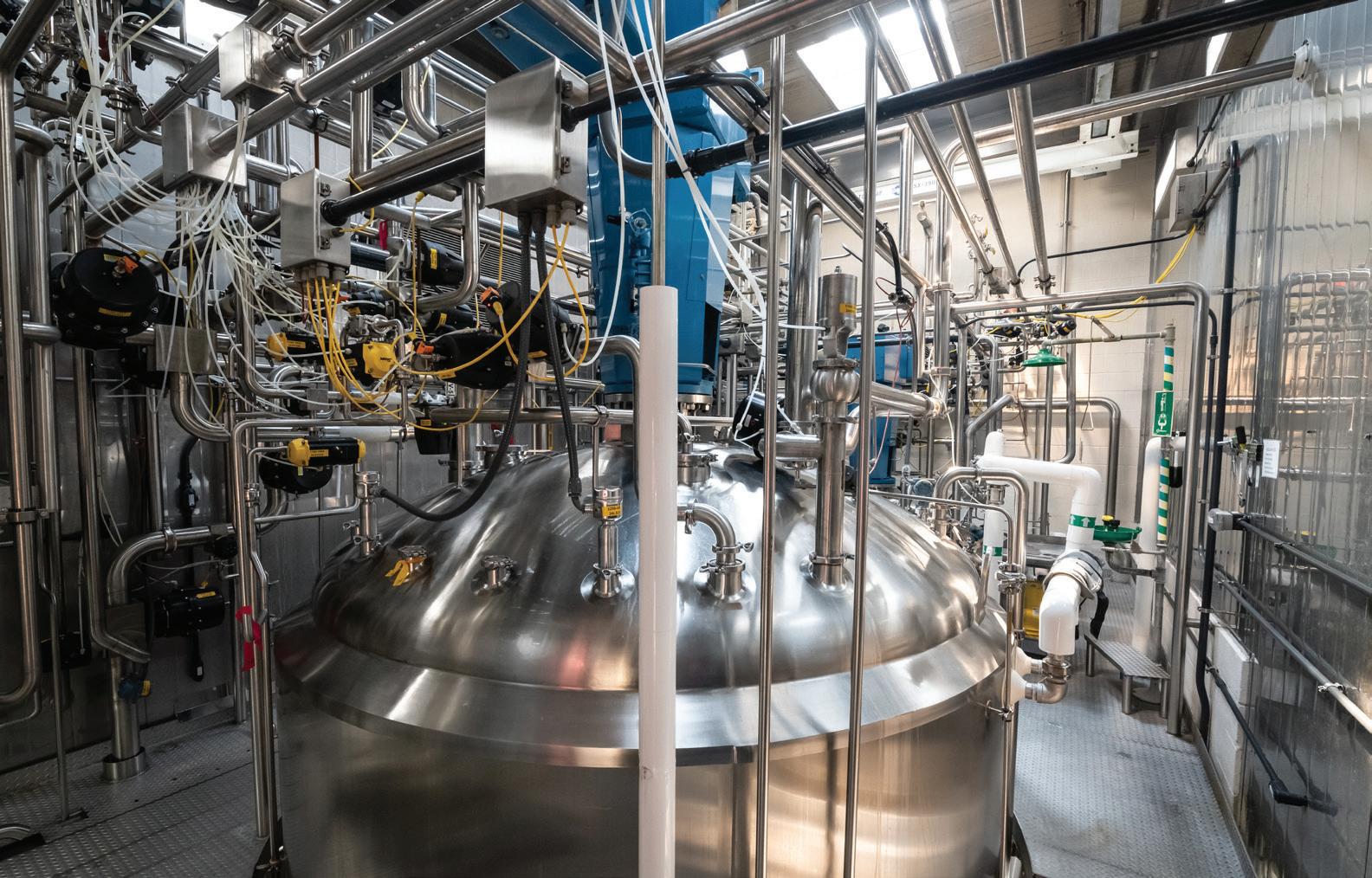
The process of creating a bacterial culture begins in one of six fermenters housed within the West Allis plant. Fermentation, or the process of breaking down a microorganism like bacteria or yeast into a simpler substance, typically takes about eight hours in one of the tanks. Some batches of bacteria can take several days to ferment. Sugar, carbon and a source of nitrogen are all necessary components for fermentation.
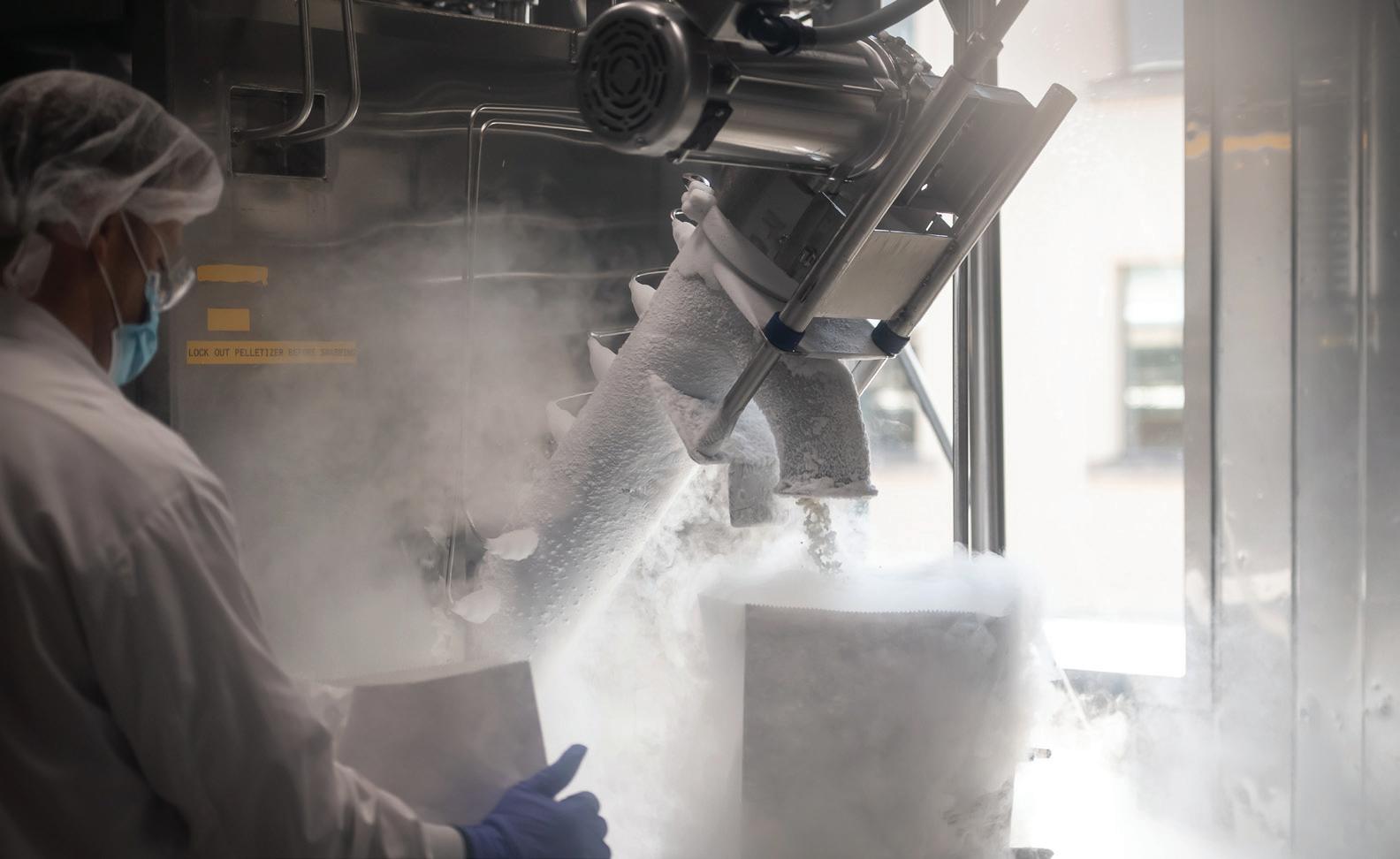
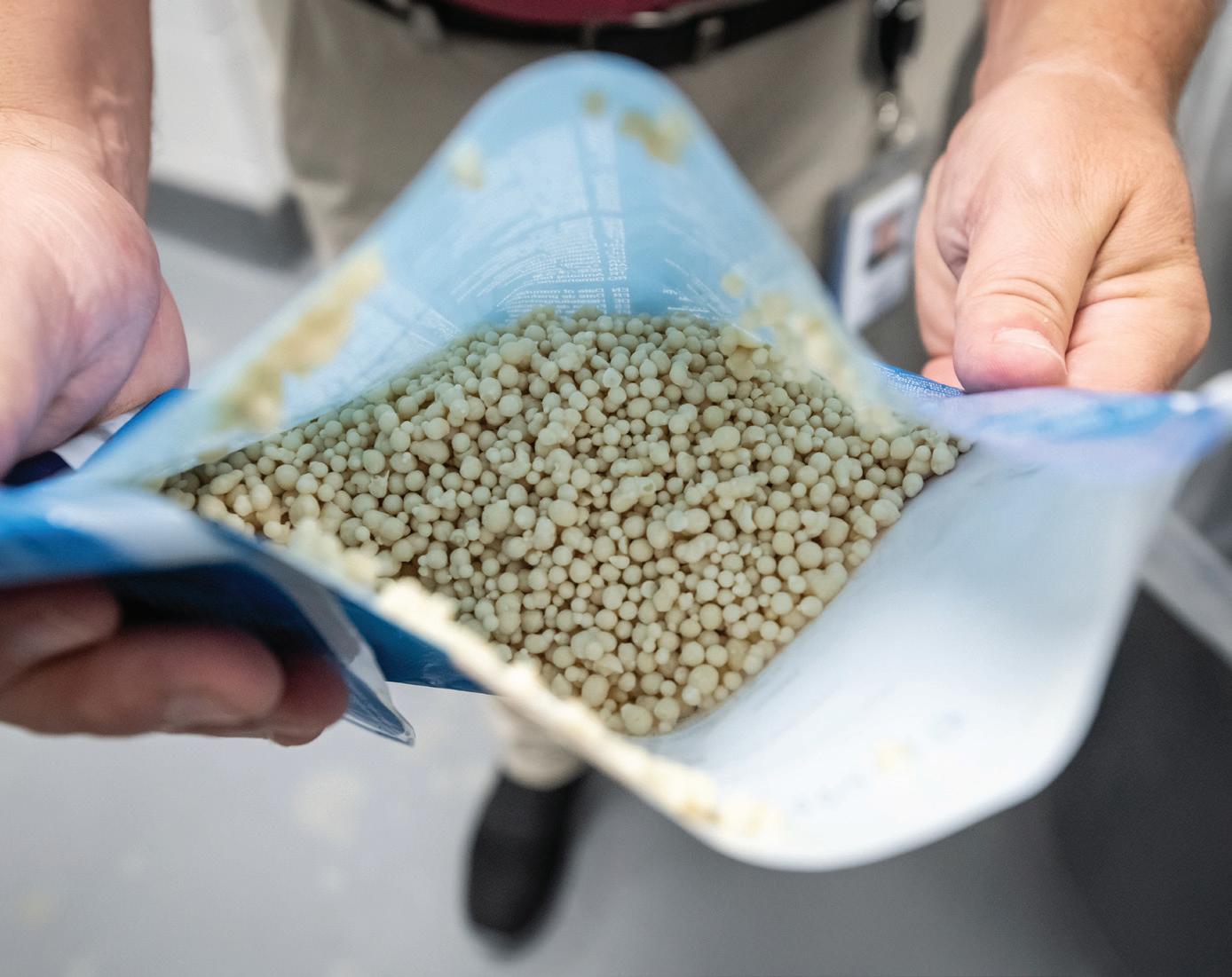
Following fermentation, the bacteria is concentrated as it is separated from the water used in the fermentation tanks. The bacteria then pass through a machine that shapes them into frozen pellets – a final product Grover likens to the frozen treat Dippin’ Dots. A single bag of frozen pellets contains enough bacteria to make 10,000 pounds of cheese.
Those pellets, created using liquid nitrogen, are stored in a freezer that’s kept at 67 degrees below zero. That’s nearly as cold as it gets at the top of Mount Everest. The pellets are removed as needed as cultures are produced, using a mix of five components.
Novonesis has several other plants in Wisconsin, including, in metro Milwaukee, a plant on the city’s northwest side used to make biosolutions for farm animals, and a plant in New Berlin that makes enzymes and agricultural products and includes warehouse space, along with plants in DeForest and Wausau that both makes probiotics.
Because a large portion of Novonesis’ biosolutions are used within the food and beverage industry, the research and development process can sometimes take years. The company’s products must follow strict federal guidelines for human consumption.
“On the culture side, if we need a new innovation, it will typically take between one and two years to get a finished product,” said Biolley. “When it comes to enzymes, the wait can be a lot longer. It can take up to 10 years sometimes.”
Since the innovation process can take years, Novonesis tries to be proactive and predict future trends the food market will follow. This way, the company can jump-start potential innovations instead of waiting for a client to approach them with a problem.
About 10% of the company’s revenue is used for research and development and more than 800 Ph.D. scientists work at Novonesis developing new biosolutions.
Innovation has always been a priority for both Chr. Hansen and Novozymes. Prior to the merger, Chr. Hansen created a bacterial culture that extends the shelf life of yogurt from 21 days to about 90 days. The culture prevents the growth of yeast and mold naturally.
A separate enzyme created by Chr. Hansen extends the shelf life of bread products by several weeks.
Following the merger, innovation at Novonesis has continued at a rapid pace. In the first half of 2024 alone, Novonesis launched eight new biosolutions within its food and beverage segment. Company leaders say this rapid pace of innovation would not be possible without the merger between Chr. Hansen and Novozymes.
“We recently launched lipase enzymes, which is a great example of something we couldn’t have achieved without the common strengths of the two companies,” said Jacob Paulsen, executive vice president of food and beverage biosolutions at Novonesis during the company’s quarter two earnings call. “That is one solution for the cheese industry. We are working on plenty of solutions within the plant-based space and across (food) and beverage. A number of things are already in action with customers.”
Another new product recently brought to market by Novonesis is a lineup of three strains of yeast that allow manufacturers to brew non-alcoholic beer without sacrificing quality or taste.
It’s common for manufacturers to make non-alcoholic beer by brewing a full-strength product and then removing the alcohol, later mixing in additional flavoring. Novonesis’ SmartBev NEER technology transforms wort flavors directly into beer flavors without producing alcohol.
Novonesis is also at the forefront of precision fermentation, which is the process of creating proteins through a fermentation process instead of in the field.
What’s more, thanks to funding by the Bill & Melinda Gates Foundation, Novonesis is part of a global consortium that’s researching how to convert carbon dioxide into protein for human food.
“This could have profound effects on the economics of the products made (through fermentation), as well as give us a way of using (carbon dioxide), and therefore reducing climate change,” said Bill Gates, the former CEO of Microsoft, during a global science summit held earlier this year. “These acetate-based approaches can drive the food system into a much better regime.”
The $12.3 billion merger between Chr. Hansen and Novozymes was the largest ever between two Danish companies. It was a deal 15 years in the making, having been discussed by both companies at least four times previously, according to Bacher.
The fact that both companies had the same majority owner, the Danish firm Novo Holdings, helped the deal finally fall into place this year.
“Our technological backbone is the same. It’s all about fermentation, either fermentation to drive enzymes or fermentation to drive lactic acid bacteria or probiotics,” said Biolley. “All of it makes sense because we are talking the same language. We are doing the same thing.”
Both companies came together with a common goal in mind: leveraging their respective biosolutions to solve some of humanity’s greatest challenges.
In the future, Grover believes the company’s biosolutions will be used more heavily in the human health care space, as federal regulations allow new innovations to come to market. This category currently comprises just 11% of Novonesis’ business.
“I envision down the road, there’ll be even more applications for enzymes,” said Grover. “People could use them for vector targeting disease, that could be something coming down the line.”
Novonesis continues to roll out new innovations, launching an enzyme that serves as a sustainable alternative to petroleum-based laundry brightening products earlier this year.
Future innovations in the plant-based food and household care categories are also in the works.
The company’s “innovation agenda” remains strong, said Ester Baiget, president and CEO of Novonesis, during the company’s second quarter
moves boxes
product out
which will soon be replaced once the latest expansion is complete.
earnings call. Novonesis will continue to invest heavily in research and development.
“(At) Novonesis, we will unite the brightest minds and the best science and technology in the field to help customers and businesses prosper while enabling to solve some of the greatest challenges we all face,” said Baiget. “We are here to start an era of biosolutions.”
SPONSOR MESSAGES:

























PRESENTING SPONSOR MESSAGE:

WMEP Manufacturing Solutions is proud to be the Presenting Sponsor for the 2024 Next Generation Summit. With a 27-year track record, we’ve empowered Wisconsin manufacturers to thrive. As a specialized nonprofit, we o er tailored consulting services, collaborating closely with manufacturers to provide unbiased guidance on their improvement journey.
Our team of manufacturing experts tackle pressing issues like talent acquisition, productivity enhancement, and margin protection in the face of inflation. Our comprehensive solutions encompass waste reduction, operational streamlining, automation, business expansion, certifications, talent development, and profit improvement.
Our breadth of product o erings helps manufacturers reduce waste, improve e iciencies, automate operations, grow their business, achieve certifications, find, and develop talent and increase profits.
Our commitment to tangible results is unwavering. We’re rated based on outcomes and partner satisfaction, boasting an exceptional net promoter score of 9.1 out of 10. Most of our clients experience a strong return on the project we engage with them on.
Discover how WMEP Manufacturing Solutions can address your organization’s greatest challenges at WMEP.ORG.
Chris Baichoo
CEO/Executive Director
WMEP Manufacturing Solutions
SEMINAR SPONSORS:





EXHIBIT SPONSORS:

7Rivers is proud to sponsor the 2024 Next Generation Manufacturing Summit. At 7Rivers, we help manufacturers embrace the future with cutting-edge AI and data solutions. By combining innovative technology with deep industry expertise, we empower businesses to streamline operations, reduce downtime, and accelerate decision-making to leverage data-driven insights.
Our comprehensive o erings include AI-driven automation, real-time data processing, and advanced analytics tailored specifically for the manufacturing industry. From enhancing supply chain e iciency to optimizing production lines, 7Rivers ensures manufacturers are equipped to thrive in a rapidly evolving landscape, setting the stage for competitive advantage and lasting success.
Contact us at 7riversinc.com to explore how 7Rivers can drive your manufacturing success.
Ben Kerford President ben.kerford@7riversinc.com linkedin.com/in/benkerford

There is a direct connection between creativity and the law. At DeWitt, we utilize our legal creativity to o er proactive and e ective solutions to our clients’ needs. The success of our clients is our goal, and we understand clients want attorneys who have a track record of legal accomplishments. Our attorneys are knowledgeable, responsive, experienced, approachable, practical, and passionate.
Clients of our firm include family-owned businesses, employers, associations, individuals, ESOPs, large corporations, and others who have sought our advice in more than 30 areas of the law. We proudly serve clients locally and beyond from our o ices in Madison, Brookfield, Green Bay, and Minneapolis. Please visit dewittllp.com or email info@dewittllp.com to learn more about our services.

Landmark Credit Union is excited to sponsor the 2024 Manufacturing Summit. As a $6.5 billion Wisconsin-based credit union, we focus on serving the needs of manufacturing companies across the state of Wisconsin.
We pride ourselves on consistently o ering:




• E icient, local decision making
• Competitive rates
• Customized credit solutions
With convenient technology and exceptional service, our team of experienced lenders will develop the best lending and cash management solutions to help your business thrive.
Visit Landmarkcu.com to learn more and get started.
Adam G. Newman Executive Vice
President, Business Services 262-780-7115 (Direct) 414-216-1741 (Mobile) Adamnewman@landmarkcu.com

At DeWitt, our clients' success is our top priority. We take a proactive and efficient approach to develop legal solutions that genuinely benefit our clients, always striving for positive outcomes. Our attorneys are responsive, knowledgeable and passionate.
With our broad expertise across various areas of law, our team of more than 130 attorneys embodies the key qualities to consider when choosing a law firm. DeWitt attorneys serve as trusted advisors and, when necessary, skilled litigators. A wide range of entities, including large corporations, family-owned businesses, employers, associations, individuals, municipalities, and others, rely on our team for their legal needs, based on our long-standing history of legal achievements.
Please visit dewittllp.com or email info@dewittllp.com to learn more about our services.
BY ASHLEY SMART, staff writer
INTRODUCING NEW TECHNOLOGY on the shop floor, or anywhere across your company’s business processes, is easier said than done. Common roadblocks, including cost, time and employee buy-in, are often prohibitive to being on technology’s cutting edge.
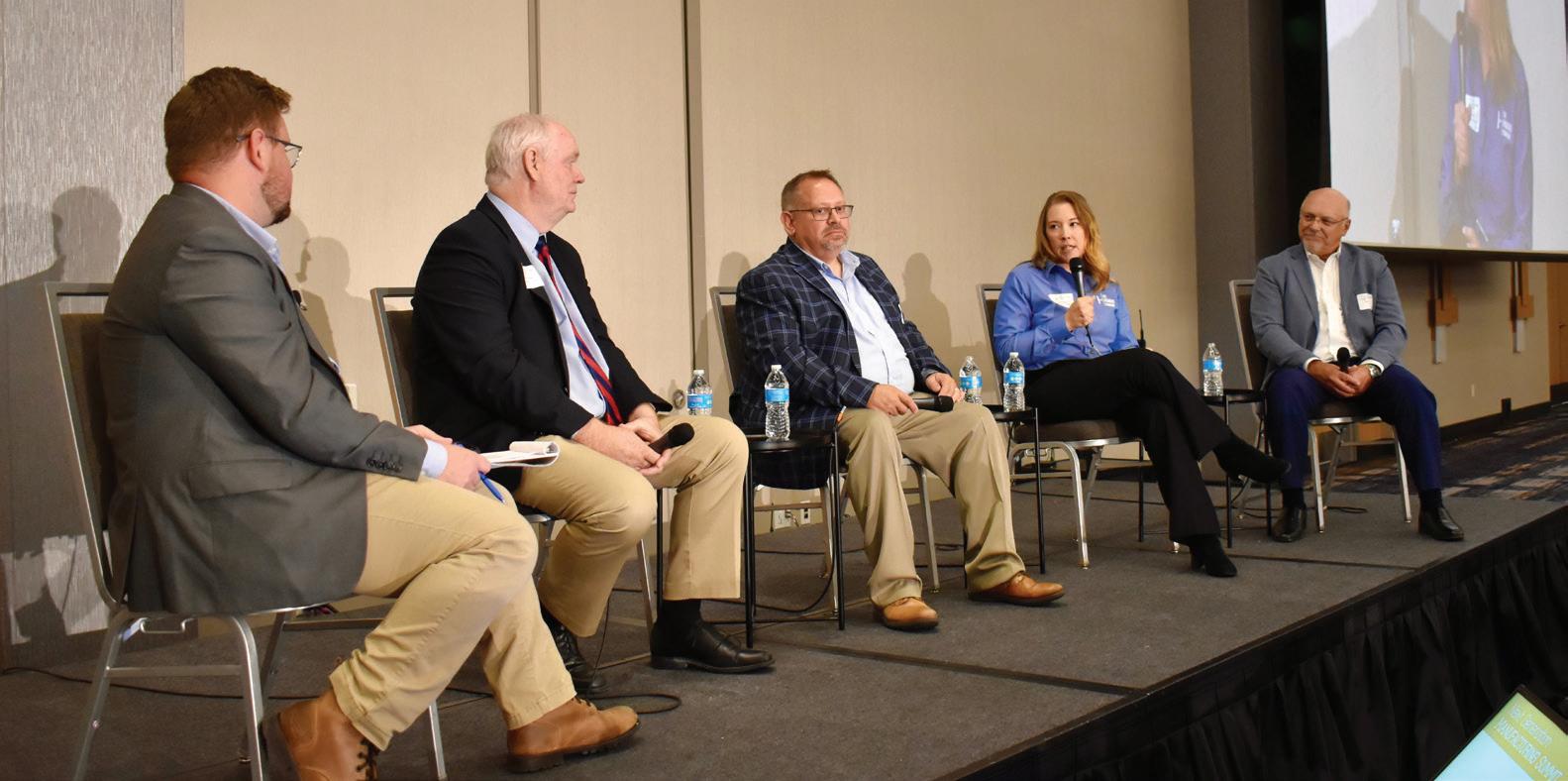
At BizTimes Media’s annual Manufacturing Summit, leaders from four Milwaukee-area manufacturing companies shared what technological investments they’re making and how they’re ironing out any kinks in the process.
The event’s main program featured a Q&A with panelists Thomas Carney, president of Darien-based Royal Basket Trucks; Rob Ewing, president of New Berlin-based Wenthe-Davidson Engineering Co.; Sara Sina, president of Brookfield-based The Howard Company; and Todd Zakreski, president of Waukesha-based Husco Automotive. Here are some key takeaways from the panel:
It was nearly a decade ago when Husco took a step back to examine how the company could continue growing its business. The manufacturer was regularly hearing from potential customers that capital and investment costs were too high. Company leadership began looking for ways to spend less and pass those savings on to customers. Husco began creating its own automation solutions. The company started by testing its solutions with basic test stands and moved upwards to more complicated test stands and eventually assembly operations.
Husco had been spending between $3 million and $15 million on each line it put on the floor. By
introducing its own automation, Husco could save an upwards of 25%.
The initial feedback Husco received from its customers proved to be invaluable for the company when considering what technology to invest in.
“It’s so important to understand how we can win programs, and that played a huge role in our initial foray into that space,” said Zakreski. “The other piece of it was just examining the place within our operation where we spend a boatload of money. Our lines are just incredibly expensive. The opportunity to do it ourselves allowed us to really put a capital preservation plan in place.”
Technology plays a part in everything The Howard Company does as a provider of drive-thru and menu board equipment and software. The business has introduced new software into its own operations to increase efficiency.
Five years ago, The Howard Company transitioned to use HubSpot as its customer relationship management system. This allowed for the automation of several tasks within the business, like creating orders and tickets and sending out emails. Switching to HubSpot has led to reduced coordination time between departments and less time spent emailing back and forth with customers, said Sina.
The Howard Company has also introduced Procero, a software platform that creates a central hub for project stakeholders to collaborate throughout the entire duration of a project. Procero has allowed The Howard Company to create customer-facing web stores specific to each client
and helped the business with graphic fulfillment. Customers can input their own data through the web stores to make orders.
The process of integrating new kinds of software has been challenging, and the company is continuing to work out kinks. Once an order is made, employees still manually add them to the ERP.
“We have saved some time in terms of graphic fulfillment and reducing errors by having customers put in their own data, but we’ve gained some manual work,” said Sina.
She recommends companies take a more comprehensive look when mapping out their company workflows ahead of introducing any new automation. A more comprehensive plan is better than starting with a simple one.
When Wenthe-Davidson began introducing automation, some of the first places the company looked were its scheduling and order processing systems.
Instead of using timecard racks that need to be shuffled around – or having people run between the planning department and shop floor to expedite a job – the company now uses live data that allows it to better serve customers, Ewing said.
An initial $60,000 investment to update the company’s computers led to new technology being implemented across every department. Now, orders that come in are sent up to the shop floor in a matter of minutes, not hours.
“On the data entry side, who wants to run out to the floor with a purple sheet that says we need this tomorrow? Nobody, especially if it happens all day,” said Ewing. “We’re looking for ways to move more fluidly.”
Royal Basket Trucks also began looking at automation to get orders out the door more efficiently. One of the first areas the company invested in was computerized sewing machines. How quickly the company would be able to introduce a new technology was key to what investments Carney made.
“When you have an idea, it’s all about how quickly you can do it,” he said. “Trying to keep the time frame short is one of the biggest things we look at.”
After introducing the new sewing machines, Carney invested in building a new mezzanine level to house Royal Basket Trucks’ sewing operations. Centralizing the work to one area and continuing to introduce new technology, like a carousel that transports fabric up to workers, has made the company more efficient.
“You can’t always bat 1,000%,” said Carney. “We’ve had some failures, but people see it and they’re more open to giving you suggestions up front.”




BY HUNTER TURPIN, staff writer
AS BILLIONS OF DOLLARS make their way through Wisconsin for infrastructure improvements, the state’s logistics systems have made considerable strides to compete with other markets. However, metro Milwaukee’s proximity to Chicago, the dominant logistics hub in the Midwest, continues to stymie the area’s ability to land the total investment needed to maximize efficiency for the regional economy.
Wisconsin has received more than $4 billion in recent years from federal government spending bills like the American Rescue Plan Act and the Infrastructure Investment and Jobs Act to fund infrastructure projects across the state.
This year, the American Society of Civil Engineers gave Wisconsin’s overall infrastructure a grade of C+, up from its previous grade of C. While that may sound underwhelming, the grade puts Wisconsin two points above the national average of C- and above all of the other states in the nation, with only Utah and Georgia also at C+.
“The key is to remain vigilant,” said Bob Bryson,
chair for the ASCE’s Roadway Council and previously the City of Milwaukee’s chief traffic engineer. “We got a shot in the arm to improve facilities and systems reaching the end of their life, but we have to keep them in good shape, maintain them.”
While the ASCE report card grade includes aspects of infrastructure that don’t contribute directly to transportation, transport-related areas in the state, like bridges and dams, received a C+ and railways received a B.
Southeastern Wisconsin industrial real estate brokers noted the region’s interstate system as the area that has seen significant improvement in recent years with several megaprojects beginning or wrapping up: I-41 has been redone in much of Milwaukee County, I-43 is currently under construction in Milwaukee and Ozaukee counties.
However, finding developable land along many of these corridors can be challenging due to the mature nature of many parts of Milwaukee, Waukesha and Ozaukee counties. The exception is the I-94 North-South corridor from the Illinois
state line to Oak Creek, where there is still a considerable amount of undeveloped land and a $1.9 billion freeway expansion project was completed in 2020.
“Amazon located there and that’s a stamp of approval – Uline continuing to build in that area is also. They realize the logistical advantages,” said Jim Barry, president of Milwaukee commercial real estate firm The Barry Company, which has worked on I-94 deals, including Amazon.
Although one of the best-positioned parts of the state, industrial real estate vacancy rates in Racine and Kenosha counties are higher than in other counties in the region, which is in part a result of fewer logistics users moving up from Illinois than initially forecasted, brokers said.
“We still have this little problem called Lake Michigan and this little problem called Chicago,” said Jeff Hoffman, an industrial real estate broker and principal with Cushman & Wakefield | Boerke. “If you’re distributing on a national basis, the reality is locating southwest of O’Hare in the I-80, I-55 corridor is still just a strategically better location.”
The one exception to the region’s otherwise modern interstate system is the 3.5-mile I-94 EastWest corridor in Milwaukee County that business leaders have been calling for the expansion of for several years.
“Once you complete that, I would suggest we’re
going to be at the leading edge of modern infrastructure for our freeway systems,” Hoffman said. “That would put us in a good position for the next 50 years.”
The $1.74 billion project received federal approval earlier this year, but still faces a federal civil rights review and a civil rights lawsuit from opponents who say the expansion will adversely affect nearby residents, most of whom are Black and Hispanic.
“Wisconsin historically has been a manufacturing economy, so the ability to get things on the road quickly – trucks, oversized equipment, material – has been very important for distribution and logistics,” Hoffman said.
An area that some brokers see room for improvement in is the region’s rail network, especially in an era when some users are looking to cut their carbon emissions. In 2023, about 30% of freight by ton was handled by rail in Wisconsin, according to Bryson, making it a crucial part of the state’s logistics system.
However, from a commercial or industrial rail standpoint, Wisconsin does not have a very deep base of existing rail-served properties, according to Hoffman. Rail service might be nearby, but bring-

ing the line directly to a site can be an expensive and long process.
“In the last two years, I’ve probably received more inquiries about the availability for rail service than I had received in my first 20 years in the business combined,” Hoffman said. “Everybody’s looking for more effective ways to transport. There’s also some carbon emitting and just the cost of transportation.”
Sandi Siegel, president of M.E. Dey & Co., a Milwaukee-based freight forwarder and customs broker, agrees that rail should be expanded in the region, but advocates specifically for a new intermodal facility, which is a facility able to move containers between different modes of transport, such as from a railcar to a truck. The southeast Wisconsin region has not had an intermodal facility since Canadian Pacific Railway closed its intermodal container service at Port Milwaukee in 2012, citing a lack of cargo volume.
As a result, 85% of the containers that M.E. Dey handles for shippers and importers in Wisconsin are moving in and out of Illinois, which is inefficient for Wisconsin companies.
“The rail and intermodal facilities in Illinois are horribly congested, and obviously the truck drivers
are driving that much further to pick up on a container in Chicago, versus a local pickup,” Siegel said. “So, the trucking portion of the move is much more expensive, you have more restrictive weight limits because you’re crossing the state line. It goes on.”
“We have a huge void in intermodal,” said Siegel, who sits on the Wisconsin Department of Transportation’s Freight Advisory Board and is participating in two studies to examine how to bring intermodal back to the region. However, getting not only the political attention to bring such a project to fruition, but also the attention from importers and other logistics companies is challenging.
Industrial brokers and logistics experts agree that with the proper maintenance and key investments, southeast Wisconsin will remain an attractive place for business, but the region still sits in the shadow of Chicago logistically, which has its pros and cons.
“I’ve never really heard complaints from any of my clients or developers suggesting the infrastructure is inadequate here,” Hoffman said. “In fact, I’ve received several compliments from out-of-area developers that are looking in the market that what we’ve got here, especially from the state line up to Oak Creek, is as good as it gets.”




BY ASHLEY SMART, staff writer
WISCONSIN’S BUSINESS and higher education leaders are once again in pursuit of a sizable federal grant, this time to create an artificial intelligence-focused manufacturing institute in the state.
The U.S. Department of Commerce’s National Institute of Standards and Technology has opened a national competition that will lead to the creation of the next Manufacturing USA institute, focused on using AI to increase the resilience of American manufacturers. The winner will be awarded up to $70 million over five years to support this effort.
There are 17 Manufacturing USA institutes in existence today, including one with a cybersecurity focus located in Chicago. All of the institutes form a national network focused on accelerating advanced manufacturing nationally.
Given Microsoft’s plans to build a $3.3 billion AI data center campus in Mount Pleasant, along with the creation of a new AI Co-Innovation Lab at UW-Milwaukee, state leaders believe placing the
next Manufacturing USA institute in Wisconsin is a no-brainer.
“It makes sense for the University of Wisconsin-Milwaukee to pursue this opportunity because of the synergies happening right now that give us a competitive edge,” said Sam Rikkers, chief operating officer at the Wisconsin Economic Development Corp.
WEDC is one of several Wisconsin entities supporting the state’s submission of a concept paper to NIST.
Other partnering organizations include the University of Wisconsin-Milwaukee, University of Wisconsin-Madison, University of Wisconsin-Stout, MSOE, Marquette University, MATC, Gateway Technical College, Madison Area Technical College, Waukesha County Technical College, Rockwell Automation, Milwaukee Tool, Oshkosh Corp., Husco, MMAC, the MKE Tech Hub Coalition and more.
In total, there are more than 50 industry partners supporting Wisconsin’s application.
Wisconsin’s concept paper, which is essentially a business plan outlining how the state’s partners would come together to support a Manufacturing USA institute, was submitted on Sept. 30. Applicants will learn if they make it to the next stage in November. A winner will be named next April.
The state has a further competitive edge to secure the $70 million NIST grant because of Gov. Tony Evers’ work to get ahead in researching AI, according to Rikkers.
In July, the Governor’s Task Force on Workforce and Artificial Intelligence released an action plan proposing several policies aimed at strategically adopting AI.
“I’m really bullish that the work already being done with Microsoft, manufacturing partners and UW-Milwaukee, along with the governor’s leadership in creating an (AI) task force, that the federal government will look at Wisconsin and say, ‘Oh my gosh,’” said Rikkers.
If Wisconsin becomes the site of the next Manufacturing USA institute, the organization will work closely with UWM’s Connected Systems Institute, which is the site of Microsoft’s

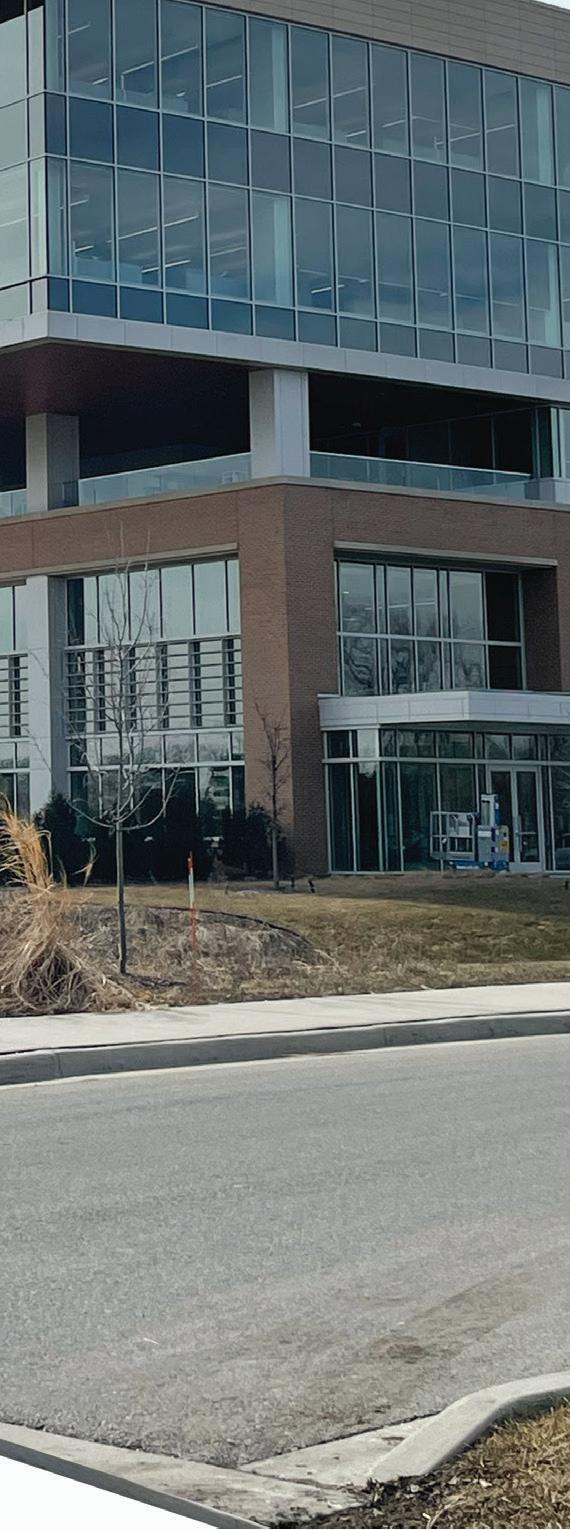

latest Co-Innovation Lab.
Manufacturing USA Institutes help address broader problems over an extended period, while UWM’s Co-Innovation Lab works with manufacturers during a shorter cycle to solve smaller prob-
lems, according to Joe Hamann, executive director of UWM’s Connected Systems Institute.
“The AI Co-Innovation Lab is focused on really quick engagement with manufacturers – to help get them started on the deployment of AI,” said Hamann. “Manufacturing USA institutes are in place to strengthen competitiveness of U.S. manufacturing on a global scale, while also strengthening our talent base.”
The Manufacturing USA institute would have a brick-and-mortar location somewhere in the state, to be determined at a later date.
In addition to the $70 million federal grant, partnering organizations will be responsible for securing cost-share funds from nonfederal sources.
“The presence Microsoft now has in the state with the data center and the Co-Innovation Lab only helps the state demonstrate that it’s a powerhouse with AI and manufacturing, and that’s the argument we make to bring this thing to Wisconsin,” said Hamann.
News of Wisconsin’s NIST application follows two other large-scale efforts aimed at gaining the state federal recognition and funding.
Earlier this year, the U.S. Department of Commerce’s Economic Development Administration named Wisconsin a finalist as part of the national Tech Hubs program, awarding the state $49 million. That funding will be used to support six regional projects, including the creation of a Health Data Hub at UW-Madison; the creation of CAREScan Mobile Screening Centers in partnership with the Medical College of Wisconsin; a theranostics-centered patient care pathway project led by GE HealthCare; an innovation to commercialization project aimed at supporting inventors; a new biohealth careers pathway; and the creation of a new steering committee to guide the projects to pre-determined milestones.
Milwaukee-based nonprofit The Water Council has submitted a separate application to become a regional innovation center focused on bolstering water and energy resilience for manufacturers. The Water Council, along with several partnering organizations, announced last May it had been awarded $1 million from the U.S. National Science Foundation to further plan out the regional innovation engine, called the W+E Forward Engine. In August, The Water Council officially submitted its “pre-posal” for the engine.





























BY ARTHUR THOMAS, staff writer
WHEN JENNIFER SLATER considered joining Strattec Security Corp. as chief executive officer, she saw a company with untapped potential, a recently refreshed board of directors that saw the same opportunity, and a strong balance sheet and financial flexibility needed to execute on that vision.
rectors will go from more than 19 years to less than three years in just one year. The board is also establishing stock ownership guidelines for directors, making changes to its compensation programs and conducting ongoing director education on cybersecurity and IT governance requirements.
ucts is “they’re agnostic to the powertrain” and are found on electric, hybrid and internal combustion engine vehicles.
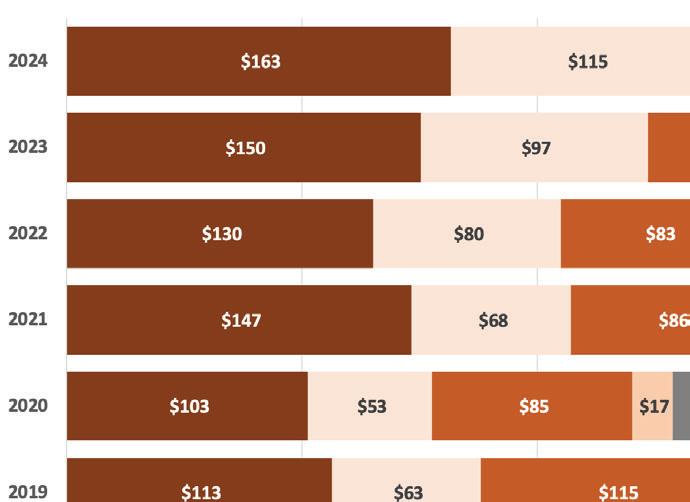
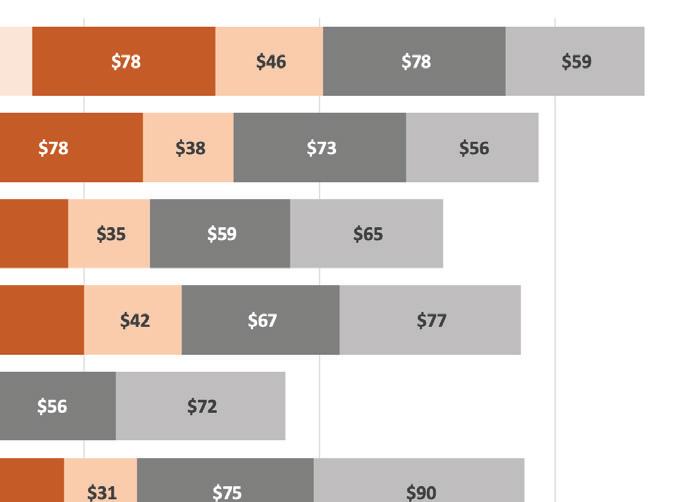
While the company has seen sales growth the past two years, exceeding pre-pandemic levels in both, bottom line results have been a bit more mixed. Net income for fiscal 2024 was $16.3 million, but the company had a loss of $6.7 million in 2023 and income of $7 million.
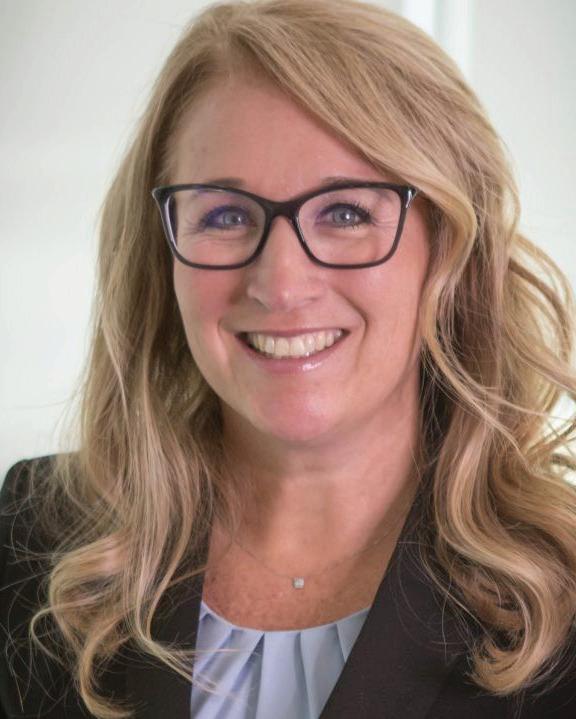
Slater took over as president and CEO of the Glendale-based maker of vehicle access products on July 1. She joined the company from Sensata Technologies where she was an executive vice president and general manager for performance sensing. Prior to Sensata, she spent more than 15 years at Johnson Controls and its battery supplier spinoff Clarios.
Frank Krejci, who first joined Strattec in 2010 and had served as CEO since 2012, retired at the end of 2023.
In her first 75 days on the job, Slater had a chance to visit the company’s operations in Wisconsin, Michigan, Texas and Mexico. What she found validated her expectations.
“We have opportunities to raise the sophistication of the business and modernize how this company operates,” Slater said at the Sidoti Small Cap Virtual Conference in mid-September. “There is a lot of change to be made to extract this value. In fact, I see this as a self-help story.”
Strattec has already seen a number of changes over the past 18 months. In addition to Krejci’s retirement, F. Jack Liebau Jr., an investment management professional who also serves as chairman of Ohio-based plastics manufacturer Myers Industries, took over in January as chairman of the board for Harold M. Stratton II, who had held the position since 1999.
Liebau joined the board in October 2023 along with Bruce Lisman, a private investor and the retired chairman of JPMorgan’s global equity division.
Stratton and David Zimmer, who served on the board since 2006, are set to leave at the company’s annual meeting in October. Matteo Anversa, chief financial officer of Logitech, has been nominated to join the board. Anversa was previously CFO of automotive supplier Gentherm and held financial roles at Fiat-Chrysler, Ferrari and General Electric. If the board nominations are approved by shareholders, the average tenure of Strattec’s di-
The company is also seeking to change its articles of incorporation so that directors are elected annually instead of on staggered three-year terms.
Even with all the changes taking place, Strattec reported nearly $538 million in sales in its 2024 fiscal year, which ended in June. The figure represented an increase of 9.1% from fiscal 2023. However, $32.7 million of the $44.9 million improvement was the result of net price increases to major customers, including $9.7 million in retroactive increases that likely will not repeat.
Major automakers make up the bulk of Strattec’s customer base. General Motors accounted for the largest portion of sales in the 2024 fiscal year, at 30%. Ford Motor Co. accounted for another 21% and has become a bigger customer in recent years, climbing from around 13% of sales in 2019.
Stellantis was responsible for another 15%, down from almost 24% in 2019 when it was Fiat-Chrysler.
Hyundai and Kia, commercial and Tier 1 customers, and other OEMs, including Tesla, accounted for the remainder.
As for product mix, door handles and exterior trim account for around 25% of sales followed by power access at 24%. Keys and locksets account for 20%, latches represent 13%, and user interface controls, aftermarket products, original equipment service and other products account for the remainder.
Slater noted a “great feature” of Strattec’s prod-
Potential changes Slater sees include implementing a management operating system to break down silos, updating IT systems, improving access to data, and developing a strategy to support sustainable growth, she said.
In addition to developing a robust strategy, Slater said near-term priorities for the business will include making sure the company has the right organizational capability and stabilizing the business to provide predictable results.
“The key focus items to enable this are making sure we have a culture for the organization around accountability and delivering results to drive predictable performance,” Slater said. “We also will look across our product portfolio to ensure we have the right resources focused on high-value sustainable products while de-emphasizing those that are not contributing as profitably.”
Slater said Strattec did “a nice job last year” securing pricing increases from customers, but when asked by an analyst if there was more work to do on pricing, she pointed to the company’s need to improve its data systems to have a better view of how it makes money.
“One of the things that I talked about is instilling a management operating system and really getting more access to data,” Slater said. “The technology systems right now are pretty disparate and antiquated, and so when you have a starting point that way, this business hasn’t historically looked at profitability at a granular enough level, so step one is getting at the data to determine how we look at that at a product level.”

Experienced. Capable. Predictable. Responsive. All things you expect from your banking partner when navigating complex transactions. Ixonia Bank provides innovative financing solutions and a relationship that exceeds expectations.
$6,000,000 Industrial Building Financing for Growth
$4,000,000 Equipment Financing


$3,900,000 Capital Expenditure Financing for Growth
$2,900,000 Partner Buyout & Working Capital Financing
$1,957,000 Real Estate Acquisition Utilizing SBA Programs
$1,605,000 Industrial Manufacturing Acquisition
$1,400,000 Working Capital & Real Estate Financing
$695,000 Mixed Use Construction
$600,000 Capital Equipment Upgrade Financing
$500,000 Working Capital Increase for Growth



$733,000 Succession Plan & Working Capital Financing






The Business Bank Run By Business People


BY LINDSEY M. MCKEE, for BizTimes
WHEN ASKING CHILDREN their career aspirations, health care-related answers tend to be “doctor” or “nurse.” However, health care job options are much more extensive and growing in demand. The U.S. Bureau of Labor Statistics projects health care occupations to grow much faster than average from 2022 to 2032, with about 1.8 million openings each year.
As one of the largest program areas at the Wisconsin Technical College System, the health care field is a worthwhile pursuit with many unique roles at many different career stages, said Katy Pettersen, director of strategic advancement at WTCS.
“Nowadays, people have so many professions within their lifetimes,” Pettersen said. “It’s not like they get out of high school and do something for the next 30 years. It’s not forever, it’s what’s next.”
And what’s next may go far beyond what was initially imagined, said Kim Litwack, dean of the University of Wisconsin-Milwaukee College of Health Professions & Sciences.
“These are roles people may not think of right off the bat,” Litwack said. “Eliminate the pre-conceived notions and everything you’ve seen on social media and television. You’ll learn that what you think you understand about a career are not necessarily the only options for that career.”
With wide-ranging respiratory issues, including those associated with COVID-19, respiratory therapists are greatly needed, said Mark Farrell, executive director of talent delivery at Wauwatosa-based Froedtert Health. These specialists provide focused care on varied breathing problems.
He also highlighted atypical occupations within the nursing realm. Nurse technicians provide inpatient care support, from hygiene upkeep to vital signs monitoring. Certified nurse anesthetists administer anesthesia and monitor anesthetized patients. Care managers work to improve health outcomes through care coordination as well as health advocacy.
Deb Dresen, vice president of specialty care at Madison-based UW Health, shared some roles the health system looked to fill as it prepared to open its new outpatient facility. Radiation therapists administer radiotherapy treatment to cancer patients in addition to managing the associated radiotherapy planning and coordination. Medical stenographers complete tasks such as transcribing health professionals’ reports and data to maintain patient records.
Technologist roles are increasing in necessity as well as variety. Radiologic technologists, for instance, perform a wide variety of medical imaging exams using specialized equipment, from x-rays to
computed tomography (CT) scanners, said Chuck Klein, talent acquisition manager at UW Health. Farrell underscored surgical technologists, whose responsibilities include ensuring availability of proper instruments in surgeries as well as surgical closing procedures.
Pettersen observed demand for occupations serving other aspects of health visits. Medical assistants place patients in rooms for office appointments and collect vital initial information among other critical duties. Following appointments, medical coders categorize services rendered to process for insurance payment as well as patient billing. Farrell called attention to positions often less visible in care settings, such as sterile processing technicians who clean and sterilize procedure equipment.
“They’re definitely not seen by many of us when we’re there for care, but they are critical and essential to making sure that we’re all safe in our procedures,” Farrell said.
Within UWM’s College of Health Professions & Sciences, Litwack discussed athletic-focused health occupations. Athletic trainers work with athletes, sports teams, gyms and more for illness and injury prevention, strength training and onfield support during sporting events.
Performance psychologists work on athletes’ mental preparation, with building confidence, concentration and motivation all part of performance optimization. These psychologists may also work with patients who are military personnel and firefighters.
Litwack spotlighted specialists in adaptive design and assistive technology as well. Such specialists identify ways to modify environments and/
or equipment for disabled individuals to be most effective in daily activities.
Health care job seekers should not overlook this trusted and innovative field, says George Mackinnon, dean of the School of Pharmacy at the Medical College of Wisconsin.
“Pharmacy (has) the third-most populated number of health care providers in the United States, medicine is no. 2 and nursing is no. 1,” Mackinnon said. “If you look at the Gallup polls, all three of those disciplines are well-trusted by the public to deliver services to them.”
MacKinnon stated pharmacy school graduates are increasingly in demand as pharmacists become more and more embedded within physician practices. In addition to pharmacists, pharmacy technicians themselves are dispensing prescriptions to health professionals and patients.
The pharmacy field has even entered into the evolving genetic counseling arena. Genetic counselors help discover the health clues present in patients’ genes, said Jennifer Geurts, director of MCW’s genetic counseling master’s degree program.
In addition to prenatal and pediatric care, Geurts said genetic counseling is prominently used in cancer care for prevention, early detection
as well as treatment.
A newer frontier in genetic counseling is pharmacogenomics.
“Different medications are metabolized by the body differently. That can affect how a medication is effectively given or potential side effects patients might have from that medication,” Geurts said. “So, making sure that patients are given medications that are safe and effective is the role of pharmacogenomics.”

Institutions and organizations often present career fairs for students as well as job seekers to explore the plethora of options. And the opportunities are truly there.
Educational requirements for health care professions vary as widely as the occupations themselves, from high school diplomas and certificates to bachelor’s degrees and doctorates. Many health systems also offer internal training programs, job shadowing and apprenticeships.
“When I joined health care, I had no idea how diverse and how many opportunities there were to grow and change,” Dresen said. “If you love to be a person that helps to serve, helps to solve, helps to be there for your fellow human beings, I think it’s an incredible place to work and the opportunities are endless.” n

BizTimes Milwaukee is proud to present its showcase of Notable Women in Manufacturing, recognizing accomplished professionals who are shaping their own organizations as well as the path forward for other women in their industry. The individuals on the following pages were nominated by their peers and highlight the talent in the region.







METHODOLOGY: The honorees did not pay to be included. Their profiles were drawn from nomination materials. This list features only individuals for whom nominations were submitted and accepted after a review by our editorial team. To qualify for the list, nominees must work in southeastern Wisconsin, must serve in a significant role at their organization and have been in the manufacturing sector for five or more years. They also should have assumed a leadership position outside of their own organization and should have mentored other women in their professional or volunteer work.




JAMIE ANDRZEJEWSKI FOUNDER AND OWNER NOURISH NATURAL PRODUCTS
Since founding Bayside-based Nourish Natural Products in 2018, Jamie Andrzejewski has grown the company to sell her products online, at community events and through retailers nationwide. Nourish produces a line of organic products for the body, mind and home, including bug spray, deodorant, room sprays and essential oil blends. Andrzejewski’s success is a testament to her deep commitment to holistic wellness, creating healing solutions for both body and mind, according to Kaitlin Henze, founder of Passion to Profit.
“What sets Jamie apart is her unwavering dedication to serving others,” said Henze. “As a servant-leader, she inspires her team of seven women, fostering a work environment filled with encouragement, support and a shared commitment to Nourish’s mission.”
Andrzejewski’s leadership extends beyond her business, through mentorship of aspiring entrepreneurs, students and fellow small business owners.
Andrzejewski is “a treasure,” whose insights and teachings have been a catalyst for others, according to Gale Klappa, former chairman and CEO of WEC Energy Group.





CO-OWNER
GENMET CORP.
Mary Isbister purchased Mequon-based GenMet Corp. with her husband in 1999. Since then, the company has quadrupled in revenue, become ISO certified and undergone a lean transformation.
As co-owner of the full-service custom metal fabricator, Isbister is responsible for business operations and the ongoing development of the executive leadership team.
She began her career in 1987 at Pfizer Inc. as a medicinal chemist and eventually became chief of staff to Pfizer’s drug discovery and development team. After leaving Pfizer to move to Wisconsin, Isbister started a consulting practice, Synergy Solutions.
Isbister has served on numerous national and local boards, including the National Institute of Science and Technology’s Manufacturing Extension Partnership Advisory Council, the Metropolitan Milwaukee Association of Commerce and the Wisconsin Manufacturing Extension Partnership. In 2012, she was appointed by then-Gov. Scott Walker as chair of the Council on Workforce Investment.
“Mary is passionate about improving primary, secondary and technical STEM education and ensuring that manufacturing continues to be a pillar of the U.S. economy,” said Eric Isbister, Mary’s husband and GenMet co-owner.
RACHELE LEHR CHIEF HUMAN RESOURCES OFFICER MAYVILLE ENGINEERING CO.
Rachele Lehr joined Milwaukeebased Mayville Engineering Co. as chief human resources officer in March 2023 and has since been a transformative force at the company, according to Ryan Raber, executive vice president of strategy, sales and marketing at Mayville Engineering.
“Her leadership has made an immediate and significant impact, particularly through the launch of the ‘One MEC. One Mission’ initiative,” said Raber.
“This strategic initiative has successfully unified MEC’s operations under a cohesive cultural framework, aligning our people strategy with broader business goals. This alignment has significantly enhanced organizational performance and markedly improved employee engagement,” Raber added.
Prior to Mayville Engineering, Lehr served nearly 15 years in various HR roles at Briggs & Stratton.
Beyond her role at MEC, Lehr is a board member of GPS Education Partners, an organization dedicated to helping students transition from education to meaningful careers through workbased learning.

ROBERTA BREHM PRESIDENT AND OWNER VYRON CORP.
Since acquiring Waukeshabased Vyron Corp. in 2018, president and owner Roberta Brehm has led the HVAC manufacturer’s representative to achieve growth of more than 150% and expand its workforce by 60%.
“Her leadership has not only driven success for Vyron, but also set a new standard for women in manufacturing,” said Joy Gravos, president and CEO of Curative Care Network Inc.
Under Brehm, Vyron has been certified by WBENC as a womanowned organization and has garnered both local and national recognition. Brehm hosts the Women in the Construction Industry Golf Outing to foster networking and growth opportunities for women in the field.
Brehm introduced “Vyron University,” an educational program for Vyron’s facility owners, engineering and mechanical contractor customer base to educate them on everything HVAC.
In 2022, Roberta launched the Vyron Community Foundation, which supports organizations such as the Salvation Army, Hunger Task Force and local food pantries. She also established a foundation for employee charitable contributions.
“Her leadership has created a fulfilling and rewarding environment for her team,” said Gravos. “Roberta’s dedication to her employees, clients and community has been profound.” 24_009059_Milwaukee_Biz_Times_OCT7 Mod: September 10, 2024 9:28 AM Print: 09/13/24 page 1 v2.5






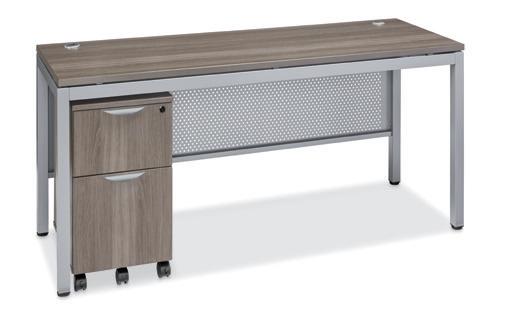




JENNY BAUM SENIOR SAMPLE COORDINATOR AND PRODUCTION CONSULTANT
A.L. SCHUTZMAN
CO.
Jenny Baum is a senior sample coordinator and production consultant for Pewaukee-based A.L. Schutzman Co.

The company produces packaged snack foods, including gourmet nuts, nut blends, trail mixes, popcorn, chocolate and toffees.
“Beyond her core responsibilities, Jenny is known for her invaluable role in training new employees, sharing her extensive knowledge and expertise to help them succeed,” said Rebecca Eshleman, vice president of sales for A.L. Schultzman. “She often goes above and beyond her job description, taking on additional tasks and responsibilities to support the sales, procurement, production and shipping teams to enhance overall operations.”
Baum has worked in the industry for 35 years. She’s gained a reputation for her punctuality, loyalty and dedication.
“Her meticulous attention to detail and tireless work ethic ensures that every product leaving the facility meets the highest quality benchmarks,” said Eshleman. “Jenny’s proactive approach and relentless pursuit of perfection not only exemplify her professionalism, but also reflect her deep-seated passion for her work.”
LINDA HUESMANN SENIOR GRAPHIC DESIGNER - FOOD MARKETING AND PACKAGING
A.L.
SCHUTZMAN CO.
Since 1998, Linda Huesmann has served as a senior graphic designer at Pewaukee-based A.L. Schutzman Co., where she is an integral member of the team, according to Rebecca Eshleman, the company’s vice president of sales.
“With over two decades of experience, Linda has established herself as a creative force in the snack manufacturing industry,” said Eshleman.
Huesmann’s expertise spans the design and production of a wide range of digital and print materials, from product packaging and logos to websites and promotional displays. She’s known for her skills in creating detailed packaging, technical illustrations, and charts, graphs and animations. Her role includes photography, vendor negotiations and “ensuring accuracy in print projects through meticulous press approvals,” Eshleman said.
Huesmann earned her bachelor’s degree in fine arts from the Milwaukee Institute of Art & Design.
“Adept at working under tight deadlines, Linda collaborates closely with customers and the internal sales team to bring their visions to life while staying abreast of the latest industry trends and technologies,” said Eshleman.

KELLY JONES MASTER SCHEDULER
A.L. SCHUTZMAN CO.
Kelly Jones, master scheduler at Pewaukee-based A.L. Schutzman Co., has been with the company since 2007. She is responsible for creating and managing the master production schedule and meeting regulatory requirements.
“She works with the sales, purchasing, production, quality assurance, shipping and customer service teams to ensure that the entire process flows seamlessly,” said Rebecca Eshleman, vice president of sales at A.L. Schutzman.
Jones’ duties include overseeing production to maintain optimal inventory levels and manage shelf-life restrictions. She coordinates with purchasing, manufacturing and other departments to address any issues and adjust schedules based on production outcomes and component availability.
Jones also ensures that all production processes adhere to quality-assurance standards and FDA regulations, coordinating with quality assurance to validate new processes and components.
“Her role involves meticulous planning, communication of changes to delivery dates and maintaining thorough records to ensure compliance with safety and regulatory guidelines,” Eshleman said. “Kelly’s proactive approach and attention to detail make her a key asset in upholding the company’s reputation.”

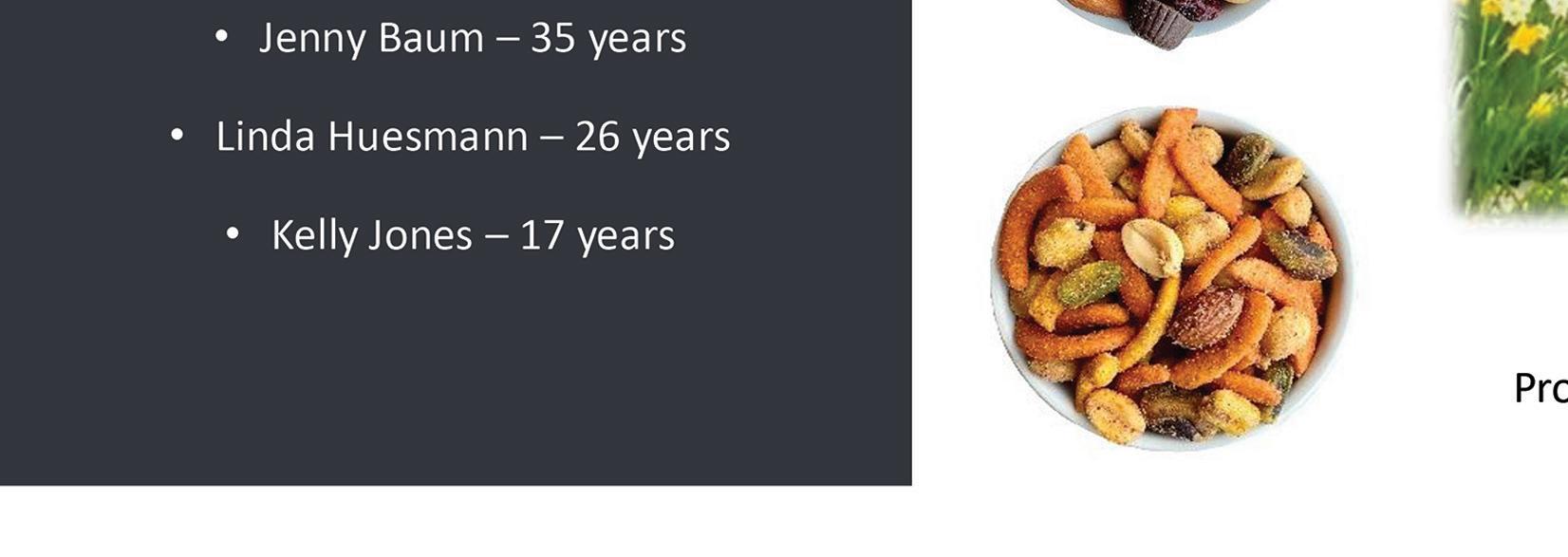

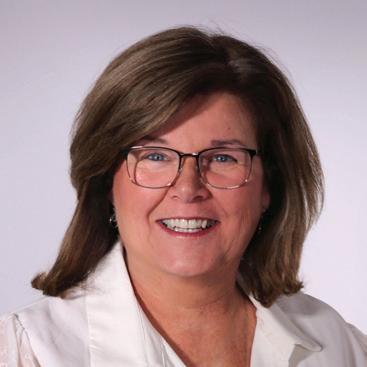
JULIE GRAVERSON CHIEF OPERATIONS OFFICER
Julie Graverson, chief operations officer of Milwaukeebased Sellars Absorbent Materials, has built a 40-year career in the paper industry.
Colleagues say Graverson understands almost every aspect of the “away from home” tissue market, which includes public restroom toilet paper, paper towels, restaurant napkins, shop towels and more. Her knowledge is built from the ground up since she has done everything from working in a paper mill to being part of a team that started, ran and eventually sold a paper product converting company.
Graverson joined Sellars in 2016 as vice president of supply chain. She previously worked in a variety of operational and quality positions for Wisconsin Tissue in Neenah, a startup converting plant in Arizona, and National Tissue in Cudahy.
“Her knowledge of the processes, products and paper industry is second to none. But more importantly, Julie is a compassionate leader, who cares about all employees on the plant floor as well as the office,” said Michelle Gross, vice president of marketing at Sellers. “Her tireless work ethic and ability to problem solve and navigate the challenges that can arise in a manufacturing environment truly set her apart.”
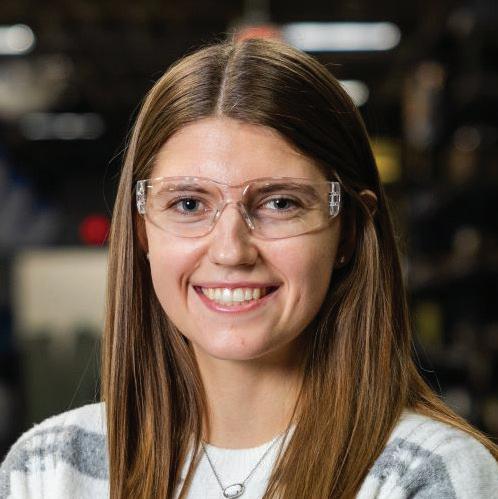
Erin Jozwowski, continuous improvement leader at Graftonbased Kapco, started at the company in 2019 as an intern.
She was hired full time as an industrial engineer in 2021 and promoted to manufacturing engineer II in Kapco’s fabrication department in 2023. Jozwowski was promoted to her current position in July.
“Throughout her time here, Erin has demonstrated a strong commitment to excellence and has played a pivotal role in (continuous improvement) efforts,” said Craig LeBlanc, director of quality and continuous improvement at Kapco. “Her experience applying CI principles, coupled with her hands-on process knowledge, is critical in our path forward as we work to advance our initiatives.”
In 2023, Jozwowski graduated with a green belt from Kapco’s Lean Six Sigma program, through WMEP Manufacturing Solutions, and then became an instructor for the program. In the past year, more than 40 employees have taken the training she facilitates.
“Erin has tremendous engineering aptitude and understands a manufacturing process quickly,” LeBlanc said. “She is always up to a new challenge and engages with teams by asking the right questions. The Green Belt program is one example of how she is doing it.”
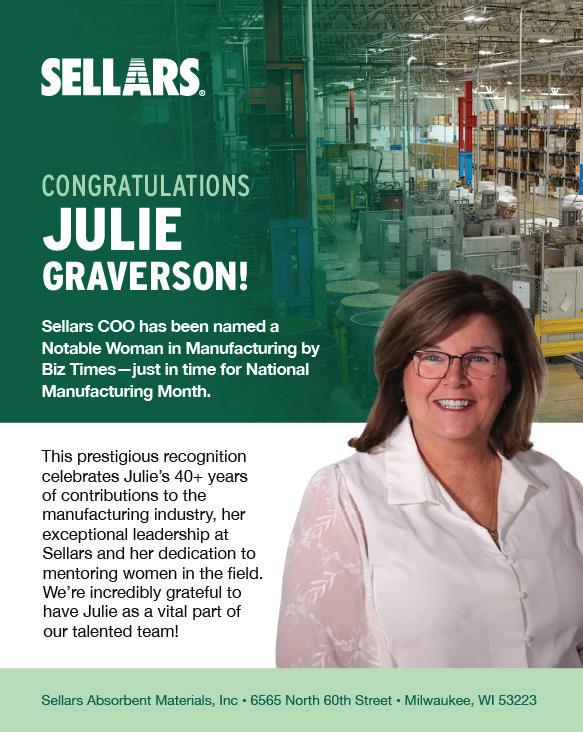
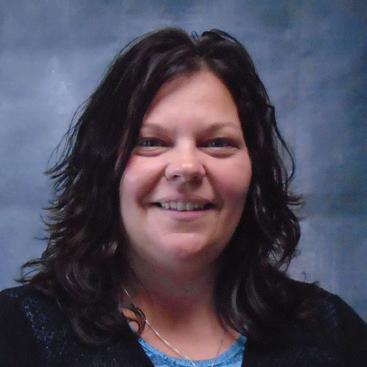
JENNY HAFEMANN
MARKETING, OPERATIONS AND SALES SUPPORTPROJECT MANAGER
SYNERGYOPS | REGAL WARE
Jenny Hafemann serves as marketing, operations and sales support project manager at SynergyOps, a manufacturing division of Milwaukee-based Regal Ware.
Hafemann has been with Regal Ware for 24 years, including in her current role since January 2023. Her tenure there also has included positions in sales, customer service, marketing and project management.
“Jenny is a real go-getter and seems to get things done without losing her cool. She’s very well organized and a great planner,” said daughter-in-law Janet Hafemann.
For instance, Hafemann led a team that put together an event in which SynergyOps hosted at its West Bend facility 200 Saladmaster dealers and distributors from across the U.S. and Canada. She’s also been involved with the planning and execution of the company’s exhibit booth and product showcase at the Inspired Home Show in Chicago.
Beyond her professional responsibilities, Hafemann gives back to the community through Regal Ware and SynergyOps. She’s been part of employee volunteer teams that have decorated the courtyard at the Cedar Community senior living facility in West Bend and served lunches to the Boys & Girls Clubs of Washington County.

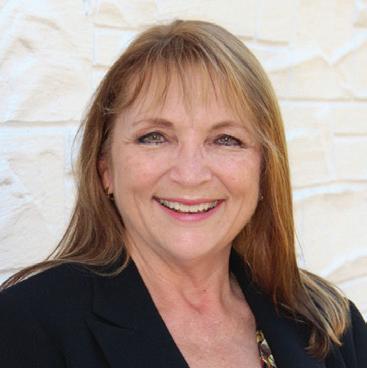
LINDA HAPKA VICE PRESIDENT OF OPERATIONS CHRYSPAC
Linda Hapka, vice president of operations at Milwaukeebased Chryspac, has three decades of experience working in operations management and business development for manufacturers in southeastern Wisconsin.
She first joined the assembly and packaging contractor in 2014, working two years as director of business development. Hapka then spent six years as business development manager at Milwaukee-based nonprofit Beyond Vision before returning to Chryspac in June 2023.
“Her experience and industry knowledge were put into action very quickly after Linda returned to Chryspac,” said Warren Scurlock, vice president of Chryspac.
In July 2023, a longtime customer was challenged with a containment hold requiring a ramp up to inspect more than 1 million parts per week for any of eight potential defects.
“While maintaining no interruptions or delay for any of our other customers, we were able to meet this customer’s goal of eliminating the containment requirement within a four-month window,” said Scurlock.
The project became the foundation to Chryspac’s newly launched “DataPAC” to provide a live project analytics connection dashboard for inventory and project reporting, Scurlock added.
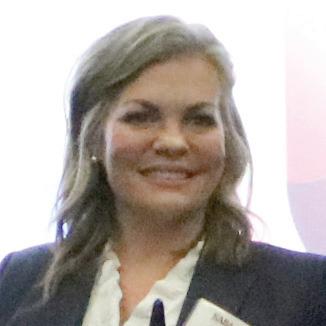
KRISTAN PRUETT SENIOR PLANT DIRECTOR NIAGARA BOTTLING LLC
Kristan Pruett began working at Niagara Bottling as a production supervisor in 2014 to support the start-up of its $56 million plant in Pleasant Prairie.
She later climbed the ranks to production manager and then to her current position as senior plant director in 2019. Shortly after in 2020, Pruett led a $36 million expansion that included adding more than 40 jobs.
As production manager, Pruett was instrumental in achieving an 89% positive employee engagement survey score for a robust training program that led to increased retention and employee satisfaction, according to Becky Noble, director of marketing for the Kenosha Area Business Alliance, which recognized Niagara Bottling as its Business of the Year in 2023.
Having served 10 years in the U.S. Navy as a surface warfare officer and reaching the rank of lieutenant commander, Pruett credits her military background for providing a foundation for leadership and hard work.
“Kristan believes a great leader is humble, transparent and knows their areas of opportunity,” said Noble. “She adds that it is important to understand your weaknesses and work to surround yourself with a team that fills in those gaps so collectively you all win and succeed.”
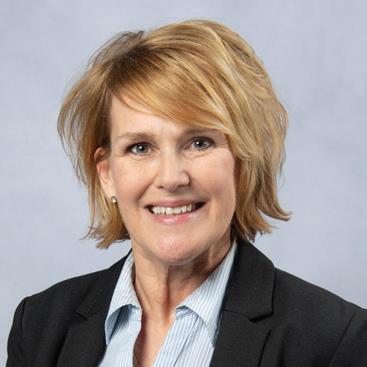
RHONDA MATSCHKE EXECUTIVE VICE PRESIDENT OF HUMAN RESOURCES GENERAC
Rhonda Matschke, executive vice president of human resources at Town of Geneseebased Generac, has helped drive significant growth for the company, according to colleagues.
“Rhonda’s partnership, experience and leadership has been an important part of Generac’s growth and thriving culture,” said Aaron Jagdfeld, CEO of Generac. “She was a driving force in helping us grow domestically and globally, and in our strategic direction from an industrial company to a leading energy technology company.”
When Matschke joined Generac in 2008, the company had $550 million in net sales with a workforce of 1,500 and three manufacturing plants. Today, the company has $4 billion in net sales with 8,600 employees across 18 manufacturing facilities globally, including five in Wisconsin.
Matschke has the ability to “seamlessly navigate the needs of the business and employees to always be aligned,” said Tim Hearden, executive vice president of operations at Generac.
Her leadership was instrumental in integrating more than 25 acquisitions over the past 15 years. She created a “Culture Club” during a period of heightened acquisition activity, providing a roadmap for cultural integration.

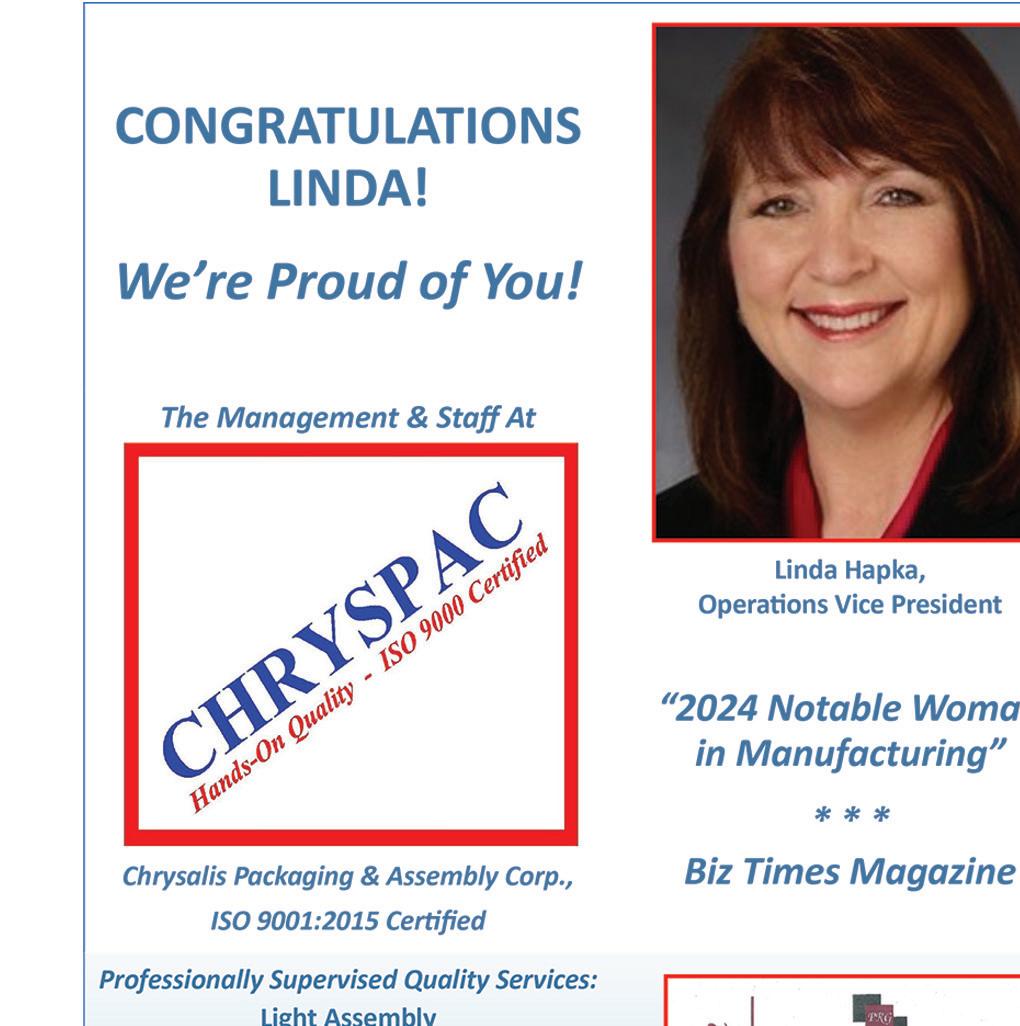






Keep up with BizTimes’ roundup of the
At companies across southeast Wisconsin, notable executives are running businesses, navigating company restructurings, serving on boards, running marketing departments, and investing in growth throughout the region. The notable individuals profiled in these categories are nominated by their peers at work and in the community.
Salutes the accomplishments of people and organizations making a positive difference on the front lines of health care.
- Nomination Deadline: November 1, 2024 -
Issue Date: December 9, 2024
Notable Leaders in Higher Education
Nomination deadline: December 20, 2024
Issue date: January 27, 2025
Notable BIPOC Executives
Nomination deadline: January 27, 2025
Issue date: February 24, 2025
Notable Credit Union Leaders
Nomination deadline: February 17, 2025
Issue date: March 17, 2025
Notable Women in Construction, Design & Engineering
Nomination deadline: March 17, 2025
Issue date: April 14, 2025
Notable Nonprofit Board Leaders
Nomination deadline: April 14, 2025
Issue date: May 12, 2025
Notable Entrepreneurs
Nomination deadline: May 5, 2025
Issue date: June 2, 2025
Notable Leaders in STEM
Nomination deadline: May 26, 2025
Issue date: June 23, 2025
Notable Latino Leaders
Nomination deadline: June 23, 2025
Issue date: July 21, 2025
Notable General Counsels
Nomination deadline: July 21, 2025
Issue date: August 18, 2025
Notable Alumni
Nomination deadline: August 11, 2025
Issue date: September 8, 2025
Notable Leaders in Supply Chain & Logistics
Nomination deadline: August 25, 2025
Issue date: September 22, 2025
Notable Leaders in Insurance
Nomination deadline: September 8, 2025
Issue date: October 6, 2025
Notable Leaders in Commercial Real Estate
Nomination deadline: October 20, 2025
Issue date: November 17, 2025
Notable Health Care Heroes
Nomination deadline: November 17, 2025
Issue date: December 15, 2025





GRIEVING IS A JOURNEY we all must take in our lives. The duration of this emotional journey is different for each individual. During a period of unemployment, you are on that journey. The emotions you experience are normal.
I will use a 1993 episode of “Frasier,” titled “Good Grief,” to illustrate the stages of grief. In this episode, Frasier and the entire staff for his radio show were fired. During the episode, Frasier experiences all five stages of the grief cycle.
Frasier wallows and complains about being fired to his family and friends and states the station will realize the error and call him back. This is a common belief among individuals in this initial stage. They rationalize to themselves that “it’s all a mistake” or “they will realize they made an error.”
During a picnic that Frasier throws for his unemployed staff, he soon discovers that a number of them have found jobs. His initial reaction is one of happiness for them and he offers his congratulations. But while demonstrating how to strike the pinata, his anger is projected onto the pinata as he continues to hit it forcibly until it breaks, and the candy is thrown into the air. Anger turned inward can lead to depression.
Frasier prays to the Lord for guidance. He invites his fan club to dinner at his home to raise his spirits, only to find out the club only has three quirky members. “What ifs” is not a road you wish to travel. You can think that if you were a better employee, a better supervisor or more assertive, things would have been different. It is a non-productive use of their time, you can’t change the past, only learn from it.
Frasier begins to eat in a compulsive manner and does not respond to either his brother’s council or his father’s. He sinks to the bottom emotionally, is depressed and begins to cry uncontrollably. His brother tries to console him, but to no avail. Depression needs to be addressed early on in the cycle. Long-term depression requires an intervention by a professional.
One strategy to shorten the depression cycle is to experience a bereavement ritual as you would if someone close to you died. You would sit and reflect on all of your achievements and accomplishments in your last position and see you are a person of value. It is one way of achieving closure.
Frasier breaks down and cries uncontrollably. He agrees he needs assistance from his brother, a trained therapist. The show concludes as the brothers meet for their morning coffee and Frasier thanks his brother Niles for helping him regain his composure and confidence.
Members of two Milwaukee-area employment networks were surveyed earlier this year. The responses from those surveyed indicated their anger was in many cases directed at their immediate supervisor, not the employer. More than 50% of the respondents to the questionnaire stated they were in the acceptance stage, but more than onethird said they were still experiencing signs of depression.
If you are still moving between the depression and acceptance stages, or you are still angry, consider these strategies:
» Seek outside assistance to break the cycle and resolve the conflict in emotions.
» Consider meditation, relaxation or increasing physical activity or hobbies as constructive outlets for your emotions.
» Journaling and other creative outlets such as sewing, painting and sculpting can help you express your emotions.
» Build your skills by taking online courses and add them to your toolbox.
» Join a support or networking group to interact with others and expand your network.
Grief is a process that has several steps. If someone going through this cycle feels they need additional support, that is a decision they need to make on their own. By recognizing and engaging the grief cycle in a productive manner and by utilizing the strategies presented here, an unemployed individual should be able to reduce the time spent acquiring their next position. ■

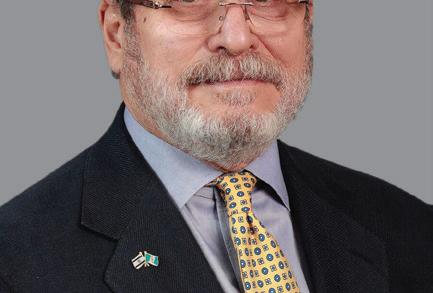
Cary Silverstein, MBA, is a speaker, author and consultant, a former executive for Gimbel’s Midwest and JH Collectibles, and a former professor for DeVry University’s Keller Graduate School. He can be reached at csilve1013@aol.com.
INSIDE THE INDUSTRY
Publication Date: January 27 | Space Reservation: January 8
HOSPITALITY & EVENT PLANNING
Publication Date: February 24 | Space Reservation: February 5
ANNIVERSARIES
Publication Date: March 17 | Space Reservation: February 26
ECONOMIC DEVELOPMENT PROFILES: PROJECT PROFILES
Publication Date: April 14 | Space Reservation: March 26
HOW TO: ADVICE FOR SMALL BUSINESSES
Publication Date: May 12 | Space Reservation: April 23
FACES OF FAMILY BUSINESS
Publication Date: June 2 | Space Reservation: May 14
LEADERS IN INNOVATION
Publication Date: June 23 | Space Reservation: June 4
CEO Q+A
Publication Date: July 29 | Space Reservation: July 10
DIVERSITY & INCLUSION
Publication Date: July 21 | Space Reservation: July 2
HOW SHE LEADS
Publication Date: August 18 | Space Reservation: July 30
FUTURE 50: WHERE ARE THEY NOW
Publication Date: September 22 | Space Reservation: September 3
WEALTH MANAGEMENT & ESTATE PLANNING Q&A
Publication Date: October 20 | Space Reservation: October 3
ESOP ESSENTIALS Q&A
Publication Date: October 20 | Space Reservation: October 3
REAL ESTATE Q&A: BUILDING PROJECTS
Publication Date: November 17 | Space Reservation: October 29










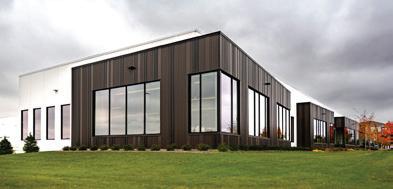




























Take time to document what
BY NOW, you know that I am a big fan of early and intentional exit planning. My experience tells me that the business owners who do so are an order of magnitude more prepared to achieve a dream exit that yields maximum money while setting them up for maximum meaning in their life after the sale.
All business owners get that. But the truth for many is that kind of planning can seem like a long, hard journey and because of that, they do nothing and hope for the best. Ugh!
However, as Confucius said, a journey of a thousand miles begins with a single step and a recent conversation with a friend made that first step seem really easy to take.
My friend is young, healthy and very successful. He took that first step and it made me proud. He wrote a letter to his family (and for himself), explaining his wishes for his business in the event of his untimely death, like getting hit by the proverbial bus. The letter outlined what he wanted for the business, his employees, and his family if he were no longer around.
While a letter is not a comprehensive exit plan, writing it was a smart and thoughtful move, and it reminded me of a story I heard during my time as a Vistage member about the green box.
As the story goes, a man was tragically killed in a plane crash. Fortunately, he had the foresight to
prepare his family for such an unexpected event. He had put together a green box – a simple, physical box containing all the key information his family would need in his absence. This box held everything from financial documents to business plans and personal letters, giving his family clear instructions on how to manage his affairs. This simple act of preparation made a world of difference during an incredibly difficult time, ensuring that his wishes were respected and his legacy preserved.
Just like the green box, writing a letter like this or putting together a similar plan can be the first step in your business exit strategy. You can never go wrong by starting the conversation with yourself and your loved ones about what you want.
As both the green box story and my friend’s letter illustrate, life doesn’t always follow your plan. The sooner you start preparing, the better the outcome will be – not just for you, but for everyone who depends on your business.
Think of writing this letter as your first dream exit playbook step. It doesn’t have to be complicated. It doesn’t have to be perfect. It just has to be done. Here’s what you should consider including:
» Your vision for the business: What do you want to happen to your business after you’re gone? Do you want it to continue running under new leadership, or do you see it being sold?
» Leadership succession: Identify who you believe is best suited to take over the business. This could be a family member, a trusted executive or an external buyer.
» Employee considerations: What do you want for your employees? How should they be treated during the transition, and what roles do you see them playing in the future?
» Family interests: If your family is involved in the business, what role do you want them to play? If they’re not, how should the business support them financially or otherwise?
» Financial details: What are your financial goals for the business exit? How should the proceeds be used or distributed?
Once you’ve written the letter, consider taking it a step further by creating your own “green box.” This could be a physical box or a digital file where you store all the important documents, plans and instructions that your family or business partners would need in the event of your sudden absence. The idea is to make things as clear and easy as possible for those left behind, ensuring your wishes are carried out smoothly.
Take 15 minutes today to write that letter. Consider what you want for your business, your employees and your family, and make it real by putting it on paper. Then, take the next step by creating your own green box – a simple, powerful tool to ensure that your wishes are known. And if you’re comfortable doing so, share the letter with those who it will affect. Your future self will thank you.


Mike Malatesta, founder of Advanced Waste Services, is The Dream Exit expert, host of the “How’d it Happen” podcast, and author of “Owner Shift: How Getting Selfish Got Me Unstuck.” He can be reached at thedreamexit@gmail.com



pare and match up to salary survey market studies.
WITH THE ARRIVAL OF FALL, it’s important to take some time and reflect on organizational dollars needed for 2025. World at Work is estimating merit increases budgets to come in at 3.8%, slightly less than the 4.1% originally projected.
Most companies will use this overall merit budget estimate to determine their salary increase pool. However, there is more to the story than just using this one percentage.
Companies need to consider what other costs may come their way in the upcoming year. To ensure you are paying your employees competitively, both internally and externally, I recommend the following process:
1. Review your job descriptions. A thorough review of the duties being performed by each incumbent is essential and should be done at least every other year. If possible, allow the employee to have input in the updates of their own description. I know job descriptions are cumbersome and tedious. However, the reasons I feel they are a critical piece to planning include:
a. In the event you need to post or fill this role, you have a clear understanding of what was being performed.
b. The job description provides clarity on expectations of the role and tasks for which the employee is accountable.
c. They provide documentation to com-
2. Obtain market data. You will need to purchase market data or receive it from a consulting firm you already are using. MRA, CompAnalyst, Mercer or Willis Towers Watson are great sources for objective salary survey market data. These organizations report local, regional and sometimes national data from specific industries for companies to compare their jobs to the rates of pay in other organizations.
3. Perform an analysis. Using your job description, determine a reasonable match to the survey positions. Through this analysis, you may find variances in the salary you pay to median rates in the market data. If you find a variance to median pay greater than 10%, you can assume that this role is either being paid less or more than comparable companies for that job. Some variances may be justifiable if the person is new to the role and learning the job. Alternatively, if the person has been doing the job for a long time, they may be very seasoned in the role. If the person is being paid 20% over market rates of pay, they are well paid for the job, and you may want to consider replacing a salary increase with a bonus. In cases in which individuals are paid below market rates of pay, adjustments may be in order.
4. Assess Equal Pay. In your employee analysis, it is not only important to compare to market data, but also a comparison of each person to their peers is critical. You as a manager want to be prepared to address inequities before they become an issue. If there are two or more individuals doing the same job and being paid at significantly different levels, further review is needed. My gut feeling is that any amount over 10% difference is significant. It could be performance, time in the job or additional skills as a factor in why pay differences exist. If this is the case, be sure you have sufficient documentation to support the variances in pay. At the end of this review, if unjustified differences in pay exist
between those performing the same job, equity adjustments are in order.
So, in closing, to determine a reasonable estimate of your 2025 salary expenses:
» Calculate 3.8% of your overall salaries.
» Determine if market adjustments are necessary.
» Review if pay inequities are present and, if so, dollars needed to correct.
Taking a close look at your organization and what you are paying in salaries will go a long way to increase employee retention and engagement. Each of your employees wants the assurance that you have their back and are paying them in line with market and fairly to others within your company.
Buckle up, 2025 is going to be a wild year, but being prepared and having a plan will help to ease your stress in the long run. ■


Nicole Schmidt is a human resources consultant and the owner of Reward Strategies LLC (hrrewardstrategies.net). Previously, she was a global compensation manager for A.O. Smith. She can be reached at rewardstrategies@yahoo.net.









remains for fresh minds in the manufacturing sector. A recent McKinsey & Co. article advises manufacturing employers on appealing to prospective Gen Z workers.
Hiring managers often talk about the key phrase, “investing in your people.” McKinsey & Co. reiterates the importance of investing in employees, regardless of experience or tenure.
Manufacturing jobs are among countless entry-level roles that Generation Z employees may encounter upon entering the workforce. While trends show recent grads may initially be inclined to apply for roles in finance, nursing or social work, the need
“One option is to invest in people developing career paths to nurture and sustain long-term productivity from long-term employees. Or, at the other end of the scale, run your recruitment efforts in overdrive when numbers are short and bemoan the fact that you can’t get staff because no one seems to want to work for your company,” the article says.
“Modern manufacturing can, and should, be
seen as much as a STEM-powered career choice as software development and neuroscience, bringing those working within the field transferable skills and dazzling cross-sector career opportunities,” says McKinsey, suggesting employers should put “energy and resources” into marketing those opportunities to Gen Z prospects.
Closed-mindedness and resistance to change could be a silent killer in fulfilling the needs of any business. Becoming an employer of choice for Gen Z may require a shift in mindset, McKinsey says.
“Middle and senior managers who encourage and reward innovation, giving employees the space and training to develop the ability to think differently and profitably, should be recognized. Those who do the opposite ought to be redirected or weeded out, particularly in the roles where innovation and transformation are most sorely needed.”

The technological landscape today evolves rapidly, making it crucial to share best practices and collaborate on solutions with trusted peers. To support this, MMAC has established the CIO Roundtable—a monthly forum that unites information technology executives from various industries across the Milwaukee region. These discussions are non-vendor-focused and serve as a peer advisory board for executives from small to mid-sized businesses.




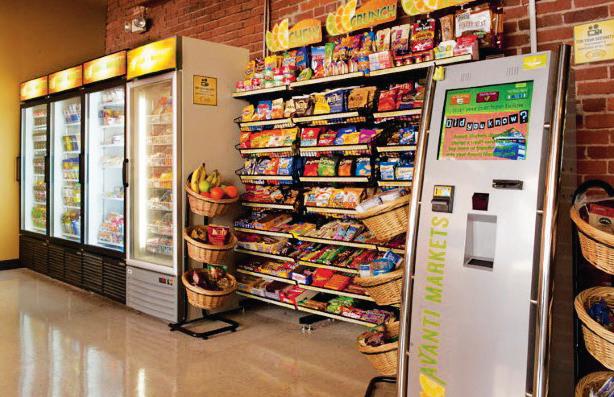

















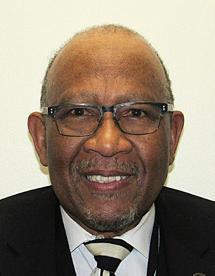
Centers For Independence
Promotes Alvin C. Hill, Jr.
Centers for Independence (CFI) is pleased to announce the promotion of Alvin C. Hill, Jr. to Vice President of Diversity, Equity, Inclusion & Community Affairs. In his new role, Hill will be responsible for the comprehensive planning, execution, and supervision of CFI’s diversity, equity, inclusion, and belonging strategies and initiatives. Since 2004, Hill has been an integral part of the CFI team, dedicated to strengthening Wisconsin communities by helping individuals overcome life challenges and advance their total health and well-being.

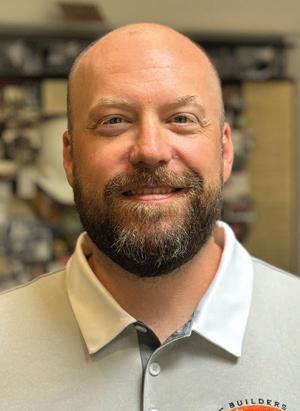
Hunzinger Welcomes Eric Sadler as Senior Project Manager
Eric Sadler has joined Hunzinger as a Senior Project Manager. He has 17 years working in the construction industry where he earned numerous promotions and accolades. He has led many multi-million dollar projects that have redefined MKE’s skyline.

Chortek LLP Promotes Mitchell Jussila to Principal Chortek promoted Mitchell Jussila, CPA, to Principal. With over 11 years of tax advisory experience, Mitch consistently delivers strategic solutions for clients, helping them navigate complex tax regulations and optimize their financial strategies.

5. NO. OF ISSUES PUBLISHED ANNUALLY: 16
Feb, Mar, Apr, July, Aug, Nov and Dec
6. ANNUAL SUBSCRIPTION PRICE: Free to Qualified Subscribers; Paid Rates: 1-yr: $108.00
7. COMPLETE MAILING ADDRESS OF KNOWN OFFICE OF PUBLICATION (STREET, CITY, COUNTY, STATE, AND ZIP+4): BizTimes Media LLC, 126 N Jefferson St, Suite 403, Milwaukee WI 53202-6120, Milwaukee County. Contact Person: Dan Meyer. Phone: 414-277-8181
8. COMPLETE MAILING ADDRESS OF HEADQUARTERS OR GENERAL BUSINESS OFFICE OF PUBLISHER: BizTimes Media LLC, 126 N Jefferson St, Suite 403, Milwaukee WI 53202-6120
9. FULL NAMES AND COMPLETE MAILING ADDRESSES OF PUBLISHER, EDITOR, AND MANAGING EDITOR: Publisher: Dan Meyer - 126 N Jefferson St, Suite 403, Milwaukee WI 53202-6120 Editor: Andrew Weiland - 126 N Jefferson St, Suite 403, Milwaukee WI 53202-6120
10. OWNER: Dan Meyer - 126 N Jefferson St, Suite 403, Milwaukee WI 53202-6120
11. KNOWN BONDHOLDERS, MORTGAGEES, AND OTHER SECURITY HOLDERS OWNING OR HOLDING 1 PERCENT OR MORE OF TOTAL AMOUNT OF BONDS, MORTGAGES OR OTHER SECURITIES: None
12. TAX STATUS: Has not changed during preceding 12 months
13. PUBLICATION TITLE: BizTimes Milwaukee 14. ISSUE DATE FOR CIRCULATION DATA: September 9, 2024 15. Extent and nature of circulation:
Applicable
Sales through Dealers & Carriers, Street Vendors, Counter Sales, and Other Paid or Requested distribution Outside USPS
and/or
c. Total Requested Copy Distribution (Line 15f) + Requested/Paid
Paid and/or Requested Circulation (Both Print & Electronic Copies) (16b divided by 16c x 100)
x I certify that 50% of all my distributed copies (electronic and print) are legitimate requests or paid copies.
17. Publication of Statement of Ownership for a Requester Publication is required and will be printed in the OCTOBER 7, 2024 issue of this publication.
18. certify that all information furnished on this form is true and complete. I understand that anyone who furnishes false or misleading information on this form or who omits material or information requested on the form may be subject to criminal sanctions (including fines and imprisonment) and/or civil sanctions (including civil penalties).
Dan Meyer, Publisher, September 28, 2024
BY
Brookfield-based nonprofit Community Care Inc. will become an affiliate of CareSource, a nonprofit managed care organization based in Dayton, Ohio, once state and federal regulatory approvals are completed, the organizations announced.
CareSource will acquire Community Care; the organization and its employees will continue to operate in Wisconsin, according to a joint news release.
Community Care serves more than 15,000 people, including older adults and seniors as well as adults with physical, intellectual or developmental disabilities. Community Care has three
certified adult day and health centers in Milwaukee, Racine and Waukesha. The organization also offers Wisconsin’s long-term care programs: Family Care, Family Care Partnership and Program of All-Inclusive Care for the Elderly.
CareSource administers health insurance plans, such as Medicaid, Health Insurance Marketplace and Medicare products.
This will be CareSource’s second planned affiliation with a Wisconsin organization this year following its pursuit of Common Ground Healthcare Cooperative.
— Samantha Dietel, staff writer

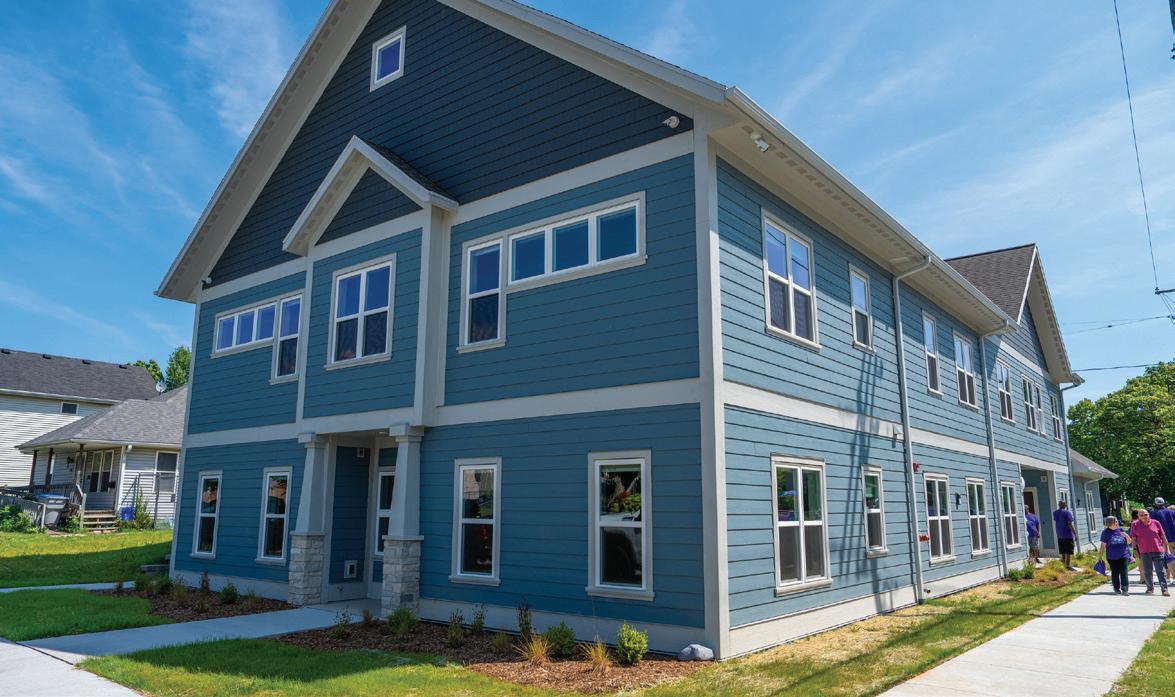
2830 W. Brown St., Milwaukee 414.873.5474 | serenityinns.org
Facebook: facebook.com/Serenityinnsinc
Versiti will host its Vampire Ball on Friday, Oct. 25, from 6 to 11 p.m., at the Wisconsin Club, 900 W. Wisconsin Ave., Milwaukee.
Friends of the Domes will host its annual Día de los Muertos celebration on Friday, Oct. 25, from 6 to 9 p.m. at the Mitchell Park Domes, 524 S. Layton Boulevard, Milwaukee.
SHARP Literacy will host its annual “A Novel Event” celebration on Wednesday, Oct. 30, from 5 to 8 p.m. at the Pfister Hotel, 424 E. Wisconsin Ave., Milwaukee.
The Vince Lombardi Cancer Foundation will host its annual Food & Wine Event on Nov. 1-2 at The Pfister Hotel, 424 E. Wisconsin Ave., at the Wisconsin Club, 900 W. Wisconsin Ave., Milwaukee.
WISN-TV Channel 12 and the Salvation Army’s Class Act School Supply Drive raised $55,006 to provide Milwaukee-area children with school supplies. | Hyundai Hope On Wheels awarded Children’s Wisconsin with a $100,000 Hyundai Impact Grant. | The Generac Foundation donated $200,000 to Waukesha County Technical College and its foundation to be used for high-tech simulation manikins. | The Milwaukee Building Trades Council delivered more than 4,900 backpacks full of school supplies to 16 Milwaukee schools on Aug. 20 in partnership with United Way.

LinkedIn: linkedin.com/company/serenity-inns-inc/
Year founded: 2004
Mission statement: To empower men struggling with substance use disorder by offering a holistic treatment program focused on compassion, healing and personal growth while fostering a compassionate community of accountability, guiding them on their journey to recovery.
residential treatment program. The Buehler Alumni House is located at 832 N. 25th Street in Milwaukee. By the end of 2024, Serenity Inns will also open a new SUD Drop-In Clinic at 631 N. 19th St., inside Olga Neighborhood Wellness Services. Number of employees: 13
Key donors: Bader Philanthropies, The Lynde & Harry Bradley Foundation, Siebert Lutheran Foundation

Primary focus: Our residential program is a holistic experience that addresses men’s physical, emotional and spiritual health needs by providing an atmosphere of strength and support. We offer dignity, accountability and an opportunity to rebuild a life free from addiction. Serenity Inns is the only facility in the Milwaukee area that will take individuals who cannot afford to pay. We currently offer two treatment locations: a new 14-bed treatment facility at 2830 W. Brown St., Milwaukee, and a 12-bed treatment facility at 2825 W. Brown St., Milwaukee.
Executive leadership: Kenneth Ginlack, executive director and CEO
Board of directors: Tom Dunst, chairman; Kola Alayande, chairman elect; Carla Stensberg, treasurer; Denise Callaway, secretary; directors: Gregory Buck, Scott Chapman, Martin Choren, Marcel A. Clarke, Jacqueline A. Cook, Lucretia Dillon, Brian Flynn, Glenn Mathews, Crystal McClain, Peter Todd; ambassadors: Lorraine Buehler, Rick Deines, Rev. Joe Ellwanger, Dr. Bill Martens

Other focuses: We also offer a sober living ‘alumni house’ that accommodates 14 men who have successfully completed Serenity Inns’

Ways the business community can help: Make a financial contribution to our $3 million capital campaign or volunteer to provide a meal for dinner fellowship.

VOLUME 30, NUMBER 10 | OCTOBER 7, 2024
126 N. Jefferson St., Suite 403, Milwaukee, WI 53202-6120
PHONE: 414-277-8181 FAX: 414-277-8191
WEBSITE: www.biztimes.com
CIRCULATION: 414-336-7100 | circulation@biztimes.com



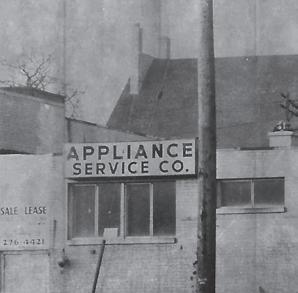















This photo from around 1968 shows the Advanced Plating Technologies facilities in the 400 block of West Vilet Street in Milwaukee. APT is headquartered at 405 W. Cherry St. and operates across three facilities on the block. Founded in 1948 as Artistic Plating Company, the business started as a job shop serving retail clients and a mix of small- and medium-volume production orders. The name came from the company’s decorative finishing work on heirlooms and religious artifacts. In 2013, the company changed its name to reflects its shift over the years toward a range of finishing capabilities, engineering expertise and more technical markets.
— Photo courtesy of Advanced Plating Technologies. Submit your company’s historic photos at biztimes.com/glance
IT’S THE SILLIEST controversy in Milwaukee. Of course, I’m talking about the great city flag debate.
The current city flag, adopted in 1954, is a cluttered mess of numerous images related to Milwaukee, including one of County Stadium, which was torn down 23 years ago.
Flag designs are supposed to be simple. Easy enough for anyone to draw, but with deep symbolism. The American Flag is just stars and stripes, but it’s one of the most powerful symbols in the world and is flown all over the country with patriotic pride.
The Milwaukee flag is rarely seen, other than at City Hall.
I’m not the only one who thinks the Milwaukee flag is terrible. A 2004 survey by the North American Vexillological Association rated Milwaukee’s flag 147th out of 150 flags of major American cities.
In 2015, radio show host and producer Roman Mars did a TED talk about flag design. He
showed the Milwaukee flag as an example of poor design, calling it “one of the biggest trainwrecks in (flag design) history” and “a hot mess.”
The audience laughed.
Milwaukee-based designer Steve Kodis took it upon himself to do something about this. He launched a grassroots project to establish a better flag for the city, organizing a contest that received more than 1,000 designs. A group of judges, including Kodis and Milwaukee historian John Gurda, narrowed the submissions to 45 semifinalists and five finalists, which were displayed at City Hall. The public was invited to vote in an online poll.
The winner was a flag design called “Sunrise Over the Lake” by Robert Lenz. It’s a simple design depicting the sun rising over Lake Michigan. As the winner of the public vote, it was declared the “People’s Flag of Milwaukee.”
Unlike the 1950s-era flag, which most Milwaukeeans probably don’t know exists and is almost never seen around the city, the “People’s Flag” was broadly adopted by the public on flags, clothing and more. Milwaukee Brewing Co. put the flag on a beer can. Brew City Brand sells sweatshirts, T-shirts, socks, coffee mugs, hats and more with “Sunrise Over the Lake” on
ADVERTISING: 414-336-7112 | advertising@biztimes.com
EDITORIAL: 414-336-7120 | andrew.weiland@biztimes.com
REPRINTS: 414-336-7100 | reprints@biztimes.com
PUBLISHER / OWNER
Dan Meyer dan.meyer@biztimes.com
DIRECTOR OF OPERATIONS
Mary Ernst mary.ernst@biztimes.com
COMMUNITY
ENGAGEMENT / OWNER
Kate Meyer kate.meyer@biztimes.com
EDITORIAL
EDITOR
Andrew Weiland andrew.weiland@biztimes.com
MANAGING EDITOR
Arthur Thomas arthur.thomas@biztimes.com
ASSOCIATE EDITOR
Maredithe Meyer maredithe.meyer@biztimes.com
REPORTER
Samantha Dietel samantha.dietel@biztimes.com
REPORTER Ashley Smart ashley.smart@biztimes.com
REPORTER
Sonia Spitz sonia.spitz@biztimes.com
REPORTER
Hunter Turpin hunter.turpin@biztimes.com
them.
SALES & MARKETING
DIRECTOR OF SALES
Linda Crawford
linda.crawford@biztimes.com
SENIOR ACCOUNT EXECUTIVE
Christie Ubl christie.ubl@biztimes.com
ACCOUNT EXECUTIVE
Robin Briese robin.briese@biztimes.com
ACCOUNT EXECUTIVE
Paddy Kieckhefer
paddy.kieckhefer@biztimes.com
ACCOUNT EXECUTIVE
Christy Peterson christy.peterson@biztimes.com
SALES ADMIN
Shannon Whiting shannon.whiting@biztimes.com
ADMINISTRATION
ADMINISTRATIVE
COORDINATOR
Sue Herzog sue.herzog@biztimes.com
AUDIENCE DEVELOPMENT
ASSOCIATE/CIRCULATION
Derik Sneide
derik.sneide@biztimes.com
PRODUCTION & DESIGN
SENIOR GRAPHIC DESIGNER
Alex Schneider alex.schneider@biztimes.com
Independent & Locally Owned
— Founded 1995 —
While the flag has been widely embraced by the public, it still hasn’t been adopted as the official city flag. That could finally change soon. Eight years after the selection of the “People’s Flag,” the Common Council recently debated a proposal to make it the official city flag. It had narrow support, but opponents used a parliamentary procedure maneuver to delay the final vote.
Critics say the process to determine the “Peoples’ Flag” wasn’t inclusive of the entire community. Perhaps the process could have been better, but what’s the remedy? Do it over?
“Sunrise Over the Lake” still probably wins. It’s time to finally adopt it as the city’s official flag and have the Common Council move on to more important business. ■
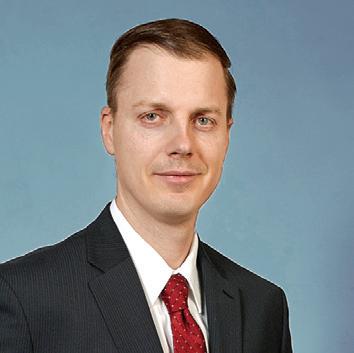
ANDREW WEILAND EDITOR
/ 414-336-7120 / andrew.weiland@biztimes.com / @AndrewWeiland







Briggs & Stratton 5




CEO, CFO and senior vice president
KRISTINA CERNIGLIA has led Wauwatosa-based Briggs & Stratton since February, initially as interim chief executive officer before stepping into the role permanently in July. Having joined the engine manufacturer in 2022 as chief financial officer, Cerniglia spent two years working as a “strategic partner” with the CEO – that is, two different CEOs: Steve Andrews and Joe Liotine, who each exited the company suddenly within a span of months. That experience ultimately prepared Cerniglia to take the top seat, where she is aiming to increase engagement with Briggs’ global workforce of 3,800 employees including roughly 700 in the Milwaukee area. In a recent interview with BizTimes associate editor Maredithe Meyer, Cerniglia shared her plans for leading the iconic Milwaukee brand into its next generation. Check out the full conversation at biztimes.com/kristina-cerniglia
TOP PRIORITIES AS CEO
“We’ve been focused on a couple of areas in the short term, on what I call our three strategic imperatives: quality and service, business simplification and growth. The organization is aligned with those strategic imperatives and so that’s what we’re driving.
“The other thing we’re focused on is strengthening our foundational operational processes, with a focus on the customer. We can’t lose





focus on the customer. It’s part of our core values, part of how we want to win. And then, I’m focused on increasing employee engagement by building what I would call a ‘one Briggs’ culture, focusing on a continuous improvement mindset. This focus on ‘one Briggs’ is extremely important to help us win.”
“What’s special is Wisconsin is where we design the products for the future, and this is where we guide the business forward. Innovation and technology is very important and we continue to bring new technologies, products to the market. All of that innovation begins here in the Milwaukee area, because this is where our primary engineering and new product development centers are located.
“I mentioned both a short-term and long-term goal of mine is to increase employee engagement and then, on a long-term basis, it’s really being an employer of choice for the Milwaukee area. When I think about becoming an employer of choice, it’s really building that engaged, motivated workforce. I want the culture and the workforce to really unite around developing these innovative products and focus on the customers daily, and so, at the end of the day, I want people to want to work for Briggs & Stratton, and I think that will continue here in Milwaukee.”
“I want Briggs & Stratton to be known for generations to come. It is an iconic brand. We need to reinvigorate the brand. I grew up with a father who only purchased Briggs & Stratton engines for tractors, and that kind of brand loyalty is rare, and if my legacy is making sure that Briggs & Stratton is known for future generations to come, that would be great.”