Safeguarding health through supply chain


DIGITAL REPORT 2023
ASSOCIATION WITH:
IN







United Urology Group (UUG) is a US-based national network of 1,500 urology healthcarefocused employees. It has affiliate practices in Arizona, Colorado, Delaware, Maryland, and Tennessee.
Founded in 2016 and with its HQ in Maryland, it supports 220 providers in 95 locations across five states, making it one of the largest urology networks in the US.

At heart, UUG is a management services organisation (MSO), providing administrative and support services to urology practices across the United States. This support includes revenue cycle management, financial management, human resources, marketing, and strategic planning.
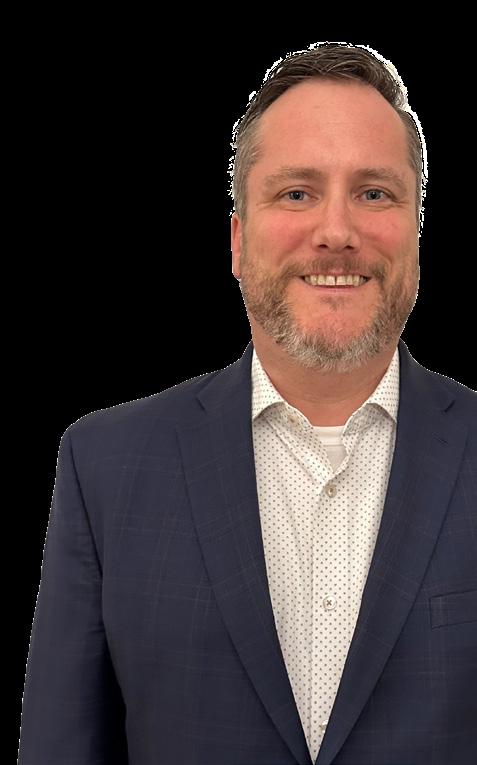
David Forbes is VP of Supply Chain Management for UUG and is responsible for its source-to-pay programme, strategic sourcing, procurement, and accounts payable. He also provides consulting services in inventory management for UUG clinics.
The support Forbes and his team provide includes everything from human resources and sourcing services to IT.
He says: “I source contracts for my practices. I aggregate everybody's spend and negotiate the best possible agreements with the right trading partners at the right level.”
Why supply chain is a point of difference for US-based healthcare management services organisation, United Urology Group

Forbes also offers procurement support, or “day-to-day blocking and tackling” as he describes it. Accounts payable is another of his areas, and his team also ‘owns’ the company’s source-to-pay solution that serves its physician practices.

UUG’s network of practices are known for their integrated urologic care programs, a patient-first approach, clinical excellence, and innovative treatments for
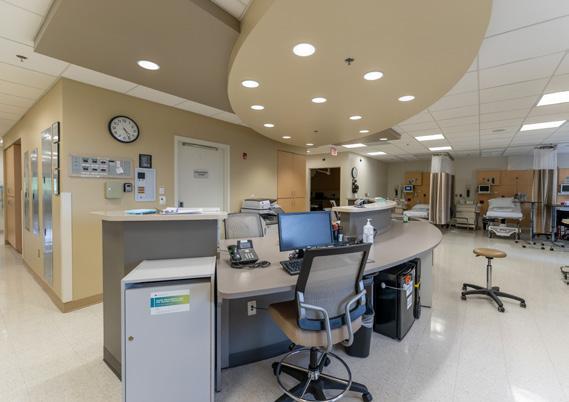
a wide range of urologic conditions, from the most common to the most complex cases.

“We aim to support our affiliated practices in providing high-quality, patient-centred care,” he says, “and to support our affiliated practices in delivering care in an efficient and effective manner.”
UUG’s supply chain organisation is vital to this goal, says Forbes, who explains that it helps the
DAVID FORBES VP SUPPLY CHAIN MANAGEMENT, UNITED UROLOGY GROUP
“We aim to provide high-quality, patientcentred care”
company deliver on its Quadruple Aim strategy, comprising:
• Clinical efficacy
• Patient experience
• Clinician experience
• Cost takeout
“These are four metrics our practices look to base decisions on, whether small or major,” says Forbes.
He adds: “Clinical efficacy is about whether or not a decision made by our affiliated practices improve patient outcomes. Clinician experience refers to the experience

TITLE: VP SUPPLY CHAIN MANAGEMENT
COMPANY: UNITED UROLOGY GROUP
INDUSTRY: HEALTHCARE
David Forbes is a seasoned supply chain professional with almost two decades of experience. Currently serving as the VP of Supply Chain Management for United Urology Group, his team is responsible for providing end-toend source-to-pay support to over 220 urologists and advanced practice practitioners. David's extensive experience includes working with the Healthcare Industry Distributors Association to develop healthcare trading partner data communication standards, building value analysis and sourcing departments for a hospital-based system, and serving as a strategic sourcing consultant with The Advisory Board Company. He holds a B.S. in Business from Miami University and an MBA from Loyola University Maryland.


“Shortages and back orders are the toughest part of the job. In the healthcare industry, we've never seen it as bad as it is right now”
DAVID FORBES VP SUPPLY CHAIN MANAGEMENT, UNITED UROLOGY GROUP
of physicians, nurses, and medical assistants when using the product or service.”
Patient experience, he explains, concerns factors such as patient comfort and recovery each of which “are key considerations in cost takeout”.
Forbes cites as an example the purchase of a simple piece of urological equipment, such as a catheter.
“Cost takeout is about what we can do to prune unnecessary costs from healthcare, but it is not always about monetary cost. I might be able to negotiate a fantastic deal on the latest foley catheter, say, but if this product is going to cause urinary tract infections, or if it’s difficult to insert or remove, then it doesn't make sense to do it.”
Supply chain, he says, helps UUG deliver on its Quadruple Aim metrics.
“The obvious one is cost takeout, and the rest are impacted through the clinical integration of my department with our physician practices.”
220
Number of providers UUG has for its urology practices

95
Number of locations
5
Number of US states covered
Specialty Networks and United Urology Group have partnered over the past decade to better practices across the group and improve patient care. The common focus on improvement in every area, along with clinical integration throughout, promotes consistent advancement at a clinical level.

Specialty Networks, partnered with United Urology Group since 2013, enhancing practice performance through data, events, and group purchasing support.

Specialty Networks is the parent organisation of companies including group purchasing organisation UroGPO, of which United Urology Group is a member.
Specialty Networks has presence in multiple specialties
As a multi-specialist organisation, Specialty Networks has deployed GPOs in urology, gastroenterology, and rheumatology, alongside a robust data analytics platform (PPS Analytics) and also a research arm. The latter supports members like United Urology in conducting research inside their practices, with a data analytics arm to support practices while addressing gaps in care.
“The GPO establishes best-in-class purchasing agreements with manufacturers in areas including pharmaceuticals, services, and medical devices,”
Darren Dieleman, Senior Vice President at Specialty Networks, says. “We’re aggregating not just United Urology Group, but also the other 720 urology practices across the country into one buying group, then negotiating value-added programs with manufacturers to support the individual members.”
The partnership with United Urology Group
“What’s unique about the relationship between United Urology Group and Specialty Networks
via UroGPO is the fact that we share the common customer of our physician practices,” explains David Forbes, the Vice President of Supply Chain Management for United Urology Group. Alongside the benefits of the GPO, United Urology Group also utilises PPS Analytics – the data analytics arm of Specialty Networks – to streamline and identify potential gaps in patient care.
“We also run customised educational events at their individual pods and a series of live events across the country,” Dieleman explains. “We’re running a summit for United Urology in May to allow their practices, many acquired during the pandemic, to come together to establish longterm goals and objectives, network, and attend educational podium sessions.”
What’s next for the partnership?
“Live events, purchasing, reporting – there’s a much larger strategy ahead of us to help United Urology Group achieve in aggregate what they wanted to achieve individually as independent practices,” says Dieleman.
Specialty Networks and United Urology are moving forward with a hands-on approach to continually bettering themselves, the practices, and, therefore, patient care.
He adds: “This is why it's really important that as a supply chain organisation we’re closely aligned with the clinicians, so that we can be sure to execute on our collective goals.”
UUG is plugged into a large ecosystem of businesses who help it deliver on its goals.
These include:
• Specialty Networks
A niche group-purchasing organisation that negotiates agreements for specialty products, most prominently branded oncology pharmaceuticals.
• Medline
Medical-surgical distributor Medline is a key supplier. “We recently partnered with Medline because they are designed to scale with us,” says Forbes.

• Neotract
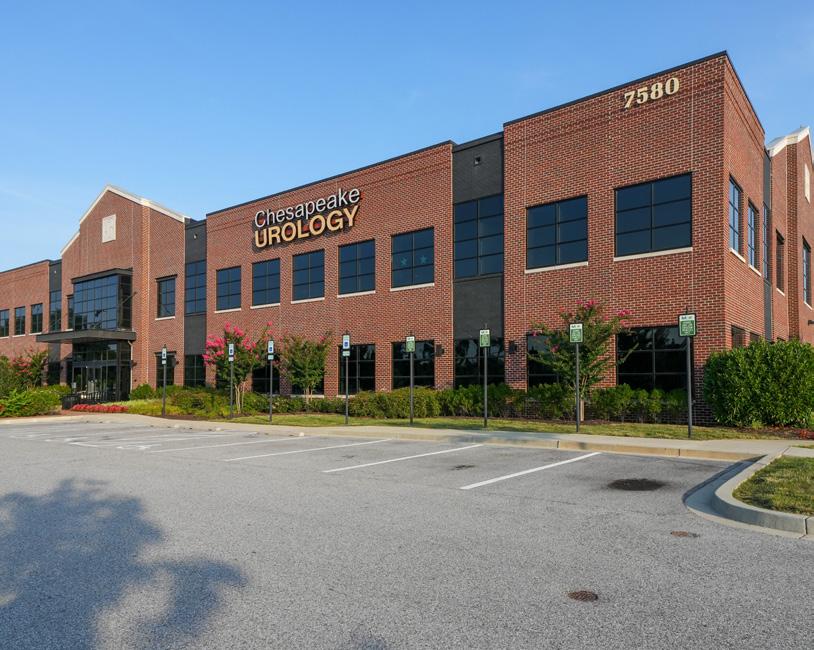
Manufactures a proprietary treatment called Urolift, of which our Chesapeake practice was an early adopter.
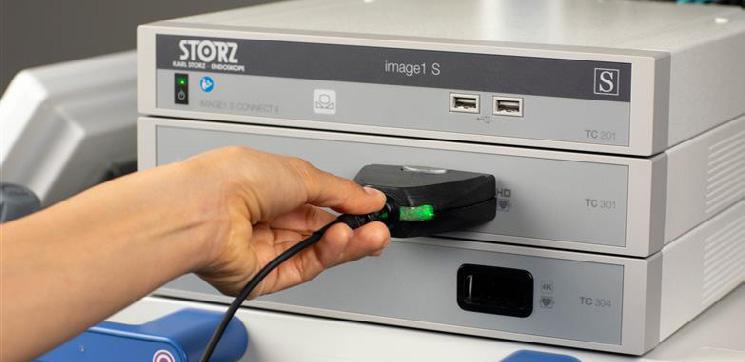
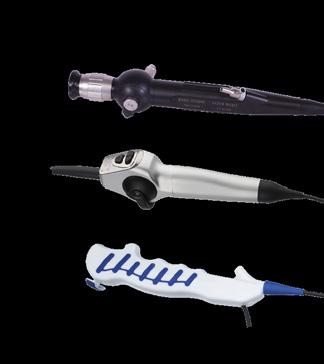
• Karl Storz
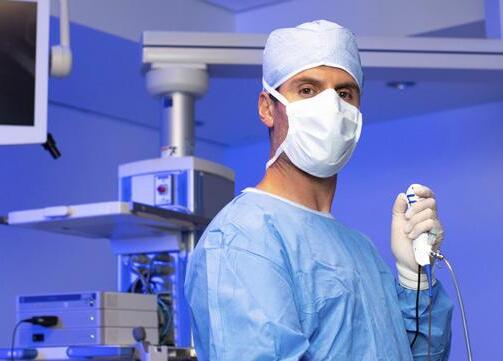
A key player in scopes and video equipment, crucial instruments that help urology practices meet patients’ clinical needs.
Such partnerships help Forbes meet his defining goal: the care of patients, whose health, often delicate, he and his team hold in their hands.


Along with just about every other supply chain executive on the planet, Forbes has been faced with a difficult market over the past few years.
Being able to juggle everything and keep things moving in the right direction in the face of adversity “comes down to people and systems”, says Forbes. “It’s all about making sure that you have the right infrastructure in place.”
He adds: I'll give you an example. When I first joined, only one other person other than me provided procurement support. When you're spread across the country like we are you can't expect somebody to be available at 7:30am Eastern Time and 6.00pm Western Time.
“So we made the decision to have somebody support our western markets, in Colorado and Arizona. Not only did this improve employee satisfaction, obviously, but it also made us more responsive to our market needs.”

Technology is another area UUG sees as a means to give it a competitive edge.

“We put a really heavy focus on the right technology in supply chain,” says Forbes. “Our prime strategy around resource management is leveraging technology. In my own department, we're evaluating AI tools to assist us not only with invoice processing, but also with strategic sourcing and contracts lifecycle management.”
Technology, says Forbes, helps UUG serve its customers, who are the practices in the field, for which assist them to focus on the communities they serve.
DAVID FORBES VP SUPPLY CHAIN MANAGEMENT, UNITED UROLOGY GROUP
“We're evaluating AI tools to assist us not only with invoice processing, but also with strategic sourcing and contracts lifecycle management”



 DAVID FORBES VP SUPPLY CHAIN MANAGEMENT, UNITED UROLOGY GROUP
But as with any sizable change project, there are hurdles to clear and barriers to break down.
“You’ve got to be sure that you choose the right solutions in the first place,” he says. “But you also need to ensure you're then using these solutions correctly.”
Data is a massive issue, as it is with so many digital transformations.
“Organising data around category management is a massive issue in supply chain in general,” says Forbes, who reveals that he and his team procure more than 200 categories of products and services.
He adds: “We have to make sure that our data is structured in a way that allows us to mine it, so that we can have efficient
request-for-proposals, without which we cannot manage our contracts.
UUG’s new procurement programme “is fully built out” says Forbes, who adds that it has made a huge difference to the company’s procurement and sourcing processes.
“When I first started, it was taking us upwards of eight days to reconcile inventory at the end of the month, but this past month, we did it all in a single day. All counted, all reconciled.”
He says that, although the procurement transformation was tough at first, it has been “a caveman-discovering-fire moment”.
“We are now able to intelligently manage inventory levels, and drive a formulary of products. We used to get complaints from vendors about not being paid, but now we now have steadfast processes in place that ensure prompt payment. We’ve gone from taking 57 days to process an invoice to about 10 days.”

“Over time we acquired additional practices and when you grow you need to scale-up your staff”
Forbes says the rapid pace of the transformation was driven by the fact UUG was going through a period of rapid growth.
In 2016, UUG included only a single practice, Chesapeake Urology, and operated only in the mid-Atlantic region.
“Over time we acquired additional practices,” Forbes says, “and when you grow you need to scale-up your staff.”
He joined the company in 2020 “when UUG was starting to get our legs back from the initial COVID push”.
That growth is continuing apace, says Forbes, who reveals the coming 18 months will see the group focus on integrating with its ambulatory surgery centre (ASC) jointventure partners.
These partners help operate the largest ambulatory platform in the US, comprising

“Running a supply chain is like ‘being a conductor at the front of an orchestra’”
DAVID FORBES VP SUPPLY CHAIN MANAGEMENT, UNITED UROLOGY GROUP
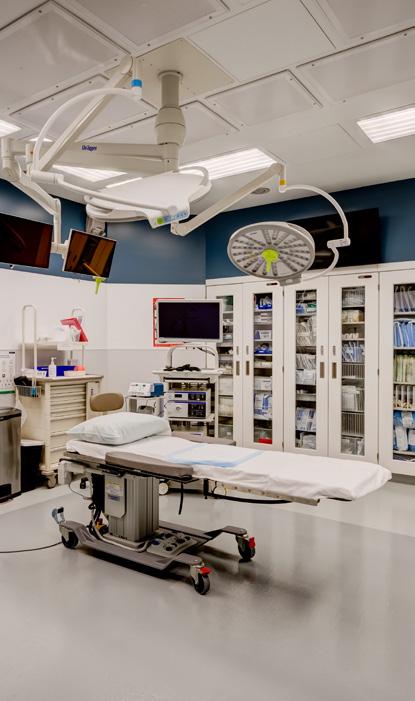
ASCs are modern healthcare facilities focused on providing same-day surgical care, including diagnostic and preventive procedures.

They have transformed the outpatient experience for millions of Americans, by providing a convenient alternative to hospitalbased outpatient procedures. They also have a strong track record of quality care and positive patient outcomes.
In June 2022, UUG formed a joint venture partnership in 22 ASCs. At the time, UUG CEO Sanford Siegel said of the deal that “we have an exciting runway with USPI as our partner,
and we look forward to bringing our patientfocused cultures together” – a sentiment Forbes echoes.
“It’s an exciting time for us,” he says. “An exciting future.”
Customer satisfaction is everything and in supply chain that means being able to respond to needs in the field – “such as being able to procure items on shortage, or back order.”
Forbes says running a supply chain is like “being a conductor at the front of an orchestra”.
“I might need to set up a regional hub-andspoke in our Maryland market to manage a shortage, else we're going to run out of products to certain clinics.”
Forbes’ voice tails off, as he lets the implications of that sink in: compromised care for patients, some of whom will be seriously ill.
“It might be that we have to consolidate our inventory, and then I’m the conductor on that,” he adds, waving an imaginary baton.