Spotlight 2025 Annual Report – Bismarck State College
Plains
Bismarck
ABBREVIATIONS
BCF - Billion cubic feet
BPD - Barrels per day
DDG - Dried distillers grains
GWh - Gigawatt-hour
kV - Kilovolt
KW - Kilowatt
KWh - Kilowatt-hour
MCF - 1,000 cubic feet
MMCF - Million cubic feet
MW - Megawatt
MWh - Megawatt-hour
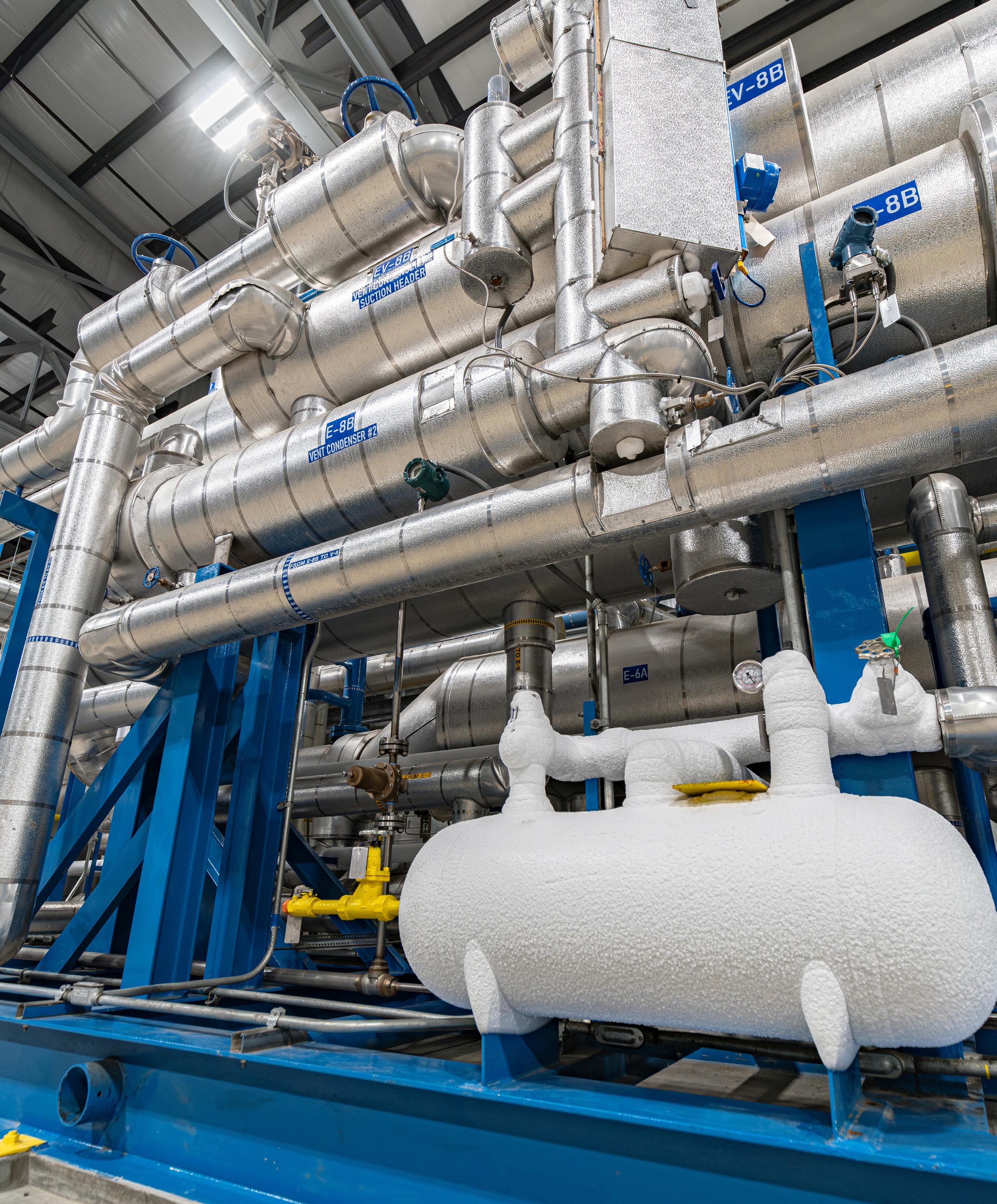
Cover photo: Blue Flint Ethanol, courtesy of Harvestone Low Carbon Partners
www.energyND.com
Welcome to the 2025 edition of the Great Plains Energy Corridor’s Spotlight on North Dakota Energy! This report provides a comprehensive overview of our state’s energy sector.
Here’s a look at some of the highlights.
ANOTHER RECORD-BREAKING YEAR
North Dakota prides itself on its “all of the above” energy strategy. We consistently rank in the top 10 nationally for crude oil, wind, coal, natural gas, and ethanol production. This comprehensive approach reached new heights in 2025, including historic achievements in both traditional production and carbon capture.
In September, Dakota Gasification Company’s Great Plains CO2 Sequestration Project, owned by Basin Electric Power Cooperative, broke the world record for CO2 sequestration three days in a row, capturing 147.7 million standard cubic feet per day. This project is the nation’s first to use both enhanced oil recovery and geologic storage.
In October, North Dakota set a new record for the number of producing oil wells at 19,625. This comes roughly a year after the state surpassed the milestone of having produced 5 billion barrels of oil.
EXPLORING NEW FRONTIERS
While North Dakota continues to experience growth in established sectors, 2025 also saw movement toward continued diversification.
An interim committee of the North Dakota Legislature in September engaged a contractor to study the feasibility of developing nuclear power in the state. The
study will evaluate technical and economic feasibility, as well as siting options, nuclear waste, and legal and regulatory issues.
FUELING THE WORKFORCE PIPELINE
As the energy industry innovates and grows, so does the need for a skilled workforce. Through new partnerships led by Bismarck State College with Career and Technical Education Centers across North Dakota, high school students are gaining early exposure, college credit, and hands-on experience in high-demand energy fields. These efforts not only open doors for students but also strengthen the workforce pipeline by connecting education directly to industry needs.
REFLECTING ON 2025
These achievements reflect our state’s commitment to being a global energy powerhouse that values both production and responsibility.
I would like to thank our industry partners and the EmPower North Dakota Commission for providing updated information, as well as Andrea Blessum, who gathered data and wrote and designed this report.
And thank you for your continued interest in the future of North Dakota energy.
Alicia Uhde Associate Vice President of Academic Affairs, Bismarck State College
A VIEW FROM ABOVE
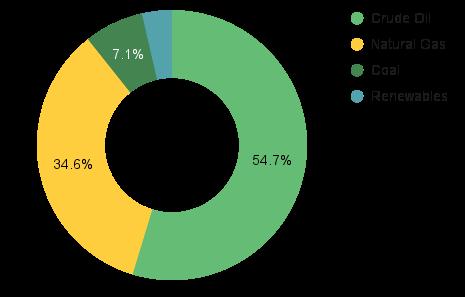
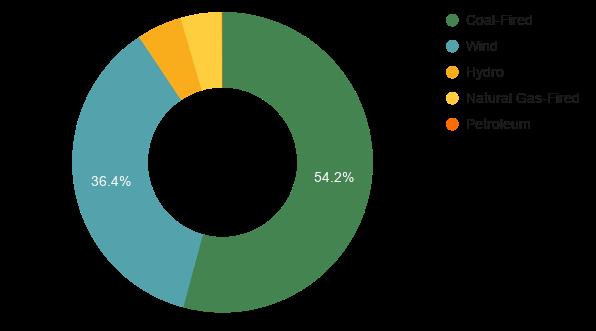
North Dakota is an energy powerhouse, ranking seventh nationally for total energy production.
From coal and natural gas to oil, hydroelectric power, and renewable energy, the state’s diverse energy mix plays a vital role in fueling the region and supporting the nation’s energy independence.
North Dakota produces electricity from a wide variety of sources, including coal baseload power plants, hydroelectric turbines, wind turbines, natural gas and fuel oil peaking plants, heat recovery units, and solar power. Additionally, geothermal generation is being explored and nuclear power feasibility is being studied.
Source: U.S. Energy Information Administration
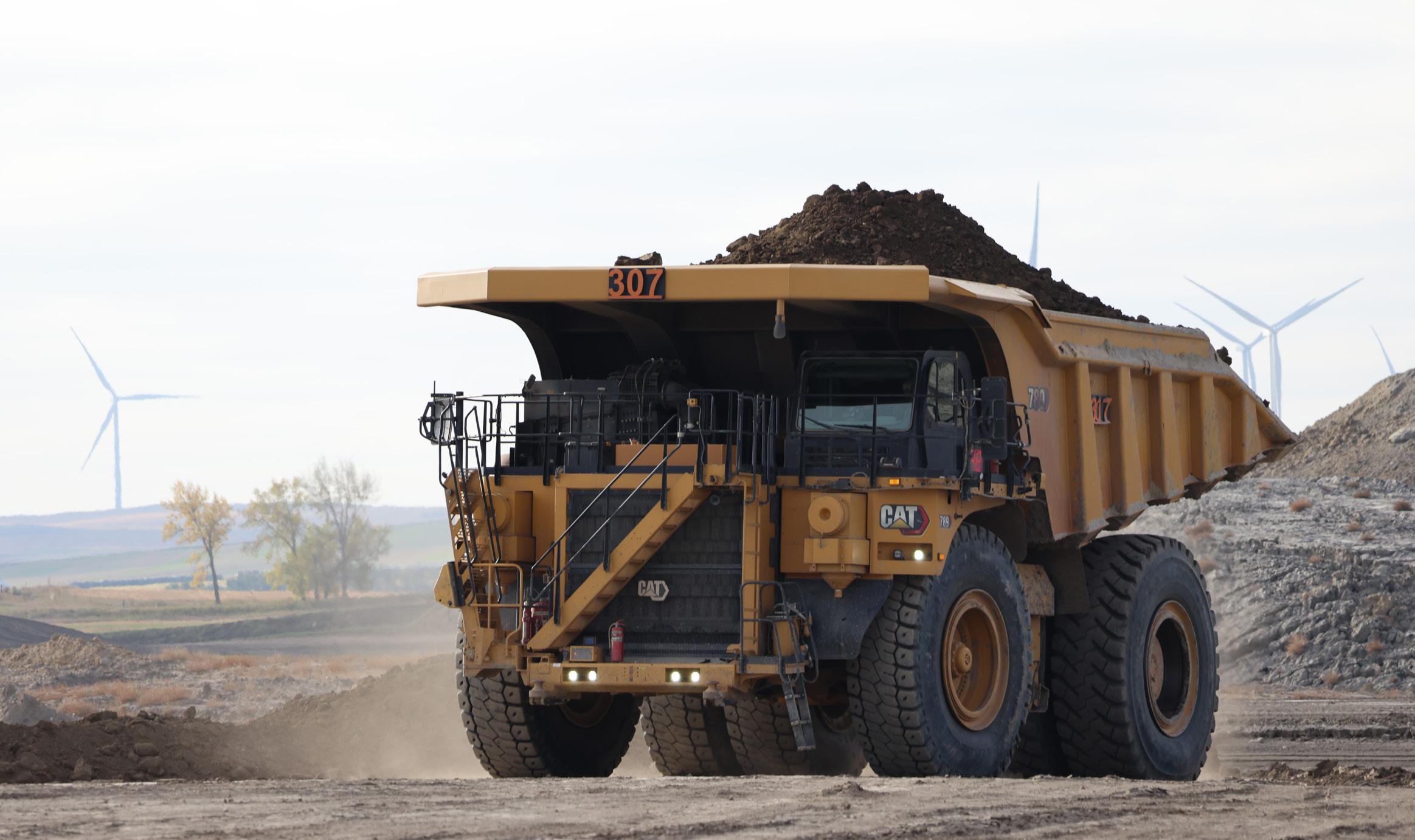
Photo of Center Mine, courtesy of BNI Coal
NATION'S LOWEST ELECTRICITY COSTS
In 2025, North Dakota again had the lowest-cost electricity for residential (11.02 cents/kilowatt-hour) and commercial use (8.05 cents/KWh), according to chooseenergy. com.
The highest cost for residential electricity in the U.S. was Hawaii at 41.62 cents/KWh for residential and 38.29 cents/KWh for commercial.
RELIABILITY AND SUSTAINABILITY
The electricity that powers our homes, businesses, hospitals, and schools is generated on demand, every second of every day. As demand fluctuates by the hour, the season, or in response to sudden events, our energy system must be flexible, responsive, and resilient.
Advancements in battery storage and other technologies are increasingly allowing energy to be stored and dispatched when
needed, improving grid flexibility and reliability.
North Dakota is uniquely positioned to meet the challenges of providing reliable electricity. With a balanced portfolio of traditional baseload power from coal and natural gas, combined with growing generation from wind and hydro, the state has a diverse energy system that can respond to extreme weather events, shifting demand, and regional stress. Where some states may struggle during heat waves or polar vortexes, North Dakota’s diversified electric grid provides stability—not just for North Dakotans, but also for the broader region.
As the nation transitions to a lower-carbon future, North Dakota demonstrates that energy reliability and sustainability don’t have to be at odds. The state’s approach shows how investing in energy diversity—paired with grid planning and innovation—can build a system as resilient as the communities it serves.
GENERATION
Power plants are classified as dispatchable or intermittent. Dispatchable power plants, sometimes referred to as baseload power plants, are designed to increase or decrease generation as required by the dispatcher. These include hydroelectric, coal-based, and natural gas-fired generators.
Plants fueled with natural gas are capable of rapid starts and can quickly achieve full generating capacity. They typically run a small percentage of the time. Intermittent plants are typically comprised of renewable energy sources, such as wind or solar, and operate when the resource is available.
North Dakota does not have any nuclear
power; however, in September 2025 a North Dakota interim legislative committee engaged a contractor to study feasibility of nuclear power in the state.
Solar generation capacity has increased in North Dakota, and utility-scale solar is under development. Wind is abundant in North Dakota and the state continues to grow its generation fleet.
It makes no difference how electricity is produced. It’s all the same product; it just comes from different sources.
Every establishment that uses electricity is connected or “hard wired” to a power generation source through the electric grid.
That source may be around the corner, down the block, or hundreds of miles away.
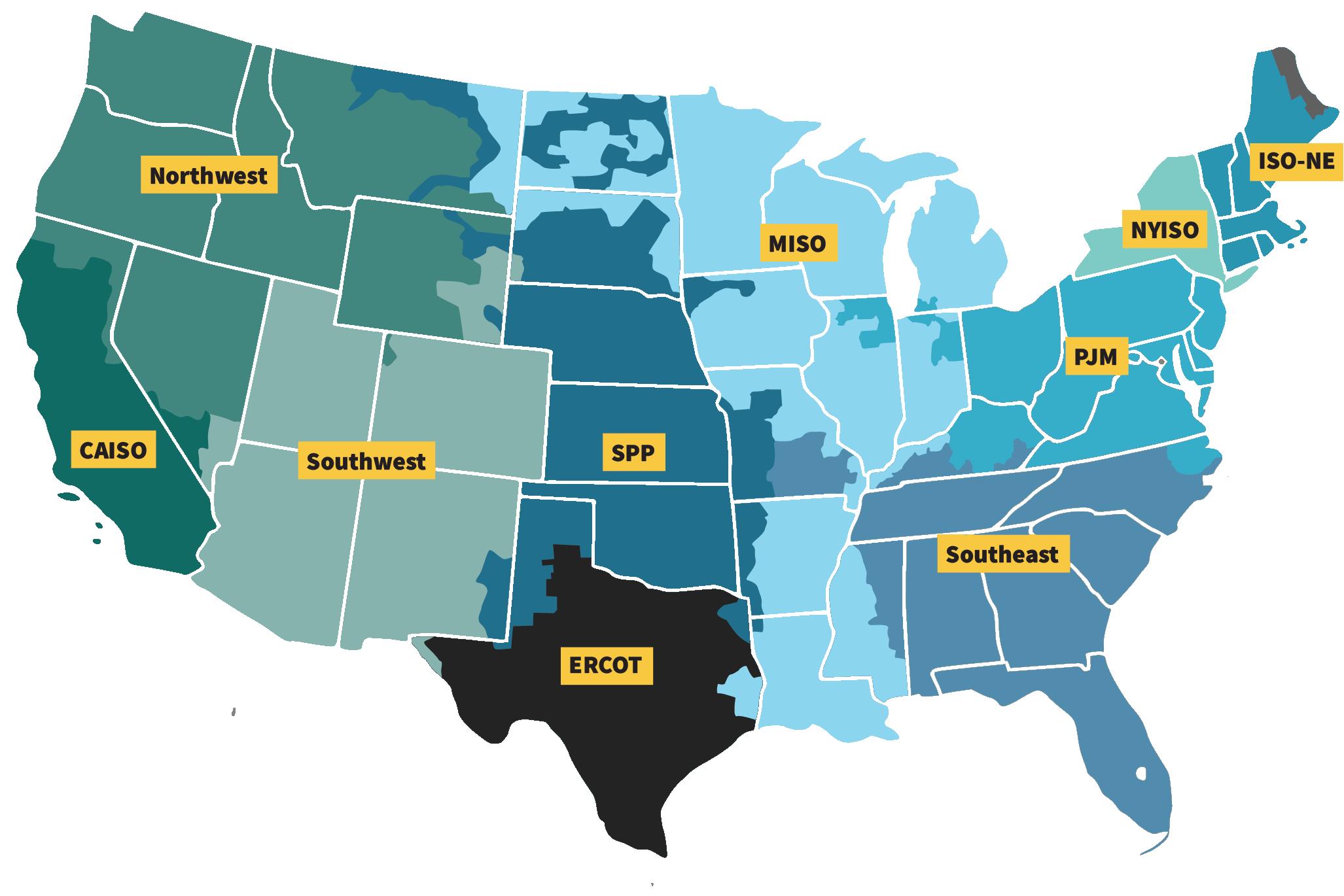
All generating sources are interconnected through a power pool and a regional transmission operator (RTO). There are two power pools that operate in North Dakota: the Southwest Power Pool (SPP) and Midcontinent Independent System
Operator (MISO). These power pools connect generating sources from many utilities, so if one source can’t produce electricity, the other sources can “cover” for the source that isn’t producing. The RTOs also operate the wholesale power market to purchase power from less expensive sources (when available) to maintain low utility costs.
NORTH DAKOTA’S ENERGY SITES
Gas Processing
Recovered Energy Generation
Map courtesy of Bismarck State College’s National Energy Center of Excellence
Bakken Formation Oil Fields
Natural
Wind Farm
Coal-Based Generation
Synfuels Plant
Lignite Mine
Ethanol Plant
Hydropower
Petroleum Refinery
Peaking Station
Renewable Diesel Refinery
Bismarck
Dickinson
Minot
Williston
Fargo
Grand Forks
Solar Farm
Biodiesel Plant
MINING
North Dakota has the secondlargest known reserves of lignite in the world—behind only Australia—with an estimated 26.5 billion tons of recoverable resources.
North Dakota lignite mines produced 23.4 million tons in 2025. It is estimated that the state’s reserves would last more than 800 years at the current rate of consumption.
Nearly 80% of the state's lignite is used to generate electricity. The other 20% is used to make fertilizers and synthetic natural gas as well as other products at the Great Plains Synfuels Plant.
There are two leonardite mines in North Dakota—the American Colloid Mine near Scranton and Leonardite Products Mine near Williston. Leonardite is a highly oxidized form of lignite used as a soil amendment and an oil
drilling additive. Both mines have processing plants.
Lignite coal and commercial leonardite are taxed at a flat rate of $0.375/ton by the State of North Dakota. An additional two-cent-per-ton tax is levied for the Lignite Research Fund.
The lignite industry contributed more than $100 million in revenue to state and local entities in 2024.
VALUABLE MINERALS AND ELEMENTS
The value of lignite coal extends beyond electricity generation. North Dakota's coal seams also contain critical minerals and rare earth elements that are important to modern technologies.
These materials support electronics, advanced manufacturing, and energy systems. They are also important to national
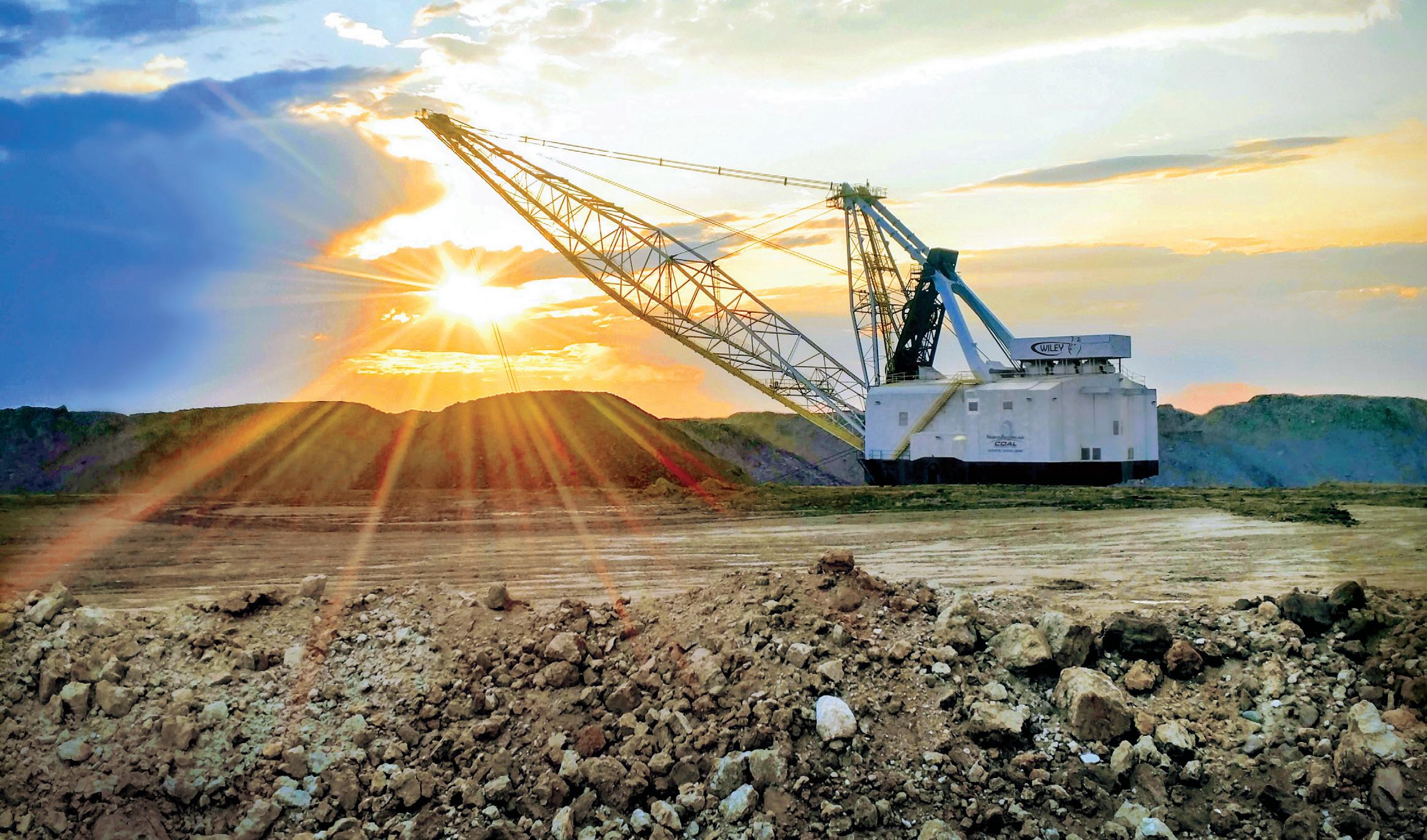
Photo by Tyler Freuer, 2019, North American Coal Corporation, Coyote Creek Mine, Beulah
security. Much of the current supply is imported, which creates challenges for longterm reliability.
Researchers at North Dakota's Energy & Environmental Research Center (EERC) are developing ways to recover these materials from lignite coal and coal byproducts. Their work is focused on improving efficiency and lowering costs.
With continued progress, this effort could support commercial-scale production and create new opportunities in the region.
RECLAMATION
North Dakota lignite mines practice contemporaneous reclamation, which means simultaneously mining and reclaiming land. Mining companies typically have three years to reclaim mined land by grading and respreading the soil and seeding the land. After that, mines keep reclaimed land under performance bond for at least 10 years to prove reclaimed land is as productive as it was before mining.
Between 1,500 and 2,000 acres of land are disturbed by coal mining and reclaimed each year. Mining companies spend an average of $30,000 to reclaim one acre of land, although costs can be as high as $60,000/acre.
More than 30,000 acres of permitted land in the state have gone through final bond release—the equivalent of about 46 square miles.
North Dakota was a leader in establishing reclamation laws in the 1970s. Current reclamation laws in North Dakota are based on federal regulations.
ABANDONED MINE LANDS
North Dakota continues to identify and reclaim abandoned mines from before reclamation laws were in place. The North Dakota Public Service Commission's Abandoned Mine Lands Division, created in 1981, exists to eliminate potential or existing hazards associated with abandoned coal mines for which there is no continuing liability under state or federal law.
*Owned by North American Coal Corporation. **Beulah Mine ceased production in March 2022 when Heskett Station was retired.
COAL-BASED GENERATION
Coal-fired electricity helps anchor the regional power grid. It provides a baseload source of energy that runs through every season and in all conditions.
In North Dakota, lignite coal fuels power plants located near the mines. This minemouth setup creates a direct path from fuel to generation. Each coal-fired power plant maintains a stockpile of coal, minimizing the potential impact of fuel supply disruptions.
COAL-BASED PLANTS IN NORTH DAKOTA
The lignite industry is the fifth largest industry in North Dakota.
North Dakota's lignite coal industry generates electricity for around 2 million businesses and consumers in the Upper Midwest.
The lignite industry supports about 12,000 direct and secondary jobs.
*Spiritwood Station is a combined heat and power plant utilizing DryFine lignite coal and natural gas. Its primary product is steam, which is sold to the Dakota Spirit Ethanol and Green Bison Soy Processing at Spiritwood Energy Park near Jamestown. The plant also produces electricity for the regional grid.
DID YOU KNOW?
Each summer, the Lignite Energy Council hosts elementary and secondary teachers from across the region at a teacher education seminar. Educators, researchers, and industry experts give presentations, and participants tour mining operations, reclamation sites, and coal conversion facilities.
Since 1986, LEC has educated more than 4,000 teachers through its seminars.
GAS-FIRED GENERATING PLANTS
Peaking plants provide power generation companies with rapid response to regional peaks to meet the demand for electricity.
Additional generating capacity provided by smaller facilities can be used in extreme weather conditions when electricity demand exceeds the capacity of baseload facilities.
In most cases, these facilities are operated remotely and can be powered up from standby status to full load very quickly.
FACILITIES IN NORTH DAKOTA
Basin Electric Power Cooperative operates two natural gas-fired peaking stations to help provide electrical stability in western North Dakota.
■ Lonesome Creek Station, located west of Watford City, has six 45-megawatt units, with a total generating capacity
of 270 MW. Lonesome Creek started commercial operation in 2013.
■ Pioneer Generation Station, located northwest of Williston, has three 45-MW units and 12 9.0-MW units.
In August 2025, Basin Electric’s Pioneer Generation Station Phase IV was officially complete. The new natural gas-fueled generation facility is a combination of combustion turbine and reciprocating engine units. The facility includes two 225-MW simple cycle combustion turbines, six reciprocating engines totaling 112 MW, and 15 miles of 345-kilovolt (kV) transmission. It generates approximately 560 MW of electricity.
Great River Energy's Spiritwood Station is a combined heat and power plant that uses both DryFine lignite coal and natural gas. Its primary product is steam, which is sold to the Dakota Spirit Ethanol and Green Bison
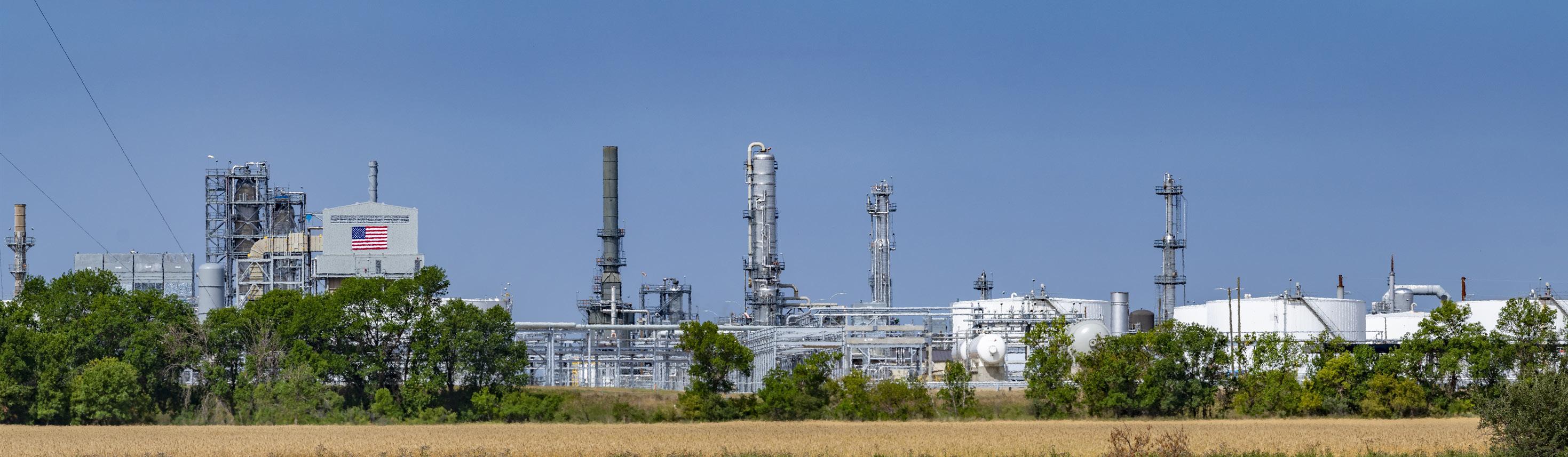
Photo of Blue Flint CO2 facility near Underwood, courtesy of Harvestone Low Carbon Partners
Soy Processing at Spiritwood Energy Park near Jamestown. The plant also produces electricity for the regional grid.
Montana-Dakota Utilities has two 88-MW natural gas-fired combustion turbines near
Mandan: Heskett 3 and Heskett 4.
Otter Tail Power Company has two fuel oil combustion turbines in Jamestown with a total capacity of 41 MW.
CO2 CAPTURE AND STORAGE
North Dakota is leading the way in carbon capture and storage, leveraging its unique geology, advanced energy infrastructure, and forward-thinking policy to turn carbon challenges into economic opportunities.
With some of the most ideal subsurface formations in the world for permanent CO2 storage, the state is home to several groundbreaking projects.
CO2 CAPTURE IN NORTH DAKOTA
■ Red Trail Energy Ethanol Plant near Richardton captures and stores up to 170,000 metric tons of CO2 annually. In February 2025, Gevo acquired Red Trail Energy, including its ethanol plant, carbon capture and sequestration assets, and associated pore space.
■ Project Tundra is a Minnkota Power Cooperative initiative to build one of the world’s largest carbon capture projects at its coal-based Milton R. Young Station near Center. Minnkota proposes to capture approximately 5 million metric tons of CO2 annually, stored in deep geologic formations approximately one mile underground near the power plant. Project Tundra has access to the two largest, fully permitted CO2 storage facilities in the U.S. In total, the project can store up to 222 million tons of CO2 over a 20-year period. The project has
secured both state and federal funding and is currently in the advanced stages of engineering, due diligence, and cost validation.
■ Summit Carbon Solutions has received permits for three CO2 storage sites in North Dakota associated with the Midwest Carbon Express project. While the facilities are not yet operational, the permitted sites further reflect North Dakota’s growing role in large-scale carbon capture and geologic storage development.
■ Harvestone Low Carbon Partners continues to expand its carbon management initiatives across North Dakota. Following the successful startup of the Blue Flint Ethanol CCS facility in 2023, construction is anticipated to begin in spring 2026 on the Dakota Spirit CO2 Capture & Liquefaction Project. The project is expected to capture and liquefy approximately 225,000 metric tons of CO2 annually once operational. Completion is anticipated in early 2027.
■ Basin Electric's Great Plains CO2 Sequestration Project went into service in February 2024. The Great Plains Synfuels Plant captures and sequesters CO2 via a permanent geologic storage reservoir near the facility. In August 2025, the project broke the all-time and world record for CO2 sequestration three days
in a row, capturing 147.7 million standard cubic feet per day. It’s the nation’s first project using both enhanced oil recovery and geologic storage.
ENHANCED OIL RECOVERY
Enhanced oil recovery (EOR) is key to ensuring the long-term productivity of the Bakken Formation and continued tax revenue for the State of North Dakota. Massive quantities of CO2 will be needed to make EOR a reality in unconventional formations, and the lignite-fired power plants in North Dakota
WIND
North Dakota has 4,951 MW of installed wind energy capacity, generating 36% of the state's electricity.
This puts North Dakota ahead of most of the countries in the world for percentage of electricity from wind generation.
Strong wind resources continue to deliver capacity factors exceeding 40%, among the highest in the nation. This indicates that North Dakota’s wind resources are stronger or more consistent, allowing turbines to produce more electricity relative to their potential.
RECENT PROJECTS
In 2025, Apex Clean Energy constructed
$26.2M STATE AND LOCAL TAXES
can provide tens of millions of tons of CO2 annually.
This can allow the Bakken to maintain oil production for decades to come while simultaneously helping the lignite industry meet potential future regulatory standards. Carbon capture technology can be added to existing coal-fired power plants to capture CO2 from flue gases.
Several plants in the area are currently performing advanced studies for adding carbon capture systems.
a 200-MW facility near Bowman. Bowman Wind has power purchase agreements with higher education institutions, healthcare systems, and a group of public and nonprofit organizations.
Otter Tail Power upgraded and refurbished wind turbines at four of its owned wind energy centers. The company repowered the Langdon Wind Energy Center in late 2024. Equipment upgrades at the Ashtabula, Ashtabula III, and Luverne Wind Energy Centers were underway at the end of 2025. These efforts are expected to provide roughly 171 GWh of additional energy—the equivalent of a new 40-MW facility.
County Wind I (2006, 50.6 MW), II (2007, 48 MW), III (2017, 100 MW), IV (2024, 200 MW)
Spirit (2015, 107.5 MW),
Wind Energy I (2006, 49.5 MW), II (2009, 49.5 MW)
ECONOMIC IMPACT
The economic impact of wind energy development in North Dakota in 2025 included $26.2 million in state and local taxes and $28 million in income to landowners. The industry provides 4,000 permanent, direct jobs in the state.
FEDERAL TAX CREDITS
Federal tax credits in recent years, primarily the Production Tax Credit (PTC) and the Investment Tax Credit (ITC), have helped lower the cost of building and operating wind energy projects.
Under the 2018 PTC, developers could
SOLAR
Photovoltaic, or PV, solar energy technology is the most common way of producing solar electricity in North Dakota.
There are gigawatts of proposed solar projects in the state, one being Otter Tail Power Company's Abercrombie Solar. The 295-MW solar generation facility is under development near Wahpeton and is expected to be complete in 2028.
RECENTLY PERMITTED SOLAR PROJECTS
■ Otter Tail Power Company's Abercrombie Solar project is in Richland
BATTERY STORAGE IN ND
Battery energy storage systems enhance grid reliability by storing excess generation for use during peak demand, improving transmission efficiency, and enabling greater integration of renewable resources.
receive a credit of 2.4 cents per kWh from utility-scale wind turbines during a project’s first 10 years of operation. The credit was adjusted to 2.5 cents per kWh for inflation. The Tax Extender and Disaster Relief Act of 2019 provided a short extension at the 60% level for one more year.
The Inflation Reduction Act (IRA), which became law in 2022, replaced the wind PTC beginning in 2025 with technology-neutral credits for low-carbon electric generation. It is expected to phase out in 2032, or when U.S. power sector greenhouse gas emissions decline to 25% of 2022 levels, whichever is later.
County. 295 MW; permitted June 2025.
■ Geronimo's Harmony Solar project is in Cass County. 200 MW; permitted in November 2024.
ACTIVE SOLAR SYSTEMS
■ Cass County Electric Cooperative's Prairie Sun Community Solar project, Fargo, 102 kilowatts (kW).
■ USDA Northern Great Plains Research Laboratory, Mandan, 50kW.
■ Otter Tail Power Company's Blue Jay Solar, Jamestown High School, 40kW.
■ Bismarck State College, 8kW.
Energy storage is an emerging component of North Dakota’s energy portfolio. Hundreds of megawatts of storage are proposed in interconnection queues, many paired with wind and solar projects.
HYDROELECTRIC
Garrison Dam, North Dakota’s only source of hydroelectric power, is operated by the U.S. Army Corps of Engineers— Omaha District.
■ Garrison Dam has five turbines with a total installed capacity of 583 MW.
■ The first unit began operating in January 1956.
■ The dam produces an average of 2.6 million MWh of electricity each year.
■ Lake Sakakawea, which was created by the Garrison Dam, is the third largest reservoir in the U.S. by volume.
The electricity from Garrison Dam is marketed by the Western Area Power Administration (WAPA). Customers in North
Dakota include municipal utilities, Native American tribes, state agencies, educational institutions, irrigation districts and rural water users, electric power cooperatives, and an investor-owned utility.
Much of the electrical power generated at Garrison Dam serves customers in North Dakota, Minnesota, Iowa, Montana, South Dakota, and Nebraska.
WAPA is one of four power marketing administrations within the U.S. Department of Energy whose role is to market and transmit electricity from multi-use water projects.
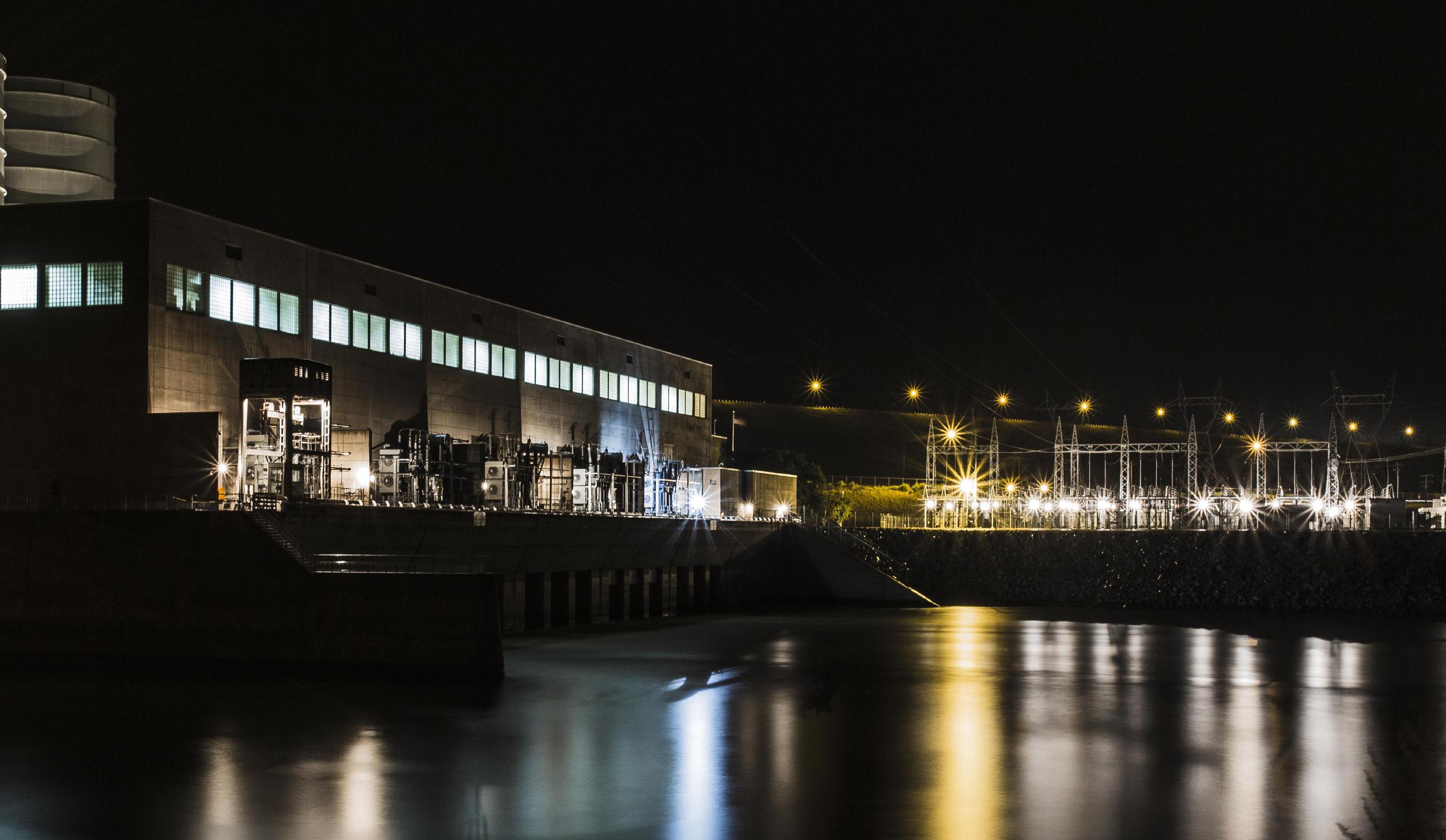
Photo of Garrison Dam, courtesy of U.S. Army Corps of Engineers
ELECTRIC & HYBRID VEHICLES
The number of electric and hybrid vehicles grew in 2025. At year end, there were 1,097 plug-in hybrid vehicles, 1,783 EVs, and 12,209 hybrid vehicles registered in the state, according to the N.D. Department of Transportation. There are 146 charging stations in North Dakota.
North Dakota is slated to receive approximately $25.9 million from the National Electric Vehicle Infrastructure (NEVI) Program through fiscal year 2026 to build direct current fast chargers for electric vehicles.
12,209
HYBRID VEHICLES
1,783
ELECTRIC VEHICLES
The charging stations must be no more than 50 miles apart and within one mile of exits along federally designated alternative fuel corridors, which include Interstate 94 and Interstate 29.
As of August 2025, North Dakota's NEVI program is on hold following the release of new rules and guidance from the U.S. Department of Transportation. NDDOT is reevaluating its approach to align with federal rules and allow the deployment of chargers that better reflect North Dakota's features.
RECOVERED ENERGY
Recovered energy generation (REG), also known as heat-recovery generation or waste heat energy, is a process of capturing the heat from hot exhaust to drive a turbine and create electricity.
There are four REG sites in North Dakota. Basin Electric Power Cooperative purchases the electricity from three sites near Manning, St. Anthony, and Zeeland (5.5 MW each). Montana-Dakota Utilities owns one site near Glen Ullin (5.3 MW).
1,097
PLUG-IN HYBRIDS
146
CHARGING STATIONS
The sites produce electricity using exhaust from compressor stations on the Northern Border Pipeline. The Northern Border Pipeline is a natural gas transportation system of 1,398 miles that links the Midwest with reserves in Canada.
A subsidiary of Ormat Technologies developed REG. This is the first use of this technology on a natural gas pipeline in the U.S.
TRANSMISSION & DISTRIBUTION
North Dakota’s electric transmission network plays a critical role in grid reliability, grid resilience, and market economics for developing electric generation.
Investor-owned utilities were responsible for North Dakota’s initial transmission development, followed by federal development of transmission lines, which are now operated by WAPA.
Electric generation and transmission cooperatives began developing both generation and transmission assets in the 1960s.
TRANSMISSION VS. DISTRIBUTION: WHAT’S THE DIFFERENCE?
Transmission lines begin at the source of power generation, like a power plant, and carry large volumes of high-voltage electricity over long distances.
Transmission of electricity is more efficient at higher voltages like 115 kV, 230 kV, and 345 kV, which are typical voltages in North Dakota.
High-voltage transmission lines bring power from a generation source to a substation, and distribution lines carry the power out of the substation to nearby homes and businesses. Distribution lines carry lowervoltage electricity from local substations to residential and commercial customers.
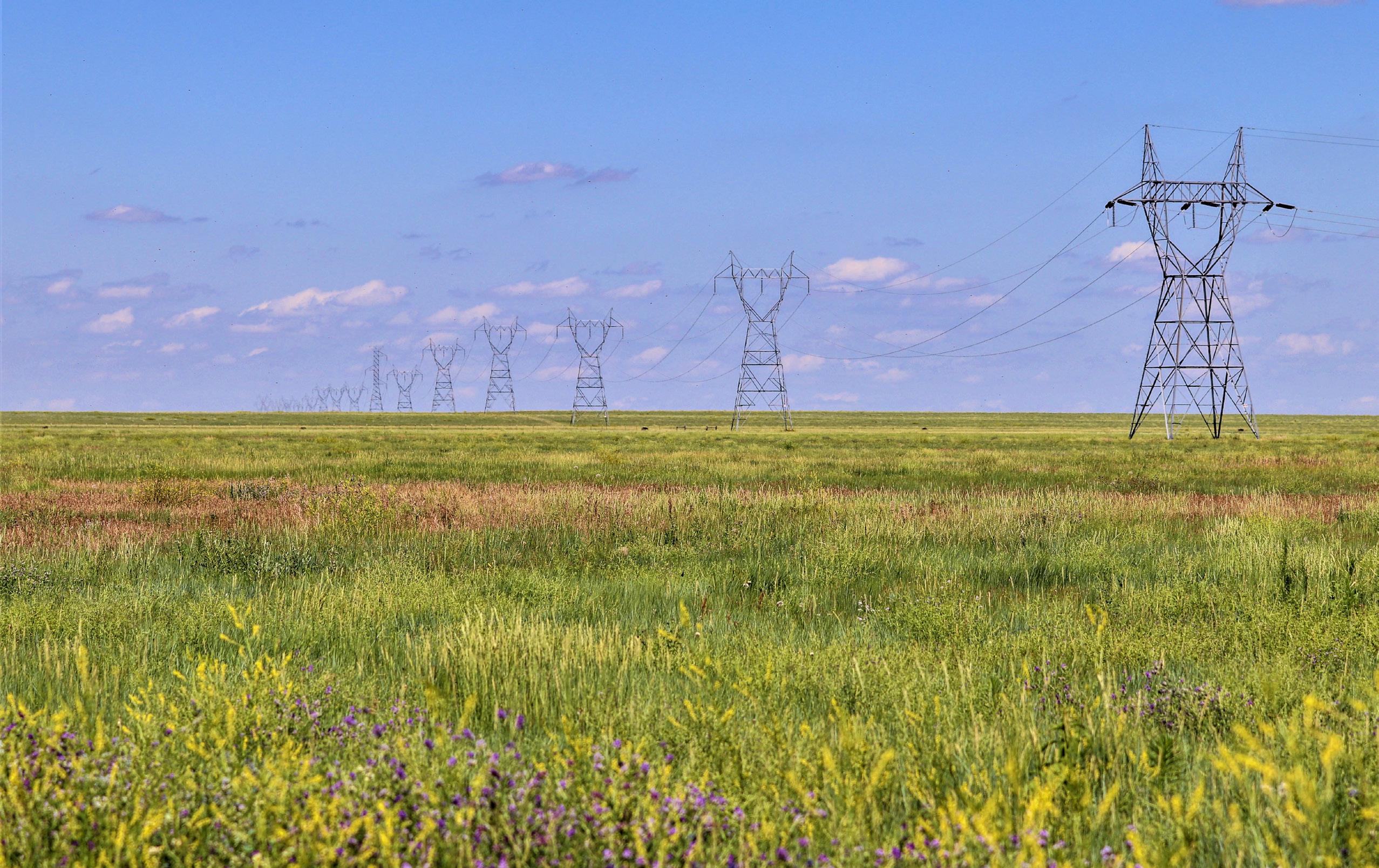
Photo courtesy of Western Area Power Administration
AC VS. DC: TRANSMISSION LINE EVOLUTION
Direct current, or DC, moves in a constant, single direction. DC was the standard in the early years of electrification in the U.S., but it is difficult to convert to higher or lower voltages to meet different demands. Alternating current, or AC, on the other hand, can be converted to different voltages using a transformer. AC reverses direction periodically, hence its name. AC electricity is commonly used in homes and businesses.
GROWING USE OF DC FOR LONG-DISTANCE TRANSMISSION
AC’s wave-like motion makes it efficient to distribute, so AC comprises the majority of transmission infrastructure. AC transmission lines in North Dakota range from 41.6 kV to 345 kV.
High-voltage DC transmission lines are becoming more common for long-distance, point-to-point delivery. DC lines require a converter station at each end to convert the power from AC current to DC current and back to AC at the termination point.
Converter stations are expensive to build, but DC line construction is less expensive than AC line construction. The lines are much more efficient than AC transmission meaning less electricity is lost as it moves along the line. The higher efficiency makes up for the expense of building the converters if the distance is more than around 300 miles.
DC TRANSMISSION IN ND
There are two DC transmission lines operating in North Dakota:
■ A 400-kV DC line carries electricity from Rainbow Energy’s Coal Creek Station near Underwood to a delivery point in Minnesota.
■ A 250-kV DC line, owned by Minnesota Power ALLETE, originates at the Milton R. Young Station in Center and terminates near Duluth, Minnesota.
Minnesota Power ALLETE is modernizing the converters on both ends of its line, increasing carrying capacity from 550 MW to 900 MW with potential to increase to 1,500 MW.
Grid United is partnering with Minnesota Power ALLETE, NorthWestern Energy, and Berkshire Hathaway Energy to construct the North Plains Connector, a 525-kV HVDC line (3,000 MW capacity) from Colstrip, Montana, to St. Anthony and Center, North Dakota, connecting the west to both MISO and SPP.
DID YOU KNOW?
Accurate and regular load forecasts are a crucial part of planning for developing long-range transmission line projects.
In the early days of electrification, each utility served its own geographic area and generated enough energy to serve just its customers.
Individual utilities had to either generate excess capacity to handle peak demand—or face the risk of not having enough electricity to meet peak demands. It was risky and inefficient.
Over time, utilities began sharing resources. They created interconnected systems, established purchase agreements, and shared the power they generated to better meet the needs of their collective customers. This collaboration reduced costs for utilities and consumers and improved reliability. Each utility continued to operate as a separate system.
reliability and cost-effectiveness.
Today, RTOs are the dominant form of energy transmission and dispatch in the U.S. RTOs ensure the transportation of power is open and transparent to all parties. They are usually independent, nonprofit entities that lead and manage short- and long-range transmission plans and strategy for the region to ensure a cost-effective, reliable, and secure grid.
Eventually, these interconnected systems evolved into regional transmission organizations, or RTOs, formed by neighboring utilities working with a common operator to control each of their systems. In a full RTO with an energy market, the RTO operator dispatches energy generation from the various generator units to meet the needs of all utilities’ customers. This larger collaborative effort further enhanced
RTOs IN ND
Two RTOs operate in North Dakota: MISO and SPP. North Dakota’s generation, transmission, and utility companies allow MISO or SPP to control their generation dispatch and transmission. The utilities retain ownership, operation, and maintenance of their generation and transmission facilities.
Map source: Federal Energy Regulatory Commission
OIL & GAS PRODUCTION
In 2024, North Dakota surpassed 5 billion barrels of oil produced since oil was discovered in 1951 near Tioga.
This achievement underscores the state’s position as a leading energy producer, driven by advancements in drilling technology, strong industry investment, and the rich reserves of the Bakken shale.
In October 2025, North Dakota set a new record for the number of wells producing: 19,625.
The Bakken formation is now considered “mature” by industry, meaning many of the operators in the state are dedicated to producing their acreage on a consistent and steady pace but that radical growth in production is less likely. Many of the new investments will be in value-added industries to capture by-products from the oil and gas production.
North Dakota remains the thirdlargest oil producer in the nation behind Texas and New Mexico.
The state’s drilling rig count dropped to 27 in December 2025. The state recorded its alltime high of 218 rigs in May 2012.
About 89% of producing wells are now unconventional Bakken and Three Fork
wells. About 13% are production from legacy conventional pools.
Leasing activity for new drilling sites is extremely low in North Dakota. Any activity consists of renewals and top leases in the Bakken-Three Forks area. The focus as prices recover will be less about adding new wells and more about completing wells that have been sitting, waiting for frac crews.
Drilled but uncompleted wells is more cost efficient for some operators at this time.
A typical North Dakota Bakken well will produce for more than 30 years. However, favorable economic conditions, enhanced oil recovery efforts, and other factors can extend the life of the well.
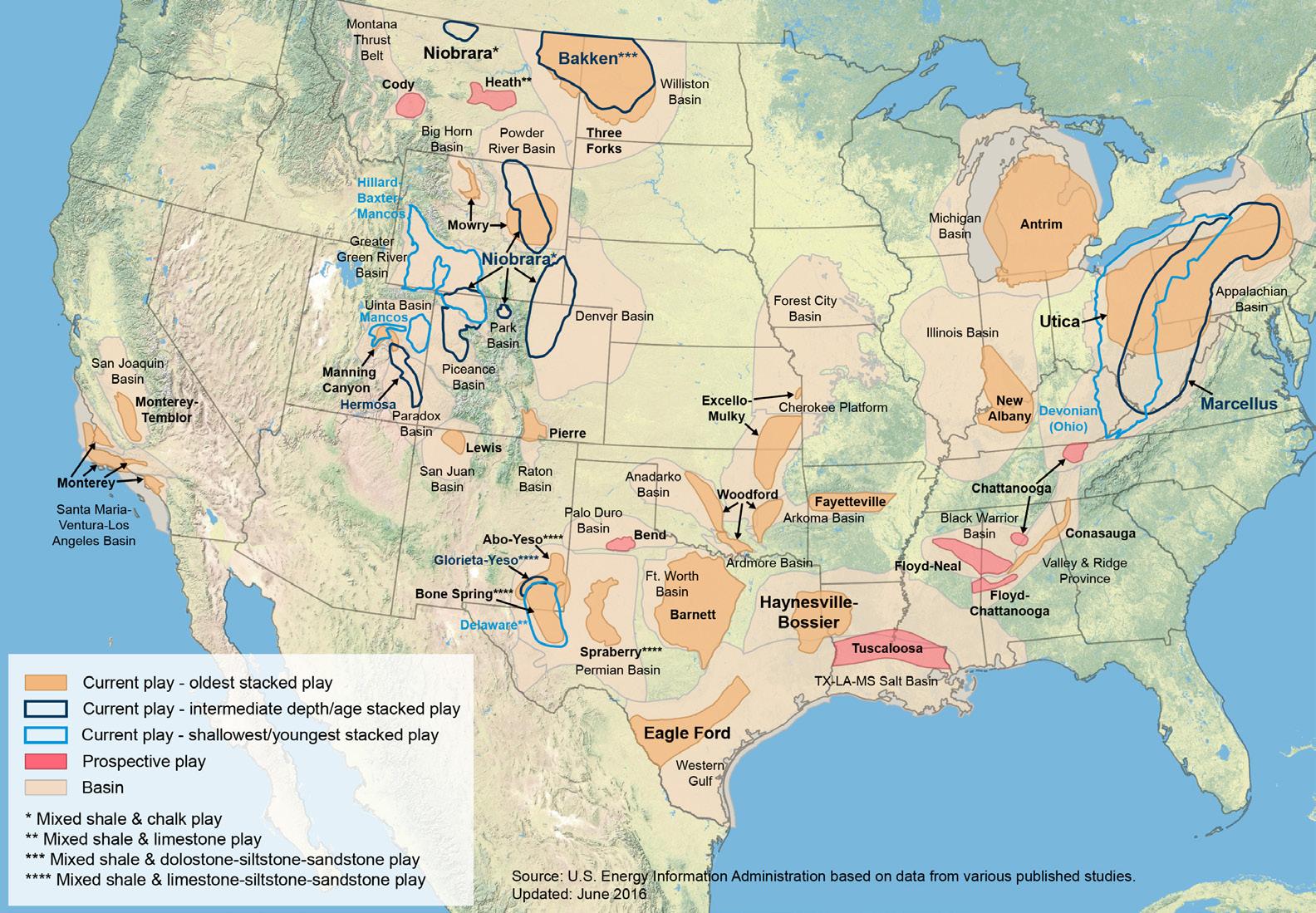
This map shows shale plays across the lower 48 states. Source: U.S. Energy Information Administration
Based on an average oil price of $50 per barrel, the average Bakken well:
■ Produces approximately 1,170,683 barrels of oil.
■ Generates about $31 million net profit.
■ Pays approximately $5,083,579 in taxes.
– $2,796,340 gross production taxes.
– $2,094,794 extraction tax.
– $192,445 sales tax.
■ Pays royalties of $9,487,516 to mineral owners.
■ Pays salaries and wages of $2,128,669.
■ Pays operating expenses of $1,900,977.
■ Costs $7,072,184 to drill and complete.
A well is moved to inactive status after three months of no production. Once the well hasn’t produced for 12 consecutive months, it goes into an abandoned status, and the
producer is given six months to return the well to production or plug and reclaim the site.
North Dakota requires a plugging and reclamation procedure to be submitted and approved by the N.D. Industrial Commission for each well site. Once approved, the process involves placing combinations of cement plugs and mechanical plugs at strategic depths in the well. The N.D. Department of Mineral Resources' Oil and Gas Division field inspectors witness the placement of plugs and cement in the well. Once the well has been plugged, the casing is cut off three to four feet below the surface and a steel plate is welded on top, ending the life of the well.
Source: N.D. Department of Mineral Resources
OIL RECOVERY AND THE BAKKEN FORMATION
With continued technological advancements and favorable market conditions, experts predict the Bakken could yield 5 to 8 billion barrels over the next 30 to 50 years.
Achieving this potential, however, depends on securing adequate carbon dioxide supplies for enhanced oil recovery, which could significantly increase recovery rates. Without EOR, as much as 90% of the remaining oil in the Bakken may go untapped.
NORTH DAKOTA OIL AND GAS STATISTICS
SHALE ENERGY TECHNOLOGY
Technological advances including horizontal drilling and hydraulic fracturing have made it economically possible to drill for oil in the Bakken Formation. The Bakken shale play was previously undeveloped because conventional drilling methods were not able to access the trapped oil and gas.
“Shale oil” refers to hydrocarbons produced from shale and other tight rock formations. In these formations, oil and natural gas are trapped within low-permeability rock and do not flow freely like conventional reserves. Through horizontal drilling and hydraulic fracturing, pathways are created that allow the hydrocarbons to flow to the wellbore for production. Conventional crude oil, by comparison, is naturally occurring liquid petroleum that has migrated into porous
REFINING
North Dakota is home to two refineries, one that processes crude oil and another that processes renewable feedstock.
The crude oil refinery in Mandan, owned by Marathon Petroleum Corporation (MPC) since 2018, began operations in 1954. It’s the largest refinery in the state and employs around 310 people. Previous owners include Amoco, BP, Tesoro, and Andeavor.
MPC processes Williston Basin crude oil from North Dakota into gasoline, diesel fuel, jet fuel, heavy fuel oils, and liquefied petroleum gas. Products are trucked and railed from Mandan. The refinery’s capacity is 71,000 BPD.
underground reservoirs where it can flow more readily to a wellbore. Horizontal drilling allows operators to drill more wells from a single location, using up to 90% less surface area to access more oil and gas resources.
Hydraulic fracturing, or fracking, involves pumping a specially blended liquid into a well under high pressure, creating fractures in the underground rock to enable the recovery of oil and natural gas. More than 98% of the liquid is a water and sand mixture. The remainder comprises various chemical additives dependent on well conditions that limit bacteria and corrosion and increase efficiency.
The State of North Dakota requires disclosure of the additives that companies use via FracFocus.org, a website that provides public access to reported chemicals used in fracking as well as information on the fracking process.
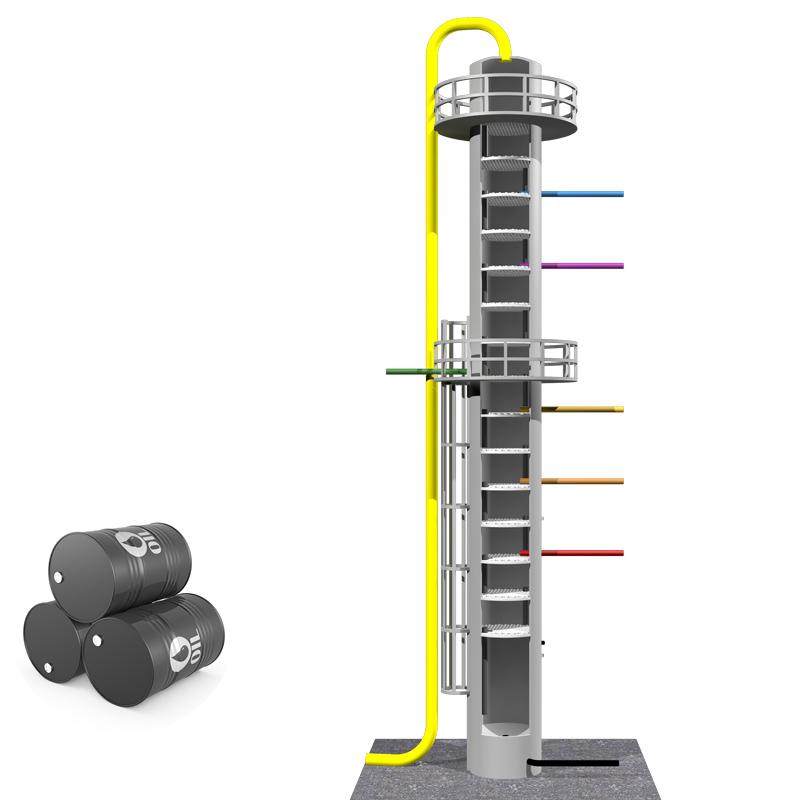
CRUDE
BOTTLED AND NATURAL GAS
DOWNCOMERS
FURNACE
CRUDE OIL IS FIRST SENT TO A FURNACE
PIPELINES
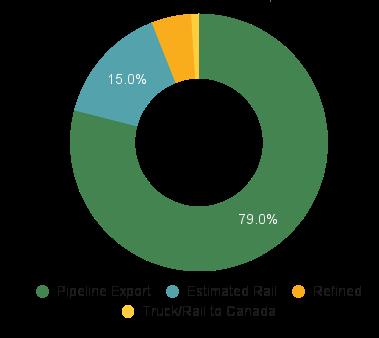
The U.S. has the largest network of pipelines in the world, with 30,000 miles of gathering and transmission pipelines in North Dakota. North Dakota’s pipelines gather and transmit commodities, including around eight out of every 10 barrels of crude oil produced in the state.
North Dakota’s transmission pipelines carry three types of products:
■ Crude oil: 18 pipelines.
■ Natural gas: Nine pipelines.
■ Carbon dioxide: Two pipelines.
MARKET GROWTH
Bakken natural gas has a high content of natural gas liquids (NGL), such as ethane, propane, butane, and natural gasoline. Updated forecast calculations from the N.D. Pipeline Authority estimate a potential of 1.2-1.4 million barrels per day (BPD) of NGL production from North Dakota in the coming decades.
For comparison’s sake, it would take about 500 truckloads or 140 rail cars a day to transport 100,000 BPD.
Several pipeline expansion projects have been proposed or are in the planning stages in North Dakota.
SAFETY
Pipelines remain the safest mode of energy transportation, according to the U.S. Department of Transportation, with more than 99.99% of all petroleum and natural gas products safely reaching their destinations.
RECLAMATION
During pipeline construction, topsoil and subsoil are removed and stockpiled nearby.
WILLISTON BASIN CRUDE OIL TRANSPORTATION
Source: N.D. Pipeline Authority
After pipeline installation, the topsoil and subsoil are returned to the site, and the land is returned to its preconstruction contours and production. This includes getting land into condition for crop production or grazing, or working with wildlife groups to plant native grasses or other vegetation for wildlife forage or habitat.
BAKKEN EAST
Legislatively, North Dakota authorized up to $500 million in financial support/ guarantees for the proposed Bakken East natural gas pipeline project. The initiative reflects the state’s broader strategy to support continued Bakken production, reduce natural gas constraints and flaring, and expand reliable energy infrastructure connecting western production to eastern North Dakota demand centers.
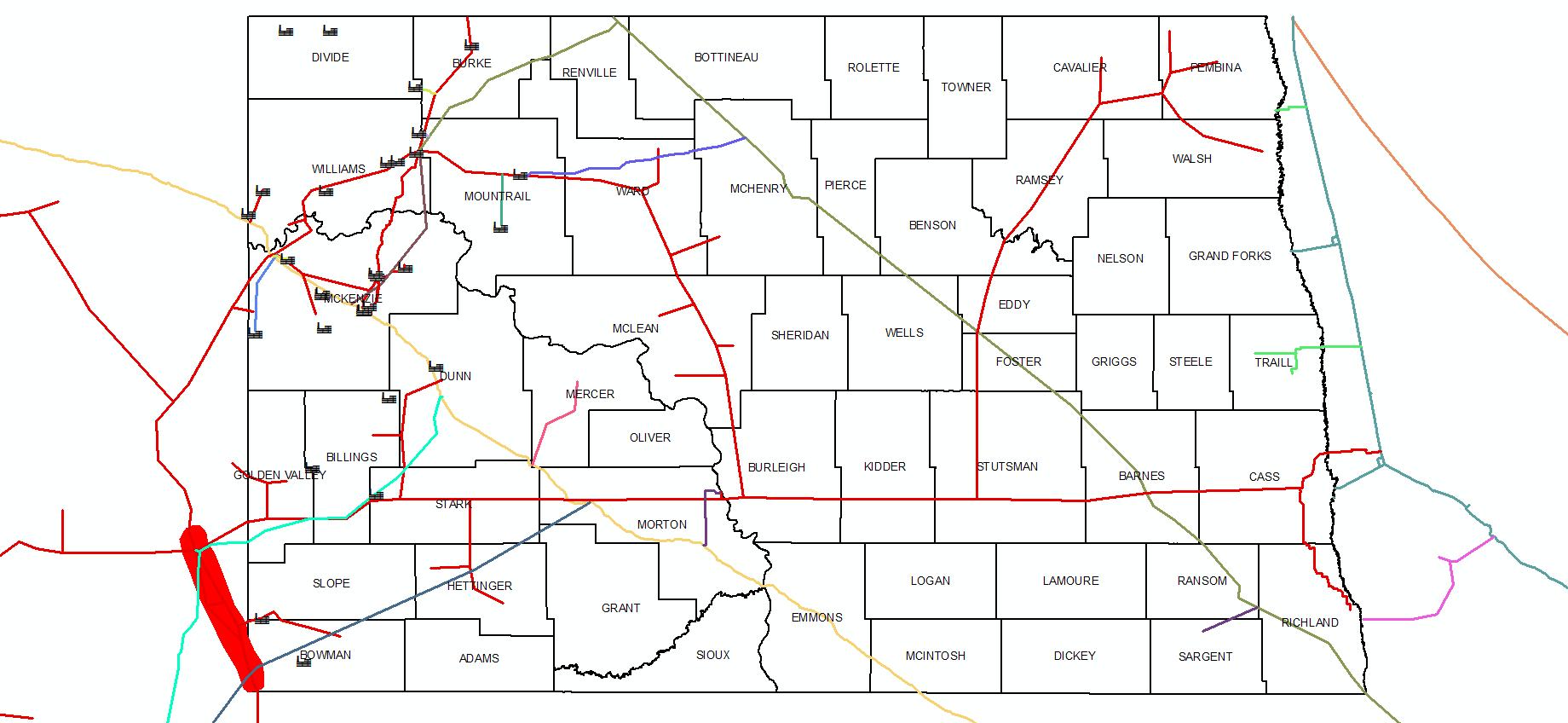
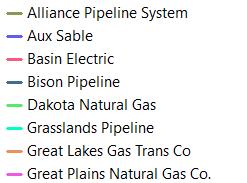
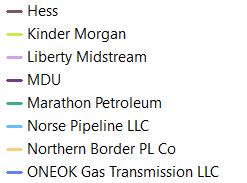
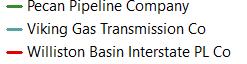
Major Natural Gas Infrastructure
MAJOR NATURAL GAS INFRASTRUCTURE
Map courtesy of N.D. Pipeline Authority
Scan the QR code on the left to see the most upto-date maps of all North Dakota’s pipelines at northdakotapipelines.com/maps
PETROLEUM MARKETING/PROPANE
According to the N.D. Petroleum Marketers Association, there are more than 400 petroleum marketers in North Dakota. The list includes around 700 service station dealers, convenience stores, and truck stops. These operations deal in every aspect of refined petroleum and renewable fuel products, ranging from wholesale and supply
to numerous retail outlets across the state. In 2025, retail petroleum dealers in North Dakota sold:
■ 436,793,046 gallons of taxable gasoline, up 4.5 million over the previous year.
■ 651,355,035 of taxable special fuels other than propane (mostly diesel), down 22 million over the previous year.
North Dakota petroleum marketers continue to support research and development of renewable fuels as viable sources of alternate energy.
North Dakota petroleum marketers also supply another fuel critical to the state— propane. Propane is a domestic fuel, serving to fortify national and energy security.
651.4M
GALLONS OF TAXABLE SPECIAL FUELS
Sold in 2025
Propane supplies have grown dramatically in recent years because of the numerous oil shale plays in the U.S.
Propane serves a variety of residential, commercial, and industrial needs. It is used as the prime heating source in 13.6% of homes in North Dakota. In 2025, the state’s propane marketers sold more than 159.4 million gallons of propane.
436.8M
GALLONS
OF TAXABLE
GASOLINE
Sold in 2025
SYNTHETIC NATURAL GAS
The Dakota Gasification Company’s Great Plains Synfuels Plant, north of Beulah, is the only commercial-scale coal gasification plant in the U.S. that was originally designed to manufacture synthetic natural gas from lignite coal.
It has a daily capacity of 170 MMCF of natural gas, which is shipped via the Northern Border Pipeline to market.
Since the inception of the plant, there have been great strides to produce commercial products that displace synthetic natural gas and refine co-products that are marketed throughout the U.S. and worldwide, including fertilizers and petrochemicals.
In 2025, the plant consumed 4.23 tons of coal, supplied via the Freedom Mine. In early 2024, the Synfuels Plant began capturing additional CO2 for permanent sequestration
159.4M
GALLONS OF PROPANE
Sold in 2025
via the Great Plains Carbon Sequestration Project.
The project includes the 6.8-mile Dakota Carbon Pipeline and an injection well located on reclaimed land owned by the Coteau Properties Company. CO2 is injected more than a mile below the surface formation.
The Synfuels plant also has the capability to produce up to 64 million gallons of diesel exhaust fluid a year as well as up to 200 tons/ day of food-grade liquid carbon dioxide.
In addition to natural gas, these products include urea (agricultural fertilizer, cresylic acid, phenol, tar oil, ammonium sulfate (agricultural fertilizer), anhydrous ammonia (agricultural fertilizer), carbon dioxide and liquefied carbon dioxide, krypton/xenon gases, nitrogen, naphtha, and diesel exhaust fluid.
NATURAL GAS PROCESSING
The N.D. Pipeline Authority’s natural gas forecast estimates North Dakota could be producing 4.5-5.5 billion cubic feet (BCF) of natural gas each day in the mid-2030s. As of December 2025, natural gas production was 3.3 BCF/day.
North Dakota currently has 33 natural gas processing plants operating in western North Dakota, with many expansion projects being planned or under construction.
Cerilon GTL is planning a $3.2 billion gasto-liquids plant in Williams County, which was approved by the ND Public Service Commission in September 2024. The plant is expected to produce 25,000 barrels per day of liquid hydrocarbon products. The owner is targeting a start-up date in 2030.
Since 2010, natural gas processing capacity in North Dakota has grown nearly 781%, increasing from 491 MMCFD to 4,327 MMCFD in 2025.
Both U.S. and world crude oil inventories are improving. The U.S. strategic petroleum reserve grew slightly in 2025 over 2024. The price of natural gas delivered to the Northern Border at Watford City remained low in 2025 compared to national and world benchmarks.
GAS CAPTURE
North Dakota has made great strides in capturing the natural gas co-produced with oil, transforming what was once an ongoing challenge into a success story.
The state’s record high flared percent was 36% in September 2011. As of December 2025, 5% of the natural gas produced in North Dakota was being flared. As gas volumes continue to grow, the state maintains a strong percentage of gas capture.
The statewide gas flared volume in December 2025 was 151.3 MMCF, down from the year prior.
■ Statewide gas capture increased 1% to 95%.
■ Bakken gas capture increased slightly to 96%.
The North Dakota Industrial Commission’s natural gas capture goal is 91%.
95%
STATEWIDE GAS CAPTURE
According to the N.D. Department of Mineral Resources, private industry has invested more than $20 billion in additional natural gas gathering and processing infrastructure to reduce flaring, and another $10-$15 billion will be needed in the coming years. Additional capacity is being planned to meet growing natural gas production in the near future.
QUICK FACTS
■ U.S. natural gas storage is 1% above the five-year average.
■ The state’s first liquefied natural gas plant is near Tioga. LNG is natural gas that has been converted to a liquid form for easier storage and transportation.
Sable facility has the capacity to transport and process up to 110 MMCFD of ND natural gas at its Chicago facility.
RENEWABLE DIESEL
Renewable diesel is a fuel made from fats and oils, such as soybean oil or canola oil, and is processed to be chemically the same as petroleum diesel. It is not refined from crude oil. It meets specification for petroleum in the U.S. and Europe.
Renewable diesel can be used as a replacement fuel or can be blended into petroleum diesel at any level, making it different from biodiesel, which can only be blended at rates between 2% and 20% of diesel fuel by volume.
As of Jan. 1, 2025, the U.S. Energy Information Administration reported 22 domestic plants in 10 states with capacity of 4.2 billion gallons per year of renewable diesel and other biofuels. North Dakota has the only renewable diesel refinery in a three-state region.
RENEWABLE FACILITIES IN ND
The Green Bison Soybean Processing plant in Spiritwood is North Dakota’s first dedicated soybean crushing plant and refinery. The facility is a joint venture between ADM (75% owner) and Marathon Petroleum (25% owner), and opened in September 2023.
The plant provides an important tie between the energy and agriculture industries. It creates 600 million pounds of refined soybean oil per year, fueling the production of renewable diesel. It’s expected to generate 1.28 million tons of soybean meal, supporting animal agriculture production in the region.
In 2021, Marathon Petroleum's Dickinson Renewable Diesel Facility became a 100% renewable facility by reaching its design production capacity of 184 million gallons a year.
Constructed by WBI Energy near Dickinson and originally known as Dakota Prairie Refining, the facility was the first greenfield diesel refinery to be built in the U.S. since the late 1970s.
It came online in May 2015. In late 2020, the facility was converted to produce renewable diesel fuel from soy oil and other organically derived feedstocks.
Photo of Dickinson Renewable Diesel Facility, courtesy of Marathon Petroleum
ETHANOL
North Dakota’s ethanol industry contributes $1.7 billion in economic activity each year to the state’s economy. State and local taxes contribute $8.5 million annually. The industry employs nearly 1,200 workers directly and indirectly in rural communities across the state.
IN PARTNERSHIP WITH AGRICULTURE
Ethanol has been a part of North Dakota’s agricultural economy since 1985. It found a home in North Dakota at a time when farmers were looking for new markets for their commodities and fuel production was changing nationwide.
Starting in the mid-2000s, consumers and the federal government were looking for fuel with a lower carbon footprint. In 2006, Congress passed the Renewable Energy Policy Act of 2005, which mandated inclusion of specific volumes of renewable fuels with the goals of reducing greenhouse gas emissions, expanding the nation’s fuel supply, and reducing reliance on imported oil in the nation’s fuel usage.
Since 2007, six ethanol plants have been built in North Dakota. Today, those facilities have a combined annual production capacity of more than 550 million gallons.
THE FUTURE OF ETHANOL
As agriculture and energy markets change, ethanol is adapting and growing. North Dakota ethanol plants and producers are investing in processes to improve efficiency and lower emissions, including
carbon capture and storage and sustainable aviation fuel pathways.
One of the most important roles for ethanol’s future is in low carbon fuel markets. Improvements in farming practices, plant operations, and technologies are reducing the carbon intensity of ethanol.
North Dakota’s ethanol industry is a national leader in efforts to decrease its carbon footprint. The state’s ethanol plants can capture up to 2.4 million tons of carbon emissions annually.
RELIABLE LOCAL MARKET FOR ND FARMERS
One way ethanol provides value to rural communities and ag producers is by providing producers with a local outlet for their corn. Rather than relying heavily on export markets or long-distance supply chains, producers can sell corn closer to home—often making the price producers receive higher.
Every year, North Dakota’s ethanol plants use more than 185 million bushels of corn each year, with more than 80% of the corn purchased from North Dakota farmers. In total, between 40 to 60% of the state’s annual corn production is used by North Dakota ethanol facilities.
At the end of the production process, the ethanol produced in North Dakota goes to both local and national markets. About 10% of North Dakota ethanol is sold within the state, while the remaining 90% is shipped across the United States and into Canada.
ETHANOL PLANTS IN NORTH DAKOTA
Tharaldson Ethanol also produces 100,000 tons annually of
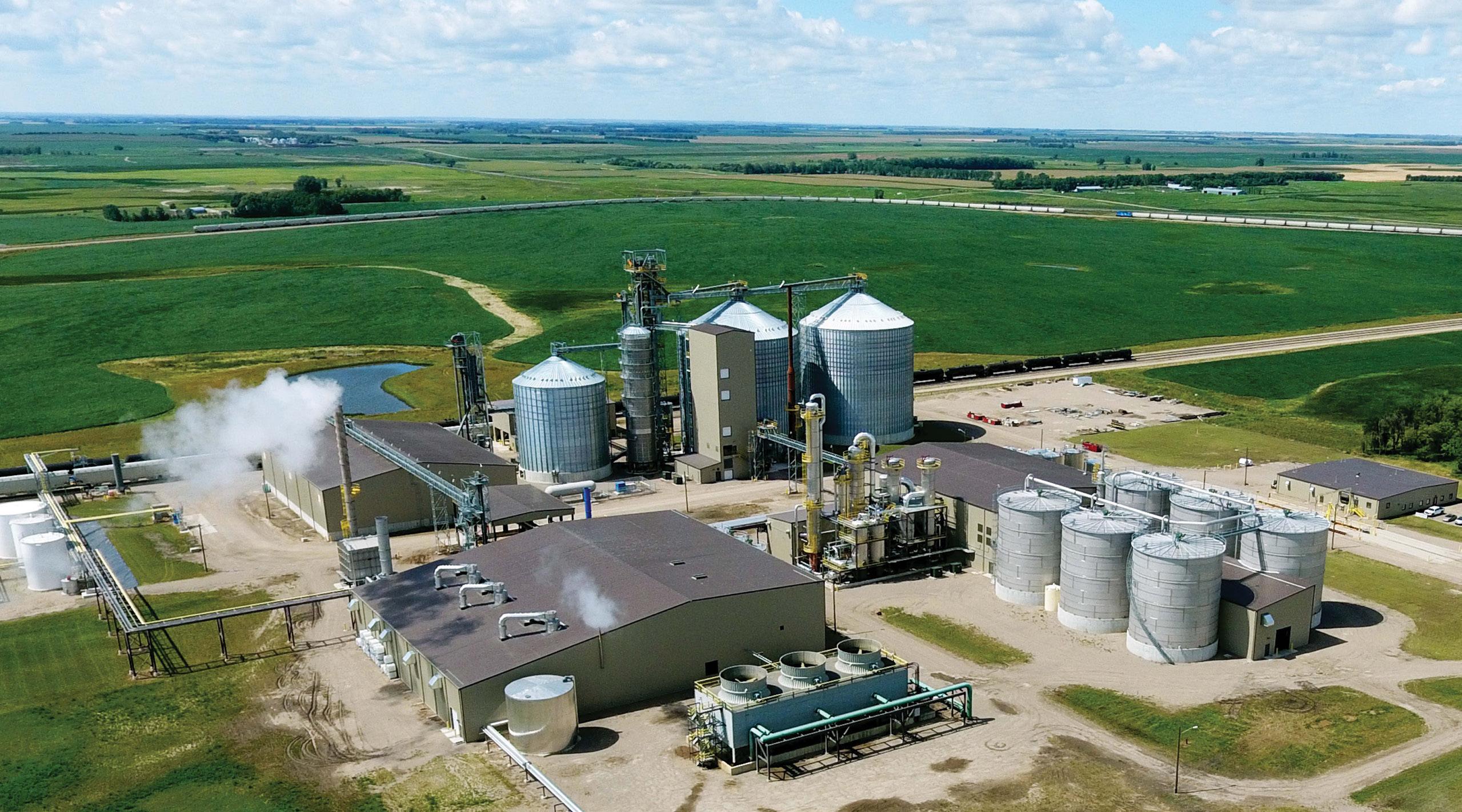
Photo of Dakota Spirit Ethanol Plant near Spiritwood., courtesy of Harvestone Low Carbon Partners
ENERGY RESEARCH
The University of North Dakota’s Energy & Environmental Research Center (EERC) has been at the forefront of energy innovation for decades, advancing practical solutions to the world’s energy and environmental challenges.
With a history rooted in energy research since the 1950s, the EERC has evolved into a globally recognized leader in applied energy science, working with government, industry, and academic partners to strengthen energy systems while supporting economic growth and environmental performance.
ADVANCING ENERGY SYSTEMS ACROSS KEY AREAS
The EERC conducts research and technology development across a range of energy topics critical to North Dakota and the nation. Key focus areas include carbon management, hydrogen and alternative fuels, oil and gas optimization, and energy infrastructure.
Work in these areas supports the development of scalable solutions that enhance energy production, improve efficiency, and reduce emissions across power generation and industrial sectors.
CARBON MANAGEMENT AND UTILIZATION
The EERC plays a leading role in advancing carbon capture, utilization, and storage (CCUS), supporting both power generation and industrial applications. Research focuses on improving capture technologies, expanding opportunities for carbon utilization, and enabling safe, permanent
storage in geologic formations.
The EERC also supports efforts to utilize carbon dioxide in enhanced oil recovery, helping extend the value of North Dakota’s existing energy resources.
STATE ENERGY RESEARCH CENTER
As North Dakota’s State Energy Research Center (SERC), the EERC leads research initiatives that address emerging energy opportunities and challenges. Areas of focus include methane emissions reduction, direct air capture, hydrogen production, and advanced carbon materials.
SERC also supports workforce development through programs such as Energy Hawks, where students collaborate with researchers on real-world energy challenges.
COLLABORATION AND INDUSTRY PARTNERSHIPS
The EERC works closely with industry, government, and research partners to advance technologies from concept through demonstration and deployment. Collaborative programs focus on improving infrastructure reliability, optimizing resource recovery, and advancing carbon management solutions at scale.
Through these efforts, the EERC continues to support North Dakota’s role as a leader in reliable, innovative, and responsible energy development.
FINANCIAL IMPACT
On average, oil and gas taxes generate more than half of North Dakota’s total tax revenue.
■ Corporate and individual income tax collections increased in 2025 compared to 2024.
■ Taxable sales and purchases grew slightly in 2025 compared to 2024.
■ In 2025, North Dakota crude oil prices peaked in January at $68.76 per barrel and ended the year at $51.85 in December. As natural gas production is projected to rise due to increasing gas-to-oil ratios, attracting new businesses that sustainably add value to this resource will be critical for the state’s long-term economic health.
LEGACY FUND
The Legacy Fund, established in 2010 as the state’s “nest egg,” is funded by 30% of the state’s oil and gas taxes. As of December 31, 2025, the Legacy Fund’s value was $13.6 billion.
Legislators can spend the principal of the fund with a two-thirds majority vote in each house. There is an additional limitation restricting any expenditure of Legacy Fund principal to a maximum of 15% in any biennium.
Lifetime distributions total $2.5 billion.
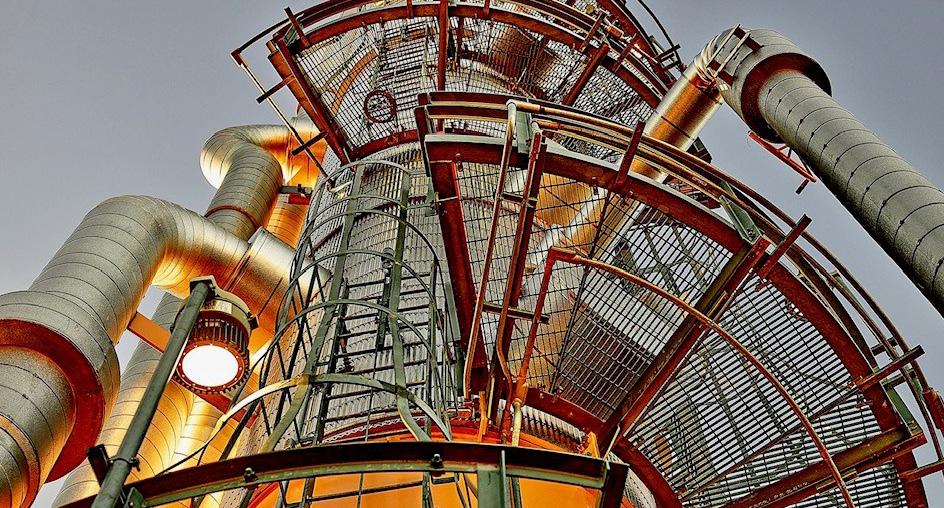
Photo of Bear Creek separator stack, courtesy of ONEOK
CAREERS IN ENERGY
The N.D. Department of Mineral Resources estimates that, depending on the pace it takes for the price of oil to rebound, an additional 40,000-45,000 wells will be drilled over the next 30 years.
The state could see a peak of about 87,000 oil-related jobs near 2030, with about 70,000 of those jobs being long term.
Job Service North Dakota's (JSND) Quarterly Census of Employment & Wages 2024 shows that in 2024 an estimated 23,375 workers were in direct or support positions for the industries of oil and gas extraction, coal mining, support activities for mining, utilities, and pipeline transportation, with an estimated annual average wage of
approximately $136,413.
These statistics do not reflect employment or wages in ancillary businesses or industries working in the energy field, such as trucking, construction, engineering, manufacturing, and repair services.
The unemployment rate in the state was 2.5% as of December 2025, unchanged from December 2024.
JOB OPENINGS
There continue to be numerous job opportunities in the state. Data from JSND’s Online Job Openings Report showed a total of 13,483 openings in December 2025. The two occupational groups most closely
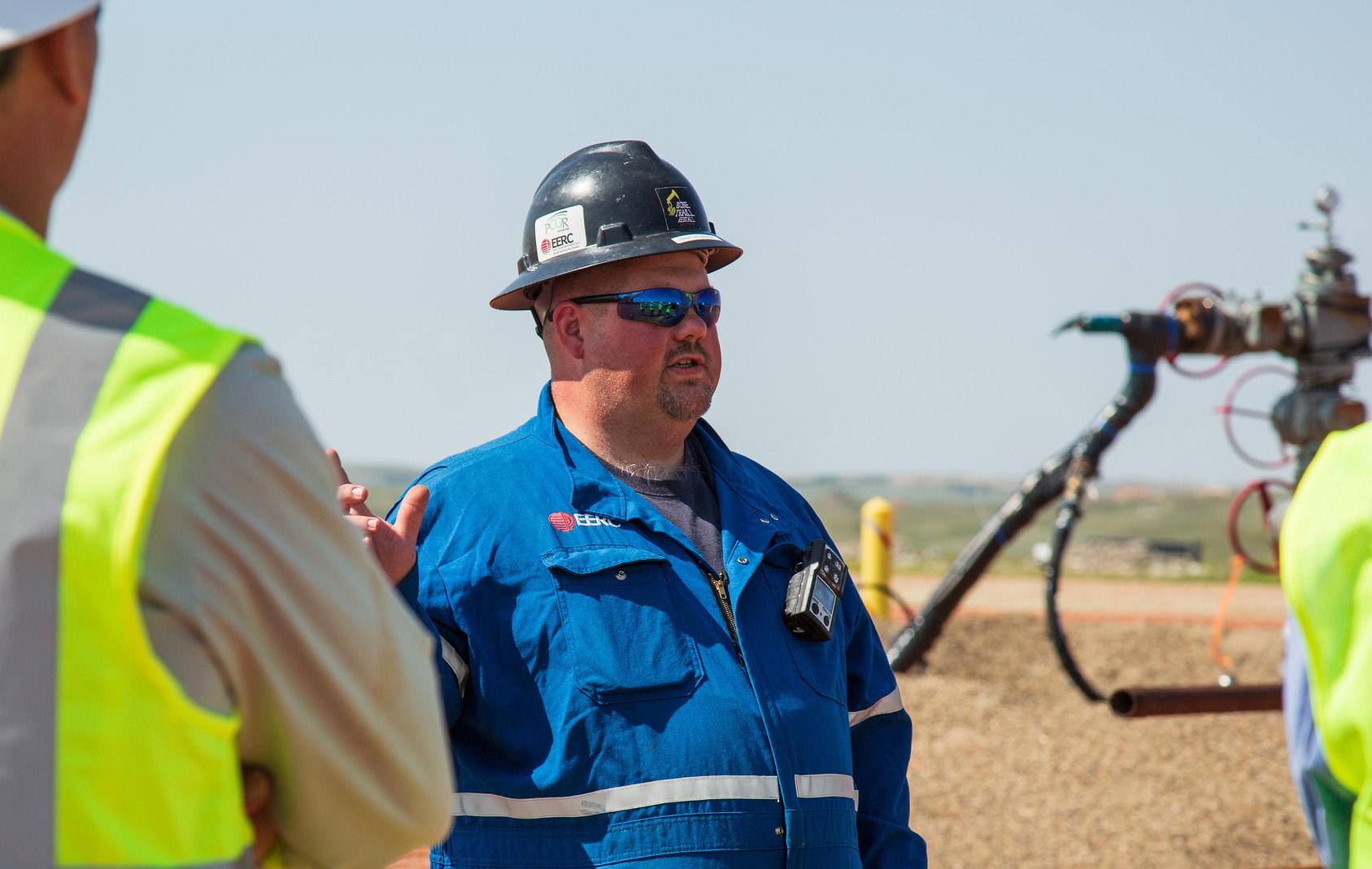
Photo courtesy of Kari Suedel, EERC
WORKFORCE
associated with opportunities in the oil patch—construction and extraction, and transportation and material moving— accounted for 1,794 of those openings statewide.
These figures reflect a year-over-year increase in total openings across the state and a year-over-year decrease in the 17 oil and
13,483
JOB OPENINGS
As of December 2025
gas producing counties. The 17 oil and gas producing counties saw a decrease of 21.5% in total job openings over the year and a 5.3% increase over the past five years.
$136,413
AVERAGE ANNUAL
Estimated Wage for Direct and Support Positions
EDUCATION & TRAINING
87,000
ANTICIPATED Peak In Oil-Related Jobs Near 2030
BUILDING TALENT FOR THE ENERGY SECTOR
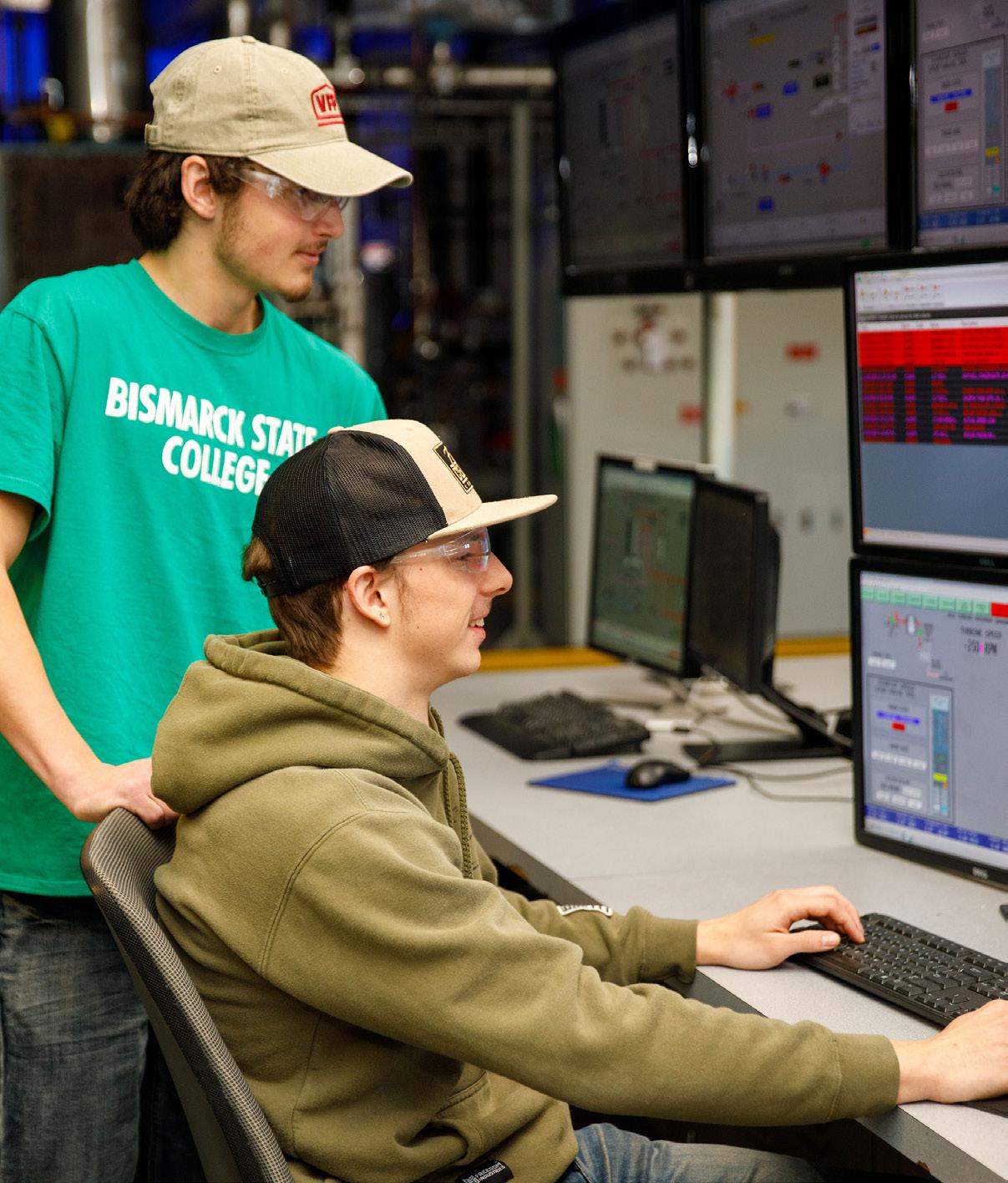
Bismarck State College (BSC), North Dakota’s Polytechnic Institution, has been training the current and future energy workforce since 1970. BSC offers certificate, associate, and bachelor degree options across 13 disciplines— from facility operations and technical roles to supervisory and management careers.
ENERGY PROGRAMS
Programs include industrial operations, mechanical systems, instrumentation, automation, robotics, and energy service technologies. These programs support careers in traditional power stations, wind and solar facilities, electrical transmission and distribution, linework, system operations, petroleum production, oil and gas processing,
refining, ethanol and biofuels, and water and wastewater technology.
BSC’s hands-on, high-skill programs are grounded in the principles of STEAM (Science, Technology, Engineering, Arts, and Math), preparing learners to solve complex technical, economic, and community challenges.
■ 809 students are enrolled in BSC energy programs—on campus or online— each semester, using world-class lab equipment and simulations, and realtime lab sessions.
■ In 2025, 311 students earned a degree or certificate through BSC’s National Energy Center of Excellence (NECE) programs.
■ Of the graduates who responded to a BSC Career Services survey, 98% were employed, continuing their education,
ENROLLED
In Energy Programs
Fall 2024 & Spring 2025
A BSC NECE Degree or Certificate In 2025
or serving in the armed forces. Reported salaries ranged from $26 to $40+ per hour.
■ The NECE provides customized training for regional, national, and international energy companies to support certification requirements, onboard new hires, and supplement internal training programs.
■ In FY24, BSC delivered non-credit training to 445 individuals representing 85 companies, and hosted 143 training events.
98% EMPLOYED
Or Continuing Their Education or Serving In the Armed Forces
Additional higher education contributions to North Dakota’s energy workforce include:
■ The Harold Hamm School of Geology and Geological Engineering at the University of North Dakota (UND) provides education and research in petroleum geology and related fields.
■ Lake Region State College (LRSC) in Devils Lake offers a Wind Energy Technician program utilizing a 1.6 MW wind turbine near campus.
■ North Dakota State University in Fargo offers degrees in engineering, geology, agriculture, and other fields aligned with energy careers.
■ Other state institutions—Williston State College (WSC), Minot State University, and North Dakota State College of Science (NDSCS)—offer additional energy-related degree programs.
TRAINND
TrainND, a partnership among BSC, WSC, LRSC, and NDSCS, works with businesses to deliver customized training in oil and gas operations, lease operations, well servicing, wind energy, welding, and more.
Photo courtesy of Bismarck State College
PILOT PROGRAM EXPANDS TECHNICAL DUAL CREDIT COURSES
BSC's Automation, Energy, and Advanced Technology (AEAT) Division has recently dedicated significant time and resources to a pilot initiative designed to expand dual credit technical course opportunities to North Dakota high school students.
This effort uses a hybrid delivery model that emphasizes hands-on, face-to-face lab experiences paired with online asynchronous coursework, delivered through Secondary Career and Technical Education (CTE) Centers across North Dakota.
CTE COLLABORATION
As part of this initiative, the BSC AEAT Division engaged with multiple CTE directors and school administrators to initiate discussions around improving student access to technical career pathways, particularly in program areas not currently offered in high schools or CTE centers, giving way to new dual credit high school student pathways like energy and automation.
Initial outreach efforts resulted in the establishment of formal Memorandums of Understanding with several secondary education partners in CTE centers across North Dakota. These partnerships were built around a shared value proposition to:
■ Increase awareness among counselors and students of in-demand energy and automation technical career opportunities within North Dakota.
■ Expand student access to energy and automation technical courses and certificate pathways not currently
available at the secondary level.
■ Strengthen the energy and automation workforce pipeline by preparing more entry-level, job-ready technicians to meet industry needs.
PROGRAM GOALS
The technical education goals are to equip students with the knowledge and skills necessary to meet established energy and automation technical learning outcomes and industry standards. To support this, BSC has implemented a rotating model of transporting high-quality industrial training equipment to CTE centers, enabling five in-person, six-hour learning lab experiences. These learning lab days emphasize a handson experiential approach that complements the online coursework—where students first engage with theory and simulations.
ENROLLMENT
The conclusion of spring 2026 will mark the completion of the first year of AEAT’s dual credit pilot program. Collaborative efforts among BSC leadership, faculty, and staff— along with CTE directors and counselors in Williston, Dickinson, Jamestown, and Bismarck—have led to 100+ enrollments.
The result of the pilot program was partnerships and MOUs between BSC and CTE centers in Bismarck, Dickinson, Williston, and Jamestown.
2026-27 dual credit expansion is planned to include Watford City, Minot, Beulah-Hazen, Wishek, and southwest North Dakota.
Bismarck State College
National Energy Center of Excellence
P.O. Box 5587
Bismarck, ND 58506-5587
701-224-2445
www.energynd.com
bsc.gpec@bismarckstate.edu
THANK YOU!
We would like to thank the many subject-matter experts who provided comments and updates to the data in this publication. They include: ALLETE Clean Energy, Bank of ND, Basin Electric Power Cooperative, Bismarck State College, Cass County Electric Cooperative, Dakota Gasification Company, EERC at the University of North Dakota, Great River Energy, Harvestone Low Carbon Partners, Job Service ND, Lignite Energy Council, Marathon Petroleum Corporation, MDU Resources Group, Minnkota Power Cooperative, Montana-Dakota Utilities Co.,
ND Department of Commerce, ND Department of Transportation, ND Ethanol Council, ND Ethanol Producers Association, ND Petroleum Council, ND Petroleum Marketers Association, ND Pipeline Authority, ND Public Service Commission, ND State Tax Department, ND Transmission Authority, ND Association of Rural Electric Cooperatives, ONEOK, Otter Tail Power Company, U.S. Army Corps of Engineers, Verendrye Electric Cooperative, Western Area Power Administration, and Wind Industry of ND.