By Inscape I mean the particular nature of things, the unique, essential form and meaning of any object or experience.
~ Gerard Manley Hopkins
Members of the Inscape staff would like to thank the following people for their help and support:
Anna-Lina Bombardier, Claire Borham, Susan Cook, Steve Coughlin, Max Crowther, Tim Doherty, Frédéric Grégoire, Jillian Harkness, François Jean Jean, Kurt Johnson, Marianne Laramée, Sheila Lyster, Christian Munafo, and Matthew Weir.
We would also like to thank Scott Abbott for his generous support of the English department and all of its endeavours.
Design and typesetting by the Inscape staff at BCS.
Bishop’s College School
Sherbrooke, Quebec J1M 1Z8
Printed in Canada by Blanchard Litho inc.
From the editors…
This year’s theme, Permission to Shine, chose us as much as we chose it. There is something quietly radical about granting yourself permission to be seen—to take up space on the page, on the canvas, and in the world. So much of the creative life is spent waiting for someone else to grant that permission, when in truth, it was always ours to give.
The message feels especially necessary as Inscape returns after four years. In an age where technology moves faster than we can breathe, where algorithms decide what gets seen and what does not, it’s easy to forget that every piece of work deserves the chance to shine. That permission comes from creators themselves.
This is my first time editing a publication like this, and I won’t pretend I always knew what I was doing. But somewhere in the process, I fell in love with the trust tucked inside every submission and the quiet joy of building something from other people’s courage.
~ Sean Chan
WhenI began writing this note, I thought about the great quotes I could include or the witty yet eloquent wording I felt obligated to produce. I thought this letter had to be perfect— just as I often think everything I create must be perfect.
I kept telling myself that other people could write better, draw prettier, and create more creatively. I would spend so much time making things only never to submit them, convinced they would be out of place.
But editing this magazine helped me realize that what makes your work special isn’t perfection or readiness to be a bestseller—it’s that you made it.
Maybe grades will take you far in life, and maybe school teaches you to exercise your brain, but I want to encourage you to exercise your soul, too. Go out and make some art.
~ Helena Ogilvie
Thestruggle to find the perfect words is a battle I endlessly face—one that often renders me silent. Silence can become a kind of secrecy, an instinct to keep our inner worlds curled tightly within ourselves. I used to think this shyness, this fear, would never relent. I imagined I’d sooner drop out of school to live a life of solitude than allow strangers into my personal inscape.
I also assumed everyone felt the same way. Yet while reading these submissions, I found myself startled by words I could never imagine articulating myself. They reminded me how much exists beneath the surfaces of all our peers.
The hesitancy to reveal these parts of ourselves is a secret we share, but it was a privilege— and honestly, quite fun—to chase down your stories, your memories, and your inscapes.
~ Maren Timmins
Table of Contents
A Letter Too Late, Jack O’Keefe ..............................................6–9
As Quiet as the Falling Snow, Hazel Stafford ..................12–13
Subtle Sonder, Kaia Lilford 15–16
Reichenbach Falls, Emerson Kim.............................................19
The Fog at Rest, Emma Lemay ...........................................20–21
The Year Is an Ocean, Emmett Harder 22
Archive, Tina Miao....................................................................22
To Reset Is to Forget, Tina Miao ........................................24–25
The Sunset, Chloe Hirst ......................................................27–28
The Gin, the Strangers, and the Rain, Sean Chan ...........29–30
Name Badge, Latifa Syradin 34
Coffin Thoughts, Helena Ogilvie .............................................34
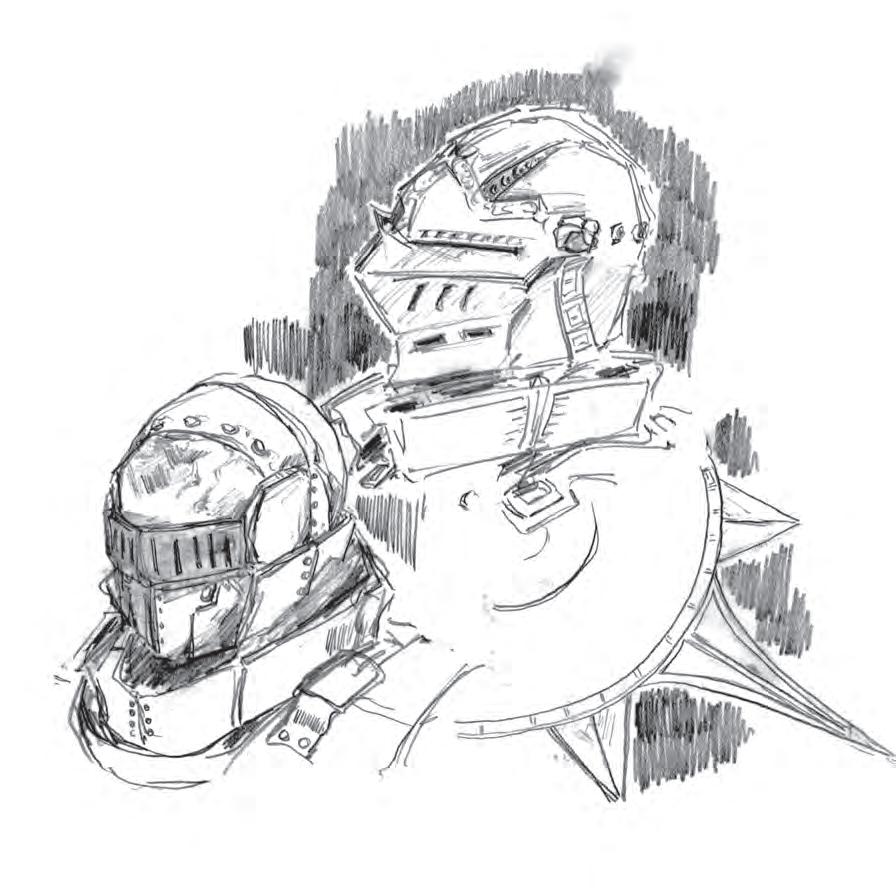
The Armour, Chloe Hirst ....................................................48–49
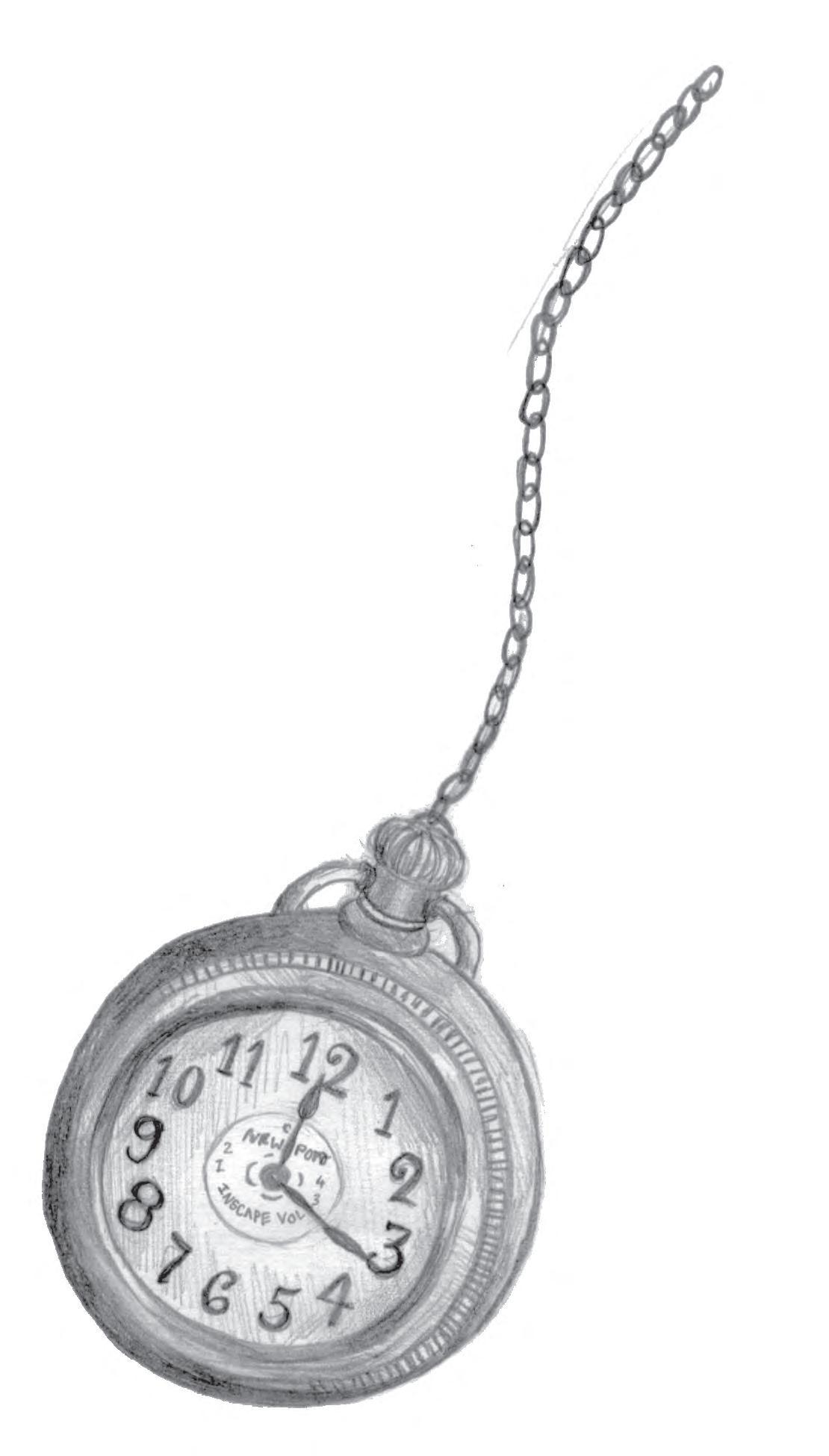
The Pocket Watch, the Fedora, and the Umbrella, Sean Chan ......................................................................50–52
Still Saving You a Seat, Jack O’Keefe .................................53–55
A Tiny Dream, Sean Chan ........................................................56
Sol, Helena Ogilvie.....................................................................57
No Longer Us, Tina Miao 59
Garden, Sophia Scott .................................................................61
Untitled (and with summer came the finals), Helena Ogilvie .....................................................................64
Editors: Sean Chan
Helena Ogilvie
Maren Timmins
Artists:
Lili Rose Beaucage Krebs
Stella Beauchesne
Alice Boulanger
Karen Boyle
Mia Chien
Peter Huang
Emerson Kim
Emma Lemay
Asia Lilford
Halbert Ma
Ellie McBrine
Helena Ogilvie
Andrea Quijano Giacopello
Aurora Sangster-Butler
Alfie Scott
Sophia Scott
Maren Timmins
Mila Villamar Elizondo
Faculty Advisor: Scott Kelso
A Letter Too Late
A Short Story by Jack O’Keefe, Form VII
The incessant noise of the rain coming down hard on the roof meant the man who lived at 402 Westchester Lane couldn’t get any sleep. All night he had been tossing and turning, unable to finally drift off. As the man turned to lie on his back, he reached his hand out to the other side of the bed. It was then that he was met with a sharp reminder, a nagging pain that still haunted him. Even though it had already been two years since there had been another hand there to greet his own, the heartache was still as strong as ever. He wondered to himself if this pain would last forever; it certainly felt like it.
The man then reached over to the bedside table and, with his other arm, reached for the light cord. After what seemed like an eternity of flailing and reaching around uselessly in the darkness, he found it and lit up his bedroom. He was then able to find his glasses, which were positioned up against his prescription medication bottle, labelled Citalopram, A. Langston. Mr. Langston then proceeded, with much effort, to lift himself out of bed. He grabbed his cane from its usual resting place and slowly made his way to the living room.
As the years went by, it had become increasingly difficult for Mr. Langston to move around his house with ease. It didn’t help either that everyone in his life had been telling him to sell the place, move on, and live in a retirement home. Even after constant and never-ending pestering, he refused to sell—not after living there his whole life, seventy-five years. He had seen many neighbours come
and go, some he grew quite fond of, others not so much. He’d even seen the price of his own home go up millions since his grandparents bought it many moons ago. Even with all the increased pressure from the local real estate agents, he refused to budge.
All the oil-lamp streetlights had already been extinguished, which didn’t come as a surprise to Mr. Langston. He guessed it must have been at least two or three in the morning. With all the noise the man had made throughout the house, he had woken up Gertrude, who came out to investigate the disturbance.
“Hey, girl,” the man said weakly.
Gertrude walked up to him slowly, her age beginning to show. Truthfully, the man didn’t think she had much longer left. She approached Mr. Langston as he sat down slowly on his desk chair. Gertrude then positioned herself between the man’s legs and fell back asleep. The old man started scratching her behind the ear—her favourite spot.
Yesterday’s newspaper still lay out on his desk, untouched. The cover page read: Massive Upset! Leeds United take down Manchester City 3–2 in an instant classic. The man smiled faintly and brushed the paper to the side. The candle he had just lit seemed to be dimming already; the wick was almost completely finished.
With the dog curled up around his legs, the man began to write. Each meticulously written word he wrote in perfect cursive. However, his hand began to shake uncontrollably.
Only a few sentences in, the man was incapable of putting two coherent words together. Mr. Langston started to shake more and more; soon the paper, along with his eyes, was soaking. The poor man buried his face in his hands, smearing the ink all over the unfinished pages. Lightning flashed and lit up the room as he crumpled up the letter he was writing and tossed it into the already full wastebasket. The ball of paper joined a mountain of crumpled sheets—his failed attempts.
The man’s office was lined with bookshelves, all completely filled with all sorts of books: the classics, adventure books, any novel you could think of. In the middle of the
room lay the most detailed shelf of them all, a shelf that gave off an aura of mystery and was clearly the focal point of the room. Upon closer inspection of the books, something strange stood out. On the spine of every single one of the hundreds of books there was a name engraved: Alistair Langston. The man had been one of England’s most popular authors. He had published hundreds of award-winning novels. Until, one day, two years ago, he suddenly stopped writing.
As Alistair reached for another sheet to attempt another letter, he looked up to his bookcase. He had written so many books over his lifetime. The words and ideas had always come so easily to him. This was easily his
Drawing by Maren
Timmins,
hardest writing yet—how come he couldn’t even begin to write this letter? * * *
The thunderstorm was only growing louder and louder. On the other side of town, another restless soul couldn’t get any sleep. The man slowly climbed out of his bed so as not to wake his wife and made his way nimbly down the stairs. He quietly made himself a cup of tea and slouched into the office. He lit a candle and got to work. Dear— was all he managed to write before he heard footsteps behind him.
“Dad, I can’t get to sleep, the storm is so loud.”
Frightened by the voice, the father turned around. His daughter Ophelia stood in the doorway with her teddy bear in hand.
“It’s okay, sweetheart. Let’s get you back to bed though, shall we?”
But it was too late. Ophelia had entered the room and started playing with extremely valuable items.
“What did I tell you about coming in here, Ophelia?” the father reprimanded.
The girl took no notice of her father. It was then that she noticed the anthill-sized mound of paper piling up in the bin.
“Not in here, Ophelia. Don’t touch anything. Can’t you just listen for once?” The man’s short fuse was slowly reaching its end.
“Whatcha workin’ on?” the young girl inquired.
“Just a letter,” the man replied quickly.
“Ohhhh, I overheard you talking to Mum about this. You’re writing to Grandpa Alistair, aren’t you?”
Just the mention of his name was enough to send the young man into a fury. He scolded his daughter much too harshly, and she left crying. The thunder outside became much more noticeable now. The man felt slightly remorseful but decided he had more important things to worry about. She was right, though. He had been trying to write his father for months, ever since he caught word of his deteriorating health from the real estate agents. He knew he should eventually reach out to him. He didn’t know how much longer he even had left, but it was hard. They hadn’t talked since his wife became pregnant with Ophelia when the man was only seventeen. His father couldn’t fathom a teenage pregnancy and kicked him out of the house. At the time, he never could understand his father’s hypocrisy. His father had had his older brothers at roughly the same age. Though as he matured, he began to understand that his father didn’t want him to follow down the same path. It would be strange, though—they hadn’t seen each other in eleven years.
Both men sat in silence and both thought the same thing. Was it even any use writing the letter? What if he doesn’t want to see me?
A couple of days later, the young man severely regretted not finishing the letter. That week, an old family friend rang his doorbell.
“The service will be next Monday.”
That was the only thing he was able to understand so he just nodded his head. * * *
At the service, the man stood over the coffin and wept. It was strange—the man had so many negative memories of his father, which quite easily outweighed the positive ones. For eleven years, the son had been rehearsing what he would tell his father. But in that moment, standing over the coffin, that speech, and every single nightmare, all melted away. The man only remembered all the amazing times they spent together. For the past ten or so years, he had been haunted by memories of his father calling him useless when he failed a test or wasn’t holding the flashlight properly. His father would yell and berate him for any minor inconvenience. Not only did the man have physical scars given to him by his father, but mental ones too.
Still in that moment, standing over the coffin, all those memories seemed like extremely minor inconveniences now. The man slowly realized that all the incredible memories he had actually involved his father. As a kid, his father took him to the apple orchard every autumn to find the freshest apples. They would go out fishing every Sunday and always come back with dinner. Or when he would take him camping every time his mother let them go. All these incredible memories flooded back to the man. Then, following the overwhelming happiness, came an even more overwhelming rush of guilt. He felt sick to his stomach. His father was gone.
Ophelia stepped forward and placed a photo of Mr. Langston’s wife beside the coffin. The man couldn’t help but notice that the resemblance between the two was uncanny.
Alistair’s son suddenly felt sick to his stomach once again. He began to reminisce about the way his own father would treat him as he grew older. Suddenly, he was taken back to that night Ophelia came into his office—how he yelled at her and was overcome with anger. He realized that he was acting just like his father. When it came time for the man to say some words, he stepped forward.
The man began his speech, and through many tears, completed it. There wasn’t a dry eye left in the room. The man was finally able to share the letter he wrote—to everyone except the man he wanted to hear it the most. Then, a woman the man had never met before introduced herself and handed him a folded note.
“This was found on his desk, and it’s addressed to you,” the woman explained.
The man took the item and inspected it. It was a sealed envelope.
“Love you, Dad,” the man whispered, as he vowed to himself to take better care of his daughter. * * *
After the funeral, he lifted Ophelia into the car, and for the first time in years, he held her close. It was at that moment that he realized the promise he made was no burden. Instead, it felt like the first page of a letter finally written.
Painting by Maren Timmins, Form VII
Drawing by Sophia Scott, Form VII
As Quiet as the Falling Snow
A Short Story by Hazel Stafford, Form VII
It was seven o’clock on Crescent Street, and the Chapmans’ house gleamed like candlelight against the frostbitten night. The snow outside fell, gentle and pure, much like the quiet grace inside that no one seemed to notice.
Mr. Chapman liked to talk about the war. He told his stories with the ease of a man who had done so many times before. Stories of trenches, gunshots, and mud that pulled at your boots like hands coming out of the earth.
He was a large man, with squared shoulders, a clenched jaw, and a presence that seemed to fill the entire room. He laughed when he spoke, recalling his experiences as if they were sports. The guests laughed too, uncertainly, because that was what one was expected to do.
Across from him sat Mrs. Chapman, small and quiet, the light from the chandelier reflecting in her faded green eyes. Her hair was tied back neatly, her diamonds glimmered with every movement. The women watched her in silent envy, marveled at her slim figure, elegant jewelry, and thin smile that never quite reached her eyes.
What a lucky woman, they thought. How beautiful.
“Tell them about France!” one man shouted, half-grinning.
“France,” Mr. Chapman began, savouring the word, “France is cold as hell! But you get used to it after a while. The passion keeps you warm.”
The night continued, the conversation growing louder. Mr. Chapman proudly lifted his wine glass into the air when giving a toast, its dark red substance spilling onto Mrs. Chapman’s beautiful white tablecloth. Nobody noticed. Mrs. Chapman didn’t say a word.
The room filled with the sound of glass and silver, the polite, nervous hum of guests who didn’t know what to say or where to look. More wine was poured into fine crystal glasses. The women commented profusely on how exquisite they were.
When dessert was finished, Mrs. Chapman began collecting the dishes. She moved around the table quietly, as one learns to do in a home that resents even the sound of your breath. The other women offered to help, but Mr. Chapman insisted that they stay seated to hear about his experience in Austria.
In the kitchen, Mrs. Chapman let the cold water wash over her skeletal fingers. She looked out the window at the falling stars of snow, each one gentle, beautiful, and free. Somewhere in the distance, a car door slammed. She flinched, then continued to clean.
The guests gathered their jackets and tied up their boots. They thanked the Chapmans for the wonderful evening.
“You know, we all absolutely adore your dress!” exclaimed one woman.
“What a gorgeous, timeless piece,” agreed another.
Mrs. Chapman thanked them, smiling faintly.
No one met her eyes.
The door closed gently with the last guests making their way out. The snow continued to fall, heavier now, erasing the guests’ footsteps as though they had never existed. Mr. Chapman shuffled down the hallways, his boots scuffing the wooden floorboards. He finished the rest of his drink in one swig, tossed the glass to the side, and fished in his pocket for his glasses.
The frame had been bent, and one of the lenses had cracked from a drunken fall that he had taken earlier in the evening. When he put them on, the world around him began to split in two. The walls closed in, the wooden floor rippled and twisted into a sea of hands grabbing at his feet. Gunfire echoed through the once pleasant living room, and smoke curled up from nowhere.
In the midst of the haze, a frail soldier emerged, hands lifted in surrender. The passion burned from within him. He staggered
back, fists raised high. One. Two. Three. The figure crumpled to the ground, a dark pool spreading beneath it. Its faded green eyes fluttered shut, soft and gentle. Mr. Chapman had won yet another victory to boast about at the dinner table.
The women on Crescent Street seldom spoke of the Chapmans after the incident. When her name was mentioned, they would shake their heads in quiet disbelief, eyes cast down to the floor. What a tragedy, they would murmur. Such a shame.
They’d talk about how beautiful she had been, how fortunate she was to live in such elegance and comfort.
No one ever spoke of the blue marks that lined her pale arms, or the way her hands trembled as she had poured their tea at the end of that night.
The house grew old. Each winter, the snow returned. Soft at first, then heavier with every passing year. The flakes fell, wild and free, shimmering under the streetlights, a testament to their own existence. They were not confined within the walls of a home ruled by anger. They did not need to hide their wounds beneath luxury.
They simply fell, quietly, playfully, freely, purifying the world once more.
Photograph by Mia Chien, Form VII
Subtle Sonder
Have you ever entered a restaurant and been overwhelmed by the noise, from the man sat at the bar on a call with his girlfriend, repeating the slurred words of what sounds like “I love you,” to the group in the far corner going round for round, not one capable of remaining seated? Maybe watched the windows of an apartment building at dusk, every room so immeasurably different, the one to the left hosting a birthday party, a little girl turning 13, while another holds a quiet night alone replaying the list of comfort movies after a long day.
Now, take that image and expand it beyond that one building. Imagine the entire city at dusk, streetlights flickering on, trains rushing underground, planes crossing the sky toward places you may never see. In one hospital room, someone is meeting their newborn for the first time; across the world, someone else is saying goodbye. Entire lives unfolding at once, layered over each other, stories moving forward whether we notice them or not.
Think for a moment about someone you have briefly wondered about. What are their struggles? Who do they love? What keeps them up at night? It’s so easy to get lost in our own world, believing that our own problems are the most pressing, that our story is the most intricate. But there is a word for that exact moment, the second you realize that every single person you encounter has a life as complex and rich as your own. That you are merely a background character in a moment of someone else’s story, merely the person who
A Speech by Kaia Lilford, Form V
happens to exit the door at the exact moment another enters. That word is Sonder.
I first experienced this realization when I came to Canada for boarding school and reconnected with friends I hadn’t heard from in a while. Many spoke of their own boarding school experience in similar yet entirely different ways. Some spoke of their partyhard teenage nights out, while others clung to the comfort of their own home, being so far away. I simply obtained a glimpse of their detailed and abstract lives, which they were experiencing independently of me while I lived mine.
That sudden realization that you are not the centre of the universe. That recognition—that I am not the centre of the universe—was quietly humbling. Every person around me carried his or her own network of experiences, emotions, and relationships as complex as mine. In our quick-moving world, where most are often glued to our phones, absorbed by work and distraction, it is rare to stop and truly see someone.
But imagine if you did, if you allowed yourself to stop for simply a second and contemplate the depth of someone else’s life. Even if only for that second. That’s what sonder bids us to incorporate. And, once you begin to notice it, the way you perceive the world can change forever.
Two years ago, still at boarding school, I found myself sitting in my room after prep. With me, there was silence, though I heard the
giggles in the hallway of girls walking past my door, the music, Rihanna vibrating against the wall from the room beside me, heard through the walls. I was there, lying in bed, feeling somewhat disconnected. The familiar routine of propping your door open, doing homework, getting ready for bed, and going to sleep to wake up and do the same thing I did the day before. What a mindset, right? I felt like background static, as if I remained still as the world moved on without me.
As I lay in my bed, I heard a knock at my door and voices on the other side said: “Birthday in the common room.” Their excitement thrilled me. I got up, went downstairs, and simply celebrated a housemate’s birthday. I wasn’t super involved, but I was there, that’s what matters, right? Just being there? But it hit, to see her face lit up by candles as she smiled, surrounded by those laughing and singing. After making a wish, she looked up at me, slightly, smiling. I paused for a second and smiled back.
It was such a small, insignificant gesture, but in that instant, something inside me shifted. I found myself wondering about this person. What did she wish for? How had her day been? Had she gotten any gifts? That simple exchange of smiles made me realize that I had been caught up in my own world for too long, stuck in a hole surrounded by the thoughts that keep me up at night.
When we grasp this, we become more empathetic and less judgmental, since we realize that the person who is being rude may be struggling in ways that we cannot even
imagine. This change in perspective allows us not to take things so personally and to be kinder and more compassionate towards others.
The concept of sonder is explored in movies such as Love Actually and novels like The Hours, written by Michael Cunningham, in which the lives of people are revealed to be intricately intertwined through the emotions and experiences they share. At the end of the day, sonder is a principle that we can choose to adopt on a daily basis by reminding ourselves of the stories that remain hidden behind the lives of the people around us.
None of us is truly alone in this world.
Drawing by Alfie Scott, Form IV
Photograph by Sophia Scott, Form VII
Reichenbach Falls
The rich sounds of brass flit through the air, Layers upon layers of warm tones resonate in my ears. His reed speaks words no poet could confess, Nor a politician profess.
I’m caught in an embrace. Notes weaving through my fingers, A harmony in my heart
Sweeping me away.
A friend,
A lover,
Some higher power, Leads me through this latent dance.
And suddenly I am here,
A speck on the bright golden sheen of the mountainside, Its stalks unfurling around me
As the sun, heavy in the sky, shines its rays on my back.
Emerson Kim, Form VII
The Fog at Rest
He was standing off to the side with his hands in the pockets of his black coat. The mortician was reciting a long biblical text to honour his childhood friend, whose casket was getting ready to be lowered into the ground. Marc had been deployed to defend his country not more than one month ago. He had explained to William how scared he was and how he truly didn’t want to leave. Things were not going very well back home, and he wanted to stay and help. However, duty had called.
As the attendees heard the trumpets chant and saw the American flag rise through the thick fog, everyone was devastated—or at least looked like they were. They took tissues out to wipe their tears, adjusted their cuffs and veils, and put on gentle sobbing expressions to look like they felt bad, but not so much that they appeared like a crying mess. They all looked so well-behaved in their mourning, and William couldn’t take it anymore. Despite Marc’s brief service in the army, he had still sacrificed his life for the greater good. Cameras had been set up to stream the funeral on national television for those who had not cared enough to come, William thought.
When the priest said the final prayer, William caught the reflection of a woman checking her lipstick in the polished side of the casket. He turned away before the anger in his chest found any words. He told one of the men organizing the event that he needed some air and drifted toward the older part of
A Short Story by Emma Lemay, Form VII
the cemetery, where the stones leaned over and the fog fell to the ground like a heavy theatrical curtain.
He walked without looking at the names. His boots sank softly into the grass. His mind circled around the same useless questions: what any of it actually meant, why no one seemed real anymore, and whether his friend would have laughed at the spectacle of his own funeral. On his way back, William shook his head in disbelief.
“Hey!” someone called behind him. He did not turn at first. The voice was too light, too out of place among the loud voices in his head. “Hey, mister!” He then turned.
Through the fog, a figure stood a few graves away. It was small, motionless, and almost blending into the gray air; he could not make out a face. Only the faint outline of a coat and what looked like a white ribbon tangled in a braid was visible. The ribbon drifted effortlessly in the fog, the only thing around them that seemed to move. Its gentle motion caught William’s attention and held it until a voice rose, snapping him out of the moment.
“Were you at the funeral?” she asked. The voice was young, but not a child’s—nor quite an adult’s either. It was clear in the strange, echoing way voices sometimes sound in fog.
“Yes,” he said. “A friend of mine.” She nodded, looking down.
“They always say nice things at funerals. Even if they don’t mean them.”
He wasn’t sure what to answer.
“You shouldn’t be out here alone,” he said instead.
“I like it here,” she replied. “It’s quiet. Nobody lies here.”
He almost smiled. There was no sarcasm in her tone, no bitterness either—just a plain, pure, honest statement. The kind of thing only someone untouched by the adult world could say without irony.
“You come here often?” he asked.
“Sometimes. My brother is here, and I talk to him. Not right at his grave, though. I don’t think he would like that.”
“Why not?” She shrugged, and William could only see a faint movement blurred by the fog.
“He didn’t like people making a big deal out of things. He used to say everything important happens quietly. You just have to be listening.”
William felt something shift inside him. It wasn’t quite sadness, not quite peace, but something in between. For the first time since that morning, he realized how still the air was. No voices, no cameras, no shuffling feet, and no smell of overpriced cologne. Just the fog and the faint sound of rain somewhere beyond the trees. The once agitated and annoyed man was now more present and grounded. He wanted to ask her name or how old she was, but the words wouldn’t come. She spoke again before he could.
“Your friend,” she said. “Do you think he’d care about the funeral?”
He thought about that—about the polished shoes and practiced tears, the flash of designer glasses when the cameras swept across the crowd. He almost laughed.
“He’d hate it.”
“Then maybe don’t go back yet,” she said. “Let them finish pretending.”
He looked down, meaning to say something like thank you or perhaps just goodbye, but when he lifted his head, the fog had thinned and the shape was gone. He thought he saw a movement near the older stones, but it could have been a trick of the mist.
He stood there for a long moment before turning back toward the faint sound of voices and footsteps. The crowd had thinned, and the cameras had been packed up. Only the grave remained, raw and open. He noticed something small near the headstone. It appeared to be a white ribbon, damp from the grass, tied in a loose knot. He looked around for her again but saw only what was left of the fog. Maybe she had not been there at all.
For a while, he just stood there, staring at the ribbon. Then, without really knowing why, he bent down and tucked it into the soil beside the coffin. It somehow seemed right. When he straightened, the cemetery was empty. The cold, heavy air surrounded him as he slowly walked back to his car in silence.
The Year Is an Ocean
I see the ocean as its waves ripple forward, descending onto endless grains of sand, leaving behind the sea they once were. As they sink into the shore, they accept their fate and name it a beginning.
In time, palm trees rise where they fell, standing firm as the waves return, rippling once more.
Emmett Harder, Form II
archIve
I left a note on the table
Written through teary eyes
Where all my past had been kept I’m half awake, I’m half of what is left.
I can trace every path I remember every stone
It’s strange, these echoes fill my head
Pass this place where our laughter bled.
I’m not lost, but I’ll be away
Clung to hope we meet again someday “You must leave this life behind”
Let old voices stay confined.
Archive the remnants you designed
You’ll bloom where yesterday resigns Cut connections, pull the cable But don’t forget what’s on the table.
Tina Miao, Form V
Photograph by Helena Ogilvie, Form VII
Photograph by Mia Chien, Form VII
A Short Story by Tina Miao, Form V
“Visitor 2703, please address Room E49. You are admitted.”
The words echoed through the waiting room. White walls surrounded us all, soaking our anticipation and anxiety. Soon, a miniature hovering orb approached me, indicating me to follow it. I stood up before I could think.
I was escorted down a corridor that stretched endlessly ahead, lined with identical doorframes spaced with precision, and a lingering emptiness that hung in the air. Every other visitor I passed wore the same expression on their faces—nervous, glum, and pitiful. Some carried regret. I tried to hide my own, keeping my eyes on my feet as each step grew heavier. Finally, the orb idled in front of a metal door.
“We have arrived at your destination, Visitor 2703,” the orb said, in a flat and robotic voice.
I watched it drift away, and a heavy loneliness settled in. Regret knotted in my stomach. Could I really handle this?
My mother doesn’t know me anymore. We lived on Earth, just the three of us, until my dad left when I was four. That was twelve years ago, when Project Reset first began appearing on every screen. My mom and I used to always claim that it was propaganda— an absurd system that stole your memories in exchange for a new life on another planet, Planet 586. They called it Planet Reset.
To ReseT
The night my dad decided to leave, my mom begged and cried for hours. She screamed at him for wanting to abandon us. He did it anyway.
“You’re a selfish person for this, how could you leave me to raise Emma alone! I need you, Phil. Please don’t abandon us like this.”
I was only four, yet those words have been engraved in my head. Through tear-blurred eyes, I watched helplessly as my dad gave me one last look. His gaze already felt empty then.
The first few years without him were rough on my mother. She balanced two jobs simultaneously to keep the flesh on me. Even then, she would still come home to our tiny floating apartment and bake my favorite muffins. Sometimes I can still smell the sweet blueberries that once seeped through the cracks of my bedroom door.
Eventually, she saved up enough to install one of those instant-bake ovens—the shiniest steel box that baked anything in seconds. Technology made everything in life simpler, or at least seem simpler. That’s why my dad chose to trade his life for that brainwashed planet. There, everything was quick, easy, and clean. Unlike here.
One year ago, my mother invited me over for tea. I had been away at school for eight months. Returning to the apartment felt unfamiliar. The wallpaper had worn down; it was unpleasantly peeling and stained. Back then, the dull yellow had looked fresh and new.
Is To FoRgeT
Now, a small wooden table stood against the wall, where a lavender vase had been carefully placed in an attempt to brighten the dull entrance. When I turned to face the kitchen, my breath caught in surprise to see my mother’s favourite porcelain tea set neatly placed on the table. It was the same one we used when we dressed up for pretend tea parties when I was younger.
“Emma, darling.” Her voice was so familiar yet felt distant. She stood against the door frame of the kitchen, an unreadable expression across her face. Not warm, not cold… just empty.
“Mom! How have you been?” I blurted out at last.
A slight pause followed.
Finally, she let out a smile and pulled out the chair to sit down.
“Come, sit, dear. I have something important to discuss with you.”
A hint of fear grew in my stomach. In the back of my mind, I already knew what was about to happen. She knew I did, too. I sat down anyway.
“What’s been on your mind?” I asked, swallowing before the words fully left my mouth.
“The cognitive reset is scheduled for tomorrow. I’m sorry, Emma. I can’t live like this anymore—alone and in pain without your father.”
Her fingers traced the rim of the teacup, back and forth, though she never took a sip.
My eyes shut firmly. The words hit me like a cold slap on the face. All my life, I had believed the system was inhumane—that we would never choose it. Now, my own mother was choosing it. Choosing a life without me.
That was the last time I had seen her.
I turn sixteen today. My mother had always promised to make my ‘Sweet Sixteen’ a special one. So, a week ago I called the administrators of Planet Reset and told them she had a visitor. I booked a ticket to see her.
It felt right, in a way. It was the closest thing I had to a celebration, after all.
Now, in this moment of dread, I have to remind myself that to her, I’m no longer a daughter—just a stranger.
“Attention, Round 17 Visitors. You have 15 minutes remaining before your return.”
The announcement pulled me back to the present.
Behind this metal door, a woman with a familiar face awaits. A woman that once loved the colour yellow, who once baked the best blueberry muffins, who was once my mother.
I steadied myself, pacing my breath as my hand reached out for the handle. For a second, I wondered if she would recognize me.
I paused for a moment and then opened the door.
Collage by Emma Lemay, Form VII
The Sunset
Tom woke up at 7:00 AM sharp; he always did. Fighting his heavy eyelids, he stood up. He picked out his best ironed shirt. He then methodically buttoned up his small grey blazer, one button at a time. Afterwards, he combed his black hair flat, checking twice in the mirror. There was no time to waste. Tom did not think of getting ready for school as a routine. It just happened that way every day.
Downstairs, his mother sat at the empty dining room table, typing away. Her eyes were glued to her computer, her mind far away at work. Tom looked for his father, but he had already left. The air held the bitter scent of burnt toast.
“Eat something, Tommy,” she said, barely looking up.
“But I’m not hungry,” he protested.
“I don’t have time for this. Work hard today, Tommy. Don’t disappoint me.” His mother turned away.
Outside, the air was heavy and dim. The city always seemed dull. Tom kept a quick pace. He counted every post, observing their shadows. The top light always means stop, he reminded himself. This was important. Tom kept walking; there was no reason to slow down.
At his desk, Tom organized his pencils like soldiers. One snapped. His hands shook. The set was brand new. They would have to be replaced, and money was precious.
“Good morning, class! Today is a beautiful day for an outing. We are going to the museum!” His classmates cheered; Tom only
A
Short Story by Chloe Hirst, Form VII
nodded. This would be Tom’s first time. His family had never taken him before.
On the bus, the students sang nursery rhymes loudly, only stopping when the driver hushed them. The lyrics were unfamiliar to Tom, so he did not join in. Instead, he looked through the window, mildly irritated. Each of the buildings blended into another, like flat boxes. He longed for a change in scenery. Everything looked the same.
Once they reached the museum, a tour guide greeted them, grinning from ear to ear. He wore an eccentric suit covered in polka dots and flowers. Instantly, the eyes of the children were drawn to him, and they quieted down to hear him. Tom’s eyes squinted, mentally tracing the straight borders of the suit.
His eyes wide, he excitedly spoke. “Hey kids, my name’s Harrod, and today I’m going to show you some paintings in a special exhibit. Everybody has a favourite colour, right?”
Tom’s classmates nodded in unison.
“We are going to focus on how painters use colour to affect mood. Can someone describe the emotions that come with red?”
“You can’t describe red,” a girl pouted.
“It just is.”
“Why don’t you try,” Harrod smiled.
“I’d say it’s warm,” one chimed in.
“It’s definitely intense. It has passion, sorta like life.”
“That doesn’t do it justice at all!”
Tom frowned and checked the time.
The guide then led the group to a large painting in the center of the exhibit. All of Tom’s classmates gathered around it, their eyes wide with wonder. Uninterested, Tom strayed from the group, attempting to subtly stay behind.
Instead, he paced up and down the room, observing the echo of the tall stone walls. Even from afar, he picked up his classmates’ conversation. Tom made out a comment about how beautiful the colours were. His curiosity was piqued, so Tom walked toward them. He longed to understand the big fuss. Taking a step closer, he tried to get a better view.
Blurred shapes of different brightness stared back at him. He looked down at the title. It was labelled The Sunset.
“What do you think of the colours, Tom?” someone asked.
“I don’t know,” he replied. Tom’s voice was tight. “Is it supposed to be beautiful?” Silence met him.
Tom fought back tears. He took a deep breath, attempting to calm himself. For a second, he thought he saw a wisp of what could be red. Tom blinked; it disappeared. While the other children walked away, Tom sat alone. He stayed at his spot for a while, his eyes fixed on The Sunset. The outside world seemed far away.
Collage by Helena Ogilvie,
Form VII
The Gin, the Strangers, and the Rain
A Short Story by Sean Chan, Form VII
It was three forty in the morning and the rain was heavy. The dim streetlight flickered as it shone on the young man. He was drunk and his suit was all wet. He got kicked out from the bar across the park because it had closed a few minutes earlier, so now he sat on the bench with his bottle of gin and the flickering light. Then the light stopped flickering, too. In the percussive drumming of raindrops there were footsteps approaching.
The young man raised his head, seeing what appeared a middle-aged man in a suit holding an umbrella. He couldn’t make out his face. The water blurred his vision.
“Who are you?” the young man asked in a hoarse voice.
“A stranger perhaps,” the middle-aged man replied in a soft voice. “What are you doing here, kid?”
The young man put his head down again and murmured. It could have meant something, or it could have not.
“Pardon?”
“Get—” the young man shouted at the middle-aged man but did not manage to finish. He guzzled the bottle of gin and said, “Get off.”
“Why? You look a bit lonely,” the middleaged man said.
“Leave me alone!” He hurled the bottle on the ground, and it shattered. The gin blended with the rain.
The middle-aged man looked at the glass scrap on the ground. “I wouldn’t do that if I were you. Alcohol’s expensive these days.”
“What are you doing here?” The young man looked up at the middle-aged man with fury, confusion, and despair in his eyes.
“I feel like you need someone to talk to.”
“I don’t know you.”
“No, you don’t.”
“Are you drunk?” the young man asked.
“I don’t think so,” the man with the umbrella answered. “I quit drinking years ago.”
“Oh, wow. Impressive.”
The man with the umbrella did not respond. He slowly turned around and walked away, leaving the young man alone in the rain. The young man wanted to take another gulp of alcohol but realized there was nothing in his hand anymore.
Ten minutes later, the middle-aged man came back with a bottle of gin in each hand. He was soaked from head to toe. He walked towards the bench and sat down next to the young man.
“Here.” The middle-aged man passed one bottle of gin to the young man. He twisted off the cap and took a gulp.
“You said you quit drinking.” The young man looked bewildered.
“I did,” said the middle-aged man.
“But you’re drinking. Right now.”
“I am.” The middle-aged man drank again. “Do you have kids?”
“No.”
“Wife?”
The young man hesitated for a moment. “No,” he said. He paused a second. “No, I don’t. You?”
“I did.”
“Oh,” said the young man, “I’m sorry.”
“Don’t be.” The middle-aged man took another gulp and lifted the bottle high up and dropped it on the ground. The gin blended with the rain.
“What’s that for?” the young man asked.
“You,” answered the middle-aged man.
The young man stared at the bottle of gin. He did not open it but just played with the bottle itself.
“Do you like the moon?” the middle-aged man asked, pointing at the cloudy, rainy sky.
“There’s no moon.”
“You’re right. The rain’s too blinding. I can’t even see your face.”
“This is nonsense.” The young man shook his head.
“This world is nonsense. And I’m part of it.”
“Good for you.”
“You’re part of it, too.” The middle-aged man looked at the young man. The young man let out a slight, contemptuous laugh. Then he started to chuckle.
Then they both burst out laughing in the rain.
They kept laughing and laughing and laughing and laughing.
The sky grew slightly brighter.
The sun rose, and the rain kept falling.
Eventually the laughter came to an end. The two men stared ahead aimlessly, enjoying the rain pouring down on them.
“We’re wet,” said the young man.
“We are.”
“And we’re drunk.”
“We are.”
“And we’re pathetic.”
“No, we’re not,” the middle-aged man replied softly. “Never.”
“Are you sure?”
“I’m sure.”
The young man twisted off the cap and lifted the bottle. “To the nonsense world.” He took a gulp and gave the bottle to the man next to him.
The middle-aged man grinned and took the bottle. He guzzled and raised the bottle. “To the nonsense world.”
The bottle dropped on the ground and shattered.
The gin blended with the rain.
The middle-aged man stood up and left.
“May I have your name, sir? The young man yelled from behind, but the heavy rain swallowed most of his rasping voice.
The middle-aged man waved to him without turning back. “No, kid. You may not.”
Drawing by Asia Lilford, Form V
Painting by Alice Boulanger, Form V
Painting by Asia Lilford, Form V
name badge
I am metallic and magnetic
On me I preserve her name
Without ever seeing her face
When my world goes dark
I lie in the white cloudlike plate
Waiting for my pupils to shrink again
And so a new day begins
With me on her garments
As she waits behind the marble counter
A separation between her and them
I listen while she greets them
And all I perceive is their lips spelling terrible claims
They don’t know anything about her
Neither do I
All we know is her name
And that is not enough for them to treat her as one of them
Latifa Syradin, Form VI
coFFin ThoughTs
Thickening, oval raindrops, Fall slowly from the sky, Bursting as they touch the ground, Tearing as they die.
Thickening, oval raindrops, Make it hard to see, The mountains and the sunny sky, The people that we’ll be.
The sun she burns, they say to you, She’ll eat you up alive. They tell it to the girl that dreams, The girl that wants to thrive.
The softened rays of sunlight, Warm the ladies’ skin, Show shadows of the girl she was, The girl she’s always been.
Thickening, oval raindrops, Softly touch my face.
Running down my wrinkle lines, As if it were a race.
Thickening, oval raindrops, Hit the cherry wood, Whisper if I had a chance, To change my life, I should.
Helena Ogilvie, Form VII
balleT shoes
My gentle colour may deceive you, for I am made to hurt.
I am cruel to my companions— sturdy, direct, unyielding.
My hard shell surrounds me; still, I refuse to break.
Blood and sweat cling to my skin, tracing every rehearsal, every night survived.
Stadiums fill with slow, careful applause, but she prays for something brighter, something lighter than this weight.
This woman commands me; still, I wound her.
Her heart races at the curtain call. I feel her tremble through torn skin and bone, salt tears splashing my stained satin— not a show of victory, but the quiet ache of enduring.
Jasmine Rémillard, Form VI
like a memoRy
A group of smiling faces meets the frontside of my lens. I’ve trapped them in the binary, as my shutter finger bends.
That night streaked in vermillion, every star on the horizon. The world was in my hands, and the moment terrifying.
There you are now waiting, at the bell end of the curve, ushering me over.
I stand close and observe: the crackling of static, the all-consuming noise. I hear the signal fading, I’ll greet what comes with poise.
At the event horizon, I flash a quick glimpse back, at those brazen smiling faces, as the frame drags into black.
My memory is hazy, save for glimpses at the pier, where we danced to tin-can music, and escaped our lives, austere.
And at once, I am taken. Emerson Kim, Form VII
Painting by Maren Timmins, Form VII
Fortune Cookies
Ishould have known when the lo mein looked like tentacles.
All squiggly and brown.
Or when I saw the flaking, golden paint on the red lacquered panel walls. Every inch of this place honestly looked like someone googled, “Chinese aesthetic” and said yes to absolutely everything. Lanterns humming, hung near twinkling wind chimes, cast a pale fluorescent light into the restaurant. It was an imitation of an imitation, with smiling dragon decals too odd to endear.
But we were super hungry, drawn in by the savoury smell of soy sauce and the menu displayed in the window. The promise of crispy, fried wontons and chop suey, steeping eggdrop soup, and two neat bowls of rice, all at a discounted price. Too perfect to pass up.
And honestly, it was delicious.
At first.
We licked our bowls clean and stacked our empty plates sky high. At some point, I stopped tasting anything properly. Everything just melted into the same thick goop at the back of my throat. The noodles would wiggle around like worms in my mouth, with every bite sitting heavier than the last in my stomach.
It was pressing up under my ribs like something trying to crawl its way out.
“We’ve been here a while,” I said.
Maia didn’t answer me at first.
She was busy staring out the window. It was early in the evening when we came in, with thin strips of sunlight still outside. Yet now, I couldn’t even see the faint glow of
A Short Story by Maren Timmins, Form VII
streetlights. It was seriously dark as pitch, an empty expanse.
“Yeah,” she said, finally. “Too long.”
Bloated, we asked for the bill.
Our waiter shuffled over like she had boulders for feet. The skin on her face looked too tight in some areas yet slack in others. She was swollen, and she looked exhausted, too. Her metal nametag looked as though it had been rusting, long enough for me to barely make out her name.
She brought us a tray with our receipts.
And two tacky fortune cookies.
“Enjoy!” she sang.
Her smile morphed into a grimace as she hobbled away.
Delighted, Maia reached out for one of the cookies immediately. The plastic crinkled loudly against her hands, echoing in the quiet restaurant. I hadn’t noticed before, but the lanterns stopped humming, and there was no longer the sound of clattering plates.
“What?” she laughed. “They’re free.”
“I think we should just get out of here now,” I murmured. “Something’s off.”
She unwrapped her fortune, and snorted.
“What? What does it say?”
“Every new beginning, comes from another beginning’s end.”
“Whatever that means.”
“Well, open yours then!”
I glanced down to where it sat on the table. The plastic wrapper caught in the lantern light. It felt like it was looking right back at me.
It felt like an egg waiting to hatch.
“Okay, this is too weird,” I scrambled. “Get your coat. It’s getting late.”
Maia stood up slowly, confused, brushing crumbs from her lap. She checked her watch as she walked towards the door.
“It’s not late,” she said.” It’s only 5:32.”
“Stop messing with me.”
“I’m not. That’s literally the time.”
“We’ve been here for hours!”
My hand hovered over the smooth brass doorknob when that familiar smell hit me again. The umami mix of soy sauce, oil, and something faintly sweet. There were some more subdued notes underneath it though: something rotten.
Suddenly, I was starving. Not just hungry, empty. Like I hadn’t eaten in days. My stomach twisted so hard it hurt.
I paused.
The sunlight peeking through the blinds nearly lulled me outside.
But I turned to sit back down.
“Didn’t you want to leave?”
“I do,” I snapped, sharper than I meant to. “I’m just a little hungry.”
Her face wavered for a moment, but she sat with me. She picked up a fresh pair of chopsticks, snapping them cleanly in half.
“Maybe we just didn’t eat enough.”
“Are you joking? That can’t—”
But I stopped.
Because she was right. Our table was crowded. Overcrowded. Plates were edge to edge, covered in mounds and mounds of glistening food. Lo mein piled
high. Crispy, fried wontons. Chop suey. Egg drop soup. Two neat bowls of rice. The steam curled upward, thick, and inviting.
“See?” Maia laughed, a smidge too brightly. “We barely touched it!”
Just for a second, I felt something push against the back of my head.
A memory.
But before I could think, my mouth was already full. I couldn’t remember lifting the chopsticks or picking food from the table. And I couldn’t grab onto whatever thought had just slipped away.
Left in the very center of the table was the last fortune, neatly unraveling itself.
“You almost had it last time.”
We were too busy to notice.
“God,” Maia sighed, leaning back slightly. “I’m glad we found a place to eat.”
“I know! I was starving.”
Outside the window, thin strips of sunlight stretched across the pavement. People passed by in a soft continuous flow on the sidewalk, and everything looked ordinary as usual.
“We almost didn’t come in!”
The golden paint peeled from the red lacquered walls in delicate flakes. The lanterns above us were humming a familiar tune, casting a faint glow that stretched into the restaurant. Smiling dragons on the walls. Something about it, the layout, the light, the smell, felt like I’d lived it all before.
Still, I ate anyway.
“The lo mein looks like a bunch of tentacles,” I giggled.
“Ew! Don’t ruin it.”
“I’m serious,” I grinned, lifting a clump of noodles. They stretched slightly, clinging together before dropping back onto the plate with a soft thud. “All squiggly and brown...”
The wind chimes rang from deep inside the restaurant, distant but peaceful. Lingering like an echo. Everything was perfect. But just for a moment. It was the worst meal I had ever eaten.
Drawing by Halbert Ma, Form VII
The World Above
Aim for the world above. As a child, I never truly understood those words my mother used to say, although she always connected them with a story from my grandpa’s life. “鲤鱼跳龙门.” These Chinese words form an old saying that translates to “The carp that leapt over the Dragon’s Gate.” My mother would say it whenever she spoke highly of my grandpa—her father. The story she told has stayed with me since the night she shared it, intertwining with my roots and inspiring me deeply.
This story begins in an old village in Ninghai, China. For years, the villagers lived in deep poverty. I remember visiting my relatives there and watching people in old, sweat-soaked clothing doing labour on the farms. I saw children with no access to the
A Personal Essay by Tina Miao, Form V
internet running around playing a traditional game called “踢毽子,” and I watched wild cats and dogs scavenging between the overflowing trash cans. I gazed at the clustered brick houses scattered across the uneven hills as I walked across the bridge over the stream, where hundreds of baby crabs crept beneath my feet. Fifty years ago, the village’s conditions would have been far more different—life would have been difficult and cruel.
As a young boy, my grandpa was admitted to elementary school, but he spent most of his childhood doing farm work under the blazing sun; there was no time to spare for playing. He was needed in his family as the second-eldest male, with two younger sisters and an older brother who was working toward becoming
the village chief. His mother had given birth to eight children, but four of his older siblings had died at early ages from starvation or illness. Forced to dedicate his teenage years to heavy labour and the responsibility of caring for his family, he had no choice but to leave behind the one thing that mattered most to him—his education.
By the time he reached adulthood, his only goal was to return to school and somehow escape the fate that seemed laid out before him. In my eyes, it was like a bird lost on the forest floor, dreaming of one day growing wings and flying high above the world, exploring possibilities it never knew existed. He lived nineteen years of his life under the roof of a dirt-constructed house. Every day he went fishing and raised cattle, and many nights he slept on an empty stomach. Yet he always held onto one dream—and that dream was finally beginning to awaken. His brother had become the village chief and now had the authority to allow my grandpa to continue his education, the equivalent of middle school today. My grandpa didn’t let this opportunity slip away. He seized it, because it was all he needed. He stayed up studying for countless hours on his own and never gave up on his goals.
When he completed the highest level of education his village offered at the age of twenty-eight, he took the exam of his life— and was accepted into a university in the
city. That city would eventually become my mother’s hometown: Hangzhou, one of the most well-known cities in China today. His accomplishment was recognized not only by his family but by the entire village. Most of the villagers and his relatives were illiterate; no one had ever dared to imagine moving to a city. My grandfather did. Despite being nearly in his thirties, he never gave up on his education.
When he travelled to Hangzhou for the first time, he was alone and completely unfamiliar with city life. He had to learn to adapt and focus on his studies, relying solely on his own efforts. After he graduated, he married my grandmother through an arranged marriage, despite their lives differing greatly in wealth and ambition. My grandpa pursued a career in botany and became a college professor, eventually settling in Hangzhou.
My grandpa passed away at the age of seventy-two due to the illnesses and poor health caused by his childhood living conditions. He is no longer with us, yet he continues to inspire me every day with his determination and hard work. My mother sees him as her true parental figure—a brave and intelligent man who endured hardship to give the next generation a better life.
鲤鱼跳龙门,跳过去了,就从鱼变成了龙,” she always says. Aim for the world above, even if it seems impossible. Now, I finally understand what she meant.
MOTher and daughTer
There comes a time that is not colourful like childhood, yet not brazenly bolded like adulthood, but rather stale, sandwiched in between, when your mother’s grasp begins to detach, and the predacious wide world, is now what you see— not a giant playground filled with sugary sweets; instead, you are met with fear, growing up seems far too near, your anxiousness turns into bickering echoed into your mother’s ear. Suddenly, it’s her fault that you inherited her untamed curly hair, that you “have nothing to wear.” Your constant unease, marinating your mother in a tugging despair.
You share words you don’t mean, yells so harsh, you break and mend each other’s hearts.
For growing up is a chilling blue— it seems an unachievable journey; however, you are not alone in this world of vast unknown.
Your mother is not only a pillow for your punches, or a snug hug for your cries, she is like you, yet with a brave-hearted disguise; for her legs might be long, and her brain a wiser shade, though underneath you find a young girl similar to yourself, angsty and afraid— she too, still growing up, just like you.
Lily Martire, Form VII
BeTween walls and wIngs
Her skin was fragile, yet fearless beneath.
I crawled along a path she paved
With a spoon and a daring mind.
Never had she hidden under the desk.
Though the world collapsed, I still felt safe.
Her fervent heart could not be crushed
Even with fallen walls
And the roof caved in.
She wrapped me tightly under her wings
As her tranquility lulled me to sleep.
His hands were rough, but his touch was gentle.
A past molded on papillary ridges
Did not define a future unwelcomed.
He treasured peace in broken homes
Until he mended one to build his own.
I walked on a solid path of slabs
Of concrete that held under rain
And didn’t crumble through a quake.
He protected me in a castle
Where walls marked land no one could take.
With two hands tied, a path bloomed Of roots, each nurtured by her.
With two minds collided, a walkway stretched Of sturdy ground, each step planted by him.
I am the plant of their orchard, A flower of their meadow, And the rose of their garden.
Tina Miao, Form V
Photograph by Sophia Scott, Form VII
genTleness
walks past people on the street, calmly whispers through the busy crowd, and brightens the path behind him.
a summeR FiRe
Embers dance in synchronicity
Igniting with the outward branches
Climbing the rooted trees, drawing them closer
Sparks consume the cores
And the trees begin to glow
With the heat of possibility
And the inevitability of scorch
Sophia Scott, Form VII
Arielle Vachon, Form II
Sculpture by Mila Villamar Elizondo, Form III
Sculpture by Peter Huang, Form III
kindness lays his coat over a puddle so a family of ducks can waddle by without getting their feet wet.
Aurora Sangster-Butler, Form II
aRena Weapons wielded
Pointed defensively
Carelessly
Eager to draw the blood of truth
To expel the meaning of one’s being
But no blood shall fall And in time, spoil
For this is an unworthy opponent
Sophia Scott, Form VII
Sculpture by Stella Beauchesne, Form III
Sculpture by Aurora Sangster-Butler, Form II
leTTeR To home
when you read this, know that only in my memory does time stand still i remembered home by sound: wooden floors creaking, the rattle of doors left ajar, water running through the faucet, wetting my sleeves, fabric clinging to my skin
sunlight moved through open blinds, warming the floorboards, dust settling into stillness until i knew my way by touch, where exactly i was by feeling beneath my feet
evidence of a place that lives nowhere else, preserved as i remembered it, it holds me, the only version who had yet to learn how to leave it and i wonder if the rooms remember my shape, too i write to you, to the sound of aching wood, to sunlight, to my windows, to lukewarm water, to home
Maren Timmins, Form VII
J’paRle FRançais
Le français c’est pas un art
De quoi de propre à son territoire
Mais plutôt une grande mémoire
Que l’on partage comme un devoir
En moi, c’est ma maison
Quand ça va pas; ma seule solution
Ça me ramène à ces saisons
Quand j’écoutais ces chansons
Ce sont des mots, des phrases, des ouvrages
Même si parfois la grammaire nous décourage
On a le courage
D’en préserver l’usage
Je suis chanceux; ça me vient naturel
En moi c’est comme un rituel
Direct avec les gens c’est mutuel
Pour nous c’est usuel
Ça sort de ma bouche comme ça
Je te jure j’y pense pas!
Une fois dedans, personne y échappera
Au fond de nous, il y a pas de débat
Ma langue c’est ma façon de vivre
L’entendre, ça me délivre
Autour de moi, dans les livres
Je la ressens et ça me captive
Alexandre Papillon, Form V
Painting by Ellie McBrine, Form V
–47–
The Armour
During the day, the boy’s house remained empty. He spent most of his time alone. But late at night, when his father returned from welding, his large
presence filled the space. When he entered the house, his boots struck heavily against the wooden floors. He carried with him a distinct smell of ash and burnt metal.
A Short Story by Chloe Hirst, Form VII
Drawing by Emerson Kim, Form VII
Every night, after a hasty dinner was prepared, the man took his seat at the head of the dining room table. His arms lay across the surface, unmoving, as though they claimed it. The dim light settled on his broad shoulders, as if his position had been assigned to him like a throne.
Beside him, the little boy sat, his round eyes timidly looking up at his father. His feet did not touch the floor. He handled his utensils with care, as if they were not meant for hands his size.
Their conversations were brief. The father’s tired gaze was often fixed forward, his attention elsewhere. They usually ate dinner in silence.
One day, as the little boy cleared his plate, it slipped and shattered. Its sharp clash breached the delicate quiet. The father’s eyes moved at once. His face fell, disappointed. The boy wept, ashamed of his careless mistake.
“Stop,” his father said. “A crying man is a useless one. Pick up your mess.”
The boy did as he was told. The silence returned.
At school, the other boys sensed his nervousness and stayed away. They noticed how he tucked away his trembling fingers. They laughed when his voice shook. So the boy tried to find solace in silence. On his walks home from school, he began to watch the ground carefully.
He noticed the scraps others ignored— wood chips, loose screws, metal shards. They gleamed in the sunlight like tiny treasures. Unwilling to let them go unnoticed, the boy started to collect them. Their weight grounded him.
At first, his collection had no shape. It was only a small pile tucked away under his bed. As he got older, he began choosing his pieces carefully. He wanted parts that would fit together. Soon, he took different routes home, passing construction sites, watching for what had been left behind.
Eventually, after collecting his final piece, the boy was ready. He rushed home and locked himself in his room. For days he remained there, meticulously crafting his armour. Rust cut his fingers, and jagged edges protruded from his creation. The boy paid little attention; his mind was fixed. The thrill that it would soon be finished kept him going.
When the armour was complete, he observed it carefully. It was not as he imagined—the plates were uneven and the joints stiff. Yet it was standing. His stomach tightened with excitement at the thought of presenting it to his father.
He waited until the house was empty.
The armour stood in the center of the room. He stepped into it and tightened the clasp. Only the final piece was missing. He went into the garage. The room was dark and imposing, lined with sharp metal tools. He unhooked the welding mask. It smelled of oil and ash. He lowered it onto his head, his view narrowed to a tight strip. There was a small click.
He tried to breathe. The glass clouded. His fingers fumbled for a latch. He pressed against his chest plate, but the sharp metal bit into him. His breath shortened. Burning heat coiled up his neck.
The boy sank to the ground.
The house remained silent.
The Pocket Watch, the Fedora, and the Umbrella
A Short Story by Sean Chan, Form VII
It was very late at night. In the hospital, a middle-aged woman on a drip was lying on the bed.
The veil of night sky covered the view of the window on the side. The bedside lamp on the cabinet lit the room, slightly. By the muted light, the woman was reading The Old Man and the Sea by Ernest Hemingway. Just as she turned the page, the door was opened.
By the door there stood a young-looking man in full suit, wearing an understated black fedora. In one hand he was holding an umbrella. In his other hand, he held a bronze pocket watch.
“Greetings, ma’am.” He bowed to the woman.
The woman looked surprised at first, but then her eyes softened. She nodded to the man.
“Good evening,” she said, followed by some coughing.
The man stepped into the room and stood by the bed. He glanced at the pocket watch.
“What time is it?” the woman asked.
“It’s not very late yet. We have time.”
“Well, you could’ve just told me, couldn’t you?” She smiled at the man in the suit.
“I could, but I don’t want to disturb you,” the man said. He closed the umbrella and shook the water off.
“I didn’t notice it was raining outside.”
“It wasn’t.” The man leaned on his umbrella. The woman raised her eyebrows,
but did not comment further. The two stopped talking and the room fell quiet. She could hear the man at her side tapping his finger on the handle of his umbrella.
The woman’s cough broke the silence. “Sorry,” she rasped, coughing again. She closed the novel in her hands and passed it to the man. “Do you mind putting this on that cabinet for me?”
The man laid the umbrella aside and received the book and examined the cover.
“Do you know Hemingway?”
“Yes, I do. He was…” The man paused, looking for an appropriate term. “He was willful, let’s say that.” He put the book on the cabinet.
The woman let out a frail laugh. “Is he?”
“To my memory, at least.”
“Even to you?”
“Especially to me, I suspect.”
The woman laughed again.
She looked outside the window. The moon didn’t show up, nor did the stars. There were only the glimmering lights of office buildings in the dark. The city was still busy. Not as busy as the day, but busy.
“It feels so weird… it feels surreal,” the woman lamented.
“People always tell me that.”
“Do you feel the same, too?”
“Not quite, unfortunately.”
“Are you able to feel anything?”
“I hope so.”
“I feel sad for you.”
“There’s no need to.”
“Do you feel sad for me? Or anyone?”
“I’m just used to it.”
A sad smile appeared on her face. She looked at her own hands. They were wrinkled, and the nails were a little bit grey. She caressed her palm with her fingers. Suddenly, she turned to the young-looking man. “What’s the time?”
The man checked his pocket watch. “We have three minutes.”
“Oh, no,” she exclaimed, “Can you extend that?”
“I’m afraid the answer is no.”
“Please,” the woman begged, “Just a couple more minutes. They should be here soon.”
“I’m not the one deciding this. Even if I would like to, there is nothing I can do,” the man said.
“What about Hemingway? You said he was being willful.”
“He… was, indeed.” The man adjusted his fedora uneasily. He gripped the pocket watch tighter, rubbing the edge of the pocket watch with his thumb.
“Then you CAN do something,” said the woman.
“It was not exactly that I did something…” As the man spoke, the door was opened again. This time there was a little girl and a middleaged man standing outside the room.
“Mommy!” She ran to the woman on the
bed and hugged her. The middle-aged man followed to the bed and hugged her, too.
“Are you coming to my basketball game next week?” the girl asked.
The woman looked up at the man with the pocket watch, and then she looked back to her daughter. “I’m sorry, but Mommy can’t make it.” She kissed her on the forehead.
The girl looked frustrated, so her father gently petted her head. So did her mother. The woman again looked at the young-looking man. He checked his pocket watch once again but said nothing.
“Zoe, don’t you have a gift for Mommy?” The father said to the little girl.
“Yes!” the girl answered. She opened her backpack and pulled out an envelope. “Ms. Levert and I asked the class to write a card for Mommy.”
“That’s so sweet!” She grinned at her daughter, and then turned to her husband. “Hey, make sure she’s all good, alright?”
The man paused for a second and his eyes turned wet, but he wiped his tears away immediately. “I will, honey. I will.” He kissed her on the forehead, too.
The woman turned to her daughter. “Sweetheart, it’s late already. You should go to bed now.”
“But I just came!”
The father stroked the girl’s hair gently. She was hugging her mother tightly, unwilling to leave. The woman searched for an excuse to
dismiss her daughter, but then the man in the suit spoke. “Let her be.”
The woman looked at him gratefully. “Thank you,” she said with a whispery voice. The man took off his fedora. His dark hair naturally fell to the sides.
When the office windows went dark one after another and the honking faded into a low hum, the little girl finally left with her father. Before she left, she blew a kiss to her mother. The woman waved and blew a kiss back.
“I really appreciate that.”
“Consider that a donation from my salary.” The man smiled.
“Wow, a smile on your face! I didn’t know you could do that,” the woman bantered.
“Nor did I. We must go now, though.” He tidied up his hair and put the fedora back on. He slipped the pocket watch into his suit jacket. She looked at the envelope in her hand. Then the city outside. She left the envelope by the pillow. Unopened.
“Sure.” She stepped down from the bed. The man grabbed his umbrella which he left next to the cabinet.
“Follow me, ma’am.” The man with the fedora opened his umbrella. She followed the man out of the room. Before stepping out, she turned around and took a last look at it.
“Good night. Adieu. ”
Drawing by Maren Timmins, Form VII
Still Saving You a Seat
A Short Story by Jack O’Keefe, Form VII
A prequel to “A Letter Too Late”
Dedicated to Oliver Robinson—no one should have to go through graduation alone.
The library loomed large over the kid who, in her own right, wasn’t short for her age by any means. She was actually the tallest girl in the fourth grade. She constantly won all the primary school track meets and athletic competitions. Yet every time she won a ribbon, the only person there to congratulate her was Ms. Schofield, her homeroom teacher.
After Ophelia’s grandmother got sick, both her father and grandfather had shut themselves off from the world—not that either of them had been particularly present in her life to begin with. Her grandfather, lost in his own wallowing pity, had buried himself in his books, even though he hadn’t published anything in years.
That afternoon, Ophelia was visiting his house for lunch. After eating, she grew bored and wandered the halls. It was then that she stumbled upon a door she had never seen before. She twisted the handle and stepped inside.
It was a library, decorated with towering bookshelves and ominous artifacts. One shelf, the tallest of them all, stretched above her like a monolith. After a closer look, she noticed something that caught her eye: On the spine of each book, the same name was engraved— Alistair Langston.
Ophelia had always heard stories about her grandfather’s writing skills, but this was the first time she had ever been in his
private office. She was captivated. Every inch of the room was intricately detailed and immaculately kept. Then her eyes fell upon a stunning painting of a handsome young man, no older than seventeen, dressed in what seemed to be a school uniform. He wore a dark forest green blazer cut sharply over his broad shoulders. Sewn onto the blazer was a crest she could have sworn she had seen before, though she couldn’t recall where.
Suddenly, she felt a twinge of hatred toward both her father and grandfather. There wasn’t a single framed photograph of her anywhere in the house, yet they had a painting of a boy she had never even heard of.
As her gaze drifted around the room, she noticed something intriguing: it looked as though her grandfather had been writing recently. Crumpled pieces of paper littered the floor. An empty envelope sat on the desk, waiting to be mailed. And the oil lamp was still burning brightly in the corner. Next, her eyes landed on what looked like a once-bright yellow folder, now coated in dust. It was tucked behind an assortment of seemingly rare artifacts.
She carefully cleared the clutter and examined the folder more closely. On the cover, in commanding bold letters, it read: Only to be published postmortem.
Ophelia had no idea what that meant exactly, but she understood one thing clearly: it wasn’t meant to be read by anyone but
her grandfather. So the next logical step, of course—for a nine-year-old—was to open the folder.
Inside was a collection of short stories. She began reading with growing curiosity, and before she knew it, she was completely absorbed. She slid down into a comfortable position against one of the bookcases. After reading three or four stories—each more bonechilling and traumatizing than the last—she began to notice a pattern. These were all tales she had overheard her father mention to her mother about her grandfather’s upbringing. It was then the girl realized that even though her grandfather had changed the characters’ names, these were all events he had lived through.
The earlier twinge of hatred vanished instantly, quickly replaced with remorse and sympathy. She kept reading.
The next story was titled “Still Saving You a Seat.” It became her favourite. * * *
The end of the school year had arrived, taking Neil by surprise. It felt like yesterday he had been falling asleep during Mr. Quinn’s lecture while his best friend Chris scolded him for not taking notes. Chris loved Quinn’s lectures. Neil never understood why.
But here they were—senior year. Only eight more months of school. That was all Neil could think about. Then, they would go off to the same local university. Chris would major in English literature (Neil always knew he’d become an outstanding writer someday), while Neil would do just enough to get by.
Now suddenly, here he stood. Graduation day.
A day he had been looking forward to all year. Although now, Neil would have done anything to go back to that first day of class— anything to change the past.
The ceremony wrapped up as the ecstatic graduates stampeded down the hall, but Neil didn’t share their excitement. He stopped in front of a locker, examining the wilted flowers and burnt-out candles. Neil cursed the name of the man who had been driving the semitruck that night.
“It could’ve been so easily avoidable,” he muttered. Ever since the night Chris hadn’t picked up the phone, Neil had known something was wrong. If only that truck driver hadn’t stopped for those beers.
He opened the locker and began removing the belongings. First came the forest green blazer, still neatly hung and perfectly ironed. A tear slipped down Neil’s cheek as he remembered the day Chris ripped a hole in the armpit while reaching for a book on the highest library shelf. Neil had laughed so hard they were both asked to leave the library. Chris’s mother made him pay back every penny of the repair cost.
Next was the yo-yo. Chris took it everywhere. Neil had lost count of how many times it had been confiscated. He tucked it gently into his pocket as another tear soaked into his shirt.
Lastly, he grabbed Chris’s notebook—the source of all the stories Chris dreamed up. As Neil expected, it was full of doodles,
brainstorms, notes from Quinn’s lectures, and story ideas. For a moment, time stopped. Neil didn’t know what to do. But he knew one thing: He would make his best friend proud. * * *
Ophelia closed the folder. “Had my grandfather really been through all of this?” she wondered.
She couldn’t comprehend how one person could experience so much pain in one lifetime. Looking at him now, she never would have guessed.
She gazed up at the painting again and realized instantly: the boy in the portrait was Chris—her grandfather’s best friend.
The next thing she realized was that Alistair had never intended to become an author, which she found impossible to believe. She had read so many of his simpler works. All of England loved him. She grabbed the first three books she could find and opened them to their first pages.
Each one read the same: Dedicated to Chris, someone who inspired every story I ever wrote. Her grandfather had lost both his best friend and his wife. She felt embarrassed by the flash of hatred she had experienced earlier. How could she hate them when they had suffered so much?
Ophelia, wise beyond her years, began to understand. It was no secret that her father and grandfather had a strained relationship. But now it made sense. Alistair had shut himself off from the world after Chris died. No wonder he spent so much time writing. These stories were the last thing connecting him to his best friend.
She assumed he hadn’t published the stories in the yellow folder because he didn’t feel right using Chris’s memory to make money. Was her grandfather still afraid to show affection—after all these years? Was he so tormented by trauma that he couldn’t allow himself to care for anyone anymore—not even his own family?
All these thoughts raced through her mind. Before leaving the library, she glanced back at the desk. Something caught her eye: a sheet of paper, the beginning of what looked like a letter.
She wondered who he was writing to.
Painting by Alfie Scott, Form IV
a Tiny dReam
It was a tiny dream, With a cone of taro ice cream Melting under the bright sunbeam.
It was a tiny dream, Where I could hear them laughin’ Under the banyan where we were playin’.
It was a tiny dream, In Purple Park I waited For Grandma to pick me up before the sun faded.
It was a tiny dream. It was just a tiny dream. Now it’s just a tiny dream. Sean Chan, Form VII
Drawing by Lili Rose Beaucage Krebs, Form III
sol
Where the land meets the ocean, The ocean the sky, Is where the sun sees the moon, And they’re kissing goodbye.
And when you’re feeling lonely, And visit that place, You will hear the sun whisper, And shine on your face.
The shadows that haunt you, Worries of the day, And your spiraling thoughts, They’ll all fly away.
So when you are ever In despair and in need, You can find hope and comfort, Where day and night meet.
Helena Ogilvie, Form VII
Drawing by Stella Beauchesne, Form III
Drawing by Halbert Ma, Form VII
no longeR us
Flash Fiction by Tina Miao, Form V
Itake a deep breath, the smell of salt and seaweed filling the air. I’m standing high above the beach, on rocky sea stacks, looking out over the water below.
This was my home, I think.
The seagulls never stopped calling, the sun wrapped me in warmth, and down there, the sand felt warm and soft between my toes.
I watch as the waves clash from a distance, reminding me of her—of when she was still awake. I can almost hear her singing beside me. I spot a bench to my right, partially obscured from the vines that had crept over the wood. Old conversations flood my mind as a tear trickles down my cheek.
We used to sit there every day, passing each hour with endless jokes, stories, and plans we thought would last. We wanted to build a family. A house. Perhaps three kids that would learn to love the beach as much as we did. I wipe the tears and force myself to focus. “Coming back was a mistake,” I whisper. I swallow and close my eyes after one last look.
The wind resolutely brushes over the beach, carrying a quiet farewell.
I stand on the edge of the sea stack, barefoot now, as the rocks dig painfully into my feet. The cold of early spring has dampened my once fervent heart.
The wind pushes stronger, pressing against my back.
I don’t resist. This was my home.
The seagulls fall silent. The cold settles into my skin and lungs. Red blooms beneath me, staining the stone.
The tide carried everything away.
Photograph by Karen Boyle, Form VII
gaRden
My body is flush with the earth
The sun radiates on my skin
Like warm silk
A delicate affection
Soil seeps into the lines of my hands
Ridges smooth and completed
I must burrow deeper
I’m planting a seed
I push past the layers of new vegetation
Revealing a soft layer
A layer that encapsulates root systems
Intricate systems of life
I nestle my seed within the roots
A tiny development amongst a lifetime of growth
I replace the overturned earth
Leaving only the air of my presence
A whispering breeze
Then, I quietly tiptoe away
I must leave my seed
And tuck away my optimism
That one day, the roots of life will accept it
And adapt accordingly
One day, I may return to a new plant
Sophia Scott, Form VII
Painting by Sophia Scott, Form VII
Index by author
Chan, Sean
The Gin, the Strangers, and the Rain 29–30
The Pocket Watch, the Fedora and the Umbrella 50–52 A Tiny Dream 56
Harder, Emmett
The Year Is an Ocean ....................22
Hirst, Chloe
The Sunset 27–28
The Armour 48–49
Kim, Emerson Reichenbach Falls .........................19 Like A Memory .............................35
Lemay, Emma
The Fog at Rest .......................20–21
Lilford, Kaia
Subtle Sonder..........................15–16
Martire, Lily
Mother and Daughter ...................42
Miao, Tina Archive..........................................22
To Reset Is to Forget 24–25 The World Above 40–41 Between Walls and Wings 43 No Longer Us 59
Ogilvie, Helena Coffin Thoughts 34 Sol 57 Untitled (and with summer came the finals) 64
O’Keefe, Jack A Letter Too Late ........................6–9 Still Saving You a Seat ...........53–55
Scott, Sophia A Summer Fire 44 Arena 45 Garden ..........................................61
Stafford, Hazel As Quiet as the Falling Snow .....................12–13
Syradin, Latifa Name Badge 34
Timmins, Maren Fortune Cookies ......................37–39 Letter to Home ..............................46
Vachon, Arielle Gentleness 44
Index by artist
Beaucage
Boulanger,
Boyle, Karen
Chien, Mia
Huang, Peter
Kim, Emerson Bunch O’ Knights .........................48
Lemay, Emma
Lilford, Asia
Halbert
McBrine, Ellie Van Gogh ......................................47
Ogilvie,
Quijano Giacopello, Andrea School ............................................16
Sangster-Butler, Aurora Funny Face ...................................45
Scott, Alfie
Scott, Sophia
Villamar Elizondo, Mila Sculpture ......................................44
and with summer came the finals but her problems seemed so far she was feeling all the sunlight from the windows of her car and she laid down in the summer grass and looked up in the sky and she said “this is forever” and she knew that was a lie every day her life was rosy but the night came anyhow and she cried it in her pillow made it out alive somehow and she wrote and screamed and studied breathed deep and laughed and whined but as she lost her sanity she never lost her mind then she sat down after finals felt the freedom that she had heard the birds sing in the morning maybe life was not that bad Helena Ogilvie, Form VII