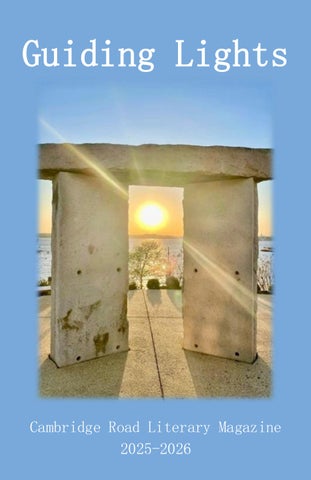
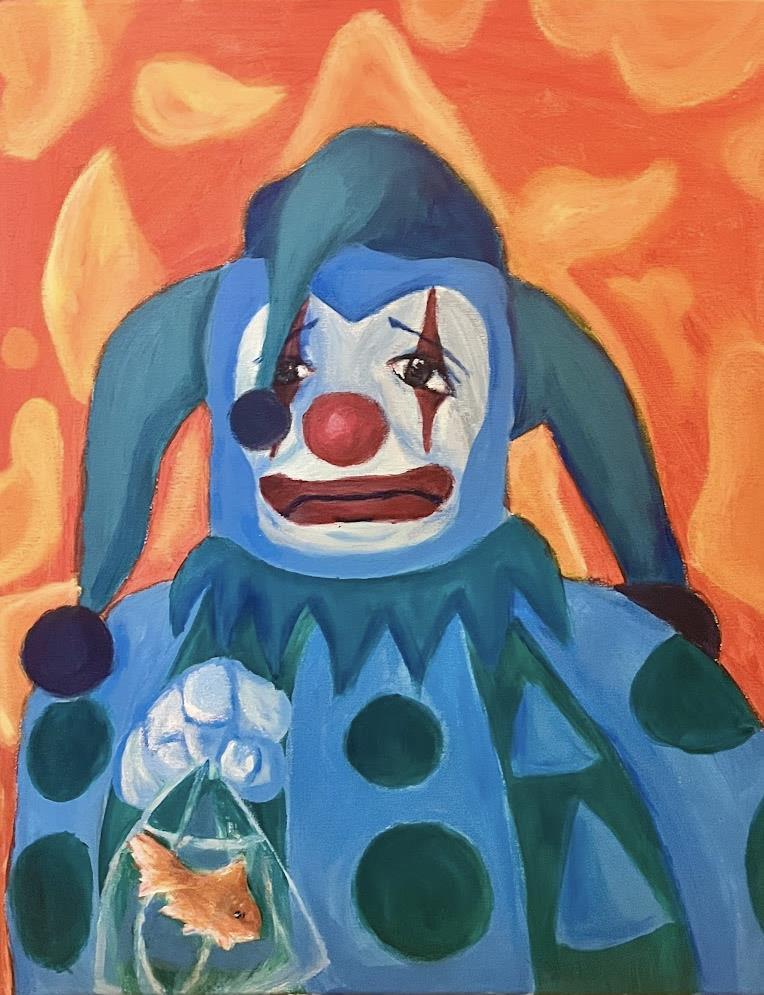
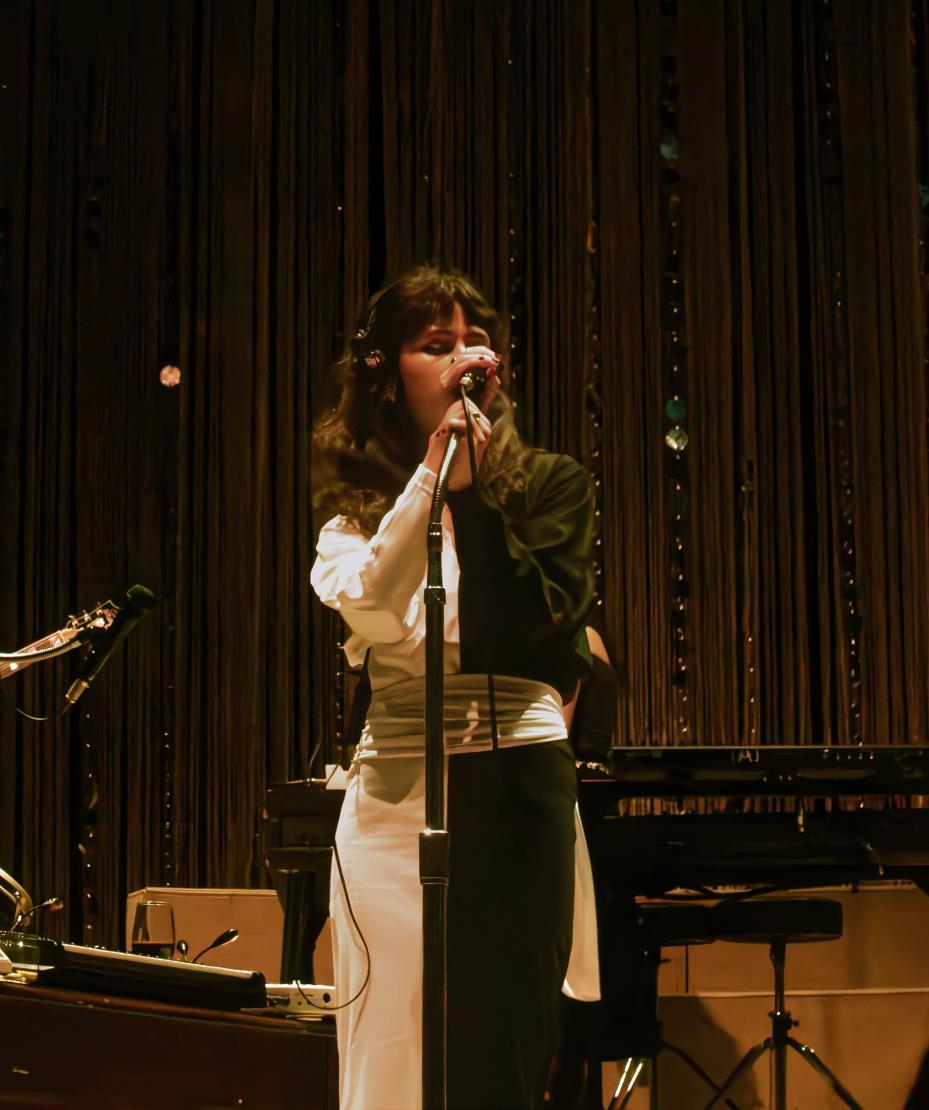
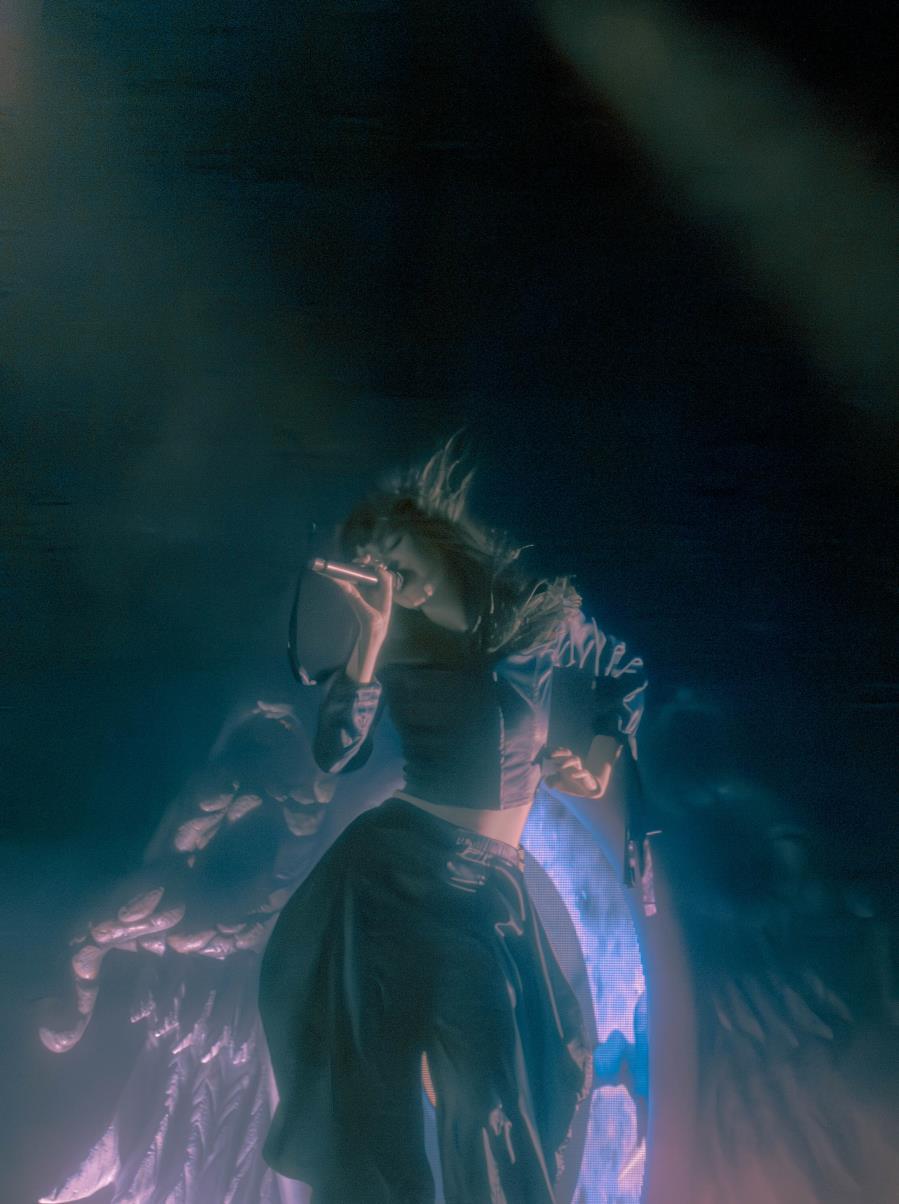
This edition of CambridgeRoad is dedicated to the retiring faculty and staff members who have illuminated the Bishop Ireton community with their wisdom, kindness, and gentle leadership.
-
Mrs. Mary Briody
Mr. Stephen Crooker
Mrs. Gail Georgieff
Mrs. Terri Kelly -
May you continue to light the way for all who cross your path.
A Letter From the Editor
Dear Readers,
Each year, Cambridge Road Literary Magazine serves as a carefully curated collection of the brightest ideas, the sharpest insights, and the boldest emotions of Bishop Ireton students and faculty. It is a beacon of artistic expression in a community whose brilliance never ceases.
This year’s edition “Guiding Lights” reflects the light of inspiration that emanates from every corner of campus. From teachers who have dedicated their lives to the development of young minds, to friends and classmates who share their unique gifts and perspectives, to our new chaplain Father Moschetto who keeps our school fixed on the one true light of Christ, there is no shortage of wisdom to be gleaned from our wonderful school.
As the school year draws to a close and I reflect on my time at Bishop Ireton, of course I recall the times of darkness that inevitably befall each one of us. However, I have learned that darkness does not dim the glow of community but makes it shine all the brighter in contrast.
Therefore, it is my sincerest hope that, within the pages of this magazine, you may open your heart and pick up a torch, set aflame with passion, to illuminate your way.
Best Wishes,
Emilio Burneo
2025-2026
Editor-in-Chief
Search Light, Dulce Mate
Where the Poets Go to Die, Ben Smith
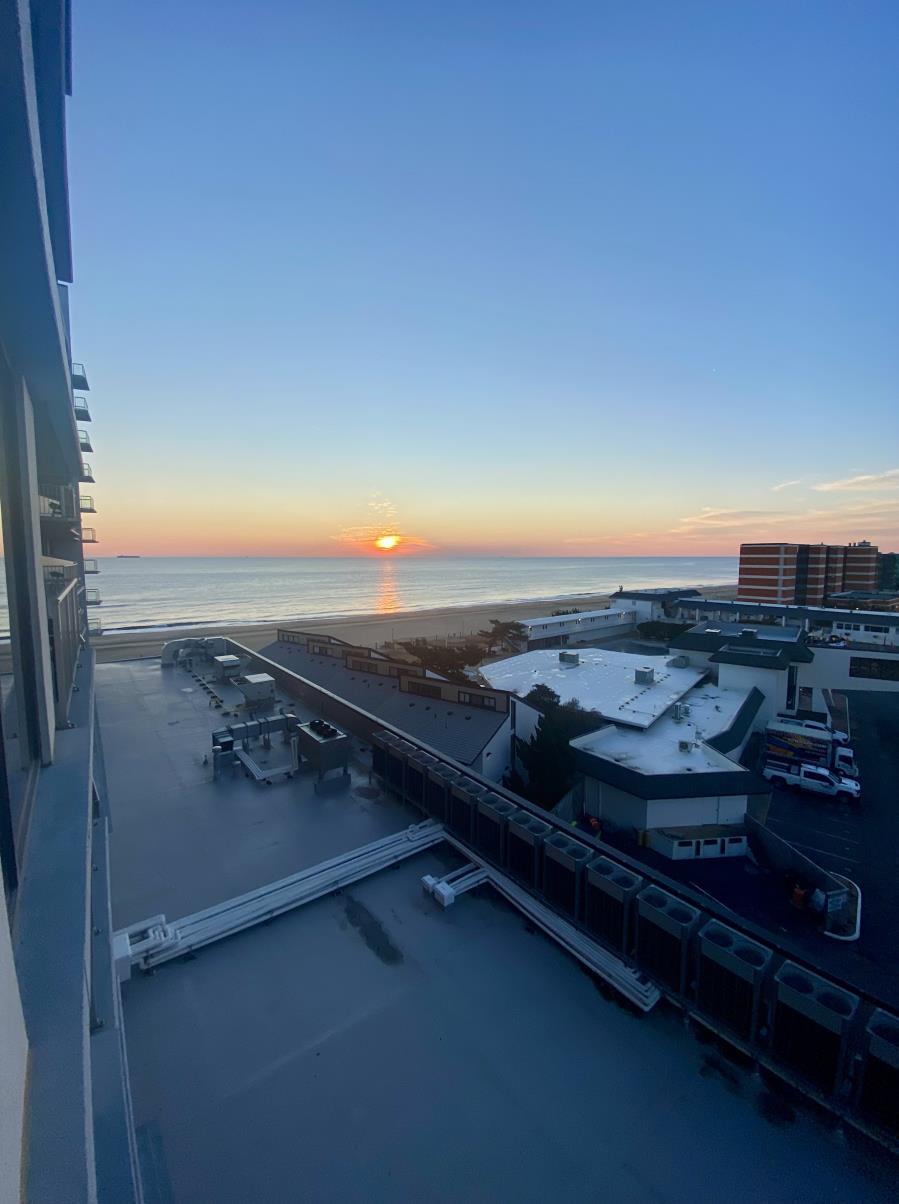
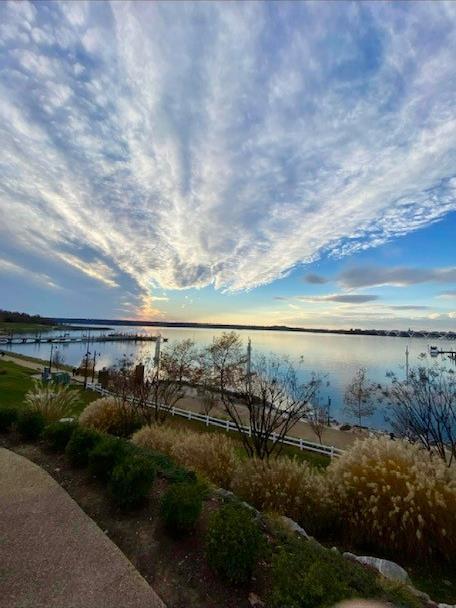
Good Morning from Virginia Beach!, Angela Ciatti
Love is the Covenant between Two Stars, Davis Nguyen
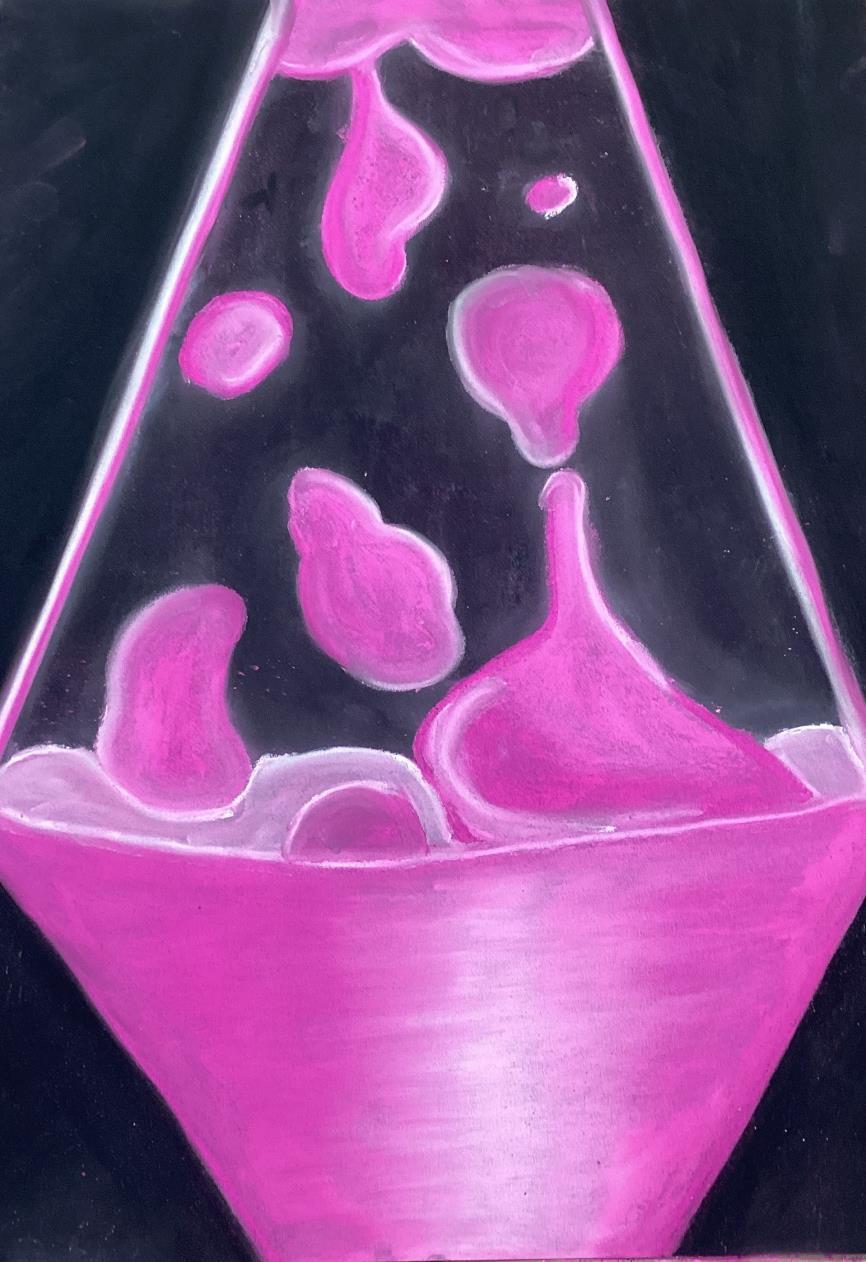
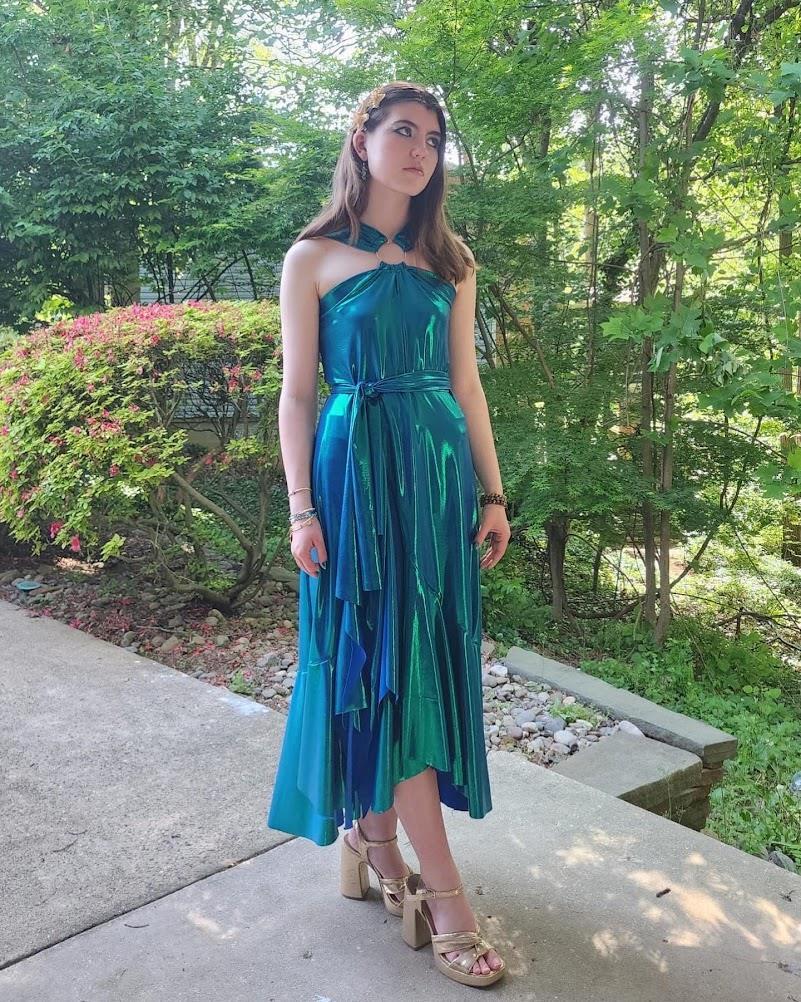
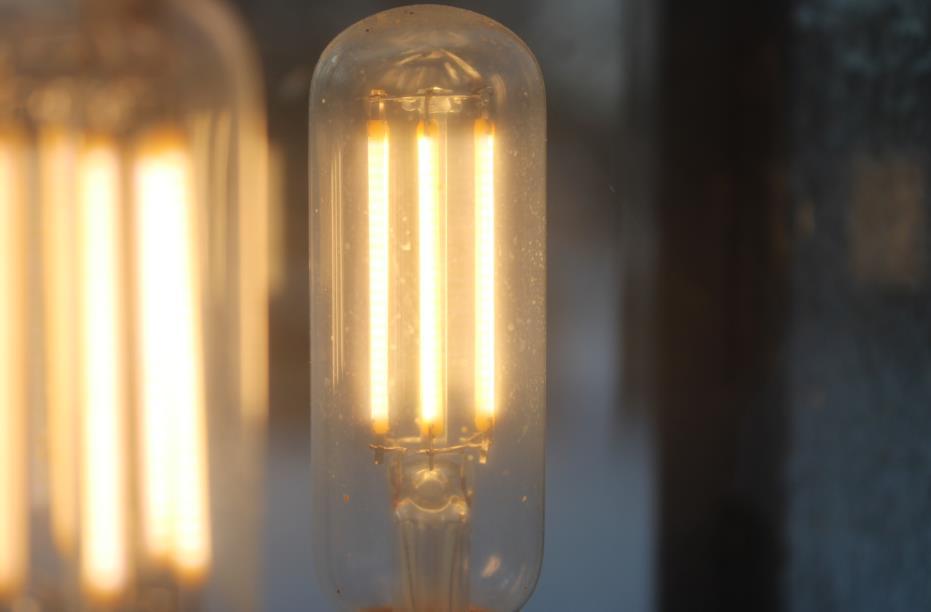
Lava Lamp, Andrea Coronado
Valentine, Anna Dennison
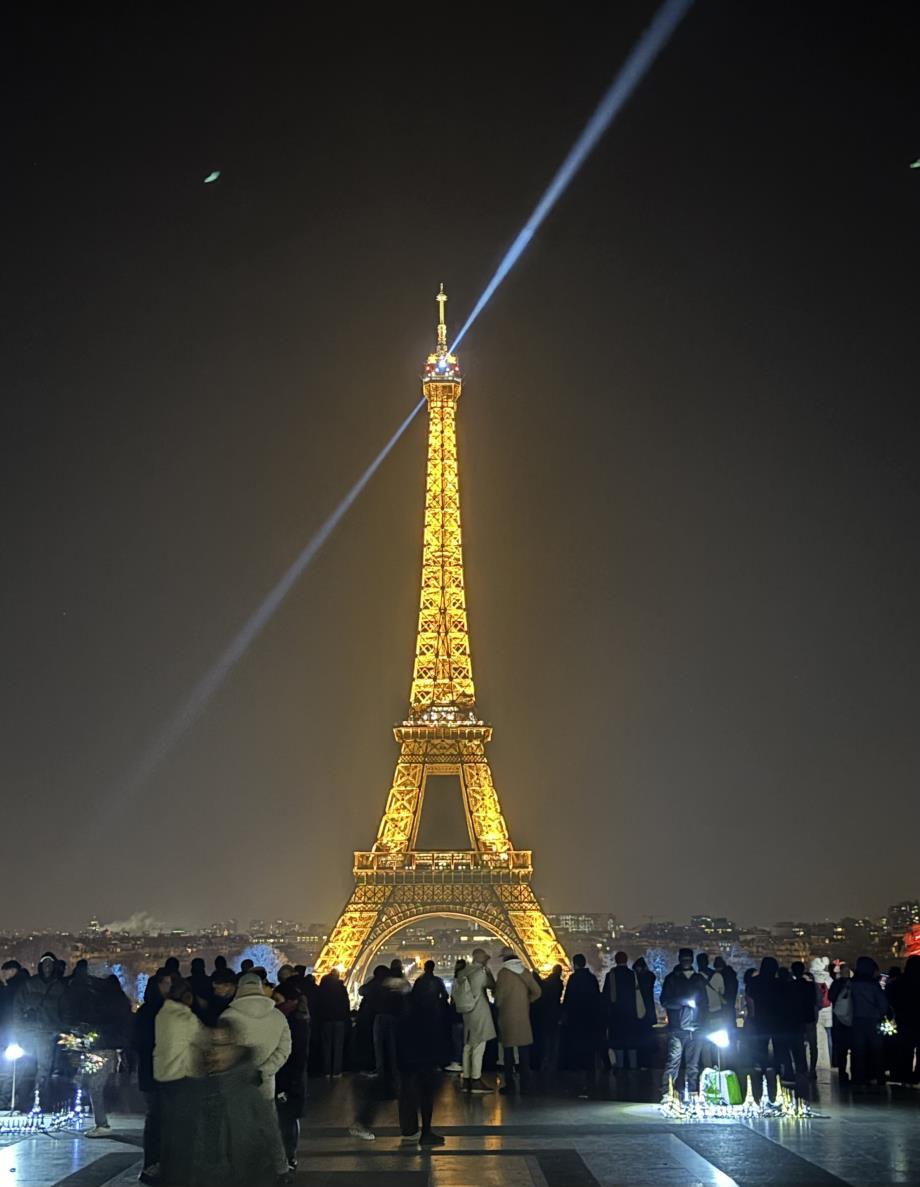
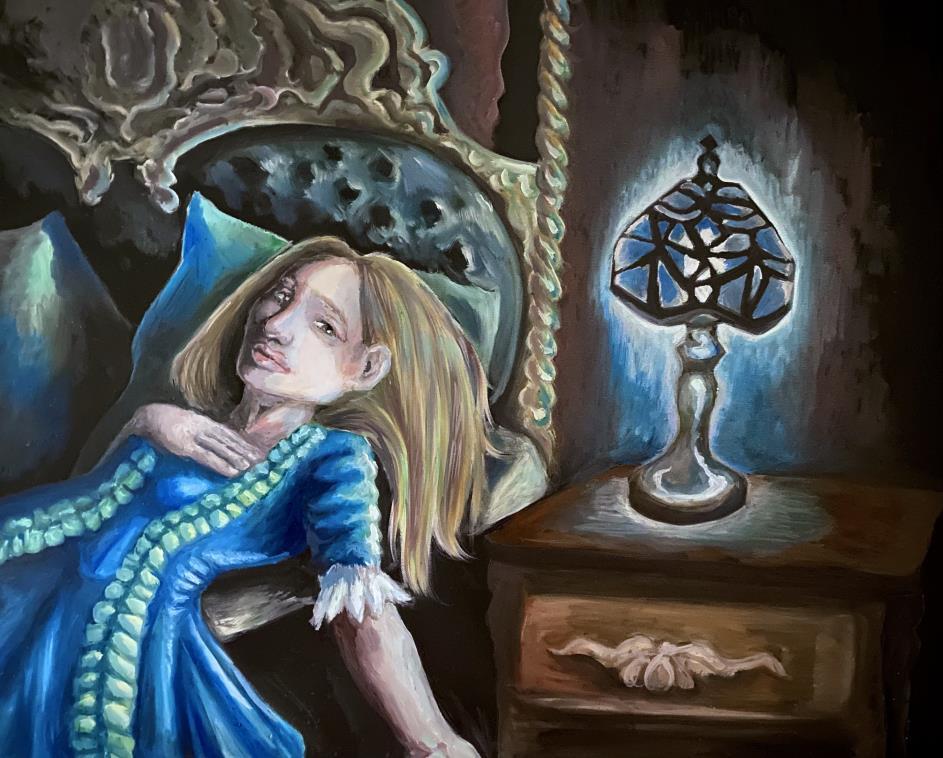
A Night in Paris, Andrea Coronado
Smokes, Jake Pisano
How Grateful You’ve Made Me, Virginia Cheatham
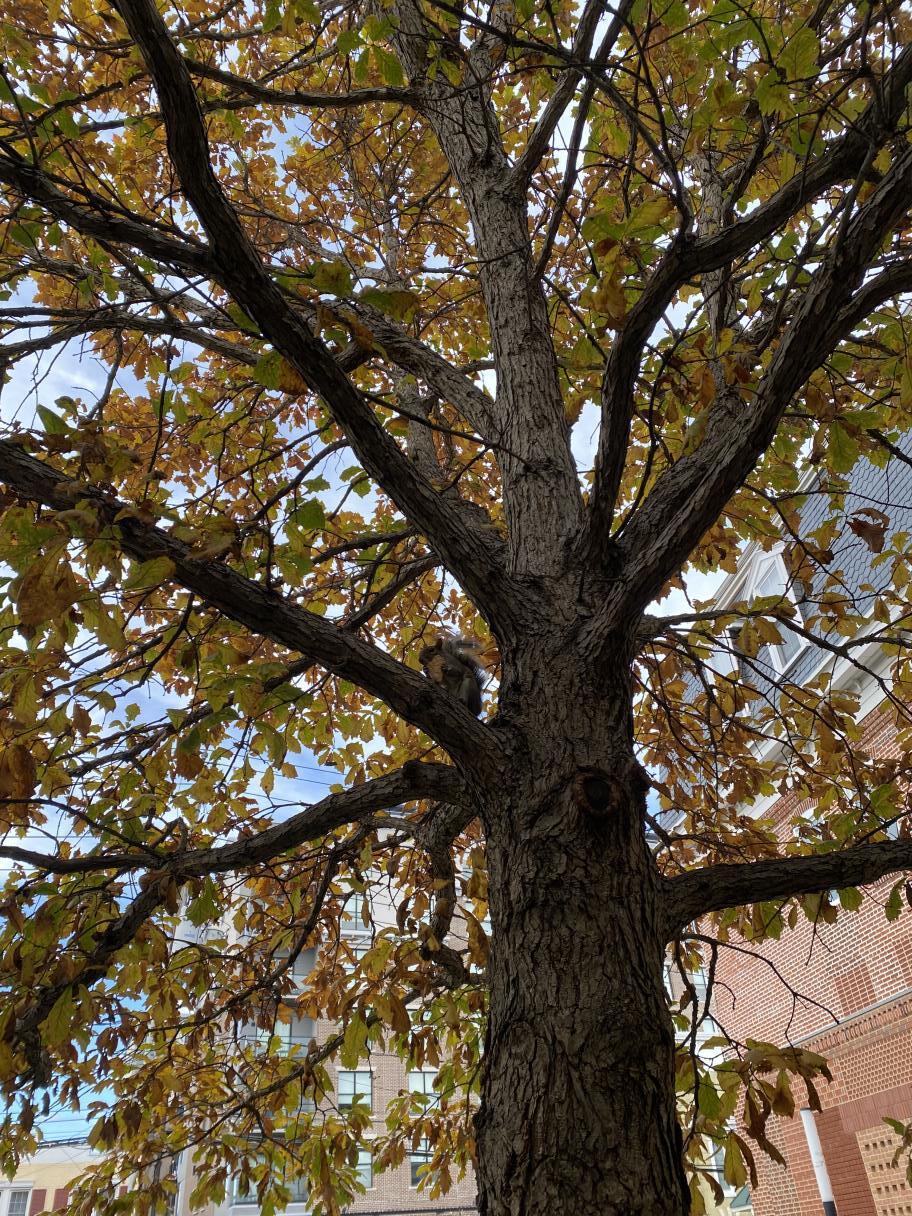
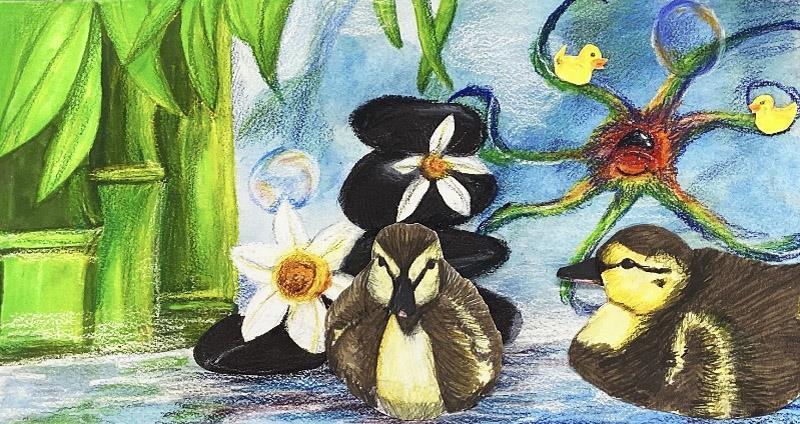
A Squirrel and an Ice Cream Cone, Mirabelle Brantley
I Got the Bad One, CW Johnston
Desire to Fly, Zoe Lembelembe
Clouds “Guiding” Us to Heaven, Cortland Brown
Airborne, Dr. Cross
Flying Away, Mirabelle Brantley
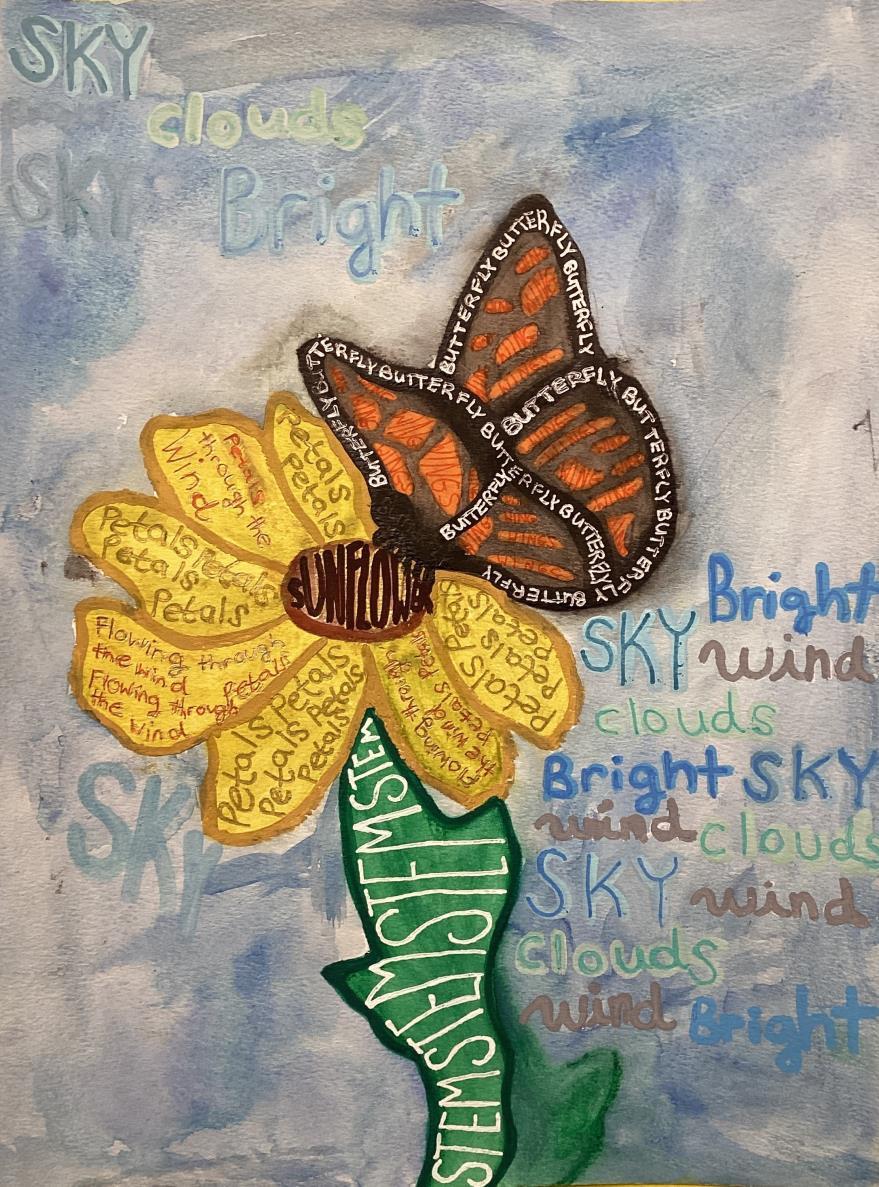
Butterfly Landing on a Sunflower, Andrea Coronado
Hallway Hindrances: A Proposed Solution, Cory Crawford
When Candles Burn Out, Amelia Cates
Happy 2026!, Cortland Brown
Marat, Catherine Martin
The Number 32, CW Johnston
Stargazer Lily, Andrea Coronado
Table of Contents
What We Call It, Mirabelle Brantley
Waves in a Flounce, CW Johnston
Grief is Like a Sailboat, Reese Doucet
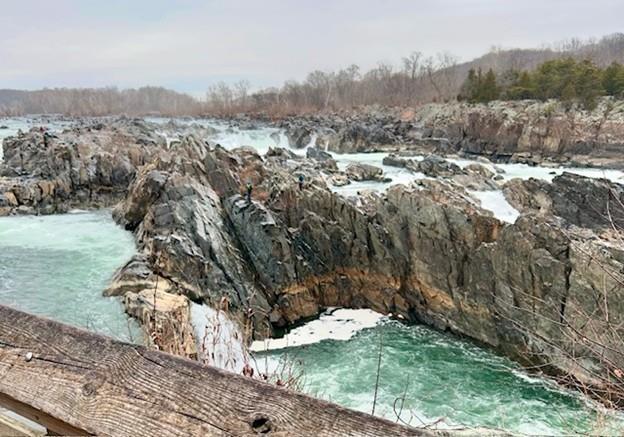
Raining Day at the Rapids (no sunlight – still powerful), Cortland Brown
Cups, Zoe Lembelembe
Symphony Number 9 by Dvorak, CW Johnston
The Rise and Fall of an OuterrVersian Luminary, Ella DeNunzio
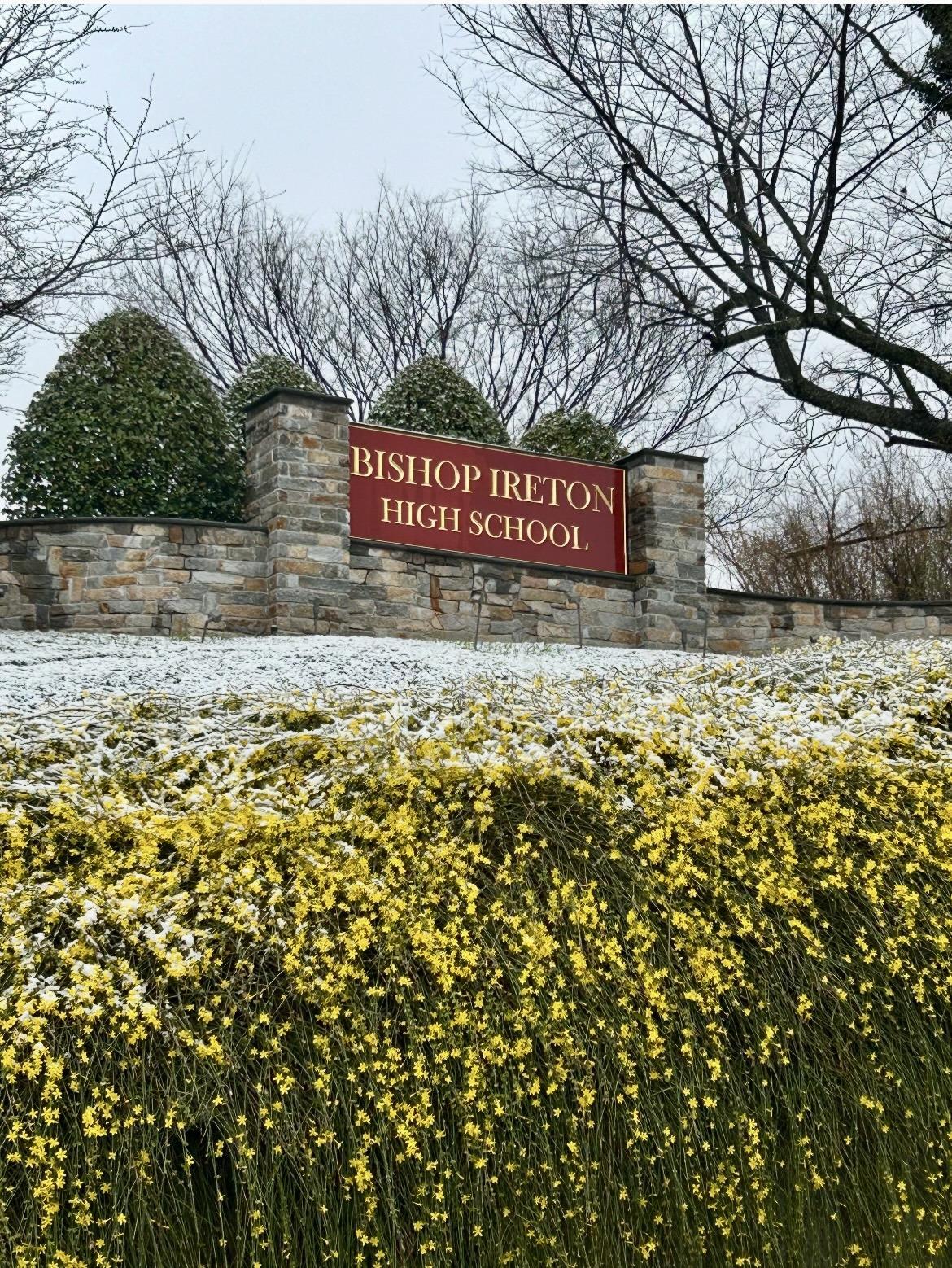
Snow Day at Bishop Ireton, Cortland Brown
Divine Light, Ian Hixson
Evil Eye, Anna Dennison
Observers, Mrs. Foster
Where Day Fades, Kolby Curry
Tell Me You Didn’t Do It, Reagan Lowrance
Winter in Shadows, Amelia Cates
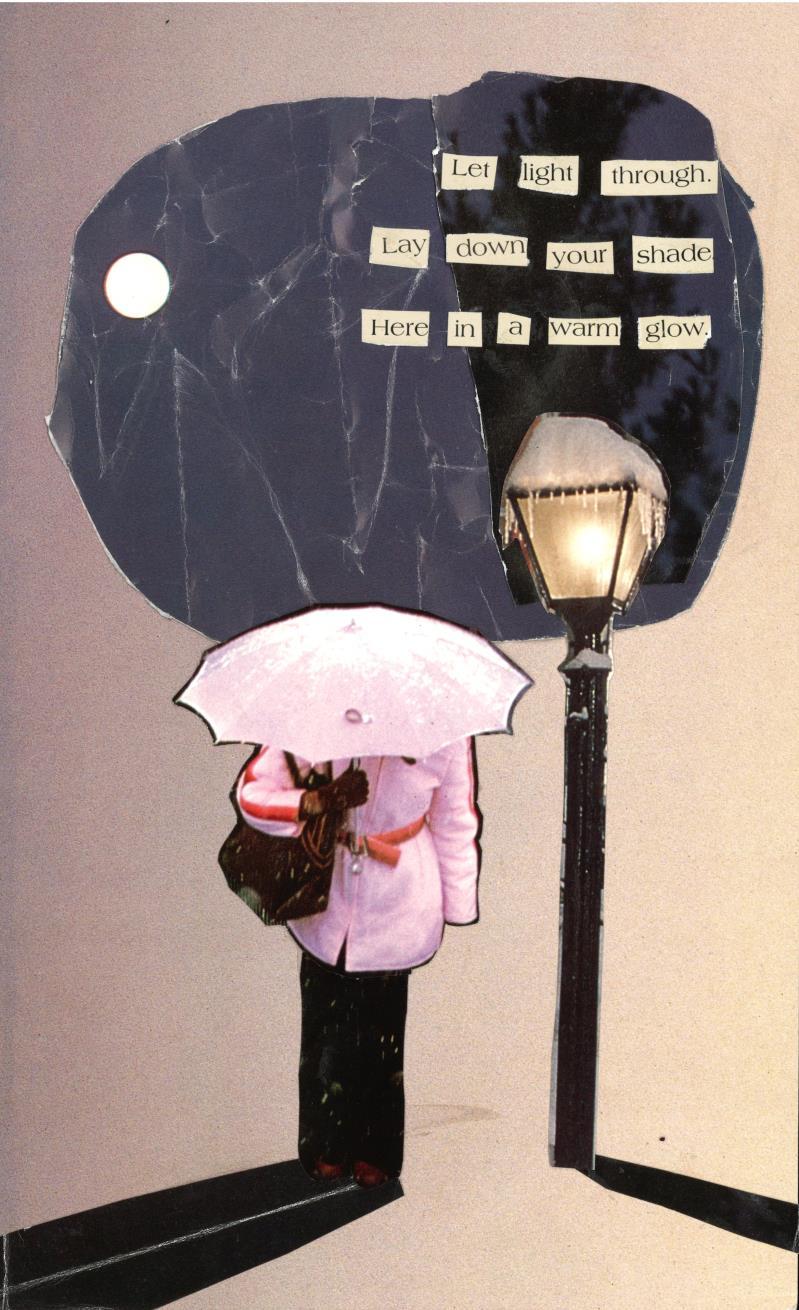
Let Light, Ms. Baniqued
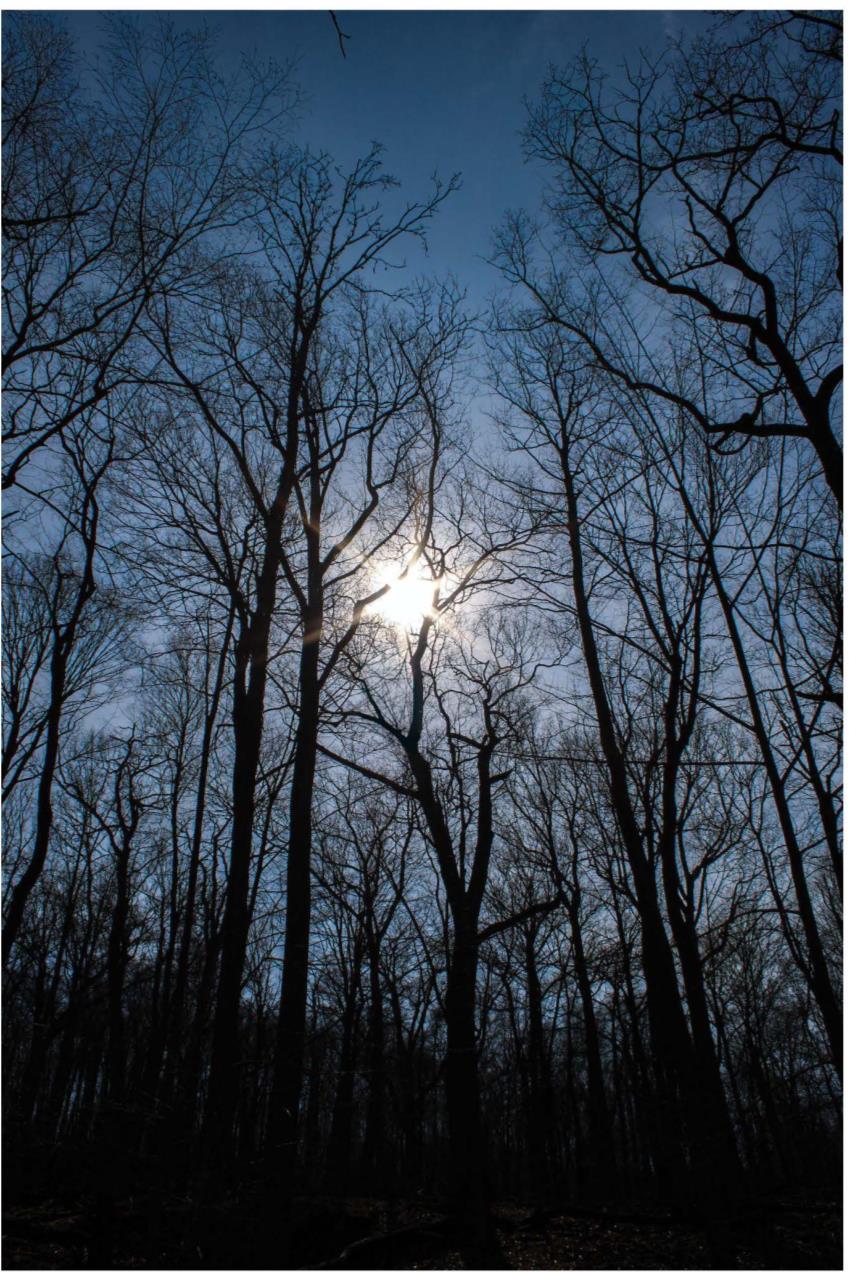
Charming Christmas, Andrea Coronado
Guiding Colors in KFP2, Ian Hixson
Goldilocks, Catherine Martin
Chasing Lightning, Sophie Bliss
True Blue, Amelia Cates
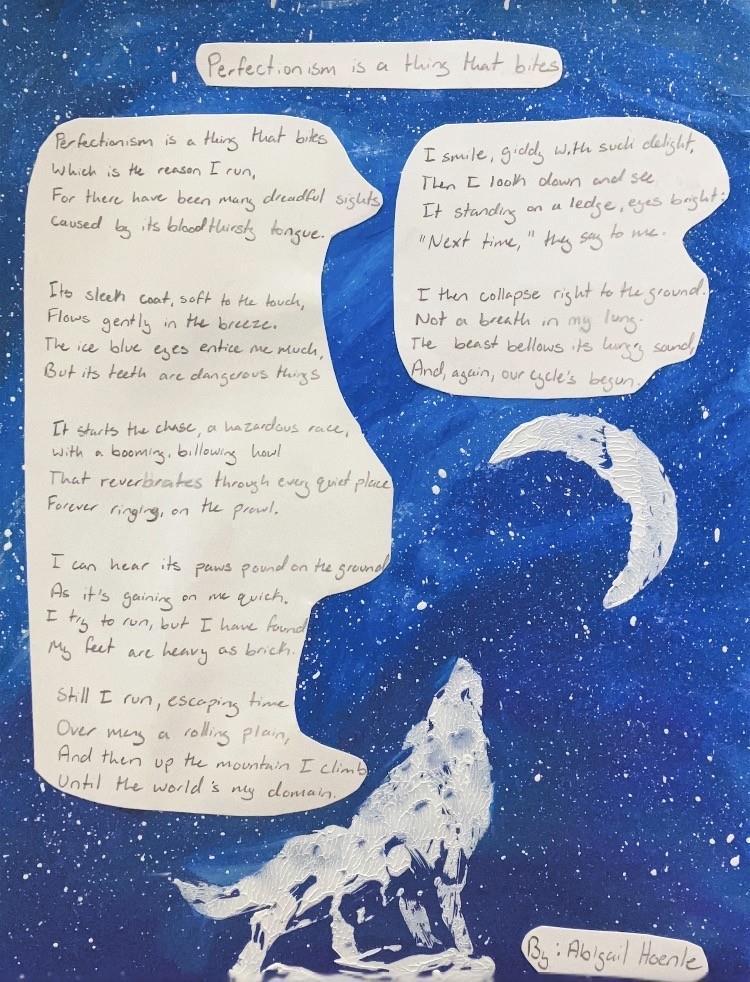
Perfectionism is a thing that bites, Abigail Hoenle
Table of Contents
A Word We Use, Mirabelle Brantley
Similar Society, Josie Billger
Untitled, Catherine Martin
In Monochrome, Amelia Cates
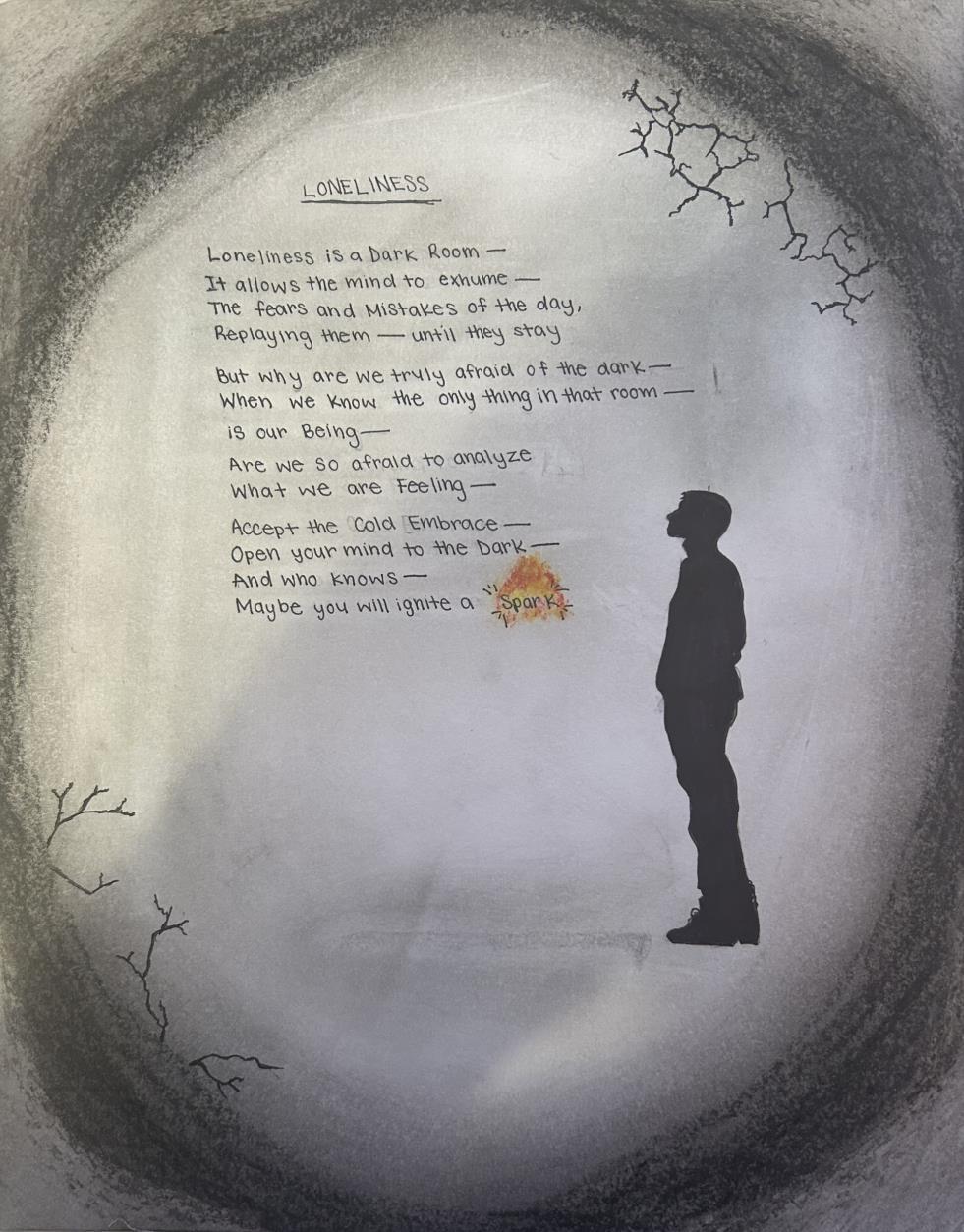
Loneliness, Maya Al-Mtwali
The Temple is Burning, Natalie Drey
Immaculate Heart, Mrs. Driscoll
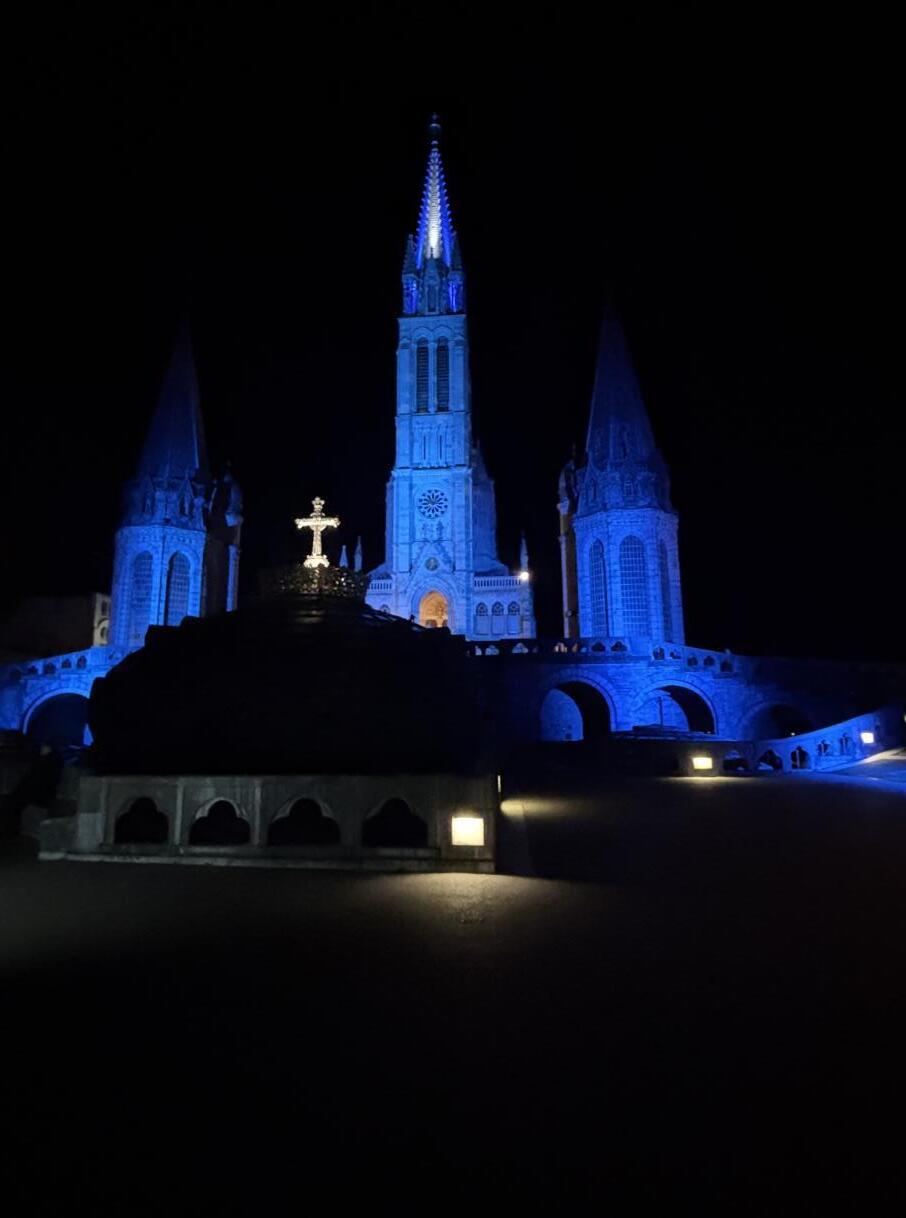
Sanctuary of Our Lady of Lourdes, Andrea Coronado
Cycle and Recycle, Emilio Burneo
Vivid Light, Amelia Cates
Shine, Justice Joyce
The Lights, Ian Hixson
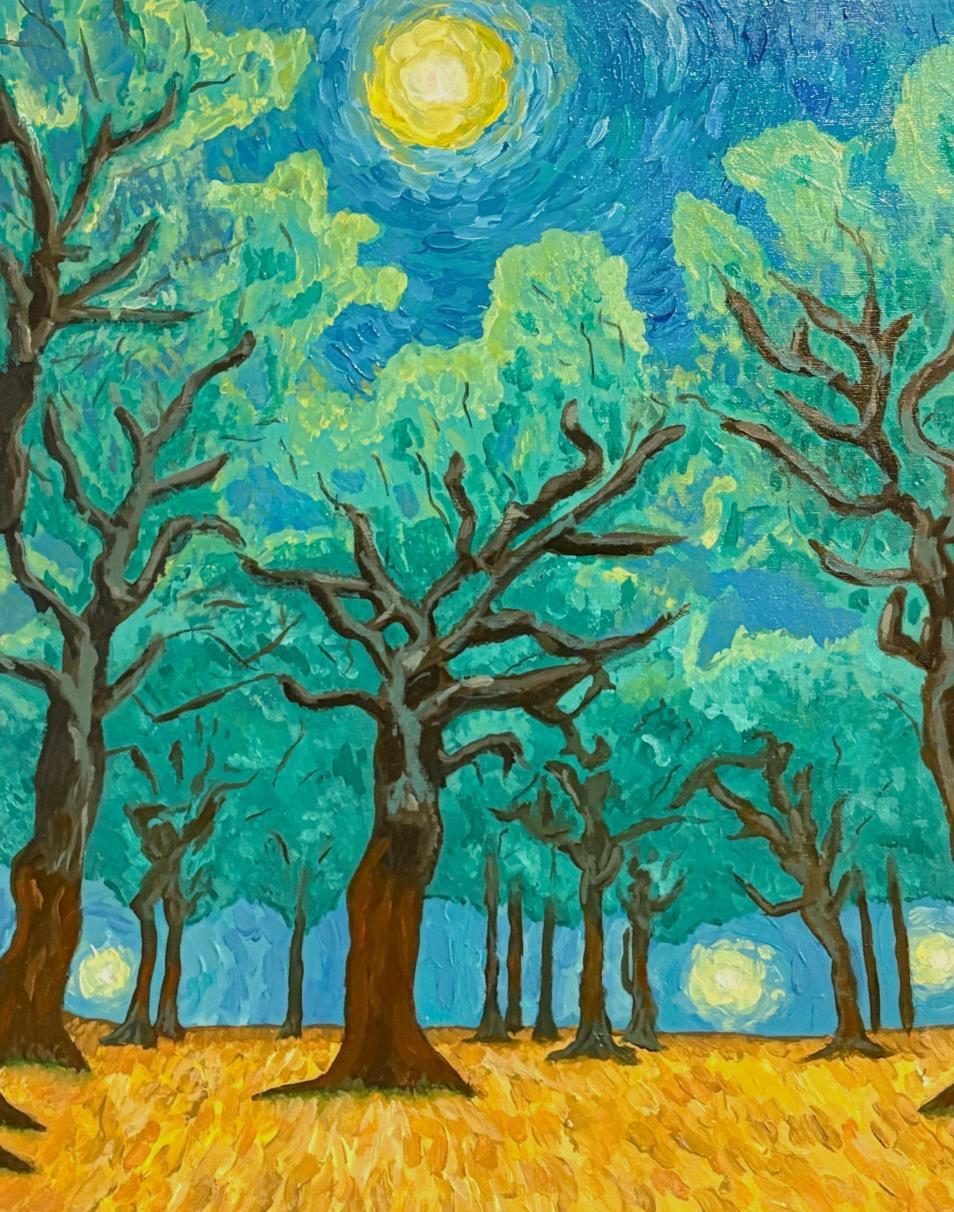
Original Tree, Finn Deveans
We Can Figure It Out Ourselves, Adam Tampio
Drawn Toward the Light, Addison Soto
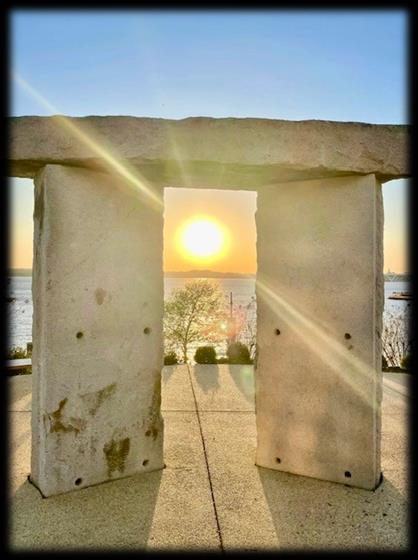
Guiding Lights, Natalia Rivera
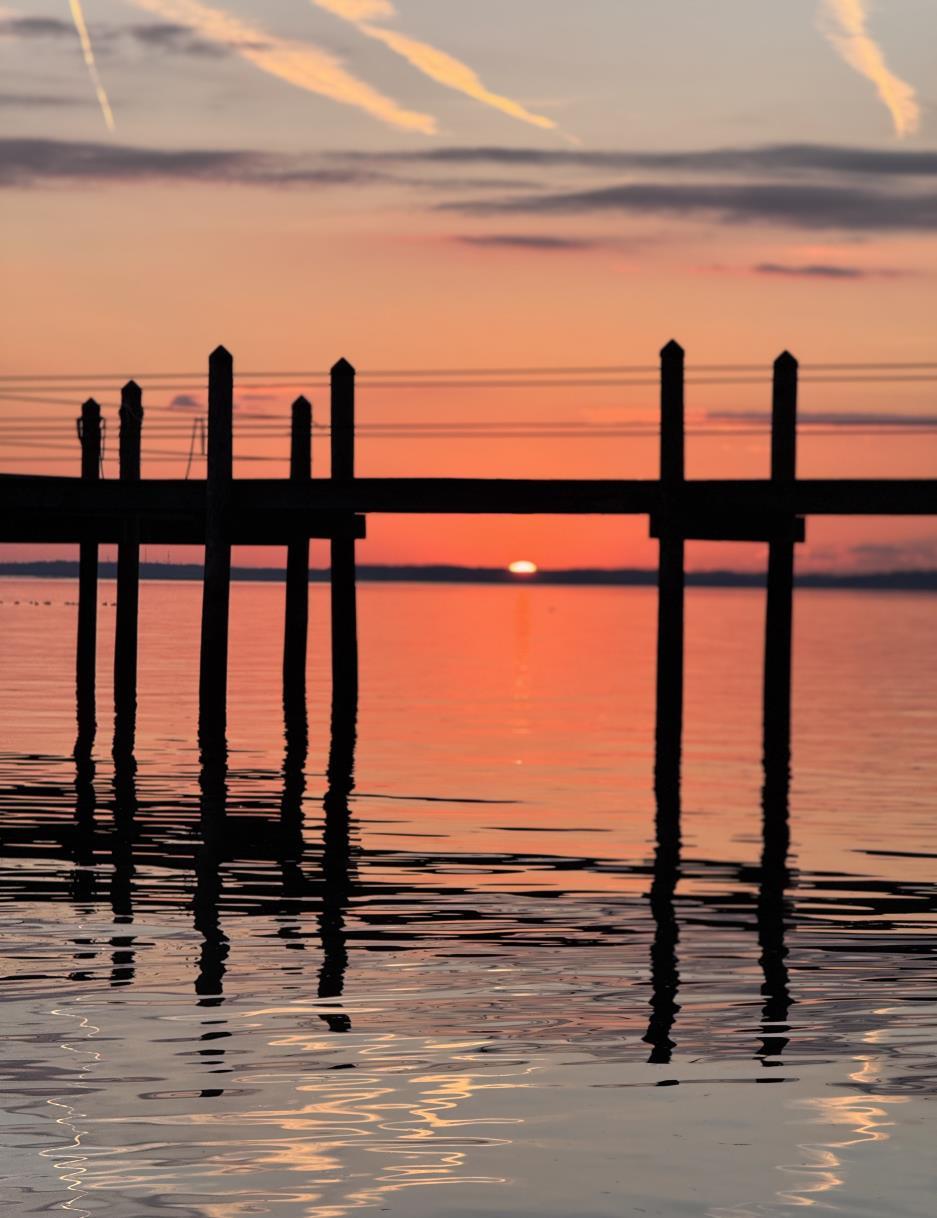
Rosy Silhouette, Kolby Curry
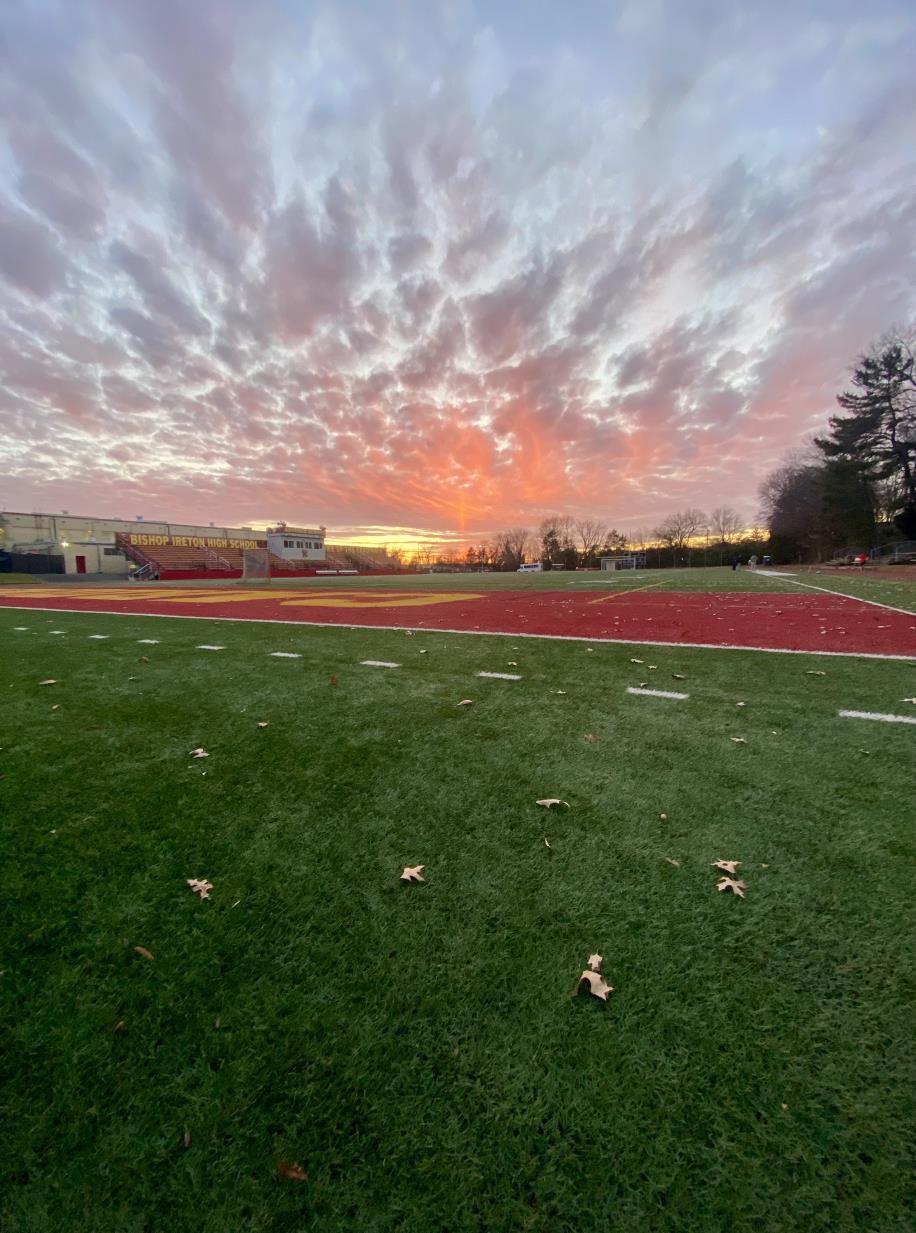
Sunset Over Fannon Field, Angela Ciatti
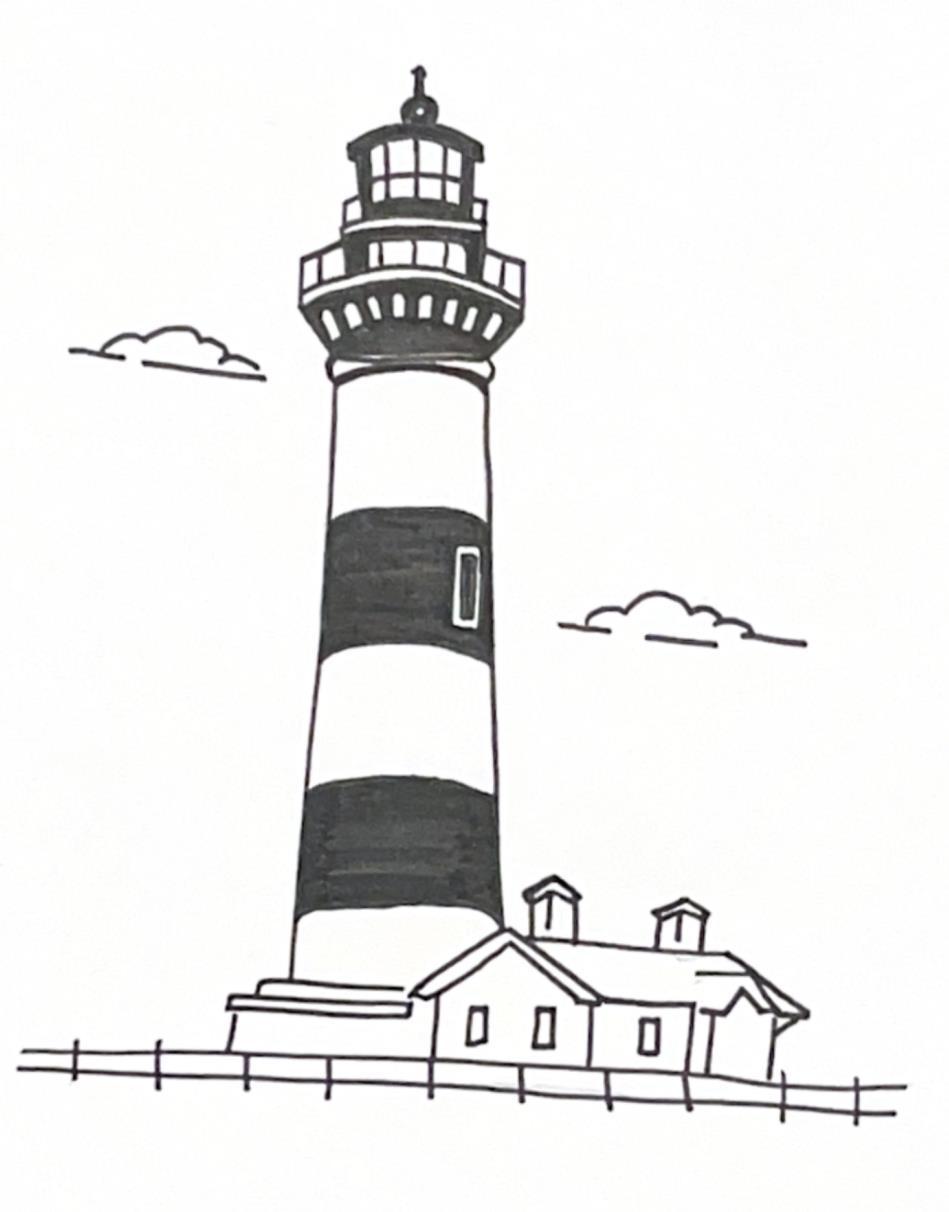
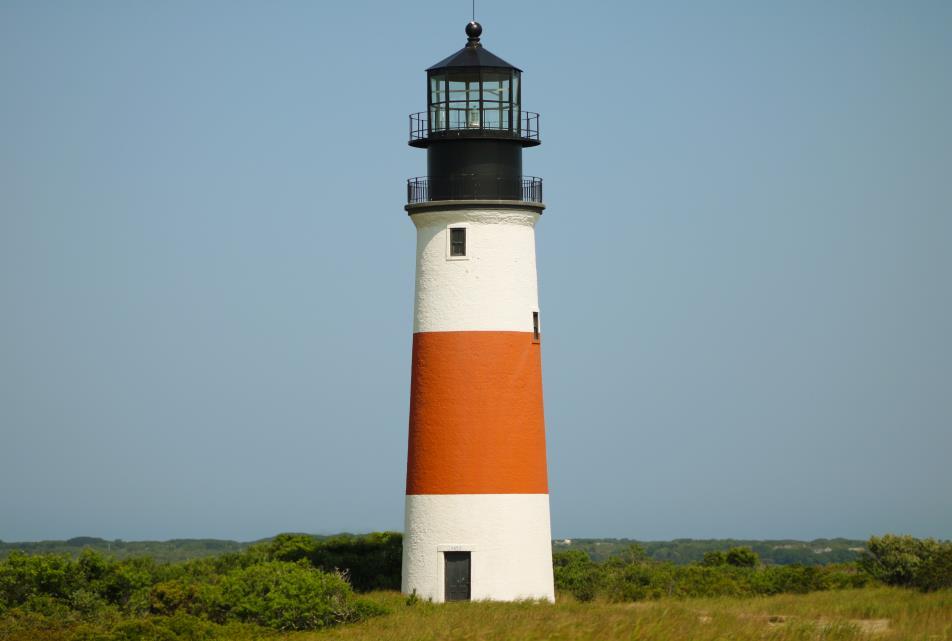
Nantucket Seaside Lighthouse, Colin McHugh
Acknowledgements
Search Light
Dulce Mate
Where The Poets Go To Die
Ben Smith
Walking up and down again
Across the field where the dead poets lay
The names of those who are forgotten
Yet their words live on every day
I tell people my feelings and thoughts
In hopes they remember the person speaking rather than the words of which are being spoken
I hope to never die as one of these poets
My name dug into the ground where my body is lain.
Good Morning from Virginia Beach! Angela Ciatti
Love is the Covenant Between Two Stars
Davis Nguyen
Love is the covenant between two stars
They ebb and flow – through time–And dance an eternal waltz
That sends ripples through spacetime
And together sing a cosmic song That – across the universe – traverses –And between stars and moons
Their rhythm of devotion brushing by
Through the matrimony of their orbits
By which the invisible force connects That perfect balance between them
Kept by that which neither can see.
Lava Lamp
Andrea Coronado
Valentine
Anna Dennison
The empty walls and crowded halls
The artificial lights and feelings
Chained to a desk, creativeness withdraws
Chained to a desk but you make it worth it all
A draining void, an endless pit
A redundant routine sets the scene
The darkness of the world creeps bit by bit
But you’re the light from which love emits
A beacon of hope, a flame of joy
Burning bright, you fill the world with your light
Starry eyes fill the void of cyanide
A soul so benign, forever mine, valentine
A Night in Paris
Andrea Coronado
Smokes
Jake Pisano
How Grateful You’ve Made Me Virginia Cheatham
“Muffin!”
I’ve just walked up from the plaza, and before I can step through the student entrance, I hear someone shouting my nickname. Soon, over a dozen heads have turned; a chorus of “Muffin!” reaches me like a wave. The volume alone is enough to knock me over, and the emotional impact is even stronger. I do my usual rounds of running up to everyone and hugging them before dropping my bag off in the auditorium. It’s another Thursday, which means I have stage crew.
For my senior year, I told myself that I would leave with as few regrets as possible. This meant a variety of things, but one of the ideas I was most committed to was participating in a theatre production. This fall, I was a member of the props team, and I cleared my Thursday evenings to take stage crew in the spring. Through theater, I met so many people I would have never talked to and got to have so many new experiences with them. I found myself walking new paths to class each day as I chatted with my friends in the halls. I was hosting more hangouts than I ever had before. It felt exciting to come to school every day, and I had this overwhelming feeling of gratefulness every time I was greeted by my classmates shouting “Muffin”.
As it has gotten closer to the end of the school year, that feeling of gratefulness has grown heavier. I spent years making jokes about leaving high school for bigger and better places, yet facing the farewell ceremonies never felt more daunting. When telling people that you love them and you’ll miss them, it doesn’t capture the feelings woven between those lines. Every piece of bread torn from a shared baguette, every joke shouted over the buzz of class, every hug, every held hand, all the tears from laughter and stress have created emotions I can never seem to describe perfectly.
Instead of describing it, I decided to write down all the things I was grateful for. Yet this never seemed to sum up to one statement -
How Grateful You’ve Made Me (cont.)
Virginia
Cheatham
there were always commas or “and”s that left my writing shrunken to fit the words into the bottom of a page. Pages filled with notes on conversation snippets I wished to remember. My wrist couldn’t keep up with my racing mind as I attempted to recount every last detail, in the rare case I ever forget them. As set week settled over us, I realized that most of my time journaling was spent thinking of my friends.
I’ve long accepted that I’ll never be able to fully express this gratitude to my friends. Maybe it’s better this way, letting it shine through my actions rather than delivering some monologue at them. Yet, I wanted to try to put into words that feeling. It’s as though you are spending one moment fully aware with your friends, embraced in that perfect moment, and the next your mind is wandering. A warmth spreads through your body, from the soles of your feet to the tips of your fingers, up to your lips parted in a smile. And in that fraction of a moment, where the world feels still and as though it’s just you and your friends, the wind is sucked out of you, and your eyes go blurry. Whatever emotion caused those tears depends on the day, but it could be anything - sadness, joy, anxiety, anticipation - anything that makes that moment so remarkable to you. Then, as though it hadn’t happened at all, the conversation moves on, and you’re left with a smile addressed to an idea that was never destined to be expressed at all.
In removing one regret, I managed to create another: I regretted not having met all these amazing people earlier and dedicating more time to them. I hope that my constant pestering demonstrates my love for them in a way my speech fails to.
For my freshman, sophomore, and junior friends - I wish I had the chance to be here and watch you all continue to push through high school. I’m sure that you’ll go far beyond any expectations you’ve set for yourself. You’re all such amazing people, and I’m so proud of you.
For my senior friends, there’s no doubt in my mind that we’re all going to thrive in college. I hope we can continue to call, grab food, and play video games together, no matter how busy we become. I’m so honored to have grown up with you these past four years. Thank you for being my guiding light in this journey; there’s no doubt you’ve brightened my life.
A Squirrel and an Ice Cream Cone
Mirabelle Brantley
I Got the Bad One
CW Johnston
Desire to Fly
Zoe Lembelembe
We think a bird on a cliff is free, Because we stop where we cannot be, Unable to leap, though the sky is wide, While it moves with fearless pride. It soars not for the world to see, Nor does it dream of what is yet to be Just drifting where the current bends, Unaware of the message it sends.
We envy how it takes flight
While we stay grounded, gripped by fright If we let go and dare to try, Perhaps, like it, we too could fly.
Clouds “Guiding” Us to Heaven
Cortland Brown
Airborne
Dr. Cross
They call it a "six-minute drill," but it only takes three.
"They" in this case are the instructors at the Army's Airborne School in southern Georgia. Famous for training hundreds of paratroopers each year, the instructors are the best in the Army at preparing young soldiers for the very specific mission of rapid deployment into a combat area. The need to train a large number of Soldiers in the short time the instructors have with each new group, and the exacting demands of properly jumping out of an airplane, mean there are many rules and routines.
The "six-minute drill" is one such routine. It's the ultimate way to 'follow the guiding light' as it prepares paratroopers for the jump out of a plane.
Of course, nothing really readies you for the jump. We practiced, we talked, and we took our pictures with a green screen to simulate the jump. But that's not the same as the jump. When you stand in that door with the wind blowing against you, there is nothing else but the jump and the light drawing you out. And it's coming soon. Ready or not, it's coming. Six minutes is when it's coming, because that's the drill. I knew that from my training and was assured I had that time to get ready. Well, no, actually, it was more like three.
The drill includes several steps, all of which are based on two primary principles. And, ironically enough, some of those steps call for just that, actual forward steps.
The first principle is that everyone must complete the six-minute drill without being able to hear. Planes are noisy, and that's when the door is closed. Open that door, and you really have no shot at hearing each other.
The second principle is that it's entirely preferable to have the majority of those jumping out of the plane to stay alive. So the steps we were taught include a series of small tasks that prepare each soldier to "exit the plane" safely.
Airborne (cont.)
Dr. Cross
We were taught these steps during our training and knew them by heart. The "Master Paratrooper" guided us through each step as we learned the rules and readied ourselves physically and mentally for that fateful first jump.
Passed back to each soldier using hand signals and light displays, the first step was simply 'get ready', which is easier said than done. How do you know you are ready? The next step quickly follows: 'stand up'. At this point, there's no turning back. Next is 'hook up', when each of us attached our parachute cord to a permanent, or static, line attached to the inside of the roof of the plane. By hooking up to that line, our parachutes would be pulled open within a few feet of first jumping out. We were not trained to do long free-falls. We were trained to jump low and land fast.
The next series of steps were all safety checks: 'check static line', 'check equipment', and 'sound off', meaning that each of us doublechecked ourselves and each other to ensure that our parachute was in fact hooked to the line and that the parachute was in fact hooked to us. Once completed, we 'sounded' back that we were ready. We even told ourselves we were ready. And while you see the Master Paratrooper and instructors giving the command steps, knowing that they have done this countless times, you start to think, "I'm not ready.“
Ready or not, then came the next-to-last step. 'Shuffle to the door'. Because we were jumping out of planes that double as cargo carriers, they do not have smooth floors. By shuffling our feet, as we take those actual physical steps towards the open door, we minimize the chance of falling and causing a domino effect of everyone along the line.
As you shuffle, you're ready for the last step. The six-minute drill is almost complete. With three minutes to spare. You shuffle closer and closer to the door. You are just waiting for the last command. 'GO!’
Airborne (cont.)
Dr. Cross
But the six-minute drill only took three, and now you wait.
Are you ready? You finished the six-minute drill, with three minutes to spare. Three minutes to wonder. Are you ready?
You wait those three minutes, seeing light from outside the door, knowing that is your guide. Are you ready?
As you shuffle, you're ready for the last step. The six-minute drill is almost complete. With three minutes to spare. You shuffle closer and closer to the door. You are just waiting for the last command. 'GO!'
But the six-minute drill only took three, and now you wait.
Are you ready? You finished the six-minute drill, with three minutes to spare. Three minutes to wonder. Are you ready?
You wait those three minutes, seeing light from outside the door, knowing that is your guide. Are you ready?
You wait those three minutes, seeing your life behind you to this point and wonder about what might have been. Are you ready?
You wait those three minutes, seeing the future you want to have ahead of you, and wonder if you will see that future if your parachute fails or the enemy is waiting for you. Are you ready?
You wait those three minutes, seeing the other soldiers standing in line with you, and wonder, "Are they ready?“
Are you ready? The six minutes are up. And now, the three minutes are up, too. It is, as the legendary phrase states, "go time!"
The door’s open.
Are you ready?
It’s go time!
Are you ready?
Airborne (cont.)
Dr. Cross
YES!
You go! Out the door. Into the light. You were ready. You are airborne!
After the six-minute drill, after the three-minute wait, after the jump, after the parachute opens, and after the return to earth, you learn that you were ready when you let yourself believe. Because as you waited those three minutes, shuffled forward, getting ever closer to the door, you saw within yourself something that was there all along.
Faith in the drill. Faith in the Master Paratrooper. Faith that you will stay alive. And faith that there is light on the other side.
And with that faith, you now know, as you shuffle through life along an uneven path, that you are ready for the next drill, whether it be six minutes, three minutes, or the rest of your days. Ready.
Flying Away
Mirabelle Brantley
Butterfly Landing on a Sunflower
Andrea Coronado
Hallway Hindrances: A Proposed Solution
Cory Crawford
Inspired by “A Modest Proposal” by Jonathan Swift
The problem of congested hallways during passing periods has been plaguing high schools for decades, at least until now…
I believe I have devised a means that will make hallway travel exponentially simpler and less likely to end in a busy mess. We all know that finding the motivation to be active can be difficult for some, especially when they’ve already been hard at work nodding off every few minutes in their first two class periods. That’s why the implementation of the Omnimover Walkway! (OW! for short) would be highly beneficial to the school environment.
The OW! system functions as follows: continuously moving walkways (a la moving sidewalks at the airport) that replace the static floor in every hallway. Students step onto the walkway when leaving class and must keep a consistent pace until they reach their destination lest they receive a small shock equivalent to getting struck by lightning, twice. This system will allow students to arrive at their next class more efficiently, while also giving them a wake-up call when they engage in behavior that majorly inconveniences their peers.
Now don’t get me wrong, I don’t want to come off as unfeeling or even dismissive of the VERY important conversations being had that require a brief moment of stagnation. That’s why the OW! system will include a small strip of regular floor on the sides of the hallway for those who desperately need to get some piping hot gossip off their chest while not inhibiting the locomotion of others.
I hope the great people of the administration will take my proposal into account and I wish them well in all their future endeavors.
When Candles Burn Out
Amelia Cates
Happy 2026!
Cortland Brown
Marat Catherine Martin
The Number 32
CW Johnston
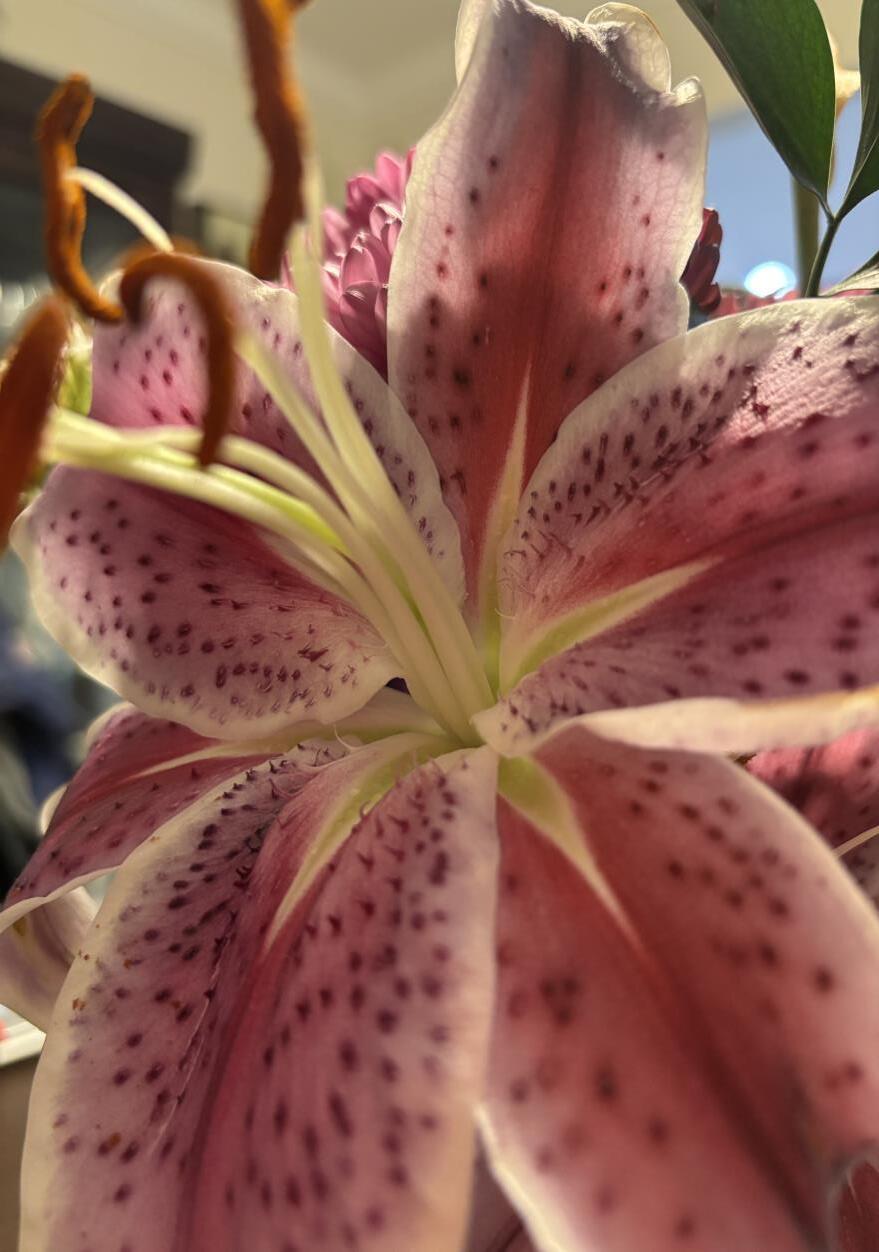
Stargazer Lily Andrea Coronado
What We Call It
Mirabelle Brantley
Does the ocean crash upon the shore? Or does it reach for it?
Crashes are sudden, sharp, loud, hard to ignore.
Reaching is quieter, slower, not trying to hurt anything.
So what actually happens when the ocean meets the shore?
Is it violent if it was always going to happen?
The wind moves the water, pushes it, pulls it forward, makes something steady feel aggressive.
What We Call It (cont.)
Mirabelle Brantley
So why do we blame the ocean for the crash and not the wind that caused it?
When do we do that in our own lives –focus on what happened instead of what made it happen?
There’s an ocean of reasons for everything that goes wrong, everything that hits too hard. Some we see. Most we don’t. And still we stand on the shore calling it violence, calling it fate, calling it choice.
What We Call It (cont.)
Mirabelle Brantley
But the tide doesn’t care what we call it. It comes again and again, crashing or reaching, depending on how you look at it.
Waves in a Flounce
CW Johnston
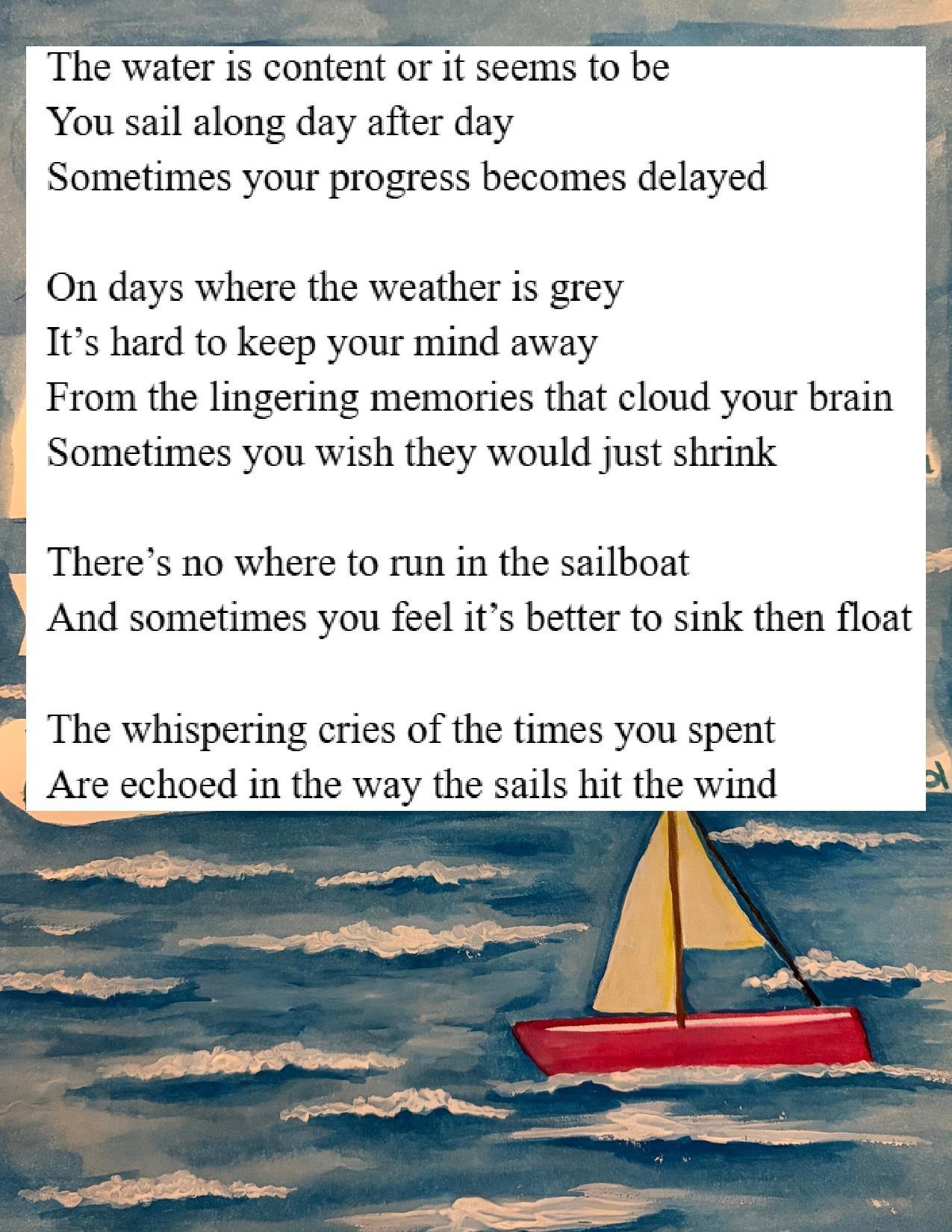
Grief is Like a Sailboat
Reese Doucet
Cortland Brown
Cups Zoe Lembelembe
Everyone carried a cup.
Some filled it with liquor,
Some with scripture,
Some with another body’s warmth,
Some with the sound of their own name
Echoing back at them.
No one drank water.
The streets were crowded with devotion
People swayed, not from joy, But from balance,
Leaning just enough into that poison
To keep standing
I watched as hands shook when the cup ran dry.
Watched smiles fracture.
Watched prayers turn desperate the moment the silence lingered too long
They called it purpose, called it love, called it destiny.
As if naming it
Made it lighter.
Cups (cont.)
Zoe Lembelembe
Even the powerful were thirsty.
Even the holy checked the cup for cracks.
Even the dreamers needed something
To dull the weight of tomorrow.
I wanted power because power looked sober. It looked like standing without support.
But now I know: nothing walks unassisted. Everything leans. And freedom isn’t the absence of chains. It’s the moment you notice your hands are already full.
Symphony Number 9 by Dvorak
CW Johnston
The Rise and Fall of the OuterrVersian Luminary
Ella DeNunzio
(The following story is an excerpt of the first three chapters of a novel.)
1. In the morning, Erudite looked like a wasteland. Within the past 50 years of urbanization, the planet’s atmospheric quality declined, as the cities continued to sprawl. Now, the planet was defined by the dense smog that hung above its cities’ roads, and laid especially heavy in the morning hours. Due to this, residents of these cities remained inside until the fog lessened.
While most Eruditions adhered to this norm, an old shopkeeper by the name of Val was not one to waste time where he could be making good business off of the rare wanderer. His little store, nestled deep into an older district of the city, was simply a hole-in-the-wall business, but only a certain type of Erudition paid attention to such a place, which amused Val. Perhaps to the average passerby, his storefront seemed run-down, and his stock, sparse. But Val was not known among a small community of similar shopkeepers for the tricks he kept up his sleeve for no reason, either.
The old shopkeeper had been clearing his worn sales counter of some grime with a small and equally-tired towel when a customer entered the store with the thud of the door quickly hitting the wall beside it. The customer was cloaked, masked, and kept their most identifiable features beneath the disguise. This included a face covering. It matched their cloak in fabric and design - black, with ends covered in small, dark sparkles. A touch of personality to an Erudition necessity. Hanging from their cloak were three little charms - two golden stars, and a ringed planet of blue and pink between them. A hidden figure was nothing new to Val by now, and so he let them browse the store regularly. The customer continued their brisk stride after entering, despite the small space, and sped by the simple displays until they stood before Val on the opposite side of the counter.
“What tools of combat do you sell here? ” The customer hastily requested, locking eye contact with Val, and pulling her face covering down.
The Rise and Fall of the OuterrVersian Luminary (cont.)
Ella DeNunzio
“Tools?” Val replied, folding his rag into a little square. “Any other specifics?”
The customer turned and quickly scanned the storefront before answering. Val assumed that she was assuring herself that no one else had entered the store in the few moments she had been there. It was a rare occurrence - having two unrelated customers visit his store at once at all - but he decided not to inform his current shopper of this.
“Something small and practical.” The customer continued. “Easy to keep hidden.”
“I assume you’re looking for something like a weapon, now?” Val asked in return.
She nodded hastily.
“Well, I’ve got a few options for you.” Val dropped below the counter and searched through the old dusty boxes of confidential stock until he found the little case. Inside were obsidian daggers imported from Earth many, many eons ago. Strong, durable, and a wonderful conductor of Mythic flames - should its user be vengeful. The daggers were pleasing to the eye, with their slick, dark blades, and silver mouldings on their handles, stars, or of Earth’s companion, named Saturn. Casually, it was all Val had in store for daggers, or small weapons as requested. Luckily, customer impression was another skill Val not only took enjoyment in, but was also known for among his shopkeeping allies.
Val brought the case to the counter, opened it with a click, and presented the daggers to the customer.
“They’re all I got.” Val claimed as if they were some cheap toy.
The customer paused, taking a look at her options, and paying close attention to the mouldings on their handles. “I’ll take two. The ones with the planets.”
“Two,” Val repeated. “Are you certain?”
The Rise and Fall of the OuterrVersian Luminary (cont.)
Ella DeNunzio
The implication of Val’s pricing was clear to the customer.
In response, she slapped a silver credit card against the counter. “No doubts.” She added with a small smile.
In response, Val took the card, removed the two daggers from the case, sheathed them, and slid them across the counter to the customer, all while beaming over this significant sale.
“Appreciated,” The customer said, slipping the daggers beneath her cloak and into her belt as she headed for the door.
“Your business is appreciated!” Val enthusiastically said as the door slammed shut.
He leaned against the counter, elbows upon the scratched surface, and began to wonder what awful schemes he might have just aided.
It’s good money, Val thought to himself. And with that, he grabbed the small towel again and continued cleaning.
2. In the distance, she could see another cloaked figure standing before the Shiphouse. He leaned against the doorway casually as she approached it, and only after getting too close to turn around did she notice who he was. Mercurious Capella, heir of his family’s societal influence, and the owner of the HoloCred used earlier to make that extravagant purchase from Val’s shop. If she had to encounter anyone on her way to freedom, she would have chosen anyone but her brother.
Instinctively, she reached beneath her cloak for the old crossbow kept slung over her shoulder, loaded it, and aimed at her potential target.
“So close to success,” Mercury called out in that sick, highpitched voice of mockery that he enjoyed using around her.
She now stood before him, while still keeping a relative
The Rise and Fall of the OuterrVersian Luminary (cont.)
Ella DeNunzio
distance between her and her brother. “How come it matters now?”
She shouted back. This moment, perhaps, was the first time Mercury had expressed even an ounce of interest in his sister’s doings.
“I know,” Mercury retorted, disregarding her question.
“It’s entertaining to see how you react to not getting your way.”
She refused to respond, as she knew better by now. She kept a steady hold on her bow instead.
“You’re so sad that you actually have to try to succeed,” Mercury continued, smiling to himself. “Unlike me.”
Again, she would not reply. Mercury began to approach her; however, she did not let him close the distance.
“Don’t you think this is just juvenile angst? Don’t you think that you’re being a little-”
“No.” She finally replied, though not enough for Mercury to hear clearly from the distance she kept.
“Pardon?” He yelled back sarcastically.
No longer did she wish to play this game - even if she could find a way to victory. Soon after Mercury responded, she shot an old arrow from her bow, and with a stream of teal and magenta behind it, the arrow was almost aimed right at her brother’s head. However, an imperfect aim was all it took for the arrow to barely brush by Mercury’s hair.
The arrow lodged into the wall beside Mercury. He laughed aloud at his sister’s missed shot. He reveled in her failure until he realized what that faint little trail of metallic teal and magenta indicated. If she knew that she had summoned a Mythic flame with that shot, she would have known to dance around death she was following by doing so.
His gaze narrowed, but she refused to put down her weapon. “Witch.” Mercury mouthed.
“What?” She responded, mocking his tone.
The Rise and Fall of the OuterrVersian Luminary (cont.)
Ella DeNunzio
“Wit”
She once more, but again, missed. That same spark of Myth trailed the arrow, but brought enough now that she noticed it too. Mercury ducked away from its trail in response. She took his sudden cowardice as a chance to make a run for the ShipHouse, thanking that Mythic flame for its aid.
While she was now in the Shiphouse, there was still time to buy, as Mercury was unfortunately no real coward. After entering, she looked for the entrance’s control panel, as she already knew of a way to stall Mercury. She eyed the emergency lock button, though she knew that she would not be able to hold him off for much longer. With the wasted time spent finding the control panel, she had little time to act. She tossed the glass case open and slammed her gloved palm on the lock button. In response, an alarm sounded, echoing down across the hangar, and she ran for the nearest Spacecraft - SC 011. Hurriedly, she unlatched its front panel and scrambled to start the craft up. An odd pounding noise now joined the alarm, and whether it was procedure or Mercury breaking in, she did not know.
Not that it mattered by now. In the short time she had, she started the Spacecraft and began the ascent into Erudite’s exosphere. Now, both literally and figuratively, her journey began to climb upwards.
But only once she reached orbit had she realized her next choices were limited. All she could do now was stare at the control panels crammed with buttons, switches, and pray to find a way to control the SpaceCraft.
She swore. If Mercury had been motivated enough to find a way into the Shiphouse and climb aboard a craft of his own, she was anything but safe in orbit. The only switches that made sense to her in tandem were the ‘orbit’ and ‘engine’ pair. With the first one switched on and the other one off, she assumed that if she reverted the actions of the orbit switch, she could perhaps manage to finally get out of here.
And so she swapped the switches - orbit off, engine on. From the
The Rise and Fall of the OuterrVersian Luminary (cont.)
Ella DeNunzio
jostling of the cabin to the sounds of the engine coming to life beneath her, she could only hope that this would allow her to veer out of the exosphere. She grabbed hold of the control stick and shoved it to the left in hopes of a change. Nothing.
She tried again, with more force. And only then did the screen at the center of the control panel come to life:
Spacecraft is currently in orbit. Would you like to break this orbit?
There was no questioning how she responded to the message. Before she knew it, the engine spurred to life again, and the cabin shook even more than before as the craft was yanked from orbit.
That was the final thing she remembered in detail before landing. In fact, she had barely remembered that bit. The next time she had been conscious of her whereabouts, she found herself alone in the center of a small, brightly-lit room. She lay upon a stiff bench as a low, dull chime sounded from across the room. The room smelled of chlorine bleach and disinfectant. She could see no detail in the structure or furnishings of the room other than an occasional stripe of a vibrant orange accenting the cabinet, minted into the wall to her right. Everything around her felt minimalistic and unlike any space she had visited before on Erudite, as if there was no past, but only the present and beyond to worry about. There was not a thing surrounding her in this quaint little room that felt familiar to her, but perhaps that was what answered her question – if she had successfully fled Erudite or not. This newness - this brilliant, clean, glossy perfection was something impossible to seek out upon Erudite because of their ways of conservation and love for the past. This was the future, for all that she knew, and for all that she had been promised.
And whatever future that was, it was not at all what she expected. She was not opposed to it at all.
The Rise and Fall of the OuterrVersian Luminary (cont.)
Ella DeNunzio
3. “She is neither Techlan nor Erudition.” The sharply-uniformed officer said. They wore a silky, teal v-neck top with a badge of the Techlan planet Nova placed on the left side of her chest, and white pants of the same material, all with a gold stripe running down their sides. She had been told to refer to the officer and her helper as Survs during the scan.
“Absolutely not," The second Surv - the one without a gold stripe down her uniform commented, observing the data for herself. “Are we certain she is Marzipanian at all?
“I cannot tell.” The one bearing the gold stripe replied. She sat in silence as the Survs scrambled for any evidence of her origins. She looked at herself in the small mirror pasted to the bland wall before her. By her appearance alone, she merely resembled some Erudition kid. If she were a Surv, working to identify a stray visitor’s origins, her tan, freckled skin, her long, rich, and violet hair that frayed from the bun she tied up hours ago, and at least one eye of a similar shade were a hint of her home planet, or so she had thought.
But the two Survs were searching for something else - something more. Despite being found trapped in a small, totaled spacecraft marked with the Erudition flag, she bore no trace of Erudition blood. With that, there was no reason to treat her as a threat; however, there was no reason to trust her, either.
“Monitor her.” The gold-striped Surv commanded as she shut down the lab’s systems with a sigh. “Watch her every action, and keep a note on her every word. If she finds herself in any abnormal situation, report it to me.”
“Yes, ma’am.” They answered, and the gold-striped Surv left the room. Their assistant crossed the room to her side and grabbed her arm. “Stand,” the Surv demanded. She stood. With the first Surv far down the hall now, the room was almost silent, other than some conversation echoing down the hall.
The Rise and Fall of the OuterrVersian Luminary (cont.)
Ella DeNunzio
“Name?” The Surv questioned in a rigid tone.
“They called me Veri.” She answered.
“Noted.” The Surv replied as she jotted the information into a little screen strapped to her forearm. “I am to take you to your room for the night.”
“Will I be free?” Veri asked in return.
“We will relieve you from your room when necessary.”
“No.”
The Surv gave her a confused look.
“This is Techlan, right? I should be free if I don’t threaten you.”
“Yes,” The Surv answered simply. “You will be monitored closely for only two days. If you don’t convince us that you did come here with malicious intent, or should we not uncover an alternate identity, you will be freed after.”
“Thank you.” She whispered. The Surv turned and led her to her room.
Snow Day at Bishop Ireton
Cortland Brown
Divine Light
Ian Hixson
Evil Eye Anna Dennison
Your eyes are mirrors
They see the worst, they see the best Your eyes don’t absorb, they only reflect And when we first met, their reflection, That was our best
But your eyes are mirrors and you let them shatter The pieces of you are scattered and battered Did I let you shatter? Did I say you don’t matter? How then can I piece the puzzle that is your eyes?
Your bluest eyes from where I saw my best I now see my worst I am the villain and you are the hero Slay me then, cut me out if you may, My purpose was you but I see now we’re through
But can you, my hero, promise me this
Can you, my hero, never forget
Those summer days all those days ago
Where I laughed and you laughed Where I loved and you loved Which I miss and you missed
Evil Eye (cont.)
Anna Dennison
Can you my hero promise me this
Where you go, remember
What you say, remember
When you recall, remember
I always love you
I am the villain in your story
The villain in your shattered eyes
The villain so vile and in denial
The villain who loves the hero
Who loves her hero
Who loved her hero
Observers
Mrs. Foster
Where Day Fades
Kolby Curry
Tell Me You Didn't Do It
Reagan Lowrance
The diner is nearly empty except for a truck driver in the far booth and the steady hiss of the coffee machine behind the counter. Rain presses against the windows in thin silver lines. The neon sign outside flickers red across the table.
He pushes a file folder aside and wraps both hands around his coffee. “You’ve been staring at that thing for an hour.”
“I’m thinking.”
“You’ve been thinking for three days.”
“That too.”
His friend leans back in the booth, stretching his arms along the seat like he owns the place. “So, what’s the brilliant theory now, detective?”
“Private investigator.”
“Right. The legally ambiguous version.”
“You’re hilarious.”
“I try.”
A waitress refills their coffee. The spoon clinks softly against the mug as she walks away.
“So,” his friend says, stirring sugar into his cup, “run it by me again.”
“You’ve heard it already.”
“Yeah, but I like the dramatic retelling.”
He exhales slowly. “Guy gets killed Tuesday night. No forced entry. Nothing stolen. Whoever did it walked in like they belonged there.”
“Maybe they did.”
“Maybe.”
“Still no witnesses?”
“Neighbor heard a car around ten. Didn’t see it. Just heard the engine.”
Tell Me You Didn't Do It (cont.) Reagan Lowrance
“Ten’s not that late.”
“No.” He flips the folder open again but doesn’t look at it. “Security camera two blocks away caught headlights turning the corner around 10:12.”
“Busy street?”
“Usually.”
“But not that night.”
“Storm rolled in. Everyone went home early.”
His friend nods slowly, sipping his coffee. “Tough break.”
“Yeah.”
A quiet moment stretches between them. Rain taps harder against the glass.
“Here’s the strange part,” he starts.
“Oh, good, my favorite part.”
“The victim knew whoever it was.”
“How do you know?”
“No signs of a struggle. Two glasses on the table. One had whiskey in it.”
“Maybe they poured one for the killer.”
“Exactly.”
“So, they were friendly.”
“Or pretending.”
His friend taps the side of the mug with his fingernail. “What about fingerprints?”
Tell Me You Didn't Do It (cont.) Reagan Lowrance
“Only the victim’s.”
“Huh.”
“He wiped the glass.”
“Smart.”
The word hangs there for a second longer than it should. He looks up. “Smart?”
His friend shrugs. “I mean, if someone’s going to do something Like that, they’d think about prints.”
“Most people panic.”
“Some don’t.”
“True.”
The truck driver in the back booth laughs at something on His phone. The neon light flickers again.
“You said the neighbor heard a car,” his friend says. “Engine running.”
“Yeah.”
“Did they say what kind?”
“Old. Rough sounding. Maybe a truck.”
“Lots of trucks in this town.”
“Not that many that idle that loud.”
His friend smiles faintly. “Guess you’ll find it eventually.”
“Probably.”
He closes the folder. “But here’s the thing.”
Tell Me You Didn't Do It (cont.)
Reagan Lowrance
“Oh boy, here comes the twist.”
“The camera didn’t just catch headlights.”
“Oh?”
“It caught part of the license plate.”
“That’s helpful.”
“Yeah.”
His friend stirs his coffee again, even though the sugar is long dissolved. “What was it?”
“First three characters.”
“Not bad.”
“J7K.”
His friend stopped stirring. Just for a second. Then the spoon starts moving again.
“Half the trucks in this state probably start with that.”
“Maybe.”
“You checked the registry yet?”
“I did.”
“Find anything?”
He watches the spoon circle the coffee. Round and round and round. Like a clock ticking to its end.
“You know what’s funny?” he says quietly.
“What’s funny?”
“You asked about the engine before I mentioned it.”
“Lucky guess.”
Tell Me You Didn't Do It (cont.)
Reagan
Lowrance
“And you said the killer wiped the glass before I said the prints were wiped.”
His friend smiles, but it comes a little slower this time. “I watch a lot of crime shows.”
“Yeah.”
Rain drums harder now. The diner feels smaller somehow.
“You also asked about the truck.”
“Everybody drives trucks here.”
“Not everybody drives a ‘97 Ford with a cracked muffler.”
The spoon stops. Neither of them touches their coffee.
“That’s specific.”
“Yeah.”
Silence settles between them. His friend leans back again, but the easy looseness is gone.
“You checked the plate already, didn’t you?”
“Yeah.”
“And?”
“And it belongs to someone I know.”
A long pause. The truck driver leaves cash on the table and Walks out into the rain. The neon sign buzzes.
"You gonna say it?” his friend asks quietly.
“You gonna deny it?”
Another pause. His friend looks down at the coffee, then
Tell Me You Didn't Do It (cont.) Reagan Lowrance
back up. “You always were good at puzzles.”
“I wish I wasn’t.”
“Yeah.”
"Tell me I’m wrong."
His friend doesn’t say anything for a moment. Then he sighs.
“Hell of a way to find out, huh.”
The words land heavily between them.
“You could still say I’m wrong.”
“I could.
His friend stirs his coffee again, even though the sugar is long dissolved. “What was it?”
“But you won’t.”
“Nope.”
The investigator sits back slowly. “You killed him.”
His friend nods once, like he’s finally setting something down.
“Yeah.”
Winter in Shadows
Amelia Cates
Let Light
Ms. Baniqued
Charming Christmas Andrea Coronado
Guiding Colors in KFP2
Ian Hixson
KFP2 uses its colors to talk about the nature of good and evil and how it connects to perceptions. The two opposing colors in this film are red and yellow. Po, the protagonist, is often put with a yellow, almost golden hour color. Lord Shen, the antagonist, is often put in red, almost like a sunrise or sunset crimson. Po’s yellow comes from sparks throughout the film, an ironic detail when Lord Shen fires a cannon. When these cannons fire, there is a burst of the same yellow followed by red. This connects Shen and Po both to the cannons, but with the red being outlined most, giving credit to Shen. The cannon’s colors reflect the Chinese symbols of Yin and Yang. In every good there is evil, and in every evil, there is good, perfectly in balance with one another. It is believed that from the Yang force arises Shen, the celestial portion of the human soul. Why bring this symbol up? Well, this is the symbol the movie uses to represent the prophecy of Po, the Dragon Warrior. Thus, from the start of the film, when the prophecy of “a warrior of black and white” who will stop Shen is made, attention is drawn to this idea of balance. From this symbol is Shen, showing from the very start that Shen is his own demise.
Though the cannons themselves show good and evil, how do colors relate to the perception of life events? Well, red and yellow show the idea of “Nightmare vs. Memory”. Life is in people’s memories; it is good. But by viewing life as bad, people perceive life as a nightmare. In making oneself believe that something is bad, the world falls apart. It is unnatural to obsess over the past and, as seen in the film, this leads to destruction. Lord Shen cannot overcome his parents' disappointment in him for committing genocide. Lord Shen becomes caught up in his family's judgment of him and refuses to see his effect on the world. He is blinded by the nightmare he created. Po cannot accept who he is either. He forces himself to see the memory of his mother as all bad. While caught up in this perception, Po nearly loses his friends, his life, and all of China. Po forgets what his mom did. She sacrificed her life to save her son and, through colors, she is illuminated. Past events are covered with red and fire, but when Po remembers the last time he saw his mother, she glows yellow. The
Guiding Colors in KFP2 (cont.)
Ian Hixson
spot where Po is hidden from Shen’s army becomes a warm yellow. As she runs away and distracts Shen, the last the audience sees of her is this bright color. In the darkness of genocide, her actions showed brightest and show that in evil there can be good. People cannot simply see the world as a nightmare because of one event; people must realize that good can be born from evil.
Another use of color in KFP2 is in the final battle between Lord Shen and Po. This final face-off is not only a hero coming to grips with his past and becoming the future, as the plot line suggests, but the colors answer the question of whether the world is ordered or random. The scene starts with Shen’s fleet about to leave Gongman City’s harbor. Po and his friends have just been hit with a blast from a cannon. After moving his friends to float to the side in safety, Po stands on debris, ready to face his fate. Shen fires from the main cannon to end Po, thus ending the prophecy, allowing nothing to stand in his way. But Po is at peace with the world. He grabs onto the fiery ball and throws it off to the side. Shen gives in to his anger and has his men “keep firing,” while Po starts throwing the cannonballs at his fleet. With one last throw, Po channels his destiny and destroys the fleet. With his fleet and plan thwarted, Po tries to talk to Shen, to explain they both have pain from their past, but the best thing to do is to just move past it. Shen chooses to deny everything Po says and tries to kill him. Not looking where he is swinging his blades, Shen accidentally cuts a rope that was holding a cannon above him. Closing his eyes, Shen accepts his fate.
Why analyze the entirety of the final battle scene? Why go through every choice and action? What does this have to do with the world being random or ordered? Take a closer look at the characters' actions, and take a look at the people’s actions around them today. The order comes from what the characters choose to do. Shen did not die from randomness in the world; he died because he chose to fight Po. In making that choice, he caused his death. Po was not able to deflect the cannonballs out of the world’s randomness; he was able to do so
Guiding Colors in KFP2 (cont.)
Ian Hixson
because of the steps he had taken throughout the movie to find peace with his past. Nothing happens just because. What one chooses to do causes a butterfly effect in life, and the world reacts for or against depending on one’s actions.
How does the color in the film relate to this idea? The use of the rising sun shows exactly this. Using the idea that yellow stands for Po’s perspective and red stands for Shen’s perspective, the audience sees who affects the world’s order based on actions.
Goldilocks
Catherine Martin
Chasing Lightning
Sophie Bliss
It’s raining hard and fast. You can’t open your eyes, you can’t see anything, it's too dark. Your only hope is the lightning that strikes only 200 feet ahead of you. You have to go. She needs you. 5, 4, 3, 2, 1, lighting strikes in the same spot as before, and you start sprinting. You need to get to her no matter what. This is your last chance, so no matter how exhausted you feel, you race forward against the pelting rain, the time counting down, and the inevitable fate of defeat you feel every time. 5, 4, 3, 2, 1… but it’s not there. It never strikes again.
True Blue Amelia Cates
Perfectionism is a thing that bites
Abigial Hoenle
A Word We Use
Mirabelle Brantley
If all are unique, then being unique is the norm, and no one is unique. So maybe uniqueness is just a word we like to use on ourselves, to feel even a little separate, when we’re not that far apart.
Similar Society
Josie Billger
A noise broke through the silence, as I felt a warm breath on the back of my neck in a bed all too big for my taste. In sync, we turn onto our backs, to sit quickly at the perfect 90 degree angle, our torsos perpendicular to everything that lies below our waists. I ripped my eyes open and turned my head to meet a set of brown eyes, already gazing deep into mine; I force a smile, interrupting the humming noise of an alarm in the background, “Good morning, love,” I say. He replies with a replica of the words that came out of my mouth, only in a deeper and duller voice. I reach my hand out to the nightstand beside me as I shut off the alarm, and almost as if a mime, my husband does the same. We get out of bed in the same manner and same steps; one foot in front of the other. I look around the room. White walls, White bed, White carpet, White dressers, White lights, White decor, even, White noise.
We make the bed, working as a team, tucking each corner in precisely and fluffing each sheet and pillow flawlessly. In the corners of each room lay cameras, but it is okay. They say it is okay. We do not disagree. We know what happens when one disagrees. I shudder at the thought of it, looking up to the cameras and back down to meet my husband's eyes once again. “How privileged we are darling,” I speak softly, assuring no threat to our surroundings. “Yes, and for that we are grateful,” he replied mindlessly. I nodded my head in response, looking back at the cameras one last time before parting ways with him. I go to the kitchen, and he goes to the bathroom. We will both do our jobs. We agreed on them, not with each other, but the ones who watch, the ones in charge.
Bright white lights flood the room automatically as I step into the kitchen, I walk over to the stove, still in the white robe and slippers I woke up in. In our world there are only a few types of food we may have, restricted, but they say it is for a good cause; I would tell you what they are, but I could not give you a complete answer.
Pancakes. I turn them over on the cast iron frying pan, watching them
Similar Society (cont.)
Josie Billger
closely to make sure they do not become darker than the fair white skin covering my body. I pull out an unlabeled bottle of syrup. At times I wonder why no products have labels on them anymore, but it is best not to wonder. I watch the sleek golden syrup lap over the pancakes as my husband comes stomping into the room, sounding like rocks being thrown on the ground relentlessly; although it was neither purposeful nor his fault. The boots his job had provided added on a foot to his height, but when I looked up, it felt like he was an additional mile from the ground. “You look nice!” I say while pushing the plate of freshly coated pancakes closer to where he was standing. “Thanks,” his reply was cold but not unordinary.
Admittedly, it is scary, when he comes out of the bathroom in the morning, rising quickly from 6 '3 to 7' 3, with a rough outfit which he calls navy blue, even though it always appears to be black, contrasting his smooth pale skin. My eyes slowly examined him; on his left leg, there were handcuffs hanging out of his side pocket. As my eyes linger further down I will spot knives, tasers, and weapons we are not allowed to know the names of. However, the right side is always worse. I decide not to look, because I know the firearms that were there yesterday will be here today, tomorrow and very likely forever.
With him leaning down, and me standing on my tippy toes, I plant a kiss on his cheek as a goodbye. Following him out the door, my eyes focus on three big letters spread across his back, I.C.E. I am not aware of what it means, or what he does exactly, but everybody says what they do is good.
He turns to me before reaching the pavement of our driveway, “Do something fun today, go to the museum or something.” I smile in response of hearing that. I open my mouth, beginning to thank him before I am cut off once again, “Just remember, they are always watching.” He turns back and almost immediately his car doors rush open, awaiting his entrance. Technology always treats us like we are
Similar Society (cont.)
Josie Billger
their gods. For men it is normal, but as a woman, it feels like a privilege to be looked up to in such a way.
I brush my perfect blond hair, stroking section by section, parting it so gently as if it were the most fragile type of glass. The mirror reflects a spitting image of what a perfect woman is in our society: blue dazzling eyes paired with pink puffy lips and a petite thin nose, dressed modestly. I fit on a light blue dress traveling down to my knees, covering my shoulders but tightened in the waist; it is what's expected to be worn.
At last, I pull up white stockings and slide my feet into a pair of light blue heels when I hear a ring at the door bell. “Coming!” I shout gently, grabbing my purse off a hook behind my closet door. I check to see for my essentials: money, lipstick, phones, and my knife. Most women do not own knives, but since I happen to be married to a man of my husband's status, he has gifted me one in case of contact with “the others,” and the museum is full of them.
I open the door greeting my girlfriends by planting kisses on each of their cheeks, Betty and Clare. They both look like me, of course, that is only what is expected and most certainly only what is accepted. The only differences lay in our hair and eye colors, but it is okay because our skin is the same.
I climb into the passenger seat of the car. Outside my window you would see a tree lined street, each house and yard the exact same, without flaws, not too much of one thing, not too little of another. It was just right. Perfect, even.
On the drive there the tires hover above the ground ensuring a smooth ride all the way through, without having to touch the wheel once. With each street we pass we see the same road, the same signs, lights, plants, and people. Everything is almost identical to one another, falling into place like grapes on a vine, coming together to be something we expect it to be, what we made it to be, what we accept it as.
Similar Society (cont.)
Josie Billger
We walk on the smooth white pavement leading up to a set of automatic doors with a sign above reading "Museum of the others.” I always seem to forget the potholes in the ground when coming here. They ensure a delayed escape in case any of the others get out; I trip on one when we were just about to reach the door. My knees hit the concrete, but my hands land on the carpet in the foyer of the museum. My skirt must have flown up with my fall, because everybody seemed to be staring at me with a pale, concerned expression, almost as if I was one of the others. However I looked down to my skin, and it still had no color. While my eyes wandered down figuring how to help myself up I spotted a cut on the top of my knee, no more noticeable than a wrinkle on a child's face, but there was red. It was red that I bled. Pulling my stocking up I stretched it beyond its limits, certainly, far past where it was made to go.
Back on my feet, with the thin line of color covered by well-made socks, I brushed any potential dirt off my dress that I could have missed. I didn’t want to bother looking once more. “That was quite the doozy!” Betty interrupted any thoughts I could have formed, my mind scattered into a million different directions but all swarmed back down to the top of my knee where now lay a red marking on my stocking, which still went unnoticed. I made sure of it.
We enter the museum paying a small fee. The front desk man collects our money and gives us the warning he gives to everyone else who comes here: “If there are any incidents or contact there will be repercussions, and if you are hurt or worse, remember you consented to it.” Giggles arise from myself and my girlfriends, “Of course,” I smile. It is harmless. We are safe, protected. Every time anyone goes they come out a better person than they were before. This place is good. They say so. We know so! Well, we think so, although we do not really remember.
Similar Society (cont.)
Josie Billger
A zoo of others who claim to be people as we are, but the colors on their skin speak so far otherwise. There are signs above each holding, labeling what they are and where they are from. Since we are unable to hear them through the bullet proof glass, they provide us with translations and quotes that they have said over time, and it is said to be direct.
There is nothing but threats and anger translated, and maybe that is why we fear them so much. If I thought more about it maybe I would come to a realization, but no, it is bad to think.
We continue our walk onto the different cages and habitats, and with that, a variety of words and stories. In front of each one of them there is a bench to stop to sit, but it also gives us a chance to observe and see them.
Three of us, sitting in the same position as one another, our feet grounded on the floor, with our shoulders up right, reach in sync to grab our sandwiches that Clare so kindly brought along; while doing so, we do not break eye contact with the others once. “They must be jealous of our similarity,” I whisper, and of course the girls nodded in agreement. We stretch our mouths out into a forced smile and open wide, speaking, “Because we are the same,” in a trained robotic tone.
Clare and Betty both had finished their sandwiches, but I had set mine down. They folded their hands on their lap and stared aimlessly. I was expected to do the same, but my arm slowly rose as if I was no longer in charge of my body, like an invisible force took over me, which I will later find out is my conscience. When my arm is fully straight and extended, I turn my hand from side to side, locking eyes with an African American woman behind the single layer of glass that separated us. She got up and ran towards the glass, closing the gap between us but slowing herself when she was just about a foot away from it, dropping to her knees and gently placing her hands on her side of the glass. She mouthed, “We are the same.” My smile and arm dropped in sync.
Similar Society (cont.)
Josie Billger
I turn to look at Betty and then to Clare, “Did you see? Did you hear, please tell me?” I asked repeatedly, however they stayed frozen in place not moving a muscle, still staring straight ahead except this time with a frown. I look back at the woman to see her sitting in the same position and repeating the same words relentlessly, but the translator pushed out threats with each line she spoke. Slowly getting up, I walk closer and closer until I am directly up against the side of the barrier keeping her from me. I drop down on my knees to align my hands on the glass with hers right across from me. She is no longer repeating the phrase but instead interrupts herself with one word in an unheard tone, but it was clear to be a whisper, “Help.” She stared soullessly with her wide brown eyes. The sclera had become red from her inability to shut them. Tears streamed down her face as she tried to force a polite inviting smile, which only brought goose bumps to my skin. I mouth the word “No,” back to her.
She did not like my answer. Her eyes finally shut, forced closed. There were no longer words coming from her mouth, and there would be no more lips to read because of the extent to which she opened her mouth, wider and wider she spread until her face was swallowed by her silent screams. I could tell they were getting louder and louder as well, her lips cracked as she kept on, starting to seep something I could not really make out yet.
It only took moments to escalate from there. I let out a gasp when she started to hit her head against the glass separating us, rocking only her neck back and forth, losing all control of what little of a mind she had. I watched. She banged over and over again. Red painted the glass, and with each bang, I screamed “No” increasing my volume one word after another. My eyes blurred with tears wondering when it would stop. I shut them in hopes this was all only a dream. She stopped. She was knelt in her original position, I looked straight and could not see her clearly, there was red splattered across the glass, her head, and the minimal amount of clothes that she wore. She was
Similar Society (cont.)
Josie Billger
filthy with stains, the red, the color, the thin lines. I pull my skirt up and look at my sock with stains, color, thin lines, and the same exact shade of red.
I look back up and it is almost as if the glass had become a mirror, me and the woman held the same expression, the same color seeping out of us. The only difference was the color of our skin. We are always taught color is bad and to never be caught with it. But I have color. The woman and I share a color inside of us. “We are the same,” I mouth to myself, and then to her “You are no different than me, we are human,” I huff. She smiled. She had one full of hope, and I shared that smile of hope too, but that did not last long.
Two agents from my husband's work rushed in from doors on either side of the woman's cage. I knew. Nerves took control of me as if I were its puppet. As the men got closer to her, I knew what was bound to happen.
Pounding at the glass with a rageful fist, I let out a gurgling scream which burned and tore at my throat as tears ran down my face falling one after the other. I knew I was completely powerless, for I am a woman. Just as they reached the woman in front of me I felt an arm on my shoulder. I spun around as quickly as I could, still on my knees. I stood and wiped my eyes in hopes of seeing clearly. The man who loomed over me was my husband. I thanked God in that moment, wrapping my arms around him, sobbing into him, and trying my best to sputter my realization. His arms remained at his sides until he had enough and laid his hands on my shoulders, pushing me off him and away, and with that push, I was knocked straight into reality.
“This was not supposed to happen. I am sorry,” he said in a cruel deep tone. “What?” I mumbled anxiously, my memories becoming a mess as I looked around me. He noticed and added on “Betty and Clare are taken care of. You will be back with them soon.” I turned my head looking at the one man in the room with me, my husband. There was nobody else in this building except for his agents, two of
Similar Society (cont.)
Josie Billger
which stood behind the glass I was just holding on to; they stood emotionless above the dead body of the woman who showed me the truth; that we are the same, but we will never be equal.
I looked back at my husband one last time before he began to pull something from his pocket. I could not tell you what it is, because it is one of the many weapons we are not allowed to know the name nor purpose of.
Before I knew it, he was holding it so it would align with both of my eyes, “Wh-what are you doing?” My question was full of terror, and he could see it written all over me. “Trust me. This is what's better for the both of us.” Before I could say anything else, the thing in his hand sent two bright bullets of light right into my eyes.
As I fell into his arms, fast asleep, unaware and slowly losing only what they want me to lose, he muttered, “I told you we are always watching.”
-
A noise broke through the silence, as I felt a warm breath on the back of my neck in a bed all too big for my taste. In sync, we turn onto our backs, to sit quickly at the perfect 90 degree angle, our torsos perpendicular to everything that lies below our waists. I ripped my eyes open and turned my head to meet a set of brown eyes, already gazing deep into mine, I force a smile, and interrupt the humming noise of an alarm in the background, “Good morning, love,” I say. He replies with a replica of my words only in a deeper and duller voice.
It is morning, like every day. Everything is the same. Perfect, even.
Untitled Catherine Martin
In Monochrome Amelia Cates
Loneliness Maya Al-Mtwali
The Temple is Burning
Natalie Drey
The Temple is burning.
The smoke rising high
Our rich and poor alike now search for bits of rye
Even God turns from their cry
Our water and hope have now run dry
The City is churning.
As Heaven withdraws
We call out an unheard call
No more can those fighters stall
The weight of the sins we haul
The Romans now asserting.
Deep into the city they go
The fruits of rebellion our people now sow
Going down into such a deep low
The rooster now screams defeat in its crow
Our old and scattered people now left yearning
For the city we have lost
Its old walls turn to moss
Now nailed to a bloody cross
Only then have we paid the cost
The Temple is Burning (cont.)
Natalie Drey
But the cost has never been paid
It follows us day by day
Shadows and realms avert their gaze
Until the day we can come back in praise
Until then
The Temple is Burning
Immaculate Heart
Mrs. Driscoll
Simeon knew before you that a sword would pierce your heart to reveal our own. You knew before me that we must be bloodied to be blessed so that we like you may bear the pain of the broken world, and hold our children in heart wrench
And a sword will pierce your heart, so that the thoughts of many hearts may be revealed. Luke 2:35
Sanctuary of Our Lady of Lourdes Andrea Coronado
Cycle and Recycle
Emilio Burneo
My family doesn’t keep a recycling bin inside the house; we only have one that sits outside by the deck until it’s rolled down the driveway once a week for pickup day. Because of this, the recyclables in the house (water jugs, plastic fruit cartons, and cardboard boxes) pile up by the door until they become enough of a fire hazard that someone needs to take them outside. This is usually my job in the mornings before school, when I’m in a limbo state between finishing my breakfast and waiting for my brother to finish his. I put on my dad’s black Stegmann slippers that have been sitting in our mudroom for as long as I have been alive. My feet used to be small enough that I would have to force my toes to the front of the shoe, leaving the backs smacking the ground with each step. Now, my toes almost fit through their now open fronts. I collect the recyclables and balance their various shapes in my arms as clumsily and convoluted as needed to avoid making two trips while keeping one hand empty to open the door and, eventually, the bin. I squeeze myself through the garage and into the cold morning air. I walk, or more accurately hop, down the small slope to the bin on the square stone slabs that lead the way. With my obscured vision due to the absurd piling in my hands, I miss a slab or two and feel the damp mud squelch beneath my feet as I, wishfully hoping that my socks have been spared, sink into the ground. I arrive and, with my empty hand, open the bin and awkwardly toss each item as I try to keep the lid propped up, hearing them clatter to the bottom as their echoes reverberate through dawn’s silence. When the final box has been tossed, I stay for a second in the quiet and ponder the smallness of it all. Does it really matter if this small, insignificant box of waffles doesn’t end up in a landfill, when hundreds of millions will end up there anyway? As I walk back up the slope to the house, I take another step into the mud. This time my socks certainly have not been spared. But I have made a mark on the earth, and the earth has made a mark on me.
Vivid Light Amelia Cates
Shine
Justice Joyce
Being black is so much more than a tone of skin being Black means coming from people who were told they couldn’t be anything and still became everything
We’ve faced struggle voices ignored our culture mocked but we never stopped rising
We turned pain into power pressure into strength and doubt into determination
We gave ourselves the hope we needed hope derived from ambition hope derived from our ancestors before us
Black excellence isn’t perfection
It’s persistence
It’s showing up standing tall
Shine (cont.)
Justice Joyce
and shining in spaces that never expected us to be there
We shine in our culture our creativity our resilience
So when I say I love being Black I mean I love coming from strength I love coming from greatness I love coming from excellence those who refused to stay down and chose to rise anyway
Like a star surrounded by darkness and space brightening the world being seen isn’t a question we shine so bright it’s blinding
And to the untrained eye it looks like we’re shining just to show that we can
Shine (cont.)
Justice Joyce
But we really shine to show that shining was never a question it wasn’t a suggestion it was an inevitable occurrence
Like when a caterpillar transforms into a butterfly like the earth spinning on its axis like rain finally falling from a heavy cloud
We shine regardless and when we shine there is no dimming that light
The Lights
Ian Hixson
Original Tree Finn Deveans
We Can Figure It Out Ourselves
Adam Tampio
The clock hit 2:25. I stayed a little late in the classroom to help clean up from the yogurt bar in Italian class. When I left and walked downstairs, Nolan ran up to me and asked to come over. His parents wouldn't be able to pick him up today. When we were walking out of the building together, we saw Patrick. His family’s car was getting repaired, so we invited him over as well. Jacob drove the three of us back to our house, where we all went in and set our bags down, and I plugged my phone in. My dad had told me this morning that Five Guys was offering a two for one deal on double cheeseburgers, so I suggested it. We all agreed very quickly. We got back into Jacob’s car and started driving to the closest Five Guys. I had left my phone at home; Patrick had forgotten his in his backpack; Nolan’s was dead, somehow; and Jacob had plugged his in as well. We had all assumed that at least one of us would have remembered a phone, but none of us had. Once we turned off King Street, we were screwed. I first routed us to a friend’s house that I knew lived close to the restaurant. Once we got there, we could figure out how to get onto Main Line Dr., the street we needed to turn onto to get to the Five Guys lot. By then, Jacob knew how to get the rest of the way there. We parked, entered the restaurant, and the four of us got in line, bypassing all the self-checkout machines. We had to wait for a moment before any employee came to the counter to help us. I heard a shout from the back asking what burgers we wanted so the cook could start them on the grill before taking our orders. I shouted back, “I heard about the two-for-one deal earlier; is it still on?” She yelled back, “You need the app for that!”
Our trip was still a success. She was able to give us the discount, and Nolan ordered two milkshakes, one for each of his burgers. We did it all on our own too, no maps or app.
Drawn Toward the Light
Addison Soto
Guiding Lights
Natalia Rivera
Freshman year felt like a year of constant adjustment. Everything about high school was new: new classes, new teachers, new people, and a much bigger environment than I was used to. I wanted to experience all of it. I spent most of my time meeting people, trying different activities, and figuring out where I fit in. Because of that, school itself sometimes felt like just another part of the routine. I completed my work and kept up with my classes, but I didn’t think much about pushing myself academically. I had always liked learning, but I didn’t yet feel driven by it. My focus was on everything high school had to offer, and that made it easy to lose sight of the opportunities in the classroom.
That began to change during my sophomore year, largely because of the teachers I had. They were starting to push me to work harder, to be great at the subject at hand. When something didn’t make sense at first, my teachers pushed us to keep working through it rather than give up. What stood out most was that these teachers believed their students were capable of more than simply completing assignments. Their expectations pushed me to work harder and take pride in improving my understanding. As I began to see progress in my work, my motivation grew. The more I challenged myself, the more I realized how much I could learn when I stayed determined.
Now, as a junior, that determination has become a central part of how I approach school. I challenge myself academically while also balancing sports, friendships, and other responsibilities. It takes effort to maintain that balance, but I have found that the discipline and confidence I’ve built in the classroom help guide me in other areas of my life. Looking back, the turning point in my high school experience was not a single assignment or grade, it was the influence of teachers who believed in the value of learning and encouraged their students to aim higher. Their guidance helped me develop a stronger work ethic and a deeper appreciation for education. Because of them, school is no longer just a place I attend each day. It is a place where I continue to grow, challenge myself, and work toward success.
Rosy Silhouette
Kolby Curry
Sunset Over Fannon Field
Angela Ciatti
Nantucket Seaside Lighthouse
Colin McHugh
Acknowledgements
The Cambridge Road Editorial Staff would like to graciously thank everyone who has dedicated their time and effort to the success of this year’s magazine.
Thank you to our contributors authors, poets, artists, and photographers spanning students and faculty. Your art is a shining beacon that radiates passion and creativity throughout our community.
Thank you to our editors who worked tirelessly through the dark of night to polish the magazine until it was gleaming bright. Your enthusiasm has made the creation of this year’s edition a true delight.
Thank you to all faculty members who participated in our “Guiding Lights” interviews and especially to Ms. Royle who generously permitted us to use the recording equipment for the interviews. Your insights and assistance have been truly invaluable.
Thank you to the previous Editor-In-Chief, Annaliese Ludvigson, whose guidance and experience were indispensable in the crafting of this year’s magazine. Your years of support and leadership for the magazine continue to inspire me.
Thanks to McCabe’s Printing Group for your continued partnership and production of the Cambridge Road Literary Magazine.
Finally, we especially thank the Bishop Ireton Administration for the unending support offered to the magazine that allows us to share the brilliant creations of our community year after year. The light that you shine on the arts always advances Bishop Ireton.