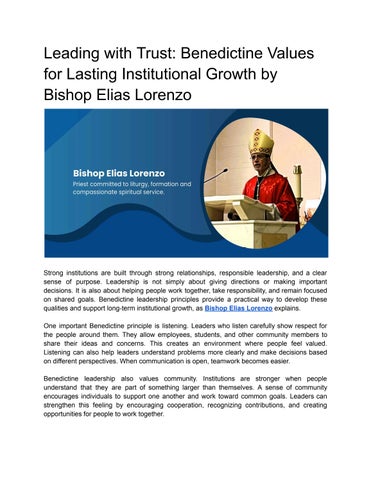
Leading with Trust: Benedictine Values for Lasting Institutional Growth by Bishop Elias Lorenzo
Strong institutions are built through strong relationships, responsible leadership, and a clear sense of purpose. Leadership is not simply about giving directions or making important decisions. It is also about helping people work together, take responsibility, and remain focused on shared goals. Benedictine leadership principles provide a practical way to develop these qualities and support long-term institutional growth, as Bishop Elias Lorenzo explains. One important Benedictine principle is listening. Leaders who listen carefully show respect for the people around them. They allow employees, students, and other community members to share their ideas and concerns. This creates an environment where people feel valued. Listening can also help leaders understand problems more clearly and make decisions based on different perspectives. When communication is open, teamwork becomes easier. Benedictine leadership also values community. Institutions are stronger when people understand that they are part of something larger than themselves. A sense of community encourages individuals to support one another and work toward common goals. Leaders can strengthen this feeling by encouraging cooperation, recognizing contributions, and creating opportunities for people to work together.
Accountability is another important part of responsible leadership. Every person has duties that contribute to an institution's success. Leaders should clearly explain expectations and encourage people to take ownership of their responsibilities. Accountability should not be based on fear. Instead, it should help people understand the importance of their work and learn from their experiences. Leaders who accept responsibility for their own decisions can inspire the same behavior in others. Humility can make leadership more effective. A humble leader does not believe that authority means having every answer. Instead, the leader remains willing to learn, ask questions, and accept helpful advice. This attitude creates trust and encourages team members to share their knowledge. When people feel comfortable speaking honestly, institutions can identify challenges earlier and respond more effectively. Benedictine values also encourage stability and careful stewardship. Institutional growth should be responsible and sustainable. Leaders need to think beyond immediate results and consider the future. Using financial resources wisely, developing people, improving systems, and protecting the institution's mission are all important parts of this process. Steady growth allows an institution to adapt without losing its identity. Benedictine leadership offers a balanced approach to modern institutional challenges. It connects progress with responsibility and leadership with service. By listening to others, encouraging collaboration, promoting accountability, practicing humility, and planning carefully, leaders can create a strong foundation for the future. These values can help institutions grow in a way that is stable, meaningful, and beneficial to the entire community.