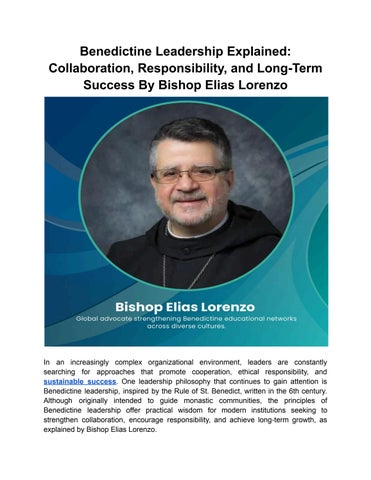
Benedictine Leadership Explained: Collaboration, Responsibility, and Long-Term Success By Bishop Elias Lorenzo

In an increasingly complex organizational environment, leaders are constantly searching for approaches that promote cooperation, ethical responsibility, and sustainable success One leadership philosophy that continues to gain attention is Benedictine leadership, inspired by the Rule of St. Benedict, written in the 6th century Although originally intended to guide monastic communities, the principles of Benedictine leadership offer practical wisdom for modern institutions seeking to strengthen collaboration, encourage responsibility, and achieve long-term growth, as explained by Bishop Elias Lorenzo.
At the core of Benedictine leadership is the idea of community. St. Benedict believed that individuals flourish when they work together within a supportive and respectful environment. In modern organizations, this principle encourages leaders to cultivate a culture that prioritizes teamwork and mutual respect. Rather than focusing solely on individual achievement, Benedictine leadership emphasizes collective success. When team members feel connected to the organization’s mission, collaboration becomes more natural and effective.
Another key element of Benedictine leadership is listening. The Rule of St. Benedict advises leaders to consult members of the community when making decisions, recognizing that valuable insights can come from anyone, regardless of their position or experience. In contemporary workplaces, this approach promotes inclusive decision-making and open communication. Leaders who listen attentively create an atmosphere where employees feel valued and empowered to contribute ideas, ultimately leading to better problem-solving and innovation.
Responsibility is also central to Benedictine leadership. Leaders are expected to act as stewards of the community, guiding it with integrity and accountability This sense of responsibility extends beyond achieving organizational goals; it includes caring for the well-being and development of individuals within the team. When leaders demonstrate accountability in their actions and decisions, they set an example that encourages others to take ownership of their roles and responsibilities.
Stability is another important principle within Benedictine leadership. Stability reflects commitment to a shared purpose and dedication to long-term progress. In today’s fast-paced world, organizations often face pressure to pursue quick results. However, Benedictine leadership encourages patience, consistency, and thoughtful decision-making. By focusing on long-term goals rather than short-term gains, institutions can build resilience and sustainable success.