
By Diane Parkes
Chinese New Year is one of our city’s biggest and brightest festivals. Co-produced by Birmingham Hippodrome and Birmingham Chinese Festival Committee, the event attracts more than 40,000 people to see performances, enjoy funfair rides and shop at the marketplace.
For the Hippodrome, Chinese New Year is not about bringing people into the theatre to see a show, instead it is about the Hippodrome coming out into the streets and squares of its local community.
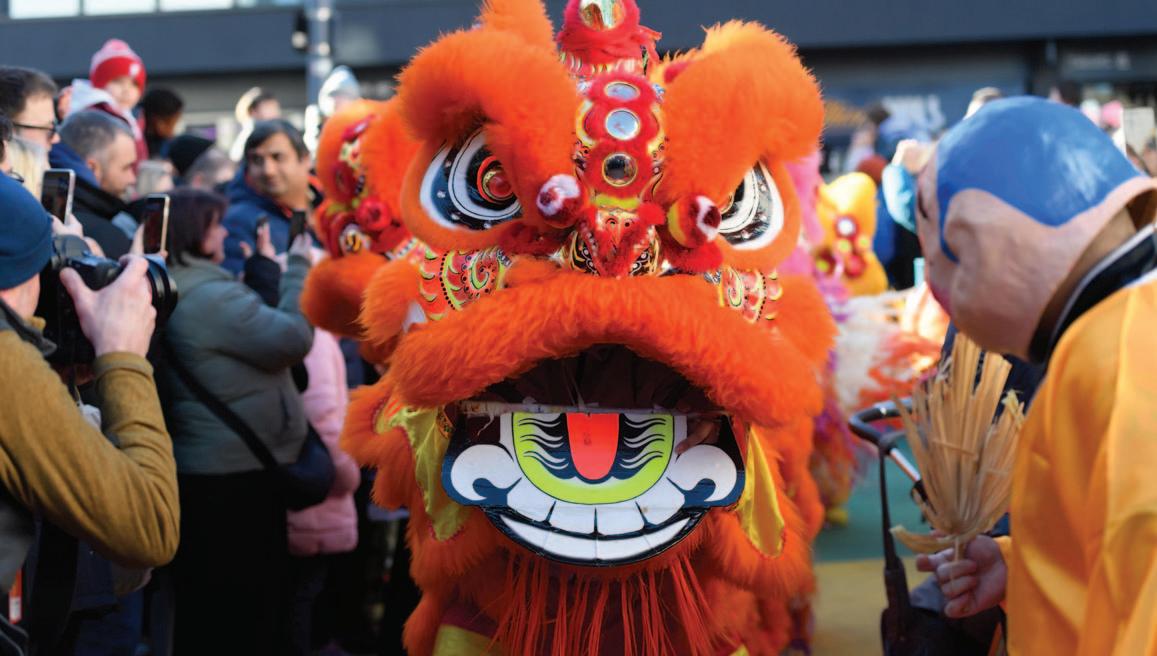

“It’s part of our strategy of unlocking the Hippodrome for people by having free-to-access shows and festivals on the streets and seeing the city as our third stage,” explains Matt Evans, Hippodrome Head of Festivals and Sites. “It’s everything that we stand for by providing those memorable experiences for people.”
“It may be a very cold memorable experience in February,” he laughs, speaking from the experience of being on the ground during the event. “But people go away inspired and appreciating the different art forms they are seeing. The lion dances and the dragon dances really captivate audiences, especially younger audiences. I know my younger one loves coming to the festival and seeing the colours and the fireworks - it’s something to look forward to.”
The Hippodrome Festivals Team work closely with the Chinese Festival Committee and other organisations within the Chinese community to plan the event which is a major date on the city’s annual calendar.
“Chinese New Year is one of our core festivals and we start planning for it years ahead,” says Matt. “We need to do that because it changes every year based on the lunar calendar, so we have to start booking those spaces and squares to make sure we have them for that exact date.”
So too the team liaise with local businesses and the relevant authorities around road closures to ensure the festival can go ahead safely.
“There’s a lot of planning in that. It’s very complex trying to build a festival site in those public spaces because you’re turning roads into a marketplace, a festival site and a funfair. There’s a lot of liaison with the local businesses because they are still operating. It’s their busiest time of the year and we’re closing roads to make sure the celebration can happen, so it needs to be in collaboration with everyone. It’s a big puzzle, but it’s all worth it for the impact.”
The festival offers local groups and organisations the opportunity to take to the stage in a range of performances in a programme coordinated by the Hippodrome team. From the initial callout for performances in November until the event in February it’s full steam ahead.
“We liaise with community groups, we run rehearsals for everyone performing on the stage before the day, sometimes that’s weeks and weeks of rehearsals. This is to figure out how they are going to stage the performances, how they are going to fit onto the stage size, how they work technically for example,” says Matt.
“Some of the performers are already rehearsing their martial arts and their sword routines throughout the year, but they make special showcases for the festival. The community do really come together on it and celebrate.”
The Hippodrome has been involved in the festival for around a decade and each year more groups come forward to take part in an everchanging kaleidoscope of colourful shows.
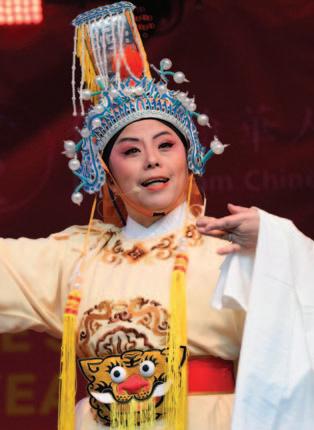
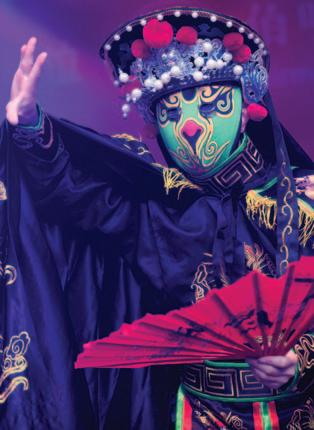
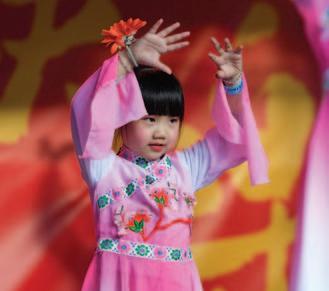
“There are some staple traditional performances that form a key part of the festival, the fan dance, the face changing, the lion dance, they’re not going to change each year because that is what makes the festival authentic,” Matt says.
“But there’s also been a lot of development in the community around K-pop and new dance styles, and with the rise of digital and social media there has been so much change in terms of the landscape. So there’s a lot of ambition from groups in terms of that, lots of new performances, new ways of staging things that are really innovative.”
Birmingham’s Chinese New Year Festival is one of the largest in the country and is funded by sponsorship, support and partnership. The Hippodrome Festivals Team comprises just four people including Matt and they are working all year on events large
and small. To stage a successful Chinese New Year, they use freelancers and contractors and can call on other teams within the Hippodrome and the local community.
“The whole festival is in partnership with our co-producers, Birmingham Chinese Festival Committee, there are committee members that are part of the schools, part of the community groups and they are a key part of making sure the festival is representative of all sectors of the community.”
“It’s about celebrating that the Hippodrome is in Chinatown and we are supporting the place we’re in,” says Matt. “It’s all about supporting the local community and putting them at the forefront of the festival. It’s celebrating the diversity of the area and the people of the city.”
The team are determined to ensure the festival is as environmentally friendly as possible.
“We are encouraging sustainable travel and we are looking at compostable packaging, recycling and energy efficient solutions on the site,” Matt says. “We are constantly trying to innovate and think about the future in what we are doing.”
Looking forwards, Matt hopes the festival will continue to be a fun day out for thousands of families from across the West Midlands.
“A lot of people want to come to Chinatown and celebrate Chinese New Year in the district. We’re constantly balancing crowd management and fitting the people in and making it an enjoyable and memorable experience for everyone.”

of 16 young people took to the stage to perform a Curtain Raiser performance ahead of Motionhouse’s latest thrilling dance-circus production, Hidden
50 young people in our Hippodrome Education Network (HEN) and wider college outreach auditioned for the Curtain Raiser at the Hippodrome back in September. Taking part in a 90minute workshop-style audition, dancers showcased their skills and talent through a series of repertoire, choreographic tasks and team building exercises before the final company was chosen by Motionhouse’s Creative Learning Team, Harrison Yafai and Hannah Marshall.
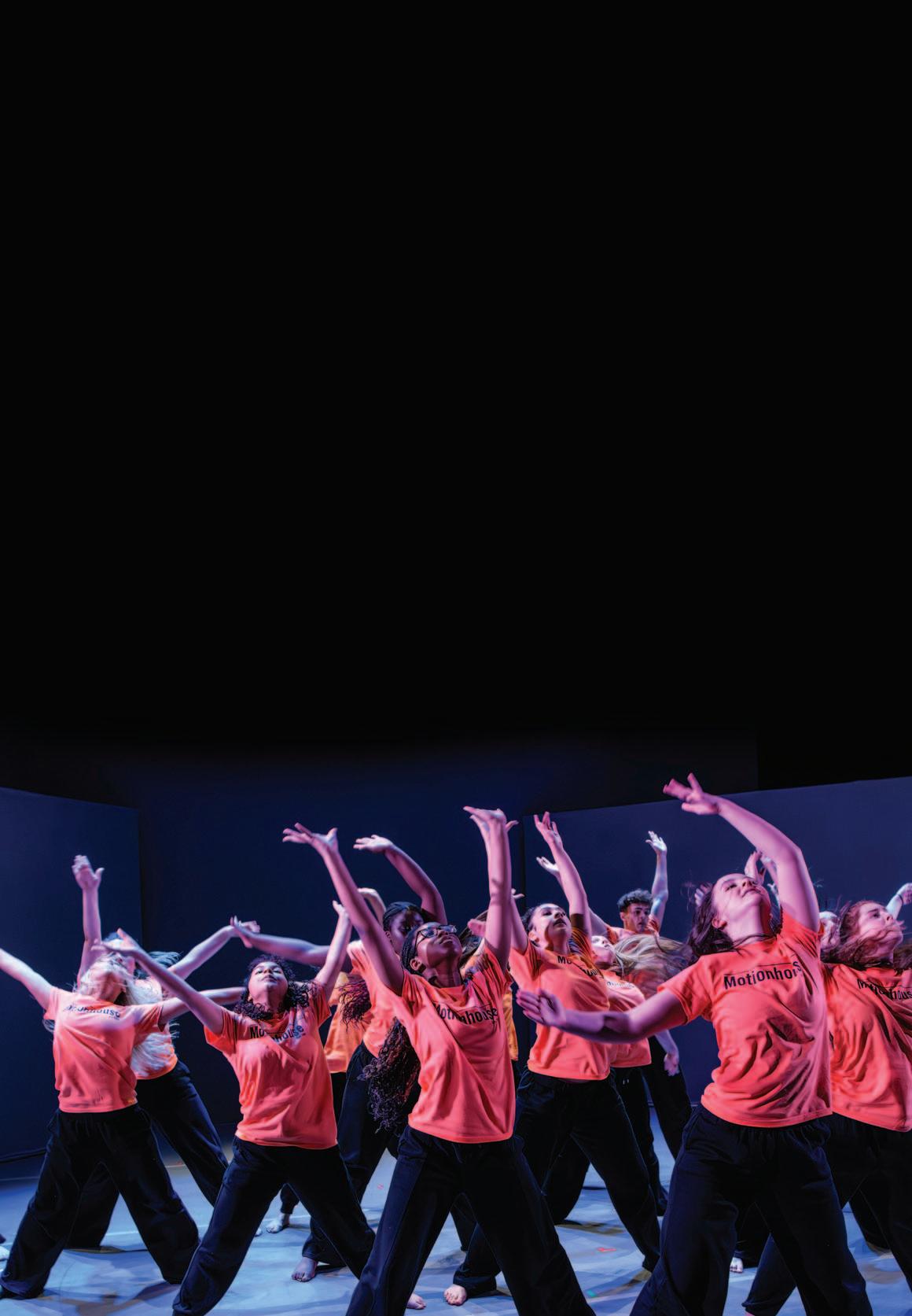
young company spent two days learning choreography by Harrison, whilst also implementing the young dancers’ own ideas and choreography into the piece. Working in alternating small groups, the company were able to choreograph their own work using ideas from skills class or a prescribed element or theme, such as a lift or jump. Then working with Associate Director, Daniel Massarella, the next two days were spent cleaning and polishing the five-minute piece ready for Friday’s performance.
Much like Motionhouse’s style, the piece had moments of strong group choreography that broke out into smaller groups, creating a concoction of contrasting movement and patterns. There were lifts and tricks throughout the piece, showcasing the talent of the next generation of performers.
rapturous applause and cheers, providing a goosebumps moment for both audience members and young performers.
Reflecting on the performance, Craig Randle, Education Manager (Secondary & Post 16), said:
“To work alongside Motionhouse and this incredible group of dancers was pure joy! The work ethic, professionalism and talent that was showcased across the week was second to none, doing both themselves and their respective schools/colleges proud!
“The Motionhouse team, but particularly Harrison and Danny, always bring out the best in young people, providing a safe, welcoming space for experimentation and exploration. I couldn’t be prouder of what this young company created in such a short amount of time!”
By Sophie Lewis
The theatre we know and love today first started out as The Theatre of Varieties and Circus, constructed by brothers James and Henry Draysey. The auditorium space reflected a circus design with a central ring encircled by seating. Opening on the 9th October 1899, the first performance was a variety show featuring a flying trapeze, jugglers and a sword walker. Due to poor attendances and tough local competition, the circus closed after only 5 weeks.
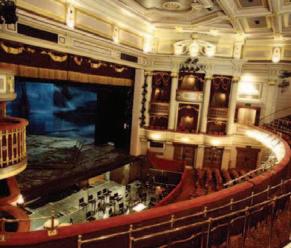
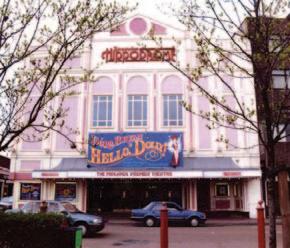
The venue reopened following a refit of the auditorium reconfiguring it into a Music Hall, featuring three levels of seating, accommodating 2600 patrons. The venue reopened on 20th August 1900 as the Tivoli Theatre of Varieties. Some of the theatre’s earliest acts included Harry Houdini, Claire Heliot performing with her 12 lions, and Miss Moto, ‘looping-the-loop’ in her motorcar. On the 19th October 1903, the name Birmingham Hippodrome finally appeared!
During WWI the theatre only opened sporadically with cinevariety shows. The theatre was used as a recruiting venue for the military and the Draysey brothers helped orchestrate entertainment for soldiers at a local hospital.
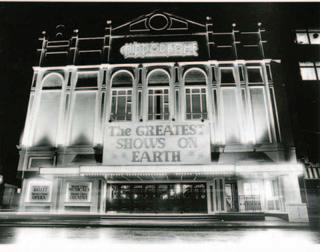
In 1924, the theatre was bought by Moss’ Empires and was renovated to the configuration that is recognisable today. The seating was reduced to two tiers with an aisle running down the middle of each level. Wooden benches were removed, giving every patron a comfortable seat.
The Hippodrome stayed open throughout WWII, and illuminated signs informed patrons of air raids, but the shows continued. During the night of the 29th October 1940, whilst a show was being performed, incendiary bombs fell upon Hurst Street, hitting the Hippodrome. The theatre’s manager was alerted to the fires up on the roof and was joined by the theatre’s commissionaire, and two technicians in extinguishing the fires, whilst bombs continued to fall, unbeknownst to the audience. It’s thanks to these men that the theatre still stands today. Performers during the war included Vera Lynn, Vic Oliver, Arthur Askey, and Max Wall.
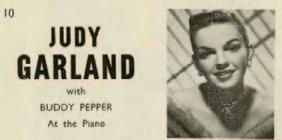
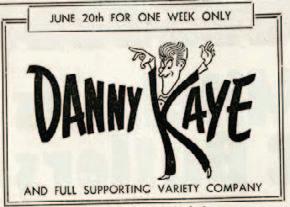
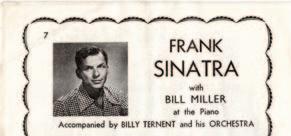
In the fifties, variety shows were fading out, replaced by revues, featuring the stars of film and radio, including Julie Andrews, Laurel & Hardy, Morecambe & Wise, Danny Kaye, Judy Garland and Frank Sinatra. The decade also saw the beginning of musicals, with productions of Carousel, Annie Get Your Gun, and Brigadoon.
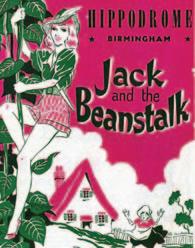
The Hippodrome’s first pantomime, Jack and the Beanstalk, was staged in 1957, leading to a tradition of annual pantos that is still going strong today. The show starred Beryl Reid, Reg Dixon, Freddie Frinton and Audrey Jeans. The longest running panto in the Hippodrome’s history, ‘Humpty Dumpty’, took place in December 1965, running until March 1966, starring Ken Dodd.
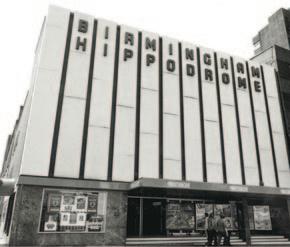
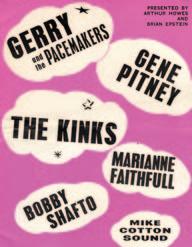
In 1963, the Hippodrome’s iconic tower was demolished, and a redevelopment programme saw the façade changed to a concrete block design. The sixties saw a plethora of stars gracing the stage including Bruce Forsyth, Liberace, Marlene Dietrich, Marcel Marceau and Sammy Davis Jr. The sixties also saw a series of one-night rock ‘n’ roll concerts by Cliff Richard, The Rolling Stones, The Who, and The Beatles. The Famous Four played at the bottom of the bill in March 1963, but when they returned in the November of the same year they were billed at the top.
Music concerts continued in their popularity during the seventies, with performances from Iggy Pop (with David Bowie on piano), The Kinks, Genesis, Pink Floyd, Cher, The Carpenters, and Elton John to name a few. Towards the end of the seventies the theatre’s future was in doubt, and the Hippodrome was put up for sale. It was saved when it was purchased by Birmingham City Council, ending the 55-year ownership by Moss’ Empires.
In 1981, a refurbishment programme commenced taking several years to complete. The first phase included flattening the stage, replacing the previous raked one, a new fly tower, orchestra pit, dressing room block, catering facilities as well as renovations to the auditorium. By 1983, the second phase of redevelopment involved extending the stage making it one of the largest lyric theatres outside of London.
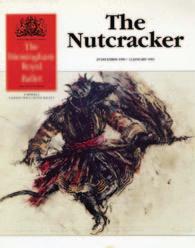
October 1990 saw Sadler’s Wells Royal Ballet move to the Hippodrome, changing their name to Birmingham Royal Ballet. Purpose built space was built adjoining the theatre on Thorp Street, and their Christmas show The Nutcracker remains an annual favourite.
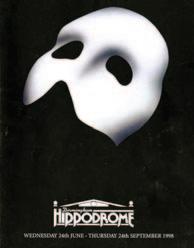
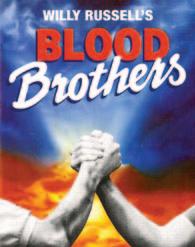
Large scale productions including Les Misérables and Phantom of the Opera were able to be accommodated on the new stage, with popular titles Blood Brothers and The Rocky Horror Show becoming yearly events. On the 29th November 1999, HM Queen
Elizabeth II attended the theatre for the Royal Variety Performance. The show featured musical performances from Westlife, Charlotte Church, Cliff Richard, Andrea Bocelli and Barry Manilow, hosted by Brian Conley.
In 2000, work began on a significant redevelopment project, which saw the theatre closed for a year. The renovation created a new suite of dressing rooms with enough space to fit the casts from the largest productions. Foyer spaces were opened up, and a 207-seat auditorium was incorporated into the building, now known as the Patrick Studio. The Hippodrome reopened its doors on 13th November 2001 with Birmingham Royal Ballet’s The Silver Gala.
The Hippodrome has continued to go from strength to strength as an independent charity. The organisation now welcomes over 600,000 paid visitors annually, alongside producing new musicals, developing artists, a vast programme for young people and much more. The Hippodrome has a rich history spanning over 125 years and counting, with a proud mission to provide that “goosebumps” feeling through memorable and extraordinary experiences.
At Birmingham Hippodrome, our mission is to bring you that goosebumps feeling every time you attend something in our programme. We all love the magic of live performance, and with the climate changing around us, it’s important we play our part in protecting our environment.
In the last few years, we have committed to following the sustainability guidance provided by Theatre Green Book, as well as keeping up the high environmental standards we have held ourselves to for more than a decade. This means we’re looking to make improvements to our building, food and drink, travel impact, energy, and the shows we produce.
Solar panels, English wines and beers, and recycling our old uniform are just a few of the ways we’re acting to reduce our impact on the environment. You can also spot other environmental projects around our spaces - like water fountains, staff separating food waste, and reusable plastic cups (please return at the end of the day!).
By coming to our productions you’re supporting an organisation that is making a healthier, cleaner, greener Birmingham a priority. You’re reading this booklet because you’ve chosen to travel to us in a more environmentally-friendly way today, which reduces emissions pollution and congestion in the city centre for everyone. Thank you for supporting us to become more sustainable!
We’d love to hear what you think! Email us environment@birminghamhippodrome.com