s I write this, Malta is only a few weeks away from a general election. By the time you read these words, a new government will already be in place, ministers appointed, and political promises tested against reality. Yet I find myself wondering about something remarkably simple: during the entire electoral campaign, how many times did we hear the word “nature”? Not “environment”, nature! The distinction matters.
An office has an environment, a shopping centre has an environment, even a traffic junction can be described as an environment. Nature, however, is something far more specific and far more precious. It is the living world around us: our valleys, birds, garrigue, wetlands, migration routes, native species, and the fragile ecosystems that sustain life itself. Increasingly, nature disappears behind broader and safer terminology. Speeches speak of “development and the environment”, declarations refer to “environmental
measures”, and debates reduce living ecosystems to technical considerations. In doing so, we risk forgetting what is truly at stake. But this reflection should not be directed only at politicians. We should also ask ourselves: how often do we speak about nature? How often do we write to our representatives, raise concerns, or demand action specifically for nature conservation? Nature cannot defend itself at the ballot box. Its voice depends entirely on ours. BirdLife Malta promises to continue bringing nature onto the national agenda and into the public narrative. With your support: by becoming a member and encouraging others to join — our statements will carry greater resonance with the ears that must listen whenever that may be – because our collective future depends on it.
Crime and Punishment
New Bird!
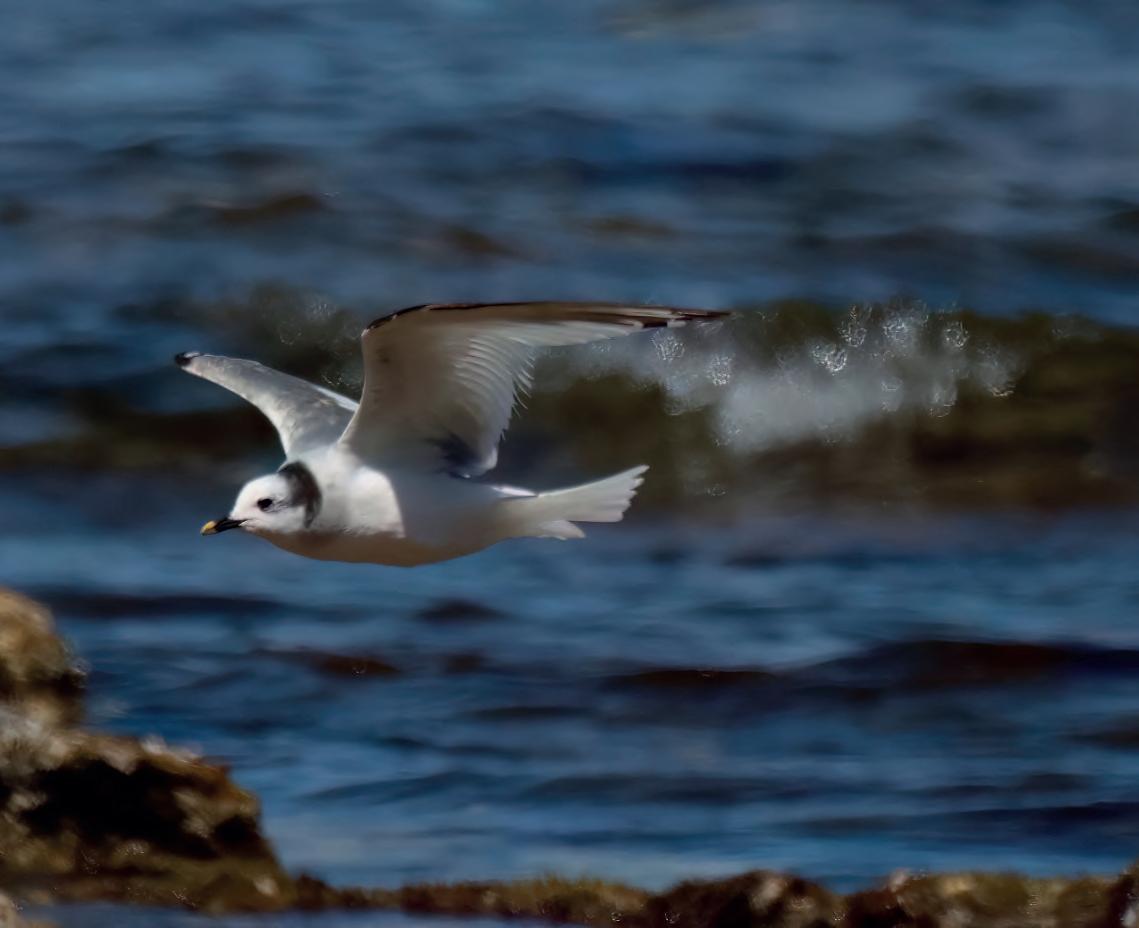
A Sabine’s Gull Xema sabini (Gawwija tal-Artiku) was recorded in Malta for the first time in Malta near Salina Nature Reserve. The rare Arctic species is an exceptional visitor to the Mediterranean. The sighting is awaiting formal acceptance by the Malta Rarities and Records Committee.
Editorial Board Antonia Micallef (Editor), Victor Falzon (Naturalist & Field Teacher), João Gabriel Candeias (Multimedia Communication Assistant), Nadia Sodano (Communications Assistant), Alexandra Zubrowicz (Events & Outreach Assistant), Giada Lampitelli (Education Officer) BirdLife Malta Council Darryl Grima (President), Joanna Tabone (Vice-President), Norman Chetcuti (Treasurer), Denise Casolani (Council Secretary), James Aquilina, Eurydike Kovacs, Alessandra Loria, Paul Portelli, Kathleen Psaila Galea, Raphael Soler (members). Senior Management Team Mark Sultana (CEO), Nicholas Barbara (Head of Conservation), Mark Gauci (Head of Land Management), Antonia Micallef (Public Engagement Executive), Gabriella Seguna Galea (Finance Manager), Manuel Mallia (Salina Park Manager), Manya Russo (LIFE PanPuffinus! Project Manager).
mailing address: 57/28 Abate Rigord Street, Ta’ Xbiex XBX 1120, Malta tel: +356 21347645 • email: info@birdlifemalta.org • website: www.birdlifemalta.org
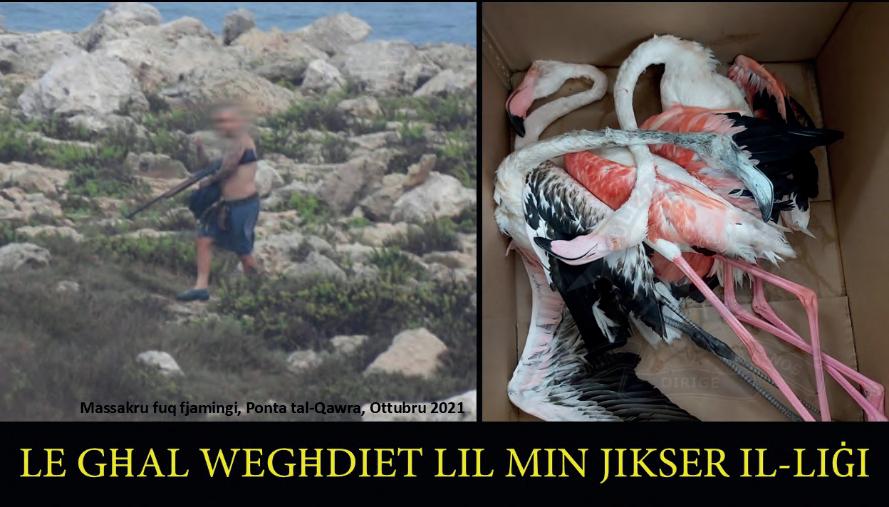
The culprits in this list were brought to justice after being observed and reported by BirdLife Malta.
March
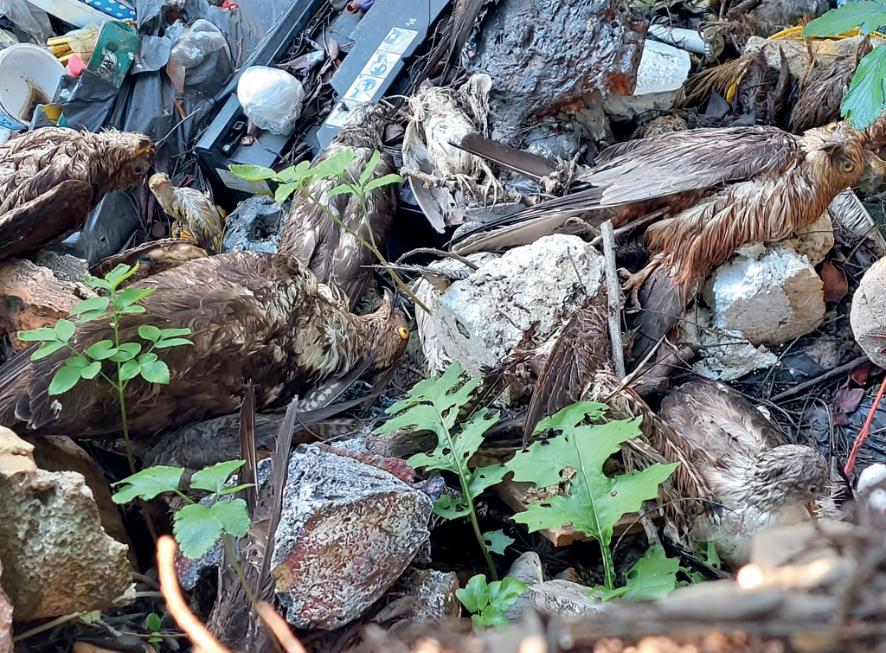
CRIME: Shooting and possessing a protected Western Marsh-harrier in Delimara (Apr 2024).
PUNISHMENT: Hunter fined €7000, hunting ban for life, and one year suspension of arms licence.
CRIME: Trapping finches on an unregistered site in Żonqor (Oct 2024).
PUNISHMENT: Trapper fined €3000 and trapping ban for life.
Mark Sultana BirdLife Malta CEO
Aron Tanti
NGOs call for stronger wildlife laws
Over 20 NGOs, including BirdLife Malta, have urged Government to strengthen action against wildlife crime. The coalition criticised proposals to reduce penalties for environmental offences and allow banned hunters or trappers to regain their licences. Suggesting that serious offences be forgiven weakens environmental protection, threatens biodiversity and undermines confidence in our legal system and the police.
Spring hunting ends amid illegal hunting
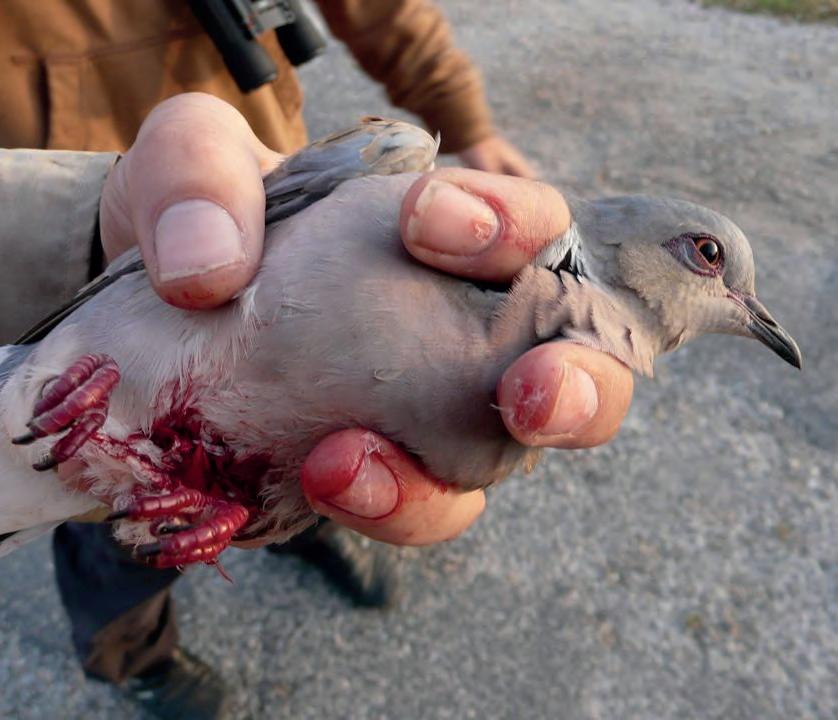
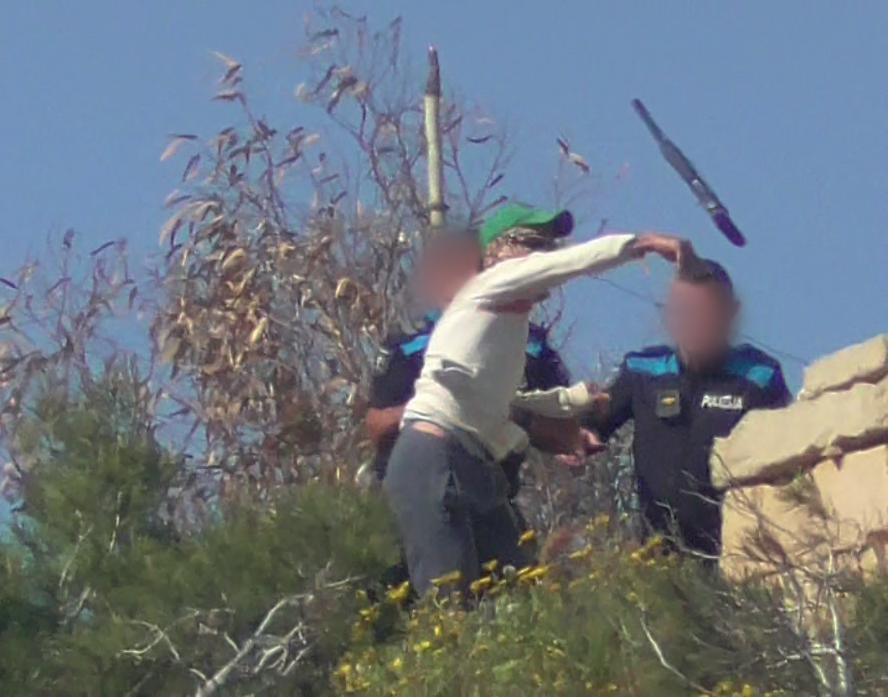
Malta’s spring hunting season ended on 3 May amid ongoing concerns over illegal hunting during peak bird migration. Monitoring teams documented widespread illegal shooting of Turtle-doves, use of electronic callers and live decoys. In one case, police arrested a masked hunter in Xgħajra who allegedly resisted arrest and injured an officer. Shooting of Common Cranes, Black Storks and birds of prey were recorded even before spring hunting season opened on 13 April.
Government ignores Turtle-dove decline
Government’s decision to allow spring hunting of Turtle-doves has renewed concern over sciencebased policymaking. New EU data presented to the Ornis Committee showed a 23% decline in the species along the Central-Eastern flyway between 2019 and 2024. The Turtle-dove's conservation status remains Vulnerable with no signs of recovery. BirdLife Malta was the only committee member to support a hunting moratorium.
BirdLifeMaltaslamsstuffed-birdtransfers
BirdLife Malta has condemned government’s preelection to reopen applications for transferring stuffed protected birds between private collections. The system previously generated more than 9,600 applications covering over 70,000 birds. This move will facilitate wildlife crime, the laundering of protected specimens and will increase enforcement burdens. The decision undermines conservation efforts and Malta’s obligations to protect biodiversity.
Trapper crushes kestrel to death
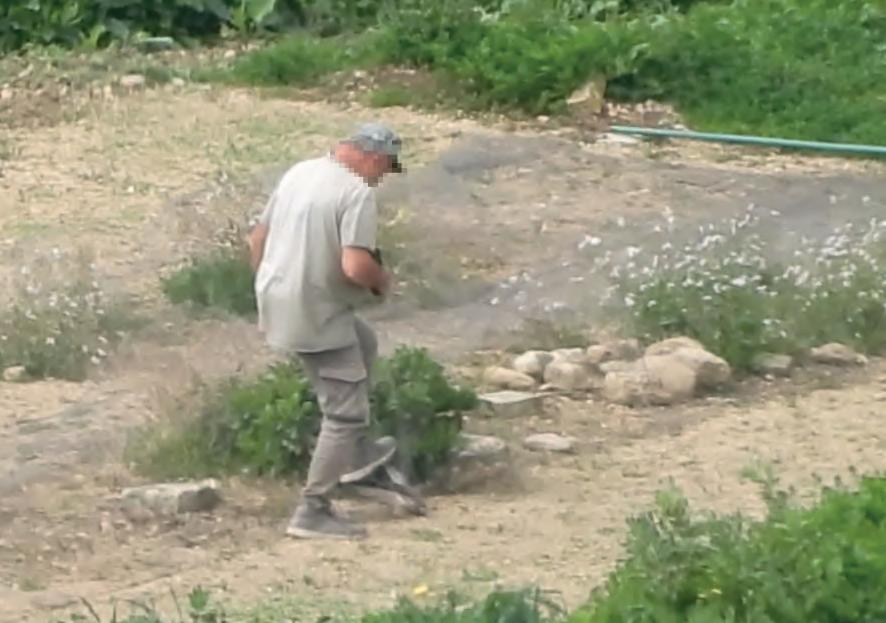
Footage showing a trapper casually stamping to death a Common Kestrel he caught in his illegal net sparked national outrage. The incident, filmed in Gozo by CABS, exposed ongoing wildlife crime. BirdLife Malta described the case as deeply disturbing and renewed calls for stronger enforcement to protect wildlife and deter illegal hunting and trapping.
Light pollution threatens seabirds at Dwejra
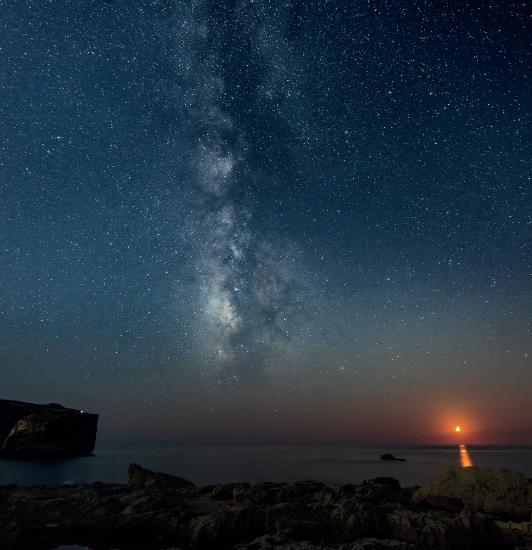
BirdLife Malta and other NGOs have raised concerns over proposed Dwejra regulations that would allow artificial lighting after sunset. Conservationists warn that light pollution disrupts breeding Scopoli’s and Yelkouan shearwaters, reducing breeding success. They are calling for a complete ban on lighting from sunset to sunrise, alongside stronger measures on waste management, boat anchoring and noise disturbance to better protect the site’s wildlife.
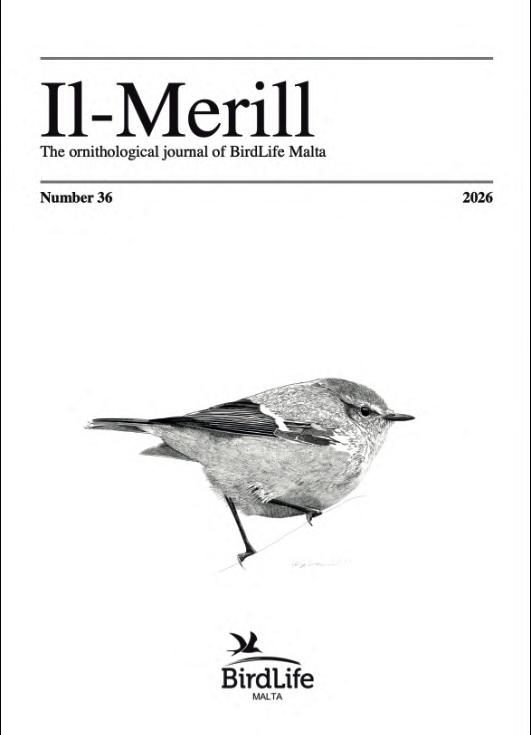
Il-Merill 36 out
BirdLife Malta has published the latest edition of Il-Merill, Malta’s ornithological journal. The issue includes scientific research, rare bird records and reports from the Malta Rarities and Records Committee. It also fills a gap in Malta’s bird record archive for the years 2006 to 2011. The journal remains an important platform for ornithological research and conservation knowledge.
Victor Falzon
Tracked kestrel feared shot
A GPS-tagged Common Kestrel disappeared during the spring hunting season, raising fears it may have been shot. The bird had previously recovered from a shooting incident in October 2025 and released at Foresta 2000 in February. Its tracking signal stopped suddenly on 22 April at Miżieb, a notorious hunting ground. Such cases highlight the need for effective law enforcement.
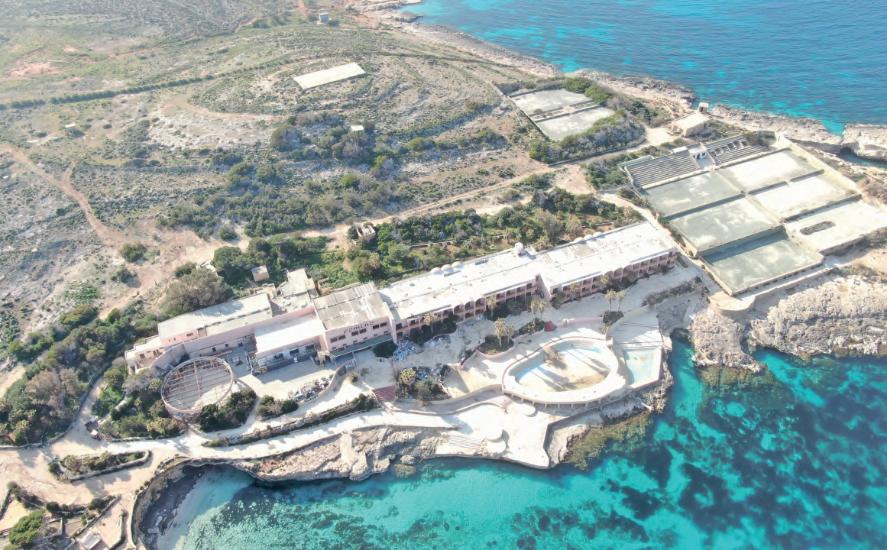
Court annuls Kemmuna hotel approval
A court has annulled approval for a major tourism development on Kemmuna involving a hotel, villas and swimming pools. After six years of legal proceedings, the Planning Tribunal must reconsider the application. BirdLife Malta and other NGOs welcomed the ruling as an important victory for nature protection. The judgement reinforces the legal duty of authorities to safeguard the environment and public interest.
Planning bills defeated
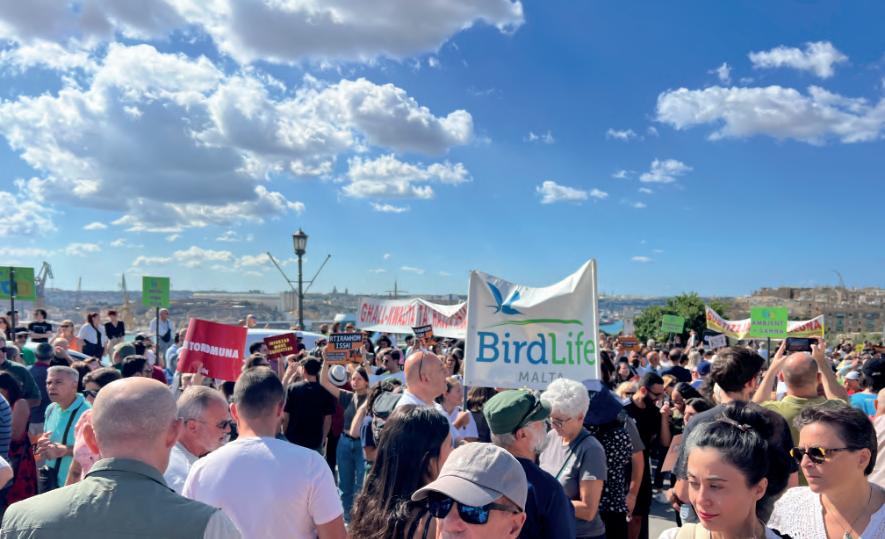
Controversial planning reform Bills 143 and 144 lapsed following Parliament’s dissolution. Environmental organisations welcomed the outcome after months of public opposition. Campaigners argued the proposals would weaken planning safeguards and increase development pressures. BirdLife Malta supported the Ġustizzja Għal Artna campaign, which promoted alternative reforms aimed at protecting ODZ land, strengthening public participation and improving planning transparency.
Illegal finch trapping continues
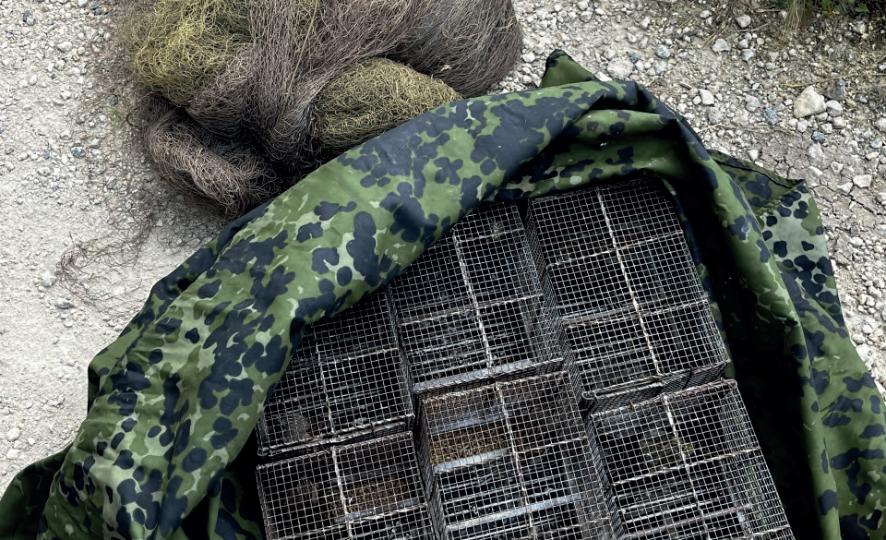
Illegal finch trapping remained a concern during spring migration, with 14 trapping sites reported by BirdLife Malta in March alone. Authorities confiscated clap nets, live finches and electronic callers, with several cases expected to reach court. Trappers increasingly used remote locations and technology to avoid detection. Most sites were found along Malta’s southwest coast, a key arrival point for migratory finches crossing the Mediterranean.
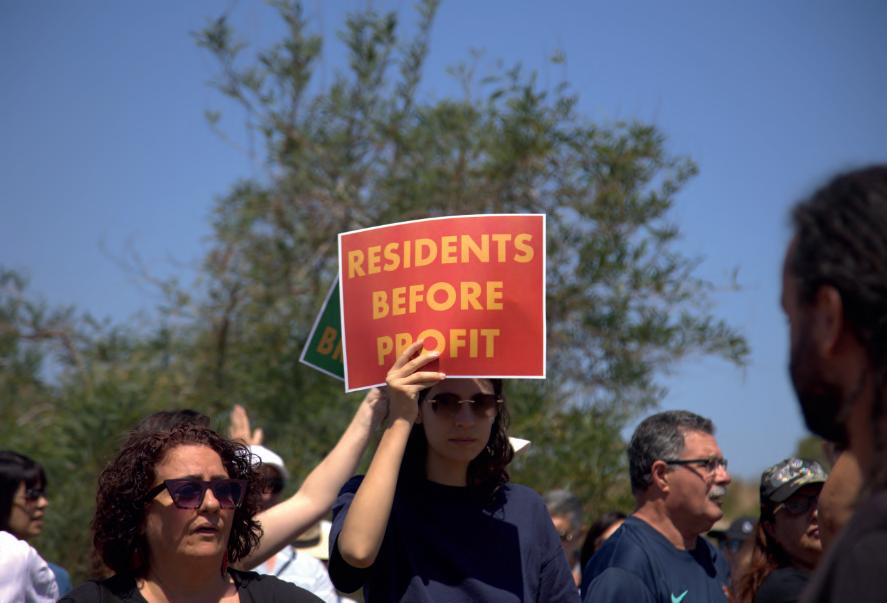
BirdLife Malta joined residents and other NGOs in opposing plans for a large sports and commercial complex in Pembroke. The project is proposed on public natural land next to a protected Natura 2000 site. Campaigners support improved sports facilities but argue for alternative location. They warn of habitat loss, increased traffic, noise, light pollution and future commercial expansion.
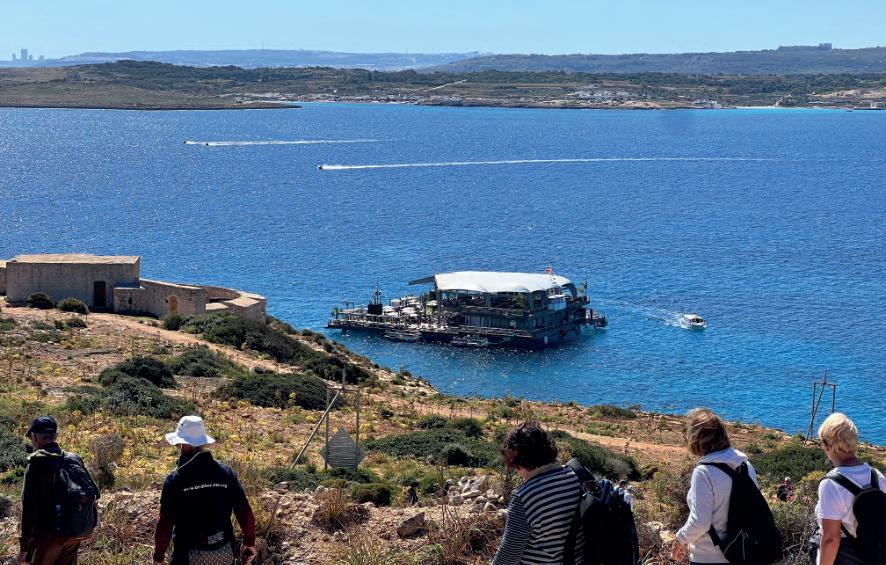
BirdLife Malta has called for the immediate removal of the Noma Island platform from near Kemmuna. The floating entertainment venue threatens a Bird Sanctuary, a marine Natura 2000 site and Yelkouan and Scopoli’s Shearwater colonies through noise, light, sea pollution and human activity. Kemmuna is already under significant pressure and we urge authorities to enforce environmental regulations.
Research highlights benefits of naturebased education
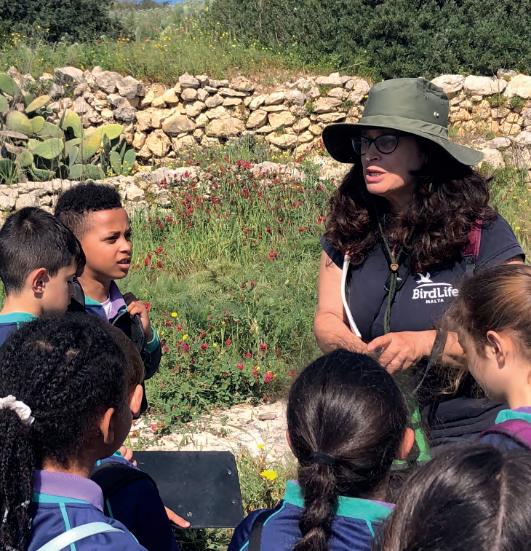
New research from the University of Malta highlights the educational benefits of outdoor learning. Dr Desiree Falzon, a BirdLife Malta Dinja Waħda field teacher, recently completed her PhD examining nature-based education. The findings support efforts to create outdoor learning spaces in schools to strengthen environmental awareness. Our Dinja Waħda programme engages more than 10,000 students annually through hands-on learning experiences.
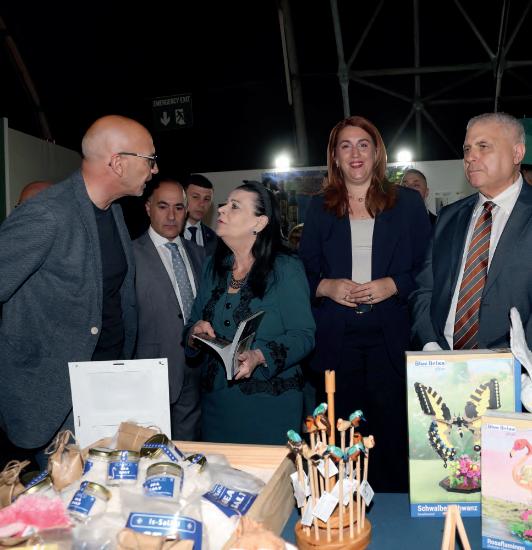
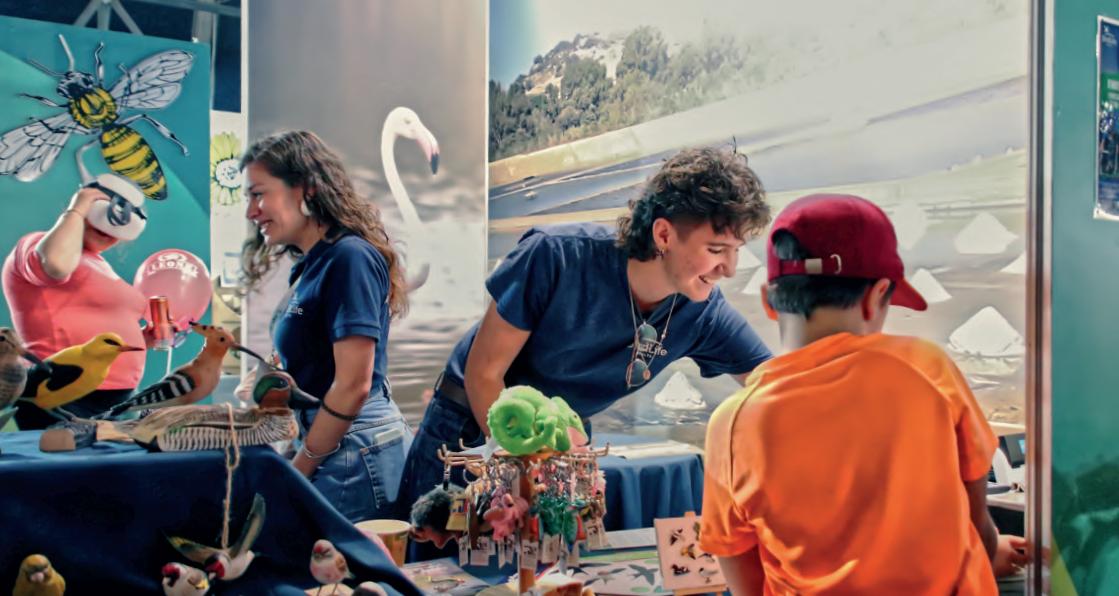
Thousands of visitors visited BirdLife Malta’s stand at this year’s AgriFair. We showcased conservation work, sustainable practices and traditional salt production at Salina Nature Reserve. Visitors explored environmental challenges and solutions, while a VR experience proved particularly popular. President of Malta Myriam Spiteri Debono also visited the stand and received a bird photography book by Aron Tanti.
Noma Island near Kemmuna
Antonia
Micallef
BirdLife Malta
ConcernsoverPembrokesportscomplex
Moviment
Graffitti
Victor Falzon
DOI Clodagh O'Neill
BirdLife Malta at AgriFair
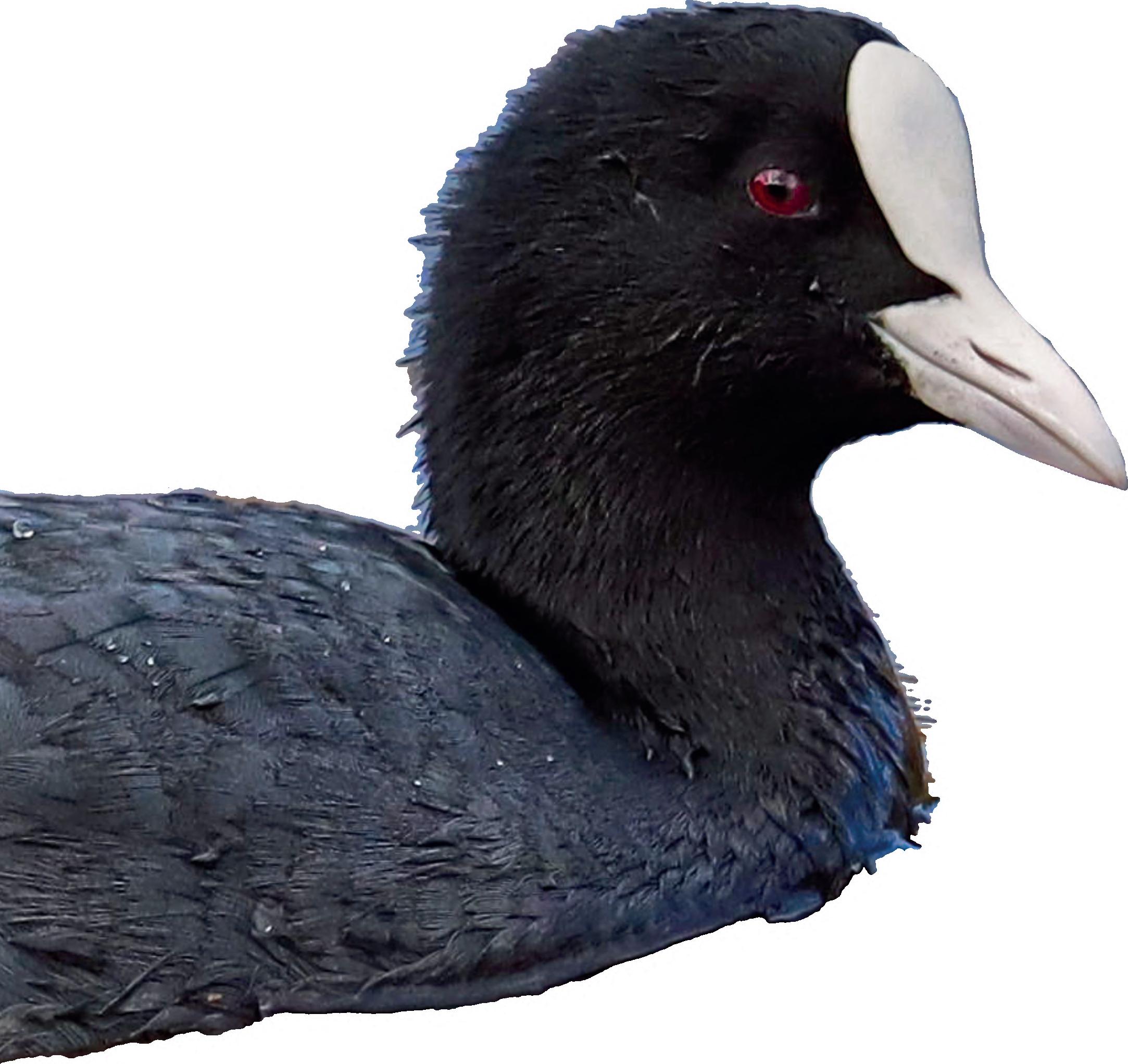
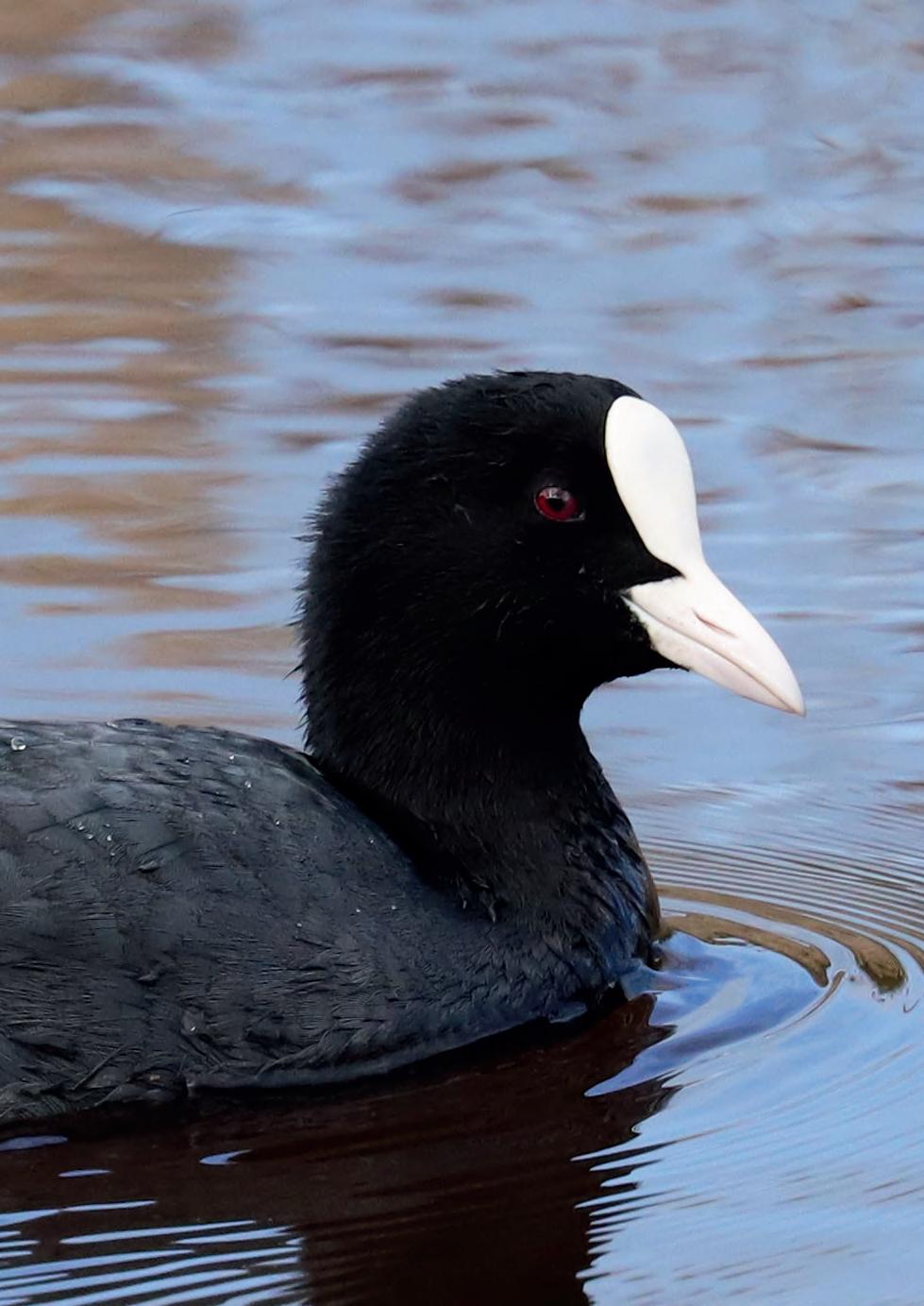
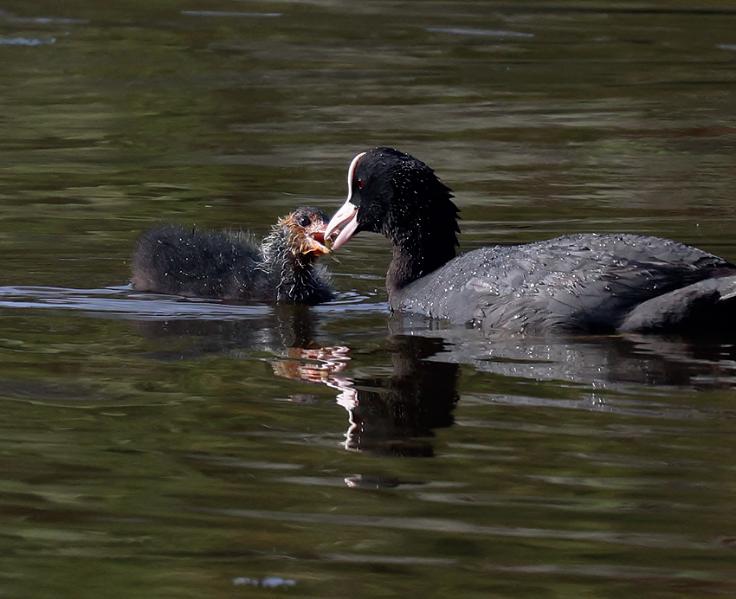
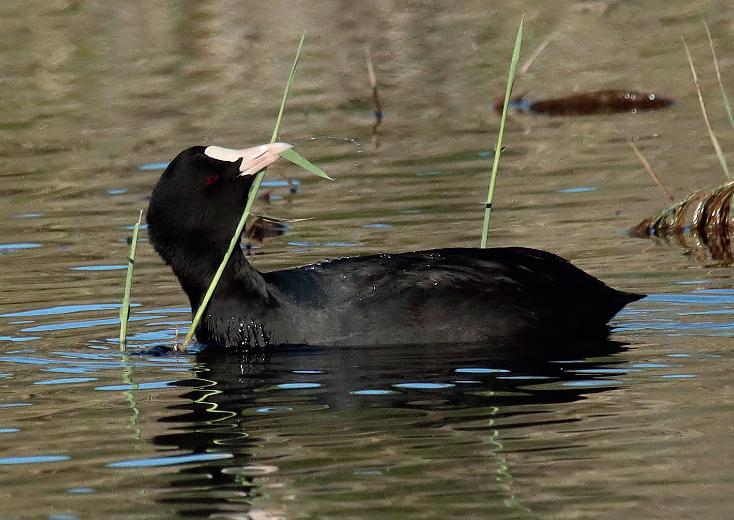
The Eurasian Coot
by Raymond Galea
Field ornithologist and Malta Rarities and Records Committee Chairman
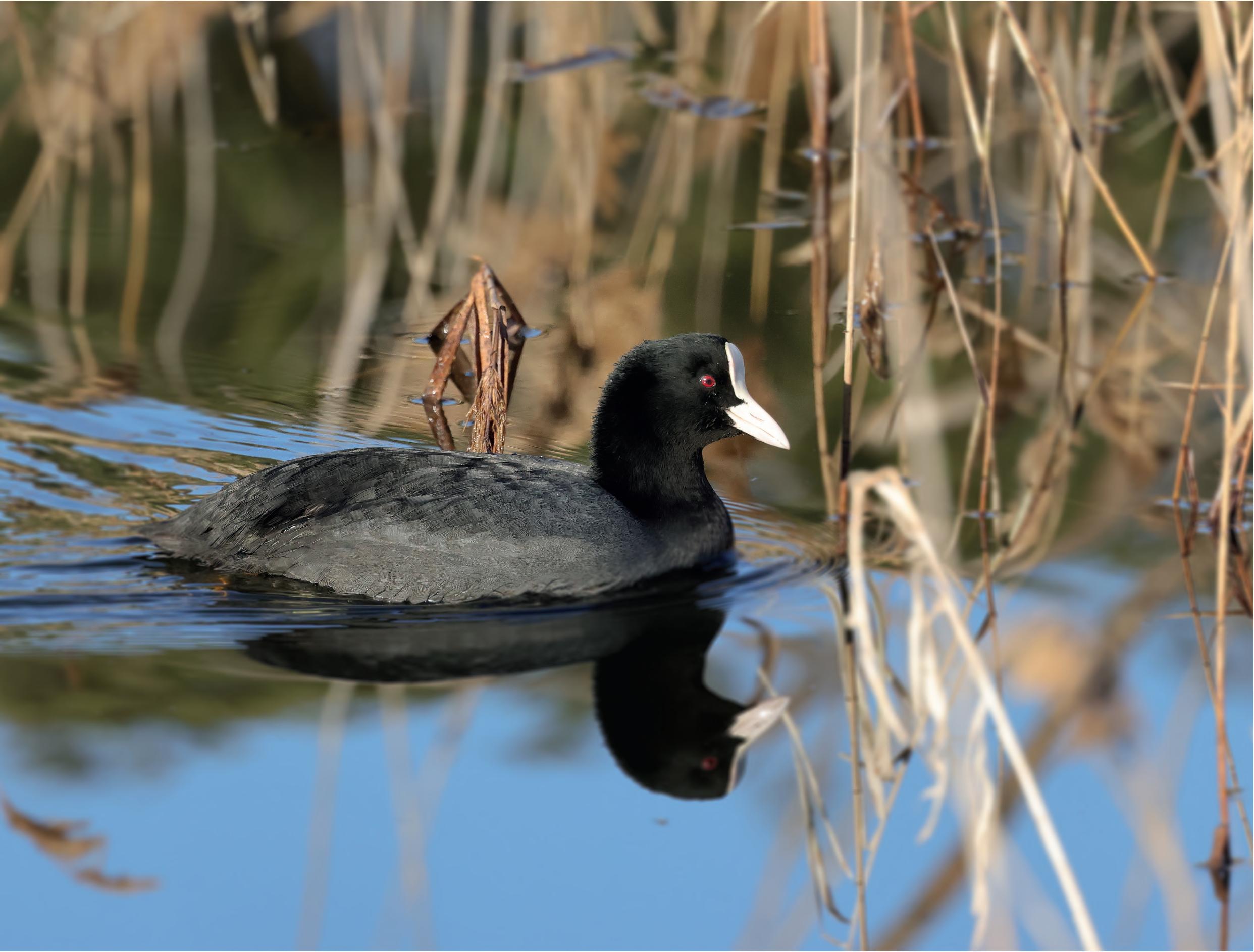
The Eurasian Coot, known in Maltese as Tiġieġa tal-Baħar (literally “hen of the sea”) or in Gozo as Fellus tal-Ilma (“chick of the water”) or Tiġieġa Tal-Ilma (“hen of the water”), is a distinctive waterbird belonging to the rail family, Rallidae. Despite Malta’s lack of large natural freshwater bodies, this resilient species has established a small but important presence on the islands, acting as an indicator of wetland health.
Identification
The Eurasian Coot is easily recognisable by its charcoal-black plumage, contrasted by a white frontal shield and matching white bill. This gives it a “bald” appearance, origin of the phrase “bald as a coot”. It has deep-red eyes and long greyishgreen legs with lobed toes instead of webbed feet. These flexible lobes act like paddles, allowing efficient swimming and movement over soft mud and floating vegetation.
Status and seasonality
In Malta, the coot is mainly a winter visitor, arriving in autumn to escape colder northern climates. It is also a rare and localised breeding species. The species made history in 2008 when it was first recorded nesting at Simar Nature Reserve, where a few pairs have since nested periodically.
Key habitats
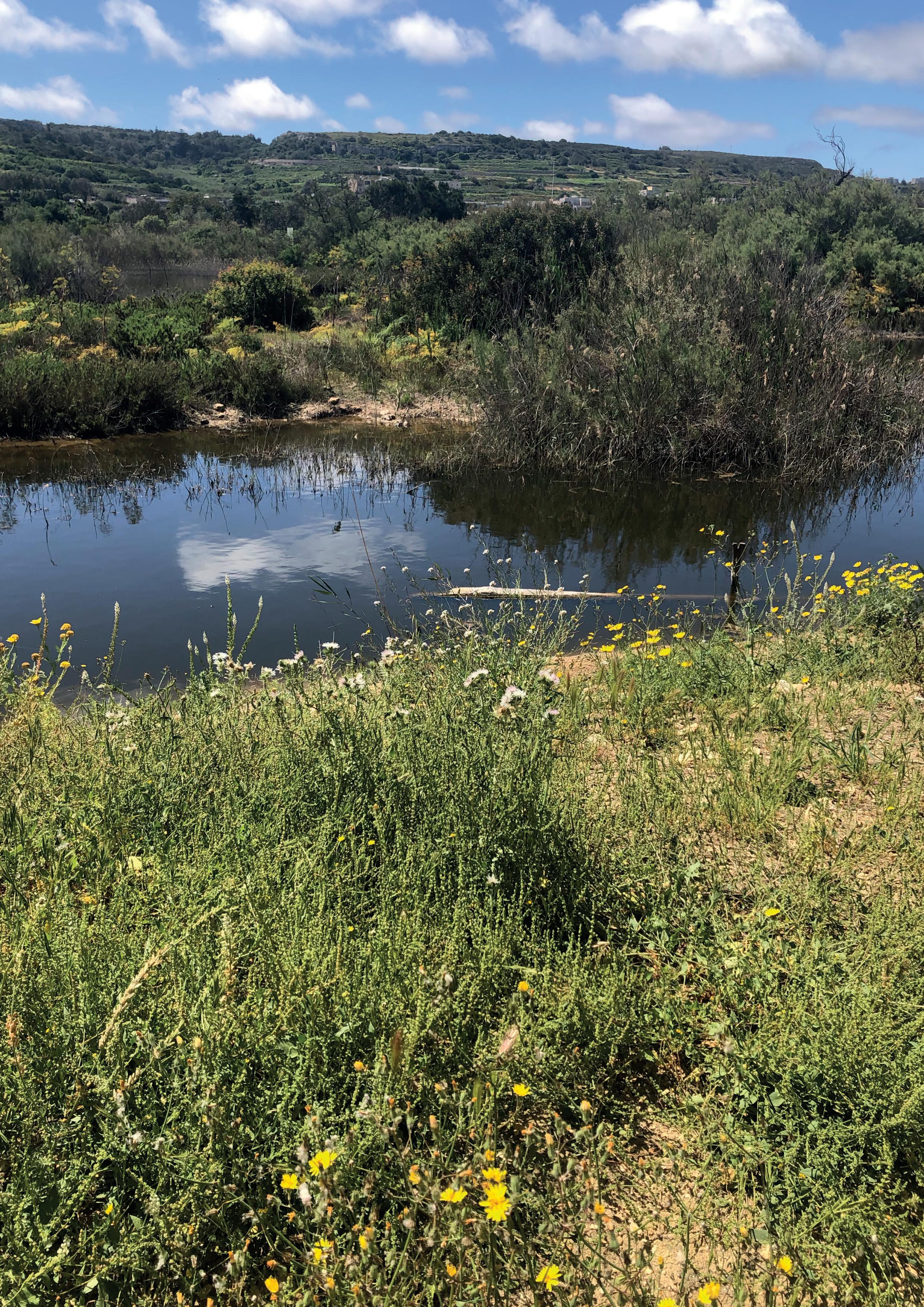
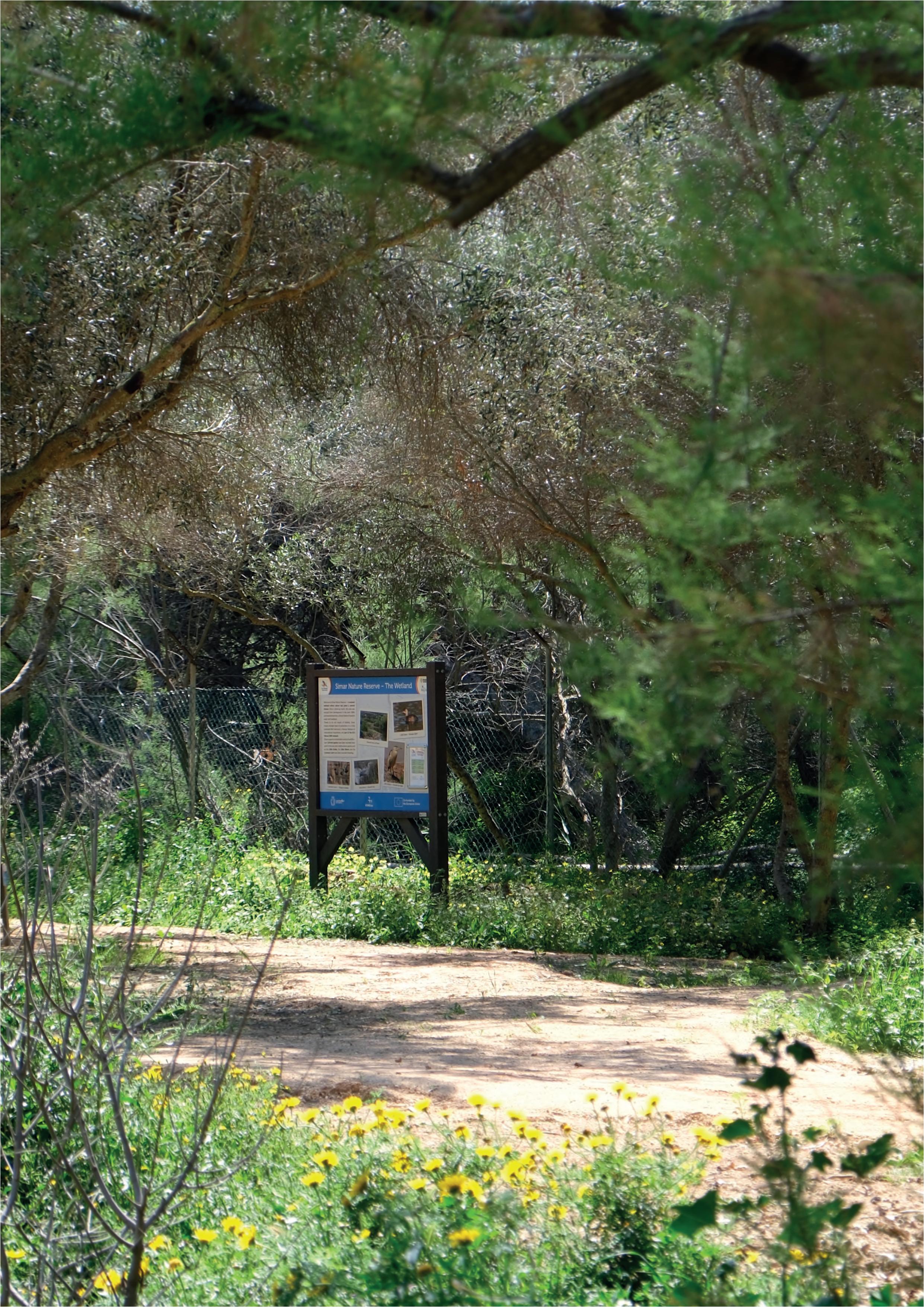
With few freshwater areas, coots are concentrated in Malta’s few protected wetlands: Is-Simar Nature Reserve: The main stronghold for the species in Malta, with reedbeds and shallow waters that coots require. This site hosted the first breeding pairs and regularly supports a wintering flock of 5–15 birds.
Għadira Nature Reserve: An important wetland where up to five coots frequently winter, foraging in the brackish marshes. Salina Nature Reserve: Coots occasionally rest here during migration.
Behaviour and diet
Coots are active, noisy birds with explosive, metallic calls that often echo through reedbeds at night. They feed on algae, seeds, aquatic plants, insects and other small invertebrates. They are skilled divers, plunging underwater to grab vegetation before bobbing back up like a cork. In winter they are generally gregarious, but as spring approaches they become highly territorial, often chasing intruding waterfowl across the water, splashing and striking opponents with their powerful feet. They build bulky floating nests from reeds, where females lay 6–9 eggs.
Conservation significance
The coot highlights the importance of Malta’s managed wetlands. Conservation efforts such as those by BirdLife Malta to protect these fragile ecosystems from disturbance and development ensure the species a permanent place among Maltese biodiversity.
Maltese name Tiġieġa tal-Baħar
Scientific name Fulica atra
Length 36–42 cm
Wingspan 70–80 cm
Call
Range of loud, sharp, explosive and metallic calls
Behaviour
Active and aggressive; swims in open water, diving in search of vegetation
Habitat
Wetlands rich in aquatic vegetation
Status (IUCN Red List) Least Concern
Local status
Migrant; rare localised breeder; not protected: huntable in autumn
"The coot highlights the importance of Malta’s managed wetlands."
Ray Galea Mario
by Victor Falzon
Victor Falzon
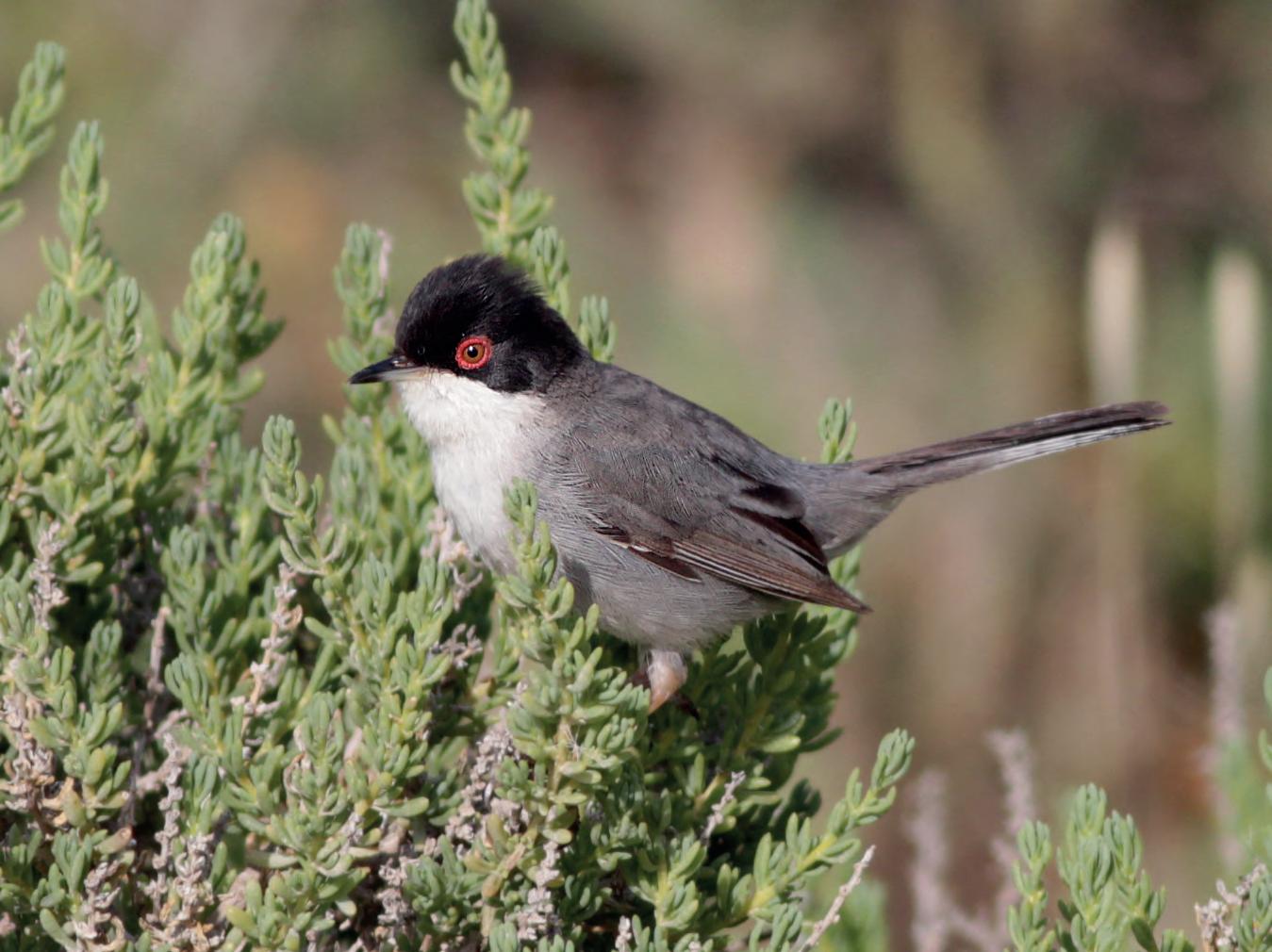
Sardinian Warbler (Bufula Sewda)
Curruca melanocephala
Unlike, say, the UK, we are not blessed with a long list of garden birds. So the Sardinian warbler that regularly makes our gardens its home is very precious to bird lovers. The bird is easy to love: small, perky, active, smartly 'dressed' and with quite an attitude, making rather free with his scolding chatter! Males and females are also easy to tell apart – the telltale black head (as in photo) clearly indicates a male, the female’s being a more modest grey. A pair of Sardinians nesting in one's garden really liven up the place, especially if they have a bunch of youngsters in tow, as many of them do at this time of year. Yet it wasn't always like this: a hundred years ago the bird was just a winter visitor. Since then, the species has made Malta very much its year-round home, and Is-Simar is no exception.
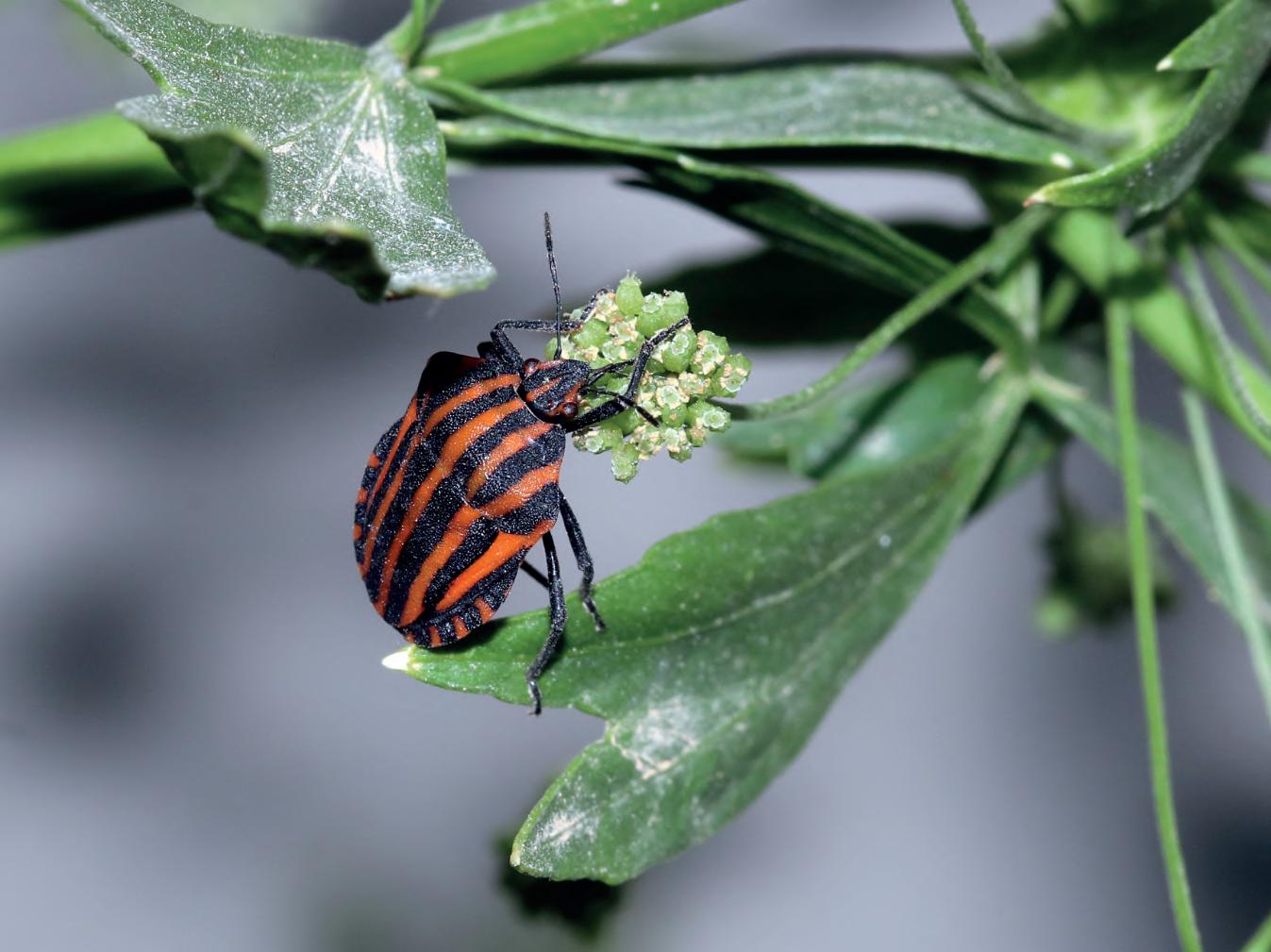
Striped Shield Bug
(Spallut irrigat)
Graphosoma lineatum
If looks are anything to go by, the striped shield bug definitely roots for Milan FC, though admittedly the red is a bit on the orange side. While 'bugs' is a term most people use to refer to crawly creatures in general, there is actually a large group of insects that even entomologists scientifically refer to as bugs. Many of these (the bugs, not the entomologists!) feed by sucking sap from the stems or leaves of plants, and to do this they are equipped with a syringe-like beak with which they pierce the plant. The bugs in turn fall prey to birds and reptiles, though they do their best to fend predators off with warning colours and nasty smells. Several bugs are partial to particular plants, and for the striped shield bug the sap of plants in the carrot family seem to be clear favourites.
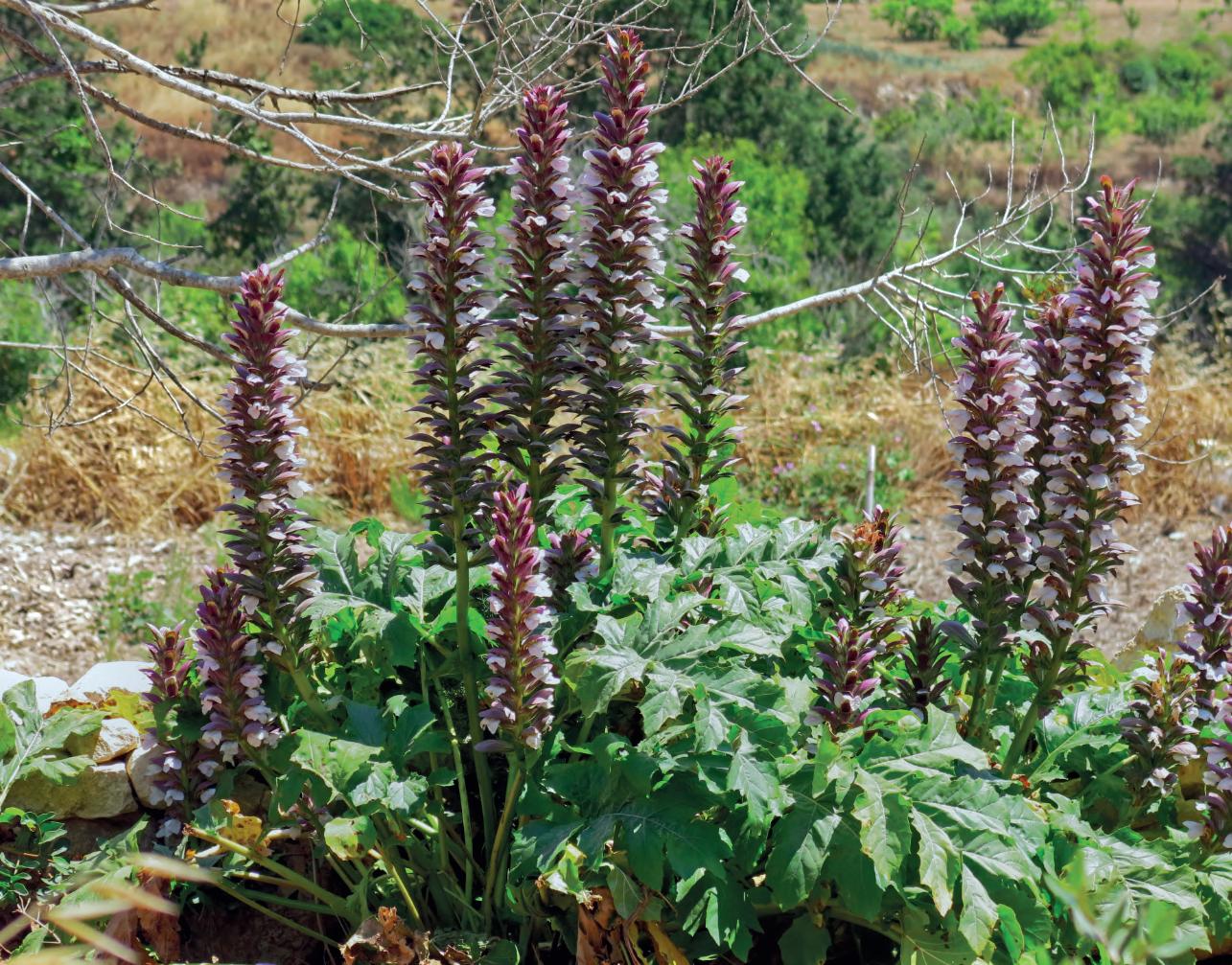
Bear’s Breeches (Ħannewija)
Acanthus mollis
Its leaves have inspired the motif on the capitals of Corinthian pillars, and the Greek god Apollo once loved the nymph Acantha whom he later transformed into this flower. That a plant with such classical pedigree should be reduced to a name as comical as bear’s breeches verges on the offensive! But thankfully plants don’t put much weight in the names we give them – they would smell as sweet, as it were – and so every year the bear’s breeches cheerfully spreads its thick carpet of baroque leaves, followed by tall cylindrical spikes of eye-catching purple-and-white flowers. It grows in sheltered, shady place – such as the olive grove at Is-Simar – and along stretches of wayside lined with less sunny rubble walls. When the flowers dry up, the ripe seeds pop out and sow themselves around the mother plant, for a new generation to grow.
Dinja Waħda
10,000 students connect with nature
by Giada Lampitelli Education officer
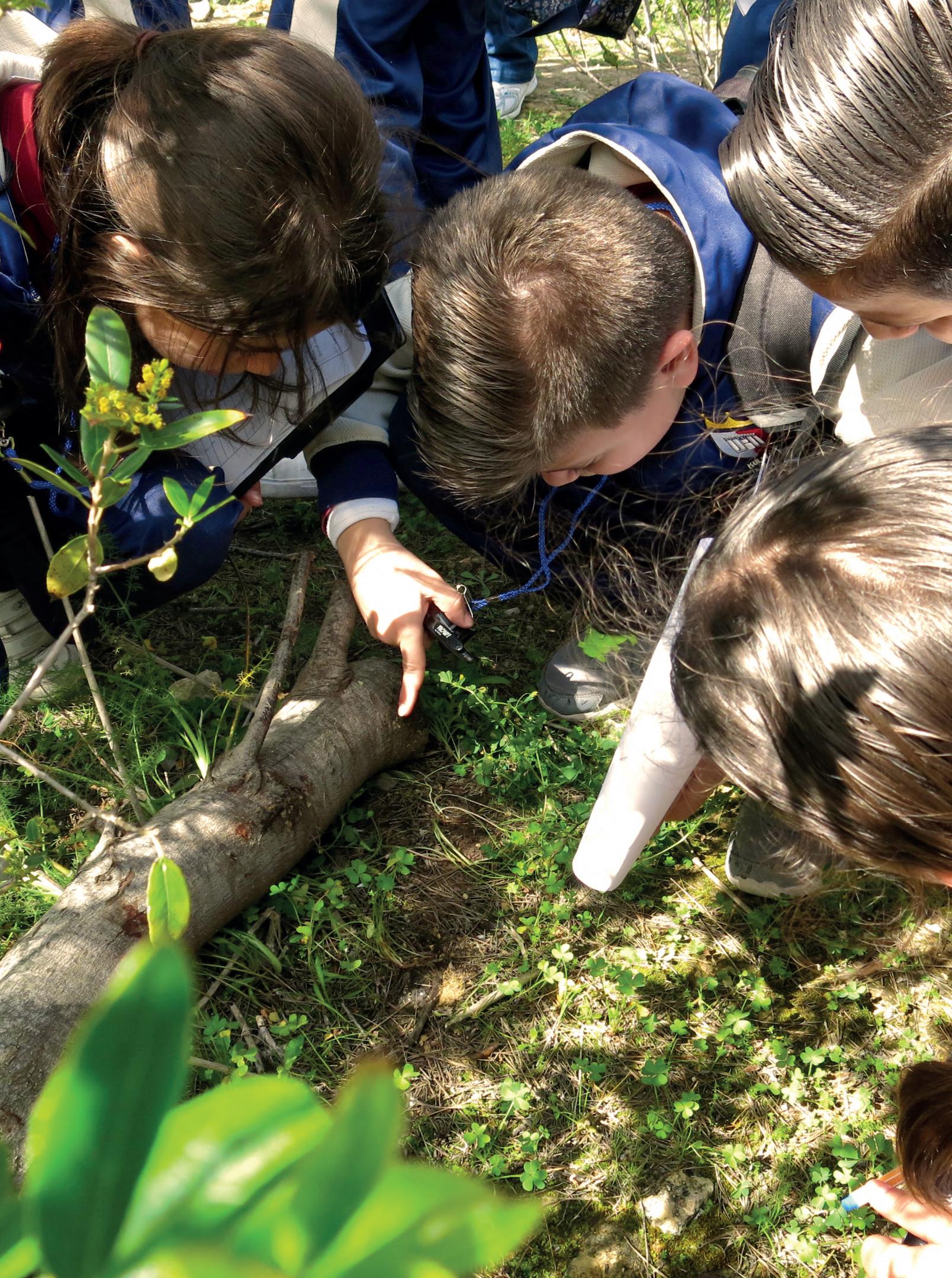
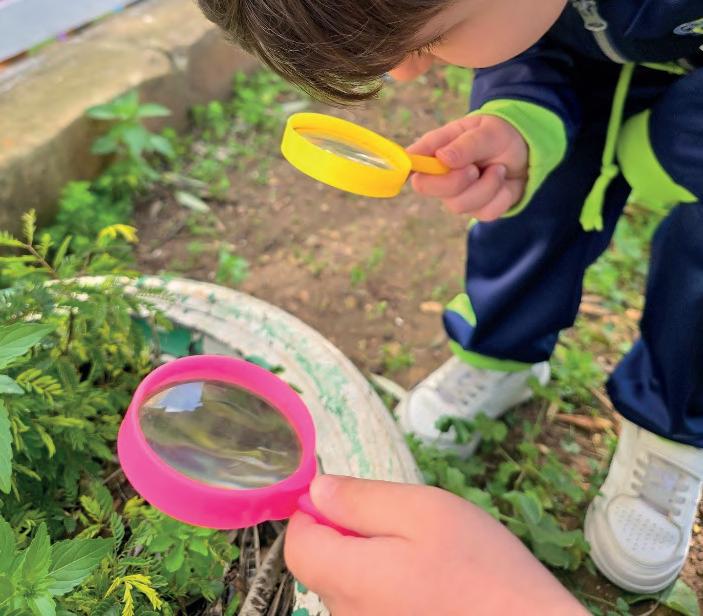
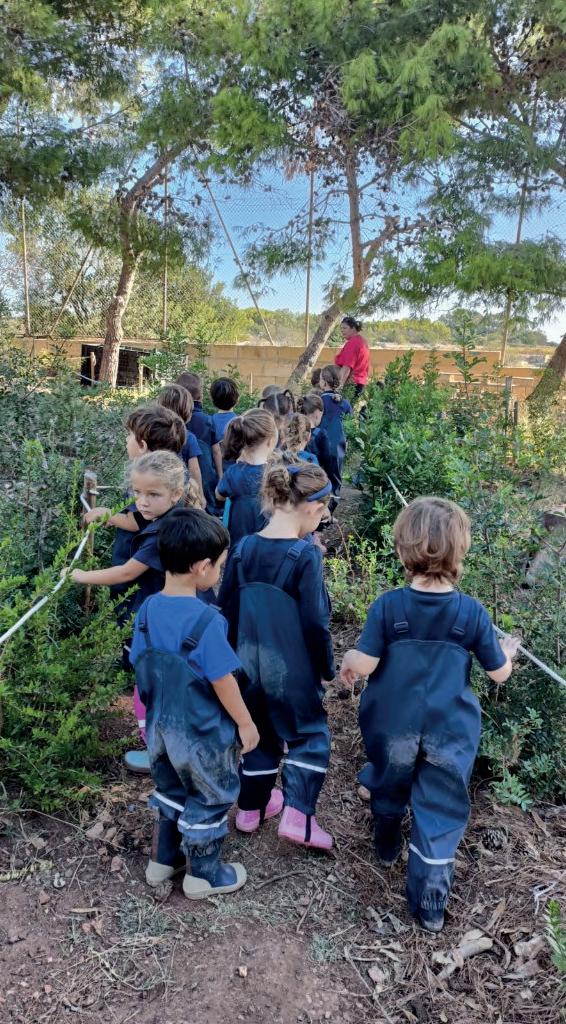
As the school year comes to an end, BirdLife Malta’s Public Engagement Team is reflecting on another successful year of Dinja Waħda (DW). DW is BirdLife Malta’s long-running environmental educational programme that continues to inspire students and educators across Malta and Gozo. Built around hands-on learning and contact with nature, DW encourages schools not only to learn about biodiversity in class, but also to experience it directly through outdoor activities, wildlife observation, gardening projects and initiatives within school grounds.
Reaching thousands
This year alone, the programme reached almost 10,000 students, with participation expected to continue growing in the coming weeks. Schools took part in a wide range of activities adapted to different age groups and learning objectives, helping children engage with nature in creative and memorable ways. From gardening and environmental projects, to wildlife observation and sensory activities, students were given opportunities to learn about biodiversity and the protection of natural areas. Many educators reported increased curiosity among students about wildlife and stronger awareness of environmental issues.
Training and supporting
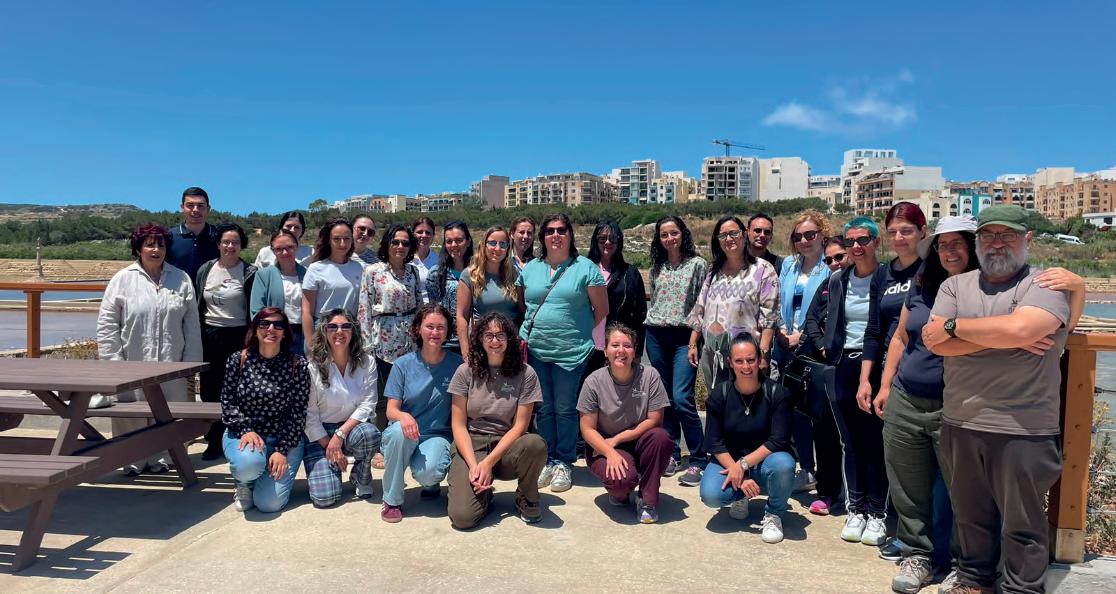
A major focus this year was making the programme more accessible to educators joining DW for the first time. The school year began with online introductory training sessions tailored to different year groups, followed by two in-person teacher training sessions open to all interested
schools. These sessions created opportunities for educators to exchange ideas, discuss challenges and explore practical ways of integrating environmental education into everyday classroom activities.
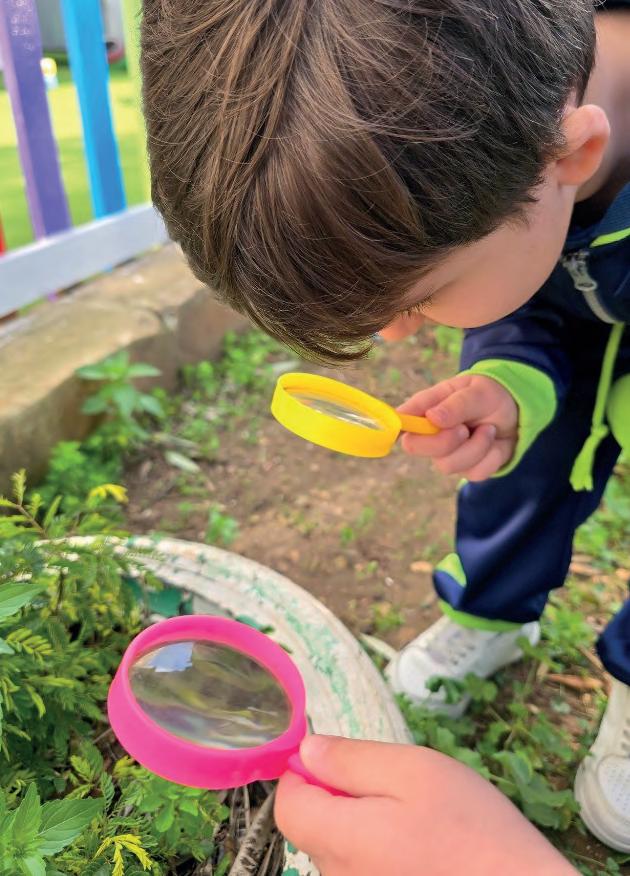
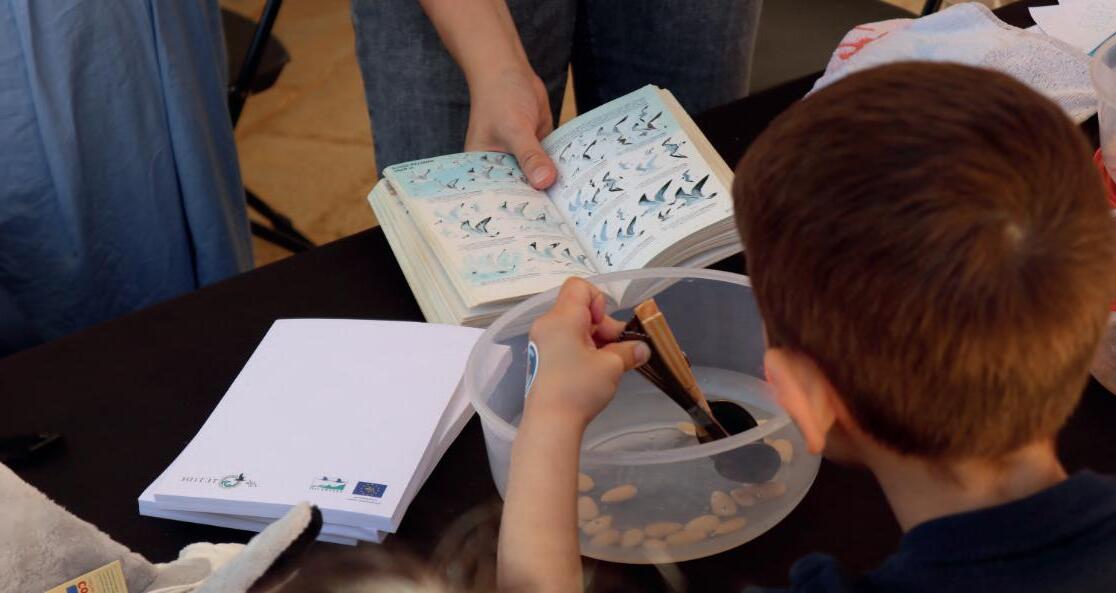
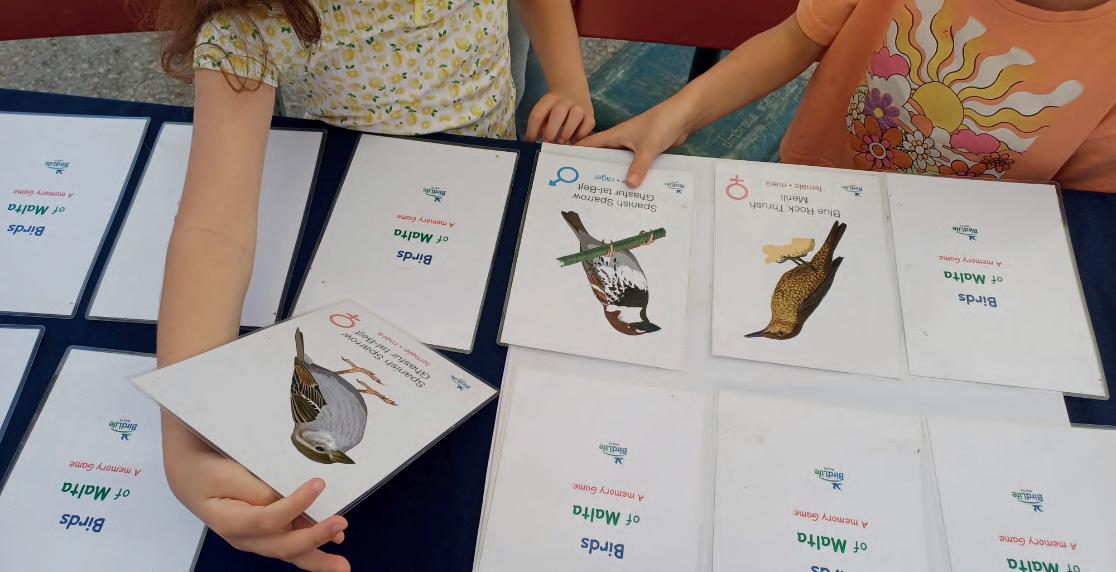
We also collaborated with the Directorate for Learning and Assessment Programmes during two kindergarten COPE sessions, working closely with early-years educators to explore how young children can begin developing empathy for nature. Through sensory activities we highlighted the importance of allowing children to connect with nature through direct experiences.
Environmental education
Throughout the year, the team also participated in several informal school events, including the Careers Day at St Dorothy’s (Sliema) and St Francis (Birkirkara) schools. Through these events we introduced students to environmental topics.We plan to extend these activities next year to reach more schools and create more opportunities for students to connect with nature.
Dinja Waħda Podcast
This year also marked the launch of the Dinja Waħda Podcast, a new initiative we started in April to extend outreach beyond the classroom. The monthly podcast explores a variety of environmental themes on Maltese biodiversity, conservation, education and nature experiences, while also highlighting DW activities. Through interviews and discussions by BirdLife Malta staff and contributors, the podcast offers students, educators and families another accessible way to engage with environmental topics and local conservation efforts.
The Dinja Waħda Podcast is on the BirdLife Malta YouTube channel
Discovering nature
Field visits to BirdLife Malta nature reserves continued to play an important role. Throughout the year, students visited these special habitats to observe wildlife in its natural habitat and learn about our conservation efforts. These visits bridged classroom learning with nature in situ. Through birdwatching, nature walks and habitat exploration students developed an appreciation for biodiversity and their own role in safeguarding it.
Looking ahead
The DW team thanks all participating schools, educators, students, collaborators, and not least BOV – our partner in education – for their enthusiasm, creativity and commitment throughout the year. The continued growth of the programme reflects the increasing importance of environmental education and the positive impact that contact with nature can have on young people. We look forward to strengthening the DW community further, as we create more opportunities for schools to learn about and care for Malta’s biodiversity next year.
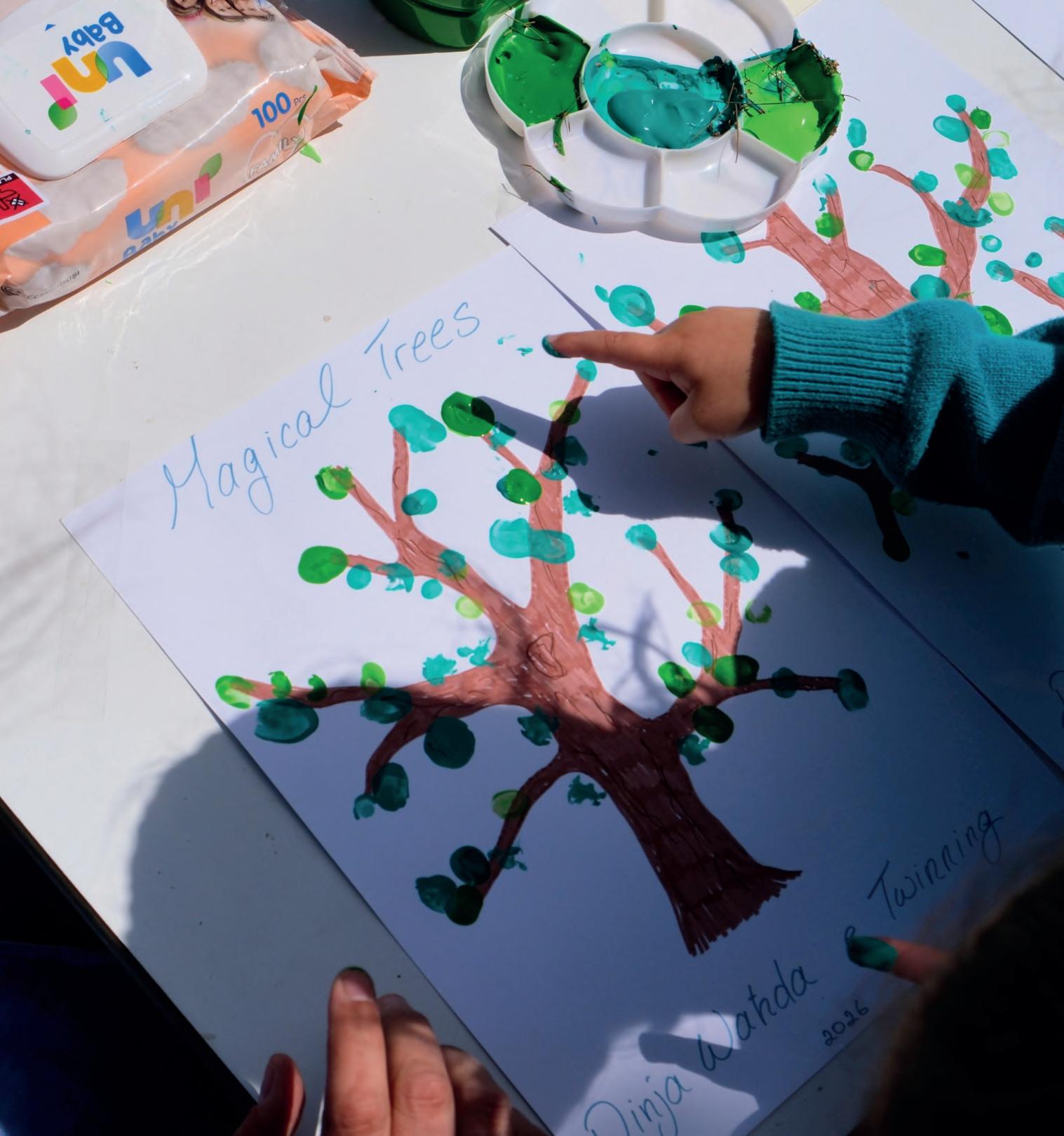
Magical Trees
An eTwinning DW project
A milestone this year was the launch of the first national eTwinning project organised in collaboration with DW. The project, titled Magical Trees, brought together three schools with a strong commitment to connecting students with nature through their DW Gardens. Participating schools were Ħad-Dingli and Rabat state primary schools and San Anton School. eTwinning is a Europe-wide online community for schools that promotes intercultural collaboration and digital literacy.
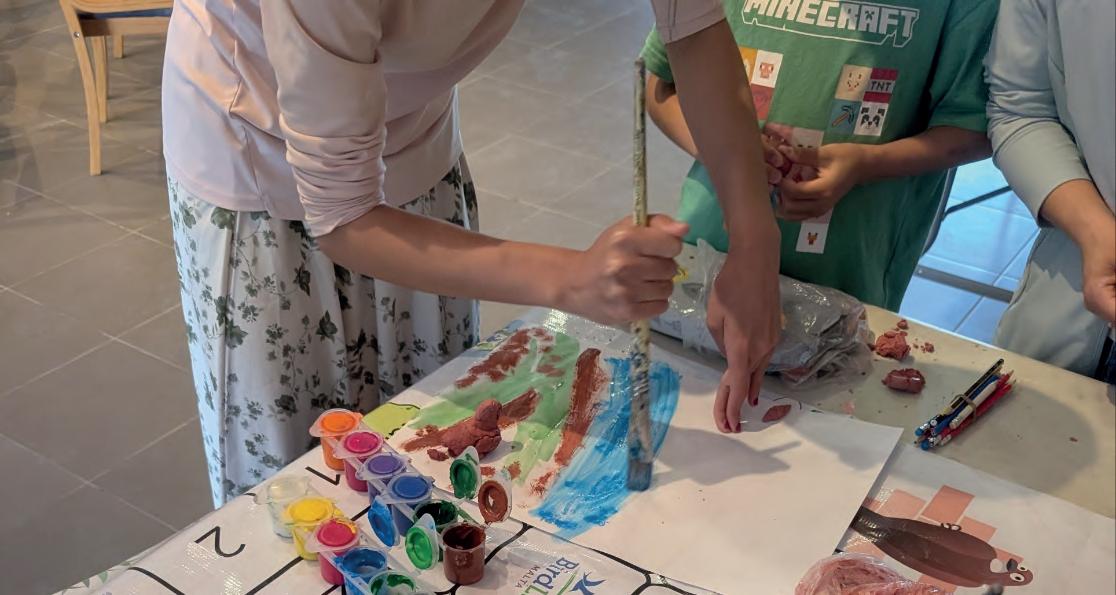
Children participating in the project explored their school gardens through nature-spotting walks, sensory activities and creative exercises centred around trees and biodiversity. In May, pupils from the three schools met in the San Anton DW Garden where they created colourful bunting inspired by trees growing in their school and concluded the event with songs and a picnic. Beyond encouraging creativity and collaboration, the project helped students appreciate the importance of trees and biodiversity within their everyday surroundings, while also strengthening digital communication and collaboration between partner schools.
The DW Gardens initiative continued to play an important role throughout the year by helping schools create greener, more nature-friendly spaces for students to enjoy and learn from.
Antonia
Micallef
Why join FALKO?
Meet like-minded young people
Gain hands-on conservation experience
Develop leadership and communication skills
Help organise campaigns and events
Strengthen your CV
Make a real difference for nature in Malta
Find out more!
Join FALKO
Take action, make friends, protect nature!
by Silvia Viviani Public Engagement Assistant
The future of nature conservation depends on young people. This is why BirdLife Malta continues to invest in youth engagement through FALKO, its youth group for 16–30yr-olds. Bringing together like-minded people from across Malta, FALKO offers opportunities to connect, gain handson conservation experience and develop the skills needed to make a positive impact on the environment.
Building skills, creating change
Joining FALKO means more than taking part in activities. Members develop valuable leadership, communication and digital skills that can strengthen their CVs while contributing to conservation. Through FALKO young people turn their own ideas into awareness campaigns, events and projects that promote stronger nature conservation.
Europe’s green future
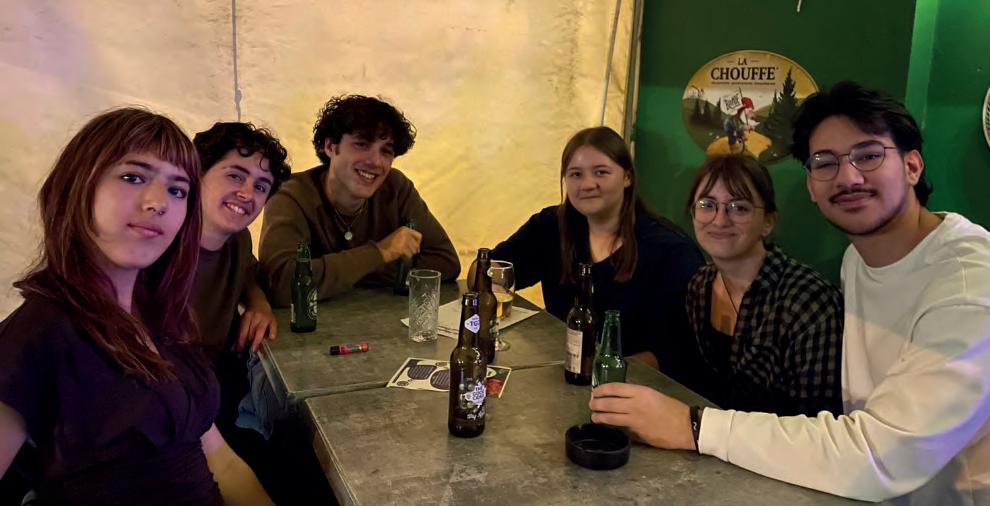
In recent months, FALKO organised several activities to engage and inspire young people. One of these was a pub quiz about the European Green Deal, through which participants learnt about the EU’s flagship strategy to achieve climate neutrality by 2050.
“It was a fun night, and I learned a lot about the EU’s efforts to increase the continent’s sustainability”
European Youth Week outdoors
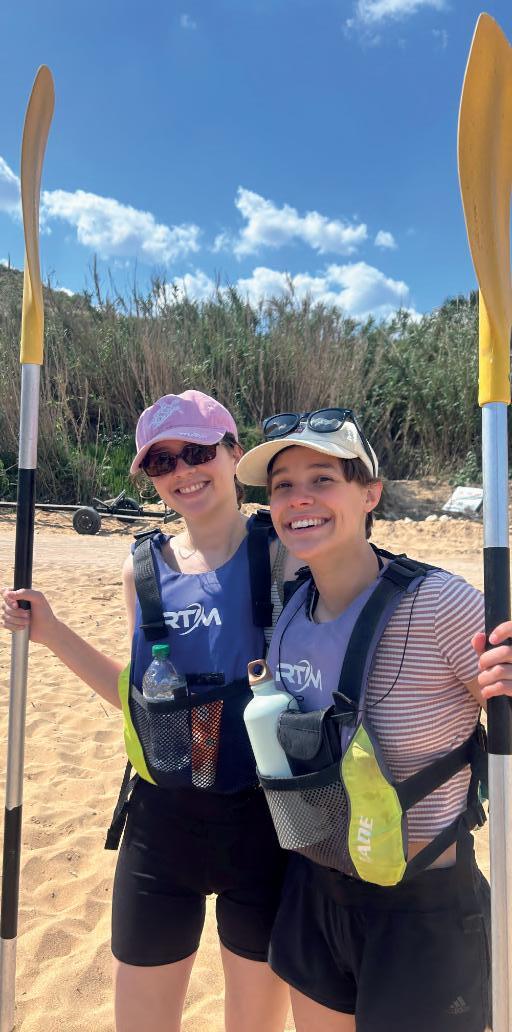
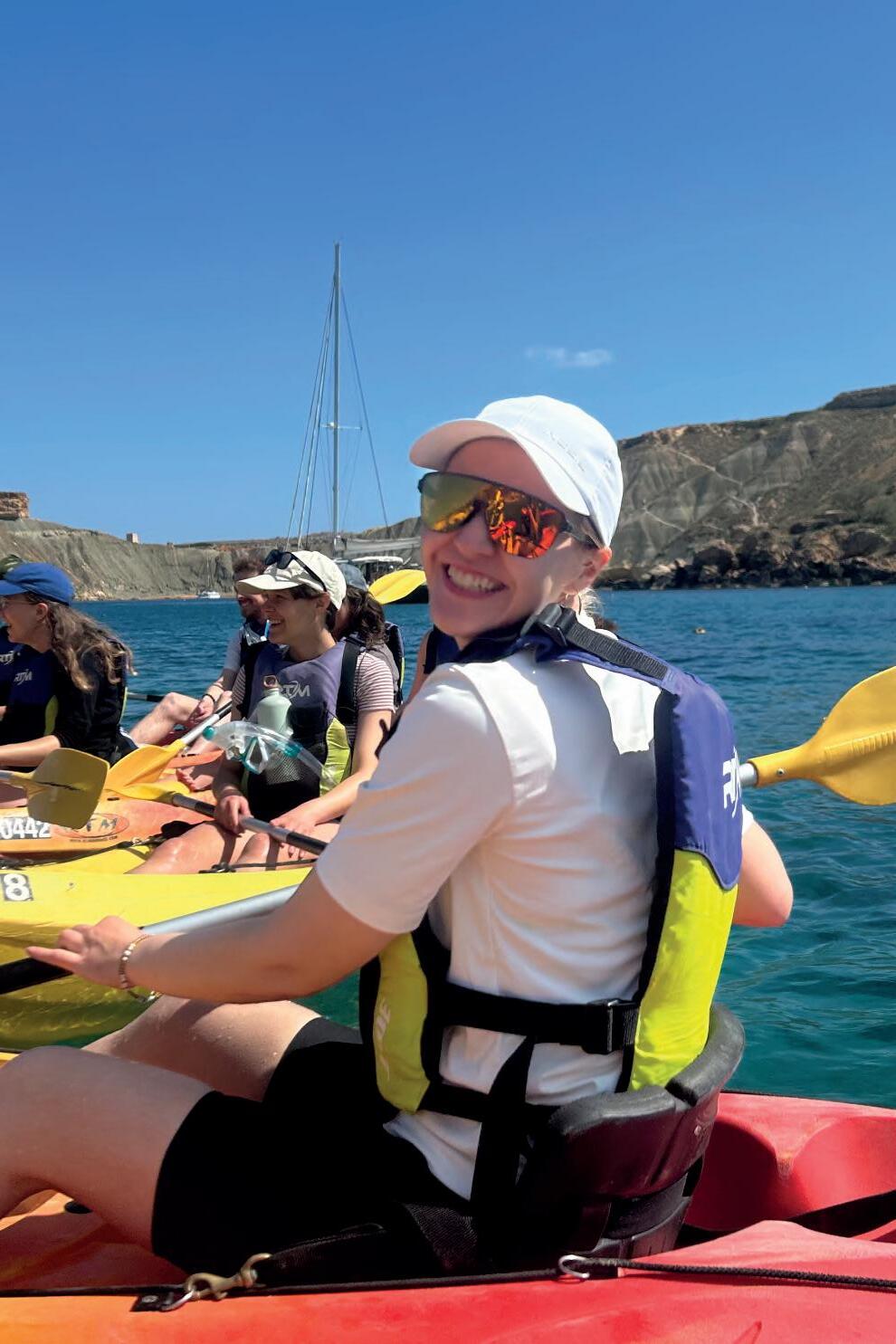
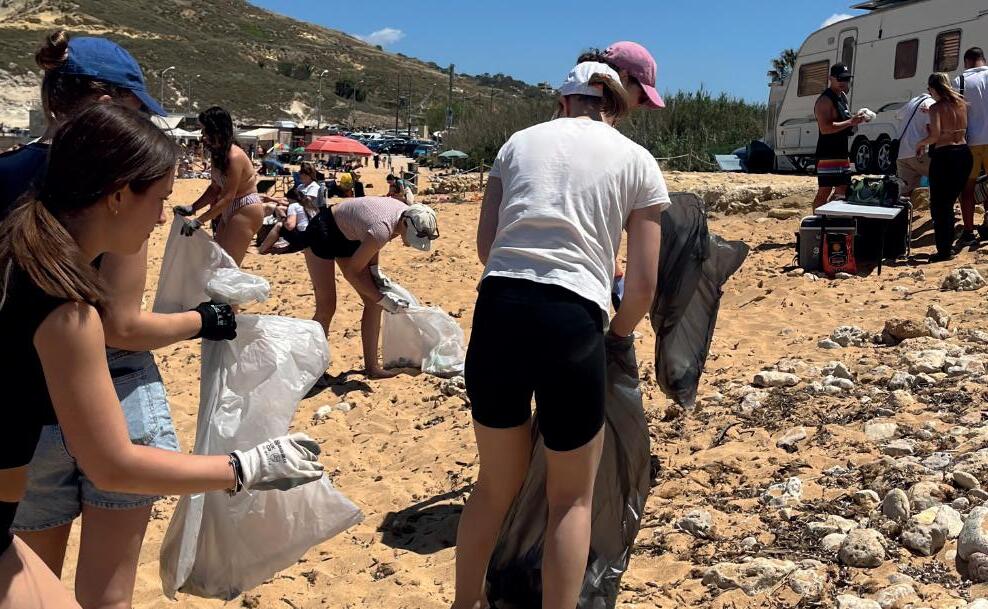
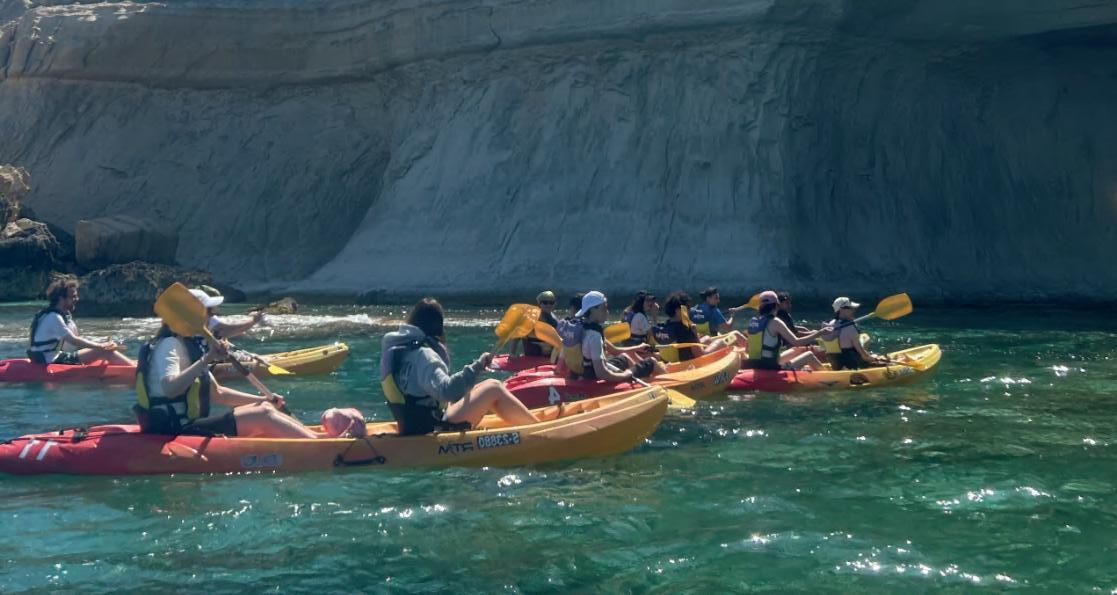
On 2 May, FALKO marked European Youth Week 2026 with a full day of outdoor activities at Ġnejna. The event included kayaking, a beach clean-up, birdwatching and a picnic, thus enjoying and helping nature at the same time. The enthusiastic response to both events proves that our young people are increasingly interested in environmental issues and eager to make their voices heard.
“Spending a full day in nature was amazing and empowering”
Get involved
To sustain this momentum, BirdLife Malta will be organising at least one youth-focused event every month. Our first social event in June, organised in collaboration with Friends of the Earth, gave young nature enthusiasts the opportunity to meet and enjoy face-to-face connections in an increasingly digital world. Follow our social media channels to stay updated on upcoming events.
Scarce breeder to resident
The Barn Swallow success story in Gozo
by Adin Vella BirdLife Malta licensed bird ringer
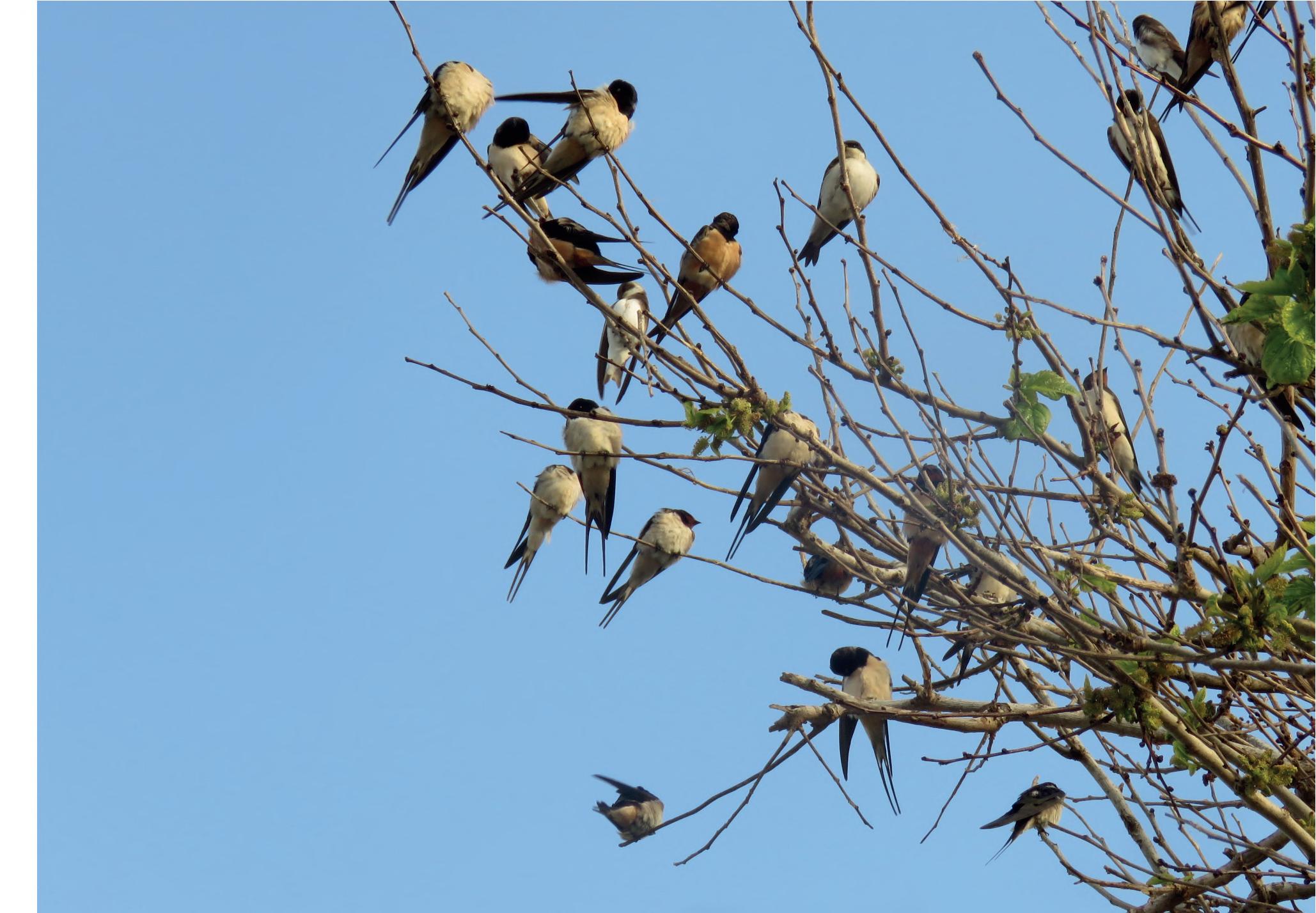
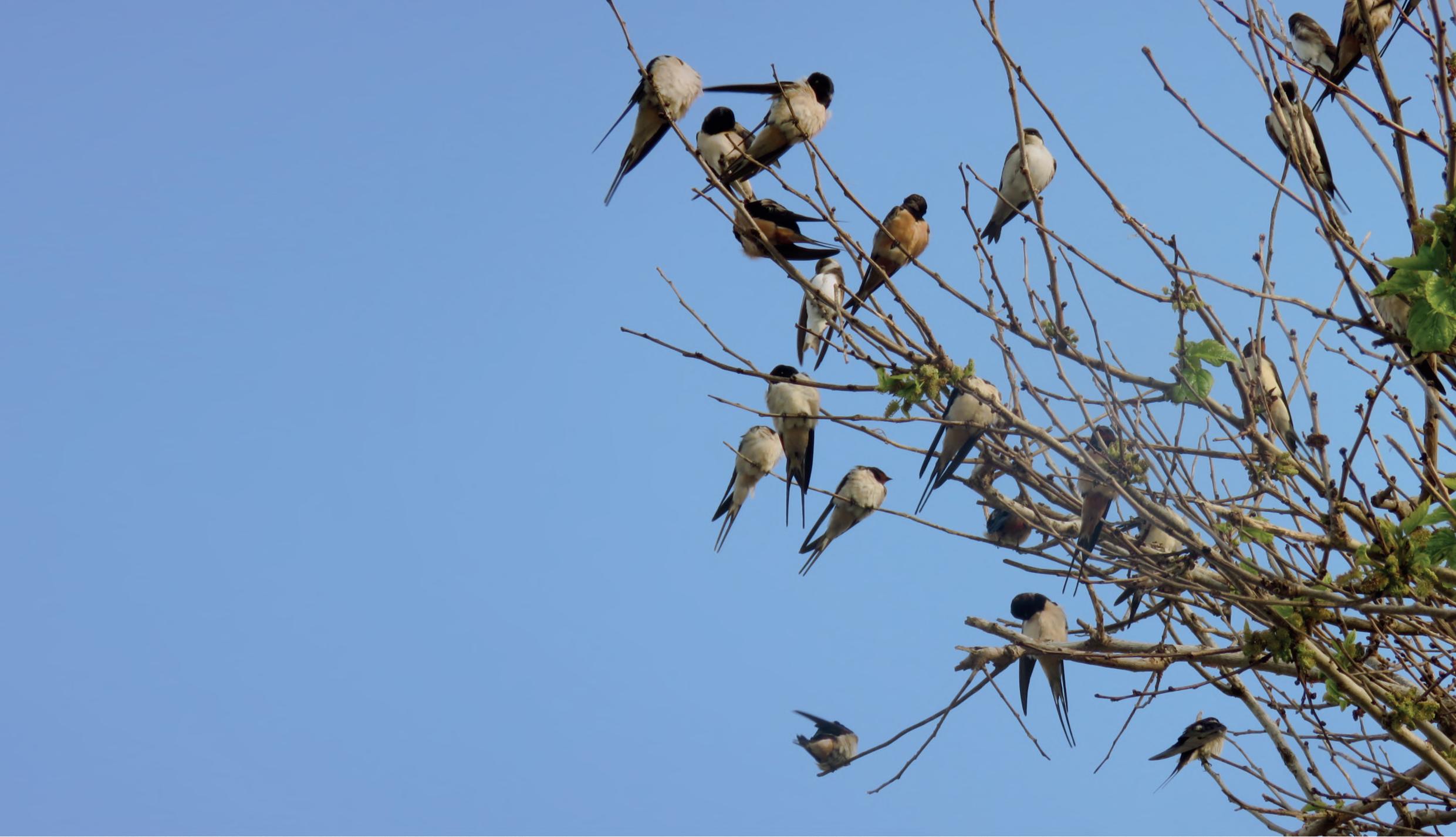
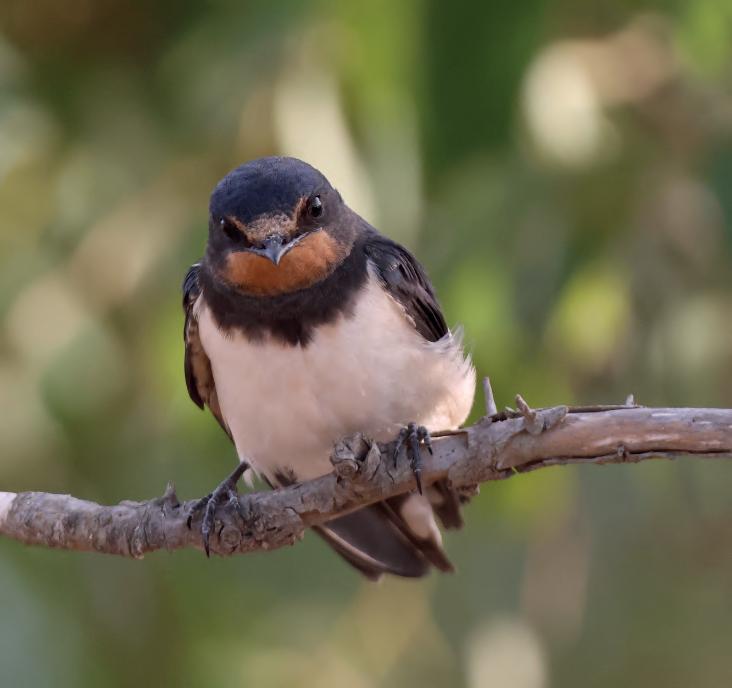
The Barn Swallow Hirundo rustica (Ħuttafa) is one of our most familiar passage migrants in spring and autumn. Birds arrive from late February to mid-May and from late August to early November. This pattern, however, is gradually changing. In recent years, Barn Swallows have increasingly remained in Gozo throughout summer and bred successfully. Winter records have also increased, meaning the species can now be observed in the country throughout the year.
Small beginnings
Prior to 2006, only a handful of breeding records had been confirmed in the Maltese Islands. These included attempts at Mqabba in 1974 and at Bidnija in 1995. In 2006, a family group of five Barn Swallows was recorded at Ta’ Gajdoru in Xagħra (Gozo). The presence of recently fledged young strongly suggested that the species had nested nearby.
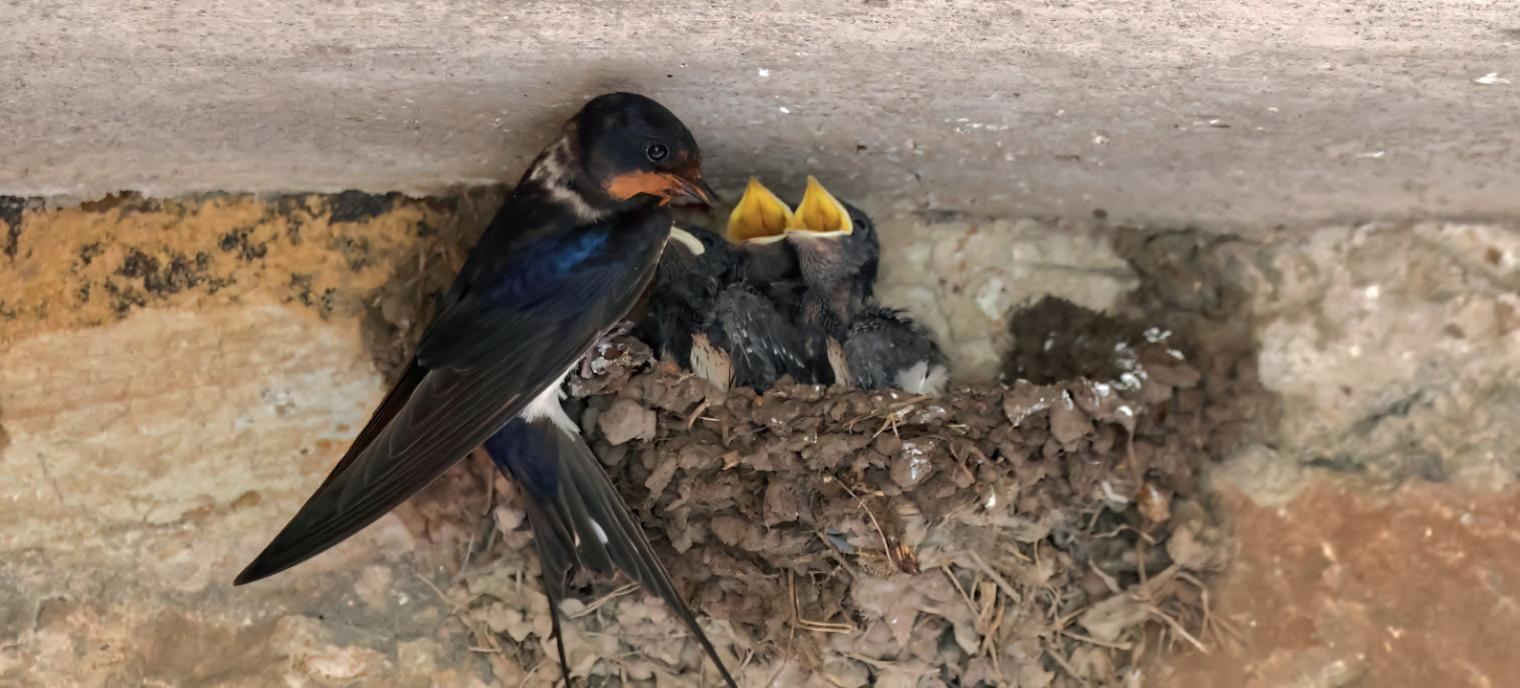
The following year, a pair was found nesting in a shed surrounded by horse stables in Sannat. A female was observed brooding three newly hatched chicks, providing the first confirmed evidence of successful breeding at the site. This small population has since continued to grow, reaching four pairs in Sannat by 2011 and marked the establishment of a small but growing breeding population in Gozo.
Rapid expansion across Gozo
By 2019, the population had increased to an estimated 32 pairs in several new sites. Nesting Barn Swallows became established in Xewkija, Kerċem, Victoria, Fontana, Għasri, Għarb and
Nadur, demonstrating the species’ rapid colonisation of the island.
This adaptability demonstrates the species's ability to exploit a wide range of nesting and feeding opportunities in both rural and urban settings.
The future
Thriving in urban environments
The 2019 breeding season was particularly favourable for hirundines in Gozo. In the same year, the less common Red-rumped Swallow Cecropis daurica (Reġina tal-Ħuttaf) also bred successfully in an old rural building in Sannat. Today, the Barn Swallow population in Gozo appears stable and continues to show a slight increase. The current breeding population is estimated at around 55 pairs and is present in virtually every village in Gozo, except Iż-Żebbuġ, where breeding has yet to be confirmed. The species is also increasing on mainland Malta, reflecting a positive trend for the Maltese breeding population as a whole.
One of the most interesting aspects of the Barn Swallow’s expansion concerns its nesting behaviour. The species derives its common name from its traditional association with barns, stables and other agricultural buildings, where it typically nests on beams and manmade structures. In Gozo, however, a significant proportion of the breeding population has adapted to heavily urbanised sites, frequently nesting in vacant buildings in towns and villages. It is now increasingly common to observe Barn Swallows chasing flying insects in busy urban areas such as Victoria Bus Terminus and Independence Square, despite constant traffic and human activity.
At present, the future of the Barn Swallow as a regular breeding bird in the Maltese Islands appears secure. The rapid expansion of construction projects and high-rise buildings, however, could pose challenges in future. The loss of suitable nesting sites and changes to traditional urban and rural landscapes may affect the species's continued expansion and long-term breeding success in the Islands.
Għajn Tuffieħa Fishwatching
words and photos
by Mark-Anthony Falzon Anthropologist with a passion for nature
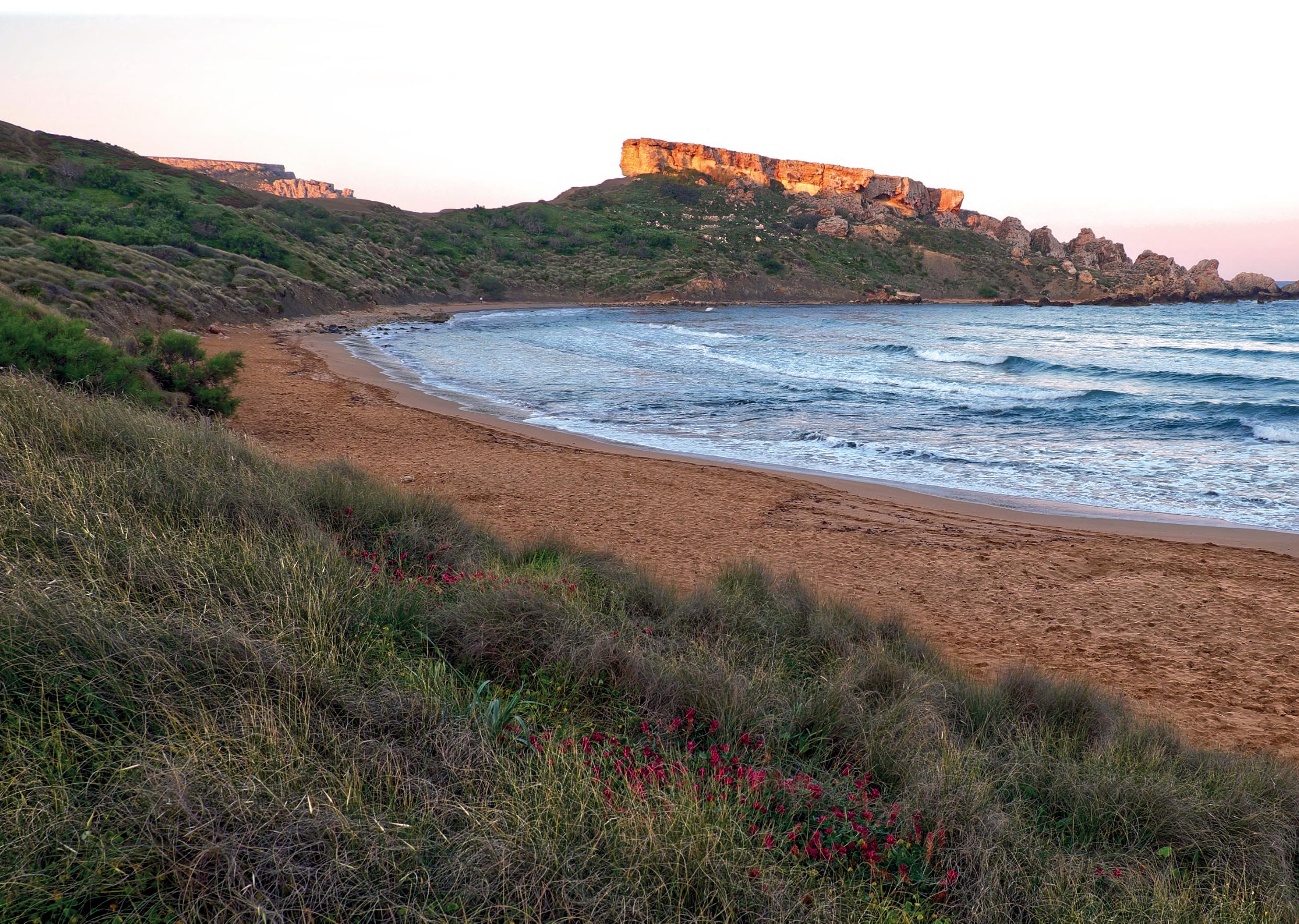
The beach at Għajn Tuffieħa is one of very few stretches of sand in the Maltese islands. While prone to dangerous rip currents on windy days, the bay itself is sheltered and has numerous shallow-water spots that are perfect for snorkelling.
History
In spite of its timeless aura, this bay is hemmed in by a much-storied landscape. To the south, the rocky plateau known as Ras il-Qarraba was once probably home to a Bronze Age village. To the north, the Għajn Tuffieħa tower has kept vigil since 1637, when Grand Master Lascaris commissioned a number of lookouts on the west coast. On the landward side, the rocky outcrop of Il-Ħotba l-Bajda separates the bay from the valley that gave it its name. A document in the archives of the Crown of Aragon, dated 1299, mentions an agricultural fief called ‘Ayntufaha tenimentum terrarum’.
I can hardly think of a more evocative Eden than a spring (għajn) by an apple tree (tuffieħa), and the people who built and used the Roman bath complex whose mosaics and basic foundation survive to this day must have thought so, too. Perhaps less poetic are the remains of British period coastal defences and the empty carapace of the Riviera Hotel, later the Riviera Martinique. The last is why Maltese people of a certain age often call the bay ‘Riviera’.
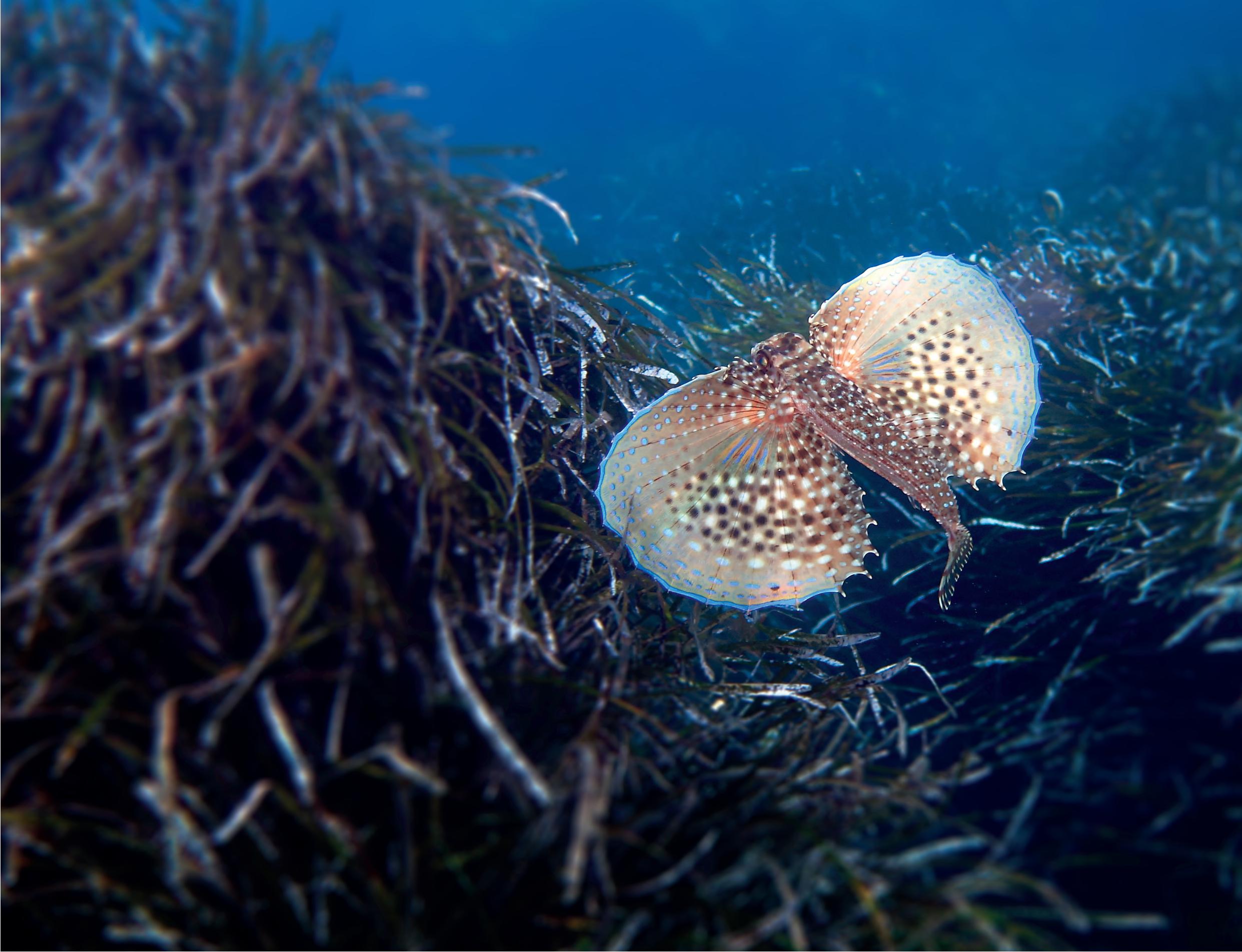
Flying Gurnard
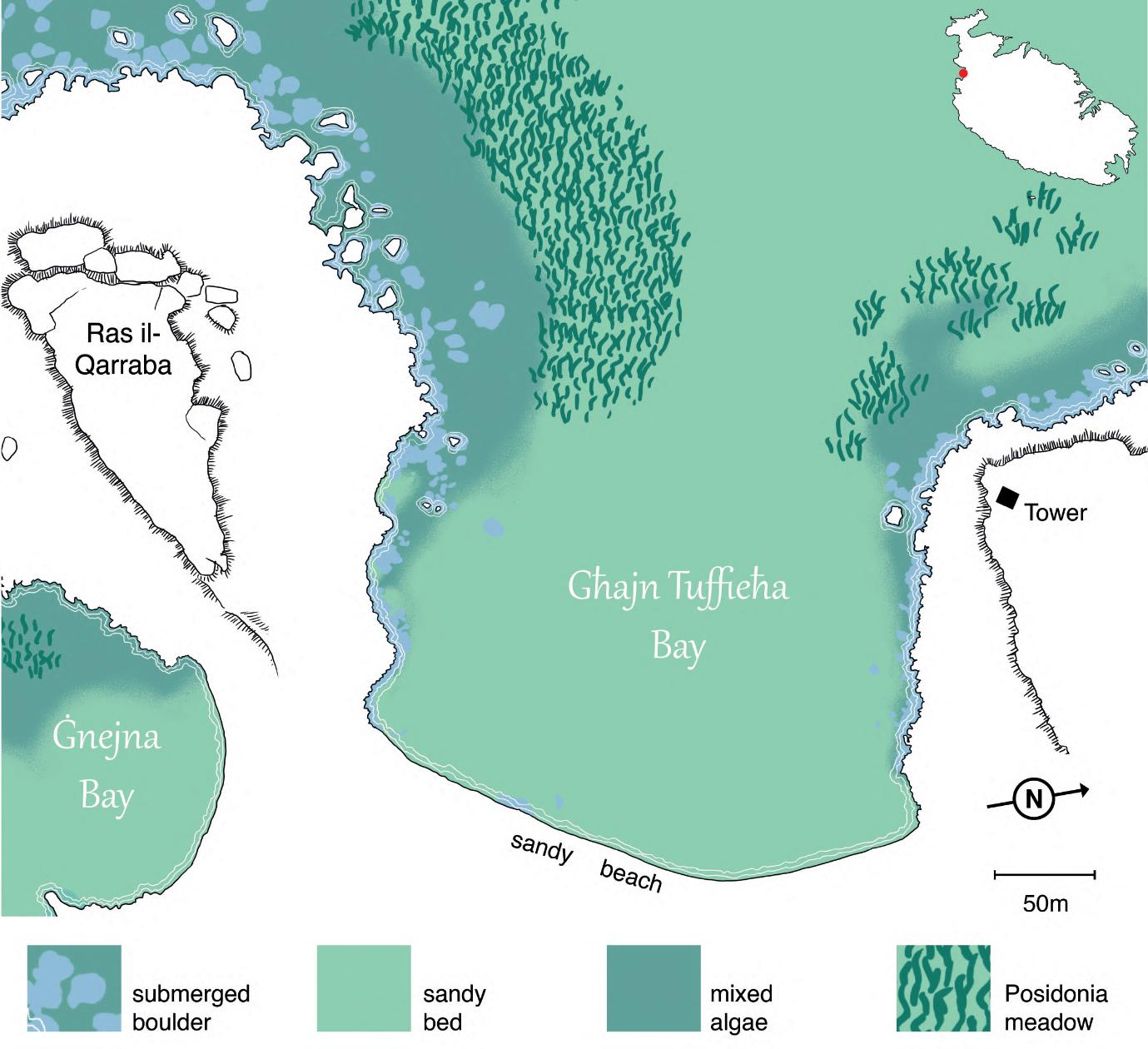
One of the reasons why the bay offers good snorkelling is that it brings together three different types of habitat, each with its own collection of marine life. The first is the stretch of bare sand which makes up the central part of the bay. There can be few more magical experiences than to float above the patterns of ridges brought to life by the play of the early morning light as the sun breaks over Il-Ħotba lBajda.
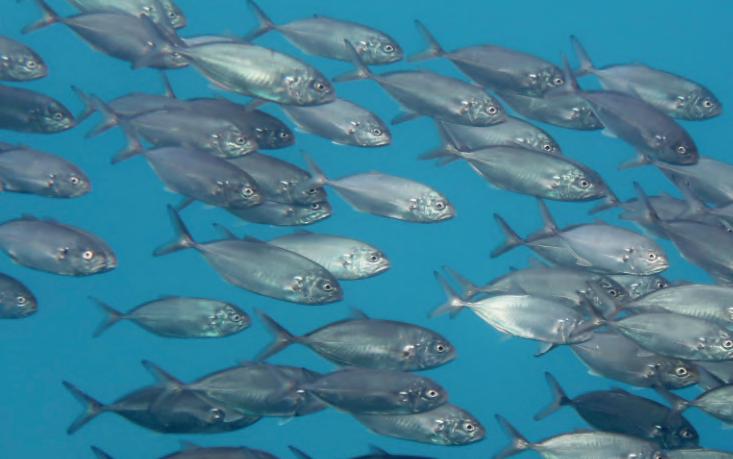
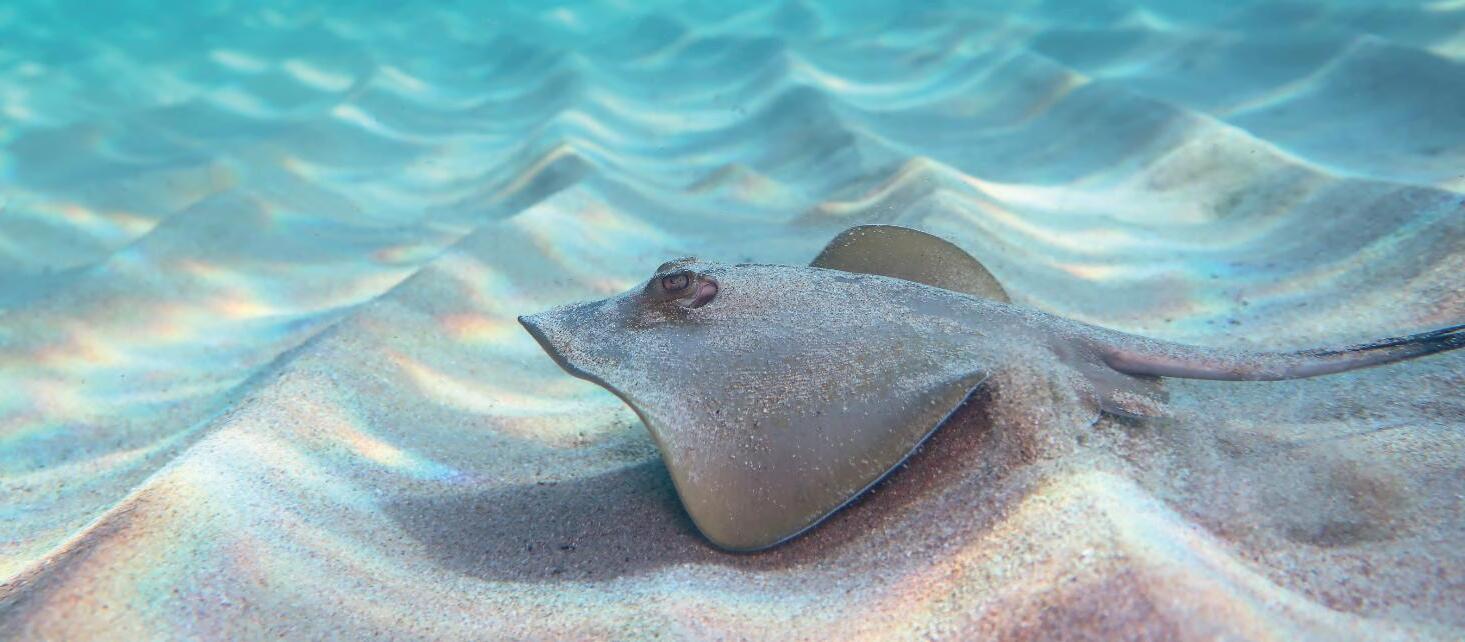
Typical fishes include flying gurnards that can ‘walk’ on the sandy bottom using their modified fins, and a number of species which lie partially buried in the sand in wait for passing prey. The last include greater weevers, wide-eyed flounders, and Atlantic lizardfish. Common stingrays, too, feed over the bare sand, and they in turn often come with a retinue of blue runners and other fishes that follow the stingray in the hope of scooping up any stray prey.
Neptune grass meadows
The second type of habitat in the bay is the meadows of Neptune grass that grow in profusion along its sides. Confusingly called ‘alka’ in Maltese, Neptune grass has nothing to do with algae and is in fact a flowering plant. It is possibly the most important species of any kind in the Mediterranean Sea.
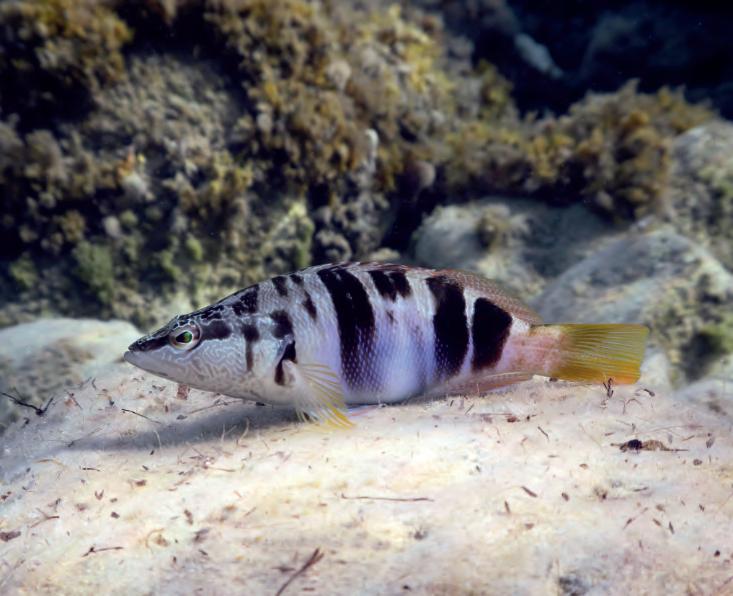
While very few fish species actually eat it, it forms vast underwater meadows that provide shelter for countless animals and are thus at the heart of marine food webs. Fishes to watch out for among the green fronds at Għajn Tuffieħa include shoals of saupe, feeding columns of damselfish, annular seabream, and wrasses.
Even in death, Neptune grass leaves are the gift that keeps on giving. Looking like masses of brown confetti, they accumulate on the bottom and provide a perfect habitat for shrimps and other tiny invertebrates. These in turn attract fishes such as sand steenbras and other seabreams.
Cyclopean boulders
The third habitat is the masses of cyclopean boulders that over the centuries have tumbled off the friable rocky faces into the sea. Especially around Il-Qarraba, they form a maze of dropoffs, crevices, and dark overhangs.
On a calm day, it is possible to see dozens of species of fishes. Gobies, blennies, and triplefins inhabit the shallower stony areas. Deeper waters are patrolled by large groups of parrotfish that feed constantly, biting algae and impressive mouthfuls of grit off the rocky faces. Among them one can usually spot dusky spinefoot, a Red Sea immigrant that was unknown in Malta as recently as twenty years ago but that has adapted well to local conditions and is increasing sharply.
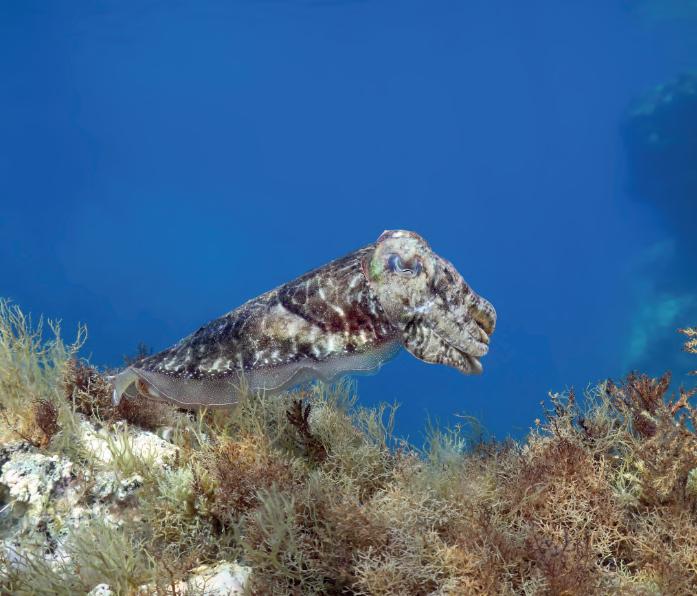
Painted combers and Madeira scorpionfish perch motionless on top of boulders, hoping to ambush passing prey. In spring, cuttlefish (not fish at all but rather relatives of octopus) move inshore to breed in sheltered spots.
Painted Comber
Common Cuttlefish
Common Stingray
Blue Runner
Victor Falzon
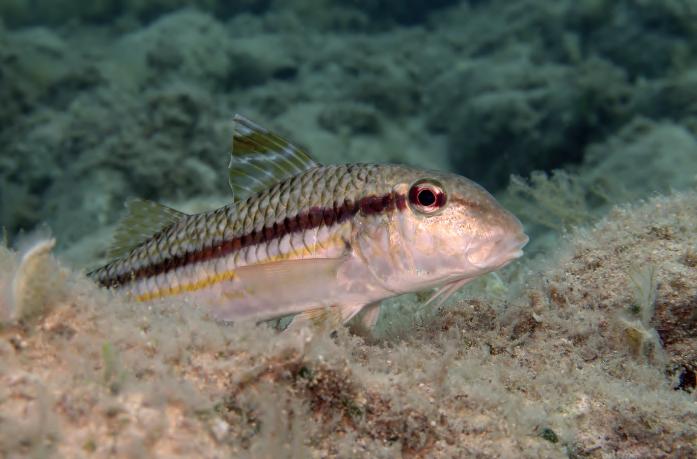
Striped Red Mullet
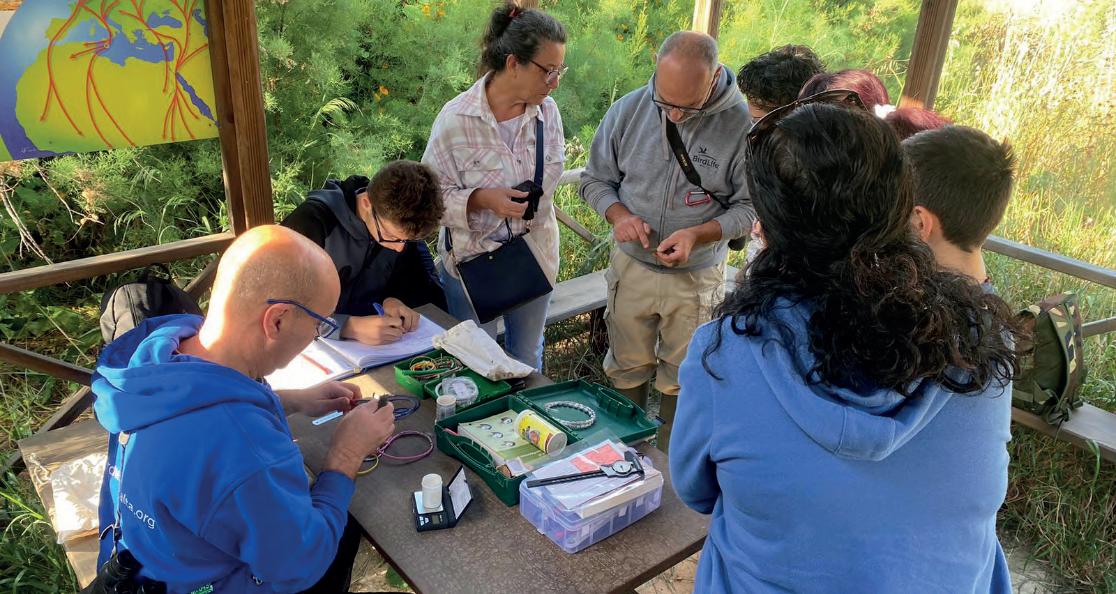
Open ringing
UPCOMING EVENTS
Shearwater boat trips
Dates: 18, 19 Jun, 9, 16, 17 Jul, 6 Aug
Location: Ta’Ċenċ, Gozo
Join us for a delightful sunset sail by the dramatic Ta’ĊenċCliffs in Gozo where we willwitness flocks of Scopoli’s Shearwaters (Ċief) rafting on the surface of the sea before they head back to their nests in the cliffs after sundown.
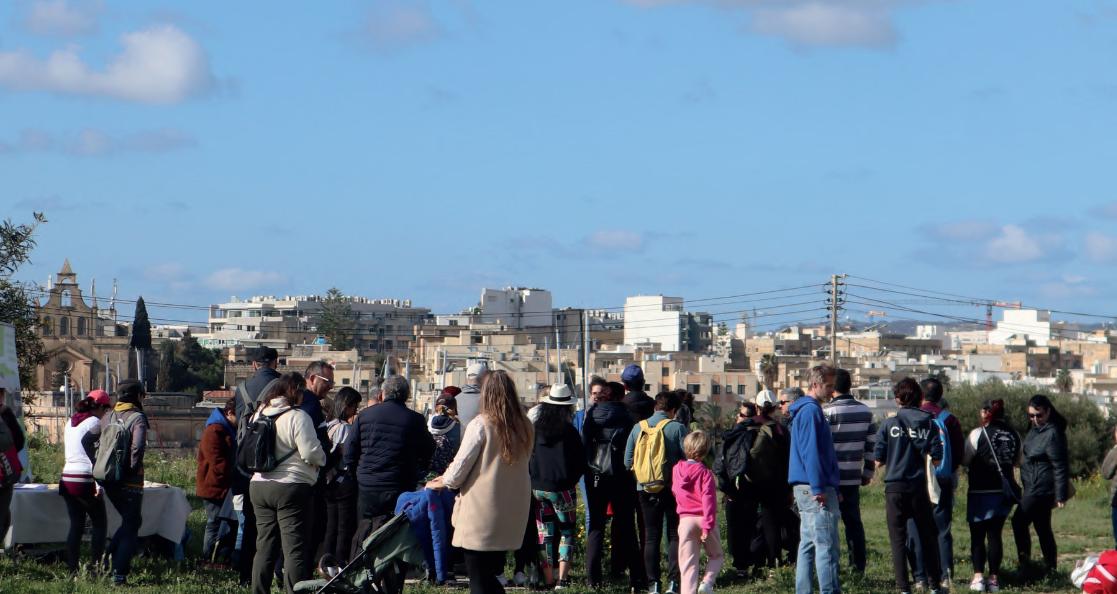
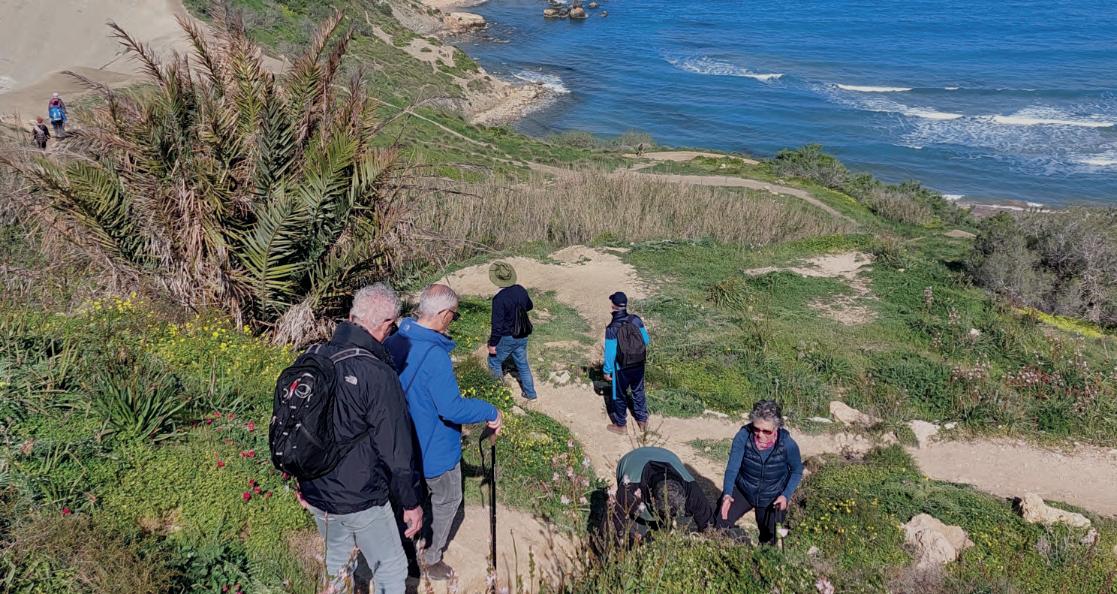
Walk for Nature Dinja
coordinators
A summer evening with urban wildlife
Date: 26 Jun — 7.30pm-9.30pm
Location:Mellieħa Playground
Join us in watching fun creatures in the mix of natural and urban habitats in Mellieħa and learn how our own habits can affect our friends. We will have bat detectors and binoculars, so just come along and enjoy an evening of wonder!We would also like to thank APS Bank fortheir support in making this event a reality.
Shearwatercolonywalk withWaveofChange
Date: 11 Jul
Location: Dwejra Tower
At this time of year Scopoli’s Shearwaters are busy rearing chicks in their cliff-face burrows. Shearwaters are often vocal at the colonies once darkness has fallen and listening to their calls is one of the best ways to enjoy them.
Malta is home to around 3,000 breeding pairs of Scopoli’s Shearwater, and the cliffs of Dwejra and Fungus Rock hold up to 250 pairs.
SaltFest2026
Date: 25-26 Jul
Location: Salina Nature Reserve
Come and celebrate the age-old tradition of salt harvesting in the beautiful setting of Salina Nature Reserve. Don’t miss this unique cultural experience. Bring your family and friends to enjoy salt pans tours, museum visits, craft stands and hands-on activities together!