


Bipolar Scotland is the national charity for everyone affected by bipolar. Founded in 1992, we ’ ve spent over thirty years championing peer support, self-management and understanding of this lifelong condition Lived experience is at the heart of everything we do and is represented across all parts of the organisation.
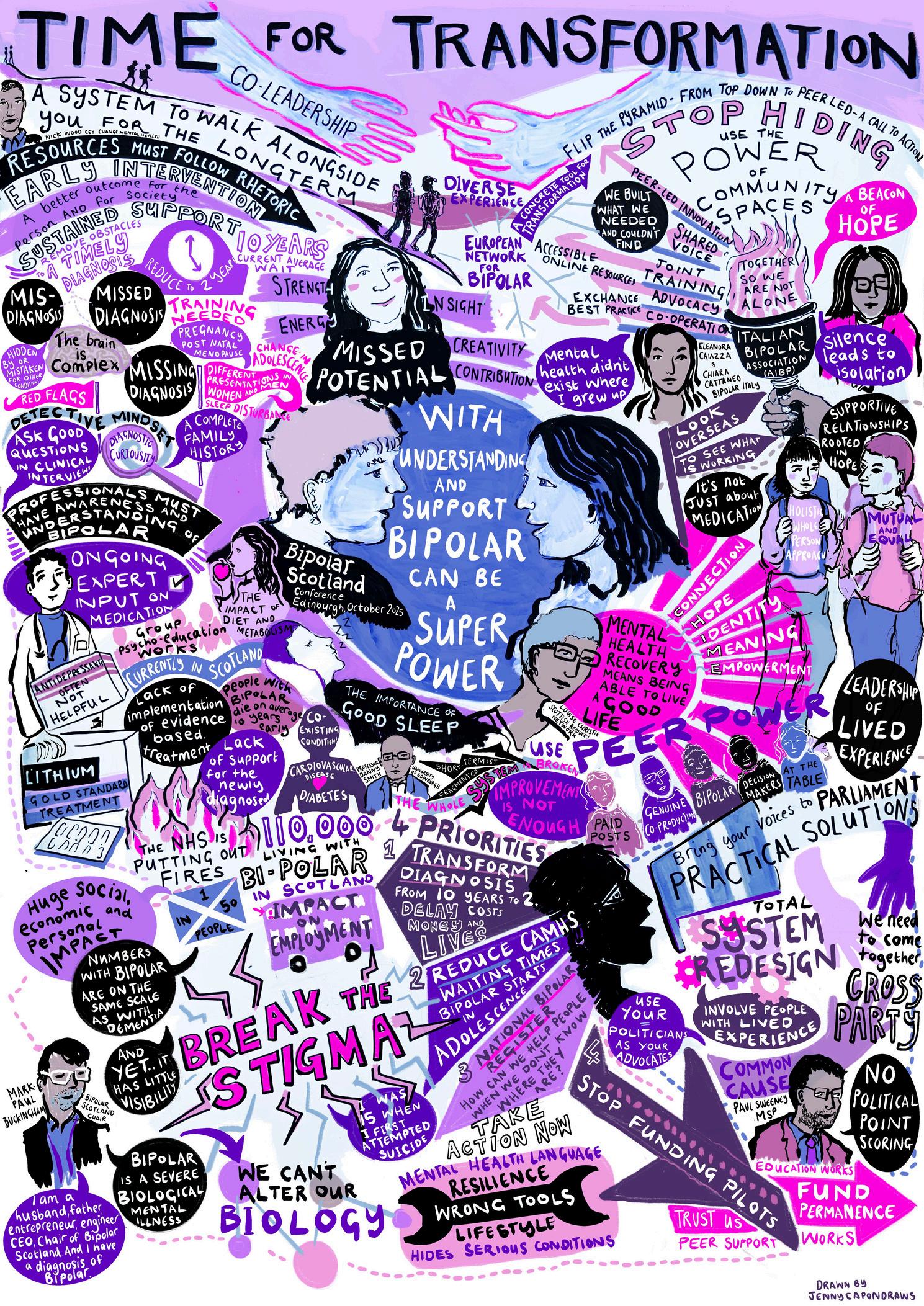
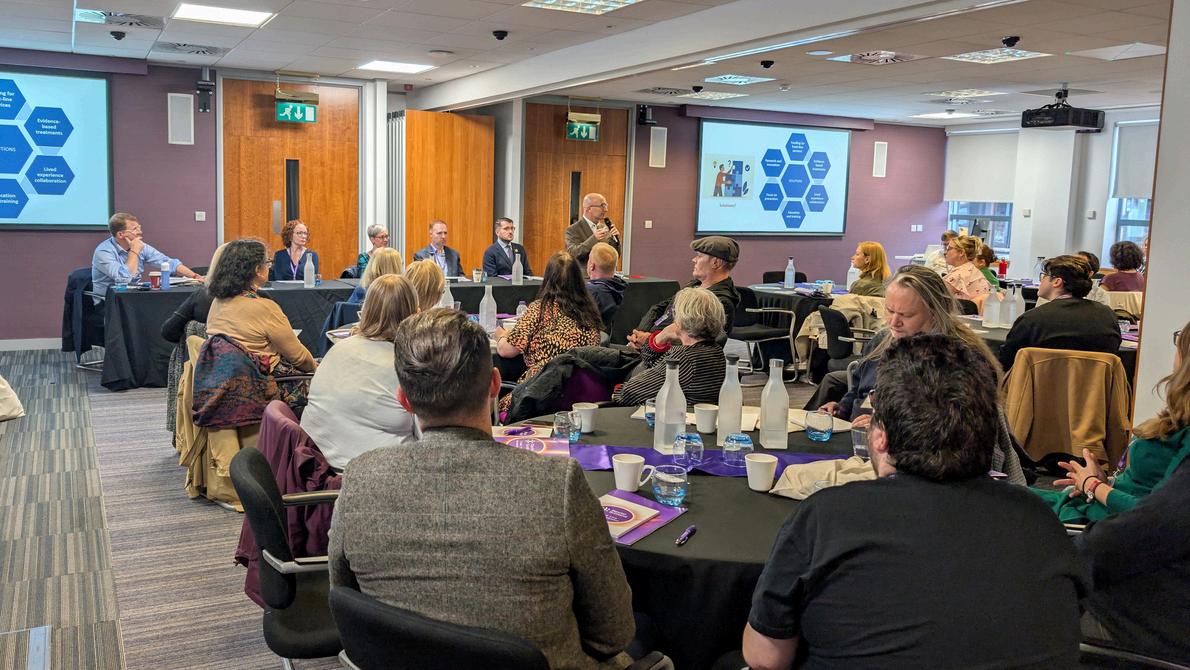
In October 2025, we hosted our national conference ‘Time for Transformation’ bringing together people living with bipolar, professionals and allies from across Scotland and Europe
Conversations at that event inspired this manifesto and our call for transformation in how bipolar support is understood, delivered and resourced
With a growing network of partners, we continue to campaign for a Scotland where everyone with bipolar can access timely, compassionate support and achieve their aspirations.
Bipolar affects an estimated 2–3% of the population over 110,000 people in Scotland.
It takes, on average, 10 years to receive a diagnosis During this time people are often misdiagnosed, unsupported and left to navigate crisis after crisis
Bipolar tends to begin in adolescence or early adulthood These are critical periods for completing education and training, forming relationships and entering the employment market This is why the broader social and economic impact of bipolar is so significant
Globally, 15–20% of people living with bipolar die by suicide, and up to 60% will make at least one attempt Behind every statistic is a life derailed not simply by the condition itself, but by misunderstanding and missed chances to act
Despite being one of the most common severe mental illnesses, bipolar remains largely overlooked in national priorities. While the Scottish Government’s Mental Health and Wellbeing Strategy sets out a vision for early intervention and community support, bipolar remains largely invisible within it, with no dedicated pathway, data or measurable outcomes
The result is avoidable harm. People with bipolar fall through the gaps between primary and secondary care, between mental and physical health, and between crisis and recovery
The impact of bipolar is not experienced equally Women, people on low incomes and those from marginalised communities often face additional barriers to diagnosis, treatment and support Tackling these inequalities must be part of transforming bipolar support in Scotland
The potential for transformation is huge. With early diagnosis, sustained support, and investment in peer-led community approaches, people with bipolar can live well, sustain employment and contribute fully to Scottish society
What’s the issue?
People living with bipolar experience one of the longest diagnosis delays of any mental health condition in Scotland. Too often, bipolar is misunderstood and misdiagnosed, leaving people to struggle for years without the right support These lost years cost lives Bipolar is a lifelong condition, yet the care and support people receive is often short-term and inconsistent
What needs to change?
The Scottish Government’s plans to expand early intervention and community mental health support, as set out in the Mental Health and Wellbeing Strategy and the Long-Term Conditions Framework, must explicitly include people living with severe mental illness, including bipolar Early support should go beyond medical treatment intervention, and recognise the proven value of peer-led and community-based services that help people stay well and connected People with bipolar deserve early identification, timely diagnosis and support that lasts through health, social care and peer-led services
What difference will it make?
Early and sustained support helps people stay well, avoid crises and live full lives
Investment in prevention and peer-led services reduces avoidable hospital admissions, emergency interventions and premature deaths.
Scotland currently has no clear picture of how many people are living with bipolar, where they are based geographically, or what treatment outcomes they experience. This lack of national data means services can’t plan effectively, research is limited and people with bipolar remain invisible in health statistics
We need a national bipolar data and insight system, held securely within NHS Scotland, to improve understanding, diagnosis and support. By bringing together anonymised information on diagnosis, geographic location, treatment and outcomes, clinicians could spot patterns earlier (such as family history) and identify gaps in care Better data would also help services like ours reach people who are currently missing out on support.
What difference will it make?
A national dataset would give Scotland, for the first time, a clear understanding of the scale and needs of its bipolar community It would drive earlier diagnosis, more consistent care and smarter investment in prevention and peer-led support Scotland already has world-leading research capabilities in the area of bipolar. A national-level data and insight system would deliver increased capacity for discovery science, innovation and clinical trials
BIPOLARACORESKILLACROSSSCOTLAND’S HEALTHANDSOCIALCAREWORKFORCE
What’s the issue?
Bipolar is still widely misunderstood and frequently misdiagnosed People spend years fighting for the right help, only to face stigma once they get it Stigma follows people with bipolar wherever they go – in health care, at work, and in daily life – shaping how they are treated and how they see themselves.
All health and social care professionals, especially those in primary care, should be equipped to recognise and respond appropriately to bipolar Training must be codesigned and co-delivered with people who have lived experience to ensure it’s accurate, compassionate and relevant. Training developed and delivered with people who have bipolar turns empathy into expertise, and will lead to better decisions and care
What difference will it make?
When professionals understand bipolar, people are recognised sooner, supported through mood changes safely and offered care that reflects the realities of a lifelong condition. That understanding reduces stigma, builds trust and helps people stay well and out of crisis
People living with bipolar die 12 years earlier on average, mostly from preventable physical health conditions such as obesity, heart disease and diabetes This is one of Scotland’s starkest health inequalities yet it remains largely unaddressed in national plans. Our members tell us their physical health concerns are too often overlooked or dismissed once a mental health diagnosis appears in their records
We echo the Royal College of Psychiatrists’ call for a fully funded national strategy to halve the mortality gap for people with severe mental illness by 2050. Reducing the mortality gap should be embedded within Public Health Scotland’s work on health inequalities and the Scottish Government’s commitment to parity between physical and mental health
What difference will it make?
A national focus on reducing the mortality gap will save lives and improve quality of life for thousands of people with bipolar. It will deliver real parity between physical and mental health and make Scotland a leader in tackling avoidable deaths linked to mental illness
RECOGNISEANDEMBEDTHETHIRDSECTORAND LIVEDEXPERIENCEASEQUALPARTNERSIN TRANSFORMINGSCOTLAND’SMENTALHEALTH SYSTEM.
What’s the issue?
Scotland’s mental health system still treats lived experience as something to consult, not to lead People living with bipolar know what works, yet their voices rarely shape national policy or service design The third sector, where this expertise lives and flourishes, remains undervalued and insecurely funded, despite being essential to prevention, recovery and peer support.
What needs to change?
Lived experience must have a central role in designing, delivering, and evaluating mental health support in Scotland The third sector, as the home of peer-led expertise, needs long-term, sustainable funding and a recognised seat at the table as an equal partner in implementing the Mental Health and Wellbeing Strategy.
What difference will it make?
When lived experience guides decisions and third sector organisations are properly resourced, support becomes more compassionate, effective and accessible This partnership reduces pressure on the NHS, prevents crisis and builds a system that reflects the realities of living with bipolar
Transformation is possible. By embedding our five priorities into the Mental Health and Wellbeing Strategy and the Long-Term Conditions Framework, Scotland can take meaningful action to close the diagnosis delay, tackle the mortality gap and build lifelong, personcentred support for people with bipolar. We call on the Scottish Government to recognise bipolar as a national priority, invest in peer-led and community approaches and work alongside people with lived experience to create a system that truly meets their needs.
Together, we can turn survival into thriving and make Scotland the best place in the world to live with bipolar. Bipolar Scotland and our members stand ready to help make that change a reality.