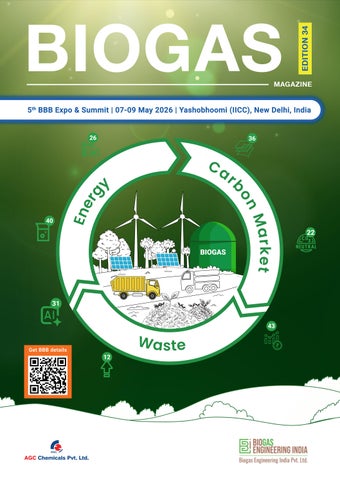
EDITION 34
BIOGAS
MAGAZINE
5 th BBB Expo & Summit | 07-09 May 2026 | Yashobhoomi (IICC), New Delhi, India
26
36
Ca
Ene
BIOGAS
e Mark t
40
on
rg
b
y
r
31 43
Get BBB details
12
W a ste
22
Biogas Magazine | Edition 34
WHAT GOES IN DEFINES WHAT COMES OUT An economical production with maximum gas yield always depends on the quality of the technology used and the individual impact of its components. In biogas production, every single element is crucial for the efficiency and economy of the plant as a whole. Whether pumping or shredding technology, solid matter feeders or disintegration systems – it is the interaction that determines the input and output ratio and energy performance.
Thanks to the highly functional and ever-improving biogas plant components from technology leader Vogelsang, the investment pays off. Based on the company‘s diverse experience and constant research, the developed biogas range ensures efficient gas production and trouble-free processes throughout the entire digestion system. After all: The more uniform the process sequences and the more homogeneous the biosuspension fed into the fermenter, the higher the gas yield!
www.biogas-india.com |
Gate Fold
HiCone®
XSplit®Biogas Magazine | Edition 34
Adjustment instead of replacing wear parts: With the patent-pending system of the HiCone® Vogelsang offers a groundbreaking adjustment and readjustment system that 100% compensates for the effects of wear.
Clean and low-maintenance separation of solid and liquid with a dry matter outtake of up to 40% in order to avoid the formation of floating and sinking layers in the silo.
Conical progressive cavity pump
• Conical rotor and stator shape and unique
adjustment system for long service life and low operational costs
• Easy and rapid replacement of pumping elements
• Designed for heavy-duty use and suitable for pumping highly abrasive media/media with high foreign matter content
DisRuptor
Mechanical desintegrator Using the DisRuptor helps reduce the particle size and increase the surface area of substrates fed into a biogas tank thereby optimizing the biogas yield. • Increases the surface of
the biomass feed
• Homogenizes and reduces the viscosity
of the organic suspension
• Accelerates and increases gas production • Reduces the power consumption of mixers
and pumps
Vogelsang India Private Ltd. D 235, EPIP, UPSIDC, Kasna, Greater NOIDA, (UP) India Phone: +91 120 2341 701 - 2 | Fax: +91 120 2341 704 india@vogelsang.info | chitragupt.bhatnagar@vogelsang.info vogelsangindia.com
Separator
• Variation of the dry matter content due to
adjustable pressing area
• Easy access to sieve and screw for quick service • Reliable plug formation without auxiliary agents • Ideal separation results due to high-quality
elastomer sealing disc
RotaCut®
Wet cutter with heavy material separator The RotaCut is designed to ensure smooth operation of biogas plants by reliable heavy material separation and maceration of solid and disruptive matter in fluid media • Efficiently macerates fibers and foreign matter • Prevents blockages and clogging and protects
downstream system components from damage caused by heavy matter
• Reduces the viscosity and homogenizes liquids and
suspensions to prevent floating layers
Wholly owned subsidiary of Hugo Vogelsang Maschinenbau GmbH Holthoege 10 –14 | 49632 Essen (Oldenburg) | Germany Phone: +49 5434 83 - 0 | Fax: +49 5434 83 - 10 info@vogelsang.info vogelsang.info
VOGELSANG – LEADING IN TECHNOLOGY www.biogas-india.com |
Gate Fold
Biogas Magazine | Edition 34
MEMBRANE BIOGAS UPGRADING
UVG 250 FLOW RATE: 0<720<1440 Nm³/h DELIVERY PRESSURE: 14 bar(g) AIR-COOLED, INDOOR INSTALLATION LOCATION: BAREILLY, INDIA
Screw compressor for biogas upgrading located in India. Designed for installation in Zone 2. It is air-cooled, equipped with heat recovery, full gas treatment and controlled by PLC.
Adicomp India Pvt Ltd
409, Centrum, Wagle Estate, Thane, PIN 400604 info@adicomp.com - adicomp.com
www.biogas-india.com |
Biogas Magazine | Edition 34
www.biogas-india.com |
Biogas Magazine | Edition 34
Content 36
Biogas Gasholders:
High - Performance Systems for
31
12
High - Value Energy
High - Purity Biomethane Produced from New Membrane - Based Upgrading Plant in Tamil Nadu
Technology advancement in CBG sector: scope and challenges of Artificial Intelligence and Machine Learning to enhance the biogas sector
22
In conversation with Mr. Jitendra Narayan
Dry Digester:
16
Redefining Biogas from Agro - Residues in India
The Silent Conflict:
26
40
Disclaimer:
Achieving Net Zero Carbon Emissions For A Sustainable Future
Role of Compressed Bio Gas in Energy Mix of India
Undervaluing Process Biology vs. CAPEX in India’s CBG Plant Race
43
Indian Biogas Association does not endorse the content of advertisements printed in the magazine. All disputes are subject to the exclusive jurisdiction of competent courts and forums in Delhi/New Delhi only.
www.biogas-india.com | 4
“
Biogas Magazine | Edition 34
Happy New Year Esteemed Readers and Members! This edition of our magazine collates a rich amalgum of insights, ideas and innovations that offer readers a visionary perspective on the rapidly evolving bio - energy landscape. As an association, we remain committed to bringing together bio - energy enthusiasts, experts and industry leaders on a common platform — where challenges are addressed collectively, missions are aligned and progress is pursued in an inclusive manner. The growing success of the bio - energy pavilion stands as a testament to the sector’s momentum in India. We were honoured by the presence of the German delegation, whose visit added immense value by engaging with participating organizations and shining a spotlight on groundbreaking innovations shaping the future of the industry. In another significant stride, the Indian Biogas Association, in collaboration with Harcourt Butler Technical University (HBTU), conducted a four - days training program in Kanpur titled “Sustainable Development of Waste to Biogas / Biomethane: A Strategy for Waste Valorisation and Circular Economy Implementation.” This initiative reflects the continued commitment to capacity building, knowledge enhancement and fostering the next generation of bio - energy professionals.
Chief Editor: Dr. Savita Boral Editors: Abhijeet Mukherjee, Gaurav Kumar Kedia Copy Editor: Dr. K. Rohit Srivastava, Mansha Tejpal, Gautam Pandya, Pranav Gaikar Creative Director: Chintu Mishra Production: Arjun Gambhir, Aditi Saha, Shikhar Singh Tech Support: Sangram Rout Print Coordinator: Pawan Sahoo
Know us more
This edition of magazine presents a diverse collection of articles that highlight the innovation, progress and immense potential of India’s biogas ecosystem. The story features the commissioning of a high - purity biomethane plant in Tamil Nadu, where advanced membrane - based upgrading technology is elevating gas quality and operational efficiency, setting new benchmarks for future biomethane projects. We also take readers inside process biology vs capex dilemma.
The “Indian Biogas Association” (IBA) is the first nationwide and professional biogas association for operators, manufacturers and planners of biogas plants, and representatives from public policy, science and research in India.
To broaden the policy and technology perspective, this edition includes an in - depth analysis of the rising role of Compressed Bio Gas (CBG) in India’s evolving energy mix, aligning with national goals of energy security, rural empowerment and decarbonization. We further explore the transformative potential of Artificial Intelligence and Machine Learning in biogas operations, demonstrating how predictive maintenance and real - time optimization can usher in smarter and more efficient running CBG plants.
The association was established in 2011 and revamped in 2015 to promote a greener future through biogas. The motto of the association is “propagating biogas in a sustainable way”.
The technology section also examines high - performance biogas gasholders and dry - digestion solutions, emphasizing their importance in ensuring stable output and maximizing agro - residue utilization. The edition concludes with an insightful article on India’s journey toward net - zero carbon emissions, outlining practical pathways where biogas stands as a cornerstone of sustainable, inclusive growth.
/biogasindia
Happy Digesting.
/indianBiogasAssociation
Dr. A. R. Shukla President Indian Biogas Association
/company/indian-biogasassociation/
www.biogas-india.com | 5
Biogas Magazine | Edition 34
BIO GAS COMPRESSORS
BIO GAS COMPRESSORS DESIGNED FOR LOW, MEDIUM AND HIGH CAPACITY REQUIREMENTS WITH VARIED SUCTION & DISCHARGE PRESSURES
Customized solutions Medium Pressure 100 Barg Oil-free compression High Pressure 250 Barg Low Pressure 20 Barg VFD option
Range includes Low Pressure Biogas SCREW COMPRESSORS also
Jyotech Engineering And Marketing Consultants Pvt. Ltd. G-141, Sector 63, Noida, Distt: Gautam Budh Nagar, Uttar Pradesh – 201301 www.biogas-india.com |
www.jyotech.com
info@jyotech.com
+91-120-4711300
Biogas Magazine | Edition 34
www.biogas-india.com |
Biogas Magazine | Edition 34
Advancing India’s Bioenergy Future Period: October '25 - December '25
1. India’s bioenergy sector to missions to ministries gain momentum with IBA’s two key events scheduled The Indian Biogas Association for first half in 2026 (IBA) recently organized an inThe Indian Biogas Association (IBA) is set to host two major flagship events in 2026, aimed at advancing the bioenergy sector in India and fostering collaboration among industry leaders, innovators and policymakers. The first event, the Bio - Energy Arena at RenewX Expo 2026, will take place from April 22nd to 24th at the Chennai Trade Centre, Chennai. The event will serve as a dynamic platform for showcasing cutting - edge bioenergy technologies, exploring investment opportunities and facilitating knowledge exchange among stakeholders in the renewable energy ecosystem. Following this, the BBB Summit 2026 is scheduled from May 7th to 9th at Yashobhoomi (IICC), New Delhi. The summit will bring together global bioenergy experts, investors and policymakers to discuss strategies, partnerships and innovations that will shape the future of sustainable energy in India.
2. IBA strengthens industry representation through sub-
sightful and engaging webinar titled “FOM 360°: Technology, Quality, and Market,” attracting strong participation from experts, industry stakeholders and practitioners from across the bioenergy sector. The session provided valuable perspectives on the future of bio - manure, its market potential, and its crucial role in advancing circular agriculture in India. Following the webinar, IBA convened a brainstorming session on SUBICULP with industry specialists, fostering collaborative discussions aimed at strengthening policies and accelerating the growth of the bioenergy and bio - manure ecosystem. As part of its ongoing advocacy efforts, the IBA team made a few representations to the ministries, emphasizing critical interventions needed to enable sector - wide progress:
• Strengthening the organic manure ecosystem IBA proposed enhanced financial assistance under the SUBICULP framework as a unified scheme to promote FOM, reduce chemi-
www.biogas-india.com | 8
Biogas Magazine | Edition 34 cal fertilizer dependency and improve soil health.
strengthen the financial ecosystem supporting CBG plant development and operational sustainability.
• Extension of the Direct Pipeline Infrastructure (DPI) Scheme till 2030 Through these coordinated inThe association urged the continuation of the DPI Scheme to support wider integration of CBG with CGD networks and ensure long - term viability for upcoming projects.
• Recommendations for revision of the CFA Scheme IBA requested amendments to the CFA scheme in the form of increasing the associated cap as well as the specific allocation (i.e. subsidy per unit of CBG produced) under the Waste-to-Energy (WtE) programme to
dustry engagements and policy submissions, IBA continues to champion a supportive framework for bioenergy growth, while driving meaningful dialogue, innovation and sectoral collaboration.
3. IBA’s Bio - Energy Pavilion attracts a massive footfall at REI Expo 2025 The Bio - Energy Pavilion, organised by the Indian Biogas Association (IBA), at the Renewable Energy India (REI) Expo 2025, held
from October 30 to November 1 at India Expo Mart, Greater Noida, served as a vibrant hub for collaboration, investment and knowledge sharing in the bioenergy sector. Drawing an impressive turnout of industry leaders, innovators and visitors, the Pavilion highlighted the transformative potential of bioenergy in India’s journey toward a sustainable future. The event offered a platform for showcasing cutting - edge technologies, engaging with key stakeholders and fostering partnerships that drive the adoption of renewable energy solutions across the country.
4. IBA's participation in the
www.biogas-india.com | 9
Biogas Magazine | Edition 34 ET Oil and Gas Annual Conference and Expo 2025 The Indian Biogas Association (IBA) took part in the ET Oil and Gas Annual Conference and Expo 2025, which took place in Yashobhoomi, New Delhi, from November 26 to 28.
key stakeholders and like - minded professionals. Participants were able to exchange knowledge, share practical insights, and explore new ideas that can support innovation and long term partnerships within the energy industry.
5. IBA to participate in India Organized by The Economic Energy Week 2026 in Goa Times, the event was a premium gathering of Industry Experts, Innovators and Global Buyers, creating a unique opportunity to shape the future of Energy in India. The platform encouraged meaningful collaboration by offering opportunities to connect with
The Indian Biogas Association (IBA) will participate in India Energy Week 2026 to be held in Goa, India, from January 27 - 30. The event is one of the most important in the Country's Energy Sector. It's a prestigious event, held under the Ministry of Petroleum and Natural Gas and in
co - operation with the Federation of Indian Petroleum Industry (FIPI) and dmg events. India Energy Week 2026 will unite policymakers, innovators, industry leaders and investors. Also, it aims to boost collaborations and discussions focused on practical solutions that support an affordable, secure and sustainable energy future for the country.
www.biogas-india.com | 10
Biogas Magazine | Edition 34
Agitator Technology from Germany – ‘Made in India’ AGITATOR TECHNOLOGY FOR THE BIOGAS INDUSTRY PRG Agitators Pvt. Ltd., located in Vadodara, is a 100% subsidiary of a German Multinational. We have successfully installed agitators for 700+ biogas plants worldwide and boast over 20 years of experience in the biogas industry. We provide a diverse range of sophisticated agitator types that can be perfectly adapted to the respective task and system size – for optimum yields and maximum operational reliability right from the start. Our product range includes: • • •
Central Agitators Paddle Mixers Lateral Agitators
Contact us to find the perfect mix for you. PRG Agitators Pvt. Ltd. 66 Alindra, Savli GIDC, Manjusar, Vadodara, 391 775 Gujarat, India Phone: +91 63549 16014 Email: info@prgagitators.com PRG Präzisions-Rührer GmbH Anton-Böhlen-Straße 13 34414 Warburg, Germany Phone +49 (0) 5641 9006-0 Email info@prg-gmbh.de
Visit us at: www.prg-agitators.com
www.biogas-india.com |
Biogas Magazine | Edition 34
Technology
High - Purity Biomethane Produced from New Membrane - Based Upgrading Plant in Tamil Nadu
Clarke Energy, a Rehlko company, has successfully commissioned its first membrane - based biogas upgrading plant in India, marking a significant milestone in the country’s clean energy transition. The facility is located at a municipal solid waste site for anaerobic digestion operated by Srinivas Waste Management Services Private Limited (SWMS) in Chetpet, Chennai. Almost 2 GW of low - carbon, renewable and resilient power have been installed across India and Bangladesh and is a success
story in UK - India business collaboration. To provide the local community with significant sustainability benefits, the SWMS site transforms biodegradable organic food waste from the surrounding area into biogas and soil improver. This project directly supports India's SATAT (Sustainable Alternative Towards Affordable Transportation) initiative, which aims to build 5,000 bio - CNG plants across the country. To achieve
www.biogas-india.com | 12
Biogas Magazine | Edition 34
Technology
these ambitious targets, the company’s membrane - based upgrader provides a scalable, effective, and locally produced solution. Reflecting the venture’s 30 years of expertise in India’s biogas industry, this project demonstrates the company's capacity to provide cutting - edge renewable gas solutions that promote the circular economy in India. The new system converts 600 Nm³/hr of raw biogas into high - purity biomethane by replacing a pressure swing adsorption (PSA) unit with a membrane based purification system. The complete solution includes a biogas dryer, scrubber, low pressure compressor, a two stage membrane separation system,
all necessary instruments and connecting pipes. Local sourcing of essential components guaranteed competitive delivery schedules and sustainability advantages. Key components were sourced locally, ensuring competitive delivery timelines and sustainability benefits. Initial commissioning results confirm the system is meeting guaranteed performance levels at part load, with methane purity exceeding 97.4%, while minimizing methane losses. “This project marks the first biogas upgrader system fully designed, developed, and manufactured in India by the company. It’s a significant milestone for our Indian operations by demonstrating how we’re combining international expertise with local
execution to deliver state-of-theart renewable gas solutions that support India’s clean energy future,” said Kyle Quinn, President, Clarke Energy. The company’s membrane based upgrader offers higher methane recovery, potentially lower operational costs and modular scalability – making it ideal for urban waste-to-energy applications. As a strategic platform for sustainable infrastructure, Rehlko drives the development of high - impact, regionally tailored solutions through its portfolio companies. The venture’s commissioning of this biogas upgrading plant exemplifies Rehlko’s commitment to accelerating the
www.biogas-india.com | 13
Biogas Magazine | Edition 34
Technology energy transition through localized innovation, circular economy technologies and resilient infrastructure. This project reflects Rehlko's strategic emphasis on local man-
ufacturing ecosystems, scalable clean energy systems and community - centered sustainability outcomes. Through the venture, Rehlko continues to deliver efficient, reliable and future – ready energy solutions tailored to local
needs – with a strong emphasis on innovation, quality and long term customer support.
Key Information Project:
Srinivas Waste Management Services Private Limited
Capacity:
600 Nm³/hr
Location:
Chennai, Tamil Nadu, India
Purification Technology:
Membrane
Meet the Author Mr. Anant Kankanwadi Director – Sales & Marketing Clarke Energy India Private Limited
www.biogas-india.com | 14
Biogas Magazine | Edition 34
www.biogas-india.com |
Interview
Biogas Magazine | Edition 34
In conversation with
Mr. Jitendra Narayan
Mr. Jitendra Narayan
Shri Jitendra Narayan, Founder & CEO of KEC Agritech Pvt. Ltd., is a visionary with 18+ years of leadership experience In Biofuel, Renewable Energy & BFSI Industry. He is driving India’s Green Energy Transition through innovative & advanced CBG Plants and CBG Parks - converting agri - waste into clean fuel, high - return investments and sustainable growth for farmers and the nation.
Founder & CEO KEC Agritech Pvt. Ltd.
1. Can you briefly walk us through the origin and core mission of Kisan Experience Centre? Kisan Experience Centre (KEC) was established with a clear mission to unlock the immense, overlooked waste economy of rural India and convert it into profitable and sustainable opportunities for farmers. We observed that agricultural and organic waste remained largely unorga-
nized, undervalued, and environmentally damaging. KEC was born to bring structure, technology, and commercial models to this neglected space. Our core purpose is to transform waste streams into wealth streams - through bioenergy, enriched manure, and circular agricultural solutions - while strengthening farmers’ knowledge and linking them to modern markets. At its heart, KEC aims to bridge the gap between sustainable
agriculture and rural economic development with scalable and replicable models. 2. What inspired the founding of KEC, and what key gaps in rural / agriculture support were you aiming to fill when you started? KEC was inspired by the glaring disconnect between the tremendous potential of rural biomass and the absence of systems to utilize it prowww.biogas-india.com | 16
Interview ductively. India generates vast quantities of agricultural waste, yet farmers lack organized channels for disposal, value addition, or technology - driven solutions. We set out to close three critical gaps: unstructured waste aggregation, absence of value - addition pathways and limited farmer participation in emerging biofuel ecosystems. KEC was created to address these through technological innovation, scientific waste management, and commercially viable business models. Our goal has always been to empower farmers and align rural waste utilization with national programs such as SATAT and circular economy initiatives. 3. Your website mentions a wide array of services — from agricultural inputs to Bio - fuel / Bio - CNG / Biogas solutions. How do these diverse services tie together under KEC’s vision? Every solution offered by KEC—agri - inputs, waste to- energy systems, Bio-CNG plants, or FOM / LFOM enrichment - works as an interconnected ecosystem built around the farmer. Our CBG Parks link decentralized raw material collection, common processing infrastructure, and forward marketing, creating a seamless “farm - waste-to fuel” pipeline. Under this unified vision, inputs, technology and output markets converge
Biogas Magazine | Edition 34 into one integrated platform that enhances productivity and improves farmer income. The approach ensures circularity: waste becomes energy, energy byproducts enrich soil and farms become more sustainable. This holistic structure ensures that all services, though diverse, contribute to a single objective - strengthening rural economies through modern, sustainable solutions. 4. Regarding your Bio - fuel / Biogas / Bio - CNG solutions: what business models do you offer, and which model is most effective for small and marginal farmers? KEC offers multiple business models - Turnkey EPC, BOOT, RESCO, Joint Ventures and our highly effective Cluster Model. For small and marginal farmers, the Cluster and RESCO models work best, as they remove the need for upfront capital investment. Farmers participate by supplying biomass, using nutrient - rich digestate (FOM / LFOM), or accessing energy services without owning the infrastructure. These structures minimize risk and maximize benefit by keeping ownership and operations with professional teams. Farmers gain steady income streams, reduced input costs, and access to regenerative agriculture, making participation financially viable and operationally simple while integrating
them into the growing biofuel economy. 5. What have been the biggest challenges - technical, logistical or adoption - related - in implementing Bio - fuel / waste - to - energy projects in rural / semi-rural India? The biggest challenges lie in managing raw material supply chains, ensuring technology reliability and building awareness about byproduct utilization. Biomass supply in rural India is scattered, seasonal and inconsistent, making collection and quality control demanding. Efficient operation of CBG units requires advanced technologies and strong O&M practices, which many early projects lack. Another major challenge is effective utilization of FOM/ LFOM; farmers still require education about its longterm soil benefits. Transport, storage and logistical hurdles further complicate the waste - to - energy value chain. Overcoming these issues requires continuous farmer engagement, strong technological frameworks and robust end-product markets. 6. How can we ensure that biogas solutions remain affordable and accessible for smallholder farmers with limited resources?
Affordability for small farmers can be ensured by deploying www.biogas-india.com | 17
Interview
decentralized biogas units, cluster - based CBG integration and innovative financing models such as RESCO and OPEX-led systems. Small household biogas units reduce dependence on LPG, cutting monthly energy expenses while providing clean cooking fuel. At the farm level, biogas can power agri - tools, replacing costly diesel. Government incentives, carbon credit revenues and cooperative ownership significantly ease financial pressure. Additionally, local service centers and capacity - building programs help farmers adopt the technology with confidence. These measures ensure bio-
Biogas Magazine | Edition 34
gas remains accessible, low- and FOM/LFOM creates concost and practical for even the fidence and stability. Our smallest landholders. unique model is implemented across multiple states, and 7. Can you share some suc- we are now associated with cess stories or impact met- 100+ projects - driving regenrics that illustrate KEC’s erative agriculture, circular contribution to sustainable waste management and rural agriculture and rural energy? livelihood improvement. The success lies in creating a truly KEC has established itself as circular, market-linked ecoa leading enabler in India’s system where farmers gain, emerging CBG ecosystem industries secure green fuel through strong backward and the environment beneand forward integration. We fits. have supported numerous farmer clusters in supplying 8. Looking ahead: how do high - quality biomass while you see the biogas sector ensuring predictable income and KEC evolving over the streams. On the output side, next 5 – 10 years, especially our assured buyback of CBG in India’s transition to circuwww.biogas-india.com | 18
Interview
Biogas Magazine | Edition 34
lar agriculture and renewable energy? Biogas will play a pivotal role in India’s journey toward circular agriculture and renewable energy over the coming decade. KEC plans to be at the forefront by developing 15 large CBG Parks and deploying 150 CBG Plants through cluster - based models within the next two years. With an active order book exceeding ₹1,154 crore, we are scaling rapidly to match India’s clean energy mandate. Integration of digital platforms, carbon credit monetization, and farmer - centric supply chains will further strengthen the ecosystem. Our long-term vision is to become the country’s largest rural bioenergy integrator, linking technology, sustainability and rural prosperity in one unified framework.
www.biogas-india.com | 19
Biogas Magazine | Edition 34
www.biogas-india.com |
Biogas Magazine | Edition 34
STIRRING - PUMPING - MOVING - AND MORE
Agriculture, biogas, sewage and wastewater, and industrial applications
Arma Mix TWIN
Arma Mix EVO+
The ultimate in ceiling
Slow-running long-shaft
installation
agitator for dry substrate contents of up to 15%.
Different components for your system
ARMATEC-INDIA PVT LTD
Slow speeds, high circulation capacity and long service life
Agricultural, biogas, sewage and waste water and industrial applications ARMATEC-FTS.COM/EN
G1, Sai residency,
Vijaykumar Lanka
Plot number 45,
Mob:00918919532349
srinivasnagar colony,
vijayklanka@armatec-fts.de
Nizampet,
www.armatec-fts.com
Hyderabad-500090
Arma Mix EVO
Designed, developed and made in Germany
www.biogas-india.com |
Biogas Magazine | Edition 34
An Analysis
Achieving Net Zero Carbon Emissions For A Sustainable Future KIS Group, a pioneer in clean technology and renewable energy solutions, continues to lead Asia’s transition towards a low - carbon and Net Zero carbon emissions for a sustainable future through its dedicated Carbon Management division. We focus on developing world - class green technologies and carbon credit projects that are both environmentally effective and commercially viable.
straw, maize, etc also releases CO2 on burning. The solid waste is subjected to an anaerobic process, capturing Biogas, converting to BioCNG/Power Generation/BioLNG, which can replace fossil fuels. The Carbon Management works on the principle of avoiding methane by capturing and replacing fossil fuels such as diesel, natural gas, petrol, etc with this captured methane, known as biomethane.
We not only develop own carbon credit projects but also provide end-to-end consultancy services for organizations seeking to register projects under internationally recognized carbon standards such as CDM, VCS, GS, IREC, and SRN.
The organization has a proven track record of successfully registering projects under the CDM framework, with 11 projects registered across Southeast Asia. These include 7864 CDM PoA – with CPAs such as PT. Agromuko, PT. Maya Agro Investama, PT. Mitra Mendawai Sejati, PT. Tasik Raja, and PT. Agro Bukit, Biogas recovery from wastewater treatment at PT. Umbul Mas Wisesa Palm Oil Mill, Methane capture projects. The 10-year crediting period of AANE Belitung Biogas Recovery from Palm Oil Mill Effluent (POME) ponds and biogas utilization, and many more.
Capturing methane generated from anaerobic treatment of untreated organic waste — POME, sago waste, food industries waste, etc. The solid waste such as cow dung, poultry, paddy
Some of the VCS Registered Projects are KIS BIOFUELS – UKINDO Project and the Recovery and avoidance of methane from industrial wastewater treatment project at TSE Group. Through its proven expertise
www.biogas-india.com | 22
Biogas Magazine | Edition 34
An Analysis Carbon Management Success Stories Project Title
Carbon Standard
Location
Feedstock
Plant Capacity (m3/day)
Carbon Emission Reductions (tCO2e)
Recovery and Avoidance of Methane from Industrial Wastewater Treatment Projects (POA) CPA 001
CDM
Indonesia
Palm Oil Mill Effluent
720
38, 913
Recovery and Avoidance of Methane from Industrial Wastewater Treatment Projects (POA) CPA 002
CDM
Indonesia
Palm Oil Mill Effluent
726
42, 175
Recovery and Avoidance of Methane from Industrial Wastewater Treatment Projects (POA) CPA 003
CDM
Indonesia
Palm Oil Mill Effluent
600
43, 636
Recovery and Avoidance of Methane from Industrial Wastewater Treatment Projects (POA) CPA 004
CDM
Indonesia
Palm Oil Mill Effluent
750
46, 776
Recovery and Avoidance of Methane from Industrial Wastewater Treatment Projects (POA) CPA 005
CDM
Indonesia
Palm Oil Mill Effluent
621
46, 745
Recovery and Avoidance of Methane from Industrial Wastewater Treatment Projects at TSE Group, Indonesia (4792) KIS Biofuels - UKINDO Project (4705)
VCS
Indonesia
Palm Oil Mill Effluent
1000
46, 448
VCS
Indonesia
Palm Oil Mill Effluent
520
54, 911
and successful project implementations, we have enabled our clients to collectively reduce millions of tons of CO₂ equivalent emissions, generating measurable climate benefits while adding financial value through carbon credit revenues.
ment required to build the project in our own manufacturing facility and have an in - house carbon management team to register the projects under VCS,
We are the only company in the world where we design such projects, manufacture equip-
Article 6.4 & GS. The total carbon emissions reduced to date is to the tune of more than 3 million tCO2e with our own developed and executed projects.
Meet the Author Dr. Jyothi Hadli Director KIS Group – Sustainability2
www.biogas-india.com | 23
Biogas Magazine | Edition 34
India’s abundant biomass can drive biomethane production for stronger energy security, new rural jobs, and stable farmer income. Integrating waste, energy, and carbon markets also enhances sustainability and cuts urban air pollution via biomethane-powered transport.
For India to move towards a bio - circular economy, we need to effectively combine waste management, renewable energy systems, and carbon markets. This means having strong standards in place to guarantee quality and safety while ensuring everything works well together. Doing this will not only boost the biogas sector but also help in creating a sustainable environment and a stable economy for the long haul.
O P I N I O N India’s bio - circular future hinges on scaling CBG through integrated feedstock ecosystems, market-linked offtake, supportive policy frameworks, and monetization of carbon and nutrient value streams for long-term sustainability.
By transforming waste into energy and carbon-market value, Bio-Circular India shows how everyday waste can fuel greener cities, support farmers, and build a more sustainable, climate-resilient future for all.
www.biogas-india.com | 24
Biogas Magazine | Edition 34
www.biogas-india.com |
Biogas Magazine | Edition 34
Innovation and R&D
Dry Digester: Redefining Biogas from Agro - Residues in India
As India accelerates its renewable energy transition and looks to convert waste into wealth, one innovation is quietly redefining the country’s BioCNG landscape: ECOYOU Energy’s Dry Digester, developed in collaboration with Rückert Naturgas GmbH of Germany. This next generation anaerobic digestion system is customized for India’s unique challenge: massive volumes of mixed solid agro - in-
dustrial residues, such as Napier, paddy straw, pressmud, poultry litter etc. that are difficult to treat in traditional wet digesters. The result is a low - water, low - power, high - efficiency biogas plant that turns solid waste of higher total solids above 20% into clean energy and promises to reshape how industries perceive bioenergy, circularity and carbon neutrality.
The Challenge: Agro - Waste That India Can’t Afford to Waste India produces over 500 million tonnes of crop and processing residues every year like Napier grass, paddy straw, corn sillage etc. Also, agro - industries like sugar mills generate pressmud and bagasse, fruit and food processing units produce tons of peels, pulp and fibrous waste. Animal Industry like poultry generates litter etc. Much of this biomass ends up burned in open fields or dumped in landfills, contributing to severe air pollution and greenhouse gas emissions. The government’s SATAT scheme (Sustainable Alternative Towards
www.biogas-india.com | 26
Biogas Magazine | Edition 34
Innovation and R&D Affordable Transportation) has sparked the development of over 5,000 CBG projects. But for high - solids biomass, the wet CSTR process faces limitations: ● It requires large quantities of water for dilution. ● Intensive mixing and pumping energy. ● Generates substantial effluent that must be treated before discharge. This mismatch between available waste and suitable technology has slowed the utilization of India’s abundant solid residues for biogas generation. That’s where we bring in the Dry Digester.
Bridging German Precision with Indian Pragmatism With ECOYOU's (Previously seen as Ecoboard Industries Limited) expertise in 200+ large - scale original CSTR wet digesters using Origin and over 33 years of installing Bio - Digesters, has partnered with Rückert Naturgas GmbH, a German company with over three decades of experience in multi - substrate dry anaerobic digestion. Rückert’s systems are established across the globe for treating solid manure, crop silage, and organic residues precisely the kind of feedstocks abundant in India. Our company has localized this proven European technology,
adapting it to Indian climatic conditions, feedstock diversity, and cost structures. The collaboration brings: ● German process design and know - how, ● Indian manufacturing and project execution, and ● Local service support for maintenance and optimization. The result is a multi - substrate dry digester that can handle feedstocks with 25 – 40% total solids (TS) — converting dry biomass into renewable biogas with minimal water and power.
Four Key Advantages of Dry Digestion 1. Minimal Water Requirement Traditional wet digesters need up to 3–5 tonnes of water per tonne of biomass to achieve the required slurry consistency. The dry digester reduces this by nearly 90%, using only a small amount for percolate recirculation. This advantage makes it ideal for water - scarce regions, a growing concern across much of India’s dry regions. 2. Higher Feedstock Flexibility The system handles multi - substrate input — napier, pressmud, bagasse, canteen waste, fruit peels, vegetable residues, and paddy straw — without extensive pre - processing. Seasonal variation in feedstock availability
no longer hampers year - round biogas production. 3. Simplified Operation and Maintenance With no internal agitators, minimal pumps, batch loading and operational complexity are greatly reduced. This also lowers maintenance downtime and power costs critical for long term plant reliability. 4. Compact Footprint and Modular Design The digester’s plug - flow configuration allows multiple reactors to be operated in parallel, enabling modular capacity expansion. Plants can start small and scale up as feedstock availability or gas demand increases. Applications in the Sugar and Agro - Industrial Sector Sugar mills are among the largest generators of solid organic waste in India. Each tonne of cane crushed yields nearly 40 kg of pressmud and 280 kg of bagasse. Traditionally, pressmud is composted or disposed of, while bagasse is used for boiler fuel. However, both materials hold untapped potential for biogas generation. This tested dry digester enables mills to: ● Digest the pressmud directly without dilution, ● Co - digest bagasse for en-
www.biogas-india.com | 27
Biogas Magazine | Edition 34
Innovation and R&D hanced methane yield, and ● Produce high - quality biogas for boilers or upgrading to CBG. Lab studies indicate that 1 tonne of pressmud can yield 80 -100 Nm³ of biogas, depending on organic content. This can replace 30 - 35 kg of LPG or produce ~18 kg of CBG after purification. Beyond sugar, similar opportunities exist in: ● Rice mills (using husk and straw), ● Fruit and vegetable processors, and ● Municipal organic waste management. These sectors together represent an enormous, largely untapped feedstock base for CBG
generation. Technology R&D
Innovation
and
Our R&D team is currently developing several innovations to enhance system efficiency: ● CFD - based optimization of gas flow and heat distribution within the reactor. ● Automated control systems for temperature, percolate recirculation, and gas monitoring. ● Feedstock pre - treatment methods to increase biodegradability of lignocellulosic residues. ● Hybrid digestion systems, combining dry and wet phases for co - processing mixed waste streams. These innovations will be show-
cased at our upcoming Experience and Innovation Center, which will serve as a demonstration hub and training platform for engineers, investors, and policymakers. Voices from the Field According to Mr. G.R.K. Raju, Managing Director “Our collaboration with Rückert Naturgas brings proven European dry digestion expertise to India. The objective is to offer robust, modular systems that can thrive in Indian conditions, handle diverse feedstocks, and deliver consistent performance.” Praveen Gottumukkala Raju, the Executive Director, adds, “we believe biogas must move from
www.biogas-india.com | 28
Biogas Magazine | Edition 34
Innovation and R&D being a niche technology to a mainstream industrial practice. The dry digester helps bridge that gap — it’s practical, scalable, and circular.” Industry analysts echo the optimism. With rising biomass costs and stricter sustainability regulations, water - efficient, low - maintenance systems like dry digester could soon become the preferred choice for solid waste biogas projects. Looking Ahead
obic digesters, gas upgrading systems, and nutrient recovery technologies. For biodigesters, the company collaborates with global leaders such as Rückert Naturgas GmbH (Germany) and Sulzer (Switzerland) to deliver world - class biogas projects adapted to Indian needs. With a growing portfolio of projects across sugar, agro, and industrial sectors, we are committed to driving India’s journey toward clean energy, circularity, and carbon neutrality.
The next decade will be decisive for India’s bioenergy sector. As industries seek low - carbon energy and governments tighten sustainability benchmarks, technologies that combine environmental benefits with operational simplicity will gain ground. The dry digester technology embodies this shift. It addresses India’s most abundant but underused resource - solid agrowaste — and turns it into a profitable renewable fuel. By bridging international technology with Indian innovation, our firm is not only promoting biogas but also enabling a true circular economy, where waste becomes wealth and sustainability becomes standard practice. About the company: We are a 33-year-old publicly listed company, and specializes in renewable energy solutions, including dry and wet anaer-
Meet the Author G R K Raju MD ECOYOU (Ecoboard Industries Limited)
www.biogas-india.com | 29
Biogas Magazine | Edition 34
www.biogas-india.com |
Biogas Magazine | Edition 34
Applied Research
Technology advancement in CBG sector: scope and challenges of Artificial Intelligence and Machine Learning to enhance the biogas sector
India’s estimated potential for compressed biogas (CBG) is approximately 62 million metric tons per year, derived from diverse sources including agricultural residues, livestock manure, municipal solid waste, and industrial by - products. To harness this vast potential, a growing number of biogas and CBG plants are being established across the nation. However, operating these plants at their designed capacity remains a major challenge. Biogas plants often struggle with fluctuating feedstock quality, process instability, inefficient monitoring, and high operational costs. Variations in parameters such as temperature, pH, and retention time often lead to inconsistent biogas yields and reduced energy efficiency. Manual control and limited real - time data analysis further hinders optimization and timely decision - making. To overcome these limitations, the integration of Artificial Intelligence (AI) and Machine Learning (ML) offers an intelligent solution by enabling data - driven monitoring, predictive analysis, and automated control. A subset of artificial intelligence, machine learning, involves the development of algorithms that allow computers to learn from
data and improve their performance over time. AIML provides a framework to enhance process optimization, stability, sustainability and transform biogas systems into smarter and more efficient operations, with 82% prediction accuracy.
How AIML Works in Biogas Systems Data Collection and Preprocessing: The development of AIML systems in biogas production begins with the collection of extensive data. Various parameters are continuously monitored by sensors installed in anaerobic digestion (AD) plants, including temperature, pH levels, feedstock composition, loading rates, retention times, and gas production rates. The raw data is then preprocessed to remove noise and inconsistencies, preparing it for analysis. Algorithm Selection and Model Training: AIML algorithms are selected based on the nature of the data and the specific optimization objectives. Algorithms commonly used include regression models, decision trees, neural networks, Gradient Boosting Machines (GBM), K-Nearest Neighbors (KNN), and
www.biogas-india.com | 31
Biogas Magazine | Edition 34
Applied Research Random Forest (RF). To learn the relationships between variables and the optimal conditions for biogas production, these algorithms are trained using historical data. Optimization and Real - Time Adjustments: By utilizing AIML models, it is possible to predict optimal operational conditions, including retention time, temperature, and pH levels, thereby maximizing biogas production efficiency. By continuously monitoring factors such as feedstock composition, temperature, and retention time, these models can also fine - tune operations in real - time. The application of these optimized conditions in the AD plant will ensure that the process operates at its peak efficiency, resulting in higher biogas yields and improved system performance.
Applications of AIML Process Optimization: AIML al-
gorithms in AD plants can analyze various parameters to determine the optimal conditions for the digestion process. A continuously monitored and adjusted environment can significantly increase biogas production, with the literature suggesting a more than 26% increase over conventional methods. Biogas Yield Prediction: Predicting biogas yield is one of the most significant applications of AIML in biogas systems. Using data on feedstock composition, microbial activity, and operational conditions, AIML models can accurately forecast biogas production. Operators can use this information to plan and optimize the feedstock mix and process parameters, thereby maximizing biogas production and efficiently utilizing resources. Reduction in OPEX: AIML can be used to analyze energy usage patterns in AD plants and rec-
ommend energy - saving measures. As part of this process, optimization of heating and mixing systems, as well as adjustments to operational parameters, are made to reduce energy consumption, thereby lowering operational costs and enhancing sustainability. Resource Allocation: From feedstock utilization to water consumption, AI and machine learning can optimize the allocation of resources in biogas production. AI systems can analyze data and environmental factors and recommend adjustments to minimize waste and maximize efficiency. Real - Time Carbon Credit Estimation: AIML models can continuously analyze biogas production data and corresponding methane reductions, while accounting for emissions such as methane slippage and CO₂ released into the atmosphere to accurately estimate carbon
www.biogas-india.com | 32
Biogas Magazine | Edition 34
Applied Research credits in real time.
Case Study
Predictive Maintenance: An AI - powered predictive maintenance system analyzes data based on historical performance to anticipate equipment failures. This proactive approach reduces equipment downtime and maintenance costs.
At the Sardar Swaran Singh National Institute of Bio-Energy, the Smart Hybrid Pilot Biogas Plant in Punjab demonstrates a novel approach to enhancing the net energy output of anaerobic digestion systems through precise control of digestion parameters, real - time monitoring, and smart decision - making algorithms with dual - mode heating. Designed to operate under both mesophilic and thermophilic conditions, as well as in dry/wet batch and continuous modes, the plant integrates parameters such as temperature, pH, and pressure regulation with advanced automation, enabling precise process control and
Quality Control / Higher Methane Concentration in Biogas: AIML can be used to monitor the quality of biogas produced. It can help maintain higher methane production by analyzing parameters such as pretreatment method, co - digested feedstock ratios, various sets of digestion parameters, and detecting deviations in real - time.
high adaptability across different feedstocks. Priority - based renewable energy sources help reduce OPEX. The auto anti zone/layer formation algorithm reduces the electricity required for mixing. The optimally operated batches with varying parameters have produced more than 800 m³/ton of biogas (volatile solid basis), with methane content reaching 70%. Experimental trials with varying parameters indicate methane yields of 321 L/kg VS under mesophilic conditions and 356 L/kg VS under thermophilic conditions. The data will help determine how variation in parameters and the gradual setting of digestion over time
www.biogas-india.com | 33
Biogas Magazine | Edition 34
Applied Research contribute to reaching the maximum potential of a digestion process. These results highlight the system’s capacity to significantly improve energy recovery and process efficiency. The system generates around 17 units of data from different types of sensors every 20 seconds. The system's aim is to collect data with varying parameters. Varying parameter outputs are analyzed against control- operated batches of anaerobic digestion. The more the data, the more accurate the predictions by the AIML tool. Hence, it is a need of the hour to develop more such systems that can work with diverse parameters, including different feedstocks, co - digestion ratios, pretreatment methods, total solids (TS / OLR) levels, digester technologies, and optimized parameter ranges. The crucial step is also to obtain real - time data from industrial biogas plants to enhance the accuracy of the tools. In addition, the compatibility of such tools needs to be assessed on an industrial scale. Implementing the optimized conditions in the AD plant and continuously monitoring and adjusting them based on real - time data would benefit the biogas sector to a greater extent. AIML can help achieve improved economics of a CBG plant by enhancing biogas production and methane concentration, as well as reducing operating expens-
es, optimizing operations, and enhancing efficiency. It has the potential to enhance sustainability by promoting efficient waste-to-energy conversion, reducing carbon emissions, and accelerating progress toward the Sustainable Development Goals (SDGs).
Meet the Author Dr. Vandit Vijay Scientist - C Sardar Swaran Singh National Institute of Bio-Energy (MNRE), India
Meet the Author Mr. Rakesh Godara Senior Research Fellow Sardar Swaran Singh National Institute of Bio-Energy (MNRE), India
www.biogas-india.com | 34
Biogas Magazine | Edition 34
TECHMARK
Industrial GC for Continuous Analysis by TCD & EC detector Built-in industrial computer with LCD display Complete analysis as per IS 16087 : 2025
Rack Mount
QC Set up and control of threshold alarms Data export by MODBUS / 4-20 mA / 0-10 V, other on request Automatic Calibration Option of Multiple stream selector Measurement as per ISO 6974 / IS 15130
WALL Mount
CH4, CO2, H2S, O2, N2, COS, GCV, NCV, DENSITY, MMBTU, DEW POINT
CH4, CO2, H2S & O2 measurement Calculated N2, GCV, NCV, MMBTU, DENSITY Integrated DEW POINT measurement Upto 10 sites sample gas switching & monitoring on time sharing basis Remote Access, data transfer & report generation facility
OPTIMABIO
Handheld Analyser
SWG 100 BIO
Stationary Analyser
Alarm Generation & Actuation of solenoid valve for as closure, per user settable limits Ex Proof Models also available Single Analyser can measure :
00 OVER 2 SERS ANALY SOLD Contact Us For Demonstration / Testing Services
1. CBG 2. Raw Gas 3. Sweet Gas 4. Exhaust / Vent Gas 5. Any Other Sample
TECHMARK ENGINEERS & CONSULTANTS 1020 Ansal Tower, 38 Nehru Place, New Delhi - 110019 | Tel. (011) 46570392 - 94 Mobile :www.biogas-india.com 7011 389878 sales@techmark.co.in www.techmark.co.in
Biogas Magazine | Edition 34
Science
Biogas Gasholders: High - Performance Systems for High - Value Energy
Biogas - A Sustainable Energy Revolution As the world embraces renewable energy, biogas stands out as a sustainable, carbon -neutral solution that transforms organic waste into valuable energy. From farms to industries, biogas systems generate clean power while managing waste efficiently. A key component ensuring the success of these systems is the biogas storage balloon, made from high - performance PVC coated fabric — the heart of reliability and safety.
The Role of Biogas Balloons A biogas gasholder (balloon or dome) stores methane pro-
duced during anaerobic digestion. The inner membrane safely holds the gas, while the outer membrane shields it from environmental conditions. The strength, flexibility, and gas tightness of these membranes depend on the quality of fabric used — a domain where LUCKYTECH’s 19 years of expertise excels with precision - engineered European PVC - coated technical textiles.
Imagine this: If the gas holder fails, your entire biogas plant operation stops. The two most common reasons are: Wrong Fabric Selection: Using low- grade, non–gas-tight, or UV - weak fabrics leads to early deg-
www.biogas-india.com | 36
Biogas Magazine | Edition 34
Science radation, cracking, and methane leakage.
• Resistance to chemicals and microbial attack
Poor Manufacturing Quality: Inaccurate cutting, weak welding, or lack of proper quality checks cause seam failure and air leakage over time.
These properties ensure safe, long - lasting and efficient biogas storage systems.
Recommended Fabric Parameters for Biogas GasholdSelecting the right PVC - coated ers technical fabric and ensuring precision - based manufacturing are vital for reliable, long – term biogas dome performance.
Why Fabric Quality Matters The fabric isn’t just a cover; it’s the structure’s core. Inferior materials can cause gas leaks, pressure failures, or reduced life spans. High - performance European PVC - coated fabrics offer: • Lowest gas permeability • High tensile strength and UV resistance
To help plant owners and engineers make informed choices, here are ideal reference ranges for biogas balloon fabrics: • GSM (Fabric Weight): 630 – 1350 GSM • Tensile Strength: 2500 – 8000 N/5cm • Tear Strength: 270 – 1200 N • Thickness: 0.45mm – 1.1mm • Flame Retardancy: M2 / B1 Or M3 / B1 Or Non - FR • Coating Type: PVDF + acrylic / both side acrylic • Coating Adhesion: ≥ 100N / 5cm • Flexibility: 4,00,000 folds
These ranges ensure maximum life, minimal leakage, and long term mechanical stability of the biogas storage system. Design & Fabrication Excellence Designing a biogas dome combines engineering accuracy and material science. Parameters such as gas volume, internal pressure, and site conditions are calculated using advanced software to ensure stability and durability. In leading manufacturing facilities such as LUCKY-TECH, every dome is crafted with this scientific precision — from Zünd Swiss cutting systems that guarantee flawless accuracy for Forsstrom 20 kW high - frequency welders that deliver perfectly sealed, gas - tight seams. This ensures each product meets the highest international standards of strength and reliability.
www.biogas-india.com | 37
Biogas Magazine | Edition 34
Science
Quality Control Across the • UV & Weathering Tests: Xe- generated through non - arc and QUV tests for long Technet software. Entire Supply Chain High- quality biogas balloons are the result of a rigorous, multi stage quality control process. At LUCKY-TECH, every step — from fabric sourcing to final installation — follows strict protocols to ensure unmatched durability and gas tightness.
- term durability. • Batch - wise Inspection: GSM, thickness, tensile, and adhesion tests on every lot Only certified European technical textiles that pass all parameters are approved for production.
German
• Welding Integrity Checks: Every weld made using Forsstrom HF technology is tested for.
2. Fabrication Process Quality Control
1. Fabric Manufacturing & Procurement Quality Control This phase ensures that the European suppliers undergo world- class production and testing before the fabric even reaches the factory. Key checkpoints include: • Base Fabric Verification: High - tenacity polyester yarn, anti wick treated. • Coating Uniformity Test: Ensures even PVC coating across all layers. • Gas Permeability Certification: Fabrics must meet ultra low permeability standards.
membrane is cut, welded, and shaped with absolute precision. Quality checks include: • Automated Fabric Analysis: The Zünd cutting machine scans defects and ensures perfect alignment. • Design Accuracy: Patterns
Get the full Interview by simply scanning the QR code.
Meet the Author Mr. Punit Jhaveri Director- Strategic Growth LUCKY-TECH MEMBRANES PVT. LTD.
www.biogas-india.com | 38
Membrane Solutions Biogas Magazine | Edition 34
270+ global biogas system references
3 plants installed and commissioned in 2025 in India with 10+ projects committed for 2026
Membrane Separators for biogas upgrading, dehydration, and simplified bio-LNG production for a safer, cleaner, more collaborative world.
• Upgrade biomethane for grid injection and local vehicle refueling • Strong engineering collaboration with deep technical insight • Manufactured in the U.S. to ISO standards, with a demonstrated track record of quality and reliability
• Three sizes and two fiber configurations offer flexibility to meet your system design
• H2S tolerance up to 5000ppm • Recovery range up to 99.95% • High-purity methane up to 99.5%
GENERATING A CLEANER FUTURE MembraneSolutions.com © Air Products and Chemicals, Inc., 2025 (46899)
Please contact us for more information: https://membranesolutions.com/contact/ Mr. Ashish Suwarnkar +91 96079 82864 SUWARNA@airproducts.com www.biogas-india.com |
Biogas Magazine | Edition 34
Overview
Role of Compressed Biogas in Energy Mix of India
Energy transition and carbon neutrality are no longer just buzzwords - they are the reality of now - facing us every day. Driven by climate change - global energy systems are undergoing transformation. Across nations the Government, industries and urban local bodies are focusing on replacing fossil fuels with renewable energy in an attempt to keep Earth’s mean temperature below 1.5 Deg Celsius while limiting emissions as much as they can within economical constraints. Focused shift in global energy is the prime driver for a push towards green energy, and Bioenergy forms an important part in this mix especially for an
agro focussed economy like India. India being one of the largest upcoming economies and being a responsible global citizen has set a target of net zero greenhouse gas emissions (GHG) by 2070 – a target set during COP 26. India is working relentlessly on long term low carbon development strategy. Both Central and State govts have multiple programs and policies. They are trying to achieve balance between growth and sustainability and energy security. India's current primary energy demand is roughly 10,000 TWh and expected to grow by 2 to 3
www.biogas-india.com | 40
Biogas Magazine | Edition 34
Overview times to above 25,000 TWh in next decade. With burgeoning urbanization, industrial growth and growing aspirations of better life, leading to unprecedented increase in Municipal Solid Waste (MSW) in cities and another growing challenge of agro residue being burnt on the fields in rural India on one hand. On the other hand, the growing energy demand, exceptionally high use of chemical fertilizers to meet the growing lifestyle aspirations of a billion plus people while ensuring all this happens in a sustainable manner. The most ignored topic in this development is deteriorating soil health due to excessive use of chemical fertilizers. This has led to vast fertile lands turning barren over a period of time. This has also resulted in the nutrient value of the food we consume. Compressed biogas (CBG) plays a significant role as a solution to this trilemma. It negates the effects of MSW – freeing
the landfills, avoiding the parali and agro burning while replacing fossil energy with renewable source, and to top it all playing a significant role in reversing the soil health. Compressed biogas is a perfect example of waste to wealth and circular economy. With the right implementable policies in place, it can be an important level in India’s energy transition journey. The by - product of CBG - called fermented organic manure can be utilized effectively to revitalize the soil health, as it is rich in organic carbon, thus reinvigorating our mother earth to be fertile again. The success of the CBG sector does not depend on the policies alone. The right design of the plants and the seriousness and intent of the stakeholders are just as important. With many fly by - night operators and a multitude of consultants offering huge returns to unsuspecting new entrants and investors, it may be the biggest challenge
the sector faces. Though Biogas has been around for a while in India – the complexities grow multiple times when one scales the operations to a large commercial scale. The complexities grow further when we use more complex feedstocks. Cow dung, spent wash, and pressmud are typically termed as 1G feedstocks and are relatively simple to digest and scale up. The entry of 2G feed like napier grass or agro residues like paddy straw or other such agro wastes changes the rules of the CBG game altogether. This is when the choice of the right technology and equipment plays a vital role. The importance of good preprocessing, based on the feed type, and the mixing solutions become paramount. The synergy between preprocessing and mixing (agitation) solutions decide the lifetime cost and profitability of these plants with complex feeds. Most new entrants in the sector
www.biogas-india.com | 41
Biogas Magazine | Edition 34
Overview focus on the CAPEX and end up compromising on these two most important systems, leading to a multitude of issues at a later date. Debottlenecking these issues due to the bad choice of the right critical equipment in the initial phase can be a costly affair. Just one shutdown due to, say an agitator failure, as an example, can lead to losses that are many times the cost of agitator system itself. If the digester is the heart of a Bio Gas plant - agitators are considered the pacemakers. Compromising on the quality of a pace maker for a small sum, can be much costlier for the investor in the long run. We have come across situations where the EPC to meet the budgets to win the bid, went ahead with low - cost systems and then had to change the agitators due to frequent failures. The project could not be handed over to the end client even after one year post start of gas output due to frequent shutdown. The consequential losses due to the delayed project loss of revenue from gas sales and cost of compliance of emptying the digester for each repair / changeover ran to over 5 times the cost of all the agitators to the end developer. These losses were multiple times the cost of the system and not just the 15 - 20 % of the agitator cost that EPC saved. Mixing solution is an art and science require the process know how and expertise built over
many decades of biogas experience. Agitator is an equipment while mixing solution comprises of equipment and the expertise which requires customised solution for each case. While choosing such critical equipment the investor needs to question the consultant or the EPC vendor on the legacy of some of such critical equipment. How many such equipment is working in the field and since when, what is the service and spares support that is available, is the sourcing directly from OEM or through some commission agent or dealer? Check and compare the quality and references themselves. This small due diligence on the part of investor will avoid the push of sub optimal systems by middlemen, EPCs or consultants who may - based on the level of commission they receive, may try to push sub optimal critical system / equipment to an unsuspecting investor. Since CBG is a new and emerging sector, it is important to focus on improving the education level among various stakeholders. The financial institutions need to look at the configuration of plant design from the lens of lifetime costs and not merely CAPEX and excel sheet - based ROI. With
more than 100 partially working plants, there is enough data on the ground on what works and what does not. The information, although is required to be validated by multiple credible sources. CBG is a promising sector and has the potential to be one of the renewable energy sources that can become commercially viable with the least amount of subsidies, provided that the bottlenecks being faced are removed for investment and a market is created for all byproducts of the sector based on the long - term effects on the economy. The responsibility of India to meet its objectives of net zero emissions, energy security and sustainable development lies not just on policy makers and influencers but also on the investors in choosing the right partners to set the plants for them, which will work to capacity, thus bringing more investment in the sector. The lucrative greed to make quick money by compromising the quality of critical systems will lead to many nonperforming assets and stunts the growth of this newly emerging sector.
Meet the Author Mr. Vivek Taneja Managing Director Suma Agritator Technology Pvt Ltd
www.biogas-india.com | 42
Biogas Magazine | Edition 34
Push - Pull
The Silent Conflict:
Undervaluing Process Biology vs. CAPEX in India’s CBG Plant Race
Abstract India’s push towards a greener future is often encapsulated by the rise of CBG (Compressed BioGas) plants - a sector promising energy security, rural empowerment and enhanced sustainability. The undervaluation of process biology in favor of capital - intensive plant components, however, is a silent conflict that is rarely acknowledged but is profoundly significant beneath the surface of this green revolution. The long- term viability and reputation of the industry are at risk because developers, project financiers and even plant operators are constantly distracted by the subtle complexities of feedstock biology, microbial ecosystem management and hands - on process adaptation. The tension between funding tangible, steel - clad infrastructure and fostering the dynamic, unseen world of biological processes that ultimately determine plant performance is at the core of this silent conflict. This conflict is especially pronounced in the Indian context, where policy - driven targets, aggressive bidding pressures and a fragmented bioenergy services ecosystem
further incentivize a “hardware first” approach. A proliferation of CBG projects based on conjectured, unproven assumptions about feedstock characteristics, operating regimes and microbiological dynamics is the outcome. Operational inefficiencies, low gas yields, frequent breakdowns, harm to one's reputation and ultimately, investor disillusionment are the invisible costs.
1. CAPEX Obsession: Machines, Not Mechanisms India’s CBG developers and financiers are, by necessity, highly driven by capex (capital expenditure) considerations. In a market defined by competitive tenders and payback period scrutiny, the most visible - and “bankable”aspects of a plant are hardware investments: digesters, agitators, compressors, gas upgradation units and elaborate control systems. Vendors push ultra - modern agitators, novel substrate handling devices, or proprietary upgradation skids, often using international case studies as evidence. However, crucial decisions - such as the selection of agitator type (long - shaft vs. submerged)
www.biogas-india.com | 43
Biogas Magazine | Edition 34
Push - Pull - rarely arise from a thorough analysis of feedstock rheology or microbial digestion dynamics. Instead, technical choices are strongly influenced by vendor marketing or references from unrelated contexts. For instance, the viscosity of the feedstock - a parameter determined by its biochemical makeup, particle size and seasonal variability is often hypothesized rather than measured. Adequate rheological testing remains rare, despite its importance in specifying agitation needs, optimizing mixing and ensuring homogenous conditions throughout the digestion
process.
2. The Invisible Value of Process Biology The foundation of any CBG plant is anaerobic digestion, which depends on the delicate connection of microbial populations rather than the powerful force of machinery. The carbon to-nitrogen (C/N) ratio, pH balance, buffer capacity, trace element sufficiency and temperature stability are some of the parameters that control the process. Every variable is closely related to the type of raw material: dif-
ferent nutrient balancing, hydrolysis techniques and inoculum management may be required for paddy straw, pressmud, municipal solid waste or dairy slurry. Yet, unlike hardware, these “soft” aspects of plant operation are persistently undervalued: • Financial planning for CBG projects routinely emphasizes capital expenditure on equipment and infrastructure, while allocations for commissioning expertise, bioprocess enhancement and continuous process
www.biogas-india.com | 44
Biogas Magazine | Edition 34
Push - Pull health monitoring are insufficient or overlooked. • Investment in laboratory infrastructure for daily monitoring of volatile fatty acids (VFA), alkalinity, ammonia or other key parameters is neglected. • The appointment of process biologists, microbial ecologists or process chemists is far rarer than that of mechanical supervisors or fitters. Underlying these trends is the illusion that “one digester design fits all.” Most technical documentation and procurement tenders default to generic specifications, paying little attention to the actual behavioral variance of site - specific feedstocks. This universalist approach leads to operational regimes that are ill - suited for the real substrate - a root cause of foaming, acidification, reduced biogas yield and in some unfortunate cases, catastrophic plant “souring.”
3. Skill Gaps: The Unspoken Crisis on the Plant Floor Perhaps even more critical than the CAPEX vs. biology split is the acute deficiency of technical skills on the plant floor. At ground level, most Indian CBG plants are operated by teams with limited process understanding. Feedstock and digestate testing - if performed at all - is often conducted by untrained staff lacking knowledge of correct sampling procedures, lab instrument handling or even the basic principles
of biological digestion. Key technical gaps frequently observed include: • Inability to perform or interpret batch methane potential tests (BMP) for feedstock assessment. • Absence of daily monitoring for essential process health indices like total solids (TS), volatile solids (VS) and VFAs. • Lack of expertise in microbial health diagnostics (microscopy, PCR for specific organisms or culture - based methods). • Inadequate documentation of process deviations, plant disruptions and remedial actions. Operators find plant issues only after yield has decreased or a process failure has taken place as a result of this neglect, which results in reactive rather than proactive operations. Root causes are missed, leading to recurring disruptions rather than systematic improvement.
4. Technical Specificities: Ignored or Simplified The neglect of process biology has a cascade effect on other technical decisions and can be illustrated with examples relevant to the Indian CBG context: 1. Feedstock Heterogeneity Indian CBG plants often rely on diverse biomass streams, each with varying fiber content, lig-
nocellulosic complexity and contaminant profiles. pressmud, agricultural residues, kitchen waste and food processing byproducts all behave differently in the digester. Yet, pre - treatment protocols, enzyme dosing regimes and loading rates are seldom customized based on actual substrate properties. 2. Digester Design and Mixing Agitation specifications are a recurring blind spot. Submerged vs. vertical shaft agitators have different mixing patterns and are effective for different viscosity ranges. However, selection is rarely predicated on rheological measurements. The absence of such data causes under - or over - mixing, short - circuiting, dead zones and mechanical wear. 3. Gas Yield Estimation Project pro forma and payback periods are usually based on generic gas yield values (say, 0.45 m³ per kg VS added), with little adjustment for site - specific substrate behavior, co - digestion synergies or the impact of seasonal variations. This inevitably leads to yield shortfalls and missed revenue projections. 4. Instrumentation and Automation The “hardware - first” focus promotes automation purchases (like advanced SCADA systems), but these systems are often poorly integrated or programmed without reference to
www.biogas-india.com | 45
Biogas Magazine | Edition 34
Push - Pull actual process control requirements. Sensors for VFAs, biogas composition or trace elements remain uninstalled or underutilized.
5. Why Developers and Financers Favor Hardware Several systemic incentives perpetuate this imbalance: 1. Tangible Returns: Mechanical assets deliver visible, “purchasable” value. Financers can physically inspect compressors, digesters and agitators, but microbial consortia or well - documented process logs are intangible. 2. Vendor Ecosystem: A robust ecosystem of equipment vendors aggressively markets new technologies, while fewer organizations offer process biology expertise. 3. Regulatory and Policy Gaps: Indian tenders, especially from public sector undertakings (PSUs) and state agencies, still focus on technical checklists and capex declarations, with little scrutiny of biological process guarantees.
ways Forward
ademia
To address this imbalance and truly unlock the potential of India’s CBG revolution, it is imperative to:
Joint research programs with universities and national labs should be encouraged to improve real - world process diagnostic capabilities, test new enzymes or microbial consortia and develop India - specific substrate databases.
1. Mandate Feedstock and Rheology Assessment Tender documents and project appraisals must require site - specific feedstock characterization, including biochemical methane potential, solid content and rheological behavior. This data should directly guide key design choices (e.g., digester sizing, agitator type and placement, loading rate algorithms).
5. Policy and Evaluation Reform Central and state nodal agencies should revise appraisal criteria to provide due weightage to process validation, biological performance guarantees and demonstrated adaptation to local feedstock realities.
2. Enhance Process Biology Literacy
6. Celebrate and Share Success Stories
Fundamentals of process biology should be given top priority in required training and certification programs for plant operators. As essential members of the O&M team, developers should budget for the hiring or upskilling of microbiologists, chemists and biotechnologists.
Well - run plants that invest in process biology, operator skill and adaptive management must be highlighted as benchmarks instead of only showcasing high - CAPEX installations.
3. Invest in Laboratory Infrastructure
4. Short Project Timelines: Rapid project roll - outs incentivize “off-the-shelf” designs rather than adaptive, biology - driven engineering.
Each CBG plant must have at least a basic laboratory for running routine biological process checks, including VFA testing, ammonia monitoring and microbial health assessment. Mobile lab support can be considered for smaller or distributed plants.
6. Bridging the Divide: Path-
4. Foster Collaboration with Ac-
7. Conclusion: Embracing Biology for Sustainable Success The silent conflict between underfunded process biology and CAPEX - dominated engineering has become a key bottleneck for India’s CBG sector. Only by recognizing and resolving this divide can the industry achieve both operational reliability and the ambitious environmental and economic goals set by the nation. The era of treating anaerobic digestion as “just an-
www.biogas-india.com | 46
Biogas Magazine | Edition 34
Push - Pull other mechanical process” must end. For developers, financers and policymakers alike, the message is clear: investment in process biology - through skill, data and adaptive management - is not a luxury but a necessity for the next leap in India’s CBG journey. Machines, steel and sensors may form the body of a plant, but only a thriving microbial ecology, nurtured by skilled hands and minds, provides its soul.
TUNITIES. Accessed from: https://blog.lukmaanias. com/2023/02/08/topicindia-and-bio-cng-the-challenges-and-opportunities/
8. References • Choudhary, P., Kumari, S., Singh, V., & Chaturvedi, S. (2023). Compressed biogas plants in India: Existing status, technological advances and challenges. Biomass & Bioenergy, 176, 106820. https://doi.org /10.1016/j. biombioe.2023.106820 • "Lessons Learned from India's Compressed Biogas (Renewable Natural Gas) Plants". Global Methane Initiative Report, January 2025. https://www.globalm ethane. org /docume nts/ CBG_Report_%20January%2 02025.pdf • Sahu, M. & Singh, R.D. (2025). Technological Challenges in CBG Manufacturing in India – A Critical Review. International Journal of Science and Research (IJSR). https://doi.org /10.21275/ SR25113194820 •Lukmaan IAS. (2023). TOPIC: INDIA AND BIO-CNG–THE CHALLENGES AND OPPOR-
Meet the Author Dr. Rajesh Kumar Prasad Additional Director & Business Unit Head EarthSURE Ecosolution Pvt. Ltd.
www.biogas-india.com | 47
Biogas Magazine | Edition 34
Our KCBG range of compressors for biogas applications is Biogas tailor-made for compressing raw and sweet biogas, ensuring reliable operations, and enhancing plant performance. Our turn-down technology is suitable for variable gas Compressor capacity production rate, keeping your plant running. Optimize your biogas production journey with our cutting-edge Package compression solutions.
Gas Storage
Suction Pressure 200-30 kg/cm²G
Bio-Digester
Cascade Filling Pressure 255 kg/cm²G
Stage
2
KCBG/LP 1 Compressor Suction Pressure 0.1 kg/cm²G
Stage KCBG/HP Compressor
KCNG-HB Series Hydraulic Booster
Discharge Pressure 255 kg/cm²G
Biogas Treatment / H2S Removal
Discharge Pressure 8/16 kg/cm²G
CO2 Scrubber
Suction Pressure 0.3/7.5/11 kg/cm²G
CGD Pipeline Injection Discharge Pressure 40 kg/cm²G
CNG Fueling Station
Biogas Purification Using PSA
KCBG/LP Series
KCG/HP Series
Low Pressure Compressor for Feeding Gas into CO2 Scrubber
High Pressure Compressor for Bio CNG Stations/Cascade Filling
Flow Rate – 500 to 2000 Nm3/hr
Flow Rate – 250 to 800 Nm3/hr
Discharge Pressure – 8 / 16 kg/cm2G
Suction Pressure - 0.3 / 7.5 / 11 kg/cm2G Discharge Pressure - 40 / 255 kg/cm2G
Salient Features Reciprocating / Screw Type
Salient Features
Designed to work for the suction pressure as low as 0.147 kg/cm2G
Direct coupled drive
V- belt drive arrangement
40-100% capacity turndown
Water-Cooled heat exchanger
Air cooled heat exchanger
SS 304 for all Wetted Parts 0-100% capacity turndown
Kirloskar Pneumatic Company Limited A Kirloskar Group Company
Regd Office: Plot No.1, Hadapsar Industrial Estate, Pune - 411 013 (INDIA) Ph : 020-2672 7000 | Email : pgs@kirloskar.com | www.kirloskarpneumatic.com
www.biogas-india.com | Permitted user. Mark "Kirloskar" used in any form as prefix or suffix is owned by Kirloskar Proprietary Limited and Kirloskar Pneumatic Company Limited is the
Biogas Magazine | Edition 34
+65 years of experience in mixing of various substrates Long-term reliability High operational safety User friendly application Submersible mixers Long axis agitators Paddle agitators Service Boxes
AGITATORS SUMA INDIA AGITATOR TECHNOLOGY Pvt. Ltd. Office No. 509, Platinum Square, Nagar Road, Viman Nagar, Pune, India, Pincode- 411014 www.biogas-india.com | E-Mail: contact@suma-india.com | www.suma-india.com
Biogas Magazine | Edition 34
www.biogas-india.com |
Biogas Magazine | Edition 34
BUILDING TRUST THROUGH RELIABILITY.
WHY TECON? A leading company in double membrane biogas holders since 2000 with over 2.500 installations across 80 countries
Premium quality ensuring operational reliability
Smart design with high durability according to DIN 4134
Tailor-made solutions to meet project-specific needs
Operates consistently without relying on electronics and control systems
tecon-biogas.com
“Plug and Play” – easy to operate with minimal maintenance
Certified to ISO 9001, ISO 14001 and ISO 45001 standards
Tecon www.biogas-india.com – textile constructions | G.m.b.H.
Ilz 92a, 8262 Austria; +43 3385 73053; office@tecon-biogas.com
REMI PTM ENVIRO MIXING SOLUTIONSBiogas Magazine | Edition 34 Remi PTM Enviro Mixing Solutions – A strong alliance for the biogas market in India. ATMANIRBHAR BHARAT. The establishment of the joint venture in Mumbai brings together REMI – a well-known, reliable partner for industrial mixing technology – with the technology leadership for mixing technology in biogas plants from Germany. Leading German engineering and decades of application know-how meet excellent local manufacturing and established local networks. This results in solutions that are technologically advanced and at the same time perfectly adapted to the requirements of the Indian market. Local production ensures short delivery and transport times. Because we know the needs of the biogas market in detail, we not only deliver robust technology, but also measurable added value in the operation of the mixing technology.
Torrent Submersible Agitator.
Maelstrom Top Entry Agitator.
Riptide Inclined Shaft Agitator.
Tempest Side Entry Agitator.
Salient Features: Suitable for raw materials viz biomass, manure, sewage, municipal waste, cattle dung, green waste and energy crops. Bearing condition monitoring & leak detection features. All subcomponents like Gearbox, Mechanical Seal, Bearing and especially electric motor (even submersible motor) are made in India. Propeller diameter:39.37 inch, 55.12 inch, 98.4252 inch, 25.59 inch. Propeller speed:157-183 rpm, 90-115 rpm, 46 rpm, 475 rpm. Power:21,8 HP, 15-21,8 HP, 12,2 HP, 13,6 HP. The propeller 2 bladed & 3 bladed option is made out of extremely wear-resistant non-metallic material which is superior to any metallic substance in terms of durability and resistance to wear. Further MOC options: Stainless Steel 304 / 304L / 316 / 316L/317L, Special Grade of Steel and alloys such as 904L, Super Duplex Steel, Sanicro 28, Alloy 926. Tailored as per customer requirements - Design, Manufacture, Testing & Supply at our Palghar factory, Maharashtra State. India. REMI PTM ENVIRO MIXING SOLUTIONS REMI HOUSE | 11 CAMA INDUSTRIAL ESTATE WALBHAT LANE | GOREGAON (EAST) MUMBAI – 400063 | INDIA
( +91 022 40589888
info@remiptm-mixing.com www.remiptm-mixing.com
ISO 9001ISO 45001 QUALITY
MANAGEMENT SYSTEM
www.biogas-india.com |
OCCUPATIONAL HEALTH AND SAFETY
MANAGEMENT SYSTEM
Biogas Magazine | Edition 34
a sustainable future Discover more about our compressors
Adicomp India Pvt Ltd
409, Centrum, Wagle Estate, Thane, PIN 400604 info@adicomp.com - adicomp.com
www.biogas-india.com |
Biogas Magazine | Edition 34
www.biogas-india.com |
Biogas Magazine | Edition 34
L U C K Y- T E C H M E M B R A N E S
BIOGAS GASHOLDERS
DIGESTER
GROUND
Mounted Balloon
CYLINDRICAL
Mounted Balloon
Storage Balloon
Leak-Proof & Lowest Permeable
250+ Biogas Balloons Installed www.luckytech.in
|
info@luckytech.in
|
+91 9819933010
www.biogas-india.com |
BIOEXTRUSION Biogas Magazine by | Edition 34
LEHMANN INDIA PRIVATE LIMITED
WE MOVE FOR GENERATIONS THE INNOVATION FOR STRAW PROCESSING UNLOCK THE BIOGAS POTENTIAL OF STRAW AND LIGNIFIED FEEDSTOCKS REDUCTION OF FLOATING LAYERS AND SAVING OF STIRRING ENERGY INCREASED GAS YIELD AND REDUCING THE RETENTION TIME IN THE DIGESTER
EXTRUDED WOOD FIBERS AS A PEAT SUBSTITUTE CONSTANT OUTPUT QUALITY AND OUTPUT RATES ADDITION AND MIXING GUARANTEED FRAYING DOWN TO THE CELL LEVEL, ENORMOUS SURFACE AREA INCREASE
MAIL ADDRESS: SUPPORT@LEHMANN-UMT.COM www.biogas-india.com | CONTACT NUMBER: 9870290726
Biogas Magazine | Edition 34
www.biogas-india.com |
Biogas Magazine | Edition 34
ht t p s : / /a rc i p l u g .c o m /
High-Efficiency Plug Flow Multi-Feed Digester
W H Y A rc i p l u g ® D e l i ve r s H i g h e r Pe r fo r m a n c e •
N o Wa te r Ad d e d ( H i g h Lo a d Re a c to r ) •
•
H i g h B i og a s Y i e l d
•
M o d u l a r D e s i g n ( 2 6. 2 – 8 0. 2 m ) – Fa st B u i l d
•
O P E X ~ 7 0 % Lowe r vs . C ST R
•
Fo ot p r i n t 3 × S m a l l e r vs . C ST R
•
R O I Pay b a c k 2 – 3 Ye a r s
•
H i g h e r N P K Rete n t i o n i n D i ge st a te
•
M u l t i - Fe e d F l ex i b i l i t y
•
E n g i n e e re d i n F i n l a n d – M a n u fa c t u re d i n I n d i a
®
Ro b u st O p e r a t i o n – 2 0 % I m p u r i t i e s
Unlike conventional CSTR systems, Arciplug® maintains a natural biological gradient from hydrolysis to methanogenesis, . Whether the feedstock is paddy straw, napier grass, OMSW or something else, Arciplug® provides robust operation and industry-leading performance. www.biogas-india.com |
Biogas Magazine | Edition 34
www.biogas-india.com |
Biogas Magazine | Edition 34
Clients in India Indore Clean Energy Maruti Suzuki Thermax Carbon Circle
CBG Projects in India Merrut-UP
18 TPD
Balrampur-UP
11 TPD
Lakhimpur-UP
11 TPD
Bareilly-UP
11 TPD
Gurgaon-NCR
01 TPD
Indore-MP
08 TPD
Hyderabad-TS
10 TPD
SCO 10, Vatika Market Place 1, Sector 83,www.biogas-india.com Gurgaon 122004 HR | +91 | 73398-20101 3816, Stineman CT, Suite #203, Long Beach, CA 90808 USA | +1 562 7865656