
EUROPEAN PERSPECTIVE
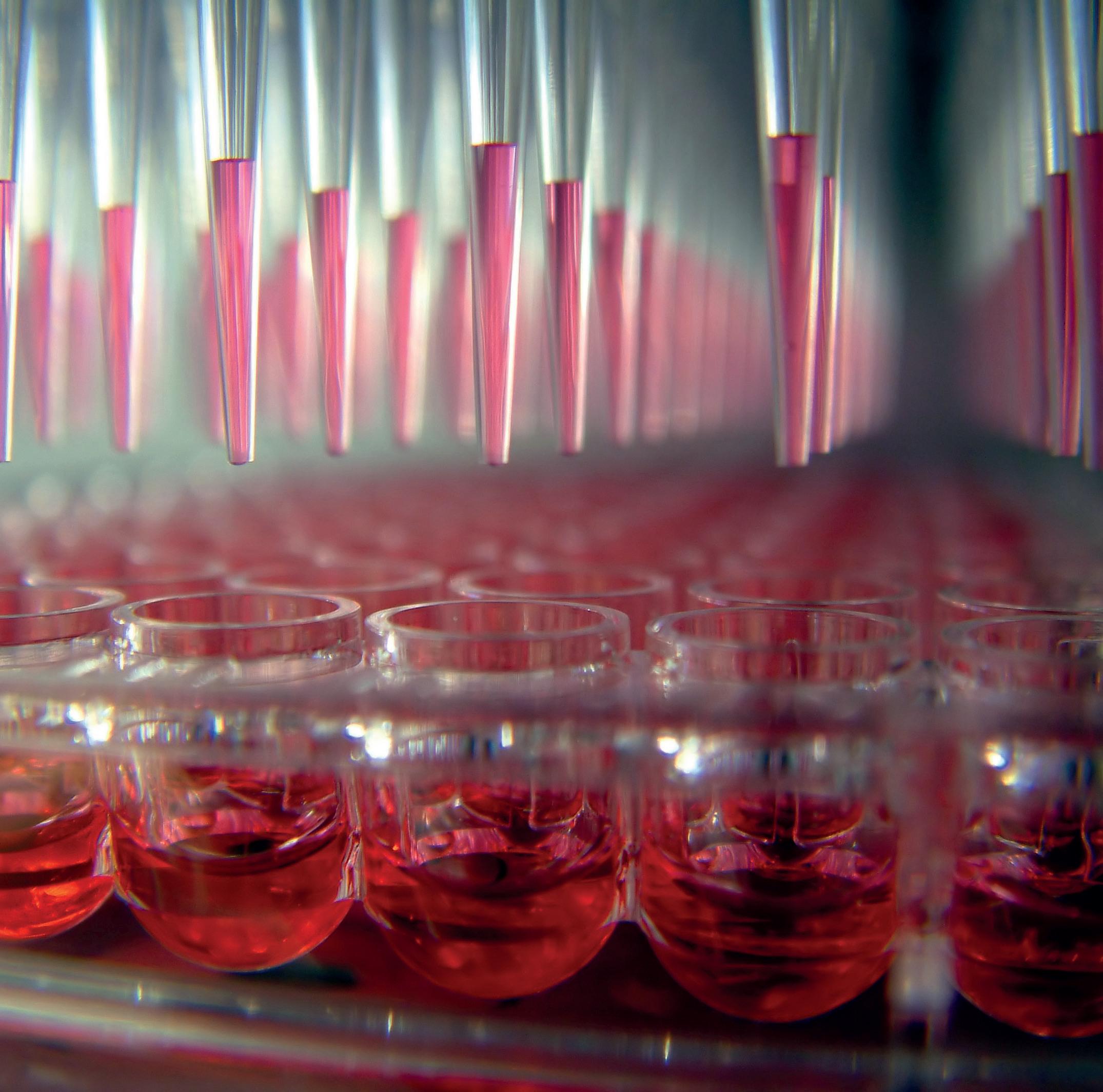
A global market approaching US$9 billion, a continent catching up fast – and the question of where Europe's mid-sized players fit in. The laboratory of 2026 looks rather different from the one most scientists were and are trained in. Pipetting robots handle sample preparation through the night. AI modules flag anomalies in real time. Cloud-connected instruments talk to each other without human prompting. Let´s dive in.
The global laboratory automation market is projected to grow from around US$6.4 billion in 2025 to US$9 billion by 2030, driven by the increasing need for highthroughput screening, shortages of skilled laboratory technicians, and the growing
adoption of AI and robotics, says a report of Markets&Markets. The pressure to automate is no longer purely about cost efficiency; it is also about survival in a talent market that is structurally short of qualified lab personnel.
The global pecking order
North America retains a commanding lead as the region holds approximately 40% of the global market, with Europe at around 30% and Asia-Pacific at 22%.
Asia-Pacific, however, is closing the gap at speed. The region is the fastestgrowing market, with a CAGR of 7.7 per
cent, spurred by China's smart-hospital initiatives, Japan's advances in robotics, and India's expanding diagnostic laboratory infrastructure. China in particular is not merely a growth market for Western vendors; domestic players are emerging with competitive, cost-effective systems. At SLAS Europe last May in Hamburg, MGI Tech unveiled its PrepALL liquid handling system, featuring AI integration, modular design, and high-precision pipetting aimed at genomics, diagnostics, and synthetic biology workflows. That a Chinese firm chose Germany as its launch platform speaks volumes about competitive intent.
Europe's strengths — and where they are concentrated
Europe is not standing still. Germany, Switzerland, and the UK are the continent's primary contributors, with companies such as Tecan Group, Festo and Siemens Healthineers advancing automation for precision medicine and molecular diagnostics. Switzerland's Tecan remains a globally respected precision liquid handling specialist, consistently innovating at the high end of the market. Germany's Siemens Healthineers and Eppendorf occupy strong positions in clinical diagnostics and research instrumentation respectively. France's bioMérieux is a significant force in microbiology automation. QIAGEN, headquartered in the Netherlands but mainly German, announced three new sample preparation instruments in 2025 – the QIAsymphony Con-
nect, QIAsprint Connect, and QIAmini — planned for rollout through 2026.
A meaningful regulatory tailwind is also at work. Europe's IVDR transition — the updated In Vitro Diagnostic Regulation — is driving a substantial upgrade cycle in clinical diagnostics, pushing laboratories to replace legacy equipment and, in many cases, to automate for the first time. This is creating a window of opportunity, provided the Europeans move quickly enough.
Europe's industrial backbone – the midsized, often family-owned enterprises that have long led in precision engineering and scientific instrumentation – faces a structural dilemma that is frankly familiar from other technology transitions. Slow adoption of automation among small and medium-sized laboratories remains a recognised restraint on global market growth, and the dynamic is mirrored within the vendor landscape itself.
European Mittelstand firms often excel at building exceptional individual instruments – a high-performance centrifuge here, an innovative sample storage system there – but the integration layer, the software orchestration, the AI-enhanced workflow management that customers increasingly expect as a bundle, is territory where American and, increasingly, Asian competitors hold an advantage of scale. The window for strategic investment is open, but not indefinitely.
■ Georg Kääb
IN THE LAB Laboratory automation is evolving fast. What used to be a patchwork of isolated device solutions has steadily moved toward smarter, interconnected labs. And now that robotics is pushing the field one step further, a fully autonomous research environment no longer feels like science fiction.
Recent editions of analytica, a leading international trade fair for laboratory technology and analytics, have highlighted just how quickly automation is progressing toward ‘Lab 4.0.’” Instead of stand-alone automation islands, labs are beginning to look like integrated, digitally connected ecosystems.
The main drivers are artificial intelligence, open communication standards, robotics, and data-driven process control. The increasing volume and complexity of
data generated from manifold screening technologies, omics and sample management have catalyzed the development of cutting-edge algorithms rooted in big data analytics and machine learning/artificial intelligence.
One of the most visible symbols of this shift has been the mobile lab robot “Kevin,” developed by Fraunhofer IPA and
the United Robotics Group. Unlike classic stationary liquid-handling systems, Kevin can move independently between lab stations. It transports samples, refills reagents, and replaces consumables. Robots like this represent a real change in mindset: automation is no longer tied to one fixed workstation, but can operate flexibly across the entire laboratory.
At the same time, AI is becoming central to modern lab automation. AI-supported tools help design experiments, optimize pi-
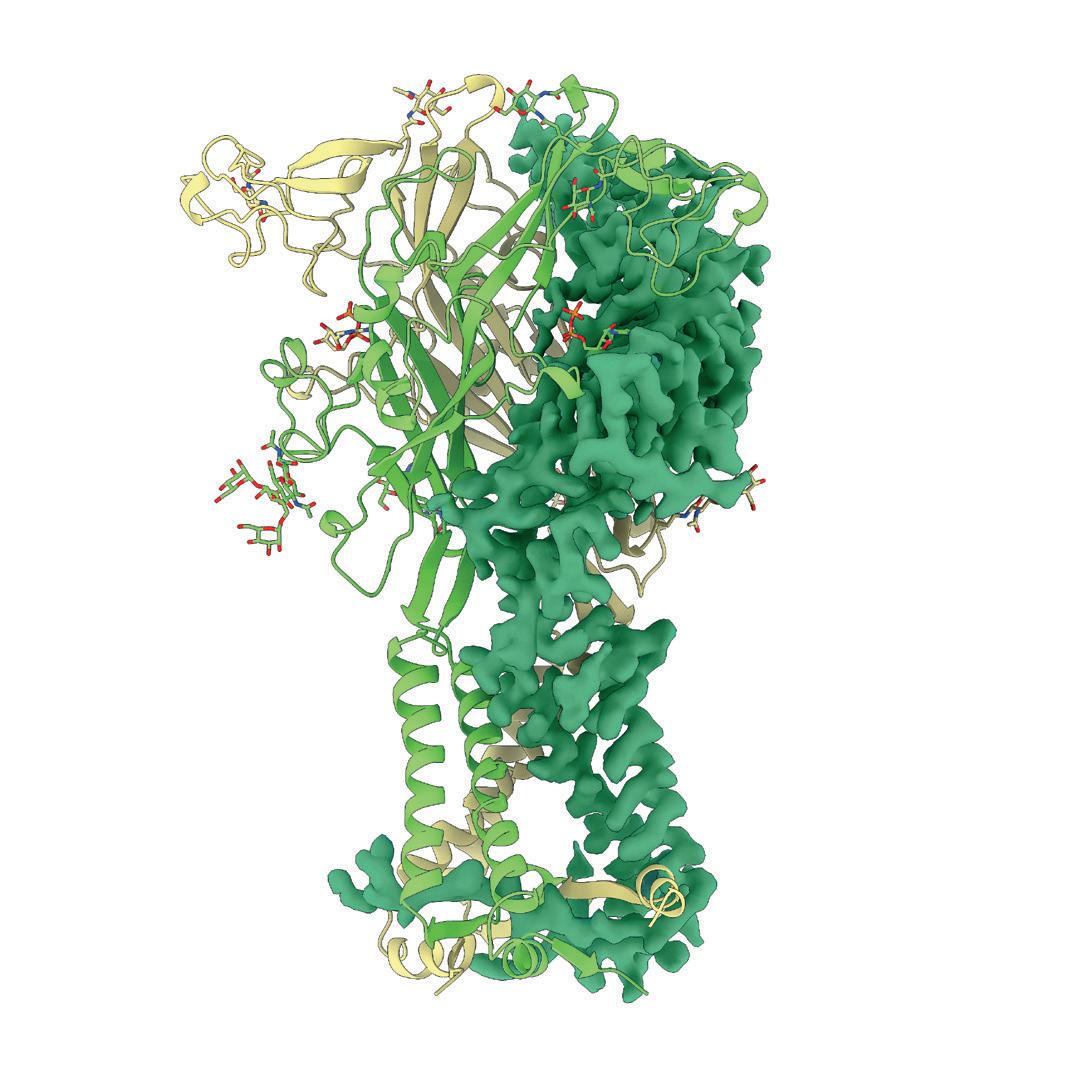
Integrated solutions for stabilization, purification, and automated screening of complex and membrane proteins — enabling reliable data, scalable workflows, and faster discovery:

petting strategies, detect anomalies in analytical data, and predict when instruments will need maintenance. Combined with machine-learning algorithms, these systems enable adaptive workflows that learn from results and improve continuously.
The next stage, now exhibited at the coming analytica end of March in Munich, Germany, goes one step further: the “self-driving lab,” where experiments are not only executed automatically, but also planned and evaluated without human intervention. A major step toward this kind of integration has been the introduction of the “Laboratory & Analytical Device Standard” (LADS), a vendor-independent communication standard designed to connect instruments from different manufacturers and replace the many proprietary “island” solutions that still dominate today. In parallel, cloud-based LIMS platforms, digital twins of lab processes, and standardized interfaces are gaining traction. Together, these technologies make laboratories increasingly remote-operable and allow workflows to be orchestrated through data.
Classic automation continues to advance as well. Fully automated sample-preparation systems can now handle complete workflows, from sample intake all the way to analysis. Modular platforms make it easier to integrate automation into existing routines and expand capacity when needed. Collaborative robots, or “cobots”, are also becoming more common. They work alongside lab staff, take over repetitive or safety-critical tasks, and use sensors to respond to their surroundings.
British Automata is developing fully integrated, AI-ready lab platforms designed to bridge the gap between artificial intelligence and physical experimentation. By combining modular robotics, orchestration software and unified data infrastructure, the company aims to turn traditional wet labs into programmable, autonomous systems, where cobots act like nice goblins doing all the work supervised by a only a handful of technician staff.
After receiving US$50 million in 2022 in its Series B round to advance automation
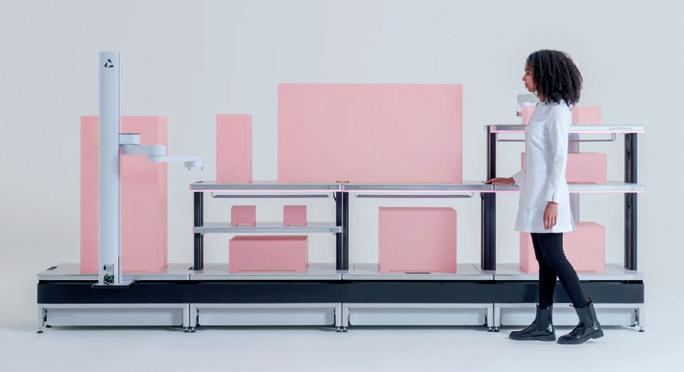
The LINQ Bench from Automata scales with a lab’s needs, offering customizable configurations to fit any instrument density and lab space requirements.
in the diagnostics laboratory, Automata has just in January raised another US$45 million in a Series C round led by Dimension, with participation from Danaher Ventures (via their Beckman Coulter group), Tru Arrow Partners, Octopus Ventures and Entrepreneurs First. The round includes a strategic investment from Danaher Corporation.
The company now serves five leading pharmaceutical groups, delivering improvements in throughput, reproducibility and efficiency. The new capital will fund global expansion, further software development for closed-loop experimentation, and scaled deployments across pharma, biotech and research organisations. Through its partnership with Danaher, Automata’s platform will integrate with technologies from businesses such as Molecular Devices and Beckman Coulter Life Sciences to provide end-to-end automated lab solutions.
Beyond productivity, sustainability and safety are becoming bigger priorities. Automated systems can reduce reagent use, lower error rates, and improve reproducibility. They also take routine work off scientists’ hands, making it an important benefit at a time when many labs face persistent staff shortages.
But this raises an uncomfortable question: what will researchers actually do in the lab of the future and could they even
become the bottleneck as the last risky factor where reproducibility is a matter of experience? Watching dashboards filled with control parameters and endless columns of numbers, reflecting the work of robots and instruments, isn’t exactly what most people imagine as scientific work either.
Another open issue is training. It’s not yet clear whether today’s education pathways in research and technical lab professions are keeping pace with the high level of digital and automated infrastructure that equipment manufacturers increasingly present as the ideal lab of tomorrow.
The bigger question, then, is not whether the lab can run itself, but what meaningful scientific work looks like when it does. Researchers may move away from routine execution toward defining hypotheses, setting constraints and acceptance criteria, and making sense of outcomes, while stepping in only when the system encounters ambiguity or risk.
To avoid turning scientists into passive dashboard-watchers, training will have to evolve: less focus on manual technique alone, and more on automation, data skills, and cross-disciplinary problemsolving that matches the reality of highly digital labs. As the Young European Biotech Network (yebn) points "Automation does not eliminate scientists. It raises the bar for what being a scientist means."
The young scientists network sees a changing environment in the lab. "The next generation of biotech professionals will not compete with robots on speed or repetition. They will compete on vision, creativity, and interdisciplinary thinking. Biology is becoming programmable", which in their opinion (see page 61) requires minds capable of bridging wet lab intuition with computational logic where data literacy is no longer optional. Understanding how datasets are structured, how AI models are trained, and how automated platforms operate will define the scientists relevance in the coming decade.
The next challenge will be trust. As autonomy increases, labs will need robust validation, audit trails, and governance to keep results transparent, reproducible, and compliant, especially in regulated environments.
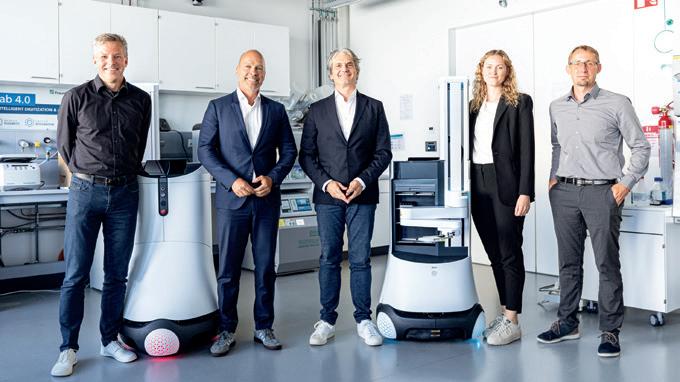
KEVIN is an autonomous, mobile laboratory robot developed by Fraunhofer IPA.
With cobots in the lab, some issues have still to be solved, among other topics:
› Safety Standards and Spatial Constraints.
› Limited Payload and Reach
› Workflow Integration.
Ultimately, the lab’s limiting factor may shift from hands-on capacity to data quality. Clean metadata and reliable data pipelines will be what turns automation into true autonomy.
■ Georg Kääb

Largest selection of enzymes for genomic research
Large to small scale lyophilization capabilities
Formulations without components such as BSA, detergents or glycerol
Enzymes at user defined concentrations
Custom aliquoting, kitting, packaging & private label (OEM)
Research-grade and GMP-grade production
ISO 9001 and ISO 13485 certified
Further information on Customized Products and Solutions from NEB