INNOVATION The COVID-19 pandemic transformed RNA technologies into one of the most visible scientific breakthroughs of the decade. mRNA vaccines demonstrated unprecedented speed of development, large-scale manufacturing capability and global deployment, pushing RNA therapeutics into the public spotlight. But according to companies working in the field, the pandemic was not the beginning of the RNA story. Instead, it accelerated technologies that had already been under development for years.
“RNA therapeutics were actually being developed in oncology well before COVID-19,” explains Jon Moore, Chief Scientific Officer of Epitopea. “Companies such as BioNTech and Moderna had already been working on personalised cancer vaccines for many years before the pandemic, with publications dating back to at least 2016.”
What changed during COVID-19 was the validation of RNA at industrial scale. “COVID-19 really demonstrated the speed, scalability and safety profile of mRNA technology,” Moore says. “The pandemic accelerated public awareness and validated the platform at a global scale.”
“COVID-19
really demonstrated
the
speed, scalability and safety profile of mRNA technology. The pandemic accelerated public awareness and validated the platform at a global scale.”
ly different modalities. “It’s important to remember that RNA therapeutics is not one type of medicine,” says Dr David H Solomon, CEO of Thalia Therapeutics. “There’s siRNA, which is double-stranded RNA that silences genes; there’s microRNA, which are small pieces of RNA that modulate gene expression; and then there’s mRNA proper, as in the COVID vaccines.”
Jon Moore, Epitopea
Today, the field is rapidly evolving beyond vaccines into oncology, cardiovascular medicine, autoimmune disease and gene regulation. Increasingly, RNA is being viewed not as a single product category, but as a programmable therapeutic platform.
One of the central themes emerging across the RNA field is that “RNA therapeutics” encompasses multiple fundamental-
Rather than representing a single technology, RNA therapeutics are built around the broader biological principle that RNA sits at the centre of gene expression and protein production. “RNA therapeutics is a class based on the idea that the central dogma of life is: DNA makes RNA makes protein,” Solomon says.
That diversity is increasingly allowing developers to approach RNA as a flexible engineering platform capable of encoding multiple biological functions. “One of the key advantages of mRNA is its flexibility and portability as a platform,” Moore explains. “You can encode antigens, cytokines, antibodies or other therapeutic proteins, and potentially combine multiple mechanisms simultaneously.”
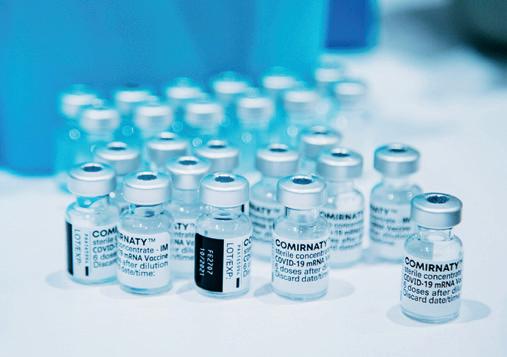
BioNTech developed Comirnaty during the pandemic
The platform nature of RNA is also changing how companies think about therapeutic development. Unlike traditional biologics or viral vector systems, RNA technologies can potentially be adapted more rapidly across different disease areas and targets. Compared with viral vectors, Moore notes that mRNA can also avoid some of the limitations associated with repeat dosing. “With viral vectors, patients often develop antibodies
against the delivery vehicle itself,” he says. “mRNA-based systems generally allow for multiple redosing cycles, which is highly valuable in cancer treatment.”
While public attention largely focused on mRNA vaccines during the pandemic, the first clinically validated RNA medicines have emerged from another branch of the field: siRNA.
According to Solomon, gene-silencing siRNA therapeutics currently represent one of the most commercially established RNA modalities. “siRNA, or gene silencing, is the leader in terms of validated therapeutics,” he says. “These medicines are in the marketplace, generating several billion in aggregate revenue for the sponsoring companies.”
Much of that success has come through liver-targeting approaches. By attaching a GalNAc tag to siRNA medicines, developers can efficiently direct therapies into hepatocytes through specific receptors expressed on liver cells. “Insofar as genes in the liver are responsible for a specific disease, by silencing those genes, you can get a complete, almost a cure, of the disease,” Solomon explains. He points to companies such as Alnylam, Arrowhead and Silence Therapeutics as leading players in the field.
RNA technology
mRNA
Self-amplifying RNA / saRNA
Circular RNA / circRNA
siRNA / RNA interference
Antisense oligonucleotides / ASOs
CRISPR guide RNA
microRNA therapeutics / miRNA inhibitors
small activating RNA / RNAa
it does
Delivers a messenger RNA sequence so cells transiently produce a protein antigen or therapeutic protein.
Encodes both the target protein and a replicase, allowing the RNA to copy itself inside cells and potentially work at lower doses.
Uses covalently closed RNA molecules designed for longer stability and prolonged protein expression.
Uses short double-stranded RNAs to recruit RISC and degrade a disease-associated mRNA, reducing protein production.
Single-stranded oligonucleotides bind RNA to degrade it, block translation, or alter processing.
Guide RNAs direct Cas enzymes to DNA or RNA targets. The therapeutic effect usually comes from genome or transcript editing, but RNA is the targeting component.
Restores or blocks microRNAs that regulate networks of genes.
Small RNAs are designed to increase expression of a target gene rather than silence it.
Typical applications being explored
Infectious disease vaccines, cancer vaccines, protein replacement, immunology, respiratory disease.
Next-generation vaccines, oncology, immunology, in vivo cell therapy concepts.
Longer-lasting protein expression, vaccines, oncology, autoimmune disease, in vivo CAR-T concepts.
Liver diseases, cardiovascular disease, rare disease, metabolic disease, hematology.
Neurology, rare genetic disease, oncology, inflammation, fibrosis, cardiovascular disease.
Ex vivo and in vivo gene editing, rare disease, oncology, hematology.
Oncology, fibrosis, cardiovascular disease, inflammatory disease.
Cancer, liver disease, metabolic disease, rare disease, CNS.
Selected RNA technology classes and European players
At the same time, companies are already looking beyond firstgeneration siRNA therapeutics toward newer RNA modalities. “The next generation of RNA therapeutics will likely be microRNAs,” Solomon says. “MicroRNAs are short pieces of RNA that modulate gene expression either up or down, rather than silencing it.”
Moore also points to growing momentum around several emerging RNA technologies. “There is increasing interest in using RNA therapeutics for in vivo antibody production, gene replacement therapies and potentially more complex biologics such as T-cell engagers,” he says.
Most clinically validated RNA modality after COVID-19 vaccines, but many therapeutic uses remain early.
BioNTech / CureVac, Germany; Ethris, Germany
Emerging; clinical and manufacturing know-how still developing. Ziphius Vaccines, Belgium
Very early; first-in-human activity is only beginning globally. Circio, Norway
Clinically validated, with several approved siRNA drugs globally; delivery beyond liver remains a key frontier.
Clinically validated; one of the most established RNA drug classes.
Clinically validated for some ex vivo gene-editing uses; in vivo delivery remains challenging.
Silence Therapeutics, UK
Secarna Pharmaceuticals, Germany; ProQR, Netherlands
CRISPR Therapeutics, Switzerland
Earlier and more troubled than ASOs/siRNA; toxicity and broad off-target biology have slowed progress. Cardior, Germany; ARTHEx biotech, Spain
Early clinical / translational. MiNA Therapeutics, UK
“The next generation of RNA therapeutics will likely be microRNAs.”
Dr. David H Solomon, CEO Thalia Therapeutics
The field is also exploring self-amplifying RNA and circular RNA systems, particularly where developers are seeking longer persistence and extended protein expression.
One of the most active areas for RNA development today is oncology. Epitopea is among the companies exploring RNA-based cancer immunotherapies beyond traditional personalised neoantigen approaches. The company focuses on tumour-specific antigens arising from what it describes as the “dark genome” – non-canonical regions of the genome that become activated in cancer cells. “Our approach instead focuses on shared tumour-specific antigens derived from the ‘dark genome’,” Moore explains. “This allows us to develop an off-the-shelf therapy using common antigens shared across patients with a particular tumour type.” The company believes this could open new possibilities for broader off-the-shelf cancer immunotherapies. “The aim is to
© Alex ShuperUnsplash
Picture:
train the immune system to recognise and eliminate residual cancer cells after surgery and chemotherapy,” Moore says, describing the company’s ovarian cancer programme.
At the same time, Thalia Therapeutics sees major opportunities emerging in cardiovascular disease and gene modulation. The company is particularly focused on microRNA and advanced delivery technologies. “Scientists were awarded the Nobel Prize in Medicine and Physiology in 2024 for the discovery of microRNA,” Solomon says. “That’s the new vista for RNA therapeutics.”
As the RNA field matures, attention is increasingly shifting toward delivery systems and tissue targeting. Across the industry, developers are trying to move beyond the liver and expand RNA therapeutics into other organs and disease areas. “To date, almost all of the targeting has been to the liver,” Solomon says. “Yet there are many other cells and organs where targeting RNA therapeutics will lead to specificity and even personalised medicines.”
Moore agrees that delivery remains one of the defining areas of innovation. “Delivery technologies remain extremely important,” he says. “Lipid nanoparticle innovation, for example, has



been a major contributor to the field’s progress.”
At Thalia Therapeutics, this focus has led to the development of Nuvec, the company’s proprietary silicon nanoparticle delivery platform. According to Solomon, the platform may allow developers to load multiple RNA therapeutics into a single nanoparticle and potentially adjust the ratio between payloads. “With Nuvec, you can probably load multiple RNA therapeu -


Reliable real-time PCR technology
Intuitive software

High sensitivity for demanding assays

From RNA applications to complete laboratory workflows, NIPPON Genetics EUROPE supports life science research with instruments, reagents and consumables for efficient, confident R&D.
Flexible cartridge system, including RNA cartridges








Matched to your sample throughput
Consistent quality control




High RNA purity


Optional DNA removal


For fast, efficient RNA isolation



Discover our full portfolio at nippongenetics.eu Connect with our team at info@nippongenetics.de




tics into a single silicon nanoparticle and at different ratios,” he says. The company is exploring this approach in cardiovascular disease using dual-acting siRNA combinations against both Lp(a) and PCSK9. Nuvec is also being explored for potentially longer-acting formulations and oral delivery approaches. “So, in short, we’re trying to position Thalia Therapeutics as a nascent RNA therapeutics company and a new European champion in the space,” Solomon says.
Europe played a central role in the emergence of mRNA during the pandemic, particularly through BioNTech and the rapid expansion of manufacturing infrastructure. “BioNTech played a major role in establishing Europe’s mRNA ecosystem, including manufacturing infrastructure and broader industry capability,” Moore says. He also points to significant GMP manufacturing capabilities now operating across Europe.
At the same time, both executives acknowledge that the global RNA landscape remains highly competitive. “This has largely been an American play, based on American technology patents,” Solomon says.
the US overall, there’s plenty of room for innovation, since the field is still so young,” Solomon says.
Governments are also increasingly viewing RNA strategically, both as an industrial capability and as part of broader pandemic preparedness efforts. “Many governments are now viewing mRNA strategically,” Moore says, “both from an industrial policy perspective and in terms of pandemic preparedness.”
The first wave of RNA therapeutics demonstrated that the technology could work during a global crisis. The second phase is becoming much broader and more ambitious. The field is now moving toward programmable medicines capable of gene silencing, immune activation, protein production and multi-target therapeutic engineering.
“While Europe has lagged the US overall, there’s plenty of room for innovation, since the field is still so young.”
– Dr. David H Solomon, CEO Thalia Therapeutics
Still, both companies see major room for European innovation as the field continues to evolve. “While Europe has lagged
At the same time, innovation is occurring simultaneously across RNA engineering, delivery systems, target discovery and manufacturing.
The next decade of RNA medicine may therefore be defined not by a single breakthrough product, but by the convergence of multiple technologies into a new therapeutic platform capable of reshaping how medicines are designed, delivered and personalised.
BEST IN CLASS BIOLOGICS CDMO FOR OVER 35 YEARS!
Meet Us at BIO International in San Diego, US June 22 - 25, 2026 | Booth #2628
YOUR PRODUCT – OUR COMPETENCE AND DEDICATION

RICHTER BIOLOGICS
Suhrenkamp 59, 22335 Hamburg, Germany
Phone: +49 40 55290-0
BusinessDevelopment@richterbiologics.eu

Richter Biologics is your professional and experienced partner offering CDMO solutions from gene to product all from one source.
Richter Biologics: your expert for late stage and commercial production.

CONTACT US TO BRING YOUR PROJECT TO SUCESS!

PRECISION MEDICINE KJ Muldoon’s survival was not just a medical breakthrough. It was a glimpse of a new category of medicine, in which a genetic error can be corrected with the precision of an operation rather than developed as a conventional drug. Can Europe build the system that turns one extraordinary rescue into a repeatable model?
In February 2025, an infant named KJ Muldoon received a CRISPR gene-editing therapy built for him alone. He had been born with CPS1 deficiency, a severe urea cycle disorder that left his body unable to clear the toxic ammonia that protein produces. A team at Children’s Hospital of Philadelphia and the University of Pennsylvania designed his correction in months: an mRNA-encoded base editor, delivered to his liver inside a lipid nanoparticle and carrying a short custom guide that aimed it at his exact mutation. The therapy worked, and he is alive and developing.
The achievement was extraordinary and unrepeatable. Every step required improvisation that no existing regulatory or reimbursement system was designed to support. That is the problem now facing genetic medicine. Thousands of children are born each year with mutations so rare that each may be the only patient who has one, and none will ever attract a commercial drug program. The science to correct many of them already exists. What does not exist is a system to deliver those corrections at scale.

JEFF COLLER is the Bloomberg Distinguished Professor of RNA Biology and Therapeutics and director of the RNA Innovation Center at Johns Hopkins University. He serves on the board of the Society for RNA Therapeutics and is a co-founder of the Alliance for mRNA Medicines and Tevard Biosciences.
The reason is structural. Regulators on both sides of the Atlantic treat every personalized gene-editing therapy as a new pharmaceutical product, each requiring its own manufacturing validation, its own clinical evidence package, its own regulatory review, and its own multi-year timeline. That model works when one medicine serves millions of patients. It breaks when one medicine serves one. The US Food and Drug Administration’s drug center clears about fifty new medicines a year, and its biologics center fewer than ten cell and gene therapies. No regulator at that throughput can review thousands of bespoke therapies as in -
dividual products. There is a better model, and medicine has relied on it for over a century. We do not regulate each surgical operation as a new product. We validate the technique once. We accredit the institutions allowed to perform it and credential the surgeons who carry it out, then trust them to adapt a proven method to the patient in front of them.
mRNA-CRISPR technology can be regulated the same way. I call it molecular surgery. The editing platform, the delivery system, the manufacturing process, and the safety profile are validated once. Only the short targeting sequence that points the editor at a particular mutation changes from one patient to the next. In KJ’s case, every component was standard except that guide. The bespoke sequence is the molecular equivalent of where a surgeon makes the incision, and it should be authorized as a medical act under professional governance rather than resubmitted as a new drug each time.
Not every genetic therapy qualifies as molecular surgery, and one property is essential: transience. The intervention must correct its target and then clear the body rather than persist in it. The approach suits a single, well-characterized error a validated editor can reverse in a tissue the delivery system can reach, and it cannot address damage that lies beyond a single edit, such as large chromosomal rearrangements or disease spread across many genes.
This is why mRNA delivery is the genius of the approach. The mRNA instructs the cell to build the editor and then clears within days. The correction it makes is permanent, but the tool that made it is gone, leaving nothing written permanently into the genome, as a viral vector would. A treatment that erases
itself can be re-dosed and avoids a whole category of longterm risk. A surgeon operates and then leaves the body to heal. mRNA does the same at molecular scale.
Building this will take more than regulators. It needs a professional body to set the technical standards and clinical guidelines, and to bring developers and regulators to the same table, the way medical societies have always governed new techniques. The Society for RNA Therapeutics and the Alliance for mRNA Medicines, two global networks of scientists and physicians on whose board I serve, were founded to provide exactly that leadership for the RNA field. Their combined missions are to set manufacturing standards and clinical guidelines, and to broker the public-private-regulatory partnerships these therapies depend on, which is the connective tissue molecular surgery will require. Under that kind of leadership, each patient’s therapy could be authorized through accredited Certified Molecular Surgery Centers that hold validated inventory and perform the procedure under long-term follow-up, reimbursed as a procedure on the model of transplantation rather than as a packaged product.
This is where Europe has an opening. The next phase of genetic medicine will be decided by who builds the system to deliver these therapies safely and at scale, and that contest is wide open. It is one Europe can win.
Europe may even be better positioned than the United States, because it has already written a version of this principle into law. Under the hospital exemption in its advanced-therapy regulation, a hospital can prepare a custom advanced therapy for a single patient, on a physician’s responsibility, without the full marketing authorization a mass-market product requires. Its weakness is that the exemption is governed country by country, with diverging standards and no shared infrastructure behind it. The opportunity is to harmonize it into a single European definition of molecular surgery, backed by a network of accredited centers held to common standards and a shared outcomes registry. Reimbursement would remain a national decision, but member states could agree to pay for the procedure rather than the product, as they already do for transplantation. Whoever builds this system first will set the standard the rest of the world adopts.
KJ Muldoon’s story has been called a miracle. The harder and more important work is to make it a model, so that the next thousand children do not need a miracle to survive. The technology is arriving. Whether it reaches patients depends on whether we are willing to redesign the system that delivers it, and Europe should choose to be the place that does. ■