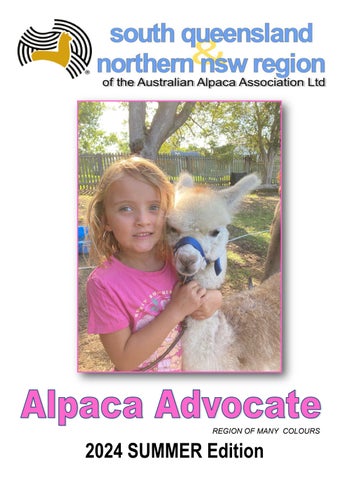



~ SUMMER Edition 2024 ~ Alpaca Advocate ~ SUMMER Edition 2024 ~ REGION OF MANY COLOURS 2024 SUMMER Edition
Value add to your business by advertising in The Alpaca Advocate.
Welcome,
SUMMER has started and time for another newsletter ! Christmas over now onto our planning for the year, In this edition some news re our new committee and directions for the future.
Your committee have had a number of zoom meeting planning the activities and membership involvement. The Members Directory is in planning stage and those who advertised are also promoted in our newsletter.
Information about Nutrition and Herd health fill this edition.
Encouragement of members to get involved to help promote a positive informative Region for members is our aim.
It’s a small action, please take time to respond to information sent to you through our various mediums. The committee would like this encouragement to
The Advocate is sent to all Regional Members on line and the link in our Fbook Page.
Our reasonable rates:
Full Page $ 55.00
Half Page $ 33 .00
Quarter Page $ 25.00
$15 Contact:


The Editor and South Queensland & Northern NSW Region Committee of the AAA accept no responsibility for the opinions expressed, information supplied or advertisements published.
All submissions are subject to editing. Copyright
~ SUMMER Edition 2024 ~ Alpaca Advocate ~ SUMMER Edition 2024 ~ 2
Contents
: The material published in this magazine is subject to copyright and may not be published in part or whole without written permission of the author. Articles Page PRESIDENTS REPORT 2 HALTER TRAINING 5 TICK CASE STUDY 8 HEAT STRESS 14 NLIS 17 WHY SHOW 21 RAIN SCALD 26 WONDERWORD 29 FOOD MKR 31 CLASSIFIEDS 32
Business Card
cpg4764@bigpond.net.au
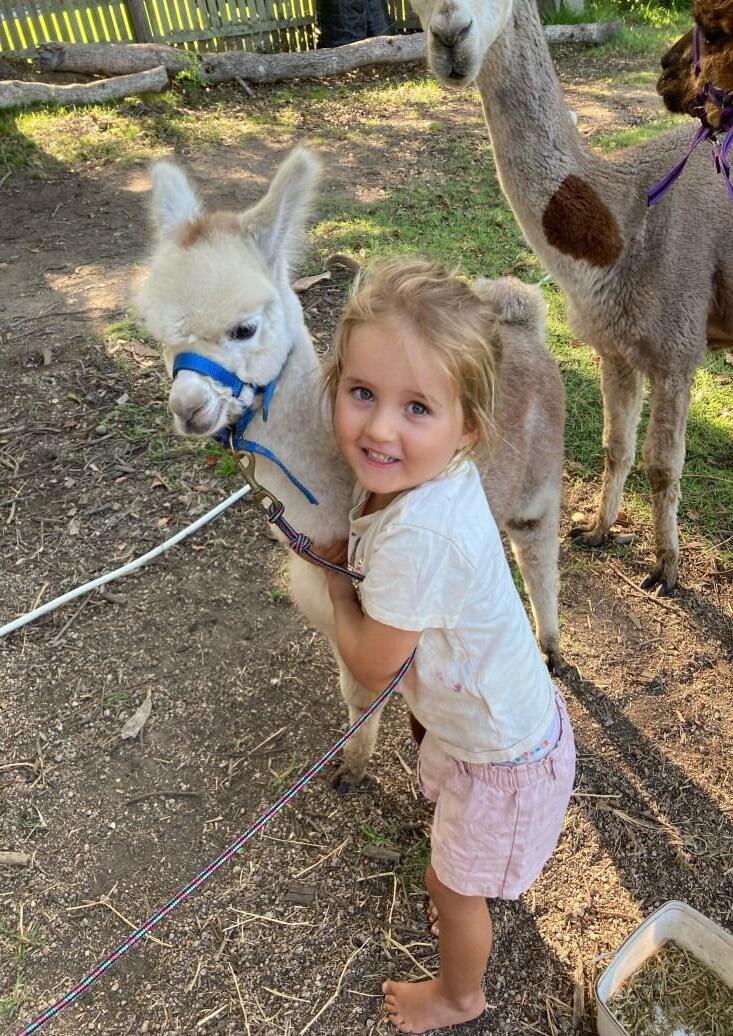
COVER Harrie and Florence Regional website: Send in your favourite Alpaca
Classified
FRONT

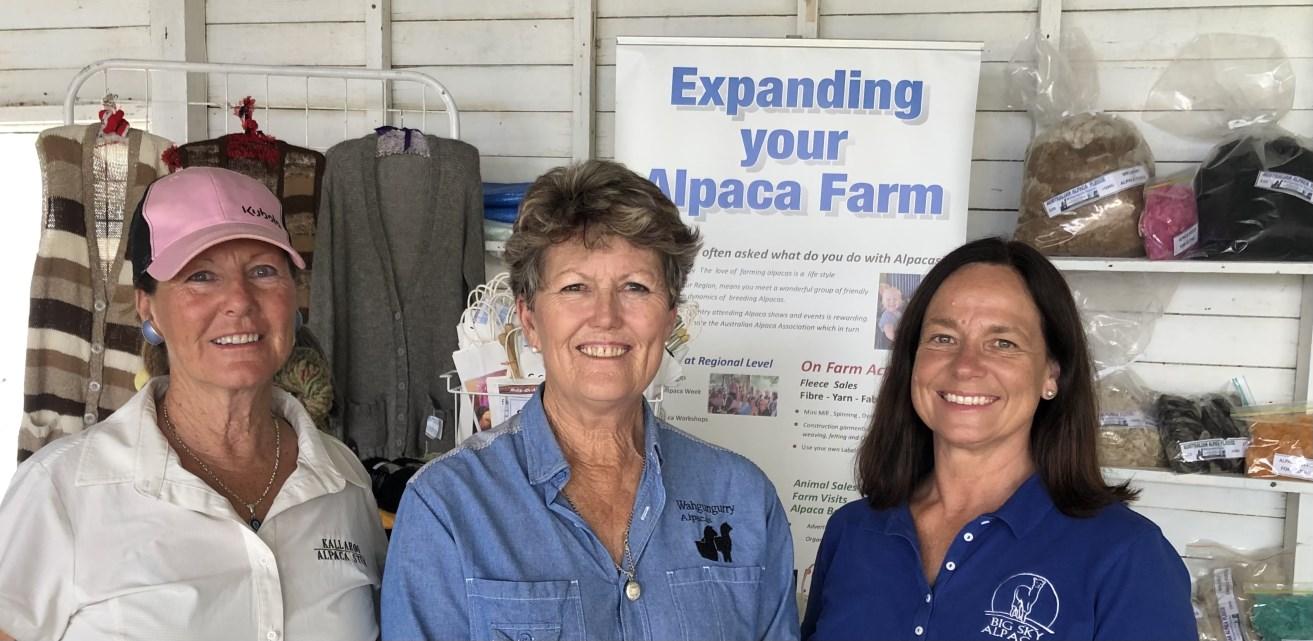
The year is off to a flying start and your regional committee are looking forward to seeing members at various events this year. The 2024 calendar includes a number of alpaca and merchandise displays at events across our region, getting our locally ‘grown’ and created alpaca product out there. Our meetings will be at different locations across the region, and we are hoping we will hold another conference during the year. Lots of different opportunities for members to get together and share alpaca, so please make the effort to join in.
It has been a number of years since AAA National have held a face to face meeting involving the Board and the Regional Presidents, which provides an opportunity to share ideas and initiatives to grow and shape our industry, which has great potential as an emerging agricultural endeavour. Myself and Pauline Glasser, our Vice President and immediate Past President will be attending the Regional Presidents and Council meeting in early March, and we look forward to sharing the outcomes of the meeting at our Regional Meeting on Sunday 24 March.
At our Annual Regional Meeting we agreed to put forward potential projects for the AAA to fund. One of these was to review the AAA website, and I’m pleased to report that the website will be undergoing a revamp and refresh this year. I’m involved in the working group for this, so if you have any suggestions or particular areas you would like reviewed, please let me know. Another of our regional project suggestions was to develop Alpaca Marketing Promotion – centred around a key date or event (such as National Alpaca Week) and supported by press coverage and marketing material to raise awareness of the Australian Alpaca Industry. You will have read in the AAA Member Update issued in January that the AAA will be supporting National Alpaca Week in a reinvigorated format. Our region is tentatively planning for Alpaca Awareness Month in May – we will of course be supportive of National Alpaca Week, and these events are a great opportunity for members to get involved and promote their own studs in their local area.
There is lots to look forward to this year!
Warm regards, Michelle Malt
EDUCATION
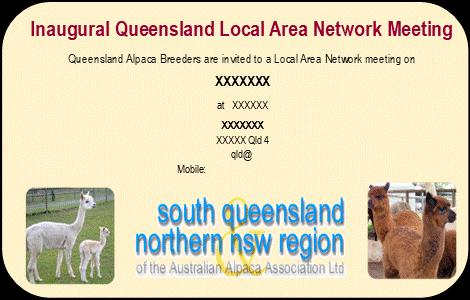
(QLD) LAKELAND ALPACA STUD
Clark Lane BROADWATER
SPECIAL GUEST SPEAKERS
VET AND Worm testing demonstration (Morning tea Supplied Bring Picnic lunch and chairs)
~ SUMMER Edition 2024 ~ Alpaca Advocate ~ SUMMER Edition 2024 ~ 3
PRESIDENT: Michelle Malt michelle@bigskyalpacas.com au P: 0438103310 VICE PRESIDENT: Pauline Glasser cpg4764@bigpond.net.au P: 0419986554 SECRETARY: Sam Hood sam@lakelandalpacastud.com M: 0420839030 TREASURER: TBA (Volunteers accepted) M: 0420839030 NEWSLETTER EDITOR : Pauline Glasser cpg4764@bigpond.net.au M: 0419986554 SHOWING: Cathy Reid Cathyreid@bigpond.com M: 0414663541 COMMITTEE MEMBER: Merchandise Lehanne Robinson aranarfarm@gmail.com M: 0447090205 COMMITTEE MEMBER: Merchandise Donna Crone doona_c@hotmail.com M: 0419685334 COMMITTEE MEMBER: Maree Dobbins petermareedobbins@gmail.com M: 0422366369 COMMITTEE MEMBER: (Treasurer assistant) Judy Barlow judebarlow53@gmail.com M: 0423554322
PRESIDENTS REPORT
OFFICER: TBA
accepted)
(Volunteers
ANIMAL WELFARE: TBA
accepted)
SUNDAY
36
BIO SECURITY &
(Volunteers
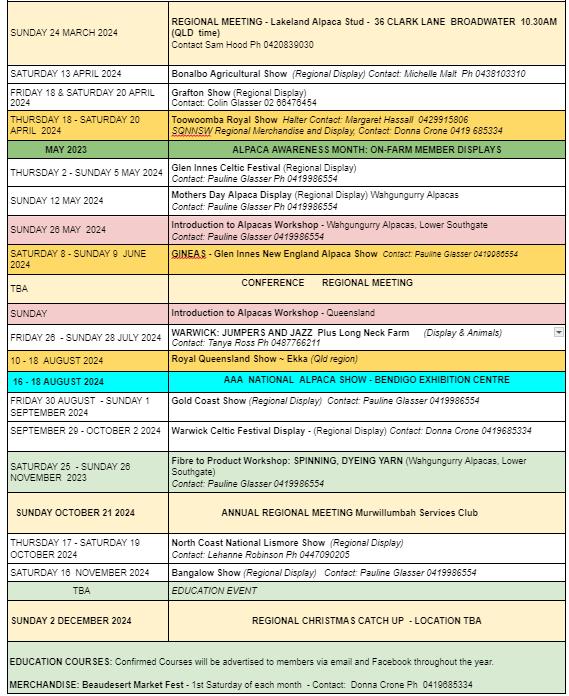
South Queensland & Northern NSW ~ 2024 COMMITTEE. NEXT MEETING:
MARCH 24 2024 10.30am

~ SUMMER Edition 2024 ~ Alpaca Advocate ~ SUMMER Edition 2024 ~ 4
& Northern NSW Regional Calendar of
2024
Sth Qld
Events
Alpaca Training – How to h alter train your alpaca
Alpacas are not known for their obedience. They’ll probably come to you when you rattle their food container, otherwise they’re very independent animals and prefer to do their own thing. So can you train an alpaca? Actually, yes you can, as long as they trust you and feel safe. It’s important for them to feel safe because they’re naturally easily scared, have very good memories, and spend most of their lives feeling threatened in one way or another, bless them!
Patience is the most important skill
Patience is your biggest virtue when halter training an alpaca. Fear is their their natural setting, and their first reaction to new things is usually to run away. It helps if they’re already used to a halter, an early step towards gaining alpaca trust. It’s best to take things easy and slow. Like many humans, alpacas prefer to learn small chunks of information at a time, not absorb everything in the first training session. Go steady and you’ll be much more likely to end up with a happy, confident alpaca you can lead safely. Break down the training routine into small pieces to ensure every session ends positively, rather than trying too much at once and putting the animal off. Again just like humans, an alpaca who has had a bad experience won’t want to do any more training in case it goes wrong again. When you lose their trust, you lose control, and all the good work you’ve done together flies out of the window. Every animal is unique
You’ve probably spotted a pattern emerging by now. Like us, every alpaca is unique. Some are more shy than others, some will approach you, others will hide. Once you notice those differences and begin to treat them as individuals, you’ll be much more skilled at spotting when it’s time to stop or do something different. Alpacas learn at different rates, again like us. Some are faster on the uptake than others. They’ re happiest when progressing at their own pace. On the other hand because they’re pack animals, they don’t do well on their own. Keep their friends and family in view and they’ll be more settled, more ready to learn. Alternatively train them in small groups of 2-6. How to halter train an alpaca in 10 steps
It’s usually easier to train alpaca while they’re being weaned, because they are more willing to be led and are used to authority. You can train older alpaca but like an old dog – or an old human – it’s not so easy to teach them new tricks. Bear in mind that every stage of the halter training process might take quite a long time, simply because these creatures don’t give their trust easily. You have to work hard to win it, and you can easily lose it for good if you scare or annoy them.
1. Make sure you have one thick, soft cotton rope for each animal, and a secure post to tie each animal to, spread apart so they can’t touch each other
2. Grab one new bicycle inner tube per animal
3. Fix an inner tube to each training post
4. Fit each animal’s halter properly so it can’t hurt itself or escape
5. Take one alpaca to a training point, then tie the lead rope to the inner tube with a quick release knot so it can’t throttle itself or break free at a bad time
6. Make sure there’s about 1.5m space between the post and the halter
7. Move away but don’t leave. You’ll probably notice the alpaca pulling to get free, but the harder it pulls the greater the opposite force from the inner tube is
8. Most alpaca quickly learn that it feels much nicer to keep their lead rope slack. If yours doesn’t and it stops with a taut lead rope, you can gently push the animal forward to reduce the tension
9. Now your alpaca is standing calmly on a slack lead rope, which means you can approach it with care, release the lead rope, remove the halter, and let him or her free
10.The alpaca might not understand first time around. If it’s still standing there after quarter of an hour, push it gently forwards, loosen the lead rope and release it. Second time lucky!
Subsequent sessions should be easier, since alpacas are clever animals and will know what to expect.
~ SUMMER Edition 2024 ~ Alpaca Advocate ~ SUMMER Edition 2024 ~ 5

~ SUMMER Edition 2024 ~ Alpaca Advocate ~ SUMMER Edition 2024 ~ 6
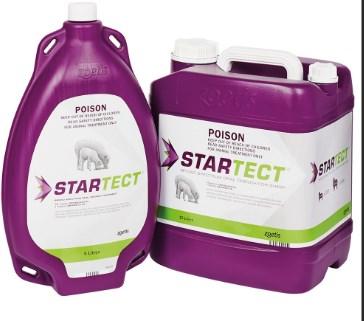

DRENCH PROJECT FOR MEMBERS
Why?
• Startect is sold in 5L bottles minimum which members do not require/use at once, smaller quantities are more useful and affordable to small breeders.
• Suggestion from Committee members that the Region acts as a source for small breeders.
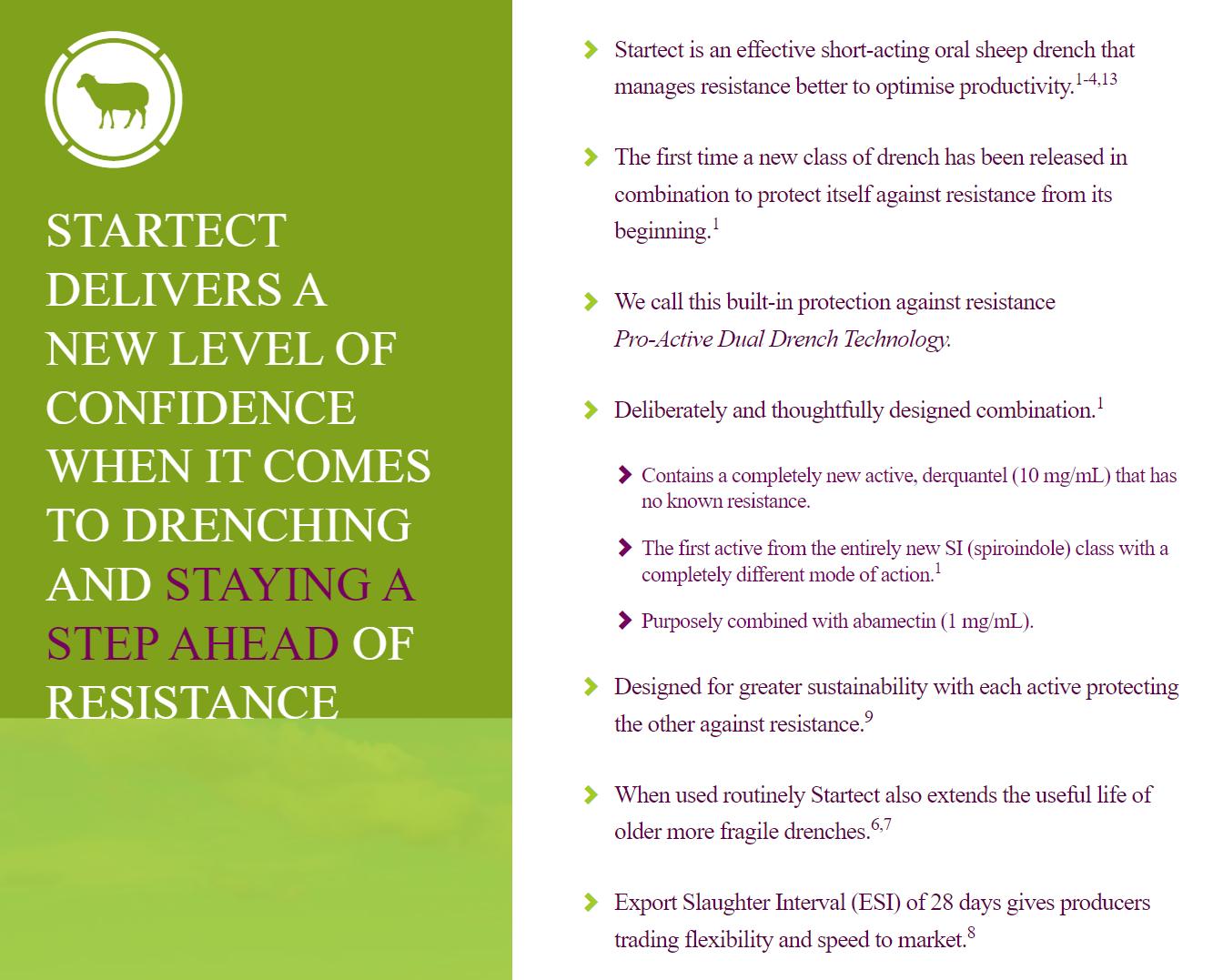
• Many members have difficulty getting Drench Startect is a reasonably new drench for Alpaca Breeders and has been getting good results.
ACQUISITION and COST ?
• Postage: email cpg4764@bigpond.net.au your order request. An invoice will be sent to you, once paid a post tracking will be sent to you. Pick up: available at meetings and Wahgungurry Alpaca stud.
• Available in 1 litre, 500ml & 250ml plus $20 postage and Handling (container).
• 1 litre = $144.00, 500ml = $77.00, 250ml = $38.00.(incl GST)
~ SUMMER Edition 2024 ~ Alpaca Advocate ~ SUMMER Edition 2024 ~ 7
Paralysis tick – new breeder’s perspective.
Before you all go, “oh no, not another paralysis tick story bear with me for a while.
Just recently we lost one of our lovely little cria – 2 month old “Estra” to a paralysis tick. Penny noticed her sitting under the paddock shelter by herself during the day, but she wandered up to be with the other girls after a while.
It wasn’t unusual for her to be by herself as she was orphaned at one month old and we had been hand raising her.
I had been out at our Regional alpaca meeting during the day and as I arrived home and drove down the drive I could see Estra with the other alpacas.
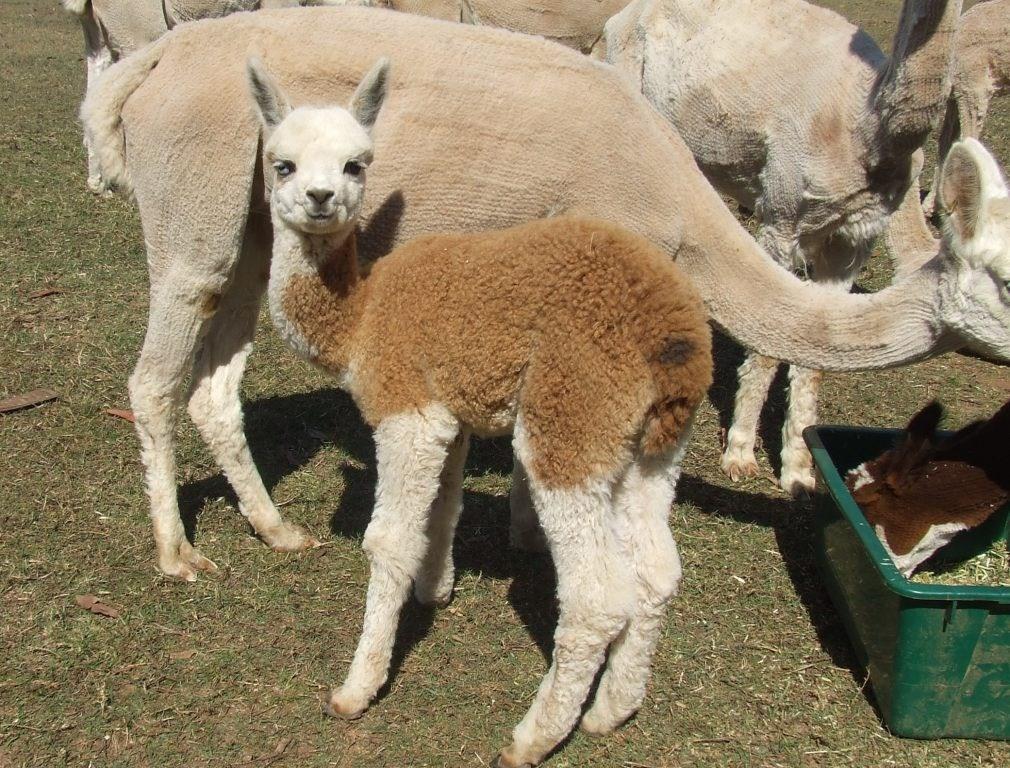
Penny told me immediately that she had been acting a bit funny in the afternoon, so I went and had a look at her. Usually she bolts from me when I come close, but this time she let me touch her. My immediate thought was that she had worms – having lost an animal from barbers pole worm a while back I was determined that this would not happen again. I had held off drenching her as her weight was still pretty low – she drank very little from the bottle, so was putting on weight slowly.
The girls were all in our big shed and it was raining pretty heavily. So I brought out some feed for them to fill their bellies. Estra was actually first to the feed bins but almost immediately started to retch and vomit.
At that point I recalled her doing a similar thing the day before to a lesser degree but I dismissed it, as perhaps she was coughing on some chaff . She pretty much immediately went down and sat. At this stage I was not sure what the problem was so I decided to bring her up into the house to keep an eye on her.
I checked her all over for any sign of ticks or anything else but she appeared clean. She had developed a pretty thick soft coat so it was hard to see anything on her – and I didn’t.
I carried her outside onto the lawn to see shat she would do – she sniffed at the grass and then flopped down. I kept an eye on her for about an hour and during this time tried feeding her milk and water, she took a bit but threw it up.
I was suspecting that she had eaten something toxic – maybe something in the garage as she was very inquisitive and had to look into everything, or a plant or weed or something but I couldn’t think what.
I went to pick her up off the ground and immediately felt some crusty deposit under her neck –felt and looked like a bit of dirt. I scratched it away and there it was – a 3/4 size tick – how the hell could we have missed it !
We got onto the Vet immediately and she happened to be already out our way so she came around pretty quickly. Little Estra was so dehydrated that a vein could not be found so the vet injected the tick serum straight into the gut – she did warn me that this was not the preferred location as the take up was slower. But Estra looked pretty alert, although her breathing was starting to labor now.
~ SUMMER Edition 2024 ~ Alpaca Advocate ~ SUMMER Edition 2024 ~ 8
For the next 4 hours Pen and I sat with this little thing as she quickly went down hill. It was seriously one of the most heartbreaking things to watch as she took her last breath.
The point of this storey is not so much about paralysis tick as it is about observing your animals and acting when their behavior is different – particularly for new breeders.
I made a number of mistakes in this case that cost the life of one of my favorite alpacas.
Observing and acting on different behavior is the key.
The mistakes included not having tick collars on the crias (at least) at this time of the year. I had some – but had not got around to putting them on.
Another mistake was not looking closely into why Estra was coughing the day before… well, they all do it at some time, especially when they pig into chaff, but I observed a different behavior and didn’t act on it.
Another thing is the symptoms. I have not experienced the symptoms of paralysis tick before – coughing, change of voice (her humming was more of a growl), vomiting and weakness in the hind legs.
Well, I know what the signs are and they were all there.
One of the things that I get so angry about is that we learn from our mistakes at the expense of our animals. I still refer to myself as a new breeder although I have had alpacas for a bit over 16 months. Everyday I learn something new, but my biggest lesson is that alpaca behavior is pretty predictable, so if they change there behavior it is worth checking it out.

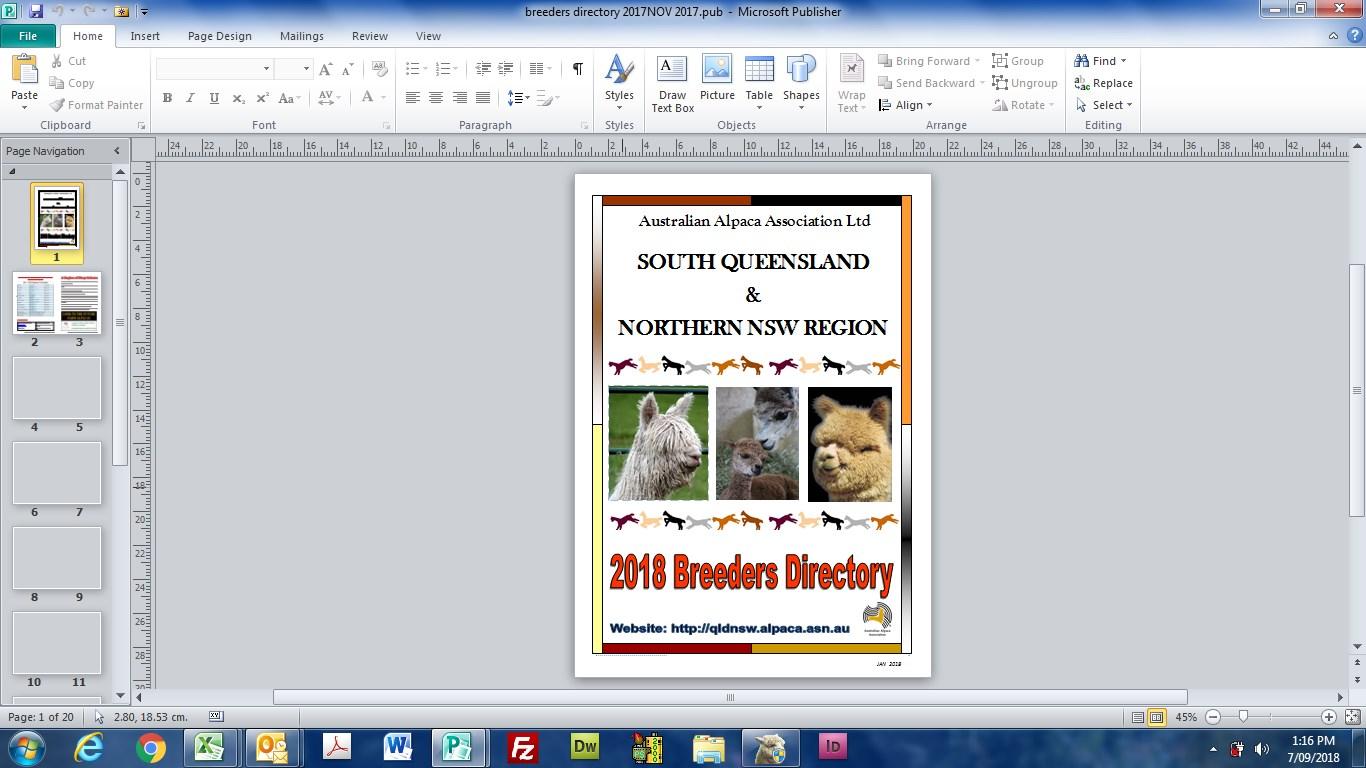


The new Breeders Directory is about to be published. If you have recently changed your address Go to eAlpaca and update your details so our fist publication will be accurate. The Breeders Directory will be used as advertising at the up coming Displays at North Coast National and the Bangalow Show
~ SUMMER Edition 2024 ~ Alpaca Advocate ~ SUMMER Edition 2024 ~ 9 Paralysis tick “Astra” continued
ABC - Antenatal, Birthing and Cria Care,
by Dr Ewen McMillan and Carolyn Jinks
Book Review
by Michelle Malt
This was one of the first alpaca reference books that I purchased, at a workshop presented by Carolyn Jinks at Longueville Park Alpacas, probably in early 2006. At that stage I had a small herd and our first cria had been born – thankfully with no complications. The one piece of advice I clearly remember from Carolyn’s presentation was to KEEP RECORDS. The other was not to interfere with the mother and cria to allow them to bond.
Over the years, and with a range of different experiences I’ve learned when it is necessary to intervene. This booklet is still my ‘go to’ reference when a cria is born, to refresh my memory on the appropriate rate of weight gain, the signs of a premature or dysmature cria, and on a few occasions, for guidance on bottle feeding a cria.
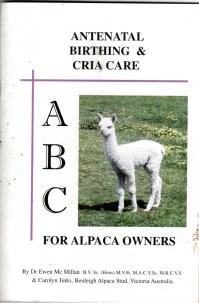
We have had to bottle feed on a few occasions over the years, and it was helpful to have information on the amount that a cria needs to consume (when you are hand rearing) and the suggested feeding intervals.
This book was published in 2005, and while there are now new products available, the list of equipment needed for bottle feeding, and the examples for a feeding regime are great references.
This book is a compact A5 size booklet, easy to flick through to the relevant information, and the photographic illustrations are excellent.
with permission from the authors to reprint,

~ SUMMER Edition 2024 ~ Alpaca Advocate ~ SUMMER Edition 2024 ~ 10 South Queensland & Northern NSW ~ deadline ~ 31st MAY 2024.
Alpaca Dynamics are the only stockists of this booklet,
and it is included as one of the items in their Alpaca Birthing Kit





Advocate
Alpaca
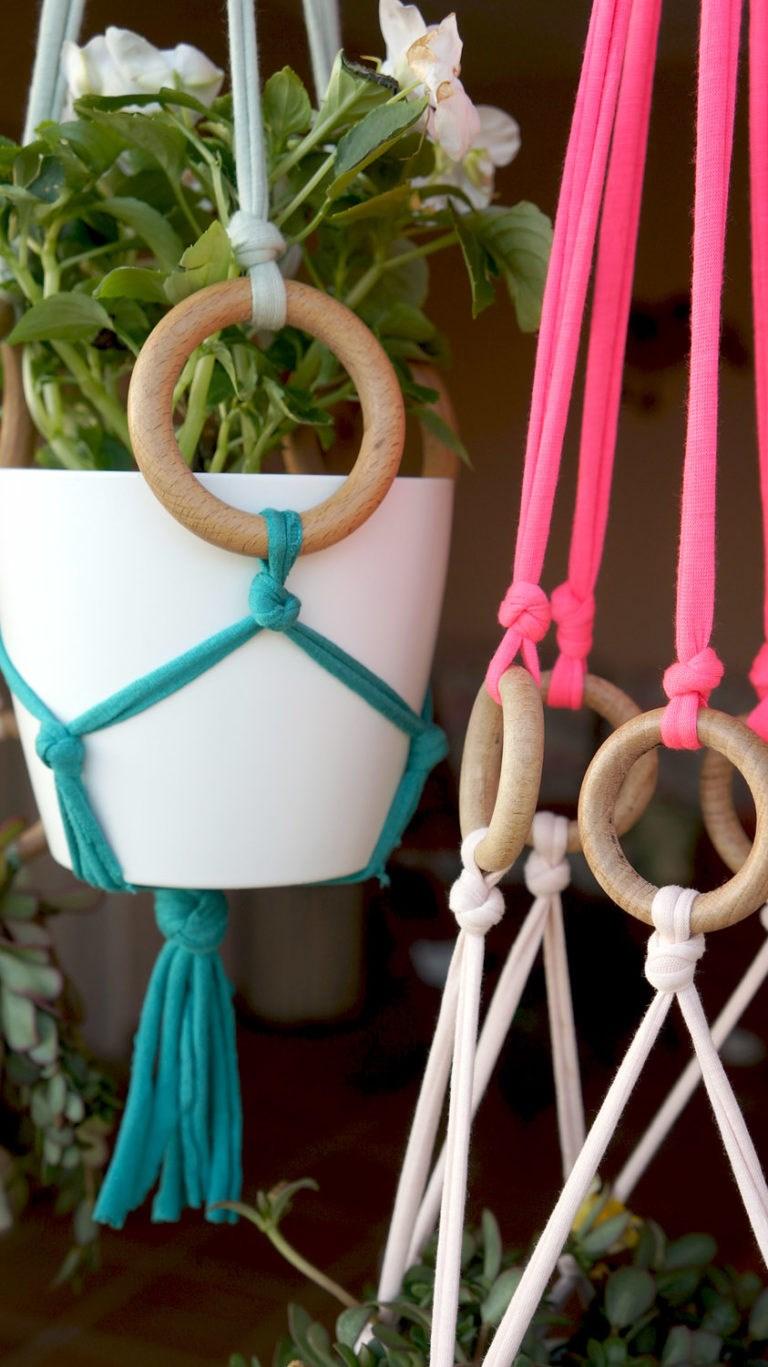

This simple pattern uses wooden curtain ringscoloured clothes line or coloured twine.
Easy! Just be creative use knots or be more adventurous and use a variety of traditional macramé knots.
Our regular herd sire feature needs up dating
Please send your list to cpg4764@bigpond.net.au
Name
Stud
IAR
Colour
Sire stud fee
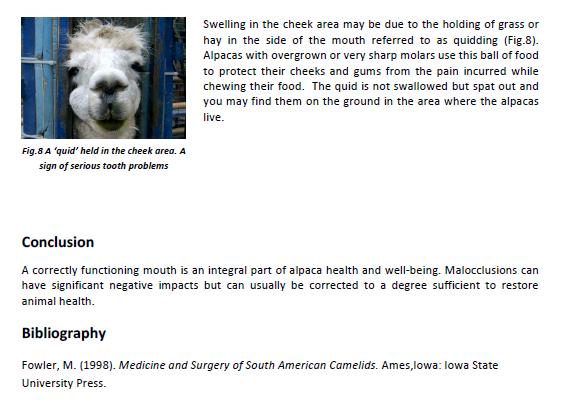
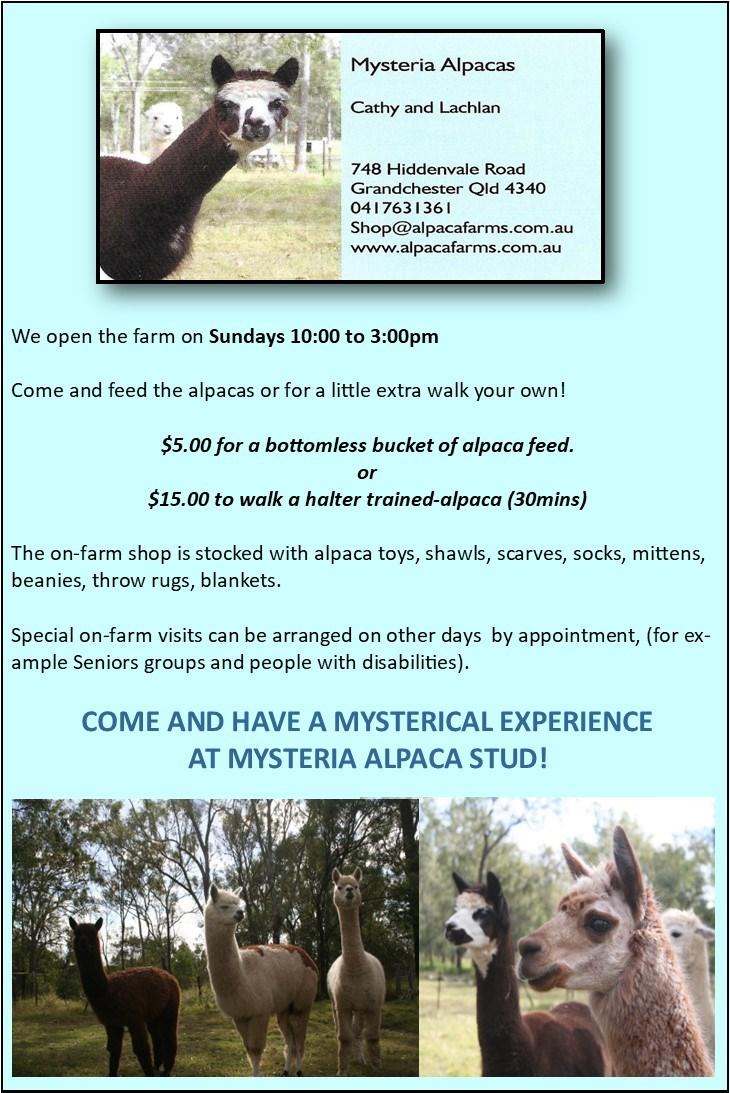
VALUE ADD YOUR BUSINESS FOR FREE
Photo in jpeg
~ SUMMER Edition 2024 ~ Alpaca Advocate ~ SUMMER Edition 2024 ~ 13
Heat Stress in Alpacas
Heat stress is a serious risk to animals during hot Australian summers. Groups at particular risk include young crias, full fleeced animals and late term pregnant females. However as alpacas vary in their individual tolerance to heat and humidity it is wise to monitor all animals carefully on hot and humid days.
Heat stress occurs when an animal’s thermoregulation mechanisms fail to keep the bodies temperature within acceptable levels. Average body temperature is around 37-39°C, an alpaca may cope with a short term rise but a prolonged temperature higher than 40 degrees can have serious consequences, including organ and central nervous system damage.
Alpacas seem to cope with short term heat (a hot afternoon for example) reasonably well but prolonged hot and/or humid days and warm nights can cause serious problems.
Prevention
Shearing – shorn animals are less susceptible to heat stress as the heat is not trapped close to the body.
Shade & Shelter
Other preventative measures include providing shelter from direct sun, shady trees are great as is a shelter with plenty of air movement.
Water
Efficient thermoregulation depends on adequate water intake; liquids lost through evaporation
(one of the bodies’ thermo-regulating mechanisms) must be replaced. It is essential to provide plenty of fresh clean water and ideally there should be more than one watering point so subordinate animals are not prevented from drinking whenever they need to. Also ensure there is a water source low enough for crias to get a drink.
On hot days make sure animals don’t have to walk too far to get water. I restrict my herd to a smaller paddock with plenty of trees, a shelter and several watering points. I provide access to the bigger paddock in the late afternoon when it starts to cool down.
Feeding
Grazing habits may change during summer and hot weather. The herd may rest during the heat of the day and graze at dusk, dawn and throughout the night. If you are hand feeding aim to do this before 6:30am and after 7pm when it is cool.
Cooling
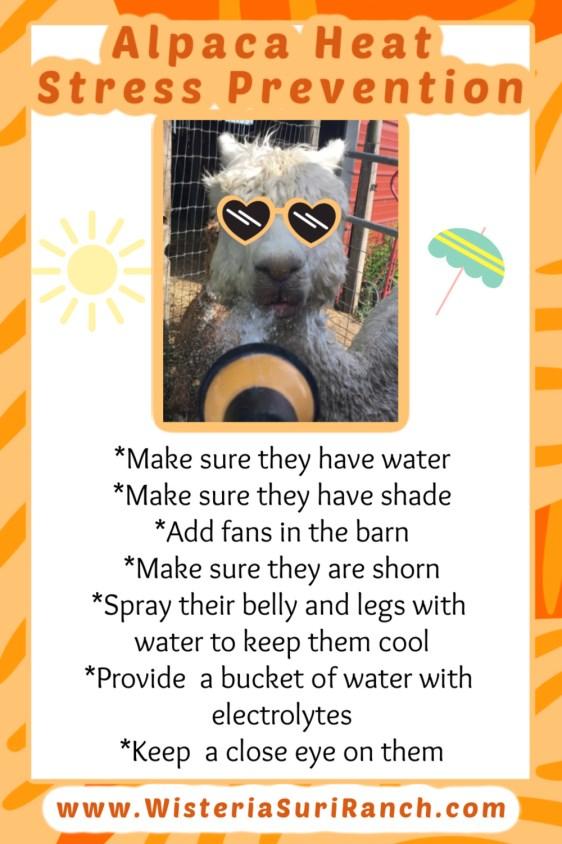
The belly, legs, armpits & under their tail are the areas most effective for cooling as they are relatively free from fleece, the skin is thin & sweat glands are most accessble.

~ SUMMER Edition 2024 ~ Alpaca Advocate ~ SUMMER Edition 2024 ~
Courtesy Wisteria Suri
Article
submitted by Michelle Malt
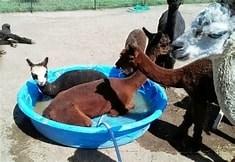
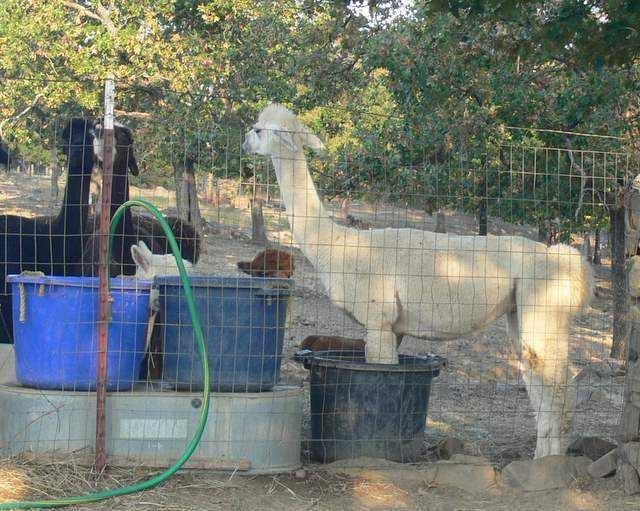
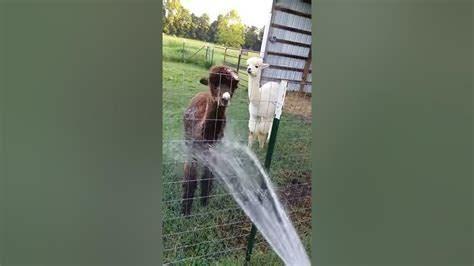
Providing a way for your alpacas to cool off on demand is very useful. If using a dam be mindful of the extra risk from Liver Fluke and fleece rot from too much standing or sitting in water. Other cooling options include a kiddie wading pool and sprinklers. Make sure water is changed fairly regularly in wading pools as it gets dirty when the animals walk through it and you don’t want them drinking contaminated water. Even simply wetting the ground can give the animals a chance to wet their bellies and cool down.
Symptoms & Treatment
Some general signs of heat stress include:
• panting
• increased respiration rate
• increased water intake
• loss of appetite
• listless/lethargy
Every animal responds differently when they are suffering from heat stress. The earlier the condition is detected the easier it is to treat. If you observe an animal acting differently to normal it is worth checking out. The most common clinical signs include lying in the paddock, reluctance to move, and a rim of froth, drool or saliva around the lips. More serious signs include breathing with an open mouth, stiffness due to muscle soreness and in-coordination. Heartbeat and body temperature may be elevated.
If caught early treat the alpaca with cold water baths, alcohol baths, ice bags in the armpits or in extreme case cold water enemas. If giving cool water enemas make sure a very low water pressure is used and the water exits at the same rate it enters. Also be aware that this treatment will give a false rectal temperature reading for a period of time. Dr Fowler recommends only using a cold water enema if the animal’s temperature is above 42°C. Always contact your Vet if you think your animal is suffering from heat stress. They can advise on a course of action and treat the effected animal(s) both short term and for any of the long term complications caused by prolonged heat stress.



~ SUMMER Edition 2024 ~ Alpaca Advocate ~ SUMMER Edition 2024 ~
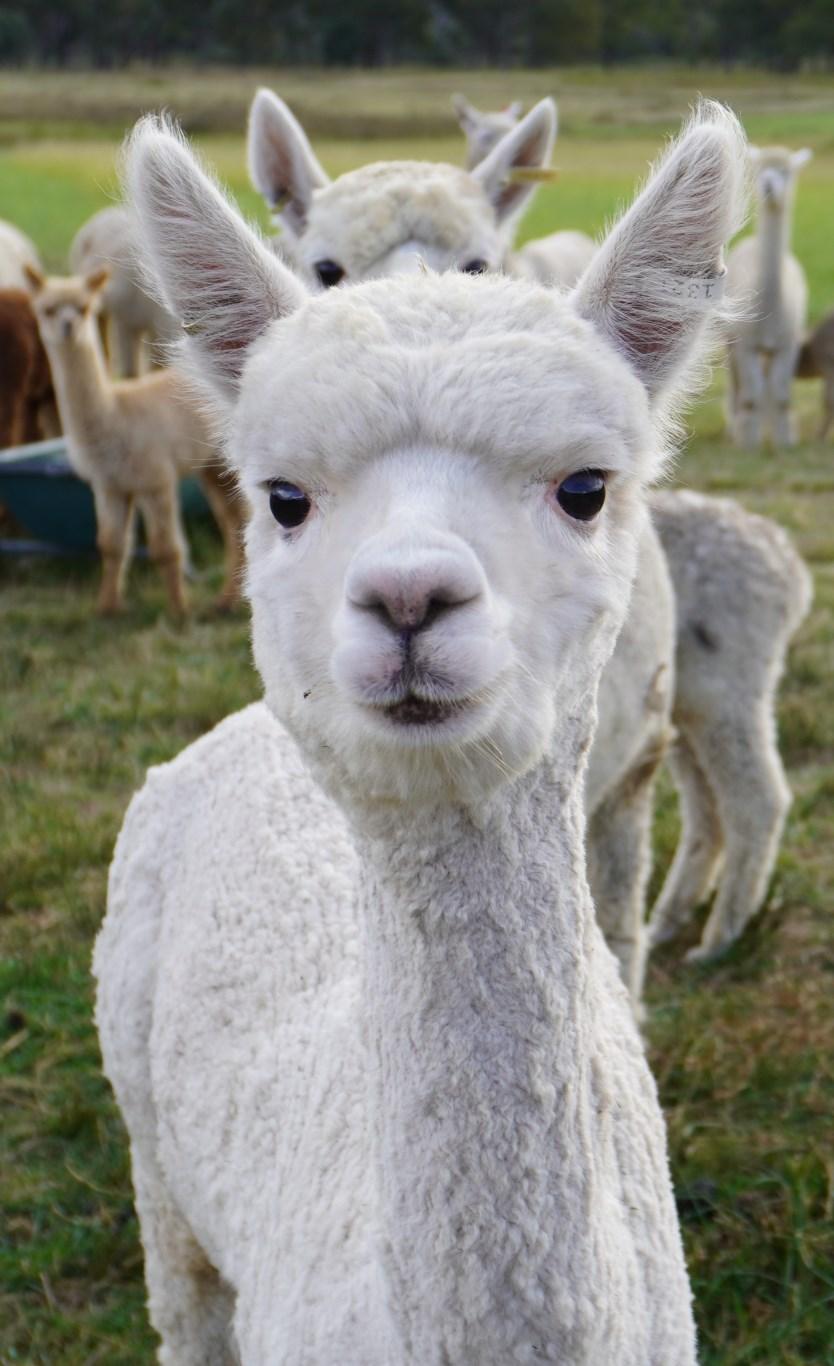

I can see you!!


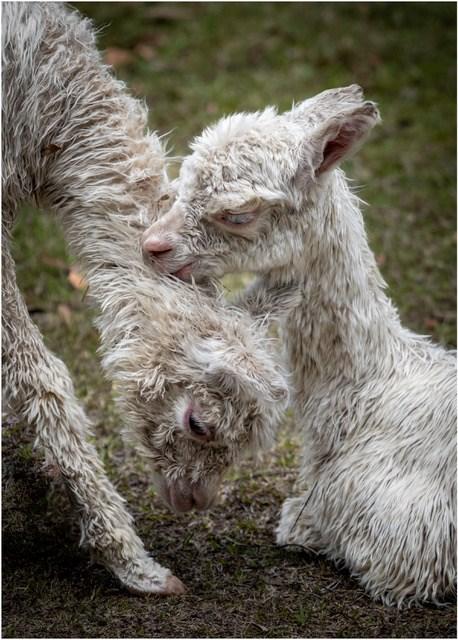
Come and play!
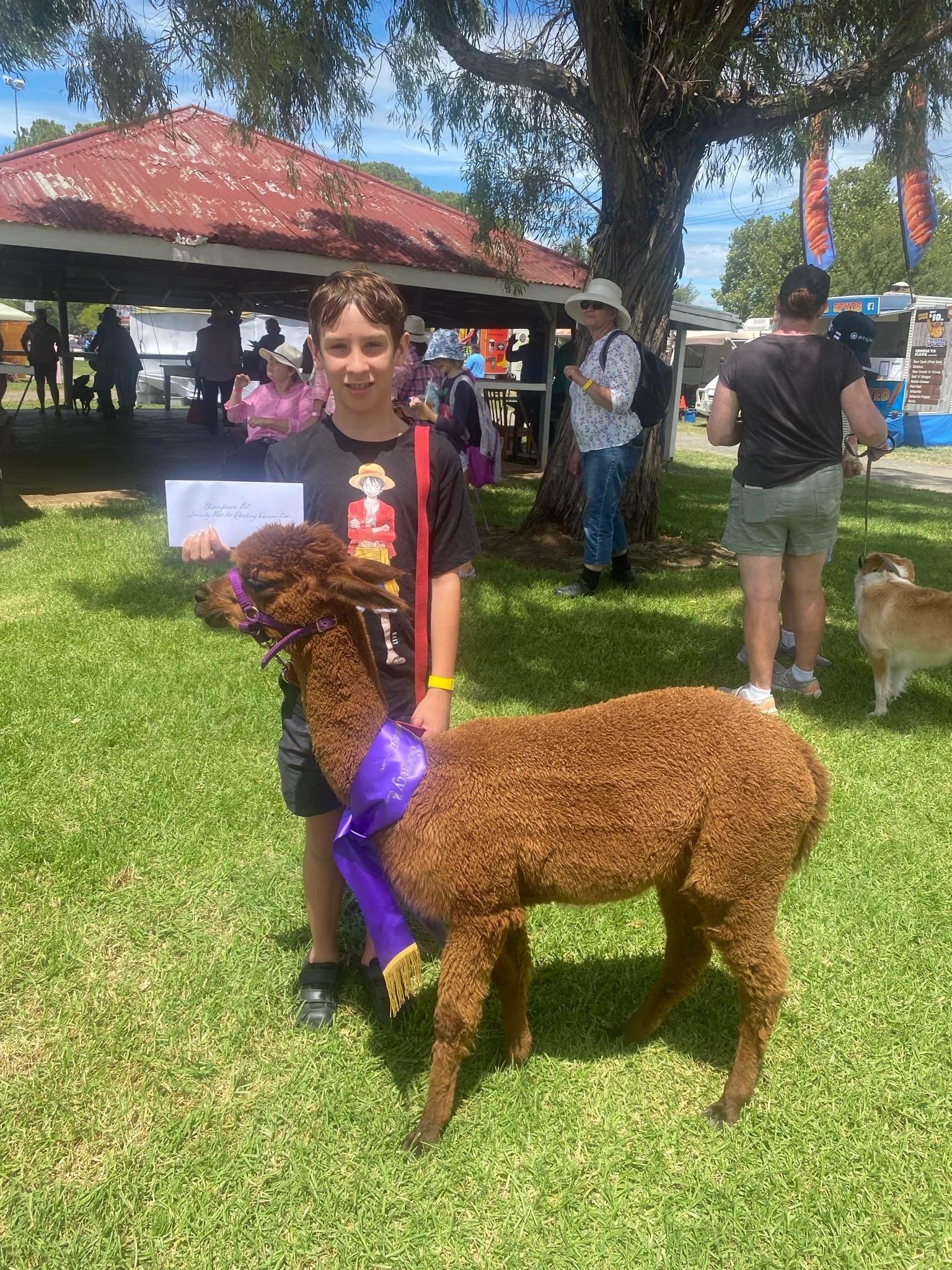
CHAMPION PET AT ALLORA SHOW
Congratulations Asher and Chocolate! From Long Neck Farm


~ SUMMER Edition 2024 ~ 16
As the NLIS implementation is moving ahead for all alpaca owners, several questions have been asked to assist in the promotion of this important program.
At the recent National show answers to most of these questions were addressed.
Q: The recently released Victorian Agriculture Biosecurity Edition1 states that alpacas are exempt from NLIS registration. Is this just relevant to Victoria?
A: At this stage NLIS has not been mandated in any state for alpacas
Q: Male alpacas born on farm that are going to be sold – do they need to be NLIS registered?
A: Eventually. (Currently cannot enter NLIS details unless registered)
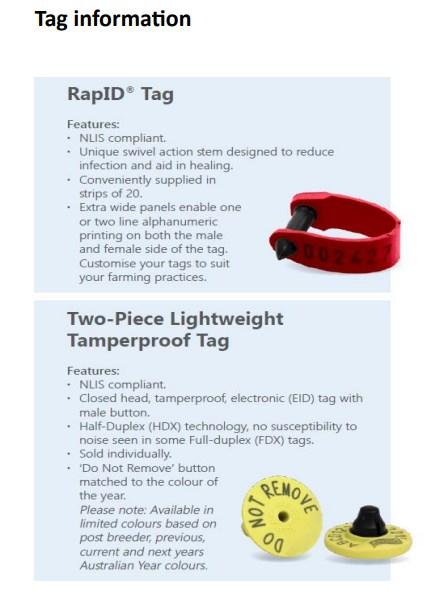
Q: Pink post breeder tags in an animal that is purchased, is it the vendors responsibility to insert the “pink tag”? If sold subsequently does the same eartag remain with that animal?
A: Yes. A post breeder eartag is used when the animal has not been bred by the current owner/ or on the property. If you purchase an animal that does not have an NLIS tag you would apply a “pink tag”
Q: What is the minimum number of Rapid tags available for purchase, because at the end of that year any excess would no longer be valid?
A: Rapid tags must be ordered in multiple of 20.
Q: Therefore, it would appear that the better option, more economical and less confusing is to use only the “yellow” tags?
A: Correct
Q. Why are there two separate applicators? It would be less confusing to have one that is universal.
A: Unfortunately, a universal applicator is not available
Q: Do animals at have to have the NLIS tags or are the brass IAR tags still acceptable shows?
A: IAR tags are still acceptable
Q: Is there a final date for phasing out the brass IAR tags in favour of the NLIS tags?
A: No. Decommission date 29th February 2024
IT IS ILLEGAL TO APPLY AN NLIS TAG FOR ANOTHER SPECIES (ie, CATTLE OR SHEEP) IN ALPACAS
Watch this space for further information as it comes to hand. Liz Coles NLIS Co
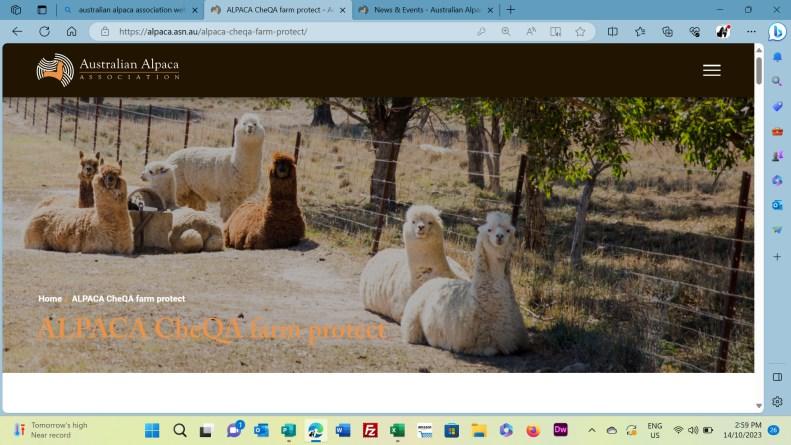
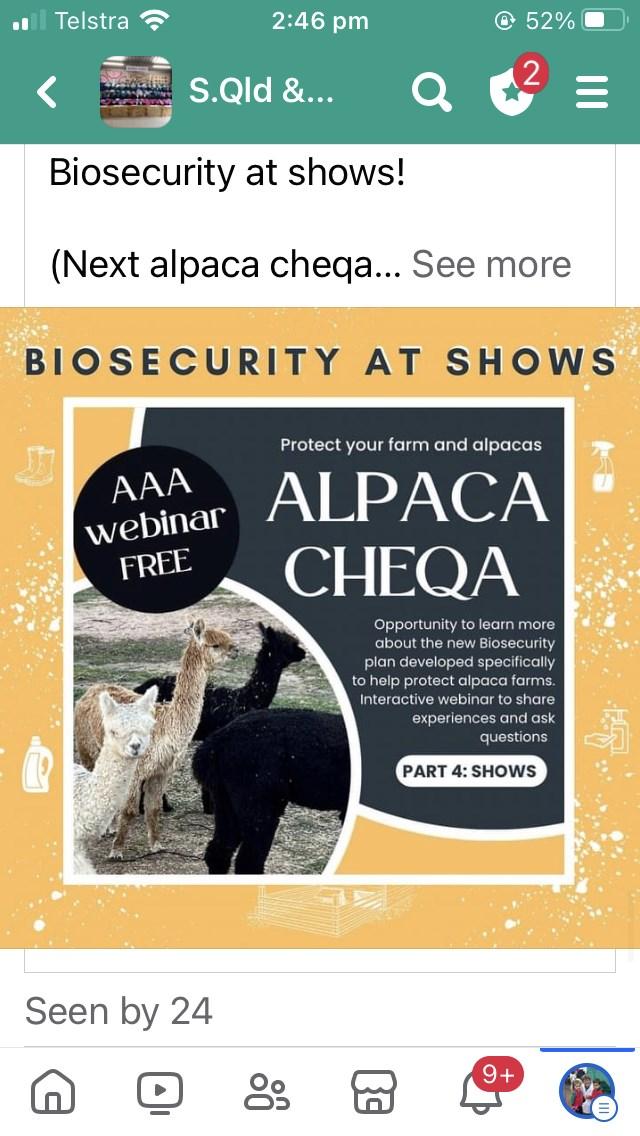
CHECK OUT ALPACA CHEQA
Biosecurity for Showing: All stud entries for 2024 National show must have CHEQA Status. 2025 so do all studs who enter AAA shows.
Go to AAA WEBSITE - LOGIN
Search –Alpaca CHEQA


~ SUMMER Edition 2024 ~ Alpaca Advocate ~ SUMMER Edition 2024 ~ 17
Implementation of NLIS – FAQs!
~ SUMMER Edition 2024 ~ Alpaca Advocate ~ SUMMER Edition 2024 ~ 18
NLIS / IAR Tag Update
NLIS Australia’s National Livestock Identification System Information sheet NLIS Combines the elements to enable the lifetime traceability of animals.
Livestock are identified by a visual or electronic eartag/ device.
All physical locations are identified by means of a PIC.
All livestock location data and movements are recorded in a central data base.
The NLIS database is concerned with animal movements. You can look at the NLIS website at www.nlis.com.au. Why? The AAA have been trying to have alpacas included in the NLIS for greater than 10 years.
This work has now come to the stage where Alpacas have been prioritised by the government. Legislation: At this stage there are no States/Territories that have legislated the requirement for Alpacas to be in NLIS however this is expected to change in the coming years.
Members have the opportunity to use regions applicator
Easy to use the applicator gives you opportunity to ear tag a small herd.
Email : cpg4764@bigpond.net.au to arrange your loan. Forms will be sent to you to sign and delivery and return will be negotiated.
Easy Keyhole Scarf
100g 8 Ply– size 6 Needles ( Yarn ply and needles can change)
1. Cast on 24 stitches
2. Knit 20cm
Divide stitches for keyhole
3. K12 stitches place rest stitches (12) on holder
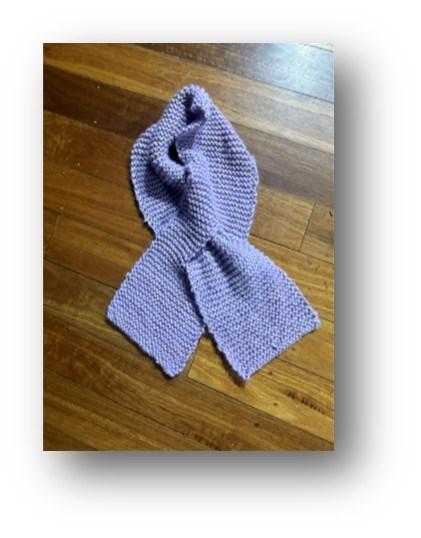
4. Turn work and continue on 12 stitches Knit for 10cm. Cut yarn and place onto second stitch holder
5. pick up the 12 stitches on first holder attach yarn and knit for 10cm. Make sure garter ridges match up evenly on both sides (This completes the keyhole)
6. Bring all stitches together Knit across picking up 12 stitches on holder (24 stitches)
7. Continue knitting unit scarf measures 100cm or desired length.
8. Bind off loosely and tidy yarn ends
~ SUMMER Edition 2024 ~ Alpaca Advocate ~ SUMMER Edition 2024 ~ 19




Fibre Testing
Members have the opportunity to test their herd fleece any time of year by using the Regions Fibre Lux Machine.
Easy to use the machine gives you an on the spot idea of your animals micron. Good to have before shearing!
Email : cpg4764@bigpond.net.au to arrange your loan. Forms will be sent to you to sign and delivery and return will be negotiated
Shearers
The AAA Website also has a list of shearers on the home page. qldnsw.alpaca.asn.au

Micron Man Pty Ltd
Email for more information
microman@iinet.net.au
New England Fibre Testing Service
Walcha 02 6777 2122
Australian Wool Testing Authority (AWTA)
Geelong office 03 5277 9842
Melbourne office 03 9371 2100


~ SUMMER Edition 2024 ~ Alpaca Advocate ~ SUMMER Edition 2024 ~ 20
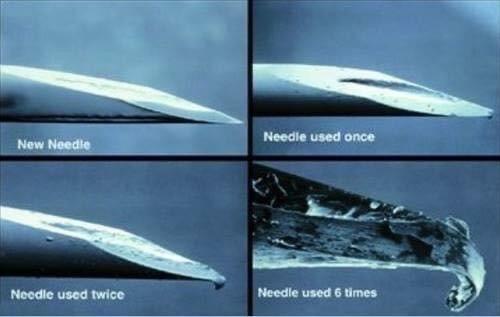
Shearing is a time for immunisation change needles regularly
WHY SHOW?
Alpaca shows serve those same purposes for breeders: a chance to get together, see progeny from different herdsires, market alpacas for sale, show off the products of breeding programs, and find out in the show ring how experienced, expertly-trained judges view and place the alpacas.
Benefits of showing Alpacas
Showing alpacas at competitions and events provides several benefits for both the alpaca owners and the industry as a whole. Some of the key reasons and advantages include:
1. Quality Improvement: Participating in shows allows breeders to compare their alpacas with others and assess the quality of their animals. Judges evaluate alpacas based on their conformation, fleece quality, and other breed-specific traits. This feedback helps breeders make informed breeding decisions to improve the overall quality and genetics of their herd.
2. Marketing and Networking: Alpaca shows provide an excellent platform for breeders to showcase their animals and connect with potential buyers, other breeders, and industry professionals. These events offer valuable networking opportunities to exchange ideas, learn about new advancements in the industry, and form collaborations.
3. Education and Public Awareness: Alpaca shows serve as an educational platform for the general public, raising awareness about alpacas and their unique characteristics. These events help promote the alpaca industry, inform potential alpaca owners about the benefits of alpaca farming, and showcase the versatility and value of alpaca fleece.

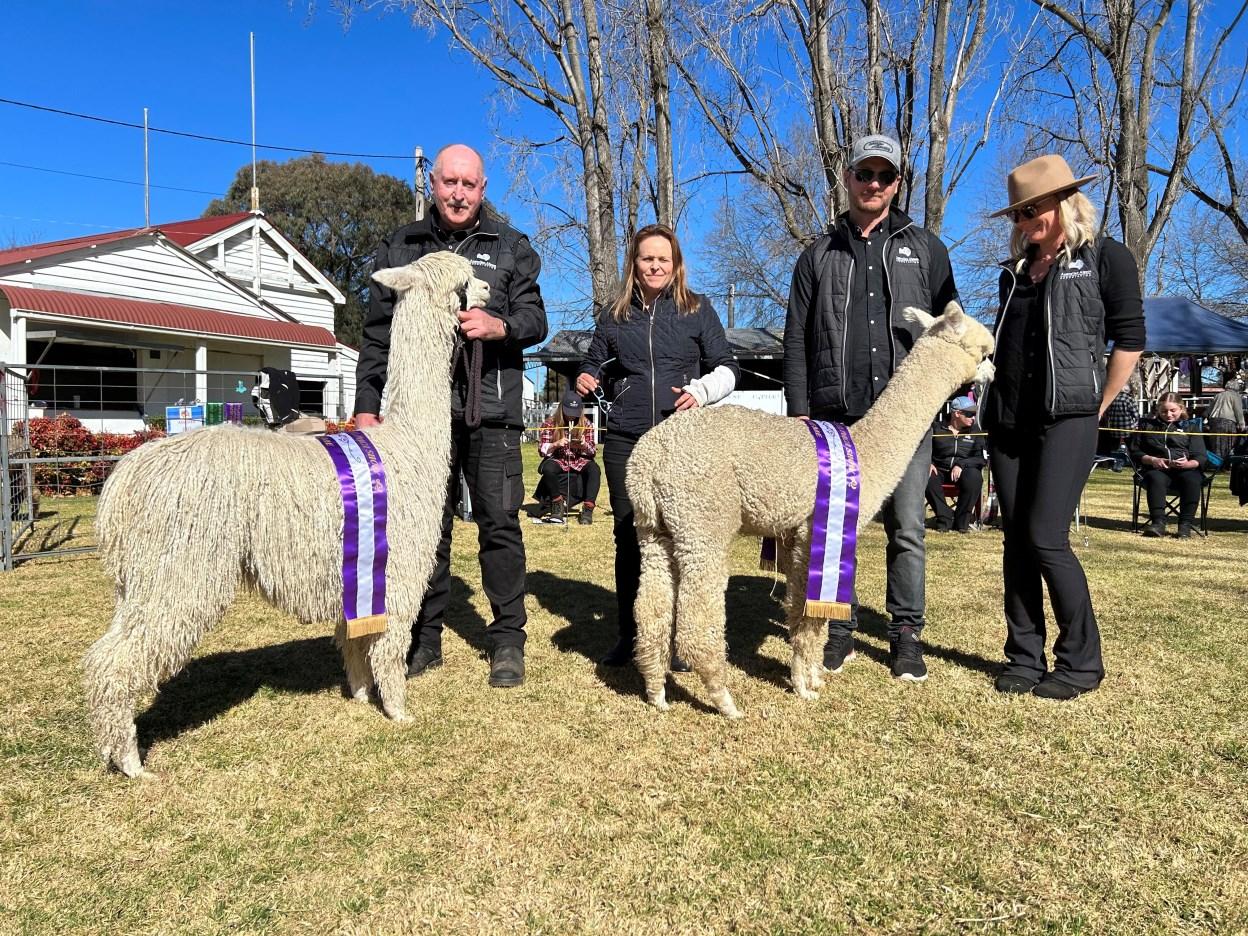
4. Awards and Recognition: Winning awards at prestigious alpaca shows adds credibility to a breeder’s program and increases the value of their animals. Success in competitions can enhance a breeder’s reputation and improve the marketability of their alpacas and their fleece products.
5. Community Building: Alpaca shows bring together breeders, owners, and enthusiasts, fostering a sense of camaraderie within the industry. These events enable participants to share their passion for alpacas and engage in a friendly competition, ultimately contributing to the growth and development of the alpaca community. In summary, showing alpacas serves multiple purposes, including quality improvement, marketing, networking, education, and community building. Participating in these events can greatly benefit alpaca breeders and the industry as a whole.
TOOWOOMBA
NOTE! Updated Show Rules availableon AAA Web site.
APRIL 18/20 2024
Entries close 14th March
GINEAS Show
JUNE 12th 2024
GRAFTON SHOW
Dates clash with Toowoomba!
Grafton Show for 2024 postponed.
~ SUMMER Edition 2024 ~ Alpaca Advocate ~ SUMMER Edition 2024 ~ 21

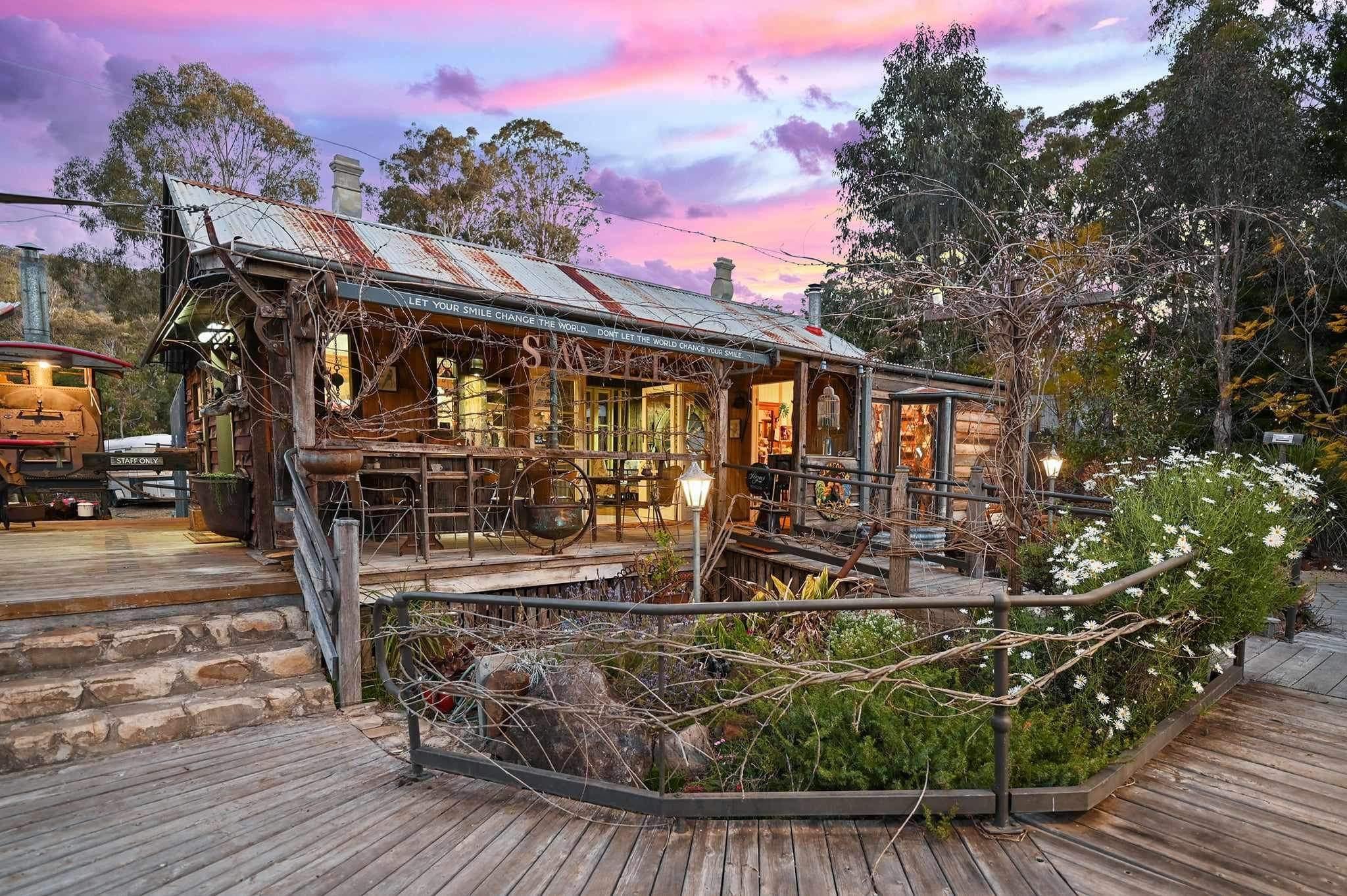

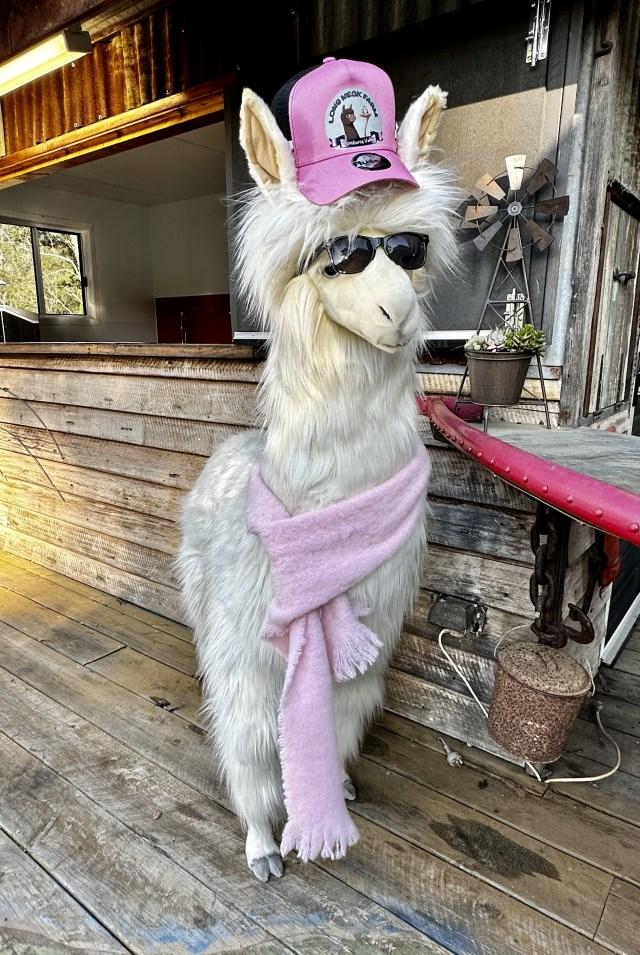
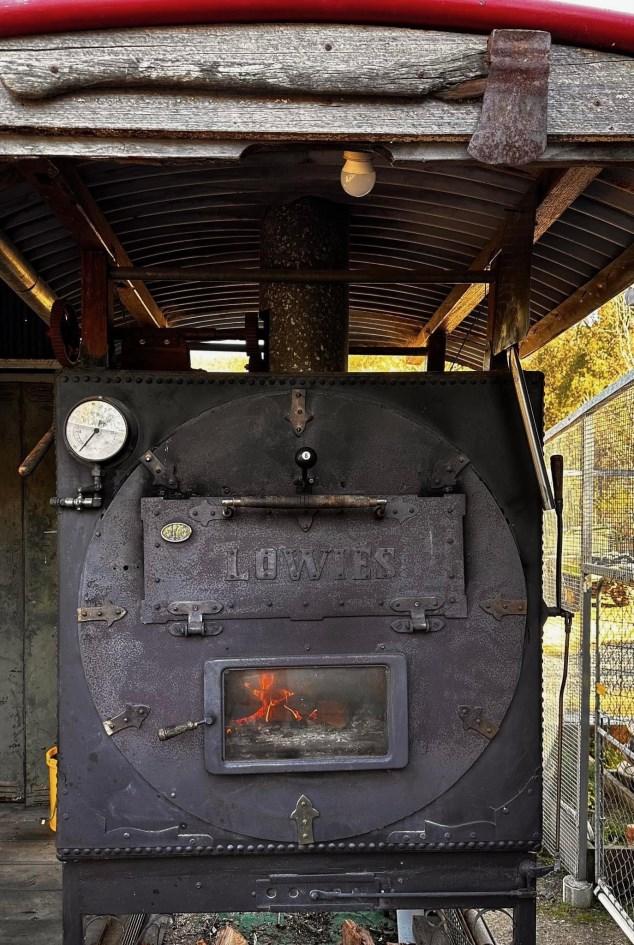
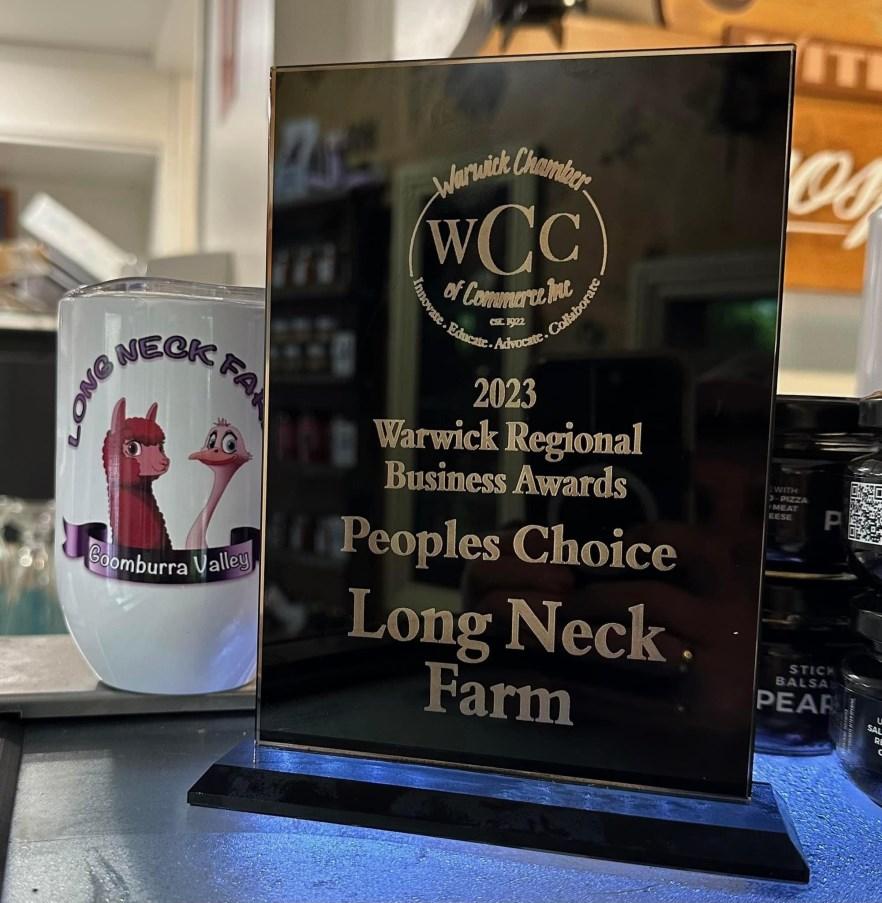


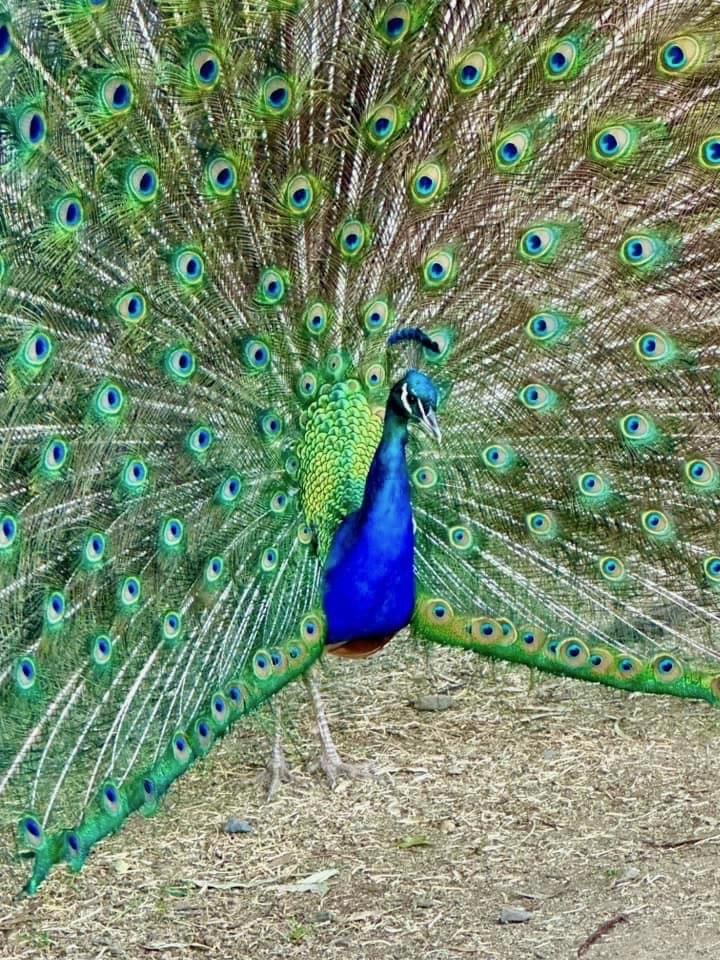


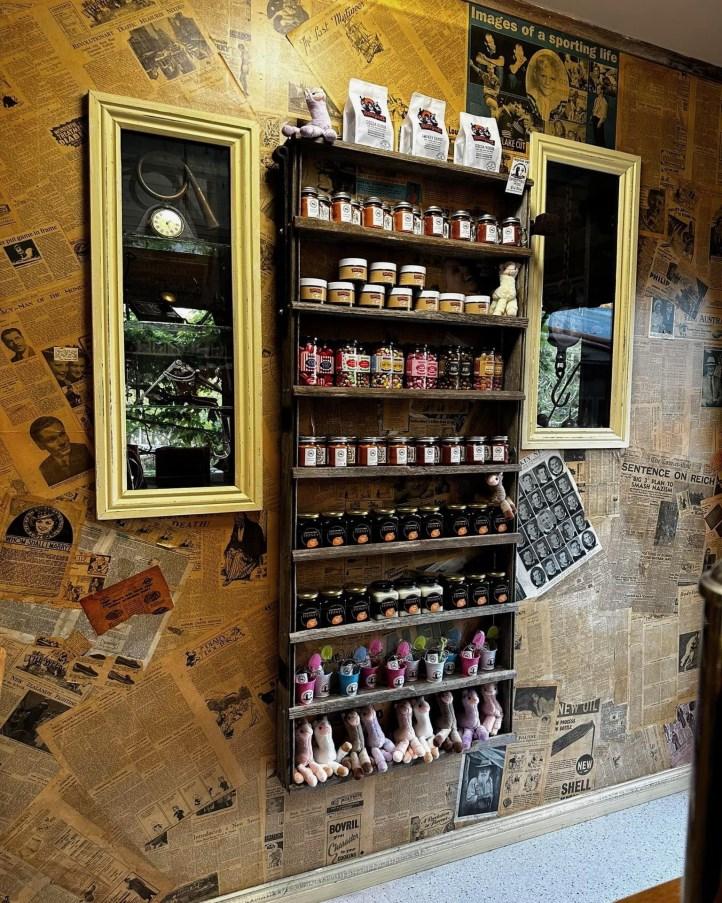
~ SUMMER Edition 2024 ~ Alpaca Advocate ~ SUMMER Edition 2024 ~ 22 LONG NECK FARM 2006 INVERRAMBSAY RD GOOMBURRA 4362 COME FOR A VISIT 0487766211



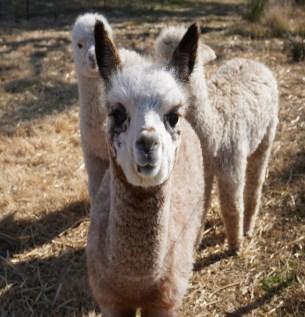

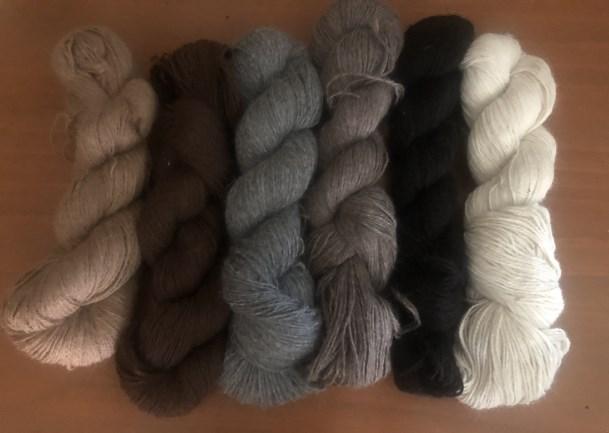
Tex~Paca ~ all to do with the use of Alpaca fibre.
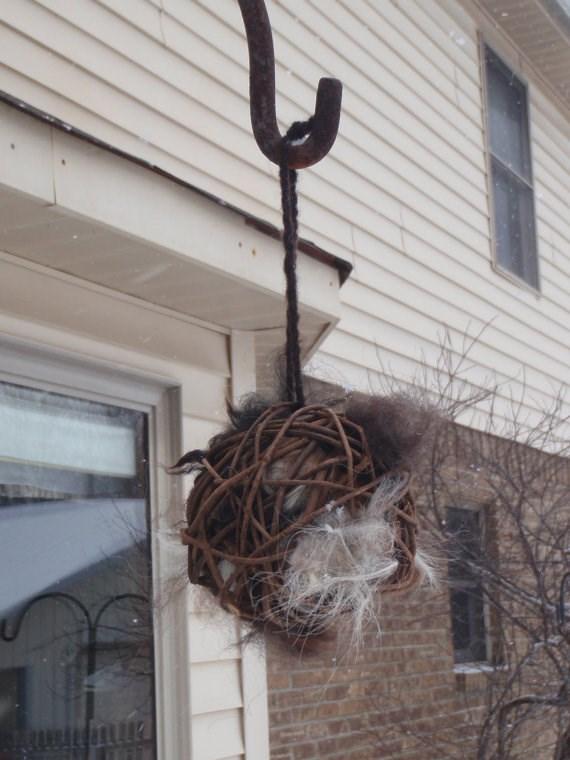
Bird Nesting Balls
Make a bird nesting ornament to hang in the garden .
Suggestion: Use any ball made of grape vine or commercial bamboo balls from the cheap shops or make wire netting balls, stuff with coloured fibre and hang in the garden for birds to make their nests EASY!

~ SUMMER Edition 2024 ~ Alpaca Advocate 23
Welcome to our new members RAE OFLYNN MOLE RIVER NSW 2372 NIGEL GARVEY BONVILLE NSW 2450 LORRAINE RAVEN CLARENZA NSW 2460 PHILLIPINE BODINEAU BUCCA NSW 2450 EILEEN WILSON THORA NSW 2454 ALAIN NASPE WIEAMBILLA QLD 4413 CECILIA CAMPBELL STANTHORPE QLD 4380 TINA MAWHINNEY ULMARRA NSW 2460 TAMMY JEANS CHINDERAH NSW 2487
~ SUMMER Edition 2024 ~ Alpaca Advocate ~ SUMMER Edition 2024 ~ 24
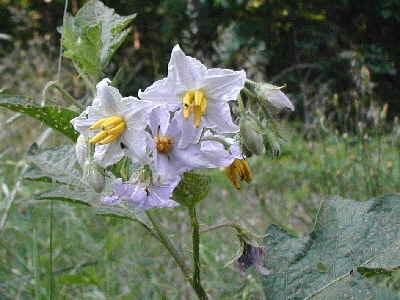
Weeds an everlasting problem! Like worms, Farmers keep under control, they never go away!
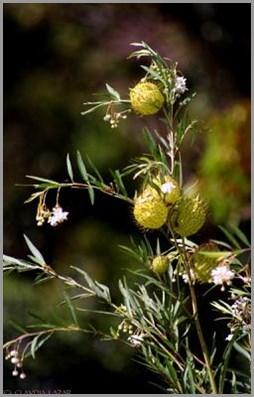
Autumn is a prime time for weeds to raise their ugly heads and start causing problems. Most alpacas will not eat poisonous weeds if there is plenty of feed on the ground for them. However, they have been know to accidentally eat weeds when grazing on grasses nearby. Some weeds are so deadly it only takes a leaf to kill an alpaca like Oleander and other weeds build up poison in the body over years like Deadly Nightshade, fire weed and balloon cotton (wild cotton) However, when we have wet weather - followed quickly by warm / sunny conditions ...... this is when the weeds start coming up.
What can you do about the weeds?
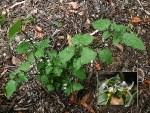
Walk paddocks after this type of weather pattern and hand pull out any weeds. When removing weeds, be careful not to allow seeds to drop. Carry large plastic bags, pull weeds including the roots, place in bag and then let them die in the bag in the sun, before you put into the bin - therefore not allowing weed spread thereafter. Do not burn weeds as sometimes this can cause the seeds to be spread and then germinated after another source of rain.
If you have a large weed problem, herbicide and then slash 14 days later. Some weeds are poisonous after they are dead - so you may need to remove them before slashing.
Regular slashing, leaving leaf litter on the ground to help stop the regrowth of weeds.
When not enough feed on the ground make sure that you are supplementary feeding your livestock morning/night and offering good quality hay at all times.
What type of weeds affect alpacas?
Anything that a horse can't eat, an alpaca can't eat too.
Some of the nastier weeds include: Blackberry Nightshade, Mother of Millions, Balloon Cotton, Rattlepod, Verbena, Ground Cherry, Rubber Vine, Cape Tulips, Pheasant's Eye.
Some common garden plants that end up in paddocks from seed spread by birds that are very poisonous include: Oleander, Foxglove, Azaleas, Rhododendrons and Daphne.
Some vegetables that pop up in paddocks that are also poisonous include: Potato and tomato plants and leaves.
Don't think that you are free of weeds in your paddock ever - as birds are the main source of these arriving on your property. Birds eat the plants, fruits and seeds of weeds and then deposit them on your farm as they travel it or fly over in their dung. Some weeds are just a nuisance such as tobacco bush, Parramatta grass,
~ SUMMER Edition 2024 ~ Alpaca Advocate ~ SUMMER Edition 2024 ~ 25
Horse Nettle
Deadly Nightshade
Balloon Cotton
~ SUMMER Edition 2024 ~ Alpaca Advocate ~ SUMMER Edition 2024 ~ 26

Rain scald, also known as dermatophilosis, is a skin infection that can affect alpacas. Here are some key points about rain scald in alpacas:
Cause: Rain scald is caused by the bacterium Dermatophilus congolensis. It results in severe skin infections characterized by the formation of crusty scabs containing the microorganism. These lesions are most commonly found on the back of alpacas, and the affected wool may appear wet and clumped, which can be removed in clumps. The underlying skin often becomes reddened and weeping12 .
1. Risk Factors: Rain scald is more common in young or immunosuppressed alpacas or those chronically exposed to wet conditions
Symptoms:
• Matted hair
• Crusty lesions
• Wart-like growths with a wide distribution
• Prevention and Care:
• Provide Adequate Shelter: Alpaca fiber is not waterproof, and excessive exposure to rain can lead to hypothermia, reduced fiber quality, and rain scald. Ensure that alpacas have access to shelter to escape the rain.
• Maintain Dry Conditions: Keep alpacas in areas where they are less likely to get wet.
• Prompt Treatment: If rain scald occurs, seek veterinary advice promptly. Treatment may involve antibiotics and managing the affected areas. (Many breeders have used Zinc Cream, NuStock, mixture 50% water and listerine)
Alpaca shelters
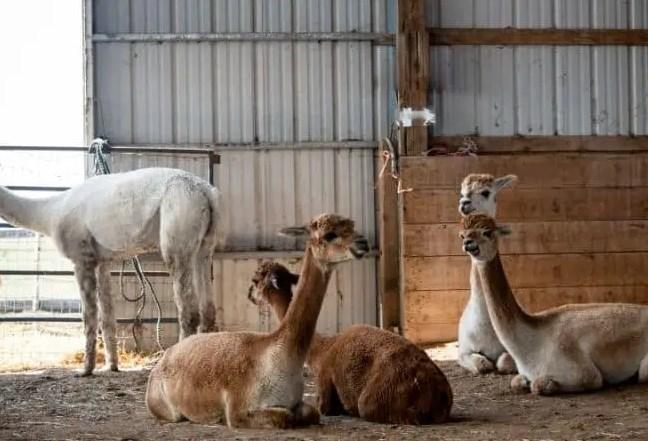
The type of shelter for an alpaca in hot weather will be the same as the shelter recommended for cold weather – a 3-sided covered shelter is sufficient. The only difference is what can be added to this shelter to keep it cool and offer a refreshing break for your alpacas during the hottest part of the day.
Many alpaca keepers place fans in the shelters to circulate the air. This can be done easily with a box fan and an extension cord, so long as you keep the fans high enough to prevent the alpacas from injuring themselves with the fan blades. I like to hang my box fans from the rafters of the barn to provide a circulating breeze.
Many keepers in hot climates also utilize sprinklers to keep the shelter and surrounding areas cool for the alpacas. Misting kits are another easy way to lower the temperature – a portable misting kit purchased from a hardware store can reduce the air temperature and is simple to set up with a regular garden hose.
The affect that weather has on alpacas is quite similar to the affect it has on sheep. Since sheep and alpacas can both have a thick wool fleece, they tend to be hardier in colder climates compared to other livestock animals.
~ SUMMER Edition 2024 ~ Alpaca Advocate ~ SUMMER Edition 2024 ~ 27



Summer — can be a dry time in the garden!
Summer can be a dry time in the garden.
Alpaca manure rates as a very good mulch and water retention gardening method.
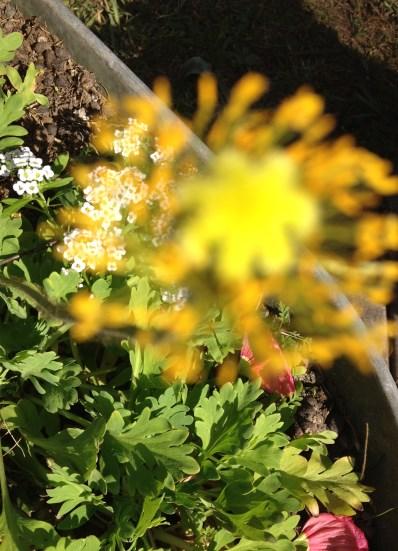

• Spread on the garden cover with mulch. Layers of mulch and manure work well to help feed plants and retain the moisture
Alpaca manure is having positive results in the garden around plants as Liquid Fertiliser.
Recipe:
• Place a 5L amount of alpaca manure in a 20L plastic bucket cover with water leave for 1 week and use the liquid to fertilise your vegetables and seedlings. NB add a lid to stop mosquito larvae.
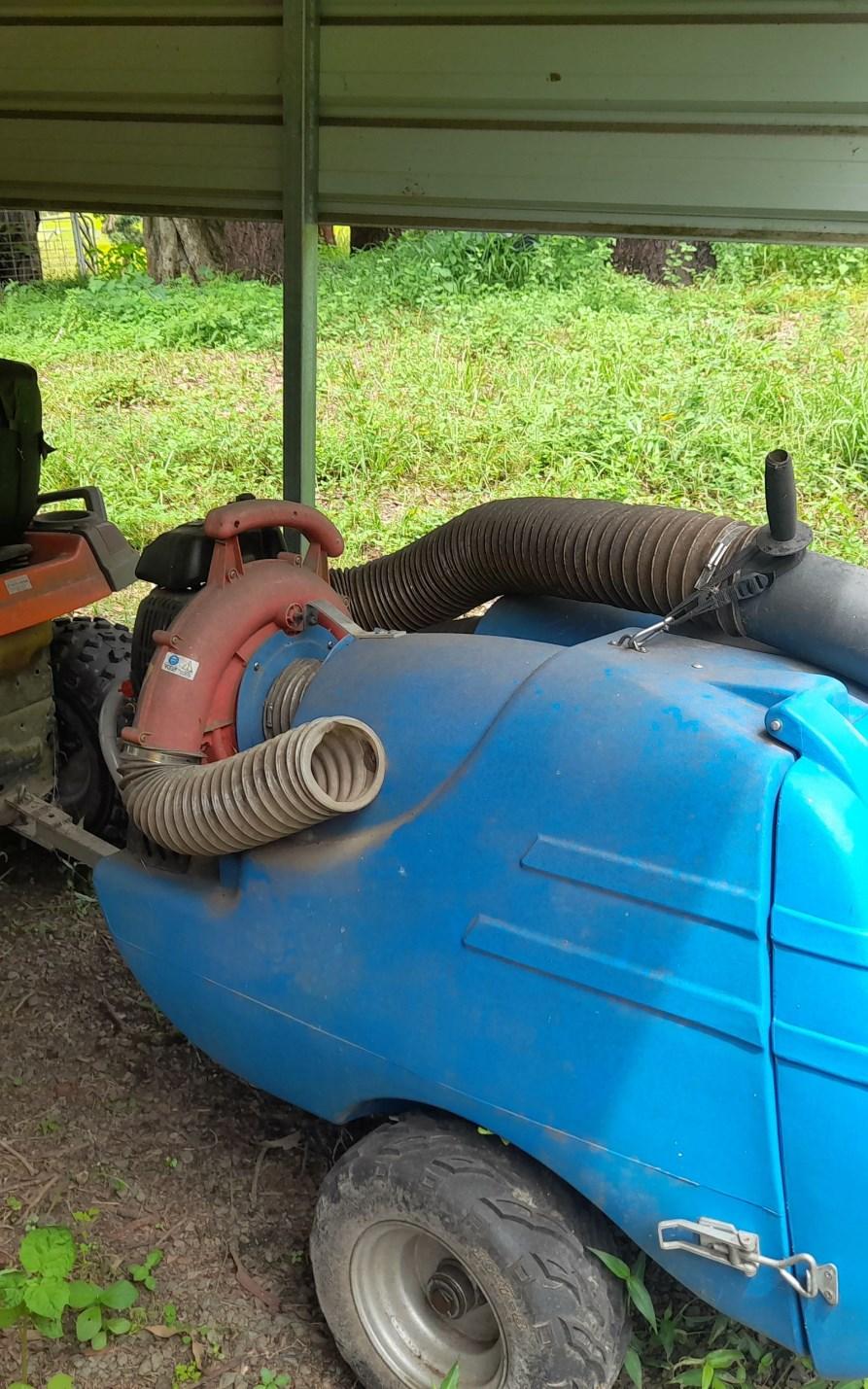
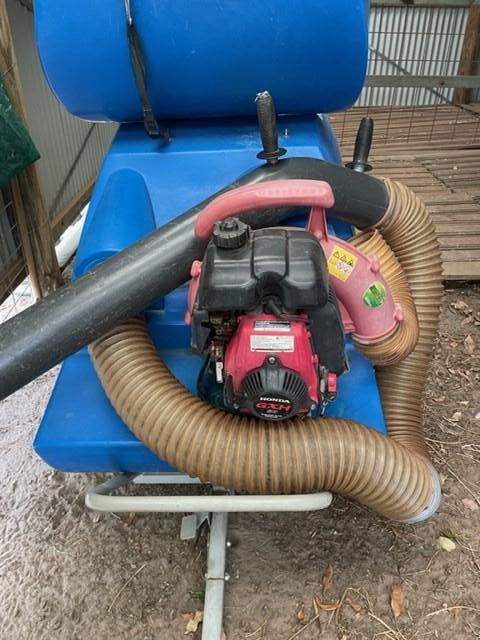
For Sale 1 Greystone Paddock Vac
Used to clean Alpaca poo from our paddocks and is 4 years old. Works the same as when purchased new. Serviced regularly. $2,000 including the Husqvarna Ride On. The seat is a bit torn up from use, but still works very well. Also serviced regularly. Can deliver for $500 to cover fuel to areas not too far out of Northern Rivers. Call to discuss.
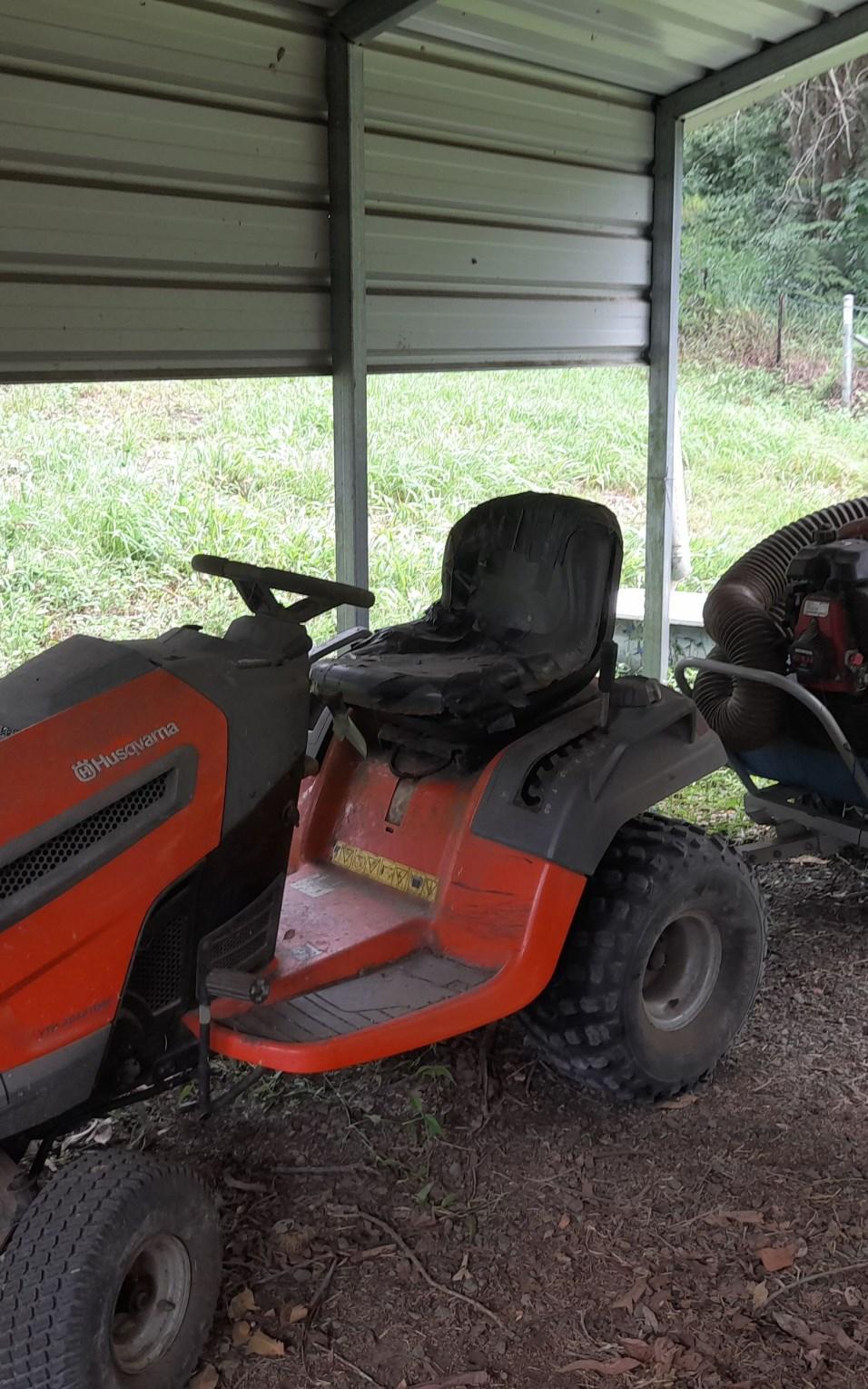
Eric Masters 0478 668 014.


Alpaca Advocate
~ SUMMER Edition 2024 ~ Alpaca Advocate ~ SUMMER Edition 2024 ~ 29
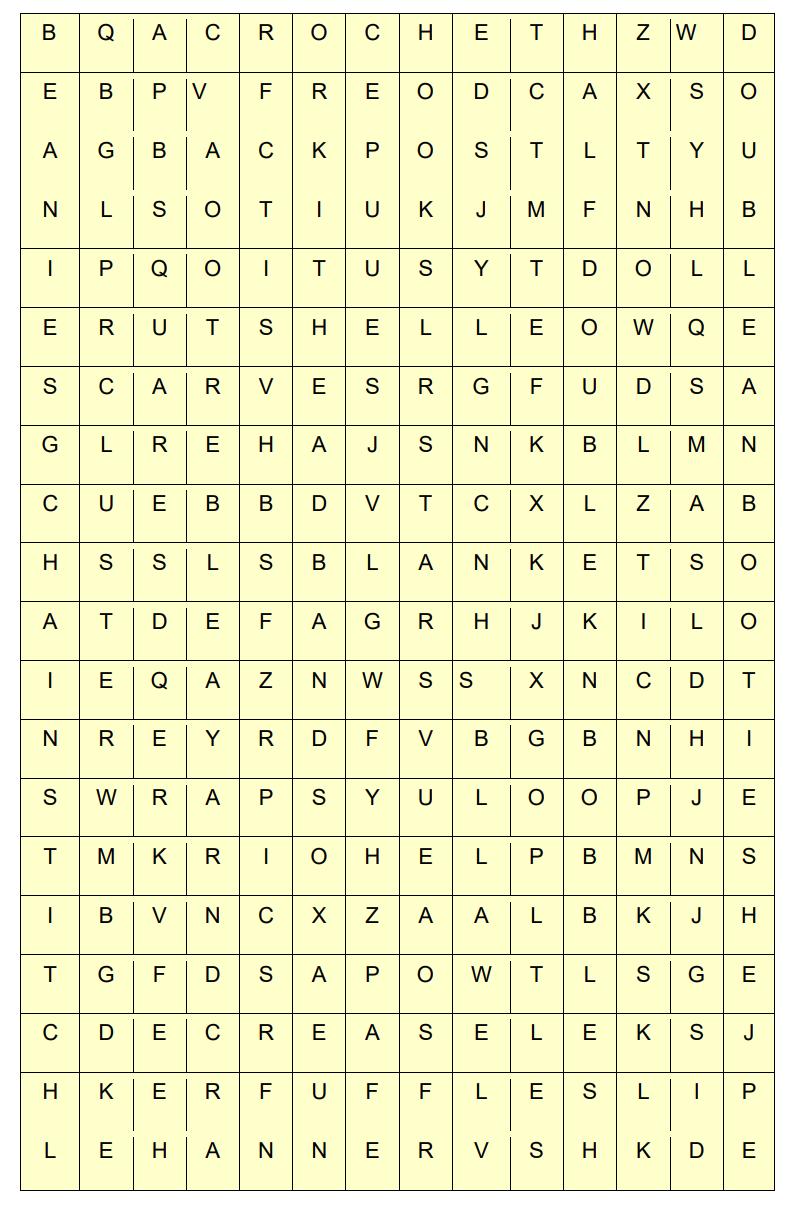

BACK POST, BEANIES, BLANKETS, BOBBLE, BOOTIES, CHAIN STITCH, CLUSTER, CROCHET, DECREASE, D O LL, DOUBLE, HALF DOUBLE, HEADBNDS, HOOKS, KERFUFFLE, LOOP, PATTERN, SCARVES, SHAWLS, SHELL, SINGLE, SLIP, STARS, SQUARES, TREBLE, WRAPS, YARN
you promote your stud in your community?
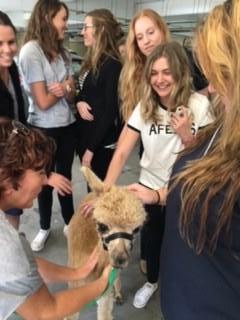
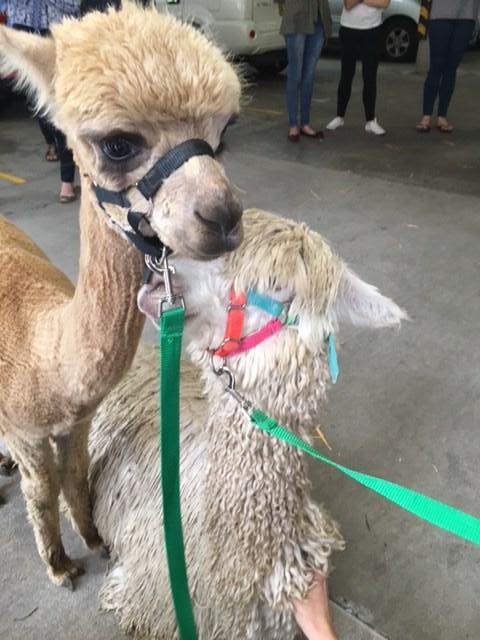
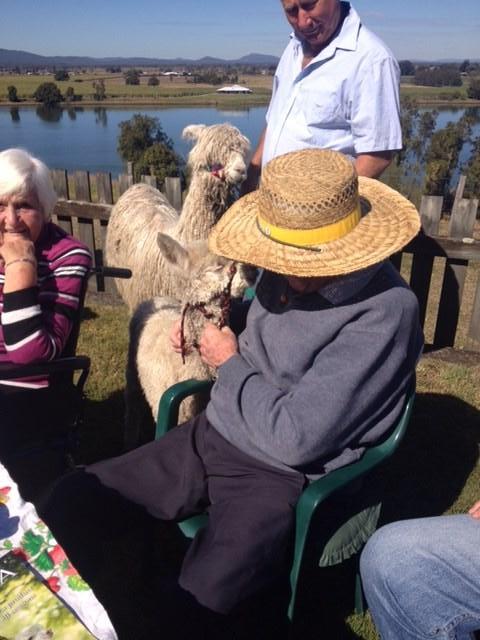
Wahgungurry alpaca stud have visitors on a regular basis from the local community. Bus outings from respite and local aged homes who come for a cuppa check out the view and find out how alpacas are farmed in the Clarence Valley. Visits are also from the TAFE /VET nursing groups. We charge a minimum and donate to the Westpac Helicopter.





~ SUMMER Edition 2024 ~ Alpaca Advocate
How do
Send information and photos for the next Advocate Edition

~ SUMMER Edition 2024 ~ Alpaca Advocate ~ SUMMER Edition 2024 ~ 31
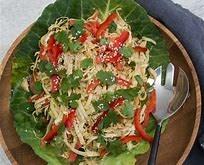
Polynesian Coleslaw
Ingredients
3 tbs smooth peanut butter
2 cloves garlic, minced
½ tsp salt
2 tbs rice vinegar
2 tbs soy sauce
½ tsp chilli or pepper sauce (to taste)
½ cup chopped coriander
2 tbs chopped spring onions
1 red capsicum finely sliced
8 cups shredded cabbage
Method
Stir together peanut butter, garlic, salt, rice vinegar and hot sauce until smooth.
Fold in coriander, spring onion and capsicum.
Add cabbage and toss until well coated.
Cover and refrigerate 1 hour.

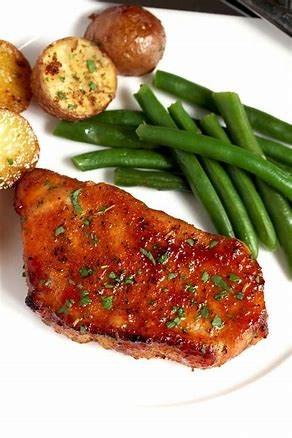
Baked Pork Chops (Easy)
Ingredients:
4 pork chops (shoulder)
2T mixed herbs
Fresh breadcrumbs
4T tomato paste /Fresh cherry tomato
2 onions
Method:
1. Preheat oven 180’c
2. On a flat tray place chops
3. Cut onion into circles place over chops
4. Spread 1T paste on each chop
5. Sprinkle with mixed herbs
6. Break up a slice of fresh bread into pieces on top of chops
7. Bake for 30 minutes
8. Serve with baked potatoes + steamed honey carrots , peas and corn

~ SUMMER Edition 2024 ~ Alpaca Advocate ~ SUMMER Edition 2024 ~ 32






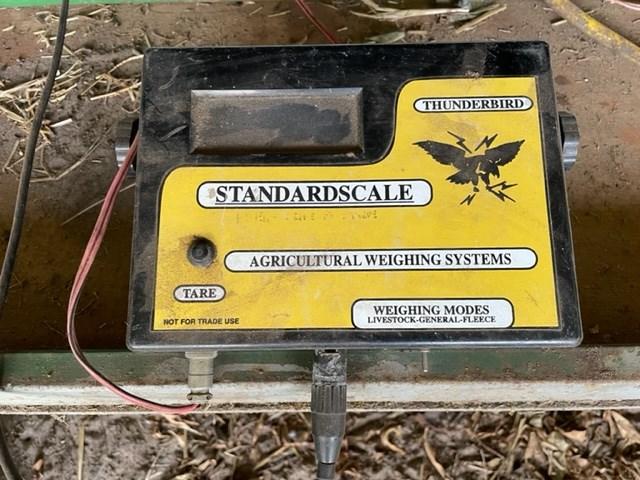


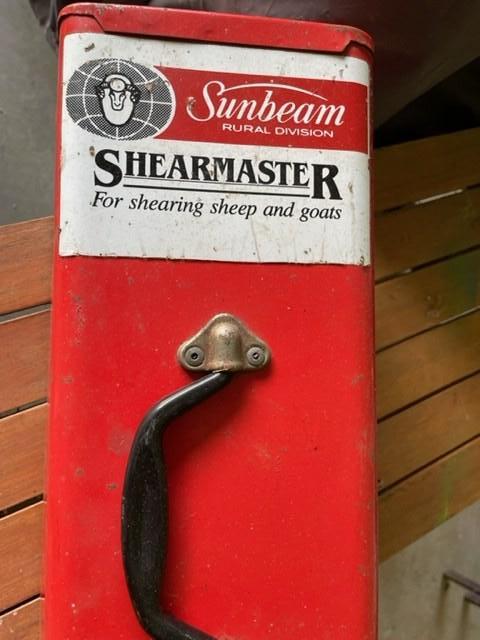

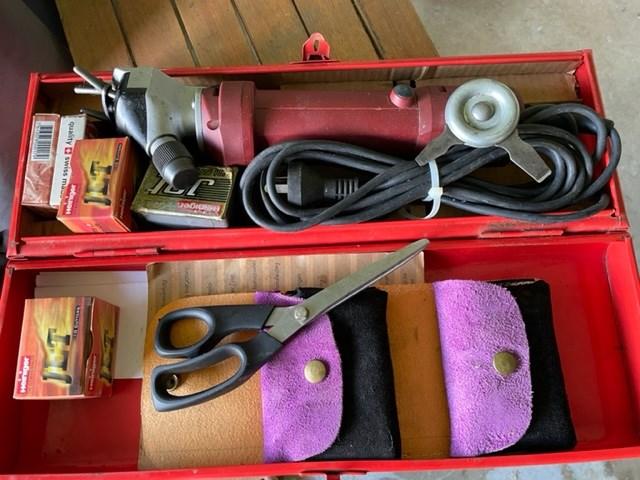
Alpaca Advocate ~ SUMMER Edition 2024 ~ 33
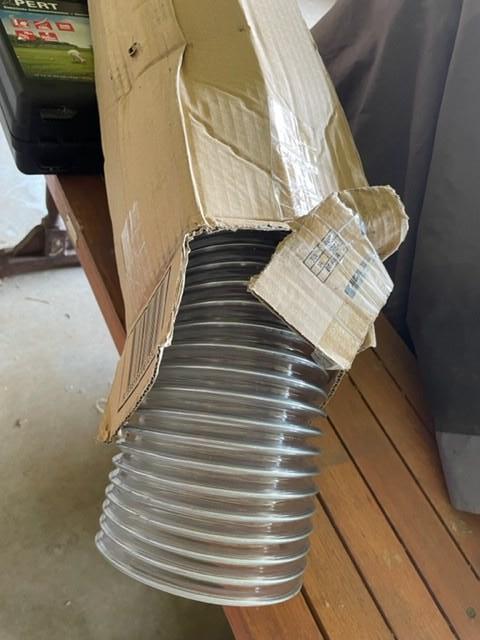
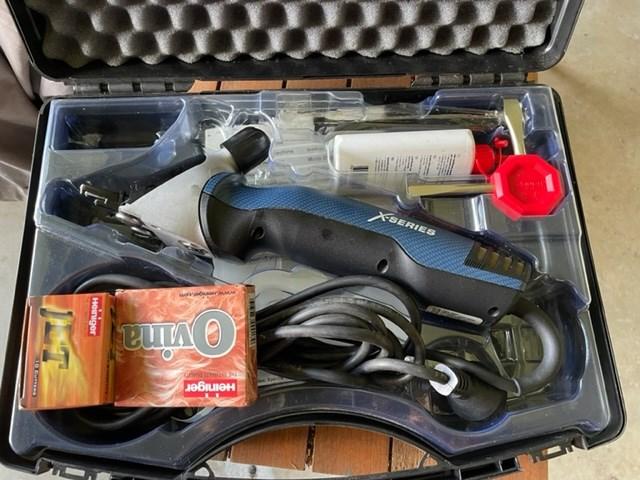
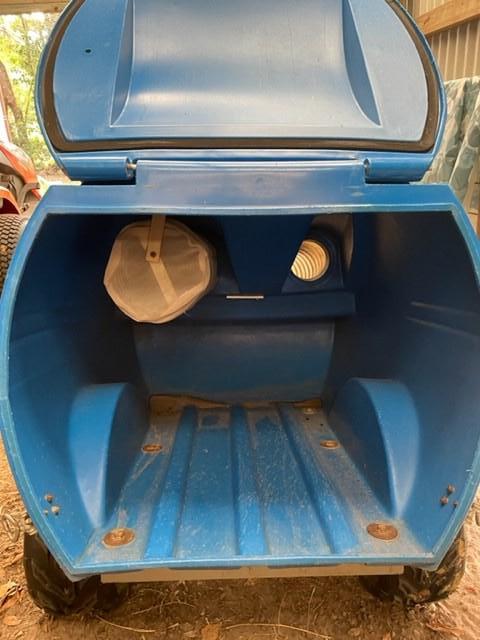
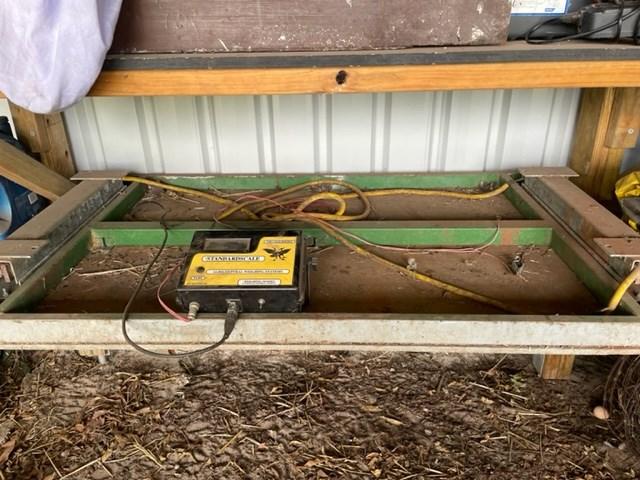
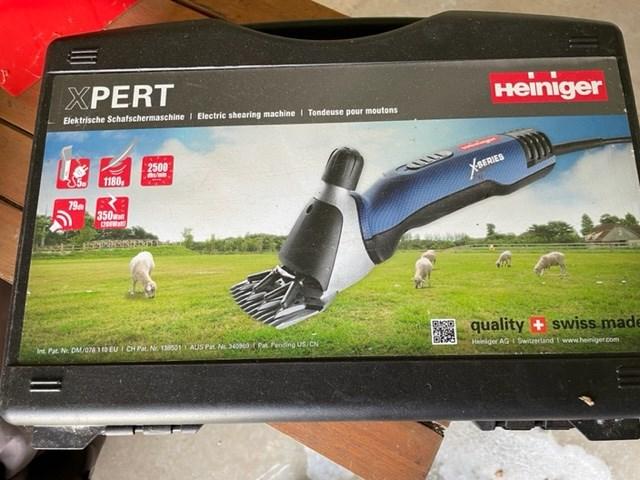
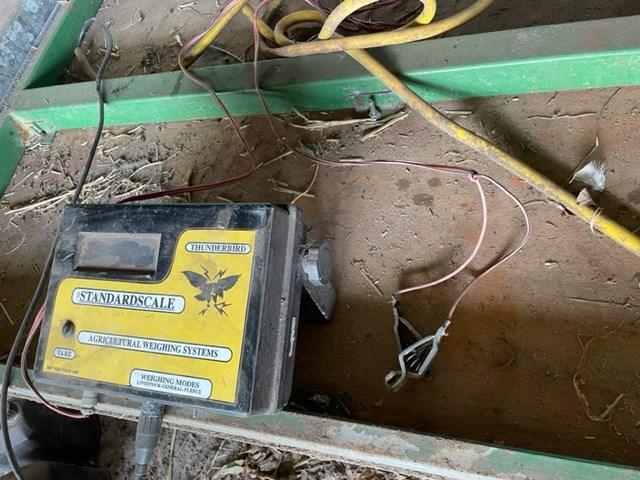
Paddock Vac $1600 includes new clear hose in box Judy Barlow judebarlow53@gmail.com M: 0423554322 Contact: Heiniger $660 Clippers $440 Scales $400
Greystone
~ SUMMER Edition 2024 ~ Alpaca Advocate ~ SUMMER Edition 2024 ~ 34