Critical Minerals Strategy to streamline permitting, build remote infrastructure
BY BLAIR MCBRIDE
The federal government unveiled on Dec. 8 the details of its Critical Minerals Strategy, a plan first introduced in the April budget that earmarks almost $3.8 billion over eight years to further develop Canada’s place in the global critical minerals industry.
A significant portion of the total funding — $1.5 billion — is allocated over seven years for constructing infrastructure for critical minerals projects in remote areas, such as the Ring of Fire in northern Ontario. And $40 million is set aside to support northern regulatory processes in reviewing and permitting projects.
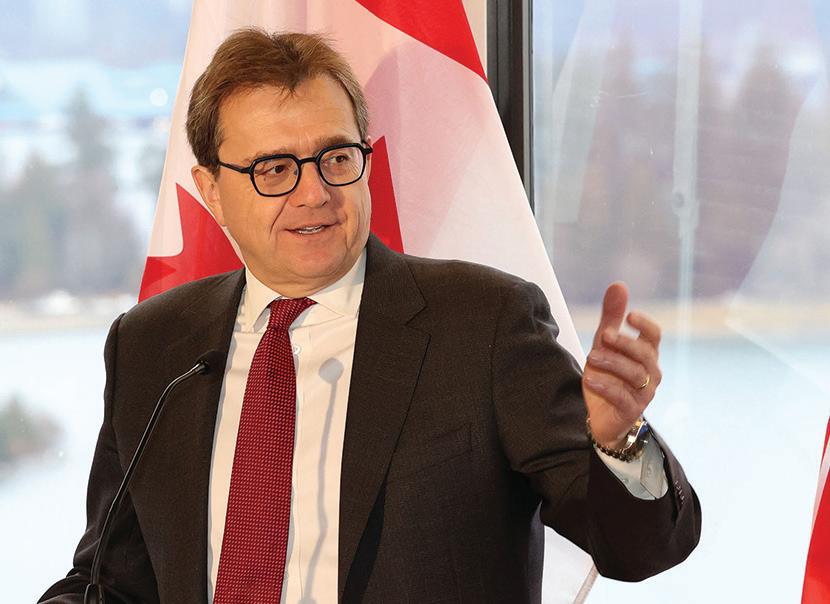
Officially announced in Vancouver by Natural Resources Minister Jonathan Wilkinson, the 52-page document outlines the government’s plan for Canada “to become a global supplier of choice for critical minerals” and the digital technologies they enable.
“There is no energy transition without critical minerals,” Wilkinson said at the Pinnacle Hotel Harbourfront. “The sun provides the raw energy but electricity flows through copper, nuclear power requires uranium, [and] electric vehicles require batteries made with lithium and cobalt.”
Out of a list of 31 critical minerals in Canada, the strategy prioritizes six for their economic growth potential and status as inputs for supply chains: lithium, graphite, nickel, cobalt, copper, and rare earth elements.
It also focuses on five segments in the critical mineral value chain: geoscience and exploration; mineral extraction; intermediate processing; advanced manufacturing; and recycling.
Wilkinson said the focus of the strategy is to expand the critical
mineral sector while doing things in the right way.
“It can’t take us twelve to fifteen years to open a mine in this country if we want to accomplish our climate goals,” he said, adding that the government plans to accelerate processes and timelines while respecting the environment and Indigenous peoples, who “must see benefits through mining projects.”
The document doesn’t identify any new funding streams that weren’t already set out in Budget 2022.
Areas of focus
The strategy is guided by six areas of focus: driving research, innovation, and exploration; accelerating project development; building sustainable infrastructure; advancing reconciliation with Indigenous peoples; growing a diverse workforce and prosperous communities; and strengthening global leadership and security.
In seeking to drive innovation and exploration, $79.2 million will
be earmarked for public geoscience and exploration to help identify and assess mineral deposits. Under this focus, the new 30% Critical Mineral Exploration Tax Credit for targeted critical minerals will be introduced, and $47.7 million allocated for upstream critical mineral research and development through research labs. Another $144.4 million is set for further R&D, and the use of technologies to support critical mineral development for upstream and midstream segments of the value chain.
Wilkinson said that more investment in geological mapping across more areas of the country will benefit exploration companies.
“[And] there’s $1.5 billion in the funding for infrastructure that can include roads or transmission lines in the North that can actually help mines,” he said.
‘One project, one assessment’ To accelerate project develop-

Glencore and

copper mines ride out unrest as Peru promises early polls
BY COLIN MCCLELLAND
The worst protests to hit Peru in years are shaking investor confidence in the world’s second-largest copper producer as strikes and blockades threaten output from mines run by Glencore (LSE: GLEN) and China-controlled MMG.

The unrest has left at least 20 people dead this month and was continuing even after new President Dina Boluarte declared a state of emergency and promised elections more than two years early in late 2023.
Boluarte announced the initiatives following the Dec. 7 sacking of former President Pedro Castillo on charges of corruption and attempts to undermine the constitution. The state of emergency allows armed forces greater leeway to restore order.
Glencore’s Antapaccay and MMG’s Las Bambas mines are key operations in the South American country where hundreds of thousands of demonstrators took to the streets this month.
Police at times used deadly
force as buildings burned, some national highways and regional roads were blocked, and airports closed. Protesters backed by some large unions who called local and national strikes want Boluarte to
INSIGHTS ON COSTING AND INFLATION FROM THE CANADIAN MINING SYMPOSIUM / 2 905 841 5004 | geotech.ca VTEM™ | ZTEM™ | Gravity | Magnetics Geotech_Earlug_2016_Alt2.pdf 1 2016-06-24 4:27:20 PM WWW.SGS.COM/MINING MINERALS@SGS.COM DELIVERING QUALITY EXPERTISE GLOBALLY ACROSS THE ENTIRE MINING LIFE CYCLE expert advice from exploration to closure .com DECEMBER 26, 2022 — JANUARY 15, 2023 / VOL. 108 ISSUE 26 / GLOBAL MINING NEWS • SINCE 1915 / $5.25 / WWW.NORTHERNMINER.COM
MMG
ESG | State of emergency fails to quell protests in Andean nation PM40069240 SITE VISIT: G2 GOLDFIELDS HOPES TO ADD TO DISCOVERY COUNT IN GUYANA / 8
POLICY | Natural Resources minister endorses ‘one project, one assessment’ principle
See STRATEGY / 7
See PERU / 16 SPECIAL FOCUS OUTLOOK 2023 A look at what’s ahead for commodities | 12-15
Thousands of protesters took to the streets in Peru in December amid the state of emergency declared by new president Dina Boluarte. PIXABAY
OUR FUTURE January 23 – 26, 2023 Vancouver Convention Centre East roundup.amebc.ca Register Today
Natural Resources Minister Jonathan Wilkinson speaks in Vancouver on Dec. 9. NATURAL RESOURCES CANADA
Inflation hits miners: ‘It has never been more expensive to build or operate a mine in the US’
BY NICHOLAS LEPAN
It has never been more expensive to operate or build a mine, according to new research from CostMine, although not all costs are rising equally.
In late November, Michael Sinden, vice-president of data with The Northern Miner Group, presented inflation data at the Canadian Mining Symposium in London, showing that mining operational and capital expenditures are reaching 20-year highs.
rials, reagents, grinding media, and liners. The bulk of costs come from fuel, explosives, chemicals, and electricity, or as Sinden puts it: “Anything hydrocarbon related is inflating costs at a mine.”
based mines is only rising at a 2.8% to 3.5% compound CAGR and salaries are growing at a 2.9 to 3.9% CAGR.
All this is coming at a time when metal demand is accelerating due to a mineral
sity of British Columbia, Canadian Research Chair in Advanced Mine Energy Systems, the mining industry is still using fossil fuels because it is “comfortable” with them.
“Fuels have been the most techno-economically feasible choice and should we not take into account the environmental costs associated with consuming them, there is a good chance that fossil fuels will stay the most ‘comfortable’ energy source in at least the near future.”
He notes that fossil fuels are still relatively cheap, abundant, and flexible enough to power remote mining sites. In addition, different mining operations have different energy demands due to the variability of operating conditions such as climate, location, level of access to energy grid, deposit type, mining technique, and mineral processes.
Mill and underground capital expenditures are a serious source of inflation as deeper mines and expensive milling equipment are driving up costs. Since 2015, costs have risen 7% on a compound annual growth rate (CAGR) basis or 60% compounded over this period.
When it comes to labour, costs aren’t the problem, at least not yet, CostMine data shows. The hourly rate for labour at U.S.-
and metal intensive energy transition and increased scrutiny of the mining industry’s own carbon footprint.
Mitigate or eliminate carbon costs? Renewable energy is increasingly becoming cost competitive with fossil fuels. Decarbonizing the mining industry appears to be a solution, but it is not so simple.
According to Ali Madiseh of the Univer-
However, Madiseh cautions that this could change with incoming carbon tax policies around the world. Miners should consider at what point their reliance on fossil fuels becomes too expensive, or could result in the loss of their licence to operate.
“Unfortunately, there is no silver bullet to mine decarbonization,” Madiseh adds. The process is rather step-by-step. People need to devise a strategic plan and start with the low-hanging fruits which are technologically more mature and economically less costly to implement.”
Sinden pointed out that this data is not a big surprise given the current economic climate but there is more to the story. “There’s no question mine costs are increasing and will continue to do so, but the ability to pinpoint where inflation is coming from and the ability to mitigate it is critical.”
Mill and surface operations expenditures experienced the biggest uptick due to exposure to fuel and electricity costs, raw mate-
Mining operations that depend on a hydro-powered electrical grid may have a relatively low carbon footprint while some remote operations may rely solely on fossil fuel-generated power, greatly increasing their carbon footprint.
The global transition towards a green economy can only be accomplished with renewable power, electric vehicles and energy storage technologies, but this places pressure on the mining industry to produce minerals and metals.
The need for mines has never been greater, but at what cost? TNM
Demand for diamonds has ‘never been better’
BY ADAM DICKIE
The post-pandemic period represents “the best diamond market in the better part of a decade,” Lucara Diamonds’ (TSX: LUC) president and CEO Eira Thomas told delegates at The Northern Miner’s recent Canadian Mining Symposium in London, U.K.
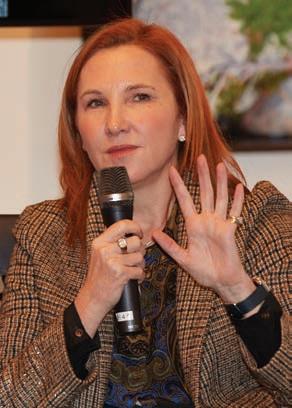
In an interview with The Northern Miner podcast host Adrian Pocobelli, Thomas explained the rationale of investing in a space that gives exposure to both mined commodities and consumer-marketed products.
“Demand for luxury products and diamonds has never been better,” Thomas said. “If you have an outlook that the world is going to continue to grow, albeit even now at a slower pace, then you have a positive view on the commodity.”
Lucara operates one of the highest-margin diamond mines in the world — Karowe, in Botswana, where an average of 300,000 carats are produced per year. In guidance released on Nov. 28, the company said it expects to generate between US$200 to US$230 million next year, thanks in part to the firm’s innovative sales channels.
“It’s a challenging commodity — every diamond is unique, and they all have unique price points,” she said. “How do you take that pro-
duction and sell it regularly for repeatable income?”
Previously, Thomas noted, diamond sellers solved that problem by building up inventory into different ‘buckets’ based on categories including size, colour, and shape. “We would force our customers to buy an entire bucket — if you only wanted ten stones, too bad, you’d have to take all 32,” she said.
In 2020, Lucara introduced a digital twist to traditional diamond marketplaces with Clara, its 100%owned web sales platform for rough stones. Buyers can submit queries to the Clara store requesting specific stone characteristics, and an algorithm matches available rough diamond inventory in quantities down to a single stone.
Thomas noted that having a digital market helps buyers achieve better margins by avoiding unnecessary travel costs and bucket-style pricing.
“We have technology today to make this much easier,” she said. “People can place orders without leaving their office. Normally they’d have to get on a plane and come to Botswana.”
Vote of confidence
While Thomas predicts the Clara platform will start delivering cash flow in 2023, smaller stones represent a minority of her company’s sales (only diamonds between
1 and 10 carats are sold through Clara). Instead, the Karowe mine is famous for its abundance of large, high-value diamonds greater than 10.8 carats that generate about 70% of Lucara’s annual revenue.
On Nov. 16, Lucara announced it had reached a 10-year extension of a sales agreement it has with HB Group, a Belgium-based diamond manufacturer. Under that agreement, Lucara’s 10.8+ carat diamonds are sold at the estimated polished outcome determined through scanning and planning technology. The final payments are
based on actual sale prices minus costs and fees.
“All of our large diamonds are now being manufactured and sold as polished diamonds,” said Thomas, “so we have complete control of where our diamonds are going.”
One target for Lucara’s diamonds is the luxury conglomerate Moët Hennessy Louis Vuitton (LVMH). In 2019, Lucara partnered with LVMH to curate and manufacture its massive, 1,758carat Sewelô diamond in return for an upfront payment and a 50% stake in derived stones.
“Louis Vuitton bought Tiffany two years ago in the middle of COVID,” said Thomas. “They can see the tremendous opportunity to bring diamond jewelry along in this journey of luxury good consumption. That gives us a lot of confidence as a producer.”
Lucara is investing its boosted revenue stream back into Karowe, announcing in August the beginning of a shaft sinking phase that will eventually convert the openpit operation into an underground mine. The plan, first announced in 2019, promises to generate over $5 billion in revenue for the firm with estimated capital costs of $547 million.
“It’s really about execution on the underground,” Thomas said. “We’re pleased with the ground
conditions — we just have to continue to ramp up and push hard.”
Diamonds on the blockchain Thomas noted that with supply chain pressure brought on by the Ukraine-Russia conflict, diamond provenance is emerging as a prime concern for buyers large and small. Her firm’s successes in Botswana, including having the country’s first female managing mine director, make Lucara’s story easy to sell.
“Big brands won’t buy a diamond unless they know where it came from,” said Thomas, who pointed out that purchasers of Lucara gems can follow their diamonds through the value chain using Blockchain technology. “We guarantee the provenance of all of those big stones.”
As for future headwinds, Thomas drew attention to the underperformance of diamond stocks even after sharp increases in sales and revenue after 2020. Part of the problem, she noted, is the historic opacity that is associated with the diamond sphere.
“We’ve had to really look hard in the mirror and find a way to bring transparency to the industry,” she said. “But now we’re opening Clara up to the entire world, and we have other producers and sellers of secondary diamonds also selling their diamonds through this unique digital marketplace.”
2 DECEMBER 26, 2022—JANUARY 15, 2023 / THE NORTHERN MINER WWW.NORTHERNMINER.COM
Lucara Diamonds CEO Eira Thomas speaks at the Canadian Mining Symposium in London, U.K. in November. NORTHERN MINER
CMS 2022 | Opex and capex nearing 20-year highs, CostMine data shows
CMS 2022 | Digital sales, blockchain tracing cement Lucara’s place in diamond market
TNM
80 140 160 220 280 Surface Mine Capex Surface Mine Opex U/G Capex U/G Opex Mill Capex Mill Opex Labor, 43% Drill bits/Steel, 2% Drills, 2% Trucks, 2% Excavators, Loaders, Dozers, 3% Tires, 7% Explosives, 18% Lubricants, 3% Fuel, 20%
Mill Labor, 24 Grinding Media, 21.5 Concentration, 1.6 Crushing & Grinding, 3.8 Electricity, 17.3 Reagents, 24.5 Lubricants, 3.9 Fuel, 3.4 0 5 10 15 20 25 30 35 Laborer — Surface Mill Equipment Operator Production truck driver Heavy Equipment Operator — Surface Hourly Wage (US$/hr) 2000 2010 2021 US Mine Cost Inflation by Theme (Index, 2000 = 100) Surface Mine Opex Breakdown Mill Opex Breakdown 132,000 59,200 71,000 155,700 93,600 108,100 213,100 118,200 129,200 50,000 100,000 150,000 200,000 250,000 General Manager Chief Geologist Mine Superintendent Salary (US$/year) Select US Employee Hourly Wages (US$/hr) Select US Employee Salaries (US$/hr)
Hecla steps up to meet growing silver demand
CMS 2022 | Company will soon account for 60% of US silver production
BY HENRY LAZENBY
North America’s oldest silver miner, Hecla Mining (NYSE: HL), is on track to solidify its position as the continent’s primary silver leader with a plan to increase its U.S. output by 20% and to become the most prominent Canadian silver producer by year-end.
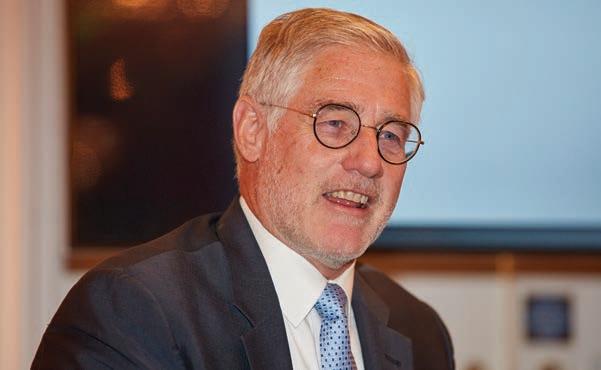
The 130-year-old company’s CEO, Phil Baker, told The Northern Miner’s recent Canadian Mining Symposium in London that the 1.2 billion oz. silver market is growing at about 200 million oz. per year. That demand growth is coming most notably from the photovoltaic (PV) market, which Baker expects to grow at about 12% annually, or about 200 million ounces.
While the photographic demand for silver had passed, growing demand from industrial applications had expanded beyond electronics to the energy industry itself, “which has brought us to a new place for silver,” Baker said.
Coupled with rising industrial applications, massive demand from India for silver jewelry has reached pre-pandemic levels after causing “some concern,” according to the executive, since demand had fallen off dramatically during the pandemic years.
“And it’s that Indian demand for silverware and things that are really the strongest ever,” said Baker.
The CEO estimates the primary silver market comprises about 800 million oz., with another 200 million oz. sourced on the second-
ary recycled market. “That deficit, of course, is coming out of aboveground stocks. Unlike other metals, you’ll never run out of silver. But it’s got to be extracted from people, which maybe is harder than extracting it from the ground when you have a robust market,” said Baker.
He added Hecla takes the long view on silver given the metal’s solid fundamentals and its habit of mimicking gold price movements in potentially exponential terms.
“It doesn’t matter when it’s going to happen, but we know that when it does, our share price will move dramatically along with the silver price,” he said.
Growth trajectory
Currently, Hecla accounts for about 40% of U.S. silver output. That figure is set to jump to about 60% as
soon as the miner ramps up production at the Greens Creek mine in southeast Alaska and hits its stride with a new mining technique at the Lucky Friday mine in Idaho.
Greens Creek has since 1987 produced 330 million oz. of silver, where continuous exploration success has allowed for several 10-year extensions of the mine plan.
“Today, we’ve got about another decade left,” said Baker.
The mine produces about 10 million oz. per year. It’s also the reason Hecla is the third-largest producer of zinc in the U.S., with another 50,000 oz. of gold a year as a by-product credit.
“One analyst told me years back, that Greens Creek, besides uranium, is the highest-valued rock on the planet because of the four metals it produces. It’s a gift that keeps giving.”
Since Hecla became the sole operator in 2008 (taking over from Rio Tinto), the mine has generated about US$1.2 billion of free cash flow.
At the Lucky Friday mine, Baker said the company is finally coming to grips with the difficulty of dealing with an 80-year-old mine more than 3 km deep.
Since the start, the mine produced, on average, about 2.5 to 3 million oz. a year. But because of the depth, it is seismically active, which has presented the company with significant operating headaches.
Baker explained that blasting energizes the surrounding unstable rocks, causing earthquakes and mine instability.
Over the past decade the company has tried several mining techniques, even looking at mechanically mining the rock. “Well, in that process, we discovered another way of doing it, which is a big blast, where we’re blasting 10,000 times the amount of material, which creates a huge amount of energy,” he explained.
“And that huge amount of energy gets released simultaneously with the blast. And so, as a result, this mine is going from a very highgrade 800 tons a day operation to 1,200 tons, and I suspect we’ll eventually get to 1,600 tons,” said Baker.
“As we go deeper, the grade goes up. And with our new mining method, the production is going up.”
Canadian angle Hecla is also bullish on Canada. It
CANICKEL MINING LIMITED BUCKO LAKE MINE, WABOWDEN, MANITOBA
CaNickel Mining Limited (“CaNickel”) owns the Bucko Lake Mine in Wabowden, Manitoba. Since 2012, the Bucko Lake Mine has been in care and maintenance and the mine discharges mine water effluent into Bucko Lake on a continual basis as part of normal operations.
Bucko Lake is a lake in the Grass River System of Northern Manitoba. The lake does not have any cottages or inhabitants close by and is understood to be an area of little interest to the local populace. However, the lake is considered “water frequented by fish” for the purposes of legislation as it contains populations of at least two fish species. Mining companies must not permit the deposit of an effluent that contains a deleterious substance in excess of authorized limits in water frequented by fish.
Since March 2008, the Bucko Lake Mine has exceeded an effluent flow rate of 50 m3 per day and has been depositing effluent that contains “deleterious substances” into Bucko Lake. CaNickel acknowledges that it had, and continues to have, the responsibility to ensure that the quality of the effluent discharged from the legacy tailings area into the environment adheres to the Metal and Diamond Mining Effluent Regulations (MDMER), formerly the Metal Mining Effluent Regulations (MMER), and the Fisheries Act.
Legislation also contains certain requirements to ensure the regular collection of samples from final discharge points to conduct acute lethality tests. An effluent at 100% concentration which kills more than 50% of the rainbow trout subjected to such effluent over a 96-hour period is considered acutely lethal.
In 2016 and 2022, CaNickel plead guilty to charges of certain contraventions of the MDMER. As part of its sentence respecting the 2022 conviction, CaNickel agreed to take out this paid article to explain the facts of the incidents, articulate the importance of complying with the MDMER and to explain the possible environmental risk associated with non-compliance.
THE INCIDENTS
In May 2014, CaNickel’s testing determined that the effluent it was discharging into Bucko Lake had exceeded the limit for radium and self-reported these results to Environment Canada.
At the direction of Environment Canada, CaNickel increased dosing of barium chloride to reduce the radium levels. After the results of these efforts were received, it was determined that more barium chloride was required. However, this determination was not made for 13 days as the only employee trained to review the results was out of the country.
It was determined that CaNickel should have had policies and procedures in place with respect to dosing and that another person should have been present to perform the same procedures and adjust the levels immediately. A further contributing factor to this incident was confusion regarding weekly sample limits of 1.11 Bq/L and the monthly mean limit of 0.37 Bq/L. While the company collected weekly samples which were compliant, it failed to take into account the much lower mean monthly sample limit.
Then in October 2014, employees were performing clean up and hosing in the Bucko Lake mill facility when some nickel concentrate spillage (approx. 18% nickel) was inadvertently directed to a sump feeding the water treatment plant and released to the environment. Environment Canada demonstrated nickel contamination after conducting tests which determined that 100% of the rainbow trout died in a 100% concentrate (and that 10% died in a 50% concentrate). This incident highlights the requirement for ensuring employees carry out plans properly and in accordance with legislation.
As a result of the above, CaNickel pled guilty to having discharged effluent exceeding the limits for radium and nickel in 2016.
In July 2017, CaNickel had recognized that radium lev-
operates the Casa Berardi mine in Quebec.
“It’s a gold mine, which we like because we need the diversification from silver. If you look at the silver price, compared to the gold price, it’s been depressed. And you can tell that the gold-silver ratio works in our favour. We’re getting more revenue, more cash flow from gold on a relative basis than to silver.”
The mine is also the company’s only operation that produces mixed metal doré bars, meaning it gets to sidestep dealing with the smelters.
Meanwhile, at its Keno Hill silver mine in Canada’s Yukon — which it acquired through an all-share takeover of Alexco Resource this year — the focus is on the development and drilling of the Bermingham and Flame & Moth deposits to bring the mine into full and consistent production by the end of 2023. According to Baker, the operation will make Hecla Canada’s biggest silver miner once at full tilt.
With expanding North American mines, Hecla raised its fiscal 2022 guidance to 13.6-14.1 million oz. for silver and 169,000-180,000 oz. gold in October.
Earlier this year, Hecla said that its global proven and probable reserves of the precious metal grew in 2021 to the second highest level in the company’s history — to 200 million ounces.
The company’s New York-listed shares are up more than 12% over the past 12 months at US$5.34, which gives it a market cap of US$3.2 billion. TNM
els were increasing in its effluent discharge. The company made changes to the treatment chemistry in hopes of reducing radium levels but was ultimately unsuccessful. In hindsight, CaNickel should have halted the discharge to evaluate the cause of the rising radium levels.
Around the same time, CaNickel failed to formally select a date for sampling to conduct acute lethality tests at least 30 days in advance of the sampling date, in contravention of legislation. By failing to do so, the samples were not taken at the frequency required by the legislation.
As a result, CaNickel pled guilty in 2022 to one count of having discharged effluent exceeding the limits for radium and one count of failing to collect the acute lethality sample on the selected day.
THE IMPORTANCE OF COMPLIANCE
Radium has adverse biological effects and is a known human carcinogen. Nickel is toxic to the environment and to all fish species. Given the risks involved with high levels of such substances, compliance with the MDMER is critical to ensure that testing is performed at regular intervals to identify quality issues.
When quality issues are identified, companies must take all reasonable steps to correct the issues as soon as possible. Failure to do so may have a negative impact on the surrounding environment and result in charges being levied against the company. In CaNickel’s case, substantial financial penalties were levied and its reputation impacted.
CaNickel would like to use this advertisement to impress upon all mining companies that compliance with the MDMER is vital to safeguard the environmental and human health. CaNickel has now taken all reasonable steps to ensure that it will remain in compliance with the legislation going forward.
GLOBAL MINING NEWS THE NORTHERN MINER / DECEMBER 26, 2022—JANUARY 15, 2023 3
Hecla Mining CEO Phil Baker. NORTHERN MINER
GLOBAL MINING NEWS • SINCE 1915 www.northernminer.com
PRESIDENT THE NORTHERN MINER GROUP: Anthony Vaccaro, CFA, MBA avaccaro@northernminer.com

EDITOR-IN-CHIEF: Alisha Hiyate, BA (Poli Sci, Hist) ahiyate@northernminer.com

MULTIMEDIA SPECIALIST: Henry Lazenby hlazenby@northernminer.com
STAFF WRITER: Colin McClelland cmcclelland@northernminer.com
COPY EDITOR AND PRODUCTION EDITOR: Blair McBride bmcbride@northernminer.com
PHOTO EDITOR AND PODCAST HOST: Adrian Pocobelli, MA (ENGL) apocobelli@northernminer.com
ADVERTISING: Robert Hertzman (416) 898-6654 rhertzman@northernminer.com Michael Winter (416) 510-6772 mwinter@northernminer.com
SUBSCRIPTION SALES/ APPOINTMENT NOTICES/
CAREER ADS George Agelopoulos (416) 510-5104 (Toll free) 1-888-502-3456, ext. 43702 gagelopoulos@northernminer.com
PRODUCTION MANAGER: Jessica Jubb (416) 510-5213 jjubb@northernminer.com
CIRCULATION/CUSTOMER SERVICE: (416) 510-6789 | 1-888-502-3456 northernminer2@northernminer.com
REPUBLISHING: (416) 510-6768 moliveira@northernminer.com
ADDRESS: Toronto Head Office 225 Duncan Mill Road, Suite 320 Toronto, ON, M3B 3K9 (416) 510-6789 tnm@northernminer.com
SUBSCRIPTION RATES: Canada: C$130.00 one year; 5% G.S.T. to CDN orders. 7% P.S.T. to BC orders 13% H.S.T. to ON, NL orders 14% H.S.T. to PEI orders 15% H.S.T. to NB, NS orders U.S.A.: C$172.00 one year Foreign: C$222.00 one year GST Registration # 809744071RT001 (ISSN 0029-3164)
CANADA POST: Return undeliverable Canadian addresses to Circulation Dept. c/o The Northern Miner 225 Duncan Mill Road, Suite 320 Toronto, ON M3B 3K9
Publication Mail Agreement #40069240
Periodicals Postage Rates paid at
The Northern Miner’s most clicked stories of 2022
As we end off 2022, The Northern Miner takes a look at the top 10 most-clicked stories on our website from Jan. 1 to Dec. 15.
No. 1: Canada’s Top Ten precious metals juniors
THE VIEW FROM ENGLAND:
COLUMN | Coal mine approval a seasonal gift from UK government
BY DR CHRIS HINDE Special to The Northern Miner
decision by early July (a promise eventually compromised by Boris Johnson’s resignation as Prime Minister).
BY ALISHA HIYATE
By Northern Miner Staff (Jul. 7, 2022)
Our most-read story of the year ranked the Top Ten Canadian-headquartered precious metals juniors according to market capitalization as of Jun. 7, 2022. The list of companies with projects that are not yet in production was compiled by Mining Intelligence and included: NovaGold Resources, Seabridge Gold, Osisko Mining, New Found Gold, Rupert Resources, Artemis Gold, Skeena Resources, Sabina Gold & Silver, New Pacific Metals, and Discovery Silver.
No. 2: Union at Saskatchewan Mosaic potash plant seeks mediation for higher wages
By Colin McClelland (Nov. 18, 2022)
A union representing workers at Mosaic’s potash mine in Esterhazy, Sask. says it has filed for provincial mediation after negotiations for higher wages broke down.
Some 750 workers at the site about 230 km east of Regina have been without a contract since Feb. 1, Dan Bailey, union representative with Unifor Local 892, said by phone from Regina.
“Cost of living is a concern,” Bailey said. “The employer is certainly in a situation, if you just review recent quarterly reports, that they should be able to work with its employees and assist in dealing with the increases to the cost of living.”
No. 3: New Found’s Queensway drilling lifts explorer back into billion-dollar territory
Colin McClelland (Nov. 29, 2022)
New Found Gold’s high-grade Queensway project in central Newfoundland may be fundamentally altered after surprising drilling results from a zone it nearly dismissed.
This week the Vancouver-based company reported diamond drill hole NFGC-22-960 at the Keats West area intersected 42.6 grams gold per tonne over 32 metres. That followed last week’s 18.6 grams gold per tonne over 15.95 metres in hole NFGC-22-773, located 200 metres up-plunge.
No. 4: New drill results from Kerkasha project in Eritrea suggest large gold discovery, says Alpha
By Naimul Karim (May 25, 2022)
Alpha Exploration has reported drill results from its first campaign on the Aburna gold prospect, part of the company’s Kerkasha project in Eritrea, based on which it expects is “a large gold discovery” in the property.
Highlights from the latest results of the 19-hole program that ended in March included 22 metres grading 4.5 grams gold per tonne starting from 47 metres depth in drill hole ABR-018 and 5 metres grading 1.94 grams gold starting from 71 metres in hole ABR-017.
“These results… continue to support the view that Alpha has found what could be a large gold discovery at Aburna with widespread gold mineralization,” the company’s CEO Michael Hopley said in a press release.
No. 5: RANKED: World’s biggest nickel projects — 2022
By Amanda Stutt (Mar. 30, 2022)
Nickel is used mainly in the steelmaking process, but also in production of batteries for electric vehicles, and it is the metal that has grabbed the most headlines so far this year.
With the nickel price spiking 250% to a high of US$101,365 a tonne earlier in the year, driven in large part by a short squeeze centred on Chinese tycoon Xiang Guangda, who had amassed a big wager that nickel prices would fall through his company Tsingshan Holding Group Co., this article identifies the top 10 largest nickel deposits based on contained nickel resources that could form part of the global supply landscape in the future.
No. 6:
Shelby Yee and Alex Dorsch named Young Mining Professionals of the Year
By Carl Williams (Apr. 21, 2022)
The Young Mining Professionals (YMP) awards, presented in association with The Northern Miner, recognize two mining professionals under 40 who have demonstrated exceptional leadership skills and innovative thinking, and provided value to their companies and shareholders.
Shelby Yee, the CEO and co-founder of RockMass Technologies, a Toronto-headquartered mining and geosciences technology start-up, has won the 2022 Eira Thomas award. Alex Dorsch, managing director
Gifts have been exchanged in England during December since before the building of Stonehenge 5,000 years ago. Back then our Neolithic ancestors were celebrating the midwinter solstice (Dec. 21) with feasts and offerings.
The parties became more formal following the landing of Roman legions in AD43, with their festival of Saturnalia (Dec. 17-23) and its tradition of banquets and the giving of gifts. In the first half of the 4th century, Emperor Constantine amalgamated the Empire’s various mid-winter festivals into a celebration of the birth of Christ (choosing Dec. 25 as it corresponded with the winter solstice in the Roman calendar).
Christianity on these islands didn’t properly emerge until after the arrival in 597 of the Pope-sanctioned mission of Saint Augustine (who became the first archbishop of Canterbury). Indeed, in the Early Middle Ages (5th to 11th centuries) we held onto our pagan celebrations of the Anglo-Saxon Mōdraniht (Night of the Mothers) and the Germanic Yuletide. The latter was a mid-winter festival connected with the god Odin, who may have influenced the association with a white-bearded figure and reindeer.
The first recorded celebration in England of Christ’s birth and the name Christmas (Christ’s Mass) was not until 1038. Even then, presents were still mainly associated with the 4th century gift-giving saint, Nicholas of Myra (Santa Claus is a phonetic derivation of ‘Sinterklaas,’ a Dutch figure based on Saint Nicholas). Christ didn’t become the focus of these presents until Martin Luther’s dogmatic instructions in the early 16th century.
With such a rich history, it is wonderful that the U.K. government has given the local mining industry a seasonal gift. On Dec. 7, the Secretary of State for Communities, Michael Gove, approved our first new underground coal mine for 30 years (as predicted in my column of end of June).
The £160 million ($265 million) Woodhouse mine, near Whitehaven in Cumbria, will replace imports of metallurgical coal and will create much needed jobs (500 directly). Critics argue, however, that the decision to award planning permission until 2049 undermines the U.K.’s climate-change credentials.
The project, owned by West Cumbria Mining, was first unveiled in 2014 and approved (for the third time) by Cumbria County Council two years ago. Progress was suspended in February 2021, however, after the government’s Climate Change Committee (CCC) expressed concern, and the then Communities Secretary, Robert Jenrick, ‘called in’ the planning application for review. The subsequent public inquiry closed in October 2021, with the government saying it would make a final planning
Jenrick’s replacement, Gove, has faced a tough decision. Coal mining is deeply unpopular, and goes against the government’s own CO2 commitments. Nevertheless, boosting raw material security and reducing the country’s dependence on Russia is crucial, and Cumbria is crying out for skilled, long-term, well-paid private-sector jobs.
Gove claims the coal mine would “to some extent, support the transition to a low-carbon future.” The CCC chair Lord Deben, however, has called the proposal “indefensible,” and warned that the approval will damage the U.K.’s leadership on climate change, and “create another example of Britain saying one thing and doing another.”
Although there are currently no operating mines on the West Cumberland Coalfield, more than 70 pits were sunk during the past 300 years. The first reference to coal extraction in the area is to an operation at Arrowthwaite in the 13th century. Small scale, near surface, coal leases were granted in the 16th century, with the Lowther family developing the region’s mines from the mid17th to early 20th centuries. The first undersea mine in England, Saltom, was sunk in 1729 on the shore near Whitehaven (this mine closed in 1848 but the winding engine house and mine shaft remain).
The Whitehaven mines were notorious for firedamp (coalbed methane), and over 500 people died in gas explosions. As a result they were the first collieries to use the locally invented ‘Steel Mill’ for lighting (a hand-cranked device using flint), designed by the mining engineer Carlisle Spedding in the mid-18th century. These were used until the introduction in 1819 of Sir Humphrey Davy’s new safety lamp, which he tested in the Whitehaven collieries (because, as he explained, they had the “severest possible conditions”).
Nevertheless, firedamp explosions continued to cause a devastating loss of life in the Whitehaven mines (including that of Spedding himself in 1755). Accidents in the 20th century included the death of 136 miners at Wellington Pit in May 1910, 79 in three explosions in the 1920s at Haig Pit, and 116 in two explosions at William Pit in the 1940s.
Mark Jenkinson, the Member of Parliament for nearby Workington, said the announcement was “fantastic news,” and a “great day for West Cumbria.” He might have added it was a timely present for U.K. mining generally, and that a new, safer, mine will be a fitting tribute to the men, women and children who have died on this coalfield.
TNM
—Dr. Chris Hinde is a mining engineer and the director of Pick and Pen Ltd., a U.K.-based consulting firm. He previously worked for S&P Global Market Intelligence’s Metals and Mining division.
4 DECEMBER 26, 2022—JANUARY 15, 2023 / THE NORTHERN MINER WWW.NORTHERNMINER.COM
Niagara Falls, NY, 14304. U.S. office of publication 2424 Niagara Falls Blvd, Niagara Falls, N.Y. 14304. U.S. POSTMASTER: send address corrections to: Northern Miner Box 1118 Niagara Falls, N.Y. 14304.-7118
NORTHERN MINER is published biweekly by Glacier Resource Innovation Group, a division of Glacier Media Inc., a leading Canadian media company with interests in business-to-business information services. From time to time we make our subscription list available to select companies and organizations whose products or services may interest you. If you do
THE
not wish your contact information to be made available, please contact us by one of the following methods: Phone: 1-888-502-3456; Fax: (416) 447-7658; Mail to: Privacy Officer, The Northern Miner, 225 Duncan Mill Road, Suite 320, Toronto, ON M3B 3K9.
EDITORIAL
DEPARTMENTS Special Focus 11 Professional Directory 17 Market News 18 Metal, Mining and Money 19 Stock Tables 20-23 American Creek Resources 10 Ascot Resources 9 B2Gold 10 Barrick Gold 6 BHP 6, 11 Emmerson Resources 10 First Quantum Minerals 16 Flynn Gold 10 G2 Goldfields 8 Gascoyne Resources 10 Glencore 1 Greenland Minerals............................................11 Hecla Mining 3
See MOST CLICKED / 16 COMPANY INDEX Horizon Gold.......................................................10 Ivanhoe Electric 6, 11 Ivanhoe Mines 6 Lucara Diamonds ...............................................2 Midland Exploration 10 Nova Minerals 9 OceanaGold 10 Ora Gold 10 Probe Metals 10 Rio Tinto 11 Snow Lake Resources 9 SSR Mining 10 West African Resources 10
GLOBAL MINING NEWS Mining Corporates and Organisations 150+ Attendees 6000+ Global Industry Speakers 200+ Participating Countries 100+ REASONS TO ATTEND THE FUTURE MINERALS FORUM 2023 Learn regional and international mineral development strategies Engage with senior Government officials from the region Explore emerging markets parterships and investment opportunities Contribute to conversations around the creation of minerals and metals value chain Define the pillars of future responsible mineral development Register Online ENABLING THE CREATION OF RESILIENT AND RESPONSIBLE MINERALS AND METALS VALUE CHAIN 2023 11-12 January Forum and Exhibition 10 January Ministerial Roundtable Riyadh, Saudi Arabia, King Abdul Aziz International Center Mining Corporates and Organisations 150+ Attendees 6000+ Global Industry Speakers 200+ Participating Countries 100+ REASONS TO ATTEND THE FUTURE MINERALS FORUM 2023 Learn regional and international mineral development strategies Engage with senior Government officials from the region Explore emerging markets parterships and investment opportunities Contribute to conversations around the creation of minerals and metals value chain Define the pillars of future responsible mineral development Register Online ENABLING THE CREATION OF RESILIENT AND RESPONSIBLE MINERALS AND METALS VALUE CHAIN 2023 11-12 January Forum and Exhibition 10 January Ministerial Roundtable Riyadh, Saudi Arabia, King Abdul Aziz International Center Mining Corporates and Organisations 150+ Attendees 6000+ Global Industry Speakers 200+ Participating Countries 100+ REASONS TO ATTEND THE FUTURE MINERALS FORUM 2023 Learn regional and international mineral development strategies Engage with senior Government officials from the region Explore emerging markets parterships and investment opportunities Contribute to conversations around the creation of minerals and metals value chain Define the pillars of future responsible mineral development Register Online ENABLING THE CREATION OF RESILIENT AND RESPONSIBLE MINERALS AND METALS VALUE CHAIN 2023 11-12 January Forum and Exhibition 10 January Ministerial Roundtable Riyadh, Saudi Arabia, King Abdul Aziz International Center
How Brazil is becoming a global leader in the production of green metals
BY DAVID STRANG
For years, Brazil was overlooked as a favourable mining jurisdiction within South America. But what’s recently become apparent is that times are changing. The countries that were once deemed as go-to options are now experiencing civil unrest and political instability. While these countries no longer attract the investment dollars they once did, Brazil is emerging as a mining destination of choice. This is further supported by strong consumer preference, and in some cases government mandates, to source low-carbon inputs for applications ranging from electric vehicles to regional power infrastructure. Second only to Norway in its share of power generated by renewable sources, Brazil is able to produce some of the cleanest battery metals in the world.
From a geological perspective, Brazil has vast and largely untapped mineral wealth. The country has historically been the world’s largest producer of iron ore and a significant producer of gold. Brazil is now also gaining recognition for its potential as a major supplier of the metals desperately needed for the greening of the global economy, such as copper, nickel and lithium.
Brazil recently elected Luiz Inacio Lula da Silva, better known as Lula, as the country’s 39th president, putting the country’s political dynamic directly in the global spotlight. While left-leaning Lula — who was also president between 2003 and 2010 — holds very different views from his right-leaning predecessor Jair Bolsonaro, he has returned to power with promises of attracting foreign investment, reducing rising poverty rates and advancing Brazil’s environmental agenda.
Despite changes in ruling parties over the years, there has been a consistent understanding of Brazil’s potential to be a leader in pro-
ducing metals necessary to support global decarbonization targets, and to produce those metals at the lowest emissions levels in the world.
Blessed by its government’s foresights in the 1960s and 1970s to develop renewable energy sources as the way forward to powering its economy, Brazil today produces over 85% of its electricity from these sources including hydro, solar and wind generation, a remarkable statistic by any measure and especially so given it is the seventh most populous country in the world.
Recognizing that it has the unique opportunity to be a global
leader in the production of battery metals, Brazil has also taken significant steps to improve the mining regulatory framework, the most substantive changes the country has seen over the past 60 years. In 2018, Brazil launched the National Mining Agency (ANM), to help improve the mining sector’s performance across the country. The advancement of the mining industry achieves two equally significant goals for Brazil. First, from a global standpoint, Brazil recognizes the role mining plays in enabling the transition to sustainable energy sources, for which much more metal is required to generate and transmit clean power. To that end, Brazil recently established its Strategic Minerals Policy in March 2021. The policy aims to prioritize the advancement of mining projects deemed strategic to the country and to global decarbonization efforts. Between the Strategic Minerals Policy and the NMA, mining companies have an estab-
lished framework and licence to operate in the country.
Closer to home and the second main reason why Brazil is interested in maintaining and growing mining activity is the role the industry plays for its growing middle-class population. As South America’s largest country with one of the fastest growing populations in the world, Brazil has a pressing need to increase the standard of living for the majority of its citizens. And one of the fastest ways to do that is through mining, both from a wealth creation standpoint and as a means of increasing employment. Brazil’s mining industry generated estimated revenues of $89 billion in 2021 and directly employs over 200,000 people – including many in some lower-income states where mines are located.
Despite all of Brazil’s advancements around mining, business and green energy, the world’s view of Brazil is still associated with antiquated stereotypes that are not
reflective of what the country is today and where it is headed. Nor is it reflective of Ero Copper’s experience, either.
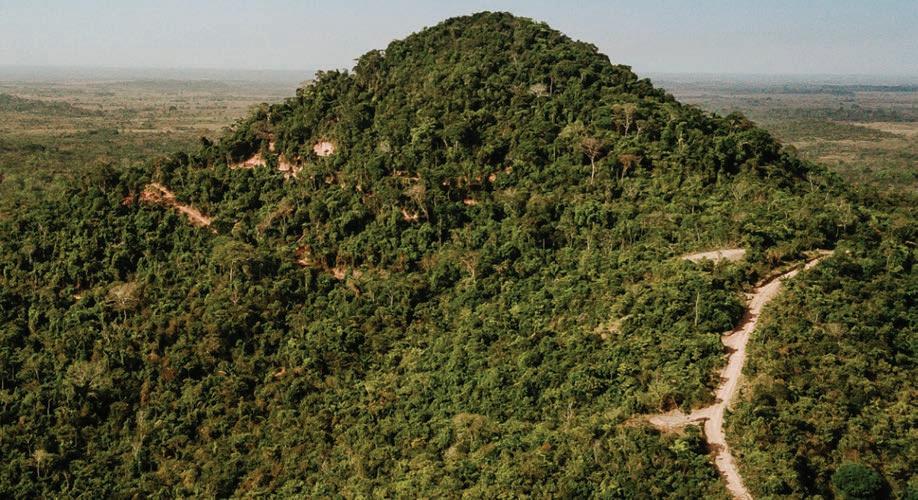
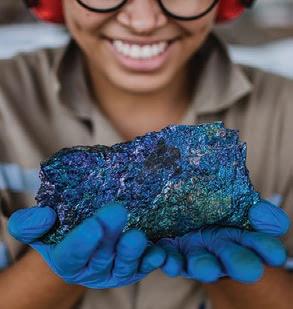
While my company, Ero Copper, has been active in Brazil for only six years, our Caraíba Operations have been working since the late 1970s and form part of the fabric of Bahia State. We are proud to operate in Brazil and excited to see all the support from its government and people toward our industry. We have witnessed first-hand the progress the country has made in building a sustainable, healthy, efficient and transparent mining industry. Brazil is our home and we plan on staying for a while. Last month, we announced an extension of mine life for our Caraíba Operations in Bahia to 20 years, and earlier this year, we began construction of a new copper mine, Tucumã, located in the Carajás region of Para state. Across our portfolio, we have and continue to invest heavily in exploration as we recognize the potential of Brazil’s untapped and underappreciated mineral wealth, particularly when it comes to battery metals.
As we look forward to the next four years under President Lula’s leadership, we see a Brazil poised to take its position as a major producer of the metals needed to help fight climate change, and to produce those metals with the lowest carbon footprint in the world. All within an updated regulatory framework that enhances the protection of the environment and its citizens. TNM
Future Minerals Forum returns to Saudi Arabia in 2023
BY BLAIR MCBRIDE
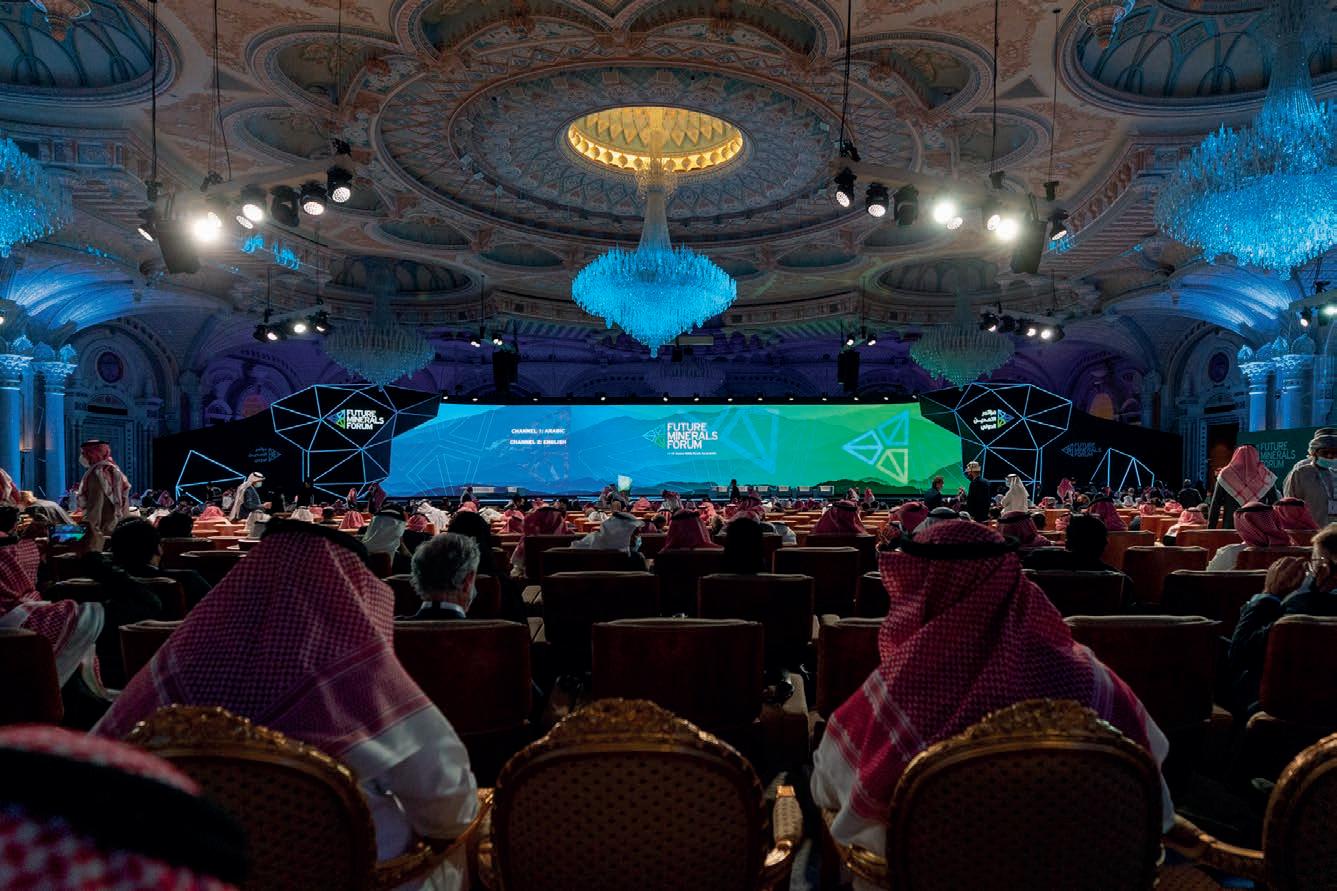
The Kingdom of Saudi Arabia is gearing up for the 2023 edition of the Future Minerals Forum (FMF), one year after the inaugural conference was held.
The forum, scheduled for Jan. 10-12 in the capital Riyadh, aims to further discussions among industry players on the growing demand for critical minerals as the world seeks solutions to climate change. It also seeks to accelerate the exploration and production of critical minerals and metals in the Middle East, Africa and Central Asia.
Organizers expect more than 6,000 people to attend the conference, including more than 150 representatives of mining majors and companies, more than 200 global industry speakers, and more than 50 government ministers and officials.
Prominent speakers on the agenda include Bandar Khorayef Saudi Arabia’s Minister of Industry and Mineral Resources; Mark Bristow, CEO of Barrick Gold (TSX: ABX; NYSE: GOLD); Mike Henry, CEO of BHP (NYSE: BHP;
LSE: BHP; ASX: BHP) ; and Robert Friedland, CEO of Ivanhoe Mines (TSX: IVN).
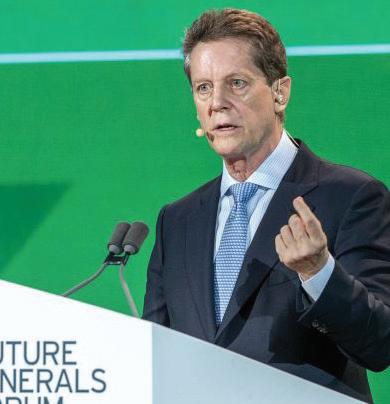
Barrick operates the Jabal Sayid copper mine in the country in a 50-50 joint venture with Saudi state-owned miner Ma’aden, while Friedland’s Ivanhoe Electric (TSX: IE; NYSE-AM: IE) is competing to secure a large zinc-copper exploration licence 175 km west of Riyadh
Despite its position as the world’s number one exporter of oil, Saudi Arabia has committed to a low carbon economy. Its Vision 2030 plan seeks to build up its mining sector by attracting US$170 billion in investment by the end of the decade.
The return of FMF comes as construction of the zero-carbon footprint, green energy-powered city of Neom continues in the kingdom’s northwest. Saudi Arabia has set aside US$500 billion for the project.
Financing for a planned US$5-billion green hydrogen plant in Neom, said to be one of the world’s largest, is set to be completed in the coming months, with construction expected to finish in 2026, Bloomberg reported in November.
At the 2023 FMF, keynote speeches, fireside chats and panel discussions will fall under five broad themes: critical mineral development in the world today, the context of Saudi Arabia and the wider region, decarbonizing supply chains, digital & new technology, and communities and the future workforce.
One keynote address covers a five to 10-year outlook on the kingdom’s role “as a global leader in renewable energy.”

It will consider what is required for large-scale solar and hydrogen production using renewable energy to become economic, what type of projects should be supported and the connections between renewable energy sources and technology.
At last year’s FMF, Khalid Al-Mudaifer, vice-minister for mining affairs at the Saudi Ministry of Industry and Mineral Resources touted the kingdom’s establishment of its Minerals Investment Law in 2021 as a major achievement of Vision 2030. The government also opened online access to its National Geographic Database, a portal of geological, geophysical, and geochemical information with 10,000 detailed reports on mining targets and prospects that goes back 80 years.
Several panels and discussion sessions will focus on the place of Saudi Arabia and regional countries in the critical minerals supply and demand gap, outlining mineral hot spots in the region, permitting procedures, and the skills needed for transitioning away from oil and gas.
In a sign of social changes in the
Middle East, one panel will look at women in mining and how economic trends will affect women in the sector.
In the lead-up to the FMF, the Development Partner Institute (DPI) and strategic consulting firm
Clareo Partners published a joint paper stressing the need for standardized environmental, social and governance (ESG) principles in reducing greenhouse gas emissions and building economies free of fossil fuels.
The two U.S.-based organizations point to the role that Saudi Arabia can play in helping with the creation of universally-adopted principles that support the adequate, affordable, secure and responsible sourcing of minerals.
With the kingdom positioned to build a “triangle of trust” between government, communities and mining companies, the organizations identify three areas where Saudi Arabia can make the biggest impact: it’s already serving as a forum for open dialogue at FMF;
6 DECEMBER 26, 2022—JANUARY 15, 2023 / THE NORTHERN MINER WWW.NORTHERNMINER.COM See FORUM / 16
EVENTS | Kingdom accelerating pivot from oil to critical minerals
COMMENTARY | Ero Copper CEO says perceptions about South American nation are outdated
—David Strang is Chief Executive Officer of Ero Copper Corp.
Above: Ero Copper’s Tucumã project (formerly Boa Esperanca) in Brazil. ERO COPPER
Left: An Ero Copper employee shows a rock sample with copper mineralization.
ERO COPPER/
Robert Friedland, speaking at the 2022 Future Minerals Forum in Riyadh, Saudi Arabia. FUTURE MINERALS FORUM
ment, the strategy identifies the need to streamline project assessments and permits, as well as for investment to unlock potential in mineral-rich regions.
To that end, funding is available through three initiatives identified in the 2021 and 2022 federal budgets: the $1.5-billion critical minerals envelope under the Strategic Innovation Fund (SIF) to support advanced manufacturing, processing and recycling; $40 million to support northern regulatory processes in project reviewing and permitting; and $21.5 million for a Critical Minerals Centre of Excellence to develop policies to assist project developers in navigating regulatory processes.
The SIF will be among the “most significant” of the direct funding avenues, the strategy notes. The fund is aimed at helping to build critical mineral value chains where prefabrication and manufacturing activities are done domestically, while supporting projects that decrease reliance on foreign critical mineral inputs. SIF funding will begin in 2024-2025 and last for six years.
While the strategy says the government is exploring regulatory harmonization with U.S. partners, Wilkinson said Canada isn’t going to wait for the U.S. to formulate its own permit approach and will go ahead with its own.
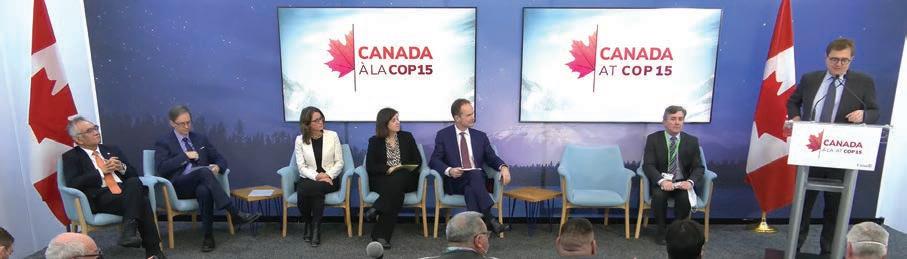
The minister also said that with permitting rules differing by province and territory, the “common theme” is they have to be expedited but must not “cut corners environmentally and they must respect Indigenous peoples.”
Federal and provincial permitting processes at times don’t work very well, Wilkinson acknowledged, and could be better advanced concurrently.
“We need to be aligning projects with the provinces so that there’s one project, one assessment. That’s the model we need to be using going forward. There’s no reason why the federal government and the provinces need to be conducting independent assessments,” he said.
Building new infrastructure
The focus on building sustainable infrastructure aims to address the challenges of developing critical mineral projects in remote or underdeveloped areas. The strategy states that the costs of building infrastructure in those areas discourage investment and “hinder the socio-economic development” of communities open to mineral development. And in northern regions, underdeveloped infrastructure poses challenges for industrial development and access to Canadian and international markets. A total of $1.5 billion will be allocated over seven years starting in 20232024 for such infrastructure development, particularly for priority deposits.
In addition, the strategy says that since off-grid mining operations in remote areas depend heavily on GHG emitting power sources, strategic investments in green energy infrastructure would improve the environmental performance and sustainability of critical mineral projects by integrating them into the value chain. Such investments could spur competitiveness and cut energy costs.
“I met with both the Yukon and N.W.T. governments earlier this week [and] they’re hearing from mining companies who want to develop these deposits for access to clean energy,” Wilkinson said. “There’s a huge push for the government to think about infrastructure that is going to actually facilitate the development of some of these areas where there is a cluster of minerals.”
The strategy doesn’t specify how the infrastructure funds would be disbursed or accessed.
Indigenous participation
In seeking to advance reconciliation, the strategy acknowledges that Indigenous peoples are the rights holders and in some cases the title holders to lands where mineral resources are located. The government hopes to spur Indigenous participation in projects while respecting Aboriginal and treaty rights, advancing economic reconciliation and supporting safe communities throughout the critical mineral project lifecycle.
At least $25 million will be allocated for Indigenous participation and early engagement in the strategy, out of $103.4 million over five years starting in 2022-2023 through the Indigenous Natural Resource Partnerships Program. That program is accessible to communities, businesses and organizations.
Actions under the strategy will comply with the Canadian’s government’s implementation of the United Nations Declaration on the Rights of Indigenous Peoples Act, the document states.
Chief Sharleen Gale of Fort Nelson First Nation in northern B.C, who is also chair of the First Nations Major Projects Coalition, told the audience at the Pinnacle Hotel that she encourages the government to go even further in developing the strategy.
“Ensure proponents of battery mineral projects approach First Nations as early as possible and ensure we’re part of development on our lands,” she said. “The key to success in this sector is free, prior and informed consent.”
The fifth focus of growing a diverse workforce and prosperous communities recognizes that up to 113,000 new workers will be needed in the mining sector by 2030 to meet demand and replace workers leaving the industry. And as the critical minerals industry further develops, demand will ramp up for a diverse set of skills needed for geoscience, AI, computer technology and automotive assembly.
Several federal training initiatives will help build up those skills, including through the Sectoral Workforce Solutions Program, the Indigenous Skills and Employment Training Program, the Skills and Partnership Fund and the Youth Employment and Skills Strategy.
Diversity and inclusion will be given priority in those efforts, with the federal government supporting the training and retention of women, youth, Indigenous peoples and other groups.
International partnerships
The sixth and final focus seeks to ensure international engagement on critical minerals aligns with the federal government’s strategic objectives and its Indo-Pacific Strategy.
It will also further integrate the government’s Responsible Busi-
ness Conduct Strategy, launched in April 2022 with multilateral agreements; and leverage initiatives like the Mining Association of Canada’s Towards Sustainable Mining program to encourage environmentally friendly mining practices and international collaboration to prevent products from conflict, child labour and “environmentally poor” operations from entering supply chains.
Budget 2022 allocates $70 million over eight years starting in 2022-2023 for international partnerships to promote Canadian
mining leadership, including promoting ESG standards and supporting multilateral critical mineral commitments.
Asked what would stop a mining company in Canada from selling its lithium to China, Wilkinson responded that the government has a “carrot and stick” approach.
“With the carrot, we’re interested in fostering development of processing industries... and we set aside money in the critical minerals strategy as well as in the Strategic Investment Fund to ensure those developments are happening in
Canada. But part of the strategy is about geopolitics. It’s about ensuring that not just Canada but democratic countries around the world have access to the resources they require, in a manner that doesn’t make them vulnerable. In the same way we saw Germany become vulnerable to pressures from Russia,” he said.
Wilkinson mentioned the divestments that Canada undertook in early November, forcing some Chinese companies to divest their holdings in critical minerals firms.
“There is a broader review of investments in this country. We need to be consistent in how we do this. But we welcome investments from other countries in a way that promotes economic opportunities for Canada,” he said.
Mining Association of Canada (MAC) president Pierre Gratton said in a release that the association supports the strategy, calling it clear, focused and action-oriented and possibly the most significant industrial strategy the country has seen in decades.
“MAC looks forward to working with the government of Canada to help deliver on the strategy’s promise. Speed matters, as Canada is not alone in vying to capitalize on the critical minerals opportunity,” Gratton said. “Greater still, fighting climate change can’t wait, and without the minerals and metals necessary to fight it, we will fail. The challenge before us is big, but this strategy squarely puts us on the path to success.” TNM
New Sustainable Critical Minerals Alliance to push ‘naturepositive’ mining
BY BLAIR MCBRIDE
Canada has joined the launch of the new Sustainable Critical Minerals Alliance that seeks to pursue environmentally sound and responsible mining, Natural Resources Minister Jonathan Wilkinson announced on Dec. 12.
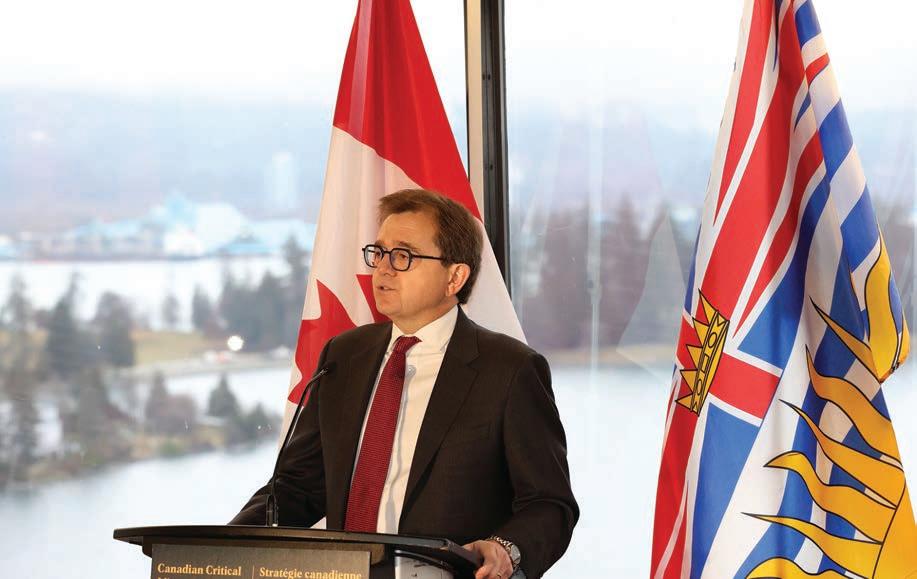
Speaking at the United Nations Biodiversity Conference (COP15) in Montreal, Wilkinson said Alliance members will commit to developing and sourcing critical minerals through a “nature-positive” approach by collaborating with industry on practices that respect biodiversity and local and Indigenous communities.
Other Alliance members include the United States and United Kingdom, Australia, France, Germany and Japan.
“The Sustainable Critical Minerals Alliance is a historic step forward for Canada and our international partners in our collective efforts to secure the responsibly sourced critical minerals we need to power the clean energy transition,” Wilkinson said. “[Members] will put human rights, sustainability and the highest environmental, social and governance standards at the heart of our critical mineral supply chains, helping to build the prosperous, low-carbon economy of the future.”
Among its goals, the Alliance harmonizes with the G7 2030 Nature Compact, inked in 2021 which pledges signatories to halt and reverse biodiversity loss by 2030.
Under the Alliance, members also agree to respect the rights of local and Indigenous communities through engagement and including such communities in the economic benefits of mining; fight climate change by reducing greenhouse gas emissions and push mining, processing and recycling processes that advance sustainability; and building a circular economy by promoting the reuse and recycling of critical minerals, which could reduce the number of new mines needed for supplying minerals.
Governments in the partnership will also act through institutions such as the United Nations Environment Assembly, the International Energy Agency, the World Bank, and the Organization for Economic Co-operation and Development to support sustainable mining, participate in multi-stakeholder and industry initiatives that promote high standards in mining to promote diversity and inclusion in the resource and energy sectors, such as the Equal by 30 Campaign.
Natural Resources Canada (NRCan) said in a news release that dialogue on deeper collaboration on sustainable critical minerals is anticipated at the International Mines Ministers Summit at PDAC in March 2023.
The formation of the international critical minerals body came just three days after NRCan released details of its Critical Minerals Strategy, an almost $3.8 billion plan to develop Canada’s critical minerals industry by accelerating permitting, ramping up infrastructure construction in remote areas and partnering with Indigenous communities.
GLOBAL MINING NEWS THE NORTHERN MINER / DECEMBER 26, 2022—JANUARY 15, 2023 7 STRATEGY from 1
TNM
COP15 | Partners pledge to put human rights, sustainability at heart of supply chains
“We need to be aligning projects with the provinces so that there’s one project, one assessment,” said Wilkinson about plans to streamline the permitting process.
NATURAL RESOURCES CANADA
Natural Resources Minister Jonathan Wilkinson speaks about Canada’s entry into the Critical Minerals Alliance at the United Nations Biodiversity Conference (COP15) in Montreal on Dec. 12. NATURAL RESOURCES CANADA
G2 Goldfields hopes to add to discovery count at Oko project in Guyana
BY ALISHA HIYATE IN BARTICA, GUYANA
When Dan Noone first visited Guyana in 2004, the capital Georgetown was a “sleepy place,” says the geologist and CEO of G2 Goldfields (TSXV: GTWO). “There weren’t many cars on the road.”
As recently as 2010, Guyana was ranked the second-poorest nation in the Caribbean, after Haiti. Now, after a string of oil discoveries off Guyana’s coast by Exxon Mobil over the last seven years, Georgetown is a “bustling” city, and the South American country of less than 1 million people is on pace to be the fastest growing economy in the world this year, with expected GDP growth of 48%, according to the International Monetary Fund.
Guyana’s reputation as a gold miner has also been on the ascent. At the time of Noone’s first visit, he was CEO of Absolut Resources. Four years later he would join Guyana Goldfields — the company that discovered, built and put Guyana’s largest gold mine, Aurora, into production under the leadership of founder and mining entrepreneur Patrick Sheridan — as a director, later becoming VP Exploration in 2010. Guyana Goldfields was bought by China’s Zijin Mining in 2020 for US$238 million.
Under Noone and Sheridan as executive chairman, G2 Goldfields — the name refers to the second take of Guyana Goldfields — hopes to be even more successful in advancing its high-grade Oko main gold project in the Cuyuni mining district, 60 km west of Bartica.
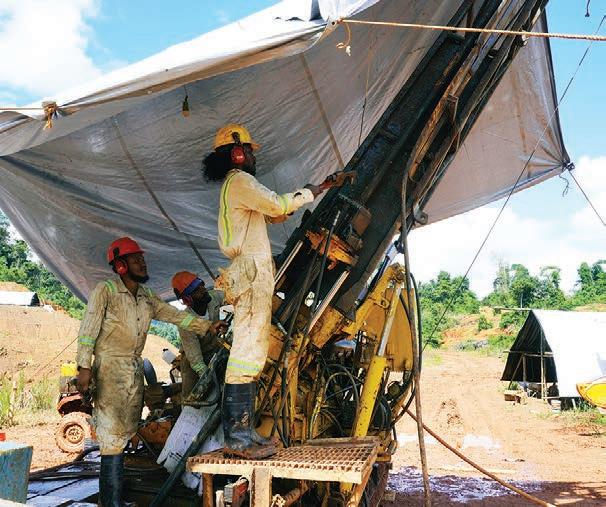
The company is off to a promising start at Oko, with an initial resource for the Oko Main deposit released in April this year outlining 793,000 indicated tonnes grading 8.63 grams gold per tonne for 220,000 contained oz. and 3.3 million inferred tonnes grading 9.25 grams gold for 974,000 gold ounces.
But this time around, G2 isn’t looking to build a mine. Now that Guyana’s gold potential is attracting more interest, Noone says the company won’t likely have to go that far to get an attractive takeover bid.
“Guyana was a different place 18 years ago. There weren’t really any major companies in there exploring the country, we didn’t have the oil discoveries,” he recalls. “So every time we brought someone down to try and get them to come and buy [Aurora], we had to take them through the whole history and meet the government and hold their hand.”
Noone says that also applies to the majors — Barrick Gold and Newmont — who didn’t know much about the country at the time. Barrick is now actively exploring in Guyana, and Newmont operates the Merian mine in Suriname, which produced more than 450,000 oz. gold last year.
“This time around Guyana’s very much a place that the majors want to be. I think it’ll be a lot easier when it comes to exiting or trying to transact with another company on the project. There’ll be a lot more suitors here this time, maybe a lot more competitive.”
With that in mind, G2 is aiming to make the resource “as big as possible as quickly as possible,” Noone says.
Doubling deposit’s depth So far, Oko Main is around 900 metres long, 250 metres wide, and
at the time of the resource, at least 350 metres deep. But the G2 team believes the deposit, which starts from surface, will extend much deeper.
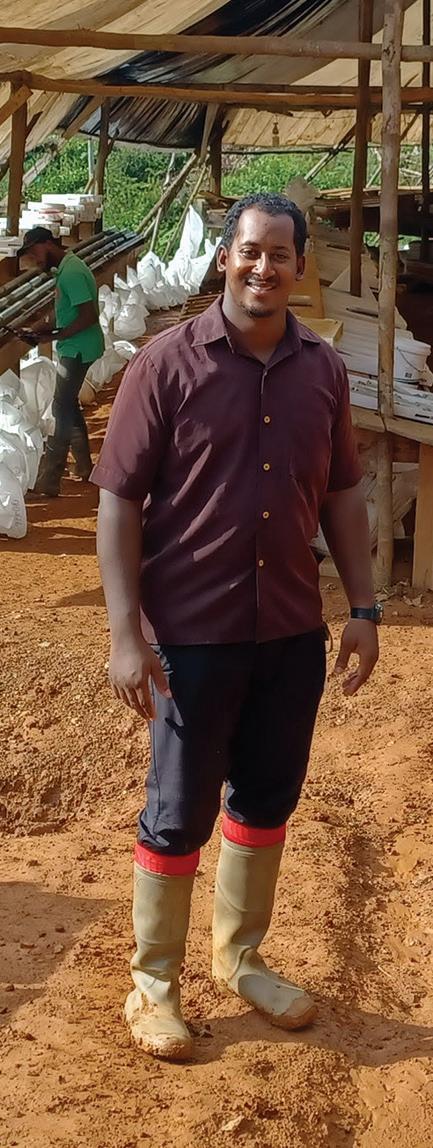
“It’s a classic narrow high-grade reef-style system and we are certain that there will be deeper roots to the discovery,” VP Exploration Boaz Wade told guests during a November site visit to the project.
“A big part of our drilling focus will be on that within the next year or so — extending the high-grade shear zones of vein structures that we’ve discovered to certain vertical depths.”
The company’s looking to double the deposit’s current depth of 350 metres, and is now drilling at depths of more than 450 metres.
Gold mineralization at the orogenic deposit is hosted in three main shear zones that are between 1.5 and 14 metres wide, with about 50 metres between shears.
Wade also noted the team explicitly targeted high-grade ounces in the initial Oko Main resource, which incorporated 98 holes, with the cutoff grade set at 4 grams gold per tonne.
In mid-November, the company reported deeper holes, with hole OKD-130 cutting 3.8 metres of 70 grams gold per tonne from 442 metres; while hole OKD-126A
returned 3 metres of 27.8 grams gold starting from 496 metres depth. (True widths are estimated at 65-85% of reported widths.)
Highly prospective Oko Oko Main is only the first of many discoveries the company expects to make at Oko, which is located in the Cuyuni greenstone belt and accessible from Georgetown by a combination of boat and truck. Overall, the company holds options on 77.7 sq. km of ground, controlling 17 km of prospective strike length of the prospective 23-km-long Aremu-Oko Trend. Through soil sampling and mapping of historical and current artisanal mining operations, G2 has identified five discrete, multi-kilometre-long zones of gold mineralization.
In addition to growing Oko Main, G2 plans to follow up on “a multitude” of near-surface targets over the next six to 12 months, says Wade. The team is looking for another high-grade discovery or a combination of a high grade discovery and of a more bulk style system with open pittable economic potential.
Its prime target is the 1.2-km Ghanie/Shear 1 zone on the property, which lies on the main Oko shear, just south of Oko Main and just north of and along strike of
Reunion Gold’s Oko West deposit next door. When G2 releases an updated resource for Oko Main — expected at the end of the first quarter of 2023 — it also plans to release a first resource for Ghanie.
While Oko Main (and most of the other targets at the Oko project) host high-grade veins hosted in carbonaceous sediments, the Ghanie zone hosts a magnetite replacement style of mineralization that Noone says is similar to that found at Reunion’s Oko West.
Noone describes Ghanie, which saw a 12-hole, 1,356-metre diamond drill program this fall, as a “gamechanger” for G2. While the zone had seen previous drilling in 2020 and 2021, the company says the holes were collared too far to the west, missing the main shear and drilling the intrusion instead. The company released assays from the first four holes at the end of November, including an “exceptional” intercept of 50 metres grading 1.71 grams gold per tonne from 21 metres down hole in GDD-04.
“The mineralization is hosted in magnetite-rich metamorphic rocks and is disseminated over wider zones that are tens of metres as opposed to metres, and generally lower grade — 1.5 to 2 grams gold as opposed to over 10 grams gold,” Noone said.
“The significance of the Ghanie zone is the potential to host broad, near-surface volumes of gold mineralization that can be mined in an open pit. This opens up the scale of operation that can be built and the rate at which ounces can be mined.”
While Noone says Ghanie is a great second discovery at Oko, he believes there are more to find along the Aremu-Oko Trend. Targets include Oko North, Oko North West, Sands, Aremu Mine, Herod’s Vein and Shepherd’s Vein.
Historical production and 2019 discovery
The Guiana Shield which underlies Guyana as well as neighbouring Suriname, French Guiana and parts of Venezuela and Brazil, is highly prospective for gold. But the craton is underexplored because it’s covered by dense tropical forest with limited outcropping rock.
The Aremu-Oko district saw its first alluvial gold rush in the 1870s. Despite hosting the historic Aremu mine, which yielded close to 6,500 oz. at an average grade of 15.6 grams gold per tonne over a five-year period in the early 20th century — as well as small-scale mining since then, the Oko property had never been drilled or subjected to a modern exploration program before G2 began work in 2019.
At Oko there are still some medium-scale miners, who are all operating legally as sub-contractors under agreements with the underlying Guyanese concession holder. G2 has made all option payments to the local licence holder except for one — a $1-million payment it will need to complete within two years in order to transfer the claims to it under a prospecting licence. Under Guyana’s system, that’s the first step to ownership of concessions by a foreign company. Once it acquires a prospecting licence, G2 will have five years to complete a feasibility study. The payment will leave the local vendor with a 2.5% NSR royalty, which G2 can purchase for $4 million.
The November 2019 discovery of Oko Main was aided by small-scale mining on the concession.
“We started a soil sampling program that went from Aremu down to Oko over about a six-month period and when we got to October, we realized we needed to get down and drill Oko because we had an option payment due in November,” Noone recalls. The team went to an area of the property just south of the camp where medium-scale miners had an active mine shaft and drilled underneath it.
“We were drawn to where they were mining. There was some surface geological information in that pit, but it was pretty minimal, so it was fairly hard to figure out exactly what was going on,” he says.
“The first four holes I think we drilled in different directions just to make sure that we had the right orientation. We weren’t sure that it was going to be a planar body because it could have been a series of shoots — which would have been easier to miss if you’re not drilling in the right direction.”
Luckily, the very first hole hit with 27 metres of 5.2 grams gold per tonne from 63 metres depth.
With about $10 million in the treasury, Noone says the company has enough cash to keep the drill turning for another year. G2 has drilled about 35,000 metres to date on the property, with three drill rigs currently at work.
“There’s definitely a lot of other targets to get on with,” Noone says, adding each has its own “unique nature.” In terms of next targets, the company will be investigating Oko North, Bird Cage, Sands, Oko Northwest, Aremu East and Shepherd Vein.
G2 Goldfields traded at 69¢ at press time in a 52-week range of 38¢ and 83¢.
The company has 164.7 million shares outstanding for a market capitalization of $113 million.
8 DECEMBER 26, 2022—JANUARY 15, 2023 / THE NORTHERN MINER WWW.NORTHERNMINER.COM
SITE VISIT | Guyana Goldfields team working to grow high-grade Oko Main
TNM
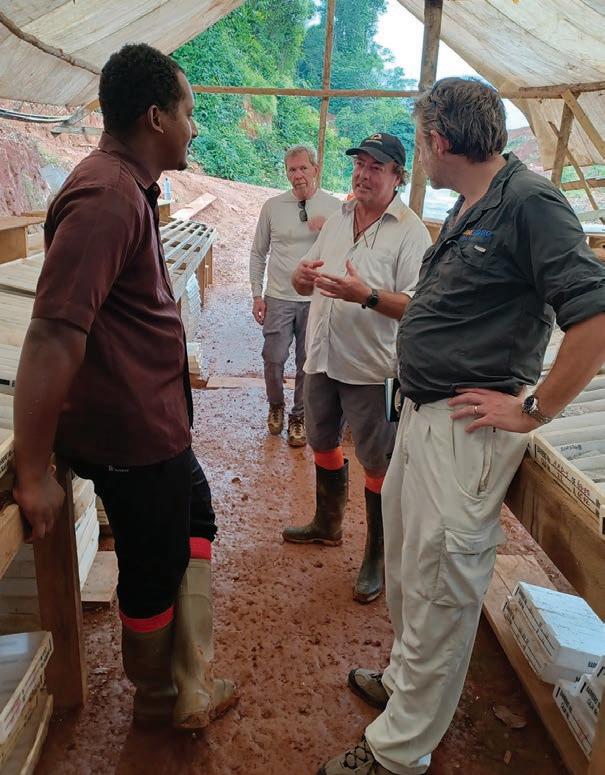
Top left: G2 Goldfields CEO Dan Noone (centre with ballcap) at the core shack at Oko. ALISHA HIYATE
Top right: VP Exploration Boaz Wade at the Oko gold project. ALISHA HIYATE
Left: Drilling at G2 Goldfields’ Oko project in Guyana. G2 GOLDFIELDS
Snow Lake investor battle brings raw energy to Manitoba lithium project
GOVERNANCE | Shareholder group wants to oust management over executive pay
BY COLIN MCCLELLAND
Ashareholder rift over millions of dollars in executive pay at Snow Lake Resources (NASDAQ: LITM) is rattling the explorer’s plans to develop a lithium project in northwest Manitoba.
Management postponed a Dec. 15 shareholder’s meeting until January after an investors’ group that controls 42% of the company said it would try to vote out chief executive officer Philip Gross, chief operating officer Derek Knight and chief financial officer Mario Miranda.
Shorecrest Group, a Toronto-based advisor representing the Concerned Shareholders of Snow Lake, accuses Gross and the board of directors of enriching themselves with more than $6 million for just seven months of service, according to company documents. The board tried to raise millions more in cash through a proposed stock sale in September that would have diluted shares by 55%, but the financing was blocked by a provincial court injunction on Sept. 29.
“The existing collaborating directors have continued to burn through millions of dollars of the company’s money to keep their jobs,” Shorecrest wrote in a proxy circular for the aborted meeting.
“They have hired multiple expensive law firms and proxy advisory firms to purposefully delay this meeting for over four months, to entrench themselves and try to stop shareholders from having a fair and
democratic say in imposing proper governance and making management accountable.”
At stake is a project for what may be the world’s hottest commodity. Demand for lithium to make batteries for electric vehicles and other modern technologies is forecast to accelerate for decades. End users like Tesla, GM and other automakers are scrambling for supplies and Snow Lake already has an offtake agreement with LG Energy Solution of South Korea. However, the site’s remote location about 700 km north of Winnipeg may be a stumbling block for development.
Snow Lake defended the meeting postponement by saying the shareholders group dissidents are engaged in a potentially illegal proxy vote gathering, making potentially
Nominations open for 2023 Peter Munk and Eira Thomas Awards
February
misleading statements and trying to organize their own meeting, which would lack quorum, at a different location from Snow Lake’s offices.
Australian probe It also said the Australian Securities and Investments Commission served Snow Lake with a request for information concerning an investigation into a potential breach of restrictions by people Snow Lake believes are joint actors with the shareholders’ group. Snow Lake didn’t name them.
Deferral is needed to sort out the claims and inform shareholders, Snow Lake said.
“Any purported meeting of shareholders prior to the meeting on Jan. 17, 2023, will be invalid, as will any business purportedly con-
ducted thereat,” Snow Lake said in a statement on Dec. 15. “The board of directors urges shareholders to disregard the dissidents’ ongoing inappropriate efforts to mislead shareholders and the market.”
The project includes the Thompson Brothers and Grass River spodumene pegmatite deposits. The project hosts an indicated resource of 9 million tonnes grading 1% Li2O for 91,200 tonnes, and an inferred resource of 2 million grading 0.98% Li2O for 19,300 Li2O tonnes. Drilling this year returned multiple drill samples showing more than 2.1% lithium oxide in intervals from 1.6 metres to 8.8 metres in length.
The Concerned Shareholders coalesce around Mordechai Kimelman and his wife and par-
ents. Kimelman spun Snow Lake out of his company Nova Minerals (ASX: NVA) in 2018, according to the group’s circular. He was found guilty last year of insider trading regarding Nova and barred from managing corporations for five years. But he served no time of an 18-month sentence because he was remorseful and didn’t gain personally from the transactions, the group said.
Snow Lake set the meeting for mid-December after Shorecrest in June requested it. The advisor says the explorer lacks the authority to postpone the meeting and won’t tolerate the board’s “blatant disregard for its statutory and fiduciary responsibilities.”
Company documents show Gross is set to be paid $4.2 million in salary and stock options this year while the company spent US$4.4 million on exploring and analyzing its lithium asset. Board members approved so-called golden parachutes with more than US$2.4 million in compensation if they’re voted out, the advisor says.
In September, Snow Lake agreed to supply LG Energy Solution with lithium hydroxide over 10 years after production starts in 2025. The project aims to produce 160,000 tonnes of 6% lithium spodumene a year over a decade, enough to power 5 million electric vehicles.
Shares in Snow Lake fell 6.5% to $2.15 each on Dec. 15 in Toronto, within a 52-week range of $1.51 and $10.50, valuing the company at $38.5 million. TNM
Ascot arranges US$200M financing package for Premier construction
GOLD | Company expects 2024 production start at BC mine
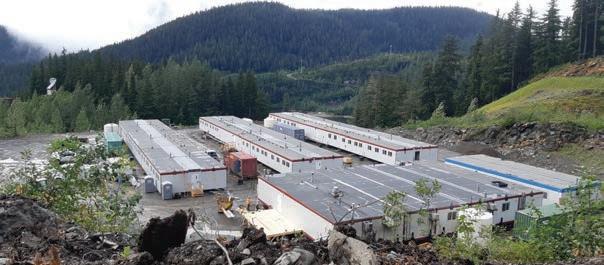 BY MOOSA IMRAN
BY BLAIR MCBRIDE
BY MOOSA IMRAN
BY BLAIR MCBRIDE
Young Mining Professionals (YMP), in partnership with The Northern Miner, has opened nominations for the 2023 Young Mining Professional of the Year Awards as of Dec. 8. The awards are named after two iconic entrepreneurs in the mining industry, Peter Munk and Eira Thomas.
YMP is soliciting nominations from the public to identify the top leaders in the mining and metals industry. The YMP Awards recognize two young mining entrepreneurs, a male and a female, who over the past year, and during the course of their careers, have demonstrated exceptional leadership skills and innovative thinking to create value for their companies and shareholders, as well as for themselves.
To be considered, nominees must be under the age of 40 as of Dec. 31, 2022; and currently engaged in the mining and metals industry.
Nominations can be submitted online at https://www.youngminingprofessionals.com/awards.
Nominations for the Peter
Munk Award (male) and the Eira Thomas Award (female) are open to the public until Jan. 27, 2023. YMP and The Northern Miner will select a winner in each category from the nominees submitted. The recipients of each award will be announced in February 2023, or before The Prospectors & Developers Association of Canada convention taking place in March.
The past recipients of the Peter Munk Award are Alex Dorsch, Matthew Fenton, David Cataford, Jose Vizquerra, Stephen de Jong and Nolan Watson. The past recipients of the Eira Thomas Award are Shelby Yee, Maggie Layman, Ashley Kirwan, Andrée St-Germain, Catherine Raw, and Alicia Woods.
Sponsors and supporters of the YMP Awards include Barrick Gold, KPMG, Cassels and Rio Tinto.
YMP is a growing association of mining professionals with chapters in Vancouver, Toronto, Montreal, Sudbury, London U.K, Brisbane, Perth, Peru, Arizona, Switzerland and Mongolia.
For more information visit www.youngminingprofessionals. com or email info@youngminingprofessionals.com. TNM
Ascot Resources (TSX: AOT; US-OTC: AOTVF) has entered into non-binding letters of intent for roughly US$200 million for construction of the Premier gold project, in northwestern British Columbia.

The proposed financing package will consist of a US$110-million gold and silver streaming agreement with Sprott Resource Streaming and Royalty and/or its affiliates, and a US$45-million equity investment by Ccori Apu S.A.C. A portion of the equity financing will be structured as flow-through shares with total gross proceeds to Ascot of US$50 million.
Ccori Apu’s shareholders own the majority of Compañía Minera Poderosa S.A., which operates a high-grade gold mine in northern Peru that produces around 300,000 oz. of gold per year.
Ascot was forced to slow down construction at Premier in June as it sought additional financing. In April, the company was unable to satisfy drawdown conditions for the remaining US$60 million of an US$80-million senior credit facility with Sprott Private Resource Lending for construction after drawing down the first US$20 million. Drawdown terms included certain technical conditions, such as one that required a significant portion of Ascot’s 12-month ore inventory
to be classified as proven reserves. However, the company’s reserves at Premier are classified as probable.
Ascot now anticipates starting production at Premier in early 2024.The Premier underground mine opened in 1918 and was the largest gold mine in North America until its closure in 1952, producing 2 million oz. of gold and 45 million oz. of silver. Premier comprises a land position of 81.3 sq. km with three key deposits and several
In 2020, Ascot released a feasibility study that outlined a $146.6-million capex for an eight-year project producing an annual average of 151,000 oz. of gold equivalent at an all-in sustaining cost of US$769 per oz. gold.
In a Dec. 12 research note, BMO Capital Markets mining analyst Brian Quast gave Ascot shares an outperform rating, adding that as production nears at Premier,
Quast said that Ascot shares
extended mine life or elevated grade.
“While ongoing exploration results can drive value, hitting construction and commissioning milestones on time and on budget will drive a catalyst-rich period for the company,” he said.
The downside risk for Ascot lie in the potential delays or mistakes during construction or commissioning that could lead to shareholder dilution or value erosion, Quast noted.
Ascot shares traded at 44¢ at press time, in a 52-week window of 30¢ and $1.24, for a $194 million market cap. TNM
GLOBAL MINING NEWS THE NORTHERN MINER / DECEMBER 26, 2022—JANUARY 15, 2023 9
The camp at Ascot Resources’ Premier gold project in B.C. ASCOT RESOURCES
HONOURS | Young Mining Professionals and The Northern Miner to announce winners in
BMO expects the stock to re-rate “towards being a premium smaller producer with exceptional exploration potential.”
could rise if exploration on its land package is successful, potentially enhancing value with an
Aerial view of Snow Lake Resources’ lithium project in Manitoba. SNOW LAKE RESOURCES
Burkina Faso delivers top drill assay of Dec. 9-16
BY HENRY LAZENBY
Our TNM Drill Down features highlights of the top gold assays of the past week. Drill holes are ranked by gold grade x width, as identified by our sister company Mining Intelligence.
This week’s top drill assay comes from Burkina Faso, where West African Resources (ASX: WAF) reported that drill hole M1SRD_0207 at its Sanbrado gold operations returned 25 metres grading 90.17 grams gold per tonne from 353 metres depth, for a width x grade value of 2,254. This result also included 6 metres at 344.03 grams gold per tonne. Other significant results included 24 metres at 38.56 grams gold from 382 metres, with 5 metres at 118.7 grams and 10 metres at 34.42 grams gold; 26 metres at 21.86 grams gold from 214 metres, including 7 metres at 54.98 grams gold; and 20 metres at 19.47 grams from 321.5 metres, including 6.5 metres at 51.04 grams gold. West African executive chairman Richard Hyde said this drilling followed up on historical drilling results, including 23 metres at 11.26 grams gold per tonne. The executive said in a news release that scoping studies investigating the potential for a second underground mine at Sanbrado
TNM DRILL DOWN
Top gold assays of the week
1 Sanbrado Burkina Faso West African Resources (ASX: WAF) M1SRD_0207 353.0 25.0 90.17 2254
2 Wharekirauponga New Zealand OceanaGold (TSX:OGC) WKP109 448.7 12.9 73.40 947
3 Tennant Creek Australia Emmerson Resources (ASX: ERM) GFRC063* 141.0 28.0 28.30 792
4 Treaty Creek Canada American Creek Resources (TSXV: AMK) GS-21-124 33.0 1089.0 0.69 751
5 Gum Creek Australia Horizon Gold (ASX: HRN)) KFRC020D 346.0 15.0 28.45 427
6 Dandoko Mali B2Gold (TSX: BTO) DDSK22_138 112.0 21.8 18.84 411
7 Dalgaranga Australia Gascoyne Resources (ASX: GCY) DGRC1150-DT 319.0 18.5 17.88 331
8 Seabee Canada SSR Mining (TSX: SSRM) SUG-21-378 33.7 16.8 18.60 313
9 Crown Prince- Australia Ora Gold (ASX: OAU) OGGAC456* 41.0 6.0 38.06 228 Garden Gully
10 Golden Ridge Australia Flynn Gold (ASX: FG1) TFDD005 108.7 12.3 16.80 207
will be completed in 2023, with an updated resource estimate, ore reserves and a 10-year production outlook due to be released by March. West African poured first gold at Sanbrado in March 2020, with this year’s production forecast at 220,000-240,000 oz. The company aims to be a multi-project, more-than 400,000 oz. per year gold producer by 2025.
This week’s second-best drill assay comes from OceanaGold (TSX: OGC), which reported that drill hole WKP109 at the Whare-
kirauponga project in New Zealand returned 12.9 metres grading 73.4 grams gold per tonne from 448.7 metres depth, for a width x grade value of 947. Conversion drilling at the advanced exploration project continues to define strong intercepts within the high-grade East Graben Vein zone. Notably, drilling to date has defined only a portion of the East Graben Vein zone which remains open in multiple directions and, with two parallel veins having seen limited follow-up drilling, highlighting the
upside potential of the deposit. The Wharekirauponga low-sulphidation epithermal gold-silver vein system is about 10 km north of the company’s Waihi gold mine.
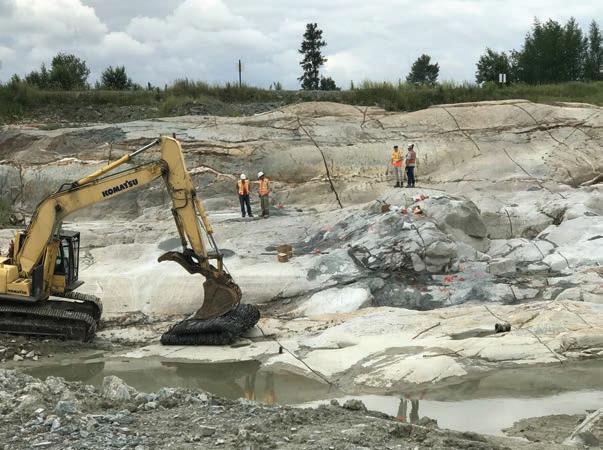
Emmerson Resources (ASX: ERM) reported the week’s thirdbest drill assay, featuring bonanza grades in an emerging new ore zone at Tennant Creek in Australia’s Northern Territory. Hole GFRC063 returned 28 metres grading 28.3 grams gold per tonne from 141 metres depth for a width x grade value of 792. According
to the company, the latest assays indicate a significant expansion of the high-grade gold mineralization to the north of the historical Golden Forty mine. The host to this mineralization has also been intersected at Golden Forty 40 East (G40E) and within the mine environment, which, depending on the results of the next batch of assays, suggests an emerging and more significant, high-grade gold project. Emmerson notes the mineralization remains open in all directions.
Probe Metals drills ‘record gold interval’ at Val-d’Or project in Quebec
BY COLIN MCCLELLAND
Probe Metals (TSXV: PRB) has drilled the highest-grade core yet at its Val-d’Or East project’s Monique deposit in Quebec as it prepares to expand its mineral resource estimate next month.
It was 1973, the same year Esso MExpansion drill hole MO-22-475 cut 22.9 metres grading 4.9 grams gold per tonne cut and 19.2 grams gold uncut (with a 100 grams per tonne cap) from 22.6 metres down hole, Probe said in a news release on Dec. 13. The core sample included 427 grams gold over 1 metre, 227.8 grams gold over 1 metre and 17 grams gold over 4 metres, Probe said.
Infill drill hole MO-22-499 returned 37.3 metres grading 2.4 grams gold from 90 metres down hole; hole MO-22-484 cut 44 metres grading 1.8 grams gold from a depth of 76 metres, and hole MO-22-482 found 3.2 grams gold over 21.6 metres, data show.
“The holes released today have provided us with yet another record gold interval and we are in the enviable position of having a deposit that remains open in all directions,” Probe chief executive officer and president David Palmer said in the release.
“In 2023 our goal will be to demonstrate the phenomenal growth potential that we see in this project by continuing to grow resources, as well as stepping out to test some of the regional targets we
have been developing over the past two years.”
Toronto-based Probe has outlined a gold system 2.2 km long, 1 km wide and 600 metres deep that will inform a new resource estimate scheduled for January. The strong drill results follow a base metals discovery announced in early December at its La Peltrie joint venture with Midland Exploration (TSXV: MD), also in Quebec, broadening Probe’s success while some analysts rate the company as a leading explorer.
Probe has completed 165,000 metres in the drilling program at the gold project 25 km east of
Val-d’Or and will resume drilling in January, Palmer said. This year 85,000 metres of drilling across 299 holes has been completed at Monique.
The Val-d’Or East property, which includes the Monique, Pacalis and Courvan deposits, lies among three past-producing mines: Beliveau, Monique and Bussiere. Updates for the Pascalis and Courvan deposits are expected in the first quarter of 2023, the company said.
Greater potential BMO Capital Markets said Probe’s drilling will increase the amount of ore in an open-pit concept and
likely expand the mine’s processing capacity.
“The continued success at Monique is clearly growing the pits, and in our view will increase the contribution to the resource, and likely to the future mine plan, from open pit mining versus underground,” mining analyst Andrew Mikitchook wrote in a note on Dec. 13.
“We also see the potential for a larger throughput at the project in addition to a longer mine life, thanks to the continued expansion of mineralization at Monique both inside and beyond the preliminary economic assessment (PEA) pit shells.”
The 2021 PEA suggested a $353-million open-pit and underground project capable of producing more than 200,000 oz. gold a year for a 13-year mine life.
Canaccord Genuity said Probe is its top pick among gold developers because of how it’s increased its resource estimate by 434% since 2016, as well as the project’s cost-effectiveness, output potential and low geopolitical risk. Analyst Michael Fairbairn welcomed the strong drilling results.
“Importantly, gold intercepts were relatively shallow at an average depth of 206 metres versus about 250 metres from previously released intercepts,” Fairbairn said in a note on Dec. 13. “Probe’s impressive results from Monique bodes well for the January 2023 resource update.”
The results of 341 other holes at the project are pending as Probe
continues with geotechnical, metallurgical and other studies to complete a prefeasibility study due next autumn.
Measured and indicated resource estimates from July 2021 for Vald’Or East totalled 29.8 million tonnes grading 1.81 grams gold per tonne for 1.7 million oz. contained gold. The project’s other properties, Lapaska, Senore and Sleepy contain 2.7 million inferred tonnes of 3.19 grams gold per tonne for 273,900 oz. gold.
Detour discovery
The analysts’ enthusiasm over the drilling results follows the discovery in early December by Probe and Midland Exploration (TSXV: MD) of a new copper-gold-silver-molybdenum deposit at the La Peltrie project in Quebec’s Detour Lake region. Drill hole LAP-22-012 intersected 345.5 metres grading 0.2% copper equivalent from surface.
“This first set of drill results highlights the potential of Probe’s substantial Detour project,” Fairbairn said in a Dec. 6 note. “Although low grade, the mineralized zone contained higher-grade intercepts and management believes it has the potential to extend laterally and at depth.”
The La Peltrie or Detour gold project lies across 777 sq. km about 190 km north of Rouyn-Noranda in the mineral-rich Abitibi region. Probe shares traded at $1.21 at press time. The stock is valued at about $183 million.
10 DECEMBER 26, 2022—JANUARY 15, 2023 / THE NORTHERN MINER WWW.NORTHERNMINER.COM
TNM
Probe Metals’ Val-d’Or East gold project in Quebec. PROBE METALS
TNM DRILL DOWN:
All data supplied by Mining Intelligence for the period of Dec. 9 – 16, 2022 for public companies from exploration stage to production. * indicates reverse circulation; otherwise all holes are diamond drill holes. Reported lengths are not necessarily true widths. Only the best hole per property is shown.
RANK PROPERTY COUNTRY OWNER
DRILL HOLE DEPTH WIDTH GRADE WIDTH ID FROM (m) (m) (G/T GOLD) X GRADE
TNM
EXPLORATION | Abitibi driller scores best gold after separate copper find
Is ESG cultish activism or modern business sense?
DEBATE | Critical Minerals institute hosts online exchange
BY COLIN MCCLELLAND
Are environmental, social and governance (ESG) guidelines the bible of a shadowy priesthood of consultants, or are they just good for business?
Those two sides took shape during an online video debate organized on Dec. 14 by the Toronto-based Critical Minerals Institute and were argued by a pair of its directors.
Christopher Ecclestone, a principal and mining strategist in London for New York-based investment bank Hallgarten & Co., said good companies have been practicing ESG for decades if not centuries.
“I’m not seeing anything new except the aspect that it’s been mythologized and turned into an object of worship, a priesthood of ESG around it who are hard core black-robed people,” Ecclestone said. “They profess liturgy of ESG.”
Melissa Sanderson, founder of consultancy Ethically Sustainable Growth and a professor at the Thunderbird School of Global Management in Phoenix, said mining industry companies want the clarity of widely adopted ESG regulations because society is increasingly demanding good stewardship from businesses, although China
has been less progressive.
“The largest companies are looking for the environmentally sensitive producers to be in their supply chain because they as end users, the Apples and Teslas, are subject to such intense scrutiny in terms of where, how and with whom they’re sourcing that they’re desperate to see more of these mines permitted and operating,” Sanderson said.
“That will either drive China to change or, wow, here’s a thought, drive China out of its market dominance.”
Concern over climate change is magnifying ESG spending in the mining industry into trillions of dollars over the next decades for items such as electric vehicles and carbon capture systems. Companies are grappling with how to attract investors to projects needed to meet critical minerals and battery metals demand while navigating in jurisdictions such as Africa and Asia where ESG standards can be low and shareholder demands for profit are high.
The debate proved to be onesided at times. Ecclestone agreed with Sanderson on the need for ESG to help poor communities in developing nations where mining tax dollars seem to produce few amenities for locals, and to reha-
bilitate projects leaving “holes that can be seen from the moon.”
ESG costs
However, moderator Peter Clausi, a Toronto lawyer who’s been an advocate for shareholder rights and board governance, asked pointed questions on ESG’s impact on profits and the market’s ability to impose all the ESG that’s needed.
“People are still living a good life in Sudbury,” Clausi said, referring to the Ontario mining city where astronauts once trained for the moon.
“People aren’t living such a good life in Wales, however, or parts of West Virginia,” Sanderson said.
“There’s a cost to complying with ESG, whether you’re Bob’s Mining Co. or Rio Tinto,” Clausi said.
“It’s built into the cost of the commodity,” Sanderson said. “When producing companies sit down to decide what they’re going to price their commodity at, they have factored in their so-called softside costs. The market is absorbing a lot of those costs which is why companies aren’t dropping by the wayside because of conforming to regulation.”
The looming recession will force companies to cut ESG because the “soft spending” will be the first to
BHP invests in Gates and Friedland-backed firm I-ROX
go, Clausi said.
Sanderson countered that companies operating abroad need ESG spending locally to ease operations. Otherwise, they could lose millions of dollars a day if local governments pass laws to enforce ESG or make the mine illegal, or protesters, like in Peru, shut down roads to the port, blocking exports.
“It’s the soft stuff that cuts straight to the underbelly when things go wrong,” she said. “The soft stuff kills you in the end and companies that cut it just for the sake of expediency are not only short-sighted but stupid.”
She cited how Serbia revoked lithium exploration licences for Rio Tinto’s US$2.4 billion Jadar project this month over environmental concerns and Greenland last year banned uranium mining, halting the Kuannersuit rare earth project owned by Greenland Minerals (ASX: ETM).
Need for diversity
Both sides agreed on the need for diversity, especially including more women and Indigenous people in the industry and working to keep them in positions of advancement. But they said they are against quotas.
“We need to do a better job of
attracting women,” Sanderson said. “We need to combat this image of the old-style miner with his pick and shovel heading out to the mine and no women are allowed.”
Jack Lifton, chairman and co-founder of the institute and a long-time critical minerals expert, also jumped into the debate on the skeptics’ side.
“I’m just amazed at how much all of you think that this little bit of organic slime on this gigantic ball of magma and metal somehow dictates how the ball operates,” Lifton said. “I’ve never seen such arrogance by people thinking they can control the environment and that the climate doesn’t change every five minutes. It always has.”
Brent Willis, chief executive officer of Calgary-based Voyageur Pharmaceuticals (TSXV: VM), which wants to start producing barium sulphate next year for radiology drugs used in scanning and X-rays, told the debate he plans to use carbon capture technology to trap 90% of emissions from a 2-megawatt diesel generator. It amounts to about 30 tonnes of carbon dioxide a year.
“It’s a drop in the ocean, absolutely,” Willis said. “But it’s a drop that will grow into a bucket, then hopefully a bathtub, a swimming pool, a lake and keep going.” TNM
Rio Tinto hunts for lithium deals, eyes Jadar revival
BATTERY MINERALS
BY CECILIA JAMASMIE
Rio Tinto (NYSE: RIO; LSE: RIO; ASX: RIO) said on Dec. 13 it is actively searching for lithium assets as its expects prices for the metal used in the making of batteries that power electric vehicles (EVs) to remain high for a “long period of time.”
The company had to shelve its proposed US$2.4-billion Jadar lithium mine in Serbia early this year after the government revoked the project’s licences.
In a presentation posted on its website, Rio confirmed it has not scrapped Jadar completely as it still considers the project as part of its portfolio and said it intends to de-risk the development process.
BY CECILIA JAMASMIE
BHP (NYSE: BHP; LSE: BHP; ASX: BHP) has joined billionaire Robert Friedland’s I-Pulse Inc. and Breakthrough Energy Ventures, a clean-tech venture backed by Bill Gates and Jeff Bezos, to speed up technologies that can help the mining sector save on energy.
I-Pulse and Breakthrough Energy Ventures (BEV)-Europe launched earlier this year a company named I-Rox SAS, a France-based firm focused on demonstrating a pulsedpower technology said to reduce the amount of energy needed to crush rock.
The value of BHP’s equity investments in I-Pulse and I-Rox wasn’t disclosed, but the world’s largest miner will join I-Pulse and BEV Europe as shareholders of I-ROX, the firms said.
I-Rox uses high-voltage pulses of power to disintegrate rock, an approach that has been trialled in laboratories for years but has yet to be applied in commercial mining operations.
The agreements not only give BHP access to the new technology, but it also makes the company an active partner in I-Pulse and an active partner in I-Pulse and BEV Europe’s quest to identify new applications for pulsedpower technology in a mining context.
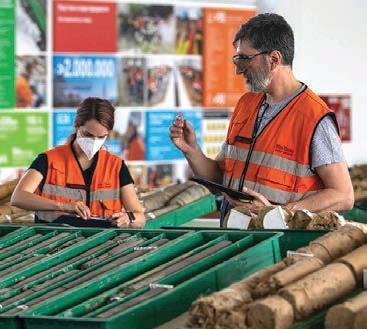
Crushing and grinding mined rock into
“BHP’s investment and our collaboration offer a meaningful step forward in the development and commercialization of I-Pulse technologies for the mining industry,” Friedland, chairman of I-Pulse said in the statement. “Particularly in relation to the prospect of the crushing and grinding of rocks for a fraction of today’s energy consumption, environmental impact and costs.”
I-Pulse has developed several applications of its pulsed-power technology, including solutions for geological exploration, finding water and manufacturing.
BHP chief executive Mike Henry said the collaboration with I-Pulse and I-Rox will contribute to the company’s growing portfolio of options, and has potential to decarbonize its operations and improve competitiveness.
The Melbourne, Australia-based mining giant also has a 5.5% stake in Ivanhoe Electric (TSX: IE; NYSE-AM: IE), another Friedland-founded miner with copper projects in Arizona, Utah and Montana, along with a battery storage business.
Before listing in New York in June this year, Ivanhoe Electric was a unit of I-Pulse. TNM
The world’s second largest miner also said it was pursuing “organic and M&A growth opportunities” in the lithium sector.
Serbian Prime Minister Ana Brnabic was quick to throw cold water over Rio’s plans, saying she didn’t see any possibility to revive the lithium-borate project, local news site Nova reported.
Brnabic also said that having a lithium mine in the country was a “historic chance” for the nation’s development and that public debate about the matter will be necessary.
If completed, the Jadar project would be Europe’s biggest lithium mine, with a production of 58,000 tonnes of refined battery-grade lithium carbonate per year, enough to power 1 million electric vehicles and supply 90% of the continent’s current lithium needs.
Jadar would also propel Rio Tinto onto the world’s top 10 lithium producers podium.
The interest from the Australian miner in lithium comes amid a global push to transition to cleaner energy sources and reduce dependency on fossil fuels. This has placed electrification and battery metals at the forefront of the shift.
Over the past five years, Rio Tinto has tried expanding its footprint in the battery market. In 2018, it reportedly attempted to buy a US$5-billion stake in Chile’s Chemical and Mining Society (SQM), the world’s sec-
ond largest lithium producer.
In April 2021, the miner kicked off lithium production from waste rock at a demonstration plant located at a borates mine it controls in California.
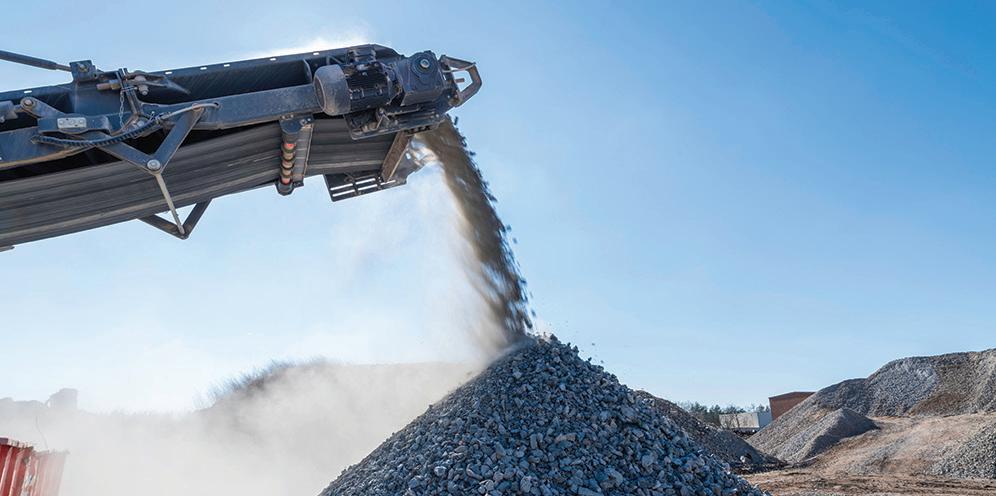
Rio took another step into the lithium market in March this year, completing the acquisition of the Rincon lithium project in Argentina for US$825 million, which has reserves of almost 2 million tonnes of contained lithium carbonate equivalent, sufficient for a 40-year mine life.
The miner has also approached some of the biggest investment banks asking for recommendations on both lithium companies and projects.
Those meetings, the company has said, don’t mean a major deal is imminent. Their goal is to make sure it’s aware of all the opportunities in the sector.
Rio Tinto currently has no lithium projects in Australia, which is the top producing nation of the battery metal, but said that “high-grade brines and Australia hard rock” will be called upon to meet demand.
The company estimates that committed lithium supply and capacity expansions will contribute only about 15% to demand growth over the 2020-2050 period. The remaining 85% would need to come from new projects.
GLOBAL MINING NEWS THE NORTHERN MINER / DECEMBER 26, 2022—JANUARY 15, 2023 11
Examining core samples at the Jadar lithium-borate project in western Serbia. RIO TINTO
small particles to extract valuable metals and minerals consumes more than 4% of the world’s electricity and is a major source of miners’ direct emissions.
| Aussie miner hasn’t given up on Serbian mine
TNM
Rock crusher. RONALD RAMPSCH ADOBE STOCK
INNOVATION | Pulsed-power technology cuts energy consumption
OUTLOOK 2023
Rising investment demand to lift precious metals
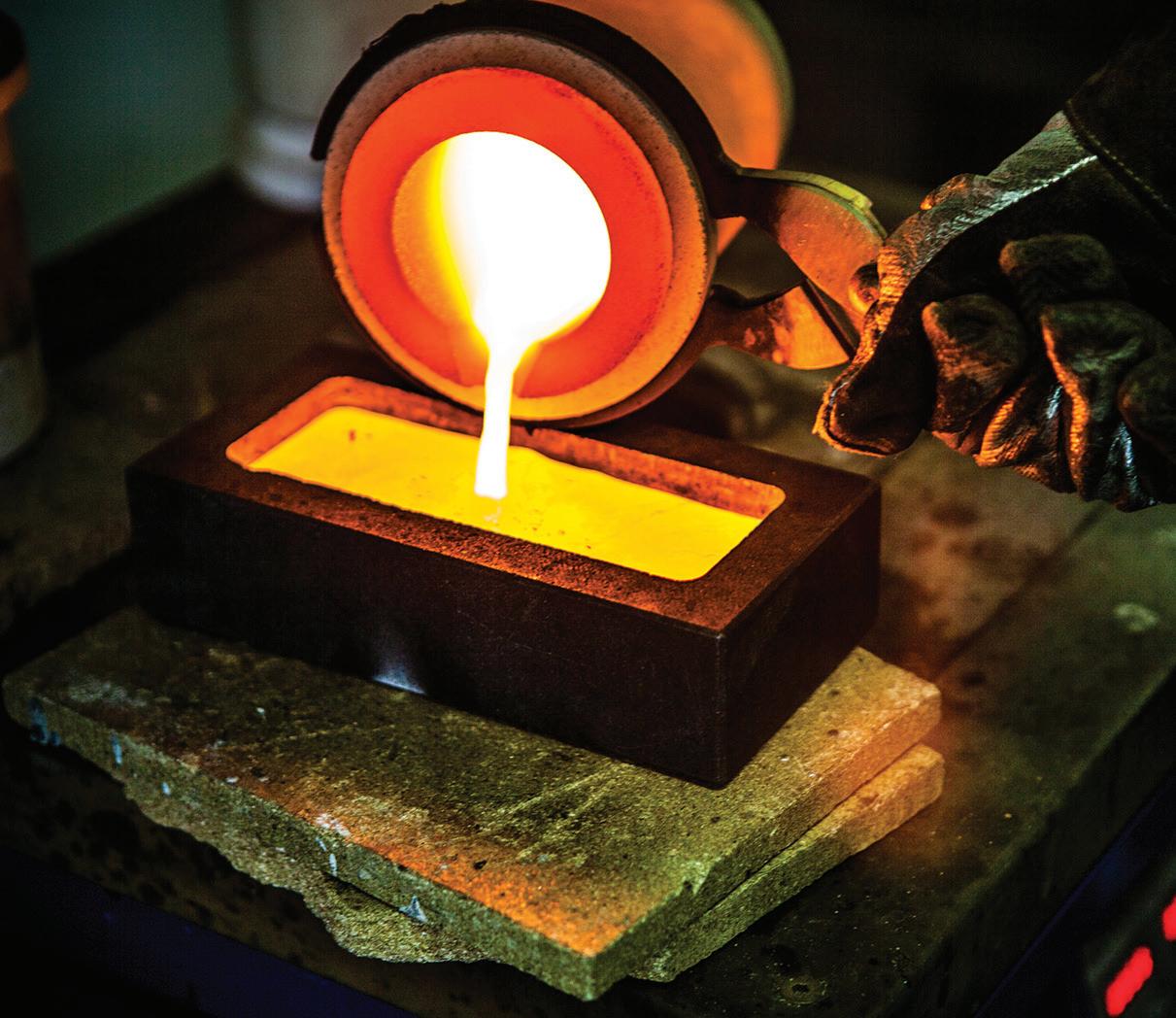
COMMENTARY | CPM Group exec says gold won’t see a sharp rise until 2024
BY JEFFREY M. CHRISTIAN
There are several key elements to having a rational view of likely price movements in precious metals in 2023.
The first is accurately understanding what has happened in these markets in 2022 and where they stand as the year begins.
The second is forming a sober, fact-based opinion about what has happened, where we stand at the start of 2023, and what is likely to happen in 2023 in the global and national economies, financial markets, and the political realm.
The reality is that gold and silver showed strength in the first quarter of 2022, pushed higher by investment demand fuelled by concerns over inflation, effects of interest rate increases on the overall economy, and recession. The Russian invasion of Ukraine at the end of February fuelled that. Platinum and palladium rose initially in response to the Russian invasion but then fell back.
As 2022 proceeded, several key things did and did not happen.
n Inflation rates began to subside slowly, as monetary authorities and mainstream economists had predicted. This was in stark contrast to the arm-waving of gold and silver promoters, who continue to pontificate that inflation will skyrocket well into double digits, and indeed already is that high ‘if measured properly.’
n Interest rates rose sharply throughout the year, but remained lower than they were throughout the years of strong economic growth of the 1970s–1990s. The reality set in that interest rates, virtually zero at the start of 2022, could rise sharply without choking off economic growth.
n Following the realities of the interest rates, the world did not plunge into a recession.
These and other factors such as strong jobs growth, rising real earnings, strong industrial production, and slowly recovering world trade all kept the bears at bay, at least for 2022.
So what does 2023 and beyond hold in store?
1 Inflation will continue to trend lower. Some cyclical factors and inflationary pressures brought about by the lockdown and subsequent economic recovery are dissipating. Other shorter term cyclical trends continue to pressure prices higher. Other longer term secular
NATURAL RESOURCES
changes in the U.S., Canadian, and global economies continue to exert upward pressures on prices. Special events, from the Russian war in Ukraine to the on-going bifurcation of China’s economy from most of the world, will continue to exert inflationary pressures, slowing the pace of reduction in price increases over the next few years.
fit-for-purpose solutions across the entire mining life cycle

2 Interest rates are likely to rise at least through the first quarter of 2023, before plateauing. Rates are likely to start declining slowly toward the end of 2023 as recessionary pressures increase.
3 A recession is coming. It is important to note that the major factors that will cause a recession in the near future will be fundamental supply and demand trends in the ‘real’ economy and fiscal policies. Monetary policy will not throw the U.S. or industrialized world into a recession, and will only play a distant third supporting role in the drama. Blame the politicians who muck with fiscal policy and who borrow and spend. And blame the free market economics that allow for a continual warp and woof of supply and demand overshooting each other’s equilibrium levels over the centuries.
That will be the economic environment in 2023. Add to it the likelihood of another Russian offensive, possibly not until spring, unless Ukraine pre-empts it with an earlier offensive. Also add to it a host of political and social issues of growing volatility in virtually every
major corner of the world.
Yes, a recession is coming. That is 100% certain. The questions are when it will arrive, how it will be triggered, how long it will last, and how deep and damaging it will be. The mainstream consensus, and CPM’s own opinions or best guesses are that 2023 will see extremely low, virtually flat economic growth in the industrialized nations.
A recession may not start until the fourth quarter of 2023 or sometime in 2024. It may be a big one and last into 2025. Obviously, it will have important consequences for precious metals, probably stimulating higher gold and silver investment demand and prices while limiting any recovery in global auto markets, limiting platinum and palladium prices.
Gold
While many gold bugs have whined all through 2022 that gold prices were ‘low,’ the reality is that the gold price is heading to a record annual average high around US$1,804 per oz. (through November).
Investors continued to buy large amounts of gold, roughly flat from 2021. They had earlier pulled back from buying so much gold in 2018 (16.1 million oz.) and in 2019 (17.1 million oz.). As the pandemic, global lockdown, and global recession hit in 2020, investors increased their purchases to around 39.9 million ounces. In 2021 and 2022 investors bought 26.4 million and 26.7 million oz., respectively. This was down from the very high 2020 level, but very much greater volumes than in 2018 and 2019.
Central banks have been buying gold too, diversifying their monetary reserves. Most central bank reserves are in U.S. dollars, around 60% of total foreign exchange reserves. Many financial market participants have expected the dollar to decline, possibly sharply. Instead the dollar rose sharply for the first 10 months of 2022. The dollar declined some in November and early December, but remained above pre-2022 levels. In this environment some central banks took advantage of the strong U.S. dollar and used some of their reserves to buy gold and other currencies.
Mine production and total supply have been relatively flat while jewelry demand has risen.
In 2023 investors are expected to keep the pace of gold buying they have maintained in 2021 and 2022. They may increase their demand somewhat from that level, depending on how economic, financial, and political issues evolve. Central banks are similarly expected to continue adding gold to their monetary reserves. Mine production and secondary recovery are projected to rise modestly in a subdued global economic environment.
Gold and silver prices are determined primarily by investment demand, which is determined primarily by factors exogenous to gold and silver markets.
It really is uncertainty, of various forms, that flavour investor demand.

“A RECESSION IS COMING. THE QUESTIONS ARE WHEN IT WILL ARRIVE, HOW IT WILL BE TRIGGERED, HOW LONG IT WILL LAST, AND HOW DEEP AND DAMAGING IT WILL BE.”
/ADOBE IMAGES SPECIAL FOCUS SGS IS THE WORLD’S LEADING INSPECTION, VERIFICATION, TESTING AND CERTIFICATION COMPANY WWW.SGS.COM/NATURALRESOURCES NAM.NATURALRESOURCES@SGS.COM
IPOPBA
Delivering
Our fit-for-purpose solutions encompass the skills of qualified geologists, geostaticians, analytical chemists, mineralogists, metallurgists, process engineers and mining engineers brought together to provide accurate and timely mineral and process evaluation services across the entire mining life cycle.
Independent. Committed.
Trusted.
See PRECIOUS METALS / 15
Pouring a gold bar CINEMA HOPE DESIGN/ISTOCK
Jeffrey M. Christian.
Geopolitical risks likely to intensify in 2023
BY ALISHA HIYATE
Following a difficult and unpredictable year full of uncertainty, 2022 ends with a heightened sensitivity to risk. To discuss what lies ahead for miners in 2023, The Northern Miner spoke in mid-December with Matthew Bey, Senior Global analyst for the risk intelligence company RANE.

THE NORTHERN MINER: This year has seen multiple crises, both geopolitical and economic — some call it a ‘polycrisis.’ We’ve seen extreme disruption from Russia’s war in Ukraine, skyrocketing inflation, rapidly rising interest rates, continued impacts from Covid, etc.
What geopolitical risks from 2022 look like they will start to abate in 2023, and which are likely to intensify or linger?
MATTHEW BEY: Unfortunately, the risks that are going to abate are probably the shorter list of the two. A lot of things are going to be intensifying over the next year. One that I think is going to abate, at least from an economic standpoint is some of the Covid-19 restrictions that have been still slowing down economic growth in places like China. However, when you look at global economic growth next year, you’re also talking about concerns about a recession and the other two main engines of the economy. That’s, of course, the United States and Europe. So I think it’s a mixed bag.
Another risk that will be abating a bit next year will be the concern about the Taiwan crisis. We still think that China very much does not want to take a true offensive invasion of Taiwan for number of reasons, at least for the next few years.
On the flip side, when you look at a lot of the risks that are going to be intensifying or lingering, that’s a much longer list. You have the Ukraine war, of course, which is going nowhere right now. It is likely to remain in a kind of stalemate throughout all of 2023. We are not likely to see any true ceasefire or even really true dialogue beginning next year, for a couple of reasons. One, Russia has given no indication that it’s willing to negotiate about the areas of Ukraine that it’s recently annexed. Meanwhile, Ukraine is taking a hard line saying no, those are part of Ukraine. And quite frankly, neither of them has the military capacity to win the war in a physical sense.
Looking at some of the rising tension from a technology perspective between the U.S. and China, that’s been a major theme in certain industries, like the semiconductor industry. The U.S. has given no indication that it’s going to be slowing down its tech war against China. China has been giving no indication that it’s going to reduce the support for its national champions in these leading technology industries. So expect more restrictions, more regulations going forward. That US-China tension is likely going to remain for the next few years.

A couple others that I wanted to highlight, is there still a major dispute between the U.S. and Iran over the future of Iran’s nuclear program. Iran’s enrichment of uranium is now getting to the point where, they can build a nuclear weapon — if they wanted to — within six months. So we’re talking about a potential nuclear crisis if we continue down this path, especially as talks on the 2015 Iran nuclear
deal have gone nowhere over the last few months.
One last one is the global energy crisis. The natural gas crisis going on in Europe right now has been alleviated by China’s periodic lockdowns throughout the year. China’s demand for natural gas has not been that high this year, and that’s allowed Chinese LNG importers to resell to European companies. Next year, we might have a case where the global LNG supply is just not growing for a number of reasons. And then we still have massive demand coming out of China, which could mean that next winter, Europe may not be in as positive a spot as they are right now when it comes to natural gas availability.
TNM: I just want to pick up on one of the things that you mentioned — one of the big trends of this year has been the deglobalization or the reorganization of the world into different blocs. And the Western world has been pulling away from both Russia and China — to punish the former for its aggression in Ukraine and at least in part to challenge the latter’s dominance of critical supply chains. You just mentioned that this is likely to intensify going forward, can you
give me some more detail about how you see that playing out?
MB: I think that we are at a critical juncture in the way that the global economic environment is operating. We are at a point where the Western, post-Cold War liberal order is kind of fraying. I don’t mean this just in an economic sense, but I’m also talking about the WTO, the IMF, and the power of these Western institutions that have been dominant for so long. But what that means from a trade perspective is that we are going to be seeing a lot more fragmentation and a lot more nationalism, from governments that have planned economies, and even the West, which is typically more free trade, we are seeing them implement more protectionist policies. Look at the inflation Reduction Act here in the United States, which included in its provision for EV tax credits a requirement that the final assembly be done in North America.
That actually means that it doesn’t include U.S. allies like Japan, or the European Union. The EU is, of course, pushing the U.S. on the issue, and the US has basically said, ‘Well, there’s something that we need to do for the energy transition, so you guys can do it too.’ So we are starting to see a fragmentation or deglobalization, and localized supply chains within a country are becoming much more significant or much more economical, as these barriers to trade are being put up. You might see less trade between the West and China, but more inter-regional trade, say, between the U.S. and Mexico and Canada. Or in the European Union, we see more trade with some of its periphery, whether it be North Africa, Eastern Europe, the Middle East, etc.
The areas where I think that you’re going to see more significant restrictions are going to be the high technology areas I mentioned, the U.S. is going to continue its tech war against China. That means we should anticipate more restrictions like those being done through export controls of key leading technologies — so
in the semiconductor industry, and eventually, cloud computing, quantum computing, etc. Those are areas where we could see more concrete movements that actually do prevent some of the sales and transfer of goods to China and into Russia, of course.
TNM: I want to talk a little bit more about China, because China’s demand for commodities drove the last supercycle and China obviously remains extremely important in terms of driving demand. However, some analysts, including analysts from BlackRock and in a recent note, from early December, suggest that the country appears to be refocusing on self-sufficiency in food, energy and technology and de-emphasizing growth. Would you agree with that assessment? And what are the near and medium-term implications for the commodities markets?
MB: I do think that China is trying as much as it possibly can to boost its self-sufficiency in a lot of different areas, whether it be raw materials, technology, etc., and it is definitely de-emphasizing economic growth. But the one caveat is that China’s self-sufficiency goals are often very high-level political goals, where they shoot for the stars and try to achieve half of it. So when we see China wanting to do 70% of its semiconductor manufacturing at home or trying to source all of its raw materials from inside Chinese borders, there’s very limited ability to actually do that. They might functionally get halfway there. That still means that China is still buying a lot of goods from overseas. I think the important part from a supercycle commodity perspective is that China, when it gets to an economic slowdown, isn’t necessarily going to focus so much on building through construction and other projects that are driving up and boosting demand for things like iron or steel. That is no longer going to be as in vogue as it was post the 2007-2008 financial crisis.
When we talk about some of these new areas where the U.S. and China are competing, like the bat-
tery supply chain, the minerals are going into the batteries, a lot of those are not mined in China. The rare earths are, but with lithium mining or the procurement of nickel, we are seeing China being very aggressive when it comes to the Chinese companies that are dominant in the battery supply chain or the processing of nickel, going into countries like Indonesia to secure supply. It’s not total self-sufficiency, but it is self-sufficiency in the sense of China controlling that supply chain from mine to consumer.
TNM: After the recent protests in China against the government’s Covid Zero policy, and a notable softening of the policy in response, do you think that we will see the end of Covid Zero in 2023?
MB: I think from the Chinese Communist Party’s perspective, they built up so much credibility around the zero Covid strategy that they can’t abandon it in name, they can only really abandon it in practice, if that makes any sense. But I do think over the course of the next year, we are likely to see the slowing down and removal of restrictions. The big challenge, though, is that China hasn’t deployed a lot of vaccines to, for example, the elderly population, China hasn’t used a lot of mRNA vaccines so there’s a question as to whether or not we’ll see a massive increase in the number of Covid19 cases. There could be a snapback of some of the restrictions. So it’s likely to be chaotic.
TNM: Refocusing away from China now, miners venture into some pretty risky areas of the world. Are there any regions you would highlight as places where miners are seeing increasing risk?
MB: I think there’s increasing risk right now in parts of Africa, which is already a high-risk environment. But when we look at political stability on the continent, it’s going to be one of the things that’s facing stress next year, particularly, as we see ris-
GLOBAL MINING NEWS THE NORTHERN MINER / DECEMBER 26, 2022 — JANUARY 15, 2023 13 OUTLOOK 2023 See RISK / 15
Q&A | RANE analyst Matthew Bey discusses Ukraine war, global fragmentation, and West Africa’s string of coups
WILLIAM W. POTTER/ADOBE
Matthew Bey Senior Global analyst, RANE
“WE ARE GOING TO BE SEEING A LOT MORE FRAGMENTATION AND A LOT MORE NATIONALISM, FROM GOVERNMENTS THAT HAVE PLANNED ECONOMIES, AND EVEN THE WEST, WHICH IS TYPICALLY MORE FREE TRADE.”
MATTHEW BEY, SENIOR GLOBAL ANALYST, RANE
Analysts forecast a mixed bag for commodities amid global 2023 slowdown
MARKETS | Rising Chinese metals demand to boost weakness
BY HENRY LAZENBY
Given the tumultuous past two years that saw global markets ebb and flow to extreme degrees, it’s perhaps no surprise that the only thing that’s certain about the 2023 outlook for commodities
Analysts generally agree that the global economy is headed for a slowdown, but forecasts from reputable industry sources feature a wide degree of variability
“Our roster of industry sector outlooks (ISOs) is flashing negative, although our earnings growth expectations are a less negative signal than the ISOs themselves. Our credit cycle gauge is also flashing red, forecasting that default rates will rise, albeit from historic low levels,” Moody’s senior VP Edmond DeForest wrote. “But the debt boom that ended in early 2022 loosened restrictive terms for many leveraged companies, which will hold down defaults despite the weak conditions ahead”
Moody’s believes persistent inflation, higher interest rates, and slowing economic growth create a ‘risk-off’ posture among credit investors. The continuous hikes in interest rates are forcing companies to slow investments and adopt defensive business strategies, which coincide with a downturn in mineral exploration financing and exploration activity.
Changing consumer patterns
At the same time, Moody’s flags that higher interest rates will reduce demand from consumers and businesses alike while rising interest expenses will pressure earnings and hamper free cash flow. Furthermore, the strong dollar will diminish U.S. multinationals’ foreign profits, and U.S. exporters may find that their products have become too expensive compared to local alternatives, according to the company.
It’s worth noting that consumer-facing sectors will come under the highest stress.
“Persistent inflation, higher interest rates, the strong dollar and bleaker GDP growth prospects cast a cloud over North American nonfinancial companies,” DeForest wrote. “As we enter 2023, companies remain exposed to the many prominent downside risks in the financial markets. These include economic contagion from weaker regions and multiple geopolitical flashpoints.”
Also, Moody’s observes that consumer behaviour is shifting from discretionary purchases, such as furniture and electronics, to essentials like food and gasoline, especially as wage growth will not keep up with inflation, pinching consumer purchasing power. In that same vein, rising mortgage rates will severely curtail the housing market and reduce spending on the home, which hurts homebuilders, construction product companies, and real estate-related services.
“However, the debt boom that ended in early 2022 loosened restrictive credit terms for many leveraged companies, building resilience for the weak conditions ahead,” noted DeForest.
Not all is negative in Moody’s 2023 outlook.
Factors that could prompt a revision to its forecast include stabilizing and reducing inflation, if interest rates stop rising or decrease and earnings expectations and business conditions improve.
“We would consider revising our outlook to positive if we expected a period of sustained GDP and earnings growth, driving an expectation for low defaults, robust liquidity and strong credit fundamentals across most key industries,” noted DeForest.
Commodities outlook
Meanwhile, macro-economic factors aside, BMO Capital Markets has released a more optimistic commodity outlook for 2023. The bank’s global metals and mining team expects that despite growing economic headwinds, most metals and bulk commodities prices remain healthy by historical norms.
“While 2023 metals demand growth is unlikely to be stellar, on a six-month view, we expect improved Chinese demand to offset weakness in the developed world,” the bank said in a Dec. 14 research note to clients.
“We see the recent general price rally as somewhat ahead of fundamentals, particularly given typical Q1 demand weakness.
However, we’ve raised the majority of 12-month forward commodity forecasts as 2023 balances are
incrementally tighter than might have been thought two months ago,” wrote the global metals and mining team.
For 2023, the bank’s most significant year-on-year revisions to its price forecasts were to molybdenum, up 33% amid concerns surrounding Chilean supply, which accounts for about 20% of the global market. Other notable uplifts were seen in nickel (11%), hard coking coal (11%), semi-soft coal (10%), zinc (9%), and copper (9%), owing to a combination of supply downgrades and persistent low inventory levels. For precious metals, BMO has revised its silver and gold forecasts slightly higher (3% and 2%, respectively).
Iron ore is one of the few commodities for which BMO has a more robust outlook in the first quarter, expecting it to move higher than current spot price levels.
This has to do with the usual seasonality in this market, with Chinese steel production in March likely to be higher than in the current quarter. BMO also sees steel prices as potentially having hit a low-water mark after recent sharp falls.
“Longer term, we have an upward trajectory in platinum, uranium and aluminum prices as future demand expectations improve. We see copper and nickel as requiring through-cycle demand rationing, leading to a consistent premium to the cost curve over the coming years,” wrote BMO.
BMO expects investors are looking beyond some of the near-term challenges, particularly in copper, towards what is likely to be a stronger second half of the year. Further, iron ore and coal producers present compelling near-term opportunities, offering above-average free cash flows and potential for “solid”
shareholder returns.
BMO has increased the target price on 33 stocks (12% average) and lowered them on two companies, while no rating changes were made.
In the precious metals sector, BMO said an increase in its nearterm price forecasts had driven positive revisions to earnings and cash flow estimates for precious metals companies. It has updated target prices on 28 companies in its coverage universe, up on average by 7%.
BMO expects investors are looking beyond some of the near-term challenges, particularly in copper, towards what is likely to be a stronger second half of the year. Further, iron ore and coal producers present compelling near-term opportunities, offering above-average free cash flows and potential for “solid” shareholder returns.
BMO has increased the target price on 33 stocks (12% average) and lowered them on two companies, while no rating changes were made.
In the precious metals sector, BMO said an increase in its nearterm price forecasts had driven positive revisions to earnings and cash flow estimates for precious metals companies. It has updated target prices on 28 companies in its coverage universe, up on average by 7%.
Copper rally
BofA says the table is set for copper to rally in the second quarter as its use in green technologies is expected to offset cyclical demand weakness. The bank sees potential for the red metal to trounce US$12,000 per tonne (US$5.44 per lb) in 2023.
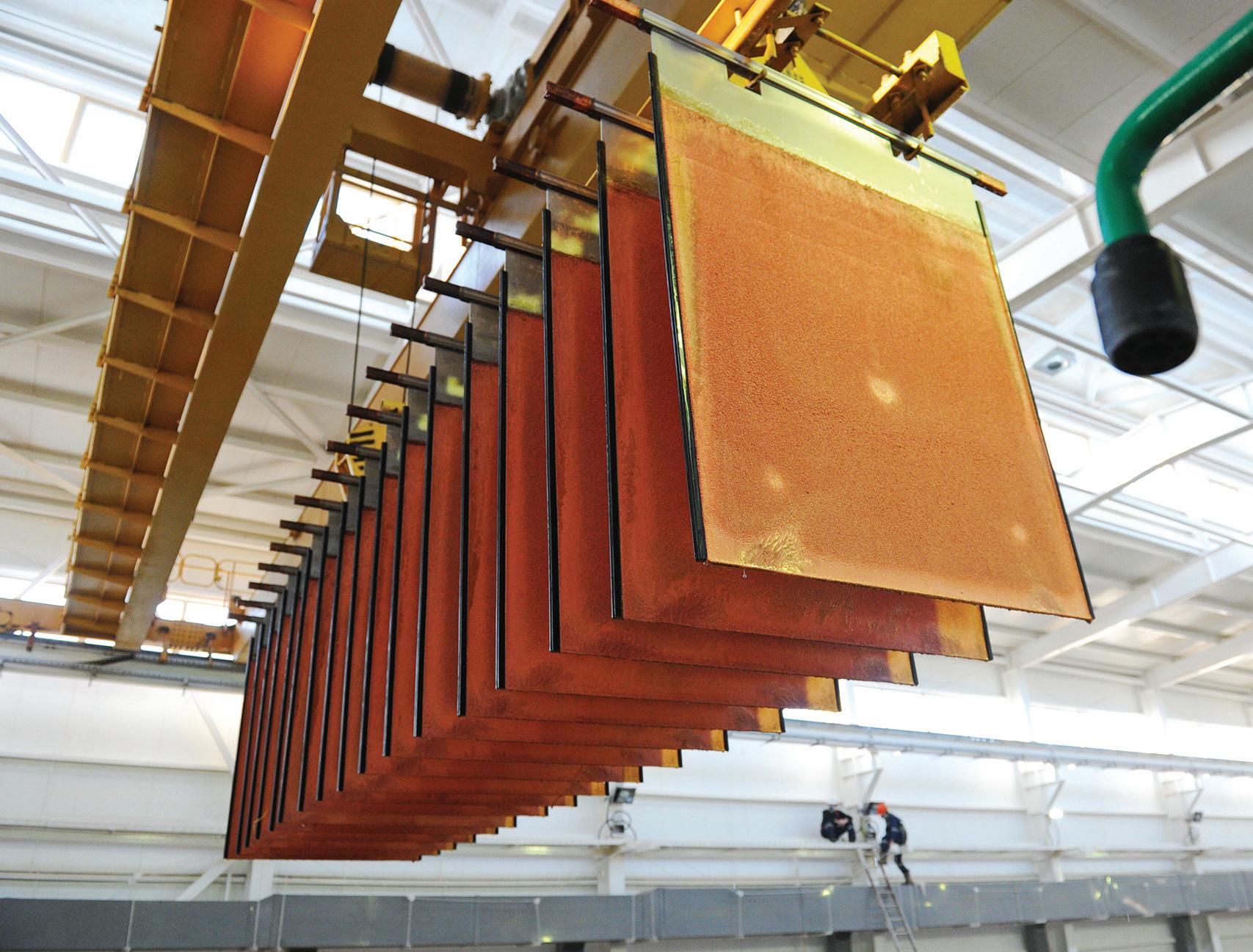
“Of course, there is also a risk that supply will underperform
again, preventing a replenishment of depleted inventories,” Widmer said.
BofA also sees aluminum upside, partially because global supply is set to remain constrained. At the same time, more vigorous activity in China should reduce exports. “We expect a nickel market surplus next year, but this supply overhang is set to be temporary, and further supply growth is essential to prevent renewed constraints kicking in from 2024,” Widmer said.
Meanwhile, physical gold demand from central banks and India and China has been “quite strong.”
“A slowdown in the pace of tighter monetary policy will likely bring investors, the missing piece, back into the market,” said Widmer.
“Indeed, we see scope for a Fed pivot and a slowdown in the pace of rate hikes. This, along with reduced appreciation pressure on the U.S. dollar, should push gold higher, with the yellow metal likely stabilizing above US$2,000 per ounce.”
Similarly, the bank expects higher platinum prices on purchases from the auto industry, substitution of platinum for palladium in autocatalysts and the hydrogen economy. Palladium is set to decline.
BofA expects the uranium market to remain tight, so prices should rally 16% year-on-year to US$58 per lb. in 2023.
However, lithium supply is set to temporarily catch up with demand, likely ending the sharp rally in recent quarters. The bank said it has concerns over diamond demand on the back of an increasingly uncertain economic outlook, which it thinks could impact the demand for discretionary consumer goods such as diamond jewelry.
14 DECEMBER 26, 2022 — JANUARY 15, 2023 / THE NORTHERN MINER WWW.NORTHERNMINER.COM OUTLOOK 2023
Layers of cathode copper on a special lift for processing. VLADIMIR/ADOBE STOCK
TNM
“WE ARE TAKING THE OUT-OFCONSENSUS VIEW THAT MANY MINED RAW MATERIALS, ESPECIALLY THE BASE METALS, WILL RALLY IN 2023.”
MICHAEL WIDMER BOFA COMMODITY STRATEGIST
Inflation, interest rates, currency markets, equity and bonds, political stability, bank and financial market stability, etc. are what determine whether investors want more or less gold and silver.
Investment demand determines gold prices. Gold prices determine mine production, secondary scrap recovery, and fabrication demand.
Putting these fundamentals together and weighing them against the macroeconomic and political environment that influences investment demand, it seems most likely that the gold price may trade in a US$1,700-US$1,900per-oz. range, similar to the last three quarters of 2022. Prices are expected to rise more sharply in 2024, when CPM expects a fullblown recession, debt market issues, and other factors to trigger stronger investor demand.
Silver Silver prices fell in 2022. As of Dec. 15, the average for the year is US$21.72 per oz., down nearly 14% from the 2021 full-year average price. Prices are expected to recover somewhat in 2023, possibly trading between US$20 and US$28. Higher prices are projected beyond 2023, for all the same reasons gold is forecast to rise.
The lower price in 2022 was due to investment demand — the same market segment that’s expected to lift prices next year.
After investors lost interest in 2017-2019, silver prices declined. Investment demand and prices began to recover in mid-2020. Investment demand rose from 37.3 million oz. in 2019 to 65.3 million oz. in 2020, and then to 105 million oz. in 2021. That took prices higher.
The silver market became infected with marketing hype in
2020 and 2021. Marketeers were promising that silver prices, which touched US$11.77 per oz. in the first half of 2020, would soon be US$50, US$100, US$750, or even higher. None of those price levels could be supported by silver’s supply and demand fundamentals, but like crypto investors, many silver investors are hell-bent on ignoring reality. The unrealistic price predictions came with laughable concepts like having small investors buying so much silver that the international silver bullion market ‘ran out’ of silver and ‘imploded.’ Some investors bought the entire charade.
The investor silver mania pushed silver prices to US$30 per oz. briefly in both 2020 and 2021. And then market fundamental realities kicked in. Prices averaged US$16.23 in 2019, rising to US$20.67 per oz. in 2020 and then US$25.28 in 2021.
And then it ended. Silver prices rose, based on fundamentals in 2020, before the ‘Wall Street Silver’ nonsense started. Silver prices did not reach unrealistic astronomic heights. The Comex did not experience any default, the global bullion market did not run out of silver. And prices fell from around US$28-US$30 per oz. to as low as US$17.67.
Some of these investors realized they had been had and left the silver market, selling metal behind them.
Investment demand dropped from around 105 million oz. in 2021 to around 84 million oz. in 2022. It is projected to decline further, maybe to around 74 million oz., in 2023. Silver prices, as stated above, declined 14% on an annual average basis in 2022. They are projected by CPM to recover around 6.7% or so in 2023.
PGM markets are most heav-
ily influenced by auto industry demand for platinum, palladium, and rhodium for use in catalytic converters. There are several trends that are pulling these metals’ prices in different directions.
1 First, the global auto industry has been in a slump for several years, due to the pandemic, lockdowns, shifts in consumer interest in owning cars, supply chain difficulties in securing components, and other issues.
2 Second, electric vehicles are now taking roughly 10% of the market, reducing demand for all PGMs in their largest industrial use, by the same amount. This is a long-term trend negatively affecting all PGM prices.
3 Within the petroleum-fuelled auto industry there has been a shift back toward using more platinum and less palladium per vehicle.
Palladium has been at a premium to platinum for several years during which the auto industry undertook the engineering and design work to allow it to shift back toward using more platinum and less palladium.
That shift began in earnest around 2019, but has been interrupted or masked by the lockdown and a sharp decline in auto sales.
As a result, platinum prices are expected to rise over the next few years while palladium prices are projected to decline further even as the auto markets revive. TNM
—Jeffrey M. Christian is the managing partner of CPM Group, a commodities research and management consulting and financial advisory firm in New York. He founded the company in 1986, spinning off the Commodities Research Group from Goldman Sachs & Co., and its commodities trading arm, J. Aron & Company.
World Gold Council sees positive 2023 outlook for gold amidst global uncertainty
BY NORTHERN MINER STAFF
Despite an “unusually high level of uncertainty” surrounding consensus expectations for 2023, on balance, a “mixed set of influences implies a stable but positive performance for gold,” the World Gold Council (WGC) states in its Gold Outlook 2023: The global economy at a crossroads


In an environment where there are headwinds and tailwinds for gold based on an outlook of weaker global growth and a short recession; “falling—yet elevated” inflation; and “the end of rate hikes in most developed countries,” the organization concludes that a mild recession, and weaker earnings, have been positive for gold historically, and a further weakening of the U.S. dollar as inflation abates could support gold prices.
The report also forecasts that economic growth in China should improve next year, which would boost consumer demand for the precious metal, and predicts yields on long-term bonds will “likely remain high but at levels that have not hampered gold historically.”
Finally, geopolitical flare-ups “should continue to make gold a valuable tail risk hedge.”
Nevertheless, it cautions, “a less likely ‘soft landing’ that avoids
recession could be detrimental to gold and benefit risk assets.” And a slowing economy will continue to put pressure on commodities in the first half of next year, presenting headwinds to gold.
Drilling down into the various scenarios, the WGC reasons that gold has delivered “positive returns” in five out of the last seven recessions, and a “sharp retrenchment in growth is sufficient for gold to do well, particularly if inflation is also high or rising.”
In terms of the U.S. dollar, it notes, “a dollar peak has historically been good for gold, yielding positive gold returns 80% of the time.” And when it comes to geopolitical risk, the WGC attributes “a large proportion of gold’s resilience in 2022 to a geopolitical risk premium, with gold’s return not fully explained by its historically important drivers.”
In China, growth will improve, the report argues, as there are signs of easing restrictions around Covid-19, and regulators show signs of supporting the local property market, “including credit extension to developers and loosening of home-buyer restrictions.” These stimulus measures, the report concludes, “may help stabilize real estate investment and housing demand and encourage an upturn in consumer demand.” TNM
RISK from 13
ing food prices, or high food prices. The population of a lot of these countries are very dependent on subsistence or very small, localized farming operations. And next year, it will be a year after the first harvest with very little amounts of fertilizer, which can then lead to more social unrest, government turnover, and government and political crises — similar to what we’ve seen this year in Sri Lanka and Pakistan. Another thing that we’ve also seen in West Africa in particular, is the spread of jihadist activity, particularly in Burkina Faso and Mali, that has led to multiple coups causing political risk in places like Niger, Mali, Burkina Faso, etc. So I just think Africa is probably the highest risk.
TNM: There is a lot of mining investment in West Africa, which has experienced what some have called a ‘coup epidemic.’ Many of
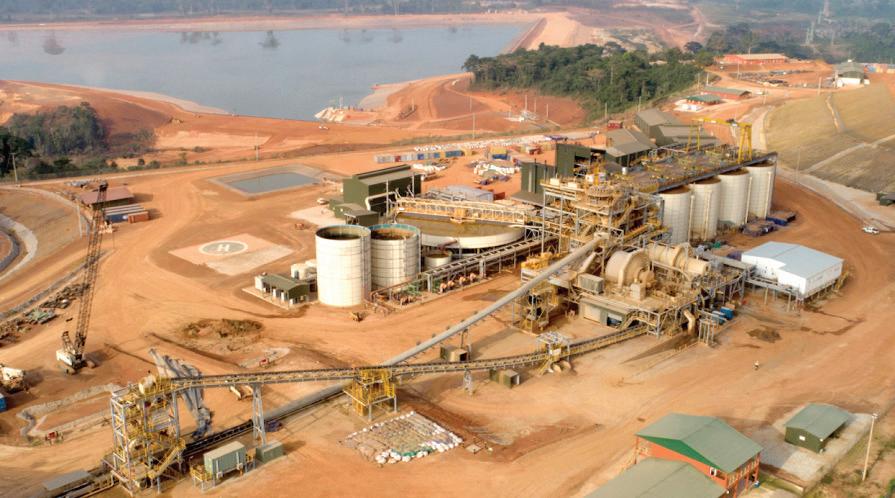
the big miners in these countries say their operations haven’t been affected by these upheavals. But how bad is the situation in each of these countries, from your perspective? And is it something that investors should be worried about?
MB: I think in Burkina Faso and Mali and Guinea, the political situation is in a precarious position. We’ve seen multiple coups in Mali and Burkina Faso. But I think the concern there shouldn’t just be on political stability from a government-to-government position. Yes, there’s a high risk of more coups in the future. But when we look at the insurgency that’s going on there, right now, with al-Qaeda and the Islamic State groups, we are starting to see some of them spread their activities beyond just Burkina Faso, Niger and Mali.
We’ve seen several attacks in places like Togo, and we’re talking about further encroachment of some of these jihadist activities
which then increases the risks for miners in Ghana, Togo of course, Benin, Ivory Coast just because the jihadists are getting closer to those borders.
And these political crises in Burkina Faso and Mali, which have led to a reduction in counterterrorism cooperation with France, are going to only further enable growth of the jihadist groups. At the same time, we’ve had a rise of Russian influence — it is more prominent in Mali and the Central African Republic than we are seeing in Burkina Faso. It’s also possible that from a company perspective that their operations aren’t hurt, but if they are working in a country with a government that is getting increasingly close to Russia, that is a reputational risk for miners who are funding that government through their operations and things like royalties, etc. So that reputational risk is on top of the risks associated with business continuity. TNM
www.northernminer.com
https://soundcloud.com/northern-miner http://www.northernminer.com/tag/podcast/
GLOBAL MINING NEWS THE NORTHERN MINER / DECEMBER 26, 2022 — JANUARY 15, 2023 15 OUTLOOK 2023
PRECIOUS METALS | US dollar peak ‘historically good’ for the yellow metal
ARSEL/ADOBESTOCK
Platinum Group Metals
PRECIOUS METALS from 12
Endeavour Mining’s Ity gold mine in Côte d’Ivoire. ENDEAVOUR MINING
and CEO of Chalice Mining, an Australia-based explorer and developer, has won the Peter Munk award.
No. 7: U.S. military to assess Canada critical minerals projects for funding,
but none approved yet
By Colin McClelland (Nov.
17, 2022)
Canadian battery mineral miners and explorers are sniffing around hundreds of millions of dollars in potential funding from the United States military, but there are no firm deals yet to take advantage of an alliance dating back to World War II.
The concept of the U.S. funding projects in Canada to help sidestep China’s control over lithium and rare earth element (REE) processing broke into the open this month at a conference in Washington, D.C. However, some companies say they’ve been aware of the initiative for years.
No. 8: American Pacific Mining rides high on third round of Madison drilling
By Henry Lazenby (Feb. 14, 2022)
Despite coming off recent highs, the Toronto-quoted shares in copper explorer American Pacific Mining continue to trade nearly 520% higher over the 12-month frame following a third successful drill campaign by partner Rio Tinto at the Madison project in Montana, says CEO Warwick Smith.
The company’s wholly owned Madison copper-gold project is currently under an earn-in with an option to make a joint venture agreement, whereby Rio, in a June 2020 deal, undertook to spend US$30 million to earn up to 70% of the project.
Panama orders suspension of First Quantum’s giant copper mine
BY CECILIA JAMASMIE
Panama’s government has ordered First Quantum Minerals (TSX: FM) to halt operations at its Cobre Panama copper mine after it failed to agree terms for a new contract with the Canadian miner.
The move, unusual among Latin American countries, came after First Quantum missed a Dec. 14 deadline to ink a new royalty deal that has been in the works since September 2021.
months, until President Laurentino Cortizo’s administration set the Dec. 14 deadline for First Quantum to ink the new contract.
The miner then sent a new proposal that “fundamentally” changed the deal’s economics, the Ministry of Commerce and Industries said the following day.
The point of contention seems to be a clause that would make the Vancouver-based miner pay a minimum of US$375 million in royalties to the state.
spective, any sustained outage at the mine would further tighten global supplies, contributing to an expected annual deficit of 4.7 million tonnes by 2030.
First Quantum’s Cobre Panama achieved commercial production in September 2019. At full capacity the mine can produce more than 300,000 tonnes of copper per year, or about 1.5% of global production of the metal.
According to Bloomberg, First Quantum had been pushing for an exception in the case of much lower metal prices and profit.
No.
9:
Cypress tests world’s first battery-grade lithium from hydrochloride process at Nevada plant
By Colin McClelland (Oct. 25, 2022)
Cypress Development says it has successfully tested the world’s first hydrochloric acid process to extract battery-grade lithium carbonate from clay at its half-a-billion-dollar project in Nevada.
The Clayton Valley lithium project about 270 km northwest of Las Vegas is producing lithium carbonate at a 99.94% purity level, Cypress chief executive officer Bill Willoughby said in an interview this month. That purity exceeds battery grade which is 99.5%.
No. 10: Mining’s top ten ‘S’ trends in ESG for 2022
By Elizabeth Freele and Rachel Dekker (Jan. 19, 2022)
The year 2021 was a big one for ESG. Extreme weather, pandemic ripple effects across healthcare, education, and the economy, the COP26 climate summit (and protests), and new sustainability legislation prompted calls for corporate action on a range of social and environmental topics.
While climate action has taken centre stage, awareness of social sustainability issues has magnified too. As ESG integration becomes more sophisticated, performance standards raise the bar, and ever more disclosure expectations emerge, many companies want guidance on where to focus. TNM
PERU from 1
grant immediate elections, shut Congress and resign.
Glencore of Switzerland declined to comment while Melbourne-based MMG didn’t reply to an email seeking comment.
“Given several key mining highways have been blocked, it is reasonable to expect some level of disruption at key assets,” BMO Capital Markets mining analyst Colin Hamilton wrote in a note this month.
“Longer term, political instability may further dissuade international mining companies from investing in Peru’s mining industry, responsible for approximately 10% of global copper production.”
Peru’s rocky politics has made Boluarte the fifth president in six years. The unrest is occurring country wide, formed in part by those believing the government to be a corrupt and out-of-touch elite and others feeling marginalized in the mostly rural Andean mining areas where former president Castillo was popular.
Castillo, a former teacher and peasant farmer, survived two impeachment votes in Congress before he tried to avoid a third by dissolving Congress.
But even his supporters balked at the extreme power grab, and the legislature ousted him. Vice-president Boluarte, a 60-year-old lawyer, took Castillo’s place.
Protests dent production Unrest in the mining areas has been occurring for a while. MMG said in September the first-half performance at Las Bambas, one of the world’s largest open-pit
copper mines, was significantly impacted by community protests that entered the site and required a 50-day shutdown.
It said in first-half results it sold 104,437 tonnes of copper and 93,233 tonnes of zinc and achieved earnings before interest, tax, depreciation and amortization of US$651.7 million, 57% lower than the same period last year. Net profit after tax was US$89.8 million, it said. (The company also has assets in the Democratic Republic of the Congo and Australia.)
Last month, MMG said it was working with the Tuntuma, Huincho, and Coyabamba communities to remove roadblocks.
Las Bambas hosts the Ferrobamba site with 850 million tonnes in global resources grading 0.64% copper, 2.9 grams silver per tonne, 0.05 gram gold and 190 parts per million (ppm) molybdenum; the Chalcobamba zone with 340 million tonnes grading 0.6% copper, 2.1 grams silver, 0.03 gram gold and 120 ppm molybdenum; and the Sulfobamba area with 180 million tonnes grading 0.62% copper, 5.7 grams silver, 0.02 gram gold and 140 ppm molybdenum.
Glencore’s Antapaccay mine had sales last year of US$1.7 billion
The miner said on Dec. 16 it was doing everything possible to support its operations in Panama, “including through all available legal means.” It also expressed disappointment at what it considers “unnecessary actions” by the government.
On Dec. 19, the government issued a resolution giving Minera Panama 10 business days to develop a plan to place the Cobre Panama mine into care and maintenance, allowing for the suspension of commercial operations.
An agreement was reached in January, with the company committing to increase its royalty payments for the copper mine. It also agreed to give Panama between 12% and 16% of its gross profits, which would replace the previous 2% revenue royalty.
First Quantum agreed as well to start paying a 25% corporation tax, from which it was previously exempted, until its investments at the mine were recovered.
Sealing the deal dragged on for
‘We expected reciprocity’ During a live television address to the nation on Dec. 15, Cortizo said his government had put “all the necessary patience, good faith and the best of wills to get the mining company to ratify what was agreed, and that is why we expected reciprocity from the company, which did not happen.
“This is not acceptable for me as president, nor for the government, nor for the people of Panama,” Cortizo said.
The president also said his administration will seek the best options to ensure the sustained operation of the mine, noting he had ordered the environment minister to oversee the site and the labour ministry to guarantee the jobs of workers.
He concluded by noting that the action taken seeks to guarantee the principle established in the country’s constitution, stating that Panama’s mineral resources belong to the Panamanian people.
The company says it has invested around $10 billion in Cobre Panama, the largest private investment ever in the country, and was contemplating expanding the processing capacity of the mine from 85 million tonnes per year to 100 million tonnes per year in 2023.
First Quantum, one of the world’s top 10 copper miners, produced 816,000 tonnes of copper in 2021, its highest ever, thanks mainly to record output at Cobre Panama. The company is expected to reach its 2022 target of between 790,000 and 855,000 tonnes of copper by year-end.
The Cobre Panama mine complex, located about 120 km west of Panama City, contributes 3.5% of the Central American country’s gross domestic product, according to government figures.
The miner first ran into trouble in 2018 when Panama’s Supreme Court, acting on a suit filed by environmental groups, ruled that the operation was unconstitutional based on what the mining code at the time allowed. This forced the parties to begin renegotiating the contract. Panama’s decision is a major blow to chief executive Tristan Pascall, who succeeded his father, Phillip, in May.
from copper production of 171,000 tonnes and earnings before interest and taxes of US$751 million, according to the company.
Its other Peru operations include the Yauliyacu and Iscaycruz zinc mining units at Los Quenuales in Lima province, about one-third of the Antamina copper and zinc mine in Ancash region, and the Perubar concentrate warehouse and mixing plant at the port of Callao.
President Boluarte replaced the prime minister in a cabinet shuffle after the education and culture ministers resigned, citing the violence. Boluarte said she was working with election officials and Congress to move up the vote from 2026 when Castillo’s term would have ended.
Prosecutors are investigating Castillo for alleged corruption, conspiracy and rebellion. The country’s supreme court ordered him detained for 18 months while the charges are probed.
The left-leaning former president was elected in July 2021 without previous political experience. His hands were observed shaking during his nationally televised bid to suspend Congress, rewrite the constitution and reorganize the judiciary.
The Economist has called Castillo’s presidency a bumbling, chaotic and inept administration from the outset, with five cabinet shuffles and a throughput of 80 ministers during his brief tenure.
Thirty years ago, President Alberto Fujimori had the support of the army to silence Peru’s Congress and rule for another eight years. No such luck for Castillo, The Economist said, citing an aphorism from the apropos leftist Karl Marx: “History repeats itself as farce.” TNM
The nation is reportedly working with a financial advisor to identify new potential partners for Cobre Panama, which raises concerns about the country nationalizing the asset or removing First Quantum’s licence to operate, experts at BMO say.
“Our base-case expectation is that the government’s position is part of a broader negotiation; however, the recent escalation does raise uncertainty about First Quantum’s ability to operate in the country long term, and the risk that investors will see in Panama going forward,” Jackie Przybylowski, a mining analyst with BMO Capital Markets, wrote.
From a copper market per-
Latin America is the jurisdiction where risks of asset seizures and taxes hikes have increased the most in the past two years, risk consultancy Verisk Maplecroft estimates. The practice, however, has been rare in Latin America’s recent past. One of the last major expropriations was in 2012, when then-Argentina President Cristina Fernandez de Kirchner’s government seized a 51% stake in the country’s largest oil and gas producer, YPF SA, from Repsol SA.
This April, Mexican President Andres Manuel Lopez Obrador declared lithium a “strategic mineral” to be controlled through state-run company Litio para Mexico, or Lithium for Mexico. TNM
of the keynote speakers at FMF.
the country’s hydrogen and solar energy projects are building a clean energy platform for processes like copper smelting and battery recycling; and the kingdom could expedite more access to project financing and infrastructure to support mining.
Peter Bryant, chair of Clareo and DPI, concludes in the paper that taking on the critical minerals challenge requires a “mindset shift”, investments in innovation and a multi-stakeholder approach that considers the goals of every player in the value chain.
“Saudi Arabia now has an exciting opportunity to champion this new level of innovation and collaboration, built on trust and shared purpose, to deliver a mineral supply that can better meet the demands of all companies navigating the energy transition to a green revolution,” said Bryant, who is also one
The summit’s second edition comes as Saudi Arabia increasingly comes into focus as a potential major player in the global clean energy transition.
At a Mines and Money conference held in London, U.K. in early December, Khalid Al-Mudaifer said the kingdom plans to explore a region stretching from Africa to Central Asia for critical minerals, and estimates the country sits on US$1.3 trillion worth of minerals, energy metals and gold.
And at the Mining Indaba in South Africa last spring, Robert Friedland pointed to Africa and the Arabian Shield as two regions where important minerals would be produced.
“This is where humanity is going to make it or break it,” he said.
The Arabian Shield is a vast occurrence of Precambrian crystalline rocks that flanks countries on both sides of the Red Sea. TNM
16 DECEMBER 26, 2022—JANUARY 15, 2023 / THE NORTHERN MINER WWW.NORTHERNMINER.COM MOST CLICKED from 4
“POLITICAL INSTABILITY MAY DISSUADE MINING COMPANIES FROM INVESTING.”
COLIN HAMILTON MINING ANALYST, BMO CAPITAL MARKETS
CENTRAL AMERICA | Mine accounts for about 1.5% of global copper production
FORUM from 6








GLOBAL MINING NEWS THE NORTHERN MINER / DECEMBER 26, 2022 — JANUARY 16, 2023 17 CONCRETE SOLUTIONS Shotcrete - Concrete Paste Backfill www.sika.com/mining Offering the industry leading precision, absolute accuracy and sensitivity for Optically Pumped Potassium, Overhauser and Proton Precession Magnetometers/Gradiometers with new add-on or standalone VLF-EM systems for resistivity depth sections. UAV - Airborne – Ground Solutions Visit the website or call for a QUOTE today Highest Precision Magnetometers in the World • info@gemsystems.ca • Tel: +1.905.752.2202 • +1.888.635.1829 www.gemsystems.ca Leading the World of Magnetics since 1980 DRONEMag™ INSTRUMENTATION GEOPHYSICS MAKE Mining Basic the of the Now Available in Spanish PROFESSIONAL DIRECTORY MAKE SENSE OF THE MINING INDUSTRY Mining Explained is a 164-page reference manual (written in layman’s language) that includes the following chapters: Basic Geology • Ore Deposits • High-Tech Prospecting Sampling & Drilling • Mining Methods • Processing Ore • Mining & the Environment • The Mining Team • The Business of Mining • Feasibility: Does it Pay? • Metal Markets • Making Sense of the Numbers • Investing in Mining • Glossary of Mining Terms Call 1-888-502-3456 or email info@northernminer.com Order Your Copy Today! Spanish WEEKLY REPORT Email Newsletter for Mining Professionals Join thousands of high-performing mining professionals already receiving The Northern Miner’s free Weekly Report update. SUBSCRIBE FOR FREE www.canadianminingjournal.com SUBSCRIBE TO: CANADA’S FIRST MINING PUBLICATION Mining and Mineral Processing news Since 1882. Print edition is FREE for Canadians involved in mining. Digital Edition and Daily News is FREE. CONSULTANTS 1,800+ CLIENTS | 8,000+ PROJECTS 38+ YEARS’ EXPERIENCE Corporate Consultancy Geotechnical Engineering Geology Mining Engineering amcconsultants.com Specialists in mining and exploration projects across all commodities and all stages of project development. csaglobal.com info@csaglobal.com CORPORATE I MINING I RESOURCES I EXPLORATION I TECHNOLOGY I WATER FOR MORE INFORMATION ABOUT RESERVING SPACE IN OUR PROFESSIONAL DIRECTORY, PLEASE CONTACT: ROBERT HERTZMAN 416-898-6654 Toll free from North America: 1-888-502-3456 rhertzman@northernminer.com
MARKET NEWS
TORONTO STOCK EXCHANGE / DECEMBER 12—16, 2022
Stocks fell during the Dec. 9-16 trading period as the U.S. Federal Reserve increased interest rates again to fight high inflation and retail sales figures disappointed analysts. Markets were volatile.
The S&P/TSX Composite Index shed 503.79 points or 2.5% to 19,443.28. The S&P/TSX Global Mining Index dropped 2.7 points or 2.4% to 108.3, and the S&P/TSX Global Base Metals Index lost 6.48 points or 3.4% to 182.55. The S&P/TSX Global Gold Index fell 3.18 points or 1.1% to 260.39, and spot gold ended the week at US$3.60 per oz. lower, or 0.2%, at US$1,792.55 per ounce.
First Quantum Minerals fell 16.5% during the week after it and the government of Panama failed to sign a contract for the Cobre Panama copper mine. After the Dec. 16 deadline passed, the government of President Laurentino Cortizo said it was suspending the mine’s operating licence.
The Central American country and the Vancouver-based miner had agreed in January to a US$375-million royalty plan and improvements for workers, the environment and community around the site about 120 km west of Panama City.
Further negotiations failed because legal protections on termination, stability and transition arrangements could not be agreed,
First Quantum said.
The government said First Quantum made unreasonable demands that often moved the sides farther apart instead of closer together.
The January agreement also included the miner paying the government 12% to 16% of its gross profit, which would replace a 2% revenue royalty, and to start paying a 25% corporation tax that hadn’t applied while the miner recovered its investment costs.
Royalty and streaming company Franco Nevada suffered from ties to the Cobre Panama mine, as well. Its shares lost $10.85 over the week to end at $181.38.
The company also holds a stream on gold and silver production from the Antapaccay mine run by Glencore in Peru. The South
TSX MOST ACTIVE ISSUES
VOLUME
WEEK (OOOs) HIGH LOW CLOSE CHANGE
Suncor Energy SU 73721 42.69 40.33 40.97 + 0.59
Barrick Gold ABX 61155 23.87 22.24 23.14 + 0.48
Argonaut Gold AR 32693 0.46 0.41 0.44 + 0.03
Kinross Gold K 29365 6.07 5.51 5.62 - 0.12
First Quantum FM 25147 33.33 23.38 27.30 - 5.38
Lundin Mng LUN 24212 8.95 8.14 8.72 + 0.42
B2Gold Corp BTO 17004 4.90 4.51 4.67 + 0.09
Marathon Gold MOZ 15564 1.00 0.85 0.94 + 0.07
Novo Res NVO 12616 0.33 0.23 0.24 - 0.07
OceanaGold OGC 12286 2.72 2.37 2.50 + 0.05
TSX VENTURE EXCHANGE / DECEMBER 12—16, 2022
The S&P/TSX Venture Composite Index retreated by 1.36 points or 0.2% over the Dec. 12-16 trading period to end at 576.26.
Los Andes Copper lost 45¢ to $13.50 over the period after the company said Dec. 9 it was being taken to court over environmental concerns about exploration drilling from 2007 to 2017 on its Vizcachitas project 120 km north of Santiago, Chile. Los Andes said it is fully committed to all environmental and social obligations.
“The company views this as a speculative and unfounded claim,” it said in a Dec. 12 news release. “All drilling has been carried out in accordance with the law.”
Los Andes resumed drilling in July after an environmental court decision reinstated permits with conditions. It suspended drilling in March when the court issued orders to protect the threatened Andean cat and the vizcachas, a small rabbit the cat eats.
A 2019 preliminary economic assessment estimated a post-tax net present value of $2.7 billion and an internal rate of return of 26.7% based on a $3.50 per lb. copper price for the Vizcachitas copper-molybdenum project.
ArcPacific Resources fell 46% during the period to close at 14¢ after announcing a 10-for-one share consolidation would occur Dec. 15.
The Vancouver-based explorer owns the Lucky Mike Silver Lode copper, gold and silver project about 250 km northeast of Vancouver, the Blackdome gold project about 400 km north of Vancouver and the TL nickel project near Voisey’s Bay, NL.
Last month, ArcPacific said it was buying all of the TL nickel project for 2.8 million shares and $175,000. In October, the company said grab samples at Lucky Mike in B.C.’s Quesnel Trough had returned grades of up to 20.1 grams gold per tonne, 130 grams silver, 0.44% copper; and up to 3.6% copper, 0.7 gram gold and 211 grams silver.
The company has now obtained drilling permits for the project.
Sailfish Royalty gained by two thirds over
TSX-V MOST ACTIVE ISSUES
VOLUME WEEK (OOOs) HIGH LOW CLOSE CHANGE
Candelaria Mg CAND 13433 0.08 0.00 0.07 - 0.01
Fission 3.0 FUU 12897 0.34 0.25 0.27 - 0.06
Great Quest Fe GQ 8872 0.05 0.01 0.03 + 0.02
Surge Battery NILI 8031 0.36 0.23 0.24 - 0.10
A.I.S Res AIS 7052 0.04 0.03 0.04 + 0.01
AbraSilver Res ABRA 6473 0.38 0.31 0.31 - 0.06
GPM Metals GPM 5646 0.06 0.00 0.05 - 0.01
CanXGold CXG 5259 0.02 0.01 0.01 - 0.01
Kootenay Silvr KTN 4857 0.22 0.13 0.22 + 0.10
Three Valley TVC 4737 0.03 0.02 0.03 - 0.01
U.S. MARKETS / DECEMBER 12—16, 2022
The Dow Jones Industrial Average fell 556 points, or 1.7%, to 32,920.46, and the S&P 500 lost 82 points or 2.1%, over the week to 3,852.4.
The top value gainer this week was Natural Resource Partners LP which closed US$2.55 per share higher on Dec. 16 at US$45.55 apiece. The company’s share price is riding high (up 50% over the past 12 months) amid a generally depressed natural resources sector. The 20-year-old company recently reported its best quarterly performance yet, with third-quarter free cash flow generation of US$83 million, bringing the year-to-date free cash flow to US$199 million, primarily due to the strong results of its mineral rights segment. In the third quarter, the company also executed its second subsurface carbon dioxide sequestration lease for an estimated carbon storage capacity of at least 500 million tonnes of carbon. NRP currently has about 56.7 sq. km of pore space under lease for carbon sequestration, with an estimated potential carbon storage capacity of at least 800 million tonnes.
Nexa Resources was the week’s top percentage gainer, closing 21.6% higher at US$6.71, near its 12-month high of US$6.73 per share. Following the period, the South
America-focused base metals producer dropped 24% on Dec. 19 alone, however, as investors sharply discount the company’s Peruvian assets amid growing civil unrest. Former Peruvian president Pedro Castillo was ousted and arrested on Dec. 7 after he attempted to dissolve Peru’s congress and announced that he would rule by decree. The left-wing political leader was impeached for “permanent moral incapacity” and arrested on charges of rebellion.
Brazil-based iron ore major Vale was the most active U.S. issuer of the week. By Dec. 16, the stock saw 158.1 million shares change hands to close at US$16.07. Vale recently said it was abandoning plans to restore iron ore
U.S. MOST ACTIVE ISSUES Vale* VALE 158100 16.64 15.92 16.07 - 0.87
GOLD 105061 17.64 16.28 16.90 + 0.32
KGC 84619 4.49 4.03 4.09 - 0.12 Cleveland-Clif* CLF 74821 16.56 14.60 15.13 - 0.37 Freeport McMoR* FCX 70076 41.16 37.74 38.36 - 0.23 Yamana Gold* AUY 69130 5.74 5.36 5.42 - 0.09
Hecla Mining* HL 63175 5.90 5.12 5.30 - 0.25
Chevron Corp* CVX 50228 174.92 167.10 168.72 + 0.72 United States S* X 48904 27.06 23.46 25.00 - 0.41 Suncor Energy* SU 46794 31.57 29.45 29.92 + 0.32
American country has been rocked by protests, strikes and road blockades after President Pedro Castillo, a former farmer popular in the Andean mining areas, was voted out of power on Dec. 7 for alleged corruption and trying to suspend Congress.
The unrest has left at least 20 people dead and threatened investor confidence in the world’s second-largest copper producer.
TSX GREATEST PERCENTAGE CHANGE
VOLUME WEEK (OOOs) HIGH LOW CLOSE CHANGE
Excellon Res EXN 456 0.79 0.39 0.79 +107.9
Mandalay Res MND 490 3.50 2.21 3.50 + 41.1
GoGold Res GGD 5884 2.49 1.82 2.47 + 28.6
Candente Coppr DNT 626 0.18 0.13 0.18 + 28.6
Ascendant Res ASND 727 0.22 0.16 0.21 + 23.5
Americas Silvr USA 2243 1.03 0.71 0.87 + 22.5
New Pac Metals NUAG 667 4.14 3.11 4.08 + 18.3
Nickel Creek NCP 1716 0.07 0.05 0.07 + 18.2
Filo Mg Corp FIL 7175 23.88 20.40 23.44 + 15.6
Golden Mnls AUMN 25 0.41 0.35 0.41 + 14.1
Belo Sun Mng BSX 10034 0.21 0.07 0.08 - 61.0
Sierra Metals SMT 1939 0.22 0.13 0.13 - 39.5
Novo Res NVO 12616 0.33 0.23 0.24 - 21.3
Euro Sun Mg ESM 587 0.11 0.08 0.08 - 20.0
First Quantum FM 25147 33.33 23.38 27.30 - 16.5
Meridian Mg MNO 1497 0.42 0.34 0.35 - 13.8
Signal Gold SGNL 384 0.36 0.31 0.32 - 13.5
Nighthawk Gold NHK 336 0.42 0.36 0.37 - 13.1
Intl Tower Hil ITH 120 0.66 0.51 0.55 - 12.7
Sulliden Mng SMC 4024 0.04 0.00 0.04 - 12.5
its low-point during the week to close at $1.30 after announcing on Dec. 9 its fourth quarterly dividend for the year of US1.25¢.
Sailfish reported a net loss of US$1.1 million for the nine months through September on record revenue of US$2 million. The company said last month that it is looking for other financial backers after Barnwell Investments pulled out of its plan to spin
TSX-V GREATEST PERCENTAGE CHANGE
Queensland Gld OZAU 5574 0.54 0.17 0.49 + 288.0
Milner Con Slv MCA.H 119 0.03 0.00 0.03 + 150.0
Xplore Res XPLR 821 0.08 0.00 0.08 + 128.6
Viva Gold VAU 4378 0.20 0.11 0.18 + 105.9
ProAm Expl PMX 6 0.02 0.00 0.02 + 100.0
Millennium Sil MSC 2 0.01 0.00 0.01 + 100.0
Green Shift GCOM 1757 0.21 0.10 0.20 + 90.5
Canoe Mng Vent CLV 36 0.08 0.00 0.08 + 77.8
Q-Gold Res QGR 794 0.05 0.00 0.04 + 75.0
Surge Battery NILI 15754 0.31 0.13 0.28 + 71.9
Orsu Metals OSU 14 0.04 0.00 0.04 - 73.1
Magna Gold MGR 3398 0.12 0.05 0.05 - 54.5
Arcus Dev Grp ADG 14 0.02 0.00 0.01 - 50.0
MacDonald Mns BMK 562 0.01 0.01 0.01 - 50.0
Adex Mining ADE 94 0.01 0.00 0.01 - 50.0
Lightspeed Dis LSD.H 55 0.03 0.00 0.02 - 50.0
Glacier Lake GLI 94 0.05 0.00 0.04 - 50.0
Tymbal Res TYMB 2 0.01 0.00 0.01 - 50.0
Waseco Res WRI 358 0.04 0.00 0.03 - 44.4
Alliance Mng ALM 64 0.08 0.00 0.08 - 40.7
production to levels last seen before the 2019 Brumadinho tailings dam disaster, offering supply-side support to the global market just as Chinese demand picks up.
The major has been slowly ramping production up after losing its mantle as the world’s biggest producer of the steelmaking raw material in the wake of the dam col-
Sulliden Mining Capital dropped 12.5% to 4¢ after the company reported disappointing drill results from its East-Sullivan gold project at a past-producing mine near Vald’Or, Que.
“The results show a sub-economical combination of grade and true width in the context of an underground target,” the company said in quarterly results on Dec. 15. TNM
TSX GREATEST VALUE CHANGE
VOLUME WEEK (OOOs CLOSE CHANGE
Filo Mg Corp FIL 7175 23.44 + 3.17
Ero Copper ERO 1462 19.70 + 2.13
MAG Silver MAG 1740 22.70 + 1.48
Aya Gold AYA 1980 9.33 + 1.15
Teck Res TECK.B 9494 51.10 + 1.04
Mandalay Res MND 490 3.50 + 1.02
Triple Flag TFPM 141 18.68 + 0.97
Torex Gold TXG 5190 15.91 + 0.73
New Pac Metals NUAG 667 4.08 + 0.63
Suncor Energy SU 73721 40.97 + 0.59
Franco-Nevada FNV 3214 181.38 - 10.85
First Quantum FM 25147 27.30 - 5.38
Nutrien NTR 11084 100.85 - 3.95
Lundin Gold LUG 2747 12.40 - 1.55
Labrador IOR LIF 1432 33.42 - 1.24
Seabridge Gld SEA 619 15.26 - 1.09
Wesdome Gold WDO 6487 7.29 - 1.04
Newcrest Mg NCM 52 18.96 - 0.79
Ivanhoe Mines IVN 9604 11.48 - 0.69
SilverCrest SIL 4028 8.56 - 0.64
out a silver exploration company.
Sailfish has a gold stream equivalent to a 3% net smelter return (NSR) royalty on Mako Mining’s 3.5-sq.-km San Albino gold mine in Nicaragua and a 2% NSR on the rest of the 134.5 sq. km surrounding San Albino.
It also has an NSR of up to 3% on Waterton Global Resource Management’s Spring Valley gold project in Nevada. TNM
VOLUME WEEK (OOOs) CLOSE CHANGE
Highwood Asset HAM 7 9.00 + 4.00
Sailfish Rylty FISH 312 1.30 + 0.54
American Lith LI 4447 3.13 + 0.48
Artemis Gold ARTG 2188 4.65 + 0.48
Bear Creek Mng BCM 2301 1.11 + 0.43
Andean Prec APM 1461 1.33 + 0.37
Discovery Silv DSV 4706 1.54 + 0.29
Mirasol Res MRZ 247 0.92 + 0.27
Atlas Salt SALT 2642 1.97 + 0.26
Dolly Vard Sil DV 2904 0.99 + 0.26
Sigma Lithium SGML 159 40.94 - 5.95
Cornerstone Ca CGP 88 3.90 - 0.60
Los Andes LA 8 13.50 - 0.45
Electra Batt ELBM 388 2.37 - 0.38
New Found Gold NFG 1022 5.28 - 0.27
Amex Expl AMX 170 1.63 - 0.25
Nouveau Monde NOU 137 6.04 - 0.21
IsoEnergy Ltd ISO 226 2.81 - 0.16
ATEX Resources ATX 1378 0.78 - 0.15
Chesapeake Gld CKG 103 1.97 - 0.14
lapse. On Dec. 7, management delivered lower-than-expected production guidance for next year and trimmed its longer-term outlook. The latest projections mean Vale will stay well below pre-disaster levels for the foreseeable future as part of a shift toward higher-quality ore and value-added production.
Buenaventura* BVN 9666 8.27 7.24 7.30 - 9.9
Sibanye-Stillw* SBSW 13646 11.47 9.98 10.06 - 8.5
Harmony Gold* HMY 28079 3.65 3.18 3.21 - 7.0
IAMGOLD* IAG 31843 2.13 1.85 1.91 - 6.4
Seabridge Gld* SA 2301 12.52 11.10 11.23 - 6.2
Gold Fields* GFI 39732 11.10 9.76 10.19 - 6.0
HudBay Min* HBM 10143 5.57 4.95 5.02 - 6.0
Franco-Nevada* FNV 4605 147.80 128.74 132.50 - 5.9
0.66
18603 16.37 + 0.54 Peabody
16403 28.49 + 0.42 Barrick
105061 16.90 + 0.32 Suncor
46794 29.92 + 0.32
MartinMarietta* MLM 2739 348.22 - 8.72
Franco-Nevada* FNV 4605 132.50 - 8.31
Intrepid Pots* IPI 1962 29.42 - 4.55
NACCO Ind* NC 121 37.63 - 4.13
Nutrien* NTR 9144 73.70 - 3.14
Rio Tinto* RIO 18245 69.43 - 3.06
Alcoa* AA 23553 42.72 - 2.36
Arch Resources* ARCH 3013 141.67 - 1.50
Mosaic* MOS 24445 45.36 - 1.45
Black Hills* BKH 2289 68.75 - 1.39
18 DECEMBER 26, 2022 —JANUARY 15, 2023 / THE NORTHERN MINER WWW.NORTHERNMINER.COM
WEEK (OOOs) HIGH LOW CLOSE CHANGE
CHANGE
VOLUME
TSX-V GREATEST VALUE
Barrick Gold*
Kinross Gold*
VOLUME
U.S. GREATEST PERCENTAGE CHANGE Nexa Resources* NEXA 1455 6.73 5.20 6.71 + 21.6 Ero Copper* ERO 390 14.48 12.95 14.34 + 11.2 Natural Res* NRP 121 45.55 42.78 45.55 + 5.9 CONSOL Energy* CNX 18603 16.81 15.90 16.37 + 3.4 Barrick Gold* GOLD 105061 17.64 16.28 16.90 + 1.9 Teck Res* TECK 12430 38.49 36.00 37.35 + 1.8 Peabody Enrgy* BTU 16403 29.44 27.09 28.49
WEEK (OOOs) HIGH LOW CLOSE CHANGE
+ 1.5 AngloGold Ash* AU 17577 19.87 18.18 18.72 + 1.3 Suncor Energy* SU 46794 31.57 29.45 29.92 + 1.1 CONSOL Energy* CEIX 4054 72.96 67.70 69.17 + 1.0 Intrepid Pots* IPI 1962 35.32 29.14 29.42 - 13.4 NACCO Ind* NC 121 43.00 37.46 37.63 - 9.9
VOLUME WEEK (OOOs) HIGH LOW CLOSE CHANGE U.S. GREATEST VALUE CHANGE Natural Res* NRP 121 45.55 + 2.55 Ero Copper* ERO 390 14.34 + 1.45 Nexa Resources* NEXA 1455 6.71 + 1.19 Chevron Corp* CVX 50228 168.72 + 0.72 CONSOL Energy* CEIX 4054 69.17
Teck Res* TECK
Energy* CNX
Enrgy* BTU
Gold* GOLD
Energy* SU
+ 0.70
12430 37.35 +
CONSOL
VOLUME WEEK (OOOs) CLOSE CHANGE
TNM
Metal
METALS, MINING AND MONEY MARKETS
LME WAREHOUSE LEVELS
Aluminum Alloy 2020 (0)
Aluminum 499,150 (7125)
Copper 88,275 (-2475)
Lead 23,750 (-1600)
Nickel 53,124 (1392)
Tin 3,080 (-175) Zinc 41,225 (-225)
TSX SHORT POSITIONS
Short positions outstanding as of Nov 30, 2022 (with changes from Nov 15, 2022)
Largest short positions
Ivanhoe Mines IVN 23132726 326517 11/15/2022
Kinross Gold K 15166589 -1194902 11/15/2022
Copper Mtn Mng CMMC 14061738 -1088992 11/15/2022
Suncor Energy SU 12674426 -2076634 11/15/2022
New Gold NGD 10729208 -586914 11/15/2022
Fortuna Silvr FVI 10241597 -610573 11/15/2022
Equinox Gold EQX 9831314 532156 11/15/2022
First Quantum FM 9222593 -3424353 11/15/2022
Denison Mines DML 9129020 -174734 11/15/2022
Nexgen Energy NXE 8602109 469697 11/15/2022
Taseko Mines TKO 8328130 -173920 11/15/2022
i-80 Gold IAU 7691507 2184387 11/15/2022
IAMGOLD IMG 7645291 -2629639 11/15/2022
Wheaton Prec WPM 6978634 211556 11/15/2022
Lundin Mng LUN 6966540 -2972170 11/15/2022
Largest increase in short position
i-80 Gold IAU 7691507 2184387 11/15/2022
Lundin Gold LUG 1648741 772136 11/15/2022
Calibre Mng CXB 5481996 565257 11/15/2022
Equinox Gold EQX 9831314 532156 11/15/2022
Nexgen Energy NXE 8602109 469697 11/15/2022
Largest decrease in short position
Argonaut Gold AR 5309305 -6293537 11/15/2022
Barrick Gold ABX 4244827 -5455752 11/15/2022
First Quantum FM 9222593 -3424353 11/15/2022
Yamana Gold YRI 4679056 -3254828 11/15/2022
Lundin Mng LUN 6966540 -2972170 11/15/2022
PRODUCER AND DEALER PRICES
Coal: Central Appalachia, 12,500 Btu, 1.2 S02-R,W: US$193.45
Coal: Powder River Basin, 8,800 Btu, 0.8 S02-R, W: US$19.85
Cobalt: US$23.25/lb. Copper: US$3.78/lb.
Copper: CME Group Futures January 2023: US$3.85/lb.; February 2023: US$3.85/lb.
Iridium: NY Dealer Mid-mkt US$3,940/tr oz.
Iron Ore 62% Fe CFR China-S: US$109.06
Lead: US$0.98/lb.
Rhodium: Mid-mkt US$13,290/tr. oz.
Ruthenium: Mid-mkt US$483 per oz.
Silver: Handy & Harman Base: US$22.23 per oz.; Handy & Harman
Fabricated: US$27.79 per oz.
Tin: US$10.66/lb.
Uranium: U3O8, Trading Economics spot price: US$48.50 per lb. U308
Zinc: US$1.39 per lb. Prices current Dec. 6, 2022
TSX VENTURE SHORT POSITIONS
Short positions outstanding as of Nov 30, 2022 (with changes from Nov 15, 2022)
Largest short positions
GoviEx Uranium GXU 4433925 -203887 11/15/2022
AbraSilver Res ABRA 4404223 1540716 11/15/2022
Blackrock Silv BRC 2062332 -49949 11/15/2022
Fission 3.0 FUU 1552983 1513547 11/15/2022
Deep-South Res DSM 1519552 1386561 11/15/2022
Silver X AGX 1470437 -32642 11/15/2022
New Found Gold NFG 1282021 143709 11/15/2022
Tier One Silv TSLV 1169488 -82329 11/15/2022
Giga Metals GIGA 1143500 -36350 11/15/2022
Standard Uran STND 1100127 -187422 11/15/2022
Frontier Lith FL 1055712 -806948 11/15/2022
Artemis Gold ARTG 1015917 -101060 11/15/2022
Arianne Phosph DAN 931011 75873 11/15/2022
Santacruz Silv SCZ 883937 -882050 11/15/2022
Outcrop S&G OCG 874056 -102330 11/15/2022
Largest increase in short position
AbraSilver Res ABRA 4404223 1540716 11/15/2022
Fission 3.0 FUU 1552983 1513547 11/15/2022
Deep-South Res DSM 1519552 1386561 11/15/2022
Camino Min COR 642547 561904 11/15/2022
EnCore Energy EU 742454 509770 11/15/2022
Largest decrease in short position
Silver Mount AGMR 139369 -2959253 11/15/2022
Satori Res BUD 25 -2119494 11/15/2022
Vizsla Silver VZLA 109321 -1900211 11/15/2022
Discovery Harb DHR 392 -1845991 11/15/2022
Patagonia Gold PGDC 111427 -1571481 11/15/2022
Aluminum 2484.5/2515 2460.5/2490 2450/2476.5 2467.5/2496 2453/2487.5
Copper 8439.5/8465 8355/8398 8333/8370 8536.5/8545 8490/8524
Lead 2193.5/2212 2209/2226 2205/2222 2197/2216 2206/2220
Nickel 28355/28595 28200/28300 28700/28900 31050/31250 29825/30000
Tin 24425/24100 24595/24400 24375/24275 24300/24200 24650/24575
Zinc 3120/3114.5 3185/3160.5 3138/3112 3240/3216 3245/3217
Gold AM 1794.35 1773.35 1771.85 1782.45 1793.00
Gold PM 1776.80 1773.80 1782.20 1790.15 1796.15
Silver 22.98 22.54 22.38 22.69 23.11
Platinum 1014 998 1003 1004 1001
Palladium 1905 1872 1842 1859 1923
Alio Gold Inc. (ALO.WT) - 10 Warrants to purchase one common share of the Issuer at $7.00 until expiry
Alio Gold Inc. J (ALO.WT.A) - One Warrant to purchase one common share of the Issuer at $8.00 until expiry
Aris Gold Corporation (ARIS.WT) - One Warrant to purchase one Common Share of the Issuer at $2.75 until expiry.
Aris Gold Corporation (ARIS.WT.A) - One Warrant to purchase 0.5 of one Common Share of the Issuer at $2.75 until expiry
Aris Gold Corporation (ARIS.WT.B) - One Warrant to purchase of one Common Share of the Issuer at $2.21 until expiry
eCobalt Solutions Inc. J (ECS.WT) - One Warrant to purchase one common share of the Issuer at US$1.95 per share until expiry
Excellon Resources Inc (EXN.WT.A) - One warrant to purchase one common share of the Issuer at $2.80 until expiry
Excellon Resources Inc. (EXN.WT) - One Warrant to purchase one common share of the issuer at $1.40 per share until expiry
Excelsior Mining Corp. (MIN.WT) - One Warrant to purchase one Common Share of the Issuer at $1.25 until expiry. Gran Colombia Gold (GCM.WT.B) - One
TSX WARRANTS
warrant to purchase one common share of the Issuer at $2.21 until expiry.
Karora Resources Inc. (KRR.WT) - One Warrant to purchase one common share of the Issuer at $0.50 until expiry.
Liberty Gold Corp. Wt (LGD.WT) - One Warrant to purchase one common share of the Issuer at $0.90 until expiry may 16, 2019 Lithium Americas Corp (LAC.WT) - One Warrant to purchase one common share of the Issuer at $0.90 until expiry
Lydian International Limited (LYD.WT)One Warrant to purchase one additional ordinary share of the Issuer at $0.36 per share until expiry Nevada Copper Corp. (NCU.WT) - One Warrant to purchase one common share of the Issuer at $0.20 until expiry Nevada Copper Corp. (NCU.WT.A) - One Warrant to purchase one common share of the Issuer at $0.22 until expiry
Nomad Royalty Company Ltd. (NSR.WT)One Warrant to purchase one common share of the Issuer at $1.71 until expiry.
Novo Resources Corp. (NOVO.WT.A) - One Warrant to purchase one common share of the Issuer at $3.00 until expiry.
TSX VENTURE WARRANTS
Novo Resources Corp. (NVO.WT.A) - One Warrant to purchase one common share of the Issuer at $3.00 until expiry.
Platinum Group Metals Ltd. (PTM.WT.U)One Warrant to purchase one common share of the Issuer at US$0.17 until expiry
Royal Nickel Corporation (RNX.WT) - One Warrant to purchase one common share of the Issuer at $0.50 until expiry.
Sandstorm Gold (SSL.WT.B) - One Warrant to purchase one common share of the Issuer at US $14.00 until expiry.
Sherritt International Corporation (S.WT)Each whole Warrant entitles the holder to acquire between 1.00 and 1.25 additional common shares (as bulletin 2018-0062 table ) determined based on the Applicable Reference Cobalt Price at an exercise price of $1.95 per Warrant at any time prior to the Expiry Date
Treasury Metals Inc. Wt (TML.WT) - One Warrant to purchase one common share of the Issuer at $1.50 until expiry.
Trevali Mining Corporation (TV.WT) - One Warrant to purchase one common share of the Issuer at $0.23 until expiry.
ABE Resources Inc. (ABE.WT) - One warrant to purchase one common share at $0.15 per share.
Alpha Lithium Corporation (ALLI.WT) - One warrant to purchase one common share at $1.10 per share.
Alpha Lithium Corporation (ALLI.WT) - One warrant to purchase one common share at $1.10 per share.
American Cumo Mining Corp. (MLY.RT)2 rights and $0.07 are required to purchase one share
American Lithium Corp. (LI.WT) - One warrant to purchase one common share at $0.30 per share.
Antioquia Gold Inc. (AGD.RT) - One (1) Right and $0.042 are required to purchase one share.
Aurania Resources Ltd. (ARU.RT)Fourteen (14) Rights exercisable for one common share at $2.70 per common share.
Aurania Resources Ltd. (ARU.WT) - One warrant to purchase one common share at $5.50 per share.
Aurania Resources Ltd. (ARU.WT.A) - One warrant to purchase one common share at $4.25 per share.
Aurania Resources Ltd. (ARU.WT.B) - One warrant to purchase one common share at $2.20 per share.
Avidian Gold Corp. (AVG.RT) - Three rights and $0.11 are required to purchase one Share.
Boreal Metals Corp. (BMX.WT) - One warrant to purchase one common share at $0.50 per share.
Boreal Metals Corp. (BMX.WT) - One warrant to purchase one common share at $0.30 per share.
Cabral Gold Inc. (CBR.WT) - One warrant to purchase one common share at $0.80 per share.
Caldas Gold Corp. (CGC.WT) - One warrant to purchase one common share at $2.75 per share.
Cascadero Copper Corporation (CCD. RT) - One right and $0.015 are required to purchase one Share.
Cordoba Minerals Corp (CDB.WT) - One warrant to purchase one common share at $1.08 per share.
Cordoba Minerals Corp (CDB.WT) - One warrant to purchase one common share at $1.08 per share.
Cordoba Minerals Corp. (CDB.RT) - One (1) Right exercisable for One (1) Rights Share at $0.05 per Share.
Cordoba Minerals Corp. (CDB.RT) - One right to purchase one common share at $0.54 per share.
Denarius Silver Corp. (DSLV.WT) - One warrant to purchase one common share at $0.80 per share.
Elevation Gold Mining Corporation (ELVT. WT) - One warrant to purchase one common share at $4.80 per share.
Empress Royalty Corp. (EMPR.WT) - One warrant to purchase one common share at $0.75 per share.
Equinox Gold Corp (EQX.WT) - One warrant to purchase one common share at $3.00 per share.
Eros Resources Corp. (ERC.WT) - One (1) Right exercisable for (1) Unit at $0.05 per Unit.
Falco Resources Ltd. (FPC.WT) - One warrant to purchase one common share at $1.70 per share.
Firefox Gold Corp. (FFOX.WT) - One warrant to purchase one common share at $0.60 per share.
Firefox Gold Corp. (FFOX.WT) - One warrant to purchase one common share at $3.00 per share.
Freeman Gold Corp (FMAN.WT.U) - One warrant to purchase one common share at US$0.65 per share.
Giga Metals Corporation (GIGA.WT) - One warrant to purchase one common share at $0.60 per share.
Giga Metals Corporation (GIGA.WT.A)One warrant to purchase one common share at $0.45 per share.
Giyani Metals Corp. (EMM.WT) - One warrant to purchase one common share at $0.60 per share.
Goldstar Minerals (GDM.RT) - One Right to purchase one common share at $0.03 per share.
Goldstar Minerals Inc. (GDM.RT) - One (1) Right and $0.05 are required to purchase one common share.
Hot Chili Limited (HCH.WT) - One warrant to purchase one common share at $2.50 per share.
Kaizen Discovery Inc. (KZD.RT) - One warrant to purchase one common share at $0.51 per share.
LaSalle Exploration Corp. (LSX.WT) - One warrant to purchase one common share at $0.15 per share.
Lion One Metals Limited (LIO.WT) - One warrant to purchase one common share at $2.75 per share.
LithiumBank Resources Corp. (LBNK.WT)One warrant to purchase one common share at $2.00 per share.
LSC Lithium Corporation (LSC.RT) - One (1) right exercisable for One (1) Unit at $0.40 per Unit.
Mako Mining Corp. (MKO.RT) - Rights exercisable for One (1) share at $0.10 per share.
Mako Mining Corp. (MKO.WT.A) - One warrant to purchase one common share at $0.60 per share.
Manganese X Energy Corp. (MN.WT) - One warrant to purchase one common share at $0.15 per share.
Maple Gold Mines Ltd. (MGM.WT) - One warrant to purchase one common share at $0.40 per share
Maple Gold Mines Ltd. (MGM.WT) - One warrant to purchase one common share at $0.40 per share
Mexican Gold Corp. (MEX.WT) - One warrant to purchase one common share at $0.12 per share.
Millennial Lithium Corp. (ML.WT) - One warrant to purchase one common share at $4.25 per share.
Millennial Lithium Corp. (ML.WT) - One right to purchase one common share at $4.80 per share.
Millennial Precious Metals Corp. (MPM. WT) - One warrant to purchase one common share at $0.50 per share.
Mineworx Technologies Ltd. (MWX.RT)For every one (1) Share held, Shareholders will receive one (1) Right exercisable for One (1) Share at $0.015 per Share.
Mineworx Technologies Ltd. (MWX.RT)One right to purchase one common share at $0.015 per share.
Northern Vertex Mining Corp. (NEE.WT)One warrant to purchase one common share at $0.80 per share.
Novo Resources Corp. (NVO.WT) - One warrant to purchase one common share at $4.40 per share.
Orezone Gold Corporation (ORE.WT) - One warrant to purchase one common share at $0.80 per share.
Orezone Gold Corporation (ORE.WT) - One warrant to purchase one common share at $0.80 per share.
Osisko Development Corp. (ODV.WT) - One warrant to purchase one common share at $10.00 per share.
Rock Tech Lithium Inc. (RCK.WT) - One warrant to purchase one common share at $4.50 per share.
Sandfire Resources America Inc. (SFR.RT)Forty one (41) Rights exercisable for One (1) Share at $0.15 per Share.
Sandfire Resources America Inc. (SFR. RT) - Eight (8) Rights exercisable for One (1) share at $0.06 per unit.
Silver Mountain Resources Inc. (AGMR. WT) - One warrant to purchase one common share at $0.70 per share.
Star Royalties Ltd. (STRR.WT) - One warrant to purchase one common share at $1.00 per share.
Three Valley Copper Corp. (TVC.WT) - 20 warrants to purchase one Class A common share at $6.66 per share.
Tintina Resources Inc. (TAU.RT) - Nine(9) Rights exercisable for one share at $0.06 per share.
Ucore Rare Metals Inc. (UCU.RT) - One (1) right exercisable for one share at $4.00 per share.
Vision Lithium Inc. (VLI.WT) - One warrant to purchase one common share at $0.15 per share.
Vizsla Silver Corp. (VZLA.WT) - One warrant to purchase one common share at $3.25 per share.
Westhaven Gold Corp. (WHN.WT) - One warrant to purchase one common share at $1.00 per share.
Yellowhead Mining Inc. (YMI.RT) - One (1) Right and $0.12 are required to prchase one Share
= 0.6214 miles 1 hectare = 2.47 acres
GLOBAL MINING NEWS THE NORTHERN MINER / DECEMBER 26, 2022 — JANUARY 16, 2023 19
IndexName Dec 16 Dec 15 Dec 14 Dec 13 Dec 12 High Low S&P/TSX Composite 19443.28 19600.63 19891.65 20023.46 20017.61 22213.07 17873.18 S&P/TSXV Composite 576.26 570.79 575.47 574.27 573.89 948.38 565.16 S&P/TSX 60 1172.70 1183.03 1200.31 1209.57 1211.74 1344.63 1080.34 S&P/TSX Global Gold 274.42 272.61 281.99 283.20 277.56 379.45 216.92 DJ Precious Metals 224.67 223.96 228.81 228.81 228.81 338.35 176.14 52 weeks NORTH AMERICAN STOCKEXCHANGE INDICES NEW 52-WEEK HIGHS AND LOWS DECEMBER 12—16, 2022 40 New Highs Alamos Gold Alamos Gold* ArcPacific Res Atco Mining Capricorn Met* Cartier Silver Dolly Vard Sil Dolly Vard Sil* DynaResource* Equity Metals Equity Metals* Fission 3.0 Fission 3.0* Foran Mining Foran Mining* Gabriel Res GobiMin Gold Reserve Gold Reserve* Golden Pursuit Heartfield Horizonte Mnls Horizonte Mnls* JKS Resources Majestic Gold* Mirasol Res Nicola Mg Inc Nicola Mg Inc* Oberon Uranium Orogen Roy Peloton Mnrls Peloton Mnrls* Rover Metals* Sierra Grande* Steadright Cri Targa Explor Tectonic Metal Tectonic Metal* Turquoise HIl Vizsla Copper 58 New Lows All American* Ameriwest Lith* Anfield Energy* Baselode Egy Baselode Egy* Belo Sun Mng Belo Sun Mng* Canada Silver Canada Silver* Cipher Mining* Comstock Mng* Cons Uranium Cons Uranium* Cypress Dev Cypress Dev* East Africa * Eskay Mng Eskay Mng* Fury Gold* Geomega Res Goldflare Expl* GoviEx Uranium GoviEx Uranium* Imperial Metal Intl Star* Intl Tower Hil* Intrepid Pots* Jervois Mining* Kraken Energy* Leading Edge* Libero Copper* Lithium Corp* Lithium South* Magna Terra* Medinah Mnrls* MetalCorp* Metallic Mnrls* Millennial Pr* Novo Res Nthn Dynasty Nthn Dynasty* Pac Ridge Expl* QC Copper* RTG Mining * Sanu Gold* Sassy Res Sierra Metals Silver Viper* Spey Resources Standard Uran* Sun Summit Tonogold Res* True North Gem* TVI Pacific* Wesdome Gold Wesdome Gold* Westwater Res* Xanadu Mines* Financial information provided by Fundata Canada Inc. ©Fundata Canada Inc. All rights reserved LEGEND A – Australian Securities Exchange C – Canadian Stock Exchange L – London Stock Exchange N – New York Stock Exchange O – U.S. over-the-counter Q – NASDAQ or U.S. OTC T – Toronto Stock Exchange V – TSX Venture Exchange X – NYSE American * – Denotes price in U.S.$ STAFF INVESTMENT POLICY The Northern Miner does not permit any editorial employee to file stories about companies in which the writer owns shares. Editorial employees are also not permitted to take part in initial public offerings or to engage in short selling. CONVERSIONS OF WEIGHTS & MEASURES 1 troy ounce = 31.1 grams 1 kilogram = 32.15 troy ounces 1 kilogram = 2.2046 pounds 1 (metric) tonne = 1,000 kilograms 1 (metric) tonne = 2,204.6 pounds 1 (short) ton = 2,000 pounds 1 (metric) tonne =
tons 1 gram per
tonne
troy
per
ton
troy
per
tonne 1
1.1023 (short)
(metric)
= 0.02917
ounces
(short)
= 0.03215
ounces
(metric)
kilometre
your moment in the press with a
for any article printed
or
our
Re-Publishing License cost: $525
Re-Publishing License Own
Re-Publishing License
in The Northern Miner
posted on
website. Basic
Contact: moliveira@northernminer.com OR 416-510-6768
stocks (in tonnes) held in London Metal Exchange warehouses at opening on Dec. 1, 2022 (change from Nov. 24, 2022 in brackets):
DAILY METAL PRICES EXCHANGE RATES Date Dec 16 Dec 15 Dec 14 Dec 13 Dec 12 US$ in C$ 1.3658 1.3658 1.3551 1.3556 1.3631 C$ in US$ 0.7322 0.7322 0.7380 0.7377 0.7336 Exchange rates (Quote Media, December 16, 2022) C$ to AUS C$ to EURO C$ to YEN C$ to Mex Peso C$ to SA Rand 1.0919 0.6883 100.8600 14.4713 12.8066 C$ to UK Pound C$ to China Yuan C$ to India Rupee C$ to Swiss Franc C$ to S. Korea Won 0.6007 5.1001 60.6753 0.6793 964.6772 US to AUS US to EURO US to YEN US to Mex Peso US to SA Rand 1.4913 0.9400 137.7505 19.7632 17.5140 US to UK Pound US to China Yuan US to India Rupee US to Swiss Franc US to S. Korea Won 0.8204 6.9732 82.8581 0.9277 1318.1000 CANADIAN GOLD MUTUAL FUNDS FundName Dec 16 ($) Dec 09 ($) Change ($) Change (%) YTDChange (%) MER (%) TotalAssets (M$) BMO Prec Mtls Fd A 22.95 23.46 -0.51 -2.16 -4.30 2.41 72.49 BMO ZGD 66.44 68.17 -1.73 -2.54 -4.17 0.60 50.26 BMO ZJG 62.32 63.56 -1.24 -1.94 -3.56 0.61 69.98 CANL Prec Mtl Fd A 16.19 16.66 -0.48 -2.85 -10.22 2.59 151.80 CI Pre Met Fd A 47.60 -1.16 -2.42 -15.37 2.31 271.79 CIBC Prec Metal Fd A 13.99 14.13 -0.14 -1.00 -2.58 2.27 53.59 Dyn Prec Metls Fd A 11.21 11.57 -0.36 -3.14 -15.94 2.64 493.66 Har vest HGGG 24.95 25.67 -0.72 -2.79 -6.26 0.67 24.39 Horizons GLCC 24.95 -0.60 -2.40 -3.20
IG MacGbPreMetCl A 13.71 14.12 -0.41 -2.93 -9.23 2.61
iShares XGD
NBI PrecMetFd Invt
NP Silver Equ A
Go&PrMinFd A
GblPreMetFd A
TD Prec Mtl Fd Inv
DECEMBER 5 DECEMBER 6 DECEMBER 7 DECEMBER 8 DECEMBER 9
METALS (London Metal Exchange — Midday official cash/3-month prices, US$ per tonne)
0.81
118.24
17.55 -0.50 -2.80 -3.76 0.55 1094.04
17.37 -0.49 -2.80 -6.92 2.46 24.36
7.09 6.81 0.28 4.12 -24.56 3.24 NPT
44.56 45.48 -0.92 -2.02 -18.58 3.19 RBC
48.54 49.12 -0.58 -1.18 -12.13 2.09 655.89
47.01 -1.38 -2.91 -0.81 2.26 118.00 Date
BASE
Al Alloy 1850/1850 1850/1850 1850/1850 1850/1850 1850/1850
fix,
silver price,
per troy oz.)
PRECIOUS METAL PRICES (London
LBMA
US$
24 DECEMBER 26, 2022 —JANUARY 15, 2023 / THE NORTHERN MINER WWW.NORTHERNMINER.COM REPLACE OR REDESIGN? RETHINK TH550B by Sandvik is a fully battery powered truck and the only battery powered truck for underground mining with a 50 tonne capacity. The truck combines Sandvik’s 50 years of experience in developing loaders and trucks with Artisan’s innovative electric drivelines and battery packs. Learn more about the Sandvik TH550B along with the self-swapping battery system. Explore our website ROCKTECHNOLOGY.SANDVIK
