SPECIAL FOCUS GLOBAL GOLD


LITHIUM | Junior says the ‘self-interested’ shareholders want to acquire stakes in some of its claims
BATTERY METALS | Regional OPEC-like cartel could control 70% of world’s reserves
BY CECILIA JAMASMIEBolivia’s government is calling its lithium-producing neighbours to forge ahead with the idea of setting a Latin America-wide policy on the exploitation of the coveted battery metal.
The idea, part of a broader initiative involving Argentina, Bolivia, Brazil and Chile to form an OPEClike cartel, seeks to collectively boost the bargaining power of these countries, President Luis Are said in a speech in La Paz.
BY HENRY LAZENBYTwo activist shareholders with ‘substantial’ holdings in Azimut Exploration (TSXV: AZM) have accused the junior of “squatting” on some of Quebec’s most prospective lithium lands.
On Mar. 14, Coloured Ties Capital (TSXV: TIE) and privately held Bullrun Capital issued a second open letter to Azimut’s founder, president and CEO Jean-Marc Lulin, accusing the geologist of refusing to acknowledge or engage with them about its detailed exploration plans for its James Bay lithium portfolio.
The activists are turning up the heat on Lulin and Azimut after Patriot Battery Metals’ (TSXV: PMET; ASX: PMT) promising Corvette lithium discovery as well as Winsome Resources’ (ASX: WR1) Adina discovery. Patriot aims to publish the first resource on Corvette this summer.
The concerned shareholders say they are active investors in Quebec’s critical mineral exploration projects via investments in junior explorers.
“These companies have made discoveries that have made James Bay the lithium exploration capital of the world and provided amazing shareholder returns to all investors in the James Bay region,” they said in a Tuesday press release.
For example, Patriot enjoyed a more than 2,200% run-up in its stock price through January.
In contrast, Azimut holds what
the activists believe is the best and most prospective critical minerals ground in the region, but has chosen not to advance its lithium potential. Recently, Azimut went on a staking frenzy to stake additional ground.
The activists argue Azimut’s stock price has a discounted valuation compared with its peers that reflects the market’s frustration with Azimut’s refusal to explore its vast critical mineral land holdings instead focusing solely on gold.
“This practice to acquire vast critical mineral land holdings in Quebec and then squat on these
highly prospective lands is in direct contrast to others from outside Quebec and Canada who may ‘know the land less’ but have established critical minerals deposits on ground adjoining or surrounding Azimut ground in the last three years,” the activists charged.
They’re advocating for a revamp of Azimut’s business practices. They insist the company establish a critical minerals division and engage a qualified critical minerals exploration executive team to run it.
They want Azimut to engage in business practices that are respectful of all shareholders, adjoining property junior exploration companies and all other stakeholders, including Canada’s current mandate to develop critical minerals assets in Quebec.
In a response, Azimut characterized the activists’ assertions as containing “numerous inaccuracies, mischaracterizations, and false statements.”
“The recent re-election of all company’s directors at the annual general shareholders’ meeting, with support ranging between 92.5% and 99.9% of the shares voted at the meeting, demonstrates that shareholders endorse the company’s current leadership and business strategy,” Lulin said in the Mar. 16 statement.
The company said it had demonstrated an openness to the activ-
“We must be united in the market, in a sovereign manner, with prices that benefit our economies, and one of the ways, already proposed by (Mexico’s) President Andres Manuel Lopez Obrador, is to think of a kind of lithium OPEC,” Arce said according to local paper La Razon.
Bolivia holds the world’s largest lithium resources at 21 million tonnes, according to the U.S. Geological Survey. The area of sprawling salt flats known as the “lithium triangle,” which includes northern Chile and Argentina, has about 65% of the globe’s known resources of the white metal.
If Peruvian, Mexican and Brazilian potential reserves were added, the region would hold nearly 70% of the world’s lithium reserves. This would translate into a restructuring of the world economic scenario around the energy transition and a provide a new, sound source of income for Latin American economies, according to the Latin American Strategy Centre for Geopolitics (CELAG).
Bolivia, which has almost no industrial production or commercially viable reserves, inked in January a deal with a consortium that includes Chinese battery giant CAT to jointly extract lithium from its Uyuni and Oruro salt flats.
The partnership would give the group of companies, which also includes mining giant CMOC, rights to develop two lithium plants.
Arce, who wants to industrialize Bolivia’s lithium before the end of his term in 2025, expressed concern about foreign meddling in the lithium business, particularly from the United States.
“We don’t want our lithium to
be in the Southern Command’s crosshairs, nor do we want it to be a reason for destabilizing democratically elected governments or foreign harassment,” he said.
Chile, Argentina and Bolivia have been talking about creating a lithium cartel since July last year. They now seek to integrate other Latin American nations with an incipient lithium industry, including Brazil and Mexico.
Analysts, including Geopolitical Monitor’s Arman Sidhu, believe that bringing the idea to fruition is likely to spark opposition from environmentalists and Indigenous groups that contributed to left-wing victories in Chile, Argentina, and Brazil.

He also warned of additional obstacles, including China’s monopolist position in the industry, investors’ fears and the longterm political viability of such an idea. TNM
PM40069240
THE ACTIVISTS ARGUE AZIMUT’S STOCK PRICE HAS A DISCOUNTED VALUATION THAT REFLECTS THE MARKET’S FRUSTRATION WITH ITS REFUSAL TO EXPLORE ITS VAST CRITICAL MINERAL LAND HOLDINGS, INSTEAD FOCUSING SOLELY ON GOLD.Companies searching near and far for the yellow metal | 9-16
E3 Lithium (TSXV: ETL; US-OTC: EEMMF) says its latest resource upgrade could make Alberta’s Bashaw district, Canada’s largest lithium brine project, a contender among the world’s biggest battery metal suppliers.
Its sprawling Bashaw district between Calgary and Edmonton now hosts 6.6 million measured tonnes of lithium carbonate equivalent (LCE) and 9.4 million indicated tonnes of LCE for a total of 16 million tonnes.
“This resource upgrade is the largest of its kind in Canada and is significant on a global scale,” Chris Doornbos, president and CEO of E3 Lithium, said in a news release on Mar. 21. “The amount of data and geological work required to upgrade resources of this magnitude is significant and further increases our understanding of the Leduc aquifer and as a result, our technical confidence in our commercialization plans.”
The upgraded Bashaw is one of the world’s largest direct lithium extraction brine projects, featuring investment by the country’s sec-
ond-largest integrated oil company, Imperial Oil, and support from the federal government. The new resource dwarfs Canada’s estimated 3.2 million tonnes of measured and indicated lithium oxide resources in hard rock deposits, according to Natural Resources Canada.
Calgary-based E3’s upgrade used
data and core sample analysis from its 2022 drill program. It also developed a geological model of the Bashaw district showing details of reservoir properties.
A breakdown of the resources shows the project’s Clearwater area has measured and indicated resources of 11.1 billion cubic
Chile’s government said it is open to further amend a controversial mining royalty bill expected to enter into force early next year, following mounting criticism of its impact on the industry’s competitiveness.
Finance Minister Mario Marcel said after the bill’s approval in January by the mining commission of the Senate, miners have requested certain modifications that do not alter the proposed law, but which could be included during the legislative stage.
As it stands, the proposed royalty has a hybrid nature as it combines an ad valorem component that would be applied to annual sales of copper and a variable element linked to the mining operating margin.
Amid several potential adjustments, Marcel highlighted one that would set a limit to the potential tax burden for the combination of various taxes. This, he noted in a statement, would give “greater security or predictability to collection.”
REBUILT GARDNER
DENVER DRILLS!
Finally selling the rest of my drilling and blasting equipment.
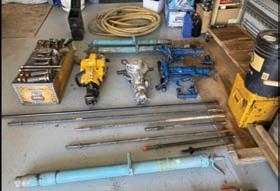
Two Gardner Denver Air drills.
Both rebuilt! #1. 0 hours #2. 22 hours. One converted to a plugger! Conversion kit included. A box of brand new rifle bars seals etc. etc.
Lots of brand new parts. Long & short jacklegs.
One atlas Copco gas drill and one Swedish Pionjar. Hex-steal multiple lengths! Tapered and button bits. lubricator. 1- type 6 Magazine
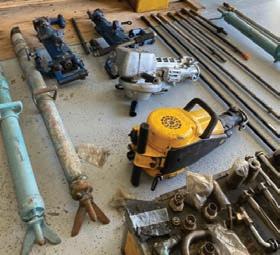
Selling all together!
Serious inquiries only.
Price is negotiable.
Another adjustment would allow companies to include start-up expenses as a cost for the calculation of the adjusted mining operational taxable income, Marcel said.
Companies with operating losses
metres of brine with a median lithium concentration of 74.5 mg per litre for contained metal of 4.3 million tonnes LCE. The remaining Bashaw district has 29.2 billion cubic metres of brine with the same median concentration for 11.7 million tonnes LCE.
E3 said it expanded the Clear-
water area and that it held 900,000 tonnes of inferred LCE in its Rocky area west of the Bashaw district. Bashaw also includes the Exshaw area.
The project aims to tap lithium-enriched brine from the Leduc aquifer, a dolomitized ancient reef complex that spans hundreds of square kilometres and is more than 200 metres thick.
2020 Clearwater PEA
A 2020 preliminary economic assessment for development of the Clearwater area estimated annual output of 20,000 tonnes of lithium hydroxide. The initial capital cost was pegged at US$602 million. The assessment figured an after-tax net present value of US$820 million with an 8% discount rate producing a 27% internal rate of return.
E3 received $27 million in November from the federal government’s Strategic Innovation Fund. Imperial Oil, a Canadian unit of ExxonMobil, said last June it would invest $6.4 million into exploring the extraction of lithium from below its historic Leduc oil field, one of the first crude oil discoveries in Western Canada. TNM
Contact: Bertrand Lund | Lund9@telus.net
as well as those with very low or close to negative profitability would be exempt from the ad valorem component.
Since President Gabriel Boric first introduced the idea of a new royalty, the mining industry has been up in arms. It argues that, as they stand, the reforms would add uncertainty to investment decisions needed to help fill a global copper supply gap as demand rises in the clean energy transition.
The potential changes, the government says, would protect investments, particularly from small and medium-sized miners, as the royalty would have a fixed ad valorem component of 1% on copper sales.
Between 8% and 26% of the total to pay would depend on the mining company’s operating margin.
Chile, the world’s largest copper producer, hosts major miners including BHP (NYSE: BHP; LSE: BHP; ASX: BHP), Anglo American (LSE: AAL), Rio Tinto (NYSE: RIO; LSE: RIO; ASX: RIO), Antofagasta (LSE: ANTO), Glencore (LSE: GLEN), and state-run Codelco. TNM
BY CECILIA JAMASMIENewmont (TSX: NGT; NYSE: NEM), the world’s largest gold producer, may be preparing a sweetened takeover offer for Newcrest Mining (TSX: NCM; ASX: NCM), which rejected the miner’s unsolicited bid in mid-February.
Speculation on a potential deal, originally estimated at US$17 billion, comes as Newmont is said to have gained partial access to its Australian rival’s corporate books.
While initial feedback from analysts and shareholders suggested that Newmont will have to improve its bid, they now say Newcrest has no clear alternative choices.
Barrick Gold (TSX:ABX; NYSE: GOLD), the world’s No. 2 bullion producer, has said it doesn’t plan to make a rival offer and Agnico Eagle Mines (TSX: AEM; NYSE: AEM), the third-largest gold miner, is busy wrapping up a deal with Pan American Silver (TSX: PAAS; NASDAQ: PAAS) to jointly acquire Yamana Gold (TSX: YRI; NYSE: AUY; LSE: AUY).
If successful, the NewmontNewcrest tie-up would be one of the biggest in Australian history, as the target company is the country’s No. 1 miner gold producer.
It would also increase Newmont’s footprint in high-demanded copper, which prices have soared recently due to its use in renewable energy and electric vehicles.
Agreeing on a price tag that satisfies both sides could stretch negotiations over several weeks or months, Sprott Asset Management’s Douglas Groh told Bloomberg News on Mar. 22.
“I think a deal is inevitable,” Groh said, adding it’s obvious to the market there’s no leadership at Newcrest. The company’s chief executive officer surprised investors in December by abruptly leaving the post.
Newcrest currently operates the large open-pit and underground Telfer mine in Western Australia’s Pilbara region and is the top gold producer in British Columbia, since the 2019 acquisition of the Red Chris copper and gold mine.
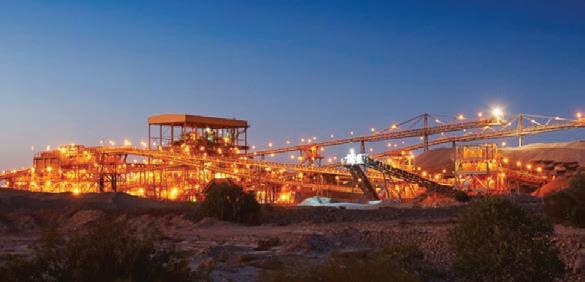
Last year, the company expanded its footprint in Canada with the takeover of Pretium Resources, which handed it the Brucejack gold mine.
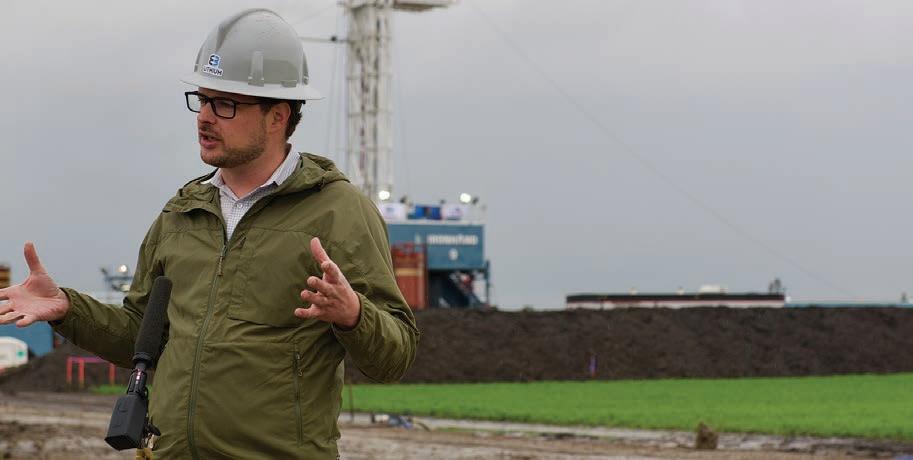
The company also owns 50% of the Wafi-Golpu project in Papua New Guinea. The other half is owned by Harmony Gold.
Newmont didn’t respond to requests for comment.
“THIS RESOURCE UPGRADE IS THE LARGEST OF ITS KIND IN CANADA AND IS SIGNIFICANT ON A GLOBAL SCALE.”
CHRIS DOORNBOS PRESIDENT AND CEO OF E3 LITHIUM
Patriot Battery Metals (TSXV: PMET; ASX: PMT) said it has extended the main spodumene deposit on its Corvette project in Quebec by half a kilometre, sending its stock higher.
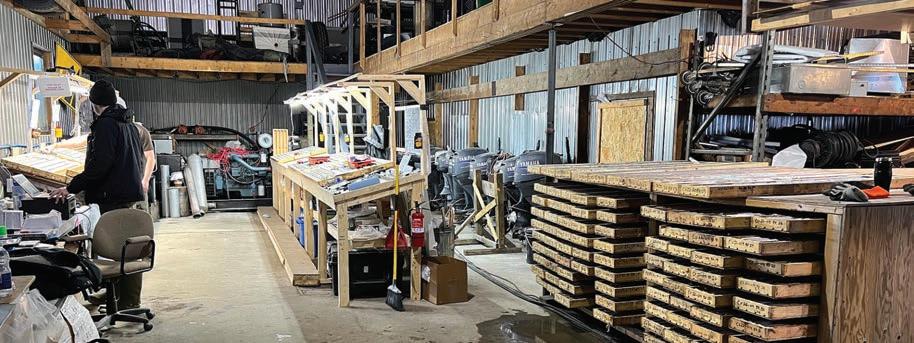
The Vancouver-based explorer’s 20,000-metre winter drilling campaign at the project about 300 km east of James Bay has lengthened the CV5 deposit strike another 550 metres to 3.15 km, it said on Thursday. Assays from 52 drill holes are pending and five holes are in progress, it said.
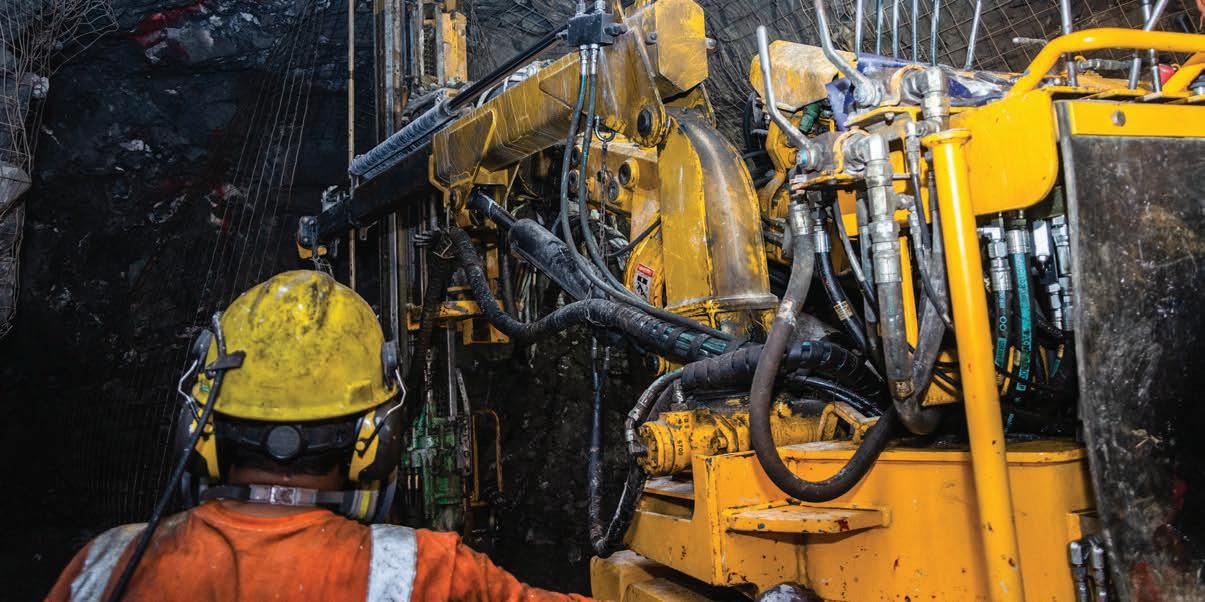
“We have been able to meet and already exceed our winter program objectives in terms of meterage drilled and new spodumene pegmatite discovered,” Darren L. Smith, vice-president of exploration, said in a news release. “We are now within approximately 1.5 km of the CV4 pegmatite cluster to the east and have just begun to step-out westwardly towards the CV13 pegmatite cluster.”
AZIMUT from 1 ists’ repeated requests for meetings and communications in the past.
“However, rather than engage constructively, the Bullrun Group has adopted bullying tactics to drive their self-interested agenda forward,” Lulin said.
Azimut said it had engaged in conversations and written exchanges with the group on several occasions regarding their intent to acquire a stake in several of Azimut’s properties.
“Following those exchanges, which have unfortunately escalated to multiple harassing and belligerent messages, the board determined that the propositions of the Bullrun Group were not compelling for Azimut or its shareholders, and the board concluded that it was not in the company’s best interest to further engage with the Bullrun Group at that time.”
It’s not clear how big a stake Bullrun and Coloured Ties own in Azimut, but the explorer’s top shareholders are Agnico-Eagle Mines (TSX: AEM; NYSE: AEM) at 10.1% and pension fund Caisse de dépôt et placement du Québec at 9.3%.
In February, Azimut outlined its key 2023 objectives for its lithium properties.
At the Pikwa and Galinée properties, it said it plans to implement an “aggressive” field program to assess the lithium potential. The properties are directly on strike with the two most important recent lithium discoveries (Corvette and Adina) in the Eeyou Istchee James Bay region.
Azimut holds the assets in a 50-50 joint venture with Quebec-owned
Shares in Patriot Battery Metals closed 5% higher on Mar. 23 at $11.33 each. The shares have traded within a 52-week range of $2.45 to $17.69.
Patriot is exploring along a 4.3km trend of spodumene pegmatite it discovered in 2017 as it prepares an initial resource estimate and prefeasibility study this year. Last month, drill hole CV22-083 returned CV5’s strongest interval to date with 156.9 metres grading 2.12% Li2O, including 25 metres at 5.04% Li2O.
Quebec has become a hard rock lithium hotspot as companies vie to supply the surging electric vehicle market. The federal government approved the James Bay open-pit project by Galaxy Resources, a part of Allkem (TSX: AKE; ASX: AKE), in January. Azimut Exploration (TSXV: AZM) has its own James Bay project and Sayona Mining (ASX: SYA) is planning to restart its North American Lithium operations within days.
Patriot intends to test the CV5 pegmatite along strike at both ends.
Soquem.
The company also holds 100% of the Corvet and Kaanaayaa lithium prospects south of Corvette. It said it has similar plans to assess the lithium potential on these properties through “agressive” field programs.
Lastly, Azimut also holds the James Bay lithium project, one of the largest lithium portfolios in the Eeyou Istchee James Bay region, comprising 16 claim blocks for 2,234 claims. It plans to undertake recon-
Regional magnetic data and spodumene-pegmatite boulders indicate the trend continues, it said. The winter drilling intersected widths of 5-50 metres of continuous pegmatite, mostly spodumene-bearing, it said.
Geological modelling shows CV5’s thickness varies between 25 and 120 metres, although spodumene pegmatite has been intersected as deep as 425 metres and remains open, Patriot said. The location of this deep intersection suggests the presence of additional spodumene-pegmatite lenses south of the main body. These areas are expected to be further drilled over the summer-fall program, it said.
“There remains more than 20 km of geologically favourable trend to be explored for new pegmatite targets and three known spodumene pegmatite clusters yet to be drill tested,” Patriot CEO Blair Way said in the release. “The exploration and development team continues to execute, and the drill bit continues to deliver.” TNM
naissance prospecting supported by remote sensing and advanced geochemical targeting this year.
Shares in Patriot have come down from their 12-month high of $17.69 to currently trade at $11.20, but are still up 1,500% over the last year. The junior has a market cap of about $1 billion. Shares in Azimut are down slightly over the past 12 months at $1.25, after spiking recently to a year high of $1.80. It has a market cap of $92.2 million. TNM
BY NORTHERN MINER STAFFThe European Union has published its Critical Raw Materials Act and added copper, nickel and manganese to its list of critical materials.


The CRMA, unveiled by the Brussels-based European Commission on Mar. 16, outlines that the EU would simplify permitting procedures for critical raw materials projects and that select projects would have support for access to finance and shorter permitting timeframes (24 months for extraction permits and 12 months for processing and recycling permits).
The act indicates that the EU would set up a Critical Raw Materials Club for all “like-minded countries” willing to strengthen global supply chains.
Mining and processing targets were also quantified. By 2030, a minimum of 10% of all critical raw materials consumed in the EU each year must be mined from European mines. In addition, 40% of the EU’s annual consumption must be processed there and at least 15% must come from recycled materials.
Finally, not more than 65% of the EU’s yearly consumption of each strategic raw material at any relevant stage of processing can come from a single third country.
“This Act will bring us closer
to our climate ambitions,” Ursula von der Leyen, the president of the European Commission, stated in a press release. “It will significantly improve the refining, processing and recycling of critical raw materials here in Europe.”
But some analysts say the act was short on details and excluded important raw materials needed for the green energy transition such as zinc, silver, and aluminum.
“The full document is long, unnecessarily complex (different critical and strategic material lists), heavy on targets but light on detail on how to achieve these, and naturally subject to further discussion,” Colin Hamilton of BMO Capital Markets wrote in a research note.
“Compared with the [US] Inflation Reduction Act, which was heavy on providing monetary firepower, the EU version has limited mention of funds but lots of policy rationale.”
Looking ahead, Hamilton noted that some metal trade flows will have to adapt. “At present, Europe gets almost all its magnesium from China, is heavily reliant on nickel and silicon metal imports, and mines next to no titanium, graphite, lithium, cobalt, bauxite, and PGMs,” he said. “These are the areas we expect to see the greatest domestic EU investment focus, many of which overlap with China’s diversification needs.” TNM
GLOBAL MINING NEWS • SINCE 1915 www.northernminer.com
PRESIDENT THE NORTHERN MINER GROUP: Anthony Vaccaro, CFA, MBA avaccaro@northernminer.com
EDITOR-IN-CHIEF:
Alisha Hiyate, BA (Poli Sci, Hist) ahiyate@northernminer.com

WESTERN EDITOR: Henry Lazenby hlazenby@northernminer.com

SENIOR STAFF WRITER: Colin McClelland cmcclelland@northernminer.com
COPY EDITOR AND PRODUCTION EDITOR: Blair McBride bmcbride@northernminer.com
PHOTO EDITOR AND PODCAST HOST: Adrian Pocobelli, MA (ENGL) apocobelli@northernminer.com
ADVERTISING: Robert Hertzman (416) 898-6654 rhertzman@northernminer.com
Michael Winter (416) 510-6772 mwinter@northernminer.com
SUBSCRIPTION SALES/ APPOINTMENT NOTICES/ CAREER ADS
George Agelopoulos (416) 510-5104 (Toll free) 1-888-502-3456, ext. 43702 gagelopoulos@northernminer.com
PRODUCTION MANAGER: Jessica Jubb (416) 510-5213 jjubb@northernminer.com
CIRCULATION/CUSTOMER SERVICE: (416) 510-6789 | 1-888-502-3456 northernminer2@northernminer.com
REPUBLISHING: (416) 510-6768 moliveira@northernminer.com
ADDRESS: Toronto Head Office 225 Duncan Mill Road, Suite 320 Toronto, ON, M3B 3K9 (416) 510-6789 tnm@northernminer.com
SUBSCRIPTION RATES: Canada:
one year;
G.S.T. to CDN orders.
P.S.T. to BC orders
H.S.T. to ON, NL orders
H.S.T. to PEI orders
H.S.T. to NB, NS orders U.S.A.: C$172.00 one year Foreign: C$222.00 one year
GST Registration # 809744071RT001 (ISSN 0029-3164)
CANADA POST: Return undeliverable Canadian addresses to Circulation Dept.
“It can be easy to take a partnership between Canada and the United States as a given,” U.S. President Joe Biden told the House of Commons on Mar. 24 on his first official visit to Canada. While he meant this as a positive and went on to describe the peaceful and prosperous relationship is a “marvel,” Canada has been reminded several times in recent years that it can’t — and shouldn’t — expect that U.S. economic policy will automatically favour us, no matter how close and historic the bond.
BY ALISHA HIYATEA few years ago, Biden’s predecessor, former President Donald Trump, made the unexpected and unilateral decision to redraw the carefully crafted North American Free Trade Agreement, resulting in the new U.S.-Mexico-Canada Agreement (USMCA) in 2020.
And just last year, there was a panic over Canada’s initial exclusion from EV incentives in Biden’s landmark Inflation Reduction Act (IRA) — an omission that was only reversed at the last minute after frenzied lobbying by Canada.
But during Biden’s speech and subsequent joint press conference with Prime Minister Justin Trudeau, he offered reassuring words and commitments that the U.S. wants to cooperate with Canada on clean energy, critical minerals security and supply chains, defence, and more.
While at one point, Biden seemed to imply that Canada would get the mining jobs and the U.S. would get manufacturing, most of his speech emphasized that the nations would build the batteries and technologies that go into clean tech like EVs together.
“We each have what the other needs,” he said.
“Our nations are blessed with incredible natural resources. Canada in particular has large quantities of critical minerals that are essential for… the world’s clean energy future,” Biden added.
“I believe we have an incredible opportunity to work together so Canada and the United States can source and supply here in North America everything we need for reliable and resilient supply chains.”
He went on to predict in his joint remarks with Trudeau that in the future, China would be “out of the game, in terms of many of the products they’re producing,” and that the U.S. and Canada would be solidly “economically situated for the future in terms of also bringing back manufacturing jobs.”
During Biden’s visit, the two nations also announced a one-year Energy Transformation Task Force to speed up coordinated efforts to deliver clean energy and integrated supply chains for renewable energy, EVs, critical minerals and more.
And in addition to EV incentives under the IRA, Canadian companies will also be eligible for other U.S. funding under the U.S. Defense Production Act, including a total of US$250 million announced last year toward mining and processing critical minerals (funding recipients will be named in the spring), and a $50-million pool to incentivize investment in the semiconductor sector.
Compete or collaborate?
Biden and Trudeau also disagreed with the perception that the “massive” funding (about US$370 billion over 10 years) the U.S. has earmarked for clean energy spending would hurt Canada.
“The IRA, which is bringing in massive investments and massive opportunities for American workers and companies, is also going to have strong impacts on supply chains and producers and employees in Canada,” Trudeau said in a joint press conference after Biden’s appearance in the House.
Still, the United States’ all-in approach on the energy transition has put pressure on the Trudeau government to beef up its support not just for clean tech, but also for the raw materials needed for the energy transition.
Its $3.8-billion critical minerals strategy announced in its 2022 budget last March looks rather anemic compared to U.S. spending, even on a proportional basis.
“We’re going to have to make sure we’re staying competitive and targeting the areas where we think we can best compete,” Trudeau acknowledged at the joint presser, adding, “we’ll have more to say about that in our budget next week.”
The feds are already supporting investment by auto and battery makers such as Volkswagen, which in March chose St. Thomas, Ont., for its first battery plant outside of Europe, Umicore and its plans for a $1.5-billion cathode materials plant near Kingston, Ont., and Stellantis and LG Energy Solution’s $5-billion battery plant near Windsor (although dollar amounts of incentives have not been revealed). They’ve also announced tax credits for exploration for critical minerals. But that still neglects a crucial part of the supply chain — the part that actually supplies the sought-after raw materials.
The 2023 federal budget was just released at press time on Mar. 28, revealing a few highlights for miners.
In response to the IRA, the government has earmarked $21 billion –mostly in tax credits and subsidies — for clean technology, renewable energy and more over next five years. This could grow to $80 billion by 2034.
This includes a clean tech manufacturing tax credit that will be worth $4.5 billion over five years. The 30% tax credit will be available to companies mining and refining critical minerals to offset the cost of equipment.
The government also seems to recognize that incentives alone are not going to get the results they want. That’s why it’s good to see that the budget also establishes a $1.5-billion Critical Minerals Infrastructure Fund, to be managed by Natural Resources Canada, that should help advance priority mining projects by funding energy and transportation infrastructure.
Equally important, it also contains a commitment to improve the efficiency of the impact assessment and permitting processes for major projects by the end of this year, and commits to advancing loans through the Canada Infrastructure Bank to Indigenous communities so they can purchase equity stakes in major projects. TNM
Politicians everywhere have a tendency to make decisions based on short-term outcomes that might become catastrophic in the long term. There are few better examples of this than legislation in London 250 years ago. In one of the U.K.’s worst ever political decisions (and we’ve had a few), Parliament voted on Apr. 27, 1773, to help the financially troubled East India Co. (EIC) by allowing it to sell tea from China directly to the American colonies.
The Tea Act, which received royal assent in May 1773, also reinforced an existing tax on tea in the American colonies (and so implicitly an acceptance of Parliament’s right to impose taxation). This outraged the good folk of Massachusetts and led to the Boston Tea Party of December 1773. The British government considered the spoiling of a cargo of tea an act of treason and responded harshly. By April 1775 the episode had escalated into a rather unfortunate revolution. EIC survived for another 100 years but our American colony was gone by 1783.
Because they have relatively short-term tenures, many, perhaps most, politicians have a tendency to myopia; they are not able clearly to see objects that are far away (also a weakness, I would argue, of chief executives). Our leaders then overcompensate by stating the blindingly obvious. Witness the Chancellor of the Exchequer, who recently announced “The wind doesn’t always blow, or the sun always shine.” Speaking on the Ides of March, Jeremy Hunt warned Parliament that the U.K. faces a shortfall in reliable energy sources.
Historically, Great Britain has been characterized as an island of coal being buffeted by gale-force winds in a sea of oil and gas. Issues with solar energy hardly come as a surprise, but we should never have become short of energy.
Our politicians have ‘history’ with regard to resource planning. This political ineptitude was described rather well in 1945 by the Welsh labour politician Aneurin ‘Nye’ Bevan (1897-1960). Bevan noted: “This island is made mainly of coal and surrounded by fish. Only an organizing genius could produce a shortage of coal and fish at the same time.”
In his budget speech, Hunt said nuclear power was “vital to meet our net-zero obligations,” and described it as a “critical source of cheap and reliable energy.” Hunt added that he wanted to encourage private investment in new nuclear power by classifying it as ‘environmentally sustainable,’ and would launch a new organization, Great British Nuclear, to help deliver nuclear projects.
In Bevan’s time, the U.K. relied almost exclusively on coal-fired power stations for its electric-
ity. Our electricity is now generated by a mixture of gas, nuclear and increasingly renewables. In a LinkedIn article on Mar. 10, Professor Brian Smart (formerly of the universities of Strathclyde and Heriot-Watt in Scotland) called for “true organizing genius” to secure this energy supply and take the nation forwards.
Professor Smart noted the “rush to renewables,” and away from fossil fuels, because of genuine concerns over greenhouse gas emissions driving global warming. The underlying issue, he warned, is that wind and solar are inherently intermittent in their performance, and, in the absence of sufficient compensatory energy storage, reliance has to be placed on other means of guaranteed generation — gas and nuclear in particular.
While nuclear has high assurance, large reactors have to be operated continually at their design load. It is adjustable gas-powered generation, therefore, that is frequently used to compensate for the day-to-day underperformance of renewables. Since the Russia-Ukraine war, however, operational problems have developed with regard to the security, assurance and affordability of gas-powered electricity.
Professor Smart suggests the solution lies in boosting the capacity of two types of stored energy.
First, the short-term vagaries of renewable energy should be compensated through a program of building battery facilities and hydrogen storage.
Second, the longer-term issues of supply security could be offset by building large strategic resources. Professor Smart suggested that we need to find a new green way of emulating our former coal-fired power stations, which were able to store six months of coal (and operate continuously but variably). Gas-fired generators, coupled with carbon capture and storage, are the only readily scalable source that can do this now. Gas-storage reservoirs could be filled when the price of gas was low, which would help address affordability as well as security.
There are four tenets of a nation’s electricity supply. The aggregate system must be secure (insulated from being weaponized by a foreign power), assured (able to provide an absolute continuity of supply), affordable and compatible with the shift to net zero greenhouse gas emissions.
We are signed up for the fourth of these tenets, but politicians everywhere need to tackle the other three imperatives while recognizing the inherent danger of relying on the wind blowing and the sun shining. TNM
—Dr. Chris Hinde is a mining engineer and the director of Pick and Pen Ltd., a U.K.-based consulting firm. He previously worked for S&P Global Market Intelligence’s Metals and Mining division.
 BY COLIN MCCLELLAND
Our TNM Drill Down features highlights of the top gold assays of the past week. Drill holes are ranked by gold grade x width, as identified by our sister company Mining Intelligence.
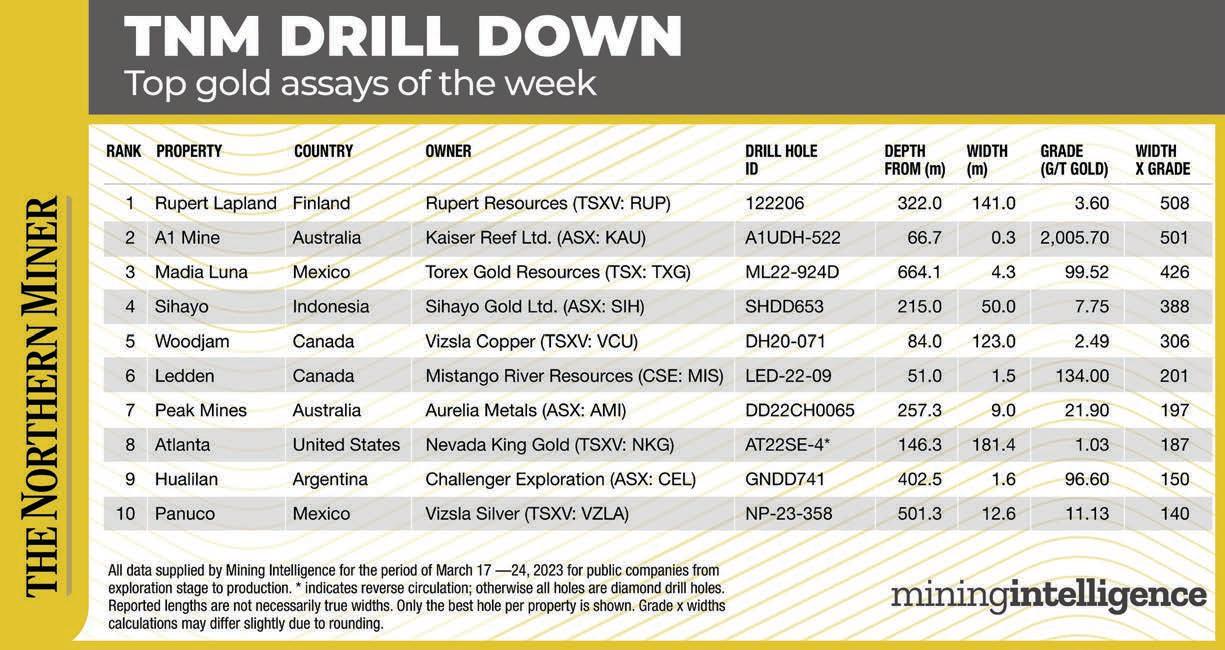
Results from three corners of the globe led the week of Mar. 17-24. Rupert Resources (TSX: RUP) says new assays may expand its Ikkari gold project in northern Finland. Kaiser Reef (ASX: KAU) plans to expand the A1 mine in Australia dating from 1861. And Torex Gold Resources (TSX: TXG) is drilling at its EPO gold deposit in Mexico.
Rupert drill hole 122206 cut 141 metres grading 3.6 grams gold per tonne from 322 metres depth for a grade x width of 508 in the central portion of the Ikkari deposit.
It’s in Lapland, about 900 km north of Helsinki, where a potential open-pit mine could produce 200,000 oz. of gold a year, according to a November preliminary economic assessment (PEA).
“The intercept extends to 100 metres below the open pit considered by the PEA, confirming the continuity of high-grade mineralization,” Rupert said Mar. 21.
“Initial results confirm the exceptional continuity of the Ikkari resource and the potential for resource expansions in the west and at depth,” Rupert CEO James Withall said in a release.
The company is working on a prefeasibility study for Ikkari and intends to have all its permits by the end of 2025, Withall said in a presentation in March.
Canaccord Genuity mining analyst Michael Fairbairn said in a note on Mar. 21 that the highgrade results increase the potential for incremental growth in the next resource update.
“The ongoing infill and expansion drill programs will help de-risk and optimize the deposit’s economics, which may see the PEA pit shell pushed down to capture more ounces in the open pit,” Fairbairn said.
The latest resource estimate filed in January shows Ikkari holds 46.4 million indicated tonnes grading 2.5 grams gold per tonne for 3.7 million oz. contained metal. The first resource, delivered in 2021, was 49 million inferred tonnes grading 2.5 grams gold for 4 million oz. gold.
Ikkari could be built for US$405 million to operate as an open-pit mine for 11 years, moving underground in the 10th year for 24 years total, the PEA showed. Sustaining capital costs would be US$395 million. After-tax net present value would be US$1.6 billion with a 5% discount to produce an internal rate of return of 46% and payback after two years, assuming a gold price of US$1,650 per ounce.
Kaiser’s A1
Second during the week, Kaiser drill hole A1UDH-522 cut 0.3 metre grading 2,005.7 grams gold per tonne from 66.7 metres depth for a grade x width of 501 at the underground A1 mine. The operation about 150 km northeast of Melbourne produced 620,000 oz. gold from 1861 until 1992.
Kaiser mines the site targeting ore with more than 10 grams
gold per tonne. It wants to expand into mechanized mining after it increases resources and reserves.
The assay is from 1,254 metres of drilling that has extended high-grade mineralization, in particular northerly extensions to Jupiter Reef and beyond the historic mining of Dukes Reef on the 22 Level, Kaiser said in a release on Mar. 21.
“The drill holes from A1 continued to target both near-term mining and new deeper medium-term discoveries,” Kaiser said. Drill holes A1UDH-522 and -523 “show there is potential to go further north than the old workings. This creates a small but potentially rich ore block,” the company said.
Kaiser bought the mine in 2021 as part of Centennial Mining. It also included the Maldon goldfield under care and maintenance and the Maldon processing plant that treats A1 ore.
Torex’s EPO
The third best results came from Torex drill hole ML22-924D at the EPO deposit in Guerrero, Mexico. The hole cut 4.3 metres grading 99.5 grams gold per tonne from 664.1 metres depth for a grade x width of 426.
Drilling at EPO, which lies north of the Media Luna deposit near the Guajes Tunnel and south of the Balsas River on the company’s Morelos Complex 180 km southwest of Mexico City, was focused on upgrading inferred resources to the indicated category, the company said Mar. 23.
“Drilling EPO, with a view to advancing to the mine design stage, is a strategic priority given the potential for EPO to play a key role in supporting our efforts to fill the mill and maintain consistent gold equivalent production beyond 2027,” Jody Kuzenko, president and CEO,
said in the release.
“These drill results continue to demonstrate the underlying resource potential of the Morelos property and reinforce our positive outlook on our ability to complement future production from Media Luna.”
Toronto-based Torex plans to start commercial production at Media Luna late next year. Media Luna’s annual output over an 11.75-year mine life is expected to be 280,000 oz. of gold, 34.8 million lb. of copper and 1.3 million oz. of silver. Torex is estimating its total gold production this year at 470,000 ounces. TNM
In its quest for bonanza returns, high-tech capital is willing to take a bet on mining, an industry not noted for producing steady returns and challenged by its comparatively small size.
This, according to a panel of Silicon Valley capitalists and entrepreneurs at this year’s Prospectors and Developers Association of Canada convention in Toronto on Mar. 7, who are bringing fresh talent into the industry as well as capital.
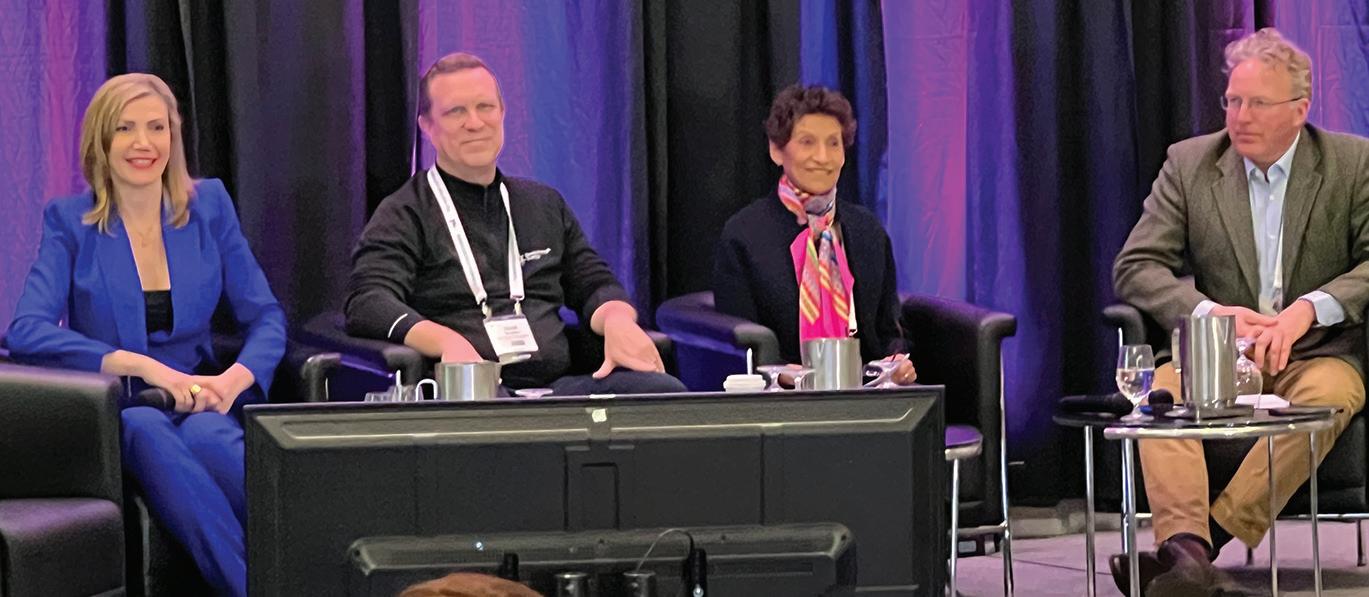
A wave of US$10-US$15 billion of sophisticated funding has flown towards junior mining and clean energy innovators over the past three years, said David Danielson of Breakthrough Energy Ventures of California., a US$2-billion Bill Gates-backed climate and venture capital investment firm.
Climate tech venture capital has been one of the fastest growing trends in venture capital over the last three years, Danielson said.
While he sees early signs of life in the roughly US$2 billion invested, his fund deploys a high-risk-to-reward strategy.
“If we take 30 companies where we can put US$30 million in each early, we’re winners if two or three of those turn into billion dollar returns for us,” he said.
Danielson is also an adjunct professor at Stanford University, where he teaches courses on energy venture development. He has also served as the assistant secretary for the U.S. Department of Energy’s
Office of Energy Efficiency.
“Although Breakthrough Energy just got involved, there are early signs of life,” he told the panel, adding it takes about 10 years to know whether something’s gotten ‘commercial traction.’
The panel took place just days before the failure of key startup capital lender Silicon Valley Bank in the U.S.
Regarding mining innovation, Breakthrough Energy has a strong interest in accelerating the process from mineral discovery to production.
“We bring a bunch of new technologies together and experts from the industry to increase the hit rate by five times on discoveries to get dramatically more of these metals
online. We aim to find innovative ways to compress that development timescale,” Danielson said.
Meanwhile, BHP Xplor VP Sonia Scarcelli said she had noticed an uptick in talent transferring from Silicon Valley to Toronto’s Bay Street. She administers BHP’s (NYSE: BHP; LSE: BHP; ASX: BHP) junior accelerator program, which looks at companies at any stage along the value curve.
And for all the ostensibly hightech end-uses of mining products, a fresh look by Silicon Valley talent is giving mining research and development a shot in the arm and finding new economic uses for metals.
“We invest in early-stage concepts and ideas to work on the very front end of the value chain of the
resources,” Scarcelli says.
The accelerator program aims to get in early on exploration concepts and ideas globally, partnering with the companies and bringing its in-house know-how and new geological thinking. “We’re investing in commercializing these opportunities, looking at how we can accelerate the exploration phase. We can squeeze that — instead of five to 10 years — down to maybe a couple of years,” Scarcelli said. Scarcelli herself has transferred from the oil and gas industry. “To have disruption, you have to have a disrupting idea, and I see talent from other industries coming to mining.”
Rethinking old problems
Rio Tinto (NYSE: RIO; LSE: RIO;
ASX: RIO) is taking a fresh look at the perennial problem of tailings, Peter Harvey, the major’s managing director for closure and legacy management, said.
He sees the mine closure sector as a real opportunity for profit, both in accessing remaining minerals in tailings and through the ecological and recreational value rehabilitated lands hold.
“We look at what residual value exists in our portfolio, whether that’s minerals or metals, value in the land, in the water, the biodiversity, how do we leverage and access that and part of that residual value,” he said.
Harvey tapped the mining R&D space as being able to “really move the needle forward.”
Meanwhile, Doris Hiam-Galvez, a senior advisor at consulting engineering services firm Hatch, said that applying the concept of ‘designing sustainable prosperity’ is a method that enables the creation of a future sustainable society. It represents a practical and structured process where the key parties collaborate to design their future from the outset, looking beyond mine closure.
“The future is all about change. We must be ready and adapt to that change,” said Hiam-Galvez. “I think we are all aligned in what we must do. We talk so much, but I think it’s time for action. And we will see more action because we have no choice. Adopting new technologies faster will reduce that time to de-risk mining investments.” TNM
PDAC 2023 | Panel discussion sheds light on unexpected challenges of reducing carbon emissions
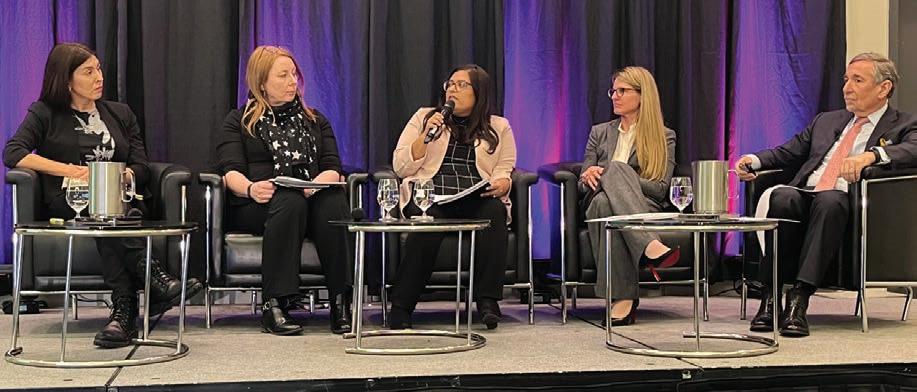 BY BLAIR MCBRIDE
If the mining industry’s decarbonization journey is envisioned as a race, it’s more akin to a twisting trail race complete with uphill efforts, sharp turns and obstacles en route, than a straight road race.
Argentina, Chile, Bolivia and BAccording to a panel themed “The amazing race to decarbonize” at this year’s Prospectors and Developers Association of Canada conference in March, companies are at different stages of the process, and face complex challenges in their efforts to cut carbon emissions.
One of the most important steps in decarbonizing, if not the first one, is tracking progress with data and aligning it with the plan to reduce emissions.
Cora Devoy, director of sustainability with Lundin Mining (TSX: LUN) told the panel that it could be a “huge” challenge to get reliable data so that the company isn’t accused of presenting a curated picture of its progress, or greenwashing.
“We need the right data. The key is good, reliable data,” she told moderator Keith Russell, director of the Atlanta-based Partners in Performance.
Melanie Miller, chief sustainability officer with Toronto-headquartered explorer Seabridge Gold (TSX: SEA; NYSE: SA), added that data should also be geared towards the proper purpose.
Although Miller said Seabridge is proud of its engagement with local and Indigenous communities, it’s
conscious of who reads its reporting.
“[With] the metrics and the reporting and the alignment, we are working on our baseline and we want to do that with integrity when it comes to Scope 1, Scope 2, and Scope 3 [emissions] reporting,” she said. “But we also want to report what is critical to our stakeholders and what is material to our business — not just what is appeasing to reporting agencies or investors.”
Scale of decarbonization
Sonia Gupta, Dundee Precious Metals’ (TSX: DPM) director of sustainability, noted that Dundee is aware of its place in a wider supply chain and how it works with larger companies.
As a smaller firm in that chain, she knows it isn’t responsible for decarbonizing an entire industry
and can’t “green the power grid” on its own.
“We have a challenge that a lot of our suppliers are very carbon intensive,” she said. “I think what we can do, and what we do benefit from is having more intimate relationships within our supply chain and within our suppliers. To work together to actually try to find those optimization opportunities.”
Dundee, for its part, has had a carbon management plan since 2011 for its operations in Bulgaria, Namibia and Ecuador. It released its first Task Force on Climate-Related Financial Disclosures report in 2020 and its first emissions report last year.
Gupta said Dundee aims to be net-zero by 2050 and cut its emissions by 37% by 2035.
But decarbonization doesn’t look
the same everywhere, as Udloriak Hanson, Baffinland Iron Mines’ vice-president of community and sustainable development, explained to the panel.
At its Mary River iron ore mine, located in the northern region of Baffin Island, Nunavut, the company focuses on diesel use reduction and shifting to biofuels and offsets.
Although Baffinland closely tracks the operation’s energy usage, being so remote from the southern power grid makes it difficult for the mine to transition to net zero.
Remote mines like Mary River show how technical challenges can be magnified in mining decarbonization efforts.
Hanson cited a regulation by the International Maritime Asso-
ciation (IMO) in 2020 that would ban heavy fuel oil in Arctic waters. However, the fuel is often used in shipping in the Far North. The federal government has said it supports the ban.
While the ban would reduce the risk of the fuel polluting northern waters, Hanson noted that many Inuit fear the ban will raise shipping costs in the Arctic.
“Everything is shipped up north, if it’s not shipped, it’s flown,” she said. “If it’s going to cost more to ship, then it’s going to cost more to put food on the table. And no one had demonstrated or provided any assurances that this wasn’t going to hurt the Inuit. There are these issues that you really have to weigh and ask if it’s worth it at this point in time?”
A similar issue occurred when Baffinland was touring Nunavut communities for its proposed Phase 2 expansion of the Mary River mine, which the federal government rejected last November. The company discussed with communities the use of zero-emission wind mills to power the mine site, but many Inuit had concerns.
“It really had everything to do with them being afraid that we were going to affect their food chain, that we were going to affect the migration of animals or birds,” Hanson said. “What we thought might have been a good thing to do at our mine, and I’d argue it is…is considered dangerous for Inuit. They’re not saying don’t do it, but [they asked] where’s the data? Where’s the information to prove that this isn’t going to affect us?” TNM
Anew report by market analyst Wood Mackenzie argues that steel, aluminum, and copper stand to benefit most from an uptick in China’s gross domestic product growth this year.
WoodMac suggests that if China’s economy grows at the expected base case of 5.5% in 2023, the recovery will remain domestically contained with minimal global impact.
However, due to the industry-intensive nature of the high-case scenario laid out in the report, positive ripple effects will be felt across the global economy. The high case scenario of 7% will also see exporters of capital equipment, resources and materials to China witness some considerable upside.
According to Trade Economics, the Chinese economy grew 3% last year, significantly missing the central government’s 2022 target of 5.5%.
China is the largest importer of almost every commodity in the global markets. In its report released on Mar. 23 entitled ‘The Great Reopening,’ WoodMac looks at the expected impact of the Asian powerhouse’s re-emergence from government-orchestrated Covid restrictions.
Global metal markets are inextricably bound to China’s economy. “In our high-growth scenario, where growth is driven by more intensive industrial production and an outperforming property sector, the impact is greatest among the metal market’s heavyweights — steel, aluminum and copper,” WoodMac’s research director for the global mining team, Nick Pickens, said in a statement.
According to WoodMac data, China accounts for almost 900 million tonnes of finished steel consumption, just over half the global total.
Nearly two-thirds goes into the
construction sector. “Our base-case scenario already has Chinese steel demand recovering through the second half of the year, partly supported by an uptick in the property sector,” WoodMac said.
“However, our high-growth scenario boosts consumption by 25 million tonnes.”
In its base case, additional supply over time of steel’s critical raw materials — iron ore and coking coal — leads to a softening of prices. “In our China high-growth case, however, export markets would be unable to adequately respond to a near-term surge in Chinese demand, sustaining higher prices for longer.”
Demand growth
WoodMac suggests the key barometer for copper is Chinese property completions rather than building starts. Consumption, generally in the form of wire, is skewed towards
the later stages of the construction cycle.
Consequently, more supportive housing policies in China this year will spill into higher physical demand by the construction industry for 2024, WoodMac forecasts.
A further impact of its highgrowth scenario is a boost in demand for copper for appliances and machinery, though to a lesser extent than in construction.
“Combined, we estimate an additional 215,000 tonnes of copper demand, or 1.6% of total consumption, over the next two years,” WoodMac said.
China’s construction sector drives about a quarter of global aluminum consumption. Therefore, a stronger property market recovery would support a healthy increase in aluminum demand in 2023 and 2024, adding over 500,000 tonnes, or 1.3%, to primary consumption.
WoodMac’s analysts expect
more robust physical demand should underpin a recovery in metals prices, but levels also hinge on sentiment. Positive signals often trigger a flow of speculative money into the sector, turbocharging prices in the short term.
WoodMac flagged a further twist for metals. Higher energy demand could repeat the power-related supply disruptions experienced across China and Europe over the past two years. These led to production curtailments in zinc, primary aluminum, steel and nickel, which could hold metal price upside.
The report concludes that energy and natural resource markets remain delicately balanced, and while China’s leadership remains cautious on monetary policy and fiscal policy, sharper growth cannot be discounted. China’s reopening could once again turn up the heat on prices across the energy and natural resources spectrum. TNM
First Majestic Silver (TSX: FR; NYSE: AG) is taking action to reduce overall costs by temporarily suspending all mining activities and reducing its workforce at the Jerritt Canyon gold mine in Nevada, effective immediately. The company made the announcement on Mar. 20.
The Jerritt Canyon operation, which comprises a fully permitted processing plant and two producing mines (open pit and underground), was expected to produce between 119,000-133,000 oz. of gold this year.
Over the past 22 months since its acquisition of Jerritt Canyon, the company has been focused on increasing underground mining rates in order to sustainably feed the processing plant at a minimum of 3,000 tonnes per day in order to generate free cash flow.
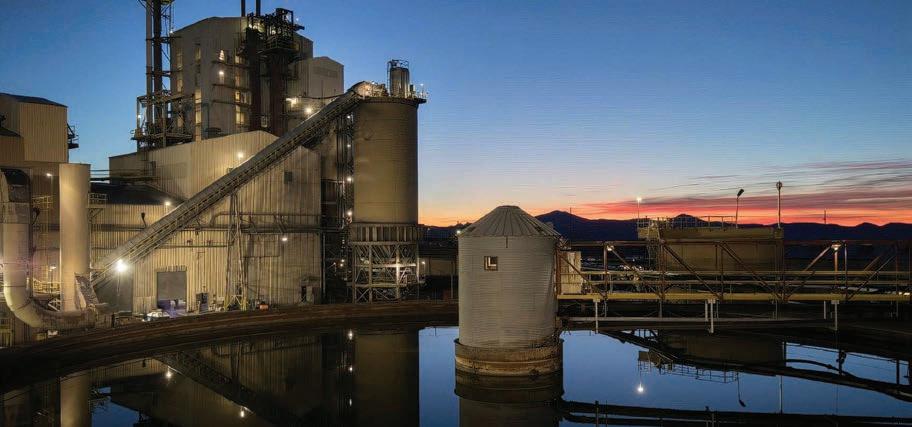
Despite these efforts, mining rates have remained below this threshold, First Majestic said, and cash costs per ounce have remained higher than anticipated primarily due to ongoing challenges such as contractor inefficiencies and high costs, inflationary cost pressures, lower-than-expected head grades, and multiple extreme weather events affecting northern Nevada, which have compounded conditions and caused material headwinds for the operation.

“The decision to temporarily suspend mining activities at Jerritt Canyon, which represented approximately 21% of the company’s 2022 revenue, was driven by our goal to produce profitable ounces across the company,” Keith Neumeyer, First Majestic’s president and CEO, commented in a news release.
He noted that while mining activities have temporarily stopped, processing of the remaining surface stockpiles will still occur over the next couple of months. During the suspension, the company intends to process approximately 45,000 tonnes of
aboveground stockpiles through the plant at Jerritt Canyon.
In addition, Neumeyer said “the
company will continue exploring both near-mine and prospective regional greenfield targets to
grow Jerritt Canyon’s resources, which we believe will significantly enhance the economics for the
eventual restart of operations.”
Acquired from Sprott Mining in April 2021, the Jerritt Canyon property covers 308.2 sq. km of mining claims in Nevada. The Jerritt Canyon deposit was discovered in 1972, and first gold production occurred from the open pit in 1981, then underground in 1997.
The property contains an estimated 1.6 million oz. of gold in measured and indicated resources (8.6 million tonnes grading 5.84 grams gold per tonne), plus 1.3 million inferred oz. of gold (6.9 million tonnes grading 5.61 grams gold).
Shares of First Majestic fell as much as 25.4% to $5.53 on Mar. 21 on the news. At press time on Mar. 27 its Canadian-listed shares had recovered to $9.13 for a market cap of $2.5 billion. TNM
YUKON | Most recent feasibility study pegged Casino capex at $3.8B
AWARDS | Deadline for submissions is July 20
BY AMANDA STUTTThe Canadian Mining Hall of Fame has issued its 2024 call for Nominations. Each year, the CMHF reaches out through its network in search of outstanding individuals to consider for induction into the Canadian Mining Hall of Fame.
Through their leadership and achievements, individual nominees must have shaped Canada’s global leadership in mining, embodied the important role mining plays in Canadian society, and inspired future generations in mining.
Over 200 industry leaders have already been inducted into the Canadian Mining Hall of Fame since its inception in 1989.
In a release, CMHF chair Janice Zinck noted that Canada’s mining industry is “at the forefront of the world’s energy transition” and the supply of “future-facing” minerals and metals. “This generational opportunity will capitalize on our industry’s past successes. The Canadian Mining Hall of Fame celebrates the leadership that has built the mining sector into what it is today through current Members and future inductees.”
BY JACKSON CHEN Western Copper and Gold (TSX: WRN; NYSE-AM:WRN) announced on Mar. 24 a strategic equity investment by Japan’s Mitsubishi Materials to advance the company’s Casino copper-gold project in Yukon towards development.
Mitsubishi has agreed to acquire about 5% of Western’s outstanding shares at $2.63 per share. The exact number of shares to be issued (and by extension, total proceeds received) will depend on whether Rio Tinto (NYSE: RIO; LSE: RIO; ASX: RIO) elects to exercise its right to participate in equity financings to maintain its 7.84% ownership.
Assuming Rio Tinto elects to exercise its participation right in full, about 8.1 million shares would be issued to Mitsubishi for gross proceeds of $21.3 million, and around 880,000 shares would be issued to Rio Tinto, bringing in $2.3 million.
Western Copper’s shares gained 0.8% by 12:45 p.m. ET on the investment by Mitsubishi. The Vancouver-based miner has a market capitalization of $362.3 million.
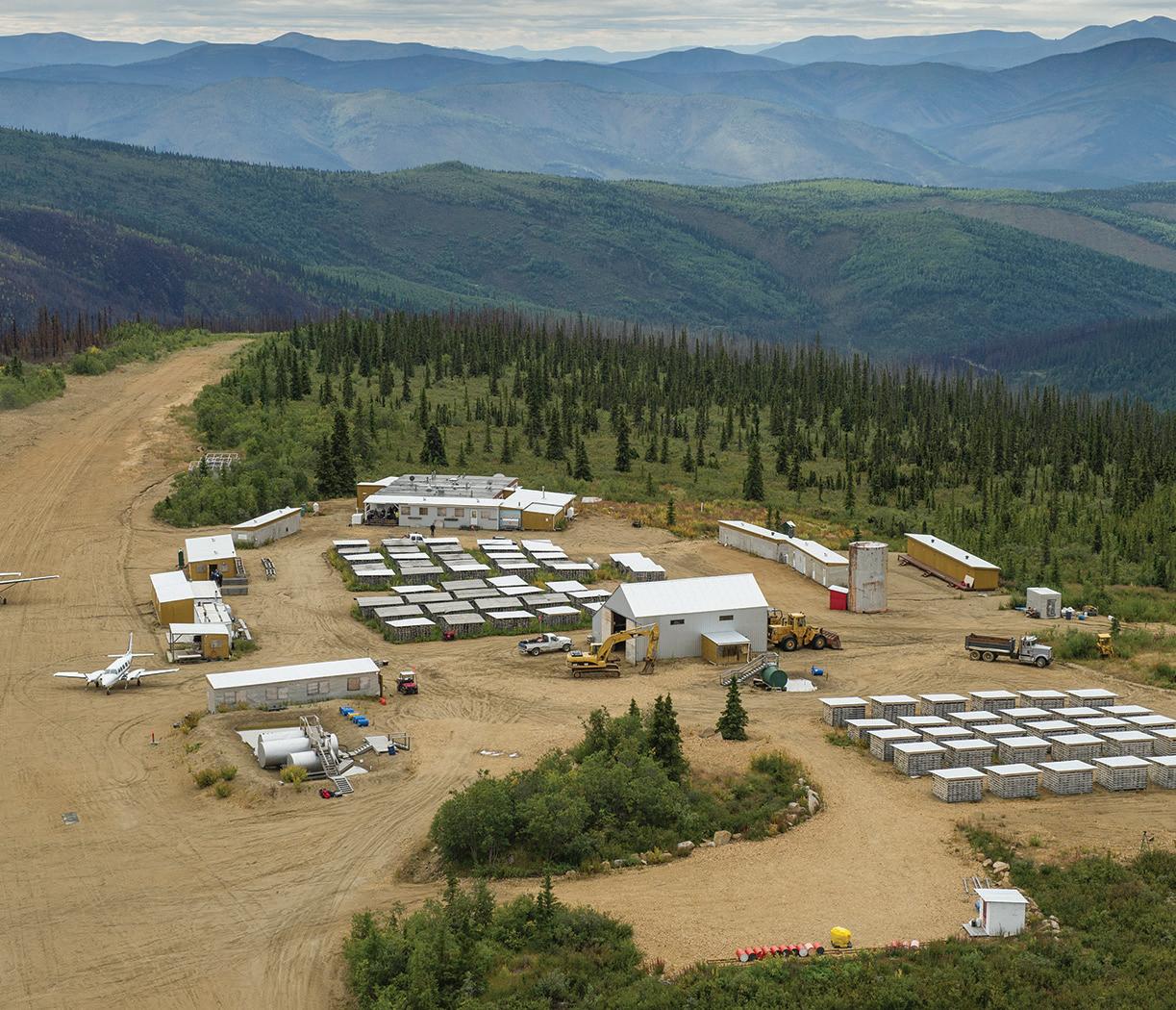
Located 300 km northwest of Whitehorse, the Casino property is host to a porphyry copper-gold-silver deposit containing 2.4 billion tonnes of measured and indicated resources at grades of 0.14% copper, 0.19 gram gold per tonne and 1.5 grams silver, for 7.6 billion lb. copper, 14.5 million oz. gold and 113.5 million oz. silver.
In summer 2022, Western published a feasibility study on the Casino project, which pegged capital costs at a whopping $3.6 billion. The study estimated Casino’s after-tax net present value, at an 8% discount rate, at $2.3 billion and its internal rate of return at 18.1%. Over a 27-year project life (in the case of heap leach, 24 years), annual production would reach 163 million lb. copper, 211,000 oz. gold and 1.3 million oz. silver.
Investor rights agreement
In connection with the investment, Western and Mitsubishi will enter into an investor rights agreement that gives Mitsubishi the right to appoint a member to the Casino project technical and sustainability committee, as well as one or more representatives to Western Cop-
per’s board.
Mitsubishi will also have the right to participate in future equity financings to maintain its ownership level. These rights can be exercised within 24 months of Mitsubishi’s investment, unless its interest falls below 3%.
In a release, Paul West-Sells, CEO of Western Copper, said Mitsubishi’s investment is a “strong endorsement” of the Casino project.
Western will remain the sole owner and operator of the Casino project, which it has been developing since 2008. The project encompasses the construction of a conventional open pit mine along with a mineral processing plant and heap leach facility, for which the environmental and socio-economic impacts are currently being reviewed by the Yukon government.
Last August, Mitsubishi also acquired a 15% stake in a joint venture it formed with another Canadian junior, Giga Metals (TSXV: GIGA). It invested $8 million into the JV, which will advance Giga’s Turnagain nickel-cobalt project in B.C. TNM
www.northernminer.com
Nominations must be submitted through Canadian Mining Hall of Fame member organizations or associate member organizations, which include: Canadian Institute of Mining, Metallurgy and Petro-

leum; Mining Association of Canada; The Northern Miner and the Prospectors and Developers Association of Canada.
Associate member organizations include: the Mining Associations of British Columbia, Ontario, Quebec and Saskatchewan and the Association for Mineral Exploration (AME). Any organization or member of the public is welcome to nominate a candidate, provided their nomination is channeled through one of these organizations.
The 2024 nomination deadlines are May 1 to contact a member or associate member organization about nominating a candidate for induction and May 31 for nomination materials to be delivered to a member or associate member organization for review. Member or associate member organizations must submit their nominations by July 20.
The guidelines, criteria for selection and nomination form are available at www.mininghalloffame.ca.
In November 2023, three new inductees were announced to be inducted into the Canadian Mining Hall of Fame in 2023: Jim Cooney, Alexander John Davidson and Douglas Balfour Silver.
The CMHF will welcome these new members at the annual dinner and induction ceremony on Thursday, May 24, 2023 at The Carlu in Toronto. Reservations can be made through the Hall of Fame website. TNM
Sprott Asset Management LP has announced the launch of Sprott Nickel Miners ETF (NASDAQ: NIKL), the only U.S.-listed exchange-traded fund focused on nickel mining companies.
NIKL represents the latest addition to Sprott’s suite of energy transition-focused ETFs following its launch of four critical minerals ETFs in early February.
“Nickel is a vital component in the rechargeable batteries used for hybrid and electric vehicles [EVs] and clean energy storage,” said John Ciampaglia, CEO of Sprott Asset Management, in a release.
“Automakers have begun adding more nickel to EV batteries to increase their drivable range. Demand for this critical mineral for use in EVs and battery storage may increase nearly 20 times by 2040, relative to 2020. We believe nickel producers are well positioned to benefit from the significant investment required to fund the energy transition.”
https://soundcloud.com/northern-miner http://www.northernminer.com/tag/podcast/

The Sprott Nickel Miners ETF seeks to provide investment results that, before fees and expenses, correspond generally
to the total return performance of the Nasdaq Sprott Nickel Miners Index (NSNIKL). The index is designed to track the performance of a selection of global securities in the nickel industry, including nickel producers, developers and explorers.
This new ETF joins Sprott’s energy transition fund suite, which is focused on the investment opportunity of the critical minerals needed to generate, transmit and store cleaner energy. The suite now comprises a total of seven funds. TNM
Navoi Mining and Metallurgical Co., the world’s fourth-largest gold company by output, plans to start another mine in its Uzbekistani homeland this year while intending to go public eventually with a stock market listing in the West.
Eugene Antonov, deputy CEO and chief transformation officer of the state-owned company, said he met with Canadian banks and TSX officials during Navoi’s first visit to the Prospectors and Developers Association of Canada’s annual conference in Toronto in March.
“It was a great success because we had lots of interest,” Antonov told The Northern Miner in an interview as PDAC wound down on Mar. 8. “They were raising their eyebrows after they found out how big a company we are, when so little is known about us.”
The company produced 2.8 million oz. of the yellow metal in 2021, with earnings of US$4.8 billion, making it the country’s largest earner by revenue. Navoi is headquartered in the namesake city in east-central Uzbekistan.

Now, the miner is undergoing widespread modernization with US$1.2 billion in loans from J.P. Morgan, Citibank, Société Générale and Deutsche Bank while targeting annual output of 3 million oz. gold by 2026. It plans to start mining during the third quarter 100 km northeast of Navoi at the Pistali deposit, discovered four years ago, adding 150,000 oz. a year to production.
Antonov, who used to work for Kinross Gold (TSX: K; NYSE: KGC) and has an MBA from the University of Toronto, couldn’t say exactly where or when Navoi would apply to list publicly, but said the first goal is to raise the company’s profile. Last year, the company visited a mining industry event in London.
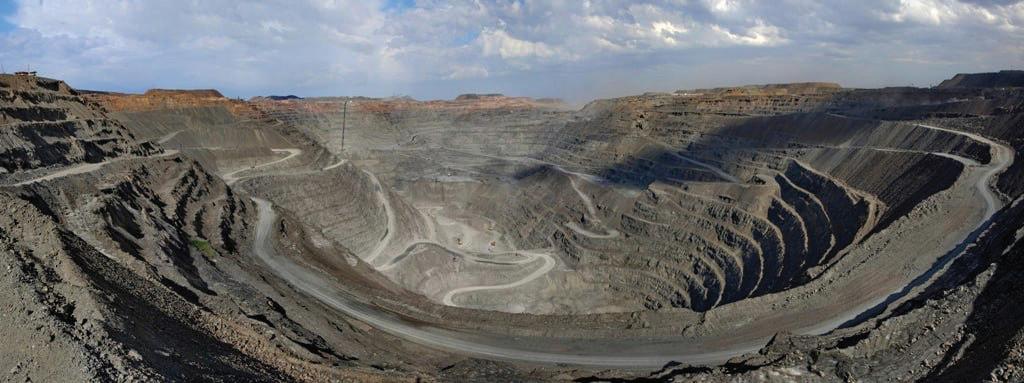
Navoi has 12 mostly open-pit mines and nine processing plants across the central Asian country and plans to spend US$17 million this year on exploration. It’s seeking to find and develop another Muruntau open-pit mine, its primary operation producing 1.7 million oz. of gold a year with a potential 40-year mine life. Antonov says Muruntau has 59 million oz. of gold in 2.1 billion indicated tons of 0.88 gram gold per tonne, according to a JORC compliant 2020 estimate, although the figures are not available on Navoi’s website.
Westernizing mining
standards
Uzbekistan, under President Shavkat Mirziyoyev, has started privatizing state-owned enterprises, removed some trade barriers and lifted currency controls to help its economy grow by nearly 6% last year, according to The Economist. The magazine chose Uzbekistan as the world’s most improved country in 2019.
Officials cut its mineral extraction tax to 10% from 25% in 2019 and are updating its mining code by adopting Western claims practices, government land auctions and Aus-
tralian standards for resource estimates, Antonov says. He didn’t say whether that meant Navoi is leaning towards listing on the Australian stock market.
However, Uzbekistan is doubly landlocked; lacking a seaport and surrounded by landlocked and mostly post-Soviet countries. Some in the West may see it as a Russia ally in its war with Ukraine although the government in Tashkent, the capital, has said it respects Ukraine’s territorial integrity. Uzbekistan was ruled for 27 years by post-Soviet dictator Islam Karimov. Now, Mirziyoyev, who started as president in 2016, is keen to change the constitution to extend his term to 2040 when it’s due to end in 2026, The Economist says.
Still, the reforming country has been good for Navoi, which recorded total cash costs of US$623 per oz. and all-in sustaining costs of US$751 per oz. in 2021 as it benefited from bigger mines and lower labour, energy and borrowing costs than most peers, the deputy CEO said.
“Management has worked hard to successfully keep costs low, which are helped by the largescale operations that allow us to achieve that benefit. We also have very low leverage,” he said, referring to a ratio of debt to earnings before interest, tax, depreciation and amortization of 0.6.
As for critics who might suggest Navoi is able to lower costs by operating under lax environmental codes, Antonov disagreed.
“Uzbekistan has very strict min-
ing laws,” he said. “We’re fully cognizant that as we enter international capital markets, we will be held accountable at international standards.”
Navoi annually trains 13,000 employees of its 46,000-member workforce in environmental, social and governance issues, has built four solar power plants and is expanding its economic development programs, the deputy CEO said.
Antonov joined Navoi after
Uzbekistan sought him as a foreign-trained national to help the former Soviet republic transform to a market-based economy where it can benefit from its location at the crossroads of the ancient Silk Road.
“We’re here to meet with banks
Trusted. Independent. Committed.
and investors but we’ve also met with a number of Canadian producers and suppliers of the most technologically advanced exploration and processing systems,” he said. “We operate in a desert so the overburden can be thick and there is huge potential to find another Muruntau mine, so we need to work smarter to find it.” TNM
Our fit-for-purpose solutions encompass the skills of qualified geologists, geostaticians, analytical chemists, mineralogists, metallurgists, process engineers and mining engineers brought together to provide accurate and timely mineral and process evaluation services across the entire mining life cycle.
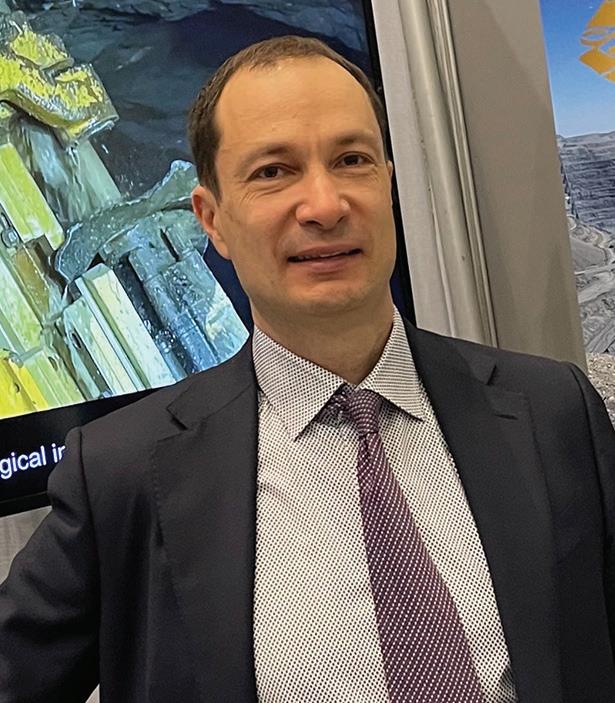
 Above: Navoi Mining and Metallurgical Co. deputy CEO Eugene Antonov at PDAC 2023. E. ANTONOV
The largest gold producer you’ve never heard of is growing GOLD | Uzbekistan’s biggest miner is looking to the West for a stock listing
“UZBEKISTAN HAS VERY STRICT MINING LAWS. WE’RE FULLY COGNIZANT THAT AS WE ENTER INTERNATIONAL CAPITAL MARKETS, WE WILL BE HELD ACCOUNTABLE AT INTERNATIONAL STANDARDS.”
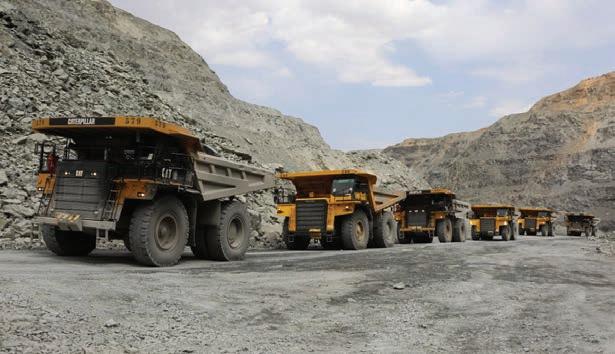
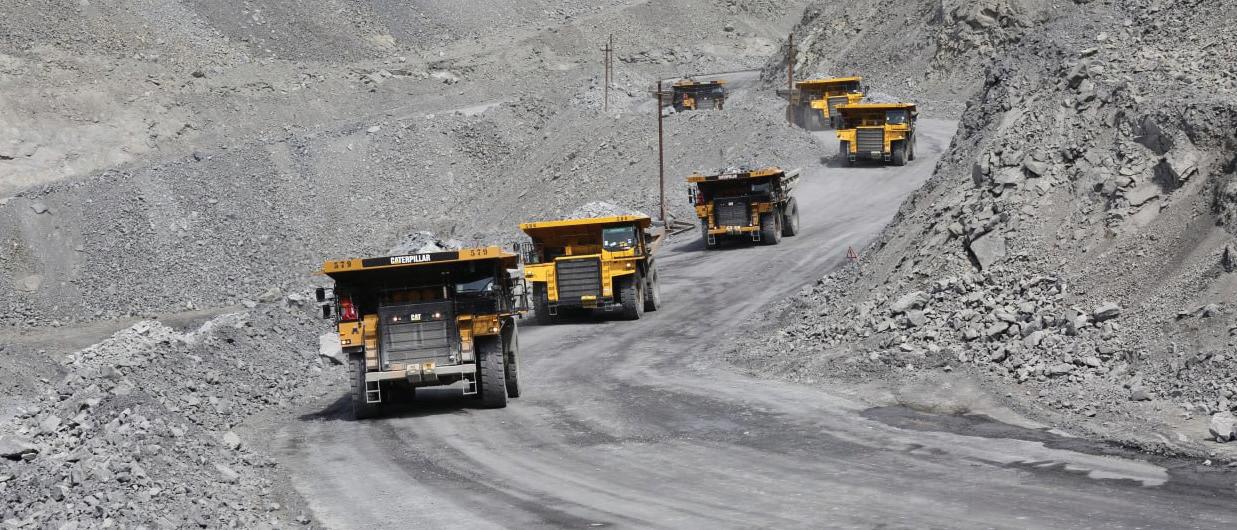
EUGENE ANTONOV DEPUTY CEO, NAVOI MINING AND METALLURGICAL CO.Dump trucks at Navoi Mining’s Muruntau gold mine. NAVOI MINING AND MELLURGICAL being CEO of former Londonlisted Trans-Siberian Gold, a producer of about 50,000 oz. a year.
In the smothering 35° Celsius dry heat in the shadow of no fewer than 19 active volcanoes, Canadian outfit Calibre Mining (TSX: CXB; US-OTC: CXBMF) is accelerating gold production growth in Nicaragua.
Not only is the Central American country regarded as one of the top coffee, cocoa, and tobacco exporters globally, but the geologically active jurisdiction remains exceptionally prospective for minerals, as Calibre is proving as it moves to expand production.
The mid-tier gold miner acquired a dominant land position in Nicaragua in 2019 after buying the El Limon and La Libertad mines, the Pavon gold project and other mineral concessions from B2Gold (TSX: BTO; NYSE: BTG) for US$100 million in cash and scrip.
Since then, the company has been working feverishly to expand the resource base and implement a hub-and-spoke model to boost economies of scale.
The company comes off a strong 2022 performance, having increased gold output 20% over 2021 and increased its reserve base 33% to 1.4 million oz. gold in February.
While the company has enjoyed success as a first mover, operating in Nicaragua comes with significant risk associated with international criticism of the country’s ruling regime under President Daniel Ortega.
Exploration
Since 2019, with the help of Calibre’s VP for exploration in Nicaragua, Pedro Silva, the company has started to rethink and modernize its approach to exploration in the country. This includes bringing knowledge in house, applying new technologies, and applying a rifle shot approach to targeting.
Silva has had a long and illustrious career spanning nearly three decades, mainly with Newmont (TSX: NGT; NYSE: NEM), Kinross Gold (TSX: K; NYSE: KGC), and Barrick Gold (TSX: ABX; NYSE: GOLD).
Under his stewardship, Calibre has digitized its database and applied various geoscience techniques to help identify new targets. Although these methods are not new to the industry, they are fresh in Nicaragua. Historical exploration was primarily driven by following artisanal mining and relied upon deposits outcropping at the surface.
The introduction of modern techniques has paid off, so far helping to identify a 6-km-long VTEM corridor (a zone of high apparent resistivity) at El Limon dubbed Panteon North.
During a site visit attended by sell-side analysts, the media, and investors, Calibre management was excited to share its latest findings from the Panteon North discovery. Drill results released on Mar. 21 highlight the potential to grow the system with grade.
The Panteon North discovery was announced in May 2022 as a part of Calibre’s aggressive drill program. Calibre has since expanded the dimensions of the discovery significantly, with the central discovery zone recently delivering an initial probable reserve of 244,000 oz. held in 810,000 tonnes grading 9.45 grams gold per tonne.
The discovery holds the potential for the company to use all of its excess processing capacity in Nicaragua, which stood at 1.6 million tonnes milled in 2022 compared with 2.7 million tonnes per year of installed capacity.
This is important, said Haywood Capital Markets mining analyst Geordie Mark in a Mar. 21 note to clients. “Drilling on the VTEM anomaly supports maiden drilling data released in December 2022 and highlights the structural corridor as a target zone for controlling high-grade gold mineralization,” he wrote.
Calibre’s senior VP for growth Tom Gallo said more drilling results over 2023 should add to the continuity of the Panteon North and northwest system, which are essential to augment future production plans beyond 2025. “Drilling on the VTEM corridor provides future leverage to discovery upside of comparable styles of high-grade, low-sulphidation epithermal mineralization,” said Gallo.
But growth opportunities abound at each of the Nicaraguan assets.
Silva points out that other promising targets include Blag and La Luna at the Eastern Borosi project, Veta Azul and Calvario at La Libertad, and Hagie at El Limon.
“In our view, Calibre has already laid the groundwork to continue its impressive track record of increasing reserves and resources and extending mine lives in Nicaragua,” said Canaccord Genuity mining analyst Michael Fairbairn in a Mar. 8 note to clients.
Calibre’s probable reserves have grown 370% since 2019 to 1.4 million oz gold as of Dec. 31, 2022. The Nicaragua reserves are held in 6.3 million tonnes grading 5.37 grams gold per tonne for 1.1 million oz. gold. It also holds 3.3 million oz. silver at 16.25 grams per tonne.
Indicated resources stand at 16.8 million tonnes grading 3.37 grams gold per tonne and 8.9 grams silver per tonne for 1.8 million oz. gold and 4.8 million oz. silver. The com-
pany holds marginal resources elsewhere, including the Pan project in Nevada.
In the near term, Calibre is banking on grade-driven production growth as it transitions from a focus on extending legacy mine lives to a focus on growing free cash flow. The company expects to produce 275,000-300,000 oz. gold by 2024, compared with 2022 production of 222,000 oz., which translates to an increase of about 30% at the midpoint of guidance. Calibre has guided for 2023 production of 250,000-275,000 oz.
The growth is expected to be mainly driven by the recent commissioning of the Pavon Central pit and the Eastern Borosi project (on the Atlantic side of the country), boosting production from the year’s second half.
To achieve continued growth, the company is focused on optimizing its mine plans, an effort led by VP for Nicaragua operations David Hendricks, an industry veteran who held senior positions with Barrick and Kinross and most recently was the general manager at the Tasiast mine in Mauritania.
By focusing on project sequencing, Hendriks believes Calibre can grow or sustain production while investing the growth capital needed to bring new projects online.
Fairbairn anticipates Calibre will generate substantial free cash flow over the next several years as it executes its plan in Nicaragua. Notably, he expects Calibre to generate about 32% free cash flow yield by 2025 and projects it will be trading under cash value by 2026 if the share price does not re-rate.
Infrastructure gains Nicaragua has invested heavily in building out a high-quality road network. Roads are paved with asphalt or interlocking bricks and are exceptionally well maintained by the government. During the site visit, management demonstrated how the
the regime.
The new U.S. sanctions under President Joe Biden expanded a previously signed Donald Trumpera executive order to include specific potential restrictions on trade and investment involving Nicaragua, with a particular reference to the gold industry.
The U.S. Treasury Department also acted in concert with the order to designate sanctions against Nicaragua’s General Directorate of Mines (DGM) and an official of the Nicaraguan government named Cerna, the former head of state security and a confidante to Ortega. These actions come as a continuation of the U.S. government’s efforts to limit the power and resources of the Ortega regime, which has silenced critics and dismantled democratic institutions in the country.
The United Nations also regularly files reports alleging human rights violations by the Ortega regime during the violent 2018 uprisings.
country’s improving infrastructure was helping simplify logistics for Calibre’s hub-and-spoke operation. This enables the company to ship ore from the El Limon operation to fill the extra capacity at its La Libertad mill via road.
Silva explained that Calibre’s busiest trucking route runs between El Limon and La Libertad, where the company ships about 1,000 tonnes daily.
After the site visit, the company announced mining at its Pavon Central open pit mine operation, which started in January, had progressed ahead of schedule and budget and averaged 1,000 tonnes per day shipped to the Libertad mill in February.
In a Mar. 15 statement, the company’s president and CEO Darren Hall (who was unfortunately not with the tour group), noted Pavon Central will be a significant contributor to the company’s production growth starting this year.
Nicaragua’s active geology also lends itself to ample renewable energy generation, and the Ortega regime is hoping to capitalize on the opportunity.
Laureano Ortega — one of President Ortega’s sons and widely tipped to be in line to take over from his father should Ortega’s wife, Rosario Murillo, not accede to lead government — told the tour group during a presentation that renewable energy generation accounted for 75% of the country’s power in 2022 and that the nation is on track for 90% renewable coverage by 2033.
All is not smooth sailing in Nicaragua, given the generally oppressive political regime prompting riskweary investors to sit on the sidelines to see where things are headed under Ortega.
Calibre shares took a nosedive to their most recent 12-month low on Oct. 25, 2022, when the U.S. government announced the latest round of targeted sanctions to stifle
A recent report identified a pattern of alleged extrajudicial executions carried out by agents of the National Police and members of pro-government armed groups who acted in a joint and coordinated manner during protests in 2018. The report alleges the government obstructed any investigation regarding these and other deaths. Journalists have also faced threats by the regime, with more than 70 forced to go into exile since 2018.
While the recent U.S. sanctions targeted the Ortega regime, they did not target the Nicaraguan people or foreign entities, including gold miners, said senior VP for corporate development and investor relations Ryan King.
King reiterated that this latest round of sanctions were numbers 54 and 55 of the existing list of U.S. sanctions targeting Nicaragua. Still, there have been zero business disruption to date.
“Nicaragua has a long-standing mining tradition, with a solid and clearly defined legal framework for the sector. As investors, we comply with national laws and adhere to international standards in our work,” King said. “For each of our mining projects, we carry out transparent, legitimate prior consultation processes with the communities, their representatives and local governments.”
King added that Calibre generates more than 3,500 direct and contractor jobs in Nicaragua, translating into direct benefits for communities, including significant tax revenues, social investment, and stimulation of the local economy.
Calibre estimates it distributed about US$286 million in economic value in the Nicaraguan economy in 2021 — about 2% of the country’s gross domestic product.
King also stressed that the U.S. actions are designed to target state-controlled mining operations and those at the top of President Ortega’s regime, not the Nicaraguan people or foreign entities.
“As such an integral part of the Nicaraguan economy, we do not believe the U.S. government could sanction Calibre without having a material negative impact on the Nicaraguan people,” wrote Fairbairn in a recent note.
As of Mar. 27, Calibre shares traded at $1.22 in a 52-week range of 52¢ and $1.65, giving it a market capitalization of $550 million. The stock has recuperated about 58% in since its Oct. 24 low. TNM
SENEGAL | Douta could become company’s second West African mine
BY COLIN MCCLELLANDNew figures showing more than twice the potential gold in Thor Explorations’ (TSXV: THX; LSE: THX) Douta project in Senegal means “greater confidence” it will be the company’s second mine in West Africa, analysts said.
Douta holds an indicated resource of 20.2 million tonnes grading 1.3 gram gold per tonne for 874,900 oz. contained metal and an inferred resource of 24.1 million tonnes grading 1.2 grams gold for 909,400 oz. contained metal, the company said on Mar. 20.
The updated estimate’s 1.78 million oz. of contained gold is a 144% increase compared with an initial resource in November 2021 that outlined inferred resources totalling 730,000 oz. of gold in 15.3 million tonnes grading 1.5 grams gold.
Echelon Capital Markets called the new figures “impressive” for Douta, which lies in in the far southeast of Senegal and is 70% owned by Thor while the rest is held by local partner International Mining Co. More drilling is planned for this year as Thor prepares a preliminary feasibility study for what could be an open-pit operation.
“The impressive resource growth illustrates the potential for Douta to become Thor’s second operating asset in West Africa, potentially largely funded via internal
cash flow, which should help derisk the story and ultimately help close the valuation gap with peers,” Ryan Walker, a mining analyst for Echelon, wrote in a note on Mar. 20.
Thor, which is registered in Vancouver but does most of its business in London, trades at a discount to similar companies, Echelon said. Its share price-to-cash flow ratio is 3.6 compared with 7.5 for peers, while its price-to-net –asset value is 0.45 versus 0.84 for similar companies, the analyst said.
The miner also generally outperforms peers regarding the growth of its cash flow and its all-in sustaining costs. Thor operates the Segilola
gold mine in Nigeria, about 200 km northeast of Lagos, which has produced 98,000 oz. of gold last year, its first full year of production.
“We expect such discounts to narrow as Thor gains market exposure, continues to consistently perform on an operational basis and continues to demonstrate exploration success at both Segilola and Douta,” Walker said.
The updated Douta resource includes the Makosa, Makosa Tail and the Sambara prospects, all of which remain open along strike and down-dip after 64,567 metres of drilling, the company said. The estimate used a cut-off grade of 0.5
JOINT VENTURE ARTICLE
gram gold per tonne within optimized open-pit shells using a gold price of US$2,000 per ounce.
A further 40,000 metres of diamond and reverse circulation drilling is planned for Douta this year. Mineralization remains open along strike between the prospects with growth potential along 20 km of prospective strike length, it said.
“We are now focusing our exploration efforts towards expanding the resource along the prospective corridor that runs along the full 30-km length of our exploration licence,” Segun Lawson, president and CEO, said in the release. “Priority will be given to extensional
drilling at Makosa, Maka, Mansa and the newly discovered Sambara prospects.”
Its partner on Douta, International Mining Co., has a 30% free carried interest in the project until Thor declares a probable reserve. At that point, International Mining must either sell its interest to Thor or fund its pro-rata share of exploration and operating expenses. Thor didn’t immediately reply to an email seeking clarification on the ownership of International Mining.
The 58-sq.-km Douta project is located in the Kéniéba inlier, 4 km east of the Sabadola-Massawa project owned by Endeavour Mining (TSX: EDV; LSE: EDV). Bassari Resources (ASX: BSR) is developing the Makabingui project immediately to the east.
Preliminary tests indicate that Douta’s oxide material may be recovered using gravity and carbon-in-leach methods, Echelon said. Biological oxidation and pressure oxidation methods are also being assessed. Endeavour’s Massawa achieved gold recoveries of 88% for similar rocks using biological oxidation processing, Echelon said.
Shares in Thor gained 1.7% in Toronto to 30¢ each after the announcement and remained there at press time, within a 52-week range of 18¢ to 35¢, valuing the company at $196.5 million. TNM
It took two years and six trips to Mexico, but earlier in March Radius Gold (TSXV: RDU) emerged triumphant with an option agreement to earn 100% of the Tropico target in the heart of the Fresnillo silver district in Mexico’s Zacatecas state.
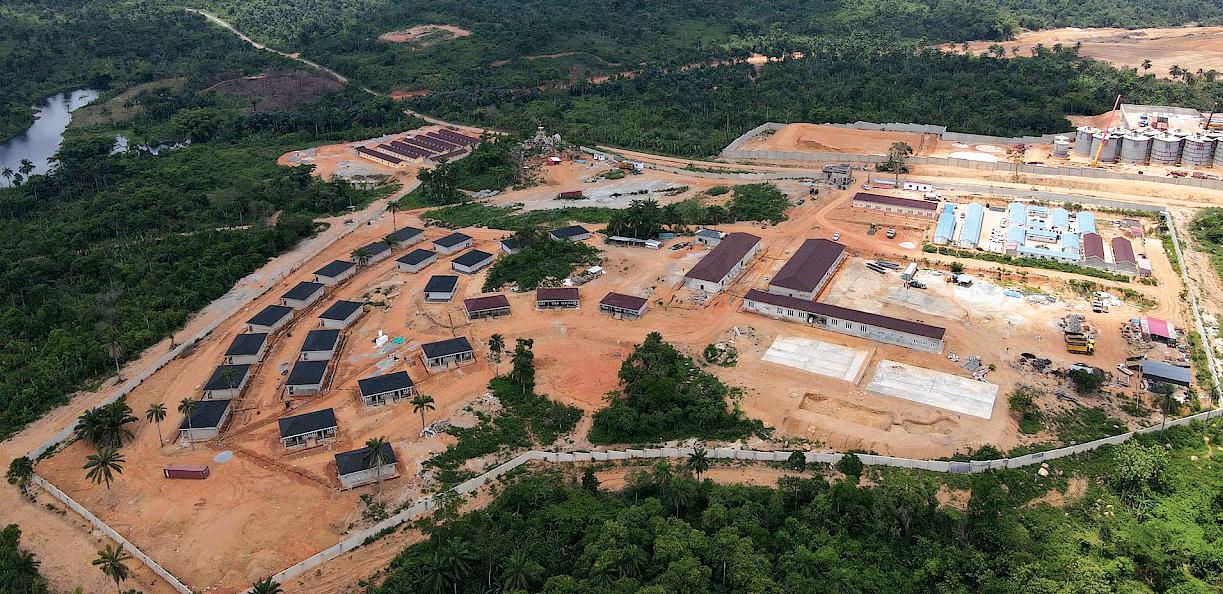
The ‘hot-spring type’ sinterrimmed gold-bearing breccia pipe at Tropico is located within sight and in the same rocks as the Fresnillo mining district, and is about 35 km from the Juanicipio mine, a joint venture between MAG Silver (TSX: MAG; NYSE-AM: MAG) and Fresnillo (LSE: FRES) that is ramping up to nameplate capacity this year.
The Fresnillo mining district has estimated production of more than 3 billion oz. silver since 1553. In 2021, Fresnillo’s Fresnillo mine, about 25 km from Tropico, churned out nearly 12 million oz. silver. Juanicipio, a high-grade silver-gold-lead-zincepithermal vein deposit, 56% owned by Fresnillo, the operator, and 44% by MAG Silver, contains an estimated 6.9 million oz. silver at a head grade of 556 grams silver per tonne.
“As the old saying goes: ‘If you want to find a mine, explore within the shadow of a headframe and there are a lot of headframes down the road from Tropico,” says Bruce Smith, Radius Gold’s president and CEO. “We’ve found something that we like a lot and one that is going to hopefully get us some bang for the buck in the short term.”
Smith, a geologist from New
Zealand who led the team that found the Chinchillas deposit in Argentina now owned by SSR Mining (TSX: SSRM; NASDAQ: SSRM; ASX: SSRM) and has participated in gold discoveries in Guinea, Guatemala, Nicaragua, and Mexico, has a special interest in ‘hot-spring type’ sinter and breccia pipe targets like Tropico.
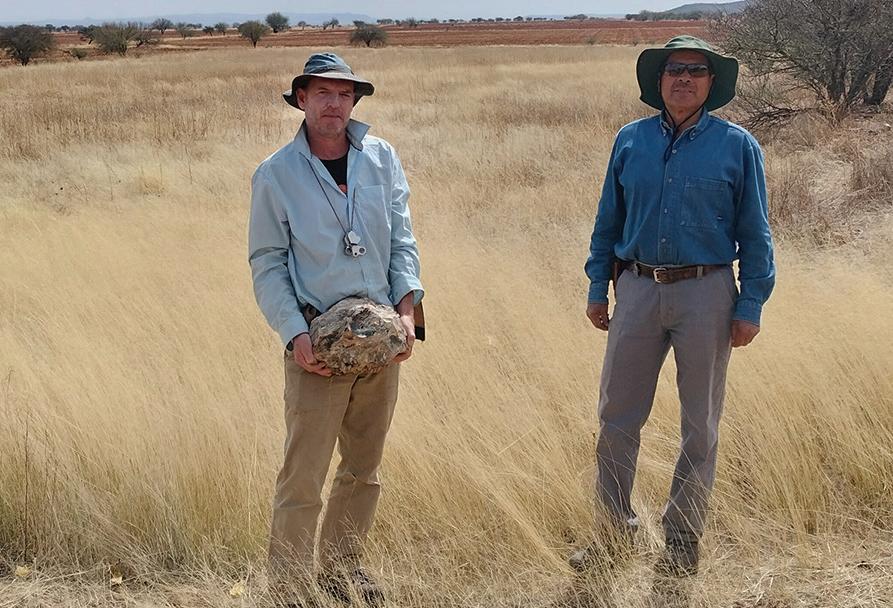
Twenty years ago, he covered the entire Central Mexican belt looking for hot-spring targets but didn’t notice Tropico at the time because the hot-spring down the road from it was inactive.
But two years ago, Smith was driving down national highway route 45, about 30 km northwest of Fresnillo city, and stopped to look at
a target of interest (he typically has hundreds of GPS points of interest on his phone at any one time) and found the Tropico sinter instead.
“It doesn’t outcrop very well and it’s in a flat bean field,” he says. “It’s 450 metres long and 250 metres wide, which is a significant pipe, and that’s just what we can see. The rest is bean field, so we don’t know how big it is, but it has gold in it and mercury, and it’s actually highgrade for a sinter. Most of the sinter systems at surface do not carry gold, they are typically barren.” Sinter is a formation of opaline silica deposited in a hot-spring environment at surface and can be the surface indication of a
mineralized system at depth. Examples of epithermal gold and silver mines located beneath sinter deposits include Juanicipio, and parts of Fresnillo, Lihir in Papua New Guinea and Waihi in New Zealand.
“I’m from New Zealand and the hot-spring epithermal district where they really understood these deposits is in my backyard,” Smith says. “The Waihi gold mine, which had a big sinter on top of it, is close to where I live, and I’ve spent quite a number of years looking at all the epithermal hot-spring systems in New Zealand, so I really understand what they look like.”
Another advantage Radius Gold had in identifying Tropico, Smith says, is that the company was founded by Simon Ridgway, who has been focused on hot spring epithermal systems for over 20 years. Ridgway, Radius Gold’s chairman, found two such deposits— San Martin in Honduras and Cerro Blanco in Guatemala—before selling them to Glamis Gold, which later became Goldcorp. Those were both hot-spring discoveries and among the biggest successes of his career.
At Tropico, Radius collected and assayed 28 rock chip samples and gold values ranged from 0.02 parts per million to 0.88 ppm, with an average of 0.28 ppm, which is considered significant for a sinter system. In actual sinter material at Tropico the highest grade was 0.39 ppm. Mercury values were also high, with several samples exceeding 100 ppm.
Under the option agreement, Radius paid an initial US$200,000. Another US$200,000 in staged payments is due over the next 42 months. At month 48, the company can acquire 100% of the 2-sq.-km property for a payment of US$5 million. An additional milestone payment of US$5 million is conditional on delivering a feasibility study or at the start of mine construction. If reserves exceed 2 million gold-equivalent ounces, a further US$3 million will be due.
The next steps at Tropico are to complete geophysical surveys and Smith expects to start drilling within three to six months.
“The Fresnillo systems tend to start between 150 to 300 metres below ground and can go down a kilometre, so we will do some deep-looking resistivity surveys to define the shape of the pipe and define the bits we cannot see that are hidden below cover and then we’ll start to drill.”
Elsewhere in Mexico, Radius Gold has option agreements funded by partners in Chihuahua state with Pan American Silver (TSX: PAAS; NASDAQ: PAAS) at its Amalia project and with Fresnillo Plc at its Plata Verde project JV projects in Guatemala with Volcanic Gold Mines Inc (TSX: VG).
The preceding Joint Venture Article is PROMOTED CONTENT sponsored by Radius Gold and produced in co-operation with The Northern Miner. Visit: www.radiusgold.com for more information.
FINLAND | Explorer aiming for all permits by the end of 2025
BY NORTHERN MINER STAFFAmerger of Trillium Gold (TSXV: TGM; US-OTC: TGLDF) and Pacton Gold (TSXV: PAC; US-OTC: PACXF) will create an explorer with over 15 projects spanning 1,260 sq. km in the Red Lake mining district, the companies say.
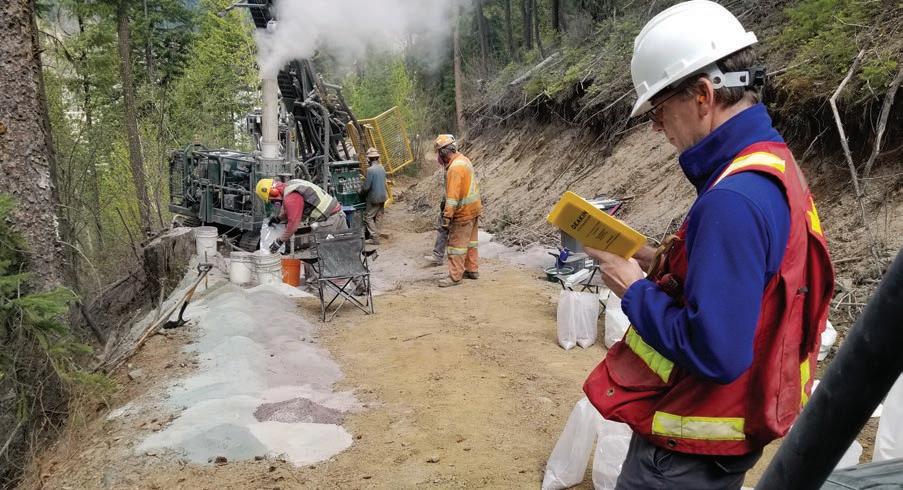
Pacton’s Red Lake gold project is within 20 km of Trillium’s Newman Todd complex and the western portion of its Confederation Belt properties. Trillium’s Leo and Pakwash properties are also immediately south of Pacton’s Dixie and Pakwash properties.
Under the proposed merger, Pacton will become a wholly owned subsidiary of Trillium. The companies will merge on an at-market basis, with each common shareholder of Pacton entitled to receive 1.275 common shares of Trillium in exchange for one Pacton share. Once completed, Trillium and Pacton shareholders will own 53% and 47%, respectively, of the combined
company. If the merger is completed, Trillium’s landholdings will jump by more than 360 sq. km or 40%.
Pacton’s 280-sq.-km Red Lake project is located between Pure Gold’s (NEX: PGM.H) Madsen property, Kinross Gold’s (TSX: K; NYSE: KGC) Dixie project and Evolution Mining’s (ASX: EVN) Red Lake mines. A 15-hole (5,698 metre) drill program there last year returned assays including 0.5 metre of 17.2 grams gold per tonne, of which high-grade surface samples included 126.5 grams gold and 23.3 grams gold.
Pacton also brings to the merger its 46.7% stake in the 86-sq.-km Sidace project, 28 km northeast of Red Lake and located at the northern extent of the Red Lake greenstone belt. Evolution Mining owns 53.3% of the project, which is adjacent to its Bateman gold project.
In 2021, 17 of 18 holes drilled at Sidace intersected gold, including 9 grams over 2.3 metres; 1.3 grams gold over 75.2 metres; 1.5 grams
gold over 61.2 metres and 20.6 grams gold over 1 metre.
Trillium’s Confederation Belt properties span over 115 km along favorable structures, the company says, and its greater Newman Todd complex hosts over 20 high-grade zones.
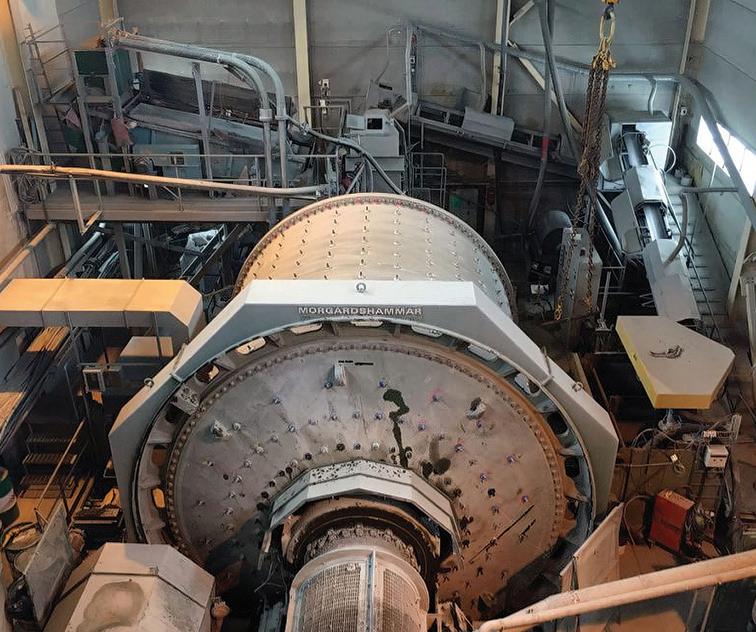
Since January 2022, Trillium has drilled 17 holes (7,665 metres) at Newman Todd, with drill hole NT22 211-212 returning 8.75 grams gold per tonne over 20.4 metres, including 549 grams gold over 0.3 metre; and 40.56 grams gold over 4.18 metres including 136 grams gold over 1.08 metres.
Newman Todd, which includes Trillium’s Rivard property, is about 26 km from Evolution Mining’s Red Lake operations.
At press time in late March, Trillium Gold traded at a 52-week low of 10.5¢, against a 52-week high of 61¢, while Pacton traded at 18.5¢ in a 12-month range of 15¢ and 57¢. Trillium’s market cap is $8.4 million and Pacton’s $10.1 million. TNM
RESOURCES BY COLIN MCCLELLANDRupert Resources (TSX: RUP) says strong drill results may expand the Ikkari gold project in northern Finland.
The Toronto-based company plans to further upgrade areas of inferred resources this year at Ikkari, which is in Lapland about 900 km north of Helsinki, it said on Mar. 21. A potential open-pit mine could produce 200,000 oz. of gold a year, according to a preliminary economic assessment (PEA) in November.
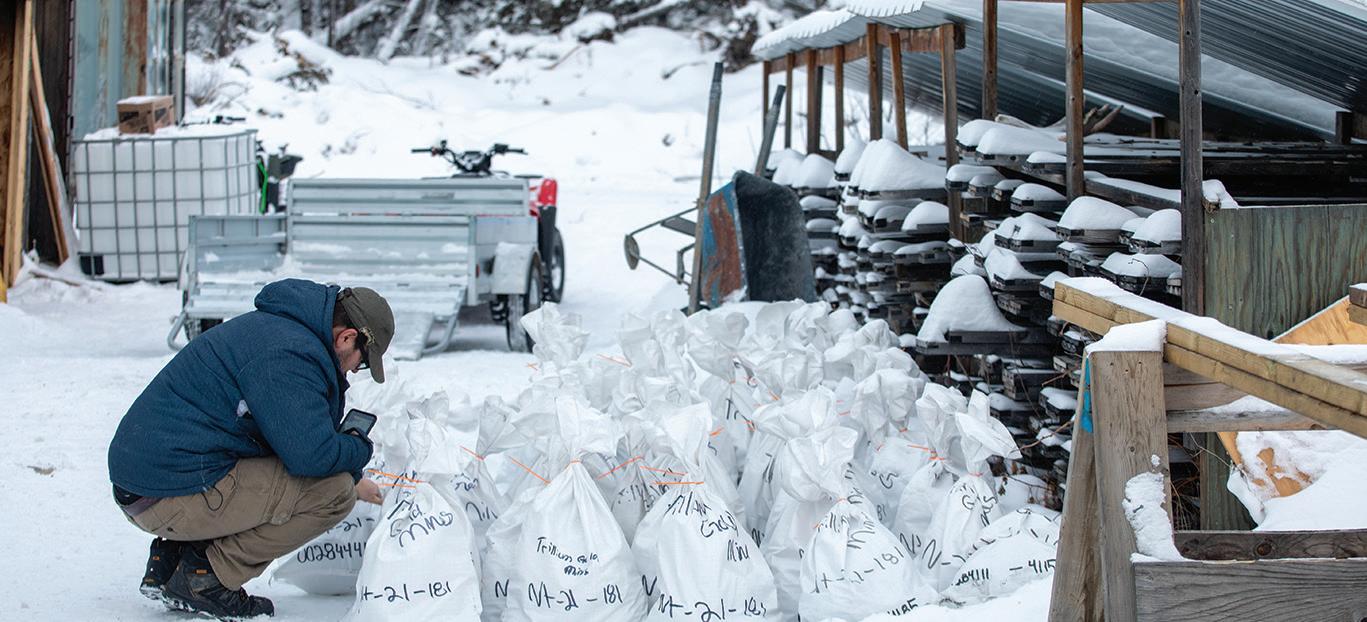
Highlights of recent drilling include hole 122190, which cut 52.6 metres grading 2.3 grams gold per tonne from 515 metres depth in the east, adding confidence to the inferred resources at this depth, Rupert said in a release.
Drill hole 122206 cut 25.3 metres grading 3.2 grams gold from 291 metres depth and 141 metres of 3.6 grams gold from 322 metres in the central portion of the deposit. “The intercept extends to 100 metres below the open pit considered by the PEA, confirming the continuity of high-grade mineralization,” Rupert said.
“Initial results confirm the exceptional continuity of the Ikkari resource and the potential for resource expansions in the west and at depth,” Rupert CEO James Withall said in the release. “We have also identified further mineralization 7 km east from Ikkari along the main regional structure on our land package at Koppelo.”
Results from limited drilling so far at Koppelo have yielded 3.1 metres grading 5.3 grams gold from 21 metres in hole 122161 and 3 metres of 3.3 grams gold in hole 122162, the company said.
Deeper pit potential
“Rupert continues to tag highgrade material outside the block model at depth, pointing to the potential for incremental growth in the next resource update,” Canaccord Genuity mining analyst Michael Fairbairn wrote in a note on Mar. 21.
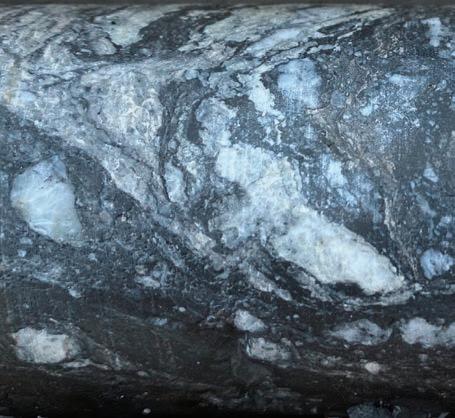
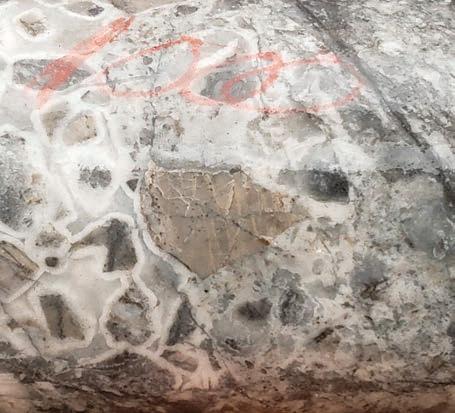
“The ongoing infill and expansion drill programs will help de-risk and optimize the deposit’s economics, which may see the PEA pit shell pushed down to capture more ounces in the open pit.”
The latest indicated resource estimate filed in January shows
Ikkari holds 46.4 million tonnes grading 2.5 grams gold per tonne for 3.7 million oz. contained metal. The first resource, delivered in 2021, was 49 million inferred tonnes grading 2.5 grams gold per tonne for 4 million oz. gold.
Ikkari could be built for US$405 million to operate as an open-pit mine for 11 years, moving underground in the 10th year for 24 years total, the PEA showed. Sustaining capital costs would be US$395 million. After-tax net present value would be US$1.6 billion with a 5% discount to produce an internal rate of return of 46% and payback after two years, assuming a gold price of US$1,650 per ounce.
Rupert is working on prefeasibility study for Ikkari and intends to have all its permits by the end of 2025, Withall said in a presentation this month. He emphasized the project’s short payback period, consistent long-term cash flow, and how its ratios for net present value to capital cost and net present value to production ounces compare favourably with peers.
Ikkari’s all-in sustaining costs would be US$759 per oz. over the life of the mine, and US$596 per oz. during the open-pit operation, according to the PEA.
Of the project’s current 72,800metre drilling program, about 30,000 metres has been allocated to Ikkari infill and project drilling with the balance divided equally between Ikkari extension, potential satellites and regional exploration across the company’s 634-sq.-km property.
“Rupert is currently focused on near-term resource additions at Ikkari to ensure these can be included in future economic and environmental assessments and the eventual permitting application for the project,” the company said.
Separate to Ikkari, Rupert said Mar. 21 it’s considering appealing the requirement by local authorities to increase its environmental bond on the nearby Pahtavaara mine to 14.2 million euros ($21 million) from $6.2 million. Rupert says it’s testing a less expensive alternative than covering the site’s waste areas with up to 80 cm of moraine material.
Shares in Rupert Resources were at $4.60 each in Toronto at press time, within a 52-week range of $3.53 to $6.77, valuing the company at $941.3 million. TNM
Orezone Gold (TSX: ORE; US-OTC: ORZCF) is resolving a power shortage at its new Bomboré gold mine in coup-prone Burkina Faso as it considers acquisitions in West Africa.
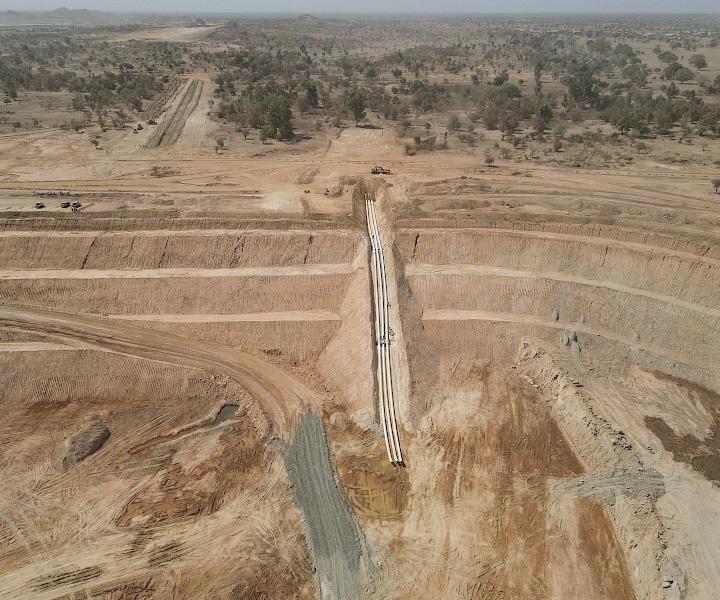
Bomboré, 85 km east of the capital city of Ouagadougou in the military-led country, started commercial production in December. But Orezone had to scramble for diesel generators after Genser Energy abandoned a liquid natural gas power contract, raising costs from US14¢ per kilowatt hour to US50¢ per kWh, or by more than US$100 per gold ounce produced.
Now, the Vancouver-based company is building a transmission line to the country’s grid which is expected to eliminate the cost hike, Patrick Downey, Orezone president and chief executive officer, said in an interview with The Northern Miner at the Prospectors and Developers Association of Canada conference in Toronto in March.
“We’ve just signed the contract this week and we should have it in before the end of the year,” Downey said Mar. 6. “That will bring our all-in sustaining costs down by over US$100 an ounce next year. It was a bit of a bit of an issue for us, but we dealt with it extremely fast.”
Orezone filed its 2022 results
on Mar. 23, reporting that the new power line is expected to cost as much as US$18 million. The company slightly increased the high end of its guidance for this year’s production to 155,000 oz. gold and all-in sustaining costs to US$1,110 per ounce. Sustaining capital increases by a third to US$16 million because it moved up some tailings storage construction. The company reported it delivered
PROJECT CONSTRUCTION | Initial production at Manh Choh to begin in H2 2024
Bomboré on time and under budget by US$4.9 million.
The company is planning more drilling at Bomboré this year to eventually more than double annual gold output by the end of 2025 to as much as 300,000 ounces. The CEO said the expansion will be achieved with a proposed sulphide plant due to start construction next year.
A 2019 feasibility study forecast Bomboré’s average annual pro-
duction of 118,000 oz. gold per year over a 13-year mine life at an all-in sustaining cost of US$730 per ounce. However, the company continues to expand the deposit. Assays released this month show 40.4 metres grading 1.72 grams gold per tonne from 99 metres in hole BBD1294, including 8.25 metres grading 4.3 grams gold from 126.8 metres.
“That’s a brand new zone significantly below any reserve pits,” Downey said in the interview with The Northern Miner. “That’s going into an updated feasibility study, which will be ready in the third quarter this year.”
Regional opportunities
The miner is also considering a role in the region to follow in the footsteps of gold producers Perseus Mining (TSX: PRU; ASX: PRU) and Endeavour Mining (TSX: EDV; LSE: EDV; US-OTC: EDVMF).
“We see ourselves as a catalyst for growth there,” Downey said. “The Endeavours are now looking at something bigger. We’re now looking at coming in underneath where they were.”
Endeavour operates the Boungou, Mana and Houndé mines in Burkina Faso, the Sabodala-Massawa mine in Senegal and the Ity mine in Côte d’Ivoire. Perseus
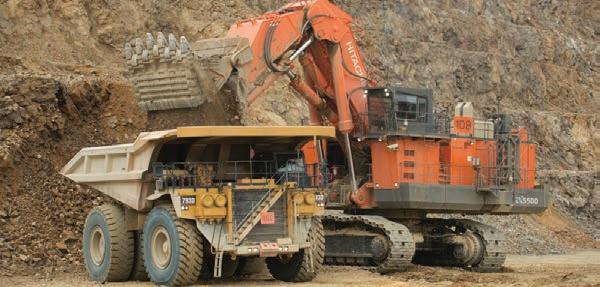
has Sissingué and Yaouré in Côte d’Ivoire and Edikan in Ghana.
“There’s lots of exploration in the region, really, really nice projects in the area. We’re looking at a number of them now to see if we can start tucking in behind our expansion,” Downey said. “We’ve got a local bank behind us. Our debt came from a local West African bank, who know the region as well. They’re very supportive of us.”
Still, turmoil in Burkina Faso, where the governing junta’s conflict with Islamic insurgents has killed thousands and forced 2 million others from their homes, seems unending. Most terrorist attacks are in the north, away from Bomboré. But the country underwent two military coups last year for a continent-high of 10 since independence in 1960, and now wants former colonial power France to withdraw the troops it was using to fight Islamic insurgents. Leaders of both recent coups used the failed conflict against jihadists to justify their takeovers. President Capt. Ibrahim Traoré has run the country since Sept. 30.
“We’ve seen more from him in three months in terms of what he’s done and how he stepped up to the role,” Downey said. “We see a lot of pushback. So we’re quite positive that in the next 12 to 18 months we’ll see a positive change.” TNM
BY NORTHERN MINER STAFFContango Ore (NYSE-AM: CTGO) has secured a US$70-million loan from two banks to cover its minority share of pre-production capital spending on the Manh Choh gold project in Alaska.
ING Capital and Macquarie arranged the loan for project owner Peak Gold Joint Venture, a 70-30 split between Kinross Gold (TSX: K; NYSE: KGC) and Contango.
“Along with our upcoming equity raise, we will fully fund our obligation to the joint venture through production,” Contango’s president and CEO, Rick van Nieuwenhuyse, said in a Mar. 20 news release.
The company said the project had received the federal permits needed for road construction, and early work had already started.
In September 2020, Kinross acquired 70% of the Manh Choh project, formerly the Peak project,
about 400 km southeast of its Fort Knox mine.
Kinross, as joint venture operator, said last year it was proceeding with the Manh Choh project. Initial production is expected to start in the second half of 2024. The project is forecast to increase Kinross’ production in Alaska by about 640,000 attributable gold-equivalent oz. over the operation’s life.
Manh Choh is an open-pit project with a mine life of 4.5 years. Kinross plans to process Manh Choh ore at Fort Knox using existing mill and infrastructure.
According to Kinross, Manh Choh holds proven and probable reserves of 698,000 oz. gold and 1.2 million oz. silver in 2.8 million tonnes grading 7.9 grams gold per tonne and 13.6 grams silver.
Contango shares rose as much as 8.6% on the news before settling 4.5% higher at US$25.17 apiece. It has a market capitalization of US$181.7 million. TNM
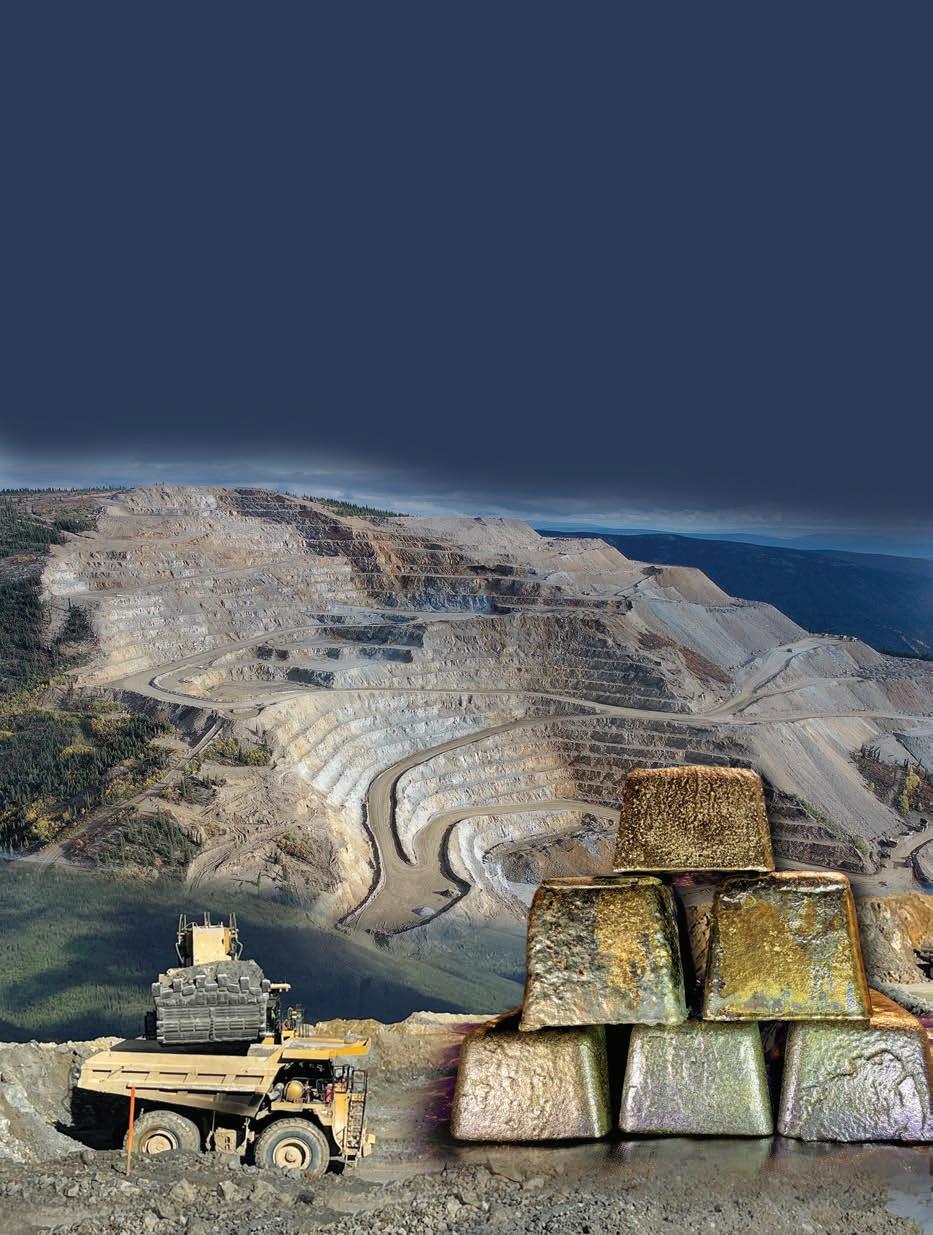
Gold is a mainstay of exploration, and the price of the yellow metal has been creeping up amid geopolitical and economic uncertainty. Here are eight companies searching for the precious metal in South America, Australia, Canada, the U.S. and West Africa.
n CERRADO GOLD
Toronto-based Cerrado Gold (TSXV: CERT; US-OTC: CRDOF) is nearing completion on a feasibility study for the Serra Alta deposit at its Monte Do Carmo project’s Serra Alta deposit in Brazil. The study is expected to significantly increase resources based on assay results from a 193-hole drill program in 2022. The current open pit and underground indicated resource totals 9.1 million tonnes grading 1.85 grams gold per tonne for 541,000 oz., with inferred resources at 13.2 million tonnes grading 1.84 grams gold for 780,000 oz. Cerrado is currently working on mine engineering, process plant design,
tailings facilities and associated infrastructure in anticipation of a production decision.
The company is already a gold miner with operations in Argentina and Brazil and expects to almost double 2022 production of 53,672 oz. of gold at its Minera Don Nicolas mine in Santa Cruz, Argentina by mid-2024. The production increase will come from the development and operation of two heap leach projects and the mining of high-grade underground resources. Cerrado has secured all of the necessary environmental permits for its Las Calandrias heap leach project at Minera Don Nicolas with first ore expected to be stacked in
April and the first gold pour scheduled before the end of May. An amended metals purchase agreement with Sprott Private Resource Streaming and Royalty announced Mar. 3 includes production from Las Calandrias and a $10-million advance on future production.
Mining at the 3,333.4 sq.-km property occurs at two open pits feeding a 1,000-tonne-per-day carbon-in-leach gold recovery plant.
Cerrado recently entered into a definitive agreement to add an iron and vanadium project to its portfolio through the acquisition of Voyager Metals (TSXV: VONE). The Mar. 7 press release announcing the agreement described the Mont
Sorcier project near Chibougamou, Que., as a “well advanced, large, long-life and economically robust project” with an after-tax NPV of US$1.6 billion and an IRR of 43%.
A bankable feasibility study is due to be completed by the end of this year with production expected to begin in 2028.
Cerrado Gold has a market capitalization of $61.3 million.
n CHALLENGER EXPLORATION
Perth, Australia-based Challenger Exploration (ASX: CEL) expects to report an updated resource estimate by the end of March at its Hualilan gold project in San Juan, Argentina. The current resource within a US$1,800 per oz. optimized pit shell consists of 18.7 million indicated tonnes grading 1.3 grams gold equivalent per tonne for 800,000 gold-equivalent oz., plus 25 million inferred tonnes grading 1.2 grams gold-equivalent per tonne for 1 million oz. Gold is hosted in a high-grade core of skarn mineralization and in intrusion/sediment-hosted mineralization. The current resource is based on 204,000 metres of drilling, including 125,700 metres probing the high-grade core.
In early February, the company announced it was midway through an additional 50,000 metres of drilling. Recent drill results include intersections of 7.7 grams gold equivalent per tonne over 67.7 metres and 9.8 grams gold equivalent over 63.3 metres.
The Hualilan project consists of 15 mining leases and an exploration licence application covering the surrounding 26 sq. km. The property has extensive historical drilling dating back to the 1970s and was last explored by La Mancha Resources resulting in a nonJORC resource estimate of 627,000 oz. of gold at a grade of 13.7 grams gold.
The company’s portfolio also includes the El Guayabo coppergold project 35 km southeast of Machala in Ecuador’s El Oro province for which it expects to report a first resource in this year’s second quarter based on 25,000 metres of drilling. Drill results include intersections of 1.4 grams gold equivalent per tonne over 257.8 metres and 0.7 gram gold equivalent over 309.8 metres.
Other work in progress at El Guayabo includes the relogging of historical drill core, soil geochemistry, a mobile metal ions survey, a 3-D MT survey, and channel sampling.
The company also has a 95% interest in the Karoo Basin Gas project in South Africa through its South African subsidiary, Bundu Gas and Oil Exploration.
Challenger Exploration has a market capitalization of A$136 million.
n DE GREY MINING
De Grey Mining (ASX: DEG), a Perth-based company, has begun a feasibility study for its Hemi discovery in the Pilbara region of Western Australia. Part of its 100%-owned,
1,500-sq.-km Mallina gold project, Hemi has potential for large-scale, low strip ratio, open pit mining. The project is located about 1,300 km north of Perth and 85 km south of Port Hedland.
According to a May 2022 resource estimate, Hemi contains 5.8 million indicated oz. of gold in 139.1 million tonnes grading 1.3 grams gold per tonne. Inferred resources add 2.7 million oz. in 74.1 million tonnes grading 1 gram gold.
De Grey expects to make a final investment decision and finalize project financing in the second half of this year.
A prefeasibility study released in September 2022 estimated annual gold production of 540,000 oz. over the first 10 years of operation and total production of 6.4 million oz. over a 13.6-year life of mine. Using a 5% discount rate and a gold price of A$2,400 per oz., the study reported an after-tax net present value of
A$2.7 billion, an internal rate of return of 41% and all-in sustaining costs of A$1,280 per oz. over the first 10 years of production.
Discovered in late 2019, the Hemi discovery is an intrusion-hosted form of gold mineralization consisting of six main zones along a 3.5-km trend and to depths of up to 500 metres. According to De Grey, Hemi is among the three top undeveloped gold projects globally and will qualify as one of the top five gold mines in Australia once in production.
After raising A$149 million in 2022, De Grey is fully funded through to completion of the feasibility study and a final investment decision.
Results from resource definition drilling at Hemi’s Brolga zone reported Mar. 16 will increase indicated resources for inclusion in the study and add to the attractiveness of a starter pit estimated to pay back the full pre-production capital cost of the project within two years, the company said.
De Grey also intends to leverage what it has learned at Hemi to make other discoveries on its 1,500-sq.-km landholdings.
De Grey Mining has a market capitalization of A$2.6 billion.
On Jan. 12 Vancouver-based Endurance Gold (TSXV: EDG; US-OTC: ENDGF) reported significant gold intersections at its Reliance gold project in British Columbia from
last year’s drill program. Recently reported assay results from the company’s 71-hole, 10,729-metre 2022 drill campaign include intersections of 16.99 grams gold per tonne over 3.7 metres from a downhole depth of 78 metres and 2.8 grams gold over 4.2 metres.
The project consists of three separate option deals, including the original Reliance option signed in 2019 and the Olympic and Sanchez options signed last year, giving Endurance the right to earn 100% of claims collectively encompassing 32.5 sq. km. The Olympic option includes the former producing Minto mine which produced 79,000 tonnes of ore from 1934 to 1937 with an average recovered grade of 6.9 grams gold.
Reliance is located 4 km east of Gold Bridge, British Columbia and 10 km north of the historic Bralorne-Pioneer gold mining camp.
From 2020 to 2022, the company conducted a multi-faceted exploration program at Reliance, including airborne and ground magnetic surveys, an airborne LiDAR survey, a ground 3-D IP survey, geological mapping, soil sampling, channel sampling and both diamond and reverse-circulation drilling.
To fund activity at the project, Endurance raised $5.1 million in equity financing last year, plus an additional $900,000 through the exercise of warrants and share options.
Plans for 2023 include step-out and infill drilling in established zones as well as geochemical and surface sampling along the project’s several structural trends to define the extent of anomalies and define new drill targets.
Endurance Gold’s portfolio also includes the Elephant Mountain and McCord gold projects in Alaska, the Bandito niobium project in the Yukon and the Flint Lake gold JV, 58 km southeast of Kenora in northern Ontario. It also has a 2% net smelter return royalty from GFG Resources’ (TSXV: GFG; US-OTC: GFGSF) Rattlesnake Hills project in Wyoming, a 2.5% NSR from First Mining Gold’s (TSX: FF; US-OTC: FFMGF) Dogpaw Lake project in northern Ontario and a small shareholding in Inventus Mining (TSXV: IVS) which owns the Pardo project, 65 km northeast of Sudbury.
Endurance Gold has a market capitalization of $35.8 million.
n OMAI GOLD MINES
In February, Omai Gold Mines (TSXV: OMG; US-OTC: OMGGF) announced the start of its 2023 drill program at its 100%-owned Omai gold project in Guyana. The property produced 3.7 million oz. of gold between 1993 and 2005 from two adjacent open pits. Acquired by Omai Gold in late 2020, the property includes the Wenot shear-hosted deposit and the adjacent intrusion-hosted Gilt Creek deposit, which lies below the past producing Fennell pit.
The 5,000-metre drill program is focused on targets along the prolific Wenot shear corridor and the expansion of the Wenot deposit along strike and at depth. A geophysicist with magnetic-inversion modelling expertise used airborne data to help with the selection of targets near the Wenot and Gilt Creek deposits. The Broccoli Hill
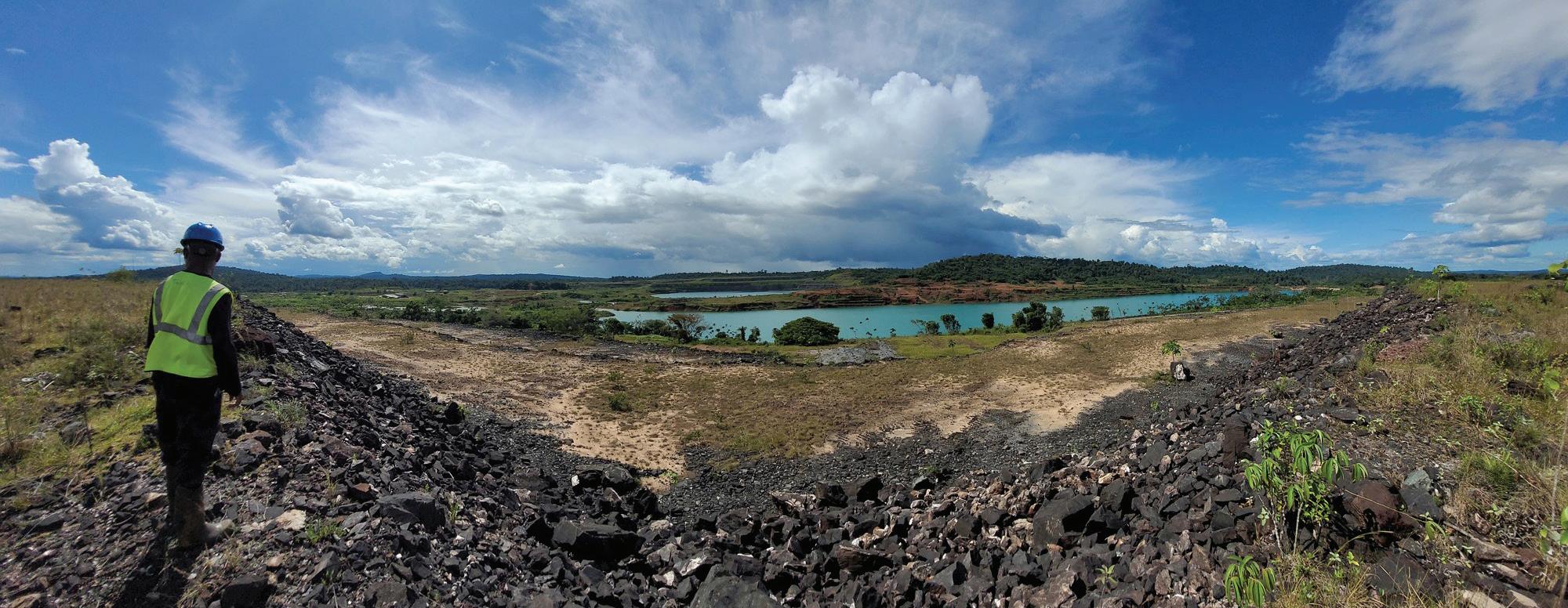
target is located immediately east of Gilt Creek, the Boneyard target lies several hundred metres north of the Wenot shear corridor and the Pyramid target is 2 km east of the Wenot pit.
Following 16,650 metres of drilling in 2021 and 2022, the company released a resource estimate last October. Omai now holds 1.9 million oz. gold in the indicated category in 28.7 million tonnes grading 2.05 grams gold per tonne. Another 1.8 million inferred oz. is in 26.3 million tonnes grading 2.1 grams gold. Assay highlights from the 2022 drill program included 5.01 grams gold per tonne over 8.5 metres and 37.83 grams gold over 2 metres announced May 27. Drilling to date has established that the Wenot shear zone extends 900 metres west of the Wenot deposit and 400 metres to the east, resulting in an exploration target 2.7 km long, up to 300 metres wide and 450 metres deep.
Omai has an 18.6 sq.-km prospecting licence held by its subsidiary, Avalon Gold Exploration, and two mining permits totalling 6.1 sq. km for medium-scale operations held through a contractual agreement with a Guyanese company.
The property is located 165 km southwest of Georgetown and accessed via a road scheduled to be paved to within 10 km of the site by December 2024.
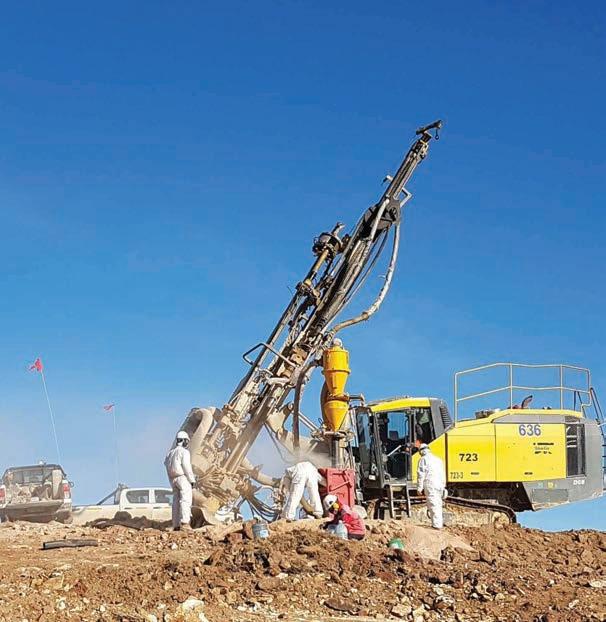
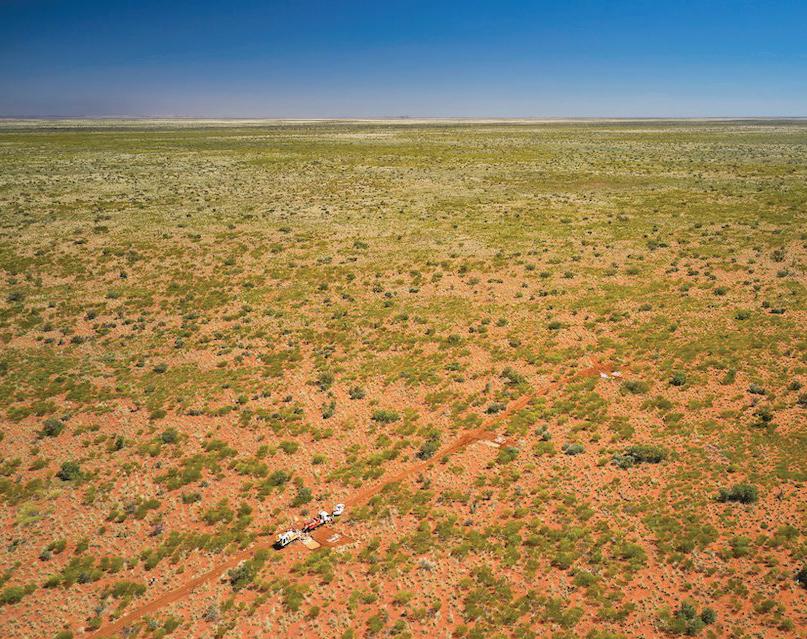
Toronto-based Omai Gold has a market capitalization of $26.4 million.
n NEVADA KING GOLD
Nevada King Gold (TSXV: NKG; US-OTC: NKGFF) has announced an expansion of its current phase two resource expansion and definition drilling program at its 51.6-sq.-km Atlanta Gold Mine project in Nevada’s prolific Battle Mountain Trend. The expansion of the phase two drill program to 30,000 metres is the result of encouraging assay results of 1.38 grams gold per tonne over 96 metres and 9.9 grams gold over 27.4 metres, including 17.6 grams
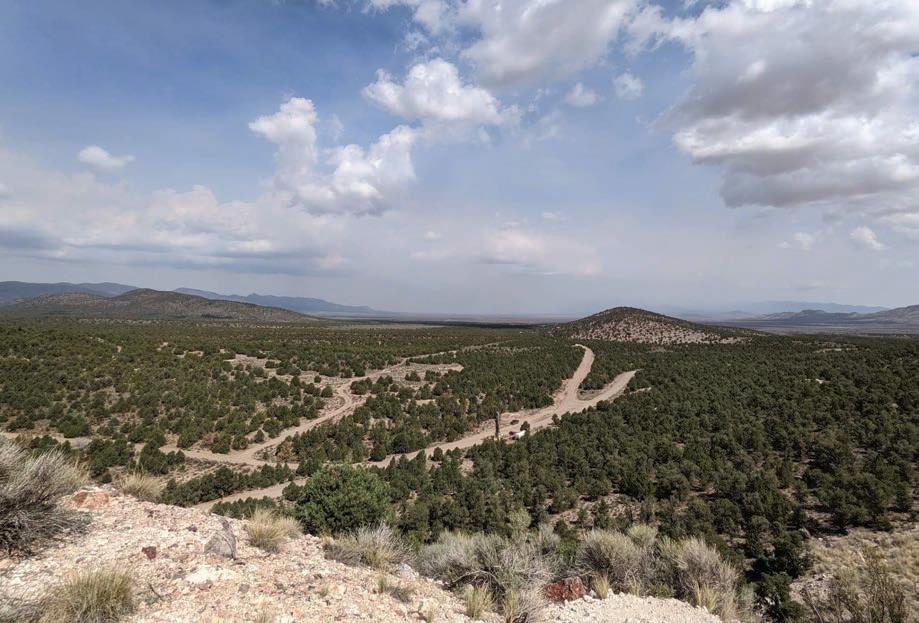
gold over 12.2 metres announced Jan. 17.
Nevada King’s100%-owned Atlanta Gold Mine project, located 100 km southeast of Ely and 264 km northeast of Las Vegas, produced 110,000 oz. of gold and 800,000 oz. of silver from 1.5 million tons of ore between 1975 and 1985. A 2020 resource estimate pegged measured and indicated resources at 11 million tonnes grading 1.3 grams gold per tonne for 460,000 ounces. Inferred resources add 5.3 million tonnes grading 0.83 gram gold for 142,000 ounces.
Nevada King began acquiring properties along the Battle Mountain Trend in 2016 and currently holds 10,315 lode claims covering 834.9 sq. km, making it the third largest mineral hard rock claim holder in the state of Nevada behind Kinross Gold (TSX: K; NYSE: KGC) and Nevada Gold Mines, a joint venture of Barrick Gold (TSX: ABX; NYSE: GOLD) and Newmont Gold (TSX: NGT; NYSE: NEM
The company has focused its efforts on developing district-sized projects close to current mines and resources and has acquired a majority of the ground it owns via staking to avoid underlying net smelter royalties, option payments and work
commitments. Approximately half of the company’s claims are located in the heart of the Battle Mountain Trend near the Cortez, Pipeline, Phoenix and Lone Tree Mines.
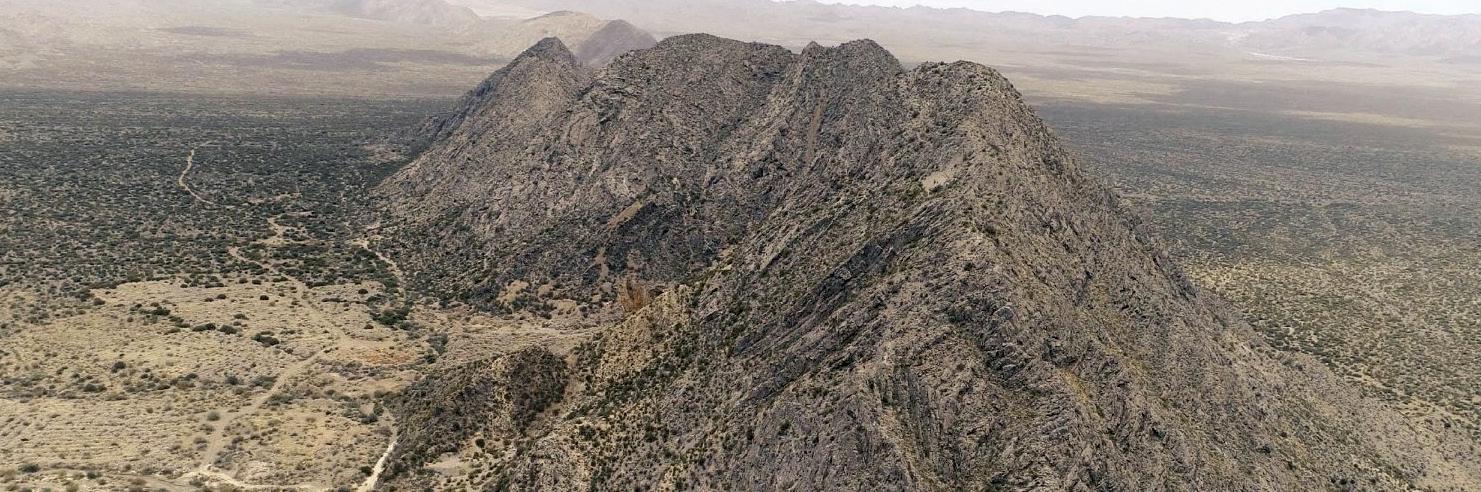
Nevada King’s extensive land holdings include the Lewis property adjacent to Nevada Gold Mines’ Hilltop deposit, the Horse Mountain-Mill Creek project adjoining a Nevada Gold Mines exploration project, and the Iron Point property at the intersection of the Battle Mountain-Cortez and Getchell-Twin Creeks gold trends. Nevada King Gold has a market capitalization of $101.7 million.
n PROBE GOLD
Probe Gold (TSX: PRB; US-OTC: PROBF) announced an updated resource for its Monique deposit, the company’s focus of interest at its Novador project in Quebec’s Val d’Or mining camp, in January. The project hosts 2 million oz. gold in the indicated category (41.8 million tonnes grading 1.52 grams gold per tonne) and 357,200 oz. inferred (2.4 million tonnes at 1.65 grams gold), combining both open pit and underground resources. The new estimate represents a 78% increase in total resources, a tripling of indicated ounces and the consolidation
of several mining areas into a single open pit.
The Monique property consists of 21 claims and one mining lease covering 5.5 sq. km in Louvicourt township, 25 km east of Val d’Or.
Two additional resource updates — for the company’s nearby Pascalis and Courvan deposits — are scheduled for release this spring.
Probe Gold, which graduated to the Toronto Stock Exchange Jan. 27, began assembling property in the Val d’Or camp in 2016, one year after the $526-million sale of predecessor company Probe Mines and its Borden Lake gold property near Chapleau, Ont., to Goldcorp (now part of Newmont [TSX: NMC; NYSE: NEM]). David Palmer, winner of the PDAC’s Bill Dennis Prospector of the Year Award for the Borden Lake discovery, served as president and CEO of Probe Mines and continues in that role with Probe Gold.
The company’s 436-sq.-km land package in the Val d’Or area represents one of the largest land holdings in the camp and includes three past producing mines. Probe completed 167,000 metres of drilling at its Novador project in 2022 and is currently conducting a 53,000metre resource expansion and exploration drill program.
A 2021 preliminary economic assessment for Novador reported an NPV of $598 million (at a 5% discount rate), an IRR of 32.8%, annual gold production of 207,000 oz. over a 12.5-year mine life and an initial capex of $353 million.
Probe is also exploring the earlystage, 777-sq.-km Detour Quebec project where it announced on Dec. 6, 2022 an unexpected discovery of a large copper-gold-silver-molybdenum mineralized system on the La Peltrie property optioned from Midland Exploration (TSXV: MD).
A 7,000-metre follow-up drill program at the site of the discovery is planned to start in June.
Probe Gold has a market capitalization of $234.3 million.
n SANU GOLD
Sanu Gold (CSE: SANU; US-OTC: SNGCF) has started a 25,000-metre
reverse-circulation drill program at its three projects in Guinea’s Siguiri Basin. The Vancouver-based company acquired a 51% interest in the Daina, Diguifara and Bantabaye gold exploration permits from its Guinean partner companies in September 2022 and has the right to acquire up to an 85% interest in the permits by funding a staged work program and completing a definitive feasibility study.
Of the total, 10,000 metres of drilling will focus on the Daina 2 Main Zone discovery where assay results from a 3,675-metre, 42-hole drill program last year included intersections of 5.48 grams gold per tonne over 15 metres and 4.75 grams gold over 21 metres. Exploration activity in 2022 also included property-wide termite mound sampling, geochemical analysis of rock chip samples and auger drilling on all three projects.
The Siguiri Basin is host to several established world-class gold mines and discoveries, including AngloGold Ashanti’s (NYSE: AU) Siguiri mine, which has been in operation for more than 20 years, and Predictive Discovery’s (ASX: PDI) multimillion-ounce Bankan gold project. Sanu Gold’s three exploration permits cover a 280-sq.-km area in the Siguiri Basin.
The 2023 exploration program will also include 10,000 metres of drilling on the company’s flagship Bantabaye project located on the western edge of the Siguiri Basin where it is targeting large, near-surface structurally hosted gold deposits identified in 2022 from bedrock samples grading up to 18.3 grams gold per tonne. The Bantabaye project covers an area of 100 sq. km approximately 50 km southwest of Nordgold Group’s Lefa gold mine, one of Guinea’s largest gold producers, and 90 km north of Predictive Discovery’s Bankan project.
Sanu has raised $9.6 million –$6.6 million prior to listing on the Canadian Securities Exchange in July 2022 and $3 million from a non-brokered private placement that closed in February.
Sanu Gold has a market capitalization of $15.3 million. TNM



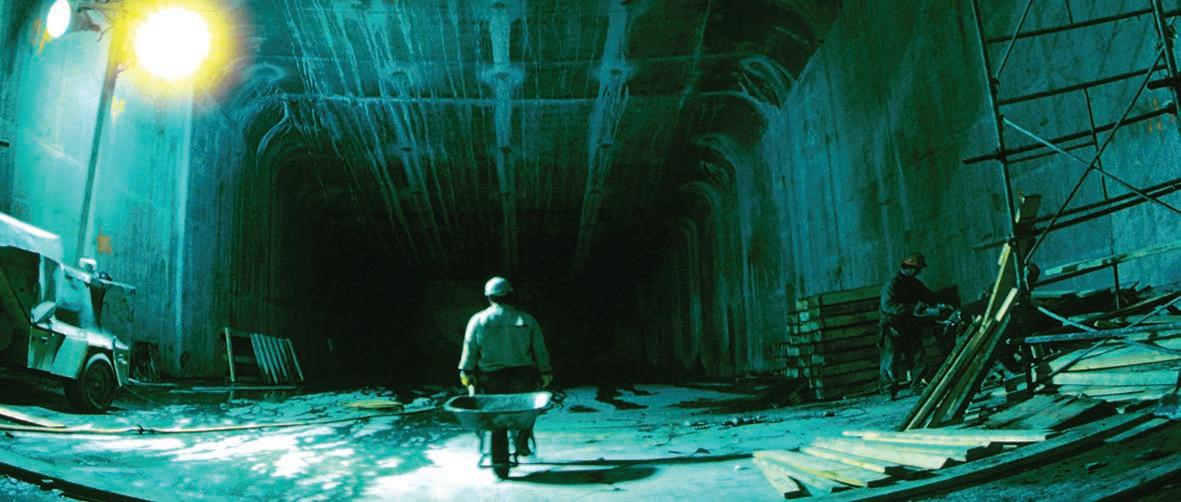





Stocks ended the Mar. 20-24 trading period with a modest gain as investors weighed the impact of the banking crisis in the United States while central banks appeared near the end of their interest rate hikes to calm inflation.
The S&P/TSX Composite Index added 113.77 points or 0.6% to 19,501.49. The S&P/ TSX Global Mining Index increased 2.12 points or 2% to 110.21, and the S&P/TSX Global Base Metals Index gained 4.87 points or 2.8% to 181.91. The S&P/TSX Global Gold Index rose 8.01 points or 2.7% to 306.23, and spot gold ended the week at US$31.70 per oz. higher, or 0.05%, at US$1,993.80 per ounce.
First Quantum Minerals was one of the stronger gainers by value during the period, adding $2.29 per share to close at $28.35. The miner said Mar. 17 it planned to redeem US$400 million in bonds a year early.
The move can be seen as a sign of financial strength just weeks after it said it had agreed with the government of Panama to keep the Cobre Panama copper mine operating following months of negotiations over taxes, labour and the environment.
Torex Gold Resources added $1.93 during the period to close at $22.24 per share.
The Toronto-based miner said Mar. 23 that its drill hole ML22-924D at the EPO deposit in Guerrero, Mexico cut 4.3 metres
grading 99.5 grams gold per tonne from 664.1 metres depth for one of the top gold assays of the week globally.
EPO lies north of the Media Luna deposit on the company’s Morelos property. Torex plans to start commercial production at Media Luna late next year.
“These drill results continue to demonstrate the underlying resource potential of the Morelos property and reinforce our positive outlook on our ability to complement future production from Media Luna,” Jody Kuzenko, president and CEO, said in the release.
Media Luna’s annual output over an 11.75year mine life is expected to be 280,000 oz. of gold, 34.8 million lb. of copper and 1.3 million oz. of silver. The company forecast its total gold production this year at 470,000 ounces.
The S&P/TSX Venture Composite Index rose 6.8 points or 1.1% over the Mar. 20-24 trading session, ending at 611.88.
The week’s top value gainer was Houston, Texas-based Itafos, which closed 50¢ per share higher on Friday at $2.15. The gain comes on the heels of a white-knuckle ride for shareholders over the past 12 months that saw Itafos share prices trading between $3.94$1.39 apiece. Shares are up 50% since the start of the year. Although it doubled its 2022 net income to US$114.7 million, the company announced on Mar. 13 it was considering strategic alternatives to enhance shareholder value. The company is backed by private capital fund Castlelake LP and has moved to strengthen its business over the past year. Measures have included work to extend the life of the Conda phosphate mine in Idaho, extending the maturity and reducing the cost of the company’s debt, improving its capital structure through deleveraging and strengthening the company’s management and board.
The week’s top trading issue was Vertical Exploration which saw 6.8 million shares change hands, closing 2¢ per share higher on Friday at 10¢. The company is prospecting on the Ménard–Péribonka (Ménard) wollastonite property in Quebec. Wollastonite is an indus-
trial mineral comprised of calcium, silicon and oxygen. The 20-sq.-km Ménard project is just north of Lac Saint-Jean in Saguenay. The company’s 2022 first-phase exploration program confirmed historical prospecting results and identified new wollastonite sites. It also established a wollastonite mega zone comprising 18 mineralized zones, of which 14 zones are in the northern block of the property. The company plans a follow-up program to better define the extent and thickness of the wollastonite zones.
The top value loser this week was Los Andes Copper, which closed 6% or 70¢ per share lower Friday at $11.30 amid a generally tepid market. Most recently, the company
The Dow Jones Industrial Average gained 604.76 points or 1.89% and the S&P 500 closed 72.15 points or 1.6% higher at 3,979.15 over the Mar. 20-24 trading week.
Mexico and Peru-focused Southern Copper led the miners in terms of value gainers, closing the week US$3.13 higher at US$71.24 per share. Despite a drop in 2022 production reported in its 2022 full-year results on Mar. 15, the company is anticipating low-cost production growth, backed by its substantial copper reserves. Southern Copper has introduced cost-control measures that should help offset the impact of inflated fuel, labour, and operating costs.
In 2022, the company registered a 6.6% year-over-year decline in copper production to 894,703 tons due to work stoppage at the Cuajone mine in Peru and lower ore grades. Molybdenum production was 13.3% down to 26,240 tons because of lower ore grades at the Toquepala mine, also in Peru. Zinc production was down 10.4% yearly to 60,010 tons due to lower production at the Charcas and Santa Barbara mines in Mexico. Mined silver production was 18.6 million oz., down 2.1% from last year.
The week’s top-traded issue was Vale, which saw 138.5 million shares change hands
to close US84¢ lower at US$14.95. The company’s stock has decreased 25% over the past 12 months. The Brazil-based mining major recently split its base metals unit from its predominantly iron ore business. It believes that doing so will allow it to capitalize on the electric vehicle transport transition opportunity better. “To be clear, Vale is not planning to sell the business,” Ontario operations head Gord Gilpin told the Sudbury Star on Mar. 24. “Vale views base metals as their main source of growth for the future. This forces us to be much more focused as a standalone business.”
South Africa’s Gold Fields was the biggest percentage gainer during the week, add-
First Majestic Silver lost 11% to close at $8.98 after it said Mar. 20 it was suspending operations and trimming staff at its Jerritt Canyon gold mine in Nevada.
The operation, which includes a processing plant, an open pit mine and an underground mine, has been hampered by severe cold weather, inflation and lower-than-expected grades. The combination helped
knock the company’s fourth-quarter production to 7.6 million oz. of silver-equivalent, a 14% drop compared with a year earlier.
Jerritt Canyon will continue to process some 45,000 tonnes of stockpiled ore during the downtime that may last a couple of months, the company said. The site had been expected to produce between 119,000133,000 oz. of gold this year. TNM
elected to settle interest payments totalling $140,721 on its US$14-million convertible debenture with Queen’s Road Capital by issuing 11,984 common shares at $11.76. The move follows the company’s Feb. 23 release of a prefeasibility study for its 100%-owned Vizcachitas project in Chile. The study highlighted a US$2.8-billion post-tax net pres-
ent value using an 8% discount rate and an internal rate of return of 24% for pre-production capex of US$2.4 billion. Located within the Andes Mountains in the province of San Felipe, about 150 km northeast of Santiago, the Vizcachitas project represents one of the largest porphyry deposits of its kind not controlled by a major in the Americas. TNM
ing 10.8% to close at US$12.80 per share.
On Mar. 16, the company and AngloGold Ashanti announced a proposed joint venture combining the Tarkwa and Iduapriem mine in Ghana to create Africa’s largest gold mine and one of the world’s most extensive open-pit gold operations. Once combined, the neighbouring mines are projected
to produce nearly 900,000 oz. gold annually during the first five years and, on average more than 600,000 oz. annually over an estimated 18-year-mine life. Gold Fields owns a 90% stake in Tarkwa, with the government of Ghana owning the remaining 10%, and AngloGold Ashanti owns 100% of the Iduapriem mine. TNM
Metal stocks (in tonnes) held in London Metal Exchange warehouses at opening on Feb. 23, 2023 (change from February 16, 2023 in brackets):
Aluminum Alloy 1920 (0)
568,800 (-23,150)
Coal: Central Appalachia, 12,500 Btu, 1.2 S02-R,W: US$88.80
Coal: Powder River Basin, 8,800 Btu, 0.8 S02-R, W: US$14.95
Cobalt: US$15.20/lb. Copper: US$4.04/lb. Copper: CME Group Futures April 2023: US$4.07/lb.; May 2023: US$4.07/lb.
Iridium: NY Dealer Mid-mkt US$4,600/tr oz.
Iron Ore 62% Fe CFR China-S: US$121.10
Lead: US$0.97/lb.
Alio Gold Inc. (ALO.WT) - 10 Warrants to purchase one common share of the Issuer at $7.00 until expiry
Alio Gold Inc. J (ALO.WT.A) - One Warrant to purchase one common share of the Issuer at $8.00 until expiry
Aris Gold Corporation (ARIS.WT) - One Warrant to purchase one Common Share of the Issuer at $2.75 until expiry.
Aris Gold Corporation (ARIS.WT.A) - One
Warrant to purchase 0.5 of one Common Share of the Issuer at $2.75 until expiry
Aris Gold Corporation (ARIS.WT.B) - One Warrant to purchase of one Common Share of the Issuer at $2.21 until expiry
eCobalt Solutions Inc. J (ECS.WT) - One Warrant to purchase one common share of the Issuer at US$1.95 per share until expiry
Excellon Resources Inc (EXN.WT.A) - One warrant to purchase one common share of the Issuer at $2.80 until expiry
Excellon Resources Inc. (EXN.WT) - One Warrant to purchase one common share of the issuer at $1.40 per share until expiry
Excelsior Mining Corp. (MIN.WT) - One Warrant to purchase one Common Share of the Issuer at $1.25 until expiry.
ABE Resources Inc. (ABE.WT) - One warrant to purchase one common share at $0.15 per share.
Alpha Lithium Corporation (ALLI.WT) - One warrant to purchase one common share at $1.10 per share.
Alpha Lithium Corporation (ALLI.WT) - One warrant to purchase one common share at $1.10 per share.
American Cumo Mining Corp. (MLY.RT)2 rights and $0.07 are required to purchase one share
American Lithium Corp. (LI.WT) - One warrant to purchase one common share at $0.30 per share.
Antioquia Gold Inc. (AGD.RT) - One (1)
Right and $0.042 are required to purchase one share.
Aurania Resources Ltd. (ARU.RT) - Fourteen (14) Rights exercisable for one common share at $2.70 per common share.
Aurania Resources Ltd. (ARU.WT) - One warrant to purchase one common share at $5.50 per share.
Aurania Resources Ltd. (ARU.WT.A) - One warrant to purchase one common share at $4.25 per share.
Aurania Resources Ltd. (ARU.WT.B) - One warrant to purchase one common share at $2.20 per share.
Avidian Gold Corp. (AVG.RT) - Three rights and $0.11 are required to purchase one Share.
Boreal Metals Corp. (BMX.WT) - One warrant to purchase one common share at $0.50 per share.
Boreal Metals Corp. (BMX.WT) - One warrant to purchase one common share at $0.30 per share.
Cabral Gold Inc. (CBR.WT) - One warrant to purchase one common share at $0.80 per share.
Caldas Gold Corp. (CGC.WT) - One warrant to purchase one common share at $2.75 per share.
Cascadero Copper Corporation (CCD.RT)
- One right and $0.015 are required to purchase one Share.
Cordoba Minerals Corp (CDB.WT) - One warrant to purchase one common share at $1.08 per share.
Cordoba Minerals Corp (CDB.WT) - One warrant to purchase one common share at $1.08 per share.
Cordoba Minerals Corp. (CDB.RT) - One (1)
Right exercisable for One (1) Rights Share at $0.05 per Share.
Cordoba Minerals Corp. (CDB.RT) - One right to purchase one common share at $0.54 per share.
Denarius Silver Corp. (DSLV.WT) - One warrant to purchase one common share at $0.80 per share.
Elevation Gold Mining Corporation (ELVT. WT) - One warrant to purchase one common share at $4.80 per share.
Elevation Gold Mining Corporation (ELVT.
WT.A) - One warrant to purchase one common share at $0.70 per share.
Empress Royalty Corp. (EMPR.WT) - One warrant to purchase one common share at
TSX WARRANTS
Gran Colombia Gold (GCM.WT.B) - One warrant to purchase one common share of the Issuer at $2.21 until expiry.
Karora Resources Inc. (KRR.WT) - One
Warrant to purchase one common share of the Issuer at $0.50 until expiry.
Liberty Gold Corp. Wt (LGD.WT) - One Warrant to purchase one common share of the Issuer at $0.90 until expiry may 16, 2019
Lithium Americas Corp (LAC.WT) - One
Warrant to purchase one common share of the Issuer at $0.90 until expiry
Lydian International Limited (LYD.WT)One Warrant to purchase one additional ordinary share of the Issuer at $0.36 per share until expiry
Nevada Copper Corp. (NCU.WT) - One Warrant to purchase one common share of the Issuer at $0.20 until expiry
Nevada Copper Corp. (NCU.WT.A) - One
Warrant to purchase one common share of the Issuer at $0.22 until expiry
Nomad Royalty Company Ltd. (NSR.WT)One Warrant to purchase one common share of the Issuer at $1.71 until expiry.
Novo Resources Corp. (NOVO.WT.A) - One Warrant to purchase one common share of
TSX VENTURE WARRANTS
$0.75 per share.
Equinox Gold Corp (EQX.WT) - One warrant to purchase one common share at $3.00 per share.
Eros Resources Corp. (ERC.WT) - One (1) Right exercisable for (1) Unit at $0.05 per Unit.
Falco Resources Ltd. (FPC.WT) - One warrant to purchase one common share at $1.70 per share.
Firefox Gold Corp. (FFOX.WT) - One warrant to purchase one common share at $0.60 per share.
Firefox Gold Corp. (FFOX.WT) - One warrant to purchase one common share at $3.00 per share.
Freeman Gold Corp (FMAN.WT.U) - One warrant to purchase one common share at US$0.65 per share.
Giga Metals Corporation (GIGA.WT) - One warrant to purchase one common share at $0.60 per share.
Giga Metals Corporation (GIGA.WT.A)One warrant to purchase one common share at $0.45 per share.
Giyani Metals Corp. (EMM.WT) - One warrant to purchase one common share at $0.60 per share.
Goldstar Minerals (GDM.RT) - One Right to purchase one common share at $0.03 per share.
Goldstar Minerals Inc. (GDM.RT) - One (1) Right and $0.05 are required to purchase one common share.
Hot Chili Limited (HCH.WT) - One warrant to purchase one common share at $2.50 per share.
Kaizen Discovery Inc. (KZD.RT) - One warrant to purchase one common share at $0.51 per share.
LaSalle Exploration Corp. (LSX.WT) - One warrant to purchase one common share at $0.15 per share.
Lion One Metals Limited (LIO.WT) - One warrant to purchase one common share at $2.75 per share.
LithiumBank Resources Corp. (LBNK.WT) -
One warrant to purchase one common share at $2.00 per share.
LSC Lithium Corporation (LSC.RT) - One (1) right exercisable for One (1) Unit at $0.40 per Unit.
Mako Mining Corp. (MKO.RT) - Rights exercisable for One (1) share at $0.10 per share. Mako Mining Corp. (MKO.WT.A) - One warrant to purchase one common share at $0.60 per share.
Manganese X Energy Corp. (MN.WT) - One warrant to purchase one common share at $0.15 per share.
Maple Gold Mines Ltd. (MGM.WT) - One warrant to purchase one common share at $0.40 per share
Maple Gold Mines Ltd. (MGM.WT) - One warrant to purchase one common share at $0.40 per share
Mexican Gold Corp. (MEX.WT) - One warrant to purchase one common share at $0.12 per share.
Millennial Lithium Corp. (ML.WT) - One
the Issuer at $3.00 until expiry.
Novo Resources Corp. (NVO.WT.A) - One Warrant to purchase one common share of the Issuer at $3.00 until expiry.
Platinum Group Metals Ltd. (PTM.WT.U)One Warrant to purchase one common share of the Issuer at US$0.17 until expiry
Royal Nickel Corporation (RNX.WT) - One Warrant to purchase one common share of the Issuer at $0.50 until expiry.
Sandstorm Gold (SSL.WT.B) - One Warrant to purchase one common share of the Issuer at US $14.00 until expiry.
Sherritt International Corporation (S.WT) -
Each whole Warrant entitles the holder to acquire between 1.00 and 1.25 additional common shares (as bulletin 2018-0062 table ) determined based on the Applicable Reference Cobalt Price at an exercise price of $1.95 per Warrant at any time prior to the
Expiry Date
Treasury Metals Inc. Wt (TML.WT) - One Warrant to purchase one common share of the Issuer at $1.50 until expiry.
Trevali Mining Corporation (TV.WT) - One Warrant to purchase one common share of the Issuer at $0.23 until expiry.
warrant to purchase one common share at $4.25 per share.
Millennial Lithium Corp. (ML.WT) - One right to purchase one common share at $4.80 per share.
Millennial Precious Metals Corp. (MPM. WT) - One warrant to purchase one common share at $0.50 per share.
Mineworx Technologies Ltd. (MWX.RT)For every one (1) Share held, Shareholders will receive one (1) Right exercisable for One (1) Share at $0.015 per Share.
Mineworx Technologies Ltd. (MWX.RT)One right to purchase one common share at $0.015 per share. Northern Vertex Mining Corp. (NEE.WT)One warrant to purchase one common share at $0.80 per share.
Novo Resources Corp. (NVO.WT) - One warrant to purchase one common share at $4.40 per share.
Orezone Gold Corporation (ORE.WT) - One warrant to purchase one common share at $0.80 per share.
Orezone Gold Corporation (ORE.WT) - One warrant to purchase one common share at $0.80 per share.
Osisko Development Corp. (ODV.WT) - One warrant to purchase one common share at $10.00 per share.
Rock Tech Lithium Inc. (RCK.WT) - One warrant to purchase one common share at $4.50 per share.
Sandfire Resources America Inc. (SFR.RT) - Forty one (41) Rights exercisable for One (1) Share at $0.15 per Share.
Sandfire Resources America Inc. (SFR. RT) - Eight (8) Rights exercisable for One (1) share at $0.06 per unit.
Silver Mountain Resources Inc. (AGMR. WT) - One warrant to purchase one common share at $0.70 per share.
Silver Mountain Resources Inc. (AGMR. WT.A) - One warrant to purchase one common share at $0.45 per share.
Star Royalties Ltd. (STRR.WT) - One warrant to purchase one common share at $1.00 per share.
Three Valley Copper Corp. (TVC.WT) - 20 warrants to purchase one Class A common share at $6.66 per share.
Tintina Resources Inc. (TAU.RT) - Nine(9) Rights exercisable for one share at $0.06 per share.
Ucore Rare Metals Inc. (UCU.RT) - One (1) right exercisable for one share at $4.00 per share.
Vision Lithium Inc. (VLI.WT) - One warrant to purchase one common share at $0.15 per share.
Vizsla Silver Corp. (VZLA.WT) - One warrant to purchase one common share at $3.25 per share. Westhaven Gold Corp. (WHN.WT) - One warrant to purchase one common share at $1.00 per share.
Yellowhead Mining Inc. (YMI.RT) - One (1) Right and $0.12 are required to prchase one Share
The Northern Miner’s Mines Handbook has been your trusted source for property, company and personnel data about North American listed companies for over 80 years. With TNM Marco Polo you can now get access to all these data points and more for all globally listed companies in a modern interface that’s faster and easier to use than ever.
2,500+ COMPANIES

12,900+ PROPERTIES
16,000+ EXECUTIVES