Soaring fuel and chemicals prices triggered by the war in the Middle East are pushing global miners to dig deep for creative solutions.
Take the case of Marimaca Copper (TSX: MARI, ASX: MC2), which moved swiftly to protect its $587-million (C$810-million) namesake project in Chile from a volatile sulphuric acid market.
After China’s acid shipments to Chile fell to zero in March, Marimaca signed an accord with a large producer in Mejillones, a port about 25 km from the project, to study refurbishing and relocating an acid plant it had already bought at a distressed sale for $2.5 million.
CEO Hayden Locke estimates a new acid plant could cost as much as $35 million for the equipment alone—and up to twice as much for a full installation.
“We were thinking about this more as business resiliency,” Locke told The Northern Miner last month. “We don’t need it, but it certainly really strengthens our business case.”
Soaring prices
Fuel, sulphuric acid, petrochemicals and explosives are just some of the cost items essential to mining that have seen their price soar since the United States and Israel began bombing Iran Feb. 28, culminating in a near-total closure of the Strait of Hormuz.
Freight costs too have jumped, with the Containerized Freight Index—which reflects the weekly cost of shipping containers from Shanghai to major global ports— gaining about 70% over the period, data compiled by Trading Economics show.
Crude oil prices shot up after the airstrikes on Iran ignited fears of broad supply disruptions, with Brent crude briefly reaching about $126 per barrel in late April before retreating to about $101 as press time neared. Diesel prices in key regions have surged 70% to 120% since the conflict began, surpassing spikes seen at the start of the Russia-Ukraine war, BMO Capital Markets said May 13 in a note.
Oil at $100 per barrel has triggered diesel cost increases for miners ranging from 3% to 15%, according to BMO. Until the conflict broke out, diesel typically
Who’s buying Eagle in Yukon? |
How to dodge the Iran war
MINING | Miners scramble as fuel, acid prices jump
“We’ve been very consistently hedging around our cost structure.”
J. PAUL ROLLINSON CEO, KINROSS GOLD
accounted for between 5% and 15% of global miners’ direct operating costs, mining analyst Helen Amos and her colleagues wrote.
Hedge books
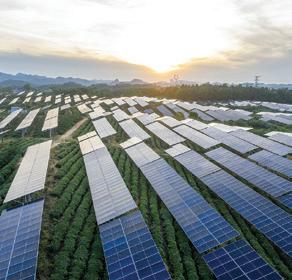
Kinross Gold (TSX: K; NYSE: KGC) CEO J. Paul Rollinson said three factors shielded the company from the worst of the surprise war and blockade—hedging, a hydro-electric plant in Brazil to curb spending on diesel and a 34 MW solar plant at Tasiast in Mauritania that saves 2 million litres of fuel a year.
“We have typically hedged in the year ahead 50% of our oil exposure but we are actually two-thirds hedged in the low $60s for this year,” Rollinson said in an interview at the company’s Toronto office. “We’re in a pretty good spot as it relates to oil price exposure right now.”
Most miners don’t run large, long-term, systematic hedge books like Kinross—which acts more like an airline, with tapering hedge coverage dropping to around 40% next year while the company continues to layer in additional hedges further
out to capture attractive forward oil prices.
“We’ve been very consistently hedging around our cost structure, not to play the stock market, but strictly for risk mitigation,” the CEO said. “I’m not sure everyone even hedges.”
Increased electrification is also part of the strategy at Kinross, Canada’s third-largest gold miner by output. Rollinson says he’s keen to expand an electric vehicle fleet from Tasiast, perhaps to the La Coipa mine and Lobo-Marte project in Chile’s Atacama high desert.
“Our energy [there] is sourced primarily from a renewable grid,” he said. “I’d love to be doing more right now, but we’re taking a look, definitely taking a look.”
Top input
Diesel is the single most important energy input in the global mining industry. Australia, South Africa and Brazil top the global list of importers, according to BMO data.
U.S. copper miner FreeportMcMoran (NYSE: FCX), which operates the massive Grasberg
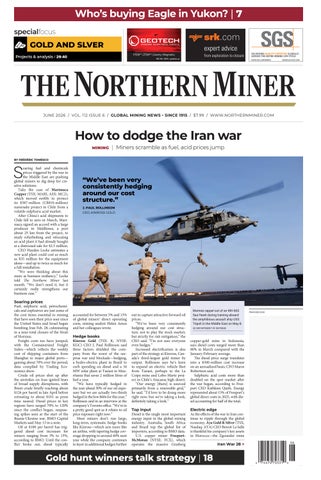
Marines rappel out of an MH-60S Sea Hawk during training aboard the amphibious assault ship USS Tripoli in the Middle East on May 8. US DEPARTMENT OF DEFENSE
copper-gold mine in Indonesia, says diesel costs surged more than 80% in March compared with the January-February average.
The diesel price surge translates into a $500-million cost increase on an annualized basis, CFO Maree Robertson said.
Sulphuric acid costs more than doubled on the spot market after the war began, according to Freeport CEO Kathleen Quirk. Energy represented about 15% of Freeport’s global direct costs in 2025, with diesel accounting for half of the total.
Electric edge
As the effects of the war in Iran continue to ripple through the global economy, Aya Gold & Silver (TSX, Nasdaq: AYA) CEO Benoit La Salle is thankful his company’s key assets in Morocco—the Zgounder mine
Iran War 28 >
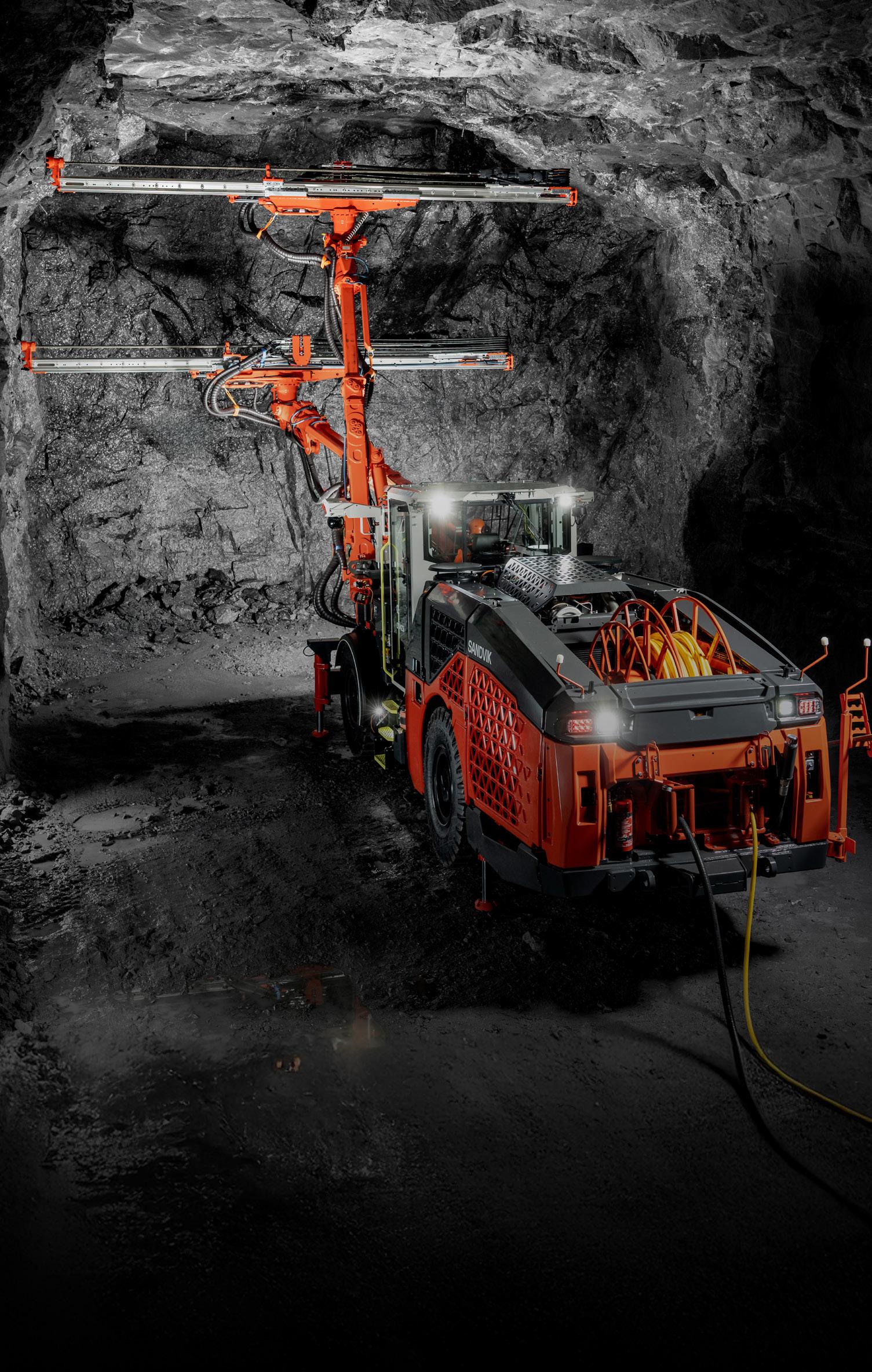
Sandvik DD423i
This highly intelligent drill offers more versatility thanks to its new boom design increasing both the face coverage and crosscut drilling. It can drill face sizes from 4 to 7.8 meters.
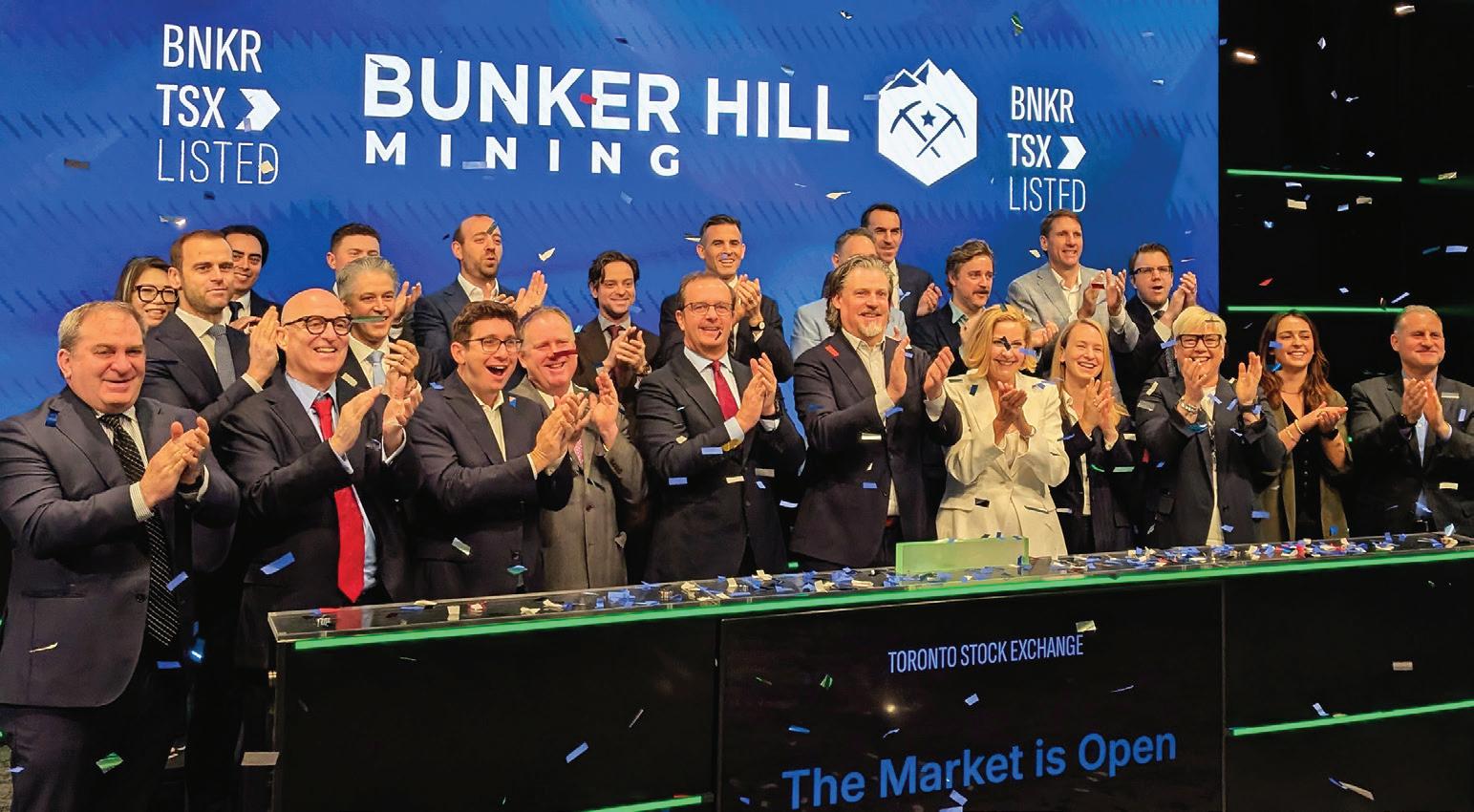
Celebrating Bunker Hill Mining’s graduation to the TSX Main board on May 15 at the TMX Group’s Market Centre in Toronto. With its Idaho zinc-silver-lead mine expected to restart this month and recent drills intersecting high-grade silver, the company opening the market was a positive milestone on its path towards becoming a mid-tier silver and critical metals producer.
CREDIT: ANTHONY VACCARO
Op-Ed
Infographic Gold at highs, discoveries at lows
n Agnico spends
Agnico Eagle Mines plans to invest up to $14 billion (US$10 billion) in Ontario by 2030 while proceeding with the construction of a $3.3-billion underground mine in Nunavut.
Ontario said the spending package would support mine expansions, new project development and exploration across Agnico’s portfolio in the province, including operations such as Detour Lake. The investment aligns with the province’s push to streamline permitting and attract additional capital to the mining sector.
News of the investments comes as Toronto-based Agnico works to boost gold output by 20% to 30% over the next decade.
Separately, Agnico approved construction of the Hope Bay underground gold mine in Nunavut, with commercial production targeted as early as 2030. The company expects the operation to produce 400,000 to 435,000 oz. gold annually over an initial 11-year mine life.
Hope Bay, acquired through Agnico’s takeover of China’s TMAC Resources, sits along an 80-km greenstone belt containing the Doris, Madrid and Boston deposits. Initial capital costs include underground development, infrastructure reconstruction and a new power plant.
n Diamond doldrums
Arctic Canadian Diamond, owner of the Ekati mine in the Northwest Territories, obtained creditor protection under Canadian law as weak diamond prices, rising fuel costs and competition from synthetic stones pressure the sector.
inbrief
Parent company Burgundy Diamond Mines said Ekati will continue operating while it restructures and negotiates with lenders and creditors.
The filing deepens uncertainty for Canada’s northern diamond industry following the closure of Rio Tinto’s Diavik mine this year and the approaching end of mine life at Gahcho Kué.
Ekati, Canada’s first diamond mine, began production in 1998 and has been one of the territory’s largest employers.
n Codelco audit
Chile’s state-owned copper miner Codelco fired an executive and disciplined several others after an internal audit found the company improperly reported nearly 27,000 tonnes of partially processed ore as finished copper production in 2025.
The revision implies that output in 2025 fell to its lowest level since 1998, undermining claims of an operational rebound.
The audit found eight executives – including one who’d left – were responsible for bypassing approval procedures tied to production reporting and incentive calculations. Codelco said the issue would not require changes to its audited financial statements, though production figures and bonuses will be revised.
n Barrick buyback
Barrick Mining kicked off a $3-billion share buyback program as the gold producer advances plans to spin off its North
American assets into a separately listed company this year.
The move follows strong cash flow generated from record gold prices and is aimed at boosting shareholder returns ahead of the planned initial public offering.
The proposed “North American Barrick” would include the Nevada Gold Mines joint venture, the Fourmile discovery and Pueblo Viejo in the Dominican Republic. The new entity is expected to list primarily in New York with a secondary Toronto listing, Barrick said.
n Plant iced
Japanese carmaker Honda indefinitely suspended its planned $15-billion electric vehicle and battery complex in Ontario amid weakening EV demand, mounting losses and rising trade uncertainty tied to U.S. tariffs.
The decision delays a key project backed by federal and provincial governments, which had pledged roughly $5 billion in support.
The project included a retooled assembly plant in Alliston, Ont., a battery factory and two battery material facilities expected to anchor Canada’s EV supply chain. Honda said it remains committed to its existing Canadian operations and workforce while it reassesses market conditions and the pace of EV adoption.
GLOBAL MINING NEWS • SINCE 1915 www.northernminer.com
PRESIDENT THE NORTHERN MINER GROUP: Anthony Vaccaro, CFA, MBA avaccaro@northernminer.com
EDITOR-IN-CHIEF: Colin McClelland cmcclelland@northernminer.com
COPY EDITOR AND PRODUCTION EDITOR: Blair McBride bmcbride@northernminer.com
69 Yonge St, Toronto, ON M5E 1K3 (416) 510-6789 tnm@northernminer.com
SUBSCRIPTION RATES: Canada:
C$130.00 one year; 5% G.S.T. to CDN orders.
7% P.S.T. to BC orders
13% H.S.T. to ON, NL orders
14%
U.S.A.: C$172.00 one year Foreign: C$222.00 one year GST Registration # 809744071RT001 (ISSN 0029-3164)
EDITORIAL
opinion
Unusual times
BY COLIN McCLELLAND
In our annual gold and silver edition here, we’ve started on page one with a look at the Iran war’s impact on mining costs. In a different, somewhat surprising offshoot, the conflict is wounding the gold industry in India, which vies with China to be the world’s largest buyer of the yellow metal for jewelry.
Prime Minister Narendra Modi has asked Indians to stop buying gold jewelry for a year in a bid to protect foreign-exchange reserves needed to buy oil for a country where imports account for 90% of consumption.
Modi has also more than doubled import duties on the yellow metal to 15% up from 6%, and limited amounts in a special authorization regime to 100 kilograms. As well, the government is binding new applicants in additional red tape.
India accounts for an outsized share of global physical gold demand, and the metal is its largest import after oil due to its major role in weddings and festivals. Jewelry consumption reached about 440 tonnes in 2025, roughly a third of global jewelry demand and about 9% of total gold demand, according to BMO Capital Markets. Bar and coin demand added another 280 tonnes.
‘Unusual’
The prime minister’s call “is quite an unusual move, given gold in India is of utmost cultural significance, with Modi appealing that ‘for a year, be it any function, we shouldn’t buy gold jewelry’,” BMO commodities analysts Helen Amos and George Heppel said in a note.
“While enforcement remains an open question, it raises the question of whether the recent administrative bottlenecks in approving import licences to Indian banks may be related to this.”
The policy is ultimately aimed at supporting the rupee, which sank to a record low of more than 96 to the dollar in May, by targeting two of India’s biggest external pressures on forex at once. By reducing gold imports, authorities are seeking to ease strain on reserves as higher oil prices driven by the Middle East war widen the trade deficit and weaken the currency.
This is less a gold policy than a currency defence measure dressed in cultural restraint.
A quick resolution to the conflict appears unlikely, and even if tensions ease, disruptions to Middle East energy flows could take months to unwind.
The Indian state-owned gas stations that had been absorbing the higher cost of inputs after the war started finally began raising prices in mid-May. To conserve fuel, Modi urged Indians to curb flying and work from home.
He traveled to the United Arab Emirates to secure energy supplies and build strategic reserves. New Delhi in May hosted two conferences: the 11-nation BRICS, where it could push using rupees to buy oil instead of the dollar, as well as the so-called Quad alliance of the U.S., Australia and Japan, where it could entice foreign capital investment.
Demand source
India’s gold policy matters beyond its borders because even a partial reduction in buying would soften one of the world’s most reliable sources of physical demand. It could ease pressure on supply chains and reshape bullion flows.
A drop in Indian buying would likely lower local premiums and might limit gains in global gold prices, The Wall St. Journal said in May. India tends to act as a price-sensitive buyer, stepping in when prices dip and retreating when they rise, so a policy-driven absence removes a key stabilizing force in the market.
Still, broader price direction would continue to be driven by macro factors including U.S. interest rates, geopolitical risk and central bank activity.
A prolonged slowdown in Indian demand would redirect metal into storage rather than fabrication, reinforcing rising inventories in London vaults that are also partly tied to increased U.S. exports and some central bank selling, BMO said.
The most immediate impact is likely to be felt in the domestic jewelry sector. Shares of major Indian retailers fell sharply following Modi’s announcement, reflecting expectations of weaker sales volumes, the Journal reported.
However, some of that demand could be deferred rather than lost, particularly for purchases tied to weddings and festivals, and enforcement remains uncertain.
Embedded
Gold buying in India is deeply embedded culturally and has historically shifted into informal channels when restrictions are introduced. Previous efforts to curb imports have led to increased recycling and smuggling rather than a clean drop in consumption, which would blunt the global impact.
Smugglers now can earn a record 3 million rupees (US$31,350) per kg (35.3 oz.), Reuters reported from Mumbai.
In any case, a Gulf war jolting India’s gold demand shows how tightly commodities are now linked. Oil shocks ripple into currencies, bullion flows and even jewelry buying. For miners and investors, it’s a reminder that geopolitics is increasingly shaping metals markets in ways fundamentals alone no longer explain. TNM
Gold’s red line offers a long-term entry
BY JAMES COOPER
On Friday, Jan. 30, 2026, global precious metals markets experienced one of their most dramatic sell-offs in decades.
Gold prices went from setting all-time new highs earlier in the week to suffering one of their biggest one-day percentage drops ever recorded. Silver posted its steepest single-session decline since 1980.
The shock resonated through the bones of precious metal investors as they watched, in horror, billions of dollars wiped off the valuation of metals and mining stocks. Few appreciate how voluminous this move was, in part because gold and silver had already posted significant gains in the weeks prior.
In many ways, Jan. 30, 2026, was the black Friday for precious metal markets and a day that will go down in investor folklore.
However, that day did not mark the bottom of the gold correction. That came several weeks later, as war suddenly erupted in Iran, putting an end to the unchecked speculation in the precious metals market.
The March bottom and war sell-off would mark the ultimate low in the precious metals market, with gold briefly dipping below $4,500 per ounce. Gold’s line in the sand has been observed.
Will it hold?
Earlier in the year, the fear of missing out progressed rapidly into the fear of not being able to cash out. A miner from the early 1900s would have felt right at home in the wild precious metals markets of 2026.
Unrestrained volatility is a hallmark of this market, rooted in some of the world’s most infamous metal rushes, such as the Klondike Gold Rush of the late 1890s.
Yet, since those March lows, conditions in the precious metals market have stabilized. Trading volumes have dropped and daily price fluctuations have moderated. Thankfully, for those longterm investors, gold is gradually returning to its traditional role as a portfolio ballast. Gold’s inertia has equilibrated.
And today, it’s arguably in a much stronger position versus the hyperbolic pre-war phase, when gold traded as high as $5,400–$5,500 per ounce. The war in Iran served an important purpose; chiefly, it shook out the weaker hands in this market, thanks to a testy 20% freefall in the spot price over March.
Today, gold trades within a tight range and is showing every sign of consolidating above this important March low.
From a technical perspective, gold is holding firm, displaying resilience after its first major test in its current secular bull market.
Again, that should be a point of optimism for gold investors, buoyed by the fact that unsustainable speculation has truly departed.
The geopolitical asset But in terms of gold’s role as a geopolitical hedge, it has failed in its role miserably. Various excuses have been presented on behalf of gold, such as the need for liquidity and the fact that gold was an easy choice given that investors were sitting on strong paper profits. Perhaps. But I don’t buy it. Gold’s role as a geopolitical hedge has always been murky; war is not gold’s stated purpose.
Some historical takeaways: The Yom Kippur War of the 1970s. Back then, gold surged almost 35% in the three months following the conflict’s kick-off. And it then swelled by almost 70% 12 months after the war.
Clearly, that’s strong correlative evidence of gold’s safe-haven status? The Yom Kippur War has often been cited as a reason to own gold.
The same could be said for gold’s stellar performance following the 2003 Iraq War. That catalyzed a major gold rally, with gold rising 12% over the 12 months following the start of that conflict.
But was it war that supported higher gold prices, or was it the backdrop that underpinned strong commodity prices throughout the 1970s and early 2000s?
Well, to answer that, we could turn to another conflict in the Middle East, one that didn’t coincide with a decade of strong commodity price inflation. Say, the Gulf War of 1990.
In that instance, gold prices remained dull three months out from the war. And they remained flat six months out, and 12 months after the conflict began.
In other words, when gold wasn’t in a commodity price inflation era, war had little impact on pushing prices higher.
Gold’s role as a safe-haven asset clearly has some cracks. And the evidence was there well before the war in Iran.
The 1970s were a decade marked by higher gold prices, and the Yom Kippur War was just one of many factors that supported this investment class.
Bottom line: don’t put too much weight on what’s happening in Iran and the future trajectory of gold prices. Keep them separate.
Gold’s real barometer Governments are divided on a lot of issues, but destroying the collective value of their currencies isn’t one of them. Sovereign debt, reckless fiscal spending, falling tax receipts, and unchecked war budgets; all these issues will be offset by their weakening currencies. And it’s why gold remains a ‘buy-the-dip’ asset class. TNM
James Cooper is a geologist based in Australia who runs the commodities investment service Diggers and Drillers. You can also follow him on X @JCooperGeo
Q&A with SRK
SRK’s Christina James on water, risk and regulation
BY NORTHERN MINER STAFF
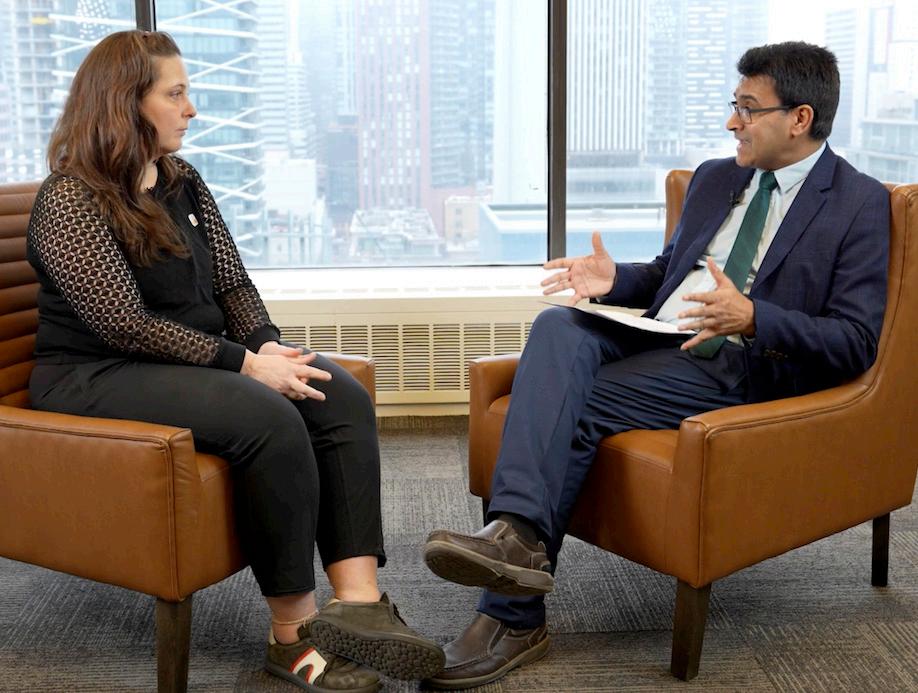
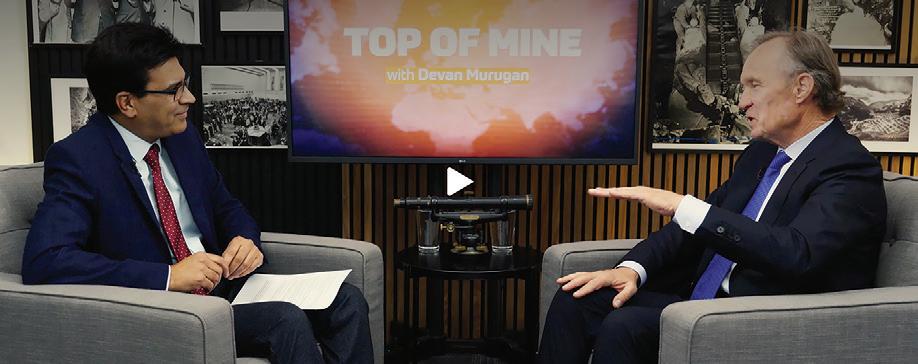
The Northern Miner’s video host Devan Murugan spoke with Christina James, president of SRK Canada and principal water resources engineer, at SRK’s Toronto office about water balances, regulation, independence and how the firm is approaching AI.
Devan Murugan: SRK has built a strong reputation in water management and modelling. For someone outside the technical side, what is a water balance and why does it matter?
Christina James: A water balance is an accounting of how water moves through and is stored at a mine site. It looks at where water comes from, whether from precipitation or groundwater and how the operation uses it. At many sites, water supply and demand do not line up. There can be too much water at one point and too little at another, whether for processing or other uses. A water balance helps identify those gaps so operators can manage excess water safely and make sure they have enough supply when they need it.
DM: Mining companies are facing more scrutiny around water from regulators, investors and communities. How has that changed SRK’s work?
CJ: The scrutiny is definitely rising and we see it in permitting timelines and in how communities view a project’s potential effects. But it has not changed the core of our work. We have always taken mine water management seriously and done detailed studies. What has changed is the context. Water is now part of a broader set of environmental concerns. Climate change, tailings dam safety and biodiversity are more closely tied to water management, so the pressure around water is part of a much wider set of expectations.
DM: When a mining company approaches SRK, what does that engagement usually look like?
CJ: It depends on what the client needs, but we spend a lot of time upfront defining the problem. Clients often come to us with complex, crossdisciplinary challenges that are not straightforward. Sometimes the answer is a conventional study, such as a preliminary economic assessment or a prefeasibility study. Often it calls for a more tailored investigation or a custom design. We focus on matching the solution to the problem and in some cases that work reaches into research and development when the challenge is especially specific or technical.
and internationally. How does regulation shape that work?
CJ: Regulation does not change the underlying risk at a project, but it does change what we have to show and how we show it. In British Columbia, where I do much of my work, the regulatory system is sophisticated and quantitative. Regulators have deep technical experience and expect a high level of detail.
Over time, that has pushed innovation inside both the regulatory system and the industry. It has forced better methods and stronger ways to show that a project can be managed responsibly.
DM: SRK often stresses its independence. Why does that matter?
CJ: Independence is central to how we work. Clients come to us for technical rigour, but also because we are independent. We are not tied to outside investors, particular technologies or preferred solutions. That lets us focus on what fits a project technically.
That independence has helped us build trust with clients and regulators. It does not happen overnight. It comes from applying the same standard consistently across many projects.
DM: You also work with governments and regulators, not just mining companies. What does that involve?
CJ: We do a significant amount of work for governments and regulators. That can mean serving as a technical adviser after a major incident or helping review permit amendments and other technical applications.
That work helps us too. It gives us a clearer view of what regulators need to make decisions and manage risk on behalf of the public. That perspective makes us better advisers to our industry clients because we understand both sides of the process.
DM: What kind of people are drawn to this work and to SRK more broadly?
CJ: The breadth of the work is a big draw. Consulting gives people exposure to a wide range of projects and multidisciplinary teams, so they keep learning while still building depth in their own discipline.
SRK is employee-owned, which
“Mining companies understand that if they do not get the environmental side right, or as right as they can, they are unlikely to have a viable project.”
— CHRISTINA JAMES, PRESIDENT OF SRK CANADA AND PRINCIPAL WATER RESOURCES ENGINEER,
matters. It gives people a sense of ownership in the work and more freedom to shape their careers, whether that means choosing projects that interest them most or focusing on work they think has broader impact.
DM: The industry is changing, with rising environmental expectations, shifting regulation and now AI. From your perspective, what will matter most?
CJ: We are watching AI closely. We have already rolled out internal tools so our teams can test where the technology adds value. At the same time, we are careful about confidentiality, not just externally but between projects. We have systems to make sure data does not move in ways that could compromise that. We also have quality controls to make sure our work meets our standards and the industry’s. It has been interesting to see what people can do with these tools. In one sense it is new, but it also fits SRK’s long-standing culture of learning and experimentation.
DM: When you look across the projects SRK works on globally, what water risks do mining companies still underestimate?
CJ: Mines usually do a reasonable job of identifying short- and
medium-term water risks. The longer-term risks, especially those tied to closure, often get less attention. That is partly because there is more uncertainty the farther out you look, and because mine plans tend to change over time.
Still, there is real value in building a conceptual closure water management plan early, with a defined end land use and an overall strategy. It gives operators and regulators a clearer view of closure liabilities, when there is still flexibility to integrate water management into the broader mine plan. It can support progressive reclamation during operations and leave a site better prepared if an unplanned or early closure happens. Where we have helped clients develop those plans early in a mine’s life, we have then refined them as the mine plan evolved.
DM: Environmental management and mine development are often framed as competing goals. Is the industry getting better at integrating them?
CJ: Yes, I think it is. Many mining companies understand that if they do not get the environmental side right, or as right as they can, they are unlikely to have a viable project. We are seeing environmental and social considerations built into mine design much earlier, rather
than added at the end.
The progress is not uniform, but the direction is clear. The industry is moving toward real integration instead of treating development and environmental performance as competing priorities. When we help clients develop mine plans, we use multidisciplinary teams and treat water, waste and closure risks as design constraints. That can change mine layouts, waste placement, waste design and overall water strategy, but it often leads to solutions that meet both mining and environmental goals.
DM: What key lessons from your career would you share with young professionals entering the mining sector?
CJ: I came into mining by luck. It was not on my radar when I was in school, and I am very glad I found it. The first lesson is to look for work you genuinely like doing. We spend a large part of our lives at work, and while no job is enjoyable every minute of every day, it is worth finding one that gives you both interest and purpose.
The second is to protect your focus. If your attention is split too many ways, it becomes much harder to achieve the bigger goals that matter most.
The third is to understand that stress and excitement often come together. Mining has been a very interesting and rewarding career for me, but the excitement has often come with pressure. It helps to see those two things as part of the same experience.
The preceding Sponsored video is PROMOTED CONTENT paid for by SRK and produced in co-operation with The Northern Miner. Visit: https://www.srk. com/en/ for more information.
DM: SRK works across Canada
Christina James, president of SRK Canada and principal water resources engineer, speaks with The Northern Miner’s video host Devan Murugan. THE NORTHERN MINER
GOLD AT HIGHS, DISCOVERIES AT LOWS
By Blair McBride
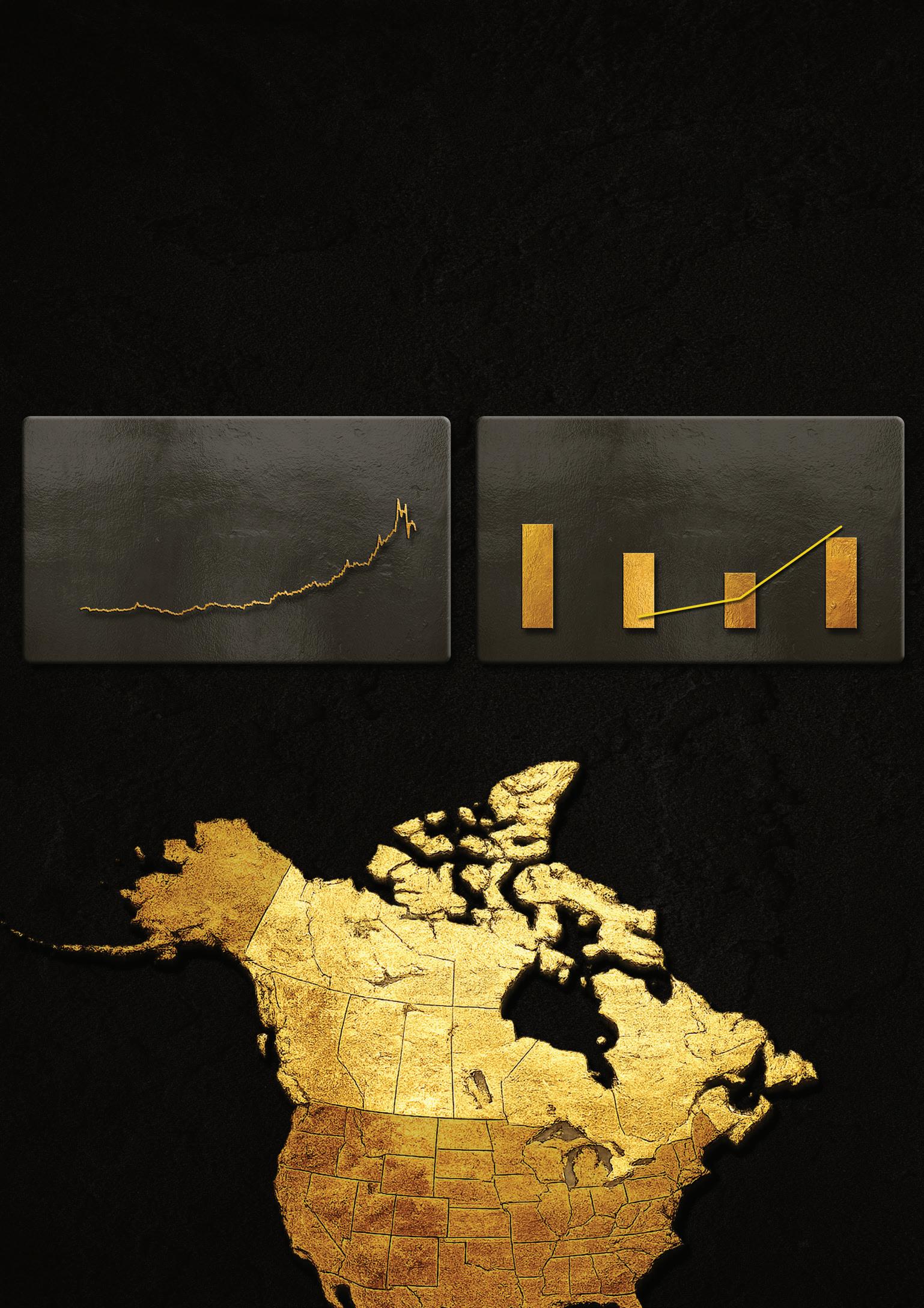
Gold prices have more than doubled since starting their huge climb in December 2023, but exploration spending hasn’t kept pace. While global gold exploration expenditures grew 11% in 2025, gold discoveries across North America since 2023 have been limited to brownfield extensions* and small projects rather than the multi-million-ounce greenfield finds of the early 2020's. Meanwhile, M&A-minded gold majors rely on juniors to explore before they buy them, amassing M&A war chests to gain from the soaring gold price. In this infographic, The Northern Miner takes a glance at the contrasting, even surprising, dynamics at play in the gold sector over the last few years.
Boroo eyes buying landslide-scarred former Eagle gold mine
YUKON | Industry puzzled by lack of Canadian bidders
BY BLAIR MCBRIDE
Private investment company
Boroo is considering whether
to buy the former landslide-devastated Eagle Mine site in Yukon, raising hopes it can revive the mine and help the territory press ahead.
The Singapore-based firm with a focus on troubled assets has entered an exclusivity agreement until July 22 with PricewaterhouseCoopers (PwC), the receiver of Eagle’s former owner, Victoria Gold. Boroo is the sole party negotiating a potential purchase of the site about 375 km north of Whitehorse.
“How is there no Canadian [company] in this?” Nico Harvey, former chief of technical services at Victoria Gold told The Northern Miner. Harvey is now vice-president of project development at Silverco Mining (TSXV: SICO).
“We have a great mining industry in Canada with a lot of top shelf names that would have had the ability and resources and experience in Yukon to take this on. But it would be great for Yukon to have this project again.”
The potential deal with Boroo comes almost one year after PwC put the mine site up for sale. PwC
accepted bids until last December. Boroo, with assets in Peru and Mongolia, produced 76,000 oz. gold last year.
Clean up
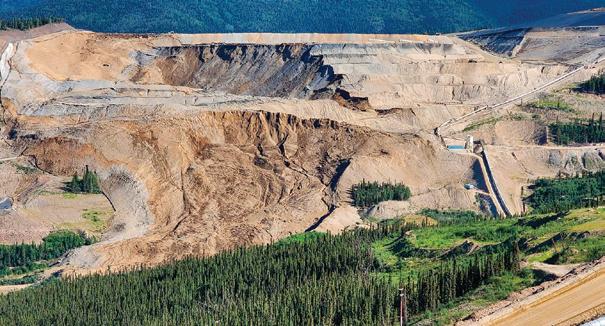
An extensive clean-up period at Eagle followed a landslide at the mine’s heap leach pad. It released millions of tonnes of ore and at least 280,000 cubic metres of cyanide-containing solution beyond containment on June 24, 2024.
A court placed Victoria Gold into receivership two months later. There were no significant injuries in the accident. Yukon authorized PwC to spend $220 million
(US$160 million) on the cleanup.
An Independent Review Board investigating the accident concluded last July that a lack of surveillance over the leach pad, poor drainage and too much pressure and weight caused the leach pad to collapse.
Boroo hasn’t disclosed how much it might pay or what PwC is asking for the asset. Boroo, PwC and former Victoria Gold CEO John McConnell didn’t respond to requests for comment by press time.
“At this time, there is no offer in place,” Yukon government spokesperson Saskrita Shrestha said in an emailed response to questions. “Should an offer be made, it would
be subject to court approval, and more information will be available at that time.”
Value
A PwC report from 2024 estimated the total value of Eagle’s assets at nearly $825 million, however, a separate document that year listed about $458 million in liabilities related to the accident, including $109 million in reclamation and remediation costs. PwC has cautioned that the ultimate cost of the heap leach failure was uncertain and could be higher.
“There has been no updated estimate for the value of the Eagle Gold Mine and its assets,” Shrestha said.
In June 2025, PwC restarted Eagle’s adsorption, desorption and recovery plant, which has been intermittently recovering and producing gold in a closed-loop system. The landslide didn’t significantly damage the plant.
In addition to those gold sales, PwC sold royalty assets to Franco-Nevada (TSX, NYSE: FNV) in February for about $55 million to raise cash towards the remediation work.
Under the terms of the 90-day exclusivity deal, Boroo is to conduct further due diligence at Eagle
and negotiate the terms of a sale with PwC, it said. It will also start discussions with the Yukon government and the First Nation of Na-Cho Nyäk Dun about agreements to allow the deal to proceed and mining operations to restart.
‘Who is Boroo?’
Others in the Yukon echoed Harvey’s sentiment about Boroo.
“At first I was like, ‘who is Boroo?’ It was the same reaction of many people,” Mike Burke, vice-president of corporate development with Yukon-focused Sitka Gold (TSXV: SIG; US-OTC: SITKF) told The Northern Miner. “Would I have loved to see Agnico Eagle buy it? Of course. Any company in Yukon was hoping it would have been them.
“But the more I looked [at Boroo] I saw they’ve done well. All anybody really hoped for was a legitimate company coming in and being able to look at this project and remediate and hopefully put it back into production.”
Known for turning around underperforming assets, Boroo acquired Barrick Mining’s (NYSE: B; TSX: ABX) Lagunas Norte site in Peru in 2021 for $81 million after Boroo P28 >
Novel Metallurgical Processes for the Mining Industry
The collapsed heap leach pad at the former Victoria Gold’s Eagle mine, about 375 km north of Whitehorse. SUBMITTED PHOTO
Mining influencers take industry’s image battle to TikTok
SOCIAL MEDIA | Frontier niche has little competition
BY BLAIR MCBRIDE
As the mining industry asks how it can defend its reputation amid a critical and activist-oriented narrative prevailing in the West, young people in mining are taking it upon themselves to counter that narrative using smartphones and social media to tell their own stories.
Enter the small but growing world of mining influencers: miners or mine-adjacent professionals whose content on social media is drawing hundreds of thousands of followers and millions of likes on such platforms as TikTok, Instagram, YouTube and others.
“If they can get young people more aware of the industry and its role in our society, and the fact that we’re not just dirty, evil polluters, and we’re actually contributing to a better world and providing good jobs and doing things in a very environmentally and socially responsible way—that’s great.”
Kimberly Darlington, President of mining-focused marketing firm Refined Substance, told The Northern Miner
“We have to meet our audiences where they are. If the young people are on TikTok, and that’s where we need to go meet them.”
The rise of mining influencers comes as the industry struggles to attract younger workers while enrolments in geoscience programs decline and up to 255,000 mining job vacancies could open in the coming years due to retirements and industry growth, according to data from the Ottawa-based Mining Industry Human Resources (MIHR) Council.
years before she left underground mining and in 2022 founded MineLife Media. It provides digital content creation resources to mining-related industries.
Industry’s changing attitude
“There’s been a massive shift even in the last three years [towards social media],” she said. “With Gen Z coming into the workforce… mine sites are allowing more photos, content creation and science communicators like myself.”
Influencers in mining are making an impact because they’re individuals telling their own stories, which has a resonance that corporate media lacks, Scanlan said.
“Being able to explain something simply in a short video [builds] that niche of ‘Hey I’m just a person’ versus ‘Hey, I’m just a company.’”
From science to sites
“I wanted to show a different perspective on mining. People don’t know about the importance of mining for daily life or in a house or in technology.”
PAULA MINERIA, MINING STUDENT AND INFLUENCER
Mining influencer identities take many forms, from a science education focus on geology and rock hounding, to technology, and to a more personal view on underground mine work and site tours, said Jessica Scanlan, founder of digital strategy company MineLife Media.
There are currently about 45 active mining influencers, most of whom work from North America, Australia and Latin America, Scanlan estimates.
A geological engineer by training, Scanlan worked at Sibanye-Stillwater’s (JSE: SSW, NYSE: SBSW) namesake mine in Montana for five
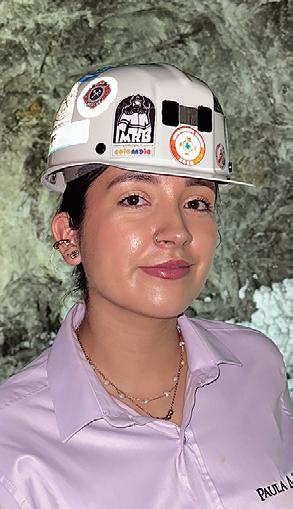
Among the most active—and popular—influencers is Paula Sierra, also known as Paula Mineria, who is in her final year of studying mining and metallurgy at the National University of Colombia in Medellin.
Her videos are mainly site visits that focus on certain angles such as technology, operations or the environment. She edits the videos with music, quick cuts, small animated graphics and sometimes with English subtitles. Mineria shoots mostly in Colombia and has also done videos in Japan, Chile, Panama, Canada and the United States.
Her focus also integrates her own life with mining, and an early May video followed how gold goes from the mine and into wedding rings, on the occasion of her engagement to Juan Diego, also a mining influencer. She even landed an inter-
view with Teck Resources’ (TSX: TECK.A/TECK.B; NYSE: TECK)
CEO Jonathan Price.
Since the 28-year-old began posting mine videos in 2022, she has rocketed to 110,600 followers on TikTok, with 1.6 million likes. For context, given mining’s relatively small social media footprint compared to other sectors, Mineria’s impact is heavy amid the industry’s online presence.
New perspectives
“I wanted to show a different perspective on mining,” she said in a video call from Colombia. “I was born in a coal mining town. People don’t know about the importance of mining for daily life or in a house or in technology.”
She also wanted to show the legitimate side of the industry whose image has been sullied due to illegal mining’s impacts on the environment.
“We have too much illegal mining in Colombia,” she said. “The people don’t know the difference between legal mining and illegal mining. It’s very difficult in Latin America.”
Though school and social media consume most of her time these days, she’s feeling more supported than before. Previously, she had to pay her own travel expenses to mine sites. Now, more companies pay for travel and video production costs.
The non-profit International Women in Mining named Mineria an Emerging Leader for International Day of Women in Mining 2025 for her highlighting responsible practices.
“I was very happy because I didn’t believe being an influencer was important,” she said. “It’s very great because I changed the perspective in the mining sector and among other people.”
Eyes underground
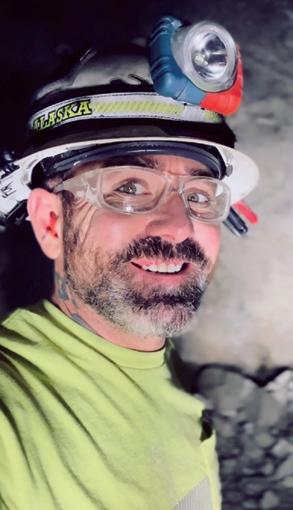
Further north, Cory Rockwell, 42, has drawn 117,100 followers and 5 million likes on TikTok for his posts on working underground in Nevada and Alaska.
Rockwell, whose job at Coeur Mining’s (NYSE: CDE) Kensington gold mine in southeast Alaska includes explosives work, haul trucking and bolting, started working in mining in 2011.
His influencer identity took shape about 2021 when a coworker in Nevada suggested he try TikTok. Though skeptical it was a wise use of time, he shot and uploaded a video of a refuge chamber. Hours later, it received 150,000 views.
“It blew up,” he said. “It really showed the interest people have in mining.”
He uploaded about 300 videos in his time at Barrick Mining’s (TSX: ABX; NYSE: B) Turquoise Ridge site in Nevada, where his influencer impact started to go deep.
Millions of views
Around 2023, he gained more than 100,000 followers and over 1 million likes for his content. One video grabbed 6.9 million views. It showed him scaling a wall, using a long, pointed bar to remove loose rock.
“I have close to zero competition, not many people do it at the level
Cory Rockwell underground in Coeur Mining’s Kensington gold operation in southeast Alaska.
CORY ROCKWELL
Paula Mineria inside the Nemocón underground salt mine in the Department of Cundinamarca, central Colombia. PAULA MINERIA
indepth
Kinross is flush but not feeling forced into M&A
CEO CHAT | Rollinson leads culture of technical army
BY COLIN MCCLELLAND
Kinross Gold (TSX: K; NYSE: KGC) CEO J. Paul Rollinson
says the company is in no rush to pursue mergers and acquisitions despite a surge in dealmaking across the sector, arguing its deep internal project pipeline and strong balance sheet give it flexibility as gold prices swell cash flows.
Precious metals deals reached about $15.8 billion (C$21.8 billion) to mid-May, more than double a year earlier, according to Bloomberg, while Kinross ended the first quarter with $3.9 billion in liquidity, including $2.2 billion in cash. Even so, the company has completed just three deals in the past decade, led by its $1.4-billion purchase of Great Bear in Ontario in 2022.
“We do look at M&A but we don’t feel under pressure,” Rollinson said in an interview at the company’s Toronto office in late May. “We’ve got a lot of depth in our portfolio.”
That depth comes from 21 million “well-defined” proven and probable oz., 28 million measured and indicated oz. and 17 million inferred oz., the CEO said. It’s increasingly being translated into development, with Kinross advancing a slate of organic projects in North and South America that the company says can sustain produc-
tion of about 2 million gold-equivalent oz. a year while improving margins.
Great Bear
At the centre is the Great Bear project in northwestern Ontario, which Rollinson has described as a “generational asset” that could produce about 500,000 oz. annually at an all-in sustaining cost of roughly $865 per oz., based on a 2024 preliminary economic assessment. Kinross has broken Great Bear into two permitting tracks, with a ramp called the advanced exploration decline now permitted and surface construction about 90% complete. The decline will allow drilling below the planned open pit to test depth extensions of what Rollinson says could be a continuous, large-
scale orebody, contrasting with the narrow high-grade vein systems typical of the Red Lake camp.
“I use lumber as an analogy— think of two by fours in the ground, that’s what you’re looking for when you’re looking for a vein,” the CEO said. “The reason we got excited, really excited, about Great Bear is because it’s a sheet of plywood.”
The company is targeting first production in the second half of 2029, with permitting timelines remaining a hurdle. The project has been designated under Ontario’s One Project One Process framework, aimed at accelerating approvals through coordinated federal and provincial reviews.
Rollinson said Kinross has tried to streamline the process by working with the regulator to submit
environmental data in stages last September, in December and then in March, rather than waiting to assemble a full baseline package.
“What that’s allowed is conversations, Q and A back and forth,” he said. “We’re in the system and we’re talking.”
Complexity
Still, he described permitting in Ontario as among the most complex jurisdictions he has encountered in more than two decades working globally, citing the need to balance scientific review with extensive Indigenous consultation.
Beyond Canada, Kinross is advancing three organic growth projects in the United States— Round Mountain Phase X and Bald Mountain Redbird 2 in Nevada, and the Kettle River-Curlew project in Washington—that are expected to extend mine lives and improve cost profiles.
The projects are forecast to deliver about 400,000 gold-equivalent oz. annually between 2029 and 2031, with combined life-of-mine production of roughly 3 million oz. between 2028 and 2038. They carry a combined post-tax net present value of $4.1 billion and an internal rate of return of 55% at a gold price of $4,300 per ounces.
“We call it a grade enhancement strategy,” Rollinson said. “We’re
constantly looking to put into our pipeline of development higher grades as we move forward. That has the effect, obviously, of increasing our margin and increasing our per share metrics.”
That approach has also shaped Kinross’s capital allocation strategy. Rather than pursuing large acquisitions, the company has returned cash to shareholders through dividends and buybacks, targeting about 40% of free cash flow this year or about $1.2 billion.
Rollinson said buybacks are particularly attractive given Kinross’s shareholder base, with more than half of investors in the United States where dividends can be tax-inefficient.
The company remains strongly leveraged to gold prices, which Rollinson expects to rise over the longer term period despite recent volatility tied to interest rate expectations and oil-driven inflation concerns.
“Inflation means we need rate hikes, which is causing bonds to sell off, and rate hikes can’t be good for gold, but I think that’s flawed fundamentally, because what’s the one thing you want to own in an inflationary environment, gold,” he said. “I hope this [Midde East conflict] all comes to an end soon, and
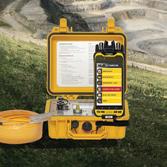
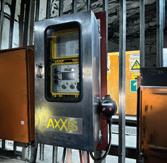
BME’s AXXIS® range – Silver, Titanium, and CEBS –delivers world-class electronic initiation trusted by mines across five continents. Built for precision, safety, and sustainability, AXXIS® empowers engineers and blasters to achieve consistent, high-performance blasts – even in the most demanding conditions.
• AXXIS® Silver – Proven reliability for quarries and mid-sized mines.
• AXXIS® Titanium – Advanced control with best-inclass safety and data capabilities.
• AXXIS® CEBS – Centralised blasting with unmatched scale and efficiency.
With AXXIS®, you don’t just initiate blasts – you initiate progress.
AXXIS® Silver AXXIS® Titanium AXXIS® CEBS
Kinross Gold CEO J. Paul Rollinson expounds on Great Bear. C. MCCLELLAND
indepth
Solar thrifting not enough to curb demand
BY ANDREW SEALE
Soaring silver prices and surging solar demand are forcing panel manufacturers to rethink how much of the white metal goes into every cell. But analysts warn the efficiency gains may not be enough to offset a structural squeeze.
Silver demand has been consistently outpacing supply for the last six years, with the Silver Institute’s World Silver Survey 2026 projecting a 46.3-million oz. deficit. Tightened physical supply alongside geopolitical uncertainty and investment demand helped silver briefly top $120 per oz. in January from $30 an oz. a year earlier before pulling back. Near press time, the price was around $76 per oz.
“Silver at $80 really encourages a very aggressive move for thrifting [and] outright substitution in favour of copper,” Philip Newman, managing director of London-based consultancy Metals Focus, which researches the World Silver Survey, said in an interview. Thrifting refers to using less silver per panel without reducing performance.
According to the Silver Institute, which published the World Silver Survey 2026, silver use in photovoltaics fell 6% last year to 186.6 million oz. and is forecast to decline a further 19% in 2026 to around 151 million ounces.
Key driver
Photovoltaics, the largest industrial source of silver consumption, have emerged as a key driver of demand growth in recent years, helping push the market into repeated deficits. Between 2020 and 2024, sil-
ver use in photovoltaic applications more than doubled to roughly 197 million oz., up from about 82 million ounces.
That surge also triggered a rapid response from manufacturers. The rise in silver prices pushed the metal’s share of solar cell costs from roughly 8% to more than 20%, accelerating efforts to reduce silver loadings and preserve margins.
However, thrifting may not be enough to curb demand. In North America, policy support and utility-scale buildout drove photovoltaic installations in 2025. U.S. demand for silver powder used in solar manufacturing rose 4% year over year, according to the World Silver Survey.
Momentum is expected to slow in 2026 as global installations flatten, with some banks and insurers also pulling back financing and coverage amid uncertainty over subsidy eligibility and evolving trade rules tied to China-linked supply chains.
Green energy support
China remains the key swing factor. The country accounts for roughly 80% of global solar manufacturing capacity, while firms
• AGGRESSIVE DRILL PROGRAM UNDERWAY: Fully funded with $30.7M in working capital, FOMO is drilling 75,000 metres at N2, building historic high-grade intercepts exceeding 1.0 oz/t gold.
•
• Q3 MAIDEN RESOURCE TARGET: On track for initial resource estimate by Fall 2026, targeting >1.5 Moz gold @ 1.5 gpt Au.
• TIER 1 JURISDICTION: N2
including LONGi and Trina Solar expanded aggressively into the U.S. after the Biden administration’s 2022 clean-energy incentives helped trigger roughly $43 billion in announced solar manufacturing investment and an estimated 48,000 jobs.
However, new U.S. rules limiting Chinese ownership and control in subsidized factories have created regulatory uncertainty, prompting some buyers, lenders and insurers to avoid China-linked projects.
Installations in China hit a record 315 GW in 2025, though activity was heavily front-loaded as developers rushed to meet policy deadlines before slowing later in the year amid grid constraints and weaker pricing conditions.
On the manufacturing side, some Chinese producers shifted capacity offshore in response to U.S. tariffs and trade restrictions, while demand from emerging markets continued to support output growth. China’s solar market is expected to cool in 2026 as policy support normalizes and overcapacity pressures persist.
Thriftier approach
Thrifting has played a major role in moderating solar demand for the precious metal in panel manufacturing. “It varies considerably by year, but even when prices were very low, there was an element of thrifting,” metals consultant Newman said.
However, the process has accelerated over the last two years. Manufacturers are refining how silver paste is applied inside solar cells and adjusting cell layouts to reduce the amount needed, cutting silver
use by around 10% compared with earlier designs. New “zero busbar” techniques and ultra-fine printing methods can reduce silver use by another 10% to 20%.
Production has also shifted towards TOPCon cells, a newer high-efficiency solar technology now dominant in China. The technology improves electrical efficiency inside the cell.
Other companies are developing copper electroplating and pure copper pastes that could further reduce silver use.
The industry expects average silver loadings in mainstream photovoltaic cells to fall below 5 milligrams per watt by 2027, according to World Silver Survey data.
While there are ways to reduce silver use, Robert Godin, co-lead of the University of British Columbia Okanagan’s solar energy research cluster, said the technology remains difficult to scale. He said that while substituting with copper could decrease the amount of silver per module by tenfold (90%), silver is still relatively cheap compared with more advanced alternatives.
The properties of silver make it good at this job, Godin told The Northern Miner. “It works, it’s cheap, and people are not looking too hard at changing that process.”
Godin said that while reducing silver amid rising prices and supply deficits is driving the thrifting and substitution narrative, removing silver from the process is a low priority on the research and development side. There are also design barriers to how far efficiency can be pushed.
“There are some hard physical limits that we’re getting pretty close
to,” he said. “But [panels] can definitely be twice as cheap.”
Uneven demand
Policy signals in the U.S. have added another layer of uncertainty, as the Trump administration moves to scale back parts of the federal energy transition agenda while maintaining support for domestic industrial buildout and grid reliability.
The result is a more selective policy environment, with clean-energy projects increasingly shaped by financing conditions, subsidy eligibility and trade exposure rather than broad deployment targets.
Ian Lange, an economist at the Colorado School of Mines’ Payne Institute for Public Policy, said that disconnect is often missed in transition planning. Most models assume deployment targets are met and then work backwards into material demand, Lange said. In reality, he said, higher input costs feed directly into build decisions.
“If silver is higher, we just don’t install as many solar panels,” Lange said.
That creates a feedback loop between commodity markets and deployment that is often absent from energy transition forecasts, where mineral inputs are treated as scalable rather than price sensitive. For silver, that means demand is not a straight line from installed capacity.
Thrifting and substitution are reducing the metal intensity per panel, but price signals are also shaping how many projects get built in the first place. Outside solar, structural demand growth is still coming from grid expansion, automotive applications and AI-driven power demand, which continue to underpin industrial consumption.
Lange said silver’s designation as a critical mineral should drive research and innovation. “Within the U.S. federal system, the criticality is really supposed to be a marker for let’s find a substitute,” Lange said. “That’s supposed to direct federal research dollars [but] I’ll say I haven’t seen good evidence that it actually does that.”
The World Silver Survey forecasts industrial fabrication to decline by 2% this year, to a fouryear low of around 650 million ounces. Newman points out that photovoltaics are the most volatile area of silver demand.
Energy security
The policy backdrop has also shifted the tone of the solar buildout itself. What was once largely framed through decarbonization is increasingly being driven by energy security and supply-chain resilience.
“When we put the survey together back in late March, we had to make an assumption about the war in Iran being short-lived,” Newman said.
With the Strait of Hormuz still closed as of late May, and energy prices astronomically high, Newman said the market could respond by investing in alternative energy solutions like solar.
“That security standpoint carries a lot of momentum—there’s more investment going on,” he said. “Even if installations go to the races, I don’t see it getting back to what we saw the past three years.”
donedeals
Equinox, Orla combine as $25.4B miner
GOLD | Merged firm eyes 1.9M oz annual output
BY CECILIA JAMASMIE
Equinox Gold (TSX, NYSE: EQX) plans to acquire Orla Mining (TSX: OLA; NYSE: ORLA) in an all-stock deal valued at about $25.4 billion (US$18.5 billion), creating a North Americafocused gold producer expected to generate 1.1 million oz. in 2026.
Existing Equinox shareholders will own about two-thirds of the combined company, while Orla shareholders will hold the rest, the companies said on May 13. Equinox, Canada’s largest gold producer by output after Agnico Eagle Mines (TSX, NYSE: AEM), has the Greenstone and Valentine mines in Ontario and Newfoundland and Labrador. The transaction is expected to close in the third quarter.
Equinox also has Los Filos in Mexico and the El Limon and La Libertad operations in Nicaragua, plus development and expansion assets including Castle Mountain and South Railroad in the United States. Orla brings the producing Musselwhite mine in Ontario and Camino Rojo in Mexico, along with the South Carlin Complex project in Nevada and the Cerro Quema project in Panama.
“The strategic fit is excellent and can leverage the geographic focus in Canada and the U.S.,” Haywood Securities mining analyst Jamie Spratt said in a note. “And there appears to be a logical growth plus development pipeline sequencing over the next three to four years.”
The deal includes Canadian Min ing Hall of Fame members Pierre Lassonde, as a 9.3% stakeholder in Orla, and Ross Beaty as chair of Equinox, where he holds 3% of the $13.3-billion market cap miner. The takeover continues a wave of con solidation among gold firms seek ing scale, lower operating risk and stronger balance sheets as bullion prices remain near record highs.
Scale, growth
Equinox CEO Darren Hall high lighted the combination’s strong project portfolio for growth and its current long-life assets.
“By combining our operating teams, financial strength, and com plementary asset bases, we are creat ing a differentiated North American gold producer with the scale, growth profile, and asset quality to drive a meaningful re-rate and deliver longterm value for shareholders,” Hall said in a statement.
Hall will remain chief execu tive of the combined company, while Orla CEO Jason Simpson will become president. Beaty is stepping down as chair for Orla founder Chuck Jeane.
The companies said the merged entity could increase annual gold production by about 70% to 1.9 mil lion oz. through its development pipeline, positioning it among the larger gold producers focused on stable mining jurisdictions in North America.
Market reaction
apiece for a market capitalization of $5.8 billion.
“It may take time for the market
“The strategic fit is excellent and can leverage the geographic focus in Canada and the U.S.” JAMIE SPRATT, HAYWOOD SECURITIES, MINING ANALYST
Camino Rojo produced 115,000 oz. gold last year and has potential to hit 215,000 oz. a year with underground development, Spratt noted. The underground Musselwhite has averaged 235,000 oz. a year and has 1.5 million oz. in reserves.
The South Railroad open pit heap leach project should reach a federal record of decision within a few months allowing the final push for local permits, the analyst said. First production is targeted for next year’s fourth quarter.
to digest the deal, but we expect that the business should attract investor capital with the ingredients to gar-
ner a premium North American multiple with successful operational execution,” Haywood’s Spratt said.
“Orla was built on a simple idea: Acquire the right assets, develop them with discipline, and operate them well,” CEO Simpson said. “Together, we have the production base, the balance sheet, and the team to compete at a level otherwise unattainable by either company on its own.”
Equinox shares closed 1.9% weaker to $19.90 apiece on May 13 in Toronto before easing to $16.86 each at press time on a lower gold price and higher U.S. inflation. Orla shares gained 0.8% to $17.04
Equinox Gold’s Greenstone mine in northern Ontario. EQUINOX GOLD
Brazil probes $2.8B rare earths deal
REVIEW | USAR-Serra Verde merger
BY STAFF WRITER
Brazil’s antitrust watchdog has opened an investigation into USA Rare Earth’s (Nasdaq: USAR) proposed acquisition of the country’s only rare earth producer, posing a regulatory hurdle to America’s critical minerals plans in Latin America’s largest market.
Last month, USAR announced that it would acquire Serra Verde Group, operator of the Pela Ema rare earth mine and associated processing facility in Goiás state, for $2.8 billion. The deal includes a 15-year U.S. offtake agreement tied to Pela Ema’s production of four rare earth elements (neodymium, praseodymium, dysprosium and terbium) used in high-performance magnets.
On May 11, the Administrative Council for Economic Defense said it has started to review the transaction, including the offtake agreement. The agency, also known as Cade, is responsible for evaluating business combinations and finding potential competition concerns. Should an issue be identified, it has the authority to enact operational restrictions.
The agency said it was only a review at this point, while USAR declined comment. Its stock slid 2.5% to $25.64 in New York for a market capitalization of $5.6 billion as wider markets declined on higher inflation figures.
Review
In this case, Cade will look to assess whether the USAR-Serra Verde combination constitutes a
“concentration act” under Brazilian competition law. If so, it will determine whether the parties were required to notify the transaction or whether it should request a submission for antitrust analysis.
However, the agency stressed that the proceeding “does not necessarily mean that the acts must be notified or that there are competition issues.” In the end, the General Superintendence “may decide to close the case, to allow the transaction to be completed, or to open an administrative proceeding,” it added.
Pact
The proceeding comes amid efforts by the U.S. government to seal a critical minerals pact with Brazil, host to the world’s largest volume of rare earth reserves outside China. Despite having been in talks as early as January, the parties have yet to finalize an agreement. So far, the only agreement reached has been a memorandum of understanding with the state of Goiás, focused on investments in Serra Verde.
Earlier this year, the Brazilian company closed a $565-million funding package with the U.S. International Development Finance Corporation (DFC), which will be used to upgrade operations at Pela Ema.
The mine, which began commercial output two years ago, is among the few sites outside China capable of producing heavy rare earths at commercial scale. It is expected to account for half of the world’s ex-China production by next year, Serra Verde says. TNM
Regis, Vault merge to create $7.7B producer
GOLD | Deal to form country’s third top miner
BY NORTHERN MINER STAFF
Regis Resources (ASX: RRL) agreed to merge with Vault Minerals (ASX: VAU) in an all-share deal valued at about A$10.7 billion (US$7.7 billion), creating a new senior gold producer expected to turn out more than 700,000 oz. annually from assets across Australia and Canada.
Regis will offer 0.6947 of its shares for each Vault share, implying a value of about A$5.15 billion and an 11% premium to Vault’s previous close. Upon completion, Regis shareholders will own about 51% of the combined company and Vault investors the remaining 49%, with both boards unanimously recommending the transaction.
“This merger creates Australia’s third largest primary ASX-listed gold producer, which demands global recognition,” Regis CEO Jim Beyer said in a May 5 press release. “With a strong balance sheet, approximately A$1.9 billion in cash and bullion, and a compelling organic growth pipeline, including the McPhillamys development project and Sugar Zone, the combined company is exceptionally well-positioned.”
The deal reflects a broader push towards consolidation in the gold sector, as mid-tier producers seek greater scale, improved liquidity and access to lower-cost capital. The merged group is expected to generate about A$1.7 billion in annualized free cash flow and benefit from more than A$500 million in corporate tax synergies, while maintaining a debt-free balance
“This merger creates Australia’s third largest primary ASXlisted gold producer, which demands global recognition.”
JIM BEYER, CEO, REGIS RESOURCES
sheet with roughly A$1.9 billion in cash and bullion.
Duketon complex
Shares in Regis Resources fell 5.9% to close at A$6.75 apiece on May 5 in Sydney, valuing the company at A$5.11 billion. Vault Minerals stock gained 3.1% to A$4.64 each for a market capitalization of
A$4.8 billion.
The portfolio spans multiple operating hubs, including Regis’s Duketon complex in Western Australia, which hosts 38 million tonnes grading 1.1 grams gold per tonne for 1.39 million oz. contained metal, and its 30%-owned Tropicana joint venture, which holds 12 million tonnes grading 1.5 grams for 576,000 ounces.
On a pro forma basis, the combined company would host 6 million oz. in ore reserves and 20.5 million oz. in mineral resources, underpinning long-life operations and future growth.
Vault contributes its cornerstone Leonora hub in Western Australia, which hosts 131.3 million tonnes grading 0.7 gram gold per tonne for 2.79 million oz. in reserves, alongside the Mount Monger and Deflector operations.
The company also brings the Sugar Zone project in Ontario, where reserves total 2.3 million tonnes grading 5.4 grams for 389,000 ounces. It plans to restart production by fiscal 2028 pending permitting for a new tailings facility.
McPhillamys project
Beyond its operating base, the merged group would also control advanced-stage development projects, including the McPhillamys open-pit project in New South Wales. It hosts 78 million tonnes grading 1.1 grams gold per tonne for 2.66 million oz. in resources and offers potential to become a new production hub.
The companies said the combination would deliver a diversified production base across underground and open-pit mines, supported by extensive processing infrastructure with more than 22 million tonnes per year of milling capacity across nine plants, rising to about 24 million tonnes following expansions at Leonora.
The enlarged group will retain the Regis name, remain headquartered in Perth and trade on the ASX. Regis’ Beyer will lead the company, with Russell Clark as non-executive chair, and the board split evenly between directors from both companies.
The transaction will be implemented through a scheme of arrangement and is expected to close in August or September, subject to shareholder, court and regulatory approvals, as well as an independent expert concluding the deal is in the best interests of Vault shareholders. TNM
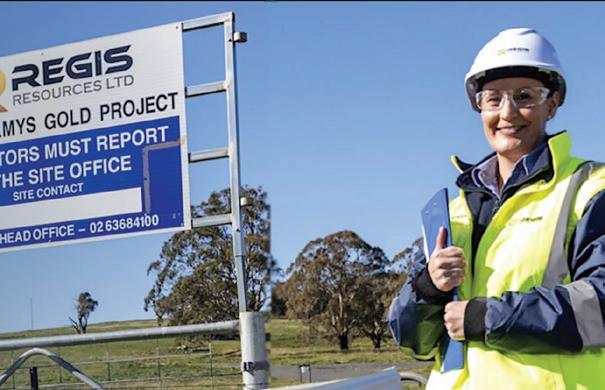
Regis’ McPhillamys gold project, about 250 km west of Sydney. REGIS RESOURCES
projectupdates
Fortune Bay assays shine in uranium country
GOLD | Expansion opportunity awaits
14-year life
Drilling at Fortune Bay’s (TSXV: FOR; US-OTC: FTBYF) Goldfields project in northern Saskatchewan has extended shallow historical near-surface mineralization at the Golden Pond target, just north of the Box gold mine that predated uranium mining in the area.
Highlight hole GP26-02 cut 23.2 metres grading 1.2 grams gold per tonne from 15 metres depth, while hole GP26-03 returned 6.8 metres at 2.06 grams gold from 43.1 metres downhole, Fortune Bay said May 12. Goldfields is 700 km north of Regina.
“The Golden Pond results are an important addition to our recent exploration success at Goldfields,” Fortune Bay CEO Dale Verran said. “Together with the recent Box deposit step-out results, these results highlight the broader opportunity to expand and add to the Goldfields resource base from targets located close to past-producing and planned mine infrastructure.”
Prairie gold
Located about 13 km south of Uranium City, Goldfields offers rare yellow metal activity in Saskatchewan, which is known more for uranium and potash mining. It’s also one of very few gold projects in the province to have advanced to a preliminary economic assessment (PEA). Fortune Bay’s Box target sits where the namesake underground mine produced about 64,000 oz. of gold between 1939 and 1942.
Gold exploration and mining in the area predates uranium activity by at least a decade.
Other noteworthy intercepts at Golden Pond include GP26-05 that cut 7.1 metres grading 1.06 grams gold from 14 metres depth, and hole GP26-04 which returned 9.8 metres at 0.69 gram gold from 17.2 metres downhole.
The 771-metre drilling program at Golden Pond also confirmed that mineralization at the target is associated with sulphide-bearing quartz veins hosted mainly in gneiss rock and extends locally into amphibolite units. A geological structure known as the Goldfields Syncline crosses under the property.
BY BLAIR MCBRIDE
Volta Metals’ (TSX-V: VLTA)
Springer project hosts one of the largest rare earth deposits in North America and is so connected to infrastructure that pizza can be delivered to the site, just outside Sudbury.
The little-known project hosts 56.6 million indicated tonnes of total rare earth oxides (TREO) grading 0.7% TREO and 119.5 million inferred tonnes at 0.58% TREO, according to the initial resource released in April. Springer is about 70 km east of Sudbury and 310 km northeast of Toronto.
particularly stand out in Canada, where there are no producing rare earth mines and most large deposits are remote and hard to access.
Springer currently ranks seventh largest in North America, behind Mont Royal Resources’ (TSXV: MRZL; ASX: MRZ) Ashram project in Quebec and ahead of Vital Metals’ (ASX: VML; US-OTC: VTMXF) Nechalacho deposit in the Northwest Territories, according to S&P Global data cited by Volta. Nechalacho was briefly Canada’s only producing rare earths mine from 2021 to 2023, though on a demonstration basis.
“It’s going to be in the maybe top three rare earths projects in North America.”
KEREM USENMEZ, CEO, VOLTA METALS
Canadian gallium hotspot
The updated PEA for Goldfields, released last fall, outlines a 14-year life with an after-tax net present value (at a 5% discount) of $610 million (US$443 million) and a 44% after-tax internal rate of return. Initial capital costs are estimated at $301 million and life-of-mine all-in sustaining costs at US$1,330 per oz., based on an assumed US$2,600 base-case gold price. The open pit mine could produce 4,950 tonnes per day.
An accompanying resource for the Box and Athona targets totals 24 million indicated tonnes at 1.28 grams gold for 990,000 oz. gold and 7.4 million inferred tonnes at 0.9 gram gold for 210,000 oz. gold. TNM
“We have road access, we have power on site, we have [Nipissing] First Nation support, mineralization on surface [and we’re] within a pizza delivery zone,” Volta CEO Kerem Usenmez told The Northern Miner last month at the Critical Minerals Institute Summit 5 in Toronto.
“We are more excited about the potential that it can even become down the road. We still haven’t fully defined the size of it. I think it’s going to be in the top five, maybe even top three [rare earth projects] in North America.”
Road-connected rare earths
Volta’s ongoing efforts to expand the Springer resource come amid surging momentum by Western governments and companies to develop rare earth supply chains outside China’s control. Springer’s size and infrastructure advantages
• Advancing Green Bay, one of Canada’s largest copper-gold VMS systems, in Newfoundland & Labrador
• Large-scale, high-grade resource base with existing infrastructure, across a prospective 346km² land package
• Systematic drilling driving resource growth toward restart of the permitted Ming Mine operation
• PEA expected mid-2026; permitted for 1.8Mtpa
11-fold resource boost
Volta acquired the Spinger site last summer and launched a 1,638metre drill program.
“When we acquired it, it was only 17 million tonnes, which is small,” Usenmez said in a presentation.
“We updated the resource 11-fold [over a historical resource].”
Springer’s indicated portion includes a near-surface high-grade core of 11.5 million tonnes grading 1.1% TREO, with a near-surface high-grade core in the inferred part totalling 3 million tonnes at 1.16% TREO.
Its elements include the light rare earths neodymium, praseodymium and samarium, and heavies dysprosium, terbium, gadolinium and yttrium.
Volta plans more than 5,000 metres of drilling at Springer this year in support of a preliminary economic assessment targeted for the end of 2026.
The project also hosts high grades of the critical metal gallium, used in semiconductors and defence applications, though the initial resource from April didn’t include gallium potential.
Its gallium content further sets Springer apart because the metal is usually recovered as a by-product of aluminum and zinc smelting. Canada has no gallium mines and few primary gallium projects. Fall drilling at Springer returned highlights of 131.9 metres grading 81.2 gallium oxide (Ga2O3) per tonne and 1.4% TREO from 59.6 metres depth, including 15.7 metres at 109.9 Ga2O3 and 2.5% TREO in hole SL25-23.
“Once I prove that [this] is recoverable, we are going to have Canada’s only and first gallium resource, I just need to be able to recover it,” Usenmez said. “Nobody has the gallium kicker on top of that. So the story is getting better and better every day we uncover something else.” TNM
BY BLAIR MCBRIDE
An employee at Fortune Bay’s Goldfields project in Saskatchewan. FORTUNE BAY
G2 drills Oko to 1 km depth
GOLD | Strong results amid $3B deal
BY FRÉDÉRIC TOMESCO
G2 Goldfields (TSX: GTWO; US-OTC: GUYGF) said fresh drilling at its Oko gold project in Guyana extended mineralization beyond the deposit’s known limits as the company works to complete its sale to G Mining Ventures (TSX: GMIN; US-OTC: GMINF).
Highlight hole GDD277B – the deepest intercept so far at Oko –cut 84.5 metres grading 3 grams gold per tonne from about 916 metres downhole, G2 said May 4. It extended mineralization by 140 metres vertically to 1 km, where it remains open. Another hole, GDD279, cut 6 metres of 11 grams gold from about 105 metres depth.
“These results continue to demonstrate the strong growth potential at the Oko project, with mineralization remaining open both along strike and at depth,” CEO Daniel Noone said in a statement. “With eight drill rigs active, we remain focused on expanding and upgrading resources while advancing additional near-mine and district-scale targets across the greater Oko project area.”
Toronto-based G2 agreed in April to be acquired by G Mining in a $3-billion (US$2.2 billion) all-share deal that would combine the Oko West and OkoGhanie projects to form a single district-scale development in the Guiana Shield. Together, both properties could deliver more than 500,000 oz. of gold annually over the life of mine, the companies said. The transaction is expected to close this month.
Multiple deposits
Located about 120 km southwest of the capital, Georgetown, Oko hosts a multi-deposit resource base across several zones.
Oko holds 15.6 million indicated tonnes grading 3.24 grams gold for 1.62 million contained oz., gold, according to a November 2025 resource. It also holds about 18 million inferred tonnes grading 3.31 grams gold for 1.91 million oz. gold.
Other results released last month include hole GDD270, which cut 20.8 metres of at 9.6 grams gold from 298 metres downhole; and hole GDD273, which intersected 7.2 metres of 7.8 grams gold from 333 metres depth.
The latest holes—which targeted the deeper portions of Oko Main—confirmed that gold-bearing structures persist at depth with
meaningful widths and grades. The results support the concept of a large underground mining scenario beneath the existing openpit and near-surface resources, G2 says.
Long-life asset
The company is planning to drill 100,000 metres at Oko this year. Its exploration strategy has focused on expanding both the high-grade underground component and the bulk-tonnage potential, positioning Oko as a potential long-life mining operation.
The new intercepts are expected to feed into future resource updates and potentially enhance the underground component of the project.
G2 envisions a combined open
Focus boosts resource
GRAPHITE | World’s 5th-largest
BY BLAIR MCBRIDE
An updated resource for Focus Graphite’s (TSXV: FMS; USOTC) Lac Tetepisca project in central Quebec ranks it in the top five largest graphite resources in the world, and almost doubles its contained graphite over the initial estimate.
The update boosts the global contained graphite to 14.7 million tonnes over the 2022 resource, an 86% increase, while the total grade of 10.2% graphitic carbon (Cg) is just slightly lower than the 10.7% Cg in the original estimate, Focus reported May 8. Lac Tetepisca is about 800 km northeast of Montreal.
“To be a credible and serious alternative source of supply to China, particularly in building a secure domestic North American supply chain, projects must demonstrate scale, size, and grade. Lac Tetepisca delivers on all three,” Focus CEO Dean Hanisch said in a release. “While operating costs in Canada are inherently higher than in China, grade is the key equalizer, and the grade and scale we are demonstrating here are critical differentiators.”
Canada’s graphite hotspot
The resource milestone further positions Quebec as one of the world’s top emerging graphite development hubs. Northern Graphite (TSXV: NGC; US-OTC: NGPHF) hosts Lac des Iles, Lac North America’s sole producing graphite mine, about 260 km northwest of Montreal.
Nouveau Monde Graphite (TSXV: NOU; NYSE: NMG) is developing the Matawinie mine —120 km north of Montreal. It’s
expected to become the continent’s largest graphite operation.
The resource update places Lac Tetepisca in fifth place globally for total contained graphite. Triton Minerals’ (ASX: TON) Balama North/Nicanda Hill project in Mozambique leads the pack with 41.7 million tonnes contained graphite, Sarytogan Graphite’s (ASX: SGA) namesake project in Kazakhstan is second with 36.3 million tonnes.
Black Rock Mining’s (ASX: BKT) Mahenge project in Tanzania is third with 16.6 million tonnes. And Graphite One’s (TSXV: GPH; US-OTC: GPHOF) Graphite Creek project in Alaska, with 16.3 million tonnes, is fourth.
‘Exceeds typical grades’ “Grades at [Focus’] Lac Knife (15.4%) and Tétépisca (10.7%) far exceed the typical 3–5% of most graphite mines, primarily in China,” Fundamental Research analyst Sid Rajeev said in a March 19 note. “Both are open-pit deposits, with favorable strip ratios (easy to mine, low waste-to-ore ratio). We note that these features are highly appealing, as they can potentially support higher production at lower costs.”
In December, Focus received $14 million in government funding to build a plant producing ultra-highpurity graphite (>99.9%), suitable for high-performance applications in military, defence, aerospace and advanced technologies, Rajeev noted. And the projects benefit from Quebec’s low hydro-power costs when electricity typically accounts for 10–20% of a graphite mine’s operating costs.
“Despite having high-grade projects in a prime location, with relatively low projected capital and operating costs, we estimate Focus is trading at just $4 per tonne vs the sector average of $21 per tonne, an 81% discount, suggesting the market has yet to fully recognize its project potential,” Rajeev said. “We view Focus as an attractive target for mining and technology companies seeking stable, long-term North American graphite supply.”
North America’s second In North America, Lac Tetepisca ranks second, ahead of Nouveau Monde’s Matawinie project, with 6.5 million tonnes of contained graphite. That company envisions Matawinie as supplying feedstock to its planned anode material plant in Bécancour, Que. towards an integrated North American supply chain for lithium-ion batteries. Matawinie was referred to the federal government’s Major Projects Office in November.
By contained measured and indicated resources alone, Lac Tetepisca ranks number one on the continent, with 12.3 million tonnes inside a bulk 120.1 million tonnes grading 10.27% Cg. Inferred resources total 24.1 million tonnes at 9.88% Cg for 2.3 million contained tonnes.
Focus’ resource update is based on 26,095 metres drilled across 150 holes. Lac Tetepisca sits on the Manicouagan-Ouest Graphitic Corridor (MOGC) and South-West MOGC graphitic prospect that stretches across northeastern Quebec. TNM
G2 Goldfields is probing targets along the Ghanie trend at its Oko project in Guyana. ALISHA HIYATE
Gold Terra bets Con can help fill Yellowknife’s post-diamond hole
NWT | Company eyes PEA later this year
BY HENRY LAZENBY
YELLOWKNIFE, N.W.T.
Gold Terra Resource (TSXV: YGT; US-OTC: YGTFF) is among a small group of explorers seeking to rebuild a mining pipeline in the Northwest Territories amid the closure of diamond mines and few new emerging projects.
The Newmont (NYSE: NEM; TSX: NGT)-backed company is working to turn the past-producing Con mine into Yellowknife’s next producer as part of its expansive Yellowknife City gold (YCG) project. Gold Terra’s May resource update almost doubled contained gold at the Con option, and the company plans a second update in September and a preliminary economic assessment by year-end.
“We have an opportunity with the gold price, with the timing, to recreate value and a future for generations in Yellowknife as we bring back mining,” chairman and CEO Gerald Panneton told The Northern Miner during an April site visit. Panneton is the founder and former CEO of Detour Gold, who brought the Detour Lake mine into production in just over six years before Agnico Eagle Mines (TSX, NYSE: AEM) took it over after its merger with Kirkland Lake Gold in 2022.
Con, which started production in 1938, effectively created Yellowknife by anchoring an economy in an area that was remote and sparsely populated in the early 20th century. The opening of Con, located just 2 km south of downtown Yellowknife, led to a gold rush and the start of a permanent community. Con produced 5.1 million oz. grading 16 to 20 grams gold per tonne until 2003, when it closed due to low gold prices.
The proposed Con transaction with Newmont can be a win-win situation for both companies. Gold Terra signed an option agreement with the major in 2021, due to last until 2027, that will give the explorer the opportunity to acquire Newmont subsidiary Miramar Northern Mining. Gold Terra must still spend at least $8 million (US$5.8 million) on exploration, complete a prefeasibility study showing 1.5 million oz. in all resource categories, secure approvals and make a final $8 million cash payment.
Gold Terra has drawn the attention of Eric Sprott, who raised his interest to 10% last November and the Mackenzie Fund which hosts a 7% stake.
Brownfield advantage
The YCG project entails a rare brownfield setup closely linked with hydro power, road and airport access and an existing mining lease that should shorten the permitting path. It sits on 70 km of the Campbell Shear that also hosted the historical Giant mine on the north edge of Yellowknife. Gold Terra considers the strip as Canada’s largest underexplored high-grade gold camp.
The Con mine is a long-term commitment for whoever holds it.
A water treatment plant, commissioned in 2015, must run continuously to maintain safe water levels.
It runs about 56 days in an average year and treats roughly 300,000 cubic metres annually. Newmont keeps the underground water level below Great Slave Lake so groundwater flows into the old workings rather than out toward the lake. That legacy work is one reason Gold Terra stands apart from most juniors. Newmont’s site manager Dwight Grabke said the proposed transaction offers “the opportunity for us to bring some economy back into town in the form of mining.”
Industry under pressure
Across the wider territory, mining is under real pressure, Deputy Premier Caroline Wawzonek told The Miner in late January. But the planned closure of the diamond mines had “galvanized the territory” and forced a more urgent question: “What do we need to do to bring the barriers down?” She said “access, energy and regulatory delays can’t wait anymore” and that there is now “real momentum” to solve them.
Government data shows the diamond mines still employ more than 1,000 Northerners and account for about 20% of territorial gross domestic product (GDP). Diavik alone supported more than 1,100 jobs annually and nearly 10% of GDP until it closed in March.
“We’re already fielding inquiries from skilled workers looking for work at the Con mine,” Panneton said.
New resource
Last month’s resource update for Con nearly doubled contained gold over the initial 2022 estimate. Indicated and inferred tonnage more than tripled but grades fell by at least 40%.
Con hosts 729,000 indicated tonnes grading 4.39 grams gold per tonne for 103,000 oz. contained gold and 7.5 million inferred tonnes at 3.69 grams for 895,000 ounces.
The estimate focused on Con’s Yellorex, Zone 103N and Crestaurum targets, with the update showing 103N hosts almost 60% of the project’s total contained gold. Those three deposits comprise the northern extension of Con.
103N is a distinct zone at the project, was developed in the later years of Con’s operations and still has underground workings and drilling data, Gold Terra said. An ongoing 11,000-metre drill program that started in the winter is expected to target 103N in June.
The second resource update in the fall will also include results from drilling the Northbelt-Walsh Lake deposits Pickle, Sam Otto and Barney, 20 km north of Yellowknife. Yellorex matters because it “could be where we start operations if Con Mine were to be restarted,” Ryan Buchinski, Gold Terra’s senior project geologist, said.
District scale
The mine plan calls for developing Yellorex through a decline rather than going straight underground through the old Robertson shaft.
Gold Terra wants a smaller-footprint start and is willing to rethink other deposits, including Sam Otto —north of the city—to avoid bigger open-pit concepts close to town, Panneton said. A ramp at Yellorex and 103N could support a 2,000-tonne-per-day start, while other deposits to the north would get more time for baseline work and later permits.
Beyond the near-term Con
restart case, Gold Terra is still building district-scale optionality in the North Belt, where the Mispickel area added the MP-Ryan and Zone 14 high-grade zones in 2022.
Regulatory challenge
One of the biggest territorial bottlenecks is not a lack of rules but a complex system that requires federal departments, Indigenous governments and co-management boards to move together, Mining Minister Caitlin Cleveland told The Miner in January.
“The territory’s regulations under
the Mineral Resources Act are being finalized with Indigenous governments and should bring a great amount of certainty by 2027, because they tell companies exactly what steps they have to go through,” she said. While Gold Terra acknowledges the complexity of taking the project through permitting, it has managed to secure its land use and water licence permits.
The company aims to start the Con mine permitting process in 2027, after submitting its project description, mine plan and closure plan. If all goes well, first production could happen by 2029.
Execution
To reach production, Gold Terra still has to finance the work, convert more ounces, close the Con acquisition with Newmont and prove that a restart can meet modern technical and social standards.
The company has about 468.7 million shares outstanding and 477.5 million fully diluted. Panneton said the company has spent roughly $19 million on the Con option since taking it on, while Eric Sprott, Mackenzie Investments and other long-term backers count among the top shareholders.
For now, that is enough to make Con more than another junior exploration story. Gold Terra has a city-adjacent brownfield asset, fresh drill results, a timetable for another resource update and a territory that is openly asking how to get new mines through the gate before the diamond hole gets deeper. TNM
Using ice roads to access the Mispickel drill pads north of Yellowknife with one of the company’s geologist contractors. HENRY LAZENBY
Above: Gold Terra’s Senior Project Geologist Ryan Buchinski explains the exploration strategy to visitors.
HENRY LAZENBY
eye on australia
NSW may consider uranium mining
RULES | Bill could overturn 1986 ban
BY BLAIR MCBRIDE
The New South Wales (NSW) government has taken a step towards allowing uranium mining and nuclear energy in Australia’s most populous state, but it looks uphill.
A bill to repeal the 1986 prohibition on nuclear energy and uranium mining was passed in NSW’s Upper House on May 6 with 21-19 in favour. Libertarian Party MLC John Ruddick introduced the Uranium Mining and Nuclear Facilities (Prohibitions) Repeal Bill last November.
“We can have an absolutely booming uranium mining industry in this country, in this state, which will generate a lot of jobs,” Ruddick said at the vote. “There’s an enormous amount of demand around the world for our uranium and Australia has something like 40% of the world’s proven reserves.”
has moved to the
House for a vote before it can become law, but odds are against it. The governing Labor Party has made clear it doesn’t support lifting the ban. Opposition from Labor and the Greens means the bill is expected to be defeated or not brought to a vote.
Global uranium rethink
The NSW government’s move comes as more countries are looking to zero-emissions energy sources such as nuclear and as tensions in the Middle East raise concerns about access to fossil fuel energy sources. Oil prices have surged by more than 50% since late February when the Iran war began and the Strait of Hormuz crisis escalated.
But most Australian states and territories prohibit uranium mining and exploration. Exceptions are South Australia and the Northern Territory, which host pro-
ducing uranium mines. Nuclear energy is banned nationwide.
The Minerals Council of Australia welcomed NSW passing the bill, saying it recognizes the need for the country to use its uranium assets for supporting zero-emissions energy and local jobs through responsible and safe mining. The ban should never have been implemented, Council CEO Tania Constable said.
“Forty years on, the world is taking a very different view of nuclear energy, with countries representing approximately 70% of global GDP looking to nuclear energy and Australia’s uranium to meet their energy security needs and help decarbonize their electricity grids,” Constable said in a release in May.
Due to the ban, there are few modern studies on NSW’s uranium endowment. Uranium exploration had taken place around the Broken Hill region in western NSW in the 1970s and 1980s.
TNM
MinRes to reboot Bald Hill
LITHIUM | Battery metal price triples
BY MINING.COM STAFF
Mineral Resources (ASX: MIN) and Core Lithium (ASX: CXO) are restarting their respective Bald Hill and Finniss lithium mines after an 18-month hiatus, citing improved market conditions to support production.
Blasting and excavation activities are underway at Finniss in the Northern Territory with first exports of spodumene concentrate targeted for the December quarter, the company said May 20. Two days earlier, MinRes announced a July ramp up at Bald Hill.
Both mines were placed on care and maintenance in 2024 following a steep downturn in lithium prices that began in late 2023. The move follows a tripling in prices to $28,400 a tonne for battery-grade lithium carbonate near press time compared with $9,025 a year earlier, according to The Wall. St. Journal
“With strong and sustained demand for spodumene concentrate driving a significant recovery
in prices, the time is right to restart operations at Bald Hill,” MinRes managing director Chris Ellison said in a release.
400,000 EVs
Bald Hill has a production capacity of about 165,000 dry tonnes of 5.1% spodumene concentrate a year, equivalent to 140,000 dry tonnes of benchmark spodumene concentrates (SC6) or roughly 400,000 electric vehicles.
MinRes placed the mine under care and maintenance in November 2024 to preserve capital and protect the operation’s long-term value. First production of spodumene concentrate is targeted for July after ramp-up activities for crushing and mining at the site 50 km southeast of Kambalda in the Goldfields region.
First shipment from the Port of Esperance is expected in the first quarter of fiscal year 2027 (which begins July 1), with full production capacity anticipated in the second quarter, it added.
The Bald Hill site hosts 17.2 million indicated tonnes grading 0.91% lithium oxide (Li₂O) and 40.9 million inferred tonnes at 0.95% Li₂O, according to a 2024 resource.
Supply uncertainty from major producers is helping support the recovery in lithium prices. China continues to suspend mine operations, and Zimbabwe has banned raw mineral exports. So far this year, prices of lithium carbonates have surged more than 50% to break a multi-year downtrend in the battery metal.
Three mines
“Once production resumes at Bald Hill, MinRes will be the only company globally operating three hard rock lithium mines, each with their own spodumene concentrate facilities,” Ellison said.
The company operates the Wodgina lithium mine in the Pilbara region and the Mt Marion mine located 590 km east of Perth. The assets are both held under 50/50 joint ventures with Albemarle (NYSE: ALB) and Ganfeng Lithium, respectively.
Core Lithium’s stock price rose 1.6% to close at A32¢ after the announcement for a market capitalization of A$1.02 billion (US$730,000).
Shares in Mineral Resources gained 2.6% on May 18 to close at A$65.74 apiece before improving to A$67.31 near press time, valuing the company at A$13.3 billion.
Ellison remains the miner’s largest shareholder with more than 10% even after he sold shares in May— his first since 2017—in preparation to set up an investment firm. TNM
The New South Wales Parliament building in Sydney. WIKIMEDIA COMMONS/SV1AMBO
The bill
Lower
Mineral Resources’ Bald Hill lithium mine in the Goldfields region of Western Australia. MINERAL RESOURCES
eye on australia
Anglo exits coal in $3.9B Dhilmar sale
M&A | Total deals could yield $4.9B
BY HENRY LAZENBY
Anglo American (LSE: AAL) has agreed to sell its Australian steelmaking coal business to privately held Dhilmar for as much as $3.87 billion (C$5.3 billion), completing its exit from the commodity and raising cash to cut debt ahead of its planned merger with Teck Resources (TSX: TECK.A, TECK.B; NYSE: TECK).
London-based Dhilmar is to pay $2.3 billion in cash at closing and make additional payments of up to $1.58 billion more over five years through a price-linked earnout. The transaction, together with the earlier sale of its Jellinbah interest for about $1 billion, is to lift total cash proceeds from its coking coal exit to as much as $4.9 billion.
“Anglo’s metallurgical coal sale is a strong outcome that advances simplification, cuts leverage and supports liquidity for its special dividend,” Bloomberg Intelligence’s global head of metals and mining, Grant Sporre, said in an emailed statement to The Northern Miner
“Yet the $259-a-tonne hurdle [the contingent payment is tied to a set coal price] looks demanding, so realizing the full $1.58 billion contingent value might prove difficult over the next five years.”
The sale revives a disposal process that stalled after Peabody Energy’s (NYSE: BTU) withdrawal last November and helps Anglo press on with its wider corporate overhaul. The company has already split out its platinum business and continues to work on separating the diamond segment, De Beers, as it reshapes itself around copper, premium iron ore and crop nutrients before combining with Teck and redomiciling to Vancouver.
Failed deal
The sale covers Anglo’s stakes in the Moranbah North and Grosvenor joint ventures (JVs), the Capcoal
JV, the Roper Creek JV, the Dawson group of JVs and the Moranbah South JV in Queensland.
The new deal gives Anglo a clearer path out of steelmaking coal than its failed agreement with Peabody. The company had agreed to pay up to $3.78 billion for the portfolio before walking away after a fire at Moranbah North.
Anglo said in its statement on May 18 that it is still pursuing arbitration regarding that failed agreement. It believes the fire incident did not amount to a “material adverse change.”
Anglo expects to close the new sale by the first quarter next year, subject to regulatory clearances and first-refusal rights held by JV partners.
“Agreement to sell its Australian steel-making coal business is the latest step in simplifying the business ahead of the merger with Teck,” analyst John Meyer of London-based broker SP Angel said in a note.
Coking Coal traded for $236 per tonne as press time neared, having gained 27% over the past 12 months.
Streamlining assets
Dhilmar is a relatively new, private U.K. miner with Indonesian links. It owns the Éléonore gold mine in
Quebec, after buying it from Newmont (TSX: NGT; NYSE: NEM) in November 2024 for $795 million.
The new deal’s structure gives Anglo more cash up front and removes the separate restart payment that complicated the Peabody sale. Sporre said the Dhilmar earnout handles coal-price risk and the Grosvenor restart more cleanly.
For its part, Teck has also simplified its portfolio by selling its coking coal portfolio to Swiss-based resource giant Glencore (LSE: GLEN) for $9.5 billion in July 2024. Glencore picked up a 77% interest in Elk Valley Resources (EVR) in British Columbia. Nippon Steel acquired a 20% stake and Posco Holdings acquired a 3% stake in EVR, the balance of interest not sold to Glencore.
Approvals pending
The blockbuster $53 billion merger of Anglo American and Teck won Canadian government approval in December. While the merger has secured key approvals in Canada and Australia, regulatory reviews continue in Europe, Japan, South Korea, the U.S, Chile and China.
The merged company, Anglo Teck, will keep its primary listing in London, retaining FTSE UK index inclusion, alongside listings on the JSE, TSX and NYSE. TNM
Forrest to sell Yangibana
BY NORTHERN MINER GROUP STAFF
Australian tycoon Andrew Forrest is reportedly seeking buyers for a majority stake in the Yangibana rare earths and niobium project in Western Australia it holds through its private investment vehicle Wyloo Metals, signalling a shift away from a sector he once championed.
Bank of America is marketing Wyloo’s 60% interest in the Western Australian project, with non-binding bids due by the end of May, according to the Australian Financial Review
The move comes just months after Forrest said he would accelerate development of the deposit, backed by a wave of critical minerals funding deals between Australia and the United States.
Wyloo—which is also working to develop the Eagle’s Nest battery metals project in Canada’s Ring of Fire region—gained con-
trol of Yangibana in February last year through a debt-for-equity swap linked to a loan extended to co-owner Hastings Technology Metals (ASX: HAS). It has since acted as the project’s operator while reassessing capital costs and development timelines.
Hastings, meanwhile, is targeting a final investment decision within 18 months after repeated delays and has seen its market value fall to about A$108 million (C$106.3 million) from more than A$400 million at its peak.
Shifting focus
The sale process highlights Forrest’s changing priorities, as he has cooled on critical minerals and instead examined opportunities in nickel, including BHP’s (ASX: BHP) Nickel West.
That pivot comes despite Western governments’ push to build alternative supply chains for rare earths outside China, which still
Fortescue to pay A$150M for damages
INDIGENOUS | Decades-old dispute
BY CECILIA JAMASMIE
Fortescue (ASX: FMG), one of the world’s biggest iron ore miners, must pay more than A$150 million (C$148 million) to an Australian Aboriginal group after a court found the company harmed major cultural sites while operating the Solomon Hub mine without consent.
In the case regarding the Yindjibarndi people in Western Australia’s Pilbara region, the Federal Court of Australia also awarded A$100,000 for economic loss. The group had sought as much as A$1.8 billion in compensation.
On May 12, Judge Stephen Burley said the community held “deep and visceral” connections to the land and that “significant damage has been done to Yindjibarndi songlines and other areas of cultural heritage.”
The ruling marks one of the largest compensation awards under Australia’s native title laws and represents a significant ESG and legal setback for a major global miner.
“Fortescue accepts that the Yindjibarndi People are entitled to compensation,” a company spokesperson said in an emailed statement. The company noted it would review the court’s full reasons for the decision once published.
A spokesperson for the Yindjibarndi Aboriginal Corp. didn’t immediately respond to a request for comment from Northern Miner sister publication MINING.COM.
“Fortescue accepts that the Yindjibarndi People are entitled to compensation.”
FORTESCUE COMPANY SPOKESPERSON
Long dispute
The dispute dates back more than two decades after the Yindjibarndi people filed a native title claim in 2003. Fortescue began mining before the matter was resolved and later fought the case in court after the Yindjibarndi secured exclusive native title rights in 2017 over a 2,700-sq.-km area rich in iron ore deposits.
Fortescue is the world’s fourth-largest iron ore producer, with executive chairman and founder Andrew Forrest building a multibillion-dollar fortune as China’s industrialization fuelled soaring demand for iron ore, the key ingredient in steelmaking.
The incident preceded a similar event in May 2020, when Rio Tinto (ASX, LSE, NYSE: RIO) destroyed two rock shelters regarded as sacred by Aboriginals in Juukan Gorge of Western Australia while trying to expand its ire ore operation.
The episode led to the resignation of Rio’s then-CEO and other executives, millions of dollars’ worth of cuts to executive bonuses and a parliamentary inquiry. TNM
dominates processing and maintains a significant cost advantage.
Yangibana hosts a high-grade orebody with an average neodymium-praseodymium (NdPr) ratio of 37% over a 17-year mine life, rising to 52% in some zones. It has an estimated post-tax net present value of A$865 million and an internal rate of return of 31%, according to a 2025 update to its economics.
About A$200 million has already been spent on infrastructure, with an additional A$300 million required to bring the project into production. Once operational, it is expected to produce about 3,400 tonnes per year of NdPr, a key input for permanent magnets.
Potential buyers are expected to include Japanese and South Korean strategic investors. The prospect of Australian government support remains a key factor in any deal as policymakers weigh how to counter China’s dominance in the sector. TNM
Treasurehunt
Q&A: Brothers discover Golden Triangle prize
WINNERS | Months of clue work led to Kleanza Creek
BY NORTHERN MINER STAFF
Two brothers separated by 4,000 km have found six 6-oz. gold pieces in British Columbia’s Golden Triangle after months spent decoding clues in The Northern Miner ’s Great Canadian Treasure Hunt.
Jason and Matthew Schwartz uncovered the regional bonus prize at Kleanza Creek Provincial Park near Terrace (700 km by air north of Vancouver) as daylight faded and the search looked close to ending.
The brothers told The Northern Miner ’s Video Anchor Devan Murugan they had spent weeks swapping ideas between Toronto and Prince George in B.C.’s northern interior, digging through mining history and testing lines from the poem that guided the hunt.
The prize, worth about $37,600 at current prices around $6,265 an oz., capped what began as part birthday trip, part reunion. Jason is turning 50 this year and the brothers used the hunt as a reason to spend time together after decades without a long stretch in the same place.
Devan Murugan: Jason, when you heard your brother yell, “I found it,” what went through your mind?
Jason Schwartz: Disbelief. We had been searching that area for quite a while and working different elevations. Matthew was lower down and I was higher up retracing our steps, checking holes, tree trunks, anything that might make sense. At that point, we were still asking ourselves if we were even in the right place.
Then I heard him yell. I looked over the edge and could see right
away how excited he was. We got together fast and hugged. It was one of those moments where the whole trip came together at once.
DM: Matthew, how serious did this become for the two of you?
Matthew Schwartz: At first, it was not serious at all. I mainly wanted to spend time with my brother. It is a big year for him and I thought this would be a fun way to spend a week together.
Then we started digging into the history, the mining side of it and the logic of the poem. Once those pieces started lining up, it got exciting in a hurry. It stopped feeling like a casual road trip and started feeling like something we could actually solve.
DM: Jason, when did you think you might really have it
That came from the overlap in our research. We were both working through different sources, comparing notes and checking each other’s thinking. The more we did that, the more the same place
We felt we had the general area before we left. What we did not have was the exact spot. That only came once we got there, walked it and tested the clues against the ground in front of us. That was the difference between theory and actually standing in the place.
The more I researched and the more my brother researched, the more overlap there was in what we were finding. We knew we had the area. We just did not know the exact spot until we got there and mapped it out more carefully. It all led to a wonderful experience and a memorable 50th birthday for me.
Matthew, what was the search like on the ground as the light started to go?
Exhilarating. I kept running the logic through my head the whole time. I was looking for a certain bend in the trail and what felt like a forgotten path. We kept checking places that fit the poem,
“It was literally a hole I did not want to explore. It looked like it might have something in there I did not want to encounter.”
MATTHEW SCHWARTZ
then ruling them out. By late in the day, I had already told myself the next stop would just be reconnaissance. We would take some pictures, learn the ground and come back the next day. Then one of the last places I checked was a hole I did not even want to stick my hands into. It looked like the kind of place where something might be living that would rather be left alone.
I shone my flashlight in and saw something that looked too perfect. It did not look natural. At that point, I had to reach in.
DM: Was it what you expected to see? Jason told me the thing that caught your eye was that it looked unnatural.
MS: It was literally a hole I did not want to explore. It looked like it might have something in there I did not want to encounter. But when I shone my flashlight inside, I saw an object that looked too perfect. It was something nature could not have produced. That is what made me reach in.
DM: How hard was it to decode?
MS: Hard. I started with the video clue and worked out “Kleanza” from there. That got us to the park. After that, it became a matter of matching the trail, the terrain and the history. JS: The history mattered a lot. We went beyond the clues themselves and read into the prospecting history of the area and the Indigenous history around it. We wanted to understand why people went there in the first place and how they used the ground. That gave us more confidence that we were reading the hunt the right way.
DM: Jason, this was about more than gold, wasn’t it?
JS: Much more. We live in different parts of the country, and while we stay in touch, we had not spent this kind of time together in decades. Maybe 30 years, really, when I think about it.
That is what stays with me. The gold is wonderful, of course. But the real prize was having the time together, driving through the province, solving the clues and then sharing that moment at the end of the day. It gave us a memory neither of us will forget.
DM: Matthew, did your different backgrounds help?
MS: I think so. My job in navigation technology probably made me more rigid with the logic. I wanted markers on the ground that matched what we had built on paper. Jason brought a different way of thinking and together that helped.
I went into this without much knowledge of mining. I came out of it feeling like I understood a great deal more. The story of placer miner Joel Trollson, who used copper wire to pull moss from the rocks around Kleanza Creek to find bits of gold, really stayed with me. Once I understood that history, and the older mining work in the canyon, the poem made more sense.
DM: Are the Schwartz brothers going after the $1 million grand prize next?
JS: Yes. We are very eager to take that next step. The challenge is finding the time. We both have careers and families, so now we have to carve out another window and start the next search.
MS: We are definitely not done. TNM
Matthew Schwartz, left, and his brother Jason discovered the Golden Triangle prize. THE NORTHERN MINER
mining, metals & markets
20 Market News contents
21 xxx
22 Market Data + Mining events
23 Capital Raisings
24 EV Metals
26 Drill Results
*Data may not be comprehensive and is provided on a best-efforts basis as of press time. Investors are responsible for their own due diligence.
27 Warrants + Shorts
Delivering fit-for-purpose solutions across the entire project life cycle
Delivering fit-for-purpose solutions across the entire project life cycle
Delivering fit-for-purpose solutions across the entire project life cycle
Delivering fit-for-purpose solutions across the entire project life cycle
Our fit-for-purpose solutions encompass the skills of qualified geologists, geostaticians, analytical chemists, mineralogists, metallurgists, process engineers and mining engineers and inspectors brought together to provide accurate and timely mineral and process evaluation services across the entire project life cycle.
Our fit-for-purpose solutions encompass the skills of qualified geologists, geostaticians, analytical chemists, mineralogists, metallurgists, process engineers and mining engineers and inspectors brought together to provide accurate and timely mineral and process evaluation services across the entire project life cycle.
Our fit-for-purpose solutions encompass the skills of qualified geologists, geostaticians, analytical chemists, mineralogists, metallurgists, process engineers and mining engineers and inspectors brought together to provide accurate and timely mineral and process evaluation services across the entire project life cycle.
Our fit-for-purpose solutions encompass the skills of qualified geologists, geostaticians, analytical chemists, mineralogists, metallurgists, process engineers and mining engineers and inspectors brought together to provide accurate and timely mineral and process evaluation services across the entire project life cycle.
Major North American markets brushed aside March’s near-10% pullback and Iran war oil jitters during the May 11-15 trading week, climbing back toward record highs before ending the week slightly lower.
The Dow Jones Industrial Average fell 82.99 points or 0.1% to 49,526.17 and the S&P 500 fell 9.6 points or 0.1% over the week to 7,408.50.
Exchanges north of the border also had a buzz before closing marginally lower. The S&P/TSX Composite Index lost 244.4 points or 0.7% to 33,833.35, and the S&P/TSX Venture Composite Index shed 8.49 points or 0.8% to 988.83.
S&P/TSX Global Mining Index lost 10.4 points or 4.1% to 238.87, and the S&P/TSX Global Gold Index gained
59.71 points or 6.5% to 855.69. Gold traded at $4,555.95 per oz., losing $163.90 per oz. or 3.5% during the week.
The S&P/TSX Global Base Metals Index fell 6.37 points or 1.8% to 348.67, as copper hit a May 13 record at $6.65 per lb., before closing at $6.30.
Freeport-McMoRan was the only New York-listed value gainer, adding $1.36 to close at $63.01 per share.
In Toronto, Nutrien continued to gain since reporting record first-quarter potash sales on May 6, adding C$4.95 to close at C$98.45.
On the S&P/TSX Venture Exchange, Chesapeake Gold, recently named as a TSX Venture 50 top performing company, added C97¢ to C$4.26 at the close.
Critical minerals boom lifts mining dealmaking
M&A | Metals increasingly treated as security assets
BY NORTHERN MINER STAFF
Global mining M&A is gaining momentum this year, driven by a surge in critical minerals deals, rising government intervention and a shift towards supply chain security, speakers said in late May at the SME Current Trends in Mining Finance conference in New York.
Chinese acquisitions have accelerated, particularly in gold and copper, with about $4.6 billion in deals completed, while total metals and mining transactions have reached roughly $44 billion year-to-date, according to Bloomberg data presented at the conference. Activity in battery metals and rare earths has climbed sharply, with deal values in those segments up more than 300% from a year earlier.
“China has been quite acquisitive so far in 2026. We’ve seen China accelerate on gold and copper deals,” Todd Sibilla, commodity product specialist at Bloomberg, said during a session at the three-day event. “And frankly in other metals it’s been even more so.”
The shift reflects a broader realignment of capital and policy towards strategic resources. Governments are moving to secure supply chains and reduce reliance on foreign inputs, even as geopolitical tensions and regulatory scrutiny add complexity to dealmaking.
“Critical minerals across the board are being treated as security assets,” Sibilla said.
Patchy activity
M&A activity has been buoyed by policy support and strategic demand, but remains uneven across regions and commodities. Precious metals transactions have increased alongside strong gold prices and central bank buying, particularly in China and India, where official gold reserves have risen significantly over the past five years. At the same time, base metals are facing weaker price expectations, with analysts forecasting declines in lithium and other battery materials despite continued long-term demand.
Government policy is playing an increas-
ingly central role in shaping deals. The U.S. administration has focused on supply chain diversification and strategic stockpiling, including a proposed $12 billion initiative aimed at securing critical minerals supply. That has been accompanied by more direct state involvement in transactions, particularly in sectors deemed vital to national security.
“In addition to the investment, you have a set of veto rights that the government will insist on,” George Karafotias, partner at New York law firm A&O Shearman, said. “When the time comes to either sell the business or to do something that may implicate what the government sees as contrary to national security, then it can step in and block the deal.”
Such involvement adds complexity for investors, particularly in cross-border transactions. Karafotias said government participation often includes minority equity stakes of around 10% to 15%, alongside influence over strategic decisions, effectively giving regulators leverage both as investors and gatekeepers.
Flexibility
Regulatory conditions, however, have also
become more flexible in some jurisdictions.
In the U.S., antitrust authorities have shown greater willingness to approve large transactions by accepting structural remedies such as divestitures, rather than pursuing litigation.
“It’s certainly easier today to get a deal cleared than it was sort of a year or two ago,” Karafotias said.
That shift has helped facilitate large and complex transactions, including merger-ofequals structures designed to navigate political and regulatory sensitivities. One example discussed at the conference was the proposed combination of Anglo American (LSE: AAL) and Teck Resources (TSX: TECK.A, TECK.B; NYSE: TECK), structured to preserve Canadian ownership and address national interest concerns.
The deal includes commitments to maintain headquarters and senior management in Vancouver, keep the Teck name, and invest billions of dollars in Canada over several years. Speakers said such concessions highlight the growing importance of political considerations in cross-border M&A.
“I don’t think the door is closed to any transaction,” Steven McKoen, partner at
Blakes, said. “It just goes to show that there’s going to have to be some creative planning involved by the acquirers… to assure the regulators that there’s going to be a net benefit.”
Navigate challenges
Case studies presented at the session underscored how companies are using M&A to navigate industry challenges. Pan American Silver’s (TSX, Nasdaq: PAAS) acquisition of MAG Silver, for example, was framed as a strategic move to increase production and consolidate assets during a period of high silver prices. The deal added about 5 million oz. of annual silver output – roughly a 20% increase – while giving shareholders the option of cash or stock consideration.
Similarly, transactions involving U.S. and Canadian companies have required complex structuring to address tax, regulatory and shareholder approval hurdles. McKoen pointed to cross-border deals where Canadian investors face immediate tax liabilities when receiving U.S. shares, creating pressure for liquidity mechanisms such as share buybacks.
Critmin support
Beyond individual deals, broader macro trends are shaping the outlook for mining M&A. Speakers cited geopolitical tensions, trade policy uncertainty and inflation risks as potential headwinds, particularly if interest rates rise again after recent cuts by the U.S. Federal Reserve.
“There are more headwinds on the horizon,” Karafotias said, pointing to instability in global markets and the risk of reduced cross-border investment as countries adopt more protectionist policies.
While uncertainty may dampen overall transaction volumes, speakers said the strategic importance of mining assets—particularly in energy transition and defence applications—will continue to drive consolidation and investment. TNM
—With files from Rachel Lee.
‘Structural’ bull market seen buoying gold equities
STOCKS | Consolidation may fuel gains
BY FRÉDÉRIC TOMESCO
Gold equities remain undervalued despite a strong start to 2026, Haywood Securities says – with the firm’s mining analysts pointing to a “structural bull market” in precious metals and continued consolidation across the sector as key drivers for further gains.
Although the war on Iran has caused gold to retreat from record highs set in January, the yellow metal had still gained about 4% since the start of the year as press time neared. Mining analysts at Haywood view the pullback as an opportunity, calling it “an attractive entry point” into the sector in a research note published April 23.
Haywood isn’t alone in being bullish. BMO Capital Markets this spring raised its gold equity targets by an average of 15% and copper equity targets by 19%. Twenty-twenty-six is shaping up as strong free cash flow year for gold miners, says BMO mining analyst Matthew Murphy.
“While some geopolitical risks remain, the robustness of the commodity price environment is reassuring,” Murphy wrote in a note April 21. “High gold prices and margins translate to high cash flow and, for much of the gold sector, capital returns.”
Rising cash flow
Gold miners should “point to improving cash flow in the second quarter and beyond, especially since the gold price remains strong,”
Murphy said.
War in the Middle East recently ignited investor fears over energy supply and miners’ cost exposure. BMO insists the concern is overdone – at least in the short term.
“Our understanding is companies are still able to source fuel,” Murphy said.
BMO’s top picks among miners include Aris Mining (TSX: ARIS; NYSE-A: ARMN), Discovery Silver (TSX: DSV; US-OTC: DSVSF), Montage Gold (TSX: MAU; US-OTC: MAUTF) and Newmont (NYSE: NEM; TSX: NGT).
Senior gold producers were trading at a price-to-next-12-month cash flow multiple of 9.6 times as of late April, only slightly above the five-year average of 8.35 times, Haywood said, suggesting equities have yet to fully reflect stronger metal prices.
Commodity prices should provide a tailwind. Haywood’s forecast calls for gold to average $4,906 per oz. in 2026, rising to $5,000 per oz. in 2027 – with long-term outlook of $4,500 per oz thereafter. Continued mergers and acquisitions are also expected to support valuations.
“The pace of M&A activity remains robust, with high-quality development projects recently attracting significant takeout premiums,” Haywood’s analysts wrote.
Re-rating
Record margins across the sector should drive a re-rating in producer equities as markets adjust to sustained higher gold prices,
Haywood argues.
Among senior producers, Equinox Gold (TSX, NYSE-A: EQX) is singled out as a top pick. Haywood describes the company as being “on the cusp of delivering two largescale, long-life Canadian assets” in the Valentine and Greenstone mines. The pair could support annual production of more than 500,000 oz. in Canada.
On May 13, Equinox agreed to buy Orla Mining (TSX: OLA; NYSE: ORLA) in a deal valued at about $18.5 billion to create a North America-focused gold producer that’s expected to generate 1.1 million oz. annually. The merged miner will trail only Agnico Eagle Mines (TSX, NYSE: AEM) in Canada for production.
Other producers highlighted by Haywood include Artemis Gold (TSXV: ARTG), which presents “attractive upside” as its advances current expansion plans at the Blackwater mine, and Americas Gold and Silver (TSX: USA; NYSE-A: USAS), where a new management team is expected to improve operational performance and free cash flow.
Developers and explorers also offer improvement potential, Haywood says –particularly those with large-scale projects in stable jurisdictions. Newcore Gold (TSXV: NCAU; US-OTC: NCAUF); Thesis Gold (TSXV: TAU), and Troilus Mining (TSX: TLG; US-OTC: CHXMF) are named as top picks in this category.
Newcore is on track to deliver a pre-feasibility study for its Enchi project in Ghana
in June, while Thesis Gold is progressing its Lawyers-Ranch project in British Columbia, which Haywood says could rank among Canada’s top-tier gold and silver mines.
Troilus Mining, meanwhile, offers significant leverage to gold prices. At $5,000 gold, the company’s namesake project could generate an after-tax net present value of $7.3 billion and an internal rate of return of 47%, Haywood says. A construction decision is expected by Dec. 31.
Restart opportunities
Development-stage assets and restart opportunities include 1911 Gold (TSXV: AUMB), which is advancing the True North project in Manitoba toward a potential production restart by next year, and First Mining Gold (TSX: FF), which is awaiting an environmental assessment decision for its Springpole project in Ontario’s Red Lake district.
Vancouver-based 1911 “is on a likely trajectory to being a Canadian gold producer by 2027 with a line of sight on a much bigger district size production and exploration opportunity,” Haywood says.
Exploration companies such as Fury Gold Mines (TSX: FURY) are also seen as potential takeover targets amid ongoing consolidation in Quebec’s James Bay region.
Fury “has already demonstrated strong standalone development potential” at its Eau Claire project through a recently completed preliminary economic assessment, Haywood’s mining analysts wrote. TNM
COPPER PRICE ($ PER LB.)
$7.00
NICKEL PRICE ($ PER LB.)
Aluminum: $1.46/lb.
Cobalt: $25.31/lb.
Gold: $4,514.90/oz.
Lead: 90¢/lb.
Rhodium: $9,400.00/oz.
Tin: $24.02/lb.
2026
n June
June 2-4
The Mining Investment of the North — Quebec City, Que.
VENUE: Centre des congrès de Québec
MORE INFORMATION: www.themininginvestment event.com
June 10-11
Canadian Mining Expo — Timmins, Ont.
VENUE: McIntyre Centre
MORE INFORMATION: virtex.canadianminingexpo.com
June 10-12
37th Annual Baie Verte Peninsula Mining Conference — Baie Verte, N.L.
VENUE: Tommy Ricketts Arena
MORE INFORMATION: newfoundgold.ca/event/37thannual-baie-verte-peninsula-mining-conference/
June 16-17
MiningNews Select — Perth, Australia
VENUE: Crown Perth
MORE INFORMATION: perth.miningnewsselect.net/ home
June 17-19
DRC Mining Week — Lubumbashi, Democratic Republic of Congo
VENUE: Pullman Lubumbashi Grand Karavia Hotel
MORE INFORMATION: wearevuka.com/mining/drcmining-week/
June 21-23
Critical Minerals Conference — Kelowna, B.C.
VENUE: Fairfield by Marriott Kelowna
MORE INFORMATION: criticalmineralsconference.com
Coal: Central Appalachia, 12,500 Btu: $87/ton
Copper: $6.11/lb.
Iridium: $7,400/oz.
Lithium carbonate: $28,150/tonne
Ruthenium: $1,600 per oz.
Uranium: U 3O 8, $84.70 per lb.
miningevents
June 23-24
Mining Asia Conference & Exhibition 2026 — Singapore
VENUE: Marina Bay Sands Expo & Convention Centre
MORE INFORMATION: www.miningasiaconvention.com
June 24-26
27th Annual World Mining Congress — Lima, Peru
VENUE: Lima Convention Centre
MORE INFORMATION: wmc2026.org
n July
July 6
International Conference on Mining Safety Technology and Engineering Innovations — Burlington, Ont.
VENUE: TBA
MORE INFORMATION: conferencealerts.co.in/ event/100754820
MORE INFORMATION: opportunity-travel.com/rulesymposium/
July 7-8
Mining on Top Africa 2026 — Paris, France
VENUE: Paris Marriott Rive Gauche Hotel
MORE INFORMATION: miningontop-africa.com
July 14-15
Mines and Money Connect — Online
MORE INFORMATION: minesandmoney.com/online/
$6.27 (+$1.72 vs. YA)
Coal: Powder River Basin, 8,800 Btu: $15.20/ton
Copper: Futures June 2026: $6.36/lb.; July 2026: $6.40/lb.
Iron Ore: 62% Fe CFR China-S $107.25/tonne
Nickel: $8.50/lb.
Silver: $75.82/oz.
Zinc: $1.60/lb.
n August
August 11
Critical Minerals and Energy Transition Australia Conference and Exhibition — Sydney
VENUE: Hilton Sydney
MORE INFORMATION: australiaenergytransition.com
August 17-20
The 65th Annual Conference of Metallurgy and Materials — Calgary, Alta.
VENUE: Calgary TELUS Convention Centre
MORE INFORMATION: com.metsoc.org
August 25-26
African Critical Minerals Summit 2026 — Johannesburg, South Africa
VENUE: Indaba Hotel
MORE INFORMATION: acmsummit.com
n
September
September 7-11
Electra Mining Africa 2026 — Johannesburg, South Africa
VENUE: Johannesburg Expo Centre, Nasrec
MORE INFORMATION: www.electramining.co.za
September 8-9
Critical Minerals Japan Conference and Exhibition — Tokyo, Japan
VENUE: Akasaka Intercity Conference Center
MORE INFORMATION: criticalmineralsjapan.com
September 18-19
Metals Investor Forum — Vancouver
VENUE: JW Marriot Parq
MORE INFORMATION: metalsinvestorforum.com/metalsinvestor-forum-2/
1
CAPITAL RAISINGS | 12-MONTH
evmetals
evmetals
drillresults
TNM DRILL DOWN: TOP ASSAYS OF THE MONTH
Our TNM Drill Down features the top five gold, silver, copper and uranium assays of the past month. Drill holes are ranked by grade x width.
April 16, 2026 to May 15, 2026
Name
warrants&shorts
TSX WARRANTS
Talisker Resources Ltd. SK.WT One Warrant to purchase one common 5-05-2028 share of the Issuer at $0.75 until expiry
Aurania Resources Ltd. ARU.WT.B One warrant to purchase one common 10-21-2026 share at $2.20 per share.
Tuktu Resources Ltd. TUK.WT One warrant to purchase one common 11-23-2026 share at 13¢ per share.
Freeman Gold Corp FMAN.WT.U One warrant to purchase one common 11-29-2026 share at US65¢ per share.
Palisades Goldcorp Ltd. PALI.WT One warrant to purchase 0.060538 12-06-2026 common share at 50¢ per share.
Mogotes Metals Inc. MOG.WT One warrant to purchase one common 01-31-2027 share at 30¢ per share.
Osisko Development ODV.WT.A One warrant to purchase one common 03-02-2027 Corp. share at $14.75 per share.
Integra Resources Corp. ITR.WT One warrant to purchase one common 03-13-2027 share at $1.20 per share.
Elevation Gold Mining ELVT.WT.A One warrant to purchase one common 03-24-2027 Corp. share at 70¢ per share.
Anfield Energy Inc. AEC.WT One warrant to purchase one common 05-12-2027 share at 18¢ per share.
Osisko Development ODV.WT.U One warrant to purchase one common 05-27-2027 Corp. share at US$10.70 per share.
Sun Summit Minerals SMN.WT One warrant to purchase one common 05-30-2027 Corp. share at 11¢ per share.
Graphite One Inc. GPH.WT One warrant to purchase one common 08-22-2027 share at $1.10 per share.
West Red Lake Gold WRLG.WT.B One warrant to purchase one common 10-24-2027
Mines Ltd. share at 90¢ per share.
i-80 Gold Corp. IAU.WT One warrant to purchase one common 11-14-2027 share at 55¢ per share.
Nexmetals Mining Corp. NEXM.WT One warrant to purchase one common 11-17-2027 share at $8.00 per share.
Lion One Metals Ltd. LIO.WT.A
West
Silver Mountain AGMR.WT.B
E3
Oroco
Osisko
Short positions outstanding as of May 15, 2026 (with changes from April 30, 2026) Largest short positions Company Ticker Short position
and the Boumadine polymetallic project—don’t run on diesel fuel.
“There is some inflation because we have trucks, but it could be a lot worse,” La Salle, whose company is advancing Boumadine toward a projected 2029 start, told The Northern Miner. “Maybe these extra costs are going to represent $1 an ounce.”
At Aya, whose Moroccan assets are connected to the national electric grid, energy accounts for about 10% of operating costs. It’s a far cry from the situation that La Salle faced with his previous company —the former West Africa-focused miner Semafo, which he ran until its acquisition by Endeavour Mining (LSE: EDV) in 2020. There, energy’s share of operating costs was closer to one-third. As a miner of silver, whose price has more than doubled since November, Aya is somewhat insulated from worries over cost spikes.
That’s also the case for gold miners and developers—such as emerging Canadian producer New Found Gold (TSXV: NFG; NYSE-A: NFGC), which is mining at Hammerdown and advancing the Queensway project in Newfoundland and Labrador.
“The short answer is, nothing has changed,” CEO Keith Boyle told The Northern Miner
“The basic reason is that there is such a healthy margin between the all-in sustaining cost (AISC) and the gold price that the current cost pressure because of increased fuel prices doesn’t really cut into that in a material fashion. It’s not that we’re not watching it, but we have commitments to spend money, and that will continue.”
Tariff shield Queensway, which is advancing toward production in this year’s second half, has an AISC forecast of $1,256 per ounce. At Hammerdown, which poured first gold last year, the AISC is $2,429. Both figures pale in comparison with gold prices of about $4,510 an oz. as press time neared—down from January’s record high of about $5,595.
Elevated commodity prices are also helping miners weather the impact of U.S. tariffs on Canadian steel and aluminum imports. The levies have made U.S.-made drilling and construction equipment more expensive, miners say.
“We buy a lot of products from the U.S. for construction, and there are some cost pressures on steel that we’re mindful of in our development,” Boyle said. “That’s one area that’s being seriously looked at in terms of options to mitigate.”
Developer Lithium Americas (TSX, NYSE: LAC) estimated last
US-OTC: IVPAF), which is seeking to cut diesel consumption at its African operations.
“There are certain levers that we can pull with our current production scenarios that help us to manage our costs,” CEO Marna Cloete told analysts on a conference call May 7.
“We can, to some degree, change our diesel mix. There are certain things that we can do in terms of only running concentrators when there’s grid power available, for example, not switching them over to generators.”
Lingering effects
Those cost-cutting moves are unlikely to be the last in the industry. Even if the Strait of Hormuz were to reopen soon, damaged oil refining facilities and the need to replenish inventories mean that input prices will probably remain elevated for the foreseeable future, analysts say.
“A turnaround will take quite a while, and you should expect to see disruptions for most of the rest of this year,” Gemma StantonHagan, director of economics and policy at the PwC Canada consult-
ing firm, told The Northern Miner
“Even if there is a de-escalation of this conflict starting today, it’s likely going to take a couple of weeks to clear the backlog in the Strait of Hormuz, and oil producers in the Gulf are likely going to take until the end of the year to get those production capacities back. So even in a best-case scenario, you will likely see these disruptions persist until the end of the year.” TNM
—With files from Henry Lazenby and Colin McClelland
month that U.S. steel tariffs and the Iran war would add $80 million to $120 million to this year’s construction expense for the Thacker Pass project in Nevada. The company’s total $2.93-billion capex estimate didn’t consider tariffs.
Yet as long as gold prices remain at or near current levels, many miners “have margins for days. They can absorb any cost increase,” Kevin Murphy, director of metals and mining research at S&P Global energy, said in an interview.
“Even copper miners will be fine. The commodity that I would be most concerned about is nickel because nickel prices are not tremendous, and one of the countries most impacted is Indonesia, which is pushing through a formula for increasing the price of ore. So, it’s a double hit on processors in Indonesia: you’ve got higher prices for oil and you have to pay more for your ore.”
Cost warnings
To be sure, even gold producers have started to sound the alarm over escalating costs. That’s the case of South Africa’s Gold Fields (JSE, NYSE: GFI), which warned last month about the rise in fuel, freight and explosives costs.
Assuming oil at $100 per barrel, rising input costs will probably add $40 to $50 per oz. across the board, Gold Fields said.
“We are still confident that we have adequate mitigation plans in place to remain within our guidance range,” chief financial officer Alex Dall told analysts May 7.
Those measures include “asset optimization and broader optimization issues across the portfolio,” CEO Mike Fraser added without being specific.
Others, such as Aya, have moved accounts after balking at major price increases.
“Our European cyanide supplier wanted to push through a huge price increase, and we said no,” La Salle said. “One of their South Korean competitors didn’t increase prices, so we changed suppliers. But let’s be clear: there is inflation in our industry, especially in chemical products.”
Consumption cutbacks
Newmont (TSX: NGT; NYSE: NEM), the world’s biggest gold producer, said it’s shelved some energy-intensive machinery to save on fuel.
“We have parked a high number of pieces of equipment across our operations to help reduce consumption,” CEO Natascha Viljoen told analysts. “That is certainly the first area we will be focusing on.”
It’s a similar story at copper producer Ivanhoe Mines (TSX: IVN;
it was put into care and maintenance. Boroo restarted gold production and invested in new processing methods at the mine.
“Our team excels where others see limitations,” Boroo CEO Dulguun Erdenebaatar said in a release on April 28. “By combining deep technical expertise with the financial agility to act on troubled or undervalued assets, we are proving that responsible, innovative mining can unlock immense value for shareholders and host communities alike.”
PwC shortlisted potential buyers of Eagle last year and invited them to meet with Yukon government and First Nation representatives to discuss their plans for the mine, PwC said.
Based on those discussions and input from its financial adviser and the consent of the Yukon government, PwC then reached the exclusivity deal with Boroo in late April. The receiver hasn’t publicly revealed the other companies on the shortlist.
“This information is typically treated at confidential to protect the integrity of the sales process,” government spokesperson Shrestha said.
Heap leach expertise Boroo’s experience with heap leach
> Influencers from P8
I’m doing it at,” he said. “There are lots of people who upload videos but they don’t have permission and you can’t see their face. A lot of the people who watch my videos may know mining is a thing, but they don’t really know a ton about it.”
While Mineria’s scope is thematically broader, Rockwell focuses more on the people he works with, mine safety, and the tasks he does underground.
For example, a recently pinned TikTok upload is a timelapse video
> Kinross from P9 when it does, and it will at some point, gold’s ready to step up.”
Technical army
The focus on organic growth reflects a broader philosophy at Kinross that prioritizes technical validation over deal volume. The company employs about 80 specialists in a Toronto-based technical services group that reviews plans.
“It’s an entire technical army, and the purpose of that is to provide a collaborative tension with operations, so we don’t just get a mine plan and say, ‘Thank you very much, guys. Geez, can we sharpen the pencil on inflation?’” Rollinson
operations might enhance its credibility, Agentis Capital analyst Michael Gray said in an April note.
“Boroo’s heap leach skillset was likely attractive to PwC to mitigate operational risks at Eagle,” he said. Three of its four mines use heap leaching: Lagunas Norte and two of its sites in Mongolia.
Though Gray noted that Boroo has published ESG documentation for 2021-2023, it also reported one fatality each at its namesake processing plant in Mongolia in 2022 and at Lagunas Norte in Peru in 2023.
The company has strong access to capital, as shown with its US$300 million senior secured notes issued last August, Gray added.
What’s left?
PwC hasn’t published any updated estimates on the existing gold reserves at Eagle or its production potential. Yukon officials said they didn’t know Eagle’s current value or cost estimates, though Shrestha said at the time of the landslide, the heap leach pad contained about 40 million tonnes of material.
The most recent mineral assessment before the accident was an updated 2023 mine plan that gave Eagle a production total of 2.05 million oz. of gold over a 12-year life. The plan estimated proven and probable reserves of 124 million tonnes grading 0.65
of Rockwell using a boom lift to set a round of explosives on a wall. It clocked 103,300 views and 2,937 likes.
Preparation boosts views
After years of posting, Rockwell says good mining videos need good lighting and clear audio. And ensure people are wearing the correct safety equipment, or management won’t approve the video.
“I’m very careful with what I film,” he said. “There have been times I’ve got awesome footage but someone in the back wasn’t wear-
said. “We duke it out on our mine plans, and what that has led to is pretty much an unparalleled track record of delivery on guidance.”
It all ties back to the company’s approach to M&A since it’s the same tech crew on due diligence excursions. It was how Kinross bought Great Bear when it didn’t even have a resource yet, a crazy idea in mining.
“When we get under the hood, a lot of the times when we turn the army loose, we may not agree with all the assumptions, so we do look at M&A,” Rollinson said.
“We’re fortunate that we have a very strong inventory, but we’re really, really careful what passes muster.” TNM
grams gold per tonne for 2.58 million oz. of contained metal.
The plan estimated Eagle’s posttax net present value (at a 5% discount) at $954 million, its post-tax internal rate of return at 55% and with a gold price assumption of US$1,700 per ounce.
Giving a rough figure, Harvey estimates that the heap leach pad itself held 80 to 90,000 recoverable ounces before the accident.
“Some of that went out of containment, then the solution would have had a fair bit of gold that was discharged,” he said.
The path ahead
Looking back to the events of the summer of 2024, Harvey said he feels the eight-week window the Yukon government gave Victoria Gold to remediate the site wasn’t long enough.
“Maybe we could have done some things differently,” he said. “We felt like the government wasn’t there to help us. My job was responding to the government on a daily basis. That consumed a considerable amount of the resources on our side.”
Still, he said Eagle remains a “good asset and a good place” and he hopes that whoever buys it can get it back into production.
“If it gets up and running that’s good. It shows we can move past the incident and move forward.” TNM
ing safety glasses.”
Going forward, Rockwell plans to keep uploading videos from underground and isn’t interested in extra payment for his content. He would rather entertain people or help them get jobs.
“I want to show younger guys and women that you don’t have to go to college or go into debt to make more than $100,000 a year,” he said. “And people have assumptions that we’re poisoning the environment. A lot of younger people would want this job, they just don’t know about it.” TNM
> G2 from P14
pit and underground operation at Oko with a 14-year mine life and estimates total production of 3.2 million oz. gold at all-in sustaining costs of US$1,191 per ounce. Annual production is projected to average 298,000 oz. during years three through 10.
A preliminary economic assessment for Oko gave the project a net present value of US$2.5 billion, an internal rate of return of 38% and a payback period of 2.7 years. Initial capital expenditures were pegged at US$664 million, including a 20% contingency, while sustaining capital expenditures were estimated at US$499 million. TNM
> Iran War from P1
USS George HW Bush sails in the Arabian Sea while supporting maritime security and stability in the Middle East, May 3 2026. US NAVY
> Boroo from P7
GOLD AND SILVER
Sixty North shuns drilling, resource at old Mon mine
NWT
| Narrow
nuggety veins offer high-grade promise
BY COLIN MCCLELLAND
The next gold producer in the Northwest Territories could be a mom-and-pop operation small enough to mine without a resource or economic study while still earning millions a month.
Dave Webb, a veteran geologist and CEO of Sixty North Gold Mining (CSE: SXTY), plans to have a new 100-tonne-a-day mill installed by August at the Mon mine that produced 20 to 40 grams gold per tonne in the 1930s-’40s, and around 11 grams a tonne in the 1990s. No NI 43-101-compliant resource is available for the property about 40 km north of Yellowknife.
Lacking studies under Canadian regulations, Webb isn’t allowed to refer to the material as ore, mention revenue or cite cash flow at this stage. He does point out the vein’s historical grade from more than 80 years ago, gold’s price these days and his throughput target. It seems to add up to more than $500,000 (US$364,000) a day.
“We can figure this one out, but I can’t tell you,” Webb said by phone from Yellowknife in May. “Our NI 43 101 report covers the geology, the history, the drilling, the production, the geochemistry, geophysics, everything that is supposed to and when it comes down to reserves and resources, it says ‘not applicable.’”
Depression-era
Getting a handle on the grade at Mon is complicated. In the 1930s and ’40s, Mon milled roughly 10,000 to 15,000 tonnes from narrow veins for an estimated 8,000 to 12,000 oz. of gold, implying average grades of nearly an oz. of gold per tonne.
Between 1991 and 1997 the mine produced 3,100 oz. gold from 10,000 tonnes of ore for a recovered grade of 10.63 grams gold, according to a 2023 technical report.
However, 1990s tailings grading 3.99 grams gold and an assumed 87% recovery would imply a head grade of about 30.7 grams gold, far above the reported production grade, the report shows.
The historical production, recovery and tailings figures “cannot be reconciled,” according to the report, where Webb is the qualified person responsible for technical disclosures. However, historical Yellowknife mines often saw drilling understate mined grades. Cominco’s Con mine, now owned by Newmont (TSX: NGT; NYSE: NEM) and operated by Gold Terra Resource (TSXV: YGT; US-OTC: YGTFF), drilled assays showing 5.3 grams gold but mining returned a grade of 23 grams.
Even at only 10.6 grams gold, Mon ranks as high by global standards, though the project’s small scale and variable mineralization cloud comparisons. The project nonetheless shows how brownfield sites, that may be too small for majors, can attract interest to capitalize quickly on the yellow metal’s 41% gain over the past 18 months,
gained 40% this year to 34¢ apiece near press time, valuing the company at $25.8 million.
Webb says most of his supplies are already paid for while he expects to lead a camp of less than 20 on the extraction. Crews transported the mill by ice road to the site by April and it should take 60
days to assemble, Webb said. “We blasted a rock outcropping, so we have a flattened area to put our mill on, on bedrock. In the past, we put it down on a muck pad, and it moves a little bit,” he said. “It’ll take us end of July into August, and we’ll be prepared to start testing it at that point.” TNM
although it’s down 25 percentage points from its high in January.
Regulation limits
“There are some companies out here that operate and produce gold without calculating and reporting resources,” he said, citing the Con mine’s final years and the Colomac mine in the 1990s. “The industry, the investors, your readership, they understand that NI 43-101 is an important thing, and that it’s a standard, but they don’t know what it means or how it works. I do because I write these things.”
Webb, who has held the property since 1988, says he would rather get started on mining than spending millions on studies and difficult drilling.
“It’s a tiny vein and it’s very nuggety,” he said. “It screams gold, but the last ounce came from 1,200 metres below surface so to drill off a million oz., I’m going to have to wail away with 2-km long holes aiming for a vein that’s five, six feet wide. That’s just silly. It’s not going to happen.”
In one test, crews recovered a single 1-oz. gold nugget from a roughly quarter-tonne sample, underscoring the coarse, uneven distribution of gold at the site.
Permits
The project holds a land use permit and a water licence allowing the
100-tonne-per-day restart at Mon, including installation of a gravity-plus-flotation mill, tailings facility and related infrastructure.
Even so, permitting remains a drawn-out process. The project requires 13 separate management plans under the Northwest Territories system, of which 10 have been approved, Webb said.
The remaining plans—including a water management plan —have gone through multiple revisions under a public review process involving stakeholders. Webb said he submitted six versions of the water plan before handing it to engineering firm Tetra Tech last October.
“Some take 15 or 20 revisions, they’re constant,” the CEO said. “And if you talk to anyone operating up here, this is where you’ll see the level of frustration build.”
Funding
Sixty North has financed the Mon restart through a mix of private placements, debt and warrants, including a $3.6-million loan package carrying 12% interest, a 2.5% royalty and 6.65 million warrants issued to Calgary-based lender Vesta Wealth Partners. Most of the warrants issued in recent financings are now in the money, Webb said, providing a potential source of additional capital as they are exercised.
Shares in Sixty North Gold have
AN EMERGING CANADIAN GOLD PRODUCER
Above: Wildfire swept through the camp in 2024 but left some structures untouched like two 75,000-litre diesel fuel tanks (the white cylinders). SIXTY NORTH GOLD.
Left: A 30-gram button of gold recovered from the gravity testing of a 245-kg sample at Mon’s crown pillar. An additional 22 g was recovered in the flotation concentrate. SIXTY NORTH GOLD.
In August 2024, crosscutting the A-zone vein below the historical stopes at the Mon site. SIXTY NORTH GOLD.
Canaccord’s Currie sees gold price fuelling M&A
METALS | Developer stocks undervalued
BY NORTHERN MINER STAFF
Gold’s pullback from highs in February has trimmed one of mining’s hottest trades, but Canaccord Genuity senior investment adviser Cam Currie argues the pause has done little to dent the case for precious metals equities.
The senior miners now carry stronger balance sheets, richer margins and more financial discipline than in past cycles, yet many still trade at valuations he sees as too low for a sector generating record cash.
Speaking with The Northern Miner Podcast Host Adrian Pocobelli in mid-May, Currie said the bigger story sits beyond day-today headlines about war, inflation or AI enthusiasm. He sees a market short of new discoveries and build-ready assets and nearing a fresh wave of consolidation as producers look to replace reserves and buy growth.
Adrian Pocobelli: It feels as though the metals complex is starting to move together again. Do you see that?
Cam Currie: I do, but I think people need to separate the stories. Copper, silver and gold are all moving for different reasons. Copper has picked up a strong AI and infrastructure narrative. If you want more data storage, more transmission and more electrification, you need copper. Silver has picked up some of that same discussion because it is a conductor. Gold is different. Gold’s narrative has gone quiet even though the price remains high.
That matters because people often lump the whole complex together and assume one macro theme explains everything. It doesn’t. Copper is riding a growth and electrification story. Silver sits between industry and money. Gold is moving more on its role as a store of value and on deeper concerns about currencies and reserves. So yes, the market may look synchronized, but the underlying drivers are different.
AP: How much weight do you put on the Strait of Hormuz and other geopolitical flashpoints?
CC: In the bigger picture, I see that as noise. I am not dismissing the risk, but I think the far more important issue is what repeated geopolitical shocks are doing to confidence in the U.S. dollar system. When countries see sanctions, asset freezes and the dollar used as a political weapon, they start thinking harder about alternatives. That has helped gold.
People looked at gold pulling back after a run and asked why it was not doing its job during a period of tension. I think that misses the point. Gold had already run hard, so some profit-taking was normal. In a broader selloff, people sell what they can, and that often means winners. But gold’s role in preserving value during uncertainty has not changed.
AP: So, you see this pullback in gold as healthy?
CC: Completely. Bull markets do not move in straight lines. They run, they pause, they consolidate and they build a base for the next move. When gold hit extreme levels and silver had a huge burst higher, that was the market getting ahead of itself. We raised some cash into that strength because it had overshot. Now you are seeing normalization.
AP: What gives you confidence in gold stocks here?
CC: Valuation first, then balance sheets. The sector spent years being criticized for poor capital discipline, weak returns and empire building. This time many senior producers have done the opposite. They have paid down debt, built cash, bought back stock and raised dividends. That shift in cash generation has materially changed the investment case. You can see it in the multiples. A number of senior and intermediate gold companies are trading around 10 times earnings while carrying little or no debt. Compare that with much of the broader equity market, where multiples are higher and debt loads are heavier. The old view that miners are reckless stewards of capital no longer fits a lot of these companies. Yet the market still prices them as if it does.
“Gold does not need every risk to hit at once. It just needs investors and central banks to keep asking the same question: what do I want to own when debt is rising and confidence in fiat systems is under pressure?”
AP: Is that why you keep stressing that investors should look at valuation, not just share-price charts?
CC: Exactly. A stock can look as though it has had a strong run and still be cheap if margins and cash flow have risen much faster. A company mining gold at something like $1,500 to $1,700 an oz. while the metal sells far above that is generating extraordinary margins. That changes what the business is worth.
AP: Miners are buying back stock. Barrick just approved a large repurchase plan. Do you like that, or would you rather see them buying assets?
CC: Buybacks make sense right now because boards are trying to prove they have learned from the last cycle. They know investors want discipline. They know the market rewards returning capital. So, buybacks and dividends are part of that message. I understand it and I support it.
But those same buybacks tell you something else. They tell you the pipeline is thin. These companies need growth. They need reserve replacement. Every year they mine ounces, they have to replace those ounces. At some point boards will face pressure to do deals. That is why I think M&A becomes a bigger story from here.
We are already seeing signs. Rupert Resources (TSX: RUP) drew a substantial premium. G Mining Ventures (TSX: GMIN; US-OTC: GMINF) moved on G2 Goldfields (TSX: GTWO; US-OTC: GUYGF). Equinox Gold (TSX, NYSE-A: EQX) and Orla have come together. Those are not random events. They show what happens when quality assets are scarce and producers start to think several years out. Scarcity drives premiums.
AP: Where are you focusing inside that trade?
CC: Developers. That is where I think some of the best value sits. A producer might trade around one times net asset value. A developer can trade at a fraction of that, sometimes around 0.2 times. In plain language, the market is giving that future mine a steep discount because it still has work to do on permits, studies, financing and construction risk.
AP: You have talked for years about a copper breakout. What do you make of the market now?
CC: The supply side is still the whole story for me. Big copper mines in Chile and Peru are aging. New giant projects take years, often a decade or more, to permit, finance and build. Capital costs are enormous. At the same time, the world keeps adding uses for copper through electrification, grid upgrades and now AI infrastructure.
Even if we do get a recession scare, I do not think that changes the long-term setup much. There may be periods when copper equities get hit with the rest of the market. That can create opportunities. But the structural issue is there has not been enough money going into the ground, and there are not enough new projects ready to fill the gap. That is why I think copper is still in a strong long-term cycle.
AP: You still see recession risk though?
CC: I do. Parts of the economy look weak even as the AI winners and a handful of megacap stocks make the market look healthy. You can have both at once for a while. Add in rising debt, pressure on
long-term rates, supply-chain risk and energy shocks, and there is a lot that could still go wrong in the wider system.
That is one reason I remain constructive on gold. Gold does not need every risk to hit at once. It just needs investors and central banks to keep asking the same question: what do I want to own when debt is rising, confidence in fiat systems is under pressure and the geopolitical backdrop keeps getting messier? Gold answers that question better than most assets.
AP: What about battery metals, especially lithium?
CC: I’m bullish. Lithium overshot badly in the last cycle, then collapsed. That reset created opportunity. What stands out now is how strategic the metal has become. China controls most of the supply chain. The U.S. produces very little. That is not a comfortable position for Washington if it wants secure domestic supply of critical minerals.
The second piece is power storage. People think about lithium only through electric vehicles, but data centres and AI need stable power. If demand surges at certain hours, the grid needs help. Battery storage is part of that solution.
AP: What excites you most right now?
CC: The mix. I like holding large positions in companies that are already generating strong cash flow, because I think their fundamentals can withstand a pullback in metal prices. But I also like going fishing for discovery and takeover stories. That is where the big re-ratings happen. TNM
PERMITS | Court snarl adds to burden, amid some progress
BY HENRY LAZENBY
Canada still discovers giant gold deposits faster than it builds them and Seabridge Gold’s (TSX: SEA; NYSE: SA) KSM project in British Columbia’s Golden Triangle is one of them.
KSM won provincial and federal environmental approvals in 2014.
Twelve years later the $8.8-billion (US$6.4-billion) capex development remains unbuilt despite hosting proven and probable reserves of about 2.3 billion tonnes grading 0.64 gram gold per tonne and 0.14% copper for 47.3 million oz. gold and 7.3 billion lb. copper.
The latest development snag involves a tunnel route. The province last month indefinitely delayed a decision on permit amendments required for KSM’s Mitchell Treaty Tunnels because about 12.5 km of the route crosses mineral claims held by Tudor Gold (TSXV: TUD) on its early-stage Treaty Creek project.
Seabridge and Tudor must sort out the tunnel issue first, B.C. says, though no court date has been set. That was even after the province named KSM a priority project on April 30 and promised dedicated permitting coordination.
“The most significant challenge in recent years has been provincial permitting timelines,” Rudi Fronk,
Seabridge’s chair and CEO, told The Northern Miner. “Inconsistent provincial handling of Indigenous consultation added complexity and delay.”
Gauntlet
In Canada, and particularly B.C., miners can still find large deposits despite a global slowdown (See page 6) but they struggle to move them through rights conflicts, consultation, infrastructure deficits and shifting approval goal posts. Yet in the past 19 months or so
since Jagrup Brar was appointed B.C.’s Mining and Critical Minerals Minister, the province has gained permitting momentum. Six major mine permits were issued in the past 12 months alone, including Eskay Creek, Mt. Milligan, Copper Mountain’s New Ingerbelle expansion, Dome Mountain, the Quintette restart and Highland Valley Copper’s extension.
Eskay Creek is perhaps the most relevant example, showing the permitting of projects (albeit brownfields) in the Golden Triangle, a
Sterling’s identity crisis
SILVER | Is it a precious metal or industrial commodity?
BY ANDREW SEALE
Silver is caught between its industrial usage and its monetary reputation, as surging demand from solar panels and electronics tightens physical supply while investors continue to treat it as a precious metal tied to gold.
Industrial demand accounts for just over half of annual silver consumption, around 57% in 2026 estimates, up from around 50% five years ago, according to the Silver Institute’s World Silver Survey. The shift follows consecutive years of structural supply deficits and periods of tightening visible inventories across major trading hubs, including the COMEX in New York and the London Bullion Market Association (LBMA) system.
Five years ago, half of silver went to investment demand, Peter Krauth, editor of Silver Stock Investor, told The Northern Miner “Today, you only have a third available to go to one of those three categories of jewelry, silverware, or physical coins and bars.”
The tightening market helped fuel a sharp rally earlier this year, as renewed investor buying collided with strong industrial demand. “When it comes back in a big way as it did last year, you get a squeeze [and] a big price reaction,” Krauth said.
Silver briefly traded above $121 per oz. in late January before correcting. By mid-May, it was around $88 per oz., more than
“I call it a hybrid. It’s between a monetary and an industrial metal.”
BART MELEK, TD SECURITIES GLOBAL
OF COMMODITY
HEAD
STRATEGY
double long-term historical averages, before higher inflation and bond yields drove the price to around $75 an oz. near press time. However, despite compressed physical balances, silver continues to be priced primarily through financial markets that are only loosely connected to industrial consumption. Futures trading in New York and London remains the dominant mechanism for price discovery, leaving shortterm positioning and macro sentiment to drive much of the daily movement.
Competing role
Bart Melek, global head of commodity strategy at TD Securities,
said he sees the metal’s dual nature as structural, and it drives both its appeal and volatility. “I call it a hybrid,” Melek told The Northern Miner. “It’s between a monetary and an industrial metal.”
That duality leaves silver uniquely exposed to the current macro environment. The white metal’s investment case has traditionally been tied to rate cuts, a weaker U.S. dollar and easier monetary conditions. However, with U.S. inflation remaining above target and rate-cut expectations pushed further out, that support has faded.
Melek said exchange-traded fund holdings have fallen sharply since the start of the year, dropping from a peak of 869 million oz. of silver to around 790 million oz.
“When I look at it, we’re about 9% lower in ETF holdings,” Melek said, adding that speculative positioning in futures markets has also pulled back.
The deeper risk is high inflation coinciding with weak economic growth, a scenario that would pressure both sides of silver’s dual identity demand base simultaneously. Industrial uses such as electronics, catalysts and solar applications are cyclical, with consumption tied closely to economic momentum.
“If we have an economy that’s not particularly robust, all those uses including jewelry—people without jobs aren’t buying a lot of jewelry—things might slow down”
B.C.’s mining sector has regained momentum after years of drift, Michael Goehring, President and CEO of the MABC, said in his May 5 annual address to the Greater Vancouver Board of Trade. But that progress will not last unless the province moves faster and gives investors more certainty.
The province has put selected projects on a faster track and amended the Environmental Assessment Act to push issue resolution with First Nations earlier in the process and exclude U.S. tribes from “participating Indigenous nation” status.
remote northwestern B.C. district that hosts some of Canada’s richest gold and copper deposits, can get done.
Skeena Resources (TSX, NYSE: SKE) earned its final permit in early February and said the project was half-completed that month with first production slated for the second quarter of next year.
Cost of delay
The cost of permitting delays is now easier to measure. A Mansfield Consulting study prepared last month for the Mining Association of B.C. (MABC) estimated the province’s 18 operating mines and two smelters generated $27.8 billion in economic output, $17.1 billion in gross domestic product and 56,237 jobs in 2024.
One average new mine adds $2.6 billion in output during development and $27.7 billion over operations, according to the study.
At the same time, miners are still digesting December’s Appeals Court ruling known as the Gitxaała case. It said B.C. must amend its claims process to give First Nations consultation rights through the province’s Declaration on the Rights of Indigenous Peoples Act (DRIPA). It positions DRIPA as an immediate source of legal risk for project developers.
Victoria first said it would suspend or amend DRIPA during the spring session, then backtracked and put any plans on hold.
National review
New co-operation agreements between Ottawa and the provinces for less duplication in federal reviews are beginning to improve timelines without weakening environmental oversight, Mining Association of Canada President and CEO Pierre Gratton said. KSM
An aerial view of Seabridge Gold’s Mitchell deposit at KSM. HENRY LAZENBY
Canadian Mint to divulge country-of-origin data
BY FRÉDÉRIC TOMESCO
The Royal Canadian Mint says it will change disclosure policies following a New York Times investigation that showed some of the gold refined by the Crown corporation may have originated from mines controlled by a Colombian drug cartel.
Canada’s maker of circulation coins will start disclosing the previously confidential country of origin data by material type and provide a note for mixed materials to help identify if they come from a blended stream, Mint spokesperson Alexandre Reeves said. The goal is to have this information on the Mint’s website in the coming weeks once 2025 audited data is available, he said.
An unidentified Texas supplier mixed Colombian gold with U.S. gold before delivering it to the Mint, the Times reported April 27.
The Texas company possesses a valid audit that identifies Colombia as a gold source—and specifically the Antioquia region, where the Clan del Golfo cartel has ties to the gold trade, the Times said.
About 5% of the raw gold refined by the Mint last year came from the U.S. company, the newspaper added, citing Vice President and General Counsel Andrea Kniewasser.
“As soon as the Mint learned of the allegations raised by The New York Times, it immediately and
GOLD | Colombia cartel ties taint metal
fully suspended the refining of any material from the supply chain in question,” Reeves told The Northern Miner last month via e-mail.
“As a Good Delivery refiner, the Mint abides by strict industry guidance governing the responsible sourcing of precious metals. We will continue to push the London Bullion Market Association for clearer expectations and improved transparency.”
North American gold
Most of the Mint’s mined gold is from North America, Reeves stressed.
The Mint “remains firmly committed to responsible sourcing as a process of continuous improvement,” he added. “It continuously reviews its book of business and
“As soon as the Mint learned of the allegations raised by the The New York Times, it immediately and fully suspended the refining of any material from the supply chain in question.”
ALEXANDRE REEVES, ROYAL CANADIAN MINT SPOKESPERSON
reassesses customers for any issues. If an issue is found, the Mint takes immediate action, as was done in this instance.”
Kniewasser told the Times that the Mint relies on the due diligence carried out by its Texas supplier and didn’t ask for more detailed information because “it’s not our responsibility.”
The Mint had no idea that it was refining cartel-linked gold until it was notified by the Times, Kniewasser told the newspaper. The metal was subsequently classified as “North American” by the Mint.
The Times’ findings cast a shadow on longstanding assurances by the Mint that it applies strict sourcing standards for the gold it refines. It says it’s the first
Canadian refiner to use a software —called Bullion Genesis—that “offers the possibility to perform end-to-end tracing and certify the provenance and integrity” of gold deposited and processed through the organization’s refinery.
Responsible metals
The Mint adheres to a responsible metals program and an anti-money laundering, anti-terrorist financing and “know-your-customer” (KYC) program that is consistent with the requirements of the London Bullion Market Association. Each Mint supplier is required to undergo a KYC due diligence process and is subject to a risk assessment, according to documentation posted on the refiner’s website. This assessment covers risk indicators
related to elements such as geography, nature of business, delivery channels, ownership and organizational structure.
Once chosen, suppliers of the Mint must have their file re-examined at specific intervals. All lowrisk suppliers are reassessed every four years, compared with every two years for moderate-risk suppliers and annually for high-risk suppliers.
As of early 2025, four of the Mint’s suppliers were deemed to be highrisk, including three that had mixed materials, according to the organization’s 2024 compliance report. The fourth supplier was classified as high-risk “due to regulatory findings relating to anti money-laundering controls,” the Mint said without providing specifics.
On its website, the Mint says it’s “committed to advancing responsible business practices and promoting the responsible sourcing of precious metals” used in its processes and products. All its customers and suppliers of precious metals are required to participate in the organization’s “Responsible Metals Program.”
The Mint “opposes all activities that deny basic human rights and is opposed to all activities which finance or contribute to abuses of human rights,” according to a message posted on its website. “This includes the mining and trading of conflict minerals within the gold and/or silver sector.” TNM
Silver stockpile drawdown risk is misunderstood
BY ANDREW SEALE
Silver inventories at the world’s two largest bullion trading hubs have fallen sharply from pandemic-era peaks, underscoring a sustained drawdown in visible stocks even as definitions of available supply diverge across markets.
At the CME Group’s COMEX exchange in New York, registered silver inventories—metal eligible for delivery against futures contracts—stood at about 79.9 million oz. in mid-May, down more than 75% from 2020 highs. In London, LBMA-reported vault holdings totalled 27,454 tonnes (roughly 883 million oz.) at the end of April, about 20% below the record 34,346 tonnes set in January 2021.
The drawdown has reinforced a broader narrative of tightening supply, which intensified as silver briefly traded above $121 per oz. in January before a sharp correction. As of late-May, silver was trading around $75 per oz., up from roughly $33 per oz. a year earlier.
“The market is in deficit again this year,” Philip Newman, managing director at Metals Focus, a London-based independent precious metals consultancy which produces the World Silver Survey, told The Northern Miner
The World Silver Survey 2026, published every year through the Washington, D.C.-based Silver Institute, projects a deficit of 46.3 million oz. “That will be the sixth in a row,” Newman said.
“There’s about 800 million oz. of silver used every year that’s fabricated. If it’s in jewelry or in electronics, that metal may pass through eight or 10 different companies.
JEFFREY CHRISTIAN, MANAGING PARTNER, CPM GROUP
Roughly 762 million oz. have been drawn from above-ground stocks since 2021, according to the survey, which attributes the deficits to adjustments within a broad stock pool spanning exchange inventories, investor holdings and industrial supply chains, rather than a shortage of available metal. Balances shift in response to price and investment flows.
However, not all analysts accept that framing.
Disappearing deficit
Jeffrey Christian, managing partner at CPM Group, a New York–based commodities research and advisory firm which publishes the annual Silver Yearbook, said there are two issues related to shortages: current accounts and capital accounts. Widely cited deficit figures
depend heavily on how investment flows and inventory movements are treated within the accounting framework, Christian said. Once those flows are separated from industrial consumption, the idea of a structural annual shortfall becomes less clear.
Silver held for investment purposes remains part of above-ground stocks and is not consumed in the way industrial demand is, he told The Northern Miner, noting that such metal can re-enter the market when prices or conditions shift.
Other market analysts have also pointed to the role above-ground inventories continue to play in balancing the market. In a February podcast and research note, J.P. Morgan said silver’s multi-year deficits have been largely buffered by sizable above-ground stocks, even as heavy transfers of metal from London to New York have contributed to tighter physical market conditions and increased volatility.
Invisible stockpiles
Christian also pointed to the scale of above-ground inventories outside exchange reporting systems. COMEX and LBMA figures, he said, are frequently used as shorthand for tightness, but represent only a narrow slice of total holdings.
“The vast majority of it is either in investor holdings for gold and silver or in working inventories,” he said.
COMEX registered stocks reflect the portion of metal explicitly
earmarked and available for delivery against futures contracts. LBMA vault data, by contrast, captures total silver held across London vaults under a range of custody arrangements—including metal-backed exchange-traded products, institutional storage, and pooled or allocated holdings on behalf of investors.
Because of those differences, the two datasets are not directly comparable. One reflects deliverable exchange inventory; the other captures a broader pool of vaulted metal that may not be immediately available to the futures market but remains part of the global stock base.
Constantly moving
Working inventories, silver moving through refineries, manufacturers and fabrication chains rather than sitting in vaults, also complicate the idea of scarcity.
“There’s about 800 million oz. of silver used every year that’s fabricated,” Christian said. “Depending on what it’s used in, if it’s in jewelry or in electronics, that metal may pass through eight or 10 different companies.”
Along the chain, silver is repeatedly refined, melted and recast into intermediate industrial forms. Because of that flow, Christian said the key question is not just how much silver exists above ground, but where it sits at any given point, including material held in refineries, factories and trading channels that is rarely reported in full.
Some market commentary treats these stocks as effectively unavailable because they are tied up in industrial use or held by investors awaiting higher prices, he said. In practice, however, they remain part of a much larger and constantly shifting pool of refined metal.
Well-supplied
Christian said the risk of structural shortage is often overstated, pointing instead to the scale and responsiveness of above-ground inventories. “There’s also billions of ounces of silver in old jewelry, electronics, silverware and statues that can be refined much more quickly to increase supply,” he said.
According to the World Silver Survey, fabricators are looking to see how they can reduce or eliminate their silver use to offset the rising price. Industrial silver fabrication is forecast to fall 3% this year to a four-year low.
Ultimately, higher prices tend to do what commodity prices do: draw out supply and curb demand.
“The silver bulls and promoters want you to believe it’s not really available, that people wouldn’t sell it,” Christian said.
But he points to past periods of higher prices between 1979 and 1980, and again in 2008 and 2010.
“You saw a lot of that silver come back—not billions of ounces, but hundreds of millions of ounces came out as scrap and were sold back into the market,” Christian said. “There is a lot of silver out there.” TNM
Agnico’s Boyd balances opportunity with discipline
C-SUITE | Canada’s largest gold miner rates geology, jurisdictions
BY DEVAN MURUGAN
Mining is entering a new stage. After years of restraint, dealmaking is accelerating. Gold producers are consolidating, chasing scale and locking in long-life assets as prices hover near record highs. But this isn’t like the last cycle. This time, the focus is different. Discipline, jurisdiction and durability are driving decisions, not just growth.
And that’s where Agnico Eagle Mines (TSX, NYSE: AEM) stands out. While others are expanding, the company is making a calculated push, consolidating a major gold district in Finland in a move that could reshape its long-term production profile.
So for investors, the question is no longer just about gold prices —it’s about how capital is being deployed at this point in the cycle.
It’s a pleasure to welcome Agnico Eagle Chair Sean Boyd. Sean, thanks very much indeed for coming in.
Sean Boyd: Great to be here, Devan.
Devan Murugan: Well, look, these are certainly very interesting times in the mining industry. We’ve seen a lot of dealmaking happening, consolidation, and companies focusing on scale and securing long-life assets.
How do you see this moment in the cycle? What does it look like to you, and where does Agnico fit into it?
SB: Well, it’s funny. We’ve seen multiple cycles over the years. And being in the business for four decades, I’ve seen gold as low as $250 an oz. and as high as $5,600 an ounce.
And so, you still have to run your business. And I think, as you mentioned, you run it in a disciplined way. You run it by following a strategy that’s well matched to your skills and something you’re comfortable with in terms of how you’re building value.
That really doesn’t change.
You’ve got to stay at it. One of our advantages that we’ve had— and that’s just based on strategy—is we were very busy during COVID while others, I think, put their pencils down and weren’t pushing.
We were actually doing deals and working on deals in 2020, social distancing in a way when we were in discussions, and we were adding some important pieces to our business.
We’re really taking advantage of that now with production of around 3.4 million ounces. We can see record earnings in the past quarter.
But again, how do we redeploy it? We redeploy it in a disciplined way. We could be anywhere in the world. We’re big enough, but we only choose to be in certain geographic regions. And we define it with two simple criteria: What’s the geological potential like? And can we see ourselves building a multi-decade successful business?
And in those regions where we are, we’re doing that. And as you mentioned, in Finland, we like that as a place to do business. The geology is great.
“We have that added benefit where we’re not too big that exploration doesn’t still move the needle. It does move the needle”.
We’ve got a good business in Kittilä, and that consolidation— doing those three deals simultaneously—gives us a large land package, some reserve and resource 50 km away from our operation. So, that makes good business sense regardless of the gold price.
DM: There’s a lot in there I want to come back to, but let’s touch on those results.
Some very impressive numbers came through. You had roughly $1.7 billion in net income, if I’m not mistaken. But at the same time, Sean, you reiterated guidance. You didn’t raise it.
What’s the thinking behind that?
SB: Well, you can’t go up and down. We’ve just been consistent over time. I think that’s one of the things that we’ve done well for the last 15 years or so—set targets that were achievable and then just execute and hit those targets.
And I think that makes good sense. You’re trying to eliminate volatility.
Mining’s hard enough. You start complicating things and changing things all the time, you’re just going to create uncertainty.
And we’ve been fortunate that we have a group of assets. Our teams understand them. They know what they’re capable of doing. And they work those assets.
Key for us is exploration investment. We’re spending almost $500 million a year. We’re adding to reserves. We’re converting resources to reserves. We’re growing those deposits. We’ll continue to do that.
So not only record financial results, we’re seeing our deposits grow.
We’ve also got a growth pipeline—an internal growth pipeline —that should take our production over 4 million ounces over the next few years beyond 2030.
So that’s good. Even though we’re a big company, we can still grow.
And that’s because we put those deals together a while ago when gold prices were lower, we got them
for a good price, and now we can take advantage of those assets.
DM: It’s interesting you’re talking about growth because production has been softer year-on-year. And that’s not exclusive to Agnico. We’ve seen this production trend across the sector lately. Given those results, people are naturally asking: is this more of a margin story than a growth story?
How would you respond to that?
SB: I think it’s just a high-quality business story that happens to mine for gold.
And that’s what we started decades ago as we said, look, we just happen to be in the gold business. Let’s create the best business we can create that can compete with other businesses in terms of the quality of the investment proposition to investors.
That’s what we have at Agnico.
But we have that added benefit where we’re not too big that exploration doesn’t still move the needle. It does move the needle.
And we can see that with something like Hope Bay.
That’s something we picked up for roughly $250 million four years ago when the federal government said no, the Chinese entity can’t own it.
We did that deal over Christmas and New Year’s in two weeks.
We said our investment thesis was to drill it. We spent a few hundred million dollars doing it.
It’ll come out to be much bigger than it was when we put it on care and maintenance.
So those are the types of things that you do through all cycles.
And we’re in a position to not only provide those quality financial results, keep our costs under control, but still provide a good exploration story and provide the growth with projects that we know well in regions where we have a successful track record of building good businesses.
DM: Well, the fact that you mentioned Hope Bay — let’s stay there for a moment.
It’s a very interesting region right now, the Arctic North, for a variety of reasons. How do you view the way this region has evolved, particularly from a government and infrastructure perspective? What’s happening there at the moment?
And so when we look at Agnico and step back, that’s an important part of Agnico’s Canadian business. But we’ve been able to build one of the largest public companies in Canada with roughly 80% of our production coming from Canada, and a big part of that comes from the North.
So it can be done.
DM: Looking back, why do you think momentum was so slow there? And can Canada avoid some of the mistakes of the past?
SB: There’s a few things. From a country perspective, from a sovereignty perspective in the North, it’s clearly now important. It’s a focus, obviously.
But it goes beyond that because if we’re smart and we’re effective and we’re efficient with our investment dollars, particularly from a government level, then we can set this up for decades of value creation for 40 million Canadians.
So, not only will the communities benefit, not only will our Indigenous partners benefit, but we’ll basically be putting in infrastructure that will allow us to do responsible, sustainable development for decades up there.
And it’s really opening up a vast new area of the country. So that’s important.
You can still get things done. It’s not an easy place to do business because it lacks infrastructure at the moment.
But think about it. We’ve built a business over 20 years. We’ve invested over $10 billion. That business is now roughly a quarter of Nunavut’s GDP.
SB: Yeah, governments have all sorts of priorities.
Governments tend not to think long term. It’s interesting though that our Indigenous partners by nature think long term. Mining companies by nature think long term.
So there’s a good match between our Indigenous partners and the mining industry, which is good. Governments are pushed toward short-term priorities, and that’s just politics.
But now the bigger picture is for Canada: Let’s focus on what we do well. Let’s take advantage of the opportunities that exist for us as a country. And mining is a big part of that because it basically was one of the key industries that built a successful country.
So let’s get back to doing what we do well and let’s focus on an area that’s largely underexplored, that needs infrastructure, that screams opportunity—not just from a resource development perspective, but from a community perspective and from a people perspective in the North. TNM
Northern Miner host Devan Murugan, left, speaks with Agnico Eagle Mines CEO Sean Boyd. EARTHLABS
Industry remembers Dale Corman as tireless builder
OBITUARY | Ontario geologist led major gold finds
BY BLAIR MCBRIDE
Dale Corman, a trailblazing Canadian Mining Hall of Fame geologist and engineer whose discoveries led to major gold mines across North America, died April 29 in Halfmoon Bay, B.C. after a six-decade career. He was 88.
Corman, leader of numerous companies and developer of several mines in Canada and abroad, helped discover the San Nicolas and Peñasquito deposits in Mexico. Peñasquito became the largest gold mine in Mexico, now owned by Newmont.
The tenacious Corman, who didn’t retire until his mid-80s, led the spinout of Western Copper & Gold in 2011, and pushed forward the company’s Casino copper-gold porphyry project in the Yukon. The project is said to be the world’s fifth-largest copper-gold project controlled by a junior miner.
After he retired from Western Copper almost five years ago, the company donated $150,000 to a scholarship fund set up in Corman’s name to provide financial support to Yukon students pursuing degrees in engineering and science. Corman matched that contribution with his own donation of $150,000.
“I thoroughly enjoyed my 50 years in the mining business,” Corman said on being inducted to the hall of fame in 2022. “It’s amazing how time flies when you’re having fun.”
Western Copper
In 1997, seeing the potential for a large polymetallic mine at the Peñasquito site, Corman led Western Copper’s acquisition of the project. He also worked in a joint venture with Teck Resources
to explore the nearby San Nicolas deposit. Corman’s Western Copper eventually became Western Silver, later acquired by Glamis Gold which bought the Mexican projects for $1.3 billion in 2006.
In the late 1980s, Corman pursued copper and precious metals projects in Canada and Mexico. His company, Thermal Exploration, was in a 50-50 joint venture with Western Copper in the Carmacks deposit in the Yukon.
After a positive feasibility study was completed in 1994, Thermal
TSX-V: BBB OTCQX: BBBXF
ONE OF THE HIGHEST SILVER DRILL INTERCEPTS REPORTED GLOBALLY AT LANGIS, ONTARIO.
“I thoroughly enjoyed my 50 years in the mining business. It’s amazing how time flies when you’re having fun.”
DALE CORMAN
not one for working in the bush, he became a mining analyst in the investment industry in the 1970s and joined Harbinson Mining and Oil Group, where he helped manage a group of 15 junior companies.
Antimony
It was during that time he helped bring into production the Sturgeon Lake base metal mine in Ontario, the Lake George antimony mine in New Brunswick, and the Cullaton Lake gold mine in Nunavut.
and Western Copper merged to form Western Copper Holdings which Corman lead as chairman and CEO.
Further back in his career, and
Corman is survived by his wife, Caroline Faith Corman (née Thompson) and four children: Jay Corman (Abbie Goodman Corman), Leslie Corman-Sharples (Graham Sharples), Bradley Corman (Michaela Bentley), and Gregg Corman.
WINNING ESSAY
His four grandchildren were among the joys of his life: Hannah and Ross, children of Jay and Abbie, and Calum and Jasper, children of Leslie and Graham.
Corman was born in St. Catharines, Ont. into a farming family that had opened a path for him to own an orchard in the Niagara fruit belt. But he decided instead to study rocks and earned a BSc (Geology) from Rensselaer Polytechnic Institute in New York in 1961.
He spent a summer working with the Geological Survey of Canada in British Columbia before studying law for a year at Osgoode Hall Law School in Toronto.
“I learned enough law just to be dangerous,” he said in 2022. “It certainly helped me through my career.” TNM
Gold Beneath the Stool
CONTEST | Metal’s complex history in Ghana to the present
The Northern Miner and the World Gold Council this spring opened the GoldQuest International Student Challenge, inviting students around the globe to submit essays about gold. A panel of experts assessed submissions based on creativity, insight and originality.
Sylvester Avane’s essay “Gold Beneath the Stool: Ghana and the Metal That Made Memory” stood out for its depth and the way it connected gold to history, responsibility and a thoughtful vision for the future of the metal and mining. Avane is a PhD student in mining engineering at the University of Arizona.
He wins an all-expenses-paid trip to attend the Xplor Conference in Montreal, taking place Oct. 27–30. The Miner and the council will be covering his flights, hotel accommodation and meals during his stay.
BY SYLVESTER AVANE
Before Ghana was Ghana, it was a rumour shining across the desert.
Plans to add a second drill rig at Langis to ramp up program for the remainder of 2026.
Recently reported drilling assays included 11.35m of 4,560 g/t Ag, including 0.5m of 82,334 g/t Ag at Langis Silver Project, Ontario.
Returning to Thorn CopperGold Project in BC with another summer of drilling.
Long before ships came to the coast, gold moved northward from the forests and riverbeds of West Africa, crossing the Sahara in the hands of traders who carried salt, cloth, beads, leather, and stories. To outsiders, our land became a golden imagination: a place where the earth itself seemed to sweat wealth. But for the Akan and other peoples of this region, gold was never only a thing to be weighed. It was authority, ancestry, beauty, diplomacy, and warning.
Gold shaped Ghana because it taught society how to organize power. Among the Asante, gold dust was currency, but it was also language. It settled disputes, sealed
marriages, honoured chiefs, and measured obligation. The goldweights used to measure dust were not plain tools; they were miniature philosophies. A crocodile, a bird, a knot, a proverb cast in brass, each object said that wealth without wisdom was incomplete. In this way, gold did not merely enrich civilization. It disciplined it. The Golden Stool remains the boldest example. It is not a chair. It is a nation made visible. Believed to contain the soul of the Asante people, it shows how gold could rise above decoration and become sacred political architecture. Empires elsewhere placed gold on crowns; the Asante placed it beneath sovereignty itself. That difference matters. A crown glorifies the head of one ruler. A stool remembers the body of a people. Yet gold also brought danger.
The same metal that carried dignity attracted conquest. European forts along the coast were not built because Ghana was empty, but because it was valuable. The Gold Coast became a name stamped by outsiders, reducing forests, kingdoms, families, and futures into one glittering appetite. Gold opened trade routes, but it also opened wounds. It connected Ghana to the world, but often on terms written by greed.
Today, gold still sits at the centre of Ghana’s economy, but its meaning is unsettled. It builds reserves, creates jobs, and feeds industries. At the same time, illegal mining scars rivers, poisons soil, and turns inheritance into dust. The old question has returned in a harsher form: will gold serve the people, or will the people be sacrificed to gold?
The future demands a new imagination. Ghana should not remain only a place where gold is extracted. It should become a place where gold is interpreted, refined, designed, and philosophically owned. Our museums, jewelry, technology, education, and environmental laws should tell the world that gold is not just a commodity beneath our feet. It is a civilization’s mirror. Gold shaped Ghana, but it must not define Ghana narrowly. Its highest value is not its price. Its highest value is what it reveals: that a society becomes truly rich only when it can turn the glitter of the earth into justice, memory, and shared dignity. TNM
MAC CEO Pierre Gratton with Dale Corman at the Hall of Fame gala in 2022.
CANADIAN MINING HALL OF FAME
Q&A: American Eagle CEO sees funding, permit gaps
DEVELOPMENT | Moreau says miners need deeds, not talk
BY NORTHERN MINER STAFF
Canada’s pro-mining rhetoric has yet to make a clear difference on the ground for explorers, says American Eagle Gold (TSXV: AE; US-OTC: AMEGF) CEO Anthony Moreau. He sees encouraging signals from Ottawa and the provinces but says it is still too early to judge whether the promises will cut delays or speed development in a meaningful way.
Moreau joined The Northern Miner Podcast Host Adrian Pocobelli to discuss Canada’s exploration climate, American Eagle’s rise around its Babine district copper-gold project near Smithers, B.C., and the Young Mining Professionals scholarship fund, which has grown from $12,000 in annual awards to $265,000 this year.
Adrian Pocobelli: Politicians have talked up mining for the better part of a year. What are you seeing in practical terms?
Anthony Moreau: We’re an exploration company, not a producer, so our experience differs from that of a large miner. At this stage, I’d say the signs are positive, but it’s still too early to judge. Governments are talking more about natural resources, funding and development, and the pressure coming from the United States on trade and tariffs is forcing Canada to think harder about standing on its own. That should help oil and gas, mining and other resource industries.
For explorers, Canada has already been a good place to raise money because of flow-through financing. That has helped us. The bigger test will come later, when companies need permits and development support. That is when we’ll really see whether governments are delivering on what they’ve promised.
AP: Has anything actually become easier yet?
AM: I wouldn’t say life has become easier, but it hasn’t become harder. We’re not yet at the key permitting stage, so I can’t claim a big improvement. In a year or so, when we’re further along, I’ll have a better answer on whether the government is truly helping.
What I would stress is that people focus too much on Ottawa and the provinces. The most important governments in this business are often First Nations. If you have a good relationship with the local Nation, and it wants the mine to happen, that helps bring everyone else on side. That is where the real work gets done.
AP: Have you seen any change from Indigenous communities?
AM: I can only speak from my own experience, and I’ve been lucky. Our main project is in the Babine district near Smithers, and we work with one First Nation, Lake Babine Nation. That has made things simpler than on projects where several Nations overlap.
The relationship has been very
“I don’t want funding decisions made by people who are only checking whether the right boxes were ticked. I want projects judged on merit and quality.”
ANTHONY MOREAU, CEO, AMERICAN EAGLE GOLD
good. They want to build their economy. They want to understand who is stewarding the asset. It is not a transactional relationship. It comes down to trust. In our case, I’ve had nothing but a good experience.
AP: Give listeners a sense of your project and how American Eagle got here.
AM: We were in trouble a few years ago. We had a failed project in Nevada, little money in the bank and not many options. My uncle Gary, who helped discover Grasberg, told me this project would save the company. I turned it down twice. Then he told me, “Tony, you’re a bean counter, you’re a CFA, you’re not a geologist. Trust your uncle that loves you.”
We took the project, reached out to the local Nation before doing anything and laid out our vision. I told them if they did not want us there, we did not want to be there. They said they supported mining and wanted us there. We started drilling, hit on the first hole, and my uncle died two weeks later. Our stock was about 3¢ at the time. A few months later, after results came out, it had multiplied sharply. Since then we’ve brought in Teck, South32 and Eric Sprott, and built the treasury from about $1 million to more than $55 million. This year we plan to drill as many metres as we drilled in the last four years combined.
AP: More broadly, what is funding like for explorers right now?
AM: Good projects can always find money. We were able to raise capital even in weaker markets because we had a strong asset. The problem now may be that too much money is chasing too many stories. That hurts in two ways. First, it pushes up costs and strains the supply chain. You see companies struggling to find drills, geologists and quality contractors. Second, it funds projects that are not very good. Investors get pulled into weak stories, the holes disappoint and they get burned. When that happens, they do not rush back into the sector. I’d rather see capital move in more slowly, toward the better projects, so investors make money and keep backing the space.
AP: What should governments do better
when they allocate money to mining?
AM: They need the right people judging the projects. That is the heart of it. I don’t want funding decisions made by people who are only checking whether the right boxes were ticked on an application. I want projects judged on merit and quality.
So find the best people who understand geology and development, and pay them properly. If government cannot do that directly, then find another way to bring expert judgment into the process. If public money goes into weak projects that never get built, that will make governments hesitate the next time. Better decisions help everyone.
AP: Let’s switch to Young Mining Professionals. What is new there?
AM: YMP Toronto exists to attract smart people into mining and, just as important, keep them in mining. That second part matters a lot. We’ve all seen good students and young professionals leave for consulting, finance or tech.
One of my favourite examples came after Mark Bristow spoke at one of our events. He wanted two YMP scholarship winners at his table. One of them was heading to Accenture instead of mining. Bristow called him directly and convinced him to go to Nevada. That is exactly the kind of thing we want. We want great people to stay in this industry.
AP: And the scholarship fund has grown fast.
AM: It has. We started in 2017 with $12,000 from two companies. This year we gave away $265,000. We’ve grown from two corporate sponsors to nearly 30, and every dollar companies give us goes straight to students.
The response has been huge. More than 3,100 applications came in across the scholarships. For one Kinross scholarship alone, we had 275 applications. We now tailor scholarships for companies and schools. Franco-Nevada, for example, came to us and wanted a scholarship that would support students through their whole degree. We built that with them. We’re also working on trade-school scholarships, which the industry underrates.
AP: What should students know?
AM: Start with the website. If you want help paying for school, go to YMPscholarships.com and apply. There are scholarships by discipline, by province, for women, for First Nations students and for people who want to work around mining from fields like finance or earth sciences.
We push the program hard because we want students to know these opportunities exist. We work through social media, mailing lists and universities to make sure the message gets out. It is a simple first step, but it can open real doors.
AP: What is top of mind for you as we wrap up?
AM: Advancing our company and delivering returns. But I’d leave investors with one thought. Junior mining can offer huge upside, but it is risky, and people need to do their own work.
I always joke that I have two stock tips. The first is never take a stock tip. The second is never take a junior mining stock tip. If you want exposure to the space, talk to an adviser, talk to a geologist and do the research. The upside can be enormous, but you need to know what you own. TNM
American Eagle’s NAK project in northern British Columbia. HENRY LAZENBY.
GOLD AND SILVER SPOTLIGHT
BY NORTHERN MINER STAFF
Despite the yellow metal hitting a rough patch earlier this year due to Middle East tensions, gold and silver are still continuing rallies that started in 2024. The high prices are incenting exploration and development across the Americas and beyond. Here are eight companies to watch.
n 1911 Gold
1911 Gold (TSXV: AUMB; US-OTC: AUMBF) is advancing its True North project on the site of Manitoba’s first yellow metal mine in the province’s southeast, about 150 km northeast of Winnipeg.
The project is a restart of the San Antonio/Rice Lake mine that began operations in 1932 and produced about 1.3 million oz. of gold at more than 9 grams per tonne, a higher grade than occurs in many typical Canadian gold mines. The site closed in 2015, the last time gold was mined in the Prairie province.
Eric Sprott holds a 14% interest in the developer.
In February, the company used $4,800-per-oz. gold in a preliminary economic assessment (PEA) that gave True North a post-tax net present value (NPV) of C$998 million ($728 million). The PEA outlined initial capital costs of only C$59.2 million due to the existing permitted underground workings and processing plant at the site. All-in sustaining costs are $1,897 per ounce.
Uniquely, that estimate gives no internal rate of return (IRR) because the mine would open and operate without any years of negative cash flow, according to the
PEA. The investment has a oneyear payback period. In a lower gold price case of $3,000 per oz., the PEA puts the NPV at C$391 million with an unusually high IRR of 105%, and a payback period of 2.2 years. Capital costs would rise by C$46.7 million during the first two years of production ramp-up and reach C$367 million of sustaining capital.
True North’s total payable production could reach 527,100 oz. over an 11-year life, generating C$545 million in post-tax free cash flow. It hosts 3.5 million indicated tonnes grading 4.41 grams gold for about 500,000 oz. of contained gold, and 5.49 million inferred tonnes at 3.65 grams gold for 644,000 oz., according to an updated resource from 2024.
Of the numerous drill results 1911 has published since 2025, most are high-grade – at numbers exceeding 10 grams gold – though they’re narrow and measure less than 4 metres wide. However, results in May from highlight hole UG16-25002 include 7.2 metres at 3 grams gold from 163.7 metres depth. And hole UG16-26-055 cut 9.2 metres grading 5.48 grams gold from 195.5 metres downhole. Those were from an underground resource expansion drill program targeting extensions of the L10 zone.
Last August, drilling in the Cohiba West target returned a highlight result of 6.5 metres at 5.52 grams gold from 111 metres depth. The company plans to release a prefeasibility study for True North in the second half of this year. 1911 Gold has a market cap of about C$2677 million.
n Defiance Silver
Defiance Silver (TSXV: DEF; US-OTC: DNCVF) is advancing its main Zacatecas project in the namesake state of north-central Mexico, located in the centre of the Mexican silver belt.
The project is made up of the San Acacio and Lucita brownfield targets. San Acacio’s mining history dates back to the 1500s as part of the historic Zacatecas silver district. The project is about 510 km northwest of Mexico City.
An ongoing 10,000-metre drill program that Defiance started in 2025 is targeting San Acacio and Lucita, in support of an upcoming initial resource for the project. That exploration builds on almost 60,000 metres of historical drilling at the targets.
In May, the company reported a highlight result of about 11 metres grading 124.4 grams silver per tonne and 0.81 gram gold from 100.8 metres depth in hole DDSA25-80, which targeted the near-surface Veta Grande structure at San Acacio.
Defiance reported stronger results from drilling at Veta Grande in February, with standout hole DDSA-26-76 returning 22.6 metres at 102.9 grams silver from 176.4 metres depth, including 10.6 metres grading 210.7 grams silver and 5.2 metres at 128.9 grams silver. Hole DDSA-25-77 cut 6.7 metres grading 128.7 grams silver, including 10.5 metres at 100.8 grams silver.
In March, Mexico’s Environment Ministry granted Defiance a permit to build 44 new drill pads at Zacatecas and up to 35 new access roads to expand exploration activities.
Southwest of Zacatecas, the company is developing its Tepal project in Michoacan state, which although a polymetallic project, hosts 5.57 million oz. silver grading 1.55 grams silver contained in 111.6 million measured and indicated tonnes, according to a January 2025 resource. Its gold grades 0.26 gram for 926,000 oz. gold and copper at 0.19% for 473.8 million pounds. Inferred
The headframe and mill at 1911 Gold’s True North project in Manitoba. 1911 GOLD
Above: The Purissima adit at Defiance’s San Acacio project, on the site of a historical mine in Mexico.
Left: A rock sample at the San Acacio project. DEFIANCE SILVER
resources total 124.3 million tonnes grading 1.46 grams silver for 5.8 million oz., 0.25 gram gold for 985,000 oz. and 0.16% copper for 451 million lb. contained copper.
Defiance plans to release a PEA for Tepal at an unspecified date.
Last July, the company acquired private miner Green Earth Metals and its portfolio of three copper-gold-silver projects in the northern Sonora state for about C$1.2 million. Defiance plans to start a drill program at the 68-sq.-km Green Earth project this year.
Defiance Silver has a market cap of about $92.1 million.
n Freegold Ventures
Freegold Ventures (TSX: FVL; US-OTC: FGOVF) has built one of North America’s largest undeveloped gold resources at Golden Summit in Alaska. The task now turns to showing the project can move from giant inventory to buildable mine.
Golden Summit sits a 30-minute drive north of Fairbanks with paved-road access, a power line 7 km away and a nearby labour base. Its July 2025 resource update outlined 431.9 million indicated tonnes grading 1.24 grams gold for 17.2 million oz. gold and 357.6 million inferred tonnes at 1.04 grams for 12 million ounces.
The company is now trying to prove that a tighter, better-defined core within Golden Summit could support staged development, lift early grades and improve the eco-
n LaFleur Minerals
Junior developer LaFleur Minerals (CSE: LFLR) is targeting initial gold production this year as it advances a restart strategy based around its Swanson gold deposit and the nearby Beacon mill in northern Quebec.
Vancouver-based LaFleur is working to recommission Beacon and feed it with mineralized material from Swanson, about 40 km away. The approach would allow LaFleur to control the full mine-tomill chain – a relatively rare setup among junior miners – while also opening the door to processing third-party ore from regional operators.
Beacon, a 750-tonne-per-day plant that underwent more than C$20 million in upgrades under previous owner and now defunct Monarch Mining, is one of the few fully permitted gold mills in the district. Beacon last operated in 2022, when gold prices were in the $1,800-2,000 per oz. range.
nomics of what has often been viewed as a large bulk-tonnage system.
Since 2020, Freegold has drilled more than 100,000 metres at the project, including more than 39,000 metres last year. It is now running a roughly 50,000-metre infill program with five rigs and a sixth planned, targeting tighter spacing and extensions to the Cleary, WOW and Tamarack zones.
In May, it reported a highlight result of 39.6 metres grading 2.13 grams gold from 430 metres depth in hole GS2504 of the Dolphin-Cleary zone; in April drilling returned 29.5 metres at 11.54 grams gold from 429.8 metres depth in hole GS2546 of the Cleary zone. And in March, hole GS2544 cut 58.4 metres at 2.94 grams gold from 507.6 metres depth in Northwest Dolphin.
With its balance sheet, Freegold closed a $50-million financing in January with backing from more than 20 institutions and continued support from Eric Sprott. That funding should carry the company through more drilling, engineering and metallurgical work as it pushes Golden Summit towards the next study stage.
The company is focused on improving metallurgy at Golden Summit as well, with test work delivering recoveries above 90% through biological oxidation, pressure oxidation and Albion routes. Testing Dundee Sustainable Technologies’ (CSE: DST) GlassLock solution
has pointed to higher concentrate grades and lower arsenic, which may help direct-to-smelter sales.
The company targets the release of a prefeasibility study for Golden Summit in early 2027.
Freegold Ventures has a market cap of about C$734 million.
n Kootenay Silver
Kootenay Silver (TSXV: KTN; US-OTC: KOOYF) has two irons in the fire in Chihuahua, Mexico, where the early-stage Columba project is a resource growth story and the La Cigarra project advances towards an initial economic assessment.
Kootenay released a highgrade underground resource for Columba in June last year, underpinning expanded drilling this year. Columba hosts 5.92 million inferred tonnes grading 284 grams silver, 0.19% lead and 0.5% zinc for 54.1 million oz. silver, plus 25.2 million lb. lead and 65.6 million lb. zinc. The estimate covers 17 epithermal veins at a 150-gram silver cut-off grade. Columba is about 1,200 km north of Mexico City.
In March, Kootenay said its staged Columba program had reached about 17,000 metres with 24 holes reported. A February financing helped it expand the campaign to 60,000 metres.
Recent Lupe vein results returned 10 metres grading 503 grams silver, 0.1% lead and 0.6% zinc from 372 metres depth in hole CDH-25-233. That included 9.8 metres at 319
grams silver, 0.1% lead and 0.6% zinc from 423. 7 metres downhole. The company has started 3-D induced polarization and audio-magnetotelluric surveys to help trace extensions beyond the current resource shapes.
La Cigarra covers a trend traced for about 9 km, 26 km from Parral with road access and nearby power. Its January 2024 resource outlines 15.73 million measured and indicated tonnes grading 102 grams silver, 0.07 gram gold, 0.16% lead and 0.21% zinc for 51.57 million oz. silver, plus 3.37 million inferred tonnes at 102 grams silver for 11 million ounces.
Kootenay began work on its PEA in January and expects it will be completed this quarter.
A bought-deal financing for C$18 million in February loosened Kootenay from the tight financial position it was in a year ago. That fundraising as well as existing cash and warrant exercises is expected to support the next 18 to 24 months, Kootenay said in March.
The company now has room to keep drilling Columba while advancing La Cigarra. Even so, the investment case still rests on work ahead: converting Columba’s inferred ounces into more reliable categories and showing, through the La Cigarra study, whether one of its Chihuahua deposits can support a mine.
Kootenay Silver has a market cap of about C$171 million.
Rehabilitating and restarting the mill would probably require a maximum of C$6 million, a fraction of the cost required to permit and build a new facility, LaFleur calculates.
Located 66 km north of Vald’Or, Swanson is an advanced exploration-stage asset surrounded by more than 100 former and operating mines in the Abitibi greenstone belt, one of Canada’s most productive gold districts. More than 36,000 metres of historical drilling have been completed on the property, including 22,500 metres by LaFleur.
The junior controls a large land package of more than 190 sq. km in Abitibi, giving it exploration potential beyond the initial mine plan.
A PEA for Swanson, released in March, outlines an after-tax NPV of about C$101 million (at a 5% discount rate) and an IRR of 65% at a base-case gold price of $2,750 per ounce. Payback is estimated at under two years, with all-in sustaining costs projected at $1,569 per oz. over a seven-year mine life.
Swanson holds 2.96 million indicated tonnes grading 1.69 grams gold for contained metal of 160,300 oz. gold, according to a February resource. Inferred resources are pegged at 1.08 million tonnes grading 1.93 grams gold for contained metal of 66,800 oz. gold.
Recent drilling has produced encouraging results, with two new gold discovery zones announced in April. Hole SW-25-080 cut 255 metres of 1.18 gram gold from 341 metres downhole, while hole SW-25-079 cut about 68 metres grading 2.29 grams gold from 339 metres depth.
In May, LaFleur hired former Probe Gold (now part of Fresnillo (LSE: FRS)) executive Marc Ducharme as vice president. He is advancing an “aggressive” exploration program and plans to identify and evaluate additional acquisition targets near Beacon. The move came weeks after LaFleur acquired the 18-sq.-km McKenzie East gold project that’s located next to Fresnillo’s McKenzie Break deposit. In April, LaFleur agreed on a C$30-million prepayment facility and gold doré offtake arrangement with global trader Trafigura. The deal will provide funding for a proposed capacity increase at Beacon to 1,250 tonnes per day, as well as development work at Swanson. Besides its own ore, LaFleur sees potential revenue from custom mill-
Workers at Outcrop’s Santa Ana project, west of Bogota, Colombia. OUTCROP SILVER AND GOLD
Above:A trench at Kootenay’s La Cigarra project in Chihuahua state. Left: A drill camp at the Columba project. KOOTENAY SILVER
Freegold Ventures has built one of North Americas’s largest undeveloped gold resources at Golden Summit in Alaska.
ing agreements, taking advantage of limited regional processing capacity. This could provide early cash flow and reduce operational risk as Swanson is further developed.
LaFleur’s market capitalization is C$56 million.
n NexGold Mining
NexGold Mining (TSXV: NEXG) is advancing infill drilling and feasibility updates at its permitted Goldboro brownfield project in Nova Scotia as it moves towards a construction decision this year.
It’s also continuing to return high-grade results from its Goldlund deposit in northwestern Ontario.
Drilling at Goldlund cut 6 metres at 14.1 grams gold from 53 metres depth in hole GL-26-003A, and 20 metres grading 2.99 grams gold from 157 metres downhole, the company said May 6. Hole GL-26002A returned 7 metres at 10.67 grams from 189 metres depth.
NexGold is running a 25,000metre infill program across the Goliath-Goldlund-Miller deposits near Dryden to expand and upgrade resources.
Goldboro, located about 175 km northeast of Halifax, is the company’s most advanced asset and already holds key provincial and federal permits. The company secured a $24-million (C$33.5-million) royalty agreement in September with Appian Capital Advisory and signed a non-binding deal for
as much as $175 million in project financing.
A feasibility study released in 2022 outlined an open-pit operation producing about 100,000 oz. gold annually over a roughly 11-year mine life, with initial capital costs estimated at C$271 million.
The project has an after-tax NPV of C$328 million at a 5% discount rate and an IRR of 26% at a gold price of $1,600 per oz, according to the study. The company plans a new resource based on recent drilling to update the feasibility work.
Goldboro hosts 21.6 million measured and indicated tonnes grading 3.72 grams gold for 2.58 million oz. contained metal, and 3.18 million inferred tonnes at 4.73 grams for 484,000 oz., based on a 2021 resource. Mineralization remains open along strike and at depth, with drilling targeting both near-surface extensions and higher-grade underground zones.
The project sits within Nova Scotia’s historic Eastern Goldfields district, where multiple deposits have been mined intermittently over more than a century, though modern large-scale production has yet to be established.
In Ontario, the Goliath gold complex – about 20 km east of Dryden – is also advancing towards development following a 2023 prefeasibility study that outlined a 13-year mine life and average annual production of roughly 90,000 oz. gold. The project has federal environmental approval in
place and is being optimized ahead of future permitting and development work.
The broader Goliath land package hosts multiple past-producing deposits, including Goldlund, where limited open-pit mining occurred in the 1980s, providing existing infrastructure and geological data that underpin current exploration and development plans.
Formed through the merger of Treasury Metals and Signal Gold in 2024, NexGold is positioning itself as a future mid-tier Canadian producer with a targeted output of more than 200,000 oz. gold annually from Goldboro and Goliath combined.
NexGold Mining has a market capitalization of about C$384 million.
Outcrop Silver & Gold
Outcrop Silver & Gold (TSXV: OCG; US-OTC: OCGSF) has shown high-grade drill results from its Santa Ana project in Colombia as it prepares for an imminent resource upgrade.
Hole DH587 at the Guadual target cut 10.8 metres grading 167 grams silver per tonne and 0.68 gram gold from 227 metres depth, the company said April 30. Hole DH593 returned 2.09 metres grading 1,287 grams silver and 6.83 grams gold from nearly 215 metres downhole. Intervals so far have rarely exceeded 6 metres, but some have shown very high grades.
The results come from a 35,000metre step-out and infill drilling program this year. It targets a zone interpreted to plunge about 45 degrees and helps to define the geometry and continuity of highgrade shoots within the Guadual vein system. The company reported assays from the nearby Aguilar vein in January, including high grade intervals of less than 3.5 metres.
Drilling is being incorporated into the company’s geological model ahead of an updated resource estimate expected in the second quarter.
The Santa Ana project hosts 1.23 million indicated tonnes grading 446 grams silver and 2.3 grams gold for 17.5 million oz. contained silver and 88,800 oz. Gold., according to a 2023 resource estimate. It has 966,000 inferred tonnes grading 312 grams silver and 1.6 grams gold for 9.6 million oz. silver and 50,900 oz. gold.
The project 200 km west of Bogota spans more than 280 sq. km in Colombia’s Mariquita district. It’s along a 17-km mineralized corridor hosting multiple parallel veins. The district has a long mining history dating back to the 16th century and is recognized as one of the country’s most significant silver camps.
In April, Outcrop appointed Rob Bruggeman, former chair and interim CEO of AbraSilver Resource (TSXV: ABRA; US-OTC: ABBRF), as chief executive. The company raised $23 million in October through a public offering,
strengthening its balance sheet to support exploration.
Outcrop is also exploring on three gold projects in Colombia: Mallama, Oribella and Argelia.
In November, the TSX granted conditional approval for Outcrop to move from the Venture exchange. Near press time the company hadn’t stated yet if final conditions had been met.
Last year, Outcrop optioned 80% of the Kramer Hills brownfield oxide gold property in San Bernardino, Calif. to Silver Mines (ASX: SVL) for $6 million in cash and Silver Mines common shares while free carrying Outcrop through completion of a feasibility study. The agreement concerns 569 claims across 48 sq. km around the past-producing Shaharald oxide gold mine.
Outcrop Silver & Gold has a market capitalization of about C$183 million.
n Silver Tiger Metals
Canadian explorer Silver Tiger Metals (TSXV: SLVR; US-OTC: SLVTF) is advancing the 35-km long El Tigre silver-gold project in Mexico’s Sonora state toward construction, underpinned by robust economic studies and a growing resource base.
Halifax-based Silver Tiger envisions El Tigre as a two-stage asset anchored by a near-surface heap leach operation at the Stockwork Zone, followed by a high-grade underground expansion. The proj-
A road through Silver Tiger’s El Tigre project in Mexico’s Sonora state. SILVER TIGER
Tents under night time aurora at Freegold’s Golden Summit project in Alaska. FREEGOLD VENTURES A drill rig at Freegold’s Golden Summit site. FREEGOLD VENTURES
> Snapshot from P37
ect lies within a historic mining district that produced 353,000 oz. gold and 67.4 million oz. silver between 1903 and 1938, highlighting its long-standing endowment.
Located about 2,000 km northwest of Mexico City, near the Arizona border, El Tigre spans more than 280 sq. km along the Sierra Madre gold-silver belt, a prolific region hosting several producing mines. Mineralization occurs in a broad stockwork system complemented by high-grade veins and sulphide zones, providing both bulk-tonnage and underground mining opportunities.
Silver Tiger began work on the district in 2017 and has since completed more than 150,000 metres of drilling, including about 120,000 in the past six years. The company now holds all key permits required to build the open-pit Stockwork zone, a major milestone toward development.
An updated 2026 preliminary feasibility study on the Stockwork
Zone outlined a conventional heap leach operation with a nine- to 10-year mine life.
Using price assumptions of $3,200 per oz. gold and $38 per oz. silver, the study projected an aftertax NPV of $456 million at a 5% discount rate, with a 66% IRR and a 1.4-year payback period.
Initial capital costs were estimated at $86.8 million over an 18-month construction period, while after-tax cash flow was projected at $625 million.
Building on this base case, Silver Tiger released a 2026 PEA focused on El Tigre’s underground component. The study returned an aftertax NPV of $304 million with a 43% IRR and a 2.6-year payback, demonstrating the strong economics of the higher-grade zones beneath the planned open pit.
If $4,200 gold and $70 silver price assumptions are used, the project’s scale expands significantly. The Stockwork zone alone could generate an after-tax NPV of about $769
million, while the underground portion could reach roughly $832 million.
The development plan envisions constructing the open-pit heap leach operation first, with the underground mine added later as a “bolt-on” expansion. This staged approach allows for lower upfront capital intensity while preserving exposure to high-grade mineralization at depth.
El Tigre is estimated to hold 58.6 million measured and indicated tonnes of 44 grams silver and 0.49 gram gold for contained metal of 83.4 million oz. silver and 931,000 oz. gold, according to a 2026 resource.
Inferred resources are pegged at 9.1 million tonnes grading 142 grams silver and 0.92 gram gold for contained metal of 41.6 million oz. silver and 271,000 oz. gold.
Recent corporate updates indicate the project is moving into execution. Silver Tiger has awarded an engineering, procurement and
construction management contract and continues advancing detailed engineering and site preparation.
The company is targeting commissioning and first production by December 2027.
Silver Tiger closed a C$57.5-million bought deal offering in February, less than three months after raising C$40 million via another bought deal. Proceeds will be used to advance the exploration and development of El Tigre. The company counts Sprott Asset Management and Franklin Advisers among its key institutional shareholders. Silver Tiger has a market capitalization of C$306 million. TNM
Galiano assays expand Asanko
GHANA | Miner preparing resource update
BY FRÉDÉRIC TOMESCO
Canadian producer Galiano Gold (TSX, NYSE-A: GAU) said new drilling at its Asanko gold mine in Ghana expanded the Abore deposit’s mineralized footprint beyond the current underground resource.
Hole ABDD26-477 cut 53 metres grading 3.9 grams gold per tonne from 179 metres depth, while hole ABDD26-459 intersected 32 metres grading 4.7 grams gold from 420 metres, Galiano said May 11. Another notable intercept came from hole ABDD26-478, which cut 9 metres of 4.1 grams gold from 382 metres downhole, as well as 17 metres of 3.3 grams gold from 480 metres.
“These latest exploration results continue to demonstrate the upside potential at Abore, highlighting extensions of mineralization and continuity of mineralized zones outside of, and well beneath, the current mineral resource,” Chris Pettman, the company’s vice president of
exploration, said in a statement. Vancouver-based Galiano is almost halfway through a planned 30,000-metre drilling program at Abore, one of several deposits at Asanko. The results will support a revised life of mine plan and resource update anticipated in 2027.
Key area
Drilling has intersected mineralization up to 180 metres below the underground resource and outlined a newly defined 200-metrelong mineralized zone beneath the Abore main pit, Galiano said.
Other results released last
month include hole ABDD26-456, which intersected 6 metres of 8.4 grams gold from 457 metres downhole and 5 metres of 4.8 grams gold from 500 metres depth. Hole ABDD26-447, meanwhile, cut 11 metres of 4.3 grams gold from 301 metres.
Additional assay results are expected by June 30, Galiano said.
Multiple deposits
Located along Ghana’s Asankrangwa gold belt, about 215 km northwest of Accra, Asanko hosts several open pits and satellite deposits, including Nkran, Esaase and Abore. Galiano boosted its stake in the operation to 90% in 2024 after buying out former joint venture partner Gold Fields (JSE, NYSE: GFI). Ghana’s government owns the remainder.
After churning out 121,191 oz. gold last year, Asanko is forecast to produce between 140,000 oz. and 160,000 oz. in 2026.
Including open-pit and underground areas, Asanko holds 80.4 million measured and indicated tonnes grading 1.33 grams gold for 3.44 million oz. contained gold., according to a December resource. Inferred resources are pegged at 27.2 million tonnes grading 1.47 grams gold for 1.28 million oz. gold. TNM
A view of NexGold’s Goliath Gold complex in northern Ontario. NEXGOLD MINING
A drill rig at Lafleur’s Swanson gold project in Quebec. LAFLEUR MINERALS
A road sign for NexGold’s Goldboro project in Nova Scotia, northeast of Halifax. NEXGOLD MINING
Galiano Gold’s Asanko mine in the Ashanti region of south-central Ghana . GALIANO GOLD
He also pointed to Ottawa’s May 8 discussion paper, Getting Major Projects Built in Canada, which proposes one-year federal review timelines, a single federal decision, a Crown Consultation Hub and ministerial approval for some post-assessment permits that now go to Cabinet.
Prime Minister Mark Carney also wants to ease federal decisions on using fish-bearing waters as tailings impoundment areas and Navigable Waters Act permits. Currently, both require Governor in Council and full cabinet approval.
“The government has proposed changing these to ministerial approvals,” Gratton told The Northern Miner in an email exchange. “They are not always required, but when they are they can add years to timelines. If so, this will shave months, if not years, off the timelines for these permits.”
Open-ended
Back at KSM, Seabridge has invested $1.2 billion to advance the project, including more than $650 million since 2021 on roads, camps, a switching station, a bridge and fish habitat compensation sites, according to CEO Fronk. Seabridge expects to spend another $190 million this year and employ about 400 people. Fronk continues his search for a capable project development partner.
At Treaty Creek, Tudor says the tunnels should be rerouted to avoid its deposits. The uncertainty is hurting the company’s valuation and dilution, Tudor President and CEO Joseph Ovsenek says. Predictable permitting, clear land access and workable infrastructure must be addressed.
“Unless you can confidently tick all those boxes, the ounces will stay in the ground,” Ovsenek told The Northern Miner by email.
“We are confident in our legal position and the dispute does not impact the timing or trajectory of Treaty Creek’s advance in any case (at this stage),” Ovsenek said. “So we are moving forward with development plans assuming no impact from the tunnels.”
In February, Tudor launched a preliminary economic assessment aimed at an underground start on higher-grade zones within the Goldstorm deposit. It hosts 912.3 million indicated tonnes grading 0.85 gram gold, 5.07 grams silver and 0.15% copper for 24.9 million oz. gold.
For proponents, the process has to be clear and predictable.
“A jurisdiction that can’t promise that can’t call itself ‘tier one’,” Tudor’s Ovsenek said. “Canada’s provincial and federal governments can talk about being mining friendly or promoting critical minerals, but the most critical projects of all are those that can actually get built to deliver the promised benefits.” TNM
> Sterling from P31
he said. TD Securities’ March outlook forecasts an average price of $75.75 per oz. for 2026.
“Exposure is not what it was,” Melek said. “Investors have a little less appetite, the tightness isn’t there, and I think we are not 100% confident that we’re going to get a situation where we have a big deficit.”
Complicated picture
Where Krauth sees more influence on price is not in daily futures trading, but in how physical demand shows up across regions.
He points to recurring gaps between Western benchmark prices and physical markets in Asia, particularly India, where silver can trade at a premium driven by duties, currency moves and seasonal buying. Those premiums tend to widen when supply tightens and local demand strengthens.
“I really believe the influence
in pricing is going to shift east,” Krauth said. “They’re much bigger precious metals consumers and buyers.”
India’s position as a major silver importer adds to that sensitivity, while new infrastructure such as the India International Bullion Exchange is aimed at strengthening local pricing mechanisms alongside established global benchmarks.
There may also be a demand shift in India from gold to silver as the government enacts restrictions on buying bullion to maintain foreign exchange which is needed to buy oil since 90% of its needs are imported. Higher prices because of the Iran war are hurting finances.
Colliding ideologies
For Krauth, the broader implication is that silver increasingly behaves like two markets layered on top of one another. Industrial demand creates a steadily rising floor, driven by solar pan-
els, electronics and electrification. Investment demand remains more cyclical and sentiment-driven, but now competes for a smaller pool of freely available metal.
That imbalance helps explain why renewed investment demand can trigger outsized moves in silver prices.
For miners, that dynamic cuts both ways, amplifying upside when investment flows collide with tight physical supply, but also heightening downside risk when they reverse.
Silver remains a relatively small corner of the global mining sector, with far fewer large pure-play producers than gold. Krauth said that scarcity can intensify capital flows during bull markets, as investors seek leverage to higher prices, a dynamic that keeps miners exposed to both sides of silver’s volatility.
“We’re going to continue to live this identity crisis,” Krauth said. TNM
Denarius scraps Emerita takeover
BY FRÉDÉRIC TOMESCO
enarius Metals (CBOE: DMET; US-OTC: DNRSF) dropped efforts to buy Emerita Resources (TSX-V: EMO; USOTC: EMOTF), ending a threeweek takeover campaign after the Spain-focused explorer refused to hold talks over a deal.
The Toronto-based Denarius “no longer intends to pursue its offer to enter into discussions with Emerita,” it said on May 7 in a statement. The company blamed Emerita’s failure to engage in “substantive discussions” regarding a potential transaction.
The announcement ends a brief pursuit that began on April 13, when Denarius unveiled an allshare offer for Emerita at a 15% premium. It comes at a time when mergers and acquisitions in the gold mining industry are heating up as prices for the yellow metal hover near records.
In announcing its first bid, Denarius argued a combination would have created a scaled mining and development company with producing assets in Colombia and development-stage projects in Spain. It touted the strategic fit between Emerita’s Iberian Belt
West project in southern Spain and Denarius’ nearby Aguablanca and Lomero assets.
Denarius sweetened the proposal on April 21, increasing the implied value to 45¢ per Emerita share, or about $134 million (US$98 million) – a 73% premium to the target company’s April 10 closing price.
Fraud allegations
The revised bid came hours after Emerita CEO David Gower and chairman Larry Guy quit amid fraud allegations.
Gower and Guy are among a group of four Emerita directors and officers accused by the Ontario Securities Commission of having diverted lithium claims in Brazil – known as the Falcon project – to a separate company they controlled, Lithium Ionic (TSX-V: LTH), while misleading investors by claiming Emerita had “relinquished” the project. Their conduct defrauded Emerita and its investors, the OSC said April 10.
Gower and Guy “have voluntarily resigned given their presence as directors and officers has created unnecessary distractions for the company in light of the
recently announced untested allegations by the Ontario Securities Commission,” Emerita said April 20.
Interim CEO
Ontario’s securities regulator is also accusing Emerita of making “untrue or misleading statements” about its Plaza Norte zinc project in Spain between 2017 and 2023. Those included permit status details and ownership interest in the joint venture pursuing the project.
Joaquin Merino is serving as Emerita’s interim CEO while a search for a replacement takes place. David Patterson has taken over as chairman.
Denarius now plans to ramp up operations at its producing Zancudo gold-silver mine in Colombia while preparing the Aguablanca nickel-copper project in Spain to re-start in the first half of 2027.
It also intends to “create scale” in its portfolio of projects in Spain. This includes advancing its strategic collaboration with Saudi-based ProGrowth, which aims to develop refining and trading opportunities for concentrates sourced from its Spanish operations. TNM
Drilling at Emerita’s Iberian Belt West project in southwestern Spain, near the Portuguese border. EMERITA RESOURCES
Silver Thursday
On March 27, 1980, silver prices collapsed by more than 50% in a single day. The crash ended an attempt by the Hunt brothers – Nelson Bunker and William Herbert – to corner the world silver market. It shook global commodities trading and prompted tighter U.S. market regulation.
Background
Beginning in the early 1970s, the Texas oil heirs viewed silver as a hedge against inflation and distrusted paper money. Prevented from holding large gold reserves, they amassed enormous physical silver stocks and futures contracts—at one point controlling as much as half of the world’s deliverable supply. Their buying spree, financed largely with borrowed funds, drove silver prices from about $6 to nearly $50 an oz. by January 1980.
The crash
Regulators intervened as the bubble grew. With new credit cut off, the Hunts missed a $100-million margin call from their brokerage, Bache Halsey Stuart Shields. Forced selling followed, plunging silver from $21.62 to $10.80 per oz. in a day.
Consequences
The panic rippled through Wall Street. Banks that had financed the Hunts faced ruin until a $1.1-billion loan package—arranged with Federal Reserve approval— contained the damage. The brothers ultimately declared bankruptcy, paid $10 million fines each, and were banned from commodity trading. Their downfall triggered years of litigation.
The crash spurred tighter Commodity Futures Trading Commission oversight and enduring caution towards commodity bubbles. It remains one of the sharpest reminders in modern finance that concentrated bets and excessive leverage can destabilize entire markets.
— C. MCCLELLAND
Find what and who you need
TNM Marco Polo is the next generation of The Northern Miner Mines Handbook. This new online data platform will allow you to quickly uncover market data, financial information, personnel, reserves and resources, and more on over 8,000+ companies and 13,000+ properties around the world.