o t i i g a A i. ! m: a—rtananne: lm,L| iii ue as 7 a | fll
oe.
a
ul
AAAI
mma
VOLUME I, NUMBER 6
*
Li
ily
So
| s
i
¥
PUBLISHED BI-WEEKLY
|
7
i
t
*
:
"
e : Ne es A, Mal
i
|
2
7
—
Wt
Wa
iT
i
ce i
ll
IN
3
a tl Ut
DEC. 24, 1980-JAN. 1 5, 1981
DOES ART IMITATE LIFE?
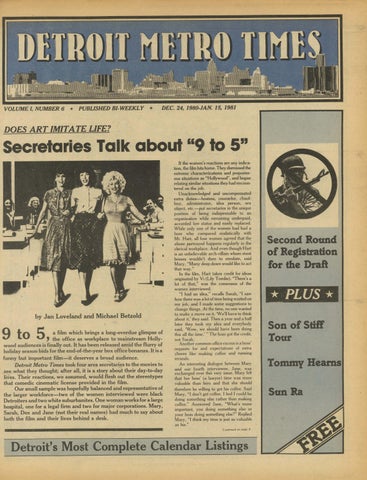
” 5 to 9 “ t u o b a k l a T Secretaries If the women’s reactions are any indication, the film hits home. They dismissed the extreme characterizations and preposterous situations as “Hollywood”, and began .
relating similar situations they had encoun‘tered on the job.
Unacknowledged extra feur,
and uncompensated
duties—hostess, counselor, chaufsex idea person, administrator,
object, etc.—put secretaries in the unique position of being indispensable to an organization while remaining underpaid, accorded low status and easily replaced. While only one of the women had had a boss who compared realistically with Mr. Hart, all four women agreed that the abuse portrayed happens regularly in the clerical workplace. And even though Hart is an unbelievable arch-villain whom most bosses wouldn’t dare to emulate, said Mary, “Many deep down would like to act that way.” In the film, Hart takes credit for ideas originated by Vi (Lily Tomlin). “There’s a lot of that,” was the consensus of the women interviewed. “T had: an idea,” recalls Sarah, “I saw _ how there was a lot of time being wasted on my job, and I made some suggestions to
Second Round
of Registration for the Draft
PLUS *
change things. At the time, no one wanted
by Jan Loveland and Michael Betzold a film which brings a long-overdue glimpse of 5 9 the office as workplace to ‘mainstream Hollyto 9 wood audiences is finally out. It has been released amid the flurry of holiday season bids for the end-of-the-year box office bonanza. It isa funny but important film—it deserves a broad audience.
‘Detroit Metro Times took four area secretaries to the movies to see what they thought; after all, it is a story about their day-to-day lives. Their reactions, we assumed, would flesh out the stereotypes that comedic cinematic license provided in the film. Our small sample was hopefully balanced and representative of the larger workforce—two of the women interviewed were black Detroiters and two white suburbanites. One woman works for a large hospital, one for a legal firm and two for major corporations. Mary, Sarah, Dee and Jane (not their real names) had much to say about both the film and their lives behind a desk.
to. make a move on it. ‘We'll have to think about it,’ they said. Then a year and a half later they took my idea and everybody said, ‘Wow, we should have been doing
this all the time.’ ” The boss got the credit, : : not Sarah. Another common office excess is a boss
requests for and expectations of extra chores like making coffee and running errands. An interesting dialogue between Mary and our fourth interviewee, Jane, was exchanged over this very issue. Mary felt
that her boss’ (a lawyer) time was more valuable than hers and that she should therefore be willing to get his coffee. Said Mary, “I don’t get coffee. I feel I could be doing something else rather than making coffee.”
Answered
Jane,
“What’s
more
important, you doing something else or your boss doing something else?” Replied Mary, “I think my time is just as valuable as his.” Continued on page 8
gs in st Li ar nd le Ca te le mp Co st Mo s t’ oi tr De
Son of Stiff
: