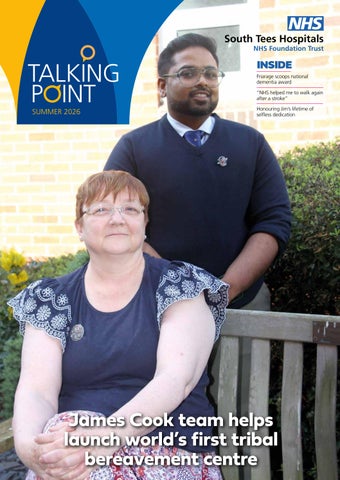
We have a magazine packed full of content with stories from our hospitals and community sites across our area.
As we look across University Hospitals Tees, we have heard from more than 1,200 patients, relatives and carers about our services. As part of a listening exercise across our area, we have visited venues in Hartlepool, Stockton, Northallerton, Middlesbrough and Redcar, as well as gathering views from people through our online survey.
Thank you to everyone who has taken the time to tell us what they think – we are now collating all your responses and feedback which will help shape plans for the next decade for hospital and community healthcare services across the Tees Valley, North Yorkshire and beyond. We already know from looking at some of this feedback the type of things people are telling us – many want better use of online services, better communication between departments, fewer appointments being rearranged and more services across our different sites.
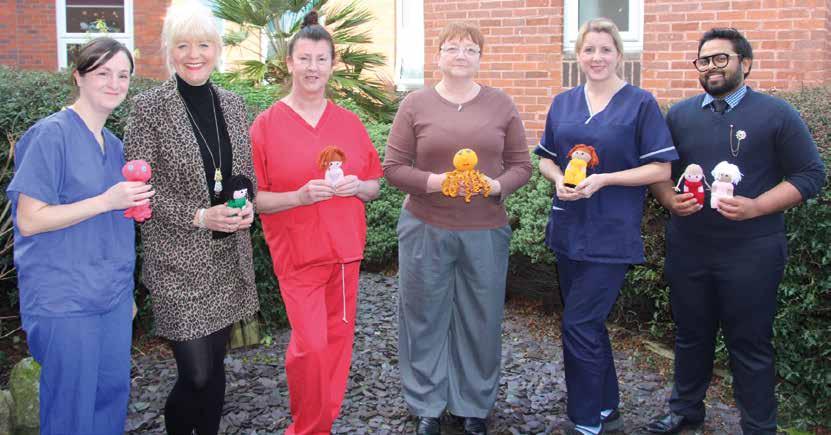
You will also read in this issue how we recognised our nurses and midwives across University Hospitals Tees as part of two special celebration days.
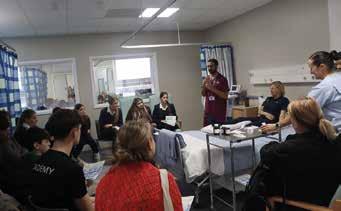
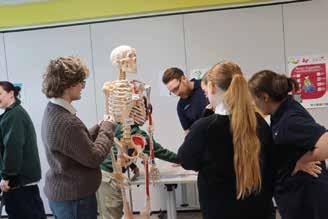
We also held a really successful careers day in Hartlepool for the children and families of our own staff – inspiring the next generation of healthcare professionals.
There are details in this issue about exciting news we have announced for a new ‘improvement hub’ – a small team of staff who will work alongside teams across University Hospitals Tees to help make everyday improvements to how services run. The team will help our staff spot what could work better, test new ideas, and make changes that last and can be shared – as part of normal day-to-day work.
On top of all of this, there are all of the staff, volunteering and patient success stories that we always share with you all. I hope you enjoy reading it and please do share your stories with us for future issues.
Best wishes,
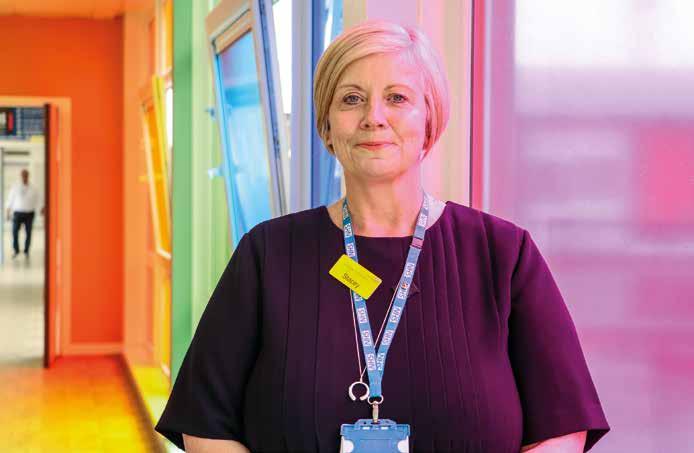
Stacey Hunter CHIEF EXECUTIVE UNIVERSITY HOSPITALS TEES
Keep up-to-date with University Hospitals Tees
From career stories to innovations in patient care and more, follow University Hospitals Tees on social media to keep up with the latest news.
LinkedIn: University Hospitals Tees
TikTok: @UniversityHospitalsTees
Instagram: @NorthTeesAndHartlepoolNHSFT
Friarage scoops national dementia award
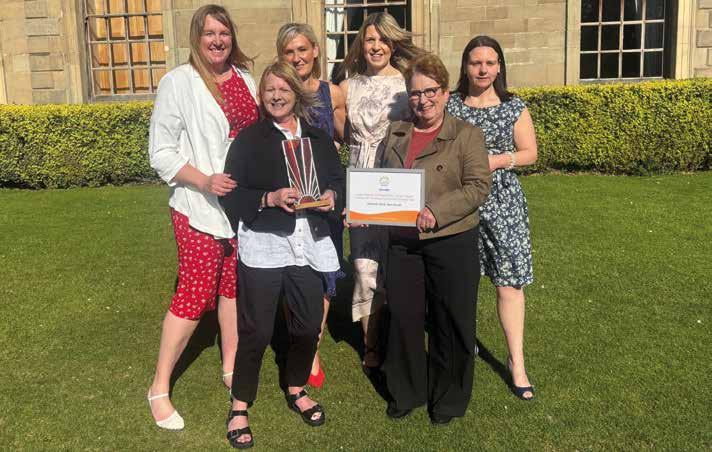
Catering and housekeeping staff at the Friarage have been named quality improvement project team of the year at The UK Dementia Awards 2026 after going that extra mile to improve hospital meals for patients.
Inspired by the results of a patient survey, Friarage housekeeping and catering manager Sue Hodgson joined forces with food services lead dietitian Deborah Green, lead dementia nurse Anna Wilson and patient involvement facilitator Nicola Arkless to transform mealtimes for dementia patients and their carers.
Improvements included a review of food quality and waste, improving menu options, developing finger food, pictorial and online menus, staff training on how to support vulnerable patients and a video case study which was presented at the National Audit of Dementia webinar.
“By recognising and valuing everyone’s expertise, the project exemplified collaborative working at its best and is something the NHS can be genuinely proud of.”
The judges praised the way the team has openly challenged their own practice and learned from the true experts – the patients and housekeepers. They sought insights from the local community and, with no budget, used their own skills to redesign a vital part of the recovery pathway.
Deborah said: “This project highlights the importance of recognising and responding to areas for improvement.
Listening to the voices of the housekeeping team was invaluable in driving improvements in the quality and safety of nutrition and hydration as part of treatment and recovery.
“People living with dementia are not always able to raise concerns or make complaints. By getting it right for those who cannot always speak for themselves, we are far more likely to be getting it right for all patients.
“The success of the project is a true testament to the breadth of the multidisciplinary team involved, bringing together nursing, AHPs, catering, housekeeping, patient experience and specialist teams. By recognising and valuing everyone’s expertise, the project exemplified collaborative working at its best and is something the NHS can be genuinely proud of.”
Anna added: “I would like to say a sincere thank you to Deb, Nicola, Sue and the housekeeping team for embracing change to improve nutrition for our most vulnerable patients admitted to the Friarage living with dementia. Your collaboration and commitment are not only award winning but making a meaningful difference to patient care and their recovery.”
Some of the team receiving the award
Middlesbrough team help launch
world’s first tribal bereavement centre
A doctor who was stranded in a remote tribal village in India has helped open a bereavement centre in the same place.
In 2022, while in Southern India, Christy Vijay’s bus broke down in the middle of nowhere. With no transport in sight, Christy’s friends took him to Sittilingi, a tiny, remote tribal village.
Christy, who works as a gynaecologist in James Cook, said: “During my stay in the village of Sittilingi, I was diagnosed with dengue, a viral infection that causes severe flu-like illnesses.”
Christy’s worsening condition was treated in Tribal Health Initiative (THI), a non-profit run hospital that aims to provide quality healthcare to those in Sittilingi.
During his stay, Christy experienced first-hand how an overstretched hospital was on its knees trying to provide care to the population.
This encouraged him to work as a gynaecologist at the Tribal Health Initiative while continuing his practice in Middlesbrough.
Travelling once every three months, Christy takes time off from his day-to-
day job to work in the village.
Every trip also includes around 100kg of donated clothing and medical essentials, with special permission from British Airways to transport them.
During every visit, Christy was heartbroken to witness families facing miscarriage and infant loss.
He said: “In the forest, if a mother faces a complication and there is no specialist, she often has no choice but to go home and face the worst outcome.”
The 34-year-old voiced his concern with James Cook’s maternity team. His aim was that no one should be sent home without a bereavement mental health care plan.
The poignant tales shared by Christy encouraged the maternity team to leverage their experience to help establish a pioneering bereavement centre in Sittilingi.
To ensure the facility successfully opened, Helen Simpson, consultant
obstetrician, and the hospital’s bereavement team, worked towards establishing a formal training curriculum – where James Cook’s medical teams would train locals.
As part of this, three tribal students were chosen as the first cohort to undergo training.
These newly-trained specialists provide expert bereavement care to parents and families grieving the loss of their newborns in the bereavement centre.
Moreover, UK children’s charity 4Louis donated memory-making kits and a cuddle cot.
Helen said: “Hearing from Christy over the years about the lack of bereavement care the women in the village receive, including not being able to acknowledge the loss of a child, see, or name that child –was heartbreaking.
“Seeing his drive encouraged me to go out to India with him and help set up the bereavement centre.”
Christy added: “I would like to thank everyone for their support in making this happen.”
The maternity team with the donated toys for the new bereavement centre
Teesside research team lead national heart surgery trial
Researchers at James Cook are leading a national heart surgery trial involving more than 30 centres across the UK.
The Academic Cardiovascular Unit (ACU) has launched a National Institute for Health and Care Research (NIHR) funded study called the AFFECT trial.
The AFFECT trial is designed to identify the safest and most effective bloodthinning treatment to use after heart valve surgery for patients who also have a heart rhythm problem.
“The AFFECT Trial will provide high-quality evidence to guide national treatment decisions and improve long-term outcomes for patients across the UK and internationally.”
Each year, thousands of people in the UK have surgery for mitral regurgitation – a common heart condition where the mitral valve fails to close tightly, allowing blood to leak backward into the left atrium instead of pumping forward to the body. This forces the heart to work harder, which can lead to fatigue, shortness of breath, and potential heart failure.
If these patients also have a heart rhythm issue, they usually need blood-thinning medication to reduce their risk of having a stroke or other complications after surgery.
Current national and international guidelines recommend using a vitamin K antagonist (VKA) such as warfarin. But a newer group of medicines known as Direct Oral Anticoagulants (DOACs) are now also widely used.
The AFFECT trial aims to show which option offers the best long-term outcomes for patients.
The study is aiming to recruit 1,282 adults who are having mitral valve repair
surgery at cardiothoracic centres across the UK.
Participants will be randomly allocated to receive either a Direct Oral Anticoagulant (DOAC) or a vitamin K antagonist (VKA).
Treatment will start before patients leave hospital. They will then be closely monitored for at least 12 months, with further annual check-ups for up to four years.
Researchers will assess a range of outcomes, including stroke prevention, quality of life and cost-effectiveness.
Eligible patients will be invited to take part by their clinical teams. More than 130 patients have already signed up and started treatment.
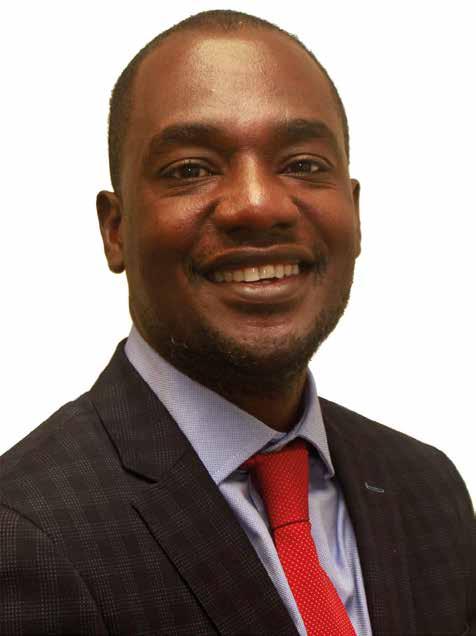
Professor Enoch Akowuah, chief investigator for the AFFECT trial at University Hospitals Tees said: “This is an important question for both patients and clinicians.
Professor Enoch Akowuah, chief investigator for the AFFECT trial
“We know anticoagulation is essential for patients with atrial fibrillation after mitral valve repair, but we do not yet know which treatment offers the best balance of safety and protection.
“The AFFECT Trial will provide highquality evidence to guide national treatment decisions and improve long-term outcomes for patients across the UK and internationally.”
Friends and family raise over £13,500 in Reuben’s memory
Friends and family of Reuben Harvey have raised over £13,500 in his memory for the neonatal unit at James Cook.
Rebecca Hanley from Middlesbrough, was 26 weeks and three days into her pregnancy when her waters broke at 1.30am.
Following a complicated labour, Reuben was delivered feet first after being stuck for nine minutes.
She said: “Reuben was beautiful boy. His brother Finley looks just like his daddy, but Reuben had a look of me.
“He weighed 1 lb 13 oz which was a good size for his age.”
During his time on the neonatal unit, Reuben suffered a severe seizure which resulted in multiple bleeds on his brain.
Since his passing, Rebecca and Reuben’s dad, Andrew Harvey, have dedicated themselves to fundraising for the unit to help other babies and families in
Reuben’s memory and to thank the staff who looked after him.
Rebecca said: “The neonatal team were so supportive. I knew the unit was a special place, but until you have a baby in there you don’t realise how special it is.”
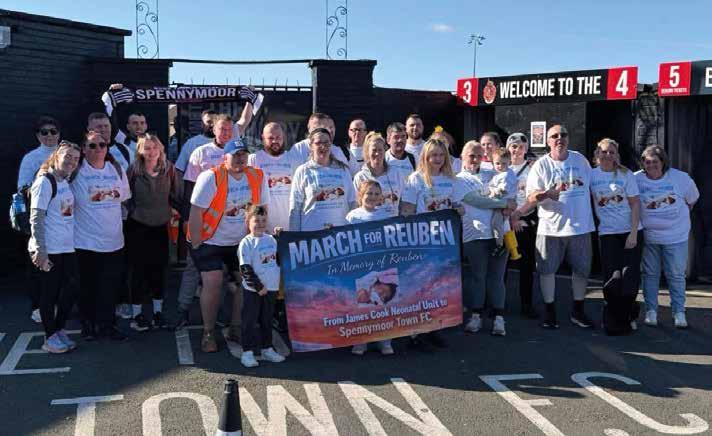
March for Reuben
Rebecca, Andrew and their family and friends walked 22 miles from the neonatal unit to Spennymoor Football Club.
“It’s helped us heal a little bit knowing how much everyone will remember Reuben even though they didn’t meet him.”
Despite being approximately 44,000 steps, the challenge took the group just seven and a half hours.
Reuben’s grandparents, cousins and big brother Finley joined for the final mile.
Reflecting, Rebecca added: “The last mile was so emotional, we were all
proud, overwhelmed and a little relieved. Me and Andrew are so proud of ourselves and everyone that took part.
“It’s helped us heal a little bit knowing how much everyone will remember Reuben even though they didn’t meet him.”
Vicky Ford, neonatal matron, said: “On behalf of the nursing and medical team from the neonatal unit, I would like to send a heartfelt message to Rebecca and Andrew along with their family and friends for their amazing fundraising efforts.
“We deeply appreciate your time and energy; your support truly will make a difference for our families.
“Having been through such a difficult time with the sad loss of Reuben, it is incredible that you wish to give something back to the team that cared for him.
“We would also like to express our gratitude to everyone who has donated to our unit in memory of Reuben.”
March for Reuben walkers on route
“NHS helped me to walk again after a stroke”
A stroke survivor has credited NHS teams for helping him regain his life after suffering from a stroke – while raising awareness among youngsters that stroke doesn’t discriminate by age.
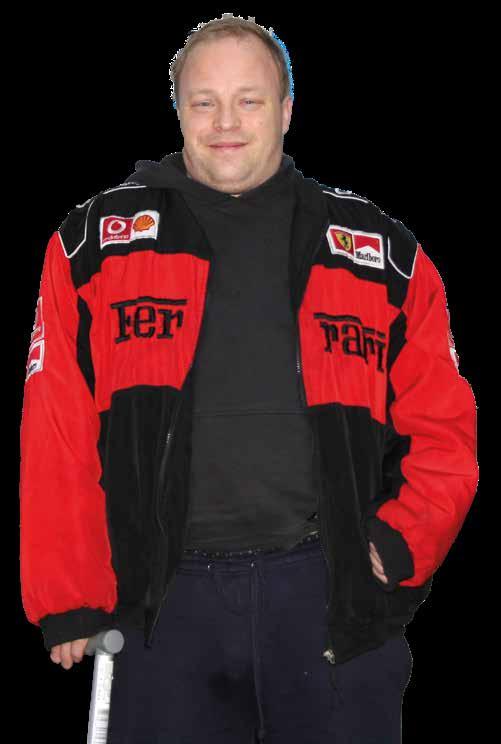
In October 2025, Matthew Bond, 37, woke up with a ‘pins and needles’ sensation on his left arm but brushed it off and went back to sleep.
But when he woke up and tried to walk, he felt as though there was a very heavy object attached to his left leg. This was coupled with his left arm going numb and the left side of his mouth dropping, leaving him unable to walk, move or speak.
Matthew’s housemates at the time remembered FAST (face, arms, speech, time) – an acronym that helps quickly identify the three most common signs of stroke – and rang 999.
The North Yorkshire resident was blue-lighted to James Cook for urgent treatment.
Following further scans, Matthew was diagnosed with a right-sided lacunar stroke, an ischemic stroke occurring deep in the brain, and was admitted to the acute stroke ward for four days.
After this, he was transferred to the Rutson ward at the Friarage for further rehabilitation.
For patients like Matthew, recovery is crucial after a stroke because it directly impacts a survivor’s ability to regain lost skills, achieve independence, and improve their overall quality of life.
Matthew was referred to the specialist inpatient stroke and complex rehabilitation team on the Friarage’s Rutson unit.
The unit provides care and rehabilitation for patients who have experienced a stroke and other medical conditions as part of their hospital-based recovery.
Clinical lead physiotherapist for stroke and complex rehabilitation Lucy Keenan was involved with Matthew’s care.
She and her team’s involvement helped him regain his independence, from requiring a hoist and being unable to move to walking freely with a stick, carrying out activities of daily living, climbing stairs, walking outside and returning home.
Thanks to this specialist support, Matthew was discharged from the Friarage after five weeks, during which he was also referred to the early supported discharge (ESD) team – where he received extensive support from the comfort of his home.
Two members from the ESD team visited Matthew three to four times a
Every visit involved the team showing the North Cowton resident how to shower safely, introduce different balance and strength exercises and undertaking kitchen assessments.
The former forklift truck driver said: “The help and support I have received has not only helped my physical recovery but also improved my mental health and wellbeing. The team’s involvement has instilled a sense of hope for recovery and motivation to continue to work on my recovery.”
Lucy added: “On behalf of myself, Kirsty Jones, Liz Haresign, Stephanie Verity and the entire Rutson and ESD team, it has been an absolute pleasure to work alongside and support Matthew on his rehabilitation journey.”
Getting the right treatment is what matters most
More than 1,200 patients, relatives and carers have shared their views on local hospital services.
You told us that what matters to you most is getting the right treatment and access to the best treatment. This was closely followed by access to specialist care, good communication and shorter waiting times.
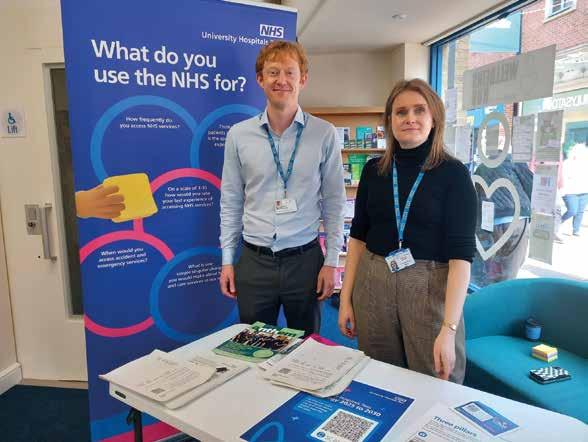
Listening events were held at a range of community venues including Hartlepool College of Further Education, Stockton Wellbeing Hub and libraries in Northallerton, Middlesbrough and Redcar. People were also invited to complete our Caring Better Together survey online.
Our patient involvement and communication and engagement teams also visited a wide range of community groups to gather views from patients and carers. These included Teesside Stroke Club, Dementia Action Teesside, Hambleton Community Action, Hart Gables (LGBTQ+) and MND and macular groups in Stockton.
Chief strategy off icer and deputy CEO for University Hospitals Tees, Matt Neligan said: “Thank you to everyone who has taken the time to complete our survey or attend one of our community events. We are now collating all your responses and feedback which will help shape plans for the
next decade for hospital and community healthcare services across the Tees Valley, North Yorkshire and beyond.
“Moving forward we will be carrying out more targeted research with staff and patients in a number of service areas.”
Here’s just a few of the suggestions you have made so far:
• Better use of email and the NHS app
• Aftercare to include follow up calls to ensure patients are recovering properly
• Improved disabled toileting facilities
• Better communication between different departments
• Deaf awareness training for all staff
• Reduce the number of appointments that are rearranged
• Offer more outreach services in the community
• Provide more services at Friarage Hospital and University Hospital of Hartlepool
Moving forward we will be carrying out more targeted research with staff and patients in a number of service areas.
John Hugill and Kat Gretton host a drop-in event at Stockton Wellbeing Hub.
Award success for digital team
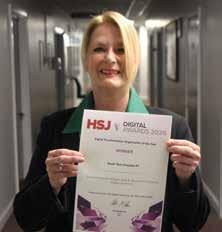
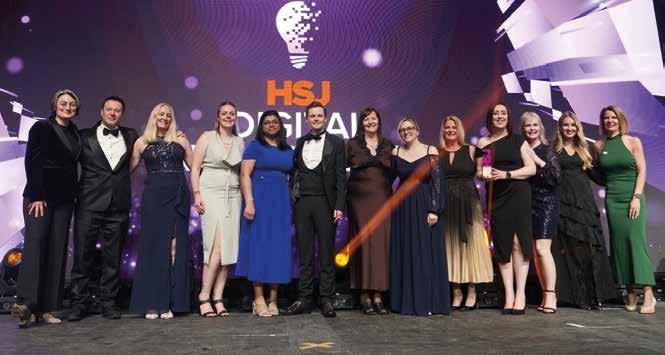
The University Hospitals Tees digital programme team has been named ‘Digital Transformation Organisation of the Year’ at a national awards ceremony.
The team received the award at the Health Service Journal (HSJ) Digital Awards award ceremony on Tuesday 19 May.
It recognises an extensive, clinically led programme that has transformed South Tees Hospitals NHS Foundation Trust from paper-based records to a fully electronic system. This has delivered significant benefits for patient safety, including more time for direct care, improved clinical decisionmaking, and substantial cost savings.
Lindsay Garcia, director of nursing, said: “We’re absolutely delighted to have our digital transformation recognised by the HSJ. This achievement reflects the dedication, skill and collaboration of our teams in delivering largescale digital transformation for the benefit of our patients.
“By advancing our digital systems, we’re enabling clinicians to make faster, safer decisions through better access to data, streamlined pathways and enhanced diagnostics.
“Our digital and clinical teams work side-by-side to reduce administrative burden and improve safety, ultimately freeing up more time for patient care. It’s a true partnership between clinical and digital expertise, all focused on delivering the best possible outcomes for our patients.
“Achieving this award is not about technology alone, it is reflective of multi professional teamwork, the correct culture, collaboration across disciplines and a willingness and drive to improve patient care.
“While it’s fantastic to win an award, our priority remains the samecontinuing to use digital innovation to improve the care we deliver to our patients every day.”
The team also received ‘highly commended’ in the ‘Outstanding Achievement in Electronic Patient Records Implementation and Optimisation’ category for developing the MIYA electronic patient record system, now used across all inpatient services in the trust.
The service was also shortlisted for three additional nominations:
• Driving virtual wards and hospitals through digital
• Driving prevention and early intervention through digital
• Improving medicines and pharmacy through digital
The winning team collects their HSJ award.
Lindsay Garcia, director of nursing.
“I have the privilege of seeing the extraordinary impact of these roles every single day” – a thank you to nurses and midwives
As University Hospitals Tees marked International Day of the Midwife and International Nurses' Day, chief nursing officer Emma Nunez had a special message of thanks.
She said: “Every year we mark two professions at the heart of our health service – nursing and midwifery.
“I have the privilege of seeing the extraordinary impact of these roles every single day, in our hospitals and our communities. These two days give us a chance to reflect, to recognise and to say a heartfelt thank you.
"Nurses and midwives are the constant presence for patients throughout their healthcare journey. They provide expert clinical care as well as reassurance, compassion, and the ability to make people feel safe at their most vulnerable moments.
“Whether supporting a woman through labour, caring for someone living with a long-term condition, or responding to an emergency on a busy ward, their professionalism and humanity are what makes them able to perform these roles.
“Despite the pressures, nurses and midwives continue to innovate, lead services, redesign pathways and push the boundaries of their practice. From advanced clinical roles to research, digital transformation and community-based care, they are shaping the future of the NHS with skill and determination.
“I want to pay tribute not only to those delivering care, but also to our students, our internationally recruited colleagues, our healthcare support workers and everyone who supports
the wider nursing and midwifery family. Each of you contributes to a service that millions rely on.
“As we mark these important days, I hope every nurse and midwife takes a moment to recognise the difference they make. The NHS simply could not function without you — and we are so grateful for all that you do.”
To read the career stories of some of our nurses, visit the University Hospitals Tees social media pages.
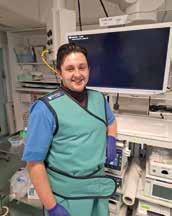
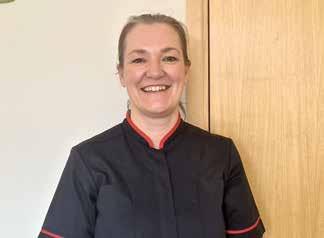
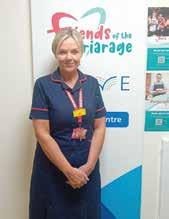
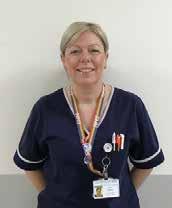
Ivan Brown.
Penny Jordan.
Owen Hart.
Rachel Walshaw.
Chief nursing o icer Emma Nunez.
Shining a spotlight on midwifery
Every day across University Hospitals Tees our midwives bring n into the world and support families through their most transformative moments by offering unwavering clinical expertise and support.
As part of International Day of the Midwife, we spoke to some of our midwifery colleagues to find out more about their experiences and careers as midwives.
Roxy’s story
From being born at The James Cook University Hospital to training and now working there as well, Roxy ElDharrat’s journey has come full circle.
After growing up in Saudi Arabia, she originally planned on neonatal nursing, but everything changed when she discovered midwifery.
She’s now been part of the profession for over six years and said: "I was always meant to be a midwife; I just didn’t know it until six and a half years ago."
For Roxy, the heart of the job is the families. She loves making an impact on life’s most special moments, knowing that while a family might not remember her name, they will
always remember how she made them feel. It’s her way of leaving a "little imprint on the world" by helping create beautiful memories.
When asked what she’d like to say to new or expectant parents out there,
Roxy has a little reminder: “Trust your gut, try not to worry about worrying, and not having the answers is fine. That’s what we’re here for – to support and guide you and let you know that you’re doing amazing.”
Gayle’s story
Gayle smith, community midwife at the University Hospital of Hartlepool, loves being able to support women and their families through one of the most important times of their lives.
When asked what she loves about her job and what she would tell anyone considering a similar career, she said: “It's an amazing feeling to share the journey throughout pregnancy, providing continuity and seeing families grow.
“My advice to anyone considering a midwifery career is that being a midwife can be tough but it is an extremely rewarding job. It's not just about delivering a baby, the role includes providing care, support and education during the pregnancy, labour and postnatal period.”
Gayle Smith.
Roxy El-Dharrat.
Families of NHS workers invited to explore career opportunities
The University Hospital of Hartlepool welcomed in aspiring healthcare workers this spring as part of a special career event, open to the children and families of our NHS staff.
The event, held at the hospital’s Health and Social Care Academy, saw 60 children and young people turn up to find out about different careers in the NHS – from emergency care to physiotherapy, and more.
The event mirrored previous career days for local schools, with one special difference – this event was open exclusively to young family members of staff at University Hospitals Tees.
Attendees were taken through the journey of fictional patient, ‘Toby’, who had broken his ankle. The roleplay saw them talk to staff from various hospital services to understand how Toby is supported throughout his care.
12-year-old Henry Middleton attended the event with his mum Rachel. His dad, Steven, works as an urgent care practitioner at the University Hospital of Hartlepool.
Rachel said: “This event is really great for kids. Henry has been able to meet specialists from different areas and get an idea of what a career in the NHS might look like. The knowledge and expertise that staff shared with the group, along with the encouragement to engage with the various stations, were brilliant.
“The passion staff showed for their professions was inspiring, especially for an inquisitive young boy. Henry’s favourite area was theatre – he learned so much there, and the team were incredibly patient while he asked many questions. He was so fascinated that he has now set his sights on becoming a surgeon.
“Today’s been a great opportunity and experience, and will hopefully open the way to better opportunities for the kids who came along.”
Children followed a fictional patient’s hospital care through di erent workstations.
Rachel and Henry Middleton.
Participants at the career event.
Improving Better Together
University Hospitals Tees is taking the next step in improving the care we provide for patients every day.
Over the coming months, we’ll be launching the ‘improvement hub’ – a small team of colleagues from across our organisation who are passionate about helping services work even better.
The improvement hub will work alongside teams across University Hospitals Tees to help make everyday improvements to how services run.
Their role is to help staff spot what could work better, test new ideas, and make changes that last and can be shared – as part of normal day-to-day work.
The hub will support colleagues at all levels, and the work will be shaped with staff who know their service the best.
Alongside the improvement hub, we are introducing a single, group-wide approach to improvement: Improving Better Together.
At its heart, Improving Better Together is:
• About patients – improving quality, safety and outcomes
• Led by our people – giving staff the confidence, space and time to fix what doesn’t work
• Focused on learning – testing ideas, learning from them and improving every day
• Based on evidence – improving systems and processes, continually learning and improving
Group head of leadership and organisational development
Dan Fawkes said: “Everyone comes to work wanting to do their best for our patients and our colleagues. Continuous improvement focuses on a structured, evidence based approach to building on what we already do and continually seeking ways to make that even better.
“We often follow processes that exist simply because ‘that’s how we’ve always done it’. An improvement culture gives us permission to stop and ask whether there’s a better way.”
For improvement to work, it must involve staff at all levels and be supported by open, supportive leadership and a positive culture.
Dan added: “Continuous improvement is not about cost cutting or short term fixes. And it’s not about adding extra work on top of already busy jobs.
“Our aim is for improvement to be part of everyday work – helping teams deliver safer, more reliable services, while building a stronger, more resilient organisation. We can’t do this without our staff.”
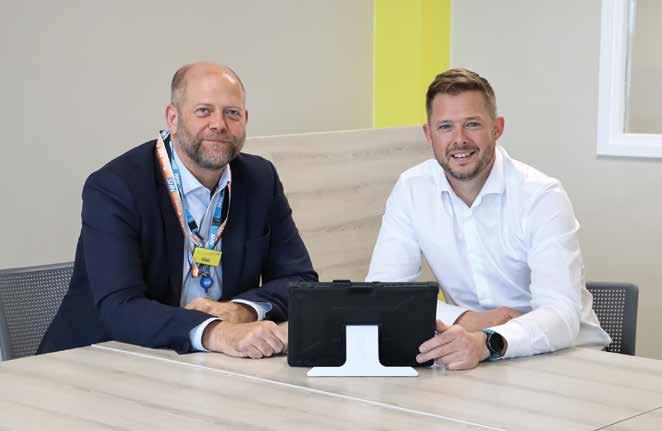
Chief strategy o icer and deputy CEO Matt Neligan and Group head of leadership and organisational development Dan Fawkes.
Honouring Jim’s lifetime of selfless dedication
For James (Jim) Ernest Iles, volunteering wasn’t something he did, it was who he was.
Jim, from Ormesby Village, spent most of his life helping people through charities, care centres, community organisations and at the Volunteers’ Coffee Lounge within James Cook.
In recognition of his extraordinary service and his lifelong dedication to helping others, Jim was honoured with a Diamond Volunteer Award from the then Prince Charles in 2012.
In 1993, at the age of 64, Jim and his wife Kath began volunteering in the Volunteers’ Coffee Lounge, serving tea and coffee to patients and visitors in the outpatient department.
What began as a simple act of service soon grew into something far more meaningful.
he also collected any scrap metal and donated it to the war effort to make destroyer warships.
At the age of 14, he left school and began to work at Ormesby Hall. Five years later, at the start of the NHS, he moved to St Luke’s hospital for the mentally ill, working as a gardener.
This marked the start of a career and a calling devoted to supporting some to the most vulnerable.
“Jim had that rare gift of making everyone feel that they were important, no matter what walk of life they came from.”
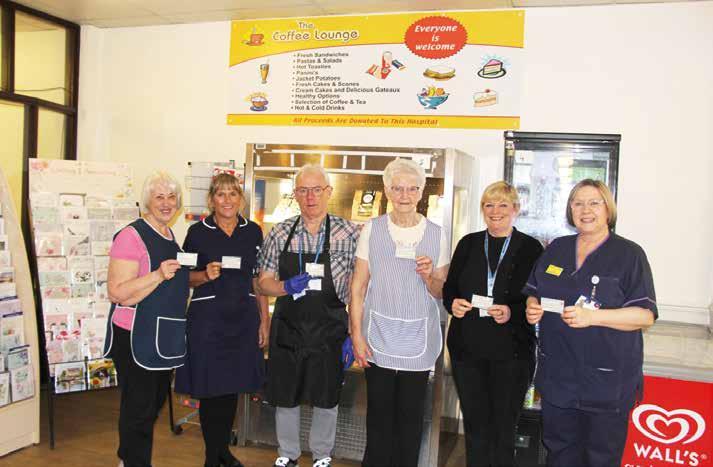
The Volunteers’ Coffee Lounge became Jim’s second home. Serving around 500 customers a day, it’s a busy place often filled with patients, and their loved ones, waiting appointments, results or treatment.
Jim understood this better than most and often offered reassurance and time, which made the difference between someone returning to the ward with hope instead of fear.
After Kath’s death, Jim continued to volunteer in the hospital café and dedicated two days a week but often picked up regular shifts.
Following his passing, Georgina Oakley, Volunteers’ Coffee Lounge manager, said: “Jim had that rare gift of making everyone feel that they were important, no matter what walk of life they came from. Jim is missed and will always be an incredibly special member of the team.”
Jim’s selflessness extended beyond the hospital. As a schoolboy he raised money for the British Red Cross.
He would play the hurdy gurdy barrel organ and donate any monies made;
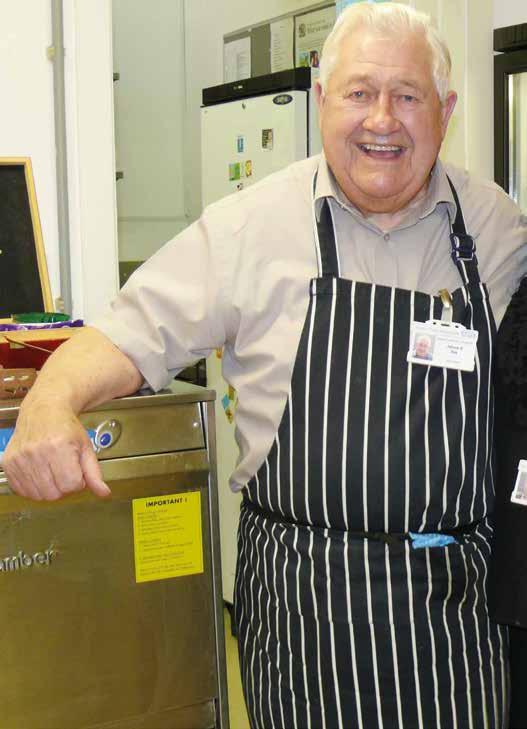
James (Jim) Ernest Iles
He became a volunteer at Ormesby Hall and fundraised for Jervaulx Road Care Home.
Jim’s daughter, Gillian Woodrow, said: “Dad had three priorities in life, his family, work and helping others.
“He loved the Volunteers’ Coffee Lounge because he felt he was helping his community and he also made many friends. His lasting legacy would encourage anyone to become a volunteer there, especially if you’re lonely or just want to help others.”
Lyndsey celebrates 10-year transplant anniversary with a powerful plea
A cancer care lead who was given the ‘gift of life’ through living kidney donation 10 years ago is sharing how it transformed her life.
From dialysis three to four times a day, to now exercising three to four times a week, Lyndsey Hoare is living proof of the impact a donor can make.
Lyndsey’s health battle began as a teenager when she was rushed to the Royal Victoria Infirmary Hospital for plasma treatment on her kidneys after contracting Henoch-Schönlein purpura (HSP). A condition that causes small blood vessels to become inflamed, swollen, and leaky.
Following this, Lyndsey was placed under the care of James Cook’s renal teams who she describes as her ‘real life angels’.
A few years later, she was then diagnosed with IgA nephropathy, a chronic autoimmune disease that steadily attacked her kidneys.
By 2015, Lyndsey received the news she needed a new kidney.
She said: “After being added to the organ transplant register in 2015, I started on peritoneal dialysis which involved a fluid exchange three to four times a day which I did myself at home.
“I also worked full time at James Cook, so I would have to do a dialysis exchange whilst at work on the ward.
“I am so thankful to my consultant Dr Shipley, his secretary Janice, the dialysis nurses, and staff on the renal unit, outpatients and ward 4 who always made me feel part of the furniture when I had to do dialysis on my lunch breaks.”
In September 2016, Lyndsey found a match and received a kidney transplant at The Freeman Hospital.
Since then, she has used her experience to help patients, families and carers access personalised care during diagnosis, treatment and beyond within her role as a Macmillan personalised cancer care lead.
Lyndsey Hoare
She has also taken part in the World Transplant Games, is a volunteer for the North East Kidney Patients Association and plans to complete a fundraising walk for Kidney Research with her family as part of her 10-year transplant bucket list.
However, Lyndsey’s biggest goal this year is to get 10 people signed up to the organ donation register.
She said: “I’m sharing my story to inspire those waiting for a transplant to never give up and to encourage more people to have the conversation with their family about donating their organs.
“I will forever be grateful for the kindness of my donor who has allowed me to spend the last 10 years healthier with my family and friends, go on holiday and enjoy the little things like watching my nieces and nephews grow up.
“Since my transplant, I now lead a very normal life, I am fitter and healthier without being breathless and have a much better quality of life.”
Give the gift of life
Renal consultant, Dr Shipley said: “There are over 7,000 people in the UK currently on the transplant waiting list who are relying on living organ donors to come forward and to speak to their families and loved ones about organ donation.
“Lyndsey is an amazing example of how kidney transplantation can transform the life of someone with kidney failure and enable them to live a fuller, healthier and more active life with their friends and family.
“Signing up to the organ donation register is quick and simple and could help save someone’s life.”
To register your interest in living kidney donation, visit the NHS Blood and Transplant website.
Children’s artwork helping bring cheer to patients at local hospital
Young artists from a primary school in Guisborough are bringing cheer and a great big splash of colour to its local primary care hospital, with the help of the arts council at University Hospitals Tees.
The heart-warming initiative will see artwork created by nursery students from Chaloner Primary School adorn the walls of Guisborough Primary Care Hospital – helping to brighten the day for local patients attending their appointments.
The project began when teacher Miss Burrows got in touch with James Cook Hospital, hoping to share the children’s creations with patients.
Jean MacLeod, chair of University Hospitals Tees’ arts council, visited the nursery to personally thank the children for their thoughtful contribution.
“This project is a wonderful example of community spirit and the positive impact even the youngest members of our community can have.”
Our arts council then worked with NHS Property Services, who own the building, to display the children’s artwork indefinitely.
Jean said: “It was a pleasure to meet the children and to see their enthusiasm and creativity first hand. Their artwork will undoubtedly bring comfort and smiles to many people attending the hospital.
“This project is a wonderful example of community spirit and the
positive impact even the youngest members of our community can have.”
During the visit, Jean spoke to the children about hospitals and the important roles played by doctors and nurses in caring for people in the community.
She also joined in with the children’s nursery rhymes, making the occasion both educational and enjoyable.
The drawings are now being prepared and will be showcased on notice boards throughout the hospital, helping to create a more welcoming and uplifting environment for patients, visitors and staff alike.
Jean added: “The arts council would like to extend its sincere thanks to the children of Chaloner Primary School and their teacher Miss Burrows.
“We’d also like to thank NHS Property Services for their support in bringing this initiative to life.”
Jean MacLeod, chair of University Hospitals Tees’ arts council, with some of the school children
New surgical technique to have ‘life-changing’ impact for women being treated for breast cancer
An innovative cancer surgery technique is preventing a lifelong side effect of cancer for women across the Tees Valley.
The new technique, called ‘lymphatic bypass supermicrosurgery’, has been used at James Cook for women undergoing surgery to treat breast cancer. It prevents the risk of secondary lymphoedema – a chronic condition which causes swelling in people’s limbs.
The disease affects 50% of women who have undergone ‘axillary clearance’ surgery – where cancer has spread to the lymph nodes in the armpit. That’s approximately 36 out of the 72 women who receive this surgery every year across University Hospitals Tees sites.
This new surgical technique reduces that impact to 4% of women.
So far two women under the care of the Middlesbrough hospital
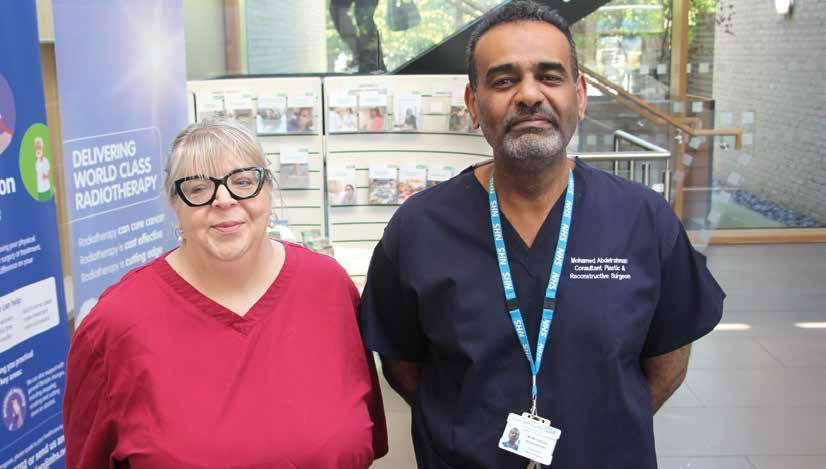
have undergone this new technique, performed by plastic and breast reconstruction surgeon Mohamed Abdelrahman. He has been working closely with therapy radiographer and lymphoedema practitioner Kate Gowans and breast surgeons to identify women who are at particularly high risk of lymphoedema.
Mohamed said: “This procedure came to light very, recently and there are very few centres in the UK currently offering it.
“When I first heard about this procedure, my mind was just blown. It amazes me that surgeons have these incredible skills that can so benefit our patients.”
“The first lady to have this procedure with us last year had a very high risk of developing lymphoedema. She’s doing remarkably well now – Kate sees her regularly and, nine months on, she shows no signs of it.
“The procedure only takes one and a half hours but it impacts the rest of their life.”
Axillary surgery disrupts the lymphatic vessels in the armpit which causes swelling to the arm, known as lymphoedema. This new supermicrosurgery ‘plugs’ these vessels – which are around 0.5mm thick (less than a hair) – into the veins for the body to filter as usual.
Kate said: “When I first heard about this procedure, my mind was just blown. It amazes me that surgeons have these incredible skills that can benefit our patients.
“Lymphoedema is a horrible, painful side effect of cancer treatment. It’s life long, and only manageable – not curable – which for some patients, is devastating.
“To have this new procedure for women in Teesside is hugely exciting. It’s going to be life-changing.”
Mohamed continued: “If we can make life easier for these ladies, let’s do it.”
Therapy radiographer and lymphoedema
practitioner Kate Gowans and breast reconstruction surgeon Mohamed Abdelrahman
Alice awarded prestigious fellowship
An inspirational health worker has been awarded a prestigious fellowship – becoming one of only two people to be recognised recipients in the country.
Alice Franklin, senior specialist physiotherapist at James Cook, was awarded the Tessa Jowell Allied Health Professionals (AHP) Research Fellowship.
The initiative is the UK’s first national programme dedicated to AHP-led research in neuro-oncology.
“I feel privileged to have such an incredible opportunity to conduct research that is directly linked with improving patient experience.”
Established by the Tessa Jowell Brain Cancer Mission (TJBCM) with investment from the National Institute for Health and Care Research (NIHR) in June 2025, the fellowships mark a pivotal step in strengthening brain tumour care across the UK.
Alice said: “I am delighted to have been awarded a three-year research fellowship from the NIHR jointly with the Tessa Jowell Brain Cancer Mission.
“I feel privileged to have such an incredible opportunity to conduct research that is directly linked with improving patient experience. I am really looking forward to working with my experienced supervisory and
Alice Franklin
mentorship team – between Teesside University, University of York, Academic Centre for Surgery at South Tees Hospitals and the Tessa Jowell Brain Cancer Mission.
“I hope to grow these relationships and partnerships across these institutions throughout my fellowship.”
People living with brain tumours face profound physical and psychological challenges, yet rehabilitation and supportive care remain under-researched and inconsistent across the UK.
The fellowships aim to address this by equipping AHPs with the skills, confidence and protected time to lead high-quality applied research in neuro-oncology.
They are awarded following a highly competitive, national and deliberately developmental application process, supported by a committee with expertise across neuro-oncology, allied health practice, research and lived experience.
Specialist team adopts future technology
A specialist team is marking a milestone by going live on SystmOne, a centralised electronic patient record (EPR) software that unites GPs, hospitals, and community care teams under one shared digital record.
The respiratory hospital at home team provides acute hospital-level care, monitoring, and intravenous treatments safely within patients’ homes
Since the adoption of the system, the team has praised it for eliminating paperwork and streamlining administration freeing up valuable clinical hours every week and maximising direct nursing time for patients.
The advanced features have helped staff to deliver additional support such as smoking cessation, pulmonary rehab, mental health and housing support to patients.
Clinical lead Janet Leight said: “The team has embraced the new system, which has ensured a seamless transition, supported by the SystmOne team, who were such an excellent support to us all during the implementation.”
The respiratory hospital at home team
Volunteers Coffee Lounge supports neonatal unit
Parents of babies staying in James Cook’s neonatal unit are now receiving free meal vouchers thanks to the Volunteers’ Coffee Lounge.
Parents often spend many hours on the neonatal intensive care unit with their child when they are sick or born premature, long after mum has been discharged from maternity care.
During this time they often forget to eat and drink, and when they do it can be very costly.
Research from UK infant charity, BLISS, in 2022, estimated that families with a baby in neonate care face an average additional financial burden of £405 per week.
This new initiative provides parents with meal vouchers to ensure they stay nourished during long hours at their child’s bedside.
Georgina Oakley, manager of the Volunteers’ Coffee Lounge, has a personal connection to the new partnership.
In September 2002, her son George was born 10 weeks early via emergency C-section.
He spent a month on the same unit she is now supporting.
Reflecting back, Georgina said: “To say I was in a state of disbelief is an understatement. We were extremely lucky George had no major issues, but being tubefed was daunting.
“These vouchers provide a well-deserved break and ensure parents look after themselves during a difficult time.”
“My memories of the unit are of the outstanding care we received. I hope offering a
helping hand shows these families they aren’t alone.”
Lynne Paterson, nurse consultant, said: “We are so grateful to Georgina and the Volunteers’ Coffee Lounge team.
“These vouchers provide a welldeserved break and ensure parents look after themselves during a difficult time.
“Thanks to the Volunteers’ Coffee Lounge, parents will have one less thing to worry about when they are already anxious about their baby.
“We can’t thank them enough for their generosity.”
Get involved
The Volunteers’ Coffee Lounge runs entirely on donations and all their profits are reinvested into the hospital.
If you would like to donate or find out more about their volunteering opportunities, please contact Georgina Oakley on 01642 854886 or email georgina.oakley@nhs.net
The Volunteers’ Coffee Lounge team with neonatal matron Vicky Ford and nurse consultant Lynne Paterson
Social club raises £29,000 for cancer care in latest charity venture
A Middlesbrough-based social club has raised nearly £29,000 to support cancer patients being treated at James Cook.
Staff and members at Beechwood, Easterside and District Social Club have been supporting the hospital for more than 50 years.
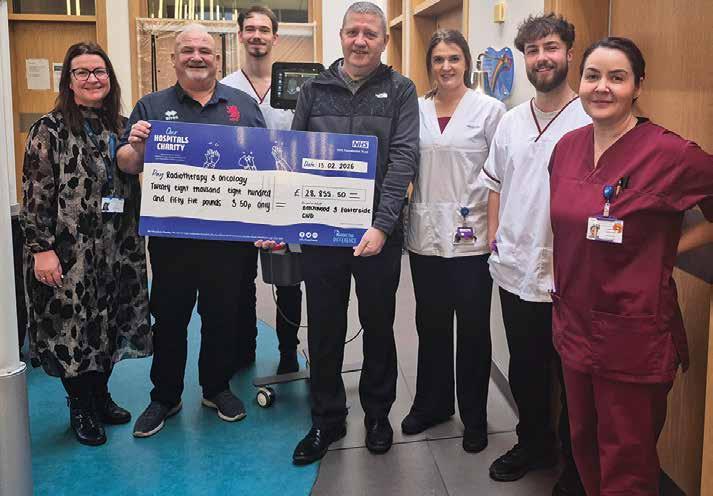
Their latest venture saw the club raise £28,855.50 over the course of a year for the hospital’s radiotherapy unit, where 68-year-old entertainment manager Harry Dunn has recently received treatment for prostate cancer.
But Harry’s not the only person at the club who has received prostate cancer care at James Cook. Several staff and members of the club have also been affected, including 61-year-old secretary Mick Smith.
Harry and Mick recently visited the hospital’s radiotherapy unit on the club’s behalf to make their generous donation.
It has allowed the unit to purchase a fourth bladder scanner – which
assesses the amount of fluid in patients’ bladders as they prepare for radiotherapy treatment.
Mick said: “As soon as you mention James Cook, our members all want to get involved because they’ve all used it. Harry will organise a show for a charity night and it sells out straight away.
“Clubs like this one aren’t just about having a drink. It’s a community and we couldn’t support charities like we do without our members.”
Harry added: “We just want to say a big thank you to all our members and the committee. We couldn’t do this without them.”
The group was awarded ‘Charity Club of the Year’ at Club Mirror’s 2025 Club Awards. The staff have run a few charity events over the last 12 months for their latest cause
– and members have been keen to get involved.
Claire Huntley, radiotherapy services manager, said: “We are incredibly grateful to Mick, Harry and everyone at Beechwood, Easterside and District Social Club for their continuous support of James Cook.
“Their latest donation means we’ve been able to purchase a fourth bladder scanner, meaning less waiting time for patients who are coming to us for treatment. The difference this will make for patients, like Harry, is so invaluable.”
Make a donation
Mick and Harry making their donation to James Cook’s radiotherapy team
Our Hospitals Charity enhances care and the hospital environment for patients under the care of South Tees. For more information about the charity and its latest fundraising campaigns, please scan the QR code to the right.
From nursing to part-time health visitor and local council foster carer, Sharon shares her story:
“I started in the NHS in 1985 as a student nurse. It feels like a long time ago now, and all of my nursing career, I’ve tended to work with children and babies, and I’ve worked in intensive care. I’ve worked in the community and latterly, at the end of my career, I was a health visitor.
It was amazing, because I could foster as well, and I went part time and it was flexible working hours, so I got to do two things in my life that I loved to do.
Because I was a health visitor, learning about childhood abuse, learning about neglect, being empathetic and having that understanding and love and care and being really caring really helped. But having an insight into health also helps care for children as well and looking at the growth and development, having that skillset has really helped.
If anybody is really wanting to think about fostering, they’re on the verge of retirement, or wanting to change their career, or do both… I would say you won’t regret it. It is fabulous, and I’m a really strong advocate for fostering.”
Sharon, retired health visitor and local council foster carer
Explore how you can be someone’s rock alongside your NHS role or as your next step, visit fosterwithnortheast.org.uk/healthcare or call 0800 917 771
“Impressed would be an understatement”
For anyone who struggles to leave their home without support, at-home health services can be a lifeline.
This is something that Derek Brown, who cares for his wife Margaret, knows only too well.
Specsavers is committed to ensuring that everyone has access to essential eye-health and hearing care – but also understands that it’s not always easy for people like Margaret, who suffers from Alzheimer’s disease, to attend in-store appointments.
That’s why, for the past ten years, Specsavers Home Visits has provided comprehensive NHS-funded eye tests to anyone who’s unable to visit a store unaccompanied. It’s also started to provide free at-home hearing services in selected locations in the UK.
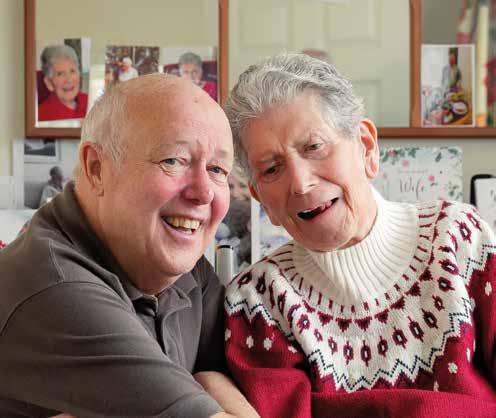
Derek called on the Specsavers Home Visits service when Margaret needed a routine eye test and it was too challenging to get to a store. He was blown away by the expert care that was delivered during the visit and the difference the new glasses made to his wife.
Although Margaret wasn’t able to respond to the questions of the optician and their assistant, during the visit, they adapted their approach so they could prescribe the reading glasses that have expanded her world.
“If I was to say I was amazed, that would be an understatement,” says Derek. “What was so significant for me as a full-time carer was that the Specsavers experts were punctual, quiet-speaking and patient, reassuring Margaret with everything they did. The level of care expressed towards her was incredible.”
Derek, from Northallerton in North Yorkshire, has been the primary carer for Margaret, since her diagnosis with
Why Choose Specsavers Home Visits?
• Convenience: Our experts come directly to you.
• Personalised Care: Visits are tailored to the individual’s needs, with specialist equipment to ensure comfort and accuracy.
• Peace of Mind: Your loved one will receive the same kind of highquality care as they would expect in-store.
Alzheimer’s in early 2018. After she spent four weeks in hospital in 2022, Margaret’s condition deteriorated, and she has since been confined to a hospital bed in the couple’s living room, and a hoist to access a wheelchair. With multiple other health challenges, caring for Margaret is complex – but after 25 years of love and marriage Derek has risen to the challenge. As well as taking care of her everyday needs, he’s been able to improve her quality of life thanks to Specsavers at-home service.
Following her at-home eye test, the optician suggested Margaret tried some reading glasses to help her enjoy looking at family photos.
Derek was unsure how she would adapt to wearing glasses but seeing her smile while looking at old family pictures told him everything he needed to know.
“If anyone is in any doubt about inviting Specsavers into their home, all I can say is: simply try it,” Derek says. “You won’t regret it for a second.”
Derek now fights for better support and recognition for carers nationwide, and has launched a website (www.dementiaguidance.co.uk) dedicated to helping carers like him across the UK. He’s keen to ensure they have all the information they need – including the option of getting a comprehensive at-home eye test from Specsavers.
Expert eye and hearing care tailored to your needs
For those eligible, our mobile experts will provide a comprehensive NHSfunded eye test from the comfort of your own home, with all the same care and thoroughness as you would receive in-store. Specsavers has now also started to roll out free at-home hearing services across the UK. To find out what locations this service is available in visit our website.
Our eye care and hearing services are tailored to each person and their needs. They are designed to provide eye care and hearing services that are as individual as they are and can be adapted to meet their changing circumstances and comfort levels.
To see if you or your loved one are eligible, call 0800 0890144 or visit specsavers.co.uk/home-visits