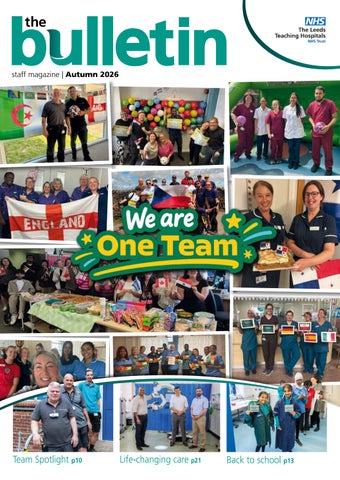
staff magazine | Autumn 2026
Team Spotlight p10
Life-changing care p21
Back to school p13
Contents
| www.leedsth.nhs.uk 4
Introducing our new values
5
New Trust Strategy launch
6-7
World Cup Summer Challenge
8 The power of multidisciplinary care 9 Seacroft SDC expansion 10-11 Team Spotlight 12
Building digital confidence
13 Shakespeare Primary School learning workshops 14-15 Future healthcare – R&I 6-7
10-11
World Cup Summer Challenge
Team Spotlight
16
Helping your career grow
17
Estates & Facilities news
18-19 Bulletin around the world 20 Your health and wellbeing at work 21 Cutting-edge lymphoedema surgery 22 13
14-15
Shakespeare Primary School
Future healthcare
Retirements
23 Chapel Allerton new build starts 24 Leeds Hospitals Charity news 25
65 years and counting
Bulletin is produced quarterly by the Communications Department. Photography by Medical Illustration Design by Octagon Design & Marketing Ltd Send your feedback, ideas and suggestions for the next edition to communications.lth@nhs.net Copy deadline is 1 October 2026
18-19
20
Bulletin around the world
Your health and wellbeing at work
For more news on a daily basis from LTHT please follow us on social media:
@LeedsTHTrust @LeedsHospitals
2
www.leedsth.nhs.uk |
News
Lord Mayor of Leeds joins garden celebration to mark Volunteers’ Week More than 30 volunteers came together in the White Rose Garden at St James’s Hospital to celebrate Volunteers’ Week in June, joined by the Lord Mayor of Leeds, Councillor Stephen Holroyd. Held as part of National Volunteers’ Week (1 - 7 June), the event was an opportunity to recognise and thank the volunteers who make such a valuable contribution across our Trust. Hosted by our Chief Executive, Brendan Brown, the celebration gave volunteers time to reflect on the difference they make to patients, visitors and colleagues every day, while enjoying refreshments provided by Leeds Hospitals Charity and the Royal Horticultural Society (RHS). Over the past 12 months, more than 200 new volunteers have joined our growing volunteer community, from welcoming visitors through our doors to providing companionship and reassurance on wards, volunteers help create a positive experience for those using our services. Councillor Holroyd praised their commitment, saying: “It is inspiring to see the dedication and generosity of volunteers across Leeds Teaching Hospitals. Their contribution goes far beyond practical support. They bring humanity, warmth and reassurance to
people at some of the most challenging moments in their lives. The difference they make every day, often through the simplest acts of kindness, should be recognised and celebrated.” We continue to develop innovative volunteering opportunities, including our Meal Mate initiative, which supports patients during mealtimes and helps reduce loneliness. Volunteers also support projects with Leeds Hospitals Charity, while Frankie the therapy dog is making a positive impact at The Rob Burrow Centre for Motor Neurone Disease. Looking ahead, we plan to expand our volunteering further, including new roles in partnership with Marie Curie and additional opportunities for young people.
Welcome to the autumn issue of Bulletin It may be the autumn issue of our colleague magazine, but this issue is all about our summer – and what a summer it’s been! In and amongst an extremely hot and busy summer period, we fully embraced World Cup fever for six glorious weeks, running our own summer challenge and igniting a competitive spirit across the Trust, celebrating teamwork and the diversity of our colleagues. In this issue we’ve got a double-page feature where you can find out about the activities that teams got up to and which CSUs made it to the top of the scoreboard – see p. 6 for more. One of our challenges was seeing how far Bulletin could travel throughout the competing nations of the World Cup – and you really embraced the challenge! Accompanying you on your holidays, Bulletin has never been more travelled, even appearing in the World Cup host stadiums and as far away as New Zealand. See some of your holiday snaps on p. 18. Our Summer Challenge was all about coming together and celebrating as One Team – which is one of our refreshed values, chosen and shaped by you and colleagues across the organisation. You can learn about our new values and what they mean in this issue, so please turn to p. 9 to find out more. Have a great Autumn! Kind regards,
Brendan Brown Chief Executive
3
News
| www.leedsth.nhs.uk
Introducing our new values The Leeds Way is refreshed with four new Trust values In July, we refreshed our values so that they reflect our people and our organisation as we are today and how we want to be in the future. This followed a Trustwide conversation asking colleagues to share what Leeds Teaching Hospitals mean to you, and thousands of you got involved to tell us your views. We then shared with you our draft values and priorities, and it was clear that some of them felt better than others about how we should work together in our organisation. You also told us that you’d like to keep The Leeds Way and update the values underneath it, and overwhelmingly that keeping patients at the heart of everything we do was important to you. We’ve taken your feedback on board
4
and created a set of new values and behaviours, and we have now begun the process of embedding our new values across the organisation. We know this will take a little time, and we ask colleagues to support us in updating your documents, policies and processes in your individual teams. Suzanne Dunkley, Chief People Officer, introduced the new Trust values that you have all helped to shape at LTHT Live. She said: “It’s a really exciting time now as we move forward with embedding them across the organisation and making a difference to what it feels like to work here. “Over the coming weeks you’ll start to see these appearing across the Trust and we’d really love you to take these on board and use them too. After all, they’re shaped and led by colleagues.”
• Responsible – We take responsibility for our own behaviours and actions •O pen and Honest – We share information, listen to feedback, and speak up so we can learn and improve •O ne Team – We work across teams to support each other and put patients at the heart of everything we do • Kind – We ensure everyone is heard, included and respected You can find out about everything relating to The Leeds Way, including downloadable resources, on the specially developed Intranet hub. It’s still work in progress as we want to work with colleagues across the Trust to make sure we get this right so please keep talking to us and sharing your feedback on what would help you embed these in your areas.
www.leedsth.nhs.uk |
News
Launching our new Organisational Strategy 2026-2029 Every day you are making a difference to patients, families and each other. Our newly-published Organisational Strategy 2026–2029 sets out our shared vision for the next three years and the direction and clear focus we need to create a healthier future for Leeds, West Yorkshire and beyond. Shaped by the views of colleagues and patients, it focuses on four key areas: our people, improvement and innovation, partnerships, and outcomes. Together, these will help us improve health, reduce inequalities and make the Trust a great place to receive care and a great place to work. Brendan Brown, Chief Executive, said: “Every day, I see the extraordinary skill, compassion and determination of our colleagues. In our wards, theatres, clinics, laboratories and every team, people go above and beyond for patients and for one another. That commitment is our greatest strength – and it is the foundation of this strategy. “This strategy sets out how we will achieve our vision over the next three years. For our patients, this means safer, more responsive and more equitable care, reduced waiting times and services designed around people’s needs. “For our colleagues, it means investing in wellbeing, leadership and inclusion. We know that caring for our colleagues is fundamental to caring for patients. We are committed to tackling inequality, improving colleague well-being, supporting flexible working and creating an environment where everyone can thrive.” Find out more and access resources on the Intranet.
• Digital transformation • Research and AI • Continuous improvement
Partnerships
What success looks like by 2029 For patients • Safe, effective and equitable care
Deliver integrated care that adds value
• Improved access and experience
• Care closer to home
• More personalised and coordinated care
Our four strategic priorities
• Strong system partnerships
People
• Tackling health inequalities
Make the Trust a brilliant place to work
• Community and regional collaboration
• Inclusive leadership
Outcomes
• Opportunities to learn, grow and thrive
• Learning and development
Provide outstanding care now and for the future
• A culture where everyone feels valued and heard
• Sustainable workforce
• Safer, better outcomes
Improvement and Innovation
• Reduced waits
Lead healthcare improvement, innovation and research
• Sustainable services
• Wellbeing and belonging
• Leeds Improvement Method
• Financial and environmental sustainability
For colleagues • A brilliant place to work
For communities • Reduced health inequalities • More care delivered closer to home • Strong partnerships that improve outcomes
5
Feature
| www.leedsth.nhs.uk
Trustwide competition heats up the summer! The FIFA World Cup was an opportunity for teams across the Trust to come together in friendly competition Our World Cup Summer Challenge kicked off in June as a fun way to bring people together riding on the excitement of the international football tournament. And what a sizzling six weeks of competition and teamwork it was! Each CSU was allocated a World Cup national team, with some given more than one. Teams were encouraged to get involved and celebrate their allocated country through its culture, food and drink, music, and through some good old-fashioned office decorating! All of this activity came with points, which contributed to the scoring team’s CSU’s position on the leaderboard. This was a hotly-fought contest, with the top spot switching hands almost every week! We have seen so much fun and joy across the organisation – with keepy-ups challenges, singing of national anthems, sharing cultures, penalty shoot-outs, tabletop football, bake-offs, fuddles, designing your own football card sticker books and so much more! Meanwhile, our humble Bulletin magazine has never been so well travelled – with photos
6
submitted from across the competing nations, and even from the World Cup games themselves (see p. 8-9).
Summer Challenge leaderboard
This wasn’t just about competition, or even about football! We have colleagues from around the world working together every day, and this was a chance to celebrate the diverse cultures and experiences that make our Trust what it is, whilst enjoying a little friendly competition. Thank you to Leeds Hospitals Charity for funding some of our activities across the CSUs.
The winner of our Trustwide CSU challenge was hotly contested, with the lead switching throughout! Congratulations to Adult Therapies CSU for snatching the top spot in the final week!
Sweepstake winner The winner of our Trustwide sweepstake with Spain was the Head and Neck CSU – congratulations, team!
Keepy-ups challenge A huge well done to David in Adult Critical Care for his hugely impressive keepy-up score! 1. 189 – David, Adult Critical Care 2. 144 – Dom, LGI Portering 3. 121 – Harvey, Cardio-Respiratory
www.leedsth.nhs.uk |
Feature
Thank you to everyone for getting behind this initiative and coming together as One Team to celebrate our diversity as a Trust. We’ve heard back from colleagues how this has helped bring people together and how it’s got you chatting with other people in your teams and beyond. We hope that will continue!
7
News
| www.leedsth.nhs.uk
The power of multidisciplinary care When patient Hattie Colwell returned home to the UK after brain tumour surgery in Canada, she was facing a new challenge. The operation had left her with facial palsy, affecting movement on the left side of her face and impacting everyday activities such as eating, speaking and smiling. What followed was a journey supported by teams from across the Trust, bringing together specialist expertise and psychological support to help Hattie rebuild her confidence and independence. Hattie was referred to the Trust’s specialist facial palsy service at LGI, where her care was coordinated across several teams. Consultant Plastic Surgeon Miss Touil and colleagues worked closely with Hattie to explore treatment options, while ensuring she had the emotional support needed to navigate the challenges of recovery. “From the beginning, I felt listened to and supported,” said Hattie. “They took the time to understand not just my condition,
but how it was affecting me day to day. Everyone works together and you feel supported throughout. It’s made a real difference to my recovery.” Facial palsy can have a significant impact on both physical function and emotional wellbeing, meaning patients often benefit from input from a range of specialists. For Hattie, that joinedup approach has included several procedures to restore movement and improve facial function, alongside ongoing rehabilitation and psychological support. Miss Touil said: “Hattie’s recovery highlights the importance of a multidisciplinary approach. Supporting patients with facial palsy is about much more than surgery alone. It takes a whole team working together to help people regain confidence, function and independence.” Now back at work and recently moved into her own home, Hattie continues to receive follow-up care while looking ahead to the future.
£8m project to replace roof of Brotherton Wing Work to replace the roof on Brotherton Wing, LGI, is progressing well, and Director of Estates & Facilities Craige Richardson has recently been to meet the team working on it. The £8m project – aimed at protecting remaining clinical services and enable future use of E floor – involves a complete replacement roof covering, including removing the vacant (and unusable) F floor extension. This work will stop further water damage to the floors below, used for clinical care. Contractor Keir is leading the work, with a completion date of September 2026. We’re also planning to replace the windows to the top two floors, which means the scaffolding will remain in place into 2027. There is no immediate plan for the vacant space on the top two floors to come back into use, as it needs extra investment from national teams. But this work will ensure the space won’t deteriorate further. It also means that £3.5m of backlog maintenance liability is resolved.
8
www.leedsth.nhs.uk |
News
Seacroft Community Diagnostic Centre set for £20m expansion The Community Diagnostic Centre at Seacroft Hospital is set for a major expansion, following £20m of national funding to increase access to vital tests for patients across Leeds. The project will deliver new facilities including two MRI scanners, expanded phlebotomy services, and additional treatment rooms at the centre, which is run by the Trust. Construction is due to begin in January 2027, with the upgraded centre opening to patients in February 2028. Services at the current Community Diagnostic Centre (CDC) will be
maintained during construction. Craige Richardson, Director of Estates & Facilities, said: “This is fantastic news for patients in Leeds. Once complete, the extended centre will provide tens of thousands of extra diagnostic tests each year, helping patients get faster answers for conditions such as cancer, heart and lung disease. This expansion will bring more care closer to home, particularly benefiting communities in Leeds where health needs are greatest.” The new centres make services more accessible for local people, meaning they don’t have to travel into the city’s
larger hospitals for these tests. This relieves pressure on major hospital sites, and helps reduce waiting times, meaning people can get health conditions diagnosed and treated more quickly. The CDC, which originally opened in 2024 at Seacroft Hospital, currently offers a range of tests including blood tests, blood pressure checks, sleep studies, selfrequest chest X-rays, ultrasounds, X-rays, electrocardiograms and echocardiograms. It is one of three CDCs in Leeds, joining Armley and Beeston in bringing care closer to patients’ homes.
Building digital confidence across the Trust Digital technology plays an increasingly important role in supporting modern healthcare, helping colleagues communicate, collaborate and access information more effectively. As ways of working continue to evolve, helping colleagues to build confidence in using new technologies is key. Across the Trust, teams are using Microsoft 365 applications in a variety of ways to support and streamline day-to-day working. From improving team collaboration on Ward J47 to streamlining file organisation in the Children’s Diabetes team, colleagues are finding practical ways to use digital tools to support patient care and operational efficiency. To help share this learning, DIT is
building a growing collection of Microsoft 365 case studies to showcase how colleagues are using applications such as Microsoft Teams, Planner, Copilot and more. Highlighting real examples from colleagues helps to demonstrate how digital tools can solve common challenges, save time and support more effective ways of working.
To support this work, DIT has also introduced monthly Ask the Experts sessions, where colleagues can learn more about Microsoft 365 applications through practical demonstrations, expert advice and open discussion. Alongside these sessions, the team has created a dedicated 365 section on the Learning Resource Centre, bringing together guidance, video tutorials, training materials and digital skills resources in one accessible location. Together, these initiatives are helping colleagues build confidence, develop new skills and make the most of the technology available to them, supporting a culture of continuous learning across the Trust. Search on the Intranet to find out more.
9
Feature
| www.leedsth.nhs.uk
Team Spotlight
Patient Environment Action team (PEAT) CSU: Estates & Facilities Number of colleagues: 4 Site(s) worked at: All
How does your team make a difference? Our environment is so important to create a safe and comfortable space for our patients, visitors and colleagues. The Patient Environment Action team is committed to proactively attending wards and communal areas, identifying changes that could enhance the aesthetic and appearance of a building, or making small cosmetic changes that could improve patient and colleague experience across the Trust. The team is made up of experienced Estates & Facilities colleagues, who work together to make the changes that improve the look and feel of our buildings for everyone who uses them. We work together, proactively in preparing our sites all year round for our patients, ahead of the annual PatientLed Assessment of the Care Environment (PLACE). This provides our team with the opportunity to look at each area from the perspective of a patient, and work together to make an environment look and feel better for those who are receiving care. And, when we’re working on a ward, we listen to clinical teams, collaborating with them to help make their working environment more effective. Even if that’s just adding some cupboards or storage facilities that makes their lives easier, and their workspaces less cluttered.
What are the different roles within the team? Our job requests are really varied, so we’re really lucky that we have the skill and experience within the team to cover any request that might come up, to ensure the environment is maintained to a high standard. So, our team has experience in a wide range of roles, from painting to flooring
10
to joinery, it’s essential we all have a multiskilled approach so the team can support the many requirements of our environment here at Leeds. And, by having such a varied team, we can work to each other’s strengths and weaknesses, ensuring that the variety of jobs we deal with can be completed to the highest standard.
What happens on an average day? Our days can be different, we never know what to expect. We work across St James’s completing wards one by one, spending on average two weeks per ward, unless there is a lot of work to be done and it could take longer. Our team has the varied skillset to tackle a wide range of jobs, like fixing flooring where it gets worn down, repainting walls where high foot traffic might mean they’ve been scuffed over time or building storage that helps our clinical teams keep their areas in good shape, and plenty more.
We do occasionally get called away a lot to help with priority works, which can sometimes be challenging when we have other jobs booked in, but we always work together to get it done. We try to cover as many areas as possible throughout the year, prioritising areas that are in urgent need of a refresh.
What is the most surprising thing about your team? In our team, we get the opportunity to do things a little differently. Where most estates work might come from a request or a breakdown, we can go to an area, assess what needs doing and work together, with the colleagues from those areas, to address their concerns directly. And rather than just fixing one thing, we can work with the teams to look into a range of different areas, doing everything in one two-week period, so we get to leave that area, and those teams, in a better way than we found them. The proactive nature of our jobs is quite rare but really rewarding!
www.leedsth.nhs.uk |
Feature
Do you have any recent achievements or plans for the future? We’ve all been working on our own personal development and are happy to say that some of us are getting close to completing our Level 3 apprenticeships, which is great for the team and the development of our own skills! On top of that, we’ve been working hard to develop a new, purpose-built Estates & Facilities People Development Space. This has been a massive project, where we’ve cleared out the old sewing room on the St James’s site, starting from scratch to create a fresh, practical and exciting space for Estates & Facilities colleagues to improve their skills. The space will focus on training up new starters in a realistic learning environment and will support our existing teams with upskilling too. We’ve been able to put our own stamp on the space, creating a large learning space to deliver presentations, realistic ward bays to train our housekeepers on the best ways to clean clinical areas and even a fully fitted kitchen to practice the safest way to deliver patient food. To do this, we’ve had to use all the skills we have between us, from joining and plumbing to flooring and fitting suspended ceilings.
What do you enjoy the most about working in the team? Because our team has such a varied skillset, and we share so much of our
workload together, we get to work across a wide range of areas and create fixes quickly for our clinical colleagues, patients and visitors. And, we’re in the unique position of being proactive with our work, which means we have the freedom to work on
new ideas, that other teams might not have thought of, which means we’re listened to. Because we all work so closely together, we’ve built a really supportive team who work together to not only improve ourselves, but the hospital environment too.
11
News
| www.leedsth.nhs.uk
Raising awareness of fibroids across our hospitals Our Gynaecology team marked Fibroids Awareness Month in July with a successful information event, helping to start important conversations about a condition that affects up to 80% of women by the age of 50. Members of the Gynaecology team and colleagues from the Women’s Health Hub (pictured) spoke to colleagues, patients and visitors who stopped by to ask questions about fibroids, their symptoms and available treatment options.
“It showed just how important these conversations are and how much benefit there is in making information and support easily accessible.” Fibroids are non-cancerous growths that develop in or around the uterus. While many fibroids cause no symptoms, some women experience heavy periods, pelvic pain and fertility problems. Despite being one of the most common gynaecological conditions, awareness and understanding of fibroids can often be limited. The event brought together colleagues from our Gynaecology service and the Burmantofts, Harehills and Richmond Hill Women’s Health Hub, including GPs who are passionate about improving education and developing expertise in this area through close working with LTHT consultant colleagues.
Hlupekile Chipeta, Consultant Gynaecologist, said: “We were delighted by the response to the event. There was a real appetite from colleagues to learn more about fibroids and ask questions in an informal setting. It showed just how important these conversations are and how much benefit there is in making information and support easily accessible.”
The success of the event has inspired the team to explore further opportunities to provide support, recognising that these conditions affect a significant proportion of our workforce. To find out more about Fibroids, take a look at our @leedsteachinghospitals TikTok!
Update on maternity and neonatal reviews – local and national Recent national reviews of maternity and neonatal services have resulted in a series of important recommendations and actions aimed at improving care for women, babies and families across the country. In June 2026, the Independent Review of Maternity Services at Nottingham University Hospitals NHS Trust, chaired by Donna Ockenden, published its report. This was followed by the report of the Independent Investigation into Maternity and Neonatal Services in England, chaired by Baroness Amos. Both reviews were informed by the experiences of women, babies and families and identified failings in the care provided. The reports set out
12
recommendations and immediate actions for all trusts providing maternity and neonatal services to help strengthen safety, quality and compassionate care. In response, NHS England published a 10-point plan for implementation within the first 100 days. The plan includes the roll-out of Martha’s Rule across maternity and neonatal services, a review of the safety and quality of homebirth services, improvements to maternity triage, and enhanced arrangements for post-death care review and assurance. We have reviewed the actions outlined in the national plan and are supporting
teams to fully implement these improvements. These actions will be incorporated into the Trust’s perinatal improvement plan, with a continued focus on delivering safe, high-quality and compassionate care for all families. An Independent Review of maternity and neonatal services in Leeds, also chaired by Donna Ockenden, is currently underway. The Trust remains committed to working openly and transparently with the review team and to listening to the experiences of families and staff. Staff and families are encouraged to share their experiences with the review team, helping to ensure that learning leads to meaningful improvements in care for current and future families.
www.leedsth.nhs.uk |
Feature
Nurturing the next generation of healthcare workers Transplant coordinators, bug detectors and restart-a-heart champions, 60 year-6 pupils from Shakespeare Primary School in Harehills, visited St James’ Hospital in May, taking part in workshops that saw them role playing a heart transplant and navigating an escape room. Part of the Trust’s commitment to working with our local communities, the two classes of 11-year-olds were supported by a team of Clinical Teaching Fellows, who had designed a half-day session for each class that focused on bringing a fun yet educational approach to learning about hospitals and healthcare. This included an introduction to basic life support, a hand washing escape room to promote infection prevention, and a session building on the pupils’ recent classroom learning about the book Pig Heart Boy. By the end of their school year, all pupils from year 6 had been given the opportunity to take part in these sessions, just under 100 students. Poppy Cartwright, Subject Lead at Shakespeare Primary School said: “Many of the families from our school work in and around the hospital. Giving pupils a handson insight into different roles in medicine, basic healthcare awareness and practical skills, is something we’re sure they will remember for a long time. Activities like this bring science to life and show how learning connects to real careers, and we’re grateful for great opportunities like this one.” Thanks to the Clinical Teaching Fellows who developed the sessions: Dr Coles, Dr Nasir-Gonzalez, Dr O’Loughlin, Dr Bithell, Dr Mahmood, Dr Holland, and Dr McClintock, who bring expertise and enthusiasm to supporting the next generation of doctors.
13
News
| www.leedsth.nhs.uk
Future healthcare 92-year-old receives UKfirst robotic cancer treatment A 92-year-old patient from North Yorkshire has become the first patient in the UK to receive electrochemotherapy for a liver tumour using robotic needle guidance at Leeds Teaching Hospitals. Brenda Iveson underwent the pioneering, minimally invasive procedure which combines chemotherapy with targeted electrical pulses to attack cancer cells. Led by Professor Tze Min Wah and the Interventional Oncology team, it was delivered using advanced robotic technology to improve precision. This UK-first procedure marks the beginning of a new service at Leeds Teaching Hospitals, with the potential to offer life-changing treatment to more patients in the future—especially those who previously had no viable option.
Biggest ever Leeds conference to celebrate the city’s research and innovation community staged More than 450 delegates attended the fifth annual Research and Innovation Conference, Tomorrow’s Healthcare Today, hosted by Leeds Teaching Hospitals and Health Innovation Leeds. The event brought together NHS colleagues, academics, community organisations, partners and regional leaders to showcase innovations transforming patient care. The conference featured 80 expert speakers, over 40 exhibitors and 100 research posters highlighting cutting-edge research and real-world impact. Led by Dr Ai Lyn Tan, Medical Director – Research and Innovation, and delivered through the collective efforts of colleagues and partners across the Trust and wider, the conference focused on ten key themes. Aligned with the Trust’s research and innovation strategic priorities, these included AI and digital, diagnostics and devices, novel therapies and cancer. Dr Tan, who has championed the conference since launching it in 2022, said: “Leeds is proud to stand among the UK’s top five research delivery
Leeds selected for major European diabetes innovation project The Trust has been selected as the UK site for IMPACT-MED, a major EUfunded research programme aiming to transform diabetes care for young people through digital innovation. Leeds will work with Diabeter and DigiBete to explore how remote monitoring and personalised digital education can support selfmanagement and improve outcomes for children, adolescents and young adults with Type 1 diabetes, helping accelerate the adoption of innovative technologies. Patients receiving care at the Children and Young Peoples’s Diabetes team at Leeds Children’s Hospital and patients in the Young Adults Diabetes Service will be offered the opportunity to test the latest digital innovations as part of ongoing care.
14
centres and one of the top three global locations for health tech innovation. Everything we do begins with the question: what can we do more of, better, to care for patients?” Keynote speakers included Lindsey Burrow, a clinical physiotherapist at the Trust and motor neurone disease campaigner who spoke about understanding the patient journey through research, hope and reality. She was joined by Prof. Sir John Burn, Professor of Clinical Genetics at Newcastle University, who touched on the challenges and opportunities for innovation in the NHS, while Lindsey Hughes, Director of Research and Innovation at NHS England, set the scene for research, innovation and the 10 year plan. The conference provided the opportunity to unite innovators and clinicians to demonstrate the latest tools and technologies which enhance care. It was the biggest ever research and innovation conference and reflected the strong collaboration and partners across the region.
www.leedsth.nhs.uk |
News
Leeds supported research identifies blood test that could help predict future heart disease risk Researchers supported by the NIHR Biomedical Research Centre (BRC): Leeds have helped develop a blood test that could identify people at increased risk of cardiovascular disease and diabetes years before they become seriously unwell.
Leeds achieves UK first with ground-breaking keyhole brain aneurysm surgery through the eye socket Surgeons at Leeds have successfully carried out the UK’s first brain aneurysm clipping, performed by keyhole surgery through the eye socket. The pioneering procedure, undertaken on 60-year old Andrew Wood from Wakefield, was planned and performed by an expert team of specialists at the Trust and marks another milestone in the use of minimally invasive surgery. The operation was performed by Mr Asim Sheikh, Consultant Neurosurgeon, Mr Kenan Deniz, Consultant Neurosurgeon and Mr Jiten Parmar, Consultant Maxillofacial Surgeon, supported by a highly skilled multidisciplinary team including anaesthetists, theatre staff and specialist nurses.
In preparation for the procedure, the team, supported by Biomedical Engineer Lisa Ferrie and Reconstructive Scientist Magdalena Paluszkiewicz, created a bespoke 3D printed model of the patient’s eye socket and surrounding skull base anatomy as well as the aneurysm.
The research, led by the University of Leeds and funded by the British Heart Foundation alongside the NIHR BRC: Leeds, found that one in five people who are overweight with signs of ‘unhealthy fat’ could experience a heart attack within the next decade. The study highlights the potential for a simple blood test to identify people whose fat tissue is functioning abnormally, allowing clinicians to intervene earlier and target treatments more effectively.
This allowed surgeons to carefully plan and rehearse the operation multiple times before the operation, ensuring the safest and most precise approach. This innovative technique highlights how Leeds neurosurgery and maxillofacial surgery is harnessing advanced imaging, digital planning and cutting-edge surgical methods to improve outcomes for patients across West Yorkshire and beyond.
Leeds training theatre promises greener, cuttingedge healthcare advances Construction is underway on SUSTAIN (Sustainability and Simulation Theatre for Academia and Industry), a first-of-a-kind facility at LGI. The simulated operating theatre will support the development, testing and adoption of sustainable healthcare practices, helping the NHS reduce waste, lower carbon emissions and improve efficiency. Led by the NIHR HealthTech Research Centre in Accelerated Surgical Care in partnership with the University of Leeds, the Department of Health and Social Care, and the Trust, SUSTAIN will provide a cutting-edge training and innovation space to accelerate greener healthcare across the NHS.
15
Feature
| www.leedsth.nhs.uk
Helping your career grow This Autumn, take some time to think how you can nurture your personal development and grow your career at Leeds Teaching Hospitals. In this issue we’re taking a look at how Knowledge Sharing Networks can help you develop and build your skills at a pace that works for you alongside likeminded colleagues. A knowledge sharing network is a flexible and supportive way for you to develop and build your skills. It brings colleagues together around two learning themes, each made up of five self-directed topics. You choose what to learn and when, so your development fits naturally around your role and your responsibilities. Each topic includes a variety of easy-toaccess learning options such as online courses, videos, webinars and reading materials. You can pick the activities that interest you most and work through them at your own pace. You can also choose to join an optional learning community session linked to your topic. These sessions offer a relaxed space to talk with colleagues, share experiences and explore how your learning can be applied in real situations. All we ask is that you complete at least two learning resources beforehand, so you feel prepared and ready to take part. Search ‘Knowledge Sharing Networks’ on the intranet for more information.
Leadership in Practice Leadership in Practice gives you five key topics that strengthen your everyday leadership skills. You can explore how to handle conflict constructively, deepen your emotional awareness, build practical tools to manage yourself, support other people’s growth and strengthen your influence so you can make a positive difference. Each topic is designed to help you grow your confidence, clarity and capability in how you lead. Schedule of Knowledge Sharing Network sessions: Date
Topic
Time
Method
22 September
Scope for Growth & Developing Others
1.30 - 3pm
Virtual
7 October
Leadership Influence
10am - 12pm
Face to face
26 November
Conflict Management
2.30 - 4pm
Virtual
16 December
Emotional Intelligence
10 - 11:30am
Virtual
19 January 2027
Management Toolkit (Self)
9.30 – 11.30am
Face to face
16 February 2027
Scope for Growth & Developing Others
2 – 3.30pm
Virtual
4 March 2027
Leadership Influence
10 – 11.30am
Virtual
These courses can be booked onto through ESR.
Compassion, Culture and Change Compassion, Culture and Change gives you five key topics that help you support and lead your team in a positive and people centred way. You can explore how to motivate colleagues, understand team roles, lead with kindness and compassion, influence change constructively and create the psychological safety that helps everyone contribute and thrive. Each topic is designed to help you build an inclusive, supportive environment where colleagues feel valued and able to do their best work. Schedule of Knowledge Sharing Network sessions: Date
Topic
Time
Method
9 September
Change and Influence
10 – 11.30am
Virtual
27 October
Creating Psychological Safety
11am - 12pm
Face to Face
19 November
Motivating People
10am – 11.30am
Virtual
8 December
Roles Within Teams
10am - 12pm
Face to Face
27 January 2027
Kindness and Compassion
9.30 – 11am
Virtual
25 February 2027
Change and Influence
1 – 2.30pm
Virtual
18 March 2027
Creating Psychological Safety
10am to 12pm
Face to Face
These courses can be booked onto through ESR. For lots more of how the team can support you to invest in your career, search ‘Organisational Development & Culture’ on the Intranet.
16
www.leedsth.nhs.uk |
News
Estates & Facilities news of fantastic prizes, generously donated by our suppliers. Their support helped make the celebrations even more memorable, and we are incredibly grateful for their generosity.
Celebrating colleagues on National Estates & Facilities Day In June, we were proud to celebrate our dedicated Estates & Facilities (E&F) teams as part of National E&F Day 2026. It was a fantastic opportunity to recognise the people who work tirelessly behind the scenes to keep our hospitals running smoothly and support the delivery of outstanding patient care every single day. On 17 June, colleagues from across our Estates & Facilities services came together for a day filled with games, activities and celebrations to say a heartfelt thank you to the teams who make such an important contribution across the Trust. With staff working across 44 different services, it was a chance to shine a spotlight on the incredible variety of roles that help create safe, clean and welcoming environments for our patients, visitors and colleagues. The day was packed with activities designed to bring people together and celebrate the hard work of our Estates & Facilities colleagues. One of the highlights was a presentation recognising the impact of our teams, followed by a fun quiz that encouraged a little friendly competition. We also held a live raffle draw, giving team members the chance to win a range
Adding to the excitement, we were delighted to welcome some very special guests. Former footballers Dom Matteo and Dean Windass, alongside former rugby player Andrew Powell, joined us to thank our Estates & Facilities teams in person. They spent time chatting with colleagues, recognising the vital role they play in supporting patients during some of the most challenging moments in their lives, before getting involved in a lively keepy-uppy competition. The celebrations didn’t stop there. Throughout the week, we took National E&F Day on the road with our own version of the popular Spin to Win competition. Visiting all five Trust sites, we gave Estates & Facilities colleagues the chance to spin the wheel for the opportunity to win sweets or one of a selection of star prizes. Once again, the prizes had been kindly donated by our suppliers, helping us spread a little extra appreciation across every location. Across the Trust, senior leaders and managers also organised their own activities, games and thank-you events within individual departments. These local celebrations gave every team the chance to feel recognised and valued, while reinforcing just how important each person’s contribution is to the wider organisation. To everyone across our Estates & Facilities teams, thank you. Whether you’re maintaining our buildings, preparing meals, keeping our hospitals clean, managing security or delivering countless other essential services, you play a crucial role in supporting patient care. Your hard work, resilience and commitment make a real difference every day, and it was a pleasure to celebrate everything you do.
Craige Richardson and Melanie Legg at HEFMA In May, Craige and Melanie had the opportunity to present at the National Health Estates & Facilities Management Association (HEFMA) Awards, where they spoke about some of the fantastic results of the Estate & Facilities workforce strategy, which has been running since 2022. They talked about the work our teams have been doing to dramatically reduce time to hire, improve opportunities for development and progression within Estate & Facilities, uplift our staff survey happiness scores and enhance two-way communication across the workforce. The strategy, which was one of the first of its kind in the NHS, has seen some amazing results and was well received on the day. Now, the team are looking at refreshing the strategy to adapt to the future needs of our workforce.
17
Feature
| www.leedsth.nhs.uk
G
As part of our Trustwide World Cup Summer Ch snaps of Bulletin appearing in any of the World delivered! From England all the way to New Ze themselves – our humble magazine has never b
18
www.leedsth.nhs.uk |
Feature
Grand Tour!
hallenge, we asked you to submit your holiday d Cup competing nations – and you really ealand and even to the World Cup games been so well travelled!
19
Feature
| www.leedsth.nhs.uk
Your health and wellbeing at work The health and wellbeing of all our colleagues is a top priority. We have a huge range of services available covering mental health, physical health, financial wellbeing, and more. In this issue of Bulletin we’re featuring a few of the ways we can support you and your physical health.
month and includes unlimited gym and swim access.
Your physical health has a big impact on how you are feeling emotionally and mentally. In difficult times, it can be easy to fall into unhealthy patterns of behaviour which in turn can make you feel worse. Try to eat healthy, well-balanced meals, drink enough water, exercise where possible, and try to avoid smoking and alcohol.
NHS England is offering all NHS colleagues free access to the NHS Digital Weight Management Programme. The programme provides online access to a free 12-week weight management plan to support you on your journey to a healthier lifestyle. As a digital programme, it can be used anywhere, allowing you to complete the programme in your own time.
Gym discounts Looking to stay active and save money? Colleagues can access exclusive membership discounts by showing their NHS ID badge and Blue Light Card, including reduced membership rates and offers such as no joining fee on selected memberships. Pure Gym - 10% off Core and Plus Monthly Memberships plus £0 Joining fee. The Edge Fitness Clubs - Colleagues can enjoy exclusive discounted membership to The Edge, The University of Leeds flagship health and fitness facility. Quarry House Leisure - Blue Light Card holders get 10% off all-inclusive memberships at Quarry House Leisure. Corporate membership is just £31.50 per
20
Search ‘Gym Discounts’ on the Intranet for more information.
NHS Digital Weight Management Programme
You can self-refer if you have a BMI of 30 or greater (or 27.5 or greater for people from Black, Asian, and Minority Ethnic groups, as these groups are at an increased risk of conditions such as Type 2 diabetes at a lower BMI). If now is the right time for you, find out more about the programme and start your journey by searching ‘Weight management programme’ on the Intranet.
Healthy eating The key to a healthy diet is to eat the right amount of calories for how active you are so you balance the energy you consume with the energy you use. If you eat or drink more than your body needs, you’ll put on weight because
the energy you do not use is stored as fat. If you eat and drink too little, you’ll lose weight. You should also eat a wide range of foods to make sure you’re getting a balanced diet and your body is receiving all the nutrients it needs. It’s recommended that men have around 2,500 calories a day (10,500 kilojoules). Women should have around 2,000 calories a day (8,400 kilojoules). Most adults in the UK are eating more calories than they need and should eat fewer calories. Eating poorly and becoming overweight or obese increases your risk of getting type 2 diabetes, heart disease and some cancers. As a basic guide, try to base your meals on higher fibre starchy carbohydrates, eat lots of fruit and veg, eat more fish – including a portion of oily fish – cut down on saturated fat and sugar, eat less salt, and don’t skip breakfast. Search ‘Physical health’ on the Intranet for more resources, advice and support. Our services change regularly, so find the support and advice that you need for your health and wellbeing by browsing on the Intranet. If you have any queries please do not hesitate to get in touch with the Occupational Health and Wellbeing team by emailing: leedsth-tr. HealthandWellbeing@nhs.net
www.leedsth.nhs.uk |
News
New ‘lease of life’ for patient after cutting-edge lymphoedema surgery A woman from West Yorkshire says a surgical treatment for lymphoedema has been ‘life-changing’ after two and a half years of living with the condition. Simultaneous bilateral lympho-venous anastomosis (LVA) is a newly introduced surgical treatment available at Leeds for patients with lymphoedema. Lymphoedema causes chronic swelling, usually in the arms or legs due to fluid buildup. The operation is done on both affected limbs at the same time, and significantly reduces the severity of the swelling, allowing the patient to live a normal life. The dual-limb procedure was performed for the first time last Autumn and it has gone on to improve the lives of more than 100 people living with the condition, including Emma Moulds, 38, from Baildon. Emma had the lymph nodes in her arms removed as part of treatment for breast cancer in 2023. She said: “Having to deal with lymphoedema as well as my cancer treatment was incredibly difficult. Even normal day-to-day activities became a constant challenge. While my cancer treatment was looking successful, I realised I would have to manage symptoms of lymphoedema for the rest of my life – but this new surgery has completely turned things around.” Sometimes lymph nodes have to be removed as part of cancer treatment, which can result in disruption to the channels that remove fluid, leading to excessive swelling. This can cause serious mobility issues and it can be difficult to fit into clothes. Bilateral LVA is a specialist microsurgical procedure which involves redirecting the lymphatic fluid into a nearby vein. This allows the lymph fluid to circulate back into the rest of the body, avoiding the vessels that are no longer working. Surgeons operate on both affected limbs at the same time, cutting operating times and getting patients back to their old lives, sooner. The surgery is usually done as a day case, which means patients do not need to stay in hospital overnight. Following the operation, Emma was out of her bandages in two weeks, and after six weeks, her swelling had reduced considerably. She said: “My wrists reduced in size by 4-5cm and I
dropped three sizes – I had to get a full new wardrobe!”
in how patients can manage this challenging condition.
Mr Amr Elbatawy, Consultant Plastic Surgeon, said: “This is a really exciting development in what we can offer patients with lymphoedema in West Yorkshire. For patients like Emma, this procedure has the potential to make a profound difference in quality of life - reducing limb swelling, heaviness, and infection risk, while improving mobility and comfort in daily activities. It represents a significant advance
“For Emma, it allowed her to claim back her life following cancer treatment, but this is also an operation that can prevent lymphoedema from occurring in the first place for those who are at higher risk.” Emma said: “The new treatment has been life-changing. Without the operation I’d be looking at living with lymphoedema for the rest of my life. It really has given me a new lease of life.”
21
Farewell
| www.leedsth.nhs.uk
A fond farewell to our long-serving staff Deborah Hall
Surinder Flora
Deborah Hall, Head of Nursing – Head and Neck, has retired after training and working at Leeds for 45 years, during which she became one of our most respected senior nurses.
After an incredible 33 years of dedicated service, we say a heartfelt farewell to our Senior Clinical Support Worker, Surinder Flora, as she begins her well-deserved retirement.
On qualifying in 1984 Deborah secured her first staff nurse post in Neurology, moving on to Orthopaedics on Ward 23 in Chancellor’s Wing. She went on to secure her first sisters post at St James’s. Later in her career Deborah worked as a matron in Head and Neck before she went on to undertake the head of nursing role in Neurosciences.
Throughout her career, Surinder has been the epitome of professionalism, commitment and compassion. Her unwavering dedication to supporting our surgical teams has made lasting impact on colleagues and patients alike. A valued and familiar face across the surgical areas, and she has earned respect, admiration and friendship of everyone who has had the pleasure of working with her.
A note from Deborah’s personal file from 1988 said: “Staff Nurse Hall is a fine example of professionalism. She has adapted very well to working with nurse learners and had contributed to the appraisal and assessment of these nurses. She works well in situations of stress and remines very calm and collected. Staff nurse Hall is quietly mannered and appears mature. She gains the respect of other staff patients and relatives by the way in which she conducts herself.” Her colleagues said: “Deborah is professional, considerate, caring and kind, she is respected by everyone, and she had the best sense of humour. It has been an honour and a pleasure to work with Deborah. We all wish you a healthy and happy retirement.”
Martin McKibbin After a distinguished career at the Department of Ophthalmology, Mr Martin McKibbin, Consultant Ophthalmologist, has retired, leaving behind an extraordinary legacy that has shaped retinal research and clinical care at Leeds and beyond. As the first dedicated researcher within the eye department at Leeds, Mr McKibbin was a true pioneer. In the early 2000s, he introduced interventional clinical trials to the department – a landmark development that opened the door to evidence-based innovation in ophthalmic care and set the foundation for a thriving research culture that continues to this day. Mr McKibbin served as both chief investigator and principal investigator on multiple clinical trials, driving forward the evidence base in complex and often under-researched conditions. His research portfolio spans 190 works with over 6,800 citations, including more than 175 peer-reviewed publications – a body of work that reflects both the depth and impact of his scientific contributions. His work extended to major collaborative initiatives, helping to advance understanding at a national level. Mr McKibbin’s influence will be felt for years to come – not only through the research he produced but also through the clinical trials infrastructure he built, the collaborations he fostered, and the patients whose lives were improved by the evidence he helped generate. His colleagues wish him a richly deserved and fulfilling retirement.
22
Surinder’s kindness and positive attitude will be greatly missed, and her contributions to her team over the past three decades has been truly valuable. Her colleagues said: “We wish Surinder a long, happy, and healthy retirement filled with new adventures, precious memories, and most importantly, plenty of quality time enjoying her grandchildren. “Congratulations on your retirement, Surinder, and thank you for your outstanding service. You will always be a cherished member of the AMS family especially the Surgical NNP team.”
www.leedsth.nhs.uk |
News
Work continues on £32m Chapel Allerton Hospital build Building work is continuing on the major £32m investment at Chapel Allerton Hospital, which will mean increased surgical capacity, enhanced inpatient facilities and new facilities for colleagues. This significant three-storey Elective Care Hub scheme comprises a 23-bed ward, two operating theatres and an admissions area as an extension to the existing theatres suite. The project will also create a new inpatient ward through the refurbishment of existing areas within the hospital. When open, it will increase the Trust’s elective operating capacity by more than 1,600 cases per year. Having a dedicated elective care hub away from the busier main hospital means there is capacity which can confidently be used all year round. The funding, which comes from NHS England and the West Yorkshire Integrated Care System, will also cover an increase of 142 staff members for the
hub. Patients are set to be welcomed in later 2027. Craige Richardson, Director of Estates & Facilities and Senior Responsible Officer for the project, said: “It’s great to see work now well underway on this important investment at Chapel Allerton Hospital. We’re also creating better environments for our colleagues,
supporting them to deliver the highest quality care and helping us meet growing demand for services in the years ahead.” The Trust has appointed Kier to deliver the scheme, drawing on the company’s extensive experience of constructing healthcare facilities across Yorkshire and the North East.
Future secured for children’s home-chemotherapy service Leeds Children’s Hospital and Candlelighters charity recently celebrated the success of a homechemotherapy service that is allowing children and young people to receive their chemotherapy at home. Following a successful two-year pilot period of the new service funded by Candlelighters, the service is now set to continue with hospital funding. Bolus chemotherapy is a way of delivering a single, concentrated
dose of anti-cancer medication into a vein via a central line as a five-minute injection. The whole procedure takes approximately 20 minutes. This is different from an infusion, where the drug is delivered through a drip or pump, over several hours or even days. Dr Susan Picton, Chemotherapy Lead for Children’s Haematology and Oncology, said: “This was the first role of this kind, putting Leeds Children’s Hospital on the map as a trailblazer for this innovative service. Following the Candlelighters funded pilot, we are delighted to make this service part of our business as usual. It’s a fantastic example of how clinicians and charities can work together to improve care for patients, putting families first.” Six-year-old Rowan from Castleford has recently benefited from the service. Rowan was diagnosed with neurofibromatosis at five years old and doctors are currently trying to save his sight. He receives home visits from Sophie, Chemotherapy Project Nurse Specialist, every three weeks.
Sophie Grimbley, Chemotherapy Project Nurse Specialist, with Rowan and Sarah during a recent home-chemotherapy visit.
Rowan’s mum Sarah said: “It is an absolute lifeline. Rowan is so much calmer at home which makes treatment so much easier and less traumatic compared to going into a busy clinic. Rowan gets really upset when treatment means missing school. Having treatment at home means he misses less school which is so important for friendships and learning.”
23
News
| www.leedsth.nhs.uk
Leeds Hospitals Charity news Rehabilitation garden at Chapel Allerton Hospital helps patients heal beyond the ward A new rehabilitation garden has officially opened at Chapel Allerton Hospital which we have funded thanks to a £200,000 grant from NHS Charities Together as part of their Greener Communities Fund. The redesigned garden now offers patients a peaceful break from the ward, alongside horticultural therapy which helps improve patients’ motor and communication skills. The therapy can be done individually or as part of a group, promoting social skills and reducing isolation. This therapy plays an important role in rehabilitation as it allows patients to support hand function, balance and mobility and tasks are tailored to the needs of individuals, helping with reading, attention and memory.
One of the patients who has benefited is 22-year-old Rose Hickman from Morley, who had a life-threatening bleed on the brain. Rose had lost all feeling and movement down the left side of her body, leaving her unable complete dayto-day tasks, like holding a pen or using a knife and fork. Rose had never taken much of an interest in gardening before, but when her occupational therapist suggested getting out into the rehabilitation garden to take part in horticultural therapy, Rose thought she would give it a go. She said: “At first, I couldn’t hold the trowel without someone else helping - I was getting soil all over the place, but each week I could see the progress I was making, and after four weeks I was so proud of myself when I could use the garden tools independently. I never realised how much digging holes to plant seeds would help my brain recover my movement.
“When my friends and family came to visit, they could see how much happier I was in the garden, they could see my progress and even get involved too - I could see how it made their day.” Just two months later, Rose was discharged from hospital and reunited with her mum, dad, and younger sister Willow back at the family home and plans on continuing to practice her newfound love for gardening.
Creating moments that matter for every hospital journey Since launching the Moments that Matter funding opportunity earlier in the year, we have already approved 20 staff-led projects across the Trust. These projects are designed to improve someone’s experience of care or work by creating a moment of comfort, calm or joy. Already, a number of initiatives are making a positive difference across our hospitals, including providing free ice cream for children and young people at Leeds Children’s Hospital, memory-making resources for patients and families, and colourful wall murals that are transforming hospital spaces. The funding opportunity is open to all staff across all our hospitals, and we are looking for simple yet powerful ideas that can make a noticeable difference to patients, families or colleagues. We also strongly encourage applications for practical items that help reduce stress, improve comfort or enhance dignity,
24
such as spare clothing, wigs or specialist comfort equipment. If you have an idea that could create a moment that matters, we’d love to hear from you. Email our Grants Team at funding@leedshospitalscharity.org.uk or
visit our website to find out more. Staff can also sign up to our staff funding newsletter to receive the latest information about charity funding opportunities coming up this year, search “LTHT Staff Update Newsletter Sign Up.”
www.leedsth.nhs.uk |
News
65 years and counting: Denise Jones marks lifetime of service At the remarkable age of 83, Honorary Chaplain Denise Jones continues to serve Leeds Hospitals, extending a career that began 65 years ago when she started as a trainee medical secretary in 1961 at just 18 years old.
soon as she could as a medical secretary in the Plastic Surgery Department. Her dedication was quickly recognised, and she was named Medical Secretary of the Year for Yorkshire and the North East of England.
Reflecting on her lifelong connection with the NHS, Denise said: “Working for the NHS has been an absolute joy and a privilege. After 65 years I’m still full of energy and ready for my next challenge!”
Later, Denise joined the Patient Advice and Liaison Service team, and then moved again to the Overseas team, where she became a manager until her retirement in 2013. As Denise herself says, she never truly retired: “Because I had to give up working when I had children, I’ve too much to catch up on. That’s why I don’t want to stop working now. I never really stopped, and I think that’s given me more energy.”
Denise’s early years were shaped by some of the most influential clinicians of their time. Her first appointment as a medial secretary was to Professor John Goligher, Professor of Surgery who gave her this advice and this stayed with her throughout her career: “We are here because we are working, patients are here because they are ill and may not always behave as they would if they were fit and well. Make allowances.” Every week Denise attended Professor Goligher’s outpatient clinics, he encouraged her to sit with patients, get to know their families, and help them feel less frightened, an early glimpse of the pastoral gifts she would later bring to chaplaincy. Denise stepped away from the Trust to raise her two children, returning as
In 2014, Denise returned to the Trust as a volunteer visitor with the Chaplaincy Department and, encouraged by colleagues, she went back to university at the age of 70 to complete a master’s degree in NHS Chaplaincy in Health and Social Care. She said: “I felt it was the right time for me to do this, it was now or never!” Now, as an Honorary Chaplain, Denise provides pastoral, spiritual and religious care to patients, their families and carers, supporting people of all faiths and those with none. Denise said: “Pastoral care is about being present with a patient and
listening in a non judgmental way. It is about being able to reach out, forgetting yourself and giving yourself to the patient and their needs, regardless of your own feelings or beliefs.” She added: “It is a joy and a privilege to be a hospital chaplain, and I believe it was meant to be. I just live in the present and I’m grateful for all the support and opportunities that have come my way.”
New holistic care for patients at The Rob Burrow Centre for MND Patients and families are benefiting from new holistic care and support at The Rob Burrow Centre for Motor Neurone Disease at Seacroft Hospital. A number of new sessions and services are being offered to patients and the people who are important to them. These include mindfulness and relaxation groups, and meditation sessions, which are all open to people from across the MND community in Leeds, West and North Yorkshire, East Riding and the Humber, including patients, families and carers.
these holistic care groups are a great part of that. We are looking forward to developing more groups for patients and families here in the future.” Another new group, the PEG Café, gives Leeds patients the opportunity to find out about Percutaneous Endoscopic Gastrostomy (PEG) tubes, which deliver nutrition and hydration directly to the stomach.
A peer support group for bereaved carers is also available for past carers from Leeds and the West Yorkshire region.
If you’re interested in joining the Rob Burrow Centre Facebook community and keeping up to date with the new groups and sessions running at the centre, please search for “The Rob Burrow Centre for Motor Neurone Disease” group on Facebook. This is a closed group which is moderated to keep it a safe space for all.
Gary Jevon, Centre Manager, said: “We always wanted the centre to feel different from a traditional clinic and
email the centre: leedsth-tr.robburrowcentreformotor neuronedisease@nhs.net
25
Email us: info@octagon.org.uk
Call us: 01302 714528
Quality publications, that cover a specific demographic to help your business reach new customers Advertising opportunities available in our staff magazines, care directories, and independent living guides
SEFTON SPRING 2023
Community Care Guide
COUNTESS MATTERS
Follow, like and add us...
OPTIONS A guide to care and independent living
Spring 2023
Leaving hospital
Liverpool & Sefton Spring 2023
What’s next?
NHS continuing healthcare Who’s eligible?
Supporting and promoting independence, health, fairness, respect, equality, dignity and autonomy as well as safeguarding adults in Sefton
Hospital at Home: supporting patients in their own homes More on page 5
02 Supporting patients with skin cancer
CARE DIRECTORIES
County, City and Borough Council care directories are comprehensive guides to nursing care, residential care and independent living support. Created for individuals and their families exploring the possibility of moving to nursing/ residential care or seeking advice and support to continue living independently at home.
04 Major investment in theatres
08 Pharmacy team introduces new system
ICU staff showcase plans for new balcony. More on page 11.
NHS STAFF MAGAZINES
NHS publications are circulated throughout hospitals to staff, patients and visitors on a regular basis. Advertising within the publications enables companies to promote their services to NHS employees and are an excellent way to Increase their customer base within this very targeted audience.
10
SOCIAL CARE
tips
Healthcare services Choosing the right one
OPTIONS CARE AND INDEPENDENT LIVING GUIDES Options provides older people with important information from health organisations such as CQC, ICB and the NHS. Circulated through various healthcare professionals including Council social work teams, NHS hospital discharge, community nurses, and various age related charities.
To advertise in any of our publications in your area please contact us on: 01302 714528 The Leeds Teaching Hospitals NHS Trust has not vetted the advertisers in this publication and accepts no liability for work done or goods supplied by any advertiser. Nor does The Leeds Teaching Hospitals NHS Trust endorse any of the products or services.
26
Every possible care has been taken to ensure that the information given in this publication is accurate. Whilst the publisher would be grateful to learn of any errors, it cannot accept any liability over and above the cost of the advertisement for loss there by caused. Octagon Design & Marketing Ltd has not vetted the advertisers in this publication and accepts no liability for work done or goods supplied by any advertiser. Nor does Octagon Design & Marketing Ltd endorse any of the products or services. No reproduction by any method whatsoever of any part of this publication is permitted without prior written consent of the copyright owners. Octagon Design & Marketing Ltd. Tel: 01302 714528
27
28
29
ADVERTORIAL
“Impressed would be an understatement” For anyone who struggles to leave their home without support, at-home health services can be a lifeline. This is something that Derek Brown, who cares for his wife Margaret, knows only too well. Specsavers is committed to ensuring that everyone has access to essential eye-health and hearing care – but also understands that it’s not always easy for people like Margaret, who suffers from Alzheimer’s disease, to attend in-store appointments. That’s why, for the past ten years, Specsavers Home Visits has provided comprehensive NHS-funded eye tests to anyone who’s unable to visit a store unaccompanied. It’s also started to provide free at-home hearing services in selected locations in the UK. Derek called on the Specsavers Home Visits service when Margaret needed a routine eye test and it was too challenging to get to a store. He was blown away by the expert care that was delivered during the visit and the difference the new glasses made to his wife. Although Margaret wasn’t able to respond to the questions of the optician and their assistant, during the visit, they adapted their approach so they could prescribe the reading glasses that have expanded her world. “If I was to say I was amazed, that would be an understatement,” says Derek. “What was so significant for me as a full-time carer was that the Specsavers experts were punctual, quiet-speaking and patient, reassuring Margaret with everything they did. The level of care expressed towards her was incredible.”
Alzheimer’s in early 2018. After she spent four weeks in hospital in 2022, Margaret’s condition deteriorated, and she has since been confined to a hospital bed in the couple’s living room, and a hoist to access a wheelchair. With multiple other health challenges, caring for Margaret is complex – but after 25 years of love and marriage Derek has risen to the challenge. As well as taking care of her everyday needs, he’s been able to improve her quality of life thanks to Specsavers at-home service. Following her at-home eye test, the optician suggested Margaret tried some reading glasses to help her enjoy looking at family photos.
Derek, from Northallerton in North Yorkshire, has been the primary carer for Margaret, since her diagnosis with
Derek was unsure how she would adapt to wearing glasses but seeing her smile while looking at old family pictures told him everything he needed to know.
Why Choose Specsavers Home Visits?
“If anyone is in any doubt about inviting Specsavers into their home, all I can say is: simply try it,” Derek says. “You won’t regret it for a second.”
• Convenience: Our experts come directly to you. • Personalised Care: Visits are tailored to the individual’s needs, with specialist equipment to ensure comfort and accuracy. • Peace of Mind: Your loved one will receive the same kind of highquality care as they would expect in-store.
30
Derek now fights for better support and recognition for carers nationwide, and has launched a website (www.dementiaguidance.co.uk) dedicated to helping carers like him across the UK. He’s keen to ensure they have all the information they need – including the option of getting a comprehensive at-home eye test from Specsavers.
Expert eye and hearing care tailored to your needs For those eligible, our mobile experts will provide a comprehensive NHSfunded eye test from the comfort of your own home, with all the same care and thoroughness as you would receive in-store. Specsavers has now also started to roll out free at-home hearing services across the UK. To find out what locations this service is available in visit our website. Our eye care and hearing services are tailored to each person and their needs. They are designed to provide eye care and hearing services that are as individual as they are and can be adapted to meet their changing circumstances and comfort levels.
To see if you or your loved one are eligible, call 0800 0890144 or visit specsavers.co.uk/home-visits
Designed & published by Octagon Design & Marketing Ltd, Rossington Hall, Great North Road, Doncaster DN11 0HR Tel: 01302 714528