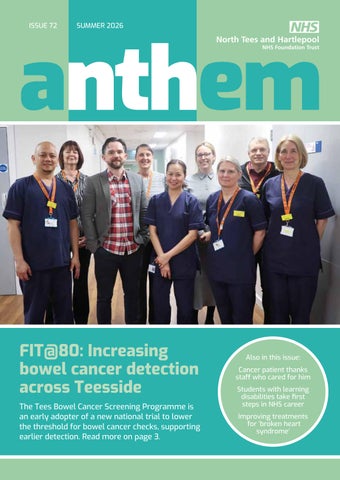
The Tees Bowel Cancer Screening Programme is an early adopter of a new national trial to lower the threshold for bowel cancer checks, supporting earlier detection. Read more on page 3.
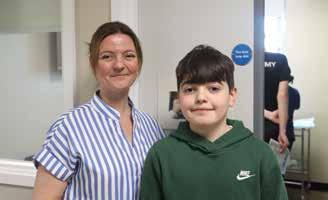
Students with learning disabilities take first steps in NHS career
Improving treatments for ‘broken heart syndrome’
Dear reader,
Welcome to the latest edition of Anthem.
We have a magazine packed full of content with stories from our hospitals and community sites across our area.
As we look across University Hospitals Tees, we have heard from more than 1,200 patients, relatives and carers about our services. As part of a listening exercise across our area, we have visited venues in Hartlepool, Stockton, Northallerton, Middlesbrough and Redcar, as well as gathering views from people through our online survey.
Thank you to everyone who has taken the time to tell us what they think – we are now collating all your responses and feedback which will help shape plans for the next decade for hospital and community healthcare services across the Tees Valley, North Yorkshire and beyond. We already know from looking at some of this feedback the type of things people are telling us – many want better use of online services, better communication between departments, fewer appointments being rearranged and more services across our different sites.
You will also read in this issue how we recognised our nurses and midwives across University Hospitals Tees as part of two special celebration days.
We also held a really successful careers day in Hartlepool for the children and families of our own staff – inspiring the next generation of healthcare professionals.
There are details in this issue about exciting news we have announced for a new ‘improvement hub’ – a small team of staff who will work alongside teams across University Hospitals Tees to help make everyday improvements to how services run. The team will help our staff spot what could work better, test new ideas, and make changes that last and can be shared – as part of normal day-to-day work.
On top of all of this, there are all of the staff, volunteering and patient success stories that we always share with you all. I hope you enjoy reading it and please do share your stories with us for future issues.
Best wishes,
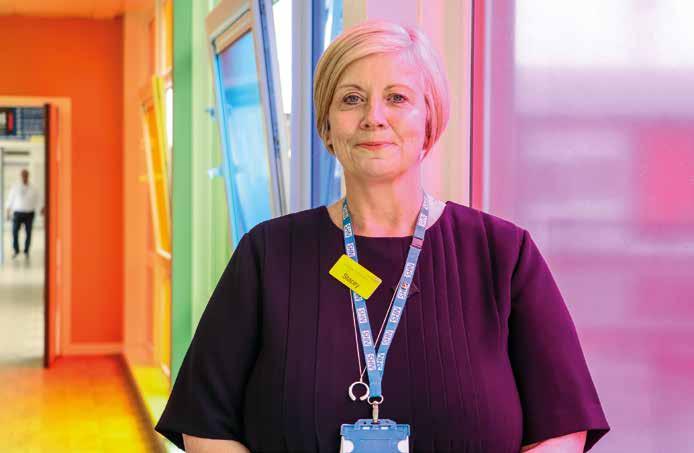
Stacey Hunter CHIEF EXECUTIVE UNIVERSITY HOSPITALS TEES
Keep up-to-date with University Hospitals Tees
From career stories to innovations in patient care and more, follow University Hospitals Tees on social media to keep up with the latest news.
LinkedIn: University Hospitals Tees
TikTok: @UniversityHospitalsTees
Instagram: @NorthTeesAndHartlepoolNHSFT
Early adoption of Fit@80 programme increasing bowel cancer detection in Teesside
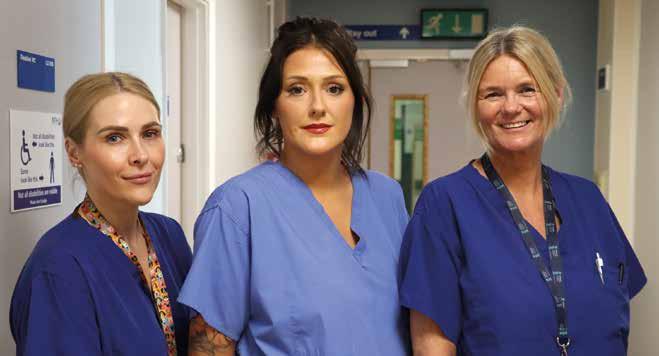
Colleagues from the Tees Bowel Cancer Screening Programme are early adopters of a new national trial to lower the threshold for bowel cancer checks, supporting early bowel cancer detection.
The team, based at the University Hospital of North Tees, is one of just eight early-adopter sites in the UK – and the only in the North of England.
Since April 2025, the programme has introduced a lower faecal immunochemical test (FIT) threshold, ahead of a national programme roll out. The sensitivity of the screening test means that patients who display even small amounts of blood in their poo (assessed through a home testing kit) will be called in for further screening.
The change is helping to detect and prevent significantly more bowel cancers and high risk polyps, following the introduction of the trial as part of a national NHS drive to save more lives.
Andrew Henson, programme manager for the Tees Bowel Cancer Screening Programme, said: “As one of the country’s early adopters – and the first in the North – we have already seen a real impact to lowering the FIT threshold.
“The significant rise in abnormal FIT results, diagnostic investigations and cancers detected locally shows just how valuable this change is. Detecting cancer earlier means more effective, less invasive treatment and, for many people, it can prevent cancer from developing at all.”
Since going live, the screening programme has seen substantial increases in cancer detection across the entire bowel screening pathway:
• 36% rise in abnormal FIT results (presence of blood in sample)
• 36% rise in specialist screening practitioner clinic attendance
• 37% rise in diagnostic testing (colonoscopy and CT colonography scan)
• 24% increase in cancers detected through screening
This means more people are being checked sooner and more cancers and high risk polyps are being found early, helping to prevent illness and improving outcomes for patients.
Andrew added: “Early detection can be instrumental in positive healthcare outcomes when treating bowel cancer.
“If you are due your FIT test we would absolutely encourage you to take part. The test is completed from home and is discreet and hassle free. It only takes a few minutes and could save your life.”
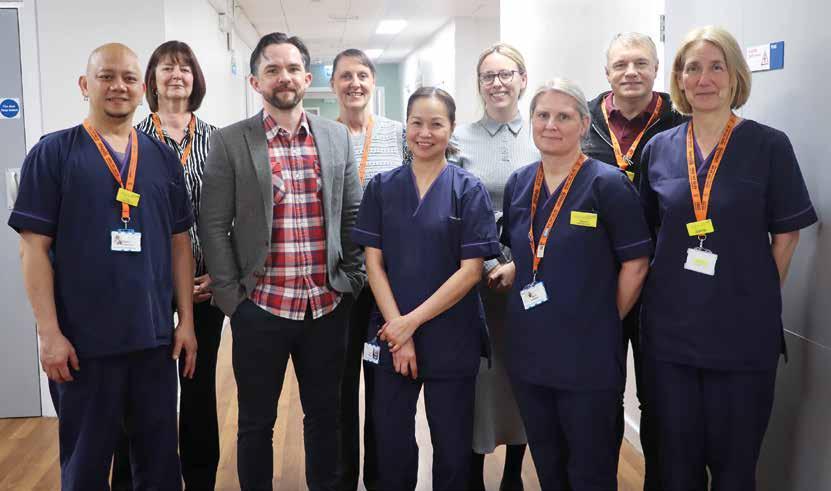
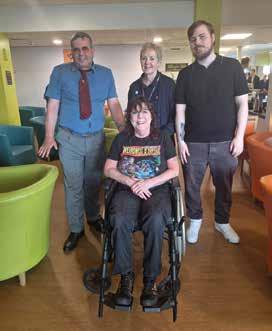
Andrew Henson (third from left) with Tees Bowel Cancer Screening programme colleagues.
"You saved
my
life" - cancer patient thanks staff who cared for him
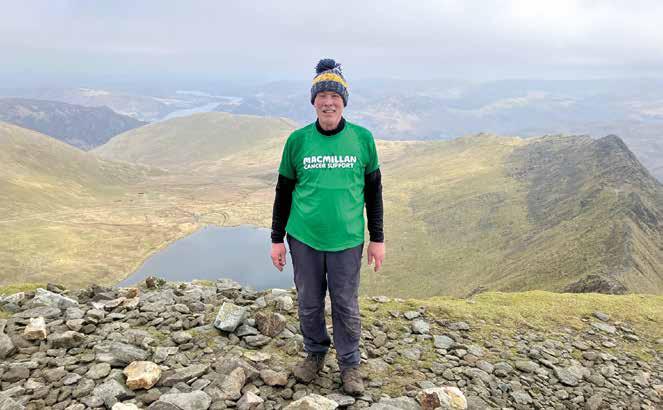
A cancer patient has written a heartfelt note to the health staff who helped save his life – returning to trek up the mountain he planned to climb before his diagnosis.
It was just a year ago when Gavin Spaldin, from Hartlepool, had to cancel a trip to the Lake District to walk up Helvellyn after being told he had prostate cancer.
Gavin, 59, has thanked the teams at University Hospitals Tees for their “incredible support” over this time – helping him beat the illness.
A year on from his cancelled trip, Gavin returned to the famous mountain in Cumbria to finally climb all 950m of it.
Writing to the teams where he was treated at both the University Hospital of North Tees and The James Cook University Hospital, he told them you “quite literally saved my life”.
He wrote: “Today, I have completed my own personal challenge following a period of ill health and climbed Helvellyn. 12 months ago I had to this cancel this trip to climb my favourite mountain as I received the devastating diagnosis that I had prostate cancer.
“As a result of my treatment I developed complications related to my heart and endured the most difficult time of my life.
“Cancer takes you in to a prolonged all-consuming deep dark black hole of fear, anger and despair and on a journey you don’t want to travel.
“It’s a common misconception that cancer of the prostate is the best cancer to get. I can assure you it is not and the illness and treatment are incredibly destructive to the mind and body. The experience is truly debilitating and long lasting.
“Cancer is the most cruel illness which attacks you physically, mentally and emotionally and when it triggers a secondary condition, the fatigue and anxiety makes life become a nightmare.
“Fortunately, I am now in remission and being monitored, and on the road to as complete a recovery as possible.”
Gavin Spaldin at the top of Helvellyn.
Pelvic health service helps more than 450 women in first year
A perinatal pelvic health service (PPHS) has helped more than 450 women in a little under one year.
Research shows that pelvic floor symptoms affect a significant number of women during pregnancy with two in three women experiencing urinary incontinence and one in four women experiencing anal incontinence.
These conditions can continue after birth, leading to a reduction in quality of life and distress for the new mum, affecting physical comfort, confidence, relationships and mental wellbeing.
Perinatal pelvic health specialist midwife Kelly Nixon said: “By providing timely, specialist care, our service seeks to reduce the number of women living with pelvic floor problems after childbirth and later in life.
“These symptoms are common but not normal and many women do not seek help.
“Our service is designed to change that. We are open, honest and frank with our patients as we work to resolve their pelvic floor issues.”
Natasha McManus, senior pelvic health physiotherapist, said: “We’ve worked hand-in-hand with our maternity colleagues to develop the service.
“We’re bringing our specialised pelvic physiotherapy skills to the table and want to reassure women that all the support they need is available.
“Pelvic floor problems are common, treatable and not something women have to live with."
The perinatal pelvic health service is funded by the North East and North Cumbria Local Maternity and Neonatal System. It is delivered by a multidisciplinary team including specialist perinatal pelvic health midwives, a specialist perinatal pelvic health physiotherapist and a consultant urogynaecologist
Hannah Matthews, head of midwifery, added: “Midwives are clinical specialists and leaders in their own right. Working with a team of experts across a range of clinical subjects has resulted in the team developing an incredible new service.”
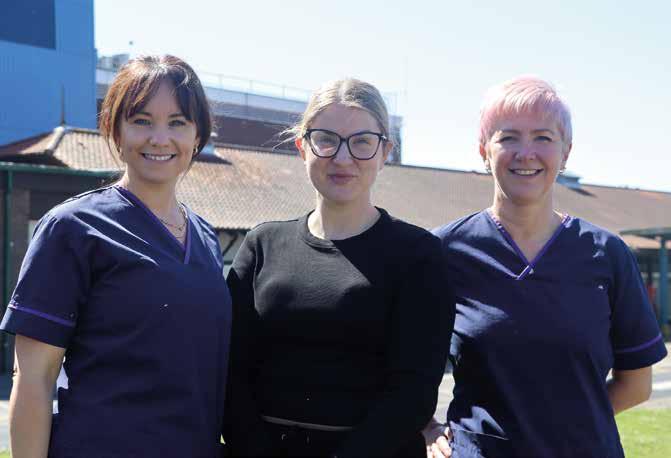
Natasha McManus, Hannah Matthews and Kelly Nixon.
Empowering young people with learning disabilities to take their first steps into work
Students with learning disabilities, difficulties and autism are taking their first steps in their NHS career, thanks to supported internships.
NTH Solutions works in partnership with Catcote Academy and Choices College (formerly Project Choice), allowing students to gain real workplace experience, build confidence and discover their potential.
Dom Cain graduated from Project Choice in 2018 and now works in the mailroom at the University Hospital of North Tees. He has become the first graduate to step into the role of workplace mentor for new students completing supported internships at the University Hospital of North Tees.
Dom said: “Project Choice gave me the chance to build a future I’m proud of. Now, as a mentor, I want to show new interns what’s possible and help them believe in themselves. If I can do it, they can too.”
Meet some of our new interns
Dan
Dan joined the portering team in September 2025. Unsure at first which placements to try, he gave portering a chance and quickly found his place. He enjoyed his first term so much that he asked to stay for a second placement.
Dan now confidently supports a wide range of daily tasks, including transporting patients, replenishing clinical stock and collecting sharps boxes. His confidence and independence have grown enormously, and he now has a clear career path.
A fond farewell to North Tees mailroom veteran
We said farewell to our mailroom colleague, Alasdair, as he retires.
Alasdair first joined the University Hospital of North Tees in September 1983 – an outstanding 43 years’ service. He is a familiar and friendly face across the hospital site, always ensuring the postal services ran smoothly and reliably.
Colleagues from across the hospital joined him at his welldeserved leaving celebration.
Ben
Ben has completed placements on wards 30 and 31, supporting staff with refreshment orders, meal delivery and general cleaning. He is now working in the Tees Restaurant, supporting the catering team with clearing tables, replenishing stock and food temperature checks.
His mentor, catering team leader Cindy Thomas, said: “Ben is a lovely young man. He is happy to try any task given.
“It has been a pleasure to work with Ben, and we have enjoyed your smile and your happy attitude on the ward.”
Alasdair (left) with colleagues Pat and Dominic, along with former colleague Fran.
Hospital volunteer reaches finals for national award
A Stockton man has been recognised on a national stage after he was shortlisted for a ‘Volunteer of the Year’ award.
71-year-old David Layfield is a familiar face to patients and staff at the University Hospital of North Tees. A former military man and retired security guard, he has been volunteering in the hospital’s main outpatient department for more than four years now.
In May, David was shortlisted for ‘Volunteer of the Year’ at this year’s Skills for Health’s Our Health Heroes award. The accolade recognises those who give their time to support healthcare and make a positive difference to patients.
While the award ultimately went to a volunteer from a GP partnership, David was recognised with a bronze award. Certainly no small feat, David beat out hundreds of nominations across the country to make the top three finalists.
David said: “When one of the volunteer team told me I’d been shortlisted, I just couldn’t believe it. I still can’t believe it. Nothing like this has ever happened to me before.
“Before I started volunteering, I was in bad shape mental health-wise. Now when I finish my volunteering and I go home,
I know I’ve done something worthwhile and I’m pleased with what I’ve done – I find it rewarding.
“I wouldn’t want to be doing anything else now and I’ve never needed to look back.”
As a volunteer, David welcomes patients to the outpatient unit, helping them check in for their appointment and finding their way through the department. He is also a volunteer responder where he is on-call to support with tasks that would take NHS staff away from caring duties, for example collecting medication and transferring patients for discharge.
He was nominated for the award by the hospital’s volunteer coordination team for his dedication and for inspiring the patients, staff and volunteers around him. Part of his nomination reads: “For us, David stands out from the crowd as we see the pure joy that helping others has given to him.”
Become a volunteer
For more information about volunteering, visit: www.nth.nhs.uk/ about/community/volunteering
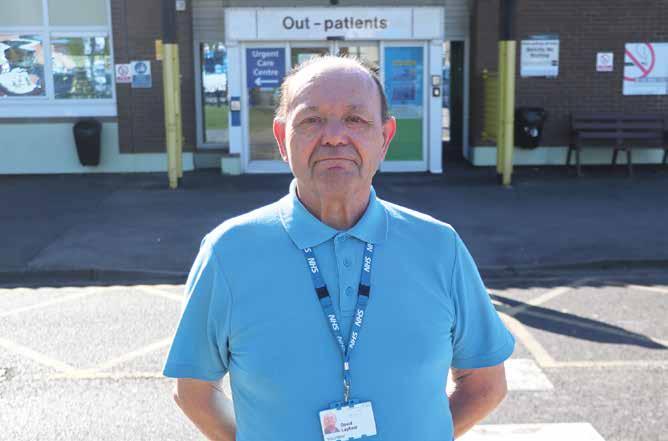
David Layfield.
Getting the right treatment is what matters most
More than 1,200 patients, relatives and carers have shared their views on local hospital services.
You told us that what matters to you most is getting the right treatment and access to the best treatment. This was closely followed by access to specialist care, good communication and shorter waiting times.
Listening events were held at a range of community venues including Hartlepool College of Further Education, Stockton Wellbeing Hub and libraries in Northallerton, Middlesbrough and Redcar. People were also invited to complete our Caring Better Together survey online.
Our patient involvement and communication and engagement teams also visited a wide range of community groups to gather views from patients and carers. These included Teesside Stroke Club, Dementia Action Teesside, Hambleton Community Action, Hart Gables (LGBTQ+) and MND and macular groups in Stockton.
Chief strategy officer and deputy CEO for University Hospitals Tees, Matt Neligan said: “Thank you to everyone who has taken the time to complete our survey or attend one of our community events. We are now collating all your responses and feedback which will help shape plans for the
next decade for hospital and community healthcare services across the Tees Valley, North Yorkshire and beyond.
“Moving forward we will be carrying out more targeted research with staff and patients in a number of service areas.”
Here’s just a few of the suggestions you have made so far:
• Better use of email and the NHS app
• Aftercare to include follow up calls to ensure patients are recovering properly
• Improved disabled toileting facilities
• Better communication between different departments
• Deaf awareness training for all staff
• Reduce the number of appointments that are rearranged
• Offer more outreach services in the community
• Provide more services at Friarage Hospital and University Hospital of Hartlepool
Moving forward we will be carrying out more targeted research with staff and patients in a number of service areas.
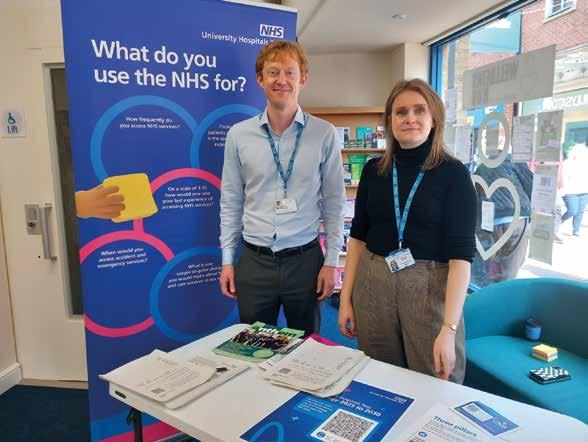
John Hugill and Kat Gretton host a drop-in event at Stockton Wellbeing Hub.
Award success for digital team
The University Hospitals Tees digital programme team has been named ‘Digital Transformation Organisation of the Year’ at a national awards ceremony.
The team received the award at the Health Service Journal (HSJ) Digital Awards award ceremony on Tuesday 19 May.
It recognises an extensive, clinically led programme that has transformed South Tees Hospitals NHS Foundation Trust from paper-based records to a fully electronic system. This has delivered significant benefits for patient safety, including more time for direct care, improved clinical decisionmaking, and substantial cost savings.
Lindsay Garcia, director of nursing, said: “We’re absolutely delighted to have our digital transformation recognised by the HSJ. This achievement reflects the dedication, skill and collaboration of our teams in delivering largescale digital transformation for the benefit of our patients.
“By advancing our digital systems, we’re enabling clinicians to make faster, safer decisions through better access to data, streamlined pathways and enhanced diagnostics.
“Our digital and clinical teams work side-by-side to reduce administrative burden and improve safety, ultimately freeing up more time for patient care. It’s a true partnership between clinical and digital expertise, all focused on delivering the best possible outcomes for our patients.
“Achieving this award is not about technology alone, it is reflective of multi professional teamwork, the correct culture, collaboration across disciplines and a willingness and drive to improve patient care.
“While it’s fantastic to win an award, our priority remains the samecontinuing to use digital innovation to improve the care we deliver to our patients every day.”
The team also received ‘highly commended’ in the ‘Outstanding Achievement in Electronic Patient Records Implementation and Optimisation’ category for developing the MIYA electronic patient record system, now used across all inpatient services in the trust.
The service was also shortlisted for three additional nominations:
• Driving virtual wards and hospitals through digital
• Driving prevention and early intervention through digital
• Improving medicines and pharmacy through digital
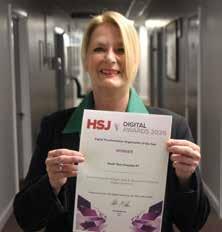
The winning team collects their HSJ award.
Lindsay Garcia, director of nursing.
“I have the privilege of seeing the extraordinary impact of these roles every single day” – a thank you to nurses and midwives
As University Hospitals Tees marked International Day of the Midwife and International Nurses' Day, chief nursing officer Emma Nunez had a special message of thanks.
She said: “Every year we mark two professions at the heart of our health service – nursing and midwifery.
“I have the privilege of seeing the extraordinary impact of these roles every single day, in our hospitals and our communities. These two days give us a chance to reflect, to recognise and to say a heartfelt thank you.
"Nurses and midwives are the constant presence for patients throughout their healthcare journey. They provide expert clinical care as well as reassurance, compassion, and the ability to make people feel safe at their most vulnerable moments.
“Whether supporting a woman through labour, caring for someone living with a long-term condition, or responding to an emergency on a busy ward, their professionalism and humanity are what makes them able to perform these roles.
“Despite the pressures, nurses and midwives continue to innovate, lead services, redesign pathways and push the boundaries of their practice. From advanced clinical roles to research, digital transformation and community-based care, they are shaping the future of the NHS with skill and determination.
“I want to pay tribute not only to those delivering care, but also to our students, our internationally recruited colleagues, our healthcare support workers and everyone who supports
the wider nursing and midwifery family. Each of you contributes to a service that millions rely on.
“As we mark these important days, I hope every nurse and midwife takes a moment to recognise the difference they make. The NHS simply could not function without you — and we are so grateful for all that you do.”
To read the career stories of some of our nurses, visit the University Hospitals Tees social media pages.
Ivan Brown.
Penny Jordan.
Owen Hart.
Rachel Walshaw.
Chief nursing officer Emma Nunez.
Shining a spotlight on midwifery
Every day across University Hospitals Tees our midwives bring n into the world and support families through their most transformative moments by offering unwavering clinical expertise and support.
As part of International Day of the Midwife, we spoke to some of our midwifery colleagues to find out more about their experiences and careers as midwives.
Roxy’s story
From being born at The James Cook University Hospital to training and now working there as well, Roxy ElDharrat’s journey has come full circle.
After growing up in Saudi Arabia, she originally planned on neonatal nursing, but everything changed when she discovered midwifery.
She’s now been part of the profession for over six years and said: "I was always meant to be a midwife; I just didn’t know it until six and a half years ago."
For Roxy, the heart of the job is the families. She loves making an impact on life’s most special moments, knowing that while a family might not remember her name, they will
always remember how she made them feel. It’s her way of leaving a "little imprint on the world" by helping create beautiful memories.
When asked what she’d like to say to new or expectant parents out there,
Roxy has a little reminder: “Trust your gut, try not to worry about worrying, and not having the answers is fine. That’s what we’re here for – to support and guide you and let you know that you’re doing amazing.”
Gayle’s story
Gayle smith, community midwife at the University Hospital of Hartlepool, loves being able to support women and their families through one of the most important times of their lives.
When asked what she loves about her job and what she would tell anyone considering a similar career, she said: “It's an amazing feeling to share the journey throughout pregnancy, providing continuity and seeing families grow.
“My advice to anyone considering a midwifery career is that being a midwife can be tough but it is an extremely rewarding job. It's not just about delivering a baby, the role includes providing care, support and education during the pregnancy, labour and postnatal period.”
Gayle Smith.
Roxy El-Dharrat.
Families of NHS workers invited to explore career opportunities
The University Hospital of Hartlepool welcomed in aspiring healthcare workers this spring as part of a special career event, open to the children and families of our NHS staff.
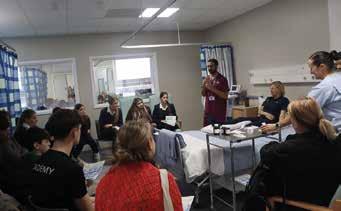
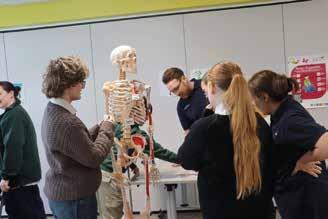
The event, held at the hospital’s Health and Social Care Academy, saw 60 children and young people turn up to find out about different careers in the NHS – from emergency care to physiotherapy, and more.
The event mirrored previous career days for local schools, with one special difference – this event was open exclusively to young family members of staff at University Hospitals Tees.
Attendees were taken through the journey of fictional patient, ‘Toby’, who had broken his ankle. The roleplay saw them talk to staff from various hospital services to understand how Toby is supported throughout his care.
12-year-old Henry Middleton attended the event with his mum Rachel. His dad, Steven, works as an urgent care practitioner at the University Hospital of Hartlepool.
Rachel said: “This event is really great for kids. Henry has been able to meet specialists from different areas and get an idea of what a career in the NHS might look like. The knowledge and expertise that staff shared with the group, along with the encouragement to engage with the various stations, were brilliant.
“The passion staff showed for their professions was inspiring, especially for an inquisitive young boy. Henry’s favourite area was theatre – he learned so much there, and the team were incredibly patient while he asked many questions. He was so fascinated that he has now set his sights on becoming a surgeon.
“Today’s been a great opportunity and experience, and will hopefully open the way to better opportunities for the kids who came along.”
Children followed a fictional patient’s hospital care through different workstations.
Rachel and Henry Middleton.
Participants at the career event.
Improving Better Together
University Hospitals Tees is taking the next step in improving the care we provide for patients every day.
Over the coming months, we’ll be launching the ‘improvement hub’ – a small team of colleagues from across our organisation who are passionate about helping services work even better.
The improvement hub will work alongside teams across University Hospitals Tees to help make everyday improvements to how services run.
Their role is to help staff spot what could work better, test new ideas, and make changes that last and can be shared – as part of normal day-to-day work.
The hub will support colleagues at all levels, and the work will be shaped with staff who know their service the best.
Alongside the improvement hub, we are introducing a single, group-wide approach to improvement: Improving Better Together.
At its heart, Improving Better Together is:
• About patients – improving quality, safety and outcomes
• Led by our people – giving staff the confidence, space and time to fix what doesn’t work
• Focused on learning – testing ideas, learning from them and improving every day
• Based on evidence – improving systems and processes, continually learning and improving
Group head of leadership and organisational development
Dan Fawkes said: “Everyone comes to work wanting to do their best for our patients and our colleagues. Continuous improvement focuses on a structured, evidence based approach to building on what we already do and continually seeking ways to make that even better.
“We often follow processes that exist simply because ‘that’s how we’ve always done it’. An improvement culture gives us permission to stop and ask whether there’s a better way.”
For improvement to work, it must involve staff at all levels and be supported by open, supportive leadership and a positive culture.
Dan added: “Continuous improvement is not about cost cutting or short term fixes. And it’s not about adding extra work on top of already busy jobs.
“Our aim is for improvement to be part of everyday work – helping teams deliver safer, more reliable services, while building a stronger, more resilient organisation. We can’t do this without our staff.”
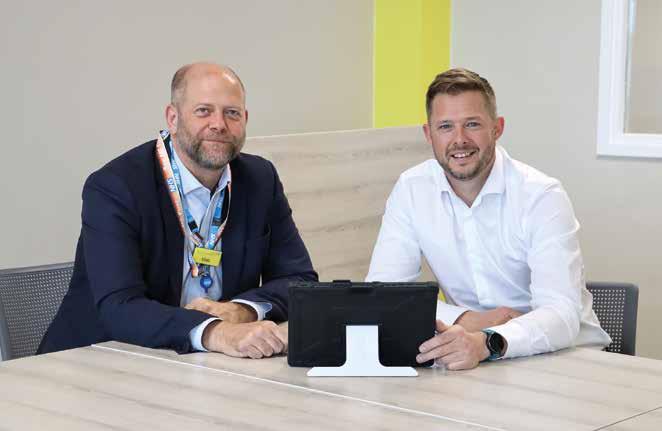
Chief strategy officer and deputy CEO Matt Neligan and Group head of leadership and organisational development Dan Fawkes.
New nurse-led biopsy service helping to speed up prostate cancer diagnosis
Patients with suspected prostate cancer are being seen and diagnosed faster, thanks to a new nurse led biopsy service at the University Hospital of North Tees.
Specialist urology nurses are now performing transperineal (TP) prostate biopsies, a more effective way of diagnosing prostate cancer. The development has helped to streamline the patient healthcare pathway, reduce waiting times and improve the overall experience for patients.
Urology nurses Joanne Forsyth, Terri Cartwright and Caron Evans undertook training in Liverpool, and each has had to complete 50 supervised biopsies before being signed off to carry out the procedures independently. The service now runs three biopsy sessions a week, performing around 15 procedures, increasing capacity and reducing the waiting list for patients.
Katie Miller, urology specialist nurse manager, said: “This is a really positive change for patients. The trans-perineal biopsy delivered as a nurse led service means people are being seen more quickly and getting answers sooner.
“It gives us far more control over the patients’ pathways and allows them to move through to diagnosis and treatment at a faster pace, which is our main aim.
“We have a fourth nurse just beginning her TP biopsy
training now and there are plans to expand this service further to be able to provide this service for even more patients within our catchment area.”
Urology nurses in the service have also been performing nurse-led bladder procedures. For more than a year, two specialist nurses have been carrying out bladder biopsies under local anaesthetic during a monthly clinic. Patients are seen, biopsied and discharged home within half an hour, avoiding the need for a general anaesthetic and lengthy theatre waiting lists.
Joanne Forsyth, one of the urology nurse specialists now performing the TP biopsy procedure, said: “We’re incredibly proud to be part of this nurse led service. It means we get to be even more hands on when caring for our patients.
“The training has also been massively rewarding, advancing our careers, but also making a big difference in the overall knowledge our team has.
“It’s great to see the difference it’s already making for our patients.”
Joanne Forsyth, Terri Cartwright and Caron Evans are now performing trans-perineal prostate biopsies.
Hospital joins national trial to improve treatment for broken heart syndrome
The research team at the University Hospital of North Tees has been selected to be part of a national trial looking into a condition known as ‘broken heart syndrome’.
The team is investigating Takotsubo cardiomyopathy, a condition which mimics the symptoms of a heart attack and can be life -threatening.
It is a real, temporary heart condition brought on by severe emotional or physical stress and causes sudden chest pain and shortness of breath. There is currently no proven, evidence -based treatment for it.
The EVEREST trial, the first medication study into the condition, is being led the University of Aberdeen.
Fe Marie Hernandez, cardiology research nurse, said: “Broken heart syndrome is something we see affecting quite a number of patients. It can actually be quite serious because it presents very similarly to a heart
attack, and in some cases it can be life-threatening.
“At the moment, there isn’t a proven, evidence-based treatment for it, which is why this trial is so important. We’re honoured to be one of 40 sites across the country taking part.
“As a research nurse coordinator, being involved in this kind of research is really rewarding. Ultimately, it’s about improving care and outcomes for our patients and that’s what makes it all worthwhile.”
Members of the public who are interested in taking part in research or learning more about ongoing cardiovascular studies can contact the cardiology research team on: 01642 383116 or 01642 383114.
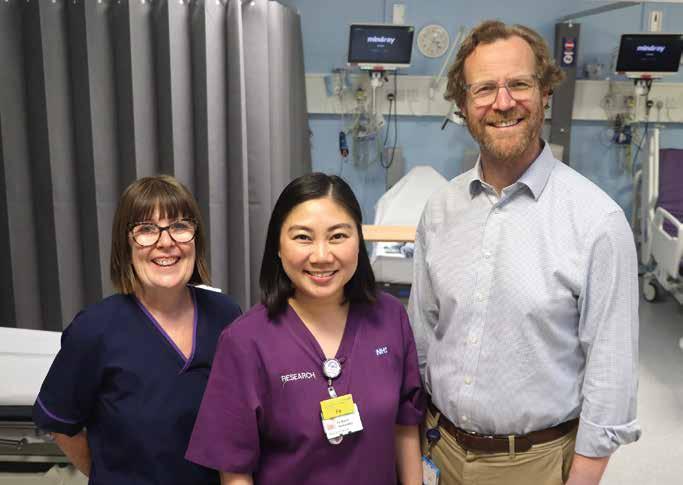
Cardiology research nurse Fe Marie Hernandez (centre), with members of the broken heart study team.
Going the distance: Runners raise thousands in heartfelt tribute
A huge thank you to two of our fundraisers who have taken on their own running challenges this spring in memory of a loved one.
Neve Simpson and Rachel Hanlon may live 70 miles apart and have never met one another, but this spring they’ve been united by one common goal – fundraising for the critical care unit at the University Hospital of North Tees as thanks for the care they gave to family members.
Neve’s story
Neve took on a fitting tribute in memory of her grandma, Judith Walker, by completing the Liverpool Half Marathon on Mother’s Day.
Wanting to give something back to the team who cared for her during her final hours, Neve set herself the challenge of completing the 13.1-mile route and raised more than £1,900.
Neve said: “Completing the Liverpool Half Marathon on Mother’s Day was surreal. The second half was pouring with rain and freezing, but what kept me going was thinking about the ICU team and the care they gave my grandma.
“My grandma devoted her life to caring for others, and in her time of need she had such amazing people caring for her. They were so empathetic, supportive and kind – nothing was too much for them.”
Rachel’s story
70 miles inland, Rachel completed the Leeds Half Marathon in May, in memory of her dad, Rick Hanlon.
Rick was cared for by the North Tees critical care team for five weeks – what Rachel describes as: “time to tell him how much we loved him and create precious memories we will hold on to forever”.
After setting herself an initial target of £500, she managed to raise more than £2,600 in support of the unit.
Rachel said: “During those five weeks, our family spent a lot of time in the unit’s family room. It was where we had many difficult conversations and experienced the emotional rollercoaster of intensive care together.
“The care and support we received meant so much to us during such a difficult time, and fundraising felt like a way of saying thank you and helping other families like ours who may be facing the same heartbreak and uncertainty as we did.”
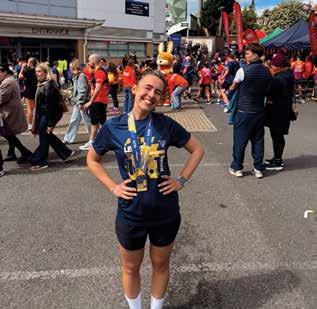
Rachel Hanlon at the Leeds Half Marathon.
Neve with her grandma and grandad.
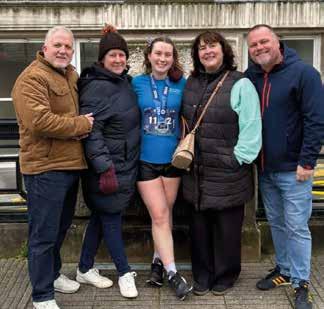
Neve Simpson with her family at Liverpool Half Marathon.
Rachel’s dad, Rick Hanlon.
“The service responded quickly” – urgent care service praised for help given to teenager with autism
The urgent care team has been praised by the family of a young man with autism – several years after their first visit.
Luther Yarker and his mum Karen visited the urgent treatment service at the University Hospital of North Tees after he had a fall and injured his shoulder.
The visit is something 13-year-old Luther finds very challenging due to his autism.
Karen explains: “Luther is autistic and has challenges in communication and sensory issues.
“He struggles with crowds, noise, and being stared at, which can quickly escalate his distress.”
After a previous visit with Luther to the urgent treatment centre at the University Hospital of Hartlepool six years ago, Karen knew that the service was flexible to his health needs.
She said: “On that occasion the team recognised Luther’s distress and sensory needs and quickly moved him through the department to somewhere quiet, safe and calm.
“Our recent visit was no different – the whole team, from Alistair at the front door to nurse Kelly who treated him and to everyone else involved. I explained our previous
Luther and Karen delivered sweet treats to the urgent treatment team as thanks.
experience and the team responded quickly, providing somewhere quiet before the team could see him.
“Luther was then taken for an X-ray where everyone who treated him introduced themselves, used his name, gave simple direct instructions and made every adjustment needed. These are all things that help Luther – he needs to be clear about what is happening and feels more comfortable when he knows who everyone is. The nurse then explained the results, provided a sling and the whole visit was completed within an hour.
“I could not praise the service enough, each and every one of them is fantastic. I have worked in the NHS before in the 111 service and I know this job isn’t easy and what great work staff do.”
Nicola Grieves is head of nursing for the urgent treatment centre services across University Hospitals Tees – with sites at North Tees and Hartlepool hospitals as well as at The James Cook University Hospital and Redcar Primary Care Hospital.
She said: “Our staff are trained and very experienced in helping people like Luther and I know the team will be delighted to hear his mum’s lovely feedback.”
Left to right: Mum Karen and Luther with urgent treatment centre staff.
The dedicated Teesside-based inflammatory bowel disease team supporting patients with life-long conditions
A special inflammatory bowel disease (IBD) team is playing a crucial role in providing vital, specialist care for patients with the life-long condition.
The service, based primarily out of the University Hospital of North Tees, supports around 2,000 patients with lifelong IBD conditions, such as Crohn’s and ulcerative colitis.
The small, close-knit team is comprised of three specialist IBD nurses, two staff nurses and a nurse endoscopist based at the University Hospital of Hartlepool, with Professor Matt Rutter as consultant physician lead for the service.
Unlike short-term illnesses, IBD is a condition patients live with for life. Although it can be diagnosed at any age, patients are often diagnosed in adolescence or early adulthood, meaning many patients build long-lasting relationships with members of the IBD team.
As part of their day-to-day duties, the specialist nurses provide face-to-face clinic appointments, infusions and blood monitoring, a helpline service, support GP referrals and are involved in ongoing research into IBD.
Lyndsey Calvert, specialist nurse and lead for the IBD nursing team, said: “We support patients from the very beginnings of their diagnosis and act as a first point of contact for delivering ongoing care.
“This isn’t like treating a chest infection – we support patients throughout their lives. Over time, we get to know them incredibly well and they know they can always come to us. We become like an extended member of the family.
“Our IBD team is so special because of the absolute dedication and compassion we have in supporting patients under our care.”
IBD affects one in every 123 people, with around half a million people across the UK living with the condition. Although there can be a genetic link, most patients diagnosed with IBD have no family history of the condition.
Professor Matt Rutter, consultant physician, said: “Inflammatory bowel disease can be debilitating for those who suffer with it and can still be seen as a taboo subject.
“We’re proud of the team we have built and we’re passionate about lifting the stigma for patients and sharing our specialist knowledge of the condition with other healthcare professionals.”
Lyndsey Calvert (left) and the IDB team.
Radio Stitch turns 50
Our volunteer-run hospital radio station, Radio Stitch, turned 50 this year.
The station first began broadcasting to patients at North Tees General Hospital (now known as the University Hospital of North Tees) back in 1976. Now, five decades on, its programmes are heard at the University Hospital of Hartlepool, The James Cook University Hospital, Friarage Hospital and online.
The 50th anniversary also marks a significant moment for the station’s longest serving volunteer. Elliot Kennedy, who has been part of Radio Stitch for 40 years, is stepping down as chair –although he has no plans to hang up his headphones entirely.
Elliot, now deputy station manager, said: “I first came into Radio Stitch for a look around because a colleague of mine volunteered here. Before I knew it, I was presenting a show.
“I never expected to still be here 40 years later, but radio gets in your blood. I’ve stepped back from presenting now, but I love training new volunteers, helping with the engineering and, as always, the trouble shooting.”
The station’s big birthday was also celebrated by a string of celebrities who recorded special messages of support. The
famous faces included impressionist Rory Bremner, comedian Geoff Norcott, singer Tasmin Archer, Boro legend Tony Mowbray and rhythm and blues band Dr. Feelgood.
Asked why hospital radio matters, new Radio Stitch chair Andy Tingle said: “It’s all about music. Our station gives patients a moment to forget their illness — it reduces anxiety and provides company.
“We speak directly to our listeners, not just through the music we play but through the warmth and energy of our presenters.
“And for volunteers, it can be just as rewarding. Broadcasting has helped many of our team through challenging times. Music can do that.
“We wouldn’t have reached 50 years without the hundreds of volunteers who have given their time.”
Want to volunteer at Radio Stitch?
If you are interested in volunteering with Radio Stitch, email: nth-tr.radiostitch@nhs.net
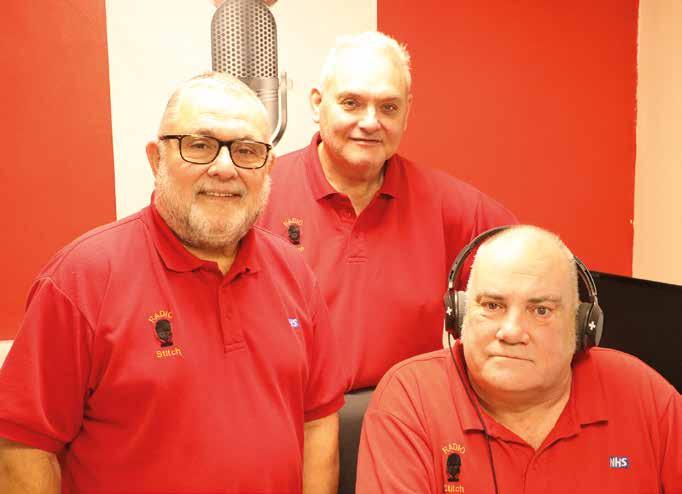
Station manager Colin Overton, chair Andy Tingle and deputy station manager Elliot Kennedy in the Radio Stitch studio.
The role of breast nurses in one-stop hospital clinics
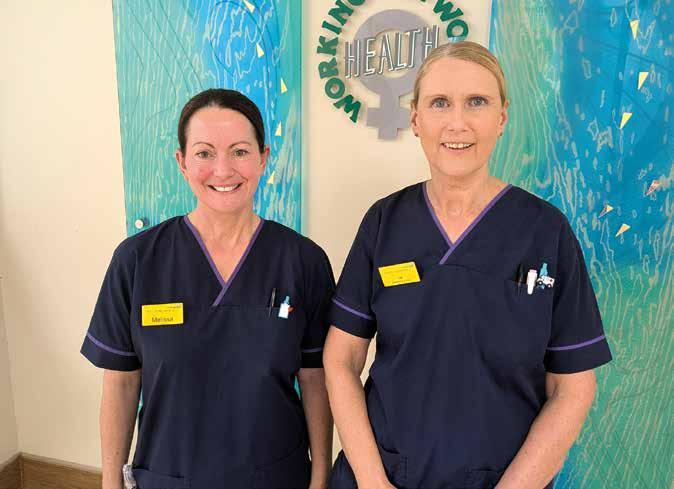
By Melissa McKie and Val Cross, advanced breast nurse practitioners at the University Hospital of North Tees
As advanced breast nurse practitioners we see first hand the difference a well run one stop clinic can make for women who arrive with worries about breast health. These clinics at the University Hospital of North Tees are designed around a simple but powerful principle: patients should receive the investigations, answers and support they need in a single visit wherever possible.
In our one stop clinics, women have an ultrasound scan, clinical examination and any further tests arranged on the same day. That means they leave with clarity rather than days of uncertainty. For many, that same day diagnosis is transformative. It reduces anxiety, speeds up treatment where needed and gives people a sense of control at a moment when they often feel vulnerable.
The service is consultant led, supported by senior doctors and a wider multidisciplinary team, but nurses play a crucial role in guiding patients through what can be an overwhelming experience.
The feedback we receive is consistently positive. Patients value the holistic nature of the clinic – the fact that they are listened to, assessed thoroughly and supported emotionally as well as clinically.
A key part of our work has been re-establishing and strengthening the breast pain pathway. Women need careful assessment, reassurance and advice on managing breast pain. Offering this pathway improves the experience of our patients, which is always our main priority.
Looking ahead, we are committed to developing the nursing workforce further. By training more nurses to an advanced specialist level, we hope to move towards a fully nurse led model – one that maintains the same high standards of care while improving access and efficiency for the women who rely on us.
Melissa McKie (left) and Val Cross (right).
Children say they “feel listened to” as local diabetes team secures respected award
Children, young people and families across Teesside have hailed the personalised care and genuine listening culture of the paediatric diabetes service at the University Hospital of North Tees and University Hospital of Hartlepool.
The service has now received the prestigious Investing in Children Membership Award.
Investing in Children gathered extensive feedback from children and young people aged 8 to 18 receiving diabetes care at the hospitals.
The evaluation showed young people say they feel “listened to” and supported across both sites. Young people described staff who not only take their concerns seriously but actively involve them in decisions about their care.
One nine year old said simply: “I feel listened to”, while another young person added: “If I take a suggestion to clinic, they always listen.”
A family whose child recently started insulin pump therapy said the team provided “lots of information” so they could make an informed choice. Another parent said the team were “very sympathetic” and “always available”.
Kerry Camara, paediatrics diabetes specialist nurse, said: “We are delighted to receive such recognition and this prestigious award.
“It means a lot to the team that our patients feel they have a voice and say in how we deliver their care; with choices, options and shared decision making.
“We will continue to gather feedback to inform change and service development and will always aim to achieve the best for our children and young people to promote and enhance their future wellbeing and health.”
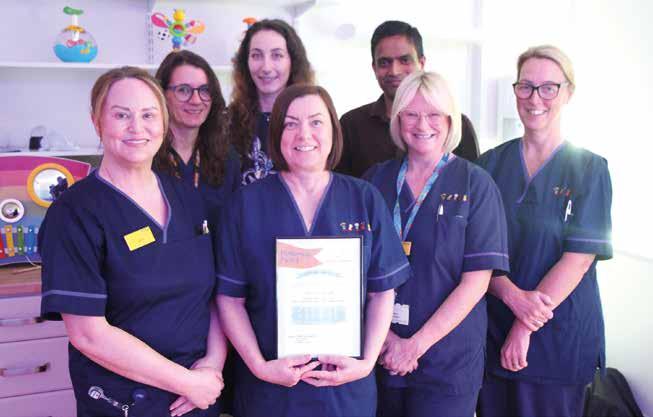
Members of the paediatric diabetes service.
“Volunteering was a lifeline” –volunteer thanks hospital for opportunity
Amir Vosooghi started volunteering at the University Hospital of North Tees during the pandemic and provided support in various roles.
Now he is thanking the hospital for the opportunity as he pursues his career and life in the UK. An asylum seeker and vet by profession, Amir has since moved to London to pursue his studies and further employment opportunities.
He said: “When COVID-19 started in 2020, I was living alone with no experience of life here. I was dealing with anxiety, depression and kidney pain, and I didn’t know what was happening to me. Volunteering became a lifeline.
“I tried volunteering in a church and a shop, but someone mentioned the hospital. I thought maybe it would help me stay busy and do something good. It turned out to be one of the best decisions I made.
“On the wards I met brilliant people – almost like angels –who helped me feel human again. It gave me confidence, connection and a sense of belonging. I wasn’t useless. I was part of some-thing.
“People have ideas about refugees. I didn’t want to be asked about my past. At the hospital, nobody asked – they just accepted me. That acceptance helped me heal. I’ve had setbacks, health problems, exams, moving to London, starting again, but I kept going. Now I’m working part-time and I’m a British citizen.”
As he continues to pursue his veterinary career, Amir has advice for anyone thinking of making a change in their life.
He said: “If you feel tired, look at how far you’ve come. And
never be afraid to ask for help. Sometimes that’s what keeps you moving.”
Become a volunteer
For more information about volunteering, visit: www.nth. nhs.uk/about/community/volunteering
From nursing to part-time health visitor and local council foster carer, Sharon shares her story:
“I started in the NHS in 1985 as a student nurse. It feels like a long time ago now, and all of my nursing career, I’ve tended to work with children and babies, and I’ve worked in intensive care. I’ve worked in the community and latterly, at the end of my career, I was a health visitor. It was amazing, because I could foster as well, and I went part time and it was flexible working hours, so I got to do two things in my life that I loved to do.
Because I was a health visitor, learning about childhood abuse, learning about neglect, being empathetic and having that understanding and love and care and being really caring really helped. But having an insight into health also helps
care for children as well and looking at the growth and development, having that skillset has really helped.
If anybody is really wanting to think about fostering, they’re on the verge of retirement, or wanting to change their career, or do both… I would say you won’t regret it. It is fabulous, and I’m a really strong advocate for fostering.”
Sharon, retired health visitor and local council foster carer
Explore how you can be someone’s rock alongside your NHS role or as your next step, visit fosterwithnortheast.org.uk/ healthcare or call 0800 917 771
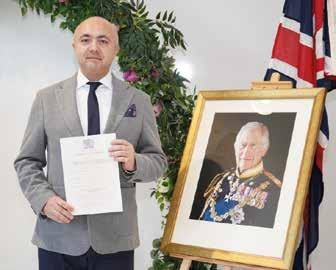
Amir has now been granted British citizenship.
“Impressed would be an understatement”
For anyone who struggles to leave their home without support, at-home health services can be a lifeline.
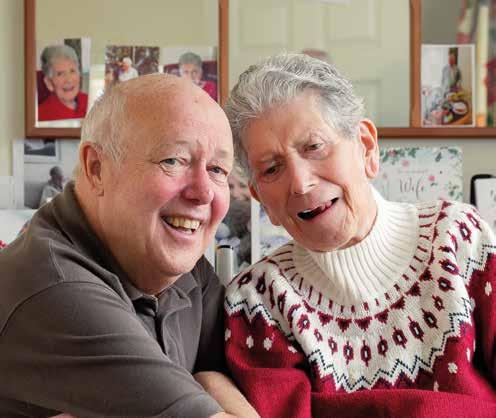
This is something that Derek Brown, who cares for his wife Margaret, knows only too well.
Specsavers is committed to ensuring that everyone has access to essential eye-health and hearing care – but also understands that it’s not always easy for people like Margaret, who suffers from Alzheimer’s disease, to attend in-store appointments.
That’s why, for the past ten years, Specsavers Home Visits has provided comprehensive NHS-funded eye tests to anyone who’s unable to visit a store unaccompanied. It’s also started to provide free at-home hearing services in selected locations in the UK.
Derek called on the Specsavers Home Visits service when Margaret needed a routine eye test and it was too challenging to get to a store. He was blown away by the expert care that was delivered during the visit and the difference the new glasses made to his wife.
Although Margaret wasn’t able to respond to the questions of the optician and their assistant, during the visit, they adapted their approach so they could prescribe the reading glasses that have expanded her world.
“If I was to say I was amazed, that would be an understatement,” says Derek. “What was so significant for me as a full-time carer was that the Specsavers experts were punctual, quiet-speaking and patient, reassuring Margaret with everything they did. The level of care expressed towards her was incredible.”
Derek, from Northallerton in North Yorkshire, has been the primary carer for Margaret, since her diagnosis with
Why Choose Specsavers Home Visits?
• Convenience: Our experts come directly to you.
• Personalised Care: Visits are tailored to the individual’s needs, with specialist equipment to ensure comfort and accuracy.
• Peace of Mind: Your loved one will receive the same kind of highquality care as they would expect in-store.
Alzheimer’s in early 2018. After she spent four weeks in hospital in 2022, Margaret’s condition deteriorated, and she has since been confined to a hospital bed in the couple’s living room, and a hoist to access a wheelchair. With multiple other health challenges, caring for Margaret is complex – but after 25 years of love and marriage Derek has risen to the challenge. As well as taking care of her everyday needs, he’s been able to improve her quality of life thanks to Specsavers at-home service.
Following her at-home eye test, the optician suggested Margaret tried some reading glasses to help her enjoy looking at family photos.
Derek was unsure how she would adapt to wearing glasses but seeing her smile while looking at old family pictures told him everything he needed to know.
“If anyone is in any doubt about inviting Specsavers into their home, all I can say is: simply try it,” Derek says. “You won’t regret it for a second.”
Derek now fights for better support and recognition for carers nationwide, and has launched a website (www.dementiaguidance.co.uk) dedicated to helping carers like him across the UK. He’s keen to ensure they have all the information they need – including the option of getting a comprehensive at-home eye test from Specsavers.
Expert eye and hearing care tailored to your needs
For those eligible, our mobile experts will provide a comprehensive NHSfunded eye test from the comfort of your own home, with all the same care and thoroughness as you would receive in-store. Specsavers has now also started to roll out free at-home hearing services across the UK. To find out what locations this service is available in visit our website.
Our eye care and hearing services are tailored to each person and their needs. They are designed to provide eye care and hearing services that are as individual as they are and can be adapted to meet their changing circumstances and comfort levels.
To see if you or your loved one are eligible, call 0800 0890144 or visit specsavers.co.uk/home-visits