world outcomes study suggests results continue to flow from transcatheter arterialization of the deep veins
First retrospective analysis shows comparable outcomes data to those found in PROMISE II pivotal trial, authors report.
By Bryan Kay
T2 Guest editorial Unionization: Vascular surgeons, are you ready to join forces?
4 SWEDEPAD
Paclitaxel debate re-opens as findings show drug-coated devices don’t improve outcomes
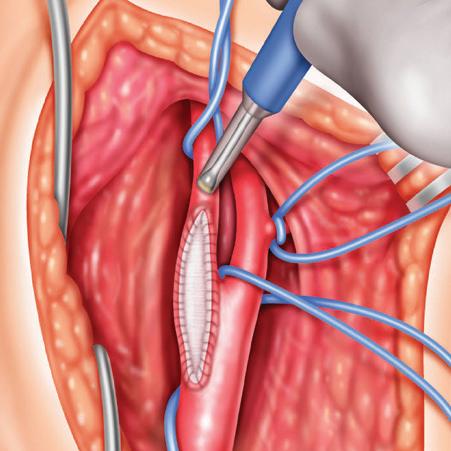
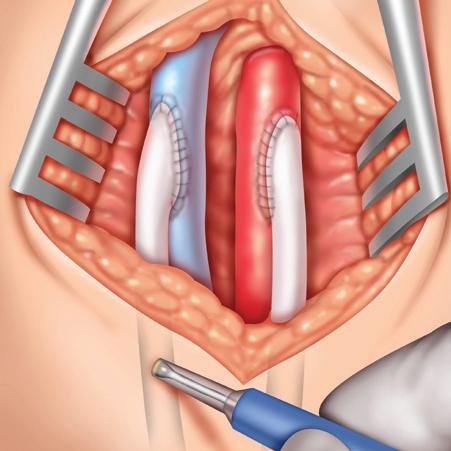
he first post-approval multicenter analysis of so-called “no-option” chronic limb-threatening ischemia (CLTI) patients treated using a pioneering transcatheter arterialization of the deep veins (TADV) device lays out a set of real-world outcomes that align with those achieved in the PROMISE II pivotal trial of the device, the authors report.
Awareness THEMONTHEDITION
8 The Outpatient Comparing office practice models: Should we joint venture?
12 Complex PAD Advances in endovascular therapy help drive innovative CPVI course
www.vascularspecialistonline.com
SVS HIGHWAY TO HEALTH CAMPAIGN AIMS TO MAKE PAD A HOUSEHOLD TERM
By Marlén Gomez
THE SOCIETY FOR VASCULAR Surgery (SVS) is ramping up its national Highway to Health campaign to educate the public about peripheral arterial disease (PAD) and the importance of early detection as part of September’s PAD Awareness Month.
Anahita Dua, MD, a vascular surgeon at Massachusetts General Hospital and a spokesperson for the campaign, said the initiative is rooted in changing how people think about vascular health.
“PAD, if left untreated, can have complications similar to a heart attack or stroke,” said Dua. “It’s the same disease process—blocked arteries—but in the legs. And that means it’s just as serious.”
ing a limb salvage rate of 76%, survival of 87.1% and amputa tion-free survival of 66.1%. “This first real-world, multicenter retrospective study of LimFlow showed outcomes consistent with PROMISE II,” she told those gathered at EVS 2025. “[TADV] achieves favorable outcomes with a high rate of limb salvage up to one year.”
Researchers from Northwell Health in New Hyde Park, New York, MedStar Health in Washington, D.C., and UT Southwestern in Dallas revealed limb salvage rates of 76.1% at six months and 71.7% at one year, respectively, among an 80-patient cohort with a median follow-up of 184 days after TADV (LimFlow, acquired by Inari Medical, now part of Stryker). Furthermore, the study showed survival of 93.1% and 84.7% at six months and one year, respectively. Likewise, the research team reported amputation-free survival rates of 74.2% and 63.6% at See page 4
In an interview with Vascular Specialist ahead of presenting the data, Etkin spoke of the device’s role in the fight against diabetes-driven peripheral arterial disease (PAD) across the U.S. “PAD is on rise in the U.S., specifically because of the really high rates of diabetes,” she says. “Every 11th person in our country has diabetes—that is now the no. 1 risk for PAD—and almost 4 million people have PAD. So, the rate of limb loss con-
THE FOOD AND DRUG ADMINISTRATION (FDA) HAS ISSUED A letter to enVVeno Medical stating that its VenoValve device is “notapprovable,” a company press release reported in late August. The letter was issued in response to enVVeno’s premarket approval (PMA) application for the technology—a surgical replacement venous valve in cases of severe deep chronic venous insufficiency (CVI). According to enVVeno, the letter indicates that the FDA completed
PAD affects millions of Americans, yet public awareness remains low. The Highway to Health campaign aims to close that gap through media outreach, educational resources and community events. The campaign’s website, YourVascularHealth.org, offers symptom checklists, videos, patient toolkits and guidance on finding vascular specialists.
“If you stop someone on the street and ask what a heart attack is, they know. Ask about PAD, and they have no idea,” said Dua. “That’s the problem. We talk to patients about amputation, but we don’t explain the disease itself.”
This lack of awareness leads to delayed diagnoses and missed opportunities for early intervention, according to Dua, who believes that community education is the key.“We need a national message where people understand PAD. If someone has crampy pain in their leg, they should think, ‘Maybe it’s PAD,’ and know to call their doctor.”
In August, the campaign generated 2.7 billion media
Medical Editor Malachi Sheahan III, MD
Associate Medical Editors
Bernadette Aulivola, MD | O. William Brown, MD | Elliot L. Chaikof, MD, PhD
| Carlo Dall’Olmo, MD | Alan M. Dietzek MD, RPVI, FACS | John F. Eidt, MD | Robert Fitridge, MD | Dennis R. Gable, MD | Linda Harris, MD | Krishna Jain, MD | Larry Kraiss, MD | Joann Lohr, MD
| James McKinsey, MD | Joseph Mills, MD | Erica L. Mitchell, MD, MEd, FACS | Leila Mureebe, MD | Frank Pomposelli, MD | David Rigberg, MD | Clifford Sales, MD | Bhagwan Satiani, MD | Larry Scher, MD | Marc Schermerhorn, MD | Murray L. Shames, MD | Niten Singh, MD | Frank J. Veith, MD | Robert Eugene Zierler, MD
Resident/Fellow Editor
Saranya Sundaram, MD
Executive Director SVS
Kenneth M. Slaw, PhD
Senior Director for Public Affairs and Advocacy
Megan Marcinko, MPS
Communications Specialist
Marlén Gomez
GUEST EDITORIAL
Unionization for vascular surgeons: Are you ready to join?
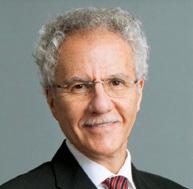
By Enrico Ascher, MD
VPublished by BIBA News, which is a subsidiary of BIBA Medical Ltd.
Publisher Stephen Greenhalgh
Managing Editor Bryan Kay bryan@bibamedical.com
Editorial contribution Jocelyn Hudson, Will Date, Jamie Bell and Éva Malpass
Design Terry Hawes and Josh Lyon
Advertising Nicole Schmitz nicole@bibamedical.com
Letters to the editor vascularspecialist@vascularsociety.org
BIBA Medical, Europe
526 Fulham Road, London SW6 5NR, United Kingdom
BIBA Medical, North America
155 North Wacker Drive – Suite 4250, Chicago, IL 60606, USA
ascular Specialist readers may wonder why I am now raising this topic amid current challenges facing vascular surgery, like governmental concerns, low reimbursement, specialty competition, the involvement of advanced practice providers without direct affiliation with vascular surgeons, and discussions regarding independent American Board of Medical Specialties (ABMS) recognition.
Yet, I’m certain that you too have noticed a clear trend: physician job opportunities are increasingly shifting from private practice to full-time roles in academic centers, teaching hospitals, and corporate organizations. Indeed, it is estimated that 70–80% of U.S. physicians are employed in a full-time capacity. In some instances, the type of employment chosen depends on factors beyond the control of the applicant. This is exemplified by young physicians who view a fulltime position as the sole viable option due to potentially burdensome costs associated with starting in private practice. Alternatively, other vascular surgeons choose full-time positions to align with their professional objectives.
It is clear that full-time medical work can involve challenges such as working conditions, staffing, safety, patient care standards, fair pay, operational inefficiencies, policy conflicts like ageism, rights violations and other key concerns. If a full-time employee’s concerns or grievances are not resolved by institutional leadership, a collective bargaining approach, such as union involvement, is an alternative that may be considered to pursue such matters.
The concept of a labor union was first crystallized in the U.S. in 1794 in Philadelphia by the Federal Society of Journeymen Cordwainers, a group of specialized shoemakers working with fine leather. In 1935, President Franklyn D. Roosevelt signed the Wagner Act, which gave rise to the National Labor Relations Act (NLRA). Since then, full-time employees have been allowed to form a union.
Some of the advantages of creating a union include—but are not limited to—job security, improved wages and benefits, workplace safety, legal protection, career advancement, and equitable compensation across races and ethnicities. Reported disadvantages are union dues, increased conflicts between management and labor, loss of independence, and potential backlash from patients, peers, supervisors and future employers.
To evaluate the strengths, weaknesses, opportunities and threats associated with the creation of a physician union, one needs to carefully and thoroughly evaluate all options. Since laws vary among different states, reaching out to local labor lawyers is highly recommended. Also, given the limited number of vascular surgeons in the U.S., the path to unionization is expected to involve a collaborative approach with other healthcare professionals.
Seventy-nine percent of the respondents from [the EVS and SCVS] stated that they would join or consider joining a union if one existed
Accordingly, full-time physicians who are employees of a hospital, clinic, medical group or any other healthcare facility also can unionize. The NLRA requires physician members of a union to give employers 10 days’ notice before engaging in a concerted refusal to work. It is important to note that emergency care for patients must always be available, and hospitalized patients must receive medical care. While this mandate might reduce the union’s bargaining power, it doesn’t eliminate it. Clinic closures, delays in administrative tasks and community resentment towards the institutional leadership may ultimately harm an institution’s finances and standing among other competing institutions.
It is worth mentioning that the National Labor Relations Board (NLRB) received a 57% increase in union election petitions across all types of labor in 2022. More relative to medicine, the NLRB received 44 union petitions filed by physicians from 2000 to 2020, averaging two per year, and this jumped to 33 petitions from 2023 to 2024 with an average of 16.5 petitions per year. This likely reflects both a rise in full-time roles and an increase in physician grievances, as corporate interests may have prioritized profit over care quality and physician well-being.
Equally important is to gauge the interest of vascular surgeons in creating a union. For this, I have created an eight-question survey. The sole intent of this questionnaire was to evaluate if the practicing vascular surgeon was interested in unionizing.
I am thankful to Dr. Kathleen J. Ozsvath, past president of the Eastern Vascular Society (EVS), and Dr. Jean Bismuth, past-president of the Society for Clinical Vascular Surgery (SCVS), for their prompt response to disseminate a questionnaire to their members regarding the creation of a union for vascular surgeons. The findings were quite interesting.
Seventy-nine percent of the respondents from both societies stated that they would join or consider joining a union if one existed. The most common reason to join a union was the same for both societies: to have a seat at the table when decisions are made. The two other main reasons cited by EVS members were to improve wages and benefits, and to prevent administrative abuse. For SCVS members, preventing administrative abuse was the second top reason, followed by improving wages and benefits.
Younger vascular surgeons may be especially interested in exploring unionization further. Given the recent increased attention paid to unionization by the medical community, the relevance of this topic should not be questioned.
I believe further study and analysis of the pros and cons of unionization, and potential impacts on vascular surgery and vascular surgeons, is warranted, and I plan to ask the SVS to consider adding this topic to future strategic priorities.
ENRICO ASCHER is chair of the SVS Senior Section and a past president of the Society.
UPDATED INTERMITTENT CLAUDICATION GUIDELINES REFLECT A DECADE OF NEW EVIDENCE
By Marlén Gomez and Bryan Kay
THE SVS RECENTLY PUBLISHED A comprehensive update to its clinical practice guidelines (CPGs) for the management of intermittent claudication (IC), urging clinicians to prioritize conservative treatment strategies and patient-centered care.
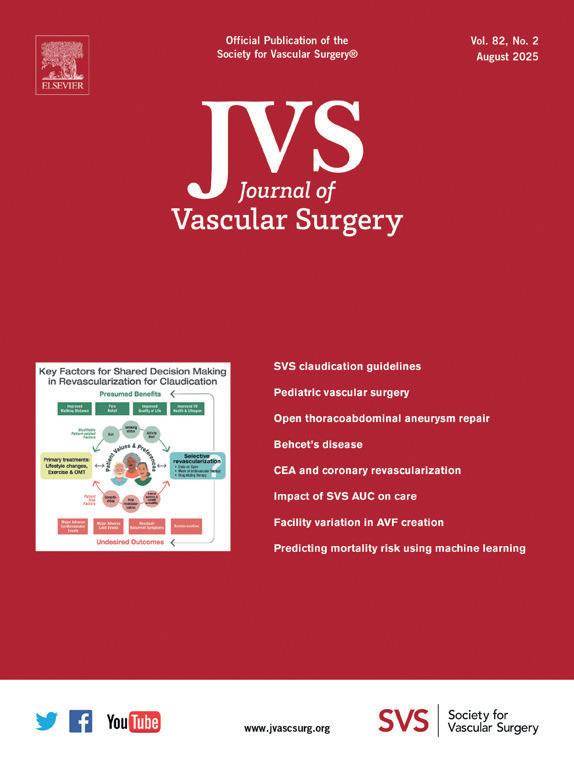
The new recommendations, published in the August issue of the Journal of Vascular Surgery (JVS), incorporate nearly a decade of new evidence and mark the first time the SVS has included a formal patient panel in the guideline development process.
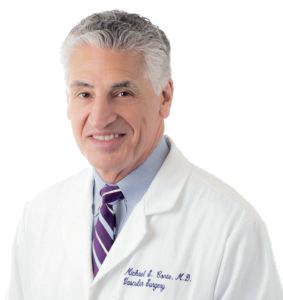
The IC guidelines writing group, led by first author Michael Conte, MD, chief of the Division of Vascular and Endovascular Surgery at the University of California San Francisco (UCSF), produced 12 formal recommendations and two best practice statements, focusing on antithrombotic therapy, exercise interventions and revascularization procedures.
The update is intended to provide clinicians with the best available contemporary data on optimal medical therapy (OMT), exercise and interventions to promote an evidence-based framework for the management of IC. The guidelines reaffirm that first-line treatment should include patient education, smoking cessation, risk factor control, optimal medical therapy and structured exercise programs. Revascularization—whether surgical or endovascular—is recommended only for patients with lifestyle-limiting symptoms who do not respond to conservative therapy.
The guideline development process included input from a panel of patient advisors with lived experience of peripheral arterial disease (PAD) and claudication. Their feedback emphasized the importance of clear communication, individualized treatment goals and transparency about risks and benefits.
Despite advances in pharmacotherapy and endovascular technology, the SVS identified several gaps in the evidence base, including limited data on long-term outcomes and the effectiveness of homebased exercise programs.
“The areas selected for focus concern the role of therapeutic interventions for patients with IC,” Conte et al write.
“Within the domain of medical therapies, we focused on antithrombotic management because of important new evidence in this arena directly relevant to the patient with IC.”
The updated guidelines aim to shift clinical practice toward a more thoughtful, individualized model of care, encouraging clinicians to weigh treatment options in the context of each patient’s overall health, preferences and life goals.
“In addition to the 2015 SVS guideline document on IC, the reader should refer to other relevant multi-specialty guidelines on gener-
“Within the domain of medical therapies, we focused on antithrombotic management because of important new evidence in this arena directly relevant to the patient with IC”
MICHAEL CONTE ET AL
impressions, more than 3,700 placements and 70 interviews, according to internal reports.
“You’re not going to be able to explain everything about PAD in one sitting,” Dua admitted. “But if people know what it is, they’ll know what to do next.”
Dua emphasizes that catching PAD early can dramatically change a patient’s outcome. “If you’re able to pick up that a person has PAD early, you can be aggressive about giving them the right medications and the right lifestyle modifications so that the PAD does not progress,” she said. “Because the end stage of PAD is an amputation.”
Dua talks of early detection allowing for interventions that can halt or even reverse the disease, referencing patients with intermittent claudication who commit to a structured walking
The guidelines were published in the August issue of JVS
al cardiovascular risk management and preoperative evaluation for patients with PAD and IC to supplement this update,” Conte and colleagues add in the update.
In an editorial accompanying the guidelines in the August issue of JVS, Britt Tonnessen, MD, an associate professor of vascular surgery at Yale Medicine in New Haven, Connecicut, and Marc Schermerhorn, MD, chief of vascular surgery at Beth Israel Deaconess Medical Center in Boston, say that such SVS guidelines provide “in-depth, evidence-based updates without recapping every aspect of a vascular condition.”
“The SVS has a responsibility to remain steadfast in the sharing of evidence that helps our patients and members,” they write. “This latest CPG on intermittent claudication is rooted in quality and safety, and encourages a patient-centered approach to the management of intermittent claudication—we would encourage everyone to read and consider which parts may best benefit their patients.”
Visit vascular.org/ ICFocusedUpdate.
FROM THE COVER FDA deems enVVeno’s VenoValve ‘notapprovable’
continued on page 1
its review of the PMA application and determined that it is unable to approve the PMA for the VenoValve in its current form.
“In particular, the FDA indicated that the favorable revised Venous Clinical Severity Score [rVCSS] data generated by the [SAVVE] study to show clinical improvement, together with the improvements in pain scores and venous-specific quality-of-life indicators was not sufficient on its own to determine favorability of the benefit risk profile for the VenoValve,” the company press release reads. “Without a specific hemodynamic measurement that correlates with patient improvement, the FDA raised concerns about bias and the possibility that clinical improvement occurred as a result of the patients being enrolled in a study.”
The FDA also focused on safety concerns that were attributed to the VenoValve open surgical procedure, and that required rehospitalizations. enVVeno notes that it “would not expect to see similar safety events with a nonsurgical replacement valve.”
enVVeno advises that it is reviewing the feedback from the FDA and is assessing all options, which may include a meeting to discuss requirements for a potential resubmission of the VenoValve, or appeal of the decision along with appropriate next steps. The company adds that it also expects to apply the “key learnings” from this FDA approval process as it advances enVVe, its nonsurgical replacement venous valve for which it is preparing an investigational device exemption (IDE) application.
At the 2025 Vascular Annual Meeting (VAM), two-year data were presented showing that clinical improvement—as measured by rVCSS—was sustained at
program who can grow new blood vessels in their legs, reducing pain and improving mobility.
She encourages her patients to stay physically active, noting that regular movement can significantly improve circulation and reduce symptoms. “Movement is medicine,” said Dua. “Walking programs are incredibly effective in helping patients grow new blood vessels and regain mobility.”
Dua emphasized that awareness is the first step toward prevention. “No matter what surgical procedure we do, minimally invasive or open surgery, it won’t work if patients don’t make lifestyle changes,” she said. “So let’s start with awareness. Let’s make PAD something everyone knows about.”
For more information, visit vascular.org/Your-Vascular-Health
two years in the 43 patients who reached this follow-up milestone. Specifically, the mean rVCSS at two years was 9.8, which was slightly lower than the mean score at one year, but “significantly lower” than the baseline score of 15.6. Pain scores, meanwhile, showed a slight decrease in Visual Analogue Scale (VAS) score from 2.2 at one-year follow-up to 1.9 at the two-year mark. However, this was “significantly lower” than the baseline of 4.3, it was reported.—Jocelyn Hudson and Bryan Kay
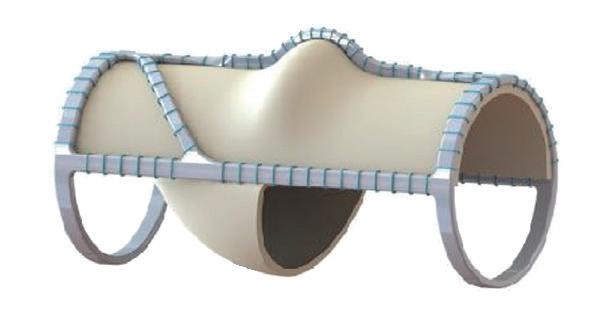
VenoValve surgical implant
EUROPE SWEDEPAD reopens paclitaxel safety discussion, finds drug-coated devices do not improve outcomes
By Jocelyn Hudson
DRUG-COATED BALLOONS (DCB s ) AND STENTS were not associated with reduced risk of amputation or improved quality of life compared with uncoated devices in the SWEDEPAD 1 and 2 trials. In addition, higher five-year mortality with drug-coated devices in patients with intermittent claudication was noted, leading researchers to stress that the safety of paclitaxel-coated devices is an “ongoing discussion.”
These late-breaking findings were presented at the European Society of Cardiology (ESC) 2025 congress (Aug. 29–Sept. 1) in Madrid, Spain and published in The Lancet
SWEDEPAD 1 and 2 were pragmatic, participant-blinded, registry-based randomized trials that set out to determine the clinical impact of drug-coated technology on patients with peripheral arterial disease (PAD).
Explaining the rationale for the trials, co-principal investigator Joakim Nordanstig, MD, a vascular surgeon at the University of Gothenburg in Gothenburg, Sweden, said: “[DCBs] and stents have been shown to reduce restenosis and the need for reinterventions in the endovascular treatment of PAD. However, there are uncertainties regarding whether drug-coated devices improve outcomes that are meaningful to patients, quality of life and reducing amputations, and there are some concerns over safety.
“We investigated these and other endpoints in two trials in PAD—one in chronic limb-threatening ischemia [CLTI] and one in intermittent claudication—comparing drug-coated and uncoated devices.”
In SWEDEPAD 1, 2,355 patients with CLTI (Rutherford stage 4–6) undergoing infrainguinal endovascular treatment were randomized 1:1 to drug-coated or uncoated balloons or stents. In nearly all of the drug-coated devices implanted, the drug delivered was paclitaxel (>99%). There was no significant difference in the primary endpoint of time to ipsilateral above-ankle amputation with drug-coated versus uncoated devices (hazard ratio [HR] 1.05; 95% confidence interval [CI] 0.87–1.27) over five years of follow-up. Target vessel reinterventions were reduced in the drug-coated group during the first year (HR 0.81; 95% CI 0.66–0.98), but this difference
“Given the signal of increased mortality with intermittent claudication, clinicians should carefully evaluate the potential risks and benefits when considering these expensive devices”
MÅRTEN FALKENBERG
disappeared with longer follow-up. There was no difference in all-cause mortality or in quality of life (as assessed using the VascuQoL-6 questionnaire).
In SWEDEPAD 2, 1,155 patients with intermittent claudication (Rutherford stage 1–3) undergoing infrainguinal endovascular treatment were randomized 1:1 after successful
guidewire crossing to receive either drug-coated or uncoated balloons or stents. All drug-coated devices implanted delivered paclitaxel. There was no difference in the primary efficacy endpoint of quality of life between the drug-coated and uncoated groups at 12 months (mean difference in VascuQoL-6 scores: –0.02; 95% CI –0.66–0.62). Target vessel reintervention rates were not different at one year or over a median follow-up of 6.2 years. All-cause mortality did not differ over 7.1 years (HR 1.18; 95% CI 0.94–1.48), although higher five-year mortality was noted with drug-coated versus uncoated devices (HR 1.47; 95% CI 1.09–1.98).
Summarizing the findings, co-principal investigator Mårten Falkenberg, MD, a vascular surgeon at Sahlgrenska University Hospital and the University of Gothenburg in Gothenburg, Sweden, said: “Paclitaxel-coated devices were not effective in preventing amputation in chronic limb-threatening ischemia or improving quality of life in intermittent claudication. Given the signal of increased mortality with intermittent claudication, clinicians should carefully evaluate the potential risks and benefits when considering these expensive devices. Devices incorporating antiproliferative agents other than paclitaxel warrant further investigation in PAD.”
Paclitaxel mortality issue
‘an ongoing discussion’
In a press conference at ESC, Nordanstig commented on how the newly presented SWEDEPAD data compare to other trials in the PAD space. He noted that the results are “a bit different” to those of previously conducted pivotal trials and meta-analyses on drug-coated technology in patients with PAD, which “consistently demonstrated” reduced reintervention rates. “The big difference here I think,” Nordanstig said, “is this is a strategy trial rather than a single device trial, and [the SWEDEPAD findings] might be what is happening when broadly introducing these therapies in a more everyday patient population.”
Nordanstig also touched on the finding in SWEDEPAD 2 that higher five-year mortality was noted with drug-coated versus uncoated devices, stressing that the safety of paclitaxel-coated devices is “still an ongoing discussion” following the identification in 2018 by Katsanos et al of a late mortality signal. He remarked: “It’s hard for us to ignore the fact that it seems that we mirrored that signal in SWEDEPAD 2, but not in SWEDEPAD 1.”
OUTCOMES STUDY SHOWS RESULTS CONTINUE TO FLOW FROM TRANSCATHETER ARTERIALIZATION OF THE DEEP VEINS
tinues to increase, and probably about 10% of patients who have PAD have what we call ‘no option’ for revascularization.”
TADV has long been sought after as an alternative means of providing an option for this high-risk CLTI population of patients, Etkin relates. “For years, we have been talking about what to do with these patients, and we’ve tried DVA, where we connect the arteries to the veins, to arterialize the veins, and it has been tried with variable success,” she explains. “Open deep vein arterializations [DVAs] have been described, and percutaneous ones as well, but the percutaneous ones were done randomstance, involving specialists using devices off the shelf, self-made, in very few small series, so not well reported.” Then along came the LimFlow device, Etkin continues. Approved by the Food and
Drug Administration (FDA) in 2023, LimFlow rolled out into the real-world environment off the back of the six-month results’ publication in the New England Journal of Medicine (NEJM). “But the trial is the trial,” Etkin says, “the perfect kind of environment. We started using [LimFlow] in our system when it got approved, and so the idea behind this project was to look at real-world data. Very commonly, after the trials are over, when the devices get to the general population, they don’t perform as well, and then, of course, there is a learning curve.”
With a median follow-up of six months among the 80 patients in the real-world analysis, Etkin points to data showing that of the patients who did not die or lose a limb, stent patency was 70%, with 94% of patients exhibiting either healed or improved wounds. In terms of learning curve of the LimFlow
continued from page 1
procedure, Etkin can claim 30 of those 80 patients as experience. In that vein, one of the routes to good results involved completing cases together with Northwell vascular surgeon colleague, Jeffrey Silpe, MD, she explains. “The first few cases took a long time, an average of five to six hours,” Etkin says. “But now, after doing these for over a year, we are down to about one-and-a-half to two hours. So, there is definitely a learning curve in probably the first 10 cases.”
She continues, “It is more than just a technical procedure. There is a lot of thought that needs to go into the planning, the intraoperative decision-making. It’s not a straightforward procedure where you have an occluded artery and try to open it up. You’re creating a fistula, and there is a risk that you could steal the blood flow from the native circulation into this fistula, and this fistula
is not going to provide enough blood flow for the first six weeks or so because it has to mature. So, you can actually make things worse if you’re not carefully planning and looking at the imaging.”
The procedure is “not going to save everyone,” Etkin says. “This is the first option for these patients who truly have no option.” But, with limb loss associated with “really high mortality,” by saving legs “you’re actually saving people’s lives.”
Work to more fully understand who the right patients are for the TADV procedure continue, Etkin adds. “I think all the results—PROMISE, our results—supports that there is something here that people should really consider including in their treatment algorithm. This is not the first option; this is clearly for when you have exhausted all the options.”
How likely are your surgical patients to have disruptive bleeding?
MULTIDISCIPLINARY APPROACH TO DIABETIC FOOT ULCERS IN RURAL AMERICA LEADS TO NIH GRANT
By Marlén Gomez
SAMANTHA MINC, MD, MPH, associate professor of surgery at Duke University, has been awarded a National Institutes of Health (NIH) R03 grant to support her research project, “Understanding diabetes and peripheral arterial disease [PAD]-related amputation in North Carolina.”
The R03 grant provides short-term funding for small, self-contained research projects, including pilot studies and secondary data analyses. Minc’s study will run from Aug. 12, 2025–July 31, 2027.
Minc’s research focuses on identifying and addressing disparities in diabetes and PAD-related amputations, particularly in underserved communities. Her work began in West Virginia, where she was recruited due to her interest in rural health. There, she conducted a granular geospatial analysis and led focus groups with patients and providers to understand barriers to limb preservation.
“That first step was huge for me,” Minc said, referring to her 2018 Society for Vascular Surgery (SVS) Foundation Clinical Research Seed Grant. “Once that funding came through, we conducted the analysis, published a paper in the Journal of Vascular Surgery [JVS], and it was really well received.”
Following the seed grant and further awards from the West Virginia Clinical and Translational Science Institute, Minc received a K23 award in 2022 from the National Institute of Diabetes and Digestive and Kidney Diseases, with additional support from the SVS Foundation and the American College of Surgeons (ACS). These funds enabled her to implement a trio of interventions in rural clinics: diabetic foot exams, multidisciplinary teleconference and timely referrals.
“Eighty-five percent of diabetes-related amputations are preceded by a foot ulcer,” Minc said. “These are highly preventable, highly morbid issues.”
Primary care doctors and limb flow teams who conduct diabetic foot exams can significantly reduce amputations, but, Minc asks,
what does that mean for a place where it’s four hours to the closest quaternary center?
Piloting teleconferencing platforms and providing hotlines for nurses enabled them to effectively triage patients. Primary care doctors could then contact a vascular nurse, who would triage the patient accordingly—either for an emergency visit or within a specified timeframe—and connect them with local podiatrists, serving as the primary intervention.
Her team observed significant improvements, including a drop in foot-related hospital visits from 4% to 0.4% among 268 patients. The success of this feasibility study laid the groundwork for her current project in North Carolina, which involves a larger, more nationally representative population.
Utilizing scientifically validated behavioral change methods, the project aims to encourage clinicians to modify their practices. Throughout the project, data were collected over 12 months, comparing the results with those from the 12 months prior. The findings showed a significant increase across various metrics—including a 242% rise in foot exams and a staggering 2,716% increase in the completeness of those exams—compared to 2–12% of foot exams in other studies incorporating all four components. By the project’s conclusion, 84% of the exams were complete, compared to just 17% at the start. The identification of foot abnormalities also increased by 1,443%, and referrals significantly rose.
The project utilized a mixed-methods approach, combining quantitative findings with focus groups conducted at various clinics before, during and after the study, and individual interviews with patients, which allowed the team to understand the clinical and structural changes implemented in the clinics.
A key component of Minc’s approach is community engagement, where her team established both provider and community
TEAMS FORMALLY DEFINED AS SPECIALIZING IN chronic limb-threatening ischemia (CLTI) were associated with a decreased risk of major amputation among a subset of BEST-CLI trial sites, a paper recently published online ahead of print in the Journal of Vascular Surgery (JVS) showed.
Responses from a post-trial electronic survey were used to describe CLTI care providers and characterize centers based on the presence of a “formally defined team dedicated to the care of CLTI patients.”
“Eighty-five percent of diabetes-related amputations are preceded by a foot ulcer. These are highly preventable, highly morbid issues”
SAMANTHA MINC
advisory boards to guide the research. One primary concern raised by community members was food insecurity.
“How can you expect us to get better if we’re not taking care of the food?” Minc recalled a community member saying.
In response, the group conducted a food insecurity scan across the rural county using a United States Department of Agriculture (USDA) toolkit. It revealed that most residents relied on gas stations and dollar stores for their groceries, with only two supermarkets serving an area of 8,500 square miles.
An initiative called Project FARMacy was launched as a result of the findings, which enabled the community to raise funds for a local farmer. Doctors can then write prescriptions for their patients with diabetes, allowing them to receive a box of healthy fruits and vegetables throughout the summer. This program lasts for three months, providing participants with fresh produce each week.
The diabetes support group developed an idea after hosting a month-long session on carb counting. “We decided to have members bring their favorite recipes or holiday
With an overall response rate of 20.2% and at least one response from 75% of enrolling sites, respondents identified that the specialties most frequently among those primarily responsible for CLTI care at centers with CLTI teams were revascularization specialists—namely, vascular surgery, interventional cardiology or interventional radiology (92%), as well as podiatry (32%) and wound care (22%).
Compared to centers without CLTI teams, podiatrists at CLTI team centers were more likely to have a primary
recipes, which we would then share with our culinary medicine partners to adapt them into diabetes- and heart-healthy options,” said Minc.
Initially organized in November 2023, this idea unexpectedly evolved into a 120-page cookbook. Now completed, the cookbook has been printed and is finally ready for distribution. Minc’s team will continue to educate people about the importance of diabetic foot exams and improve the quality of care for individuals with diabetes. They are focused on disseminating their results throughout West Virginia this year and completed their first event in Pocahontas County over the summer.
“We did our first event in July,” said Minc. “We’re hosting our second event in Princeton, located in the southern part of the state. In two weeks, we’re hosting a large grand rounds session for all providers in the area, discussing vascular disease, diabetes and foot care; then we’re doing a large event in the Eastern Panhandle, which was another amputation hotspot, and plan to hit every part of the state. I have this road map that is part of our final year of our NIH grant that will take us across the state, and then we’ll hit the state capital in the spring and do a policy talk for advocacy programs that the community has identified.”
Minc added: “The plan is to take all this work and repeat it on a much larger scale. We have pilot data showing that we can improve outcomes if we do this. And so the plan is to identify hotspots across North Carolina and then do a more randomized trial where we deploy the intervention in a stepped fashion across the state, and show that we can improve outcomes by doing this.”
role (32% vs. 11%) and less likely to be unavailable (4% vs. 22%), the authors reported. Similarly, at centers with CLTI teams, wound care specialists were more likely to have a primary role (22% vs. 8%) and less likely to be unavailable (4% vs. 11%). Effectiveness of teamwork among CLTI providers was described as “highly effective” in 71% of respondents with a CLTI team vs. 29% without a team. On multivariable analysis, presence of a CLTI team was independently associated with decreased major amputation, the researchers found.—Bryan Kay
Samantha Minc’s foot exam outreach in action
Introducing TQI 2.0
The Doppler Designed for the Modern OR
It’s the next generation of our Trans-Q-taneous Intraoperative (TQI) Doppler System, combining the reliability and cost effectiveness of the original TQI Doppler with new, user-friendly features.
RELIABLE
VTI’s single-use surgical Doppler probes provide a higher degree of performance reliability since probe failure due to reprocessing is eliminated. You’ll reach for your Doppler with confidence!
COST EFFECTIVE
Single-use surgical Doppler probes eliminate reprocessing costs as well as the hidden expenses associated with the malfunctioning of reusable probes such as lost OR time.
EASIER TO USE
Increased Portability
In addition to its smaller size, the TQI 2.0 Doppler now features an IV pole mount and a handle for easy transport.
Greater Control
The modern design of the TQI 2.0 Doppler allows for a foot pedal for increased control from the surgical field.
Improved Sound
The TQI 2.0 Doppler System is optimized for clear audio signals for both intraoperative and transcutaneous use.
Learn more about our Sound technology for today’s surgical needs. Call 800-550-0856 or visit us at VTI-online.com
Visit our TQI product page on our website.
COMMENT& ANALYSIS
THE OUTPATIENT
Comparing office practice models: Should we joint venture?
By Jennifer Thomas, MD
IN THESE CHALLENGING DAYS OF surviving private vascular practice, I’m sure we’re all considering our options. With rising overheads and reimbursement cuts, considering a joint venture can be an attractive option to share costs and expand growth potential. There are different options for such a partnership, and I’ll do my best to outline the pros and cons as we have experienced them.
The first option is joint venturing with a local hospital system. In our area, we have a medium-sized nonprofit hospital system that has an almost exclusive network of both primary care providers and specialists. I was a part of this system as an employed physician for several years, and, when my partner and I decided more than eight years ago to leave employment, we approached the administration with the idea of joint venturing. At the time, moving our peripheral arteriograms and dialysis work to outpatient made complete sense, as we were routinely neglected by the hospital cath lab in terms of scheduling priorities. Our patients were always at the end of the line of any “emergent” cardiac cath, which often seemed to us to appear out of the blue depending on the cardiologists
CORNER STITCH
THE INTERSECTION OF PALLIATIVE CARE AND VASCULAR SURGERY
By Tara Zielke, MD
working that day and their preferences. It was very unfair to our patients, not to mention a constant source of frustration for us. We felt that there was no support to grow our practice, without appropriate resources to schedule our arteriograms.
Unfortunately, despite what we felt to be a well-thought-out proposal of the benefits both to quality of patient care and reimbursements for forming an outpatient vascular lab, the hospital was not interested in joint venturing with physicians at the time of our decision to leave. Even though this was not our course, I would still encourage considering a hospital partnership as a viable option. It takes some forward thinking on the part of your executive leadership, but there is no reason why both the hospital and your group cannot be profitable in such an arrangement. It can be hard to get them to see past your worth in relative value units (RVUs), but learning your value is instrumental in these negotiations. You get the advantage of their insurance contracts, purchasing agreements, and employee benefits (including malpractice coverage), while having more ownership of your office/ treatment facility. This allows you to
AS VASCULAR SURGEONS, WE STRIVE TO practice comprehensive vascular surgery care. This entails the medical and surgical management of patients with a wide range of vascular diagnoses. Patients with advanced vascular disease experience significantly reduced quality of life and high healthcare utilization. Palliative care principles are interwoven into the care of these patients. As a vascular surgeon striving to practice comprehensive vascular surgery care, it is essential to be knowledgeable about these topics to provide better patient care.
This article aims to answer several important questions to define what surgical palliative care is, explore the current research literature, redefine misconceptions regarding surgical palliative care, and apply these concepts to the care of vascular surgery patients.
So, what is surgical palliative care? And how can you
better control your schedule and the customer service you provide to your patients. In addition, most hospitals (ours included) employ a large network of providers who will support your practice if you are in such a partnership, as opposed to being “the enemy.”
The next model to consider is joint venturing with an industry partner. These days, there are large insurance companies and other medical entities partnering with providers in outpatient cardiovascular centers. Our practice explored this option as it seemed our best way outside of hospital partnership to fund an ambulatory surgery center (ASC). Since we are a combined cardiology and vascular surgery practice, we
an ASC, along with the ability to of a large partner to oversee all the regulatory and accreditation requirements. However, in our experience the goals we had for expansion were not realized as dealing with a large corporate entity often leads to frustrating inefficiencies and loss of control of overhead and cash flow.
It can be hard to get them to see past your worth in relative value units (RVUs), but learning your value is instrumental in these negotiations
were particularly interested in potentially shifting some electrophysiology (EP) services outpatient, as well as our surgical dialysis cases. We certainly liked the notion of sharing the build-out costs to convert our office-based vascular lab into
integrate surgical palliative care principles to improve the care of your vascular surgery patients? Surgical palliative care was defined by Dr. Red Hoffman, an acute care surgeon and associate hospice medical director at Mission Health in Asheville, North Carolina, as “the attention to suffering in all of its manifestations of the patient and the family under surgical care.”1 The tenets of surgical palliative care extend beyond surgical interventions to encompass medical management of vascular disease and social support such as exercise programs, smoking cessation resources, and wound care. Surgical palliative care sees the whole unique person and all aspects of their suffering, to include physical, psychological, social and spiritual.
Although vascular surgeons often implement palliative care through goals-of-care discussions, there remain further opportunities to engage mental health experts, chaplains, social workers and community resources in our approach. Even engagement with advance directives, healthcare proxy documentation, or inpatient/outpatient hospice referral can further our impact. Active implementation of surgical palliative care principles is ultimately a skill that must be
Currently, we are back in private practice as a three-owner group. The pros continue to be autonomy in clinical decision-making, with full control over caseloads and patient care standards. Our revenue is not diluted through profit-sharing or institutional overhead. We have been able to adjust our service line based on market demands, most recently scaling our wound care clinic to meet our community needs. We are also able to optimize tax strategies and control our real estate investment since we own our space. The fears that we had in our first few years about being too vulnerable to hospital-owned primary care networks have not been realized. Yes, it seems we are in a constant battle to reassure patients in the community that we are, in fact, in-network and that they, as the consumers, have the choice of their doctor, whether employed or private. But thankfully our community continues to grow, and as long as we continue to offer quality care in a cost-effective, patientcentered environment, it seems that there is hope of survival after all.
learned through understanding available hospital and community resources, but it can ultimately have an immense impact on the lives of our patients.
What does the current research literature say about surgical palliative care in the vascular surgery patient population? One study examined hospital patients who died after vascular surgery, and only 25% received palliative care consultation, with a median interval of only 10 hours between consultation and patient death. Only 14% of patients in this study cohort had a documented advance directive.2 This is extremely low when put into the context that an estimated 36.7% of the U.S. population has a documented advance directive.3 A single-institution, retrospective chart review of all patients who underwent open aortic surgery showed 16.7% of patients had advance care planning documentation prior to open aortic surgery. Palliative care involvement was close to patient death, with a median interval of five (interquartile range [IQR] 2–13) days.4
In the context of peripheral arterial disease (PAD), Dr. Mimmie Kwong and colleagues studied 111 patients who received below-knee amputation for chronic limb-threatening ischemia (CLTI). One-year mortality was 21.9%. The
continued on page 10
JENNIFER THOMAS is a private-practice vascular surgeon in Anderson, South Carolina.
Jennifer Thomas
Tara Zielke
COMMENT& ANALYSIS
median interval between palliative consultation and amputation was 26 days, whereas the median interval between palliative consultation and death was nine days.5 This study demonstrates a pattern of consulting palliative care closer to death than earlier evaluation after amputation.
Current studies have further demonstrated that when surgical palliative care was utilized in the care of patients with CLTI, patients had less emotional distress and less uncertainty regarding the expected course of their illness.6 Integrating palliative care was also associated with a lower likelihood of in-hospital death and increased likelihood of discharge to hospice (odds ratio [OR] 0.248, p=0.0167; OR 1.283, p<0.001) in patients after major amputation.7
The research literature on this topic is growing, and the current research defines clear opportunities for improvement in our patient care.
What are some misconceptions regarding surgical palliative care? “Why would we consult palliative care? The patient isn’t going to die anytime soon”: as a visiting medical student, I remember this response when a resident suggested consulting palliative care for a patient with debilitating chronic pain and wounds, and no great revascularization option. I was surprised by how many healthcare providers equate palliative care with end-of-life care, or only for geriatric patients. Palliative care is not only for when death is imminent or for those entering the last stages of life. Palliative care is appropriate for any patient with a serious life-limiting illness, or significant pain or distress, to improve quality of life.
the benefit palliative care can provide. We must accept that many of our interventions are ultimately of a palliative nature and may not ultimately extend the life of our patients. However, in situations where there is room to improve our patients’ quality of life and reduce their suffering, palliative care can assist in furthering our impact.
As we progress as a field, it is imperative that we integrate surgical palliative care principles into vascular surgery practice. Enriching our current literature with more studies on multidisciplinary practice and the use of hospital/community resources in vascular-specific pathologies could help us understand how to best serve our patients and provide more comprehensive surgical care.
References
1. Fox, M. New Surgical Palliative Care Society Aims to Build Community, Alleviate Suffering. American College of Surgeons, Dec. 3, 2021, www.facs.org/for-medicalprofessionals/news-publications/news-and-articles/ bulletin/2021/12/new-surgical-palliative-care-society-aimsto-build-community-alleviate-suffering/
2. Wilson DG, Harris SK, Peck H et al. Patterns of Care in
We must accept that many of our interventions are ultimately of a palliative nature and may not ultimately extend the life of our patients
Hospitalized Vascular Surgery Patients at End of Life. JAMA Surg. 2017;152(2):183–190. doi:10.1001/jamasurg.2016.3970
3. Yadav, Kuldeep N et al. Approximately one in three US adults completes any type of advance directive for endof-life care. Health Affairs, vol. 36, no. 7, July 2017, pp. 1244–1251, https://doi.org/10.1377/hlthaff.2017.0175
4. Barrera-Alvarez A, Brittenham GS, Kwong M. Missed Opportunities for use of Advanced Care Planning and Palliative Care in Open Aortic Surgery. Ann Vasc Surg. 2025 Jan;110(Pt A):205–216. doi: 10.1016/j.avsg.2024.08.005. Epub 2024 Sep 27. PMID: 39343365
5. Kwong M, Curtis EE, Mell MW. Underutilization of Palliative Care for Patients with Advanced Peripheral Arterial Disease. Ann Vasc Surg. 2021 Oct;76:211–217. doi: 10.1016/j.avsg.2021.07.003. Epub 2021 Aug 14. PMID: 34403753
6. Cattermole TC, Schimmel ML, Carpenter RL, Callas PW, Gramling R, Bertges DJ, Ferranti KM. Integration of palliative care consultation into the management of patients with chronic limb-threatening ischemia. J Vasc Surg. 2023 Aug;78(2):454–463. doi: 10.1016/j. jvs.2022.12.069. Epub 2023 Apr 23. PMID: 37088444
7. Morton C, Hayssen H, Kawaji Q, Kaufman M, Blitzer D, Uemura T, Kheirbek R, Nagarsheth K. Palliative Care Consultation is Associated with Decreased Rates of In-Hospital Mortality Among Patients Undergoing Major Amputation. Ann Vasc Surg. 2022 Oct;86:277–285. doi: 10.1016/j.avsg.2022.05.005. Epub 2022 May 18. PMID: 35595211.
TARA ZIELKE is a PGY-2 integrated vascular surgery resident at Indiana University School of Medicine in Indianapolis. CONTINUED FROM PAGE 8
Another misconception of palliative care is that consultation is admitting that there is nothing more we can do. Patients with surgical options should not be excluded from
SHIFTING DEMOGRAPHICS, IMPROVED VISIBILITY AND STRIDES MADE ON MEDICARE REIMBURSEMENTS
By Keith Calligaro, MD
THIS IS THE LATEST MONTHLY update on a few of the critical issues facing the SVS.
Changing SVS leadership demographics
Over the last several years, the SVS Leadership and Appointments Committee made a determined effort to be more inclusive of the full spectrum of SVS members, with a specific focus on earlycareer and female vascular surgeons. As evidence of these efforts, early-career members comprise about 25% of our membership but 33% of the recent Vascular Annual Meeting (VAM) Program Committee and 50% of the Postgraduate
Education Committee (PGEC).
Women comprise about 23% of our membership but 50% of SVS committee and council chairs, and currently serve as SVS president-elect, president of the Association of Program Directors in Vascular Surgery (APDVS), president of the Southern Association for Vascular Surgery (SAVS) and chair of the Vascular Surgery Board (VSB). Additionally, two of the three editors-in-chief of Rutherford’s Vascular Surgery and Endovascular Therapy textbook are women, while the new Journal of Vascular Surgery editor-in-chief is also a woman.
Increasing our visibility
The SVS branding campaign is ongoing, continuing apace with William Shutze, MD, past SVS secretary, leading the “Highway to Health” project, and SVS Advocacy Council Chair Megan Tracci, MD, JD, and Megan Marcinko, the SVS’s senior director for public affairs and advocacy, spearheading our SVS Advocacy Conference in Washington, D.C. SVS public relations efforts are paying off. Each media outlet calculates their public relations impact via monthly impressions, which are the number of times articles, videos, ads, blogs, social
media posts, etc., are consumed. There were 1.1 billion vascularrelated impressions when President Donald J. Trump was recently diagnosed with chronic venous insufficiency (CVI).
CMS reimbursements
The Centers for Medicare & Medicaid Services (CMS) released its CY2026 Physician Fee Schedule proposed rule. Overall, vascular surgeons are slated for a combined increase of 5%, although there is an underlying differential based on site of service and case mix. Through the efforts of the SVS Coding Committee and Relative Value Scale Update Committee (RUC)/Current Procedural Terminology (CPT) advisors, CMS proposed to accept the physician work recommendations for all 46 new lower extremity codes. However, CMS is proposing to significantly lower the RUC-recommended work values for thoracic branched endovascular services and to apply an efficiency adjustment to the work relative value units (wRVUs) and intra-service time of most services
(2.5% decrease). The vascular surgery Merit-based Incentive Payment System (MIPS) Value Pathways (MVP) was also included in the proposed rule. MVPs are the newest reporting option to assess quality of care. The vascular surgery MVP was designed by the SVS Quality and Performance Metrics Committee (QPMC). Traditional MIPS will be sunsetting by 2029, so vascular surgeons needed an MVP to add additional measures. The QPMC collects data for five MVPs: abdominal aortic aneurysm (AAA), carotid, venous, chronic limb-threatening ischemia (CLTI) and hemodialysis access. Compared to traditional MIPS, MVPs will reduce the reporting burden and improve payments for vascular surgeons.
I want to express our gratitude to Evan Lipsitz, MD, from the QPMC; David Han, MD, chair of the Coding Committee; Mounir “Joe” Haurani, MD, chair of the Government Relations Committee; our Advocacy, Clinical Practice and Quality councils; and especially Megan Marcinko, Carrie McGraw, SVS manager for quality improvement and practice, and SVS professional staff and staff consultants.
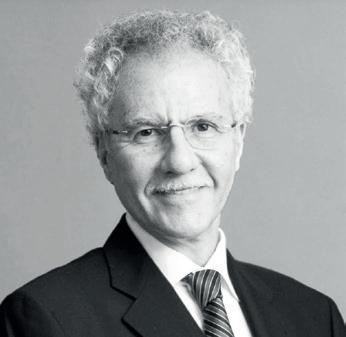
KEITH CALLIGARO
Keith Calligaro
ADVANCES IN ENDOVASCULAR THERAPY HELP DRIVE INNOVATIVE CPVI TRAINING COURSE
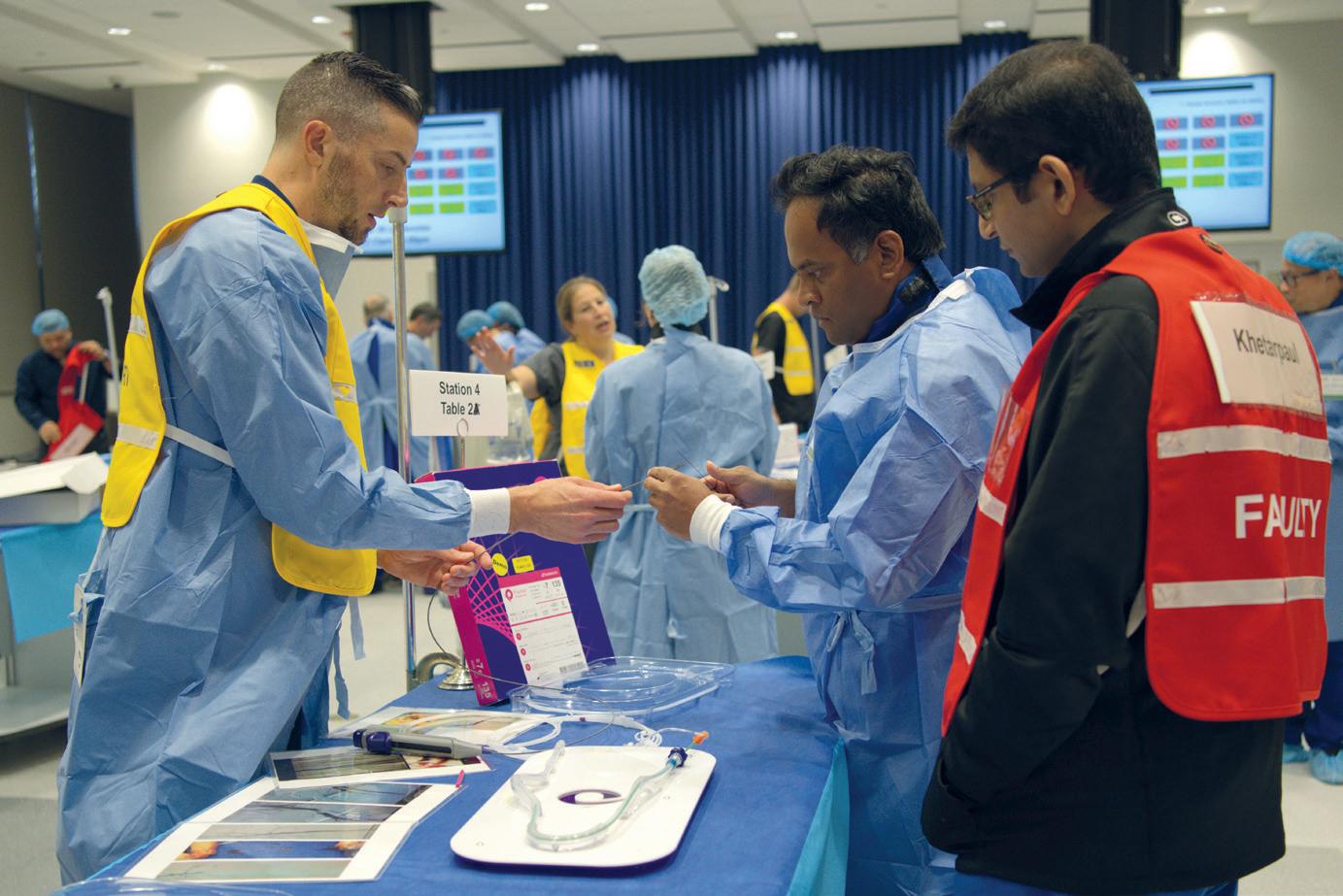
The SVS Complex Peripheral Vascular Interventions (CPVI) Skills Course has become a fixture on the vascular surgery calendar over the past couple of years. Here, course director Vipul Khetarpaul, MD, gives Marlén Gomez the rundown on how the evolution of endovascular interventions in the lower extremity gave rise to a now standout event.
OVER THE PAST DECADE, endovascular therapy has undergone significant advancements, particularly in the treatment of peripheral arterial disease (PAD) and chronic limb-threatening ischemia (CLTI). These developments have shifted the focus from achieving visually appealing angiographic results to prioritizing true perfusion and patientcentered outcomes.
The CPVI course, scheduled for Sept. 20–21, in Rosemont, Illinois, reflects this evolution. The two-day, intermediate-toadvanced training program offers hands-on experience through cadaver and benchtop simulation labs, high-impact lectures, and collaborative case-based discussions. The course is designed to equip vascular surgeons with practical skills that can be immediately applied in clinical practice.
Khetarpaul who is an associate professor of surgery at Washington University School of Medicine in St. Louis, explained that imaging technologies such as intravascular ultrasound (IVUS) have become routine. Device innovation has also accelerated, with the introduction of re-entry tools, crossing catheters, drugcoated balloons and covered stents. Access strategies have expanded to include radial and pedal approaches. Techniques such as tibial and pedal loop reconstruction, and selective deep venous arterialization are now commonly used.
“With the addition of new devices and the explosion of technology, the algorithmic approach to these cases has become significantly more complex,” Khetarpaul said. “It requires frequent updates and refreshers.”
The CPVI course was created to address gaps in vascular surgery education. According to Khetarpaul, opportunities for hands-on training in critical techniques like crossing a chronic total occlusion (CTO) , bailout strategies, pedal access and complication management are often limited in standard curriculum of training.
“The complex peripheral intervention skillset is somewhat unique and not every program is able to offer the same level of expertise in this particular aspect of vascular surgery,” said Khetarpaul. “We wanted to create a thoughtful, real-world approach to these difficult scenarios and have faculty share their unbiased insights.”
Since its inception in 2022, the CPVI curriculum has evolved to reflect technological and procedural advancements. The course now includes modules focused on imaging-first decisionmaking, structured CTO algorithms, distal and alternate access techniques, and deep venous arterialization. The atherectomy toolkit has been expanded to include vessel modification and thrombectomy strategies. Outdated content is retired.
What sets the CPVI course apart from
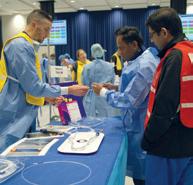
Vipul Khetarpaul, at right, oversees a previous CPVI course
“ With the addition of new devices and the explosion of technology, the algorithmic approach to these cases has become significantly more complex”
VIPUL KHETARPAUL
other vascular surgery training programs is its emphasis on real case failures and its device-agnostic approach. The course prioritizes decision-making frameworks over brand preferences. Participants work in small groups, review complications openly and gain hands-on experience in a safe environment that encourages learning through trial and error.
“The faculty is chosen based on their real-world experience,” Khetarpaul said. “Our goal is to help surgeons feel more confident and capable in all aspects of CLTI care so that their treatment plans are
based on what serves the patient best.”
Simulation labs and cadaver training play a critical role in enhancing the learning experience. These sessions allow participants to build muscle memory and practice key techniques such as access angles, wire escalation, re-entry, and bailout strategies on real anatomy.
“Participants can use different atherectomy and thrombectomy tools and navigate pedal loops with live faculty interaction, free from industry bias,” Khetarpaul said.
Attendees of previous iterations have reported higher success rates in CTO procedures, increased use of IVUS, and safer approaches to pedal and alternate access. Several institutions have established limb salvage pathways following their surgeons’ participation in the course. One thing that has changed this year is adding in more case-based discussions based on attendee feedback, recognizing their value in surgical learning.
“By equipping surgeons with clarity and confidence, the CPVI course is shaping the next generation of limb salvage leaders,” added Khetarpaul.
To learn more, visit vascular.org/CPVI25
Start of PAD Awareness Month heralds multispecialty national effort to prevent amputations
THE PAD PULSE ALLIANCE—A COALITION OF leading medical societies including the Society for Vascular Surgery (SVS) dedicated to improving vascular health—is urging patients, providers and policymakers to act through its Get a Pulse on PAD Campaign as national PAD Awareness Month kicks off.
“Peripheral arterial disease [PAD] is one of the most underrecognized yet devastating cardiovascular conditions in the U.S., too often diagnosed only after it has advanced and placed patients at risk for amputation, heart attack or stroke,” said SVS President Keith Calligaro, MD. “The Society for Vascular Surgery is proud to participate in the PAD Pulse Alliance to raise awareness, expand early screening and referral for at-risk populations, and
advocate for equitable care. By identifying PAD earlier, addressing risk factors, and connecting patients to life- and limb-saving treatments, we can prevent amputations and improve the lives of millions.”
Nearly 70% of those living with PAD do not know they have it, according to a survey by the PAD Pulse Alliance. Among Black and Hispanic adults, eight in 10 report never having a healthcare provider discuss PAD with them, despite being disproportionately affected. The PAD Pulse Alliance is encouraging legislative action.
“[PAD] is one of the most devastating but overlooked threats to cardiovascular health, particularly in Black and Brown communities where rates of amputation remain alarmingly high,” said Foluso Fakorede, MD, CEO of
Cardiovascular Solutions of Central Mississippi and cochair of the Association of Black Cardiologists (ABC) PAD Initiative.
“Too many lives are disrupted because PAD is not detected early enough, despite the fact that it is treatable and preventable. At ABC, our mission is to ensure that no patient is left behind due to systemic neglect or lack of awareness. By advancing screening, education, and equitable access to care, we can stop the cycle of unnecessary amputations and save both lives and limbs.”
The PAD Pulse Alliance is also encouraging patients, families and healthcare providers to download and share its free, interactive PAD toolkit for patients at PADPulse.org.—Bryan Kay
Whatever is on your schedule today...
Getinge has a graft for that
Every day, you perform a wide variety of complex vascular procedures. You need a variety of grafts. Getinge delivers a comprehensive portfolio of vascular grafts and patches in a range of materials and coatings—from hybrid and ePTFE to heparin bonded and collagen. Backed by evidence, a long history of use and continued investment and innovation in vascular graft technology, Getinge is the only graft portfolio you need.
Solutions. Selection. Support.
SOCIETY BRIEFS
Compiled by Marlén Gomez
Smoking cessation webinar
THE SVS WILL TAKE PART IN AN upcoming webinar titled “Breaking the Habit, Saving Lives: The National Quality Initiative Push for Smoking Cessation” at the 2025 American College of Cardiology Quality Summit, Tuesday, Oct. 14.
The Vascular Quality Initiative (VQI) launched a National Quality Initiative (NQI) special focus on smoking cessation aimed at supporting clinicians in their efforts to help patients quit smoking and improve long-term health outcomes.
YOUNG SURGEONS SECTION OPENS VISITING PROFESSORSHIP APPLICATIONS OCT. 1
THE SVS YOUNG SURGEONS SECTION will open applications for its annual Visiting Professorship on Monday, Oct. 1. Applicants must be members of the Young Surgeons Section and within 10 years of completing vascular surgery training.
The selected visiting professor will receive a $1,000 travel stipend and a $1,500 honorarium. The deadline to apply is Nov. 1.
Visit vascular.org/VisitingProfessorship
SVS INTERNATIONAL CHAPTERS STRENGTHEN GLOBAL TIES IN VASCULAR SURGERY
THE SVS CONTINUES TO EXPAND ITS GLOBAL FOOTPRINT THROUGH its 13 international chapters, fostering collaboration and visibility for vascular surgeons worldwide. With SVS members now in 59 countries, the International Relations Committee (IRC), formalized in 2005, remains committed to building bridges across borders.
Wei Zhou, MD, chair of the IRC, has worked with several chapters in highlighting their contributions. “It’s important to showcase the international members who have actively engaged with the SVS to forge a collaborative relationship,” said Zhou.
For one, the Colombia chapter “has done a wonderful job energizing the local vascular surgery community,” she added.
Ana María Botero, MD, an IRC member and driving force behind the Colombian chapter, shared her experience in helping her colleagues get proper exposure in the vascular community.
“I’ve taken it as a personal mission to bring Colombian surgeons into the SVS fold,” she explained. “Each year at the Vascular Annual Meeting [VAM], I help colleagues prepare and present their cases to make sure they’re seen and heard.”
Botero emphasized the importance of visibility and mentorship, noting that SVS membership offers access to research, publications and scholarships.
The IRC plans to organize a webinar on Oct.15 to address issues focused on overcoming obstacles to international participation, including language barriers.
The SVS will also co-host an international congress in Cartagena, Colombia, Oct. 8–11, 2026. The event—in partnership with the International Union of Angiology, the Colombian Association for Vascular Surgery, and the American Venous Forum—will, according to Botero, chart the future of vascular surgery in Latin America and beyond.
To learn more, visit vascular.org/InternationalRelations
SVS poised to open nominations for 2025–26 SAVC awards
THE NEW SVS SECTION ON Ambulatory Vascular Care (SAVC) will accept nominations for its 2025–26 awards from Oct. 1–Nov. 1. SVS members are encouraged to recognize their peers by submitting nominations for three distinct honors.
The SAVC Presentation Award acknowledges vascular surgeons who have completed clinical research projects in office-based labs (OBLs) or ambulatory surgery centers (ASCs). Three recipients will be selected to present their research and receive an award.
The SAVC Research Seed Grant provides funding to support research conducted in OBL or ASC settings. Each of the three selected recipients will receive a $10,000 grant to hire an analyst to evaluate research data for actionable insights, quality improvement and enhanced patient care.
For more information or to submit a nomination, visit vascular.org/ Awards
Vascular Verification Program
The American College of Surgeons (ACS) and the Society for Vascular Surgery (SVS) are pleased to present the Vascular Verification Program, a national quality verification program focused on the care and treatment of patients receiving vascular surgical and interventional care in an inpatient setting.
CLINICAL&DEVICENEWS
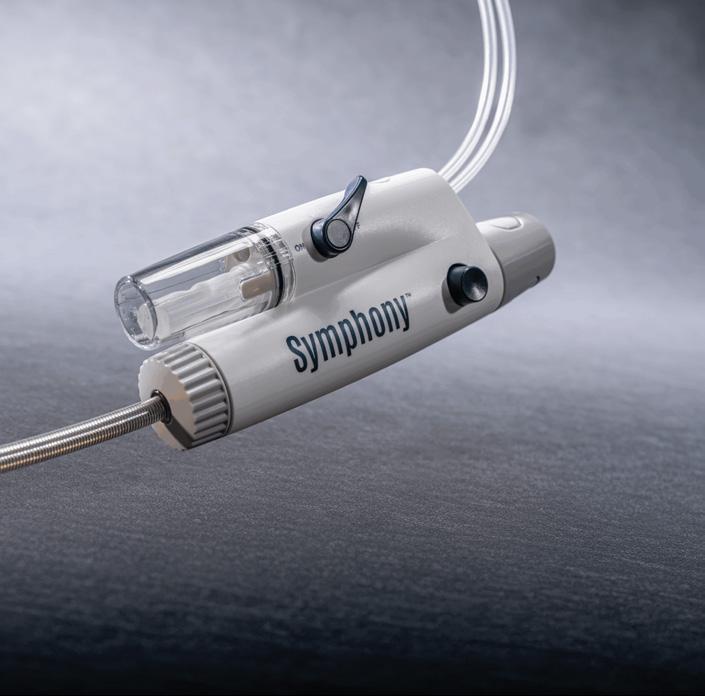
Imperative Care announces FDA clearance for Symphony thrombectomy system
IMPERATIVE CARE HAS ANNOUNCED FOOD and Drug Administration (FDA) 510(k) clearance of its Symphony thrombectomy system to treat pulmonary embolism (PE).
This clearance expands the use of Symphony— previously for the treatment of venous thrombosis—to now include PE, providing a comprehensive solution to effectively and efficiently treat the full spectrum of venous thromboembolism (VTE) patient needs, according to the company.
It follows the successful completion of the SYMPHONY-PE study, a pivotal investigational device exemption (IDE) trial evaluating the safety and efficacy of Symphony for the treatment of acute PE, the company reports. The study was led under the oversight of the national co-principal investigators, Vivian L. Bishay, MD, associate professor in the Department of Diagnostic, Molecular and Interventional Radiology at Mount Sinai Health System in New
Boston Scientific recalls Carotid Wallstent Monorail devices over ‘manufacturing defect’
BOSTON SCIENTIFIC HAS RECALLED ITS Carotid Wallstent Monorail endoprosthesis owing to a “manufacturing defect” that has led to devices having an inner lumen that is smaller than specifications, causing resistance when withdrawing the stent delivery system.
A Food and Drug Administration (FDA) recall notice dated Aug. 22 states that using the affected stent systems could cause serious harm, such as injury to the blood vessel, damage to the stent, or release of debris that could travel to the brain and cause a stroke. As such, this recall has been identified as “the most serious type,” with continued use of the device potentially causing serious injury or death.
As of July 29, 2025, Boston Scientific had reported six cases that required additional intervention to recover the device but had not reported any deaths associated with this issue.
York, and Sripal Bangalore, professor in the Department of Medicine at NYU Grossman School of Medicine in New York. “The study data clearly demonstrate Symphony’s safety, efficacy and efficiency, marking a significant advancement in the treatment of patients with pulmonary embolism,” said Bishay.
“These results underscore Symphony’s potential to address a critical unmet need by enabling rapid, controlled clot removal while maintaining a strong safety profile. I look forward to incorporating this important new technology into my practice to improve care for patients facing this life-threatening condition.”
“In the treatment of pulmonary embolism, reducing right heart strain is of critical importance. The more rapidly we can remove thrombus and restore stable hemodynamics, the greater the benefit for patients,” said Bangalore.
“Based on my initial clinical experience with the Symphony thrombectomy system, I believe it has the potential to advance clinical practice by merging large-bore continuous aspiration with the safety and precision of real-time vacuum control.”
Final patient treated in Cook’s Zenith Fenestrated+ endovascular graft clinical study
COOK MEDICAL RECENTLY ENROLLED the final patient in the global clinical study of its Zenith Fenestrated+ endovascular graft (ZFEN+), signifying completion of patient recruitment in the pivotal study.
The investigational ZFEN+ clinical study is being conducted under an investigational device exemption (IDE) approved by the Food and Drug Administration (FDA) and with authorization for a clinical investigation from the UK’s Medicines and Healthcare products Regulatory Agency (MHRA), the company states in a press release.
The FDA recall notice states that, on July 7, Boston Scientific sent all affected customers an urgent medical device removal letter recommending that they immediately stop using affected devices; remove affected devices from inventory, and clearly segregate and return them to Boston Scientific; complete and return a reply verification tracking form, even if no affected devices remain; and share this information with all staff, facilities and customers who may have received the product.
The Carotid Wallstent Monorail endoprosthesis is a self-expanding stent.
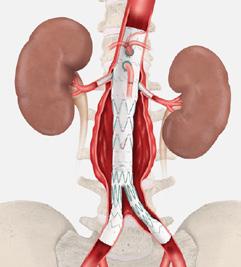
The clinical study will assess the safety and effectiveness of the ZFEN+ used in combination with the investigational Zenith universal distal body 2.0 graft (Unibody2), Bentley‘s investigational BeGraft balloon-expandable fenestrated endovascular aneurysm repair (FEVAR) bridging stent graft system and Cook’s commercially available Zenith Spiral-Z abdominal aortic aneurysm (AAA) iliac leg graft (ZSLE). Cook shares that the ZFEN+ is predicated on the commercially available Zenith fenestrated (ZFEN) AAA endovascular graft but extends the proximal margin of aneurysmal disease that can be treated endovascularly to include more complex aortic disease.
FDA BEGINS ‘REAL-TIME’ REPORTING OF ADVERSE EVENT DATA
THE FOOD AND DRUG ADMINISTRATION (FDA) recently announced that it has begun daily publication of adverse event data from the FDA Adverse Event Reporting System (FAERS).
The agency says that “this represents a significant step forward in modernizing the agency’s safety monitoring infrastructure and demonstrates its commitment to radical transparency and real-time protection of public health.”
FDA commissioner Marty Makary, MD, said: “Adverse event reporting should be fast, seamless and transparent. People who navigate the government’s clunky adverse event reporting websites should not have to wait months for that information to become public. We’re closing that waiting period and will continue to streamline the process from start to finish.”
FAERS is the FDA’s primary database for collecting and analyzing adverse event reports, serious medication errors, and product quality complaints for prescription drugs and therapeutic biologics, the agency advises.
The system contains reports submitted by a spectrum of stakeholders: healthcare professionals, consumers and manufacturers.
The FDA says the move “is one of many steps in the FDA’s broader data modernization strategy to streamline all of its adverse event reporting systems and increase reporting frequency across all systems to identify safety signals faster.”
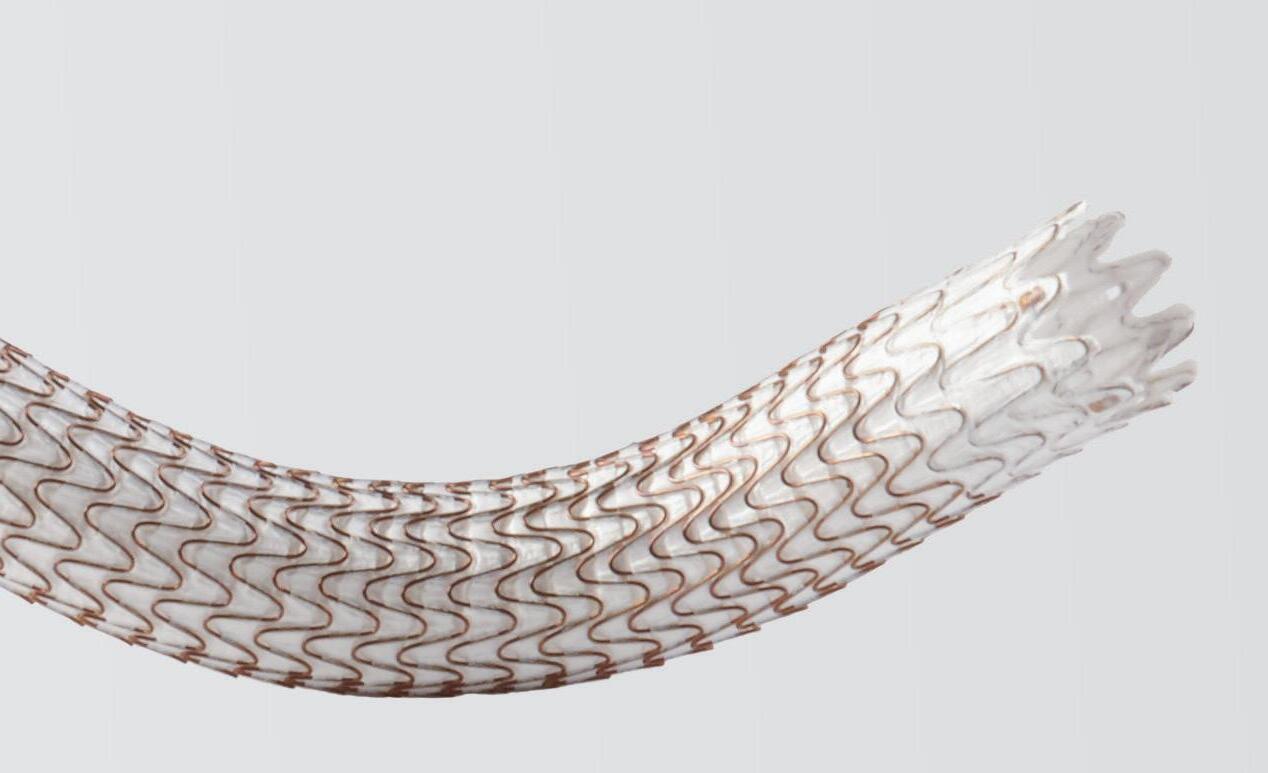
GORE® VIABAHN® Endoprosthesis with Heparin Bioactive Surfacea
Consult Instructions for Use eifu.goremedical.com
Refer to Instructions for Use at eifu.goremedical.com for a complete description of all applicable indications, warnings, precautions and contraindications for the markets where this product is available.
INDICATIONS FOR USE IN THE U.S.: The GORE® VIABAHN® Endoprosthesis with Heparin Bioactive Surface is indicated for improving blood flow in patients with symptomatic peripheral arterial disease in superficial femoral artery de novo and restenotic lesions up to 270 mm in length with reference vessel diameters ranging from 4.0 – 7.5 mm. The GORE® VIABAHN® Endoprosthesis with Heparin Bioactive Surface is indicated for improving blood flow in patients with symptomatic peripheral arterial disease in superficial femoral artery in-stent restenotic lesions up to 270 mm in length with reference vessel diameters ranging from 4.0 – 6.5 mm. The GORE® VIABAHN® Endoprosthesis with Heparin Bioactive Surface is indicated for improving blood flow in patients with symptomatic peripheral arterial disease in iliac artery lesions up to 80 mm in length with reference vessel diameters ranging from 4.0 – 12 mm. The GORE® VIABAHN® Endoprosthesis with Heparin Bioactive Surface is also indicated for the treatment of stenosis or thrombotic occlusion at the venous anastomosis of synthetic arteriovenous (AV) access grafts. CONTRAINDICATIONS: The GORE® VIABAHN® Endoprosthesis with Heparin Bioactive Surface is contraindicated for non-compliant lesions where full expansion of an angioplasty balloon catheter was not achieved during pre-dilatation, or where lesions cannot be dilated sufficiently to allow passage of the delivery system. Do not use the GORE® VIABAHN® Endoprosthesis with Heparin Bioactive Surface in patients with known hypersensitivity to heparin, including those patients who have had a previous incident of Heparin-Induced Thrombocytopenia (HIT) type II.
The VIABAHN® Device is guideline-aligned1 and data-backed to reduce reinterventions.2,3
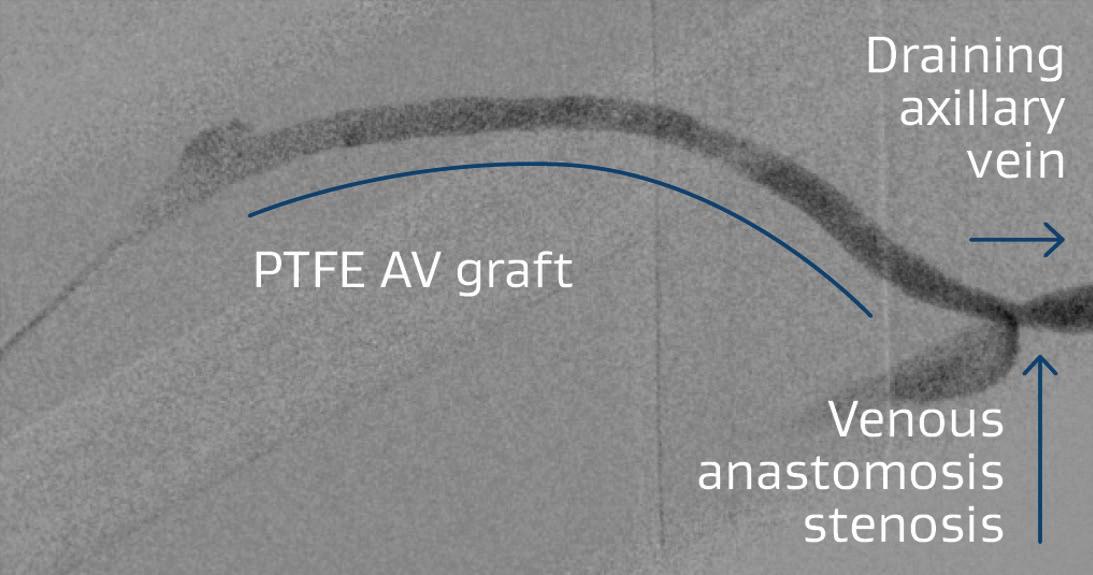
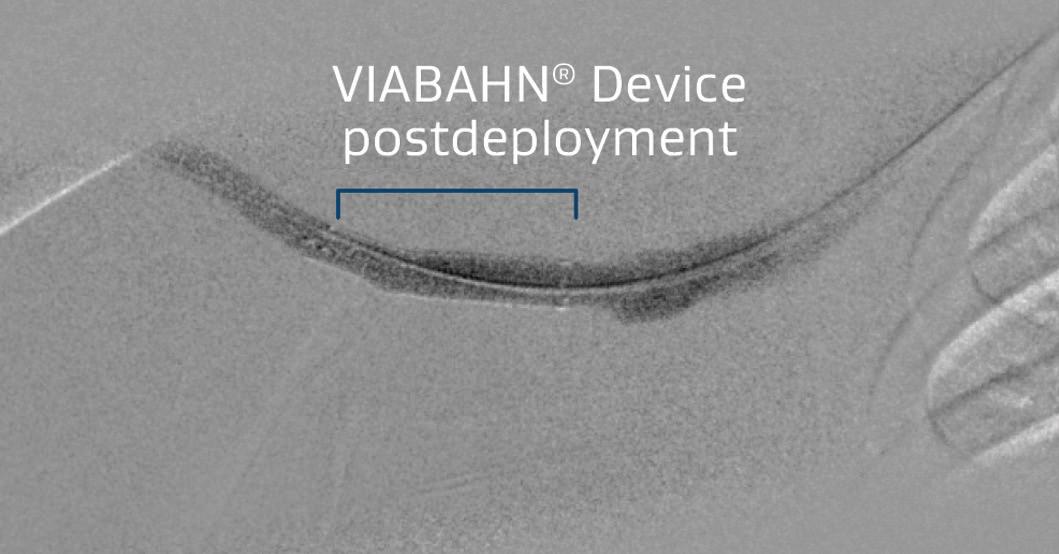
Right brachialaxillary AV graft with stenosis at the venous anastomosis. Lesion was initially treated with PTA.
W. L. Gore & Associates, Inc. Flagstaff, Arizona 86004 goremedical.com
a As used by Gore, Heparin Bioactive Surface refers to Gore’s proprietary CBAS ® Heparin Surface.
Placement of the VIABAHN® Device improved flow and resolution of recoil.
GORE® VIABAHN® Endoprosthesis with Heparin Bioactive Surfacea See the evidence Images courtesy of Daniel V. Patel, MD. Used with permission.
1. Lok CE, Huber TS, Lee T, et al; KDOQI Vascular Access Guideline Work Group. KDOQI Clinical Practice Guideline for Vascular Access: 2019 update. American Journal of Kidney Diseases 2020;75(4) Supplement 2:S1-S164. 2. Mohr BA, Sheen AL, Roy-Chaudhury P, Schultz SR, Aruny JE. REVISE Investigators. Clinical and economic benefi ts of stent grafts in dysfunctional and thrombosed hemodialysis access graft circuits in the REVISE Randomized Trial. Journal of Vascular & Interventional Radiology 2019;30(2):203-211.e4. 3. Vesely T, DaVanzo W, Behrend T, Dwyer A, Aruny J. Balloon angioplasty versus Viabahn stent graft for treatment of falling or thrombosed prosthetic hemodialysis grafts. Journal of Vascular Surgery 2016;64(5):1400-1410.e1.