Expert perspectives on contemporary neurovascular intervention
Inside this supplement:
• A consistent solution for the M1 problem with HiPoint® 88 featuring Monopoint®
• The physician perspective from ADAPT to ASCENT™
• “Unsurpassed” MeVO access with Tenzing® 5
• Beyond stroke: access & tandem occlusion treatment strategies
• How HiPoint® offers cost-effective simplicity
• Established and emerging clinical evidence
Intentional systems for demanding procedures.
Clinical data and experiences
SUMMIT MAX provides foundational evidence supporting use of superlarge-bore aspiration systems
Following last year’s publication in the Stroke journal of long-awaited results from the SUMMIT MAX randomised controlled trial (RCT), co-principal investigator Guilherme Dabus (Baptist Health South Florida, Miami, USA) outlines the wider implications of these data and provides a closer look at Route 92 Medical’s HiPoint® system evaluated within the study.
Why is SUMMIT MAX unique?
The idea of SUMMIT MAX was to compare a combination of the super-large-bore HiPoint 88 catheter and HiPoint 70 catheter to Vecta 74 and 71 (Stryker) in the treatment of intracranial large vessel occlusions (LVOs)—particularly in the M1 and internal carotid artery (ICA). The main statistical analysis focused on non-inferiority, and the results show that HiPoint 88 was not only non-inferior to the Vecta system but actually superior on ad-hoc analyses as well. This is the first randomised study comparing different aspiration catheter sizes in intracranial LVOs, and it did show benefits with the 88 over the 74 system.
How will these findings impact neurovascular care?
We now have an RCT that validates those
super-large-bore catheters as being substantially equivalent in safety and effectiveness for mechanical thrombectomy in LVO strokes. The data show that those catheters will perform at least as well as—if not better than—the smaller sizes we’ve been using for many years. This opens up another option for physicians to use. If you have an M1 or ICA terminus occlusion with a significant clot burden, the HiPoint 88 reperfusion system has been proven as a viable option to treat these cases safely and effectively.
for specific cases. We’ve used them in particularly tortuous anatomies, and they have navigated and performed very well. They’re another great tool that can help us treat our patients.
What differentiates HiPoint from other thrombectomy systems?
The key thing is that this is different to using a full-length catheter. It’s a Monopoint® system—almost like a rapid-exchange system. You have Base Camp®, which is a long sheath that you place more proximally, and then you navigate HiPoint using the Tenzing® catheter, which makes it highly deliverable. And, because the system is made in a way where the catheter is telescopic but there’s no significant space between the inside of the sheath and the outside of the HiPoint catheter, they essentially lock together, and you only need to aspirate through the Base Camp.
How might HiPoint’s usage expand in the future?
How has the trial impacted your own practice?
Even before SUMMIT MAX, I had a lot of experience with these larger systems, and I have continued to use them very successfully
SUMMIT RISE data could lead to “quantum leap” for thrombectomy
Earlier this year, SUMMIT RISE—a prospective, core lab-adjudicated study assessing the real-world performance of Route 92 Medical’s reperfusion systems—enrolled its first patients. The study ultimately plans to enrol 500 ischaemic stroke patients across 50 US sites, and co-primary investigator Sunil Sheth (UTHealth, Houston, USA) believes these efforts could provide answers to a number of key questions in aspiration thrombectomy.
THE BEDROCK OF ROUTE 92’S stroke portfolio is the Tenzing® delivery catheter, which enables its FreeClimb® (54 and 70 only) and HiPoint® aspiration catheters to be advanced with “much greater ease” relative to other systems. Additionally, via the ASCENT™ technique and passive advancement, the synergistic qualities of these devices may create improved interface between clot and catheter tip without increasing vessel perforation risks—more on pages 4–5. The safety outcomes and potential increase in first-pass effect (FPE) rates associated with this technique, as well as the distinct real-world benefits of Route 92's devices, will all be captured within
SUMMIT RISE, Sheth notes.
“FreeClimb is a full catheter system, so the learning curve is basically flat, and that means it’s a very nice introduction to Tenzing for those who have not been exposed to this best-inclass delivery access catheter,” he explains. “HiPoint is different. It’s a catheter mounted on a wire, which is very unique to Route 92. It can take first-time users a handful of cases to get accustomed to this concept before really starting to see the strengths of HiPoint and how it can streamline workflow through a single point of control versus a traditional multi-axial setup. You essentially never run out of length. And, in SUMMIT RISE, we’ll capture everything,
We have used these systems for access in intracranial stenting, because the fact it is a ‘half catheter’ means you never run out of length. It’s also very good for venous stenting, because it is so navigable and supportive. Those are other areas we have been exploring.
including any potential learning curve.”
The past few years have seen progress in aspiration thrombectomy begin to stagnate, with FPE rates remaining at around 50% across many studies prior to the SUMMIT MAX trial reporting figures of 59% across its full population and 84% at its three highestenrolling sites, as per Caldwell et al. According to Sheth, SUMMIT RISE will elucidate whether larger-bore aspiration catheters like the 0.088-inch HiPoint system truly hold the key to overcoming this recent plateau.
“The goal of all of this is to—safely— have the highest FPE you can get,” he adds. “Procedure time is important too, but I think most people would sacrifice a few minutes in order to get very good reperfusion on the first pass. We’re going to capture elements relating to technique, patient information, imaging, and the devices used, and the most important thing will be if we can identify some combination of those things that gives us a substantially better FPE. Rates of 75% or even 80% are virtually unheard of, but can we get there? That’s the real question, because it would be a quantum leap forward in our ability to treat these patients, and the dataset we’ll capture with this study is large enough and ambitious enough that we’ll hopefully be able to knock down that wall.”
Sunil Sheth
Guilherme Dabus
FreeClimb and Tenzing offer “unsurpassed” ability to reach target vessels
The benefits created by Route 92 Medical’s technologies—including the FreeClimb® reperfusion systems and Tenzing® delivery catheters—in terms of their ability to reach target vessels within the neurovasculature are “unsurpassed” by other ischaemic stroke products, according to Timo Krings (Lahey Health, Boston, USA).
“WE STARTED USING ROUTE 92 products in October 2024, and have since treated more than 100 patients with the FreeClimb and Tenzing systems,” Krings states. “Our workhorse is FreeClimb 70 as, in our practice, M1 and proximal M2 occlusions are the most commonly treated cases, with FreeClimb 88 reserved to access ICA [internal carotid artery] terminus occlusions. FreeClimb 54 is specifically designed to go past the proximal M2 into distal M2 occlusions; I also use it to access the PCA [posterior cerebral artery] or ACA [anterior cerebral artery], where it can easily reach P2 or A2 segments.”
to provide deliverability and performance that enable time-efficient procedures across a wide range of cases, while also removing the need for microcatheters or guidewires in many instances.
The FreeClimb system—powered by atraumatic Tenzing delivery catheters—is the first bi-axial system introduced into the stroke space, with its minimal ledge effect intended
Krings has observed these positive traits within his own practice. He highlights the system’s tapered tip and ledge-reducing effect as key differentiators compared to other thrombectomy setups.
“In addition,” he continues, “a distal ID [inner diameter] of 0.054 inches gives you a higher aspiration force as compared to competitors with smaller distal IDs. And, with an outer diameter of 1.7mm, it fits perfectly to the size of MeVO [medium-vessel occlusion] targets.”
Krings also draws attention to how “slippery” the Tenzing delivery system
Route 92’s novel access and reperfusion systems in action
Adnan Siddiqui (University at Buffalo, Buffalo, USA) shares two clinical cases demonstrating the breadth of capabilities enabled by Route 92 Medical’s neurovascular technologies.
THE FIRST INVOLVED VENOUS sinus stenting of the right transverse sinus junction in an idiopathic intracranial hypertension patient with an elevated trans-stenotic gradient. Siddiqui treated this patient under conscious sedation and dual antiplatelet therapy (DAPT), and via transfemoral access, utilising the 8Fr Base Camp® sheath, Tenzing® 8 delivery catheter and FreeClimb® 88 access system, as well as a 10x60mm stent.
Outlining the case, Siddiqui highlights the success of Tenzing 8 in providing distal access, and placement of Base Camp in the right internal jugular vein and FreeClimb 88 in the superior sagittal sinus. Withdrawal of FreeClimb 88 was followed by controlled deployment of the stent across the transverse
sigmoid-sinus junction. The patient’s intracranial pressure was subsequently found to have dropped to 19mmHg compared to 34mmHg at the outset of the procedure, and the final run revealed good stent positioning and improved stenosis.
is, noting that this characteristic ensures the device remains atraumatic—a vital benefit within distal anatomies in particular, helping to avoid friction, vasospasm or vessel perforation in these more complex scenarios.
“When following with FreeClimb 54, I often use gentle back-and-forth movements with the Tenzing catheter to allow the FreeClimb system to passively advance,” he adds, describing the ASCENT™ technique, which is applicable across all Tenzing sizes. “Once it has reached the clot, the removal of Tenzing allows a vacuum to form, which I believe helps in ingesting the clot into the catheter—even if it is a saddle clot at an M2 bifurcation—which, for distal anatomy, is of utmost importance.”
Once again citing his firsthand experiences, Krings details a recent case for which FreeClimb and Tenzing proved invaluable.
“Our field is constantly evolving and I am open to trying new systems,” he relays. “In a recent case, I used a competitor product that stopped dead at the cavernous segment, and my guiding system started to drop when I tried to advance the system. I switched to the Route 92 system and was up at the clot face in less than 20 seconds without friction or the guiding system moving. It was a powerful example of the ‘secret sauce’ Route 92 has put into its devices!”
Siddiqui’s centre after receiving tenecteplase (TNK). Their time from last known well to TNK administration was 132 minutes.
The patient experienced no procedure-related complications and was discharged in a stable condition one day after the operation following overnight observation.
The second case saw Siddiqui deploy Route 92’s reperfusion system to treat a left middle cerebral artery occlusion via thrombectomy. The patient’s initial National Institutes of Health stroke scale (NIHSS) score outside the hospital was 18, and had risen to 24 by the time they arrived at
After opting for conscious sedation and femoral access, Siddiqui used the Base Camp 2.0 sheath, HiPoint® 88 and FreeClimb 70 reperfusion catheters, and Tenzing 7 delivery catheter. He advanced Base Camp into the left common carotid artery and internal carotid artery over a 6Fr insert catheter and 0.035-inch guidewire—with a proximal left M2 occlusion being confirmed— before delivering FreeClimb 70 to the clot face and HiPoint 88 into the proximal M1 territory. Aspiration was initiated, and clot ingestion was successful, with FreeClimb 70 and HiPoint 88 being withdrawn under aspiration. The final run showed modified thrombolysis in cerebral infarction (mTICI) 2c recanalisation.
Following neurosurgical intensive care unit (ICU) monitoring, the patient was deemed to have experienced no procedurerelated complications, and their NIHSS score improved to 10 on the first postoperative day.
Timo Krings
Adnan Siddiqui
A new paradigm
ASCENT technique and passive advancement may deliver the next forward step in aspiration thrombectomy
As the ASCENT™ (Aspiration clot extraction navigated by Tenzing) technique gains traction following positive safety and efficacy outcomes in the 2025 Stroke journal publication of the SUMMIT MAX trial, three physicians who have deployed this approach in their own practices—Eytan Raz (New York University [NYU] Langone Health, New York, USA), Krishna Amuluru (Goodman Campbell Brain and Spine/ Ascension St Vincent Hospital, Indianapolis, USA) and Matthew Alexander (Sutter Medical Center, Sacramento, USA)—discuss the promise it represents.
“THE ASCENT TECHNIQUE IS centred on the synergistic use of catheters within the same family,” Raz comments.
As he explains it, the key detail underpinning this technique is the fact that—across the available device sizes provided by Route 92 Medical—the inner diameter of the Base Camp® sheath is very closely matched to the outer diameter of the corresponding HiPoint® aspiration catheter, and, in turn, HiPoint’s inner diameter is equally well-matched to the Tenzing® delivery catheter’s outer diameter. The major benefit of the HiPoint’s mono-axial setup is the removal of any ledge effect between each of the catheters, which not only improves the smoothness and overall safety of navigation towards the clot face, but also generates increased suction force due to the aspiration effectively being applied through the larger diameter of the Base Camp rather than solely through the more distal aspiration catheter.
“If you go back over the history of stroke thrombectomy, the model system has always involved a tri-axial setup, whereby you create a ‘rail’ for your intermediate catheter to access the intracranial vessels—typically using a microwire and a microcatheter,” Amuluru adds. “As technology has evolved, and catheters have become more lubricious and navigable, other methods have been explored for creating that railing system. With the ASCENT technique, Route 92 is the first company to have achieved this, as Tenzing is basically a microcatheter and microwire combined into one device. Route 92 has paved the way for this approach, and you can really see that with other vendors following suit with similar systems.”
The fact that Tenzing, HiPoint and Base Camp fit inside one another, and
can be extended telescopically during a thrombectomy procedure, also facilitates the “very unique” Monopoint® zone whereby aspiration is controlled via a single rotating haemostatic valve, according to Amuluru. He explains that, while each of the three catheters in a traditional tri-axial setup needs to be attached to a different flush line, the constituent parts of Route 92’s “much more streamlined” system are attached together sequentially rather than overlapping, providing sufficient length and ability to reach distal locations while aspirating through a single line.
Amuluru has used ASCENT to “great effect” at his centre, and he highlights Tenzing as being highly navigable, lubricious and atraumatic. Previous publications have revealed that the reduced ledge effect with this technique leads to reduced fluoroscopy times as well as greater ease in traversing challenging carotid siphon and ophthalmic artery segments.
Tenzing, HiPoint and Base Camp
For Raz, Tenzing represents “the main differentiator” compared to other aspiration thrombectomy systems—primarily due to its ability to navigate the HiPoint catheter to the clot in a “much faster, simpler way” versus any of its predecessors.
“The Tenzing delivery catheter is one of those improvements in the field that it is hard to go back from—once you try it, you immediately realise the advantages it has over prior techniques. It works excellently in terms of facilitating navigation,” Raz posits. “And, combining it with a large aspiration catheter [HiPoint] that has its own dedicated sheath [Base Camp] gives you—as of today—the maximum chance of achieving complete revascularisation. It’s
this combination of tools, from the groin up to the clot you are aspirating, that makes the system so valuable.”
Expanding on what makes Base Camp such a useful tool, Raz adds: “It’s very important to provide a full system and, especially for a larger aspiration catheter like an 088, it’s very important to have a sheath that provides the level of support that the catheter needs. I think Route 92 realised that there is no better way to do this than to make your own sheath—and I think Base Camp makes a real difference along with Tenzing. I personally like to use it as a sheath itself from the groin instead of putting it inside another sheath and, in my experience, it is very good in terms of providing the right level of support for the HiPoint catheter. And, again, the Tenzing delivery catheter allows utilisation of HiPoint without any ledge effect, and that compatibility helps to increase the efficacy of the procedure and improves safety by reducing the risk of dissections.”
Ultimately, however, it may be the purpose-built facilitation of HiPoint— and, in particular, a super-large-bore 088 system—that makes using Tenzing and Base Camp so appealing to physicians. Touching on the results of the SUMMIT MAX trial, Raz comments that the first-pass effect and superior overall efficacy seen with the HiPoint 88 system versus the 0.074-inch Vecta (Stryker) aspiration catheter were somewhat predictable ahead of time, the safety profile associated with HiPoint was key to allaying the fears of some in the neurointerventional community regarding potential risks to using these larger-bore devices. SUMMIT MAX showed that HiPoint 88 was at least as safe as the 074 control arm, which Raz feels is an especially important aspect of these data.
“I personally feel that the spectrum of pathologies and patient anatomies in ischaemic stroke means it is difficult to say with certainty that one technique per se fits all cases,” Amuluru avers. “That being said, I think the introduction of larger-bore catheters and advancement of engineering technology improving the navigability of those catheters means there is increasing acceptance of aspiration as a first-line technique—and this technology definitely aids those practices. I also think a lot of the data coming out on medium- and distalvessel occlusions have led to a reluctance to use certain stent retrievers in some of these cases, and to greater adoption of first-line aspiration. And, again, systems like this that make it so easy to advance a longer, lowerprofile catheter allow aspiration to be as
simple as it can be, potentially leading to an environment of increased safety and efficacy in those more distal locations.”
Why is passive advancement relevant?
Another advantage associated with ASCENT is the emerging phenomenon of passive advancement, whereby—once the HiPoint or FreeClimb® (54 and 70 only) system has reached the proximity of the clot—withdrawing Tenzing creates a vacuum, causing the aspiration catheter to edge forward, atraumatically progressing beyond the angiographic limit of contrast and moving closer to the face of the clot.
“This is different to the more traditional utilisation of a wire, which has a minimal volume, meaning that the vacuum effect created when it is pulled out is also minimal,” Raz explains. “But, with Tenzing essentially occupying the entire space within the aspiration catheter, pulling it out creates a significant vacuum that allows the catheter to move forward and begin the aspiration process.”
The topic of passive advancement was recently examined in greater detail via a presentation from Alexander, who described how the aspiration catheter “relaxes” forward naturally, helping to engulf the clot while also lessening the need to cross it with an inner device like a wire, reducing the risk of the clot being pushed downstream or becoming fragmented.
“I don’t know that it’s necessarily specific to Tenzing, but it’s something that has been observed with Tenzing delivery and Tenzing certainly does it very well,” Alexander said.
“high rates of successful delivery seem to then follow”.
“We hear that something is ‘a feature, not a bug’, all the time, but I think this really is true and it’s something that I want us as a field to learn to embrace,” Alexander added.
Armed with anecdotal evidence and firsthand observations of this phenomenon, he and his colleagues conducted a retrospective study of consecutive thrombectomy cases across two highvolume stroke centres in an effort to identify associations between passive advancement and recanalisation results.
Alexander also emphasised the need to “embrace” the idea of passive advancement and “retrain your instincts” to react negatively upon first observing it, highlighting that a similar yet distinct effect will be familiar to many neurointerventionists during haemorrhagic stroke procedures. However, in contrast to those cases, it appears to actually offer benefits in aspiration thrombectomy, as
After reviewing data on two-and-a-half years’ worth of self-reported aspiration-first thrombectomy procedures—spanning 426 occlusions in 412 patients, and representing a total of 673 aspiration passes, for which 395 passes had sufficient imaging information— researchers were able to confirm that passive advancement occurred in 81.3% of cases. Additionally, in these instances of passive advancement, the final position of the catheter tip was at an arterial branch in 62.5% of cases. Alexander further relayed that, regarding device usage in this study, HiPoint (63.9%) and Tenzing (68.2%) were the most commonly deployed aspiration and delivery catheters.
“Our results showed that, when passive advancement was noted, there was a dramatically higher rate of successful recanalisation with an eTICI [expanded TICI] 2b–3 of 70% versus 18.9% when passive advancement was not visualised,” Alexander reported, also detailing eTICI 2c–3 rates of 52.6% with passive advancement versus 10.8% without, as well as first-pass eTICI 2c–3 rates of 58.5% versus 10%, respectively. “And, when that passive advancement is going to an arterial branch, this association is strengthened even further.”
Providing a closer look at those arterialbranch cases, he relayed respective eTICI 2b–3 rates of 88.9% versus 29.8%, eTICI 2c–3 rates of 69.5% versus 21.3%, and first-pass eTICI 2c–3 rates of 80.4% versus
17.3%, when passive advancement occurred compared to when it did not. Furthermore, passive advancement showed no association with the inner device or microwire crossing the clot, and all six of the observed intracranial complications—four perforations and two dissections—were linked to ‘microwire misadventures’, as opposed to the aspiration catheters or microcatheters used. Alexander also noted that these associations persisted on multivariable analyses, with no confounding being linked to the occlusion location, chosen device or lytic status.
“The Tenzing delivery catheter is one of those improvements in the field that it is hard to go back from—once you try it, you immediately realise the advantages it has over prior techniques”
Alexander reported these results via a presentation at the 2026 ABC-WIN Seminar (18–23 January, Val d’Isere, France).
“Getting this passive advancement, ideally going to an arterial branch, really does seem to be important,” he continued. “I want to emphasise that the passive part of this is key; you don’t want to force this and risk injuring a vessel. And, if it doesn’t happen, it’s probably because the catheter is not the correct size or it’s already at a branch.”
He also commented that the vacuum effect likely primes the aspiration of the clot into the catheter, which offers another explanation as to why successful recanalisation rates are especially high in cases where passive advancement takes place.
Alexander concluded by stating that, while further investigation of this is warranted, passive advancement could represent the next evolutionary step forward in thrombectomy techniques, following on from the early days when Merci (Concentric Medical) and more advanced stent retrievers were widely used to the later introduction of ADAPT and Solumbra.
“There are a lot of acronyms and portmanteaus in our field, and I would argue that we have a new one with ASCENT,” he added. “There will probably be a lot of new nomenclature for this type of phenomenon— but I do feel it’s something real that will genuinely help us deliver better care for our patients.”
Eytan Raz
Krishna Amuluru
Matthew Alexander
Future directions
Novel ASCENT technique maximises deliverability and optimises aspiration in tortuous anatomies
Daniel Tonetti (Cooper University Health Care, Camden, USA) shared an aspiration thrombectomy case utilising Route 92 Medical’s 8Fr Base Camp® sheath, Tenzing® 8 delivery catheter and HiPoint® 88 reperfusion system to facilitate the ASCENT™ technique at LINNC Americas 2026 (20–21 February, Orlando, USA).
THE PRESENTER BEGAN BY highlighting the benefits of passive advancement in allowing Tenzing to atraumatically move beyond the angiographic limit of contrast and “nuzzle against” the clot—with this interface between catheter tip and clot helping to optimise the aspiration itself.
The case he used to illustrate this involved an 81-year-old female with atrial fibrillation who was last known well 2.5 hours prior to presentation. The patient had a National Institutes of Health stroke scale (NIHSS) score of 25, with imaging revealing left middle cerebral artery (MCA) syndrome caused by a proximal M1 occlusion.
“This is the kind of case that I think is perfectly suited for 088 aspiration,” Tonetti noted. “You have a normal-calibre M1 [with a diameter of 2.5mm], and the Base Camp is
not going to have any difficulty navigating this through the arch.”
Tonetti positioned the Base Camp sheath in the cervical internal carotid artery (ICA), commenting that, “our goal here was to not be occlusive and to not take it around too many turns, because the navigability of Tenzing and HiPoint is very good”. He later highlighted Tenzing as having established a >96% rate of successfully delivering the HiPoint 88 system to the clot face within clinical studies.
advanced HiPoint up to the clot face with his right, also positing that there is “almost no kickback” during the ASCENT technique as these systems are “extremely stable”.
“With Tenzing withdrawal, you’re going to see a vacuum aspiration of the embolus performed in a passive fashion—again, the operator is not pushing HiPoint during that segment of aspiration,” he added, also commenting that leveraging the large inner diameter of Base Camp ensures maximum aspiration force.
This approach ultimately enabled Tonetti to achieve thrombolysis in cerebral infarction (TICI) 3 recanalisation in a single attempt— with a first-pass effect (FPE) being “predictable” when ASCENT is employed successfully—and the patient’s NIHSS score dropped to 4 at 24 hours.
Providing additional insights on the case, Tonetti relayed that he pinned the Tenzing catheter in place with his left hand and
The value of Tenzing in pulsatile tinnitus and tandem lesion cases
David Altschul (Montefiore Medical Center, New York, USA) shares details from two cases that he believes showcase the versatility of the device that underpins Route 92 Medical’s stroke portfolio: the Tenzing® delivery catheter.
THE FIRST INVOLVES A PATIENT with intractable pulsatile tinnitus who Altschul treated via bilateral venous access using the Tenzing 8, HiPoint® 88 and Base Camp® devices. He deployed a balloonmounted stent to open the non-dominant sinus and an 8x60mm stent in the dominant sinus prior to successful coiling of the diverticulum (Figure 1).
Altschul says that—empowered by Route 92’s neurovascular products—he is now treating the majority of venous cases bilaterally via single-side access, and has never had to recapture any kind of venous stent when utilising this setup, also noting that treatment of the non-dominant side reduces the likelihood of recurrence.
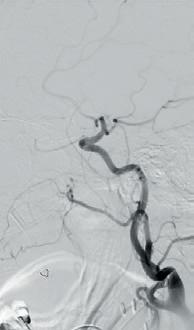
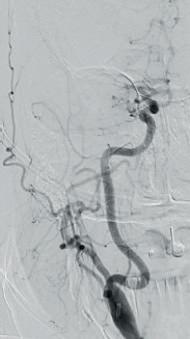
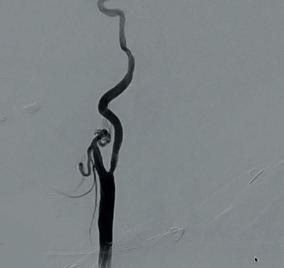
The second saw Altschul treat a tandem occlusion in a 61-year-old man with a history of hypertension presenting with right middle cerebral artery (MCA) syndrome last know
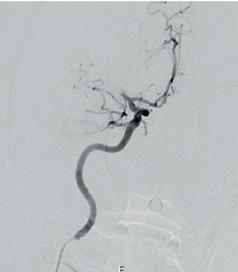
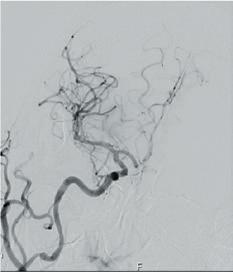
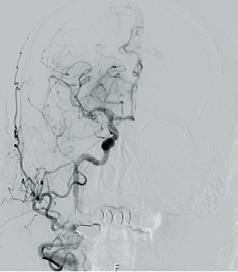
well nine hours prior. Imaging showed a tandem lesion involving an internal carotid artery occlusion as well as the right MCA and distal anterior cerebral artery (Figures 2 and 3)
Altschul reports crossing the cervical occlusion using Base Camp, and performing a cathetermediated crossing with Tenzing and distal thrombectomy with HiPoint, subsequently deferring acute stenting after evaluation of the cervical carotid artery. The patient progressed through the acute period before being brought back for stenting at a later date.
“Tenzing is particularly valuable in tandem-lesion stroke because these cases are often won or lost on access, stability, and speed,”
“In summary,” Tonetti concluded, “the ASCENT technique allows for passive catheter advancement to really optimise your aspiration attempt by engulfing the clot—again, with just the simple removal of Tenzing, which creates an aspiration force that is almost equivalent to aspiration using a syringe.”
Altschul comments. “The operator must navigate a diseased cervical carotid lesion, often with tortuosity, stenosis, thrombus, or acute dissection, and still deliver a large-bore aspiration catheter safely to the intracranial clot. Tenzing’s tapered, atraumatic design helps reduce the ledge effect between devices, allowing smoother advancement of large- or super-bore aspiration systems through challenging anatomy without needing to repeatedly cross the thrombus or rely on stent-retriever anchoring.
“That matters in tandem lesions because every exchange across an unstable cervical carotid lesion can increase procedure complexity, embolic risk, and time to reperfusion.
“Tenzing can make the case feel less like a sequence of precarious catheter exchanges and more like a controlled, trackable system: cross the cervical pathology, establish support, deliver the aspiration platform, and achieve intracranial reperfusion efficiently. This is especially helpful when the cervical lesion is tight or angulated.”
Streamlined mono-axial setup provides consistent solution for ‘the M1 problem’
THE TREATMENT OF M1-SEGMENT middle cerebral artery (MCA) occlusions represents a longstanding challenge for which the FreeClimb® (54 and 70 only) and HiPoint® catheter systems provide a tailored solution.
Traditional aspiration thrombectomy systems often need to cross the clot and pull it out ‘by the tail’, which may lead to a lower first-pass rate, and higher risks of emboli to new territory or distal embolisation.
Conversely—according to SUMMIT MAX co-principal investigator Ajit Puri (UMass Memorial Health, Worcester, USA)—the Tenzing®-powered delivery and custom-built catheters within Route 92 Medical’s portfolio have been designed to streamline workflows, representing a “philosophical departure” from traditional multi-step, multi-axial systems.
Puri states that the vessel-matched Route 92 portfolio boasts the only mono-axial 088 system cleared by the US Food and
Drug Administration (FDA)—an efficient setup that reduces the need for adjunctive devices as well as a length-adjustable rail design offering versatility across ischaemic, haemorrhagic and venous access procedures. These capabilities allow aspiration and clot ingestion without crossing, leading to higher first-pass rates and potentially eliminating clot fragmentation or embolisation, potentially resulting in improved overall clinical outcomes. Puri also cites data from Nogueira et al on the importance of sizematching in facilitating optimal clot ingestion, detailing that systems undersized to the M1 segment are unable to fully aspirate and ingest clot, creating a possible source for distal emboli by leaving unsecured portions exposed or ‘corked’ at the catheter tip. However, with an outer diameter of 2.6mm, HiPoint 88 systems are more appropriately matched to the 3.1mm mean luminal diameter of the M1 segment.
Stroke cases demonstrate strengths of HiPoint 88 system
TWO CLINICAL CASES PRESENTED
by Jane Khalife (Cooper University Health Care, Camden, USA) shine a light on the technical and clinical successes that can be attained with Route 92 Medical’s HiPoint® 88 system in ischaemic stroke care.
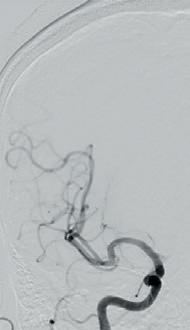
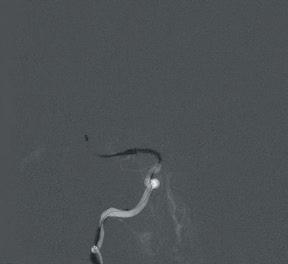
The first of these cases involved a 62-year-old patient who was last known well one hour prior to presentation. They were found with right-gaze deviation, and right hemiparesis within the context of new onset atrial fibrillation. Computed tomography angiography (CTA) imaging of the patient’s head and neck showed a right internal carotid artery terminus (ICA-T) occlusion that recanalised to a right M1 occlusion after tenecteplase administration.
achieved. The patient’s final thrombolysis in cerebral infarction (TICI) score was 3. Additionally, their National Institutes of Health stroke scale (NIHSS) score improved from 16 prior to the procedure to 4 postprocedure (Figures 1 and 2)
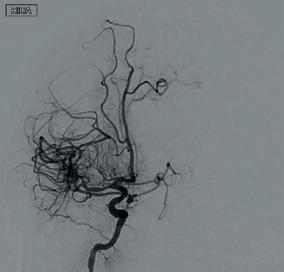
In the second case, a 69-year-old patient last known well eight hours prior to arriving at the hospital presented with right-gaze preference and left-sided hemiplegia. A head CT revealed a developing infarct in the territory of their inferior right M2, with CTA imaging showing a right ICA-T occlusion.
case images
Following endovascular treatment guided by the Tenzing® delivery catheter— and aspiration via a single pass with the HiPoint 88 system—a post-femoral-access reperfusion time of six minutes was
Thrombectomy treatment was once again delivered using Tenzing and HiPoint, with a final TICI 2c recanalisation score being achieved at the first pass after utilisation of the HiPoint 88 aspiration system. Having presented pre-procedurally with an NIHSS score of 18, the patient improved to an NIHSS score of 8 following this treatment (Figure 3).
From “dark ages” to cost-effective simplicity
FAWAZ AL-MUFTI (NEW YORK Medical College, New York, USA) reflects on how thrombectomy has advanced from the era surrounding IMS III—the “dark ages”—when endovascular stroke therapy faced significant scepticism, and device options were largely limited to the Merci retriever (Concentric Medical) and early Penumbra systems. Acute stroke intervention often involved cumbersome multistep setups leading to lower recanalisation rates, and there was uncertainty surrounding the future role of thrombectomy.
What followed was a rapid technical evolution. Modern stent retrievers and balloonguide catheters (BGCs) transformed reperfusion outcomes, followed by combined approaches pairing stent retrievers with aspiration catheters to further optimise first-pass success.
In Al-Mufti’s view, direct aspiration using the HiPoint® 88 system represents the next step in that progression. Route 92 Medical’s Monopoint® zone provides a streamlined, single-access platform designed to simplify workflow while maintaining procedural speed and efficacy. Keen to dispel myths that HiPoint 88’s large-bore design may create safety challenges in distal or tortuous anatomy, Al-Mufti argues that “size is not the limiting factor—technique and guide positioning are what drive outcomes”, emphasising that the system’s performance is fundamentally lengthagnostic, allowing for consistent support and navigability across a broad range of anatomies.
He further notes that “the data are clear” in demonstrating HiPoint is cost-competitive, if not economically advantageous, compared with alternative approaches. SUMMIT MAX analyses found significant reductions in adjunctive device usage with HiPoint compared to the largest-bore US Food and Drug Administration (FDA)-cleared catheter available at the time, while a multicentre, 148-patient study from Settecase et al shows lower direct device costs relative to combined techniques and other aspiration systems.
“Previously, many cases would have been approached with a stent retriever and aspiration catheter, with or without a BGC,” Al-Mufti adds. “Now, with Base Camp® , HiPoint 88, and a Synchro [Stryker] wire, the approach can be simplified while reducing cost and maintaining excellent outcomes.”
Ajit Puri
Fawaz Al-Mufti
HiPoint
The most effective systems aren’t built around more. They’re built around what matters.
Every component. Every transition. Every decision.
Designed to reduce complexity. Engineered to perform predictably.
Confidence comes from knowing your system will do exactly what it’s intended to do. Mastery. In Your Hands.
FreeClimb® and HiPoint
Procedures requiring percutaneous catheter introduction should only be performed by physicians familiar with possible complications. Possible complications include acute occlusion; additional surgical intervention; air embolism; arteriovenous fistula; death; device malfunction; emboli; false aneurysm formation; hematoma or hemorrhage at access site; granulomas at the access site; infection; intracranial hemorrhage; ischemia; brain edema; neurological deficits including stroke; residual thrombus; vasospasm; and vessel perforation or dissection.
Please review https://www.route92medical.com/safety-information/ for important risk information.
ROUTE 92 MEDICAL, HIPOINT, MONOPOINT, TENZING, and FREECLIMB are registered trademarks of Route 92 Medical, Inc.