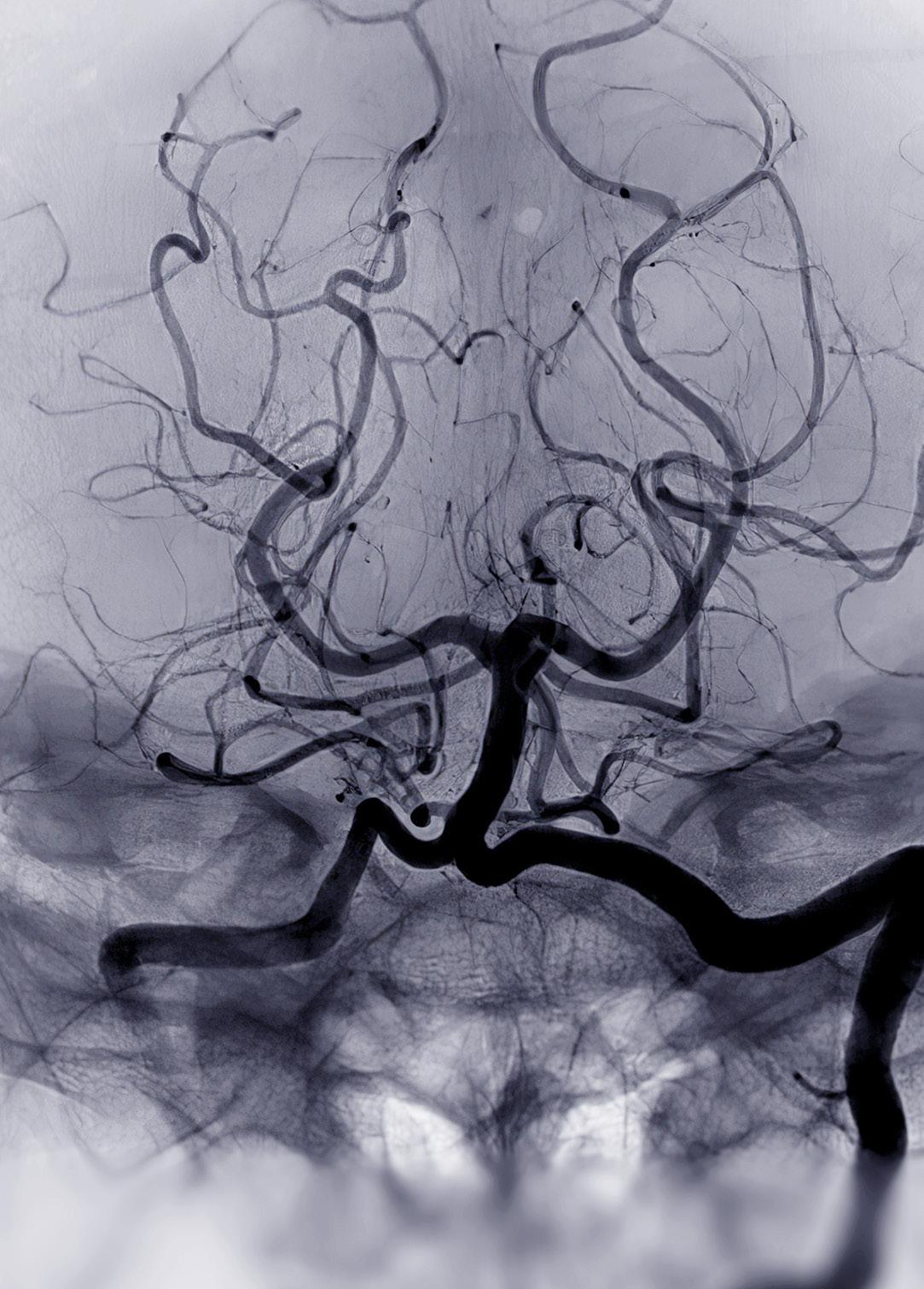
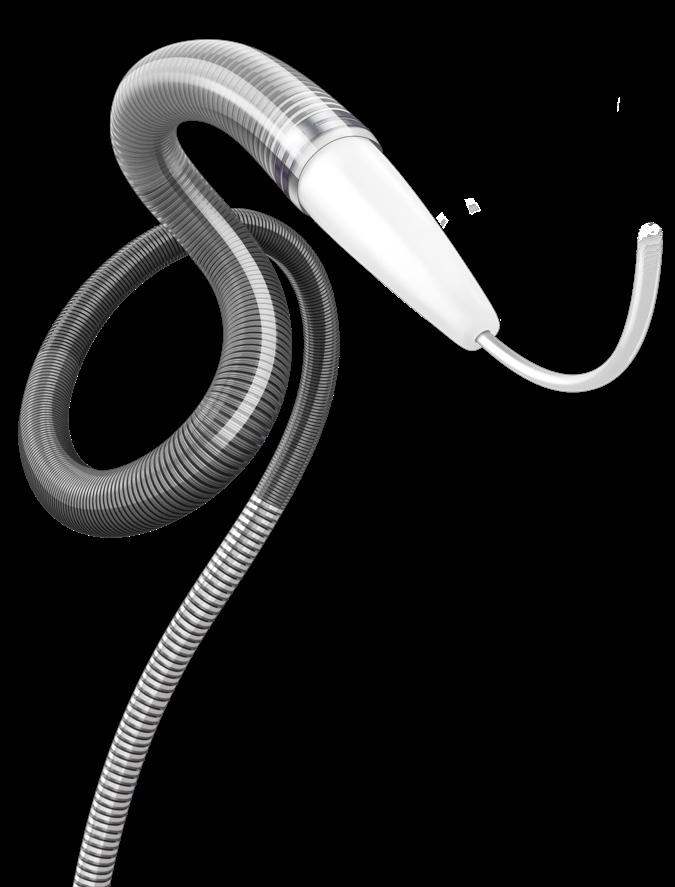
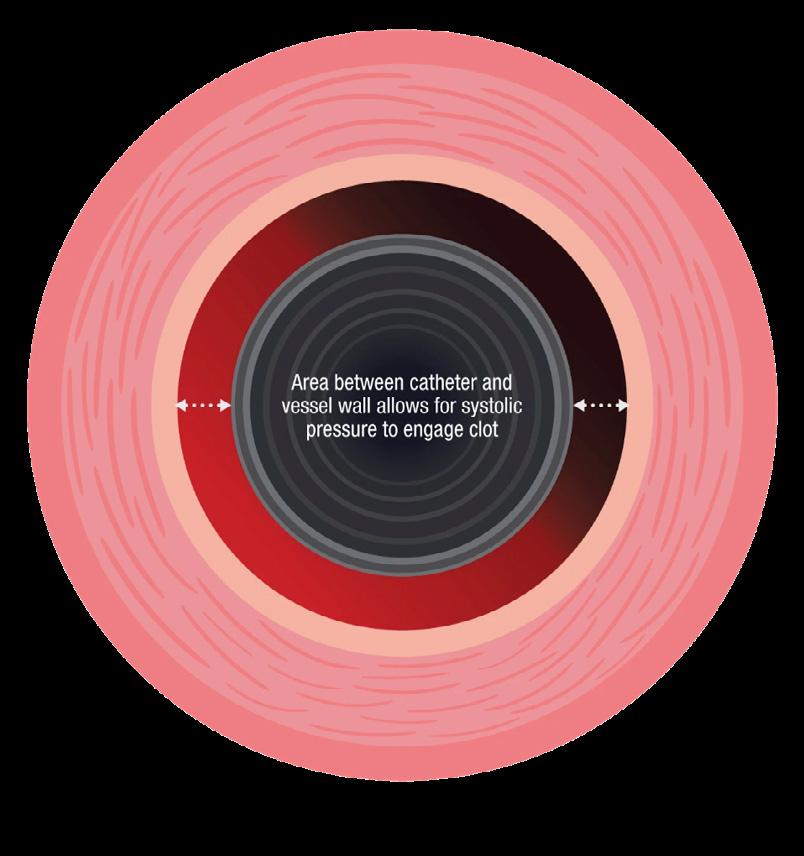
Aspiration thrombectomy produces notably lower sICH and vasospasm rates versus stent retrievers in MeVO stroke
Complete recanalisation (mTICI 3)
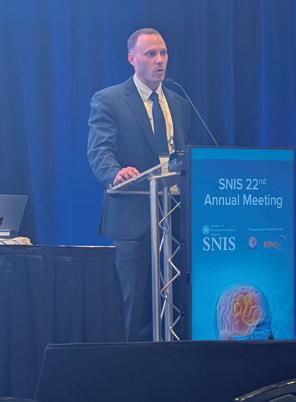
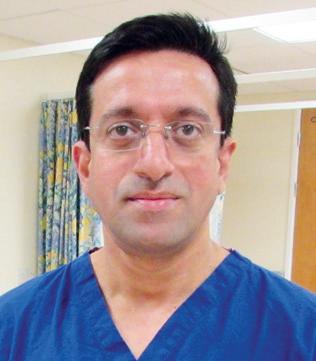
Analyses of a large US registry comparing first-line stroke thrombectomy approaches for medium-vessel occlusion (MeVO) stroke have shown that direct aspiration is associated with significantly lower rates of symptomatic intracranial haemorrhage (sICH) and vessel injury/ vasospasm compared with stent retrievers. A trend towards higher rates of excellent 90-day outcomes (modified Rankin scale [mRS] 0–1) with aspiration thrombectomy was also observed, as per a late-breaking data presentation from Shahram Majidi (Mount Sinai Health System, New York City, USA) at this year’s Society of NeuroInterventional Surgery (SNIS) annual meeting (14–18 July, Nashville, USA).
Majidi and colleagues’ analysis evaluated all MeVO stroke patients treated via thrombectomy within the large, nationwide NeuroVascular Quality InitiativeQuality Outcomes Database (NVQI-QOD) acute ischaemic stroke registry from 2014–2025, with MeVOs being defined as occlusions at or distal to the following locations: the M2 segment of the middle cerebral artery (MCA), the P1 segment of the posterior cerebral artery (PCA), or the A1 segment of the anterior cerebral artery (ACA). Patients were allocated to either the aspiration cohort or the stent retriever cohort based on the
Total procedure time
What will be the next “holy grail” in mechanical thrombectomy?
www.neuronewsinternational.com
Quantanosis
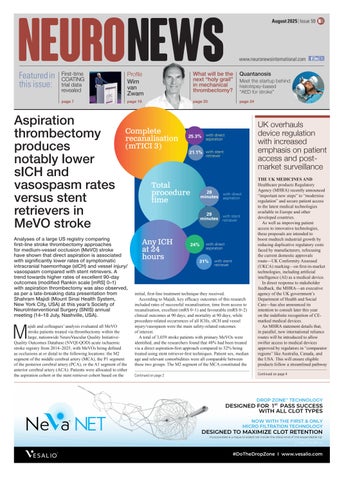
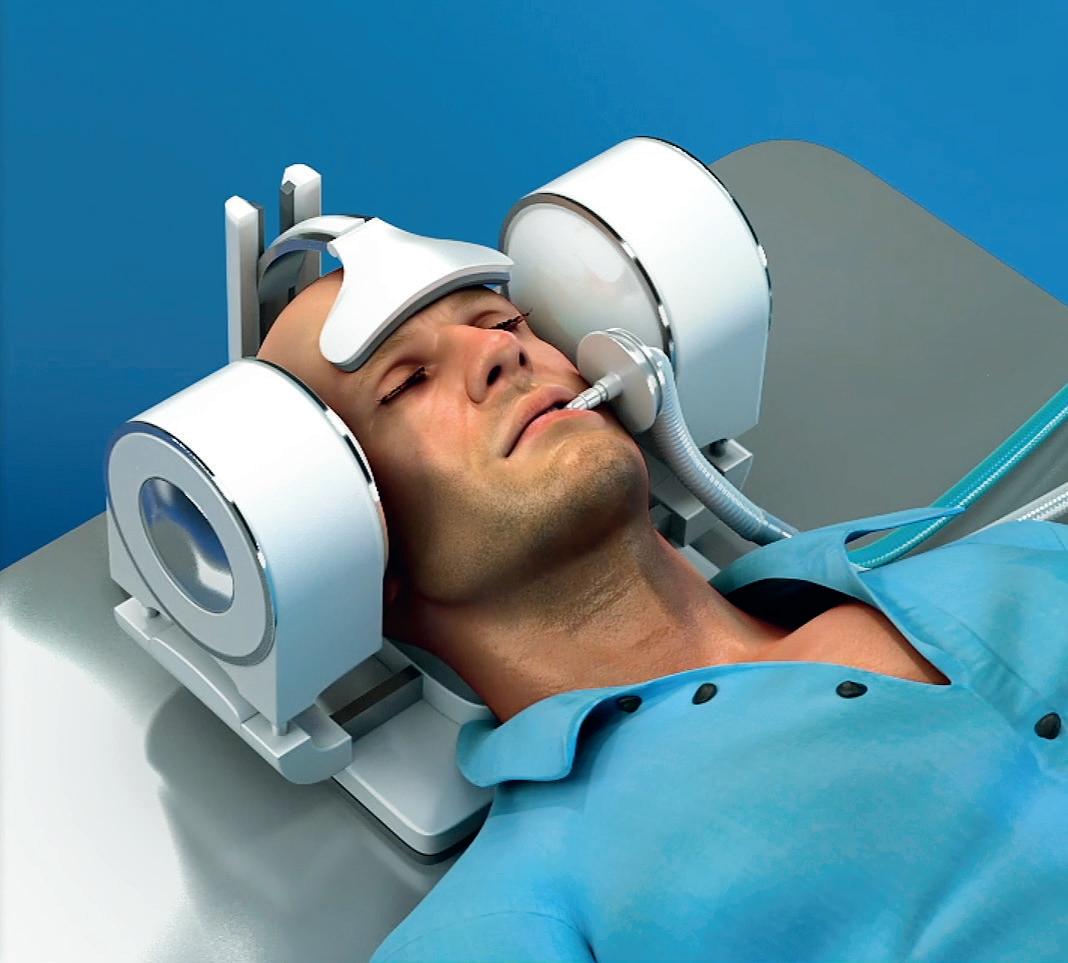
Meet the startup behind histotripsy-based “AED for stroke”
page 24
UK overhauls device regulation with increased emphasis on patient access and postmarket surveillance
THE UK MEDICINES AND Healthcare products Regulatory Agency (MHRA) recently announced “important new steps” to “modernise regulation” and secure patient access to the latest medical technologies available in Europe and other developed countries.
Any ICH at 24 hours
initial, first-line treatment technique they received.
According to Majidi, key efficacy outcomes of this research included rates of successful recanalisation, time from access to recanalisation, excellent (mRS 0–1) and favourable (mRS 0–2) clinical outcomes at 90 days, and mortality at 90 days, while procedure-related occurrences of all ICHs, sICH and vessel injury/vasospasm were the main safety-related outcomes of interest.
A total of 3,059 stroke patients with primary MeVOs were identified, and the researchers found that 48% had been treated via a direct aspiration-first approach compared to 52% being treated using stent retriever-first techniques. Patient sex, median age and relevant comorbidities were all comparable between these two groups. The M2 segment of the MCA constituted the
Continued on page 2
As well as improving patient access to innovative technologies, these proposals are intended to boost medtech industrial growth by reducing duplicative regulatory costs faced by manufacturers, refocusing the current domestic approvals route—UK Conformity Assessed (UKCA) marking—on first-in-market technologies, including artificial intelligence (AI) as a medical device.
In direct response to stakeholder feedback, the MHRA—an executive agency of the UK government’s Department of Health and Social Care—has also announced its intention to consult later this year on the indefinite recognition of CEmarked medical devices.
An MHRA statement details that, in parallel, new international reliance routes will be introduced to allow swifter access to medical devices approved by regulators in “comparator regions” like Australia, Canada, and the USA. This will ensure eligible products follow a streamlined pathway
Continued on page 0
Continued on page 4
Aspiration thrombectomy produces notably lower sICH and vasospasm rates versus stent retrievers in MeVO stroke
Continued from page 1
most common primary occlusion location in Majidi and colleagues’ analysis, at a frequency of more than 80% in both groups, while femoral access was preferred over radial access in the majority of cases—although radial access was selected more regularly in the aspiration cohort (17.3%) compared to the stent retriever cohort (9.9%).
The analysis’ efficacy outcomes found that, while first-pass modified thrombolysis in cerebral infarction (mTICI) 2b–3 and 2c–3 rates were statistically similar between the two patient cohorts, those treated via an aspiration-first approach achieved a higher average rate of complete recanalisation (mTICI 3) compared to their counterparts who underwent first-line stent retriever thrombectomy (25.3% vs 21.1%, respectively). Additionally, final recanalisation rates—defined as the patient’s mTICI score after all thrombectomy passes have been completed—were statistically significantly higher with first-line aspiration versus stent retriever treatment for both mTICI 2c–3 (58.4% vs 53.9%), and mTICI 3 (44.5% vs 39%). Majidi and colleagues also found that total procedure durations—defined as time from groin puncture to final reperfusion—were very similar between groups, at 28 and 29 minutes, respectively.
Clinical outcome assessments from the analysis revealed a trend towards improved rates of 90-day mRS 0–1 and mRS 0–2, at 52% and 65% in the aspiration group versus 47% and 61% with stent retrievers, but Majidi relayed that no statistically significant discrepancies were observed— and the same rate of mortality at 90 days (7%) was seen in both groups too.
Moving on to disclose the analysis’ main safety outcomes, the presenter reported a statistically significant reduction in the rate of any ICH on 24-hour computed tomography (CT) imaging within the aspiration group (24%) compared to the stent retriever group (31%), as well as a decrease in sICH rates—as per the European Cooperative Acute Stroke Study (ECASS) II definition—with aspiration (5%) versus stent retrievers (8%). Majidi further detailed that, “as expected”, rates of subarachnoid haemorrhage (SAH) and intraventricular haemorrhage (IVH) were lower in the aspiration cohort (7% and 0.5%, respectively) compared to the stent retriever cohort (14% and 1%, respectively).
An additional four safety-related measures were evaluated in Majidi and colleagues’ analysis, with data on each ultimately favouring first-line aspiration thrombectomy. Patients in the aspiration group—as compared to those in the stent retriever group—experienced lower rates of vessel perforation (0.4% vs 0.8%), vessel dissection (0.7% vs 1.4%), emboli to new territory (0.6% vs 1.4%), and
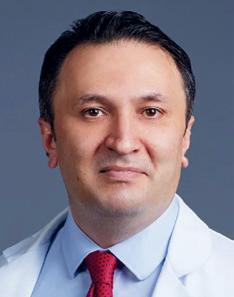
Shahram Majidi
vasospasm (0.4% vs 1.4%). However, vasospasm was the only outcome that displayed a statistically significant difference between the two cohorts.
“Given the narrower therapeutic margin of thrombectomy for MeVO stroke, outcomes in these cases may be more sensitive to procedural variables—such as device selection, catheter size and trackability, procedure times, and device-related procedural complications like SAH, dissection and vasospasm—which may have less influence on the clinical outcome/natural history of thrombectomy patients with LVO [large vessel occlusion],” Majidi told the SNIS 2025 audience. “Therefore, future RCTs [randomised controlled trials] evaluating thrombectomy in MeVO must not only ensure rigorous patient selection—they should also place significant emphasis on the technical nuances of the procedure.”
Potential discrepancies between the outcomes that can be achieved with stent retriever- versus aspiration-first thrombectomy techniques—not only within MeVOs, but across ischaemic stroke more generally—are a topic of continued debate in the neurointerventional arena.
Future RCTs evaluating thrombectomy in MeVO must not only ensure rigorous patient selection— they should also place significant emphasis on the technical nuances of the procedure.”
Regarding MeVO strokes specifically, a 2023 systematic review and meta-analysis published in the European Stroke Journal utilised data on nearly 1,900 patients in order to compare the two techniques. Investigators ultimately concluded that there is potential for efficacy- and safetyrelated benefits with stent retriever/primary combined techniques compared to aspiration-only approaches, citing higher odds of functional independence and lower odds of mortality with the former. Their data also suggested significantly higher odds of successful recanalisation when using a stent retriever only versus an aspiration catheter only, leading them to highlight the need for subsequent trials further assessing the possible advantages of utilising stent retrievers in more distally located occlusions.
Several other published pieces of research, including a 2022 subanalysis of the TOPMOST study in Stroke, and a 2023 propensity-score matched analysis from the MADMT consortium in Stroke: Vascular and Interventional Neurology, have found similar clinical and imaging-related outcomes between stent retriever- and aspiration-first approaches, reinforcing the importance of more high-level evidence on how the two techniques compare.
NEWS IN
BRIEF THE LATEST STORIES FROM THE NEURO WORLD
n PREDICTING ANEURYSM RECANALISATION:
A research team in Japan has outlined a newly developed model for predicting the likelihood of intracranial aneurysms recanalising after coil embolisation treatments. Detailing their work in the Journal of Stroke and Cerebrovascular Diseases, researchers propose a “practical, externally validated” scoring system based on four significant risk factors for recanalisation: rupture status, aneurysm volume, Raymond-Roy occlusion classification, and volume embolisation ratio of the first coil.
For more on this story go to page 9.
n OZEMPIC IN STROKE:
GLP-1 inhibitors like semaglutide (Ozempic)—commonly prescribed diabetes medications that lower blood sugar levels and often cause weight loss— may be able to mitigate against strokes and brain injury-related complications. That is according to the findings of three separate studies presented at the 2025 Society of NeuroInterventional Surgery (SNIS) annual meeting (14–18 July, Nashville, USA).
For more on this story go to page 11.
n DISTAL-OCCLUSION THROMBECTOMY:
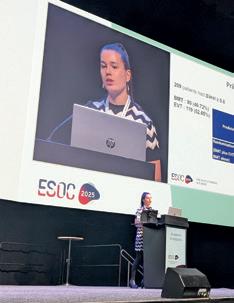
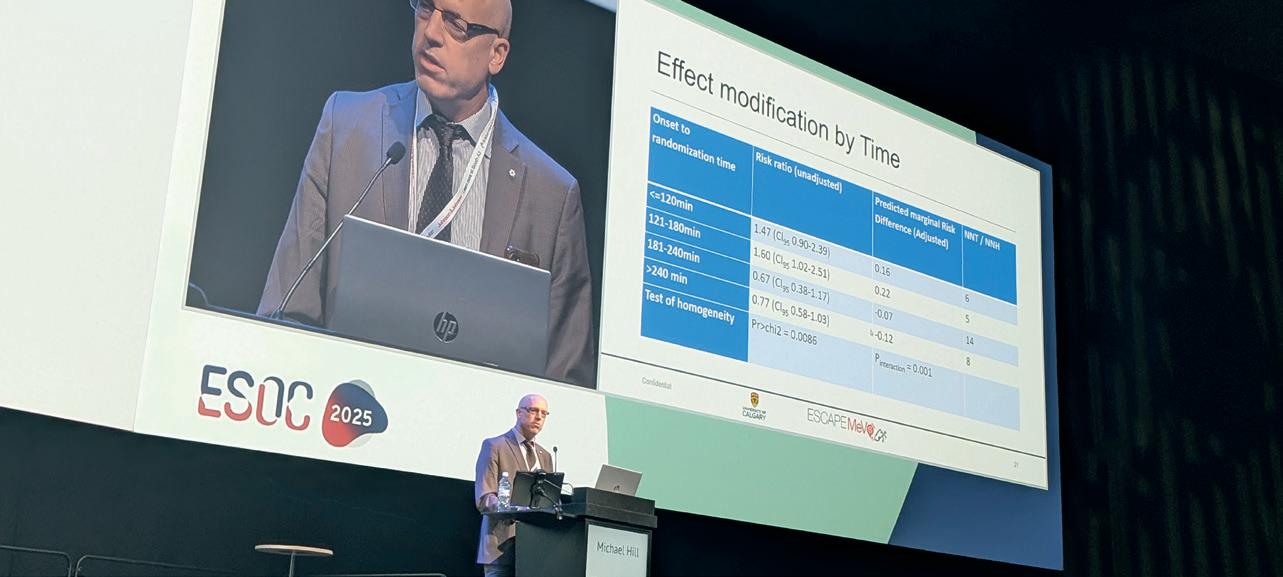
Two analyses disclosed for the first time at the 11th European Stroke Organisation Conference (ESOC; 21–23 May, Helsinki, Finland) have shed fresh light on the potential role for mechanical thrombectomy in acute ischaemic strokes caused by distal/mediumvessel occlusions (D/MeVOs), following presentations of neutral efficacy results across three randomised trials comparing the procedure to best medical therapy earlier this year.
For more on this story go to page 15.
Editor-in-chief: Prof Philip M Meyers | Publisher: Stephen Greenhalgh
Editor-in-chief: Philip M Meyers | Publisher: Stephen Greenhalgh
Content director: Urmila Kerslake | Global commercial director: Sean Langer
Editor: Jamie Bell jamie@bibamedical.com | Editorial contribution: Bryan Kay and Eva Malpass
Editor: Jamie Bell jamie@bibamedical.com | Editorial contribution: Jocelyn Hudson and Bryan Kay
Design: Terry Hawes, Josh Lyon and David Reekie
Design: Terry Hawes, Wes Mitchell and David Reekie
here If you have comments on this issue or suggestions for upcoming editions write to jamie@bibamedical.com
If on issue or suggestions editions write
CARESTO® heal
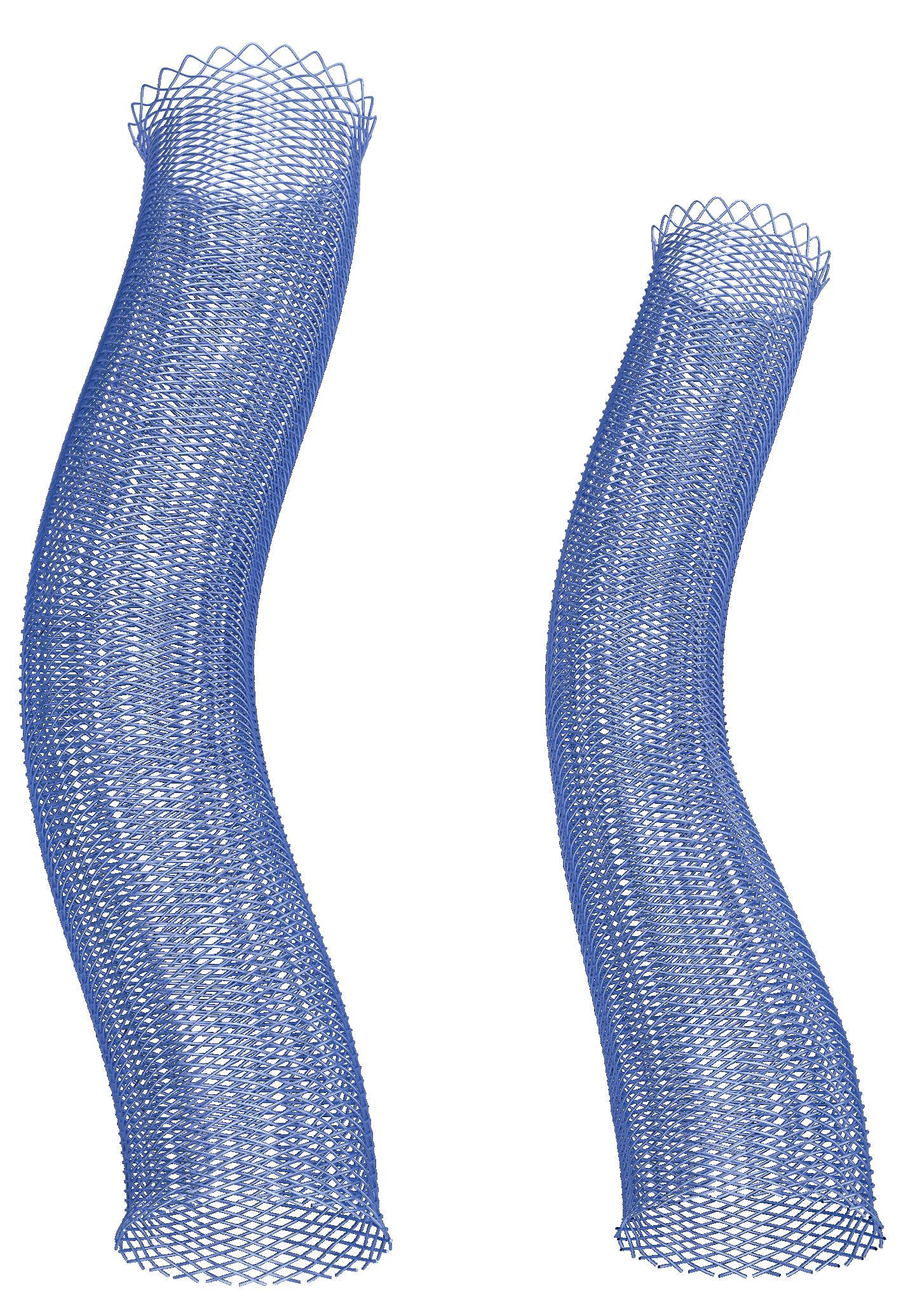
Carotid Stent
» First coated carotid stent
» With unique HEAL Technology – next generation antithrombogenic coating
» High plaque coverage
» Flexible over-the-wire delivery system
» Available in cylindrical and tapered design
» For vessel diameters from 4.0 – 10.0 mm Treat beyond stenosis. Unique solution to secure vulnerable plaques.
UK
device regulation with increased emphasis on patient access and post-market
to market, helping to bring the latest technologies to patients more quickly, the MHRA claims.
In addition, the MHRA plans to support removing the requirement for physical UKCA markings on products and packaging once unique device identification (UDI) requirements are in place, stating that this will reduce barriers to market entry while strengthening traceability and safety monitoring. Class B in-vitro diagnostic (IVD) devices will also be subject to a more “risk-proportionate” regulatory
approach moving forward.
“The proposed changes to the regulations represent the most significant advances since their original introduction,” commented Tom Clutton-Brock (University of Birmingham, Birmingham, UK), chair of the MHRA’s Interim Devices Working Group. “When enacted, we will lead the world in streamlining medical device approvals.”
“The rapid advances in medical and healthcare technology make balancing the need for innovation against both short-term and long-term safety a real challenge,” he added. “After the EU [European Union] exit, there was a clear need to update our regulations to keep pace with other countries. After extensive consultation, the MHRA has listened carefully and published its response. Simplification for low-risk devices, and the carefully controlled reliance and recognition of regulatory approval from other countries, will support safe innovation. This will benefit patients, clinicians, and our medtech and healthtech industries.”
This announcement is said to form part of a broader regulatory reform programme for medical devices in the UK. In June, the MHRA brought into effect new regulations placing a greater emphasis on device manufacturers to actively monitor the safety and performance of their in-use products via post-market surveillance (PMS), with the goal of identifying potential safety issues earlier, and strengthening protection for patients and the public through faster responses to incidents and emerging risks.
The reform applies to all UKCAand CE-marked devices placed on the market in Great Britain after 16 June 2025—including IVD devices, active implantable medical devices, and other technologies used in a clinical setting or within the home.
Manufacturers are now required to collect and assess real-world safety and performance data; report serious incidents to the MHRA within 15 days (versus the previous 30-day timeframe); submit essential communications on patient safety—
Initial EMBODRAIN study results generate positivity around “tremendous revolution” in neurovascular space
Preliminary data on a transvascular platform for subdural haematoma (SDH) treatment— which involves performing middle meningeal artery (MMA) embolisation and haematoma drainage within a single endovascular procedure—were presented at this year’s LINNC Paris course (2–4 June, Paris, France), indicating the safety and feasibility of the approach across a small cohort of patients.
PEDRO LYLYK (CLINICA LA SAGRADA
Familia, Buenos Aires, Argentina) delivered these initial data, reporting 100% rates of technical and clinical success within 13 non-acute SDH patients. The presenter began by guiding the LINNC audience through the multi-stage procedure, which consists of embolisation of the distal MMA followed by transvascular access to the subdural space, drainage of the haematoma itself through a microcatheter and, finally, proximal MMA occlusion. He also briefly highlighted the potential benefits of combining MMA embolisation with SDH drainage, including lower rates of complications and recurrences, fewer hospital admissions, and a shorter average length of stay, as compared to the standard of care involving two separate procedures.
During his talk, Lylyk asserted that the safety of this novel procedure is predicated on its design, as transvascular access is performed in a ‘safe landing zone’ that can be visualised via conventional imaging tools, thus ensuring no inadvertent damage to bridging veins or other surrounding vascular structures will occur. Another key point he highlighted was the fact that access takes place in a ‘blood-free’ segment of the MMA, alleviating any concerns regarding bleeding upon creation of the transvascular passage to the subdural space.
With Lylyk as principal investigator, EMBODRAIN—a prospective, single-arm study intended to assess the safety and feasibility of this approach—enrolled patients with non-acute SDHs requiring treatment. In the study, 13 out of 15 enrolled patients ultimately underwent transvascular SDH evacuation utilising the Volta neurovascular guidewire (Endovascular Horizons)—a device that delivers
radiofrequency energy in order to achieve MMA embolisation.
Here, Lylyk briefly outlined the details of the firstever patient treated with this technique in Argentina: a 73-year-old man whose SDH had both chronic and acute components, and who presented with right hemiparesis and aphasia. The presenter relayed that he was able to drain more than 80% of the volume of the patient’s haematoma, and the patient was out of bed and walking independently—with significantly reduced paresis—on the second day following the procedure. Follow-up imaging at both three and six months revealed no SDH recurrence, Lylyk added.
Clinical follow-up data across the full EMBODRAIN cohort revealed that every patient achieved at least a return to their baseline modified Rankin scale (mRS) score by the three-month timepoint, with similarly positive results being observed regarding Markwalder grading scale (MGS) scores and motor-strength outcomes. In addition, the study’s radiological follow-up demonstrated significant reductions in SDH thickness, volume and midline
field safety notices—to the MHRA for review before sharing them with users; and provide PMS reports or periodic safety update reports (PSURs) within three days of request. For higher-risk devices, UK-approved bodies will monitor such reports to ensure these products receive an increased level of scrutiny.
“As innovation in health technologies accelerates, regulation must keep pace,” said MHRA chief executive Lawrence Tallon. “Today’s reform is a critical step in ensuring safety standards evolve alongside this progress. By strengthening oversight of devices once they’re in use and setting clearer expectations for manufacturers, these new regulations provide a robust framework for identifying risks earlier and responding to protect patients.
This represents an important milestone in our work in building a modern, responsive regulatory system—one that puts patient safety first while also supporting innovation in life sciences and medical technologies across the UK.”
shift across all 13 patients, representing a 100% rate of technical success, with no instances of conversion to open surgical drainage being required in six months of follow-up. Zero serious adverse events were seen throughout the study population. Lylyk went on to relay that, overall, no SDH recurrence or progression requiring surgery—nor hospital readmission or deterioration in neurological function—occurred within the study.
“So far, I think the protocol has shown that it is possible to drain the subdural with a microcatheter, in a single procedure, with a high safety profile,” Lylyk posited. “So, think about it; maybe some change in our practice is important.”
“Each time I see this technology, it’s completely amazing to me—especially when you see the drainage through the microcatheter. It’s absolutely incredible,” commented LINNC course director Laurent Spelle (Bicêtre Hospital, Le Kremlin-Bicêtre, France) following Lylyk’s presentation.
LINNC course director Vitor Pereira (St Michael’s Hospital, Toronto, Canada) added that the procedure is “a crazy idea, but a great idea”, and one that has a chance to make a “real change” in the neurointerventional space, while Italo Linfante (Miami Neuroscience Institute, Miami, USA) commended it as “fantastic, groundbreaking work”. Subsequently, Alejandro Berenstein (Mount Sinai Health System, New York City, USA) noted that “it’s amazing how we are expanding the field”, and Ajay Wakhloo (Tufts University School of Medicine, Boston, USA) pointed out that such transvascular techniques could be used to implant for neuromodulation, biopsies and many more frontiers in the future.
Closing the discussion, LINNC course director Jacques Moret (Bicêtre Hospital, Le Kremlin-Bicêtre, France) described the approach as a “tremendous revolution”—yet one that, as demonstrated in Lylyk’s case presentations, also appears “very simple and very easy” to perform. Moret went on to applaud this innovation—which is the brainchild of neurosurgeon Luis Savastano (University of California San Francisco [UCSF], San Francisco, USA)—noting: “It is based on an idea. It’s the idea that has completely changed the concern of subdural haematoma, and it shows that human intelligence is still extremely important in the development of our field.”
Pedro Lylyk presenting at LINNC Paris
Late-breaking MARRS trial data reveal 61% first-pass effect rate with Millipede system
Perfuze has announced the presentation of positive preliminary results from its pivotal MARRS investigational device exemption (IDE) clinical trial at the Society for NeuroInterventional Surgery (SNIS) annual meeting (14–18 July, Nashville, USA).
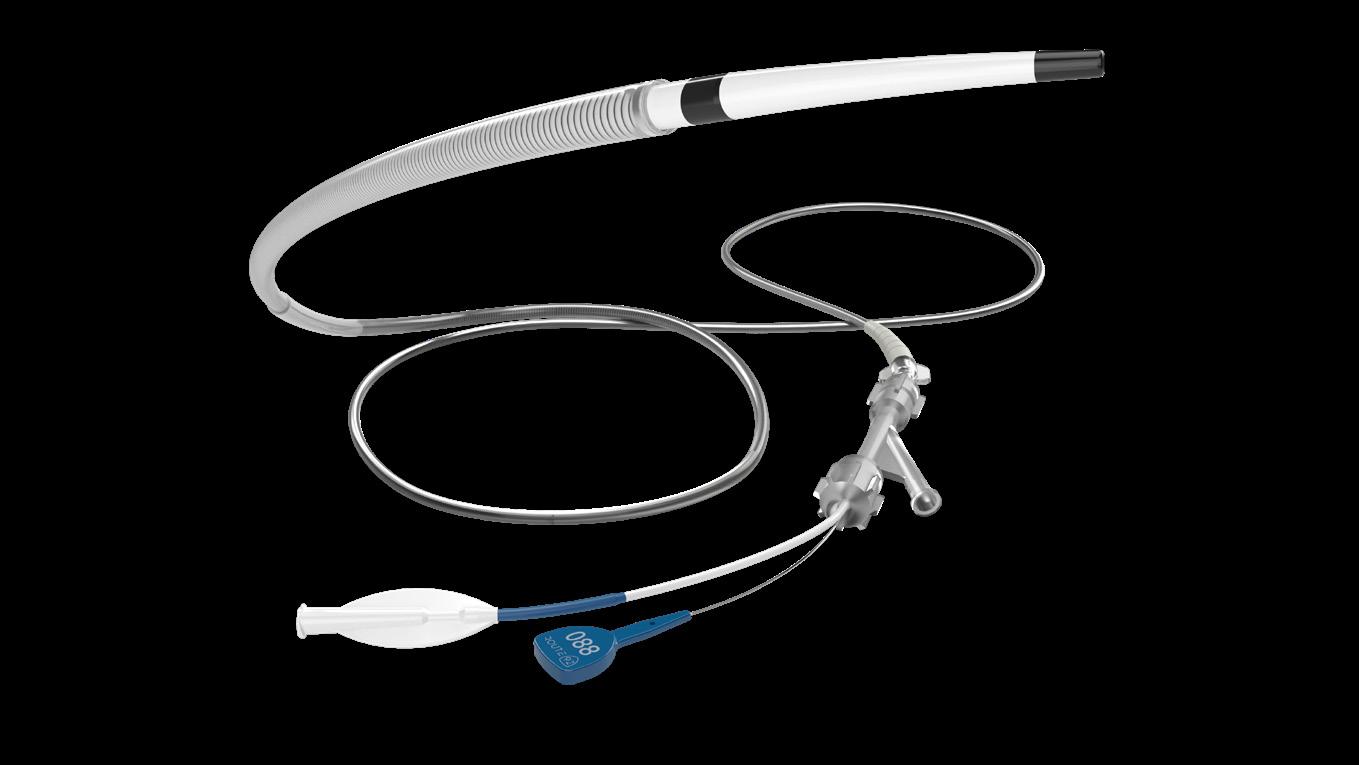
THE TRIAL IS EVALUATING THE SAFETY and effectiveness of the Millipede system—which includes Perfuze’s flagship super-bore aspiration catheter, Millipede 88—for revascularisation in acute ischaemic stroke. Conducted across a network of stroke centres in the USA and Europe, the study included patients with occlusions in the internal carotid artery (ICA), M1 or M2 middle cerebral artery (MCA), and basilar and vertebral arteries.
The MARRS trial enrolled 180 evaluable subjects, with direct aspiration being performed using the Millipede 88 in 101 of these patients. The preliminary analysis presented at SNIS 2025 shows a high rate of first-pass effect (FPE), defined as complete or nearcomplete revascularisation (modified thrombolysis in cerebral infarction [mTICI] 2c) following a single device pass. For patients treated with Millipede 88, an FPE rate of 61% was observed across all target vessels
in the per-protocol population, while an FPE rate of 77% was achieved in M1 occlusions specifically.
“The MARRS data are truly exceptional,” commented MARRS study principal investigator Raul Nogueira (University of Pittsburgh School of Medicine, Pittsburgh, USA), who presented these late-breaking results at SNIS 2025. “Achieving 77% FPE for M1 occlusions in a pivotal study is a major advance for stroke care. The ability to reliably achieve rapid, complete reperfusion with a single aspiration pass is exactly what we need to improve efficacy. This technology is a powerful tool that simplifies thrombectomy and delivers outstanding performance.”
Across the 180 patients enrolled, delivery success of the Millipede system was 99% and the median number of passes was one, as stated in a recent press release from Perfuze. Preliminary safety analyses showed a symptomatic intracranial haemorrhage (sICH) rate
HiPoint reperfusion system achieves “strong” delivery and FPE data in real-world environment
Route 92 Medical has announced results from an independent, realworld study evaluating reperfusion outcomes following use of the company’s HiPoint reperfusion system—described by Route 92 as “the first and only” US Food and Drug Administration (FDA)-cleared 0.088-inch reperfusion catheter system for direct aspiration of large vessel occlusions (LVOs) in patients experiencing an acute ischaemic stroke. The study was presented at the 2025 SNIS annual meeting by Daniel Tonetti (Cooper University Health Care, Camden, USA).
THE RETROSPECTIVE, multicentre study collected outcome data from 193 consecutive patients treated with Route 92’s HiPoint reperfusion system who were not part of the SUMMIT MAX trial. Its primary endpoints were modified thrombolysis in cerebral infarction (mTICI) 2c–3 and mTICI 2b–3 reperfusion at the first aspiration pass, with secondary endpoints including rate of successful aspiration catheter delivery, number of passes for final reperfusion, and conversion to other systems or devices. In the study, clinicians successfully delivered the HiPoint reperfusion system to the stroke-causing occlusion in 96.2% of cases. In addition, the primary endpoint of first-pass mTICI 2c–3 was achieved in 57.5% of cases, with first-pass mTICI 2b–3 being achieved in 68.4% of cases. The median number of passes was one, Route 92 reports in a press release.
“We believed it was important to study the clinical utility of Route 92 Medical’s HiPoint reperfusion system as a first-line aspiration tool in a realworld environment,” said Tonetti. “As in SUMMIT MAX and in the SLIC [super large-bore ingestion of clot] publication, we observed strong delivery and first-pass effect data, as well as low complication rates. We’d expect these metrics to continue to improve as more clinicians and sites gain experience with
the technology.”
At the SNIS meeting, Route 92 also introduced SUMMIT RISE—a prospective, 500-patient study to evaluate the efficacy of the company’s portfolio of neurovascular interventional solutions across a wide range of cases.
The prospective, core lab-adjudicated study will begin immediately under the leadership of co-primary investigators
Sunil Sheth (UT Health McGovern Medical School, Houston, USA), Christopher Kellner (Mount Sinai Health System, New York, USA), and Albert Yoo (Medical City Texas Stroke Institute, Plano, USA).
“As with all new medical technologies, it’s critically important to develop independent, real-world evidence to guide future clinical decision-making,” Sheth commented. “By collecting and analysing data prospectively, and having all cases reviewed through an independent adjudication process, the SUMMIT RISE study will enable us to evaluate the effectiveness of Route 92 Medical’s neurovascular interventional devices in real-world clinical use, and provide insights into technique optimisation and performance.”
of 1.7%. Perforation was reported at 0% and the rate of intracranial dissection was 1.1%, indicating a promising safety profile, the release adds.
“The MARRS study represents several years of work by the Perfuze team and our clinical partners,” said Wayne Allen, chief executive officer (CEO) and co-founder of Perfuze. “We designed the Millipede 88 to navigate seamlessly to the clot face, enabling a super-bore catheter that improves the likelihood of achieving FPE. These early data reflect that intent, and we’re encouraged by the physician feedback we’ve received to date.”
The MARRS trial completed enrolment earlier this year, having been executed ahead of schedule—and, with these preliminary data, Perfuze says it is preparing for a US Food and Drug Administration (FDA) submission.
Achieving 77% first-pass effect for M1 occlusions in a pivotal study is a major advance for stroke care.”
Raul Nogueira
New clinical evidence supports use of Zoom system in M2 occlusion strokes
Imperative Care has announced late-breaking data from the Imperative trial evaluating aspiration thrombectomy via the Zoom system in stroke patients with M2 occlusions, presented at this year’s SNIS annual meeting.
CLINICAL DATA FROM A subanalysis of 65 patients with M2 occlusions enrolled in the Imperative trial were disclosed by Justin Mascitelli (UTHealth San Antonio, San Antonio, USA). The subanalysis reported a median age of 69 years, with a median presenting National Institutes of Health stroke scale (NIHSS) score of 13.
The results demonstrated an 88% core lab-adjudicated rate of final modified thrombolysis in cerebral infarction (mTICI) ≥2b reperfusion, as well as “excellent” clinical outcomes at 90 days, with a 56% rate of modified Rankin scale (mRS) scores of 0–1 and a 62% rate of mRS 0–2. The analysis also found a symptomatic intracranial haemorrhage (sICH) rate of 1.5% (n=1), an all-cause mortality rate of 4.6% (n=3), and an all-ICH rate of 18.5% (n=12).
“These data suggest that excellent safety and clinical outcomes can be achieved with aspiration thrombectomy in patients with M2 occlusions,” said Mascitelli. “The clinical community has important questions around the impact of treating MeVO [medium-
vessel occlusion] and DVO [distalvessel occlusion] patients given the ESCAPE-MeVO and DISTAL trial data evaluating stent retrievers and the best medical-based treatments. It’s critical that this topic be further explored with evidence-generating studies on aspiration specifically, which I believe will undoubtedly move the field—and, most importantly, patient outcomes—forward.”
“The Imperative trial demonstrated excellent reperfusion and safety results in patients with M2 vessel occlusions treated with the Zoom system,” added Ariel Sutton, general manager of Imperative Care Stroke. “Engineered as a complete solution, the Zoom stroke system helps physicians perform their procedures swiftly, efficiently, and with confidence. We have amassed a robust portfolio of clinical data on Zoom and its benefits, and look forward to further advancing research by funding the first randomised study of aspiration thrombectomy in M2 occlusions.”
Imperative is set to fund an investigator-initiated, randomised clinical trial comparing continuous dual aspiration thrombectomy with the Zoom stroke system plus best medical treatment versus best medical treatment alone for M2 occlusions in stroke patients. According to the company, this will be the first trial to look at an aspiration approach specifically for M2 occlusions with the goal of evaluating the potential impact of aspiration thrombectomy in these patients.
Outcomes in M2 occlusions
56% mRS 0–1
1.5% sICH
Daniel Tonetti
Six-month results find positive technical and clinical outcomes in robotic-assisted aneurysm treatments
Six-month follow-up results from a “pioneering” trial of roboticassisted neuroendovascular aneurysm embolisation using the CorPath GRX system (Siemens Healthineers) were presented by Vitor Pereira (University of Toronto, Toronto, Canada) on behalf of the study investigators at this year’s Society of NeuroInterventional Surgery (SNIS) annual meeting (14–18 July, Nashville, USA).
THE ADJUDICATED SIX-MONTH results from this prospective, singlearm, international, multicentre noninferiority study demonstrated the safety and effectiveness of roboticassisted neuroendovascular aneurysm embolisation. An SNIS press release notes that these results represent a “significant milestone”, as they constitute the only published midterm clinical follow-up data on this specific
aneurysm treatment to date.
The study enrolled 117 patients across 10 clinical sites and was conducted by 14 neurointerventionists spanning six countries. It included both a premarket study in Canada and postmarket studies in Australia, Austria, France, Spain, and Switzerland. Key findings presented by Pereira included a 94% technical success rate, which saw the study achieve
Chinese RCT demonstrates robotic system can reduce physician radiation exposure while maintaining procedural performance
Results from a prospective, multicentre randomised controlled trial (RCT) evaluating the Panvis-A neurointerventional robotic system (Shenzhen Institute of Advanced Biomedical Robot [Abrobo])— led by researchers in China—have been published in the Journal of NeuroInterventional Surgery (JNIS), demonstrating that the system is both safe and effective, and can cut primary operators’ radiation exposure by 96% while maintaining procedural performance.
ACCORDING TO AN ABROBO PRESS release, this publication also marks the first time a China-developed vascular interventional robot has gained recognition from a premier, international neurointerventional journal. For the non-inferiority RCT—designed and executed in “strict accordance” with regulatory and Good Clinical Practice (GCP) guidelines—researchers enrolled 128 patients undergoing diagnostic cerebral angiography, with 63 being randomised to robot assistance and 65 randomised to conventional manual operation.
“Traditional neurovascular procedures rely entirely on manual manipulation, exposing operators
its primary effectiveness endpoint— defined as successful completion of the robotic-assisted neuroendovascular procedure without unplanned conversions to manual intervention. In addition, an immediate complete occlusion (Raymond-Roy occlusion classification [RROC] 1) rate of 64.5% increased to 94.1% at six months, while favourable clinical outcomes—defined as a modified Rankin scale (mRS) score of 0–2—were observed in 98.9% of patients (87 out of 88) at six months.
treatment of complex aneurysm cases.”
The SNIS’ recent release notes that the neuroendovascular roboticassisted CorPath GRX trial was sponsored by Siemens Healthineers— and the company is currently continuing to invest in the development of its next-generation neuroendovascular robotic platform.
“The six-month results of the CorPath GRX trial represent a significant step forward in the evolution of neuroendovascular robotics, and will play a key role in shaping future innovation in the field of neuroendovascular therapy,” Pereira commented. “I am excited to share this news with the community. It shows that robotics in neuroendovascular interventions could provide precision and support to the physician, even in navigating tortuous anatomy and
to chronic radiation and limiting precision,” the researchers stated. “Although robotic systems have entered cardiovascular interventions, neurointervention imposes far greater demands— intricate anatomy, tortuous vessels, and operative paths exceeding 70cm from femoral access to intracranial targets.”
Abrobo’s release goes on to detail that, in an effort to address these issues, the company joined forces with leading clinicians to create the Panvis-A system. The platform features the proprietary Panvis catheter-on-finger (COF) fingertip-catheter interface, which replicates combined guidewire rotation and catheter advancement in an “intuitive manner”. In addition, a multi-instrument collaborative drive enables sub-millimetric control over long cerebral trajectories, covering the entire workflow from sheath insertion to final angiographic runs and setting a “new benchmark” for neurointerventional robotics.
The Panvis-A system gained market authorisation from China’s National Medical Products Administration (NMPA) in August 2024.
43.63μSv in manual group
1.67μSv in robotic group
Average primaryoperator radiation dose
The recently published RCT revealed that safety and efficacy outcomes were non-inferior to the manual approach utilised in the trial, with a 100% rate of clinical success being observed in both groups, while technical success—as per successful super-selective cannulation of all target vessels—was
The sixmonth results of the CorPath GRX trial represent a significant step forward in the evolution of neuroendovascular robotics.”
also achieved in both arms, validating the robotic system’s adaptability to complex neuroanatomies.
In addition, the researchers found a 96% reduction in physicians’ radiation exposure, indicated by average primary-operator radiation doses of 1.67μSv in the robotic group versus 43.63μSv in the manual group. This, they believe, demonstrates the Panvis-A system’s ability to offer a “revolutionary” safeguard for physician occupational health.
Other key findings of the study relate to efficiency and patient feedback, with Abrobo claiming that the system was able to balance operational efficiency with positive patient experiences. Setup times were seen to be longer in the trial’s robotics arm (34.59 minutes) compared to the manual arm (24.44 minutes), but this “did not compromise overall patient experience”, while no significant betweengroup differences in puncture-to-catheter removal time, target-vessel selection time, or fluoroscopy time, were observed. Data on patient radiation dose and contrast volume proved to be comparable, ruling out concerns over trading patient risks for doctors’ protection, according to the researchers.
“This study provides high-level evidence that Panvis-A can dramatically lower physician radiation exposure without compromising safety or efficiency, paving the way for standardised, intelligent neurointervention,” they added.
Abrobo states that, to address current limitations of the system—including slightly longer setup times and modest sample sizes seen to date—it has already introduced integrated sterile consumables to cut setup times to less than 10 minutes, and upgraded its delivery system for stenting and thrombectomy. In addition, its next-generation Panvis Star technology has completed a first-in-human study and is entering regulatory submission.
The RCT recently published in JNIS was led by Liu Jianmin (Changhai Hospital, Shanghai, China) in collaboration with Sun Jun (Wenzhou Central Hospital, Wenzhou, China), Chen Wenhuo (Zhangzhou Municipal Hospital of Fujian Province, Zhangzhou, China) and Cheng Guangsen (Zhuhai People’s Hospital, Zhuhai, China).
Vitor Pereira
One-month COATING data may represent “first step” towards reducing antiplatelet use in flowdiverter treatments
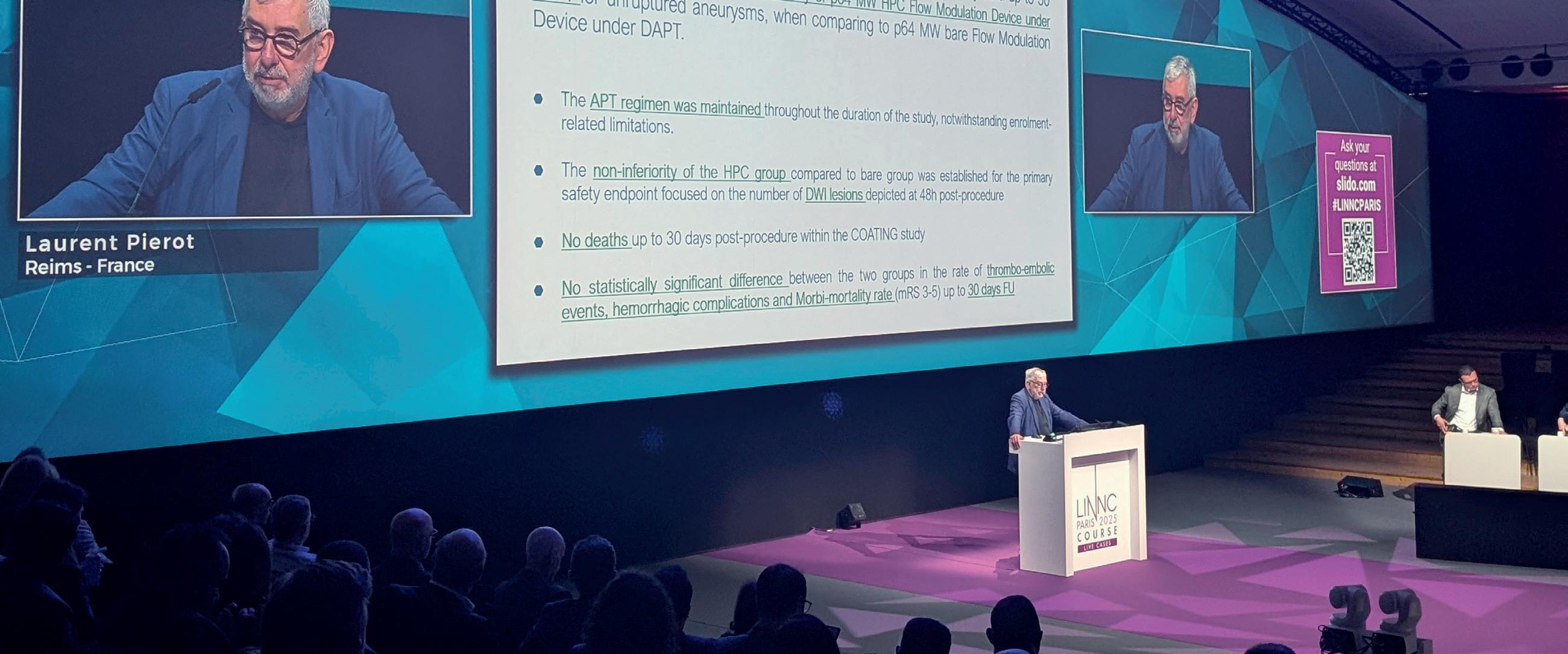
Primary-endpoint findings and initial safety data from the COATING trial—presented by principal investigator Laurent Pierot (Reims University Hospitals, Reims, France) at the 2025 LINNC Paris course (2–4 June, Paris, France)—suggest comparable thromboembolic event rates between surface-modified and ‘bare’ flow-diverter treatments, potentially laying the groundwork for aneurysm patients to receive less burdensome antiplatelet regimens in the future.
In the randomised COATING trial, patients with unruptured or recanalised intracranial aneurysms indicated for endovascular flow-diverter placement were randomised 1:1 to one of two groups, receiving treatments involving either the surface-modified p64 MW Hydrophilic Polymer Coating (HPC) flowmodulation device (WallabyPhenox) alongside single antiplatelet therapy (SAPT), or the regular, ‘uncoated’ version of the p64 MW device alongside dual antiplatelet therapy (DAPT).
Across 15 European centres, the trial enrolled 171 patients with a single aneurysm who had a pretreatment modified Rankin scale (mRS) score of 0–2, with long-lasting antiplatelet therapy and prior stent or flow-diverter placement being among key exclusion criteria. The absolute number of core lab-adjudicated diffusion-weighted imaging (DWI) lesions—visualised on magnetic resonance imaging (MRI) within 48 hours of the index procedure—served as its primary endpoint, with a number of safety- and efficacy-related secondary endpoints being assessed at 30 days, six months, and one year.
New COATING data
Pierot noted in his LINNC Paris presentation that the most common aneurysm location was the internal carotid artery (ICA), and the majority of patients included in the study had small aneurysms (≤10mm)— showing, in his view, that the main indication for flow-diverter treatment is no longer large or ‘giant’ aneurysms. He further relayed that roughly one third of patients were treated with prasugrel while closer to two thirds received ticagrelor.
Some 83 patients in the HPC group and 88 patients in the bare-stent group were available for the trial’s intention-to-treat (ITT) analysis. Regarding their primary endpoint, the COATING investigators found no statistically significant difference in the mean number of new DWI lesions between the two study groups, with six in the HPC group and 5.3 in the baredevice group (p<0.0001), establishing non-inferiority in patients treated with the surface-modified p64 MW HPC device under SAPT. In addition, the number of patients with observed DWI lesions was 41 (49.4%) in the HPC group compared to 49 (56.3%) in the baredevice group, resulting in a rate of 52.9% across the study’s ITT population.
Moving on to discuss clinical endpoints, Pierot reported statistically comparable 30-day morbimortality occurrences between the two groups, as per similar rates of both mRS 0–2 and mRS 3–5. In addition, no deaths (mRS 6) occurred in either group at 30 days. In terms of thromboembolic complication rates per patient up to 30 days, the investigators also observed similar proportions between the two study groups—a finding maintained across intraprocedural and postprocedural events alike. Pierot further reported that no intraprocedural cerebral haemorrhagic complications were seen in either group, while rates of postprocedural haemorrhagic events—both cerebral and peripheral—were statistically similar between groups as well.
“In conclusion, the results of this analysis of the primary study endpoint and safety data up to one month support the safety of the p64 MW HPC flow-modulation device under single antiplatelet therapy with prasugrel or ticagrelor,” Pierot added, also highlighting the “relatively important point” that homogenous antiplatelet regimens were largely maintained throughout the study.
It is very important to have these primary safety data at one month, but […] we still have a lot of questions.”
Laurent Pierot
Findings in context
Subsequently, LINNC course director Laurent Spelle (Bicêtre Hospital, Le Kremlin-Bicêtre, France) congratulated Pierot and his co-investigators on successfully conducting and completing this study. Spelle also expressed hope that COATING could represent a “first step” towards surface-modified devices being used to further reduce—or even completely remove—the burden of antiplatelet medication in aneurysm patients treated via flow diversion.
Discussions following this saw LINNC course
director Jacques Moret (Bicêtre Hospital, Le KremlinBicêtre, France) and Isil Saatci (Koru Hospitals, Ankara, Turkey) submit that the elevated risk of complications created by “potent” antiplatelet drugs like prasugrel or ticagrelor mean that many physicians already prefer to avoid DAPT involving these medications, even—where possible—alongside uncoated flow diverters. Moret noted that a trial incorporating usage of a surface-modified stent with aspirin alone would therefore provide more meaningful evidence.
Pierot replied by pointing out that the majority of companies developing a surface-modified flow diverter are still recommending DAPT alongside their devices, before also highlighting a previous study that attempted to evaluate treatments involving the p64 MW HPC device with aspirin only but was ultimately halted due to high rates of thromboembolic complications.
“I agree—maybe, in the end, surface modification will give us the opportunity to just use aspirin but, for the time being, I’m not sure we can do that,” Pierot added. “As Laurent [Spelle] mentioned, we go step by step, and I think the first step is to be able to move from dual to single antiplatelet treatment.”
A comment from René Chapot (Alfried Krupp Krankenhaus, Essen, Germany) alluded to the study potentially being underpowered due to its relatively small patient population and the “very low” ischaemia rates associated with these treatments. Pierot stated that this was the motive for COATING utilising an imaging-based primary endpoint, as DWI lesions are known to present more commonly (roughly 50–60% of cases) in comparison to thromboembolic events (roughly 5–10% of cases). He went on to concede that, as Chapot also suggested, a study population closer to 1,000 patients—a somewhat unrealistic target given the scarcity of eligible aneurysm patients—would likely have been needed in order to assess a clinical endpoint.
Responding to another question from the LINNC audience on the possibility of a change in thromboembolic complication rates with a surfacemodified flow diverter beyond 30 days, Pierot stated that this will be a key area of interest when more longterm data from COATING’s six-month and one-year follow-up become available.
“It’s important to see how many thromboembolic complications occur after one year,” he said. “Maybe the fact we are not using the same antiplatelet regimen can potentially change the rate of complete aneurysm occlusion and, also, the use of surface modification and single antiplatelet treatment may have an impact on the rate of in-stent stenosis. So, it is very important to have these primary safety data at one month, but I agree that we still have a lot of questions.”
“It’s quite a revolution”—COATING investigators discuss study’s initial findings and wider implications
Following the late-breaking presentation of new data from the global COATING trial comparing two endovascular treatment approaches for unruptured intracranial aneurysms—the p64 MW Hydrophilic Polymer Coating (HPC) Flow Modulation Device (phenox GmbH) plus single antiplatelet therapy (SAPT) versus the uncoated version of the p64 MW device plus dual antiplatelet therapy (DAPT)—Laurent Pierot (Reims University Hospitals, Reims, France) and Omer Eker (Bordeaux University Hospital, Bordeaux, France) outline the study’s strengths, its most important findings, and the impact it could have on the neurovascular space.
With enrolment totalling 171 patients having been completed in November 2024, principal investigator Pierot presented an interim analysis of COATING at this year’s LINNC Paris course (2–4 June, Paris, France), disclosing primary endpoint and safety data from the trial’s 30-day follow-up for the first time.
In conversation with NeuroNews, Pierot notes that the trial met its “quite original” primary endpoint—noninferiority between patients receiving the p64 MW HPC device (treatment arm) and those receiving the uncoated device (control arm) in terms of core lab-adjudicated diffusion-weighted imaging (DWI) lesions observed within 48 hours of the index procedure. One-month data also revealed statistical parity regarding clinical thromboembolic events and haemorrhagic complications across the study groups.
“Now, we have the proof that the HPC surface modification is working,” Pierot states. “These results show that, when you have a patient in whom DAPT is risky, you can use p64 MW HPC with SAPT, because we know that it has a high safety level.”
“Having a device with a specific coating that prevents platelet aggregation and thromboembolic events, in addition to reducing the [burden] of antiplatelet therapy; it’s quite a revolution in a field in which DAPT has been a dogma when implanting stents intracranially,” Eker adds. “This is the first study that has prospectively randomised patients between the historical approach of a bare stent with DAPT, and a new, coated stent with the potential advantages of SAPT. It’s the first time a private company has dared to do that.”
A primary endpoint that “cannot lie”
A particularly unique aspect of COATING is its choice of primary endpoint. According to Pierot, this is the first major trial in the neurovascular space to use imagingbased DWI lesion occurrences as its main outcome of interest. While Pierot himself admits he would typically prefer to utilise a more clinically focused primary endpoint, rates of symptomatic or clinically significant thromboembolic events in unruptured aneurysm cases are known to be very low, meaning huge study populations would likely be required to uncover any notable differences between two treatment approaches.
Pierot and Eker both posit that this has led to a great deal of heterogeneity in how thromboembolic events— symptomatic or otherwise—are defined and reported within the current literature. DWI lesions, however, offer a more “objective” marker of these types of events.
“DWI lesions are probably the most reliable way to assess thromboembolic events, because most of these events are silent,” Eker explains. “When comparing clinical outcomes, you may be missing some clots that occlude small branches without any [noticeable] consequences. When you target DWI, you’re more objective and reliable. You do not leave room for potentially biased interpretation of variable clinical
outcomes. This approach can also be considered more courageous, because there is a very high risk that the device will show a slightly increased rate of thromboembolic events compared to the control arm.”
Eker also notes that, driven by its choice of primary endpoint, COATING is “probably the most robust study conducted to date” in the aneurysm space—on this point, Pierot adds that “DWI cannot lie”. However, he does concede that one small limitation is the fact that it does not provide an indication of thromboembolic events relating exclusively to flow-diverter placement but, rather, the entire procedure, including catheterisation.
being, but it was not so safe in the beginning,” Pierot continues. “We had a lot of complications with the first generation of flow diverters. But, now, we are showing that the safety has increased dramatically, and that is one of the interesting results from COATING: the great safety level of flow diversion in general.”
Eker corroborates this point, highlighting the fact that the neurovascular space has progressed from using “very thrombogenic, hard-to-use” flow diverters to today’s “very efficient, safe and easy-to-use” alternatives—with surface-modified devices now demonstrating an ability to help reduce the burden of antiplatelet therapies among aneurysm patients as well.
Additionally, COATING’s interim analyses found a minimal rate of 30-day haemorrhagic complications, with just one postprocedural cerebral haemorrhagic event in the treatment arm (1.2%) compared to two in the control arm (2.3%), and zero intraprocedural cerebral haemorrhagic events in both groups, translating into no statistically significant differences. Here, Pierot notes that the slightly higher numbers seen in the control arm were expected due to the known bleeding risks carried by DAPT, and speculates that a larger study population of 500–600 patients or more may have led to the between-group difference being more pronounced.
The data presented by Pierot at LINNC Paris revealed that the mean number of new, same-territory DWI lesions within 48 hours of the index procedure—measured via magnetic resonance imaging (MRI)—was six in the treatment arm and 5.3 in the control arm. Across the study’s intention-to-treat population, the two groups were therefore deemed statistically similar (p<0.0001) and non-inferiority of the treatment arm was established. In addition, the numbers of patients with observed DWI lesions at 48 hours were comparable between groups: 41 out of 83 (49.4%) in the treatment arm and 49 out of 88 (56.3%) in the control arm.
Pierot and Eker are both advocates of measuring DWI lesions—Pierot has been incorporating the approach into his practice for many years, while Eker says his centre is currently looking to do this more systematically moving forward. Eker also believes that subsequent studies will look at COATING’s design and use it as a benchmark for methodological rigour, stating that—as a primary endpoint or otherwise—DWI lesions are likely to become more ingrained in the future of aneurysm research.
Positive clinical outcomes
Secondary to COATING’s findings on DWI lesions, a number of more traditional clinical endpoints were also reported. Of these, Pierot feels that zero deaths being observed out to 30 days in both study arms is particularly noteworthy, as the vast majority of flowdiverter studies do find some degree of mortality—albeit small. The COATING investigators also concluded that 30-day morbidity—now “relatively precisely defined” as a modified Rankin scale (mRS) score of 3–5, according to Pierot—was “very low” in the treatment arm (4.8%) but also in the control arm (1.4%), and statistically similar between the two. Overall, there was a 3.1% morbimortality rate across the full study population.
“Flow diversion is probably the most efficacious technique for the endovascular treatment of complex and large intracranial aneurysms, at least for the time
What do these results mean?
Discussing the impact these COATING data could have on clinical practice, Pierot states that, in certain subgroups of aneurysm patients—for example, those with an aspirin allergy or heightened risks of haemorrhagic complications—physicians will now be able to confidently implant the p64 MW HPC Flow Modulation Device under SAPT alone. He also believes that confirmation of these findings in the study’s one-year follow-up will be required to instigate the even broader use of the surfacemodified device alongside SAPT.
“This shows that, if you use the p64 MW HPC flow diverter with SAPT, the safety is similar to that of the bare p64 MW flow diverter with DAPT,” Pierot comments. “Those are the main results but we still need the one-year follow-up to know if there are any differences in terms of aneurysm occlusion, because being under SAPT only may lead to faster thrombosis of the aneurysm sac.”
Pierot says that one-year follow-up results may provide “important information” on in-stent stenosis too, as the way surface modification influences this outcome is yet to be fully elucidated within a clinical setting. Longer-term data from COATING are expected in the first half of 2026.
“I think it will definitely change things,” Eker adds. “After this study, we expect to see more randomised trials combining a coated device and SAPT. And, in the next 5–10 years, we will probably see SAPT being used more and more with these surface-modified stents, because it is the future—if it does not increase thromboembolic events, and if you can decrease the risk of haemorrhagic complications with SAPT, why wouldn’t you use it?”
And, echoing an earlier point from Pierot on the need for “proper clinical evaluations” that enable endovascular aneurysm treatments to be compared via “precise numbers”, Eker states: “In our field, doing clinical research was difficult for a long time. Between ISAT and this study, there have not been many randomised trials on the haemorrhagic stroke side of things. COATING is a disruptive, innovative study in terms of the assessment of new devices, and I believe it will change the landscape of INR [interventional neuroradiology], leading the way for future studies of devices, techniques and approaches.”
Laurent Pierot (top) and Omer Eker
Researchers introduce model for predicting post-coiling aneurysm recanalisation with “high discriminative power”
A research team in Japan has outlined a newly developed model for predicting the likelihood of intracranial aneurysms recanalising after coil embolisation treatments. Detailing their work in the Journal of Stroke and Cerebrovascular Diseases, researchers propose a “practical, externally validated” scoring system based on four significant risk factors for recanalisation: rupture status, aneurysm volume, Raymond-Roy occlusion classification (RROC), and volume embolisation ratio of the first coil (FVER).
VIA A SINGLE-CENTRE,
retrospective analysis including patients with cerebral saccular aneurysms who underwent initial coil embolisation at their hospital between 2012 and 2023, Ken Aoki, Hiroyasu Nagashima and Yuichi Murayama—all based at the Jikei University School of Medicine in Tokyo, Japan—attempted to provide clarity on the known postoperative recanalisation risks associated with the procedure. Prior analyses have revealed recanalisation rates close to 25% in addition to retreatment rates of roughly 10–20% in these cases.
The researchers excluded cases in which there was less than one year of follow-up, retreatment, or utilisation of bioactive coils, and their key outcomes of interest were postoperative RROC scores in addition to a number of aneurysm characteristics. Univariate and multivariate Cox proportional hazard models were used to identify independent recanalisation predictors, with a simplified risk score being constructed using least absolute shrinkage and selection operator (LASSO) logistic regression and β-coefficients from multivariable
analysis. Both internal and external validation of the scoring system were performed.
Some 79 patients were ultimately analysed, with 21 experiencing recanalisation (26.6%) and eight undergoing retreatment during the follow-up period. Based on multivariate analyses, the researchers identified aneurysm rupture, aneurysm size >7mm, neck size >5mm, aneurysm volume >155mm3, immediate postoperative absence of complete aneurysm occlusion (RROC without Class I), FVER <8%, and first coil percentage (FCP) <26%, as potential recanalisation predictors. They also found that, while balloon assistance was more prevalent in recanalised versus non-recanalised patients, this difference did not reach statistical significance.
The researchers subsequently settled on four independent predictors of post-coiling recanalisation: aneurysm rupture, aneurysm size ≥7mm, RROC without Class I, and FVER <8%. An integer-based risk scoring system—ranging from zero to seven in value—was constructed based on
Pregnancy linked to increased rupture risk in brain AVM patients, metaanalysis finds
AT THIS YEAR’S SOCIETY OF NeuroInterventional Surgery (SNIS) annual meeting (14–18 July, Nashville, USA), researchers presented findings indicating the extent to which pregnancy can worsen rupture risks for brain arteriovenous malformations (AVMs).
During pregnancy, hormonal shifts and the increased demand on the heart to pump a higher volume of blood can place added strain on both the body and the brain—and it was against this backdrop that researchers from the University of Mississippi Medical Center (Jackson, USA) recently investigated whether these physical changes can aggravate health issues for pregnant women with three brain
these variables.
“In the cohort analysed in this study, the model demonstrated strong discrimination with a C-statistic of 0.87,” the authors note. “Internal validation using 1,000 bootstrap replications yielded a bias-corrected C-statistic of 0.89. External validation was conducted using an independent cohort of 468 patients, of whom 35 (7.5%) experienced recanalisation. The model retained good discriminative ability in this external dataset with a C-statistic of 0.81.”
They go on to detail that calibrations within the external validation cohort revealed a “slight overestimation” of recanalisation risk in patients with
0.89
C-statistic on internal validation
0.81
C-statistic on external validation
higher scores, while the HosmerLemeshow test indicated a statistically significant ‘poor fit’ (p=0.0007) for the model. Risk stratification based on total scores demonstrated “clinically relevant separation”, as recanalisation occurred in 1.8% of patients with low scores (0–2), 13.5% with intermediate scores (3–4), and 41.5% with high scores (5–7), confirming—in the researchers’ view—the utility of their scoring system for individualised risk assessments.
While several prior studies have proposed alternative models for predicting post-coiling aneurysm recurrence, the present approach is distinct from these efforts in that it places greater emphasis on “clinical practicality”, and ultimately offers a “simple” solution to inform risk-based
conditions that are prone to rupturing and may cause serious brain injury: AVMs, aneurysms and cavernous malformations.
In the study—titled ‘Rupture risk of intracranial vascular malformations during pregnancy: a systematic review and meta-analysis’—the research team reviewed 5,609 journal articles from multiple academic databases that discussed pregnant women with these conditions, ultimately choosing 15 to analyse statistically.
The researchers then used data from the articles to group patients based on whether or not they experienced a rupture. They found that, while pregnancy did not seem to make a major difference in rupture rates for women with brain aneurysms and cavernous malformations, pregnant women with AVMs were much more likely to experience ruptures than non-pregnant women with the same condition.
“These findings show that we still have much to learn about how pregnancy affects the brain,” said Evan Bowen (University of Mississippi Medical Center, Jackson, USA). “We need more research into these effects and their potential causes so that doctors can more precisely target how to treat pregnant
follow-up planning and support clinical decision-making.
“Aneurysm volume had the highest individual AUC [area under the curve] but, due to measurement variability, aneurysm size was used instead,” the authors explain. “FVER was chosen over FCP as it can be computed immediately post-embolisation without procedural dependency. The score reflects effect sizes from the multivariable model, while accounting for predictor collinearity. When applied to our cohort, our model demonstrated superior discriminative power (AUC, 0.89) compared to [other] models.”
The researchers feel that key limitations of their study include its single-centre, retrospective nature and relatively small number of recanalisation events in both cohorts— and, while their model appears able to effectively distinguish between lowand high-risk patients, its predictive probabilities “did not fully align with observed outcomes in the external population”.
“This discrepancy may reflect differences in patient characteristics, procedural techniques or followup imaging schedules between cohorts,” they add. “Nevertheless, risk stratification remained clinically meaningful across all score categories. Based on the observed threshold, we propose that patients with a score ≥3 be considered for shorter-interval imaging follow-up due to increased recanalisation risk.”
Concluding their paper, the authors posit that further multicentre validations across diverse populations are necessary to fully establish the scoring system’s generalisability, and— while they included morphological and procedural variables—haemodynamic factors like wall shear stress were not evaluated and should be incorporated into future prediction models utilising larger, prospective datasets.
women with these and other serious health conditions.”
Prior investigations have produced contradictory results regarding the link between pregnancy and brain AVM rupture risks; several literature reviews, large cohort analyses and single-centre studies have reported significantly increased haemorrhage rates during pregnancy, while many other publications have either demonstrated no such increase or been unable to generate conclusive evidence of the two being linked. Similarly to the meta-analysis presented at SNIS 2025, the majority of these publications ultimately posit that further research is required in order to generate more definitive results.
These findings show that we still have much to learn about how pregnancy affects the brain.”
Diabetes drugs like Ozempic may help mitigate effects of stroke and brain haemorrhages
GLP-1 inhibitors like semaglutide (Ozempic)—commonly prescribed diabetes medications that lower blood sugar levels and often cause weight loss—may be able to mitigate against strokes and brain injury-related complications. That is according to the findings of three separate studies presented at the 2025 Society of NeuroInterventional Surgery (SNIS) annual meeting (14–18 July, Nashville, USA).
“MORE RESEARCH IS CERTAINLY NEEDED, but seeing the potential protection offered by these medications is a fascinating finding,” said Ahmed Elbayomy (University of Wisconsin, Madison, USA), primary author for two of these studies, also describing the results as “very promising”.
The studies presented at SNIS 2025 provide early signals that GLP-1 inhibitors could lessen the impact of strokes and complications resulting from brain injuries, and may even reduce stroke risks altogether.
In the first of these studies, researchers at the University of Wisconsin-Madison used patient data from both the university’s medical centre and a global health collaborative to assess whether patients on Ozempic who experienced acute ischaemic strokes had better outcomes than patients not taking Ozempic.
The global dataset included just over two million stroke patients, 43,338 of whom were also on Ozempic, while the university’s dataset included
a total of 13,510 stroke patients with 190 of them taking Ozempic.
The researchers found that, in general, death from stroke was lower in patients taking Ozempic across both cohorts.
In the global dataset, 5.26% of Ozempic users initially died from their strokes compared to 21.61% of non-users, and Ozempic users also had a 77.5% chance of surviving their strokes long term compared to 30.95% of non-users.
The university cohort produced similar results, with 5.26% of Ozempic users dying from their stroke versus 26.57% of patients not using Ozempic.
The second study presented at SNIS 2025— which came in the form of a nationwide analysis of emergency department records also led by the University of Wisconsin-Madison—saw researchers examine associations between Ozempic use and stroke risk.
Their analyses ultimately revealed a link between
Moyamoya disease: Diagnostic gaps, treatment realities, and what patients are telling us
Avi Gajjar
Point
In a NeuroNews guest article, Avi Gajjar (Albany, USA) discusses the medical community’s understanding—or relative lack thereof—of moyamoya disease.
MOYAMOYA DISEASE IS AN occlusive, progressive vasculopathy of the terminal internal carotid arteries and their proximal branches. As stenosis progresses, a network of fragile collateral vessels develops, the so-called ‘moyamoya’ vessels, placing patients at high risk for ischaemic stroke, haemorrhage, seizures, and cognitive decline. Although most commonly seen in East Asian populations, particularly Japan and Korea, it’s increasingly recognised worldwide. In children, the disease tends to present with ischaemia; in adults, haemorrhage is more common. In either case, the consequences are serious, and delays in diagnosis are not uncommon.
Workup typically begins with magnetic resonance angiography or computed tomography angiography— but digital subtraction angiography remains the gold standard. Early
diagnosis matters, as it can reduce cumulative risk. However, many patients, especially those outside of major centres, are only diagnosed after a major event.
Surgical revascularisation is the mainstay of treatment. Both direct and indirect approaches have shown benefit in reducing recurrent events and preserving neurological function. The evidence here is solid: retrospective studies and institutional series consistently show better outcomes in surgically treated patients. That said, the field still faces open questions around timing, durability and which patients, especially asymptomatic or adult-onset cases, truly benefit. Medical management remains limited, generally consisting of antiplatelet therapy and risk factor control, and offers far less protection than surgery.
What’s clear is that there’s still a
potential Ozempic use and significantly reduced stroke odds.
As such, the team has suggested taking this research further and evaluating data directly from pharmacies in order to draw even more precise conclusions about the relationship between Ozempic and stroke prevention.
The third and final study set out to assess the impact of GLP-1 agonists like Ozempic on ischaemic strokes, as well as subarachnoid and intracranial haemorrhages, using a propensity-matched, multiinstitutional cohort study.
Led by a team from the University of Texas Medical Branch in Galveston, USA, researchers investigated whether GLP-1 inhibitors could improve patient outcomes after brain haemorrhages—either caused by spontaneous bleeds or aneurysm rupture—as well as strokes.
They reviewed patient records from six and 12 months after each brain haemorrhage, and one and two years after each stroke, and found that GLP-1 inhibitor use was connected to a reduced risk of cognitive side-effects, seizures, future brain haemorrhage, and death after brain haemorrhage or stroke.
“This research could introduce a new perspective to the discussion of preventing and mitigating the devastating effects of stroke and related brain injuries,” commented Matias Costa (University of Texas, Galveston, USA), author of the third study.
lot we don’t know. The aetiology of moyamoya isn’t fully understood. Genetic associations like RNF213 have been identified but haven’t yet led to therapeutic targets. Even with surgical options available, these procedures are rarely done outside of high-volume centres, and most published outcomes come from select populations. That leaves a large group of patients who may be misdiagnosed, undertreated, or both. One area that deserves more attention is how we understand the patient experience. Most traditional ways of measuring outcomes, such as clinic surveys or patient-reported outcome measures, often overlook certain aspects, especially in rare diseases like moyamoya. Studies have analysed over 1,000 publicly available social media posts from Instagram and TikTok tagged with ‘#moyamoya’ or ‘#moyamoyawarrior’. Most posts were authored by patients themselves (64%) and the majority were women (75%). Across platforms, the most common themes were recovery, survival and
For a rare disease like moyamoya, where the path to diagnosis is often long and isolating, these patient voices offer insight we don’t get from chart reviews or follow-up visits.”
spreading positivity. Female patients more often posted about pain and appearance, while male patients were more likely to mention religion and survival. Interestingly, patients—and not their family or friends—were the ones most likely to write about quality of life and resiliency.
These kinds of unfiltered data aren’t a substitute for clinical outcomes, but they give us a valuable look into what matters to patients. It can shape how we counsel them, help set expectations, and guide postoperative care. For a rare disease like moyamoya, where the path to diagnosis is often long and isolating, these patient voices offer insight we don’t get from chart reviews or follow-up visits.
Moyamoya remains a complex condition with major gaps in diagnosis, treatment access, and long-term data. Surgery remains the best option, but too many patients are diagnosed too late or not at all. For the neurovascular community, the next step is clear: there is a need for better diagnostic pathways, broader awareness outside of referral centres, and more work capturing what patients actually experience.
References for this article are available online.
Avi Gajjar is a medical student at Albany Medical College (Albany, USA) with a strong clinical and academic interest in endovascular neurosurgery.
DISCLOSURES:
The author disclosed that he is the founder of non-profit company NeurosurGen, and has received financial support from the Neurosurgery Research and Education Foundation (NREF) and the American Association of Neurological Surgeons (AANS).
of View
‘Bridging’ thrombolysis with tenecteplase
produces improved stroke outcomes versus thrombectomy alone
The BRIDGE-TNK randomised clinical trial has shown better outcomes in stroke patients receiving thrombectomy plus ‘bridging treatment’ with the intravenous thrombolytic drug tenecteplase as compared to thrombectomy alone. The study—which featured at the 11th European Stroke Organisation Conference (ESOC; 21–23 May, Helsinki, Finland) and has now also been published in the New England Journal of Medicine—included patients with acute ischaemic strokes caused by large vessel occlusion (LVO) presenting within 4.5 hours of symptom onset.
BRIDGE-TNK INCLUDED 550 PATIENTS from 39 hospitals in China, with 278 receiving bridging treatment with tenecteplase and 278 receiving thrombectomy alone. The primary endpoint was a 90-day modified Rankin scale (mRS) score of 0–2, a metric generally considered equivalent to functional independence.
The BRIDGE-TNK investigators’ hypothesis was that bridging treatment with intravenous thrombolysis would be superior to thrombectomy alone—and, with the data presented at ESOC 2025, theirs becomes the first randomised trial to demonstrate superiority with bridging treatment involving tenecteplase specifically compared to thrombectomy alone.
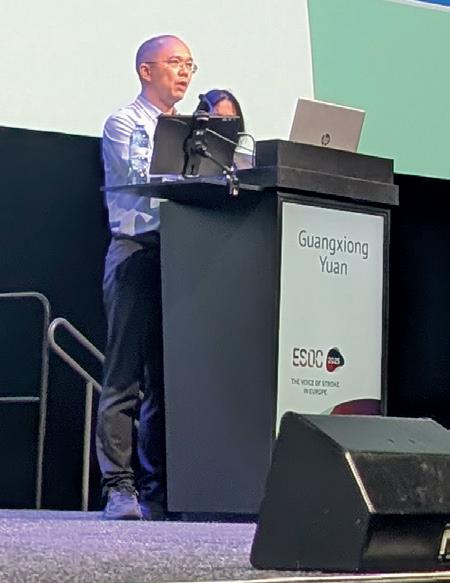
The proportion of patients with a good functional outcome of mRS 0–2 was 52.9% in the bridging group versus 44.1% in patients receiving only thrombectomy, as per a late-breaking presentation from leading BRIDGE-TNK investigators Guangxiong Yuan (Xiangtan Central Hospital, Xiangtan, China) and Thanh N Nguyen (Boston University School of Medicine, Boston, USA). The researchers reported that the adjusted risk ratio for a good functional outcome with bridging treatment was 1.18 (95% confidence interval [CI], 1.01–1.39; p=0.04), while mortality rates and the occurrence of symptomatic bleeding complications did not differ significantly between the two study groups.
Following these positive primary-endpoint findings, the presenters relayed that data on the trial’s secondary endpoints relating to functional outcomes were “less robust”: rates of 90-day mRS 0–1 were 34.9% with tenecteplase plus thrombectomy versus 27.9% with thrombectomy alone. In addition, first-pass reperfusion rates were not statistically significantly different between the two groups, at 41% and 39.5%, respectively. However, the bridging thrombolysis group did see a higher proportion of successful reperfusion on initial angiogram prior to thrombectomy, and intravenous tenecteplase was also reported to have enabled a nine-minute reduction in the time from puncture to reperfusion—independent of rescue therapies like angioplasty and/or stenting.
This is the first clinical trial to directly validate the therapeutic value of tenecteplase combined with thrombectomy.”
Zhongming Qiu
Leading US media outlet recognises timely thrombolytics within stroke hospital ratings “for
the first time”
US News and World Report, a leading media outlet in the USA, has added a treatment-based measure from the American Heart Association’s (AHA) Get With The Guidelines-Stroke programme to its national stroke hospital rating system “for the first time”. Inclusion of this measure—which reports specifically on the timing in which thrombolytic medications are given to a person experiencing a stroke—reinforces the impact of data transparency and highlights the importance of timely, lifesaving treatment, as per an AHA press release.
THE RELEASE NOTES THAT, for a long time, US News and World Report has factored hospitals’ public reporting status into its rankings; a public transparency measure based on registry participation accounts for 2.5% of the publication’s ‘Best Regional Hospitals’ rankings. This year, an additional 2.5% of each hospital’s stroke score will be based on the speed at which eligible patients receive intravenous (IV) thrombolytics—a clot-dissolving medication used to treat ischaemic stroke, the timely administration of which is a “critical driver” of patient outcomes.
Data from the AHA’s Get With The Guidelines-Stroke registry power this new measure. Under US News and World Report’s updated approach, hospitals publicly reporting an 85%-or-higher rate of IV thrombolytic administration within 60 minutes of arrival receive full credit, while hospitals with lower rates receive partial credit, and those that do not report publicly receive no credit for this or the transparency measure.
“One of the biggest differentiating advantages of our data is that we capture reasons for non-treatment, which most electronic health records and other data
Guangxiong Yuan
As many as six previous randomised controlled trials have investigated whether intravenous thrombolysis can provide additional clinical benefits over thrombectomy alone in LVO stroke patients arriving directly at a thrombectomy-capable centre. Results from these trials have more recently been merged to create IRIS—an individual patient data meta-analysis in which neither noninferiority nor superiority of bridging treatment could be established.
However, the thrombolytic agent under investigation in the majority of prior trials was alteplase, a more well-established and widely used drug than tenecteplase. It has been posited by researchers that, with its longer half-life and higher affinity for fibrin in blood clots, tenecteplase may possess the better clotdissolving properties of the two drug candidates.
Zhongming Qiu (Xinqiao Hospital of Army Medical University, Chongqing, China), one of the lead authors for BRIDGE-TNK, commented: “This is the first clinical trial to directly validate the therapeutic value of tenecteplase combined with thrombectomy, indicating that early thrombolysis could potentially accelerate recanalisation, streamline procedural workflows, and thereby improve patient outcomes.”
Yuan and Nguyen concluded their presentation by drawing attention to the upcoming BRIDGE-TNK EXTEND study—a randomised, double-blinded trial evaluating tenecteplase plus thrombectomy versus placebo plus thrombectomy in LVO ischaemic stroke patients presenting 4.5–24 hours from time last known well. Enrolment in the trial will be initiated in October this year, with approximately 820 patients set to be randomised between the two study arms.
sources lack. These data are critical in establishing the credibility of our quality measurement reporting systems,” said Lee Schwamm (Yale School of Medicine, New Haven, USA), an AHA volunteer who initially helped to establish the Get With The GuidelinesStroke programme. “We applaud US News and World Report for including the time-to-thrombolytics measure—it speaks to the real-time impact of the Get With The Guidelines programme, and the association’s role in improving health outcomes through accelerating the translation of evidence into practice in cardiovascular and stroke care.”
“This new ranking component helps validate the association’s registry as a gold-standard resource and signals to hospitals the continued importance of stroke systems of care,” added Gregg Fonarow (University of California Los Angeles [UCLA], Los Angeles, USA),
an AHA volunteer and member of the association’s Stroke Systems of Care Advisory Group.
The AHA’s recent release goes on to posit that public reporting plays a “vital role” in advancing both hospital performance and patient empowerment, fostering a team-based approach to accountability, showcasing efforts to implement quality improvement initiatives, and helping identify areas that require attention. It also opens the door to inclusion in national hospital rankings, further incentivising highquality care. And, for individuals, public reporting offers a “transparent snapshot of hospital performance”, increasing awareness of key care measures and supporting more informed decisionmaking over where to receive treatment. Together, these benefits drive a culture of continuous improvement and trust in healthcare, the AHA release concludes.
This new ranking component helps validate the association’s registry as a gold-standard resource and signals to hospitals the continued importance of stroke systems of care.”
Gregg Fonarow
Interventional stroke care set for paradigm shift following “phenomenal success” of SUMMIT MAX trial
Following the recent US Food and Drug Administration (FDA) approval of the HiPoint Reperfusion System (Route 92 Medical) for aspiration-based mechanical thrombectomy—as well as the presentation of new clinical data affirming the system’s benefits in large vessel occlusion (LVO) stroke treatments—Ajit Puri (UMass Memorial Health, Worcester, USA) outlines his world-leading firsthand experience with the device, and discusses the “paradigm shift” set to be created by results from the SUMMIT MAX trial.
Having now used the 0.088-inch (088) HiPoint system for more than three years and in 150–200 cases, Puri describes it as “nothing short of phenomenal”.
“I used to be a belt-and-suspenders guy—balloon guide catheters, intermediate catheters, stent retrievers—but, given the simplicity of this procedure with the HiPoint Reperfusion System using the Monopoint Approach, it’s a one-and-done thing,” he comments. “In the last few years, I have almost completely transitioned to a super-large-bore platform for anything from carotid to MCA [middle cerebral artery] bifurcation. It has standardised a lot of our workflow.”
Here, Puri reiterates the applicability of Route 92’s system across a wide range of LVO locations, attributing this to its “softness” and agnosticism regarding catheter length.
“You don’t have to use different devices of different lengths to treat clots that are more distal versus more proximal—the HiPoint Reperfusion System provides uniform aspiration all the way from MCA bifurcations to carotid occlusions in the neck, and it has become my go-to device across those territories,” he continues.
A one-of-a-kind device
Outlining the characteristics of the HiPoint Reperfusion System that he most appreciates, Puri highlights the fact that it is a ‘catheter on a stick’, describing it as “the only 088 device” of its kind that has been approved by the US FDA for per-se direct aspiration thrombectomy at the M1 segment of the MCA. He also draws attention to the benefits brought about by Route 92’s ‘self-centring’ Tenzing catheter when it comes to navigating the 088 system through a patient’s neurovasculature.
“Our challenge used to be bringing these devices up to the MCA,” Puri explains. “This system has taken us from wondering if we will be able to achieve this, to almost complete predictability. We know the device will reach the MCA in a very high majority of cases, given there is very little ledge between the Tenzing catheter and the HiPoint super-bore catheter. It’s gone from ‘can we’ to ‘we can’.”
Puri cites experiences from the Super-large-bore ingestion of clot (SLIC) study, noting a 100% rate of success in navigating the HiPoint 88 Reperfusion System to the occlusion site across 33 consecutive LVO patients. The study—initially published online by Puri and colleagues in the Journal of NeuroInterventional Surgery in 2022—also found final modified thrombolysis in cerebral infarction (mTICI) 2b–3, 2c–3 and 3 rates of 100%, 94.1% and 73.5%, respectively, while first-pass revascularisation rates were 82% for mTICI 2b–3 and 70.5% for mTICI 2c–3. In addition, no postprocedural symptomatic intracranial haemorrhages (sICHs) were reported. He likens the simplification of aspiration thrombectomy brought about by the HiPoint 88
Reperfusion System to the paradigm of carotid stenting—a “single operator-friendly” procedure whereby sufficient catheter length is not a major concern. Puri adds that it is “completely unique in our armamentarium”.
“Between the Basecamp guide catheter and the HiPoint catheter on a stick, you are agnostic to length, regardless of where the clot is,” he details. “When you insert the Tenzing into the HiPoint 88 super-bore catheter as a single assembly, it’s as seamless and as operator-friendly as it can get. And, when you’re doing a case in the middle of the night, you don’t need to be managing multiple flush lines and catheters—this system simplifies the procedure completely, while giving you the largest US FDA-cleared aspiration bore for LVOs to date.”
SUMMIT MAX data
Earlier this year, at the European Stroke Organisation Conference (ESOC; 21–23 May, Helsinki, Finland), results from the SUMMIT MAX randomised controlled trial (RCT) assessing the safety and efficacy of the HiPoint 88 Reperfusion System in comparison to the largest-bore conventional 0.074-inch aspiration catheter were presented for the first time.
aspiration system—the largest aspiration system previously available in the USA,” he adds. “So, this actually moves the boundaries. It moves the goalposts in terms of how scientific evidence is going to be collected via RCTs for super-large-bore catheters in the future.”
Enrolling close to 250 patients in total across multiple sites, SUMMIT MAX saw “phenomenal success”, achieving rapid enrolment and subsequently meeting all of its primary efficacy and safety endpoints, Puri relays.
“Interestingly, the primary efficacy endpoint was kept to mTICI 2b–3 achieved using the study device only,” he goes on. “Any use of an ancillary device was considered a failure—so, the bar was set very high, but we reached it with flying colours. An mTICI 2b–3 revascularisation rate of almost 70% with the HiPoint 88 Reperfusion System was attained, as opposed to just 50% in the control arm. That was a huge success in showing that it is highly deliverable and can achieve revascularisation outcomes that physicians are satisfied with.”
A further finding Puri highlights is the first-pass effect (FPE; mTICI 2c–3) of 47% observed across the trial’s entire HiPoint patient cohort—a figure that can be seen to justify the name of the device itself, standing as the highest FPE rate recorded in any stroke thrombectomy RCT to date, exceeding the likes of ASTER and PROST.
SUMMIT MAX ultimately achieved its primary efficacy endpoint, with a significantly higher, superior revascularisation rate being achieved in the HiPoint arm versus the control arm across 166 analysed study participants, whereby usage of any adjunctive therapy (e.g. stent retriever) after use of the HiPoint Reperfusion System was considered a treatment failure. Route 92’s system was successfully delivered to the site of the stroke-causing occlusion in 89% of cases and no significant differences were observed between the two study groups regarding the primary safety endpoint of sICH occurrence.
Puri describes the SUMMIT MAX RCT—for which he was a co-national principal investigator alongside Thanh N Nguyen (Boston University School of Medicine, Boston, USA) and Guilherme Dabus (Baptist Health South Florida, Miami, USA)—as a “pivotal, sciencemoving paradigm shift” in interventional stroke care.
“This is the first RCT to date comparing the 088 system with another
And, touching on the finding of comparable safety outcomes between SUMMIT MAX’s two study arms, Puri says: “As physicians who have been doing this for a long time, we are always asked if these 088 systems are safe in the MCA. Now, with multiple studies across different devices, we have seen that it is very safe to perform thrombectomies in the MCA using an 088 platform.”
Another detail Puri pulls from the SUMMIT MAX results is the even greater degree of success observed across the study’s three highest-enrolling sites, including a 96% rate of successfully accessing the MCA, a 68% rate of first-pass mTICI 2c–3 revascularisation, and adjunctive devices being required in just 4% of cases, all of which compare favourably to the average outcomes seen across the whole trial. Puri attributes these findings to the small learning curve associated with the 088 HiPoint Monopoint system.
“This tells us that, once physicians get used to the device, the outcomes are going to get even better in terms of navigability and revascularisation, as well as an incredible decrease in the need for ancillary devices,” he avers.
Puri concludes that, in his view, the SUMMIT MAX trial demonstrates Route 92’s commitment to furthering neurovascular care by collecting level-one data and expanding the current indications for LVO strokes by “pushing boundaries—in a safe, ethical manner—all the way to the MCA”. He also notes that, with the HiPoint Reperfusion System, the company has added a “phenomenal tool” to the armamentarium of neurointerventionists, predicting that it will alter future stroke treatment paradigms.
HiPoint Reperfusion System
Fresh DISTAL and ESCAPE-MeVO analyses further elucidate stroke thrombectomy’s role in distalvessel occlusions
Two analyses disclosed for the first time at the 11th European Stroke Organisation Conference (ESOC; 21–23 May, Helsinki, Finland) have shed fresh light on the potential role for mechanical thrombectomy in acute ischaemic strokes caused by distal/ medium-vessel occlusions (D/MeVOs), following presentations of neutral efficacy results across three randomised trials comparing the procedure to best medical therapy earlier this year.
THE FIRST OF THESE ANALYSES
saw investigators conduct a sub-study of the DISTAL randomised controlled trial (RCT), ultimately revealing that the addition of endovascular thrombectomy to best medical therapy led to an increased probability of brain tissue being preserved in D/MeVO stroke patients.
“This study gives a different perspective into how we interpret treatment success in D/MeVO stroke,” said Aikaterini Anastasiou (University Hospital Basel, Basel, Switzerland), who presented these results at ESOC 2025. “Rather than focusing solely on a functional score that potentially does not capture improvements of less severe strokes, we could also consider the extent of brain tissue that can be saved.”
The main results of the DISTAL trial showed no improvement in functional outcomes with thrombectomy over best medical therapy in D/MeVO stroke patients at 90 days—a phenomenon that the researchers believe could be explained by the smaller tissue territory at risk and lower National Institutes of Health stroke scale (NIHSS) scores in these cases as well as greater procedural risks potentially offsetting the benefits of reperfusion. These data, along with findings from the ESCAPE-MeVO and DISCOUNT RCTs, have sparked debate over thrombectomy’s true role in stroke patients with more distal occlusions.
By focusing on the amount of ‘threatened’ brain tissue that was actually saved with the treatment, as opposed to the more traditional clinical endpoint of functional independence on the modified Rankin scale (mRS), Anastasiou and colleagues’ new imaging-based analysis attempted to approach the matter from a different perspective.
Using baseline perfusion and 24hour follow-up imaging from 447 trial participants, they assessed the proportion of brain tissue at risk of infarction that was ultimately spared, and found that patients receiving thrombectomy plus best medical therapy had a higher likelihood of achieving a good imaging outcome—having at least 80% of their at-risk tissue preserved— compared to those receiving best medical therapy alone (53% vs 41%). This sub-analysis showed that saving more than 80% of a patient’s threatened tissue was also found to be strongly associated with better functional
of Calgary, Calgary, Canada), and their ESCAPE-MeVO collaborators, this post-hoc imaging analysis revealed a potential link between a D/MeVO stroke patient’s collateral perfusion status on computed tomography (CT) angiography and their eventual clinical outcome.
“These data suggest that, among patients with stroke due to D/MeVO with very poor or absent collateral filling on baseline CT angiography, [endovascular thrombectomy] may be harmful—and, in those with excellent collaterals, [endovascular thrombectomy] may be beneficial,” Hill
These results suggest that, even in patients with smaller strokes due to D/MeVO, the amount of salvaged brain tissue plays a critical role in recovery.”
Aikaterini Anastasiou
outcomes at discharge and at 90 days in both treatment groups.
“These results suggest that, even in patients with smaller strokes due to D/ MeVO, the amount of salvaged brain tissue plays a critical role in recovery,” Anastasiou added. “Our analysis indicates that successful reperfusion through [endovascular thrombectomy] can significantly increase the likelihood of saving brain tissue—and, in turn, improve outcomes.”
Another key finding was the fact that patients with successful reperfusion, defined by a modified thrombolysis in cerebral infarction (mTICI) score of ≥2b, had an even greater likelihood of significant tissue salvage, as indicated by an adjusted odds ratio (OR) of 2.54. The analysis also found no difference in outcomes between groups when less than 80% of the tissue was saved, which the researchers feel underscores the importance of achieving high-quality reperfusion.
A closer look at ESCAPE-MeVO
A second analysis—presented in the same late-breaking data session at ESOC 2025—shone a spotlight on more granular findings from the ESCAPEMeVO RCT, in which primary endpoint findings on thrombectomy versus best medical therapy were similarly neutral.
Delivered by Michael Hill on behalf of his co-principal investigator Mayank Goyal (both University
while the median occlusion diameter was 1.9mm. Good, moderate and poor collateral statuses on CT angiography were observed at rates of 24.4%, 52.2%, and 21%, respectively.
Regarding prognostic associations on univariable analyses, the researchers observed that each one-tier worsening in collateral grade was linked to a 25% reduction in the odds of a favourable outcome being achieved (common OR, 0.75)—a finding that remained ‘directionally consistent’ upon multivariable analyses (adjusted OR, 0.82). In Hill’s view, this goes some way to confirming the notion that, the more distal a patient’s occlusion is, the less relevant their collaterals are likely to be in terms of impacting postthrombectomy outcomes.
The ESCAPE-MeVO investigators believe that, based on these results, CT angiography-based collateral status has now emerged as a potential predictor of functional outcomes after D/MeVO stroke, and may inform patient selection for reperfusion strategies, with further studies set to help stratify patients who are more likely to benefit from interventional treatment.
commented. “We hope to confirm these observations in future pooled analyses of these trial data.”
Based on this analysis, collateral status was deemed to be the “only” imaging feature significantly associated with 90-day functional outcomes in D/MeVO stroke patients, as factors including occlusion location and vessel diameter did not appear to have tangibly modified the effect of thrombectomy. These findings may help refine selection criteria for reperfusion therapies in D/MeVO stroke, according to the investigators.
Hill and colleagues’ goal with this analysis was to identify whether these or any other specific baseline imaging characteristics were associated with prognosis, and with the efficacy of intravenous thrombolysis (IVT) and endovascular thrombectomy, in the ESCAPE-MeVO trial. All 529 patients from the trial’s intention-to-treat population were included, with CT angiography being used to determine occlusion location, and to grade collateral status as good, moderate or poor. Univariable and multivariable ordinal logistic regression models were used to evaluate associations of imaging variables with the primary endpoint of 90-day mRS, and with treatment effects of IVT and thrombectomy.
Some 84.7% of MeVOs included in the trial involved the middle cerebral artery (MCA) territory, with M3 being the most common segment (41.4%),
“Time is brain—again” During his presentation of this ESCAPE-MeVO sub-analysis, Hill drew attention to another potential modifier of the effect of thrombectomy treatment that was apparent in their results: speed. In addition to the presence of ‘poor’ collaterals, a greater period of time between stroke symptom onset and thrombectomy treatment was linked to worse functional outcomes following the procedure. According to Hill, thrombectomy patients treated within three hours did “much better” clinically, while there was a trend towards thrombectomy being “harmful” as compared to best medical therapy in patients treated 3–12 hours post-stroke. He described this relationship between time to treatment and outcomes as a “qualitative and quantitative interaction” in their analysis.
“Treat early and treat fast” was among the subsequent messages imparted by Hill during his ESOC presentation, as was the assertion that—in contrast to large vessel occlusion, where there is a long tail of patients who benefit from thrombectomy in later windows—“we have neglected speed” in recent times.
“We do have to re-emphasise the need for speed, and we will need to confirm these results in the other MeVO studies,” he added, highlighting time to treatment as one of the few factors that appeared to have a genuine treatmentmodifying effect in ESCAPE-MeVO. These suggestions drew a mixed response from those in attendance at ESOC; DISTAL trial co-principal investigator Marios Psychogios (University Hospital Basel, Basel, Switzerland) commented that the same time-outcome interaction was not observed in his team’s research, while session moderator Mira Katan—also of University Hospital Basel—posited that “time is brain, again”.
Michael Hill presenting at ESOC 2025
WIM VAN ZWAM
Following early-career flirtations with electrical engineering and then tropical medicine, Wim van Zwam (Maastricht, The Netherlands) eventually found his calling in interventional neuroradiology (INR). Many patients, physicians and researchers are likely very thankful that he did, owing to his significant contributions to the neurointerventional space over the past two decades—including as co-principal investigator (PI) of the MR CLEAN randomised controlled trial (RCT), chair for the European Stroke Course in Minimally Invasive Neurological Therapy (EXMINT), and a long-time advocate of improved global access to stroke treatments. Here, Van Zwam—an interventional radiologist and INR professor at Maastricht University Medical Center—discusses his career to date, goals as local committee chair for next year’s European Stroke Organisation Conference (ESOC), unmet needs in the field of stroke care, and more.
What initially drew you to medicine, and the field of neuroradiology specifically?
Well, to be honest, I wasn’t immediately drawn to medicine. I started studying electrical engineering but, after a little less than a year, I realised this was not what I wanted. Some of my former classmates had started with medicine and they suggested that I join them. In my first years, I got interested in tropical medicine by a very active group called Working Group Medical Development Cooperation (WEMOS). So, I did the Dutch subspecialty in tropical medicine and started to work for Médecins Sans Frontières (Doctors Without Borders). After three years, having worked in Somalia, Laos and Sri Lanka, my wife and I decided to continue our lives back in The Netherlands. I applied for several different specialties, among them radiology. With my surgical background as part of the tropical medicine training, interventional radiology was the obvious choice. In Maastricht, where I did my training as an interventional radiologist, INR had just taken off. There was the perfect opportunity for me to enrol in this relatively new subspecialty in early 2000. I went for training in Tilburg, The Netherlands and later Essen, Germany, and attended Pierre Lasjaunias’ course in Thailand.
Who have your mentors been and how have they impacted your career? In my early career, the head of surgery where I did my tropical training was Nomdo Bosma, the most humble and friendly—but still extremely skilful—surgeon I have ever worked with. Another mentor and example for me, even to this day, is my direct interventional radiology colleague Michiel de Haan. His high standard of professionalism is hard to achieve but, for all who work with him, it’s a goal to reach for. In INR, there are too many to mention, from Pierre Lasjaunias, Karel ter Brugge and Willem Jan van Rooij to René Chapot, Vincent Costalat and Christophe Cognard, and many more; they have all inspired me in a way, and still do. Finally, when I embarked on the stroke research journey, my MR CLEAN co-principal investigators, Diederik Dippel, Charles Majoie, Aad van de Lugt, Yvo Roos and Robert van Oostenbrugge showed me how collaboration and forgetting about egos could lead to great achievements. Thanks to them, I’m in this current position of having the opportunity to honour them.
What are you hoping to achieve as local committee chair for ESOC 2026?
My primary goal is to ensure ESOC 2026 in Maastricht delivers an outstanding scientific meeting where global experts can exchange
knowledge on every facet of stroke care. Given the transformative advances in stroke treatment, endovascular therapy for acute ischaemic stroke will be a central focus. ESOC 2026 aims to provide neurointerventionists with a comprehensive programme, including hands-on simulator training, and dedicated sessions on technical challenges, complications, and the latest scientific breakthroughs. Stroke advocacy remains a priority too. Together with the ESO, World Stroke Organization (WSO), World Health Organization (WHO), and other partners, we will amplify efforts to elevate stroke on the global health agenda— especially in underserved regions—by engaging policymakers and stakeholders to improve access to treatment. Sustainability will be a cornerstone of ESOC 2026 as well. Healthcare professionals must lead by example in addressing climate change, which directly impacts stroke burden. We’ll promote eco-friendly practices like prioritising train travel and embracing cycling—the Dutch way—to demonstrate that sustainable conferences are achievable today.
Could you outline the significance of EXMINT and the course’s main goals? The European Society of Minimally Invasive Neurological Therapy (ESMINT) is the society for neurointerventionists. Traditionally, neurointerventionists focused on neurovascular diseases like aneurysms and arteriovenous malformations (AVMs) that were usually treated in a subacute, daytime setting. With the implementation of acute endovascular stroke treatment, not only did the number of treatments increase tremendously, but 24/7 coverage was also required. One option would have been to train many more ‘full’ neurointerventionists to cover these stroke treatments, with the downside that these neurointerventionists would only be treating 10 aneurysms and one or two AVMs per year. The other option, adopted in many countries worldwide, was to train other physicians—interventional radiologists, neurologists or cardiologists—to perform mechanical thrombectomies without being trained as full neurointerventionists. ESMINT recognised this need and started a theoretical course for stroke interventionists, named EXMINT, eight years ago. The course consists of an online module and a face-to-face module, including hands-on training, followed by an online examination. Thanks to the huge efforts of course director Antonín Krajina, this has become extremely successful. Many of the participants travel from all over the world to Prague, Czechia to attend the course. Because the number of participants is becoming too big
for proper hands-on training, and because many of the non-European participants come from Asia, we are currently exploring the idea of organising a parallel face-to-face module in Asia. This initiative aligns well with the previously mentioned stroke advocacy activities—when policymakers want to address the burden of disease from stroke, they need physicians who are able to perform stroke treatments.
How would you assess the legacy of the MR CLEAN study?
FACT FILE
CURRENT APPOINTMENTS
Professor of neurointerventional radiology, Maastricht University Medical Center (MUMC; Maastricht, The Netherlands)
Interventional and forensic radiologist, MUMC
EDUCATION
2004: International diploma in neurovascular diseases, MSc (ParisSud University, Paris, France)
2002: Radiology (MUMC)
1992: Tropical medicine (Royal Tropical Institute, Amsterdam, The Netherlands)
1989: Medical study, MD (Free University, Amsterdam, The Netherlands)
HONOURS (SELECTED)
Chair, EXMINT Fellow, ESO
Member, European Society of Cardiology (ESC) Council on Stroke
Member, European Board of Neurointervention (EBNI)
Principal investigator for MACCA, MR CLEAN and MR CLEAN-LATE studies
MR CLEAN was one of seven RCTs—alongside ESCAPE, EXTEND IA, PISTE, REVASCAT, SWIFT PRIME and THRACE—addressing the same question: does endovascular thrombectomy improve the lives of patients suffering from a large vessel occlusion stroke? However, because MR CLEAN had the broadest inclusion criteria and was done in all Dutch centres performing thrombectomies at that time, it was not only the first RCT to reach its intended endpoint but also immediately showed the wide applicability of this treatment. Another positive effect of successful collaboration between different specialties and hospitals is that it may lead to larger consortia working together on new research projects. CONTRAST is the consortium that came out of MR CLEAN, from which MR CLEAN-NO IV, -MED and -LATE, and the CASES study on tandem occlusions, came forth. Collaborations with other research groups from Canada, Switzerland and China have opened doors to more extensive research projects with broader patient populations too. This may not be a legacy of MR CLEAN only, but MR CLEAN likely set an example, making researchers worldwide interested in stroke networks and research projects in The Netherlands.
Besides thrombectomy, what has been the most important neurointerventional development during your career?
When I got involved in neurointerventions, the ISAT trial was still ongoing. The results of this trial had a tremendous impact on neurointerventional practices—all because of the development of the detachable coil. Later additions like balloons, stents, flow diverters and intrasaccular devices all improved the technique and expanded the possibilities for endovascular aneurysm treatment, but none changed practices as much as the detachable coil. And, as far as I know, none of these innovations have been investigated as thoroughly in a randomised trial as the detachable coil technique was in ISAT.
What is the most pressing unmet need in INR right now?
Stroke has become one of the most prominent causes of disability and, because many patients stay alive but remain severely disabled after stroke, the disease has a high burden for societies—not only in the developed world, but also in less developed countries, where healthcare systems have improved over the past few decades while the focus on stroke has lagged behind. We have also seen that, for these less developed or ‘newly developed’ countries, focusing on stroke management not only improves overall quality of life but is cost-saving in many ways as well. However, to address gaps in stroke management, resources and manpower are seriously needed. Resources must come from policymakers and insurance companies who pay for the care of stroke survivors. Manpower needs to be recruited from physicians working in various disciplines. For practical education, training centres and
fellowships need to be created. This is currently one of the biggest challenges in our field.
Which areas are likely to have the greatest impact on neurointerventional care over the next 5–10 years?
Personalised medicine—and the introduction of artificial intelligence (AI) tools to make this personalised medicine possible—will probably have a large impact on the way we execute our profession. We already see examples of personalised medicine in stroke prediction tools like MR PREDICTS, where combinations of clinical and imaging data are used as input variables for an AI algorithm to estimate the chances of certain outcomes. Physicians may use these chances to decide on treatment selection. Other choices like prehospital decisions based on availability of treatments, travel distances and patient characteristics, or treatment choices based on clot characteristics, can all be tailored by various AI tools using available data. We can see these AI tools entering our field already and, with more data resulting from trials and registries, these tools
will become increasingly accurate, opening up possibilities in patient and treatment selection that we couldn’t have dreamed of 10 years ago.
What advice would you give to people embarking on a career in INR?
Keep an open mind for alternatives, new ideas and innovations. The neurointerventional field has, for many years, been the area of ‘expert opinions’; the relatively small number of patients affected by haemorrhagic neurovascular diseases and the high levels of skill needed to treat neurovascular diseases endovascularly did not leave many other ways to be trained in neurointerventions. As a result, skills and techniques developed by ‘the master’ were automatically adopted by the fellow. But, with currently available data from research—but also from various data sharing platforms—and the exchange of experiences via courses, congresses and online discussion groups, it has become possible to learn from many other ‘masters’. Moreover, achievements in ischaemic stroke research have shown us that, through crosscentre and cross-discipline collaborations, it is
"Personalised medicine, and the introduction of AI tools to make this personalised medicine possible, will probably have a large impact on the way we execute our profession.”
possible to incorporate evidence-based medicine within the neurointerventional world. Young fellows still need to be trained by experienced masters, but their sources of knowledge can be much broader now compared to when I started 25 years ago. So, use these sources and be open to implementing this knowledge in your practice.
What are your interests outside of the neurointerventional field?
My background is in tropical medicine, and my overall interest in global health still plays a significant role. The three years I worked for Médecins Sans Frontières were very important in shaping me as a person. I’m still interested in and impressed by their work. Most important outside of my profession is, of course, my family life. Spending holidays with them in different parts of the world has probably been the most rewarding activity in past decades. In my sparse free time, I like to ride my gravel bike—I go to work on a bike every day, anyway—and I recently started playing padel. Furthermore, I like to listen to alternative rock music and attend concerts; my current favourite band is Big Big Train!
Peter James Field / Agency Rush
Individualised BP management during thrombectomy shows no benefit over standard approach
The DETERMINE randomised controlled trial (RCT) has found that individualised blood pressure (BP) management during mechanical thrombectomy for patients with anterior large vessel occlusion (LVO) stroke did not lead to improved functional outcomes at 90 days compared to the current standard of care. These data were recently presented for the first time at the 11th European Stroke Organisation Conference (ESOC; 21–23 May, Helsinki, Finland).
“OVERALL, WHILE haemodynamic control during mechanical thrombectomy seems necessary, the current findings suggest that any potential benefit of individualised BP management on functional outcome is likely modest, and should not delay or restrict access to mechanical thrombectomy, which remains the most critical factor influencing clinical outcome,” said Benjamin Maïer (Rothschild Foundation, Paris, France), principal investigator for DETERMINE, who presented these results at ESOC 2025. Despite high rates of successful reperfusion, many patients undergoing mechanical thrombectomy for acute ischaemic stroke due to anterior LVO experience poor outcomes, with one potential contributor believed to be suboptimal BP management during the
procedure. Current guidelines apply a uniform BP threshold to all patients, disregarding individual physiological differences that may influence cerebral perfusion. In general surgery, the randomised INPRESS trial previously demonstrated that an individualised BP management strategy was superior to standard BP management in reducing a composite endpoint relating to organ dysfunction.
DETERMINE—a multicentre, openlabel, blinded-endpoint RCT conducted at eight academic comprehensive stroke centres in France—set out to assess whether an individualised BP management approach during mechanical thrombectomy (mean arterial pressure [MAP] maintained within 10% of the first prethrombectomy MAP measurement) could improve 90-day functional
outcomes in patients undergoing the procedure for anterior LVO stroke. From March 2021 to September 2023, 433 patients were randomised to either an individualised BP group (n=215) or a control BP group (n=218).
The investigators found that, after 90 days, favourable functional outcomes (modified Rankin scale [mRS] score of 0–2) were observed in 44.2% of patients in the individualised BP group versus 48.8% in the control group—a difference that was not statistically significant (adjusted odds ratio, 0.82; 95% confidence interval [CI], 0.54–1.24; p=0.34). Mortality and rates of symptomatic intracranial haemorrhage were also comparable between the two groups.
“The results of the DETERMINE trial highlight several key points,” Maïer commented. “First, they underscore the feasibility challenges of maintaining BP within narrow limits during mechanical thrombectomy, confirming findings
from the INDIVIDUATE and IDEAL trials. Second, haemodynamic control in the standard care group (systolic BP within 140–180mmHg) seems adequate, limiting BP variability compared to the individualised group. Further randomised studies will be needed to define the optimal haemodynamic targets during mechanical thrombectomy, potentially involving alternative agents to norepinephrine or individualised management strategies.”
From these data, the researchers conclude that—although individualised BP management during mechanical thrombectomy did not improve 90-day outcomes—their findings provide “important evidence” to guide intraprocedural BP management and reinforce current recommendations, which emphasise maintaining systolic BP within a defined range during mechanical thrombectomy to avoid hypotension-related harm without complicating clinical protocols.
Overall, while haemodynamic control during mechanical thrombectomy seems necessary, the current findings suggest that any potential benefit of individualised BP management on functional outcome is likely modest.”
Atrial fibrillation linked to reduced first-pass effect in MeVO stroke thrombectomy cases
The presence of atrial fibrillation (AF) may reduce the likelihood of mechanical thrombectomy being successful at the first attempt in patients with acute ischaemic strokes caused by medium-vessel occlusions (MeVOs). That is according to a registry study published recently in Interventional Neuroradiology by senior author Manisha Koneru (Cooper University Health Care, Camden, USA), lead author Omnea Elgendy (Cooper Medical School of Rowan University, Camden, USA), and colleagues.
“FPE [FIRST-PASS EFFECT] IS STRONGLY associated with improved clinical outcomes following acute ischaemic stroke for patients treated with EVT [endovascular therapy], correlated with better functional outcomes, less vascular injury, lower risk of clot fragments, and decreased time to reperfusion,” Koneru, Elgendy et al write in their report. “Previous studies have shown an association between AF and achieving FPE during EVT for LVO [large vessel occlusion]—however, this association has yet to be widely investigated for MeVOs. In our study, AF was significantly associated with lower odds of FPE and mFPE [modified FPE] in MeVOs treated with EVT. Clinically, this may suggest a need to prepare for additional passes and intraprocedural rescue strategies to achieve reperfusion in EVT of MeVO patients with AF.” In an effort to evaluate the relationship between AF and achieving FPE in patients with MeVO stroke, the researchers retrospectively screened a prospectively maintained registry of adult ischaemic stroke patients treated at a comprehensive stroke centre between October 2019 and October 2023. Patients undergoing a thrombectomy for a MeVO were included in the study, with univariable and multivariable logistic regression analyses being performed. The researchers’ primary endpoint was FPE—defined as achieving modified treatment in cerebral infarction (mTICI) 2c–3 after
the first thrombectomy pass—and a key secondary outcome of interest was mFPE, defined as achieving mTICI 2b–3 after the first thrombectomy pass. Clinical outcome information collected by the researchers included data on discharge and 90-day modified Rankin scores (mRS).
Koneru, Elgendy et al note that decisions over giving thrombolytic drugs and thrombectomy treatments were made as per multidisciplinary stroke team consensus, while the first-line thrombectomy approach of choice—aspiration only, or aspiration combined with stentretriever deployment—as well as decisions over devices used intraprocedurally were left to the discretion of each neurointerventionist.
FPE rates in a statistically significant way, as per an adjusted odds ratio (aOR) of 0.08 (95% confidence interval [CI], 0.01–0.63]; p=0.02). Age and sex as well as several other variables including hypertension, prior stroke, premorbid mRS, thrombolysis administration and chosen thrombectomy approach were not found to have significantly impacted FPE rates.
More than half of the study population (58.2%) achieved mFPE, Koneru, Elgendy et al report, also noting that multivariable logistic regression analyses showed both AF (aOR, 0.04; 95% CI, 0.01–0.49; p=0.01) and prior antiplatelet/anticoagulant use (aOR, 0.05; 95% CI, 0.01–0.71; p=0.03) to be associated with a statistically significant reduction in mFPE rates.
Across 67 patients meeting the study’s inclusion criteria (median age, 70 years; 49.3% female), 23 (34.3%) were found to have AF, and the majority of patients (n=59 [88.1%]) have proximal MeVOs. The researchers also detail that thrombolytics were administered in 23 patients (34.3%) and 41 patients (61.2%) were treated via aspiration-only thrombectomy.
“Our results contrast with previous studies showing a positive association between AF and achieving FPE during EVT for LVOs,” the authors state. “This suggests that the intraprocedural course in MeVOs may differ from that in LVOs in patients with AF, including aspects such as clot composition, location, and size. Erythrocyte-rich clots are associated with higher rates of successful recanalisation than fibrin-rich clots; however, studies investigating the composition of cardioembolic clots have yielded heterogeneous results.”
Manisha Koneru (top) and Omnea Elgendy
Koneru, Elgendy et al go on to note that a recent substudy of the DIRECT-SAFE trial hypothesised that the higher rate of FPE achieved in LVO patients with AF—versus those without AF—could be driven by mature, fibrin-rich cardioembolic clots that are less likely to disintegrate or embolise.
In the study, roughly one third of MeVO patients (34.3%) ultimately achieved FPE. Subsequent multivariable logistic regression analyses revealed that AF was the only assessed factor that impacted
“In contrast, we postulate that these physical properties of cardioembolic thrombi associated with AF may predispose to more difficult thrombectomy courses when targeting MeVOs in comparatively narrower, more distal cerebrovasculature,” they add.
More work needed in MeVOs—but cyclic aspiration could be thrombectomy’s next “holy grail”
Given the procedure’s long-proven effectiveness, presentday advances in stroke thrombectomy treatments tend to be relatively incremental. That said, Jan Gralla (University Hospital of Bern, Bern, Switzerland) recently sat down with NeuroNews to discuss the latest hot topics within interventional stroke care—including a handful of ongoing developments that he feels could yet move the needle in this space.
WHILE DEBATES PITTING the two prevailing thrombectomy device types—aspiration catheters and stent retrievers (SRs)—against one another have now raged on for almost a decade, high-level data remain quite sparse, and Gralla posits that such discussions are often a case of “beliefs rather than knowledge”.
He states that meta-analysis findings indicate potentially improved outcomes with aspiration in very specific cases like basilar artery occlusions but, overall, “no one has proven a clear superiority, in any direction”, with one technique or the other.
It is worth noting, however, that the nature of these debates has shifted somewhat over that 10-year period since thrombectomy’s effectiveness was established in large vessel occlusion (LVO) strokes. Gralla highlights the fact that, initially, the standard thrombectomy procedure involved a balloon guide catheter (BGC), a microcatheter and an SR, with aspiration increasingly being incorporated into this paradigm over time.
“A lot of the time, we will skip the BGC, or at least use an additional aspiration catheter,” he explains. “So, very often, it’s SR plus local aspiration; you use your SR to get the aspiration catheter up, you partially bring the thrombus into the aspiration catheter with your SR, and then you pull everything out [via the ‘pinning technique’].”
This coupled with the growth in popularity of aspiration-only techniques means that, nowadays, the majority of device-related debates actually contrast usage of an SR alongside local aspiration against direct, contact aspiration without an SR.
“All of the developments we see in aspiration catheters therefore benefit SRs as well, which is important,” Gralla says.
Outlining possible advantages of the
combined approach involving an SR, he highlights the fact that outcomes are generally agnostic to occlusion burden, making it a “very versatile, patientindependent” technique for almost every ischaemic stroke case, including those caused by very large thrombi.
“[Direct] aspiration is appealing because it’s cheaper, faster, and—for certain locations, anatomies and thrombus sizes—very successful,” he continues, noting that smaller or ‘floating’ thrombi, as well as occlusions in more distal vessels, are among those believed by many to be more amenable to this approach.
“So, from my point of view, if you want to be on the safe side, through day and night, and if you don’t have a lot of information on the thrombus, an SR plus a large aspiration catheter is great, because you can get a second tool in there and you will often have a very high recanalisation rate,” Gralla says. “But, for certain anatomical settings, aspiration appears to be equal and, in certain instances, may even be superior.”
Technical developments
The broad equivalence in clinical outcomes between SR and non-SR strategies—as well as the fact that SRs were the devices primarily evaluated in the multiple trials that established thrombectomy’s effectiveness 10 years ago—means they remain a key tool in the armamentarium of any physician performing interventional stroke treatments.
Nonetheless, even a cursory look at the areas currently being focused on by many companies in the neurovascular space suggests that the advancement of aspiration catheter technologies is of far greater interest.
“Technical development is much more intense on the aspiration side right now,” Gralla notes. “SRs are as they are; to my knowledge, no one is coming up with anything
extraordinarily different here. The only things that have come up are the [adjunctive] use of aspiration catheters, which is now widely available and widely used, and the double-SR technique, which is a good option in certain settings and as a bailout technique, but tricky to advocate as a first-line treatment, because it significantly increases the financial expense, takes more time and—in many cases—won’t be needed.
“But, in aspiration catheters and aspiration in general, there are a lot of dynamics. We have the large-bore (e.g. 0.088-inch) catheters, and those trials seem to be running well. The tricky part, traditionally, has been bringing them up [into the neurovasculature] but, as of the past couple of years, the manufacturing quality has been so high and some newer catheters and adjunctive devices appear able to overcome the ledge effect of the ophthalmic artery, making it more feasible.”
In Gralla’s view, however, the single most promising and potentially impactful innovation in the thrombectomy space right now is the phenomenon of cyclic, or ‘pulsed’—as opposed to continuous—aspiration. While this is currently in an earlier stage of development compared to many other areas, Gralla’s initial impression is that it could “truly be a
Looking at the relatively poor clinical outcomes of non-recanalised MeVO strokes, this remains a problem that needs to be solved soon.”
gamechanger” in the space.
“I’d say it has the highest potential,” he says. “I’ve been involved in benchtop testing and preclinical models, and it’s quite astonishing. If those findings hold true in a clinical setting, in terms of thrombus consistency and so on, it will make a real difference.”
It is believed that fluctuating aspiration forces over time creates an increased chance of ‘fatiguing’ the internal structure of a strokecausing thrombus, leading to a higher likelihood of it being successfully— and completely—ingested by the catheter.
Gralla predicts that, if this early promise can be replicated in human patients, the majority of thrombectomies will likely involve a cyclic approach within the next five years, owing to its potential to decrease emboli-related complication rates while also enabling more complete recanalisation by reversing flow and preventing distal embolism.
“We have very low complication rates with thrombectomy today, but one of the worst complications is embolising into different, previously unaffected territories,” he avers.
“If cyclic aspiration is able to incorporate thrombi of various lengths and mechanical properties within the catheter before retrieval, these risks should be minimised. To shift thrombectomies completely into the location of the occlusion, instead of grabbing the thrombus and pulling it out, as with SRs or current aspiration techniques, is pretty much the holy grail.”
And, yet, while large-bore catheters and cyclic aspiration represent the most noteworthy innovations in thrombectomy devices right now, Gralla feels that simply combining the two may not actually be favourable.
Jan Gralla
“You might need to have some residual lumen in the vessel to apply cyclic aspiration,” he explains. “We may need to start going back to the ‘normal-sized’ aspiration catheters to achieve those pressure gradients.
But, from my point of view, if there’s something extraordinary on the horizon after all these years of incremental developments, then it’s cyclic aspiration, for sure.”
The MeVO problem
A wide variety of factors have been cited as possible reasons for three randomised controlled trials (RCTs) evaluating thrombectomy in medium-vessel occlusion (MeVO) stroke—presented earlier this year— ultimately failing to demonstrate an overall benefit with the procedure. These factors include everything from the specific occlusion types that were included to the utilisation of thrombolytic drugs, to the timing of treatment and even patients’ baseline
disability rates.
Variations between the different devices and procedural techniques that were selected across the DISTAL, ESCAPE-MeVO and DISCOUNT trials have also been pointed to by commentators, with some positing that aspiration-first approaches may produce improved outcomes versus SRs in more distally located occlusions.
However, as stated in an editorial authored by Reade De Leacy (Mount Sinai Health System, New York City, USA) and colleagues in Stroke: Vascular and Interventional Neurology, robust clinical data proving one technique’s superiority over the other are limited, with many analyses indicating comparable results between the two.
Gralla is largely in agreement with this view—aspiration-only approaches appear inherently safer compared to those involving SRs in more distal locations due to less force being exerted on vessel walls, but definitive evidence on whether or not this leads to a meaningful difference in patient outcomes is lacking.
In addition, Gralla notes that, while updates may be made to the available sizes and more granular characteristics of aspiration and SR devices, “no one is going to reinvent the wheel” when it comes to MeVO thrombectomy.
He goes on to argue that adequate, appropriate tools were available from the beginning of those three randomised trials, instead highlighting patient selection and cherry-picking via treatment of straightforward thrombectomy patients outside the trials—but also discrepancies in expertise—as the most likely significant contributors to their negative findings.
[Direct] aspiration is appealing because it’s cheaper, faster, and—for certain locations, anatomies and thrombus sizes— very successful.”
“Expertise on how far you can go and which technique to choose within a certain anatomy or vessel course is much more crucial in MeVO thrombectomy compared to LVO thrombectomy,” Gralla says. “I would assume that results across different sites have been quite heterogenous.
Detailed analysis will most likely show some sites with very good results and other sites with very poor results, which is probably due to expertise problems in distal-vessel recanalisation.
“And, from my point of view, all three trials tried to do things very pragmatically in terms of leaving the technique to the interventional neuroradiologists’ discretion and their inclusion criteria including a broad range of quite distal occlusion patterns. This might have contributed to the results, because a distal M3 occlusion in the superior truncus is much more difficult to treat with thrombectomy compared to the same type of occlusion in the inferior truncus, in my experience.
“The new generation of RCTs will learn from current results, have less pragmatic designs and be more selective when it comes to occlusion sites.”
In this context, another point Gralla raises pertains to the ideal role for thrombolytic drugs in MeVO stroke.
He cites data illustrating that thrombolytics are more effective in smaller, more distal thrombi, while thrombectomy is likely to be especially advantageous in larger, proximal occlusions, potentially creating an anatomical “watershed” beyond which thrombolytics are preferrable.
“This is a landscape where we have to define what point we go to mechanically, and from what point we go with thrombolysis, because— for very small thrombi in more delicate vessels—lytics can achieve a high recanalisation rate while thrombectomy carries an increased risk of complications,” Gralla comments.
Further analyses of subgroups in DISTAL, ESCAPE-MeVO and DISCOUNT are ongoing, as the stroke community attempts to unravel the specific instances for which thrombectomy is appropriate.
As a result, multiple studies with stricter, more refined protocols compared to those trials are already being planned.
Gralla’s own centre is set to be involved in one such investigation, and he believes that ever-increasing numbers of cases as well as thrombectomy-capable centres will aid ongoing efforts to conduct dedicated RCTs.
“Looking at the relatively poor clinical outcomes of non-recanalised MeVO strokes, this remains a problem that needs to be solved soon—but I’m pretty sure that, five years from now, we will have evidence for the use of mechanical thrombectomy and thrombolytics far beyond M1 and M2 occlusions,” he concludes.
Pulsatile tinnitus caused by transverse sinus stenosis: a nuanced condition requiring a tailored solution
Following the recent approval and launch of the RESOLVE study evaluating the SiREX® Stent (Acandis) in the treatment of symptomatic lateral transverse sinus stenosis (TSS), Emmanuel Houdart (Lariboisière Hospital, Paris, France)—a leading expert on pulsatile tinnitus—discusses the condition and the potential benefits of a dedicated device in this space.
What is the role of transverse sinus stenosis in pulsatile tinnitus?
TSS is the leading cause of pulsatile tinnitus. However, since it is not the only one, it cannot be discussed without addressing the broader issue of pulsatile tinnitus as a whole. For example, in my personal series over the past eight years, approximately 1,600 patients were evaluated for pulsatile tinnitus and 32 different causes were identified.
Pulsatile tinnitus is a chronic symptom, sometimes highly debilitating or even leading to suicidal ideation, and remains too often under-recognised by the medical community. Why is this the case? Because most ear, nose and throat (ENT) specialists do not investigate the specific typology of tinnitus. They often refer to tinnitus without describing the nature of the sound perceived by the patient—in other words, they fail to use a qualifying adjective for the term.
The most common type of tinnitus is continuous tinnitus—the adjective ‘continuous’ does not refer to the temporal pattern of the tinnitus but, rather, whether it is constant or intermittent. This is typically a horizontal noise, most often a highpitched whistling sound, with no identifiable cause or curative treatment. Since this type of tinnitus is the most prevalent, there is a tendency toward cognitive simplification, leading to the assumption that all tinnitus is continuous and therefore incurable. This is particularly detrimental to patients with pulsatile tinnitus, as pulsatile tinnitus is, in many cases, curable.
How is pulsatile tinnitus diagnosed?
Tinnitus is a perception and, therefore, its positive diagnosis relies entirely on the patient’s description. Pulsatile tinnitus is characterised by a sound that is synchronised with the patient’s heartbeat. Recognising it requires the clinician to reproduce or mimic a pulsatile sound, most often with a whooshing or blowing quality, to help the patient confirm the similarity.
How is the cause of pulsatile tinnitus identified?
Determining the aetiology of pulsatile tinnitus is a task for specialists, and requires the integration of clinical and radiological data. Physical examination is crucial, as imaging alone often does not lead to a definitive diagnosis. One essential component of the physical exam is the selective compression of the internal jugular vein and then the common carotid artery on the side of the tinnitus in order to assess whether the sound is interrupted. Based on the result of this manoeuvre, pulsatile tinnitus can be classified as: venous, if it disappears with jugular vein compression; arterial, if it disappears with common carotid artery compression; or neutral, if it persists despite both compressions.
Radiological assessment includes a dedicated brain magnetic resonance imaging (MRI) scan with three specific sequences: a large non-contrast 3D timeof-flight (3DTOF) sequence to detect arteriovenous
fistulas, a high-resolution T2-weighted sequence focused on the internal auditory canals, and a contrastenhanced T1-weighted magnetisation-prepared rapid gradient echo (MPRAGE) sequence to visualise the venous sinuses. This MRI is complemented by a highresolution computed tomography (CT) scan of the temporal bone.
How is pulsatile tinnitus due to TSS recognised?
The diagnostic criteria are those defined in the RESOLVE study. The tinnitus must, of course, be pulsatile. Clinically, it must be of venous type, meaning it should completely disappear with compression of the ipsilateral internal jugular vein.
On MRI—specifically the contrast-enhanced T1-weighted MPRAGE sequence—there must be a stenosis of both transverse sinuses, or of the ipsilateral transverse sinus if the contralateral sinus is aplastic. There should be no other identifiable cause of pulsatile tinnitus on imaging.
What would be the ideal characteristics of a stent dedicated to TSS?
An ideal sinus stent should address the three main limitations observed with currently used devices. The SiREX Stent has the closest design to that of the Carotid Wallstent while improving on its drawbacks. It is self-expanding and recapturable, has been designed with closed, narrow cells to provide acoustic insulation in case of associated sinus dehiscence, and engineered with reduced radial force, and is trackable through a 0.052-inch lumen catheter. Importantly, its ends are atraumatically machined to minimise the risk of damaging cortical veins. And, being a braided stent, it likely conforms better to the morphology of the sinus than laser-cut stents with large cells.
Another option, the River stent (Serenity Medical), is a laser-cut, open-cell stent that also conforms well to the sinus anatomy. Its conical shape adapts to the variations in diameter along the sinus. However, it cannot be recaptured once deployed. It remains difficult to define in advance which stent design will prove superior—and clinical experience will ultimately determine which performs best.
What is the design of the RESOLVE study?
The RESOLVE study is a prospective, international, multicentre trial that will include 78 patients with pulsatile tinnitus caused by TSS. It is the first study on TSS stenting where the primary endpoint is the complete resolution of pulsatile tinnitus.
Finally, the stenosis must be associated with a trans-stenotic pressure gradient, the threshold value of which depends on whether or not a dehiscence of the sinus into the mastoid air cells is present on high-resolution temporal bone CT. In the absence of dehiscence, the pressure gradient must be at least 3mmHg under general anaesthesia.
What is your experience with TSS stenting?
The total series of TSS stenting procedures performed at Lariboisière Hospital includes 950 patients. The majority of cases have been treated over the past eight years, with a marked increase in patient referrals largely driven by social media exchanges between people suffering from pulsatile tinnitus and those who had already undergone successful treatment.
What stent do you currently use?
TSS stenting is currently performed using nondedicated stents, most commonly carotid stents or intracranial stents like ACCLINO® flex plus (Acandis). At Lariboisière Hospital, we are currently using the Carotid Wallstent (Boston Scientific). This stent, however, has several limitations, including:
● Insufficient length—it is often not long enough to treat both the stenosis and a possible post-stenotic sinus dehiscence and, as a result, it is frequently necessary to overlap a second stent, which adds complexity to the procedure.
● High rigidity—its stiffness makes delivery more difficult and may cause postprocedural pain due to excessive dural stretching.
● Poor end finishing—the unfinished stent ends carry protruding struts that can potentially perforate cortical veins draining into the sinus, with the risk of causing the serious complication of acute subdural haematoma.
What are your expectations for the RESOLVE study?
The primary goal is to evaluate the safety and efficacy of this dedicated venous stent. The secondary goal is to prospectively demonstrate—across multiple centres, and using strict inclusion and exclusion criteria—that it is possible to cure pulsatile tinnitus associated with TSS.
What future do you envision for TSS stenting?
The future of sinus stenting will depend on the development of management strategies for pulsatile tinnitus, but it is certainly expected to grow significantly. In France alone, approximately four million people suffer from tinnitus, and 5% have pulsatile tinnitus, which corresponds to around 200,000 individuals. How can their care be facilitated?
The first prerequisite is raising awareness among the ENT community and the general public about the distinction between different types of tinnitus. The second is ensuring that each interventional neuroradiology department has a dedicated physician specialising in the evaluation of this symptom, as this activity requires significant consultation time and specific expertise in the anatomy and pathology of the temporal bone—knowledge that goes beyond the usual scope of most interventional neuroradiologists. Without this expertise, there is a risk of repeating the intellectual error of oversimplification—assuming that all pulsatile tinnitus is due to TSS—which could lead to sinus stenting procedures without patient benefit.
For more information, visit the ‘pulsatile.tinnitus’ Instagram account.
Emmanuel Houdart is a professor and interventional neuroradiologist at Lariboisière Hospital (Paris, France) who specialises in the diagnosis and treatment of pulsatile tinnitus.
Emmanuel Houdart
Telemedicine-based mobile stroke units prove safe and more
resource-efficient than traditional onboard models
Results from the MSU-TELEMED randomised controlled trial— presented at the 11th European Stroke Organisation Conference (ESOC; 21–23 May, Helsinki, Finland)—have demonstrated that telemedicine-based neurologist assessments on mobile stroke units (MSUs) are more resource-efficient than traditional onboard neurologist models. Data also indicated that telemedicine-based MSUs were safe and did not significantly delay decision-making over stroke treatments.
“THERE’S BEEN A longstanding assumption that having a neurologist physically onboard is the gold standard for MSU care,” said Vignan Yogendrakumar (University of Ottawa, Ottawa, Canada), principal investigator for the MSU-TELEMED trial. “But, our trial shows that telemedicine not only holds up—it delivers comparable outcomes in key operational domains.”
The trial was conducted across 10 tertiary hospitals in Melbourne, Australia, and is claimed by researchers to be the first prospective, head-to-head comparison of these two stroke care delivery models. A total of 275 patients with suspected stroke were randomised based on the availability of onboard or telemedicine neurologist coverage.
Using a novel, hierarchical, composite endpoint prioritising three distinct outcomes—safety, time to treatment
decision, and resource utilisation— the study found that telemedicine significantly outperformed the onboard model, with 76% of patients’ outcomes favouring telemedicine compared to 21% for onboard care and 4% showing no difference. The stratified win odds ratio favouring the telemedicine model was 3.57 (95% confidence interval [CI], 2.4–5.2; p<0.0001).
Safety outcomes were also observed as being comparable between groups, with no significant difference in adverse event rates across patients allocated to telemedicine (12%) versus onboard (11%) models. The investigators further posit that, while the median sceneto-treatment decision time was four minutes longer in the telemedicine arm, this was offset by significantly lower resource usage, highlighting the model’s efficiency as compared to more traditional onboard approaches.
There’s been a longstanding assumption that having a neurologist physically onboard is the gold standard for MSU care, but our trial shows that telemedicine not only holds up—it delivers comparable outcomes in key operational domains.”
Another finding highlighted by the researchers is the fact that, among the 18% of patients who received intravenous thrombolysis (IVT) or were transported for endovascular therapy (EVT), no difference was observed in functional outcomes at 90 days— potentially underscoring telemedicine’s effectiveness even in high-stakes scenarios. In the investigators’ view, the
Heart rate variability during sleep may reveal early signs of stroke, depression or cognitive dysfunction
New research presented at the 2025 European Academy of Neurology (EAN) congress (21–24 June, Helsinki, Finland) has uncovered a notable link between nighttime heart rhythm and future health conditions—even in people with no obvious sleep problems.
THE STUDY, WHICH WAS CONDUCTED AT the University Hospital of Bern’s (Bern, Switzerland) Department of Neurology, analysed 4,170 individuals over an observation period of 13,217 person-years and ultimately found that heart rate variability (HRV) during sleep can serve as a “powerful early warning sign” of future health conditions, including stroke, depression, and cognitive dysfunction.
Researchers found that certain HRV patterns were linked to future health conditions, as participants who later developed stroke often showed unusually high and erratic HRV while, in contrast, low HRV was common in those who went on to develop depression. Instances of high HRV with altered frequency patterns were also observed in individuals who later developed metabolic diseases, with cardiovascular and endocrine diseases being associated with high HRV as well, according to the researchers.
“HRV matters for brain and overall health because it reflects how well the body regulates itself—primarily through the activity of the autonomic nervous system”, explained Irina Filchenko (University Hospital of Bern, Bern, Switzerland), the lead author of the study. “This system controls vital unconscious processes, such as
breathing, digestion and muscle tone, helping the body maintain balance, and adapt to internal and external demands.
The broader message is that sleep is not just a passive state of rest—it is an active, dynamic process that plays a vital role in maintaining long-term health, especially brain health.”
“While many people are familiar with tracking sleep stages or total sleep time, nocturnal HRV provides a unique window into how the body functions during sleep. This is especially important because sleep is a critical time for many physiological processes
MSU-TELEMED trial’s results set a precedent for expanding tele-neurology services in prehospital stroke care, and may inform future deployment models that are both scalable and cost-effective. Responding to a question regarding the wider implications of these findings, Yogendrakumar noted: “We have shown, in concept, that you can have one neurologist covering a large area.”
underlying long-term health, such as cellular repair, memory consolidation, and the clearance of metabolic waste from the brain.”
Regarding the implications of these findings, the researchers believe that HRV could act as an early physiological marker, demonstrating subtle changes in body functioning before traditional symptoms or diagnoses appear. This could, in turn, open the door to prevention and early intervention for diseases like Alzheimer’s or stroke in which timely action can improve patient outcomes.
“Some participants had ‘normal’ sleep according to traditional criteria, with little sleep fragmentation and the expected balance of sleep stages,” Filchenko added. “However, HRV told a different story, picking up risks that the common sleep metrics missed. This suggests we need to rethink how we define and measure optimal sleep.”
According to the researchers, the findings of this study also raise the possibility of wearable technology being used to monitor HRV patterns over time. While current consumer devices vary in accuracy and interpretability, experts believe future improvements could allow people to track changes in HRV as part of regular health monitoring. The research adds to growing evidence that sleep is a “critical pillar of long-term health”, and that subtle patterns could offer a window of opportunity to prevent serious disease.
“The broader message is that sleep is not just a passive state of rest—it is an active, dynamic process that plays a vital role in maintaining long-term health, especially brain health,” Filchenko concluded. “Our findings reinforce the idea that primary prevention matters, and that health problems start long before the clinical symptoms appear.”
Vignan Yogendrakumar presenting at ESOC 2025
Could “mechanical thrombolysis with an acoustic scalpel” enable the true democratisation of stroke care?
Ten years ago, mechanical thrombectomy demonstrated safety and superior efficacy to the prior standard of care in acute ischaemic stroke across a series of randomised clinical trials, and very few people would argue that the field has witnessed a comparably significant advance in the decade since. However, if the positive signals being reported by innovative startup Quantanosis continue to deliver on their early promise, Ameer Hassan (Valley Baptist Medical System, Harlingen, USA)—the company’s co-founder and chief executive officer (CEO)—believes the stroke field could be about to witness its most groundbreaking development for quite some time.
In a nutshell, Quantanosis’ technology is a portable, non-invasive, robotic platform for diagnosing and treating acute ischaemic strokes via a combination of transcranial Doppler (TCD) ultrasound, artificial intelligence (AI) and histotripsy. By introducing a system that is operator-independent while also creating a therapeutic option that overcomes many of the issues faced by thrombectomy treatments and thrombolytic drugs, its overall goal is to “democratise” stroke care.
The system is akin to a headset, through which TCD ultrasound imaging is initially administered. And, upon AI analyses of this diagnostic scan revealing a large vessel occlusion (LVO) in the M1 or proximal M2 segment of the patient’s middle cerebral artery (MCA)—or in their carotid terminus—rapid bursts of focused ultrasound energy are delivered via a spherical annular array. These ultrasound bursts target the middle of the stroke-causing clot to break it up, homing in on an area that is less than half the typical size of the MCA at 2.7mm by 1.3mm. Two ultrasound probes hit the proximal and distal ends of the clot simultaneously—a double-pronged attack that erodes and ultimately dismantles the clot via shockscattering histotripsy. Or, as Hassan more trendily describes it, “a tornado of bubbles that the clot cannot pass without getting destroyed”.
“The way I like to explain it is that it’s like lightly slapping the clot a thousand times per second,” Hassan says. “You’re trying to shear off pieces that are so small in size—our original goal was 250µ, but now we’re getting to 90% of clot remnants being less than 100µ. Think of this as mechanical thrombolysis with an acoustic scalpel. We can target the clot with precision of less than 0.5mm, with no catheters, no wires and no lytic drugs.”
On this point, Hassan notes that—if it gains regulatory approval, and can be made available at every urgent, primary and comprehensive care centre across the USA—one of the real-world advantages offered by Quantanosis’ technology is “truly expanding” timely access to stroke treatments.
“Thrombolytics can only be given up to 4.5 hours [from symptom onset],” he explains. “And, there are around 260 comprehensive stroke centres and 2,500 primary stroke centres in the USA, and the average difference between mechanical thrombectomy treatment times for an M1 occlusion at a comprehensive stroke centre versus being transferred from a primary stroke centre is almost two hours. So, if we can treat patients two hours earlier—and we save two million neurons every minute—that’s 240 million neurons we’re saving by getting a patient recanalised at a primary centre before shipping them to a comprehensive centre if they need any
further services.”
Hassan does acknowledge that the Quantanosis platform will not be the perfect solution in every LVO stroke; patients with thicker skulls or very calcified clots will be less amenable to the histotripsy treatment, and are therefore likely to require a thrombectomy procedure within an actual cath lab. However, these patients account for a fraction of the LVO stroke population, with Hassan anticipating that Quantanosis’ technology will be able to successfully treat close to 70% of all M1 occlusions.
“And, in 10 years’ time, because this is so easy— you’re pushing one button to initiate the TCD scan and one button to initiate the histotripsy if there’s an LVO—this will be going directly to a person with suspected stroke via ambulance,” he continues. “In my mind, it’ll be in shopping malls, event centres and airports, almost like an AED [automated external defibrillator] for stroke. That’s the way we envision it.”
Quantanosis’ origin story
During his tenure as president-elect of the Society of Vascular and Interventional Neurology (SVIN), one of Hassan’s key areas of focus was Mission Thrombectomy (MT)—an initiative intended to improve access to timely stroke care across the globe. Through this, he was supporting Wondwossen Tekle’s (University of Texas Rio Grande Valley, Edinburg, USA) attempts to establish the first comprehensive stroke centre in Ethiopia.
While these efforts were ultimately successful, with the country’s first comprehensive stroke centre being inaugurated in 2022, it was reliant on financial contributions from industry partners and required Tekle himself to commit a significant amount of time to unpaid clinical work. Hassan notes that the endeavour put into perspective how much of an uphill battle it will be to improve the 2.7% rate of global access to thrombectomy within two hours of symptom onset observed in the MT-GLASS study.
“I can’t find 50–100 martyrs like Wondwossen, who’s willing to give up most of his salary and go to his [home] country to work for free for five years—he’s basically donating all of his time,” Hassan explains. “So, I
started to think about how we can do this in a way where it’s done consistently all over the world.”
This conundrum led Hassan to begin ideating approaches involving reusable devices, initially through a reusable histotripsy catheter that could be sterilised between procedures, thus circumventing the significant costs associated with current stent retrievers and aspiration catheters. But, having run into “a lot of roadblocks”—chiefly, the fact that ultrasound catheters tend to be too rigid to reach the MCA’s M1 segment—he recalls that the “eureka moment” came when one of his colleagues suggested administering ultrasound from outside of the blood vessel as opposed to endovascularly.
“We came up with the idea, we worked with a couple of engineers, we started using a simulator and we tested it,” Hassan says. “Then, we needed to find a company that could build it. I called six American companies and all of them told me, ‘you’re crazy, this is impossible to build’. Then, [Quantanosis co-founder] Yousef Khalili made some phone calls in Germany and he found a company that makes ultrasound equipment for removing oil from oil rigs. I thought that was cool, but it’s not the reason we worked with them; they have an amazing R&D [research and development] department, so they can fabricate anything you want—and their head of R&D did his PhD in histotripsy! And, when he saw this project, he said he could build what we needed and, as they say, the rest is history.”
Recent milestones
Initial prototypes of the system were developed and tested as early as 2022, and demonstrated an ability to break up blood clots within two minutes. According to Hassan, he and the team spent the subsequent two-and-a-half years working to make the technology more accurate, more consistent, and faster, finetuning its ultrasound capabilities and updating its geometric design to incorporate “multiple probes within a probe” in order to offer both diagnostic and therapeutic capabilities.
A recent conversation with Adnan Siddiqui (University at Buffalo, Buffalo, USA)—who told Hassan that the US Food and Drug Administration (FDA) would “never accept” a regulatory submission backed solely by perfused cadaver studies—led the Quantanosis team to begin testing its technology in live-tissue models at Siddiqui’s New York-based Jacobs Institute. This research produced positive findings, as the system successfully broke up clot in a porcine carotid artery without causing any damage to the neurovasculature.
Following a subsequent request from the US FDA, the company is now carrying out further animal-model testing at the Jacobs Institute, in addition to raising funds through a Series A financing round and attempting to bring in multiple business leaders including a new president, chief operating officer (COO) and chief engineer. According to Hassan, Quantanosis will soon look to gain US FDA Breakthrough Device designation for its system as well as investigational device exemption (IDE) approval to conduct a first-in-human study involving 10 patients at Valley Baptist Medical Center, with the latter potentially getting underway in the second half of 2026.
“Every [first-in-human] patient would get CTA [computed tomography angiography] perfusion imaging, these would be non-tPA [tissue plasminogen activator] candidates— most likely due to time constraints or anticoagulant medications—where we know they have an M1 occlusion,” he elaborates.
“We intubate the patient, target and hit the
Ameer Hassan
clot, and then every patient would go straight to the cath lab to confirm recanalisation with angiography. And if we can get TICI [thrombolysis in cerebral infarction] 2b–3 in at least 50% of these patients, we’ve revolutionised stroke care.”
Hassan’s belief is that this technology could “open the door” to interventional treatment, not only for thrombectomy-eligible patients at primary stroke centres, but also the wide array of patients who have traditionally been ineligible for intravenous thrombolytics—a significant achievement given that just 8% of US stroke patients currently receive tPA.
“If we can double or triple that, it would be huge,” he adds. “We’re hoping to shift patients’ stroke treatment forward by about 90 minutes, and I believe we’ll get there.”
One of the more recent major steps Quantanosis has taken towards realising this goal came in the form of a proof-of-concept study published in the journal Interventional Neuroradiology earlier this year. Authored by Hassan, Khalili and Thomas Dreyer—the aforementioned head of R&D at German company Weber Ultrasonics—the study sought to assess the feasibility of using histotripsy to precisely liquefy artificial clot analogues within an experimental setting. According to the paper, focused ultrasound was applied using optimised parameters, including pulses per burst, repetition rates, and output amplitudes, with these parameters being systematically adjusted to determine the most effective settings for clot ablation. A key intention of the researchers was “maximising clot liquefaction while minimising residual fragments”.
“Until now, we’ve never been able to prove that histotripsy breaks up large-vessel thrombi, at least in anything mimicking the size of clots in the MCA,” Hassan avers. “[In the study], we achieved full patency in 45–90 seconds in most of those tests, with complete flow restoration, and all of the clot debris was smaller than 250µ and the majority was
In my mind, [this will] be in shopping malls, event centres and airports, almost like an AED for stroke. That’s the way we envision it.”
smaller than 100µ.”
Following hot on the heels of this paper, Quantanosis recently submitted the findings of its latest animal-model testing for publication, and is set to update the neurointerventional community on its current progress at the 2025 SVIN annual meeting (20–22 November, Orlando, USA).
The future of stroke care
“I do think this will replace thrombolysis for LVO strokes,” Hassan opines. “We believe that about 20% of all strokes are LVOs, and—if we can show superiority when it comes to safety, because we’re not causing the same rate of haemorrhages as tPA—I don’t think those patients will receive thrombolytics anymore, because people would rather get an ultrasound than have thrombolytics circulating their whole body.”
Here, Hassan also cites the low recanalisation rates that tPA and tenecteplase (TNK) are able to achieve in M1 occlusions (15–20%), and carotid occlusions (6%), as another context within which Quantanosis’ technology—even by attaining recanalisation in around 50% of cases—may be able to improve on the outcomes associated with the current standard of care.
The second key area where Hassan anticipates the technology playing a major role is in patients presenting beyond the thrombolytic time window of 4.5 hours, and those on anticoagulation therapy, who
are ineligible to receive tPA—a “huge part” of the ischaemic stroke population.
“But, right now, I think we’d be taking the biggest chunk [of patients] away from mechanical thrombectomy,” he says. “We’d be taking the carotid T, M1 and proximal M2 business, which is the majority today. It’s probably 75% of mechanical thrombectomy treatments. We’d leave D/MeVOs [distal/medium-vessel occlusions], distal branches and basilar artery occlusions to thrombectomy, because our technology is built for the temporal window, which involves a straight shot at the carotid T and MCA. Could it be reconfigured for other vessels? Probably, but that’s likely to be about 10 years down the road. Right now, we want to get this up and running quickly, and target the big fish: the 70% of LVO patients who need it today.”
Mapping out how the technology is likely to be integrated into care systems over the next decade, Hassan says that he hopes it will subsequently expand into urgent care facilities, primary stroke centres, and—eventually—emergency medical services (EMS), before perhaps one day even replacing thrombectomy procedures entirely.
The advent of mechanical thrombectomy is widely considered to be nothing short of a miracle in the treatment of acute ischaemic stroke. It has frequently been cited as the single most impactful breakthrough in the recent history of this space—including by Hassan himself, who, speaking to NeuroNews in 2023, said the procedure was “hands down” the neurological field’s most important achievement.
“In the last three decades, no other treatment has exhibited such a remarkably low number needed to treat, nor facilitated the recovery of [so many] individuals affected by a life-threatening and debilitating disease,” he asserted.
However, no medical marvel is without its limitations, and thrombectomy’s biggest pitfall— perhaps second only to low rates of global access— is the relatively high occurrence of intracranial haemorrhage (ICH) associated with the procedure. Despite the phenomenon of reperfusion injury meaning that bleeding-related complications are essentially inevitable in some cases, Hassan believes that, by achieving sufficient recanalisation while preventing the significant portion of the ICHs seen following thrombectomy that are attributable to the procedure itself, Quantanosis’ technology will able to successfully navigate the first-in-human and pivotal studies it is planning over the next few years.
Forecasting how utilisation of Quantanosis’ system might look in the real world, Hassan anticipates it not only providing a faster and safer alternative to the current standard of care, but also a more cost-efficient one.
“High-volume centres,” he suggests, “will basically get an annual, ‘all-you-can-treat’ subscription, while smaller institutions—like urgent care and primary stroke centres—will have to pay an annual lease where they get charged every time they press that button. Those fees would be significantly less than the cost of thrombolytic drugs today, and definitely a lot less than the cost of thrombectomy devices.”
Finally, returning to the problem that initially sparked the idea for Quantanosis, Hassan details his company’s intention to “heavily subsidise” usage of the system in Ethiopia, Egypt, rural parts of India and the many other regions that are presently unable to afford adequate interventional stroke care.
“The main reason we did this was to find a way of truly improving mechanical thrombectomy access and democratising stroke care, and I would say that’s the take-home message: we’re democratising stroke care, without expensive drugs or devices,” he concludes.
Quantanosis’ system
Survey suggests greater exposure to mini-incision carotid endarterectomy during training may dispel perceived limitations to approach
While a recent survey found that a majority of those who responded had performed mini-incision carotid endarterectomy (CEA) at least once in their practice careers, most answered that they did not perform the surgery routinely.
IN THE WORLD OF GENERAL SURGERY, no one would opt for a large abdominal incision if they could perform a mini-incision laparoscopic procedure, ponders Alan Dietzek (Jersey Shore University Medical Center, Neptune, USA). Yet, “in the vascular world”, he says, “for whatever reason, having a large neck incision is still acceptable versus having a small one”.
Dietzek was speaking to NeuroNews in the aftermath of a recent survey that showed more than 65% of those who responded had carried out a mini-incision CEA on at least one occasion and 19.2% always did so. Furthermore, respondents who performed the operation less frequently were significantly more likely to report that it provides less
exposure and that patients are unconcerned about incision size.
The survey, sent to 1,110 Society for Clinical Vascular Surgery (SCVS) members, garnering a 13% response rate, sought to establish barriers to routine use of mini-incision CEA. The results were presented at the 2025 SCVS annual symposium (29 March–2 April, Austin, USA) by Keerthivasan Vengatesan (Danbury Hospital, Danbury, USA).
Dietzek says that among those barriers, as outlined by the survey, was “the fact that surgeons are afraid there won’t be enough exposure”.
More importantly, he continues, “if they have never done mini-incision carotid surgery, they are not likely to do it. Those who are coming out of training are likely to do the surgery if someone else in their practice is already doing the surgery. Or if they haven’t learned it in training, but if there are others in their practice that are doing mini-incision carotid surgery, there is a good chance that they will likely perform mini-incision carotid surgery”.
Having done this for more than 20 years, I would say that I can’t even recall having to extend the incision during an operation because I’ve had inadequate exposure.”
Impact report finds no major change in balance between CAS and CEA following Medicare expansion
An evaluation of trends in the utilisation of carotid artery stenting (CAS) versus carotid endarterectomy (CEA) has found there to be “no major change” to tip the balance following the 2023 US Centers for Medicare and Medicaid Services (CMS) expansion of CAS coverage to include standard-risk patients with symptomatic ≥50% and asymptomatic ≥70% carotid artery stenosis.
The survey laid out that only 31.5% of respondents were trained to perform mini-incision CEA prior to beginning practice, and that those surgeons were significantly more likely to have performed the operation in practice. Additionally, surgeons who always performed the surgery with patch angioplasty were significantly more likely to do so even in patients with higher-risk features such as high bifurcation, short or obese neck, and redo surgery, although this was not observed in those who always utilised shunts during mini-incision CEA, Dietzek and colleagues established.
Although the CEA patient population tends to be slightly older and less concerned with cosmetic outcomes, Dietzek considers, “I don’t think anybody would prefer to have a larger incision than a smaller incision unless they thought their outcomes would be worse”. To this end, Dietzek points to data in the literature showing outcomes after mini-incision CEA “are just as good as any other incision for carotid surgery”. Therefore, Dietzek says, teaching fellows and residents how to do the operation is the most important factor in them then adopting it when they head out into practice.
“Having done this for more than 20 years, I would say that I can’t even recall having to extend the incision during an operation because I’ve had inadequate exposure,” Dietzek adds, explaining how the exposure—sometimes measuring as low as 4cm or less—is achieved by dividing the platysma muscle beyond the skin incision, enabled with the use of retraction. “It does occur but it’s so uncommon that it is not the kind of thing where you have to be fearful that you’re going to be boxed in when you are doing the operation in this manner. If you do have to extend the incision, that’s something you probably may have to do early on when you are first learning how to do it.”
COURTENAY M HOLSCHER
(Johns Hopkins Hospital, Baltimore, USA) presented her team’s findings during Plenary Session 2 at this year’s Vascular Annual Meeting (VAM; 4–7 June, New Orleans, USA).
Using 100% Medicare fee-forservice claims data to identify patients who underwent CAS or CEA between January 2017 and December 2024, Holscher and colleagues identified 385,067 carotid revascularisations—45% symptomatic versus 55% asymptomatic disease, and 77.1% CEA versus 22.9% CAS.
The proportion of carotid revascularisation procedures performed by vascular surgeons versus other specialties increased from 46% in 2017 to 55% in 2024.
Holscher detailed that CEA was mainly performed by vascular surgeons, cardiothoracic surgeons, and general surgeons, and CAS was commonly
performed by vascular surgeons, cardiologists and interventional radiologists.
The proportion of carotid revascularisations performed using CAS significantly increased over time (13% in 2017 vs 37.5% in 2024), 25% in symptomatic and 31% in asymptomatic patients.
Holscher reported a slight decrease in CEA use after the expansion of CAS in 2023, but this was not found to be statistically significant.
“The utilisation of stenting has significantly increased over time and it’s quite reassuring that there is an increasing share of vascular surgeons performing these revascularisation procedures,” said Holscher.
“It’s difficult to see how the CMSrequired ‘shared decision-making’ discussion between CEA and CAS procedures can realistically occur when a physician cannot offer both procedures.”
The utilisation of stenting has significantly increased over time and it’s quite reassuring that there is an increasing share of vascular surgeons performing these revascularisation procedures.”
Courtenay M Holscher
Carotid stenting is a safe and effective EVT adjunct in tandem-lesion stroke, real-world study finds
Findings from a real-world cohort of more than 4,000 patients suggest that adding emergent carotid artery stenting (eCAS) to endovascular therapy (EVT) for anterior-circulation tandem lesions represents a safe and effective adjunct in acute stroke care. Data from the CERES-TANDEM study—presented for the first time at the 11th European Stroke Organisation Conference (ESOC; 21–23 May, Helsinki, Finland)—saw eCAS associated with an improvement in 90-day functional outcomes and no increase in symptomatic intracranial haemorrhage (sICH) occurrence.
TANDEM LESIONS—DEFINED AS simultaneous high-grade extracranial carotid stenosis or occlusion with intracranial vessel occlusion—occur in up to 20% of large vessel occlusion (LVO) strokes but have generally been excluded from major randomised trials evaluating EVT to date. Researchers believe that optimal management of the extracranial carotid segment during EVT has thus remained uncertain, with observational studies offering mixed signals on clinical benefits versus haemorrhagic risks.
The CERES-TANDEM study is an international, multicentre cohort analysis of consecutive adults treated for anterior-circulation tandem lesions at 49 comprehensive stroke centres across Europe, North America, and Singapore, between 1 January 2018 and 31 December 2024. Of 4,053 patients
(median age, 70 years; 65% women), 2,522 underwent eCAS during EVT and 1,531 were treated with EVT alone. Ninety-day modified Rankin scale (mRS) scores were utilised to compare outcomes between the two strategies.
Presented at ESOC 2025 by Michele Romoli (Bufalini Comprehensive Stroke Center, Cesena, Italy), key results from the study showed improvements in functional recovery with stenting; eCAS was associated with 31% higher odds of a one-point shift toward better 90-day mRS scores versus EVT without eCAS (common odds ratio [OR], 1.31; 95% confidence interval [CI], 1.17–1.47; p<0.001).
Romoli also reported a greater rate of functional independence with eCAS, as per a 27% increase in the odds of patients achieving mRS 0–1 (OR, 1.27; 95% CI, 1.08–1.5; p=0.005) as well
as a 30% increase in the likelihood of patients achieving mRS 0–2 (OR, 1.3; 95% CI, 1.13–1.51; p<0.001).
The presenter further relayed that the robustness and consistency of these findings on functional outcomes were confirmed across estimand-based direct-effect and principal-stratum analyses.
In addition, the researchers observed improved recanalisation success in the study’s eCAS group, indicated by a 90.9% growth in the rate of complete or near-complete recanalisation (thrombolysis in cerebral infarction [TICI] 2b–3) with stenting compared to 75.9% without stenting (OR, 3.09; 95% CI, 2.53–3.77; p<0.001).
Finally, regarding safety-related outcomes, the researchers found that there was no significant increase in the rate of sICH within the eCAS group
Crucially, even after adjusting for recanalisation status, stenting remained a strong predictor of better function without increasing symptomatic haemorrhage.”
CGuard Prime carotid stent gains US and European approvals for stroke prevention
InspireMD has been granted premarket approval (PMA) from the US Food and Drug Administration (FDA) for its CGuard Prime carotid stent system in the USA—news that follows the company’s recent announcement of CE-mark approval under the European Medical Device Regulation (MDR).
“THE C-GUARDIANS CLINICAL TRIAL provides strong scientific evidence to support the neuroprotective benefits of the next-generation MicroNet mesh technology of the CGuard Prime carotid stent system, and results are consistent with the large body of evidence from outside of the USA with this device,” said Christopher Metzger (OhioHealth, Columbus, USA). “As US primary investigator for this pivotal IDE [investigational device exemption] trial, I am proud of the scientific rigour and integrity of the data, which demonstrate the lowest event rates—stroke, death and MI [myocardial infarction] to 30 days, and
ipsilateral stroke at one year—ever reported in any trial of carotid revascularisation. These excellent results were in patients who were at high risk for carotid endarterectomy, a quarter of whom were symptomatic. CGuard Prime now offers an important frontline, proven technology for treatment of US patients with obstructive carotid artery disease, and continued benefits to patients worldwide.”
An InspireMD press release details that the US FDA’s PMA is backed by “best-in-class evidence” from the C-GUARDIANS pivotal trial, first presented at the Leipzig Interventional Course (LINC) in May 2024. The study—which enrolled 316 patients across 24 sites in the USA and Europe— evaluated the safety and efficacy of CGuard Prime for treating carotid artery stenosis. CGuard Prime demonstrated the lowest 30-day (0.95%) and oneyear (1.93%) primary endpoint major adverse event rates of any pivotal study of carotid intervention, the company claims.
InspireMD’s announcement of US FDA approval for the CGuard Prime carotid stent system triggers the second of four milestone-driven warrant tranches
versus the EVT-only group (OR, 1.21; 95% CI, 0.93–1.56; p=0.15).
“Emergent carotid stenting alongside thrombectomy for tandemlesion stroke yielded more complete recanalisation and significantly improved 90-day outcomes,” said Romoli, who led the CERESTANDEM study alongside Francesco Diana (Vall d’Hebron Research Institute, Barcelona, Spain) and Thanh N Nguyen (Boston Medical Center, Boston, USA). “Crucially, even after adjusting for recanalisation status, stenting remained a strong predictor of better function without increasing symptomatic haemorrhage.”
Based on these data, the researchers posit that CERES-TANDEM provides observational evidence that eCAS during EVT for tandem-lesion stroke enhances functional outcomes without a prohibitive haemorrhagic risk—and that their real-world results “fill a critical knowledge gap” and support adoption of eCAS in these patients, with further validation in prospective trials required moving forward.
pursuant to the private placement financing of up to US$113.6 million announced by the company in May 2023. InspireMD says gross proceeds from this warrant tranche are expected to be US$17.9 million if exercised in full, and proceeds—if available—will be used to support the imminent commercial launch of the device in the USA, as well as initiating new regulatory pathways for advanced applications of the CGuard stent platform and developing new products.
In a separate press release announcing the CE-mark approval of CGuard Prime under the European MDR, InspireMD notes that development of the device incorporated extensive user feedback to optimise deliverability and deployment of the original CGuard stent. With its proprietary MicroNet mesh, CGuard is designed to reduce both early and late embolic events by trapping debris against the vessel wall, preventing plaque prolapse and embolisation that can potentially cause stroke, the release adds.
“Securing CE-mark certification under the EU MDR is a major milestone that demonstrates InspireMD’s commitment to advancing our nextgeneration platforms, regulatory rigour, and execution,” said Marvin Slosman, chief executive officer (CEO) of InspireMD. “This approval clears the path for the commercial launch of CGuard Prime EPS [embolic prevention system] across our current CE mark-served markets, taking a pivotal step forward in our growth as a commercial-stage company and further strengthening our leadership in carotid stenting innovation.”
CGuard
Prime carotid stent
Michele Romoli
RESOLVE study assessing Sirex stent in pulsatile tinnitus receives regulatory approval Acandis has announced that it has received approval from the French national competent authority for medicines and health products (Agence Nationale de Sécurité du Médicament et des Produits de Santé [ANSM]), and the responsible ethics committee, to initiate the RESOLVE clinical study.
This pivotal, multicentre, international clinical investigation will evaluate the company’s Sirex stent for the treatment of pulsatile tinnitus caused by symptomatic lateral venous sinus stenosis. RESOLVE has been designed to assess the safety, efficacy and clinical benefit of the Sirex stent—a novel, braided and fully radiopaque implant engineered specifically for the unique anatomical and clinical challenges of venous sinus stenting (VSS). A total of 78 patients will be enrolled across five European centres, with the study coordinated by Emmanuel Houdart (Lariboisière Hospital, Paris, France).
“The possibility to treat pulsatile tinnitus via stenting has already changed lives,” Houdart said. “What sets the Sirex stent apart is that it is purpose-built for this indication. It combines technical specifications, such as flexibility, full radiopacity and a dedicated, small delivery system, to make the procedure safer and more consistent.”
An Acandis press release notes that pulsatile tinnitus is frequently caused by stenosis of the lateral venous sinus—and, while clinicians like Houdart have successfully treated this condition for years using available stents originally developed for arterial use, Sirex represents an “important next step”, offering a solution specifically tailored for venous applications.
The RESOLVE study’s primary clinical endpoints include the disappearance of pulsatile tinnitus at 90 days and confirmation of stent patency via venous cerebral computed tomography (CT) angiography. Safety will be measured through rates of device- and procedurerelated complications, as well as devicerelated serious adverse events at 90 days, 12 months, and 24 months. Enrolment is expected to conclude within 24 months—as of July 2025—with follow-up continuing for an additional two years. Results from the study are intended to support CE certification of the Sirex stent, according to Acandis.
NeoCast—a next-generation, shearresponsive liquid embolic agent—in the treatment of patients with chronic subdural haematoma (cSDH) via middle meningeal artery embolisation (MMAe).
Research presented across multiple sessions at the Society of NeuroInterventional Surgery (SNIS) annual meeting (14–18 July, Nashville, USA) showed that all patients met primary safety and feasibility endpoints, in addition to demonstrating that NeoCast can be administered painlessly and leads to rapid haematoma resorption.
A total of 15 patients with cSDH have been enrolled in EMBO-02 across three sites in Australia. The initial cohort of 10 patients allowed either general anaesthesia or conscious sedation, while the second cohort of five patients specified the use of conscious sedation. Highlights from the study’s results to date include 87% of patients undergoing embolisation without adjunctive surgery; 100% target vessel occlusion alongside no non-target embolisations; and no NeoCast-related adverse events.
In the initial, 10-patient cohort, 60% and 90% of patients experienced complete haematoma resolution at three and six months, respectively, while more than 80% of patients saw their clinical outcome measures—for example, modified Rankin scale (mRS), visual analogue scale (VAS) and Markwalder grading scale—improved or unchanged from baseline.
Across five patients in the second cohort, MMAe with NeoCast was completed under conscious sedation with no patients reporting pain during the injection, and no reports of increased headache at 24 hours postembolisation.
“NeoCast’s unique material characteristics have translated from preclinical studies to the EMBO-01 first-in-human study in hypervascular brain tumours, and now to the treatment of cSDH in EMBO-02,” said EMBO-02 principal investigator Lee-Anne Slater (Monash Health, Melbourne, Australia), who presented late-breaking findings from the study at SNIS 2025. “Results from these studies demonstrate the potential of NeoCast to provide deep distal penetration in multiple clinical scenarios and suggest benefits in speed of haematoma resolution for patients suffering from cSDH.”
SEAL IT study evaluating novel aneurysm therapy reaches enrolment milestone
Galaxy Therapeutics announced recently that it has completed enrolment of the primary cohort of patients in its SEAL IT investigational device exemption (IDE) trial.
The trial’s primary arm—known as the wide-neck bifurcation aneurysm (WNBA) subgroup, including WNBAs from 2–19mm in width—has successfully enrolled 163 patients across US neurointerventional centres. The study is being conducted under an IDE from the US Food and Drug Administration (FDA) and is a “key step” toward eventual premarket approval of the company’s Seal device, according to a Galaxy press release.
“We are proud to have reached this important milestone,” said David Altschul (Montefiore Medical Center, New York City, USA), co-principal investigator of SEAL IT.
“This trial represents the first prospective, multicentre US study evaluating the Seal device for wide-neck bifurcation aneurysms—one of the most challenging anatomical presentations in our field.”
trial—which aims to quantify the benefits of using PreSize in clinical practice—is being independently run by Imperial Clinical Trials Unit (ICTU) in London, UK. The trial involves nine UK hospitals and 22 interventional neuroradiologists, and successfully completed recruitment of 103 cerebral aneurysm patients last year. The 103 patients included in the study were diagnosed with a cerebral aneurysm and scheduled for minimally invasive treatment. For each patient, treatment was planned twice—both with and without PreSize—and information was collected on the accuracy of the software as well as surgical efficiency metrics and patient outcomes.
“The Seal device has consistently demonstrated ease of use and promising early outcomes in the investigation, in both ruptured and unruptured aneurysms,” added SEAL IT coprincipal investigator Brian Jankowitz (Hackensack Meridian Neuroscience Institute, Edison, USA). “Completing enrolment in the primary cohort is an important achievement as we continue generating high-quality clinical evidence to support its use.”
Galaxy notes that the SEAL IT trial continues to enrol patients in two additional cohorts evaluating use of the Seal device in treating sidewall and ruptured aneurysms, with 52 patients planned for enrolment in each subgroup.
Oxford Heartbeat has shared that the clinical impact trial of its decisionsupport software, PreSize Neurovascular, has been endorsed by the European Society of Minimally Invasive Neurological Therapy (ESMINT).
The results of the trial will be used to compare clinical decision-making with traditional planning methods versus with PreSize, with data currently undergoing independent analysis by ICTU. Publication of these results is anticipated later this year, according to Oxford Heartbeat. The company further claims that publication of the trial results will position PreSize as “the only software of its kind” to be supported by level-one evidence, as per American Journal of Neuroradiology guidelines.
New Sofia 88 data demonstrate “strong performance” versus other super-bore catheters Terumo Neuro has unveiled new, real-world US physician preference data for the Sofia 88 neurovascular support catheter at the 2025 Society of NeuroInterventional Surgery (SNIS) annual meeting (14–18 July, Nashville, USA).
Arsenal Medical has announced late-breaking data from the EMBO02 clinical study evaluating
“NeoCast is truly a next-generation liquid embolic agent,” added Tim Phillips (Sir Charles Gairdner Hospital, Perth, Australia). “The ease of use, controllability, and the lack of pain during or after the injection, are such differentiating factors for NeoCast over currently available liquid agents.”
“ESMINT plays a crucial role in shaping clinical practice in neurointervention, so [its] endorsement of the PreSize trial highlights the trial’s robust methodology, and validates its scientific and clinical relevance,” said Tufail Patankar (Havering and Redbridge University Hospitals NHS Trust, London, UK), the trial’s chief investigator. “ESMINT endorsement will increase the visibility of the trial across the European neurovascular community, opening the door for wider collaboration, support, and adoption of the technology in clinical practice.”
The prospective, multicentre
The data demonstrate “strong performance” compared to other superbore catheters in key performance metrics like trackability, atraumatic design and overall physician-rated experience, according to the company. Collected from 105 procedures across 37 US centres and 41physicians, the preference test revealed that 95% of physicians reported that the Sofia 88 catheter reliably reached the target location—even in anatomically challenging cases, with 59% of procedures in internal carotid artery (ICA)-T or beyond. Also, 86% of physicians rated the Sofia 88 catheter as ‘better’ or ‘much better’ than alternatives overall. Terumo Neuro further relays that physician data revealed that the Sofia 88 catheter outperformed the Zoom 88 catheter (Imperative Care) in 94% of cases and the HiPoint 88 catheter (Route 92 Medical) in 79%.
The Sofia 88 neurovascular support catheter was commercially launched in the USA on 13 May as the latest addition to Terumo Neuro’s global stroke portfolio. The company also made the Sofia 88 catheter commercially available in the Europe, the Middle East and Africa (EMEA) region in June.
Tufail Patankar
Sirtex stent
Industry News
Anaconda Biomed receives CE-mark certification for ANA5 funnel catheter
Anaconda Biomed has announced that it has received CE-mark certification for its ANA5 funnel catheter. The CE marking confirms that the ANA5 device complies with the European Union’s (EU) health, safety and environmental protection standards, enabling its eventual commercial viability across the EU, as noted in a company press release.
“Receiving CE-mark approval for ANA5 is deeply meaningful, as it represents the culmination of years of research, iteration and belief in an idea that began at the bench,” said Anaconda co-founder Marc Ribó (Hospital Vall d’Hebrón, Barcelona, Spain). “This is more than a regulatory milestone; it’s the moment where innovation becomes impact. We’re now gearing up to capture realworld data by collecting more invaluable insight into how ANA5 performs across diverse stroke centres and clinical realities.”
Brain Navi obtains US FDA approval for NaoTrac neurosurgical robot Brain Navi Biotechnology has received US Food and Drug Administration (FDA) 510(k) clearance for NaoTrac, the company’s stereotaxic guiding surgical device. In a press release, Brain Navi notes that—following previous approval from the Taiwan Food and Drug Administration (TFDA) and CE-mark certification in Europe—this milestone reinforces its “commitment to innovation, patient safety and continuous improvement” in the neurosurgical field.
The release goes on to describe the 510(k) clearance as a “significant step forward” that opens the door to new, high-potential markets while affirming the quality and reliability of Brain Navi’s flagship robotic system.
“This milestone not only expands our global footprint, but also validates the years of clinical research and development invested in the technology,” the release adds.
will serve as the basis for Cerevasc’s anticipated submission to regulatory agencies for approval to market the eShunt system.
“A minimally invasive, endovascular approach to treating NPH has the potential to improve recovery times and reduce the possibility of postoperative complications for patients living with this progressive neurological condition,” commented Vitor Pereira (St Michael’s Hospital, Toronto, Canada). “I am encouraged by initial study results of the eShunt system and look forward to participating in the STRIDE trial, with the goal of improving care and clinical outcomes for patients.”
The eShunt system is described in a Cerevasc press release as “the only minimally invasive, endovascular shunt” and “the first new treatment option developed for NPH since the VP shunt was introduced more than 60 years ago”.
aortic arch anatomies.
“The PATH BGC establishes a new standard in neurovascular intervention by enabling safe and precise access to distal anatomy,” Crossroads’ recent release notes. “Its advanced design enhances physician control during procedures, supporting more effective treatment and improved outcomes for patients with ischaemic stroke and other complex cerebrovascular conditions.”
Imperative secures US FDA clearance for Zoom 7X catheter alongside first patient cases Imperative Care has announced US Food and Drug Administration (FDA) 510(k) clearance for its latest advancement in ischaemic stroke treatment, the Zoom 7X aspiration thrombectomy catheter, in addition to the first patient cases with this novel technology.
The ANA5 funnel catheter has been engineered to optimise mechanical thrombectomy by maximising clot capture with its vessel-matching diameter funnel.
Anaconda’s recent release states that, simultaneously, the device enables antegrade flow arrest and offers the potential for flow reversal, enhancing aspiration-assisted clot retrieval—ultimately promoting improved clot capture and removal through its “unique, proprietary geometry”.
The CE-mark approval of the device is supported by a comprehensive body of evidence, including preclinical bench and animal studies, and clinical data from the recently published ANAIS study demonstrating high reperfusion and first-pass success rates, according to the company.
Further clinical validation of ANA5 is ongoing in the ATHENA trial—a prospective, multicentre, randomised study systematically evaluating the impact of proximal flow arrest on reperfusion effectiveness—to support future regulatory submissions and commercialisation efforts in the USA.
“Receiving CE-mark approval is a pivotal achievement for Anaconda Biomed that advances our mission to innovate in the interventional management of acute ischaemic stroke,” said Trent Reutiman, the company’s chief executive officer (CEO). “This milestone reflects the strength of our science and the dedication of our team. We now have the capability of making ANA5 available to clinicians across Europe, bringing this innovative technology to broader stroke application.”
Having received 510(k) clearance from the US FDA, the company now plans to bring NaoTrac to hospitals and surgical teams in the USA in order to help them achieve “even higher levels of precision and efficiency in the operating room”.
Key Features of NaoTrac outlined by Brain Navi include autonomous navigation and robotic, artificial intelligence (AI)-driven precision, as well as a number of neurosurgical applications, such as biopsies, tumour ablations, endoscopic interventions, external ventricular drain (EVD) placement, stereoelectroencephalography (SEEG), and deep brain stimulation (DBS).
“This step marks a before-and-after moment for Brain Navi—one that paves the way for broader international adoption,” the company’s release notes.
“As we move forward, we expect to see more and more NaoTrac systems installed around the world, supporting surgical teams and improving patient care across borders.”
Cerevasc gains Health Canada approval for STRIDE trial
Cerevasc has announced the receipt of investigational testing authorisation (ITA) from Health Canada for the STRIDE trial—a clinical study evaluating the company’s eShunt system as a treatment for normalpressure hydrocephalus (NPH).
The trial will evaluate the safety and effectiveness of the eShunt system versus the current standard of care—the ventriculoperitoneal (VP) shunt—in draining accumulated cerebrospinal fluid from the brain in elderly patients.
The results of the STRIDE trial
“This marks another important milestone for patients and caregivers living with NPH, as the eShunt system is designed to make treatment accessible for more patients while potentially improving outcomes,” stated Dan Levangie, chairman and chief executive officer (CEO) of Cerevasc. “Authorisation from Health Canada for the STRIDE clinical trial brings us closer to our mission of improving the quality of life globally for people living with this debilitating neurological condition.”
Crossroads Neurovascular secures US FDA clearance for “world’s first” 7Fr-compatible balloon guide catheter Crossroads Neurovascular has announced that the US Food and Drug Administration (FDA) has granted 510(k) clearance for its “groundbreaking” PATH BGC device—a next-generation balloon guide catheter (BGC) designed to advance neurovascular intervention.
A Crossroads press release claims that, with this clearance, PATH BGC becomes the “world’s first” BGC engineered specifically for neurovascular use that is fully compatible with a 7Fr system, offering greater procedural flexibility, and enabling access in smaller and more distal arteries where “traditional BGCs cannot reach”.
PATH BGC has been purposebuilt for complex anatomies and was developed with input from leading neurointerventionists, according to Crossroads. The device is designed to address the challenges of navigating tortuous anatomy and accessing distal targets during interventional stroke treatments as well as other neurovascular procedures.
Key features of PATH BGC include its 7Fr sheath compatibility, extended tip design (2cm), optimisation for tortuous anatomy, and enhanced kink resistance and stability. The latter characteristic is intended to provide benefits specifically in challenging
A company press release details that, as the newest addition to its comprehensive Zoom stroke system, the Zoom 7X catheter is the first catheter to incorporate CenTRX technology—a unique, 96-degree, pre-shaped tip designed to centre in the vessel in order to maximise clot ingestion owing to the extra surface area of the asymmetric tip. This proprietary feature allows the device to navigate challenging anatomy and self-orient its geometric tip into the optimal position for full clot aspiration, building upon the benefits of asymmetric aspiration in stroke, according to Imperative.
“I’ve seen significant benefit in using a shaped asymmetric tip for my stroke procedures,” said Jacob Cherian (University of Maryland, College Park, USA). “I believe the tip of Zoom 7X allows the catheter to self-orient from within the centre of the vessel for enhanced trackability. This capability, along with a full system approach from 0.088-inch intracranial access to complete clot ingestion, has helped further streamline my procedures. I’m
encouraged to see Imperative Care respond to feedback from the physician community to engineer a solution that I expect will bring notable improvements to procedure efficiency and speed.”
“Based on my early experience with Zoom 7X, I anticipate this new tip configuration will help reduce the need for extra devices and simplify my thrombectomy procedures, leading to faster access and case times,” added Keith Woodward (Fort Sanders Regional Medical Center, Knoxville, USA).
“Having new options to access and navigate challenging anatomy is key to making stroke treatment fast and reliable.”
NaoTrac system
Zoom 7X catheter
“Based on direct feedback from physicians, the Zoom 7X catheter was developed to address the need for even greater trackability, navigation and asymmetric clot ingestion,” commented Ariel Sutton, general manager of stroke at Imperative. “Zoom 7X builds upon our comprehensive system of stroke technologies with the goal of making the procedure faster, safer and more efficient than ever before. The launch of Zoom 7X—paired with the recent introduction of the continuous dual aspiration technique (CDAT) with Zoom DuoPort—advances the field one step closer to making TICI [thrombolysis in cerebral infarction] 3 in 10 minutes the expectation for physicians.”
Methinks AI receives US FDA 510(k) clearance for NCCT Stroke software
Methinks AI has announced that its non-contrast computed tomography (NCCT) Stroke software has received 510(k) clearance from the US Food and Drug Administration (FDA). A press release from the company notes that this advanced software enhances the capabilities of NCCT detection, making it “the only software on the market” capable of detecting suspected large vessel occlusions (LVOs) as well as more distal occlusions like those in the M2 segment of the middle cerebral artery (MCA) with “high precision”.
“Stroke remains a leading cause of disability and death worldwide, and timely treatment initiation is critical to improving patient outcomes,” said Tudor Jovin (Cooper University Health Care, Camden, USA), a member of Methinks’ board of directors. “Methinks NCCT Stroke is a gamechanger—it brings advanced LVO detection to hospitals everywhere, whether in the USA, Europe, or regions with limited imaging resources. This kind of innovation could significantly shorten the time to treatment and ultimately save lives by ensuring that stroke patients get the care they need as quickly as possible.”
compared to the most accurate NCCT LVO triage tool currently available for the same occlusion types. The software also detects suspected intracranial haemorrhages (ICHs), offering a comprehensive stroke triage solution with a routine NCCT scan that is readily available in the majority of hospitals.
The solution is “uniquely integrated” into Microsoft Teams, enabling real-time image sharing and clinical collaboration across stroke teams on a secure, widely adopted platform. This end-to-end system supports faster decisions, improved coordination and optimised stroke workflows. In addition, results integrate smoothly into picture archiving and communication system (PACS) and hospital workflows.
Methinks goes on to note that its NCCT Stroke solution can be deployed in any hospital, including those without contrast CT capabilities or advanced imaging, which helps to reduce doorto-decision times, minimise delays in patient transfer or treatment initiation, and ensure that “no stroke case is missed”.
“Achieving FDA clearance is a defining moment for our mission and our team,” said Pau Rodríguez, chief executive officer (CEO) of Methinks. “No patient should be left behind due to decision delays or limited imaging resources, whether in the USA, Europe, or anywhere in the world. Methinks NCCT can unlock lifesaving decisions at any hospital, bringing advanced stroke triage to every corner of the globe.”
This new US FDA clearance follows Methinks’ announcement from earlier this year of a strategic partnership with Medtronic to integrate its triage software with Medtronic’s neurovascular portfolio— a collaboration that will attempt to streamline stroke workflows across hospitals in Central and Eastern Europe, Africa, Turkey and the Middle East.
Administration (FDA) clearance for its Zebra neurovascular access system, with a full US launch of the device now being prepared.
Available in 6Fr and 7Fr sizes, Zebra is indicated for the introduction of interventional devices into the peripheral vasculature and neurovasculature.
The 7Fr system accommodates 0.072-inch aspiration catheters, and the 6Fr design expands intraprocedural options and product compatibility to maximise procedural versatility for the complexity of today’s neurovascular interventions, as stated in a Q’Apel press release.
“Fuelled by an ageing population and environmental factors, we continue to see an increase in neurovascular conditions, such as stroke and cerebral aneurysms, that require delicate interventions,” commented Jan-Karl Burkhardt (Penn Medicine, Philadelphia, USA). “The tortuous anatomy can be challenging to access, requiring a balance of flexibility and support, which many traditional access catheters fail to deliver. I continue to be impressed by Zebra’s dynamic flexibility with each additional case. Its hallmark stripes provided stable support and maintained pushability throughout my procedures. I look forward to the versatility this novel design offers and expect it to become a mainstay for my neurovascular access cases.”
Purpose-built from a single, full-length hypotube, the Zebra neurovascular access system features a distinctive pattern of laser-cut stripes. According to Q’Apel, this pattern is designed to deliver high-performance catheter construction with greater dynamic flexibility from tip to tail, providing support and flexibility where needed. In addition, its unique inner-diameter-to-outer-diameter ratio maximises the inner lumen—without ledges—to provide optimal support during device delivery.
their continued passion to deliver meaningful clinical advancements for our customers and their patients.”
Revalesio receives US FDA fasttrack designation for RNS60 in ischaemic stroke treatment Revalesio announced recently that the US Food and Drug Administration (FDA) has granted a fast-track designation to RNS60— the company’s lead investigational therapy—for the treatment of acute ischaemic stroke.
This designation is intended to accelerate the development and review of RNS60, which could fill a “major gap” in stroke care by protecting brain tissue even after blood flow is restored with standard procedures and medications, according to a Revalesio press release.
The release notes that, while advances in endovascular thrombectomy have improved outcomes for some patients, a large percentage continue to experience permanent neurological deficits due to brain tissue damage sustained even after blood flow is restored—and no US FDA-approved therapies currently exist to protect the brain during or after reperfusion.
RNS60 is described by Revalesio as an oxygen-supersaturated saline intended to support mitochondria activity, increase cellular resilience, modulate inflammation and protect at-risk brain tissue following ischaemic injury. The company is currently preparing to initiate RESTORE, a Phase 3 trial that will evaluate the safety and efficacy of RNS60 in a broader population of stroke patients eligible for endovascular therapy.
The fast-track designation of RNS60 was granted based on the Phase 2 RESCUE trial and a supportive preclinical data package, Revalesio also notes.
Methinks claims that, as per US FDA validation studies, its NCCT Stroke software delivers superior accuracy in detecting suspected LVOs, reducing false-negative errors by nearly 50%
Conference calendar
3–5 September
European Society of Minimally Invasive Neurological Therapy (ESMINT) Congress Marseille, France W: esmint.eu/events
17–21 September
European Society of Neuroradiology (ESNR) Annual Meeting Istanbul, Türkiye W: esnr.org/event-details/6890
Q’Apel announces US FDA clearance of Zebra neurovascular access system
Q’Apel Medical has announced the receipt of US Food and Drug
23–26 September
Society of British Neurological Surgeons (SBNS) Bristol 2025 Bristol, UK W: sbns.org.uk/event-calendar/ bristol-2025.html
5–9 October
European Association of Neurosurgical Societies (EANS) Congress Vienna, Austria W: eanscongress.org
11–15 October
“The Zebra neurovascular access system was engineered to easily track through the tight bends of this delicate anatomy while maintaining lumen integrity, allowing for atraumatic deliverability in neurovascular applications,” said Jeff Krolik, chief technology officer for Q’Apel. “I applaud our talented team for their commitment to this milestone, and
Congress of Neurological Surgeons (CNS) Annual Meeting Los Angeles, USA W: cns.org/annualmeeting
12–15 October
XXVII World Congress of Neurology (WCN) Seoul, South Korea W: wcn-neurology.com
16–19 October
European Association of Neuro-Oncology (EANO) Meeting Prague, Czechia W: eano.eu/eano2025
22–25 October World Stroke Congress (WSC) Barcelona, Spain W: worldstrokecongress.com
“The fast-track designation underscores the urgent need for new treatments that go beyond restoring blood flow to actually protect brain tissue and preserve neurological function,” commented Jordan Dubow, the company’s chief medical officer. “We believe RNS60 represents a fundamentally different approach to stroke care, and this designation reinforces the importance of advancing it as quickly as possible.”
29 October
Stroke Live Course (SLICE) Worldwide Virtual W: masterandfellow.com/slice/ww
20–22 November
Society of Vascular and Interventional Neurology (SVIN) Annual Meeting Orlando, USA W: svin.org/i4a/pages/index. cfm?pageid=3709
Tudor Jovin
Learn more about S-BAT
The philosophy that guides product development at Penumbra, incorporating basic scientific principles with the latest clinical evidence to develop technologies that give the greatest number of acute ischaemic stroke patients their best chance at an optimal outcome.
Physics
Recognising energy flows and what actually occurs when catheter meets clot
Vessel Sizing Flow Control Time
Understanding average vessel sizing and the optimal catheterto-vessel ratio for effective aspiration
Evaluating the consequences of excessively restricting blood flow during a thrombectomy procedure
Analysing procedure time in relation to patient outcomes, and key opportunities to reduce time
S-BAT Principles Applied with Penumbra RED™ Portfolio
Every case is different, and the RED family of catheters provides a full range of products designed to optimise lumen size and trackability for the situation.