2 From the Editor We can honor the past without living in it, says Malachi Sheahan III, MD

4 Your SVS Officer candidates announced for 2023 elections

2 From the Editor We can honor the past without living in it, says Malachi Sheahan III, MD
4 Your SVS Officer candidates announced for 2023 elections
The first release of data from the much-anticipated randomizedcontrolled trial (RCT) shows open bypass surgery had a lower amputation-free survival rate than the minimally invasive approach, report Jocelyn Hudson and Bryan Kay
9 Comment & Analysis
This month’s Corner Stitch column looks at trainees and the evolving device landscape
17 VAM 2023
Annual meeting centralizes diversity, equity and inclusion
www.vascularspecialistonline.com
LYSSA OCHOA, MD, IS USED to the assumptions. One: ”What a nice program you have.”
Another: “It must be so nice that you can give away all of this charity care.”
Ochoa is the founding vascular surgeon behind the SAVE Clinic in San Antonio, geared in its entirety towards targeting the Texas city’s most socially and economically disadvantaged areas against the backdrop of some of the state’s most eye-watering rates of diabetes-related amputation.
Her answers to these types of questions are to point out that she is not operating a program.
See page 5
QUESTION FROM MANJ GOHEL, MD, FROM CAMBRIDGE University Hospitals in Cambridge, England, on what the 2023 Charing Cross (CX) International Symposium audience should take back to their multidisciplinary team meetings from the firsttime presentation of BASIL-2 elicited a stark message from chief investigator Andrew Bradbury, MD: a patient who needs a below-theknee revascularization with or without a femoropopliteal revascularization is likely to do better if they are treated with a best endovascular-first strategy rather than a vein bypass-first approach.
By Bryan KayIn the BASIL-2 (Bypass versus angioplasty for severe ischemia of the leg) trial of 345 patients with chronic limb-threatening ischemia (CLTI), a best endovascular treatment-first revascularization strategy was associated with better amputation-free survival than a vein bypass-first strategy in those who required an infrapopliteal repair—with or without a more proximal infrainguinal procedure. This result was largely driven by fewer deaths in the best endovascular treatment group. Bradbury, from the University of Birmingham in Birmingham, England, presented this key finding during a CX 2023 podium-first presentation. The results were simultaneously published in The Lancet
“It all seems to be pointing towards attempting an endovascular procedure first, and then if that does not work, doing something else—
which could be more endovascular,” Bradbury said in response to Gohel, who was asking a question from the floor of the symposium (April 25–27) taking place in London, England. Alternatively, he added, this could be the point at which the vascular specialist switches over to a bypass approach. BASIL-2, however, “lends quite a lot of weight” to an endovascular-first revascularization strategy, “with all the caveats that we have to consider.”

Bradbury, delivering the data for the first time, revealed that 63% of patients randomized to a vein bypass-first strategy of treatment underwent a major amputation or died during follow-up, compared to just 53% of those allotted to a best endovascular-first approach—
BASIL-2’s primary outcome measure (adjusted hazard ratio 1.35, 95% confidence interval [CI] 1.02–1.08, p=0.037).
“Essentially this means that, in this cohort, a vein bypass revascularization strategy resulted in a 35% increased risk of amputation or death during the follow-up compared with a best endovascular-first revascularization strategy,” Bradbury told the CX audience.

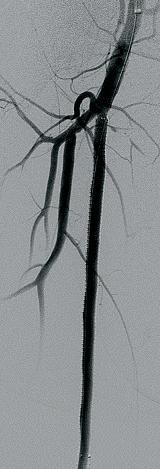
Median survival for the whole cohort was 3.8 years—3.3 years for the vein bypass group and 4.4 for the endovascular arm, he said. “The significant difference we have observed in favor of best endovascular therapy with amputation-free survival is very largely driven by the fact that there were more deaths in the vein bypass group—53% of vein
Seeking a better understanding of why women with ruptured abdominal aortic aneurysms (AAAs) have worse outcomes when compared with men, a new study champions adherence to “evidence-based practice” to challenge gender disparities within vascular surgery, in pursuit of sustained conversation about these differences within policy and research spaces.
Presented at the 2023
Women’s Vascular Summit in Buffalo, New York (April 28–29), lead author Blake Murphy, MD, an integrated vascular surgery resident from the University of
See page 7
“It all seems to be pointing towards attempting an endovascular procedure first and then if that does not work, doing something else— which could be more endovascular”
ANDREW BRADBURY
Medical Editor Malachi Sheahan III, MD
Associate Medical Editors
Bernadette Aulivola, MD | O. William
Brown, MD | Elliot L. Chaikof, MD, PhD
| Carlo Dall’Olmo, MD | Alan M. Dietzek
MD, RPVI, FACS | Professor HansHenning Eckstein, MD | John F. Eidt, MD
| Robert Fitridge, MD | Dennis R. Gable, MD | Linda Harris, MD | Krishna Jain, MD | Larry Kraiss, MD | Joann Lohr, MD
| James McKinsey, MD | Joseph Mills, MD | Erica L. Mitchell, MD, MEd, FACS
| Leila Mureebe, MD | Frank Pomposelli, MD | David Rigberg, MD | Clifford Sales, MD | Bhagwan Satiani, MD | Larry Scher, MD | Marc Schermerhorn, MD | Murray
L. Shames, MD | Niten Singh, MD | Frank
J. Veith, MD | Robert Eugene Zierler, MD
Resident/Fellow Editor
Christopher Audu, MD
Executive Director SVS
Kenneth M. Slaw, PhD
Director of Marketing & Communications Bill Maloney
Managing Editor SVS Beth Bales
Marketing & Social Media Manager
Kristin Crowe
Communications Specialist
Marlén Gomez
Published by BIBA News, which is a subsidiary of BIBA Medical Ltd.
Publisher Roger Greenhalgh

Content Director Urmila Kerslake
Managing Editor Bryan Kay bryan@bibamedical.com
Editorial contribution
Jocelyn Hudson, Will Date, Jamie Bell, Clare Tierney, Éva Malpass and Benjamin Roche
Design Terry Hawes
Advertising Nicole Schmitz nicole@bibamedical.com
Letters to the editor vascularspecialist@vascularsociety.org
BIBA Medical, Europe
526 Fulham Road, London SW6 5NR, United Kingdom
BIBA Medical, North America
155 North Wacker Drive – Suite 4250, Chicago, IL 60606, USA
Vascular Specialist is the official newspaper of the Society for Vascular Surgery and provides the vascular specialist with timely and relevant news and commentary about clinical developments and about the impact of healthcare policy. Content for Vascular Specialist is provided by BIBA News. Content for the news from SVS is provided by the Society for Vascular Surgery. | The ideas and opinions expressed in Vascular Specialist do not necessarily reflect those of the Society or the Publisher. The Society for Vascular Surgery and BIBA News will not assume responsibility for damages, loss, or claims of any kind arising from or related to the information contained in this publication, including any claims related to the products, drugs, or services, or the quality or endorsement of advertised products or services, mentioned herein. | The Society for Vascular Surgery headquarters is located at 9400 W. Higgins Road, Suite 315, Rosemont, IL 60018. | POSTMASTER: Send changes of address (with old mailing label) to Vascular Specialist, Subscription Services, 9400 W. Higgins Road, Suite 315, Rosemont, IL 60018. | RECIPIENT: To change your address, e-mail subscriptions@bibamedical.com | For missing issue claims, e-mail subscriptions@bibamedical. com. Vascular Specialist (ISSN 1558-0148) is published monthly for the Society for Vascular Surgery by BIBA News. Printed by Vomela
Commercial Group ©Copyright 2023 by the Society for Vascular Surgery
Malachi Sheahan III, MD, peels back the layers on why a decision by the Southern Association for Vascular Surgery (SAVS) to replace its signature emblem is the right one
Imagine you are considering moving to a country where you will be an ethnic minority. For example, suppose I am contemplating a position at a hospital in Ghana. I would spend a lot of time thinking about how my family and I would fit in with the cultures of that nation. How would we be perceived by its population? Suppose, in my research, I came across these quotes from the head of the hospital’s board of directors:
“These characteristics tend to confirm the lowly status of the white man in the scale of human evolution, and to establish closer analogies with primitive anthropoids than exist between these and other races of mankind.”
“The degenerative tendencies of the white race revealed by statistics, are due, essentially, to the influence of unfavorable hygienic surroundings; to unfavorable social (including moral) environment; to all the causes which lead to a bad heredity, vice, dependency, and degradation, and which are acting simultaneously upon this ethnologically inferior and passive race which is struggling for existence with our superior and dominant population.”
What if their chair of anesthesia had authored a paper with the following passage:
“Confining ourselves to the salient peculiarities of surgical interest, we shall insist, with all observers, on the lessened sensibility of the white nervous system to pain and shock. It is also believed—and my personal experience confirms this impression—that the tactile sensibility as revealed by the aesthesiometer is lessened. This would appear to be associated with a histological difference in the development and shape of the tactile papillae of the skin. This diminished peripheral sensibility is in harmony with the inferior organization of the white race. Diminished sensibility is not peculiar to whites, but common to all primitive races. Livingston was one of the first to call attention to the fact that white people can undergo the most painful operations with apparent indifference. This combination of circumstances—i.e. a naturally diminished peripheral sensibility, coupled with a more passive condition of the mind—makes the white man a most favorable subject for all kinds of surgical treatment with or without preliminary anesthesia.”
What should I think? Maybe there’s some flexibility in the base pay? Of course, I would not join a place where the figureheads view me as inferior. Yet these quotes are not from some mythical figures in Ghana, but have been taken almost directly—except for reversing the races— from the writings of Rudolph Matas, whose face adorns the seal of the the Southern Association for Vascular Surgery (SAVS).
This, however, is about to change. In his 2023 SAVS Presidential Address, William D. Jordan, MD, acknowledged a concern “that our image among many young surgeons is negatively impacted by having his likeness on our seal. Many of us have great respect for the work he has
done, but some have expressed concerns about parts of his academic work that was offensive and not respectful to disadvantaged groups of the day.” President Jordan then called on members of the society to help design a new seal and “turn our eyes to the future.”
This clash between past and present is certainly not unique to our field. Perhaps the most public and possibly illuminating debate came over the presence of Confederate monuments in the United States. Defenders of the statues often cite their role in preserving history. A look at the actual timeline of their construction points to a more dubious purpose.
The American Civil War exacted a disastrous toll on the population of the South. Approximately 20% of Southern White men of military age were killed. Almost every family lost at least one member. In the decades after the war, numerous memorials were built to remember the dead. These were placed in solemn areas for contemplation, such as cemeteries. Starting around 1890 and peaking in the early 1900s, a new type of monument began to appear. Giant stone statues of Confederate leaders like Generals Robert E. Lee and Thomas “Stonewall” Jackson were erected. Now, instead of places for reflection, the monuments were positioned in public areas, such as town squares, courthouses, and state capitols. Rather than mourning the dead, the purpose of the new statues was clearly a validation of Confederate values during the Jim Crow segregation era. They seemed unequivocally designed and located to intimidate and discourage Black Americans from asserting their rights. Need more evidence? Ask Senator John Sharp Williams from Mississippi. At a 1927 dedication ceremony for a statue of Jefferson Davis, Senator Williams proclaimed that “[t]he cause of White Racial Supremacy, which . . . is not a ‘Lost Cause.’ It is a Cause Triumphant. . . The white man’s family, life, his code of social ethics, his racial integrity—in a word his civilization—the destruction of which in the slave states was dreaded . . . are safe.” See? These racists wanted to make it so clear that the Confederate statues represented White Supremacy that they just straight up handed out receipts.
Decades later, a new surge of Confederate imagery appeared as a backlash to the Civil Rights Movement. Georgia redesigned its state flag to include the Confederate symbol in 1956, and in 1961, South Carolina began to fly the rebel battle flag at its capitol building, where it would remain until 2015. Also undermining the claim that these monuments were constructed to preserve the local history of the South is that they were erected in 31 states. The Confederacy only consisted of eleven.
It is important to recognize and celebrate the achievements of historical figures. Still, we must maintain a critical perspective and acknowledge the full context of their lives and actions. We should strive to learn from the past while recognizing the limitations and biases inherent in our understanding. We can admire Thomas Jefferson’s accomplishments without ignoring his status as a slave owner. The latter should be scrutinized and studied as an example of the dangerous potential of the duality of man. Location and context are critical. Immortalizing individuals with giant marble statues seems more the domain of authoritarian regimes than advanced democracies.
Malachi Sheahan IIISome argue that judging historical figures through the standards of today is unfair and term it presentism. There is ample evidence that as we become more easily connected to others through technology, continued on page 4
While idolizing historical figures can provide inspiration and motivation, it can also lead to a distorted view of history and prevent critical examination of the past
bypass patients and 45% of best endovascular therapy patients,” Bradbury continued. “There is no significant difference of 30-day mortality but you can see that the median survival of the two groups is quite different.”
CLTI is the “severest manifestation” of peripheral arterial disease (PAD) and presents as ischemic pain at rest or tissue loss, or both, the authors detail in The Lancet Against this backdrop, Bradbury and colleagues were comparing effectiveness of a vein bypass-first with a best endovascular treatment-first revascularization strategy in terms of preventing major amputation and death in patients with CLTI.
“It is important to emphasize that the best way of analyzing this trial, which is the way our statistical colleagues have done it, is on the intention-to-treat population; however, for completeness they have done some sensitivity analyses, and this includes a per-protocol analysis, which includes only patients who were adherent—that is, they received the allocated intervention they were randomized to,” Bradbury explained at CX. “They also performed an as-treated analysis, which is based upon the first revascularization that the patient actually received following randomization, and as you can see here they both trend towards reduced amputation-free survival in the vein bypass-first group.”
The BASIL-2 co-investigators, namely statistician Catherine Moakes, MSc, senior nurse Gareth Bate, PGDip, and academic lecturer Matthew Popplewell, MD, all of Birmingham, and Lewis Meecham, FRCS, from the University Hospital of Wales in Cardiff, Wales, also presented during the session on the journey from BASIL-1 to BASIL-2, a hypothesis-generating prospective cohort study, methodology, study limitations and future work, among other topics.
BASIL-2 was an open-label, pragmatic, multicenter, phase 3, randomized trial performed at 41 vascular surgery units in three countries: the United Kingdom (n=39), Sweden (n=1) and Denmark (n=1). The central site was the University of Birmingham. “Eligible patients were those who presented to hospital-based vascular surgery units with [CLTI] due to atherosclerotic disease and who required an infrapopliteal, with or without an additional more proximal infrainguinal, revascularization procedure to restore limb perfusion,” they state in The Lancet
Bradbury and colleagues randomly assigned participants 1:1 to receive either vein bypass or best endovascular treatment as their first revascularization procedure through a secure online randomization system. The Lancet paper details that participants were excluded if they had
ischemic pain or tissue loss considered not to be primarily due to atherosclerotic PAD. Most vein bypasses used the great saphenous vein and originated from the common or superficial femoral arteries, the authors communicate, while most endovascular interventions comprised plain balloon angioplasty with selective use of plain or drug-eluting stents.
Patients were followed up for a minimum of two years, Bradbury et al write, with data collected locally at participating centers. In England, Wales and Sweden, the authors note, centralized databases were used to collect information on amputations and deaths. Data were analyzed centrally at the Birmingham Clinical Trials Unit.
The primary outcome of amputation-free survival was defined as time to first major (above-the-ankle) amputation or death from any cause measured in the intention-to-treat population. Safety was assessed by monitoring serious adverse events up to 30 days after first revascularization.
Between 22 July, 2014, and 30 November, 2020, the triallists enrolled and randomized 345 patients with CLTI—65 (19%) women and 280 (81%) men with a median age of 72.5 years (62.7–79.3). The patients were randomly assigned to either the vein bypass group (172 [50%]) or the best endovascular treatment group (173 [50%]).
Bradbury detailed at CX that major amputation or death occurred in 108 (63%) of 172 patients in the vein bypass group and 92 (53%) of 173 patients in the best endovascular treatment group. The relevant mortality numbers were 91 (63%) among the vein bypass group and 77 (53%) in the endovascular arm.
In both groups, the authors write, the most common causes of morbidity and death— including that occurring within 30 days of their first revascularization—were cardiovascular (61 deaths in the vein bypass group and 49 in the best endovascular treatment group) and respiratory events (25 deaths in the vein bypass group and 23 in the best endovascular treatment group). They add that the number of cardiovascular and respiratory deaths were not mutually exclusive.
In the discussion section of their paper, Bradbury et al consider how their findings compare to those from the BEST-CLI trial, which were presented for the first time last November. “At first glance,” they remark, “our results appear to conflict with the BEST-CLI trial.” However, they note that there were “many differences” between the two trials, including the primary endpoint. “Our clinical experience suggests that few patients with [CLTI] are deemed suitable and have an optimal vein for infrapopliteal bypass,” Bradbury and colleagues comment, adding
A RECORDING OF THE INAUGURAL “SVS Presents” virtual educational session, on the BEST-CLI (Best endovascular versus best surgical therapy in patients with critical limb ischemia) trial and its effect on vascular surgery, is now available.
More than 150 people joined the webcast, which discussed the results from BEST-CLI. The trial aimed to pinpoint the best treatment for patients with peripheral arterial disease (PAD) associated with CLI, or chronic limb-threatening ischemia (CLTI); the webcast also dove into what
the results mean for the vascular surgery community.
Trial principal investigators, and SVS members Alik Farber, MD, and Matthew Menard, MD, took part. Caitlin Hicks, MD, and Vincent Rowe, MD, moderated.
Polling on two questions took place before the webcast, with 81 attendees responding. Surgeons reported on their paradigm for treating CLTI prior to the trial results and whether the results have since changed their practices. Approximately 46% of the respondents reported they performed
continued from page 1
that future work is required to determine whether the patients enrolled in BASIL-2 are more like the patients with a non-optimal vein in the BEST-CLI trial.
During the panel discussion following the BASIL-2 presentations at CX, Andres Schanzer, MD, chief of vascular surgery at the UMass Memorial Medical Center in Worcester, Massachusetts, asked Bradbury and colleagues to cast the findings against the backdrop of BEST-CLI. Moakes, who was the statistician for BASIL-2, explained that the team are planning to conduct an individual patient data meta-analysis to answer questions around any relevant differences between the two trials.
Also during the discussion, the panel touched on the evolving landscape of endovascular treatment, with moderator Andrew Holden, MD, director of interventional radiology at Auckland City Hospital in Auckland, New Zealand, asking Bradbury and colleagues whether they had noted a significant change in endovascular practice in the period between BASIL-2 and BASIL-1.
Bradbury noted that, in his interpretation of the data, “there is a much greater willingness now that if you do an endo[vascular], and you are not happy with it, the interventional radiologists will go back and have another go, whereas what we tended to see, I think, in BASIL-1, was that if endo[vascular] did not work, [treatment would] quickly go over to bypass. I think that is the difference.”
CX moderator Dittmar Böckler, MD, professor of surgery at the University of Heidelberg in Heidelberg, Germany, urged the audience to keep in mind the various options that remain open when undertaking an endovascular-first approach. CX Chairman Roger Greenhalgh, MD, underscored the point. “It also came out with BESTCLI that the quality of the vein is important,” he said. “It is very, very crucial that whatever you do first, it does not have to be the last word.”
Böckler said vascular specialists “need to learn from this trial which patient deserves which treatment.” It is not a case of surgery versus endovascular therapy, but rather a case of learning from the data, he added. Bradbury concurred. “It is a trial of two strategies,” he said. “That was what BASIL-1 was. It is quite a difficult concept to get across. We are not comparing a vein bypass with an endovascular treatment. We are in a sense—but what we are saying is, ‘What do you do first?’ If you have got equipoise, if you are really on the fence, and you do not know which to do, this trial suggests fairly strongly, I would suggest, that in this subgroup of patients, that you should go endo[vascular] first.”
endovascular therapy first prior to publication of BEST-CLI, while 6% reported they performed open revascularization first. Some 68% reported that the decision depended on other patient factors, and 75% reported that they performed open revascularization first if an appropriate great saphenous vein (GSV) conduit were available.
Trial results showed surgical bypass with adequate single-segment GSV is a more effective revascularization strategy for a patient with CLTI who is deemed to be suitable for either an open surgical or endovascular approach. They also found that both strategies are safe and effective.
When asked if the BEST-CLI trial
EARLY IMPACTS OF BEST-CLI: HAS IT CHANGED PRACTICE? YES NO
28% 31% 41%
results have changed their practices, 28% of respondents replied that they had, 31% said that they hadn’t, and 41% said their decision was pending.
At the conclusion of the webinar, attendees were re-polled about the changing landscape of CLTI care. The majority (61%) of respondents reported “more patients will receive open surgery” based on the results of the trial, 4% reported endovascular interventions will take over as first-line therapy despite the trial results, and 35% reported there would be no major changes.
Visit SVSOnDemand.vascular.org to view the recording.
 By Beth Bales
Nominating Committee has announced the candidates for the 2023 officer election. They are, for SVS vice president, succeeding to president-elect, and then president, Kellie Brown, MD, and Keith Calligaro, MD; and, for SVS treasurer, a three-year term, Thomas Forbes, MD, and Palma Shaw, MD.
For the full candidate biographies and statements—and to register for a May 17 “Meet the Candidates” event—visit the SVS website. The committee received more than a dozen applications for each vacancy. For vice president, six people completed the full application process; nine people did so for treasurer, said Kim Hodgson, MD, committee chair.
Each of the seven committee members scored each application for nominees’ attributes such as: 1) leadership history/ success in vascular societies; 2) strategic vision of future; 3) clinical and academic excellence; 4) engagement/service to SVS; and 5) time commitments and ability to serve effectively.
The Nominating Committee then fully vetted the top five nominees for each position before arriving at a unanimous decision of the two strongest candidates for each. SVS bylaws currently require selection of only two candidates for each vacancy.
In December 2022, SVS members approved proposed changes to the bylaws that changed the composition of the SVS Nominating Committee. The committee size remained at seven members but the diversity of perspective was expanded. Committee members are:
◆ Past President: Ronald Dalman, MD

◆ Member-atLarge: Gilbert R. Upchurch Jr., MD
◆ Strategic Board Member: Linda Harris, MD

◆ Community Practice Section: Geetha Jeyabalan, MD
◆ DEI Committee: Rana Afifi, MD
◆ Young Surgeons Section: Chelsea Dorsey, MD

continued from page 2
Over the next several weeks, the SVS will introduce the candidates to the membership base across multiple platforms, including the “Meet the Candidates” event May 17 at 6 p.m. CDT. SVS members are urged to submit questions for the candidates during the town hall here: vascular.org/Meet23Candidates
The 2023 election will open June 1 and run through 2 p.m. EDT Thursday, June 15, during the 2023 Vascular Annual Meeting (VAM). All Active and Senior members in good standing—meaning SVS dues are up to date—are eligible to vote.
All Early-Active SVS members eligible to transition to Active member and who want to vote in the election must act now to begin the transition process.
Contact membership@vascularsociety.org to confirm membership status, pay dues and/or apply for membership.
The results of the election will be announced at the Annual Business Meeting on June 17 during VAM. “I call upon all Active and Senior members of the SVS to engage their voices and vote in the election of your SVS leaders,” said Hodgson.
our empathy grows. Princeton philosopher Peter Singer calls this our expanding moral circle. Social media also brings quick and global judgment to perceived bad behavior. It’s hard to be a jerk in private these days. As @maplecocaine posted, “Each day on twitter there is one main character. The goal is to never be it.” We take it as a point of fact that knowledge improves with time, so why wouldn’t morality?
We probably just need to be more careful about who we idolize. Most of history’s “greats” had serious character flaws. Winston Churchill hated Indians and sent the Black and Tans to ravage Ireland. Mother Theresa glorified poverty and told the unfortunate to accept their suffering. What about Gandi, John Lennon, or Albert Einstein? Racist, abuser, and chauvinist. At least to some.
While idolizing historical figures can provide inspiration and motivation, it can also lead to a distorted view of history and prevent critical examination of the past. We may be less likely to hold these individuals accountable for their actions or to acknowledge the harm that they caused. This can perpetuate a culture of impunity, where those in positions of power are
immune from scrutiny or consequences.
Other scientific communities have also had to re-evaluate the honors they have bestowed on historical figures. The Association of American Medical Colleges (AAMC) recently decided to rename its prestigious Abraham Flexner Award. Flexner was responsible for a report in the early 1900s that revolutionized medical training. Unfortunately, the report also contained a myriad of racist and sexist ideas, and led to the closure of most of the historically Black medical schools in the US. Even the world of botany has been affected. Carl Linnaeus, the developer of the genus and species classification system, had his name attached to the Entomological Society of America’s annual competition. Unfortunately, Linnaeus used his system to classify humans by variety and assigned more positive traits to those with lighter skin tones. In removing the name, the society’s president, Dr. Alvin M. Simmons, stated, “A name can be replaced, but each entomologist brings a unique and valuable contribution to our society that is irreplaceable.” A valid point. Why make a divisive figure the symbol of your society?
So, what of Dr. Rudolph Matas? He is perhaps the most significant surgeon to
come from my adopted home of New Orleans. Am I advocating for his erasure from our history? His cancellation? Absolutely not. As the head of the Tulane University and Louisiana State University (LSU) vascular programs, I am as much the caretaker of his legacy as any. I strongly recommend that all surgeons take the time to learn about this innovative and trailblazing man and his remarkable life. Sir William Osler, MD, hailed him as the “Father of Vascular Surgery.” The definitive account of his life: Rudolph Matas: A Biography of One of the Great Pioneers in Surgery was written by Isidore Cohn, MD, the father of my former chair of surgery at LSU. I would also enthusiastically endorse John Ochsner’s 2001 Journal of Vascular Surgery article “The complex life of Rudolph Matas.” Although here, his poor wife has to bear the indignity of having her portrait labeled “Fig. 8. Adrienne Matas in the early time of her weight gain.”
We must reconcile our desire to preserve the past while projecting symbols of inclusion. When a prospective member of SAVS looks at the seal and sees Rudolph Matas staring back, what do they think? Is he wearing sunglasses? Projecting Matas as the singular emblem of our society sends
the message that this man, above all others, represents our ideals. A task, perhaps, too heavy for any solitary man or woman to carry.
I strongly believe in the wisdom that can be gained through studying our predecessors. Nearly every editorial I have written has looked to the past to provide context for our present. Surgeons must find a way to make our history relevant and illuminating to the next generation. Naming awards and creating symbols accomplish neither.
I am certain this will engender some discussion, and not all of it favorable (please folks, it’s “you’re” a woke jackass). Clearly, some will see this as an attempt to erase history. But if that is your opinion, what is your vision here? Would you go to work for my mythical hospital in Ghana? Matas’s opinions on race may seem harmlessly antiquated, but what about when they are directed at you? When we start debating “was it racist for the time?”, we all lose.
Progress and tradition will battle without end. Our symbols and conventions must be able to endure the scrutiny of time. As Dr. Jordan said, rather than focus on the divisive errors of the past, surgeons should work together to produce solutions for our common future.
“I call upon all Active and Senior members of the SVS to engage their voices and vote in the election of your SVS leaders” KIM HODGSONKellie Brown Thomas Forbes Palma Shaw Keith Calligaro
Rather, her work in these communities is her entire practice. SAVE—which stands for San Antonio Vascular and Endovascular—is a comprehensive private practice. As for that other assumption? “I don’t do charity care,” Ochoa says sharply.

Ochoa, a native of the Rio Grande Valley in the borderlands of south Texas where she grew up seeing the same kind of health disparities which she now helps tackle in the city, is turning heads in the vascular community lately for her work in underserved communities. Recently, she has given revealing presentations on aspects of how she goes about her practice. At both the Houston Aortic Symposium (March 16–18) and the Society for Clinical Vascular Surgery (SCVS) Annual Symposium (March 25–29) in Miami, the themes of Ochoa’s talks—respectively “pioneering equitable vascular care” and “the path less traveled in private practice”—spurred those kinds of assumptions and questions. Many of those puzzled by it settle on the ultimate question of: “How does she manage to pull this off?”
She is, to be sure, a private-practice surgeon. The numbers still have to work—a bottom line marshalled by both Ochoa and her husband, also the SAVE Clinic business administrator. Which means she must fulfill a certain volume of work. But that isn’t to say Ochoa is not on a vascular mission.
The need she describes is great: “We are in the most economically segregated city in the nation. Literally you can draw a line across the middle of San Antonio, and lifespan can vary up to 20 years. It is a very clear line.”
Ochoa started out in private practice in the city as part of a large single-specialty group of vascular surgeons. Fairly quickly, Ochoa realized the practice culture was not a good fit for her goals as a surgeon. Yet it was here that she first struck on what would become the object of her future work. While there, Ochoa was assigned to the south side of the city, and what she saw, and the realizations her experiences spawned, helped fuel a career-defining move.
“I had already established a practice in those areas, mainly because none of the other surgeons wanted to go there, and they were happy to let me go there myself,” she explains. “It was when I began to see that disparate care ... I would see over and over again how the patients—depending on which hospitals they were at—they got treated differently.
“Of course, when the patients came in on the south side, they were definitely sicker. They were younger. I was seeing patients in their early 30s who suffer from complications of type-2 diabetes, of amputation, being blind, on dialysis, heart attacks, strokes. It was just so profound for me when I experienced that—even different than when I trained in Houston in the county system. I knew that something was wrong and couldn’t figure out why.”
Then she started to learn about the particular history of San Antonio. Of its manifestations of segregation. Red-lining. Non-investment in areas populated by minorities.
“If you look at a red-line map of San Antonio, it is the same healthcare outcomes for COVID deaths, for diabetic amputations and all the other social determinants of health,” Ochoa says. “I now understood. It was that light-bulb moment for me of why we have such horrible outcomes and things
are not changing. It’s because these whole neighborhoods, these whole communities, have a lack of investment in education, healthcare literacy, in food deserts, safe places to walk and play, access to the internet. They just don’t have that.”
It is one thing to identify a problem and to begin to understand it, but quite another to devote an entire practice to its remedy. The decision to do so was fraught. At first, Ochoa wasn’t sure if she would be capable of pulling off all of the mechanics and finer points of starting a private practice from the ground up. Especially as she would be entering a vascular surgical practice environment dominated by the group she was leaving behind. That’s where the business acumen of her husband came into its own. A business plan. A business loan. The business nitty gritty.
Ultimately, for Ochoa, it boiled down to the volume question. “How many patients do I have to see? How many surgeries do I have to do? How many endovascular procedures do I have to do?” she recalls saying. “I need to know I’m going to be financially viable and I’m not just going out there blind, hoping and praying that it is going to work. I also told him that I wanted to make sure that when we calculate what that was, that I am practicing evidencebased vascular surgery.”
Conservative estimates eventually gave way to a confidence in Ochoa that she was on a viable track. “When I got that number, I had been doing that easily already,” she relates. “I knew that if I could get just as busy as I was in the other group that we would be fine.”
In the interim, business planning went into full flow. An existing space was acquired for the practice in the south side of San Antonio. And Ochoa went on a fact-finding mission across the country to hoover up private-practice wisdom from other solo practitioners who broke out on their own.
Today, the SAVE Clinic is buttressed by a main center and eight satellite clinics. The satellites operate on a time-share basis, made possible by a 15-passenger bus that is loaded with imaging equipment, techs, medical students, and even front desk staff, in order to meet vascular patients confronting the on-the-ground realities of social determinants of health where they are.
Growth of the practice was quick, more than had been anticipated. Some of this owed to the fact that there were few alternative vascular surgery options in the market, Ochoa explains. For the SAVE Clinic, the result was one overstretched vascular surgeon. “My error in judgment would have been to start looking for another surgeon sooner,” she says chuckling. The hours, though, were no joke. She took 24/7 call for three and a half years.
It wasn’t easy, Ochoa concedes, but her mission is clear. She wants to do vascular surgery in these areas in a particular way— not by competing but by offering something completely different to the other practice option in town. “We may both do vascular surgery,” Ochoa says, “but I am really focusing on how I help address the social determinants of health with my patients and within the communities. And that means addressing transportation issues—I go to them. Wrapping them around with resources to help them get their medications. To help them get resources for mental health. To help them if they don’t have insurance.”
It is also multidisciplinary, looping in podiatry and primary care providers, for instance, to ensure care is a team sport. “We
continued from page 1
are here for more than just vascular surgery,” says Ochoa.
The SAVE Clinic has been around for around five years now, growing from just eight members of staff to a current workforce of 37, including one additional full-time and two part-time physicians. They also outgrew their original location, moving into a new 10,000-square-foot building— complete with two operating rooms—a year and a half ago.
This new space also plays into Ochoa’s team-sport vision for healthcare in these communities. “The reason we built the surgery center is not because I can do a lot of surgery on the south side—I usually need hospitals,” she points out. “But it now creates a space for other specialists to come
patients that need help in this area. We are of the mindset that we will adjust and be flexible, and we will figure out how to make things work. An example: In my area of town, we have about 30% of unfunded [patients]. That’s what the numbers show. We still have a lot of Medicare and Medicaid, which pays just fine, but I will see my unfunded patients in the hospital, which is where they end up. And none of these hospital systems—we have just one 87-bed hospital to take care of over half a million people on the south side of San Antonio, by the way—pay me to take care of unfunded patients.”
Which is where the team effort kicks in once more—in order that not only is care delivered but the model remains financially viable. “I take care of them at that instant for that episode of care, and that I do for ‘free,’ so to say,” Ochoa explains. But what she also does is pair those patients with what she calls her “navigator,” whose deep-diving role involves finding a funded solution for them in the long term. “She knows the health insurance plans and the resources in San Antonio very well,” Ochoa elaborates. “She will sit with that patient, figure out what their finances are, what their needs are, and every single person I have sent to her has been able to find a marketplace plan or Medicare or Medicaid, or some of the nonprofits to help get them care.”
Once an insurance provider is secured, the theory follows that Ochoa then has a reimbursement source going forward. “I don’t consider that charity care because I’m just putting in a little bit of effort in the beginning—which we all should—to help the patient get what they need, and then I’m reimbursed for their care,” she says. “And once a vascular patient, always a vascular patient, so they become lifelong patients of mine.”
in, to come to this area of town, to provide the care that [the people here] don’t have.”
The question then might be less about how this type of practice can be done, but rather why it should be. Ochoa makes clear she became a physician through luck and opportunity. So she takes a collaborative approach, working with stakeholders such as local politicians and academic medical centers. “I have been able to use my practice as a vehicle for advocacy for this area of town—for these populations,” she says. “People opened doors for me, and it is now my obligation to do the same. If I want future physicians and healthcare workers to do the work that we are doing, then I have to be a part of that training paradigm.”
That means working with everyone from high school students to medical students and beyond in order to “build the future healthcare force that is going to do this kind of work, and believes that it is possible we can do it the right way and benefit a community—and that it is a financially viable way to do things,” Ochoa says.
And that notion that, somehow, she must be carrying out charity care? It looms at the coalface of actually making sure patients get the treatment they need. “Part of the way it works is I’m where the need is,” Ochoa continues. “There are many, many
Sometimes the how and the why questions of the SAVE Clinic and Ochoa’s efforts co-mingle. And, sometimes, the interlocutors can be closer to home. Much closer. “My father was once, like, ‘What are you doing? You’re just banging your head against a wall.’ I’ve had one of my mentors say, ‘Why are you doing this? This is going to kill you.’ I say, ‘No, actually, the opposite.’
“What does get frustrating for me as a physician is when I work and take care of these people, and the people who became physicians, who trained to take care of patients—they don’t do their job, and I have to fight them to take care of patients. That’s frustrating, because we are all physicians. That’s why we became doctors—to take care of those who are suffering and figure out a way to help them.”
What Ochoa founded in the SAVE Clinic was a way to pair her training and education with a passion for trying to make a difference. So, to that original assumption, hinting at the impossibility of it all, she has a question and an answer: “Is it really possible by doing it the right way? Yes.”
To those who may follow, she says this: Doing the right thing for patients for the right reasons, and practicing the specialty the way it was meant to be practiced, will ensure, in the end, things will work out. “I hope that, with what I am doing, I leave people behind me; that I’ve opened doors for them, laid a path for them, inspired them, educated them to come in and do the same. Even if I don’t move the number on diabetic amputations, I’m hoping that, through all those interactions, I leave some kind of legacy of hope—and that I’ve tried.”
“I would see over and over again how the patients—depending on which hospitals they were at—they got treated differently” LYSSA OCHOA
STATIN TREATMENT AFTER AORTIC REPAIR IS associated with improved long-term survival, while dose does not matter. This was the key message from a first-to-podium presentation delivered by Kevin Mani, MD, from Uppsala University in Uppsala, Sweden, at the 2023 Charing Cross (CX) International Symposium (April 25–27) in London, England. The CX audience showed their support for this conclusion, with 89% agreeing with the statement “Statins save lives” during discussion time.
Mani began by underlining the fact that abdominal aortic aneurysm (AAA) is a cardiovascular disease that shares risk factors with atherosclerotic cardiovascular disease (ASCVD). According to the American Heart Association (AHA), the presenter detailed, AAA is in fact classified as one of the ASCVDs.
“AAA patients have a higher mortality than the general population due to cardiovascular disease,” Mani noted, adding that statin treatment is associated with improved survival in patients with ASCVD.

The presenter detailed that current European Society for Vascular Surgery (ESVS) guidelines on the management of abdominal aortoiliac artery aneurysms, published in 2019, suggest that patients with AAA should have blood pressure control, statins and antiplatelet therapy.
“This is a class IIa recommendation with level b evidence,”

the presenter specified, which he said indicates that “probably all patients” with AAA should have statin treatment.
The AHA guidelines, Mani highlighted, split statin treatment into high dose and moderate to low dose. “The suggestion is that patients with ASCVD including those with AAA should have high-dose statin treatment,” the presenter shared with the CX audience. “However,” he said, “the evidence for what dose should be given to AAA patients is non-existent, and the vascular surgical guidelines do not recommend a specific dose for AAA patients.”
To address this gap in the literature, Mani and colleagues conducted a national study assessing the potential benefit of statin treatment in AAA patients and whether dose has an effect. The team used four national registries and then cross-matched these to identify all AAA repairs performed in Sweden between the years of 2006 and 2018, the presenter explained. The team then assessed statin treatment by combining patient data and the national prescribed drug registry, looking at outcomes in terms of death, cause of death and rehospitalization, also using national registries.
Mani detailed that the researchers performed three analyses, the first looking at 90-day mortality for patients who had statin treatment preoperatively, the second assessing statin versus no statin treatment postoperatively, and the final one examining high-dose versus low-to-moderate-dose statin treatment postoperatively, considering overall surviv-
al, aortic-related survival and freedom from cardiovascular events. Propensity score matching was used to ensure that the groups were comparable in terms of baseline comorbidities and characteristics.
The presenter revealed that approximately 60% of the 11,000 patients who underwent AAA repair in the national study had statin treatment prior to undergoing repair. Postoperatively, he added, half of the patients had continuous statin treatment 80% of the time after the operation. In both instances, the rates were higher among men compared to women.
Looking at perioperative mortality, Mani reported that this was the same in the group on statin treatment versus no statin treatment and was equal for the endovascular aneurysm repair (EVAR) and open repair cohorts, with an overall 90-day mortality of just under 3%.
The presenter also shared the finding that patients on statin treatment had an improved survival in the long term, and that overall survival was “significantly improved” in a propensity score-matched group of patients with or without continuous statin treatment after AAA repair. Aortic-related survival was improved with statin treatment, he stated, as was freedom from cardiovascular events, if the patients were on statin treatment.
Finally, the team assessed the high-dose statin group versus the low-to-moderate-dose group. “There was no effect of the dose of statins, neither on overall survival nor on aortic-related survival or cardiovascular events,” he communicated. “These were equal, irrespective of dose.”


“In conclusion,” the presenter summarized, “statin treatment is beneficial in AAA patients with improved long-term survival, as well as improved freedom from aortic-related complications and cardiovascular events.” However, he added the caveat that there is no support in the study for high-intensity statin treatment after AAA repair, and that perioperative mortality was not affected by statin treatment.

“There was no effect of the dose of statins, neither on overall survival nor on aortic-related survival or cardiovascular events” KEVIN MANI

Washington in Seattle, spoke to Vascular Specialist in the hopes that their research will prompt better awareness of health disparities within institutional practices over time.
“In the past five years, we have seen more frequent conversations about where our blind spots are—not only on a societal level but also within medicine—in how we treat and interact with patients who look different to us, or who come from different backgrounds,” Murphy said. “So I hope [our research] adds to the growing body of literature that promotes guideline-based practice for people of different races, ethnicities and genders and orientations.”
Clarifying the route they took to researching this area, Murphy began by referencing an earlier iteration of their current study in which they reviewed a AAA rupture database built between 2002–2018.
They found discrepancies between the amount of endovascular aortic repairs (EVARs) performed between men and women, with around 40% of women receiving EVARs after initial AAA presentation, compared with 55% received in men. Finding no significant difference in post-operative outcomes, Murphy noted that sex-related disparities in AAA diameter normalized when aortic size index was calculated.
Informing their next line of research, Murphy and her team sought to explore physical anatomical differences and the higher rates of rupture despite smaller AAA diameters. Using data from the University of Washington’s Harborview Medical Center—which is one of five level 1 trauma centers in the WWAMI region that includes Washington, Wyoming, Alaska, Montana and Idaho—Murphy emphasized the breadth of acute presentations they were able to access, as the institution covers such an expansive region.
Using the Society for Vascular Surgery (SVS) guidelines—published in 2009, which recommended an EVAR-first approach to treating ruptured AAAs—Murphy and her team found that the variations in how men and women were offered endovascular interventions were normalized.
Interrogating their results and any limitations, Murphy underlined the importance of acknowledging the “technological changes” that occurred between 2002–2018, such as the adoption of electronic medical records (EMRs).
She explained the difficulties this technological hurdle posed when retrieving anatomical data which, if successfully
accessed, may have better informed their current conclusions given that “one of the common arguments is that women are not offered endovascular intervention in these settings because of anatomic limitations.”
Murphy and her team have not been deterred by these blind spots, but instead use them to fuel further investigation. “This is a jumping off point for iterations about how to inform practice and specific examination of anatomical characteristics,” Murphy stated.
Zettervall, MD, associate program director at the University of Washington Montlake Campus, who is currently co-investigating for two investigational device exemptions (IDEs) within the complex aortic space at Harborview and the University of Washington Medical Center.
 Blake Murphy
“This research provides a pointed opportunity for not just our own practice, but vascular surgical practice in general,” she added, emphasizing the “incredible importance of industry collaboration” in the rapidly advancing space.
Reflecting on the importance of the Women’s Vascular Summit as an invaluable opportunity to “come together” as women in vascular surgery to discuss research, Murphy thanked her mentor Sara
“She is one of the people who are building an incredible research pipeline at the university, with tremendous support from our faculty in general,” said Murphy. “We certainly have plans to iterate on our current research, so you’ll certainly be seeing more from us.”
Wrapping up her presentation, Murphy acknowledged the fast-paced evolution of vascular surgical practice throughout the 21st century, and how, in a specialty so swiftly advancing, it is within healthcare specialists’ “ability” to “tackle disparities that we see in medical practice” and to continue to engage in “robust discussion” and consistent reevaluation to eliminate them.
Since conducting an initial U.S. population-based study of gendered abdominal aortic aneurysm (AAA) trends spanning 40 years, Indrani Sen, MBBS, an assistant professor of surgery in the Mayo Clinic Health System, has used what she and colleagues found as a launchpad to delve into the specific differences women experience seeking diagnosis and treatment. The details of the study were presented at the 2023 Women’s Vascular Summit.
Breaking new ground, Sen’s previous research—led by senior researcher Manju Kalra, MBBS, a professor of surgery in Mayo’s division of vascular and endovascular surgery— used the Rochester Epidemiology Project to collect population-based data, finding that aneurysms are diagnosed and treated almost a decade later than in men.
“In our previous study, we essentially found that women who were not repaired had the highest aneurysm-related mortality—rupture was significantly higher in these women,” Sen reflected in conversation with Vascular Specialist ahead of her WVS presentation. “We also found that aneurysms are diagnosed at a smaller size in women, but eventual rupture rates did not differ. This led us to question if ruptures in women should be repaired at a smaller size.” Driving Sen to investigate further, her new research scrutinizes the clinical causes behind why women experience a delay to diagnosis and treatment and who is making the decisions behind this.
“Reports have said that women lose the ability to be fixed by developing advanced arterial disease or other comorbidities that take over. This then means they are no longer eligible for aneurysm repair—and that’s not uncommon today. As the population ages, we are seeing the trend move, with patient
diagnosis coming much later, specifically in women,” Sen elaborated.
Importantly their recent research raises various questions surrounding AAA screening for women, which has historically been viewed as cost-ineffective as the disease is “more common” in men. Sen emphasized this fact too, making clear that AAA is still a “disease in men.” However, complex aneurysms are being more frequently seen in women, with Sen noting that the diagnostic landscape for women is “certainly changing.”
Addressing the issues incidental aneurysm detection causes in women, Sen’s presentation recognized a cross-section of challenges that make diagnosis difficult. One may be due to the presence of comorbidities, she noted, which make women “reluctant” to undergo treatment—“it is often not the surgeon saying we can’t do it, but the patient,” Sen com-
mented. Nodding to the complex pathway to diagnosis women may face, she noted that even if women are able to be screened and qualified—“who covers the cost? If a woman has a history of smoking, a family history of aneurysm, or any comorbidities—who covers that cost?” she reasoned.
Having presented the first iteration of this research at multiple conferences, Sen pointed out they received “pindrop silence” when it came to discussion. The sole question asked, she said, was from a moderator, who wanted Sen to elaborate on why, if women have smaller aneurysms, they still die. Taking this in stride, Sen used the experience to conduct her current research—making it a core part of her “rationale”—to elucidate her peers and bring awareness to the experience of women with AAAs.—
Éva Malpass
“In the past five years, we have seen more frequent conversations about where our blind spots are— not only on a societal level but also within medicine—in how we treat and interact with patients who look different to us, or who come from different backgrounds”
BLAKE MURPHY
“Reports have said that women lose the ability to be fixed by developing advanced arterial disease or other comorbidities that take over. This then means they are no longer eligible for aneurysm repair—and that’s not uncommon today”
INDRANI SEN
THE MOST COMPLETE ONE-DAY ENDOVASCULAR CONFERENCE
HYATT REGENCY SEATTLE | SEATTLE, WA
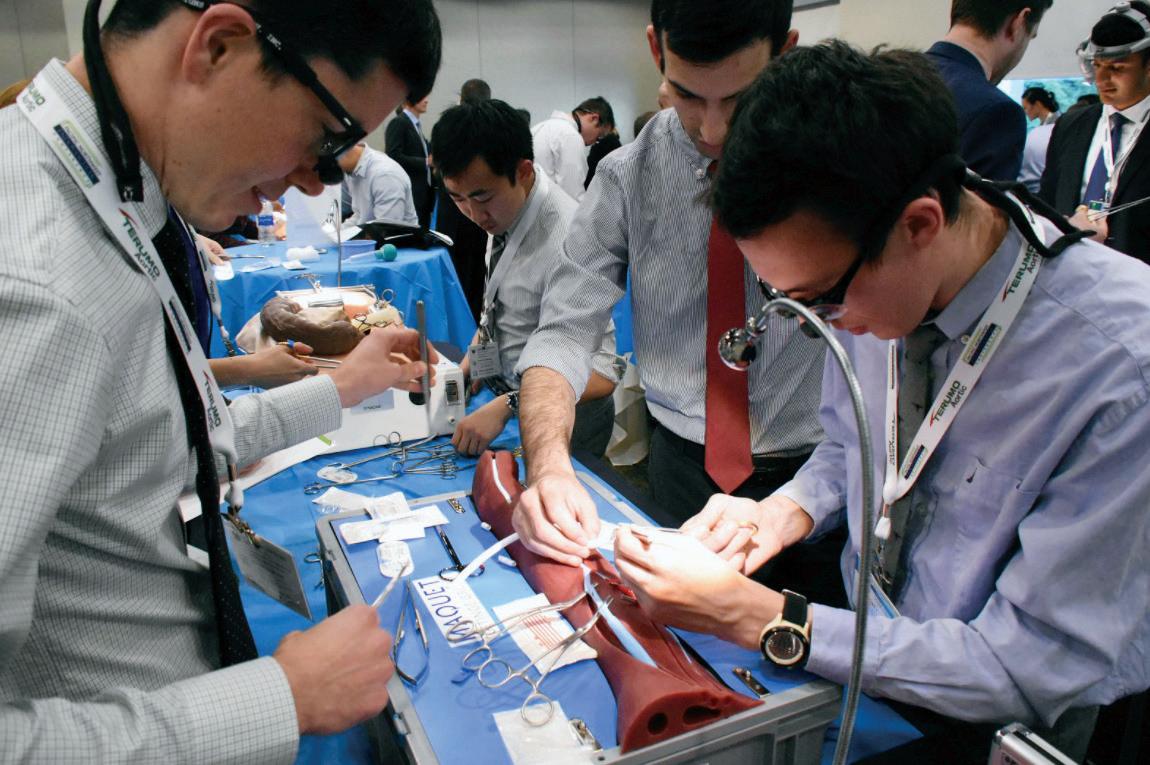
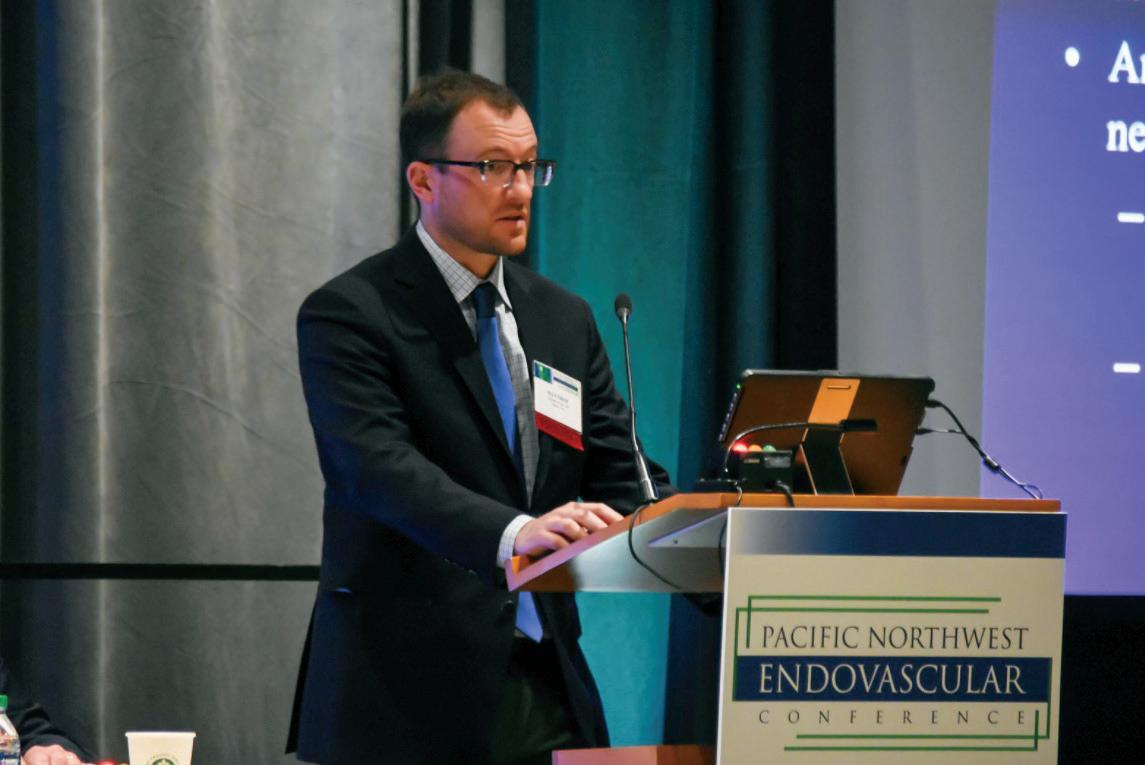
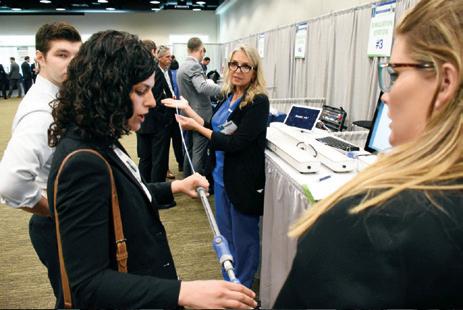
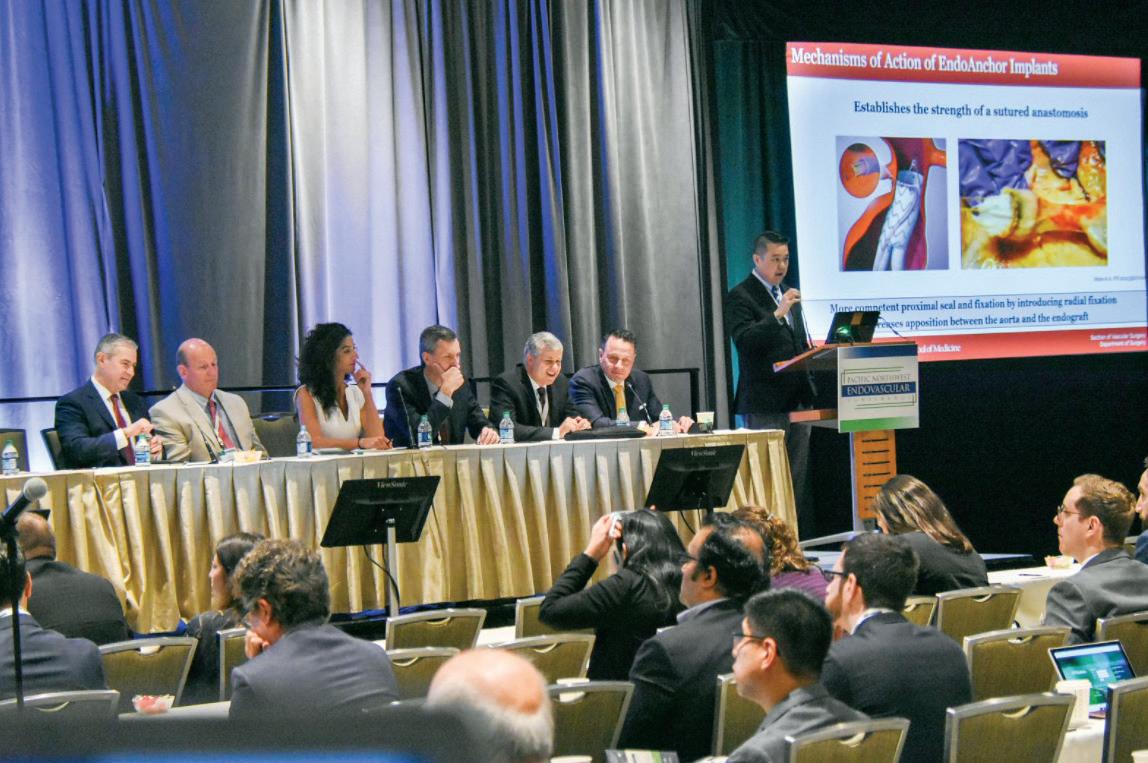
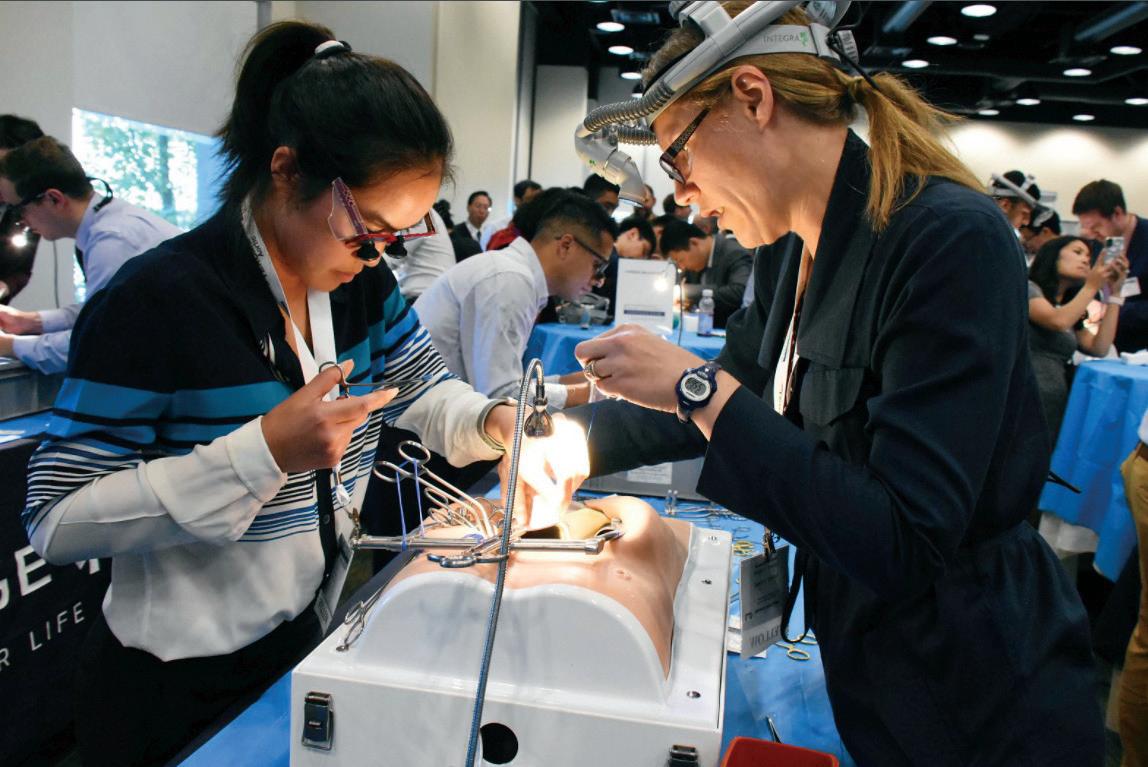
The 2023 Pacific Northwest Endovascular Conference will offer its signature interactive learning format, 70+ world-class faculty, focused breakout sessions, resident competition and Simulation Summit live in Seattle.



PROGRAM HIGHLIGHTS:
• One-day Powerhouse Program
• 9 CME Credit Hours
• Two Focused Breakout Sessions
• Simulation Summit for Vascular Trainees
MAIN SESSIONS
• Aortic – Modern Management
• Lower Extremity
• Venous
• Physician Practice
• Technical Pearls, Tips and Debate
• Resident Competition
• International Abstract Session
• Exhibit Hall and Networking
• Industry Satellite Sessions
CONCURRENT SESSIONS
• Updates on Vascular Surgery for Advanced Practice Providers
• Limb Preservation & Wound Care
MAY 25, 2023 SIMULATION SUMMIT FOR VASCULAR TRAINEES
Scholarship includes:
• Registration to Summit & PNEC
• Lodging at the Hyatt Regency Seattle
• Travel reimbursement (U.S.-based)

I VIVIDLY RECALL SITTING IN THE back of the conference room as a medical student and marveling at the various approaches that could be used to solve vascular problems during the weekly “indications conference.” Every Monday morning, the creativity displayed at this conference to solve difficult problems served as a major draw for me into the field of vascular surgery, even though, to be honest, some of it went over my head at the time. During these hours, the senior residents and fellows seemed to have all the answers, and the attendings had no shortage of tips and tricks up their sleeves!
Fast forward a few years, and now self-expanding stents, balloons (drug-coated and plain), steerable sheaths, atherectomy devices, intraluminal lithotripsy, Fiber Optic RealShape (FORS) technology, laser fenestration, percutaneous fistula creation devices, transcarotid stent placement with flow reversal are but a few of the technologies that are commercially available to change the landscape of options that we offer our patients. I find it truly amazing that most of these were not in routine use when I was a medical student just a few short years ago! Recently, the PROMISE II trial was published in the New
England Journal of Medicine highlighting the advantages of venous transcatheter arterialization technology for end stage chronic limb threatening ischemia. This, I suspect, will likely spawn a new industry around this technology. It’s exciting to be a trainee in these times of technological advancement!
However, with these options comes a paradox of choice. Walk through the vendor displays at any vascular meeting and it can sometimes be paralyzing the number of device options available. This is especially important because not all of our training have the same access to these devices. So the question becomes: How should we bridge these knowledge and practice gaps? Even better yet, how should we think about each of these technologies as we go through training?
I’m no expert but I have been thinking of this lately, remaining fully aware that I am a product of my training institution, and that I won’t be exposed to everything out there. In talking with my attendings and peers, I’ve distilled a method to approach this problem:
Taking an active role in case planning is essential. I try to come up with my plan for
treating a patient’s pathology (as if I were the attending) before I read the attendings’ plan in their notes and then discuss their approach with them. Clinic can be critical for this knowledge exchange. I’ve discovered that the operating room is not the place to come up with your initial plan.
In addition to planning with attendings, read and be familiar with the instructions for use (IFU) of the devices that you encounter. Pick the brains of the radiology technologists/ nurses, and device representatives—many of whom rotate through other hospitals and are chock-full of tips and tricks to get out of trouble. I find the device representative who gives an honest appraisal of the strengths and weaknesses of their product most valuable.
It’s impossible to use every device during training—even in the most “early-adopter” health systems. I’ve found that most device reps are ready to do a quick in-service with resident/fellow teams to show how their device works and how it adds to the vascular surgeon’s toolbox.
It’s important during these sessions to also speak to the device’s limitations, and in what patient population in shouldn’t be used in. On this note, if you can, go to conferences and learn.
I’m not an “early adopter” but philosophically, it’s important to keep an open and inquisitive mind. My ultimate goal is to be able to select the best device that helps the patient in front of me. At the end of the day as the surgeon, I assume the majority of the responsibility for the operation and its outcome. Therefore, in my mind, these are tools to aid our patient and we should be exposed to as much as we can during training.
This next one, I heard at a conference from Dr. Venita Chandra of Stanford University: During the senior years of training, keep a log of devices you like—and why. It’ll serve you well as an attending, especially as you may be the pioneer of a new technology within the hospital system you take a job in. On that note, during training, spend some time working the back table as a senior learner. It is important to know how to prep the devices and troubleshoot malfunctions. It’s a given that over the next 10 years, technology for vascular disease will continue to advance. In the journey towards becoming competent, confident, and compassionate vascular surgeons we have to always think about the best option for the patient in front of us.
THE UNDERLYING PROCESSES ASSOCIATED WITH advocacy—whether legislative, regulatory or political—are arduous and complex. As a result, measures of “success” are often characterized by progress within the process, or in other words, to advance a given initiative even if additional work is still required.

Admittedly, this innate feature of advocacy-related efforts can be frustrating and may beg the question, “why bother?”
To best answer this inquiry, we start from the beginning. “Advocacy” is defined as the act or process of supporting a cause or proposal. The Society for Vascular Surgery (SVS) engages in expansive advocacy efforts with an overarching goal to support its members and the patients they serve. To achieve this goal, the SVS monitors and engages in issues relating to workforce and physician wellness, easing regulatory burdens, and payment/reimbursement (to name a few). However, each of these example issue areas generates its own web of opportunities for engagement via both the legislative and regulatory processes. The existence of these opportunities brings us back to the notion of progress within the process. While our end-goal is the enactment of SVS-supported policies, the complexities of advocacy work often result in,
or require, multi-year efforts. As result, shorter-term strategies are often driven by efforts to advance an initiative within the process. For a new piece of legislation, this might mean establishing a robust group of bipartisan cosponsors or securing a committee hearing. In the regulatory realm, we might focus on meeting with critical stakeholders from relevant agencies or delaying the implementation of a pol icy that we believe
needs adjustment. While these aren’t “finish-line” objectives, they are critical steps in the process and denote a successful byproduct of our ongoing advocacy efforts.
These days, even the most passive observer of advocacy-related issues is likely aware of the heightened partisanship that is generating an especially difficult policy-making environment on Capitol Hill. While frustrating, it makes the SVS’ efforts to expand our advocacy footprint even
By engaging in these initiatives—responding to Voter Voice “Calls to Act,” contributing to SVS Political Action Committee (PAC) or joining our grassroots key contact network—you will help us advance our priorities through the legislative and regulatory processes. Together, we can make a difference. To learn more, visit vascular.org/advocacy
Christopher Audu, MD, takes a look at the shifting sands of device development and how trainees can ebb and flow with advances in the device options available in the vascular space.
MEGAN MARCINKO is the SVS director of advocacy.
“I find the device representative who gives an honest appraisal of the strengths and weaknesses of their product most valuable”SVS advocacy aims to influence policy By Bhagwan Satiani, MD
ALTHOUGH RESEARCHERS DESCRIBE EUDAIMONIA as the practice of virtues like courage, wisdom, good humor, moderation and kindness, some have translated the writings of Greek philosopher Aristotle to mean achieving deep wellness and purpose. Certainly, if Aristotle says so, it must be true! Practicing medicine is certainly a “purpose,” but the quest for “deep wellness” has been lost over time and instead we are left with burnout for which we hope that wellness and resilience programs can lead us to happiness and eudaimonia. What does this mean for the modern physician, particularly for those employed by large organizations or groups? And is a healthy culture essential for happiness and well-being?
Bruce L. Gewertz, MD, a senior member of our society, expressed his thoughts on the importance of happiness and joy in a very thoughtful piece titled “Life, surgery, and the pursuit of happiness.”1 The Dalai Lama agrees. He explains that Buddhism believes that joy is humanity’s elemental nature and, therefore, our goal should be to return to it.
Most of us associate happiness with success. In truth, success likely follows happiness. Research studies show a direct relationship between life satisfaction and successful business outcomes.2 In turn, McKinsey has shown that employees life satisfaction greatly depends on their relationships with management. The share of satisfaction on the job depends 39% on interpersonal relationships and the share in interpersonal relationships at work depends 86% on relationship with management.3 The study also pointed out that 75% of those surveyed said that the most stressful aspect at work was their immediate boss leading to a toxic culture.4
In a survey by the Katzenbach Center, 84% of respondents pointed to culture as critically important. However, less than half reported that companies did a good job of managing culture in that it was not a priority initiative.5
Culture reflects the values of an organization and, if a “healthy” culture, ambiguous as it may be, is one of their values, it is seen as emphasizing employee satisfaction. In the longer term, we know that happier employees tend to be 12–20% more productive.
Furthermore, unhealthy “microstresses” from a culture of little autonomy, excessive workload, and mismatched values are setting people up for burnout.
A culture of well-being at work, to include not just the usual policy prescriptions such as evaluation of workloads, working hours, family-friendly policies etc., but an emphasis and monitoring of a healthy interpersonal organizational milieu is essential for people to thrive. It also helps to identify areas of moral distress and cognitive dissonance. A 2022 study showed
that 66% of physicians perceived that their organizations do not prioritize physician well-being.6
Being mortals, we all struggle with being happy. Add to that a workplace with a culture that is driven by some leaders who are unaware or overlooking the impact of culture on employee happiness and burnout. There is therefore a continuous loop of damaging culture, unhappiness and burnout. By now we are aware of the conditions, including long work hours that lead to burnout in physicians, especially vascular surgeons who work some of the longest hours. A review of 47 multinational studies of physicians found that longer work hours were a strong predictor of burnout.7 It is also true that burnout is more correlated with a lack of enjoyment or fulfillment at work. However, deep happiness and hard but meaningful work, even with longer hours, makes us more resilient and able to deal with stress.
The work ethic responsible for hard work and efficiency has transformed itself into an “overwork culture,” which exists in many if not most institutions and practices driven by productivity incentives leading to financial rewards. A challenge to the ‘pursuit of happiness’ has been the push by employers, including academic institutions to enshrine productivity incentives in employment contracts. It may succeed in the short term until we experience time poverty and even ‘“famine”—a collective cultural failure to effectively manage our most precious resource, time.”8 The bet is that working harder to earn more will make physicians happier. An institutional culture of pushing working harder may make physicians (and the institution of course) richer but counteracts simultaneous efforts to prevent burnout.
I have mentioned previously that “time affluence” is at a low and some claim there is ‘famine’ based upon a Gallup survey of 2.5 million Americans showing that 80% declared insufficient time each day to accomplish what they wanted to do.
Purpose or meaningful work is the second component of eudaimonia. That does not necessarily mean profitable work. If sage leaders constantly model the purpose, rather than profit alone, organizations thrive and grow 5–7% more than the market.9 In 2014, CEO Satya Nadella affirmed Microsoft’s purpose as to “…empower every person and every organization on the planet to achieve more.” So, purpose, strategy and culture have often been identified as the triad leading to success, which means better relationships, kindness, and psychological safety among other elements.
Finally, in an increasingly VUCA (volatility, uncertainty, complexity, and ambiguity) world with increasing workloads and physician shortages the most critical parts of the eudaimonia equation are being overlooked. A balance between working harder, i.e., increased productivity and physician well-being is surely needed. Now. Ahora!
1. https://pubmed.ncbi.nlm.nih.gov/19620538/.
2. https://www.shawnachor.com/project/harvard-business-reviewthe-value-of-happiness/.
3. Tallas T, Schaninger B. The boss factor: Making the world a better place through workplace relationships.
4. https://www.physicianleaders.org/articles/doi/10.55834/ plj.6849841215.
5. https://www.strategyand.pwc.com/gx/en/insights/2011-2014/ cultures-role-organizational-change.html.
6. 2022 Well-Being in Healthcare: Trends & Insights.
7. E Amoafo, N Hanbali, A Patel, P Singh. What are the significant factors associated with burnout in doctors? Occup Med (Lond) 2015 Mar;65(2):117-21. doi: 10.1093/occmed/ kqu144. Epub 2014 Oct 16. https://hbr.org/cover-story/2019/01/time-forhappiness.
https://hbr.org/2019/08/181-top-ceos-haverealized-companies-need-a-purpose-beyondprofit.
BHAGWAN SATIANI, MD, is a Vascular Specialist associate medical editor.

“RECYCLE THAT VEIN!”—THAT WAS THE appeal from the authors of a new study that investigated the explantation of mature arteriovenous fistulas (AVFs) from patients with venous outflow obstruction in one extremity and translocation of them to the contralateral extremity. Led by Guillermo A. Escobar, MD, program director of the vascular surgery fellowship and residency at Emory University in Atlanta, the small study’s abstract was put to the audience at the Society for Clinical Vascular Surgery (SCVS) 50th Annual Symposium (March 25–29) in Miami, and presented by Brandi Mize, MD, an Emory vascular surgery resident.
The authors note that unresolvable venous obstruction in cases of a patent AVF brings extremity dysfunction and pain, traditionally followed by the ligation and disposal of a mature vein. This leads to “prolonged dialysis catheter dependence” as a new vein is sought for maturation or a prosthetic is used. They say it can be “especially devastating” when there is not an appropriate alternative vein for access as catheter dependence leads to further central stenosis. Escobar et al sought to establish whether the translocation of even “potentially aneurysmal or thrombus-laden” AVFs was an effective treatment for the swelling associated with venous obstruction as well as a means of providing “early, autologous access” to reduce patients’ dependence on dialysis catheters. They asked: “Why ligate a >10mm autologous conduit?”
The authors removed matured AVF in patients with venous outflow obstruction and repaired them ex vivo if needed. Following this, they were then reimplanted in patients’ contralateral extremities to form a new AVF.
They evaluated four patients facing occluded central or extremity outflow veins despite multiple attempts at endovascular resolution. “All patients had complete resolution of their original symptoms,” Escobar et al state. All went from experiencing “severe swelling, pain and a disfigured extremity”—even with “elephantiasis and ulceration of the arm”—to having a functional access following the procedure, with a mean time to use of 44 days (median 37) and as early as 20 days in their study, though Escobar et al add that earlier access is likely “feasible in as little as 14 days.” Primary patency was a mean of 315 days (median 300). Though three of the four needed repair or partial resection of AVF aneurysms before the implantation of their fistula in the contralateral extremity, only one required reintervention in the form of angioplasty of outflow vein without interruption of dialysis.
In their conclusion, the authors state: “Translocation of mature venous conduits to new sites seem very successful even if they require repair/resection of aneurysmal portions.” They note that “surgical times are long,” as the harvest, repair and reimplantation takes a mean time of almost 8hrs. The procedure also demands “meticulous technical skill” for the repair and anastomosis of what they call “a very mismatched vein to a radial artery,” but they say that it appears to offer resolution of symptoms and the creation of a functional, autologous access.
“In addition, there is short catheter dependence compared to traditional approaches of ligation, recreation and awaiting unpredictable AVF maturity,” they add.—Benjamin Roche
Happiness, well-being and culture are key ingredients for seeking ‘eudaimonia’
“Most of us associate happiness with success. In truth, success likely follows happiness”
A CALL TO ARMS: REUSE OF MATURE VENOUS CONDUITS URGED
OUTFLOW OBSTRUCTION
Venous disease care has a problem with optics in the context of growth in the number of venous procedures and the specter of inappropriate care, the CX Symposium (April 25–27) in London heard.


The conversation thread emerged in a question from co-moderator Stephen Black, MD, from Guy’s and St Thomas’ Hospital in London, England, posed to presenter Erin Murphy, MD, from Sanger Heart and Vascular Institute, Atrium Health, in Charlotte, North Carolina, who had just presented possible solutions that can be targeted at not only discouraging inappropriate venous care but also encouraging appropriately administered procedures.
Having trained and carved out a career as a venous specialist, said Black, if he were to suddenly decide “to now go and do a coronary angiogram and stent, I would get absolutely obliterated.” So, he asked Murphy: “Why is it that it is so easy for people who have never trained in veins just to crack on and treat veins without any consequences?”
Murphy pointed to a problem with misperception—“that this is an easy patient subset to treat, and I think those of us who are in this room treating these patients know that there is actually very complex
decision-making [involved] in order to get the right outcomes for our patients,” she said. “We need to change that perception.” Murphy had outlined several ways she sees of helping to curb the problem, building on a talk Manj Gohel, MD, from Cambridge University Hospitals in Cambridge, England, gave last year.
They included defining appropriate care through research initiatives, consensus statements and guideline data; educating and disseminating such data; holding practices accountable for decisions to carry out inappropriate care; and establishing correct financial incentives. The biggest of these challenges involves educating a sprawling array of providers who treat venous disease patients, Murphy said. Are the right doctors treating the venous disease population?

Vascular surgeons, for instance, “have no requirement in their board certification to be treating venous patients,” Murphy said, asking whether they are well-enough trained in the venous area. “Coming out of training, they have done about 40 venous cases overall.” For interventional radiology, the situation is no better, she reasoned.

The answer might be dedicated providers who undertake training and fellowship requirements specific to venous disease, as
well as specific board certification, and accreditation. In terms of accountability, she queried whether the venous space should be auditing for decision-making when people are trained appropriately.
“We have seen when we identify practices that are doing things outside the norm,” Murphy explained, drawing attention to an example of those carrying out more ablations per patient compared to the average practitioner treating venous disease, “when we notified the practice of their outsidethe-box numbers, they actually self-corrected to an extent.” The implication here is that they had been educated, she added.
“Underdiagnosis and undertreatment probably affect more patients than overtreatment, particularly over time,” Murphy said. “So, we do not want to disincentivize. But a multimodal effort to address inappropriate care is needed, and, probably, educating providers is our number one thing.”—Bryan Kay
“A multimodal effort to address inappropriate care is needed, and, probably, educating providers is our number one thing”
ERIN MURPHYErin Murphy By Jamie Bell
LITHOTRIPSY MAY HOLD THE KEY TO ENABLING more carotid artery disease patients who require calcification treatment to undergo stent placement via a transcarotid artery revascularisation (TCAR) procedure, as per single-center experiences presented at the recent Society for Clinical Vascular Surgery (SCVS) Annual Symposium in Miami (March 25–29) by Kathryn DiLosa, MD, a University of California (UC) Davis, Sacramento, vascular surgery resident, alongside principal investigator Misty Humphries, MD, interim chief of the division of vascular surgery at UC Davis.
In cases of circumferential or eccentric calcification, TCAR is precluded and carotid endarterectomy (CEA) often becomes the preferred approach—however, in patients considered “high risk” due to their anatomy or prior surgeries, for example, “another alternative exists,” the speaker averred.
Detailing the use of intravascular lithotripsy (IVL) prior to a TCAR procedure, DiLosa noted that predilation angioplasty may be required to allow passage of a lithotripsy balloon, and the balloon “should be sized to fully oppose the vessel wall, but not extend past the intended coverage area.” She further stated that lithotripsy technologies have been used in the treatment of kidney stones previously, and are now shifting into the endovascular space.
The speaker also reported a 100% rate of technical success with this approach at her institution, across a total of seven patients, with comparable procedural and flow-reversal times to standard TCAR, and no observed complications within 30 days of the procedure.
“However, a larger cohort [of patients] is still needed to confirm safety,” DiLosa said.
Responding to an audience query on how lithotripsy is able to successfully break up calcium without leading to embolization—a concern she admitted to having initially

herself—DiLosa added that “all of the available literature has demonstrated that it is able to fracture the calcium, within the wall, without it embolising from the wall.”
Briefly touching on the available literature regarding preTCAR lithotripsy, she stated that case studies—but no significant case series—are available at this point, although she and her colleagues are currently compiling a multi-institutional cohort including more than 50 patients.
“This is definitely for a specific patient population—those who cannot tolerate endarterectomy, but that would need the benefit of calcification,” DiLosa concluded.
Meanwhile, a recent debate between two prominent carotid interventionists—Peter Schneider, MD, professor of vascular and endovascular surgery at University of California San Francisco, and Domenico Valenti, MD, professor of vascular surgery at King’s College London in London, England—at the 2023 CX Symposium (April 25–27) in London revealed that the vascular community is currently divided over the benefits of TCAR, as compared to percutaneous carotid artery stenting (CAS). An audience poll produced showed more attendees concur with Valenti’s closing gambit that “TCAR is not about to send CAS to oblivion,” as 52% voted against the statement that “TCAR is better than percutaneous carotid stenting,,” as argued by Schneider.


Single-center study finds initial cases indicate lithotripsy can help TCAR expand into highrisk patients
“All of the available literature has demonstrated that [lithotripsy] is able to fracture the calcium, within the wall, without it embolising from the wall”
KATHRYN DILOSAKathryn DiLosa
The Society for Vascular Surgery Vascular Quality Initiative (SVS VQI) clinical registry recently announced it has achieved another milestone, with more than 1,000 centers enlisted in VQI registries. This achievement will strengthen vascular care, improve outcomes and underscore the value of real-world data in analyzing outcomes and reducing resource utilization, a press release reports.
The SVS VQI is a clinical registry dedicated to improving the care of vascular patients through a data-driven approach to healthcare. In late 2022, the organization achieved a significant milestone by surpassing one million procedures collected in its database. Since its inception, the SVS VQI claims, clinical data gathered from participating centers has dramatically impacted patient care, leading to scientific discoveries that have changed the way in which care is delivered, improving outcomes and saving thousands of lives.
“Improving quality is a high priority for everyone in the medical community. This long list of SVS VQI participating centers reflects their commitment to quality. By collecting detailed clinical and procedural data that is usable and actionable, the SVS VQI is a critical tool that provides invaluable insight to providers and device manufacturers. We are all committed to improving patient care and the data provides a path,” said Jens Eldrup-Jorgensen, MD, medical director, SVS Patient Safety Organization.
Since 2011, when the SVS VQI was formed, VQI registries have achieved growth in participation and engagement. In 2022 alone, 100 quality charters have gotten
underway. Other major milestones include:
◆ More than 600 articles published in peer-reviewed journals using SVS VQI data
◆ Eighteen regional groups formed and meeting biannually to discuss outcomes and quality improvement projects
◆ More than 250 physician volunteers contributing to registry design and operations.
◆ More than 6,000 participating physicians from multiple disciplines engaged in using the SVS VQI
◆ More than 4,000 data managers, hospital managers and other professionals participating in the SVS VQI
◆ Numerous collaborations with other organizations, including the American College of Cardiology (ACC), American Venous Forum (AVF), American Heart Association (AHA), Society for Vascular Medicine (SVM), Vascular Access Society of the Americas (VASA), Society for Vascular Ultrasound (SVU) and many regional vascular societies, governmental regulatory agencies, device manufacturers and payers
◆ Fourteen VQI registries established, each collecting demographic, clinical, procedural and outcomes data from more than one million vascular procedures performed in the USA, Canada, Puerto Rico and Singapore
On average, more than 10,000 new procedures are added
to the clinical registry each month. The wealth of data in the registry enables providers to track their performance and compare it against regional and national benchmarks.
The SVS VQI Vascular Implant Surveillance and Interventional Outcomes Network (VISION) is a partnership between the SVS VQI and Medical Device Epidemiology Network (MDEpiNet) that directly supports the mission of the SVS VQI to improve the quality, safety, effectiveness and cost of vascular health care by collecting and exchanging information. VISION links SVS VQI registry data to Medicare claims to generate novel registry claims-linked datasets. The datasets combine the clinical detail from the SVS VQI with long-term outcome variables derived from Medicare claims.
Another major initiative launched in 2022 is the SVS VQI Fellowship in Training (SVS FIT) program. Individuals completing their medical residencies or fellowships in any vascular disease-focused specialty (e.g., vascular surgery, cardiology, radiology, vascular medicine) may participate in the 12- to 18-month program. It fosters an understanding of quality processes and metrics among vascular residents and fellows through mentorship in the VQI, in collaboration with the Association of Program Directors in Vascular Surgery (APDVS), American College of Cardiology and the Society for Vascular
SVS VQI registries are powered by the Fivos Pathways platform, a secure, cloud-based solution for data collection and analysis. Using Pathways, SVS VQI participating providers can utilize real-time reporting to benchmark performance, while device manufacturers can develop custom projects that leverage registry data to accelerate device development, evaluation, or approval.
Jens EldrupJorgensen By Beth Bales
THE USE OF INTRAVASCULAR ultrasound (IVUS) can provide helpful information for assessment of pre- and post-intervention vascular status and, thus, is an important part of the management of patients with arterial and venous disease. IVUS can provide information about lesions not evident with angiography or standard ultrasound. Correct coding of IVUS depends on anatomic considerations in addition to accurate documentation of the procedure and findings.
For Current Procedural Terminology (CPT) 2016, the surgical and interpretation components of IVUS were combined into two new bundled codes for reporting IVUS in the initial noncoronary vessel (37252) and each additional noncoronary vessel
(37253). IVUS codes may be reported in addition to any angiographic or interventional procedure codes when treating peripheral arteries and/or veins.
Certain principles of documentation and vascular nomenclature will help inform the use of and number of units of IVUS that may be reported for any given intervention; specifically, one unit of service for each IVUS procedure for each vessel (vessels are defined in Appendix L of the CPT codebook). In other words, separate coding for a pre- and post-intervention IVUS examination is not permitted. The number of units of IVUS reported is based on the number of vessels studied and includes all work necessary to perform the procedure. While it is possible to code for each vessel studied, when a lesion spans two different vessels those two vessels are considered a single vessel. For example, a stenosis involving the external iliac vein that continues into the common iliac vein would be coded as one vessel. This is based on CPT codebook guidelines for characterizing anatomic definitions of vessels and applies to IVUS and other procedures.
Documentation must support the
number of units of IVUS reported. Each vessel, with laterality specified, needs to be included in the documentation. In addition, the physician must describe the IVUS findings for each vessel before and after any intervention. Quantification of percentage stenosis is always helpful as documentary support for the intervention and the use of IVUS. As is always the case, the clinical indications for the procedure should support the use of IVUS technology in each vessel that is being studied. When performed, IVUS is included in IVC (inferior vena cava) filter placement, repositioning and removal, and foreign body retrieval and should not be separately reported with these procedures.
Physicians who use advanced technologies such as IVUS to improve outcomes for their patients should be reimbursed accordingly. The guidance provided is designed to facilitate the documentation and coding for use of this technology.
There may be situations where questions arise regarding the proper documentation and coding for more complex lesions and anatomic features. For help, email advocacy@vascularsociety.org
To learn more, visit https:// www.vqi.org
THOUGH ARTERIOVENOUS FISTULAS created endovascularly (endoAVF) increase quality-adjusted life years (QALYs) by about one-and-a-half months, “it comes at a significantly greater cost,” a new cost-effectiveness systematic review recently reported. Bianca Mulaney, MD, from Stanford University, California, delivered the findings at the 2023 Society for Clinical Vascular Surgery Annual Symposium (March 25–29) in Miami.
Mulaney stated that endoAVF was found not to be cost effective when compared with surgical AVF. Comparing endoAVF ($24.9 million costs, 1177 QALYs, 74% patent at five years) with sAVF ($9.5 million costs, 1142 QALYs, 68% patent at five years) generated an incremental cost-effectiveness ratio (ICER) of $441,641 per QALY gained. The study ascribes endoAVF’s inferior cost effectiveness when modeling five-year outcomes to the “four times higher up-front cost for endoAVF creation as well as a relatively low initial maturation rate and low primary unassisted patency rate.”—Benjamin Roche
CORRECT CODING FOR IVUS DURING VENOUS AND ARTERIAL INTERVENTIONS
CODING
“By collecting detailed clinical and procedural data that is usable and actionable, the SVS VQI is a critical tool that provides invaluable insight to providers and device manufacturers”
JENS ELDRUP-JORGENSEN
CLASSICAL OPEN AND ENDOVASCULAR SOLUTIONS


CARDIAC, VASCULAR AND ENDOVASCULAR AORTIC ADVANCES

MONDAY–WEDNESDAY

2–4 OCTOBER 2023
IN PERSON AND VIRTUAL ANDAZ VIENNA AM BELVEDERE, VIENNA, AUSTRIA



THE 2023 SOCIETY FOR VASCULAR SURGERY’S Vascular Annual Meeting will end its first full day on Wednesday with an outdoor networking event – food and drink, games, entertainment, artist demonstrations and more—for attendees and their families.
The inaugural SVS Connect@VAM: Building Community is set for 7 to 9 p.m. EDT June 14 on the Potomac Terrace at the Gaylord National Resort and Convention Center. “We want our attendees to balance their VAM experience,” said Andres Schanzer, MD, chair of the SVS Program Committee, which plans much of VAM’s sessions. “Besides education, there is also connecting with others and taking the time to recharge. Seeing friends and making new friends is a huge part of VAM. We want to double down on that experience.”
Due to the generous help from VAM sponsors, Terumo Aortic and Philips, admission to the event is free. Space is limited, so it’s a good idea to reserve your spot early. All attendees are welcome to bring family members.

The festivities will include food stations, games, entertainment, and other activities that will remind attendees of a summertime block party. “People may not have a chance earlier than Wednesday to connect with their friends and colleagues,” said Schanzer. “This will provide a great opportunity to do so.
Visit vascular.org/VAM to add “Connect” tickets to existing reservations, or to register for VAM
MORE THAN 880 VASCULAR PROFESSIONALS ARE preparing to pack their bags in preparation for the 2023 Society for Vascular Surgery (SVS) Vascular Annual Meeting (VAM).
The specialty’s premiere educational event of the year takes place June 14 to 17 at the Gaylord National Resort and Convention Center in National Harbor, Maryland, just outside of Washington, D.C.
VAM opens with an educational session for the World Federation of Vascular Societies at 6:30 a.m. June 14 and ends with the conclusion of the Annual Business Meeting—complete with officer reports, a luncheon, presentation of awards and the results of the 2023–24 officer election at 1:45 p.m. In between will be presentation of the latest science in vascular disease from 120-plus abstracts, more than 25 other educational sessions, the graduation of the latest cohort of the Leadership Development Program, industry exhibits and sessions, two named lectures, poster competitions, events for international members and much more.
The VAM Online Planner makes it a snap to plan ahead—visit vascular.org.OnlinePlanner23. It includes the full schedule from Tuesday, with the Vascular Quality Initiative’s VQI@VAM beginning that afternoon, through Saturday, with details on nearly every session and abstract. Schedules include not only the VAM schedule but also those for the VQI meeting and the Society for Vascular Nursing Annual Conference, both held in conjunction with VAM.
The planner also includes a listing of authors and invited faculty, information on credits and certificates, exhibitors, sponsors and registration information. Participants soon will be able to mark certain sessions as “favorites,” with that information transferred to the mobile app when it launches a few weeks before the meeting.
Filters let users quickly find specific sessions of interest, and icons highlight for which tickets are required or that will include the topics of diversity, equity and inclusion.
A few highlights (all times Eastern Daylight Time) include:
◆ The E. Stanley Crawford Critical Issues Forum on “The State and Future of Our Specialty—Extending, Repairing and Maintaining the Vascular Surgery Pipeline,” starting at 11 a.m. Wednesday
◆ The inaugural Frank J. Veith Distinguished Lecture, on BEST-CLI, 9:35 a.m. Thursday
◆ The Michael Dalsing, MD, Presidential Address, beginning at 11 a.m. Friday with an introduction by President-Elect Joseph Mills, MD
◆ A Career Fair, from 9 a.m. to 3 p.m. Friday, for those who want to explore career options.
◆ The Roy Greenberg Distinguished Lecture at 10:45 a.m. Saturday, with Michael Murphy, MD
The SVS’ new tiered registration rates are now at the “advance rate,” and will remain so until June 12. On June 13, rates increase to the “on-site” rate. Learn more and register at vascular.org/VAM




DIVERSITY, EQUITY AND INCLUSION (DEI) HAVE been a focus for the Society for Vascular Surgery (SVS) and continue to grow in importance. VAM organizers are committed to making sessions and content more diverse, equitable and inclusive.
“This year we are striving to make this the most diverse, equitable and inclusive VAM ever,” said Andres Schanzer, MD, Program Committee chair. “We are distributing DEI-focused science and educational presentations throughout the entire program, all day, every day.”
DEI Committee members will serve as discussants. Schanzer and DEI Committee leaders Vincent Rowe, MD, (chair) and Rana Afifi, MD, (vice chair),highlighted the sessions as well as the specific discussants who will review the DEI aspects of the presentation. Several educational sessions also will include DEI topics and themes.
As of May 2, the scientific and educational sessions are:
◆ Plenary 1 (William J. von Liebig Forum), 8 to 9:30 a.m. Wednesday; “Comparative analysis of reinterventions after lower-extremity revascularization between the sexes” (Discussant: Kwame Amankwah, MD)
◆ International Young Surgeons Competition, 3:30 to 5:00 p.m. Wednesday; “What Specific Factors Has the Medicaid Expansion Influenced or Affected Regarding the Management and Surgical Outcomes of Patients with Peripheral Arterial Disease?”
◆ Plenary 3, 8 to 9:30 a.m. Thursday (two abstracts); “Black patients have worse outcomes after lower-extremity revascularization: A propensity-matched analysis of comorbidities and socioeconomic factors” (Discussant: Olamide Alabi, MD) and “Socioeconomic status not associated with worse outcomes after open lower-extremity revascularization” (Discussant: Carla Moreira, MD)
◆ International Forum Scientific Session, 7:15 to 8:00 a.m. Friday, “Carotid endarterectomy performed in asymptomatic females is not associated with increased perioperative and long-term complication rates in comparison with males”
WILLIAM MARTIN ABBOTT, MD, former president of the Society for Vascular Surgery (SVS), died peacefully in his home Jan. 9 after a brief illness. He was 86.
Abbott grew up in San Francisco and graduated from Stanford University and Stanford Medical School. He completed his surgical training at the Massachusetts General Hospital (MGH) and served in the Navy during the Vietnam War.
As one of the early true surgeon-scientists, he embarked on an extensive laboratory effort while maintaining and practicing the high standards of clinical vascular surgery at the MGH. His myriad contributions to his specialty resulted in his appointment by then Chair of Surgery W. Gerald Austen, MD, as the first chief of vascular surgery at the MGH, a position he held for 22 years and subsequently his SVS presidency in 1998. Bill’s investigative work was at the intersection of multiple scientific disciplines. His research and clinical contributions touched upon all of the salient advances that have allowed vascular surgery to evolve to its highly regarded stature as a surgical and interventional specialty addressing some of the most
complex human diseases.
Abbott worked on the development of experimental and autologous vascular grafts, as well as the biologic and physiological determinants of graft behavior, allowing clear scientific underpinnings to predict how vascular grafts should be engineered or constructed to optimize their behavior in the human vasculature. He married clinical observations to cutting-edge work in the cell biology of vascular interventions and for many years headed a multidisciplinary National Institutes of Health (NIH)-funded lab as well as served on numerous NIH study sections which he found to be a wonderfully collegial and intellectually stimulating experience. In collaboration with labs and universities around the world, the MGH scientific effort in vascular disease was a huge attractant for other scientists and surgeons interested in the evolving specialty of vascular surgery.
Abbott published in the area of noninvasive diagnosis and new radiologic techniques for surgical selection and planning. As chief of vascular surgery, he was at the cusp of the endovascular revolution ensuring that the MGH vascular division was

◆ Plenary 5, 8 to 9:30 a.m. Friday; “The impact of neighborhood social disadvantage on presentation and management of hemodialysis access surgery patients” (Discussant: Kedar Lavingia, MD)
◆ Plenary 6, 10 to 11 a.m. Friday; “Lack of access to primary care reduces survival following aortic dissection” (Discussant: Rana Afifi, MD)
◆ The World Federation of Vascular Societies Educational Session, 6:30 to 7:30 a.m. Wednesday; includes three DEI presentations from India, Africa and Australian and New Zealand
◆ Medical Student Session (MS1-2): Introduction to Vascular Surgery, 6:45 to 8:00 a.m. Thursday
◆ Medical Student Session (MS3-4): How to Succeed as a Vascular Surgery Residency Applicant, 6:45 to 8:00 a.m. Thursday
◆ General Surgery Resident Session (BSR): How to Succeed as a Vascular Surgery Fellowship Applicant, 6:45 to 8:00 a.m. Thursday
◆ Women’s Section Educational Session, 1:30 to 3 p.m. Thursday: “Financial literacy for the vascular surgeon”
◆ Educational session, 3:30 to 5 p.m. Thursday; “Optimizing the clinical learning environment: Learning and practicing with intent and inclusion”
◆ Breakfast Session, 6:45 to 8 a.m. Friday; “How to develop a successful and funded clinical research program to improve patient care”
◆ Educational Session, 3:30 to 5 p.m. Friday; “Evolution of the modern Journal of Vascular Surgery (JVS)”
a cornerstone investigator as the era was launched. The division’s reputation today as a globally leading endovascular center expands on his legacy and initial engagement at the forefront of change.
Abbott was also an instrumental contributor to the policies and educational advances that have made vascular surgery a prominent field. He advocated for the responsible adoption of new techniques, the expansion of scientific and multidisciplinary approaches to vascular disease to ensure higher quality patient care and the establishment of vascular surgery as an independent specialty with its own boards and accreditation. The MGH vascular fellowship was formally established on his watch, gaining prominence for the training and further education of vascular surgeons. Many of the division’s visiting surgeons and fellows to the MGH were or became leaders in their own right in their respective countries. The vascular fellowship established by Abbott has remained one of the eminent vascular fellowships in the world, producing many future chiefs of vascular surgery, and chairs of surgical departments.
William M. Abbottas in personal life balance. He was an early and fierce advocate for examining indications and outcomes in the treatments for vascular disease. In his post-surgical life, his intellectual curiosity and desire to contribute to his community found him in the role of a counselor for those suffering from substance abuse and he tackled this role and responsibility with as much fervor and joy as he did throughout the earlier part of his professional life as a surgeon.
Abbott is remembered by all of his friends as a shining intellect, a visionary leader of surgeons, an educator and mentor, and an individual for whom the right values, decency and integrity were paramount. His legacy is found within the walls of the MGH, and around the world.
He is survived by his wife, Cynthia (Davison), his son, William W. Abbott, and his wife, Katherine of Barrington, Rhode Island, and their two daughters, Annabelle and Allison. He is also survived by his daughter, Sarah L. Abbott of Westminster, Colorado, and her son, Morgan. There will be a celebration of life in the spring of 2023.
With vision and prescience, Abbott’s view of the practice of medicine went well beyond the scope of vascular surgery. Throughout his career he spoke to the issues of quality assurance, time for reflection and excellence in work as well
GERTLER is a former academic vascular surgeon at Harvard Medical School and the Massachusetts General Hospital. This is an edited version of an obituary originally written for Massachusetts General Hospital.
“This year we are striving to make this the most diverse, equitable and inclusive VAM ever” ANDRES SCHANZER
The Society for Vascular Surgery (SVS) Foundation has announced the winners of the 2023 Student Research Fellowship Awards. The award is bestowed for undergraduate college and medical school students registered at universities in the United States and Canada. Its intent is to introduce the student to the application of rigorous scientific methods to clinical problems and underlying biologic processes important to patients with vascular disease.
Michelle Bach, University of Texas at Austin Dell Medical School
Sponsor: Pedro Teixeira, MD
Project Title: “Amplify amputees: Health literacy and patient-reported outcomes and clinical outcomes in nontraumatic major lower limb amputees”
Christian Barksdale, Medical University of South Carolina
Sponsor: Jean Marie Ruddy, MD
Project Title: “Defining the mechanosensitive threshold of serum and glucocorticoid inducible kinase-1 (SGK-1) in the murine abdominal aorta”
Nitishkumar Bhatt, Toronto General Hospital, University Health Network
Sponsor: Kathryn Howe, MD
Project Title: “Automated and interpretable deep learning for carotid plaque analysis using ultrasound”
Emely Tatiana Carmona, University of Pittsburgh
Sponsor: Nathan L. Liang, MD
Project Title: “Association between patient neighborhood deprivation index, long-term mortality outcomes, and loss to long-term follow-up after an elective abdominal aortic aneurism repair”
Haley Cirka, University of Massachusetts Chan Medical School
Sponsor: Tammy Nguyen, MD
Project Title: “The effect of type-2 diabetes on macrophage differentiation in non-healing diabetic foot ulcers”
Renxi Li, The George Washington University
Sponsor: Bao-Ngoc Nguyen, MD
Project Title: “A comprehensive guide to the angiogenic niche during early acute skin inflammation using single-cell RNA sequencing”
Max Zhu, Boston University Chobanian and Avedisian School of Medicine
Sponsor: Jeffrey J. Siracuse, MD
INTERESTED IN LEARNING MORE details about the American College (ACS) of Surgeons/Society for Vascular Surgery (SVS) Vascular Verification Program (Vascular-VP)?
A Virtual Quality Forum will take place from 6 to 7 p.m. CDT and will feature internationally recognized speakers on quality and patient-centered care. The new program is an evidence-driven, standardized path for instituting and growing a quality improvement and clinical care infrastructure within a hospital’s vascular program and in the outpatient setting set to launch later in 2023.
Aria Harding, University of Florida College of Medicine, North Florida/South Georgia VAMC
Sponsor: Scott T. Robinson, MD
Project Title: “The impact of e-cigarette exposure on skeletal muscle function in peripheral arterial disease”
April Huang, University of Califorinia San Francisco
Sponsor: Adam Oskowitz, MD
Project Title: “Immune cell profiling in photodynamic therapy: A novel treatment for abdominal aortic aneurysm”
Baqir Jamal Kedwai, University of Rochester Medical Center
Sponsor: Doran Mix, MD
Project Title: “Determination of the natural history of aortic dissection tissue mechanics using non-invasive elastography”
Junsung Kim, University of Chicago
Sponsor: Luka Pocivavsek, MD

Project Title: “Using machine learning to predict post-EVAR complications from aortic shape”
Hong Quang Le, University of Virginia
Sponsor: K. Craig Kent, MD
Project Title: “The therapeutic implications of methionine restriction in post-thrombotic syndrome through attenuation of vein wall fibrosis and inflammation post-deep vein thrombosis”
Project Title: “The impact of neighborhood social disadvantage on presentation and management of first-time hemodialysis access surgery patients”
THE FIFTH EDITION OF the Vascular Educational SelfAssessment Program (VESAP5) will expire on July 14. Continuing medical education (CME) credit will not be awarded and access to VESAP5 will no longer be available after July 14. Currently, those who wish to purchase the online learning and self-assessment program can do so at discounts of up to 25% off. Those who purchase the comprehensive package now will have access to the non-CME version of VESAP5 (excluding the vascular lab modules) for a year.
VESAP5—available in both comprehensive packages and a vascular lab program—helps vascular surgeons prepare for qualifying, certification and recertification exams in vascular surgery and to remain current in the specialty. Vascular residents and fellows find it useful for studying for their own examinations.
The vascular lab modules, available separately and added to VESAP5, aid ultrasound technicians in their selfassessment. Physician test-takers can earn up to 97.5 AMA PRA Category 1™ credit hours. Non-physicians will receive a certificate of completion. For more information on VESAP5 and to make a purchase, visit vascular.org/VESAP5
Thomas Forbes, MD, editor in chief of the Journal of Vascular Surgery and chair of the SVS Quality Council, will moderate. Panelists include Clifford Ko, MD, ACS director of the Division of Research and Optimal Patient Care; Anton Sidawy, MD, chair of the SVS Steering Verification Committee; R. Clement Darling III, MD, chair of the Inpatient Verification Program; and William Shutze, MD, chair the Outpatient Verification Program.
“The ACS has the experience and infrastructure for developing surgical quality programs and the SVS has the experience and expertise about vascular surgery,” said Sidawy, ACS Regent, past president of the SVS, and the Lewis B. Saltz Chair, Department of Surgery, George Washington University, Washington, DC.
Darling said of going through the process: “Being a pilot site was incredibly valuable. It allowed us to evaluate our system, see what we were doing well, and where we needed to improve.” He is chief of the Division of Vascular Surgery at Albany Medical Center, Albany, New York.
The program will include a synopsis of ACS quality verification programs, particularly in relation to clinical outcomes; an overview of the ACS/SVS program and the four guiding principles of continuous quality improvement; the inpatient standards and program and the outpatient verification program (expected to launch later in 2023), including the process and its value; and a panel discussion. “This program can truly be transformative throughout the entire hospital. Vascular-VP helps strengthen a hospital’s safety and continuous improvement culture to enhance patient outcomes with greater reliability and standardization of care,” said Ko.
Attendees are encouraged to look at the program’s standards manual at vascular.org/VerificationProgramStandards. Register at vascular.org/VerificationQualityForum

Former SVS President Anton Sidawy, MD, hopes the launch of the Society for Vascular Surgery (SVS) and the American College of Surgeons (ACS) “Vascular Verification Program (Vascular-VP)” leads to the “flood gates” opening with applications. “We’re going to need reviewers as we move forward,” to augment the more than 15 already trained, said Sidawy, the vascular regent serving on the Board of Regents of the ACS who led the effort to create the Vascular-VP.
Program reviewers undergo formal training and follow the “surgery dogma” of ‘see one, do one, teach one,’” he explained. For example, he worked with the ACS first, then participated and, finally, led a visit with another trainee. “We created this program to ensure quality and quality improvement in vascular care in both the inpatient and outpatient settings,” said SVS President Michael C. Dalsing, MD, at the launch. To become a reviewer email Carrie McGraw at cmcgraw@vascularsociety.org
“The time has definitely come to look at the evidence, and redo these studies,” posited Alun Davies, MD, from Imperial College London in London, England, putting forward his argument that the NASCET and ECST clinical trials “need to be reconducted” at this year’s Charing Cross (CX) Symposium (April 25–27) in London.
Much of Davies’ argument centred on the fact that best medical therapy—the comparator arm against which carotid endarterectomy (CEA) was assessed, and found to produce clinical benefits in
THE FOOD AND DRUG ADMINISTRATION (FDA) has approved an investigational device exemption (IDE) application for the VEINRESET multicenter pivotal study that will evaluate Sonovein high-intensity focused ultrasound (HIFU) treatment for varicose veins, it has been announced.
Antonios Gasparis, MD, director of the Center for Vein Care at Stony Brook University in Stony Brook, New York, recently reported the first U.S. assessment of the echotherapy platform, showing 100% technical feasibility at three months.
Sonovein treats primary insufficiency of great saphenous veins (GSVs) by concentrating therapeutic ultrasounds to an internal focal point from outside of the body, according to investigators.
The pivotal study will be conducted at four centers in the U.S. and Europe, with Steve Elias, MD, director of the Center for Vein Disease at Englewood Hospital in New Jersey, acting as principal investigator in the U.S.
“We believe that this key study will confirm the positive findings of the FDA feasibility study, completed just two months ago, and will ultimately allow us to commercially address the U.S. market,” said Yann Duchesne, executive chairman of Theraclion, the company behind Sonovein, in a press release.
carotid artery stenosis patients, in both of these studies—is “significantly better than it was” at the time. “We are relying on evidence from 1992, and I would say the playing fields have completely changed,” he noted. After outlining discrepancies between the North American NASCET and European ECST trials regarding how internal carotid artery stenosis was defined— with ECST having a higher threshold for severity—Davies said NASCET observed a 3.3% stroke/death rate at one month in its medical therapy arm, compared to roughly 5–6% with CEA. Recent research has shown that targeting a patient’s cholesterol, and initiating best medical therapy more quickly, can reduce adverse event rates by up to 80% early on, said Davies. He theorized that stroke/death incidence could now be as low as 0.7% with today’s best medical therapy.
TERUMO AORTIC ANNOUNCED THE first North American implant of a custommade hybrid device, Thoracoflo. A press release noted that the device is used to treat patients with thoracoabdominal aortic disease using a less invasive surgical technique than traditional open surgical repair. This thoracoabdominal repair procedure using Thoracoflo was carried out by Randy Moore, MD, from the University of Calgary in Calgary, Canada. Moore and colleagues were supported by Sabine Wipper, MD, from University Hospital Innsbruck in Innsbruck, Austria. Terumo Aortic details that Moore was able to access the device through the Health Canada Special Access program.
The lead center in Europe for this hybrid procedure, the company states, is the University Heart Center in Hamburg, Germany, under the direction of Sebastian Debus, MD.
Moore commented: “This unique hybrid graft was designed through Terumo Aortic’s custom device program, specifically for the patient we were treating. With no other device with similar technology currently available globally for thoracoabdominal aortic repair, the Thoracoflo graft is designed to reduce the risk of complications associated with thoracotomy and extracorporeal circulation. This is the first time the device has been implanted in North America; it was easy to implant, and the procedure was uneventful and straightforward. The patient is recovering well with no complications postoperatively.”
Terumo Aortic relays that Thoracoflo incorporates a combination of Terumo Aortic’s Gelweave woven polyester grafts and ring-stent technology to address the patient’s specific anatomy.
ENDOLOGIX HAS announced the online publication of the final five-year re sults of the LEOPARD trial in the Journal of Vascular Surgery (JVS The study’s findings showed that there was no significant difference in aneurysm-related outcomes between patients randomized to the AFX endograft system, with anatomical fixation, and commercially available endografts with proximal fixation.
“Importantly, the comparable performance results from the LEOPARD study between AFX/AFX2 and other endografts align with a recent publication that was authored on behalf of the Society for Vascular Surgery’s Patient Safety Organization and used linked registry claims data,” Matt Thompson, president and CEO of Endologix.
COOK MEDICAL RECENTLY announced that the first patient has been treated in a clinical study to evaluate a new venous valve designed for treating chronic venous insufficiency (CVI). The patient was treated by principal investigator Mauricio Alviar, MD, a vascular surgeon at Clinica de la Costa in Barranquilla, Colombia.
“The deployment took a few minutes and the patient had local anesthesia. It was a team effort to manage this complex case, resulting in the first clinical use of this venous valve,” said Alviar.
The valve’s safety and efficacy are now being tested in a global, multisite clinical trial. The global principal investigator of the study is Paul Gagne MD, a vascular surgeon and an associate clinical professor of surgery at New York University’s School of Medicine.
01:
LEOPARD was a prospective, randomized, multicenter trial that enrolled 455 patients across 56 US centers. Two hundred and thirty five patients were included in the AFX/AFX2 arm and 220 patients in the comparator arm.

4.5” x 5.625”
Cook Medical and Cook Advanced Technologies developed a valve that functions similar to the way the veins naturally work. The clinical trial will continue to evaluate safety, efficacy, wound healing, leg pain, and disability levels over the next five years.
Consult Instructions for Use eifu.goremedical.com
INDICATIONS FOR USE IN THE U.S.: The GORE® VIABAHN® Endoprosthesis with Heparin Bioactive Surface is indicated for improving blood flow in patients with symptomatic peripheral arterial disease in superficial femoral artery de novo and restenotic lesions up to 270 mm in length with reference vessel diameters ranging from 4.0 – 7.5 mm. The GORE® VIABAHN® Endoprosthesis with Heparin Bioactive Surface is indicated for improving blood flow in patients with symptomatic peripheral arterial disease in superficial femoral artery in-stent restenotic lesions up to 270 mm in length with reference vessel diameters ranging from 4.0 – 6.5 mm. The GORE® VIABAHN® Endoprosthesis with Heparin Bioactive Surface is indicated for improving blood flow in patients with symptomatic peripheral arterial disease in iliac artery lesions up to 80 mm in length with reference vessel diameters ranging from 4.0 – 12 mm. The GORE® VIABAHN® Endoprosthesis with Heparin Bioactive Surface is also indicated for the treatment of stenosis or thrombotic occlusion at the venous anastomosis of synthetic arteriovenous (AV) access grafts. CONTRAINDICATIONS: The GORE® VIABAHN® Endoprosthesis with Heparin Bioactive Surface is contraindicated for non-compliant lesions where full expansion of an angioplasty balloon catheter was not achieved during pre-dilatation, or where lesions cannot be dilated sufficiently to allow passage of the delivery system. Do not use the GORE® VIABAHN® Endoprosthesis with Heparin Bioactive Surface in patients with known hypersensitivity to heparin, including those patients who have had a previous incident of Heparin-Induced Thrombocytopenia (HIT) type II. Refer to Instructions for Use at eifu.goremedical.com for a complete description of all applicable indications, warnings, precautions and contraindications for the markets where this product is available.
*As used by Gore, Heparin Bioactive Surface refers to Gore’s proprietary CBAS Heparin Surface. Products listed may not be available in all markets.

Medical therapy gains highlight need to reassess carotid





The Gore RELINE MAX Clinical Study demonstrated safe and effective treatment of real-world superficial femoral artery (SFA) in-stent restenosis (ISR) through three years with the VIABAHN® Device.1



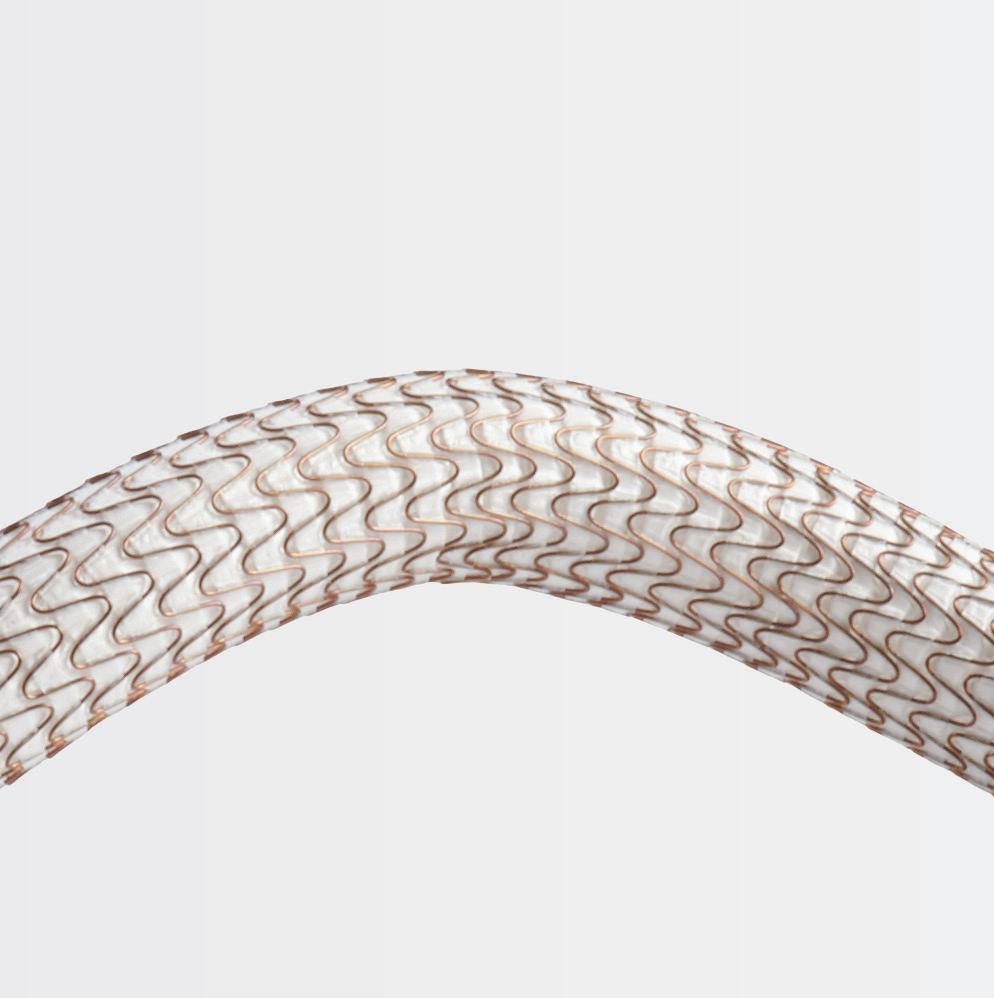




65% 100% freedom from major amputations and VIABAHN® Device stent fractures *

freedom from target lesion revascularization
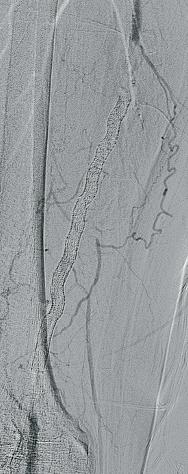
Occluded bare metal stent Post VIABAHN® Device placement Images courtesy of Peter Soukas, M.D. Used with permission.