Expanding precision embolization: Clinical and economic experiences with Sniper balloon occlusion microcatheter
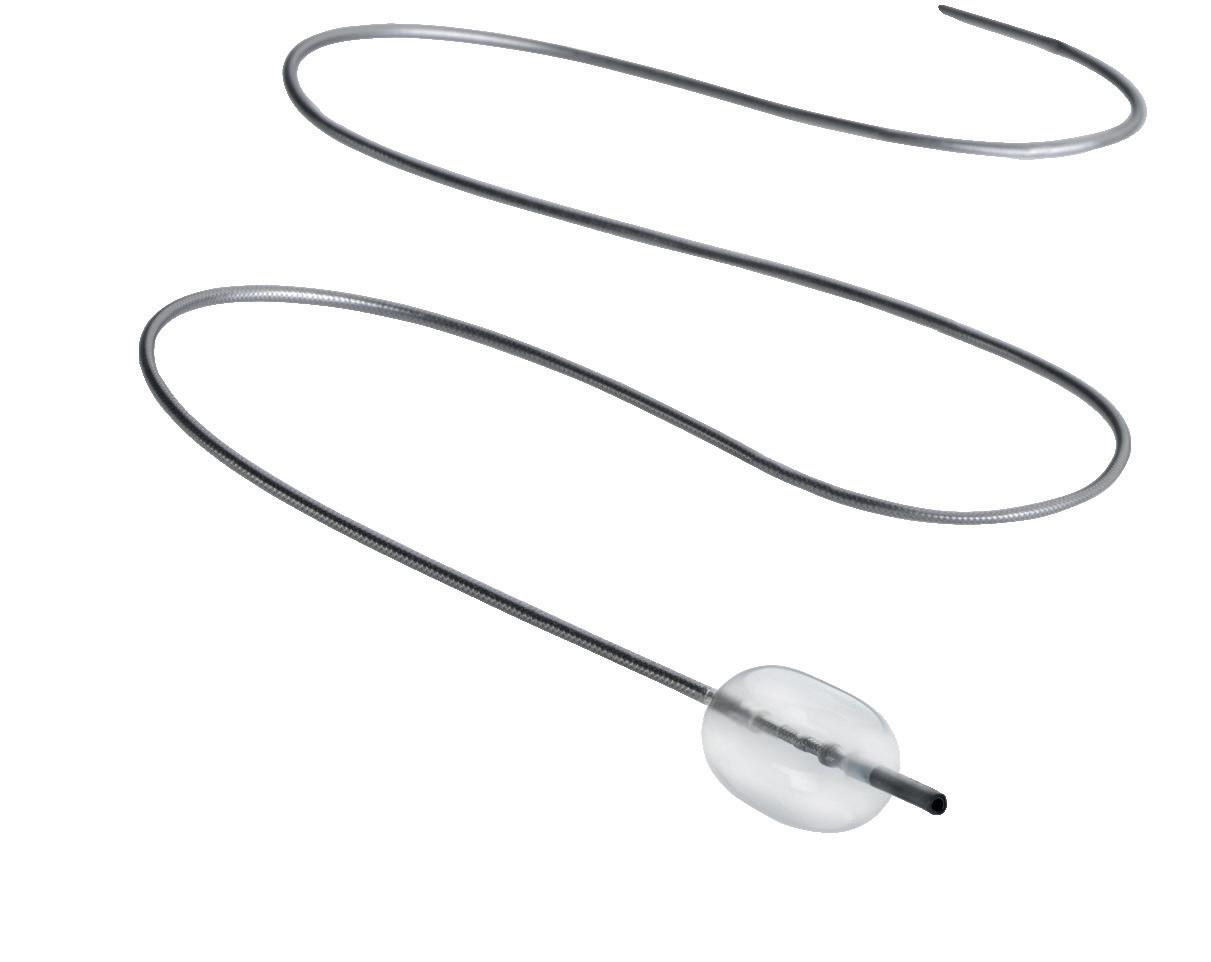
Expanding on traditional embolization by utilising a pressure-directed balloon system for occlusion in the peripheral vasculature, interventional radiologists Brian Kouri (Atrium Health Wake Forest, Winston Salem, USA) and Aaron Fischman (Mount Sinai Health System, New York, USA)—the former focused on yttrium 90 (Y90) radioembolization and the latter prostate artery embolization (PAE)—speak to Interventional News to share how the Sniper (Varian) balloon occlusion microcatheter has become integral to their practice.
F
or Kouri, whose practice includes a high volume of Y-90 radioembolization procedures using resin microspheres, delivering a significant amount of activity in as small an area as can be selectively targeted within the liver is priority number one. “To do that safely,” he explains, “I need protection against reflux and the ability to pack activity into the target territory without worrying about non-target embolization.”
He describes that the balloon element of the Sniper device is useful in these scenarios: with the ability to inflate the balloon to create better flow control, high activity doses can be selectively delivered while minimising reflux to adjacent vessels. Kouri highlights one of the catheter’s key advantages: the ability to seamlessly operate with the balloon inflated, deflated, or dynamically adjusted throughout the case. As embolization progresses and flow patterns evolve, this flexibility enables the operator to respond in real time if needed to maintain optimal control.
In more atypical or anatomically challenging radioembolization cases, Kouri notes that he will sometimes deploy multiple Sniper catheters within a single procedure to achieve a higher level of selectivity. In such cases he positions one catheter proximally and one or two distally, inflating the distal balloons to safeguard non-target liver while delivering microspheres through the proximal catheter.
“That allows me to treat a tumour very discretely,” Kouri explains. “Rather than treating an entire lobe or multiple segments, I can preserve a significant portion of normal liver that otherwise would have been exposed.”
Kouri also describes the tracking performance of Sniper to be advantageous when navigating tortuous anatomy, reporting that the microcatheter can be deployed reliably particularly when using the angled tip configuration. “That’s a major advantage, especially when you’re trying to be as selective as possible. Compared to other anti-reflux microcatheters on the market, the tracking ability of Sniper is superior,” he says.
Redefining PAE
In Fischman’s experience, PAE is an area that has undergone significant technical evolution over the past decade, having performed his first case in the early 2010s alongside Francisco Carnivale at the University of São Paulo in São Paulo, Brazil.
“These were the early days,” Fischman details. “We knew that if we used particles and achieved stasis, that would probably be adequate. Ultimately, though, what we realised was that if you use the PErFecTED [Proximal Embolization First, Then Embolize Distal] technique, you could get more of the embolic agent into the prostate which led to
better outcomes.”

Around this time, Fischman began using the Sniper microcatheter in the prostate, as “with a balloon catheter, you’re essentially doing proximal and distal embolization with a single injection,” he explains. “You can position the catheter to capture all relevant branches and deliver the embolic with much better perfusion of the gland without reflux.”
Describing how his practice has developed today, Fischman details that he opts for radial access for PAE, finding this to be “considerably faster”. He emphasises that catheters of various sizes and lengths are necessary to perform this type of access, as “if the lab isn’t properly stocked—which impedes the use of multiple devices—and the clinician gets stuck, they may blame the access site”, opines Fischman. “The key is to be appropriately stocked.”
I think the device has been pretty remarkable and gamechanging for the way that I do embolization in the prostate with n-BCA.”
He states that his practice has also evolved with the adoption of liquid embolics such as n-butyl cyanoacrylate (n-BCA) glue, foremostly due to its more permanent effect when seeking rapid occlusion of the prostate arteries. “When using n-BCA, you are less likely to see vessels reopen in the future,” notes Fischman. “In the literature, recurrence rates with particles are around 20-25% at five years. Early data is starting to suggest that recurrence rates with n-BCA may be lower than what has historically been reported with particles.” Sharing more detail of his experience when combining n-BCA with the Sniper catheter, Fischman describes that, “with a balloon you have complete flow-arrest,” he explains. “If you see material heading outside the prostate, you can immediately stop injecting. The embolic sticks to the vessel wall and stops moving. That gives you a chance to intervene before non-target embolization becomes a problem.”
In his view, the balloon makes the procedure
“safer—assuming you’re familiar with it and understand its advantages and disadvantages”. By using Sniper in combination with n-BCA, he adds that his team have been able to shorten procedure time, resulting in reduced radiation exposure and the ability to perform more cases throughout the day: “I can do seven or eight prostate embolizations in a day using liquid embolics,” he notes, “that simply isn’t feasible with particles.”
“I think the device has been pretty remarkable and game-changing for the way that I do embolization in the prostate with n-BCA. And I’m very happy that we’re able to get reimbursed for it.”
Reimbursement: Barrier to entry?
In agreement, Kouri and Fischman emphasise that, while the advantages of the Sniper microcatheter are clear in practice, adoption of the device entirely depends on economic feasibility, which can vary from centre to centre. Kouri states candidly that the Sniper catheter is not “an inexpensive device”, so reimbursement is essential to reap its benefits.

Following the introduction of the C9797 reimbursement code, which applies to pressure-directed catheters, both physicians have found consistent reimbursement that covers the cost of the catheter and provides a margin.
“We demonstrated that the code was reimbursed every time,” Kouri explains. “That made it a very easy argument to put the catheter on the shelf at my centre.”
Fischman, echoing this experience, notes that the code has changed conversations around adoption of the device at his institution. He says that, in his experience, “the reimbursement more than covers the cost of the device”. “That’s important because it removes the financial hesitation around it and allows physicians to focus on what’s best for the patient.”
Kouri and Fischman both emphasise that, to ensure seamless reimbursement, proactive communication with billing teams is key, particularly in large centres “before you start doing high-volume case numbers and realising it wasn’t coded correctly”, states Fischman. He adds that placing relevant codes prominently in procedural reports can be helpful, as, finally, both advise interventional radiologists seeking to introduce this device into their practice to engage billing teams early.