MUSE the
LEADING WITH PURPOSE
Inspiring women, building futures
Inspiring women, building futures
1. Anglia Ruskin University (x2)
2. Aston University (x3)
3. Cardiff University
4. Durham University (x2)
5. University of Arts London
6. Guildhall School of Music & Drama
7. Lancaster University (x2)
8. Leeds Conservatoire
9. Liverpool Hope University
10. Loughborough University
11. Middlesex University
12. Newcastle University (x7)
13. Nottingham Trent University (x2)
14. Oxford Brookes University (x2)
15. Queen Mary University of London
16. Swansea University
17. The University of Edinburgh
18. University College London
19. University of Bath (x2)
20. University of Birmingham (x4)
21. University of Brighton
22. University of Bristol
23. University of East Anglia
24. University of Exeter (x4)
25. University of Glasgow
26. University of Kent
27. University of Leeds (x6)
28. University of Liverpool
29. University of Manchester
30. University of Nottingham (x6)
31. University of Oxford
32. University of Reading
33. University of Sheffield
34. University of Southampton
35. University of Surrey (x2)
36. University of Warwick (x4)
37. University of Westminster
38. University of York (x6)
University of Birmingham, Dubai
97% gained a place on their preferred choice course.
62% accepted a place at a Russell Group university.
IB Diploma cohort achieved an average of 36 points, compared with the worldwide average of 30, with one student attaining 44 out of a possible 45 points.
Wide range of courses including: Architecture, Biomedical Science, Business and Management, Civil Engineering, Computer Science, Economics and Geography, Engineering, English Language and Literature, Mechatronics and Robotic Engineering, Medicine, Natural Sciences, Neuroscience, Pharmacology, Performance Design, Politics, Philosophy, and Economics, Music, and Sociology with Criminology.
Iam intrigued by the rise of a recent phenomena where people are suggesting September, rather than January, should be a time for new resolutions and new starts - for teachers and students this has always rung true. This Autumn Term has been no exception, when I look back at everything that has been achieved, I see students and colleagues moving out of their comfort zones, trying new things, stretching skill sets and forming new friendships. This term has been particularly special for me, having returned from medical leave, I have relished reconnecting with our students and their families. The Autumn Term offered many chances to engage and catch up with our school community. I especially valued the end of term events, including the Christmas carol services, the staff and student panto and the Christmas concerts, which brought students, families and staff closer. The end of term provided a timely reminder of the strength of our school community.
I am so fortunate to lead BGS, as it is a wonderful school and I am constantly inspired by our students. Building a strong school community where students feel empowered and supported does not happen by luck; behind it is an incredibly well developed pastoral structure which runs throughout the ethos and culture of BGS and is delivered by every member of our team. I believe this creates a unique and special energy as the girls have the freedom to grow knowing they are supported, challenged and guided in an environment free from gender stereotyping. Mr Gracie, our Deputy Head Student Engagement and Welfare, explains the advantages of building a pastoral programme just for girls on page 11 of this edition.
I hope you get a sense of the BGS energy throughout the Muse. It seems somewhat extraordinary that in three months so much can be achieved. There are always so many incredible opportunities open to our students beyond the classroom; from trips, sports matches and competitions to wonderful arts performances. Our students really do throw themselves into life at BGS.
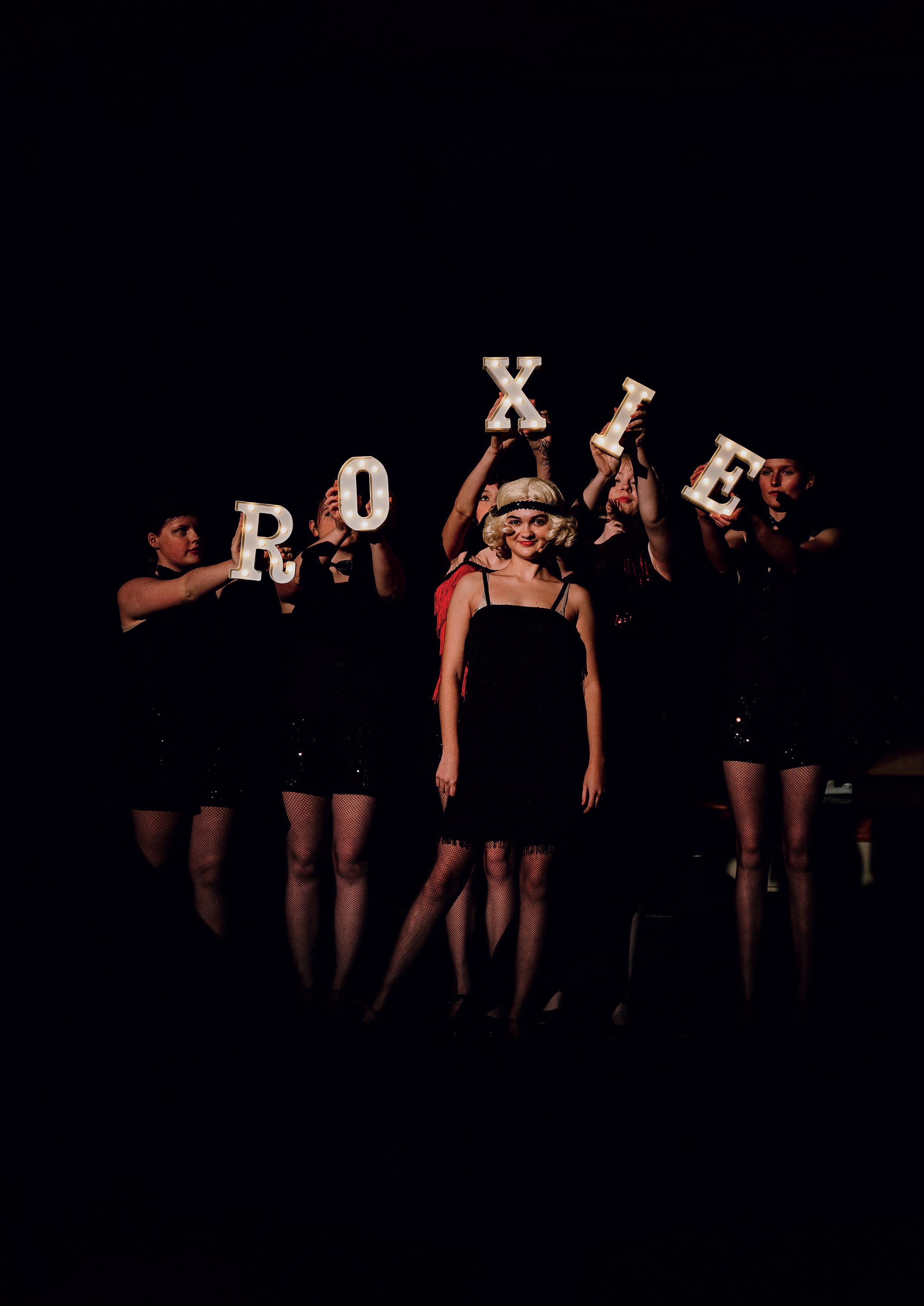
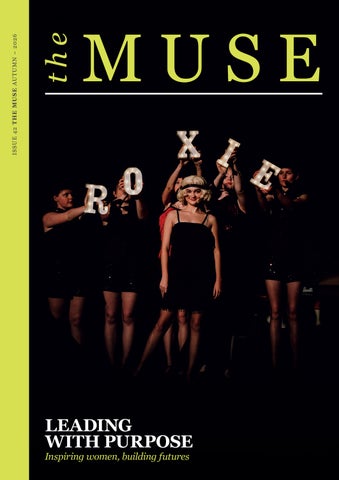
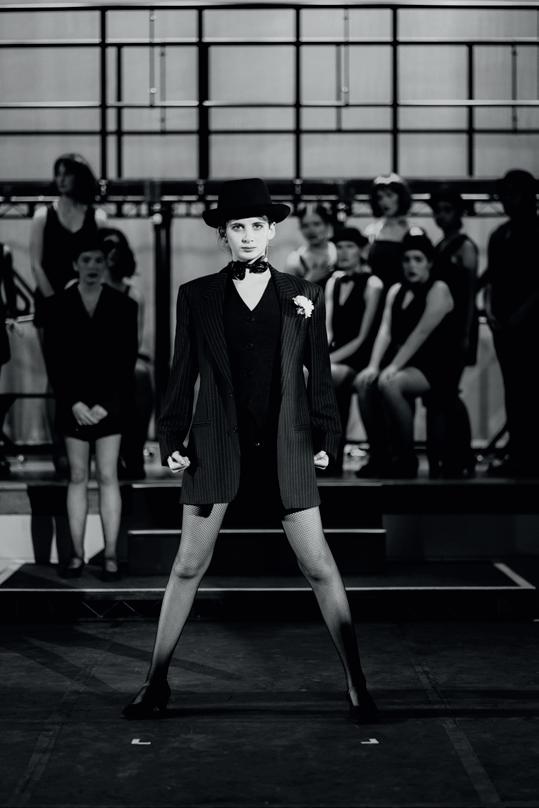
The Senior production of Chicago: Teen Edition was a total triumph with magnificent performances and music from our own live band and wonderful costumes and staging. It really was a reflection of the power of collaboration, commitment and talent. The audiences were totally immersed in the speakeasy atmosphere of 1920’s Chicago and the students loved tackling the complex roles.
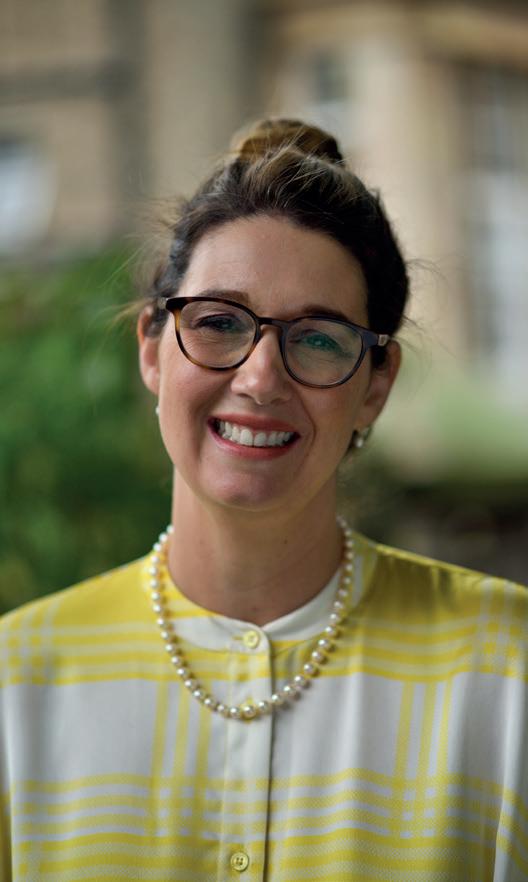
I am delighted to introduce our new Chair of Governors to the community. I do hope you take the time to read our interview with her. Surgeon Rear Admiral, Fleur Marshall has had an extraordinary career in the British Navy, training as a naval doctor and rising through the ranks to lead the delivery of medical services across the armed forces; she is one of the UK’s highest ranking female naval officers. An alumna of one of our heritage schools, Bedford High School, she personifies the spirit of a BGS student - she has broken glass ceilings, carved a career that she has loved whilst always retaining empathy and compassion in all that she does. She joins us in February and I know she is keen to get to know the community and will be a wonderful figurehead for Bedford Girls’ School.
Our commitment to our students extends way beyond the end of Sixth Form and in this edition of the Muse, I am pleased to outline the launch of our latest alumnae initiative, called Bold Beginnings This new programme will be gradually rolled out over the next year to provide support, guidance and resources to our alumnae in the 18 to 35 year old age range, looking to enter the work place, starting new roles or returning to work after a career break. The recruitment landscape has changed beyond recognition and we want to make sure we continue to help future proof our students: offering them advice on how to best prepare for digital assessment centres; navigate a career change; build a personal brand; and interview with confidence. We are supported in this endeavour by members of our alumnae who are career coaches, recruitment specialists and graduate recruiters. Our ambition is to build a meaningful programme, where women can ask for honest, non-judgemental support in a safe environment. Please discover more on page 13.
I write this introduction as the school falls silent after a frantic end to the Autumn Term. My colleagues and students have left for a well deserved break and I too am looking forward to much needed family time, but am already excited about the wonders of 2026. I look forward to celebrating more new beginnings and moments of joy with you all.
Best wishes
Gemma Gibson Headmistress
We help them build not only intellectual confidence but self-belief, resilience and wider understanding of the world.

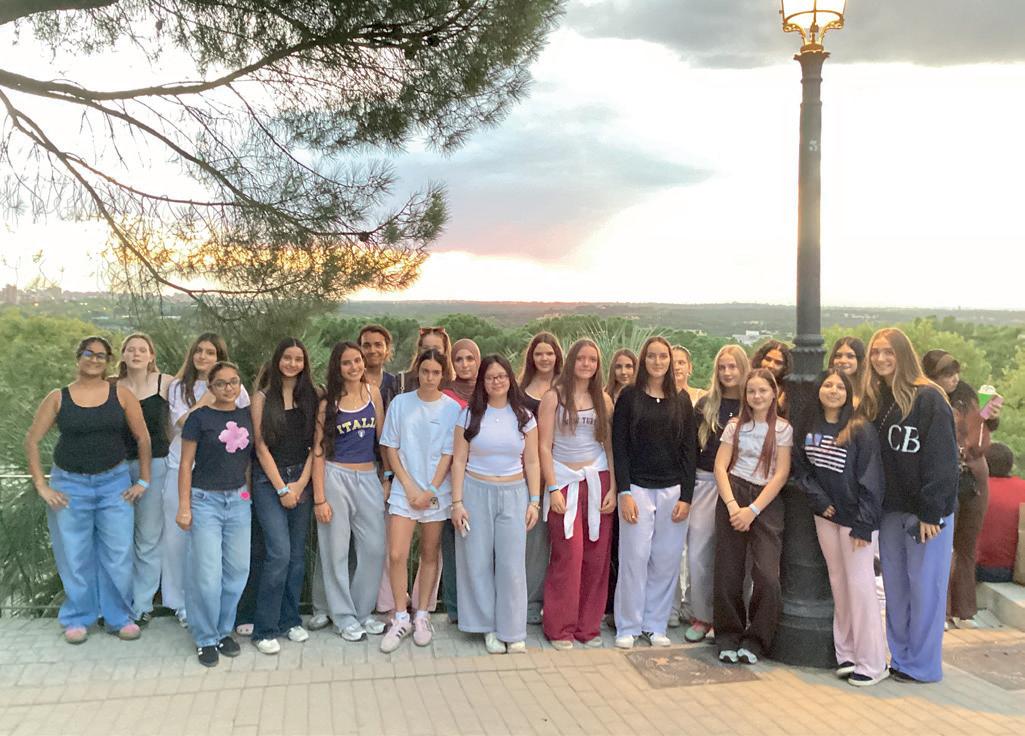
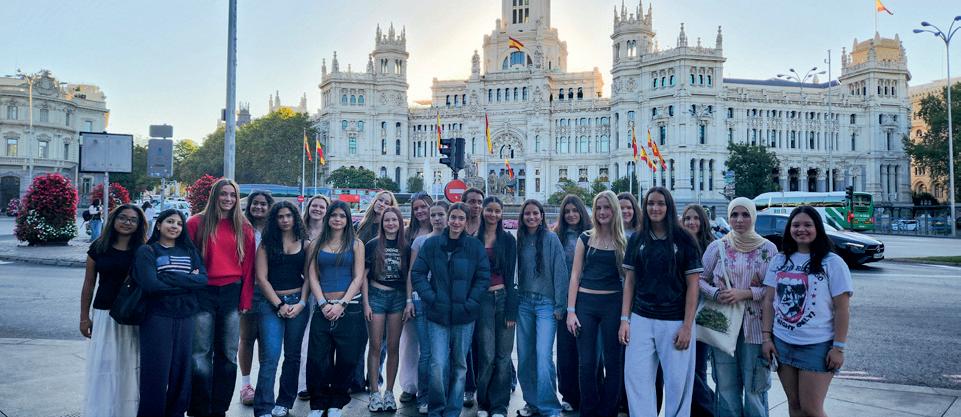
During the October half-term break, the Spanish Department took a group of students from Years 10 to Lower Sixth to Madrid for an immersive four days of culture, language and discovery.
The trip proved a resounding success, offering students a wonderful opportunity to experience Spanish life first-hand and apply their classroom learning to real situations. From the moment students and staff arrived, the city welcomed them with its history and warmth, and it quickly became clear that this visit would be far more than a sightseeing tour.
Spanish teacher, Señora Mirian Plaza Moya, who coordinated the trip, reflected: “One of the most encouraging aspects of the trip was how smoothly everything ran. Students approached each activity with enthusiasm and curiosity, showing maturity, independence, and genuine interest in Spanish culture. Whether navigating the city, trying local foods, or engaging with native speakers, they represented the BGS community with pride. Our students embraced each new experience and supported one another throughout. Their positive attitude helped create a warm group atmosphere that made the journey enjoyable for everyone involved.”
Señora Plaza continued: “A core aim of the visit was to support the Spanish curriculum, particularly the demands of the new GCSE curriculum, which places a strong emphasis on communication in everyday contexts. In the classroom, students normally practise role-plays such as ordering food, asking for help in a tourist office, or requesting information about transport or activities. In Madrid, these scenarios became real.
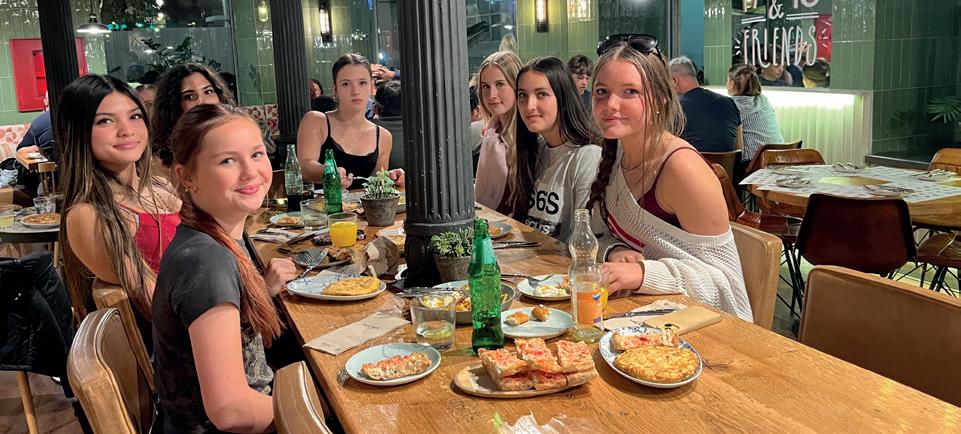
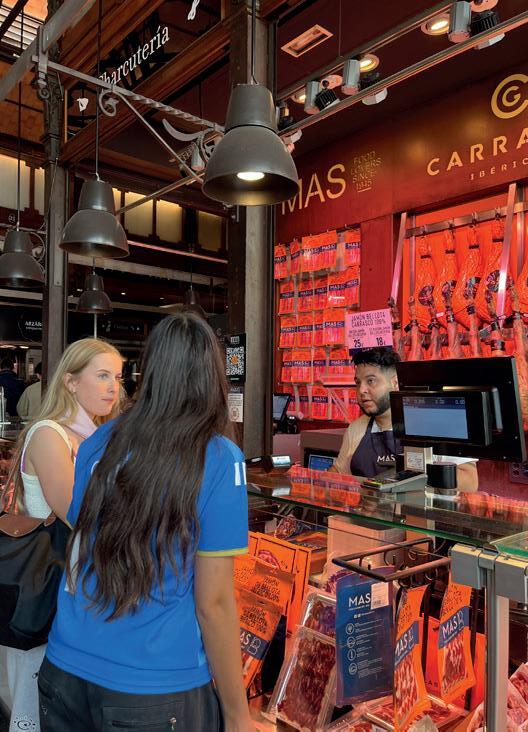
Students ordered their own meals in restaurants, asked for directions, bought souvenirs, and interacted with stallholders at markets. These authentic encounters boosted their confidence and fluency far more than any classroom simulation could. For many, it was the first time they had used Spanish in spontaneous conversations, and as their teachers, it was rewarding to see them applying vocabulary and structures they recognised from lessons.”
Year 11 student, Anya Patel, who celebrated her 16th birthday during the visit, said: “The trip was absolutely phenomenal. I enjoyed it so much; it was a cultivating experience that helped me
develop my Spanish speaking and reading skills. I loved the different sites we saw, including the El Jardín Botánico and La Plaza Mayor, as well as El Templo de Debod with the stunning view overlooking the whole of Madrid. Additionally, spending my 16th birthday in warm weather and being immersed in the enriching Madrid culture was amazing, and I loved every moment of it. Spending time with my friends exploring Madrid was truly unforgettable. Thank you to Señora Plaza, Señora Stuart, and Señora Gálvez, who made the trip so much more enjoyable.”
Over four days, students explored some of Madrid’s most iconic landmarks. The trip began with a visit to the Templo de Debod. Set atop a hill near Plaza de España, the temple offered spectacular views of the city at sunset. The second day took us outdoors and into some of Madrid’s most celebrated green spaces. At El Retiro Park, students rowed boats on the lake and admired the sculptures and glass architecture of the Palacio de Cristal. This peaceful morning was followed by a visit to El Jardín Botánico, where students learned about Spain’s rich biodiversity and saw species from around the world.
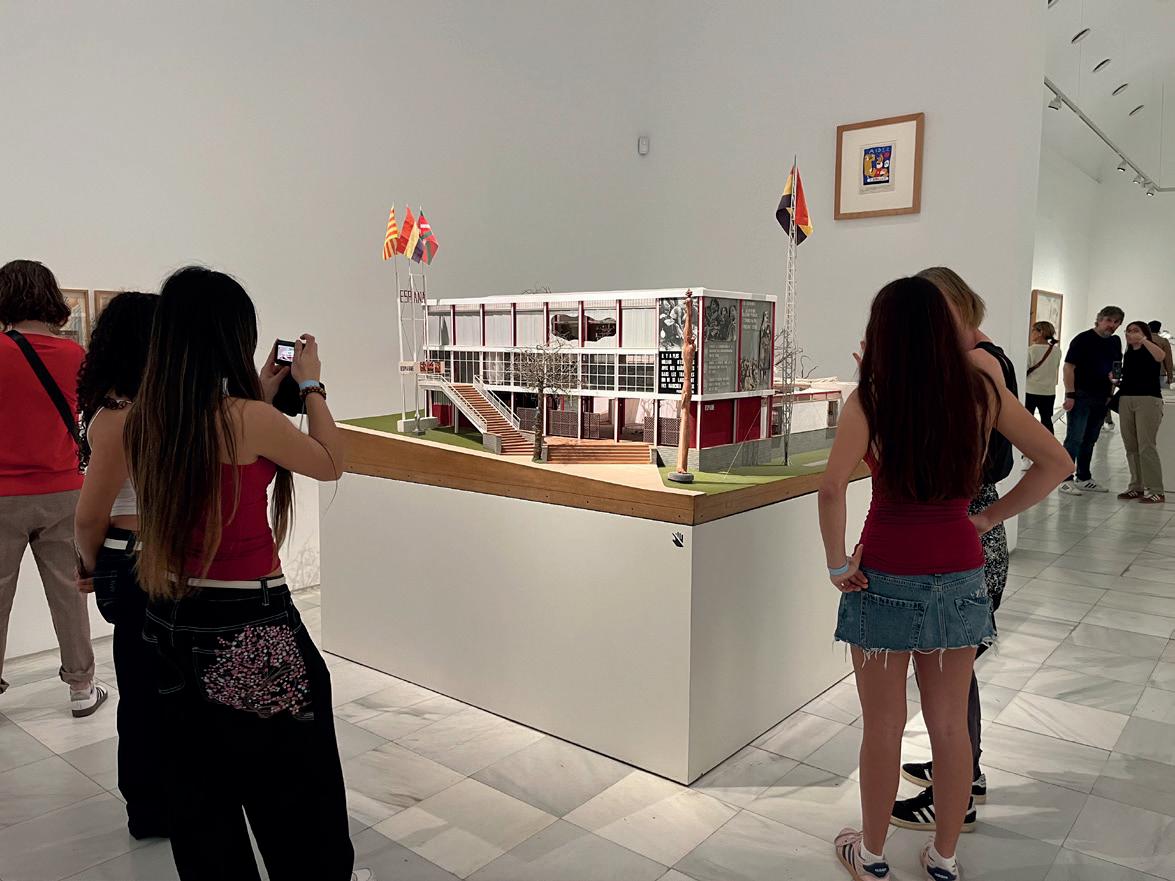
Day three offered a blend of modern art, everyday culture, music, and food. The morning began at El Museo Reina Sofía. A stroll through El Rastro, Madrid’s famous open-air market, allowed students to practise spontaneous Spanish as they browsed clothes, antiques, and handmade crafts. The afternoon included a hands-on flamenco workshop, and the day ended with a tapas evening, where students enjoyed traditional dishes and experienced the social side of Spanish dining culture.
On the final day, students visited El Palacio Real, admiring its architecture, gardens, and ornate interiors, before a final stop at Mercado de San Miguel, which gave them an opportunity to taste fresh regional products and observe everyday life in one of Madrid’s most famous food markets.
Lower Sixth student Bana Shadid said: “The trip was an incredible experience, and I learned so much. I had the chance to use my Spanish with locals at restaurants and markets completely on my own, which really boosted my confidence in the language. I absolutely loved the culture, the people, and the atmosphere that filled the
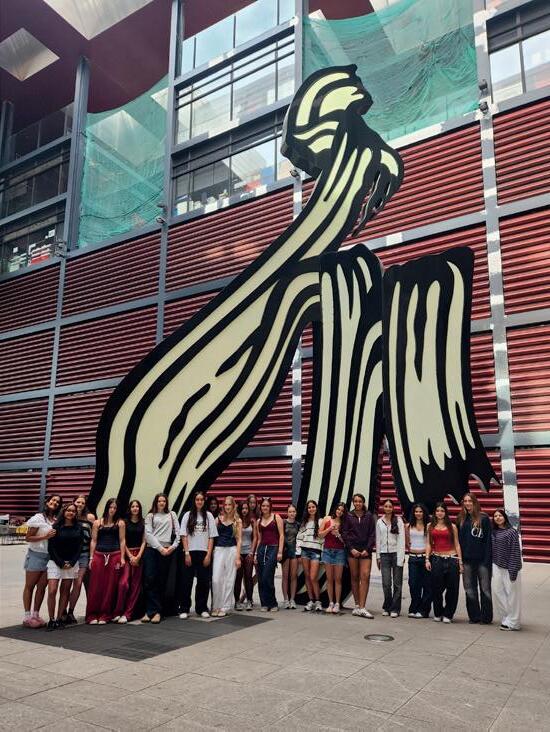
city. Our itinerary was packed, but every bit of walking was worth it. We visited so many amazing places, including El Jardín Botánico, El Palacio Real, El Museo Reina Sofía, and more. One of my favourite moments was trying authentic churros; they were delicious. I truly fell in love with the city, and this trip was an experience I’ll never forget. The friendships that blossomed and the memories we made were so special, and the teachers made everything even more enjoyable.”
MFL teacher Señora Stuart added: “I do love the opportunity to accompany a BGS school trip to Spain, and the trip to Madrid was no exception. It was ‘todo un placer’ spending time with my colleagues and the students. The weather was ‘perfecto,’ allowing us to see the beautiful capital city in its best light. It was a real treat, for example, to see the sun set from the Templo de Debod on the first night. Our centrally located accommodation was a great base and led to an impressive step count each day, as we could do everything on foot. It is amazing what you can pack into four days.”
Language learning is not only about grammar and vocabulary; it is about understanding the people who speak the language, the traditions that shape their everyday lives, and the history that influences their culture. The trip offered students the chance to experience Spain from all these angles.
Señora Plaza concluded: “Hearing Spanish spoken around them all day, reading signs and menus, and listening to music and conversations in the streets and markets gave them an authentic sense of the rhythm of the language. Likewise, visiting museums and historic sites helped them appreciate how deeply art, history, and politics have shaped modern Spain. Many students commented that the trip gave them a deeper sense of connection to the topics they study at school, making their learning feel more relevant and alive.”
Earlier this year we shared the news that the Governors of BGS had approved the appointment of Surgeon Rear Admiral Fleur Marshall MRCGP FCIPD KHP as our next Chair of Governors. Fleur will begin her new role in the Spring Term 2026 and we are pleased to follow this announcement with a Q&A that offers a closer look at her work and her longstanding connection to the school.
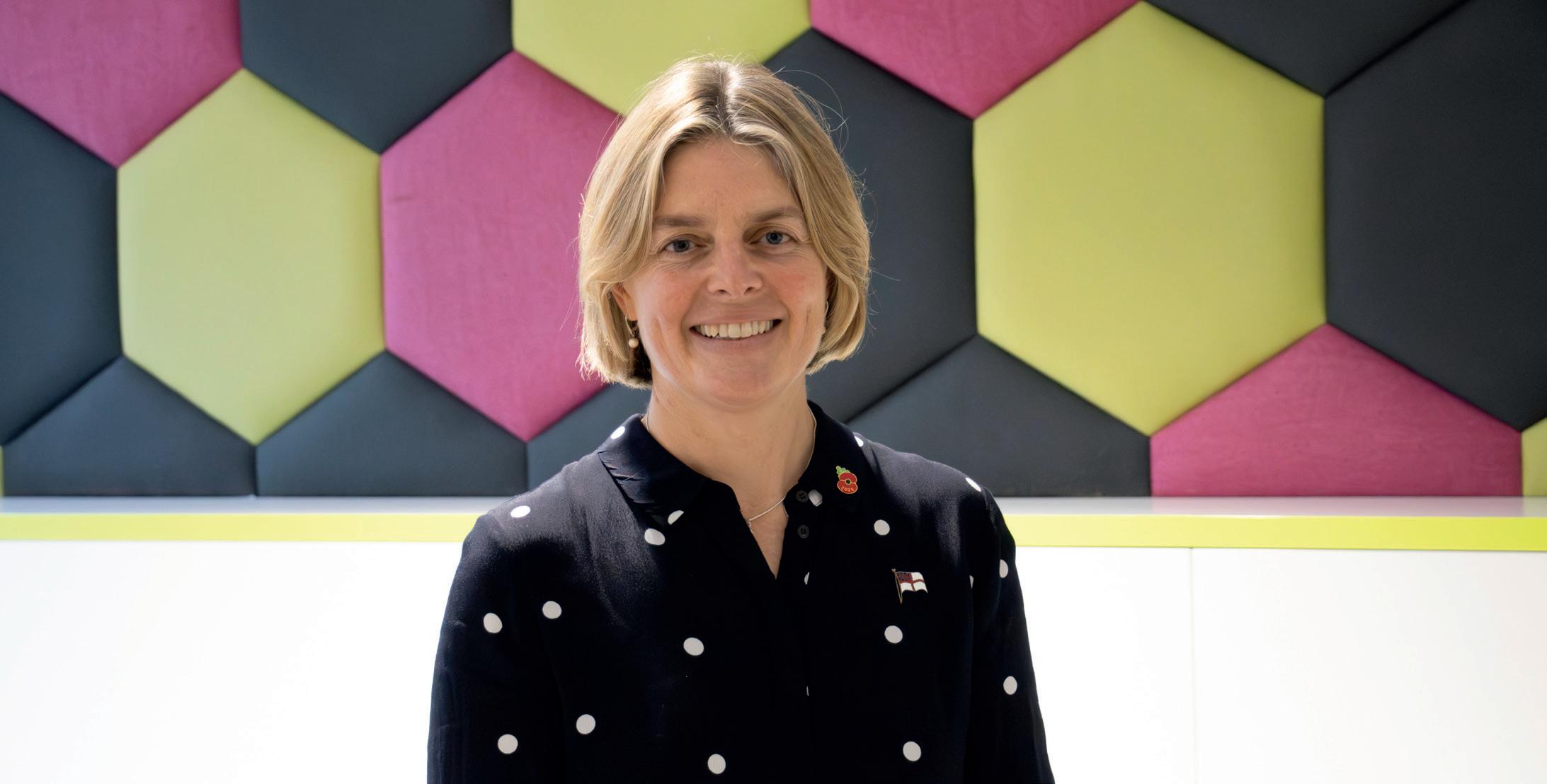
Fleur is a senior figure within the British military and is currently responsible for personnel and training across the Defence Medical Service. She was appointed as the King’s Honorary Physician in February 2024 and has a long record of dedicated public service with wide experience of healthcare delivery in the contemporary strategic environment.
She is an alumna of Bedford High School (BHS) and continues to maintain close family ties to the Bedford area. After leaving school, she studied medicine at the University of Bristol and joined the Royal Navy as a medical cadet which became the starting point for her career. Fleur has previously served as a governor at Repton School and is a Trustee of The Seafarers Charity.
What drew you to the role of Chair of Governors at BGS and what are you most looking forward to as you begin in Spring Term 2026?
I am coming to the end of my career in the Royal Navy and retiring from regular Service so am keen to find ways I can apply my experience and skills to support and help others. Bedford High School (BHS) played an important role in establishing my foundations in life so the opportunity to be involved with BGS is one I was keen to pursue. I am really looking forward to getting to know the school and meet pupils, parents and staff to gain insights into as many aspects of the school as possible.
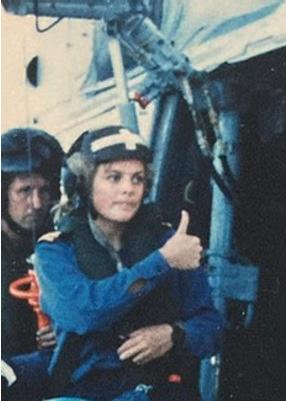
How has your experience in the Royal Navy and the Defence Medical Service shaped the way you approach complex organisations and supporting a school community?
I loved being part of a Ships Company. Everyone on board had their roles and responsibilities (mine was to be the Doctor onboard) but everyone relied on each other so there was the ultimate team spirit, respect for others skills and all working together for collective success in whatever mission we were required to carry out. In my more recent roles within the Defence Medical Headquarters, I was in leadership positions working with colleagues from the Royal Navy, British Army, Royal Airforce and Civil Service. There were lots of different perspectives to consider, collaboration was essential and we had a very clear purpose - making sure the Armed Forces were fit to fight and when needed could fight back to fitness. I am sure all these elements will be important working in the school community. I have seen firsthand how important mentoring and support for others can be in making sure people are given the best opportunity to thrive - so I look forward to supporting the school and staff in providing the very highest standards of education to give the best opportunities to all the pupils.
Looking back, were there particular experiences during your school years at BHS that inspired your path into medicine and public service?
I played a lot of sport when I was at BHS and really enjoyed playing Lacrosse. I was fortunate to have the opportunity to go on tour to the USA. I stayed with a great family and met a fantastic Doctor who was involved in sports medicine. This inspired me to combine my love of science and sport and that is where the idea all started. So you never know what experiences might lead to, and therefore I always encourage people to try different things and maximise a broad range of experiences.
You have worked in fields where women are still underrepresented. What reflections might you share with girls exploring pathways in STEM, healthcare or service?
I am not sure I really registered the ethos instilled in us at BHS until relatively recently that being female was not a barrier to what we wanted to do. I feel very fortunate during my 30+ years in the Royal Navy; I can honestly say that being a female has never been a barrier. When I joined, women had only been going to sea for three to four years so I was at the forefront of women progressing through the ranks. I am proud of the glass ceilings I have broken and the opportunities that have become available to others as a result. I now understand the importance of role models and women supporting each other. I would recommend to everyone to find mentors and a really good network to draw on for advice, support and making sure all opportunities are explored.
The world continues to shift in terms of technology, particularly AI, wellbeing and global awareness. What do you feel are important experiences for young people today?
I think it is important people have a broad range of interests and remain curious as much as possible. Understanding different perspectives is an important skill and how to bring these together to make informed decisions can be really important. So I would encourage gaining a good understanding of how to research topics from a range of sources and evidence bases.
What have your governance and charity roles taught you about helping communities thrive and staying connected?
I really enjoy being involved in the Seafarers Charity and it has opened my mind to the many pressures and issues involved across the seafaring communities - from fishers to super yacht crews. It is important to look at the root causes of issues and tackle these - not just the symptoms. When making decisions about difference projects, I am also building a better appreciation of looking at impact and how this can be measured and monitored. I am sure this can be applied to many communities especially when there is a focus on helping them flourish and thrive.
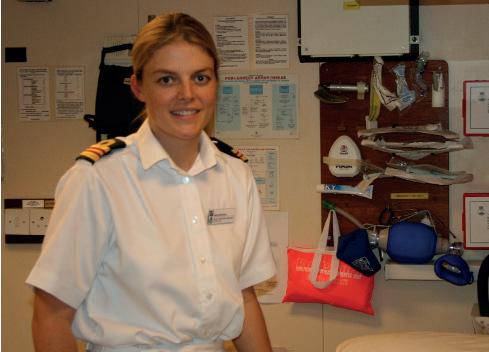

What do you hope to learn from the BGS community as you take on this role?
I am keen to learn as much as possible about what is important to the various elements of the BGS community so we can work together to make BGS the best place to work and study. The role of Governors and how we support the school is clearly laid down, so as Chair I have a responsibility to make sure we are carrying out our duties for the success of the school as best as we possibly can. I am also looking forward to learning from The Harpur Trust and other schools for the benefit of BGS.
Which books or podcasts have shaped your thinking, or would you recommend to students looking for inspiration?
I studied To Kill a Mockingbird for GCSEs while at BHS and that has been an incredibly important book for me. Learning to walk in other people’s shoes is something I have applied during my clinical career as a Doctor and as Senior Leader in the military. Another book which had an impact on me during my leadership journey was Matthew Syed’s book Rebel Ideas which brings out the importance of diversity of thought.
Is there a piece of advice you have found yourself returning to throughout your career?
Early in my career, I was advised to pursue jobs that I was going to enjoy and not do a role I thought I ought to do (to get promoted). You will always do better when you are doing things you enjoy. I have followed this approach and offered this advice to many others over the years.
What is a little known fact about you?
My first job was as a potato harvester on the local farm where I grew up in rural Bedfordshire. As a transition into retirement, I am aiming to be as self-sufficient as possible, growing much of my own food - so my potato harvesting skills might come in useful!

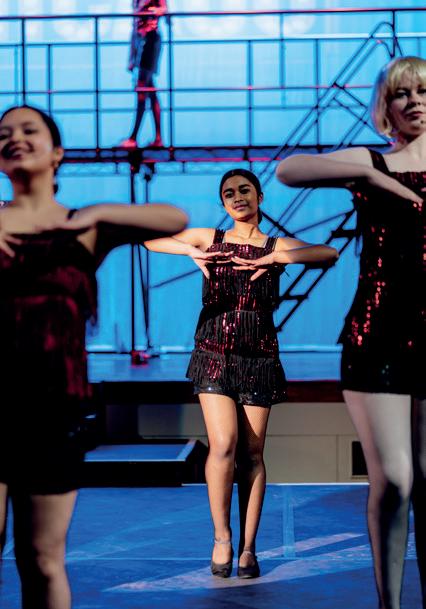
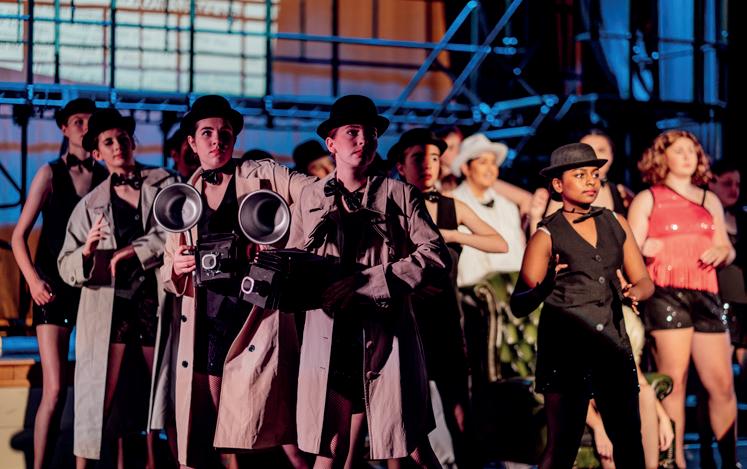
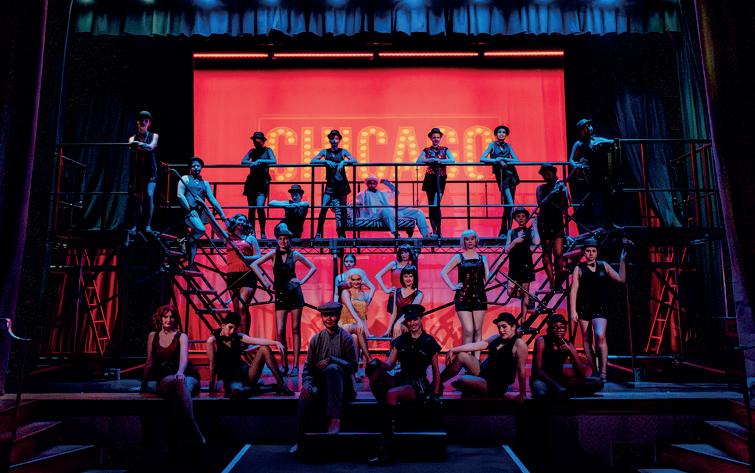
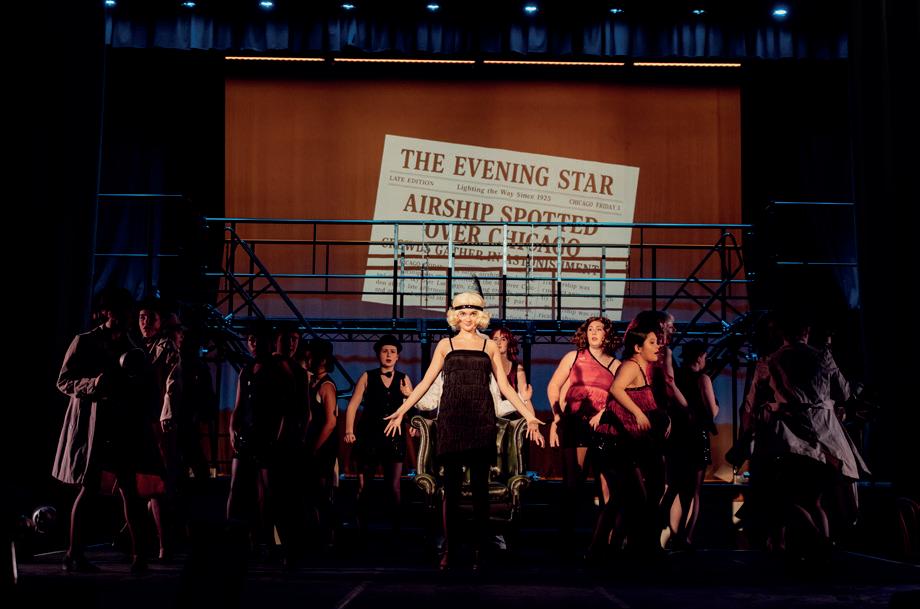
There was something magical about transforming the Assembly Hall into a 1920s Chicago speakeasy. This sentiment was epitomised in the recent performance of Chicago: Teen Edition by BGS students, who pulled off a superb run of four sold-out shows in November.
The famous opening number All That Jazz set the tone as Velma Kelly played by Lower Sixth student, Elsie Butler, prepares to enter the “criminal spotlight”, celebrating the glitz and glamour of the Roaring Twenties.
Mr Gareth Marks, Director of the production, reflected on the initial concept: “The journey started when I was informed that this was the production BGS had chosen and I was asked how I would approach this as a director. At that time, I was still working in Singapore and hadn’t visited the school, but I had seen pictures of the beautiful architecture and I couldn’t help but think that the Assembly Hall would lend itself brilliantly to a 1920s Chicago Speakeasy. When this concept was put to the Performing Arts and Music Departments the reception was enthusiastic. I wanted the students to create an immersive experience where the audience were viewed as customers. Much to my relief, the cast revelled in this challenge. Every session they brought passion and enthusiasm, and most had pretty much learnt their script by September!
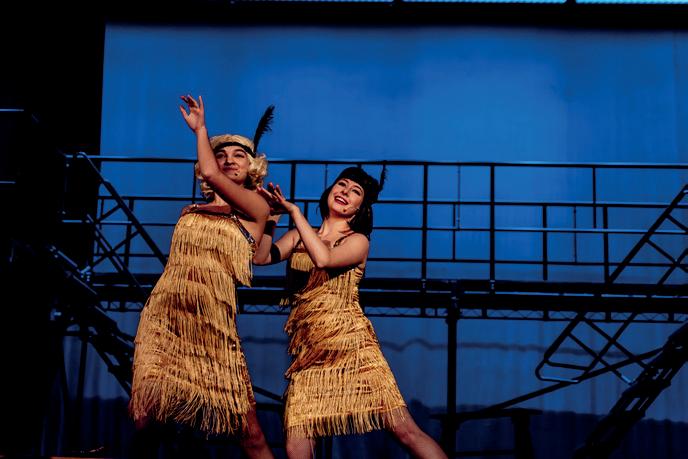
This made for an exhilarating two and a half months, it was one of the most enjoyable rehearsal periods I have had with any cast in 20 years.”
Mr Marks continued: “It takes some courage to engage with an audience in the ways that these talented performers did. Whether it was a knowing look directly at you from the merry murderesses in Cell Block Tango as they shared their stories, or the charismatic waitress service upon entering the Assembly Hall, the audience were swept up in the delightful storytelling.”
The jazz style choreography, featuring turnedin knees, jazz hands and precise stylised movements, was choreographed by Miss Lesley Bream, Choreographer, she said: “Our Chicago journey started in June when Mr Page, Musical Director, ran the auditions. The enthusiasm and energy of the cast were evident from the start as they attempted to master the slick style of jazz dance created by the late Bob Fosse. The dancers embraced the challenging choreography, and it was their dedication to

practice that really impressed me. Added to all that movement, they had to sing some very complex songs and believe me, to sing and dance in time to the music takes some doing!”
Upper Sixth student, Ella Gentle, who played Roxie Hart, said: “Being part of Chicago has been one of the most unforgettable experiences of my time at school. It was my first and last show here, which made it feel even more intimidating. Taking on a lead role was far outside my comfort zone, but as rehearsals went on, I felt myself growing into the part. I found a confidence I didn’t know I had, and that growth is something I’ll carry with me. The energy of opening night was unbelievable. I also loved performing Hot Honey Rag and Nowadays at the end of the show. Those numbers felt like a celebration of everything we had created. One of the unexpected gifts was the people. Our cast and tech crew were from so many different year groups. I got to work with younger students and I made friendships I genuinely wouldn’t have formed without this show.”
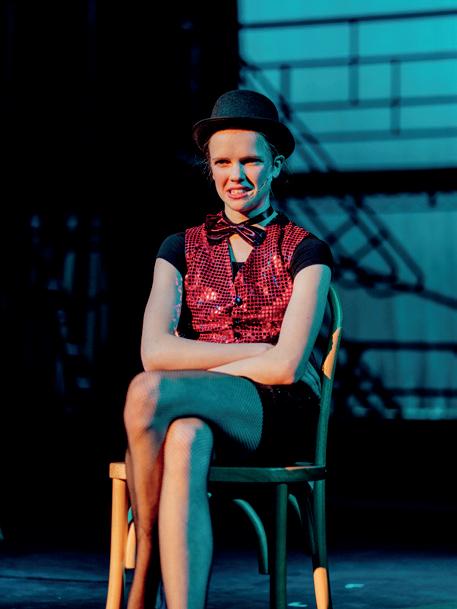
Elsie Butler, Lower Sixth, said: “I was so honoured to have been offered the role of Velma Kelly. The experience was enjoyable yet challenging as this was my first dance-heavy show, so whilst practising the choreography I was also building up new skills. The entire cast was so considerate of each other and working with such a close group made every moment memorable. Finally, being introduced to the set and costumes really helped me immerse myself into my role. And, show week itself as it was amazing.”
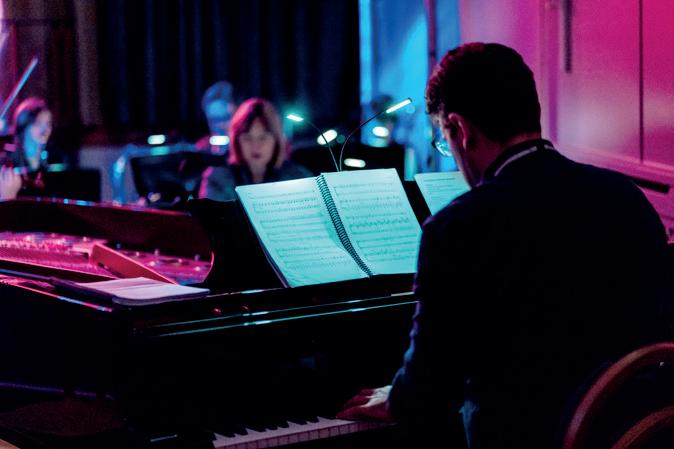
The iconic jazz music performed by the orchestra, led by Musical Director, Mr Geoff Page, with the visible band added to the raw, club-like atmosphere. Mr Page said: “By the time the curtain comes down on the final performance, we’re left with that intoxicating blend of pride, joy, and sheer exhaustion. Show Week is only the finale. What makes a production shine is the 15 weeks of rehearsal, around 80 hours, that build toward it. It’s a monumental effort for everyone involved, but enormous amounts of fun. The cast were an absolute joy to work with. The students and tutors in the band were outstanding, mastering nearly two hours of music in a very short time.”
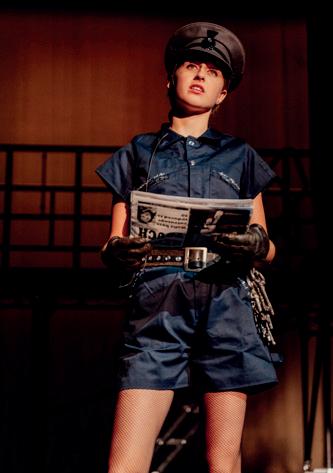
Behind the scenes, the technical elements were orchestrated by Mrs Jude Marks, Technical Director, who joined BGS in September. Working alongside Upper Sixth student Laura Dickson as Wardrobe Manager,
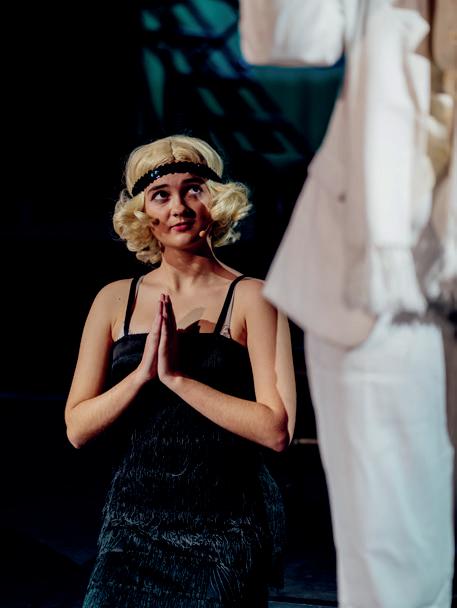

they transformed the production’s visual elements. Laura said: “Helping to design and create the costumes for Chicago was an amazing opportunity. I learnt so much about the process of alterations alongside Mrs Marks who sourced all of the costumes for the show. The principal costumes were incredibly fun to design and make. Mamma Morton’s costume originally started as an adult-sized worksuit, which through my altering of sleeves and trouser length, alongside bedazzling of pockets, transformed into a stylish prison warden outfit, with knee-high boots and bejewelled hat. So much of my creative process has been developed by working on this show, reusing costumes from prior shows to give new life to otherwise unused costumes.”
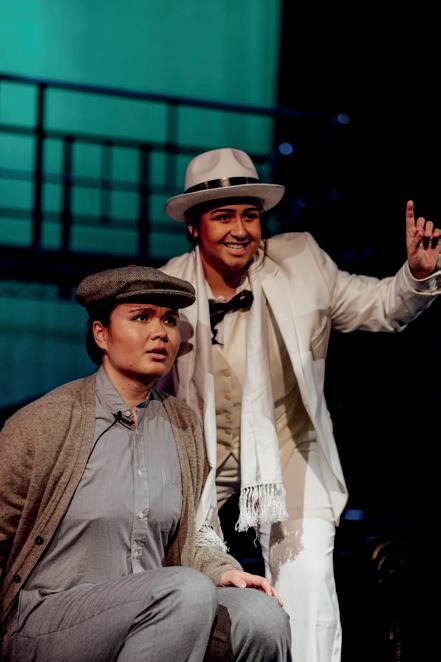
Mia Vadgama, Upper Sixth, added: “While playing Billy Flynn, some of the most memorable moments were not on stage but the community I found backstage, a network of people to laugh with when I got my lines wrong and to praise each other when we succeeded. I learnt what it means to work as a team. Due to the male nature of my character, singing in a lower key was a struggle, but with Mr Page’s help, we were able to make sure my songs were executed well. However, the best feeling was being able to take part in my first ever school musical. I had an amazing time and it reignited my passion for musical theatre.”

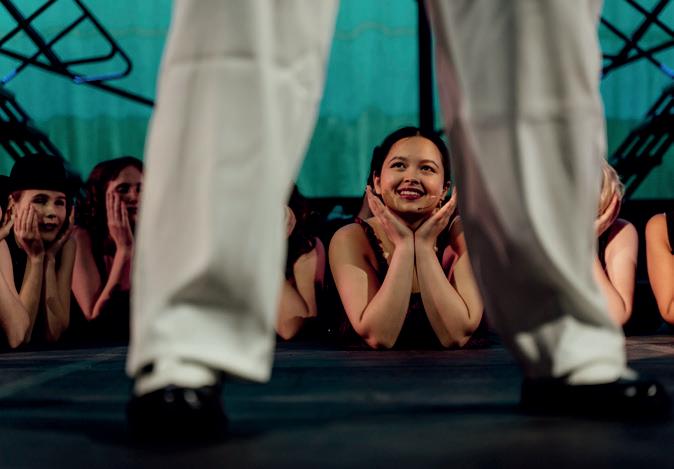
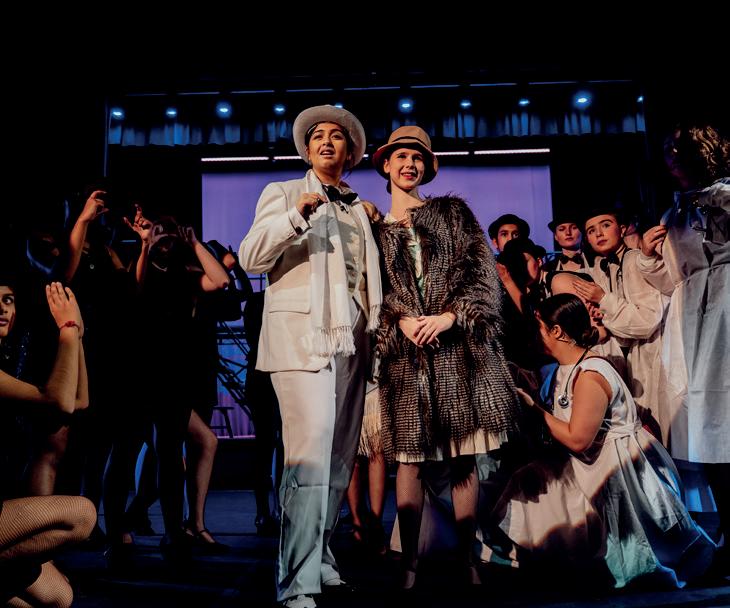
Rosie Freear, Upper Sixth, who played Amos Hart, said: “It has been such a joy to do Chicago in my final year, it pushed me and allowed me to explore my performing abilities. The arts community at BGS is such a lovely group of people, and being able to interact with a range of year groups has encouraged me to make lots of new friendships! Mr Marks and the creative team did such a good job putting a different twist on our production. The set, involving a bridge, was effectively utilised and climbing up a ladder each night was exhilarating! Taking on a musical that had male parts at an all-girls school could’ve proved challenging, but instead it felt as though everyone was made perfectly for their roles. I particularly enjoyed seeing my close friends play lead roles and step outside of their comfort zones.”
Mr Marks concluded: “We all got swept up in the joy and energy of Chicago, which this amazing team of young people created. And I was thankful to be a part of it. Thanks to all for making my first BGS production such an enjoyable one!”
You can view all the photos from the production on our Flickr gallery at: flickr.com/ photos/bedfordgirlssch/albums
Recent national research paints a sobering picture: children are reading for pleasure less than ever before. At a time when literacy underpins academic success, wellbeing and cultural engagement, this decline demands careful attention from schools and families alike.
In early 2025, the National Literacy Trust published findings from its annual literacy survey, drawing on the voices of nearly 115,000 children and young people aged 5 to 18. The survey explored attitudes towards reading for enjoyment, reading frequency and motivation, with responses analysed across age, gender, socio-economic background and geography. Its conclusions were stark. Levels of reading enjoyment and daily reading continue to fall, confirming that the reading crisis identified in recent years is far from abating.
Mrs Carolyn Howe, Head of the Junior School, explained: “I was shocked when I read the report; but what was most concerning was the long-term trajectory. In 2025, just one in three young people aged 8 to 19 reported that they
enjoy reading - the lowest figure recorded in two decades and a 36 per cent decline since the question was first asked in 2005. For those of us working in primary education, the data relating to primary-aged children is particularly striking. While reading enjoyment among five to eight year-olds remained relatively stable between 2019 and 2023, it has fallen sharply since then. In 2025, fewer than two-thirds of children in this age group said they enjoyed reading in their free time. Reading is one of the great pleasures of life and we want to ensure that all our children are excited to read.”
Mrs Howe added: “As teachers, understanding what motivates children to read is essential. We know that if there is a link the pupil can identify with they are more likely to be
engaged. Simple things, such as: does the text link to a hobby, a favourite animal, film or television series, or do the books have compelling covers and interesting titles? make a difference between giving it a go and leaving the book on the side. Most importantly, the research shows us children like the freedom to choose what they read. We also have to remember that reading today may look different from the reading habits of previous generations. Many children engage enthusiastically with song lyrics, news articles, graphic novels, comics and fan fiction. Recognising and valuing these forms of reading can be a powerful way to re-engage pupils who may feel disconnected from more traditional literary pathways.
Within the Junior School at BGS, we are fortunate to have the flexibility to shape a curriculum so that it places reading at its heart; rather than forcing the children to read in order to pass assessments.”
The Junior School’s IB Primary Years Programme allows reading to be meaningfully interwoven with the Units of Inquiry, ensuring that texts are not encountered in isolation but as gateways to curiosity, discussion and deeper understanding. At times, a single inspirational text, acts as a provocation for an entire unit. In Year 5, for example, One Plastic Bag by Isatou Ceesay introduces pupils to themes of pollution, recycling and sustainability, prompting the girls to read widely around global responsibility and environmental action.
At other times, carefully selected high-quality texts are used to deliver specific reading objectives. Titles such as Shackleton’s Journey by William Grill and Varjak Paw by SF Said support the development of comprehension through our structured VIPERS approach focusing on vocabulary, inference, prediction, explanation, retrieval and summarising. This ensures that reading lessons move well beyond decoding, enabling pupils to think critically, articulate ideas and develop confidence as readers.
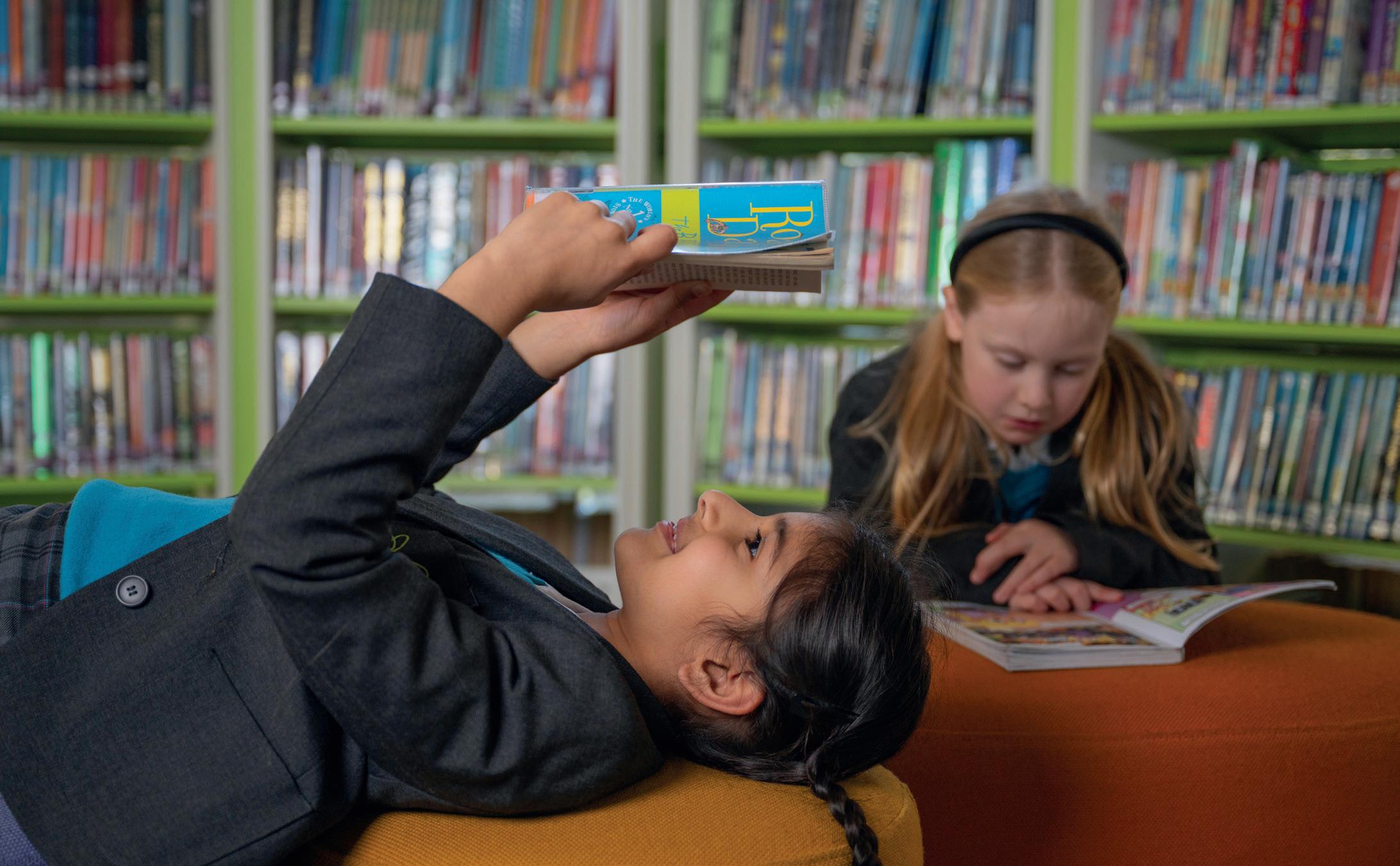
These classroom experiences are complemented by weekly library lessons, where each pupil is given time and space to
read quietly and choose up to four books to take home. Our library team plays a vital role, guiding pupils towards new genres and authors by taking the time to understand their interests. This emphasis on choice and discovery is central to developing intrinsic motivation to read.
Mrs Howe stressed the importance of reading outside of the school day: “We know that children who read frequently and widely at home make accelerated progress, not only academically but also in their confidence and independence as learners. By the time pupils reach the Junior School, most have mastered the mechanics of reading. It is at this stage, however, that motivation can falter. This moment is pivotal, and parental support becomes especially influential. Talking with children about the books they choose, listening to them read aloud, and sharing responses to characters and ideas can have a profound impact. In busy family lives, often balancing school, sport, music and other commitments, reading does not need to be lengthy to be meaningful. The Literacy Trust advises that short, regular reading routines, embedded naturally into daily life, are far more effective than infrequent extended sessions.
Mrs Howe explained that support at home will naturally vary according to a child’s stage of development: “For emerging readers, a parent could encourage them to read with expression, discuss unfamiliar vocabulary, and have
conversations about plot and characters to help to deepen understanding. Whilst for the more experienced readers, continued access to a wide range of texts, uninterrupted reading time, and a culture of informal “book talk” can sustain enthusiasm and challenge.
It is normal for some children to be reluctant to read, it is not a personal shortcoming. In this case reassurance is key. I would suggest trying alternative formats, such as comics, graphic novels, magazines, audiobooks and podcasts; all can provide valuable entry points into reading and storytelling. Tools such as the Book Trust’s Bookfinder can also help you discover texts that align with a child’s interests.”
Mrs Howe concluded: “Our wonderful library is not only located in the middle of the Junior School, but is very much the heart of our school. It is always busy, and we will be passionate advocates for reading. We are lucky, we are able to offer our pupils choice, access to rich and varied texts, and regular opportunities to talk about what they read, so it remains a source of enjoyment rather than obligation. With consistent, thoughtful support both at school and at home, we can help our girls to see reading as something that truly belongs to them: a lifelong gateway to imagination, knowledge and confidence that will extend far beyond their Junior School years.”
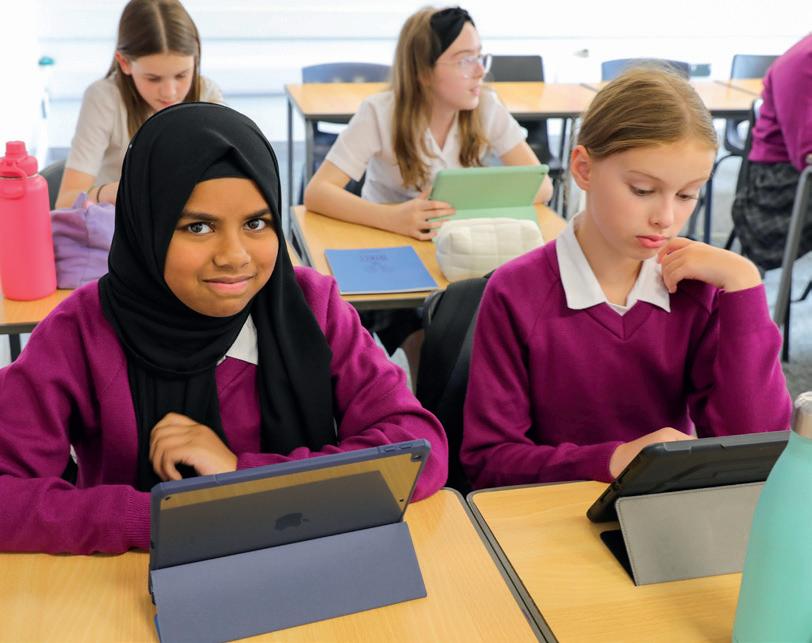
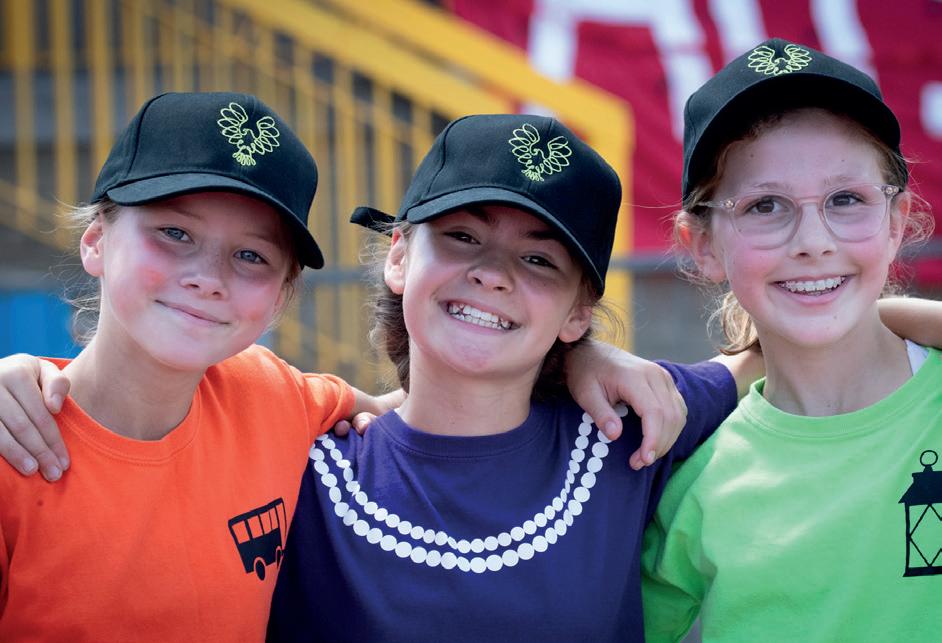
Pastoral care in a single-sex education offers distinct and measurable advantages. In an all-girls’ environment, we are able to create an approach which recognises, respects, and responds to the specific needs of our students at every stage of their development.
Mr Matt Gracie, Deputy Head Student Engagement and Welfare explained: “It is a real privilege to lead the wellbeing and care of our students Bedford Girls’ School. I consider us fortunate as a school to be in the unique position of being able to look at pastoral care through a more singular lens of how it is structured, delivered and received by girls. We can tailor our approaches further to support girls at different stages of their development.
This enables the whole school community to have an explicit focus. By designing programmes that are totally girl-centric, we are better able to anticipate and address the needs of our community with intervention and structures that support our students across their lifetime at BGS. It allows pastoral frameworks to focus on issues that disproportionately affect girls: self-image, perfectionism, friendship dynamics, and the negotiation of gender expectations. These are woven into the curriculum, PSHE programmes, tutor-times, assemblies, through our sports, arts, the co-curricular programmes as well as our dedicated pastoral staff and resources.”
Growing up is complex and arguably tougher now than for previous generations. Growing up in a digital world provides new challenges and young people are ever more aware of existential worries and the health and wellbeing of their peers. Boys and girls generally go through adolescence at different times and respond differently to types of interventions. We are incredibly fortunate to concentrate on having structures to support and challenge girls, balancing independence and reassurance. Both BGS and our legacy schools have been specialising in this for a long time - we know how to encourage our students to build self-reliance, compassion and, importantly, to take risks.
In a girls-only setting, our students are freed from some of the comparisons that can be more pronounced in a mixed setting. We know from both research, and our extensive experience, that girls can moderate behaviour in a co-ed setting; they can blend into the crowd too easily. They are much more likely to participate more actively in discussions, display greater willingness to take intellectual and creative risks, and pursue subjects such as mathematics, physics, and engineering at higher rates in single-sex schools. These changes reflect not merely increased academic confidence, but the deeper psychological safety which comes from being part of a community where they can define success and leadership in their own terms.”
He added: “We talk about developing an inner core of confidence in our students and you can really see this as they step beyond BGS at the end of the Sixth Form; they deeply know who they are and how to make the
most of all of the opportunities open to them post school. We work hard to make sure they develop secure social and networking skills and there are many opportunities to collaborate with their male counterparts at Bedford School. As the students get older, the options for doing this socially and in leadership contexts grows further, with greater ability to choose foci which best suit their development path looking ahead to after school. The extent of this is ever more moderated to decide how much or how little they want to be involved in many aspects of the joint programmes. It is key we give them space to find their own voices and develop in a gender free environment.”
Mr Gracie continued: “We design and develop our pastoral care structures holistically. From Year 3 to Upper Sixth there are common threads that run through our approaches which extend beyond the traditional boundaries of emotional support and counselling; it is about a whole school approach where we are providing varied opportunities for personal growth and having the wider support structures in place. In our setting the visibility of our Form Tutors, Heads of Year and wellbeing officers is important as knowing there is a trusted adult is key to girls feeling safe and supported. This is supplemented by excellent and well-resourced counselling and medical teams in a dedicated space of their own. Likewise, Winnie, our Pets As Therapy dog, is a huge support to our Junior School students, along with their class teachers; our friendship programme Girls on Board has really resonated with students in the school and been impactful in giving students skills to navigate friendship turbulence. Meanwhile, in the Sixth Form, the dedicated Senior Tutors and specialist well-being officer can hone in and support students at a critical time of their education, recognising that many of their needs are different to those of our younger students. A great expression of this is the superb mentoring that takes place between Sixth Form and Junior School pupils where the learning and support the older students receive helps them to guide those who are following them through the school.”
Within a well-supported all-girls environment, our younger students can see older students actively leading and participating in all aspects of school life, encouraging them to follow their example. Programmes in leadership, role modelling and mentoring from our incredible alumnae, together with involvement in community service, further fosters empathy, reflection and a sense of social responsibility alongside building aspiration and agency.
Mr Gracie concluded: “It is vital that pastoral care is more than a supportive mechanism; it needs to sit at the centre of a school’s culture and ethos so that it becomes an instrument of empowerment, cultivating young women who are confident, compassionate and keen to lead.”

As we look toward 2026, the theme of the year has been clear: preparing for a world where artificial intelligence quietly underpins much of what our students do. It shapes the search boxes they type into, the revision platforms they explore and even the captions suggested on their social media feeds. AI is no longer futuristic or abstract. Our role is to help our students learn how to use it ethically and effectively to enhance learning opportunities.
Mrs Becky Hudson-Findley, Director of Digital Strategy commented: “It is really vital that our students are future ready. AI is a rapidly growing area of tech development, so knowing how to navigate its uses and understand some of its limitations is an important part of forwardlooking education. Recent Department of Education guidance frames AI as a tool that can restore teacher time for high quality instruction and meaningful feedback, whilst the University of Oxford has argued that digital literacy is becoming a core competency, not an optional extra. These signals make one thing clear: AI is now part of the everyday fabric of education, and young people must learn to navigate it actively rather than absorb it passively.
But, AI is new to all of us, so we cannot teach our students if we do not first make sure that our staff are trained and that we have process, frameworks and policies in place to support our use of new technologies. Throughout 2025 our strategy focused on making sure that in the background we are ready as a school. We trained staff, built our ethical framework, launched our Traffic Lights system and established clear policy foundations. It was deliberate, careful groundwork so that when students encountered AI, they did so safely and confidently. As we go into 2026 the story will shift.”
Mrs Hudson-Findley explained that this second phase brings the schools’ AI approaches to life in the classroom. AI becomes something students work with under guidance rather than observe from a distance, with the aim of providing students with agency.
She added: “We want our students steering AI, not being steered by it. That means giving them structured opportunities to test it, question it and understand both its strengths and its blind spots. Public debate often swings between extremes: banning AI entirely or imagining it as a
replacement for teachers. Our approach is neither. AI can help students revise more effectively, explore ideas from new angles and provide instant scaffolding when stuck. What it cannot replace is the expertise of a teacher or the relationships that define great learning. Our aim is to teach students how to use AI while remaining curious, independent and intellectually honest.”
To achieve this, Mrs Hudson-Findley explained that we will focus on gradually building AI fluency across age groups. She said: “This Spring we will launch a structured AI curriculum for Year 9, alongside new modules in Years 5 and 6. These programmes offer practical, hands-on experiences paired with essential critical thinking and ethical understanding. They are designed to help students analyse and interrogate AI, not rely on it.
We are also strengthening ethical use, through the embedding of a Traffic Lights system. This offers students clarity about what is safe, what requires caution and what is not permitted. Students will apply the Traffic Lights principles through real assignments and creative tasks, learning where AI supports learning and where it compromises academic honesty, always guided by their teachers.
Instead of experimenting alone, students will use selected tools within a safe, structured environment. They will learn responsible AI use through the work they produce in school. This is where the Traffic Lights system becomes lived practice which supports students lesson to lesson.”
Mrs Hudson-Findley concluded: “I am often challenged as to whether AI risks narrowing creativity or lowering challenge. Research emerging from the University of Oxford suggests the opposite: the risk lies in unguided use. When AI is taught explicitly, with ethical framing and teacher oversight, it can strengthen critical thinking. Recent Department of Education guidance is clear that AI should enhance teaching, enabling more personalised support and richer learning experiences. This aligns with our ethos as we prepare out students to think deeply, act responsibly and approach new technologies with informed confidence. We will continue to evolve our practices, guidance and policy as the landscape develops, we will always be led by evidence, ethics and the needs of our students.”
In an increasingly competitive job market, there is a growing need to further support our former students, so they are best positioned to grasp opportunities and understand how to navigate an increasingly complex working world. Our latest initiative, Bold Beginnings, has been born out of a desire to continue to support BGS students once they have left school. Our ambition is to build a toolbox of careers support and resources for alumnae within the 18-35 age bracket; to help women at various stages of their careers.
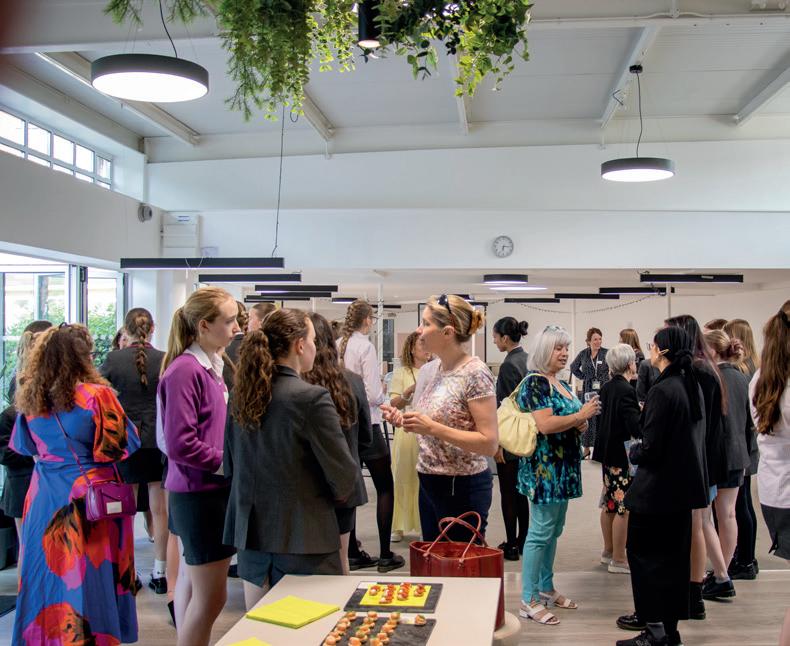
Mrs Emma MacKenzie, Alumnae Manager, explained: “The Alumnae is an integral part of our community; we aim to build a community of women supporting women at each stage of their lives. The incredible support of our alumnae is embedded in our daily school life through activities such as our BGS Alumnae Mentoring Programme, Lunchbox Lectures and through the recent assistance with our mock interview practice for Oxbridge, Veterinary, Medical and Dentistry places. However, we have also seen a growing number of alumnae reaching out for support post university, whether that is for internships, support ahead of interviews or career changes. We want to harness these individual calls for support and create a package that all our alumnae can benefit from as they move through their careers. We have a pool of extremely experienced alumnae and friends of BGS who are offering their expertise and knowledge to help us launch an initial programme.”
The first webinar was hosted by Michèle Bernat (née Conning, DAHS 1999) who led an informative Back to Work for Mums seminar, focusing on practical strategies and confidence-building interview tips, helping navigate the return to employment after a career break. Michèle has a wealth of experience recruiting both in-house and externally, across both the UK and international markets. Having launched her own successful recruitment business whilst raising a young family, Michèle is ideally placed to provide relatable advice for mums navigating their own return to the workplace.
In April 2026, BGS governor, Rachel Gentry will be leading a webinar aimed at university students and recent graduates, helping them master online assessments by familiarising them with today’s increasingly common recruitment landscape, used by both the Civil Service and major graduate schemes. Rachel has extensive experience across a vast range of organisations from banking to the Civil Service, telecommunications, financial technology and cybersecurity. She has experienced both sides of assessments, taking part in assessments herself as well as facilitating them for potential candidates.
Later in the year, Dr Kate Lanz (BHS 1982) will be hosting a Curriculum Conversation, Mindbridge Next Generation Leaders

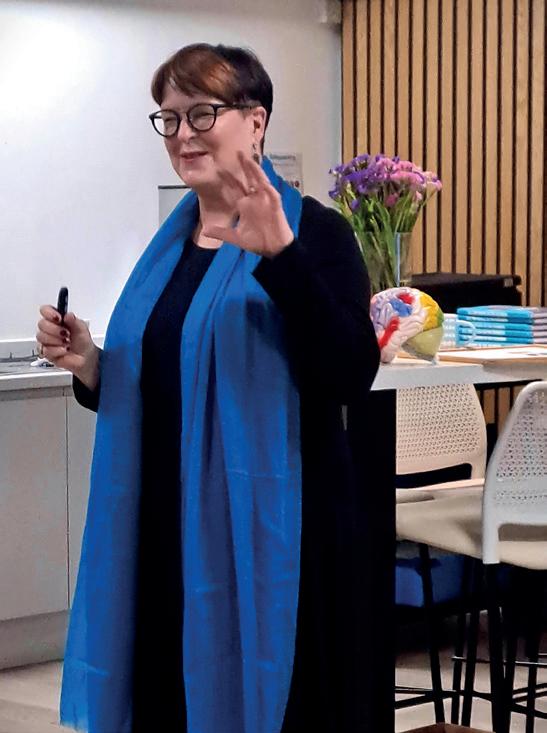
This session will focus on how parents can support their young people in understanding themselves better and making confident, brain-smart choices about building a future that feels right for them. Kate has been coaching senior leaders at the top of global businesses, using applied neuroscience and she is transferring that experience to help parents and young people with their futures through a number of short and powerful sessions. Having trialled her concept with our alumnae, Kate will also be offering specialist one-to-one coaching sessions to our younger alumnae to develop their strengths and thrive in their early careers.
We will also be rolling out other webinars including a focus on Law, hearing from alumnae who have secured training contracts and understanding what law recruiters are looking for. With AI increasingly influencing the work terrain, alumnae will also be sharing their tips and predictions for the future.
Our growing network of alumnae on our dedicated members LinkedIn page (The Alumnae - Bedford Girls’ School) encourages collaboration between our community. It is a great platform to make professional connections and ask older alumnae for support and advice. Using this platform we have trialled an Alumna2Alumna Mentoring partnership. Helen Wood (née Smith, BHS 1989) and Rebecca Hutchings (BGS 2015) worked together over the course of the year, both in person and online, and found the experience invaluable as well as gaining a new friendship.
Helen said: “Building meaningful relationships, based on mutual trust and respect are so important. The emotional support is not just one way. Mentoring fosters professional growth, it can be two-fold, both empowering and inspiring, for both the mentor and mentee.”
Rebecca added: “The level of trust and chance to be open was so valuable. Receiving a different insight and perspective, and way of framing things was so helpful. I really enjoyed talking to Helen about so many things, including life beyond work as well.”
We also provide opportunities for our alumnae to build their networks in person through our annual London networking event. Meanwhile, within school we continue to deliver meaningful programmes to help enhance students’ skills and to introduce them to a wide range of future careers.
Mrs MacKenize added: “We are fortunate; there is a sense of communal responsibility from our Alumnae members to support the next generation of women. It is a big advantage of being part of BGS. I encourage our students, graduates and those returning to work to engage with The Alumnae, which adds lasting value to a BGS education.”

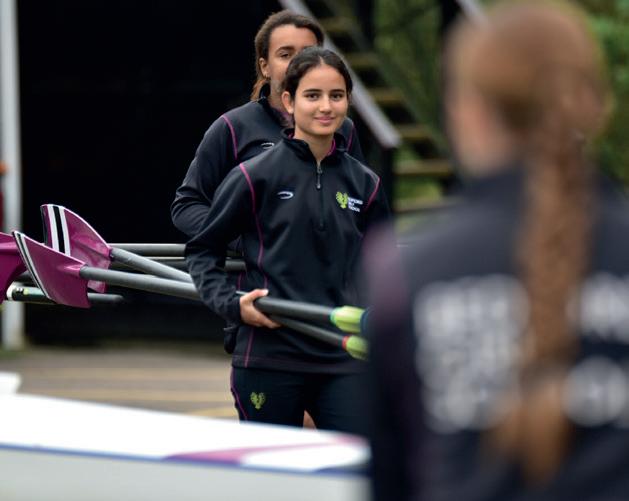
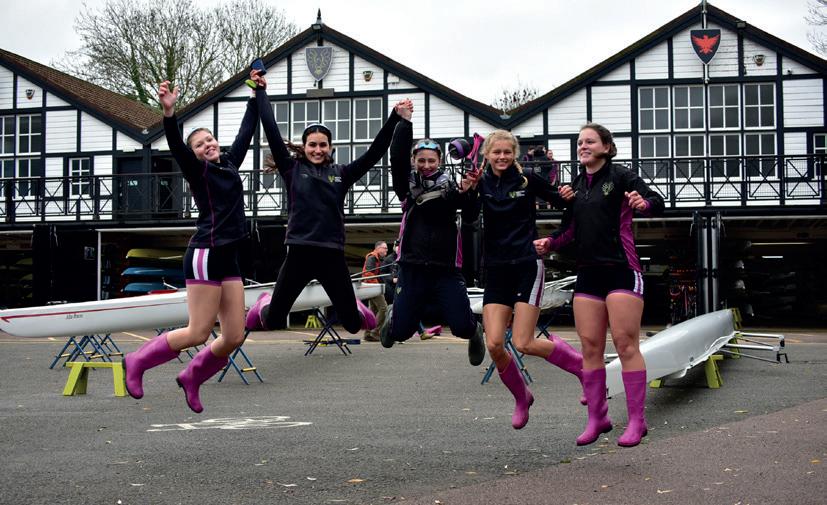
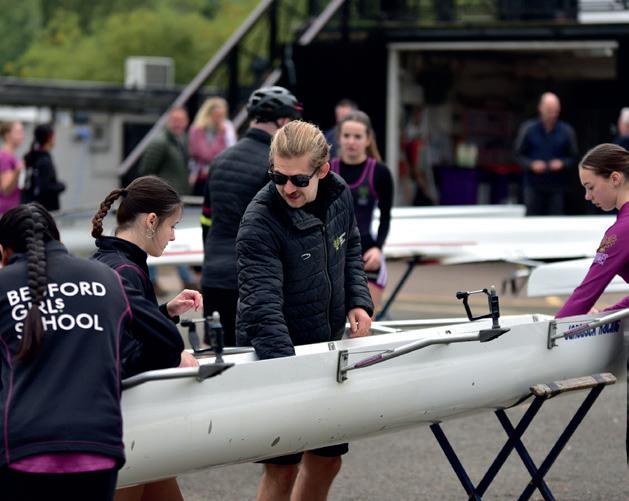
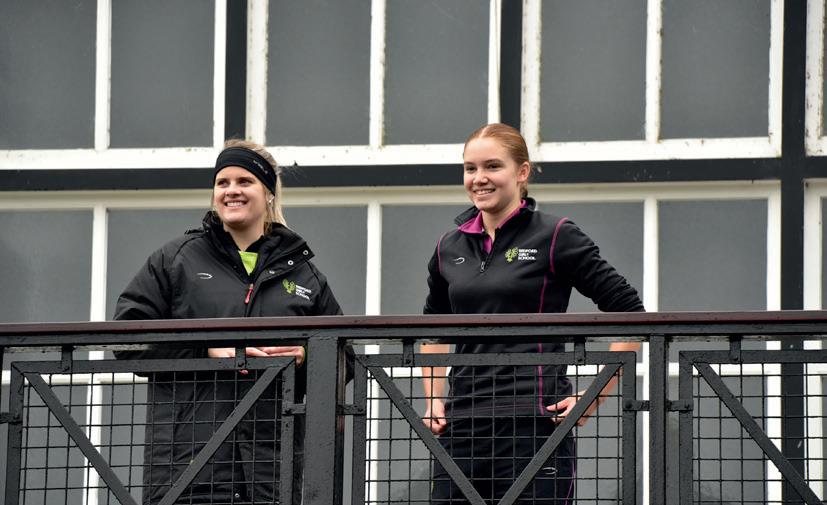

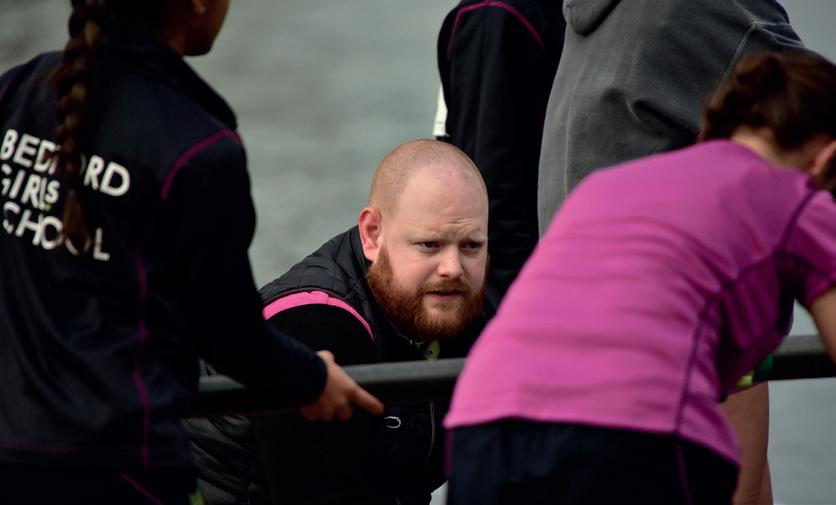
“Rowing isn’t just a sport, it’s about teamwork. We aim to create an environment where every student can be the best they can be, in and out of the sport.”
Mrs Jordan Durrant, Director of Rowing.
Mrs Durrant, Director of Rowing at BGS, reflects on the unique advantages of our riverside location and the positive impact of the rowing programme.
“With The Embankment on the school’s doorstep, BGS students enjoy one of the shortest boathouse commutes in the country, especially compared to other all-girls’ schools. It is a huge advantage that a productive training session can be completed with only five minutes either end to walk between school and the river.
This proximity means more time on the water and less time travelling, allowing our rowers from Years 9 to Upper Sixth to make the most of every training opportunity. The facilities at the Boat House and at school provide everything needed for land and water training, from a fleet of boats to an ergo suite and a gym including two weightlifting racks. I am sure this enhances the attractiveness of the programme to our students and allows our Year 8 and 9 year groups to have a good opportunity to try out the sport before committing.”
Mrs Durrant leads our successful rowing programme alongside skilled coaches, Miss Emma Harris, Head Rowing Coach, Mr Miles McEwen, Mr Will Moss and Miss Lily Gavin. Mrs Durrant added: “Drawing on a wide range of rowing and coaching experiences, our team brings passion, drive, and genuine ambition. We share the same standards of excellence, we challenge our athletes to aim high, support one another, and discover what it truly means to be part of something big. BGS has a strong reputation for producing top quality rowers with students representing their country,
university and club at an elite level. We also had students picked up by the US sports scholarship programmes.”
The programme is structured to support students who may be involved in several sports and to align with the rhythm of the school year. For example, when returning to school after the summer, the first few sessions focus on readjusting to rowing, being on the water, and exercising again. Several weeks of the first term are spent going back to basics in strength and conditioning sessions to ensure students have the strength and technique to lift effectively and safely.
Building strength and stamina over the Autumn Term has been key to our success with fantastic results on the water in Autumn 2025, with recent racing seeing two victories, six second places and three third places. The BGS rowing community celebrated some brilliant successes in 2025: a Year 11 four winning silver at the Nationals, with the same boat being selected to represent Great Britain, and the first eight achieving the best result at Henley Royal Regatta to date.
Mrs Durrant added: “We pride ourselves on building strong, meaningful relationships with every rower. The trust between rower and coach is essential, especially when we ask them to push their bodies to the limit. Rowing requires students to push themselves physically and mentally. Training has been shown to take the focus away from the academic side of school and helps the rowers to take a break from their mental load, allowing more productive work afterwards. The coaching team supports students through their academic commitments and understands that not every session can be attended by all
students. Rowing just offers up the opportunity to train for those that use it to clear the mind, challenge themselves and do something they love.”
Mrs Durrant reflected: “While our mission is to make them stronger, faster, and more resilient on the water, we also love learning about their lives beyond the boat. Their personalities fuel the spirit of our programme and remind us why we love what we do. The friendships that develop in the boat house as younger students are supported by the older crews is special and helps us work as a really connected club.”
Due to the sport’s intensity, and the commitment, our rowers grow in many ways. They become resilient, competent and confident, qualities that don’t stay on the water. They carry them into their daily lives.
The programme also mixes training with fun aspects such as the annual 24-hour row and sleepover, which the students love, and which raises money for equipment, alongside the annual summer awards ball.
Mrs Durrant concluded: “BGS has a strong track record of excelling on the water. Our main aim is to allow every student to be the best they can be. I want to ensure that they have an enjoyable and rewarding experience, one that encourages them to continue with the sport they love after school. Something I love and have learnt about rowing is that it generates friendships and bonds which will last way beyond school.”
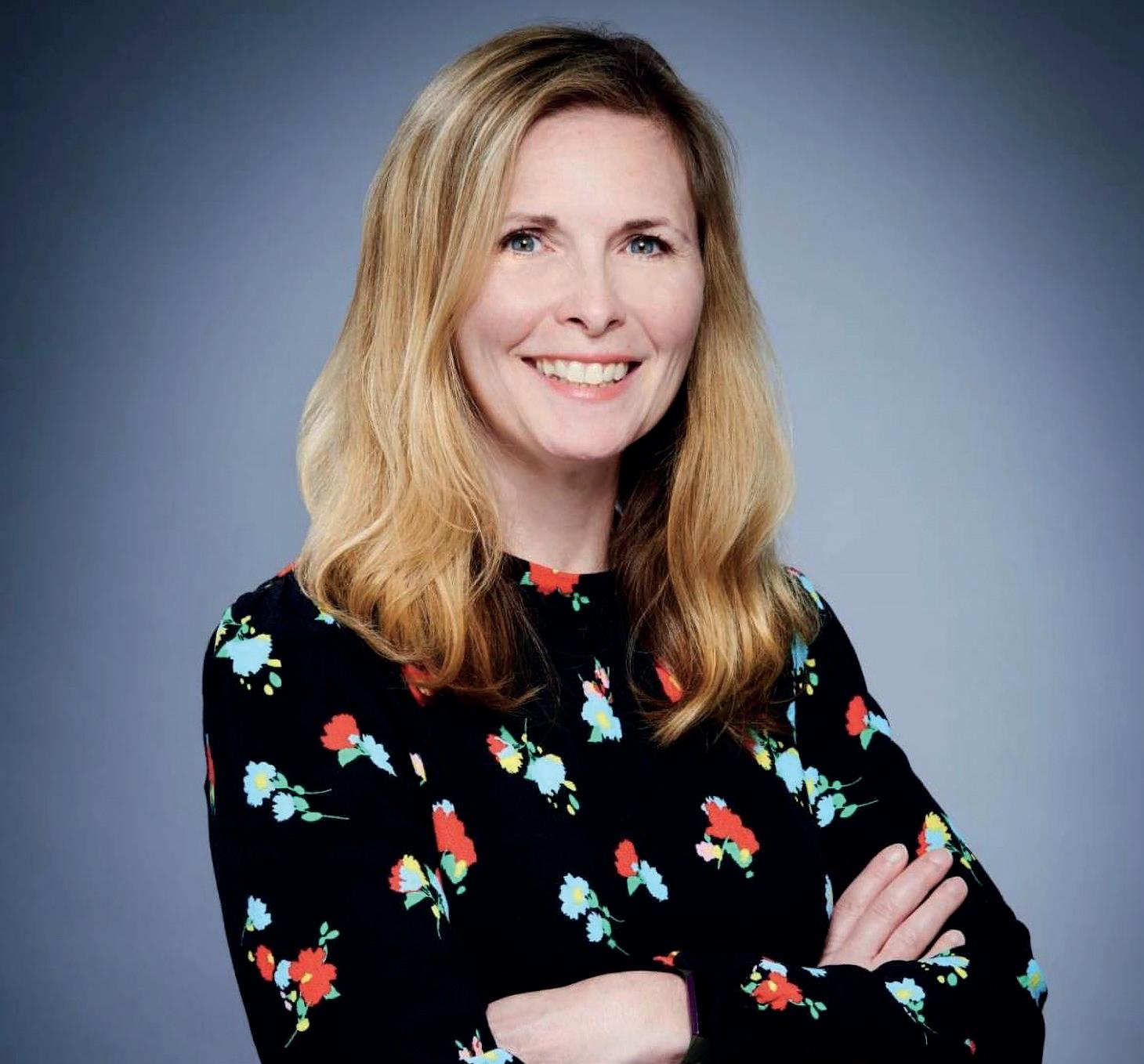
There are people who change the world in ways most of us will never fully see; people who fight for others, not for praise, but because they cannot bear to stand by and do nothing. Claie Wilson is one of those extraordinary people. To me, she isn’t just remarkable; she is the legend of my lifetime.
Claie is the Deputy Editor of the Metro newspaper, with 30 years of journalism behind her, after following in her father’s footsteps; journalism has always been in her DNA. But her true impact lies in her relentless campaigning for women, using her voice, her platform, and her courage to push for change where it is desperately needed. She has helped raise over £1 million for CoppaFeel, championing breast cancer awareness and empowering women to know their bodies and fight for their health. She has led awardwinning campaigns that raised more than £100,000 for both The Hygiene Bank and Papyrus - Prevention of Young Suicide, supporting the dignity, safety and well-being of young women who too often go unheard. Think of a challenge, she has done it, despite living with long COVID since March 2020. Only last month she led the This is Not Right campaign which received special recognition from the End Violence Against Women Coalition
Her journalism has taken her to the front lines in Iraq, where she told the stories of women fighting a war few knew they were part of, women whose bravery might have remained invisible without Claie’s determination to share their truth. She has organised two powerful takeover weeks for Metro, one for Mental Health Awareness and another for Pride creating space for voices too often silenced.
And beyond every headline and campaign, there is a quieter but equally powerful legacy: for years, Claie has mentored young female writers, giving them confidence, guidance and a platform at moments when they needed it most. She opens doors and then steps back to let others shine, believing fiercely in the next generation of women’s voices.
I have been lucky enough to watch Claie at work, to see firsthand the professionalism, calm authority she brings into every work space she steps into. The way she leads, listens
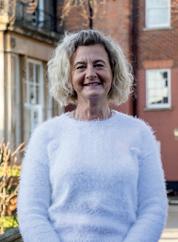
and lifts others up is inspiring to witness. She is respected because she earns it every single day. But one of the things I love is that even with all she has achieved, she still has moments of pure excitement and starstruck joy, those flashes where the teenage girl in us who once shared dreams and crushes reappear. A recent meeting with Fat Boy Slim, comes to mind, watching her light up reminds me that no matter how high she climbs, she has stayed wonderfully human.
Long before Claie became a leader in campaigning and journalism, she was my friend. We met when we were just 13 years old, two girls with our whole futures ahead of us, and our friendship has stood strong through every change life has thrown our way, good or bad, easy or painful. Now, working at Bedford Girls’ School, I watch young friendships being built every day. I look at those girls, laughing, learning, finding themselves, and I hope that their friendships last a lifetime, just like ours.
I recognise the same strengths, kindness, curiosity and fierce loyalty in them that I see in my very own best friend and legend of my lifetime, Claie.
The world sees the campaigns, the awards, the impact. I see the woman who held my hand through life. The one who made me feel welcome when I felt out of place. The one who stood beside me long before success or achievements defined her.
Claie is proof that fighting for women’s voices changes everything. That courage can be quiet and still shape the world. That one person, driven by compassion and determination, can make life better for thousands.
She is a legend not because of what she has achieved, but because of who she is.
And I am endlessly proud to walk through life with her.