





CREATOR | PUBLISHER
Kaz Field Anderson
DEPUTY PUBLISHER | DIGITAL STRATEGIST
Gerard Fynn
EDITORIAL CONSULTANT
Claudine Capel
ART DIRECTOR
Fern Warren
OUR CONTRIBUTORS
Kavyal Sedanni
Misty Boss
Claudine Capel
Robyn Monteleone
Lynda Drummond
Tarsha
Lynne Gardner
Irene Fletcher Anderson
Fern Warren
Sammy Rebholz & Kaydee Guihot
Kylie Gallagher
Sally Jean
Beau Haywood: Nourish Street
Deborah Christensen
Melanie Boole
Sedona Anderson
Fern Warren
Lexi Daley COLUMNISTS
PHOTOGRAPHY
Jaydon Daly
@BustaPhotos
T.C Carter
Greg Gould & Karise Eden
Amanda Dounis & Christian Dounis
Heal Flux Frequency Generator
Hypnotherapy Training Australia
GoAH
Authentic Alchemy Retreats
Sarah Chemaissem
Before we explore our Featured Topic, we are delighted to introduce some exciting new additions to Beyond The Veil:
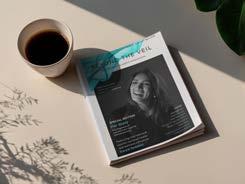
NEW! Product Reviews: We test them, so you don’t have to. First up we road test the Heal Flux Frequency Generator. Read the review on pages 49-52
NEW! Subscriptions to our new VIP Members Lounge: $5 per month gives you access to so many special offers and discounts:10% off Heal Flux frequency generators, 20% off trauma hypnotherapy sessions and much more coming. Head over to Beyond The Veil website and subscribe.
NEW! “Dear Fern”: Feeling stuck or in need of guidance? You can now write in anonymously to our Resident Therapist, Fern and receive thoughtful, supportive advice tailored to your situation.
NEW! Cracking Your Astrological Code with Sedona J.
NEW! Colour Me Happy with Lexi
NEW! Beyond The Veil Blogs available on our website. We are growing by the day. Stay tuned!
As we delve into this special issue 3 of Beyond the Veil, I am honoured to present "Her Story”, a collection of powerful narratives that celebrate the indomitable spirit of women who have faced life’s challenges head on. Each story reveals a unique journey of struggle, resilience and transformation, showcasing how adversity can forge strength and ignite purpose. In a world that often silences female voices, we aim to amplify them, providing a platform for shared experiences and mutual empowerment. Through these accounts, we not only honour the paths taken by these incredible women, but also inspire our readers to embrace their own narratives. Together, we can rewrite the story of womanhood - from one of struggle to one of triumph. Trauma can make us feel alone. It can make us feel like there is “something wrong with me” ... there isn’t! That is your own subconscious trying to keep you safe by staying away from others and avoiding hurt and rejection. We are here to lift the lid on those self-blaming thoughts and feelings, by showing you that many of us have been there, including myself. I had trauma that would make your toes curl, including being pack raped twice at 13 years old by gangs, a father who consistently told me I would never amount to anything and dropped me off at a police station and said “Take her! She’s uncontrollable”. The Complex PTSD was palpable and yet, here I am today, recently retired President of the Hypnotherapy Council of Australia, Co-Founder of Hypnotherapy Training Australia, one of the most respected training schools in Australia, Creator of the World-Renowned Trauma Program - The DeTrauma Technique™, Former Radio/TV Host and now Creator of Beyond the Veil Magazine, amongst many other credits. Before I retired as a Trauma Specialist (perfect career right!), the one statement I heard from my clients more than other was, “I don’t think you can help me, I am too broken and this is my last hope”. My reply would first be a question: “So, do you feel you are a failure because you have been to so many therapists and no one can ‘fix you’ and you must be a freak right?” The answer was always a resounding, “YES”. Then I would matter-of-factly say: “You are not a freak. You didn’t fail at all, in fact, ALL of the therapists failed you! They were inadequate.” This one truthful statement changed everything for them!
Photo by @BustaPhotos


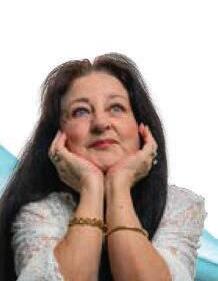


Kaz Field Anderson
Editor-at-Large



08

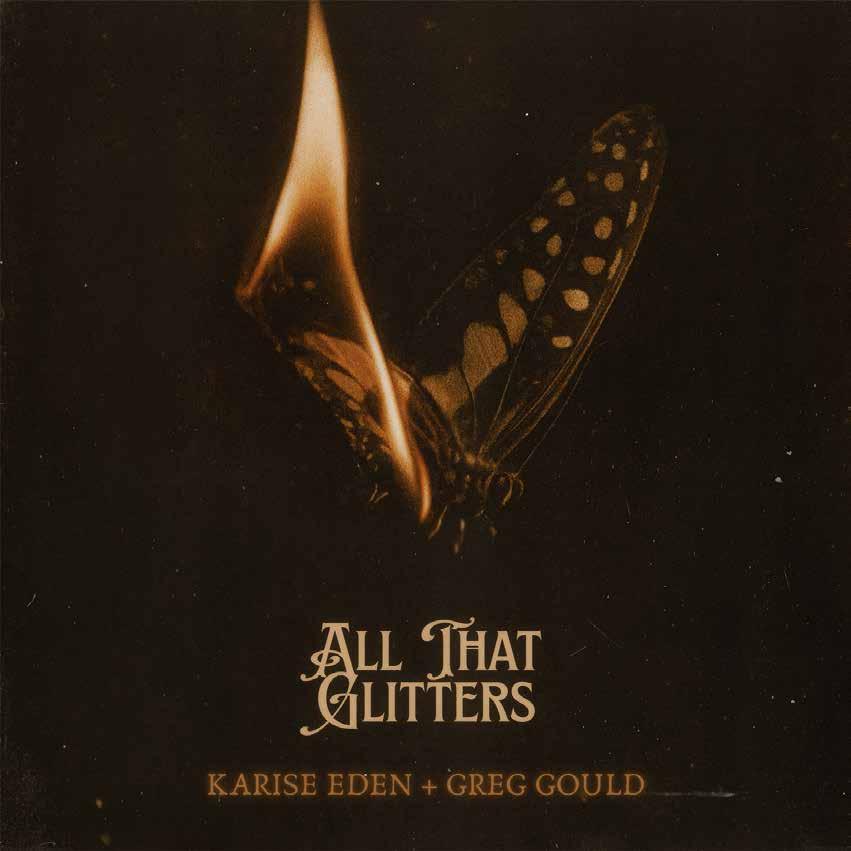
ALBUM LAUNCH: KARISE EDEN & GREG GOULD
All That Glitters

64 BOOK REVIEW: THE END OF MENTAL ILLNESS
Dr. Daniel G Amen: Could Bad Behaviour Have a Root Cause in Our Brains?

10 OUR COVER STORY: KAVYAL SEDANNI From Feeling Unseen to Helping Others Find Deep Meaning

15 DEAR FERN: Our Beautiful Readers Send in Their Issues For a Little Professional Guidance

18 THE GUT-PAIN CONNECTION
What If It Is Not Just What You Are Eating; What If It Is the State Your Body is in When You Eat?
25 INSIDE THE MIND OF A MODERN DAY EARTH ANGEL Beau Haywood’s Nourish Street for the Homeless
29
BTV SPECIAL EDITION: HER STORY
Find Fragments of Yourself in our SHEroes Stories
42 THE 5 LOVE LANGUAGES
Find Out What Your Primary Love Language Is
50
66
86
99
PRODUCT REVIEW: HEAL FLUX FREQUENCY GENERATOR
We Road Test The Heal Flux Frequency Generator and Remove the Guesswork
CRACKING YOUR ASTROLOGICAL CODE
Sedona J Helps You Discover What Lies Beneath the Surface with Astrology
COLOUR ME HAPPY with Lexi
Lexi Will Help You Find Colours to Improve Your Mood And Make You Pop
PROFESSIONAL HUB
CPD Workshops And Lots More for Professionals
For less than the price of a cup of coffee, just $5 per month and you can subscribe to BTV and start receiving discounts now! Get your subscription outlay back by saving 10% on Heal Flux Frequency Generator, Free Courses, up to 20% discount on therapy sessions, 20% off Authentic Alchemy Retreats and lots more. Of course, this is cumulative and will just keep growing as we do. Beyond the Veil is a global community dedicated to healing, personal growth and deeper selfunderstanding. This is more than a magazine. It is a space where truth is honoured, voices are heard and meaningful change begins. By subscribing, you gain access to high quality content while supporting a platform that elevates practitioners, shared lived experiences and creates impact in the wellness and therapy space whilst remaining FREE to the public. Stay informed, feel empowered and remain connected with every issue.

WEBSITE: SUBSCRIBE & JOIN OUR COMMUNITY
Continue the Beyond The Veil journey at: www.beyondtheveilmagazine.com.au
Visit our website to explore even more beyond the pages and access a hub of wellness, therapy and personal development resources. Discover our “VIP Members” Lounge, popular articles on anxiety, depression and exclusive content designed to support your personal and professional growth. Our website is a dynamic space where community, education and opportunity come together, connecting readers, therapists and advertisers in a powerful and meaningful way. Whether you are looking for support or seeking aligned opportunities, this is where connection, visibility and expansion begin. Step Beyond The Veil and discover everything waiting for you online.

This is not just a magazine. It is a space for the parts of you that don’t always get seen. The quiet strength. The healing. The becoming. You don’t need to rush through these pages. Let them meet you where you are and take what you need.





For Karise Eden, this new song - that she co-wrote with Andrew Lowden - addresses the sudden fame she found following her success as the first ever winner of The Voice Australia and the expectations placed upon her following that moment.
“After albums, touring and building my independence, I went through a period where life caught up with me and writing felt out of reach,” she says.
After her win, Eden became a mother and her priorities naturally shifted towards protecting her child first and foremost.
This created a disconnect, and “All that Glitters” was born from the tough process
of breaking cycles and reclaiming creative independence after trauma, grief and the intensity of working in the music industry. She sent the demo to singer Greg Gould, who loved it and recognised parts of his own story in the lyrics - having been a vulnerable teen on Australian Idol and then navigating the world of music as a gay artist, where he wasn’t always accepted or allowed to be himself.
“When Greg came into the picture, the story opened up, bringing two perspectives together, two artists, two stories carrying different experiences, but finding common ground in resilience and honesty,” says Eden.


Karise Eden and Greg Gould’s powerful new single “All That Glitters” delivers a powerful reflection on survival, strength and the restorative power of music. Turning fear into courage and hope, their deeply moving collaboration uplifts and empowers others to claim their own path and live with authenticity. ters”

The collaboration, with its powerful sound and music video, makes a statement about redemption, autonomy and forging your own path despite the expectations and judgements of others. Both artists felt boxed in by the music industry and this song is a statement of freedom and self-love. After living with fear for a long time, Eden acknowledges: “All That Glitters”, became the song that brought me back.”
The single came out 20 March 2026, and will appear on Greg Gould’s new album “Strings Attached”, out 10 April 2026.
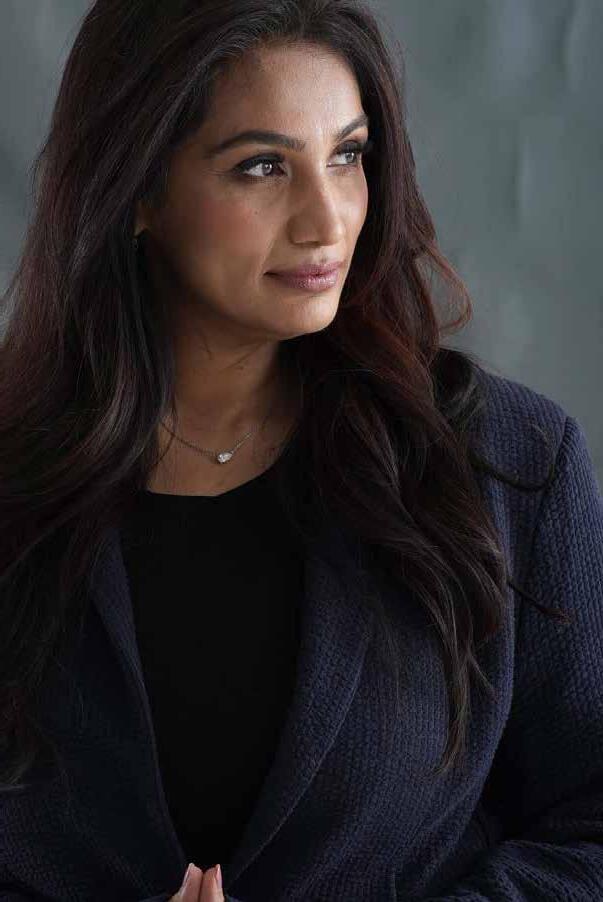
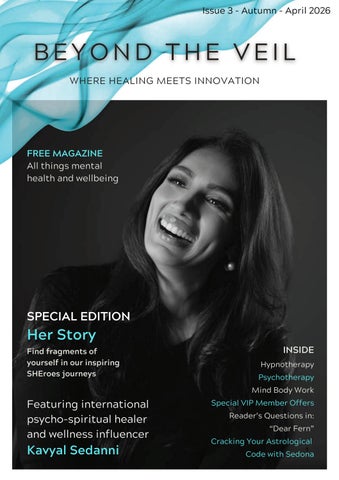
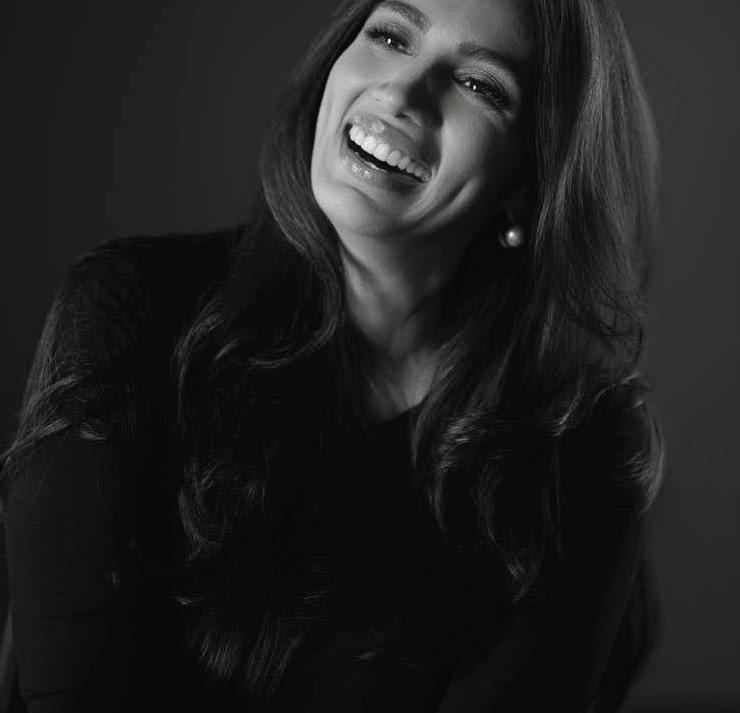
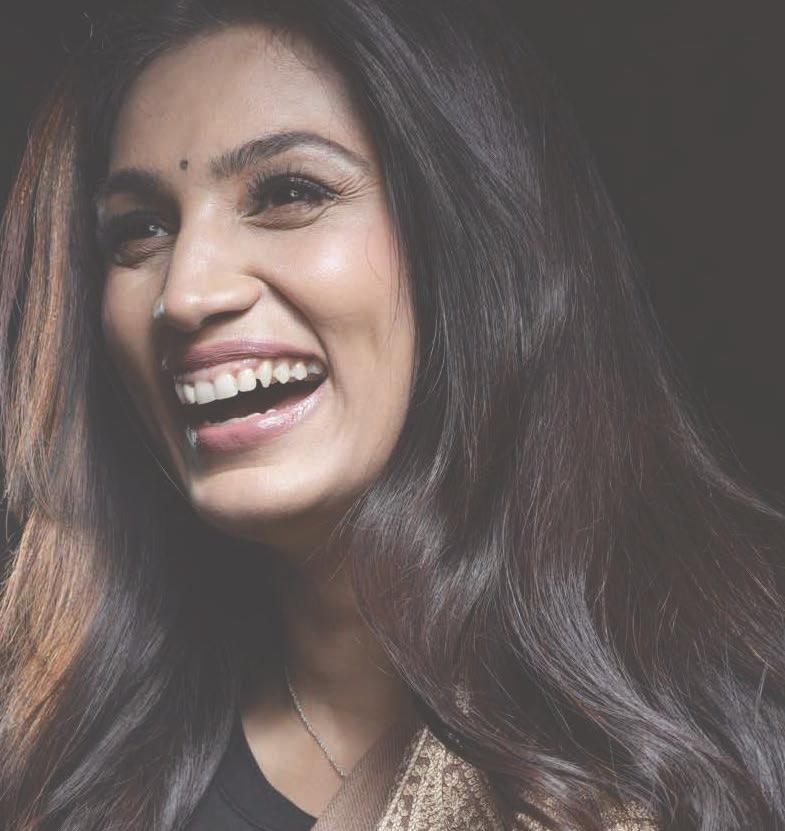
From feeling unseen to helping others feel deeply understood, Kavyal Sedanni shares her journey of healing, connection and transformation





Kavyal Sedanni is an internationally recognised Psycho-Spiritual Healer, Therapist and Life Coach with over two decades of experience guiding individuals toward emotional clarity and personal transformation. Known for her warm, humour-infused and unconventional approach, she blends therapeutic modalities with intuitive insight to help people feel understood and empowered. A Life Coach, Hypnotherapist, Certified NLP Practitioner, Family Constellations Facilitator and Tarot Card Educator - her work integrates psychological frameworks with spiritual insights, offering structured, yet intuitive approaches to healing, self-awareness and conscious living.


QTell us about your trials, traumas and challenges.
Growing up, I did not feel seen or valued. I was not a great student and I was often judged for my skin colour and my body weight. For many years roughly from about age 12 to 17I felt unwanted and almost invisible. But those early experiences taught me something essential the power of connection and safety. I learned to listen for what helps people open up. For me, that has been music.
In my work now, I use music as a healing tool, it is an active part of my workshops and therapy sessions.

Sometimes, you need a concrete shared ritual to start the process of healing. For me, singing together or using music to ground and calm the body has been transformative. I have even described myself as a “wounded healer”, a term for someone who is broken down and found a medicine that heals. Now, I am sharing that medicine with others.

QWhat led you to your healing journey?
Was there a single incident or did it unfold?

There was not a single moment that started my healing, it unfolded over time. I began to realise that healing is not something that happens all at once. It is a gradual, ongoing process - an accumulation of moments where I chose safety, connection and truth over hiding in the shadows. The turning points came through small acts of courage, naming pain, allowing myself to feel and discovering tools that could meet me where I was. Music played a central role in that evolution, both as a personal balm and as a bridge to others who feel unseen. The journey did not begin with a single dramatic incident, but with a decision to seek a different way of being, one that could invite healing into my body and my life.

What steps did you take on your journey?
Which modalities worked for you?
The path that worked for me is not a one-size-fits-all, but a constellation of approaches that fit my rhythm and needs. Central to it has been:
Music and Embodied Work: Using singing, rhythm and music to ground the body, soften defences and create a safe space for emotion. In my workshops and therapy sessions, music is a practical, active tool that helps people drop into what they are feeling.
Somatic and Relational Practices: I learned to sit with people, hold space and gently guide them toward connection. If I am with a woman who has shut down, I will slow things down, sit beside her and start with something as simple as naming a favourite song. We sing together for a bit and gradually safety starts to return.
Psychoeducation and Storytelling: I have found that helping people name their experiences and tell their stories creates a bridge from guardedness to connection. Movement, breath and rhythm often accompany these conversations to ground the body.
Community and Sisterhood Work: Creating shared spaces where women can witness each other’s journeys reduces isolation and builds strength through mutual support.

QWhat is one solid piece of advice that you would give to the sisterhood just starting out on their journey?
Start with small, tangible rituals that re-create safety in your body. For me, that is music/singing, rhythm and a simple moment of presence with another person. When you are starting out, choose one concrete practice you can return to in moments of overwhelm - a song that centres you, a breathing pattern that calms the nervous system or a person you trust to sit with you and name a feeling. Repeat it and let the practice become a reliable medicine you can carry into everyday life. Healing is not about a grand gesture, it is about consistent, embodied steps that help you feel seen, connected and whole.
“Healing is not a single moment - it is a series of small choices to feel, connect and come back to yourself.”
Ed: Kavyal’s podcasts are a powerful extension of her voice - authentic, grounded and deeply reflective. Through honest conversations and lived experiences, she creates a space where growth, healing and self-awareness are not just concepts, but embodied journeys. Her storytelling carries both strength and softness, making each episode feel like an intimate dialogue that inspires listeners to reconnect with their own truth and potential.


Instagram: www.instagram.com/kavyalsedanni
Facebook: www.facebook.com/kavyalsedanni
LinkedIn: https://in.linkedin.com/in/kavyal-sedanni
Youtube: www.youtube.com/@KavyalSedanni

























Our resident clinical hypnotherapist Fern Warren answers reader questions on healing, mindset and emotional wellbeing.

“Dear
Fern, I constantly feel anxious even when nothing is wrong. My mind keeps imagining worst-case scenarios and I struggle to relax. Is there something deeper going on?” Emily, 32
It can feel exhausting when your mind constantly jumps to negative conclusions, even when life feels safe logically. This happens because the brain is naturally wired to scan for possible danger as a survival instinct, keeping us alert and prepared. Sometimes, this protective system becomes over-enthusiastic, leading to loops of “What if?” thinking that keep both mind and body on edge. A helpful approach is learning to step back and observe your thoughts with a little distance - noticing them with neutrality, rather than automatically believing everything your mind tells you. Imagine your thoughts like emails arriving in your inbox: some are useful, some are neutral and some are merely spam. The mind produces thousands of thoughts every day and just because a message arrives, it does not mean that it is important or true. When an anxious thought appears, gently pause and take a regulating breath - inhale slowly through your nose for four seconds, hold it for seven seconds and exhale through your mouth for eight seconds.
Please Note:
Fern Warren: Clinical Trauma Hypnotherapist. (Dip. Clinical Hyp.Sc), Life Coach. Owner and Director of Pure Soul Therapy. www.puresoultherapy.com

Gently notice the thought and say to yourself: “I am noticing my mind is having a thought that…” This small moment of simply “noticing” the thought without judgement, creates psychological distance between you and the thought. From there, you can calmly ask, “Is this thought actually true? What evidence do I have?”. Sometimes the healthiest response is to recognise the thought as mental spam and simply let it pass. This simple shift reminds us that not all thoughts are facts and that a thought is just something the mind is producing in that moment and not necessarily something that needs to be leaned into. Another practice to support the redirection of the mind, is what I call “Safety Spotting.” The brain naturally scans for danger as a survival mechanism, but we can outsmart it by intentionally noticing moments when we are safe - like a peaceful walk, a quiet cup of tea or simply a delightful conversation. Each time you do this, you are reclaiming power from anxious thoughts and sensations and teaching your mind that calm is your default mode. With intention and consistency, the mind can absolutely relearn to recognise safety and calmness that already exist around you. If these experiences continue to feel difficult to navigate, speaking with a qualified trauma therapist can provide personalised support and guidance.
The responses in this column are provided as general educational commentary only. They are not intended to provide psychological, medical, legal or therapeutic advice and do not create a therapist–client relationship between the reader and the author. In the interest of privacy, names and certain identifying details have been altered. Responses are based solely on the limited information provided by readers and are intended to discuss general themes, rather than provide assessment, diagnosis or guidance for any specific individual. Individual circumstances vary widely. Readers should not rely on the information in this column as a substitute for professional advice tailored to their personal circumstances and are encouraged to seek guidance from a qualified professional who can consider their individual needs, history and situation.
Beyond the Veil magazine serves both the professional community and the general public, aiming to educate, inform and advance understanding of hypnotherapy, psychotherapy and related modalities, while maintaining high standards of professional integrity. Articles and columns are written by accredited members of relevant professional associations, including qualified hypnotherapists, trauma therapists, psychotherapists and psychologists.
The views expressed are those of the individual authors and do not necessarily reflect the views of the publishers or editors of Beyond the Veil magazine. The author and publisher accept no liability for any loss, harm or damage that may arise from reliance on the information contained in this column. All content is provided for informational and educational purposes only and is not a substitute for personalised medical, psychological or mental health care. If you are experiencing significant distress or are in crisis, please seek immediate support. In Australia you can contact: Triple Zero (000) in an emergency. Lifeline: 13 11 14. Beyond Blue: 1300 22 4636.


“Dear Fern, I wake up every day feeling unmotivated and emotionally flat. I know I should feel grateful for what I have, but I just don’t feel joy anymore.” Sarah, 41
Feeling emotionally flat or low in motivation can be confusing, especially when part of you believes you should feel grateful or happy. Many people quietly carry feelings like this and it takes courage to speak them out loud. What you are describing is a far more common human experience than people often realise. Life can feel heavy, overwhelming or numbing and our usual sources of joy may feel distant or hard to access. This can happen for many reasons - too many disappointments, prolonged stress, burnout, disrupted routines, hormonal changes or subtle shifts in how the brain processes reward and motivation - all of which can quiet our natural spark of curiosity, pleasure and engagement.
“It can be helpful to intentionally schedule time for things that bring you joy.”
Feeling disconnected can often be your mind and body signalling that they need rest, recalibration, healing or gentle re-engagement with what matters most. Emotional flatness can also arise from living on autopilot, doing things out of obligation, a build up of tiny tolerations and micro-tensions over time or even feeling disconnected from your values and what gives life meaning.
You might like to consider gently asking yourself what small activities or experiences awaken a glimmer of joy within you - even if only briefly. It can be helpful to intentionally schedule time for things that bring you joy, whether a hobby, a creative project or quality time with your loved ones. Another way to support training your brain to notice positive experiences more readily, is by practicing gratitude - regularly noticing and writing down the things you are thankful for.
Exploring new experiences that carry meaning and purpose can further awaken presence, curiosity, joy and engagement. A small experiment could be to journal positive moments each day or taking note of when your body or mind feels lighter, calmer or more present. Over time, this practice helps entrain the brain to naturally recognise moments of calm, joy and meaning. Little by little, the mind learns to notice what feels good again.


“Dear Fern, Something traumatic happened to me a few years ago and I thought I had moved on, but certain situations still trigger intense fear and panic. Why does this happen?” Rachel, 36
It can be hard when past experiences continue to affect you. It is also common for intense fear or panic to resurface in certain situations, even years after a traumatic event. This happens because the mind and body can hold on to strong emotional memories, keeping us on alert - long after the original danger has passed. It is the same protective mechanism that stops us from touching a hot stove twice, your nervous system is remembering pain in its attempt to keep you safe in the future.
“Dear
You might like to notice where tension or tightness arises in your body and gently reflect on what it is trying to communicate. Emotions are meant to be transient and move through us like visitors passing through. However, emotional discomfort can be perceived by the brain as pain to be avoided, rather than as a signal of where healing is needed - this is one way trauma can be stored in the body. You could reflect upon: “Where in my body am I feeling this tension?” or “What might this sensation be trying to tell me?”
Fern, I recently came out of a painful relationship and I seem to keep attracting the same type of partner. Why do we repeat unhealthy patterns and how can I change this?” Grace, 39
It takes honesty to reflect on painful relationship experiences and to question patterns that keep appearing. Many people quietly ask themselves this same question, so your willingness to explore this is a meaningful and courageous step. What you are describing is more common than many people realise. Human beings are naturally drawn to what feels familiar. To the brain, familiar often equals safe, so it will instinctively recognise and repeat relationship dynamics it has experienced before - even when those patterns are not healthy. Sometimes earlier experiences shape our internal expectations of love, connection and safety.
At other times, the mind may unconsciously try to resolve unfinished emotional patterns by recreating familiar dynamics, hoping for a different outcome. Another factor is that intense “chemistry” can sometimes feel exciting, but is actually the nervous system recognising something familiar, rather than something healthy. Beneath these patterns there can also be quiet beliefs about selfworth - particularly around whether we truly believe we are worthy of consistent, respectful love.
As you continue to breathe slowly and deeply, imagine inhaling safety and sending warmth or calm to any areas of tension or discomfort within you. As you exhale, visualise the tension softening or flowing out. Gentle movements such as shaking your hands out, swaying, rolling your shoulders or back, tapping or stroking the sides of both of your upper arms or small stretches can also support the release of tension. Small, consistent practices like these help the mind and body feel safer and more in control.
“When self-worth strengthens, it becomes easier to recognise when something is not aligned.”
When self-worth strengthens, it becomes easier to recognise when something is not aligned with our best interests and to walk away freely from situations that do not honour your needs or values. You might reflect on what your past relationships had in common. How did the connection feel in the early stages? Were there small signals you noticed, but overlooked? What qualities help you feel calm, respected and emotionally safe? Some people find it helpful to write down the values and behaviours they want in a healthy relationship and use this as a guide moving forward.
By Claudine Capel
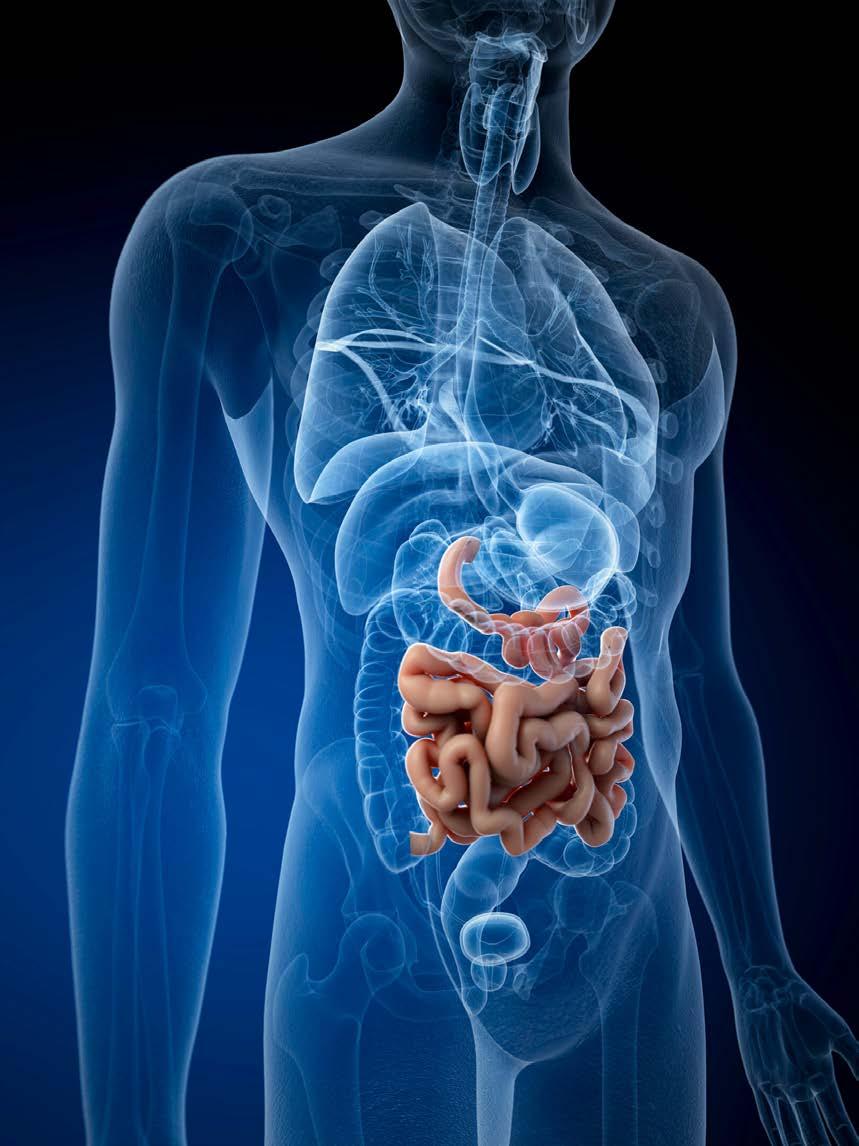
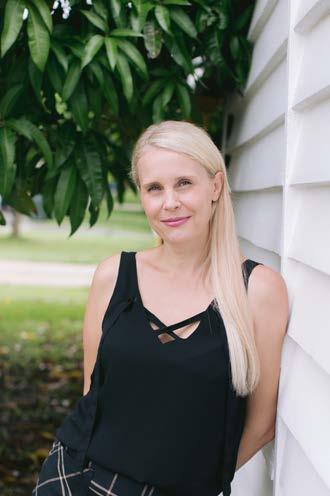
The ever-evolving field of gut health is now moving from the gut-brain connection into an awareness of the microbiome’s interplay with the nervous system and emotions. Claudine Capel takes a deep dive…
Maybe you have cut gluten, removed dairy, tried low FODMAP, added probiotics, prebiotics and fermented foods. Maybe you have even tried celery juice and spent $500 on supplements. Sometimes things work, sometimes they don’t, and worst of all, sometimes they work but then one day they stop working…
Experiencing yet another flare up of bloat, discomfort or brain fog when you have tried so hard to find the answers can crush your spirits. It doesn’t always seem to be an exact science getting your gut health right. Yet you can’t get off the hamster wheel because you desperately need answers…
A growing body of research - along with what many practitioners are now seeing clinicallyis asking, what if it is not just what you are eating… what if it is the state your body is in when you eat?


The gut is no longer being viewed solely under the lens of digestion or even the gut-brain connection, but as something deeply responsive to the whole nervous system - and therefore the entire body - and the emotions.
This brings in new insight and a path forward - factoring in stress, safety and your internal mental state as the missing jigsaw piece.
What if it is not just what you are eating... what if it is the state your body is in when you eat?
We know that when the body perceives threat, whether physical or emotional, it shifts into the sympathetic state we call fight or flight. Blood flow is redirected away from the organs, enzyme production drops, bowel motility slows. The gut becomes a lower priority than tackling the perceived danger.
Yet digestion - and in fact all healing processes, thrive in the parasympathetic state of rest and digest. Hence the recent popularity of vagus nerve work - the key pathway between brain and gut.
This means you can eat the same meal on two different days and have completely different digestive outcomes depending on your internal state.
As Naturopath Johanna Gibson from Inside Out Clinic explains, “The nervous system is massive in healing because it’s just so connected to everything. There isn’t a part of your body that isn’t tied in with your nervous system. It’s huge.”
For many these days, stress has become chronic. Our emotional and mental loads plus unresolved trauma in the backgroundare overwhelming. This translates into bowel motility issues (constipation or diarrhoea), gut sensitivity (pain, bloating), leaky gut and inflammatory responses. Plus a whole variety of uncomfortable conditions elsewhere in the body, that are then able to manifest on top.
“YOU CAN EAT THE SAME MEAL ON TWO DIFFERENT DAYS AND HAVE COMPLETELY DIFFERENT DIGESTIVE OUTCOMES DEPENDING ON YOUR INTERNAL STATE.”
“I see a lot of people that have got anxiety, depression and other mental health disorders and they think it’s in their mind only,” says Gibson. “Yet obviously I know it is a lot to do with the gut. When I’ve explained to them how their vagus nerve works, what’s happening with all their nutrients and what their microbes dictate, they often have a bit of a lightbulb moment.”
When the body has had to learn a pattern of holding tension or pleasing others throughout life, it adapts and stays switched on. The nervous system is permanently fired up and and the gut and brain continually give out warning signals.
As Dr Gabor Maté writes in When the Body Says No: The Cost of Hidden Stress, “When we have been prevented from learning how to say no, our bodies may end up saying it for us.”

“I ACTUALLY DON'T THINK YOU CAN TREAT ANYTHING WITHOUT WORKING ON THE NERVOUS SYSTEM AS WELL.”
So, changing the hyper-vigilant-anxious cycle into one of belief in your power to heal and the work you are doing actually supercharges the process.
This explains why adding in a holistic and trauma informed approach can also be game-changing for certain long-term gut-health sufferers.

Much of modern gut health advice is built around controlling the outside factors: eliminate or add things, avoid triggers and follow strict protocols and while these get people on the right path, it can also become stressful for those in heightened states.
Positive thoughts about the healing process ease some of this stress and sometimes that belief is all they need.
"Sometimes when people aren't getting anywhere with a problem, such as pain or digestive issues and I can see they're overthinking, I give them things for their nervous system, and it calms that thought process down and they feel different,” says Gibson.
"If people are given a negative prognosis or told something scary, like their pain is being caused by 'bone rubbing on bone’ their symptoms get worse. The mind can get anxious and the nervous system gets heightened.
“So, often, if you don't address the nervous system first, none of the other dominoes are gonna fall. Sometimes it has to be the first port of call… and I actually don't think you can treat anything without working on the nervous system as well.”
A good question to ask, when tackling gut issues is, “What is my relationship with my body like?”
Is it tense or distrustful, or is there ease and flexibility? What brings your individual nervous system into peace and calm? This is different for different people.
It doesn’t matter what you change and what you do if you’re spending 90% of your time in fight or flight. Whether you want to get pregnant, or you want to digest your food… in a heightened state none of it’s going to work,” says Gibson.
This new pathway to gut healing is one that isn’t based on getting everything exactly right. Which is good news for those on the roller coaster of trying to buy the right pre and probiotics to get the right mix of billions of bacteria in the microbiome and overthinking their way into further digestive problems.
Finding safety and realising the body is always responding is more important.
A good strategy is to cover all angles. A combination protocol of nervous system staples such as magnesium, B vitamins and Ashwaganda, combined with positive thoughts and belief - and releasing old emotional painplus whatever creates safety and joy within your nervous system, can be a winning formula. Do the things you’ve been doing, but now add long walks, breathwork or cuddles with your kids and pets and consider eliminating stressful situations wherever you can.
Remember it’s not just what you eat, but how you live, feel and experience your world.
“Your thoughts are really important, every single cell in your body hears your thoughts and your self talk,” says Gibson.
So start telling yourself you are safe and finding the ways to embody that and your nervous system will start working with your gut and your brain, instead of sending them alarm signals.



The connection between gut health and autoimmune disease has been a major focus in recent years - but the conversation is evolving into nervous system work too. The gut plays a key role in training and modulating the immune system. When that system becomes dysregulated, it can begin to react inappropriately. Could the nervous system provide new autoimmune solutions in the coming months and years? in can

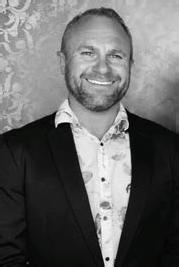
Inside the mind of a modern earth angel: Beau Hayward from Nourish Street Inc
When most people picture homelessness, the image that often comes to mind is a man sleeping on a bench in the city. But the reality we see every week at Nourish Street Inc tells a very different story. They are women.
Women who once had homes. Women who once had stability. Women who never imagined they would find themselves sleeping in a park across Australia.
Homelessness has reached levels that many communities have never seen before. According to the Australian Bureau of Statistics, more than 122,000 people are experiencing homelessness on any given night in Australia.
Around 42 percent of those people are women. The truth is this.
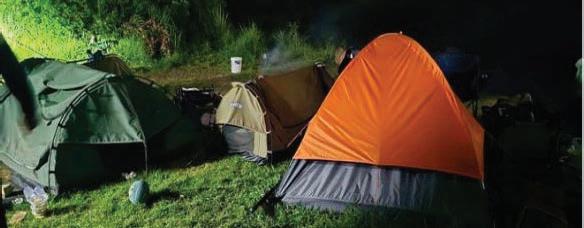
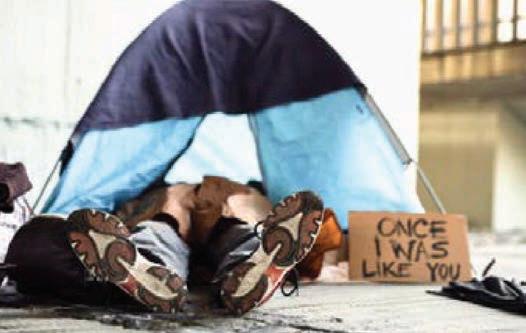
Every person sleeping in a park, or in a tent, or on the streets, was once a child with dreams. Every person in a tent is someone’s son, someone’s daughter, someone’s mum, someone’s dad. Perhaps even more alarming is the rapid growth of homelessness among older women. Women over the age of 55 are now the fastest growing demographic experiencing homelessness in Australia. Rising costs and rental market drought are pricing many working women out of the market. They say there are at times 50 people applying for the same home and it is tough to get a look in.
Many of these women have spent their lives working, raising families and contributing to their communities.
Yet today they findthemselves priced out of housing markets, pushed out by relationship breakdown or fleeing domestic and family violence.
“Why bother helping those homeless addicts?”; “Just move them on.”; “They are oxygen thieves.”; “Junkie scum.”; “They chose this.” These are just a few of the comments I read almost every day.
At Nourish Street Inc our service is simple. We help anyone who needs it. No judgement. No questions about whether someone deserves it.
Why? Because I used to be one of the people society wrote off. Homeless. Broken. Ashamed. Self-medicating to escape childhood trauma and the reality of life that had fallen apart. My life had not turned out the way the young boy I once was had imagined. Rehab and hard work saved me. But more importantly, people saved me. People who believed that even someone like me was still worth something.
If it was not for the people at rehab and Jenny standing beside me when I had nothing left, I would not be here today.
I use my story to reach people who are standing where I once stood.
So far, 10 people we have supported have gone to rehab and we have not seen them return to the streets. Ten lives that may have otherwise been written off.
Ten people who someone once called “scum”. Through our outreach we are also seeing something many people do not realise. Less addiction and more families, elderly Australians, migrants and everyday Aussies who have simply fallen through the cracks. Homelessness does not discriminate.
For many people it is not a choice. It is two missed pay cheques. A rent increase.
Death of a loved one.
A relationship breakdown. An illness. An injury. A mental health crisis. An addiction that gets out of control. And suddenly the life you built disappears.
Homelessness is often reduced to what people see. A tent in a park. A sleeping bag under a bridge. A person sitting alone on a bench.
But behind every tent is a story. A woman escaping violence. A mother trying to keep her children in school. An older woman who simply cannot keep up with rising rent. These are not statistics. These are human lives.

The fear is real. Invisibility. Feeling all alone in this world is palpable. Just for a moment, imagine it was you, (I know, I hear you say, “it could never be me”, but humour me), imagine that you have a great job, but there were 75 people at each rental viewing, getting outdone each time.
You get the final eviction notice and, “Oh crap”, you still don’t have a lease yet. No family, so you are in the unimaginable position of sleeping on the streets. It is unthinkable. it is terrifying. it is humiliating. It is your new reality! And until we begin looking beyond the visible signs of homelessness, the deeper causes will remain hidden beyond the veil.
Every Thursday night, something powerful happens on the Redcliffe Peninsula in Brisbane. From 6-8pm at Suttons Beach, Nourish Street Inc hosts a free community BBQ. Everyone is welcome. Rough sleepers, families, pensioners, people doing it tough.
OR
Simply anyone who wants to come down and share a meal with others. Each week around 120 people gather, sharing food, conversation and connection. For some people, this meal may be the most stable part of their week. For others it is simply a place where they are treated with dignity and kindness.
At Nourish Street Inc we witness the human reality of homelessness several nights every week.
Across our outreach runs we support around 390 people sleeping rough throughout the Moreton Bay and Brisbane regions.
Every week we provide approximately 750 meals to people who may otherwise go without.
Every month we distribute around $2500 worth of tents alone, along with bedding, blankets, hygiene supplies, food hampers and drinking water. These are not luxuries.
By Donating: Tents Water
Canned Food Sleeping Bags
Hygiene Products (men & women).
Warm Socks Undies
Blankets & Bedding
Old Phones

Contact: info@nourishstreetinc.org Website: www.nourishstreetinc.org Donations: BSB: 084 034
Account Number: 3155 4701 9
Volunteer enquiries: volunteer@nourishstreetinc.org
Facebook: www.facebook.com/NourishStreetInc
Instagram: www.instagram.com/nourish.street.inc















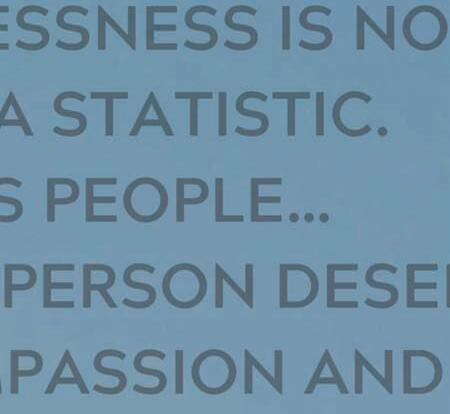
HOMELESSNESS IS NOT JUST A STATISTIC. IT IS PEOPLE… AND EVERY PERSON DESERVES DIGNITY, COMPASSION AND HOPE.

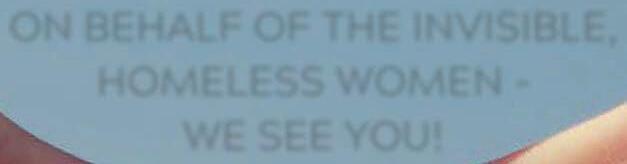
ON BEHALF OF THE INVISIBLE, HOMELESS WOMENWE SEE YOU!


























TRIGGER WARNING:
BEFORE THEY COULD GUIDE OTHERS THROUGH ALING, THEY HAD TO WALK IT THEMSELVES HEALING,
HARDSHIP.

WITHIN THESE PAGES ARE REAL AND DEEPLY PERSONAL STORIES OF WOMEN’S LIVED EXPERIENCES. SOME NARRATIVES INCLUDE THEMES OF SUICIDE, GRIEF, LOSS, TRAUMA, ABUSE, VIOLENCE AND EMOTIONAL
PLEASE HONOUR YOURSELF AS YOU READ. READ GENTLY AND IN YOUR OWN TIME. TAKE WHAT FEELS SUPPORTIVE AND LEAVE ANYTHING THAT DOES NOT. YOU ARE ENCOURAGED TO PAUSE, STEP AWAY OR SKIP ANY CONTENT THAT DOES NOT FEEL SUPPORTIVE FOR YOU.
A NOTE TO OUR READERS: ARISING FROM ITS USE.
LIFELINE: 13 11 14
THIS PUBLICATION IS INTENDED TO INFORM, INSPIRE AND SHARE PERSPECTIVES. IT IS NOT A SUBSTITUTE FOR PROFESSIONAL MEDICAL, PSYCHOLOGICAL OR THERAPEUTIC CARE AND DOES NOT CREATE A THERAPIST-CLIENT RELATIONSHIP. EACH STORY REFLECTS PERSONAL EXPERIENCE AND SHOULD NOT BE TAKEN AS INDIVIDUAL ADVICE OR GUIDANCE. READERS ARE ENCOURAGED TO SEEK SUPPORT FROM A QUALIFIED PROFESSIONAL WHERE NEEDED.
THE VIEWS EXPRESSED BELONG TO THE INDIVIDUAL CONTRIBUTORS AND DO NOT NECESSARILY REFLECT THOSE OF THE PUBLISHERS OR EDITORS. WHILE CARE HAS BEEN TAKEN IN THE PREPARATION OF THIS CONTENT, NO LIABILITY IS ACCEPTED FOR ANY LOSS OR DISTRESS

IF YOU ARE IN AUSTRALIA AND NEED SUPPORT: BEYOND BLUE: 1300 22 4636 EMERGENCY: 000 THESE STORIES ARE SHARED IN THE SPIRIT OF HOPE, HEALING AND




BEYOND THE VEIL

Sol-Tuition
Instability, survival, assault, addiction and breakdown.
Facing some of the worst of life challenges and coming out strong.
Trigger Warning: This story contains references to sexual abuse, suicide attempts and addiction. Reader discretion is advised.
QTell us about your trials, traumas and challenges.
I experienced prolonged childhood trauma, abuse and neglect within my family of origin. Sexual abuse spanned from early childhood through adolescence. Concrete memories remain from age nine onward, earlier memories exist in fragments, body sensations and flashes that took years to safely unpack and integrate. Home was unstable. We moved frequently. I attended multiple schools. There was violence, emotional neglect, gaslighting, chronic insecurity and a persistent sense that there was “not enough” of the things I needed. My nervous system never learned safety, it learned to play small, remain invisible. By 16, for reasons of selfpreservation, I left school and moved out of home.
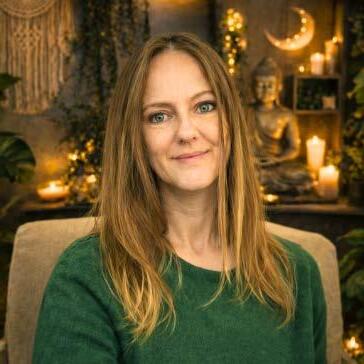
By Tarsha
It was not rebellion, it was survival. At 17, I gave birth prematurely following an assault within an abusive relationship. My son died shortly afterwards. In the stillness that followed, a sentence formed inside me:
Where there is breath, there is life. Where there is life, there is hope. Where there is hope, there is a way - the impossible becomes possible.
In early adulthood I was diagnosed with Complex PTSD, major clinical depression, acute anxiety disorder and disorganised attachment, all non-drug responsive.
I moved through a period of drug addiction between the ages of 20 and 25, another attempt to numb pain I did not yet understand how to work with.
I cycled through therapy and psychiatry for decades. Trauma stacked upon trauma. At 25, after a failed suicide attempt and hospitalisation, I reached a breaking point. Two more breakdowns followed. The deepest shift came after the birth of my second son. I knew I had to heal - not just grit my teeth and survive, but become well enough to show up differently for him.
Another defining moment came when the thought crossed my mind: What if he has done this to someone else? That question led me to the police. Although extradition was unsuccessful, I received a significant Victims of Crime payout without a judicial hearing, acknowledging the credibility and severity of my testimony. It was never about revenge. It was about duty of care. The police referred me to specialised trauma counselling, which began the next phase of healing.
QWhat led you to your healing journey?
Was there a single incident or did it unfold?
Healing unfolded in layers.
At 36, I walked into my first peer-to-peer trauma recovery meeting.
For the first time in my life, I felt seen and validated. That moment profoundly changed something in me. Finally, I was not alone with my story. Specialised trauma counselling and psychoeducation changed everything. Trauma isn’t just about overcoming what happened to you, it is also about becoming someone outside of your trauma-story. My symptoms were adaptive responses, not character flaws.
Permission.
I had to give myself permission to heal. This was the biggest key for me.
I began to see that staying identified with my pain was not loyalty to my story, it was allegiance to what had hurt me.
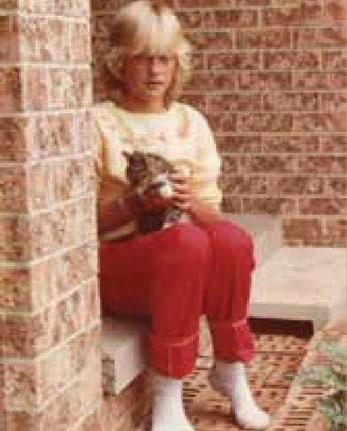
QWhat steps did you take on your journey? Which modalities worked for you, as we are all different?
Healing required an integrative approach: trauma-informed counselling, peer recovery, somatic work, clinical hypnotherapy, meditation, nutritional repair, complementary modalities and careful exploration of emerging altered-state research. We are created to self-heal. Trauma obscures those codes, but it does not erase them.
Today I work as a Clinical Hypnotherapist, Intuitive Trauma Counsellor and Meditation Coach. Through Sol-Tuition, I help people close the gap between their trauma-self and who they truly are.
The deepest shift came after the birth of my second son. I knew I had to heal - not just grit my teeth and survive, but become well enough to show up differently for him.
QWhat is one solid piece of advice that you would give to the sisterhood starting out on their journey?
When you give up, they win. When you heal, they lose. Keep moving forward - and if hope feels impossible right now, borrow this:
“Where there is breath, there is life. Where there is life, there is hope. Where there is hope, there is a way the impossible becomes possible”.

Tarsha.
Clinical Trauma Hypnotherapist. Intuitive Trauma Counsellor. Meditation Coach. Sol-Tuition.
Moving forward isn’t about leaving any part of you behindit’s about coming home to yourself.
Website: www.sol-tuition.com
Email: tarsha@sol-tuition.com
A deeply personal reflection on loss, love and the quiet strength it takes to carry grief in all its forms.
QTell us about your trials, traumas and challenges.
There are moments that divide your life into before and after. Before loss, the world still feels whole. After loss, you begin to understand life in a way you never had to before. I would come to learn the hard way - through multiple experiences - that grief takes many forms and none of them arrive gently.
I had known loss before, but it was the passing of my Nan that first introduced me to the feeling of grief. It came more softly back then, painful and aching, yet tender and manageable and I believed I understood it. Little did I know, just how many different forms grief can take and how different each one can feel. Over time, through many more experiences, I came to understand just how deeply grief can evolve.
A next painful chapter of grief was written when I lost two of my best friends to cancer within just few years of each other. Tragically, both were newly pregnant with their second babies when they were diagnosed. They were young. They were mothers. They were supposed to grow old. I watched them deteriorate in ways that felt both surreal and unbearably real all at the same time - their strength slowly diminishing, their bodies changing against their will, their smiles gradually softening, their energy fading - all while the world kept moving as if nothing heartbreaking was unfolding. There was a particular helplessness in witnessing their decline, a quiet dread in my chest each time I saw or spoke to them, knowing what was coming, while desperately willing it not to be true.
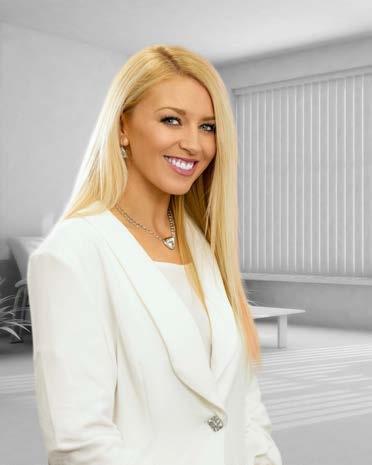
By Fern Warren
People would often say to me, “Prepare yourself”, but I discovered that nothing can brace a heart for the ache of losing someone you love. The pain of anticipatory grief entwined with a sense of injustice left my heart feeling broken and heavy. I found myself grieving them while they were still here, mourning not only who they were, but the decades of motherhood they should have had, the ordinary milestones we often take for granted and the quiet future memories that would never be made. The only quiet mercy in this kind of grief, is that knowing someone’s time is limited, gives you the chance to speak the words that matter - words of love and gratitude that might otherwise go unspoken. I was to discover though, even sharing those intentional words of love and gratitude, still did nothing to soften the pain of their passing. In fact. Nothing did. Witnessing their tiny children at the funerals of their young mothers revealed a depth of grief I had never known before, a deep ache so strong that it registered in my body as a sharp and pointy sensation that made it feel hard to breathe at times. Their children’s tiny, innocent presence beside each of their mother's resting places highlighted the true reach of loss: not only the absence of my dear friends, but the lifelong void their children would come to carry.
Some losses were silent. One of the most private chapters of my journey with grief was a miscarriage, where I grieved an alternate reality that I so desperately wished existed. This was invisible grief, where I felt strangely compelled to keep it private, quiet and silent. This was an experience of quietly mourning a future, a name, a version of myself and a precious child that the world never got to meet, but that my heart had already known and loved so tenderly. A grief that lived within me, unseen, but deeply, undeniably real. Then came the loss of my special one - my hero, my mentor, my inspiration, my lifelong best friend and ever-present steady anchor, my Pop. He was fortunate enough to have a long and beautiful life and lived until he was 99 years young. This was a different kind of grief - deep, heavy and dark, the kind that feels as though it might break you beyond repair. It felt like being deep in the depths of despair. It was - and still is - an achingly painful, lovesoaked grief, the kind that arrives even when a life has been fully lived. I discovered that no number of years ever feels like enough when someone has always been your safe place and your “person”. I did not know a life without him by my side. There was a void in my heart in the shape of him - one that only his presence could ever fill. Then our family faced the unthinkable. My beautiful 11-month-old nephew was diagnosed with brain cancer. I felt like my heart was in disbelief at how the universe could allow such a profound injustice. It just felt so wrong. I was also watching my brother and his wife walk through a pain no parent should ever have to endure, the overwhelming worry, intense stress over every sickness, fearing whether they should ever have another child, fearing going too far away from home, grieving the loss of normality and grieving an alternate life that should have been theirs. Witnessing all this - while feeling utterly helpless to take any of their suffering away - felt so heavy. This was anticipatory and protective grief - the unbearable ache of loving a child fully, while living in the shadow of uncertainty and constantly bracing for possibilities that no family should ever have to imagine. Every moment with him became more precious and every one of his smiles became a sacred gift, carrying within it both overwhelming gratitude and the quiet - but somehow loudawareness of how fragile and extraordinary it was that he was even here with us at all. The level of his courage and resilience is the most inspirational reminder to stay strong - yet gentle, to be truly present and grateful for every moment and to never take a single day for granted.
Then life delivered another lesson in grief, a loss that carried added layers of trauma within it, when my only sister passed suddenly.The tragic way she died and other painful circumstances involved, left scars that the word “grief” alone could not ever describe. It was already so hard losing my sister, but to witness my parents, brothers, her husband and children and precious others I love grieving - was a different kind of heartbreak that stayed with me. This was traumatic grief - where trauma intertwined with sorrow, pain, anger and injustice. There was shock, confusion, sadness, hurt - and it left behind a kind of pain that lingered, unresolved and difficult to put into words. The situation and the suddenness made the grief jagged, raw, traumatic and unpredictable - a storm of emotions that surged without warning. I came to understand the weight of loss through cumulative grief - the way each new grief awakened the ache of every past loss, building on the grief that came before, layering sorrow over sorrow and teaching me just how deep, complex and enduring the heart’s capacity for loss can be.
“The irony of grief is that the one person who could take the pain away, is the only one who is no longer here.”
I was a happily married mother of four beautiful children who were the centre of my world and had an expansive, beautiful social support network - and yet, beneath the surface, cumulative grief left me quietly struggling to hold everything together. I did my best to stay strong and keep a brave and positive face, but inside, my heart was drenched in sadness and saturated with grief. Even when surrounded and supported with so much love in your life, the irony of grief is that the one person who could take the pain away, is the only one who is no longer here. For me, grief has taken many forms, each with its own complexity. There is sudden, unexpected loss with shock that can intertwine with trauma, there is anticipated loss with the loss of elders or with prolonged illness, where you begin grieving someone while they are still here and miscarriage, a grief held within the confines of your own body. Each is very different and I still can’t determine which is harder, the shock and abruptness of sudden loss or the long, painful, slow witnessing of decline. What I do know, is that each form of grief is painful and that grief is heavy to carryunbearably so at times - yet in carrying it, you begin to build the very strength required to hold it.
Something within you strengthens as you bear the weight of grief, quietly and persistently. Over time, almost without noticing, you develop the capacity to carry what once felt unendurable, so grief does not leave you or become lighter; you grow stronger to hold it and then grow around it. While the insight through multiple experiences does not lessen the weight of it when you are the one carrying it, it does teach you how to move with it.
Grief still comes in waves - but now at least I know how to ride the waves - without them pulling me under.
QWhat led you to your healing journey? Was there a single incident or did it unfold?
My healing journey really began when I came across a Facebook post about studying hypnotherapy. Since hearing about my Pop’s experience years earlier, hypnotherapy had fascinated me - the subconscious mind, how patterns form and the possibility of changing them. The post stopped me in my tracks, it felt as though it was speaking directly to me.My mind, body, heart and soul were all in such alignment at the thought of this becoming my career, that it felt like my whole body said, “YES!”, little did I know how life changing this moment would become.
QWhat steps you took on your journey, as in which modalities worked for you, as we are all different?
Studying hypnotherapy opened a personal healing path as I learned about the mind, trauma, grief and the way healing techniques can also help the healer. What I initially thought would just be a career pathway, soon became something much more personal, as I discovered that in learning to help others heal, I was also healing myself. During the course, I experienced the DeTrauma Technique™, a process that integrates a range of therapeutic approaches, including hypnotherapy, EMDR, inner child healing, neurolinguistic programming, cognitive behavioural therapy, resource therapy, somatic therapy and more. It made perfect sense that combining a multi-layered approach with multiple proven healing modalities would create such a powerful and impactful path for healing. These modalities revealed themselves as effective, practical tools for healing grounded in science - not just hopeful ideas. Experiencing this work amazed me with its effectiveness and it sparked a deep curiosity in me, sending me down a rabbit hole of research, studies and further exploration. I could not get enough of understanding how these approaches, combined with neuroscience, psychotherapy and related disciplines, could guide both healing and personal transformation. The work helped my heart learn to live with grief and trauma - not erase it, bypass it, suppress it or ignore it, not hoping that it would go away on its own with tears, talking and time, but learn how to live with it. I learned how to sit with my feelings without being consumed by them. My journey became a process of sitting with feelings, understanding the mind and nervous system regulation, while discovering that helping others also aided my own healing - and in that, I found the power to rewrite my own story.
help me heal and eventually help others do the same.
My fascination with the power of the mind first began when my Pop shared an experience that he had many years earlier that stayed with me forever. There was a time in his life when doctors believed he could not survive. The treatments were just not working. He described having a sudden compulsion - that arrived from somewhere unbeknown to him - to visualise a warm, healing, white light at a mid-point between his eyebrows. He felt this intuitive instinct - that he did not even understand - to move that white light through his body to the places that needed healing. He focused on it. He vividly visualised it repairing - again and againand he recovered in a way that no one ever expected. His story stayed with me - like a quiet whisper that healing might be possible even in the face of the impossible. I found myself drawn to the mind, to psychology, to neuroscience, to the ways that the body and the brain hold wisdom and the ways that we can learn to guide it. My fascination became something deeper. I didn’t just want to believe healing was possible, I wanted to understand it deeply. How does the brain cope under pressure? How do emotions shape our bodies and behaviours? How does trauma imprint itself and how can we create lasting change? I was searching for a framework that combined science, emotion and practical strategies - a way to bridge the gap between hope and evidence, between what feels true and what actually works. Many years later, as my four children were getting older, I began thinking about returning to work. I wanted something flexible around family life, but also meaningful - something that made sense of what I had lived and gave me purpose. Life was quietly guiding me toward work that would help me heal and eventually help others do the same.
Each modality I studied became a doorway into understanding grief and trauma. EMDR softened stuck memories, reducing their emotional intensity. NLP reshaped my inner experiences, helping me reinterpret thoughts and feelings. CBT, Psychotherapy and Resource Therapy highlighted patterns, allowing my many parts to coexist more harmoniously. Neuroscience revealed how the body stores memory and responds to stress, showing how trauma shapes physiology and experience. Clinical Hypnotherapy uncovered subconscious patterns around safety, loss and survival that had quietly governed my life. Visualisation with focus, intention, emotional resonance, mental rehearsal and sensory immersion blended ancient wisdom with science, teaching me to fill my body with safety, wholeness and strength. Therapeutic journalling helped me express and process emotions, clarify inner experiences and foster self-understanding. Attention to nervous system regulation, boundaries and the ways trauma shapes beliefs deepened my insight. Together, these practices did more than teach techniques - they guided me into a new relationship with grief. I learned that grief can be carried, integrated and transformedeven as the bonds inside us replay memories, unspoken words and emotions yet unprocessed. Grief is no longer something that breaks me - it has become a teacher, a companion and a guide.
QWhat is one solid piece of advice that you would give to the sisterhood just starting out on their journey?
If I could share my heartfelt advice with anyone starting their journey, I would tell them this: do not rush your healing. There is no prize for being the strongest person in the room while silently breaking inside. Sit with your feelings, even the ugly ones. Especially the ugly ones. Grief, trauma and emotional discomfort are not problems to fix; they are messages from your body, invitations to listen and lessons to integrate. Find community. Healing does not happen in isolation. It happens in safe connection. When we share our stories, shame dissolves. When we realise we are not alone, resilience grows. You are not behind. You are not broken. You are becoming. Look for lessons and meaning in your experiences and allow the wisdom to make you better, not bitter.
Appreciate the small moments, because the smallest moments often hold the greatest joy. Cherish life. Simply being alive is a privilege denied to others - this taught me to truly treasure my time with the people I love, so my advice would be: Love - really love. Be grateful - really grateful. Stay present - really present. Listen - really listen. Smile - really smile. Laugh - really laugh. Hug - really hug. I now find myself hugging my loved ones more fully than ever before, I squeeze a little tighter and for a little longer, basking in their presence, treasuring the sound of their heartbeat, feeling the warmth of their “aliveness” and fully absorbing the quiet magic of these precious moments. I now use adverse experiences to uncover their lessons and explore all the ways they can shape me. I allow my feelings to flow. If you are in the midst of your own storm, trust this: there is life beyond it, purpose beyond it and a version of yourself on the other side who is softer, wiser, stronger and far more powerful than you could ever imagine. That version of you is waiting, ready to rise, ready to transform wounds into wisdom and ready to live fully guided by gratitude and love.
Fern Warren:
Trauma Informed Clinical Hypnotherapist (Dip. Clinical Hyp.Sc). DeTrauma Technique Practitioner, Life Coach, Owner and Director of Pure Soul Therapy. Pure Soul Therapy.
To Book Online Sessions, visit:
Website: www.puresoultherapy.com
Email: puresoultherapy@outlook.com
To Book In Person Sessions:
Location: North West Medical Centre, Suite 1/125
Flockton Street, Everton Park, QLD, 4053.
Email: hello@braunmedical.com.au
Phone: 07 3353 9694
Social Media:
Instagram: www.instagram.com/puresoul.therapy
Facebook: www.facebook.com/puresoultherapy
YouTube: www.youtube.com/@puresoultherapy
From deep despair to healing and purpose, her story shares the journey that changed everything.
Trigger Warning: This story contains references to childhood trauma, bullying, abuse, suicide attempts, self-harm and experiences of severe mental health challenges. Reader discretion is advised.
QTell us about your trials, traumas and challenges.
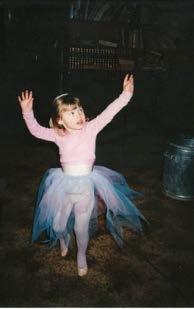
When I was a little girl growing up outside a small country town in New South Wales, I used to walk through the bush on the crunchy leaves, past the old gum trees down along the creek. I would cross the road to a concrete table and chairs, surrounded by bush, stand up on the table and imagine a big crowd in front of me. I would sing and dance imagining that I was the star of the show. I felt inspired, peaceful and safe in nature. I loved living in imaginary worlds and acting them out. It was an escape from the things I endured as a child and young adult because of bullying, intergenerational trauma and abuse. All throughout my life I have always been an imaginative person, I can spend hours imagining all different types of scenarios, stories and epic journeys.
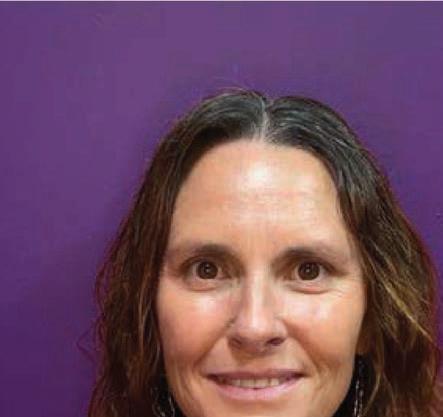
By Sally Jean
It has been a comfort and a support, but sometimes also deeply disturbing for me. In times of suicidality, I would imagine my passing, sometimes this would be soothing, a way to allow me to process my feelings and despair without acting on it. Other times, it would drag me deeply into states that were incredibly challenging. When I was struggling with belonging and the imprints of bullying and abuse, I was often in a hypervigilant state and my imagination really came alive and induced states of paranoia.
I made my first suicide attempt at 10 years old with a friend. We didn’t tell anyone. My teenage years were horrendous and my family supported me to seek medical help when I was 16 years old, I was diagnosed and medicated.
At the age of 17, I made a second suicide attempt with antidepressants given to me by health professionals. Again, I didn’t tell anyone at the time. Over the years, there were many periods of deep distress, including more abuse and trauma. I circled through different counsellors, psychologists and psychiatrists who never adequately addressed the trauma and didn't seem to know what to do. I made many bad choices and I couldn’t seem to find my way. When I was 30, I was labelled with PTSD and Bipolar Disorder and was subsequently medicated. I reacted badly to the medication and ceased taking it.
QWhat led you to your healing journey? Was there a single incident or did it unfold?
Fast forward to now, I'm in my 40s and I remember speaking at an international neuroscience conference almost two years ago, where I shared my story of moving from deep despair to becoming a therapist.
A professor asked me a question that has stayed with me. He asked me what it was that sparked me going from being diagnosed with mental disorders, medicated and feeling suicidal regularly, to being how I am now, confident, joyful, expressive and supporting other people to cultivate that transformation for themselves.
I didn't really know what to say at the time, except that I had a strong, internal spirit; but I have since realised by going back to my inner little girl, that it has also been my capacity for imagination. My capacity to imagine beyond the reality of where I am and what's happening around me.
I was diagnosed with dissociative disorder because of it, but I know it helped me to survive in so many ways that I would never relate to it as a disorder. The distinction is in the nervous system and not simply in the behaviour.
When I was disassociated during times of abuse, I was in a survival state and my system was trying to protect me. I think that is why hypnotherapy has had such a profound impact on my life, because it has enabled me to use my already vivid imagination to heal from things that had haunted me for most of my life, to step onto paths that I've created in my mind and have them nurtured in reality.
My brain naturally goes into hypnotic states regularly during my daydreaming moments, therefore the addition of therapeutic suggestion and metaphor
elevated this experience and created new neural pathways within me that were easy for me to repetitively imagine.
I am so pleased to be writing this article this year, because it’s my 10th anniversary of being free from the system that harmed me since I was a child, because of their lack of understanding of trauma. Ten years ago, after many years of anxiety, depression, hypermania, disassociation and substance misuse, I was in a place where I knew that if I didn't get help I was going to die, I could clearly see how that was going to happen.
I was going to act - but I had somewhat of an out-of-body experience and drove myself to a hospital. I told them my plans and they accused me of being on drugs which I wasn't. They proceeded to section me under the Victoria Mental Health Act and lock me up in a psychiatric ward.
Here I was, a professional woman with three university degrees, having travelled all around the world, worked internationally as an educator, volunteered as a human rights advocate after completing a Master of Human Rights; and I was detained against my will for seeking help. Despite loved ones trying to take me home, they wouldn't let me out. I remember laying in that bed just feeling so completely isolated, shamed and scared.
That was a real turning point for me in my life, after that I went downhill for about two years. I began to self medicate quite a lot. I didn’t care what happened to me. I had little hope.
“What once helped me survive became the very thing that helped me heal.”
I was masking in front of everyone and secretly just wanting to die. But I kept thinking about my family and how much it would hurt them.
In 2018, my brother passed away in horrible circumstances. I moved back to our family farm, where my struggles began as a child, surrounded by my family's grief.
On the flip side, I was back there in that bush and had my concrete table, where I sang to my imaginary crowd. I spent a lot of time walking through the bush and I started to get insights. I could begin to imagine something different, because I had to. I couldn't die now - my brother already had. I couldn't do that to my family.
QWhat steps did you take on your journey? Which modalities worked for you?
It was just after my brother died that I discovered hypnotherapy training. I wasn't doing it to become a therapist, I was doing it for a health condition I suffer from. I've always been the kind of person who wants to learn how to do things for myself.
Even though I didn’t think I was doing it for the trauma, I chose a training school that specialised in trauma. I thought I may as well see if it could make a difference to me.
This was a pivotal moment in my life where my healing journey took a turn that would change everything. I really took on the study and I recorded different hypnotherapy journeys and listened to them almost every day. I began to notice that I felt safer, more connected to myself, less hypervigilant and more confident.
I began to see the possibility of wellbeing.
Over the course of a few years, I continued to extend my knowledge and I began to specialise in trauma. I did numerous certifications in different trauma modalities, including somatic-based processing, EMDR, creative therapies and I started learning about neuroscience. Through this, I was able to process what was happening in my body, complete stress loops and integrate trauma imprints. I found my voice and my somatic expression.
I spent time in nature, connecting with the elements and doing rituals. I began to feel more motivated to move, exercise and dance. I started facilitating group mentor sessions, women's circles and creative wellbeing and embodiment sessions. As well as workshops at events and presenting at conferences. I started doing Aerial silk and hoop, martial arts, paddleboarding, lyrical dance, as well as guitar and singing lessons. I felt like I had just turned 18 again and I wanted to live my life the way I was always meant to. Here I was at 42 years old competing in an Aerials competition and performing dance on stage! I’m still pinching myself to be honest.
I felt this passion rise up in me, to bring this work to the world. I started my own business and have since been supporting other women like me.
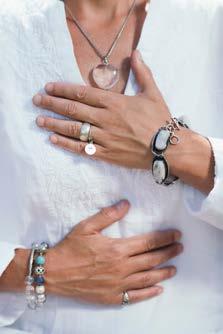
Last year, I was invited to become a director on the International Association board, and I’m also now an advisor for my local health district.
I have done surveys, research projects, radio and podcasts.
I run a community group for survivors of suicide bereavement, having lost four people to suicide. In their honour, I try to contribute to positive systemic and community change.
I am pleased to see some positive change in the way we understand trauma and there is still so much more that needs to shift. I’m grateful for the opportunity to use my lived experience to inform some of that change.
I’m also incredibly grateful to all the friends, family, colleagues and acquaintances who have uplifted and believed in me along the way. Their energy has supported me to keep on my path, knowing I am held. I recently presented at a hypnotherapy symposium and it’s such a joy to be able to contribute to the field.
My only dreams used to be not to want to die, but now I am really contributing. My capacity to be 100% sober from all substances and alchemise my life experiences is such a beautiful gift. To be able to enjoy the beauty of the simple moments in the everyday, like the
sunrise, the feeling of being safe and loved, the taste of the fresh basil from the garden and the feeling of the rhythm of music moving through my body as I dance is so precious. I really could want for nothing more.
QWhat is one solid piece of advice that you would give to the sisterhood just starting out on their journey?
My advice to anyone starting this journey is for you to remember that you are the expert of your experience and your path to healing will be unique. I encourage you to be curious about how you cognitively and somatically respond to the world, as this can inform your regulation needs and the modalities you may benefit from. That awareness can also inform your own pathway in creating the conditions for you to be able to listen to your inner voice, because you have this wisdom within you that can guide you. It's a matter of processing and integrating whatever is in the way of you not hearing that voice and being able to trust your own inner world.
A big part of that is also being in environments and natural spaces that feel nurturing for you and surrounding yourself with people who are going to honour who you are and be there for you through that journey, reminding you of your beautiful unique spirit and shining a light on you along the way.
A tough journey through court battles, parenting, adversity and slander.
QTell us about your trials, traumas and challenges.
Not long ago, my life became a courtroom. Not the fun kind like Liar, Liar, but the deeply traumatic, lifealtering kind. Documents, affidavits, reports. Words written about me that described a woman I didn’t recogniseabusive, mentally unstable, dangerous, part of a “cult.”
There were constant threats that my child would be taken from me due to these false allegations - the kind of language that makes the ground feel unstable beneath your feet. But what if you don’t have enough evidence? You are swiftly labelled hysterical or hypervigilant; a woman seeking revenge or money.
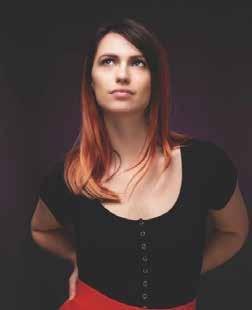
By T.C. Carter

QWhat led you to your healing journey? Was there a single incident or did it unfold?
There was no dramatic turning point, just a quiet moment of honesty with myself. Then one day I realised I had a choice. I could remain stuck in that space or I could begin making changes, even if they were small.
I knew my children deserved a healthier and more present version of me and deep down, I knew I deserved that too.
I never wanted revenge. I never wanted money. I only ever wanted love, peace, safety. Yet the system does not operate on emotion; it operates on evidence and when trauma leaves you shaking, instead of documenting, that can feel impossibly unfair.
The whole process can feel as though you are living through the injustice of older times, as archaic as the 1940s.
As though a woman’s credibility still required extraordinary proof and when you are suddenly fighting for the most precious person in your life, fear awakens in you in full force.
But so does the resolve. Family court battles aren’t just legal processes, they are emotional battlegrounds. Every sentence written about you can feel like an assault on your character, your identity as a mother, your worth as a human being.
There were moments I questioned everything, moments where exhaustion and anxiety sat heavy on my chest like a stone, where I felt disconnected from a higher source and like the universe was against me.
Yet something inside me refused to collapse. I listened to music to raise my vibrations, used hypnosis on myself, meditated, tried red light therapy, sat under the moon, prayed, grounded and wrote to my future self where the truth would prevail. These things helped, but only in fragments.
I persisted. I focused on the present, found small wins and kept going, even when there was always something new and unsettling that would pop up. The peacefulness wasn’t enough for me, I was in a fight and I needed strength to match my opponent. I sat beneath the stars and asked the universe to guide me.

QWhat steps did you take on your journey?
Which modalities worked for you, as we are all different?
Healing began not with a single breakthrough, but with a willingness to slow down and listen. I allowed myself to feel without labelling the feelings as problems to fix, to sit with the fear and the pain rather than rushing to reframe it and to release the habit of documenting every ache as a sign of weakness. A pivotal turn arrived when I chose to slow down, I did not abandon myself, but chose to pause, to breathe, to ground. The world demanded evidence, I demanded selfpreservation. In that pause, I began to understand anxiety not as an enemy to conquer, but as a messenger urging me to slow down and listen. The journey unfolded gradually, and I leaned into practices that held truth for me meditation, hypnosis, creative expression and a steady rhythm of returning to myself.
I learned that healing is not hinges on a dramatic moment of transformation; it is a patient gathering of small, faithful returns to self. Through this inward turning, I found the strength to keep going for my son and for myself.
I listened to music to raise my vibrations. I used hypnosis on myself. I meditated. I tried red light therapy. I sat beneath the moon. I prayed. I grounded. I wrote to my future self where the truth would prevail. These helps came in fragments, but I persevered.

I didn’t plead or beg, I simply asked for help. Slowly, small affirmations began to appear: the repeating numbers on clocks, chance encounters, timely invitations. Life’s twists reminded me that resilience grows in the fire, you stand in it long enough to discover how strong you really are. Today, I hold sole parental responsibility for my child. Not because I fought with vengeance, but because I fought with truth.
What is one solid piece of advice that you would give to the sisterhood just starting out on their journey?
One thing I would say to any woman just beginning her own journey through adversity is this, do not let someone else’s narrative become your truth.
When people project labels onto you, it can be tempting to defend yourself endlessly or to internalise those accusations. But your identity is not defined by someone else’s version of events. Do not let their inner world influence your reality. Find whatever practices bring you back to yourself. For me, it was performance, meditation and hypnosis; for others, it might be therapy, movement, faith, creativity or community.
Return to yourself again and again. Because in the end, the most powerful thing you can hold onto in the middle of chaos, is the quiet certainty of who you truly are and that truth is stronger than any accusation.






by Kaz Field Anderson.
IN ANY RELATIONSHIP, LOVE SPEAKS IN WAYS THAT FEEL MOST TRUE TO US. HERE, WE FIND OUT HOW WE CAN UNDERSTAND EACH OTHER’S NEEDS BETTER.
The concept and the book, “The 5 Love Languages”, was written by Gary Chapman and helps couples understand how they prefer to give and receive affection. What makes them feel loved? What makes them feel validated? While everyone uses a mix of these languages, most of us have one or two that feel especially strong and are our core language. For example, you may have a love language of Acts of Service, but hey, who doesn’t like a gift every now and then? Yes please, Chanel No.5! Love, it seems, is not absent nearly as often as it is simply misunderstood. The Five Love LanguagesWords of Affirmation, Acts of Service,
Receiving Gifts, Quality Time and Physical Touch - offer a powerful lens through which to recognise the many ways love is already being expressed in your relationship. When we begin to understand our own language and that of our partner, something shifts, frustration softens into awareness and disconnection gives way to intention. In the following pages, we invite you to explore each love language more deeply, gently uncovering what resonates, what may have been overlooked and how small, conscious adjustments can transform the way love is both given and received.

American marriage counselor Chapman first published in 1992, emerging from his years of working with couples. It has since become a global phenomenon, selling over 20 million copies worldwide and being translated into dozens of languages. Its enduring popularity comes from its simple, relatable framework, which offers readers a practical way to understand emotional needs.

Affection through words is about recognising and affirming your partner’s value. It is not just compliments, but sincere, specific language that communicates appreciation and support. A wellplaced note, a whispered, “I am proud of you.” or, “You look so pretty in that dress!” or a text that highlights appreciation, can lift a mood and deepen trust. The key is authenticity. They must be real. Statements should reflect real observations, rather than generic praise.
Tip: Keep a habit of acknowledging small wins and expressing gratitude for everyday deeds, like, “I noticed you stayed late to finish that project, thank you for handling it.”
WORDS OF AFFIRMATION:
“My goodness woman, you look so hot in that dress and you are all mine! How lucky am I?”

For balance, discuss expectations what tasks are meaningful to each of you and how you like to receive this support. Remember: “What is good for the goose, is good for the gander” - remember to reciprocate.
Tip: Coordinate with a shared system, like a chore chart or a weekly “to-do” window, to avoid misaligned efforts.
ACTS OF SERVICE
It is said that, “There is nothing more sexy than a man with a vacuum”.


Gifts are tangible symbols of love, but the emphasis lies in meaning rather than price tag. It is about thoughtfulness, remembrance and the sense that someone was paying attention to your interests, milestones or needs. A hand-picked book, a memento from a trip or a small token that nods to a private joke can carry deep significance. To keep this language resonant, focus on personalisation, remember favourite colours, meaningful dates or recurring themes you have discussed.
Tip: Keep a “gift ideas” folder or a rainy-day repertoire of small, meaningful items for occasions that pop up.

RECEIVING GIFTS
It’s not the price, it is the thought wrapped inside.
Quality time is about undivided presence and shared experiences. In a busy world, giving your full attention without distractions says, “You are my priority.” This language shines when couples schedule intentional moments: a dinner date, a weekend hike, a deep conversation or a project tackled together. It is not just time spent side by side; it is time that feels intimate and connected.
Tip: Establish tech-free windows, practice active listening and plan activities that both partners genuinely enjoy. The payoff is a stronger sense of partnership and a renewed sense of closeness.

QUALITY TIME
Nothing says love like undivided attention.

Physical touch communicates love through warmth, closeness and reassurance. It encompasses hugs, handholding, cuddling, resting a hand on a back or a gentle kiss. For many, touch is a powerful emotional anchor that reduces stress and reinforces safety within the relationship. The important thing is consent and responsiveness. Read your partner’s boundaries and respond to their cues.
Tip: Small daily gestures like a lingering hug after a tough day or a reassuring back rub can create a steady undercurrent of connection.
PHYSICAL TOUCH
Sometimes, love is felt more than it is spoken.


For each statement, gently rate how true it feels for you:
0 = Not at all true
1 = Slightly true
2 = Moderately true
3 = Very true
4 = Completely true
Each love language includes four statements. Take a moment to add your scores within each section, giving you a total out of 16 for each language. Once complete, compare your totals for each love language. The love language that has your highest score reveals your primary love language, while the next highest scored love language reflects the ways you also feel deeply seen, valued and connected. There is no right or wrong result, only a deeper understanding of the ways your heart most naturally gives and receives love.
QUIZ:

WORDS OF AFFIRMATION:
I feel most loved when my partner tells me exactly what they appreciate about me.
Compliments and kind words lift my mood more than anything else.
I value notes, texts or letters that express gratitude for who I am.
I would rather hear a heartfelt "thank you", than receive a small practical favour.
ACTS OF SERVICE:
I feel loved when my partner takes care of tasks without me asking. A partner who cleans up after a rough day shows they are thinking of me.
I notice and appreciate when chores are done to help me out.
If my partner handles responsibilities that weigh me down, I feel cared for.

RECEIVING GIFTS:
A thoughtful gift that reflects something about me makes me feel seen. The meaning behind a gift matters more than its price tag.
I feel loved when small presents show someone was paying attention to me. A memento from a shared moment or trip keeps our bond alive for me.
QUALITY TIME:

I feel closest to my partner when we have undivided time together.
Deep conversations and shared activities make me feel loved.
It matters to me that we put away distractions and focus on each other.
I feel secure when we plan and enjoy moments as a couple, not just as individuals.
PHYSICAL TOUCH:
I feel most connected when we hug or hold hands.
Gentle touch like a back rub or a kiss - reassures and comforts me.
I respond positively to close, non-verbal affection that signals safety and care.
I feel loved when my partner is physically close during everyday moments.
my husband’s is “Acts of Service”, so we have really had to work on it. Many couples leave a relationship due to feeling unloved, when that may not have been the case at all! My marriage was almost one of them, until we realised our love languages and made some major adjustments. I learned that when he made me an organic juice, I trained myself to hear “Because I love you” and I learned to “do more”.


On the next pages, we road test the Heal Flux frequency generator, so you don’t have to. We take the guesswork out by trying it first.

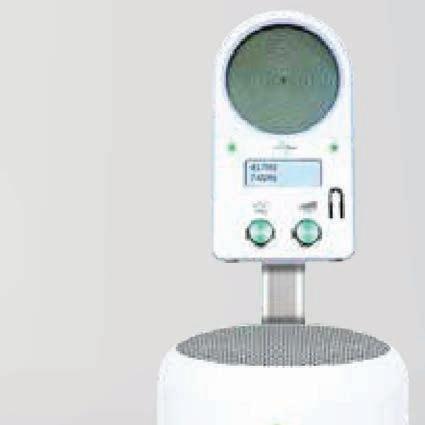




Healflux devices are the most highly advanced, user-friendly and portable frequency systems in the world. You can generate any frequency you want between 0.01Hz and 500,000Hz for healing and overall wellbeing. The devices are inspired by the pioneering work of Royal Raymond Rife, an innovative scientist from the early 20th century. Rife conducted extensive research into the relationship between frequencies and microorganisms, theorising that certain pathogens could be disrupted or neutralised using specific frequency-based techniques.
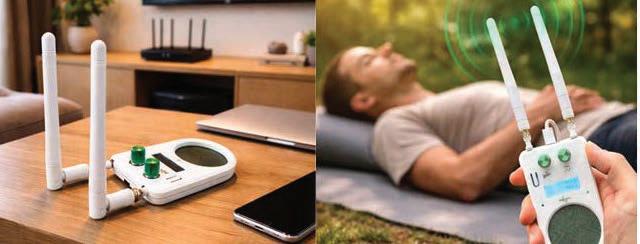
Sound Waves: Vibrational sound waves have a powerful effect on the mind by helping to calm the nervous system, reduce stress and promote a sense of inner balance. When certain frequencies or tones are introduced to the body, they can help entrain brainwaves - guiding them into states associated with relaxation, focus or deep meditation. This process, known as brainwave entrainment, can encourage the mind to shift out of anxious or overstimulated states and into calmer, more restorative patterns. Sound vibrations also stimulate the vagus nerve and other parts of the parasympathetic nervous system, which plays a key role in emotional regulation and mental clarity.
Healflux devices emit frequencies as both Vibrational Sound Waves and Scalar waves. This concept is often compared to the wellknown example of an opera singer shattering a glass when a sound matches the glass's natural resonant frequency, it causes vibrations strong enough to break it. Similarly, it is believed that each microorganism whether a bacterium, virus, fungus or parasite has a unique frequency. When exposed to its specific frequency, the organism may experience stress or disruption
Scalar energy doesn’t act through force, but through information and resonance, influencing the body’s energetic field, aura and consciousness at a foundational level. By interacting with this deeper quantum field, scalar waves are believed to support alignment, harmony and balance across mind, body and spirit. Many see scalar waves as a bridge between quantum science and spiritual awareness - a way of working with the same unified field that connects energy, intention and consciousness.
With the Healflux device you can benefit from any two frequencies at the same time, however, you can also generate Binaural Beats if you play two very specific frequencies.
Binaural beats are an auditory effect created when two slightly different frequencies are played separately into each ear through earphones. The brain perceives the difference between the two tones as a third, rhythmic “beat,”.
Binaural beats are said to be The best for Brain Entrainment influencing brainwave activity to reach a particular state of mind (relaxation, focus or meditation etc.)
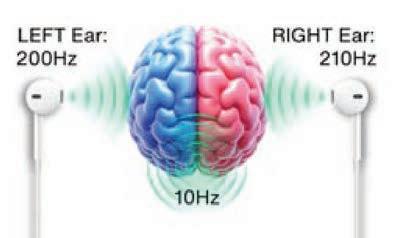
The diagram shows that if 200Hz is played in the left ear and 210Hz is played in the right ear, the brain interprets the difference between the two frequencies, which is 10Hz: 210Hz - 200Hz = 10Hz.

The Heal Flux Frequency generator arrived at a perfect time, as I had just broken my ankle and injured my shoulder. I am 65, so bone healing was a little slow. I used the bone healing frequency 50hz. Rapid healing ensued and I was out of my moonboot within the week. It was very effective. I have had a couple of big meetings lately, so I used the 528hz to relax and it worked a treat. I used the Scalar with antennae for this and kept it on overnight. I had the best nights sleep that I have had in a long time.
Overall, I give it 4 stars, losing a star purely for instructions, however I love it and find it very effective.
I will be trying it on my work desk in Scalar and I will report back.
This would be a great addition to any therapy room to have on during your sessions for an added benefit to not only you the therapist, but also your clients will notice the calm.
had in a long time.
The instructions are not very clear though and I was a little confused over multiple frequencies and whether I use 1 or 2, so I had to Google it. I actually learned more about Scalar frequencies from this article than the instructions.
I would also say, although I have not tried it as yet, that it would be great to use in Meditation or Hypnosis. Next on my health checklist.
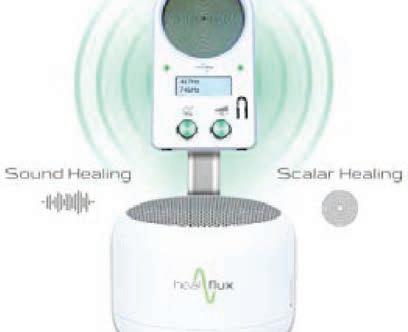
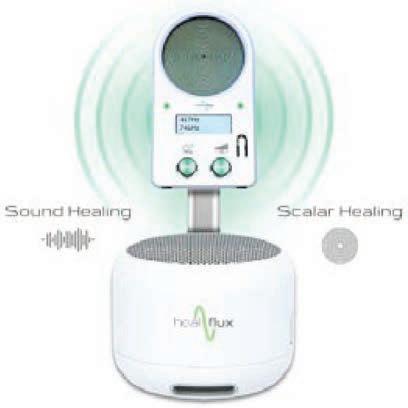






After years of survival, she faced the truth, broke the cycle and began rewriting her story.
QTell us about your trials, traumas and challenges.
Some of my earliest memories are filled with laughter: learning to ride my bike, building towers of Lego and the comforting hum of family life while Mum and Dad were still together. Life had a warmth to it then. Mum was beautiful, truly stunning, with long black hair she brushed carefully each morning. When I close my eyes I can still smell her Ponds moisturiser. She lit up a room and surrounded herself with friends and laughter. Dad played his part too, organising cricket games and tending his vegetable garden. Even in a house that had its struggles, there was joy. But the end of their marriage came abruptly and with it a bone-deep confusion. I was old enough to see what was happening, yet far too young to understand it. I witnessed moments no child should have to hold and soon our family fractured under the weight of anger, betrayal and grief. I remember hiding in the dark with my younger siblings while my parents fought, feeling responsible for keeping everyone quiet and safe.
By Sammy Rebholz
woman I remembered seemed to fade. Days blurred together with television, wine and a growing distance from the world around her.
As a child I did not have the language to understand depression or addiction. I only knew I missed her deeply. Watching her decline planted a quiet terror inside me the fear that one day I might become her. So I did the opposite. I stayed in constant motion. I worked harder, moved faster, filled my life with noise and activity.
Rest felt like failure. Stillness felt dangerous. Beneath all that motion, though, lived grief for the mother I remembered, for the stability we lost; and for myself. I simply wanted my mum to fight for herself.
managing schedules, cooking meals and carrying the invisible emotional labour that often falls to women. I kept everything moving, because that was the only way I knew how to live. But living in survival mode has a cost. Alcohol slowly became the thing I leaned on when the weight of life felt too heavy. At first it was social and harmless, but over time, it became a way to quiet the noise in my mind and numb the ache in my heart. The truth that was hardest to face was this - I had spent years judging my mother for her struggles, terrified of becoming like her. Yet slowly, quietly, I found myself walking a similar path. My divorce was the moment when everything collapsed at once.
The family I had tried so hard to hold together was gone and I spiralled into grief, shame and loneliness. There were nights when alcohol felt like the only way to silence the pain. I carry deep regret for moments when my struggles spilled into the lives of the people I love most, especially my children. That truth is painful to admit, but healing only began when I stopped hiding from it.
QWhat led you to your healing journey? Was there a single incident or did it unfold?
For me, the turning point in my healing journey was not a single dramatic moment, but a slow awakening. I began to realise that willpower alone would never heal the deeper wounds I carried. I needed to turn toward the pain, rather than run from it. That realisation led me onto a path of self-inquiry and healing that continues today.
QWhat steps did you take on your journey? Which modalities worked for you, as we are all different?
Different practices helped me begin that journey. As soon as I started to really take responsibility for myself, Louise Hay entered my life. Positive affirmations were the beginning. Journaling became a powerful tool for honesty, allowing me to face truths I had avoided for years. Meditation and quiet time in nature helped calm a nervous system that had lived in fight-or-flight mode since childhood. Movement and breathwork helped me reconnect with my body, while surrounding myself with supportive women reminded me that healing doesn’t have to happen alone.
Slowly, piece by piece, I began to rebuild a relationship with myself rooted in compassion, rather than criticism. Understanding my mother’s story has softened my heart too.
I can now see that many of her choices were symptoms of pain she never had the chance to heal. That understanding doesn’t erase the damage, but it allows compassion to sit beside it. Breaking generational cycles often begins with seeing them clearly and choosing, consciously, to do something different. Today, healing for me looks like slowing down. It means allowing rest, asking for support and recognising that strength does not come from carrying everything alone. Most importantly, it means accepting that healing is not a destination we reach once and for all. It is a lifelong practice of awareness, responsibility and love.
QWhat is one solid piece of advice that you would give to the sisterhood just starting out on their journey?
If there is one piece of advice I would offer any woman beginning her healing journey, it is this: tell yourself the truth, even when it is uncomfortable. Healing begins the moment we stop pretending we are fine and allow ourselves to face our lives with honesty and compassion. The truth may feel heavy at first, but it is also the doorway to freedom.
I share my story, not for sympathy, but for connection. There are so many women carrying silent battles, believing they are alone in their struggles. You are not.
Our stories, when shared with courage, become bridges for others who are still finding their way.
My life has not been perfect. I have stumbled, broken, rebuilt and learned along the way. But today I understand something I didn’t know before: my past may have shaped me, but it does not get to define the woman I choose to become. My story is still being written. And now, finally, I am holding the pen.
Sammy Rebholz. Retreat Facilitator, Accounts and Admin Officer. Website: www.authenticalchemyretreat.com Contact:
Sammy Rebholz & Kaydee Guihot. Email: authenticalchemy@authenticalche myretreat.com Instagram: www.instagram.com/authenticalche myretreat? igsh=MWFuejFleThvZHhidA== Facebook: www.facebook.com/share/18CGvz2Z 1C/?mibextid=wwXIfr
APRIL 17-19 2026
JUNE 12 - 14 2026

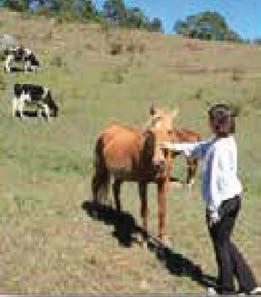

This kind of retreat doesn’t come along very often, that has everything a woman needs to shake off the world and come home to herself.
Created by Mother and Daughter team - Sammy and Kaydee, they inspire with their love and care they have breathed into Authentic Alchemy Retreats.
3 days of pure bliss, The land is expansive and peaceful, surrounded by rolling greenery, Mountain Views and the kind of quiet that is hard to find in everyday life.
The bedrooms are air-conditioned, making this a beautiful and comfortable space for our retreats in the cooler months. During winter, the home becomes especially cosy. We light the indoor fireplace each morning, often keeping it burning throughout our yoga practices, creating warmth and a deeply grounding atmosphere. There is also an outdoor fireplace, perfect for relaxed evenings, connection and unwinding under the stars.
Outside, you will likely be greeted by two friendly horses who are always happy to say hello and will absolutely ask you for food, along with some very lovely cows who roam the land and add to the calm, grounded energy of the property. There is also a dam on the land for those who feel called to swim, float or simply sit by the water and take it all in.
Each day is filled with the yummy goodness of Yoga, Meditation, Ceremonial Cacao and Women’s Circles, Sound Healing, Self-love Workshops and of course we cannot forget - the wholesome nourishing food made with love and intention by Mumma Sammy.
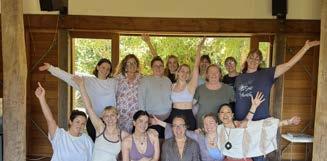
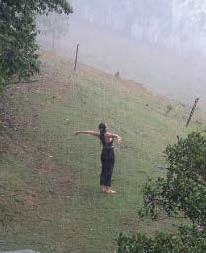
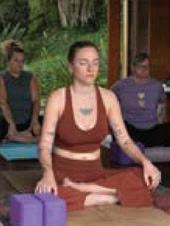


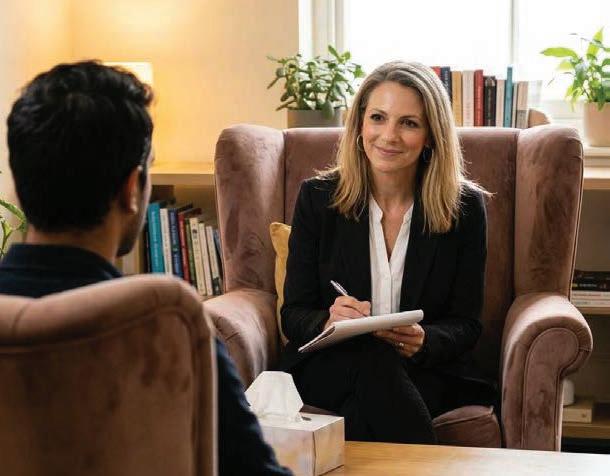














Health & Wellness
Choosing to begin again.
QTell us about your trials, traumas and challenges.
For most of my adult life, my work gave me a strong sense of purpose. I held a corporate role focused on helping the community and it fulfilled a deep part of me that wanted to make a difference. I felt capable, useful and clear about who I was and how I contributed to the world. Then COVID arrived and everything changed. I lost my job and with it the identity and purpose I had built around helping others. What followed was one of the darkest periods of my life. I felt like a failure. The loss affected me far more deeply than I ever expected and I slipped into a depression that left me struggling to cope with even the simplest parts of daily life.

By Misty Boss
“I was not just grieving the loss of a job; I was grieving the loss of who I thought I was. “
For months, I spent most of my time in bed, emotionally exhausted and unsure how to move forward. Looking back, I feel immense gratitude for my family during that time. My mum and my partner carried our family when I felt unable to function.
As a mother, this was incredibly painful. I felt guilt and shame, believing I was not showing up as the person my children deserved. I was not just grieving the loss of a job. I was grieving the loss of who I thought I was.
QWhat led you to your healing journey? Was there a single incident or did it unfold?
There was no dramatic turning point, just a quiet moment of honesty with myself. Then one day I realised I had a choice. I could remain stuck in that space or I could begin making changes, even if they were small. I knew my children deserved a healthier and more present version of me and deep down I knew I deserved that too.
QWhat steps did you take on your journey? Which modalities worked for you, as we are all different?
I did not know exactly what my future would look like, but I knew I wanted to help people experiencing emotional and physical pain, because I had come to understand how closely the two are connected. I spent weeks researching courses, searching for something that truly resonated with me, rather than choosing what seemed practical or expected.
When I discovered Hypnotherapy Training Australia, something immediately felt right. After my first conversation with the school, I enrolled in the Clinical Trauma Hypnotic Sciences Advanced Diploma. At the time, I believed I was learning how to help others. I could not have imagined how much the experience would change my own life.
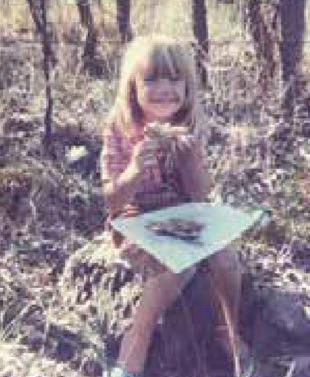
During the training we practiced working on each other and the emotional material that surfaced for me was powerful and confronting. There were momentswhen I almost gave up, because facing parts of myself I had avoided for years felt overwhelming. But I realised the only way forward was through. Over the next 18 months, I learned more about myself than I had in my entire life. Healing was not quick or linear. It unfolded in layers, bringing awareness, release, understanding and compassion.
That experience ignited a deep thirst for learning and knowledge within me. I wanted to explore healing from multiple perspectives, which led me to complete a Clinical Certificate in Resource Therapy, a Diploma in Remedial Massage, Quantum Coaching and Breathwork training and Access Bars. What began as a search for purpose, became a complete transformation in how I understood healing. I started my business with the intention of supporting people through both physical and emotional healing, recognising that healing does not always happen through conversation alone.
The body carries stories, emotions and wisdom and when we slow down enough to listen, it often tells us exactly what is needed.
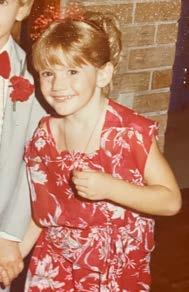
My work became less about fixing people and more about guiding them back to themselves, teaching people to slow down, tune in and trust their own inner awareness.
I am still learning. Healing continues to unfold in layers and there is no finish line or rush to arrive anywhere.
Along this journey I have found a community of like-minded people whose connection and support are priceless. At the same time, I continue learning how to balance motherhood with running several businesses, navigating growth while practicing self-compassion along the way.
QWhat is one solid piece of advice that you would give to the sisterhood just starting out on their journey?
You do not need fixing, only remembering who you are. Healing does not begin when everything is figured out. It begins the moment you choose curiosity over self judgement and take one small step. Your story, even the painful chapters, can become the doorway to purpose, connection and strength. This is not about avoiding struggle. It is about choosing to rise, gently and imperfectly and discovering that sometimes losing what once defined you, is what allows you to finally meet who you truly are.
Use code: BEYONDTHEVEIL to receive 20% off your first appointment. Misty Boss. Clinical Trauma Hypnotherapist. Coastal Health & Wellness. Phone: 0403 499 525
Email: info@coastal healthandwellness.com.au
Website: www.coastal healthandwellness.com.au
Location: 124 Pacific Hwy, Wyong, NSW, 2259. Socials: Instagram and Facebook.

Hypnoflow
Where Healing Continues Beyond the Session
There is a moment…when a session ends…and yet something deeper continues.
A shift… a softening… a remembering.
Hypnoflow was created to honour that space.
Originally designed for hypnotherapists, it has now opened its doors to a wider circle of practitionersthose who understand that true transformation doesn’t begin and end in the room…It flows beyond.
With Hypnoflow, your work continues to ripple outward:
Sessions are gently captured and returned to your client as recordings, reflections and guidance within minutes
Each client steps into their own secure, sacred space a private portal to revisit, integrate and grow
Built in alignment with Australian Privacy Principles, creating trust and safety at every level
Subtle notifications when a client reconnects - allowing you to reach out and reconnect
A personal library of offerings to gift, support and nurture ongoing transformation
Clients begin to witness their own journey, tracking insights, emotions and progress in meaningful ways
This is more than organisation
It is continuity.
It is presence.
It is care that extends beyond time and space.
For practitioners who believe that healing is not something we do to people…it is something we gently guide, hold and allow to unfold. www.hypnoflow.com.au matthew@hypnoflow.com.au
QTell us about your trials, traumas and challenges.
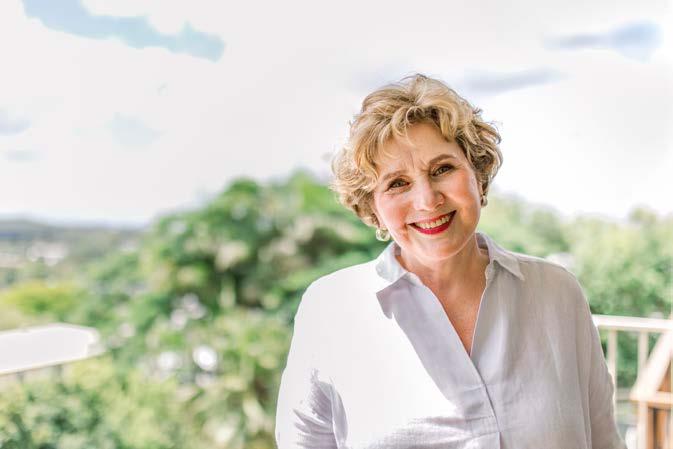
By Lynne Gardner
There is a moment in many women’s lives when everything they once relied on - their energy, their pace, their sense of certainty begins to shift. Not because they have done anything wrong.
Not because they are broken. It is because life, in its own quiet way, is asking them to listen differently.
For me, that moment came through my experience with Long COVID - a journey that has unfolded over the past two and a half years - and has reshaped not only how I live, but also how I truly understand healing.
I feel grateful to say that my childhood was a happy one. It provided a strong foundation one of stability, care and the ability to move through life with confidence.
Like many women, I built a life around helping others. With 40 years as a Registered Nurse and my work in hypnotherapy, I have always been deeply committed to helping people feel better physically, emotionally and mentally.
I was used to being capable. Reliable. Energetic. Until suddenly…I wasn’t. Long COVID and other chronic conditions have a way of quietly dismantling your assumptions about yourself.
It doesn’t always announce itself dramatically instead, it lingers. Fatigue that doesn’t lift. Brain fog that clouds clarity. A body that no longer responds in the way it once did.
And perhaps most confronting of all - the realisation that pushing through is no longer an option.
QWhat led you to your healing journey?
Was there a single incident or did it unfold?
At first, like many highfunctioning women, my instinct was to keep going.
To push.
To override.
To “get back to normal.”
But long COVID doesn’t respond well to force.
In fact, the more I pushed, the clearer it became that something needed to change not just physically, but mentally and emotionally. This wasn’t just about recovery. It was an invitation.
An invitation to live the very philosophy I had been sharing with others for years: Slow down to keep up. And I will be honest, it is one thing to teach this concept and another thing entirely to embody it.
A Gentle, Consistent Path Forward: Healing, I discovered, was not about finding one solution. It was about creating a way of living. A rhythm. A relationship with myself that was based on listening, not overriding. Several approaches became anchors in my journey. As a hypnotherapist, I had always seen the power of working with the subconscious mind. During this time, I experienced it on a much deeper level.
Hypnotherapy helped me: to reduce the mental stress associated with physical symptoms to reframe fear and frustration into calm and acceptance to support my nervous system in shifting out of a constant state of alert.

What steps you took on your journey, as in which modalities worked for you, as we are all different?
I was used to being capable. Reliable. Energetic. Until suddenly… I wasn’t. Long COVID and other chronic conditions have a way of quietly dismantling your assumptions
It reminded me that even when the body is struggling, the mind can become a place of support, rather than resistance.
Mindfulness - Returning to the Present Moment: When your energy is limited, the future can feel overwhelming. Mindfulness became a way to gently anchor myself in the present to focus on what I could do and let everything else go.
Sometimes that was as simple as: Sitting quietly with a cup of tea noticing my breath or allowing myself to rest and take in my surroundings. These small moments became powerful.
Nature Walks:Healing Through Simplicity: Nature has a way of restoring perspective. Short, gentle walks became part of my routine not for fitness, but for connection. To fresh air. To stillness. To something bigger than the moment I was in and interestingly, nature never rushes, yet everything still gets done.
A powerful reminder. Journalling - Giving Thoughts a Place to Land: Journalling allowed me to process what I was experiencing without holding it all internally.
Some days it was reflective. Other days it was simply: “This is hard today” - and that was enough. Because healing is not about being positive all the time, it is about being honest and allowing space for whatever is present.
Somatic Yoga and PacingListening to the Body: Perhaps one of the most important lessons was learning to truly listen to my body. Not intellectually. But physically.
Somatic yoga introduced a slower, more intuitive way of moving - one that honoured where I was, rather than where I thought I “should” be.
“You are not losing momentum. You are recalibrating. and sometimes… the most powerful way to keep up with life is to slow down and walk alongside it.”
And pacing became essential. Learning to stop before exhaustion. To rest before depletion. To recognise that doing less, intentionally, was actually doing more.
The Realisation - Healing is Not Linear: One of the most valuable insights from this journey is that healing is not a straight line. There are good days. There are more challenging days - and both are part of the process.
What changed for me was not just my physical capacity, but my relationship with myself. There was less judgement, more compassion, less urgency, more trust and over time, something quietly shifted.
Not a dramatic transformation. But a steady, grounded sense of moving forward.
QWhat is one solid piece of advice that you would give to the sisterhood just starting out on their journey?
If I could offer one piece of advice to our sisterhood, it would be this: Slow Down to Keep Up - Listen to your body before it has to speak loudly.
So many of us have been conditioned to push through. To prioritise others. To keep going, even when we are exhausted. But your body is always communicating with you. Sometimes gently. Sometimes more persistently. And when we learn to listen early to rest, to pause, to recalibrate, we prevent the need for louder signals later.
Slowing down is not falling behind. It is laying the foundation for moving forward in a way that is sustainable, aligned and kind.
Coming Back to What Matters: This journey has not been one I would have chosen, but it has been one that has taught me deeply. It has brought me back to the essence of what I share with my clients every day: That true change does not come from force. It comes from awareness. From patience. From working with yourself, not against yourself and perhaps most importantly - from giving yourself permission to live differently. So if you find yourself in a season where things feel slower, heavier or uncertain, know this: You are not losing momentum. You are recalibrating and sometimes the most powerful way to keep up with life, is to slow down and walk alongside it.

Lynne Gardner: Strategic Psychotherapist and Clinical Hypnotherapist. Author of Slow Down to Keep Up: A Journey of Healing, Patience and Returning to Self. Brisbane South Hypnotherapy. Location:
The Mindsite. 2A/417 Logan Road, Stones Corner, QLD, 4120. Phone: 1300 008 616
Website: www.brisbanesouthhypnotherapy.com.au Facebook:
www.facebook.com/share/1CrqUgsNHH/? mibextid=wwXIfr

By Dr. Daniel G Amen.
BOOK REVIEW BY KAZ FIELD ANDERSON
The End of Mental Illness, by Daniel G. Amen MD, frames mental health through a brain-health lens. Amen argues that many psychiatric symptoms reflect underlying brain function and that targeted lifestyle, nutrition, supplements, sleep and stressmanagement strategies can improve brain health and emotional wellbeing. He blends case examples, brain-imaging concepts (notably SPECT scans) and practical steps to help readers take an active role in their mental health.
I found it alarming that TBI’s (Traumatic Brain Injury) are the hidden driver of mental health decline in many. Take Dr. Amen’s examples of NRL Players, notorious for their bad behaviour, could be more than likely due to an undiagnosed TBI. After treatment with Dr. Amen, their behavioural issues ceased in most cases. Brain injury can be a catalyst for behavioural and emotional crises and the unseen consequence: TBIs and mental health unravelling.
When brain trauma resets the mind, the mental health fallout of TBI - the brain’s injury, has ripple effects on mental health issues, behavioural and general wellbeing.
What is very fascinating is that ADHD can also be the result of a TBI. I know this firsthand. I had a TBI at age four. Left in a coma after falling headfirst from a clothesline on to concrete. ADHD was the end result.
Omega 3 DHEA EPA 300mg is a must for those with ADHD, as they do not produce Omega 3, therefore a high-quality Omega 3 supplement is a must.
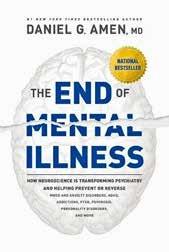


THIS IS A FIVE STAR READ!

This book has practical, everyday wellbeing focus. Of course, not all mental health issues are from TBI’s. Poor nutrition, neglect in childhood and a myriad of other causes, however, Dr Amen claims most are treatable with proper diagnosis. This book turns cutting edge neuroscience into simple, actionable habits: sleep, nutrition, exercise, mindfulness, supplements and social connection that fit effortlessly into a busy adult life. Prevention and proactive care: It emphasizes prevention and early intervention, which aligns with many readers’ desire to maintain health and prevent deterioration as they age.

Christian Dounis:
Psychotherapist
Strategic Psychotherapist
Clinical Hypnosis
Counsellor
NLP Master Practitioner
EMDR Practitioner
Strategic Coach

Help your teen step into clarity, confidence and emotional strength. Help them discover who they can become.
When today’s teens feel overwhelmed, disconnected, anxious or stuck, they need more than talk. They need strategy. They need tools. They need someone who truly understands the teenage mind.
Christian offers a powerful, multi-modal approach that helps teens:
Break unhelpful patterns
Build confidence and emotional resilience
Regulate thoughts, behaviours and emotions
Overcome anxiety, procrastination and self-doubt
Navigate friendships, identity and school pressure with clarity
Using Clinical Hypnotherapy, Strategic Psychotherapy, NLP, EMDR and Strategic Coaching, Christian guides young people toward real, lasting change - not just temporary relief.
Christian Dounis.
Strategic Mindset & Wellness Clinic.
Phone: 0458 850 850
Website: www.strategicmindsetandwellnessclinic.com.au
Email: christian@strategicmindsetandwellnessclinic.com.au
Amanda Dounis:
Solution Focused
Strategic Psychotherapist, Clinical Hypnotherapist, NLP (Neuro Linguistic Programming) Practitioner, Professional Counsellor, Early Childhood Proficient Teacher.

There are patterns quietly shaping the way you experience the world. Amanda Dounis is a Psychotherapist and Clinical Hypnotherapist based in Sydney, whose work integrates counselling, NLP and EMDR to access the deeper layers of the mind - where lasting change begins. Working with adults, teens and children, Amanda gently guides clients beyond anxiety, overthinking, emotional overwhelm and self-doubt - not by pushing against the mind, but by working with it. As old patterns begin to softenclarity emerges. Calm returns and a different way of being begins to feel natural.
Services Include: Anxiety and Overthinking
Trauma and Emotional Healing
Confidence and Self-Worth Habits and Behaviour Change
Emotional Regulation
Children and Teen Support
Amanda Dounis.
Positive Thinking Clinic.
Phone: 0458 850 850
Website: www.positivethinkingclinic.com.au
Email: amanda@positivethinkingclinic.com.au


By Sedona J.

Introducing the 25-year-old astrologer whose wisdom outpaces her years and whose heart runs deeper than the roots of her farm. As a fourth-generation healer, she threads science and spirit with the grace of someone who has long learned to listen to the whispering maps of the sky. A devoted mum, partner and daughter, Sedona moves through life with a sense of wonder that fuels both her clinical clarity and her adventurous spirit.
Have you ever read a boring, basic and frankly bland description of your Zodiac in a magazine and thought: “What a load of crock!”? Well to be honest with you, it probably was crock, and I’ll tell you why. If I had a 100,000-piece puzzle with a photo of a complete stranger on it and handed you a single piece, could you tell me what they look like? Our Sun sign (also known as Zodiac sign), is a single corner piece of a puzzle with hundreds of thousands of pieces. Many of those pieces are needed to be put together to be able to understand the bigger picture.

Your birth chart consists of a wheel split into 12 houses, 12 signs, 10 planets and the Luminaries (Sun & Moon). Using your birth time, date and location, you’ve unlocked your personal astrological map called a Natal Birth Chart. Here, you can learn about things such as your identity, potential, your career and work habits, your talents, your relationships, your health and much more. Today, I’m going to teach you about 3 foundational pieces; Sun, Moon and Rising/Ascendant. As we move along our journey, I will help you crack your own Astrological Map and have more self-awareness, understanding and clarity on your own chart. After all, if the Royals won’t make a move without consulting their resident Astrologer, then why should we be left to figure it out! Let’s dig in!
In astrology, the Sun rules over the sign Leo. It represents your core identity, your ego, your conscious mind and who you are at your very core. Imagine all other planets as parts of a car, the Sun is what makes the car go. It is what gets you up and going, it is your will to live. When we are “acting out” our Sun placement, we are happy, joyful, warm, creative and generally enjoyable. But when the Sun is in a challenging position, we can be selfish, self-centred, pessimistic, egotistical and judgemental. The zodiac sign in which your Sun is placed, represents your life's purpose and the style in which you will leave your mark on the world. The Sun's placement by house shows where your personality shines. The life areas associated with that house reveals the kind of experiences which will shape your individuality and gives you a sense of pride. These are the areas that we seek self-expression.


The Moon rules over the sign Cancer. It represents our deepest needs; personal and emotional, our reactions and basic habits and our unconscious. The Sun acts, whereas the Moon reacts. What do you feel like you need for a sense of security and comfort? What makes you feel safe? By instinct, how do you respond and react? The Moon/Cancer is associated with the mother and overall feminine energy. It is our protective instincts. The Moon responds, is receptive and reflects. Have you ever had a moment when you thought “Gosh, I don’t know why I just said that?”, that is your Moon expressing itself in spite of your Sun, or your Sun expressing against your Moon's will (depending on whether you are impressed or displeased by what you just said). Are you a deep feeler and feel like you might be “too emotional” sometimes? Do you instinctively get angry instead of sad when you’ve been wronged? Do you have a “I don’t really care” or “I’m not phased” attitude? Or are you quite disconnected from your emotions and you struggle to really feel things? No matter which one you are, your Moon placement will confirm it! When we are “acting out” our moon, we are imaginative, creative, intuitive, expressive, sentimental, nurturing and protective. But when the Moon is challenged, we can be moody, restless, anxious, irrational, even depressed. The sign your Moon is placed in, shows how you emote and respond to your immediate environment and your instinctual habits, especially in private. The Moon's house placement shows the area/s of life you feel most comfortable and “at home”.
The Ascendant (also known as Rising), is the cusp of your first house. It is the sign that was rising on the eastern horizon at the moment of your birth. The Ascendant is 1 of 4 angles in a birth chart: the Ascendant/1st house, Descendant/7th house, IC/4th house and MC/10th house. Our Ascendant helps to shape the first impression we give others on a personal level, rather than in a professional context. It is associated with our physical appearance, our bodies, overall health and our sense of bodily identity. While it is often described as a “mask” we wear, this description can feel overly simplistic. More accurately, it reflects the instinctive ways we protect ourselves, adapt and respond to the world around us. The Ascendant also reflects how we initially perceive the world and what we expect from itwhether we tend to approach life with caution or enthusiasm, for instance. It influences how we start new projects and shapes our attitude toward unfamiliar experiences.

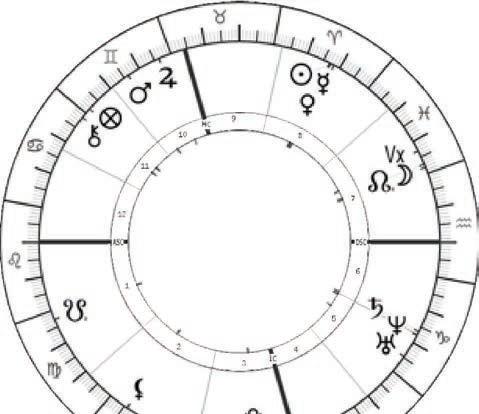

Last but not least, let's put this together with an easy-to-understand example Mini Chart.
Example Chart: April 3, 1989, 2:45pm. Tamworth, New South Wales, Australia.
As seen in this chart, this person is a Leo Rising, with their Sun in Aries in the 8th house and a 7th house Pisces Moon.
Sun: This person likely has a powerful and transformative personality, with the ability to confront complex issues head-on, likely driven by the natural Aries-like ability to take initiative and jump into action.
Moon: It is likely that this person finds emotional stability and security through intense connection. They’re likely to be an empathetic partner, often attracted to artistic, spiritual and gentle partners who may be in need of some healing. Pisces placements can often be the “fixers”.
Rising: This person likely appears to others as warm, confident and charismatic, often lighting up the rooms they enter. They are ruled by the sun, so this person is likely to be a natural-born leader.
Astrology can be a long and difficult-to-understand process, but with my help, I am hoping to make it a little easier for those eager to learn.


If you’re one of those people who looks composed on the outside but on the inside you are stressed, overwhelmed and overthinking you’re not alone! And you don’t have to feel that way. You might think it’s just normal or just you. But what if, it isn’t you? What if, you’ve just learned to be that way? I help people find calm, clarity and confidence. We work together to help you recode your brain to feel calmer, more present and more excited about the future. Everyone deserves to know how to use their brain more effectively.
You can find out more here: www.robynm.com.au Download the free audio and reset your day in 10 minutes.
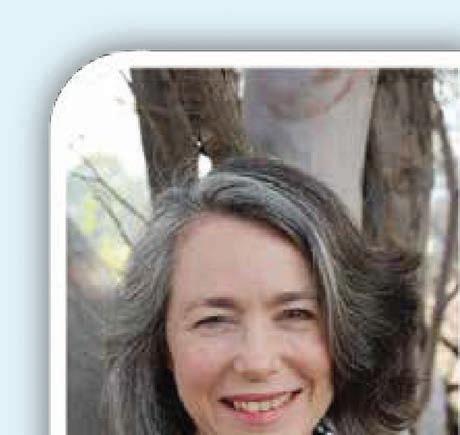

A story of breaking generational patterns and reclaiming a path to healing.
QTell us about your trials, traumas and challenges.
I do not have personal trials or traumas anymore, but in sharing a meaningful answer, many people begin by naming the specific challenges they faced, describing how those experiences affected their body, mind and spirit, and then reflecting on what they learned and how they began to heal. If you are writing from your own experience, you can outline the events, the emotions they stirred, the impacts on daily life and the turning points that opened the path toward healing.
When my youngest was 15 months old, I was diagnosed with depression, although looking back, I suspect it was burnout and overwhelm. I saw a psychologist for six sessions. Perhaps she deserves more credit than I gave her at the time, but I knew continuing talking about my problems was not, on its own, what I needed. I had long term goals, a full life and many of the pressures around me were not going to disappear overnight.
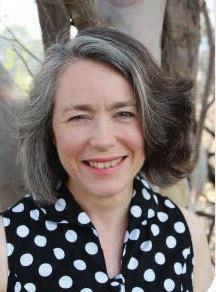
By Robyn Monteleone
I grew up in a household where communication was limited and where, like many families, there were things that happened at home that were not spoken about outside it. My parents had lived through The Great Depression and World War II. They learned to survive, to be frugal, to make do and to keep going. By the time they had me in their 40s, I was a girl growing up in a world of growing feminism and at home, I was learning older rules about what was proper, what was private and what happened when arguments became physical. My father could cry watching television footage of children suffering from hunger or injustice, yet I would sometimes come home to see my mother with black eyes or witness arguments that became physical.
Both my parents were trapped in their worlds of limitation, survival and the possibility of public judgement. Even as a young person, something in me kept pushing forward. I knew my parents loved me and they did, but I also knew there had to be a better way to live. I didn’t know exactly what that way looked like. I only knew three things - I had to leave that house, I needed an education and I had to bide my time until I could do both. So, after Year 12, I left home, went to university and worked part-time to support myself.
“There were things that happened at home that were not spoken about outside it.”
QWhat led you to your healing journey?
Was there a single incident or did it unfold?
As I child I loved school and I learned as much as I possibly could. I kept busy and joined clubs and expanded my world as much as I could. I considered careers such as teaching English and journalism and went on to study a BA in Communication, specialising in advertising and marketing. As I write this, I realise words, language and communication were at the heart of all three choices.
Communication was never an accidental interest for me. It was a deliberate one. Over time, I kept thinking about NLP and hypnosis. I kept reading, researching and quietly wondering how I could return to it. Eventually life reached a point where I could start training again. I began with a three-day hypnosis course and quickly realised this work came naturally to me. My earlier NLP training had left me with both intuition and skill, and people wanted to practice with me. I loved it. That training reopened something in me, and from there I kept learning.
In a Knight’s Tale the protagonist William, asks his father, "Can it be done, father? Can a man change the stars?"
His father, John Thatcher, replies, "Yes, William. If he believes enough, a man can do anything".
QWhat steps did you take on your journey? Which modalities worked for you, as we are all different?
Several years ago, I completed my Advanced Diploma in Clinical Trauma Hypnotherapy and Master Diploma in Hypnotherapy. From the moment I began formal training, I knew I wanted to work with clients. One of the greatest gifts in my journey has been learning broadly.
I have studied Parts Therapy through multiple lenses, including NLP, Resource Therapy and other approaches. At first, that felt confusing. I wondered which version was the right one. Now I see that breadth as a strength.
Clients are different.
Some need gentle guidance. Some respond beautifully to direct suggestion.
Some seem to unlock their own inner healing and create metaphors I could never have planned for them.
My role is to listen, guide and trust the process unfolding in front of me.
QWhat is one solid piece of advice that you would give to the sisterhood just starting out on their journey?
One solid piece of advice is to start with safety and self-compassion: give yourself permission to slow down, seek support you can trust and prioritise basics like rest, nourishment and boundaries. Recognise that healing is not linear, that progress can come in small, steady waves and that you don’t have to do it alone and reach out to mentors, peers or professionals who align with your values and pace.

Robyn Monteleone Hypnotherapy.
Phone: 0401 050 195
Email: robyn@robynm.com.au
Website: www.robynm.com.au
You can find out more here: www.robynm.com.au
Download the free audio and reset your day in 10 minutes.

Breathe with intention.
Slow your breath.
Inhale for 4, hold for 4, exhale for 6.
Repeat and feel your body soften.
Shift your focus.
Gently redirect your thoughts to something supportive. What you focus on grows.
Ground into your body.
Notice your feet, your breath, your body in the space.
Safety lives in the present moment.
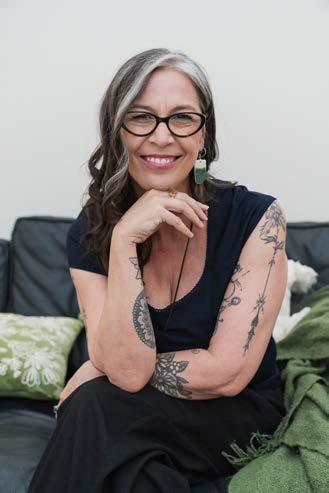

Serving Newcastle and the Hunter, we provide specialised support for emotional wellbeing, habit change and therapeutic transformation. As a focused clinical practice, we offer a high level of care with attention to each client’s individual needs.
Each therapist brings distinct clinical strengths, ensuring clients receive support that aligns with their specific goals. Referrals are considered carefully, so every person begins their therapeutic journey with the right practitioner. We deliver hypnotherapy in a safe, structured and evidence-informed way. Sessions are tailored, confidential and grounded in professional standards that support lasting, meaningful change. Begin your change with a practice committed to safe, effective and compassionate clinical care.


Newcastle Clinical Hypnotherapy.
Phone: (02) 4075 8617 or 0493 669 160
Website: www.newcastleclinicalhypnotherapy.com.au


A mum with challenges, a therapist, a businesswoman and a true warrior in the face of justice for her child.
QTell us about your trials, traumas and challenges.
Motherhood is often spoken about as an arrival point, but really, it is a transition. Not a single shift, but a continual reorientation of who you are, what you can hold and what you thought you understood. For me, that transition unfolded in layers. Some visible. Others not. And sometimes, that unfolding takes you somewhere you never anticipated. When I had my first child, I experienced postnatal depression that was never formally identified. At the time, I had no language for the intensity of the challenges I was moving through, trying to navigate my way, lit by the joys of blonde curls and weighed down by long, raw, dark nights. Alongside this, I was managing nerve damage from birth which resulted in ongoing chronic pain.
by Kylie Gallagher

That carried into my second pregnancy and by the time my second child arrived, the postnatal depression roared in with an intensity that left little room to question what was happening and while still trying to find my feet, the focus shifted beyond the meagre focus on myself as a new mum with a toddler. My son was unwell. Repeatedly, consistently, in those early years.
By the age of three, I knew something was not right. At the worst of it, he ate only three foods –plain rice crackers, cheese and corn. By five, we were living within a reality that did not seem to have pathway out. Food had become a source of distress.
Not preference, not behaviour, but something far more deeply embedded. Our world narrowed around it. Everyday life required planning, negotiation and often recovery afterwards. We sought help: medical specialists, allied health practitioners, complementary therapies, paediatricians, gastroenterologists, immunologists, dietitians, psychologists, naturopaths, homeopaths, body workers, energy healing. I studied Ayurvedic medicine in an attempt to better understand how to support his system and redirect the future I saw looming without change. There was no shortage of effort. What was missing was a way forward that led somewhere different and failing to find another way was not an option.
QWhat led you to your healing journey? Was there a single incident or did it unfold?
There was no single moment that changed everything. I have always been somewhat of a warrior in the face of injustice and someone willing to forge new paths. What a spirit to have! Mostly a blessing, yet not without the warrior’s knowing of navigating battlefields. I kept searching for different pathways. The obvious ones did not fully explain what we were living. I could find no framework that accounted for the complexity of what we were experiencing. What I now understand as Avoidant/Restrictive Food Intake Disorder (ARFID) existed. When my son was six, I decided to try hypnotherapy. He was young and not particularly engaged, but the experience itself shifted something in how I was seeing what might just be little trails of potential appearing. I already knew that what we see is not where the pattern begins and that the underlying drivers matter far more than the surface response. I just hadn’t known how to change the unchangeable: the past.
QWhat steps did you take on your journey? Which modalities worked for you, as we are all different?
An opportunity to move as a family to the US saw us sell most possessions, pack the rest, floor to ceiling into the garage,rent out our home and step into what felt like a new chapter.
On the surface, it was expansive, a new environment, new experiences, a sense of movement. But underneath, nothing about our core challenge had changed. In fact, it became more pronounced. There is something about being removed from your usual supports and structures that bringseverything into sharper focus. What can be buffered in familiar environments becomes much harder to hold elsewhere. It was within that space that I made the decision to train in Clinical Hypnotherapy and strategic psychotherapy. It wasn’t a career decision or part of a long-term plan, just the next step in trying to understand what I was seeing and work with it more directly.
QWhat is one solid piece of advice that you would give to the sisterhood just starting out on their journey?
If there is one thing I would offer, it is this: Be mindful of what you accept as fixed. There’s a difference between what is understood and what is possible. There were many points where it would have made sense to accept the limits we were being shown. To adapt, to accommodate, to work within them and in the forums and chatter amongst those struggling with ARFID online, the language reflects exactly this.
But something in me questioned that. Not loudly, not forcefully, but consistently. Healing does not always follow established pathways and it does not always arrive within the frameworks that currently exist. Sometimes, it requires staying with what you are seeing, even when it has not yet been clearly defined. Sometimes, it requires continuing to look, even when there are no immediate answers and sometimes, what begins as a deeply personal experience becomes the foundation for something that extends far beyond it.
Today, that is the work I do. Supporting others to move beyond what has been positioned as manageable and into a different relationship with food, with their body and with what they believe is possible. My mission is simple: Freedom to Thrive.

Kylie Gallagher. Clinical Hypnotherapist and Strategic Psychotherapist. Newcastle Clinical Hypnotherapy. Website: www.newcastleclinicalhypnotherapy.com.au Phone: 0493 669 160
HealthLink EDI: nwchypno
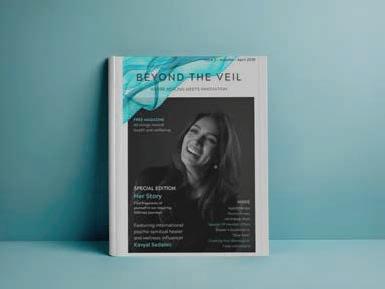
















A story of putting everyone else first and the moment she realised she mattered too.
ED: We have given Lynda the honour of Star Story. So many can relate to burnout (myself included) and the old trusty imposter syndrome, guaranteed to show up when you need it least. It can make the knees buckle in the strongest of SHEroes. We hope that those of you going through this, know you are not alone, it can happen to the best of us and take a lesson from our SHEroe Lynda. Go gently.
QTell us about your trials, traumas and challenges.
As I sit in the space of total burnout, I begin to reflect on how I landed here. To say I am a compulsive course taker is an understatement.
I have attempted many forms of coaching and therapy to unlock the feeling of still not being good enough. I am almost embarrassed when I look at all my certificates (which I hung all over my walls with the hope of feeling good enough), because from an outsider’s perspective, I look amazing on paper.
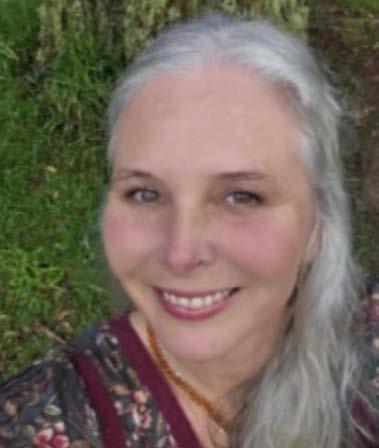
By Lynda Drummond
However, I sit in this space of imposter syndrome. As a wife and mother, I have always placed the needs of my family before my own. However, I now feel a smouldering resentment - a resentment that my career always took a back seat to housework, meal prep and the mundane tasks of being a wife, mother and woman. I often imagine how successful I could have been, if I could just get up and go to work, where I could spend my whole day focusing on my business.
My family has always been supportive; however, I have always held onto this deeprooted mindset of what I should do to make their lives easier, rather than what I wanted to do. Why did it always feel safer to put others’ needs before my own? So, it is time for me to question how my beliefs and patterns drive behaviour; uncovering if “should” beliefs are rigid or automatic. How my inner little girl shies away from standing up to be counted as just as important as everyone else I love.
QI was at this point where I didn’t value my own worth, often providing free services or not charging even close to what I was worth. I felt challenged in creating healthy boundaries and I felt a sense of peace at the idea of closing down my business indefinitely - or hopefully for a short period of time. Awareness is key… right? It gave me a moment to breathe, to take stock, to process and evaluate. What led you to your healing journey? Was there a single incident or did it unfold?
QWhat steps did you take on your journey and which modalities worked for you, as we are all different?
Today, I take back my power by honouring myself. I am okay with finally admitting that I was completely burnt out and that I had nothing else to give. I am okay with saying no and choosing my safety over clients who do not align. I need to trust my own intuition and, for the moment, let it guide me to where I need to be. When I have a clear vision of who I am, then I also get a clear vision of my ‘ideal clients’. I know that eventually, when my own cup is full, I can be of service and create a healing business based on healthy boundaries, integrity and authenticity.

And when I do, I will do it with confidence and compassion because I know what rock bottom is. I am sure we have all been here. It is a space we can be okay being in; however, we must be mindful not to stay there for too long. Breathe. Love. Show up as you are. Envelope yourself in the magical wonder of simplicity that a child feels in just smelling a flower or blowing bubbles...that YOUR inner child feels.
And just know that if you don’t think you know enough, you can simply show up with the right intentions and be the light that others are so desperately seeking.
I don’t plan on being in this space for too long, consider it like the “Stop. Revive. Survive.” campaign for our emotional self.
When I can hug that little girl and say to her “I’ve got this little one, let’s blow bubbles!”, I will be ready to show up fully present.
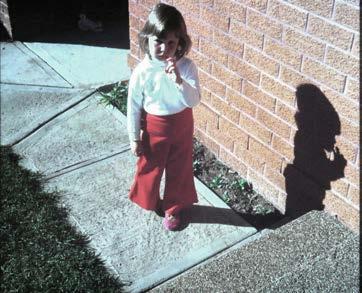

QWhat is one solid piece of advice that you would give to the sisterhood just starting out on their journey?
My advice for you is this: Don’t try to do everything on your own. We are created from ancestral tribes and villages, where asking for support or help was normal. Why have we lost touch with those values that worked so well?
It could be offloading your house duties by paying for fortnightly cleaning or creating healthy, yet quick meals (a slow cooker is ideal for these moments).
Create a daily nonnegotiable.
This could be 10 minutes of breathwork, morning sunlight, a healthy protein-rich breakfast or boundaries around after-hours messages from clients. Mine is seeing the sunrise at least one day/week.Burnout often comes when we abandon our own rhythms when we have given beyond what was sustainable and when we have forgotten that we, too, are part of nature. And nature rests. The moon wanes. The tides recede. The winter trees shed their leaves and appear bare; however, deep beneath the soil, life is gathering strength. Recognise the time to rest or sleep (guilt-free), before your body screams it from the rooftops. When you are fatigued, know that this is a sacred space to be in. It is your spirit’s way of saying, “You have poured enough. Now let yourself be held.”
Envelope yourself in the magical wonder of simplicity that a child feels in just smelling a flower or blowing bubbles...that YOUR inner child feels.
Rest is not laziness. It is a return. Recovery is not dramatic. It is quiet and it is slow. It is choosing sleep over scrolling on your phone. It is choosing “not today.” It is choosing softness over self-criticism.
Lynda Drummond. Clinical Trauma Hypnotherapist. DeTrauma Technique™ Practitioner. Nourishing Reselda. Phone: 0457 543 020 Website: nourishingreselda.com.au
Email: lynda@nourishingreselda.com.au
A
QTell us about your trials, traumas and challenges.
I was raised in a high control religious environment where obedience, moral purity and fear of God were central teachings.
Within that system, I experienced abuse.
Years later, my two eldest children were also abused. When I reported it, I was instructed not to go to the police. I was told it should be handled internally as a moral issue rather than a criminal matter. I went to the police anyway.
That decision marked the beginning of my departure from the religion I had been born into. It also marked the collapse of my entire identity structure. I had been taught that questioning doctrine was rebellion. I had learned to fear God as punitive and watchful. When I chose the safety of my children over institutional loyalty, I was cut off from the only community I had ever known.
My marriage ended. I was raising four children alone, receiving no child support, financially unstable and internally shattered. By age 32, I lived with constant C-PTSD. Suicidal depression, crippling anxiety, hypervigilance, collapse and a nervous system that never felt safe were my daily reality. Ironically, my healing journey was not a departure from the spiritual. It was a reclamation of it.
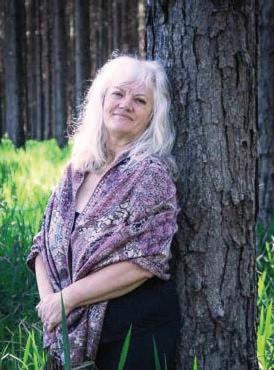
By Deborah Ann Christensen
QWhat led you to your healing journey? Was there a single incident or did it unfold?
Spiritual Catalysts for my Healing Journey: Healing did not begin in a therapy room. It began with experiences that interrupted despair. When my youngest son was only weeks old, during an intensely traumatic period, I experienced what I can only describe as an out-of-body experience. I became aware of observing my body and the room, from above. There was no fear, only clarity.
I understood in that moment, that I was more than the pain I was living inside.
Years later, after overdosing and spending four days in intensive care in a coma, I had a near death experience that profoundly altered me. There was a sense of being held, of my life not being finished, of returning with purpose. I woke with a quiet certainty that I had been given another chance.
“The manuscript went on to win two international awards in 2014 and became one of the top one hundred most reviewed self-published books of that year.”
A year after my grandmother’s death, she appeared to me in a vivid dream and told me to write. She spoke of breaking the cycle of intergenerational trauma she had endured and that my children and I were living through. She said that if I wrote the book, she would find the editor and publisher.
The following day, a sequence of synchronistic events unfolded that led directly to both. The manuscript went on to win two international awards in 2014 and became one of the top one hundred most reviewed self-published books of that year, published under a pseudonym. It reached and helped many people navigating similar pain.
At a time when I was struggling to feed four children and navigating my first Christmas outside the religion of my childhood, I prayed simply for enough. Within days, more than a dozen food baskets arrived from three separate agencies who had independently been moved to support us. These moments did not remove trauma, but they interrupted isolation.
The God I had feared was replaced by an experience of the sacred that felt nurturing rather than punitive. That shift softened something fundamental inside me and created enough hope to begin the work of recovery. Spiritual experiences opened the door. Clinical and embodied practices rebuilt my life. Both were wound together and cannot be separated.
QWhat steps did you take on your journey? Which modalities worked for you, as we are all different?
Somatic experiencing is updating the body from then to now. Before I understood trauma physiologically, I tried to think my way out of it. That did not work.
Somatic experiencing and polyvagal informed work helped me understand that trauma is not the event itself, but the unresolved survival energy held in the nervous system along, with the meaning we gave the events. Through pendulation, titration, orienting, body scanning and slow breath practices, I learned to track sensation - instead of story. Heat in the chest.
Constriction in the throat. Collapse in the belly.
Gradually, my nervous system began to recognise that the danger was no longer present. My window of tolerance widened. Hypervigilance softened. Collapse became less consuming.
The body learned safety.
For years, I believed I was my thoughts - and my thoughts were relentless. Religious shame, selfblame, catastrophic fear. I could remain inside those loops for hours at a time. Entire days were chemically flooded by them.
Acceptance and Commitment Therapy introduced me to cognitive defusion, particularly the five or six step practice of naming the story:
Name the story (first name that comes to mind). Catch your brain in ruminating thoughts (the story). Thank your survival brain “Thank you brain, I got this”.
Re-orient to present moment using your five senses (5, 4, 3, 2, 1) five things you can see, four things you can hear, three things you can touch, two things you can smell, one thing you can taste.
If worrying thoughts need an active solution, set aside a time to problem solve and adhere to that time.
In-between those times, if thoughts arise, put them figuratively into a box in your mind, to be only opened at that time.
I also learned that thoughts trigger biochemical cascades. Fear based rumination releases cortisol and other stress chemistry into the body. Those chemicals create sensations or a felt sense in the body, which we then label as an emotion. We then attach story or stories to the sensation and reinforce the loop. By shortening how long I remained fused with painful thoughts, I reduced the physiological flooding that had fuelled suicidal depression. I learned I could choose how long I stayed in a thought pattern. I decided who lived rent free in my head and for how long.
I could reorient to present time, to the present moment. Feet on the ground. Breath in the body. Not in the painful past. Not in the imagined future. Here.
Psychodynamic therapy had given me insight for years, but insight alone had not changed how I felt or experienced daily life.
ACT restored agency. Agency changed everything.
In 2020, I read You Are The Placebo and Becoming Supernatural by Dr Joe Dispenza. I then started on a daily basis, using about five separate guided mediations designed for heart-brain coherence. These coherence practices strengthened my baseline regulation.
Slow breathing combined with intentionally generated feelings, such as focused awareness, gratitude and care stabilised my physiology. Trauma narrows perception into threat scanning. Coherence broadens perception into safety.
Then I tried Clinical Hypnotherapy for rewiring my brain. Over time, my emotional recovery became faster. My internal steadiness deepened. It was not about bypassing pain, but was about rehearsing safety until it became familiar. Since this time, synchronistic events are now commonplace and the mystical has become evidence that I am in alignment with my higher purpose.
Trauma lives below conscious narrative in implicit memory, autonomic patterning and protective beliefs formed under threat.
In therapeutic trance, when the brain shifts into slower alpha and theta states, the critical faculty softens and the unconscious becomes more accessible. Through clinical hypnotherapy, I was able to speak directly to protective parts, reframe subconscious beliefs, release stored emotional charge and install new internal responses. In December 2025, I graduated with an Advanced Diploma in Clinical Trauma Hypnotherapy with Hypnotherapy Training Australia.
When we work at the level of the unconscious, patterns that have persisted for decades can shift far more rapidly than through cognition alone.
“It was not about bypassing pain but was about rehearsing safety until it became familiar. “
Today, I facilitate a weekly group hypnosis experience integrating somatic regulation, hypnosis utilising direct unconscious communication and nervous system science. It offers women, particularly those who have spent their lives giving to others, or who continue to do so, a structured space to receive, reset and reconnect mind, body and spirit. I also run pain workshops, utilising both hypnotherapy and somatic experiencing that teach people experiencing chronic pain to rewire their brain’s interpretation of pain.
“When women regulate their nervous systems, reclaim their agency and reconnect with a nurturing experience of the sacred, something larger shifts in families, communities and leadership.”
Recovery was not one breakthrough, but it was layered. In 2014, I completed a Bachelor of Science majoring in Psychology. In the years that followed, I undertook extensive postgraduate training, accumulating multiple certificates and diplomas, across specialised programs in trauma informed and evidence-based modalities. Alongside this, I explored complementary approaches including Reiki (1 & 2), Emotional Freedom Techniques (EFT) and Thought Field Therapy (TFT), Neuro Linguistic Programming (NLP) and other integrative frameworks.
Healing did not mean erasing the past, but it meant no longer being governed by it. The nervous system did exactly what it was designed to do under threat. Healing was teaching it that the threat had passed. What began as survival has evolved into stewardship. I now see trauma recovery not only as an individual process but as generational and collective work. When women regulate their nervous systems, reclaim their agency, and reconnect with a nurturing experience of the sacred, something larger shifts in families, communities, and leadership. Having recently been invited to speak at different events, I am increasingly aware that nervous system regulation and inner coherence are not only personal wellness tools, but they are foundational to how we create peace in the world. We must first create it within ourselves.
From fear-based obedience to embodied safety. From institutional betrayal to internal authority. From fragmentation to integration. That has been my journey. And it continues.
QWhat is one solid piece of advice that you would give to the sisterhood just starting out on their journey?
Sisterhood moves forward when women remember that safety begins in the body.
When we tend to our own nervous systems, soften our inner critic and speak from grounded presence rather than old wounds, we become steady spaces for one another.
From that steadiness, collaboration replaces competition and compassion replaces comparison. Regulated women create peaceful communities.
Deborah Ann Christensen. BSc (Psychology), Clinical Trauma Hypnotherapist (Adv. Dip. CTH, HTA), Counsellor, DeTrauma Technique™ Practitioner, Speaker and Founder. Soulscape Transformational Change. Website: www.soulscape.au
Phone: 0438 152 900
Email: debchristensen1965@gmail.com
QTell us about your trials, traumas and challenges.
My name is Irene. I will be 87 in April 2026. I was born in 1939 in Maryhill in Glasgow, just before the Second World War began. Life started in hardship. There was poverty, hunger and the constant threat of bombing. Children were not encouraged to speak. You learned early to stay quiet and get on with things.
At nine, I was abused by two male family members. I did not understand what was happening and I had no language for it. I carried it alone. That silence shaped me. Somewhere inside, I decided it was me against the world. The abuse continued for years and left a mark that followed me into adulthood.

By Irene Fletcher Anderson
We emigrated to Australia not long after. Seven of us lived in a four-man tent for a year. I started work at fourteen, because that is what you did. Survival came first. Outwardly, I looked like I was managing. Inside, I lived with something I could not escape. Two lives ran side by side. I married at seventeen to get away. That same year, I tried to take my own life. I survived, but spent decades feeling half present, as if I was moving through fog. There was always something unsettled beneath the surface.
Even so, life kept moving. I worked at Anthony Hordern’s Emporium in Sydney, the largest store in the southern hemisphere at the time.
I met people like Clive Churchill and Keith Miller. I was pulled into unexpected moments, like being asked to play a fairy princess at a store event with a cardboard crown and wand. Small things, but they mattered.
At sixteen, I began singing in bands across Sydney.
Hotels, dance halls, anywhere that would have live music.
I sang in Lidcombe and Hurstville and out to Windsor.
Sometimes people drifted in quietly. I remember Rod Taylor (Star of Rod Taylor’s Detectives) sitting at the back one night, just listening. I had a contract at the Three Swallows Hotel in Bankstown where international performers came through. Life had colour in those moments, even if it sat alongside everything else I carried.
QWhat led you to your healing journey? Was there a single incident or did it unfold?
There was a moment that shifted things, but it came after many years of living in that fog. I attempted to take my life again and was found in time. When I woke, something in me had changed. I was angry. Not a passing anger, but something deeper. It cut through everything. That anger became a turning point. I realised I could not do that to my children again. They needed me and I needed to be present for them. From there, things began to unfold slowly. It was not a clean break or a sudden transformation. It was more like waking up in stages. My children gave me purpose. They grounded me. Over time, I started to use my voice in ways I had not before. In the 1980s, I became involved in peaceful protests against nuclear testing in the Pacific. That was part of it too, finding a way to stand for something beyond myself. Faith also played a role. It was something steady in the background for many years, then later, it became a place of real peace.
“I helped raise my grandchildren. I remained connected to my church. None of these things were a single solution, but together they formed a kind of healing.”
My path was not formal or structured. It came through living, working and staying connected where I could. Raising my children was central. I put my energy into giving them a different life.
That gave me direction and something solid to hold on to. Work helped.
Whether it was singing in those early years or later working full time jobs, it kept me moving.
I remember singing in a small café in Fairfield owned by a man named Albert.
He turned out to be a Count who had fled Hungary. One day the Gabor family (Eva and Zsa Zsa) walked in to visit Albert’s dying father. Life had these strange intersections that reminded me the world was bigger than my own experience.
patience and a chance to care for I volunteered as well.
I spent time helping care for actor Jon Blake after his accident. It was confronting work. We tried everything and saw no recovery.
It taught me about limits, about acceptance and about showing up, even when the outcome is not what you hope for.
I stayed involved in community where I could.
I read the news on local radio for a time.
QWhat is one solid piece of advice that you would give to the sisterhood just starting out on their journey?
Do not give up on yourself, even when it feels like there is nothing left to hold on to. There were years where I could not see a way forward.
What carried me through was not strength in the usual sense. It was staying. Staying for my children, staying in the world, staying long enough for something to shift. You do not have to fix everything at once. You do not even have to understand it all straight away.
Just keep going, even if it is uneven and uncertain.
“With age comes the understanding and appreciation of your own personal beauty.” – Helen Mirren
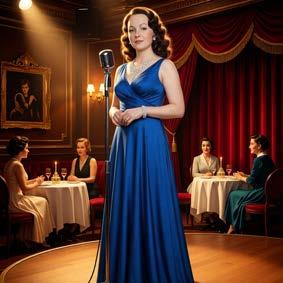
I never thought I would leave any kind of mark.
Looking back now, I can see that I have, through my children, my grandchildren and the lives I have touched along the way.
If I ever wrote a book, I already know the title.
Weeping Warrior. That is who I became.
Not someone untouched by pain, but someone who kept going and eventually found peace.

THIS ISSUE WE FOCUS ON COLOUR FOR YOU!
WHAT TO WEAR TO LOOK & FEEL AMAZING!






Colour speaks before words ever do. Each hue carries its own quiet psychology, energising, soothing, grounding or awakening - shaping mood, perception and even behaviour in subtle, powerful ways. When we choose colour with intention, we are not just creating something beautiful, we are influencing how it is felt.

Blue: Serenity Confidence Sincerity Wisdom

Pink: Empathy
Gentleness Romance Playfulness
Gold: Prestige Excellence Mastery Legacy
Sophistication

Turquoise: Creativity Balance Compassion Expression

Red: Vitality Urgency Desire Determination

Silver: Sleek Technology Intuition Contemporary Fluidity
Green: Growth Vitality Harmony Renewal

Orange: Enthusiasm Warmth Social Ambition

White: Simplicity Wholeness Sincerity Newness
Completion
Yellow: Optimism Clarity Intellect Innovation

Brown: Grounded Stability Comfort Sincerity

Grey: Neutrality Sophistication Balance
Modernity
Seriousness

Purple: Imagination Intuition
Mystery Distinction

Tan: Simplicity Nature
Versatility
Security

Black: Power Elegance Mystery Authority Formal


Colour can effect every part of our day. When we wear the right colours, we pop, are vibrant and generally feel an overall sense of wellbeing. This is why prisons are painted in soft greens and blues for a peaceful feeling.
It is interesting to dabble with the colours in your season as you can cut down on the amount of clothes in your wardrobe and mix and match your unique colours and style.
It is an effective way to brighten the complexion, eyes and smile. For some this process will be very simple and for others I recommend that you go neutral but remember you can always look good in the same colour of your eyes, skin and hair.
The first thing you need to identify is your skin’s undertone. As the word itself suggests, the ‘undertone’ signifies the tone of your skin from below the surface that influences your overall complexion. There are three undertones and they are: cool, neutral and warm. Finding your dominant undertone is the easiest way to uncover which colours will best complement you. The undertone that reveals which hues enhance your complexion, making your eyes and skin appear brighter, and your smile even whiter.


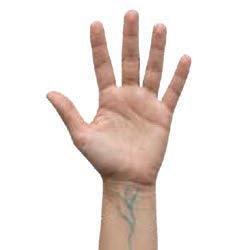



Cool Undertones:
Veins appear blue/purple in natural light.
Silver jewellery looks best on you, but you can also wear rose gold.
Base colour of skin looks rosy, beige or has hints of blue, pink or red.

Neutral Undertones:
Veins appear blue/green in natural light.
Both silver and gold jewellery look good on you.
Base colour of skin doesn't appear pink/blue or yellow/gold/peach.

Warm Undertones:
Veins appear green or olive in natural light. Gold and bronze jewellery & earth tones look best on you.
Base colour of skin looks warm, yellow, golden or creamy.

The first thing you need to identify is your skin’s undertone. As the word itself suggests, the ‘undertone’ signifies the tone of your skin from below the surface that influences your overall complexion.
Besides being a simple, yet effective way to instantly brighten the complexion, eyes and smile, choosing colours that suit your skin tone can also help simplify the process of curating your wardrobe by focusing on the shades that flatter, time after time. If you find yourself reflecting and asking, ‘What are my colours?’, keep reading for the Aje Report’s detailed guide on how to find the best colour palette for your skin tone.

your complexion, making your eyes and skin appear brighter and your smile even whiter.
Helpfulways to find your dominant undertone are:
The White Paper Test.
The Jewellery Test.
The Vein Test.
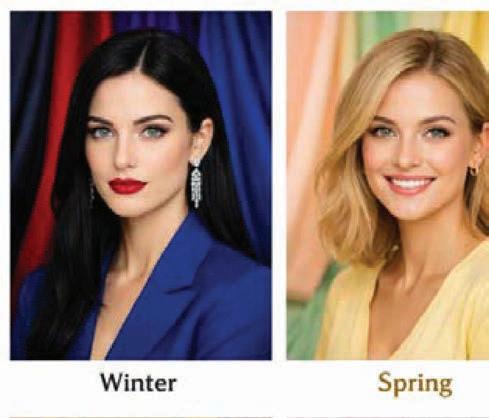
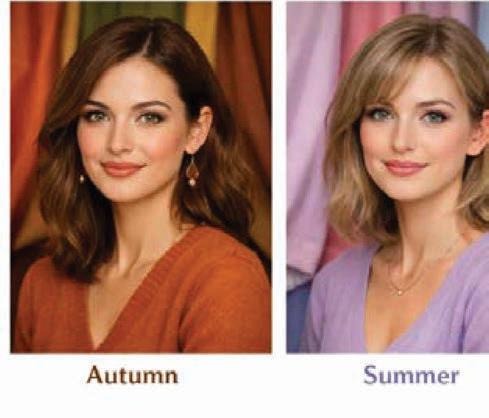

The ‘White Paper Test’ is a simple method for finding your undertone.
Begin with a makeup-free face in natural light to clearly observe your skin. Hold a piece of pure white paper near your face and notice how your skin appears in contrast. If you see subtle gold, yellow, green or light brown tones beneath the surface, you have a warm undertone.
If the pigments appear more blue, rose or pink, your undertone is cool. If your skin looks ashen or grey, this indicates a neutral undertone.
Note: If it’s difficult to observe your undertone due to skin conditions, have someone hold the white paper near the crease behind your ear for a clearer view.

“The Jewellery Test” is another method to reveal your skin’s undertone. Hold a piece of silver and then a piece of gold coloured jewellery against your face. Which piece of jewellery makes your skin come to life?
If you have a warm undertone, the gold jewellery should give your complexion an added glow.
Silver jewellery looks more striking against a cool countenance.

Unlike the paper and jewellery tests, you don’t need any additional items to do this. Take a look of the colour of the veins in your wrist and hand.
If your veins appear more blue or purple, that is a sign of a cool undertone.
Green hue suggests a warm undertone.
If it doesn’t seem like it is quite either of these, then that indicates a neutral undertone.
Example:
Here’s a concrete example of how colour in makeup and clothing can influence mood, shape how you feel about yourself, and give you that “pop” you are after.
Example: A day-to-evening look that shifts mood and signals confidence.
Scenario: You have a busy day from an important morning meeting to a social after work event. You want to feel credible and focused in the morning, approachable and energized by midday, and polished with a memorable “pop” for the evening without swapping outfits.
Lips:
Morning/Meeting: A blue-based red or rose shade reads as confident and decisive. It boosts your mood and the perceived authority you project.
Evening: A deeper berry or wine shade adds warmth and drama, signalling sophistication and social energy.
NEXT
We will delve into the The Hair and Eye Colour Test.
Blue or Purple Veins: Indicates a Cool Undertone.
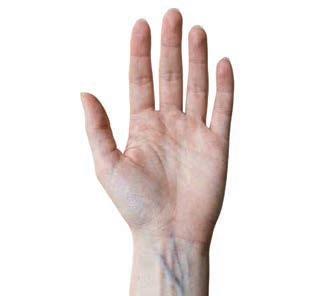


Green Hue in Veins: Indicates a Warm Undertone.
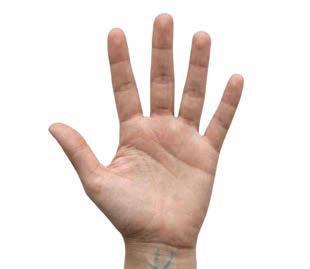

Neither Hue in Veins: Indicates a Neutral Undertone.




QTell us about your trials, traumas and challenges.
For many years, I believed something was wrong with me. My emotions felt overwhelming and unpredictable. Anxiety could rise out of nowhere and there were times my thoughts became so dark that I questioned whether I could keep going. I didn’t understand why my mind could feel like a storm for weeks and then suddenly settle again. What I know now, is that I was never broken, my mind and body were simply trying to survive what I had lived through and my brain was experiencing an abnormal sensitivity to normal hormonal fluctuations.
By Melanie Boole
My story began in deep emotional pain and despair, long before I understood where those feelings came from - the pain of a little girl inside me who had learned to live in fear.
For many years, she carried that fear quietly, waiting for someone to see her, hear her and tell her she was safe.
My stepfather was violent and unpredictable. I never knew what mood he would be in or what might trigger his anger. The smallest things could set him offa room not cleaned to his standards, a mistake made as a child or simply being in the wrong place at the wrong time.
I learned very early that obedience was expected,
“I was always watching, always anticipating his moods, always trying to avoid doing something wrong.”
along with a level of perfection and responsibility - far beyond what a child should ever have to carry. Much of my childhood was spent trying to anticipate and manage an adult’s anger and emotional outbursts.
If my bedroom wasn’t cleaned exactly how he wanted it, when I had “room Inspections” he would empty my drawers, rip the bedding from my bunk bed and scatter everything across the room so I had to start again. I remember standing there as an eight-yearold, overwhelmed, trying to make things perfect, so I wouldn’t be punished. But perfection rarely protected me.
Often, I was beaten with a leather horse whip across the backs of my legs - so severely that I would be left bruised and unable to sit comfortably in the hard school chairs the next day.
I was always watching, always anticipating his moods, always trying to avoid doing something wrong.
By the time I was 13, the weight of living in that constant fear had become unbearable.
“I carried that pain silently.”
One day during another confrontation, he was yelling at me and repeatedly jabbing his finger into my chest while I slowly backed away. Behind me was a staircase. I glanced over my shoulder and felt something inside me give way.
I remember thinking, “I don’t care anymore” andI said to him, “Just do it. Push me down the stairs and kill me.”
Those were the words of a 13-yearold who had reached the edge of what she could carry.
It was the last time he ever physically or verbally abused me. Not long after, my mother left him and we moved away. But trauma doesn’t disappear just because the environment changes.
At 14, I began drinking heavily and partying. Looking back now, I understand that I was trying to numb emotions I didn’t yet know how to process.
By the age of 21, I knew I needed something different, I wanted to get far away and escape. I left Australia and travelled overseas to the UK, where I met the amazing man who would become my husband. We married in 2005 and had three children.
For a time, life felt hopeful. But my parenting style had parts of what I had known, I was quick to anger and I would shout a lot. I knew I didn't want my children to experience an angry mum, so I went to an EFT (Emotional Freedom Technique) therapist to process some of the trauma from childhood violence, in the hope of changing the way I felt and parented.
QIt was just after that I had my first loss when my grandmother passed away, she was my rock, my mother figure, my beautiful Nan.
I know at the time I knew I should feel sad, but it was like an outer body sadness, one that I didn't let myself truly feel, knowing that it would hurt too much.
Then in 2017, tragedy struck our family when my brother-in-law took his own life. We were incredibly close, and the loss sent shockwaves through our family. Like many people who experience suicide loss, I carried deep guilt and unanswered questions. The grief affected all of us. My children were mourning the loss of their uncle and navigating their mental health struggles around loss and grief. My husband was deeply grieving his brother and I was trying to hold everything together while quietly carrying my own pain.
Eventually, it all came crashing down and I experienced a complete mental breakdown. After burying my pain for so long, it felt as though every unresolved wound had suddenly been opened at once - a flood of grief, trauma and emotions I had never allowed myself to feel.

I also began experiencing emotional cycles that I could not explain. For two weeks each month I would feel crushing anxiety, intrusive thoughts and overwhelming emotional darkness.
Then suddenly those feelings would lift slightly and for the next two weeks I could function again. The pattern repeated month after month.

QWhat led you to your healing journey. Was there a single incident or did it unfold?
Eventually I sought help from my GP and was referred to a women’s health specialist. That was when I was diagnosed with Premenstrual Dysphoric Disorder (PMDD) - a severe hormonal condition that affects mood and emotional regulation.
Receiving that diagnosis was both confronting and relieving. It finally explained the cycles I had been living with.
I had a few sessions of hypnotherapy with a naturopath that was helping with supplements for hormonal health and was fascinated by the process.
The experience opened my eyes to how powerful the mind can be in healing emotional pain and trauma. Those sessions sparked something inside me.
For the first time, I began to wonder whether I could study this work and eventually help others who were struggling.
What began as curiosity, soon became a decision to enrol in a Clinical Hypnotherapy training course.
At the time, I believed I was learning these skills so I could support other people. I didn’t yet realise how much it would change my own life.
QWhat steps did you take on your journey? Which modalities worked for you, as we are all different?
During my training, something unexpected happened. As we explored the subconscious mind, trauma responses and emotional healing, I slowly began to see my own experiences in a new light. I realised that many of the struggles I had carried for years were deeply connected to the trauma and fear I had experienced growing up. There was a moment during the course when my trainer spoke to me with such kindness and compassion that it stopped me in my tracks.
I remember thinking that I had never heard someone speak to me with that level of nurturing before. That moment cracked something open inside me. For the first time, I began to believe that healing might truly be possible. Simply experiencing what it felt like to be heard and truly held was life changing. The other beautiful people I had met on my course, had also experienced deep trauma and we all shared with such vulnerability, it felt safe for once to share our experiences in a non-judgemental space. A group of deeply wounded people coming together to learn how to help others, while sharing our deepest hurts.
It felt like connecting with my tribe.
My healing journey has included many different modalities. The EFT (Emotional Freedom Technique) that helped process trauma from my childhood violence.
Later, clinical hypnotherapy helped me access subconscious beliefs and emotional patterns that had formed during those early experiences.
I also began learning about trauma-informed therapy, nervous system regulation and somatic healing, understanding how the body holds trauma and how it can be gently released. What began as a personal healing journey eventually became my life’s work.
Today, I am a Clinical Hypnotherapist, Counsellor and PMDD specialist, supporting women who are navigating trauma, emotional overwhelm and hormonal mental health challenges. Many women silently struggle with trauma, emotional overwhelm or PMDD without realising that what they are experiencing is both real and treatable. When women begin to understand the connection between their nervous system, past experiences or hormonal mental health, something powerful happens - they begin to reclaim a sense of stability, self-compassion and hope.
QWhat is one solid piece of advice that you would give to the sisterhood just starting out on their journey?
If I could offer one piece of advice to women starting their healing journey, it would be this: You are not broken.

I remember thinking that I had never heard someone speak to me with that level of nurturing before. That moment cracked something open inside me...

The ways you have learned to cope were created by a nervous system trying to protect you.
Healing is not about fixing yourself. It is about understanding yourself with compassion.
And most importantly - you do not have to walk that path alone.
Sometimes I think about the little girl who once lived in fear, the child who spent years trying to stay quiet, stay perfect and avoid doing anything that might trigger someone else's anger. Today, that same little girl has grown into a woman who helps others feel safe within themselves.
Supporting women through trauma, emotional healing and PMDD feels deeply personal to me, because I understand what it means to live inside a mind and body that feels overwhelmed.
For many years I believed my story was something to hide.
Now I understand that sharing our stories can help others realise they are not alone.
When women share theirstories openly, something powerful happens the silence breaks, the shame dissolves and healing then becomes possible for all of us and sometimes, the very struggles that once tried to break us, become the path that leads us to help others heal.
Melanie Boole.
Clinical Hypnotherapist, Counsellor, PMDD Specialist. Centred Holistic Therapies. Annandale, QLD, Australia.
Website: www.centredht.com.au
Phone: 0431 305 318
Email: info@centredht.com.au
I learned a hard truth, strength isn’t the absence of breaking, but the choice to pause when the world feels heavy.
QTell us about your trials, traumas and challenges.
Life broke me open rather than it breaking me. I built a world full of external success, a business owner, a mother of three, a wife, a keynote speaker, a student of human behaviour who holds space for others every week, but behind those achievements, lay seasons of grief that quietly reshaped me. Over the last decade, I buried people I loved and I grieved relationships and identities that no longer fit. I learned to breathe through it, while teaching my children about loss. That depth of experience, not ease, is what drew me to therapy. I wanted to sit with the raw edges of life and help others navigate them with honesty.

By Sarah Chemaissem
Strength, I learned, isn’t about not stopping. It’s about knowing when to pause. I kept showing up for clients, study, family, community, thinking that constancy equalled resilience. Then there came a moment when I realised I was holding the world together, while my own centre drifted away. I paused my studies for a season, not out of failure, but choosing sanity over speed. Looking back, that was a profoundly therapeutic decision. Healing didn’t arrive with a single breakthrough, it came quietly, when I allowed myself to feel without labelling it, when I stopped treating pain as weakness, when I sat with grief, rather than trying to reframe it too quickly.
QWhat led you to your healing journey?
Was there a single incident or did it unfold?
The healing was rooted in the small, steady practices that kept returning me to myself. I leaned into what had always lived inside me: faith, nature, the mind–body connection, long barefoot walks, dawn prayers, journalling and sitting with discomfort, rather than rushing to fix it. I returned to basics: breath, stillness, presence. Professionally, I trained in traumainformed practice, NLP, hypnotherapy, timeline work, somatic approaches and psychoeducation. But the real work happened inside me: loosening my own model of the world, so I could help others loosen theirs.
“I
have buried people I loved deeply. My father. My niece. A best friend who felt like a sister. I have grieved relationships that ended and identities that no longer fit.”
QWhat steps did you take on your journey? Which modalities worked for you, as we are all different?
The path was built from both professional and personal work. In the professional realm, I immersed myself in trauma informed practice, NLP, hypnotherapy, timeline work, somatic approaches and psychoeducation. These modalities offered maps, but the true journey lay in the lived experience of them and how I brought them into my own breath, body and heart. An embodied experience.
Anxiety isn’t always an enemy. Often, it’s a messenger telling us to slow down and listen. The steps were repetitive and intentional: seek supervision and personal therapy, establish non-negotiable self-care rhythms, prune what drains me, strengthen what grounds me, reconnect with faith and values and show my humanity in front of my children.
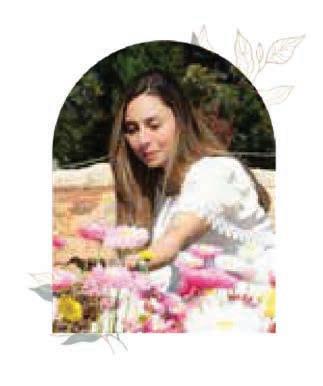
QWhat is one solid piece of advice that you would give to the sisterhood just starting out on their journey?
Do not rush your healing to make others comfortable. Slow down enough to hear what your body and soul are asking for. Seek support, speak honestly and build small daily rituals that anchor you. Healing is rarely a single breakthrough moment; it is a thousand gentle returns to yourself.
QIn the quiet of those returns, your story is told with a gentler cadence. My mother often reminds me of something I once told her about hope: “That it is the quiet knowing that there is always another opportunity, another possibility waiting to unfold” and when life feels heavy and I lose sight of the light, she gently brings me back by saying, “Never forget, hope never fades, unless you choose to turn a blind eye to it.” Healing did not make me fearless. It made me more human, more present and more compassionate toward the invisible battles we all carry.
If my story helps even one person feel less alone tonight, then every trial, every tear and every detour has held meaning.
Sarah Chemaissem. Clinical Hypnotherapist, NLP Practitioner. Beyond NLP Coaching. Website: www.beyondnlpcoaching.com.au
Phone: 0480 281 035 02 4606 4994
Location:
A 50/7-9 King Street, Campbelltown, NSW, 2560.

CPD Workshops for:
Clinical Hypnotherapists
Counsellors
Psychotherapists
Supervision
Approved Associations
Approved Schools






A little about GoAH and the past:

Since 2007, the hypnotherapy profession has been working toward self-regulation, which has been a federal government requirement for non-regulated health modalities. In the spirit of cooperation and unity, existing schools and associations agreed to form a peak body as required by government and this was achieved in 2010, with the formation of the Hypnotherapy Council of Australia (HCA), whose membership comprised teaching organisations and associations. of the Hypnotherapy Council of

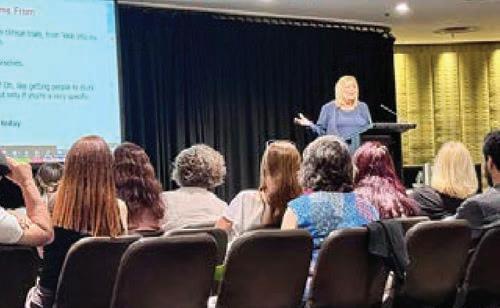



This was the first time in over 60 years that the profession had come together in unity.
Associations were represented in New South Wales, Victoria, Tasmania, South Australia, Queensland and Western Australia, while the Northern Territory and the Australian Capital Territory did not have sufficient membership to establish their own associations.
In 2020, the association that was based in Queensland closed, which left the state without a seat at the Hypnotherapy Council of Australia (HCA) table and no effective local representation for Queensland hypnotherapists - in what is a large and diverse state.
In 2020, the association that was representation for Queensland hypnotherapists - in what is a large

served by being a part of HCA. This could be Australia - and so GoAH was born.
Queensland hypnotherapists, some with decades of experience on the board of other large associations, including past presidents, vice-presidents and a past president of the HCA, together with many other experienced hypnotherapists, were convinced that Queensland hypnotherapists could be better served by being a part of HCA. This could be achieved by establishing a new, different and transparent member-focused association based in Queensland, but serving the whole of Australia - and so GoAH was born.
Within a short period of time, the GoAH has welcomed members from every state and territory in Australia. It seemed that times had changed and a new way of organising a professional association was needed, while still being under the auspices of HCA, the National Peak Body.


Firstly, our defining document is our Statement of Values.
The Guild of Australian Hypnotherapists is different from many associations in a number of ways.
How we act and interact with each other, the values we hold as important, will always be the defining characteristic of the Guild of Australian Hypnotherapists.
If we must take our constitution out to settle problems, it simply means we haven’t learned to effectively communicate and this doesn’t augur well for professionals whose work is communication. We will probably have differences of opinion and we will settle these through our values and compromise.
Secondly, we are focused on the future and not the past. As we tell our clients, the past is set in concrete, it can’t be changed. However, the future is a blank slate on which we can build a unified community of hypnotherapists that has real and lasting influence in Australia. We can raise the level of discourse and of our profession.


Topic: Reflective Risk Awareness Model. (RRAM)
Date: 28 June 2026
Time: 2pm AEST
End: 5pm AEST
Venue:
Zoom link will be sent the day before the event.
Contact: GoAH admin.
Phone: 0412 066 852
Email: admin@goah.com.au
Who Can Register: MembersOnly.
Kylie Gallagher is a Clinical Hypnotherapist and Strategic Psychotherapist and the founder of Newcastle Clinical Hypnotherapy. She specialises in anxiety, trauma, eating disorders and gut-directed hypnotherapy, working with a range of evidence-informed approaches to support meaningful and lasting change. Prior to her clinical career, Kylie worked in industrial risk assessment and facilitation. This background led to the development of the Reflective Risk Awareness Model (RRAM), which translates risk-matrix logic into a therapeutic context. This integration introduces a lens not typically present in mental health practice: a structured, teachable method for understanding and recalibrating perceived risk. Her work bridges clinical practice and applied risk thinking, offering a distinctive approach to supporting more accurate, grounded and adaptive responses to uncertainty.
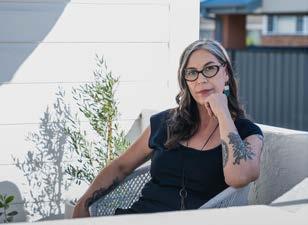
Reflective Risk Awareness Model (RRAM):
A structured, measurable method for working with anxiety, uncertainty and perceived risk. This workshop introduces a structured, trauma-informed framework that translates riskmatrix logic (likelihood, consequence and controls) into a clinically applicable method for working with client perception.
Participants will learn a clear, repeatable process for guiding clients to:
• Define specific, reasonable outcomes, rather than diffuse threat
• Distinguish between felt intensity and perceived likelihood
• Identify factors that influence or modify risk
• Actively reappraise and update perception in real time
This provides a way to make risk appraisal explicit, structured and teachable, enabling clients to work with their own perception directly, rather than relying on interpretation alone. In practice, this supports clients to move from overwhelming or globalised threat, toward more proportionate appraisal, with improved access to regulation, clearer thinking and more confident decision-making. Practitioners leave with a distinct, transferable method that integrates with existing modalities and strengthens their ability to build client independence, perceptual accuracy and agency.
Topic:
Reflective Risk Awareness Model. (RRAM)
Venue: Zoom link will be sent the day before the event.
Date: 28 June 2026
Time: 2pm - 5pm AEST
Contact: GoAH admin.
Phone: 0412 066 852
Email: admin@goah.com.au
Can Register:
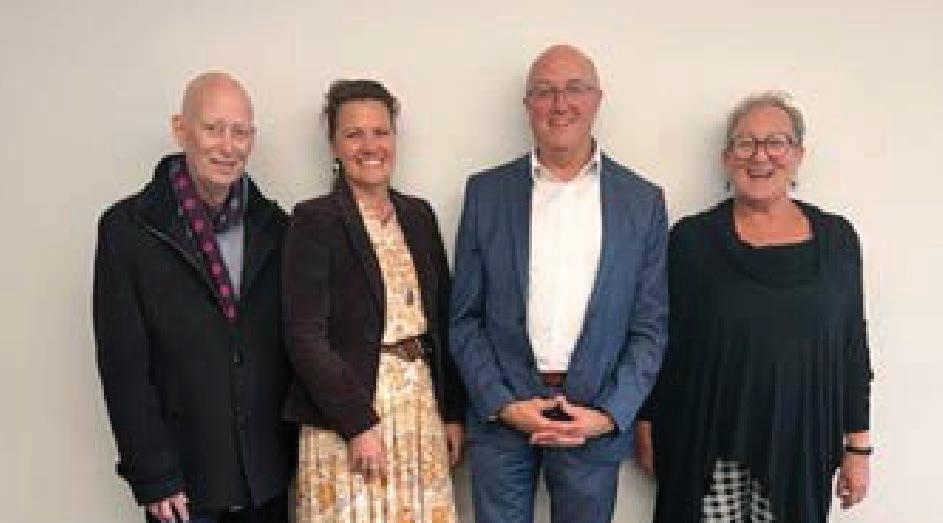
GOAH PRINCIPALS WITH THE LATE FOUNDER OF HCA & GOAH. FROM LEFT: FOUNDER OF GOAH AND HCA: ANTOINE MATARRASSO. TREASURER: RACHEL KENNEDY. WORKSHOP CO-ORDINATOR: BRETT CAMERON. PRESIDENT: MAILIN COLMAN.
MAIL IN
WHERE MEMBERS AND COMMUNITY COME FIRST CONTACT GOAH:
We are focused on people and community. All associations are made up of people with common goals who have gathered to reach a common objective. Those members make up a community and at GoAH our commitment will always be to members and community. While proper process is always important to the running of an association, our promise is that members and the community will always be our priority.

EMAIL : ADMIN@GOAH.COM.AU WEBSITE: WWW.GOAH.COM.AU FIND US ON FACEBOOK!
Loved this issue? Subscribe to Beyond the Veil and never miss a story.
Subscribe to Beyond the Veil for just $5 a month and join a global community dedicated to healing, personal growth and deeper self-understanding. Each issue is curated with real life stories, expert insights and tools across hypnotherapy, psychotherapy, mental health and holistic wellness.
This is more than a magazine. It is a space where truth is honoured, voices are heard and meaningful change begins. By subscribing, you gain access to high quality content, while supporting a platform that elevates practitioners, shares lived experiences and creates impact in the wellness and therapy space. Stay informed, feel empowered and remain connected with every issue.
Loved this issue? Stay connected and explore more at: www.beyondtheveilmagazine.com.au
Visit our website to explore even more beyond the pages and access a hub of wellness, therapy and personal development resources. Discover our VIP Members’ Lounge, popular articles and exclusive content designed to support your personal and professional growth. Our website is a dynamic space where community, education and opportunity come together, connecting readers, therapists and advertisers in a powerful and meaningful way. Whether you are looking for support or seeking aligned opportunities, this is where connection, visibility and expansion begin. Step Beyond The Veil and discover everything waiting for you online.


Part 2: Features an interview with Captain Paul Watson. Cover Story: Lawrence Ellyard: The New Woo.
Wellness…
His Story Special Edition: And much more…

Dear Fern
acking the Code to Your Astrological Map
Colour Me Happy with Lexi
Product Review
Book Review