Hard Soda is Back, But Not Like Before
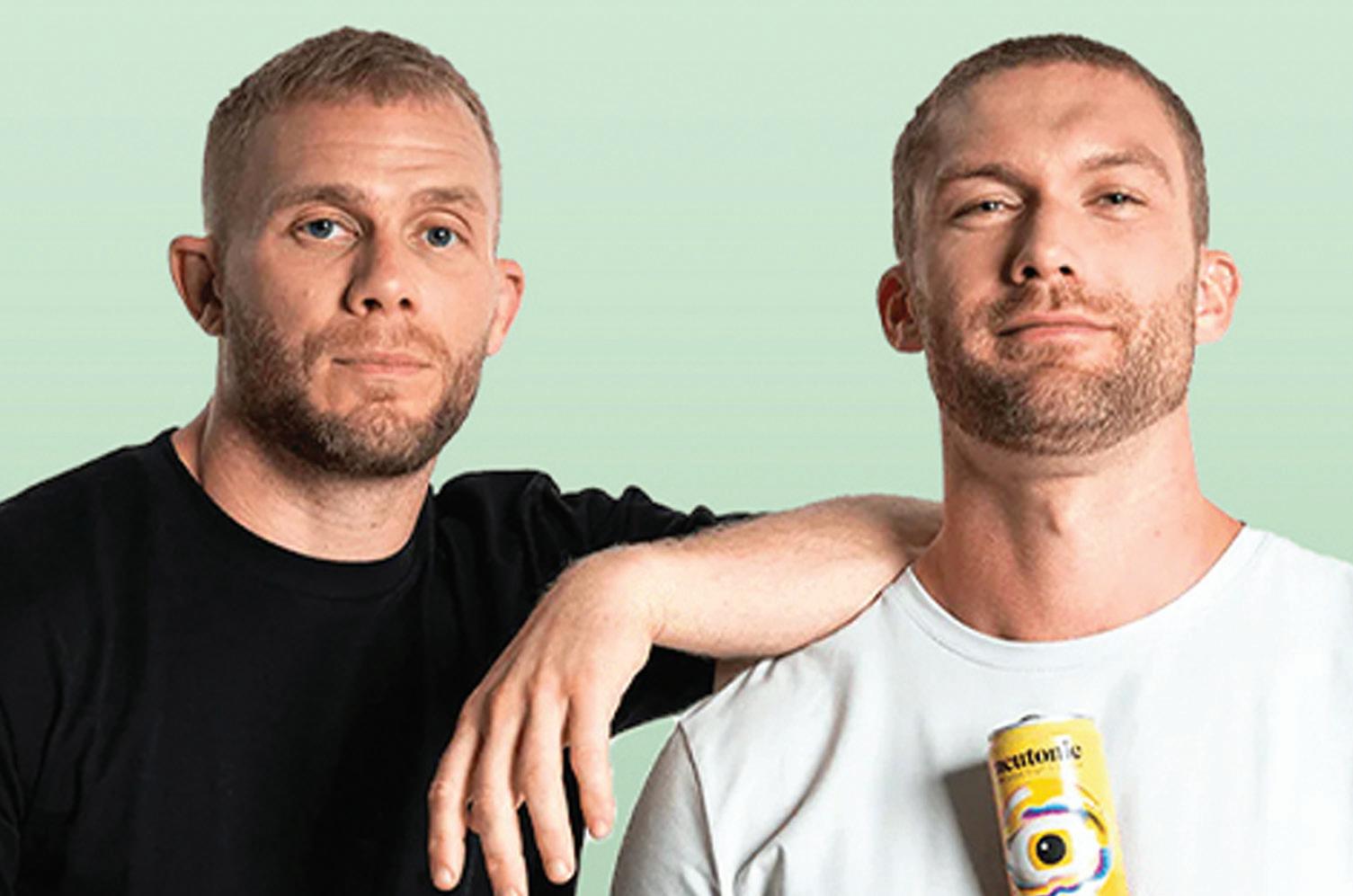


By Jeffrey Klineman
Make new friends, but keep the old; Those are silver, these are gold. If you’re a Girl Scout, that old saying lives deep in your heart. If you’re the Coca-Cola Co., you’ve reworded it a bit, I’m sure, to account for Diet Coke.
Buy new brands, but look at the old,
The can of silver has turned to gold.
That’s right. Diet Coke has become the drink of the moment, the naughty treat, the “Fridge Cigarette” for Gen Z and TikTok creators (and, presumably, all who follow them). It’s not that the brand has taken off from a sales perspective – in fact, last year, on a global basis, more recent introduction Coca-Cola Zero Sugar was up more than 13 percent, while Diet Coke/Coca-Cola Light was only even for the year, according to the company’s annual report.
But there’s sales, and there’s capturing the “Diet Zeitgeist,” and that’s what’s happened with Diet Coke. In fact, the silver can has only become more of an object of desire as the ongoing war in Iran has compressed Persian Gulf aluminum exports. It doesn’t happen every time, but scarcity can lead to objectification, and it seems that’s at least a contributing factor here.
Now, I never gave up my Diet Coke, but for the new enthusiasts, it seems like one key driver isn’t so much visual as auditory: the sound of a newly cracked cold can is a signal that you’re just plain taking a break, and it beats the old alternative of the cigarette break.
Or does it? Because cigarettes are apparently cool again, as well.
The past couple of years (maybe it was the good looking, tobacco-hound cast of The Bear, maybe it was tension brought on by The Trump) have seen something of a rebound in real cigarette usage, with a pronounced rise in visible celebrity and civilian smoking pics on social media (your mom would be So! Ashamed! if she saw your Instagram).
Fewer than 10% of Americans smoke (even if it seems like all the really cool ones do), although there’s the possibility that replacing older smokers with younger, attractive ones will lead to a potential rebound of some kind. But we are living in a time when we reject life-saving vaccines, so it’s clear that the
medical establishment’s judgment on smoking will probably be called into question.
What are we to make of a cultural shift in which the old signal of virtue – Diet Coke, that less fattening sugar-free alternative to “The Real Thing” – is now a signal of acceptable vice? Certainly, there’s a tongue-in-cheek aspect to it that we also see from Liquid Death and Garage Beer, an understanding that the product itself isn’t as important as its context. Diet Coke falls into that space pretty well – if that’s the only vice of the clean living, all-American influencer, she’s doing pretty well, right? I mean, some of these folks are so in tune with their bodies that I wouldn’t begrudge them the occasional smoke, either (they’re probably riding the Zyn train anyway).
But another view is that we haven’t really gotten that far in terms of our sophistication as consumers, and that any product can be made into something sexy when cracked by fingers sporting gelled nails and accompanied by the soft coo of a perfectly-lit influencer, and that the same charismatic clout driving the fridge cigarette is also re-igniting the cultural cool of the real cigarette, the manosphere, the alt-right, the extremist views that are returning from all sides. Sex sells, and we’re all buying.
That’s a scary thought, but it carries some weight. After all, surrounding potentially bad ideas with good looking people has been the main thrust of ad spend for hundreds of years, regardless of medium. So that’s good news for the marketers, at least. For the rest of us, the era of the fridge cigarette might be a prelude to the revival of something far stronger.
But I don’t necessarily see it that way. The last time we saw a legacy brand hit the cultural conversation like this it was La Croix, which drove millions of calories out of people’s diets. Seeing things that have been good – or not that bad, anyway – for many years come back in vogue is one of the great pleasures of the cultural observer. After all, how would we have gotten through Covid without, among other things, the revival of the Sea Shanty? As time moves forward, all it does is leave us with those kinds of cultural artifacts. I guess the key is whether we’re able to evolve and understand why we might have left some of them behind. It’s worth considering while enjoying your next break, no matter which old friend you’ve chosen to share it with.

By Barry Nathanson
I am now 21 days into that double partial knee replacement surgery I mentioned in my last column (thank you for your thoughts, prayers, and Tylenol donations). Both knees at once was not for the faint of heart. The wonders of modern medicine were on full display, and it has been a success. The recovery has been going quite well, but there are still months of physical therapy ahead. According to my surgeon the operation was textbook and I’m already walking way ahead of schedule. Thank goodness, as being restricted to my apartment has been hard on my soul. Confinement isn’t the ideal for this old dude.
As most of you who know me know, I’m an in-person person. I thrive on face to face contact, which allows my hair to exert its magical charms. There is nothing I like more than mingling with the industry, seeing old friends, meeting new ones. Before the surgery, I hit Big Geyser’s annual demo day. It exemplified everything I love about the industry. There were so many brands displaying their wares and sampling their
newest entries. The energy was palpable, the conversations most illuminating. That is the beverage industry at its finest. I wish there were more of these events like it, if nothing else than to give me more chances to visit Long Island City.
I find it admirable that we at BevNET have an array of events large and small that bring the industry together. We cover the country coast to coast with boutique gatherings, Taste Radio meetups, and the like, to enable people from all areas of the country to participate live and experience the beauty of beverage marketing.
Now we turn our attention to our crowning glory, BevNET Live. There is nothing that captures our particular strengths better than this. We’ll have 800 or so energized attendees in my home, New York City, whose vibrancy infuses the entire event. We’ll learn, laugh and catch up with old friends, and make new ones along the way. It is the epitome of all that is good is our industry. It’s the reason I’ve loved my 35-year-career in beverages. I hope I get out of my apartment!
www.bevnet.com/magazine
Barry J. Nathanson Publisher bnathanson@bevnet.com
Jeffrey Klineman Editor-in-Chief jklineman@bevnet.com
Martín Caballero Managing Editor mcaballero@bevnet.com
Monica Watrous Managing Editor, Nosh mwatrous@bevnet.com
Justin Kendall Editor, Brewbound jkendall@bevnet.com
Adrianne DeLuca Assistant Managing Editor, Newsletters adeluca@bevnet.com
Lukas Southard Senior Reporter lsouthard@bevnet.com
Brad Avery Senior Reporter bavery@bevnet.com
Zoe Licata Senior Reporter, Brewbound zlicata@bevnet.com
Shauna Golden Reporter sgolden@bevnet.com
Sales & Ad Operations
John McKenna Director of Sales jmckenna@bevnet.com
Adam Stern Senior Account Specialist astern@bevnet.com
John Fischer Senior Account Executive jfischer@bevnet.com
Lou Calamaras National Account Executive lcalamaras@bevnet.com
Jon Landis Business Development Manager jlandis@bevnet.com
Colin Sughrue Digital Campaign Coordinator csughrue@bevnet.com
Art & Production
Aaron Willette Director of Design
BevNET.com, Inc.
John Craven CEO / Founder / Editorial Director jcraven@bevnet.com
Headquarters
65 Chapel Street Newton, MA 02458 617-231-8800
Publisher’s Office
1120 Ave. of the Americas, Fourth Floor New York, NY 10036 646-619-1180
Subscriptions
For fastest service, please visit: www.bevnet.com/magazine/subscribe email: magazinesupport@bevnet.com

By Gerry Khermouch
At those new-bev contests like BevNET’s own New Beverage Showdown, you rarely see refrigerated beverage brands in the mix. Even newcomers to our business seem to recognize the cold chain’s special challenges. Painstaking production with fewer copacking options. Difficult distribution, with fewer non-captive DSD operations to tap into. Retail challenges like the inability to mount floor displays.
And where’s the exit? Among the Big 3 beverage giants, Coca-Cola and PepsiCo both have shown reduced interest in the category. Coca-Cola killed its Odwalla juice brand and eased away from coldchain brands like Health-Ade Kombucha and Suja Juice that it once helped incubate, though it retains its mainstream Minute Maid and Simply juice businesses. PepsiCo hived off its entire juice portfolio -- including Tropicana and acquired brands like Naked and KeVita -- into a joint venture with equity player PAI Brands. The third giant, Keurig Dr Pepper, showed no interest in the category to begin with (it viewed Keurig coffee as a closer adjacency, though it’s changed its mind on that now). Nor have the likes of Nestle or the beer giants. Starbucks acquired Evolution Fresh, the pioneer of high-pressure processing (HPP), then got rid of it. Most notoriously, Campbell Soup’s run-in with Bolthouse Farms left it on the ropes. Growing carrots doesn’t have much in common with producing canned soups, its CEO acknowledged as the wheels were coming off.
Even at the entrepreneurial end, disillusionment can set in quickly. Once he got his feet wet, Lemon Perfect’s founder segued with alacrity from creating a more approachable and affordable Suja to a shelf-stable hydrator. Even some natural channel mainstays have hedged their bets with shelf-stable extensions, including several kombucha marketers and Olipop and Harmless Harvest. So, for all its unquestioned nutritional credentials, the cold channel definitely is not for the faint of heart.
That’s why it was kind of inspiring to witness the public debut of Suja Life Inc. on the Nasdaq exchange in early May. These are the same fickle public markets, recall, that abruptly pivoted from exhorting CPG companies to grow at all costs to hammering the shares of those that tried to do just that. These days, it seems, hardly anybody besides Vita Coco – consistently profitable and growing by double-digits – seems to get a break from public investors. The grow-at-all costs crowd, from Oatly to Black Rifle Coffee, have shares that remain in the tank, try as they might to mend their ways. Meanwhile, as the classic beverage strategics have lost patience with refrigerated beverages, a quiet ecosystem has been developing, based on a new set of strategics that believes in the category and intends to grow it both organically and via acquisition. With its public float, Suja Life now enters that mix more overtly. As it pointed out to investors in selling the IPO, it’s already demonstrated it could integrate an acquisition well, with its stewardship of wellness shot maker Vive Organics, which with $63 million in revenue last year was about two-thirds the size of Suja’s own shot business. Pursuing its house-ofbrands approach, it’s also picked up the license for the discontinued
Slice soda brand, now restaged as a gut pop. All told those marques brought a topline of $327 million last year. I should note, by the way, that Suja itself resists the “house of brands” label, arguing that its vertically integrated cold-pressing system in the San Diego area represents a considerable competitive advantage beyond the brands themselves. Then there’s Generous Brands, the Butterfly Equity-backed collective that got started by rescuing Bolthouse Farms from its Campbell Soup nightmare, then successively added Starbucks orphan Evo Fresh and Health-Ade Kombucha. (It’s also helping acai player Sambazon with some functions.) At the helm is Jeff Dunn, a former Coke executive who’d led Bolthouse before the Campbell deal. It goes without saying that Tropicana Brands Group, in the hands of a PE player, is in the hunt too, even as it tries to work its internal innovation muscles a bit more vigorously than Pepsi did. They join more conventional strategics like Danone that are also presumed to be in the hunt for the right refrigerated acquisitions.
Is the time right now? Certainly, many consumers are starting to flock to straightforward formulations, with minimal ingredient lists, none of them unpronounceable chemical-sounding names. “Consumers increasingly demand transparency, functionality and authentic wellness benefits,” Suja CEO Maria Stipp argued to investors. For his part, Generous’ Dunn points to consumers’ increased awareness that they’re fiber-deprived. They may be starting to learn that those benefits break down in heat-processed drinks. And while juices’ sugar content has been a bugaboo, the major players are getting better at offering appealing lower-sugar entries even as some consumers seem more willing to brook a modicum of sugar for the right nutritional payoff – something the gut pops have proved. A new breed of juice tech that’s moved into commercial testing promises further reductions in sugar at no cost to flavor or efficacy. As for price, “consumers are willing to pay for that functionality,” Dunn argues.
As Dunn has also noted, to play successfully in refrigerated you need to operate at some scale. That doesn’t necessarily mean the scale sought by the likes of Coke, whose minimal level of success seems to be billion-dollar brands. By contrast, the scale of what Suja defines as the “natural healthy beverage market” – refrigerated juice, kombucha and other functional beverages including some of the newer sodas like its own Slice – amounts to $43 billion. That’s just one-third the total beverage market of $128 billion. But that smaller segment grew 13% over the past year, per SPINS data the company cites, compared to just 3% for the broader category. The strategics’ seeming disinterest would seem to make it a more placid segment to participate in, with less M&A churn, endless reformulations and price promotion bumps, where committed players have a better shot at steadily putting more Americans on a path toward better nutrition. That Suja investors are buying into that vision strikes me as a reassuring sight.
Longtime beverage-watcher Gerry Khermouch is executive editor of Beverage Business Insights, a daily e-newsletter covering the nonalcoholic beverage sector.
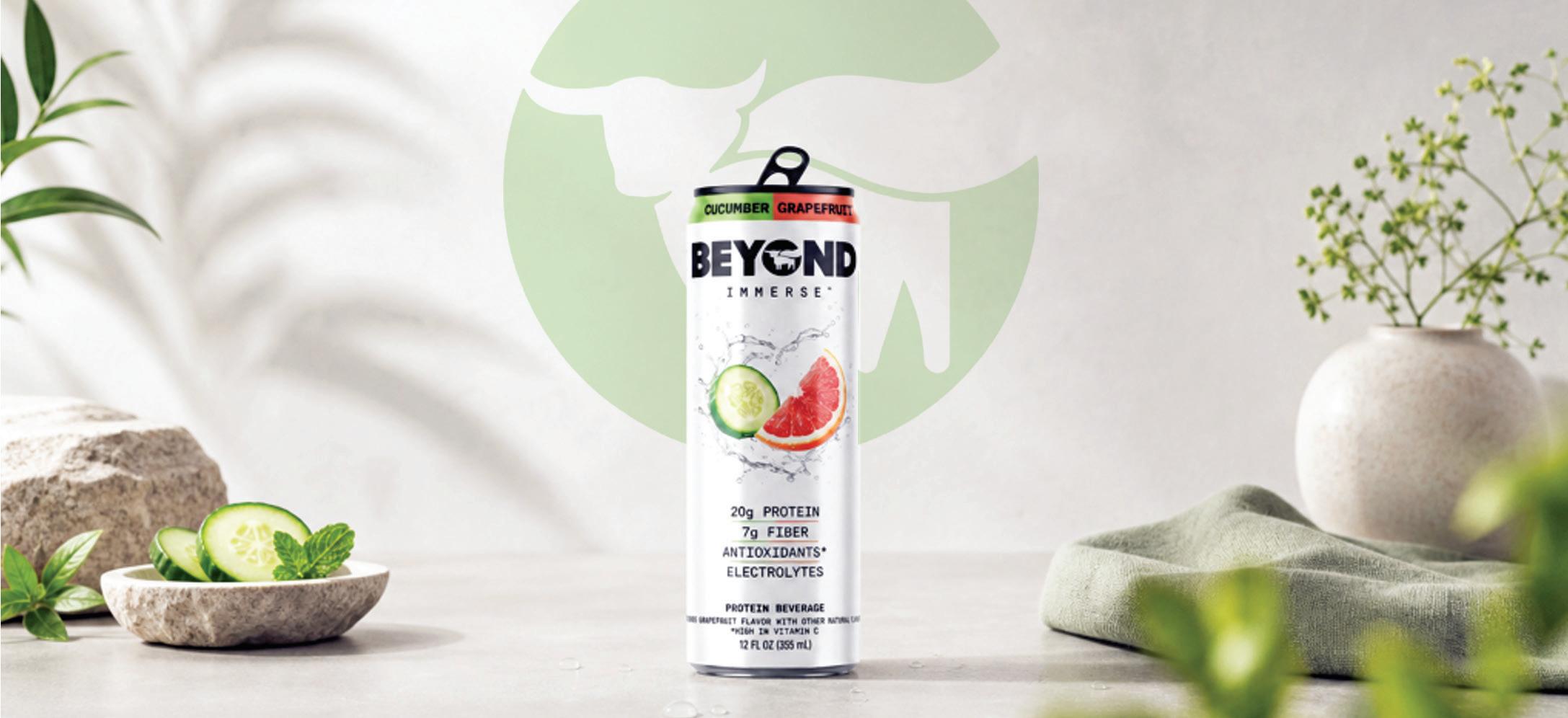
When Beyond Meat announced in January that it had developed its first ever beverage product, a protein drink line called Beyond Immerse, it was a move that appeared to come out of left field.
Why would a company that was fighting to mount a massive turnaround for its fast-declining, flagship plant-based meats business, suddenly take a swing for the clear protein drinks set? While Beyond Immerse was introduced on the company’s online Beyond Test Kitchen platform, where it frequently pilots new, experimental innovations, it was not clear at first whether this was a serious new strategy from the company or a frantic attempt at chasing a trendy category and praying for the best.
Five months later, the company – now rebranded as Beyond The Plant Protein Co. – has made it clear that Beyond Immerse is no fleeting fancy. Since the initial launch, the company has grown the line with new flavors, rolled into retail in the New York metro area via DSD house Big Geyser, and has signaled that Immerse is a leading product for a broader, strategic restaging of what the Beyond brand can be after years of what CEO Ethan Brown called “smear campaigns” that have hindered the company’s growth.
“We’re broadening the aperture of the company to deliver the rest of the superpowers of plants,” Brown told BevNET in May. “I wanted the company itself to change along with this, and not just be about protein, but to be about the superpower of plants and delivering those to consumers in convenient forms that they’re interested in.”
It’s no secret that Beyond’s sales have been in freefall for some time. Net sales declined 15.6% year-over-year in 2025 to $275.5 million, while Q1 2026 earnings failed to provide much improvement as quarterly revenue dropped 15.3% year-over-year to $58.2 million.
For a company that once boasted a market cap of more than $11 billion, circa 2019, it’s been a rough go, but Brown, who founded Beyond in 2009, now sees Immerse and the rebranding as an opportunity to reignite growth and bring consumers back into the core brand offerings as well.
According to Brown, the pivot – and Beyond’s sales
woes – come in no small part due to the high level of pushback and, in his view, “smear campaigns” that have beleaguered the company’s core meat alternatives line for years. Beyond, he said, has faced immense backlash from not just rival animal meat manufacturers who have sought to crush competition, but also from interconnected, adjacent industries like pharmaceutical companies (which produce livestock antibiotics), feed manufacturers and others that “wield a lot of power.”
“It’s very hard for us to reach the consumer in an unfettered way when you’re going against such a huge industry,” Brown suggested. “We faced massive misinformation campaigns; Super Bowl ads, people paid online to denigrate our products, all kinds of events where they brought nutritionists down and educated them about how to speak negatively about us.”
Some of these challenges have come from the regulatory space as well, most recently with a bill filed in the U.S. House and Senate in May, the Fair and Accurate Ingredient Representation on Labels (FAIR) Act, which would introduce new labeling requirements for plant-based and lab-cultivated meats and, in the words of Sen. Pete Ricketts (R-Neb.), takes aim at “deceptive labeling of plantbased protein products.”
Other attempts to restrict marketing or sales of plant based meats have come at the state level, and are ongoing.
Brown has repeatedly spoken up about the treatment he believes Beyond has received from rival marketers and hostile media, including attempts to paint the brand’s meat alternatives as unhealthy. When talking to investors and analysts during the company’s Q4 and full year 2025 earnings call, he called the attacks “pseudoscience” and lamented the resurgence in red meat consumption that has occurred in the past several years.
“I can only look at these current trends with a mixture of sadness for the folks that are going to be impacted by it, and increased impatience for those that are seeking to profit from it,” he said on the call. “The good news is that this is a pendulum; it’s going to swing and it’s going to
swing back, and I’m very comfortable that Beyond will prosper when it does. But I’m not going to wait around for that.”
Talking with BevNET, Brown elaborated on that comment, suggesting that through Beyond Immerse he’s seeking to flip the script and take “this incoming stress and energy and basically use it to strengthen our company.”
Immerse, he said, came out of a long research period seeking the best way to utilize Beyond’s proprietary clean protein ingredients and extensive scientific capabilities in new formats and categories.
The company looked at other rising protein formats like bars and powders, among other high-growth categories, but ultimately opted to develop a clear protein drink that Brown believes is positioned to compete with legacy brands such as Muscle Milk.
Protein has been in high demand, and the full U.S. protein supplements market – including RTDs, bars and other formats – is expected to surpass $22.5 billion at an 11% CAGR between 2024 and 2032, according to Fortune Business Insights.
In moving into beverage, Brown has touted a team with extensive beverage industry experience, which includes executive chairman Seth Goldman, founder of Honest Tea and Just Ice Tea, former Coca-Cola CFO Kathy Waller and Boston Beer Company founder Jim Koch.
Those relationships have already helped Beyond Immerse establish itself in the marketplace; according to Big Geyser president Jerry Reda, it was Goldman who introduced the company to the DSD distributor. In turn, Big Geyser helped connect Beyond with an experienced brand designer who redid the packaging design for Immerse to help it be more competitive on shelf.
“I think that there’s a real opportunity for a brand leader in the [protein] category,” Reda said. “There’s a lot of protein drinks that are dairy-based. This one is not dairybased, and they understand the protein business better than a lot of the companies who are just jumping and entering into the protein business for the first time.”
Overcoming negative consumer perceptions may still prove to be a challenge for Beyond Immerse, as will introducing a wildly different product format for consumers who are familiar with the brand. But Brown says he’s up for the challenge and believes that by introducing new and existing consumers to Beyond through the protein drink, the entire company has a chance to thrive as an extended platform business.
“I view this as helping to reintroduce the brand to people who maybe were subject to that smear campaign,” Brown said. “They could literally turn the bottle or can around and say ‘Wait, there’s nothing in this at all’.”
“So my sense is this will grow the core as well as on its own, but I think it will be a very big part of our portfolio. I really believe in the product. You know, I get excited about products, and not every one I feel is going to be a total breakthrough, but this one I feel good about.”
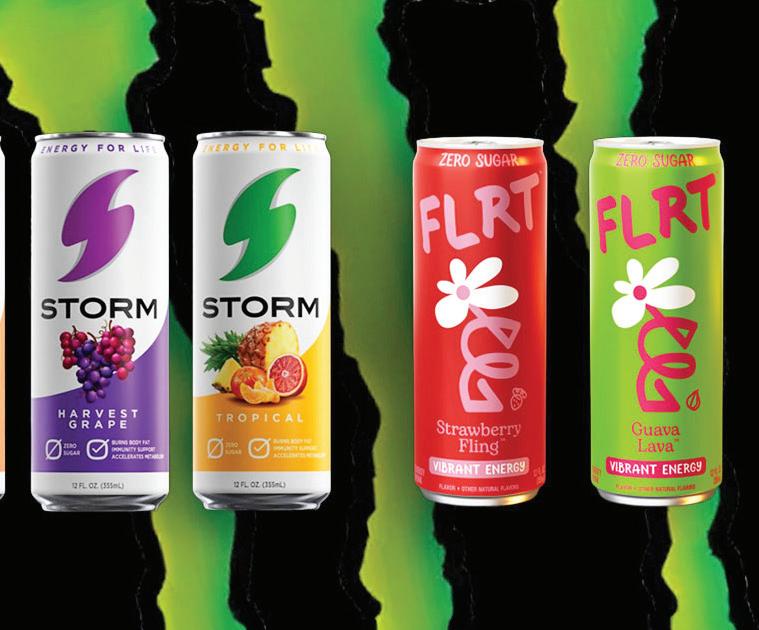
Monster Energy reported a historic first quarter with caffeinated beverage sales crossing $2 billion for the first time during the three-month period.
The energy drink maker posted net sales up 26.9% year-over-year. Net income in the quarter was $569.5 million, up 28.6% compared to the prior year period.
Despite its record-breaking quarter, CEO Hilton Schlosberg cautioned analysts on the call that aluminum prices will continue to be a“modest” headwind throughout 2026, and accounted for about 1% of Monster’s margin in Q1.
“The tariff landscape continues to be complicated and dynamic,” he said in prepared remarks on May 7. “We will continue to recognize tariffs on alumi-
num through the higher Midwest premium (the additional cost paid for aluminum delivered to the U.S. can manufacturers), and implement hedging strategies across the business where possible.”
Despite the “unexpected” increase in diesel and freight costs as a result of war in Iran, Monster leadership emphasized that the pricing actions it took in 2025 had moderated the impact on margins.
Leadership said it will be “monitoring” to determine if additional pricing actions will be necessary.
Internationally, Monster continues to make significant gains. The company reported that it had become the market leader in Australia and had one of its best sales quarters abroad.
“Our net sales to customers outside the United States increased 44.9% in the first quarter to approximately 45% of total net sales,” Schlosberg said. “This represents the highest percentage of net sales to customers outside the U.S. recorded by the company to date for a single quarter.”
Turning to innovation, Rob Gehring, Monster CEO for Americas, told listeners on the call that the staggered release of female-focused FLRT and wellness energy Storm has positioned the company for a “strong summer,” where the new lines will support growth in Monster’s core offerings.
Company leadership said splitting Storm from the performance energy line Reign will allow the business to directly address consumers seeking wellness energy products.
Despite the growth of zero-sugar options like Storm or FLRT, Schlosberg reiterated that Monster’s full-sugar varieties “continued to deliver meaningful contributions in the first quarter, representing approximately one-third of the company’s total U.S. gains and highlighting the depth of the portfolio.”
Leaning into the demand driven by price-sensitive consumers, Monster has increased its offerings in larger 12- and 24-multipacks, especially in the club channel.
“The opportunity for multipacks has become very evident,” Schlosberg said. “That’s all suggestive of the fact that what goes into a household is consumed at a more substantial rate than if the product was just consumed on a single basis.”
Mass retail giant Target is adding intoxicating hemp beverages to its Florida, Texas and Illinois locations.
The products will be available in over 300 Target locations across the three states, including all stores in Florida and Texas, and in all Illinois locations that allow for intoxicating hemp product sales (some local municipalities and townships, like Chicago, have restricted category sales within their territories).
Target confirmed the expansion is a test in a “limited number” of stores in those states and stressed consumers must be 21+ to purchase the products.
“At Target, we’re always exploring new ways to meet our guests’ evolving preferences, grounded in our merchandising authority and focus on thoughtfully curating a relevant assortment,” a spokesperson said in a statement.
Industry sources report that Target plans to display a limited number of brands – including products from its initial launch in Minnesota last fall, like Cann, Wynk, Trail Magic, Stigma, Gigli, Senorita and Daizy’s – in endcaps within participating stores. It is unclear whether every location will have the same brands.
The retailer has gradually stepped up its sale of products in the intoxicating hemp category. Last fall it began a 10-store pilot run in the Minneapolis region.
In April, the retailer received approval by the Minnesota Office of Cannabis Management to sell lower-potency hemp products
in 72 additional stores for the next year.
While Target’s initial launch in October was restricted to 5 mg of THC, the retail chain expanded into 10 mg varieties over the winter.
Intoxicating hemp products’ future was complicated when Congress passed a spending bill in November which contained a provision that would ban all hemp products containing more than 0.4% THC after November 13, 2026.
Sources report that Target is believed to be hedging against this potential ban by planning to mark down its intoxicating hemp inventory in October if there is no regulatory solution in place at that point.
While Target has not been an active part of the hemp industry’s lobbying effort in Congress, the expansion into the new states may send a message to lawmakers about the business opportunity. The existential threat of November has clouded the category with uncertainty, but it has not deterred other beverage industry stakeholders from seizing the opportunity.
Natural channel retailer Sprouts Farmers Market and convenience store chain Circle K have both added THC drinks to stores in states that still permit hemp-derived THC sales.
Beverage alcohol distributor Breakthru Beverage also recently jumped into the category, announcing it would carry THC drinks in allowable states.
Nutrabolt has shaken up its management suite with the appointment of Andrew Archambault as President and Chief Operating Officer.
Archambault, a former President of the U.S. Beverage Unit at Keurig Dr Pepper (KDP), is tasked with overseeing commercial and operational functions at Nutrabolt, best known in beverage for its KDP-distributed drinks under brands C4 and Bloom.
“I’m thrilled to join Nutrabolt, a leader in active nutrition and next-generation beverages,” said Archambault, whose previous experience includes a stint as president of The Hershey Company. “The company has built an exceptional portfolio and strong team, and I look forward to scaling its impact, strengthening performance, and helping drive its next chapter of growth.”
The appointment comes as Nutrabolt seeks to keep pace with its energy drink competition, which includes both the likes of Pepsi-distributed Celsius/Alani Nu and fellow KDP affiliates GHOST and Black Rifle. Dollar sales for Nutrabolt’s energy drinks have turned negative since the turn of the year, according to Nielsen data, and doubledigit volume gains have come at the expense of deep price cuts. The company’s 2-year stack dollar sales growth for the latest two-week periods fell from 19.4% in early October 2025 to 9.1% by early April 2026.
However, in an email to BevNET, Nutrabolt cited Mulo+C-store data from Circana that showed +45% YoY sales growth through May 3, driven by over $200 million in Bloom Energy sales and 1% growth from C4 year-to-date.
As noted by CEO Doss Cunningham in a separate LinkedIn post, Nutrabolt is in the midst of rolling out innovation across its various lines, including C4 Performance Energy, C4 Ultimate Energy, Bloom Pop and Bloom Energy. The company also owns nutrition brands Cellucor and Xtend.
“Andrew is a transformational leader with deep experience driving growth at scale,” Cunningham said. “His track record leading complex commercial organizations across some of the most respected companies in the industry, combined with his ability to translate strategy into execution, makes him uniquely suited to help us accelerate our next phase of growth.”
As Archambault arrived, another leader departed. Jack Harnedy, VP of Revenue Growth Management at Nutrabolt, announced his departure from the company in May. He joined the company in April 2024.
“I leave with deep gratitude for the leaders who trusted me, the teammates who made ambitious goals achievable, and the partners who pushed us to keep getting better,” Harnedy wrote. “C4 reinforced the mindset of the everyday athlete – showing up, putting in the work, and chasing growth every day. Bloom reminded me that the best brands genuinely improve people’s lives and think BIG with an entrepreneurial mindset. I’m proud of the work we built together – sharper pricing architecture, smarter promotion strategies, and a more disciplined growth engine for the future.”
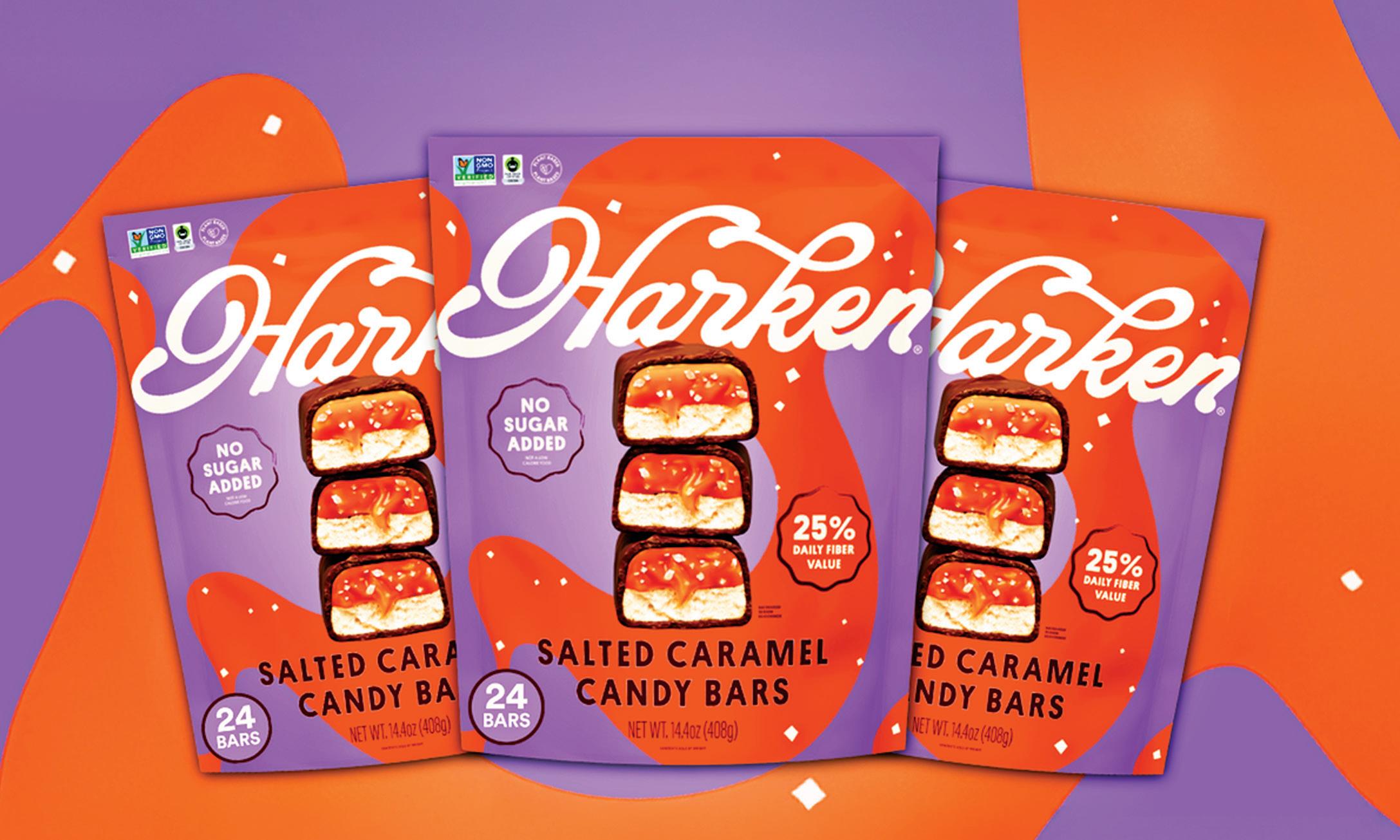
Harken Sweets is expanding into Costco with new backing from Taste Tomorrow Ventures and grt sht ventures, signaling growing retailer and investor confidence in the premium indulgence category.
Harken’s Lil Gooey Ones – a snack-size spin on its lowsugar, high-fiber, plant-based candy bars – will roll out into Costco warehouses across the Northwest region. A 24-count pack retails for $13.99.
The launch marks a significant milestone for the emerging confection brand, which has carved out a niche with candy bars designed to balance indulgence with cleaner labels and functional ingredients.
Landing Costco required “a lot of persistence, proof points, and making sure we had the right product for the channel,” founder and CEO Katie Lefkowitz told Nosh.
Harken developed a larger-format Lil Gooey Ones pack for Costco that was designed to “deliver incredible value while still maintaining the integrity of the product,” she explained.
“Costco customers are incredibly savvy – they want products that feel exciting and premium, but also genuinely functional and worth stocking up on,” Lefkowitz said.
To support the launch, Harken plans to invest heavily in demos, creator partnerships, social media content and regional awareness campaigns. Lefkowitz noted that trial is especially important within Costco’s high-velocity retail environment.
“We’re especially excited because the Northwest market is such a strong better-for-you consumer region and feels very aligned with our core customer,” she said.
The new capital will primarily support Harken’s next phase of growth, including retail expansion, inventory and operations investments, brand awareness initiatives and future innovation. Lefkowitz described the
partnerships with Taste Tomorrow Ventures and grt sht ventures as especially meaningful given the investors’ experience across food, retail and consumer brands.
“We feel incredibly lucky to have partners who really understand our space with their deep industry and retail ties,” Lefkowitz said.
Taste Tomorrow Ventures, the early-stage investment fund established by beverage incubator L.A. Libations, has only invested in one other food business – sour gummy maker Better Sour. Danny Stepper, co-founder and general partner, said the firm sees Harken as well-positioned within the evolving better-for-you candy landscape.
“Harken is a better-for-you indulgence candy bar that genuinely meets the consumer where they are today –health-conscious, ingredient-aware, and unwilling to give up on taste,” he said. “We’re excited to support Harken’s next chapter of growth.”
Food brands in grt sht ventures’ portfolio include Jesse & Ben’s, Seven Sundays, GoNanas and others. Rachel Mansfield, co-founder of the firm, said Harken stood out for its ability to pair nostalgic appeal with modern ingredient expectations.
“From the moment I discovered Harken, it felt like the kind of brand that meets a real need in the market while still bringing joy to the category,” Mansfield said. “Katie and the team have built something incredibly thoughtful with ingredients and quality standards today’s consumers are actively looking for, but without losing sight of what makes candy fun in the first place.”
Mansfield added that the brand’s early retail traction, including the Costco placement, helped validate the opportunity.
Earlier this year, Harken notched new funding from Selva Ventures and charted a major expansion into thousands of Kroger locations. The latest rollout brings the brand’s footprint to roughly 7,600 doors, Lefkowitz said.
Mooski is making its first major mass retail push with the launch of chilled oat bites at Target – a move founder Robert Broome sees as both a product innovation and a broader channel expansion opportunity.
Rather than chasing bigger, higher-protein formats, the California-based company developed a miniature version of its existing chocolate-coated bars that it’s positioned as snackable and affordable.
“While everyone is doing protein, protein, protein, a big part of where people are going in terms of diets and GLP-1s is not just about protein, it’s about portion control,” Broome said.
Mooski’s core refrigerated bars – made with gluten-free oats, peanuts, almonds, olive oil and agave – contain 210 calories; each bite-size piece (there are six per bag) has 80 calories.
The Target rollout spans 244 stores across 25 states, including several regions where the brand previously had little or no retail presence, such as Florida, Colorado and parts of the Southeast, Broome said.
The individually-wrapped bites launch in two flavors – Peanut Butter and Cookie Dough – at $6.99.
Broome framed the partnership with Target as a breakthrough moment. Mooski’s bars are already sold at several Albertsons and Kroger banners across the country in addition to regional chains, so with the partial Target footprint, he sees the brand as having gone national.
“Our goal is to go nationwide with Target eventually, and I think there’s definitely a path there,” Broome said. “We’re going all in on this partnership, and we’re going to invest a lot in it because this is a big one for us.”
The bites use the same formulation and co-manufacturer as the bars, minimizing supply chain complexity and eliminating the need for new capital beyond the company’s $1.5 million Series A raise last summer, Broome confirmed.
The biggest hurdle, he said, was engineering the soft oat filling in a bite-sized, chocolate-covered format.
“That bite shape is really hard to do. Not many manufacturers can basically take a soft overnight oat inside and cover that in chocolate,” he said.
Looking ahead, Broome sees significant whitespace for the bites in foodservice, particularly coffee shops, as well as club retail. Each individually wrapped bite includes a barcode on the packaging specifically to support future single-unit sales.
He also believes the smaller format unlocks broader storytelling and merchandising opportunities, from multipack displays to family-oriented positioning to more cost-effective sampling programs.
Nutrition bar makers are increasingly leaning into bite-size formats – a trend fueled in part by the rise of GLP-1 weight loss drugs, but also by a broader consumer push toward portion-controlled snacking. Brands such as CLIF, IQBAR and RXBAR have similarly expanded into smaller-format offerings positioned around flexibility and convenience across eating occasions.
Broome is bullish on the bites, which are also set to debut online this summer with Misfits Market.
“If the data is any indication, [our bites] are going to be really strong for us. I would bet stronger than the bars,” Broome said.
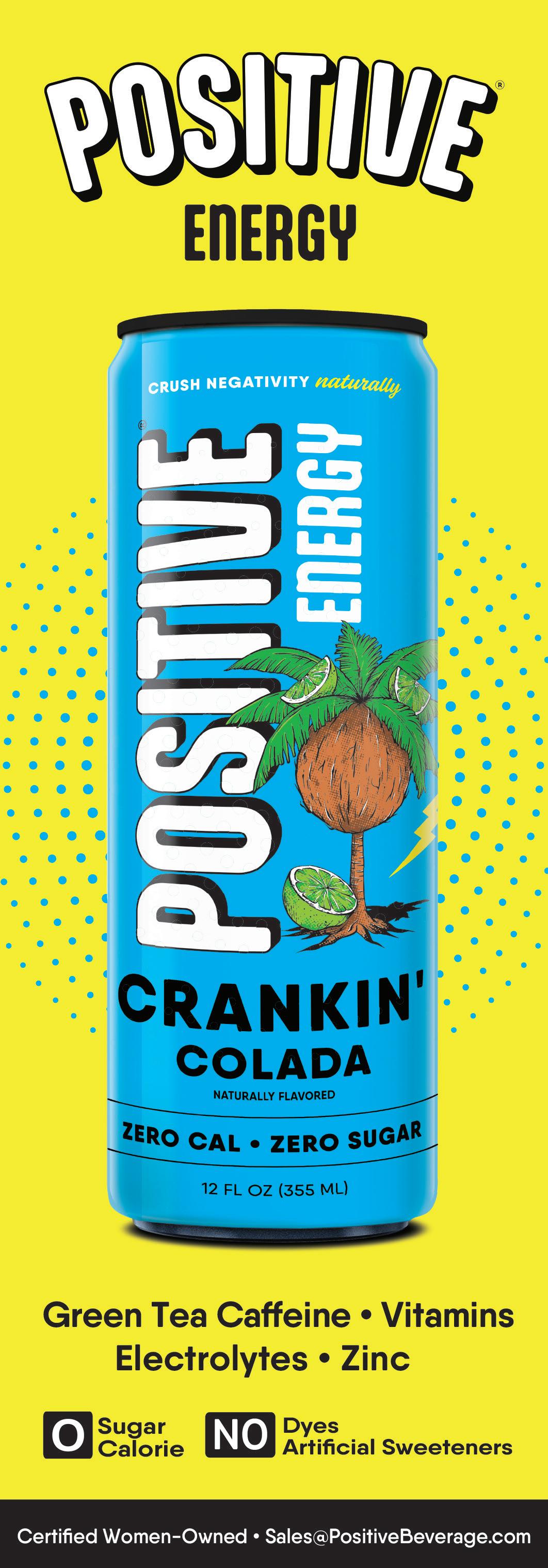
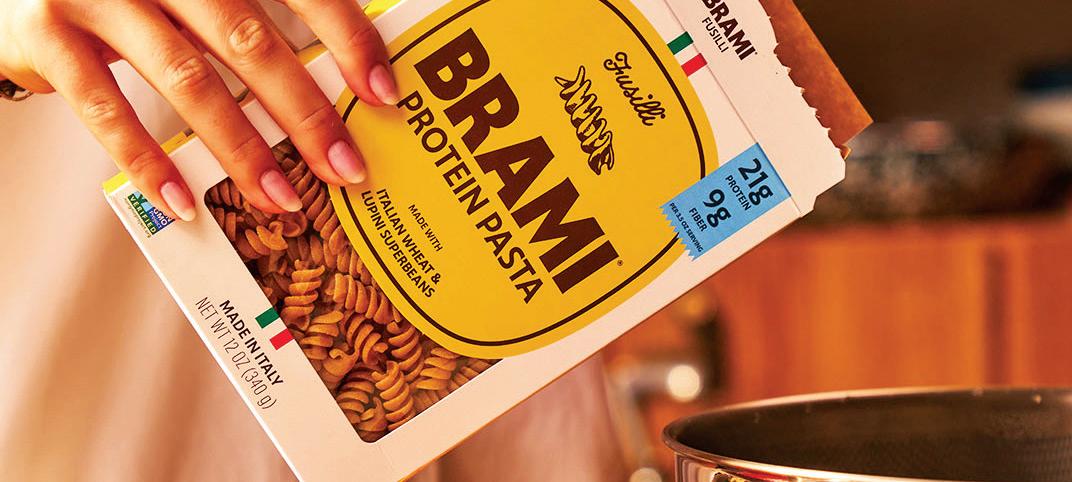
Lupini bean food platform Brami has raised $33 million in a funding round led by VMG Partners.
“This is a huge step towards bringing the Brami vision to life via sharing uncomplicated food inspired by my childhood with more Americans,” founder and CEO Aaron Gatti said. “I’m so grateful for the journey ahead, and all the special meals we will share together.”
The new cash will primarily be used to scale up the company’s supply chain for its hero lupini bean ingredient, Gatti told Forbes. The company has been on a meteoric growth trajectory since launching its pasta products in 2021.
Earlier this year, Nosh reported that Brami’s dollar sales were up 439.9% to about $14.7 million in multi-outlet retail and convenience stores, while unit sales rose 284%, per Circana data for the 52-week period ending December 28, 2025. The 10-yearold company added a significant number of retail accounts throughout last year, including nearly all Walmart, Whole Foods and Target stores nationwide.
That growth is expected to continue. Gatti told Forbes the profitable company is expecting to grow 400% in 2026.
Brami’s protein pasta is driving the rise. Available in spaghetti, radiatori, penne, fusilli and curly mac, the pasta contains two ingredients – semolina durum wheat and lupini bean flour – while packing 21 grams of protein and 9 grams of fiber per serving.
“Our intention was to craft a nutritious pasta that doesn’t compromise on great taste, texture, and pure joyful eating,” Gatti said. “Instead of cutting corners, we invested in timeless production methods and just two old world ingredients to create authentic bronze cut pasta from premium durum wheat semolina and lupini bean flour.”
The new cash will be used to continue scaling up those production methods at its Italy-based factory. While today’s news marks a major inflection point for the brand, it’s been a long road for Brami to find product-market fit and convince Americans to give lupini beans a taste.
The brand was founded in 2016 with the idea of building a market around snackable lupini beans. The brand still sells its resealable pouches of brined and flavored lupini beans at Whole Foods, but pasta is the star of its portfolio.
“When people realize [the nutrient density], they end up consuming more pasta than they used to,” Gatti said. “Not just more healthy pasta. But more pasta in general. We are really resolving the two major growth challenges that the pasta category has traditionally faced: the ‘empty carb’ guilt association with traditional pasta on the one hand, and the taste, texture, value challenges of ultra low-carb or gluten-free pastas on the other hand.”
Vertical farming food tech company Oishii - they make those big berries - announced the first closing of its $150 million Series C round, led by SPARX Asset Management Co. The round also saw participation from Nomura Real Estate Development Co., Ltd., MISUMI Group Inc., Mizuho Bank Ltd., and others.
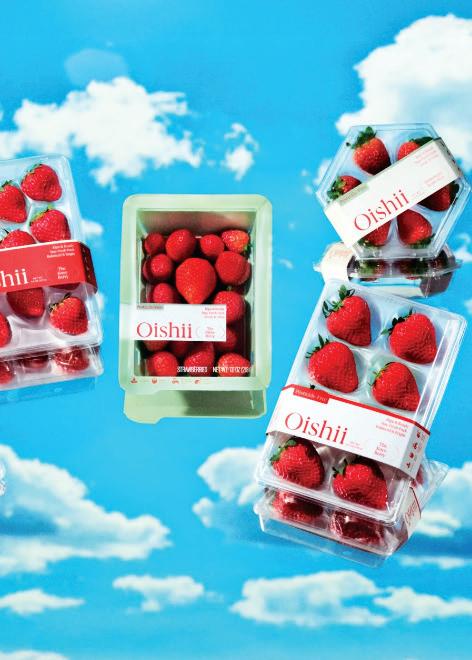
The financing builds on a $150 million Series B, which closed in 2024, and brings Oishii’s total funding raised to-date to $370 million, the company said. The new funding will go towards production capacity, robotics integration, farm infrastructure and R&D on new product formats.
“When we chose strawberries, we knew we were selecting one of the hardest paths in indoor farming,” said Hiroki Koga, co-founder and CEO of Oishii, in a statement. “They require precision at every stage, from pollination and harvesting to freshness and shelf life, and there were moments along the way where solving one challenge revealed the next one underneath it.”
According to Koga, this funding signals the start of a new phase for the company, marked by “deeper confidence” in its execution and ability to consistently grow high quality produce at scale.
Founded in 2016, Oishii produces luxury-positioned strawberry varietals for U.S. retailers, grown inside its 237,500 sq. ft. Indoor Smart Farm located in Phillipsburg, N.J. The farm, which is named the Amatelas after a mythical Japanese sun goddess, opened in 2024 and is co-located with a solar field.
In April, the company significantly expanded its product portfolio, introducing new formats and lower-priced options in an effort to make the berries more accessible to a broader consumer base. Oishii first launched its Omakase Berry at nearly $50 per tray; now, the product is available in a new $11.99 format.
Additionally, it introduced new pack sizes for its Koyo and Nikko berries as well as a Premium Preserves live, bringing the brand into pantry staples. Prices for Oishii products now span $4.99 to $15.
Oishii products are currently distributed across 18 states totaling 300 retail locations; it recently rolled out internationally for the first time with a Toronto-based retailer.
Those gains have been enabled by major investments in the business including the 2025 acquisition of harvesting robotics startup Tortuga AgTech followed by a strategic partnership with automation components supplier MISUMI Group Inc. earlier this year. The company also recently opened its new Open Innovation Center in Japan to spearhead R&D capabilities.
“Since our Series A investment in 2019, we have continuously supported Oishii Farm’s growth,” said Shuhei Abe, president and CEO of SPARX Asset Management Co., Ltd., in a press release. “It is truly inspiring to see the vision we shared at that time steadily becoming a reality, as the company advances seamlessly from research and development to proof of concept and commercialization.”
Firestone Walker and Duvel USA have inked a “definitive agreement” to acquire the Stone Brewing brand from Sapporo USA.
Financial terms of the deal were not made public. The transaction is expected to close in Q2 2026, pending customary closing conditions.
“Stone is one of the most iconic brands in American craft beer and a pioneer of the West Coast IPA,” Firestone Walker CEO Nick Firestone said in the announcement. “For 30 years they’ve built something legendary, a brand known for its commitment to quality, drive for innovation and a true fighting spirit. We will honor what’s been built and carry it forward with the same authenticity and conviction that we love them for. The Stone heart keeps beating.”
Duvel USA president Seraf De Smedt added: “We inherit Stone’s storied reputation, and we’re committed to maintaining and further building its national relevance.”
The deal unites two of California’s largest legacy craft breweries, both founded in 1996. It also comes fewer than four years after San Diego-founded Stone’s $165 million sale to Sapporo.
Speaking to Brewbound, Nick Firestone said the planned addition of Stone and Trumer Pils – the latter of which Firestone Walker inked a deal in March to acquire from Gambrinus and is expected to close this summer – will “drastically” increase the company’s share of craft beer in Southern California.
“We become the dominant craft player in L.A., San Diego, Orange County, which is part of the rationale for this in the first place,” he said.
The additions of Stone and Trumer Pils will add around 250,000 barrels and 30,000 barrels, respectively, to Duvel USA’s overall business. This would boost the company’s overall output to close to 900,000 barrels, as Firestone Walker produced an estimated 480,000 barrels in 2024 and Boulevard and Brewery Ommegang produced a combined 167,000 barrels. The addition would mark a massive jump in volume but still place it as the No. 4 Brewers Association-defined craft brewery, leaping Tilray Brands.
The acquisition also “underlines” Duvel Moortgat’s “commitment to the U.S. market and to U.S. craft,” De Smedt told Brewbound.
“This is a space that we understand,” Firestone added. “It’s a brand that we know well – we’re both celebrating our 30th birthdays this year. It’s a strong IPA brand that fits like a glove into the Firestone Walker portfolio and partners well with Duvel USA. There’s a lot that really just makes good sense here.”
Under Firestone Walker’s stewardship, Stone will maintain “its distinct voice,” the companies said. The plan moving forward is to continue Stone’s existing “sales strategy and portfolio strategy” this year.
Firestone Walker will assume responsibility for the Stone brand in California, the Western U.S. and Texas, along with taking the lead on national accounts, while Duvel USA will take over distribution responsibilities for Stone east of the Rocky Mountains.
Firestone Walker brewmaster Matt Brynildson will oversee production of Stone’s beers in Paso Robles as well as Kansas City, which Firestone called “a huge strength of this transition.”
Following the close of the transaction, the Richmond, Virginia, which Stone opened in 2016, will become Sapporo’s primary U.S. production hub.
During the transition, Sapporo will continue to produce Stone’s offerings at its facilities in Richmond and Escondido, California. Stone’s Escondido taproom will also continue to operate through that time.
Beyond the Stone brand, Firestone Walker and Duvel will acquire four Stone taprooms in California:
• Stone Brewing World Bistro & Gardens at Liberty Station in San Diego;
• Stone Brewing Tap Room in San Diego’s Little Italy neighborhood;
• Stone Brewing Tap Room Oceanside;
• Stone Brewing Tap Room Pasadena.
“Liberty Station will remain the heartbeat of Stone Brewing Company in Southern California,” Firestone said of the taproom, which will continue producing specialty beers and one-off brews. “It’s over 30,000 sq. ft. It’s the crown jewel brewpub location.
Craft brewers’ production volume fell a collective 5.1% in 2025, according to the Brewers Association’s (BA) annual Industry Production Report.
Two-thirds of craft breweries recorded production declines last year, while 39% reported growth and 1% were flat, according to the BA’s survey of members.
The latest year-over-year (YoY) loss marks an acceleration from 2024, when industry volume fell 4%, to 23.1 million barrels. Note: numbers are preliminary and could change as the BA collects more data. Additionally, production data does not include breweries’ volume for beyond beer products, including flavored malt beverages (FMBs), cider or ready-to-drink cocktails (RTDs).
The latest figures are in line with data shared in the BA’s mid-year report, despite warnings from the trade group that full-year declines could be steeper than projected.
Despite declines, craft was able to “slightly” gain market share of total beer in 2025 – from 13.2%, to 13.3% – as its declines were smaller than those of the overall category (volume -5.7%), “highlighting relative resilience within a contracting market,” the BA wrote.
Microbreweries recorded the largest production volume declines (-8.9%), followed by regional breweries (-5.9%), taprooms (-3.9%) and brewpubs (-1.7%).
Craft beer dollar sales declined 3.6% in 2025, to $27.8 billion, according to the BA. The segment’s share of beer dollars was flat YoY, at 24.6%.
“While reduced sales volume contributed to the drop, the impact on dollar sales was less pronounced due to higher average beer prices and a continued shift toward on-site consumption models such as taprooms and brewpubs where there is a higher unit price,” the trade group wrote. “As a result, retail value proved more resilient than volume trends alone might suggest.”
The total number of craft breweries operating in the U.S. declined 2.9% YoY, to 9,579, down from 9,680 in 2024 and 9,747 in 2023. Microbreweries recorded the largest percentage decline in number of businesses (-4.4%, to 1,994), followed by taprooms (-2.7%, to 3,784), brewpubs (-2.5%, to 3,525) and regionals (-0.4%, to 275).
Brewery openings fell from 517 in 2024, to 300 in 2025 and were outpaced by closures (481, down from 591 in 2024). The latest numbers for both openings and closings are greater than initial figures reported in December (268 openings, 434 closings).
2025 marked the second year closings outpaced openings, with the first occurrence happening in 2024 (501 closings, 434 openings). Over the last two years, 1,072 breweries have closed.
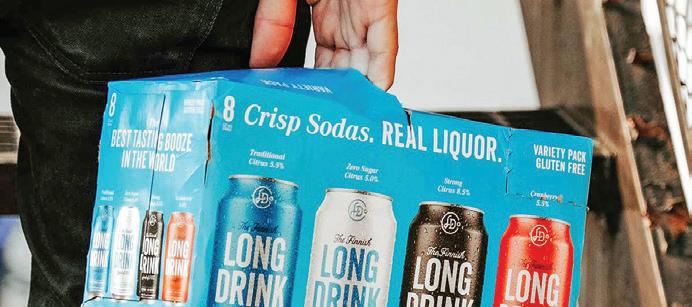
Mark Anthony Brands announced it has struck a deal to acquire the Finnish Long Drink, the popular gin-based, RTD canned cocktail.
The deal marks a major jump forward for Mark Anthony’s spirits-based portfolio, which is dwarfed in size by its malt-based offerings, including White Claw, Mike’s Hard Lemonade and Cayman Jack.
“The Finnish Long Drink is a distinctive, premium brand with an outstanding growth opportunity in the United States,” Mark Anthony U.S. president David Barnett said in a press release. “Leveraging Mark Anthony’s scale, executional strength, and deep experience building category-defining brands, we see the opportunity to elevate Long Drink’s presence and influence within the spirits RTD category.”
Long Drink CEO Evan Burns, an American, started the brand in 2018 with Finnish co-founders CFO Mikael Taipale, Sakari Manninen and Ere Partanen. The Long Drink, a gin-based, citrus-flavored cocktail, traces its history back to the 1952 Summer Olympics, hosted in Helsinki, Finland.
“We’ve got an incredible fanbase and team that has propelled The Finnish Long Drink to be one of the breakout RTD brands, but many consumers are still yet to try it,” Burns said in the release.
“Joining the Mark Anthony Group to leverage their track record of scaling iconic RTD brands gives us a huge opportunity to accelerate growth and introduce Long Drink to a much broader audience.
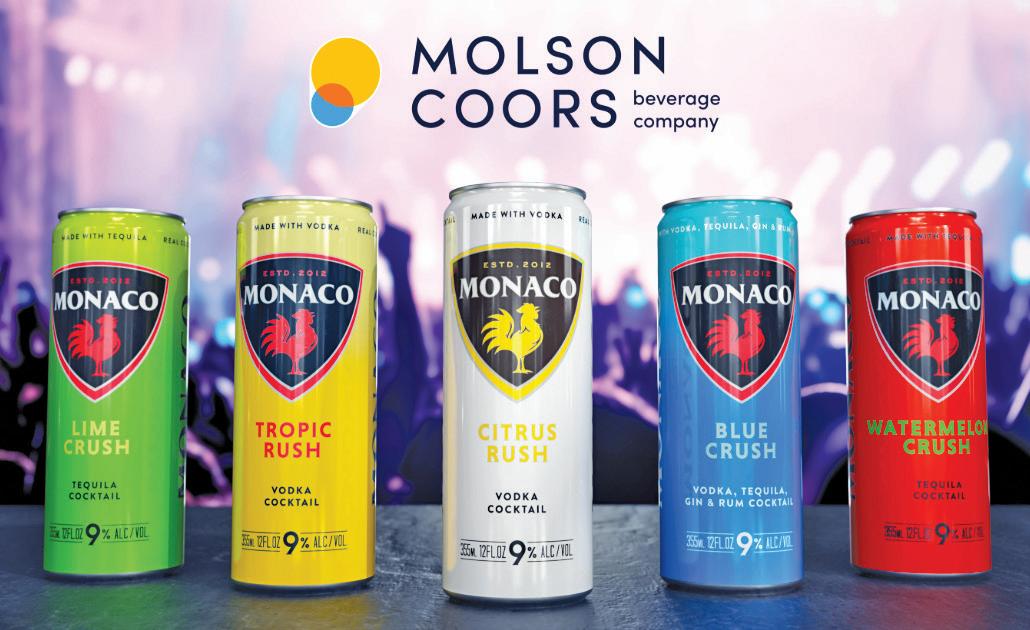
Molson Coors acquired RTD cocktail pioneer Atomic Brands, whose Monaco Cocktails entered the then-nascent space in 2012, for $275 million.
The deal should come as no surprise, as it aligns with Molson Coors’ goals to expand its beyond beer portfolio, part of the Horizon 2030 plan CEO Rahul Goyal outlined earlier this year.
The acquisition will give Molson Coors a significant toehold in the spirits-based RTD segment. Monaco is the fifth-largest RTD brand by dollar sales year-to-date (YTD) through January 24, according to NIQ off-premise scan data provided by 3 Tier Beverages (total U.S. xAOC + liquor open state + convenience).
Let us now look at the Fairlife/Core Power juggernaut, which according to Jeffries analyst Kaumil Gajrawala is now Coke’s second biggest brand, ahead of Sprite, Simply, and Body Armor; that underscores just
how protein-crazed the CPG business is these days. For context, we’ve included meat snacks, which underscore how big a bonanza this is. And take a look at Nurri, up almost 500%! No wonder Pepsi just rebooted Muscle Milk.
$313,351,717 498.7%
$241,993,466 -12.5%
$158,777,104 -
$153,137,173 9.0%
$116,480,912 5.3%
$111,855,110 -15.7%
22.8%

The Specialty Food Association’s Summer Fancy Food Show, the largest U.S. food show devoted exclusively to foods and beverages, is set to return to New York City in late June.
The 2026 edition of the show will take place June 28-June 30 at the Javits Center, where 2,500 emerging and established exhibitors from over 50 countries will showcase their new, ontrend products to industry attendees across every trade channel. According to SFA, some of this year’s trends will include “sense maxxing,” “shelf-stable chic” and honest processing.
The show will also feature a variety of education seminars. Highlights of the program include:
• A panel with Whole Foods Market senior local forager John Lawson, B.T.R. Nation founder and CEO Ashley Nickelsen, Enthuse Marketing co-founder and CEO Kim Lawton and Enthuse Marketing Group senior creative director Diana Panek exploring how brands can use packaging and in-store education to stand out on crowded retail shelves, quickly communicate value and drive stronger customer engagement.
• A session discussing how CPG brands can tap into the foodservice channel to help specialty prod ucts scale. Insights will include how to navigate packaging and pricing, as well as how to get discovered by the right partners.
• Natural Products Consulting principal Bob Burke, Walden Mutual Bank founder and CEO Charley Cummings, Beckett Industries General Partner Brian Polencheck and supernatural ventures operating partner Michelle Flowerman discussing how founders can identify the right financing strategies for each stage of business growth, from debt to equity funding.
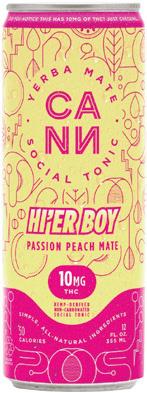
There’s more than one kind of buzz going on here. Boosted with yerba mate, Cann is launching Passion Peach Mate as its first-ever caffeinated (60 mg), noncarbonated release, joining its 10 mg THC Hi-er Boy lineup in 12 oz. cans. It’s available in 8-packs ($83), 12-packs and 16-pack formats. Head to drinkcann. com to learn more.
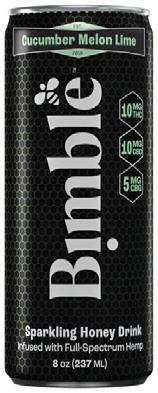
Now available in Florida, New York and New Jersey, Bimble is stepping into the 10mg THC space for the first time with the limited-run launch of Cucumber Melon Lime. Each 8 oz. can contains 10 mg of hemp-derived D9 THC, plus CBD and CBG, and is sweetened with sustainably sourced Vermont raw honey. Learn more at drinkbimble.com.
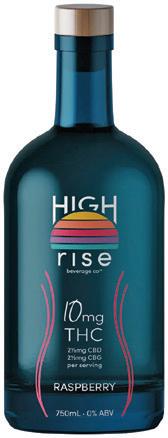
Exemplifying the growing popularity of the 750ml format, High Rise is expanding its THC Infusions lineup with two new flavors: Raspberry and Orange, each with 10mg of THC per serving. Find them alongside the original Citrus SKU at retailers in Florida, Illinois, Tennessee and the Carolinas, as well as online for nationwide delivery. More info at highrisebev.com.
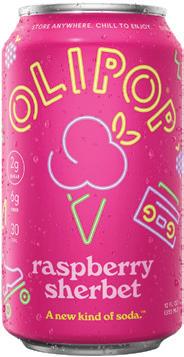
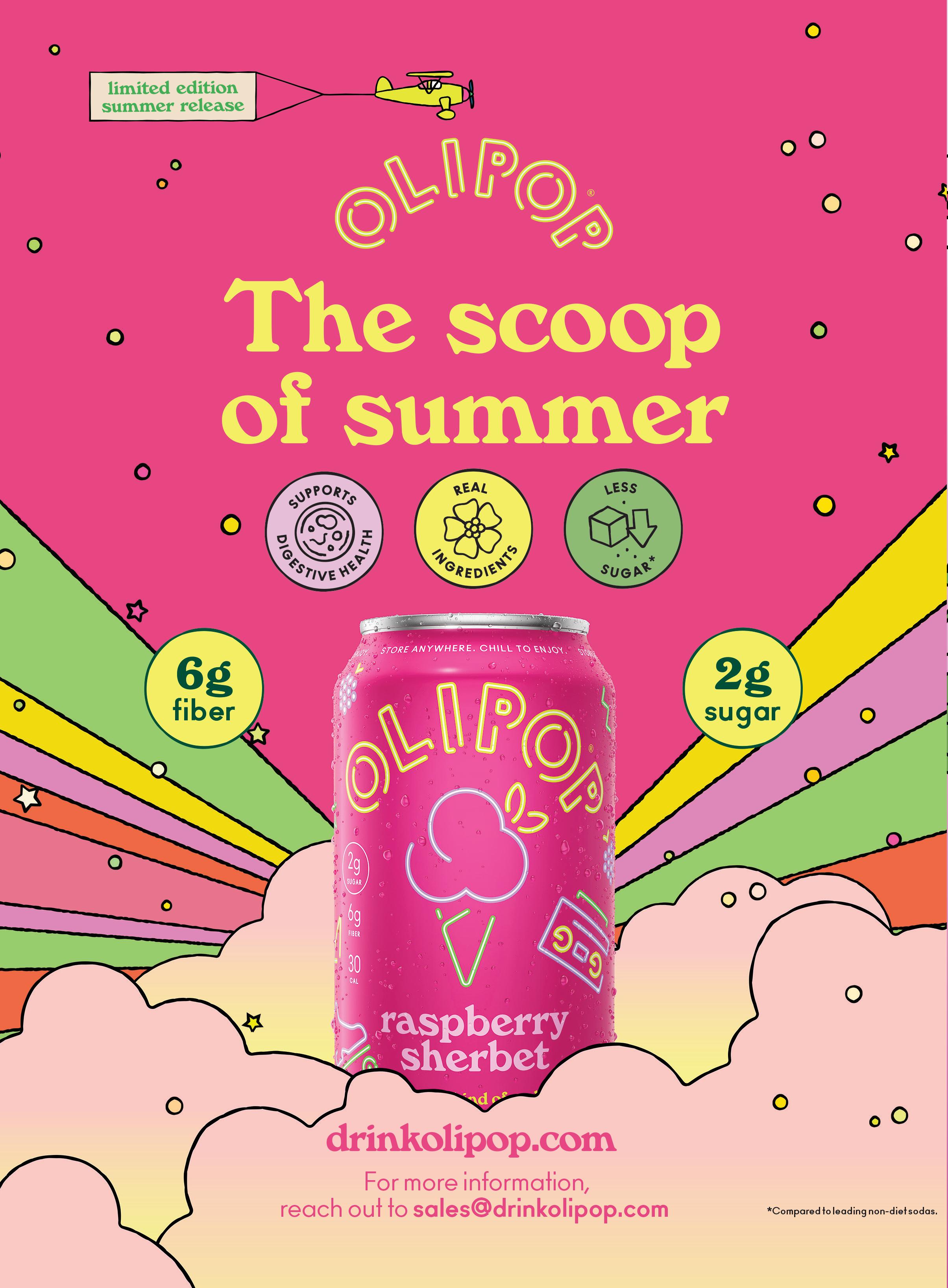
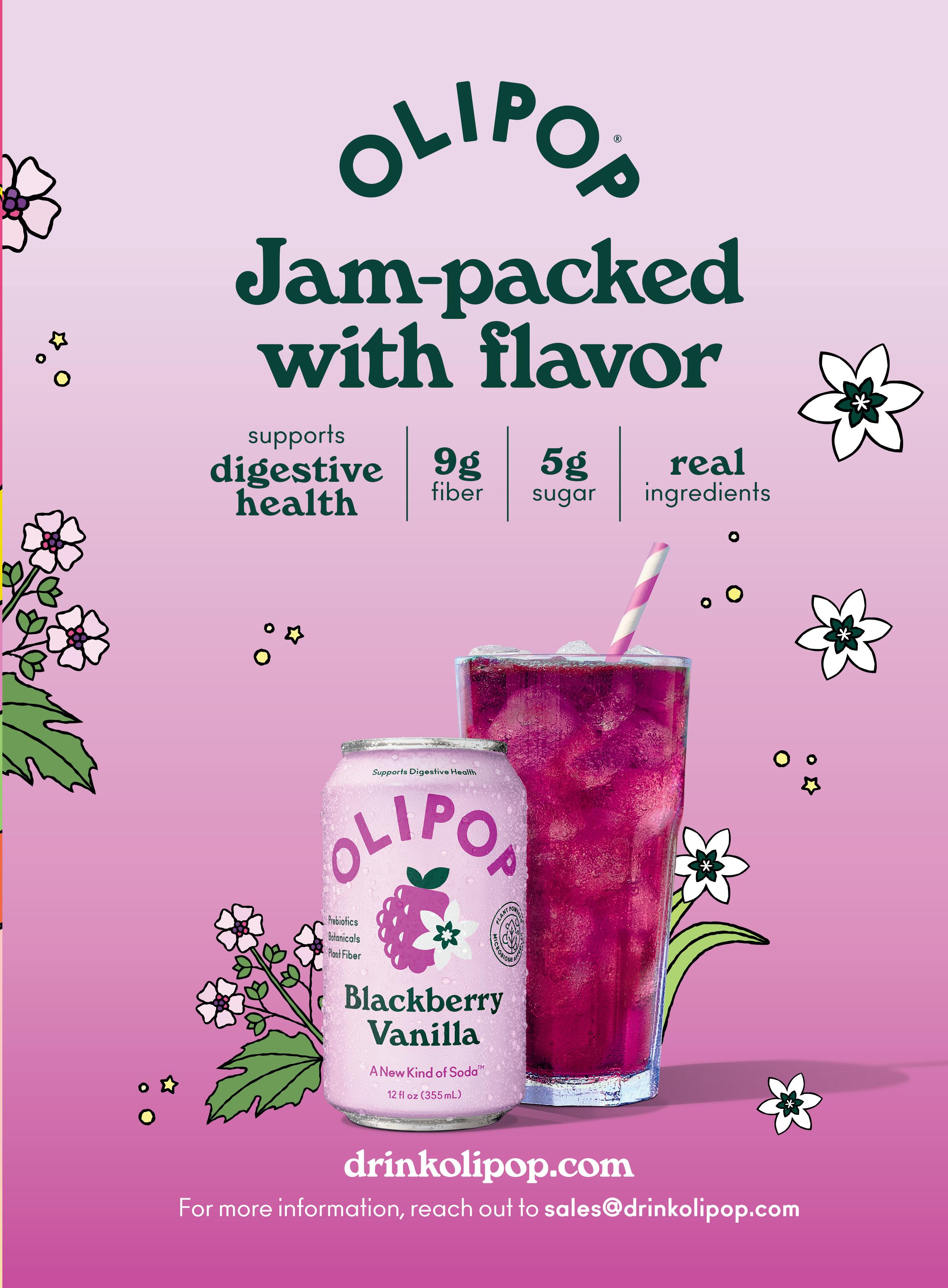
Summer time means soda time, which is where OLIPOP comes in. The next-gen CSD is dropping a pair of releases to kick off the season: a limitededition Raspberry Sherbet, and Blackberry Vanilla, which will be a permanent SKU making its return after becoming one of brand’s most-requested LTO flavors back in 2020. Get it at Target, Walmart and Whole Foods and Blackberry Vanilla. Visit drinkolipop.com for more.
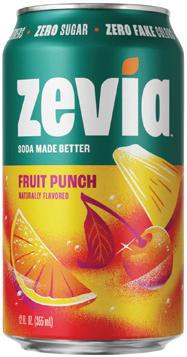
Call it a graduation: Zevia is bringing Fruit Punch, introduced as part of a Walmart-exclusive variety pack last summer, into its permanent zerosugar lineup as a standalone offering. This one is rolling out in 6-packs to Sprouts, Meijer and Delhaize affiliates in the next few weeks. For more information, visit zevia.com.
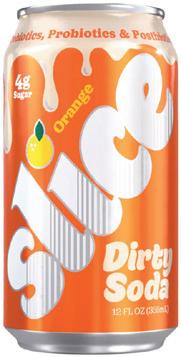
Who says healthy can’t be dirty, too? Suja-owned better-for-you soda maker Slice is looking to thread that needle with its two new “Dirty Slice” releases: Dirty Orange and Dirty Strawberry. Both are crafted with coconut-derived MCT oil to create the “rich, creamy texture fans expect, with no mixing required,” with 50-60 calories per 12 oz. can. To learn more, go to slicesoda.com.
Amidst an increasingly competitive field, sparkling beverage maker wildwonder continues to distinguish
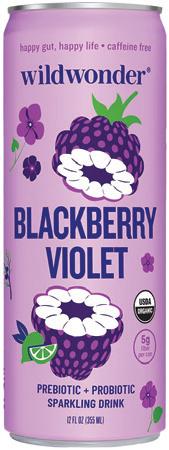
itself with bold and fresh fruit and botanical flavors, the latest being Blackberry Violet. First introduced as an LTO last fall, the flavor became the brand’s fastest-selling release ever, and it now returns as a permanent addition to the lineup. Find it on Amazon or the brand’s website for $42 per 12-pack. Get more details at drinkwildwonder.com.
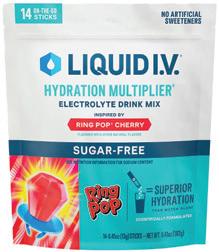
Liquid I.V. is tapping a nostalgic favorite for its latest new permanent SKU: Sugar Free Ring Pop Cherry. Find it in stores now for $24.99 per 14-count bag. More details available at liquid-iv.com.
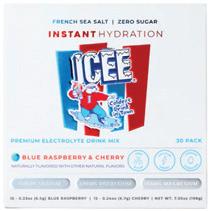
Is ICEE back in style? It’s making a comeback in CPG, in any case, as electrolyte drink maker Instant Hydration has licensed the frozen treat maker’s IP for new Blue Raspberry and Cherry flavors in 30-count boxes. For more details, head to instanthydration.com.
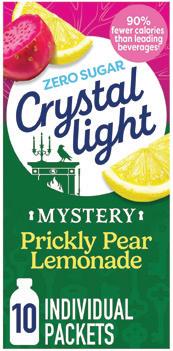
Libraries may be quiet, but these drinks aren’t. Crystal Light is introducing a trio of limitedtime offerings inspired by literature: Hibiscus Lemonade (Romance), Prickly Pear Lemonade (Mystery) and Passion Fruit (Fantasy). The brand is partnering with author/influencer Brooke Averick for activations during her book tour stops in NYC, Boston, Chicago, Dallas and LA. For more information, visit kraftheinz.com/crystal-light.
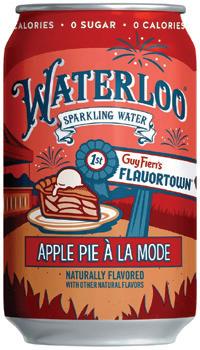
Texas-born sparkling water brand Waterloo is taking another detour through Flavortown with its latest batch of Guy Fieri-approved flavors: Apple Pie à la Mode, Coconut Lime Cooler, and Root Beer Float. Head to drinkwaterloo.com to learn more.
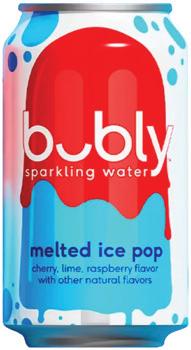
Bubly is bringing back last year’s red-white-andblue LTO, Melted Ice Pop, now in Star Spangled packaging ahead of the extended July 4th celebrations. Find it in stores in 8-packs of 12 oz. cans. Learn more at bubly.com.
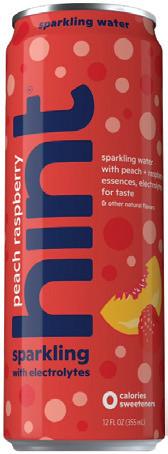
Hint has updated its zero-sugar flavored sparkling water roster with a quartet of new flavors: Peach Raspberry, Cherry Vanilla, Guava Lychee and Huckleberry & Cream. Find them in stores in 12-packs of 12 oz. cans for $12.99. Get more details at drinkhint.com.
Your morning routine just got 48 oz. happier. Happy Coffee is going big with two new multiserve bottles of its signature cold brew, available in two unsweetened varieties: Cold Brew ($7.99)
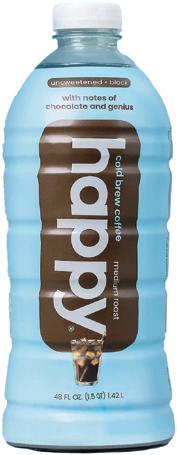

and Perfect Vanilla Cold Brew ($7.99). Get happy at Kroger, Ralphs, Fred Meyer, King Soopers, Dillons, Mariano’s and other fine retailers. Check out happyproducts.com for more.
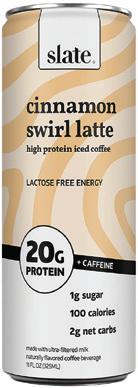
Slate keeps growing, with the indulgent Cinnamon Swirl iced coffee taking the spotlight as its latest release. The lactose-free SKU packs 20 grams of protein and 175mg caffeine per 11 oz. can. For more information, visit slatemilk.com.
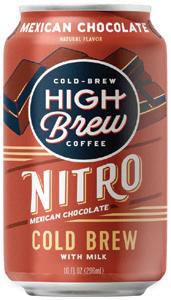
While brands celebrate America’s anniversary this summer, High Brew is going south of the border to find inspiration for its newest release, Mexican Chocolate Nitro Cold Brew. Think dark chocolate, a touch of sweetness and a creamy nitro finish. It’s available in 12 ounce cans now exclusively at Sprouts locations. Go to highbrewcoffee.com to get more information.
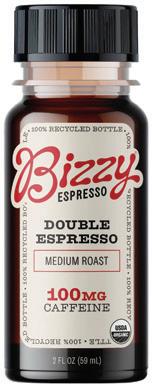
Bizzy’s recently-launched Double Espresso shots are now available on Amazon in 6-count packs for $29.99. Available in three flavors – Medium Roast, Dark Roast and Blonde Roast – each with 100mg per 2 oz. shot. Visit bizzycoldbrew.com to get more details.
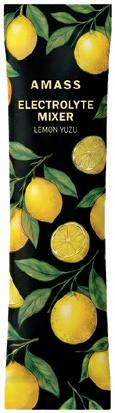
After expanding its brand portfolio over the years with non-alc wine and THC drinks, AMASS is stepping into better-for-you cocktail mixers with its newest line. AMASS Electrolyte Mixers, available in four flavors, add 250mg sodium, 20mg magnesium, and 60mg potassium in each 12 oz. can. Get more information at amass.com.
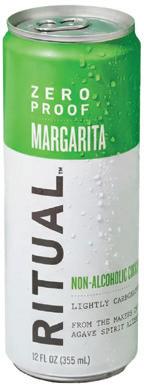
Diageo’s Ritual Zero Proof has entered the readyto-drink category with three canned non-alcoholic cocktails. Margarita, G&T, and Spritz mark the company’s first addition to its alcohol analogs inspired by its agave spirit, gin and aperitif alternatives for lightly carbonated cocktails. The new beverages are available at select U.S. retailers and online for a suggested retail price of $13.99 per 4-pack. Head to ritualzeroproof.com to learn more.
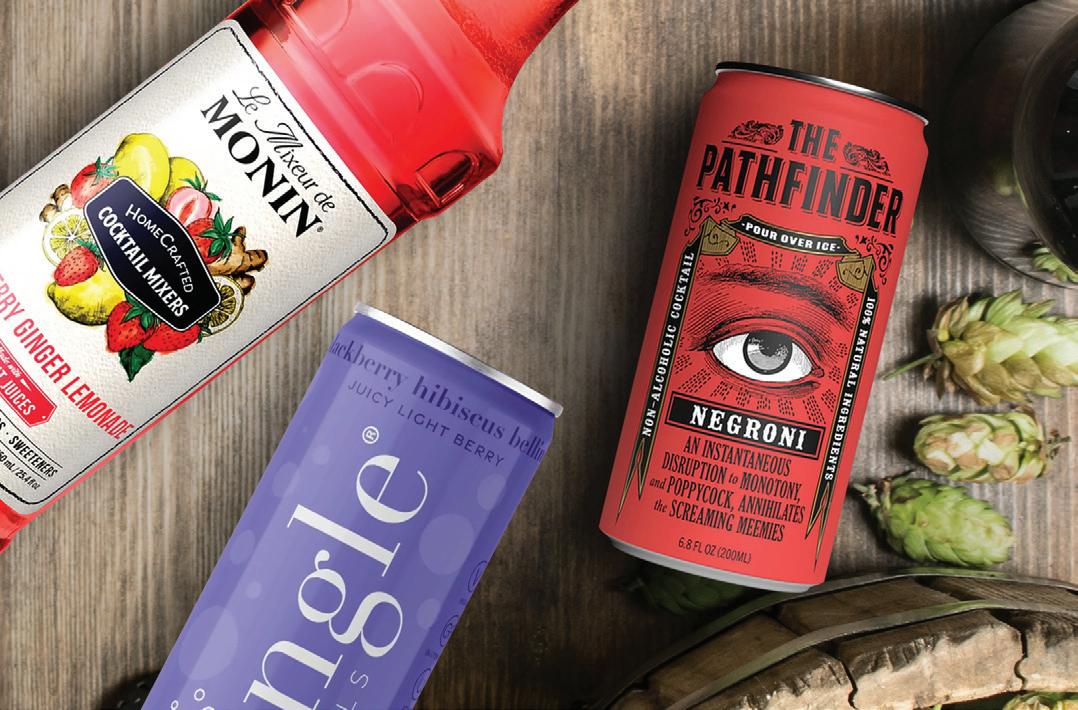
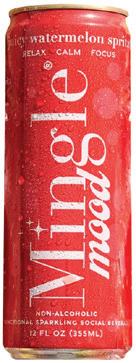
Non-alcoholic cocktail maker Mingle has found traction with its Mood sub-line, which is getting two new flavors. Juicy Watermelon Spritz and Subtly Spicy Margarita are both available on Amazon and Mingle’s website for $46.95 for a 12-pack. Head to minglemocktails.com to learn more.
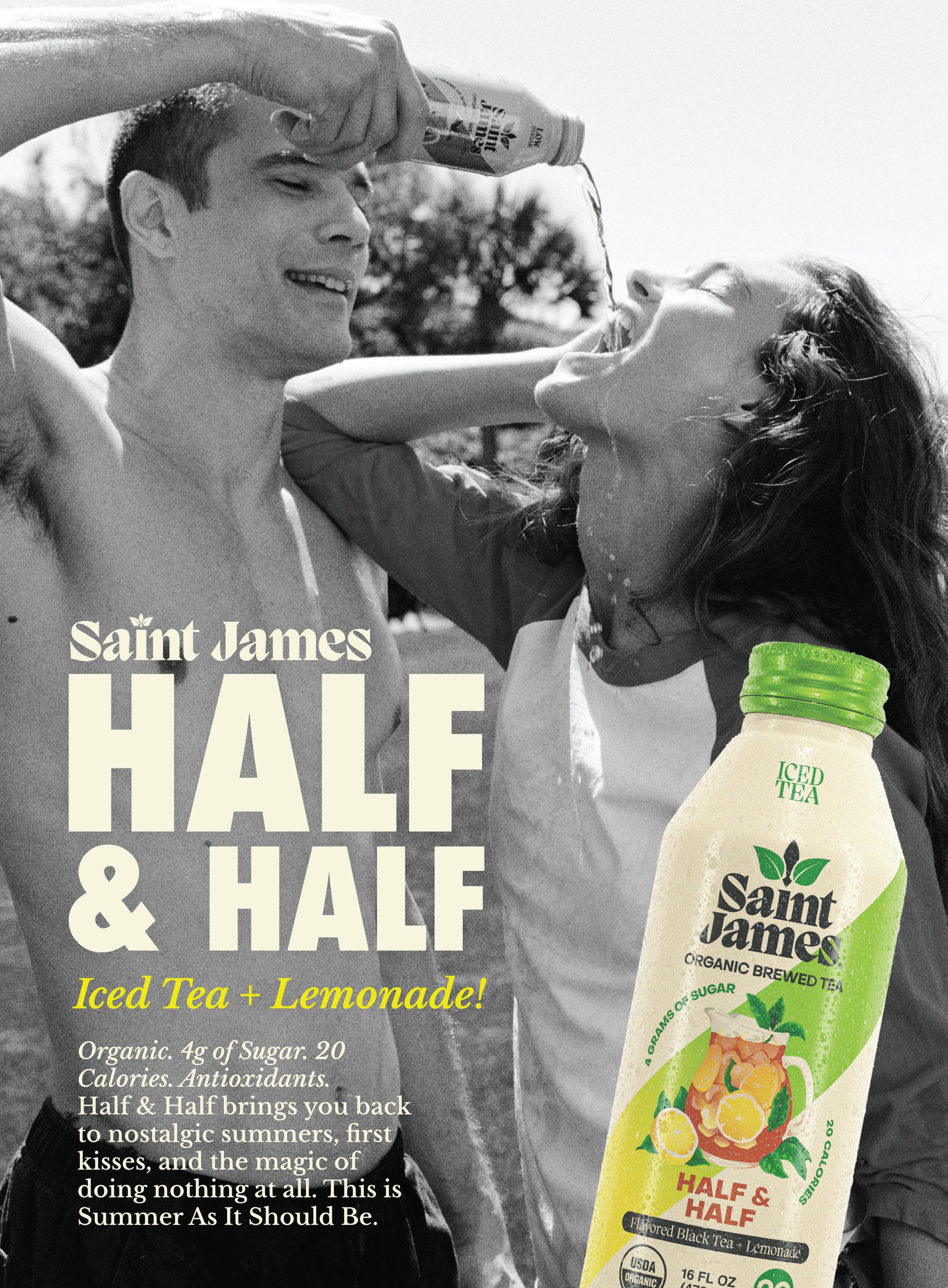
Saint James, the premium iced tea brand, is adding a summer favorite to its lineup with the launch of Half & Half in 100% recyclable 16 ounce
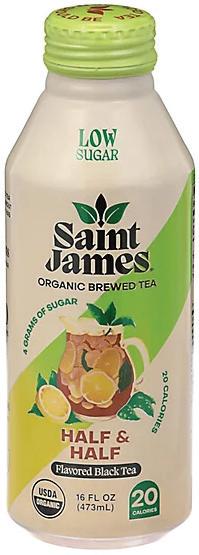
aluminum bottles. You can find it at Target, Kroger, Albertsons, and CVS. For more details, go to saintjamesicedtea.com.
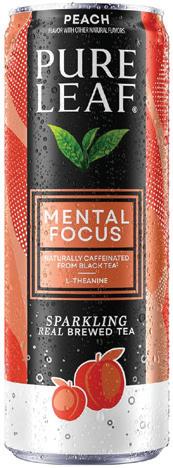
Pepsi-owned RTD tea Pure Leaf is hoping to help consumers cut through brain fog with Mental Focus, a line of sparkling iced teas crafted with 69 mg caffeine and added L-theanine. Available in Peach and Raspberry flavors in 12 oz. cans. Head to pureleaf.com for more information.
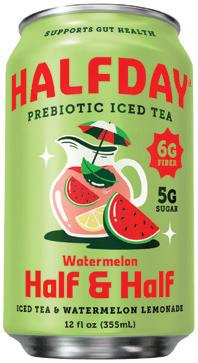
Summer is beckoning, and gut-friendly iced tea maker Halfday is prepared with a new twist on a seasonal favorite. Watermelon Half & Half is now available exclusively at Whole Foods Market stores nationwide for a limited time. You can get more details at drinkhalfday.com.
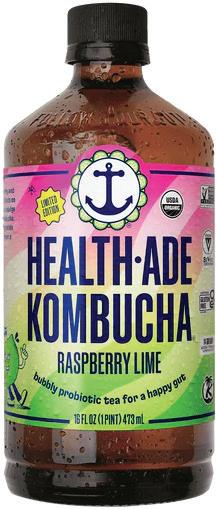
It’s going to be a busy summer at Health-Ade. First comes a new seasonal flavor, Raspberry Lime, available direct-to-consumer through the brand’s online store. And watch out for another new release, Peach Strawberry Lychee, to follow sometime in June at Sprouts, Whole Foods and other national retailers. For more information, go to health-ade.com.
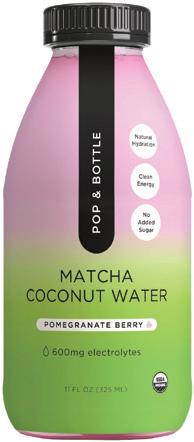
Pop & Bottle is extending its platform beyond functional matcha and coffee lattes with Matcha Hydration, a coconut water-infused line in Sprouts stores nationwide. Each 11 oz. bottle contains coconut water and 25 mg of caffeine per 11 oz. bottle, and comes in three flavors – Matcha Coconut Water, Pomegranate Berry Matcha Coconut Water and Citrus Matcha Coconut Water. Learn more at popandbottle.com.
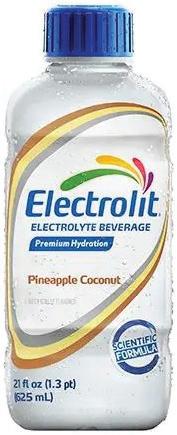
Inspired by tropical summers, the release of Electrolit’s seasonal LTO Pineapple Coconut, available exclusively at 7-Eleven stores, marks the latest step in the brand’s channel-focused innovation strategy as it continues to strengthen its presence in the convenience sector, one of the fastest-moving environments in beverages. Go to electrolit.com to learn more.
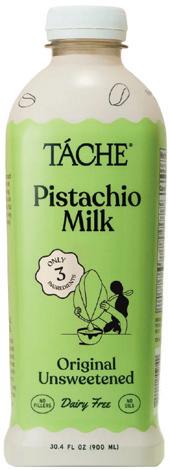
Pistachio milk maker Tache is refining its roster with the launch of a version made with just three ingredients: premium pistachios, filtered water and a pinch of pink Himalayan sea salt. It’s available now nationwide at Whole Foods Market for $8.49, with more retailers coming online later this year. Learn more at pistachiomilk.com.

By: Zoe Licata
The “beyond beer” or "malternatives" space looks similar to a bowl of jelly beans these days.
At one time there were just a handful of choices that were simple to understand, like cherry, green apple and orange –or, in bev-alc’s case, hard cider, wine coolers and malt-based hard lemonade. Now, in the continued era of “everything can be an alcoholic beverage,” what you pull from the bowl has become harder to define.
Akin to how buttered popcorn, chili mango and toothpaste entered the mix, beyond beer now consists of beer-, wine- and spirits-based ready-to-drink cocktails (RTDs); THC infused beverages; spiked versions of big name nonalcoholic (NA) brands; new creations like hard tepache and hard kombucha; and more.
As such, “malternatives” may not be the most accurate descriptor for this annual category overview of ours anymore – some participating in this piece have even labeled the terms malternatives and FMBs “trigger words” (more on that later). “Fourth category” may be the least offensive term, though admittedly vague. If the category itself is hard to name or define, imagine the difficulty of choosing
one trend within it for highlighting. This year there appears to be even more fourth category offerings on trend than the prior few innovation-heavy years:
• Spirits-based hard teas such as Stateside Brands’ Surfside and Boston Beer Company’s Sun Cruiser have become a driving force within RTDs both in the on- and off-premise, and are expanding with lemonade extensions;
• High ABV flavor-packed punches such as BeatBox and BuzzBallz continue to connect with consumers, with bigwigs such as Sazerac and Anheuser-Busch InBev to back them up;
• And vodka-based versions of sports drinks such as Spiked Ade and Stateside’s Super Lyte have hit the scene with a fervor as the latest evolution of hard refreshers.
Additionally, there’s one trend resurfacing, despite a checkered history: hard soda.
The mention of hard soda in any related new product announcement post-2020 has often been met with scoffs. Choruses of “Remember that?” and “Didn’t we already try this?” typically followed. Admittedly, even in our own media, we’ve poked fun at the segment, reminiscing about Not Your Father’s Hard Root Beer, the Small
Town Brewery (and later Pabst) FMB that has become the No. 1 flash-in-the-pan reference for hard soda.
The main criticism of Not Your Father’s and similar ilk was the sickly sweet nature of the syrupy beverage, which – once paired with an ABV – led to head-numbing hangovers. The novelty of having a familiar, nostalgic soda flavor in an alcoholic form wore off after a few years, when consumers started paying more attention to what they were consuming and how they were feeling.
That better-for-you attitude turned into the hard seltzer craze, where consumers sought out lightly flavored, low calorie drinks. The introduction of spirits-based offerings had consumers questioning what alcohol they were drinking in FMBs, and turning to spirits-based seltzers and RTDs instead of malt-based alternatives.
Like all consumer trends, the circle came back around and consumers started craving flavor again and before we knew it, hard soda was back. Producers are hoping this time the trend is stickier (but maybe less syrupy).
Owl’s Brew co-founder and CEO Jennie Ripps has been patiently waiting for
hard soda to have its moment again.
“Over a decade ago” she started experimenting with a “better for you soda” made with botanicals and “real ingredients,” and created “an entire book of functional sodas.”
“And then, of course – because what we like to do at Owl’s is make things that are functional and really good for you [and] spike them – we started messing around with making them alcoholic,” Ripps said.
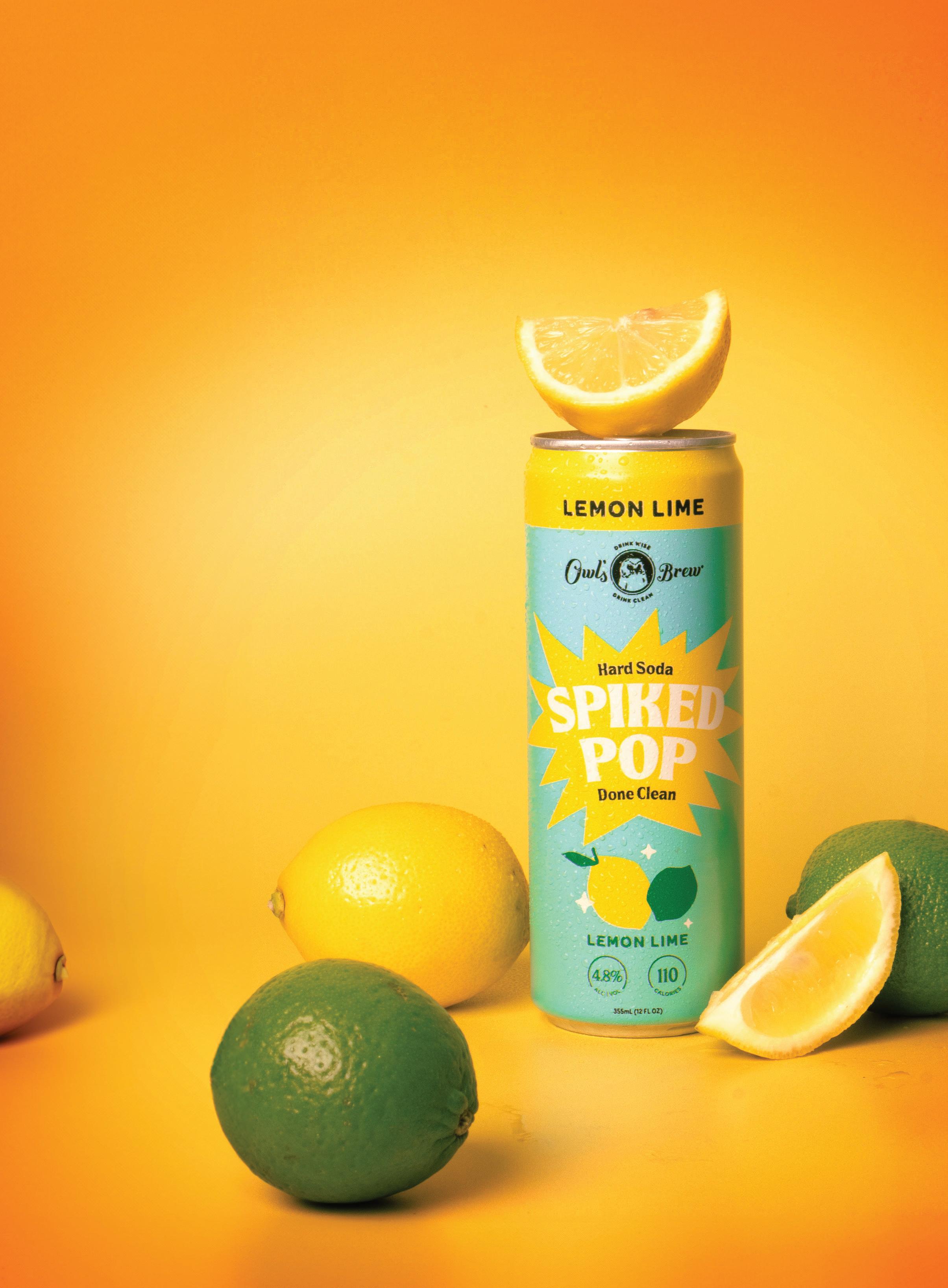
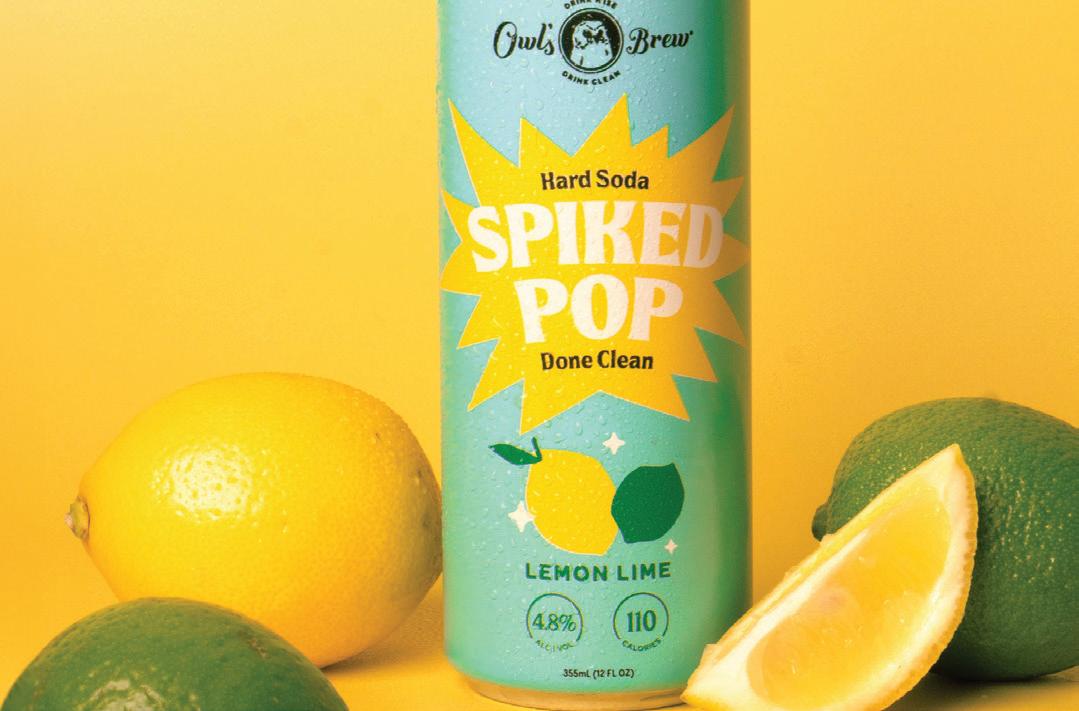
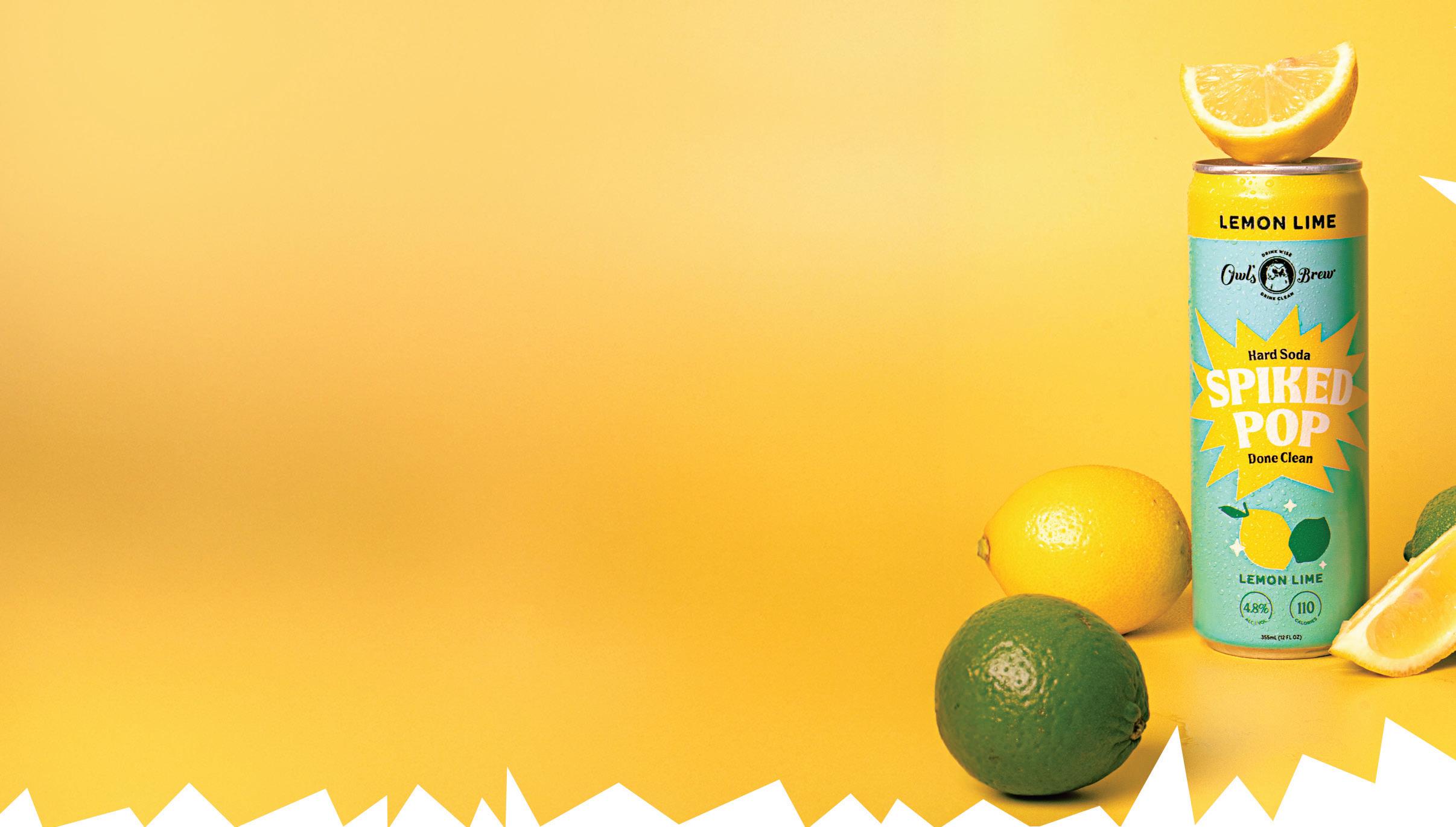
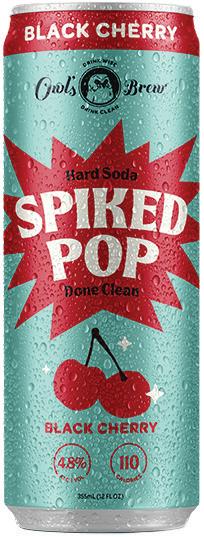
Ripps fellow Owl’s Brew co-founder and CMO Maria Littlefield was Ripps’ “earliest test tester” for the spiked sodas, which then sat waiting for the right moment to launch. Fast forward to 2026, that time was this spring, as hard tea maker Owl’s Brew launched Spiked Pop, a line of FMBs inspired by classic soda flavors, recreated with real fruit juice, teas, herbs and no artificial flavors or coloring.
“I feel like in some ways we were a little early with boozy tea,” Ripps said. “We were so early that I think we actually missed the consumer moment. So one thing we wanted to do with [Spiked Pop] was we actually wanted to figure out exactly when the consumer would be ready.”
“One thing we’ve learned over the years is it’s very hard to educate the consumer on something in alcohol, and then tell them it’s spiked,” Littlefield added.
Enter: functional sodas. The recent popularity of better-for-you soda brands such as Olipop and Poppi educated consumers on what a modern soda could look like: same bold flavors, without being, as Littlefield put it, a “sugary chemical bomb.”
“We watched this renaissance of sodas,” Ripps said. “When Poppi got acquired [by PepsiCo], we were like, ‘We think the customer is educated, let’s go.’”
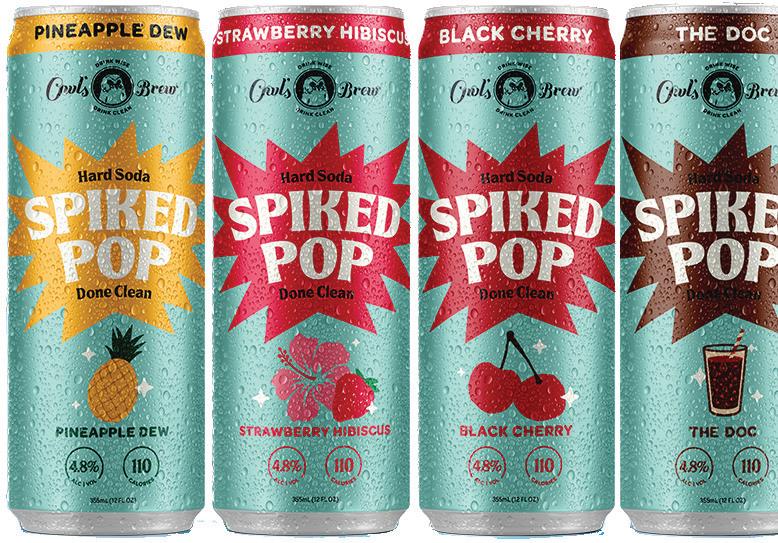
Spiked Pop has arrived with a robust lineup of seven flavors. The offerings are available in a variety 12-pack (Black Cherry, Pineapple Dew, Watermelon Lime and Cream Soda); variety 6-pack (The Doc, Lemon Lime and Strawberry Hibiscus) and single-flavor 6-packs of Black Cherry and Lemon Lime. Each 12 oz. skinny can is 4.8% ABV and 110 calories, packaged with the tag line “Hard Soda Done Clean.”
Owl’s Brew is so confident in the strength of Spiked Pop, that the company has shifted its focus away from hard teas and almost solely to the new hard sodas.
The company has sunset its Boozy Tea brand, keeping only its spirits-based RTDs, including Chelsea Handler’s Vodka Lemonade.
The confidence to make the big switch came from conversations with both onand off-premise retailers and distributors, who expressed “extraordinary” excitement for the commercial opportunity and spiked better-for-you soda could have.
“It was a huge change for us, but the process was actually very thoughtful and tactical, and we didn’t decide to pull the trigger until we had gotten buy-in from every tier,” Ripps said.
“It’s the perfect blend of everything we’ve always stood for at Owl’s Brew, but it gives us a much bigger platform than maybe Boozy Tea did,” Littlefield said.
Another brand trying to capitalize on consumers’ desire for better-for-you sodas is Crooked Pop, also launched earlier this year. The lineup of 4% ABV hard sodas (Orange Cream, Blackberry and Cherry Lime) was created by Bai founder Ben Weiss, who is on a mission to disrupt how bev-alc categorizes beyond beer offerings.
Crooked Pop is created with Organic Super Dry Alcohol (OSA), a proprietary fermentation derived from quinoa, amaranth, millet and cassava root that create a clean, neutral alcohol base. The proprietary base addresses consumers’ alleged distaste for malt-based offerings, which Weiss claims they associate with malt liquor, low-quality ingredients and negative effects. By still being fermented alcohol, Weiss hopes his creation will “put the growth engine back in beer.”
“I feel like beer historically has owned refreshment in alcohol – that low ABV sessionability space,” Weiss said. “Legally it's been carved in a way where you almost have to be a ferment to thrive in that [beer] space, and that space is challenged by both malt, as well as distilled spirits.
Weiss emphasized the importance of not categorizing his innovation as a “malternative,” labeling the phrase “triggering.”
“‘Malternative’ is a part of going beyond beer, but it’s still beer, because beer legally is defined as malt and hops,” he said.
“I’m trying to find a solution to bring consumers back to ‘brew,’ and I’ve resisted every temptation along the way to create a base that’s not brew, because I’m so
passionate about carving out a space within brew that speaks to a consumer that’s no longer drinking beer.”
That challenger product, according to Weiss, is Crooked Pop. The certified USDA organic spiked sodas have zero sugar, less than 1 gram of carbs and are gluten free – all attributes that are highlighted on every can and package. Cans also include the beverage’s nutritional facts and ingredients, which are not mandated in bev-alc, attracting Gen Z and millennial consumers seeking “transparency” when it comes to their food and beverage, Weiss said.
“Not Your Father’s Root Beer, people loved because of its taste, and they left it because of calories and sugar,” Weiss said.
“The holy grail, and I remember being told this in the non-alc space, is to deliver low calorie without anything artificial in it. If you can do that, they’ll be loyal.”
“This idea that sober curious means they don’t drink, I dispute that,” Weiss added. “I think sober curious means they don’t trust. I think everybody ultimately wants to have a drink, they just want to maybe drink less, drink better, drink without consequence. They’re not lost consumers for beer, they’re rejected consumers of beer.”
This isn’t Weiss’ first foray in hard soda. In 2019, his now-defunct Crook & Marker brand launched Spiked Sodas. What makes this round different is Crooked Pop is leaning into the ingredient transparency, as well as the flavor variety that consumers have shown they’re looking for through their non-alc purchases, Weiss said.
“We’re a better version of what we were three, four years ago – we’ve evolved and I think the timing is great,” Weiss said. “Crooked Pop’s been out for less than a month and you already see it, it’s pretty impressive. So I’m super bullish.”

Not everyone in the modern hard soda game is leaning into health and wellness trends. Yet, they’re still finding consumer demand, and a key reason why is the on-premise.
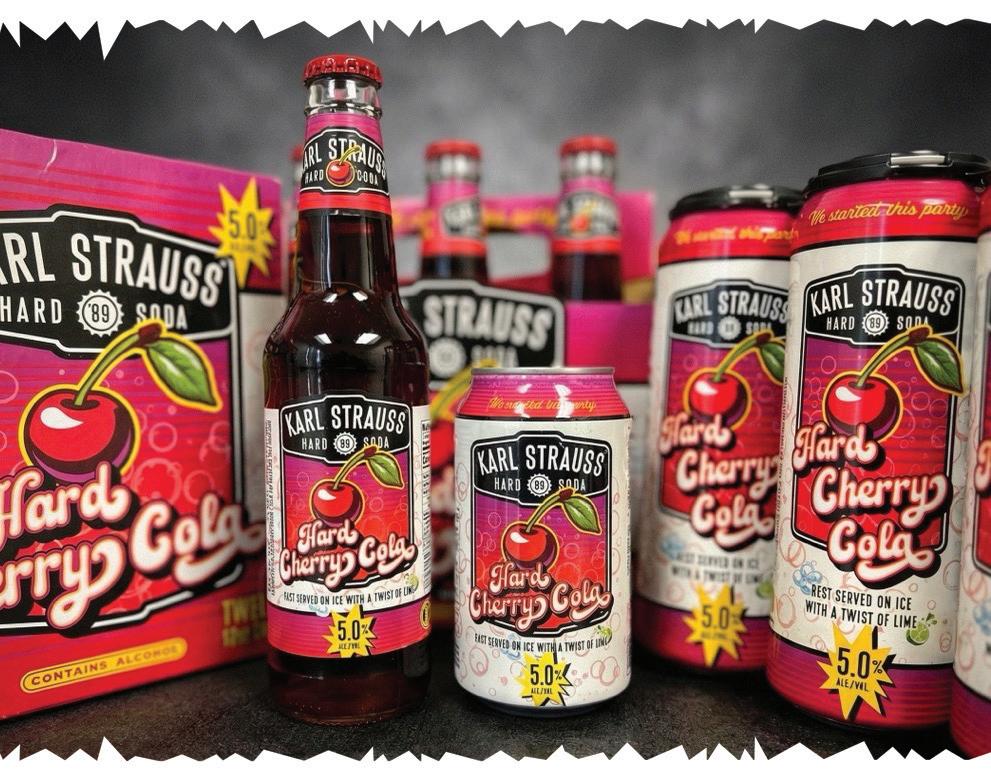
In 2024, San Diego-based craft brewery Karl Strauss was tasked by Disneyland Resort to create a hard soda for Pym Test Kitchen, a casual food stop located inside Disney California Adventure Park’s Avengers Campus. The Karl Strauss team obliged, creating Hard Cherry Cola, and before long, the beverage “went crazy,” beer division COO Chad Heath said.
“It went viral,” Heath said. “People started posting about it and it sold really well, it was just a hit right out of the gate.”
The theme park success led Karl Strauss to add the 5% ABV FMB on draft at its own nine brewpubs across Southern California, and the offering became one of the brewery’s top five items sold.
What followed was a snowball effect: retailers tried the product and asked for it in stores, including the beer buyer at Albertson’s, who asked for “every SKU you make in every one of our stores,” according to Heath.
Karl Strauss packaged the hard soda in 19.2 oz. single-serve cans, 12 oz. can 12-packs and 12 oz. clear bottle 6-packs, marking the release of the craft brewery’s “first ever non-beer beverage” into market.
“We really wanted the clear glass bottles to have sort of a nostalgic theme to it, that Mexican Coke sort of vibe,” Heath said. “And we felt that, from a user
No matter the package, Karl Strauss encourages consumers to pour the beverage over ice and add a lime wedge, showing off the red-tinted liquid. The company is also actively working to add the beverage on draft at bars and restaurants, particularly at establishments that may not have a license to serve hard spirits, but what to give consumers an alternative to beer or wine.
The bright red cherry liquid is certainly not a health and wellness play – Karl Strauss wants consumers to feel the nostalgia for the old syrupy soda of old. Their target consumer isn’t the Olipop fan, but rather the one looking for familiar, bold flavors and simplicity – picking up a Hard Cherry Cola instead of a Mike’s Hard Lemonade (Mark Anthony Brands) or an AriZona Hard (Molson Coors).
Some fans are even using the beverage to create “dirty sodas” – the dairy, syrup and soda combinations that have achieved their own virality.
“People are just hearkening for a simpler time, going back to things that were less crazy,” Heath said. “People are yearning for that.”
The importance of the liquid is also a guiding star for The Nations Brewings’ Bravazzi Hard Italian Soda. The 4.2% ABV sugar-based FMB, launched in 2017, is made in-house in Nashville and is available in surrounding markets on draft, as well as in 12 oz. cans, with flavors such as Blood Orange, Clementina, Limonata and Mango with Lime.
Bravazzi is made with real fruit juice and is gluten free, but the brand isn’t trying to pretend it’s a better-for-you beverage (neither is the 160 calories per can). Bravazzi CEO Josh Buckley acknowledged that for a few years, particularly during the height of the COVID-19 pandemic, consumers were “very health conscious” and would frequently ask about calorie count or sugar content.
“Now at festivals, nobody is asking,” Buckley said. “There’s definitely been a noticeable decrease in people with
As a result, Bravazzi had its best year yet in 2025, reaching 100,000 cases. On a rolling 12-month basis through the first quarter of 2026, the company is up 30%.
A key driver of that growth is from the on-premise, where Bravazzi has positioned itself as “the first choice to go onto the draft handle” in its core market when a distributor wants something beyond another beer.
The brand has also been able to expand occasions for itself by positioning the beverage like “a soda or mixer” rather than another FMB. Bravazzi lists cocktail recipes on its website and in marketing material, and is actively working with on-premise accounts to educate retailers on best practices for pouring and presentation.
Bravazzi’s partners are buying in. In a single month, the offering can claim 150 handles in its home state of Tennessee, as well as up to 70 draft buys in Alabama, and between 20 to 25 in Florida, which just launched in January.
“We’ve gained a lot of popularity just because we’re the easiest thing in distributor houses to sell,” Buckley said. “Would you rather sell an IPA right now, or this Italian soda that looks great, tastes great and is more fun to sell?”
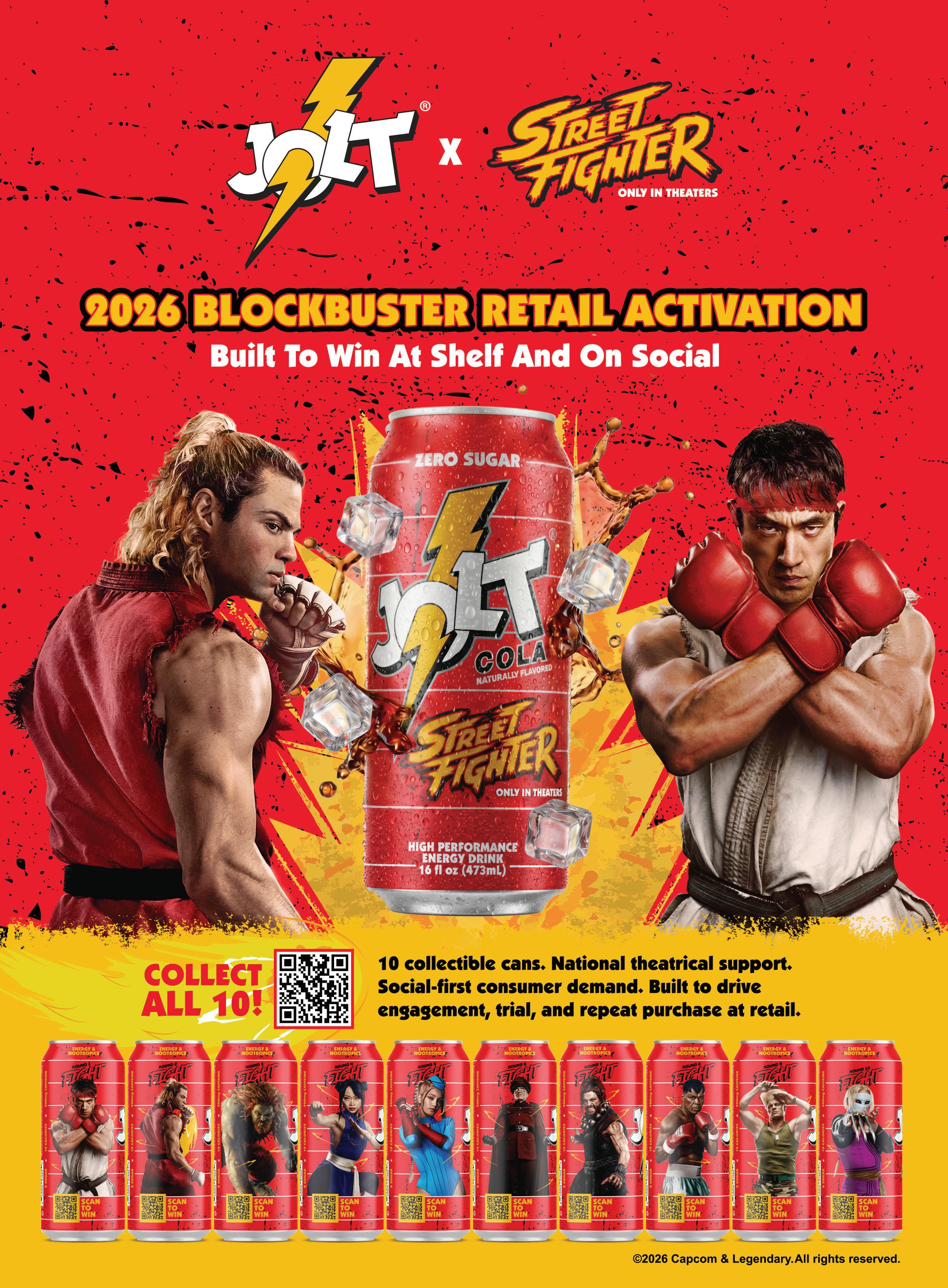
If you ever wanted your rave stick to double as a drink, LYTT might be your answer. Boston Beer is launching LYTT Electric Coolers, a 15% ABV malt-based RTD in glow-in-the-dark, resealable plastic lightbulb-shaped 6.8 oz. containers. The beverage comes in six flavors, including Strawberry Rita, Blue Raspberry, and Long Island Iced Tea. Rolling out this month in Florida, Ohio, Texas, Washington, and Illinois, targeting convenience, liquor, and grocery where laws permit. A second expansion round is expected later this year.
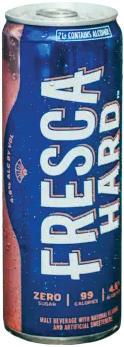
Red Tree Beverages – the Coca-Cola firewalled subsidiary behind Jack & Coke and other licensed RTDs – put a malt spin on its flavored sodas with Fresca Hard, coming in at 4.6% ABV and 99 calories with zero sugar. Four citrus-forward flavors (Grapefruit, Pineapple, Peach, and Watermelon) are available in 12-packs of 12 oz. cans.
Owl’s Brew – the brand behind Chelsea Handler’s Vodka Lemonade – entered the hard soda lane with Spiked Pop, now available at Whole Foods, Erewhon, Trader Joe’s, Target, Sprouts, Total Wine & More, BevMo and Ralphs. Seven flavors (Watermelon Lime, The Doc, Pineapple Dew, Cream Soda, Black Cherry, Strawberry Hibiscus, and Lemon Lime) come in at 4.8% ABV, with no artificial flavors or additives.
SRP $11.99 per 6-pack.
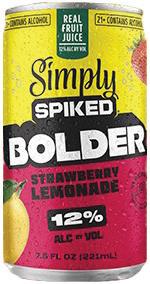
Simply Spiked is cranking up the ABV with its first 12% offering. Bolder launches in Strawberry Lemonade, available in 7.5 oz. mini cans individually or in 12-packs, rolling out nationwide at grocery, convenience and liquor stores.
Ben Weiss, best known as the creator of Bai, is taking his disruptive bevalc concept into a new space with the launch of hard soda brand Crooked Pop. Available in three flavors at launch – Orange Cream, Blackberry and Cherry Lime – the ready-to-drink hard soda (4% ABV) features hero ingredient Organic Super Dry Alcohol (OSA), a proprietary fermentation
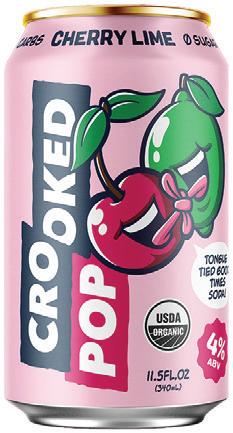
innovation derived from quinoa, amaranth, millet and cassava. According to the brand, OSA creates a clean, neutral alcohol base that eliminates the need for distilled spirits or malt brews.
Topo Chico Hard is saying adiós to ordinary margaritas and hello to refreshing convenience for 21+ fans. Introducing two new innovations: Topo Chico Hard Margarita Flavored Alcohol Beverage 6-pack glass bottles and Margarita MAX FAB Strawberry Hibiscus. For the first time ever, Topo Chico Hard Margarita FAB is available in the brand's unmistakable glass bottle—bringing its most iconic symbol into the world of full-flavor margarita FABs.
Brown-Forman Corporation and Pabst Brewing Company announced a mutual agreement to conclude their partnership related to FMBs within the United States. Effective July 7, 2026, Brown-Forman will assume management of the supply, sales, marketing, and distribution for these products.
Mike’s Hard Lemonade is launching Mike's Dirty Lemonade (4.5% alc/vol), the boldest innovation yet from the original hard lemonade that created the category 27 years ago. Inspired by the viral dirty soda trend, Mike's Dirty Lemonade is a smooth, non-carbonated take on hard lemonade that blends unexpected flavors with a do-it-yourown-way attitude. Available nationwide, Mike's Dirty Lemonade comes in four standout varieties: Dirty Lemon Secret, Dark Cherry Brew, Very Berry Grape and Pineapple Haze.
Get ready to turn up the energy. Seagram’s Escapes Spiked is bringing the excitement of WWE straight to your fridge with a new, limitedtime variety pack inspired by RAW. The WWE RAW Pack, available now, features fan-favorite Blood Orange Brawl alongside a brand-new flavor, Watermelon Smash. These 10% ABV drinks deliver big, bold flavor in every sip—perfect for watch parties, game nights, or anytime you want to bring main-event vibes to your crew.
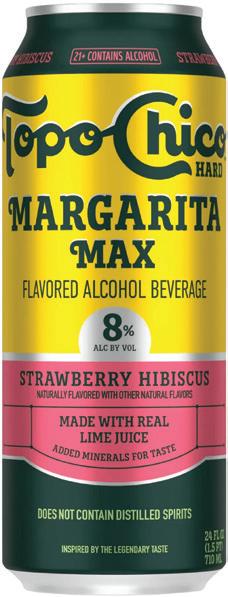
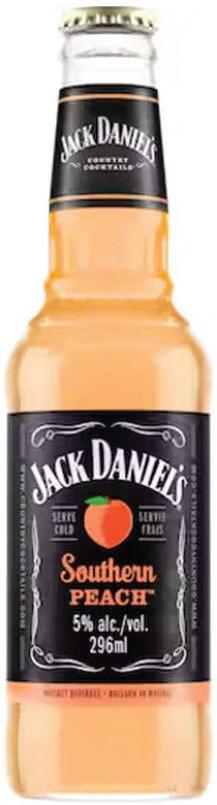
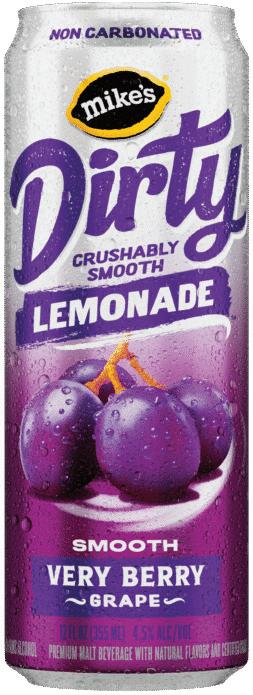
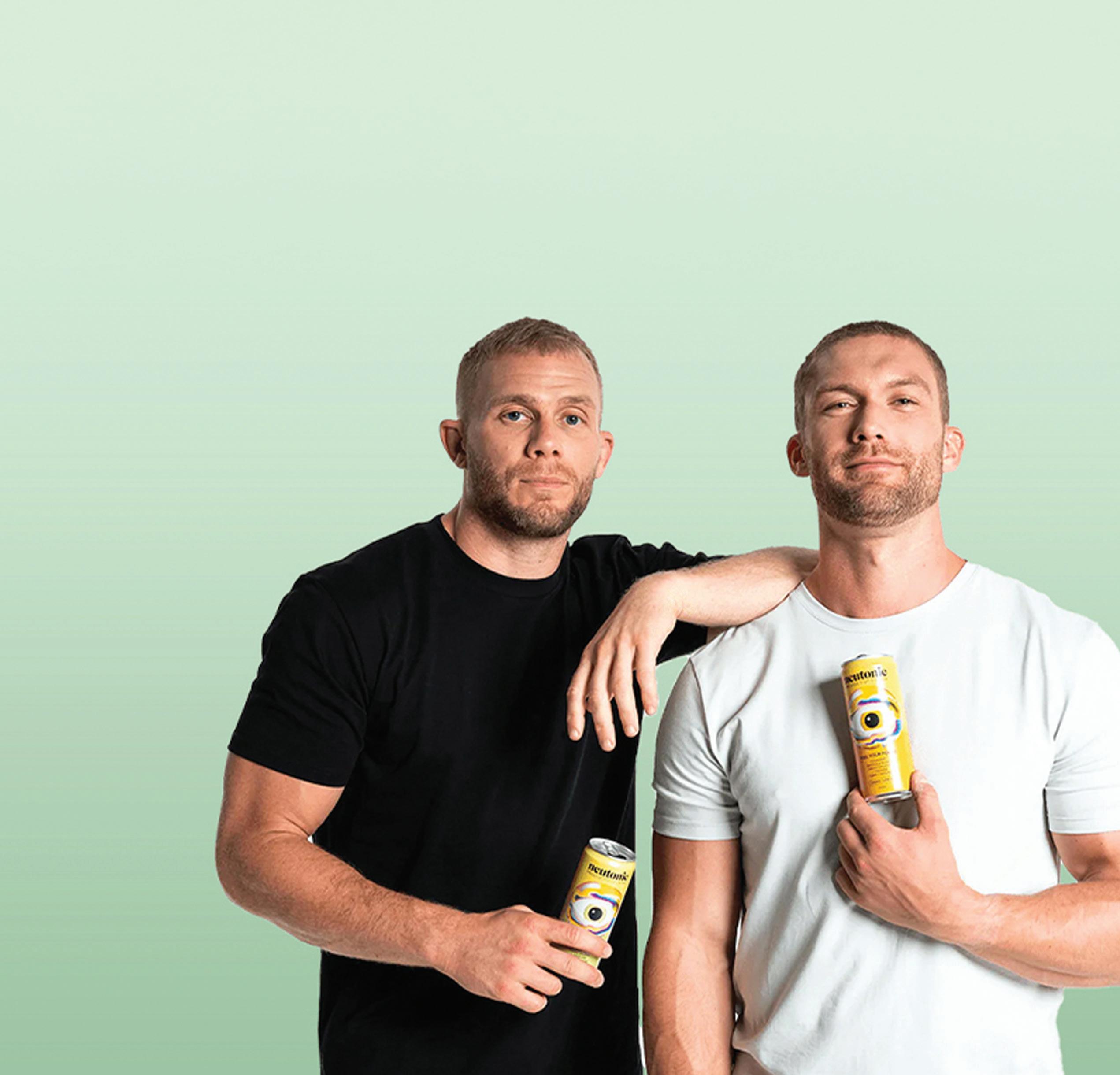
By: Martín Caballero
As brands born in fitness and nutrition channels migrate to the mainstream, they’re literally bringing a new mentality to the energy category.
Within energy drinks, rising interest in biohacking, nootropics and optimized supplement “stacking” has inevitably moved the conversation beyond just workout-boosting ingredients or more caffeine and towards things that can help users dominate outside of the gym. That includes everything from proprietary ingredients like Cognizin, a form of citicoline patented by Japanese supplier Kyowa, and NeuroFactor, a FutureCeuticals product, to L-theanine and ginseng.
It fits with a broader trend of young consumers seeking functional benefits from their beverages; according to Keurig Dr Pepper’s 2026 “State of Beverages” trend report, Gen Alpha and Gen Z are 31% more likely than other age groups to prioritize mental focus and 41% more likely to prioritize sustained energy.
But it also represents an evolution: as stated in Kerry Group’s 2026 trend forecast report, “the U.S. energy drink market is firmly in a new phase, beyond caffeine
jolts and sugar highs.” The adoption of remote work and greater mental health awareness has “opened the door to neurofunctional drinks that blend energy with brain benefits,” with particular appeal to the roughly 130 million Americans engaged in “gaming and other digital deepwork activities.” The “digital afternoon burnout” occasion is ripe for products that offer a slightly different energy profile.
The trend also closely tracks the rise of nextgen male lifestyle brands and social media-fueled “maxxing” trends, forces that have helped niche brain health ingredients gain new prominence in CPG. Influencer-backed supplement brands like Jocko Fuel, Joe Rogan’s ONNIT and Gorilla Mind, owned by YouTube bodybuilding star Derek (“More Plates More Dates”), have championed nootropics to their respective audiences of millions, helping to normalize those niche ingredients. There’s even the curiously-named, Floridabased Trumpdrive Energy, sporting up to 350mg of Cognizin and 200mg caffeine in each 12 oz. can.
In the past, those drinks were often marketed as promising gamers a competitive edge; now, they’re now being pushed as overall performance enhancers that are part of a modern wellness regime. Creatine, another, more mainstream performance enhancer, also jumped out of gyms and into the mainstream with a marketing campaign not just involving its extra strength benefits, but also studies around its cognitive benefits. Those factors have opened the door for “productivity drinks” that offer a more specialized, fine-tuned energy experience. Last year, British podcaster Chris
Williamson (host of Modern Wisdom) and YouTube fitness guru James Smith raised $3.7 million to kickstart expansion for their brand Neutonic, a productivity drink which touts 500mg of Cognizin, 120mg of caffeine and 400mg of L-theanine, along with rhodiola rosea and panax ginseng, in each 12 oz. can. As Williamson told us at the time, the formulation is “basically what every nootropics bro would look at if they went down the stack.” Using the tagline “Fuel Your Focus,” the brand has found receptive U.S. retail partners in GNC, The Vitamin Shoppe, Central Market and on Walmart.com, and plans to grow distribution this summer after raising another $6 million in growth capital this April.
Recognizing the current momentum, new brands are joining the fray. Startup STAED, aiming to link gut and brain function with its productivity line, launched this spring. Formulated for founders, creatives and busy professionals, its four-SKU lineup of 12 oz. drinks also feature Cognizin and L-theanine, as well as organic agave inulin for gut support. There’s also nootropic energy brand Happy Panda, launched this spring in 12 oz. and 7.5 oz. mini cans. Built around the trifecta of caffeine, L-theanine and Cognizin, Happy Panda is “part of the next generation of functional beverage brands that prioritize substance over trend,” said Katie Emerson, MS, RD, Senior Manager of Scientific Affairs at Kyowa Hakko USA.
Even if cognition-boosting ingredients aren’t always a central part of a brand’s marketing, they can play an important role in positioning the product within a crowded category. BUM Energy, which pairs 112mg caffeine and 250mg of Cognizin, has been a fast mover. The first energy RTD from RAW Nutrition, it was first distributed in the same nutrition and gym channels that served its parent company, but quickly leapt into mainstream stores like Circle K, Walmart and Target.
Phorm Energy - backed by Anheser-Busch, supplement maker 1st Phorm, and UFC boss and manosphere royal Dana White - has also been tailored to perform in c-stores. The product, which pairs NeuroFactor with 200mg of caffeine from green tea plus L-theanine, has made big strides in its first year, becoming a top-15 category brand and picking up over 59,000 doors, including nationwide placement at 7-Eleven.
But there’s another, softer side to this emerging performance category as well, exemplified by mushroom-powered energy RTDs like Odyssey and Melting Forest. After spending several years introducing the concept to the market, Florida-based Odyssey, now adopting “functional energy” as its descriptor, has trimmed its portfolio and built around high caffeine (222 mg) and low caffeine (85 mg) lines in 12 oz. slim cans; the functional stack also includes organic Lion’s Mane, organic cordyceps, panax ginseng and L-Theanine. Though it has been moving into retail through mainly beer DSDs, the unlock has been getting the product to busy working professionals through placement at office break rooms (via Canteen) and the campuses of major corporations like Uber and Meta. Despite the encouraging signals, however, it’s unclear where the ceiling for “smart energy”
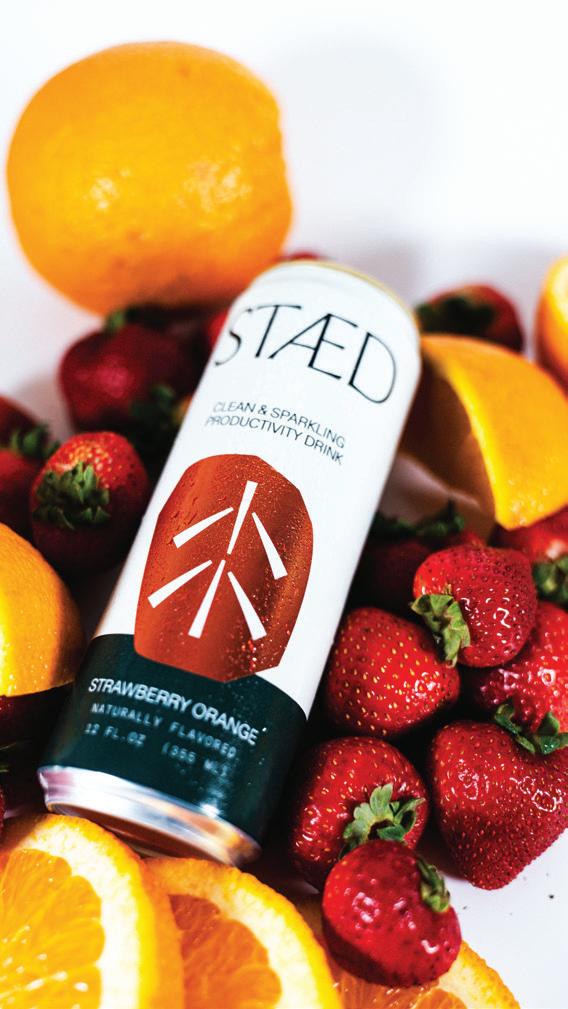
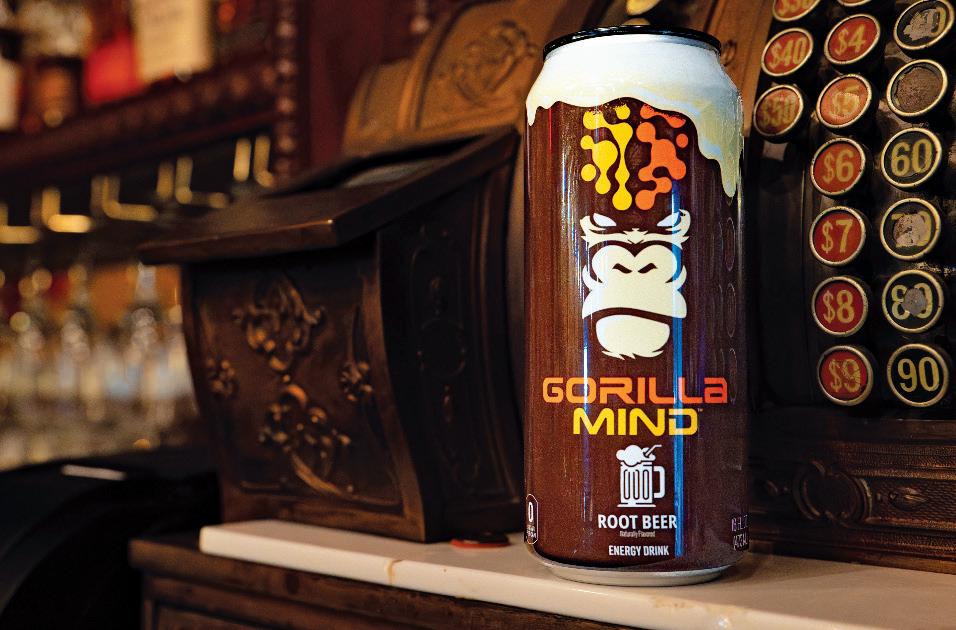
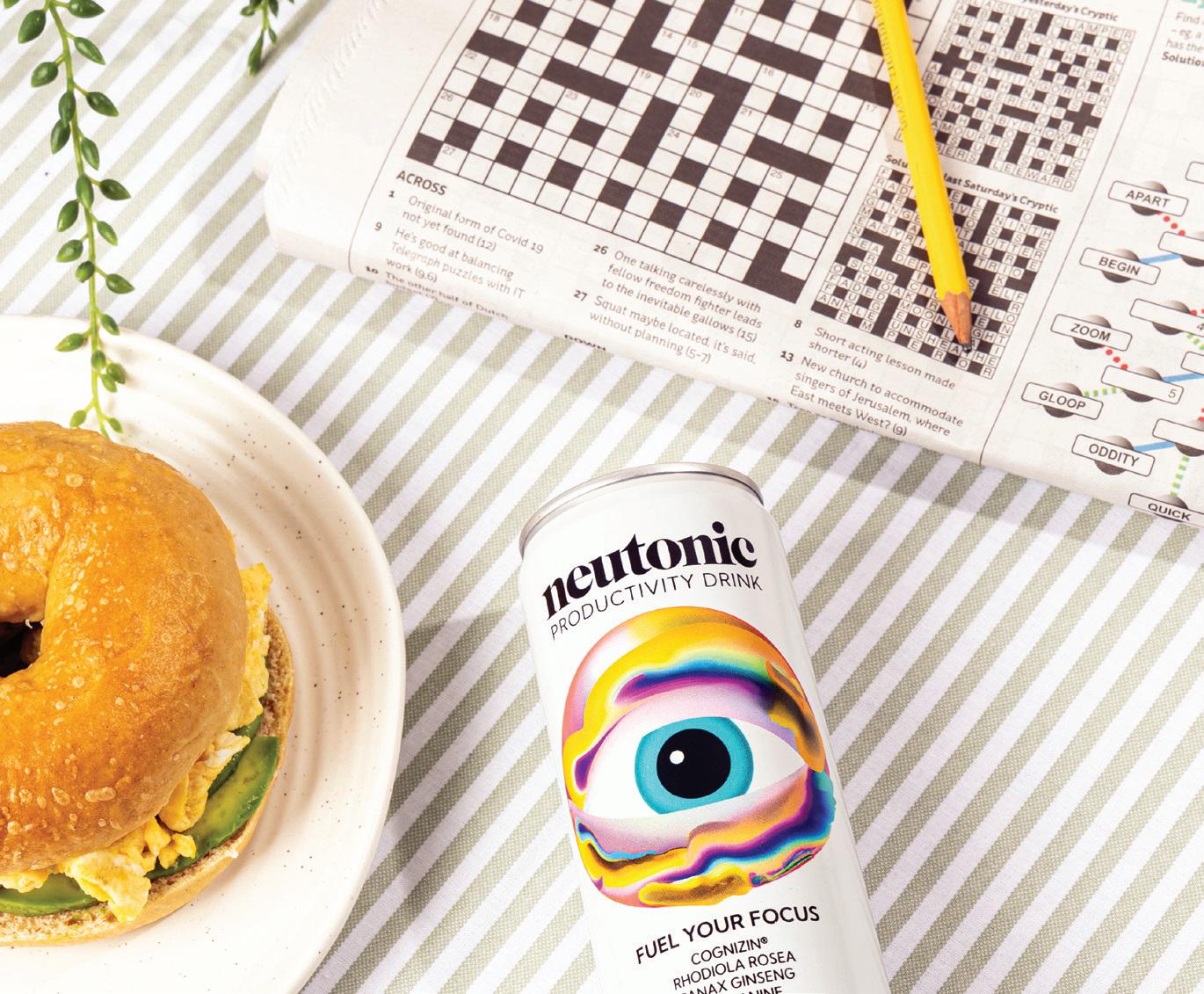
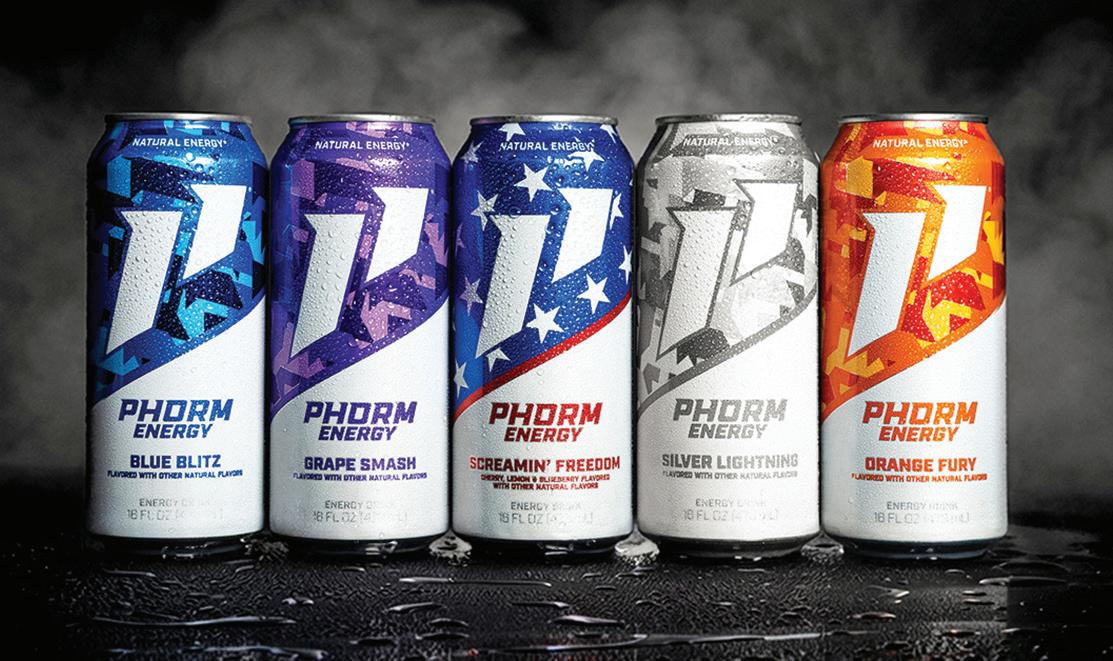
truly lies. Brands like Nerd Focus have folded, while Nutrabolt’s C4 brand quietly discontinued its Cognizin-boosted Smart Energy line in 16 oz. cans. Meanwhile, GHOST (NeuroFactor), Jocko Fuel Go Energy, Bucked Up and the aforementioned Phorm Energy haven’t explicitly built their respective products around cognition claims, instead positioning them as part of a holistic package.
A mature cognition category may also look to different formats: see Magic Mind, which has been making its case for nootropics-added performance shots since launching in 2020. Last fall, after expanding its range to three SKUs, the brand raised over $12 million to help bring its Cognizin, L-theanine and adaptogen-powered shots from DTC to retail. Elsewhere, newcomer AUTOFOCUS, a division of Productive Health Co., is spreading its bets. The brand’s flagship Do More Drink, which pairs caffeine and L-theanine, comes in two 12 oz. canned versions (carbonated and non-carbonated) along with a 2 oz. shot.
That approach may reflect the results-oriented attitudes of consumers in this sub-segment: what matters is whether these functional products can deliver, regardless of how they are delivered. As the market develops and social media has its say, brands will be expected to keep pushing the envelope, and some already are; Neutonic’s Cognizin-and-caffeine toothpicks and BUM Energy’s infused oral pouches may be a look at the future.
• As we reported in our last energy drink feature (and ex tensively on BevNET.com), female-focused energy drinks continue to gain ground, as exemplified by Alani Nu’s continued expansion and the emergence of Nutrabolt’s Bloom brand. That has inspired more major players to enter the market, headlined by the introduction of Monster Energy’s FLRT this spring. Yet even with the distribution muscle of Coca-Cola behind it, that entry will face a competitive field that includes influencerbacked projects like UPDATE (Kim Kardashian), Unwell (podcaster Alex Cooper) and Gorgie, which signed rock icon Jon Bon Jovi as an ambassador this spring.
• Consumers are seeking drinks that provide a healthy way to relax and unwind; energy drinks can’t necessarily offer that exactly, but they can tone down the caffeine. Liquid Death’s “unextreme” energy drinks (100mg caffeine) have enjoyed a strong start at retail, according to Goldman Sachs quarterly Beverage Bytes survey of c-store retailers.
• Hydration is another avenue by which energy drinks are expanding their reach without adding more caffeine. After launching a protein-enhanced energy drink last year, Bucked Up is tapping into electrolytes for its Drive subline, which also includes 50 mg of caffeine. PHX, backed by Barstool Sports chief Dave Portnoy, has also championed that approach, and has moved into 14 new regions for distribution thus far this year. Their success thus far is notably different from previous attempts by established sports drink giants BodyArmor and Gatorade to lean into caffeine; the former discontinued its Fast Twitch line, while the latter has shifted its energy SKUs (previously marketed as BodyArmor Edge) into rapid hydration platform Flash I.V.
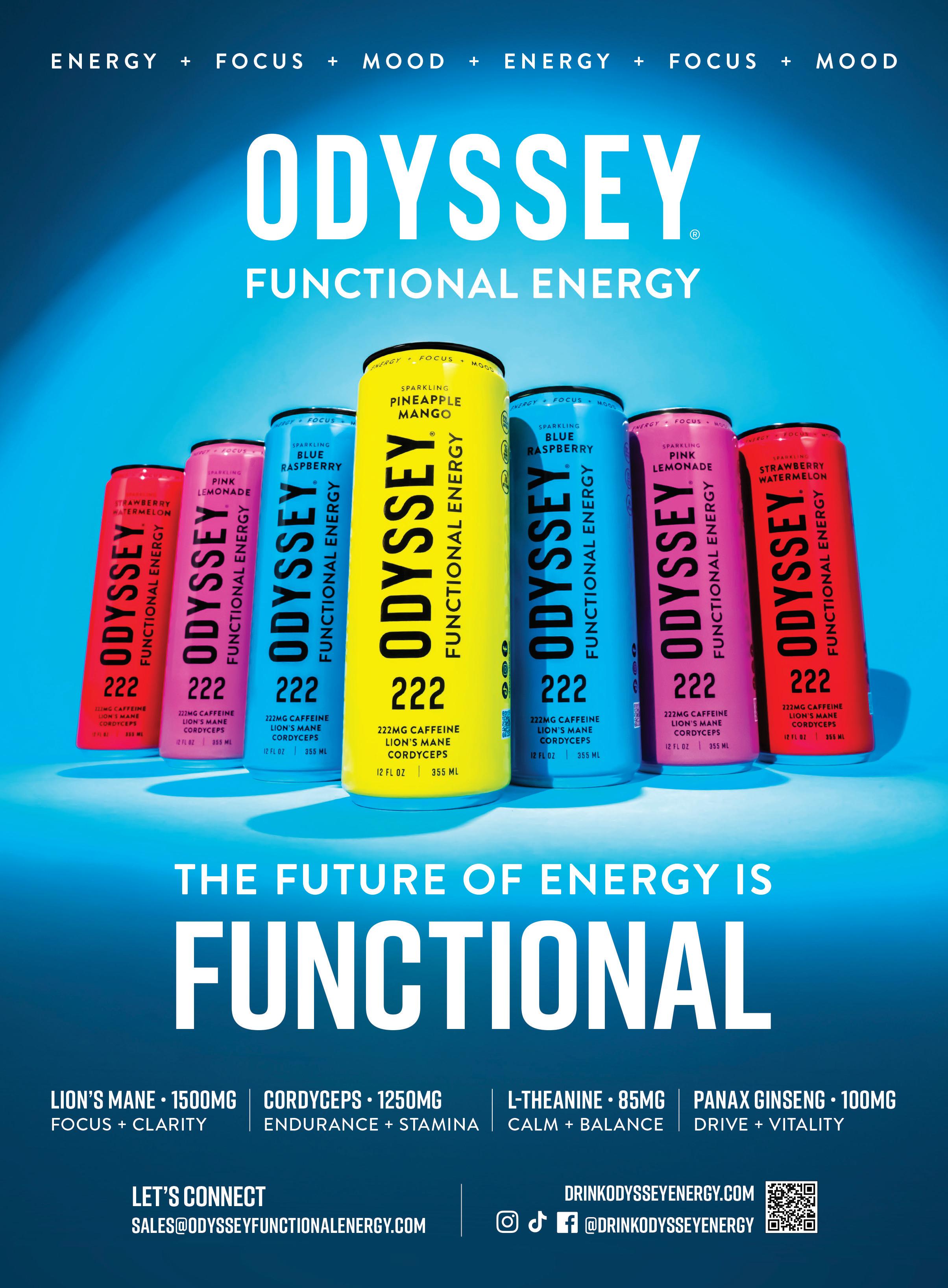
UPDATE is introducing redesigned packaging and a new flavor lineup that includes Berry, Grape, Peach, Pineapple and Mandarin. The clean, modern design reflects the brand’s focus on more intentional energy. Powered by paraxanthine, the caffeine-free drink delivers smooth, sustained energy without jitters or crashes.
Aiming to compete with the likes of Bloom and Alani Nu, FLRT, Monster Energy’s much-discussed attempt at targeting female consumers, officially launched in April. The zero-sugar four-SKU line features 200mg of caffeine per 12 oz. can and touts functional benefits like immunity support and accelerated metabolism.
Introduced at the Celsius Soccer Classic event in April, Celsius’ latest limited-time release is Electric Vibe, with notes of pineapple, orange, cherry and grape.
Red Bull is officially ready to welcome summer, as marked by the release of its latest Summer Edition. This year, it’s Sudachi Lime, distinguished by a bright citrus burst from sudachi (a Japanese citrus fruit) balanced with lime and pomelo. As usual, this Summer Edition is available in both regular and sugar-free versions in 8.4 oz. and 12 oz. cans.
Fast-growing energy drink brand Lucky Energy is taking inspiration from classic frozen treats for the launch of its first permanent flavor collection, dubbed SLUSH. The lineup debuts with a trio of SKUs – Blue Razz, Cherry Slush, and Strawberry Slush – with 200 mg caffeine in each 12 oz. slim can.
After teasing a “sarsaparilla” flavor on April Fool’s, Gorilla Mind revealed Root Beer as the real new addition to its roster of nootropics-based energy drinks. The gimmick appears to have paid off: according to the brand, Root Beer achieved the highest first-week velocity of any flavor launch in its history.
Bloom Sparkling Energy is getting nostalgic. The brand is dropping a new Shirley Temple flavor in its standard 12 oz. slim cans, this with 180mg of caffeine and just 10 calories. Available in 12-packs for $24.99.
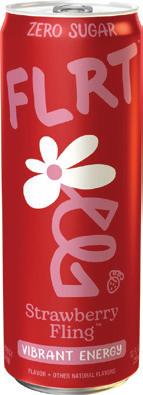
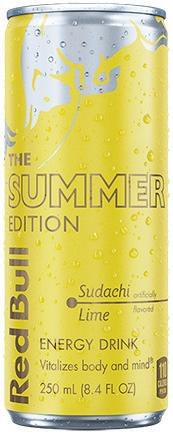
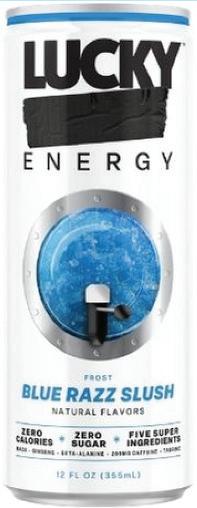
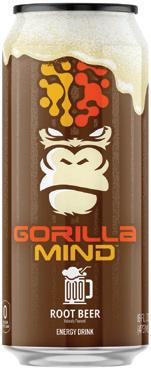
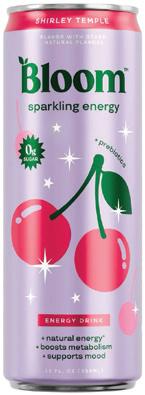
The Americana vibes are strong with Unwell Energy, which is dropping Red, White and Blueberry as its summer LTO. Find it exclusively at Target stores and on Target.com.
Zero-sugar energy drink Phorm Energy is celebrating its ongoing partnership with non-profit organization Folds of Honor by bringing back redwhite-and-blue Cherry Slush as a limited time flavor in 16 ounce cans.
Enlisting the support of brand ambassador Livvy Dunne, Accelerator Active Energy is rolling out a new integrated campaign (“This Can. So You Can.”) and a brighter, more vibrant can design this summer. The campaign reflects the brand’s broader strategy of building with athletes as long-term partners who help shape both creative and brand direction.
This spring, Happy Panda, a new nootropic energy drink brand, made its official market entry with a formulation featuring Cognizin® Citicoline, a clinically researched citicoline ingredient distributed exclusively in North America by Kyowa Hakko USA.
Released via a collaboration between K-Pop supergroup BTS and Korean food companies Paldo and hy, ARIH is a new food brand that includes FOCUS: Postbiotic Energy Drinks, with 100mg caffeine, zero sugar and postbiotic formulation for sustained clarity. The line is available in Blush Berry, Cherry Nova, Jolly Strawberry, Tropical Wave, Lemon Crest, Orange Hour, and Peachy Sunshine. The line is available in more than 4,000 Walmart stores as of April.
Can’t get enough nostalgic flavors? 5-Hour Energy is ready to help with three new summer-themed limited time releases: Firework Freeze (online and at retail), OrangeSicle (exclusively at Casey’s) and Raspberry Cooler (exclusively at 7-Eleven and Speedway).
After previous collaborations on flavors like Strawberry and Cotton Candy, GHOST is teaming once again with Bubblicious, this time for a bubble gum flavored SKU called “Original.” The product is debuting online before rolling out to retail.
While high-caffeine energy drinks are still its calling card, Bucked Up continues to innovate across the category with the launch of Drive Hydration, a lightly caffeinated (50mg caffeine) zero-sugar electrolyte drink in 16 oz. cans. Meanwhile, a second new release, Refreshers, aims to replace soda or coffee by offering 100mg caffeine (plus BCAAs, L-theanine and N-Acetyl L-Tyrosine) per 12 oz. can.
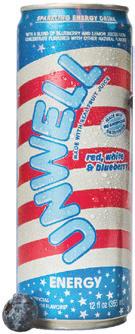
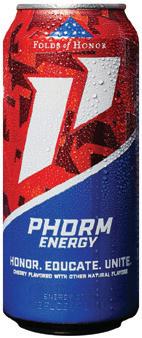
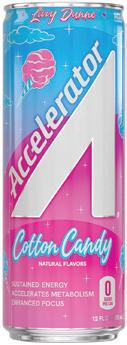
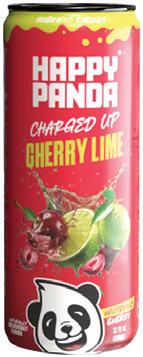
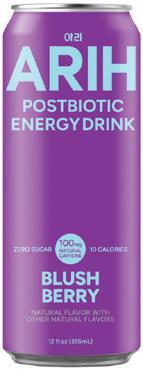
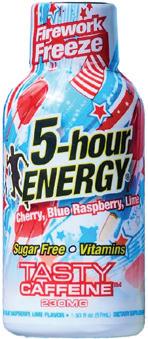
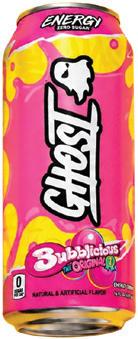
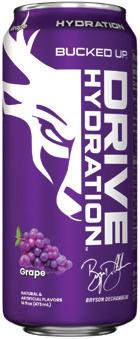
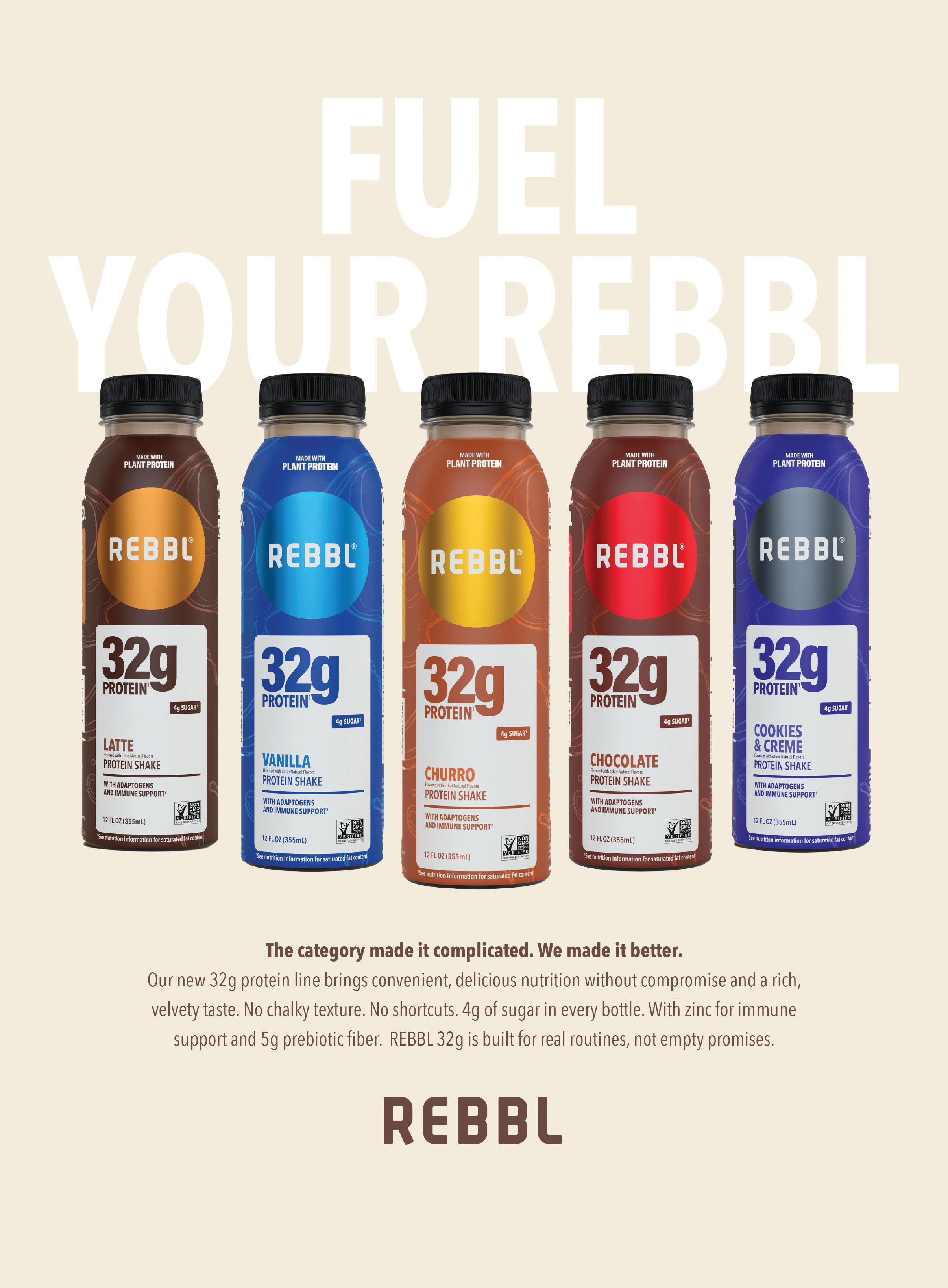
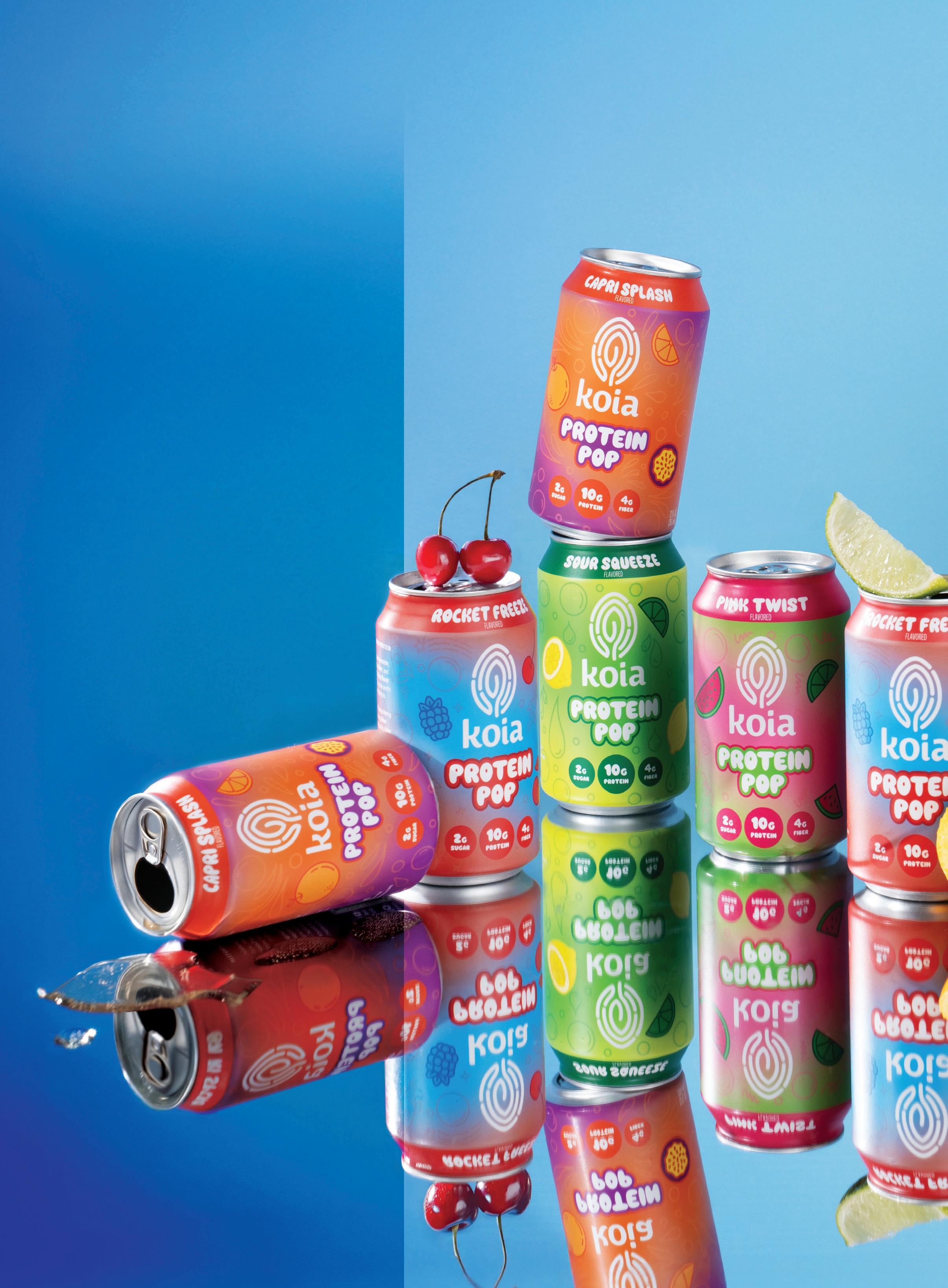
By Shauna Golden
Protein’s role in the ready-to-drink beverage market is being rewritten in real time. The macronutrient is no longer strictly a pre- or post-workout recovery fuel; it has become one of the most – if not the most – influential forces reshaping the modern beverage landscape. From creamy shakes crafted with ultrafiltered milk to “modern sodas” to lighter functional drinks, brands are working to redefine what protein means as the category both grows and diversifies rapidly across numerous usage occasions.
In the 52-week period ended April 19, the U.S. RTD protein supplement market climbed 7.5% year-over-year to nearly $6.5 billion, according to SPINS data. While traditional meal replacement drinks still lead the category, the market is increasingly influenced by adjacent innovations, according to Scott Dicker, senior director and head of research and insights at SPINS.
“You’re seeing other categories jumping on high protein,” he said, pointing to offerings like protein sodas and sparkling waters as part of a broader wave where “soda is now a vehicle for functional delivery.” That’s due in part to the rise of brands like Olipop and Poppi, which renewed interest in digestive health and opened the door for other “modern sodas” with various functional benefits, one that has fast drawn protein fortification as the lead experiment.
With the RTD protein category becoming significantly more saturated, differentiation is more important than ever; consumer expectations are fragmenting by use occasion, and innovation is spreading far beyond traditional meal-replacement formats and gym fuel. Protein is increasingly being reframed around daily nutrition, satiety and meal accompaniments – a role that many of the new protein sodas hope to fill.
Against that backdrop, the market is evolving beyond the race for higher protein counts alone, according to a recent report from the plant-based food company PURIS. Today’s consumers are seeking beverages that deliver meaningful, everyday benefits such as sustained energy, digestive support, lower sugar content, clean labels and improved drinkability.
This shift has positioned beverages – especially clear protein drinks, ultrafiltered milk-based products and hybrid offerings (i.e. protein + energy, protein + creatine) – as one of the leading spaces for protein innovation. Protein consumption continues to rise across demographics, fueled by growing awareness around nutrition, satiety and wellness. Those trends are being further accelerated by interest in GLP-1 weight loss medications and macro-focused eating habits, which stress protein consumption above all else in the name of nutritional efficiency.
According to Circana’s most recent “Share of Sip” report, consumer motivations for protein vary across generations, including active “lifestylers” seeking to satisfy hunger and boost energy, fitness enthusiasts looking for workout fuel, and boomers and seniors seeking support for overall well-being and longevity. Beverages have become an increasingly popular snack option, with 68% of respondents saying they sometimes have a drink as a snack, per Circana.
That functional expansion is being driven by both consumer demand and a shift in how beverages are formulated and perceived.
If shakes defined the last growth cycle, clear protein, a highly-filtered, highly mixable whey isolate that allows for a less viscous blend, may define the next. It’s opened up new consumption occasions where protein fortification allows products to be positioned somewhere between a hydration beverage and a refreshment with benefits, depending on the brand and specific format.
“Clear has made it possible [for protein] to be in both carbonated and fruity flavors, whereas traditional shakes have a much more milkshakelike texture and consistency,” said Dicker, adding that “soda is now a vehicle for functional delivery.”
For plant-based protein purveyor Koia, the decision to enter the space stemmed from both technical opportunities and shifts in consumer behavior. The Los Angeles, Calif.-based brand recently hit the market with the first plant-based RTD protein soda after VP of product development Niyati Parikh flagged a key patent around clear protein and believed it would open the door to a new generation of beverages.
For Koia CEO Chris Hunter, who was initially hesitant to launch a protein soda, the use case was as much a breakthrough as the technology itself.
“What I saw was that my wife and I were having lunch, we cracked open one of these protein sodas and drank it, and it dawned on me that this was the use occasion,” said Hunter, noting that instead of replacing protein shakes or smoothies, clear protein is positioned as an additional moment: refreshment with benefits.
In January, Koia officially debuted Protein Pop as a TikTok Shop exclusive. Available in four flavors – Rocket Freeze, Sour Squeeze, Pink Twist and Capri Splash – each 12 oz. can delivers 10 grams of protein, 5 grams of prebiotic fiber and 2 grams of sugar. The line is currently rolling out to Target stores nationwide.
That move builds on Koia’s broader trajectory as a plant-based, dairy-free company born, in part, from Hunter’s own health journey and his son’s dairy intolerance. From day one, the brand was designed around key formulation pillars, including clean ingredients, complete plant protein, low sugar and high fiber.
According to Hunter, Koia “set out to build a lifestyle brand at a time in the category that there weren’t many.”
From a refrigerated, retail-native start, Koia is now available in roughly 35,000 doors across natural, conventional, mass and foodservice channels – including Starbucks – while a growing shelf-stable Amazon and DTC business lets the brand follow consumers from the cold case to the pantry set and, with Protein Pop, into the soda aisle as well.
“I'm thinking about where protein is added that's not a normal kind of occasion, and that might be in chips, popcorn, sauces and things like that. Will that stay around? I don't know, and that's why we're not pushing the innovation there,” said Hunter. “The furthest we’re pushing, at least currently, is things within subsets that we feel have stability in protein, so that’s where clear protein comes in. It’s new and exciting, but still a familiar way for people to consume proteins.”
Elsewhere, REBBL – which was snapped up by SYSTM Foods in 2022 – is gearing up to launch a non-carbonated clear protein beverage featuring whey protein as the hero ingredient. Debuting in four flavors – Mixed Berry, Lemon Lime, Strawberry Watermelon and Mandarin Orange – each 12 oz. bottle of REBBL Clear Protein delivers 20 grams of protein and essential electrolytes, including 300mg potassium, 100mg magnesium and 95mg sodium.
“I think that’ll appeal a lot to our female consumers, particularly as women are looking to increase their protein – sometimes they may want a shake and sometimes they may not want a shake,” said Elizabeth Stephenson, CEO of SYSTM Foods. “I think it’ll also work really well in terms of workouts. You come off a workout and want something that also has hydration.”
According to Joshua Schall, founder of J. Schall Consulting, clear protein beverages – particularly sodas – meet consumer demand by offering a more refreshing, fruit-forward alternative to traditional shakes. The appeal lies in the lighter flavors and incremental use cases.
Long term, Schall believes the category can continue to grow if products maintain drinkability and align closely with the soda experience consumers already enjoy, while providing a convenient way for consumers to reach their protein goals.
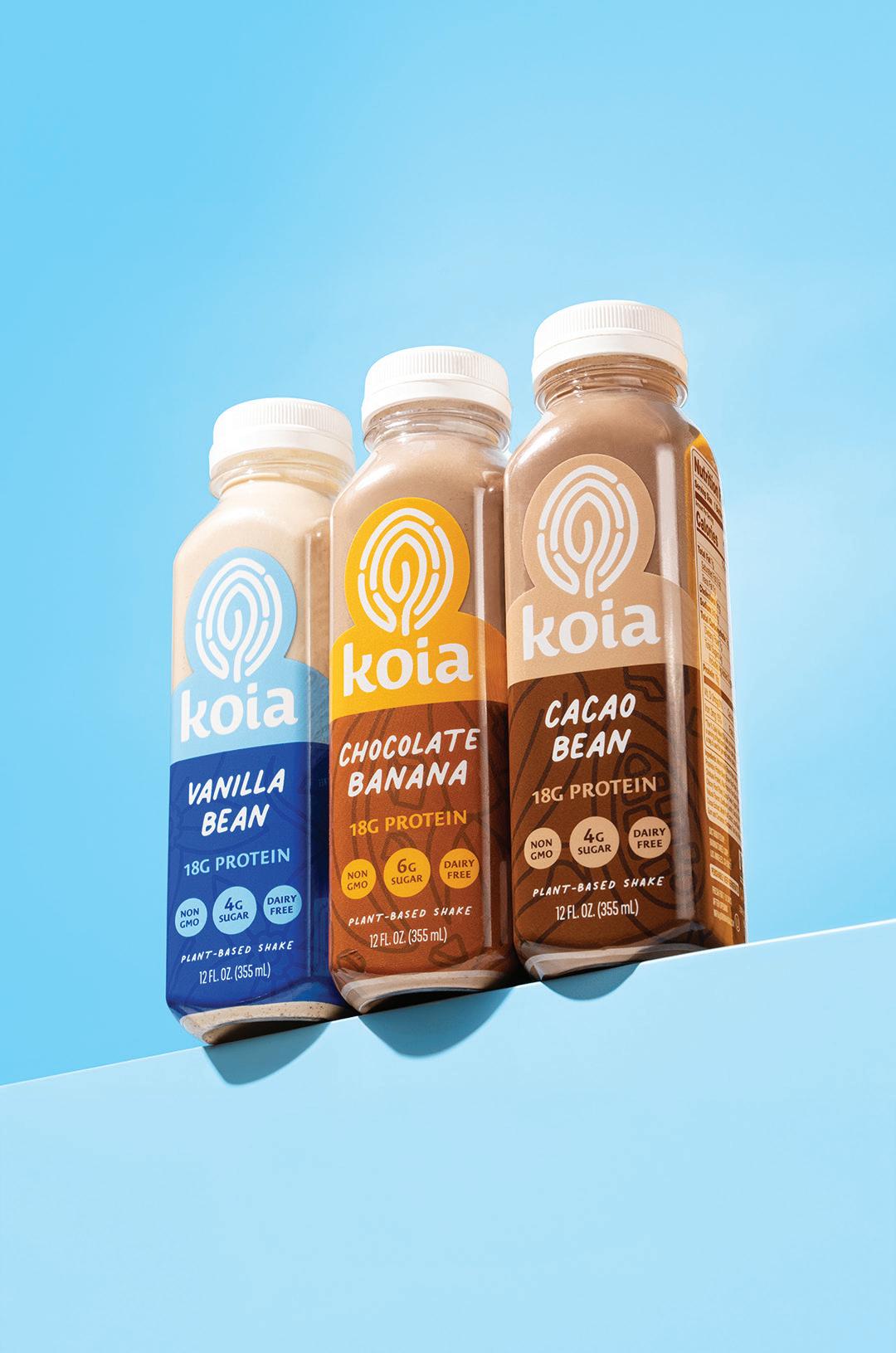
“I think, just like any protein product, such as popcorn, it all comes down to ‘how many does the market need?’” he said. “This is something that is going to be a commodity. The price point it’s at now is probably not the price point that it is going to survive at; just like Poppi and Olipop, the price needs to be closer to parity with what they’re competing against.”
He continued, “Right now, I don’t think there’s a clear winner – you need a brand to push this up to a Few hundred million dollars and toward a billion-dollar category. I don’t think there is one yet, but all it takes is one with the right marketing and positioning.”
While clear protein is undeniably having a moment, ultra-filtered milk is also enjoying rising popularity as a protein source amid a broader revival in the dairy industry. The U.S. Food and Drug Administration’s (FDA) updated Dietary Guidelines have marked a major shift in federal nutrition policy, elevating dairy to play a central role in a healthy diet.
During its first-quarter earnings call in May, legacy protein player BellRing Brands announced the upcoming launch of Premier Protein Soda, slated for Q4. The new offering will deliver 15 grams of protein and is expected to “bring in new, younger consumers, increase basket sizes and expand usage,” per CEO Darcy Davenport.
“Premier Protein sparkling soda targets one of the most underserved segments of the category. Premier will be the first scaled player to enter this rapidly growing segment,” Davenport told analysts and investors during the earnings call. “The initial launch of this refreshing protein item will be in a significant mass retailer, ecommerce and many other FDM retailers.”
“All positive media around milk, dairy, or ultrafiltered milk definitely play together. People are realizing that the human diet is evolving, and more protein is being marketed as healthier, and we’re believers in that, obviously,” said Manny Lubin, co-founder of Slate Milk.
Launched in 2019, Slate has steadily evolved from a lactose-free canned chocolate milk company into a broader protein beverage platform, now offering a range of flavors with 20, 30, and 42 grams of protein – all featuring ultrafiltered milk as the hero ingredient. Its products are available in nearly 20,000 doors nationwide.
“When [co-founder] Josh [Belinsky] and I discovered ultrafiltered milk and started using those products, we realized it tasted great, it was lower in sugar, higher in protein and didn’t give you that chalky aftertaste,” said Lubin, noting that Slate’s R&D process “started and ended with taste.”
Most recently, Slate debuted a new line of 30-gram Ultra Protein Shakes in six flavors: Chocolate, Vanilla, Salted Caramel, Strawberry, Cookies & Cream and Cafe Mocha. Like the rest of the brand’s products, the new offerings feature ultrafiltered milk as the hero ingredient.
“We’ve seen that the demand for protein drinks has grown significantly since we launched, and how that’s affected us is we’ve been able to create products and product lines based on the needs of consumers in different consumption moments,” said Lubin. “What’s interesting about protein drinks is that they’ve long been thought of for post-workouts and bodybuilders, and I think what we’ve realized is we’ve grown to solve the problem of people wanting a snack that’s high in protein and ways to get protein conveniently throughout the day.”
Elsewhere, brands are capitalizing on the growing demand for ultrafiltered milk by reformulating existing product lines. Case in point: In May, Muscle Milk announced its “most significant transformation” yet after nearly 30 years on the market, rolling out a formulation and packaging refresh across its RTD line to reposition the brand from strictly gym fuel to “protein for all.”
“Our intention here was to be able to keep the people who’ve loved us for decades and to appeal to many more new [consumers]. The growth in the protein category is coming much more from people who have not traditionally consumed it, [but] it’s still critically important that we appeal to the people who’ve been with us for the past three decades,” Pines told BevNET.
That effort to broaden the category’s appeal beyond traditional protein consumers aligns with what industry analysts believe
is a wider shift in consumer behavior and dietary priorities.
“Protein has never been, or probably very rarely, in the consumer’s mind, an impulse type of purchase like energy [drinks]. But I think with the new nutritional standards and the younger generational change of how consumers are perceiving diets – higher protein, lower carbs, lower fat – these consumers do start to think, ‘I do need to get my protein,’ or ‘I haven’t met my protein goals yet today,’” said Schall.
Despite protein’s continued proliferation, industry experts and brands alike are confident the category has yet to reach its peak.
“Protein will never go away. Will we continue to see high singledigit or double-digit growth? I think there will be a plateau point, just like with other [categories], but it will always be of interest and of need,” said Sally Lyons Wyatt, global EVP and chief advisor of consumer goods and foodservice insights at Circana.
According to Lubin, “When we think about protein, it’s not a fad diet; it’s the evolution of the human diet. This is what’s next, this is how we optimize our diet as human beings, by getting more protein in – it can help build and maintain muscle. There are so many benefits.”
Across shakes, sodas, dairy innovations and clear protein formats, one thing is clear (no pun intended): protein is no longer just a category; it’s an infrastructure of beverage innovation. The key question ahead is not whether consumers will still want more protein, but which formats, brands and taste profiles will define how they get it.
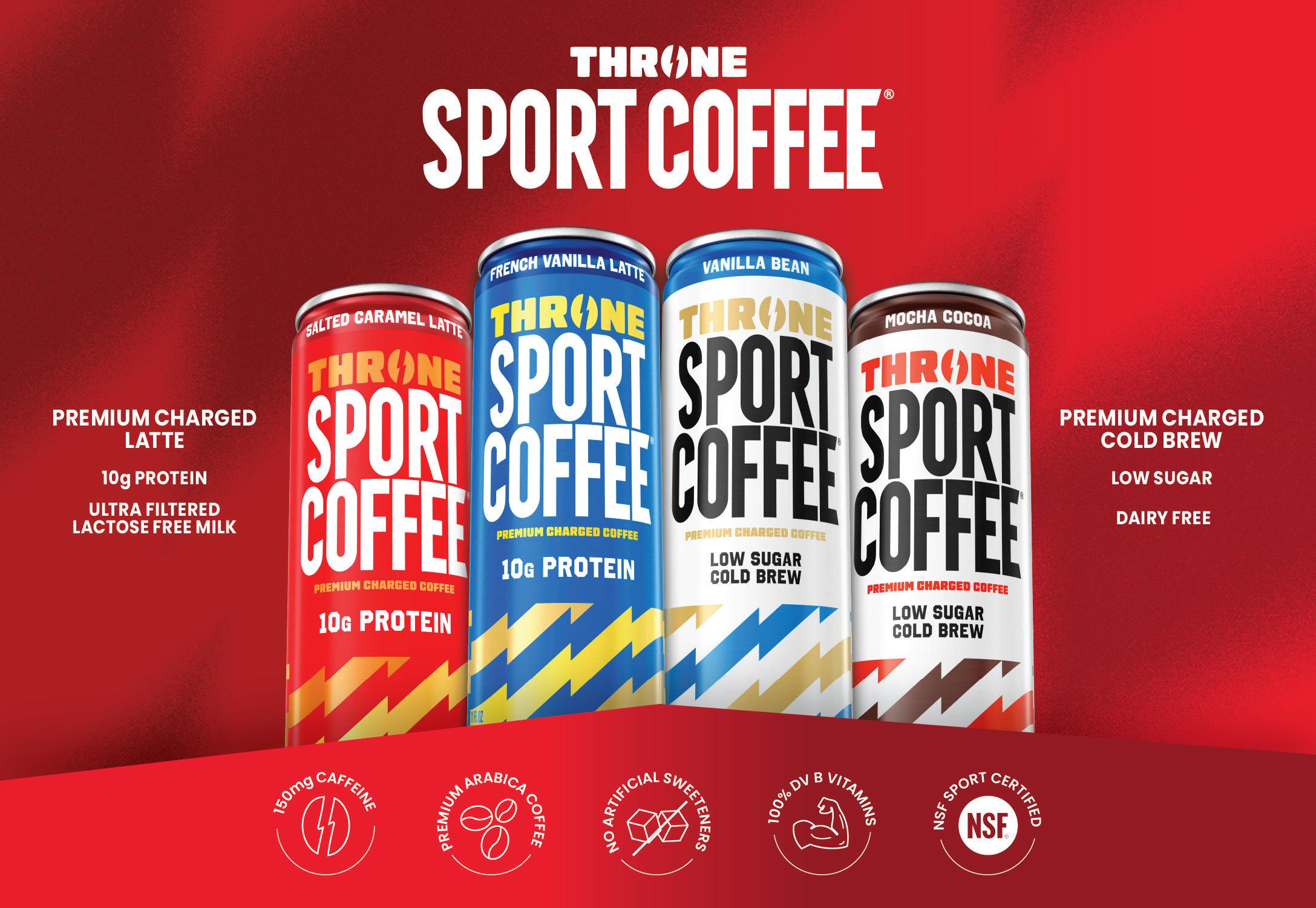
Seeking to meet every-increasing demand for high-protein beverages, Optimum Nutrition has arrived with a new 40G Protein Shake in chocolate and vanilla flavors. The new SKUs are available at Costco, BJ’s, Hy-Vee and other retailers (plus Amazon) for $39.99 per 12-pack.
Bringing together one of soda’s hottest flavors (Shirley Temple) with one of its biggest trends (protein), Proda is hoping it has a winner on its hands. Available at Sprouts Farmers Market for $3.49 per 12 oz. can.
Developed with GLP-1 users specifically in mind, Propel is now delivering protein. The Gatorade subbrand is releasing a new ready-to-mix powder positioned as a 3-in-1 solution delivering protein (20 grams), fiber (3 grams) and hydration in three flavors: Peach Ginger, Apple Pear and Watermelon.
Trove Nutrition announced in May the launch of Oath Sparkling Energy + Protein, its first ready-todrink product bringing a new take to the energy drink category. Each can delivers 10 grams of complete protein and 100 mg of natural caffeine in a crisp, fruity sparkling beverage. Available in 12 oz. cans in singles ($2.99) and 4-packs ($11.49).
Elmhurst 1925 has brought its first ready-to-drink protein product, Clean Protein, to retail with Sprouts Farmers Market. Formulated for today’s ingredientconscious consumer, Clean Protein delivers 27 grams of complete plant protein, just 190 calories, and as few as 3 grams of sugar per bottle, all in a smooth, creamy shake made without gums, seed oils, artificial sweeteners, or artificial flavors.
Pocket-sized protein shot Pure Genius has introduced its first new flavor since launching: Lemon Lime. The shot delivers 23 grams of protein in a TSA-compliant 3.38 oz. bottle, with only 100 calories and zero sugar.
The Dubai chocolate trend has finally arrived in protein shakes thanks to Koia. The plant-based brand has released its Dubai Chocolate flavor as a Target exclusive, complete with its usual payload of 18 grams of protein and 7 grams of prebiotic fiber.
Mexican dairy brand LALA has broadened its drinkable yogurt portfolio with LALA Plus high-protein smoothies, available in Strawberry, Strawberry Banana, Mango and Piña Colada. Each 7 oz. bottle (SRP $1.79) contains 11 grams of protein and 4 grams of fiber. Available at Hispanic markets and other retail outlets, and at select Sam’s Club stores in 12-packs ($12.34).
High-protein milk brand Slate keeps growing, with the indulgent Cinnamon Swirl iced coffee taking the spotlight as its latest release. The
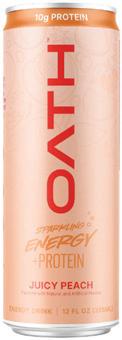
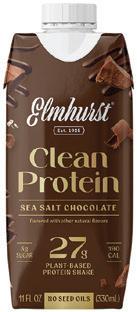
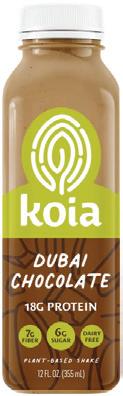
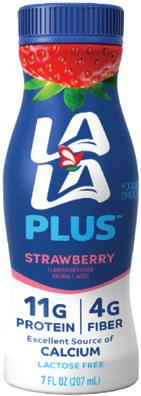
lactose-free SKU packs 20 grams of protein and 175mg caffeine per 11 oz. can.
Bulletproof continues to reshape its identity around protein, which is expanding with the addition of Vanilla to its lineup of powdered High Protein Iced Coffee. Like the existing Original and Mocha flavors, this one delivers 12 grams of whey protein per serving, along with double the caffeine of a regular cup of coffee.
Gym Soda is the latest entrant into the clear protein soft drink set, courtesy of fitness energy drink Gym Weed. Available in 12 oz. stout cans in three flavors (Grapefruit Citrus, Grape and Cola), Gym Soda has 15 grams of protein and 3 grams of sugar. The brand’s Cola flavor also includes 45 mg of caffeine while the other two varieties are caffeine-free.
Vital Proteins continues to innovate in RTD formats with Collagen Sparkling Water, a line of 12 oz. canned drinks made with zero sugar, collagen peptides and Vitamin C. Touting skin, hair and nail support, the beverages are now available in select retailers and come in Blood Orange, Lemon Lime and Strawberry Blossom flavors.
With demand for clean-label protein soaring, PIILK is stepping in with its latest offering, an 8.5 oz. drink featuring 30 grams of protein per serving. Made with naturally fermented yeast protein, the new drink promises a lighter and cleaner drinking experience (relative to chalky protein drinks) with no emulsifiers. It’s launching in two flavors, Protein Chocolate and Café Latte, available exclusively on the brand’s website.
Though its flagship hydration line has been in decline, PRIME is pushing forward with the release of its new protein and creatine shake. The new RTD — available in Vanilla, Cookies & Cream and Chocolate — delivers 32 grams of protein and 3 grams of creatine monohydrate per 11 oz. can, with 160 calories and 3 grams of sugar per serving.
OIKOS has expanded its ready-to-drink Protein Shake lineup with two new flavor-forward innovations –Strawberry and caffeinated Mocha Latte. Each delivers 30 grams of complete protein, 5 grams of prebiotic fiber and key vitamins with 1g of total sugar, no added sugar and no artificial sweeteners or flavors – reinforcing OIKOS’ leadership in the protein category.
High-protein milkshake brand Nurri is expanding its platform with a three-SKU family of flavored coffee creamers each with 5 grams of protein, one gram of sugar and 80 calories per serving. The line is available in three flavors (Rich Chocolate, Sweet Cream and Salted Caramel) in 24 oz. bottles.
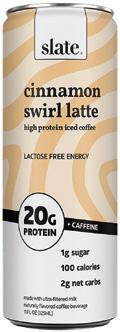
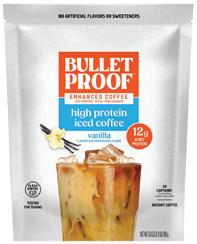
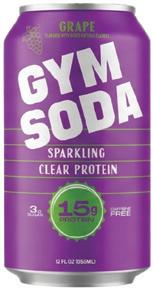

By Mark Murphy
Adult non-alc beverages have come a long way in a short period of time. An explosion of innovative brands have moved the category from a handful of legacy SKUs to a bold and diverse industry that spans beer, wine, spirits and - now - RTD mocktails. With the race on to mainstream acceptance, are consumers about to swap their martinis for mocktinis?
It’s not breaking news that the U.S. beverage alcohol industry is experiencing a steady, year-on-year decline. The industry posted a total off-premise dollar sales decline of -3.4% to $110 billion for the 52 weeks ending January 3, 2026, according to NielsonIQ’s annual report for 2025. Yet non-alc beverages, though still a niche, at just under 1% of the total alcohol market, are booming. The sector hit $1.05 billion in total market sales in the 52 weeks ending April 18 2026, according to NIQ data provided by 3 Tier Beverages, a 16.2% year-onyear increase in retail sales. What’s driving consumers away from alcohol, yet towards products that mimic the flavor profiles? And what are brands doing to encourage consumer uptake?
Once the unwanted stepchild of beer brands (a bottle of Erdinger Alkoholfrei is as iconic as it is dusty on a back bar), non-alc alternatives have broadened in scope significantly over the last decade. Breakthroughs in NA beer production methods have allowed brands like Athletic Brewing Co. to brew varied styles such as hoppy pale ales and Belgian-style sours, once deemed unthinkable in the non-alcoholic space. Athletic now sits as the third largest NA beer brand, posting an 8% year-on-year increase (+$12M) with a dominating position in NA craft beer, outselling the next 100 craft brands combined, according to the company.
But it’s not just old, reliable beer that has had a non-alc evolution. Breakthrough NA spirit brands like Seedlip and Lyre’s proved that liquor isn’t just for ABC stores, while modern players like TÖST Beverages have started to bridge the gap between NA wines and sparkling fruit juices.
Spirits have proved a stubborn category in both its sales increase (+4.4% year-on-year) and inability to come out from
under the shadow of beer; wine’s showing a more sprightly pace with an 18.7% sales increase, but it’s the ready-to-drink set that is arguably the turbocharger-in-waiting for the non-alc sector: still a slip of a set at $55.8 million in retail sales according to the same NIQ data, it has nonetheless jumped by an eye-opening 73.7% year-onyear through April 18 2026. What’s drawing consumers?
“The rise of non-alcoholic adult beverages is being driven by a convergence of shifts in consumer behaviors, with drinkers seeking wellness and balance without sacrificing experience,” says Danelle Kosmal, Consultant, 3 Tier Beverages.
“You are seeing that kind of juxtaposition of function over just replacement of alcohol,” adds Cara Piotrowski, Senior Director of Sales & Client Insights, Constellation Brands, Circana. “We are seeing brands that are crossing over into that functional space but also mood modulation.”
It’s a movement that rings true in so many beverage sets in 2026: it’s not who you are but what you are. And wellness is at the core - whether that be a functional addition or clean ingredients, consumers are looking for more than just taste.
It may seem counterintuitive to associate an RTD mocktail with wellness, but that’s exactly what’s attracting consumers to the burgeoning set. It has form too, says Kosmal: “It isn’t uncommon for the trends in the broader beverage market to influence innovation and growth trends in beverage alcohol, so it makes sense that we’re seeing trends from the exploding functional
beverage segment move into NA RTDs.”
The brands that are rising to the top are the ones balancing functional and flavor, says Piotrowski: “The old school mocktail is not what consumers are looking for. They’re looking for something really better for you, flavor forward, really hitting on all those high notes of those trends that we’re seeing in traditional beverage.”
There’s also room for function to cross over into indulgence. “People who have been historical drinkers want their drinks to do something for them,” says Megan Klein, founder and CEO, Little Saints. “So if it’s not going to make you intoxicated, it better just be more than juice and water, or sugar and water, or even flavors and water, it needs to do something. That’s why we use a supplement grade like mushroom blend. And the majority of our SKUs have damiana which is very seldom used because it’s still illegal in Louisiana,” says Klein with a laugh.
For brand founders, it’s often a journey of discovery that leads them to the right place at the right time. “In January 2021 I bought all of the non-alcs that were out there, tons of beautiful brands that are still there today, but I found they were all full of sugar,” says Klein. “And so I thought I could be helpful by bringing something that was zero sugar, top shelf, next generation, functional and then also have a smell to it.”
Smell is something Klein focused on from day one, recognizing that consumers and bartenders alike smell their drink before ever tasting it. “One of the reasons that we love alcohol is because we smell a red wine and remember the last positive experience
we had with red wine. When there’s no scent you’re really missing out on a lot of that emotional connection that you have to the ritual of drinking alcohol.”
Klein’s use of botanical terpenes, monk fruit, palo santo and various mushrooms sets Lucky Saint apart in the non-alc space, using ingredients more typically associated with functional sodas to enhance the brand’s alcohol-adjacent nature.
“People who are social drinkers are making a conscious decision to cut back or moderate,” says Laura Taylor, founder and CEO, Mingle Mocktails, which has also started to launch more functional product types. “And now they have a multitude of choices, as opposed to where I was 10 years ago, being stuck with sparkling water.”
With growth of $2.3 million in the 52 weeks ending April 18 (outpacing the Katy Perry-backed De Soi brand), Mingle is at the forefront of the RTD mocktails set. It’s also part of a push that mixes twists on iconic cocktail names (its Key Lime Margarita Mocktail SKU can’t be mistaken) with clean ingredients and bold branding - the latter arguably being the turn that’s catching consumers. What can be learned from its evolution?
It would be easy to assume that consumers opting for NA beverages are consciously avoiding alcohol altogether, and while that may be true to an extent, they aren’t the only purchasers. “We know that the majority of NA adult beverage drinkers also purchase beverage alcohol products,” says Kosmal of 3 Tier Beverages.
Similarly, while it would also be easy to assume that there’s a specific demographic driving RTD mocktail sales, the audience is multigenerational and multifaceted.
“We have a really robust consumer persona analysis, and our primary purchasers from our website are women 55+ and men in their 40s, both are similar. Our male customer base is quite performance-minded,” says Klein.
Klein breaks the Little Saints demographic down into three personas - fitness-focused men who don’t want alcohol cutting into their performance in life; similarly-minded women who at the same time don’t want to compromise on what they enjoy as a ritual; and a broad, 30+ urban professionals group which is more discovery-oriented and curious about variety. Throughout each persona, the unifying factor is a premium experience and product quality rather than the absence of alcohol.
Meanwhile Taylor, of Mingle, had an audience in mind: “When I launched mingle, I was intentionally catering to the female demographic because that audience was underserved. The Mingle mocktail line does skew female and it’s more millennial and then Gen Z.”
That singular focus changed in October 2025 when Mingle launched Mood, its functional line featuring ashwagandha, L-theanine, and Lion’s Mane. It’s intentionally more neutral in its marketing. “It’s appealing to both men and women,” Taylor said. “We’re using very cool colors that are appealing to anyone. It’s standing out in bold that it’s catering to a primary Gen Z demographic.”
Between ABC states, functional set shelves in Walmart, beer aisles in Kroger and liquor behind counters at gas stations, the merchan-
dising play for mocktails can confuse buyers. Is it functional soda adjacent? Or better served as the endcap on the beer aisle? Volume helps make those decisions.
“We actually just did a spring reset in our cold boxes that went live in April across all of our Whole Foods locations and it was with the intention to increase the non-alc set specifically because of the increase in popularity that we’re seeing,” says Samantha Fletcher, Senior Category Merchant, Whole Foods. “We very much see and recognize that the trend has been happening, and it is quickly gaining speed. It warrants more faith, and we’re ready to put it right up front.”
“There’s so much room for growth,” says Klein. “non-alc is growing so quickly, but oftentimes they don’t have time placement in the stores where they should be, given the demand for them. When non-alc has a great placement visibility in the store, the velocities are a lot higher. As the data catches up to buyers, and they put them in prime places in the store, think of what can happen.”
While an energized set, RTD mocktails remain for now a niche. Will that always be the case - can it have the kind of impact on non-alc that functional soda has had on soda? “Will they get that big? I don’t know,” says Piotrowski of Circana. “It is a premium product and that is not necessarily an everyday product. Potentially more special occasion or specific occasion, even though I know they are trying to branch out, because it is that mood modulation space, right? So it can be a social or a solo occasion.”
“NA RTDs are grabbing share across the adult beverage space and are positioned to sustain growth, at least in the near term,” adds Kosmal. “To maintain momentum, suppliers will need to focus on driving repeat purchases, strengthening brand awareness and equity, and building lasting consumer loyalty.”
“RTD is going to continue to grow,” says Taylor, of Mingle. “It’s the highest growing [set] because there’s so much more opportunity to be creative and do different things. You can make canned cocktails that taste like the real thing by using dealcoholized spirit. With ours we went for the tangled, infused flavors that are cocktail inspired. There’s so much more opportunity to continue to evaluate the RTD mocktail category.”
Fletcher, of Whole Foods, is enthusiastic about the potential for RTD mocktails. “I think we have just started to see the non-alc RTD category and its potential. I do think that we are on the upward climb. We’re seeing great growth. Whole Foods definitely prides itself on being able to identify brands first, bringing them to shelf first, so we are still continuing to see phenomenal growth with that. I do think, like with any new category, there is going to be a plateau, but I don’t think that that’s going to be anytime soon, because within the non-alc sector 94% of the sales are with NA beer.”
Meanwhile, wine could be next, Fletcher adds, noting that 17% of U.S. households buy in the NA beverage space, and of that group, “only 1% of the households are buying non-alc wine, and less than a percent are buying non-alc spirits. There’s a huge opportunity to at least match the rate and the volume and the consumption of non-alc spirits and non-alc RTDs. So I’m very excited to see where the growth will come. I don’t know when that plateau will happen, but I know that it does look very promising for the foreseeable future for the non-alc RTD sector.”
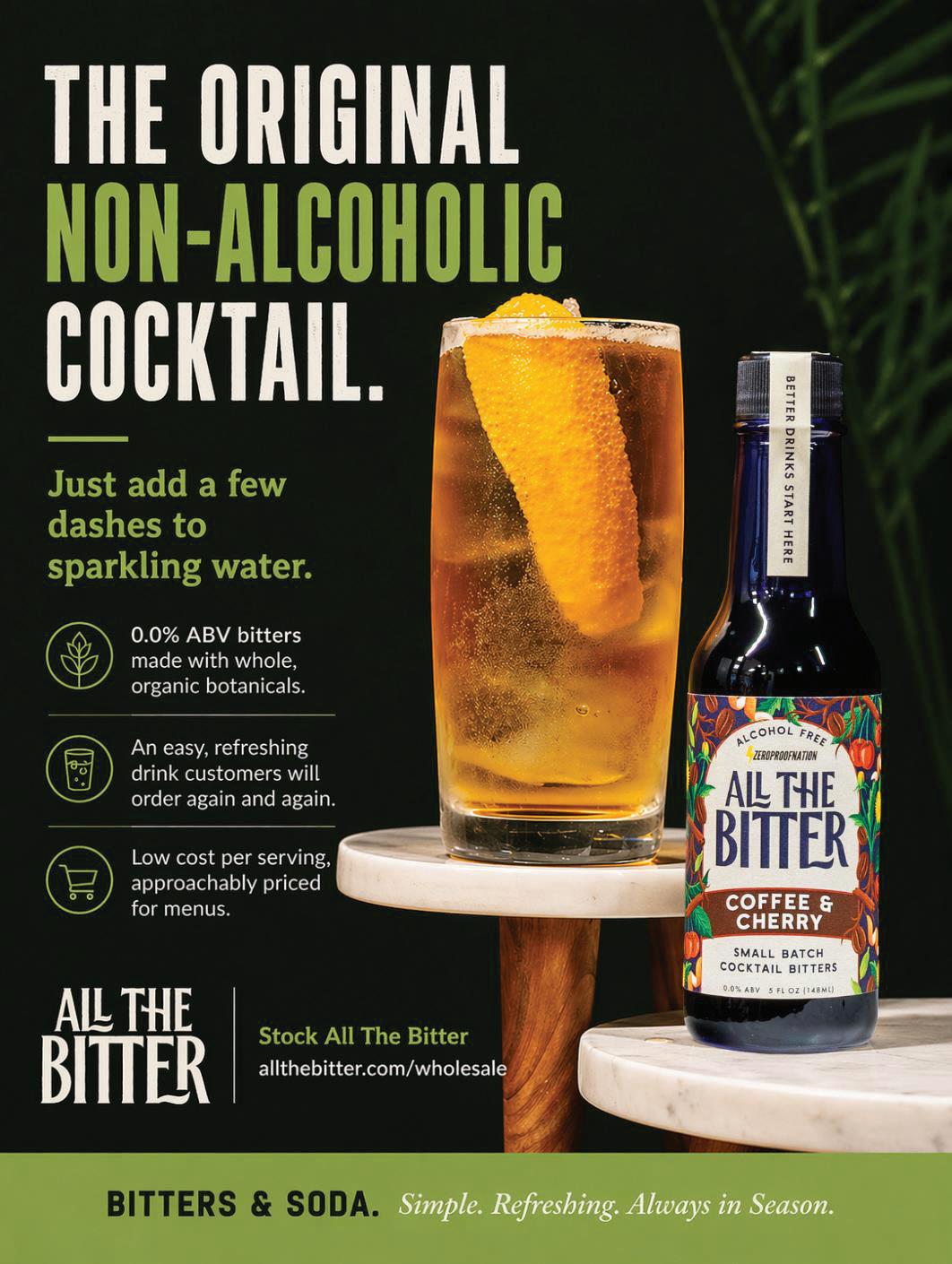
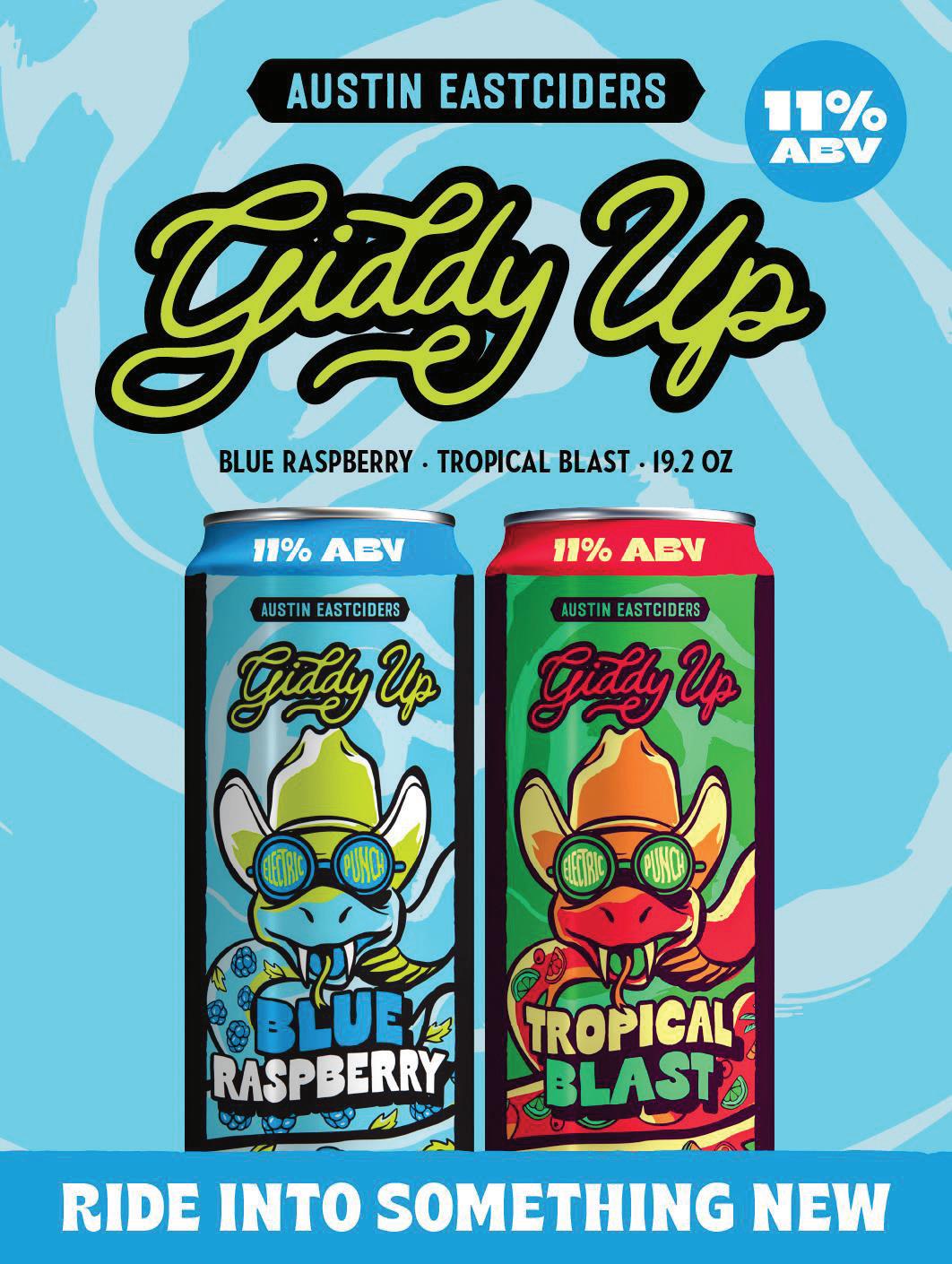
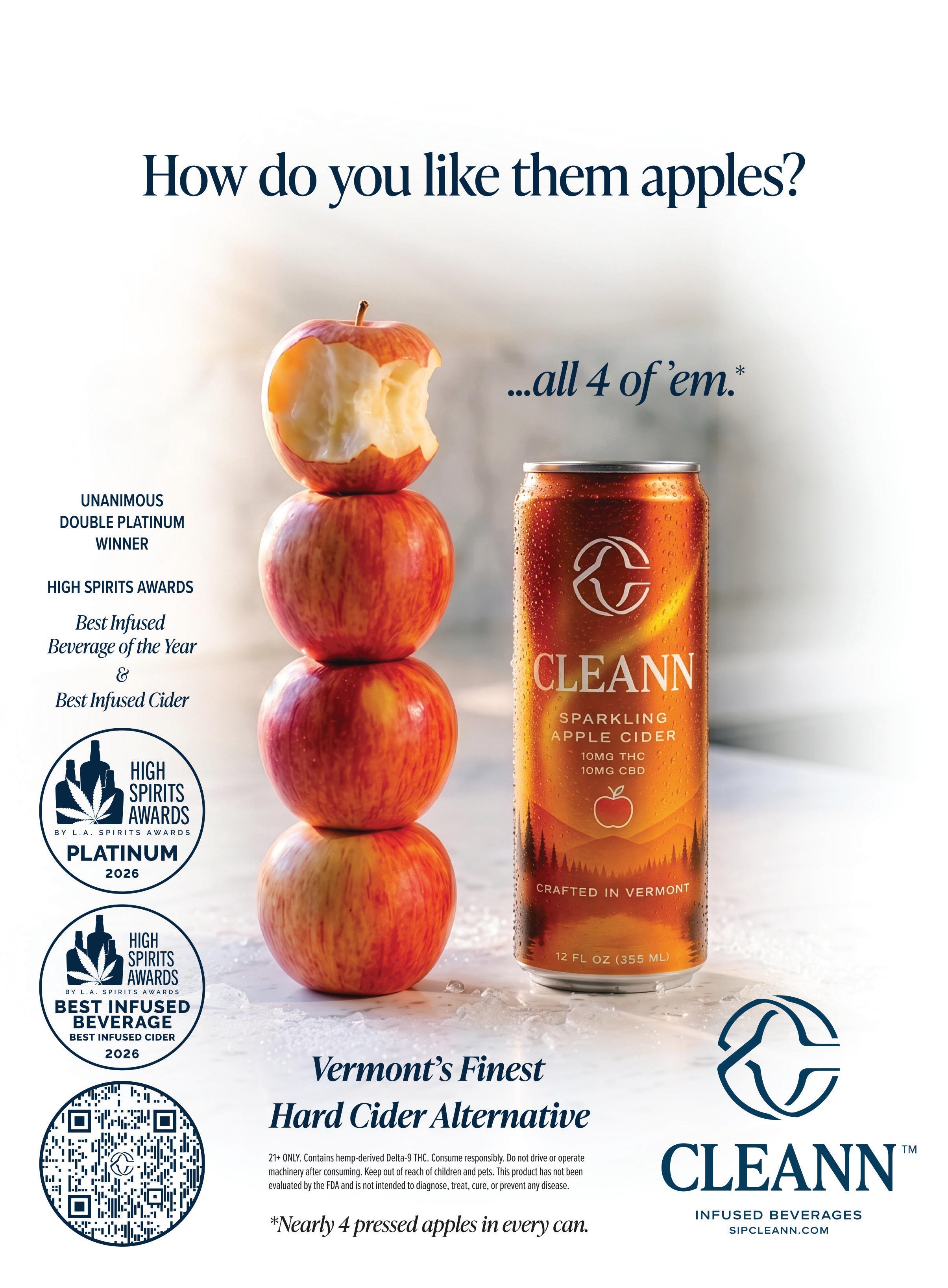
aVAO Barcelona, Spain
“Why this might be the spirit you never searched for but always needed.”
aVAO Supreme Carajillo reimagines Spanish tradition: ultra-smooth aVAO Supreme Vodka meets bold dark-roasted coffee.
AWC Beverage LLC
AWC is redefining hemp beverages with Ultra Fast Activation: effects in 2–5 minutes. Powered by proprietary tech, it delivers a clean, controllable uplift. Available in Ranch
Water, Dr. Holiday, and Fuzzy Peach Tea.
A new, award-winning standout from our fan-favorite THC mocktail collection. A modern take on a speakeasy classic, blending prickly pear, lemon, and honey with THC, CBG, and sativa terpenes for a bright, flavorful, feel-good lift. All-Natural.
Brio sets the benchmark for vodka cocktails: spirit-based, balanced, and free of added sugar and artificial sweeteners, not even stevia. Real fruit, subtle ginger, Himalayan electrolytes, and light carbonation create a refined, refreshing experience.
Celebrating 200 Years of American Independence With American Apple
Blake’s Hard Cider
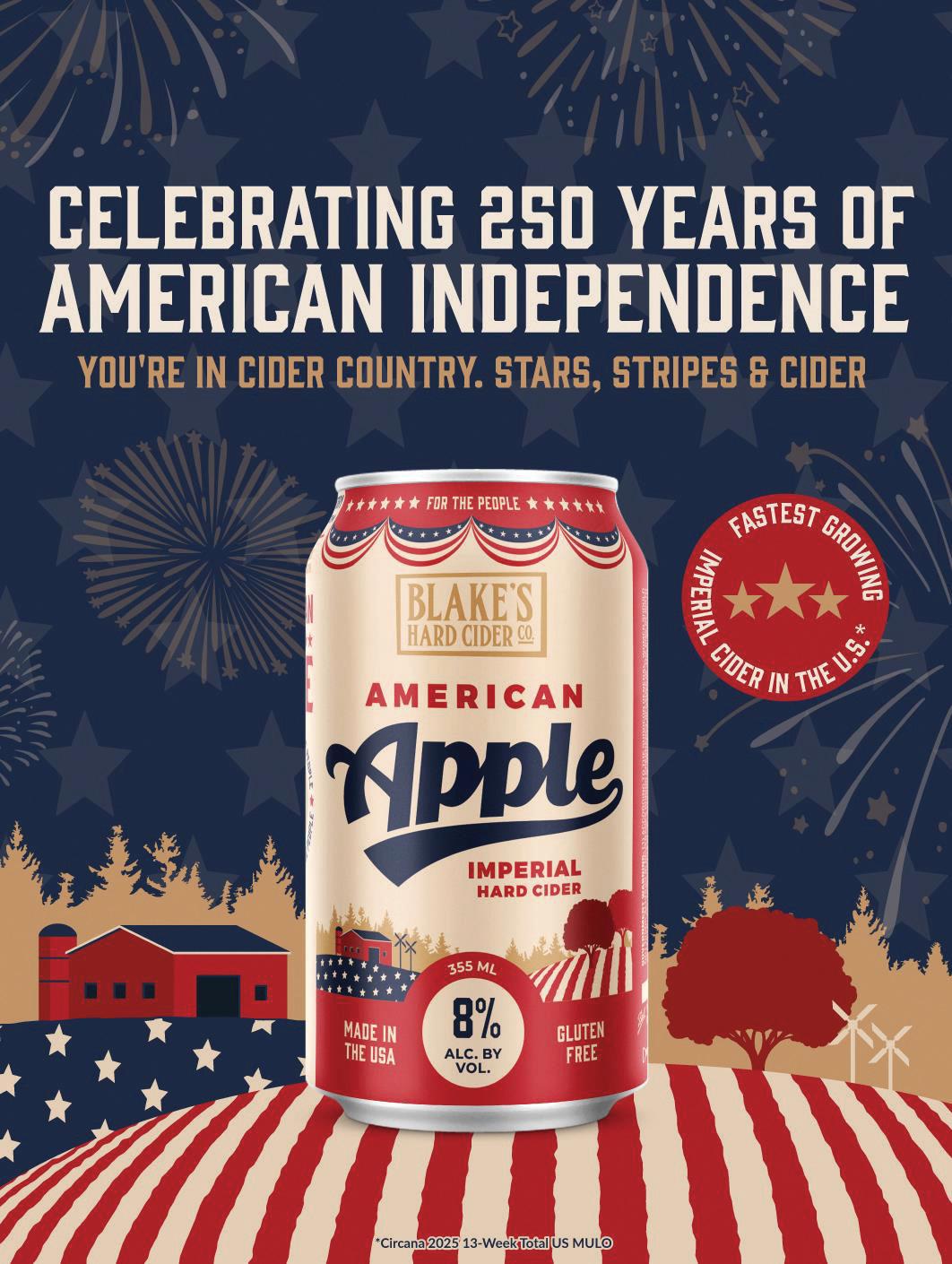
Brew Co. Non-Alcoholic Craft Beer
Ceebo Brew Co.
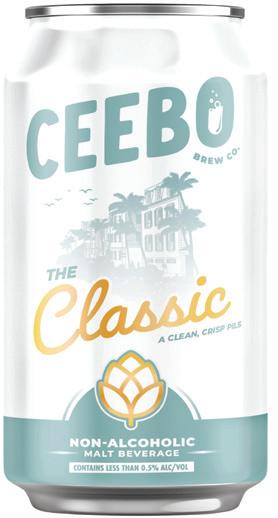
Choose How You Cheers!® with Ceebo’s crushable NA brews. We deliver the “Ceebo effect” by looking, tasting, and feeling like enjoying your favorite beer, sans the alcohol. Available in three delicious styles: The Classic, The Hops, and The Amber.
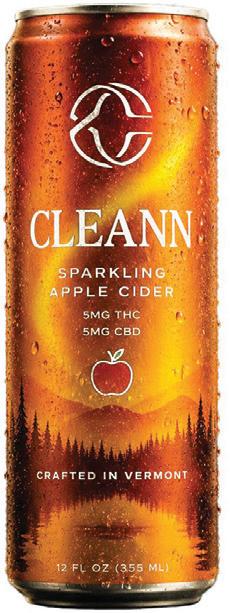
Clean International, Inc.
Crafted with coldpressed apples from Vermont’s Cold Hollow Cider Mill, this awardwinning sparkling Delta-9 cider is crisp & refreshing. Made with just two ingredients, it is a clean alcohol alternative rooted in traditional Vermont craft.
Non-Alcoholic Margarita Spritz, Crafted with Botanicals & USDA Organic
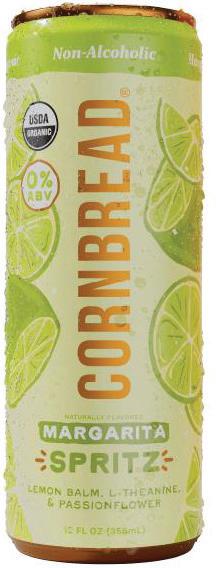
Cornbread Hemp
Bright citrus and a hint of salt—it’s everything you love about a classic margarita, without the alcohol. Made with USDA organic ingredients and natural botanicals for a genuinely refreshing everyday moment.
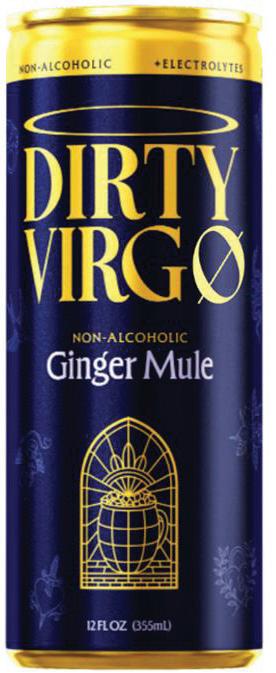
Dirty Virgo
DIRTY VIRGO makes Virgin Cocktails that are low-calorie, lowsugar, and enhanced with electrolytes. They are light, refreshing, and built for how people actually drink – enjoyed solo or alongside alcohol or THC.
Water - Drink Better!
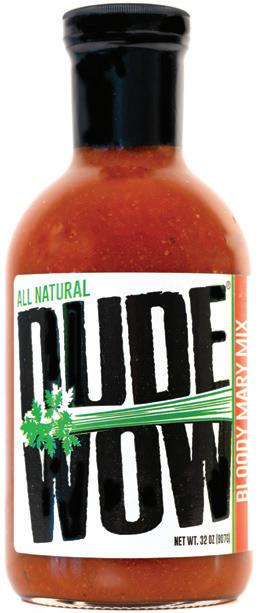
Dude Wow
Dude Wow Cocktails delivers bold, chefcrafted Bloody Mary mixes that spark one reaction: “Dude… WOW.” Small-batch, clean-label, and built for standout flavor— these aren’t just mixers, they’re shelfmoving experiences.
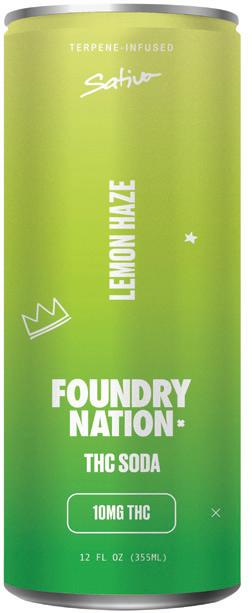
A bright, citrusy classic. This THCinfused soda is tart on the sip, electric on the finish, with a sativa terpene blend to lift you up. Made with organic lemon and lime juice. No artificial colors or flavors.
New Look, Same Great
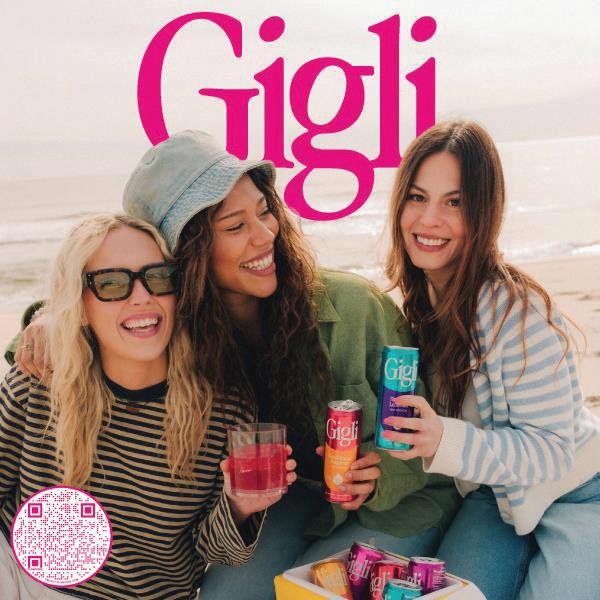
Gigli was never built to be ordinary. It started with a simple belief: a THC drink should taste great, feel intentional, and offer a better way to celebrate—without sacrificing the next morning. That hasn’t changed, but the brand has evolved.
Founded by Kam Talebi and Jared Day, Gigli sits at the intersection of hospitality and cannabis. They saw a clear gap: people wanted lighter, better-tasting alternatives to alcohol, but the category wasn’t delivering. So they created cocktails made with real fruit juice, natural ingredients, and balanced effects— drinks worthy of any occasion.
Now, Gigli is leveling up. The rebrand isn’t a reinvention—it’s a refinement. A sharper identity, a bolder look, and products that fully meet the standard the brand always aimed for.
The new lineup introduces Gigli Punches: Tropical, Berry, and Melon—bold, nostalgic flavors designed for sharing. The original Seltzers have been completely reformulated, delivering real fruit flavor and a clean, refreshing finish. Flavors include Mango, Peach, and Black Cherry. Every update reflects the same core idea: celebration should feel as good as it tastes. With elevated design, improved products, and a clear point of view, Gigli is flavor-first, intentional, and anything but ordinary.
Delicious THC drinks made with American-grown organic ingredients Green Compass
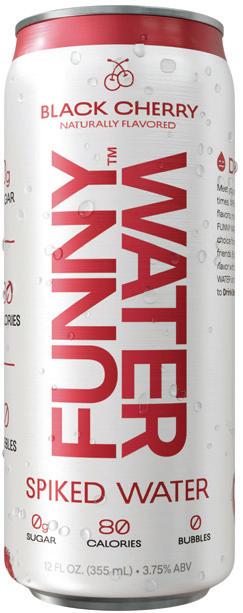
Funny Water Inc
FUNNY WATER is a highly refreshing, all natural flavor-infused spiked water with no carbonation. This light ready-to-drink beverage has no sugar, one carb, no gluten, and only 80 calories. 2025 Proof Awards Best of Show and Century Award Winner!
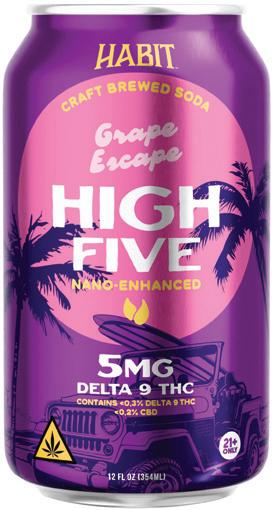
Habit
Habit High Five is the easy-drinking hemp soda made to elevate the everyday. 5mg Delta-9 THC, low sugar, low calorie and four award-winning real fruit flavors deliver a smooth, alcohol-free buzz. Light, crisp, and crafted to lift the mood.
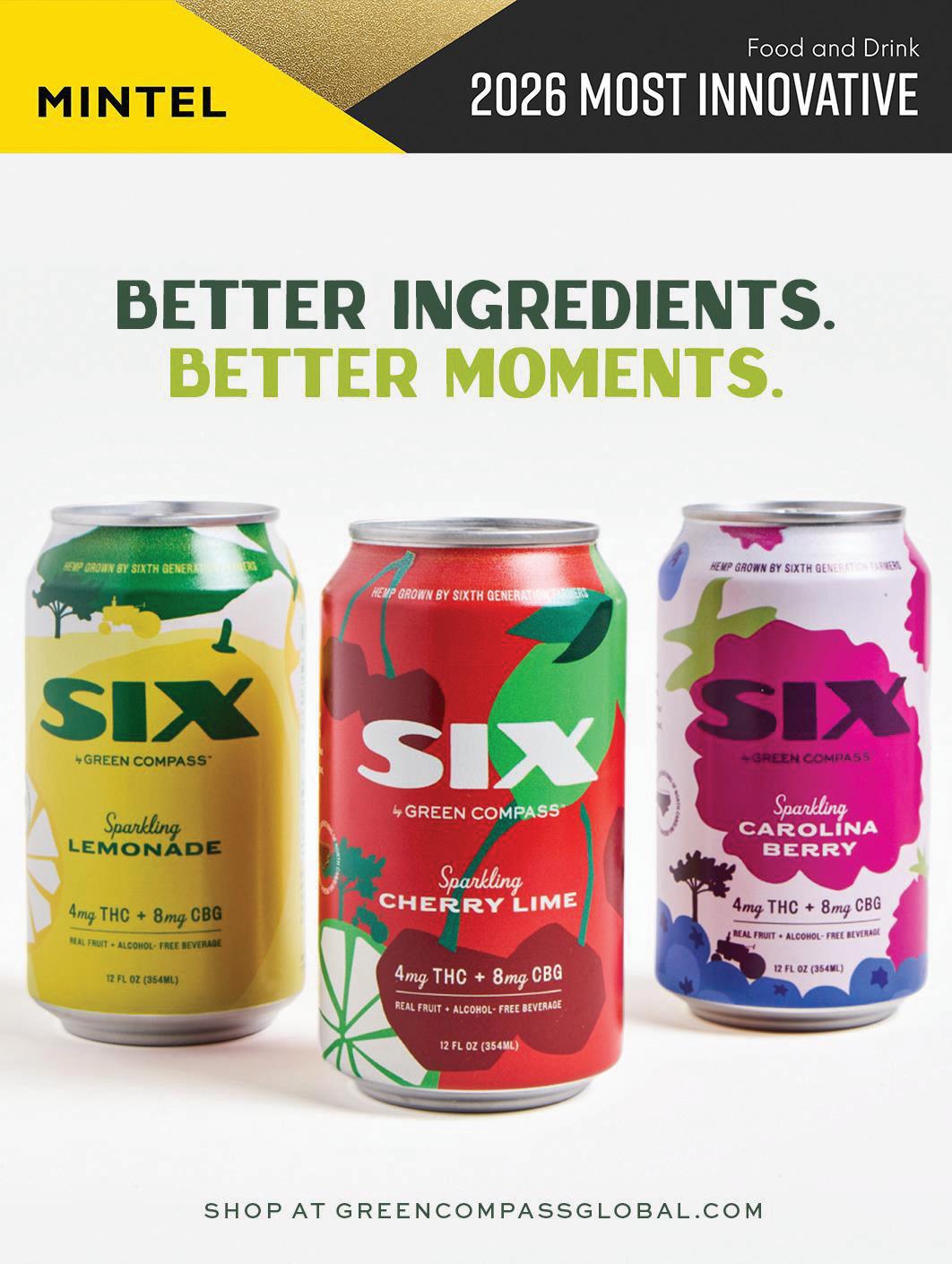
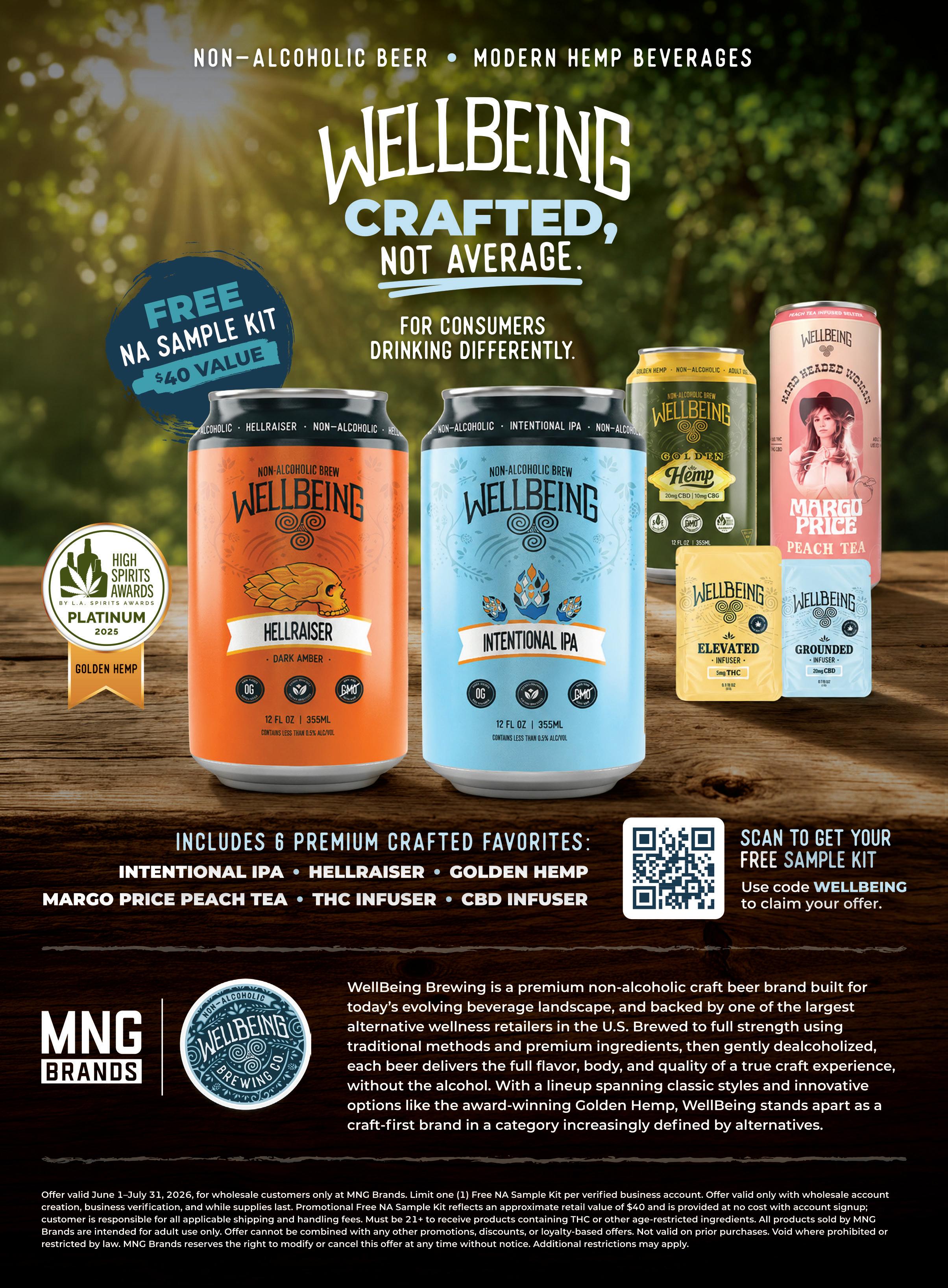
Habit Hemp-Infused Syrups with 750mg Delta-9 THC for Craft Cocktails
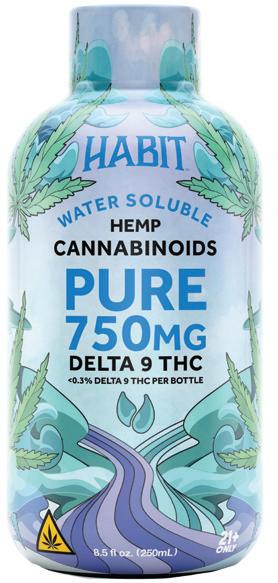
Habit
Habit Syrups are hemp concentrates made to elevate any cocktail or mocktail.
750mg Delta-9 THC in five vibrant flavors, plus a flavorless option that disappears into any drink. Customize the dose, craft the mood, turn any pour into an experience.
Habit Fast-Acting 2oz Hemp Shots in 10mg and 100mg Delta-9 THC
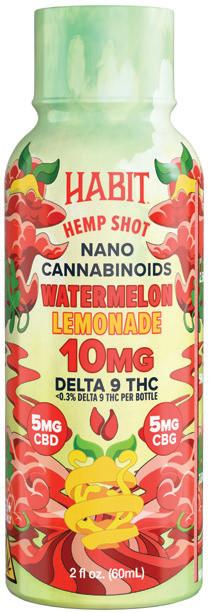
Habit
Habit Shots are 2oz hemp-infused pours delivering fast-acting Delta-9 THC in three bold flavors. Available in 10mg for a smooth social lift or 100mg for a serious ride. Discreet, portable, and made for high-vibe moments— pre-games, parties, anywhere.
A Bubble-Free Non-Alcoholic Cocktail, Finally - Meet HAPSY
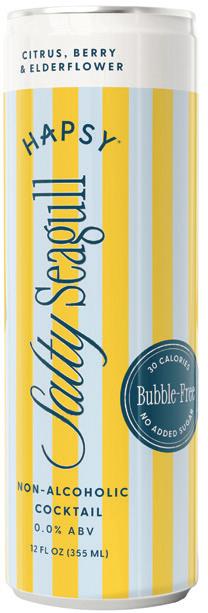
HAPSY
Salty Seagull tastes like summer in a can. Citrus, berry, elderflower. Bubblefree, 0.0% ABV, no added sugar. Sip it, mix it, spike it. The NA cocktail that Drinks Well With Others. Woman-Owned, Made with Real Juice. More flavors to sip soon.
NA Built Different... Brewed With Flavor & Attitude; Minus The Alcohol
Harley-Davidson Road King
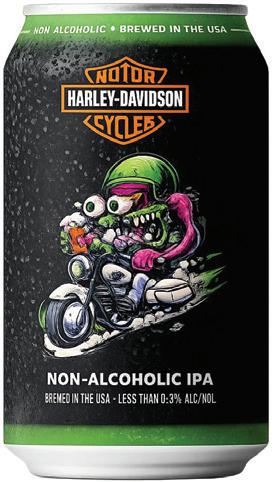
This NA revs its engine for expansion beyond WI in '26. Following the trailblazing launch of an award-winning Pilsner in '24, WI Brewing Co & H-D partner to offer a new IPA & packs for both liquids. Custom brews & packaging to Ride Your Own Ride!
BLACK MARKET—Where High-End THC Meets High-Function
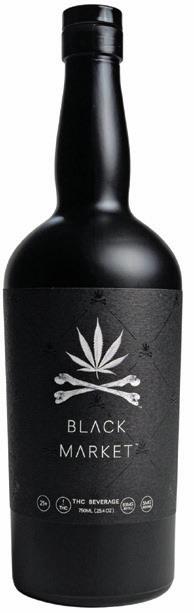
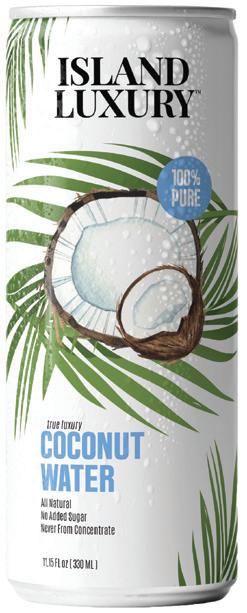
Hightails, LLC
Zero alcohol + shelf-stable + 750ml and 120ml. BLACK MARKET is the THC beverage made by cannabis people: fast-acting, low sugar, mixes into hightails and hits fast with consistent dosing. Built to spark conversation, laughter, and your profit margins.
Water
The finest coconut water made in the market.
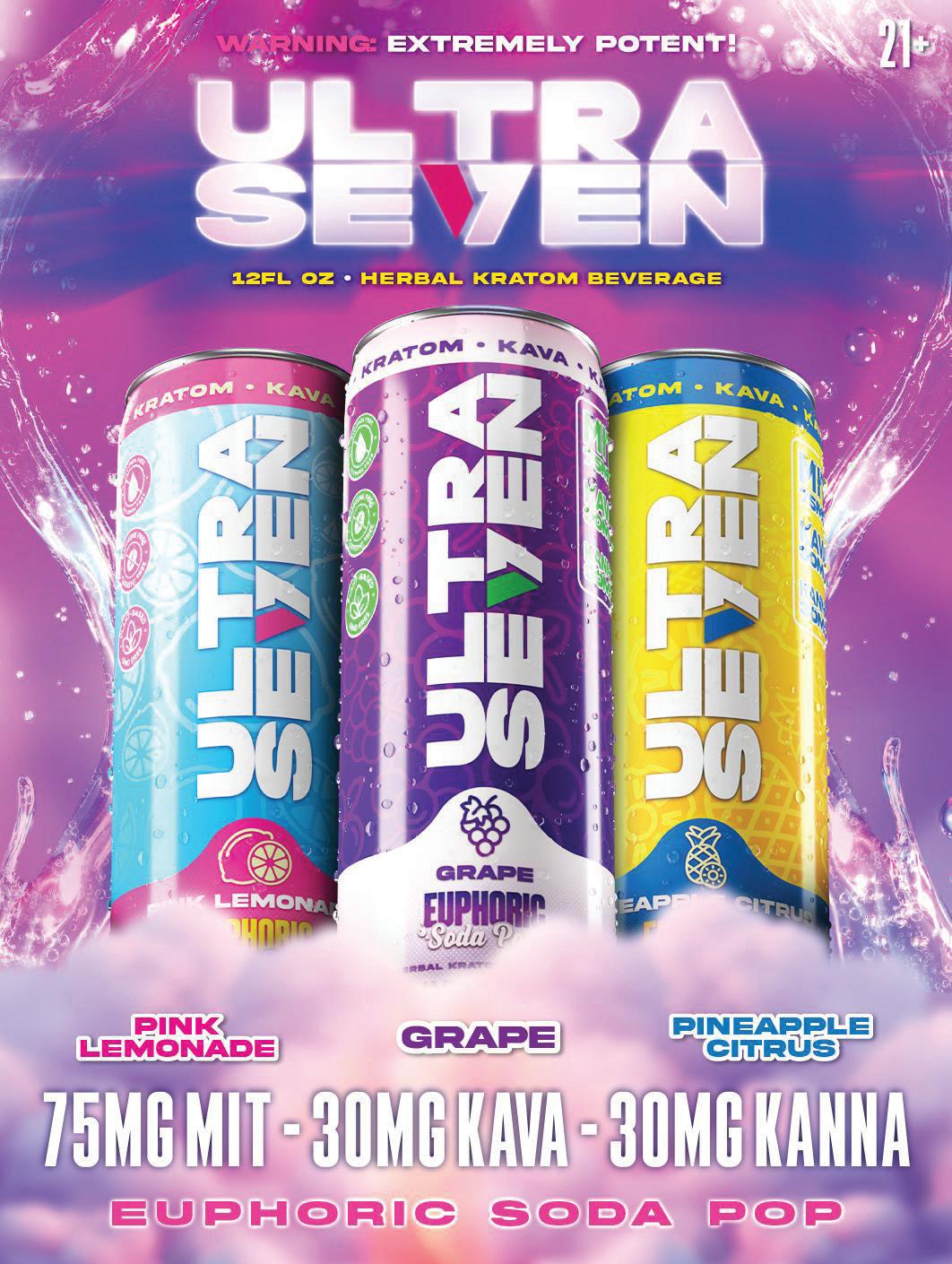
The Original Social Beverage
Kava Haven
Kava Haven is designed to help you relax and stay present without alcohol. You’ll actually feel it, with a calming effect similar to your first drink. Bright citrus and ginger make it easy to mix. No hangover, just a better way to unwind.
Live the Moment - your drink should meet you where you are.
LURE Mindfully Crafted Beverages are premium sparkling ready-to-drink beverages with layered botanical flavors and functional benefits. Low in calories and sugar, each delivers a refined, better-for-you option for balance, flavor, and enjoyment.
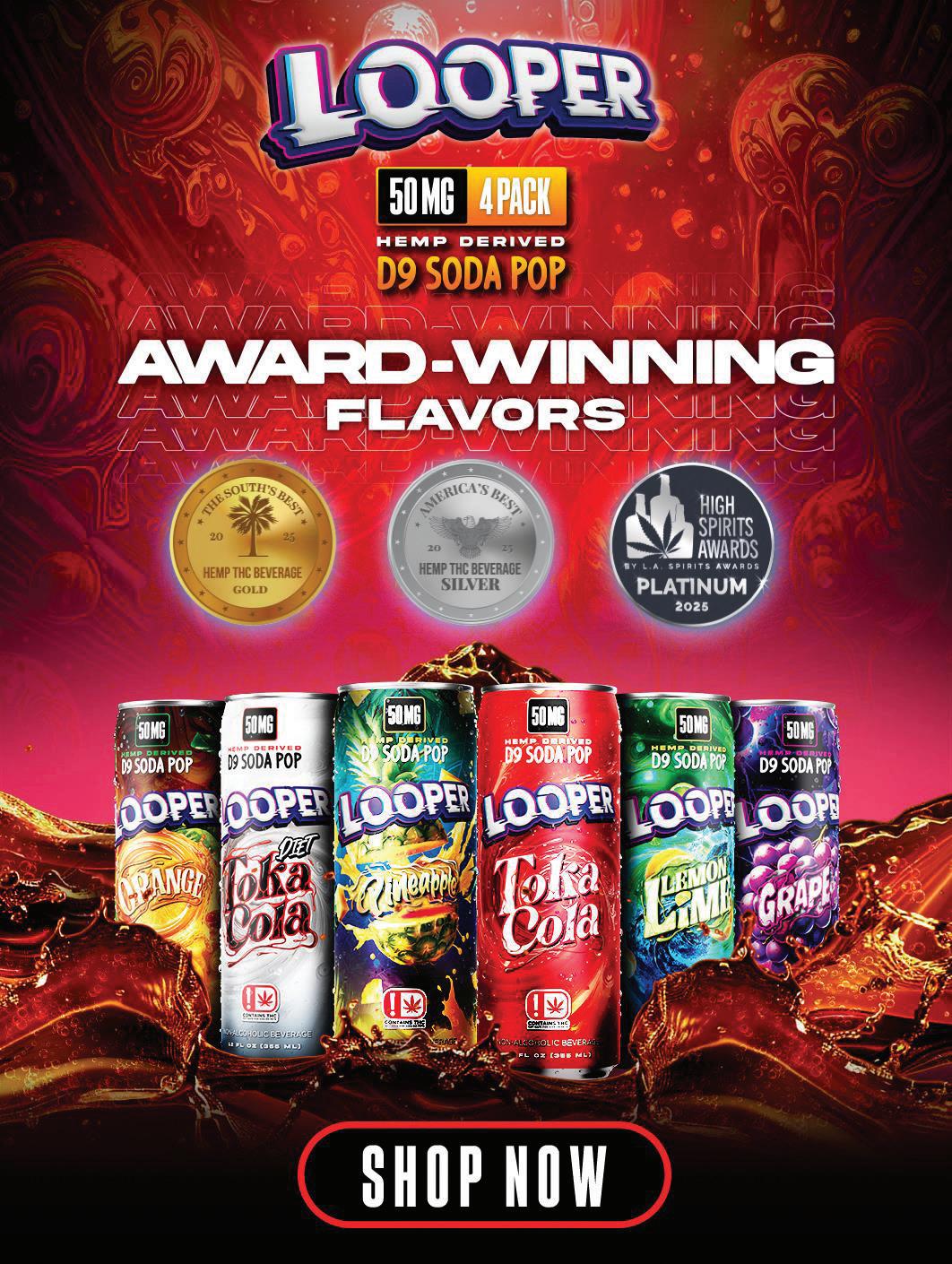
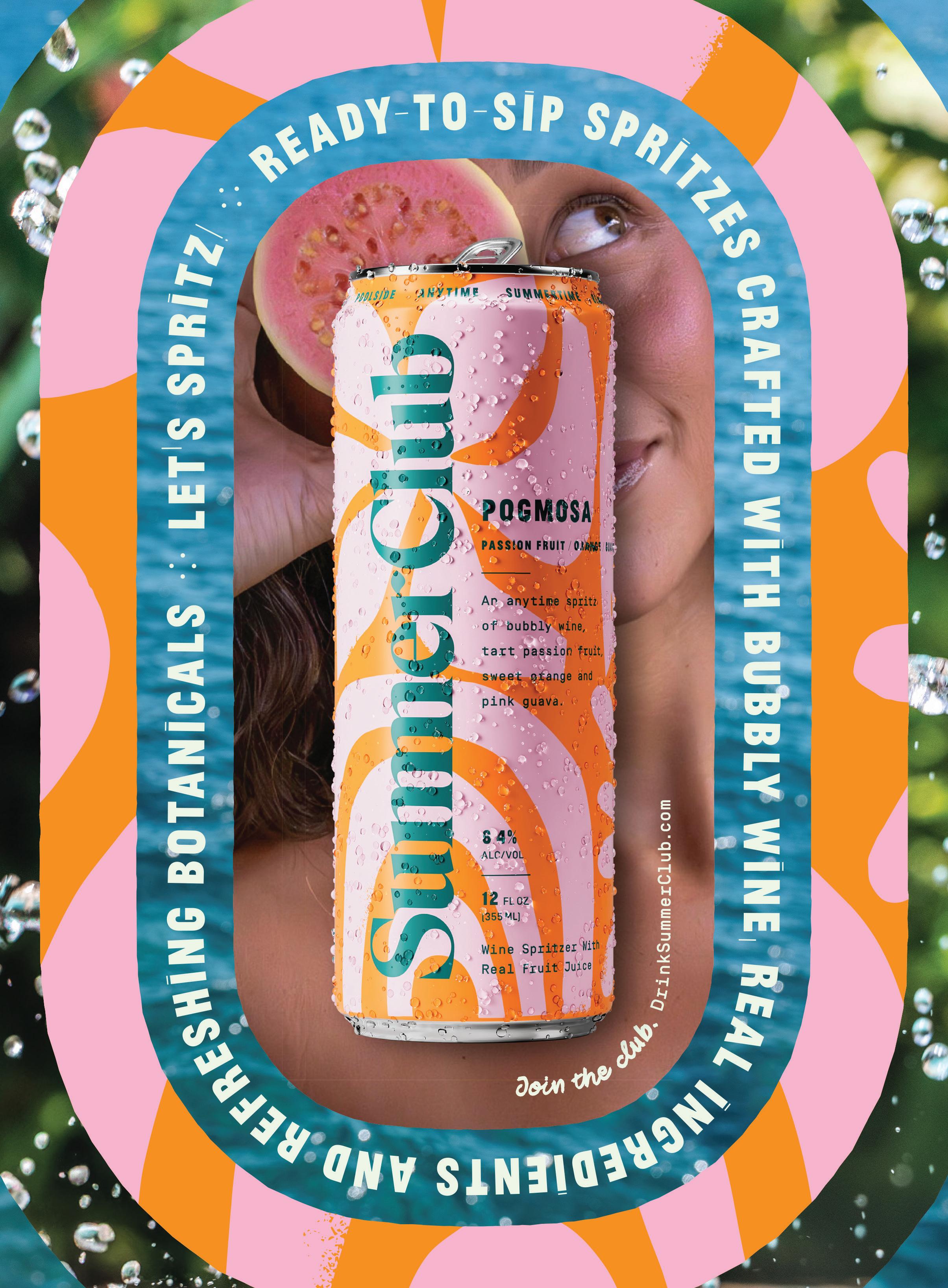
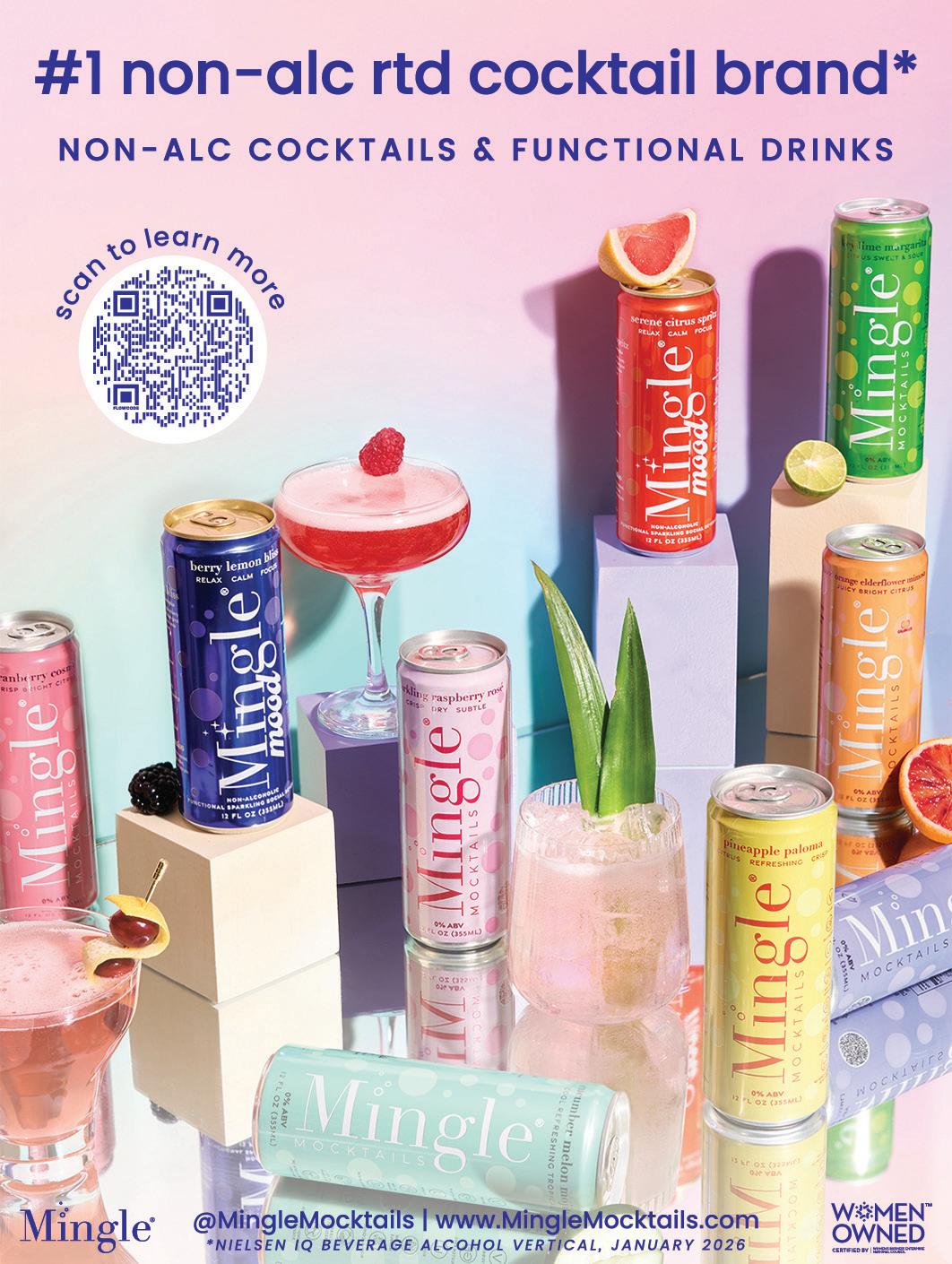
Warm, rich, and undeniably elevated, Monin Toasted Coconut Syrup redefines what coconut can be. More than an island escape, this versatile syrup adds “swavory” (sweet and savory) warmth to morning lattes or espresso martinis, layered flavor to dirty sodas, and irresistible richness to spreads and dips. Complex yet cozy, Monin Toasted Coconut Syrup transforms beverage and culinary recipes into unforgettable creations.
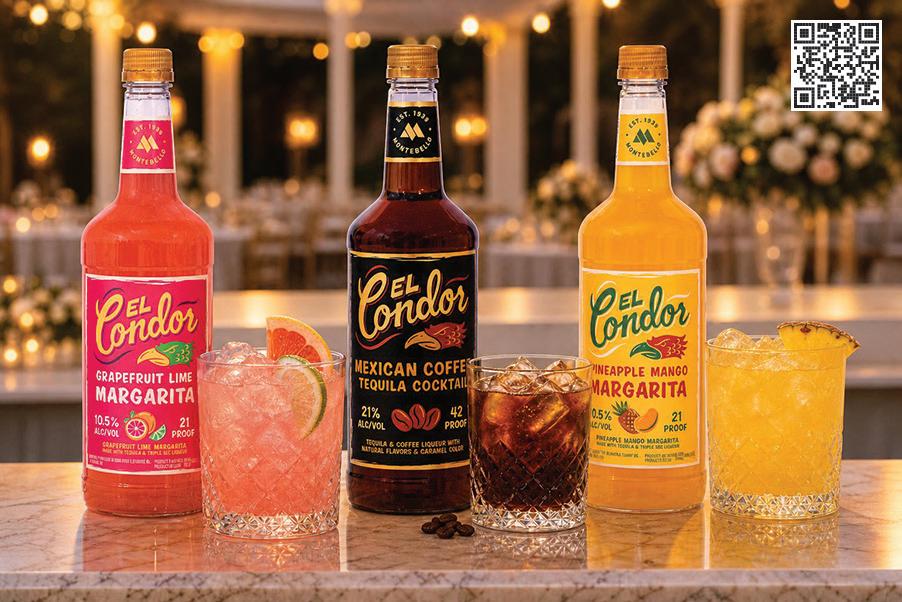
What if your next top-selling cocktail didn’t require a bartender?
El Condor is a premium ready-to-drink cocktail line built for the high-growth RTD category, where speed, consistency, and ease of execution drive real volume. From the indulgent Mexpresso Martini to vibrant Margarita flavors (Pineapple Mango, Grapefruit Lime), each SKU delivers full cocktail strength (42 proof) with a smooth, bar-quality finish. No mixing required.
Designed for both on- and off-premise performance, El Condor simplifies operations. No prep, no training, no variability. Just chill, pour, and serve.
Beyond the shelf, El Condor unlocks occasion-based growth. Think Mexpresso Martini fountains at weddings, high-volume event service, and turnkey cocktail programs that transform labor-heavy drinks into fast-moving revenue streams.
With strong shelf presence, premium positioning, and flavors aligned with today’s RTD consumer, El Condor is built to drive trial, repeat, and velocity.
Looking to elevate your RTD lineup? Visit our website or contact our team today to explore distribution opportunities and see why El Condor is built to perform.
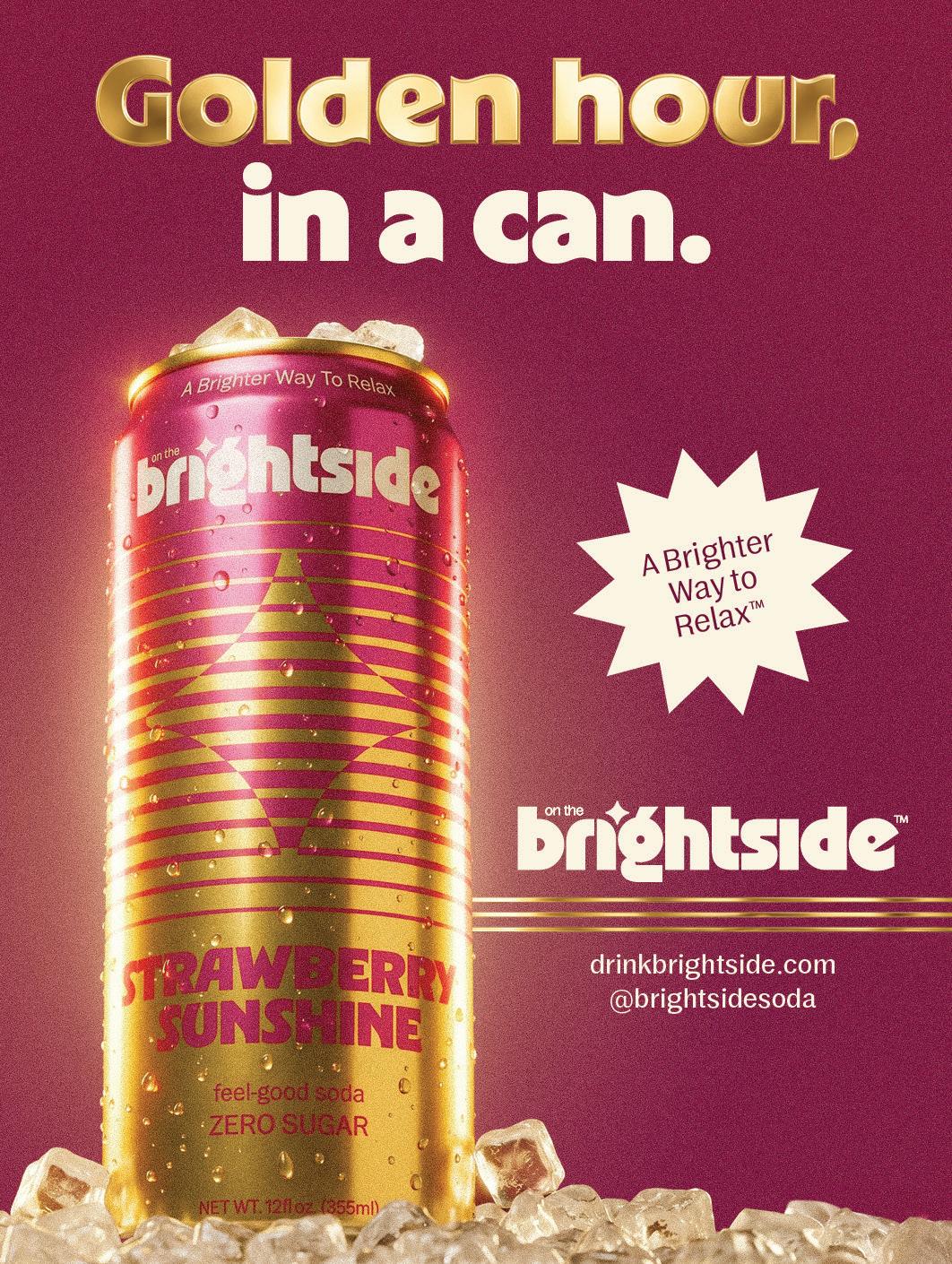
WellBeing. Crafted, Not Average
MNG Brands |
WellBeing Brewing Bold flavor. Smooth finish. No shortcuts. From non-alcoholic craft brews to THC and CBD infusions, WellBeing delivers drinks that are crafted. Not average.
Plant-Powered Euphoric Seltzer with Real Effects
New Brew
New Brew is a euphoric seltzer and functional beverage designed to elevate your mood and energy—naturally. Each can is infused with moderate servings of kava root and kratom leaf, offering a smooth, feel-good buzz without the crash.
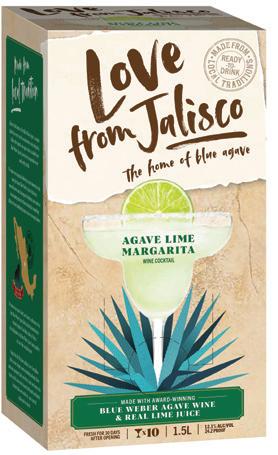
Multi-Flow Beverage solutions
Our margaritas are made from award winning 100% Blue Weber agave wine, natural flavors, with 5% fruit juice and real sugar. Love from Jalisco comes in three great tasting flavors – Agave Lime Margarita, Strawberry Agave Margarita, and Passion Fruit
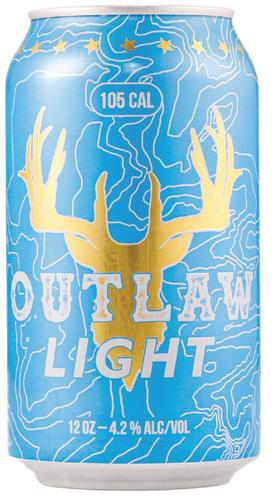
Outlaw Light
Outlaw Light Beer is crisp, refreshing and easy-drinking—built for real flavor without the premium price. A better light beer done right, crafted for hardworking people who want quality, value and a beer that delivers every time.
Snapdragon Cannabis Co. Premium Nano Refreshments
Snapdragon Cannabis Co.
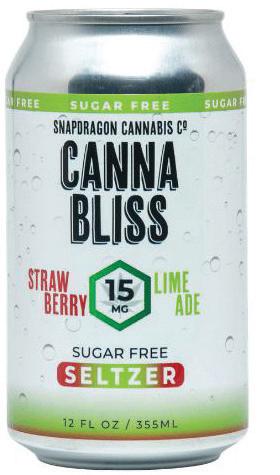
Snapdragon Cannabis Co.'s lineup of RINS9 (Rapid-Intake Nano Sonic Delta-9 THC) works as fast as you start sipping. Made with ultra-quality hemp extract and simple ingredients, our seltzers, sodas, syrups, and more bring clean green euphoria.
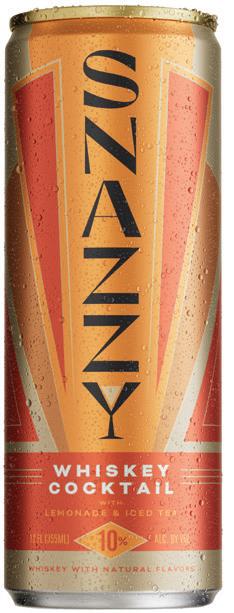
Snazzy
Meet your new favorite ready-made cocktail: refreshing iced tea, zesty lemonade, and premium Tequila, Rum, Whiskey, and Vodka crafted at 10% ABV. The sip that sparks the ordinary into an occasion with dazzling decadence.
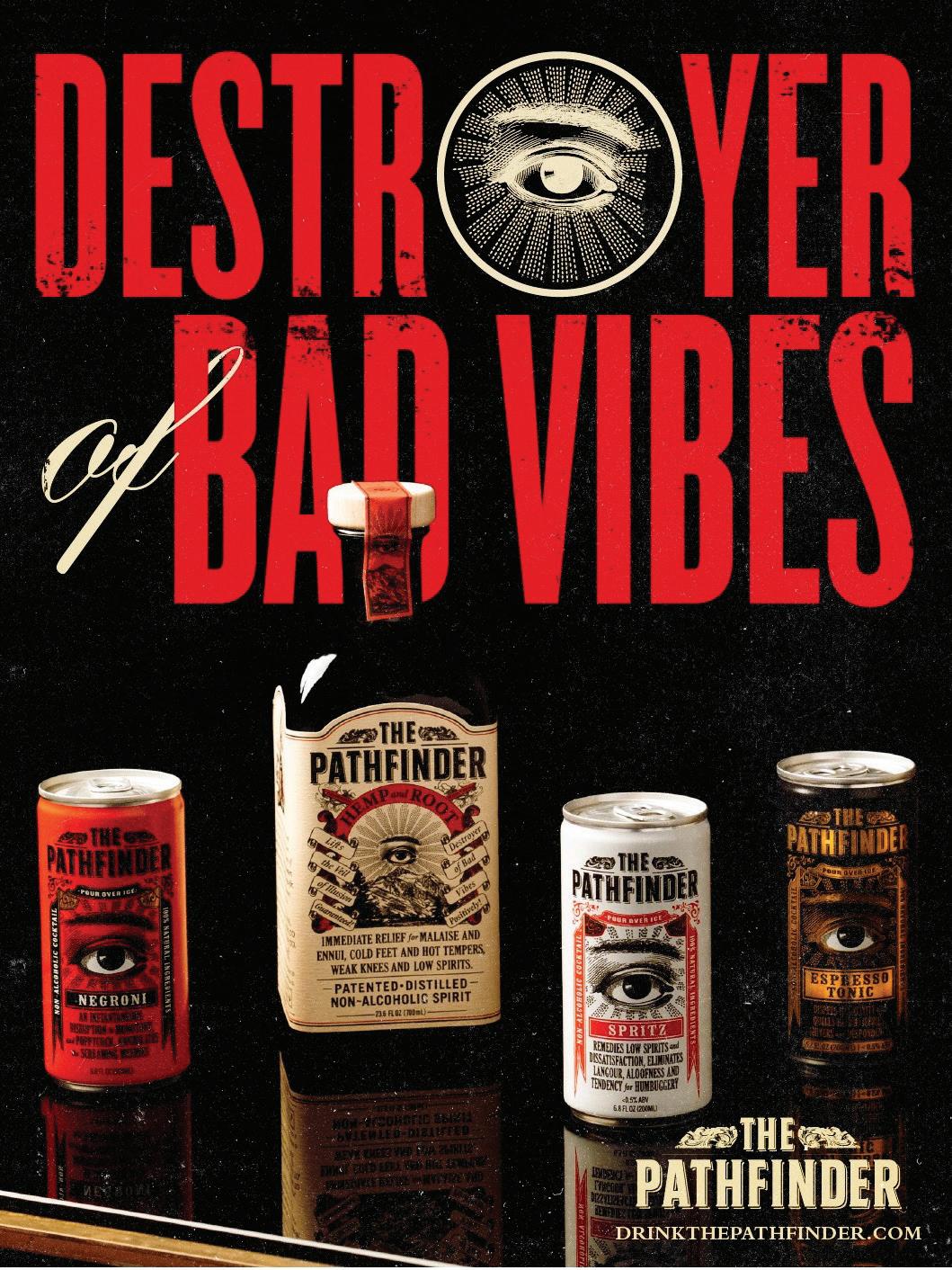
Tea Inspired Social Tonics
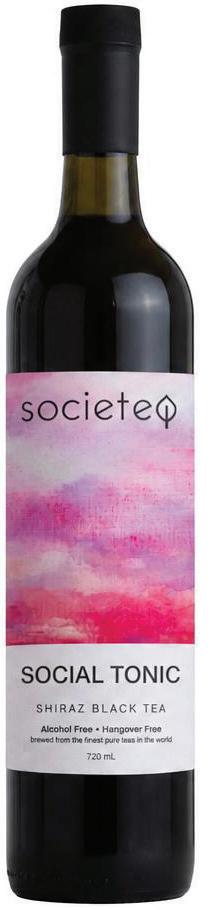
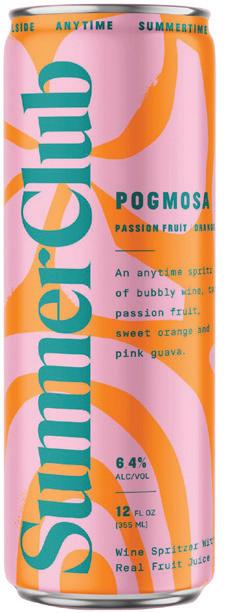
Societea
We partnered with the World's top tea master to craft this Black Tea Shiraz. We use Himalayan Gold Black Tea, zero-proof Shiraz, and layer it with fruits and spices for a velvety classic that works to boost our immune system. Award Winning!
Yacht Water launches new Piña flavor in time for summer
Yacht Water
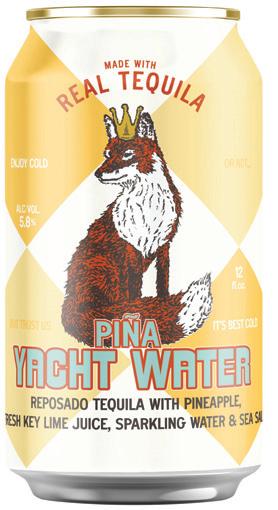
Yacht Water Piña blends additive-free reposado tequila (NOM 1360), real key lime, pineapple juice, sparkling water & a touch of sea salt for a tropical, gluten-free refreshment with only 105 calories per can. Premium refreshment, real ingredients.
Summer Club
Ready-to-sip spritzes crafted with sparkling wine, real ingredients and refreshing botanicals, because better ingredients are the foundation of a better drink. Beachside, Poolside or wherever the moment finds you. Hawaii owned - Female Founded
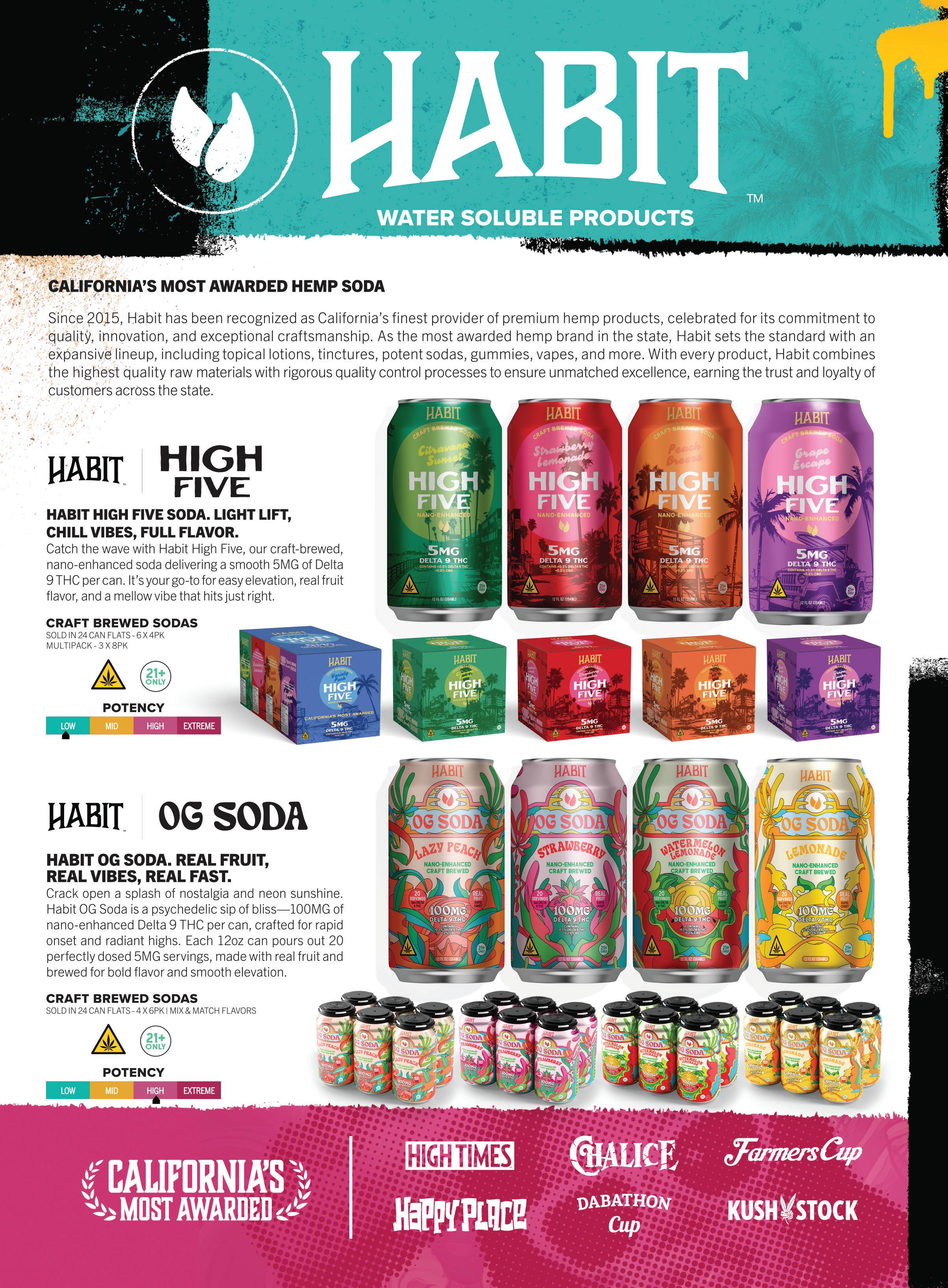
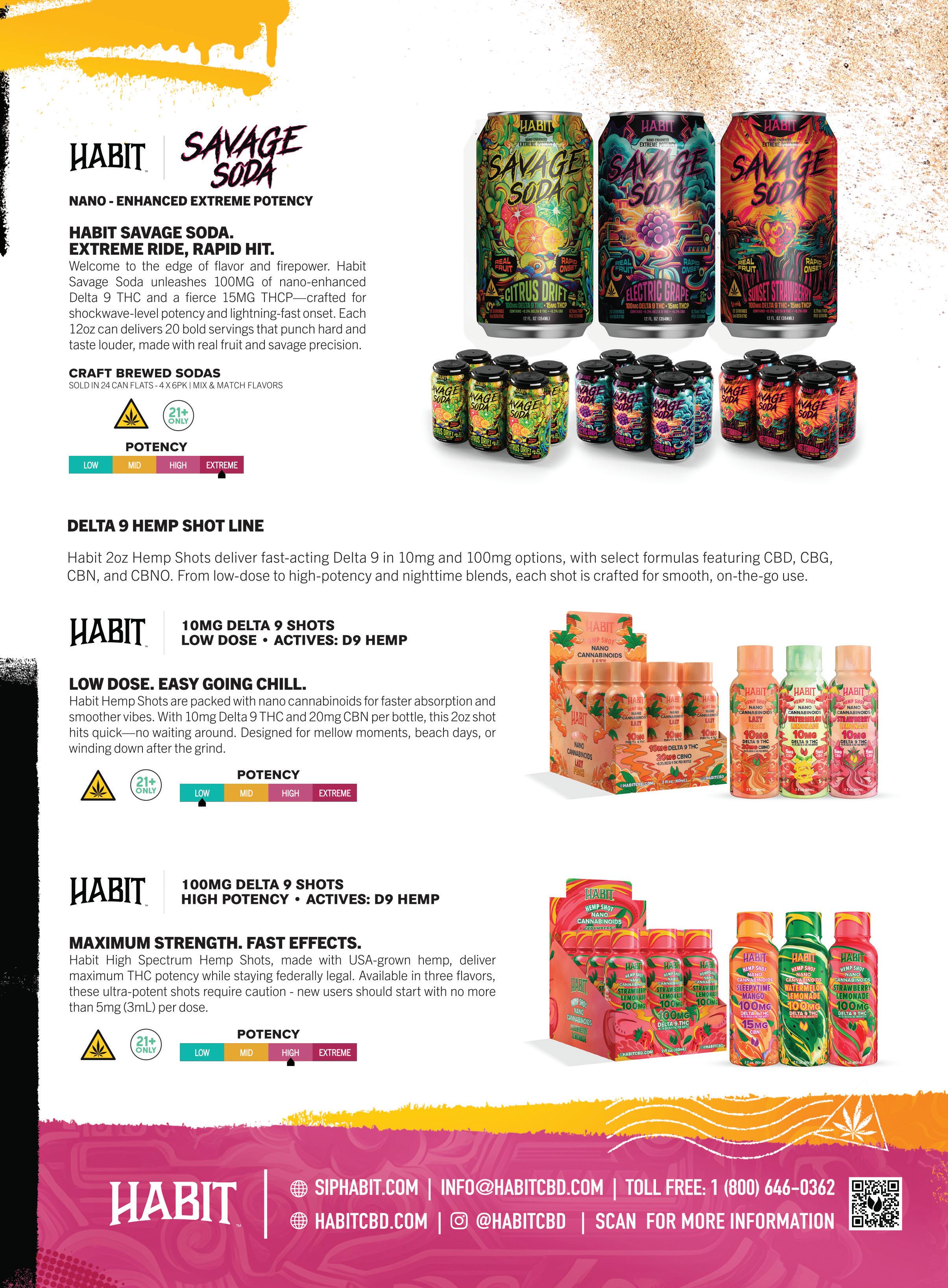
Allen Flavors Inc. is a privately owned, dynamic, innovative leader in the food and beverage industry. We offer an array of specialized services well beyond that of a typical flavor house. We consistently provide our customers with a library of high-performance, great-tasting traditional flavors, including the industry’s broadest and most rapidly growing collection of certified organic flavors.
Save Money and the Environment
AstraPouch®
Switching to Astrapouch® from glass containers saves our customers an average of 30% on packaging costs. Our pouches and Bag-in-Box options also provide up to an 80% reduction in carbon footprint compared to glass, plastic bottles, and paper bottles. Please contact us to learn more about how we can help your company achieve these savings and environmental benefits.
Ingredient Systems Simplified Balchem Corporation
Bank United's (NYSE:BKU) Beverage Practice provides a broad range of financial services to businesses in the beverage and related services industries. We are unique in offering an industry focus and expertise to middle market companies. Targeted financing solutions include working capital, equipment, real estate, acquisitions and debt consolidation. We also offer treasury and deposit services.
The Beck Flavors family provides the ultimate strategic partnership for our customers, offering innovative and quality custom flavor solutions. From concept to commercialization, Beck’s flavor chemists, application technologists, and marketing experts will collaborate with you to create a highly customized flavor solution that’s tailored to the unique needs of your brand. Good. Better. BECK
In-Stock Packaging,
Your P&L Wishes
Stop decoding spreadsheets and dashboards. Pricing shifts, market dynamics, or cracking new accounts—just name your wish. Like magic, BevGenie senses the market and hands you the optimal move to win the shelf. Don’t just get answers; get the action plan to drive performance. Real growth. No lamp required.
Bio-Botanica, Inc.
Trusted by leading beverage brands, BioBotanica offers high-quality liquid and powdered botanical extracts. Our made-to-order ingredients are crafted using our proprietary Bio-Chelated® cold-extraction process for purity, consistency, and formulation flexibility. Explore our beverageready ingredient portfolio.
Aluminum Beverage Can Supply
CanSource, a TricorBraun Co

We are trusted by entrepreneurs & established brands alike to commercialize their beverages. Our product development & commercialization knowledge, manufacturing relationships & global sourcing capabilities provide the expertise your brand needs to succeed. Whether you’re looking for ingredients & packaging, or need support with development, regulatory, pilot production or more, we can help.
Across digital print, sleeved cans, direct offset print, and brites, CanSource has a solution for any aluminum packaging need. Our low MOQs, short lead times, exceptional customer service, and nationwide footprint are just some of the reasons our +1,500 customers put their trust in CanSource. Additional digital print coming from North Carolina this summer!
Ingredients You Can Rely
Ingredients You Can Rely on
Brothers International Food Holdings, LLC, sources fruits from the earth’s prime growing regions and we’re proud to be one of the largest importers of fruit concentrates and purees in the United States. We offer a wide range of imported and domestic NFC juice, IQF, canned, essences, and oils.
• More than 150 years of experience in the fruit industry
• Leader in sourcing premium and organic ingredients
• We partner exclusively with highly qualified processing facilities around the globe
• Exceptional product quality and competitive pricing for our customers
• Our expanding network includes over 150 suppliers across 30+ countries and more than 600 customers.
• Our products are kosher-certified, and we can assist you in sourcing Fair Trade Certified and Demeter (Bio-dynamic) ingredients.
Our mission is to provide you with the best products and services.
Main office: Brothers Ingredients, Rochester, NY 585-343-3007. Florida divisions: Dennick Fruit Source 813-884-4552, Hosh International 754-701-4901, Food Partners 863-298-8771. Visit brothersinternational.com or email ingredients@brothersinternational.com for info.
100% American Made Aluminum Cans Can-One USA
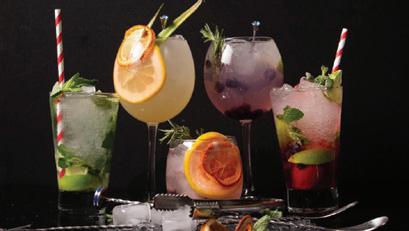
If you don't want your ready to drink cocktails to fall flat, you need CO2Sustain. We all know alcohol kills carbonation, so formulating the perfect RTD drinks that give consumers the fizz from first to last sip can be a challenge. Not anymore by simply adding one ingredient you can give your consumers what they crave... the perfect balance of alcohol and fizz in each and every sip RTD cocktails falling
Fill Line QA Systems
Optimize beverage quality with FILTEC’s advanced fill line QA solutions. From precise fill level inspection to closure and label verification, we ensure product integrity at speed. KLARITY delivers AI-driven, source-agnostic data integration for real-time insights, while Lasetec 5 with OCR enables reliable track and trace across high-speed production lines.
#1 for Supplier and Se
Flavor Dynamics is the perfect choice for your beverage flavors. Our team is guided by a commitment to creating, superior quality products. Our "AA" BRC audit grade represents our commitment to food safety and quality assurance. We offer clean label requirements, including Organic, Non GMO, Natural, Gluten free, Vegan and TTB approved.

Elevate your beverages taste with Flavorcan. 35+ years of flavor innovation expertise, a diverse flavor portfolio, and customized solutions that will make your brand stand out. Let's embark on a journey of flavor innovation together, and create beverages that will not only quench thirst but also excite taste buds. Contact us today to explore the endless possibilities.
At Creamy Creation we develop and produce a wide range of cream-based alcoholic beverages and RTDs for customers around the world; from traditional cream liqueurs, plant-based, vegan, oats, and egg nog options to mixable creams, as well as no- and low-alcohol drinks. We are the global leader in the B2B cream liqueur segment, while also specializing in other emulsified alcoholic beverages.
From ingredient solutions to tailor-made formulations, concept development & product launch support, we work with our customers to bring their ideas to life. To ensure a smooth launch, we offer support every step of the way by providing market and regulatory knowledge, quality assurance and technical sales support.
Our story started in 1979, in the heart of dairy country in the Netherlands and expanded from there. Flash forward to today, we have production facilities in both Rijkevoort, the Netherlands and Batavia, New York and a sales team that covers every corner of the globe.
FlavorSum helps your brand grow with the flavor solution expertise and infrastructure required to keep pace with the changing needs of beverage buyers. With TTB-approved flavors and readily available FIDS, we make flavor sourcing more efficient, effective, and enjoyable with bestin-class responsiveness, and competitive lead times. Let’s create the delicious beverages your customers crave.

Fogg is a global leader in designing and manufacturing rotary rinsing, filling, and capping systems. We provide gravity, pressure, and non-contact filling solutions tailored to meet the specific needs of each customer. Today, Fogg supports an expanding portfolio of dairy, water, food and beverage, pharmaceutical, and consumer packaged goods companies around the world.
Team up with Forté and let us help you create a flavor that compliments your unique beverage and vision to perfection! With our deep flavor knowledge and unwavering passion for excellence, our flavorists are ready to collaborate with you to bring your flavor ideas to life. Let’s join forces and transform your beverage dream into a flavorful reality!

by GNT works with beverage innovators across alcohol and no-/low-alcohol categories to deliver sustainable, plant-based color solutions. From RTD cocktails to botanical alternatives, our colors help brands achieve consistent, appealing visuals while supporting clean-label and premium positioning. Our team partners closely with customers throughout product development and scale-up.
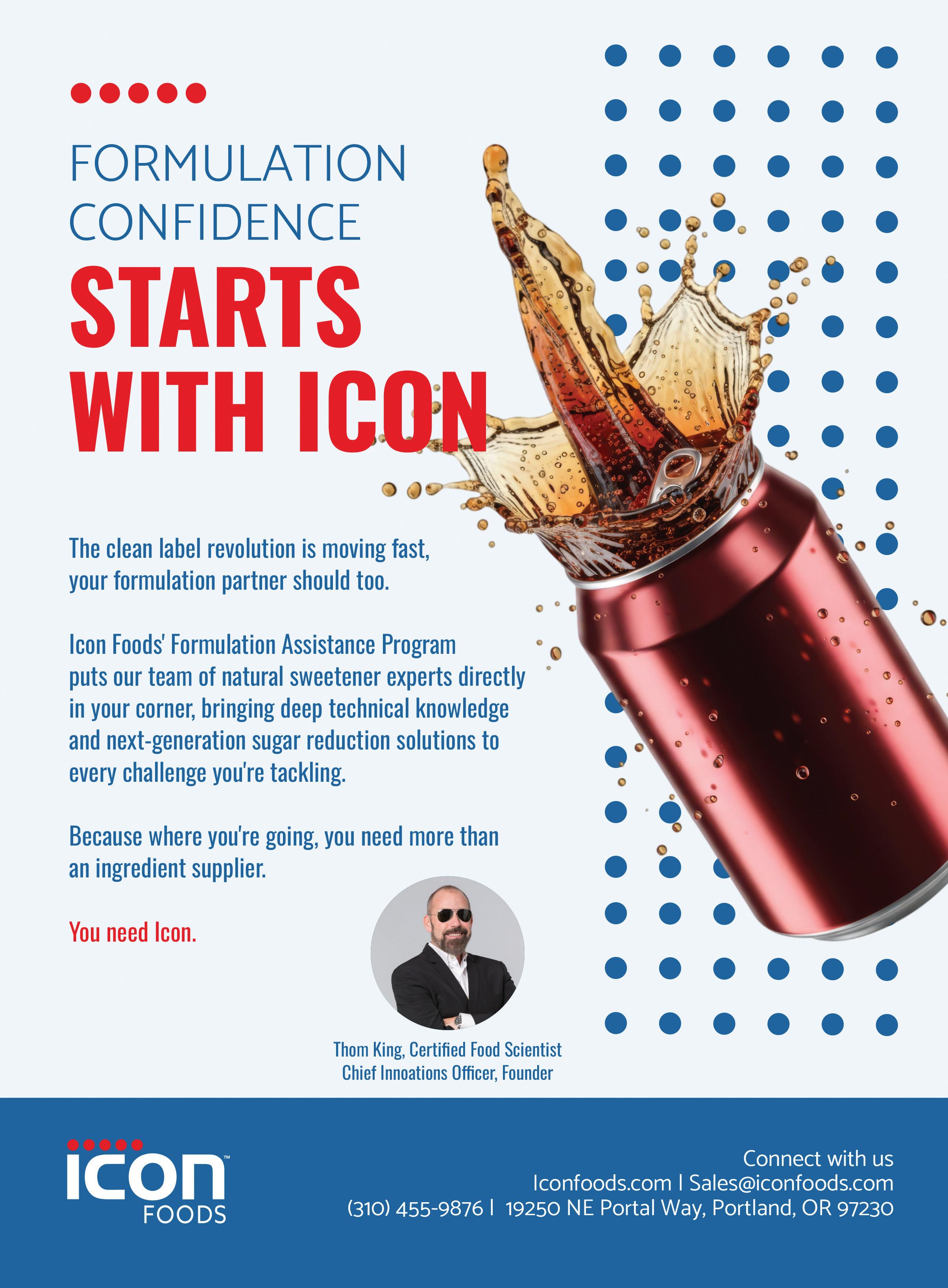
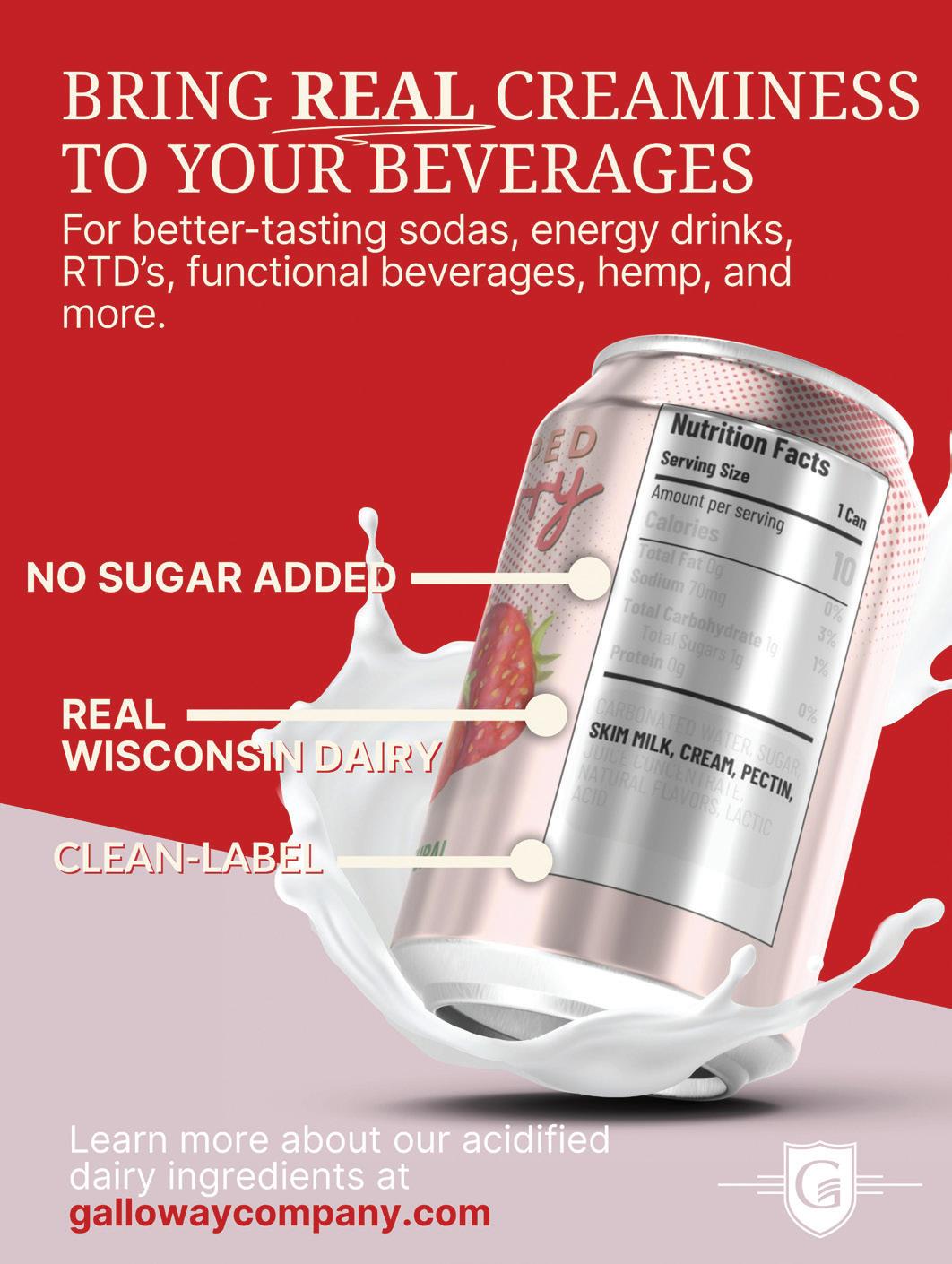
Gotham DSD (Direct Store Delivery) provides a Dedicated Sales Team, Delivery Trucks and Warehouse to get your brand accelerated into the NYC marketplace. Gotham DSD succeeds by working with only a few select food and beverage brands at a time. With limited brands to manage, we can focus on executing the needs of each brand while giving each brand the ability to grow. Gotham -Grow your Brand
With almost 30 years of experience, Icon Foods' proprietary manufacturing processes, secure supply chain, quality control standards, and formulation assistance assure you reliability throughout your sweetener journey, from ideation to delivery.
iprona supplies high-quality fruit-based ingredients for beverage applications, including juices, juice concentrates, purées, and extracts. Since 1923 with strong expertise in fruit processing and natural technologies, iprona supports beverage brands with clean-label solutions, consistent quality, and reliable sourcing – from raw fruit to finished ingredient.
IHC is your solution to guide you through the canning process! With over 250 MILLION cans filled to date, IHC offers unmatched Experience and Expertise. We service the Eastern US and deliver Quality you can count on – Guaranteed seams, All beverage types, All can sizes, Materials sourcing, & Co-Packaging Partners –whatever your situation we can get your product canned. IHC is your one stop shop!

Looking to safeguard the quality and shelf-life of your beverage and eliminate chilled chain distribution needs? LANXESS Corporation offers two unique and innovative technologies, Velcorin® and Nagardo®, which provide microbiological protection in a wide variety of beverages. Velcorin® (Dimethyl Dicarbonate) is a cold sterilization agent that kills microorganisms during production, resulting in cleaner and more stable beverages.
Benefits of Velcorin® include:
• No impact on sensory profile
• Clean label solution
• Compatibility with all types of common packaging
• Cost-effective
• Application-specific advice and services from Velcorin® team Nagardo® (Dacryopinax Spathularia) is a natural guardian that protects against beverage spoilage to secure and prolong shelf life.
Benefits of Nagardo® include:
• Achieve natural & consumer friendly claims
• Efficient control of a broad range of spoilage organisms
• No impact on sensory profile
• Broad application in a variety of beverages
• Easy integration into production process
• Application-specific advice and services from Nagardo® team
LANXESS Corporation hopes to conveniently meet all of your microbiological protection needs with our widely applicable technologies and services.
For more information on Velcorin®, please visit Velcorin.com
For more information on Nagardo®, please visit Nagardo.com
Consumer tastes are evolving, with occasionbased drinking fueling growth in both alcohol and alcohol alternatives. MANE meets these changing preferences by crafting innovative beverages and delivering standout flavors that exceed consumer expectations.
Parallel Products specializes in comprehensive beverage product destruction and recycling services to provide sustainable recycling/ recovery and brand protection for your products. In addition, our TTB Compliance & Tax Recovery Department can assist you with the recovery of your Federal Excise Tax, which can have a dramatic impact to your profitability.
Consumers today want it all—you’re balancing the demands of great taste, supply chain challenges, regulatory hurdles and consumer acceptance. The experts at McCormick Flavor Solutions can help. From ideation to launch, we can create a seamless, winning path for you. Design, develop and scale up using our Beverage Innovation Studio in Geneva, IL or Hunt Valley, MD.

Pathfinder Ingredients paves the way for commercial alcoholic drinks makers. With expertise in yeast nutrition, our solutions are designed to optimize yeast performance and efficiency across a wide range of alcoholic beverages. From high ABV washes for FMBs, RTDs, and hard sodas, to beers, wines and spirits, our specialist formulations deliver reliable, consistent results across every application.
Global Consumer Product Tests
Product Hub by MMR

Test spirits, RTDs, beers and more with consumers across 40+ global markets, through one end-to-end platform. Built-in compliance, age verification, ABV controls & expert logistics - without the hassle. From benchmarking a new RTD to validating a premium beer proposition, Product Hub by MMR gives innovation teams the tools and tech to conduct physical product testing at speed and scale.
Next-Gen AI-Powered Growth
Shareable

Next-Gen CPG Marketing: AI-Powered Growth & Brand Scale. We build AI-driven growth systems that align paid media, creative, and retention into a unified engine. By strengthening narrative and execution, we lower CAC, increase LTV, and create compounding, profitable growth. Built for CPG brands ready to scale, our team moves fast, tests relentlessly, and turns momentum into market leadership.
Fruit & Vegetable Ingredients
Stiebs, since 2005, has been devoted to sourcing, processing & delivering the world's finest plant-based products. We offer a full line of fruit & vegetable based ingredients as Single Strength Juice, Juice Concentrates, Purees and IQF Cubes. From the beginning stages of product development to delivering an on-going supply of premium natural products, our team is here to help you succeed.
We Design to Taste
Takasago International Corp
Built on technology, Takasago has an extensive innovation platform including true to nature VIVID® Natural Flavors, taste modulating INTENSATES® Flavors, Consumer Insights and Market Research, etc. Vertically integrated in citrus, coffee, tea, mint, and vanilla to drive quality and sustainable raw materials for flavor creations, we promise to deliver impactful flavors for your product development.
Vibrant Ingredients provides complete beverage systems for alcohol, non-alcoholic beverages, and alternatives. We partner with brands to bring ideas to life through custom formulation, flavor development, and functional ingredient solutions. From cold brew coffee, tea, and botanical extracts to nutrition and flavor systems, we simplify sourcing and support every step from Formula to Final Sip®

All The Bitter
Allen Flavors, Inc
Ian Blessing Chico CA (530) 685-0451 allthebitter.com
Joe Harriman South Plainfield NJ (908) 561-5995 allenflavors.com
Aplós - - - - aplos.world
AstraPouch®
Austin Eastciders
Michael Mrozak Middlesex NY (585) 299-9899 Astrapouch.com
Adam Gasper Detroit MI (989) 928-4462 austineastciders.com
aVAO Barcelona, Spain - Barcelona - - vaobarcelona.com
AWC Beverage LLC
Amanda Stoga Austin TX (917) 744-7573 drinkawc.com
Balchem Corporation - Montvale NJ - balchem.com
BankUnited, NA
Beck Flavors
Bill DeMilt New York NY (212) 705-8642 bankunited.com
Nick Palank Maryland Heights MO (314) 878-7522 beckflavors.com
Berlin Packaging - - - (800) 223-7546 berlinpackaging.com
BevGenie
Shyam Jayakumar - NJ - bevgenie.ai
BevSource - Saint Paul MN (866) 956-4608 bevsource.com
Bio-Botanica, Inc.
Blake' Beverage Co
Blake's Hard Cider
BLNCD
Brio Spirits
Brothers International Food
Can-One USA
CanSource, a TricorBraun Co
Jason Katsoris Hauppauge NY (631) 231-5522 bio-botanica.com
Mike Erwert -
(971) 645-5466 avidcider.com
Adam Gasper Detroit MI (989) 928-4462 blakeshardcider.com
Allison Vaillancourt Minneapolis - (952) 417-6803 blncdnaturals.com
Mitch Parse Chicago IL (630) 442-1770 briospirits.com
Mike DeLaurentis Rochester NY (585) 343-3007 brothersinternational.com
Nicholas Hanna Nashua NH (603) 704-9344 can-one.com
Robert Renfro Longmont CO (833) 228-3959 cansource.com
Ceebo Brew Co. - - SC - ceebobrewco.com
Clean International, Inc.
CO2Sustain
Cool Display Solutions Inc.
Cornbread Hemp
Creamy Creation
Dirty Virgo
Doehler North America
Drink Mockly, Inc.
dsm-firmenich
Dude Wow
FILTEC a Kestrel Vision Brand
Flavor Dynamics, Inc.
Flavorcan International Inc.
FlavorSum
Fogg Filler
Forté Flavors
Foundry Nation
Trevor Schell Wolcott VT (802) 370-4033 sipcleann.com
Jonathan Stott Leeds - +4411346546_____ co2sustain.com
Bob Jones Burlington - (905) 331-9497 cooldisplaysolutions.com
William Morgan Louisville - - cornbreadhemp.com
Matthew Benny Rochelle Park NJ (585) 664-4771 creamycreation.com
James Zackler New York NY (510) 604-8848 drinkdirtyvirgo.com
Kristy Ellenson Cartersville GA (470) 334-9858 doehler.com
Aimee Sedky New Orleans LA (646) 438-0846 drinkmockly.com
Aaron Rokoszak Plainsboro Township NJ (862) 309-0330 dsm-firmenich.com
Brandon Igdalsky Winter Garden FL (689) 500-9134 dudewowcocktails.com
Amanda Blackburn Solon OH (949) 466-8470 filtec.com
Colleen Roberts South Plainfield NJ (908) 822-8855 FlavorDynamics.com
Mario Moreno Toronto - (416) 321-2124 flavorcan.ca
Brooke Hutton Kalamazoo MI (269) 215-2428 flavorsum.com
Chris Emory Holland MI (616) 786-3644 FoggFiller.com
Janet Guzman Valencia CA (818) 307-4062 forteflavors.com
Beecher Vaillancourt Minneapolis MN (952) 417-6803 foundrynation.com
Frontline Beverage Sales Prior Lake MN - frontlinebeverage.com
Funny Water Inc
Galloway Company
Gigli
GNT USA, LLC
Gotham DSD
Green Compass
Habit
HAPSY
Harley-Davidson Road King
Hightails, LLC
Icon Foods
iprona
Iron Heart Canning Co
Island Luxury
John I. Haas, Inc.
Matt Giese Chicago IL (612) 254-5497 funnywater.com
Luke Gambaro Neenah WI (920) 636-6367 gallowaycompany.com
Riley Hardel Eden Prairie MN (507) 461-2159 gigli.com
Jeannette O'Brien Dallas NC (704) 469-5555 exberry.com
Trent Moffat Long Island City NY (877) 931-3030 gothamdsd.com
Farah Azmi Wilmington NC (702) 330-1318 greencompassglobal.com
Natalie Boos Arlington TX (800) 646-0362 SipHabit.com
Claudia Sale Atlanta GA - www.behapsy.com
Michael Shea Verona WI (414) 807-6475 www.drinkroadking.com
Adam Fagan - NY (941) 400-6280 www.drinkblackmarket.com
Joshua Rosario Portland OR (310) 455-9876 iconfoods.com
Scott Surma Tucson AZ (815) 355-4945 iprona.com
Brian Casse - NH (973) 342-1388 ironheartcanning.com
Island Luxury Palm Beach FL (561) 825-1000 islandluxury.co
Jeremy Ragonese Yakima WA (509) 834-0686 johnihaas.com
Kava Haven Billy Grady Chicago IL (773) 469-6959 kavahaven.com
L&K Distribution
Lanxess Corporation
LURE Drinks
Nathan Tagalag Anaheim CA (310) 561-0213 ultra7kratom.com
Mike Turpin Pittsburgh PA (817) 357-5851 Velcorin.com
Jeff Koenigs St. Louis MO (314) 625-2936 luredrinks.com
Maeve Taylor Marvulli Pasadena CA (626) 862-2058 managemaeve.com
MANE Inc.
Cara Newkirk Lebanon OH (513) 658-9848 mane.com
MaraBela Jesus Martinez Bujanda Mora Walla Walla WA (509) 730-5469 marabelatea.com
MATCHA.COM - Tuscon AZ (520) 273-2110 bulk.matcha.com
McCormick Flavor Solutions
Mingle Beverage Company
MNG Brands | WellBeing Brewing
Chloe Morris Hunt Valley MD - mccormickfona.com
Laura Taylor Berwym PA (708) 870-8625 minglemocktails.com
Ocean Cohen - - (314) 421-9511 order.mngbrands.com
Monin Onix - FL (727) 461-3033 monin.us
Montebello Brands, Inc.
Mother Murphy’s Flavors
Multi-Flow Beverage solutions
New Brew
On The Brightside™
Outlaw Light
Wayne Pozzi Dundalk MD (770) 905-4459 montebellobrands.com
David Wilhoit Greensboro NC (800) 849-1277 mothermurphys.com
Dwayne Schwarz Huntingdon Valley PA (215) 669-1080 drinklovefrom.com
Evan Cohen - - - drinknewbrew.com
Jennifer Contraveos Chicago IL (702) 306-3580 drinkbrightside.com
Claire Camp Nashville TN (806) 786-9606 outlawbeer.com
PakTech - - - (541) 461-5000 PakTech-opi.com
Parallel Products
Pathfinder Ingredients
Product Hub by MMR
Aidon Tackett Louisville KY (502) 471-2428 parallelproducts.com
Will Jackson Ellesmere Port - +447765476668___ pathfinderingredients.com
Keanan Barbour-March New York NY (121) 289-7280 theproducthub.com
Sentia Spirits Jenn Pray Hemel Hempstead - - us.sentiaspirits.com
Shareable
Snapdragon Cannabis Co.
Snazzy
Societea
Sovereign Flavors Inc.
Stiebs
Summer Club
Takasago International Corp
Meredith Cochran Carlsbad CA (608) 790-7902 shareable.life
Alec Wright Ooltewah TN (203) 427-1364 snapdragonhemp.com
David Peterson San Francisco CA (650) 319-5055 snazzybeverages.com
Meredith Cochran Carlsbad CA (608) 790-7902 societeaco.com
David Ames Santa Ana CA (714) 437-1996 sovereignflavors.com
Brad Drumhiller Madera CA (559) 661-0031 stiebs.com
Jennifer Binney Honolulu HI (808) 778-7588 drinksummerclub.com
Walter Crawley Rockleigh NJ (201) 767-9001 takasago.com
The Pathfinder Jill Sites Seattle WA - drinkthepathfinder.com
Vibrant Ingredients
Yacht Water
Zion Packaging
Michael Kelly Lake Mary FL (855) 337-1633 vibrantingredients.com
Rachel Kiley Atlanta GA (678) 522-9280 drinkyachtwater.com
Gary Martin Corona CA (949) 842-1458 zionpack.com
Hint, Inc., the #1 unsweetened flavored still water brand in the U.S. according to SPINS and IRI data, is introducing MMMMM Water™️, its first major campaign under the platform “Water For People With Tastebuds.”
Following its March 2026 brand refresh, the campaign marks the next evolution of Hint’s mission to transform drinking water from a task into something consumers actively crave. Built around a single idea— making water irresistible—MMMMM Water reframes flavored hydration through the lens of desire. When water actually tastes good, you don’t just drink it, you “mmmmm” it.
For more than 20 years, Hint has challenged the notion that water has to be boring. With this campaign, the brand
formalizes that ethos into a new shorthand, WILF (Water I’d Like to Finish), meeting the moment and subverting expectations about what water (and its advertising) can be.
“Drinking enough water is one of the most important things you can do for your health, but it shouldn’t feel like work,” said Michael Pengue, CEO of Hint. “MMMMM Water is us leaning into that with a wink, using the language of desire and yearning for something as simple as water. When hydration tastes this good and feels this fun, it stops being a chore and becomes part of your routine naturally.”
Like the brand refresh, the campaign was developed in partnership with Mythology.
The campaign places the brand directly into cultural environments where yearning and desire already exist, with partnerships ranging from “Love Island” to digital-native creators and personalities including Yung Gravy and Ari Kytsya. The campaign will also integrate podcast sponsorships with esteemed relationship expert Esther Perel on “Where Should We Begin?”
The campaign launch marks Hint’s first national marketing moment since 2024 and will roll out across streaming, CTV, digital video, social, podcasts and audio, influencer, out-of-home, experiential, and retail.
Hint offers more than 25 still and sparkling varieties made with fruit essences and plant-derived natural flavors, without sugar, sweeteners, or calories.
Electrolit announced the signing of Mexican American professional tennis player Emilio Nava, one of the sport’s most promising young talents, who went on a consecutive three-title ATP Challenger run in 2025, as its newest athlete partner, supporting his performance on and off the court.
As one of the fastest-rising players on the ATP Tour, Nava has climbed to a career-high world ranking of No. 74, with standout performances across Grand Slam stages, including second-round appearances at the Australian Open, French Open, and US Open. At 24 years old, Nava is building a reputation for endurance, physicality, and relentless baseline play— attributes that demand elite hydration to sustain performance over long, high-intensity matches.
In tennis, where matches can stretch beyond three hours under extreme heat, hydration is essential. Electrolit’s science-backed formulation, made with a balance of electrolytes to accelerate fluid absorption, including magnesium,
sodium, potassium, calcium, and chloride, will support Nava through training, recovery, and match play across surfaces and climates.
“I’ve been around sports my whole life. My parents, my family, they all taught me what it takes to perform at a high level,” said Nava. “Putting the time and routines into recovery, taking care of my body, and staying consistent every day means hydrating the right way. When I’m in long matches or back-to-back tournaments, I need something that actually works, that helps me stay sharp and recover fast. Electrolit fits into my routine in a way that feels real, I can rely on it, and it’s a part of how I play my best tennis.”
As part of the partnership, Nava will continue to integrate Electrolit into his daily training and match-day routines, while collaborating on content that highlights the role of hydration in elite tennis performance, from grueling baseline rallies to recovery between tournaments.