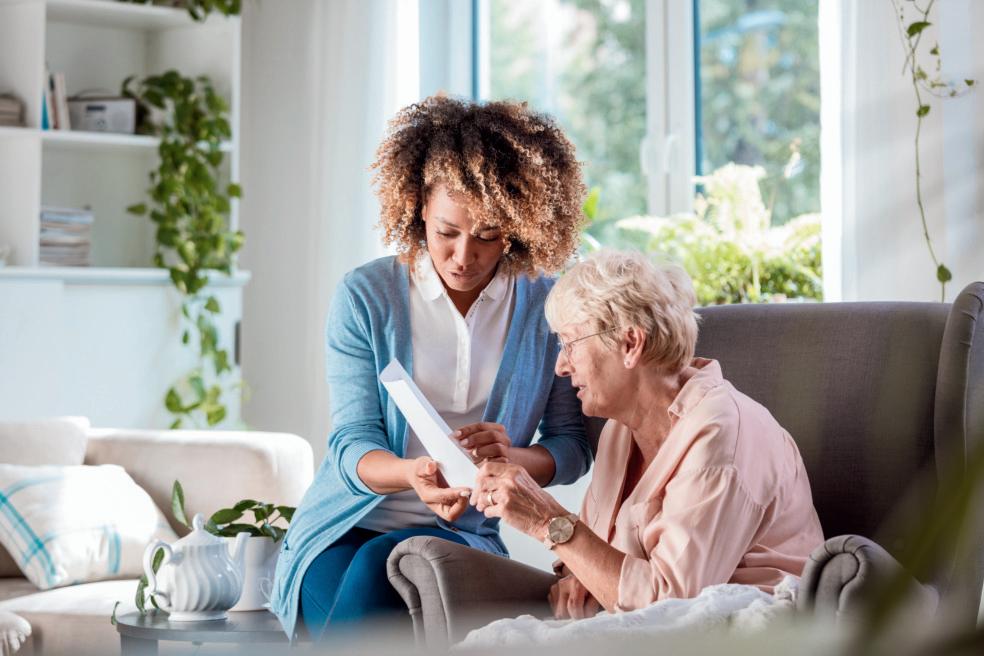
Your resource for skilled nursing and long-term care discharge coordination.
Ask about our specialty care including Physical Therapy, Occupational Therapy, Speech Language Therapy, Wound Care, Non-Invasive Ventilator, IV Medications, Wearable Defibrillator and Tracheostomy Care. Your resource and long-term coordination.
Skilled Nursing & Therapy 4554 W Main Street 405-366-8800
Holiday Heights Healthcare Center 301 E Dale 405-321-7932
OKLAHOMA CITY
Brookwood
Skilled Nursing & Therapy 940 SW 84th Street 405-636-0626
Capitol Hill
Skilled Nursing & Therapy 2400 SW 55th Street 405-681-5381
Fairmont
Skilled Nursing & Therapy
Memory Care 3233 NW 10th Street 405-943-8366
Kingwood
Skilled Nursing & Therapy 1921 NE 21st Street 405-424-1449
St. Ann’s
Skilled Nursing & Therapy 9400 St. Ann Drive 405-728-7888
Wildewood
Skilled Nursing & Therapy 1913 NE 50th Street 405-427-5414
The Wilshire
Skilled Nursing & Therapy
505 E Wilshire Blvd 405-478-0531
SHAWNEE
The Regency
Skilled Nursing & Therapy 1610 N Bryan Avenue 405-275-9004
STILLWATER
Stillwater Creek
Skilled Nursing & Therapy 1215 W 10th Street 405-372-1000
TECUMSEH
Heritage
Skilled Nursing & Therapy
201 W Walnut Street 405-598-2167
• Open visitation, you’re welcome anytime and Wi-Fi for Face-Time visits
• Dedicated program director coordinating activities
• Secure community with full video surveillance and 24/7 emergency response system
• Three chef-prepared, dietician-approved meals daily and snacks provided.
• Full service, on-site salon
• All inclusive care
“Amazing facility and amazing staff that go above and beyond for all the residents. The staff treat the residents as their own family!” - Robert C.
Hello Friends,
America turns 250 this year, and Oklahoma has a front-row seat to what it means. In this issue, you will meet Oklahomans who are choosing to serve and give back to their communities with purpose. We are honored to feature the Sons of the American Revolution and the Daughters of the American Revolution, whose work keeps the founding story alive in classrooms and communities across our state.
In 1776, our founders wrote that we are endowed by our Creator with certain unalienable Rights, that among these are Life, Liberty and the pursuit of Happiness. That one word still holds the whole promise. Pursuit. Not a guarantee handed down, but an invitation that never expires. It is a verb we get to live out every day.
That verb is the heartbeat of Caregiver Magazine, and it is why we host Better With Age FunDays, where age is honored as experience rather than limitation. We believe every person is created with dignity and made for momentum, not just memory.
The pursuit is evident when a 70-year-old senior decides to join a Healthy Living Center and invest in their health. A caregiver starts a support group at church. We see it at 82, when a grandfather teaches his granddaughter to two-step. We see it when a recent widower starts a Bible study in the activity room of an assisted living community. These moments rarely make headlines, but they are how liberty stays alive.
At 250, America is not old. It is old enough to know better and young enough to keep moving forward, a shining city on a hill for future generations. Our best is yet to come. You can still begin new endeavors, no matter your age. You can serve when it would be easier to sit out; dance when your knees ache; and build when others say to slow down. The pursuit of a better tomorrow never retires.
Thank you for reading, for serving, and for showing up at community centers, VFW kitchens, and church halls across Oklahoma. You prove every day that happiness is still worth the chase and that America’s best days are still ahead. It is never too late to leave a legacy to be proud of. May the Lord bless you and your family. Here’s to the next 250. Our pursuit continues.
Sincerely,
LaShanya L. Nash
Publisher
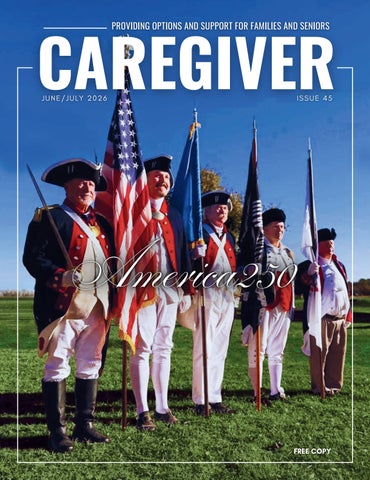
ON THE COVER:
P.O. Box 721673
Oklahoma City, OK 73172
EDITORIAL
Editor-In-Chief
LaShanya Nash
Art Director
Angela Blake
Writers
Lisa Sydnor
Kathy Cocks, RN
Angela Blake
Shelley Stutchman
Emberlee Nash
Sgt. Tara Hardin
Charles Lillard
Danna Szymanski
LaShanya Nash
Larry Stein
Daron Hoggatt
Stephen A. Martin
Contributing Photographers
Emberlee Nash
LaShanya Nash
Jessie Newell
Community Outreach
Lisa Sydnor
405-314-7840
l.sydnor@betterwithageok.com
Layout Wise Marketing
ADVERTISING
To advertise contact:
Publisher
LaShanya Nash
405-532-6057
l.nash@betterwithageok.com
ACCOUNTING
Andrea O’hair
FREE HELP Exploring Senior Care And Housing Options FREE HELP Exploring Senior Care
How to get started...
We will meet with you or complete a brief assessment over the phone.
Discuss what type of community and locations best meet your needs.
Review financial resources and identify communities that fit your budget.
Schedule and accompany you on tours to help evaluate the offerings of each community.
We help coordinate the movein and follow up as you settle into your new home.
Searching for Senior care housing can be overwhelming.
Explore your options with an experienced, credible, and unbiased guide.
No cost, that's right! Absolutely FREE, personalized service to help you find the best senior living solution for you.
More Than a Uniform: How Living History Builds Connection Across Generations
By Stephen A. Martin
The Sons of the American Revolution aren’t just remembering the past. They’re showing up for the present.
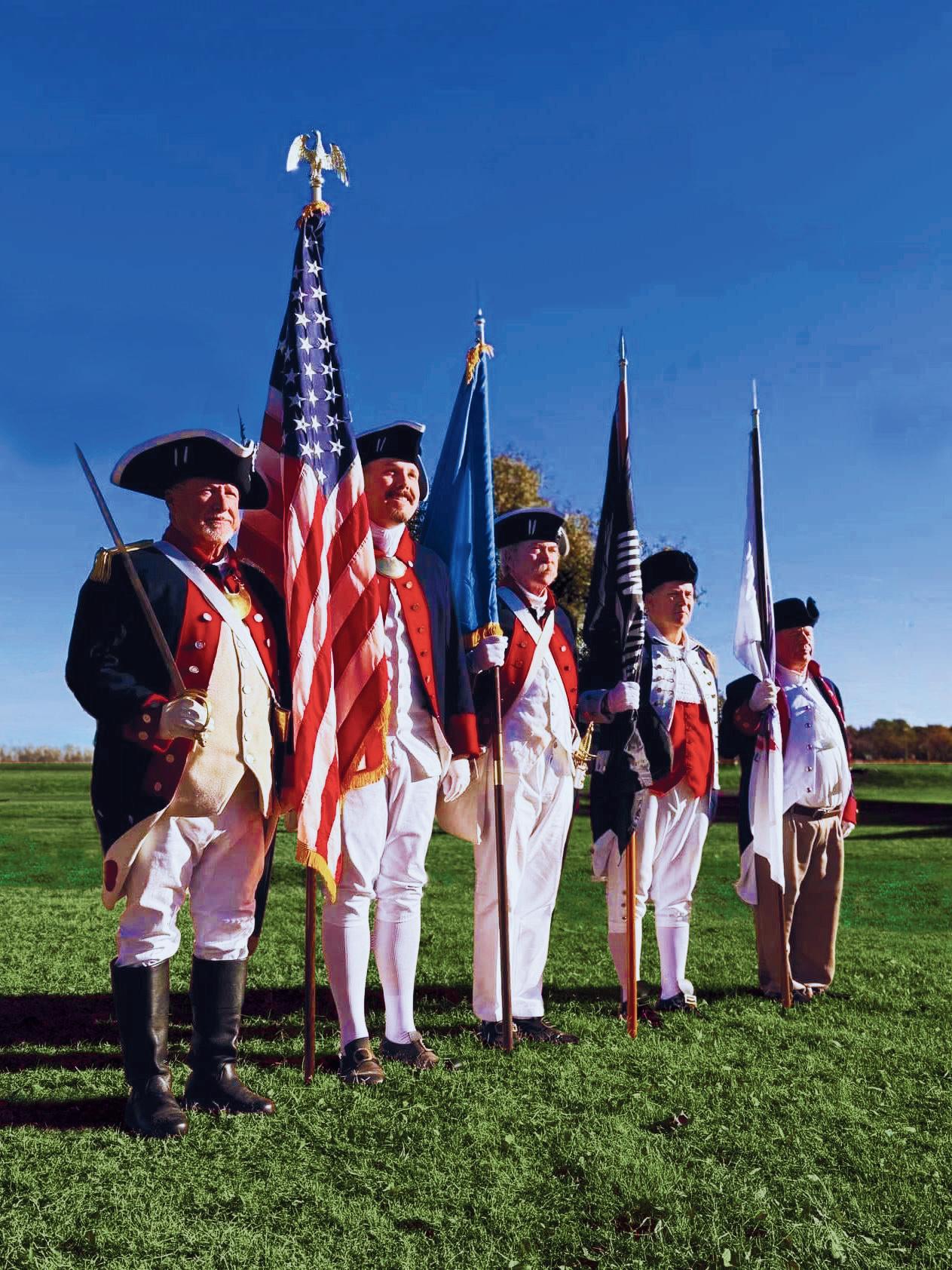
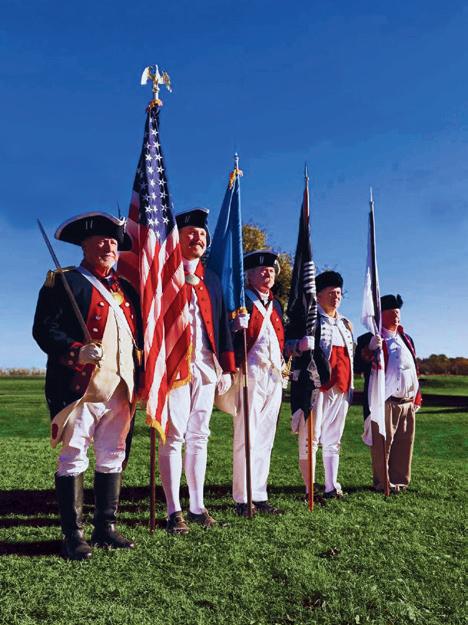
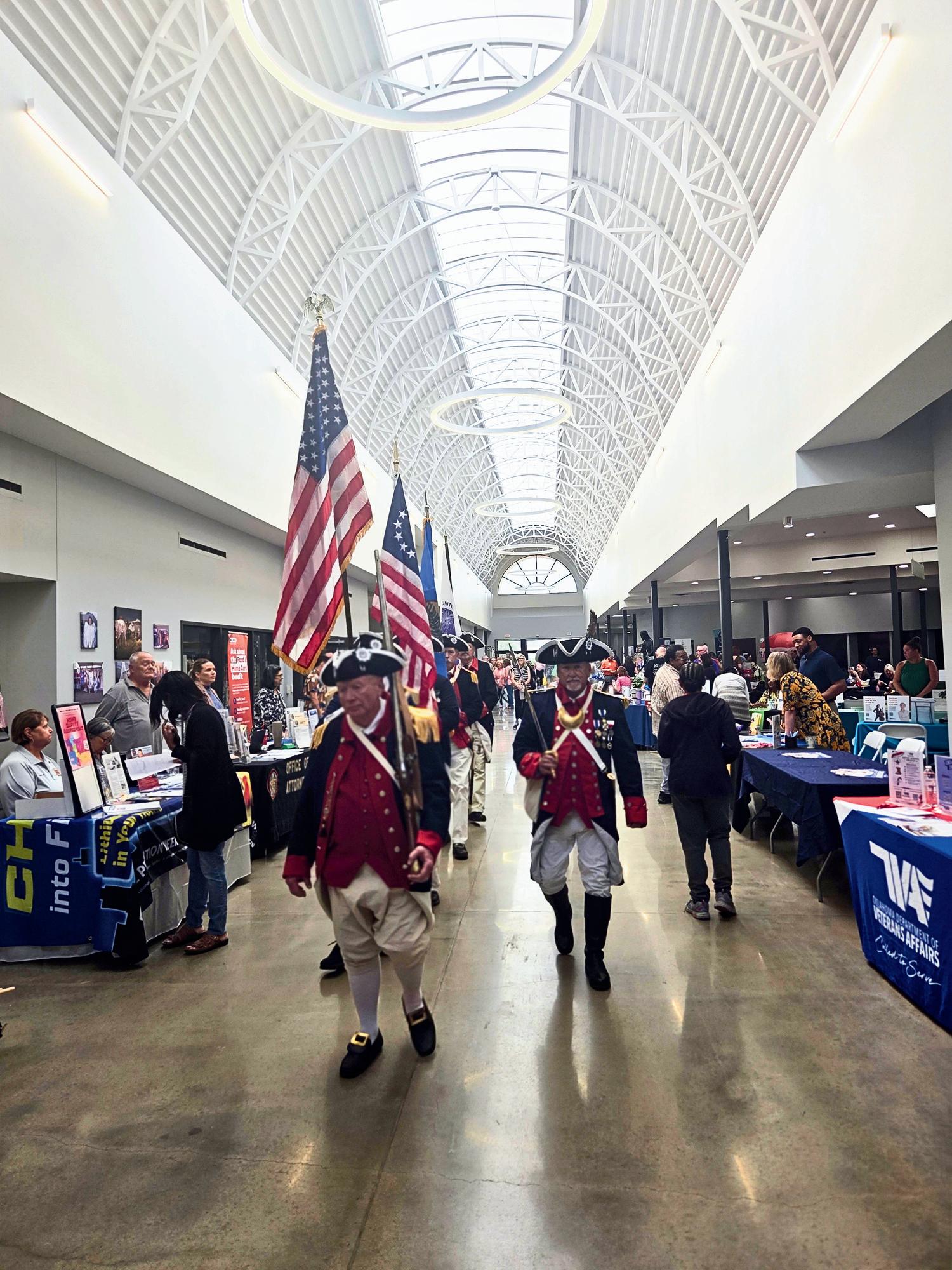
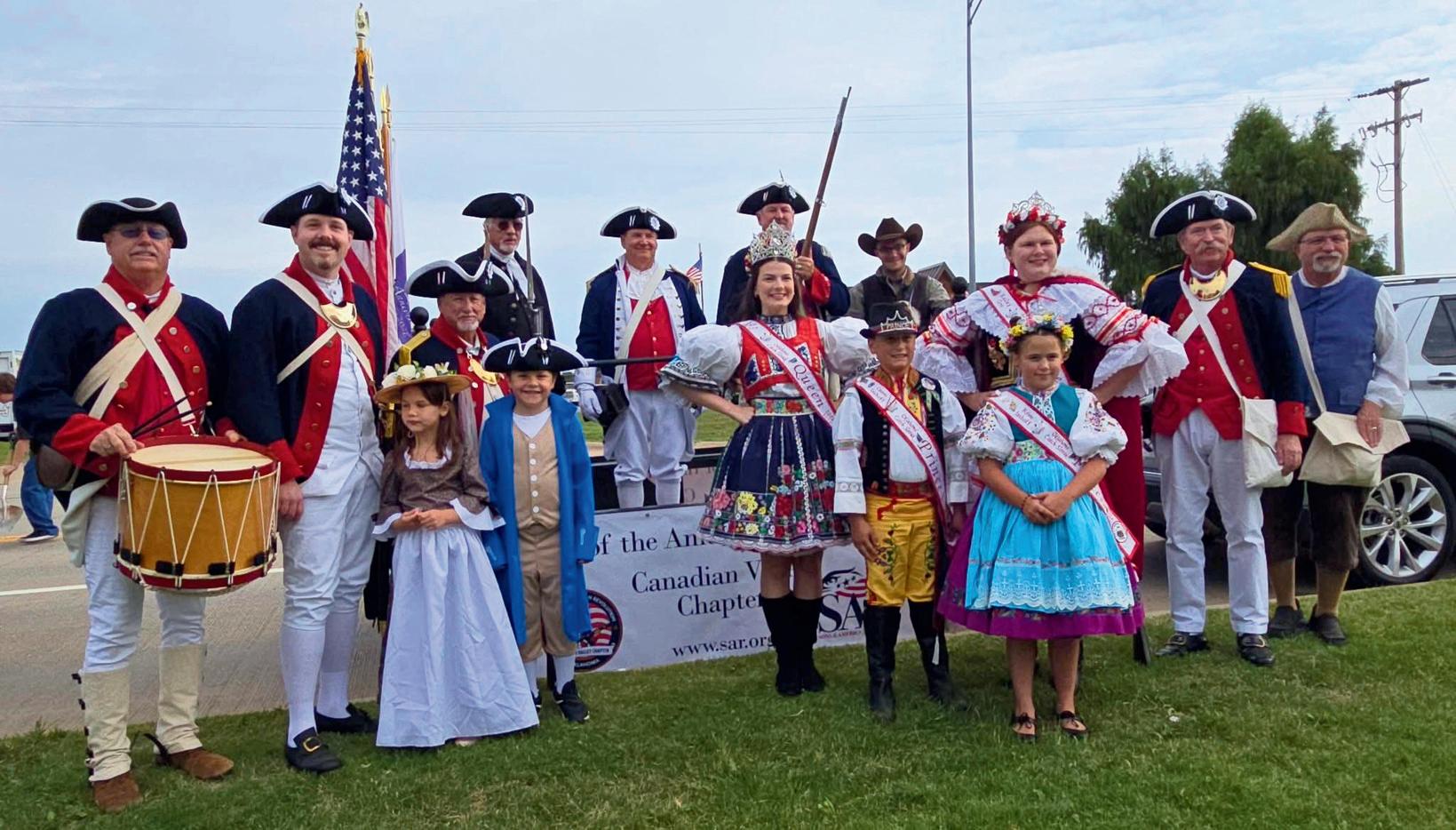
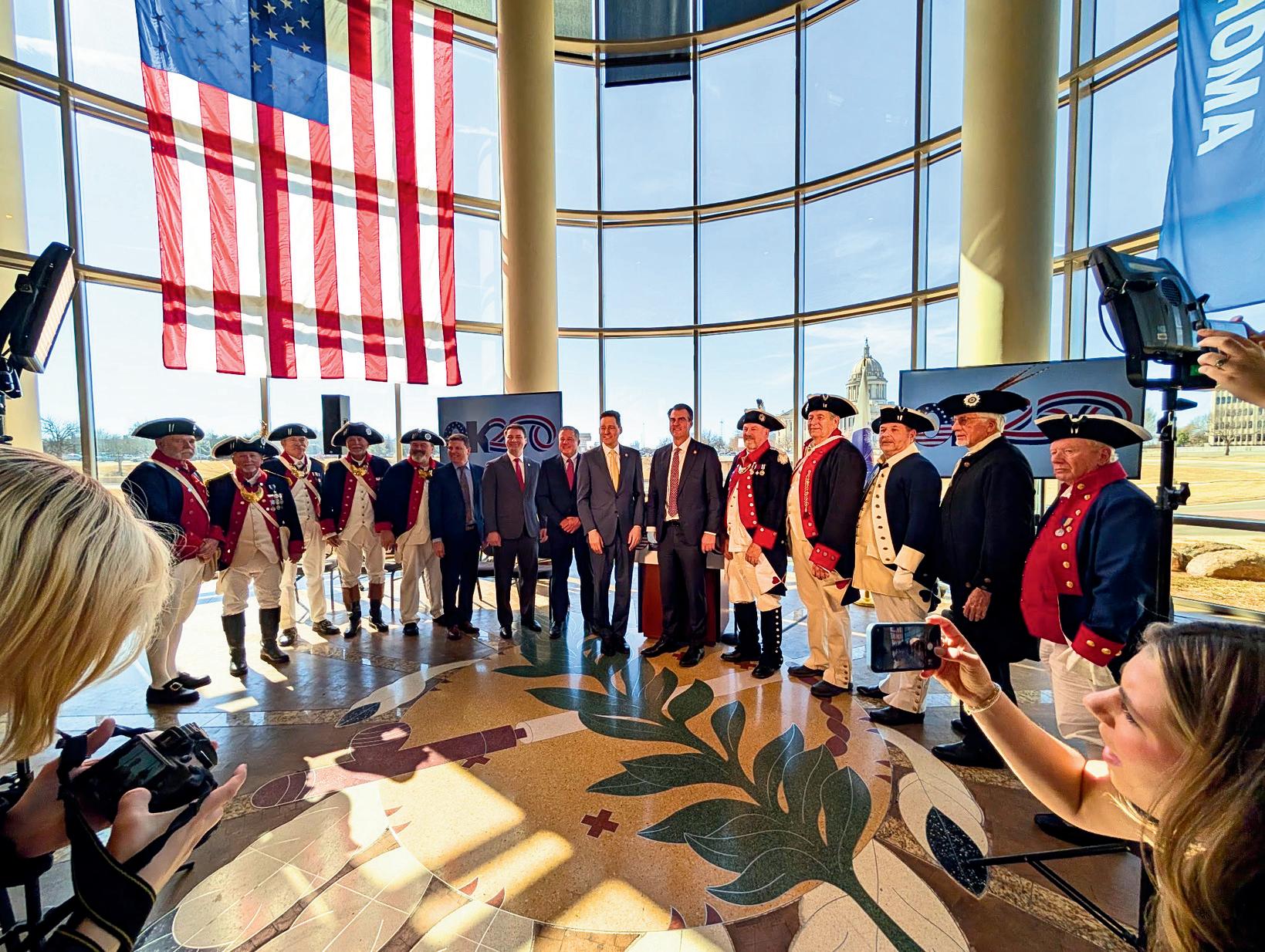
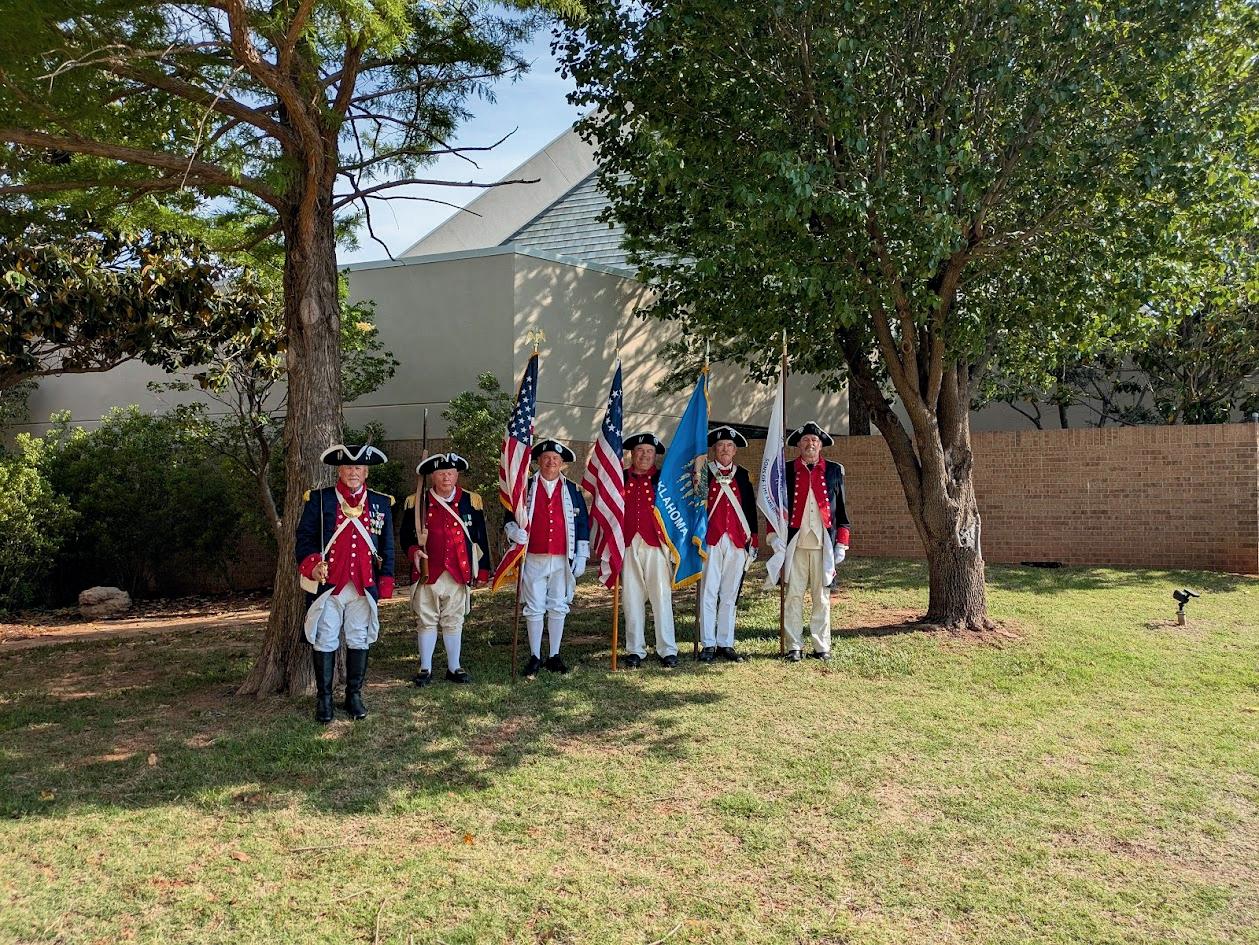
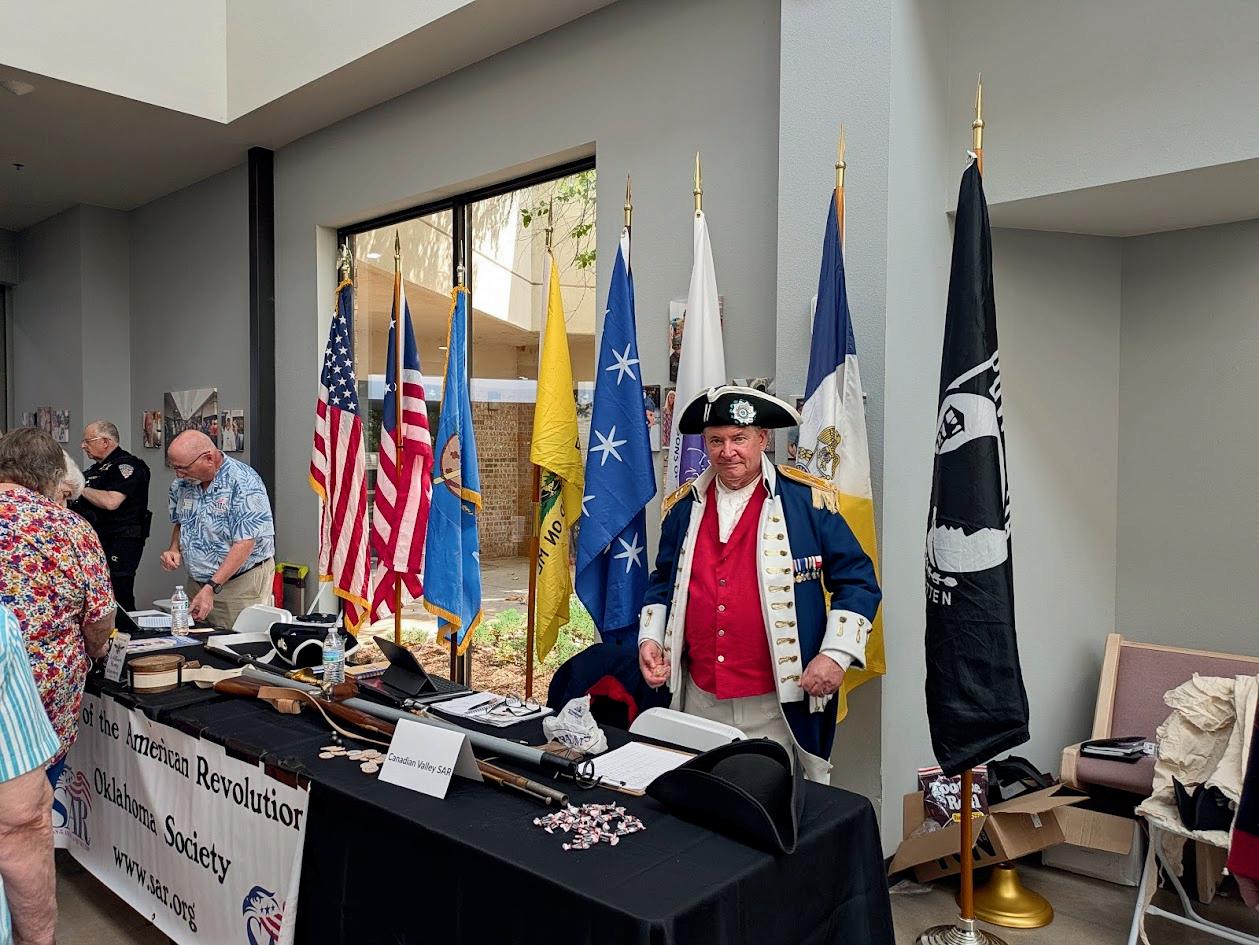
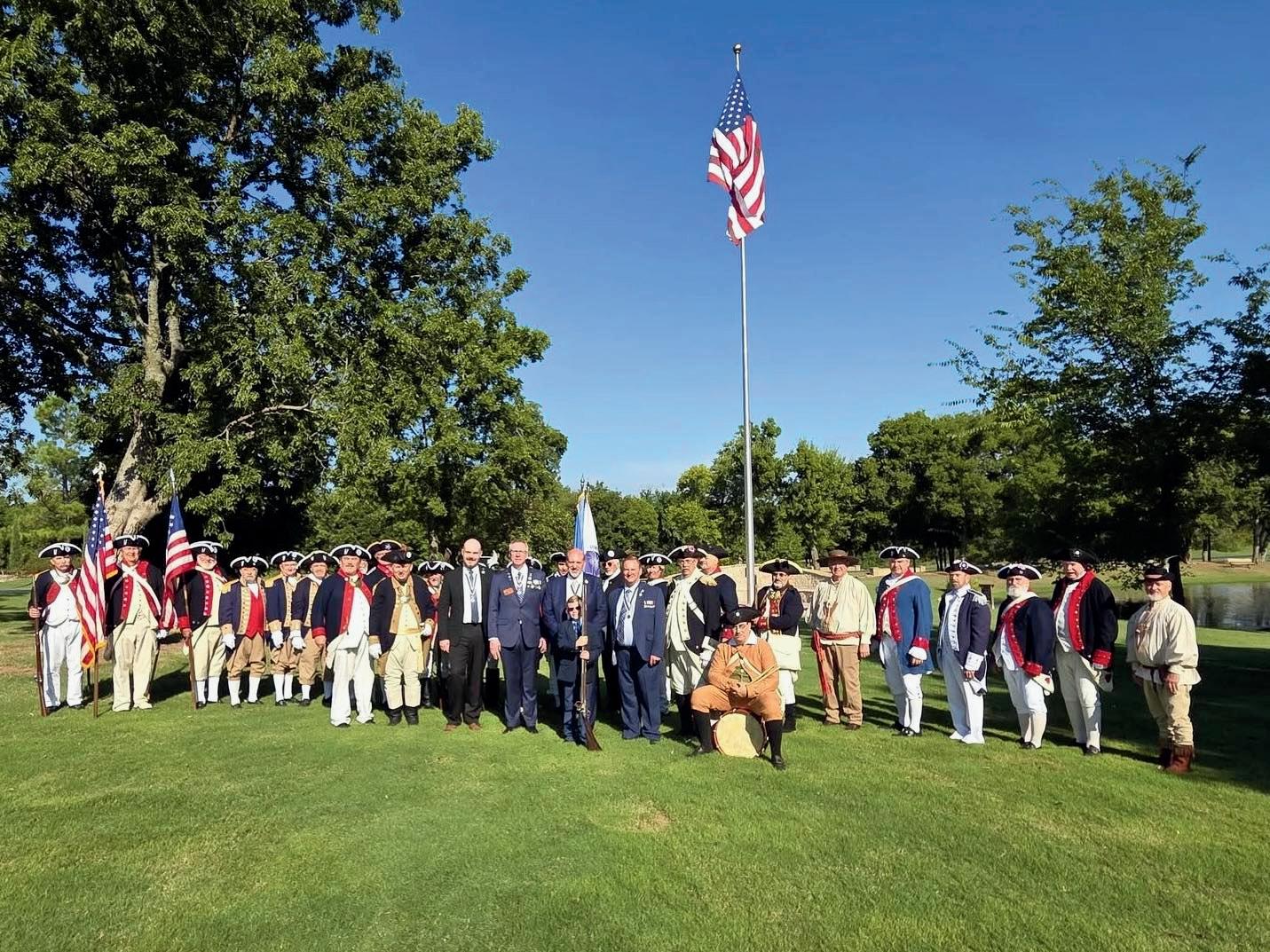
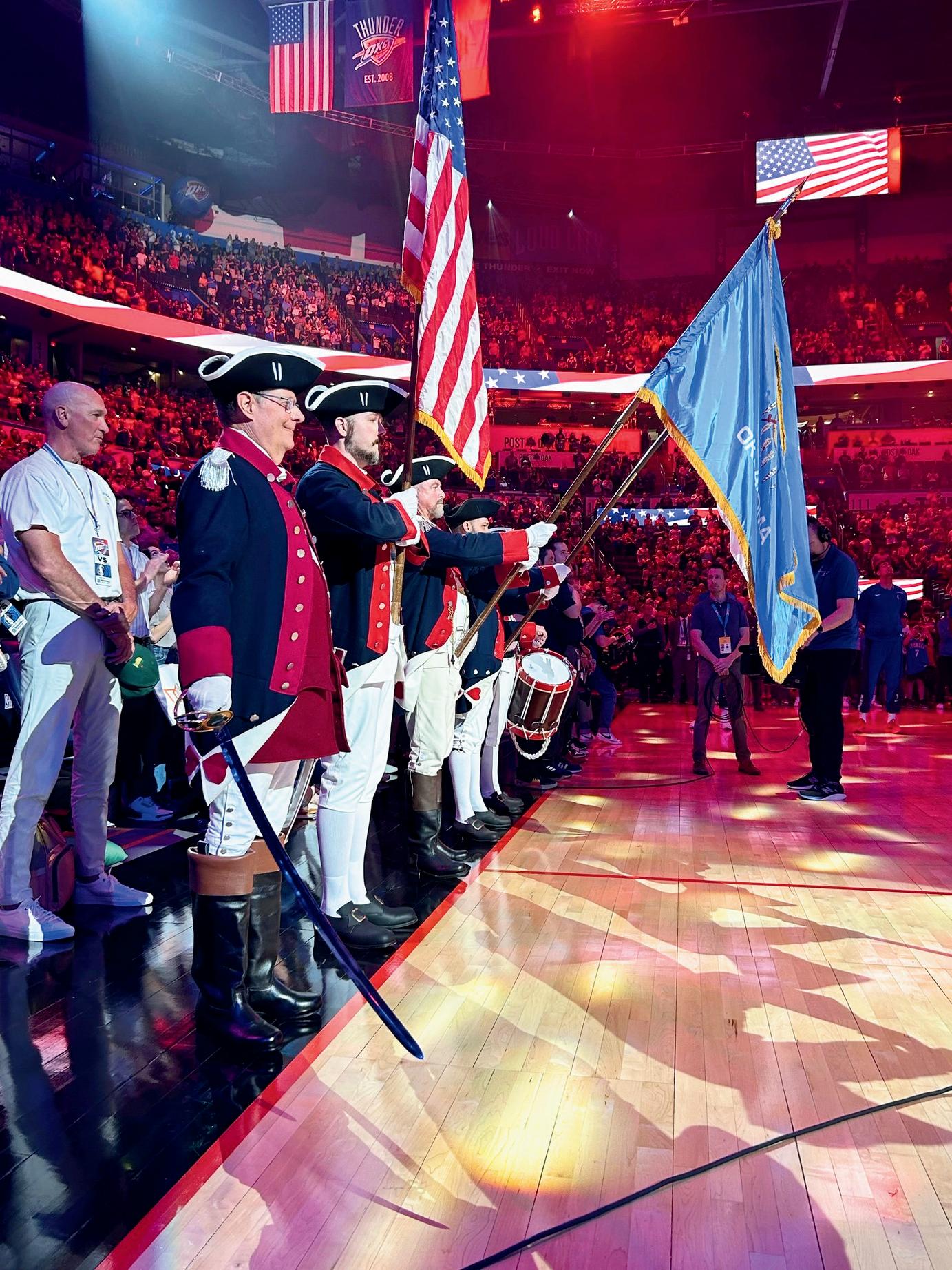
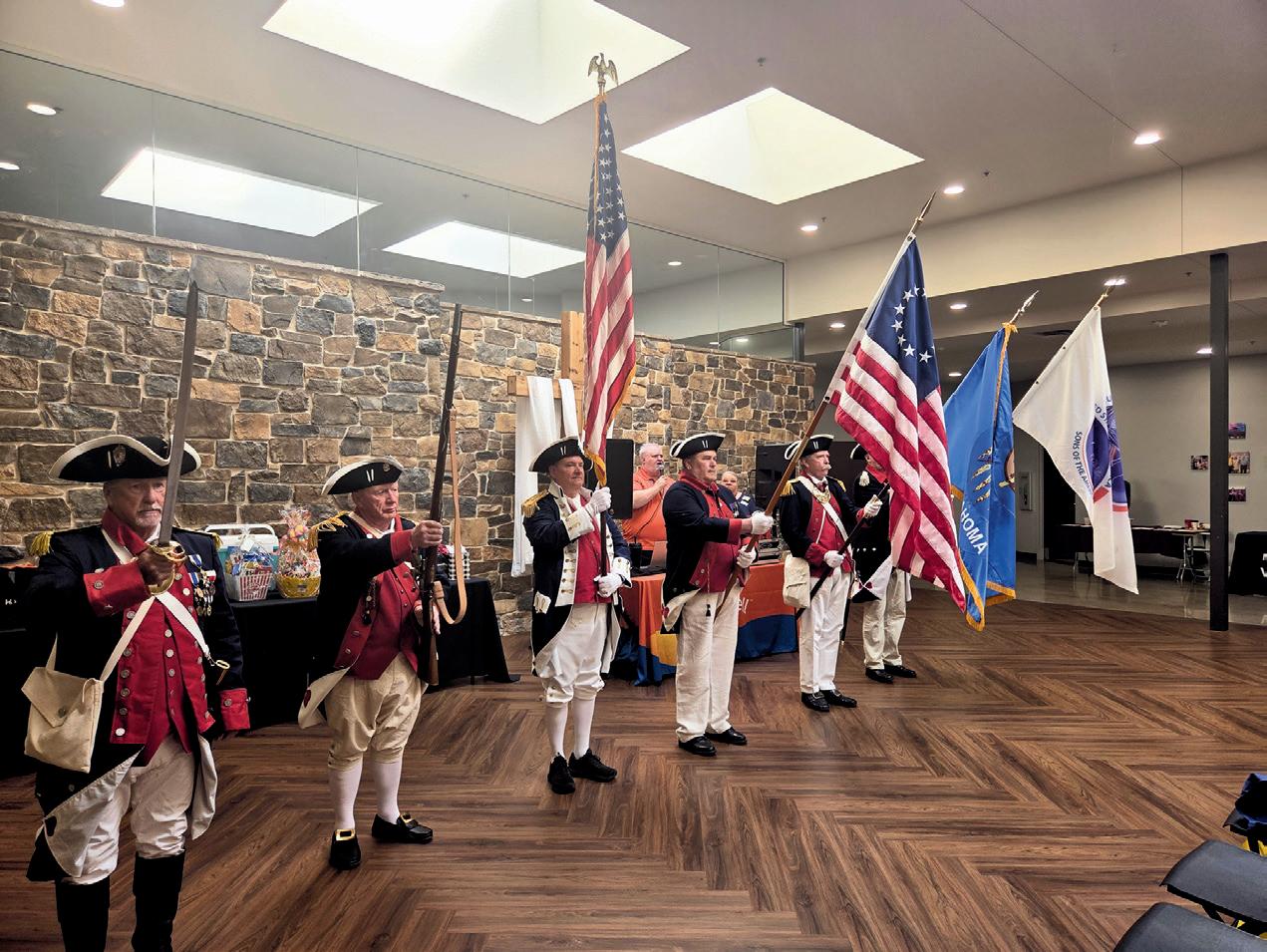
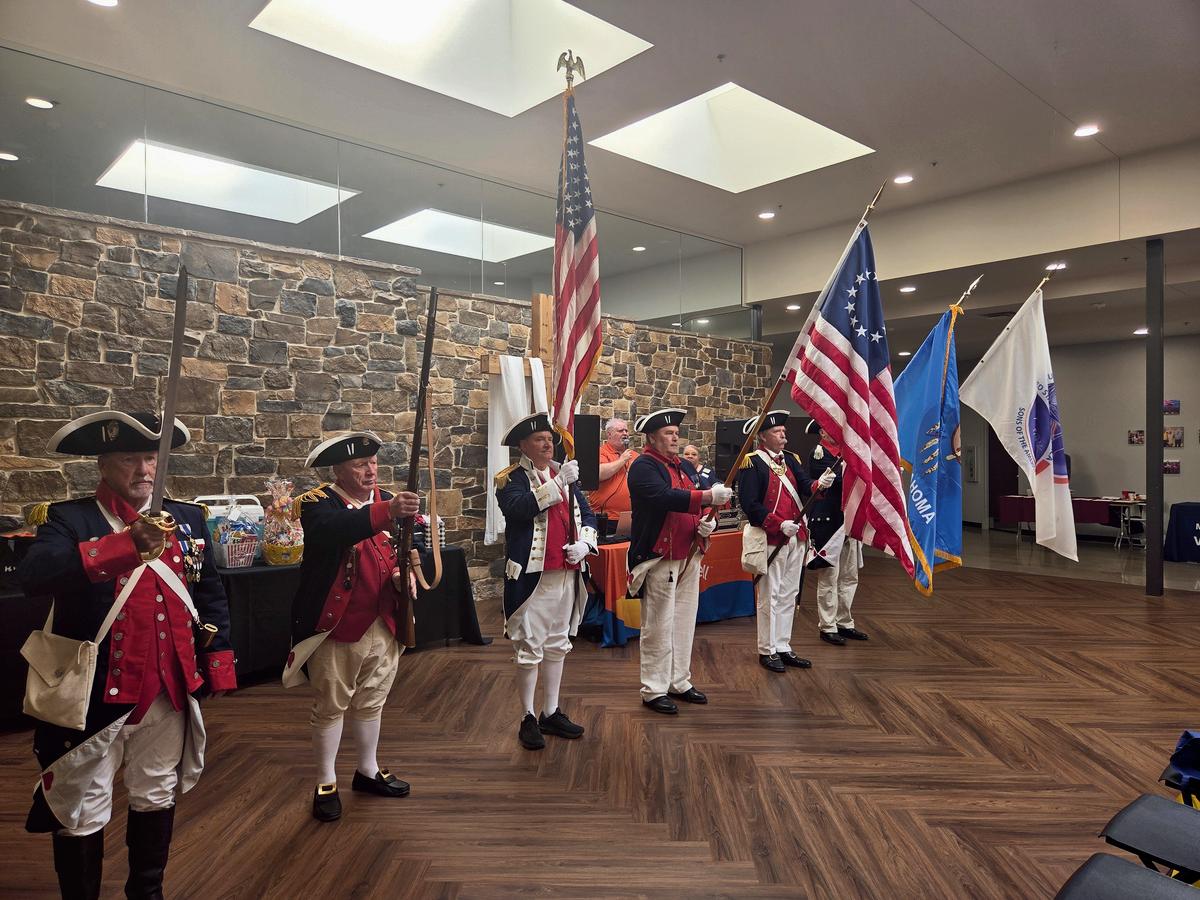
The room quieted as the first flag entered. A line of men in blue and red coats moved in step across the polished floor, muskets at rest, eyes forward. Conversations softened. Heads turned. For a moment, the bustle of Better With Age FunDay gave way to something older: measured, ceremonial, deliberate. The colors were posted. The ceremony ended. And just as quickly, the room exhaled and returned to life. But the men who had just marched in weren’t going anywhere. They rarely do.
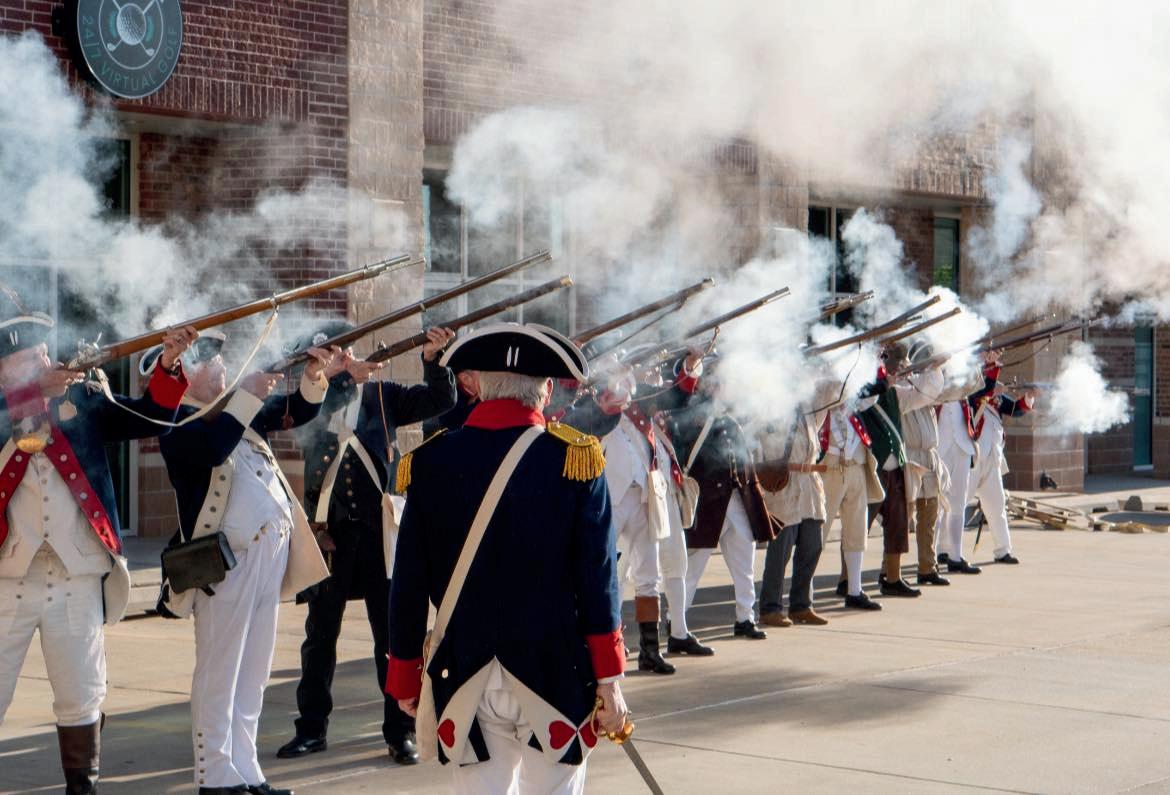
Across Oklahoma, members of the Sons of the American Revolution — often referred to simply as SAR — have become a familiar presence at community events, veterans’ ceremonies, schools and parades. What began in many places as a small group focused on lineage and remembrance has evolved into something more active, more visible and increasingly in demand. “We thought last year we might have an easy summer,” said Mike Williams of Yukon, vice president of the Canadian Valley chapter and the state’s Color Guard Commander.
“That wasn’t the case. We were busy all summer long.”
Between the Oklahoma City and Canadian Valley chapters alone, Williams said, members participated in more than 150 events last year. Across the state, the organization now includes about 360 members in seven chapters, with two new chapters formed in the past two years. That growth, leaders say, wasn’t optional. “If we didn’t do something about growth and expansion, we were going to age out,” said Craig Crow of Deer Creek, the state society’s first vice president and chair of its Growth and Expansion Committee. “Basically, the society would die in Oklahoma.” Instead, it’s doing the opposite.
SHOWING UP
At its core, the organization’s work is simple: When people call, they show up. “If somebody calls, we do our best,” Williams said. “Retire flags, musket salutes, funerals — you name it.” That means presenting the colors at community events like Better With Age FunDay. It means marching in parades on the Fourth of July. It means visiting schools, working with Scout troops and demonstrating how to properly retire a worn American flag.
the public ceremonies. “We try to do everything we can to honor them,” Williams said of veterans.
MORE THAN CEREMONY
While the uniforms and muskets draw attention, much of the organization’s work happens in quieter ways. At a table near the entrance to Better With Age FunDay, Tom Thompson of Oklahoma City sat with a laptop, helping visitors trace their family histories. As a genealogist and registrar, he helps determine whether someone can join SAR by identifying a qualifying ancestor from the Revolutionary War era.
A “patriot,” he explained, isn’t limited to someone who fought in battle. “They could supply goods, give moral support, pay taxes,” Thompson said. “One of the more interesting ones was a man who qualified because his ancestor gave six hogs to the Continental Army.”
like Canadian Valley, which launched in late 2024 and has already grown from a handful of members to several dozen. Together, they represent both continuity and change.
A VISIBLE PRESENCE
Part of that change has been a shift toward greater public visibility. “When I took over, we did flags, and that was it,” said Joe Sieber of Oklahoma City, president of the Oklahoma City chapter and a retired U.S. Army colonel. “I said, no — we’ve got to do more.”
Today, that “more” includes musket teams, saber ceremonies and even the development of an artillery unit. Members present colors at sporting events, including Oklahoma City Comets baseball games, and participate in rodeos, state ceremonies and historical demonstrations.
“It’s all volunteer,” Sieber said. “And it’s no cost to the people who ask us to come.” The color guard, he added, has become “the face of the organization” and the most visible way the public encounters SAR. That visibility often leads to something unexpected: connection. At naturalization ceremonies for new U.S. citizens, members regularly stay long after the formal proceedings end, posing for photos with people celebrating their new status. “They line up,” Sieber said. “And they want pictures with descendants of the patriots.”
TEACHING THE NEXT GENERATION
Education is another key part of the group’s mission, though members say it comes with challenges. “In parades, we used to hear kids say, ‘Here comes George Washington,’” said Henry Baer of Oklahoma City, president of the Oklahoma Society. “Now we hear, ‘Here come the pirates.’” The comment drew laughs, but it also underscored a concern. “Education of youth is important,” Baer said.
Members visit classrooms, work with Junior ROTC programs and partner with Scout troops to teach history in hands-on ways. They demonstrate equipment, explain daily life during the Revolutionary era and guide students through activities like flag retirement ceremonies. The goal, they say, isn’t just to teach facts. It’s to make history tangible. “We let them do it,” Williams said of working with Scouts. “Once they figure out how it’s done, they love it.”
CONNECTION AND PURPOSE
For many members, especially older adults, the work offers something beyond historical interest. “A lot of our members are in their 60s and 70s,” Baer said. “It gets people out doing things. It’s important for your health not to just sit.” That sense of purpose extends to the communities they serve. At hospitals and nursing homes, members bring snacks, cards and conversation to veterans — some of whom have few visitors. “They’re hungry for interaction,” Crow said.
At events like Better With Age FunDay, the impact is visible in smaller ways: a handshake, a conversation, a moment of recognition. For caregivers and families, those moments can matter.
LONG-TERM CARE INSURANCE
Free policy review to understand your claim
VETERAN ASSISTANCE
Understand & claim your VA benefits
IN-HOME CAREGIVER SERVICES
Personal Care
Companionship
Meal Preparation
Exercise Assistance
Light Housekeeping
Medication Reminders
Transportation Services
Bathing & Dressing Assistance
250 Year Anniversary
UNITED STATES OF AMERICA
THE WORK BEHIND THE SCENES
Not all of that work happens in uniform. Members of the organization’s women’s auxiliary help with logistics such as setting up events, preparing food, coordinating activities and documenting everything with photos. “We help in any way they need,” said Sarah Messer of Oklahoma City.
The auxiliary, formed just last year, reflects the same growth seen in the SAR chapters themselves. Like the men in uniform, its members participate in parades, ceremonies and community outreach. Sometimes they wear period clothing, sometimes not. “I just step in and help where I can,” Messer said.
CARRYING IT FORWARD
Back at Better With Age FunDay, the color guard had finished its work, but the members remained: talking with attendees, answering questions, posing for photos. For them, the ceremony is just the beginning. “We’re just trying to put our best foot forward for patriotism,” Williams said. “And let people know there were those who gave their lives for this country.”
In a room filled with seniors, caregivers and families, that message resonated not as a lesson from the past, but as something still unfolding in the present. And as the crowd moved on to the next activity, the men in uniform stayed a while longer. Because someone might need them. And if they’re called, they’ll show up.
•
•
•
•
•
•
•
•
The Magic of May
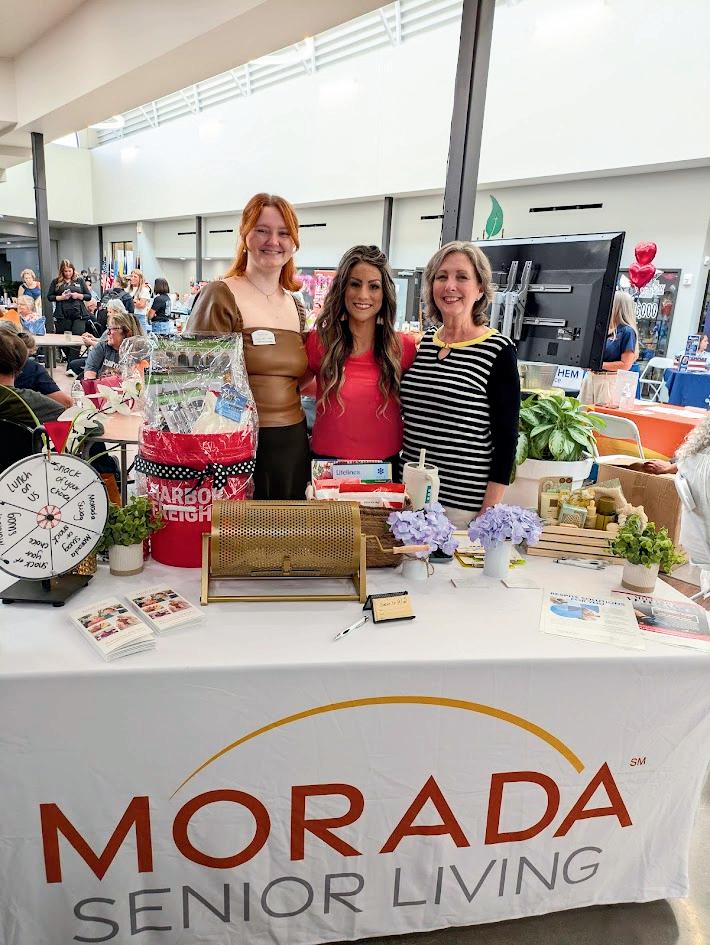
AT MORADA SENIOR LIVING
AT MORADA SENIOR LIVING Every Moment Matters
Where there is family, friendships, great food, and lots of fun!
Where there is family, friendships, great food, and lots of fun!
It’s
Now’s the perfect time to explore all that Morada has to offer during this new
Meet friendly residents and a compassionate, dedicated team
Explore beautiful living spaces and thoughtfully designed amenities
Enjoy a freshly prepared lunch or dinner in a warm, welcoming setting
Whether considering options for a loved one or exploring the next chapter in life, there’s nothing like experiencing Morada firsthand — where comfort, community, and care come together.
and Healing Home: The Story Behind
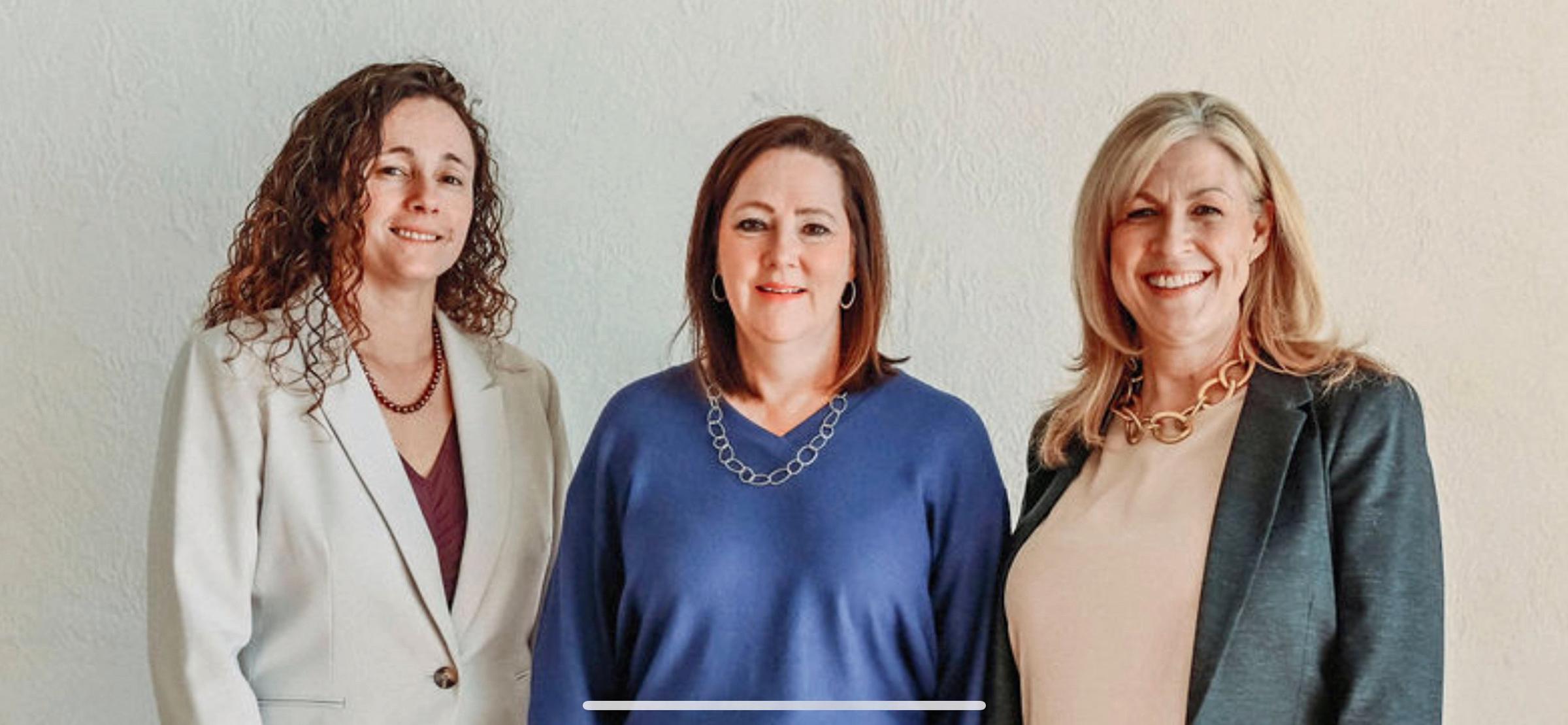
Principle Choice Home Healthcare (PCH) was founded on a simple, heartfelt commitment: to serve people through Compassion, Advocacy, Respect, and Excellence. For Amy Carbajal, President and co-owner of Principle Choice Solutions, the parent organization of PCH, that vision was shaped by more than two decades of healthcare leadership across both military and private sectors.
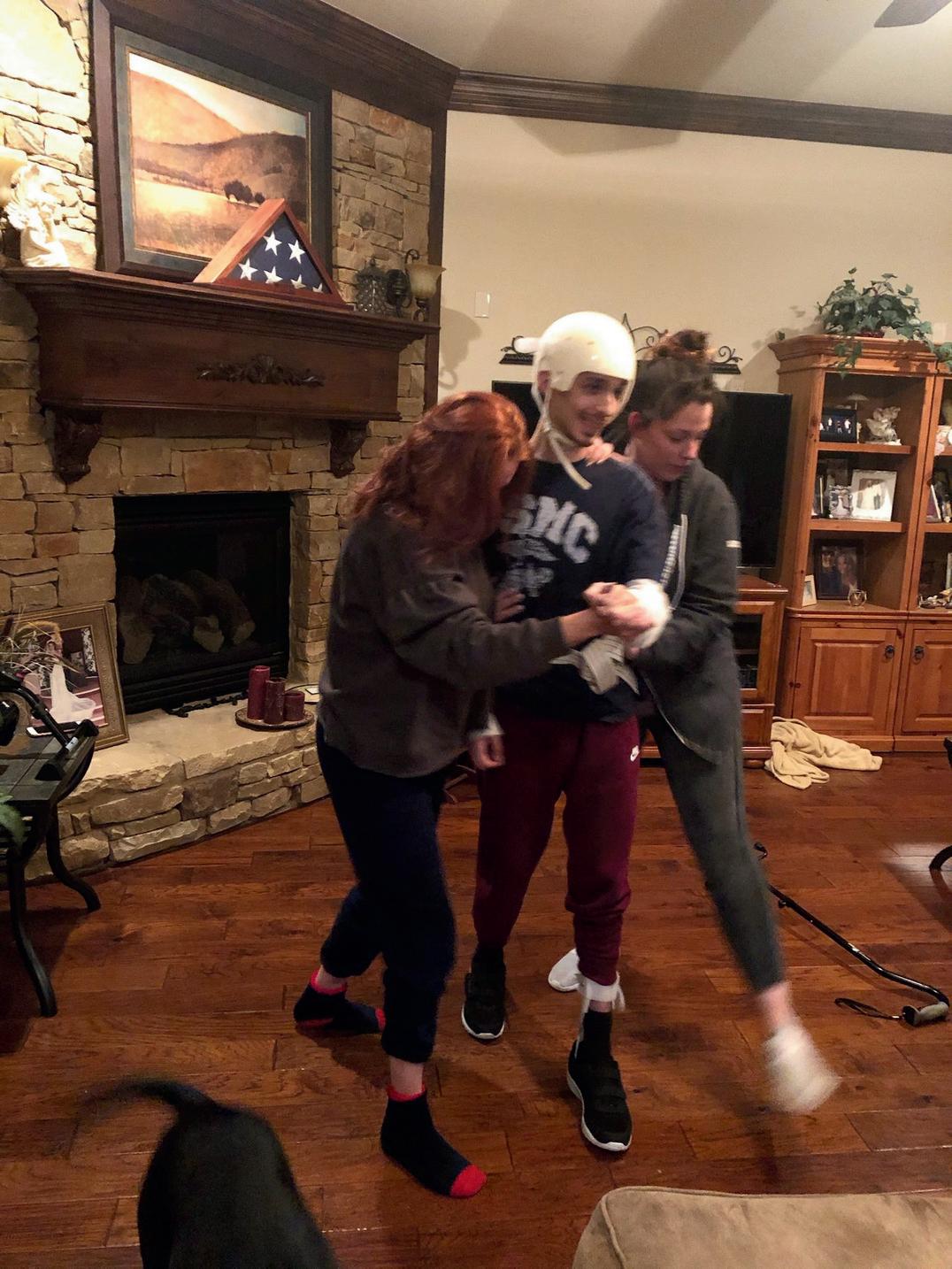
She understood the operational side of healthcare, but in 2020, the mission became deeply personal when her son, Jacob Carbajal, experienced a significant, life-changing medical event. As their family needed support at home, Amy saw the weight caregivers carry, the gaps families often face, and just how essential caregivers are to successful outcomes.
That experience brought the need for compassionate home healthcare into sharper focus. Amy played an instrumental role in bringing PCH to life in Oklahoma, supported by Annamary Soller-Johnson, Theresa Newbold, Daniel Coleman, and many others who helped lay its foundation.
For both Amy and her business partner, Dan Coleman, personal family health experiences gave the work deeper purpose and strengthened their shared commitment to building services that would make a lasting difference for families and caregivers.
What emerged was more than a home health organization. It was a promise to serve people with dignity, to advocate for them when their voices may feel unheard, and to provide support that feels personal, trustworthy, and grounded in respect, all within the comfort of home. It became a reflection of what care can look like at its absolute best, helping redefine what home health can be.
Annamary, President of PCH, has been one of the defining forces behind its strength, growth, and heart, helping turn intention into action through her leadership. She brings more than 15 years of healthcare experience, along with a rare blend of clinical understanding, operational insight, and lived perspective across the full continuum of care. Her influence extends far beyond process or structure. Her impact continues to be felt in the way PCH shows up for patients, families, and clinicians each day.
From the beginning, the goal was not only to deliver exceptional care, but to create something people could truly feel: support they could trust and care that honors the whole person. In a field often marked by burnout and urgency, there was a desire to build something resilient that still felt personal. Something that could hold excellence and empathy in the same hand. That intention lives on in the stories that continue to define PCH. One of those stories is Jacob’s.
Today, Jacob Carbajal is part of the very work that once met him during one of the most difficult chapters of his life. As a member of the PCH team, he now supports quality services
and marketing, helping to strengthen accountability and connection in what others receive. But for Jacob, home health is far more than a profession.
At just 22 years old, he came to understand how the right support at the right time can become more than care. It can become hope, healing, and a lifeline. His journey taught him patience, grace, and the importance of trusting the loved ones who stand beside us in life’s hardest moments. In many ways, his story became one of the meaningful threads woven into the heart of PCH and all that it continues to stand for.
The PCH story continues through the people who deliver its care and the lives they support, now reaching even further through hospice and palliative care services. It unfolds in quiet moments of healing, in trust built within familiar walls, and in the strength people rediscover in the comfort of home.
KEEPS THE REVOLUTIONARY KEEPS THE REVOLUTIONARY SPIRIT ALIVE SPIRIT ALIVE KEEPS THE REVOLUTIONARY
By Shelley Malicote Stutchman
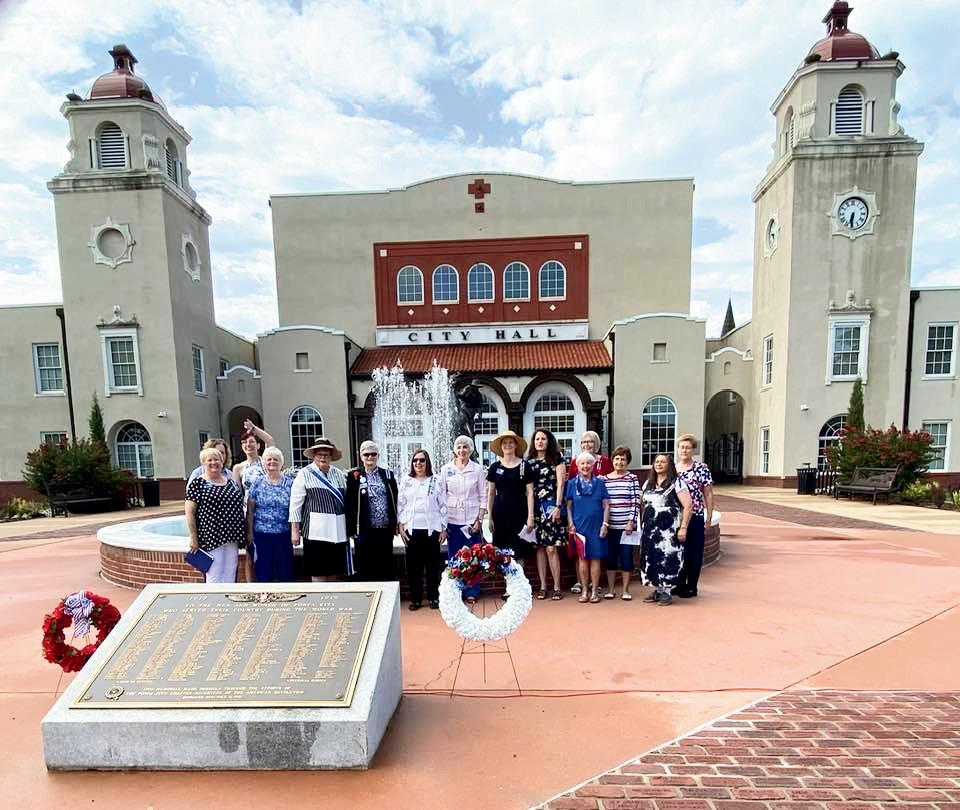
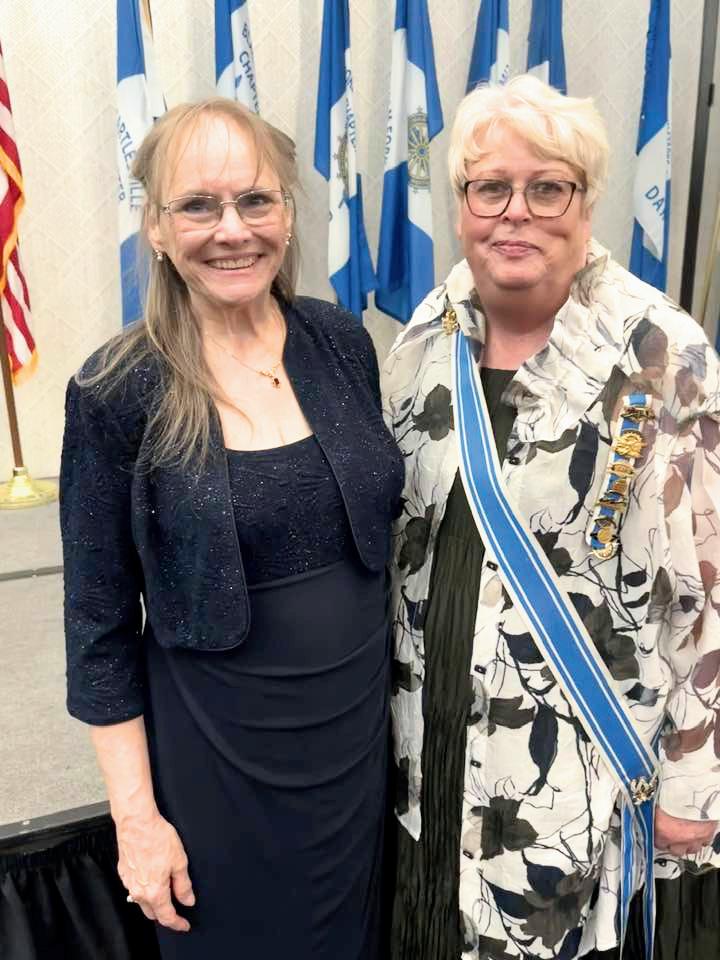
Education. Historic preservation. Patriotism. These are the cornerstones of the Daughters of the American Revolution (DAR), and few people embody that spirit more passionately than Sue Allen, Honorary State Regent and past National Vice President General of the Ponca Chapter DAR, and Faye Kiryakakis of the Enid Chapter DAR.
Founded in 1890, DAR was established after women seeking membership in the Sons of the American Revolution were denied membership. Apparently, telling determined women “No” only fueled their resolve. Today, the DAR owns a city block in Washington, D.C. Its headquarters sits two houses from the White House and was funded entirely by women. The DAR is a non-political women’s service organization. Women 18 years or older who can prove lineal descent from someone who aided in achieving American independence are eligible to join. The organization’s motto is “God, Home, and Country.”
Allen and Kiryakakis emphasized they are sharing their personal experiences as members of their local chapters, not speaking officially for the national organization.
Their chapters stay busy supporting veterans, schools, literacy projects, citizenship celebrations, community preservation efforts, and more. Kiryakakis shared, “We find small ways in which we can make a difference.” For Kiryakakis, genealogy opened the door into history. Her interest began in the 1980s after learning her grandmother had once hoped to become a DAR member. Later, another genealogy enthusiast discovered they were related and shared extensive family research that helped Kiryakakis complete her DAR application.
Allen’s connection to DAR stretches through generations. Her mother joined through her grandfather’s line, and both of Allen’s daughters are now members as well.
"We wear red, white, and blue because we are patriotic," she said. "But we are not a political group. We are a service organization."
Allen wants people to understand an important misconception about the DAR.
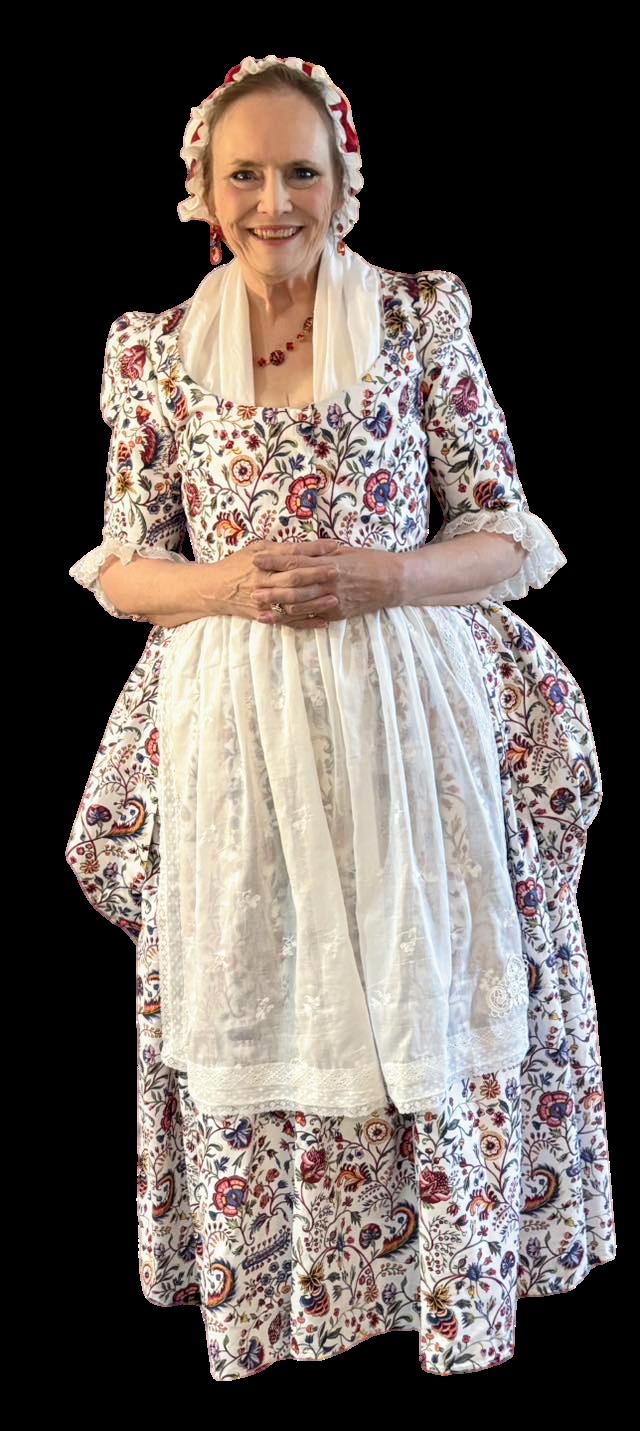
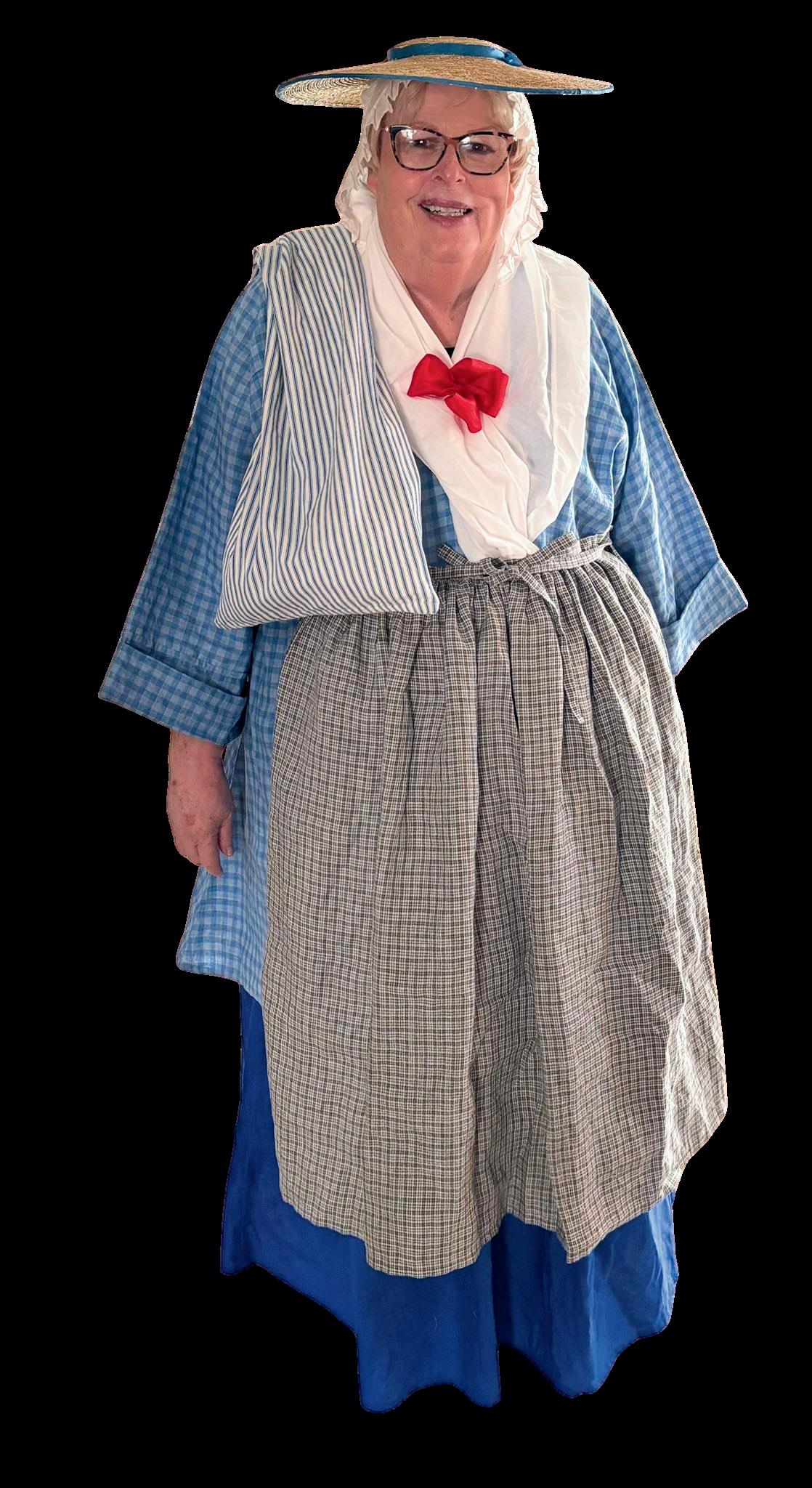
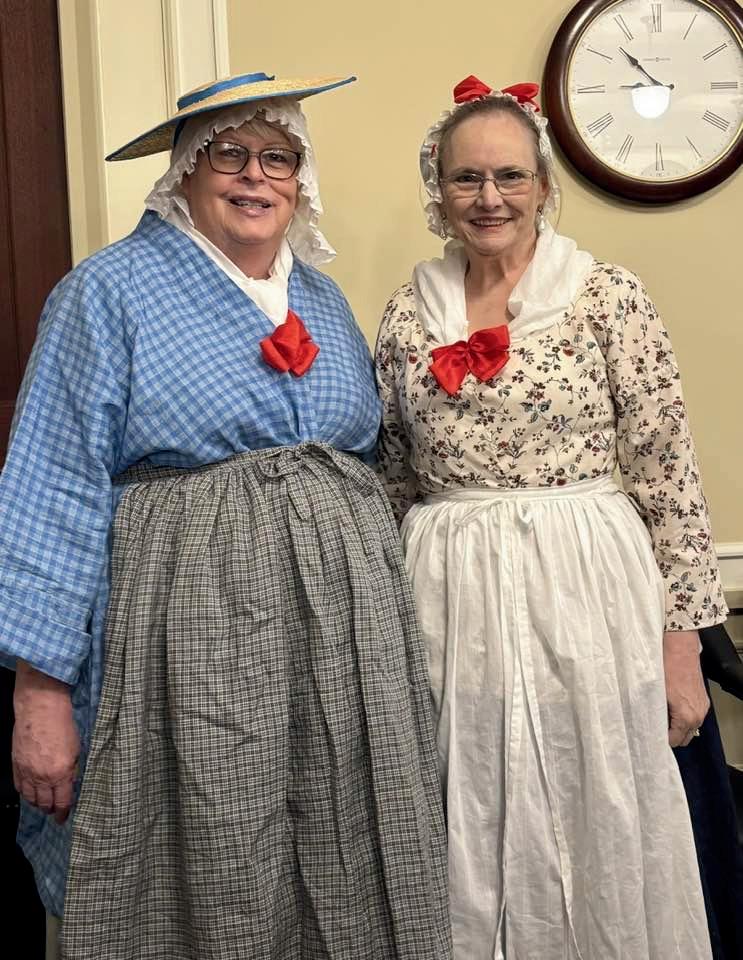
Allen and Kiryakakis are known for dressing in historically accurate Revolutionary War-era clothing while giving presentations on patriotic women and the era's fashion. Kiryakakis creates the costumes. A YouTube series called Historical Sew Along, which explored how 18th-century garments were constructed, sparked her creativity and led her to make the dresses. The three most common fabrics of the era were linen, wool, and silk.
“In 1776, women from all economic classes would often have a silk ribbon on their hats,” Kiryakakis explained. “Narrow silk ribbons weren’t expensive, and they made women feel pretty.”
Research for the clothing comes from paintings, museum garments, estate inventories, store advertisements, and even runaway slave notices.
Allen said, “The dresses were bright. Not muted colors like people assume.”
Kiryakakis added, “I’m having fun making these costumes.”
When I slip on my 1776 dress, I feel ready to fight the battle,” Allen added. “I feel like a Molly Pitcher.”
Medication
Hospital
Companionship
Meal
Assistance
Incontinence
Recording
Drive
Light
Molly Pitchers were women who traveled with the Continental Army, cooking, washing clothes, and helping care for soldiers.
CALLED TO Help Others
Noval SeniorCare is licensed and regulated by the Oklahoma State Department of Health. Noval's experienced staff provides multiple levels of care including sitters and companions, personal care by certified home health aides, 24-hour live-in care, and nursing services by RNs and LPNs.
“
One of the most famous was Mary Ludwig Hayes, who stepped forward to help fire cannons during battle after soldiers fell. “When I put on my costume, I’m transported back to 1776,” Kiryakakis said. “Something happens. You just feel different.”
Kiryakakis explained that women’s clothing of the era was intricately constructed. “There were no zippers yet. Everything was tied or pinned. Pins were an integral part of women’s wardrobes for centuries! It was ingenious.”
Because women owned fewer garments, accessories transformed the appearance of outfits. One day, a woman might wear only a petticoat, while on another day she might add a “false rump” by placing cork padding beneath the corset to alter the dress's shape and make the waist appear smaller.
Allen and Kiryakakis give PowerPoint presentations about patriotic women of the Revolutionary War era and the fashions. Kiryakakis additionally serves as a DAR Museum Correspondent Docent and can present programs connected to the DAR Museum in Washington, D.C.
Allen reflected on the hardships women endured during the Revolutionary War.
“I would ask them, ‘How?’” she said. “How did you survive everything you faced each day?”
Kiryakakis said she would have loved meeting Martha Washington. “She was courageous and gracious. Even though she was an upperclass woman, she visited soldiers in camp. She played an important role in our country.”
As America approaches its 250th birthday, both women hope future generations remember the importance of compromise and understand that freedom is never free. The women believe that if something is worth having, it is worth paying the price for, and that every generation benefits from the sacrifices made by those who came before them.
Through education, service, and history presentations, the DAR continues to preserve the stories of America’s past while inspiring future generations.
To learn more about the DAR, visit the National Society Daughters of the American Revolution website. To schedule a presentation, contact Sue Allen at rcallen1@yahoo.com or Faye Kiryakakis at supersecretary@enid.com.
DAY OF REMEMBRANCE DAY OF REMEMBRANCE
By Jessie Newell
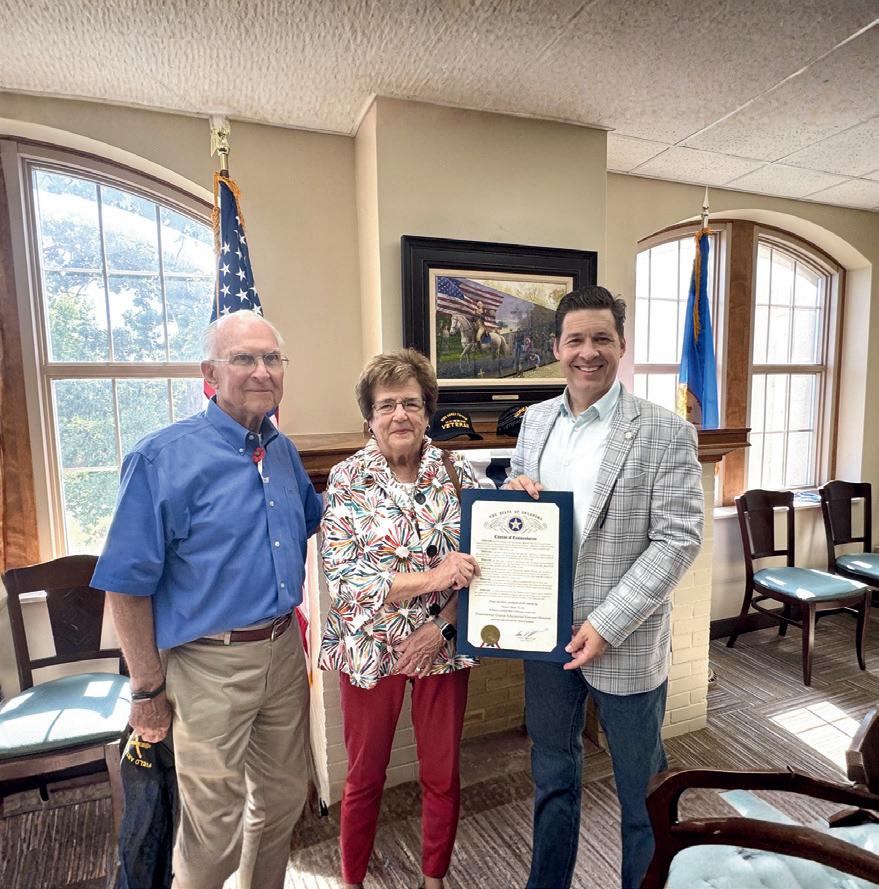
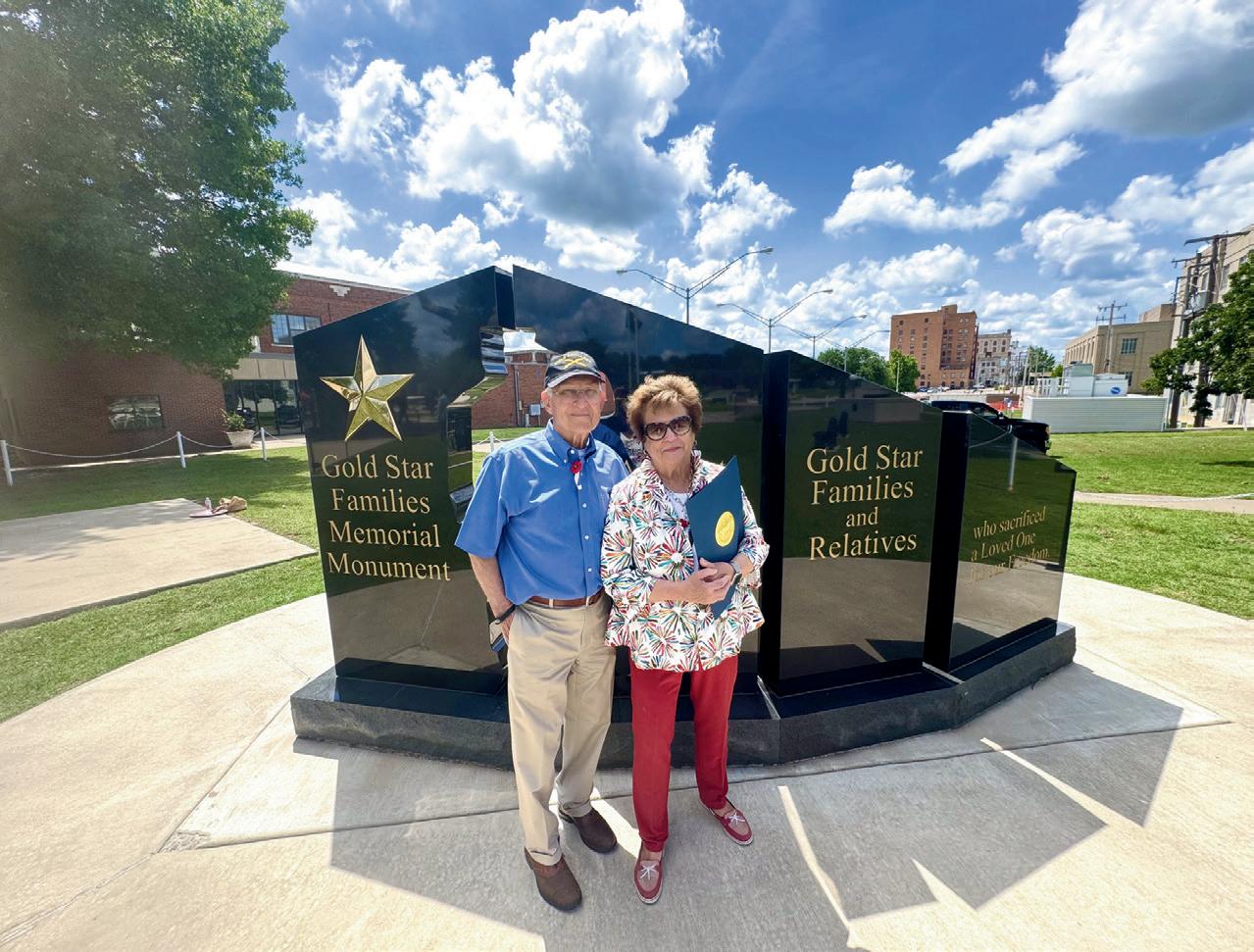
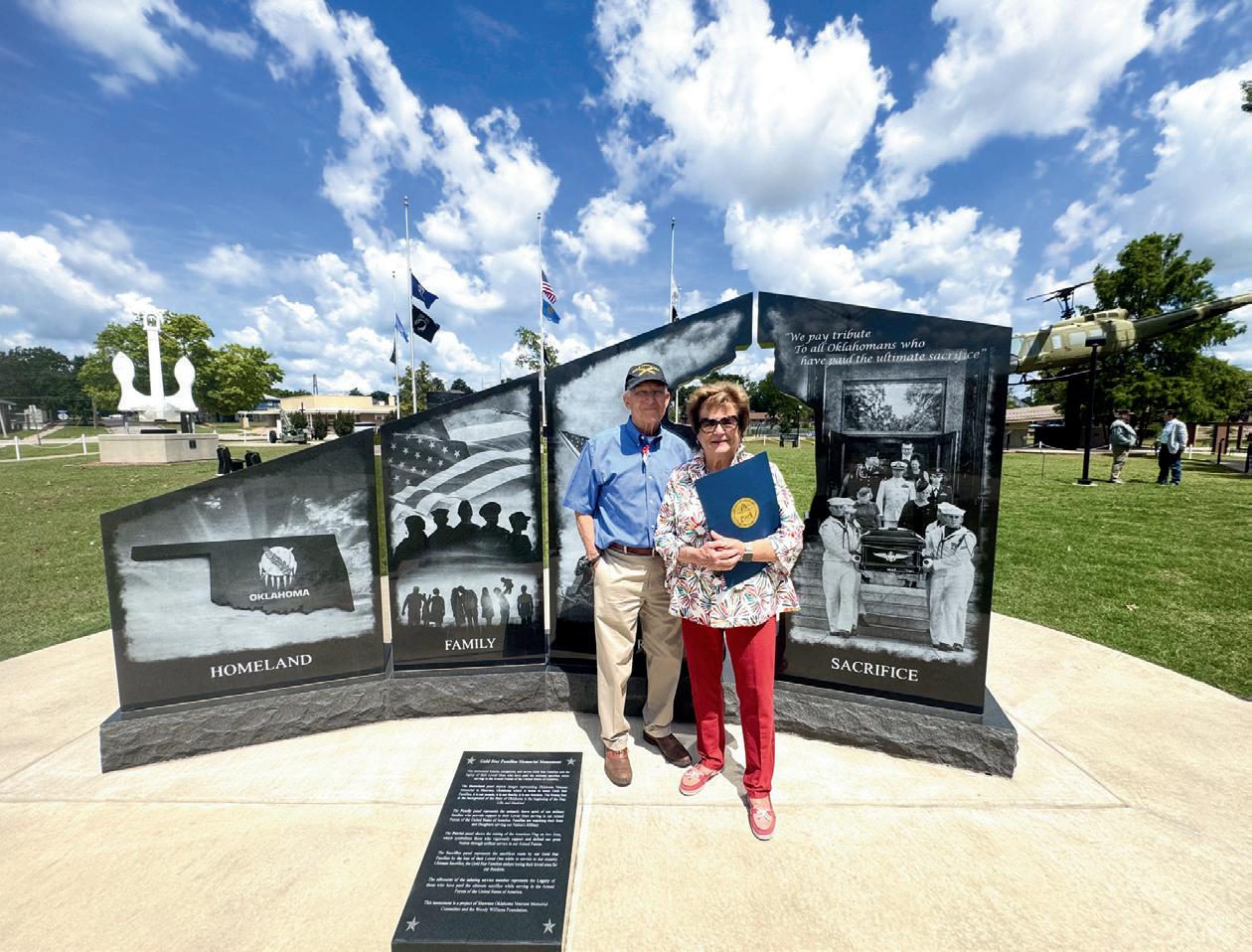
The First Annual Gold Star Family Event at the Pottawatomie County Veterans Educational Museum was a tremendous success.
The day began inside the museum with a special ceremony honoring Gold Star Families and recognizing the ultimate sacrifice made in service to our country. During the event, Shane Jett presented an official proclamation commemorating the inaugural event. The proclamation was presented to museum founder Bill Ford and his wife, Nancy Ford, whose father was killed in World War II.
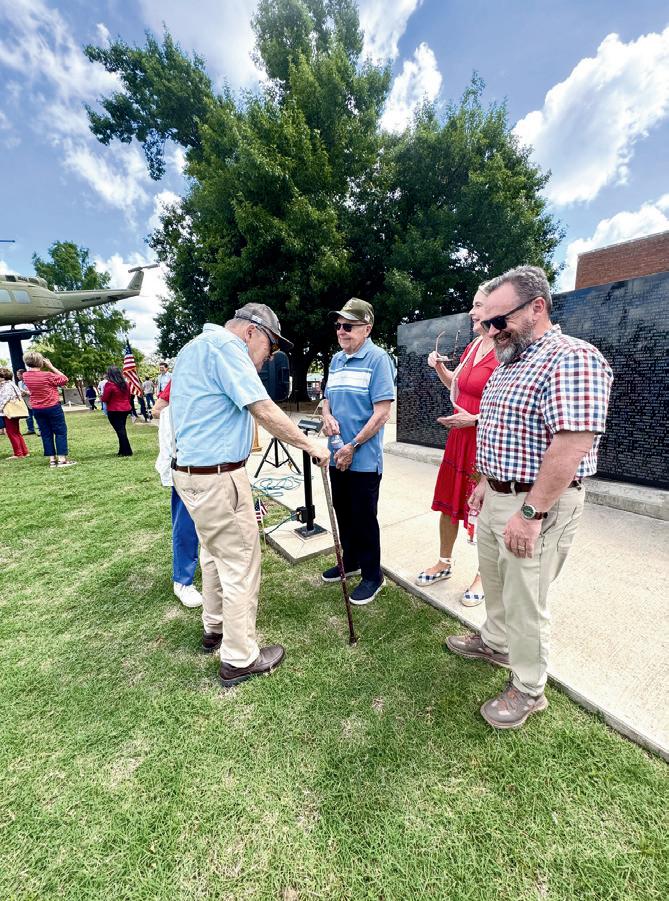
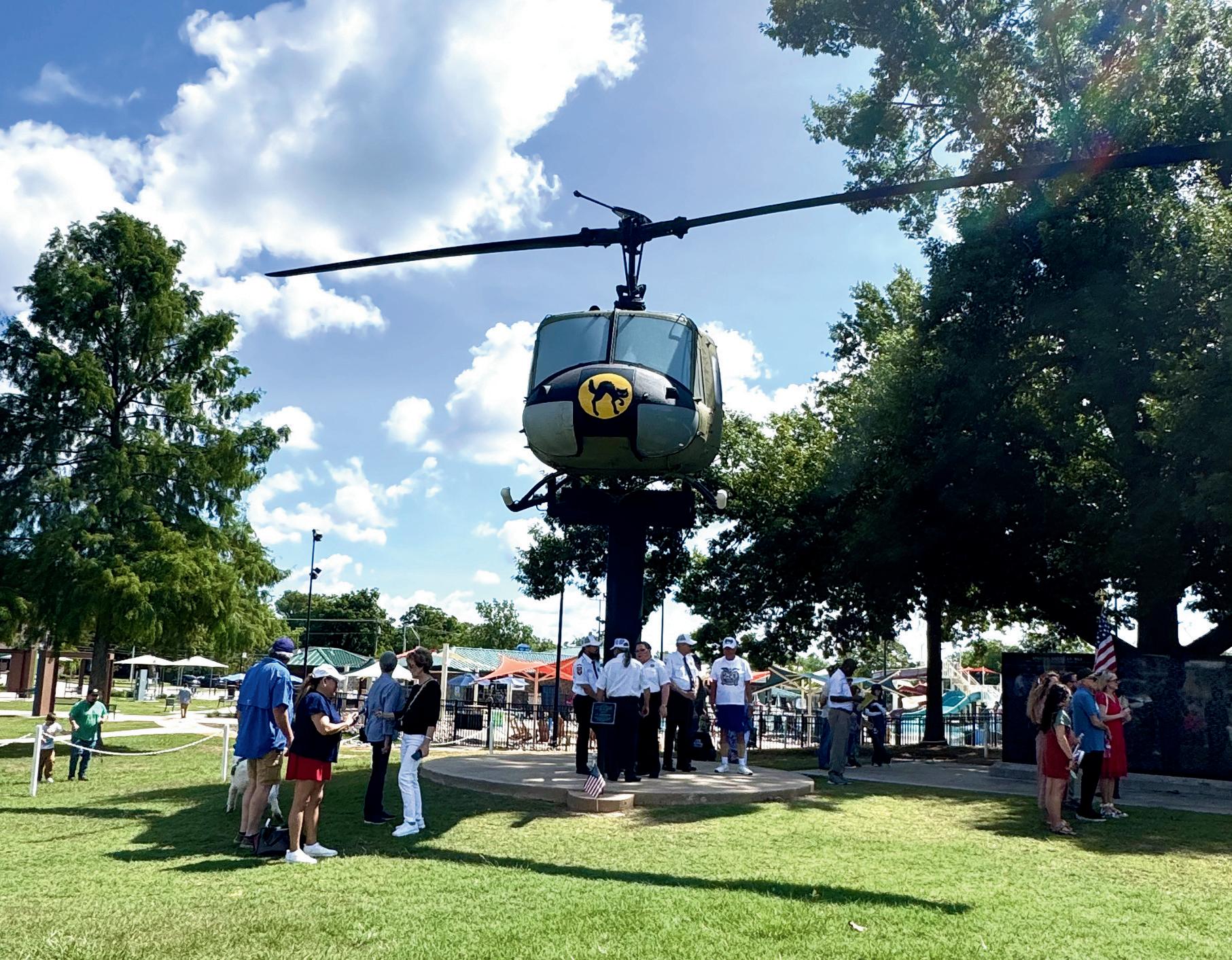
The event then continued at Veterans Park, adjacent to the museum, where the public gathered to honor America’s fallen service members on Memorial Day.
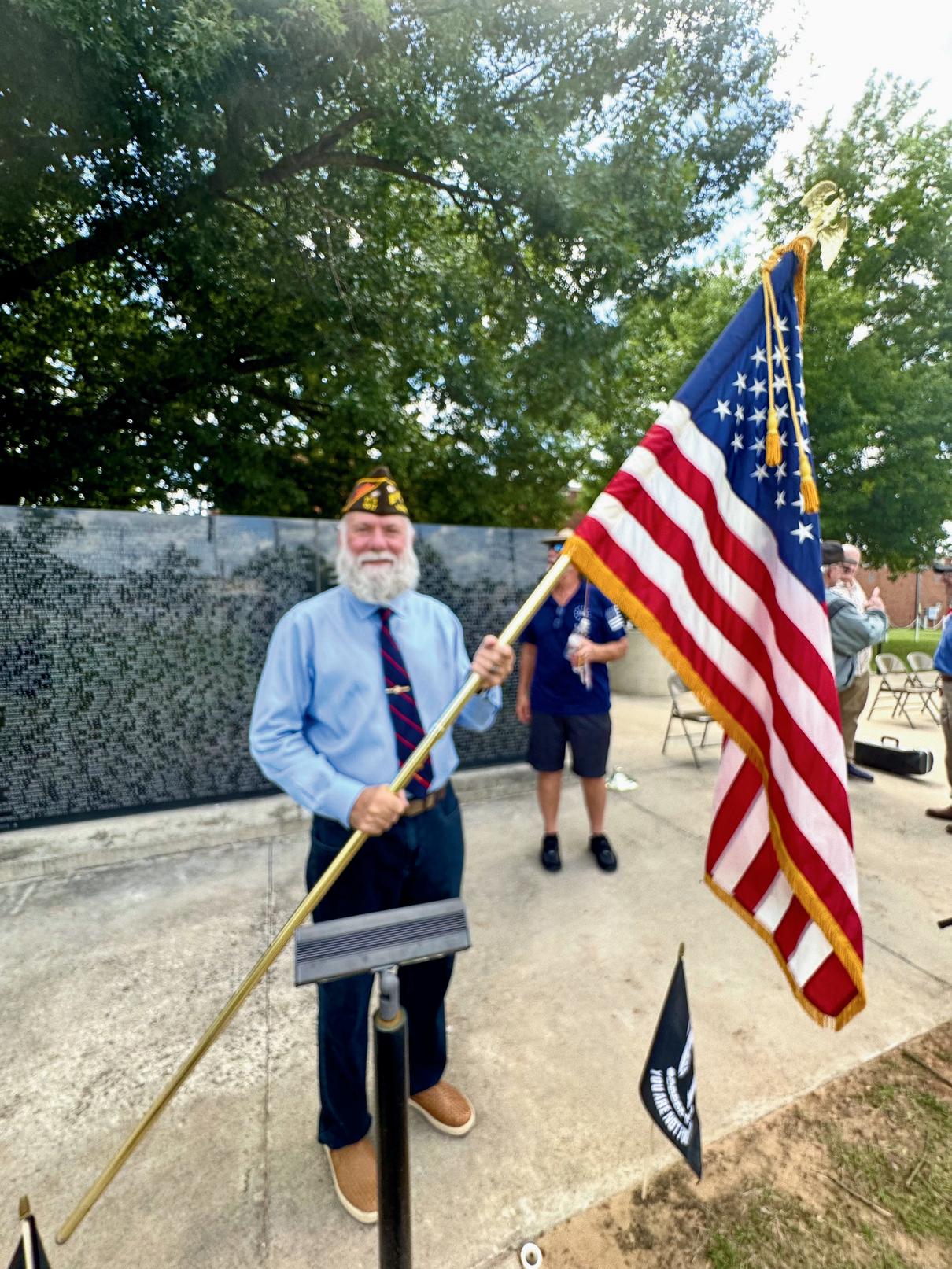
The ceremony, led by the Veterans of Foreign Wars post in Shawnee and its commander, featured several patriotic speakers who paid tribute to the courage, sacrifice, and service of our nation’s military members.
With more than 80 attendees and generous support from several local businesses that donated refreshments, the Pottawatomie County Veterans Educational Museum is deeply grateful for the community's support and for the blessing of a beautiful, meaningful day of remembrance.
By Lisa Sydnor
Making Life Accessible to All Ages and Abilities
The staff of CAREGIVER Magazine is committed to connecting those in need with services and programs. If you have a question or you are looking for services, call 405314-7840 or email l.sydnor@betterwithageok.com; include your name and phone number in the message.
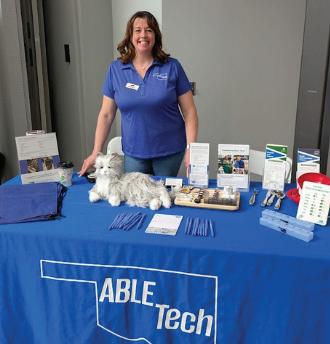
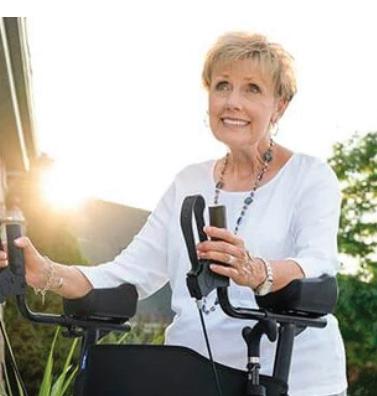
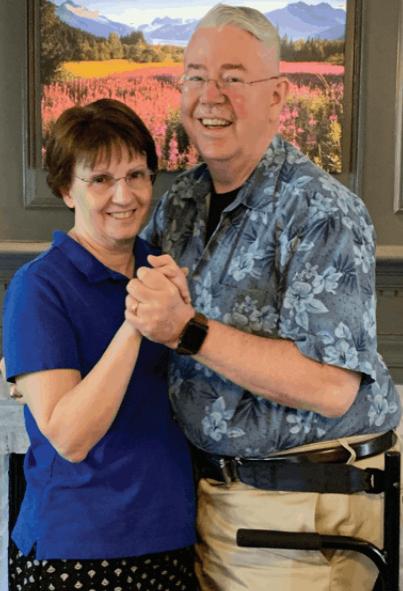
AskLisa has proven highly effective at providing information about many of Oklahoma’s excellent programs for those in need. I still receive questions every week. Some come by phone, text, or email. Lately, they come face-to-face, at lunch, at the doctor’s office, even on a slip of paper tucked into the cup holder of my upright walker. Oklahoma ABLE Tech let me borrow it at no cost. ABLE Tech is our state assistive technology program. It is funded through the Administration for Community Living at the U.S. Department of Health and Human Services under the Assistive Technology Act of 1998, as reauthorized in 2022.
Their mission is simple. Help Oklahomans live better by lending equipment, offering financing to buy equipment, and teaching people how to use it. Meg Busteed manages the Reutilization Program. She encourages anyone in need to apply online or call the nearest office.
Lately, the questions have focused on five devices in particular. You can borrow all of them through ABLE Tech, use them as long as you need, then return them when you are done. Every item is thoroughly cleaned, sanitized, repaired, and safety-checked before it goes out to the next family.
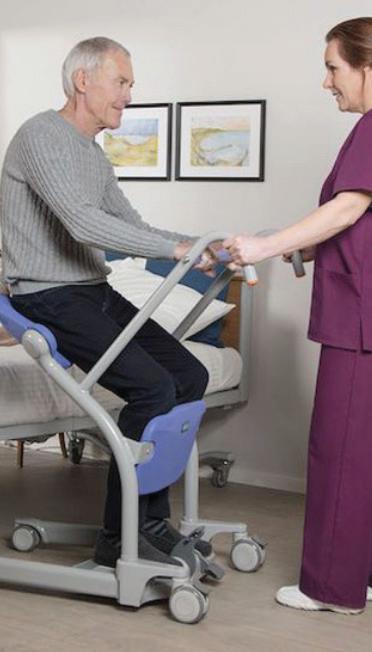
4. For help standing, the Sara Stedy. This helps one caregiver assist you from sitting to standing without lifting you. You do the standing, the frame steadies you, and your caregiver guides you. It protects both of you and encourages movement during recovery.
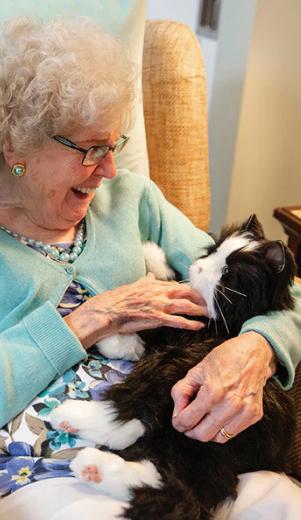
5. For companionship when you cannot have a real pet, the Joy for All cat or dog. The cat looks like a tuxedo cat, and they also have a golden pup named Roxy. It purrs or barks, turns its head, and responds when you pet it. Families tell me it eases loneliness and brings calm, especially for someone living with Alzheimer’s or related dementia.
Through ABLE Tech, these five and hundreds more are available on loan, most at no cost. The application is short and easy to navigate.
For information, contact Oklahoma ABLE Tech at 405-967-6010 or online at okabletech.org/about.
Shopping and recreational trips (parks, movies, restaurants)
Scheduled local transportation for appointments
Art, pet, and music therapy
Three chef-prepared meals a day in the dining room or delivered
Casual bistro
Physical therapy on-site
Professional nurse-directed wellness program
24/7 emergency response system
Round-the-clock team member support
Weekly housekeeping, linen, and laundry services
Comfortable indoor and outdoor areas
E R
By Kathy Cocks, RN
WHEN DEPRESSION DOESN’T MAKE SENSE CAREGIVERS
Have you ever opened a box of cereal expecting breakfast — only to find crumbs?
I don’t understand why my husband saves those boxes. They sit there on the shelf looking full, but when you open them… nothing useful. Sometimes things in life just don’t make sense.
Depression can feel like that.
From the outside, everything looks normal. The box is still on the shelf. Life appears stocked and functional. The person struggling may look competent, composed, even cheerful. They go to work. They show up at church. They laugh at jokes.
Then quietly they say, “Honestly, I’m having a hard time. I feel sad a lot. I don’t enjoy things anymore.”
And the moment someone admits they’re struggling with depression, suddenly everyone becomes an expert psychiatrist.
“Have you tried going for a walk? That always helps me.” “Maybe essential oils?”
“You just need to think positively!” “Eat a pan of brownies!”
Now listen — some of those things can help a little. Exercise has been shown to improve mood. Brownies are… well, brownies.
But sometimes it feels like you’re holding a gushing wound and someone hands you a smile and a Band-Aid.
Clinical depression isn’t the same as having a bad day. Major depressive disorder affects millions of adults in the United States and can involve loss of interest, low energy, hopelessness, sleep changes, difficulty concentrating, and feeling emotionally flat. Some people have one episode and recover. Others experience cycles that come and go, especially during stressful seasons.
I often compare it to back pain. When someone hurts their back, we don’t tell them to just smile more. We understand they may need medication, therapy, stretching, or lifestyle changes to manage it. Depression works much the same way — it often requires ongoing management, not a quick fix.
For me, managing depression looks like several things working together: counseling, faith, exercise, medication, gratitude, and learning to challenge my thought patterns. Years ago, I realized how harsh my inner voice was. My thoughts constantly told me I wasn’t good enough. But in reading Scripture, I was reminded that I was deeply loved and created with purpose. Learning to replace those thoughts didn’t happen overnight — it took over a year — but it made a profound difference.
Here’s something else I’ve learned.
People who love you often want to fix you — like a leaky faucet dripping in the kitchen. Tighten something, replace a part, problem solved. They mean well. Watching someone hurt is uncomfortable, and giving advice feels like doing something helpful.
But depression isn’t a faucet you can tighten. Usually, what helps most isn’t fixing — it’s presence. Instead of trying to solve depression, try:
— Sitting with someone without rushing the conversation.
— Sending a simple “thinking about you” text
— Inviting them out without pressure.
— Offering practical help — a meal, errands, or just company.
And if symptoms last more than a couple of weeks, encourage them to talk with a doctor or mental health professional. Depression deserves real care, just like any physical illness.
If you’ve never experienced depression, be grateful. But also be gentle with those who have. Sometimes the greatest gift you can offer isn’t advice or answers. It’s simply saying, “I’m here. And you don’t have to explain everything.”
Even when the cereal box only has crumbs left.
StayStayHome. Well.
Personal Care
Transferring and Ambulation Assistance
Bathing and Showering
Assistance with Dressing
Hygiene and Dental
Continence Care and Toileting
Recording Vital Signs
Medication and Other Reminders
Coordination of Care Plans
Meal and Snack Preparation
Assistance with Eating
and Snack Preparation
Medication and Other Reminders
Shopping and Errands
Drive to Doctors' Appointments
Light Housekeeping
and
MEDICARE
By Shelley Malicote Stutchman
Groovy Groovy
million surface acres of water for boating, swimming, and exploring, these destinations offer more than recreation; they offer relief. Time spent outdoors, near the water, has a way of easing stress, restoring energy, and bringing a feeling of calm that only being out in nature can. Take time for yourself this summer: plan a visit to one of Oklahoma’s lakes and notice the difference it can make.
Get out and enjoy Oklahoma's lakes this summer!
rcadia Lake:
9000 E 2nd St, Arcadia, OK 73007
Sometimes you just need a little beach time. Arcadi a Lake delivers with a welcoming sandy shoreline where you can sink into a favorite fold-up chair or stretch out on a towel, letting your toes sink into the warm sand. If fishing is more your style, head to Spring Creek Park, where the lake’s heated fishing dock lets you cast a line year-round. The blue meta l structure offers a covered 14-by-40-foot fishing area, complete with an 8-foot walkway around it. Beneath the surface, red cedar trees are anchored t o create a fish habitat. If adventure calls, explore 13 miles of trails at Arcadia Lake, perfect for mounta in biking, hiking, or horseback riding. These paths weave through Oklahoma’s wild beauty. Or maybe slowing down is the goal. Arcadia Lake is recognize d as a birding hotspot, attracting birders eager to s pot a variety of species year-round. The Arcadia Lake Eagle Watch is a favorite, offering the chance to witness these birds in their natural habitat. Somewhere between the water and the quiet, Arcadia Lake becomes the summer getaway you’ve been needing.
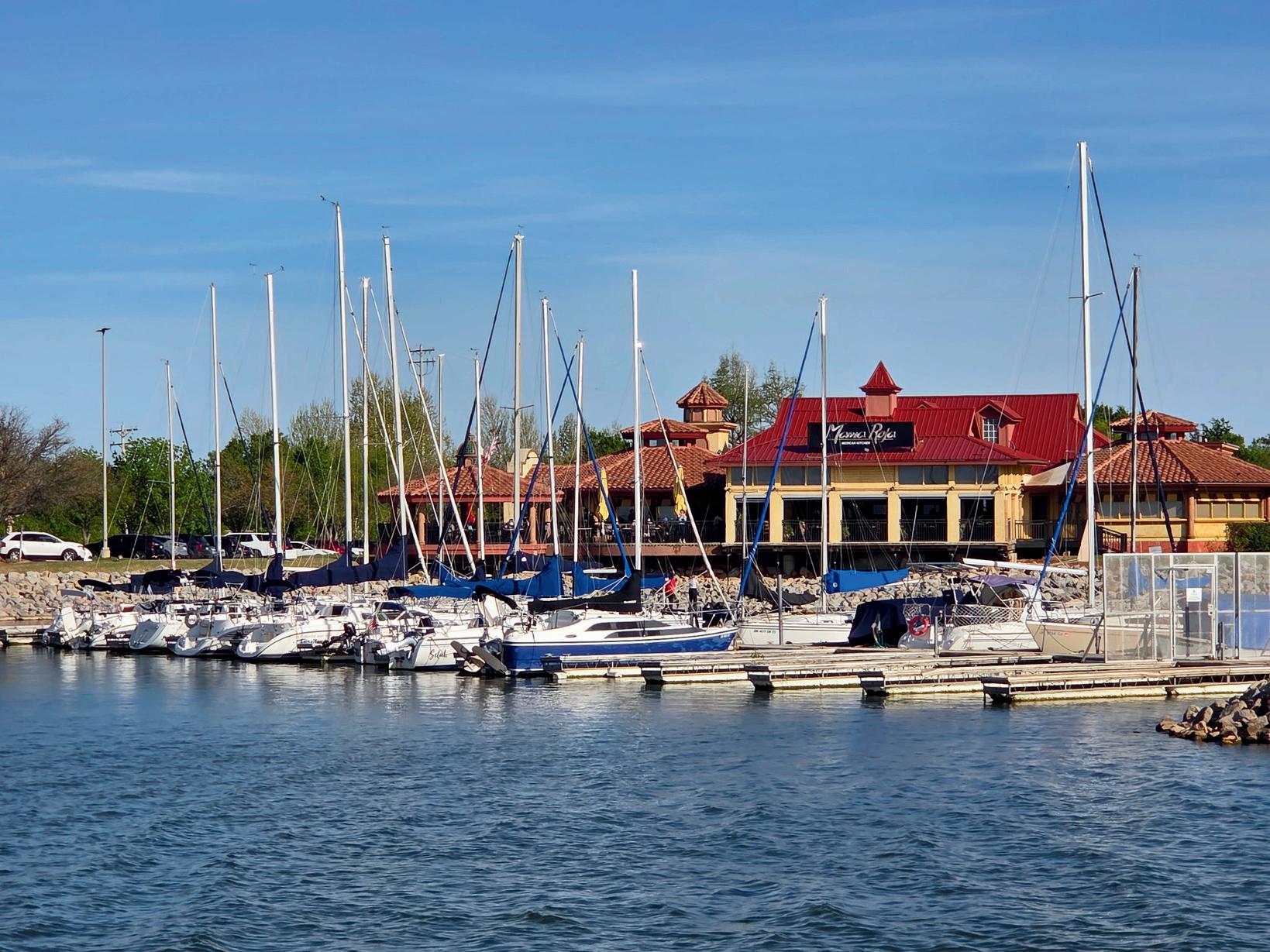
Sunsets, sailboats, and scenic trails make Lake Hefner a beautiful place to pause and recharge. Built in the 1940s as a water-supply reservoir for Oklahoma City, Lake Hefner now spans about 2,500 acres. Sailboats glide across the water, whil e walkers and cyclists trace the shoreline. On the water, sailboats catch the wind and motorized boats move at a relaxed pace. Kiteboarding has become popular, with colorful kites pulling riders in a dance of wind and motion. Along the shoreline, miles of trails invite walking and biking at your own pace. Golfers can enjoy nearby greens, and dog lovers will appreciate the OKC Paw Park with a pond for dogs. The 40-foot lighthouse stands as a landmark, perfect for photos. As the day ends, sunsets paint the sky and reflect in the water. Sunset cruises, about an hour and a half, are available. For dinner, upscale restaurants offer meals with a view of Lake Hefner.
Salt Plains State Park: 23280 S Spillway Dr., Jet, OK 73749
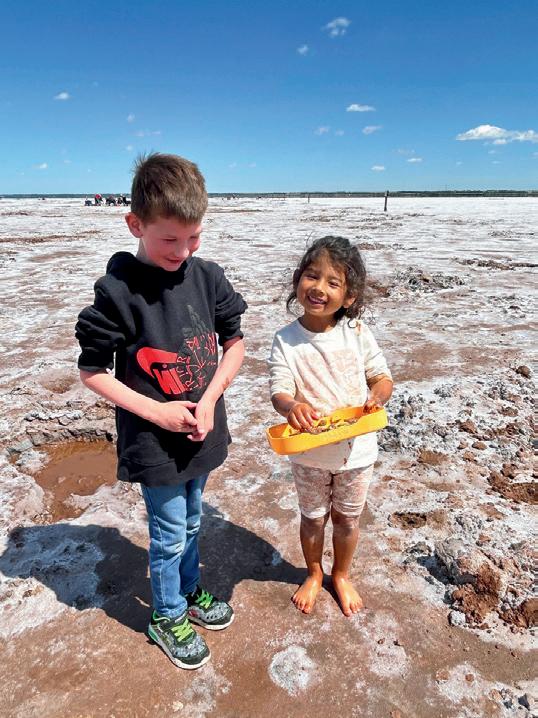
Whether it’s your first visit or your first in years, pack up the car with family or friends and enjoy a day that’s interesting, fun, and educational at Salt Plains State Park. Begin your adventure at the Artisan Well, located just north of the Great Salt Plains National Wildlife Refuge. Drilled in 1954, this well has provided free, fresh water to visitors ever since. Bring bottles or jugs and fill them. The water flows continuously, filtered naturally through layers of ancient rock, with no chemicals, just clean water. Scientists have tested the water and found it remarkably pure. After filling your bottles, head to the salt flats. The flats are an expansive, otherworldly landscape stretching across roughly 12,000 acres. From April 1 through October 15, visitors are invited to dig for Selenite crystals. Bring a bucket, a shovel, a hat, and sunscreen, and enjoy the thrill of uncovering your own crystal treasure. Best of all, digging is free. When you're ready for a change of scenery, head to the lake itself. You’ll find inviting campsites, a sandy beach perfect for relaxing or swimming, and plenty of space to enjoy the wide-open beauty of Oklahoma. Be sure to stop at the spillway on the eastern side of the lake. When water levels are high, the powerful cascade creates one of the most dramatic and mesmerizing sights in the area. End your day at the wildlife refuge, which spans more than 32,000 acres of diverse landscape, including mixed-grass prairie, rolling sand hills, and wetlands. With seven trails to explore or a scenic drive for those who prefer a more relaxed pace, the refuge offers a peaceful, memorable way to take in the region's natural beauty.
IN-HOME CARE TAILORED TO YOU:
24/7 Care
Bathing & Toileting
Companionship
Dementia Care
Disability Support
Family Respite
Grooming & Hygiene
Light Housekeeping
Meal Prep
Personal Care
Private Duty Nursing
Safety Supervision
Senior and Elder
Care Management
Serve Pediatrics
Transitions of Care
Transportation
Veterans Programs
I'm a caregiver for many reasons: I care about my clients' wellbeing and make their lives better. I assist with their daily needs, including showers, reminders, and all the tasks that support their health goals. Most of all, I listen. They all have wonderful life stories from which we can learn.
KIMBERLY SINGLEY
Working as a caregiver for ComForCare brings a deep sense of accomplishment every single day. There is nothing quite like the joy of helping my clients stay safe, comfortable, and independent in their own homes. Each day gives me the chance to provide vital support and build meaningful connections that truly change lives. Knowing that my dedication brings peace of mind to my clients and their families makes this work incredibly rewarding.
Movie Spotlight Groovy Films for Seniors
Project Hail Mary
Reviewed by Medicare Jet-Setter
Shelley Malicote Stutchman
Project Hail Mary has launched into orbit as the biggest boxoffice hit of 2026. At its core, the film explores a chilling premise: the sun is dying, the stars are infected, and humanity is running out of time.
This high-intelligence, suspense-driven story, packed with scientific ideas and problem-solving, immediately pulls the audience in and builds on the film’s chilling premise.
Ryan Gosling delivers a powerful performance, carrying much of the movie almost entirely on his own. For long stretches, the only voices we hear are his and that of his alien companion, Rocky. His performance is both intellectually sharp and emotionally vulnerable.
The film moves between past and present with seamless transitions, never leaving the audience confused. A simple, painful exchange cuts to the core: When Gosling’s character asks, “Am I expendable?” the answer is, “Yes. You have no family.”
The film also introduces moments that feel prophetic. For example, in a seemingly ordinary hardware store purchase, tension builds when a clerk asks, “Do you have a coupon?” The reply: “We don’t need a coupon; we are the government.” The clerk’s follow-up, “Which government?”, prompts the audience to wonder about our future.
Emotionally, the film doesn’t hold back. Another powerful exchange challenges our understanding of courage: “I don’t have the bravery gene,” Gosling admits. The reply reframes everything: “It’s not a gene. It’s finding someone to be brave for.”
Later, the film embraces complete silence for nearly a minute. In that stillness, the audience feels the profound power of quiet.
Project Hail Mary is more than a science fiction film; it explores the key themes of sacrifice, intellect, and hope, showing that even in the vastness of space, the most fundamental human need is connection. Would you give your life to save the world?
GEORGE WASHINGTON’S WAR HORSES
By Emberlee Nash
Thomas Jefferson called George Washington "the best horseman of his age, and the most graceful figure that could be seen on horseback." Washington's friend the Marquis de Chastellux, who rode with him during the Revolution, agreed, describing him as "a very excellent and bold horseman, leaping the highest fences, and going extremely quick, without standing upon his stirrups, bearing on the bridle, or letting his horse run wild."
Portrait of George Washington Taking the Salute at Trenton by John Faed, featuring Blueskin
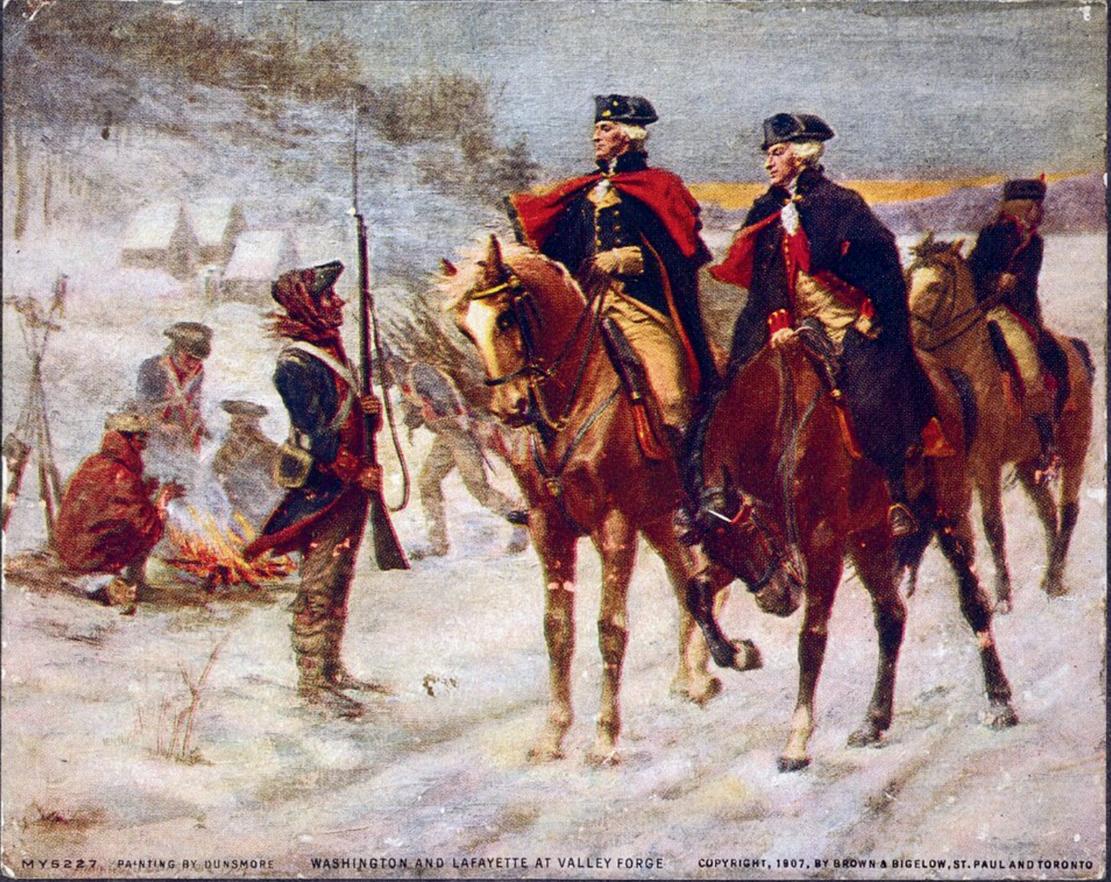
During the long years of the American Revolutionary War, General George Washington relied on two steadfast horses, Nelson and Blueskin, to lead the Continental Army. These loyal mounts carried him through brutal winters, muddy roads, freezing encampments such as Valley Forge, and thunderous battles filled with cannon fire and musket volleys, from the Battle of Princeton to Yorktown.
Nelson, a sturdy chestnut gelding with a white blaze and stockings, stood about sixteen hands high. Born around 1763, he was a gift from Washington’s friend, Thomas Nelson Jr. Calm and courageous under fire, Nelson became the General’s preferred battle mount. He remained steady amid the chaos of artillery barrages, carrying Washington through most major engagements along treacherous, rainsoaked trails.
Blueskin, a striking gray (or blue-roan) half-Arabian with elegant lines and great endurance, was a gift from Colonel Benjamin Tasker Dulany of Maryland.
Sired by the renowned stallion Ranger, he had speed and stamina but was more skittish around gunfire and cannon blasts. As a result, Washington rode him less often in the heat of battle, though Blueskin’s handsome coat made him a favorite in portraits.
Together, the pair served faithfully throughout the entire eight-year conflict amid harsh battlefield conditions, starvation rations, disease-ridden camps, and relentless marches.
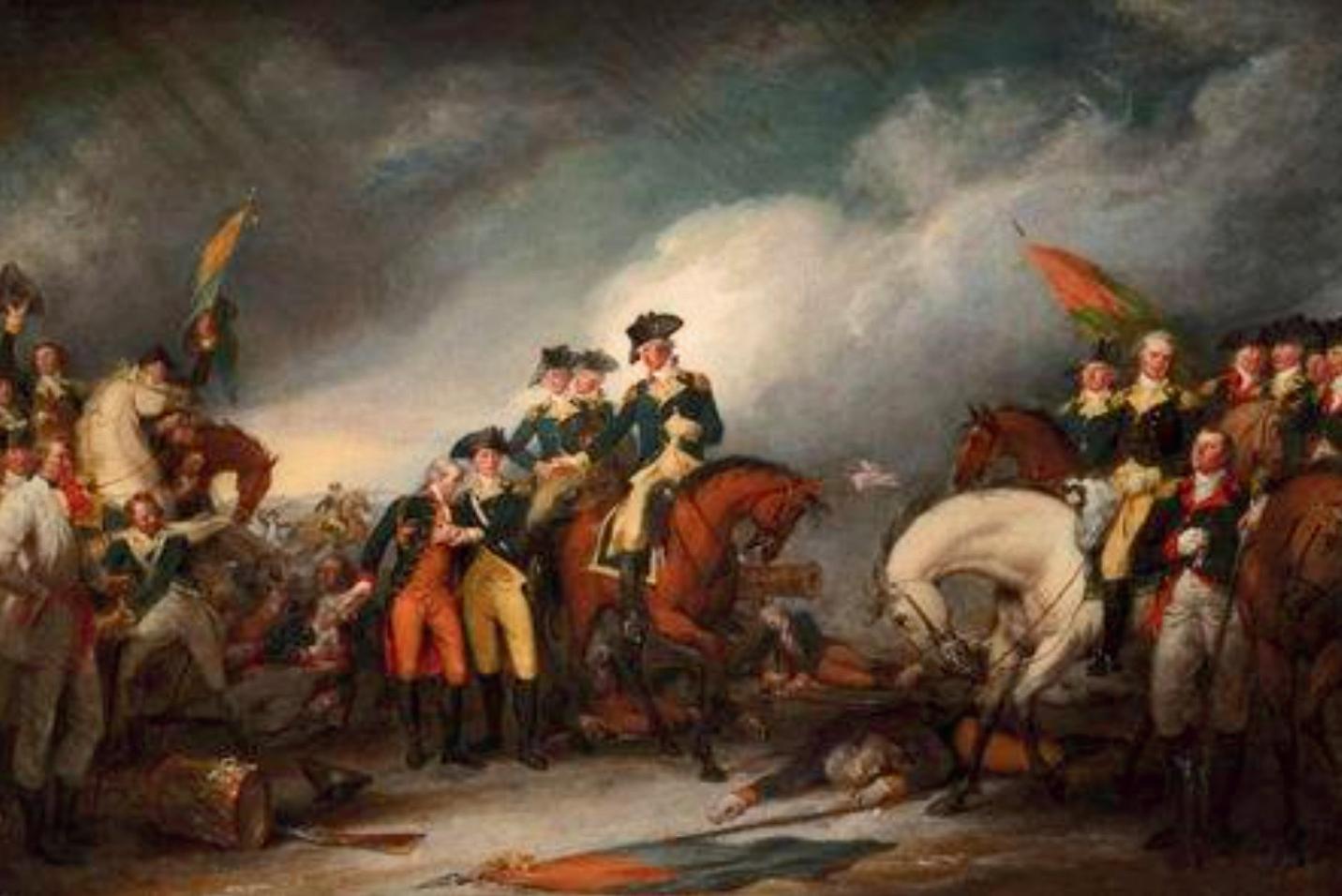
The Capture of the Hessians at Trenton, December 26, 1776, by John Trumbull
Nelson notably carried Washington on October 19, 1781, as he accepted the British surrender of Lord Cornwallis at Yorktown, the moment that effectively ended the war. Both horses survived without serious injury.
After the victory, Washington retired Nelson and Blueskin to peaceful pastures at his estate, Mount Vernon in Virginia. He never rode them again, allowing the aging heroes to live out their days in comfort and dignity.
George Washington’s war horses remind us that America’s independence was won not only by human bravery but also by the quiet strength and loyalty of the animals who carried their riders forward.
Washington riding Nelson (left); Washington and Lafayette at Valley Forge, by John Ward Dunsmore
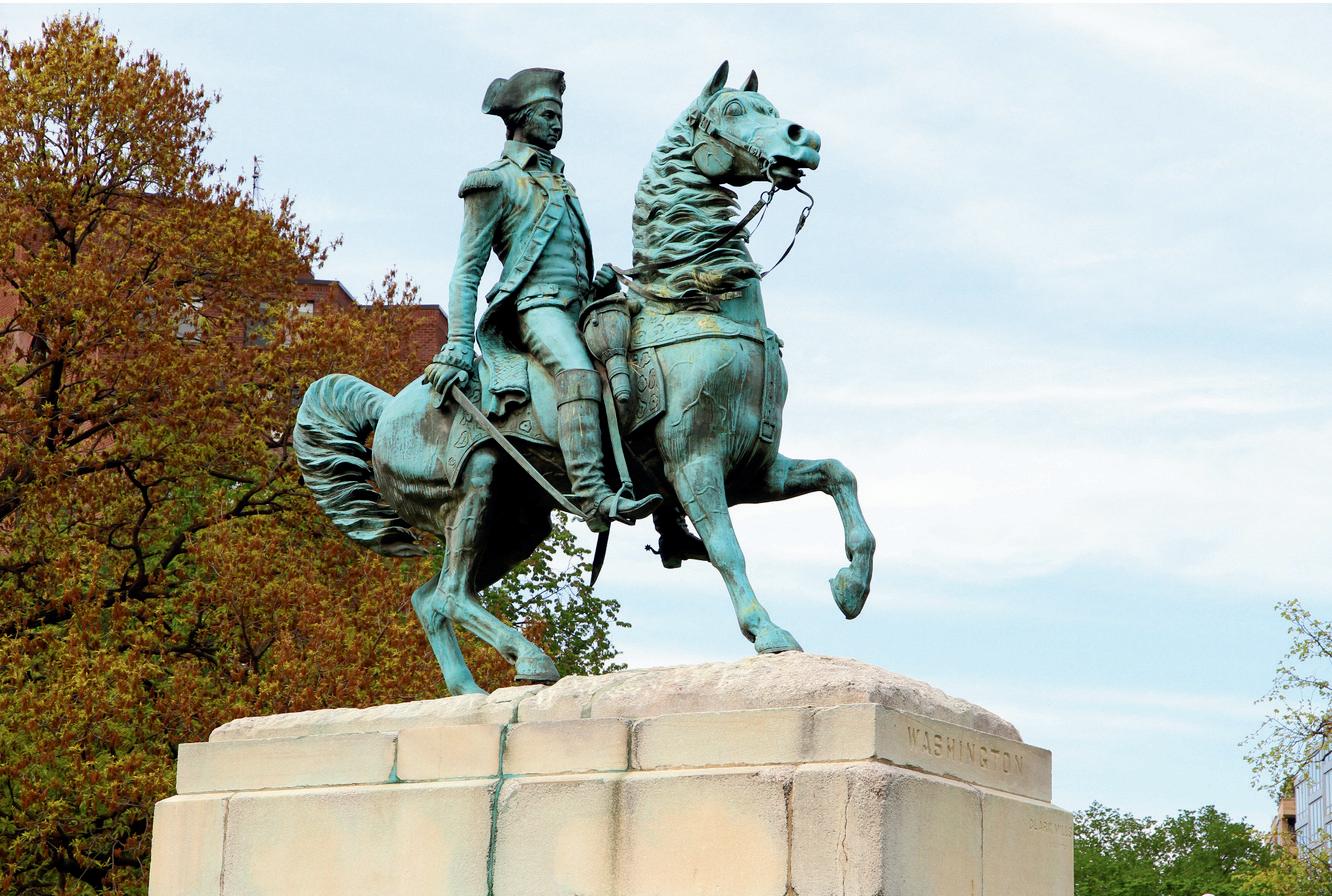
Lieutenant General George Washington, 1860, Clark Mills (1810 – 1883), bronze, Washington Circle, Washington, DC
Care that grows with you.
For 25 years, Legend Senior Living® has set the standard for senior living rooted in independence, dignity, and connection. At our 12 Oklahoma City communities, that legacy continues in vibrant settings where life blossoms through engaging experiences, meaningful relationships, and personalized support.
Come have lunch with us and discover what makes our communities special. Scan the QR code to explore our Oklahoma City locations and schedule your visit.
FREE Educational Seminars for Adults 55+
Candid Conversations that Inspire Change
Empowering Older Adults and Their Adult Children to Live Fully and Age Wisely
Presented by:
Certified Senior
Housing Professional Connie Williams
UPCOMING
By Larry Stein, Oklahoma County Assessor
HOW TO PROTECT YOUR FAMILY AND YOUR PROPERTY
SEMINARS:
Tuesday, January 13th at 10 AM
July 14th at 10 AM
Time for Learning About Homeowner Scams
Time for Living Options
“The property is my family home, and my mother wanted me to have it. She is deceased, and I need you to put the property in my name, as my parents wanted.” This is a conversation my office and the clerk’s office have often.
The answer is: Without a legal document transferring ownership from one family member to another individual, it is illegal for me to change any ownership records.
Learn the warning signs of homeowner scams so you can safeguard your home, money, and peace of mind.
Tuesday, February 10th at 10 AM
Seminar will be held at: Mustang Senior Center 1201 N. Mustang Rd Mustang, OK 73064
Time for Better Health:
Partnering with Your Pharmacist
Discover the benefits of working closely with your pharmacist to support your health and make informed choices.
August 11th at 10 AM Time for Living Options Seminar will be held at: Francis Tuttle Edmond Campus 3841 E Danforth Rd
Edmond, OK 73034
Seminars will be held at: Francis Tuttle Edmond Campus 3841 E Danforth Rd Edmond, OK 73034
Register TODAY!
Register TODAY!
Call 405-283-8292 or simply scan the QR code!
Call 405-283-8292 or simply scan the QR code!
time4livingseminars@gmail.com
time4livingseminars@gmail.com
Did the owners create a Family Trust or a Will to ensure their most valuable asset could be kept in the family and create generational wealth that could change every member of their family’s lives for the next generation? “We meant to do it, but mom and dad passed before we could get the necessary documents completed,” they usually explain.
How can more people know about ways of protecting their family’s wealth? For the first time ever, the Oklahoma County Assessor’s Office has created a document for that purpose. Seniors and families can have a roadmap as they navigate serious issues families should discuss. Working with websites and statewide connections, the plan is to facilitate cross-pollination of information to educate seniors on managing their property and its designation. Some websites provide information on ways to save on property assessments, including how qualified seniors can never pay property taxes again as long as they live in their home. Other sites have legal advice for property owners who need to prepare a Transfer-on-Death Deed for a home or even a vehicle and avoid probate.
We’re working on an agreement in which information about ALL these topics and plenty more (including the differences between and the preparation of a Power of
Attorney or a Durable Power of Attorney document) will be presented together, free of charge. People may hear that they should prepare these documents but not be aware of the implications. With the links we hope to provide soon, seniors and their family members can sit with a trusted financial adviser or friend and prepare for the inevitable by making informed decisions about what needs to be done. The assessor’s portion includes important documents you may need to ensure seniors are getting all the property tax savings they are eligible for. Other entities will provide information to help your family plan for the future.
“Our E-Document called, ‘Seniors and Family: What to Know’ will be linked at www.oklahomacounty.org/ assessor and will provide information about property tax savings, other money-saving benefits of owning a home, and many public documents to help you learn about ways to transfer the wealth of real estate or vehicles while avoiding the headaches of having to resolve these issues unexpectedly,” Stein said.
The information from the Assessor’s Office is all available online. Other documents will be provided by different state agencies, and their links will be included in an interactive document for anyone to explore. Some topics and issues may be new to you. It’s a good idea to consult with a family member or expert you trust if you have questions.
This information is coming your way soon.
If you have a question, please contact our friendly staff by phone at (405)713-1236. When you call, you will speak with a real person who can answer any questions you may have.
WORKING WITH OKLAHOMA SENIORS FOR 30+ YEARS
As a REALTOR, Joe specializes in assessing your goals, first by just talking about your reasons for selling a property. If you want to buy a new property, Joe carefully listens to your needs and desires for your new home.
Joe will give you an assessment of your property, making suggestions for improving salability.
Joe provides insight on current market conditions, then develops a pricing and marketing strategy to sell your property quickly for the highest possible price.
Joe can help assemble an expert team to ease the transition. Movers, landscapers, interior designers and stagers handle the heavy lifting. Attorneys, 1031 exchange specialists and mortgage bankers manage the heavy paperwork.
“Joe is professional and extremely friendly He put the place on the market on Monday (a holiday) and by Wednesday, he had a contract! We were kept in the loop and all questions answered and information shared ASAP by Joe.” - John
SCAN THE CODE TO READ MORE REVIEWS
If you ’ re looking to sell your home, tap into Joe’s 20+ years of healthcare management and 15+ years of real estate experience - that you can count on.
6501 N. Broadway Extension, Suite 190 Oklahoma City, Oklahoma 73116
veterans homes
CARE, COMMUNITY, AND DIGNITY
By: Daron Hoggatt, Public Information Officer, Oklahoma Department of Veterans Affairs
For many Oklahoma veterans and their families, one of the most important questions later in life is where they can receive the care they need while remaining among people who understand military service and sacrifice. The Oklahoma Department of Veterans Affairs (ODVA) operates seven state veterans homes across Oklahoma, providing long-term care, skilled nursing, rehabilitation, memory care, and support services specifically designed for veterans.
ODVA currently operates veterans homes in Ardmore, Claremore, Clinton, Lawton, Norman, Sulphur, and Sallisaw, with more than 1,400 licensed beds statewide. The homes serve veterans from every branch of the military and from every era of service, from World War II veterans to those who served in Iraq and Afghanistan.
Admission into an Oklahoma veterans home is based on military eligibility and medical need. In general, eligible applicants must have served at least 90 days on active duty and must have received a discharge other than dishonorable. Veterans discharged due to a service-connected disability may still qualify, even if they did not complete the full 90-day requirement. Applicants must also meet the criteria for nursing or long-term care services due to age, illness, disability, or related medical conditions.
omes provide skilled nursing services, memory and dementia care, assistance with activities of daily living, and end-of-life support. One of the most common questions families ask involves disability ratings and how they affect the cost of care. A VA disability rating reflects the severity of a veteran’s service-connected medical conditions and ranges from 0 percent to 100 percent.
Veterans with a service-connected disability rating of 70 percent or higher, residency in a state veterans home may be provided at no cost while the veteran continues to retain VA compensation and other income benefits. Veterans with lower disability ratings may still qualify for admission, although portions of their income may contribute toward the cost of care depending on their situation. National Guard and Reservists may also qualify – if they have a federal VA disability rating. ODVA admissions specialists work directly with veterans and families to determine eligibility, placement availability, and coordination with federal VA programs.
Each of Oklahoma’s seven veterans homes serves a different region of the state while operating under the
same mission of providing quality care to veterans. Each Oklahoma Veterans Home provides the same core services, including skilled nursing care, rehabilitation, therapy services, dietary support, long-term care, and veteran-centered care designed to meet the medical and personal needs of eligible veterans.
Together, the homes serve veterans across the state while maintaining environments focused on dignity, quality care, and community.
What often separates veterans homes from traditional nursing facilities is the culture inside the buildings. Residents live among fellow veterans who understand military life, deployments, and sacrifice. For many residents, that shared experience becomes one of the most important aspects of daily life. Beyond medical care, the homes provide community, dignity, stability, and the opportunity for veterans to continue living among those who understand what it means to serve.
For more information about Oklahoma’s veterans homes, contact Candice McIntire at 405-523-4092 or Candice.mcintire@odva.ok.gov.
• Private Suites
• 24-Hour Care
• Meals
• Medicine Reminderrs
• Housekeeeping
• Laundry
Luxury Living in Nichols Hills
Luxury Living in Quail Creek
1/4 cup plus 2/3 cup sugar
1/4 cup fresh lemon juice
1/4 teaspoon almond extract
1 premade angel food cake, cut into 1-inch slices
1 pound cream cheese, at room temperature
2 cups heavy cream, at room temperature
2 pints blueberries
2 pints strawberries, hulled and sliced
Heat 1/4 cup sugar, the lemon juice, and 1/4 cup water in a saucepan over medium-high heat, stirring, until the sugar dissolves. Remove from the heat and stir in the almond extract.
2. Brush both sides of each slice of cake with the syrup. Cut the slices into 1-inch cubes.
3. Beat the remaining 2/3 cup sugar and the cream cheese with a mixer on medium speed until smooth and light. Add the cream and beat on medium-high speed until smooth and the consistency of whipped cream.
4. Arrange half of the cake cubes in the bottom of a 13-cup trifle dish. Sprinkle evenly with a layer of blueberries. Dollop half of the cream mixture over the blueberries and gently spread. Top with a layer of strawberries. Layer the remaining cake cubes on top of the strawberries, then sprinkle with more blueberries and top with the remaining cream mixture. Finish with the remaining strawberries and blueberries, arranging them in a decorative pattern. Cover and refrigerate 1 hour.
3 ounces cream cheese
1/2 cup mayonnaise
1/4 cup crumbled blue cheese
2 ribs celery, finely chopped
ribs cut into sticks for serving
1 tablespoon unsalted butter
48 cocktail hot dogs
24 slider potato rolls
1/4 cup finely chopped red onion
1 cup crushed blue potato chips
1/4 cup hot pepper sauce
Combine the cream cheese, mayonnaise, and blue chees
Potato Salad
2.5 lbs. mixed red, white & blue potatoes
2 garlic cloves
2 T white wine vinegar
1 ½ cups cherry tomatoes
⅓ cup chopped basil
1. Cook potatoes in salted simmering water with 2 tablespoons white wine vinegar and 2 garlic cloves until the potatoes are tender, about 15 minutes.
2 T chopped scallions
2 T chopped parsley
salt & pepper to taste
2. Drain and cool slightly (discard the garlic). Toss with 1 1/2 cups halved cherry tomatoes, 1/3 cup chopped basil, and 2 tablespoons each chopped scallions and parsley. Drizzle with 1/4 cup olive oil and 2 more tablespoons white wine vinegar, season with salt and pepper, and toss.
PERSONAL INFORMATION: Why Scammers
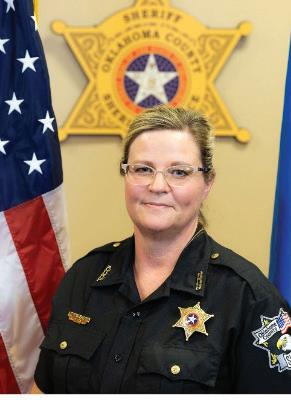
By Sgt. Tara Hardin
Oklahoma County Sheriff’s Office
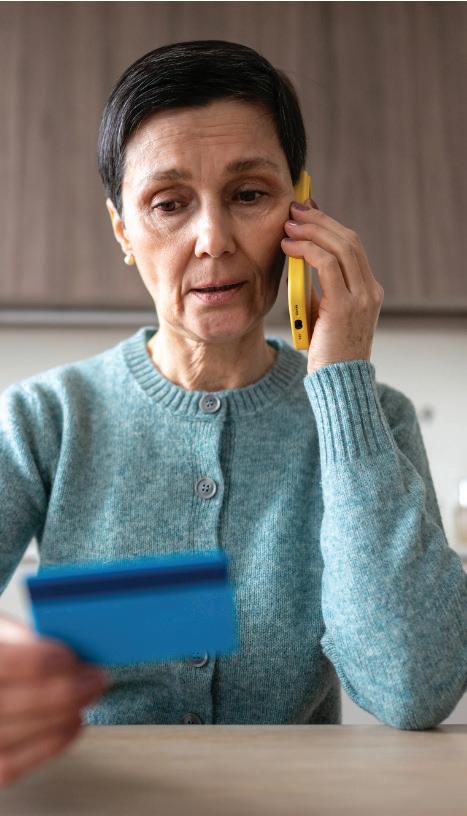
Most people don’t think twice about sharing small bits of personal information. A birthday here, an address there, maybe the name of a grandchild on social media. After all, it seems harmless. But to scammers, those little pieces are like puzzle parts—and when enough pieces come together, criminals can build a very clear picture of you and how to scam you!
That information is called Personally Identifiable Information, or “PII.” It includes things like your Social Security number, date of birth, phone number, driver’s license number, bank account information, passwords, Medicare number, and even details you share online. Criminals use this information to steal identities, empty bank accounts, open credit cards, or convince victims they are dealing with a trusted company or government agency.
From a law enforcement perspective, we are seeing fraud losses rise every year, especially among older adults. Scammers have become professional manipulators. They no longer rely on obviously fake emails filled with spelling mistakes. Today’s criminals can sound polished and professional, friendly and patient, and are always convincing. Some even research their victims beforehand using social media, public records, or information leaked in data breaches.
Think of your personal information like the keys to your house. You wouldn’t hand your house keys to a stranger in the grocery store parking lot—but many people unknowingly hand over the digital version of the keys to their life every day.
One of the biggest problems is that scammers often don’t need all your information to cause harm. Sometimes, just your full name, date of birth, and phone number are enough to start impersonating you. Add in a stolen password or banking detail, and the damage can escalate quickly.
And here’s the tricky part: scammers love urgency.
They want you scared, excited, embarrassed, or rushed. They may pretend to be your bank, the IRS, Amazon, Medicare, a grandchild in trouble, or even law enforcement. One common phrase we hear from victims is, “They sounded so real.” Often, it’s that PII that made it sound real.
The good news is that protecting your PII doesn’t require a computer science degree or a secret bunker in the woods. A few simple habits go a long way:
Never give personal or financial information to someone who contacts you. If they contacted you, YOU need to verify THEIR identity!
Use strong, unique passwords for every account – never reuse the same password across multiple accounts.
Shred sensitive documents before throwing them away and secure your records and your mail.
Be cautious about what you share on social media—yes, even those “What was your first pet’s name?” quizzes.
Monitor your bank, credit card, and financial accounts regularly –ideally daily.
When in doubt, hang up and call the company directly using a trusted phone number that you have verified yourself.
And remember: legitimate organizations will not pressure you into secrecy, demand gift cards or cryptocurrency, or threaten immediate arrest or other detrimental actions over the phone. If someone says, “Don’t tell anyone,” that’s often the biggest red flag of all.
A little healthy skepticism is one of the best fraud prevention tools available. Protecting your personal information is not about fear—it is about awareness. You worked hard for your savings, your identity,
BANK WITH CONFIDENCE
H o m e H e a l t h
F o c u s e d o n h e l p i n g y o u m a n a g e a
c h r o n i c c o n d i t i o n o r r e c o v e r f r o m a n
a c u t e i l l n e s s , s u r g e r y , a c c i d e n t , o r a
c h a n g e i n m e d i c a l c o n d i t i o n .
H o s p i c e C a r e
O f f e r s e n d - o f - l i f e c a r e , i n c l u d i n g s u p p o r t
f o r y o u r p h y s i c a l a n d e m o t i o n a l n e e d s , a n d
t h e n e e d s o f y o u r w h o l e f a m i l y .
P a l l i a t i v e C a r e
F o c u s e s o n a d d r e s s i n g t h e p h y s i c a l ,
e m o t i o n a l , s p i r i t u a l , a n d s o c i a l n e e d s
o f t h e p a t i e n t w h i l e r e c o v e r i n g o r
r e c e i v i n g t r e a t m e n t c e n t r i c h e a l t h . c o m 1 . 8 5 5 . 9 4 2 . 3 6 8 7
Better With Age FunDay Brings Information, Energy, and Community Together
By Stephen A. Martin
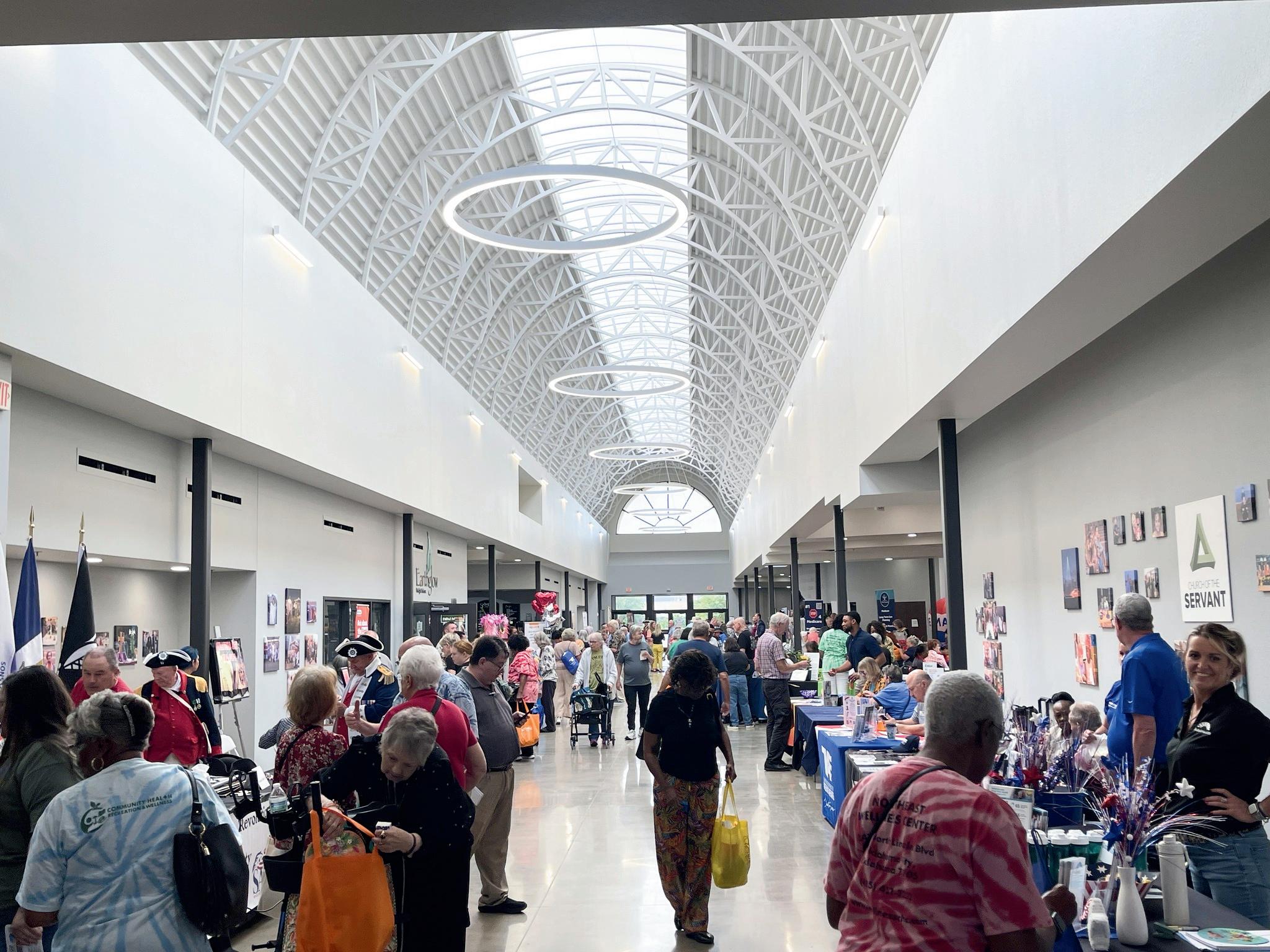
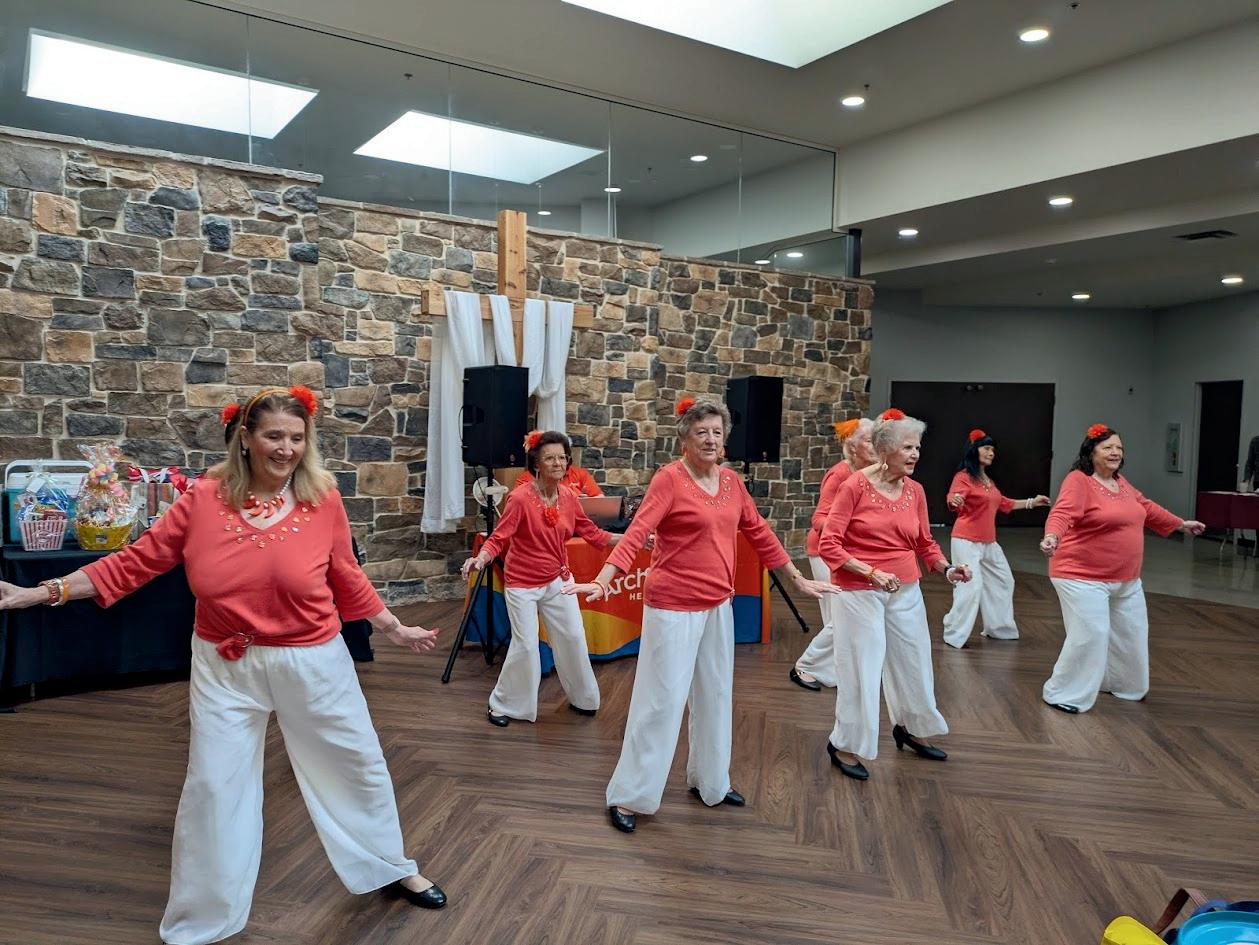
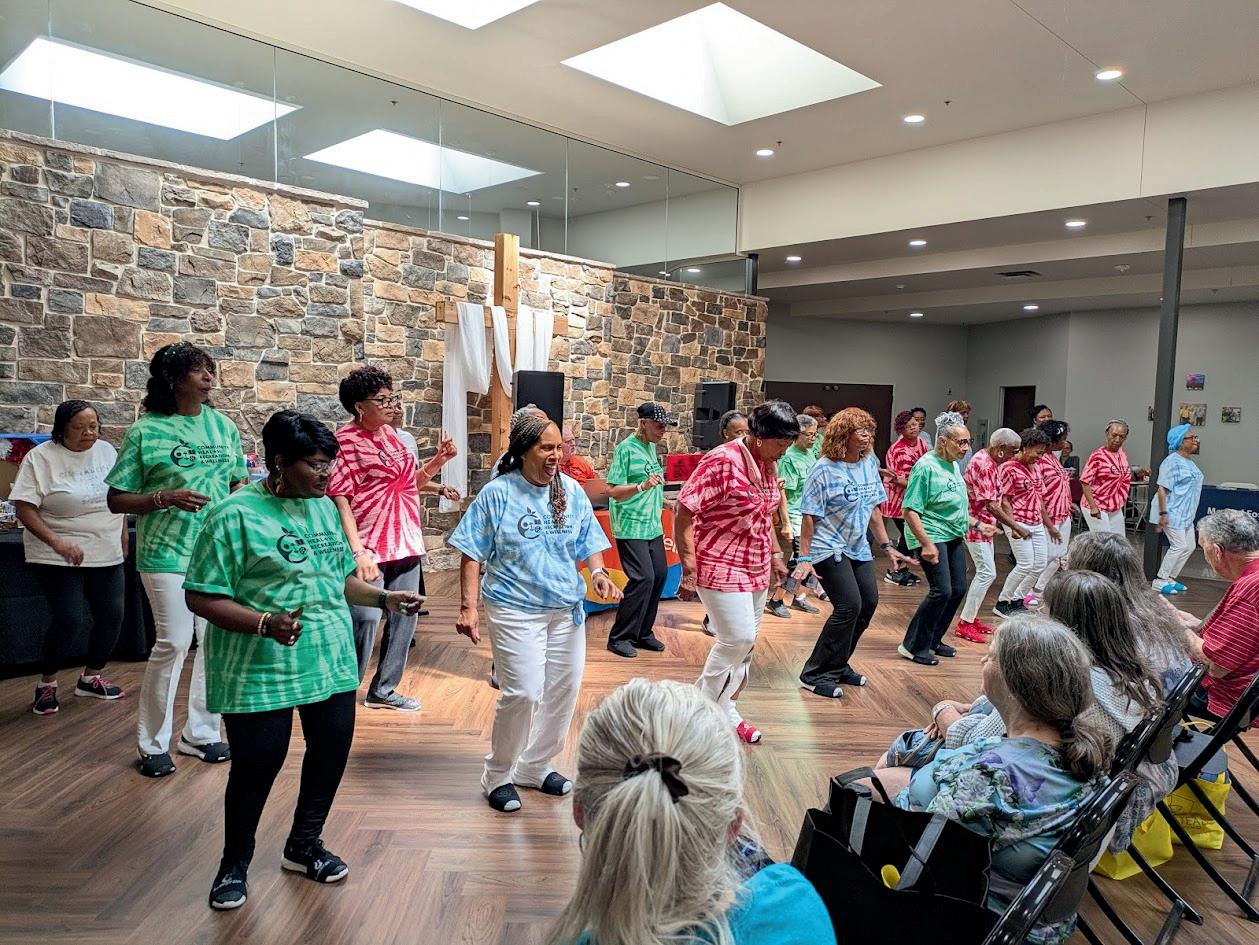
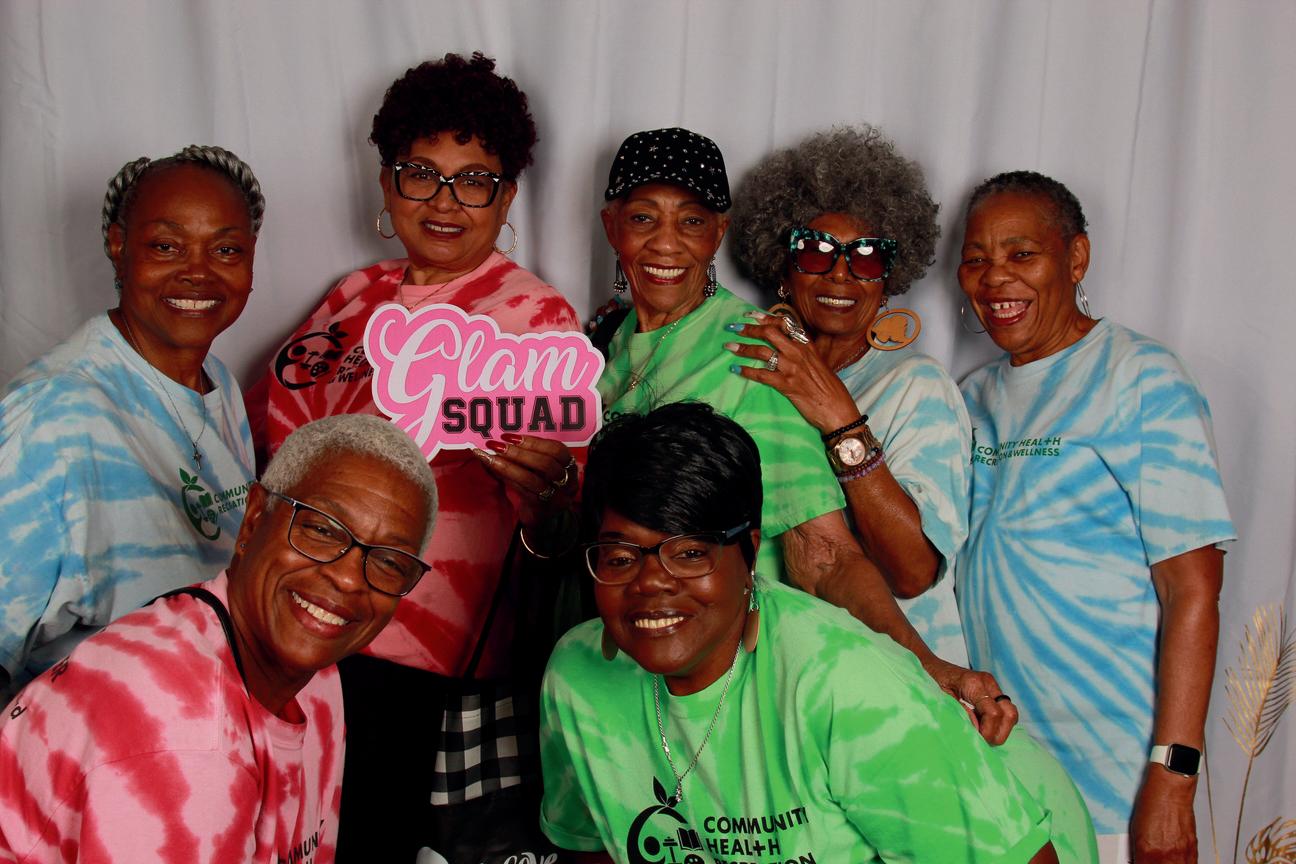
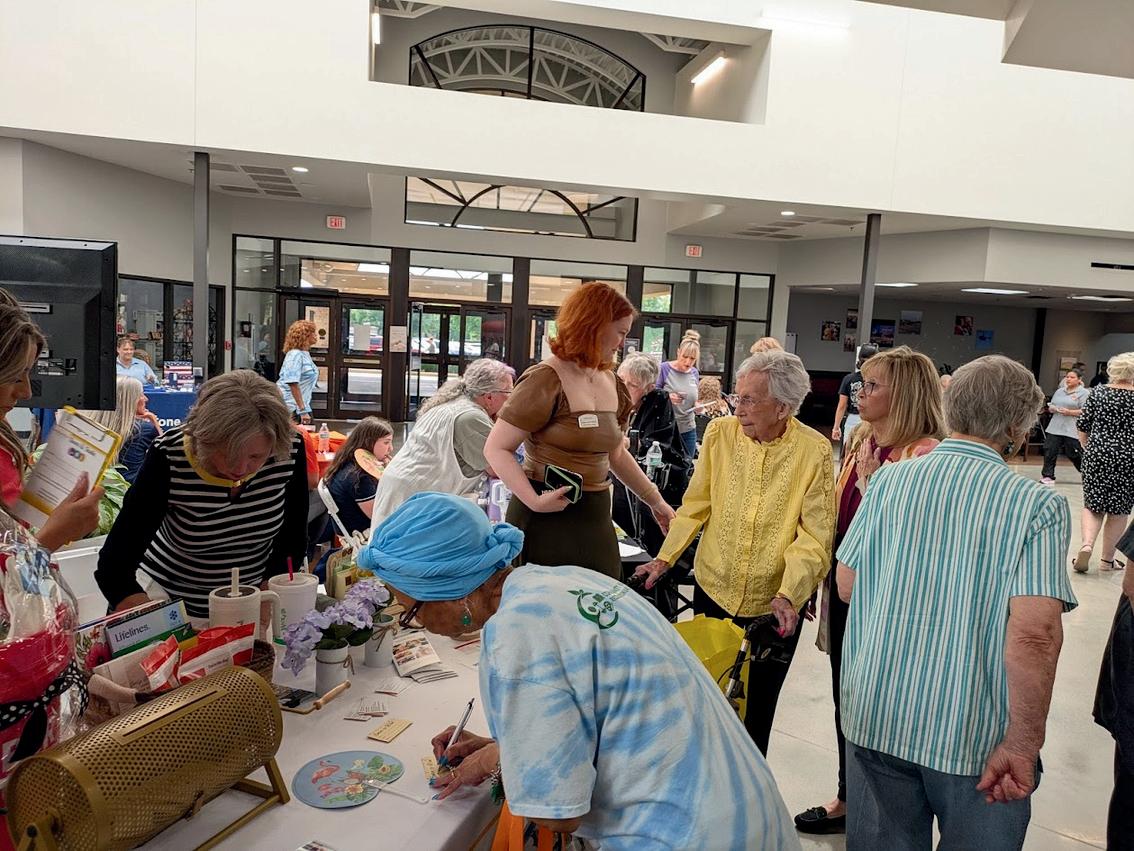
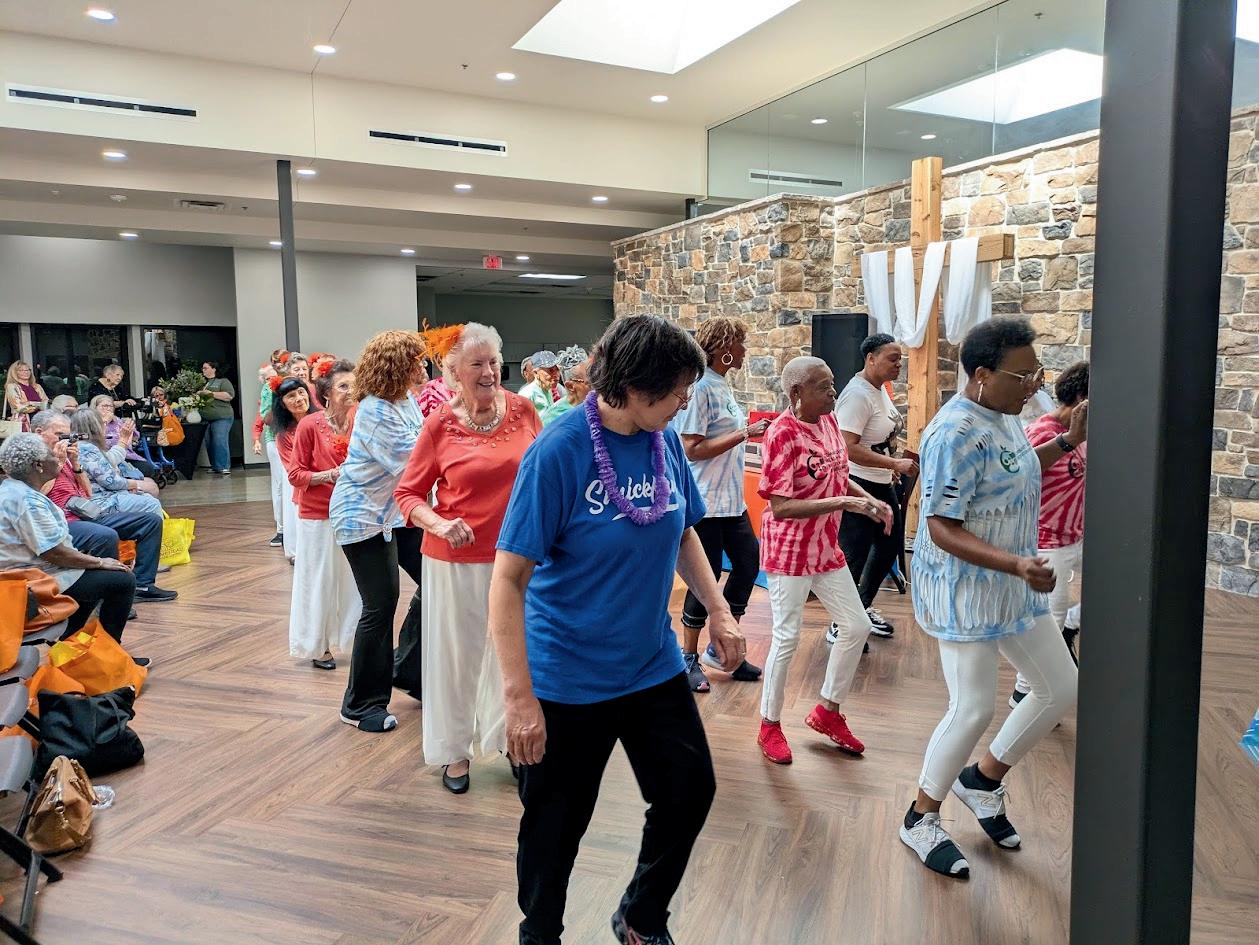
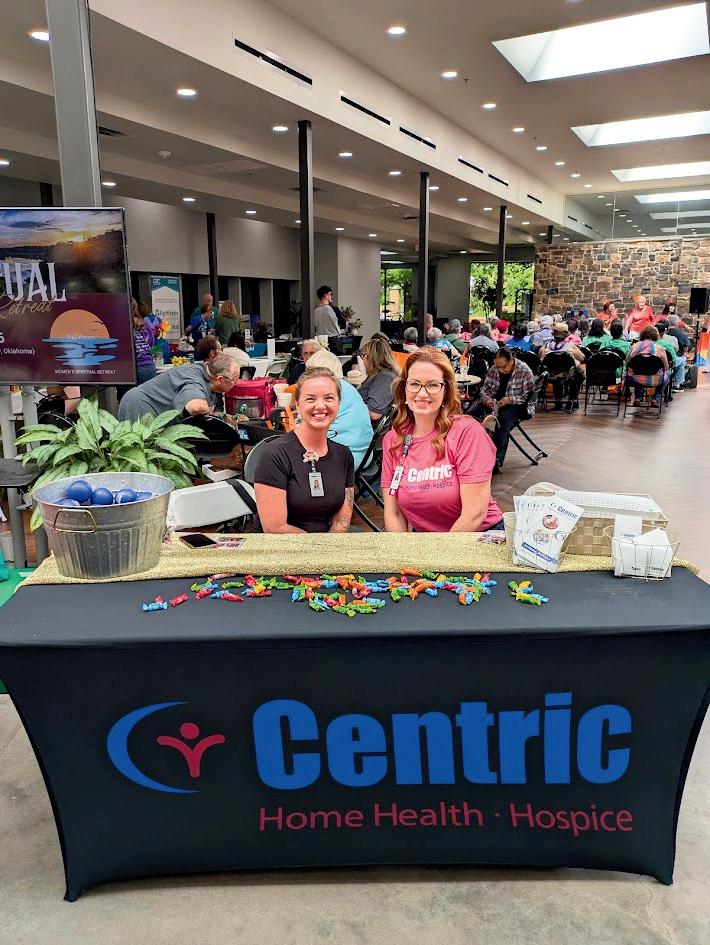
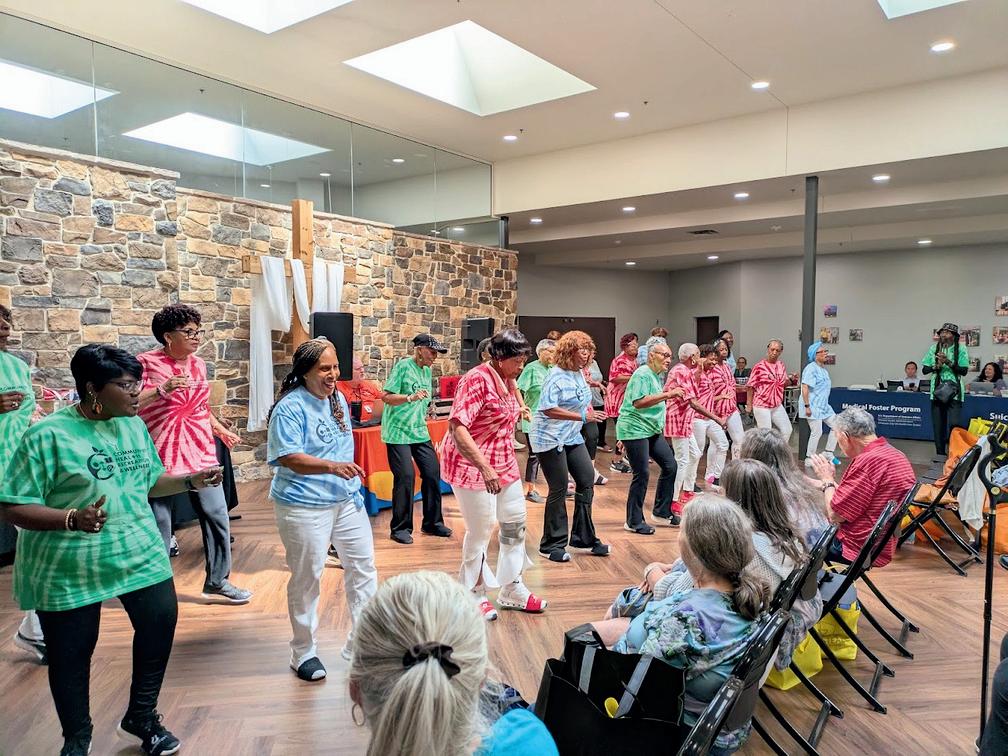
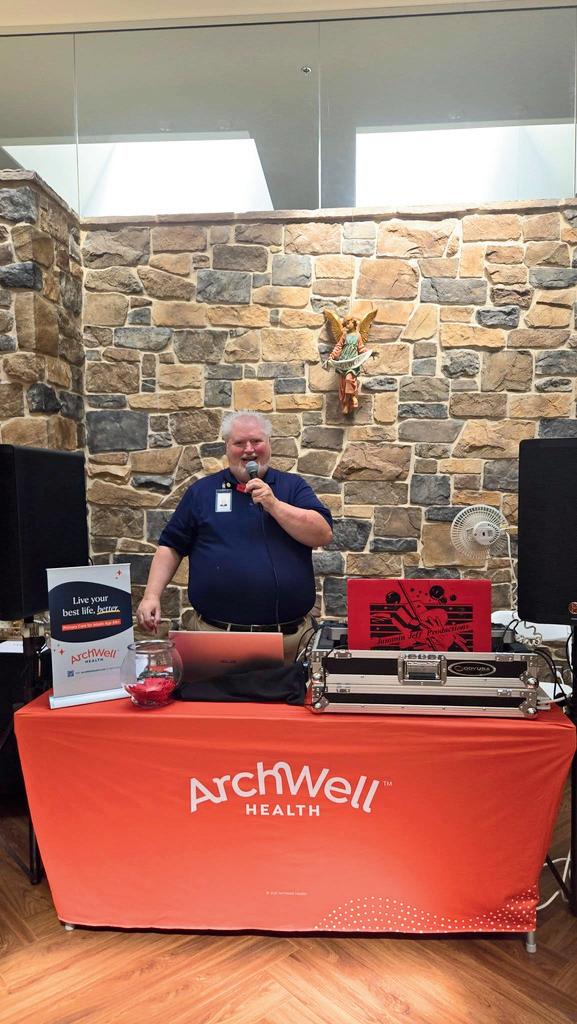
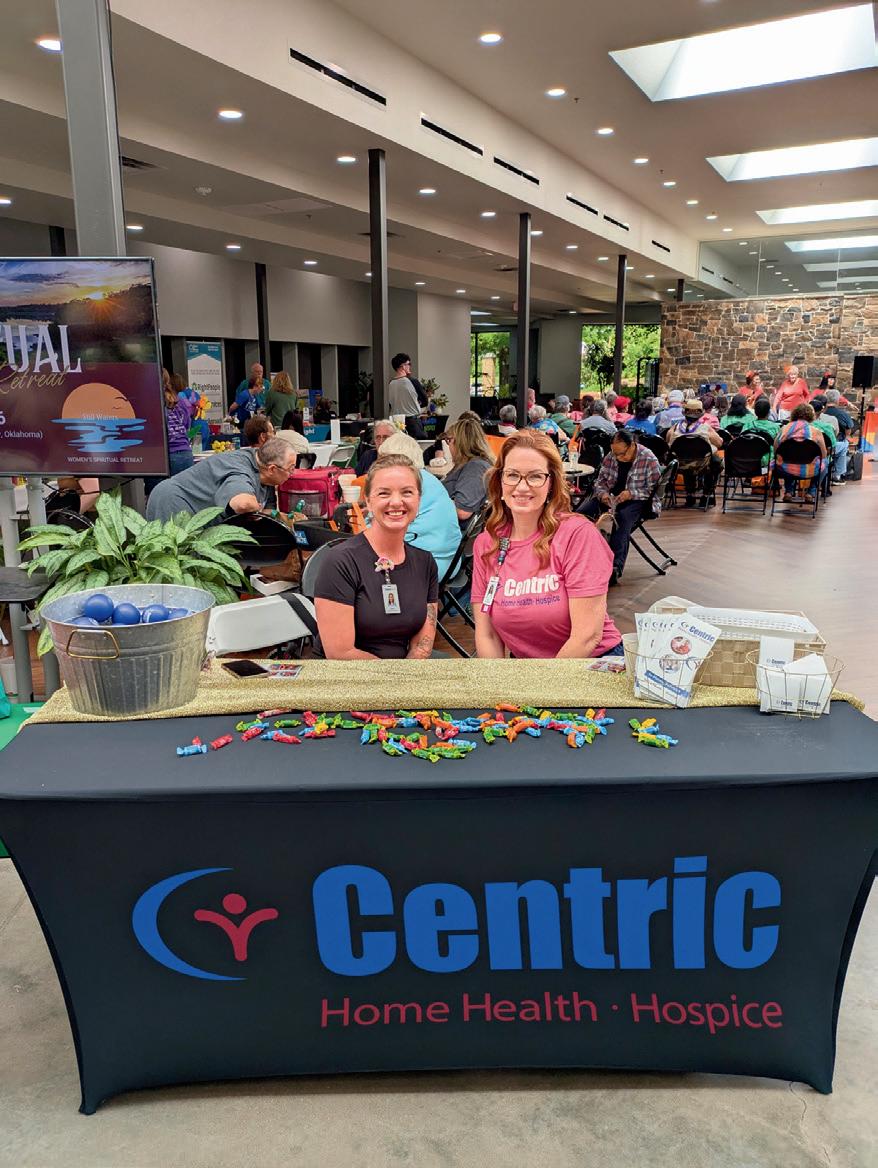
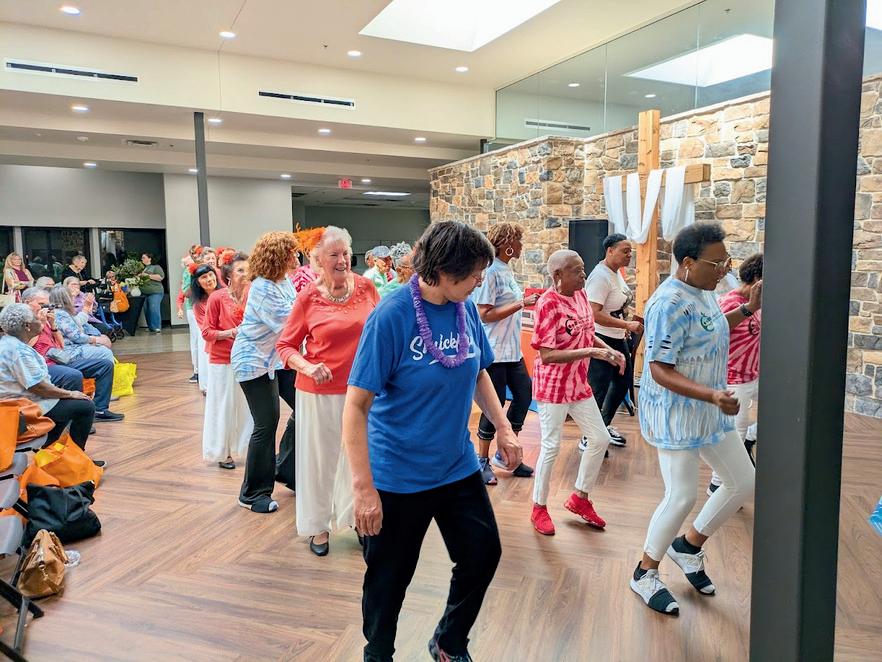
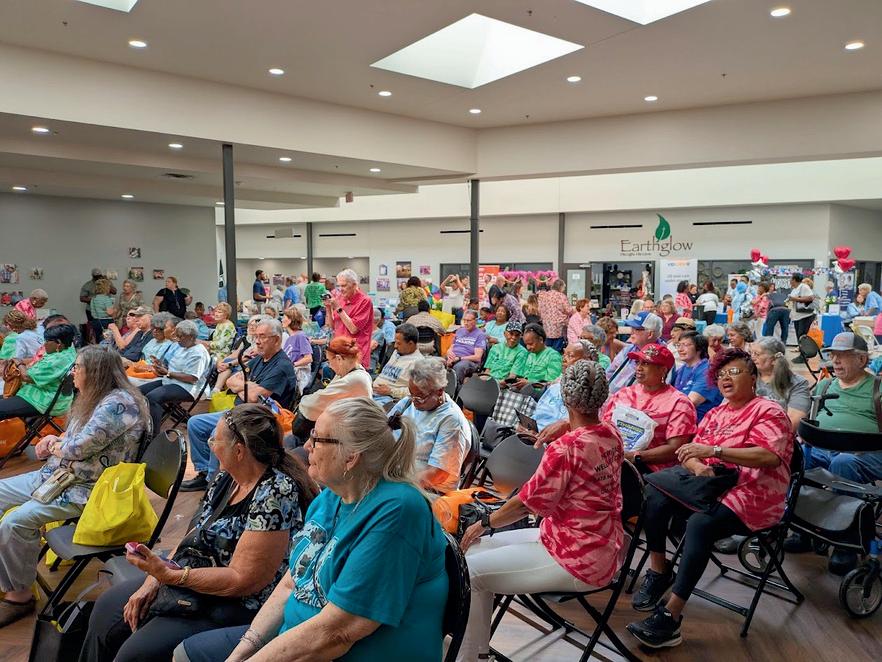
The music carried across the venue before you could see the dance floor. Near the center of the hall, a group of seniors moved in time with the beat. Around them, rows of tables stretched across the space, staffed by organizations offering services ranging from health care to housing support.
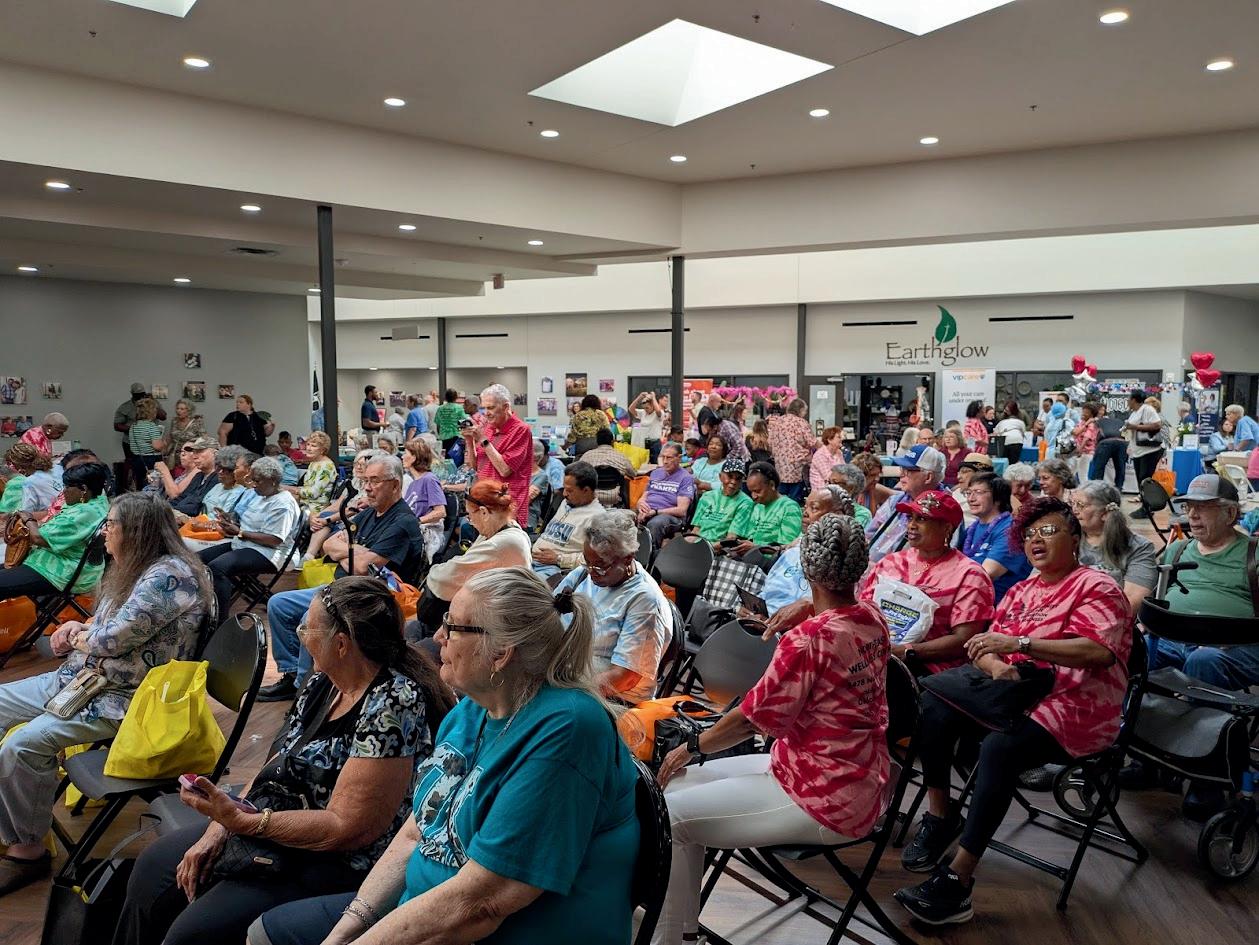
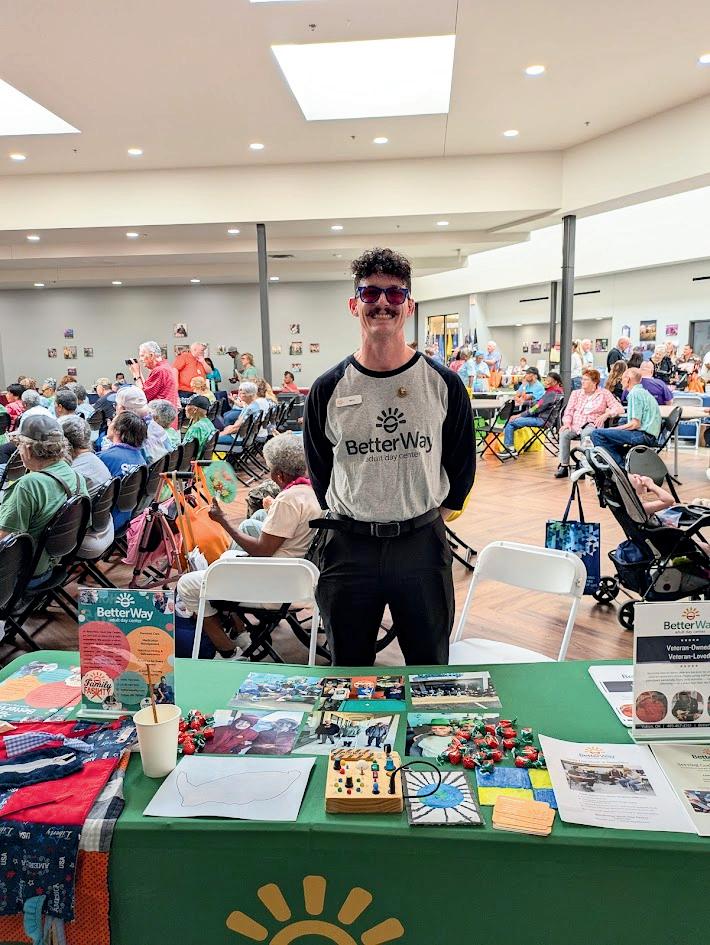
At first glance, it looked like a festival. In reality, it was something more practical, and, for many, more necessary. The 7th Annual Spring Better With Age FunDay, hosted by CAREGIVER Magazine and Better With Age Events, brought together seniors, caregivers, and service providers on Thursday, May 14, 2026, at the Church of the Servant event center, in a setting designed to make information accessible and interactions enjoyable.
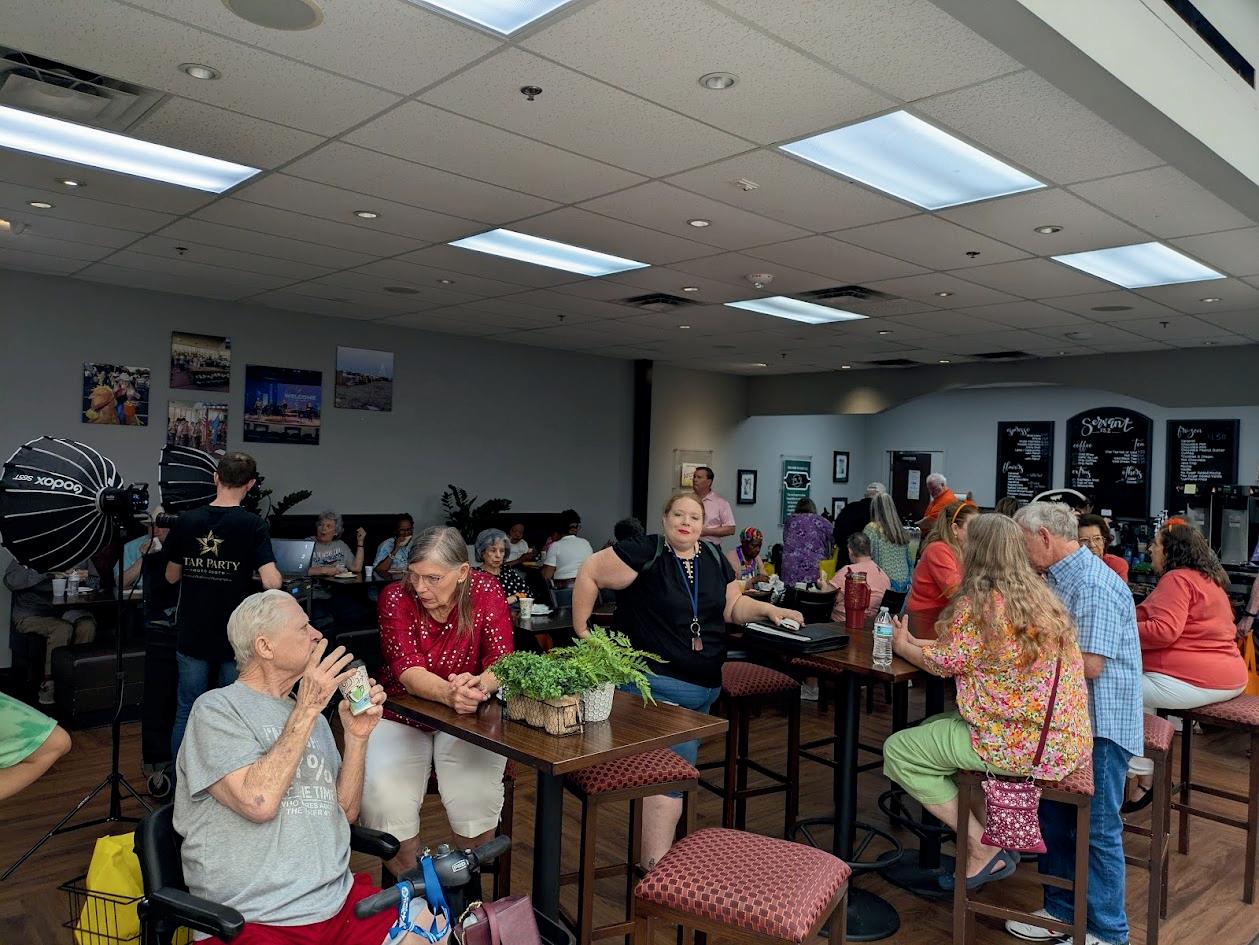
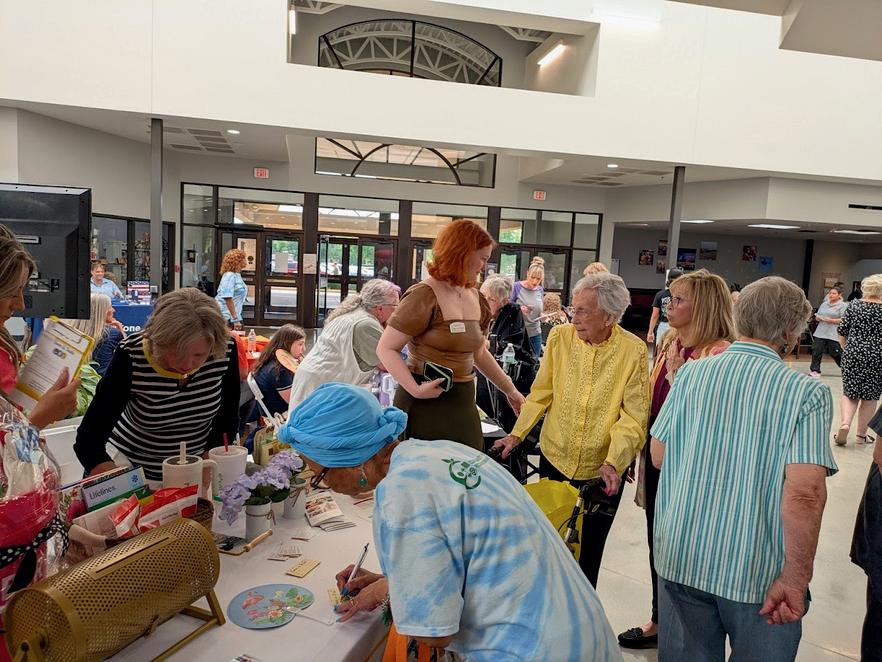
into a single space. Attendees moved from booth to booth, asking questions, collecting brochures, and making connections with providers they might otherwise encounter only online or over the phone. But unlike a typical expo, the atmosphere was intentionally relaxed.
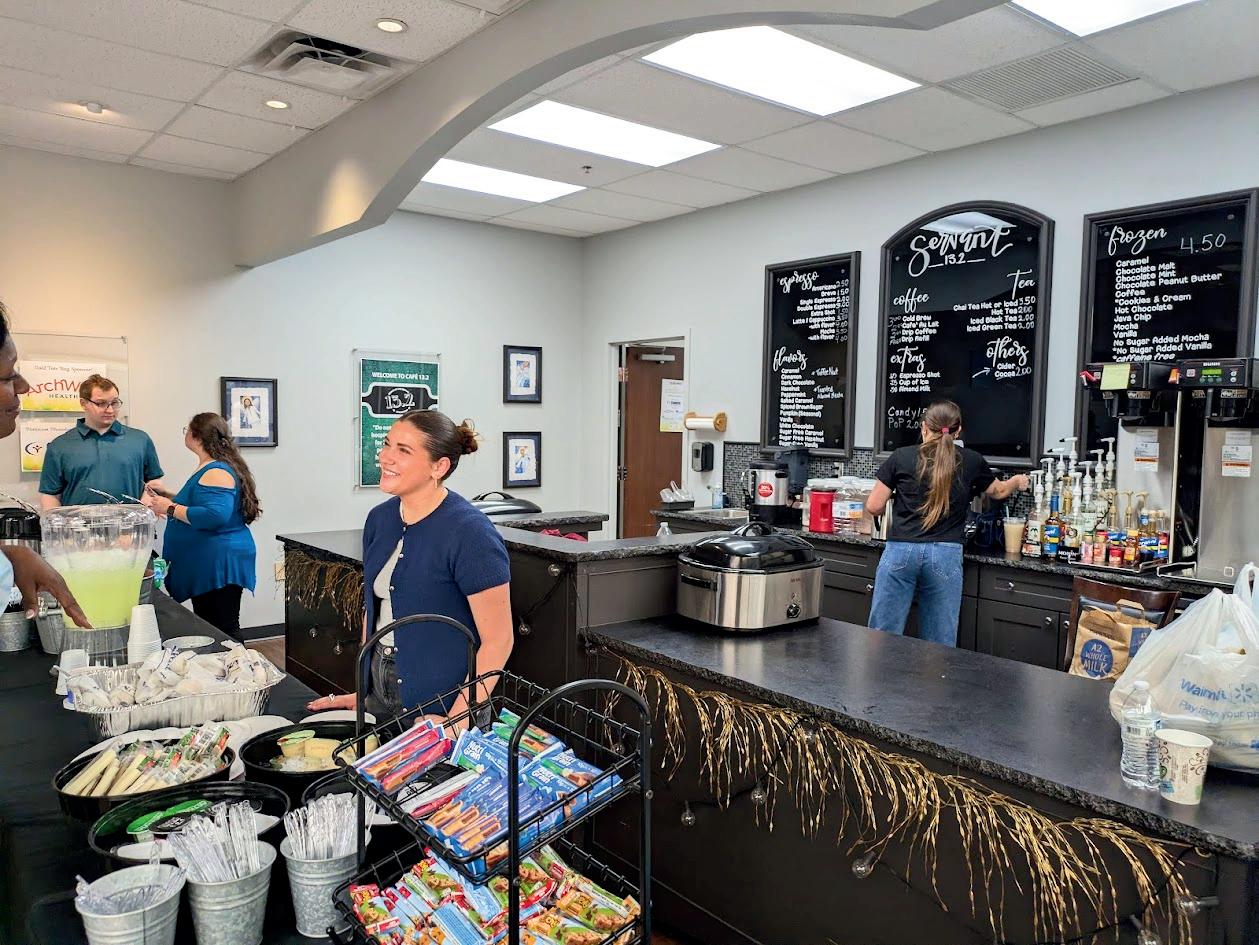
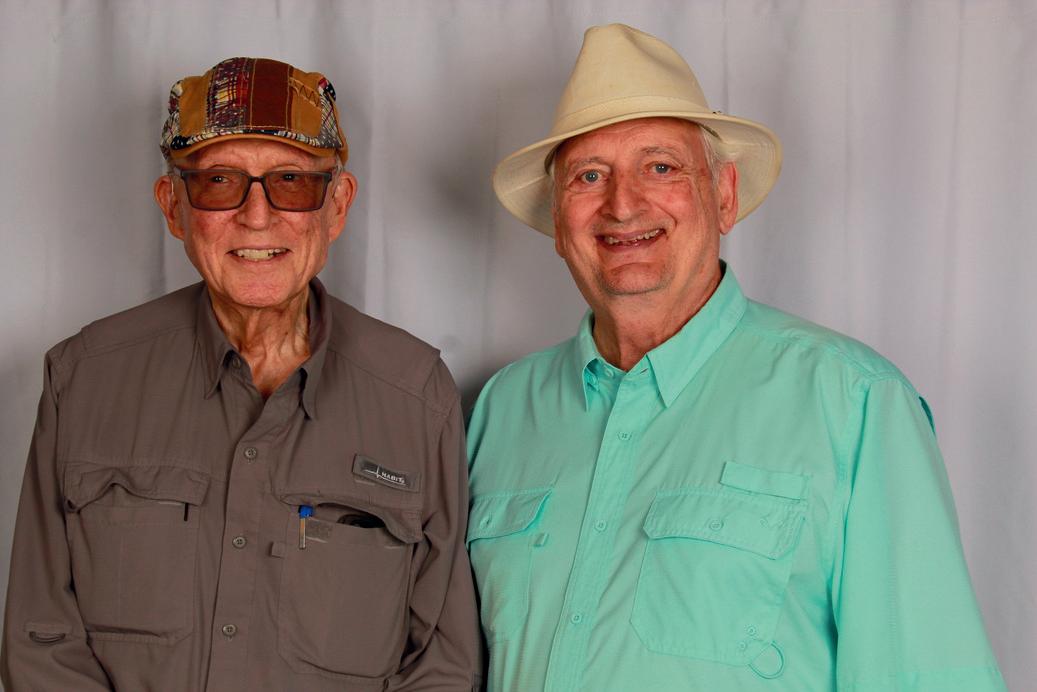
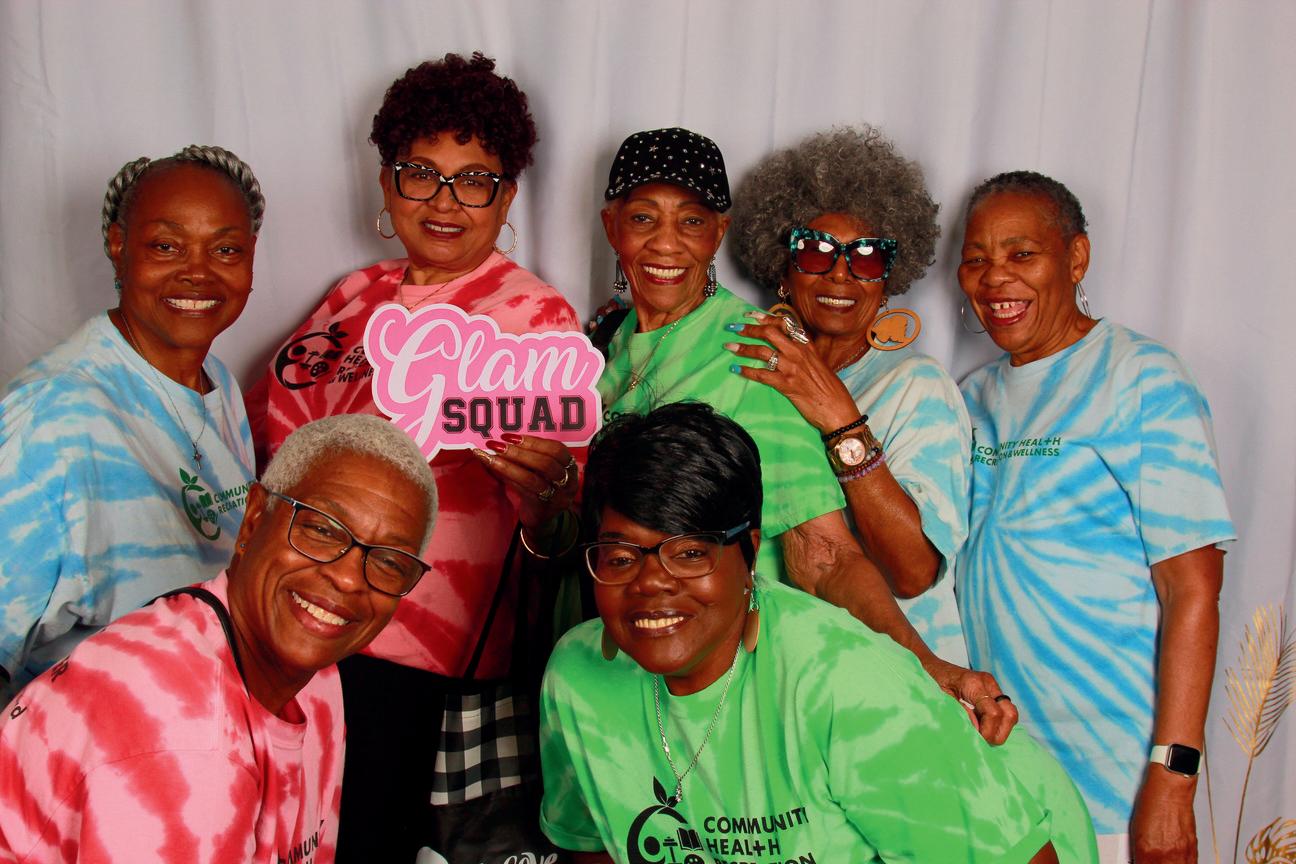
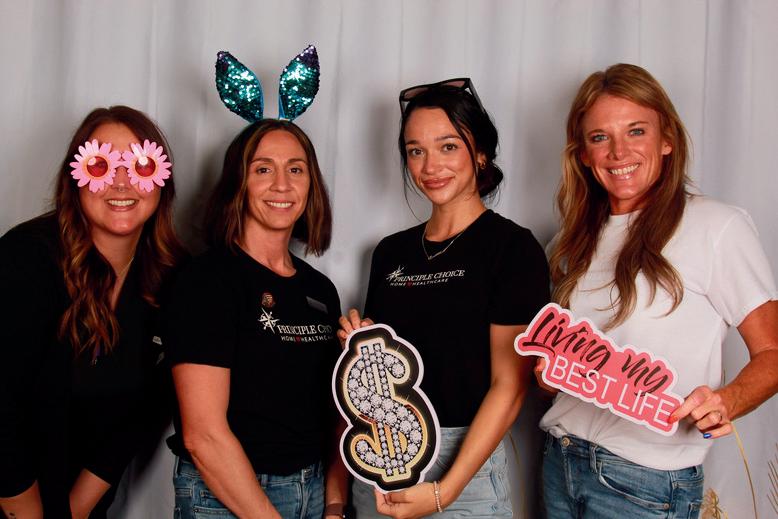
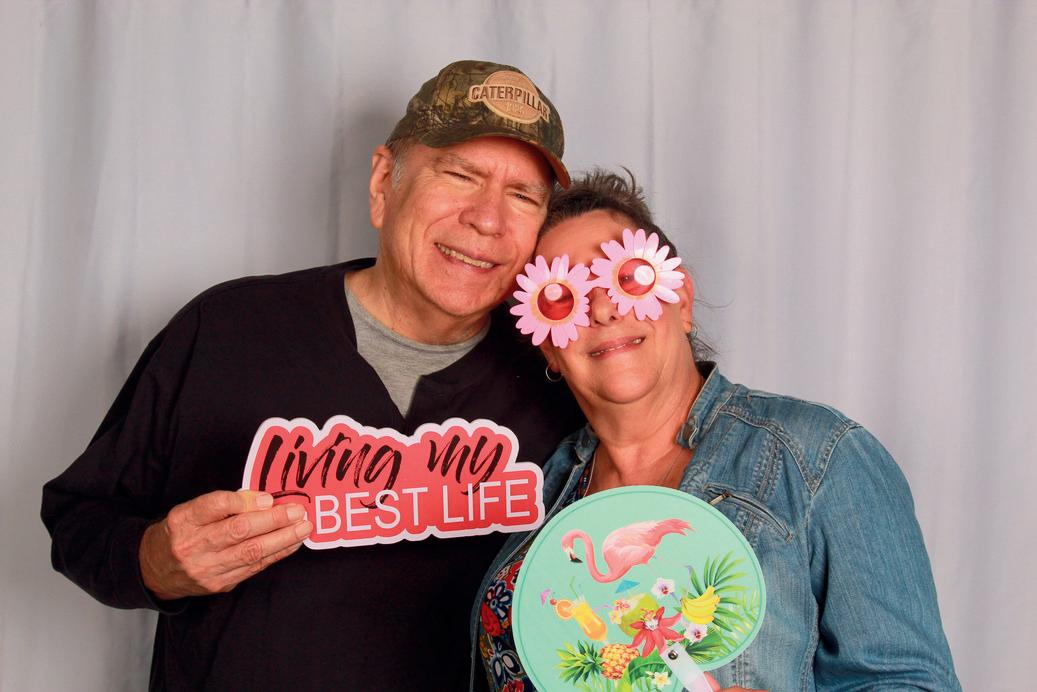
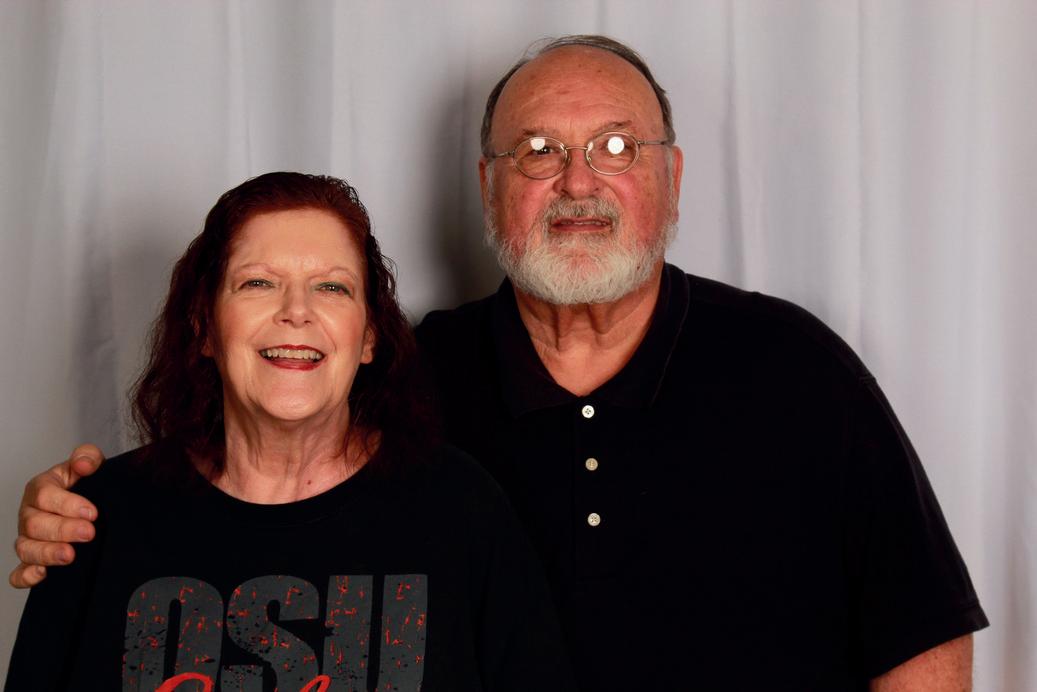
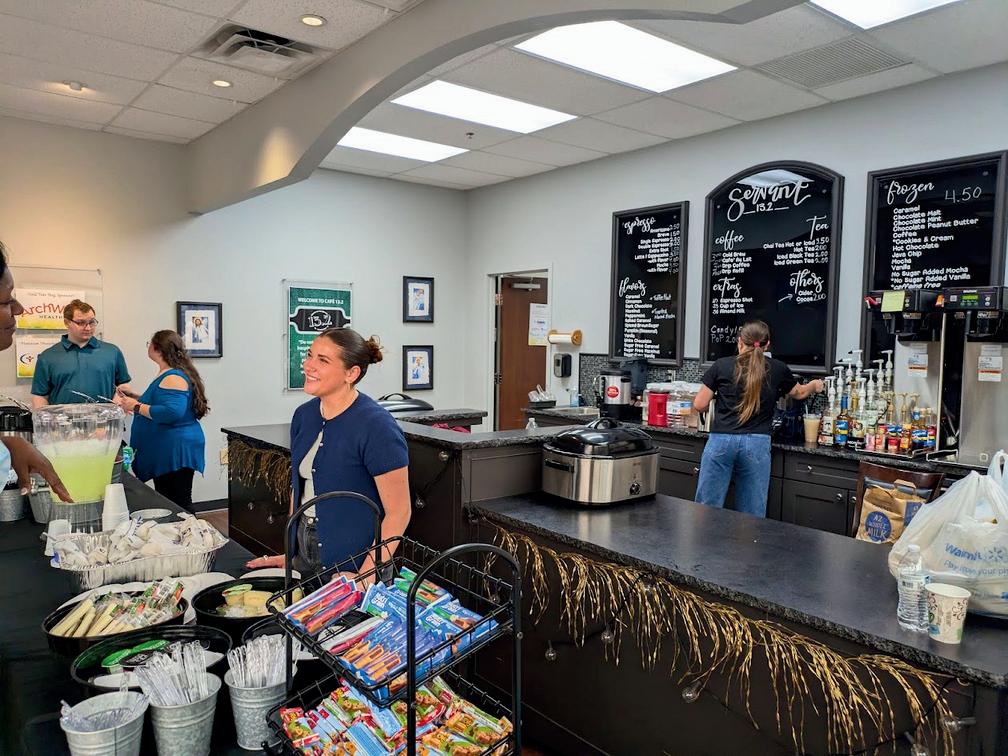
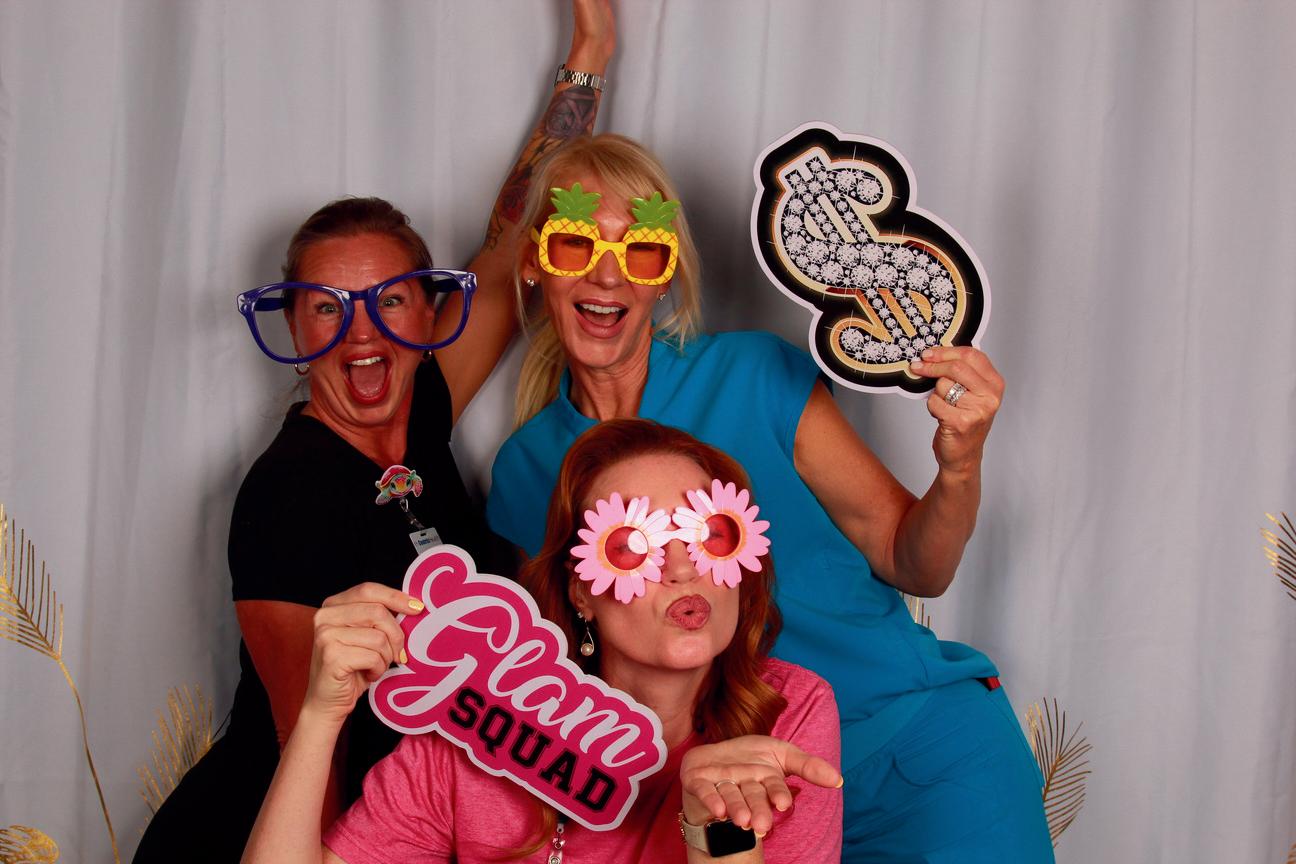
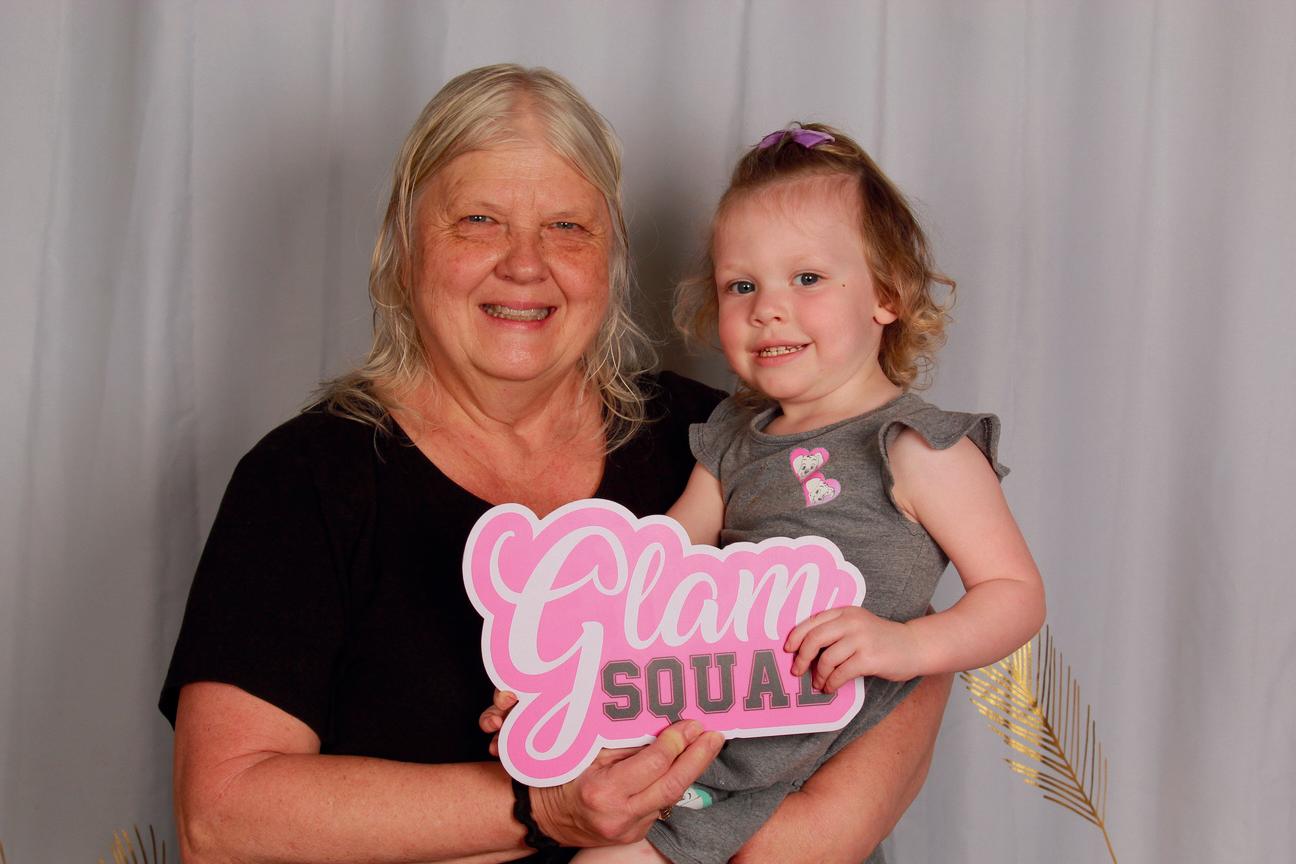
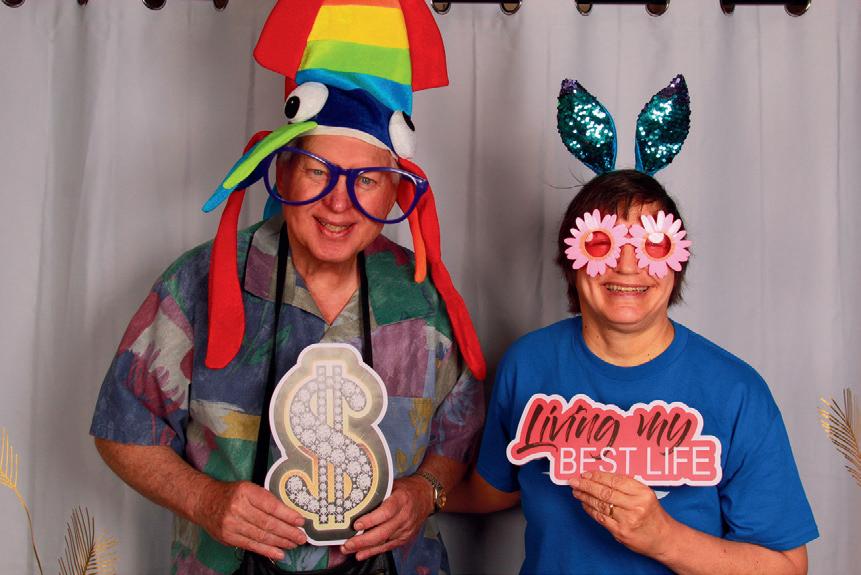
The organizer provided breakfast, lunch, and snacks at no cost to attendees. Event staff served food continuously throughout the event, maintained cleanliness, and handed out door prize tickets upon entry. A photo booth near the entrance drew a steady line, giveaways were available, and the DJ announced door prize winners between musical sets.
"There's a lot of good information," said Sue
For first-time visitors, the scale of the event could be surprising. "It's much bigger than I thought it was going to be," said John May, of Oklahoma City. That size reflected not just attendance, but the range of services represented and the level of engagement between exhibitors and attendees. Rather than passive browsing, conversations drove the experience. "I like the discussions," May said.
For many, the value lay in getting answers in real time. Greg Buskirk, of Edmond, who attended with a group from Oklahoma Christian Apartments, said the event helped connect residents with services they might not otherwise find. "They're willing to help," he said. That direct access could make a difference, especially for seniors and caregivers navigating complex systems of care.
Marie Thompson of Yukon has attended every FunDay. "I love CAREGIVER Magazine because I learn something new every time I read an issue; it keeps me informed. There are many agencies, nonprofits, and companies that serve seniors and individuals with disabilities, offering programs and services vital to our well-being. It is impossible to track everything. I
entertainment, and delicious, free food at all the FunDays.
Seeing old friends, making new ones, and learning about new businesses and programs enrich my life! Of course, goodie bags for all the SWAG and amazing door prizes are added incentives to attend."
For exhibitors, the event was about more than visibility. It was about reaching people who need help but may not know where to start. "We can connect with a lot of people that don't know about the safety resources we offer," said Leilani Stendebach, who was representing the Oklahoma City Fire Corps, an auxiliary of the Oklahoma City Fire Department focusing on fire safety and home risk reduction. That kind of outreach was a common thread.
Jennifer Williams, attending for the first time with Able Tech, said the event created opportunities to connect with people who might otherwise never hear about available services. "A lot of people don't know about us, and we need to change that," she said, adding that the ability to interact directly with
For others, the value extended beyond individual conversations. "It's about networking and giving information that seniors need and sometimes don't even know about," said Jolinda Ross of the Oklahoma Senior Living Association.
Even first-time exhibitors saw the impact quickly. "It's amazing," said Daniel Ingram of Refuge Care Hospice. "All the different vendors in the area, it brings everything together."
But the event wasn't just about services. "I think it's awesome," said Lauren Hill, of Oklahoma City, a repeat attendee. "I love the entertainment. I love watching people dance." She also pointed to something just as important: seeing familiar faces. "I see a couple old friends that have come in the past," she said. That mix of information and connection gave the event a different feel, less like a resource fair and more like a reunion.
While designed primarily for seniors, the event also draws many family caregivers seeking resources and guidance. They also find something harder to quantify: a genuine sense of connection. For attendees like Reynolds, the reason is simple. “It’s a great service,” she said. For many walking through the doors — whether for the first time or the seventh — that special combination of useful information, friendly access, and warm community keeps them coming back.
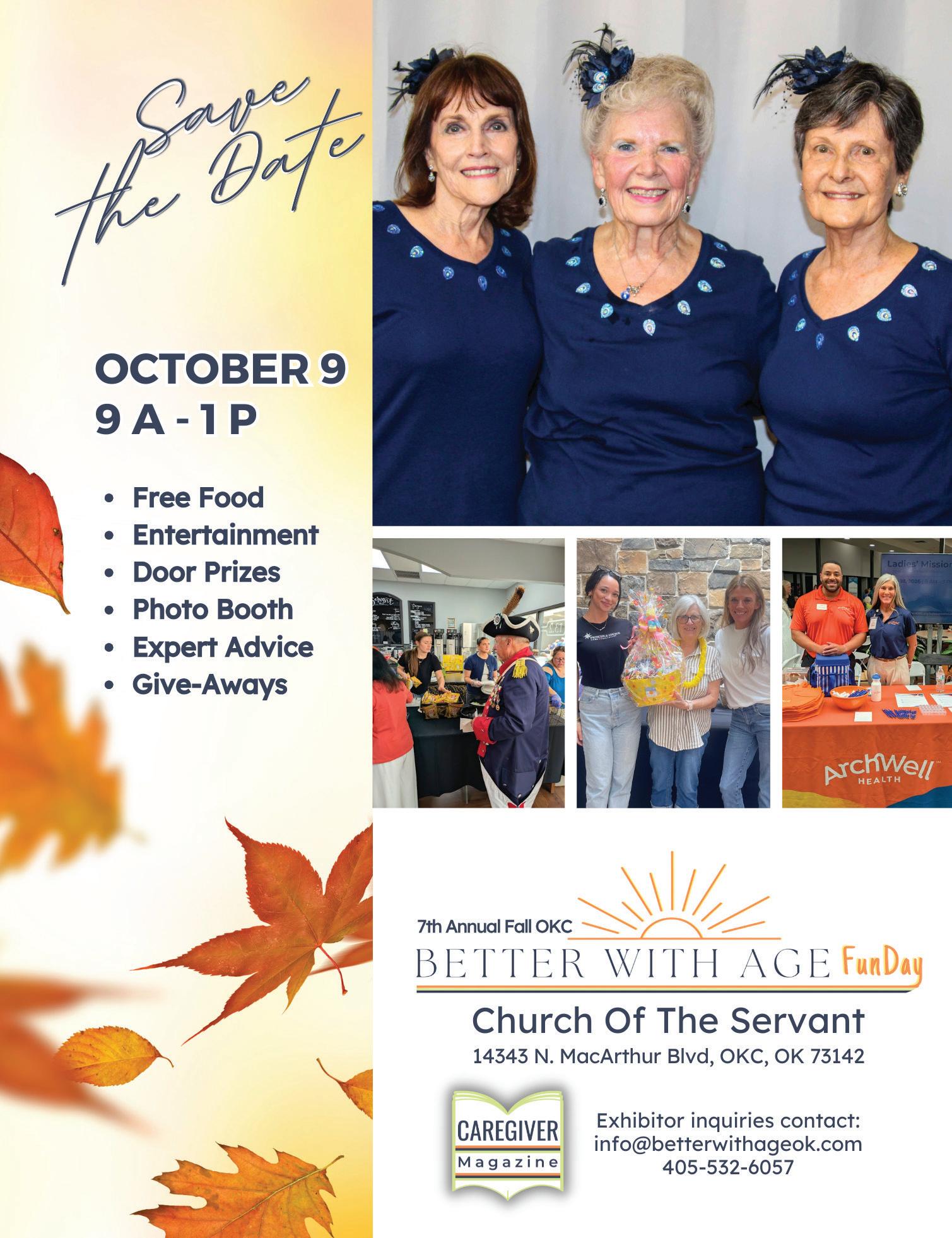
Note from the Publisher: The FunDays are four hours of reunion, entertainment, laughter, hugs, learning, sharing, and socializing. Mark your calendars and join us for a great time at the 7th Annual Fall FunDay: Friday, October 9, 2026, from 9 a.m.to 1 p.m. at the Church of the Servant event center, 14343 N. MacArthur Blvd., Oklahoma City,
“Last year, my Christmas gift from ArchWell Health was help weaning off of insulin.”
- Marie A.
Healthcare for Marie’s next find.
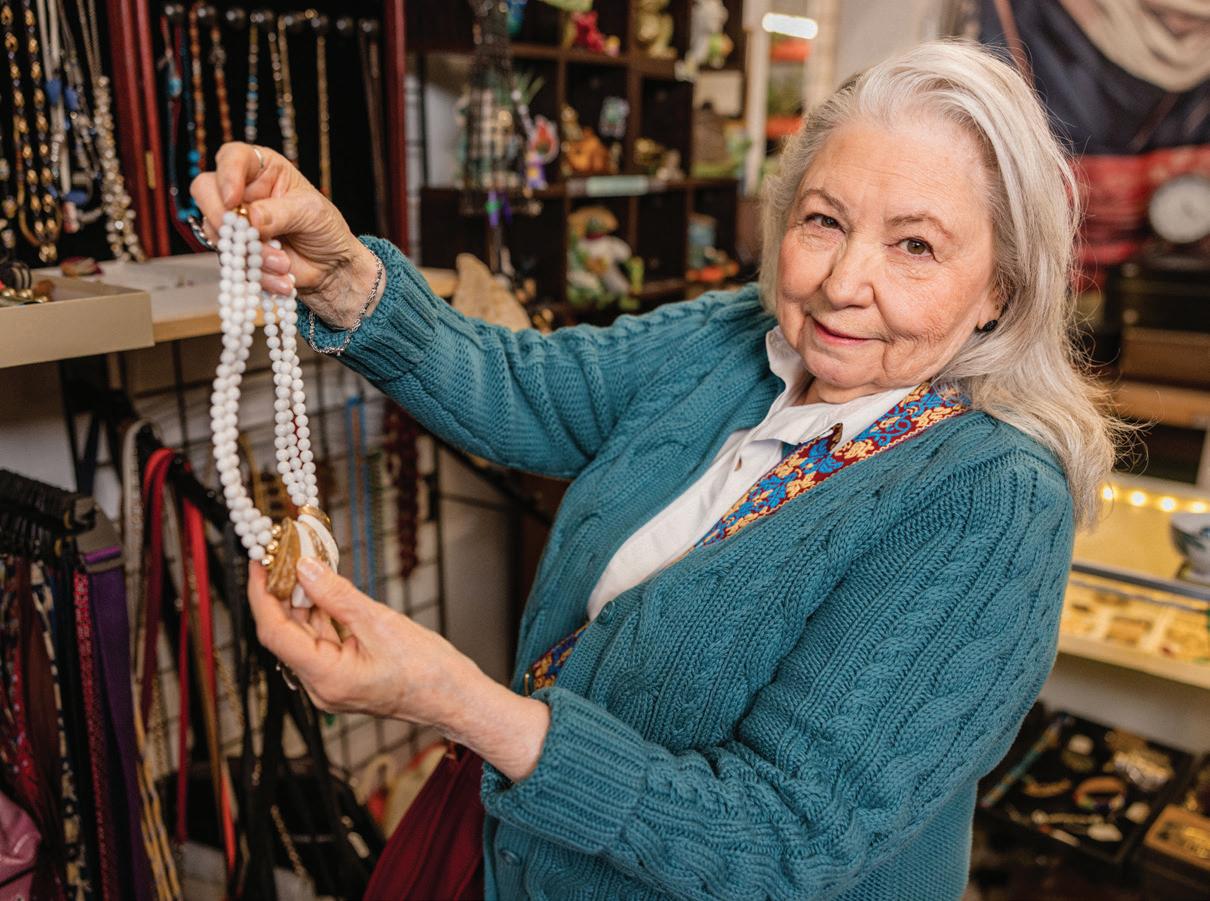
At age 81, Marie, our member from Denver, Colorado, lives for the thrill of the hunt. She combs the areas thrift and antique stores for rare and vintage finds. So, when she wanted to get off insulin, she knew it was time to find a primary care provider who would take time to help.
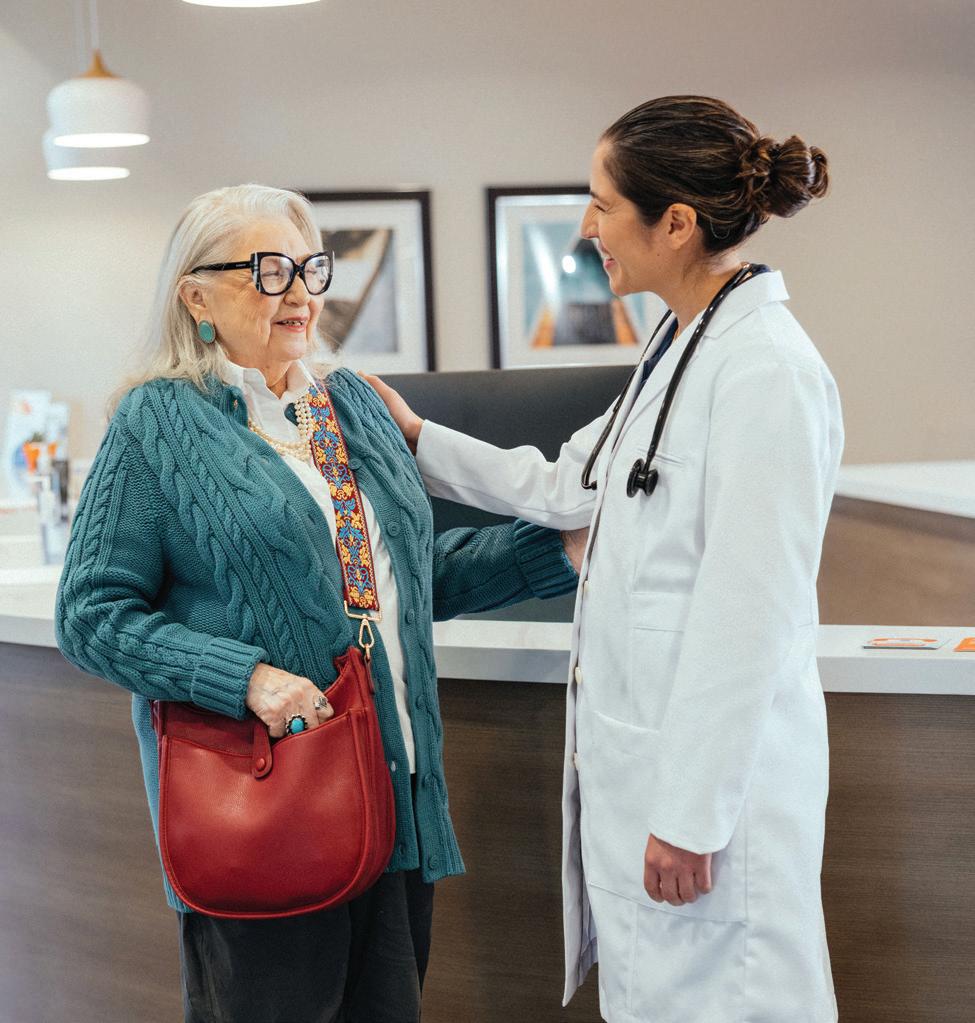
Designed specifically for the needs of older adults, ArchWell Health offers Marie more quality time with her doctor, same-day sick appointments for members, and locations right in her neighborhood. So, every visit feels a lot more personalized, and that helps put the pep back in her step.
Scan the QR code or call (405) 251-8885 to learn more.
By Charles Lillard, Oklahoma County Extension Master Gardener
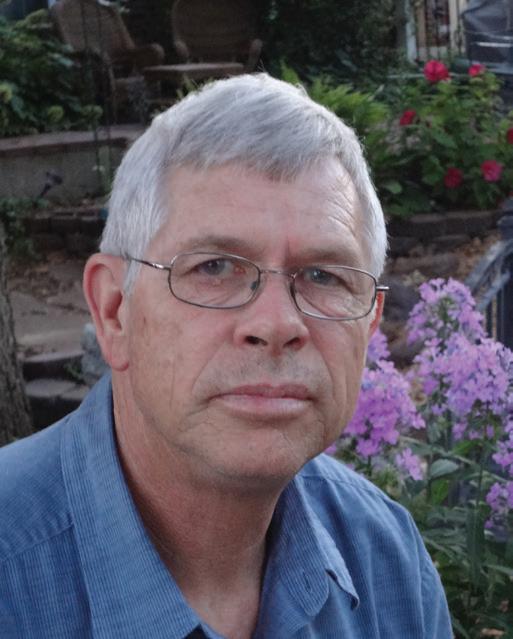
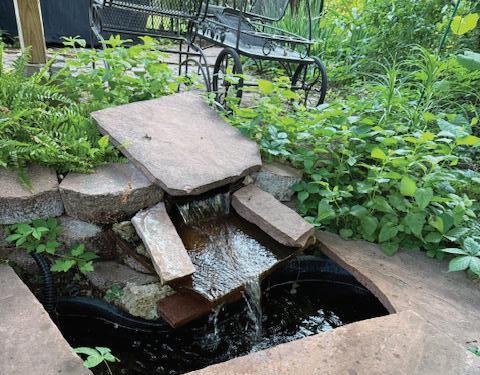
I love the sound of running water in the garden. I have two water features. They were created by an amateur…me. The soothing sound masks the sound of traffic.
Make every drop count...
Water-Wise Tips for Summer
I live close to a busy highway. I realize water is precious. We don’t want to waste it, but we do want to enjoy it. Water features are designed to recirculate water, so it flows continuously from the origin to the reservoir and back to the origin. The water we lose comes from evaporation. It is the price we pay as we water the birds and other wildlife in our yard. I love watching birds and squirrels drink, bathe, and enjoy the water.
Water is essential to life. Animals need it. People need it. Plants need it. If you are a gardener, you know that one of your regular tasks is watering the plants you want to keep thriving. Many times, moisture comes to us either too much or not at all. It is feast or famine. The deeper we get into summer, the fewer rain clouds we see. July and August in Oklahoma can be a real test for our plants. They are typically our hottest and driest months. Some gardeners resign themselves to having healthy-looking plants only in spring and fall; others aim for a year-round garden. When water falling from the sky is scarce, we look for other ways to get water to the plants.
Hand watering may be the best way to keep plants healthy. This is especially true of potted plants. Plants in a container dry out quickly. Having a watering can that is not too heavy is recommended. Take your time. Watering is best done in the morning or evening, when temperatures are not at their highest. Consider installing a drip system. This puts water where you need it, when you need it. We do whatever it takes to maintain the health of our garden. Overhead spray irrigation is the least water-wise method. Much water is lost to evaporation and wind drift when using a sprinkler. There are times when watering is limited because of drought. Your city may have a water rationing law that takes effect during dry times. Watering may be restricted to certain days or hours. The water used to irrigate the landscape is considered a luxury. Generally, this restriction applies only to overhead watering. It limits the use of
sprinklers. If your lawn has an in-ground system, check for leaks or other needed adjustments to sprinkler heads. It is always best to be knowledgeable of your city’s rules.
Common sense landscaping and planning are recommended. The greatest waste of water is applying too much too often. Too much water will not be absorbed by plants and put to use. Sometimes water is applied too rapidly. Proper soil preparation and watering techniques will eliminate water runoff. Drip irrigation is the most efficient way to water. Mulches can be applied to conserve water by reducing moisture evaporation.
Choosing drought-tolerant plants will help achieve a year-round garden. Fact sheet HLA 6444 (Drought Tolerant Plant Selections for Oklahoma) can be obtained from your County Extension Office. You might be surprised by the number of drought-tolerant annuals and perennials recommended. Annuals such as coreopsis, cosmos, periwinkle, and alyssum are on the list. Perennials such as primrose, lamb’s ear, plumbago, creeping phlox, poppy mallow, purple coneflower, stonecrop, and yarrow are listed along with lots of others.
Enjoy the water and realize how precious it is. Happy gardening!
For more information, contact the OSU Extension Center at 405-713-1125 or visit the website at extension.okstate.edu/
Gardening Tip
• Mulch tomatoes, peppers, and okra 3 inches deep, avoiding contact with stems; water early in the day, providing 1 to 1.5 inches of water weekly. Oklahoma sun rewards deep roots.
• Switch to drip or soaker hoses. Water the roots directly to reduce evaporation in Oklahoma winds and prevent leaf disease.
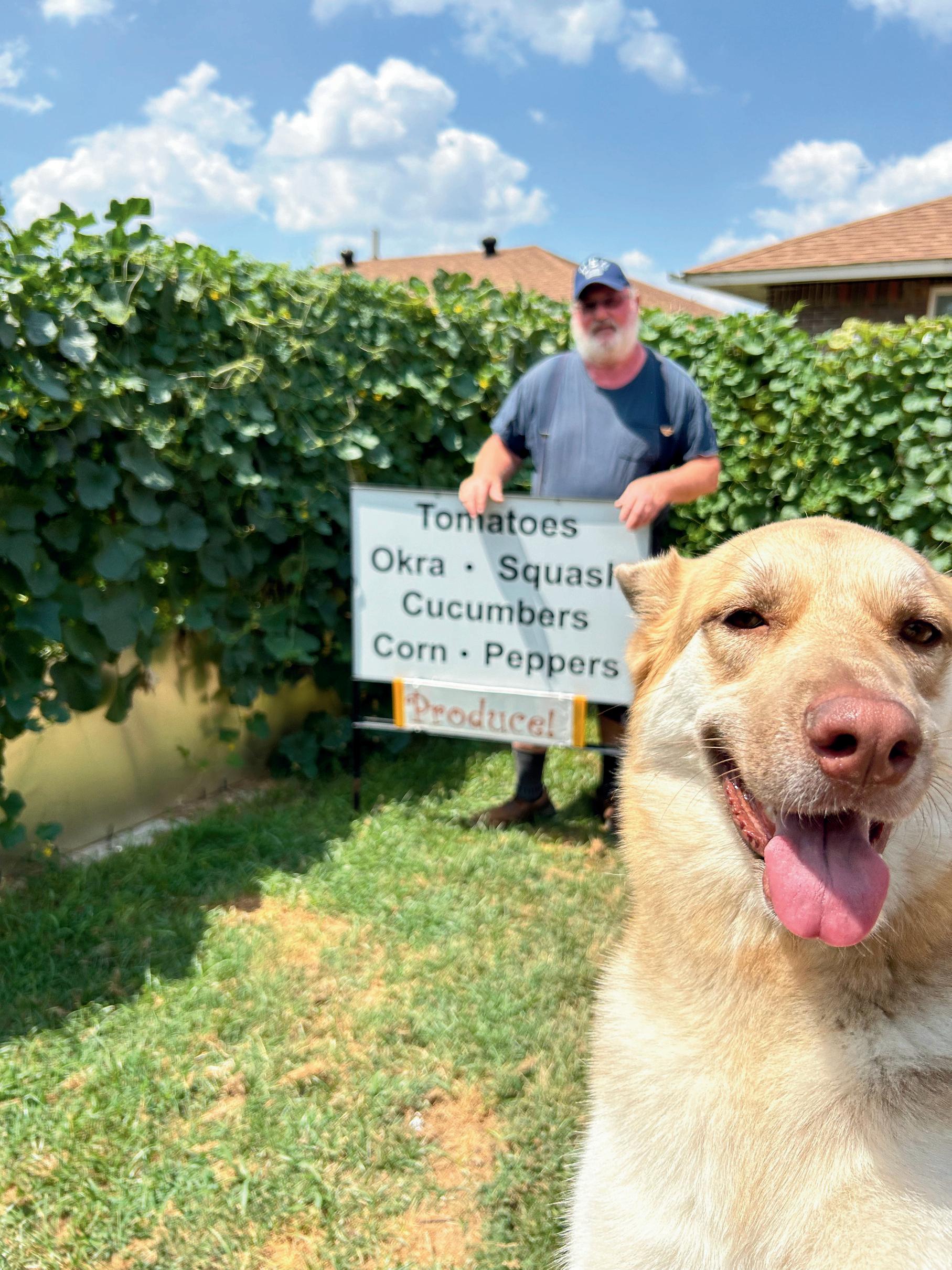
The Garden Spot
For homegrown veggies visit Matt and his wife, Donna, at their home on the southeast corner of Hefner Rd. and Sunnymeade Pl.
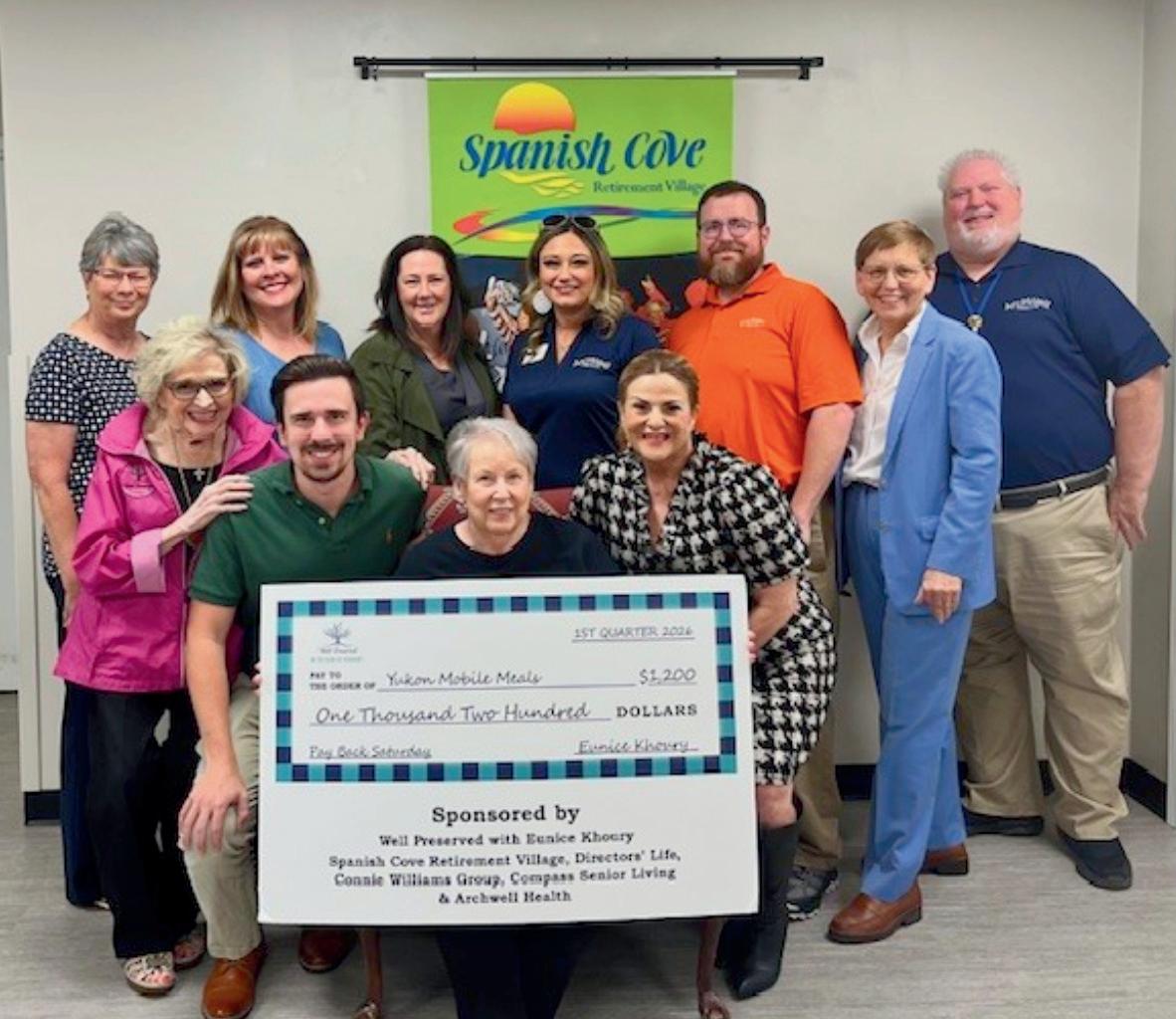
Archwell Health; Stephen Zaborowski, Archwell Health; Linda Sargent, Directors Life; and Jeff Aynes, Archwell Health.
Well Preserved and sponsors honored Yukon Mobile Meals with the 1st Quarter Pay Back Saturday Big Check at Spanish Cove.
Yukon Mobile Meals delivers nutritious meals to 156 seniors Monday through Friday.
Joanne Oltmanns told Eunice she was reading Caregiver Magazine, read the Pay Back Saturday article, and she and Chris decided to email a request. Joanne shared that she had never asked for any type of grant before and was surprised when she received the call from Well Preserved.
Joanne asked if she could keep the "Big Check." Eunice told her to take it to the bank and request a deposit slip.
Mobile Meals
Yukon Mobile Meals sends a huge thank-you to all the volunteers who deliver meals.
Joanne, the director, also shared that Yukon Mobile Meals has only two paid staff. All others are volunteers — just like Joanne and Chris.
Yukon Mobile Meals is not only a Pay Back Saturday winner, but a Paycheck of the Heart for Yukon.
Well Preserved makes the application process easy, and we are now in the second quarter of the year. If you are affiliated with a nonprofit that serves seniors, please go to www.wellpreserved.info, click the top menu for Pay Back Saturday, and apply.
First row, from left: Eunice Khoury, owner, Well Preserved; Jake Kimmell; Joanne Oltmanns, director, Yukon Mobile Meals; and Jill Huff, Spanish Cove. Second row, from left: Chris Russell, Yukon Mobile Meals; Connie Williams, A Time For Living; Jennifer Buckles, Compass Senior Living Solutions; Stephanie Harvey,
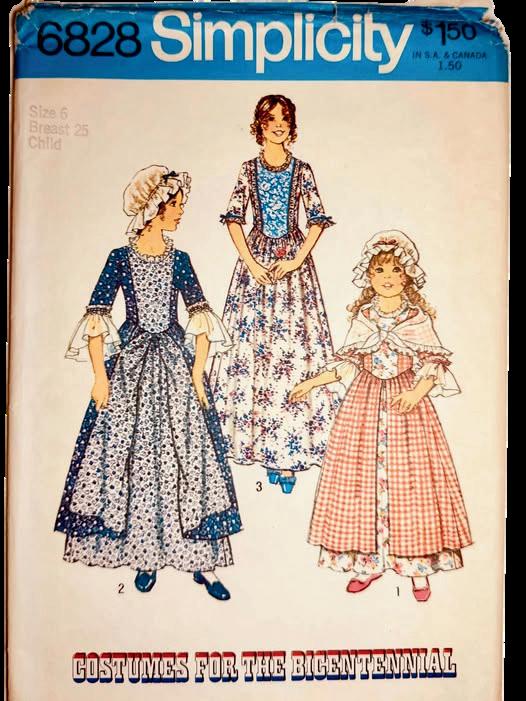
Simplicity and McCall's sold 1976 patterns for colonial gowns, bonnets, and breeches, which mothers stitched for parades and then saved. By '77, those calico dresses became Halloween costumes, inspired by Laura Ingalls after Little House on the Prairie made prairie style a craze.
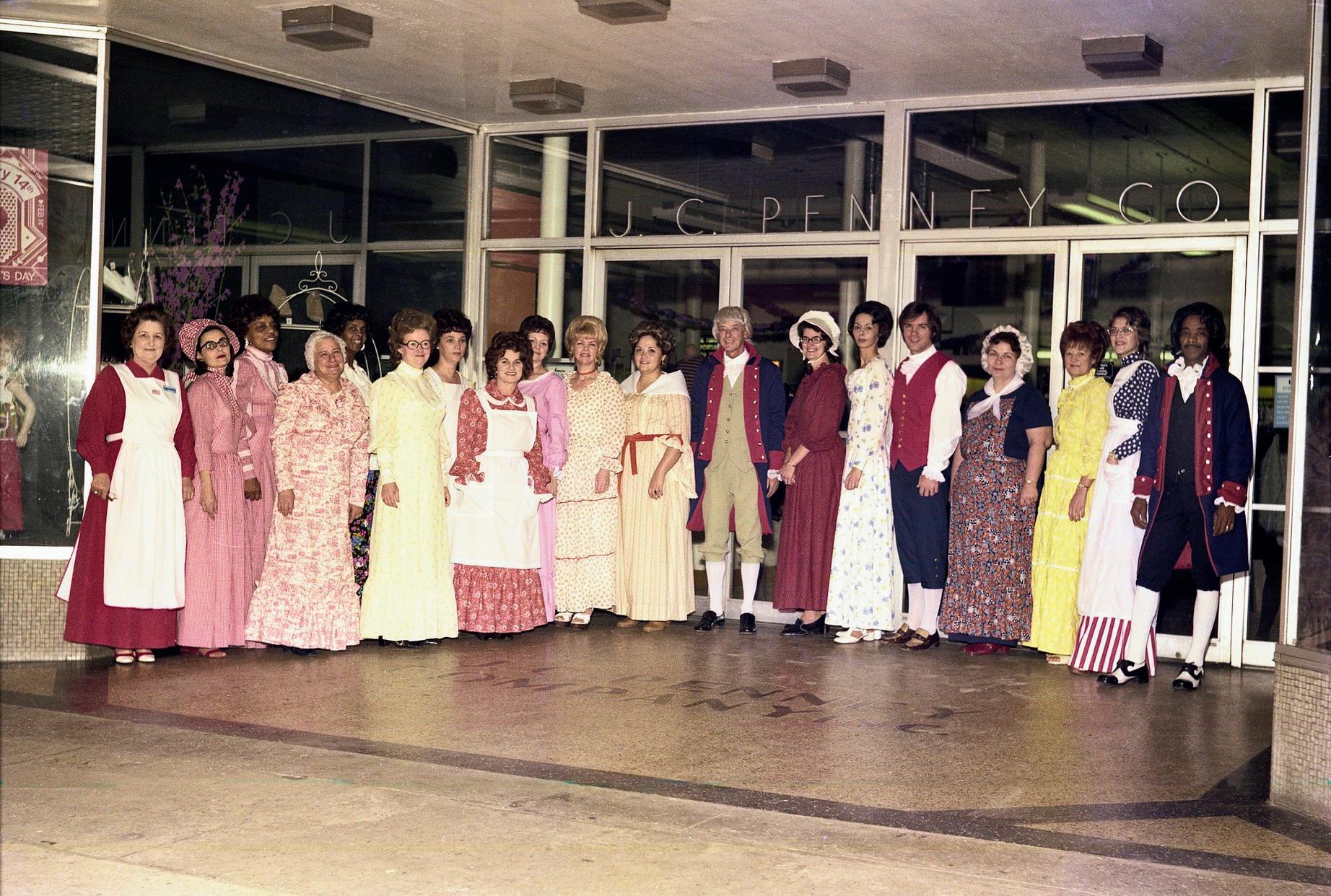
In summer '76, storefronts celebrated: clerks in mobcaps, men with tricorns, shoppers greeted with bows or curtsies.
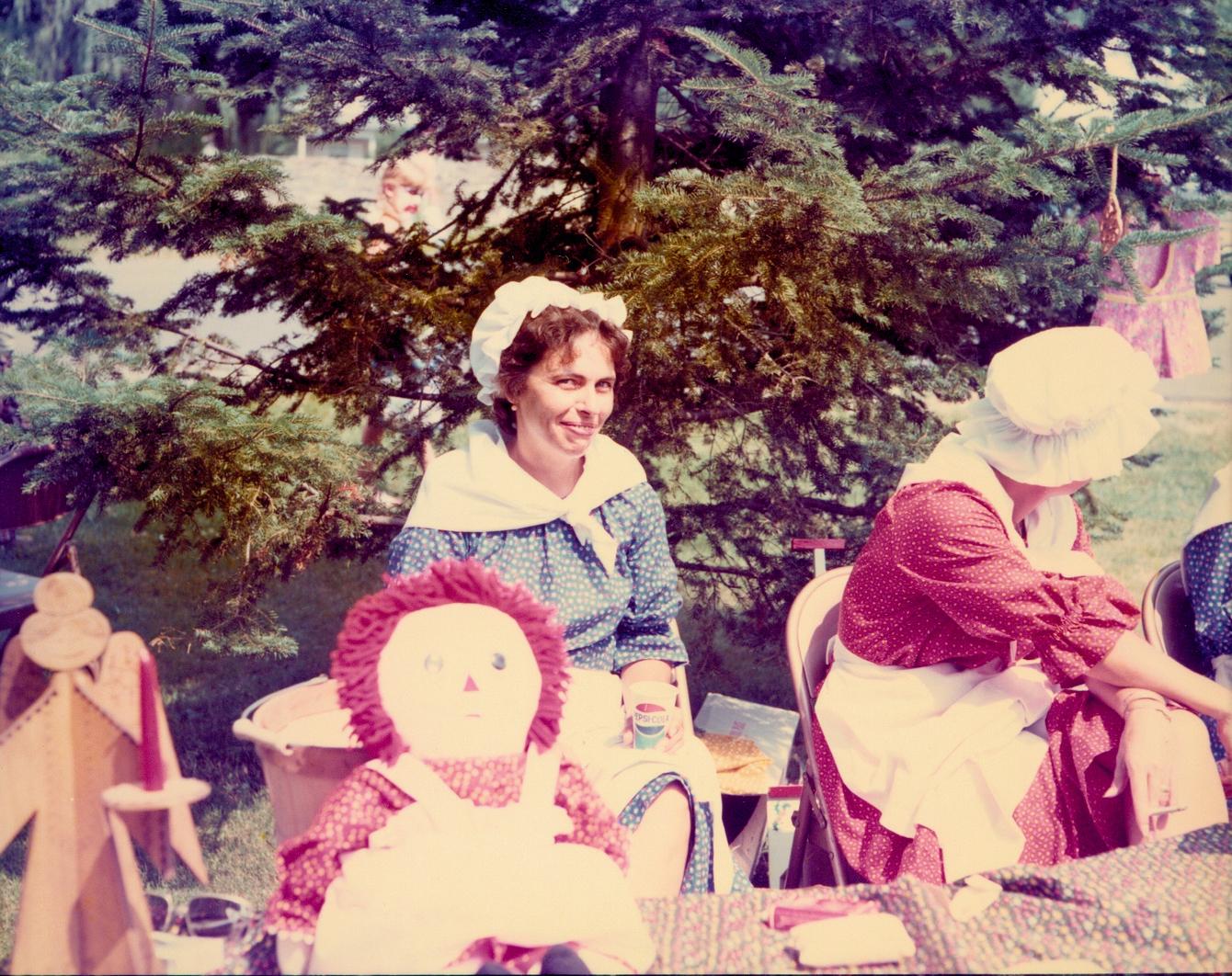
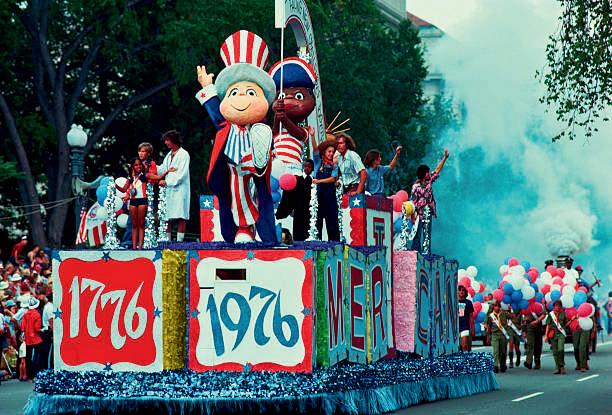
After the parade, families kept their costumes on for the town picnic. Fife players marched beside strollers, ladies in long aprons spread fried chicken on checkered cloths, and fathers in waistcoats tossed horseshoes as children in colonial caps played tag.
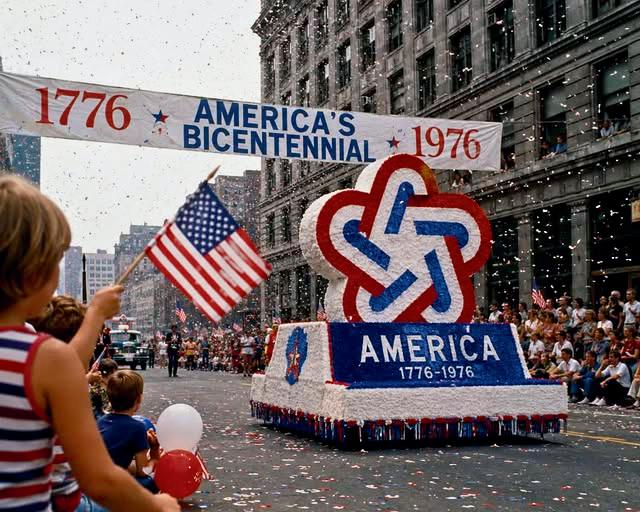
1776-1976 1776-1976 1776-1976
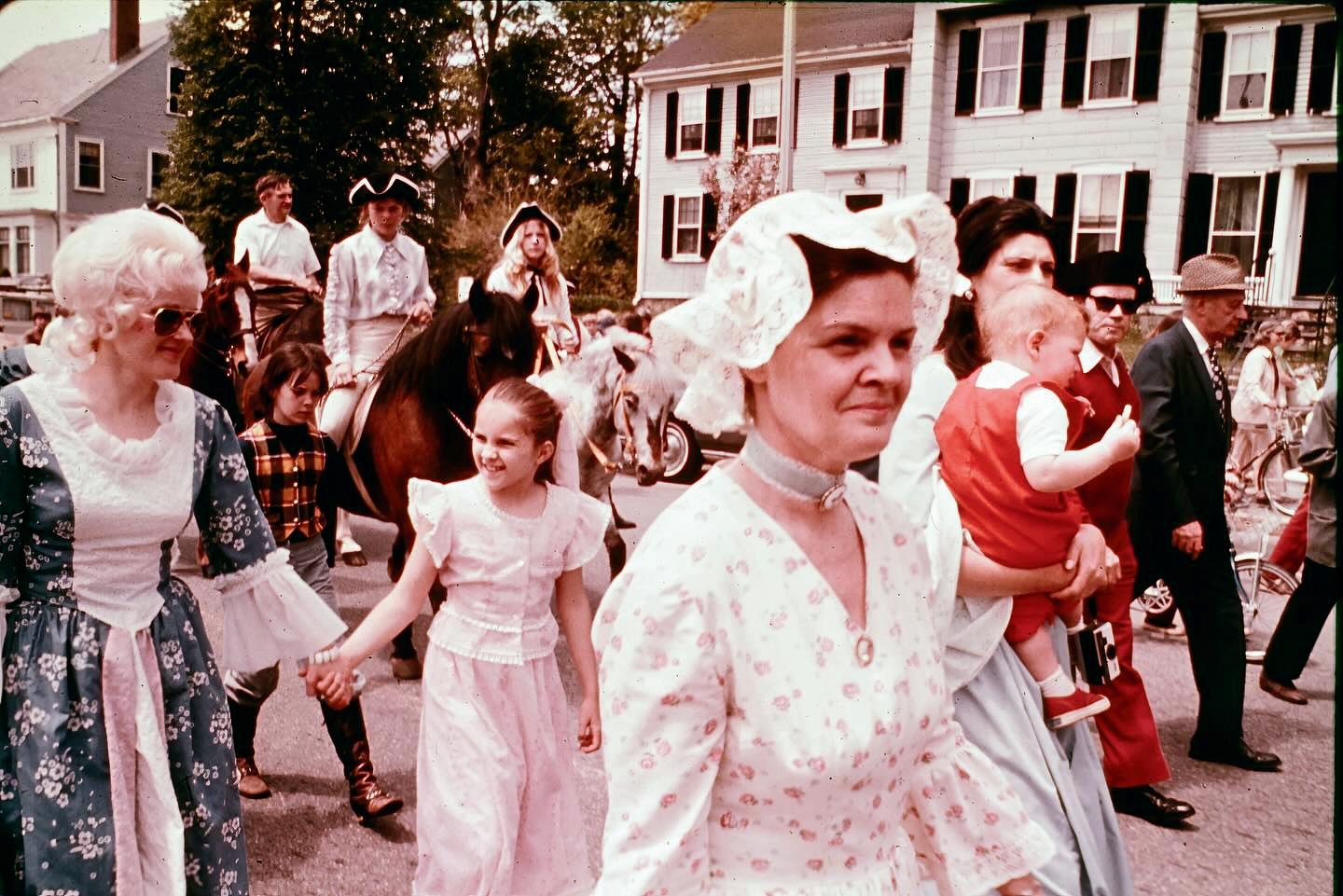
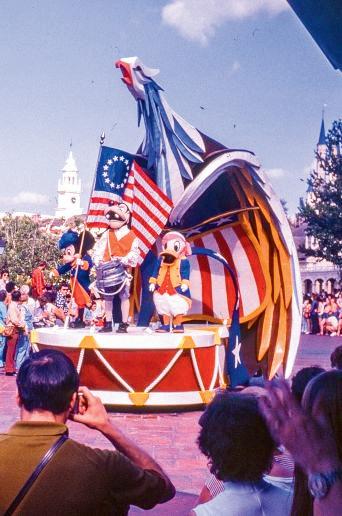
In 1976, Fourth of July parades took over Main Street. Fire trucks gleamed, floats were grand, veterans marched, horses pranced, and kids waved flags from wagons. The band played 'Yankee Doodle' twice, candy flew, neighbors cheered from chairs, and for one afternoon, the town felt like one big family. It was a glorious celebration of America!