



“Every teacher needs to improve, not because they are not good enough, but because they can be even better.”
- Dylan Wiliam
1. Please come to the event having read one or all of the case studies in Resource 7, as appropriate to your context:
▪ Special school: Sarah Delaney, Green Lane School
▪ Primary school: Kathryn Manion, Tyntesfield Primary School
▪ Secondary school: Multiple mini case studies
2. Please also read the fourth piece in Resource 7:
▪ Reflection from a leader: Leadership of school culture and professional development: Diane Campkin
‘Learn that’ statements
3.1 Professional development is likely to be more effective when design and delivery involves specialist expertise from a range of sources. This may include internal or expertal expertise.
3.3 All schools with early career teachers undertaking statutory induction must adhere to the regulations and relevant statutory guidance.
3.4 School staff with disabilities may require reasonable adjustments; working closely with these staff to understand barriers and identify effective approaches is essential.
3.f. Deliver effective professional development by: Ensuring that colleagues are able to continually develop specialist subject, phase and domain expertise.
3.g. Deliver effective professional development by: Making reasonable adjustments that are well-matched to teacher needs (e.g. to content, resources and venue).
3.h. Plan, conduct, and support colleagues to conduct regular expert-led conversations (which could be referred to as mentoring or coaching) about classroom practice by: Building a relationship of trust and mutual respect between the individuals involved.
4.1 Implementation is an ongoing process that must adapt to context over time, rather than a single event. It involves the application of specific implementation activities and principles over an extended period (e.g. implementation planning, ongoing monitoring).
4.a. Plan and execute implementation in stages by: Ensuring that implementation is a structured process where school leaders actively plan, prepare, deliver and embed changes.
1. Culture of trust, respect and relationships
5. Adapting to needs, ensuring appropriate reasonable adjustments and associated statutory guidance (disability, learning needs, ECTs, etc.)
2. Shared responsibility for and culture of continuous improvement
4. Utilising expertise (for professional development)
3. Culture which prioritises professional development
Your leadership learning and practice: Individual activity
Use your completed Cycle Two LDR as a prompt to focus your individual thinking, recording your responses on this resource.
1. Which were the most influential content areas and statements you learnt about during Cycle Two? Reflect on the FTF event, online study, practice activities, FAT and in-school performance coach session in your thinking.
2. Which source of research evidence from Cycle Two has had the most impact on you and your leadership practice?
3. How have you begun to apply your Cycle Two learning to impact your leadership practice?
4. What new practices are you applying through the deliberate practice model so far? What is your progress?
5. What remains for you to build new knowledge and understanding about at this point (key themes)?
Your leadership learning and practice: Small group activity
Using your learning on programme so far, feedback from others, feedback gained from your in-school performance coach sessions, and from self-reflection using your LDR, discuss your responses to the following questions. You have the option to record group responses on this resource.
How could you use your learning on programme to date to impact on your colleagues’ practice and your school culture?
Which leadership behaviours (Resource 4) do you want/need to develop further to impact others’ practice, creating a deliberate practice mental model?
Which leadership skills (Resource 5) do you want/need to develop further to impact others’ practice, creating a deliberate practice mental model?
Self-awareness
Integrity
Resilience
Impact and influence
Explanation
Effective leaders will know themselves and their teams, continually reflect on their own and others’ practices, and understand how best to approach difficult or sensitive issues. They are aware of their personal strengths and areas for future growth and understand how their own behaviour impacts others.
Effective leaders act with honesty, transparency and always in the interests of the school and its pupils. They are able to gain the respect of others by acting in line with their own values, as well as making decisions or choices with the best interests of education and pupils in mind.
Effective leaders remain courageous and positive in challenging, adverse or uncertain circumstances. They are able to respond appropriately, manage uncertainty and bounce back even in the most trying of situations.
Effective leaders have a positive impact on students, colleagues and the wider community through persuading, convincing and bringing others round to their perspective. They understand others’ perspectives and priorities and tailor their communication to suit their audience.
Delivering continuous improvement
Learning focus
Developing others
Effective leaders secure and maintain positive improvement through articulating a clear vision, setting high expectations and leading a cycle of research, planning, monitoring, analysis and change. They demonstrate the ability to combine operational action with strategic planning, securing short term improvements whilst building sustainable change.
Effective leaders keep learning and pedagogy at the core of the wholeschool curriculum and at the heart of their leadership practice. Their strong knowledge and understanding of learning theories (both adult and children) and pedagogies allows them to use their leadership to influence and improve effective teaching and learning. They encourage a culture of dialogue – formal and informal – about pedagogy, learning, curriculum design and development (assessment).
Effective leaders develop and empower colleagues. They proactively look for ways to develop others, seeking opportunities to develop colleagues through activities such as mentoring, supporting, championing and guiding, in order to bring out the very best in them.
Respect
Commitment
Effective leaders respect the rights, views, beliefs and faiths of pupils, colleagues and stakeholders.
Effective leaders are committed to their pupils and understand the power of world-class teaching to improve social mobility, well-being and productivity.
Leadership skill Explanation
Critical knowledge and understanding of research techniques and self-management
Critical enquiry, review, analysis and evaluation
The best leaders undertake and use research, drawn from a range of sources, to support decision making and strategy development – using their time effectively within disciplined and well-organised systems and methodologies.
The best leaders use critical thinking, statistical and data analysis tools, techniques and concepts to identify strengths and areas for development. They design effective leadership plans to support intervention, direction and development. They analyse the implications of change, deploying wellevidenced research to frame school self-evaluation and improvement.
Challenge
Dealing systematically and creatively with complex issues
The best leaders use challenge effectively and adopt a range of strategies in the best interests of achieving progress – demanding ambitious standards for all pupils and a strong sense of accountability in staff for the impact of their work on pupils’ outcomes.
The best leaders have clear systems and protocols in place that enable them to consider and find solutions to issues, as they arise, in a way which deals most effectively with the barriers and challenges they face. The systems in place do not constrain but create a firm foundation for taking positive action.
Priority identification
Clear articulation and application of knowledge
The best leaders scan the horizon to anticipate change, taking a long-term view of the implications of change and improvement needed to identify short- and long-term priorities and goals, with specified milestones to ensure effective leadership and management.
The best leaders take time to reflect and learn from their leadership activity and apply this knowledge to bring about improvements in themselves and their work.
Self-direction and originality
The best leaders have clear and ambitious targets for themselves as leaders, for their pupils and for their schools. They take a unique strategic view of situations and their implications for long-term impact and
Current insights into professional practice
outcomes – sometimes using unexpected actions to get the best for those concerned.
The best leaders take time to reflect and evaluate their practice and effectiveness in their leadership and as leaders. They are aware of the education landscape, understand the context of their school and its needs and direct professional practice and intervention appropriately.
The following evidence extracts represent recent underpinning evidence about school culture and professional development, and their relevance to leading teaching.
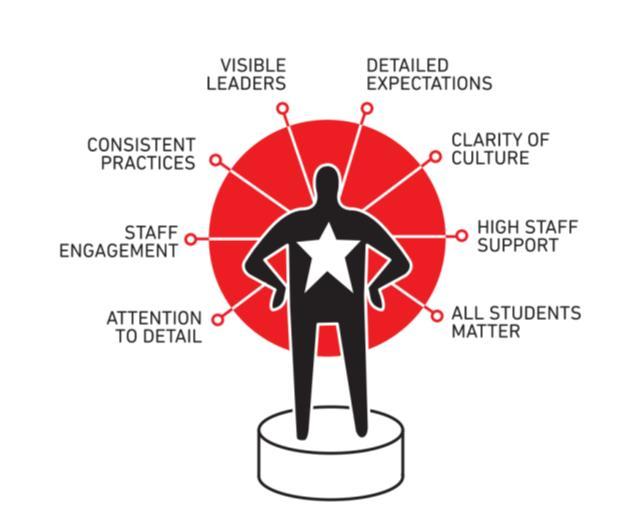
Use the key evidence extracts in the table below to identify which of the event’s key themes (in the image below) they describe/explain in the second column
With each evidence extract, consider what it could mean for your context (your school, your own leadership, etc.) by generating ideas about what is currently working well and what might need to develop in the final column.
1. Culture of trust, respect and relationships
5. Adapting to needs, ensuring appropriate reasonable adjustments and associated statutory guidance (disability, learning needs, ECTs, etc.)
2. Shared responsibility for and culture of continuous improvement
3. Culture which prioritises professional development
4. Utilising expertise (for professional development)
Evidence extract
Event key themes
Participant own context-related ideas arising from the research
How is this research relevant to your school?
What ideas does it give you about what is working well or what needs to develop?
How could this evidence support your leadership of teacher development?
Section 1: A culture that prioritises professional development and continuous improvement – select at least three of these extracts to engage with
School culture can be defined as the guiding beliefs and values evident in the way a school operates. It can be seen to encompass all the attitudes, expected behaviours and values that impact how the school operates (Fullan, 2007).
Ostroff et al. (2013) argue that culture relates to shared meaning about core values, beliefs and underlying ideologies and assumptions, whilst climate relates to people’s perceptions of what happens in an organisation.
Day et al. (2020) highlight that culture exists at many levels (wider society and within the organisation) and that whilst wider social culture is difficult to change, leaders can work to change organisational culture.
• Schein’s framework considers organisational culture at three levels:
a. symbols – signs such as clothing that enable the group to recognise each other
b. norms – shared social rules that are reinforced according to which behaviours are positively recognised or reinforced and which are negatively recognised or reinforced
c. assumptions – beliefs that are often unarticulated but underpin social systems and the interactions within them
Leaders will need to consider how these definitions relate to a culture that prioritises professional development and shared responsibility for continuous improvement.
The extent to which culture can be changed is another area of debate within the literature. It can be argued that, as culture develops over time and relates to deep values, it is not possible to directly change it. It is an output rather than an input. However, changes in behaviours, routines and other aspects of the organisation (often relating to the climate) can over time influence the culture. The DfE’s NPQ frameworks are underpinned by a belief that leaders can impact on the culture of their school. Leaders may want to use the strategy suggested by Peterson and Deal (2002) of positioning themselves as anthropologists ‘reading’ the culture through, for example, observing the behavioural norms, rituals and stories used in PD in their context.
The culture in classrooms could be viewed as an outcome of a combination of teaching, curriculum and behaviour activities and is also influenced by the wider school culture, which will connect with areas such as professional development, accountability and implementation. Leaders may find it helpful to reflect on the norms, rituals and stories they see in their school to act as context for considering the research and its relevance to their contexts.
“School leaders sought to build cultures that both promoted student engagement in learning and raised students’ achievement levels in terms of value-added test and examination results” (Day et al., 2020). The research identified characteristics of leadership which enabled school effectiveness to be sustained or increase over several years in terms of pupil outcomes, including:
▪ alignment of structures and cultures with ‘vision’ and ‘direction’
▪ building care, learning and achievement cultures: changing expectations and improving the quality of practice, including a focus on:
i. nurturing care and trust with collegiality
ii. creating and sustaining cultures of high expectations for themselves and others by staff and students
iii. improving relationships between staff and students
iv. connecting student behaviour with student outcomes
All school leaders were perceived to have influenced the quality of classroom practice through encouraging more consistency in classroom teaching approaches. Leaders will want to consider their own practice in relation to these key areas and how their practice is perceived by colleagues.
“School culture: the way we do things around here: The way students behave in school is strongly correlated with their eventual outcomes. When behaviour in general improves throughout a school the impact is:
• students achieve more academically and socially
• time is reclaimed for better and more learning
• staff satisfaction improves, retention is higher, recruitment is less problematic.
The key task for a school leader is to create a culture – usefully defined as ‘the way we do things around here’ – that is understood and subscribed to by the whole school community. Schools vary enormously in composition and context. Their challenges are similarly varied. It is therefore impossible to prescribe a set of leadership strategies that will guarantee improvements in all circumstances. However, many of the main challenges fall within a finite range of variety. There are some strategies that have a much higher probability of being useful in more or most circumstances than others. Common to the schools [visited for this report] were many features, values and leadership themes, which were expressed through a variety of strategies. These strategies were often interpreted in different ways. School leaders should also interpret these themes in ways that suit the idiosyncrasies of their school context, demographic, resources and staff.”
(Bennett, 2017)
Bennett recommends a series of strategies for school leaders when designing and building a school culture:
“Design the school culture you want to see: Cultures require deliberate creation. A key role of leadership is to design a detailed vision of what the culture should look like for that school, focussing on social and academic conduct. Expectations must be as high as possible, for all.
Build that culture in practice with as much detail and clarity as possible: Staff and students need to know how to achieve this, and what the culture looks like in practice ... This means demonstrating it, communicating it thoroughly, and ensuring that every aspect of school life feeds into and reinforces that culture. One key way this is achieved is by designing routines that students and staff should follow. Any [practice] that should be performed identically, most or all of the time, should be made into a routine.
Maintain that culture constantly: School systems require maintenance. This is often where good cultures break down. It is reasonably straightforward to identify what a good culture might look like, but like a diet, the difficulty lies in embedding
and maintaining it. This includes staff training … data monitoring, staff and student surveys and maintaining standards.” (Bennett, 2017)
Section 2: Leading professional development practice – select at least three of these extracts to engage with
Day et al. (2020) report on a Chicago-based study by Byrk and Schneider in 2003 where the researchers considered the contribution that a culture of mutual trust and respect makes to fostering a supportive learning environment. The study reported on cultures of trust for 99 teachers in schools. Trust had increased over the three-year period of the report. “Teachers reported a greater willingness to try new things; a greater sense of responsibility for their students; more outreach to parents; and a stronger professional community (more shared work, more conversations about teaching and learning, and a stronger collective focus on student learning.”
Schneider argues the study highlighted that a “school cannot achieve relational trust simply through some workshop, retreat, or form of sensitivity training, although all of these activities can help. Rather, schools build relational trust in day-to-day social exchanges” (Schneider, 2003).
Leaders will want to consider the ways in which their every-day exchanges support or sit in tension with a culture of mutual trust and respect.
In reviewing the emphasis given to nurturing care and trust in their schools, leaders will also want to be aware that international TALIS survey data indicates that a sense of trust and respect are associated with greater teacher job satisfaction and sense of self-efficacy (Schleicher, 2018).
• “Professional development may take a variety of different meanings in different contexts … we define teacher professional development as structured and facilitated activities for teachers intended to increase their teaching ability. The emphasis on ‘teaching ability’ is key:
• The focus on teaching is intended to include a broad range of skills including communicating and modelling language, exploring ideas, instruction, and
assessment. It excludes education technology programmes with only a very brief, token training element on how to use that specific tool.
• The focus on ability rather than merely teaching knowledge is intended to distinguish PD from new curriculum programmes with only a brief, token training element. In addition, it distinguishes PD from activities focused on simply providing teachers with general updates about school or setting business or policies.
This provides a narrow yet focused definition that perceives PD as structured activities aiming to improve outcomes in the classroom.
“Ensuring that mechanisms [e.g. managing cognitive overload, revisiting prior learning, setting and agreeing on goals, etc.] are incorporated into professional development makes it more likely that the PD will positively impact on pupil outcomes. However, when designing and selecting PD, the planning should not stop there. The implementation of professional development is also likely to make a substantial difference to the outcomes it achieves. No matter how well thought out a PD programme is in terms of content and design, for it to succeed it needs to be feasible and appropriate to the school or setting context. Those who design or select PD need to carefully consider how PD is intelligently adapted to suit the context it is delivered in, Moreover, consideration must be given to the alignment of the PD with school and setting priorities, ensuring that there is leadership buy-in and space for PD in teachers’ busty routines.” (EEF, 2021)
For the evidence-based guidance report, see https://d2tic4wvo1iusb.cloudfront.net/eef-guidance-reports/effectiveprofessional-development/EEF-Effective-Professional-Development-GuidanceReport.pdf?v=1635355217
• “Effective teacher professional development is a partnership between:
• Headteachers and other members of the leadership team;
• Teachers; and
• Providers of professional development expertise, training or consultancy.
• In order for this partnership to be successful:
• 1. Professional development should have a focus on improving and evaluating pupil outcomes.
• 2. Professional development should be underpinned by robust evidence and expertise.
• 3. Professional development should include collaboration and expert challenge.
• 4. Professional development programmes should be sustained over time. And all this is underpinned by, and requires that:
• 5. Professional development must be prioritised by school leadership.”
• (Standard for teachers’ professional development, DfE, 2016)
• “Effective professional development for teachers is a core part of securing effective teaching. It cannot exist in isolation, rather it requires a pervasive culture of scholarship with a shared commitment for teachers to support one another to develop so that pupils benefit from the highest quality teaching. The thousands of professional decisions that must be made every day need to be informed by the best evidence, knowledge and professional wisdom … Effective professional development should be seen as a key driver not only of staff development, but also of recruitment, retention, wellbeing, and school improvement … Professional development is most effective when it is led well as part of a wider culture of evidence-informed reflection and discussion of teaching practice. In particular, effective leadership of professional development:
• is clear about how it improves pupil outcomes;
• complements a clear, ambitious curriculum and vision for pupil success;
• involves leaders modelling & championing effective professional development as an expectation for all;
• ensures that sufficient time and resource is available;
• balances school, subject and individual teachers’ priorities; and,
• develops genuine professional trust.”
• (Standard for teachers’ professional development – implementation guidance for school leaders, teachers, and organisations that offer professional development for teachers, DfE, 2016)
• “Professional development should be underpinned by robust evidence and expertise
• Professional development is most effective when informed by robust evidence, which can be from a range of sources. In particular, effective professional development:
• develops practice and theory together;
• links pedagogical knowledge with subject/specialist knowledge;
• draws on the evidence base, including high-quality academic research, and robustly evaluated approaches and teaching resources;
• is supported by those with expertise and knowledge to help participants improve their understanding of evidence; and,
• draws out and challenges teachers’ beliefs and expectations about teaching and how children learn.”
• (Standard for teachers’ professional development – implementation guidance for school leaders, teachers, and organisations that offer professional development for teachers, DfE, 2016)
• Research shows that when designed effectively, professional development can have a positive impact on teacher practice and pupil learning (e.g., DarlingHammond et al., 2017):
• “The best available evidence indicates that great teaching is the most important lever schools have to improve pupil attainment.”
• “Teaching quality is a crucial factor in raising pupil attainment.”
• “Effective professional development is likely to involve a lasting change in teachers’ capabilities or understanding so that their teaching changes.”
• In addition, research shows that professional development can play an important role in shaping teachers’ professional identity to support recruitment and retention (Cordingley et al., 2019).
Section 3: Adapting to individual needs and statutory guidance – select at least one of these extracts to engage with
• “Teachers are the foundation of the education system – there are no great schools without great teachers. Teachers deserve high quality support throughout their careers, particularly in those first years of teaching when the learning curve is steepest … Teachers in the first years of their career require high quality, structured
support in order to begin the journey towards becoming an expert. During induction, it is essential that early career teachers are able to develop the knowledge, practices and working habits that set them up for a fulfilling and successful career in teaching.
• “[The ECF] is statutory guidance from the Department for Education. This means that those involved in managing statutory induction arrangements must have regard to it when carrying out their relevant duties. The guidance covers those settings which are both required to or choose to offer induction to their early career teachers (ECTs). The term ‘early career teacher’ refers to a newly qualified teacher in their first or second year of induction … Statutory induction is not a legal requirement to teach in FE or the independent sector, academies, free schools and BSOs, but may be served in these settings … Monitoring and support throughout induction should be sufficient that there are no surprises when an ECT reaches a formal assessment point … Statutory induction is the bridge between initial teacher training and a career in teaching. It combines a structured programme of development, support and professional dialogue, underpinned by the Early Career Framework, with monitoring and an assessment of performance against the Teachers’ Standards. The programme should support the early career teacher and provide them with the necessary training to ensure that they can demonstrate that their performance against the Teachers’ Standards is satisfactory by the end of the period. Induction should provide a foundation for ECTs and equip them with the tools to be an effective and successful teacher … The appropriate body has the option, when making its decision at the end of the induction period, to extend the period where this can be justified. It determines the length of the extension, the procedure for assessments during it, and the recommendation at its end. The appropriate body may decide to extend where there is insufficient evidence on which a decision can be based or where it would be unreasonable to expect the ECT to have demonstrated satisfactory performance against the Teachers’ Standards for other reasons. These might include:
• personal crises;
• illness;
• disability;
• issues around the support during induction; or
• where there is insufficient evidence within induction documentation for a decision to be made about whether the ECT’s performance against the standards is satisfactory.”
• (Early Careers Framework, DfE, 2021)
• “The [teacher’s] standards have been designed to set out a basic framework within which all teachers should operate from the point of initial qualification. Appropriate self-evaluation, reflection and professional development activity is critical to improving teachers’ practice at all career stages. The standards set out clearly the key areas in which a teacher should be able to assess his or her own practice, and receive feedback from colleagues. As their careers progress, teachers will be expected to extend the depth and breadth of knowledge, skill and understanding that they demonstrate in meeting the standards, as is judged to be appropriate to the role they are fulfilling and the context in which they are working.
• “[All teachers must] develop effective professional relationships with colleagues, knowing how and when to draw on advice and specialist support.
• “[All teachers must] take responsibility for improving teaching through appropriate professional development, responding to advice and feedback from colleagues.”
• (Teacher’s Standards, DfE, updated 2021)
• The Teacher’s Standards (updated 2021) state clearly that their reference to ‘statutory frameworks’ “includes all legal requirements, including but not limited to the requirement to promote equal opportunities and to provide reasonable adjustments for those with disabilities, as provided for in the Equality Act 2010”.
Section 4: Leading and implementing a culture of professional development – select at least one of these extracts to engage with
• A research project by the Cambridge Teaching School Network in 2015 about improving writing found that “teachers have valued the opportunities to observe, and have collaborative discussions with, teachers working in different contexts … working as part of a cross-phase, cross-curricular triad has encouraged teachers to set more consistently high expectations … Collaborative learning is the most powerful form of CPD: bringing together small groups of staff to work together on a common theme over a period of time …
• “Leadership is crucial: it is important to provide a focus and structure for the collaborative work and to distribute responsibility to facilitators within different schools.” When asked how the project’s leads distributed the leadership of this work, they explained that “the project was championed by R&D lead teachers in different schools across the alliances. These R&D lead teachers maintained contact with the main R&D lead throughout the project. Termly R&D steering group meetings allowed progress and strategies to be shared across the alliances … It was found that [leadership was a necessity]: providing time, a focus and structures (e.g. timelines, agendas, deadlines, common questionnaires, etc.) to facilitate the collaboration, networking and to distribute responsibility to R&D facilitators within different schools… was crucial to its success.” (2015, p. 30)
•
• For the whole case study, see pages 22–29 of https://dera.ioe.ac.uk/22159/1/What_makes_great_professional_development _research_case_studies.pdf
•
• The authors of a research project by Collaborative Schools Ltd. (led by the Mead Teaching School) into the “potential pivotal role of SLEs in shaping and refining that character of professional development through teacher research” (2015) are quoted as saying, “Merging CPD with R&D was a natural step for us to promote rich, evidence-based professional learning. This helped us to establish a research culture, supporting leaders and teachers in understanding the principles of research-engagement and connecting research with everyday practice, rather than viewing it as an ‘add-on’. Importantly, we spent time considering the values and principles underpinning our work towards a research culture … The allocation of time and the creation of tangible structure have been critical in securing leaders’ and teachers commitment and in developing understanding of how research ‘fits’ , and indeed underpins, school improvement … This whole process recognises research as a valued and integral part of performance management and provides a powerful mechanism for line managers to communicate the pivotal role of research in developing professionalism and leadership capacity.”
•

•
• For the whole case study, see pages 30–35 of https://dera.ioe.ac.uk/22159/1/What_makes_great_professional_development _research_case_studies.pdf
• A 2015 research project about closing the gap in computer sciences by the Devon Teaching School Partnership made one of its focus areas the leadership of PD. They distributed the leadership of the project as follows:
• “Initial expertise provided by south west regional director of master teachers in computing from a secondary background. Once the group was established, two
primary masters teachers from that group were appointed in the role of ‘experts’ .
• Master teachers led different aspects of the work directly with participants about effective CPD.
• Research programme lead took responsibility for audit trails, data analysis and evaluation.
• Each co-ordinator was responsible for their personal development of CPD in their school and the production of relevant data sets.
“Prospective new leaders were identified and shadowed the second cohort of computer science co-ordinator training. They have now been appointed as SLEs to widen the leadership base across the alliance and provided security of succession planning.”
They found that “fundamental to the success of the project was the use of external expertise and the growth of new expertise and leadership within the schools” . When asked what they found out about what great professional development leads to consistently great pedagogy, the authors explained: “Sequenced, dynamic training with agreed gap tasks and supported by expertise leads to teachers feeling confident in their pedagogical approaches to teaching computer science … There is a need now for these approaches to be fully tested in the classroom for their impact on pupil outcomes.”
When asked what they have found out about how to engage in collaborative R&D, they explained: “The involvement of experts in conjunction with the collaborative group in the design and redesign of the project.”
• The Fylde Coast Teaching School Alliance’s 2015 research project explored coaching and transition in relation to teacher practice. They found that prioritising coaching (as a form of professional development) supported a culture of professional development, and that participants felt the ‘non-judgemental’ nature of coaching to be crucial in building rapport, trust and respect in the development relationships. Authors say “the collaborative nature of the project from all involved has enabled participants to have shared ownership and develop ideas together. This freedom to challenge oneself and try new things has made a shift in cultural perceptions of developing teaching and learning” (2015, p. 56).
• The project led to the development of a set of ‘leadership competencies’ published nationally and the authors report “the success of the first cohort is evidenced in the percentage of coaches and coachees who were successful in gaining promotions following their involvement with the project: 70% of coaches gained senior leadership positions and 50% of coaches gained promotions into middle leadership” .
•
• For the whole case study, see pages 49–57 of https://dera.ioe.ac.uk/22159/1/What_makes_great_professional_development _research_case_studies.pdf
•
•

Sarah Delaney, Green Lane School, Warrington
Special all-through school (reception to year 13)
Sarah is the key stage 4 teacher, science lead and professional mentor for students and ECTs. Her experience is across both primary and secondary within Green Lane. She has completed the NPQLML and NPQSL previously with Best Practice Network.
Headteacher’s welcome
Mrs Mullineux – acting headteacher, Green Lane Special School, Woolston
Welcome to Green Lane Community Special School. Our aim is to help our children become responsible citizens who can make a positive contribution to society. Staff at Green Lane work together with our children to encourage them to become as independent as possible, to achieve a range of qualifications / awards / certificates and be prepared for transfer to the next phase of their lives.
Jo Mullineux (acting headteacher)
Statement of aims
In partnership with our pupils and their parents, it is intended to provide a stimulating environment where
• the education and development of our pupils is supported in a pleasant, happy, safe and caring environment, where belief in the importance of positive, interpersonal relationships is firmly embedded;
• enjoyment, interest, motivation and ‘achievement for all’ are fostered through success;
• the curriculum has a wide degree of overlap with the best mainstream curricula, in that it covers, through modification where appropriate, an appropriate range of experiences, the same skills, concepts and moral values;
• each pupil’s present educational and personal needs are met as fully as possible whilst preparing them for life-long learning;
• pupil’s prepare to become socially included, active participants and responsible contributors to society, achieving as much independence as possible.
1. What does your school culture look and feel like in terms of mutual trust, respect between colleagues and effective relationships? (3h)
Visitors to Green Lane always describe pupils and staff as warm and welcoming. This is due to many reasons, one of the main reasons being that we are a ‘family’. We have a shared vision and purpose, shared goals and a collaborative approach to ensuring achievement for all. As a team we continuously strive for improvement for all SEN pupils across Warrington and act as a critical friend to colleagues within other schools; offering support, training and outreach as required. Within Green Lane we have a team approach to leadership and recognise and pull on each other’s strengths. We value the strengths and expertise of teachers and teaching assistants alike and have an open-door policy for SLT. Together we adapt to change, we embrace individuality and celebrate outstanding practise. We understand the culture of support, not blame. We have robust support programmes in place for ECTs and ensure that all new staff to school complete a thorough induction. This includes students and volunteers who we welcome into school. Staff support each other informally on a daily basis and formally through performance management, peer-to-peer mentoring and curriculum teams, in which we value the opinions and expertise of colleagues. We trust in each other and respect the contribution that everyone has to make.
2. How does the design and delivery of professional development at your school involve specialist expertise from a range of sources (internal and external expertise), and how does this make the PD more effective? (3.1)
Within Green Lane we have a rigorous performance management review process for teachers and teaching assistants. The SLT act as performance managers for teachers, and teachers for teaching assistants; everybody is involved in the process. Professional development is carefully planned for and involves internal and external training. Expert colleagues have the opportunity to share their knowledge and experience through the delivery of internal teaching and learning clinics. Staff are happy to give support and advice to peers, which makes training more personal and tailored to the learning needs of our pupils. We seek out opportunities for ‘train the trainer’ CPD to build capacity within school and carry out SEN reviews in local primary and secondary schools. We offer external CPD training, outreach support for local schools and work with several teaching alliances and additional universities. Our professional relationships with educational settings encourage our staff to evaluate their own practise and support trainee teachers, through coaching and mentoring. Green Lane offers SEN enhancement and long-term teaching placements, which is further supported by the delivery of SEN training. Subject leaders are involved in this training and carry out CPD reviews for staff so that internal training can be planned for as required. Staff have strong working relationships with health, including the visual impairment team, physiotherapists, occupational therapists and the continence team. These strong collaborative relationships support pupils learning and well-being within school.
3. What advice do you have for other leaders of ECT induction in terms statutory compliance, regulation and guidance? (3.3)
To seek advice and guidance from the local authority and training providers such as Teach First to find the most suitable programme for their school. A fantastic source of knowledge comes from colleagues in other schools who have already experienced an ECT induction. Induction tutors and mentors should ensure that sufficient time is planned on the school timetable to release both the ECT and mentor for weekly meetings. Plan ahead and write any training dates or deadlines in your diary! As a mentor you can support ECTs by reminding them of school deadlines in advance, as a number of ECTs can feel overwhelmed at times. Make checklists to ensure that everything is covered. This includes tasks such as completing assessment paperwork in plenty of time and arranging lesson drop-ins in advance. A whole-school approach to supporting ECTs ensures that everybody in school knows that they have a role to play. Share general ECT updates with staff so that staff can then effectively support ECTs working in their school. Create a central bank of resources for ECTs to access (e.g., planning documents, policies, etc.) and direct ECTs to these as part of their induction. Mentors should encourage their ECTs to use their additional time effectively (e.g., spending time in alternative key stages and/or settings, observing outstanding practise in a subject area, etc.)
4. How do you ensure your school undertakes the statutory induction for ECTs, adhering to regulations and the relevant statutory guidance? (3.3)
Experienced mentors work collaboratively with the induction manager to ensure that all statutory requirements relating to ECTs are met, e.g. ECT reduced timetable, and ECTs are released to attend training.
The ECT team liaise with the local authority and follow their guidance. Mentors are released to attend training throughout the year and complete additional mentor training tasks and activities in the non-contact time. This ensures that mentors have a sound knowledge of the induction process and how best to support their ECT. Subject leaders feed back to mentors following moderation days; this feeds into ECT assessments. Mentors regularly feedback to the induction manager, who is confident in mentor judgements when completing induction assessments.
5. How do leaders at your school ensure that reasonable adjustments are made for school staff with additional needs (including disabilities, health and well-being needs), and how do you work closely with these staff members to understand barriers and identify effective well-matched approaches to teacher needs (including to content, resources and venue)? (3.4, 3g)
Adaptations are made on an individual basis as required. When needed, additional equipment will be ordered (e.g., VI – magnifying overlays, hearing impairment – interpreter, physical [wheelchair] –lift access, and designated parking). Occupational Health involvement as required, individual risk assessments, reduced timetable after returning from a long period of absence and support to access follow up appointments is given. A group of staff are trained in mental well-being and mental health
first aid. This team have delivered whole staff mental well-being days (activities and games) and INSET training on mental well-being.
6. How do you and other leaders in your school prioritise professional development and a shared responsibility for continuous improvement in order to contribute to the creation of a culture of professional learning? (3f)
Professional development is highlighted on the school development plan and is an important part of our school vision. Not only do we prioritise the professional development of staff within Green Lane, we also recognise that we have a responsibility to offer CPD support to mainstream colleagues. We hold regular whole-staff meetings and daily morning briefings. Within morning briefings upcoming training is highlighted. This includes internal teaching and learning clinics, which are tailored to the learning needs of our pupils. In Green Lane there is openness amongst staff, there is an ‘open-door policy’ in which staff know they can ask for help, advice and support as needed. This is further supported by the use of internal performance managers (SLT–Teachers, Teachers–TAs). Staff are informed of any curriculum changes in advance and staff are asked for feedback on any changes. Ideally, potential changes will be discussed with staff at the point change is considered; however, this is not always the case and is dependent on the nature of change. Subject leader days are planned on the annual calendar, pupil voice is heard on subject-specific days and within our school council. The school council meet half termly and pupils share their ideas around learning and activities. These are shared with staff and pupils along with actions, e.g., setting up clubs. Clubs are welcomed by pupils but can also be used to support teaching assistants who may want to further develop their knowledge of a specific area in an informal way, e.g., art club. Refresher training is planned for to upskill staff and external courses are sourced as required, this includes INSET training days. Staff are encouraged to complete NPQ qualifications which in turn has a positive impact on teaching and learning within Green Lane School. This all feeds into the teacher standards document, which is used to support teachers in demonstrating how they have met the criteria in their teaching point and can be used towards pay progression.
7. How do you ensure colleagues are able to continually develop specialist subject, phase and domain expertise in school? (3f)
Subject leaders have planned time on the yearly calendar to carry out subject-specific learning and moderation (subject leader days.) This is done through lesson drop-in, book scrutiny and Evidence for Learning (app)/Tapestry (app) scrutiny. This enables leaders to have a sound understanding of what is going on in each key stage across school. Curriculum team meetings are planned on yearly calendar and involve staff from different key stages. Members of the team generally teach that subject or are new to school and find being part of a team extremely beneficial. Subject leads have additional PPA time on top of the statutory allowance and use this time to plan whole-school focus days and teaching and learning clinics, set subject-specific professional development targets, write subject leader feedback to HT and governors and informally support colleagues within their classrooms. Subject leaders are encouraged to liaise with other school leaders and until Covid-19 had led on subject moderation within a local network of SEN schools.
8. How do you support colleagues in building relationships of trust and mutual respect with each other when taking part in expert-led conversations (e.g., mentoring or coaching)? (3h)
Staff relationships are extremely positive in Green Lane. Because we share a vision for the school, we know that any support is beneficial to the outcomes of our pupils. There is an openness amongst staff and a willingness to share ideas and practise and experience. Staff listen to each other, work together to solve problems and encourage colleagues to find the answer to a problem rather than just telling them solely how they would do it. CPD training supports mentors who in turn train staff to ask open-ended questions, set goals and be accountable for actions. At times this means having ‘tough’ conversations if needed; however, these are dealt with in a sensitive manner and staff are objective and show empathy. Staff are reflective and in working together plan how we move forward as a team.
9. How does professional development improve pupil outcomes in your school?
Pupils are at the heart of everything that we do. Staff set accurately challenging learning goals and have a sound subject knowledge. Because a priority in Green Lane is de-escalation, staff know pupils extremely well, which has a positive impact on behaviour. We have high expectations in learning and behaviour of all of our pupils and consequently this means that more time is spent learning in a calm and positive learning environment. Teaching is tailored to individual learning needs and as a result of this pupil progress is generally good. Pupil progress is a performance management target for teachers and teaching assistants and encourages staff to critically evaluate their practise formally at key points within the year.
10. How would you rate the professional development culture in your school? Why?
Staff want to be the best that they can be for pupils. They recognise that there is always more to learn and actively seek in-house expertise or external training as required. The senior management team encourage staff to continue their CPD and furthermore share this with staff on their return. Staff are adaptable and tailor information from courses to best suit the needs of pupils at Green Lane, which in turn then improves the outcomes for pupils further.

Kathryn Manion, Tyntesfield Primary School, Sale
Kathryn is the head of school, which is part of the Inspiring Learners Multi-Academy Trust and Trafford Together School Alliance.
1. What does your school culture look and feel like in terms of mutual trust, respect between colleagues and effective relationships? (3h)
Culture isn’t something created overnight; it is to be grown and nurtured over time. Relationships are at the heart of this growth at all levels and it has been essential for leaders at Tyntesfield to invest time into building strong, positive and open relationships with the whole community. At Tyntesfield, creating a culture with care and appreciation at its core has ensured staff and children feel valued, which supports them in being more motivated, happier and able to access the learning opportunities on offer.
Leadership visibly model this culture through living and breathing the shared vision and values of the school, around school, in all that they do and effective communication has been key in building a culture of transparency and inclusivity.
2. How does the design and delivery of professional development at your school involve specialist expertise from a range of sources (internal and external expertise), and how does this make the PD more effective? (3.1)
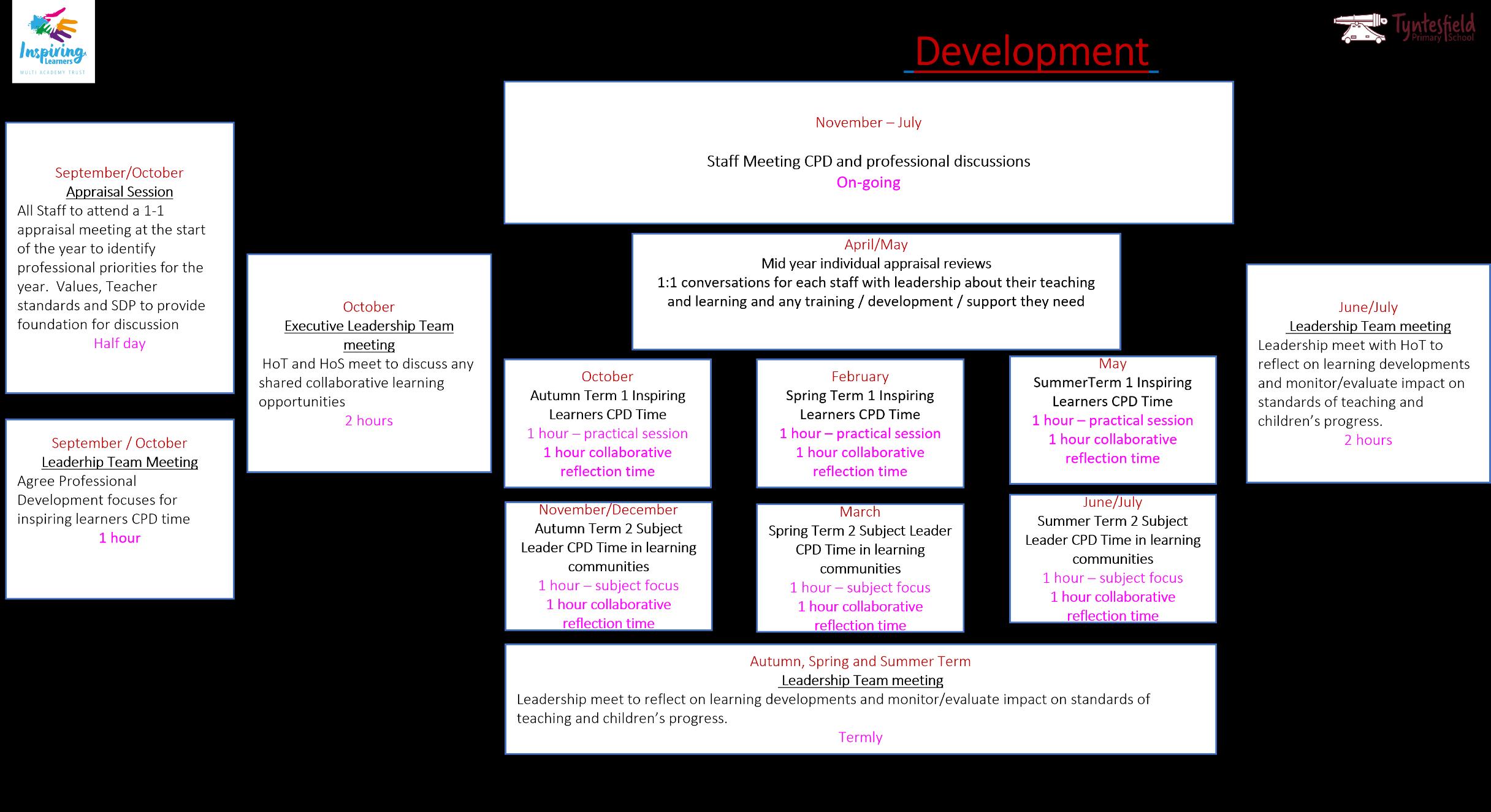
Professional development takes many forms at Tyntesfield – for example, staff meetings, INSETs, external training from experts in the field, action research and reading time, peer-to-peer coaching, mentoring and collaborative learning with each other and across other schools. With all of our professional development, the design and delivery meets the needs of the school and the needs of each member of staff; our appraisal process is collaborative, open and reflective around the SDP and the strengths and areas to develop with all staff. Professional development has been designed to empower, facilitate and support all of our staff in becoming leaders of learning and our model is underpinned by reading and research, which enables staff to engage in action research, use research methodologies and experience the buzz of learning to professionally develop their own understanding of teaching and learning effectively.
In working with staff in this way, staff feel valued, motivated and acquire the necessary skills to engage and learn from the internal and external professional development opportunities provided for them; this then improves teaching and learning and therefore outcomes for children.
3. What advice do you have for other leaders of ECT induction in terms statutory compliance, regulation and guidance? (3.3)
The ECT induction now comes with significant workload and high expectations; however, as a result, it provides fantastic, structured and focused CPD for ECTs. Leaders need to support their ECTs by investing in providing them with the time needed to fully engage in the programme and reflect on their practice. Leaders also need to ensure that they have high-quality, skilled mentors to support the ECTs in getting the very best out of the induction programme.
4. How do you ensure your school undertakes the statutory induction for ECTs, adhering to regulations and the relevant statutory guidance? (3.3)
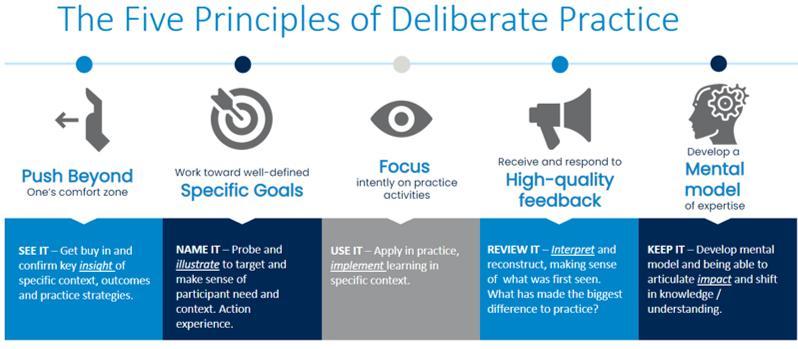
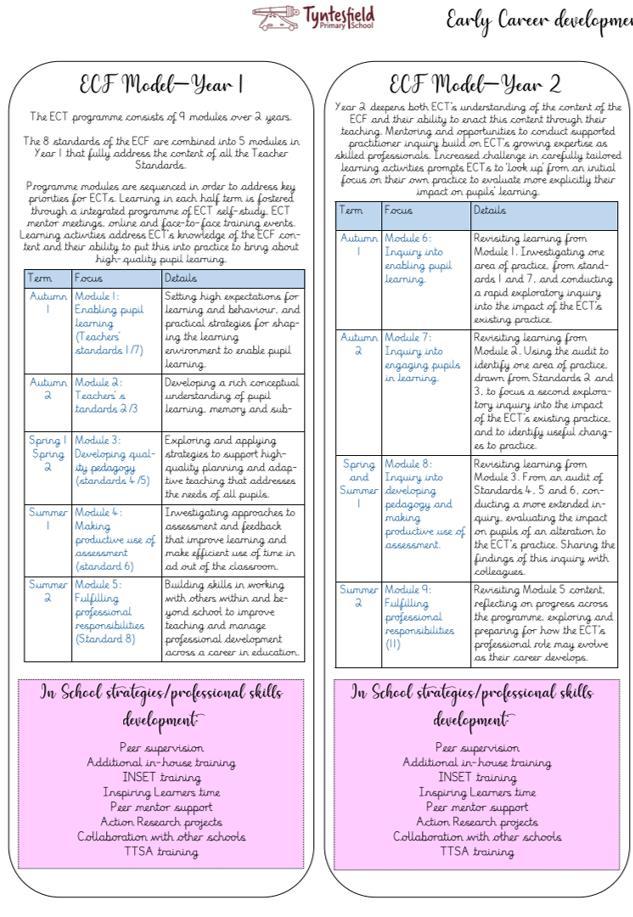
Our ECTs engage in the Best Practice Network ECT training. The ECT programme consists of 9 modules over 2 years. The 8 standards of the ECF are combined into 5 modules in year 1 that fully address the content of all the Teacher Standards. Programme modules are sequenced in order to address key priorities for ECTs. Learning in each half term is fostered through an integrated programme of ECT self-study, ECT mentor meetings, online and face-to-face training events. Learning activities address ECTs’ knowledge of the ECF content and their ability to put this into practice to bring about high-quality pupil learning. Year 2 deepens both ECTs’ understanding of the content of the ECF and their ability to enact this content through their teaching. Mentoring and opportunities to conduct supported practitioner inquiry build on ECTs’ growing expertise as skilled professionals. Increased challenge in carefully tailored learning activities prompts ECTs to ‘look up’ from an initial focus on their own practice to evaluate more explicitly their impact on pupils’ learning.
5. How do leaders at your school ensure that reasonable adjustments are made for school staff with additional needs (including disabilities, health and well-being needs), and how do you work closely with these staff members to understand barriers and identify effective well-matched approaches to teacher needs (including to content, resources and venue)? (3.4, 3g)
At Tyntesfield, leadership see the value, and therefore invest considerable time, in building strong, positive relationships with all staff so that they know the staff well and can quickly recognise any issues proactively. Leadership are a visible presence around school, modelling the values of the school through their interactions/communications and behaviours. Leadership show compassion and are proactive in their thinking and actions when supporting staff. We have built an open culture within school, which is underpinned by honesty and integrity. We always listen and work collaboratively with staff members to overcome any additional needs (i.e., flexible working/part time/change of role/time off when appropriate, etc). Staff trust leadership to be fair and know that their well-being sits at the heart of all that we do.
We are a dyslexia-friendly school so all CPD resources are on coloured paper or presented on a coloured screen with a dyslexia-friendly font. We provide all staff (including TAs) with a laptop and iPad so they have access to audible resources with regards to reading research material and we have a staff library within the staff room for staff to borrow educational research books (so they are not
expected to pay for these themselves). With regards to well-being support, we have built this into our existing model so that it inclusively addresses and supports those who find well-being a challenge. Our model provides staff with the time (in school) where they can reflect and fully engage with our professional development model without adding to workload or expecting them to work from home. During their inspiring learner time, all staff have access to lead learners and SLT for support with their development and understanding, and where a member of staff needs additional support we use mentoring and/or coaching to support their professional development.
6. How do you and other leaders in your school prioritise professional development and a shared responsibility for continuous improvement in order to contribute to the creation of a culture of professional learning? (3f)
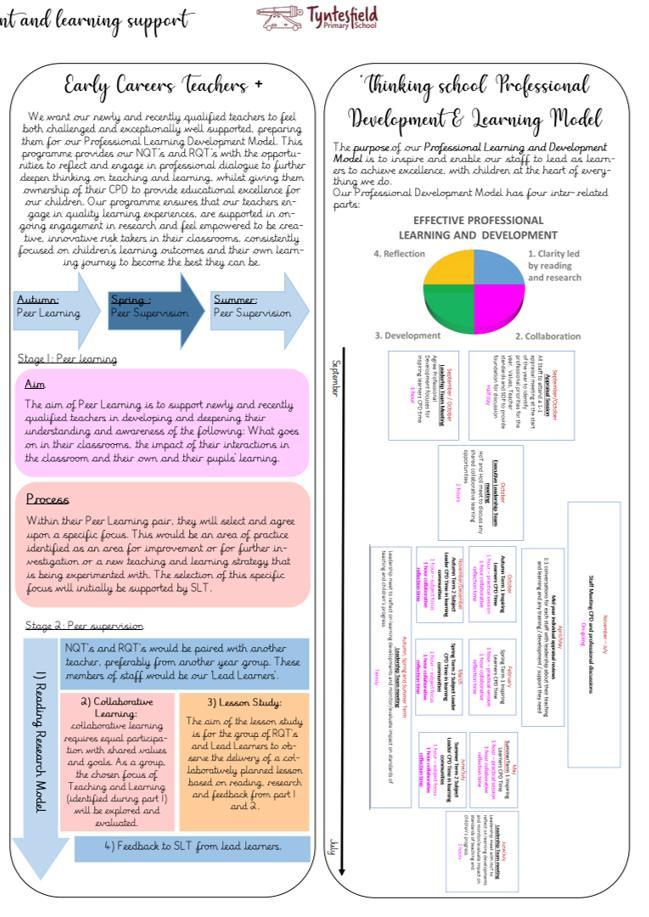
Our culture of professional learning begins from the moment a teacher begins their career with us. We want our newly and recently qualified teachers to feel both challenged and exceptionally well supported, preparing them for our professional learning development model. This programme provides our ECTs and RQTs with the opportunities to reflect and engage in professional dialogue to further deepen thinking on teaching and learning, whilst giving them ownership of their CPD to provide educational excellence for our children. Our programme ensures that our teachers engage in quality learning experiences, are supported in ongoing engagement in reading and research and feel empowered to be creative, innovative risk takers in their classrooms, consistently focused on children’s learning outcomes and their own learning journey to become the best they can be.
To implement this quality change, we have given staff ‘inspiring learners’ time to work collaboratively to read, research, explore and trial changes to their practice. All staff, including support staff, have access to our professional development model. The purpose of our professional learning and development model is to inspire and enable our staff to lead as learners to achieve excellence, with children at the heart of everything we do. Our professional development model has four interrelated parts: clarity led by reading and research, collaboration, development and reflection. This CPD offer has successfully created a culture of professional learning by empowering all staff to be leaders of learning.
With trust staff have been able to open up their practise and challenge each other.
7. How do you ensure colleagues are able to continually develop specialist subject, phase and domain expertise in school? (3f)
All staff are given the opportunity to work with leadership on auditing their subjects and each subject leader is asked to spend 10 minutes each week (during an assembly time) to either:
▪ meet with a small group of children to talk to them about their learning and to review evidence of their learning (e.g., in individual pupil books, class floor books, Tapestry, Seesaw)
▪ meet with a teacher to talk about the implementation of the curriculum and the progress children are making
Staff are also encouraged to join their subject associations and work across trust/schools to share expertise, ideas and to engage in professional dialogue about their subject. Through our ‘inspiring learners model’ staff are given the opportunity to carry out action reading and research to continually develop their specialist subject knowledge on an individual and peer-to-peer level.
8. How do you support colleagues in building relationships of trust and mutual respect with each other when taking part in expert-led conversations (e.g., mentoring or coaching)? (3h)
At Tyntesfield we promote and foster a culture of mutual respect and trust. We want our staff to challenge each other’s thinking through critical professional dialogue in a trusting learning environment. Therefore, our professional learning and development model provides staff with engaging and meaningful learning opportunities such as peer supervision/coaching, which aim to maintain their passion for teaching and learning through collaborative learning and an investment in time for staff to reflect/think. This approach supports the development of our community of learners while also encouraging positive attitudes to learning amongst individuals.
One of the benefits of our coaching model is that staff are able to become more solution focused and take ownership of their own, and each other’s, professional development. Coaching encourages the staff to be proactive and because the feedback takes place through a collaborative professional learning conversation where all participants are able to discuss, interpret and share their experiences, they are more effective in enabling all children to learn and progress.
Leadership’s investment of time and resources through our ‘inspiring learner sessions’ and approach to staff’s professional development has positively impacted on staff’s engagement in their own learning and therefore enabled them to improve children’s learning and outcomes.
9. How does professional development improve (behaviour and) culture in your school?
Through our professional learning and development culture we seek to identify, nurture and develop the skills, attitudes and behaviours of our staff, in line with our agreed mission and values, so as to ensure they support, challenge and enable the school to deliver excellent outcomes for our children. Our model is built on strong and positive professional relationships among staff; between leadership and staff; and between staff and other professionals, creating a community of learners. The models and approaches used and opportunities provided are there to engage staff in the process of learning and empower them to take ownership of their own learning. Our professional development model therefore fosters a learning culture and associated behaviours which create motivated and skilled teachers who model being lifelong learners.

Secondary school leaders for professional development visit some of the key themes about school culture and professional development in their schools.
NB: Some of these mini case studies are transcripts of verbal discussions.
1. How do leaders at your school ensure that reasonable adjustments are made for school staff with additional needs (including disabilities, health and well-being needs), and how do you work closely with these staff members to understand barriers and identify effective well-matched approaches to teacher needs (incl. to content, resources and venue)? (3.3, 3g)
Secondary leader #1:
I think that, of course we have to see each teacher as an individual within a system and within a framework that we work. And we saw that during the pandemic people responded to the challenges in incredibly different ways and needed different levels of support. I talked about the level of, for example, tech confidence that people had. We designed the systems of delivering online and blended learning to work at different levels. And we tried to design our CPD to have that range of approaches and topics, while having the core aims and the vision of the school in mind. We encouraged staff and colleagues, within departments, particularly, to work collaboratively because within any department of reasonable size, there’s going to be huge levels of experience. So mentoring and coaching is really, important, the sharing of resources, that is a big workload thing within a department and has been really important to us. We haven’t had to make specific adjustments in terms of venue on any other basis than that, but in terms of supporting individuals, yes.
For us, really, the fact that there are opportunities, even when you are part of a faculty, or when you are part of a group of people that prefer to work individually. So, giving them those chances to be hands-off from everyone else, go and do and explore themselves and then come back. I think that is probably looking more at people’s personalities and their strengths that way, so that although they’re working collaboratively, give them those chances to shine on their own as well. We have quite high expectations, and I think it can be massively daunting to someone at an early career stage seeing other people and thinking, ‘how do they do this’? So, it is, everyone has high expectations, but you will get there, and just giving people those chances to be by themselves but also work together.
Secondary/teaching school leader #2:
Yeah, this is a tricky one, and I think the lead for professional learning has really got to be constantly taking stock now. In very large secondary schools this is a real challenge, and in smaller primary schools it creates different challenges because of release time. So, I think there is a lot of material out there. There is a lot of really good training out there, but equally budgets and cover restrictions
within schools can make this a challenge. So I would say again, it is about looking for network opportunities. How can we make this more effective from a cost perspective and a time perspective, to really make sure that that support is happening? So, for example, ECTs this year, so what were our NQTs, NQT+1, or leadership development I have put as examples here, are there networking opportunities? Can we bring like-minded people together at the same stage and create those opportunities for them? Is there somebody they could go and observe if there is not somebody in their school? And again, maybe being slightly biased here with my teaching school hat on, but the teaching schools now are the conduits for those conversations, those dialogues, creating those networks, and supporting staff. I think also, in terms of teaching needs, a crucial thing is looking at what the working hours are of colleagues. Look at your calendar – when are the pressure points? When do we want to be avoiding that support? Or when is that support really needed? For example, we do a very short one-off session for teachers that are new to form tutoring in September. You think people are just going to take that role on, but actually there are a lot of intricacies to doing that role really well, so we put that in. It does not require all staff to attend, but it is there as an option. And so, lots of drop-in type training that staff can opt into, so if they are feeling they need the support they can go, but equally if they are feeling confident there is no obligation to sit through training that they are confident and happy with and do not need to be using their time for.
It is also becoming easier, I guess, as we all become much more tuned to virtual delivery, to save recordings of training platforms for colleagues to come back to revisit. But also increasing numbers of part-time teachers in schools that they can also access those materials if they were not in on certain days, when things were delivered, and we are becoming really quite attuned also to doing very short little demo videos and training. So, two or three minutes sometimes It might just be a way to help around a piece of technology that is going to help in the classroom. And again, staff can then go back and revisit, so we tend to share those via our Google Drive or our teaching and learning website, which I made reference to just before.
Another aspect we focus on is differentiation. We differentiate for our students, so we have also got to differentiate for our colleagues. Making reasonable adjustments that are matched to the needs of a teacher is essential. I am particularly aware of the fact that training sessions should not be to present a talk-heavy, we would never expect our students to listen to us talking for an hour, so it is vital that we are making our sessions interactive. And I think really in particular, experiencing activities that you might then ask students to complete, or at least in some way, having that sort of sense of an approach that can be applied to an activity means the teacher is much more aware of why we might take a certain approach, and so they can make it so much more effective. And that links to my aim in every training session that I have. I want to ensure someone can go away from the training session and try a technique that I have covered that day in their classroom or in their role within the school the next day. This means I feel that the professional development time is used productively and they can really see the relevance of their own work.
2. How do you ensure colleagues are able to continually develop specialist subject, phase and domain expertise in school? (3f)
We have just, at the start of this year, introduced a new teaching and learning team of people who are not on the SLT. They work with one of my SLT colleagues. And they have a range of different interests and different development approaches, and they are three members of staff of entirely different levels of experience, including an NQT+1. And they have all got a passion for evidencebased teaching and research, and each has got a project that they are leading on and they’re going to be using that as part of the delivery of CPD. But it’s looking to see where our strengths are, how we support individuals, and it is part of developments for staff to learn how to lead as well, as to do new things in the classroom.
Yeah, we did quite a bit of work here, alongside some of the thinking that was happening with the Wellcome Trust in terms of this, because there has been a huge amount of discussion on the national professional development agenda, hasn’t there? About making sure that we do give that time to colleagues as well. I think when there is a lot of statutory change on a general level, that can sometimes get neglected, so we are always very keen to promote opportunities within our local area, so networking with colleagues and similar, if it’s secondary colleagues in similar subjects across local schools. In our teaching school we have set up a large number of networks for subject specific, which has worked really well, and also on a smaller level, just little hubs with two or three local schools have worked well. We encourage school visits wherever possible. We also, within the toolkit selection that I was talking about previously, people can use subject-specific training time there, so if they have got something that they are really wanting to work on, it may be some time with their faculty or with their phase to do planning, they may actually go down that route as one of their toolkit options. So we almost carve out some time for them for that to happen.
Equally, they can use time within that if there are a professional organisation for their subject, so, for example, the geographical society are holding a lecture or a workshop that is going to be really useful, then we would give them that time and they can take that toolkit time to go and attend those meetings or use that time in lieu for that. And that is really important because we need to stay on the cutting edge of our subject knowledge and that is why we have gone into teaching, for our love of the subject. So, it is keeping an eye out for that and promoting, as professional learning lead within the school, the work of curriculum hubs, the work of teaching schools, of research schools, all these opportunities. There are so many and some of them are incredibly well-resourced and making sure that colleagues are aware of that, because it is no good that information just sitting with one person, it needs to get out to the school community. I am not sure that happens in every school and that would be the ideal really, that the culture is taking place.
Secondary leader #3:
I am also, very aware that, having been in teaching for a long time, it is important for me that colleagues are continually able to develop specialist expertise in their subject, phase or domain. And again, linking to my role in particular, one of the things that can help, it can be done through mentoring and ITT or ECT, or possibly participating in but also delivering training programmes, such as the NPQs. Because it is not always the receiving of training that helps somebody. By becoming a facilitator or a mentor, it can give you new insight into pedagogy, but that also then allows you to build skills that you can then use to support your classroom delivery.
3. What does your school culture look and feel like in terms of mutual trust, respect between colleagues and effective relationships? And how do you support colleagues in building relationships of trust and mutual respect with each other when taking part in expert-led conversations (e.g., mentoring or coaching)? (3h)
The first thing that we did in our school was, we wanted to set up a coaching culture, and it was really important that staff were really clear about what that meant, so we set out protocols of what that would mean. So things like professionalism, how the coaching would work with that and also confidentiality, so that staff felt confident and supported.
Initially it was going to be compulsory that all staff did coaching, but then, as time went on, we realised it had to be something that staff opted into and therefore, had to be seen as beneficial and not a tool for failing teachers. So what we did is, we asked new young teachers or new starting teachers who were seen to be really good, coping well and doing well, to take part in coaching, and then we asked them to feed back to the rest of the staff about the benefits of it. We really did rely on word of mouth, therefore, we had to be seen as credible, reliable, confidential and effective. We also, as coaches, always modelled exemplary behaviour, so, for example, there is no gossiping in the staff room, not that we would do that anyway, but really making sure that we were professionals of all time.
It was important for staff taking part in coaching to understand that there is no hierarchy in coaching, and they were not being judged or spied on, what they said was not going to be reported back. For many of the sessions we tried to match people with staff who did not teach the same subject, we wanted a level playing field, and we also did not want staff to feel like they were going to give their wisdom to others, because that is not what coaching is about.
Secondary leader #2:
I think, for me, as a leader it is really important to model the trust and respect that we want other staff to show one another. and I think sometimes to have those kind of professional conversations and expert-led conversations, it can be quite daunting sometimes for the member of staff to invite someone else to kind of critique their practice, and sometimes we may shy away from initiating those conversations, but actually it can be quite empowering to say to somebody, you know, ‘can
we have a conversation about X?’ or ‘I want to develop’ , ‘why I want to develop this an aspect of my practice’ .
To me, as a leader, the most outstanding teachers are the ones who are reflective and do kind of consistently examine their practice and to see what they want to develop. I do not think that everyone is actually aware of their strengths and weaknesses, so asking someone to help you identify these can lead to really positive changes in your practice, and I think as a leader modelling that with others, and when that then becomes part of the culture to have those conversations, model from the top down, and then it becomes easier for that trust and respect to exist between every individual and within each level of the school.
Diane Campkin, programme consultant, HertsCam Network, Hertfordshire
What does your school culture look and feel like; and how do you and other leaders in your school prioritise professional development and a shared responsibility for continuous improvement in order to contribute to the creation of a culture of professional learning? (3h)
I am an experienced school leader with a track record of building cultures of professional learning and continuous improvement, and am passionately committed to creating environments where everybody can collaborate together. For me and my school, involving colleagues across the staff team in true collaboration is the way forward when promoting school culture. It begins with looking at the current culture and thinking about where things stand, assessing the school’s development plan and making sure it incorporates any government policies, and then working as a staff team to identify areas that need to change and areas for improvement that can then feed into your short-, medium- and long-term plans.
It’s an important process, but culture is not something the leadership team can simply dictate to the rest of the school It comes from the whole team contributing to the school plan and the school’s values and ethos.
As a teacher, you are best placed within your classroom, within your phase and within your school to identify things that need to change as well as things that need to be priorities. I wanted to create a culture where everybody could come and say, ‘I’ve noticed this’, or ‘this is a priority in my classroom, because of my particular cohort of children’ . I wanted a culture where all staff members felt safe to speak up, where everybody felt that they had a voice that would be heard, and where everybody knew that they had the agency to take risks and to make change. It’s absolutely critical that you’re looking at what the teachers on the coalface are actually saying and identifying as priorities when you are planning changes that will lead to improved outcomes for pupils.
Communicating improvement priorities also involves collaboration. It is about knowing your staff team and how they work. Some people take more from sitting round a table and discussing plans, some need a great deal of guidance, while others only need little nudges in the right direction.
We believe in a teacher-led approach to any development work, such as setting priorities for creating a culture of professional learning and continuous improvement. There is a need to consult widely about the priorities that teachers and other members of staff are highlighting. For example, if you notice something that could become a priority for change or development, you should speak to colleagues and share your thoughts, but then ask for their opinion and give them agency. This makes it a collaborative process.
I talk quite a lot about moral purpose in my practice. There are things that I identify that are really important to me for improving the outcomes of the children I work with. That might be a really important priority to me, but my colleagues might see something completely different and think something else is more important. But by sharing our stories, our moral purpose, we all have the opportunity to identify priorities for change, and all because we worked to develop the right culture. For example, I shared with colleagues that I was really worried about language, that I could see that it had deteriorated in the children. I’d just had one of the boys in my class hold up a toy lion, and not have the noun for that lion. He started barking like a dog. He was four and didn’t know what a lion was, which was extraordinary and really worrying. That gave us something that we could think about in the short-term. So we quickly added language games into every day’s learning. But it also made us think about how we were going to address the problem in the medium-term, what it was going to look like in the long-term and how our approach would fit with school priorities and our school development plan. Myself and the team followed the process that was part of the school culture, from the initial reflection, through a period of negotiation and consultation among staff, and sharing the moral purpose.
It is important to be constantly reflective and to have regular and open dialogue with colleagues because sometimes there will be a little thing that comes up that you can adjust quite quickly. But then you need to assess how that affects your longer-term plans. For example, there might be a PSHE issue with children being unkind to each other, which you can sort out relatively quickly. But this may well indicate that there are issues that need addressing in the medium and long-term. It’s about being really alert to what’s going on in your own practice, in your school environment as a whole, and welcoming others’ perceptions, and then from there, thinking about how it fits into your priority time frame, and not being afraid to change plans. We believe strongly that everyone has a responsibility for ensuring continuous improvement is a priority in school, including suggesting potential professional development opportunities. I come from a background versed in the notion of non-positional leadership, which is that anyone can lead anyone else in the classroom. The best resource we’ve got is our teachers and our support staff, as they’re the ones that really know exactly how it all works. They have got the best ideas, and it’s often an untapped source of inspiration. The idea that the headteacher leads and everyone follows is outdated. I once worked with a brilliant teaching assistant, who was really superb at her job. When I was an NQT, I learned a great deal from her. In my opinion, she was good enough to be a teacher, she acted like a teacher, just without a piece of paper to say so, but she didn’t have a great deal of confidence in her own abilities for many different reasons. I went off and did a certificate course and came back full of ideas as an early
career teacher, thinking about how I was making changes and having a real impact at the school. And I immediately thought that the teaching assistant was somebody that needed to do the course, and that she needed to understand that she wasn’t ‘just’ a teaching assistant, she was a superb educationalist, with a wealth of great ideas. I booked the teaching assistant onto the year-long programme, which she completed. As a result, she identified a need for a greater community cohesion within the school. She created a gardening club and set aside an area of the school. Eventually, she ended up with parents, grandparents, and other staff members involved, but most importantly, she had a group of children who came and joined in. We were on the edge of London, and a lot of children in our school didn’t even have gardens. So for some of them, it was the first time they grew anything.
The project had identified not only a need but also a means for improving learning and life experiences for children in the school. It also exemplifies why it is important for every member of staff to be involved in identifying priorities for school improvement. She had a year 6 boy whose attendance was very poor, who did not enjoy school, but he wanted to come along to the gardening club. His attendance improved about 98% in the end, it was hugely significant, because he wanted to be there and even on days when the gardening club wasn’t running, he had the responsibility of going to make sure everything was watered. It was such a hook for him. So there was my ‘just a TA’ person, and she made a huge difference. It is important to share stories like these, because they can help to encourage people in positions of leadership to give other people responsibilities and to give them opportunities to be change agents, to give them a voice and agency, and to contribute to a school culture that actively encourages improvement and development.
My non-positional leadership approach was inspired by working with HertsCAM. It completely changed the way that I think, it starts with that premise that anybody working in education can make a difference, provided they’ve got the right tools to help facilitate that. I was also inspired by the book Teachers as Agents of Change, which was published by HertsCAM.
But why is it so important to cultivate and develop a culture of professional learning and continuous improvement important in schools? Teachers are naturally reflective human beings, and we have a moral purpose to improve the lives of children, to improve their outcomes, all of the time. And it doesn’t matter where in education you work, that should be everybody’s driving force. So, you naturally want to always make things better, but teaching is really busy, so it is really important to provide opportunities to think about how you’re going to improve things because things are constantly evolving and we need to make sure that we’re always getting it right for children.
By including colleagues in developing a school culture of constant improvement, you empower them and their capacity for leading change is developed and enhanced, which can only serve to improve outcomes for children. And that is fundamental to what we should be doing as teachers and leaders.
Using this audit, please rate your school (Part A) and yourself (Part B) according to how effective the statement/behaviour/skill is currently, where:
1 = Not effective/limited effectiveness
2 = Partly effective/effective in pockets
3 = Largely effective, but still requires development
4 = Highly effective/a strength of practice
Once complete, you will be selecting either a statements/behaviour/skill or a theme deriving from a set of statements/behaviours/skills that scored lower than others and requires development. This selected statement/behaviour/skill or theme will become the ‘problem’ you utilise in the adapted problem-solving team-building task in Session Five (Resource 9).
3.1 Professional development is likely to be more effective when design and delivery involves specialist expertise from a range of sources. This may include internal or external expertise.
3.3 All schools with early career teachers undertaking statutory induction must adhere to the regulations and relevant statutory guidance.
3.4 School staff with disabilities may require reasonable adjustments; working closely with these staff to understand barriers and identify effective approaches is essential.
4.1 Implementation is an ongoing process that must adapt to context over time, rather than a single event. It involves the application of specific implementation activities and principles over an extended period (e.g. implementation planning, ongoing monitoring).
‘Learn how to’ statement
3.f. Deliver effective professional development by: Ensuring that colleagues are able to continually develop specialist subject, phase and domain expertise.
3.g. Deliver effective professional development by: Making reasonable adjustments that are well-matched to teacher needs (e.g. to content, resources and venue).
3.h. Plan, conduct, and support colleagues to conduct, regular, expert-led conversations (which could be referred to as mentoring or coaching) about teaching by: Building a relationship of trust and mutual respect between the individuals involved.
4.a. Plan and execute implementation in stages by: Ensuring that implementation is a structured process where school leaders actively plan, prepare, deliver and embed changes.
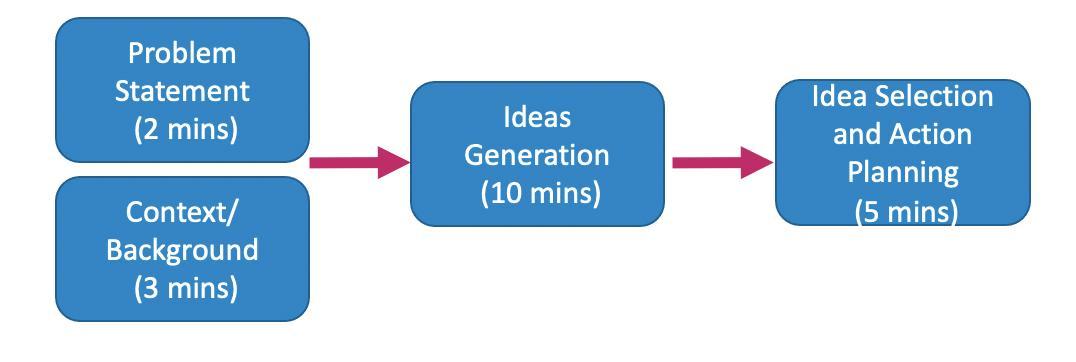
Problem owner describes ‘problem’ (aspect arising from the audit – Resource 8) that they want to explore with the group to apply to the deliberate practice model in order to address, build and sustain practice.
What knowledge or learning has the problem owner taken from the event that has resonated with their school context and needs?
Group to nominate a scribe to note down ideas generated in a central place (flip chart paper or shared screen Word document).
Group to use the questions below to spark debate and generate ideas for the problem owner (‘the leader’):
▪ What advice would you offer the leader to enable them to develop their contribution to the creation of a culture of professional learning and continuous improvement for colleagues by prioritising professional development and a shared responsibility for continuous improvement?
▪ What changes need to be implemented by the school to develop the leadership of teaching in terms of PD and school culture?
▪ What potential solutions could you offer to the leader about leading the development the culture of mutual trust and respect?
▪ Which leadership behaviours and/or skills could the leader employ to help develop a sustainable, ‘deliberate’ mental model (to turn this ‘problem’ into a ‘strength’)?
▪ Which other statements would you offer ideas for from the event?
▪ What advice would you offer the leader to develop their leadership behaviours and skills?
▪ What would you advise the leader to do to utilise the deliberate practice model to address this ‘problem’? (What practices have they seen and named that they can now use, review and keep?)
Problem owner to select idea(s)/action(s) that they plan to move forward with to create a deliberate practice mental model (a practice to ‘keep’).
▪ How will that idea/action shift my audit from A (a problem) to B (a strength)?
▪ What actions do I need to undertake to create the shift?
▪ How will I create a sustainable, ‘deliberate’ mental model for this (leadership) practice?
Problem owner to reflect on which aspects of implementation learning from Cycle One they need to focus on when leading change implementation in school with a view to planning and executing in stages, as an ongoing process. Group to support through questioning and summarising own learning.
▪ How will my leadership behaviours and/or skills need to develop in order to contribute to this idea/action?
Delivering professional development
Deliver effective professional development
Plan, conduct and support colleagues to conduct regular, expert-led conversations
Play a formal role for trainee and early career teachers
Select three of the following nine activities to submit to your leadership mentor.
Choose an activity based on your areas of interest and the results of the initial needs analysis undertaken at the start of the course.
The research underpinning the framework statements highlights the need to develop a team of colleagues to deliver a range of professional development.
Tracy Goodyear shared her plans and guidance for seminar leaders running professional learning seminars at King Edward VI Handsworth School for Girls The booklet and training she provided helped support the development of a team of colleagues to facilitate professional learning through practice inquiry, projects and seminars. The guidance prepared seminar leads for the role and explained how they should run sessions and support staff through a 4-step process. The guidance included recommendations for adopting a variety of approaches, including expert-led conversations, analysis of artefacts, practice, action-planning and reflection.
Investigate examples of training and guidance provided to support those delivering professional development at your school. It may help to reflect on the support and training provided to school mentors or to think back to a recent INSET session. For example, how were colleagues and leaders of development activities prepared and supported for their contribution to the training provided?
▪ How were they identified as mentors or leaders of a session or activity?
▪ What training or development did the mentors or session leaders receive (for example, professional qualification, short course, train the trainer sessions, training on the school priorities and improvement plan)?
▪ How were they briefed?
▪ How did leaders ensure they had the time and capacity to deliver the professional development?
▪ What resources and guidance were they provided with (for example, delivery guidance, facilitator notes, training materials)?
▪ How were they supported to adopt an evidence-based approach to planning and delivering PD (for example, by referring to the Standard for teachers’ professional development or ECF)?
▪ How were they supported to reflect on and evaluate the impact of the professional development they provided on teachers’ practice?
Draft a plan to support the development of a team of colleagues to deliver a range of professional development. Make a note of the essential content to be covered, skills to be practiced, how colleagues would be supported and how the guidance and support would be accessed.
Submission
Write a 200-word (maximum) summary of your actions and learning from this task and submit to your leadership mentor.
Resources
Practice examples: Tracy Goodyear, assistant headteacher, King Edward VI Handsworth School for Girls
Department for Education (2016) Standard for teachers’ professional development
Read pages 5 to 10 of Darling-Hammond et al.’s (2017) review of effective teacher development, looking at content focus, active learning and collaboration, which highlight the benefits of collaboration and inquiry to develop subject expertise.
Meet with at least two subject leads or specialists in your school to discuss their approach to developing the subject, domain or specialist expertise of their teams.
Make recommendations for refining the strategy for developing expertise, informed by your reading of Darling-Hammond et al.
▪ What action is required to support the development of subject, domain or specialist expertise through collaboration and inquiry?
Submission
Write a 200-word (maximum) summary of your actions and learning from this task and submit to your leadership mentor.
Resource
Darling-Hammond, L., Hyler, M. E., & Gardner, M. (2017) Effective teacher professional development. Learning Policy Institute.
Leaders of professional development need to take account of the well-being, needs and abilities of staff when planning the delivery of professional development activities. Darling-Hammond et al. (2017) recommend that leaders provide sufficient time and resources for staff to engage in professional development without increasing workload, and the Equality Act requires schools to make reasonable adjustments to accommodate disability and remove barriers to participation. To meet the needs of individuals, leaders should work closely with staff to understand any barriers and identify effective strategies to overcome these.
Meet with at least two teachers to look at the intended delivery of professional development in your school for the year. Review the planned activities with a focus on relevance, accessibility and workload.
▪ How relevant is each activity (for example, how does it align with school priorities and teacher needs)?
▪ Is the method of delivery accessible to all staff (for example, is the timing and choice of venue or resources appropriate)?
▪ Does the scheduling of professional development activities take account of busy times and changes to workload across the school year?
▪ Is the chosen method of delivery efficient and effective? Could alternative methods be employed (for example, asynchronous, online or flexible delivery)?
Draft recommendations to adjust delivery to increase relevance and accessibility and reduce workload.
Submission
Write a 250-word (maximum) summary of your actions and learning from this task and submit to your leadership mentor.
Resource
Darling-Hammond, L., Hyler, M. E., & Gardner, M. (2017) Effective teacher professional development. Learning Policy Institute.
The DfE guidance for the Standard for teachers’ professional development (2016) notes that school leaders should “ensure that professional development activities include external challenge to thinking”. In her practice piece on expert-led conversations, Audrey Douglas explained how she supported this through the use of a commercial professional development programme to scaffold and support professional dialogue about practice.
Planning for expert-led conversations
▪ Meet with one or more senior colleagues to discuss strategies for providing expert challenge, and scaffolding and structuring coaching sessions (for example, through reference to the teacher standards, a commercial professional development programme, the early career or NPQ frameworks).
▪ Work with your colleague/s to identify an appropriate framework or resource for supporting coaching or mentoring sessions in your school.
▪ With your colleague/s identify an area of focus (for example, use of feedback, modelling, explanations, questioning, developing literacy). Your choice should be informed by school priorities and the school improvement plan.
▪ Arrange a coaching session (for example, the analysis of an artefact or discussion following an observation) with a less experienced teacher, targeting the area of focus.
▪ Structure the session using your chosen framework or resource. It is helpful to provide the coachee with clear guidance on the area of focus and the relevant framework statements or resources which will be used to structure the session, ahead of time.
▪ Ask clear and intentional questions to facilitate reflection. (You might wish to use framework statements or questions provided by your chosen development programme as the basis for these, adapting appropriately for the context and teacher’s needs.)
▪ Provide actionable feedback and identify opportunities for the coachee to test ideas and practise implementation of new approaches.
Reflecting on the coaching session
▪ Ask your coachee to reflect on the experience.
▪ What is their opinion of the use of the chosen framework statements or resources for supporting and structuring the conversation? Was this beneficial or limiting?
▪ How do they feel about the area of focus? How clear were the links to the school’s and their own improvement priorities?
▪ Did the expert-led conversation provide sufficient challenge?
▪ Do they feel able to act on the feedback?
Submission
Write a 200-word (maximum) summary of your actions and learning from this task and submit to your leadership mentor.
Resources
Practice piece: Audrey Douglas, senior assistant headteacher at The Green School for Girls
DfE (2020) Early career framework reforms
The framework highlights the need to tailor conversations to the expertise and needs of the individual. In her practice piece, Audrey Douglas explained how coaches at The Green School for Girls used the GROW model, adapting their approach to be more or less facilitative, dialogic or directive depending on the confidence and expertise of the coachee.
Observe a coaching session
▪ Observe a coaching or mentoring session at your school.
▪ Notice how the conversation changes from being directive to facilitative, and how the coach adapts their approach depending on the needs of the coachee.
▪ After the session, meet with the coach to facilitate reflection and provide support and challenge.
▪ Share what you noticed about their choice of approaches.
▪ Ask the coach to explain their reasons for switching between approaches. What were the cues that prompted their choice of a directive or dialogic approach?
▪ How could the coach’s approach be refined to better meet the needs of the coachee?
Submission
Write a 200-word (maximum) summary of your actions and learning from this task and submit to your leadership mentor.
Resource
Practice piece: Audrey Douglas, senior assistant headteacher at The Green School for Girls
Samantha Torr shared examples of how she established coaching and inquiry triads to develop teaching practice. This facilitated co-observation, modelling and exploration.
Trial a triad approach in your school by creating a team of three teachers of different skills and areas of expertise to observe and support each other.
Identify an area of focus from the school’s improvement priorities (for example, use of feedback, modelling, explanations, questioning, developing literacy). Support the team’s co-observations of lesson segments which demonstrate each teacher’s practice in that area, and allow each member of the triad to explore and model what they are seeing and thinking.
Ask each member of the triad to reflect on the experience.
▪ What did they learn from watching a colleague model and from listening to a colleague think out loud and narrate what they were seeing during the co-observation?
Submission
Write a 200-word (maximum) summary of your actions and learning from this task and submit to your leadership mentor.
Resources
Practice piece: Samantha Torr, vice principal and director of Alpha Teaching School Hub
In his practice piece on the subject of playing a formal role for early career and trainee teachers, Stuart Pope explained how he created career pathways for teachers, providing professional development to support teacher’s professional progress.
You encountered Tracy Goodyear’s CPLD strategic plan in the section on delivering effective professional development. The plan highlights the relevance of professional development content and activity for staff with different levels of experience or need, illustrated through the use of personas.
Produce a table like the example below and create personas to illustrate the skills, abilities and development needs of staff at your school.
Stage of career Persona
Brief pen portrait Motivation Why engage
Why not engage Needs What PD is required
The early career teacher
Experienced classroom teacher
Decader
Aspiring middle leader
Aspiring senior leader
Having completed the table, review your school’s current CPD offering.
▪ Does the offering include appropriate professional development opportunities for staff at each stage of their career?
▪ Are the needs of all staff being met?
▪ How could the professional development plan be refined to create clear career pathways and better meet the needs of all staff?
Submission
Write a 200-word (maximum) summary of your actions and learning from this task and submit to your leadership mentor.
Resources
Practice piece: Stuart Pope, strategic development lead for Ivy Learning Trust
Practice example: Tracy Goodyear, CPLD Strategic Plan and Key Documents
Sims et al. (2021) emphasised the importance of selecting approaches (forms and mechanisms) appropriate for the intended development outcomes. The DfE guidance (2016) highlights the importance of developing practice and theory side by side, rather than as separate components, and including activities that link logically to the intended pupil outcomes. Practitioner inquiry and active learning provide the opportunity for teachers to develop their own evidence-based practice.
Read Section 2 of the EEF professional development guidance (2021), Ensure that professional development effectively builds knowledge, motivates, develops techniques, and embeds practice, which demonstrates the use of 14 mechanisms.
Review your school’s planned professional development for trainees and/or early career teachers, noting the intended outcomes of the planned activities. Is the activity intended to:
▪ build knowledge?
▪ motivate teachers?
▪ develop teaching techniques?
▪ embed practice?
Having seen the importance of including opportunities for practice and enquiry, answer the following questions
▪ Does the planned delivery for trainees and/or early career teachers provide appropriate mechanisms to build knowledge, motivate teachers, develop teaching techniques and embed practice?
▪ Are sufficient opportunities for practice and enquiry included?
Refine the plan to better address the intended outcomes and ensure sufficient opportunity for trainees and/or early career teachers to engage in practice and enquiry.
Submission
Write a 200-word (maximum) summary of your actions and learning from this task and submit to your leadership mentor.
Resource
EEF (2021) Effective professional development guidance report
Samantha Torr’s CPD programme for 22–23 includes the induction process and provision for early career teachers at Alpha Teaching School Hub, illustrating how early career teachers access their statutory entitlement. Samantha ensured new staff were supported with an extra day of induction training before the start of term and provided with an induction tutor.
Read pages 13 to 26 of the DfE (2021) guidance on induction for early career teachers.
Meet with a senior leader and an early career teacher (or recently employed teacher if there are no early career teachers in your school) to review the school’s induction process and resources for new staff.
▪ Does the process meet the requirements outlined in the statutory guidance on induction for early career teachers?
▪ How do the induction process and associated resources provide necessary support and guidance without overloading the new starter?
▪ What information and resources were invaluable to the new starter?
▪ What information and resources do they wish had been provided during induction?
▪ What information and resources need to be provided to meet statutory requirements?
Prepare to plan or refine both the statutory induction process and general induction process for both early career and experienced teachers who are new to your school or department by answering the following questions:
▪ What changes are needed to better meet the statutory requirements (for example, changes to the timetable, scheduling of professional development, access to experienced staff)?
▪ What information and support is essential before school starts for both early career and experienced teachers who are new to your school?
▪ What information and support is essential for the first day of teaching for both early career and experienced teachers who are new to your school?
▪ What information and support is essential for the first week for both early career and experienced teachers who are new to your school?
▪ What information and support is essential for the first half term for both early career and experienced teachers who are new to your school?
Submission
Write a 200-word (maximum) summary of your actions and learning from this task and submit to your leadership mentor.
Resources
Practice example: Samantha Torr, vice principal and director of Alpha Teaching School Hub
DfE (2021) Induction for early career teachers
Programme framework statements covered
Delivering effective professional development
Learn that…
3.3. All schools with early career teachers undertaking statutory induction must adhere to the regulations and relevant statutory guidance.
Learn how to…
Play a formal role for trainee and early career teachers by:
3.l. Applying, where relevant, an understanding of the Early Career Framework, the ITT Core Content Framework, the Teachers’ Standards and the Standard for Teachers’ Professional Development to the school’s training and induction offer.
3.m. Understanding the roles and responsibilities within the induction process and ensuring early career teachers access their statutory entitlements.
3.n. Contributing to a programme of professional development for mentors, trainee and early career teachers that satisfies the statutory requirements and aligns effectively with other programmes of professional development activity within the school.
This formative assessment task is intended, primarily, for participants who will be expected to, or hope to, take responsibility for the leadership and management of the Early career framework (ECF) in their school, and who wish to confirm, or enhance, their knowledge and understanding of its operation.
In brief, from September 2021, statutory induction for new teachers changed as part of the ECF reforms. Subject to parliamentary procedure, all early career teachers (ECTs) in England undergoing statutory induction will be entitled to two years of high-quality professional development support based on the ECF.
To gain a high-level, summary overview of the implications of the ECF reforms for schools and school leaders, visit https://www.gov.uk/government/publications/early-career-framework-reformsoverview/early-career-framework-reforms-overview
If your role involves significant responsibility for ECTs, you are strongly advised to familiarise yourself with the key DfE publications listed below.
▪ Department for Education (2019). Early career framework. https://www.gov.uk/government/publications/early-career-framework (accessed 25/10/2021).
▪ Department for Education (2016). Standard for teachers’ professional development: Implementation guidance for school leaders, teachers, and organisations that offer professional development for teachers. https://assets.publishing.service.gov.uk/government/uploads/system/uploads/attachme nt_data/file/537031/160712_-_PD_Expert_Group_Guidance.pdf Accessed 25 10 2021.
▪ Department for Education (2019). Initial teacher training (ITT): Core content framework. https://www.gov.uk/government/publications/initial-teacher-training-itt-core-contentframework Accessed 25 10 2021.
▪ Department for Education (2021). Teachers’ standards: Guidance for school leaders, school staff and governing bodies. https://www.gov.uk/government/publications/teachersstandards. Accessed 25.10.2021.
The importance attached to these reforms is reflected in revisions to the Ofsted School Inspection Handbook (October 2021), which states that inspectors must assess the effectiveness and support put in place for ECTs.
“Inspectors must meet Early Career Teachers (ECTs) where possible and may wish to visit lessons given by ECTs. In doing so, inspectors should take into account the fact that ECTs have less experience than other teachers but must assess the effectiveness of the support and professional development put in place for ECTs to ensure that ECTs have the knowledge and skills necessary to teach in their chosen subject or phase. This must include the quality of mentoring and what the school has done to support their development in areas for improvement
identified by initial teacher training providers. Inspectors should discuss how ECTs are supported by the school in managing pupils’ behaviour. Inspectors must meet with mentors and where possible, the induction tutor.” (emphases added)
(Ofsted, 2021, School inspection handbook, p. 21)
Establishing effective arrangements for the professional development of ECTs involves a number of key strategic decisions. These are explored in this task.
Step one
Review your understanding of the three delivery models for the ECF: Early career framework reforms: overview - GOV.UK (www.gov.uk)
Step two
Download the ‘Strategic decisions for the implementation of ECF’ proforma, available below, and use this as the basis for:
▪ a conversation with a trusted colleague to gain their perspective(s)
▪ a conversation with a fellow course member in another school (face to face or virtual) to discuss similarities and differences between your schools’ approaches
▪ recording your personal responses to the questions posed
When you have completed these activities, reflect upon your thoughts and conclusions, and use these to produce a PowerPoint presentation titled ‘The Early Career Framework in my school’. The audience for the presentation is the senior leadership team, although it is not a requirement you submit it to them.
The presentation should have a maximum of 10 slides; you should use the notes page to explain the purpose behind each slide, or to add additional comments to help the reader understand your intentions.
When you have completed your presentation, upload it in Canvas to your leadership mentor within the timeframe identified
Proforma: Strategic decisions for the implementation of ECF
You will need to download three copies of the proforma.
Use separate proformas to record (a) your personal reflections, (b) the views of a trusted colleague and (c) the views of a fellow course member.
Prompts Response
If delivery Model One is chosen – what criteria should the school use when selecting from the list of accredited providers?
Whichever delivery model is chosen, how will the school choose its mentors?
What qualities/skills/experience should the school look for?
What metrics should the school use to evaluate the
effectiveness/impact of the programme?
What additional induction activities should be provided by the school?
Programme framework statements covered
Delivering effective professional development
Learn that…
3.2. Teacher developers should choose activities that suit the aims and context of their professional development programme. Successful models have included regular, expert-led conversations about classroom practice, teacher development groups and structured interventions. However, these activities do not work in all circumstances and the model should fit the educational aims, content and context of the programme.
Learn how to
Plan, conduct, and support colleagues to conduct, regular, expert-led conversations (which could be referred to as mentoring or coaching) about classroom practice by:
3.i. Tailoring the conversation to the expertise and needs of the individual (e.g., adapting conversations to be more or less facilitative, dialogic or directive).
3.k. Where appropriate, creating opportunities to co-observe a lesson segment, exploring and modelling what a teacher with a particular area of expertise sees and thinks.
As the leader for teacher development, a key aspect of your role may be to develop your school’s capacity to deliver some of its professional development itself; often this will mean making provision for developing or leading instructional coaching. This is a sizeable task, and before embarking upon it you will need to be secure in your understanding of:
▪ types of coaching
▪ the skills needed to be an effective coach, and the training available to develop those skills
▪ your school’s stage of development, i.e., staff experience of coaching and being coached, the number of trained coaches the school can draw upon
▪ the evidence for the positive impact of coaching and its value for money
▪ scenarios in which coaching may not be appropriate
The last decade has seen a growing interest in instructional coaching in schools, with increasing numbers adopting practices which approximate to this definition:
“Put simply – instructional coaching involves a trained expert working – be it an external coach, leader teacher or peer – with teachers individually, to help them learn and adopt new teaching practices, and to provide feedback on performance. This is done with the intent to both support accurate and continued implementation of new teaching approaches and reduce the sense of isolation teachers can feel when implementing new ideas and practices.” (TDT, 2018, What is instructional coaching?)
Listed below are resources for you to access in advance of completing this activity:
1. Instructional coaching: An introduction (Jim Knight, The Instructional Coaching Institute)
This 6-minute video outlines the differences between facilitative, directive and dialogical coaching. Instructional Coaching - Bing video. Accessed 24.10.2021.
2. Instructional coaching and early career teachers
Short case study provided by Stuart Voyce, deputy headteacher at a secondary school in West Yorkshire. Instructional Coaching and Early Career… | Huntington Research School. Accessed 24.10.2021.
3. What is instructional coaching? (Gary Jones, 2018, TDT)
Brief blog post discussing the validity of claims made for the effectiveness of instructional coaching. What is instructional coaching? - Teacher Development Trust (tdtrust.org) Accessed 24.10.2021.
4. Effective professional development. (EEF, 2021) Download the poster (see tabs at top of page for link).
Effective Professional Development | EEF (educationendowmentfoundation.org.uk) Accessed 14.01.2022.
This task requires you to design a PowerPoint presentation about the potential benefits of instructional coaching.
Step one
In preparation, you should undertake some of the following activities:
▪ Access and make notes on the resources listed above.
▪ Meet with your in-school performance coach to discuss your school’s experience of coaching, including some or all of the following:
o previous and/or current experience of coaching
o staff feedback on the effectiveness of any coaching they have engaged in, either as a coach or coachee
o your school’s culture – is it supportive of, and conducive to, the development of a coaching culture?
o your school’s coaching capability and capacity, i.e., how many appropriately trained coaches does the school have?
Step two
Contact a school with significant, positive experience of the effective use of coaching. This might be your local teaching school, another school within your trust or diocese, or a school with a good reputation in this area. Arrange to meet with them (we recommend this should be virtual) to discuss why coaching is successful in their school.
When you have completed these activities, reflect upon your thoughts and conclusions, and use these reflections to produce a PowerPoint presentation titled ‘Developing instructional coaching in my school’. The audience for the presentation is the senior leadership team, although it is not a requirement that you submit it to them.
The presentation should have a maximum of 12 slides; you should use the notes page to explain the purpose behind each slide or to add additional comments to help the reader understand your intentions.
You may wish to address some of the following topics according to your school’s stage of development:
▪ coaching at my school – current practice
▪ types of coaching – facilitative, directive and dialogical
▪ the evidence that coaching has a positive impact
▪ internal coaching capacity/capability
▪ when coaching is not the answer
▪ headline proposals for the development of coaching
When you have completed your presentation, upload it in Canvas to your leadership mentor within the timeframe identified.
Programme framework statements covered
Delivering effective professional development
Learn how to…
Deliver effective professional development by:
3.b. Choosing appropriate development approaches including modelling, explanations and scaffolds, acknowledging that novices need more structure, support and exemplification.
3.d. Ensuring that time is protected for teachers to plan, test and implement new, evidenceinformed ideas.
3.g. Making reasonable adjustments that are well-matched to teacher needs (e.g., to content, resources and venue).
The authors of the EEF’s ‘Effective professional development report’ make three recommendations, the third of which is encapsulated in the extract below.
“No matter how well thought out a PD programme is in terms of content and design, for it to succeed it needs to be feasible and appropriate to the school or setting context.”1
Their conclusions have sobering implications for those leading professional development activities in their organisations. They remind us that an elegant design, which incorporates the key mechanisms identified in this report as being essential for effective professional development programmes, will not succeed if the conditions for the effective delivery of the programme are not present.
Whilst not the central focus of this activity, you will find it valuable to consider the ‘mechanisms’ the EEF report has identified by accessing ‘Effective professional development: The mechanisms of PD’: EEF-Effective-PD-Mechanisms-Poster.pdf (d2tic4wvo1iusb.cloudfront.net) (accessed 26.10.2021).
If you wish to deepen your understanding further still, then you should access the full report.
As you complete the task below, keep in mind the EEF mechanisms that you have explored, with a particular focus on their implications for the effective delivery of programmes of professional development.
1 Education Endowment Fund (2021). Effective professional development report, p. 30 https://educationendowmentfoundation.org.uk/education-evidence/guidance-reports/effectiveprofessional-development. Accessed 26.10.2021.
For this task, you will evaluate a professional development programme you have been involved in, and then use the outcomes from your evaluation to produce a PowerPoint presentation titled ‘Delivering more effective professional development in my school’.
Step one: Choosing a professional development programme
Choose a professional development programme you have engaged with, as either a participant or a facilitator/coach, etc. Ideally focus on a programme that was:
▪ delivered in the last couple of years – simply because it’s easier to remember things that took place more recently!
▪ delivered over several sessions
▪ delivered on your premises to your staff only (or with colleagues from within a MAT)
▪ intended to address an area of significant importance to the school, e.g., an improvement specified in your school improvement plan, an area identified by Ofsted as requiring attention
If you cannot identify a programme that meets all of the above conditions, you should select a programme that meets at least some of them. The programme you choose might have been:
▪ a facilitator-led course
▪ a programme of coaching support
▪ joint practice development activities or support through a teacher learning community
▪ lesson study based
Step two: Evaluating the programme
Complete the ‘Evaluating a programme of professional development’ proforma (below). Use the prompts on the proforma to critically evaluate the programme you have chosen; if you identify important issues that are not addressed by the proforma prompts, please make a note of these also.
Step three: Reviewing your evaluation with your in-school performance coach
Arrange to meet with your leadership performance coach to discuss your responses to the evaluation proforma prompts and to gain their perspective on the effectiveness of the training.
Following your discussion of the outcomes from your evaluation of this specific programme, broaden your discussion to incorporate other professional development activities provided by the school. This will help you to establish if the particular programme you have evaluated was typical of the school’s approach, if different lessons may be learned from the evaluation of other programmes and so on.
Should you wish to gather other staff perspectives’, you might hold similar conversations about your evaluation with them.
When you have completed these activities, reflect upon your thoughts and conclusions, and use these to produce a PowerPoint presentation titled ‘Guidelines for delivering effective professional development in my school’. The audience for the presentation is the senior leadership team, although it is not a requirement that you submit it to them. In your presentation, you may wish to address the following issues:
▪ creating an environment conducive to effective professional development
▪ recognising, responding to, and providing for differing staff needs
▪ ensuring professional development has a positive impact on children’s learning
▪ (you may wish to reference any relevant research)
When you have completed your presentation, upload it in Canvas to your leadership mentor within the timeframe identified
Proforma: Evaluating a programme of professional development
For each of the prompts below, indicate if the item was, on balance, a strength (i.e., it made a positive contribution to the professional development process) or a weakness (i.e., it hindered the professional development process). If the prompt is not applicable, put n/a.
Environment
School culture/stage of development – the success, or otherwise, of a particular professional development activity may be determined by a host of factors that are separate to the professional development activity itself, but significantly impinge upon its effectiveness. These include:
▪ the prevailing culture within the school
▪ the school’s current improvement trajectory
▪ staff morale
To what extent might any of the above, or other school-based factors, have contributed to the effectiveness of the programme? Were the programme’s timings sensitive to staff workload? Consider:
▪ when in the day/ week/term/year the programme took place
▪ duration of the whole programme and individual sessions
Venue arrangements – consider:
▪ the training room –adequate ventilation? Adequate lighting? Adequate space for participants to move around? Appropriate temperature?
▪ refreshments – all needs catered for? Appropriate for time of day? Separate area for consumption?
▪ appropriate provision made for staff with disabilities?
Meeting staff needs
Cognitive load:
▪ Did the programme make appropriate demands with regard to the volume/complexity of information that participants were expected to understand?
Meeting diverse needs – how successful was the programme in meeting the needs of the range of participants? Consider:
▪ how effectively the programme provided for ECTs and more experienced staff
▪ how effectively the programme deliverers used different techniques (e.g., modelling, scaffolding, explanations) to provide for ECTs and more experienced staff
Did the programme deliverer(s) provide feedback to staff on their performance?
Were participants required/encouraged to set and agree goals for themselves and/or their pupils following the programme?
Did the programme deliverer(s) provide affirmation and reinforcement after progress?
Embedding outcomes: Ensuring professional development has impact in classrooms What arrangements were made for time to act? Consider provision made for:
▪ opportunities to practice techniques
▪ planning new interventions
▪ testing new interventions
▪ implementing new interventions
What arrangements were made for embedding new techniques/skills?
Consider provision made for:
▪ revisiting with staff key ideas/outcomes
▪ reminding staff of the school’s expectations, i.e., with regard to actions to be implemented
Support for action – what support was provided for:
▪ planning new interventions?
▪ testing new interventions?
▪ implementing new interventions?