


Please come to the event having undertaken the following:
1. Engage with the case studies and accompanying documentation in Resource 6, making notes about the differences between the case study leaders’ practices and practice in your own setting ahead of a task in Session 3 of this event.
2. Bring your completed Cycle One section of your LDR (previously uploaded to Canvas for feedback from the online leadership mentors).
3. Bring your own setting’s Teaching (and Learning) Policy (title and approach will vary at each setting/MAT) or similar documentation.
4. Bring additional teaching and learning documentation appropriate to your own context (handbooks, guidance documents, etc.).
5. Bring a device to work from so you can access the following (please download these in advance of the event):
• this participant resource pack
• the slide deck
• a slide deck creator, such as MS PowerPoint
6. Complete all of Cycle One as outlined in Canvas modules (if not already complete).
‘Learn that’ ‘Learn how to’
5.7. High-quality classroom discussion can support pupils to articulate key ideas, consolidate understanding and extend their vocabulary.
Encourage colleagues to stimulate pupil thinking and check for understanding by:
5i Describing how a range of question types can improve the quality of class discussions (e.g. by modelling new vocabulary or asking pupils to justify answers to extend and challenge pupils).
5j. Providing scaffolds for pupil discussion to increase the focus and rigour of dialogue.
‘Learn that’ ‘Learn how to’
6.2 Pupils are likely to learn at different rates and to require different levels and types of support from teachers to succeed.
‘Learn that’
7.5. High-quality feedback can be written or verbal; it is likely to be accurate and clear, encourage further effort, and provide specific guidance on how to improve.
Provide opportunities for all pupils to experience success by:
6b. Providing examples of how to adapt lessons while maintaining high expectations for all, so that all pupils have the opportunity to experience success
Support colleagues to provide high-quality feedback by:
7e. Providing examples of feedback that is accurate and clear, encourages further effort, and provides specific guidance on how to improve.
‘Learn that’ ‘Learn how to’
Revisit the Cycle One section of your LDR for all implementation statements.
Your leadership learning and practice – individual activity
Using the completed Cycle One section of your LDR and Practice Activity feedback, answer the questions below, to review your learning so far.
1. Which were the most influential content areas and statements you learnt about during Cycle One? Reflect on the FTF event, online study, practice activities, FAT and in-school performance coach session in your thinking
2. How have you begun to apply your Cycle One learning to impact your:
a) setting practice?
b) leadership practice?
3. Which statements in the LDR do you need to further develop your knowledge and understanding about?
4. How has your Vision and Implementation Plan for leading teaching from FTF Event 1 developed as a result of your learning in the rest of Cycle One?
5. Which areas of the Implementation content area (Cycle One LDR) are most relevant to your setting?
Your leadership learning and practice – group activity
Draw up a group list of themes arising about your learning during Cycle One.
Identify individual group members’ leadership behaviours and skills strengths using Resource 4, and add these below.
Themes Leadership behaviours – strengths
Behaviour
Self-awareness
Explanation
Effective leaders will know themselves and their teams, continually reflect on their own and others’ practices, and understand how best to approach difficult or sensitive issues. They are aware of their personal strengths and areas for future growth and understand how their own behaviour impacts on others.
Integrity Effective leaders act with honesty, transparency and always in the interests of the school and its pupils. They are able to gain the respect of others by acting in line with their own values, as well as making decisions or choices with the best interests of education and pupils in mind.
Resilience
Effective leaders remain courageous and positive in challenging, adverse or uncertain circumstances. They are able to respond appropriately, manage uncertainty and bounce back even in the most trying of situations.
Impact and influence Effective leaders have a positive impact on students, colleagues and the wider community through persuading, convincing and bringing others round to their perspective. They understand others’ perspectives and priorities and tailor their communication to suit their audience.
Delivering continuous improvement
Effective leaders secure and maintain positive improvement through articulating a clear vision, setting high expectations and leading a cycle of research, planning, monitoring, analysis and change. They demonstrate the ability to combine operational action with strategic planning, securing short-term improvements whilst building sustainable change.
Learning focus Effective leaders keep learning and pedagogy at the core of the whole school curriculum and at the heart of their leadership practice. Their strong knowledge and understanding of learning theories (both adult and children) and pedagogies allows them to use their leadership to influence and improve effective teaching and learning. They encourage a culture of dialogue – formal and informal – about pedagogy, learning, curriculum design and development (assessment).
Developing others
Effective leaders develop and empower colleagues. They proactively look for ways to develop others, seeking opportunities to develop colleagues through activities such as mentoring, supporting, championing and guiding, in order to bring out the very best in them.
Respect Effective leaders respect the rights, views, beliefs and faiths of pupils, colleagues and stakeholders.
Commitment
Effective leaders are committed to their pupils and understand the power of worldclass teaching to improve social mobility, wellbeing and productivity.
Skill Explanation
Critical knowledge and understanding of research techniques and self-management
Critical enquiry, review, analysis and evaluation
The best leaders undertake and use research, drawn from a range of sources, to support decision making and strategy development – using their time effectively within disciplined and well-organised systems and methodologies.
The best leaders use critical thinking, statistical and data analysis tools, techniques and concepts to identify strengths and areas for development. They design effective leadership plans to support intervention, direction and development. They analyse the implications of change, deploying well-evidenced research to frame school self-evaluation and improvement.
Challenge
Dealing systematically and creatively with complex issues
Priority identification
The best leaders use challenge effectively and adopt a range of strategies in the best interests of achieving progress – demanding ambitious standards for all pupils and a strong sense of accountability in staff for the impact of their work on pupils’ outcomes.
The best leaders have clear systems and protocols in place that enable them to consider and find solutions to issues, as they arise, in a way which deals most effectively with the barriers and challenges they face. The systems in place do not constrain but create a firm foundation for taking positive action.
The best leaders scan the horizon to anticipate change, taking a long-term view of the implications of change and improvement needed to identify short- and long-term priorities and goals, with specified milestones to ensure effective leadership and management.
Clear articulation and application of knowledge
Self-direction and originality
Current insights into professional practice
The best leaders take time to reflect and learn from their leadership activity and apply this knowledge to bring about improvements in themselves and their work.
The best leaders have clear and ambitious targets for themselves as leaders, for their pupils and for their schools. They take a unique strategic view of situations and their implications for long-term impact and outcomes – sometimes using unexpected actions to get the best for those concerned.
The best leaders take time to reflect and evaluate their practice and effectiveness in their leadership and as leaders. They are aware of the education landscape, understand the context of their school and its needs, and direct professional practice and intervention appropriately.
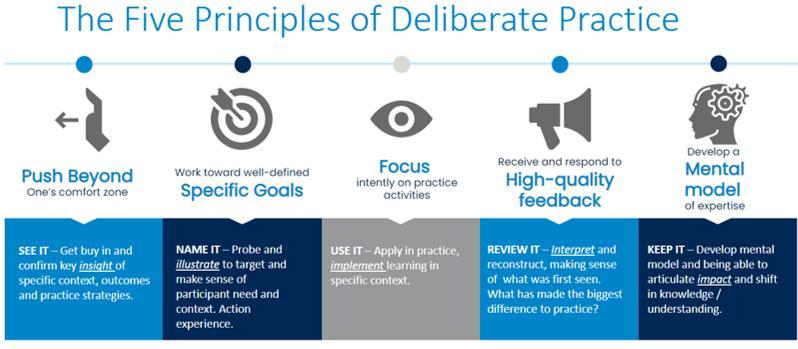
Individual activity (20 minutes)
1. Read your allocated research source extract, highlighting aspects relating to the event’s ‘learn that’ statements about:
a) high-quality classroom discussion
b) learning at different rates
c) high-quality feedback
d) stimulating pupil thinking
e) providing opportunities for all pupils to experience success
2. ‘Put a pin’ against the points raised that could impact your leadership or context in particular.
3. If you have spare time, read another of the extracts.
Group activity (20 minutes)
▪ Sharing your individual responses, discuss the key themes arising from the research:
▪ How does it look and feel in different places, phases and settings?
▪ What does the research demonstrate works and does not work in terms of the teaching practices highlighted above?
▪ What are the critical research messages you want to take back to your context?
▪ How do these relate to changes you propose implementing in your setting?
Extract 1
Coe, R., Aloisi, C., Higgins, S., & Major, L. E. (2014). What makes great teaching? Review of the underpinning research. Durham University: UK.
http://bit.ly/2OvmvKO
Pages 4–5, 9, 13–16 and 39–40
Extract 2
Education Endowment Foundation (2017). Dialogic teaching: Evaluation report.
https://d2tic4wvo1iusb.cloudfront.net/documents/projects/Dialogic_Teaching_Evaluation_Report.pdf
Executive Summary (pages 4–5), Background (pages 9–11) and Outcomes (pages 36–41)
Extract 3
Education Endowment Foundation (2018). Toolkit: Collaborative learning approaches.
https://educationendowmentfoundation.org.uk/evidence-summaries/teaching-learningtoolkit/collaborative-learning/
Whole webpage
Extract 4
Education Endowment Foundation (2018). Feedback.
https://educationendowmentfoundation.org.uk/education-evidence/teaching-learning-toolkit/feedback
Whole webpage
Extract 5
Education Endowment Foundation (2020). Special educational needs in mainstream schools: Guidance report.
https://educationendowmentfoundation.org.uk/tools/guidance-reports/special-educational-needsdisabilities/
Recommendation 1 (pages 10–13), Recommendation 3 (pages 20–27) and Recommendation 4 (pages 28–33)
Extract 6
Education Endowment Foundation (2016). A marked improvement? A review of the evidence on written marking.
https://educationendowmentfoundation.org.uk/public/files/Presentations/Publications/EEF_Marking_Revi ew_April_2016.pdf
Pages 13–22
Extract 7
Coe, R., Rauch, C. J., Kime, S., & Singleton, D. (2020). Great teaching toolkit: Evidence review.
https://assets.website-
files.com/5ee28729f7b4a5fa99bef2b3/5ee9f507021911ae35ac6c4d_EBE_GTT_EVIDENCE%20REVIEW_DIGITA L.pdf
Point 4.4 (pages 35–36)
https://youtu.be/gm-3IbUxskI
Leader 1
Leader 2
Leader 3
Name Tessa Miles Kirsteen Newell Fleur Baikie
Role Teacher of History and Professional Learning Mentor
Setting (and website)
time as a teacher
Length of time as a leader
Biggest leadership learning in career so far
St Albans Girls’ School, https://www.stags.herts.sch.uk/
Evidence Lead in Education – former Headteacher
Kingston Primary School, www.kingston.essex.sch.uk
Director of Learning – MFL
Sandringham School, https://sandringham.herts.sch.uk
2000 – Head of History; 2009 – Head of Faculty and AST; 2011 – Professional Learning Mentor
People will ‘go with you’ if they understand the purpose of what you are doing. If it is not clear why you are doing it, then you will meet resistance. Therefore, explain the purpose to someone and they will at least give it a try!
13 years
As a leader you have to be aware of all the different personalities amongst your staff. There is not a ‘one size fits all’ style of leadership, as different colleagues need different approaches in order to support them to be the best that they can be.
8 years – Head of French, Deputy Head of MFL, Head of MFL and Senior Leader – Head of 6th Form
Rome was not built in a day –change takes time and you have to take the wins when they come, but you do really have to persevere at times and stick to your priorities. I also always try and be the giraffe in amongst the ostriches.
Accompanying documentation
Kingston Primary School, Kirsteen Newell

Created/edited: Autumn 2021
To be reviewed: Autumn 2022
At Kingston Primary School we believe it is important to have a consistent approach to responding to pupils’ work throughout the school. We want to ensure that all pupils receive feedback in such a way that it progresses their learning, develops their self-confidence, and gives them clear guidelines on how to improve their work. Feedback is seen as an essential and valued part of the learning process by encouraging, enabling and challenging pupils to strive for excellence.
This Feedback and Book Content Policy has been written after collaboration with all teaching staff and extensive research carried out on the impact of marking with regards to pupil progress. The aim of this policy is to ensure that high quality feedback is provided to our pupils without undue burden on teacher workload. As teachers, our core purpose is to plan and deliver excellent lessons and therefore feedback strategies must be manageable and sustainable. Our belief at Kingston is that the best use of time any teacher can make – outside of actually teaching in the classroom – is the planning of lessons.
• Evaluate whether a pupil has understood or learnt something and this information is then used to plan the next lesson.
• Reflect on whether we need to provide additional support for a pupil in the next lesson.
• Evaluate whether a pupil is making progress with skills, knowledge and understanding.
• To provide guidance to pupils to enable them to make progress.
• Provide a score or grade for summative purposes.
Principles
• The fundamental principle at Kingston is that students should do at least as much work responding to their feedback as the teacher did to give that feedback.
• High quality verbal feedback is given more emphasis at Kingston than written feedback. Feedback is more effective when it is immediate and pupils can respond and ask questions at key points in their learning. Verbal feedback enables pupils to quickly progress in their learning and do something different to achieve a better standard in a given task. All members of staff are trained on how to give verbal feedback to students so that they are very clear how to progress with their learning within the lesson. Every adult in the class works smartly within each lesson to ensure that as many students as possible receive immediate, ‘live’ feedback on how to improve their work.
• The purpose of feedback is straightforward: we identify a learning gap (something the student doesn’t yet know or can’t do) and the resulting feedback should be aimed at closing this gap.
• After all lessons, teachers take time to look through the books and assess the learning to inform the planning for the next lesson.
• A well thought-out WHY U (What Have You Understood) card , success criteria, or WHY R (What Have You Remembered) card are prepared for most lessons. These are marked by teachers (using pink and green highlighters) and provide important information as to how successfully our learners have assimilated core knowledge and skills. They are also key to high quality feedback.
• Verbal feedback efficiently steers individuals through the lesson and, used effectively, will ensure that fewer bad habits become entrenched, which will lead to less remedial marking further down the line. It is a far more human process than traditional written marking.
• It is far easier to be detailed and personalised when feeding back verbally.
• As stated above, we have a clear success criteria, or WHYU/ WHY R card for most lessons which all the adults in the classroom use to give pupils immediate verbal feedback.
• When we give pupils verbal feedback we use the sandwich method:
• Identify an aspect of their work that has been successful;
• Give a clear and specific target for pupils to focus on to improve their work;
• Constantly encourage the pupils to Aim High and challenge themselves;
• Give specific praise with regards to effort.
• Pupils have to repeat back to staff in their own words what they are going to change or work on as a result of the verbal feedback they have received. We get pupils to commit to an action as a result of our feedback.
• Adults circle or highlight in green any mistakes or areas for growth they notice whilst giving verbal feedback and pupils are expected to correct these. We go back to pupils to ensure pupils have made their corrections.
• Adults highlight aspects of pupils’ work that is going well with pink to give them positive encouragement and feedback.
• All adults in the classroom are highly skilled at giving high quality feedback and get round to as many pupils as possible within a lesson.
• We use positive phrases when giving verbal feedback such as:
• Well done for putting so much effort into…
• I can see that you have worked hard to remember all of your capital letters.
• Keep going and challenge yourself to get to the next stage in your learning.
• It’s okay to make mistakes, that is how we learn.
• We don’t use Verbal Feedback symbols or stamps in books as there should be clear evidence of progress in a pupil’s work after high quality feedback has been given.
• In some lesson stickers are given within the lesson to those pupils who are putting a lot of effort into their work.

SUMMARY
Your books are the window into your teaching and evidence of your pupils’ progress throughout the year.
• Pupils’ books are one form of evidence of what is going on in every single lesson throughout the year. Obviously the best evidence is gleaned from talking to pupils and finding out what they know and can do.
• What we expect to see in books:
o Clear progression across time.
o Clear progression in a lesson demonstrating that verbal feedback has moved a pupil forward.
o Editing with a blue pen.
o Cold and hot tasks.
o Most lessons have one of the following:
▪ A well thought-out success criteria, stuck into books and children will self-assess to demonstrate where they have got to;
▪ A writing banding sheet;
▪ A ‘What Have You Understood’ assessment card with at least one question that all pupils will be able to answer, one challenging question and a vocabulary question.
o All work to be in line with the Kingston presentation non-negotiables (see below). It should be clear that pupils are proud of their work.
o To demonstrate how we adapt learning in response to our pupils’ levels of achievement and needs, see our separate document on this important aspect of teaching and learning, In summary, the objective set will be of a challenging standard and it will be obvious that some pupils will have been given extra support (either by an adult in the classroom or through a scaffolded resource such as a writing frame) to access the high level of learning. There will sometimes be evidence of extra challenges being given to some pupils to ensure that they are at the correct level of ‘finding work difficult’ to optimise learning.
o A lot of work! There should be written tasks recorded for all lessons. If the lesson is a wipeboard lesson/ talking lesson then a WHY U card should be stuck in and completed for that lesson.
o There should be evidence that misconceptions have been addressed either verbally or through written marking.
o In every book and subject, there should be a lot of evidence that all adults in the classroom have been giving live feedback to pupils. This will be evidenced by pink and green marking.
o Fabulous texts and box-it-up sheets should have been stuck neatly into the books.
o A variety of tasks and learning activities showing a good coverage of the curriculum.
o There should be evidence of writing across the curriculum.
o As the thematic curriculum is a strength of our school and ensures that our curriculum is broad and engaging, the current theme should come through strongly in books.
o Knowledge organisers and knowledge notes will be stuck into books.
o All books will be labelled with ‘I am a ………’ to encourage children to be clear about the subjects they are studying.
The children that require challenge will have exercise books for phonics – to start from about February half term.
Pink and green marked.
Each piece of work to have a standard success criteria:
• Finger spaces
• Capital letters
• Full stops
• Does it make sense
• Good use of phonics
• Forming letters well
Phonic sheets – pink and green in lesson marking
No need for pink and green comments as these are not used by the children.
Challenge sheets will have pink and green in-lesson marking.
The following expectations are also relevant to EYFS:
AUTUMN 1
Evidence Me
Handwritten name by child (uploaded photo)
AUTUMN 2
Evidence Me
FC Wow moment observations and photos
SPRING 1
Evidence Me
FC Wow moment observations and photos
A scribed story (handwritten name by child) on the board
First observation and photos ‘Bring a parent to school afternoon’ photos & feedback
General wow moment observations and photos Wow moments from parents
Parent comments/ feedback from ‘Christmas Craft’ morning (general folder)
A scribed story (handwritten name by child) on the board (general folder)
General wow moment observations with photos Wow moments from parents
Phonic Books and Independent Work Folders
Parent comments/ feedback from ‘Bring a parent to school’ afternoon (general folder)
Dated page and focused sounds
Child’s ‘Mark Making’
Marking stamps / Capital Letters/Finger spaces / full stops
IWF
Evidence of any independent ‘Mark Making’
2
Evidence Me
FC wow moment observations and photos
Story Scribing examples on the board
General wow moment observations and photos WOW moments from parents
Dated page and focused sounds
SUMMER 1
Evidence Me
FC wow moment observations and photos
Child’s work –adapted in response to the support and challenge needed.
Story Scribing examples on board
Parent comments/ feedback from ‘Bring a parent to Forest School’ afternoon (general folder)
Marking stamps / Capital Letters/Finger spaces / full stops
General wow moment observations and photos WOW moments from parents
Phonic Books and Independent Work Folders
Dated page and focused sounds
SUMMER 2
Evidence Me
FC wow moment observations and photos
Dated page and focused sounds
Child’s work –adapted in response to the support and challenge needed.
Story Scribing examples on board
Independent
Marking stamps / Capital Letters/Finger spaces / full stops /DIMS
General wow moment observations and photos WOW moments from parents
Child’s work –adapted in response to
IWF
Evidence of any independent ‘Mark Making’
IWF
Evidence of any independent ‘Mark Making’
Marking stamps / Capital IWF
the support and challenge needed. Letters/Finger spaces / full stops /DIMS
MATHS
• Pink and green in lesson marking
Evidence of any independent ‘Mark Making’
• Evidence of some challenge sheets although usually it is just the case that the higher ability pupils get further along in their Singapore maths book.
• Short date in book
• No self-marking in books
• Kingston presentation
PHONICS BOOK
• Pink and green in lesson marking
• Kingston presentation
• Pink and green in lesson marking
• Once piece of writing a week to be marked within lessons with a success criteria (apart from the Big Write weeks)
• Big writes will go into the English/ topic book as well as the big write books – they will be marked with a banded sheet
• Two big writes a half term and one of them will have an editing task which is completed with an LSA
o The first Big Write will not be marked.
o By the end of the year there will be 13 Big Writes
• Summary sheet of banded writing objectives will be kept for each child in a separate folder
• Kingston presentation
FOUNDATION SUBJECTS AND SCIENCE
• Sheets – Pink and green in lesson marking
• WHY R assessment sheet at the end of a topic – once every half term
• Knowledge organisers stuck in.
• Kingston Presentation
• Pink and green in lesson marking.
• WHY U / WHY R card or a steps to success card pinked and green for each lesson
• Some challenge sheets which go into pupils’ folders.
• Kingston presentation
PHONICS BOOK
• Pink and green in lesson marking
• Kingston presentation
HANDWRITING BOOK
• Pink and green in lesson marking
• Kingston presentation
• Pink and green in lesson marking
• WHY U card or a steps to success card pinked and green for a lesson, but only if relevant
• Boxing-up pinked and greened
• Two big writes a half term and one of them has an editing task which is completed with the LSA
o The first Big Write will not be marked as it is a cold writing task.
o By the end of the year there will be 12 Big Writes in the books
• Summary sheet of banded writing objectives will be kept for each child
• There will be a cold writing task in the English books at the start of each 3-week unit of writing. The hot task is their Big Write and this gets stuck in English and Big Write books
• At least one Big Write to be completely independent but can be planned for towards the end of the academic year
• In summary – in a three week cycle the boxing up is marked as well as the hot task.
• If a piece of writing goes over two days – get the children to put the date in the margin for the second day
• Fabulous texts stuck in
• Kingston presentation
FOUNDATION SUBJECTS
• A differentiated WHY U/ WHY R card pinked and greened by the teacher. Don’t do them for the sake of it (e.g. an art lesson). In Art, DT, RSHE and music you might like to do one at the end of a project. In science, geography, history and World Views (RE) there will be a WHY U/ WHY R card for each lesson.
• Knowledge organisers stuck in
• Kingston presentation
• A differentiated WHY U card pinked and greened by the teacher.
• Some pink and green marking within lessons
• Children self-marking within lessons using blue pens.
• Some evidence of challenge
• Kingston presentation
• Differentiated WHY U/ WHY R cards pinked and greened by the teacher. Don’t do them for the sake of it (e.g. an art lesson). In Art, DT, RSHE and music you might like to do one at the end of a project. In science, geography, history, World Views (RE) and French there will be a WHY U / WHY R card for each lesson.
• Knowledge organisers stuck in
• Kingston presentation
Autumn term
• Rainbow writing one week – the rainbow banding sheet to be completed (no pink or green comments but errors to be circled and edited in blue pen in the next lesson).
• The next week a piece of extended writing linked to a grammar skill or topic – the rainbow banding sheet to be completed (no pink or green comments but errors to be circled and edited in blue pen in the next lesson).
Spring and Summer term
A three-week cycle would look like:
1. Cold task (clearly labelled as cold task) and a Rainbow writing – the rainbow banding sheet to be completed (no pink or green comments but errors to be circled and edited in blue pen in the next lesson). The cold task would not be marked.
2. Writing genre knowledge organisers stuck in.
3. Paragraph of writing – the focus of marking will be DIMS, Clangers and handwriting. These will be marked using the correct coloured pens and a shortened banding sheet stuck in.
4. Hot task (clearly labelled) – the rainbow banding sheet to be completed (no pink or green comments but errors to be circled and edited in blue pen in the next lesson).
• A summary sheet of objectives achieved (rainbow sheets) to be kept for each child.
• If a piece of writing goes over two days – get the children to put the date in the margin for the second day.
• Pink and green within lessons – children to go back to the green marking and correct with blue pen. Extended writing marked in rainbow colours.
• Fabulous texts stuck in
• Kingston Presentation
• Every day there should be at least one WHY R card (rainbow brain scans) , a Kingston Clanger starter sheet or a WHY U card. These will be pinked and greened.
• The focus of writing from January should relate to the class theme.
• A differentiated WHY U/ WHY R card pinked and greened by the teacher
• Some pink and green marking within lessons
• Children self-marking within lessons using blue pens
• Some evidence of challenge
• Kingston presentation
• Differentiated WHY U/ WHY R cards pinked and greened by the teacher. Don’t do them for the sake of it (e.g. an art lesson). In Art, DT, RSHE and music you might like to do one at the end of a project. In science, geography, history, World Views (RE) and French there will be a WHY U / WHY R card for each lesson.
• Knowledge organisers stuck in
• Kingston presentation
ENGLISH
Autumn term
• Rainbow writing one week – the rainbow banding sheet to be completed (no pink or green comments but errors to be circled and edited in blue pen in the next lesson).
• The next week a piece of extended writing linked to a grammar skill or topic – the rainbow banding sheet to be completed (no pink or green comments but errors to be circled and edited in blue pen in the next lesson).
Spring and Summer term
A three-week cycle would look like:
1. Cold task (clearly labelled as cold task) and a Rainbow writing – the rainbow banding sheet to be completed (no pink or green comments but errors to be circled and edited in blue pen in the next lesson). The cold task would not be marked.
2. Writing genre knowledge organisers stuck in.
3. Paragraph of writing – the focus of marking will be DIMS, Clangers and handwriting. These will be marked using the correct coloured pens and a shortened banding sheet stuck in.
4. Hot task (clearly labelled) – the rainbow banding sheet to be completed (no pink or green comments but errors to be circled and edited in blue pen in the next lesson).
• A summary sheet of objectives achieved (rainbow sheets) to be kept for each child.
• If a piece of writing goes over two days – get the children to put the date in the margin for the second day.
• Pink and green within lessons – children to go back to the green marking and correct with blue pen. Extended writing marked in rainbow colours.
• Fabulous texts stuck in
• Kingston Presentation
• Every day there should be at least one WHY R card (rainbow brain scans) , a Kingston Clanger starter sheet or a WHY U card. These will be pinked and greened.
• The focus of writing from January should relate to the class theme.
• A differentiated WHY U/ WHY R card pinked and greened by the teacher
• Some evidence of challenge
• Some pink and green marking within lessons
• Children self-marking within lessons using blue pens
• Kingston presentation
• A differentiated WHY U/ WHY R card pinked and greened by the teacher. Don’t do them for the sake of it (e.g. an art lesson). In Art, DT, RSHE and music you might like to do one at the end of a project. In science, geography, history, World Views (RE) and French there will be a WHY U/ WHY R card for each lesson.
• Knowledge organisers stuck in
• Kingston presentation
• Pink and green in lesson marking.
• WHY U card or a steps to success card pinked and greened for a lesson, but only if relevant.
• Writing genre knowledge organisers stuck in at the start of a new unit.
• Cold tasks stuck in at the start of a two-week unit of English – clearly labelled as a cold task
• Innovation task
• Boxing-up (modelled) task
• Hot task – clearly labelled as a hot task – marked with a banding sheet
• At the end of each half term an extended piece of writing separate to the work in the English books to be banded. This can be planned for but should then be as independent as possible. These will be kept in a separate folder. There will be six pieces of assessed work by the end of the year.
• There will be 3 or 4 banded hot tasks in the English books each half term.
• Circle any mistakes in the hot tasks and assessed pieces of work and the pupils have to go back and edit them with a blue pen
• If a piece of writing goes over two days – get the children to put the date in the margin for the second day.
• No pink or green comments
• Kingston presentation.
• Fabulous texts stuck in.
Written marking expectations:
• A differentiated WHY U/ WHY R card pinked and greened by the teacher
• Some evidence of challenge
• Some pink and green marking within lessons
• Children self-marking within lessons using blue pens
• Kingston presentation
Written marking expectations
• A differentiated WHY U/ WHY R card pinked and greened by the teacher. Don’t do them for the sake of it (e.g. an art lesson). In Art, DT, RSHE and music you might like to do one at the end of a project. In science, geography, history, World Views (RE) and French there will be a WHY U/ WHY R card for each lesson.
• Knowledge organisers stuck in
• Kingston presentation
• Pink and green in lesson marking.
• WHY U card or a steps to success card pinked and greened for a lesson, but only if relevant.
• Writing genre knowledge organisers stuck in at the start of a new unit.
• Cold tasks stuck in at the start of a two-week unit of English – clearly labelled as a cold task
• Innovation task
• Boxing-up (modelled) task
• Hot task – clearly labelled as a hot task – marked with a banding sheet
• Every fortnight an extended piece of writing separate to the work in the English books to be banded. This can be planned for but should then be as independent as possible. These will be kept in a separate folder.
• There will be 3 or 4 banded hot tasks in the English books each half term.
• Circle any mistakes in the hot tasks and assessed pieces of work and the pupils have to go back and edit them with a blue pen.
• If a piece of writing goes over two days – get the children to put the date in the margin for the second day.
• No pink or green comments
• Kingston presentation
• Fabulous texts stuck in
• Good effort or achievement can be rewarded with a smiley face, stamp or appropriate sticker. There doesn’t need to be any marking purely to acknowledge work as research demonstrates that this doesn’t progress learning and adds to teacher workload.
• Pupils should complete their editing task with a blue pen and as stated before, teachers are NOT expected to go back and re-mark this, although all adults in the room should try to give verbal feedback to pupils on their editing.
• Kingston Clangers should be circled in green and KC put in the margin and pupils should be taught that this means they have to correct the ‘clanger’ by using Standard English
• All pupils will be taught to ‘DIMS’ their work (Does It Make Sense?) and this acronym will be used in marking to remind pupils to edit their work thoroughly.
• WHY U and WHY R cards are an essential part of teaching at Kingston. We believe that by constantly asking the children to retrieve information then the learning is consolidated and is transferred to the long-term memory.
• WHY U cards should be marked by the teacher using pink and green highlighters and WHY R cards should be marked by the children using highlighters or blue editing pens.
• At the start of the lesson the WHY R cards should be re-visited and children should edit them with their blue editing pen.
• WHY U cards should contain:
o A question that all of the class should be able to answer
o A question that 70% of the class should be able to answer
o A question that 30 % of the class should be able to answer (challenge)
o A question about vocabulary.
• WHY R cards should contain:
o A question from yesterday’s learning
o A question form last week’s learning
o A question from last month’s learning
o A question from a few months ago.
▪ This encourages interleaving and memory retention.
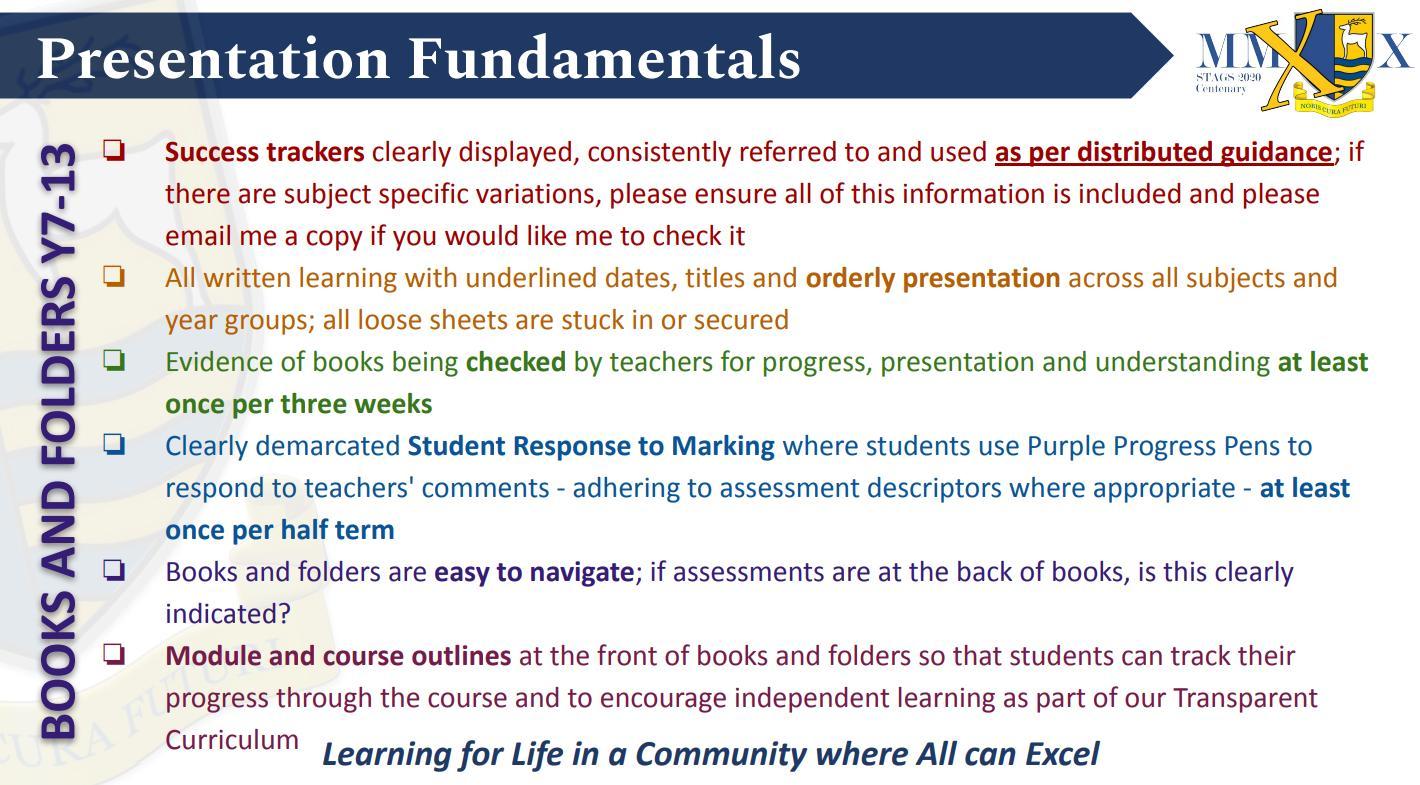
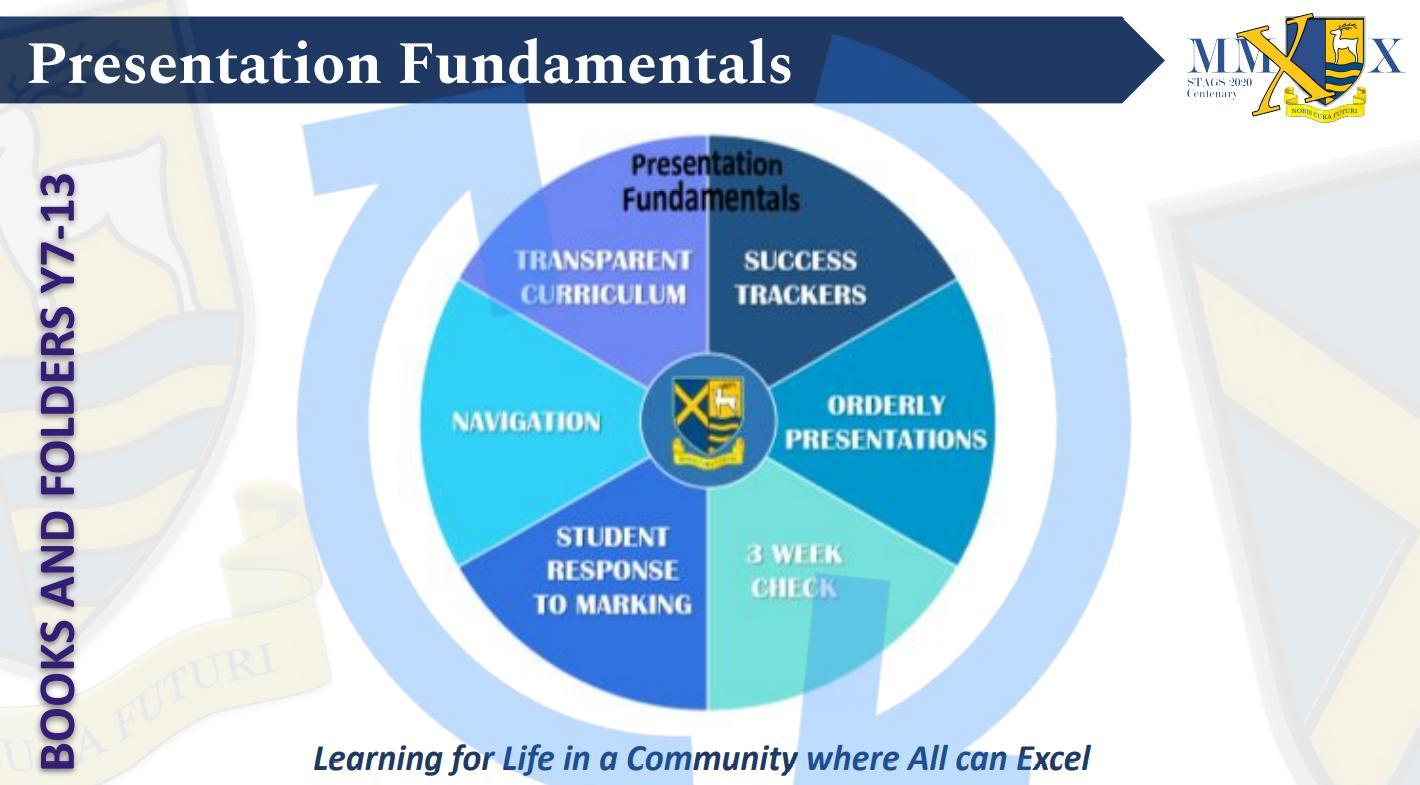
Monitoring will be carried out once every half term throughout the year by subject leaders and the Senior Management Team to ensure that marking is consistent throughout the school. Teachers will be given feedback on the above aspects of marking, content and feedback.
• Pupils beginning to follow the Kingston handwriting scheme.
• In all books the short date on the left hand side.
• The title/ learning objective to be written or stuck in.
• The Kingston handwriting scheme to be adhered to
• There must not be scribbling out in books
• In English the date to be written on the left hand side of the book (e.g. Monday 24th November 2016) and underlined with a ruler.
• In foundation subjects (years five and six) the date to be written on the left hand side of the book (e.g. Monday 24th November 2016) and underlined with a ruler.
• In maths and in foundation subjects (years three and four) the short date to be written on the left hand side.
• Editing in English books:
o Years three and four leave a line and do their editing in the blank line
• Years five and six rule a line to the right of their work and complete their editing in this column. Pupils to underline in blue the work they are changing and then make the changes in the editing column.
• All editing to be done with a blue pen
• Any punctuation editing can be directly inserted in blue into their writing.
• The title/ learning objective to be written and underlined with a ruler or stuck in.
• The Kingston handwriting scheme to be adhered to.
• There must not be scribbling out in books.
Leader
Name Nicola Shine
Role Middle leader – teaching and innovation and technologies / STEM
Setting (and website) Chessbrook Education Support Centre, www.chessbrook.herts.sch.uk
Phase Secondary, Special, Pupil Referral Unit
Length of time as a teacher 19 years
Length of time as a leader 11 years
Question 1: Pupils learn at different rates, how to adapt lessons so all pupils can experience success, stimulating pupil thinking through high-quality classroom discussions and high-quality feedback
In relation to aspects of classroom practice, adaptive teaching and assessment and the binding areas of practice (the fact that pupils learn at different rates, all pupils should experience success, how to adapt lessons, stimulating pupil thinking, high-quality classroom discussions and high-quality feedback), please can you give some context about your role and school, and briefly summarise why these topics are important for you?
Answer 1: Being a referral unit, the vast majority of students that start at Chessbrook have had a negative experience of education. This can include no formal education for long periods of time and a lack of continuity in their learning, often caused by behaviour issues. Our priority is to provide a flexible, creative and bespoke curriculum which re-engages our students with a love of learning that allows each and every one of them to experience success whilst working towards their curriculum ‘end points’. The topics mentioned play an essential part in this process of re-engagement into learning. All students are comprehensively assessed on entry, which enables us to gain a clear understanding of any needs they may have and what strategies will be most effective in developing their learning. Establishing an initial trusting relationship with the students is key to enabling them to build up their confidence to deal with both success and failure and to enable them to understand how they learn. All lessons involve classroom discussions and the opportunity for students to reflect and respond to teacher feedback. This is vital, as it provides students with a platform to question and to understand their ‘next steps’ in learning.
Question 2: Adapting lessons (whilst maintaining high expectations) so that all pupils can experience success (6.2, 6b)
We know that pupils are likely to learn at different rates (6.2) and require different levels and types of support from teachers to succeed How does your teaching team provide examples of how to adapt lessons whist
maintaining high expectations for all, so that all pupils have the opportunity to experience success (6b)?
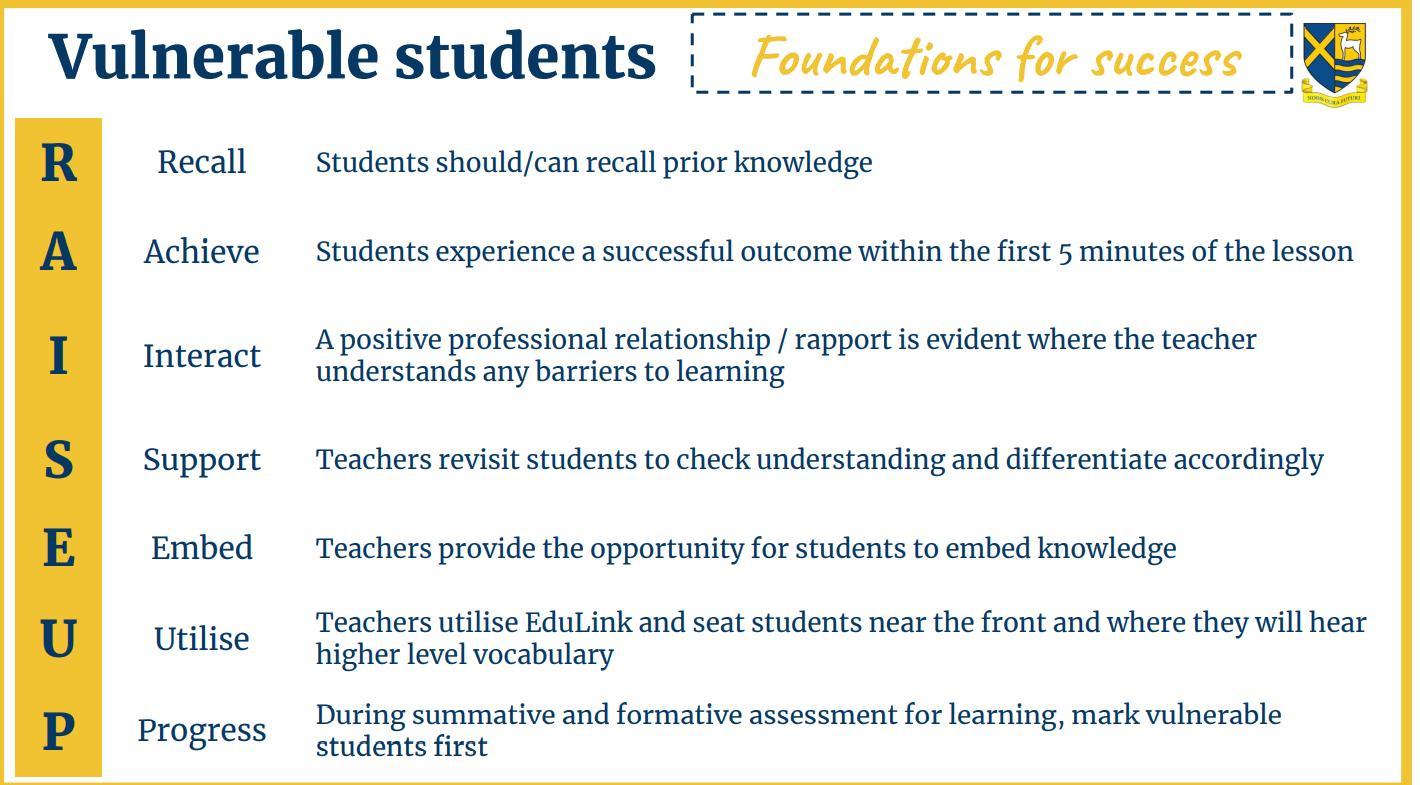
Answer 2: As I previously mentioned, teachers gain a wealth of information from the initial assessments students complete on arrival. From this data we create individual progress plans (IPPs). These plans provide a map of each student’s needs and include individual student targets, their interests, strengths and areas of improvement, along with clear strategies which inform our teachers of how our students prefer to learn. Using this information, staff are able to adapt lessons to compliment the learning style of the students and are supported in doing so by the SENCO and SEND team. The data collected also helps us to provide SEMH targets for the students, which all staff focus on during teaching. These targets link heavily with students’ ability to build up a positive relationship with staff, with peers and in their ability to fully access their learning. Teachers use these personalised learning strategies to ensure all students are being taught in the way that best enhances their learning. Students are fully aware of the high expectations that are set for them and aspire to achieve them in a safe environment.
We know from the research that high-quality classroom discussion can support pupils to articulate key ideas, consolidate understanding and extend their vocabulary (5.7). So, what are the ways that you lead colleagues in stimulating pupil thinking and checking for understanding by improving the quality of class discussions (5i & 5k)?
Answer 3: At Chessbrook, our intention is to ‘hook’ our students’ interest and allow them to express their ideas and opinions with confidence and competence. Staff work hard to create a safe environment in the classroom where students feel comfortable to engage effectively in discussion and where they are able to debate and be accepting of different opinions. Assessment for learning is carried out regularly throughout a lesson to stimulate student thinking and to check for understanding. Diagnostic and formative assessment, through effective questioning, allows teachers to build on students’ prior knowledge and to establish the progress students are making in their understanding of a subject. Interactive assessment tools, such as ‘wordwall’, are frequently used to check students’ understanding of key words and their definitions. Analysis of exam questions is used regularly to discuss what a question is actually asking. Discussions are then based on students’ understanding of key vocabulary used in the questions and how to structure an answer.
The evidence tells us that high-quality feedback can be written or verbal; is likely to be accurate and clear; encourage further effort; and provide specific guidance on how to improve (7.5). So how, in your context, do you support colleagues to provide high-quality feedback (7e)?
Answer 4: Whole-school training and dedicated department time supports staff in their understanding of what constitutes high-quality feedback on the learning a student has undertaken. These sessions are based around sharing good practice and looking at how best to achieve meaningful responses from the students. All departments also go through a ‘deep dive’ process as part of our quality assurance of the curriculum delivery. This allows a thorough analysis of teaching and learning to take place, within which feedback is a key focus. Across the school it is an expectation that feedback is given on a regular basis in both written and verbal form. Teachers
complete weekly ‘student response sheets’ which identify what the student did well in class (WWW), how they could strengthen their work (EBI) and how they could advance their knowledge (next steps and ‘mastery’). These are personalised to each student and are then discussed and actioned at the start of their next lesson. This process also further promotes student discussion and provides the opportunity for them to articulate their understanding.
It’s going to be vital then for others to understand how you each do this as a leader, and what key behaviours you have developed as you have become the leader you are today, as well as what else you feel you are working on in terms of your leadership. Could I ask you to highlight the leadership behaviours you have utilised to lead teaching in your school, as well as a leadership behaviour that you’re developing, with some brief examples of those in practice?
Answer 5: As a middle leader, self-awareness has been essential to me in developing teaching at Chessbrook. Having an awareness of how my own behaviour can influence others is critical in maintaining positive relationships with staff and essential in developing the ‘beyond outstanding’ culture we have at Chessbrook. In addition, having an awareness of the practices of others is essential in maintaining a positive and supportive working environment. Resilience is necessary in any educational setting, but here at Chessbrook this is needed and tested on a regular basis. As a leader, I regularly reflect on my levels of resilience and this is still a behaviour I continue to develop. Impact and influence has been essential as a middle leader and is another area that I continue to develop, as it is vitally important that I am able to communicate what is needed in a way that will be taken on board by the audience. I have learnt that teachers are not all the same, and adapting how I deliver a message or new initiative will be key to its successful implementation. Having a positive effect on staff, students and the wider community is essential when leading on teaching, which is constantly evolving.
Leader practice questions
What are the case study leaders doing?
What are you doing currently?
1. What are the effective characteristics of practice being modelled by these leaders?
2. How do the leaders encourage colleagues to adapt lessons whilst maintaining high expectations for all, so that all pupils have the opportunity to experience success?
3. How do the leaders lead colleagues in stimulating pupil thinking and checking for understanding by improving the quality of class discussion?
4. How do the leaders support colleagues in providing high-quality feedback in their classrooms?
5. Which leadership behaviours and skills (Resource 4) are the leaders demonstrating in their practice?
6. How does this practice contribute to improving pupil outcomes?
What are the important problems/issues you have identified during this gap analysis?
What are the gaps or overlaps between columns 2 and 3?
Support colleagues to plan effective lessons
Support colleagues to explain and model effectively
Encourage colleagues to stimulate pupil thinking and check for understanding
Provide opportunities for all pupils to experience success
Support colleagues to adapt their teaching to different pupil needs
Support colleagues to meet individual needs without creating unnecessary workload
Ensure pupils are grouped effectively (across subjects and within individual classrooms)
Support colleagues to avoid common assessment pitfalls
Contribute to the design of school assessment systems
Encourage colleagues to use high quality, reliable assessment without creating unnecessary workload

Select three of the following nine activities to submit to your leadership mentor.
Choose an activity based on your areas of interest and the results of the initial needs analysis undertaken at the start of the course.
Activity 1: Selecting examples of the components of effective lessons
Leaders of teaching need a rich bank of examples of the components of effective lessons (e.g., explanations, modelling, practice and questioning)
Read Section 2 of Dimension 4 of ‘The great teaching toolkit’, Activating hard thinking, and Rosenshine’s
‘Principles of instruction’, paying attention to the guidance on the use of explanations, modelling, practice and questioning.
Meet with one or more colleagues to collect and evaluate three examples of the effective use of one of the following components of effective lessons:
▪ explanations
▪ modelling
▪ practice
▪ questioning
The examples may be in a variety of formats: for example, session or sequence plans, lesson resources, video recordings of classroom practice, observation forms, photos, teacher reflections or case studies.
▪ Why have you chosen each of the examples?
▪ How do they exemplify effective practice? You may find it useful to refer to Rosenshine’s and Coe et al.’s guidance on the components of effective teaching.
▪ How could the examples be used in your context?
Draft guidance, questions and discussion prompts to accompany your examples.
Submission
Write a 250-word (maximum) summary of your actions and learning from this task and submit to your leadership mentor in Canvas.
Resources
Coe, R., Rauch, C. J., Kime, S., & Singleton, D. (2019) Great teaching toolkit: Evidence review. Evidence Based Education.
Rosenshine, B. (2012) Principles of instruction: Research-based strategies that all teachers should know. American Educator, 36, 12–20.
Read Section 2 of Dimension 4 of ‘The great teaching toolkit, Activating hard thinking, and Rosenshine’s ‘Principles of instruction’, paying attention to the guidance on the use of explanations and modelling.
Arrange to observe a colleague’s use of explanation and modelling.
Make a note of their explanation and modelling strategies:
▪ inclusion of concrete representation of abstract ideas, for example the use of metaphor
▪ narrating thought processes
▪ establishing links with prior knowledge
▪ making information memorable, for example, naming steps in a process or the use of mnemonics
Feed back your observations to your colleague, highlighting the importance of:
▪ providing explanations that start at the point of current pupil understanding
▪ including concrete representation of abstract concepts
▪ narrating thought processes to make it clear how an expert might think when completing the task
▪ drawing pupils’ attention to links with prior knowledge
▪ making the steps in a process memorable to ensure pupils can recall them
Write a 250-word (maximum) summary of your actions and learning from this task and submit to your leadership mentor in Canvas.
Resources
Coe, R., Rauch, C. J., Kime, S., & Singleton, D. (2019) Great teaching toolkit: Evidence review. Evidence Based Education.
Rosenshine, B. (2012) Principles of instruction: Research-based strategies that all teachers should know. American Educator, 36, 12–20.
Support a colleague to plan for effective collaborative or paired work by asking the following questions:
▪ What is their rationale for choosing a collaborative approach for this task?
▪ How do they plan to communicate success criteria clearly?
▪ What guidance will they provide on how to work together effectively?
▪ How will they scaffold the collaborative task?
▪ What models and examples will support the task?
▪ How will they ensure pupils have the necessary prior knowledge?
▪ How will the pupils be grouped?
▪ Why have they chosen to group the pupils in this way, and how could it impact on the success of the collaborative activity?
Support your colleague to refine their plans for collaborative or paired work informed by their response to your questions.
Submission
Write a 250-word (maximum) summary of your actions and learning from this task and submit to your leadership mentor in Canvas.
Activity 4: Supporting the effective use of teaching assistants
Read the Education Endowment Foundation’s guidance on the use of teaching assistants, paying attention to the recommendations.
Share these recommendations with a teacher and teaching assistant at your school and meet to discuss their implications
Recommendation 1 states that TAs should not be used as an informal teaching resource for low-attaining pupils, as this risks separating pupils from their teacher and peers.
▪ How do the TA and teacher divide up responsibilities for improving attainment?
Recommendation 2 states that TAs should add value to what teachers do, not replace them. Ask the teacher and TA to reflect on this
▪ What examples can they provide of how the TA adds value?
The guidance recommends that TAs deliver structured interventions.
▪ How is the TA supported to deliver interventions, for example, through the provision of training, clear guidance or intervention frameworks?
▪ How do the TA and teacher ensure that pupils understand how the learning that takes place in interventions links with their learning in the classroom?
With the TA and teacher, identify two actions that they could take to increase the effectiveness of their work together.
Submission
Write a 250-word (maximum) summary of your actions and learning from this task and submit to your leadership mentor in Canvas.
Resources
Education Endowment Foundation (2018) Making best use of teaching assistants
“In addition to good teaching for all pupils, some pupils will need specialist intervention, often delivered by a trained professional.” (EEF, 2020)
Recommendation 4 of the Education Endowment Foundation’s guidance on special educational needs in mainstream schools (2020) includes accessing specialist support, giving the example of how teachers at one school worked effectively with an external speech therapist. In Lucy Lee’s practice piece for the ‘Adaptive teaching self-study pack’, she explains how her school has adopted a team approach to supporting children who are not progressing as hoped. This team includes teachers, curriculum leads, the SENCo, senior leaders and specialists. Lucy highlights the importance of building a close relationships between staff members and the children and their families, and everyone else that inputs into their care and education, such as physios and speech and language therapists.
Meet with a teacher and your school SENCo to reflect on the relationship between the teacher, SENCo, senior staff and specialists who support children with special educational needs and disabilities.
▪ What systems are in place to facilitate their collaboration (for example, planning and review meetings or team communications)?
▪ How do teachers access support from the SENCo?
▪ How is specialist support accessed?
▪ How is a partnership between the teachers and the SENCo supported and promoted?
With your SENCO, identify two actions for improving teachers’ access to support when teaching children with special educational needs and disabilities
Submission
Write a 250-word (maximum) summary of your actions and learning from this task and submit to your leadership mentor in Canvas.
Resources
Education Endowment Foundation (2020) Special education needs in mainstream schools
Recommendation 4 of the Education Endowment Foundation’s guidance on special educational needs in mainstream schools (2020) focuses on the use of small groups and one-to-one interventions.
Recommendation 3 states that all pupils should have access to high-quality education, and highlights the negative impact of removing pupils from their classroom and their peers for interventions. It then explains that the effectiveness of small group interventions increases if three questions are considered to check the approach is appropriate for the context:
▪ Is this the right intervention for the pupil?
▪ Can we provide the support required for our staff to deliver the intervention well?
▪ Are we able to dedicate the time and resources required to implement the intervention well? (EEF, 2020)
Meet with a teacher and a TA or school SENCo to reflect on the following questions:
▪ How should the school balance the use of an intervention with whole-class teaching?
▪ How can we ensure that pupils with the greatest needs are supported by the most experienced teachers?
▪ Are there situations in which interventions can be detrimental to pupils’ progress?
In light of your discussion, identify two actions to increase the effectiveness of small group interventions in your school.
Submission
Write a 250-word (maximum) summary of your actions and learning from this task and submit to your leadership mentor in Canvas.
Resources
Education Endowment Foundation (2020) Special education needs in mainstream schools
The third element of Dimension 4 of the ‘Great teaching toolkit’ focuses on the use of questions to activate hard thinking and inform teaching.
Asking meaningful and appropriate questions that target essential learning, collecting and interpreting a response from every student, and responding to the results, all in real time in the flow of a lesson, is hard to do well, but great teachers do it and it is probably a skill that can be learnt (Coe et al., 2020).
To help teach this skill, leaders of teaching should develop a bank of examples of the effective use of questioning and formative assessment. The examples may be in a variety of formats: for example, session or sequence plans, lesson resources, video recordings of classroom practice, observation forms, teacher reflections or case studies.
Read Section 3 of Dimension 4 of the ‘Great teaching toolkit’, Activating hard thinking
Meet with one or more colleagues to collect and evaluate three examples of the effective use of questions to:
▪ check for misconceptions
▪ check that pupils are ready to move on
▪ deepen learning and activate hard thinking
Why have you chosen each of the examples?
How do they exemplify effective formative assessment? You may find it useful to refer to the EEF guidance on diagnostic assessment (2020).
How could the examples be used in your context?
Draft guidance, questions and discussion prompts to accompany your examples.
Submission
Write a 250-word (maximum) summary of your actions and learning from this task and submit to your leadership mentor.
Resources
Coe, R., Rauch, C. J., Kime, S., & Singleton, D. (2019) Great teaching toolkit: Evidence review. Evidence Based Education.
Education Endowment Foundation (2020) Diagnostic assessment: Evidence insights
Teachers need to make decisions about why they are assessing, what to assess and how to assess, what evidence is needed and how will it inform teaching and support pupil learning. Using high-quality centrally or externally created assessment resources helps teachers assess effectively without creating unnecessary workload.
Meet with two colleagues to evaluate two examples of:
▪ centrally created assessments
▪ externally created assessment materials
The assessment resources may take various forms: for example, worksheets, feedback labels, peer assessment templates, activity packs, entry and exit tickets, exam papers, traffic light cards, assessment for learning (AFL) resources, self-assessment sheets.
Ask your colleagues the following questions:
▪ What is the purpose of the assessment?
▪ What is your rationale for choosing these assessment resources?
▪ How are the resources used?
▪ What evidence do you have of the resources’ effectiveness (for example, recommendation from staff, data from research projects or implementation in other schools)?
▪ How have you quality assured these assessment resources (for example, internal review, moderation)?
▪ How will you evaluate the effectiveness of the assessment resources in achieving their intended purpose (for example, monitoring implementation, pupil progress data)?
Work with your colleagues to refine the resources and their deployment in light of the discussion.
Submission
Write a 250-word (maximum) summary of your actions and learning from this task and submit to your leadership mentor in Canvas.
Activity 9: Supporting the use of effective feedback
Read the EEF guidance (2021) on teacher feedback and the content of effective feedback.
Observe a colleague’s use of feedback and marking.
▪ How could the opportunity cost of marking be reduced (for example, by using abbreviations and codes in written feedback)?
▪ How effectively does the feedback move pupil learning forward (for example by informing pupils where they are now and what they need to do next to progress)?
▪ How could the focus of the feedback be refined to ensure misunderstandings are prioritised rather than careless mistakes?
You might find it useful to share the EEF guidance on effective feedback in the classroom (2021) with your colleague.
Submission
Write a 250-word (maximum) summary of your actions and learning from this task and submit to your leadership mentor in Canvas.
Resources
EEF (2021) Teacher feedback to improve pupil learning
EEF (2021) What might the content of effective feedback look like in the classroom?