• To be familiarwith key ‘learn that’ and ‘learn how to’ statements for Cycle Three
• To understand research and its implicationsfor practice
• To align research to application through others’ practice and then to own practice
• To identify learning pathway for remainder of Cycle Three to address areas for development (ahead of impact review and summative assessment task)
School culture and professional development
In pairs, name and describe two experiences you each have of professional development:
1. An unsuccessful experience
2. A highly successful experience You may have designed and delivered them or been a participant in them. Why were they so unsuccessful/successful? What factors contributed to that success or lack of success?
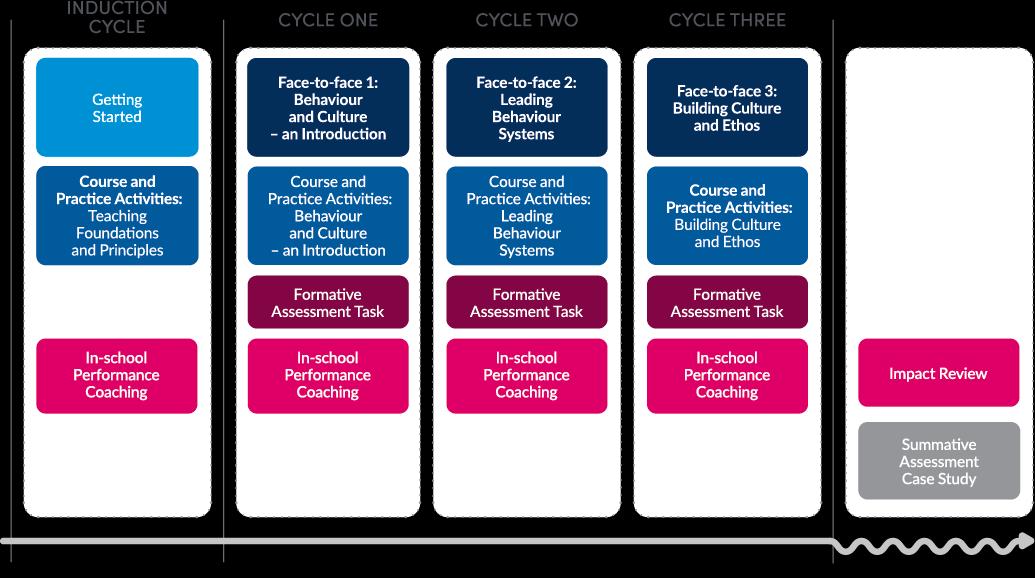
Participant learning journey map so far
Learning review
1. Individual activity (10 minutes)
Using your completed Cycle Two LDR, Practice Activity feedback and Formative Assessment task (FAT) feedback, answer the questions on Resource 3, to review your learning so far.
2. Small group activity (15 minutes)
Using the Small group activity instructions on Resource 3, discuss the questions with your colleagues, focusing on your leadership impact, behaviours and skills.
The Five Principles of Deliberate Practice
Push Beyond
One’s comfort zone
Work toward well-defined Specific Goals Focus intently on practice activities
Receive and respond to High-quality feedback
Develop a Mental model of expertise
SEE IT – Get buy in and confirm key insight of specific context, outcomes and practice strategies.
NAME IT – Probe and illustrate to target and make sense of participant need and context. Action experience.
USE IT – Apply in practice, implement learning in specific context.
REVIEW IT – Interpret and reconstruct, making sense of what was first seen. What has made the biggest difference to practice?
KEEP IT – Develop mental model and being able to articulate impact and shift in knowledge / understanding.
School culture and professional development ideals
• “School culture can be defined as the guiding beliefs and values evident in the way a school operates. It can be seen to encompass all the attitudes, expected behaviours and values that impact how the school operates.” (Fullan, 2007)
• “Schools that have a culture of prioritising professional development build a climate in which teachers feel increasingly confidentin their role.” (West-Burnham, 2009)
• “Effective professional development is likely to involve a lasting change in teachers’ capabilities or understanding so that their teaching changes.” (DfE, 2020)
• Research shows that when designed effectively, professional development can have a positive impact on teacher practice and pupil learning (e.g., Darling-Hammond et al., 2017).
• “Professional development is necessary to develop both a thorough grasp of the rationale underpinning a new approach [and implementation], and for staff to be able to apply the resulting strategies and knowledge in practice.” (EEF, 2019)
School culture and professional development
1. Culture of trust, respect and relationships
5. Adapting to needs, ensuring appropriate reasonable adjustments and associated statutory guidance (disability, learning needs, ECTs, etc.)
2. Shared responsibility for and culture of continuous improvement
3. Culture which prioritises professional development
4. Utilising expertise (for professional development)
Event statements
Learn that…
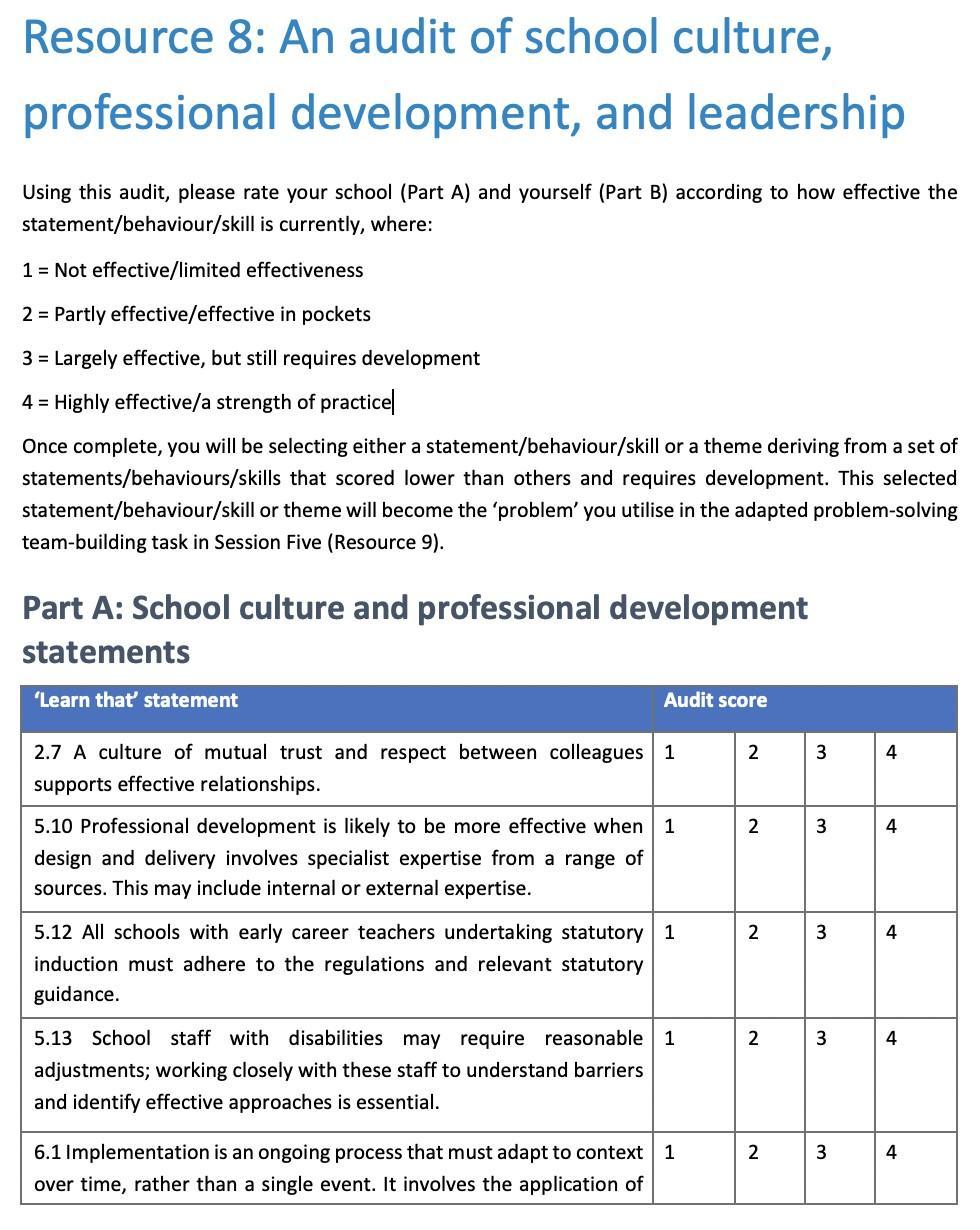
2.7 A culture of mutual trust and respect between colleagues supports effective relationships.
5.10 Professional development is likely to be more effective when design and delivery involves specialist expertise from a range of sources. This may include internal or external expertise.
5.12 All schools with early career teachers undertaking statutory induction must adhere to the regulations and relevant statutory guidance.
5.13 School staff with disabilities may require reasonable adjustments; working closely with these staff to understand barriers and identify effective approaches is essential.
6.1 Implementation is an ongoing process that must adapt to context over time, rather than a single event. It involves the application of specific implementation activities and principles over an extended period (e.g. implementation planning, ongoing monitoring).
Event statements
Learn how to…
2.f. Contribute to the creation of a culture of professional learning and continuous improvement for colleagues by: Prioritising professional development and a shared responsibility for continuous improvement.
5.e. Contribute to effective professional development linked to teaching, curriculum and assessment across the school by: Ensuring that colleagues are able to continually develop specialist subject, phase and domain expertise.
5.f. Contribute to effective professional development linked to teaching, curriculum and assessment across the school by: Making reasonable adjustments that are well-matched to teacher needs (e.g. to content, resources and venue).
5.h. Plan, conduct, and support colleagues to conduct, regular, expert-led conversations (which could be referred to as mentoring or coaching) about teaching by: Building a relationship of trust and mutual respect between the individuals involved.
6.a. Plan and execute implementation in stages by: Ensuring that implementation is a structured process where school leaders actively plan, prepare, deliver and embed changes.
Session Two Key themes –the evidence
Key themes – the evidence
1. Culture of trust, respect and relationships
2. Shared responsibility for and culture of continuous improvement
5. Adapting to needs, ensuring appropriate reasonable adjustments and associated statutory guidance (disability, learning needs, ECTs, etc.)
4. Utilising expertise (for professional development)
3. Culture which prioritises professional development
Leading from the evidence
The Five Principles of Deliberate Practice
Push Beyond
One’s comfort zone
Work toward well-defined Specific Goals Focus intently on practice activities
Receive and respond to High-quality feedback
Develop a Mental model of expertise
Key theme
flip charts
SEE IT – Get buy in and confirm key insight of specific context, outcomes and practice strategies.
NAME IT – Probe and illustrate to target and make sense of participant need and context. Action experience.
USE IT – Apply in practice, implement learning in specific context.
REVIEW IT – Interpret and reconstruct, making sense of what was first seen. What has made the biggest difference to practice?
KEEP IT – Develop mental model and being able to articulate impact and shift in knowledge / understanding.
• Please follow us on social media for all of the latest CPD updates.
• Share photos from today’s Face-to-Face event using #NPQF2F for a guaranteed retweet!
Session Three Key themes –others’ practice
Leader case studies
1. If we know that the research from Session Two demonstrates best practice, which (leadership) practices have we seen in the case studies that we could try to emulate or transcribe into our own contexts?
2. What impact could that have on staff practice?
3. What impact could that have on pupil behaviour and outcomes?
4. Which leadership behaviours would the case study leaders have demonstrated to lead that work?
5. Which leadership skills would the case study leaders have demonstrated to lead that work?
• Special school case study: Sarah Delaney, Green Lane School, Warrington
• Primary case study: Kathryn Manion, Tyntesfield Primary School, Sale
• Secondary mini case studies: Secondary school leaders for professional development from across the country
• + Reflections from a leader: Diane Campkin
The Five Principles of Deliberate Practice
Push Beyond
One’s comfort zone
Work toward well-defined Specific Goals Focus intently on practice activities
Receive and respond to High-quality feedback
Develop a Mental model of expertise
SEE IT – Get buy in and confirm key insight of specific context, outcomes and practice strategies.
NAME IT – Probe and illustrate to target and make sense of participant need and context. Action experience.
USE IT – Apply in practice, implement learning in specific context.
REVIEW IT – Interpret and reconstruct, making sense of what was first seen. What has made the biggest difference to practice?
KEEP IT – Develop mental model and being able to articulate impact and shift in knowledge / understanding.
Session Four
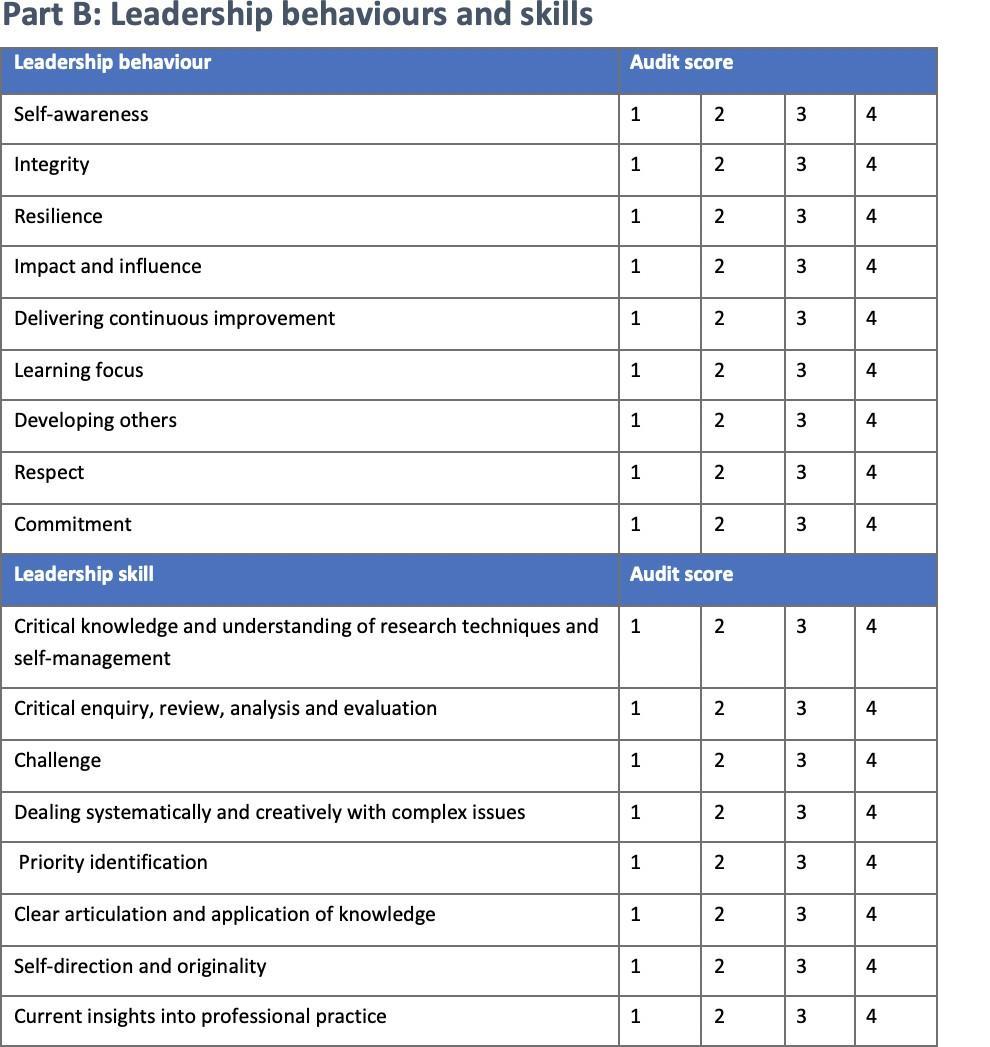
An audit of culture, professional development and leadership
An audit of culture, professional development and leadership
Session Five
Hot seat group questioning for deliberate practice
Hot seat group questioning model
Participant outlines problem (3 mins)
First round of questions & thinking time (5 mins)
Second round of questions & thinking time (5 mins)
Push Beyond One’s comfort zone
Work toward well-defined Specific Goals Focus intently on practice activities
SEE IT – Get buy in and confirm key insight of specific context, outcomes and practice strategies. NAME IT – Probe and illustrate to target and make sense of participant need and context. Action experience.
Participant reflects verbally (5 mins)
Group advice where appropriate (2 mins)
Receive and respond to High-quality feedback Develop a Mental model of expertise
USE IT – Apply in practice, implement learning in specific context.
REVIEW IT – Interpret and reconstruct, making sense of what was first seen. What has made the biggest difference to practice?
KEEP IT – Develop mental model and being able to articulate impact and shift in knowledge / understanding.
• Please follow us on social media for all of the latest CPD updates.
• Share photos from today’s Face-to-Face event using #NPQF2F for a guaranteed retweet!
Session Six
Review and preview of learning
Review and preview of learning
Individual activity (15 minutes)
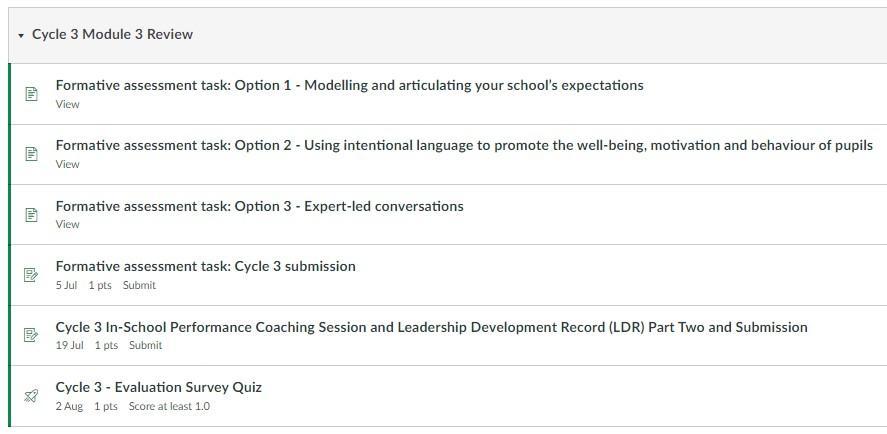
Using your blank Cycle Three LDR as a prompt to focus your individual thinking, begin to plan your learning pathway for Cycle Three:
1. Complete the initial ratings in the Cycle Three LDR, making note of where the lower ratings lie
2. Read through Resources 10 and 11 and the FAT options to plan your potential learning pathway (focus your choices on your lower initial ratings):
• Resource 10: Where to focus your time during your online learning
• Resource 11: Which 3 (of 9) practice activities to undertake
• FATs: Which 1 (of 3) formative assessment tasks (FATs) to undertake
3. Write these choices into the ‘Identify actions…’ column next to the lower initial ratings only
4. Add other actions arising (e.g., assess in conversation with in-school performance coach, meet with the HT, etc.) into the ‘Identify actions…’ column
Small group activity (15 minutes)
• Share the highlights of your individual thinking and outline your rationale for your choices based on:
• Statements of strength that you will spend less time on during the remainder of the cycle
• Statements for development that you will focus more time on during the remainder of the cycle
• Which leadership behaviours and skills you will need to apply in order to develop the above statements
• Seek clarification, and offer challenge and support to each other to aid progress and learning
Key takeaways
Session Seven
Next steps
Participant learning journey – Cycle Three
You are here
Participant learning journey –
You are here
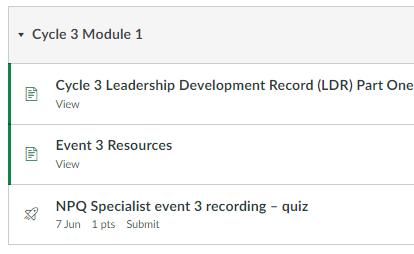
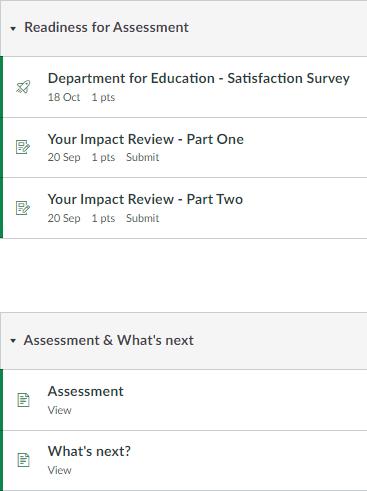
Gradebook check
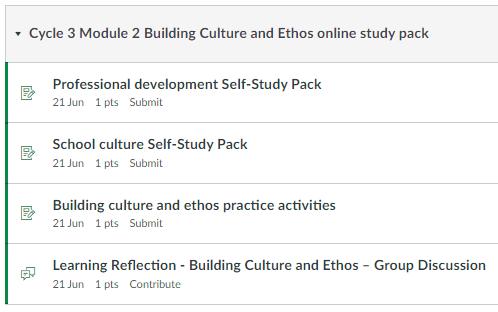
Canvas \ log in \ Grades \ Assignment Group
1. Log in to Canvas
2. Go to ‘Grades’ and select ‘Assignment Group’
3. Check that you have completed the tasks at the top of the gradebook (tick or 1 in score column)
4. Scroll down until you reach today’s date and check that all tasks to that point have a tick or 1 next to them
5. If there are any incomplete/missing, make a note of them and prioritise for completion after the event
Evaluations
• First point of contact: online Leadership Mentor (programme, online tasks)
• In-setting application of learning: In-School Performance Coach
• Other queries: NPQ Participant Support Team npq@bestpracticenet.co.uk