
Somewhere along the way, you’ve probably heard some variation of this quote:
"When you buy from a small local business, you aren’t just helping a CEO buy a third vacation home. You are helping a little girl get dance lessons, a little boy get his team jersey, or a parent put food on the table."
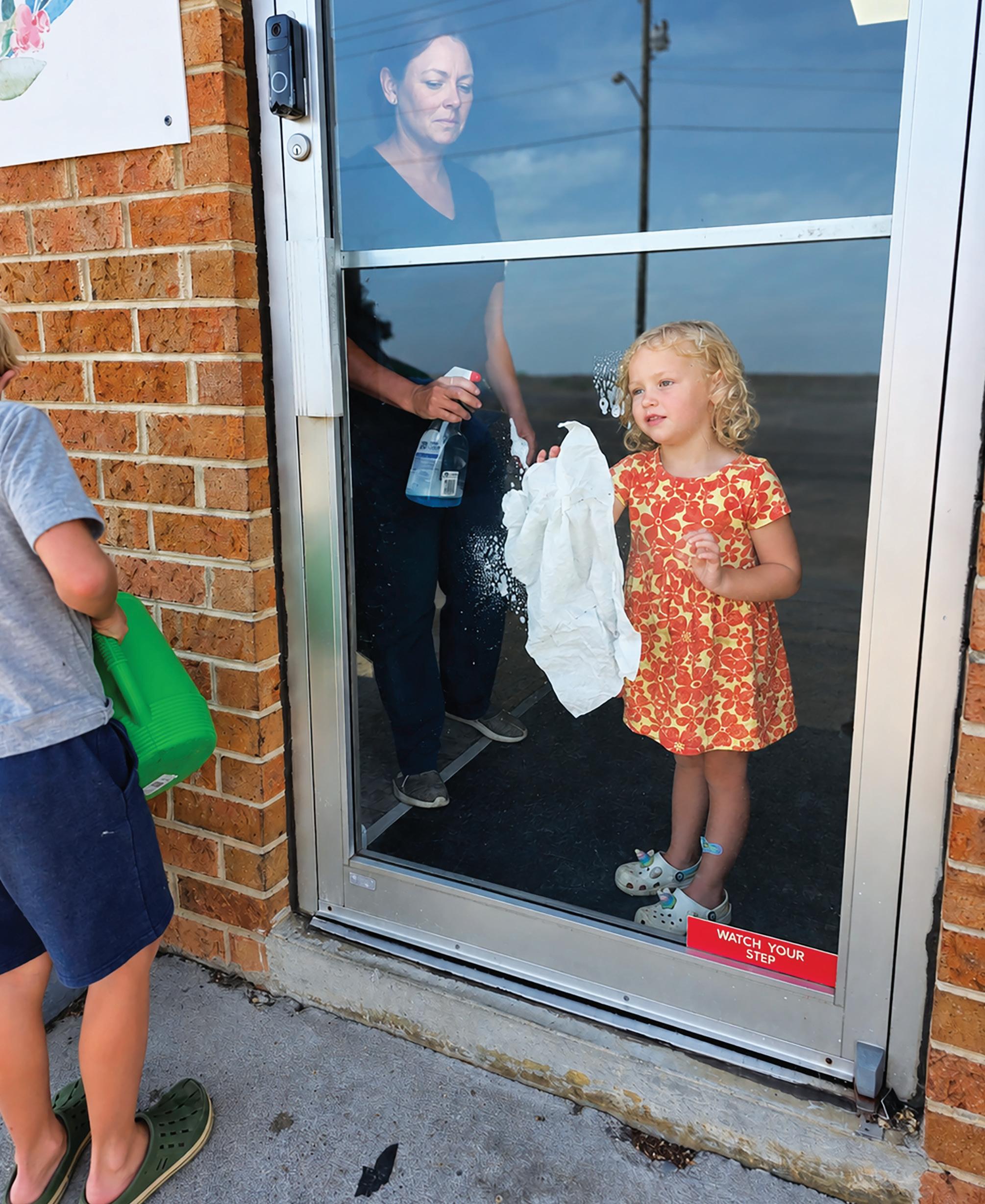
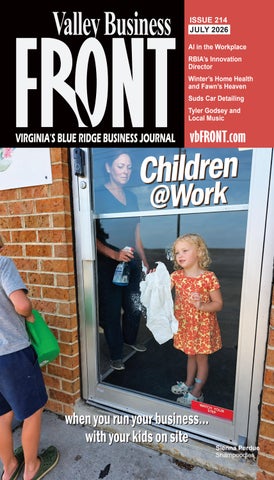
In the case of our cover feature, you might be helping a child go to summer camp.
It’s true. Supporting local business is a good thing to do; and it’s been a primary mission of ours since 1988. (In print, that is. Longer in real life.) That’s the number one reason we bring you the FRONT each month.
Of course, this FRONT is a small, local business, too.
We appreciate your support.
Tom Field
Gene Marrano Publisher Editor

By Tom Field





P.O. Box 1041
Salem, VA 24153 (540) 389-9945 www.vbFRONT.com
Publisher / Tom Field
Creative Director tfield@vbFRONT.com (540) 389-9945
Editor Gene Marrano news@vbFRONT.com
Advertising Dan Dowdy (540) 797-7943 ddowdy@vbFRONT.com
ads@vbFRONT.com (540) 389-9945
Graphic Design Nicholas Vaassen
Office Administration Emily Field info@vbFRONT.com
Production Berryfield, Inc. PO Box 1041 Salem, VA 24153 (540) 389-9945
Advertising ads@vbFRONT.com
Subscriptions info@vbFRONT.com
News / Releases news@vbFRONT.com
Admin / Ops info@vbFRONT.com (540) 389-9945 vbFRONT.com morefront.blogspot.com
© Copyright 2026; Valley Business FRONT, LLC. All rights reserved. Reproduction or use of this publication in whole or in part without written permission is prohibited. Information within Valley Business FRONT is obtained from sources considered reliable, but cannot be guaranteed. Opinions expressed are not necessarily those of the ownership. Valley Business FRONT is primarily distributed to subscribers by mail, digitally and select locations throughout the Roanoke Valley, New River Valley, and western Virginia.

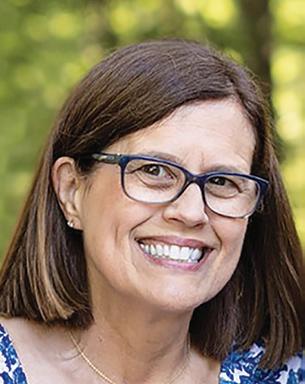
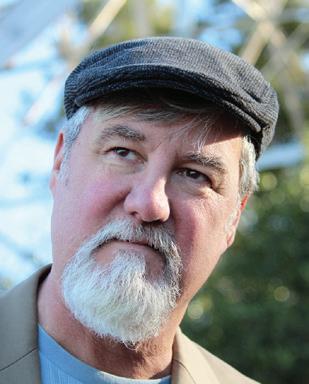
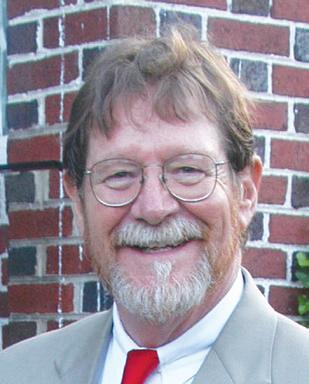

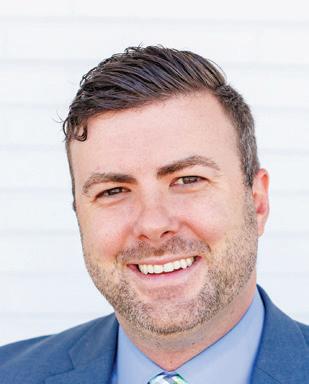
Valley Business FRONT has organized an Advisory Board comprised of a selective group of diverse business professionals who support our mission and have an interest in how our business journal best serves our local communities and region. As a sounding board throughout their term, board members have been given the task of helping FRONT understand the issues and develop coverage. You will note that the Board is comprised of experts in many different business / industry “fronts.” This is intentional, as we are reporting on all the areas that affect our regional economy and are important to you. Although the members are encouraged to keep FRONT updated on their own industries and the key players, they aren’t limited to their area of specialty, as all commercial enterprises ultimately collaborate to impact our quality of life here in this part of Virginia. An additional contribution by the Advisory Board involves direct input on the various FRONTLists we present throughout the year. In keeping with our policy of being “the voice of business in the valleys” we ask each reader to join us as an editorial partner by contacting us with your ideas. You know more than we know about your business—or you certainly should—and that inside knowledge shared with our readers will make us all better at what we do.


By Tom Field
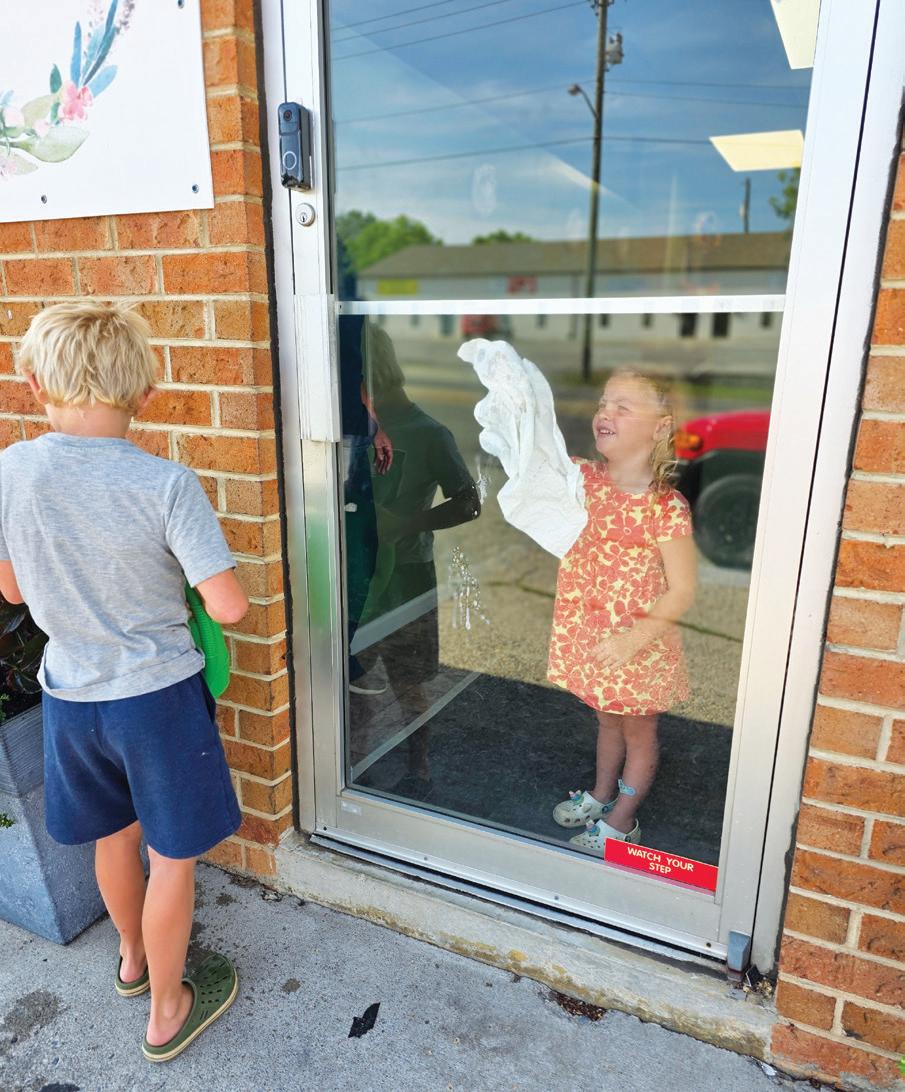

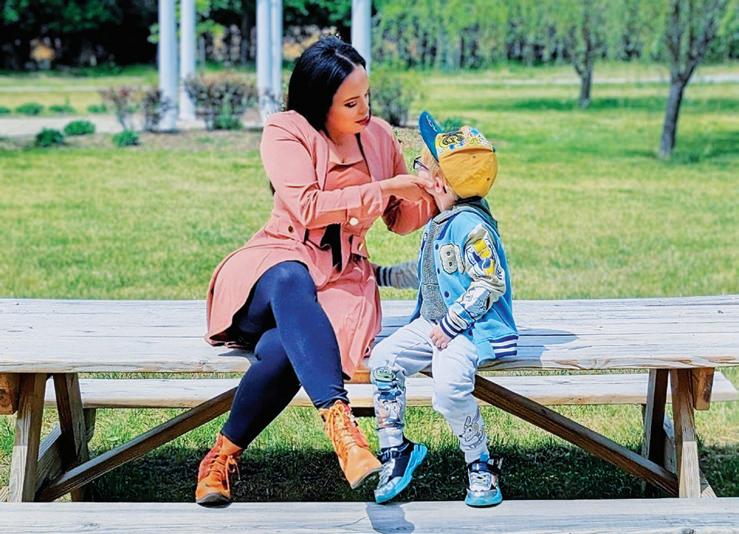
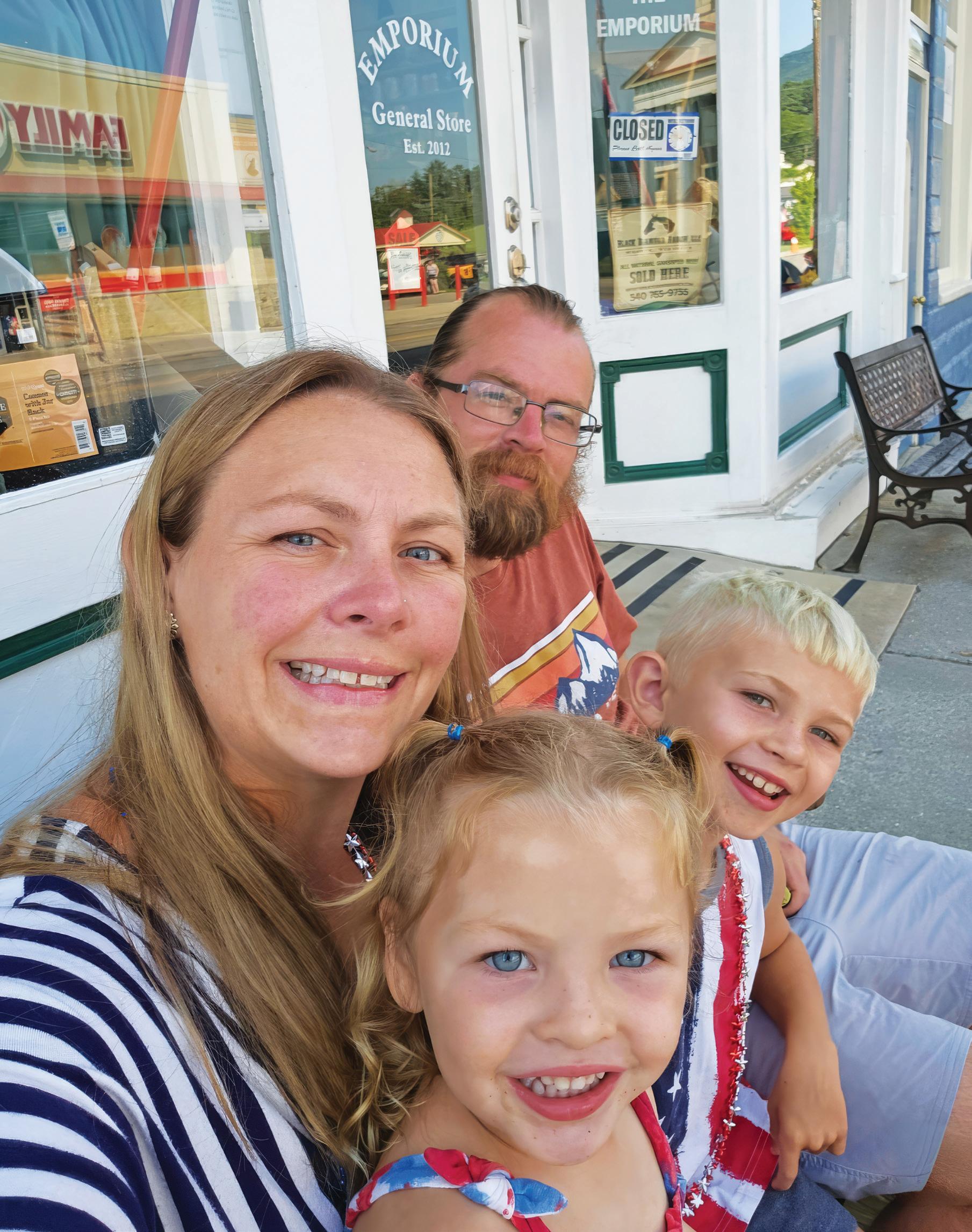
First things first: this is not a story about child labor. Although some of our photos indeed show kids helping out at the family business, this is a story about businesses—mostly small mom and pop (or mompreneurs / parentpreneurs)—where the owner/ operator manages the business with their children on location during hours of operation.
To some, this seems an impossible task. ‘How in the world can you perform your work or serve customers with your kids running around or needing care?’ To some, this is an unprofessional or inefficient way to run a business. ‘How can you give the attention your business truly needs if you’re watching your kids at the same time?’ And to many: ‘We won’t even consider this arrangement, much less try it!’
But to a select few—who represent a demographic that is now growing and more commonplace—running a business right along with your children (like farms have done for centuries, and retailers and other merchants used to do in the past)… well, it’s a necessity or a fine and acceptable way to have a family-owned business.
This is a story about parents who are making it work.
Today’s American society has kids at daycare, kids at grandparents, kids at home with one parent or caregiver, kids with nannies, kids at public or private school, and… this model:
Children at work. With mom or dad or both (or other relatives or caregivers).
“” We like having the flexibility to be full-time parents and work full-time hours. Kacy Perdue
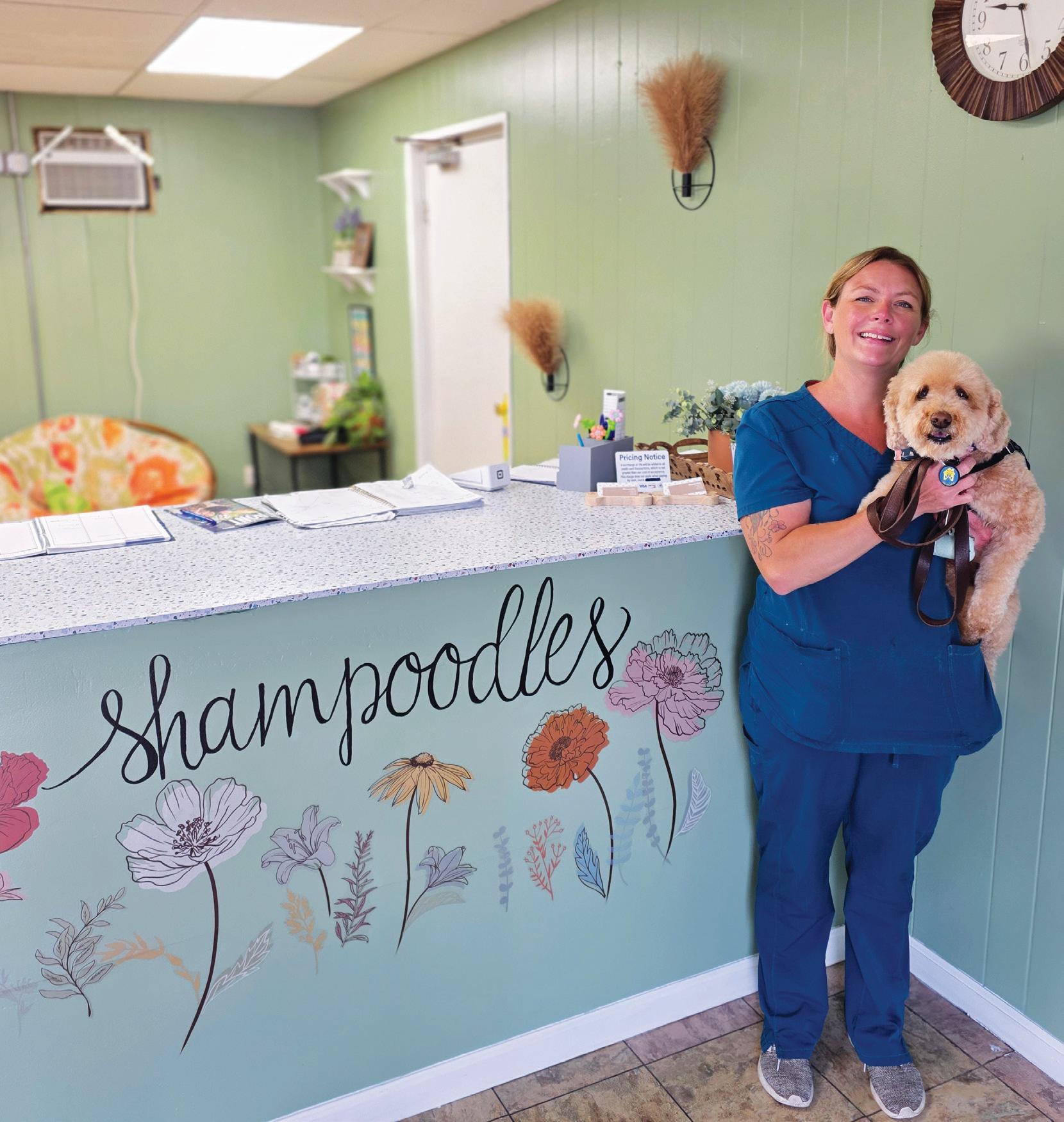
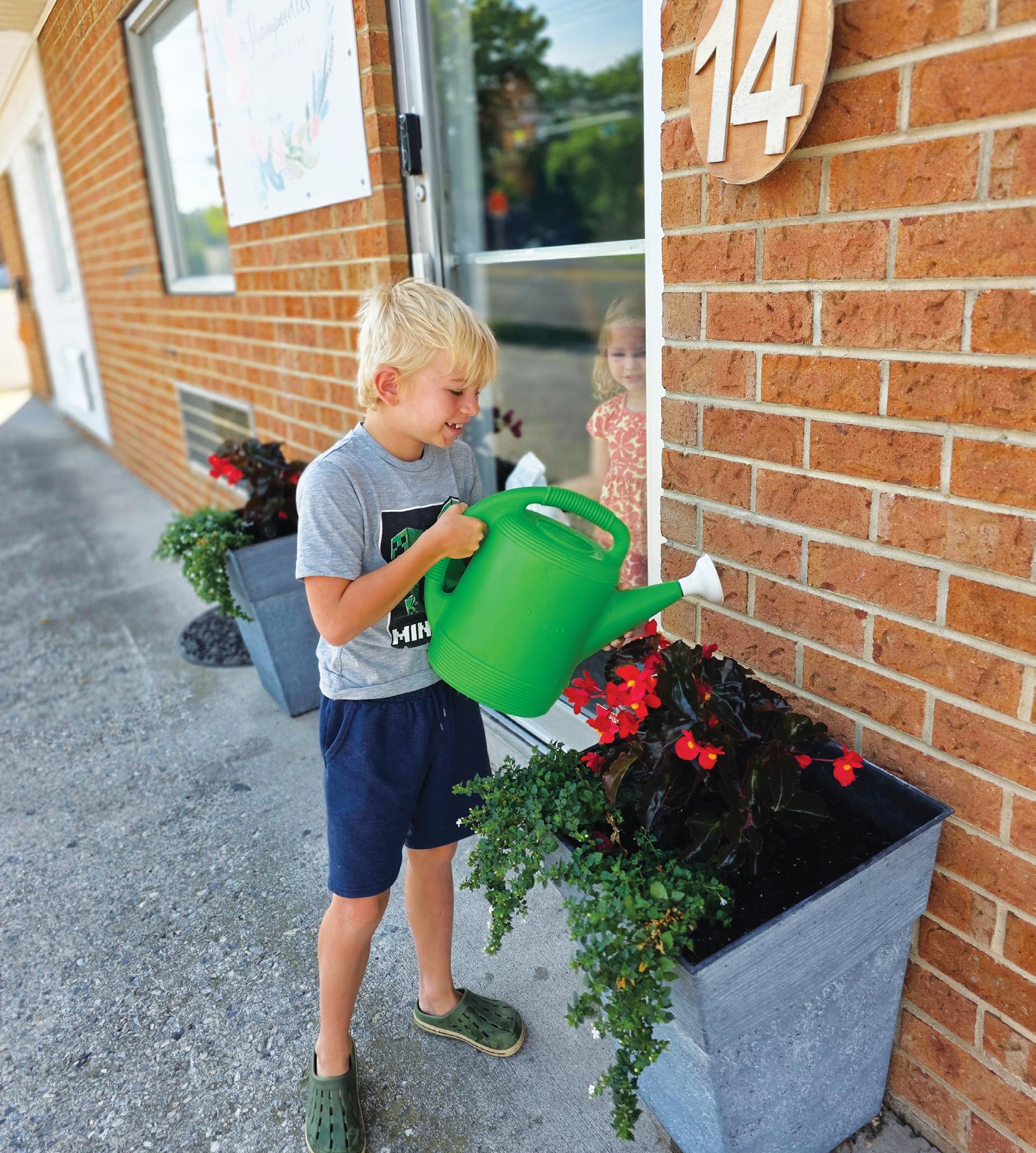
For 8 of the past 13 years in business, the front counter and swinging saloon door has marked the “boundary” between customers dropping off and picking up their dogs at Shampoodles and her kids’ “area” in the rest of the shop. In addition to tubs and counters and pup/dog grooming stations, the area has housed everything from playpens to nap, play, and study stations for the Perdue children—now eight and four-years-old.
True story: Our office manager heard a rooster crowing in the background when she was on the phone with a customer service rep. When asked about it, the agent apologized, said it was early morning where she lived (in another country), and yes—she lived on a farm. “I was just curious,” our manager said. “That’s neat. It’s no problem at all.”
No problem.
That’s the sentiment that’s increasing these days when you hear a dog barking or kids making noise during a business phone call. More people are working from home. And frankly, a little human background noise could be considered a much better alternative than telemarketing cubicles or automated systems or endless phone/online directory trees or AI.
If the business at hand is getting done with satisfactory results—that’s what matters most to customers in just about all transactional business experiences.
There are, of course, exceptions. Some businesses would be totally inappropriate with young children on site. Industrial environments, adult businesses, medical services, construction sites, public safety, dangerous jobs, and select professional settings are a few. But for more family businesses, from Main Street merchant shops to childcare and tutoring to real estate to online e-commerce to crafting to graphic design and coding and similar office environments… many businesses are possible to run with your own children on site. These parental-caregiver operators will tell you, though: you will be required to be flexible and creative in managing your schedule, operations, and the way you provide services to customers.
Kacy Perdue runs a dog grooming business in Salem. Shampoodles has been in business for 13 years. She and her husband, Jason, work at the boutique shop; and for the past eight years, right along beside them, is their son, Knox (8) and then their daughter, Sienna (4). Long time customers watched the children grow up at the business. There was never a question that Shampoodles is a family business.
“Jason and I have always had a love for animals,” Kacy Perdue says. “We met 20 years ago working at another local dog grooming and boarding facility where he groomed, I ran the front desk and boarding, and then he trained me to groom years later. After years of working together for other companies we decided to venture out on our own.
• I ask my six-year-old to do some light chores and he gets the biggest kick out of helping our business
• A lot of customers really take to our children and appreciate what we’re trying to do
• You can see the wheels turning in her head when she learns a new task
• We have a tradition of packing our lunch and eating it together at work
• Getting my kids to appointments and activities is challenging, but we block out time and either adjust our hours or use part-time and temporary help
• My kids’ friends are always asking them questions about our store; very curious
• A friend of mine is trying to set up her own [child-friendly] business when she saw what I am doing
• We had to get special approval for the school bus to pick up and drop off our child at our business even though it’s right on the route; but it has made it so convenient
• Our kids have a desk for doing their homework and having a personal space at our shop
various sources and online threads
We offer grooming services, baths, brush outs and nail trims. We have the capability to schedule by appointments, which makes a lot of owners more comfortable than having to leave their pets for the whole day.
We like having the flexibility to be full-time parents and also be able to work full time hours. I think a lot of families struggle with childcare costs; and we are no exception. My son’s favorite summer camp is $300 a week, and if I sent both of my children every week for a month, it would total $2,400.
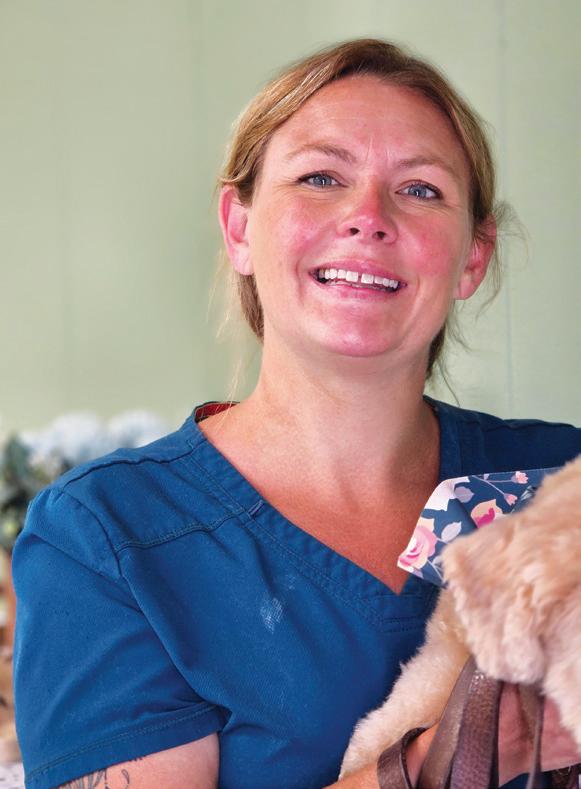
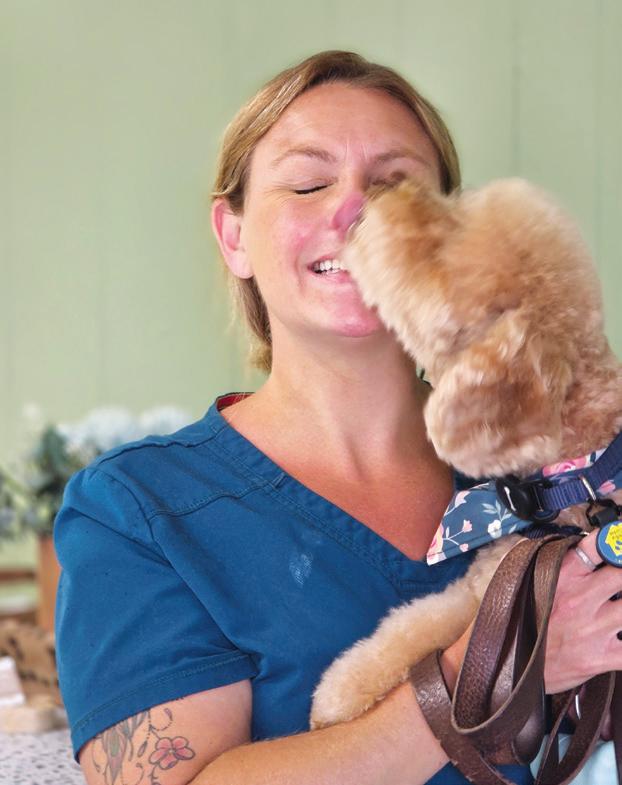
“We’re so fortunate to have their school right next door,” says Kacy Perdue of Shampoodles dog grooming in Salem. Jason and Kacy’s two children attend the elementary school directly adjacent to the shop.
“” A lot of families struggle with childcare costs; and we are no exception.
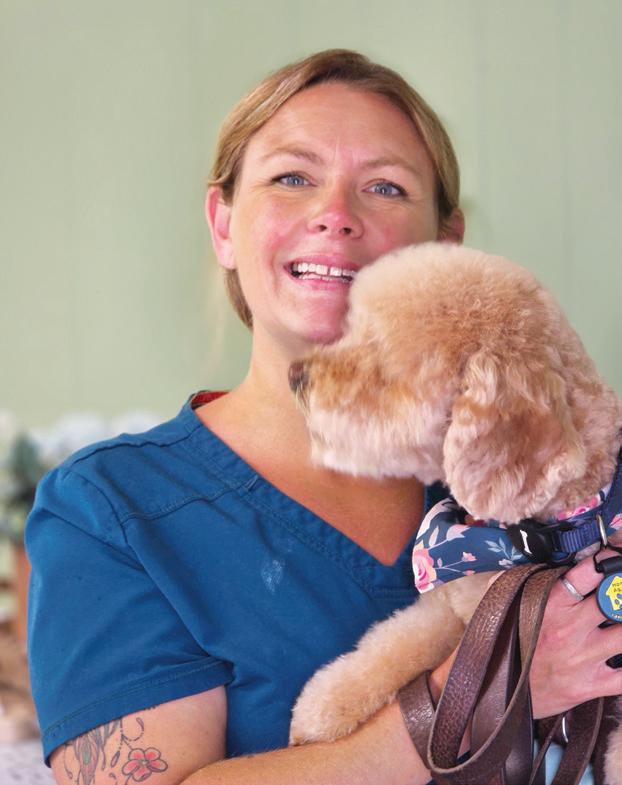
I went back to work after six weeks with both children and it’s just their normal life. They would nap to the hum of the blow dryers, play with water all day in the tub, and we've been through thousands of crafts to keep busy! Some days are a happy kind of chaos; and a lot of patience is required through the toddler years!”
The majority of statistics on children at their parents’ business cover employment—as in having and/or paying your children to work at the family business. That’s because a preponderance of the research is more interested in labor and economic reports. The US Bureau of Labor Statistics—an agency that usually has everything to say about employment—offers little data on the trend of watching and caring for your own kids at your own small business. US BLS does report on those children who are employed by their parents, however. The Wall Street Journal in 2025 reported “the share of small businesses that employ a young adult child of an owner has doubled since 2018” and that analysis is shared by many credible reports that also reveal a doubling or higher growth in as few as the past five to ten years.
According to a survey conducted by Journal of Extension (2025), the trend of small business owners having their children at their business location is increasing due to a lack of childcare or affordable childcare.
InclusionHub points to many family units, where “the cost of childcare outweighs the benefits of employment, often resulting in one parent—more commonly the mother—relinquishing external earning opportunities and career development to care for children at home.” The report shares a need for “family-friendly employment policies” and that sentiment and advocacy is certainly on the rise.
What’s an alternative to mom or dad staying home? Continue to work—but in a place where you can bring
your children. They don’t have to be paid employees. That would be a ridiculous expectation for babies, toddlers, and young children.
The choice of whether to combine the tasks of running your business with caring for your children is both a personal one and a business one. There are a lot of factors (and emotions) when making such a decision. It’s a big range between the parent who has the kids on site because that’s the only way to afford and raise them versus the parent who has the kids on site because it’s a satisfying model and “wouldn’t have it any other way.” Most scenarios are somewhere in between.
Cindy Smith is the associate department head of Human Development and Family Science at Virginia Tech, who also runs the Children’s Emotions Lab. Although this specific topic is not her primary interest, she offers considerations to three of the questions we asked:
Besides safety, what issues should parents consider if they have their children with them at their business?
The age of the child and the nature of the business would be important to consider. We see the largest gains in children's development from birth to age 5. Issues could arise if being at parents' business means that children are not receiving proper stimulation needed for healthy development. When children are in specific early childcare centers, their basic needs are being met as well as supporting gains in cognitive and social development. When at work, parents likely cannot have their full attention on their young children, which means that the children's needs might not be met.
Children who are school-aged or adolescents can be more independent and thus do not need the same type of supervision as younger children do. In these cases, the children might feel a sense of pride in helping with the family business. In some cases, however, children or adolescents might resent needing to work at the family business,
• Prioritize Quality Over Quantity: It is not about the sheer number of hours parents spend with children, but rather the quality of that time. Engaging in focused, uninterrupted interaction is highly beneficial.
• Open Communication: Parents are encouraged to talk openly and honestly with their children about their work and why they are working, framing it in a positive, age-appropriate manner to build understanding.
• Separation of Work and Home: Establish strict boundaries. Avoid bringing work-related stress, long hours, or work devices into family time so that children have a dedicated focus on their upbringing and emotional needs.
• Independent Play: Encouraging children to play independently and engage in hobbies helps build resilience, self-esteem, and necessary life skills without relying solely on parents for constant entertainment.
summarized from the late Dr. Thomas Ollendick, a prominent clinical psychology professor and Director of the Child Study Center at Virginia Tech
especially when they see other friends not having to work.
What "feelings" or reactions might these parents expect?
Children are always watching and learning from what they see. Parents modeling hard work and what is necessary for their business to succeed can be powerful examples for children to see. Showing children how hard they work and letting the children share in those accomplishments can be impactful. Involving children in the family business can also teach them lessons about how money is earned and spent, which can be important lessons for children.
Any distinction regarding the child's age?
The goals of socialization change with children's
age. Infants and toddlers need more direct supervision and need to learn that their needs will be met in order to feel secure that the world is a safe place. When parents respond inconsistently, the children may act out in ways to get their parents' attention, and these behaviors may escalate over time.
Parents may also feel stressed when trying to balance the needs of their business with the needs of their children.
The work we do and the businesses we conduct in today’s American society offer a diverse mix of opportunities. That opens up a lot of doors and possibilities for parents; and that hasn’t always been the case. Particularly in our early and agrarian years, children tended to the farm right alongside their parents. And in our industrial age, children typically stayed at home with one parent or caregiver while one parent went to a job that was sustainable for a single income family. Today, both of those scenarios still happen—but with far less frequency than the 18th through 20th centuries.
The option of having your children at your business isn’t for everyone. But for some parents, it’s a solution that serves them well. Even if they have to work hard at it.

“” Children are always watching and learning... Cindy Smith
“Parents
Smith, Virginia Tech professor, department head, and director of Children’s Emotions Lab
By Aila Boyd
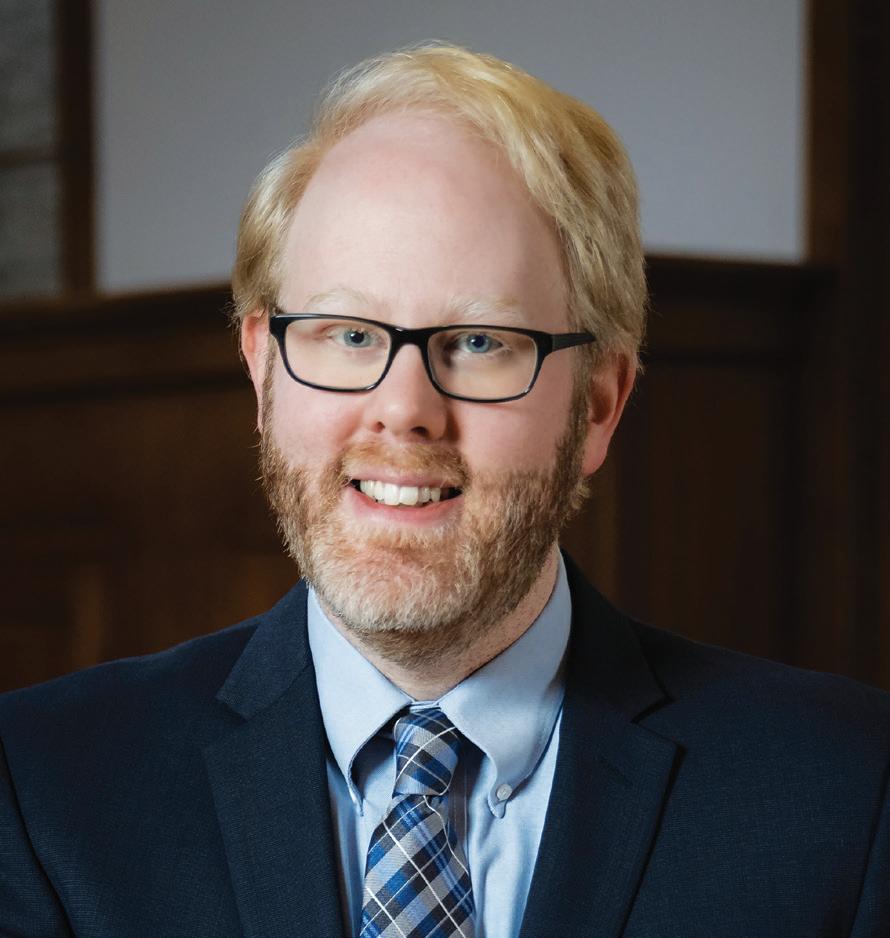
Whether someone is running a boutique on Campbell Avenue or managing a team in the Roanoke Valley's growing tech corridor, artificial intelligence has probably come up in conversation lately — and if it hasn't, it likely will soon.
Two regional business and analytics experts argue the moment for sitting on the sidelines may be passing. But they're quick to add that rushing in blindly carries its own risks.
"In general, the discourse around AI is very polarized, with too much 'hype' on one side, and too much 'doom' on the other," said Zachary Collier, director of the Center for Applied Analytics and assistant professor
of management at Radford University (and a Valley Business FRONT columnist.) "The key is not to be too optimistic or pessimistic, but to be thoughtful about when AI adoption makes sense and when it doesn't." Recent reports detail college students looking to avoid majors in fields that may soon be dominated by Artificial Intelligence.
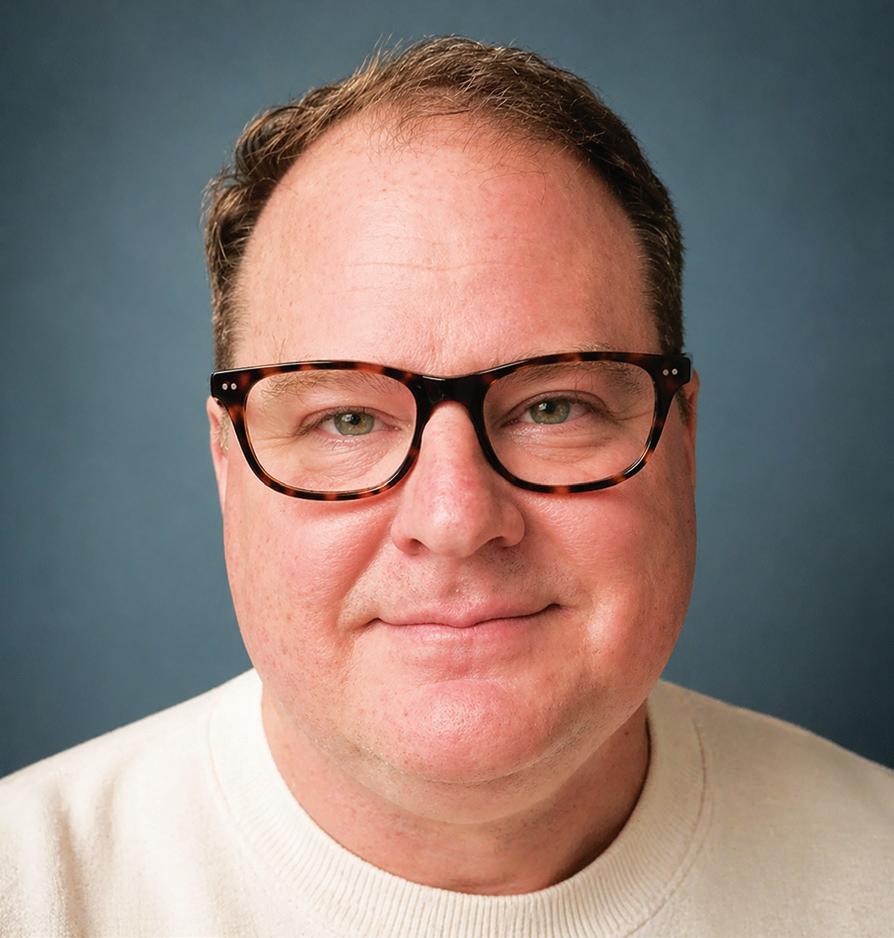
David Townsend, Digges Professor of Entrepreneurship at Virginia Tech's Pamplin

College of Business, points to data that suggests the shift is already well underway. Nearly 60% of small businesses nationwide reported using AI in 2025, according to a U.S. Chamber of Commerce survey, more than double the share using generative AI just two years earlier.
"The biggest shift is that AI has gone from novelty to infrastructure," Townsend said.
The practical applications are more accessible than many owners might expect. Townsend describes the most common everyday uses as text-heavy and repetitive: drafting emails and proposals, triaging customer questions, generating first-
draft marketing copy, handling basic bookkeeping and scheduling.
Collier added that AI tools are also speeding up app development and powering social media content creation through image and video generation — though he cautions that AI-generated visuals risk being dismissed as what is called "AI slop" that can hurt rather than help a company's marketing efforts.
Townsend frames the opportunity less as a cost-cutting tool and more as a way to reclaim time. "The real benefit right now isn't that you can slash costs dramatically," he said. "It's that AI can absorb timeconsuming routine tasks so your team can reallocate its limited hours on what matters

most — building and growing customer relationships, making the hard calls about where to focus."
For Roanoke Valley businesses, both experts see a particular opportunity rooted in genuine community connection, something no algorithm can replicate.
Townsend noted that AI is rapidly closing the gap between what a small business can do and what a national chain can, like automated customer service, personalized marketing and tailored recommendations. But that very democratization creates a new kind of scarcity.
"When everyone can generate polished, personalized-sounding marketing for free, that output stops being a differentiator," he said. "What becomes scarce — and therefore valuable — is genuine relationship and trust."
Collier echoes that caution. AI use can alienate customers, he warns, "especially if the outputs are perceived as inauthentic." For local businesses built on personal reputation, that risk is not abstract.
Townsend's advice is to use AI to protect the human advantage, not replace it. "Let AI handle the busywork — the after-hours questions, the appointment reminders, the first draft of the newsletter — so your people have more time for the conversations that build loyalty."
For young people entering the workforce,
the picture is more nuanced than the headlines suggest. Both Collier and Townsend push back against fears of widespread job elimination, though neither dismisses the scale of change underway.
Collier encourages thinking of jobs as bundles of tasks rather than fixed roles. Most jobs will evolve, he said, but how much depends on what those tasks actually require. "Tasks that require uniquely human skills, like critical thinking and empathy, will be more immune to change."
Townsend agreed, and stressed, "AI can produce the analysis, but a human is still accountable for the decision."
For students at Radford, Virginia Tech and other regional institutions, they emphasized the same foundational skills — problem solving, ethical reasoning, interpersonal communication — alongside a healthy skepticism toward AI output itself.
"Being able to review the output from AI and ask, 'does this make sense?' is a skill that will be increasingly important," Collier said.
Townsend added that genuine expertise remains essential. "AI amplifies expertise rather than substituting for it. The students who do best will pair real knowledge of a field with fluency in these tools, instead of using AI to cover for not knowing the field."
Both agree that knowing when and when not to use AI may be the most valuable business skill going forward.


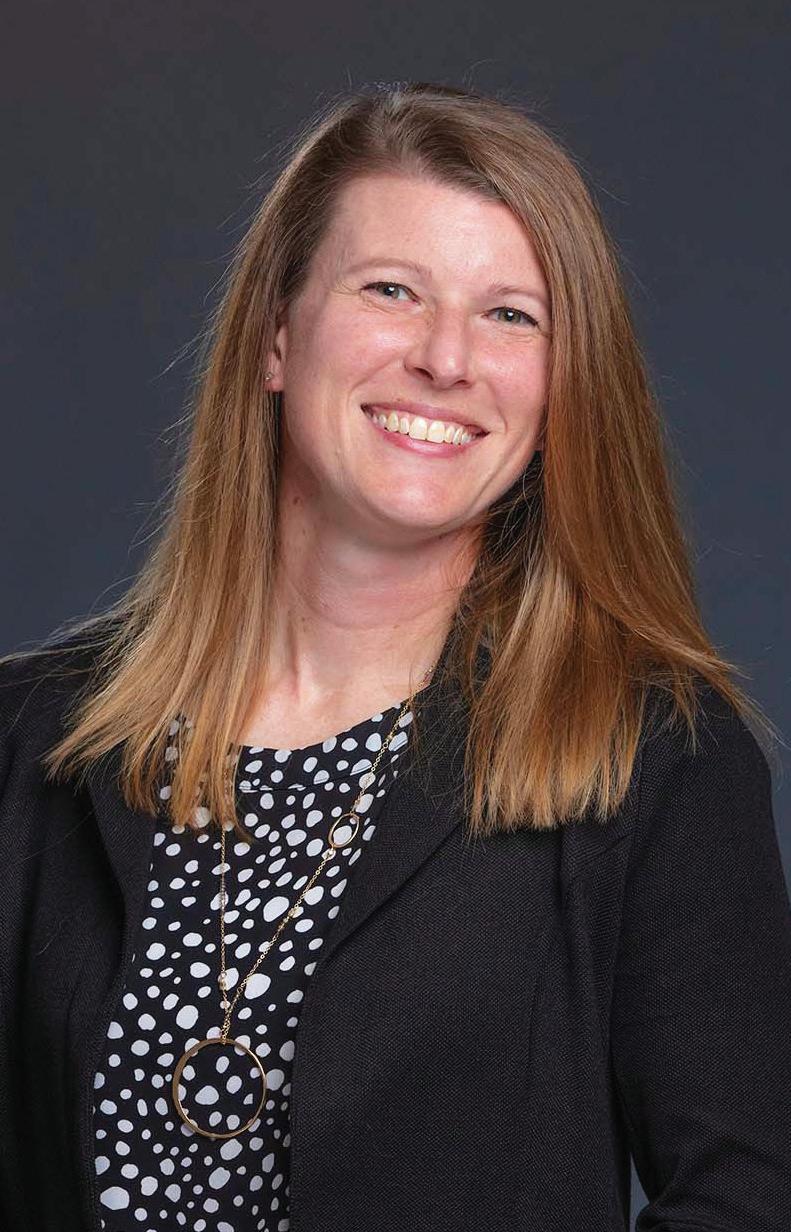
By Carrie Cousins, LeadPoint Digital
Executive Summary: Immediate answers without having to click impacts web traffic; your visits are more vetted.
There’s something scary happening with website clicks and traffic right now. They are dropping exponentially.
According to multiple sources, including SparkToro, Semrush, and Ahrefs, as much as 68% of all searches end on the results page without a click to any website. The average is somewhat lower for desktop users but spikes as high as 77% for mobile users.
It’s something I am seeing daily with clients here at LeadPoint. No industry or website type seems immune.
It’s something I heard recently from a Google representative at a national conference. She said their goal with Gemini is to keep as many users as possible in a loop of continued information gathering.
The new search model is zero-click. And it will impact your marketing efforts.
What is a zero-click search, anyway?
When you ask a question to Google and the answer displays at the top of the search page in the AI overview, you get the answer immediately and don’t have to click for the answer. That’s zero-click.
The most dramatic change happened just a few weeks ago when Google changed its search bar to focus on artificial intelligence searches. (You are in AI mode unless you click the secondary option for “Google Search.” The impact to web traffic was almost immediate. The difference might seem subtle on desktop searches, but on some mobile searches, there are no “traditional” results with links; everything is an AI result unless you click the small option to see more results. If you find what you are looking for right there, that’s zero-click.
The same thing happens when you search within AI engines such as ChatGPT or Gemini, you get answers directly without linking out of the search window. Even if you do see links, many of them keep you in the platform and you never make it to the referring website. That’s another zero-click.
The bad news: Your traffic is dropping. Your visibility in Google is moving down (or off the page). Even ad placements, where you were paying to show highly in search results, are dropping down the page.
But there’s some good news: When a user does get to your website, it’s a valuable click because they had to do a lot of work to get there. They completed their research and sought
out your brand or clicked enough times to get to your website. This click is more likely to convert.
Zero-click search by nature is informational and users are trying to find the answer to something (“how much protein is in peanut butter?”).
Commercial and transactional queries result in fewer zero-click searches and are more likely to get people to the source of information they need (“jif protein peanut butter”).
What can you do in the zero-click era?
You can’t change traffic patterns. But you can adjust your mindset.
1. Rethink traffic counts. July 2025 website traffic is not comparable to July 2026 website traffic without understanding these changes.
2. Invest in a solid SEO/GEO/AEO strategy. Good content is more likely to be cited by AI engines and search. Conversions from AI overviews is converting at nearly 23% higher with lower bounce rates, according to Digital Applied.
3. Think about key indicators that will help more of the right people get from the search and through the AI answer or overview to your website. This includes a renewed focus on brand visibility, solid linking and citations, and authority.
Finally, don’t panic if your traffic is declining. It’s happening to everyone. Go back to your true and actual metrics: How are sales or appointments? Are you still seeing clients?
Just like other marketing and tech changes we’ve seen in the last decade, this will normalize. The important takeaway in the zero-click era is to understand the change and plan accordingly.
“” When a user does get to your website, it's a valuable click because they had to do a lot of work to get there.


By Lindsey Hull
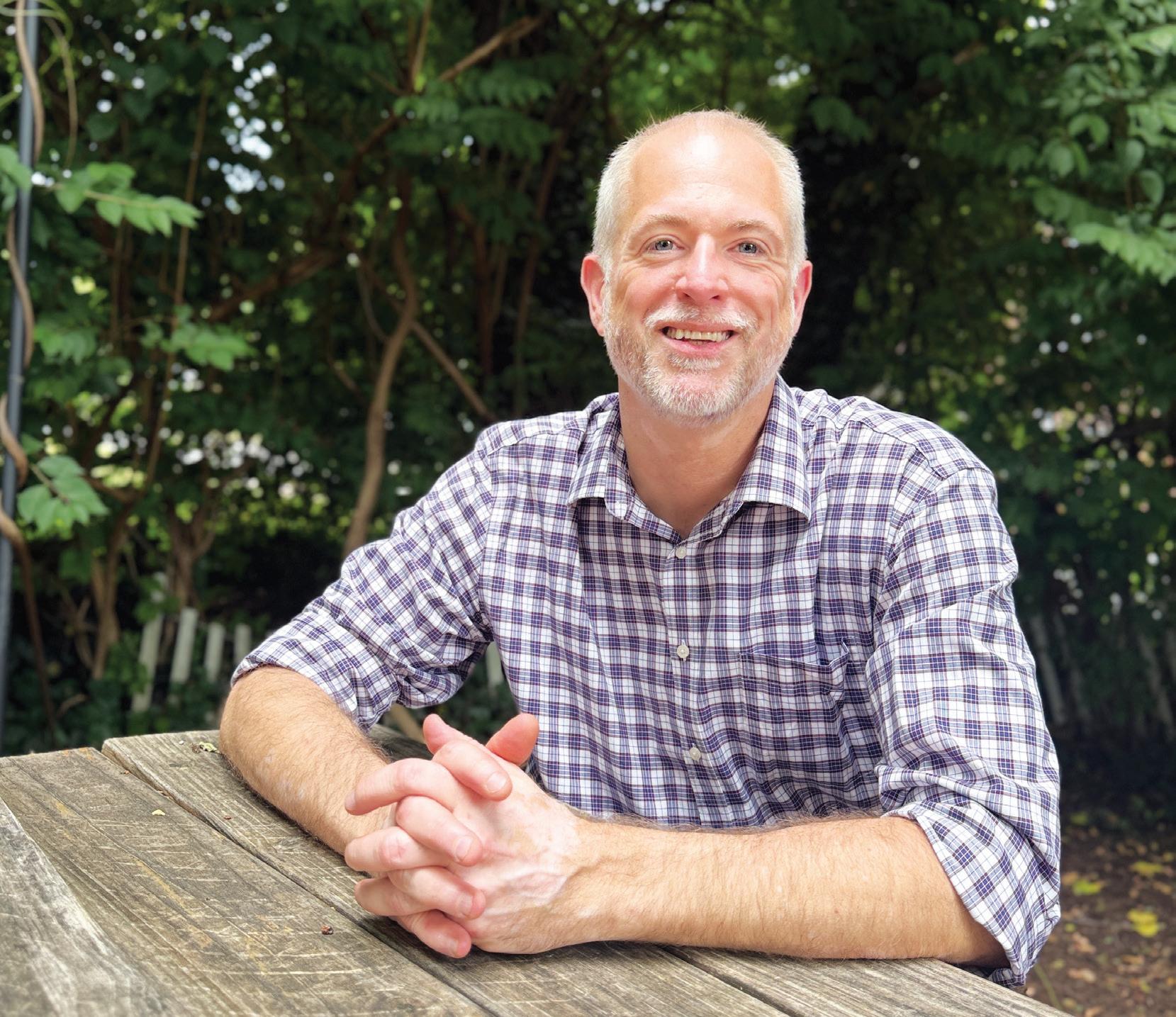
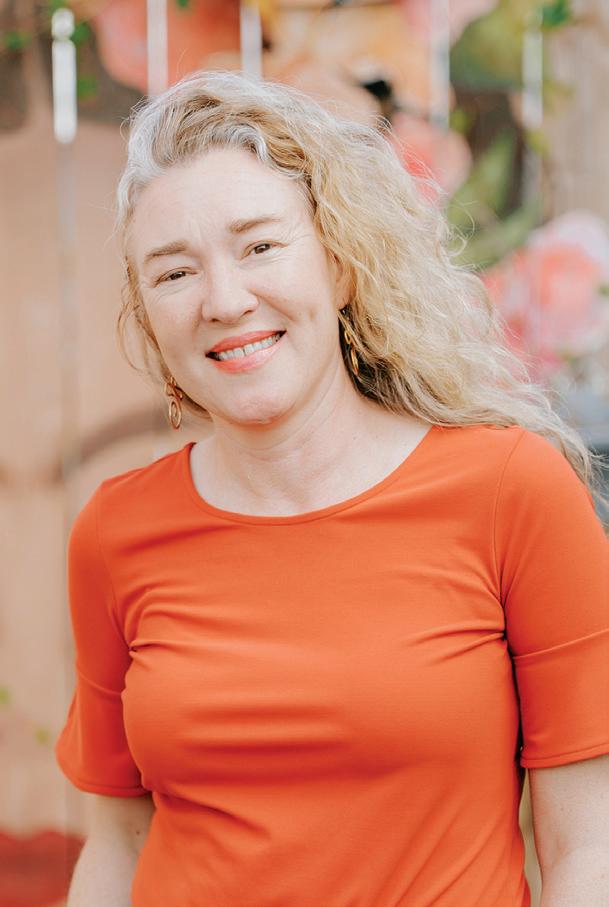
In his new role as Director of Innovation for the Roanoke Blacksburg Innovation Alliance, Chip Bobbert spends his off hours studying philosophy, biology and generative design — topics that he believes will keep him on the cutting edge of innovation technology.
“AI is forcing us all to reconsider everything that we know about epistemology,” Chip Bobbert says. Studying the place of human knowledge in the AI arena equips Bobbert to design programming that will keep RBIA’s partners, investors and participating
cohorts two steps ahead of their competition despite rapidly changing technologies.
The Director of Innovation is a newly created role, one in which a key team player was sought to lead the organization’s innovation

programming on a broad scale. RBIA CEO Erin Burcham says that, during the hiring process, Bobbert checked every box. He started in February.
“He'll oversee our RAMP program, innovation programming to include the Emerging Tech
Conference, he'll oversee our STEM talent work,” Burcham says. “I needed someone who had a breadth of experience in all of those spaces.”
Bobbert moved to Roanoke from RaleighDurham — North Carolina’s Research Triangle — where he worked for the last 15 years, most recently teaching at the North Carolina School of Science and Mathematics. There, he created and launched an immersive interdisciplinary program to allow students to experiment with entrepreneurship in a safe learning environment, supporting youth founders as they moved through ideation, research and invention, and eventually on to commercialization of their products — a stepping stone toward the learning opportunities the RAMP program is capable of providing for their seasonal cohort participants.
“I very much view innovation, entrepreneurship, through that lens of education,” Bobbert says. “My job and my duty is to give people the tools and resources that they need, so that they can take their innovations forward into the entrepreneurial space.”
As the child of a small business owner, Bobbert says he knows how much determination it takes to keep a business running. As a young adult, he joined the military. That experience paved the way for his college education, and it also allowed him to see the world through a lens of social service.

“What I’m doing and working on should be for a greater benefit,” Bobbert says.
While working in the engineering space, Bobbert says, he too experimented with being an innovator. He had an idea that could help people feel safer in their homes: if he could create a small enough camera that would produce high-enough quality compressed images, then Bobbert could invent a peep hole camera. This was four years before Ring pitched its doorbell camera on Shark Tank, he says. He was too early and the idea didn’t work out.
If his predictions miss the mark, it’s because they’re often early. He thought Flash media would die more quickly, and that more people would own 3D printers by now.
He talks about attending a technology conference during the generative AI boom. There, a booth tempted innovators and technicians to use a 3D printer to create their dream pinewood derby cars. All would be a similar size. All run down the same track. All made from the same starting materials, with space for weights and tiny whirring wheels.
It was just like Bobbert’s Cub Scout days, all over again. He remembered the excitement. He remembered the physics.
Instead of cutting, sanding and painting for days, Bobbert had to give a computer a set of well-thought out constraints to make it create the car he had imagined — a teardrop shape, most closely resembling a rounded wedge, its weight at the rear.
Bobbert’s teardrop and the other racers must have started at the top of a slanted track. The countdown would have begun, and then they would have been off. A pinewood derby race lasts only a matter of seconds before the toy-sized cars fly under the track’s automatic timing bar.
Bobbert doesn’t recall if anyone beat the computer.
“It’s like playing Jeopardy against an AI now,” he says.
Previously, we were living in “a world where the more you knew and the more that you had in your head, the smarter that you were. And now we're entering a world where the better you can ask questions against something that has that information, the smarter and more capable you are,” Bobbert says.
“What are the constraints that you must know to give the computer, so that you’ll get the results you need out of it?” he asks.
That brings Bobbert full circle to epistemology. What is knowledge? How do we use it?
In business, this means that leaders might use AI to supplement their weak points until they find a person who can best fill a particular role. “Go create that artificial person,” he says.
“I don’t think AI is actually thinking, but it can be a stopgap,” Bobbert says … a tool.

By Jade Richardson Bock, Senior Consultant Building Beloved Communities
Executive Summary: Consider the value of interns and entrylevel employees.
Gen Z, roughly 14 - 29 years old, are entering a challenging workforce and economy. They bring new energy, curiosity, and tech-savvy ideas—but are often competing against folks with more experience and struggling to gain their own.
With a little thought, you can create entry-level roles that help your business run better and give employees newer to the workforce a meaningful opportunity to contribute and gain skills. Where could a fresh perspective help your business? Maybe you’ve been meaning to improve your social media presence, update your displays, reach out to old customers, or test new loyalty ideas, but you never have the time.
An intern or recent High School or soon-to-be college grad could take that on while also learning your day-today operations. You’re not hiring an extra pair of hands that knows the same ropes you do — you’re investing in someone who can help modernize and energize your business.
Make the work real. We all crave roles that make a difference, even when we are new to the field. Let them own a project or run a small experiment—like tracking customer feedback or creating a special promotion. Observe how their ideas affect sales or service quality and learn from the experiment together. Include regular, scheduled check-ins to talk through what’s working and what’s not. A few minutes of mentorship goes a long way toward helping them and your business grow.
Adjust duties based on a person’s strengths and assign new challenges when they’re ready. Sharing a bit about how the business started and where it’s headed, and where you’ve innovated over the years, helps them see the reality of operating a small business, instead of the theory.
Meaningful entry-level jobs don’t have to be complicated. When you mix clear responsibilities, space to contribute, and a touch of mentorship, everyone wins—you get a fresh perspective, and they get a real start in building a career.
“”
A few minutes of mentorship goes a long way...
I thank The Positive Power of The Universe I have Dale Carnegie Training, soft skills, empathy, an open mind, and been to about 8 or more therapists in my lifetime myself! My background allows me to handle all situations.
It is emotional when you have a family where the spouse is pregnant and they are selling their home to buy another because the family is growing. It’s a domino effect in this case because you have 3 parties involved. The buyer of the seller, the sellers selling their home, and then the sellers of the home they are buying. There are 3 realtors involved too. Everyone is on pins and needles to say what happens and all eyes are on you. No matter what. My wife and I did this and I was her realtor and the realtor buying our new home! Talk about emotions.
Then there are the divorces. I have handled plenty. I don’t judge. My parents got divorced when I was young and so did I. What makes this sale odd – they don’t normally talk to each other, just me. So, I am on the phone with one and then the other. No group texts, all separate texts. Some are on edge, some don’t care and say, ‘Just get it sold and get it behind me.’
There are the family home sellers who grew up in the home or parents raised them there and the parents have passed so they have to sell. They are typically super high on emotions. You will hear “this was my room as a child, Mom made our meals here.” These sellers will run super high on emotions because it is hard to give up a family home. I get it.
I’ve had clients cuss at me. I have had clients yell at me. I have had clients cry with me. I have had clients hug me. “Well, it is the biggest sale of their life Frazier.” I have heard this too from others. I do my best to be open minded and practice love. I remember either way I am a therapist and REALTOR® every day.

By Frazier Hughes
Executive Summary: Most People Get Emotional When Selling Real Estate. My first broker told me “Frazier you are going to be more like a therapist to your clients than their realtor.” Damn if she wasn’t spot on.

By Dan Smith
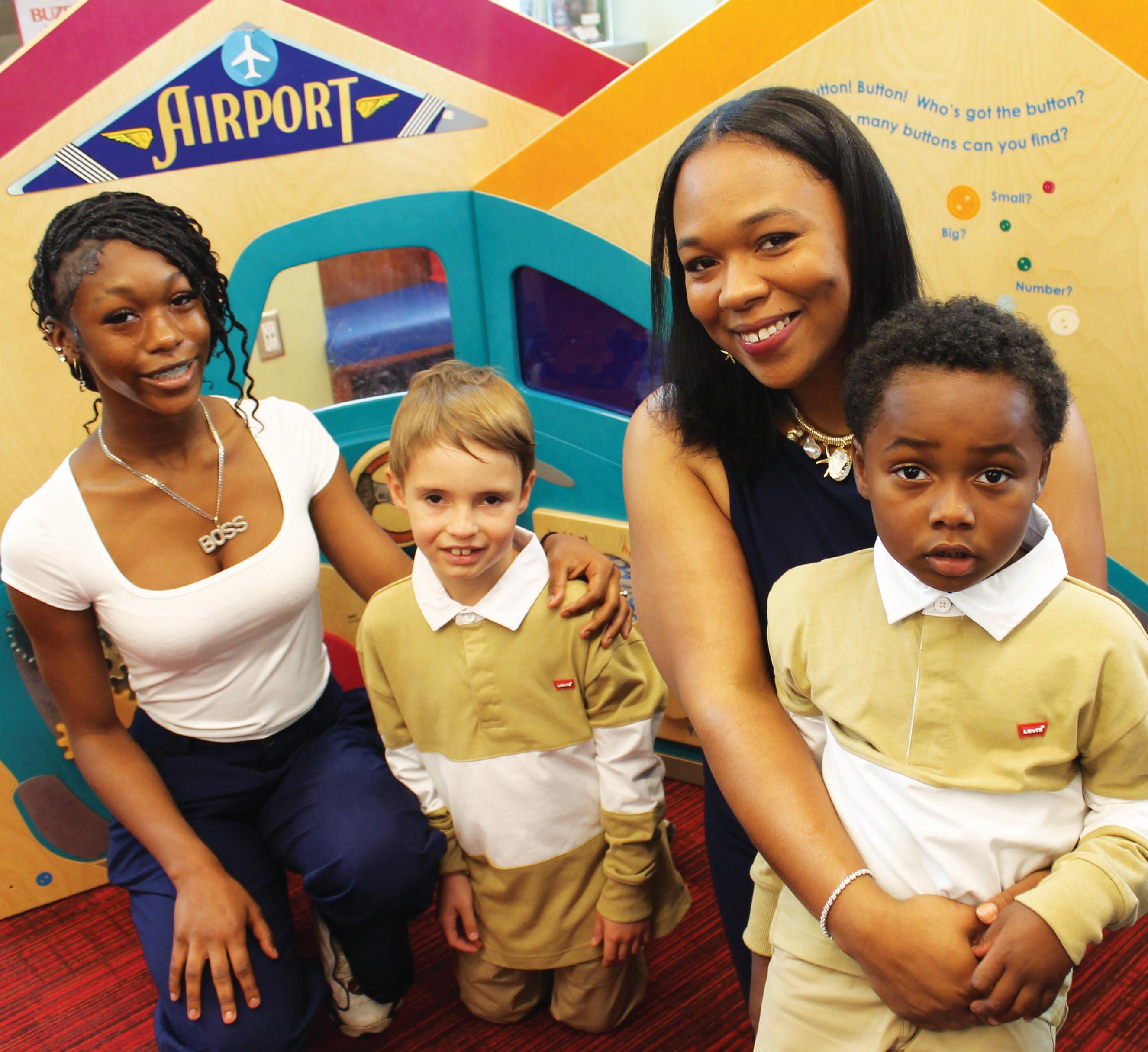
Two sisters who grew up in a big Roanoke family have created careers based on caring for others.
It was never really the goal to turn love into a career, but for Winter and La’Fawn Johnson, that’s the way it has worked out.
Both have been foster care and adoptive parents for more than a decade and the Johnson sisters have their her own eldercare businesses. Winter’s Home Health, in which she cares for the elderly, is 10 years old and has several employees, depending on the demands of the moment. Fawn’s Heaven, La’Fawn’s business, is basically a referral service for potential adoptive and foster parents. Each woman has an adoptive
child, with more likely on the way, and they are occasional foster parents, single mothers, as it were.
The care businesses help make ends meet and provide the sisters with yet another avenue for their expertise.
Foster and adoptive care has changed considerably in recent years, partly because of necessity and partly for cultural adjustment. La’Fawn and Winter, for example, are 30-something, African Americans and single. Single fosters and adoptive parents are a
relatively new outgrowth of desire and need. The women have adopted white boys and La’Fawn is in the process now of adopting the younger sister of one of the boys.
Interracial adoption—especially black parents and white children—was strictly forbidden for most of our nation’s history. Attitudes change, however, partly because of maturity, partly necessity. The fact is that there are far more white children (40 percent to 21 percent black and 21 percent Hispanic) who need to be fostered or adopted than there are other races of children.
The Johnsons are daughters of single mother April Marcell, who has seven children, so they grew up in a crowd, learning how to take care of each other in a home where there was a lot of love, but not much money. They learned how to thrive, despite the poverty. “Our goal,” says La’Fawn “is to break that cycle” of poverty.
In addition to adding children to their families (Winter has two natural children, La’Fawn one), they are open to the elderly, as well. And none of it is easy.
They have to be trained by foster and adoption agencies in great detail. Some of the classes are medical. Their homes must be inspected for cleanliness and safety and it all falls together after months of effort. Not only that, but their own children have to be considered when the mix is available.
Winter’s adopted son, Liam, “was tough,” she says. “He threw me for a loop” with his behavior. He’d had a lot of trauma” and had learning disabilities.”
“Our goal,” says Winter, “is stability for children who have never had that. We have fallen in love with these [adoptive] children.”
“We don’t do it for the money,” says La’Fawn. “Eventually, I want to buy a home with 10 to 15 rooms where we can give kids a place to go.”
The biological and natural children mix well, says La’Fawn. “Our kids love [the adoptees]. They are family. Our bloodlines have so much in them that we don’t see color.
Winter’s eldercare business has scratched another need, once again, based on love.
La’Fawn says her sister “has a gift for that. But she charges on the lower side because she really loves these people. She becomes their family.”
Winter says she basically got the care-giving bug “in my early 20s when I took in a teenager for half a year, until she finished high school. “It was an easy thing to do, but it has to be in you.” These days, between eldercare and childcare, “there is little time of my own.”
The rewards have been rich, says Winter. But the challenges are sometimes great. “When I first got Cooper, he and his brother had their own language. They couldn’t speak English. Today, he is a model student who loves school and gets along with kids his age.”
People have to know what they are signing up for,” says Winter. “I knew I was needed. God sent me to my next place.”
By Daniel Colston, CFP®
Executive Summary:
Most business owners spend their time focused on sales, operations, employees, and putting out today's fires. Those things are important, but some of the most valuable decisions you'll ever make as a business owner happen behind the scenes.
The businesses that thrive over the long run don't just generate revenue. They build systems that protect the company, reward key employees, and prepare for the future.
Here are a few smart money moves every business owner should consider.
Many small business owners spend years helping everyone else build wealth while neglecting their own retirement savings.
A SIMPLE IRA, SEP IRA, Solo 401(k), or traditional 401(k) can provide significant tax advantages while helping owners and employees build long-term financial security.
Not only can these plans reduce current taxes, but they can also become valuable recruiting and retention tools. Employees appreciate working for companies that invest in their future.
One of the biggest risks facing many businesses is that the owner is the business.
If something happened to you tomorrow, what would happen to your company?
Some business owners should consider bringing on partners or gradually selling ownership interests to key employees. Others may benefit from creating an Employee Stock Ownership Plan (ESOP) or another succession strategy.
While not every business is large enough for an ESOP, the concept is worth considering: give talented people a stake in the success of the business and create a path for ownership beyond the founder.
People often take care of what they own.
Many companies insure buildings, vehicles, and equipment but fail to protect their most valuable assets: people.
What would happen if your top salesperson passed away unexpectedly?
What if your operations manager became disabled?
What if a business partner died without a succession plan?
Key person life insurance can provide cash to help the business survive the loss of a critical employee or owner. Disability insurance can protect income and operations if someone becomes unable to work.
These conversations are not always comfortable, but they are essential.
If you have business partners, a buy-sell agreement may be one of the most important documents you ever sign.
A buy-sell agreement establishes what happens if one owner dies, becomes disabled, retires, divorces, or simply wants out of the business.
Without a plan, surviving owners may suddenly find themselves in business with a spouse, child, or heir who has no interest or experience in running the company.
A properly structured agreement can eliminate uncertainty and prevent future disputes.
Many entrepreneurs fall into the trap of becoming indispensable.
At first, that feels like success. Eventually, it becomes a limitation.
The strongest businesses build systems that allow the company to operate without the owner being involved in every decision. They train future leaders, document procedures, and create organizational depth.
Ironically, the less dependent a business is on its owner, the more valuable it often becomes.
Many owners measure success by this month's sales or this year's profits.
The most successful business owners think further ahead.
They ask questions like:
• What happens if I become disabled?
• What happens if I die unexpectedly?
• How will I retire?
• Who will own this company after me?
• How can I reward and retain my best employees?
• How do I create value that extends beyond my own work?
Those questions may not feel urgent today, but they often become urgent tomorrow.
The best time to create a plan is before you need one.
As business owners, we spend years building something meaningful. Taking steps to protect that business, reward the people who helped build it, and prepare for the future may be one of the smartest investments we ever make.
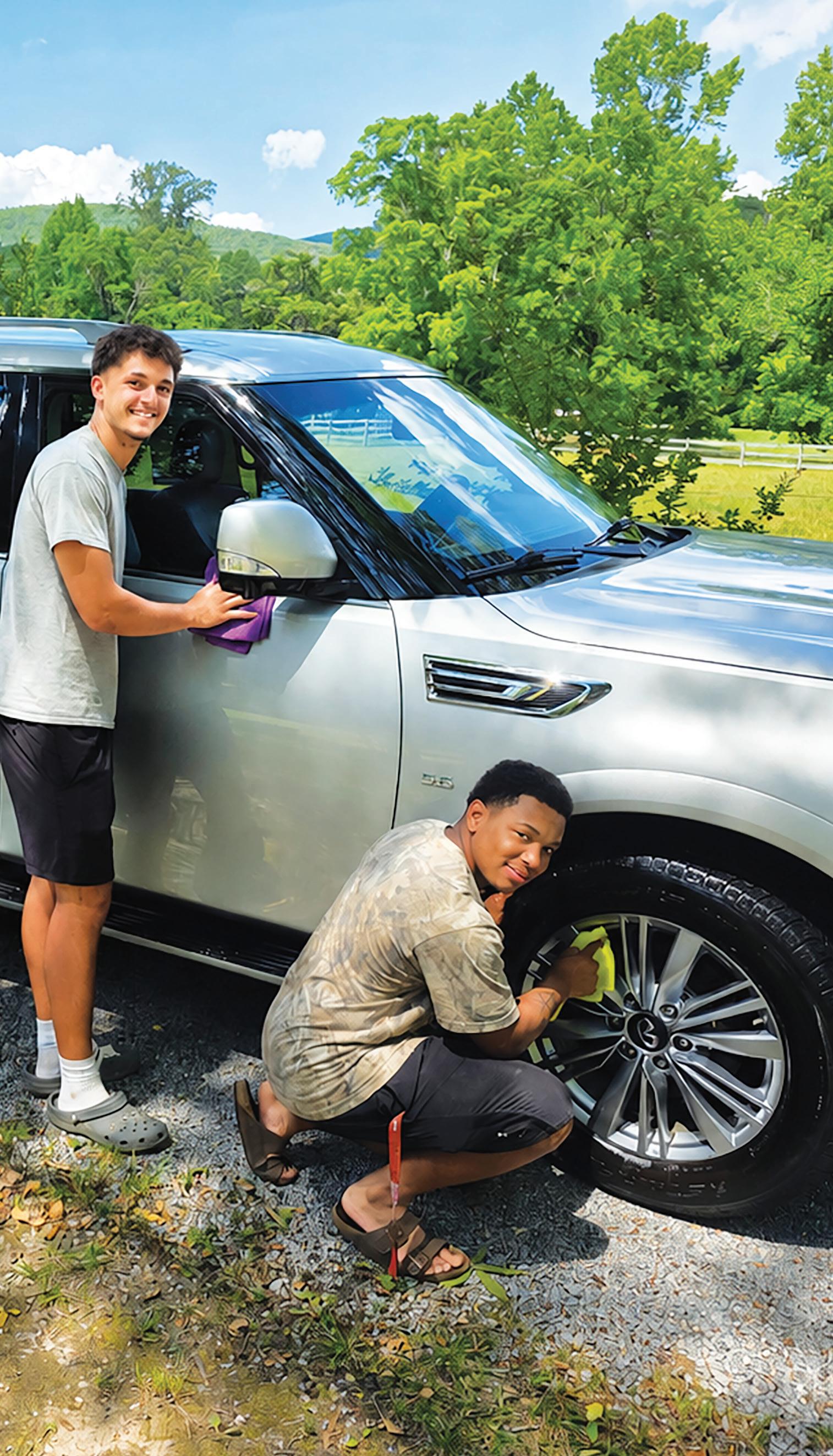
How about a workspace full of bubbles?
Jace Forster and Lerone Alexander run Suds Car Detailing—a mobile service in Salem and the Roanoke area. The two recent Glenvar High School graduates have been washing and detailing (and waxing and providing

other interior and exterior services up to full service) for the past two years—mostly in home driveways. Their motto is “detailing the affordable way.” Suds uses the Booksy app that allows them to block available times and makes it easy for customers to choose levels of service. Suds also offers a monthly subscription service. Much of their work comes from word of mouth and social media—though Forster is happy to share his phone number: 540-915-3788.
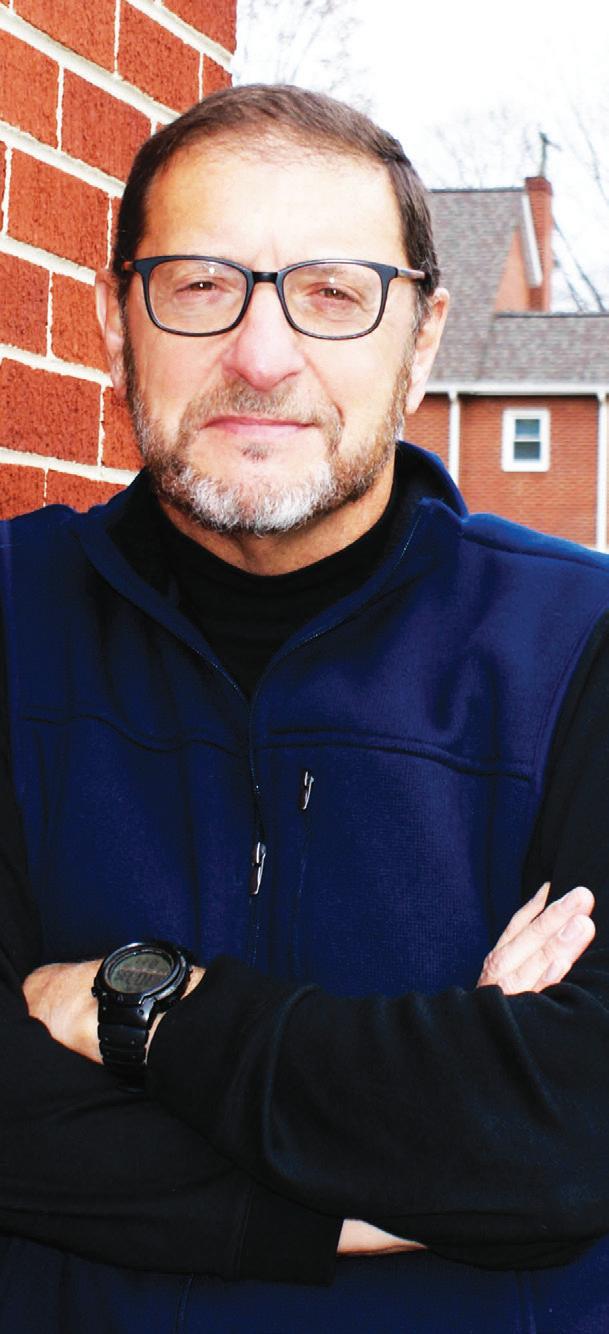
By Gene Marrano
Executive Summary: Here's a list of promising economic happenings in and for our region.
The announcement that an Austrian based life sciences company - Ringana – will establish its North American headquarters in Roanoke at the former Johnson & Johnson building just off I-581 in the northwest quadrant of the city, promising hundreds of manufacturing jobs and a major investment in the facility (see more elsewhere in this issue on that.) Finally landing a daily non-stop flight from Roanoke to DFW - the Dallas Fort Worth airport that is a major hub for American Airlines. That flight will remain in place (the return trip also) only if business and leisure fliers continue to fill the seats at ROA, minimizing “leakage” to other airports in Greensboro, Raleigh, etc.
The opening of RoVa Labs, the shared wet/dry lab space on South Jefferson that has already secured at least one tenant. A new position at the Roanoke Blacksburg Innovation alliance. (More on that elsewhere as well in this issue.)
New much-needed housing being built in the valley, albeit not in the numbers necessary right now to take care of a deficit that runs in the thousands, driving up asking prices artificially for sellers (good) and for buyers (bad). Not to mention placing more of a tax burden on those who pay property taxes.
The Roanoke Valley greenway system that is a major outdoor asset continuing to expand, both at Explore Park and at the Salem-Roanoke City line. Roanoke County’s new Career and Technical Education Center – CTE for short – getting closer to its opening date. Goodwill’s Excel Center adult (and free) high school at Melrose Plaza also working with students on credentials that can help them go right into the workforce with a good job right after graduation.
Vinton officials moving forward with plans to transform a vacant downtown corner into a modern mixed-use hub. The town recently finished acquiring several land parcels that have been empty since a devastating fire four years ago. Jill Loope, special projects assistant to the town manager, says the acquisitions follow a decade of town-led redevelopment efforts. “We are investing in the town,” Loope says. “We are creating new opportunity and attracting developers that are hopefully going to build the types of projects that make the most sense here.”
What promising signs do you see as to future of economic growth in the Valley – and attracting more talented people here? What barriers still must be removed? We’d love to hear from you at news@vbfront.com.
AI. Artifical intelligence (duh!).
I wonder if we’ll have any more months of this business journal where the subject of AI doesn’t come up. (Maybe when it’s eventually replaced by another term.) I wonder if we’ll have any more months of business networking and events where there isn’t an AI workshop or conference or panel or keynote address.
As a report in this very edition of FRONT says, we worry too much about AI or we hype it up too much. Either way, it’s our top-of-mind subject. In business. In technology. In our daily life.
I’ll admit one thing: I would have some anxiety about AI’s advancement and evolution if I’m a youngster in college or preparing for my future vocation. The question, “what if I pick a career that will TOTALLY be taken over by AI?” is not an unreasonable one. And though fewer people ask, “what if ALL OCCUPATIONS will be taken over by AI?” that’s not so unreasonable either.
I’m convinced the future of our society will change dramatically when it comes to “the work we do.” If AI can eventually and ultimately handle all tasks (seriously, think of one it cannot), then how will we live our lives? A life of leisure like never before—or a subjection to the robots?
I do know of one thing I can share with our young people— whether they’re anxious or optimistic:
Focus on the human.
Do genuine human actions and engage genuine human experiences.
• An AI “thank you” is not genuine. Thank people.
• An AI “caregiver” won’t do it out of love. Be compassionate.
• An AI “creation” is not original. Do uniquely innovative work.
• An AI “experience” is not serendipitous. Look for surprises; offer the unexpected; laugh and cry.
If you’re unwilling to be human, then fine—relinquish your soul to AI.
If you remain optimistic and excited and curious to be more human than ever—good for you. I think it’s going to be a lot harder. But worth it.
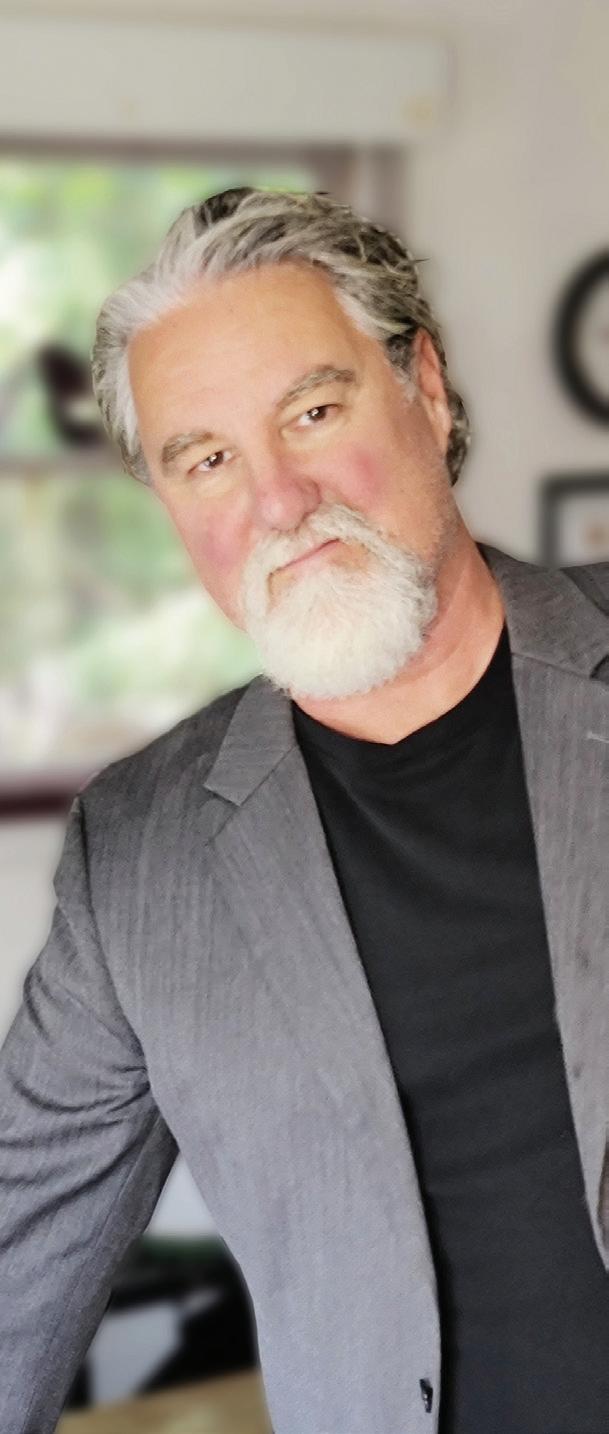
By Tom Field
Executive Summary: AI is everywhere; but is AI everything? Not yet.
Readers and patrons of the business journal are invited to submit reviews (along with an optional photo) to news@vbFRONT. com. We’ve expanded our reviews to include books, music, art, performances, culinary—with a preference for local productions. Reviews must be original, include the author’s name and location, and should be brief, under 350 words.
In The Things We Never Say (Random House; 2026) we have a story of an inspiring teacher—enveloped by our contemporary world of suicide, depression, infidelity, class warfare, anger, and impending evil, doom, and despair because Trump was elected. The novel even goes as far as having our protagonist patting himself on the back because he didn’t unfriend his one and only friend (who happened to save his life) after he discovered his friend supported Trump. His tactic to keep the friendship(?): ‘we just don’t talk about it.’ Condescending politics aside, it was a captive, super quick read (finished in one evening); but I was disappointed in Elizabeth Strout’s hyperbolic politics (some characters ‘escaped’ and fled the dangerous U.S. to ‘peaceful’ Europe) given the fact that she wrote Olive Kitteridge a big-beautiful-book in comparison. This book could have been so much better without the posturing.
—Tom Field
Our local Appalachian-lore-writer has done it again. Traipse along with the illustrious characters of Baines Creek and the mountains and hollers [sic] and—as it turns out—hidden tunnels as they navigate between reality and mystery, folklore and religion, fantastical and practical. Leah

Weiss delivers in her third novel, alliteratively entitled, The Creek, the Crone, and the Crow (Sourcebooks; 2026) with a story that reads quicker than white lightning, despite a fairly intricate plot. Primary insight and narration are provided by our two strong female leads, who you may just discover are more alike than different. Even though “CCC” carries the theme, setting, and timeframe of If The Creeks Don’t Rise (2017) and All the Little Hopes (2021) it evokes its own nuance. It feels different than the other two. Central character, witch-healer-truth-seeker Birdie Rocas, for example, appears in two novels— but less stereotypical and far more complex in this story. Weiss’s novels are independent; not series-like at all; read them in any order. Read them all. Our people, our place, our practices. (There’s your compact alliterative review.)
—Tom Field
I like visiting big cities. But as the saying goes, I wouldn’t want to live there. The longest I lived in a big city was about two months—in San Francisco. Frisco is not New York City; different weather, far different cityscape, very different vibe. But the noise and violence and pockets of depravity—all cities claim those attributes; and I would just as soon not live amongst those parts. We make the same objections even here in Roanoke (with increasing


negativity of late, it seems), but the Big Lick is no Big Apple. Nowhere close. I bring all this up, because Mark Helprin’s Elegy in Blue (Harry Adams; 2026) has been called “a passionate love letter to New York City—particularly Brooklyn.” And yet our octogenarian narrator reflects on multitudes of big city brutality. Death of his father, son, and wife; subsidized housing; arson; drug cartels; and machete attacks. Well, you can’t argue that “passion” also covers anger, grief, and vigilantism. The writing here is amazing. You want to meet an old soul who can tell stories in such illustrious, introspective ways—even if you have to meet him at his studio apartment on the upper floor looking over the ugly big old city below.
—Tom Field
Like many others I’ve always been fascinated by space travel, with a renewed interest since the Artemis flight circled the moon without landing earlier this year. History buffs of a certain age remember the dashing test pilots – the original Mercury 7 – that raced to catch up and then surpass the Russians on the race to the moon. And of course, the Apollo program, which saw men walk on the moon, making the trip safely there and back with less computing power on board than your cell phone.

Lost in the noise sometimes is the ten flight, twenty-two month Gemini program, where astronauts learned to walk in space, dock with another manned capsule as a practice run for the Apollo program, and to endure longer periods in orbit. Jeffrey Kluger, who co-wrote a previous book on the ill-fated Apollo 13 mission – the basis for Ron Howard’s Apollo 13 film about the successful return home for that crew, takes us back to the mid 60’s with Gemini: Stepping Stone To The Moon, The Untold Story (St. Martin’s Press, 2025), Kluger’s cinematic approach to storytelling brings us back – or reveals for the first time to many others how Gemini persevered, carrying on during the Vietnam War amid Congressional calls to cut NASA spending.
There is no man on the moon without the technical expertise gleaned from the Gemini missions, capsules that carried two men (yes, all men back then) instead of the tiny Mercury capsules. The Gemini program also led to the development of bigger rocketsultimately the massive Saturn V that lifted big enough payloads to reach earth orbit during the Apollo era– and then the moon. A trip down memory lane for all us Space Cowboys and Cowgirls.
—Gene Marrano
The reviewers: Tom Field is a creative director, writer, and publisher; Gene Marrano is a news reporter and FRONT editor.
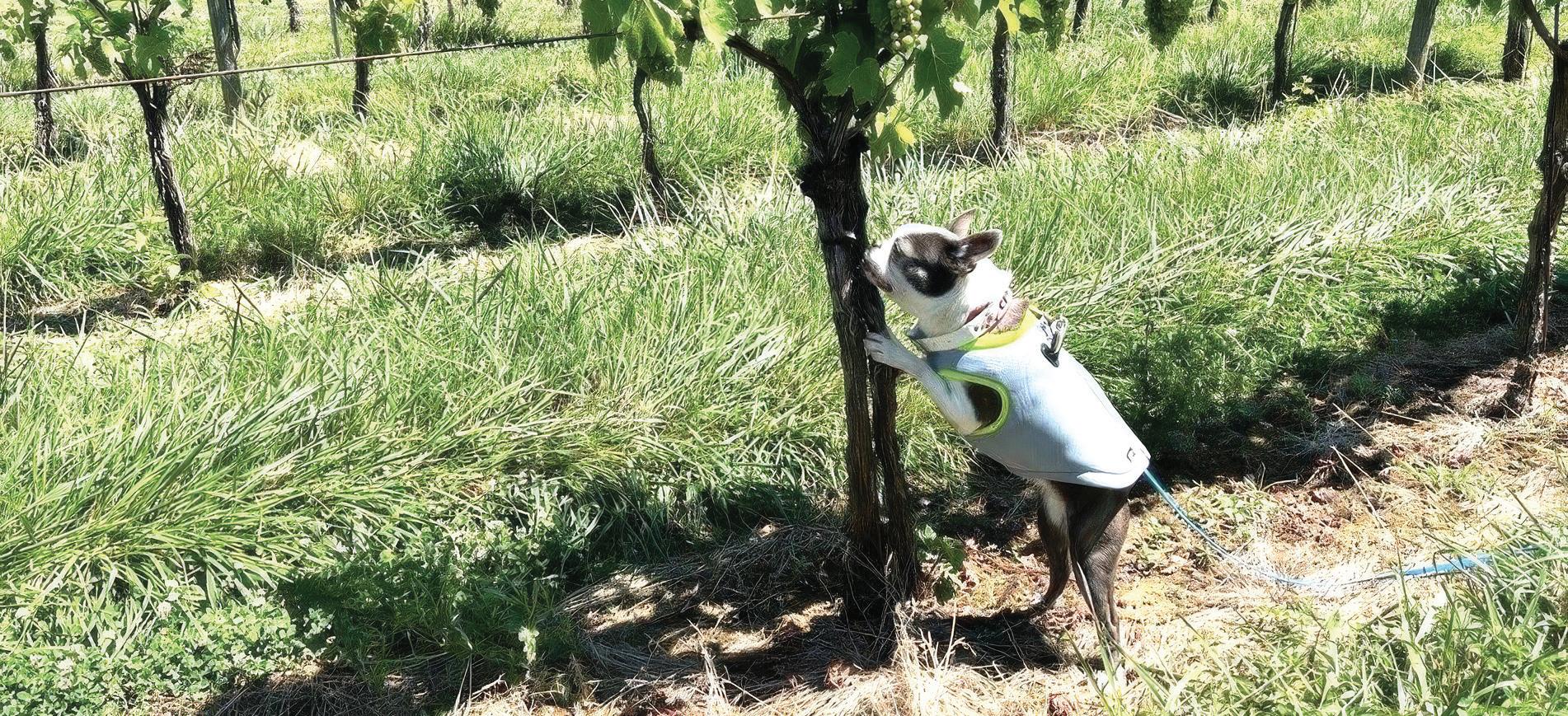
Leave it to Virginia Tech to think of this solution: dogs that sniff out the invasive spotted lanternfly. A new study from VT’s College of Agriculture and Life Sciences pits ordinary pets, trained by their owners, against human searchers in a hunt for spotted lanternfly egg masses. The dogs outperformed humans more than 2 to 1 in densely vegetated areas (like the Maryland vineyard shown above with Boston terrier “Xephyr”). The sturdy could help, since the spotted lanternfly infestation has spread to 19 states, threatening vineyards, orchards, forests, and gardens. The study can also help with research needed for other agricultural threats, including diseases, and the use of dogs to sniff out those threats.
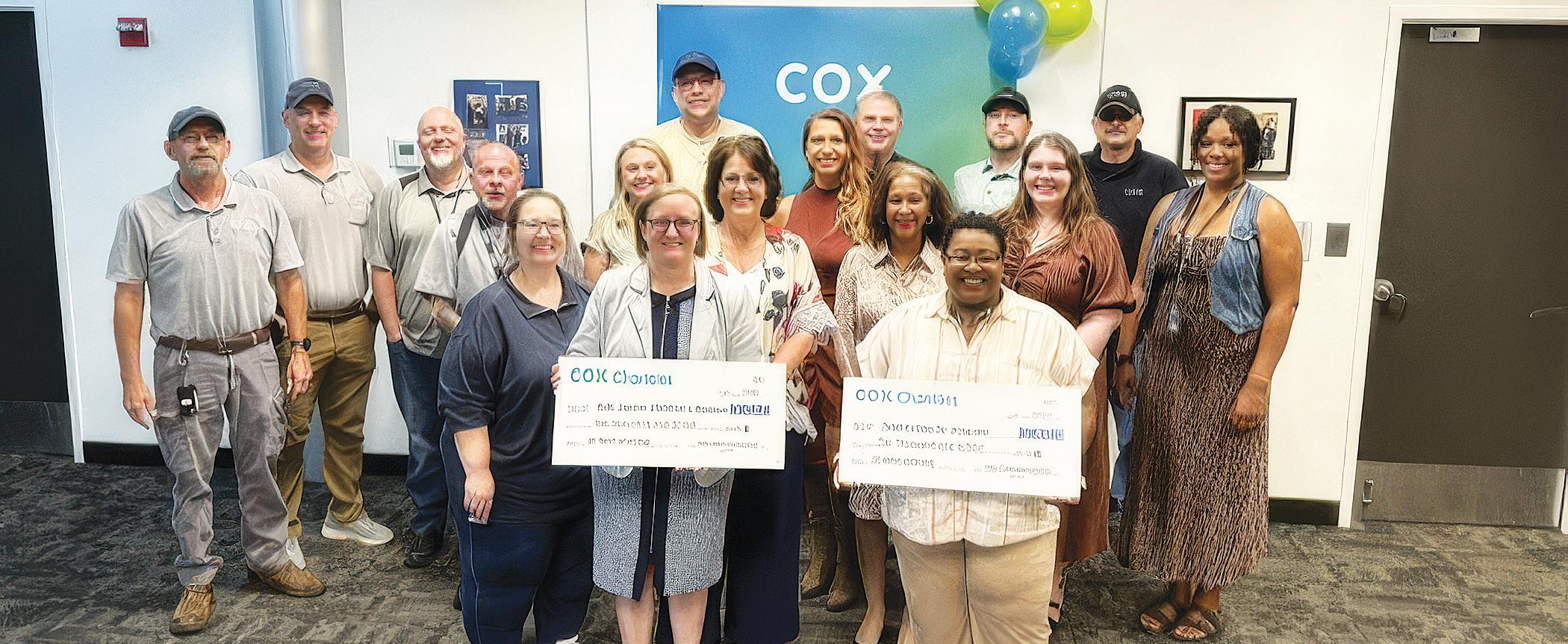
Cox Communications employees have awarded two $10,000 grants to local nonprofits, through Cox Community Investment Grants. For Total Action for Progress, the Cox grant will support the expansion of TAP’s Summer Youth Work Experience (job readiness workshops, employment supplies, food insecurity for at-risk youth). The investment will extend support to low-income teens, empowering them to pursue meaningful employment. For Kids Square Children’s Museum, the Cox grant will serve thousands of children through a dedicated STEM lab (hands-on learning, engineering challenges, coding, energy and circuits, science experiments). Cox Charities is fully funded by Cox employees and business partners and are geared toward science, technology, engineering, arts, and math (STEAM); conservation and sustainability initiatives; and equal opportunity. A total of $600,000 is being awarded to 56 grant recipients throughout Cox’s East Region. “Giving back isn’t just something we do at Cox, it defines who we are. From funding local nonprofit grants to volunteering our time, we show up with heart, purpose and a true commitment to Roanoke Valley,” said Stacie Vest, Cox Roanoke market leader.

The Virginia Passenger Rail Authority has released new renderings of the Christiansburg rail station, now under construction. Amtrak passenger rail service could begin at the new station by late 2027. The foundation, platform, canopy, and parking lot retaining wall have been completed; and a storage, maintenance, and train layover facility is also under construction in Radford to serve the NRV station.
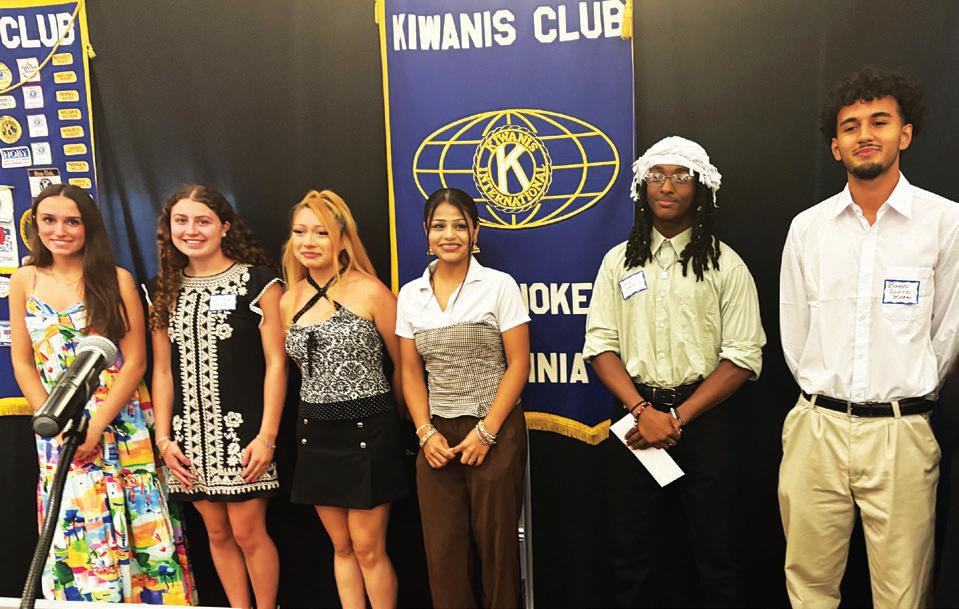
Kiwanis Club of Roanoke awarded $20,000 in scholarships to six high school seniors. Scholarships are given to applicants from the six area high schools sponsored by Key Clubs: William Fleming, Patrick Henry, Cave Spring, Hidden Valley, Northside, and Roanoke Catholic School. Awards of $2,500 each were presented to Safana “Xen” Wajed, Daniel Horne, Jr, and Camila Moctezuma Carrizales of William Fleming High School and Brinna Seidel of Patrick Henry High School. The $4,000 Henh Ly Award was given to Emily Tull of Cave Spring High School. The $6,000 Franklin Scholarship was won by Ernesto Gomez-Meza of William Fleming High School. (L-R: Tall, Seidel, Carrizales, Wajed, Horne, Gomez-Meza)
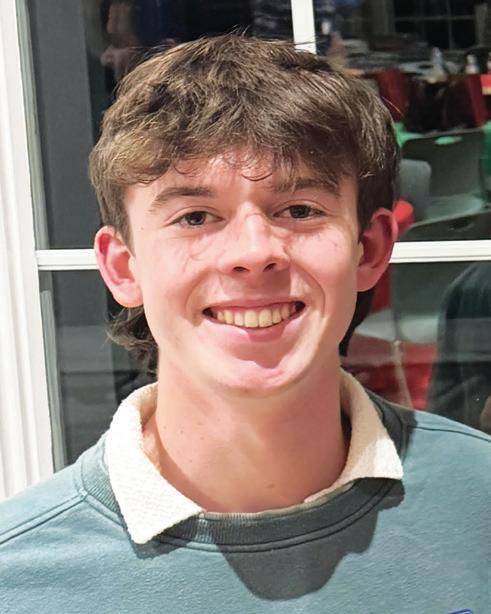
Kai Alexander Weiss of Salem was also recognized as this year’s winner of the Kiwanis Club of Roanoke’s $5,000 environmental scholarship. Weiss is a Salem High School graduate and a rising junior majoring in Forestry at Virginia Tech. Each year, a $5,000 scholarship is awarded by the Kiwanis Club of Roanoke to a student who has attended a high school in the Roanoke region and who is attending Virginia Tech, Ferrum College, Hollins University, or Roanoke College and majoring or pursuing a graduate degree in environmental protection or natural resource management. Upon graduation in the spring of 2028, Weiss intends to work in timber procurement within the Appalachian region.
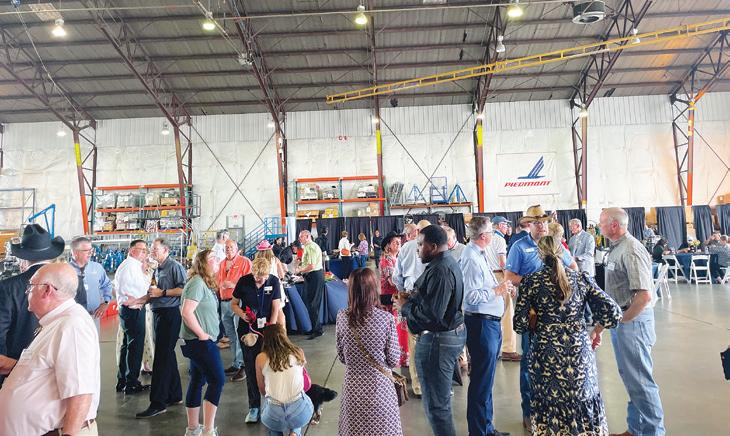
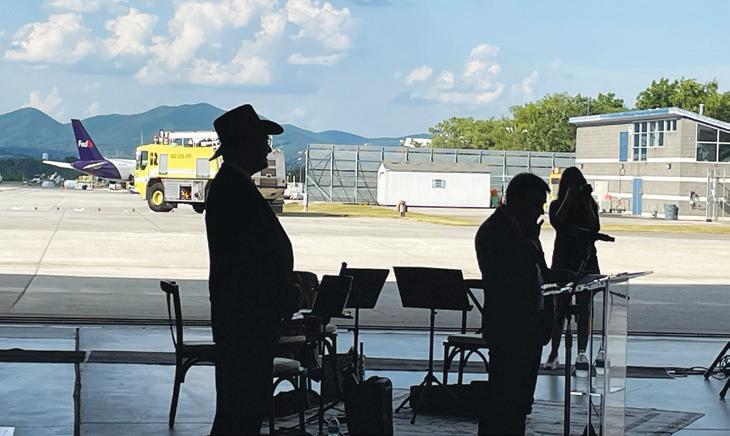
A celebration last month at Roanoke Blacksburg Airport, for the new daily non-stop flights to Dallas-Fort Worth debuted in early June. Many were decked out in cowboy hats and western style boots - including ROA executive director Mike Stewart: “this is a shared win across business, government, educational institutions and leisure travelers alike. This is American [Airlines] largest hub, in Dallas. It opens up well over 700 destinations around the world that we can now get to [with] one-stop a lot easier than we could before.” Among those on hand for a celebration entitled “Blue Skies,” were local stakeholders, business supporters for the DFW flight including Carilion Clinic and representatives from American Airlines.
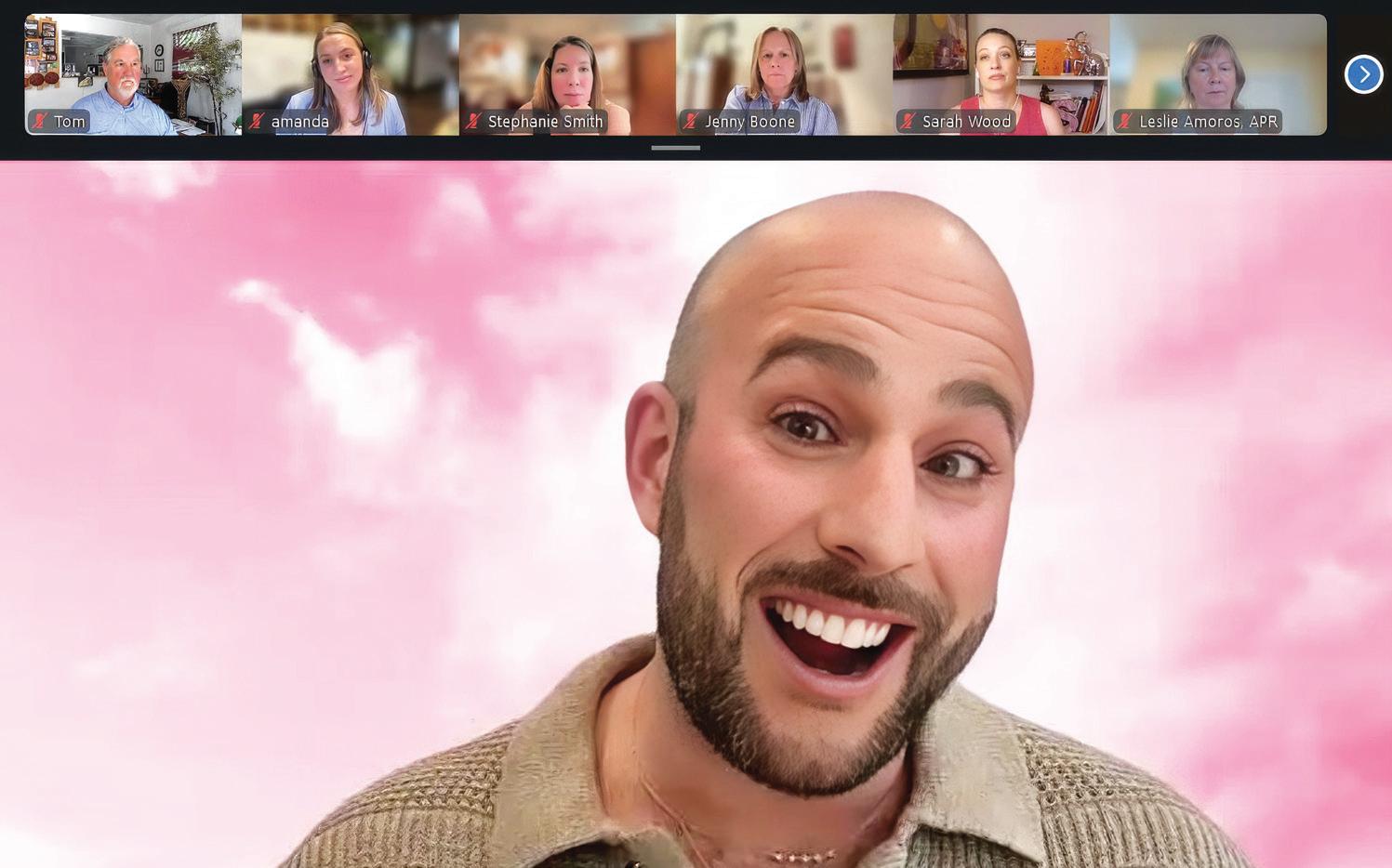
PRSA-Blue Ridge (our Roanoke-based public relations club) hosted a webinar with entertainment/celebrity/beauty industry influencer Micah Jesse of E.L.F. Beauty in mid-June on the topic of building influence on LinkedIn. A Global Director of Influencer and Creator Marketing, Jesse says LinkedIn is better when it’s not just “a resume that tells what you did” but shares “what you think.” Though he agreed with a questioner about separating work from personal in the sense of not damaging the brand of your employer, he reminded the audience that LinkedIn is your personal platform, and that being vulnerable (sharing his journey of being laid off, as an example) is a good way to be generous and deliver value. “Vulnerability inspires,” and is not the same as “oversharing or venting.” Jesse also said it is good to pivot from “mindless posts” to thought leadership, and “if my post could be written by anyone, it will be remembered by no one.” He concluded the session with his preferred formula for valuable posting: “hook to story to insight to invitation.” The post that you’re most afraid to publish, he says, “is probably the one your audience needs the most.”
Submitted
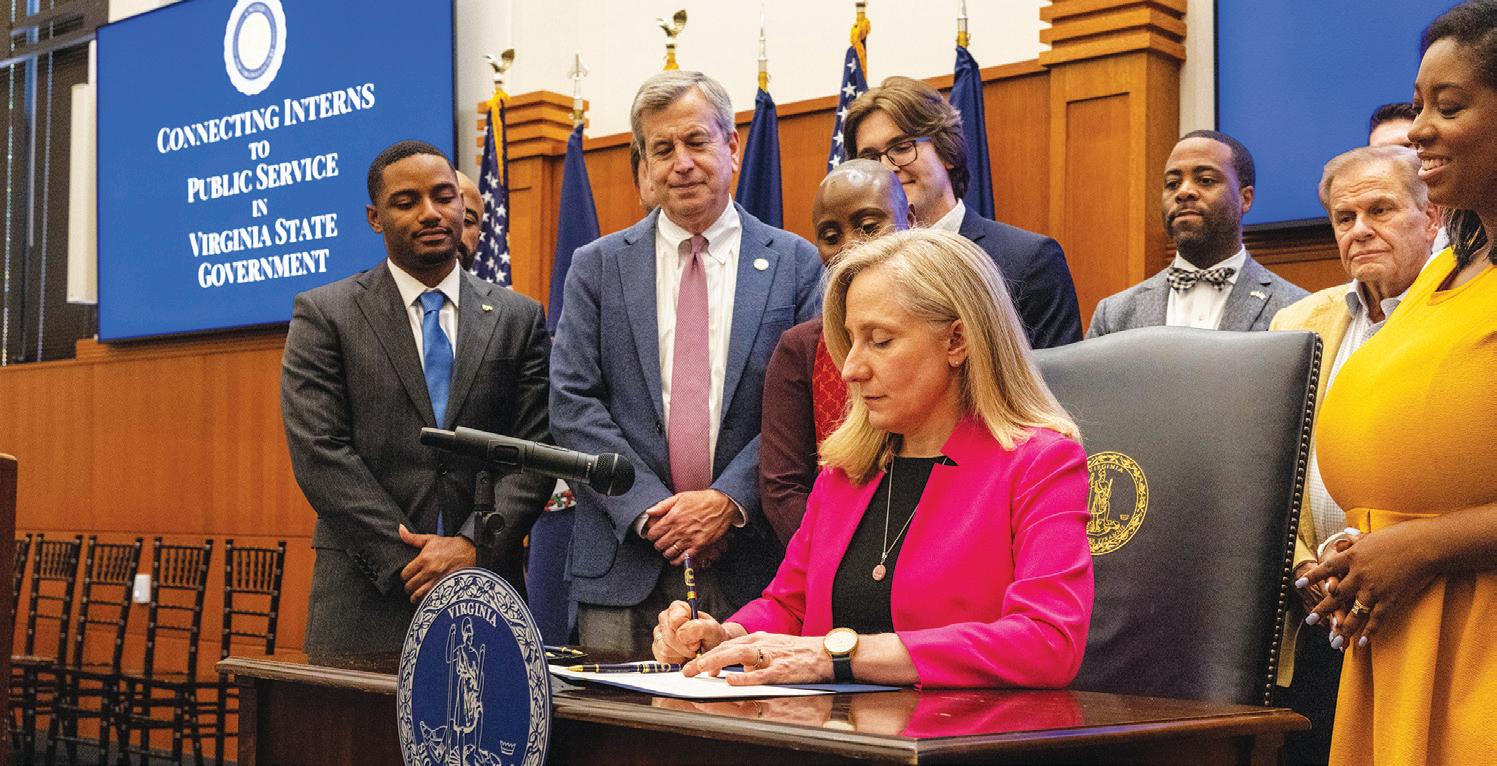
Governor Abigail Spanberger has signed bipartisan legislation creating Virginia’s first State Internship Coordinator — a new role within the Administration focused on strengthening state internship programs and expanding internship opportunities in government agencies to more Virginia students in every corner of the Commonwealth. Last month Spanberger celebrated InternshipsVA — her statewide initiative to connect students with paid internships and strengthen Virginia’s workforce — winning a National Business Facilities 2026 Economic Development Organization (EDO) award.

Governor Abigail Spanberger has signed a series of bipartisan bills to support Virginia’s agriculture and forestry industries — including flagship legislation creating the Commonwealth’s first-ever Farm & Forest Prosperity Plan. The legislation directs the Secretary of Agriculture and Forestry to develop and implement a comprehensive strategic roadmap focused on strengthening agriculture and forestry — the Commonwealth’s number one and number three private industries, contending with unpredictable and hostile trade policies, and helping farmers access new markets.
Other legislation that is now law will encourage K-12 schools to purchase fresh food and ingredients from farmers within the Commonwealth. Another new bill into law is designed to protect Virginia’s beef industry and consumers by requiring that products containing manufactured protein be clearly labeled and not misrepresented as real meat.
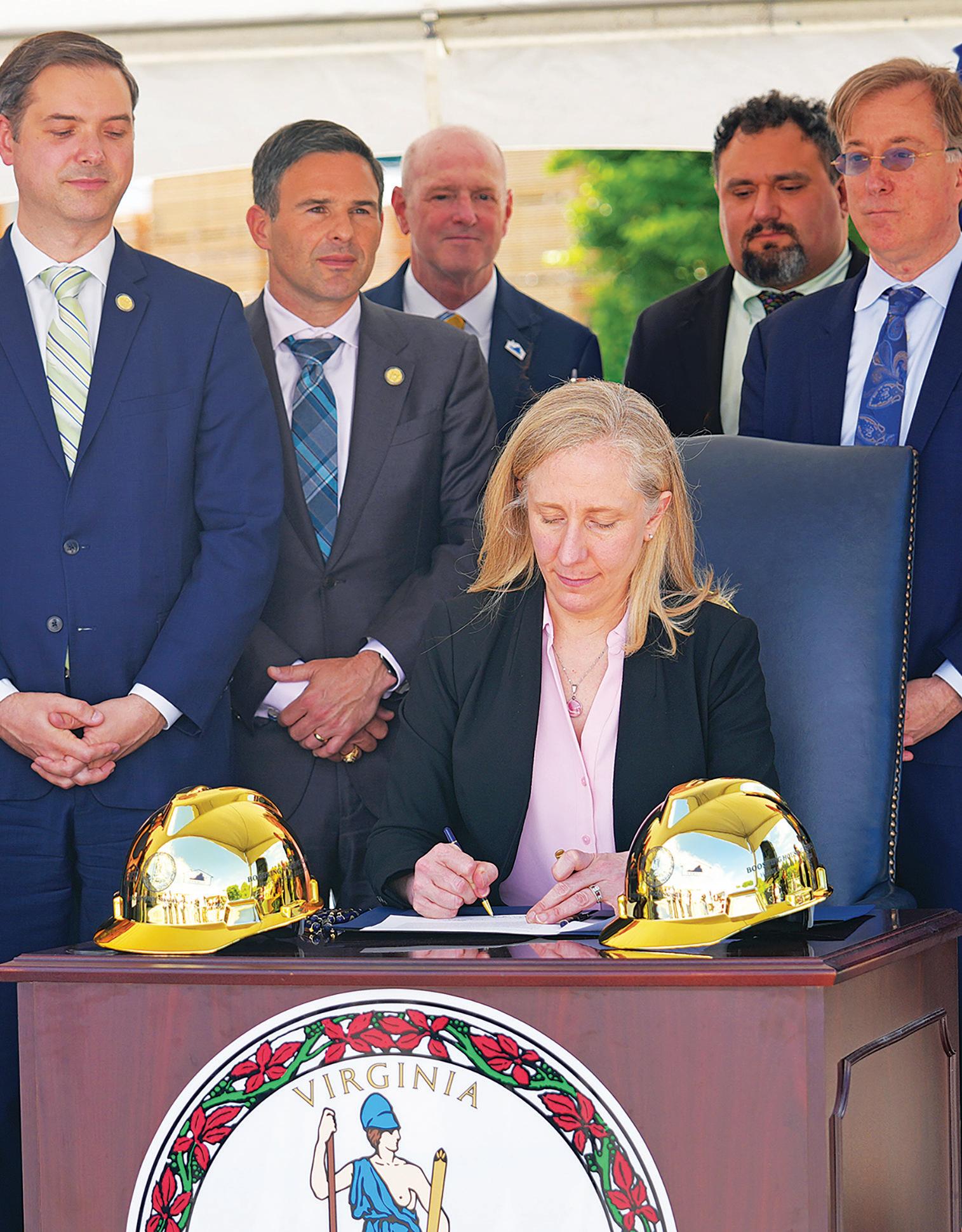
Cavco Industries, Inc. hosted Governor Spanberger at its home production facility in Rocky Mount last month for the ceremonial signing of Virginia House Bill 655 and Senate Bill 346, two bipartisan zoning reform measures that reduce zoning barriers that have historically limited manufactured housing placement statewide. Both bills have been signed and take effect July 1. The legislation expands where qualifying manufactured homes can be placed in Virginia by allowing them in areas where site-built homes are already permitted. It also prevents local governments from applying different or more restrictive zoning and land-use rules to manufactured homes than those applied to comparable site-built homes in the same area.
In addition, the laws limit how localities without zoning ordinances can separately regulate manufactured home communities. Advocates say the bills address Virginia's acknowledged 200,000 unit estimated affordable housing shortage by making it easier to place manufactured homes on residential lots that already permit comparable site-built construction.
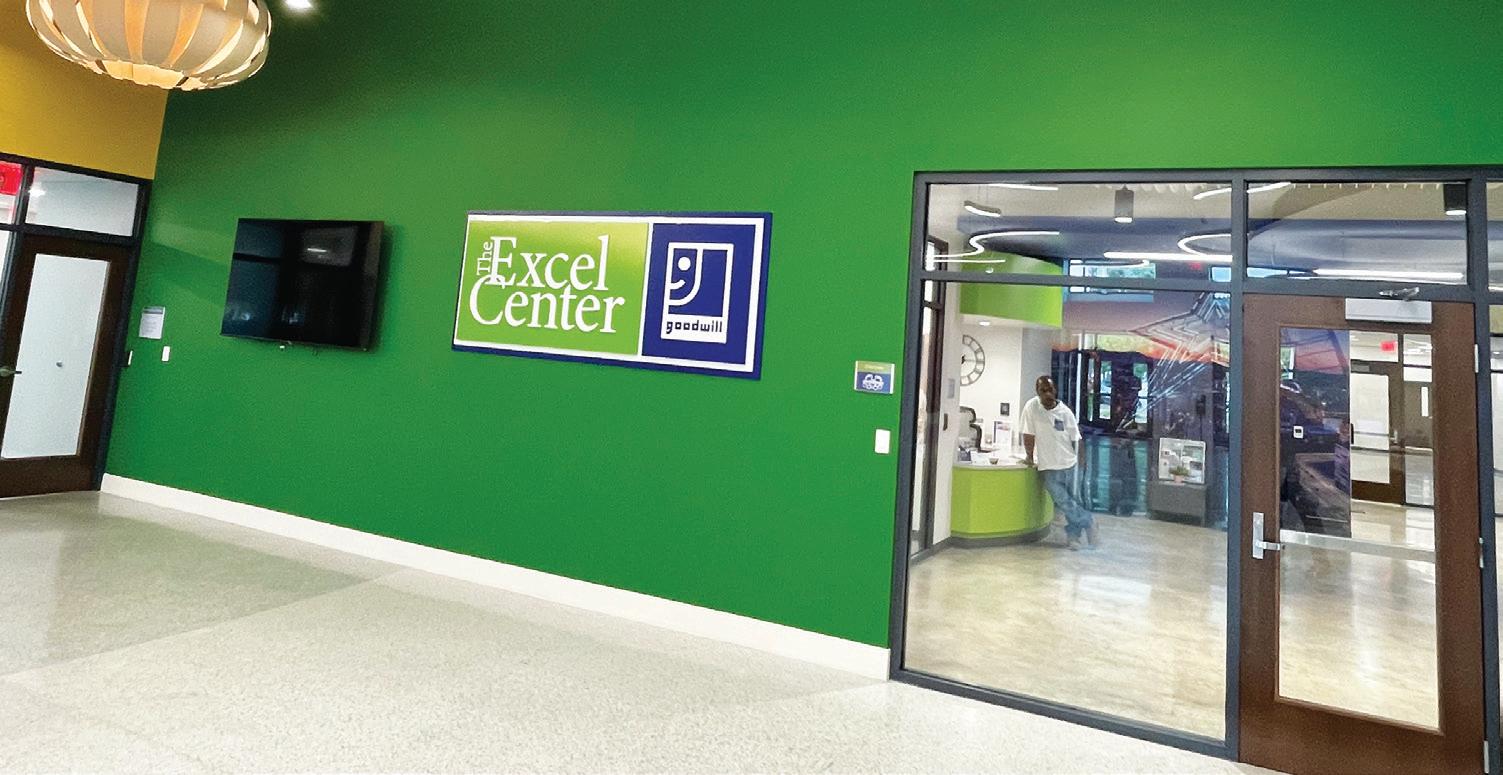
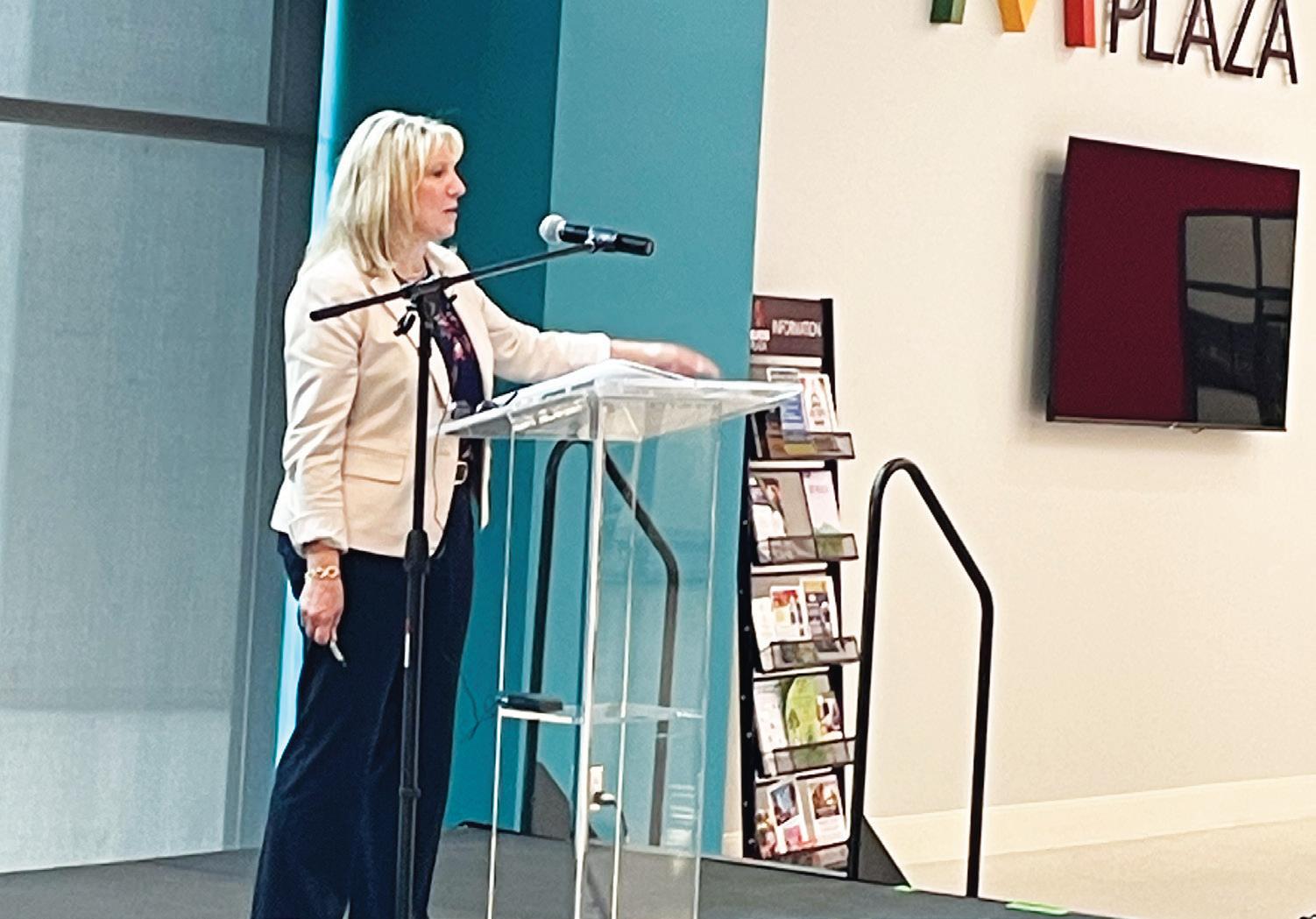
The Excel Center adult high school located at Melrose Plaza in northwest Roanoke plans to have its first graduates later this year; adults who graduate with a high school diploma often will leave with work credentials as well. Last month Virginia’s Secretary of Labor Jessica Looman made her first Roanoke stop ever at the Excel Center, which also offers free day care and transportation assistance for those enrolled in the program. Right now, the Excel Center has 57 students, with room for up to 300 – if additional funding for Goodwill – which operates the free adult high school – can be raised.
Looman said the Excel Center model could work elsewhere: “there is this alignment, a continuum, and there has to be educational opportunities, employment opportunities, the ability to grow and thrive in your own community. When we can address some of those barriers – whether it be affordability, the cost of childcare [or access] to childcare, or healthcare [at] the wellness center here.” Future plans for the Melrose Plaza includes a workforce center on campus- where Excel graduates could search for a job.
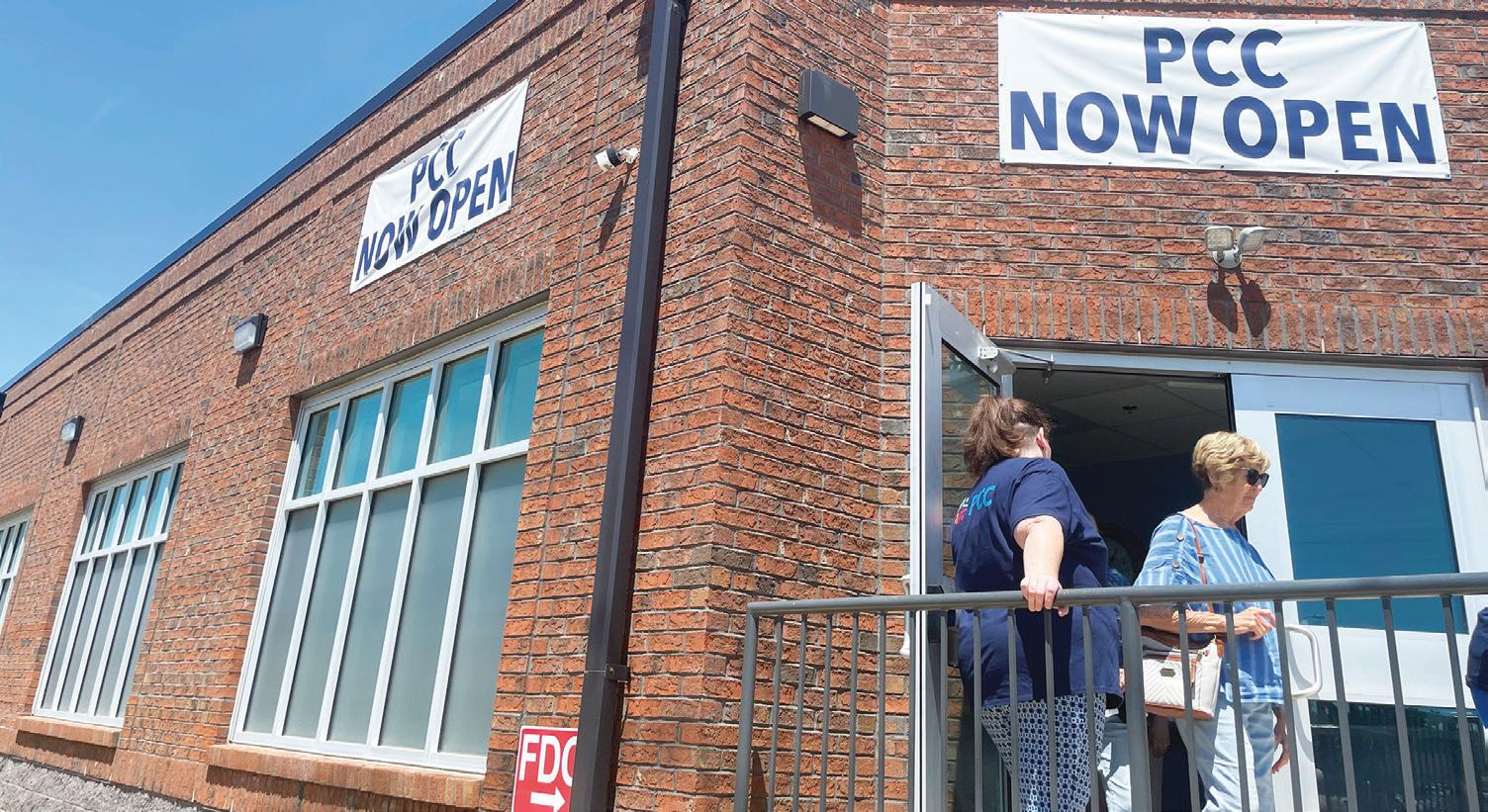
It was talked about for almost two decades: the need for the Presbyterian Community Center in Southeast Roanoke to build a larger, more modern building that would better allow PCC to expand its afterschool Pathways program, financial aid services and food pantry capacity. Last month they cut a ribbon. The brand new 15,000 square foot building was built next to the old PCC building on Jamison Avenue, which was then torn down and became the parking lot. Nicole Jennings is the executive director: “we will be able to increase enrollment by up to 60 percent in our pathways for youth program, our emergency services program [and] serve more families in the community.”
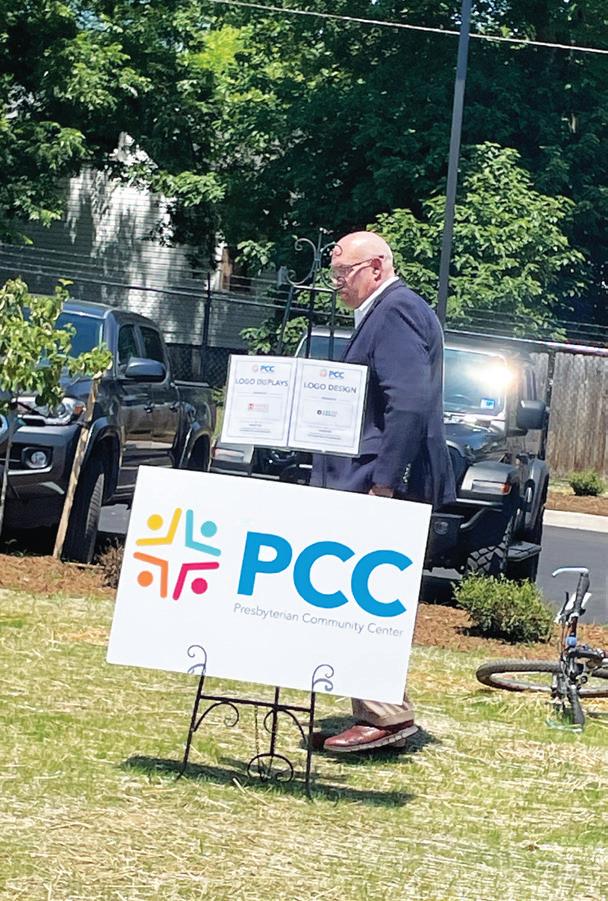
Former Roanoke City Councilman Bev Fitzpatrick was the Presbyterian Community Center board chairman through the end of June; he recalled how southeast Roanoke working class residents were hit hard by several plant closures more than 65 years ago: “it was a middle class neighborhood, half of them worked at the American Viscose plant, about half worked at the Norfolk & Western shops. In 1959 [those] shops basically closed the major part of it because they stopped [manufacturing] steam locomotives. Then American Viscose [which made Rayon] closed down and we had men and women by the thousands out of a job there.”
The Presbyterian Community Center opened in 1967 to serve the struggling southeast quadrant of the city. Through grants and donations, the Presbyterian Community Center on Jamison Avenue has already raised 6 million dollars towards the final target on 6.5 million, which will allow PCC to add a second story at some point. The Presbyterian Community Center was created under the auspices of a local Presbyterian congregation, although it is no longer directly supported by the church.
The new building features an enlarged pantry space, more offices, a full sized gymnasium - with room to grow its Pathways Afterschool Program for first through 12th graders. Mayor Joe Cobb said the work PCC does is another example of what makes Roanoke "Beautiful." Lionberger Construction was the general contractor on the project. Also unveiled was a new logo for the PCC.
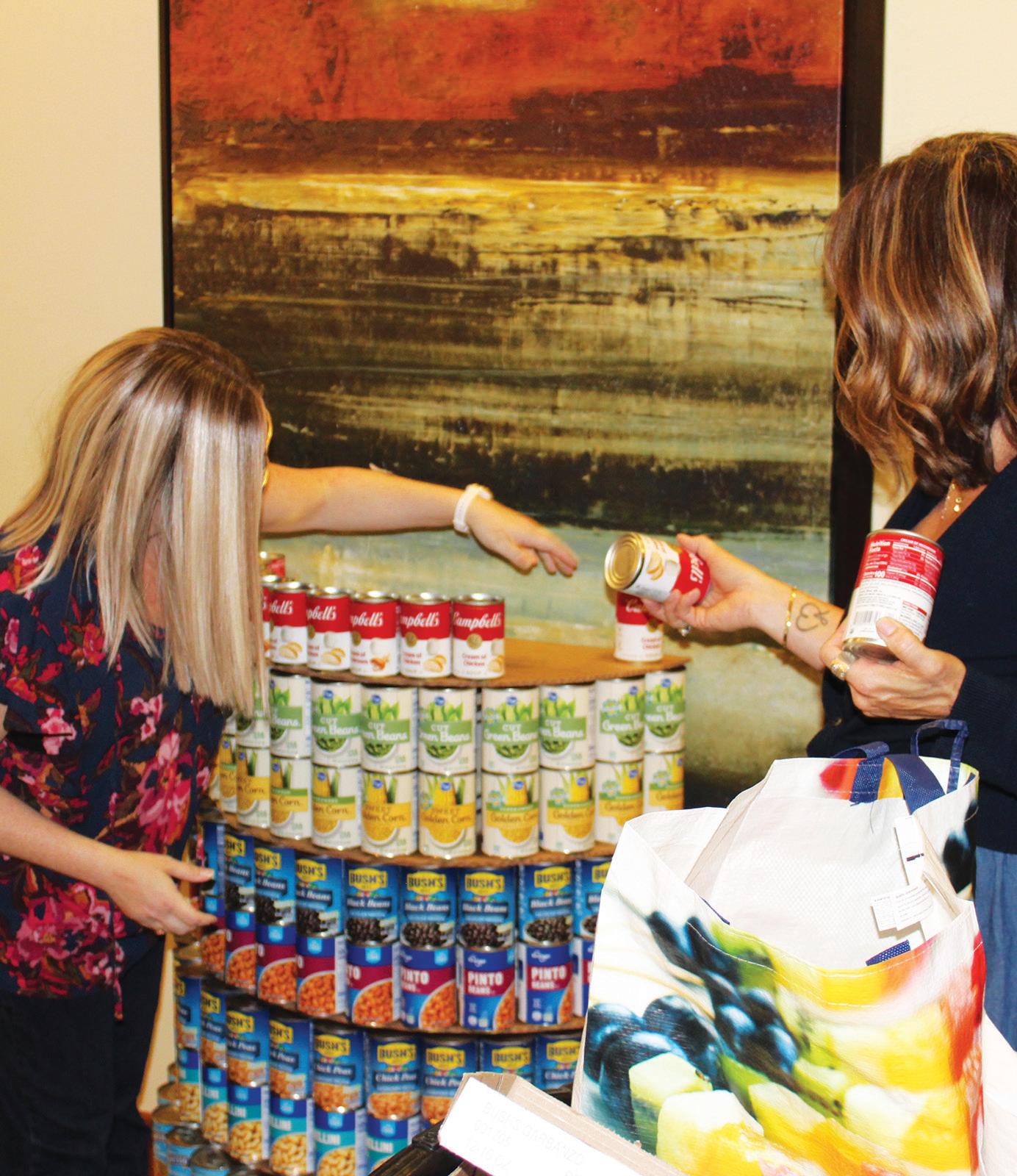
The Warm Hearth Foundation in Blacksburg has introduced the WE CARE Pantry, a new employee resource created to provide simple, confidential, and helpful support when it's needed most. The WE CARE Pantry offers pantry staples and personal care items to employees throughout Warm Hearth Village who face an unexpected expense, a challenging season, or simply need extra support between pay periods. Employees may access the pantry confidentially through their supervisor or administrator.
The initiative was developed in response to employee feedback and through the collaborative efforts of the Employee Engagement Committee, Human Resources, philanthropy staff, administrators, and employee leaders across campus. Together, these groups identified an opportunity to strengthen employee support resources.
The Employee Engagement Committee played a key role in shaping the pantry's development. Through conversations with employees and ongoing evaluation of workplace needs, committee members recognized that rising costs for everyday essentials such as groceries, fuel, and utilities were creating challenges for some employees and their families. To help launch the initiative, Warm Hearth Village hosted a pantry collection drive recently.
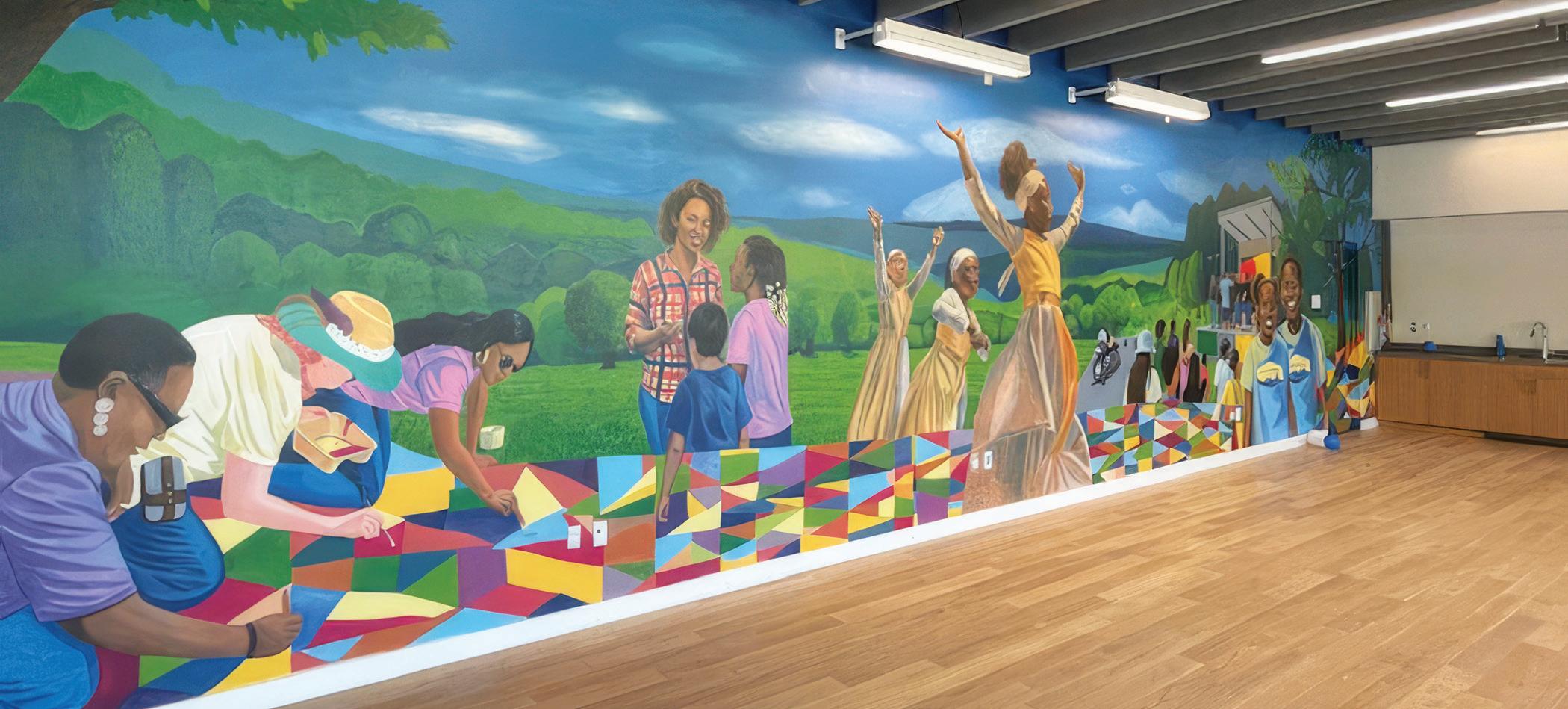
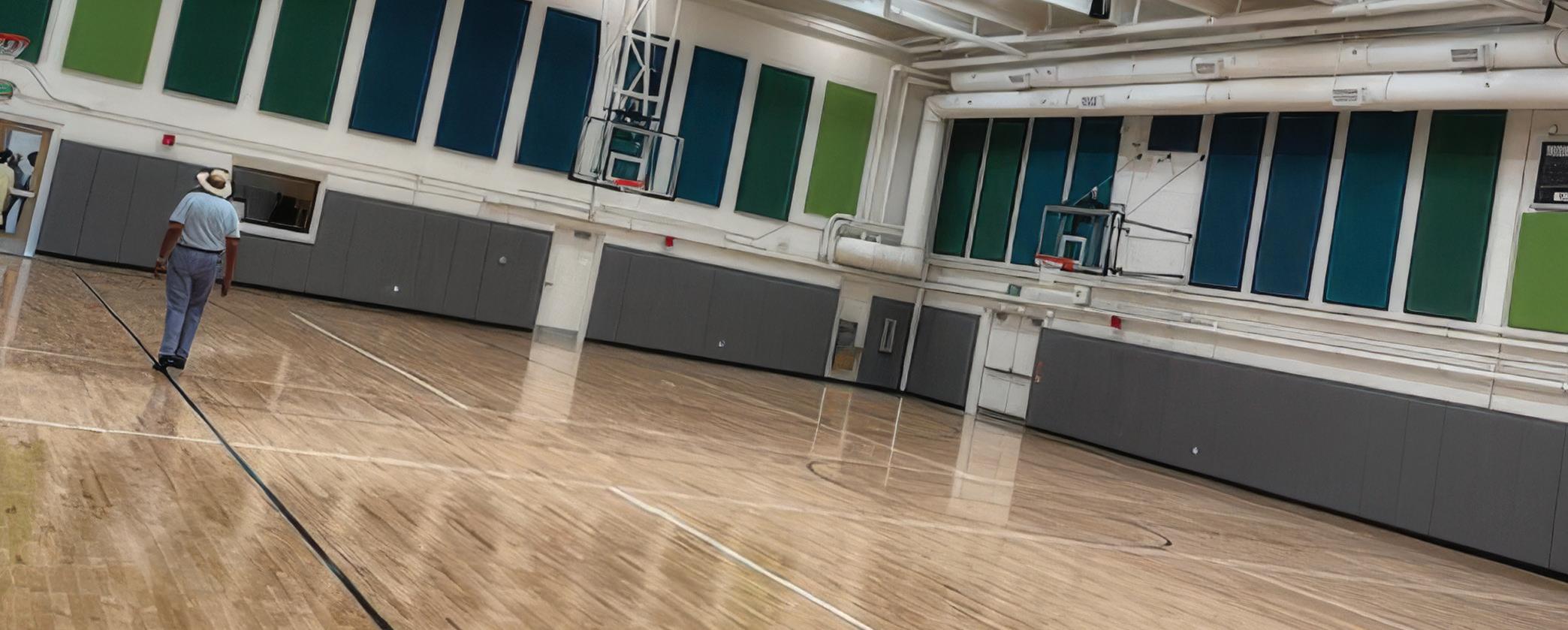
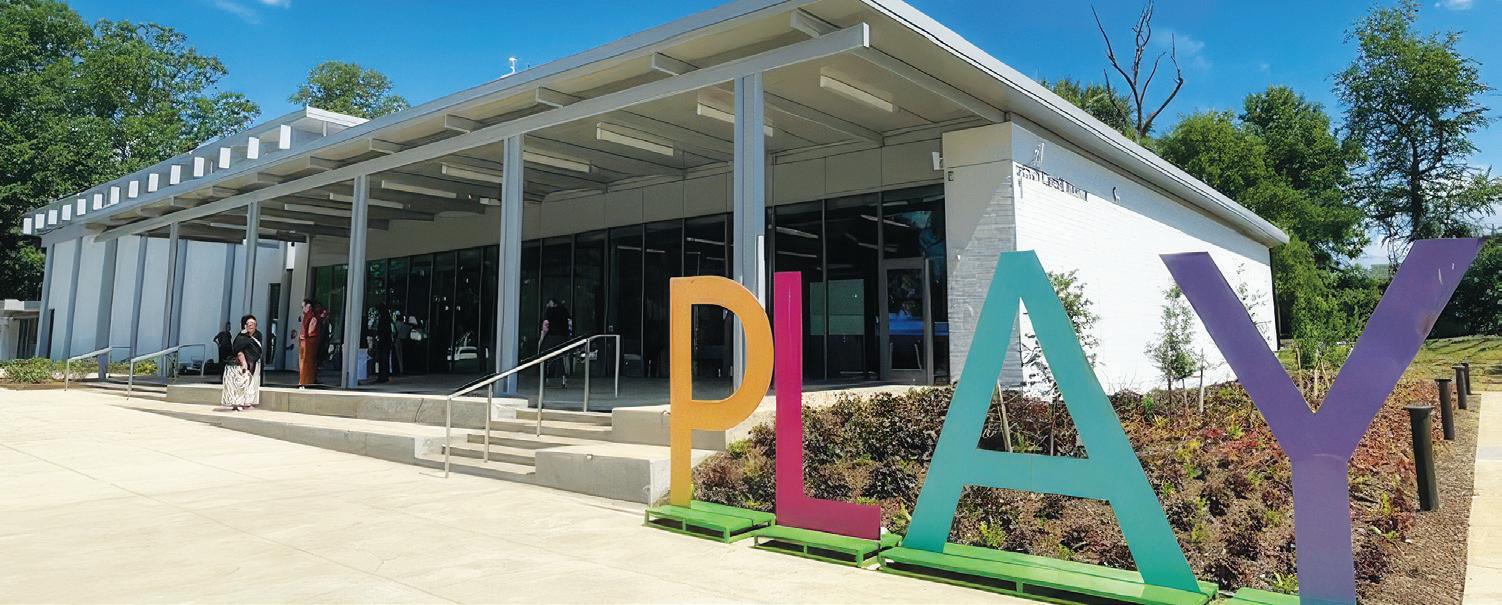
Closed for almost two years while undergoing renovations and a 5700 square foot expansion, the Eureka Park Recreation Center cut the ribbon last month on a reimagined facility that also includes murals depicting life and some familiar faces in northwest Roanoke. The rec center first opened in 1965. The refurbished Eureka Park Recreation Center features a renovated gymnasium, new hardwood floors, upgraded restrooms, community rooms and space for the PLAY afterschool program.
At $14.4 million it’s the largest Roanoke City Parks and Recreation investment ever, made after receiving input from northwest citizens at numerous community meetings. Parks and Rec director Cindy McFall: “a place where young people have grown [via afterschool and summer camp programs], families have come together and lasting memories have been made. Today we are proud to unveil a facility that honors that legacy while providing expanded opportunities for generations to come.”
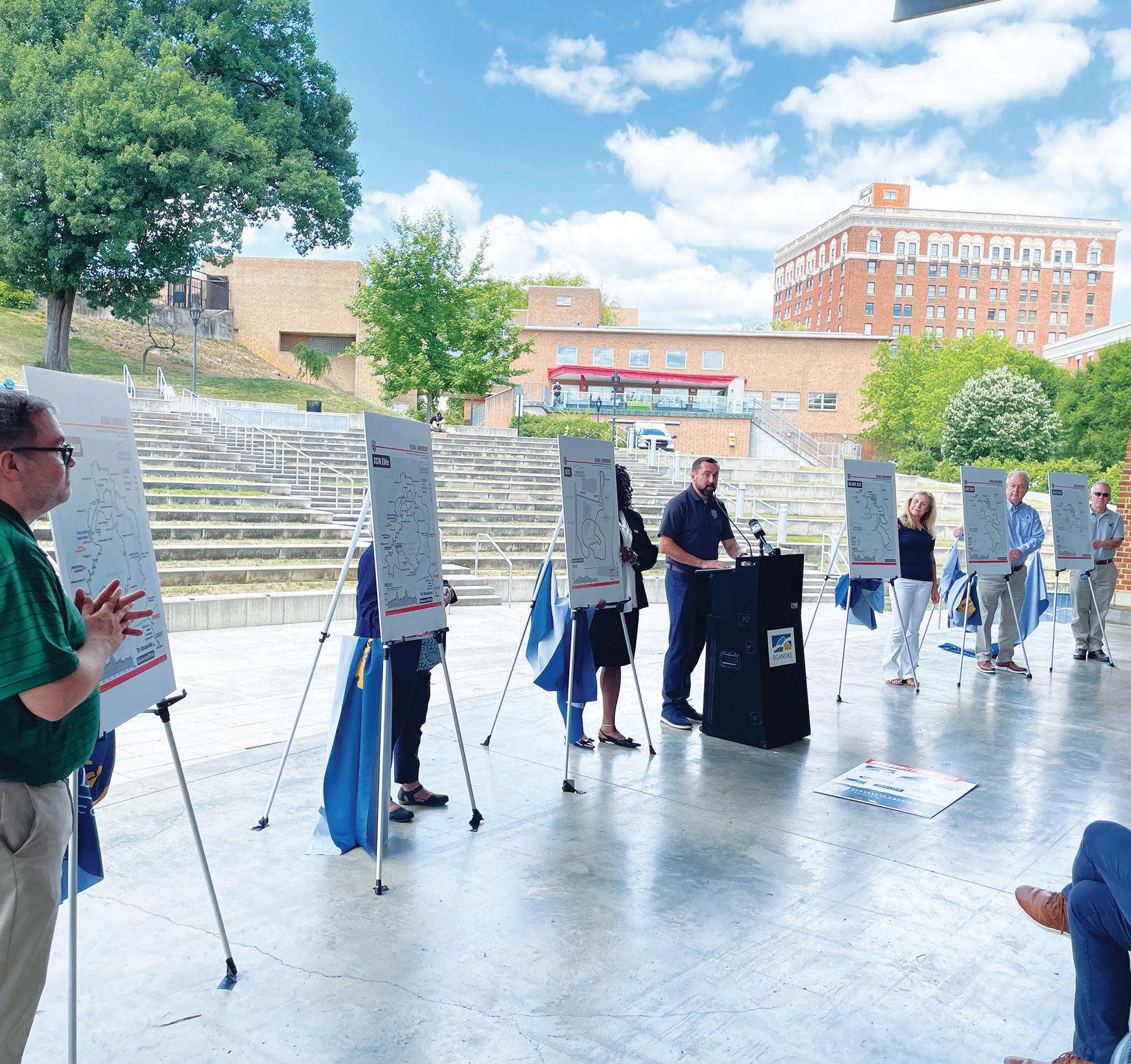
The USA Cycling Mountain Biking Championships that were held last year in downtown Roanoke, at Carvins Cove and at Explore Park, are back again this month for a week of racing beginning July 12. During an event at Elmwood Park in mid-June that revealed the six courses competitors will tackle - both time trials and long distance runs on Mountain Bike Trails - it was announced that the USA Cycling Mountain Biking Championships will return to the Valley for a third year in 2027.
Kyle Knott, the national racing director for Colorado Springs-based USA Cycling, said the response in 2025 made it a no-brainer: “the decision was easy for us. We had over 15,000 people come out and watch this event [last year], we had 2300 registrations and 1300 unique athletes. Having this event, where people can stay downtown and have a lot of options, they can do some camping, they can stay up at Explore Park in the cabins.”
Visit Virginia's Blue Ridge says the 2025 USA Cycling Championships had an economic impact of 2.6-plus million dollars. Katherine Lucas with VBR said, “we had incredible feedback from the racers, from the local spectators, the visiting spectators. We’re really looking to build on the success of last year and the excitement that we saw from the community. We’re looking to add some enhanced spectator experiences.” The races at Explore Park will incorporate a newly-opened four mile paved stretch of the Roanoke River Greenway.
Valley Business FRONT is FRONT’n About at many events each month. Check the social media links at www.vbFRONT.com for more coverage.






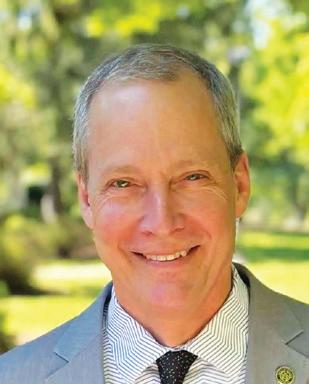
Dr. Richard Grant has been appointed as the Ferrum College Provost. He has served as interim provost since January, and his appointment also includes a position as Professor of Physics. Prior to joining Ferrum, he served in multiple leadership roles at Roanoke College, including Associate Vice President for Student Success and Interim Vice President for Academic Affairs and Dean of the College.
Laszlo Horvath, professor and current interim department head in the Department of Sustainable Biomaterials at Virginia Tech, has been named the next head of the
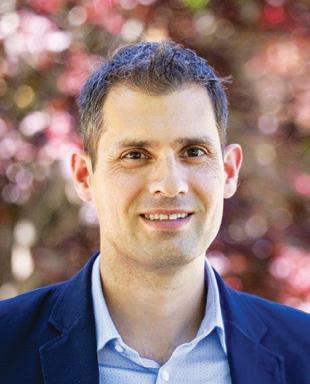
department, effective August 10. A faculty member in the College of Natural Resources and Environment since 2010, Horvath brings extensive experience in sustainable packaging systems, applied research, industry partnerships, and program development to the role. He currently serves as director of the Center for Packaging and Unit Load Design and has led the department as interim head since 2025.
Zach Quest has been hired as athletic director at William Fleming High School in Roanoke. He taught math at Fleming since 2017; served as head coach for boy’s varsity soccer since 2020; and played collegiate soccer at Emory & Henry College.
Zack Leonard has been hired as head football coach at William Fleming High School in Roanoke. He graduated from Patrick Henry High School and was most recently the head football coach for Blacksburg High School where he led the team to its first playoff appearance since 2019 and ended a 29-game losing streak.
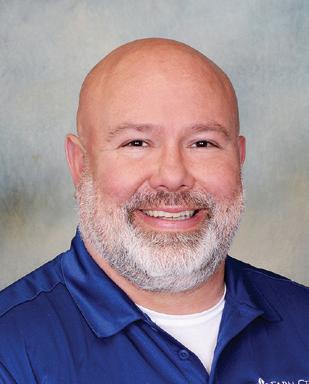
Willy Lester has joined Farm Credi of the Virginias as director of branch operations, based in the Bedford branch office. Originally from Hinton, WV, Lester now resides in Bedford, VA. He grew up helping his grandfather and father on their family farm, which raised
cattle and horses. Lester graduated with a bachelor’s degree from West Virginia University. He has served in a number of leadership roles for several large retailers and previously managed distribution at Southern States Cooperative.
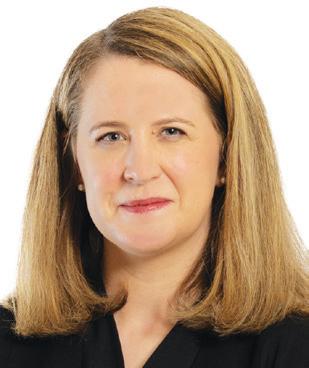
Jennifer Treadway has joined Gentry Locke as an Association. She’ll be in the General Commercial practice group, covering corporate matters, intellectual property, and privacy law. Her background includes a judicial internship for the Honorable Justice William Choen of the Vermont Supreme Court; and she has a

JD at University of New Hampshire Franklin Pierce School of Law, and a BA in History from Roanoke College. Treadway also worked at Vermont Agency of Human Services, State of Alaska Archives and Division of Libraries, Archives, and Museums, and the Howard Center in Vermont.
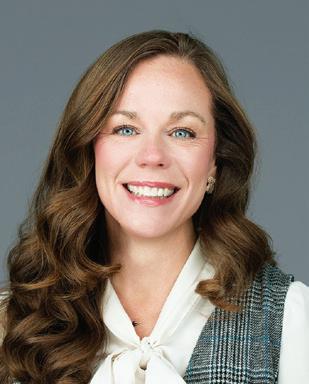
Kelli Finch Best has been promoted to Director of Programs at the Roanoke Regional Chamber of Commerce. She has played an integral role with Chamber events and programs since she joined the team and will elevate the initiatives that connect, engage, and strengthen the regional business
a career announcement?
Send announcements to news@vbFRONT.com Photos should be color, 300dpi. A contact / source must be provided. Inclusions are not guaranteed and all submissions are subject to editing.
community in her new role.
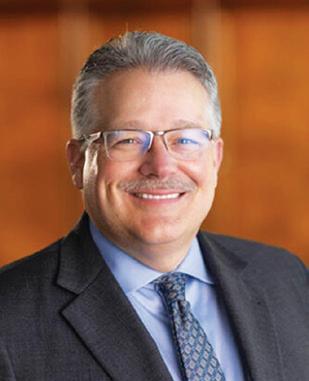
Brad Hall has been named the new President and CEO of the Virginia Chamber of Commerce. He was also a board and executive committee member of Roanoke Regional Chamber of Commerce, living in our region for the past 14 years. Hall served as vice president of External Affairs at Appalachian Power. He also served as president and CEO of
Southeast Kentucky Chamber of Commerce. Hall has an MBA from Morehead State University and is a graduate of the U.S. Chamber of Commerce Institute of Non-Profit Management and the University of Oklahoma Economic Development Institute.
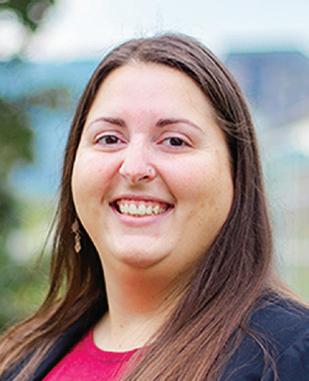
Paige Thompson has been promoted to Convention & Meeting
Sales Director at Visit Virginia’s Blue Ridge (VVBR). She has a background in sales and operations and has represented the Roanoke Region and was recognized for her leadership.
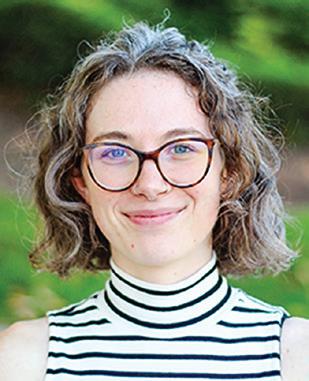
Danielle Hart was promoted to Operations Director / Assistant to the President at Visit Virginia’s Blue Ridge (VVBR). She served as office manager and will be responsible for the seven-days-a-week visitors center operations



and team in addition to her duties with finance, budgeting, human resources, board and executive committee coordination, and office management.
Marcus Burks is the new Fitness Director at Warm Hearth Village in Blacksburg. Burks, an American Council on Exercise Senior Fitness Specialist, has been a Fitness Assistant on the team since July 2020
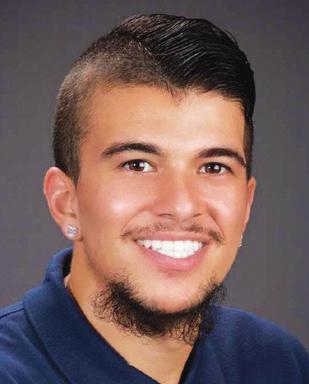
working as a personal trainer and class instructor for WHV seniors and those in the greater community. In addition to leading Fit 4 Life, and Posture, Balance, & Gait, Burks is a certified Rock Steady Boxing (RSB) Coach. RSB is
specifically designed to improve physical skills for those battling Parkinson’s Disease. Burks has a B.S. in health and human performance from Radford University.
Alexia Andrachik has joined WDBJ 7 television as an anchor on The Hometown Station Morning Show / starting on Weekend Morning. She is a graduate of University
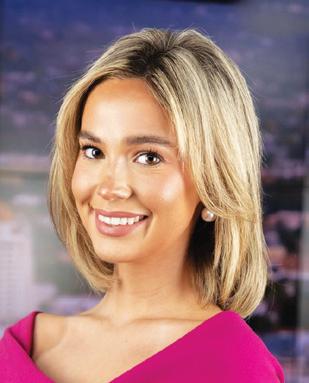
of Mississippi with a major in journalism and political science and worked with the student media outlets. She was also the 2021 Miss Teen Ohio.
Compiled by Gene
and Tom Field.


Jade Richardson Bock is a Senior Consultant with Building Beloved Communities, a Roanoke based company that supports nonprofit organizations. www.building belovedcommunities.com
Jason Boone is Vice President & Business Banking for Freedom First Credit Union. He is a lifelong resident of the Roanoke area, graduated from Cave Spring High School and earned a degree in business from Liberty University. He has over 20 years of experience in banking, more than half of that at Freedom First. He enjoys spending time with his family and friends, hiking, playing volleyball with RVVA, and following Penn State football. [ jboone@freedomfirst.com ]
Aila Boyd serves as the editor of “The Fincastle Herald” and “The Vinton Messenger” and coordinates social media for the Botetourt County Chamber of Commerce. She holds an MFA in writing from Lindenwood University.
Daniel Colston, CFP®, CEPA runs a tax and investing firm in Roanoke, Upward Financial Planning, specializing in helping business owners and retirees. [ daniel@upwardfp.com ]
Carrie Cousins is the Director of Digital Marketing at LeadPoint Digital in Roanoke. For 15+ years, she has helped businesses tell their stories and get better results online with practical digital marketing strategies. She also an active leader in
AAF, serving on the local and district boards, and is an adjunct professor at Virginia Tech.
Dan Dowdy is the business development director for Valley Business FRONT and owner of The Proofing Prof proofreading services (proofingprof.net). His background includes service in the U.S. Air Force and an extensive career in education, including teaching college-level writing competency and business courses, and working for a Fortune 100 company. [ddowdy@vbFRONT.com]
Emily Field is the office administrator for Berryfield, Inc. (publisher of FRONT and a media / marketing firm). She lives in Salem with her husband, Tom, and is the mother of three and grandmother of three. [ efield@berryfield.com ]
Tom Field is a creative director, marketing executive and owner of Berryfield, Inc. in Salem, and owner of Valley Business FRONT magazine. He has written and produced programs and materials for local and international organizations for 40 years. [tfield@berryfield.com]
Micah Fraim is a topreferred Certified Public Accountant and business finance strategist who is well-connected in the regional business community and nationally recognized. Publisher of The Little Big Small Business Book, he also publishes a blog at
www.fraim.cpa/blog and is frequently interviewed as a business financial expert in national media channels. [ micahfraim@fraimcpa.com ]
Frazier Hughes was recruited by the CEO of Keller Williams Realty after being named 2017 salesman of the year at Berglund Luxury of Roanoke. He also hosts The Roanoke Real Estate Podcast, is Dale Carnegie Trained, a former radio personality, and is a Social Media Influencer.
[ frazierhughescom@ gmail.com]
Lindsey Hull writes about a little bit of everything. As a poet, she authored "the mountains rumble" in 2024. Reach her at lindsey. [ smith.hull@gmail.com ]
Gene Marrano is FRONT editor and an award-winning anchor and reporter for WFIR Newstalk radio. "Best one on one interview" award from Associated Press of the Virginias for his interview with former Roanoke County Chief of Police Howard Hall. [gmarrano@cox.net]
Mary Ann L. Miller is vice president of business banking and community relations at Bank of Botetourt. A graduate of Bridgewater College, she has been in the banking industry for more than fifteen years and currently serves on the board and executive committee as past-president with the Botetourt County Chamber of Commerce, a board member with the Daleville
Institute, and is vice chair of the board of with the Botetourt Family YMCA. A native of Botetourt County, she resides in Daleville with her husband and two children.
Alicia Smith is vice president of F&S Building Innovations in Roanoke. She grew up in the construction business and has served in multiple capacities, currently managing all sales, design, production and marketing of the residential division. She's also the president of Build Smart Institute and serves on several boards, community and church organizations. Alicia enjoys lake-life living and fun times with her family (husband and two daughters) and friends.
Dan Smith is a veteran journalist and member of the Virginia Communications Hall of Fame, a winner of numerous press association awards, the Small Business Journalist of the Year, two Perry F. Kendig Awards and the Arts Council of the Blue Ridge’s Literary Award. He is author of eight books, including the recent novels “NEWS!” and “CLOG.” [ pampadansmith@ gmail.com ]
Nicholas Vaassen is a graphic design specialist with over a million years of experience. His design projects include logos, magazines, web design, signs, newsletters, postcards, business cards, and any other marketing materials you can think of. [ nicholas vaassen@gmail.com ]





Botetourt County-based Lawrence Companies has acquired Brooks Transfer & Storage Co (a business founded in 1878 that will extend Lawrence service market across the Commonwealth and into Virginia Beach).
Striped or orange jump suit not required
Conviction Coffee has opened in the Town of Fincastle; the aptly named coffee shop is inside the historic Botetourt County Jail.
CU wins FinLit
Virginia Credit Union (VACU) was named Organization of the Year by the Institute for Financial Literacy, receiving the 2026 Excellence in Financial Literacy Education (EIFLE) Award in recognition of the credit union's exceptional innovation, dedication, and commitment to financial education.
Kindly remove spurs before boarding
The first flight to/from Dallas-Fort Worth began operating at Roanoke Blacksburg Regional Airport in June. There are currently seven direct flights between ROA and DFW by American Airlines.
Dog leaves forest
Brown Hound Tree Service has announced its closing after serving the Roanoke region for nearly 12 years. The company began as a
family business and expanded to perform tree work for both residential and commercial customers (and its story was featured as the cover story for FRONT; May 2019 edition).
Austrian beauty and supplement brand manufacturer—has selected Roanoke as its first US headquarters. The $85 million investment is expected to create 435 jobs. The company makes a comprehensive line of products, including skincare, nutritional supplements, and functional beverages— with emphasis on fresh and preservative-free; and therefore, as short shelf life. The US HQ will be located in the Blue Ridge Commerce Park.
Paid sick leave becomes law
Governor Abigail Spanberger has signed legislation to create a statewide paid sick leave program for Virginia workers, ensuring that the more than one million workers who currently lack access to paid sick days can take care of themselves and their families without sacrificing their wages. The new law requires employers to provide workers with one hour of paid sick leave for every 30 hours worked — up to five paid sick days per year — and extends these protections to both full-time and part-time employees. Currently, approximately 1.2 million private-sector workers — more than a third of Virginia’s private-sector
workforce — lack access to paid sick leave. This gap disproportionately affects low-wage workers, including those in food service and personal care. The new program has a phased implementation based on employer size.
Board appointments by Governor
Tourism Authority: Pete Eshelman of Roanoke, Economic Development Specialist, Roanoke Regional Partnership; African American Advisory Board: Dr. Michael Hickman of Pulaski, Retired Public School Educator, Pulaski County Public Schools; Asian Advisory Board: Nina Ha of Christiansburg, Director APIDA + Center, Virginia Tech, Sarvadaman “Sunny” Shah of Roanoke, President, Shiva Hospitality LLC. Board of Veterans Services: Brandy DisbennettAlbrecht of Rocky Mount, Appellate Attorney, National Veterans Legal Services Program.
The U.S. Department of Health and Human Services (HHS) has awarded Virginia Tech, two research related grants worth $1,404,763. $721,902 will support research related to Cryptococcus. This fungus is found naturally in the environment in soil and bird droppings and can infect the lungs and the brain. Most infections impact individuals with compromised immune systems. $682,861 will support research related to mental health. Another HHS grant was awarded
to Virginia Tech, $56,345 to support veterinary student research.
OSB downtown adds food service
Olde Salem Brewing Company’s location on Market Street in downtown Roanoke has officially launched its Happy Little Munchies food menu, which includes several items like a hot ham and beer cheese sandwich. Kitchen Manager and part owner Andrew Novell says putting together the menu is collaborative effort: “everybody here has a voice in it and it’s been really exciting, watching our team rally around it.” After some early hesitation about taking that step, to offer food, Novell now says the staff, “is ecstatic. They’ve put their own personalities into it.” Novell says For now, the kitchen will be open Wednesday through Sunday from noon until 8 pm.
Longtime general manager Brandon Blevins is taking over the downtown Roanoke restaurant after being approached by the previous owners, the Trinkle family, who wanted the Fork in the Market legacy to continue while stepping away from day-to-day operations. He doesn’t expect many casual eaters to even notice. “We’re not going to make any crazy changes but we’re going to focus on making the food a little bit better [and] the service. Little small changes that are going to elevate the experience
of the people that are coming there.” The transition comes less than a year after Fork in the Market reopened following a six-month closure caused by a kitchen fire. The Trinkles (including former Roanoke City councilman Dave Trinkle sold off Fork in the Alley previously.
Townhome development survives legal challenge, moves forward
Another multiunit development in the City of Roanoke has overcome a legal challenge and is set to add another 24 muchneeded living spaces to the city's housing stock. Two-time Roanoke City Council candidate
James Garrett and others had taken Roanoke City Council and developer Alexander Boone to court over a 24 unit townhouse development planned for the corner of Medmont Circle and Keagy Road near LewisGale Medical Center, claiming improper public notice was given before City Council approved a rezoning for the project. That suit was dismissed by a judge and then turned away by the court of appeals in early June.
Alexander Boone is president of A Boone Real Estate: “I think we all realize we have a housing deficiency in Roanoke City, [which] says they need four thousand housing units
Send announcements to news@vbFRONT. com. A contact / source must be provided. Inclusions are not guaranteed and all submissions are subject to editing.
today. This is a great project to move forward. It’s a townhome project that’s going to give diversity to housing in this area. It’s a great location, close to LewisGale Medical Center, [Route] 419. The homes will be priced in the 3’s (hundreds of thousands] and 4’s.”
That's what affordable new housing is priced like these days, says Boone, with inflation
and supply chain issues ramping up construction costs sharply since the pandemic. Boone says a recent housing development project he worked on with Ryan Homes recently sold out within a few months. This latest project dubbed "Keagy Towns" - also to be built by A Boone partner Ryan Homes (which has built homes in 16 states and has greater purchasing power when it comes to

construction materials) - could have a model open by Labor Day.
One of Roanoke City’s most important business districts needs some work. During her annual state of the road report to Roanoke City Council last month, Valerie Brown, executive director of the Greater Williamson Road Area Business Association told council while studies are ongoing on how to improve the business district, improvements are already being made. “We’re working with the transportation department in the city to replace some sidewalks and curbing, in an effort for pedestrians and those using wheelchairs to have an easier walk rather than having to traverse along the sides of the roadway.”
Brown told Council more businesses are moving into the area, with the district boasting an eclectic mix of businesses and
restaurants, with cuisine from all over the world (subject of a previous Valley Business FRONT story.) Some established members are also benefiting from façade grants to spruce up their curb appeal. The city’s six-month project testing a center turn lane and narrowing the corridor to one lane in each direction between Compton Street and Angell Avenue ended with mixed reviews. A recommendation on that issue is expected later this
Carilion’s big rehab project
Carilion Clinic and Select Medical have announced plans to build a $112 million rehab hospital in Roanoke. The 50-bed facility could open in 2028.
grocery store
The Daleville Town Center development in Botetourt County could soon be home to a new
grocery store. Developers are looking to put the 50,000 full-service grocery store with a drive-thru pharmacy on Glebe Road, adjacent to the Town Center. The proposal was discussed at a county planning commission meeting last month. Meanwhile a Wawa in Daleville is currently under construction and is expected to be completed by the end of this year.
Centra Health has announced it is laying off about 90 employees; about 35 of them to be offered open positions.
Our campuses rock
Three colleges in our region ranked in the top ten of all surveyed by Niche in its 2026 Best College Campuses in America ranking: Liberty University (#2); Virginia Tech (#4); and James Madison University (#8). The ranking is based on key statistics and
student reviews using data from US Dept. of Ed. Top-ranked colleges offer “outstanding campus resources across classrooms, labs, performance venues, housing, food, and recreational facilities.
Tech gobbles big feed
Virginia Tech received a major donation, an unprecedented figure from an anonymous source, identified as “four-generation Hokie family.” The $75 million commitment is slated for VT athletic programs and the Honors College.
Utility gets building site
Appalachian Power paid $1.2 million for a 1,202-acre site at the Patriot Center II industrial property in Henry County.
Compiled by Gene Marrano and Tom Field.


By Gene Marrano
Tyler Godsey says the Roanoke region can and should take better advantage of its live music assets collectively.
The fourth season of monthly concerts at the Dog Bowl, an outdoor music venue located on the Black Dog Salvage Campus, is underway through September, a series curated by 5 Points Music director Tyler Godsey. He says the event now draws bands from outside the immediate region, bumping some local groups – so now he and the Black Dog people have added a monthly Sunday brunch series at the Dog Bowl (capacity around 700), where those bands can still have a public platform.
It also brings in local eateries like Scratch Biscuits and Donny D’s bagels to provide the brunch fare. “Leverage what we do to have a broader community impact,” is how he puts it. Local non-profits benefit from the brunches as well. It’s about building a better
community where at time Godsey says, “it feels distant from each other.”
He also believes the Dog Bowl fills a gap when it comes to outdoor music venues. Another notable one in the Roanoke area is the Elmwood Park Amphitheatre, with a much larger stage and seating capacity. Godsey likens the Dog Bowl somewhat to Lime Kiln in Lexington. 5 Points has also branched out to book music elsewhere, after putting together and training its own production team, at the Grandin Theatre and Wilderness Adventure for example.
Godsey is bullish on the local music scene in general, from Martin’s Downtown and local brewpubs that now schedule live music, to The Spot on Kirk and Jefferson Center, his
own 250 capacity 5 Points former church sanctuary and now The Exchange, which can hold 1000 or more and is operated by Across the Way Productions, the organization behind FloydFest. Lettuce is the headliner at The Exchange in October.
Other outdoor venues like Roanoke’s Dr Pepper Park and the Amphitheater at Daleville Town Center in Botetourt also draw loyal fans and a growing audience base.
Within an hour from Roanoke there is The Harvester in Rocky Mount and The Coves near Smith Mountain Lake. Godsey says there’s talk recently in Roanoke about identifying and promoting an “entertainment district,” noting the successful initiative over the past two decades to position the valley as a mecca for outdoor amenities, and how other communities are now doing the same.
The music scene meanwhile, “is not something that Roanoke has fully figured out,” with no slick branding or marketing campaign yet he contends. The Down By Downtown Music Festival held in conjunction with the Blue Ridge Marathon weekend might be a start. Creating that entertainment district starts with the public being aware of what’s already available to them, says Godsey. Growth over the past ten years has started with the arrival of brewpubs that exploded after laws passed by the General Assembly made tasting rooms legal. Live music followed soon thereafter and is a staple at Parkway Brewing, Big Lick Brewing Company, etc.
“We’ve developed an ecosystem,” that at times pulls attendance away from one
location to another Godsey contends. The only way it works to grow the audience he says is taking a broader economic development viewpoint, to “maintain a healthy ecosystem [for] these venues –every single one of them. We do need to come up with a way to think about how music and live entertainment are not just priorities for us, but are priorities we’re already succeeding in.”
Godsey has researched other localities around the Commonwealth he feels have done a good job with their live music branding, like Bristol, as the birthplace of country music. “We can do the same here. Southwest Virginia is an incredibly vibrant, dynamic music region. How Roanoke chooses to package [its live music] and talk about it in the same way that we chose to talk about all of our outdoor amenities – I think that’s a very big opportunity as a community and region. We haven’t really put it together in a big picture. That’s kind of a goal for me.”
Tyler Godsey is the Founder and Director of 5 Points Music Foundation, a nonprofit based in Roanoke. It was launched in January 2017 with the mission to “pursue the power of sound in all its glory.” Godsey’s two children were born deaf, and at 11 months old received cochlear implants. The personal experience led to the creation of a space—in this case a former church almost 100 years old—where music could be experienced in all its forms. Music therapy (free for all clients regardless of age), hearing loss advocacy (promoting safe decibel levels, free ear protection at concerts) and accessibility (wearable vests so those with hearing loss can FEEL the music) are 5 Points Music Foundation signatures. “I believe in the non-profit world more than anything now,” says Godsey.