More than presents: For Dover man, donning red suit means gratitude, family, gift of baby Jesus
An awful Christmas gift for the Bates family Sipping cider: Sweet stuff, hard or as a cocktail
Jim Therrien reports for the three Vermont News and Media newspapers in Southern Vermont. He just can’t get enough of local/regional journalism, having previously worked as a reporter and editor at the Berkshire Eagle, the Bennington Banner, the Springfield Republican, and the former North Adams Transcript. But his favorite all-time job — as a hippie house painter during school vacations.
Lex Lecce spends most of her time working, but any of her free time is spent with her family — mostly her new husband and cats. Her search history worries her therapist.
Kristopher Radder is always out and about in the community with his family, documenting the wonderful festivals this area has to offer. His favorite hobby is smoking meats and cracking dad jokes to his daughter.
Isabel Wissner is voting “yes” on the Reproductive Liberty Amendment (Article 22). She enjoys foraging black raspberries for her pony-puppy and rejects eating the dead bodies of animals, ew.
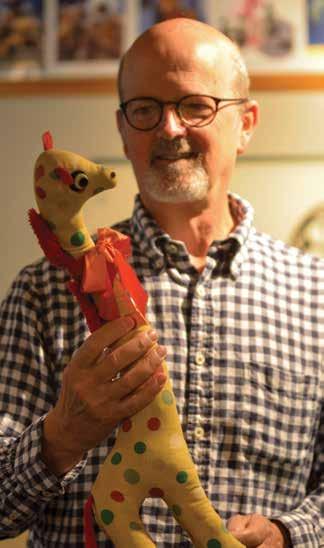
Susan Smallheer has been writing news and profiles from Windham County since shortly after she got her first Mary Meyer stuffed animal at the age of 8.
An award-winning reporter for the Brattleboro Reformer and Vermont News & Media, she lives in Rockingham and raises Tunis-Corriedale sheep after deadline.
Bob Audette has been writing for the Brattleboro Reformer for more than 17 years. Before that, he was a beat reporter in the Hudson Valley. He started out his career in journalism as a newsroom clerk for the Salt Lake Tribune, in Salt Lake City.
President and Publisher
Jordan Brechenser jbrechenser@reformer.com
Executive Editor
Noah Hoffenberg nhoffenberg@reformer.com
Assistant Editor
Gena Mangiaratti gmangiaratti@reformer.com
Windham County
Sales Manager
Lylah Wright lwright@reformer.com
Senior Sales Executive
Richard Lolatte rlolatte@reformer.com
Sales Executives
Richard Battista
rbattista@reformer.com
Bruce Merrill bmerrill@reformer.com
Bennington County
Sales Manager
Susan Plaisance splaisance @benningtonbanner.com
Sales Executive
Ahmad Yassir ayassir @benningtonbanner.com
Vermont Country magazine is a publication of
Chris Mays is celebrating his 10th year with the Brattleboro Reformer this month. He was recognized by the New England Press Association for health reporting this year. He just got an air fryer.
Dan Tebo is a Boston-based seasonal film critic and Luddite internet blogger. He graduated from Emerson College with a B.A. in waiting tables. His work can mostly be found in his own imagination and also at vhsoftheweek.com. Choose wisely.
On the cover:
Caroline Bonnivier Snyder
The first snow of the season, seen here at the entrance to Woodford State Park.
No presents of mind
I was raised in a Jewish home that also sported an annual Christmas tree, with lights and decorations, opening one present on Christmas Eve and the rest the next morning.
My grandparents, all now gone, were never allowed around our home around the holidays, for fear of their heartbreak were they to set eyes upon our bedecked tree. Since no holiday invites were ever extended to them, I had to imagine that they knew something was afoot, such as large red stockings on a banister near the tree.
Neither Judaism nor Christianity were routinely practiced in our home, although each was rolled out from storage for some of the major holidays, like an old statue from the basement of a museum for a once-a-year show. I was sent to Hebrew school to learn about the religion and the language. Neither stuck (I mean, really. What would a New England kid in the 1980s have in common with the slaves who built the pyramids?) and I left them behind after my bar mitzvah on Oct. 27, 1984. I did, however, learn to read Hebrew from the Torah for 20 minutes straight, without comprehending a word.
Since then, with an archaic Hebrew God on my left and an unfamiliar Christian God at my right, I fell into the chasm between them.
The holidays, for me, don’t spur chestnut-scented memories. Making a Christmas list in my childhood home was an effort in dashed hopes. I grew accustomed to never getting anything I asked for, needed or wanted. Eventually, I stopped asking, and still won’t respond when sought out for gift ideas.
I remember getting Chapstick, socks and underwear. Real gifts arrived at the homes of my friends: BB guns, motorcycles, stereo systems. My house? Santa brought presents that seemed to be for
other children, poor kids, basics such as boots, gloves, pajamas, a toothbrush. The presents-every-night-of-Hanukkah myth? Not at my house, where it was Night One and done.
Having been raised by people who lived through World Wars and the Great Depression, my parents must’ve thought that giving my brother and me gifts and toys somehow equated to spoiling, and that their money was better socked away into savings for a rainy day, for their retirement.
In the end, my parents’ savings took a big hit in the financial crisis of 2008. Smells like karma to me.
Even though the gift-receiving process for me is forever tainted, I still enjoy the giving part. I don’t care if I’m thanked, appreciated or even acknowledged (unlike my parents, who wanted to hear thanks expressed, even for the toothbrushes). That, to me, is not the point. I tend to give things that I know will help people. If they get even a little boost from it, I can walk away with a modicum of confidence, saying “my work is done here.”
For most of my life, I found it hard to say if my parents were cheap or just confused about gift-giving. Although, years later, I think I got my answer. It came to me one time while visiting them. I noticed on a desk a receipt. It was for a large donation that they had given to a Midwestern evangelist.
My conclusion? My brother and I weren’t worth the trouble. To be continued (on my shrink’s couch)!
Noah Hoffenberg is the executive editor of Vermont Country magazine and its sister publications, the Bennington Banner, Brattleboro Reformer and Manchester Journal. He’s won numerous Associated Press journalism awards and has been in therapy since 2006.
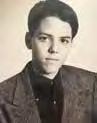
The author at about age 11, already well-aware that you can’t always get what you want, as Mr. Jagger and the Stones so eloquently put it.
Photo provided by Amanda Lawrence
An awful Christmas gift for the Bates family
By Lex Lecce
Lions and tigers and bears and much more at Mary Meyer
By Susan Smallheer
Sipping cider: Sweet stuff, hard or as a cocktail
By Bob Audette
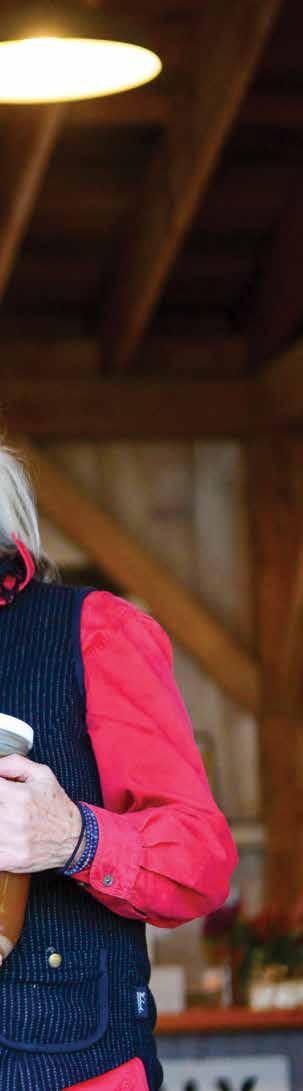
More than presents: For Dover man, donning red suit means gratitude, family, gift of baby Jesus
By Chris Mays
3 4 26 37
Contributors
Editor’s note
By Noah Hoffenberg
Drink and Dine
4649
Holidays gone sideways: These films depict the best of times, the worst of times
By Dan Tebo
Vermont views appear around almost any curve
By Jim Therrien
An awful Christmas gift for the Bates family
‘Shaftsbury
Murderer’ hangs for slaying of new mother Harriet Jane Bates
By Lex Lecce
Vermont Country
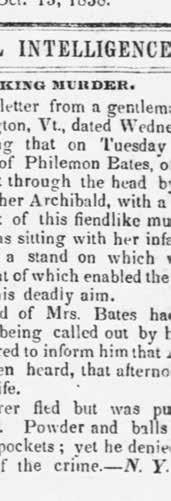
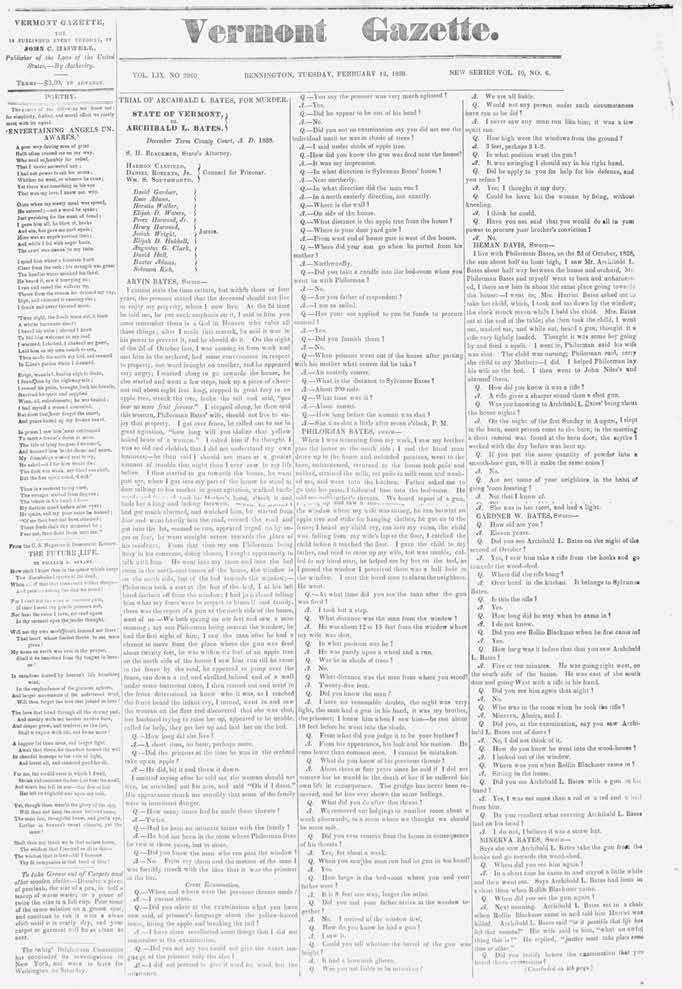
In the year 1838, a man named Archibald Bates lived in Shaftsbury. Archibald was 33 years old and a reli gious man. He would read the Bible after his work was done for the day on the farm and, although he was having financial troubles, he found a home with other members of the Bates family.
In the following years, Archibald became consumed with rage as his younger brother, Philemon Bates, had control of the Bates family homestead, living there with his wife, Harriet Jane, and three children. Archibald spoke of his frustrations to his father, Arvin Bates, and his dissatis faction regarding the division of family property.
On the day of Oct. 2, Archibald spoke to his father again, and the situation got out of hand. He threatened his younger brother’s family. An empty threat, Arvin hoped, because Archibald had made similar threats in the past, but no harm had ever been done.
This time was different. Arvin felt uneasy after the conversation and went to warn Philemon. As the two spoke, they decided to help Archibald. An agreement was made that they would give Archibald property or money to extinguish his rage.
It was around 7 p.m., and Archibald was standing under an apple tree. Police determined he took a fruit from
Vermont Telegraph via newspapers.com
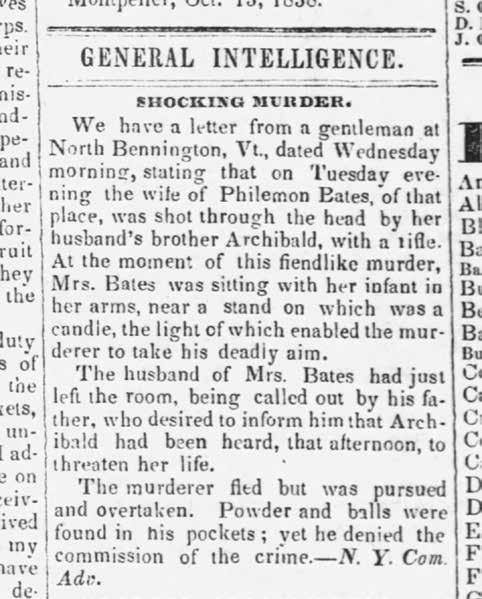
A clipping from the Vermont Telegraph from Oct. 17, 1838, on the slaying of Harriet Jane Bates.
a branch and bit it before he tossed it on the ground and picked up his rifle.
At the same time, Harriet sat down to nurse her 2-month-old child at a window lit by candlelight. That’s when a gunshot rang through the homestead.
Arvin and Philemon ran toward the sound and into Philemon’s family home. There they found Harriet, with a bullet wound above her right eye, beginning to slump over with her cry ing baby in her arms.
Philemon took the child from her before she fell to the floor. He attempted to lift his wife back into her chair as she lay on the floor bleeding, but he was unsuccessful. After several attempts at lifting her, Philemon’s friend assisted him in carrying the dying Harriet to their bed and let her rest until she died an hour and a half later.
Archibald already had fled the homestead and was running through the woods. He didn’t get far before neighbors captured him. He had gunpowder and bullets in his pocket, but admitted nothing.
The entirety of the Bates family turned on Archibald. His father testified against him that he had threatened Harriet’s life earlier in the day. Younger members of the Bates family testified that they saw him remove the rifle from the wall.
The evidence was conclusive, and the jury returned a guilty verdict after 15 minutes of deliberation.
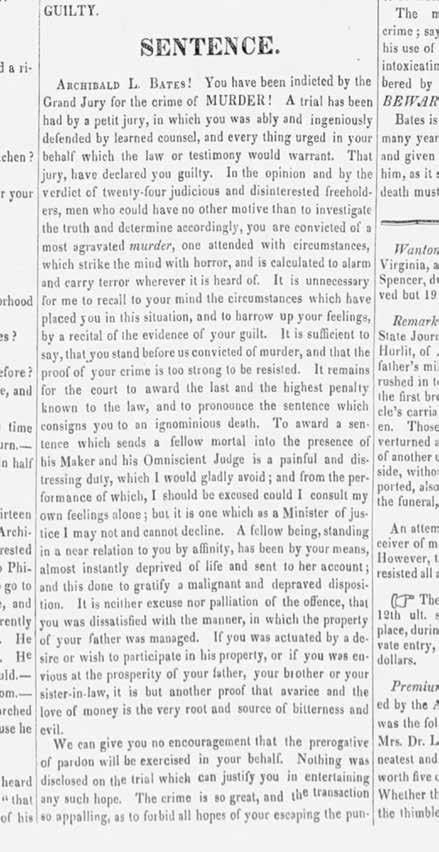
Archibald was sentenced to death by hanging on Dec. 26 — an awful Christmas gift for the Bates family. “The Shaftsbury Murderer,” as he was called, was to be hanged on Feb. 8, 1839, at 3 p.m.
The night before his execution, he admitted his guilt and said the murder was in the works for several years, but he lacked the courage to pull the trigger until that night. He hoped God would pardon his sin before his death, regardless of his vengeful and malignant disposition.
The day of execution was said to be unusually pleasant for the time of year — good news for the large group of spectators that gathered. Archibald Bates was the fifth person to be executed in the state of Vermont.
“God grant that Bennington may never be the scene of another execution,” the Caledonian of St. Johnsbury opined at the time. It turned out to be a prayer unanswered.
Vermont Gazette via newspapers.com Clippings from the Vermont Gazette from Feb. 12, 1839, on the slaying of Harriet Jane Bates.
Lions and tigers and bears and much more at Mary Meyer
A trailer a day ... Every day, a Fed-Ex tractor-trailer drops off an empty trailer, to be filled with Mary Meyer toys.
By Susan Smallheer
Vermont Country
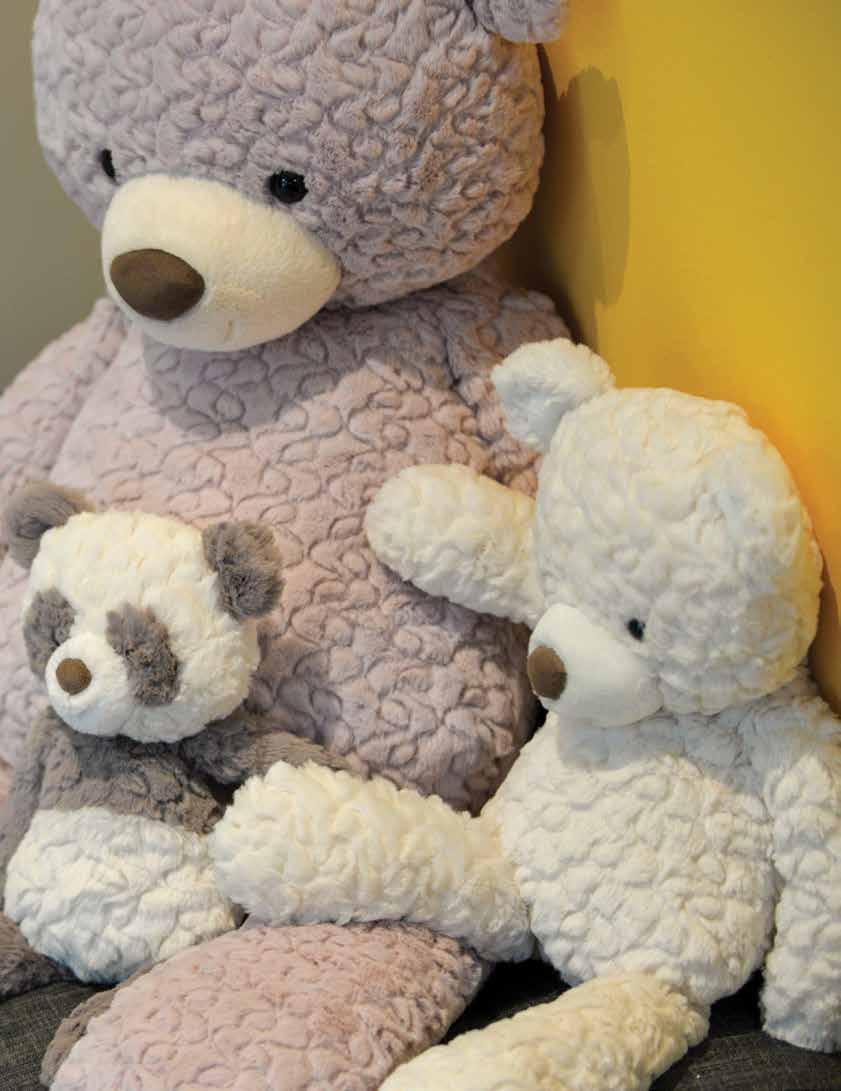
Toys — soft, cuddly animal toys — are what Mary Meyer Stuffed Toys is all about. The Townshend company designs and produces dozens of different kinds of animal toys and gifts, and has since 1933, when Mary Meyer and her husband, Hans, moved to Vermont from New York City. They moved to Townshend in 1942.
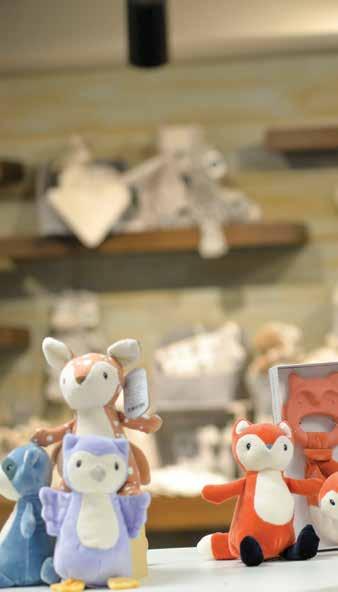
Kristopher Radder — Vermont Country Toys that are created by Mary Meyer Stuffed Toys in Townshend.
Hans Meyer’s dream of being a farmer didn’t pan out, much to the delight of stuffed toy lovers of all generations. He turned the family’s focus to his wife’s side business of making small stuffed animals — and the company, now close to its 90th year, is being guided by the third generation of Meyers.
Mary and Hans Meyer’s son, Walter Meyer, ran the company from 1955 to 1990, and died in March 2019.
Four of his sons (and Mary Meyer’s grandsons), Kevin, Steven, Michael and Peter, have run the company since 1990, and all live in Windham County. The company operates out of a sprawling yellow and white headquarters on Route 30 outside of Townshend Village. Inside the building is a small museum (now closed to the public) devoted to the company, showing some of its earliest toys and photos of the young couple.
The company closed its retail store on Route 30 about 10 years ago, said Steven Meyer, vice president of marketing and design, but the toys are available at stores all over Southern Vermont.
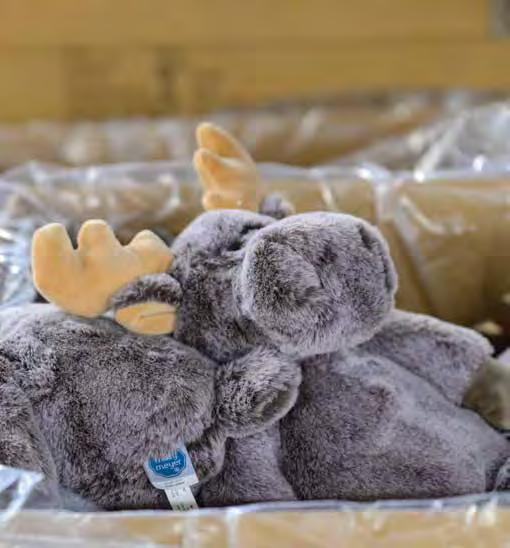
Behind the yellow and white Vermont clapboards is a warehouse with boxes and boxes of soft and colorful toys, a virtual Noah’s Ark: elephants, tigers, bears, deer, fawns, buffalo, kittens, puppies, cows, lambs, foxes, koala, owls, whales, chickens, lions, lobsters, ponies, monkeys and even a sloth.
They carry names like Cozy Toes and Loveys, which pair a teether with a special character small blanket.
Believe it or not, there’s nary a doll in sight.
In a decidedly low-key order fulfillment strategy, employees push old Grand Union shopping carts around the warehouse, logging in with a smartphone-like device, as they put together the wholesale orders. Amazon, it is not.
The company does not do retail, Steven Meyer said. It was strictly a matter of economics: shipping a $20 teddy bear out of Townshend did not make economic sense. The company closed its Townshend store about 10 years ago.
Wholesale orders average about $500,
Kristopher Radder Vermont Country
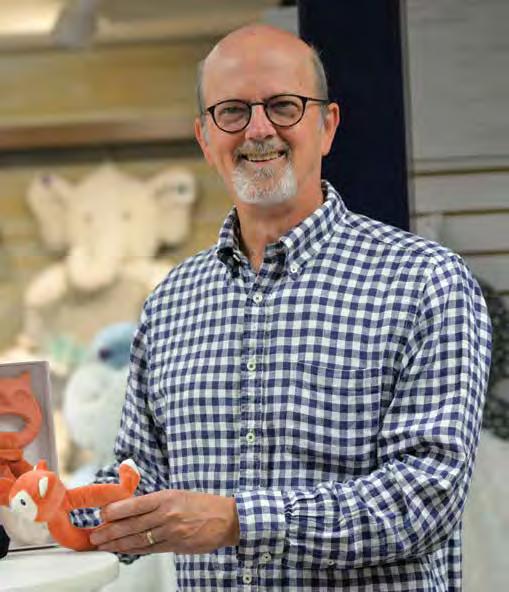
Steven Meyer, right, vice president of marketing and design at Mary Meyer, shows some of the toys that the company has created.
Mark Hescock, below, a selector at Mary Meyer, gets toys for an order.
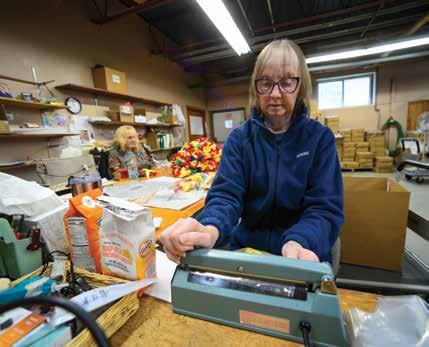
Bonnie Thomas, bottom right, a production manager at Mary Meyer, packages up toys for a client.
he said. There are a few big retail names in the customer base, such as Target and L.L. Bean and T.J. Maxx, and tourist draws like Yankee Candle in nearby Deerfield, Mass., (“We have a lot of product at Yankee Candle,” he said) but most of the toys, baby items and books go to small baby-oriented specialty stores. The Mary Meyer sales staff goes to gift shows, rather than toy shows, he said.
The toys are specialty items rather than everyday items, he said, describing the quintessential Mary Meyer client as looking for a special gift or two to bring to a baby shower.
While the toys are no longer made in Vermont, they are designed and conceived of in Townshend. Now made in China, in factories outside of Shanghai, the toys come back to Townshend, where workers select wholesale orders and ship them out to toy and gift shops all over the United States and beyond.
Every day, a FedEx tractor-trailer drops off an empty trailer, to be filled with Mary Meyer toys, he said.
Among the other Meyer children: Kevin is the CEO, Michael runs the warehouse operation, and Peter, the computer and shipping systems.
Steven Meyer, one of the sons who leads the company, is the lead designer for the company, and he and his co-designer Margaret Nixon design the toys, the baby mats, the board books and other toys and gifts that made up the company. “Sixty to 70 percent of the company’s business is baby,” he said.
Three years ago, Mary Meyer updated its logo to match the trend toward babies, he said. The logo now just includes the words “Mary Meyer” on a dark green emblem. “It’s quiet, it’s understated,” he said.
Still family-owned, Mary Meyer has evolved over the years. Employees number at about 45, Steven Meyer said, while its height was in 1975, when 150 people made toys at its Townshend Village location.
The toy and gift business has shifted, Steven Meyer said, and 60 to 70 percent of its business is focused on babies — newborns and toddlers. Really big and expensive teddy bears are a thing of the past, he said. And the toy collectibles market has never
recovered from the boom-and-bust of Beanie Babies, he said.
“Beanie Babies destroyed all that,” he said of the collectible bear toy market.
Older children’s toys are all about technology or franchise items — think “Star Wars,” Legos and “Transformers” — while the young set still are tactile-oriented (hence the emphasis on soft fabrics and the satin ribbon Taggies).
Its most enduring toy is a stick hobby horse — although nowadays the horse has an audio box, and the horses come in a variety of breeds and colors, including tie-dyed.
But the firm’s most popular items are the WubbaNub toys, another licensed product that marries a baby’s pacifier with a Mary Meyer toy or soft blanket.
Mary Meyer makes toys for the WubbaNub company, and also makes its own toys, using the WubbaNub feature, under a licensing agreement, he said.
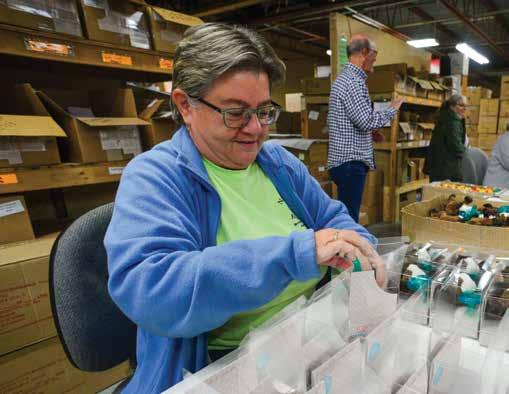
Laurie Nystrom has worked for Mary Meyer for close to 20 years. Recently, she was busy putting the perfect gift, WubbaNub animals, into clear plastic boxes. She said her group of workers had 46,000 toys that had to be labeled. Many of the toys have seasonal themes — snowflakes on a toy’s sweater say holidays, she noted, as she deftly assembled the box and folded the WubbaNub inside its temporary home.
“We have a ton of different animals,” she said, admitting some of them are “too big for my hands” to get them into the clear boxes. Other WubbaNubs are packaged in clear plastic bags.
The company also has a partnership with mattress firm Tempur-Pedic for its bears, which are stuffed with Tempur-Pedic foam. Meyer said the bears are showroom accessories. He said one time he went into a mattress showroom in Cologne, Germany, and there was a bear on every bed.
A discovery by some Connecticut mothers 20 years ago resulted in “Taggies,” soft toys embellished with folded pieces of satin ribbon along its edges. The mothers found that their babies loved the tactile feel of
Kristopher Radder Vermont Country
Laurie Nystrom, left, a shift leader at Mary Meyer, packages Wubbanub products.
Below, stuffed toys that are created by Mary Meyer Stuffed Toys in Townshend on Oct. 10.
Steven Meyer, bottom left, holds a bear that was made back in the 1940s.
the ribbon, including the label, and started adding them.
The Taggies come in all sorts of different characters and items.
A walk-through of the Townshend facility reveals many employees with decades with the company, and Steven Meyer can name virtually all the different children (most often Meyer family members or the children of employees) that have appeared in the company’s advertising in recent years.
His brother Kevin’s granddaughter, Scarlett, is the cover girl for the firm’s Baby 2022 catalog. She is Mary Meyer’s great-great-granddaughter. She also provided instant market research, he said, when she grabbed a new item that joined a teether with a toy. Until then, the company wasn’t sure of its success.
Another popular item for babies puts faces on food — think a cute face on an ice cream cone.
And right now, anything with a llama or a llama theme is popular with babies, their parents and grandparents.
Mary Meyer items range in price from $9 for an animal baby rattle to $55 for a baby mat — a large character made into a plush blanket for the baby.
Meyer and Nixon, who went to art school together in Ohio, draw inspiration from a variety of sources, including a swatch book of irresistible soft-textured fabrics, the company’s own list of popular items, and trade books, that give manufacturers tips on what colors and themes are popular the world over. Nixon has been with Mary Meyer for 30 years, he said, and they share a large airy office, filled with toys — past, present and future.
The company has even started publishing children’s books, to go with some toy characters. The board books are slightly larger than many children’s board books, and Steven Meyer and Nixon collaborate closely on the design and the illustrations, he said.
“Also as far as product goes, look for board books, wood toys and silicone baby toys next year,” he said.
“We’re not ready to retire, and there is a eye on the fourth generation taking over,” he said.
Sipping cider
Sweet stuff, hard or as a cocktail
By Bob Audette Vermont Country
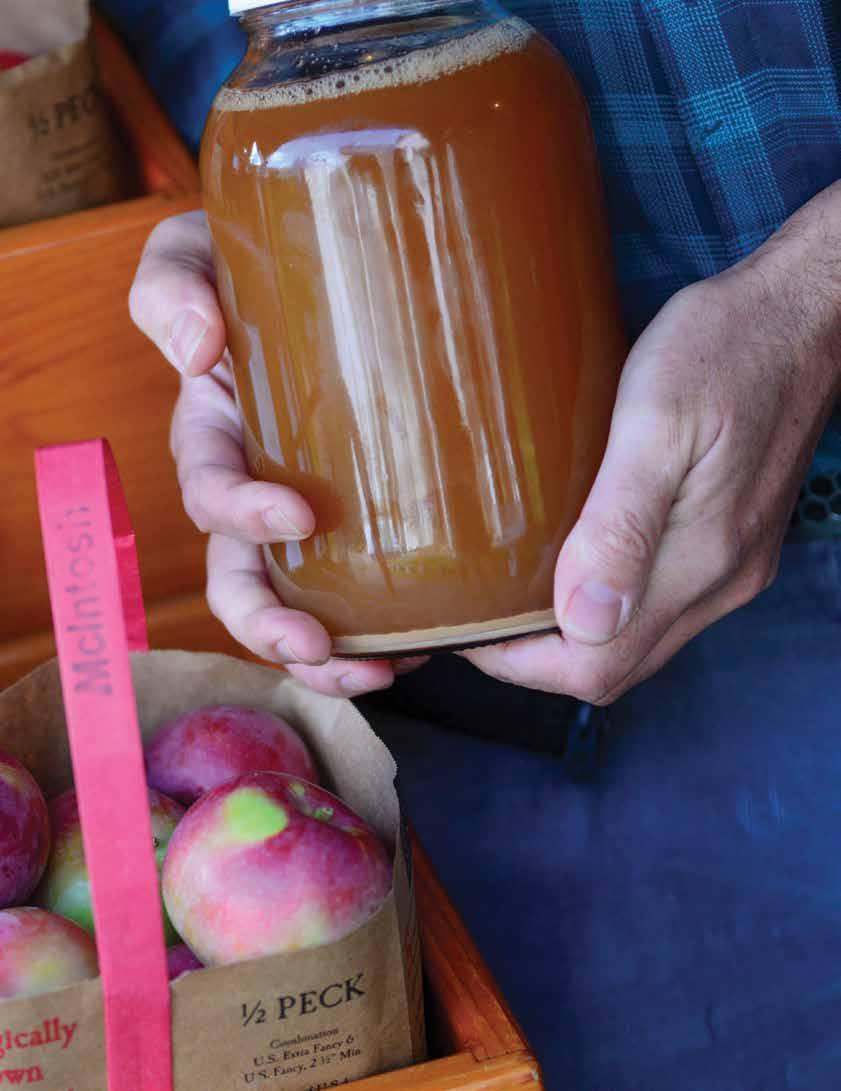
Apple cider flavors can change from year to year and even from batch to batch, said Simon Renault, general manager of Scott Farm Orchard, who is in his third season at the organic orchard on Kipling Road in Dummerston.
“Last year was a little bit more wet. The apples this year, may be a little bit drier, more potent. They have a thicker skin,” Renault said. And flavors change through the season, depending on which apples are ready for picking.
“We constantly have a fresh supply of different varieties for sweet cider,” said Renault. “In the early season, we have a crab apple, originally from Kazakhstan, called Dolgo,” he said. “They have a burst of sug ar, some good acidity and a lot of tannins. In the early season, we love using Dolgo crabs in our cider.”
Scott Farm presses apples two or three times a week, sometimes pressing more during the height of the season, about 30 gallons at a time.
When selecting apples for cider, he and orchardist Erin Robinson have to take into account tannin and acidity.
More tannin makes a sweeter cider, said Renault, but “we don’t do too sweet. We try to go for a balance, where the acidity balances the sweetness.”
Scott Farm’s cider isn’t as sweet as the ciders you might find on the shelves at the local supermarket. That’s because those producers use what Renault calls “lunchbox apples,” such as McIntosh, Cortland and gala.
“The more varieties you use, the more diversity, the more you’ll end up with something interesting,” said Renault.
Kristopher Radder — Vermont Country
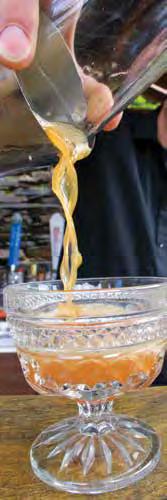
Drew Kacik mixes a cider cocktail while tending the bar at Stone Garden Weddings in Westmoreland, N.H.
The Vermont Warmer
• 2 ounces of Sapling Maple Rye
• 1 small slice of hot pepper (I prefer habanero)
• 4 ounces of hot apple cider
Serve with cinnamon stick
— Drew Kacik
Last year, Scott Farm made its first batch ever of hard cider, fermenting 400 gallons that are available now at its farm store.
“A good hard cider uses very specific varieties of apples, apples that have good levels of tannins,” he said. “It means varieties like Kingston Black, Dabinett, Yarlington Mill and we have some French varieties called Muscadet de Bernay.”
When the chilly days of autumn settle in, Renault said he occasionally warms up his cider to put in a thermos when he’s working outdoors, but he doesn’t necessarily add spices or citric juices that traditionally go into a mulled cider.
“We don’t, because we love our cider so much. With all the varieties, there’s so many natural flavors coming from the apples, you don’t need to add anything.”
Some people like to add liquor to sweet cider. For instance, Ethan Allen and the Green Mountain Boys drank a mixture of cider and liquor called a Stone Fence Cocktail, mixing a wine glass of bourbon, a couple of ice cubes and lots of sweet cider.
Drew Kacik, a mixologist who lives in Westmoreland, N.H., said he’s passionate about creating cocktails and flavor profiles using a variety of ingredients, including apple cider.
“Apple cider is a great thing to mix, because it does have such a diverse flavor profile.”
He also recommends that you use fresh cider. “Fresh heirloom ciders are so much nicer than the traditional cider you find at the market,” he said.
When mixing a cider cocktail, Kacik likes to experiment with mezcal, whiskey, vodka and gin from Barr Hill in Montpelier.
“With mezcal, a very smoky tequila-style cocktail, I add a touch of cinnamon and a touch of hot pepper,” he said. “The first thing you get is the mezcal,
Kristopher Radder — Vermont Country Scott Farm presses 150 gallons of cider a week during the height of apple season.
Stone Gardens Cider Sipper
• 2 ounces of dark rum
• 1 ounce of honey syrup (honey and sugar with water)
• 4 ounces of apple cider
• Dash of nutmeg
• 2 drops of orange bitters
Shake with ice, strain and serve with charred orange peel.
— Drew Kacik
then you’re going to get the spice and then at the end a little bit of sweetness from the apple cider.”
Kacik spent some time working at Saxtons Distillery in Brattleboro and loves to experiment with its liquors, as well.
“The maple bourbon is really nice with cider with a little bit of hot pepper. You get this nice little hot spice, the sweetness from the maple, the bite from the bourbon and then the apple cider gives this warm kind of hearty flavor to it.”
He encourages people to experiment with making their own cocktails.
“Whenever you experiment, I always say start small,” said Kacik. “When you’re adding spices or you’re adding different flavor profiles, start small and then build from there.”
At Scott Farm, they also like to experiment a bit with their cider.
“One of the things that we started doing a few years ago is grow fresh ginger in our greenhouse,” said Renault. “We bring the ginger roots to the kitchen, wash them, put them through a juicer, and then we add a little bit of ginger juice to the cider. It’s amazing.”
Scott Farm doesn’t pasteurize its sweet cider. That means when you buy it at the farm, keep it cool, and don’t let it sit for more than a week.
“You do have to keep it refrigerated and drink it as soon as you can,” he said. “Or it can start getting a little fizzy, though some people like that.”
Kristopher Radder — Vermont Country Simon Renault, general manager at Scott Farm in Dummerston, and Melanie Chamberlin, farm market manager, with cider that is pressed fresh two or three times a week during the apple season.
Drink and Dine Vermont
Good eats across the region
A plate for everyone: A host’s guide to navigating dietary restrictions
By Kimberly Kirchner Vermont Country Correspondent
Cooking for a group is a balancing act in the best of circumstances — calculating batch sizes, coordinating cooking times, reconciling different tastes. There’s a reason professional meal planners exist. However, the average holiday get-together isn’t overseen by an expert caterer. Instead, it falls on the host to manage the many competing details that make up a successful dinner party.
Dietary restrictions are an especially thorny set of complications. Failure to properly address special food requirements can lead to guests feeling anything from uncomfortable and
alienated to seriously ill. Fortunately, with a little forethought and some creative substitution, it’s possible to craft a meal that is both delicious and inclusive.
Know your limits
The first step in planning a meal around food restrictions is knowing what not to serve. Generally, it’s considered poor etiquette to demand a full medical history from dinner guests, so you’ll need to take a more tactful approach. Asking guests at the time of the invitation if they have any food restrictions allows them to give as few or as many details as they feel comfortable providing. If you’re unsure, you can always share your proposed menu with guests
Stephanie McCabe/UnSplash
and let them tell you if it presents any problems. This keeps the focus on the food, rather than the guest’s individual diet. Most guests with dietary restrictions would rather confirm the menu ahead of time than wind up sitting at the table with an empty plate.
Make a plan
Once you know what your restrictions are, you can begin to map out your meal. First, you need to determine your strategy. Will you be adapting dishes for the whole group so that all guests can enjoy them, or will you prepare additional food specifically for your guests with dietary restrictions?
If your guest has multiple or especially strict food restrictions, it may be best to cook them a separate plate that meets their requirements. Ideally, this can be prepared ahead of time, to avoid possible cross-con-
tamination, and served alongside the main meal. It should also match the quality and formality of what the larger group is eating: when the family’s having sirloin, vegan Aunt Janice shouldn’t have to settle for a frozen veggie burger heated in the microwave and ser ved on a paper plate. When preparing a shared meal, focus on choice and customization. Multiple side dishes increase the likelihood that guests will be able to find something that fits both their diets and their tastes, as will allowing guests to apply their own dressings, sauces and toppings, when possible. If you can’t adapt your main dish to fit your guests’ needs, make sure you offer side dishes that are filling enough to stand on their own.
Prepare and serve
When cooking for guests with dietary restrictions,
keep in mind that even trace amounts of an ingredient can trigger a reaction. To prevent cross-contamination, designate specific cookware and utensils for each dish. Assemble allergen- or irritant-free dishes before the others, if possible, and on a separate table or countertop. Keep the packaging for any ingredients, in case a guest has questions about their contents.
For buffet-style service, provide a sign for each dish with a brief list of ingredients. Make sure serving utensils stick with their intended dish with the help of visual aids like matching plates and bowls or color-coded labels. Let guests with dietary restrictions serve themselves first. There will be less chance of contamination between dishes, and guests who can’t eat everything on the table won’t be left hungry should your specially-prepared
sides prove popular with the whole group.
After the meal, clear away uneaten food promptly. Check the storage requirements for unfamiliar ingredients — many gluten-free foods, for example, need to be kept refrigerated. If you’re leaving out snacks for guests to graze on throughout the evening, keep plates covered and provide tongs for any finger foods.
Finally, don’t let food restrictions become the main focus of your event. No guest should feel like an inconvenience, or that their eating habits are under scrutiny. As long as the relevant parties know which dishes are safe to eat, there’s no need for an elaborate presentation on controlled diets. Just keep the plates full and the conversation flowing, and no one will waste a moment wondering about what isn’t on the menu.
Khloe Arledge/UnSplash
More than presents
For
Phil Bowen of East Dover, donning red suit means gratitude, family, gift of baby
Jesus
Kristopher Radder — Vermont Country
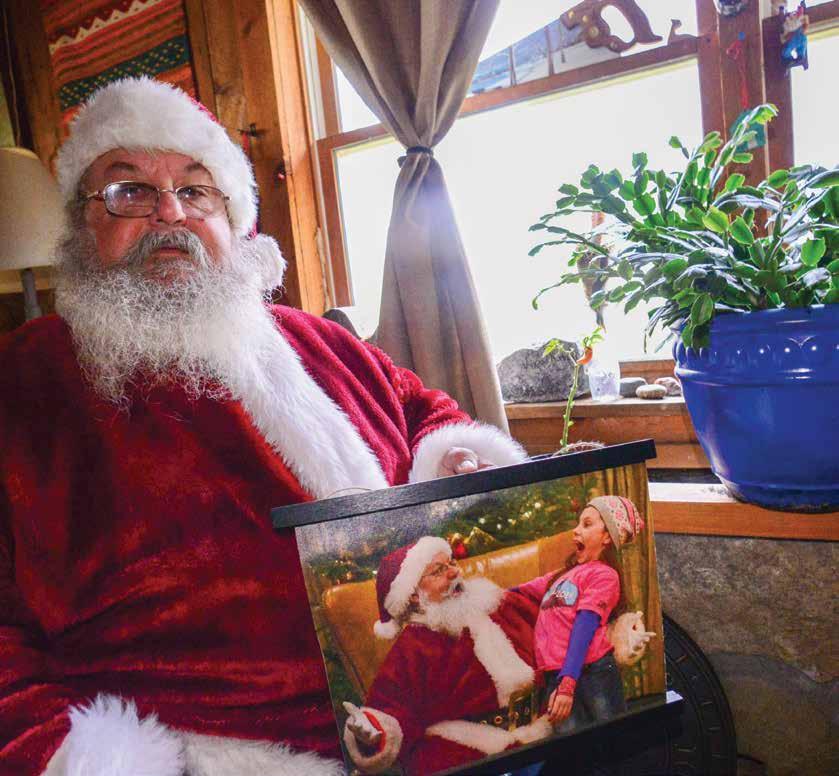
Phil Bowen, of Dover, holds a photo of himself interacting with local children as Santa.
By Chris Mays
Vermont Country
Phil Bowen of East Dover is getting ready for another holiday season, dressed up as Santa Claus and bringing cheer to children and families.
Bowen first played the part in 1970, when he was on a rest and relaxation leave from the Marine Corps. He said he flew into a military base in Go-
temba, Japan, and a woman he met was looking for someone to dress up in the red suit for a Catholic orphanage run by Italian nuns and supported by local residents. He learned how to say “Merry Christmas” in Japanese, and the woman interpreted everything else.
“It was really neat,” he said, remembering how the kids were very happy. He has a photograph of the experience in his kitchen.
Coming back from military service, he would sell hotdogs in the street. He also would dress up as a clown, with one gig bringing him to Boston Children’s Hospital. He hadn’t dressed up as Santa for a long time when he was first asked to do it in Vermont about 35 years ago. Now, he has done it every year since.
What started in Dover and Wilmington then expanded to other communities, such as Brattleboro,
When he started out, Bowen never asked for money, but he would take donations. He
never tells anyone
how
much
to give. All of the donations are given to the East Dover Volunteer Fire Department in memory of his son, Ian Bowen, who died in a car crash.
Townshend and Wardsboro; Colrain and North Adams, Mass; and Keene, N.H. He participates in public events, as well as home visits.
Some families will have him peek through windows, then disappear after the children see him.
“That’s really fun,” he said. When he started out, Bowen never asked for money, but he would take donations. He never tells anyone how much to give.
All of the donations are given to the East Dover Volunteer Fire Department in memory of his son, Ian Bowen, who died in a car crash.
“They’ve been able to buy defibrillators with the money, and they also bought survival suits to go through the ice,” Bowen said.
In earlier years, donations have gone to the West Dover Congregational Church and a couple of cancer organizations.
Bowen said he recently received a call to play Santa in the Boston area. He was invited to New York City many times and has been told he would make more money in one show than the entire winter in Vermont.
“But it’s hard to leave Vermont,” he said, noting how the local children aren’t from wealthy families. “I had kids sit on my lap and say, ‘My dad’s in jail. Can you tell him I love him?’”
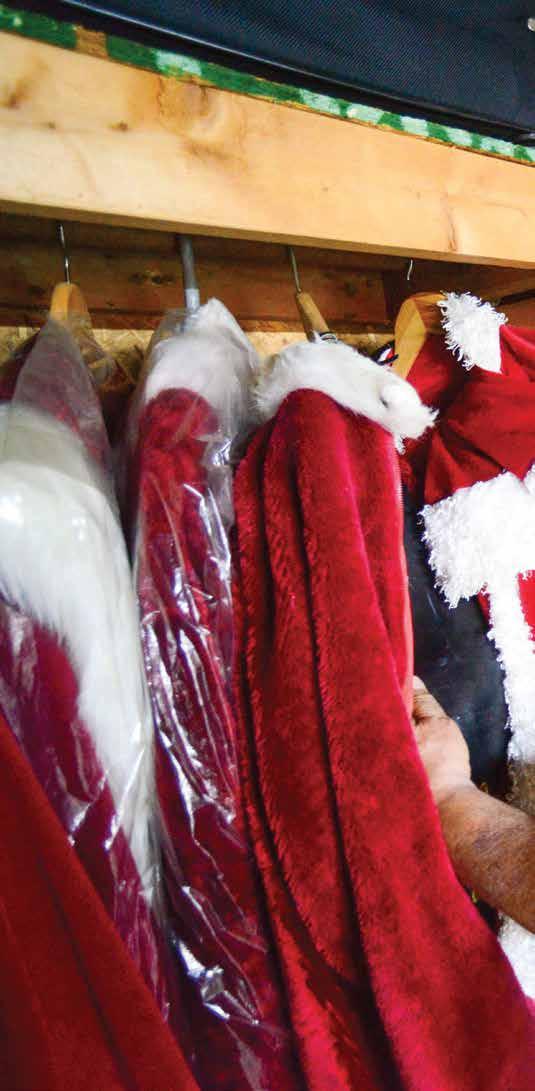
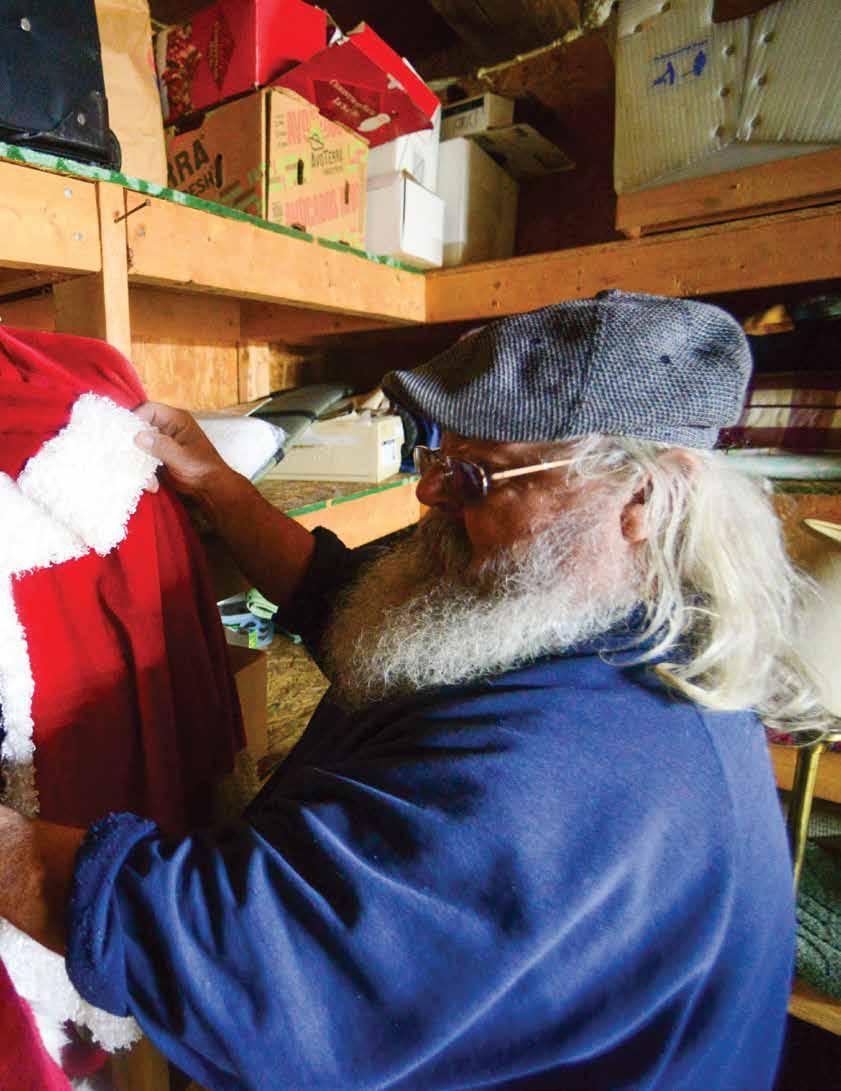
Kristopher Radder — Vermont Country Phil Bowen, of Dover, goes through some of his Santa clothing.
started out, Bowen never asked for money, but he would take donations. He never tells anyone how much to give.
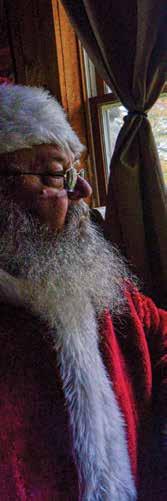
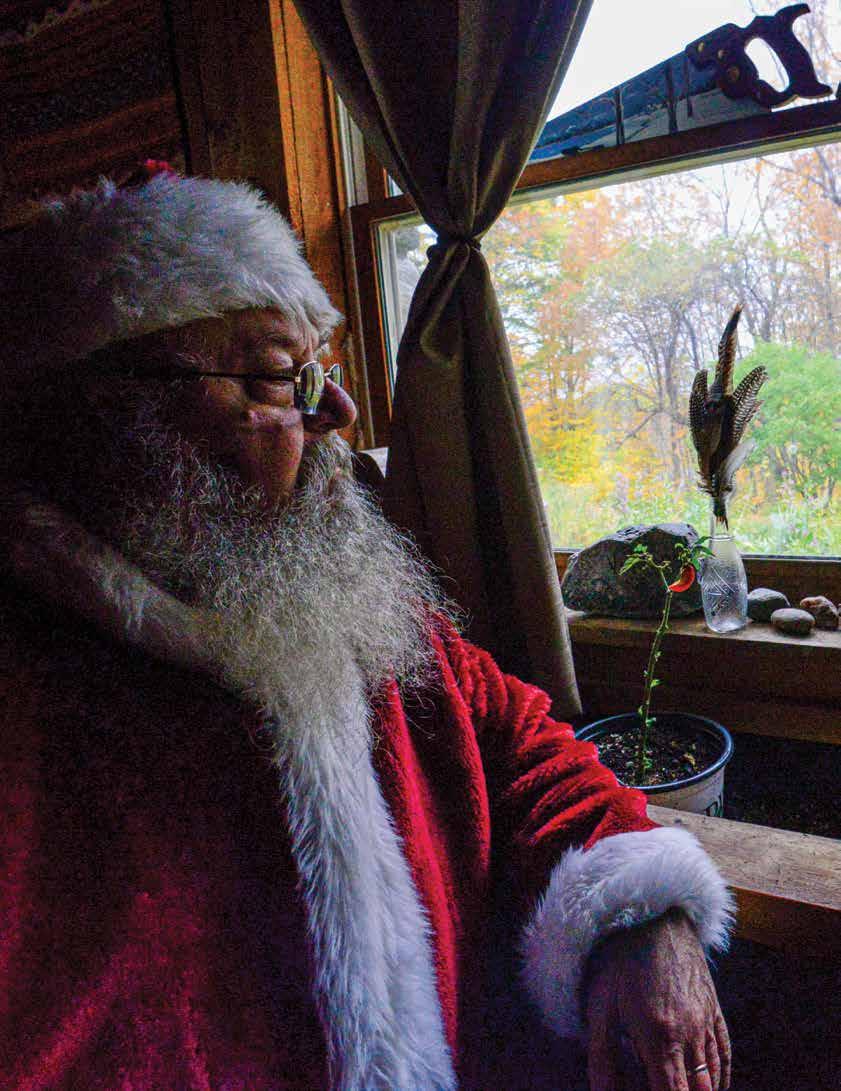
Kristopher Radder — Vermont Country Phil Bowen, of Dover, looks out the window dressed as Santa. When he
Bowen said he recently received a call to play Santa in the Boston area. He was invited to New York City many times and has been told he would make more money in one show than the entire winter in Vermont. “But it’s hard to leave Vermont,” he said, noting how the local children aren’t from wealthy families. “I had kids sit on my lap and say, ‘My dad’s in jail. Can you tell him I love him?’”
One year, Bowen went to a bank function. He recounted how everyone sat on his lap except one woman. When he went over and talked with her, she confided that her son was dying from a disease, and no one knew what it was. Bowen told her there’s not much Santa can do, but he knew someone who could. He held her hand and prayed God would help. She later told him it was one of the most comforting things she had experienced.
“Santa Claus isn’t just about the red suit,” he said. “I get the opportunity when playing Santa Claus to tell kids the truth about Christmas, to tell them Christmas is about the baby being born in the manger, and that Santa Claus is nice, and he brings toys and everything, but the real gift was given when Jesus was born and the gifts that the wise men brought.”
Bowen said he feels Santa is something he can share with people to show Christmas isn’t about the big department stores but the love of family and the birth of Jesus. The job gives him an immense sense of grati-
tude for the simple things in life, such as holding a child’s hand and bringing joy to families.
“It fills me up,” he said. “It gives me a purpose. I live simple. When you come into my home, I cook with the wood. I heat with the wood. Look around, there’s nothing fancy here.”
For the role, Bowen will add a little white to his beard and get his eyebrows and hair just right. He’ll make sure his suits are clean and in order. He has six different suits, one of which is more equipped for the outdoors. He also traded in leather boots for black Sorel boots, which are much warmer.
Bowen has headed out for a show feeling very sick — at one point, he was undergoing chemo and pill treatments for hepatitis C. But whenever he puts on the suit, he said, it would go away.
Sometimes, a father will be reluctant to join Bowen for a photo, he said. “They almost always break down and do it,” Bowen said, emphasizing how the time with Santa is a way to celebrate family.
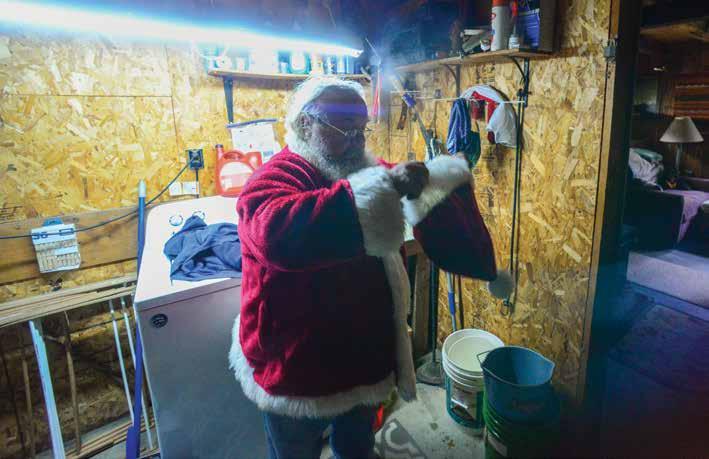
Phil Bowen, of Dover, puts on the Santa costume.
Kristopher Radder — Vermont Country
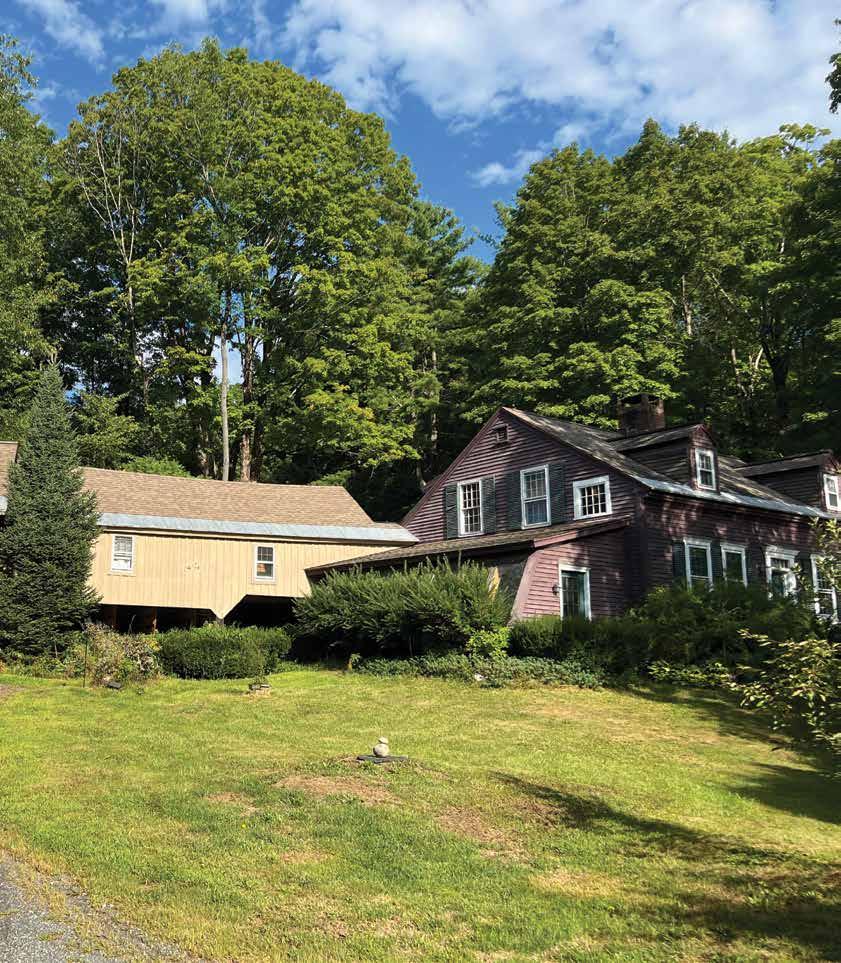
Check out Southern Vermont’s most exclusive homes for sale and the top-notch Realtors and agents who represent them. See our ads on pages 38-39
Photo courtesy of Brattleboro Area Realty
Holidays gone sideways
These films depict the best of times, the worst of times
By Dan Tebo
Vermont
Country correspondent
As 2022 crawls to a close, we once again find ourselves navigating the holidays through the dense fog of this relentless pandemic. While the threat of illness has dialed up the stress on an already unbearable time of year for some, it has gifted others with the perfect excuse to avoid the season altogether. Some folks can’t stomach the thought of the incessant travel nightmares and familial strife that the holidays bring. And then there’s those for whom Christmas conjures traumatic memories of the time their father broke his neck sliding down the chimney in a Santa suit, like that poor girl from “Gremlins.”
Conflict is, of course, the backbone of any good holiday movie. But this year we’re going to skip the Red Ryder BB guns and Kevin McAllister’s insatiable thirst for violence and look at some holiday films where things went REALLY sideways: An unholy array of ax-wielding Santas and ghostly talking snowmen to help make you confident in your decision to hibernate from Halloween to New Year’s.
ghouls subsequently murder half of the town’s residents. A holiday comedy from Steven Spielberg.
“Gremlins” (1984): A small-town bank teller is gifted an adorable fictional creature that comes with just two simple instructions! He breaks both rules within 24 hours and a fleet of grotesque green
“Santa Claus: The Movie” (1985): A bafflingly wrongheaded film that treats the legend of Santa Claus with a Kubrickian seriousness, this box office disaster has aged remarkably poorly. Santa attempts to rescue a homeless boy with a huge hankering for McDonald’s. Dudley Moore plays an elf who feeds acrophobic reindeer amphetamine-laced
hay. John Lithgow is a toy tycoon bent on selling exploding candy canes to children. Seriously, just watch it.
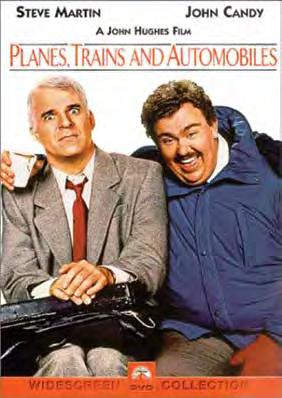
“Planes Trains & Automobiles” (1987): An uptight ad exec finds himself unexpectedly tethered to a slovenly shower curtain ring salesman as they encounter obstacles of biblical proportions while trying to reach Chicago in time for Thanksgiving. One of the greatest films ever made … about anything.
“Silent Night, Deadly Night, Part 2” (1987): Maybe watching a kid with severe PTSD dress up like Santa and hack a ton of people to death with an ax is your jam. When the producers of “SNDN 2” found themselves short on financing, they simply released an 88-minute film, featuring 40 minutes of scenes from the original. Reheated ham for everyone!
“Die Hard” (1988): In case you somehow haven’t been following the movies over the last 34 years, I can wholeheartedly recommend this pioneering action thriller. A salty, injury-resistant New York Police Department officer flies out to the coast to have a few laughs with his estranged wife on Xmas eve and finds himself the last line of defense against the vaguely European terrorists who seize control of a skyscraper.
“Scent of a Woman” (1992): A beleaguered prep school outcast agrees to accompany a retired lieutenant colonel (Al Pacino) to New York City for Thanksgiving weekend. Said colonel is blind, suicidal and prone to extreme monologuing. Al Pacino won an Oscar for his work here. “Hoo hah,” indeed.
“Jack Frost” (1999): A struggling musician dies in a Christmas Eve car wreck, permanently extinguishing his 11-year-old son Charlie’s yuletide yearnings. Fortunately, Charlie resurrects his pops by wailing on a magical harmonica. Unfortunately, his dad is now a talking, animatronic zombie snowman who looks like Marlon Brando in “The Island of Doctor Moreau.”
“You’ve Got Mail” (1999): After a corporate bigwig bankrupts an independent bookstore owner, he continues to stalk her, simultaneously catfishing her online and befriending her in real life. When she finally learns that he’s the one who has been trolling her all along, she weeps tears of joy. Why this queasy Xmas-adjacent Nora Ephron flick is one of the most popular rom-coms of the last 25 years, we do not know.
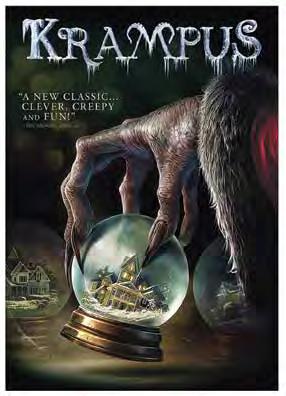
“Krampus” (2005): The bickering Engel family are so lousy to their Santa-loving 10-year-old son, Max, they cause him to turn his back on Christmas. Max’s faithlessness unleashes the titular devil-horned Xmas beast and his posse of cannibalistic gingerbread men. Fortunately, the Engels have a German grandma well-versed in Alpine folklore on hand to help save the entire town from certain annihilation.
“Happiest Season” (2020): When 20-something Harper invites her edgy girlfriend, Abby, home for Christmas, she neglects to inform her hyper-bougie family that they’re a couple. While the family does rich white people things, Harper treats Abby like luggage. Will Harper’s conservative family learn the truth and accept their daughter’s sexuality by the time this orgy of cliches reaches its conclusion? Is Santa Claus real?
Vermont views appear around almost any curve
By Jim Therrien Vermont Country
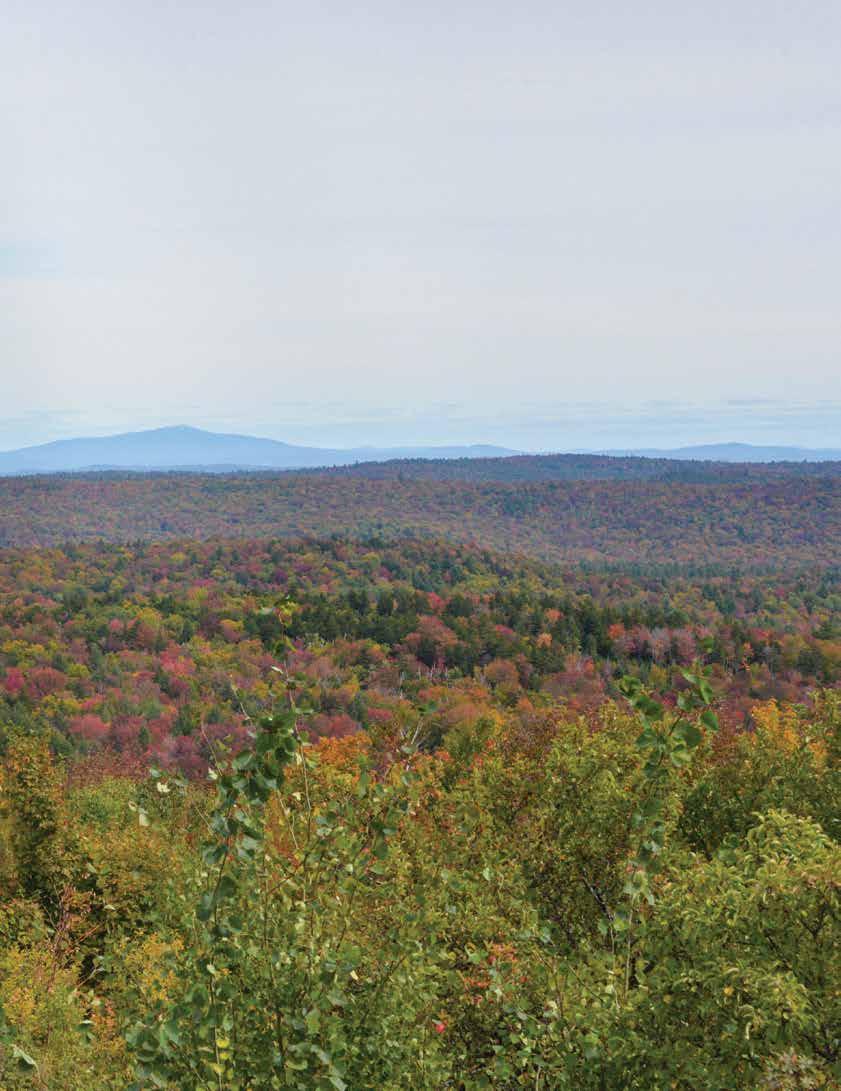
The fall — from Sept. 23 to Dec. 21 — is when Vermonters and visitors alike are hoping to get elevated and witness some breathtaking beauty.
Fortunately, Southern Vermont, in both Bennington and Windham counties, offers an almost endless array of mountain peaks, overlooks, scenic drives and hiking trails that could compete for anyone’s personal autumn favorite.
Many agree that Route 100, which winds up through the middle of
Vermont for more than 200 miles, from Massachusetts to the Canadian border, offers the greatest scenic sensory overload.
Not only are the long-distance views often spectacular, but classic pastures, wood stands, farm fields, quaint Vermont villages and recreation resorts stream past along the way.
Routes 11 and 30, which loop roughly over the northern sections of Southern Vermont, offer similar scenery and attractions.
Route 7A along the state’s western border and Route 9, which links
Bennington to Wilmington (where Route 100 crosses) and Brattleboro, provide easy connections throughout the region.
But these larger highways (in Vermont terms) also offer a few of the region’s magnificent views — with options for both the hiker and vehicle access at hand.
Below are just a sampling of the traditional lookout sites treasured by leaf peepers and natives alike. Others can always be discovered around the next curve while exploring Vermont’s scenic two-laners.
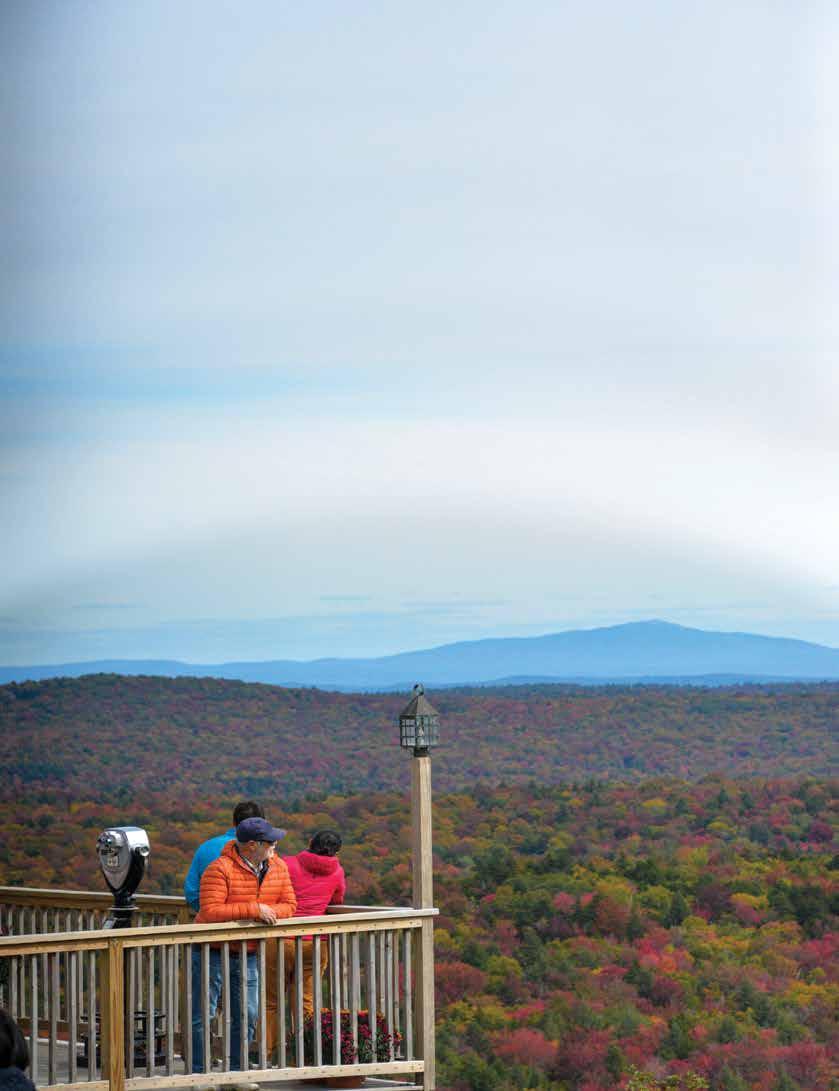
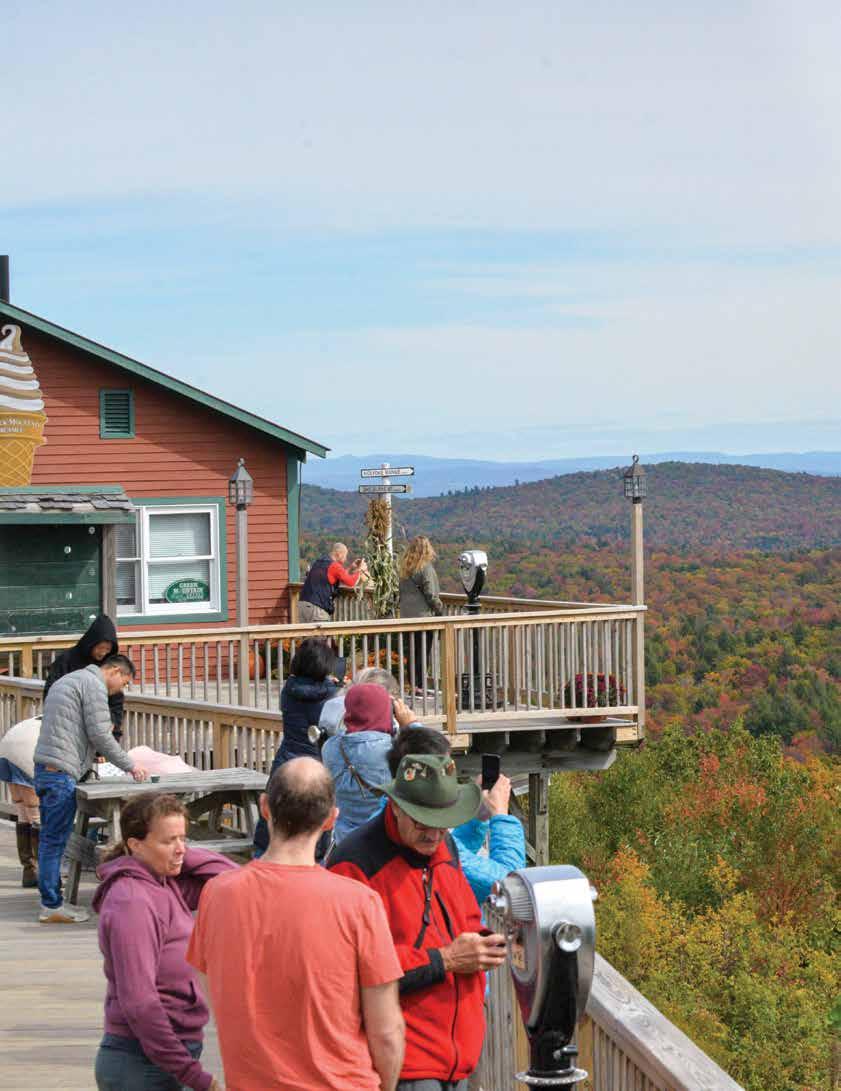
Kristopher Radder — Vermont Country People voyage to Hogback Mountain in Marlboro to look at the leaves changing during the foliage season.
Hogback Mountain
Hogback Mountain in Marlboro is on the site of a historic early downhill ski area, dating to the first skiing boom after World War II. The landmark scenic overlook on busy Route 9 is probably the most familiar in Southern Vermont.
A 100-mile view toward the south, east and west offers a wide expanse
of rolling mountain terrain. Hogback is almost directly opposite some of the scenic lookout overlooks on the Mohawk Trail (Route 2) in Massachusetts, so there is every chance someone on that side might be staring back at you through a set of those coin-operated tourist binoculars.
The Hogback Mountain Country Store offers a wide range of gifts,
specialty Vermont foods, apparel and more, as well as extensive observation decks for viewing and, of course, taking photos.
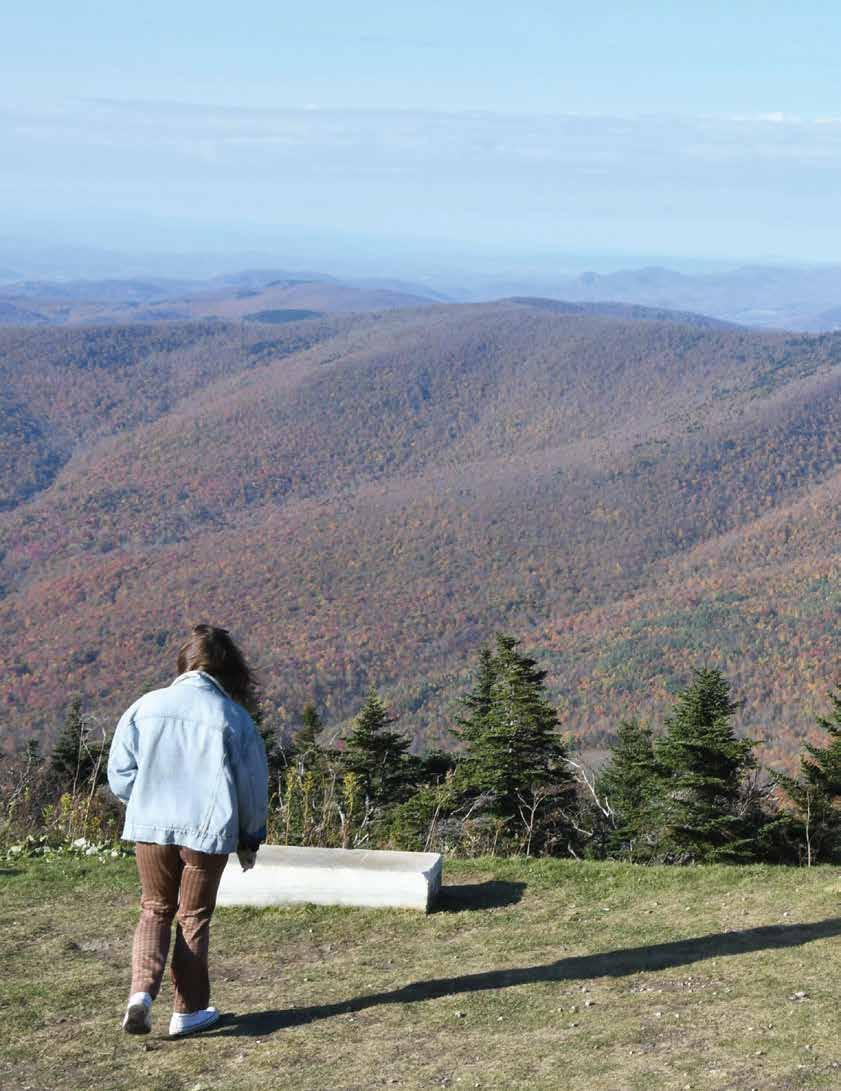
Mount Equinox
In Bennington County, Mount Equinox provides one of the grandest and widest mountain vistas anywhere — and it can be reached either by car or via hiking
Isabel Wissner — Vermont Country
Hiking to the peak of Mount Equinox might not be for the casual hiker, because of the steep sections and the elevation, but there are also trails along the base of the mountain.
a trail. Entrances to the drive are in the Northshire and in the Taconic Range along the New York-Vermont border.
The Skyline Drive up Mount Equinox is celebrating its 75 anniversary this year.
Access is off Route 7A in Sunderland, south of Manchester. There is a toll, which during October
foliage season is $30 for a car and driver, and $5 for each additional passenger. It’s free for children under 10, according to its website.
There are pulloff locations along the drive, a visitors center and observation decks on top.
Hiking to the peak might not be for the casual hiker, because of the steep sections and the elevation,
but there also are trails along the base of the mountain.
Access to trails can be found off West Union Street near Burr and Burton Academy in Manchester.
Putney Mountain
Putney Mountain near Newfane is an easy hike that offers spectacular views from the top.
Kristopher Radder — Vermont Country People flock to Hogback Mountain in Marlboro to look at the leaves changing during the foliage season.
Vermont Country file photo
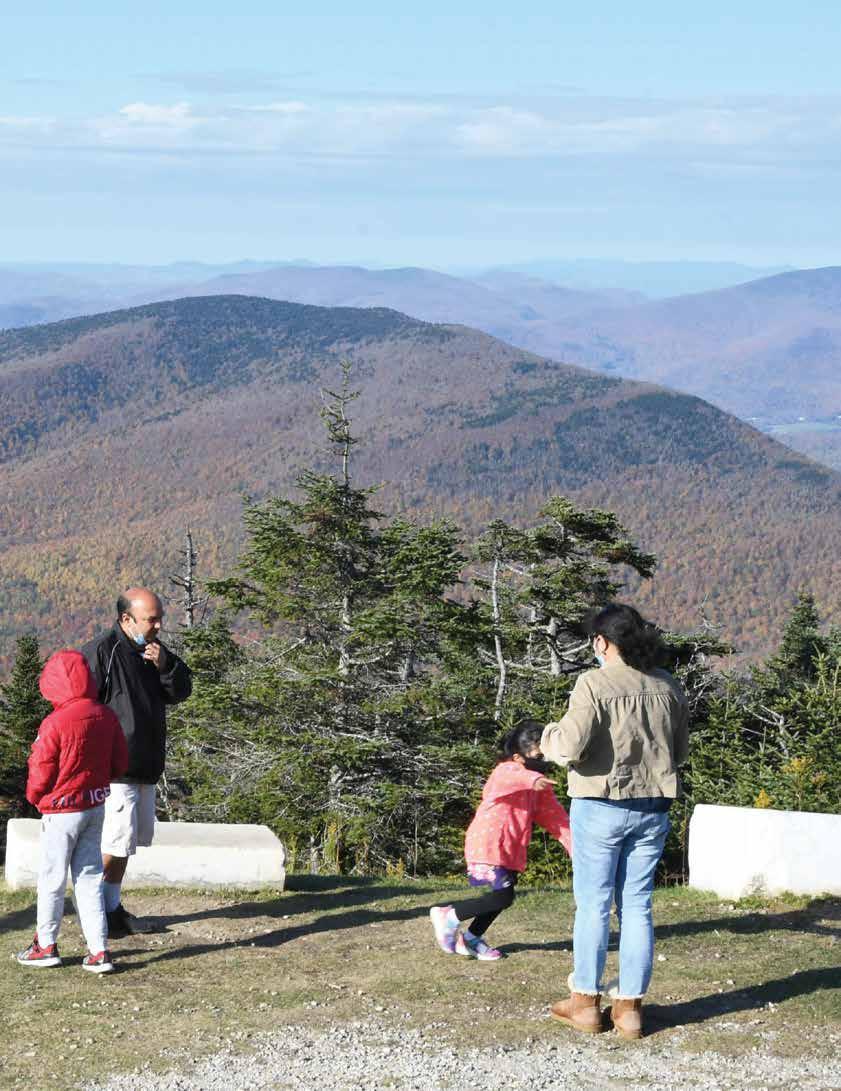
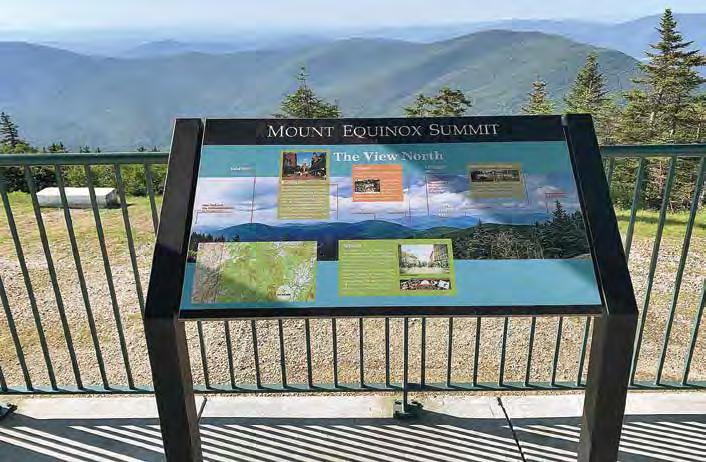
Visitors to the summit of Mount Equinox in Manchester look at the foliage to the north in 2020.
A helpful map at the Equinox viewing center identifies what one is seeing in the distance to the north from the mountain top.
The 1,647-foot peak is also famous for eagle- and hawk-watching. Thousands of raptor sightings are typically made by watchers during the annual fall migration.
The Putney Mountain Hawk Watch, established in 1974, is the only autumn raptor watch in Vermont that is monitored full time.
More than 200 species of birds can be spotted at the summit, including ospreys, northern harriers, goshawks, Cooper’s hawks, kestrels, merlins and even a peregrine falcon from time to time.
The loop trail can be used for hiking, snowshoeing and running. It is open year-round, and each season offers its own views.
Visitors will need to leave the dog at home, as they aren’t allowed on this trail.
Get there via Putney Mountain Road off Route 30.
Stratton Mountain
Stratton Mountain is a 3,940-foot mountain in the Green Mountain National Forest and considered the highest peak in Windham County and the southern Green Mountains.
A section of the Appalachian Trail and Long Trail, which run together at that point, is marked with white blazes. It travels to the summit of Stratton Mountain.
Vista openings along the trail include beautiful views of Somerset Reservoir to the south.
Of course, Stratton Mountain is also an all-season resort, with shopping, lodging and multiple trails for both winter and warm weather sports.
Ski lifts and a gondola provide rides to the top, or there are hiking trails from easy to advanced.
The Stratton Mountain resort and village can be reached from Route
7 in Manchester Center and over Route 30, east toward Winhall.
White Rocks/Bald Mountain
Bennington’s White Rocks outcropping is a familiar vista that is along a trail to the peak of Bald Mountain.
It is a local favorite destination and can be accessed near a small trail parking area in town. Information and a map about the trail can be found at the trailhead at 449 North Branch St.
Bald Mountain also can be reached via the West Ridge Trail from an access point off Route 9 in Woodford. There is a map at the North Branch Street location.
The panoramic view from the White Rocks is primarily toward the Taconic Range and New York to the west, with Mount Anthony in Bennington, looming to the left.