Michael Albans — is a 30-plus-year veteran journalist and photographer. His work has appeared in The New York Times, AP, the Wall Street Journal, New York magazine and the Los Angeles Times. He spent 12 years as a staff photojournalist at the New York Daily News before winding up in an old, haunted house in Shaftsbury. He loves taking long rides on his BMW.
Gena Mangiaratti whose first name rhymes with henna, is arts and entertainment editor for Vermont News & Media. Her good-will can be bought with gummy bears. She lives in Brattleboro with her cat, Theodora.
Lex Merrell — spends too much of their time listening to true crime podcasts and scaring themself with ghost stories. No one can figure out where they got their audacity.
Bob Audette — has been writing for the Brattleboro Reformer for 17 years. Before returning to New England in 2005, he spent 10 years skiing in Utah and eight years in the U.S. Air Force.
Jim Therrien — writes for the Vermont News & Media newspapers in Southern Vermont. He previously worked as a reporter and editor at The Berkshire Eagle, the Bennington Banner, the Springfield Union-News and Sunday Republican, and the former North Adams Transcript.
Bill LeConey — is the night news editor for Vermont News & Media publications in Southern Vermont. A longtime sportswriter and editor in the Atlantic City, N.J., area, he loves to write about his main passions: sports, music, good food and good drink. A grand-nephew of Olympic gold medalist J. Alfred LeConey, Bill was once the lead singer for a marginally successful punk band that paved the way for Nirvana and The Strokes without them ever knowing it.
Tebo
is an
President and Publisher
Jordan Brechenser jbrechenser@reformer.com
Executive Editor
Noah Hoffenberg nhoffenberg@reformer.com
Assistant Editor
Gena Mangiaratti gmangiaratti@reformer.com
Designer
Cicely M. Eastman cicelyeastman@yahoo.com
Windham County Sales Manager
Lylah Wright lwright@reformer.com
Senior Sales Executive
Richard Lolatte rlolatte@reformer.com
Sales Executives
Richard Battista rbattista@reformer.com
Bruce Merrill bmerrill@reformer.com
Bennington County Sales Manager
Susan Plaisance splaisance @benningtonbanner.com
Sales Executive
Ahmad Yassir ayassir @benningtonbanner.com
Vermont Country magazine is a publication of
Chris Mays — is coming up on 10 years of reporting for the Brattleboro Reformer, plays guitar in several bands, snowboards as much as possible and loves his Yorkie named Lemon.
Isabel Wissner — has been shooting from the hip since the age of 4, after receiving a Polaroid camera from her grandma. She is the archivist of her family’s vast collection of exploitative and unflattering photos.
Kristopher Radder — has been working as a photojournalist since 2007. Before moving into newspapers, he worked with a non-governmental organization called Project HOPE for two and half years, where he documented the United States military conducting large humanitarian aid missions in the South Pacific. He then went to work for the Press and SunBulletin in Upstate New York, where he met his beautiful wife and then settled down in New England working for the Brattleboro Reformer.
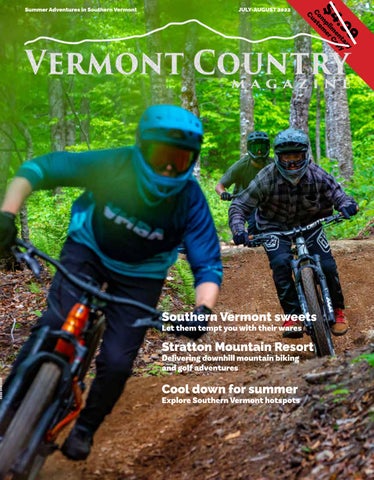
On the cover: Mountain biking at Stratton Mountain Resort
Zachary Gould photo
Dan
—
amateur blogger and unserious film critic. He lives in Boston.
Tom Bedell — is a member of the Golf Writers Association of America. He lives in Williamsville.
Photo by Len Emery
Is it getting hot in here? Or is it just me?
For this July-August edition of Vermont Country magazine, we really wanted to sell the sizzle that is the Green Mountain State in the summertime.
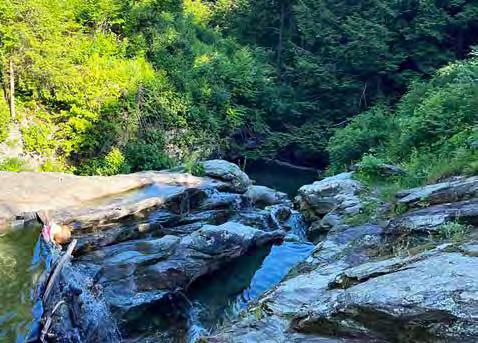
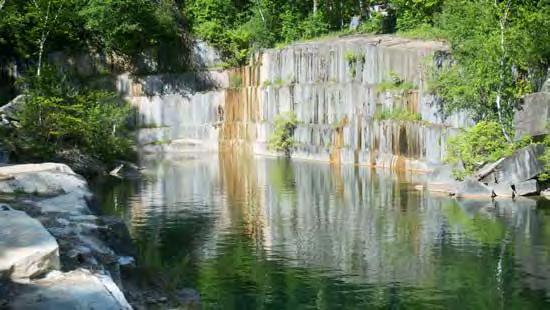
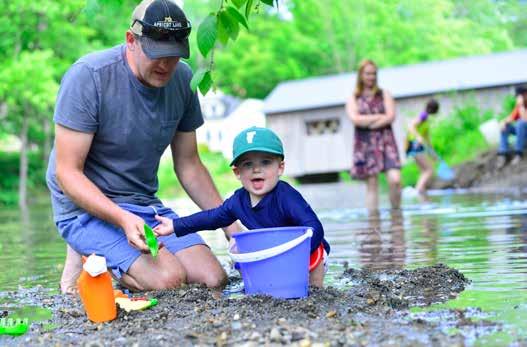
To help you chill out a little, photojournalists Isabel Wissner and Kristopher Radder point out six swimming holes in Bennington and Windham counties where you can cool your jets. Wissner also takes you to the new Bennington Community Market, due to open later this year with a mission to feed and add some uplift to the region.
Our Bob Audette ambles his way into the workshops of three artisans on a Southern Vermont craft tour, introducing us to a Dorset furniture maker with 50 years of doing the work, a creator of handmade dolls and a master luthier who crafts and repairs guitars, violins and other instruments.
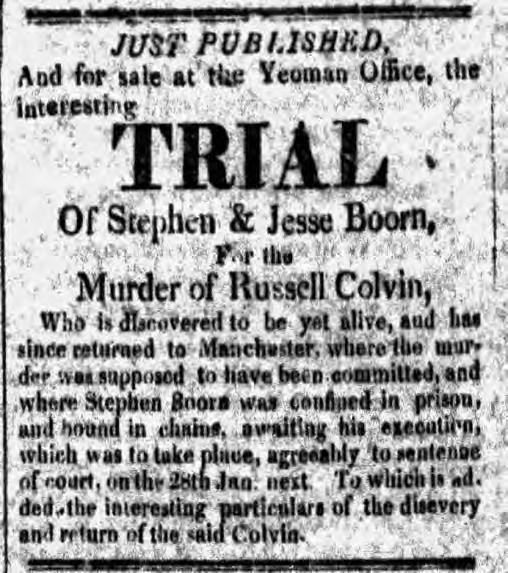
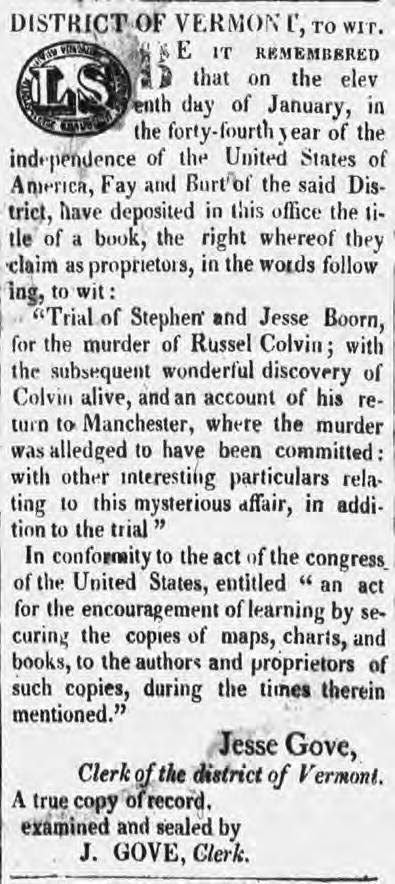
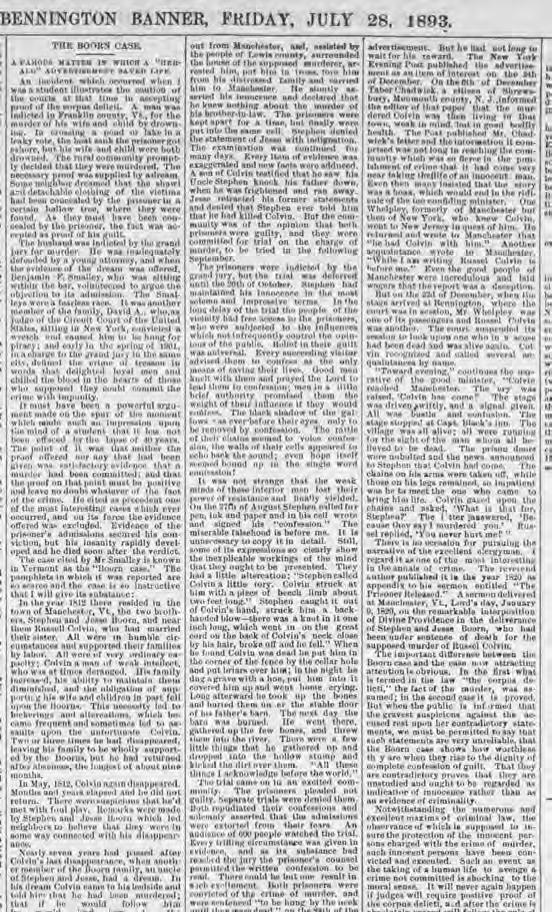
Lex Merrell revisits the 19th-century
disappearance of one Russell Colvin, who was declared dead while the Boorn brothers of Manchester were named as his killers.
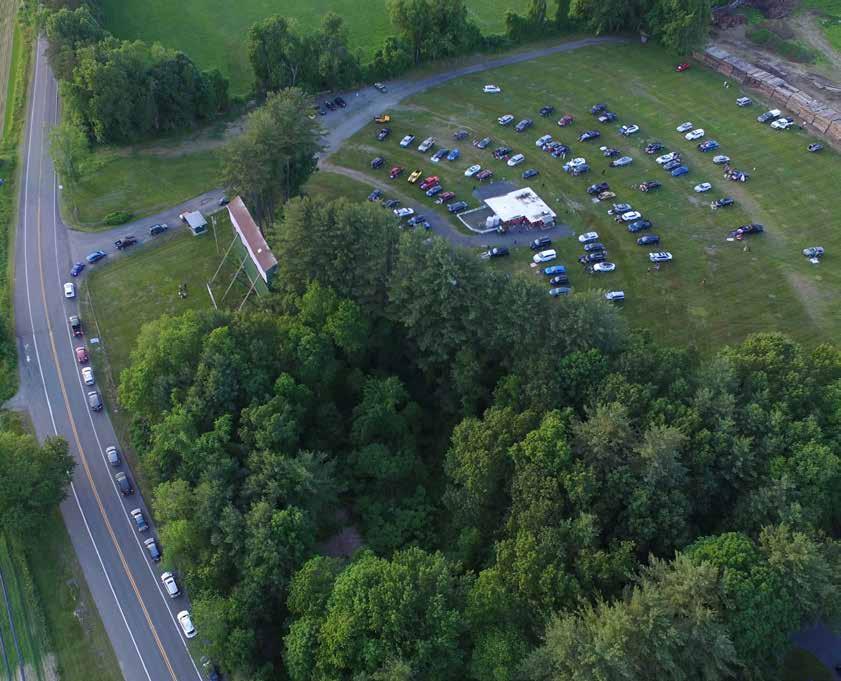
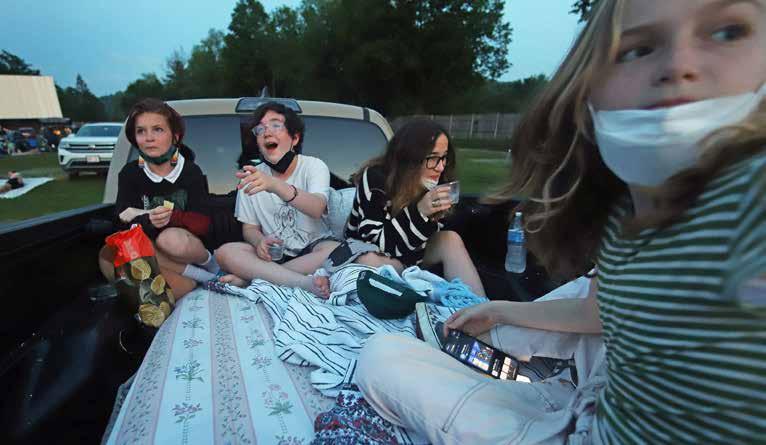
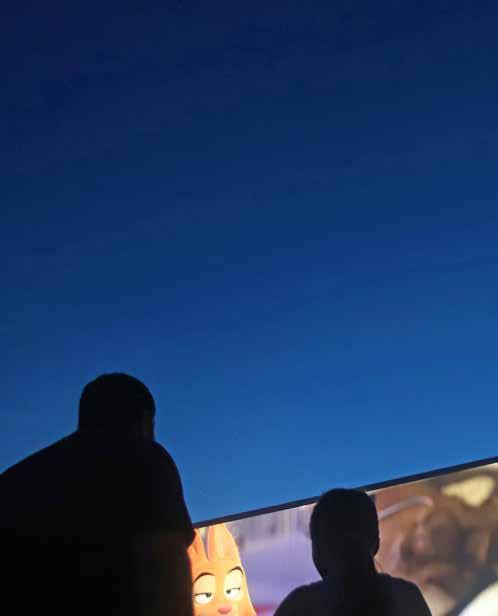
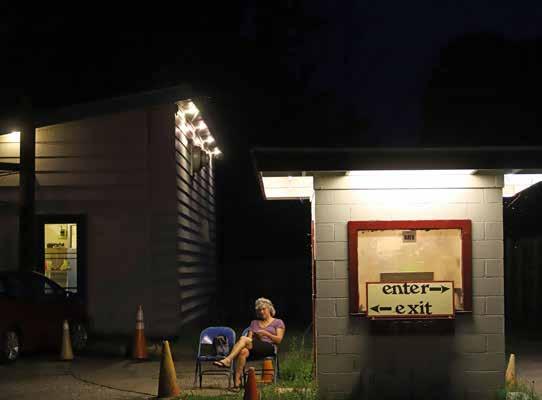
Photojournalists Michael Albans and Kristopher Radder show you a window in time of a pair of drive-in movie theaters that serve our rural residents and visitors. There are only about 300 of these theaters left in the U.S.
In times sweet and sour, journalists take risks, so you don’t have to. Vermont Country’s Gena Mangiaratti did this for us here in the Green Mountains, embedding briefly (but bravely) into three special candy-making shops to explore regionally produced confections.
Remember when Phish played in Townshend in 1989? Me neither! But writer Bill LeConey found some people who do recall the reportedly epic show, and he talked with them for this lookback article. LeConey also
introduces us to Phish frontman Trey Anastasio’s effort to open an addiction treatment center in Ludlow.
And filmish meg amind Dan Tebo is back with a simmering, red-hot summery list of super sexy films that are so steamy, several MPAA censors went blind while screening them. Read only if you don’t mind extreme temps.
Back on Earth, outdoorsy guy Jim Therrien speaks with a handful of hikers who make good use of the region’s Long and Appalachian trails.
Local tip: Keep your eyes peeled for the first TrailFest to occur in Bennington on July 30.
And be sure to check out “Of greens, tees and speed,” in which downhill mountain biker Chris Mays and golfer Tom Bedell share their personal experiences on day trips to Stratton.
Noah Hoffenberg Executive Editor
Southern Vermont shops tempt with sweet treats
By Gena Mangiaratti
Contributors
Editor’s note
By Noah Hoffenberg
Bennington Community Market coming downtown
By Isabel Wissner
Cool down at one of these Southern Vermont hotspots
Golf and mountain biking at Stratton Mountain Resort
By Dan Tebo 3 4 14 20 24 31 41 46 56
By Kristopher Radder and Isabel Wissner
By Chris Mays and Tom Bedell
Dead or alive?
Mysterious death stumps county
By Lex Merrell
Vermont Country Homes
Doll, furniture and violin makers share their stories
By Bob Audette
Saturday night at last remaining drive-ins
By Kristopher Radder and Michael Albans
Phish. Can you recall the show?
By Bill LeConey
Sizzling summer movies
Why hikers trek the Long and Appalachian trails
By Jim Therrien
provided by
Clare Barboza
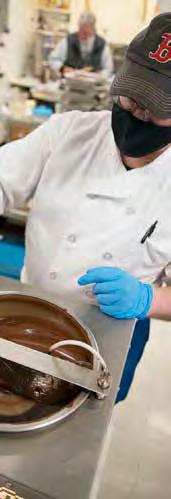
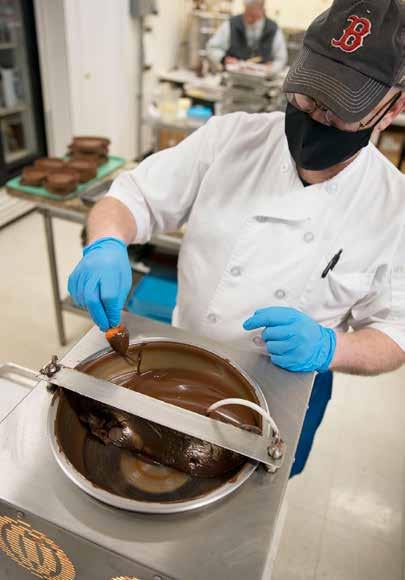
Dar Tavernier-Singer, of Tavernier Chocolates in Brattleboro, makes chocolate in the kitchen. Below, a chocolate charcuterie board at Tavernier Chocolates. “It’s the age-old problem of, ‘I wish this thing existed,’ basically,” said Tavernier-Singer, of how she comes up with the flavor combinations.
The other sweet science
These 3 Southern Vermont shops will tempt you with distinct treats that dare to go beyond mere maple (but they have maple stuff, too)
By Gena Mangiaratti Vermont Country
When we think of sweet things in Vermont, we tend to think of maple syrup and maple candies. But, as a certifiable sweet tooth, I couldn’t help but notice the variety of chocolates and other locally made candies on the shelves of our co-ops, markets and The Coffee Bar in Bennington, where I noticed the goat milk caramels made at Big Picture Farm. The farm in Townshend became one of three local businesses I tracked down to ask about their sweetest confections.
Photos
Big Picture Farm
When I brought the box of goat milk caramels into the newsroom, my co-workers were skeptical. “But does it taste like goat milk?” they asked.
We reached the consensus that the caramels, which come in multiple flavors, including sea salt and vanilla, maple cream and cider honey, do not, indeed, taste like goat milk. And those of us, including myself, who are not normally excited about caramel, were tempted to eat more.
“Goat milk is particularly well-suited for caramel for a lot of different reasons,” explained Louisa Conrad, who owns the farm with her husband, Lucas Farrell. “The fatty acid chains are shorter, so when you cook the milk, it breaks down to make a smoother, more velvety confection than a cow milk would.”
Conrad and Farrell started the goat farm, at 1600 Peaked Mountain Road, in 2010. They also make farmstead cheeses but wanted to add something new and different to their menu. After researching specialty food stores, they decided on something sweet and settled on caramel.
Each artfully crafted box includes information on the flavors, as well as the names of the goats on the farm, which is certified Animal-Welfare-Approved.
“My husband and I are artists and writers. We really wanted something you could send to someone as a gift,”
Conrad said. “We really wanted to tell stories of the goats and our farm and all that. So it seemed like a cool way to be able to sort of combine our skills.”
Each flavor has its own color stripe on the wrapper. Others are chai, cocoa latte, wild chocolate mint, raspberry rhubarb and brown butter bourbon.
The farm also makes chocolate-covered caramels, goat milk truffles, original chocolate bars and more.
More information can be found at bigpicturefarm.com or by calling 802-221-0547.
Village Chocolate Shoppe
When he was younger, Nick Monte had a secret ambition to be a pastry chef.
“That didn’t work out, but I’m making chocolate,” said the co-owner of Village Chocolate Shoppe in Bennington.
It all started when he moved to Vermont 50 years ago. He had a general store, where he made fudge. When his family sold that business, they opened a small gift shop as a retirement project.
Now, the Montes — Nick, Judy, Denise, Sherry and Ken — have two stores: one in Bennington, where the chocolate is made, and the other in Arlington.
Options include exclusive chocolate bars, truffles, fudge, peanut butter cups, maple products and more, but Nick Monte said his favorite is still solid dark chocolate.
“Usually a good piece of dark chocolate will take care of me for the day. It’s got a lot of cocoa content, and it’s good for you — in moderation,” Monte said, noting that dark chocolate can have positive effects on blood pressure
and cholesterol, and contains vitamins and minerals, such as magnesium.
“Anything over 60 percent cocoa solids usually is what you should look for,” Monte said.
Exclusive chocolate bars include the milk chocolate Monte bar — named after the family — with smooth peanut butter, peanuts, Rice Krispies, caramel and marshmallow; the dark chocolate Death by Chocolate bar, and the milk chocolate Death by Peanut Butter bar. Timber Logs, a homage to the local logging industry, feature vanilla fudge, caramel and cashews, covered in milk chocolate. Monte said a maple walnut buttercrunch is among the popular items.
“Everybody makes a buttercrunch, but we make a maple walnut buttercrunch made with maple syrup, maple sugar and walnuts, and pure butter, lots of butter,” Monte said. “Not one of those items that you should eat a lot of, but they’re very good.”
Village Chocolate Shoppe is at 471 Main St., Bennington,
Isabel Wissner — Vermont Country
Ken Monte, son of co-owners Nick and Judy, dip fresh strawberries into chocolate from a tempering machine at Village Chocolate Shoppe in Bennington.
Tavernier Chocolates in Brattleboro uses ingredients such as black garlic in its chocolates.
and 261 Old Mill Road, East Arlington. More information is available at villagepeddlervt.com and by calling 802-447-3789.
Tavernier Chocolates
Ever been tempted to add chocolate to your cheeseboard?
The chocolatiers at Tavernier Chocolates went there, combining the unmistakable bittersweetness of chocolate with salty goodness in its chocolate charcuterie.
“It’s the age-old problem of, ‘I wish this thing existed,’ basically,” said Dar Tavernier-Singer, of how she comes up with the flavor combinations, which include black garlic, cheese, herbs and spices — “local things designed to be used on a cheeseboard.”
The charcuterie comes in the form of spreadable pate, as well as sau-
“Everybody makes a buttercrunch, but we make a maple walnut buttercrunch made with maple syrup, maple sugar and walnuts, and pure butter, lots of butter.”
Nick Monte
Each artfully crafted box of goat milk caramels from Big Picture Farm in Townshend includes information on the flavors, as well as the names of the goats on the farm, which is certified Animal-Welfare-Approved. “My husband (Lucas Farrell) and I are artists and writers. We really wanted something you could send to someone as a gift,” farm co-owner Louisa Conrad said. “We really wanted to tell stories of the goats and our farm and all that. So it seemed like a cool way to be able to sort of combine our skills.”
Photo provided by Clare Barboza
Photo provided by Louisa Conrad
sage-style, like the Chocolate Salami, which includes dark chocolate, roasted hazelnuts, house-made rosemary shortbread and dried California black mission figs.
“We want it to be the full experience. We want it to be beautiful,” Tavernier-Singer said.
She noted that the bonbon collection includes seasonal ingredients, such as mushrooms, and the bonbons are often designed to look like something one would “stumble upon if
“We want it to be the full experience. We want it to be beautiful.”
Dar Tavernier-Singer
out in the woods.”
The shop is at 74 Cotton Mill Hill, A124, Brattleboro, but its most popular products, its chocolate bars and tablets, can be found at shops around New England.
The most popular flavors include Rouge — dark chocolate, raspberry, hibiscus and pink peppercorn — and Golden Nugget — dark chocolate with Vermont maple sugar nuggets from a local farm.
Vermont Country file photo
Hand-dipped strawberries are placed on a sheet pan to cool before being packaged at the Village Chocolate Shoppe on Main Street, in Bennington.
Bennington Community Market
$300,000 still needed in fundraising effort for fledgling grocery, bakery, event space
By Isabel Wissner
Vermont
Country
BENNINGTON — A new Bennington Community Market aims to support local farmers while increasing the accessibility of fresh produce and goods to the region.
Aila West, assistant director of the Center for the Advancement of Public Action at Bennington College, says the market has big but achievable goals.
“Our mission is to support the local food system and to make healthy food accessible to everyone,” says West. “One of the main tenets of the market is to find ways to bring the cost of food down for those in our community who are experiencing food insecurity.”
One of the market’s point-people, West says, “This is a balancing act, as we are also committed to paying farmers what they need to ensure their sustainability, to paying our em-
ployees a living wage and to maintaining financial sustainability as a small, nonprofit grocery store.”
Shannon Barsotti, community development director for the town of Bennington, is spearheading the project, alongside West.
According to the U.S. Department of Agriculture, Bennington is a food desert. Yet a recent survey shows that there are more than 250 farms and food producers in Bennington County.
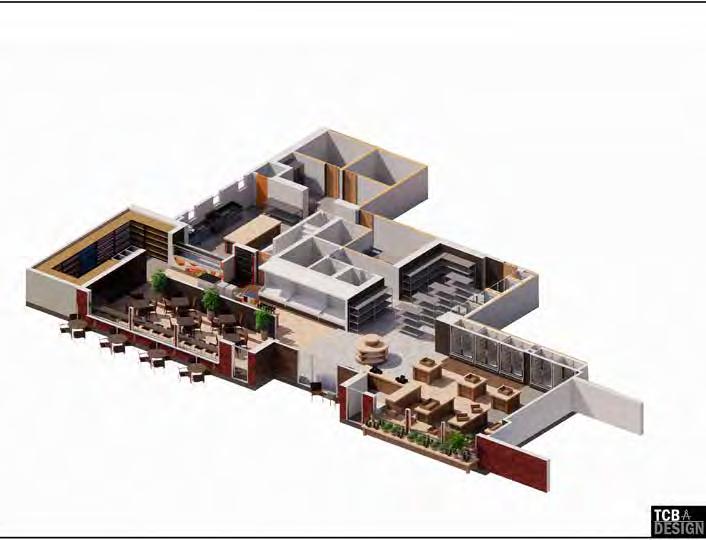
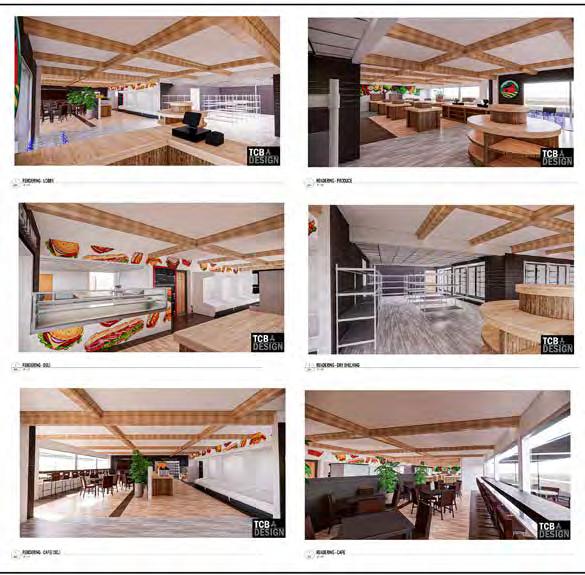
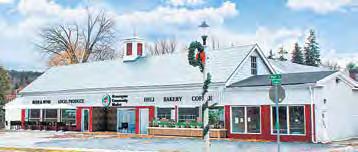
An image of a downtown market being planned by a nonprofit group on Main Street in Bennington.
freshening up downtown
The market will feature vegetables from True Love Farm and Mighty Food Farm in Shaftsbury; beef, pork and maple syrup from Hill Top Farm and maple skyr from Gammelgarden Creamery in Pownal; and milk, cheese and yogurt from Berle Farm in Hoosick, N.Y. There will be a number of products that have never been offered before in Bennington, like gelato from Wells’ Larson Farm and Creamery, and pastas and sauces from Trenchers Farmhouse of Lyndonville.
In addition to grocery fare, the market will offer a commercial kitchen and bakery with in-store seating and the possibility of expanding into an event space.
“Our mission is to support the local food system and to make healthy food accessible to everyone.”
Aila West
The nonprofit market is planning partnerships with local organizations by offering gift cards distributed at local food pantries and working with farms to provide discounted prices for surplus seasonal products.
A truly community-supported grocery store, the project is underway thanks to the generous donations from community members and businesses. The market is halfway to its fundraising goal of $600,000, which is needed to offset commercial kitchen equipment, construction, initial operating costs and the purchase of retail goods.
“While we were all greatly saddened by the closing of the Krijnen Bakery last year, a silver lining was that the market was able to purchase all of their equipment with the help of a Bennington town loan; the spirit of the bakery will live on in our community,” says Barsotti.
Visit the market at 239 Main St. in the former LaFlamme’s furniture store when doors are scheduled to open on Labor Day weekend. To donate, visit benningtonmarket.com/ donate.
Of greens, tees and speed
Stratton Mountain Resort delivers downhill mountain biking, golf adventures, more for all abilities
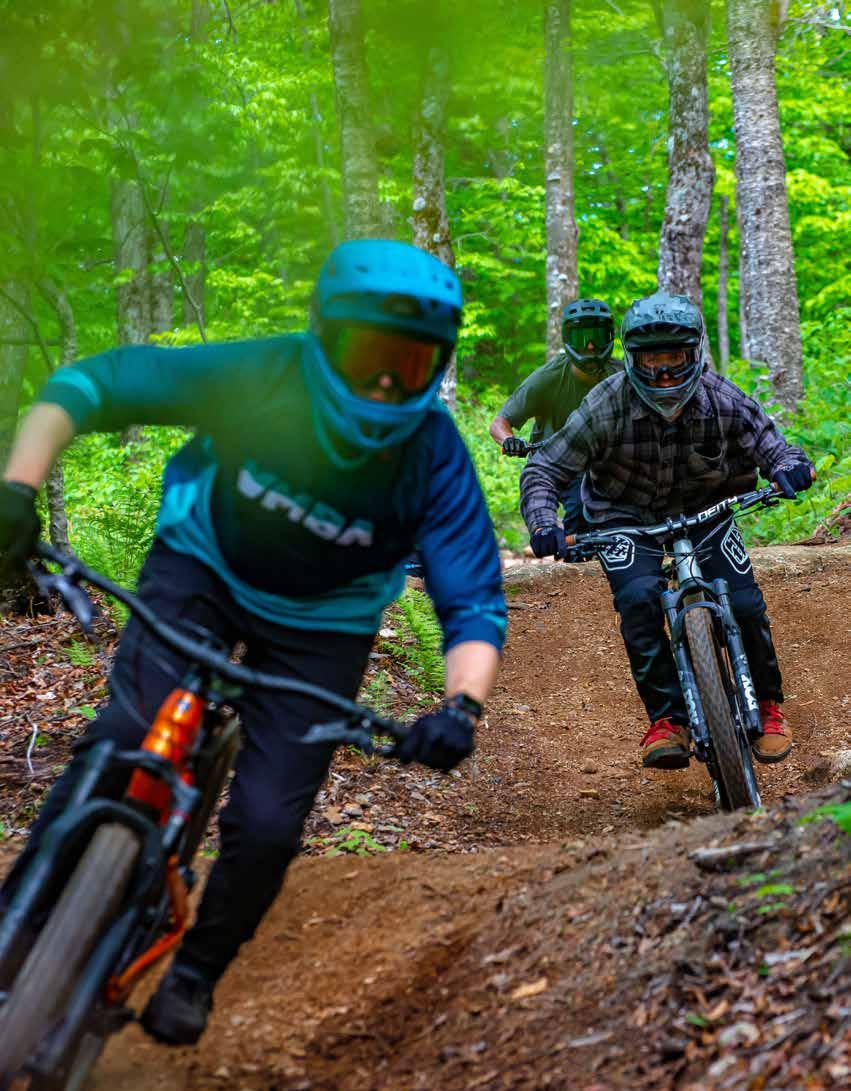
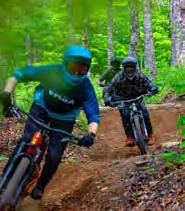
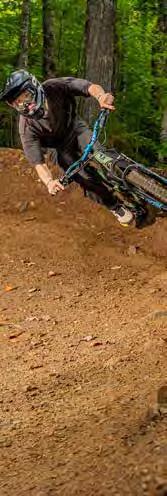
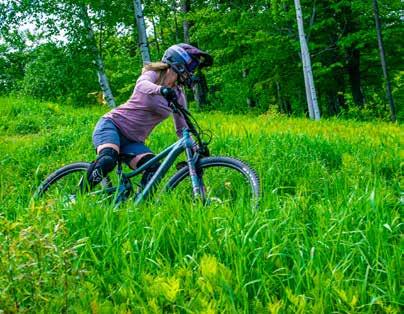
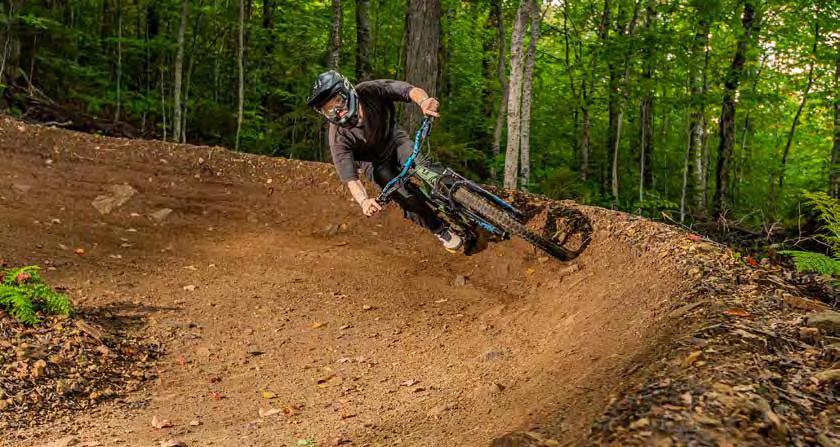
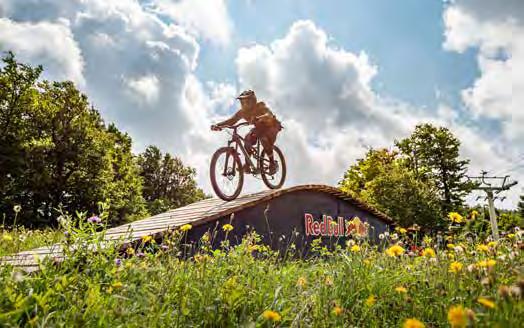
Stratton’s downhill mountain biking trails stack up against the best in New England. Made up of about 6.7 miles of trails, with another approximately 3.4 coming this summer, the park was designed and built in 2019 by Sinuosity, a Vermont-based company.
STRATTON — It’s never easy being all things to all people.
T hat said, Stratton Mountain Resort somehow makes it look easy, appealing to visitors and outdoor recreation enthusiasts for all four seasons.
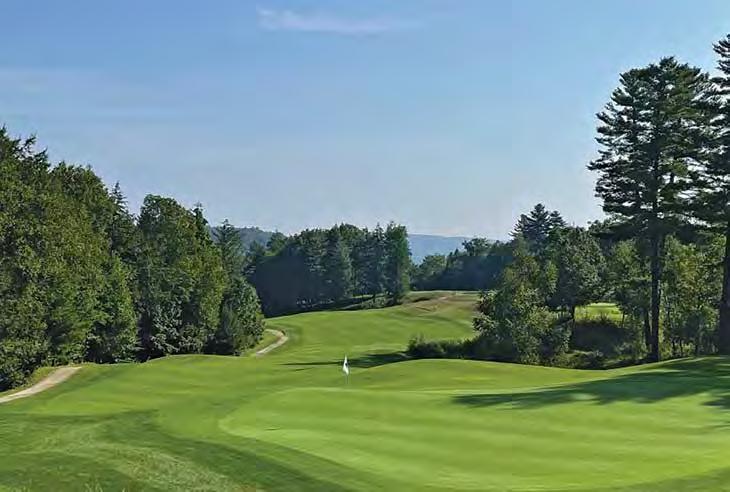
This time of year, the mountain is in full swing, with its top-shelf golf course for those who like to hit the
At the resort, players can feast on all 27 holes or choose one of the three usual routings: Mountain/Forest, Forest/Lake or Lake/Mountain.
links with the Green Mountain State framing the foreground and a downhill mountain biking park that can satiate even the most hungry speed freak in your family.
To showcase what Stratton has to offer, Vermont Country dispatched two writers — a longtime golfer and an avid downhiller — to test the resort out, each in their own special
way: Chris Mays, of the Brattleboro Reformer and Vermont Country, ripped up the dirt, while Tom Bedell, a member of the Golf Writers Association of America, traversed the greens.
Here are their experiences at the resort on a couple of recent near-summerlike days.
Zachary Gould photo for Stratton Mountain Resort
Stratton Mountain Resort photo
Feeling the berms at Stratton
Beginner or expert, you can send it flying on resort’s downhill course
By Chris Mays Vermont Country
Simply put, Stratton Bike Park is a solid choice for any downhill rider. It’s built for those seeking progression or just a good time.
Downhill mountain biking is a different beast than other types of cycling. It depends more on braking, navigating turns and tricky terrain than pedaling.
Having started downhill biking a decade ago at Mount Snow and traveled to different bike parks in the Northeast to ride over the years, Stratton’s announcement in 2018 that it would soon have its own course excited me. On Memorial Day, I finally got over
Zachary Gould photos for Stratton Mountain Resort
Downhill mountain biking is a different beast than other types of cycling. It depends more on braking, navigating turns and tricky terrain than pedaling.
there to check it out.
Ber mie Sanders is where the journey started. Obviously, the name was a factor in my choice, but I also remembered friends praising the run, and it did not disappoint. It sure lived up to its name. In addition to plenty of berms, I encountered small jumps, wooden structures and minor rock sections that helped kick the dust off my bike for the first ride of the season.
Taking it down a notch to warm up a little more for my second run, I hit Trail Forest One, a family-friendly beginner trail that’s great for cruising. It’s a longer, meandering trail with access to more difficult and novice trails.
Gravitas, another berm-filled run that got me going fast, led to Loam Shark, which differed in texture from the other trails and is explained in the name.
A feast of golf at Stratton Mountain
18-hole, three-part course touts ‘most charismatic,’ longest holes in Vermont
Continued from 17
Deemed a black diamond in difficulty, Crusher brought me quickly down steep sections of the mountain underneath the American Express lift used for biking. I held on for dear life and enjoyed the technical aspects of the trail, such as rock gardens, roots, wood features and other challenging terrain.
Returning to Bermie Sanders, now warmed up and familiar with the park, I was able to send myself off the jumps a little more and go faster. The trail quickly became my favorite, as I returned to it a couple more times before ending my day back on Trail Forest One.
Stratton’s downhill mountain biking trails stack up against the best in New England. Made up of about 6.7 miles of trails, with another approximately 3.4 coming this summer, the park was designed and built in 2019 by Sinuosity, a Vermont-based company that selected the natural terrain of the mountain to mix with machine-built lines and hand-shaped features.
By Tom Bedell Vermont Country correspondent
Stratton Mountain opened as a ski resort just before the New Year in late 1961. But even in Vermont’s Green Mountains, snow melts. So in the warm months of 1964, the first nine holes of the Stratton Mountain Golf Course opened for play.
The course was laid out by the grand old man of New England golf course design, Geoffrey Cornish. He saw it through to completion — the second nine opened in 1969. (Cornish remained fairly active until his death at 97 in 2012.)
One man was impressed enough by the effort that
Five new trails were being built at the time of my visit. Two or three of them will try to replicate the flowy freestyle vibe of Bermie Sanders, and one will be a beginner trail with access from the Cub Carpet lift.
A shop allows guests to come as they are and rent bikes and pads. Lessons also are available.
Base Plate, a taco truck next to the gondola, is a great place to grab food between going full tilt on the hill.
Stratton Mountain Resort activities
There’s lots of recreational opportunities to choose from at Stratton Mountain Resort. Try these:
Scenic Lift Rides: Soar to the summit of southern Vermont’s highest peak. Views stretch clear across four states and mountain ranges.
Cliff Drysdale Tennis Center: Offering the only authentic red clay courts in New England. Clinics for all ages.
ATV Tours: Explore the mountain with a guide and gain a whole new perspective on the Green Mountains.
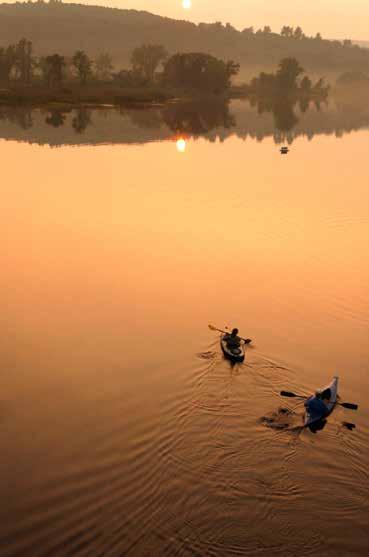
Paddle: Kayak rentals available at First Run in Stratton Village, along with Mountain Bike and Stand-Up Paddle Boards.
Mountain Top Yoga: Practice your tree pose at the summit. Take a gondola to the top for a class at the summit.
Go to stratton.com for details.
Stratton Mountain opened as a ski resort just before the New Year in late 1961. In the warm months of 1964, the first nine holes of the Stratton Mountain Golf Course opened for play. The second nine opened in 1969.
he opened his eponymous Arnold Palmer Golf Academy at Stratton that same year; it’s yet to reopen after its pandemic closure.
There was still more to come. Architect Brian Silva, then working for Cornish’s firm, fashioned 11 new holes in 1986, and the routing was rejiggered to give golfers three distinct nine-hole tracks: the Mountain, Lake and Forest courses.
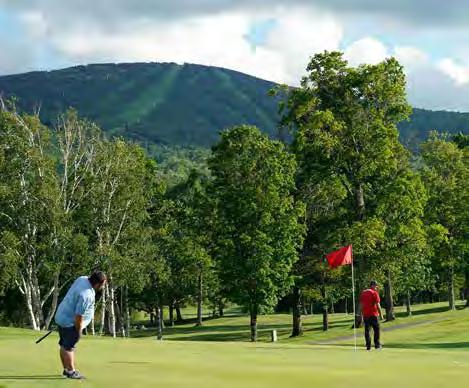
That same three-course treat is still thrilling golfers today. Players can feast on all 27 holes or choose one of the three usual routings: Mountain/ Forest, Forest/Lake or Lake/Mountain.
All are challenging but fair treks, though the Lake to Mountain combo was the course routing chosen by the Ladies Professional Golf Association when it played six professional tournaments here, from 1990 to 1995. Good choice. The second hole on the Lake Course played as one of the toughest during the LPGA years, 418 yards from the tips with a bunker at the corner of a sharp dogleg left. The Mountain Course third was called
The club doesn’t neglect locals, with daily tee times, memberships and a Friday Scramble.
one of the most charismatic holes in the state by Vermont Golf magazine, and it did play as the toughest hole during the LPGA years. Not only here, but also as the most difficult hole on any course in the 39 events of the 1990 LPGA season.
Then there’s the amazing fifth hole on the Mountain Course, a roller-coaster par-5 that begins with a giddy 90-foot plunge from the tee and makes two stream crossings before arriving at the purported safety of the green. Play it from tips at 621 yards, and you’ve likely played the longest hole in Vermont.
The par-5 eighth hole on the Forest Course is almost the reverse of the Mountain fifth — all uphill this time. Lest this all sound too daunting, fear not. Pick the right tee, and the courses aren’t really that long or tough. From the white, middle tees, the Lake nine works out to 3,066 yards, the Mountain at 3,041 and the Forest at 2,978.
Sure, there’s ample challenge with numerous blind tee shots, tighter fairways on the Forest, and countless humps, bumps, creeks, hills and gullies. But the holes are actually at the base of the ski mountain (often in full and lovely view), and the slope ratings work out to a reasonable 122 (Mountain/Forest), 124 (Lake/ Mountain) and 128 (Forest/Lake).
No matter one’s approach, ponder topping off the round with a meal at the Green Apron clubhouse grill along with some of Vermont’s award-winning craft beers.
T he club doesn’t neglect locals, with daily tee times, memberships and a Tuesday Men’s League. But as a resort course, it’s ideal for visitors with its stay and play packages, with options to enjoy Stratton’s downhill mountain biking courses, outdoor concerts, accommodations at the nearby Stratton Village and access to its amenities and other dining venues.
Stratton Mountain Golf Course Tee Times: 800-STRATTON (800-787-2886)
Bennington, Windham counties each have special places to take a dip
ABOVE: The Tubs are off Route 7 in North Pownal. They are accessible from a pull-off on Fowler’s Way and a short walk into a woodsy area past a steep gorge. Cost is free.
Parking and swimming are at your own risk.
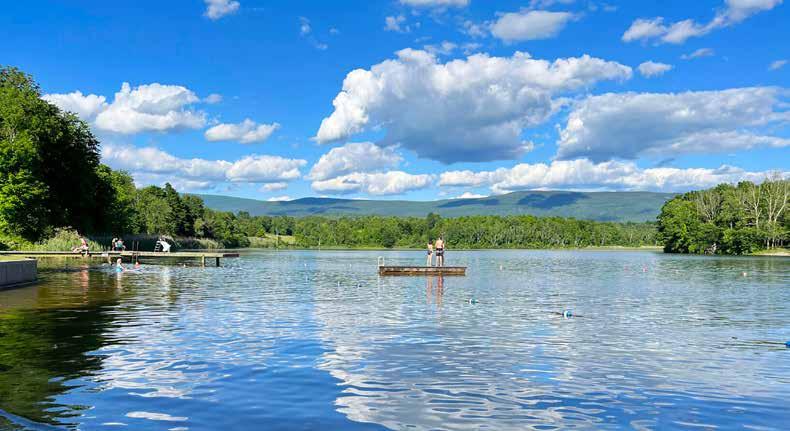
ABOVE: Lake Paran in North Bennington is a hotspot for swimming, fishing and kayaking. Great for families with young children, but dogs are not allowed. Cost for adults is $3.50 and children $1.
BELOW: The quarry in Dorset is along Route 30, about 4.5 miles from Manchester Center — it’s hard to miss. On a sunny day, this spot is brimming with swimmers. Great for families, the quarry is easily accessible from the parking lot. Cost is $15.
Photos by Isabel Wissner Vermont Country
one of these Vermont hotspots
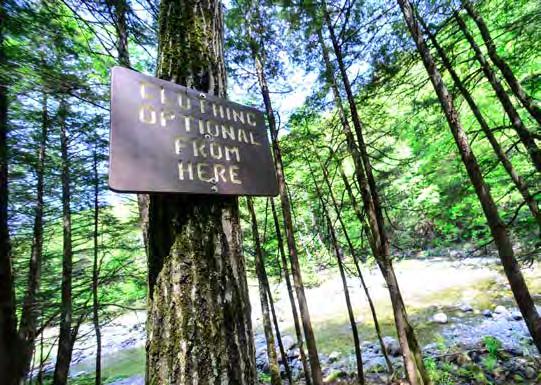
ABOVE: Indian Love Call in Newfane is a clothing-optional swimming hole area just off the Route 30 bridge and the confluence with the West River. It’s a small hike to the swimming hole area from the parking area. The first beach is a family beach, and the second two are clothing-optional.
TOP: The West River flows 53.8 miles through Southern Vermont, starting in Rutland County and into the Connecticut River in Brattleboro. Depending on the time of year, between Ball Mountain Dam in Jamaica and Townshend Dam in Townshend, the river is used for white water rafting. You also will find calm sections of the river where you can dip your toes in and take in the rolling Vermont landscapes.
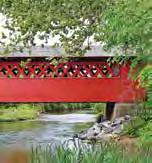
ABOVE: Travel down the Green River Road in Guilford, and you will reach a red-covered bridge that opens up to a picturesque Vermont landscape where you will see people swimming and taking in the scenery. A twolevel swim area offers everything for a family with different aged children.
County was stumped by mysterious disappearance and presumed slaying of Russell Colvin by the brothers Boorn
By Lex Merrell
Vermont Country
MANCHESTER — Two brothers, Stephen and Jesse Boorn, grew up in Manchester in humble circumstances and supported their families with hard labor.
T heir problems began in the early 1800s, when their sister married Russell Colvin, a man of weak intellect and an even weaker work ethic. Some believed Colvin was deranged. He was unable to support their sister and her children, so that duty fell to Stephen and Jesse. Colvin would disappear for months at a time without any warning, leaving his family penniless.
Burdened with the responsibility of taking care of Colvin’s increasing number of children, the brothers and Colvin turned conversations into arguments and then escalated to physical aggression. The cycle would often repeat itself.
his uncle to follow him to his final resting place.
Eventually, the uncle gave in and cautiously walked to the burial site. It was 4 feet by 4 feet and was originally used to bury potatoes.
In May 1812, Colvin disappeared again. This time, years went by, and neighbors of the Boorn family became wary of the brothers because of comments made after Colvin’s disappearance.The brothers made it sound like Colvin wasn’t coming back.
After seven years and no sign of Colvin, a Boorn uncle was cursed with a series of dreams. In these dreams, or visions as some called them, Colvin loomed over his bedside and revealed that he was murdered. He begged
T he pit was excavated. A large jackknife and a button were found. Before setting eyes on the items, Russell’s wife could describe them. The items were undoubtedly her husband’s.
After this discovery, a young boy with a spaniel dog walked past the Boorn father’s home. The dog went wild when he smelled a decaying stump in front of the house.
T he dog began to dig and bones began to rise to the surface. Broken and
burned bones were found alongside human toenails.
An amputated leg, buried four years prior to the unearthing of the bones, was exhumed for comparison. The bones weren’t human, but it was determined that they were added to the pile to deceive anyone who uncovered them.
As for the bones being bur ned, a member of the community remembered that after Colvin’s disappearance, the Boorn father’s barn burned to the ground. Stephen and Jesse also burned a large log heap on the property.
T heories on the Colvin murder began to flow. The theory was that the brothers burned Colvin’s body in the log heap, and then burned what remained in the barn.
Soon after the discovery, the Boorn brothers were arrested for the murder of Russell Colvin.
As the stress of a murder charge and trial set in, Jesse Boorn had a confession to make: Stephen Boorn admitted to him the murder of Colvin. Jesse, in a trembling voice, repeated the story Stephen told him.
Stephen and Colvin got into an argument, as they had so many times before, and when it got physical, Colvin tried to run away. To stop him, Stephen hit Colvin in the head with a rock or club, and fractured his skull.
In the years since the murder, Stephen Boorn moved 200 miles away to Lewis County, N.Y. When the people
of Lewis County discovered there was a murderer in their midst, they surrounded his home. Boorn was dragged out of his house in irons, torn from his family and carried back to Manchester to stand trial.
Despite Jesse Boorn’s story, Stephen Boorn consistently declared his innocence after capture.
Evidence for the trial was gathered, added and exaggerated. Jesse Boorn eventually recanted his accusation against his brother, but Colvin’s son testified that he saw the murder take place.
T he court of public opinion was clear: The Boorn brothers were killers.
While they were locked up, the public had free access to the prisoners. Everyone who visited them urged them to confess to avoid a death sentence. Men of God prayed in front of them to let the Lord lead them to a confession.
T he pressure on the brothers mounted until, on Aug. 27, 1819, Stephen Boorn confessed. He admitted that their argument got physical. Russell hit him, he hit back, and Colvin fell down, dead. Stephen hid Colvin’s body under a mound of greenery until nightfall when he could bury the body in secret. A few years later, he unearthed the body and reburied the bones under the barn. The barn burned down the next day. Stephen dug up the bones for a final time and threw them in the river. He hid what remained of the corpse in the tree stump.
When it was time, the brothers were denied separate trials. They pleaded not guilty, stating their original confessions were made in duress. But it wasn’t long before they were convicted of murder and sentenced to hang.
T he community of Manchester wanted Jesse Boorn to live out the rest of his days in prison, but there was no mercy for Stephen. His death was set in stone.
A month prior to Stephen’s scheduled hanging, a clergyman, the Rev. Lemuel Haynes, went to pray with Stephen. Again, Boorn declared his innocence and begged the reverend to pray for him. For the first time, Stephen Boorn’s story was believed. Haynes wanted to prove his innocence.
Although Haynes was poor, he spent some of the little money he had to put a letter in a newspaper, asking if anyone had proof of Stephen’s innocence. After being ridiculed by the town for spending money on such a foolish errand, The (N.Y.) Evening Post published the letter.
T he very next day, Tabor Chadwick of New Jersey sent word that Colvin was living in his town. He was still
weak-minded but very much alive. Rumors spread, and disbelief set in. Bets were placed on whether or not the gossip was true.
Bones were found, a confession was signed, two men were convicted of murder, and one was to be hung. Brought back to Vermont, Colvin gazed upon Stephen in shackles, pointed at the iron around his wrists and asked, “What’s that for?”
No one has been able to confirm what Colvin was doing in a small town in New Jersey. It seemed like even Colvin was unsure of how he got there.
As the good Rev. Haynes retold this story about divine intervention on Jan. 9, 1820, he called the sermon “The Prisoner Released.” It stands as a warning on the dangers of presumed guilt in the court of public opinion.
Saturday night at the last remaining drive-in theaters in the area
The Northfield Drive-in in Hinsdale, N.H., is celebrating its 74th season in business. At 981 Northfield Road, the theater is nestled in the picturesque Granite State, but is close to the border with Vermont and Massachusetts.
Photos by Kristopher Radder
Vermont Country
Hathaway’s Twin Drive-in Theatre in North Hoosick, N.Y., is one of a few hundred drivein movie theaters that remain in the U.S. Vermont Country photojournalist Michael Albans visited Hathaway’s on a recent spring night, and here’s some of what he captured.
Check out Southern Vermont’s most exclusive homes for sale and the top-notch Realtors and agents who represent them.
See our ads on pages 32 and 33
Photo courtesy of Brattleboro Area Realty
In v estin y ourhometownandbecome not o nl yy our o wnbossbut a supporting memberofthecommunity!Readyto r oll, thislocatio n hasal l themajorequipment soyoucanmoverightinandstartup! Thecurrent ownershaverenovatedthebuilding includingthewalkinfloorandwalls.Great location with a hightrafficcount.They have 4 dedicatedparkingspaces r ightinfrontof thebuildingwithothersalsoavailableonthe street. A sweetsetupand ver y manageablewith asmallcrew.Adeckwithaviewfor3season munching,awalk-inforbeerandcolddrink pick up, grocer y area forstaples. Sweet! A taste offreedom andthe joy of a ne wadventure! Thenamewillnottransferwiththeproperty.
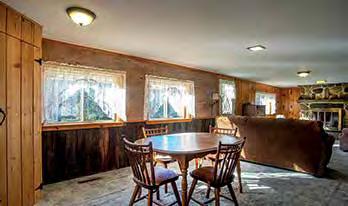
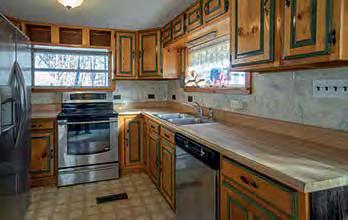
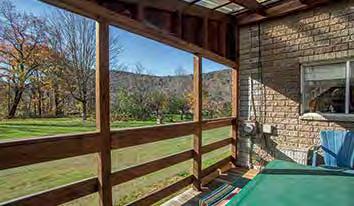
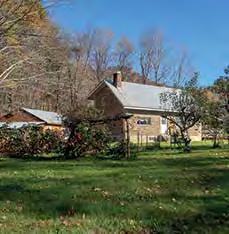
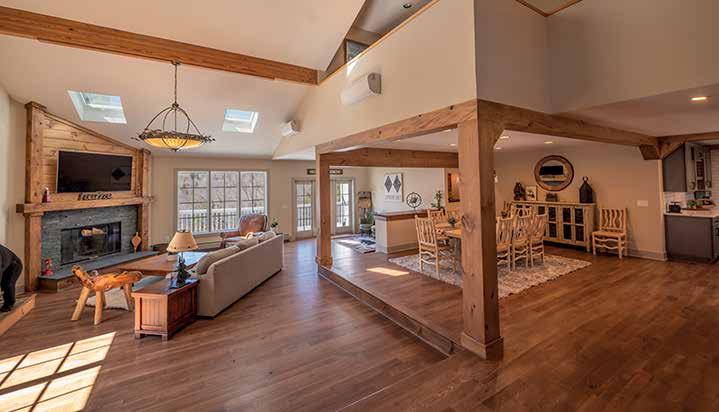
Sweet! W hat afind!Rightoff RT 30,setway bac k, thereisnomudseasonhere!Thismostlylevelopenparcel translatesintoagreatyardforallkindsoffun!Sunnyand open,itwill begreatgardening!! Perfect romping, games and a bitofbadminton!!!Thehuge covereddeck will expand yourlivingareatooutsideformuchoftheyear.Thereis garagespacefortoysoracarortwo.Theinsideisonegreat bigopenconceptdining/livingroomwithfireplaceatone endandan Lfortheopenconceptkitchenattheother 3bedrooms,1downand2upwith2showerbathsmakes thisperfectfortheaginginplacegenerationorthosewho needfirstfloorlivingrightnow.The2ndgarageandmobile homepad areon theneighboringproperty andare notbeing soldwiththishome.
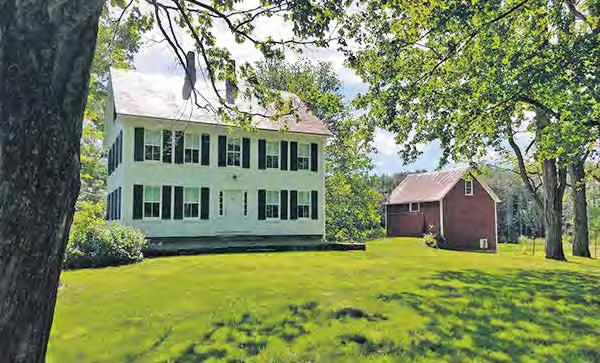
Thishandsomecenterhall Colonial(c1885)islocated on 54 acresofbeautifullandwithmeadows, woodland & ancient Maple &L ocusts on bothsidesofMiddleRoad indesirable D ummerston.Thelocation is choice, being only minutesfrom vibrantBrattleboroyetstillcountryinfeel.Thereisastately3-levelbarn/garage,gardenspace&privatedeckoverlooking theexpansivefields.Thehouseisatreasureandhasbeeninthesamefamilyfor80yearswithmanyrecentimprovements. Enterthisfineresidenceviaafrontdoor&intoafoyerthenintothelivingroom&parlor,bothwithwidepineflooring &beautifultrimwork.Theformaldiningroomfeaturesabuilt-inhutch,crownmolding&wainscotting.Thereisanewer kitchenandfamilyroomw/granitecounters,custombirchcabinetry,hardwoodflooring&patiodoorstotheprivatedeck overlookingthe verdantfields.Theupperlevelhouses 3 spaciousbedrooms.Thisbeautifulcolonial on stunninglandawaits itsnextowner!!!
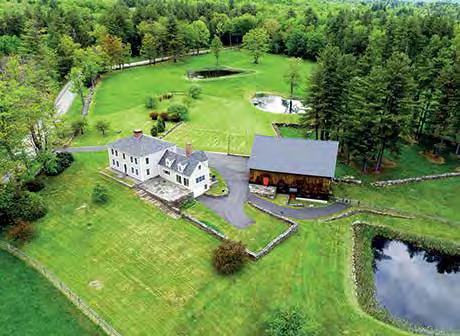
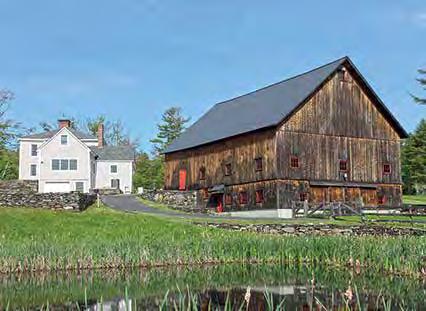
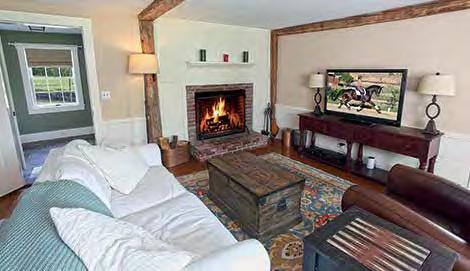
Onceinalifetimeopportunitytoownalovinglyrestoredand maintainedantiquecolonialVermontfarm.Evocativeofabygone era,thisstunninghistorichomecirca 1790is a breathtakingfixture ofthe rolling Vermontlandscape on which itsits.130 acresenvelope thehouse, includingthreelarge ponds, gorgeousstonewall borders, exceptionallandscapingandlushpasture.W hileupgradeshave been made, includingthewindows,insulation,andHVAC,the overarching architecturaldetailofthehomehas remained a testamenttoits originalconstruction.Beautiful restoredwideplankhardwood floorsrunthroughout.Highceilingscrownedinhand-hewnpost andbeam,abundantbuilt-inshelving,andfiveworkingfireplaces maketheinterioratreasure.Themanywindowsofthehousefill eachroomwithstreamingnaturallightandphenomenalviewsof thesurroundingacreage.Withfivebedroomsandfivebathrooms thisspacious residenceechoesthenative vastnessofitssurrounding property.Asubstantialrecentlyrestoredpostandbeambarnsits adjacenttothehousewithsixhorsestalls,atackroom,andplenty ofstorageforhay.Thisgloriousestateisatruecelebrationofthe intersection betweenoldandne w, andthebeaut y of S outhern Vermont.Anadditional70acresisavailablefor$149,000. ListedbyMonicaSumner (802)-380-5575SkiHomeRealty MLS#4912333
Handmade dolls, clothes snatched up as fast as she can make them
She started with socks, but now dazzles with intricacy — and illustrations, too
By Bob Audette Vermont Country
BENNINGTON — Mi-
chelle Housel made her first rag doll out of socks and scrap fabric when she was about 12, a year or two after her family moved from Florida, where she was born, to Nantucket.
“I would have [family and friends] bring a clean sock and $10, and I would make them little dolls,” she said, eventually developing her own style with “lots of experimentation.”
“When I was in high school,” said Housel from a rented farmhouse in Bennington, “there are these dolls ... Japanese resin jointed dolls, ball-jointed, expensive. And the people that have those dolls invest a lot of money in the accessories. I saved money, bought myself one. And then I just made outfits for it and sell the outfits on eBay.”
That was before Etsy, and she was making up to $100 per outfit — pretty good money for a 16-year-old — through her business, Dancy Pants Disco.
She left the island to return to Florida to study at the Ringling College of Art and Design, where she received her BFA in illustration.
“In college, I would make dolls as gifts for people,” she said. “It was like a very natural evolution into the doll making world.”
Her dolls combine her interests — delicately illustrated faces on handstitched, all-natural fabric.
“My first market was parents, but
then it shifted to people who collect eclectic things,” she said. “And some people are just getting them for themselves.”
A small doll takes up to six hours to make and can cost up to $180. Those don’t last long, and neither do the bigger dolls, which sell within hours of her posting a picture online.
“For a long time, it was my 9 to 5,” said Housel.
Despite the success of Dancy Pants Disco, illustration (her work is whimsical and classical, and each piece is worth 1,000 words at least) is where her heart is at.
“I’m trying to make the shift back to more illustration work,” she said.
She’s shopping a book around to children’s book agents right now.
She’s also hoping, like so many other artists, to get back among the people through fairs and festivals this year.
“I love being an artist, and I love talking to people. I’m definitely more of an introvert. So I like to work at home, but I like to periodically step out of my box.”
Photos by Isabel Wissner — Vermont Country
Contours of life led David Sullivan to instrument repairs
Violins, guitars and mandolins are this luthier’s specialty
By Bob Audette
Vermont Country
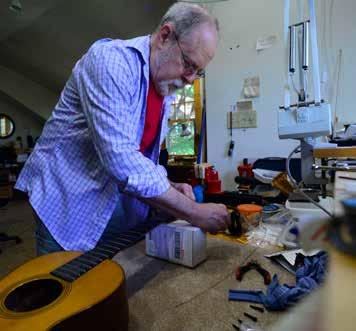
BRATTLEBORO — If a workshop can be characterized as both tidy and cluttered, David Sullivan's shop on Spruce Street might just be the exemplar.
Light shines through the many windows upon work surfaces where tools of his trade — making and repairing violins, guitars and mandolins — rest for the next project on his list.
The floor is neatly swept, but in a nearby closet are stacked more than a dozen guitar cases, each housing a guitar in need of some sort of work, including a vintage Martin classical guitar, nearly 150 years old.
"My daughter says I have a collection
of broken guitars," said Sullivan.
"Like the Martin, which I'm slowly putting back into working condition and will probably sell. This does not have the original bridge. Somebody replaced this. It will have to come off in a very delicate way so that I can make a restoration bridge."
When he's done with the Martin, it will probably bring in between $4,000 and $5,000, and go to someone who is both a player and a collector.
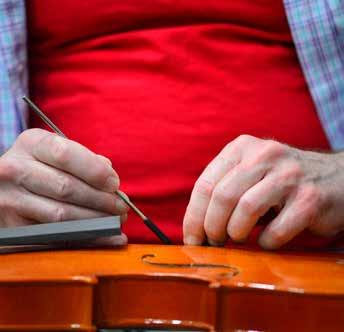
"I've got large projects that are constantly being interrupted by small projects," said Sullivan, while he tinkers with a violin. "It needs a little glue and a little adjustment, and I can take care of that and get it back to them as quickly as I can."
On a nearby bench sit guitar and
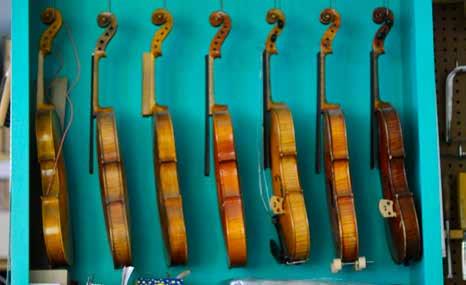
violin bodies he has started on, and over that bench are about half-dozen violins in all states of repair.
"I have to take into consideration what kind of work needs to be done and does the instrument have a lot of value," said Sullivan, who's not going to ask a customer to spend more money on a repair job than an instrument is worth.
Sullivan graduated from State University at Albany in the early 1970s with a music major, but after graduation he went into carpentry, a time when he learned a lot of woodworking skills.
"There are certainly analogies one can make between the structure of a violin or guitar or house," he said. "There are certain workflows that
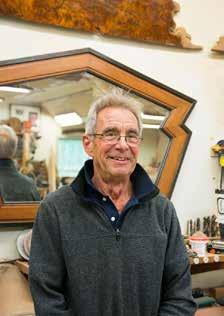
Kristopher Radder — Vermont Country David Sullivan restores violins, guitars and mandolins inside his Brattleboro workshop.
Dorset furniture maker looks back on 50 years of fine woodworking
And how he’s never been able to escape from mathematics
By Bob Audette
Vermont Country
DORSET — Since high school, mathematics has played an integral and sometimes surprising role in the life of master furniture maker Dan Mosheim.
“I liked geometry in high school,” he said recently from his Dorset workshop. “My adviser said, ‘Why don’t you just be a math major?’ Well, one term of being a math major made me realize that I was not academically involved enough to do that. So I switched to the business curriculum, where I learned nothing that applied
to running a small business.”
Needless to say, math is crucial when designing tables, sideboards, desks and beds. At the same time, many of his friends and connections, including his main paddle tennis partner, are math teachers, tutors or scholars.
“So I’m still sucked into it. You can’t make this stuff up,” he said. “I recently wrote a blog post about algebra and geometry in the workplace.” Mosheim arrived in Southern Vermont in 1971.
“I got off the bus in Arlington on July 6, 1971, to visit my sister, who was living in Arlington at the time,” he said. “I had been traveling for a couple of years after college. I went to Penn State and graduated in ’69. I had intended to go back to the Ocean Reef Club [in Key Largo] where I spent the winter of 1970. But I met this woman who is now my current wife, and we’ve been together 51 years. It’s been a good run.”
Mosheim’s wife, Calista, grew up in Guilford as a Kristensen, where her dad, John, was a town moderator and state legislator.
“She moved up here to work at the Jelly Mill in Manchester,” said Mosheim.
In 1974, the couple built a house in Arlington, and he worked as a carpenter for a local contractor from then until 1979.
“At that time, my wife was working at a kitchen store, and she was talking to people and they would say, ‘Where can we get a table?’” recalled Mosheim. “I had already built a shop
as a hobby thing, and to do projects for the builder on the side. So I just sort of stumbled into it.”
While he got established, he also worked as a bartender at Ace Manley’s Roundhouse in Manchester for a couple of years.
“When we finished our first house, we had literally just five pieces of furniture. So I started with a kitchen table. Then I bought some chair kits from Cohasset Colonials. I liked the process, so I bought a copy of ‘How to Make a Windsor Chair’ by Mike Dunbar. My first business card said, ‘Dan Mosheim, Windsor Chairs.”
Dan Mosheim
“When we finished our first house, we had literally just five pieces of furniture. So I started with a kitchen table. Then I bought some chair kits from Cohasset Colonials. I liked the process, so I bought a copy of ‘How to Make a Windsor Chair’ by Mike Dunbar. My first business card said,
Isabel Wissner Vermont Country
Master furniture maker Dan Mosheim.
Sullivan continued, from 42
are very similar. There are certain nomenclature that's very similar to plates, bottom plates, for example."
After working as a carpenter, he began to apply some of his skills to repairing musical instruments.
"I began this work as a college student, when my fiddle came open one winter," he wrote on his website. "Having always been handy with my hands, I bent some ears and found a good book on violin building, made some simple tools on a student’s budget, and began my long and mindful journey into a lifetime of instrument repair, restoration and construction."
In 1988, he and his wife moved to Brattleboro from Northfield, Mass., where they had settled after living in New York City for several years.
Eventually he took a job as an assistant with Douglas Cox, a master violin maker in Brattleboro, and worked with him for about seven years.
"Working as his assistant, I refined a lot of my skills and gained a bit of insight," said Sullivan. "It was a wonderful experience for me."
While you might find one of Sullivan's instruments in a local music shop, most of his clients find him online through reverb.com, a website that helps people sell new and used equipment.
"It's a very well-organized way for
Mosheim, continued from 43
‘Dan Mosheim, Windsor Chairs.’” Mosheim estimates he made about 1,000 Windsor chairs during that time.
In 1996, now with two boys in middle school, they moved to Dorset, where the Mosheims built a home and a new workshop.
Everything Mosheim creates now is custom ordered by people who have seen his work or have found him on the internet.
“People find pictures there, and they say, ‘I like this, only bigger, smaller, taller, shorter, lighter, darker ... It’s a back-and-forth process.”
In 2018, Mosheim started to think about retiring. He let his four employees go (“They found jobs instantly,”
he said) and began working on his own again.
“But it really wasn’t the same, even with Will here building banjos, and Sam doing metal work,” he said. “I didn’t really enjoy working by myself.”
Three years ago, Christian Moore, his nephew, dropped by and has since been helping out around the shop. Mosheim is happy that his two sons are fine craftsmen, as well. He’s also proud of the work he’s done that will outlast him, furniture that will become family heirlooms.
“I couldn’t have dreamed this up,” he said.
To learn more, visit dorsetcustomfurniture.com.
Back when learning the trade, David Sullivan took a job as an assistant with Douglas Cox, a master violin maker in Brattleboro, and worked with him for about seven years. “Working as his assistant, I refined a lot of my skills and gained a bit of insight,” said Sullivan. “It was a wonderful experience for me.”
me to sell," he said, and it also takes care of sales tax, shipping and all the accounting details.
Sullivan still does a bit of carpentry around the house, which he describes as "an unfinished project."
"Because I know I can do it myself," he says with a smile, "I won't hire anybody else to do it. It's probably something I need to get over."
Sullivan said he doesn't see retirement
on his horizon, though he is slowing down his work and only taking on projects that intrigue him.
"This is a great place to spend my time," he said, gesturing around his second-floor workshop. "It's a really pleasant spot, and I really enjoy the work. I don't see any need to stop doing it."
To learn more, visit davidsullivan-luthier.com.
Kristopher Radder — Vermont Country
Remembering that time Phish swam into Townshend
An
Aug. 26, 1989,
show in a sleepy Vermont town recalled by people who were there
By Bill LeConey Vermont Country
TOWNSHEND — In the summer of 1989, Deane Wilson was working at Rick's Tavern in Newfane, and he kept hearing people talking about "fish" and thought someone had ordered the haddock special or something.
They weren't talking about food, as it turned out. They were talking about Phish, a relatively unknown (outside of Vermont) "jam" band from Burlington that was scheduled to play an outdoor show at a family amusement park in Townshend later that summer.
Wilson had been to a couple of Grateful Dead shows by that time, but he had never heard of Phish. That all changed in the days leading up to the Aug. 26, 1989, show at Townshend Family Park.
"All these Phish 'heads' came in. All of a sudden, Rick's went from redneck to hippie. They were saying, 'They're going to be a huge band,'" Wilson recalls. "I was like, 'Yeah, sure.'"
John Evans also had never heard of Phish at the time. Evans, who owned Townshend Family Park — an amusement park off Route 30 along
Images courtesy of Phish.com
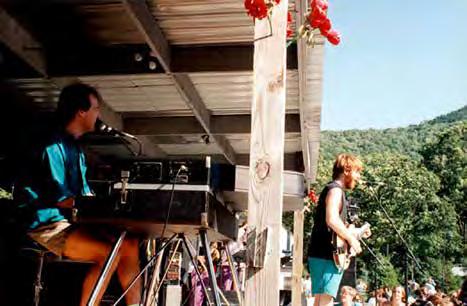
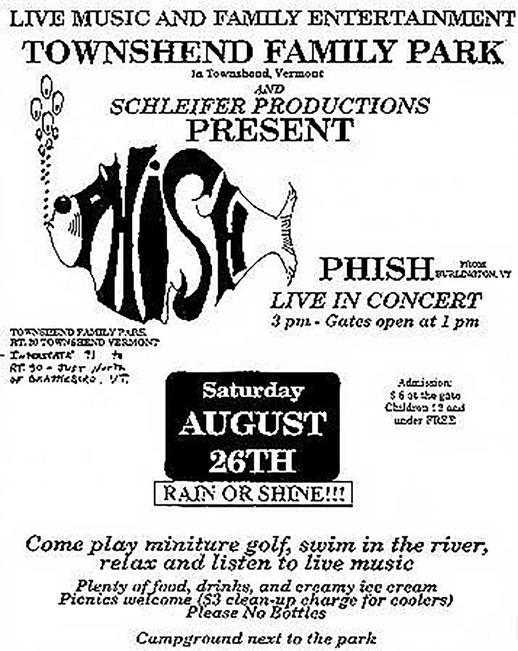
Phish keyboardist Page McConnell, left, and guitarist/lead vocalist Trey Anastasio perform at Townshend Family Park in 1991. At right, a flyer promoting the Phish concert at Townshend Family Park in 1989. The band played at the park three consecutive summers from 198991.
the West River, with a campground, miniature golf, a kid-friendly train ride and swimming — previously had hosted a few smaller concerts. But when he was approached by concert promoter Schleifer Productions with the idea of putting on a much bigger "festival-style" event, he was skeptical.
"I remember their manager (John Paluska) looking right at me and pointing his finger in the air, and he said, 'I'm going to take these guys to the top,'" Evans said. "He was so sure of himself. I had never heard of them. I just wanted to do something different."
The fans and Paluska were right, as was Evans' hunch about "something different." Phish drew more than 3,000 fans to that first show in Townshend in 1989, one of their biggest crowds since the group was formed by friends Trey Anastasio, Page McConnell, Mike Gordon and Jon Fishman in 1983 at the University of Vermont. They played to even bigger crowds at the same park in the summers of 1990 and 1991, and by that time had started to gain a large following throughout the Northeast.
But it was that first Townshend show in 1989 that has achieved legendary status among Phish fans over the years. It is one of only two live recordings from the 1980s released officially by the band (“Live Phish, Volume 9”), and is seen by many as a defining record of the band's tightly structured progressive rock period. It also is seen as a precursor of sorts to the band's outdoor festivals of later years, such as The Clifford Ball, IT and Lemonwheel.
That first Townshend show also was later profiled in an edition of Rolling Stone magazine as a perfect snapshot of the band's early live performances.
These days, of course, Phish routinely sells out huge arenas, amphitheaters and stadiums, with tickets ranging from $45 to $100 a pop. Their "Baker's Dozen" run at New York City's Madison Square Garden in 2017 drew a total of 227,385 in attendance, and promoter Live Nation reported gross ticket sales of more than $15 million for the 13-show run.
Townshend in the summer of 1989 was far different. Tickets were $6 at the gate, children 12 and under got in for free. Parking was free at the nearby Mary Meyer Stuffed Toys store.
That 1989 show was a barn-burner. Billed as ”Summer’s ONLY Outdoor Show,” it was an all-ages event. In fact, an advance blurb in the Brattleboro Reformer called it a "family concert." The gates opened at noon, and coolers and camping were allowed. There were early versions of Phish concert staples, such as “Harry Hood,” “Wilson,” “Divided Sky,” “You Enjoy Myself,” “Possum,” “Slave to the Traffic Light,” “David Bowie,” “Run Like an Antelope” and “Lizards.”
During the show, lead guitarist and
vocalist Anastasio likened the Family Park to Gamehenge, the mythical setting for an early Phish song cycle. He mentioned Bald Mountain behind the stage and likened it to the mountain featured in the song "Colonel Forbin's Ascent," which they, of course, then played. Noticing the river nearly encircling the park, Anastasio led the crowd in a whistling version of "The Fishin' Hole" (aka “The Andy Griffith Show” theme). At the end of the first set, he implored the crowd to "Go for a swim, play miniature golf. Phish will be right back!"
At the end of the show, Phish provided the ZZ Top crowd-pleaser "La Grange," with Anastasio laying down a smoking solo before sending the
crowd on its merry way: "Pick up the garbage, and we'll see you next time!"
Deane Wilson ended up going to see Phish in Townshend (though, oddly, he doesn't remember them playing "Wilson").
"It was good," he said. "It was a lot of fun." He remembers people watching from big cliffs across the street (Route 30) and thinking someone might die if they fell.
Terry Davison Berger's family lived close to the park, on the other side of the Scott Covered Bridge, just down the river from the Townshend Dam. She said she knew about Phish, but wouldn't characterize herself as a fan at that time. Of course, that all
changed when the band arrived in her hometown.
“It was just really a fun time in the (West River) Valley, because you didn’t have to trek to Burlington or Northampton (Mass.) to see live music.”
Terry Davison Berger
"For us kids that were local, we were just thrilled to have live music coming around," said Berger, now a teacher at Leland & Gray Middle and High School in Townshend. "It was just really a fun time in the (West River) Valley, because you didn't have to trek to Burlington or Northampton (Mass.) to see live music. Who was going to pass that up?"
Not everybody was thrilled to have Phish playing in Townshend, Berger recalled. "A bunch of the locals were kind of up in arms about it. I can remember talking about it with my mom, and my mom being so annoyed, like, 'Oh, let's get upset, there's actually something fun for the kids to do in the valley. Why is every-
one getting upset and stressed out about it?'"
Though Berger did not attend the 1989 show, she did go to the Townshend show in either 1990 or '91 (she's not sure). Later that year, while attending UVM, she met Phish drummer Jon Fishman, and the two struck up a friendship that continues to this day.
"Every now and then he'd come down to Townshend to hang, and I'd take him up to Hamilton Falls (in Jamaica State Park) and show him the sites around here. So, it was sort of funny that I did not know him at the time (of the Townshend shows) but then months later, we would drive by the park, and he would say, 'That's where we played!'"
There has long been a tale that Fishman arrived late for the 1989 show because he was stopped and ticketed for speeding en route (a great example of how things have changed for the band in the past 33 years). Other people apparently had to set up his drum kit that day.
Berger said she's not sure if that's true, but she wouldn't be surprised.
"I think Jon had a bit of a lead foot," Berger said with a laugh, and she's not talking about his drumming technique. She said she later accompanied Fishman to a court appearance for a speeding ticket before a show in Keene, N.H.
To John Evans, who built the bandstand on his property, it's all a bit of "a blur." He doesn't think of himself as the "Max Yasgur of Townshend" (Yasgur being the man who allowed the Woodstock festival to happen on his dairy farm in New York in 1969). He said all he did was provide the venue, and let the chips fall where they may. And there were a lot of chips,
from parking issues to drug busts by undercover cops to trash left behind (despite Anastasio's pleas). The young Phish fans who invaded the area provided plenty of business for local stores, campgrounds, motels and gas stations — and some headaches for neighbors.
Evans, who now owns Green Mountain Tents on the same property, has "mixed feelings" about how it all went down. He built a wooden "dance" platform at the front of the stage that was nearly destroyed by fans jumping up and down on it. He said a show promoter "didn't play fair" with him.
"Between him and the neighbors, it just got to be too much," he said.
At one point, Evans tried to build a pedestrian bridge over the river to allow for more parking, but that idea was nixed because of water levels near the dam.
"I guess it's all water under the bridge now," he says without a hint of irony. "I don't regret doing it, but I took a bit of a (financial) hit."
Photos provided by Terry Davison Berger
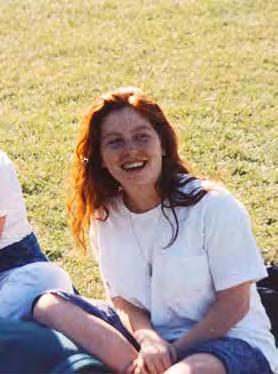
Terry Davison Berger at the Phish concert at Townshend Family Park in 1990 or ‘91.
Terry Davison Berger, left, with her friend, Phish drummer Jon Fishman, at Hamilton Falls, Jamaica State Park, in 1992.
Phish frontman to open addiction treatment center in Ludlow
By Bill LeConey
Vermont Country
LUDLOW — Trey Anastasio is not a native Vermonter. He lived most of his life in New Jersey before attending the University of Vermont in the early 1980s and forming the band Phish with some like-minded friends.
Since then, Anastasio has made the Green Mountain State his home — from the exhilarating highs of musical stardom, to the lows of drug addiction and a high-profile arrest, on through to the upswing of recovery and rejuvenation.
Now, Anastasio and his Divided Sky Foundation are giving back to Vermont by converting an Okemo Mountain property into a 40-bed treatment center for Vermonters grappling with alcohol and drug use.
“I started Divided Sky Foundation to offer people the same help that I was fortunate enough to receive, which is an opportunity to get treatment for substance use, to be in recovery and hopefully to do that while serving others,” the 15-years-sober musician told the Ludlow Development Review Board during one of two online hearings last year.
Anastasio’s foundation bought the 18-acre Fox Run at Okemo property with the help of more than $1 million donated by viewers of the musician’s livestreamed pandemic concerts. Last summer, the foundation earned town approval to open the facility, overcoming some complaints from Ludlow residents. Neighbors later appealed the ruling through Vermont’s Act 250 land-use permit process, and a decision is pending.
In the same way that Anastasio improvises a solo during a typical Phish “jam,” his organization is tweaking plans for the treatment center by proposing to open under a “nonmed-
ical programming model” that does not bill insurers but instead relies on “self-pay and scholarships.” Without the medical designation, the center could operate under its existing permit, according to the foundation.
Divided Sky held a 5K Fun(d) Run in Ludlow on May 14 to benefit the foundation and Turning Point Recovery Centers of Springfield and Rutland. Anastasio, on a break between tours with his solo band and Phish, made an unannounced appearance at the run to thank supporters and listen to their shared experiences of addiction and recovery.
“We’re proud to join the community and to be part of the fight against this scourge that has been happening in my beloved state of Vermont,” he told the runners after the event, in a video posted on YouTube. “All the people who just told me stories, personal stories of their loved ones and struggles with addiction and alcoholism, every single syllable you uttered means so much.”
Eric Jacklin of Ridgefield County, Connecticut, a Divided Sky volunteer and licensed alcohol and drug counselor, said he was thrilled to meet Anastasio and talk to him about his personal experience as a recovering addict, 13 years sober.
“One of the tenets of being a person in long-term recovery is a saying, ‘We keep what we have by giving it away,’ because when somebody gets sober or clean, there are people that have paved the way for them,” Jacklin said. “They welcome us into their fold and teach us, ‘Hey, if you want what I have, this is what I did, maybe it will work for you, too.’ So I think by having the Divided Sky Foundation and opening a treatment center, it’s Trey’s way of giving back.”
Jacklin said that most people with substance use disorder have a “co-morbid condition,” such as anxiety or depression, or they’ve had some kind of trauma in their life that causes them to self-medicate.
“They don’t know how to get through whatever their challenge is, but it doesn’t make it go away, because when you come down off of whatever you’re using, those problems are still there,” Jacklin said. “Once you’re on the hook, it’s like a fish. You’re getting reeled in, and there’s nothing you can do about it, but in order to fix the things that are driving that behavior, you have to stop using and sober up, so you can get an awareness of what those underlying issues are and chip away at them, little by little. Recovery is a healing process; addiction is what keeps people sick. That’s why treatment centers such as this are so important.”
For more information on Trey Anastasio’s charitable organization, go to dividedskyfoundation.com or visit its Facebook page.
Photo by Dan Shinneman via Flickr.com
Trey Anastasio of Phish at Red Rocks Amphitheater in Morrison, Colo., July 30, 2009.
All along the ridgeline
What draws hikers to trek the Long and Appalachian trails
By Jim Therrien Vermont Country
Provided photos
Retha Charette of Arlington is a world-traveling hiker who has traversed the entire AT.
BENNINGTON — Most people are at least vaguely aware that backpack-laden hikers are often trekking past us on the high ridgelines of the Appalachian and Long trails through Southern Vermont.
But hikers are only visible to the general public when they drop down for a break in one of the towns along the two trails, which run together in the Green Mountains north to the Rutland area.
At that point, the Appalachian Trail slants off toward New Hampshire and, eventually, Mount Katahdin in
“Why would they put themselves through all that?”
Maine — the opposite end of the 2,194.3-mile path through 14 states, which extends south to Georgia.
Many Vermonters, as well as visitors, probably have an image of those hikers on the trail — either feeling envious, wanting to try that one day or thinking, “Why would they put themselves through all that?”
We asked some experienced hikers why they like to go up and down
mountains on often rough pathways; enduring heat, bugs, blisters and nighttime cold, not to mention a chance meeting with a bear, a bobcat or coyote — all while studiously avoiding ticks, snakes, poison ivy and other natural hazards.
They came up with some inspiring answers. So, here’s what those hikers told us.
RETHA CHARETTE
“I did the [274-mile] Long Trail in sections in 2020, and then I did a [thru-hike] of the Appalachian Trail in 2021,” said Retha Charette of Sunderland, who now travels to hiking sites around the world, working for an adventure travel tour service
for women.
“Regardless of how long you are out there, I personally feel very free,” she said. “You are disconnected from all the negativity in the world, and it’s just you out there, depending on yourself.
“It’s also soul-strengthening; [it’s] the term I’d use,” she said. “I mean, I left the [Appalachian] Trail feeling stronger than I ever have when I finished in September.”
Charette, who grew up in Eastern Massachusetts, was a Girl Scout who remembers her experiences then as dominated by summer camp and the outdoors.
“So I’ve always been a bit of an out-
doors person,” she said.
In 2015, she “spontaneously signed up to climb Mount Kilimanjaro, without knowing how high it was. That kind of set me on a trajectory to being a more confident hiker than I was before.”
Kilimanjaro, a dormant volcano in Tanzania, is the highest peak in Africa at more than 19,341 feet.
Since then, Charette has climbed Machu Picchu in Peru multiple times, and has hiked peaks in Japan and to the base camp at Mount Everest in Nepal, the stepping off point for teams preparing to scale the world’s highest peak, at just over 29,000 feet. Much of her experience is related to
Provided photo
Jonah Spivak, right, of Bennington helped spearhead the Bennington AT Community designation and has hiked all of the Long Trail.
her job with WHOA [Women High On Adventure] Travel, which arranges adventure travel to sites around the world, conducted by women for women.
She also is a backpacking coach with a blog site, working to help more women get out on trails backpacking.
SILVIA CASSANO
Silvia Cassano is co-chair of the Bennington Appalachian Trail Community Committee and has worked as a trails system program manager and in other outdoor recreation positions.
“For me, the trail is a place to commune with the sights, smells and sounds of nature for a full immersion in the forests, wetlands, meadows, fields, mountain tops, sky and waterways and the life within,” she said.
Cassano said she seeks “quiet experiences and a time and place to look inward and reflect. There is nothing like hearing the migrating songbirds return to the forests in spring, or listening to the rustle of leaves from a breeze while stopping to filter my water or take a break. Being more in tune with my surroundings by thoughtful moving along the trail really grounds me to the land, but also to myself and to other people.”
Cassano said her favorite scents are “of the earth when trail work is happening, and the smells of blooming azaleas, and the sprucey smells when you get to higher elevations, mixed in with the earthy, organic duff smell. I love how cold the water is from the clean spring at the Goddard Shelter in Glastenbury.”
She advises novice trail hikers to also be prepared to deal with an injury or other emergency, as it can take hours for rescue personnel to reach a mountain site.
“I have found so much comfort and an understanding of myself through finding mentors and peers to hike with and learn from,” she said, “and joining groups like the Green Mountain Club or attending organized events can help you meet people who can introduce you to skills you can develop.
“I really enjoyed the moments where I was getting ready for bed in my tent on a crisp night, after successfully storing my food and putting on
clean, hopefully dry socks,” Cassano said. “Laying down after a day of hiking feels so good. Early mornings and being woken up with the birds and the light during summer hiking season is also refreshing. Your body feels like it is calibrating with Mother Nature, which feels so much more natural and energizing.”
JONAH SPIVAK
“A complete escape from the modern world” is how Jonah Spivak, Bennington’s communications coordinator, describes a Long Trail
hike he took right after college. “The freedom of having everything you need right on your back, where your only schedule is deciding when and where you want to stop to breathe in the fresh air or to set up camp for the night.”
Of his unforgettable moments, he said, were “seeing a moose grazing in the shallows of a secluded pond is an experience. Then hearing a mouse all night long rustling about the shelter until I was able to capture it under a cooking pot to keep it quiet until morning.”
Provided photo
Silvia Cassano advised Bennington on getting its AT trail designation and has worked in outdoor recreation jobs in Northern Vermont and now in Maine.
His favorite section of the trail is in Bennington County.
“I love the stretch from Glastenbury Mountain to Stratton Mountain … a wonderful combination of amazing views and beautiful trail, with a picturesque pond at the foot of Stratton Mountain to cool off in.”
The experience of hiking the trail in Vermont “is likened by some as hiking ‘the green tunnel,’” Spivak said, “as you are often surrounded by woods — but interspersed with amazing views and the wonderment of what new discovery will come around each bend. Because the trail is mostly along the ridges and tops of mountains, the flora has a distinct northern feel, with lots of mossy bouldered streams, seas of gently waving ferns, and shade-loving wildflowers.”
MARK RONDEAU
“I am strictly a day hiker,” said Mark Rondeau, a former Bennington Banner copy editor and writer, who now is executive director of the Berkshire Food Project in North Adams, Mass.
“I have hiked parts of the AT in Vermont, Massachusetts, Connecticut and New Hampshire,” he said. “I first hiked on the trail but on the parts that go from my hometown of North Adams, Mass. From there years ago, I hiked to where the trail enters Vermont.”
In Vermont, he said, “I have hiked on the AT to the top of Baker Peak in the Green Mountain National Forest, to the top of Styles Peak in the Peru Peak Wilderness, and on June 29, 2020, I was hiking on the AT in Winhall when I got caught in a torrential summer rain. I took cover for over a half-hour under a rock overhang, which was almost like a cave.
“I love the trail,” he said. “It passes through so many interesting spots. Peaks, lakes, rock formations, views. I have many favorite stretches in Massachusetts and Vermont. It would be hard to choose one.”
Concerning the trail experience, Rondeau said, “You meet two types of people. Day hikers like me and thru hikers. You can tell the difference by how much stuff they carry. Plus, frankly, thru hikers often look strained and exhausted. They’re usually in a hurry and don’t talk much.”
He adds, “Despite the mystique of the thru hiker, day hiking on segments is just as legitimate. Often day hikes on the trail involve other trails, which is fine.”
Rondeau said he was in turn inspired after reading “The Last of the Mohicans” to hike in the Adirondacks, and has hiked in the White Mountains, including on Mount Eisenhower.
“The weather was wild,” he said.
PETER WELCH
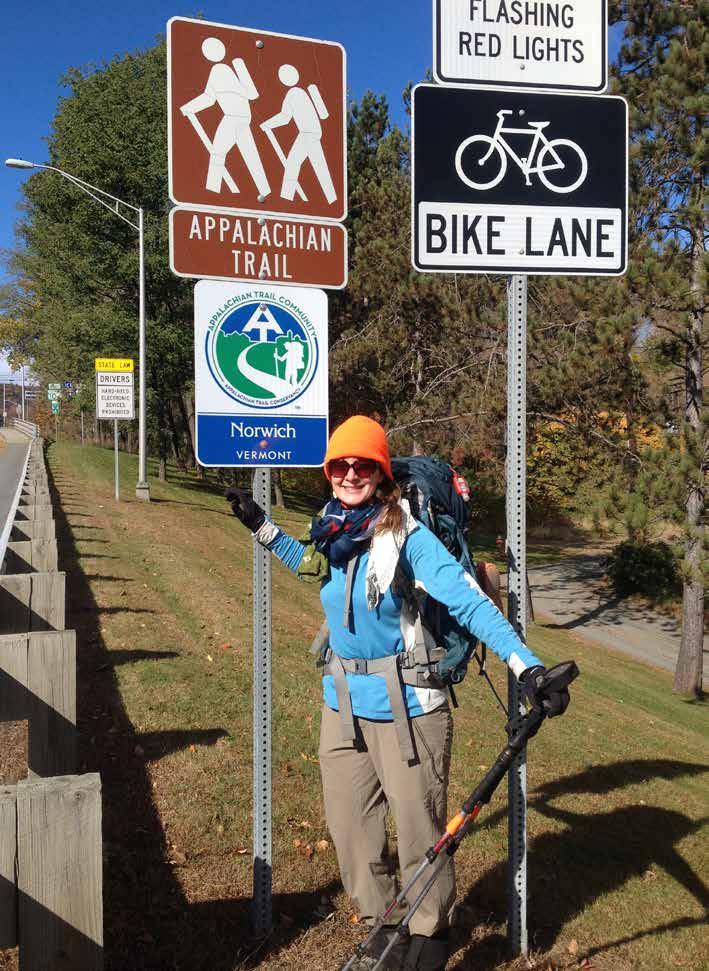
“I live in Norwich, and I’m within half a mile of the Appalachian Trail. In the winter I’ve skied it, and in the summer I hike it,” said U.S. Rep. Peter Welch, D-Vermont.
“I did a lot of hiking during COVID,” Welch said, adding that during the first pandemic summer, his son was home to visit, and they spent many days on hiking trails.
Several day trips were in the Norwich-Hartford-Bridgewater area and on to Killington. On the New Hampshire side, Welch hiked into the Hanover area, to Velvet Rocks, Moose Mountain or other sites.
“These are day trips where you can go about six hours and cover a lot of beautiful countryside,” he said. “And I think it helped us immeasurably to survive the COVID lockdown.”
There were many hikers on the trails during that period, he said.
“It’s just a glorious experience being on the beautiful, well-maintained
The intrepid Mark Rondeau of North Adams, Mass., has become a compulsive day hiker on the AT and other trails in Vermont, Massachusetts, Connecticut and the Adirondacks. He logs many of his hikes on social media.
Appalachian Trail and to experience kind of unspoiled Vermont and New Hampshire,” Welch said.
“I like the quiet, the solitude, and the peace of walking through the variable Vermont countryside,” he said. “And would see everything from steep climbs up rugged mountains with close-in vegetation and forest to mature forest with beautiful glades to on occasion crossing open fields and high meadows with magnificent views.
Provided photos
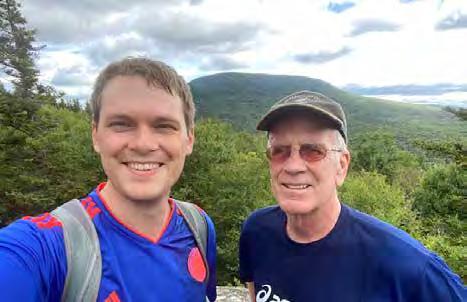
Peter Welch, right, likes to hike around his house in Norwich, often with his son, seen here.
Summertime means seriously hot flix
A
look back at films that almost sizzled their way over to the Red Light District
By Dan Tebo Vermont Country correspondent
Ah, the New England summer — that devastatingly fleeting stretch where the nights grow long and the earth comes alive. A time when we shed our clothing and let our inhibitions melt away like a popsicle on a windowsill. A time for guzzling white wine and behaving with reckless abandon, particularly in the
privacy of our own bedrooms or clothing-optional beaches. If there’s a stronger natural aphrodisiac than a sweltering July Vermont afternoon, I have yet to hear of it.
For those without sparring partners (or internet connections), there’s no shortage of seductive cinema to help crank that heat to a full boil. The rise of unrestricted streaming services has brought us the sort of horned-
up programming (“Bridgerton,” “Sex/Life,” etc.) that one would’ve only been able to find in the shame chamber of their local video stores 20 years ago. Onscreen intimacy isn’t nearly as taboo now, thanks to the near obsolescence of the Motion Picture Association of America.
But here are a few fer vid flicks that managed to work puritanical gatekeepers into a lather in their time.
1. “Don’t Look Now” (1973): A half-century later, the debate rages on as to whether Donald Sutherland and Julie Christie were having unsimulated intercourse in Nic Roeg’s gothic horror classic. I will tell you what I do know to be true: Sutherland’s bare ass was omnipresent in the 1970s.
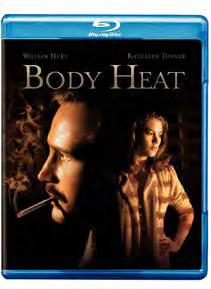
2. “Body Heat” (1981): Twenty-six-year-old Kathleen Turner and a mustachioed William Hurt are one million tons of sexual dyna-
mite in this Hitchcockian noir. After spending the first half of the film devouring each other, Hurt decides to murder Turner’s husband, leading to less sexy consequences for all involved.
3. “Angel Heart” (1986): In Alan Parker’s queasy voodoo thriller, Mickey Rourke and Lisa Bonet ball with such ferocity that the skies rain blood upon them. Literally. The MPAA slapped this one with the dreaded X-rating, as members did not approve of Rourke’s buttocks “thrusting in a sexual manner.” Unsexual buttock thrusting, though, is apparently totally fine.
4. “Do the Right Thing” (1989): To quote one of this film’s neighborhood dwellers with an unprintable name: It ain’t never too hot or too cold for (lovemaking). In Spike Lee’s blistering masterpiece, our hero Mookie heads home for an ice cube-infused afternooner with his
girlfriend, Tina, in a scene that probably wouldn’t even collect a PG-13 in 2022. Sometimes it’s what we don’t see …
5. “Basic Instinct” (1992): A controversial cultural juggernaut upon its release, this brazenly explicit potboiler is still blush-inducing 30 years later. Real-life sex addict Michael Douglas and underwear averse Sharon Stone sex each other six ways to Sunday, which is awesome. Then she maybe possibly definitely murders him with an icepick, which is less awesome.
7. “Monster’s Ball” (2001): In Marc Forster’s relentlessly bleak drama, a biblically grief-stricken widow (Halle Berry) inexplicably befriends the equally troubled corrections officer (Billy Bob Thornton) who oversaw the execution of her husband. Their liquor-fueled gorge-a-thon remains one of the most graphic in mainstream cinema history. Berry won an Oscar for her efforts here and rightfully so.
discovers the affair, he murders her lover with a snow globe. Coitus interruptus indeed.
9. “Blue Valentine” (2010): A tasteful scene of a man pleasuring his wife proved to be a bridge too far for the pearl clutchers at the MPAA, who initially hung Derek Cianfrance’s marriage disaster film with the scarlet NC-17, a particularly misguided rating for a film that seeks not to titillate, but to make one want to avoid all human contact for the rest of their natural lives.
6. “Bound” (1996): Before the Wachowski Sisters created “The Matrix,” they raised eyebrows with this indie crime caper, featuring a groundbreaking (for its time), exquisitely choreographed long-shot sex scene between co-stars Jennifer Tilly and Gina Gershon.
8. “Unfaithful” (2002): Legendary kinkmeister Adrian Lyne directed this erotic thriller about an affluent housewife (sex-on-two-legs Diane Lane) who strikes up a torrid affair with a devastatingly handsome Manhattan loft dweller (sex-ontwo-other-legs Oliver Martinez). When Lane’s husband (Dick Gere)
10. “Call Me By Your Name” (2017): A 17-year-old boy named Enzo travels to Northern Italy and spends a scorching summer exploring his sexuality in Luca Guadagnino’s exquisitely wrought coming of age drama. Enzo also defiles an overripe peach in what has to be cinema’s most unusual onscreen couplings.