IMPROVEMENT HOME Spring

SATURDAY, APRIL 17, 2021


SATURDAY, APRIL 17, 2021
3 questions to determine if it’s best to renovate on your own
A do-it-yourself mentality has taken hold in millions of households across the globe. Popular television channels like HGTV and DIY Network as well as accessible home improvement content on apps like YouTube has inspired many homeowners to tackle renovation projects around their homes. Taking such initiative is admirable, though it also can prove costly if homeowners end up biting off more than they can chew.
Home improvement videos and television shows have a tendency to oversimplify renovation projects, potentially giving homeowners a false sense of confidence in their DIY abilities. A concerted effort on the part of homeowners to determine if it’s best to renovate on their own or hire a professional should always be the first step of any renovation project. No two homeowners are the same, but the following three questions can help homeowners determine if DIY is their best option.
Professional home improvement projects are costly for a variety of reasons. Materials can be costly, but so are the tools and labor necessary to do the job right. Homeowners may not have the tools necessary to complete complicated projects. Specialty tools can be expensive to purchase or even rent, and the cost of acquiring such tools should be included in any DIY project cost estimates. Labor also factors heavily into professional projects, and for good reason. Talented contractors have unique skills that have been developed and perfected over many years. Those skills can ensure projects are completed quickly and correctly. Labor may seem
costly, but such costs may ultimately prove to be a bargain compared to the cost of fixing DIY mistakes. Projects that are minor in scope and don’t require the use of potentially costly specialty tools may be better suited for weekend warriors than more complicated renovations.
2. Do I have the time?
Homeowners must determine how much time they have to complete a project before deciding to do it themselves. No one wants to spend months staring at an unfinished renovation project. Homeowners who are already pressed for time may not be able to complete projects in a timely fashion, which can make homes less comfortable and even less safe.
3. Can I pull this off?
DIY projects can instill homeowners with a sense of pride in their homes, but it’s imperative that homeowners considering the DIY option conduct an honest assessment of their skills. A lack of renovation experience does not necessarily mean a homeowner cannot successfully complete a DIY project. But in such instances, it may be best to start with small, straightforward projects and then gradually move up to bigger, more complicated projects as skills are fine tuned. And homeowners who have never been at their best with a hammer in hand should not be ashamed to leave the work to the professionals.
Television shows and online tutorials can make renovations appear easier than they actually are. Homeowners considering DIY renovations can ask themselves a handful of questions to determine if they’re ready for the challenge of renovating their homes on their own.















Homes should be sanctuaries for their inhabitants. Keeping homes safe and sound requires both maintenance and some caution designed to make homes less vulnerable to potentially costly issues.
Promptly addressing maintenance
issues around the house can reduce the risk of accident or injury. In addition, various items can alert homeowners to problems they may not otherwise recognize before issues jeopardize residents’ health or take a turn for the costly.


Who hasn’t left the house only to worry an hour or so later about whether the coffee pot was turned off or the straightening iron was unplugged? When shopping for personal care items or appliances, seek out models that have automatic shutoff features. This safety feature will power down the unit after a certain amount of time, which can reduce the risk of overheated products and house fires.
The financial information and wellness resource Canstar says leakages, burst pipes and other water-related issues in a home are one of the more common home emergencies. Water damage can cost between hundreds and thousands of dollars depending on how invasive the water problem is. Catching a leak or flood in a home early on is essential.
Water leak detectors are designed to detect a potential flood or leak at an early stage so homeowners can take action. Sensors may sound an alarm
or be connected to a WiFi system to send an alert to a mobile device.
It is vital that homeowners install carbon monoxide detectors in their homes. Carbon monoxide is odorless and colorless, and can cause poisoning that slowly suffocates a person. It also is combustible.
Carbon monoxide devices cannot detect a gas leak, but gas detectors can. They are a wise addition for people who have a significant number of natural gas appliances, or those who have older, gas-powered appliances.
A sump pump can mean the difference between a flooded basement and a dry floor. Homeowners may not recognize a sump pump malfunction during a power outage, and clogs also may not be detectable until the basement floods. Sump pump alarms incorporated into the system alert homeowners that something is amiss.











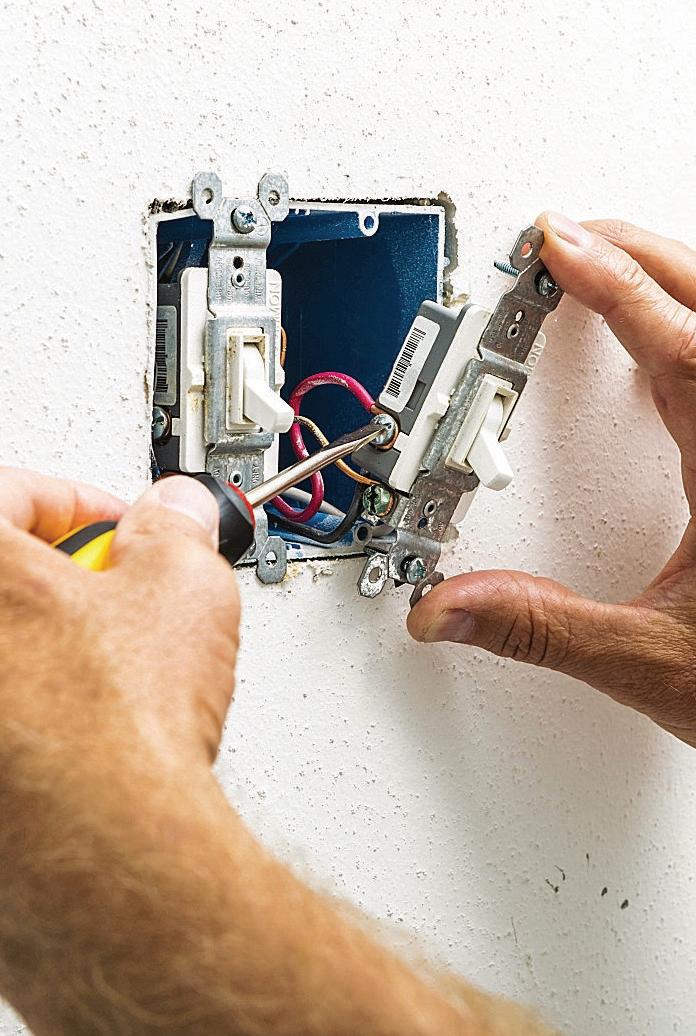
Homeowners who take the do-it-yourself route with electrical work should consider these safety tips
Home improvement projects can help homeowners transform their homes. Such projects are costly, but many homeowners save money by doing some, if not all, of the work themselves.
The Electrical Safety Foundation International, a nonprofit organization dedicated to promoting electrical safety, recommends that homeowners leave electrical work to the professionals. Licensed electricians are well-trained, whereas homeowners may not be skilled enough to avoid accidents or injuries, which can prove fatal when working with electricity.
Homeowners who take the do-it-yourself route with electrical work should consider these safety tips, courtesy of the ESFI, before beginning a home electrical project.
Home electrical systems may include power lines, electric meters, service panels, subpanels, wiring, and
more. These systems are complex, and homeowners who intend to do some DIY electrical work should familiarize themselves with their home electrical systems prior to beginning any work.
The ESFI notes that knowledge of their home electrical systems can help homeowners more safely navigate them and make maintenance easier.
It’s essential that the power to the circuit that will be worked on be turned off prior to starting any work. This can be accomplished by switching off the circuit breaker in the main service panel. Similarly, when working on appliances or lamps, make sure the products are unplugged prior to working on them.
Do not touch plumbing or gas pipes when doing electrical work
The experts at the Indiana Electric Cooperative note that the risk for electrocution
is significant when water comes in contact with electricity. It’s imperative that homeowners do not touch plumbing and gas pipes when performing a DIY electrical project. Professionals know how to work around such pipes while minimizing their risk for electric shock or worse, and homeowners must familiarize themselves with the techniques professionals rely on to stay safe if they intend to begin DIY electrical projects.
An honest assessment of skills is absolutely necessary prior to working on an electrical system. According to the National Safety Council, injuries relating to electrical incidents typically fall into one of four categories: electrical shock, electrocution,
falls, and burns. Each of these injuries is significant. For example, electric shock, which occurs when electrical current passes over or through a person’s body, involves burns, abnormal heart rhythm and unconsciousness. Given the potential for serious injury, the ESFI urges homeowners to make an honest assessment of their skills before they begin working on their home’s electrical systems. Little or no experience working with electrical systems should be considered a significant hurdle to any DIY project.
Homeowners are best served by leaving electrical work to the professionals. However, those who insist on doing such work themselves should do their homework and get to know their systems and safety protocols prior to beginning a project.



According to the U.S. Consumer Product Safety Commission, nearly 400 people are electrocuted in the United States each year. Many of those electrocutions occur in people’s own homes. In fact, the Electrical Safety Foundation International notes that wiring hazards, including damaged or exposed wiring and household wiring, accounted for roughly 14 percent of all electrocution deaths. Such figures underscore the importance that homeowners must place on electrical safety in and around their homes. Emphasizing electrical safety could greatly reduce the risk of injury and accidents, including home fires. The ESFI notes that electrical malfunctions are the leading cause of the largest fires reported to United States fire departments. Properly maintaining home electrical systems and taking steps to reduce accidents around the house can help homeowners feel more secure in their homes.











































Remote working has become popular in recent years, but the “working-fromhome” economy bloomed exponentially as the world was forced to confront the
COVID-19 pandemic. According to Stanford economist Nicholas Bloom, as of summer 2020, 42 percent of the United States labor force was working from home full-time.
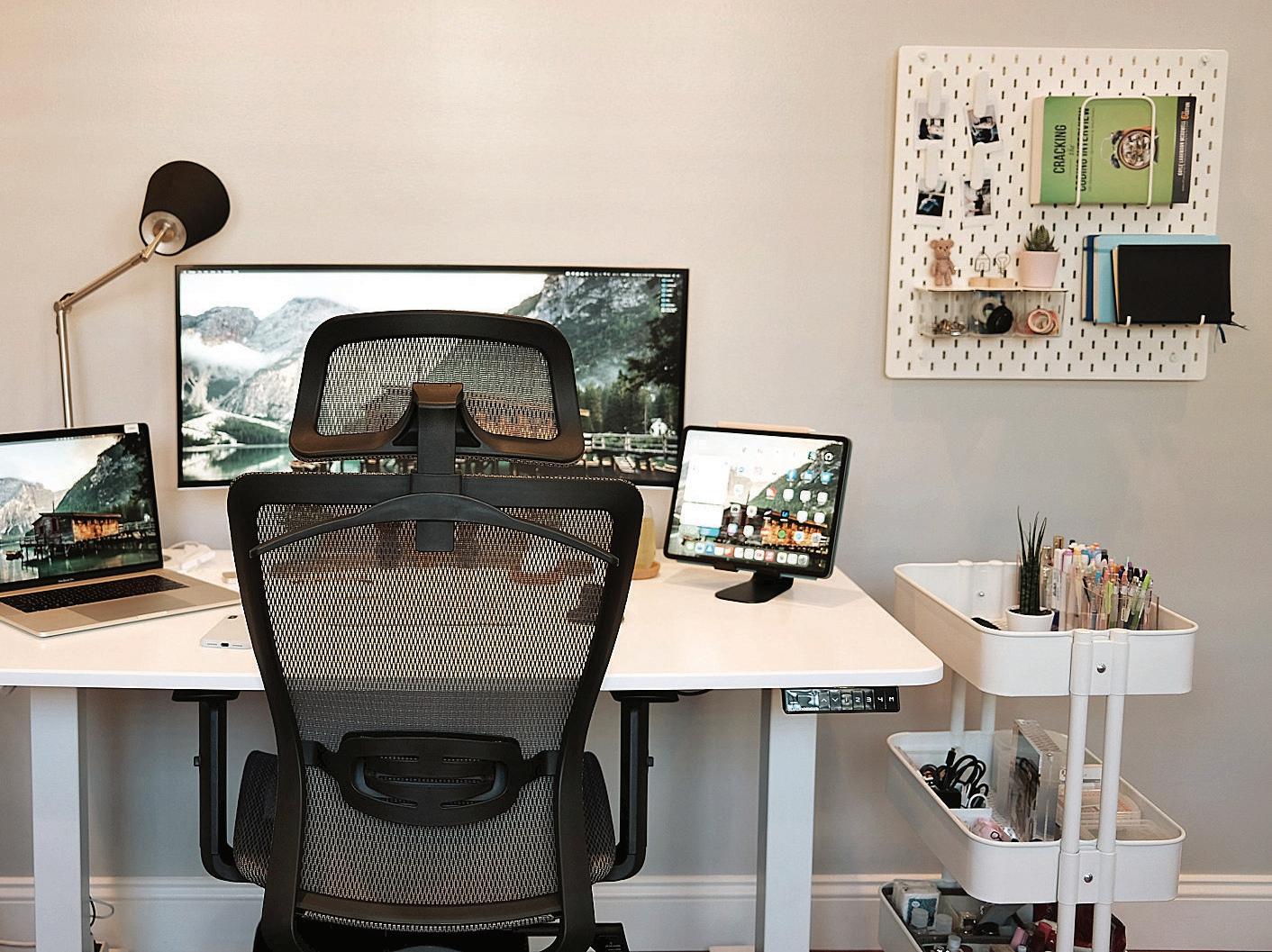
The need for home office spaces has increased as more people work from home. Many people have retrofitted various spaces around their homes into areas to get work done. More organized home work spaces can increase productivity. Individuals can follow these guidelines to create effective, organized home offices.
TRINITY NGUYEN/UNSPLASH




The desk is the primary spot where work will take place. The right desk accessories can provide visual appeal and also serve practical purposes. Have cups for holding pens and pencils, baskets and bins for larger items, and store whatever you can elsewhere so it does not lead to clutter on the desk. Store wireless printers in a cabinet or even on a bookshelf so it doesn’t take up real estate on the desk.
Figure out a system that works for you to help tidy up papers you choose to save. While some papers can be scanned and stored as digital files, color-coded file folders can organize statements and other important documents. This makes it easy to find the folder you need when looking for certain documents.
While you’re moving that wireless printer elsewhere, designate a space to serve as the central printing hub. This

way children who need to print assignments for school will know where to go as well. Printer supplies like extra ink cartridges and printer paper can be kept in decorative storage boxes nearby.
Shelving can help keep items organized and off the desk in home offices without closets or drawers. Look for shelves that blend in with decor but are sturdy enough to be functional.
Repurpose certain items, such as a desk organizer, into an easily accessible electronics charging station where phones and tablets can charge at one time.
HGTV suggests making binders that can store the most important papers for easy access — even in an emergency. Set up a binder for automotive paperwork, including repair receipts, a medical binder where key medical records are kept, a binder for manuals for devices in the home, and one to store financial planning documents.

Speedy, reliable internet is something people have quickly grown accustomed to. That’s no doubt why dropped WiFi signals can be so frustrating. Various things can contribute to slow or interrupted Wi-Fi. As a result, there’s no one-size-fits-all solution to address underperforming Wi-Fi. But that’s good news, as it means there’s an assortment of strategies that consumers can try to improve the Wi-Fi in their homes.
Many people rent their routers from their internet service providers, but it may surprise some to learn that they can buy their own. Buying your own router can be beneficial in various ways, not the least of which is it can save money. Router rental fees vary, but they typically cost between $10 and $15 per month. Consumers will save money in the long run by buying their own router rather than renting one from their ISP. When buying their
own routers, consumers also can pick from a host of options, including routers with strong performance ratings that may contribute to better WiFi performance.
It’s easy to forget a router after it’s been plugged in and internet service starts working. However, manufacturers routinely issue firmware updates to improve router performance. Turning on automatic updates may improve WiFi performance, and such updates also can provide a host of additional benefits, including added security measures.
PCMag.com notes that the location of the router can affect WiFi performance. If possible, locate the router in the center of the home so it can easily reach all parts of the house. Locating wireless routers away from walls and other obstructions also may improve performance.


Switching frequencies can help wireless consumers whose service might be adversely affected by congestion. Consumer Re-
ports notes that wireless congestion can affect WiFi performance in apartment buildings and densely populated neighborhoods. In such instances, consumers can check their routers to
see if they’re running on the 2.4 GHz frequency band. If so, switching them to the 5 GHz band, which has more channels and is likely to be less congested, may improve WiFi performance.




The term “home theater” once made homeowners who love movies and sports dream of the day when they could dedicate a large area in their home to watching the big game or their favorite films. Such rooms are now widely referred to as “media rooms.” Though the terminology may have changed, media rooms are not all that different from home theaters. Before choosing an area of their home as their designated media room, homeowners must consider a host of variables to ensure they get as much out of the room as possible.
Of course the location of the room is of the utmost importance. Media rooms tend to be more social settings than traditional home theaters, which were often designed to be isolated from the rest of the home so noise and natural light did not adversely affect the film-watching experience. Homeowners may not want their media rooms to be in high traffic areas of their homes, but they needn’t be completely secluded, either. The renovation experts at the DIY Network note that

the shape of a room should be considered before designating it as the media room. In general, square rooms are not ideal, as such rooms can produce harmonic distortions. A rectangular room likely won’t produce such distortions, especially when homeowners place their screens and primary speakers on short walls. It’s important that homeowners
do not downplay the importance of sound, as media rooms, unlike traditional home theaters, may be used for listening to music just as much as they are for watching films or sports. Viewers may not recognize distortions when watching something, but homeowners may notice these abnormalities when listening to music.




Media rooms are multi-purpose rooms, so homeowners don’t need to remove rooms with windows from consideration. But the experts at the DIY Network note that windows are hard surfaces that can reflect sound and distort audio, and the light that gets in through windows can produce reflections on the viewing surface. Each of those factors can adversely affect your listening and viewing experience. A room with windows can still make for a good media room, but you may want to invest in some blackout curtains to mitigate some of
the disadvantages of having windows in the room.
The colors of the walls in the room is another variable homeowners will have to consider. Homeowners won’t want to host guests for the big game in rooms with darkened walls, as that can create a dreary atmosphere and potentially make people tired. But especially bright colors will reflect light and adversely affect the viewing experience. Neutral colors should not affect the colors on the screen, making them the ideal color choice for media room walls.





Home renovation projects are significant undertakings. Working with skilled and experienced contractors can ensure projects go
and are completed promptly. Timing is a big consideration for homeowners as they begin renovating their homes, and the home improvement experts at HomeAdvisor note that the following are some general timelines for popular renovation projects.
Short of a full-scale demolition and rebuild, home additions are the most time-consuming projects homeowners can undertake. HomeAdvisor
notes that its survey of customers who recently completed home addition projects reported that the average time from start to finish was between three and four months. Certain variables, including the scale of the project and the local permits process, can extend the time it takes to complete a home addition.
HomeAdvisor users report that new siding projects take roughly two weeks from start to finish. That estimate is the same regardless of which materials homeowners are replacing and installing.
Homeowners who want to replace all the windows in their home can expect such a project to take roughly three weeks. HomeAdvisor notes that such a timeline need not concern homeowners worried that they will be forced to brave the elements during the length of the project. Much of a contractors’ time during a window replace-


ment project will be spent on upfront measuring and then ensuring a tight fit once the windows have been installed.
Scale is a big factor to consider when estimating the time it takes to complete various home improvement projects, and kitchen remodels are no exception. Some HomeAdvisor users reported projects taking as long
as four months, though the average time reported was roughly six weeks. Projects that require major overhauls like rearranging the plumbing and moving walls will likely take longer than more cosmetic projects that are limited to replacing cabinets and countertops.
More than 1,000 homeowners surveyed by HomeAdvi-
sor reported that bathroom remodels took about 4.5 weeks from start to finish. Small-scale remodels that focus on painting the walls a fresh color and replacing existing tiles can be completed in less than two weeks. But like with kitchen remodels, bathroom remodels that involve replacing plumbing fixtures and removing walls figure to take much longer than that.

•


















What’s underfoot in a home can go a long way toward making residences comfortable and aesthetically appealing.
A study of home buyer preferences using data from the National Association of Realtors® found that 54 percent of home buyers were willing to pay more for a home with hardwood flooring. But that doesn’t mean that carpeting doesn’t still have its devotees. In 2019, the real estate firm Opendoor installed nearly one million yards of carpeting in its homes. Houzz reports that, in 2018, 17 percent of renovating homeowners purchased carpets and 50 percent purchased indoor rugs.
Carpeting and rugs can offset some of the shortcomings of hardwood, providing a softer texture that makes for a better landing spot for active young children. However, carpets will require more maintenance than hardwood floors. Learning how to deep clean
carpets can help homeowners, as vacuuming is not enough to keep carpets in top form.
Stores sell a bevy of carpet cleaning solutions. When applying such solutions, do so in an inconspicuous area of the room to ensure colorfastness of the carpet and that the solution does not adversely affect the fibers. If the spot is clean and the carpet is not adversely affected, you can then apply the solution to more visible areas.
Homeowners who prefer all-natural cleaning solutions rather than chemicals can use a solution of white vinegar, baking soda and salt to make a safe cleanser, according to The Spruce. Soak the stain, use a scrub brush to work in the cleanser and then blot up the liquid with a clean cloth. According to the lifestyle resource First for Women, club soda also works as a cleanser when it is sprayed on a stain.

Carpets periodically need to be revitalized, and that can be accomplished with a specialized cleaning machine. Many are available for purchase (a good investment for homeowners with kids



and/or pets), while others can be rented as needed.
Remove all of the furniture from a room and vacuum to clean dust, dander and any other debris. Address any darker stains first by pretreating with a cleaning solution. Let sit for around 20 minutes. While waiting, learn how to operate the machine, fill it and clean out the soiled water. Never allow the machine to oversaturate the carpet with water, as it
can get into the padding and subfloor, causing problems like mold or wood damage. Spray the water-detergent solutions, and then pass the carpet cleaner over spots repeatedly until the carpet feels only slightly damp. DoItYourself.com advises running the machine at the pace of one foot per second.
Removing shoes when entering the home can keep carpets clean and reduce wear and tear.


The lines between the outdoors and indoors are being blurred. Homeowners build extensive outdoor living spaces so they can relax on weather-resistant furniture and even cook in lavish kitchens in their backyards. In addition, indoor three-season rooms full of bright, open windows that showcase outdoor vistas challenge the boundaries between outside and inside. For those working with limited budgets, there are some easy, inexpensive ways to enjoy the majesty of natural landscapes indoors. Houseplants can be used to improve indoor spaces, and they also provide various health benefits.
Researchers who presented their work at the 252nd National Meeting & Exposition of the American Chemical Society found certain houseplants can combat the potentially harmful effects of volatile organic compounds. Plants may help filter out VOCs like benzene, acetone and formaldehyde, which can enter indoor air via cleaning supplies, drycleaned clothes, furniture, printers, and paints.
According to WebMD, rooms with houseplants tend to have less dust and mold in them than those without any foliage. Leaves and other parts of the plants serve as natural filters, catching airborne particles and allergens. Plants with textured leaves might be especially effective at trapping particles.
The human respiratory system works by bringing in oxygen and releasing carbon dioxide. Plants do the opposite during photosynthesis. They absorb carbon dioxide and then release oxygen. Plants can put much more oxygen into the air, improving indoor conditions.
humidity,
Studies from the Agricultural University of Norway found that indoor plants can increase humidity in indoor spaces, which decreases the incidences of sore throats, dry coughs, dry skin, and the common cold. Higher absolute humidity can decrease the chances of survival and transmission of the flu virus.
Prevention magazine says plants can be used to screen unattractive areas, moderate room temperature by shad-
ing spots from the sun and even reduce noise. Plants also can improve ambiance and create a pleasing atmosphere in a room.
Growing and caring for plants can alleviate everyday stress. A nationwide study from UK Magazine Gardeners World found 80 percent of gardeners declared themselves satisfied with life compared to 67 percent among non-gardeners. Gardeners were more positive mentally. Greenery can help people feel more at home and improve mental health. A rehab center in Norway found patients reported a greater increase in well-being four weeks after having greenery added to their surroundings.