Life Planning 2021

Your guide to navigating life’s biggest decisions, from school to retirement and beyond
A special advertising publication of The Brattleboro Reformer • Thursday, March 25, 2021



Your guide to navigating life’s biggest decisions, from school to retirement and beyond
A special advertising publication of The Brattleboro Reformer • Thursday, March 25, 2021

Effective financial strategies vary depending on which stage of life a person is in. For example, a recent college graduate working his or her first professional job will not have the same financial strategy as someone on the cusp of retirement. But one financial strategy that people of all ages can look to for guidance is the 50-30-20 approach. Popularized by Massachusetts Senator Elizabeth Warren, the 50-30-20 approach to financial planning can be a valuable resource for anyone trying to develop a budget. The approach is simple yet effective. Under the 50-30-20 approach, income is allocated based on this breakdown:
•50 percent of money is spent on needs, including housing costs, health insurance, car payments, and groceries
Saving money isn’t always easy, but with goals and certain strategies in mind, it’s possible for individuals to grow their savings and secure their financial futures.
Saving is a vital component of financial planning. However, more than half of Americans are saving too little and do not have an accurate grasp of their spending habits.
A recent survey from Intuit Mint Life found that, in 2019, 59 percent of Americans were living paycheck to paycheck and 65 percent didn't know how much they were spending on a monthly basis. The situation is similar in Canada, where the annual BDO Canada Affordability Index indicates 53 percent of Canadians are living paycheck to paycheck and 25 percent say their debt load is overwhelming. While there's no magic formula to save money, and the amount of money one should save each month depends on how he or she wants to live now and in the future, a handful of strategies can help people save more money each year.
•30 percent of money is spent on wants, including hobbies, dining out and travel
•20 percent of money is allocated to savings
Proponents of the 50-30-20 approach note that calculations should be based on after-tax income, or what’s often referred to as “take-home pay.” Professionals with steady paychecks can easily determine their 5030-20 breakdowns by saving a month’s worth of pay stubs and establishing their monthly budget based on what’s coming in. The task can
The credit reporting agency Experian recommends consumers keep between three and six months' worth of expenses in an emergency fund. The fund should cover expenses on the absolute necessities paid each month, like utilities rent/mortgage and groceries.
Savings goals can help a person stay on track and provide motivation to put money away. Establish separate savings accounts for each goal to reduce the temptation to spend. For example, if the goal is to save more for vacations, then a person can open an account where funds are used exclusively for vacations.
Certain employers allow workers to direct deposit a paycheck into more than one bank account. It's easy to request the payroll manager put 10 percent or 20 percent of a paycheck into a savings account while the remainder is deposited into a checking account. Automated deposits can help individuals get accustomed to living on less.
be trickier for self-employed or freelance workers, who may benefit from working with financial planners as they seek to create monthly budgets based on the 50-30-20 approach.
Goals for the new year may include returning to school. Whether a person is completing a diploma program, finishing a degree or learning new skills, there’s no wrong time to continue your education.
Education opens many doors. Sometimes life throws a person a curveball and education gets put on the back burner. Even if school plans have been derailed for several years, one can explore how to return to school as an adult.
Adult students are often described as nontraditional students, while traditional students are those who enroll in a college or university or go on to trade school immediately after graduating from high school. Nontraditional students are those who return to get their degrees as adult learners. According to a 2013 National Study of Prospective Adult Students by the higher education marketing group STAMATS, students over the age of 25 are the fastestgrowing segment in higher education. For those people resolving to return to school this year, these tips can help them confront any uncertainty they may have about cracking the books after a long layoff.
Recognize you're never too old.
If you have the time and the means to attend school, you can likely find a
program that can benefit you regardless of how old you may be.
Remember that education can help you get out of a rut.
No matter your age or experience, it's easy to get stuck in a rut. Going back to school can help a person get out of that rut and on a path to something new. A return to school can help professionals earn more money, update their skills or learn a new trade.
Ask for the support of friends and family.
Students' success often depends on a strong support network. Be sure to discuss plans to return to school with a spouse, family members or others who can lend a helping hand. Schooling will take time out of a schedule and certain responsibilities you handled may have to be taken on by family members.
Now more than ever schools are adapting to the changing times by offering an abundance of classes online. Remote learning became a necessity in the wake of the COVID-19 pandemic, but it may be an increasingly popular method of conducting classes in the future. For adult learners who worry about juggling time inside of the actual classroom with work and home responsibilities, virtual programs can be the perfect fit.


New Year's resolutions can serve as valuable motivational tools as people look to make positive changes in their lives. Health-related goals like quitting smoking and losing weight annually appear at or near the top of lists documenting the most popular resolutions. But many people also see New Year's resolutions as a great vehicle to kick-start positive changes in their professional lives.
According to Statista, finding a new job was the eighth most popular New Year's resolution in 2019. And finding a new job figures to be an even more common resolution for 2021, as the global COVID-19 pandemic of 2020 has sparked a recession that saw millions of people across the globe lose their jobs.
Professionals who want to switch careers in the near future may want to consider professions that are expected to experience significant growth in the years ahead. According to the Bureau of Labor Statistics, demand for the following professionals is expected to grow considerably between now and 2029.
Wind turbine service technicians
Expected growth (between 2019 and 2029): 60.7 percent
Nurse practitioners
Expected growth: 52.4 percent
Solar photovoltaic installers
Expected growth: 50.5 percent
Occupational therapy assistants
Expected growth: 34.6 percent
Statisticians
Expected growth: 34.6 percent
Home health and personal care aides
Expected growth: 33.7 percent
Physical therapist assistants
Expected growth: 32.6 percent
Medical and health services managers
Expected growth: 31.5 percent
Physician assistants
Expected growth: 31.3 percent
Information security analysts
Expected growth: 31.2 percent
These are some of the ways that student loan debts can be repaid quickly, efficiently and creatively.
Students and families invest heavily in higher education. Many students rely on student loans to finance their educations. In fact, students amassed $1.56 trillion in student loan debt by 2020.
According to Forbes, American student loan debt is now the second highest consumer debt category, exceeded only by mortgage debt. The Institute for College Access and Success says the average student loan debt is $32,731, while the median student loan monthly payment is $222.
Some students feel like paying off student loan debt is impossible. Many loan repayment schedules kick in shortly after graduation, and certain borrowers may not yet be making enough money to afford even the minimum payments on their student loans.
Thankfully, there are ways to get out from under student loan pressure.
IDR will lower student loan payments based on your income, and some plans even promise to forgive any remaining balance once the repayment period is up. That period can take between 20 and 25 years.
The Rural Opportunity Zone program encourages Americans to move to rural Kansas to help discourage population decline and to give others the benefits of a lower cost of living. Seventy-seven Kansas counties have been authorized to offer student loan payment incentives.
A Public Service Loan Forgiveness program, or PLSF, enables student loan forgiveness in exchange for working for a nonprofit or working in government.
Make more than the minimum payment.
Financial advisor Dave Ramsey says making the minimum payments on student loans will not get them paid off fast, and the interest could pile up as well. By paying more than the minimum payments, you can pay down the principal more quickly. Designate tax refunds and salary increases to pay down student loan debt.
Refinance the loans.
Graduates may not be aware that they can refinance their student loans at a lower rate or choose new loan terms, including variable or fixed rates. Maturity dates can even be renegotiated in certain instances. It’s possible to save thousands of dollars in interest by refinancing, particularly if borrowers have a credit score of at least 650.
Ask for help.
Speak with your boss about whether he or she can help pay off student loans. Some employers offer conditional student loan repayment to employees.




“ThisistheyearIreallystart planningforretirement.”


AsadivisionofBrattleboroSavings&Loan, weareacommunityresource.So,whether it’sopeningaretirementaccount,socially responsibleinvesting,managinganinheritance,orjustlookingforward,wewantto helpyoureachyourgoals.

Some people need help navigating the ropes of financial planning. Financial planners can help people from all backgrounds establish and achieve their financial goals.
who are relying on investment advisors should work with one who has a Chartered Financial Analyst certificate. These credentials are indicative of proficiency in financial planning. Look around online.
221MainStreet,Brattleboro,VT05301|(802)257-7766 108EastMainStreet,Wilmington,VT05363|(802)464-7504 vtplanners.com
ThefinancialadvisorsofParkPlaceFAoffersecuritiesandadvisory servicesthroughCommonwealthFinancialNetwork®,member FINRA/SIPC,aRegisteredInvestmentAdviser.BrattleboroS&Lisnot aregisteredbroker-dealerorRegisteredInvestmentAdviser.Brattleboro S&LandCommonwealthareseparateandunaffiliatedentities.
INVESTMENTSARENOTFDIC-INSURED,NOTGUARANTEEDBYTHE BANKANDMAYGODOWNINVALUE.
Financial advisors can be invaluable resources for people who need help managing their money. There’s an existing misconception that financial advisors are only for the rich, but anyone can benefit from some guidance in regard to their finances. The key is finding a planner who understands your needs and is willing to work with you, no matter how big or small your financial dreams may be. According to U.S. News and World Report, some financial advisors are no longer interested in working with people without substantial portfolios. Certain firms have stopped paying commissions to brokers for accounts that are considered small, including customers with assets worth between $100,000 and $500,000. While that can make it difficult to find financial help, there are ways to receive assistance.
If a financial advisor has worked with a colleague, friend or family member, he or she may also be able to provide services to you. To find professionals with reputable credentials, look for someone who has a Certified Financial Planner or Personal Financial Specialist designation. Those
Various online resources, including U.S. News & World Report, offer searchable databases. The Garrett Planning Network at garrettplanningnetwork.com offers a map of the United States where users can find financial advisors in their areas who cater to the middle class.
The National Association of Personal Financial Advisors can provide resources for finding local financial advisors. Visit www.napfa.org for a listing. Middle-income individuals can look at the Accredited Financial Counselor website at www.afcpe.org to find professionals. Accredited financial counselors often focus on helping low- and middleincome people at affordable prices with relevant financial assistance.
Financial advisors may receive compensation in one of two ways: fee-only and non-fee-only. A fee-only advisor typically charges an hourly fee or flat rate for services. A non-fee-only advisor may be compensated at a percentage of assets earned or may receive incentives and commissions from their companies based on preestablished sales goals or objectives. There are no right and wrong answers to fee schedules, but find a situation that works for you.
Health care plans provide access to medical care and other necessities and reduce out-of-pocket healthrelated expenses. Each plan is different, and depending on where you live, your coverage may vary.
People quickly find that many healthcare plans do not include provisions for long-term health care, such as paying for nursing facilities.
Understanding how health plans work and learning about potential financial reviews for nursing home payment qualification is a good idea for anyone concerned about financing their future health care needs.
In the United States, health care is largely privately managed, with
most employers offering access to various health coverage plans. Government subsidized plans include Medicare, which is for retirementage individuals and younger people with disabilities. Medicaid is a joint state- and federally-run government program that provides health coverage to low-income individuals and families.


Unless an individual meets low-income criteria, nursing home care is paid for by the resident; otherwise, people who qualify for Medicaid can have their nursing home expenditures payed for by that program. To receive Medicaid assistance, applicants should expect a financial review, including a look-back period.
The senior health, finance and lifestyle resource Senior Living advises that Medicaid is a "last resort" method of financing nursing home costs. Individuals are expected to use other means of payment first and "spend down" their assets. When financial resources dwindle, Medicaid will kick in to provide coverage.
To ensure that individuals simply do not transfer money out of their accounts to avoid paying for nursing home care by their own means, Medicaid requires a look-back period into applicants' finances to determine if there were any violations to rules regarding asset transfers.
Most people engage in some sort of long-term planning to protect a portion of their assets so that they can be used to support spouses or children. According to rules, an applicant is permitted to transfer certain monies to his or her spouse, provided the spouse isn't also applying for longterm care through Medicaid. Most money and tangible asset transfers (check with your state Medicaid office for the most current rules) must have taken place 60 months (5 years) prior to application for Medicaid. Penalties will be instituted when rules are broken, namely gifts or asset transfers that take place within the look-back period. This could delay Medicaid acceptance.
Work is a major component of daily life, so much so that Andrew Naber, an industrial and organizational psychologist and an associate behavioral scientist at RAND Corp., determined that the average person spends 90,000 hours at work over the course of his or her lifetime. According to a 2014 Gallup poll, the average American retires at age 62, but roughly 64 percent of professionals bid farewell to the workplace between ages 55 and 65.
Retirees must make a number of adjustments once they call it a career. No such adjustment is as significant as the financial one. Most people find their post-retirement income is considerably less than when they were working full-time. That is why financial planners often recommend saving and investing enough during working years to be able to replace 80 percent of preretirement income. Certain expenses get lower after retirement, but some will rise. Here's a look at what to expect when the bills come due during retirement.
Food costs may go down in retirement because shopping and preparing meals for one or two people is much less costly than feeding a family of four or more. However, dining out may increase as you have more free time to visit local eateries.
According to data from the U.S. Department of Transportation, the average commuter spends 25.8 minutes behind the wheel twice a day, and the average driver puts in 13,474 miles behind the wheel each year - with people between the ages of 35 and 54 clocking close to 15,000 miles. Less time spent in the car means fewer gasoline fill-ups and longer durations between oil changes and other services. In addition, based on the Internal Revenue Service reimbursement rate of 58 cents per mile, a typical commute of 20 to 30 miles a day costs $11 to $16 a day or $55 to $80 a week. In a year, you could easily be spending $2,000 to $4,000 a year commuting if you live within 15 miles of your job. Without commuting, that cash stays in your pocket.
Many people can expect to be done paying federal income taxes when

they are retired and no longer earning an income. If the majority of retirement savings were in Roth IRA accounts, contributions are available for withdrawal tax- and penalty-free at any age.
Your mortgage may be paid off before or soon after retirement. That eliminates the single largest expense in many people's budgets. If your home will not be paid off, it's possible to downsize to reduce monthly payments.
While many other expenses can go down, travel is one expense that can shoot up during retirement. But many people are happy to bear this cost. With more time for travel, retirees may allocate more funds toward vacations and other great escapes.
Seniors often see their health care needs and costs go up after retirement. It's important to understand what is covered by health plans, and it's equally important to set money aside for unforeseen medical expenses.
Thepandemic canmakeit challengingto reachoutfor assistance. Ournon-medicalsupportis FREEOF
BrattleboroAreaHospice iscommitted tohumanconnection.Byphone,internet orinperson,wearehereforyou. Call802-257-0775
Individualsupportisavailableby phone.Groupsupportisprovided viatheinternet.Wecontinueto providein-personvolunteerhelpfor thoseatendoflife,whileadhering toCDCsafetyguidelines. Wepartner withyoutoaddressyourunique needs.Ourcompassionatestaffand volunteersarehereforyou.


Professionals on the cusp of retirement are often excited about what lies ahead. Some prospective retirees may look forward to traveling once they no longer have to go to work each day, while others may plan to return to school. Regardless of how adults envision spending their retirement, they're going to need money when they're no longer being paid by their employers.
As retirement nears, some professionals may be concerned that they haven't saved enough. There's no one-size-fits-all answer in regard to how much money people will need in retirement. People who are worried they haven't saved enough can try various strategies to build up their account balances before they officially call it a career.
Take advantage of catch-up contributions.
Adults who are 50 or older are eligible to take advantage of catch-up contributions. These are designed to help people over 50 contribute more to certain retirement accounts, such as a 401(k) or IRA, than statutory limits would otherwise allow. There are limits that govern the amount of money people can designate as catch-up contributions, but taking advantage of
this perk can help people save more as retirement draws closer.
A recent study from the Employee Benefit Research Institute found that housing costs accounted for 49 percent of seniors' spending. Professionals nearing retirement who live in areas traditionally associated with a high cost of living can begin to rethink their long-term housing strategy. Relocating to an area with a lower cost of living is one option, while those who prefer to remain in their current town or city can consider downsizing to a smaller home to reduce their property taxes and monthly utility bills.
Conventional wisdom suggests moving away from investing in stocks the closer you get to retirement. Though that's a sound strategy, professionals who are trying to build their retirement savings in the final years before retiring could be missing out on significant growth by abandoning stocks entirely. Speak with a financial advisor about stock-based investments and your risk tolerance. Maintaining a diversified portfolio with a little risk can be a great way to grow your savings as retirement draws near.


Hardworking adults spend years striving to achieve their professional goals. Along the way, planning for retirement is a way to ensure all that hard work pays off when the time comes to call it a career.
In the United States, men and women nearing retirement age may be thinking about when they should begin collecting their Social Security retirement benefits. Social Security is a social insurance program instituted by President Franklin Delano Roosevelt in 1935. The program consists of retirement, disability and survivor benefits, and workers in the United States contribute to Social Security each week. The decision about when to claim Social Security retirement benefits is one all those who have contributed to the program must eventually make. In recognition of the difficulty of that decision, the Consumer Financial Protection Bureau offers the following tips to people wondering when they should begin collecting their Social Security benefits.
Full retirement age refers to the age at which people can begin collecting their full benefits. Depending on the year you were born, you can begin collecting your full benefit at age 66 or 67. Claiming your benefit before you reach full retirement age will lead to a
permanent decrease in your monthly benefits. Conversely, claiming after you reach full retirement age will lead to a permanent increase in your monthly benefits. Since the stakes are so considerable, it's vital for adults to confirm their full retirement age before they claim their benefits.
The CFPB notes that you can expect to get an additional 5 to 8 percent in monthly benefits for every year you wait to claim your Social Security benefits after age 62, maxing out at age 70. If you can afford to do so, wait to claim your full benefit until age 70, as doing so can translate to a benefit that's 32 percent higher than it would have been had you claimed your benefit at age 62.
Short- and long-term budgeting for retirement can help you assess how much money you will need to cover your expenses when you stop working. This step can help you understand how much a reduced or increased Social Security benefit will affect your bottom line in retirement.
Remaining in the workforce full-time or even part-time can have a considerable impact on the size of your Social Security benefit. The CFPB notes that continuing to work for one or two additional years can replace low- or no-income earnings from your earnings record, thereby increasing your benefit.
Surviving spouses receive the higher of the two spouses' benefits. So it makes sense for the higher earning spouse to wait to collect his or her benefit until he or she reaches full retirement age.
The timing of recessions is unpredictable, but they are inevitable. Effective financial planning can help anyone overcome the challenges posed by economic downturns.
"Financial planning" is an umbrella term that can be applied to various aspects of money management. Many people associate financial planning with retirement. However, effective financial planning can help people confront today's challenges just as much as it can help them prepare for their golden years.
The pandemic that spread across the globe throughout 2020 posed numerous challenges, including a recession sparked by widespread job loss and declines in economic activity. The U.S. Bureau of Labor Statistics noted that the unemployment rate in the
United States exceeded 10 percent in July 2020, while Statistics Canada reported the Canadian unemployment rate was just under 11 percent in that same month. While each country has since witnessed declines in their respective unemployment rates, tens of millions of workers in both nations remain out of work.
The sudden rise in unemployment and decline in global economic activity underscores the need to plan for recessions, even during those times when economies are thriving. Taking steps to recession-proof your finances is an important component of financial planning that can help people overcome the stress of living during a downturn.
A recent poll from the Kaiser Family Foundation found that 45 percent of adults said their mental health had been negatively affected due to stress related to the virus. That poll was conducted in March, shortly after lock-
Some taxpayers may be eligible for free tax help through a program offered by the United States Internal Revenue Service. The Volunteer Income Tax Assistance (VITA) program offers free tax help to people who generally earn $56,000 or less, as well as persons with disabilities and people who are not fluent in English. People who are 60 years of age or older also are eligible for free tax help through the Tax Counseling for the Elderly (TCE) program, which specializes in questions about pensions and retirement-related issues. The availability of volunteers that work with these programs can vary based on the amount of certified individuals with tax law expertise in a given area. As a result, anyone hoping to take advantage of these services should consider contacting these programs well in advance of the deadline to file their returns. The deadline to file tax returns is Monday, May 17, 2021.
To find assistance near you, visit irs.treasury.gov/freetaxprep
down measures were instituted and the term "social distancing" entered the North American lexicon. As the pandemic wore on through the summer, fall and into the winter, stress remained a big concern for many people. Much of that stress stemmed from the economy, but one way to ease that stress is to have a substantial amount of money in savings. Each person's financial needs are different, but many planners recommend clients have at least six months' worth of expenses in their savings as a cushion to help them get through job loss.
Debt, particularly high-interest debt, can compromise your ability to save. A 2019 survey from Bankrate. com found that 13 percent of Americans admitted that debt was preventing them from saving more money. Pay down debt like credit cards and only make credit card purchases if you have the money to pay the bill in full when it's due.
Many financial planners recommend a 50-30-20 approach to money management. Such an approach advises people to devote 50 percent of their earnings to needs, 30 percent to their wants and 20 percent to savings. Spending more than 30 percent on wants can make it difficult to build up a savings account to levels that can protect you in the event of a recession.
The American economy was doing historically well as recently as January, only to have the bottom fall out during the pandemic. If you want to recession-proof your finances, do not take your foot off the gas in regard to insulating yourself from the next recession. No matter how strongly the economy is performing, continue to expect the unexpected and prioritize saving so you have a soft landing awaiting you should the economy again take a sudden turn for the worse.



Areyourfinalaffairsinorder? Doesyourfamilyknowwhere yourinsurance,will,assets,family records,andvaluablefinancialinformationare?
Avoidmanyproblems. Whenyouplanaheadand makepre-arrangementsnow,youtidyupmanyloose endssuchasvitalinformationaboutyourassets, finances,andbenefits.Gatheringthisinformationall inoneplacenotonlymakesgoodsense,itsavesyour familythefrustrationoftryingtorememberwhere everythingisduringtheirgrief.
Actnow andreceivethis free 16-page IndividualEstate Record. Itcontainsvitalinformationeveryfamilyneeds andusuallydoesn’thavewhenalovedonedies.



Giveusacall,orfilloutthecouponanddropitinthe mail.Thisofferisgoodforalimitedtimeandavailable tofamiliesinthislocalarea.

Name
Address
City/State/Zip
Telephone





158WesternAvenue
Brattleboro
65HarrisAvenue
Brattleboro

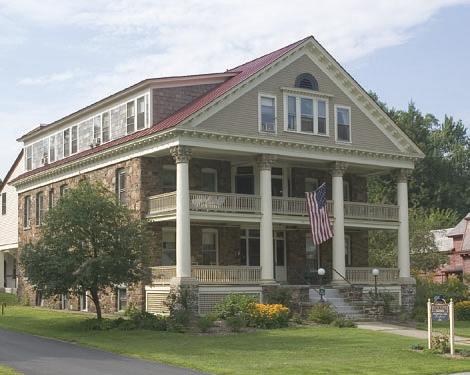
JOINUS, and leave behind thecooking, cleaning,and loneliness.Make newfriendsand enjoyaneasy walktotown.
Short-term staysavailable. Stayfortheweekendorallsummer! CALL NOW:

EdwardBordas,ExecutiveDirector: 254-5524.
Wearealocallycontrollednon-profit,servingour community’selders,includingthosewithVT long-termMedicaid’s ChoicesforCare.

Includedinyour monthlyfee:
u Aspaciousprivate roomwithprivate, accessiblebath
u Threemealsinour beautifuldining room
u Entertainingand enrichingwellness activities
u Trainedstaff readytoassistyou 24hours/day
u Anursewho monitorsyour health
u Medication management
u Beautifulgardens andgrounds
u Peaceofmind foryourfamily


PineHeightsatBrattleboroCenterforNursing&Rehabilitation wasawardedanimpressive Five-StarQualityCare bythe CenterforMedicareandMedicaidServices,afederalrating systemdesignedtohelpconsumers,fam ilies,andcaregiversmakethebestchoiceinanursinghome.
Inkeepingwithourcommitmenttosafety,thelatestVermont DepartmentofHealthCOVID-19infectioncontrolsurveyscored ourCenter100%inadherence.