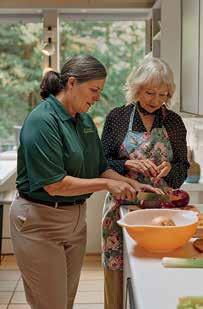
The mission of Elder Services of Berkshire County, Inc. is to provide Berkshire older adults, caregivers, and individuals with disabilities the opportunity to live with dignity, independence, and self-determination, and to achieve the highest possible quality of life.
Statement of Inclusivity
Elder Services practices non-discrimination in employment practices and service delivery.
Embracing diversity, our in-home and communitybased services are available to all without regard to race, ethnicity, language, religion, gender, sexual orientation, or lifestyle.
@Berkshire Senior
Instagram: berkshiresenior
LinkedIn: Elder Services of Berkshire County
Berkshire Senior
Editorial Board: Deb Aldrich-Jegtvig, Perry Burdick, Christopher McLaughlin, Ned Averill-Snell, Susan Guerrero, Kara Graziola, Peter Olsen and Lisa Jamros.
Advertising: To place an advertisement in Berkshire Senior, please contact Amy Filiault at (413) 496-6322 or e-mail advertising@berkshireeagle.com.
Berkshire Senior is published bi-monthly by Elder Services of Berkshire County, Inc., 73 South Church Street, Pittsfield, MA 01201, (413) 499-0524 or (800) 544-5242, e-mail: esbc@esbci.org or on the internet at www.esbci.org.
NOTICE
Berkshire Senior advertising helps to the defray the costs of producing the newspaper. Inclusion of advertisers in no way implies that Elder Services endorses any product or service.
Signed columns are the opinion of the writers and not necessarily the opinion of Elder Services. For medical, financial or other advice, seek a qualified professional in the appropriate field.
Elder Services and its programs are funded, in part, by the Executive Office of Aging & Independence (AGE).
State and federal funds provided to Elder Services are limited. Elder Services welcomes charitable donations to help meet the growing needs of Berkshire seniors, and gratefully acknowledges all donations.
Thinking about using Elder Services?
by Christopher McLaughlin, Executive Director of Elder Services
Hoping all is well with you and yours. Sharing comments from our clients and family members has become a tradition in the June issue of Berkshire Senior. When I wrote a similar story for the June 2025 issue, I noted that despite the anxiety-producing news coming out of Washington, Elder Services had been spared significant funding cuts and program eliminations. Truth be told, things have not changed that much a year later. There is still a great deal of uncertainty about future federal and state funding, and we are concerned about how reductions in Medicaid eligibility and funding will impact our clients. We found our way through a multi-year pandemic during a time when demand for our services grew, and we will (somehow) find our way through these upcoming challenges.
I would like to share some of the recent feedback we received from our clients and their families. We receive phone calls, e-mails, letters, cards and voicemails throughout the year from people who want to make us aware of their experiences with our Agency and our staff. For the most part, the feedback we receive is favorable. However, occasionally our clients and their families let us know when we have fallen short or how we can improve upon the programs and services we provide.
What follow are the actual comments received from our clients and family members, or the narratives provided by our staff from phone conversations they had with families and clients:
Isaiah was exceptional – calm, patient, and thoughtful throughout the entire process. He took the time to speak directly with our mother in a way that made her feel comfortable and respected. He also answered all of our questions clearly and thoroughly, which put us at ease and gave us great confidence in the steps we were taking. It is not often that someone makes such a strong and positive impression, but Isaiah did just that. Please extend our heartfelt thanks to him and know that his compassion and continued on page 4
Meet Your Senior Center
Adams proves there’s no shame in being different
by Elder Services Staff
The joint is eccentric –figuratively and literally.
Tucked away just to the east of Adams’ main drag Columbia Street, topping the triangle drawn by Hoosac Street, Depot Street and the train tracks, sits the Adams Council on Aging (COA), sharing its digs with the little volunteer-staffed Adams Visitor Center that’s open only in summer.
The COA is downtown, sorta, but just off-center. And off-center is a good description for what happens there.
There’s all the good stuff you’d expect at most any Berkshires senior center. Congregate meals Monday through Thursday, for catching up with friends over a hot lunch you don’t have to cook. Art classes. Chair yoga. Cribbage, pitch, Scrabble and dominoes.
And like any COA worthy of the name, Adams offers help keeping on top of your health, like a blood pressure clinic, massage (craniosacral and otherwise) and Alzheimer’s caregiver support. There’s even a “Harm Reduction Mobile Outreach” unit that swings by the center with syringe service and sharps disposal, Hep C treatment and more.
The center offers coaching on how to “Be a Self-Advocate with your Medical Providers,”
and in how to avoid the online and telephone scams now too often targeting older adults. There’s van transportation throughout North County provided through the center, and long-distance medical transportation, to boot.
And let’s not forget regular visits from North Adams’ Mountain Girl Farm. Jen Barbeau (the Mountain Girl, presumably) comes by with fresh fruit and veggies, plus tips for buying produce with
SNAP and HIP benefits. Them’s the basics, and it’s plenty for helping Adams’ older adults live happy, healthy, independent lives. But beyond all that, in Adams, things get a little… off center.
In May, the COA presented four late-afternoon meal sessions of the charmingly, macabrely titled “Death Over Dinner,” a multipart primer in preparing for the inevitable. Navigating end-oflife conversations, getting the
right documents in order and funeral planning were among the weekly topics, and each participant was gifted a “Peace of Mind Planner,” a workbook to help them make sure they had all their bases covered for the time that comes for us all.
May also offered “Making Space for what Matters,” a class in simplifying belongings to create more space in one’s home or to clean out effectively for a move –basically an anti-hoarding
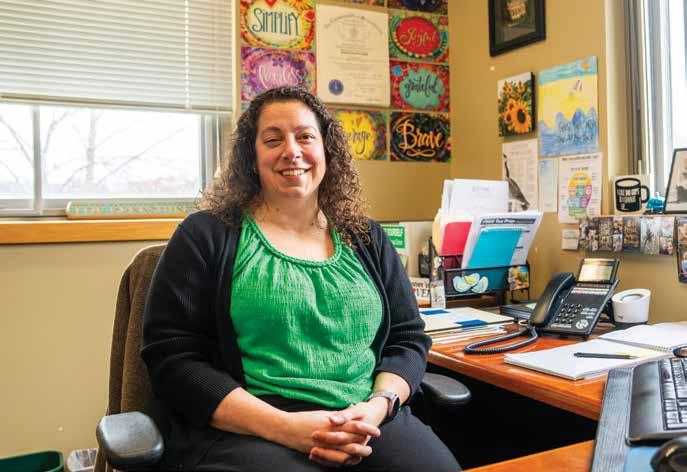
Adams COA director Sarah Fontaine
Meet Your Senior Center
intervention disguised as a lifestyle class. There was a West African & Caribbean hand-drumming class in May, and a “Grandparents Raising Grandchildren” coffee klatch, a safe space for folks taking care of their kids’ kids to complain in confidence with others in similar straits.
And for the Euell Gibbons set (Don’t remember Euell? Look him up!) there are monthly “Foraging Walks” featuring a talk about edible plants one can find in the wild followed by carpooling to a nearby nature trail where participants can test their newfound skills by stalking wild watercress and leeks.
Little of this is your typical COA fare, and all is the fruit of out-of-thebox thinking by a paid staff of just three: Director Sarah Fontaine, Outreach Coordinator Barbara Proper and Administrative Assistant Jessica Bugbee, each of whom, of necessity, wears many hats to keep the whole mad mess humming, with assists from up to 70 solid-gold volunteers and a gaggle of part-time and adjunct helpers.
The summer the Three Amigas have planned for Adams is no less avant garde than was the spring.
Let’s start with playwright/ actress Muriel Dyas pulling poor Mary Surratt out of the grave. Tried and convicted as a co-conspirator in the Lincoln assassination, Surratt will be resurrected in June at the Adams COA in a solo theatrical performance by Dyas, who explores whether Surratt was an active mastermind in the crime or an innocent scapegoat.
Also planned for this summer are pontoon boat rides on Lake Onota, a stained glass class, intergenerational bingo and an outing to a
baseball game played by the WooSox, the Red Sox’s Worcester farm team.
All this off-centering at Adams has grown popular –and that’s the trouble.
“We are kindof busting at the seams here,” says Fontaine. The center sees waiting lists for seats in its lunchroom, especially for event lunches like the ones for Mother’s Day and Memorial Day. The center holds but a single room for presenting special programs, which caps
Using Elder Services
continued from page 2
the number and variety of activities the center can offer. Fontaine peers eagerly down the road to when her COA relocates to the Adams Memorial Building, once the town middle school and high school. The building is under renovation now, and when finished will feature a lunchroom that holds 80 diners (up from the 50 Fontaine can host now), a full gym and three separate spaces in which to hold special programs.
professionalism made a real difference for our family. We look forward to continuing to work with him and Elder Services as we support our mother together.
My brother recently passed away. Thank you for providing him with a nourishing meal every day. He always told me how much he enjoyed them.
Thank you for sending such a lovely, informative person to help an old lady. Jillian was so nice.
Bill is not only extremely professional at his job; he is also always helpful in a courteous, respectful, kind, and timely way... as I assume he is in any interaction he has with any other person fortunate to be in his presence.
I want to give gratitude for the meal service. All of the drivers are lovely. I was so happy when one of my former drivers covered the route the other day. My grandbaby absolutely loves them. It is great to get a hot meal.
I wanted to give a 5-star review to Ebony. My insurance is switching from Fallon Navicare now to Fallon Orange, so I won’t have her anymore and I just wanted to close out the books. Ebony has helped me sincerely so much, with: Meals on Wheels, my mom’s meals, housekeeping, and so many wonderful things. Our family really appreciated the help we received from Elder Services when my dad, Richard, started using a wheelchair and needed transport.
Elder Services set up my mother with Sara. From her first day, Sara has been respectful, kind, knowledgeable, attentive, and courteous
“We can have multiple activities going on at the same time,” Fontaine says.
“We are a very active Council on Aging, trying to meet the needs of a very diverse aging population. We’re trying to empower people to age healthy, be social, and not be so isolated.”
All meaning that after it moves into its new building, with all that new space… the Adams COA is likely to be more off-center than ever.
regarding anything my mom needs. Anytime I have questions for Sara, she always follows up and assists us and in a timely manner. Sara’s customer service skills are exceptional. Your company is very lucky to have an employee like her.
Vicky was extraordinary and instrumental in my support while my father was alive, and she also supported me after his death, as I was transitioning and finding my way. She is also a super group leader. Her personality, support, and wealth of experience were more than I ever knew one could have.
The light shines on Larry and Gail for enrolling me in a Medicare savings plan, saving me money on a fixed income. Hats off to the SHINE team!
These comments reflect the importance of the services we provide and the impact our staff have on the lives of our clients and their families.
Hopefully, if you have been on the fence about reaching out to us for yourself or someone you know who needs a little bit of support and assistance, these comments may convince you that it is time to contact us. Maybe you end up getting the support and assistance you need to keep you living independently, and the next comments I share will be from you.
If you think we may be able to help, please call Elder Services at (413) 499-0524.
We would love to hear from you!
Until next time be good, be kind and be careful.
The importance of a father in a child’s life
by Susan Guerrero
It has been written that a father involved in a child’s life gives emotional support, confidence and self-esteem; teaches life skills such as problem-solving; helps develop security, values and work ethic; and provides a role model for the child.
With Father’s Day approaching, Berkshire Senior asked adults about their fathers, and about the lessons their fathers had taught them.
“The greatest lesson my father taught me was the importance of showing up, consistently,” says Jabari Powell, a Pittsfield native and proud father of a son and two daughters. “He instilled in me that integrity isn’t something you talk about, it’s something you live, and that how you treat people, especially when no one is watching, defines who you are.”
Jabari adds, “I’ve tried to guide my children without controlling them…. I think the strongest fathers are the ones who are willing to grow alongside their children, not just lead them.”
Jabari’s father is Dennis Powell, longtime president of the Berkshire County chapter of the NAACP. “Even now, my father is still a huge influence on me,” Jabari says, “which says everything about how lasting that impact really is.”
Long after a father has died, the lessons he taught often remain in a person’s life, and even are passed down to grandchildren.
This time of year, Stephanie Stetson is planning which vegetables and herbs to plant – an interest she inherited from her late father, Edward Stetson.
influences a child’s life forever, but not always in the ways he intends.
In a late-1990s spring, Stephanie’s father journaled, “Still need to make raised beds for carrots, lettuce, and beets. Asparagus is coming up and we will have three spears for dinner tomorrow.” Stephanie says she got quite a chuckle from that entry.
The father of three grown sons, Pittsfield resident Ned Averill-Snell says he’s learned that a father’s children “are who they are, and they decide what kind of adults they’ll be and what kind of life they want to live – you have no control over any of that, so don’t bother trying.”
Ned says he thinks a father
“A father’s love influences a child forever,” Stephanie says, “even when they are no longer on this Earth. I recently got to see some of my dad’s gardening journal, a sweet gift as I look to plant my own garden this spring.”
“My dad passed away while I was still in my 20s, so there’s a whole phase of being a father’s son – rediscovering your dad after you’re an adult, as a peer – that I missed out on. I’m influenced by some things my dad told me, but more by looking back on his own challenges, and finding empathy for why he did things the way he did. He did his best. He was a good dad.”
Pittsfield native Alexander Corl, who now lives in Connecticut, is the father of an adult son and daughter. He and his wife, Jane, are planning now for their daughter’s fall wedding.
What’s most important about being a father, Alex says, is “providing love in a stable,
safe, and secure environment to allow my children to grow and experience life, with them knowing that I have their backs, no matter what challenges they face.”
Alex adds, “One thing that I am most proud of with my own children is nurturing in them the love of music that my mother nurtured in me. Like faith, music is in your soul, and such a lifelong blessing that is with you through the good times, the day-to-day times, and the most challenging times of life. My mother always used to tell me how sorry she felt for people who did not feel music in their souls.”
One father, who has since left this world, was once asked what his life’s greatest accomplishment was, and he did not hesitate: “That’s easy to answer,” he said. “My kids.”
June 15 is Elder Abuse Awareness Day
by Elder Services Staff
What a thing to have a day for. Elder abuse is the last thing most of us want to think about. But forewarned is forearmed.
World Elder Abuse Awareness Day is June 15. In fact, this year gives us the 20th Elder Abuse Awareness Day, as the first was declared in 2006 by the International Network for the Prevention of Elder Abuse and the World Health Organization.
Raising awareness equips both vulnerable older adults and the community to recognize the warning signs of elder abuse – and to take action.
The Centers for Disease Control & Prevention defines elder abuse as “an intentional act or failure to act that causes or creates a risk of harm to an older adult.” It can occur as physical, sexual or emotional abuse; neglect; or financial exploitation.
Elder abuse affects millions of older adults worldwide. Thanks to victims’ fear, shame or cognitive or communication impairment, elder abuse often goes unreported. And sadly, while the perpetrators of elder abuse can be anyone, most often the abuser is someone the older adult knows and trusts, such as a family member, caregiver or friend.
Even “self-neglect” –typically observed first as a profound inattention to health and hygiene – is a recognized form of elder abuse. The National Association of Professional Geriatric Care Managers says self-neglect is
the most common form of elder abuse care managers discover.
Older adults who can’t care for themselves and who refuse help are at risk of selfneglect, which often occurs when they won’t reach out for help because they fear that doing so will lead to an unwanted intervention, such as relocation from the older adult’s home.
But getting the help you need proves you’re willing to do what you must to take care of yourself, and may in fact empower you to stay in your home longer – or for good. A good way to make sure you’re getting the help you need is to call Elder Services at 413499-0524 and talk about your
situation with the Information & Referral Specialist who picks up your call.
World Elder Abuse Awareness Day comes not to frighten us, but to remind us that aging with dignity and safety is a right, not a privilege. Embrace it. Be watchful. Stay safe.
How to prevent elder abuse
Elder abuse can happen to anyone. According to the National Council on Aging, if you’re an older adult (60+), you can reduce your risk by:
• Taking care of your health
• Seeking professional help for drug, alcohol, and depression concerns and also urging family members to get help if they face these problems
• Attending support groups for spouses and learning about domestic violence services
• Planning for your own future. With a power of attorney or a living will, you can address health care decisions now to avoid confusion and family problems later.
• Seeking independent advice from someone you trust before signing any documents.
• Staying active in the community and connected with friends and family. This will decrease social isolation, which has been connected to elder abuse.
• Posting and opening your own mail
• Not giving out personal information over the phone
• Using direct deposit for all checks
• Having your own phone
• Reviewing your will periodically
• Knowing your rights. If you engage the services of a paid or family caregiver, you have the right to voice your preferences and concerns. If you live in a nursing home, bring any concerns to your long-term care ombudsman, whose job is to help. And if you have the slightest concern that you or someone you know may be experiencing elder abuse, call the Massachusetts Elder Abuse Hotline at 800-9222275. Trained staff answer that line 24 hours a day, seven days a week.
Make a Difference –join the Elder Services volunteer team!
by Peggy Zamierowski
Got a little spare time? Feel like helping out? Look below for volunteer opportunities at Elder Services.
Berkshire Senior TV – Have you ever wanted to produce a television show? Our Berkshire Senior TV program is taped at the Pittsfield Community TV (PCTV) studios, typically on the first Monday afternoon of each month. Assist with cameras and other aspects of production for about an hour under the direction of PCTV and our planning and
development specialist.
Berkshire Senior –Interested in writing about subjects that are important to older adults? Share your creativity and writing skills in Berkshire Senior! Our Berkshire Senior editorial board meets online every other month to pick subjects to cover (bring your ideas!) and assign articles for the next issue.
Grocery shopping – Got an hour or two, once or twice a month, to assist an older adult with shopping? You can choose to shop for the person, or to bring them with you. Engage
in social interaction and transport groceries. Training and supervision is provided by our Home and Community Based Programs team. Money management support – Would you like to assist an older adult who is having difficulty managing their bills? Visit with an older and/or disabled person once or twice a month for an hour or two to provide support in writing their checks and balancing their checking account. These volunteers are trained by and meet regularly with our money management program coordinator.
Senior dining – Feel like lending a hand to our Nutrition department? One of our largest congregate meal sites is at the Ralph Froio Senior Center in Pittsfield, where lunches are served every weekday from late morning to early afternoon. Greet, seat and/or serve participants under the supervision of our meal site director.
To volunteer or to learn more, call Elder Services at 413-499-0524 and ask for the volunteer coordinator, or email mzamierowski@esbci. org.
Rainbow Seniors make ready for Pride Month Pride Month
by Elder Services Staff
First things first: Let’s not imply that LGBTQ organizations spring awake every June for Pride Month, then fall back asleep from July through May.
Local queer advocacy, support and social organizations like the Berkshire Stonewall Community Coalition, Queer Men of the Berkshires (Q-MoB), Rainbow Seniors of Berkshire County, the Berkshire Trans Group and the LGBTQ Services organization of the Elizabeth Freeman Center are active year-round – even Berkshire Pride is busy January through December.
Still, it’s fair to call June a hopping time for these organizations, a time for celebration and also a time
to make the most of the increased visibility Pride Month presents.
Though disinclined to play favorites, we can’t ignore that the Rainbow Seniors – a group providing social and educational activities for LGBTQ+ older adults and their allies who live in or near Berkshire County – serve a constituency most closely aligned with that of Elder Services and its mission.
Last March, we learned much about the organization and its activities, aims and history in an interview with steering committee member Stephen Pepper on Elder Services’ public access TV program, Berkshire Senior TV. You can find the program to watch on the Senior TV page at https://www.esbci. org/berkshire-senior-tv.
And indeed, the Rainbow Seniors have plenty in store for Pride.
“We will have a small contingent marching in the Berkshire Pride Parade on June 20,” says Pepper, who reminds us that like all Rainbow Seniors events, marching along with that contingent is open to anyone, gay or ally, young or old.
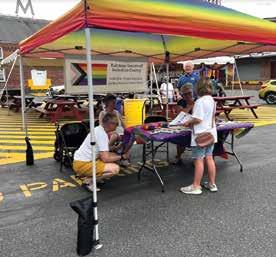
Also on June 20, the Rainbow Seniors will host an information table at the Festival on the Common following the Pittsfield parade, and later in the day will join “With Love & Pride: A Sound and Affirmation Healing Experience for Pride” at Zion Lutheran Church in Pittsfield. The event describes itself as “a restorative meditation session designed to cultivate self-love and radical acceptance.”
The Rainbow Seniors will host information tables in North Adams on June 12 and at Lee Pride on June 13, as part of the Pride events in those locales, Pepper says.
And on June 12, the seniors will join the Hoffman Bird Club and Mass Audubon for a Pride bird walk at Mass Audubon’s Pleasant Valley Wildlife Sanctuary in Lenox.
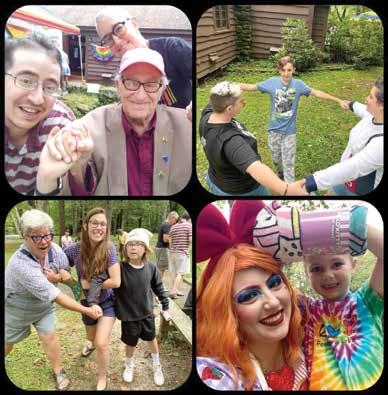
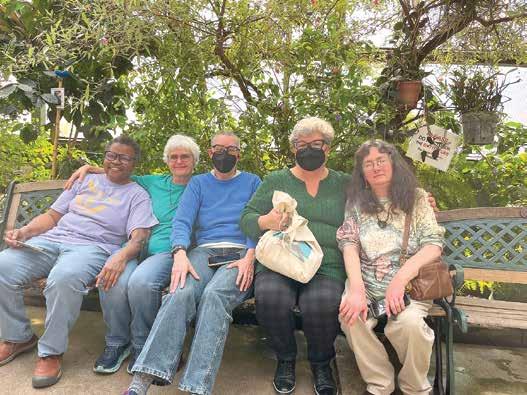
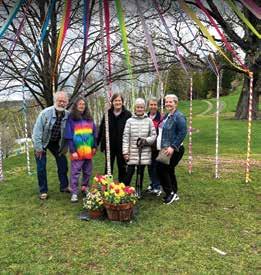
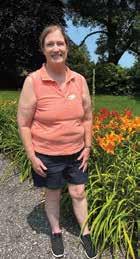
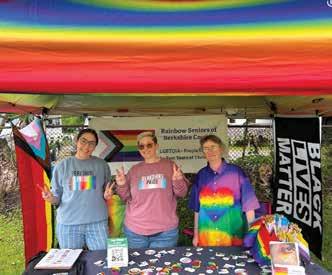
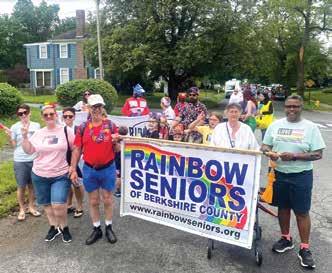
The photos on the facing page offer a peek into the fun the Rainbow Seniors enjoy at their events.
To learn more about the Rainbow Seniors of Berkshire County and their monthly events, visit www. rainbowseniors.org.
To learn more about Pride Month and this year’s Berkshires events, visit www. berkshirepride.org.
Rainbow Seniors of Berkshire County, Out and About
Summer safety tips
by Kara Graziola
Ah, finally! Sunshine, warm weather and outdoor fun!
After a very long and cold winter we welcome the summer months, but unfortunately the summer fun could turn into something not so fun. Things like dehydration, sunburn, mosquito and tick bites or unsafe food could upend your summer plans.
As we age, our body does not adjust as well as it once did to temperature changes, which could result in heat exhaustion or heat stroke. Medical conditions such as obesity, diabetes and dementia can contribute to heat-related illnesses.
On really hot and humid summer days, consider staying inside with a fan and air conditioning, keeping windows and curtains closed. If you must go outside, wear light clothing and a hat. Try to avoid being outside during the hottest times of the day, between 10 am and 4 pm.
Drink lots and lots of water, and limit drinking alcohol and caffeine, both of which can actually cause dehydration. Popsicles and watermelon contain lots of water and are a great way to stay cool and hydrated.
Warning signs of heat exhaustion or heat stroke include heavy sweating, fainting, rapid pulse, nausea and delirium. If you begin experiencing these symptoms, seek medical attention.
Protect your skin when outside. Wear breathable clothing, sunglasses and a hat to limit your skin exposure to the hot sun. You can even
purchase clothing with UVA/ UVB protection built in. Wearing sunscreen adds extra protection, but be sure to use sunscreen rated at SPF 30 or higher.
Did you know that some medications can increase sun sensitivity? Certain antibiotics, NSAIDs (like ibuprofen, naproxen and aspirin) and retinoids can affect sun sensitivity, so review your medications or speak with your doctor or pharmacist about how the things you take might make you more vulnerable outdoors. Consider making an appointment with a dermatologist to have your skin checked to detect early signs of skin cancer.
Mosquito and tick bites can carry diseases, such as West Nile virus or Lyme disease. To keep yourself safe from bites,
apply repellants that contain DEET before you head outside. Avoid walking through areas of high grass, and remove brush and tall grass from your yard. When outdoors, wear lightcolored long sleeves and pants, and tuck pant bottoms into tall socks. Once inside, check under your arms, in your ears and behind your knees for ticks, and take a shower. If you find a tick or believe you have been bitten, monitor the area for a rash – if you see a rash, begin to feel ill or spike a fever, seek medical attention.
Summertime also calls for barbecues and picnics – hot dogs, hamburgers, pasta salads and ice cream! Don’t spoil your picnic by eating spoiled food that could make you sick with a food-borne illness.
Keep cold foods and perishable items cool with a cooler and ice packs. Avoid
the “danger zone” by not leaving food out for more than 2 hours (1 hour when in temperatures of 90 degrees or above). Consider using a meat thermometer to ensure meats are cooked thoroughly. Wash your hands right away after handling uncooked meat. And when in doubt – throw it out!
Be extra mindful of the potential for falls during the summer months, as dehydration or heat exhaustion can cause you to faint. Wear sturdy footwear with a non-slip bottom and closed toe that fits securely around your foot to avoid trips, slips and falls. Be mindful of garden hoses, uneven pavement or bricks, lawn decorations and uneven lawns. Cheers to a happy, healthy and safe summer!
Watch out for scammers posing as power company workers
by Elder Services Staff
If someone calls or shows up at your door claiming to be from our local electric utility Eversource, they could be just who they claim to be… or not.
According to Eversource, scammers pretending to be utility company employees continue to target unsuspecting homeowners and renters. Over the phone, in an email or in person, these impostors pose as Eversource representatives and threaten to disconnect your power unless you make an immediate payment – to them.
Unfortunately, these sorts of scams often target vulnerable older adults. Eversource is reminding its customers to remain vigilant, and to always be on the lookout for the telltale signs of scams.
“These scammers have their deceitful methods down to a science, and while the tactics they use may vary, the goal is always the same – to steal money and personal information from unsuspecting people,” said Eversource Senior Vice President of Customer Operations and Digital Strategy Jared Lawrence.
“One of the biggest red flags to be aware of,” Lawrence continues, “is if you are asked for instant payment over the phone or by using other untraceable methods like gift cards, prepaid debit cards or Bitcoin – that is something we will never ask of our customers and almost a sure sign you’re being scammed.
Massachusetts Department of Public Utilities Chair Jeremy McDiarmid agrees:
“Protecting customers from scams is a top priority for the Department of Public Utilities. We urge all Massachusetts residents and businesses to stay vigilant. If something feels off, don’t engage, hang up, then contact your utility directly. Our Consumer Division is here to help if you have questions or concerns.”
Because customers in Massachusetts have the right to shop for third-party suppliers to lower their energy costs, another con to be aware of is people coming to the door and using deceptive marketing tactics to convince customers to switch energy suppliers. Energy Switch Massachusetts is the only official site where customers can safely shop for energy.
With heightened scam activity continuing throughout the year, Eversource offers these additional tips to help customers avoid becoming victims:
• Verify the caller is legitimate by asking for basic information. Eversource representatives will always be able to provide the name on your account, the account address and the exact past due balance.
• Never immediately pay, regardless of what the caller knows about the account or offers as an incentive. If the caller is requesting an immediate payment using a third-party service, at another location or via a prepaid debit card, hang up immediately and contact Eversource.
• Eversource representatives never require customers to go to a department store or grocery store to make a payment.
• Eversource does not solicit door-to-door or on the phone on behalf of third-party energy suppliers.
• All Eversource employees carry photo identification;
field workers wear clothing with the company logo and drive company vehicles.
• Customers should never provide personal, financial, or account information to any unsolicited person on the phone, at the door, or online, even if the person seems legitimate.
• Customers who are scheduled for disconnection due to nonpayment receive several written notices, including an alert on their bill with information on how to maintain their service.
• Customers who doubt whether a call, in-person interaction, text, or email is legitimate should call Eversource directly at the number on their bill to confirm the authenticity of the contact.
• Customers should not search for Eversource’s phone number or website through an online search engine (like Google), as scammers can manipulate search results to direct customers to an incorrect number. You can find contact information, including the real website address, on your Eversource bill.
• Do not accept offers from anyone to pay your bill for you or provide any other service for a fee. Even if the person claims to be an Eversource employee, it’s likely a scam.
• Do not click on links or call numbers that appear in unexpected emails or texts. Clicking on a link can infect your computer with malware, including viruses that can steal information from your computer.
July means farmers’ market coupons – and healthy eating!
The Massachusetts Department of Agricultural Resources requires that all written descriptions of the Senior Farmers’ Market Coupon Program include the following non-discrimination statement: In accordance with federal civil rights law and U.S. Department of Agriculture (USDA) civil rights regulations and policies, this institution is prohibited from discriminating on the basis of race, color, national origin, sex (including gender identity and sexual orientation), disability, age, or reprisal or retaliation for prior civil rights activity. Program information may be made available in languages other than English. Persons with disabilities who require alternative means of communication for program information (e.g. Braille, large print, audiotape, American Sign Language, etc.), should contact the responsible state or local agency that administers the program or USDA’s TARGET Center at (202) 720-2600 (voice and TTY) or contact USDA through Federal Relay Service at (800) 877-8339. To file a program complaint of discrimination,
a Complainant should complete a form AD-3027, USDA Program Discrimination Complaint Form which can be obtained online at: https://www.usda.gov/sites/ default/files/documents/USDA-OASCR%20 P-Complaint-Form-0508-0002-508-11-2817Fax2Mail.pdf, from any USDA office, by calling (866) 632-9992, or by writing a letter addressed to USDA. The letter must contain the complainant’s name, address, telephone number, and a written description of the alleged discriminatory action in sufficient detail to inform the Assistant Secretary for Civil Rights (ASCR) about the nature and date of an alleged civil rights violation. The completed AD-3027 form or letter must be submitted to USDA by:
(1)mail: U.S. Department of Agriculture Office of the Assistant Secretary for Civil Rights, 1400 Independence Avenue, SW Washington, D.C. 20250-9410;
(2)fax: (833) 256-1665 or (202) 690-7442; or (3)email: program.intake@usda.gov. This institution is an equal opportunity provider.
by Isaac Share
The wait is almost over – Senior Farmers’ Market Coupons are coming soon!
The Senior Farmers’ Market Coupon Program is an initiative managed by the Massachusetts Department of Agricultural Resources to provide nutritional support to older adults. It provides coupons to income-eligible older adults, which can be used to purchase fresh fruits, veggies and cut herbs at participating farmers’ markets.
Coupons come in a booklet. Each booklet is worth $25 in total which can be used like cash at participating farmers’ market booths. Recipients of the coupons will also receive a listing of farmers’ markets that participate in the program.
In addition to coupons, many farmers’ markets accept EBT-SNAP benefits. To use your SNAP benefits at a market, find the manager’s or information booth when you arrive, and tell them you would like to use your EBT card at the market.
If you are a SNAP household you will be automatically enrolled in the Healthy Incentives Program (HIP) and may be eligible to receive $1 for each dollar you spend on eligible fruits and vegetables, up to a monthly limit (Check out mass.gov/hip for more information). SNAP benefits can also now be used for online ordering at some markets.
After July 1, Senior Farmers’ Market Coupons will
Thank You to Our Donors:
The following donations were received between March 1, 2026 and April 30, 2026. Donations received after April 30, 2026 will appear in the next issue of Berkshire Senior. Please know that if you checked Do Not Acknowledge on our mailing return envelopes your name will not appear on this list.
Elder Independence Donations
Donna Pignatelli
Richard Cetti
Deborah Nicholas
John and Ada Masiero
Ronald Cretaro
George and Patricia Kellar
Jo Ann Lancaster
Margaret O’Connor
Nancy and Jeffrey Sylvester
Ronald Bourgoin
Drs. Alan and Roselle Chartock
William and Rose Ann Sturgeon
Victoria Sedgwick
Marjorie Wexler
Bea DaSilva
Fern Lavelle
Donna Gorson
Robert Bugley
Victoria Williams
Margaret Biron
Barbara Tassone
Josephine Buzzanco
Lois Nangle
SHINE Donations
Cynthia and Mark Armstrong
Fuel Assistance
Temple Anshe Amunim
farmers’ market
continued from page 12
Volunteer Driver Program
Archie and Linda Utter
General Donations
Ghetta Hirsch
Gene Beaulieu
Arthur and Louise Hillman
Meals on Wheels
Donations
Nancy Begbie
Alice Rose
John and Judith Ladd
Memorial Donations
In Memory of: Marcel Rajotte
Thomas and Dianne Reilly
Daniel and Mary Kilcullen
Patricia Madamas
Patricia Rayner
Jean-Yves Dejax
Kevin Rand
Peter Rajotte
Richard and Ruth Moon
Edward and Debra Albuquerque
Lisa Allen
Kelsey Andrews
Janice and Richard Baran
James Buffis
Matthew and Jo-Ann Duda
be distributed to senior centers and Councils on Aging around Berkshire County. Ask at your center or COA when coupons will be available and if any distribution events will be held.
To be eligible for the coupons, you must be 60 or older, or disabled and living in senior housing where congregate nutrition services are provided. Your gross household income (your income before taxes are withheld) must be no more than 185% of U.S. Poverty Income Guidelines: for 2026, that’s $29,526
William Frazier
Marcia Gomula
Lance and Dee LaPointe
Vincent and Sheila Marinaro
Caroyn, Edward and Jerrine Milke
Katherine O’Brien
Joseph and Barbara Radice
Douglas O’Brien
Ronald Rousseau
Richard and Margaret Roussin
Robert and Margaret Rzeznikiewicz
Kent and Catherine Salvini
Suzanne Scarpa
Philip and Donna Skowron
Marcie Velasco
Mary Jane Beaulieu
Kenneth and Carol Morris
Eugenia and Kevin Krusz
Charles and Patricia Romano
Robert and Christine Roy
Nancy and Raymond Woitkowski
Richard and Catherine Roberts
Diane Weinstein
In Memory of: Michael
Armstrong
Cynthia and Mark Armstrong
Anne-Marie O’Brien
Sharon Pease
Diane Weinstein
David and Patricia Carlino
per year ($2,461 per month) for a one-person household, $40,034 per year ($3,337 per month) for a two-person household.
When you pick up your coupons, you will be asked to provide demographic information: name, address, race & ethnicity (optional) and a signature. You will not have to show financial documents or proof of income at a distribution event.
Look for the “Farmers’ Market Coupons Accepted” sign at farmers’ markets. If you do not see the sign, just ask the grower if they participate in the program. No change is given for the coupons, so be sure to use the full amount of every coupon with each purchase. The coupons expire October 31st.
Kelly Palmer
Carolyn Sanderson
Caryl Tuggey (designated to the SHINE program)
In Memory of: Joseph Tirell
Brian Flynn
Stephen Long
Peter & Joyce Nelson
Kimberly Clark
The Hamm Family
Teresa Spence
Patricia and Lawrence Clairmont
Nicholas Kirchner (designated to the Elder Care Fund)
Larry Wells
Theodore Zatorski and Georgene Brown
James Meaney
Peggy Taylor
George and Carole Miller
Laura Colin
William Toohey
William Molloyu
Bonny DiTomasso
JoAlice Grimshaw
Kathleen Altman
In Memory of: Harriet Cuyler
Ralph Amato
In Memory of: Fran Furness (designated to the Elder Care Fund)
Nicholas Kirchner
In Memory of: Annie, Oz, Jack and Elvis
Nancy Stuart
In Memory of: William Broderick
Katherine Broderick
In Memory of: Tom Arsenault (designated to Meals on Wheels)
Joel Karlin
In Memory of: Marlene Kirchner
Charles Masterone
Older Americans did their part to win our Independence
by Elder Services Staff
Many of us think of the Founding Fathers as a geriatric set. That’s at least partly because, in many cases, no one thought to paint their portraits until their later years, after their Revolution
had proved its staying power and they’d been enshrined as living legends.
But as befits a group determined to upend old institutions and rock the boat pretty hard, the founders were in fact a young bunch, by modern standards. Two
signers of the Declaration of Independence were 26 – barely old enough to rent a car today but entrusted then to poke the King of England in the eye.
“Founding Fathers” can mean as few as the 56 men who signed the Declaration (average age 44), or as many as
all the delegates to that Second Continental Congress at which the Declaration was signed (ditto 44) plus every man at the Constitutional Convention 11 years later (average age 42) plus a handful of notable Revolutionary War soldiers who didn’t also happen to be
at one of those two powwows.
If you’re thinking, “The 40 of those days was the 60 of today!” you’ve got something there. In the 18th Century, adult responsibilities began in the teen years. Mid-40s wasn’t just middle age, but on the cusp of late middle age.
But averages are misleading. Many Founding Fathers were aged 60 and older, and those men made important contributions to the Revolution while often serving as the calm voice of reason
Historians estimate that out of the entire US population in 1776, less than 3% were 60 or older.
and experience in heated debates, the crucible from which this nation was forged 250 years ago this summer.
The one you’ve already thought of is Franklin, 70 when he signed the Declaration and 81 at the Constitutional Convention. “Old” already from the very start of our Revolution, Franklin was among the most outspoken and influential members of both founding events.
But Franklin was only one among seven of the 56 signers of the Declaration aged 60 and above, the others being John Hart of New Jersey, 65; Stephen Hopkins of Rhode Island, 69; Francis Lewis of New York, 63; Philip Livingston of New York, 60; George Taylor of
Pennsylvania, 60; and Matthew Thornton of New Hampshire, 62. A full 12.5% of the signers were 60+.
Twelve percent may not sound like much. But historians estimate that out of the entire US population in 1776, less than 3% were 60 or older. Statistically, older men were vastly overrepresented at the Second Continental Congress. Their constituents must have thought they knew a thing or two.
Among the signers of the Constitution, Franklin was joined in the 60+ club by George Wythe of Virginia, 61; George Mason of Virginia, 62; William Livingston of New Jersey, 63; David Brearly of Maryland, 64; and Roger Sherman of Connecticut, 65. Of the 39 signers, six were 60 or older – more than 15%.
Unsurprisingly, most of the Founding Father soldiers who didn’t also take part in signing our founding papers were youngish, such as the Marquis de Lafayette, un enfant at 19. But then there was Samuel Whittemore, Jr. Born 12 years before Ben Franklin and nearly 40 years before Washington, Whittemore was 81 when he fought in the Battles of Lexington and Concord, and lived long enough to see Vermont and Kentucky added to the Union.
Given the men-only policies at our founding conventions and history’s spotty record of recognizing women’s accomplishments, we identify a mere handful of our Founding Mothers. Eliminate those under 60 and, sadly, there are few left to celebrate – that we know of.
Still, we do have Mercy Otis Warren, a prominent political writer who issued an influential pamphlet in 1788 (the year she turned 60), Observations on the new Constitution, and on the Federal and State Conventions, opposing ratification of the
Constitution without the addition of a Bill of Rights –which came to pass not long after her pamphlet made its rounds. Warren also wrote popular satirical plays poking fun at such Crown officials as Royal Governor Thomas Hutchinson, helping to turn public opinion against the English.
Like many women writers of her time, Warren published most of her work anonymously. Generations after her death, a descendent learned from letters published in Mercy’s lifetime that she was the author of the landmark Observations , and revealed her contribution to the world.
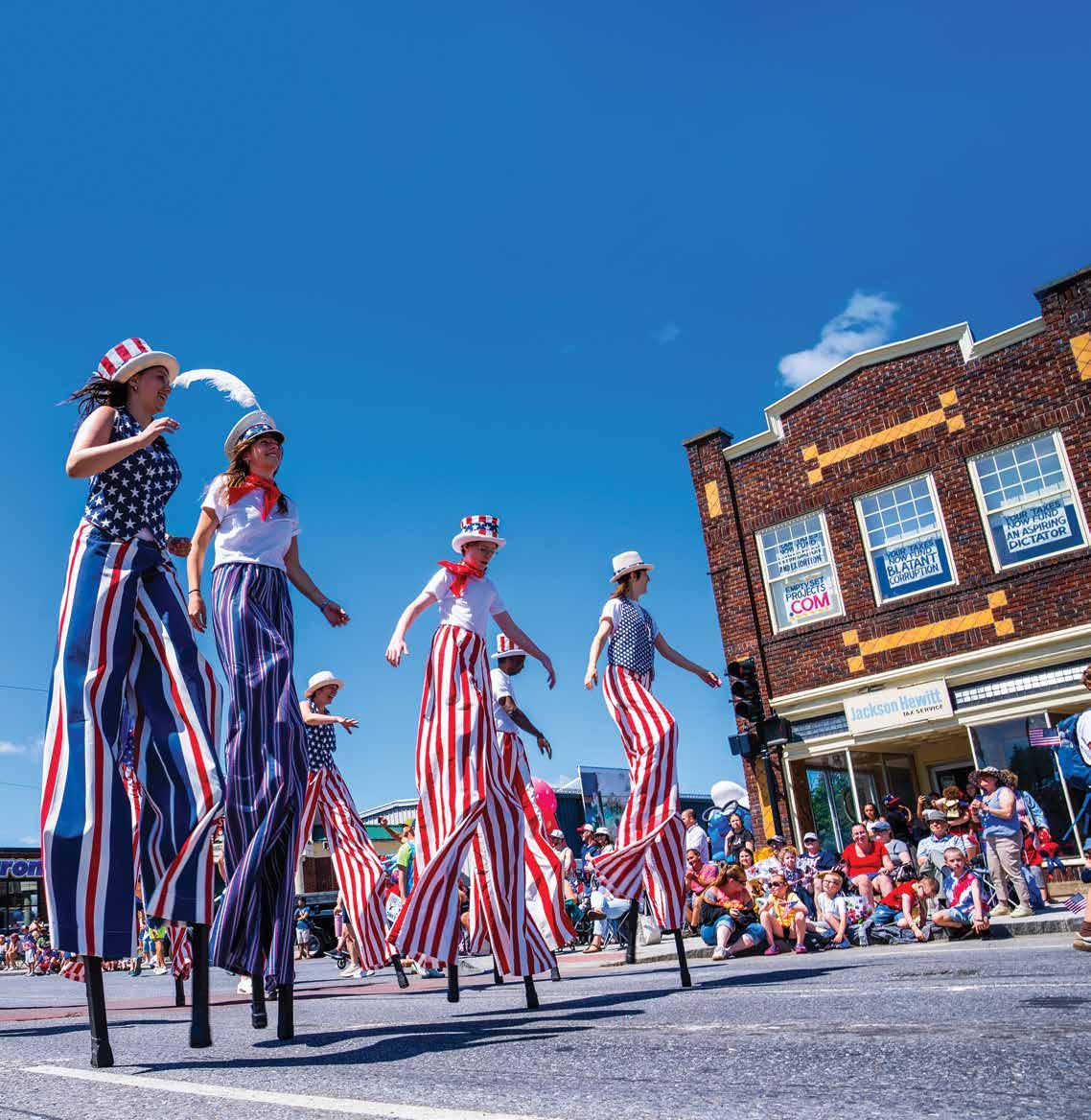
This July 4, remember our senior First Citizens. Those young ‘uns like Lafayette, Jefferson and Hamilton might never have pulled it off without them.
BERKSHIRE COUNTY LEGISLATORS
UNITED STATES CONGRESS
Congressman Richard Neal
372 Cannon House Office Building
Washington, D.C. 20515 (202) 225-5601
300 State Street, Suite 200 Springfield, MA 01105-1711 (413) 785-0325
When technology isn’t working: step-by-step troubleshooting
by Perry Burdick
Isn’t technology great?
That was a great picture! I’m going to send it to Ned.
Where is the photo? Is it here? Nope.
How about in this folder thingy? Nope.
Wait – there it is.
Now I need to click Share. Where is that?
That icon looks like Share. Nope – that’s delete.
What do the three dots mean? Ah – there it is: Share.
Do I send it as a text or an email? Oh, I see an email with a picture of Ned. I’ll use that.
Now, click Share.
What does “Waiting to connect” mean?
Does all that sound familiar?
Technology is great –when it works. I’ll walk you through five simple steps to troubleshoot common problems on a computer, tablet, or smartphone.
A quick reflection
Even though sharing photos can be frustrating, it wasn’t always easier. Remember paying for film and waiting days for your pictures to be developed?
A simple troubleshooting checklist
1. Stay calm and think. Don’t be a “button clicker.” Pressing random buttons usually makes things worse, not better. Take a moment and think about what you were trying to do.
Never fall prey to messages
like:
“Your computer has been compromised. You have 382 viruses! Call Microsoft at 1-555-1212.”
Microsoft–or any legitimate company–will not contact you this way about viruses on your computer.
2. Close the app or program and try again.
Sometimes apps simply glitch. This can happen because of bugs, updates or temporary issues. Closing and reopening the app gives it a fresh start.
Try the task again. If it still doesn’t work:
• Read any error message carefully
• Look for clues
• Take a screenshot if possible (helpful if you need assistance later)
3. Restart (“reboot”) your device.
This is the big one. Believe it or not, restarting your device can fix more than half of common problems. Devices can get “stuck”:
• Memory fills up
• Updates hang
• Apps freeze
• Background processes stop responding Lions and tigers and bears, oh my!
Restarting clears all of that and gives your device a clean slate. So reboot, and try again. Don’t be surprised if this works – it usually does.
4. Check your internet connection.
If something won’t load, your internet connection may be the issue. Start simple: Try opening a website. If it doesn’t
load, check your connection.
• Is your Wi-Fi turned on? If not, turn it on and try again.
• Do you see an exclamation point or warning symbol on your Wi-Fi or cell strength bar? This may mean there’s a problem with your Wi-Fi or cellular service.
• Are other devices having the same problem? If yes, the issue may be your internet service.
• Can you restart your router? This often fixes connection issues. (Restarting may take a few minutes, and devices won’t work during that time.)
• Are you in an area with a poor signal? Rural areas or certain buildings may have limited connectivity.
• Is there a larger outage? Check with neighbors or your internet provider.
A note on public Wi-Fi
Public Wi-Fi – as in a library or store – can be convenient –but it can also be risky. Avoid using it for anything personal
or sensitive when possible.
5. Reinstall the app or program.
Updates can sometimes break apps – and they often happen automatically. Uninstalling and reinstalling the app can resolve the issue. You will likely need to enter your username and password again, so make sure you have that information ready.
When all else fails
Unfortunately, not every problem has a simple fix. If none of these steps works, it may be time to seek help. Ask a trusted friend, family member, or tech support person to take a look. Be sure to show them any screenshots you took – these can be very helpful. Sometimes the problem is on the app provider’s end and will be fixed over time.
Rest assured, though –these five steps will solve most everyday technology problems.
Elder Services of Berkshire County, Inc. NUTRITION PROGRAM SENIOR COMMUNITY DINING CENTERS