The mission of Elder Services of Berkshire County, Inc. is to provide Berkshire older adults, caregivers, and individuals with disabilities the opportunity to live with dignity, independence, and self-determination, and to achieve the highest possible quality of life.
Statement of Inclusivity
Elder Services practices non-discrimination in employment practices and service delivery.
Embracing diversity, our in-home and communitybased services are available to all without regard to race, ethnicity, language, religion, gender, sexual orientation, or lifestyle.
Please help us to keep you safe when we cancel Meals on Wheels
by Christopher McLaughlin, Executive Director of Elder Services
Berkshire Senior
Editorial Board: Deb Aldrich-Jegtvig, Perry Burdick, Christopher McLaughlin, Ned Averill-Snell, Susan Guerrero, Kara Graziola, Peter Olsen and Lisa Jamros.
Advertising: To place an advertisement in Berkshire Senior, please contact Amy Filiault at (413) 496-6322 or e-mail advertising@berkshireeagle.com.
Berkshire Senior is published bi-monthly by Elder Services of Berkshire County, Inc., 73 South Church Street, Pitts eld, MA 01201, (413) 499-0524 or (800) 544-5242, e-mail: esbc@esbci.org or on the internet at www.esbci.org.
NOTICE
Berkshire Senior advertising helps to the defray the costs of producing the newspaper. Inclusion of advertisers in no way implies that Elder Services endorses any product or service.
Signed columns are the opinion of the writers and not necessarily the opinion of Elder Services. For medical, nancial or other advice, seek a quali ed professional in the appropriate eld. Elder Services and its programs are funded, in part, by the Executive O ce of Aging & Independence (AGE).
State and federal funds provided to Elder Services are limited. Elder Services welcomes charitable donations to help meet the growing needs of Berkshire seniors, and gratefully acknowledges all donations.
Hoping all is well with you this long, cold, white winter.
As I write this, it is nearly the end of January. We just experienced winter storm Fern, a weekend storm that dumped between 12 and 24 inches of snow on the Berkshires during a very cold spell that has yet to end. It looks like a similar storm may hit us this weekend. So much for the January thaw. This winter started in late November and shows no signs of ending anytime soon.
You may remember that in the December issue I wrote about winter weather and Meals on Wheels. The purpose of that letter was to let you know that our ability to accurately predict when to cancel meals is not an exact science and that, despite our best intentions, we do not always get it right.
This winter is not what we have been used to for the past four or five years and is more like the Berkshire winters we remember from when we were kids. We are not even out of January, and we have canceled meals four times as snow and ice storms made driving dangerous or impossible for our kitchen staff and drivers. The months of February and March are likely to bring more winter weather. Although the main goal of Meals on Wheels is to provide you with a warm, nutritious meal, the well-being check your driver does to make sure you are doing well is just as important. This well-being check becomes even more critical on days like this past Monday, when Fern left us no choice but to cancel meals. Canceling meals does not result in a “day off” for our drivers. On days we cancel meals, our drivers will call you between 10 am and 12 pm to make sure
continued on page 6
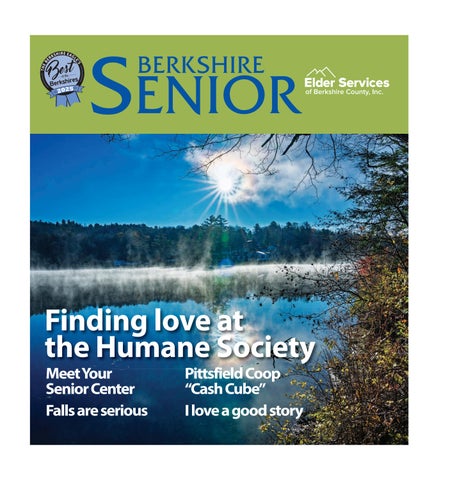
Finding love at the Humane Society
by Susan Guerrero
Finding lasting love on Valentine’s Day and beyond may seem like a total impossibility.
However, if one stops at 214 Barker Road in Pittsfield, there is definitely the possibility of finding lasting love, even love at first sight.
That’s the address of the Berkshire Humane Society where cats, dogs, and a host of smaller animals that can melt your heart are waiting to be adopted.
Many older adults adopt animals, Catherine Hibbard, marketing communications manager for the Humane Society, says. You can even get a look at some of the animals who have been adopted by going online to the Humane Society’s Facebook page.
There is ongoing help for those who have adopted pets. For example, older adults at Berkshire Place who have adopted cats can have someone come in to clip their animal’s nails, Hibbard says.
Besides cats and dogs available for adoption, there are also guinea pigs, hamsters, parakeets, and occasionally rabbits.
Running the Berkshire Humane Society takes a whole community, Hibbard says. Donors of everything from financial gifts, knitted lap blankets for animal beds, bags of food and grants are all part of that community that keeps things going.
The Market 32 supermarket in Lenox has a box where people can place purchased pet food for gifting to those who need it, Hibbard says. The Society also accepts bags of food for the animals, including opened bags that are not expired. And if an older
adult who has adopted a pet is going through a hard time, food supplements for the pet can be set up.
To begin the adoption process, you fill out an application. Applications are good for a year. “We want to match the right animals to the right homes,” Hibbard says.
If the person applying to adopt an animal lives in a rental, the Humane Society wants to make sure the landlord has granted permission for the pet.
Once the application is processed, you can come to the shelter and look at all the animals available for adoption. You might go home with a pet that same day, so it definitely helps to complete the application in advance.
If you’re approved, a counselor will go over the animal’s history and care needs, Hibbard says. All the animals to be adopted are spayed or neutered and have had all their vaccinations before they go to their new homes.
Adoption fees are geared toward the age of the animal.
Kitten and puppy fees are higher than those for senior animals, since older animals are not expected to live as long, Hibbard says. Animals aged seven years or older are considered “seniors.”
Older dogs adopt for $250, and adult cats for $275. “We have certain promotions that go on during the year where fees are waived,” Hibbard says, adding that cats get adopted quicker than dogs.
Anyone who wants to adopt an animal can do a trial period and foster that animal for a couple of weeks, Hibbard says. All animals can be returned to the shelter if they are not good fits.
Even if you can’t commit to adopting an animal, there are numerous other ways you can help at the Humane Society. For instance, you can volunteer to be a foster parent to an animal.
Lynn Walker, a volunteer at the Society, is also a foster mother to cats. There are
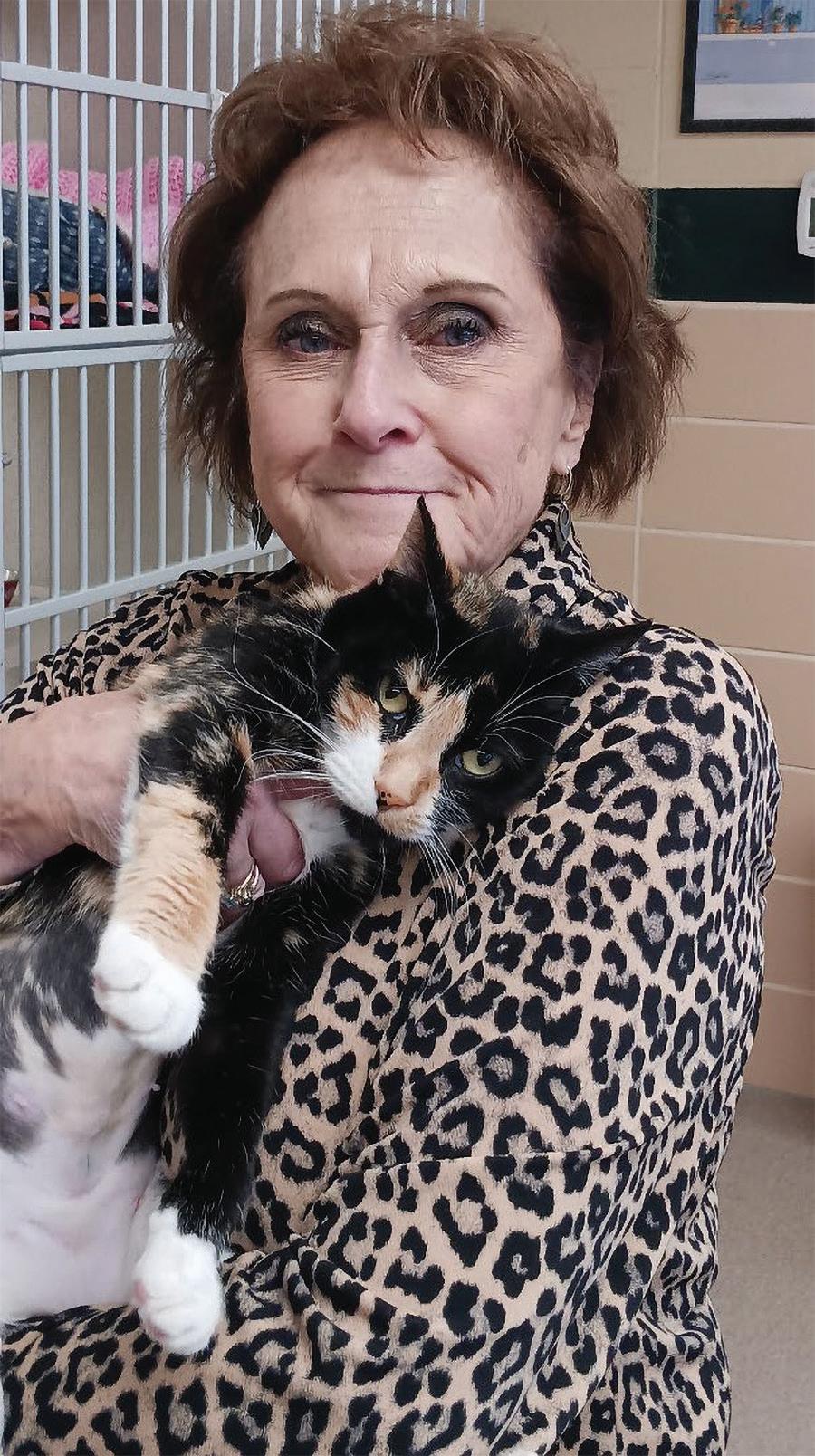
Anne Larrow, Berkshire Humane Society volunteer
16 other foster moms and a third of them are older adults, Hibbard says.
Retired people who want to help can walk dogs, work at the front desk, serve as companions to some of the cats, and even help sort and collect clothing in the two “Catwalk Boutiques.” One boutique is at 325 Stockbridge Road in Great Barrington and the other is at 51 Church Street in Lenox. The boutiques sell quality used clothing and have raised thousands of dollars for the Humane Society.
“There are all types of things people can do,” Hibbard says of volunteer opportunities.
Retired teacher Anne Larrow has been a volunteer at the Humane Society for 18 years. A retired teacher, she fostered and then adopted a cat, Ginger, now 14 years old.
“She’s a beautiful animal,” Larrow says. “She’s my buddy.” When Larrow broke her leg, the cat sat by her throughout an entire summer.
Another older adult volunteer, Joanne Billow, adopted her cat, Camere, at the Humane Society. Billow came up with the name from her telling the cat to “come here.” She says the cat is her “reason for everything.” The cat even told her owner not to bring home any other animals, Billow says.
“She has trained me to give her what she wants, when she wants it,” she laughs.
Trish Phillips handles community outreach at the Humane Society. All volunteers have contact with her.
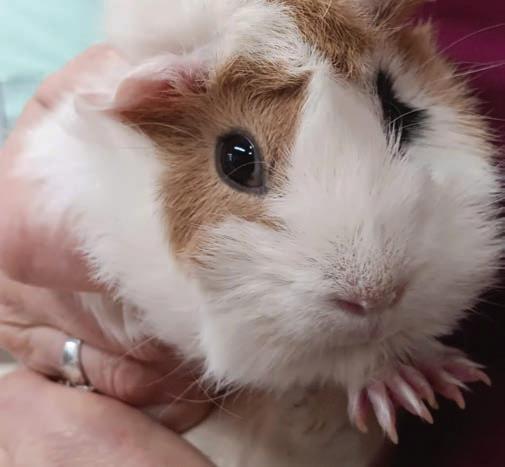
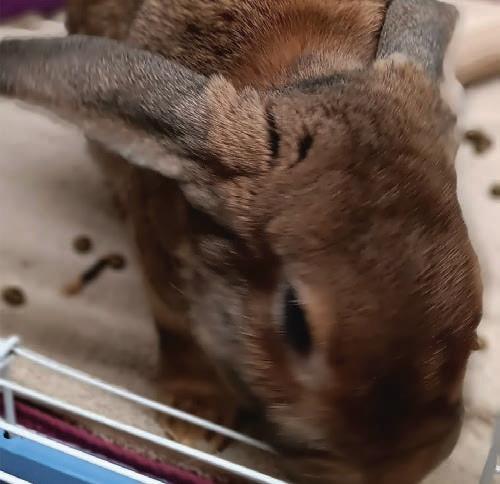
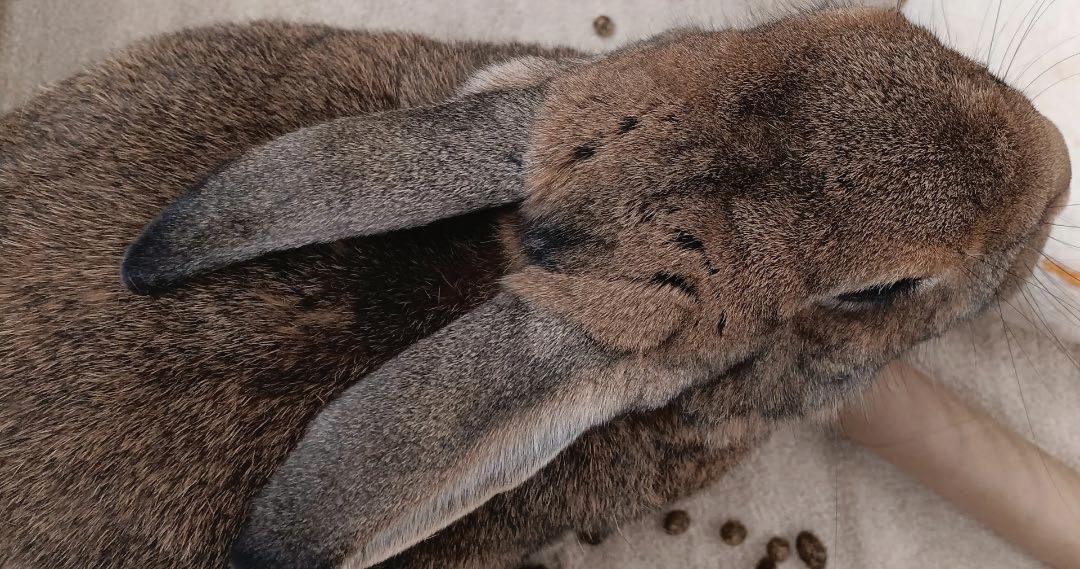
Maybe love at first sight this Valentine’s Day will be found in a hamster such as Starla, a great big bunny like Bubbie or a guinea pig like Pumpkin. Or Pumpkin’s daughter, Buttercup.
There are animals like these and many more at numerous shelters throughout Berkshire County, all of which can be found online.
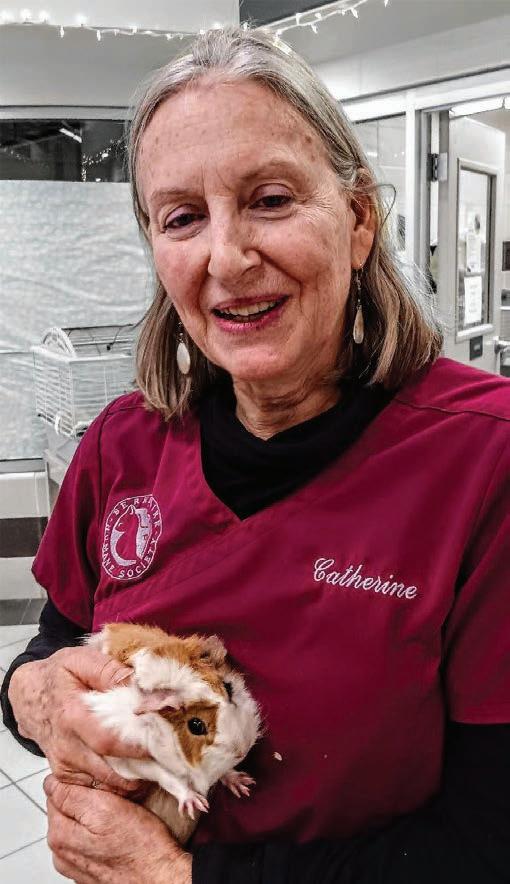
Catherine Hibbard, marketing communications manager at the Berkshire Humane Society, holds Buttercup, a guinea pig.
Bubbie the bunny is a big, beautiful girl.
Meet Your Senior Center
She eld shows good things come in small places
by Elder Services Staff
As host to the southernmost of the senior centers in Berkshire County, little Sheffield – with a population of about 3,300 souls – might be expected to sit on the sleepy side. But you’d never know that by the town’s busy Council on Aging (COA) on Cook Road, just off U.S. Route 7 bisecting the Berkshire town.
In February alone, the center is hosting “Coffee with a Cop,” visits from the foot nurse and the hair stylist, a “sound bath” meditation session, movie night (the February 13 feature is “My Big Fat Greek Wedding”) and a knit & stitch social hour every Friday. Corn hole. Art classes. Pool noodle chair hockey (no kidding). Bridge. Mah Jongg. Scrabble.
Older adults frequenting the Sheffield center also enjoy regular visits from Le Petit Ranch, which brings friendly animals to the center to “spark curiosity, support learning, reduce stress, and enrich the lives of people of all ages and abilities through the unique human–animal bond,” according to the Sheffieldbased animal encounter nonprofit.
Of course, all of those activities happen in and around a panoply of popular group meal options, from regular congregate meals, to a “Men’s Breakfast,” to free Soup & Sandwich Mondays, to an offsite dinner at The Black
She eld COA/senior center Executive Director Kathie Loring
Rabbit restaurant just over the border in Connecticut.
Kathie Loring, executive director of both the senior center and the COA, says her congregate meals not only draw a good crowd, but also often are served free of charge. Loring regularly rounds up sponsors to cover the cost, sparing her consumers the usual $3 meal charge.
But even with the meals and many other diversions on the menu, the hottest ticket at the Sheffield center is the fitness sessions. “Really, it’s our exercise classes that people come out for the most,” Loring says.
For $4 a class or an allaccess pass of $25 a month, Sheffield older adults enjoy breath and movement classes, aerobics and strength training,
Zumba, chair yoga and more.
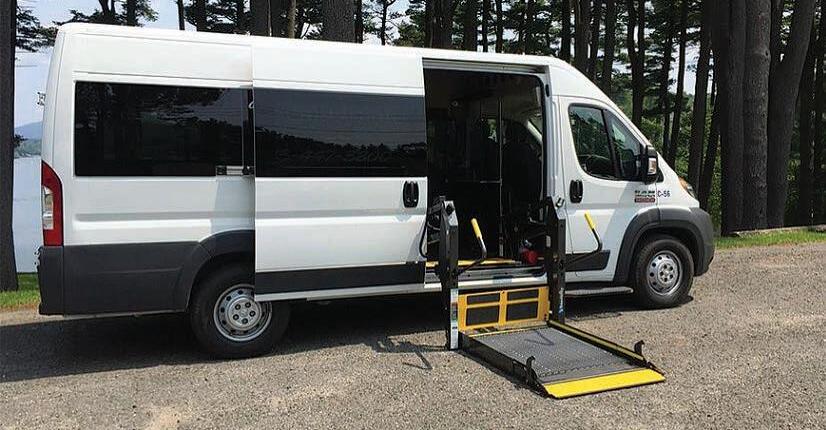
One might wonder how Sheffield’s older adults get themselves to the center to enjoy the many activities offered – plus the steady company of friends. Sheffield covers an area larger than Pittsfield while hosting a mere one-thirteenth the county seat’s population. Public transportation is scant, taxis expensive, and Uber barely active. But Loring says most of her regulars still drive, or get rides from caretakers. For the few who can’t transport themselves, the center has acquired a small van in which it offers $4 round trips to and from the center.
Executive director of the center and COA for a full eight years and counting, Loring is happy with the regular attendance she’s built up. Her one regret is the older adults who aren’t joining in – at least not yet.
“I wish I could reach the people who we’re not reaching,” Loring says. She’s
done the math. She knows that even with its small population, Sheffield is home to older adults who don’t now visit the center. Are they not aware it exists? If they know it exists, are they unaware of the range of engaging activities offered? Or do they know all about the center and what it offers, but stay away thanks to shyness, transportation challenges (plus unawareness of the $4 van rides), mobility concerns or other factors?
Loring doesn’t know, at least not yet. But if she has her way, she’ll figure out why there are Sheffield older adults she never sees, and where they are. And then she’ll find a way to get them in the game, out and about, engaging with others and having fun. And it’s not just about getting them a hot meal.
“Isolation is the thing we fight here,” Loring says. The secret sauce on everything that happens at the Sheffield center is that it brings people together, to enjoy one another.
Falls are serious –here’s how to avoid them
by Kara Graziola
Falls – both fatal and non –are the leading cause of injury for adults over the age of 65. According to the Centers for Disease Control, there are roughly 14 million reported falls annually. Just one fall can result in permanent injury or disability.
Preventing falls is a topic Elder Services case managers and nurses often discuss with our consumers. Many do not believe they are at risk for falls, or feel they are being “careful” so they need not worry. But what factors
If you worry about falling, you are at risk for falls.
contribute to a risk of falling?
First up: If you worry about falling, you are at risk for falls. You’re also at risk if you have an unsteady gait or poor eyesight, take certain medications that can cause dizziness or lightheadedness, or have trip hazards in your home such as scatter rugs, electrical cords and even pets. Reduced activity as we age makes our muscles weaker, which affects our balance. Insufficient light in your home, day or night, may make it hard to see the things you might trip over.
What can you do to prevent falls?
Move, move, move! Keep your muscles strong. Take
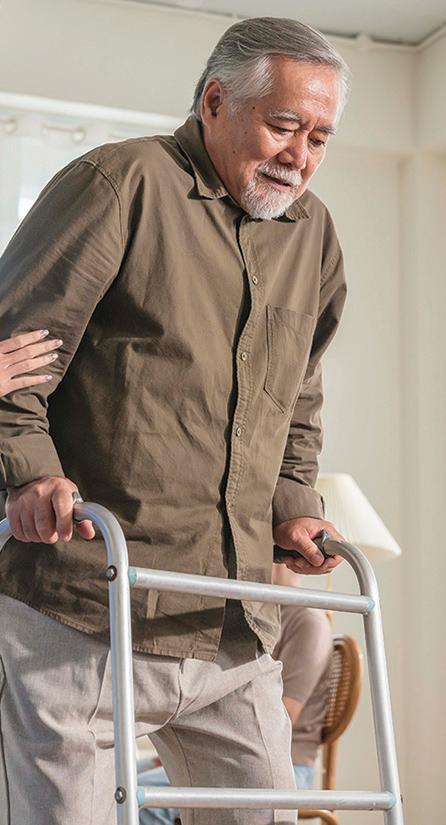
walks outside, or even just around your house. Your doctor may be able to provide outpatient or in-home physical therapy that can help improve your balance. Many local councils on aging offer exercise classes that can do the same. Remove scatter rugs from your home, and purchase inexpensive night lights for dark hallways and bathrooms. Don’t be shy about relying on a cane or walker – many older adults say such devices make them feel old and that “furniture surfing” works just as well. But would you rather make peace with needing a little extra help staying steady on your feet, or risk a serious, life-changing injury?
Help us to keep you safe continued from page 2
you are doing OK.
DonnaBrewer,Owner StevenJBrewer,Director
It is particularly important for them (us) to know you are doing well on days when winter weather limits driving and may result in electrical outages.
On days meals are canceled, it is especially important that you answer your phone, so your driver knows you are OK. If we cannot reach you by phone, we call your emergency contacts and if we cannot reach them, we ask the police to visit your home for a well-being check.
We are heading toward spring but there is still plenty of winter left. We appreciate you helping us to keep you safe this season!
Please be sure that Elder Services has your current phone number and updated emergency contacts by calling our Nutrition Hotline at 1 (800) 981-5201.
Until next time be good, be kind and be careful.
Snow and ice are fall traps. Limit going out at night when ice will be more difficult to see. Wear winter shoes and boots with rubber soles that help with traction. Attach ice traction cleats to the bottom of your shoes and an ice gripper tip to keep your cane from slipping. These items can be purchased online, at pharmacies or even at sporting goods stores. Toss a little lightweight cat litter on ice to add extra traction under your feet. And if you’re uncertain about whether you can go outside safely when paths are slippery, stay home until conditions improve. Not every fall can be prevented, but the more you know about avoiding falls, the less your risk, at any age.
Safety first.
Pitts eld Coop “Cash Cube” comes to Elder Services
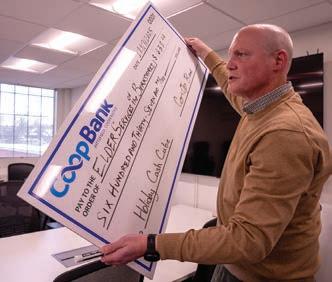
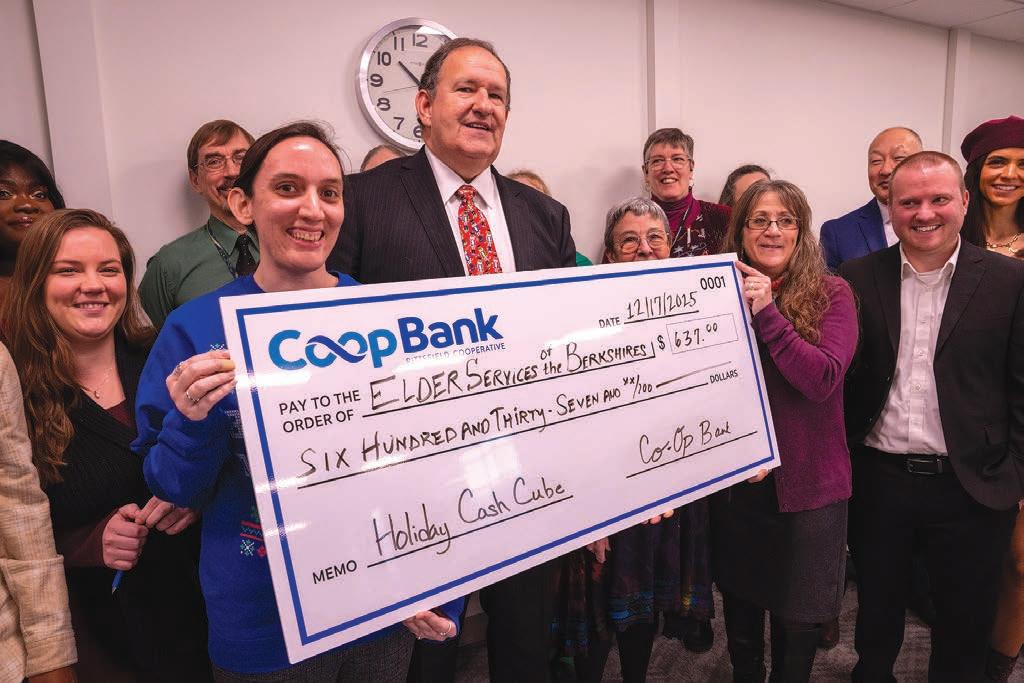
In December, Pittsfield Cooperative Bank made a $500 donation to Elder Services.
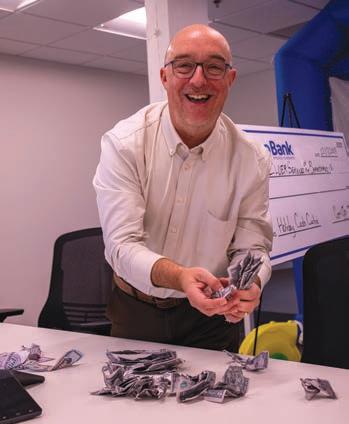
But determined to put the “fun” in “fundraising,” Pittsfield Coop also stopped by the Elder Services offices on South Church Street and promptly set about inflating their Cash Cube, a plastic booth in which paper money is blown all around by a fan, like dry leaves in a whirlwind.
In its “Holiday Cash Cube” game, Coop encloses one of its grantee’s employees in the cube, and gives that panicky soul an amount of time in which to grab from the wind as much cash as they can. When the fan shuts off, the money clutched within the employee’s sweaty fists gets added to the grant.
Having apparently drawn the short straw, Elder Services Geriatric Support Services Coordinator Jana Nelson braved the cube and snatched $137, bringing Pittsfield Coop’s Elder Services donation to $637!
Many thanks to Pittsfield Coop for the cash and the good fun. And to Jana for her reach and grasp.
73 South Church St., Pitts eld, MA 01201
Telephone (413) 499-0524 or 1-800-544-5242
Fax (413) 442-6443
Email esbci@esbci.org
Dear Friend of Elder Services:
Berkshire older adults need your help.
We won’t sugarcoat it: There’s a $16 million shortfall in the fiscal 2026 state budget for the state home care services Elder Services provides. Sometimes when gaps like these come to light, as one did in FY 2025, the Commonwealth steps in with a supplemental budget to make up the difference. But as of this writing, it seems unlikely that a supplemental budget save is on its way.
With the current federal budget having trimmed a range of line items, state governments are scrambling to keep all sorts of vital services going – and not just services for older adults. Governor Healey and the Massachusetts state legislature are struggling to balance a budget with an expected $650 million shortfall thanks to federal tax policy changes. Elder Services simply can’t count on seeing a $16 million fix, at least not in the near term.
President Trump’s “Big, Beautiful Bill” aims to reduce Medicaid funding by $880 billion over the next decade. Many Berkshire older adults rely on Medicaid to fund their healthcare. Medicaid funding also is essential to the operation of many area clinics, hospitals and nursing homes – so these cuts could have a domino effect that will reduce older adults’ access to essential services across the healthcare system, especially in the poorest areas, making the services we offer more critical than ever.
Your financial support is crucial to helping Elder Services continue its mission of empowering Berkshire County older adults to live independently in the home of their choice.
We are grateful for your support! Your donation enables us to ensure that Berkshire older adults are able to count on Elder Services continuing to provide the support they rely on.
Thank you in advance for your gift. Here are ways you can help:
• Send your check in the enclosed envelope.
• Call Elder Services at (413) 499-0524 and ask to speak to the Fiscal Department.
• Visit www.esbci.org and click the “Donate” link along the top menu bar to open an easy-to-use online donation form.
• Call us to learn about volunteering. There are many opportunities for you to volunteer in a way that works for you and also helps enrich the lives of Berkshire older adults.
Thank you again.
Sincerely,
Barry Kriesberg President, Board of Directors
Christopher McLaughlin Executive Director
Christopher McLaughlin
Barry Kriesberg
Thank You to Our Donors:
The following donations were received between November 1, 2025 and December 31, 2025. Donations received after December 31, 2025 will appear in the next issue of Berkshire Senior.
Elder Independence Donations
Karen Zuber
Brian Carpenter
Barry & Robin Kriesberg
Judith Ambery
Tod and Susan Jurgenson
Jane Samel
William R & Linda P O’Connell Foundation
Wade Ho man
Carlos Rivadeneira
Jesse Hakes
Reimundo Acosta
Carol Pullo
Derek Dabrowski
Michael Williams
George Smith
Anita Busch
Michael and Justina Norton
Gisele Breton
Trudeau Enterprises
Frances Buckley
Asta Potter
Melissa Foster
James Beauregard
William Wootters
Katrina Gardner
Pitts eld Cooperative Bank
Fred Mensch
Bruce Shickmanter
Malcolm Douglas
Nancy Koloc
Peter Traub
Robert Sabelli
William and Patricia Flaherty
Nancy Cook
Helena Matthews
Ernest and Sharyn Godbout
Jane Betti
Je rey Cook
Charles and Sandra Magnesio
Cynthia Sault
John Vachula
Kevin McNerney
Suburban Internal Medicine
Mary Camyre
Sandra Schryver
Ronald Bourgoin
Lucille Eberwein
John and Geraldine Crane
Dana Anderson
James St. John
Germaine Korzeniowski
Mary Corbett
Stephen Maizlish
William and Phyllis Stefan
Sheila Fitzpatrick
Steven Rogers
Michael Margolis
Daniel and Jerri Buehler
Cheryl Baker
Lois Nangle
Elizabeth Wilker
Carol Spo ord
William and Janine Reid
Sharon Simmons
Nancy Borges
Mary and Susan Mackle
Diane LaValle
Raymond Wise
Pete Buratto
Sharon Walthew
Patricia Brien
Paul Charow
Rosalie Noyes
Allen and Shirley Arndt
Charles and Verna Hou
Robert Renton
David and Cheryl Cornell
John and Ada Masiero
Robert and Lucy Belville
Berkshire Community Action Council
Helen-Mary Sha er
Sarah Hitchock-Degregori
Jonathan Hankin
Karen Reilly
Claudine Chavanne
Dana Cummings
Benjamin and Jo Anne Ginsberg
William Spence
Faisel and Linda Ali
David and Esther Kininmonth
Richard and Joan Taikowski
Lynn and Ken Myers
Dan Mead and Sally Eagle
Community Health Program
Patrick Brogan
Richard Riedel
Michele Bauer
SHINE Donations
Cynthia Armstrong
Dr. Frederic Hyman
Cynthia Eksuzian
Marianne Judge
SHINE Donations in honor of:
Carlos Rivadeneira
Andrea Jacobson
Meals on Wheels
Donations
Dorcus Abell
Robert and Lee Watroba
Alissa Margulies
Paul and Kim Bruce
Ronald and Sandra Aasen
Melissa Wondoloski
Alice Rose
Thursday Morning Club
Mark Solak
James and Donna Neureuther
Laurence Cohen
Jean Doak
Great Barrington Police Association
Local 350
Tim and Sharon Coe
Mary Ellen Prescott
Marian Roper
Tamar Schrager
Pitts eld Lodge of Elks #272
Patricia Mayhew
Margaret Christiansen
Meals on Wheels Donations in Memory Of: Eileen Murphy
Kevin and Meaghan Lamothe
Alice and Martin Jonas
Ombudsman Donations
Constance Cooper
Honor Donations
In Honor of: Harriet Cuyler
Barbara Horner
Memorial Donations
In Memory of: Richard Clothier
Leana Clothier
Ralph Sharpe
Katherine Stano
Priscilla Morrill
Antonette Furcinite
Maureen Locke
In Memory of: Donna Moore
Denis and Diane Duquette
Paul and Melissa Saunders
Berkshire Retirement Home
James and Merri Seidl
In Memory of: David Rogers
Mary Rogers
In Memory of: Caroline Filiault
Michelle Filiault
In Memory of: Jerry and Flora Fressola
Mary Fressola
In Memory of: Dorthy Gentile
Teresa Gentile
In Memory of: James R. Coughlin
Karen Tibbetts
In Memory of: Angela Julia Hayes
Charles Nichols
In Memory of: Annie, Oz, Jack and Elvis
Nancy Stuart
In Memory of: William Broderick
Katherine Broderick
In Memory of: Bill and Elaine Broderick
Tom Broderick
William Broderick
Katherine Broderick
In Memory of: Katherine Winn
Timothy Winn
In Memory of: Lily Kuzia
Nicholas Kirchner
In Memory of: Ned Grant
Marion Grant
In Memory of: Robert E. Lee
Elaine Lee
In Memory of: Wanda and C.
Fred Dubis
Elaine Kittler
I love a good story
by Peter Olsen
Stories are more than just facts. Facts can live alone in your brain, but when linked to a story, they come alive and feel more concrete.
We tell stories about other people and for other people. Stories help us keep tabs on what is happening in our lives, especially our family lives. The Bible uses stories to bring God to life.
Ultimately, stories are a way we connect with each other. Eliciting a story from someone is an act of love. The same pathways in our brains that allow us to express love for others are activated when we absorb a story someone tells us.
Tell stories. Stories matter. Your family stories matter. What makes a good family story? Maybe your family history includes some moments of courage, painful tragedies, service to others, long journeys, or many little moments that are cherished, like big weddings. There are great stories here.
Family stories highlight not only what seems novel and different – like riding a horse to work – but also aspects of human experience: things like loss, adventure, pain, struggles, and holiday celebrations.
Do not let your family stories remain buried where no one can access them. They are your stories and they must be told. A family story preserves a legacy for your future generations, who may be yearning to know what happened in the past for the very family they are part of now.
Telling your family stories need not be overwhelming. You can record a message that your tech-savvy nephew can help you make. You can dictate your story to your granddaughter who just graduated cum laude and who will write up your story on the computer you gave her for graduation.
Tell your story to build a strong sense of identity and gain a deeper understanding of what makes your family unique. Some tips to get you started:
1. Avoid making a list of events. A dry timeline just doesn’t cut it as a “story.”
2. Decide what to include and exclude. Which details move the story along, and which are extraneous?
3. “Writing” a story can sound overwhelming. You may think you don’t know how to write. But if you can write a check, you can write your story. Make it simple. Stick to what you know and remember.
4. Tell someone your story and ask them to write it down for you.
5. Start with a focus. “Uncle Charlie did some interesting things that I can tell you about.” We all have Uncle Charlies in our family. Pick one and begin a story.
6. Describe sights, sounds and smells – like Grandma’s bread or Uncle Charlie’s scary, musty cellar on Halloween – to bring your story to life.
You already have a wealth of materials to draw from. You have heard these stories since your childhood. But your children and grandchildren don’t know them yet.
Recollect some of the more
interesting experiences, adventures, disasters, and happenings in your family –but be honest. Don’t make up stories. But do include:
• People: their bios, relationship quirks, and how they changed
• Places: descriptions of where people lived or traveled
• Objects: heirlooms, recipes, dated clothes, heirlooms, photos, letters, licenses, obituaries and signatures Once you let loose some of these memories, a waterfall of stories will come bubbling forth. Tell your family stories, blending facts (births, migrations, jobs) with personal anecdotes. Focus on
a central theme, such as your family’s unique customs or the traditional ways your family celebrates holidays, birthdays, Christmas, Mother’s Day, and vacation time together. Where did your family come from? What challenges did they face when moving? What jobs did they hold? What foods characterize their culture? What religious traditions did they follow?
If you answer such questions, so many stories will emerge that they will boggle your mind and stimulate your desire to tell them, not only to your family, but to others as well. So what’s keeping you? Get started now.
When
If
Please
BERKSHIRE COUNTY LEGISLATORS
UNITED STATES CONGRESS Congressman Richard Neal 372 Cannon House O ce Building, Washington, D.C. 20515 (202) 225-5601
300 State Street, Suite 200 Springfield, MA 01105-1711 (413) 785-0325
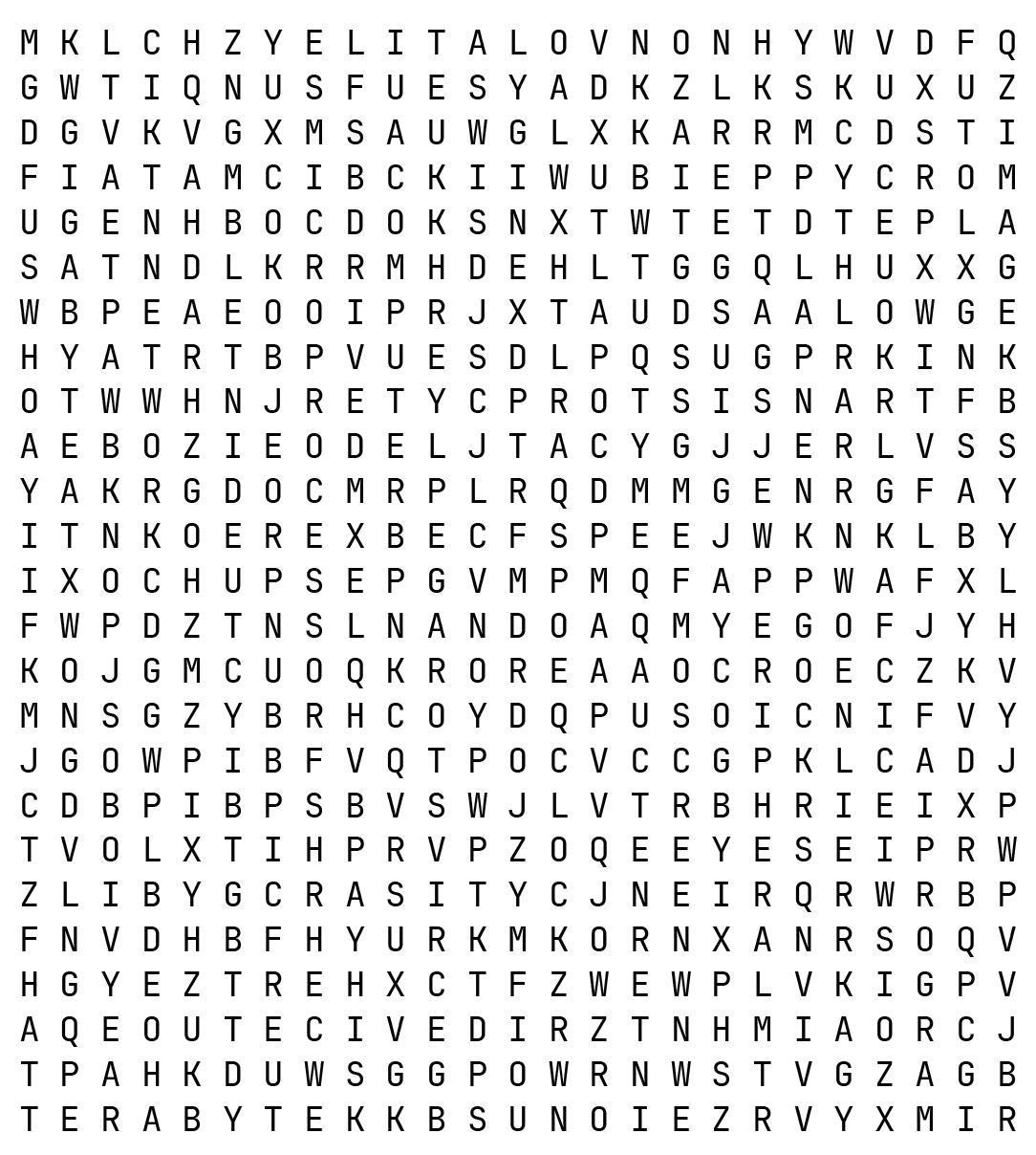
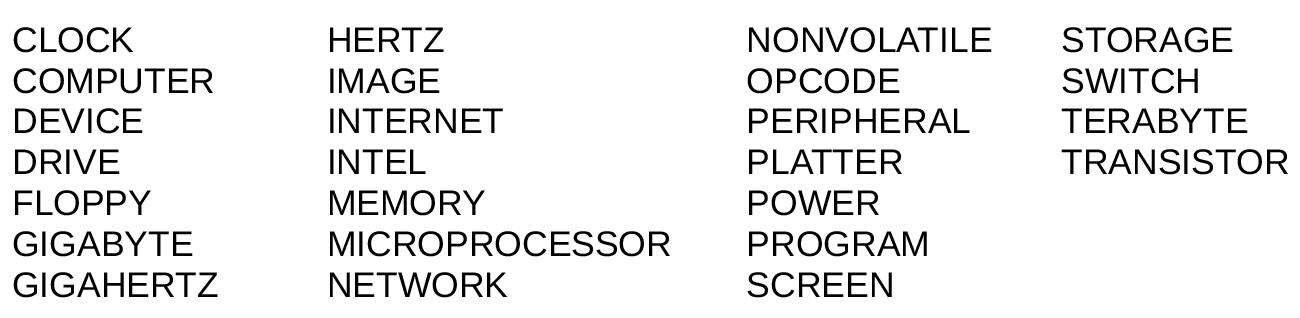
When we talk about computers, remember that just about everything has a computer in it – including your phone, TV, toaster, car –everything! They all work in essentially the same way.
Let’s start with the most important part: the computer chip. The term computer chip is an informal name for the central processing unit (CPU). The first CPU was introduced by Intel in 1971, and it contained about 2,300 tiny switches. These switches are called transistors. A modern CPU can contain over 200 billion transistors.
The purpose of the CPU is to process a list of numbers (a computer program is, at its core, a list of numbers) that are rapidly fed into it, and then output the results to your screen, printer, network or sound card. Simply put, these devices – called peripherals –are nothing more than places where numbers are displayed, stored or moved.
How fast does it do this? Very fast! The numbers (called opcodes) are transferred in with every beat of a drum called the system clock, which is measured in units called hertz. Imagine turning a light switch on and off once per second – that would be 1 hertz. A modern computer’s system clock can turn on and off four billion times per second, or 4 billion hertz. Don’t try that with your light switch!
My students used to ask their friends if they wanted a Hertz donut. If the person said yes, the student would punch them lightly on the arm and say, “Hurts, don’t it?”!
Because numbers associated with computers are often very
large, prefixes are added to the units. The prefix for one million is mega, and for one billion is giga. So 4,000,000,000 hertz becomes 4 gigahertz, abbreviated as 4 GHz.
The next component is storage. Storage is provided by a device called a disk drive and is responsible for permanently storing your apps, programs, and images. By permanently storing, I mean that when the power is turned off and back on, the data isn’t lost. This type of storage is called nonvolatile.
Different types of disk drives use different types of media. I’ve been around long enough to remember the floppy disk drive. A hard disk drive stores your data by magnetizing tiny regions on a spinning metal platter. The first hard drive, built by IBM in 1956, used a stack of large spinning metal disks that looked very much like
a rotating barrel and was only capable of storing the equivalent of a single picture by today’s standards.
Modern hard drives still use spinning platters, but they are much smaller and can store trillions of bytes. This brings us to a new prefix: tera. Today, a typical computer hard drive holds between 1 and 4 terabytes of data.
A CPU needs direct access to a program in order to run it. Storage devices like hard drives are simply too slow. Memory, or random access memory (RAM), is the solution. When you click or tap an icon, the program is moved from storage into RAM. Think of it like trying to match a sock on vacation: You have one sock in your hand (RAM), and the other is at the bottom of your luggage (storage). Which one will you find faster?
Although RAM is much
faster than a disk drive, it is not permanent. When the power goes out, everything in RAM is lost. If you have ever lost your work after a power glitch, then you know what I mean. RAM is measured in bytes – just like storage. Modern computers typically have four billion bytes or more of RAM. That would be 4 gigabytes, or 4 GB. Easy, right?
I would recommend buying a computer with more than 4 GB of memory – 8 GB minimum. The more memory you have, the smoother and faster your computer feels. Unfortunately, the recent explosion in artificial intelligence has increased demand for memory and driven prices up.
That’s computers in a nutshell. In the next article, I’ll explain Einstein’s Theory of Relativity – but first, someone needs to explain it to me!
Stay warm!
BERKSHIRE COUNTY
Elder Services of Berkshire County, Inc. NUTRITION
PROGRAM SENIOR COMMUNITY DINING CENTERS
The status and o erings of the Senior Community Dining Centers are likely to evolve. Please call for the latest update.
Eligible seniors 60 years or older are welcome to attend any Senior Meal Site. Reservations are requested 24 hours in advance. The suggested donation is $3.00 per meal. All contributions are returned to the community toward the cost of the Senior Nutrition Program. Those 59 or under are welcome at the required fee of $8.00 per meal.
MEDICALLY TAILORED MEALS
Elder Services now provides medically tailored meals (MTMs). MTMs help meet the nutritional needs of seniors with health conditions that require speci c diets such as diabetes and heart or kidney disease.
MTMs can be delivered to individuals at their home ve days a week.
Call Elder Services at (413) 499-0524 to request a special meal such as pureed, cardiac, diabetic, renal or vegetarian.