
Grandparents raising grandchildren
Teachers to remember
Mission Statement
The mission of Elder Services of Berkshire County, Inc. is to provide Berkshire older adults, caregivers, and individuals with disabilities the opportunity to live with dignity, independence, and self-determination, and to achieve the highest possible quality of life.
Statement of Inclusivity
Elder Services practices non-discrimination in employment practices and service delivery.

Embracing diversity, our in-home and communitybased services are available to all without regard to race, ethnicity, language, religion, gender, sexual orientation, or lifestyle.
Twitter: @Berkshire Senior
Instagram: berkshiresenior
LinkedIn: Elder Services of Berkshire County
Berkshire Senior
Editorial Board: Deb Aldrich-Jegtvig, Perry Burdick, Christopher McLaughlin, Ned Averill-Snell, Susan Guerrero, Kara Graziola, Peter Olsen and Lisa Jamros.
Advertising: To place an advertisement in Berkshire Senior, please contact Amy Filiault at (413) 496-6322 or e-mail advertising@berkshireeagle.com.
Berkshire Senior is published bi-monthly by Elder Services of Berkshire County, Inc., 73 South Church Street, Pitts eld, MA 01201, (413) 499-0524 or (800) 544-5242, e-mail: esbc@esbci.org or on the internet at www.esbci.org.
NOTICE
Berkshire Senior advertising helps to the defray the costs of producing the newspaper. Inclusion of advertisers in no way implies that Elder Services endorses any product or service.
Signed columns are the opinion of the writers and not necessarily the opinion of Elder Services. For medical, nancial or other advice, seek a quali ed professional in the appropriate eld.
Elder Services and its programs are funded, in part, by the Executive O ce of Aging & Independence (AGE).
State and federal funds provided to Elder Services are limited. Elder Services welcomes charitable donations to help meet the growing needs of Berkshire seniors, and gratefully acknowledges all donations.
Long Term Care Ombudsman Program
by Christopher McLaughlin, Executive Director of Elder Services
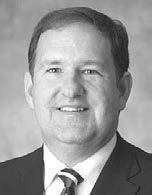
Hoping all is well with you and yours. Elder Services is pleased to announce that we have hired a new Ombudsman Program Supervisor. Carlos Nieto began in his new role in April but did not complete his formal training with the State until June. He is responsible for Elder Services’ Long Term Care Ombudsman Program and for overseeing the volunteers who visit and advocate for nursing home residents. Carlos’ arrival represents a fresh start for the Program and this seems like a wonderful time to revisit the important role Ombudsman volunteers perform advocating for the residents of Berkshire County’s nursing homes.
The word “ombudsman” is not only difficult to pronounce but is also a word whose meaning is not easily understood. The word ombudsman comes from a medieval Swedish word that means representative of the people. Our use of the word describes a volunteer who advocates for the rights of individuals who reside in nursing homes.
In Berkshire County, ombudsman volunteers advocate for the rights of nursing home residents who may not have family or friends who can resolve issues for them. Ombudsmen investigate complaints, report findings, and help find solutions between nursing home residents and the facilities they live in. Maybe Nursing Home Resident Advocate or something similar better describes what an ombudsman does. However, for now the Massachusetts Executive Office of Aging & Independence (AGE) continues using the term ombudsman.
You may remember articles in the Berkshire Eagle highlighting staffing challenges and resident care issues in some Berkshire County nursing homes. This situation first reached crisis levels during the pandemic. Although staffing levels are not as challenging now as they were during the pandemic, they are still an issue and concerns regarding resident safety and care issues continue.
Some nursing home residents are fortunate to have continued on page 5
A tougher gig than you’d imagine: “grandfamily”
by Elder Services Staff
In the U.S., the primary caregiver for more than 2.6 million children is not the child’s parent, but rather a grandparent or other close relative. In Berkshire County, 1 out of every 147 people is a grandparent caring full-time for one or more grandchildren.
What we’re talking about here is not grandparents supplying free after-school or weekend day care (happily or grudgingly) while a parent earns a living. We’re talking grandparents who are the 24/7 legal guardians of a grandchild, grands who are that child’s parents, in every sense but immediate biology.
Where are the actual parents in this scenario? That depends.
Some parents struggle with mental health or substance abuse challenges so severe that a court has found them unfit to care for a child, and assigned legal guardianship to the prior generation for the child’s wellbeing. Some parents have lost their parental rights through a documented history of child abuse. Some are dead, deported, incarcerated or on lengthy military deployment. Some have fled the country for any of a variety of reasons, from reckless romance to evading prosecution. Some just decide they were never made for parenting and hope the grands will do a better job than they can.
Whatever the reason, the result is the same: The grandparents have taken on official full-time parenting duty, which they’ll likely continue for at least as long as it takes the child to turn 18.
While these arrangements have acquired the charmingly cuddly sobriquet of “grandfamily” (or sometimes the more clinical “kinship
family”), they carry all the everyday challenges of any parent-child dynamic – and then pile on yet more troubles unique to grandfamilies.
Grandparents often are retired and living on fixed incomes. Back when they were still working and saving for retirement, grandparents may not have planned for the additional cost of a late-in-life second round of parenting. Keeping the bills paid can be a monthly struggle, so grandfamily households often depend heavily on assistance programs for food and other daily needs.
Add to that the cost of the lawyers. Parents who have lost or abandoned their children often sue to get them back, sometimes on the assumption, right or wrong, that they’ve straightened out their lives and earned a second chance.
Custody arrangements, sometimes temporary by design, may be subject to periodic renegotiation.
Fluctuating marriage statuses, residencies and financial situations, plus vagaries and loopholes in legal guardianship, can pull guardian grands into legal proceedings again and again.
All of that and more leads to lawyers for protecting the child’s best interests, another expense fixed-income older adults are ill-equipped to absorb.
Then there’s the trauma.
A child who has endured losing their natural parents is a child struggling with psychological damage that can last a lifetime. Add to that the inheritable nature of mental illness and addiction vulnerability, and a child living in a grandfamily is likely dealing with emotional turbulence far greater than that faced by kids who have
always known a stable home. Grands in charge, prepared or not, can find themselves in a whirlwind of child behavior issues, therapists and sticky interactions with school counselors and law enforcement – which might lead right back to lawyers.
Parenting is a heavy-enough load when you’re in your 20s and 30s. In your 50s, 60s and 70s, raising a kid – especially one coping with abandonment issues – can be exhausting, frustrating, isolating and costly, no matter how much one loves the child and despite the many aspects one finds emotionally rewarding.
There’s help, if you know where to look.
A good starting place is your friendly local Council on Aging (CoA) or senior center, where you may find a support group at which grandparents raising their grandkids exchange experiences, frustrations and especially tips for making it all work.
Tammy Martin-Bartlett, family partner at Northern Berkshire Community Coalition (nbCC) organizes “Grandparents Raising Grandchildren Coffee Time” at both the Adams and North Adams CoAs.
“We’re just having conversations about what’s going on with them, any challenges they might be experiencing, any resources they might need,” says MartinBartlett, who adds that she sometimes connects grands from the group with services available through nbCC, such as a trained liaison who can help grandparents work productively with a child’s school to resolve behavior or learning issues.
Martin-Bartlett says finding affordable (or even pro bono) legal help comes up often in
these gatherings, not just for custody concerns but also for end-of-life issues – if the guardian grands pass away, who becomes the parent then?
Beyond the support groups at the CoAs, there are many more resources available to make grandparent-parenting a little easier.
• The Massachusetts Commission on the Status of Grandparents Raising Grandchildren website offers information about area support groups, plus links to legal and financial resources. https://massgrg.com
• The Massachusetts Kinship Navigator is a free, statewide program for helping grandparents and other relatives raising children access public assistance, legal guidance and support services by calling (844) 9244546 or emailing kinship. navigator@mass.gov.
• Western Mass support organization 18 Degrees provides “education, parenting skills and support, prevention and intervention, advocacy, and life skills across a spectrum of programs serving children, young people, individuals and families in four areas: early education and care; foster care and adoption; child and family well-being; youth and community development.” https://18degreesma.org
And as with any problem Berkshire older adults face, grandfamily-related or otherwise, you can always pick up the phone, call Elder Services at (413) 499-0524, and tell the trained Information & Referral (I&R) specialist who answers your call about the particular challenge you’re facing. Our I&R specialist will hook you up with help.
A teacher’s in uence lasts a lifetime
by Susan Guererro
A teacher can have a lifelong influence on a student’s life.
Hopefully, the life lessons learned are affirming and positive.
That surely was the case for John Corl, a Pittsfield native who will be 70 in October.
“One of the teachers I really benefited from was Mr. Harrington, an Auto Body teacher at Taconic High School,” John said.
The late William F. Harrington taught Auto Body at both Pittsfield and Taconic High Schools for more than 30 years. The teacher came into John’s life in the early ‘70s when John signed up for Auto Body and scored Mr. Harrington as a teacher for the next three years.
“It was a critical time in my life,” John said, as he was smack in the middle of his teenage years. There were some severe family difficulties going on at home.
Mr. Harrington was very “strait-laced,” John recalled, while John, at that time, was “hippy dippy.”
“My hair was long,” John recalled. “There was a lot of prejudice about long hair but Mr. Harrington didn’t care. I’m sure it was bizarre for him. He had short hair.”
Hair aside, “In a nutshell, what he gave me was selfconfidence and pride,” said John. “I was floundering. He showed me I was capable of learning skills, and he was willing to teach them.”
John said it was very important at that time in his life to have something positive that he could do. He started to really enjoy auto body work. The teacher helped him build a strong work ethic and to have discipline.
“If I skipped a day,” John

said, “the next day he’d say, ‘You weren’t here yesterday.’”
During their senior year at Taconic, Auto Body students were able to work a half-day and come to school for the other half. Thanks to Mr. Harrington’s connections, John got a job at a body shop on West Housatonic Street.
The owner hired him because employers, at that time, trusted Mr. Harrington to recommend his best students, John said.
“That was my first paycheck,” he recalled. “I worked at something I enjoyed.”
One of the best parts of working in an auto body shop at Taconic, John recalled, was spending hundreds of hours of prep time on a 67 Chevy Chevelle John bought with saved money.
“The highlight is the paint job,” he said. “It’s really difficult to spray the car and not get any runs in the paint.”
Mr. Harrington taught John every detail of what to do. “I painted it blue-black, a really dark blue shiny enamel,” John
said. “That thing came out like a mirror from the front to rear bumpers. I was so proud of that car.”
Now retired, John said his former teacher’s leadership gave him lifelong skills and a hard work ethic. “If you were willing to put in the work, he was willing to put the work into you,” John said. “That’s the whole point of being a teacher. I think about him a lot to this day. He was an excellent instructor.”
Helene Keeley, a Massachusetts native who has resided in California for many years, said she had a math teacher by the name of Miss Allgren who affected her entire life.
“Even though math was a dry subject, every day before class, she gave us a little talk on being positive,” Helen said. “She wore a bun, wedgies on her feet and a big flower in her hair.”
Helene said Miss Allgren got up early every day and went for a short walk, taking in flowers, the birds and people walking dogs. That filled her
head with good things nature can provide.
“I was always mesmerized by her never-ending positive attitude, and decided that was for me,” Helene said. “I am now 83, and people tell me that I always seem to make lemonade out of lemons. I thank Miss Allgren for that.” Helene can still picture the teacher to this day, with her bun, her wedgies and especially her beautiful flower.
Barbara Kochapski, who turned 76 on the Fourth of July, said both her third- and fourth-grade teacher, the late Lorraine Skogsberg, a very dignified lady, stands out in her memory as her favorite teacher at Bartlett School.
“She made school so interesting as she had us do projects,” Barb remembered. “When we studied paleontology, we made a gigantic papier-mâché dinosaur!”
For art class, Mrs. Skogsberg invited the famed Norman Rockwell to come to speak to the children, Barb said. He brought along some of his paintings and explained how people in the community were his models.
Mrs. Skogsberg also taught the children proverbs from the Bible, and quotes from famous people.
“A lot of that information made an impact on my everyday living to this day,” said Barb.
If a person has had a teacher who influenced them for the rest of their lives, they have received a great gift. The teaching profession is tough. Very best wishes for this new school year to all teachers, as well as to the precious children they will have in their care.
Long Term Care Ombudsman Program
continued from page 2
families or friends who take an active interest in their well-being and intervene with nursing home administration on their behalf. However, many residents are not as fortunate. They may be unable to advocate for themselves and do not have anyone who will take up their cause. Elder Services Ombudsmen are able to assist in these instances.
Elder Services’ Long Term Care Ombudsman Program’s volunteers are uniquely prepared to advocate for the residents of Berkshire County’s 13 nursing homes. These volunteers are trained and certified by AGE to provide in-person or virtual visits with the residents of their assigned facilities. These visits entail identifying resident issues and concerns, working with the facility’s administration on a resolution
and empowering residents to advocate on their own behalf. We look forward to Carlos beginning to establish relationships with the nursing homes in Berkshire County and promoting this very important program. If you believe you or someone you know should speak with an ombudsman, please call (413) 499-0524.
If you have a passion for serving others and would like to make a difference in the lives of your Berkshire neighbors, please call to learn more about becoming an ombudsman volunteer. With 13 nursing homes there are opportunities throughout the county to advocate for people who could really use your help.
Until next time be good, be kind and be careful.
VOLUNTEERS NEEDED!
Do you look forward to reading Berkshire Senior? Do you have an interest in issues or information that are important to seniors?
We need volunteers who can share their creativity and writing skills to provide input and content to Berkshire Senior. We would love to have you serve on our Editorial Board. We meet every other month remotely for about 45 minutes to decide on the content of the next Berkshire Senior issue.If you are interested in learning more, please contact Ned Averill-Snell at (413) 499-0524 (naverill-snell@esbci.org).
We look forward to hearing from you.






Hello streaming! R.I.P. broadcast TV…
by Perry Burdick
There are two ways to watch television: broadcasting and streaming. Let’s talk about broadcasting first.
As a child, I remember the whole family gathered in the living room, waiting to watch “Happy Days.” My father had already adjusted the rotary antenna, tweaked the fine tuning, and positioned the magic aluminum foil – all for the best possible reception. At precisely 8:00 p.m., the “Happy Days” theme music would start, and we’d watch Potsie tell Richie to “Sit on it!” If you weren’t there on time, you missed it.
With broadcasting, a show is pushed out to an unlimited number of viewers, either over the airwaves or cable, during a specified time. A good analogy is riding a bus: If you’re at the bus stop on time,
you can ride to work. Think of the other bus stops as all the commercials during the show. You have no control over the schedule – you either catch the bus or you don’t.
The advent of the internet introduced a new way to watch TV: streaming. Early experiments began with RealNetworks in 1995. It was audio only, and – because dial-up internet was so slow – very choppy. By 2004, broadband subscriptions had begun outnumbering dial-up subscriptions among home internet users in the US, a rough crossover point that opened the door to new internet applications. YouTube launched in 2005, making realtime video streaming a reality.
The real turning point came in 2007, when Netflix – originally a DVD-by-mail company – added a streaming feature to its service, arguably
kicking off the “streaming era” of TV and movies.
With streaming, the show starts when you want to watch it. A one-to-one connection is established between you and the streaming source, and a flurry of information – called “packets” – carrying the video and audio data flows to your television or computer. Because that information is going to just you, you can pause, play, fast-forward, and rewind without affecting anyone else’s viewing.
Continuing the earlier analogy, streaming is like owning your own car. You can leave for work on your own schedule, stop at the store, rewind back home to grab your wallet, and fast-forward down the highway to make up the time. Pretty convenient.
The ability to stream has created a new pastime: bingewatching, or just “binging.”
It means watching multiple episodes of a show – often an entire season or more –in one sitting or over a short period, instead of watching one episode a week the way broadcast TV traditionally required.
When streaming first started, it seemed like an inexpensive alternative to a cable subscription. Now, I’m not so sure. There are a lot of streaming providers, and each one requires its own subscription – that can add up quickly. Do your own research before taking the plunge.
On Saturday mornings, my brother and I would take turns holding the rabbitears antenna to cut down on the static while watching cartoons. I wouldn’t want to go back to that – but I do reminisce about it fondly. Did the aluminum foil really work?
Survey says… you like us!
SURVEY
HowAreWeDoing
atBerkshireSenior? Here’syourchancetotellushowBerkshireSeniorisdoing rightbyyou,orhowit’snot. Belowyou’ll ndsevenquickmultiple-choicequestions. Pleasecircleyouranswer,andusethespacesprovidedtotell usmore,ifyouwantto.Wewanttohearyourthoughts! (Ifyou’dprefernottomailyourresponses,usetheQRcodeto therighttoopenanonlineversionofthissurvey.) When ElderServicesofBerkshireCountynished,foldthispageintoanenvelopeandmailto: Pitts73SouthChurchStreet Attn:surveyeld,MA01201
by Elder Services Staff
In the April/May issue of Berkshire Senior, we featured a short survey for you to fill out online or tear out and mail back to us. Responses have trickled in over the past few months, and now seemed like a good time to report what you told us.
Full disclosure: We heard from only 14 of you. We’re really happy to know how those 14 readers feel about what we could be doing better, and what we do well now.
But obviously, 14 readers does not give us a statistically significant sample from which to draw broad conclusions about how we’re doing. We look at these results as a keyhole view of a much bigger picture we can’t quite see yet.
Disclosure made, here’s what you told us:
Eleven of you said we’re covering topics you find interesting and useful. Three said we were “kinda” hitting that target. None of you said we were missing the mark entirely.
Regarding our recent redesign – bigger type, smaller





page – 12 of you like the new look, and two of you didn’t notice the changes. None of you said you didn’t like the changes, so we’re calling that a win.
Twelve of you said you read every issue of Berkshire Senior when it comes out every other month. Two of you read us only now and then.

1.Arewecoveringthetopicsyou ndmostinteresting and/oruseful? Yesindeed! Kinda. Notreally.
Anytopic(s)you’dliketoseemoreof?Anyyou’dprefernot toseeagain?Tellusbelow.
_________________________________________________ _________________________________________________ _________________________________________________
2.Lastissue,weredesignedBerkshireSenior,giving itasmallerformfactortomakeiteasiertohold,and increasingthefontsizetomakeiteasiertoread.What doyouthinkofthesechanges? Ilikeitbetternow. Ilikeditbetterbeforethechanges. Ididn’tnoticethechanges.
3.HowoftendoyoureadBerkshireSenior? Everyissue. Nowandthen. Rarely.
Thirteen of you read us in print, while just one of you reported reading us online.

Every respondent agrees, all 14 of you, that Berkshire Senior keeps you well informed about programs and services offered by Elder Services. A sweep!
Nine of you said your age was 75 or older. Five said you were 60-75 years old. None of those responding was younger than 60.
Of those who read us in print (not online), 11 get us in their Saturday Berkshire Eagle, and four get us somewhere else, such as the free literature rack at the

















4.WheredoyoumostoftenreadBerkshireSenior? Inprint. Online.

5.DoyoufeelthatreadingBerkshireSeniorhasmade youbetterinformedaboutElderServices’programs andservices? Yes. No. Notsure.
6.Whatisyourage? Under60. 60-75. 75+.



7.IfyoureadBerkshireSeniorinprint,wheredoyou getit? InaSaturdayprinteditionofTheBerkshireEagle. Atmyseniorcenter/COA. Other?Pleasetelluswhere:______________________ Anythingelseyou’dliketoshare?Jotusanotebelow.And thanksforyourinput!

This wasn’t a survey question, but just FYI, 11 of you mailed in your survey responses while only three of you used the provided QR code to complete the survey online. Small sample notwithstanding, it seems likely that the Berkshire Senior readership is more fond of paper than bits and bytes. Or you just like licking stamps.
So there you have it. If we could call these results scientifically meaningful (and again, we can’t – but they’re



still interesting), most of you think we’re doing pretty good down here in the Berkshire Senior boiler room.
We’ll take whatever we can from what you told us and keep trying to put out a Berkshire Senior that gives you information you find interesting and useful. And maybe in a year or two, we’ll do another survey and see if anything has changed.
Thanks for playing!
A memorable Pitts eld Juneteenth
by Peggy Zamierowski
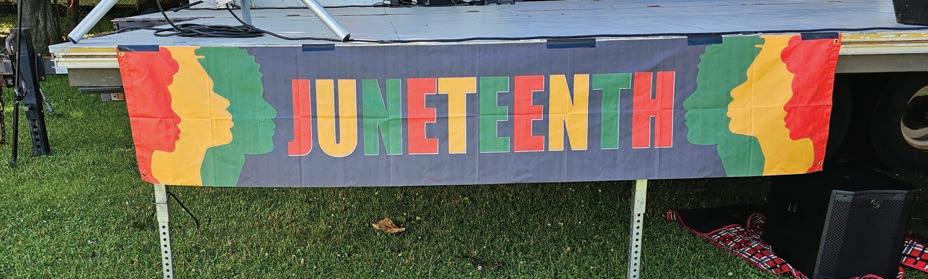
Elder Services joined the festivities at Durant Park in Pittsfield to celebrate Juneteenth on Sunday, June 21 – a couple days past Juneteenth’s official date of June 19, but coinciding with Father’s Day so the city could enjoy a Sunday twofer and not see Juneteenth buried under a Friday workday.
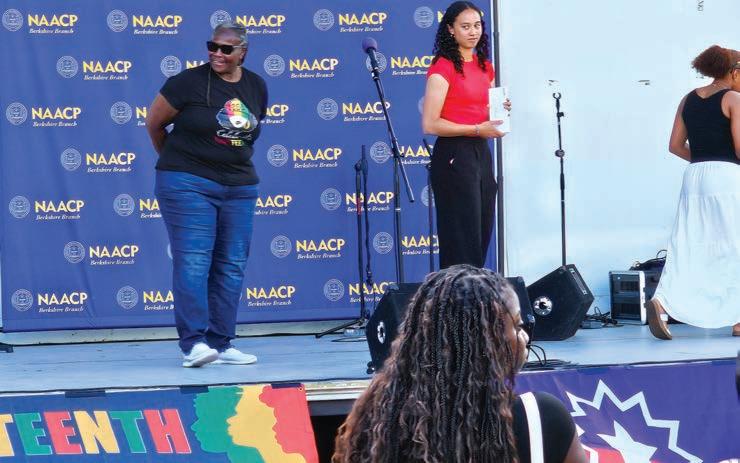
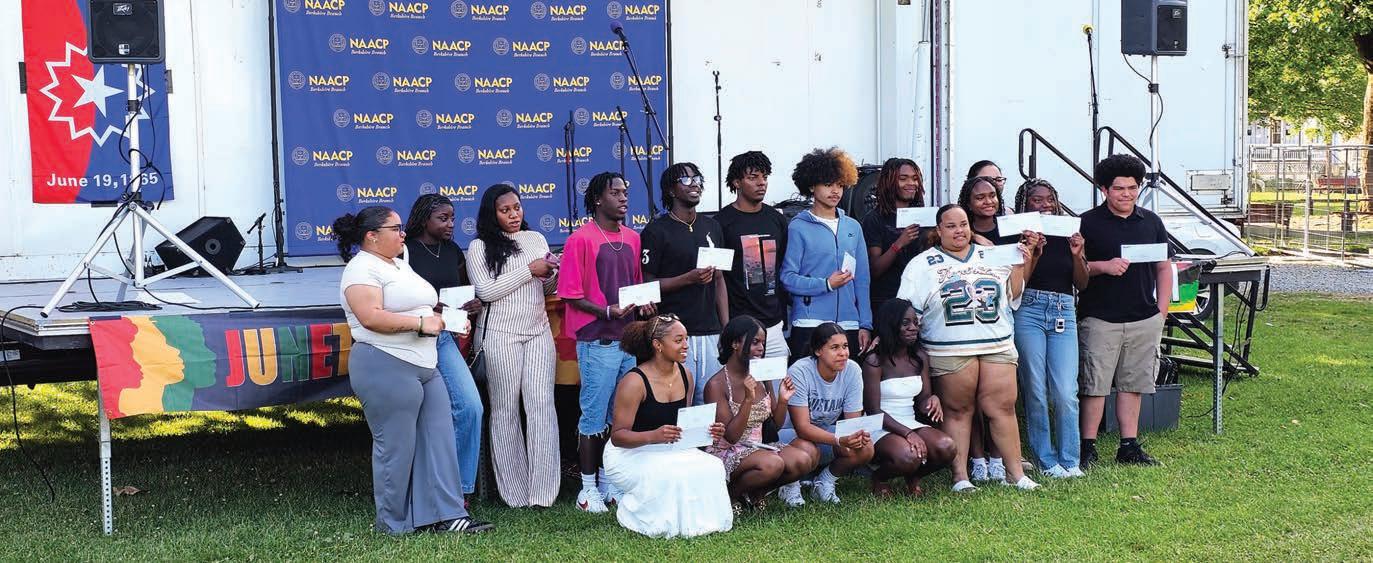
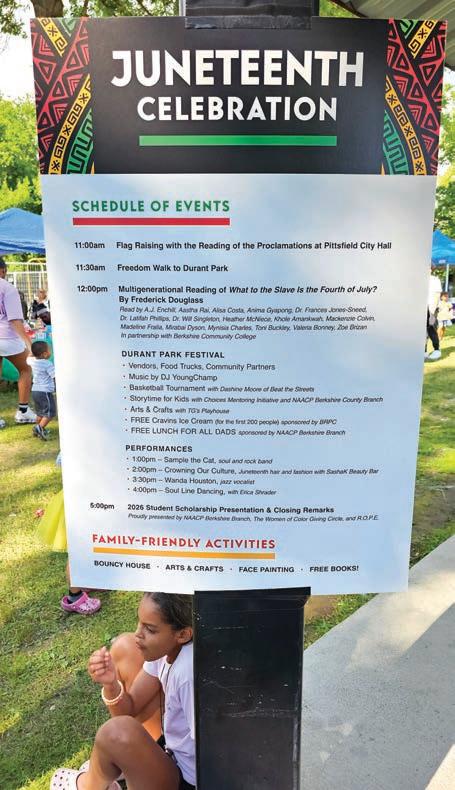
Sponsored by the NAACP Berkshire Branch and other area organizations such as the Berkshire Black Economic Council and the William Morris House, the Juneteenth observance featured a multigenerational reading of Frederick Douglass’ “What to the Slave is the Fourth of July?”
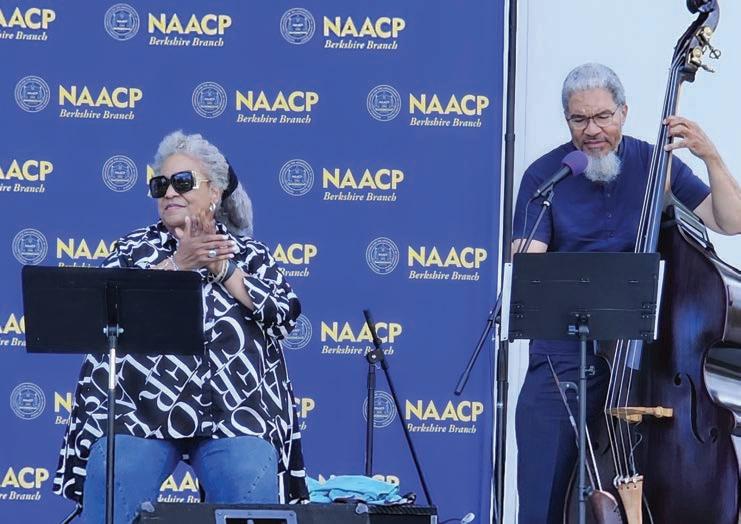
The festivities also included booths with local vendors, musical performances, line dancing, a fashion show, and the presentation of scholarships to area high school seniors embarking on college careers. The scholarship program, offered every year, is also sponsored by The Women of Color Giving Circle and The Rites of Passage and Empowerment Program (R.O.P.E.).
Folks in attendance reflected on the historical context of the holiday, and on what has changed in society’s outlook on civil rights during their lifetimes.
Also known as Emancipation Day, Freedom Day, Jubilee Day, Juneteenth Independence Day and Black Independence Day, Juneteenth commemorates the end of slavery in the United States. On June 19, 1865, Major General Gordon Granger arrived in Galveston, Texas, to announce the end of the Civil War and the end of slavery to the final town that had yet to be formally notified.
Juneteenth became a symbolic date representing African American freedom, and was enshrined as the 11th U.S. Federal holiday on June 17, 2021. Juneteenth National Independence Day was the first new holiday added to our Federal holidays slate since the Rev. Dr. Martin Luther King, Jr.’s birthday made the list in 1983.
As we celebrate the 250th anniversary of our nation’s independence this year, Juneteenth is a testament to and a reminder of how long it took for all Americans to become free at last. This year marks the 161st anniversary of belatedly including formerly enslaved Americans in the founding fathers in the vow, “We hold these truths to be self-evident, that all men are created equal.”
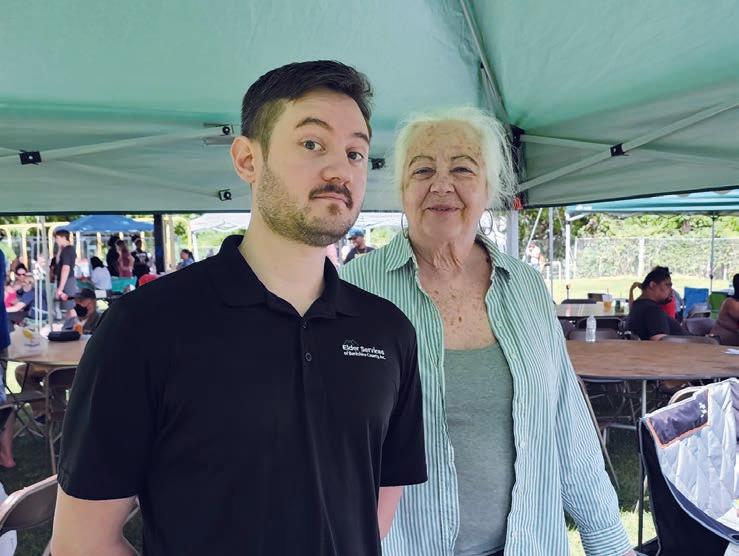
Issac Share and Peggy Zamierowski, hosting the Elder Services booth
NAACP scholarship presentation
Famed Gospel singer Wanda Houston



Schedule of events

NAACP of the Berkshires scholarship recipients
73 South Church St., Pitts eld, MA 01201
Telephone (413) 499-0524 or 1-800-544-5242
Fax (413) 442-6443
Email esbci@esbci.org
Dear Friend of Elder Services:
Nobody likes asking for money. Or to be asked. But the older adult population in Berkshire County finds itself caught in a squeeze play.
We are watching a steady upturn in the number we serve while also watching a downturn in the funding available to serve that population.
By now you are likely to be aware of such struggles as the state budget shortfall for home care services, and of the effects federal cuts to Medicaid and federal programs are likely to have on our consumers.
As we work on overcoming these challenges, we have just met a new one – the Commonwealth has updated the methodology which measures the older adult populations of Massachusetts counties. The details of that change are a little hard to explain, but the result is simple: Despite the number of Berkshire County older adults increasing per the most recent census, our federal funding will decrease since Berkshire County’s weighted average percentage of older adults has fallen in relation to that in the rest of the Commonwealth.
Elder Services also anticipates likely reductions in state funding for a number of essential programs. State funding represents a far larger percentage of our funding than federal funding does.
Your financial support is crucial to helping Elder Services continue its mission of empowering Berkshire older adults to live independently in the home of their choice, now more than ever. Here are the ways you can help:
• Send your check in the enclosed envelope.
• Call the Elder Services’ Fiscal Department at (413) 499-0524.
• Visit www.esbci.org for an online donation form.
• Call Elder Services at (413) 499-0524 to learn about volunteering. There are many opportunities for you to volunteer in a way that works for you and helps enrich the lives of Berkshire seniors!
Thank you in advance for your gift.
Sincerely,
Barry Kriesberg
Barry Kriesberg President, Board of Directors
McLaughlin
Christopher McLaughlin Executive Director
Christopher

Medicare Open Enrollment is nigh!
by Jonna Haskell, SHINE program supervisor
Medicare Open Enrollment will be here before we know it. The annual Medicare Open Enrollment dates are October 15 through December 7. While October is a bit away, now is a great time for beneficiaries to think about reviewing their choices or making changes to their current coverage.
The annual enrollment period provides Medicare beneficiaries with the opportunity to re-evaluate their Part C (Medicare Advantage Plan) and Part D (Prescription Drug Plan), to find out if you may want to add, drop or switch coverage to another plan that better suits
your needs and budget and ensures appropriate coverage for the upcoming year.
Open Enrollment is important because…
• your health needs can change from year to year
• health or drug plans can change their costs, benefits and the drug coverage they offer each year
• providers can change their contracts annually
To best prepare for Open Enrollment:
• Review the Annual Notice of Change letter you’ll receive in September and note any changes that are going to be made for the upcoming year.
• Reflect on your health and medical needs over the past year, and try to anticipate needs for the upcoming year.
• Research the TOTAL costs involved when comparing plans. This should include the premiums, copays and deductibles. For example, a plan with a low-cost premium might have a large deductible for certain services.
• Contact your providers and confirm they are in-network before making changes to your coverage that might force you to change doctors, therapists or facilities. And always remember: Medicare beneficiaries can make an appointment year
‘round with the SHINE program.
SHINE counselors help with knowing whom to contact for enrolling in Medicare, evaluating coverage for existing beneficiaries, making changes and screening for insurance-related public benefits. The SHINE program is free: There’s no eligibility criteria and no cost to make an appointment.
Mark your calendars now for Medicare Open Enrollment, October 15 through December 7. And if you would like to set up an appointment with one of our SHINE counselors, please call Elder Services at 413-499-0524 and ask for SHINE.
Disasters happen – for peace of mind, prepare now
by Bradley Davis
When disasters occur – fires, floods, storms, earthquakes –older adults often face physical and operational challenges coming through such events safe and sound.
Issues with mobility, vision and hearing can delay response times during evacuations, and chronic health conditions and reliance on medical equipment amplify risk when utilities such as electricity or water fail.
Preparing for such emergencies begins with an honest evaluation of an older adult’s everyday medical and mobility needs. Caregivers must account for daily prescription regimens, mobility aids, and specialized dietary requirements. Healthcare experts emphasize evaluating medical dependence and physical limitations well before any severe weather or other warning is issued.
First preparation steps include:
• Maintaining a minimum two-week supply of prescription medications
• Keeping copies of insurance cards and doctor lists in a waterproof pouch
• Labeling all mobility equipment, such as canes and wheelchairs, with personal contact details
• Stocking extra batteries or secondary power sources for essential medical devices, such as CPAP machines
Creating an emergency supply kit is crucial for both sheltering in place and rapid
evacuation. A well-constructed kit contains items that sustain health and communication for several days.
Supplies should be organized into lightweight, easily transportable containers with wheels. Include a flashlight, portable radio, first aid kit, bottled water and non-perishable food in your kit to handle unexpected power disruptions or prolonged isolation. Ideally, no older adult would navigate a disaster in complete isolation. Building a dependable local support network of neighbors, nearby relatives and community members creates a vital safety net. Network members should hold spare house keys, understand where emergency kits are stored, and know how to operate necessary medical devices. First steps:
• Identifying at least three reliable people living nearby who agree to check in during emergencies
• Sharing copies of emergency exit plans and medical summary sheets with designated contacts
• Establishing a check-in phone chain or messaging protocol
• Making a practice of informing support contacts when traveling away from home for long periods
If you want to take preparedness to the next level, consider building a “preparedness protocol.”
These involve phases based on national emergency management standards: Phase 1: Risk Assessment
and Hazard Identification
Identify regional threats such as floods or blizzards alongside internal household hazards like blocked exit pathways.
Phase 2: Essential Supply Standardization
Gather, organize, and inspect emergency food, water, medical items, and personal documentation, ensuring all perishable goods are rotated bi-annually.
Phase 3: Evacuation Route
Verification
Map out multiple exit routes from every room, paying close attention to wheelchair accessibility.
Phase 4: Network Synchronization
Working with family, practice evacuation procedures and verify emergency contact lists and local alert subscriptions twice a year.
Among the many disasters that can happen, house fires pose a unique threat requiring rapid action steps. To make sure you’re well prepared for a fire:
• Test all smoke detectors monthly and replace batteries once every year.
• Clear all hallways, doorways and stairwells of clutter and furniture obstructions.
• Install multipurpose fire extinguishers in kitchen and bedroom areas.
• If you think a fire may have started, feel interior doors with the back of your hand before opening.
• Identify a designated outside meeting location a safe
distance from the home.
• Review and update emergency supply kits and medical documentation every six months to replace expiring items.
Family members can help you prepare by walking through the home to map accessible exits and organizing a portable “go-bag.”
Many municipalities offer emergency special needs registries that provide shelter assistance and medical power support during public evacuations. Check with your local city/town hall about registering.
If a fire happens, stay low while exiting along your preplanned exit route, and then call emergency services only once you are safely outside.
Preparing for unexpected emergencies is one of the most effective ways to protect health, independence and peace of mind. By assessing medical needs, assembling survival supplies, and building reliable community networks, older adults and their loved ones can face potential disasters with confidence.
Bradley Davis is the creator of DisasterWeb.net, a site dedicated to emergency planning for natural disasters. A former firefighter, he now shares practical disaster preparedness resources and safety planning guidance for businesses, organizations, and communities.
Thank You to Our Donors:
The following donations were received between May 1, 2026 and June 30, 2026. Donations received after June 30, 2026 will appear in the next issue of Berkshire Senior. Please know that if you checked Do Not Acknowledge on our mailing return envelopes your name will not appear on this list.
Elder Independence Donations
Richard Nichols
Cynthia Eksuzian
Alexander and Judith Nardacci
James and Carol Edelman
Virginia Giddens
Linda Vanjura
Robert and Georgiana Bartini
Daniel Peterson
Louise Frankenberg
Janice Uliasz
SHINE Donations
Cynthia Armstrong
John and Deborah De
Forest
Volunteer Driver Program
James Kane
General Donations
John Bissell
Ben and JoAnne
Ginsberg
Lawrence Spatz
Andrew Sakowicz
Meals on Wheels
Donations
Alice Rose
Memorial Donations
In Memory of: Mary Nicholls
Joey and Lorraine
Scapin
In Memory of: Michael
Armstrong
Edward and Robin Lane
In Memory of: Joseph Tirell
William Flynn
William Toohey
In Memory of: Angela
Hayes
Robert and Diane McCluskey
In Memory of: Eileen
Murphy
Kathleen Clarke
In Memory of: Annie, Oz, Jack and Elvis
Nancy Stuart
In Memory of: William Broderick
Katherine Broderick
In Memory of: Tom Arsenault
Roger Bowlby
In Memory of: Marcel Rajotte
Roger Bowlby
In Memory of: Marlene
Kirchner
Amanda Elliot
Robert and Mary Ann
Engle
Gary Chisholm
Stanley & Lorie Slonski
David Piacenti
In Memory of: Elinor E. Long
Nicholas Kirchner
In Memory of: Lucy
Cuddihy
Virginia & Gerald Coppola
Karyn Barbalunga
NALC Branch 286
Peter & Joanne Rowett
Caryl and Heather
Tuggey
Alan and Deborah
Bianchi
Lorraine Faucher
Celeste and Kim Morton
In Memory of: Leon M. Bourquard
Anthony & Marjorie
Consolini
Est.1931
CompleteServiceof Monuments&Markers




100WahconahSt. Pitts eld,MA01201 (413)442-4149
DonnaBrewer,Owner
StevenJBrewer,Director

Getting around the county is easier than you think

by Elder Services Staff
Growing older often brings along a maddening double whammy: You eventually stop driving (or at least stop driving any farther than the supermarket), but you still have to show up for some things in person: doctor’s visits, physical therapy, hair appointments, chair yoga, choir practice….
Delivery services help, carrying prescriptions, groceries and sundries right to your door. But situations remain wherein you have no choice but to pick up your whole body and take it someplace.
Berkshire is a big county.
At 946 square miles, it’s the second largest in Massachusetts. And with barely 130,000 people, Berkshire spreads its goods and services far and wide among its 32 cities and towns. Your appointment could be next door or 50 miles away, anywhere within a huge region beset by scant, hit-ormiss public transportation.
There’s no one-vehicle-fitsall solution to getting around Berkshire County without driving. But there’s a myriad of options that, taken together, form a transportation network that can usually get you anywhere you need to go. The
trick is understanding the full array of options, planning ahead, and knowing where to call – which sometimes depends on where you’re headed.
Of course, the easy answer for the “where to call” part is to ring Elder Services at (413) 499-0524. The phones here are picked up by trained, certified Information & Referral (I&R) specialists who know Berkshire transportation options back to front – and also have access to our very own Elder Services volunteer drivers.
Just call Elder Services, say where you need to go and when, and our I&R staff will
help you set up a ride. But don’t wait ‘til the last minute – sometimes putting a transportation plan into play takes a few days, and services fill up fast with bookings. If you know you’ll need a ride, it’s best to reach out to Elder Services as soon as you know where you’re going and when you need to get there.
Another option is to call your friendly neighborhood Council on Aging (CoA) or senior center. Many CoAs operate their very own car or van, or run a dedicated volunteer ride service, to ferry local seniors hither and yon. Again, these services tend to fill up fast, so call
ASAP. (Farther down in this article, you’ll find a list of CoAs offering ride services. If you don’t see your local CoA on the list, call them anyway – new options debut often, and you never know ‘til you ask.)
But if you’re the type who likes to oil your own squeaky door, grow your own sourdough starter and polish your own silver, then you probably want to know exactly where all the transportation options are, and how to reach them. As the Burger King used to say, have it your way. A directory follows.
Note that fees for these services vary: A few are free, and most others charge only a modest fare. Make sure to ask about cost – including any available discounts for seniors or persons with disabilities –before booking the ride.
As you’ll see, some services cover only certain regions, or travel only to certain kinds of destinations (such as medical appointments), or they serve only certain populations (such as veterans or cancer patients).
So read carefully. And when in doubt… just call us.
CoA Transportation Services
Adams (413) 743-8333
Cheshire (413) 446-2559
North Adams (413) 662-3125
Williamstown (413) 458-8250
Dalton (413) 684-2000
Lanesborough (413) 448-2682
Hinsdale/Peru (413) 296-4232
Pittsfield (413) 499-9346
Richmond (413) 698-3656
Lee (413) 243-5545
Lenox (413) 637-5535
Mt. Washington (413) 528-3998
Otis (413) 269-0100
Countywide Options
American Cancer Society, Berkshire Unit www.cancer.org (800) 227-2345
The American Cancer Society Road to Recovery
Program provides transportation by volunteer drivers for cancer patients to medical appointments related to their diagnosis. Patients must be ambulatory, and 48 hours advance notice is recommended.
Veterans Transportation
www.veteranfamilyrides.com (413) 418-4300 or (855) 483-8743
The Veterans & Families Transportation Call Center coordinates transportation services for military veterans and their families, including to Pittsfield’s VA clinic and VA facilities in Leeds and Albany. The service connects local vets to the VA shuttle in Leeds that then provides transportation to outlying veterans’ facilities.
RSVP (Retired Senior Volunteer Program) www.cityofpittsfield.org (413) 395-0109
Free “Wheels for Wellness” ride service for all-age Berkshire County residents who need transportation to wellness-related activities, including medical and social services appointments, fitness classes, therapy, and vaccinations. Riders must be fully ambulatory and able to get themselves in and out of the vehicle without assistance.
Ride Match
www.massridematch.org
A regional online directory of transportation options (private, public, and nonprofit) for seniors, people with disabilities or anyone needing to travel in Massachusetts. The Ride Match website features a simple search interface that allows users to type in their origin and destination, time and day of travel, and other specific information about their trip, and returns a list of available transportation options.
Berkshire Regional Transit Authority (BRTA) www.berkshirerta.com
The BRTA offers a fixed-
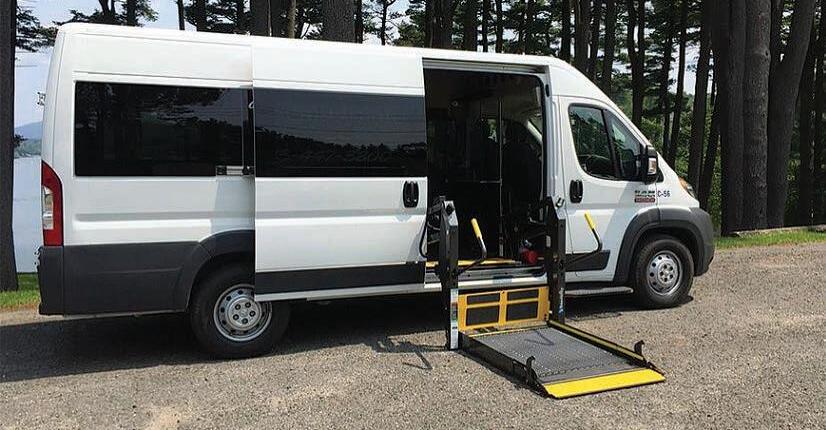
route bus service as well as subsidies for ambulatory van and chaircar door-todoor services. Every BRTA bus is accessible to persons with disabilities and has a wheelchair lift or ramp. Persons who are mobility impaired may be entitled to pay half fare, as are persons 60 years or older. For bus schedule information call (413) 499BRTA. In addition to its regular bus routes, BRTA provides paratransit services for the disabled via ambulatory van or chaircar during the times the fixed route bus operates. Fare information and the paratransit application are available on the BRTA website. For eligibility questions, call (413) 499-2782 and select option 4.
Cabulance/Wheelchair Van/Ambulance Companies
Northern Berkshire Transport (413) 664-6680, (413) 458-4889
Cabulance (413) 447-3800
County Ambulance & Chaircar Service (413) 4992527
North County
Berkshire Medical Center (413)-499-2527
North County residents may receive free transportation to Berkshire Medical Center, the Medical Arts Building and Hillcrest Cancer Center, provided by BMC through County Ambulance.
Central County
AdLib www.adlibcil.org (413) 442-7047
Accessible van transportation available to disabled persons for nonmedical needs, such as trips to the bank and grocery shopping.
South County
South County Connector www.socoride.org (413) 591-3826
Provides a ride to almost everywhere in and near
Stockbridge, West Stockbridge, Great Barrington, Egremont, Monterey and Sheffield. Rides can be scheduled for anytime during the hours of operation, but you must call to schedule your ride Monday-Friday only, between 8 am and 4 pm. Seniors may purchase a discounted book of tickets for ten one-way rides at the Claire Teague Senior Center in Great Barrington. There is limited service to Canaan, CT and (seniors and persons with disabilities only) New Marlborough and Pittsfield.
Taxis
Tunnel City Taxi (413) 663-8294
Lenox Taxi (413) 841-0445
Rainbow Taxi (413) 499-4300
O.T.T. Taxi (413) 663-3838




BERKSHIRE COUNTY LEGISLATORS
UNITED STATES CONGRESS
Congressman Richard Neal
372 Cannon House O ce Building
Washington, D.C. 20515 (202) 225-5601
300 State Street, Suite 200 Springfield, MA 01105-1711 (413) 785-0325
Rep. Leigh Davis
Rep. Tricia Farley-Bouvier
24 Beacon Street, Room 274
Boston, MA 02133 (617) 722-2676
District O ce: (413) 442-4300
Tricia.farley-bouvier@mahouse.gov
Sen. Paul Mark
24 Beacon Street, Room 504
Boston, MA 02133 (617) 722-1625


24 Beacon Street, Room 134 Boston, MA 02133 (617) 722-2400 ext. 307
District O ce: (413) 854-4623
Leigh.Davis@mahouse.gov
Rep. John Barrett, III
24 Beacon Street, Room 277 Boston, MA 02133 (617) 722- 2012
District O ce: (413) 743-8300
John.barrett@mahouse.gov
District O ce: (413) 464-5635
Paul.mark@masenate.gov
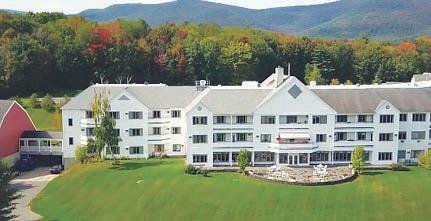
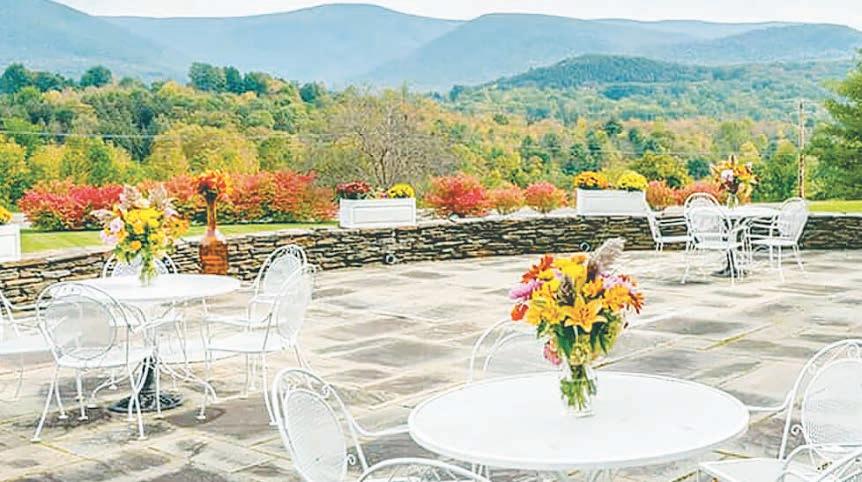
Ourcommunityisadestinationforthoseseekingafulfillingand worry-freelifestyle.AtSweetwood,seniorslivingindependently discoverarangeofamenitiesdesignedtoenrichtheireveryday experiences.Ourcommitmentextendsbeyondjusto eringa placetolive—weprovideanunwaveringdedicationtowell-being.
September is World Alzheimer’s Month
by Kara Graziola
Nearly 7 million people worldwide are diagnosed with Alzheimer’s disease every year. September is World Alzheimer’s Month, a global initiative helping to raise awareness and support the millions with Alzheimer’s and other forms of dementia.
Alzheimer’s is a progressive, irreversible brain disorder that slowly destroys memory and the ability to carry out simple, everyday tasks.
Early signs and symptoms of Alzheimer’s include memory loss, difficulty completing tasks, difficulty speaking or writing, withdrawal from activities you used to enjoy and changes in mood and behavior.
While there is no cure today for Alzheimer’s, ongoing research and new medications are showing promise with managing the progression of the disease and alleviating some of the more severe symptoms. I-V infusion treatments are some of the latest treatments that help slow the progression of the disease, but they do not cure or prevent Alzheimer’s.
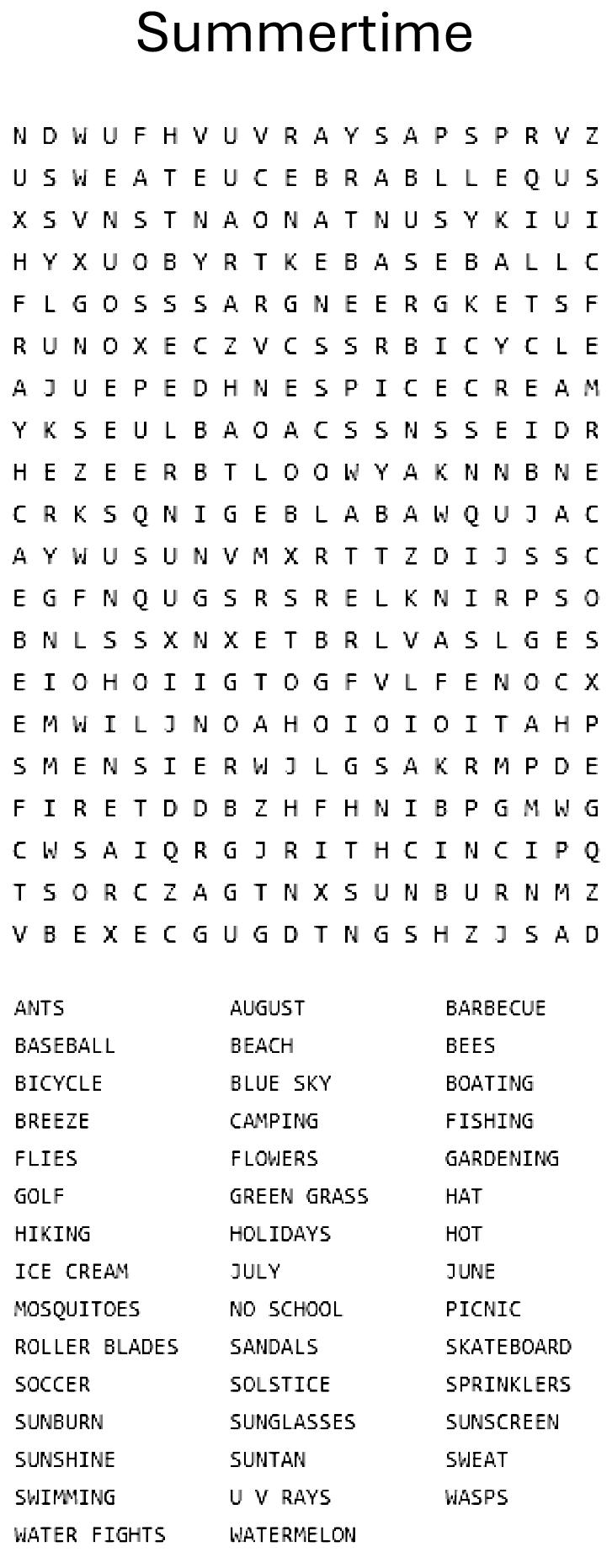
Other ways to manage symptoms and improve quality of life in those with Alzheimer’s include increasing exercise, eating a well-balanced diet, engaging in cognitive exercises such as word puzzles and word searches, receiving occupational therapy, and attending counseling and support groups.
The exact cause of Alzheimer’s is still unknown, but there are known factors that play a role in why someone develops Alzheimer’s or dementia. A family history of dementia and the presence of certain genes,

being over the age of 65, diabetes, high blood pressure, obesity, smoking and living a sedentary lifestyle have all been shown to increase the likelihood of a person developing dementia.
If you have been diagnosed with Alzheimer’s or another form of dementia, or if you believe you are at high risk for developing a form of dementia (because of family history, for example), consider participating in clinical trials for new diagnosis methods or treatments. Finding individuals to help with these trials is a huge barrier to moving Alzheimer’s research forward.
Even if you’re healthy, volunteering to assist with a study can be a big help. Visit www.alzheimers.gov for information on clinical trials.
Contacting local elected officials and advocating for funding is another way to
make a difference. Increasing funding can help support research, caregiver assistance and further help with treatment and early detection of Alzheimer’s.
Show support at events like the yearly Walk to End Alzheimer’s. The walk is held in over 600 communities and is the world’s largest event for Alzheimer’s care, research and support.
The Berkshire County Walk to End Alzheimer’s will be held this year on Saturday, October 17, 2026 at Lilac Park in Lenox. Consider donating to this year’s walk, or stop by Lilac Park to see firsthand what your local community is doing to fire up the fight against Alzheimer’s.
If you are currently diagnosed with or caring for someone with Alzheimer’s or dementia, there is support for you.
Elder Services of Berkshire County’s Family Caregiver Support Program offers support, support groups, information, resources and education; to learn more, visit our website www.esbci. org or call 413-499-0524. Elder Services also offers home care programs, volunteer services, home delivered meals, options counseling and SHINE (Serving Health Insurance Needs of Everyone) programs that can help. Additional information and resources can be found on the Alzheimer’s Association’s website, www.alz.org, and from the Berkshire Alzheimer’s Partnership at www.berkshirealz.org.
With continued research, support and advocacy, one day a cure for Alzheimer’s will emerge. It’s just a matter of time.

BERKSHIRE COUNTY
Elder Services of Berkshire County, Inc.
NUTRITION PROGRAM
SENIOR COMMUNITY DINING CENTERS
The status and o erings of the Senior Community Dining Centers are likely to evolve. Please call for the latest update.
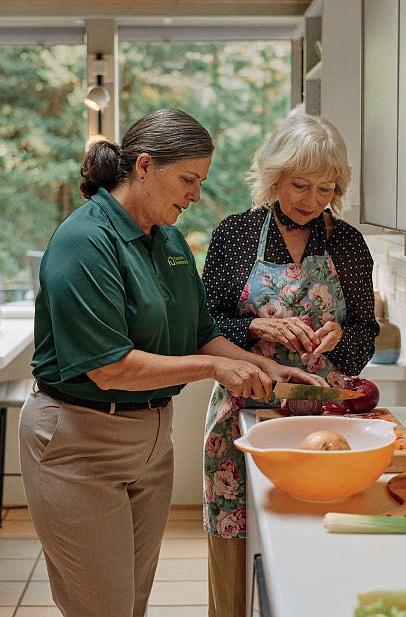
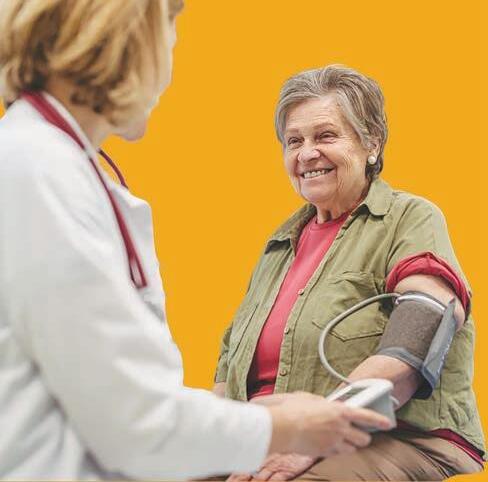
Eligible seniors 60 years or older are welcome to attend any Senior Meal Site. Reservations are requested 24 hours in advance. The suggested donation is $3.00 per meal. All contributions are returned to the community toward the cost of the Senior Nutrition Program. Those 59 or under are welcome at the required fee of $8.00 per meal.