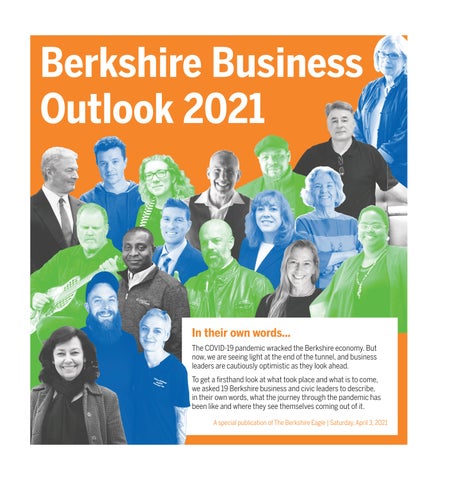
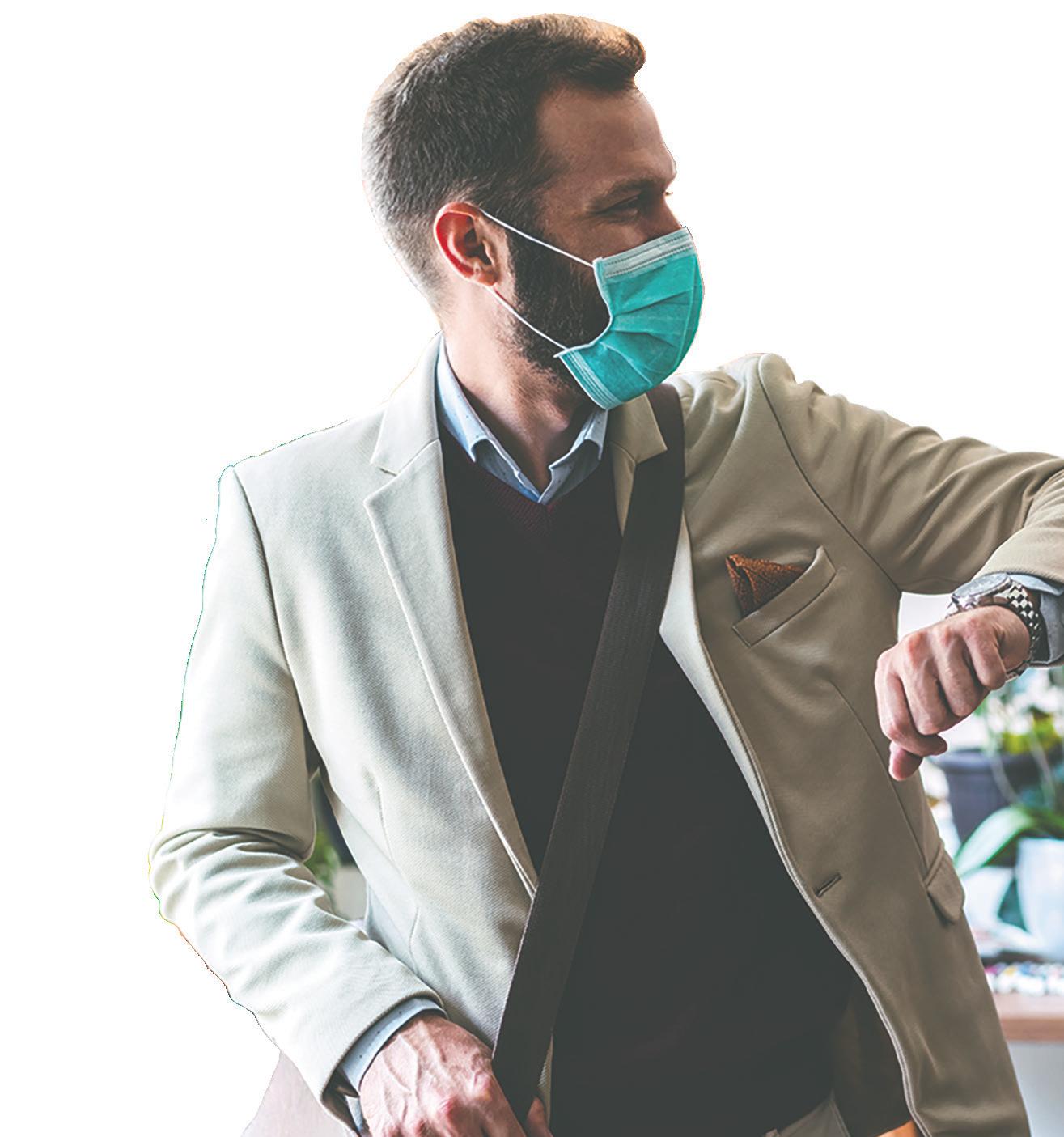
The COVID-19 pandemic wracked the Berkshire economy. But now, we are seeing light at the end of the tunnel, and business leaders are cautiously optimistic as they look ahead.
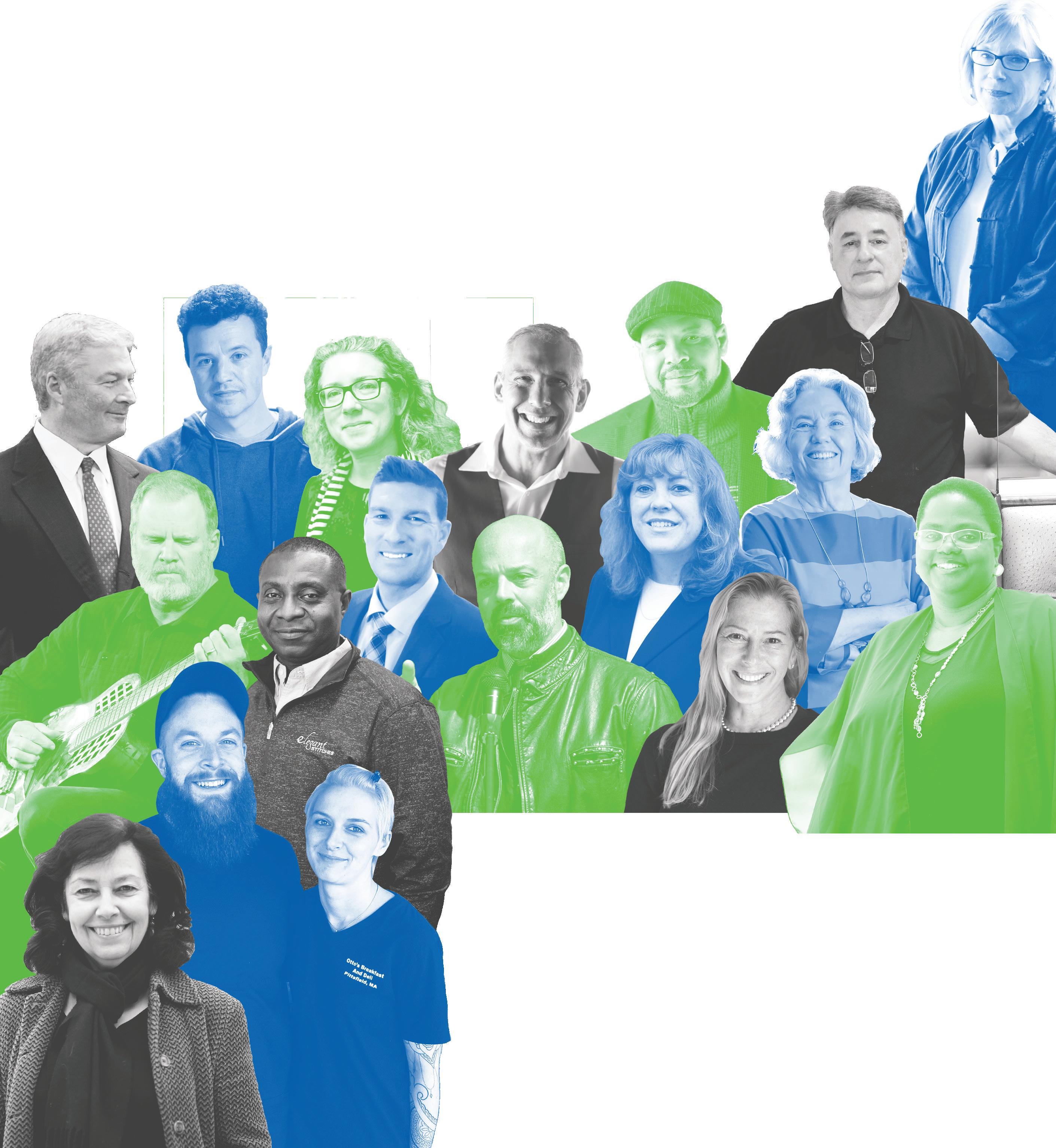
To get a firsthand look at what took place and what is to come, we asked 19 Berkshire business and civic leaders to describe, in their own words, what the journey through the pandemic has been like and where they see themselves coming out of it.
A special publication of The Berkshire Eagle | Saturday, April 3, 2021
Preparing for a tidal wave of pent-up demand
About: Main Street Hospitality, based in Stockbridge, owns, operates and/ or manages hotels and restaurants in the Berkshires and beyond. Its portfolio includes the Red Lion Inn in Stockbridge and The Porches Inn at The Massachusetts Museum of Contemporary Art in North Adams.
By Sarah EuStiS CEO, Main Street Hospitality Group
On March 17, 2020, I sent the list below to our teams at Main Street Hospitality, expressing to them the reasons why we would survive and thrive through and after the pandemic. We kept this list posted everywhere to give us courage and confidence in the future, after the world had turned upside down. The list:
• Our properties are special. They have roots. Our guests and community have deep connections to them.
• We have a smart, capable, dedicated, energized team of people who want to succeed
• Our mission “to create places that enable people to connect in meaningful ways” will be even more relevant as we emerge from this into a changed world.
• We are learning how to work differently, to focus on the essentials and to do more with less. This will serve us well.
• Our new property developments are forging ahead. They will open into a different context, but provide us the opportunity to apply everything we’ve learned during this period.
• All of our properties are in driveable markets, surrounded by natural beauty and alternativedemand drivers. We will be able to rebound faster than other areas.
• We have strong partners in all of our hotels/projects, an advisory board that is pulling for us, and a large network of people who are supporting our success.
Like many, we lost much in 2020. There has been a gift in these losses, though. This incredibly daunting year has given us invaluable recommitment to our core values and deeper knowledge of the breadth and depth of our teams’ strengths and resourcefulness that we may not have discovered without the crisis. Our long-held values:
• We are kind to one another.
• We act with integrity.
• We take responsibility for our actions.
Each phase of the pandemic has been different, but we would not have been able to navigate any of them without our community, our guests, our remarkable staff, our lenders, advisers and support network.
The first few months were marked with proactive but tough decisions. Early state restrictions required unprecedented closures and furloughs. It is unquestionably the hardest thing we have had to do in the history of our companies.
A visual guide to how we navigated the first six weeks of the pandemic in 2020: We were closed for almost 12 weeks.
Yet, out of this challenge, our teams showed up. The skeleton crew that remained during these early days worked to ensure many of our staff could return as business began to reopen. Our kitchens pivoted to sup ply our communities with comforting take out options. We used the closures as an opportunity to deep clean and take on projects that would be chal lenging during regular business. We worked remotely, leveraging new tools to communicate and collaborate.
As restrictions began to lift, we en gaged third parties to train returning staff on heightened safety measures. We engaged a COVID Compliance Officer to help advise and guide us. Hand sanitizer found a place next to the daisies in the Red Lion Inn
lobby and our frontline staff became masters at making their welcoming smiles be felt through their masks.
Summer and fall gave some respite, as the lure of the Berkshires’ open spaces brought many regional visitors to safely enjoy our properties. As we shifted into the colder months and outdoor congregation became less viable, we were again challenged to reexamine how we can deliver our distinctive, personal level of hospitality while keeping our staff and guests safe.
We saw a much more abbreviated booking window, but guests continued to come. For the first time in its multi century existence we enclosed the front porch of The Red Lion Inn, again answering the question of what is central to the spirit of a property
Berkshire culturals are committing to reopening (even on an abbreviated schedule), we are preparing for the release of a tidal wave of pent-up demand. This means continuing important safety measures, while preparing both our indoor and outdoor spaces to welcome new and return guests.
Although we do not expect a return to pre-COVID numbers this year, we are seeing encouraging signals: New guests who came during 2020 for respite are returning again and again, many are moving to the Berkshires to evolve their lifestyles in the postCOVID world. Celebrations and small events are beginning to be scheduled for summer and fall.
As a company and a community, we are emerging stronger, smarter, more agile and empathic. We are focused on what’s important and how we take care of each other. Let’s take
“This incredibly daunting year has given us invaluable recommitment to our core values and deeper knowledge of the breadth and depth of our teams’ strengths and resourcefulness that we may not have discovered without the crisis.”
• We embrace change.
• We invest in community.
Sarah Eustis
BEN GARVER — THE BERKSHIRE EAGLE
R3SET had the reflexes to adapt, and did so immediately ...
About: #R3SET builds and supports impact-driven business, communities and ecosystems that help people transform their lives, their organizations and their communities.
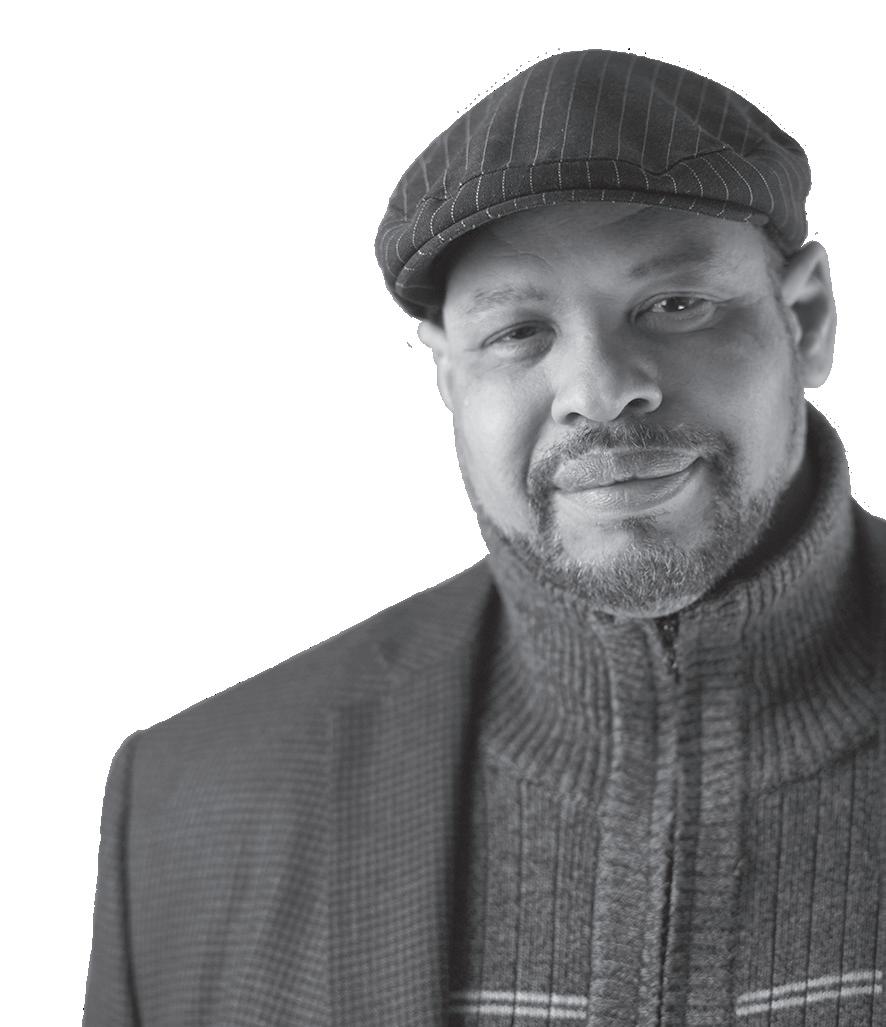
By John LEwiS Co-founder/CEO, R3SET Enterprises
Do you remember when it first became real that we were dealing with something we hadn’t seen in over 100 years? Something we had seen at the movies countless times, but never imagined would play out in real life. Then, the pandemic arrived.
On March 12, 2020, the city of Pittsfield announced that it was going to shut down. It was also the day that our company, R3SET, had to cancel our SUCC3SS Idea Jam, an event meant to bring the community together to discuss the economic empowerment of the Black community of the Berkshires. It was an event that we worked on for months and had planned for more than 100 people to attend at Framework on North Street in Pittsfield.
At that moment, our strategic plan
was no longer in play. Almost all of our products and services at the time were built to be in-person, from our new podcast production studio in West Stockbridge to our tested inperson events, none of it could work the same. We had to adapt, and do so immediately.
Virtual positioning
Fortunately, as a company, we had worked virtually for close to nine years. Digital tools like Slack (team communications), Zoom (digital videoconferencing) and ClickUp (digital project management), which are critical to working in this new reality, were already in place. We started by focusing on our company’s mission to support the transformation of impact-driven people, organizations and communities through three “empowerment strategies,” the powers of innovation, education and collaboration. We quickly redesigned our Idea Jam product, an event designed to gather community feedback and ideas, into a digital experience in order to facilitate the SUCC3SS Idea Jam.
Constant change in a year of upheaval
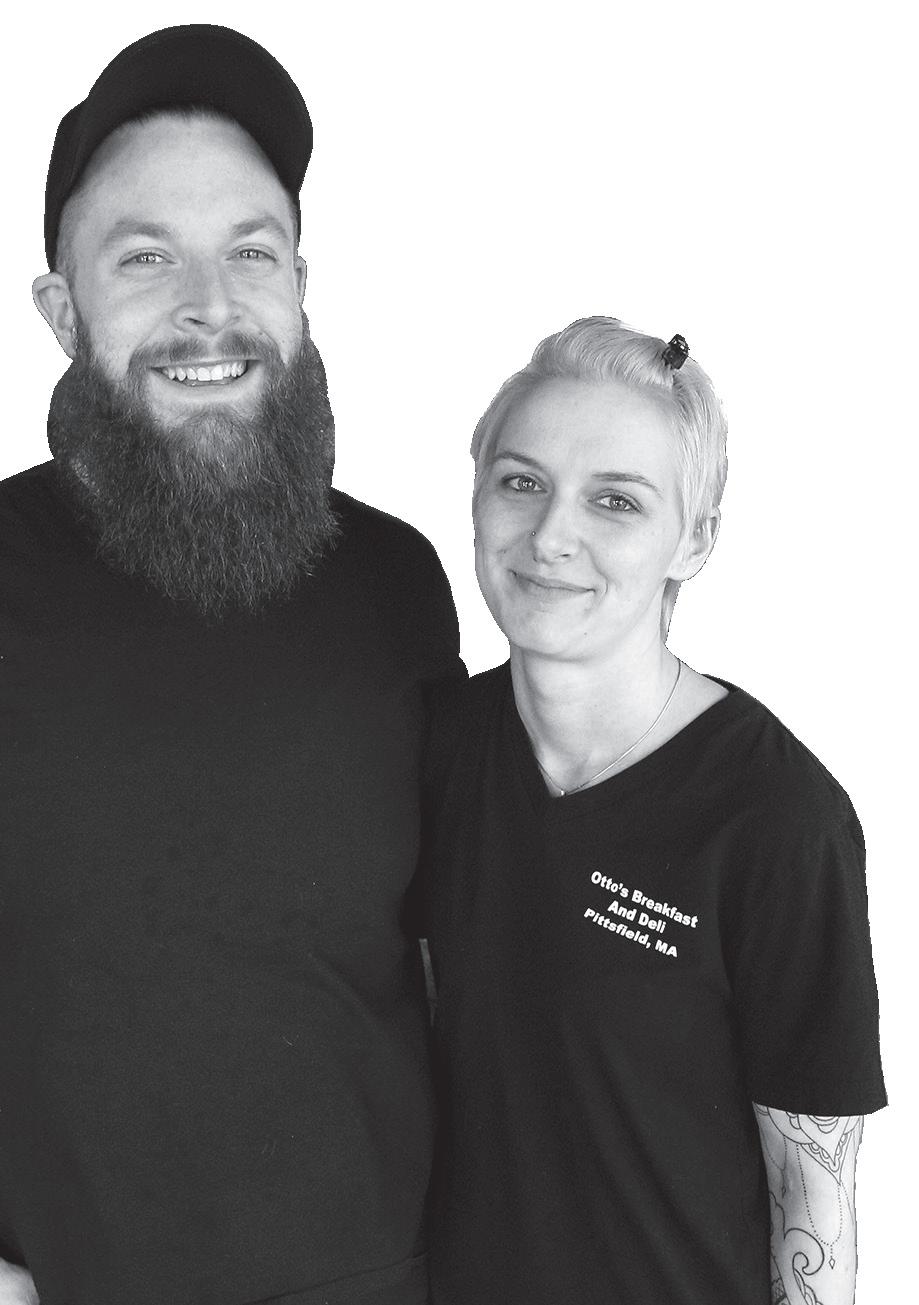
Otto’s Kitchen & Comfort is a small restaurant featuring American cuisine that is located in downtown Pittsfield. Current owners Luke and Lindsey Marion purchased the eatery in 2015 from its former owners, who had moved the restaurant to Pitts-
arion
Co-owner, Otto’s Kitchen & Comfort
This strategic shift resulted in us launching a Facebook group called the Berkshire Entrepreneurs, providing a virtual place for local entrepreneurs to connect and learn from other community members.
We then launched a “digital accel erator course” in collaboration with EforAll (Entrepreneurship for All) Berkshire County to educate local entrepreneurs on pivoting their busi ness to getting online quickly, built on top of our digital learning manage ment system platform.
In addition to the learning manage ment platform, we had been research ing and developing our flagship prod uct, a “community empowerment platform.”
Looking into the future, one of our main focuses for the rest of 2021 is the successful launch of the Blackshires Community Empowerment Ecosys tem. Coming out of a collabora tion between R3SET, the new Blackshires Leader ship Circle, with Berk shire Taconic as fiscal sponsor and funders like 1Berkshire and Berkshire Bank, came together to ac tivate the first pilot of our flagship prod uct, the EL3VATE
Community Empowerment Platform. We will continue to expand the Berkshires first cooperative marketing and media agency at SP3AK EASY with partners like Light Focus Studio, Atlantic Northeast and Pierce Social.
“Looking into the future, one of our main focuses for the rest of 2021 is the successful launch of the Blackshires Community Empowerment Ecosystem.”
basis for most of the past year, beginning on March 15, 2020, when the governor shut down all in-person dining in the state. Even as restrictions on eateries begin to lift, one cannot imagine that the need to change, and pivot the business model on a semiregular basis, will disappear with COVID-19. So, where do we go from here?
and it’s essential we put as many roots down while the sun is shining to offset decreased cold-weather business.
More important than any online presence, however, is what we have found to be the best way to stay fresh, and pivot quickly to accommodate ever-changing standard operating procedures: our employees.
“As business owners and managers, we may sometimes like to believe we have all the answers. We absolutely do not. So, surrounding oneself with as many fresh, new ideas as possible is of paramount importance.”
EAGLE
There’s no manual in the restaurant business. There is nothing you can Google that will give any serious, long-term help in the industry. There is no school you can go to, nor a job you can have that will prepare you to do what you have to do day in and day out running a restaurant.
Malleability is the only way forward when the climate is “normal” in the restaurant industry, and the absolute necessity to change directions with a quickness has been multiplied tenfold during this pandemic. It really cannot be understated that the rules and regulations governing restaurants have changed on an almost monthly
Giving customers the opportunity to order through a website or app is something we don’t see going anywhere. We believe that most people in 2021 would prefer to one-stop-shop, as it were, and have the ability to see a menu, and place an order from that menu in one spot. No more digging through the carryout menu drawer to find the one you want, and then calling to place your order, taking into consideration any questions you may have that aren’t directly answered on the menu.
No one talks on the phone anymore anyways. Couple that with a typically brisk and blustery Berkshire morning, and suddenly delivery becomes a viable option for restaurants that aren’t just pizza or Polynesian. Those of us living through what we currently are will remember it with every sniffle, sneeze and cough, for every flu season the winter brings from here on out.
We believe that people will instinctively cloister during the already difficult winter season for restaurants,
As business owners and managers, we may sometimes like to believe we have all the answers. We absolutely do not. So, surrounding oneself with as many fresh, new ideas as possible is of paramount importance.
From the beginning of the restrictions on restaurant service, we have relied heavily on the employees at Otto’s to help formulate plans on a very regular basis. With the help and feedback of our team, we have been able to stay around and gut it out for the entirety of the pandemic thus far.
Asking for help may be a bitter pill to swallow, but without that help from the people who make Otto’s run every day, we would absolutely be out of ideas on both how to adjust our offerings to stay relevant, and also how to change our daily processes in a way that is in the best interest of our customers. They are the reason we have survived this far, and will be instrumental in ensuring we survive through the next year.
John Lewis BEN GARVER — THE BERKSHIRE EAGLE
Luke and Lindsey Marion BEN GARVER — THE BERKSHIRE
How the Berkshire economy emerges from the pandemic
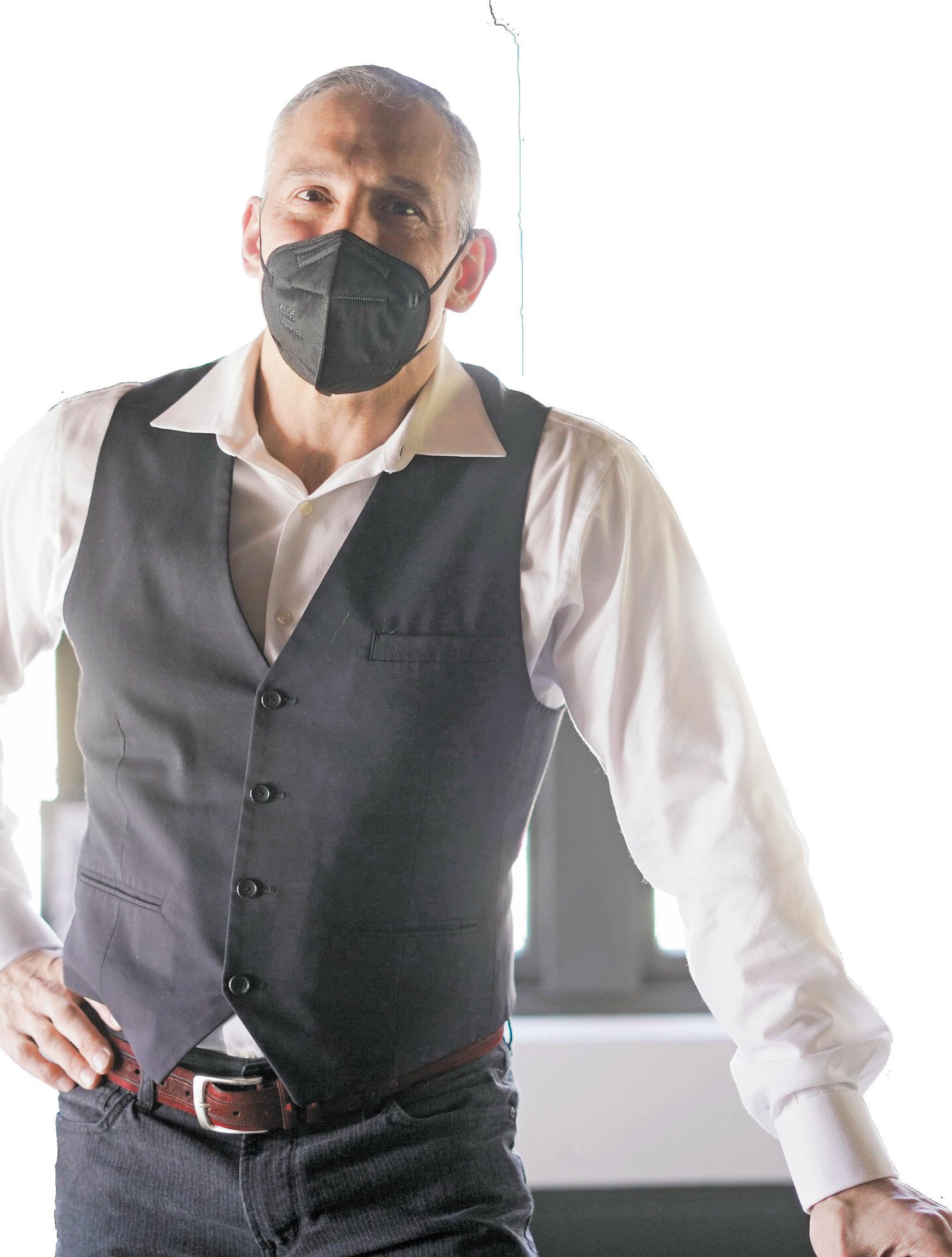
By aLLEn harriS Owner, Berkshire Money Management
On March 11, 2020, the World Health Organization (WHO) declared COVID-19 a pandemic, and the economy rapidly changed for the worst.
The impact on Berkshire County was larger than that of the nation. According to Moody’s, the gross
will support sales volume even with fewer customers. Individual businesses will need to look different than they did in 2019. The key is going to be that you provide visible hygiene and safety protocols. Coordinators of open-air events will be busy. So will restaurants, which should set up online reservation programs or risk having patrons wait, huddled around each other, making the restaurant appear “COVIDdirty.” That would scare off returning customers.
for restaurants and retail in the Berkshires compared to last year. How will the Berkshire County economy emerge from the pandemic? The recovery will occur in three overlapping phases. The first phase has begun and is tied to an easing of restrictions. The second phase is connected to vaccination progress and strikes a balance between lingering fear and pentup demand. The third phase acknowledges new
The Berkshire economy will be booming this summer, compared to last year. However, government restrictions aimed at keeping us safe will continue to limit the ability of consumer spending on many services. During this pre-post-pandemic phase, the county will recover more slowly than the nation. The Berkshires rely on tourists who flock to our hotels, restaurants and downtowns when visiting such venues as Tanglewood and Jacob’s Pillow.
On March 22, the commonwealth began Step One of its Phase Four reopening. Previously closed stadiums and arenas will be able open to 12 percent capacity. Gathering limits for public events increased to 100 people indoors and 150 people outdoors. Showplaces could get the go-ahead by June to allow 100 percent capacity (though that seems ambitious). If not, potential visitors who could not secure show tickets will make other plans. Nonetheless, tourism will be robust
The Berkshires will benefit as a substitute location to international travel, which will continue to suffer due to restrictions and fear. Google mobility data does show that year-to-date 2021 visitations to parks, waterways and public open-air plazas have been up dramatically in the county. It won’t be enough to replace the smaller number of tourists. However, pent-up demand
The second phase of the recovery will occur when the pandemic feels less risky but still weighs heavily on people’s minds. In response to that lingering fear, people will continue to flee urban density and move to the Berkshires. According to a March 8 USA Today article, Pittsfield could become one of the “biggest winners” as more Americans work remotely.
The publication complimented Pittsfield as a “vibrant art community” with “lots of green space.”
The housing trend was ignited out of fear but will continue out of pragmatism. People don’t have to work at their cubicles anymore. They can buy a house in the Berkshires at a fraction of the cost of renting an urban apartment. These are new customers for every industry in the Berkshires — information technology companies that set up home offices, food services, entertainment, health care and financial services. Homebuilders and the banks that finance the building will benefit significantly. Single-family housing construction permits were up substantially in 2020 over 2019. I expect construction to double in 2021 and maintain that level through 2025.
The third phase of the recovery depends on corporate management. The companies that learned to adapt during the pandemic will fare better against their national competitors. Others are fragile zombies, kept alive by Paycheck Protection Program (PPP) loans. Those businesses that have not adapted to new consumer behaviors and buying habits risk permanent closure.
To get customers to continue their habits of patronizing a business, the company needs to adjust to the buying preferences of the 21st-century shopper. Companies that have not digitized to provide sales and delivery through their website will lose customers to their national competitors. This was always going to happen, but the pandemic accelerated trends that were already in place. The competitive advantage a company would have had in 2019 has now become a necessity.
If local organizations manage themselves well, post-pandemic economic growth for the Berkshires has an opportunity to level up to a higher trend. If they don’t, they’ll shutter, and jobs will be lost.
For the past 35 years, the Berkshires has had limited growth drivers. The county now has an opportunity to steal away international travelers and attract new residents, stalling its persistent population losses.
Allen Harris is the owner of Berkshire Money Management in Dalton. He can be reached at aharris@berkshiremm.com.
Allen Harris
BEN GARVER — THE BERKSHIRE EAGLE
Reimagining Massachusetts
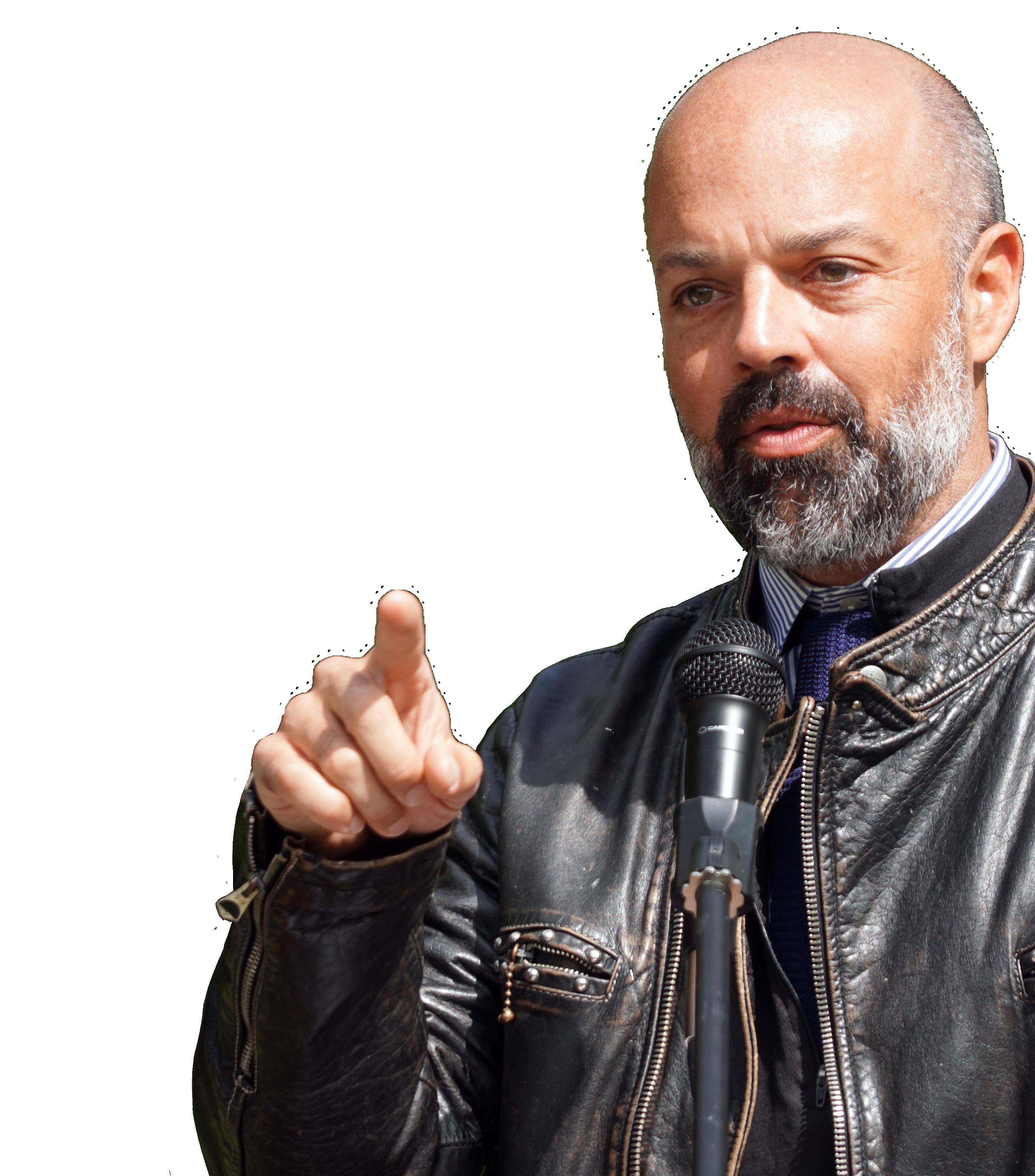
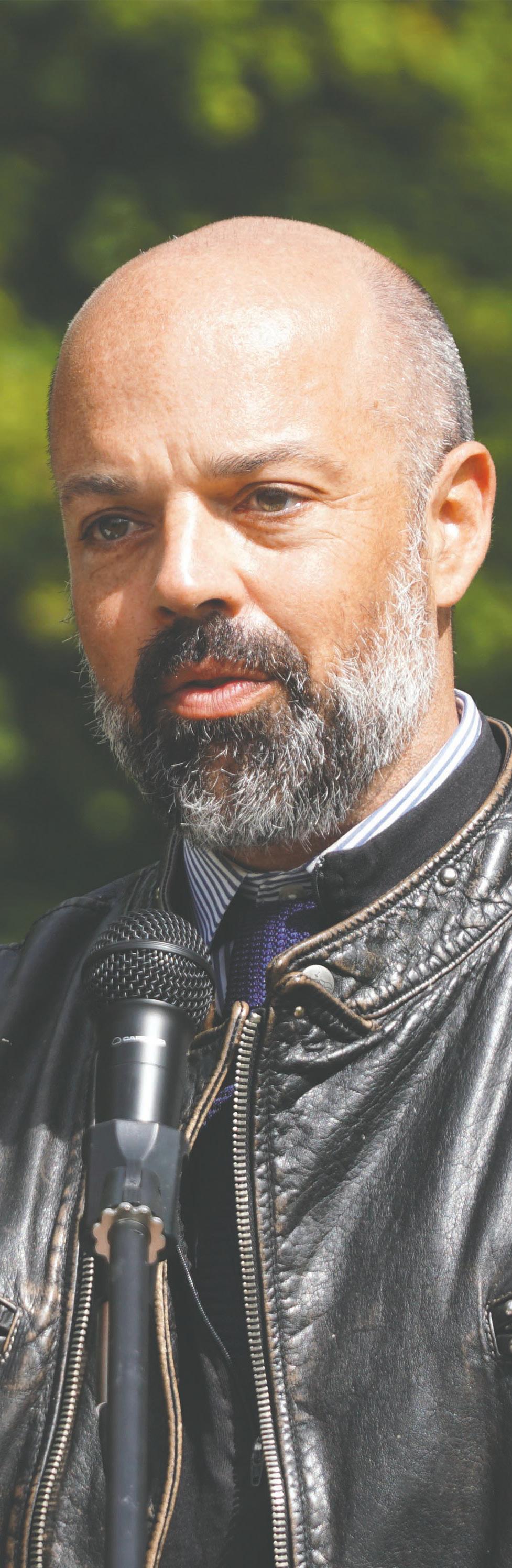
By adaM hindS State Senator
The economic downturn that resulted from the global pandemic caused untold harm to workers, businesses and the regional economy. To date, tens of billions of dollars have been spent by the federal and state governments in Massachusetts to confront some of the negative impact, and more needs to be done. At the same time, shifts in the economy and the future of work could benefit the Berkshires, as long as we act now to prepare.
I was recently appointed chair of a new Spe cial Senate Committee on Reimagining Mas sachusetts in a post-COVID environment. The new committee is a signal that we do not want to merely “recover” from the pandemic, we need to emerge from the pandemic “stronger.”
Earlier this month, Gov. Charlie Baker an nounced that as many as 20,000 state employees will permanently transition to hybrid remote work. Government work spaces are being con verted to allow people to work in the office sev eral days a week. The private sector appears poised to follow suit. Seventy-four percent of employers in the United States have indicated they plan to transition some employees to re mote or hybrid work after the pandemic ends. That is great news for the Berkshires. An esti mated 23,000 Americans could relocate due to the growth of remote work, leading Moody’s Analyt ics to declare that Pittsfield could gain population and economically as a result. Our affordability, high quality of life and proximity to major popu lation centers make us an attractive destination.
Residents of Berkshire County can also ex pand their job search across the country as the culture of remote work shifts. But, Massachu setts must aggressively develop the infrastruc ture needed to seize the moment.
As remote work becomes more prominent, so, too, is the digital divide. For Western Massachu setts to benefit from the rise of hybrid and remote work or educational opportunities, broadband build-outs must be accelerated. While several towns have recently finalized high-speed internet access, many more will not complete their build out until 2022. We need to use federal stimulus money to finalize the remaining builds faster. More remote work also requires expanded ac cess to child care and transportation. Availability of child care is a critical factor in many families’ decisions on where to live and work, and the CO VID-19 pandemic has taught us that working from home with children, while manageable in an emer gency, is hardly a realistic long-term solution.
Transportation to and from regional popula tion centers such as Boston and New York will be critical. The Berkshire Flyer passenger rail service from New York to Berkshire County will not only bring tourists into the region, it will allow remote workers to travel to New York in person once or twice a week. The sea sonal weekend Flyer pilot was delayed until summer 2022 due to COVID. The long-term vi sion for the Flyer to become a year-round daily connection is even more important now than when the feasibility study was conducted.
The Advisory Board studying West-East rail from Pittsfield to Boston, which I participated in with Mayor Linda Tyer and state Rep. WIlliam Pignatelli, is now complete. We are moving
Adam Hinds
BEN GARVER — THE BERKSHIRE EAGLE
The ability to pivot and rely on resources
About: Founded in 1997, Elegant Stitches is a family-owned custom embroidery and screen-printing company that supplies branded apparel and promotional products for public and private sector employees, teams and community groups.
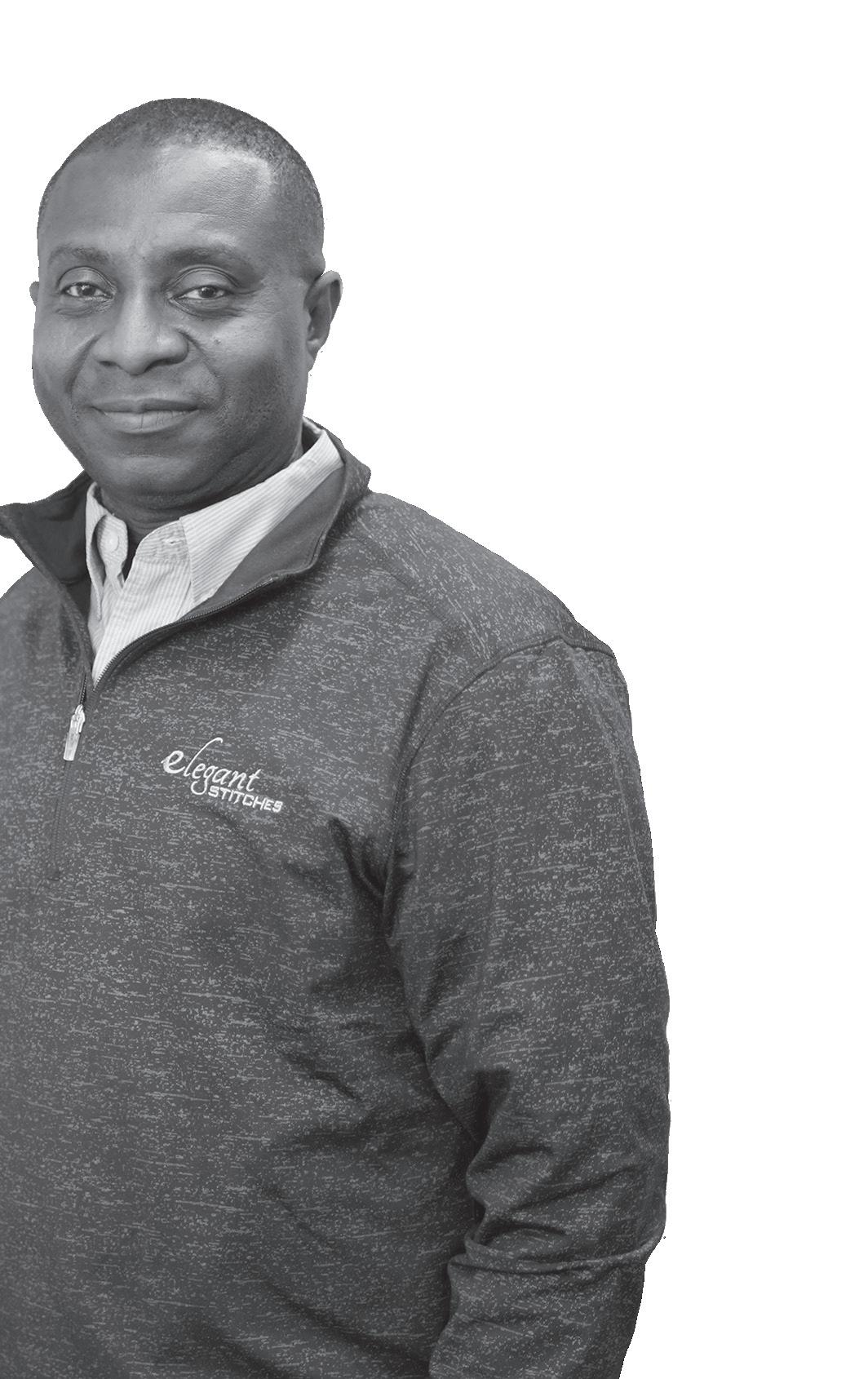
By aLfrEd EnchiLL President/Owner, Elegant Stitches
Located in downtown Pittsfield, Elegant Stitches, a minority-owned firm, entered the 2020 fiscal year with a 23 percent increase in annual sales as a result of a Pittsfield Economic Revitalization Corporation loan for the implementation of their new interactive e-commerce website.
Despite the increase in annual sales, the COVID-19 outbreak introduced a new set of challenges for small businesses such as Elegant Stitches that rely on businesses, schools and teams to be functionally open in a traditional sense.
has become a very important part of the company’s annual sales. Online stores for college teams were ready to launch for the spring sports when COVID hit. The company understood the severity of the moment and approached it with a sense of urgency, assessing its priorities and making the necessary pivots.
The 24-year-old company utilized its network in the branded apparel industry to identify a reliable supplier for domestically produced custom personal protective equipment before many of its competitors. It fulfilled orders for several local businesses, such as Morrison Home Improvements, Greylock Federal Credit Union, Haddad Dealership, as well as national organizations, such as Color of Change. The company went from decorating apparel to being a PPE provider for communities across the country.
Adapting to the new normal
About: Electra’s Cafe, located in Lenox, is a small restaurant that serves Mediterranean cuisine. The eatery is named after Electra Zarvis, owner Peter Lepotakis’ grandmother.
By PEtEr LEPotakiS Owner, Electra’s Cafe, Lenox
As most everyone knows, the restaurant industry was greatly impacted by COVID-19. Not only did sales take a big hit, but our collective psyche did as well. We had to operate in a whole new manner with regards to customer service, operating rules, guidelines and limited capacity, all of which challenged everyone’s survival.
Sadly, some did not make it. Through several different surges in the virus, we had to learn how to survive the best we could on takeout sales. I feel incredibly fortunate to have received help from the Paycheck Protection Program. Without it, we would have also probably failed.
need to be at home, which results in a shortage of job candidates. Complicating matters is that everyone is trying to staff up now for what they hope will be a busy summer.
Being able to adapt will be the way forward. I will tailor my business hours to the help that I can get. It may mean I’m not open as much, but I believe it’s better to sacrifice some sales as opposed to quality and running my staff into the ground.
A plus this summer could be an increase in the local population. Since the pandemic hit, many people have moved to the Berkshires from big cities, believing the rural life is a better alternative to urban sprawl. We believe that takeout sales will be a bigger part of our daily sales than they have been in the past.
I am forever grateful to my staff for hanging in there with me. We are small, but we are fierce. I am so proud
“One thing that can be learned from the outbreak is that there are different ways that we can be of assistance to each other in building our community.”
In many ways, COVID highlighted several of the issues that plague our country, whether that is the obsolescence of domestic manufacturing, an increase in the wealth gap, or racial inequality. For a company like Elegant Stitches, these factors were felt more under the conditions of COVID. Fortunately for us, we were able to identify a few resources, such as the Foundation for Business Equity, that addressed these issues with a business model that provided both financial capital and consulting to their clients.
The initiative focuses on scaling businesses of color to create greater wealth creation for business owners and key principals and create more jobs with family-sustaining wages in our urban communities. The Elegant Stitches team credits much of its success to the help it received from them. There were other resources, such as the Paycheck Protection Program loan, a city of Pittsfield grant, and the Berkshire Regional Planning Commission, that helped to alleviate some of the pressure. What helped the most were people coming together as a collective and finding creative ways to help small
One thing that can be learned from the outbreak is that there are different ways that we can be of assistance to each other in building our community. We are all in this together. We look forward to returning to normal life soon.
With the arrival of the vaccines, it is my hope that we can soon put the pan demic behind us. I have been in the restaurant business since 1985, when I helped start Patrick’s Pub in Pitts field. I left Patrick’s in 2008 and four years later started Electra’s. I’ve been through a few ups and downs over the years, but this challenge has been the most difficult because so much is out of our control. That said, I have al ways tried to think things through to survive the challenging times.
So, how do we do that? A lesson we learned last year is that people really seemed to enjoy dining outdoors.
Last year, we rented a tent for the summer to hold outdoor dining. It was harder on the staff to do so, but it allowed us to have a decent sum mer with approximately half of our capacity. This year, with the help of my landlord, Eric Taylor, we are going to pour a stamped concrete pad in front of the restaurant, where we will have a tent for outdoor dining. We also will have several tables avail able indoors with booth divid ers and two commercial air purifiers.
Staffing has been another challenge. It has been difficult recruiting enough help to reopen in the way that we would like.
Our industry relies on people whose children are usually in school while they are working, but because so many youngsters are attending classes virtually now, their parents
“I’ve been through a few ups and downs over the years, but this challenge has been the most difficult because so much is out of our control.”
Peter
Lepotakis BEN GARVER — THE BERKSHIRE EAGLE
Alfred Enchill BEN GARVER — THE BERKSHIRE EAGLE
The community has helped us survive
About: Barrington Stage Company, based in Pittsfield, is a not-for-profit professional theater company with a threefold mission: to produce top-notch, compelling work; to develop new plays and musicals; and to engage the community with vibrant, inclusive educational outreach programs.
By JuLiannE Boyd Artistic Director, Barrington Stage Company
When the pandemic hit last March, we at Barrington Stage Company were like all the other performing organizations around the world: we were at a standstill ... for about two weeks. Our staff gathered (on Zoom, of course) and I posed the questions, “Can we keep live theater alive, and if so, how?”
Those questions took us on a yearlong journey, both artistically and financially. Our first move was to contact the experts. We consulted with doctors from Berkshire Health Systems, and experts in air flow and ventilation, as well as sanitation and construction to see if we could safely produce theater.
At the same time, we met with our board to create a financial model that would work for a small, limited season. While we have two stages and a cabaret space, it was quickly determined we would only use our larger 520-seat Mainstage Theater and remove about two-thirds of the seats to allow for social distancing. We also set about finding an outdoor venue that would be suitable for our musical performances.
Normally, our seasonal staff, including artists, ranges between 150 and 175 people. If we produced two small shows, we could survive with 25 seasonal staff, including performers. The financial model included selling 100 seats a performance, which is not a model that would allow Barrington Stage to continue in any semblance of normalcy but one that would allow us to offer a small “season of hope.”
We announced a one-man show, “Harry Clarke,” and a musical revue, “The Hills Are Alive with Rodgers and Hammerstein,” as well as a thorough safety protocol plan for both the Mainstage and outdoors under a tent. Our budget for the two small shows was $137,000, as compared with our typical $1.7 million budget for nine shows.
Ticket sales were brisk, with many performances selling out, both in our theater and in the outdoor tent. People wanted a shared experience after months of isolation. That was
when we learned to “be nimble and pivot,” our company’s mantra for the summer of 2020. In a series of biweekly setbacks, the governor first announced no indoor theater (we quickly pivoted to a tent outdoors) and then we were required to reduce outdoor audience size from 100 to 50. It was a very unsustainable model.
That’s when our audi ence came to our aid.
Every night, members of the audience began handing us checks, ranging from $50 to $1,500. A new donor sent in $10,000! We were amazed and gratified by the sup port. By the end of the summer, we had made our $137,000 budget, but we were now faced with running the orga nization with no money coming in. Our $5.2 mil lion annual budget had shrunk to $2.3 million.
We were about to furlough our staff when we received a phone call from a wonderful volunteer, telling us her broth er wanted to help us survive this pandemic. He donated $1.1 million to Barrington Stage to keep our staff employed and to keep our infrastructure in place because he believed that keeping theater alive was essential.
We were heartened to know oth ers agreed on the role of the arts during a pandemic. We launched a $1 million Next Act Campaign at the start of the pandemic with our mis sion: “to not only to survive in 2020, but to thrive in 2021.” We surpassed our goal and raised another $1.1 mil lion to support our Next Act.
We still have a long road ahead of us, but with the growing preva lence of vaccinations, we are cau tiously optimistic about our fu ture. We are currently planning for the summer of 2021, a season that will have three shows on our Mainstage and three outdoors, as well as special concerts. And our audience seems eager to come back!
The worst may be over, but it will take years before the arts, and es pecially the artists, truly recover.
We still have a long road ahead of us, but with the growing prevalence of vaccinations, we are cautiously optimistic about our future.
Julianne Boyd
BEN GARVER — THE BERKSHIRE EAGLE
THE NONPROFIT PROPHET
A nonprofit prophecy for the post-pandemic world
By nataSha drESnEr Organizational development consultant and mentor, JCamp180
If you read my column regularly, you know that it’s called The Nonprofit Prophet. So, while none of us can predict the future, it seems only fitting for me to try and offer you my take on what the post-pandemic world may hold for nonprofit organizations.
1. The “New Normal”
Everyone is talking about what that’s going to look like. It is only natural for us humans to strive for and want “normal,” which is what I think this term is really about — our desire (wishful thinking) for normalcy.
The reality is that we have not and are not going to have a lot of normal, but we will continue to have a lot of new. So, we need to accept that and get comfortable with the ongoing need for change.
We’ll all be better off if we stop fighting it and, instead, embrace and celebrate the opportunities, lessons,
and positive developments it can bring. No matter what happens, we are not going back to what was. We are going forward to what is to be, which requires a constant “balancing act,” kind of like what surfers do on their boards when riding a wave.
Thankfully, nonprofit boards are way smarter and more reliable than surfboards and can help us keep our balance and hang ten!
2. More need
It’s going to take a while longer for our economy and society, in the U.S. and the world, to recover and find its balance. As a result, we are going to continue to see increases in the various needs that nonprofits fill, especially with vulnerable populations and minorities.
So, your organizations need to be ready for it. They need to have strategies to build their capacity to be able to meet that challenge in the community – e.g., set clear agreed-upon priorities, change your case for support, encourage unrestricted and multi-
year pledges, recruit and train more volunteers, partner with other nonprofit and for-profit institutions, tap into government support and breaks, and, if need be, pause programs and services that are less essential.
3. Fewer nonprofits
While it may seem counterintuitive, given the point above, we can anticipate seeing more mergers, consolidations, and various partnerships between organizations to help create economies of scale. The nonprofits that choose to work together and abandon the scarcity mentality of competition will find themselves in a more stable position with greater trust placed in them by their clients and communities.
4. More philanthropic support
in response to COVID-19 this past year has not only been phenomenal, but it has been many times more gener ous than responses to previ
ous recent crises. We can expect that trend to continue. So, be ready to give your donors plenty of opportunities to give. Just, first, make sure that you took the time to meaningfully thank them for their previous support, clearly painting a picture of the impact it has made in the lives of real people.
“There are new people ready to learn, volunteer may not be coming through committee pipeline, real opportunity your boards and is desperately
Additionally, donors, who in the past didn’t have an appetite for endowments and Legacy Giving (e.g., bequests), may be much more receptive to those asks now, regardless of their age. And we know that, this past year, the organizations that had reserves or endowments have fared far better (see my earlier article from Feb. 27, 2021 for details).
5. More need and more opportunity for lay leadership
Let’s be honest, nonprofit organizations were not perfect about recruiting new blood and creating a solid lay
people out there volunteer and lead. They through the traditional pipeline, but they are a opportunity for new blood on and committees that desperately needed.”
leadership pipeline before COVID-19. As a result, many are finding themselves now with lots of burned-out long-term volunteers who stepped up during the last year and stretched themselves thin.
At the same time, there are new people out there ready to learn, volunteer and lead. They may not be coming through the traditional committee pipeline, but they are a real opportunity for new blood on your boards and committees that is desperately needed. They may also very well be the leaders you’ve been needing and, perhaps, even meaning to engage in the past — e.g. the younger generation and minorities — so, here’s your chance.
6. More flexibility
After being forced into this experimental year, there are so many lessons we learned that will allow nonprofit organizations to be more flexible going forward, instead of looking to get back to what was before the pandemic.
in-person office and/or way of doing business. Smaller or no physical offices will be a huge savings. Along the same lines, the location of your office(s) may now be up to you. Do you really need to have an office in the heart of Manhattan or Boston, or can you move it to Pittsfield, for example, if not entirely to a virtual office?
• Similarly, if you have remote (fully or partly) employees working for the organization, your ability to find and retain talent or a very specific set of skills has just grown exponentially. The ability to work from home is a major benefit to many people in the workforce who strive to have a better work/life balance, with many of them willing to work for less money.
ence in parts of the organization that need investing in — e.g., hire staff, pay for COVID-related expenses/facility modifications, pay off debts, and more.
7. More appreciation
All around. For the work you do and for the basic things like hugging, being together (and not being together), sending your kids to camp, having friends over for dinner, having a playdate, and so much more we took for granted only a year ago. Our job is to enjoy it, and take advantage (in a good way) of this newly found appreciation, and find a way not to lose it.
So, to go back to the beginning, while no one can predict the future, it’s up to you and your leadership to design the future you want to see and then work toward it. Don’t just wait for the future to happen to you — be proactive now about shaping it.
With deep appreciation for your work.
Very few businesses (for-profit or nonprofit) are going back to the 100 percent
• Social media and videoconferencing technology will continue to improve and become more affordable, offering not only more productive ways for your staff and volunteers to work and collaborate, but to potentially also expand your nonprofit’s services and programs to new ZIP codes. These developments have enormous mission and bottom line impact.
• Lower cost of doing business will allow you to reinvest the differ-
Natasha Dresner is an organizational development consultant and mentor with JCamp180, a program of the Harold Grinspoon Foundation in Agawam. She can be reached at Natasha@hgf.org.
Stronger, wiser and more optimistic
Berkshire Theatre Group was created in 2010 by the merger of two of the Berkshires’ oldest cultural organizations, the Berkshire Theatre Festival, founded in 1928 in Stockbridge, and the Colonial Theatre in Pittsfield. The Colonial opened in 1903 but closed in 1952. It remained vacant for more than 50 years before reopening in 2006, after a $21
S CEO/Artistic Director, and Executive Director, Berkshire Theatre
“As spring turns to summer — the summer of our recovery — we approach our mission to explore (through performance) what it means to be human, with a heightened sense of gratitude and responsibility.”
How will Berkshire Theatre Group emerge from the emotional and economic rubble of the pandemic?
Stronger, wiser, and more optimistic about the future than ever before. It has often been said that adversity doesn’t build character, it reveals it. And over
the past 12 months of this pandemic, the character of our beloved community revealed itself to us. Our artists showed courage. Our patrons cheered us on. Our donors gave more. Our vendors and banks worked with us. Our political leaders worked for us.
In the darkest days of the storm, we drew our strength and inspiration from the warm embrace of the community we serve. Our productions and performances were simply our way of saying thank you.
Our vision is to be a center for creative work that enriches, invigorates, transforms and strengthens our community for the better. In 2020, we held tight to that vision. We worked hard, maintained strict safety protocols and became the only theater in the country to provide live entertainment outdoors on multiple stages from July right through December. Theater is essential to who we are and to understanding what moves us all. Above all else, our staff and board of trustees were determined to carry on and deliver the essential. Now, as spring turns to summer — the summer of our recov-
Drawing on strengths to stabilize, move forward
About: Bridge, based in Lee, is a nonprofit, minority and woman-run grassroots organization founded in 2007 that is dedicated to advancing equity and justice by promoting cultural competence, positive psychology, and mutual understanding and acceptance.
By gwEndoLyn haMPton VanSant CEO/founding director, Bridge
At the onset of COVID-19, we experienced destabilization with a drastic drop in our planned work and revenue sources to support our programs. Through the strength of our network and our innate resilience, we stabilized.
We then emerged as a guide for other organizations to lean into equity and inclusion work as part of their strategy. As Cyndi Suarez wrote in The Nonprofit Quarterly, we must not let resilience efforts “sidestep the [core question]: Who gets to decide what is normative?” This is an important question for leaders to ask who need to broaden their awareness in general.
Bridge faced the pandemic by leading with partnerships, care and mutual respect. We prioritized the well-being of our internal team and I, as CEO and founding director, developed three new innovations to carry us into the future: a mutual aid program; “new pathways” offerings; and an inclusive leadership cohort.
New Pathways
COVID-19 had us pivot quickly to meet the needs of our community. The most marginalized among us were the first to be laid off, to go without what they needed for their families to survive, and the ones living with the most uncertainty.
We witnessed how care workers and nurses, our elders and those who live paycheck to paycheck in unsalaried jobs were vulnerable. This is the “why” at the core of the New Pathways series of labs, talks and the conference (which also allowed us to continue to serve our clients well). The conference, featuring Angela Davis, brought more than 40 practitioners and 350 attendees from all over the country to advance accessible equity and inclusion work.
Mutual Aid: Food sovereignty and empowerment
With partners in 2020, we served 120-plus people weekly or biweekly, with fresh, local food for more than 42 weeks. We worked with 12 farms, farmers markets and environmental groups to support under-resourced families. We worked with 24 local businesses and 23 family foundations to shift money and resources to people on the ground leading the work. We led with cultural competence, support around language barriers, and relied on relationships to create access to resources.
ery — we approach our mission to explore (through performance) what it means to be human, with a heightened sense of gratitude and responsibility. Gratitude for the help we received to get us through the crisis alive and well. Responsibility for paying it forward in the best way we know how — by bringing big fun back to the Berkshires!
In a few short weeks, the tents will once again be erected in both Stockbridge and Pittsfield. Music will once again fill the outdoor air. Artists will once again stride across our outdoor stages. And we will once again see the smiles behind the masks of our loyal and long-suffering patrons, beaming in their eyes.
More people will enjoy more events this year than last. More in July than in June. Still more in August than in July. With each passing month, we’ll keep a watchful eye on the vaccinations. And if all goes as planned, the holidays will bring a special surprise!
Today, we are Berkshire Strong and looking forward to our 93rd season with excitement and anticipation. Places everyone! Curtain up!
charity, and so much collaboration. We infused aid with activism and education.
Inclusive leadership cohort for social change
a yearlong, peer-led program for lead ers committed to equity and inclusion. Our 2021 inaugural group is guided by best practices in justice and equity as well as cultural competence. We’re benchmarking equity in each of the 30 participating organizations.
works with national subject matter experts speaking to accountability. New projects and insights will emerge. This summer, we will cre ate new plans to reflect our larger community’s collective vi sion and needs.
“Bridge faced the pandemic by leading with partnerships, care and mutual respect.”
Kate Maguire BEN GARVER — THE BERKSHIRE EAGLE
Gwendolyn Hampton VanSant BEN GARVER — THE BERKSHIRE EAGLE
Learning to adjust outside of normal operations
About: Founded in 1862, the Stockbridge Library, Museum & Archives serves as the town’s library, but also hosts warm and casual literary gatherings, readings, art receptions and living history programs.
By wEndy PEarSon Director, Stockbridge Library Museum & Archives
The COVID-19 pandemic arrived just one month after I stepped in as the new director of The Stockbridge Library, Museum & Archives in February 2020. Within a month’s time, we closed our doors as the state’s stay-at-home order came into effect. Suddenly relegated to a kitchen counter office, creating connections and learning about the Stockbridge community became startlingly challenging. The inability to meet our constituents face to face, or even to be in the same building as my new colleagues, brought on a little bit of panic and a lot of creative thinking.
Thanks to the tenacious and savvy staff and the unending support of our board and volunteers, we played to our strengths from our homes. We stayed connected through Zoom meetings, phone conversations and texting. Staff members who had decades of connections with our patrons made phone calls to check in with those who
fell on the losing side of the digital divide as our world became virtual.
With the help of a federal Paycheck Protection Program loan, the entire staff remained fully employed throughout the shutdown and beyond. As a result, we were able to quickly pivot our approach to library services.
We began offering technology help sessions over the phone, guiding patrons through the process of virtual meetings, so they could participate in online medical appointments, see family on screen, or attend virtual religious services. The importance of connection during the isolation of the pandemic serves as a poignant reminder that libraries are critical resources in times of crisis.
To expand our program offerings, our generous community offered it talents and connections, providing us with avenues for virtual programs with esteemed authors, award-winning novelists, actors and poets. We kept kids reading with digital storytimes, a call-in storyline and curated storybook bundles for curbside pickup. And, we challenged our armchair historians with a digital quiz game on Stockbridge history.
For all of us, the pandemic has caused us to think outside of our normal operations. We took advantage of our central location on Main Street and large lawn to provide unique opportunities in Stockbridge’s downtown district for socially distanced outdoor events like the First Annual Stockbridge Ice Festival.
These events, spurred on by the necessity of cautious outdoor gathering during the pandemic, planted the seeds for new traditions and helped to spark business activity in our vibrant, but suppressed, downtown.
Developing a new game plan for success
About: The Stationery Factory, located in Dalton, is a 100,000-square-foot business and event space that once housed Crane & Co.’s stationery division. Crane vacated the space when it moved its stationery division to North Adams. Sears purchased the structure in 2013.
By StEPhEn SEarS Co-owner, The Stationery Factory
The COVID-19 pandemic hit 12 months ago, and bang! We were shut down.
There has been nothing, not even one item for our events business, for over a year. Half of our revenue evaporated overnight. No weddings, no concerts, no festivals, no corporate events. Nothing. All the work that we put in to create an events business for more than three years was gone. Will our events business ever come back? The answer is, yes. I’ll give you my best guess as to when and how.
Fortunately, we have full-time tenants at The Stationery Factory to help cover the basic expenses needed to run the facility, and we’ve had time to reflect and make decisions on what we will look like in the future.
A year later, we are evolving in a way that is more thoughtful, deliberate and focused on long-term sustainability. We had been working at a level that we just could not keep up forever. It was fun and exciting, but thoroughly exhaust ing. Now, we will be taking a more mea sured approach to reaching our goals.
events business, we need to be cautious so we don’t become the poster child for bad behavior.
The least risky choice for us is to have private and corporate events. That way, we know everyone who will be there and we can have complete control of the situation. Once we have a handle on doing that, and feel comfortable doing it, we can move on to holding events like weddings, where we don’t have quite as much control. Then, we can consider holding performances that anyone can attend, which is the most risky choice.
For those events, we will need to develop methods to comply with any and all regulations and provide an experience that is enjoyable and safe.
So, when will this evolve? That is the big question for all of us in this business. I expect that we will have a very small number of private events between now and late autumn this year. We plan on booking only corporate events for the holiday season. By February we expect to be open for weddings, and smaller public events.
“Our
post-pandemic future will hold more creative approaches to programming and collaborations, hybrid events with live and virtual components, expanding our home delivery service, and continuing to offer convenient pickup options.”
Our post-pandemic future will hold more creative approaches to programming and collaborations, hybrid events with live and virtual components, expanding our home delivery service, and continuing to offer convenient pickup options. We also plan to more actively strategize methods to bridge the digital divide in our region. We will emerge from these difficult times with an enhanced focus on community connections, social equity, and a more comprehensive vision of the needs of our community and our future goals.
There are two ways we plan to de velop The Stationery Factory. One is to completely fill the building’s underutilized space by the end of 2021. We hope to do this with businesses that join in and elevate the existing collaborative work en vironment within the building.
The other is to cre ate a team to manage our events business. This will allow us to have more complete programming yearround and to be less dependent on a sin gle individual.
Safety is our first priority for both our staff and anyone attending an event. In bringing back our
“A year later, we are evolving in a way that is more thoughtful, deliberate and focused on long-term sustainability.”
Wendy Pearson BEN GARVER — THE BERKSHIRE EAGLE
Stephen Sears BEN GARVER — THE BERKSHIRE EAGLE
Road to Recovery & Reemployment
By hEathEr BouLgEr Executive director, MassHire Berkshire Workforce Development Board
It’s been over a year since the initial lockdown due to COVID-19, and our economy is slowly recovering. The pandemic has impacted the national economy in a manner not experienced in modern times. COVID-19 has affected every community and every industry. But, there is hope … and jobs … and training … available right here in the Berkshires.
Now, more than ever, the MassHire Berkshire workforce system and our partners can deliver critical support to job seekers and businesses in the region. MassHire is here to help connect companies to workers, and job seekers to opportunities.
As the regional organization responsible for workforce development in the
Critical job-seeker services include virtual services, information, tools and individual supports. There are dozens of virtual workshops to help with skill building, resume writing, interviewing and a variety of career and job fairs, including the one coming up on April 27. MassHire promotes individualized and flexible training opportunities for unemployed residents and provides job matching opportunities as well.
There are reemployment resources to help long-term unemployed who may have barriers to employment, specialized services for our veterans, and assistance to anyone over the age of 16 find employment opportunities. Visit MassHireBerkshireCC.com or call 413.499.2220 for dozens of virtual workshops, counseling and services being provided at no cost to the job seeker.
There are jobs
According to the state’s Job Quest database, there are more than 2,500 job vacancies posted in the Berkshires, ranging from highly skilled positions to entry-level jobs. Many companies are frustrated with the limited job applicants — likely because of pandemic unemployment extensions, the child care and remote/hybrid education uncertainties, and the concern about getting sick/caring for others.
Several other companies have been successful in attracting local talent and others from around the world, while others are being creative with trying to identify workers through hiring incentive packages and internal training.
MassHire understands the challenges facing employers due to changing and uncertain economic conditions, and is available to assist businesses with:
• Hosting virtual career/job fairs
• Posting jobs and search resumes on free online job banks
• Writing effective job postings
• Recruiting and pre-screen job candidates, including veterans
• Determine competitive salary for positions
• Connect to local resources for training employees, including on-the-job training and apprentice programs
• Hiring incentives and tax credits
• Accessing Workforce Training Fund and other specialized training programs to upgrade the skills of both un/underemployed and incumbent workers
Recruitment, hiring, training and retaining your workers is our specialty. Assistance can also be provided if your organization is considering downsizing or closing.
The MassHire Workforce Board
nect those who complete programs to in-demand jobs at local businesses.
in Pittsfield. She is a na tive of
North Adams.
Heather Boulger
BEN GARVER — THE BERKSHIRE EAGLE
Post-pandemic economic recovery in the Berkshires
By LukE dELorME Director of financial planning, American Investment Services
There is no question the pandemic hit the Berkshires economy hard.
According to 1Berkshire, Berkshirebased hospitality and tourism establishments directly employ more than 6,000 workers.
Although locals sometimes bemoan the return of summer tourists, we all must admit that tourism has a huge, positive impact on our economy.
The Berkshires population alone is not large enough to support the restaurants, entertainment and cultural attractions that we love. We ought to
welcome the return of the tourists, even if it does mean sitting in traffic on a Saturday morning in Great Barrington and waiting 45 minutes to get seated at a restaurant.
Hard data on just how much our local economy was battered by the COVID crisis are not yet available, but it’s obvious that local restaurants and cultural attractions suffered. In many cases, our most visible institutions were either partially or completely shuttered for an entire year — Tanglewood, museums, theaters and restaurants were all massively affected.
We should look forward to the Berkshires’ grand “reopening” with enthusiasm. There are a few reasons to believe that the tourist economy
devastating credit card debt. For middle- and even-higher-income families who have been able to continue working through the pandemic, this will be an immediate boost to discretionary income.
It’s not a great leap to expect that some share of this stimulus will flow back into the tourist economy, as families can now afford to take a summer vacation. The stimulus package has the potential to be a big boost for our local economy.
Another thing that happened during the pandemic is that most people were unable to spend like they had before. Savings rates increased significantly.
Travel, tourism, and dining out are what we call in financial planning discretionary expenses. These are ing. People need to have excess cash
nificantly in the coming year due to stimulus dollars, pent-up demand
VID relief package is already starting to deliver checks to most Americans. Single earners with adjusted gross income of less than $75,000 and married couples with adjusted gross income of less than $150,000 will receive checks of $1,400 per person, including children.
employment benefits, increased
Between the child tax credit and direct payments, a typical family of four can expect an extra $10,000 in
lies, this will drastically reduce poverty and has the potential to bail many people out of
After many years of an aggregate savings rate between 7 and 8 percent in the U.S., the last year has seen a savings rate around 16 percent, according to the U.S. Bureau of Economic Analysis. This might be translated as “pent-up” demand. People have more cash in the bank and more investments in their brokerage accounts, and many folks are chomping at the bit to get back out and start to spend.
Luke F. Delorme is the director of financial planning at American Investment Services in Great Barrington.
“We should look forward to the Berkshires’ grand ‘reopening’ with enthusiasm. There are a few reasons to believe that the tourist economy may be stronger than ever in the coming year, once we can put the pandemic behind us.”
Save $$$ with MassHire Berkshire Career Center
Did you know it can costs $1,500-$2,000 to post a single job opening on an employment website?
LET MASSHIRE DO IT FOR FREE
If you pay into the Massachusetts Unemployment System, you can take advantage of MassHire Berkshire Career Center’s posting and marketing services for FREE with no posting limits! Post as many openings as you have for as long as you need THE TIME TO RECRUIT IT NOW
Contact Melanie Herzig to learn how we can help with your employment needs TODAY!!
Pittsfield’s Red Carpet Team ready to hit the ground running
About: Michael Coakley was named business development manager for the city of Pittsfield when the position was formed in 2018.
By MichaEL coakLEy Business development
manager, Pittsfield
Three years prior to the COVID-19 pandemic, Pittsfield Mayor Linda Tyer, along with Mick Callahan, chair of the Pittsfield Economic Development Authority, and Jay Anderson, chair of the Pittsfield Economic Revitalization Corp., embarked on a visionary new economic development strategy. Instead of working in silos, they decided to harness the power of their respective business development efforts into a uni-
working to retain and grow existing city businesses, and to attract new companies from outside the area.
In addition, the Red Carpet Team — composed of economic development representatives from the city, PEDA, PERC, MassDevelopment, the Massachusetts Office of Business Development and MassHire — was established. This group meets with prospective businesses to develop an array of incentives and a course of action for the expansion of local companies and for locating new businesses in Pittsfield.
Paying dividends
This strategic partnership has been paying dividends since its inception, as the Red Carpet Team has collaborated with several employers across a broad range of industries. For example, e-commerce home goods retailer Wayfair opened a call center at the Clock Tower building that would employ 300 people. Mill Town Capital continues its impact investments in housing, businesses and outdoor recreation facilities such as Bousquet Ski Area and Berkshire West. Innovative aerospace companies such as Electro Magnetic Applications and United Aircraft Technologies have recently located in the city.
Pulling together and keeping an open mind
About: Zogics, based in Lenox, is the industry’s best one-stop shop for facility needs, from cleaning and disinfecting products to facility equipment and more.
By PauL LEBLanc CEO, Zogics
As the pandemic began to unfold last year, we saw a major increase in demand for many of the core products we offer, including disinfecting wipes, electrostatic sprayers, air purifiers and cleaning products. The team at Zogics responded to this surge with grace and good humor.
“This strategic partnership has been paying dividends since its inception, as the Red Carpet Team has collaborated with several employers across a broad range of industries.”
In addition, existing local businesses with plans to grow and create new jobs have received tax incentives, including Johns Building Supply, which is constructing a new retail space. And the William Stanley Business Park of the Berkshires recently received more than $1.1 million in grants to begin the greening process for the 52-acre park’s largest parcel, the 16.5-acre Site 9. The construction of a 20,000-square-foot facility will begin on a different building site this summer.
Hit the ground running
When the city, PEDA and PERC agreed to join forces four years ago in the interest of boosting Pittsfield’s economic growth, the idea that a pandemic would upend society was the furthest thing from anyone’s mind. However, that foresight has not only provided the structure to keep business development on track during a time of significant disruption, it has positioned our city to hit the ground running as the economy opens up.
They immediately switched to working from home and under restrictions. They pulled together, often working deep into the night, to make sure our customers (many of whom are like family) were able to get the critical cleaning and disinfecting sup
spaces, exemplifies our culture of taking calculated risks to grow. The brand developed from our strong ties with the fitness industry. Ardent Fitness joins the continually expanding Zogics family of brands including Zogics Pet and The Cleaning Station.
We recently launched an easy-touse booking service that offers commercial cleaning and disinfecting services in 17 cities throughout the country, a natural extension of our product line and a request we receive often from the businesses we serve. Our plans going forward: safely reopen our office and welcome people back in person, but still maintain a work-from-anywhere policy, giving our staff the flexibility that working remotely provides.
As a one-stop supplier of cleaning and disinfecting products that create healthier facilities, we don’t just talk
Fitness, a supplier of fitness equip ment for residential and commercial
“The current pandemic state highlights the importance of being flexible, nimble, and able to reinvent on the fly because the business environment, the economy, the industries we serve, have changed and are continuing to change drastically in unprecedented ways.”
Michael Coakley BEN GARVER — THE BERKSHIRE EAGLE
Paul LeBlanc BEN GARVER — THE BERKSHIRE EAGLE
An economic renewal is emerging in the Berkshires
good spirit and enthusiasm, letting them know the Berkshires are a better place because they are here.
I pay in BerkShares local currency to signal my commitment to keep money circulating locally rather than paying fees to faceless, placeless credit card companies.
When I order takeout from nearby John Andrews or the Old Mill or the Prairie Whale, I recognize the menu has changed to offerings that travel well or that might serve a whole family. Curbside pickup at Berkshire Coop Market or Guido’s began out of cautious behavior — but need it end? It is lovely to have Emma, Shayna or Devorah deliver to the car.
Shared shopping is now commonplace, saving trips and exposure. A friend just texted from Ward’s to say the onion sets were in and asked if she should pick some up for me. The little store at North Plain Farm now sells products from multiple farms so that you can shop bread, maple syrup and veggies with your raw milk and cuts of meat. And if Tess is not there, it is on the honor system!
purchase and then the drive home.
During COVID, many have learned to savor the ingenuity and uniqueness of our Berkshire businesses. The line is long at Bizallions at lunchtime, ordering through the window and then waiting for Jean Claude or Helen to bring out the baguette sandwich or homemade soup.
COVID has changed our shopping habits. We feel kinship with our small-business owners and staff. We recognize how important they are to the character of our communities. We go out of our way to support them, even when before we might have judged such behavior “inconvenient.” We take the time to observe and care.
Post-COVID, I see this connection between consumers and producers deepening — not only Community Supported Agriculture, but a movement for Community Supported Industries — an effort by both residents and agencies to invest in strengthening local supply chains that build resilience in the face of rapid changes in the global economy and uncertainties due to climate change.
“COVID has changed our shopping habits. We feel kinship with our smallbusiness owners and staff. We recognize how important they are to the character of our communities. We go out of our way to support them, even when before we might have judged such behavior ‘inconvenient.’ We take the time to observe and care.”
Oskar Hallig and Mike Zippel, owners of Only in My Dreams event planning, let no moss grow under their feet. When COVID closed down inperson festivities, they opened “The Shop” in South Egremont with ingredients to make your own party. Their “Paraphernalia Packs” assemble Berkshire-made mugs, hand sanitizer, chocolate, barbeque seasonings and more in convenient gift boxes celebrating various nonprofits in the area.
Professionals have also pivoted. After being closed for months, my dentist, Dr. Mullany, opened again, minus all the much-fingered magazines in the waiting room but retaining the easy chatter that eases my dental anxieties. My accountant, Alan Glackman, meets me at the front door of his office building for a passingoff of files, so, limiting exposure for others working inside.
Erik Wilska calls his Shaker Mill Books in West Stockbridge a COVID success story. With more leisure time, his used-book store has become a destination spot. An hour’s browsing with mask, a leisurely lunch at No. Six Depot Roastery & Café across the street, back for the final
The remarkable Jane Jacobs, author of “The Death and Life of Great American Cities,” was an ardent advocate for import-replacement.
The Berkshires was once a region of manufacturing. Can we revive a wool industry? Can our hardwood forests support furniture-making on a scale to assure well-paid jobs for a younger generation? Who is finally going to build the “humane” slaughterhouse to responsibly service the many Berkshire farms raising small numbers of cows, sheeps and pigs so prized by local restaurants? Can we plant our northern slopes with apple trees and produce the applesauce that is a staple at Fairview Hospital, Berkshire Medical Center and all our nursing homes?
This is all doable.
Post-COVID, I see our part-time residents moving their funds from large national banks to local community banks, because they see the Berkshires as their stable home. They understand that community banks are invested in the businesses and mortgages of their neighbors, who they want to see thrive.
An economic renewal is already beginning in the Berkshires, sparked by the inventiveness of its entrepreneurs, supported by its residents, informed by the limits and abundances of its people, land and community.
Susan Witt PHOTO PROVIDED BY SCHUMACHER CENTER FOR A NEW ECONOMICS