A legacy of female ownership
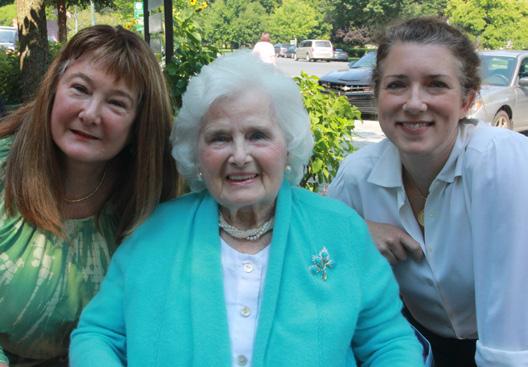
Five presidents may have stayed at the Red Lion Inn, but its long history of female ownership dating back to the 18th century is often overlooked.
4
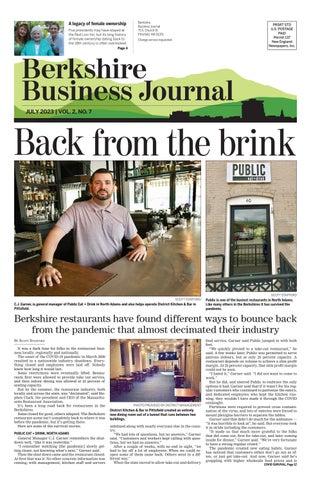
A legacy of female ownership
Five presidents may have stayed at the Red Lion Inn, but its long history of female ownership dating back to the 18th century is often overlooked.
4
By Scott Stafford
It was a dark time for folks in the restaurant business locally, regionally and nationally.
The onset of the COVID-19 pandemic in March 2020 resulted in a nationwide industry shutdown. Everything closed and employees were laid off. Nobody knew how long it would last.
Some restrictions were eventually lifted. Restaurants first were allowed to provide take out service, and then indoor dining was allowed at 25 percent of seating capacity.
But by the summer, the restaurant industry, both locally and across the state, was “decimated”, said Stephen Clark, the president and CEO of the Massachusetts Restaurant Association.
It’s been a long road back for restaurants in the Berkshires.
Some closed for good, others adapted. The Berkshire restaurant scene isn’t completely back to where it was before the pandemic, but it’s getting there.
Here are some of the survival stories.
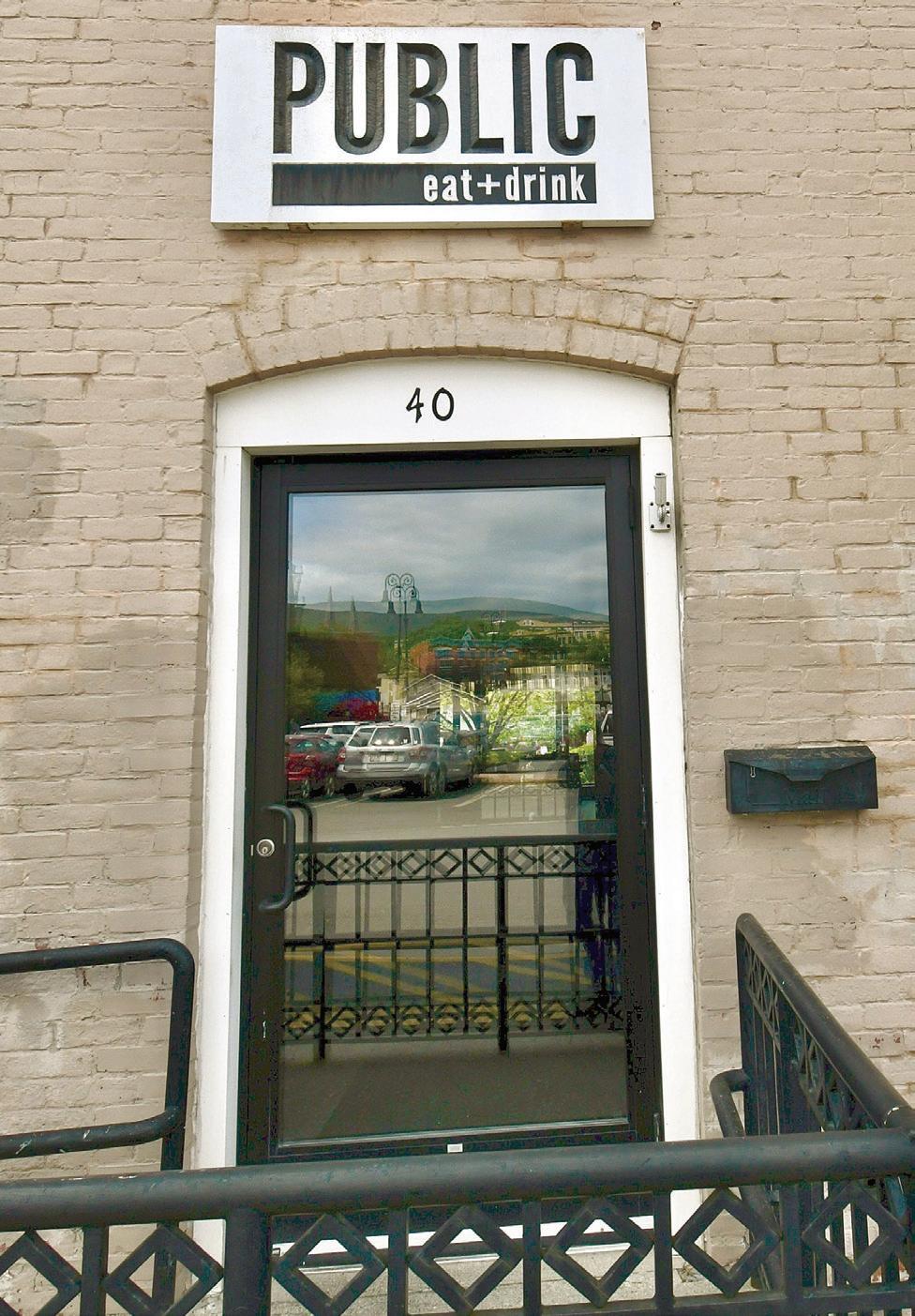
PUBLIC EAT + DRINK, NORTH ADAMS
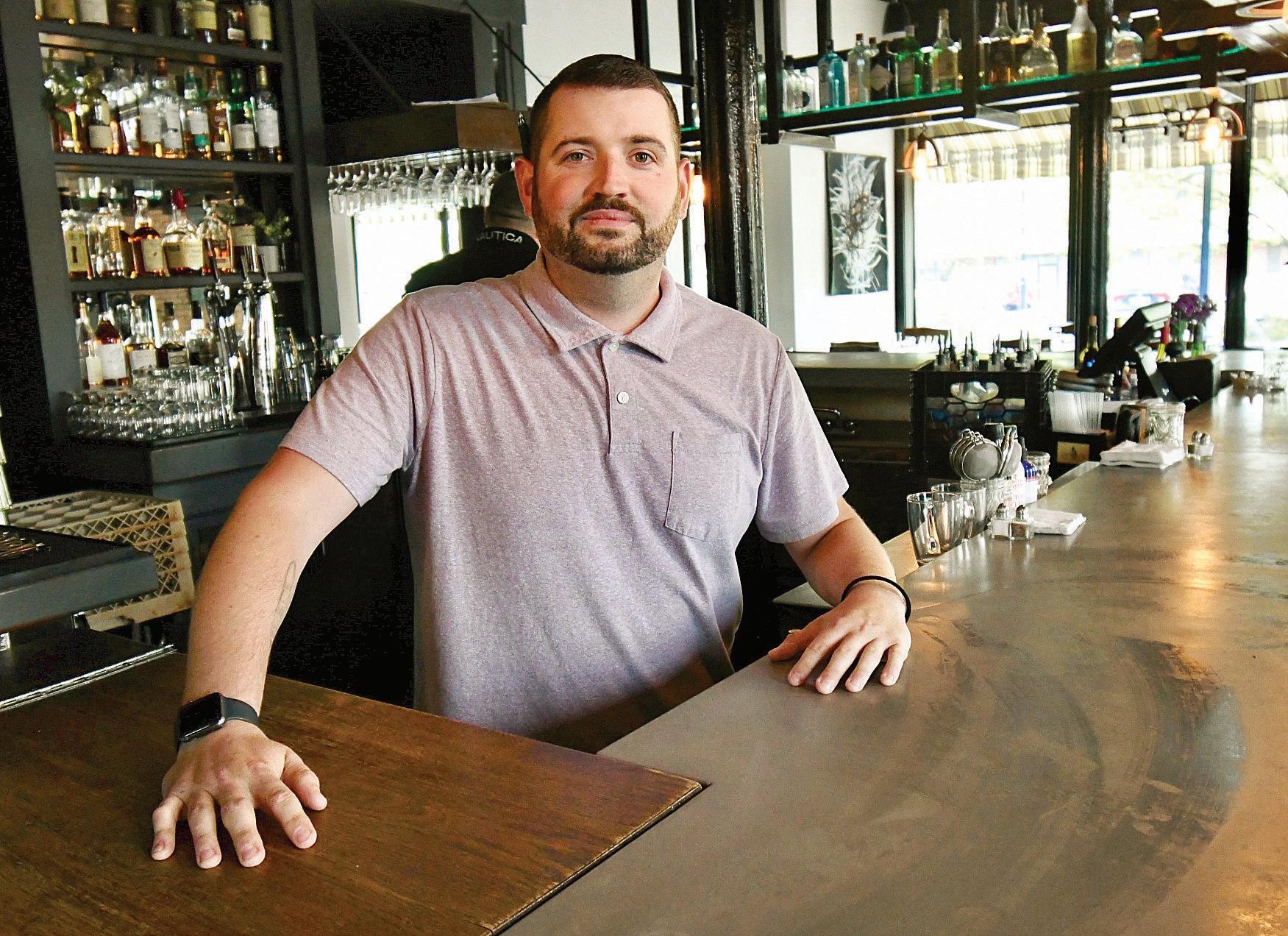
General Manager C.J. Garner remembers the shutdown well, “like it was yesterday.”
“I remember watching [the pandemic] slowly getting closer, not knowing what’s next,” Garner said. Then the shut-down came and the restaurant closed. At first that was it. No other concrete information was coming, with management, kitchen staff and servers

sidelined along with nearly everyone else in the country.
“We had lots of questions, but no answers,” Garner said. “Customers and workers kept calling with questions, but we had no answers.”
After a couple of weeks, with no end in sight, “we had to lay off a lot of employees. When we could reopen some of them came back. Others went in a different way.”
When the state moved to allow take-out and delivery
food service, Garner said Public jumped in with both feet.
“We quickly pivoted to a take-out restaurant,” he said. A few weeks later, Public was permitted to serve patrons indoors, but at only 25 percent capacity. A restaurant depends on volume to achieve a slim profit margin. At 25 percent capacity, that slim profit margin could not be seen.
“I hated it,” Garner said. “I did not want to come to work.”
But he did, and steered Public to embrace the only options it had. Garner said that if it wasn’t for his regular customers who continued to patronize the eatery, and dedicated employees who kept the kitchen running, they wouldn’t have made it through the COVID onslaught.
Partitions were required to prevent cross contamination of the virus, and lots of eateries were forced to mount plexiglas barriers to separate the tables.
Garner said that didn’t do much for the ambiance — “it was horrible to look at”, he said. But everyone took it in stride including the customers.
“It made us that much more grateful to the folks that did come out, first for take-out, and later coming inside for dinner,” Garner said. “We’re very fortunate to have a strong regular crowd.”
The pandemic created new eating habits. Garner has noticed that customers either don’t go out as often, or just get take-out. And now, Garner said he’s grappling with higher wholesale food prices and is
Berkshire County Arc presented its employee of the year and employer of the year awards recently at the agency’s 68th annual meeting, which took place before over 250 people at Berkshire Hills Country Club.
Tracy Babcock received the employee of the year award while Drury High School was recognized as employer of the year. Orion Magazine was named business partner of the year; and Victoria Gritman, citizen advocate of the year. Achievement Awards were given to Patricia Butler, Robert Day and Daniel Connors; achievement in personal growth awards to Gloria Hunt and Eric Karlin; self advocate of the year awards to Maria Cardeno and Victoria Provencher; and citizenship awards to Ricky Ostellino and Alan Zurino.
Also receiving awards were: Justin Abbott, work achievement award; Michele McKeon, Carol Craighead, mission award; Cecelia Schnopp, Debra Jarck, ambassador award; and Tammy Walger, administrative employee of the year award.
Outstanding employee award winners included: Sharon Ireland, outstanding nursing employee; Alex Daley, outstanding employment services and community based day services employee; Joseph Nyamekeh, outstanding DDS residential services employee; Cody Ciepiela, outstanding family support/advocacy employee; and Bryce Solomon, outstanding day program employee.
President and CEO Maryann Hyatt also recognized Laurianne Bigelow for 30 years of service, and Janet Newbury for 35 years of service, as well as the employees who reached other milestones of 10, 15, 20, and 25 years at BCArc.
Berkshire Family and Individual Resources elected four new board members and honored several employees and organizations at the annual meeting of the corporation which took place recently at the Williams Inn in Williamstown.
The newly elected board members include Barbara Chaput, Jake Dabrowski, Dana Johnson and Marissa Kirchner, who were all introduced at the meeting. Rebecca Ritcher, an HR generalist at BFAIR, received a leadership award in recognition of her professional accomplishments. Isaac Otchere, residential house manager, received the Crosby/ Quintal Memorial Award. Bill Hensley and Matt Girard both received the Edward Frampton Award, which is presented to people served in recognition of self-determination and accomplishing personal goals.
Employees Terry Blair, Liz Rolland, Nancy Torres and Jackie Thomas were each recognized for their 25 years of service and their commitment to people with disabilities receiving support from BFAIR.
Berkshire Scenic Railway was presented with a community partner award for hosting a high school intern receiving services through BFAIR’s preemployment training program.
In recognition of his prior years of board work and role as chair, Alex Kastrinakis was presented with the book “Inclusion Is” by Brittany Dorwin on behalf of “We are The People,” a self-advocacy group that created the book.
Fairview Hospital has been named a recipient of the 2023 Outstanding Patient Experience Award by Healthgrades, a marketplace that connects people with the right doctor and hospital. This is the 11th consecutive year that Fairview has received this award. The
distinction places Fairview Hospital among the top 10 percent of hospitals nationwide for patient experience, according to Healthgrades,
For this annual analysis, Healthgrades evaluated 3,138 hospitals that submitted at least 100 patient experience surveys to the Centers for Medicare and Medicaid Services, covering admissions from January through December 2021. Of those hospitals evaluated, 419 hospitals outperformed their peers — based on their patients’ responses — to achieve this award.
Haddad Subaru has donated $18,500 to the Berkshire Humane Society after receiving the 2023 Subaru Love Promise Customer and Community Commitment Award from the automotive company.
Subaru New England’s Joe Altavilla, Josh Enderle and Patrick Winther presented a check to Berkshire Humane Society Executive Director John Perreault May 25 during a ceremony at the dealership.
The award nationally recognizes elite Subaru retailers who provide an exceptional customer experience at every interaction with Subaru.
The funds were raised by Subaru having donated $250 for every car sold at the Pittsfield dealership between November 2022 and January 2023.
In Subaru’s Love Promise program, each company dealership takes on as many local charities as they choose to not only support monetarily but also donating time and energy. Haddad Subaru has a longstanding relationship with the Berkshire Humane Society.
The state Attorney General’s Office has amended the filing requirements for small charities. Online filing is now required for all charities in Massachusetts.
Charities with annual gross support and revenue of $25,000 or less are no longer required to submit federal form 990 to the state Attorney General’s Office.
All charity registrations and annual filings must be submitted online starting Sept. 1 through the online charity portal, which was launched in 2022. The AG’s Office will no longer accept paper submissions
In a news release, state Attorney General Andrea Joy Campbell said the measure is intended to ease the administrative burden on smaller charities.
“This is a big step forward,” said Jim Klocke, CEO of the Massachusetts Nonprofit Network. “It will give small non-profits a clear, manageable path for reporting and transparency, without overburdening them.”
To support the sector through this transition, the nonprofit organizations/ public charities division will run several in-person filing clinics at locations around the state and will host monthly online webinars to demonstrate the use of the charity portal and respond live to questions from users about the filing process. Information: www.mass.gov/orgs/ office-of-the-attorney-general.
The Appalachian Trail Conservancy held a ceremony June 17 to formally recognize Lee as an Appalachian Trail Community — one of five newly designated communities.
The ceremony took place in the pavilion in the Lee Town Commons.
This designation adds five more towns to the existing 51 A.T. Communities along the Appalachian corridor, which have demonstrated their readiness to partner in efforts to drive resilient rural economies, encourage recreation access,

and engage in conservation planning. Designated towns provide food, supplies, information, and recreational and volunteer opportunities to visitors of the Appalachian Trail.
The Appalachian Trail is a 2,190mile long hiking path that stretches through 14 states from Georgia to Maine. The entire Massachusetts section of the Appalachian Trail is located in Berkshire County.
The four other new communities are located in Boonsboro and Brunswick, Md., and in Bluemont and Hillsboro, Va. Designation ceremonies at those sites also took place during the month of June.
Fitch Ratings has affirmed at A+ the issuer default rating for Berkshire Retirement Community, which does business as Kimball Farms Life Care
The ratings service has also affirmed the A+ rating on the approximately $11 million in first mortgage revenue bonds issued by the Massachusetts Development Authority on behalf of Kimball Farms.
The A+ rating reflects Kimball Farm’s very strong financial profile, which is supported by a significant liquidity position and excellent demand and operating indicators. The community has maintained a strong market position, characterized by a quality reputation, that historically helped it maintain independent living unit occupancy at or above 93 percent.
In fiscal 2022, the community’s ILU (independent living unit) occupancy softened due to higher-than-expected generational attrition. Management has since hired outside consultants and expects a return to historical levels by the end of fiscal 2023. Kimball Farms has a history of strong cost management with a five-year average operating ratio of 82.1 percent.
Kimball Farms, which operates two facilities in Lenox, is part of Pittsfield-based Integritus Healthcare, formerly Berkshire Healthcare Systems.
The Pittsfield Public Schools and the Hoosac Valley Regional School District are among 13 state school districts that have received grants from a Boston-based foundation to implement the organization’s one-on-one, virtual powered literacy tutoring for 3,000 first graders this fall.
The One8 Foundation, a venture philanthropy foundation, describes its initiative, “Ignite! Reading,” as a “high-dosage tutoring program that teaches students to read at twice the rate expected in traditional classrooms with no achievement gaps.”
Ignite! Reading began operating in Massachusetts early in 2022 through a pilot program with the Worcester Public Schools. That district expanded its work with Ignite to reach over 350 students during the 2022-23 school year.
Two local programs produced on Pittsfield Community Radio, WTBR-FM (89.7) have received Hometown Media Awards in a national contest conducted by the Alliance for Community Media.
“Backstory: Let’s Hear it,” produced by Roberta McCulloch-Dews, and “Berkshire Sports Now,” hosted by Robbie Zucker and Sean Cronin, were chosen out of nearly 1,000 submissions as the best in their categories.
“Backstory,” a one-hour radio program produced and hosted by McCulloch-Dews, won in the government profile community radio category. This is WTBR-FM’s second consecutive win in the category.
“Berkshire Sports Now” was chosen as the best in the entertainment and arts
community radio series category.
The Massachusetts Museum of Contemporary Art recently received a fiveyear $650,000 Leadership in Art Museums grant from a consortium of foundations.
The grant accelerates Mass MoCA’s commitment to racial equity by supporting new leadership positions. The foundations include the Alice L. Walton Foundation, Ford Foundation, Mellon Foundation, and Pilot House Philanthropy.
The funding will support the creation of two new leadership positions within Mass MoCA: a director of public programs and engagement — the first in the museum’s nearly 25-year history — and an additional full-time curator. Mass MoCA is one of 19 recipients of this grant which includes museums in Boston, Chicago, Los Angeles and Miami. Mass MoCA appointed Lisa Dent as its inaugural director of public programs in January. The new curator, as yet to be appointed, will join the visual arts department — currently composed of three full-time curators — and will report to Chief Curator Denise Markonish. A search will begin for this position in 2025.
Berkshire Community College will be offering a completely online option for associate degrees and certificates in business and liberal arts.
The two programs, which will be available to students this fall, support the MassTransfer program — allowing easy, seamless transfer from BCC to a fouryear state school.
The business program offers an associate degree in business administration, an associate degree in business careers and a certificate in entrepreneurship. The degrees are “stackable,” allowing students who earn a certificate to move into an associate degree, or enter into an associate degree and decide the certificate best suits their needs.
The liberal arts program offers associate degrees in biological science, elementary education, liberal arts, psychology concentration and sociology concentration.
Information: BCC Admissions Office, onestop@berkshirecc.edu, 413-499-4660.
The Center for Advanced Manufacturing at the MassTech Collaborative has launched a new online portal that creates a single “digital front door” for state companies that are preparing proposals to the federal CHIPS Act, the $50 billion dollar federal initiative designed to “strengthen and revitalize the U.S. position in semiconductor research, development and manufacturing.”
Some federal funding opportunities under the CHIPS Act, such as the Notice of Funding Opportunity for Commercial Fabrication Facilities launched in late February, require applicants to identify state or local incentives within a company’s application for federal grant funding.
The center, in partnership with the state Executive Office of Economic Development, the Massachusetts Office of Business Development, and numerous other state agencies, launched the new portal to streamline the process for Massachusetts-based organizations to identify, engage with, and access state funding programs.
It will help them develop a complete application with the inclusion of a letter from the state reflecting its offer to provide a qualifying covered incentive for a proposed project.
Information: cam.masstech.org/.
Twenty-two seniors at Berkshire County high schools have been selected by Pittsfield Cooperative Bank as BUSINESS UPDATES, Page 3
recipients of the 2023 Conrad Bernier Memorial Scholarship.
All of the students who were selected have shown a commitment to the community, are in good academic standing, and will be attending a college or university in the fall.
This year’s recipients include: Randi Duquette, Jamie Duquette and Jacqueline Roccabruna from Pittsfield High School; Holly Scarfone, Leena Schettini and Nicholas Guachione from Taconic High School; and Owen Salvatore, Zander Walton, Holden Kotelnicki, Paul Kinney, Sarah Curti, Adriana Bailey-Henry, Jayden Rider Speth and Ava Rose from Wahconah Regional High School.
Also receiving scholarships were Makayla Schuerer from Lee High School; Emmitt Shove, Ella Kelly and Medeja Rudzinskaite from Lenox Memorial High School; Lille Blechman, Sofia Bernal, and Isabella Viola from Monument Mountain Regional High School; and Tyler Sermini from Mount Everett Regional High School.
The bank’s scholarship program was renamed the Conrad Bernier Memorial Scholarship last year to honor the bank’s late president and CEO, who served in that position from 1995 to 2001, and as chairman of the board until 2020.
Isabella Lovato and Lindzie Johndrow have been named the 2023 recipients of the Lee Chamber of Commerce’s annual student scholarships.
The two graduating seniors will each receive $1,000 academic grants that will be applied to their costs of continuing education after high school. These grants are awarded yearly by the chamber to student graduates who live in Lee and plan to attend a college or trade school.
This is the 14th year the Lee Chamber of Commerce has awarded scholarships to Lee residents. The awards are based on scholarship, and scholar/athlete achievements. Revenue generated by the chamber’s annual golf tournament provides the funds for the grants.
To qualify for the Marie Toole Academic Scholar Award a student must have a GPA of 3.5 or greater. The Joe Sorrentino Scholar/Athlete Award is awarded to a student who demonstrates athletic and sportsmanship accomplishments and has maintained a GPA of 3.0 or greater.
Tia Paul Kareh of Hoosac Valley High School was one of five students who were awarded 2023 Barbara J. Sinnott Student of Integrity Scholarships from the Better Business Bureau of Central New England’s Consumer Education Foundation
Each of the awardees was selected for demonstrating a commitment to ethics and other values in line with the mission of the Better Business Bureau, such as trustworthiness and leading with integrity.
The scholarship honors students not just for what they have done, but how
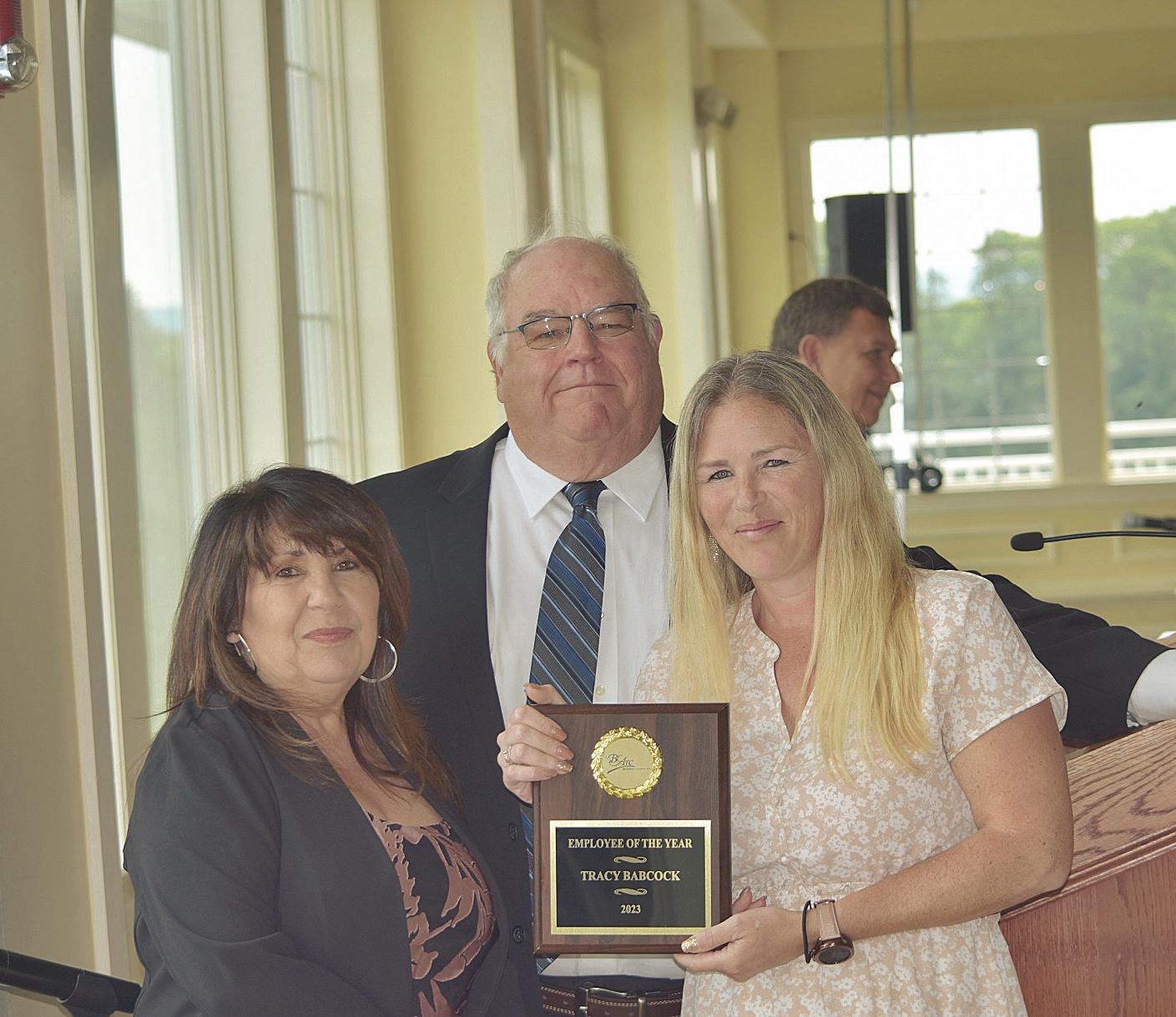
they have done it. Each of the five students will receive a $1,000 scholarship to be used for the expenses associated with the costs of attending college.
Kareh was the only student from Berkshire County to receive a scholarship. She will be attending Massachusetts College of Liberal Arts in North Adams.
The Berkshire Community Diaper Project has received a $7,000 grant from The Gilson Family Foundation of Marblehead.
The funding will allow the organization to purchase more than 41,000 diapers, which will be distributed to low-income families through 23 partnering agencies.
The funds will also help the group meet the ever-increasing need for diapers, and support underserved communities in their efforts to utilize opportunities and increase achievement.
The Gilson Family Foundation focuses on the needs of the people of Massachusetts, in the areas of health, arts, culture and humanities, animals and human services.

Berkshire Medical Center has received a five-star rating for outpatient total knee replacement from Healthgrades, a leading marketplace connecting doctors and patients, according to Berkshire Health Systems, parent company of BMC.
Healthgrades analyzed patient outcomes at short-term acute care hospitals throughout the country that offer joint replacement on an outpatient basis. This analysis included years 2019 through 2021 to identify the top-performing hospitals for outpatient knee replacement.
According to Healthgrades, patients undergoing outpatient knee replacement at five-star rated hospitals have, on average, a 76.2 percent lower risk of experiencing a complication than patients treated at hospitals with onestar ratings. Those statistics are based on Healthgrades analysis of SAF data for years 2019 through 2021 and represent three-year estimates for Medicare patients only.
For more information on how Healthgrades identifies the nation’s top hospitals for outpatient orthopedic surgery, see the 2023 Outpatient Specialty Excellence Awards and Ratings Methodology.
Cheryl Reynolds of Fairview Hospital in Great Barrington recently received the New England Physical Therapist Assistant Consortium Clinical Faculty Award from Berkshire Community College.
Presenting the award were BCC PTA program coordinators Michele Darroch and Nicole Tucker, and clinical education coordinator Judy Gawron. Victoria Guy, director of rehabilitation services at Fairview Hospital, joined other rehabilitation staff in attendance for the recognition.
Reynolds has been a physical therapist assistant clinician for 39 years and a clinical instructor for 30 years at Fairview Hospital.
She has worked closely with BCC PTA students for decades, providing meaningful and challenging clinical experiences while adapting to the specific learning needs of each student. She has guided students at each level of clinical education and is known for excelling in matching the expected performance to the individual student.
NEPTAC is a voluntary, nonprofit organization of the member physical therapist assistant education programs in the New England states.

From the Binghams to the Plumbs to the Fitzpatricks, The Red Lion Inn’s rich history has been
By Tony DoBrowolski
STOCKBRIDGE — The Red Lion Inn has a long and colorful history, as befits one of New England’s quintessential lodging establishments
But there’s a part of that story that’s often overlooked. It’s the Red Lion’s long legacy of female ownership, which goes back almost as far as the inn itself, whose origins date back to the late 18th century. Ownership considers 1773 as the inn’s founding date, which is why the Red Lion is celebrating its 250th anniversary this year.
This legacy of female ownership starts with Anna Bingham, who founded what became the Red Lion Inn with her husband, Silas, then became the sole owner under unusual circumstances for her time following her husband’s death. She later became the first female litigant to appear in front of the U.S. Supreme Court.
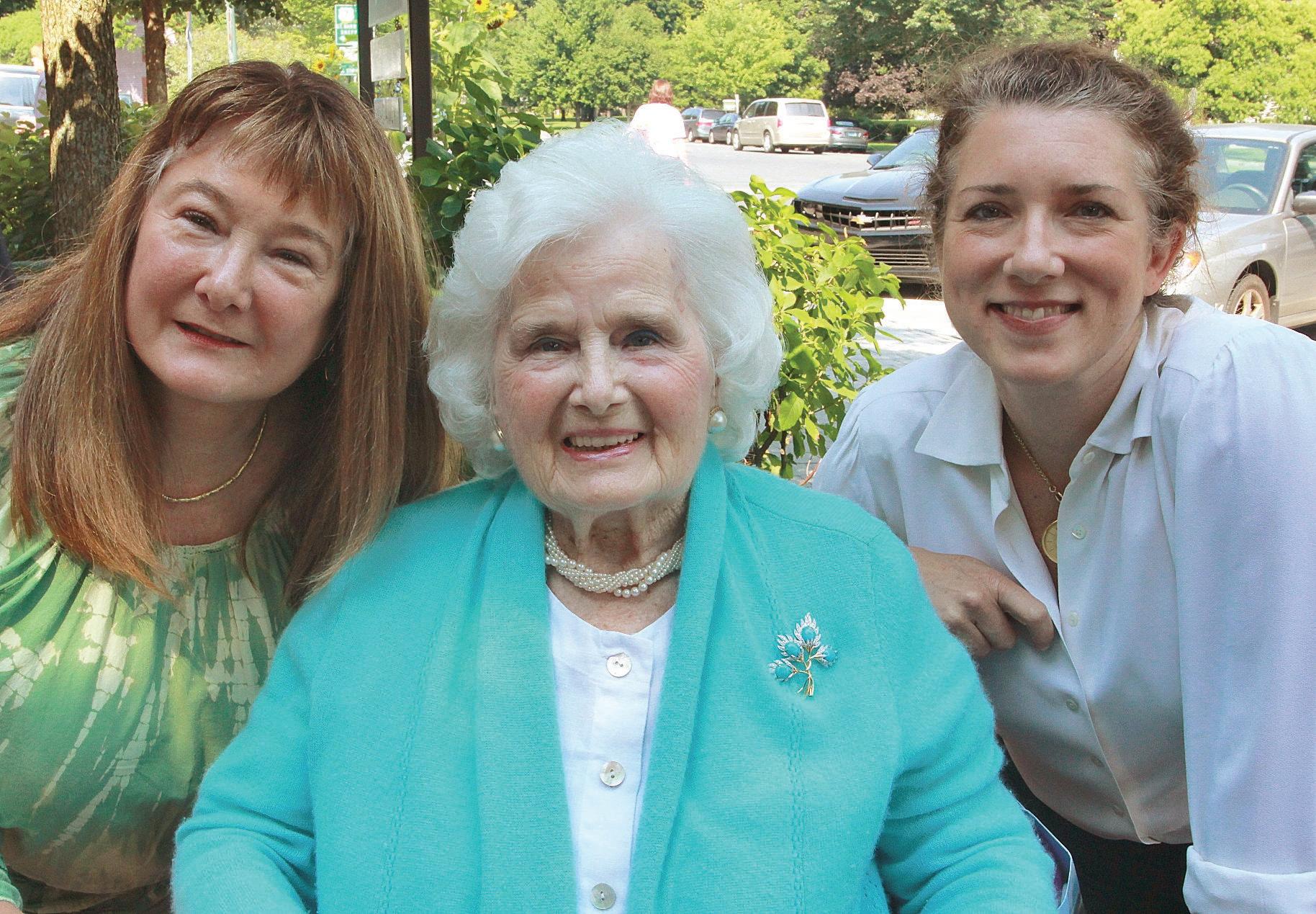
More recently, the Red Lion Inn has been run by three generations of women owners from the Fitzpatrick family, which saved it from the wrecking ball in 1968. The influence of those three, the late Jane Fitzpatrick, her daughter, Nancy, and Nancy’s stepdaughter and current owner Sarah Eustis is visible in the inn’s current operation.
In between the the Binghams and the Fitzpatricks there was Mert Plumb, who
with her husband, Charles, became the Red Lion Inn’s owners in 1862.
She is remembered mostly for her large collection of Colonial china, pictures, wearing apparel and furniture, which are still among the vintage antiques that can be found in several areas of the lodging establishment. The inn was known as the House of Plumb under their ownership.
Eustis is the president and CEO of Main Street Hospitality, which manages the Red Lion Inn (the inn itself is still owned separately by the Fitzpatrick family). The Fitzpatrick women are a very determined bunch, she said.
“The women in our extended family have always set out to do whatever they wanted to do and have done it,” she said, referring to the Fitzpatrick’s ownership of the Red Lion Inn, “with the support of the men in the family.”
Eustis is well aware of the influence that decades of female ownership have had on the Red Lion Inn through its long history.
“A lot is being discussed right now about how female ownership is unique,” Eustis said. “This is just me just putting my point of view out there, but this place has always been a place for gatherings, for convergence, for family, for feeling cared for and reassured, a place of safety and refuge, a place where the details matter.
“These are all things that as women
By John Townes
The COVID-19 pandemic effected several sectors of the Berkshire economy, and one of them was the local bicycle scene.
Several changes have taken place. At least two new bicycle businesses have opened in the Berkshires, a long-time Pittsfield bike store has been taken over by the California-based group that purchased Kenver Ltd. in South Egremont two years ago, and Berkshire Bike & Blade, which has outlets in Great Barrington and Pittsfield, opened another store in Connecticut.
The pandemic and all its related effects have been a boon for local bicycle sellers, according to Paul Rinehart, who owns The Spoke in Williamstown. The peak of the pandemic was followed by a sharp rise in gas prices — the average gas price in the Berkshires was just under $5 a gallon at this time a year ago — which led many residents to seek a different mode of transportation.
“In the bike industry, it’s long been said that higher gas prices are a condition for increased sales,” said Rinehart, who has been in business since 1984. “But, in the past that’s not necessarily happened. Periods of rising gas prices did cause more people to use bicycles. But instead of buying new bikes, people who wanted to save money often brought out bikes they already owned and used them.”
But this time the rising gas prices — which skyrocketed after Russia invaded Ukraine in February 2022 — combined with the pandemic’s after effects led to an increase in bike sales, too.
“This time the circumstances were unique, because it coincided with the
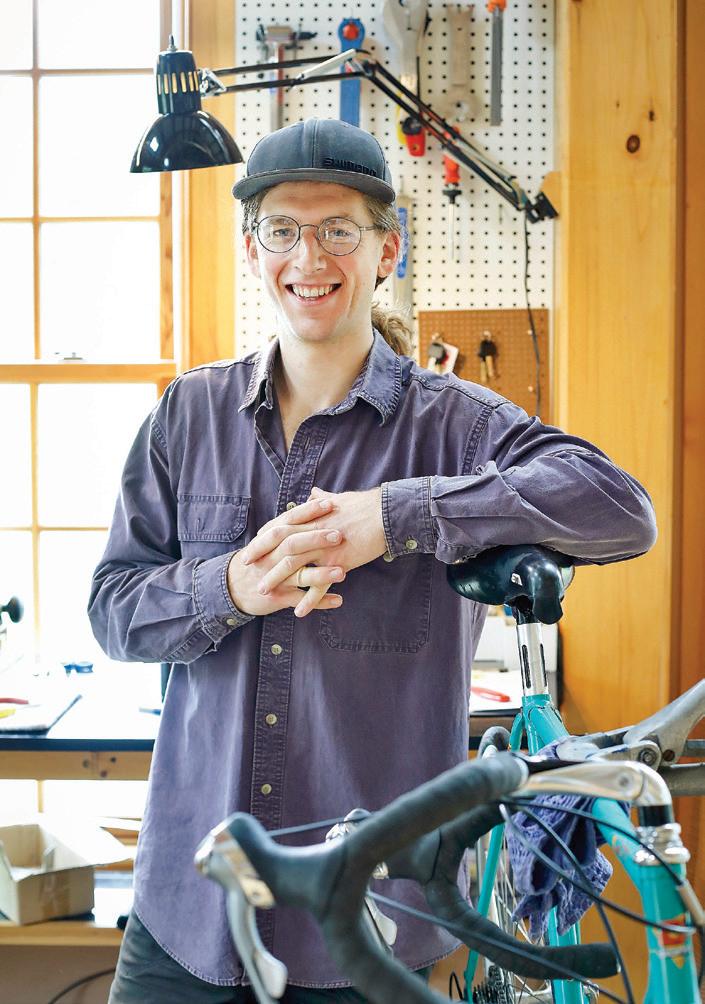
Joshua Webb, who recently opened True Wheels, a bicycle shop in Sheffield, had always wanted to run this kind of a business.
pandemic,” Rinehart said. “People had more time, and they were also looking for relief from the isolation and restrictions. Many bought bikes because they were looking for a safe recreational activity that did not involve crowds. It was an opportunity to get out into clean open air and exercise.
“For a period, there was a period of high demand for bikes but shortages of inventory,” Rinehart said.
CYCLING, Page 6
that we care deeply about and I think that we are naturally good at manifesting,” she said. “Not that men aren’t good at that, too. But, I think that kind of ethos has run through (the inn).
“I think the female leadership of this place has promoted that kind of culture,” she said. That culture started with Anna Bing-






FROM PAGE 4
ham, who by all accounts, was quite different than other women of her time. Born in Watertown in 1745, she moved to the Berkshires with her family at the age of 18. Two years later, she was tried and found guilty of the crime of fornication when she gave birth to a son out of wedlock. (She pleaded guilty and was fined 13 shillings and 4 pence.)
Two months after the trial ended she married her first husband, Thomas Orton Jr., a minister’s son, who helped her raise her baby. It has never been determined if Orton was the father of her child, or what ended that marriage, but in 1773 she married Silas Bingham.
According to articles written by two local historians, Carole Owens of Stockbridge and the late Lion G. Miles, the Binghams did not actually begin operating a tavern on the site that became the Red Lion Inn until 1775 when they moved to Stockbridge.
In his article, “Anna Bingham: From the Red Lion Inn to the Supreme Court,” which is on file at the Stockbridge Library, Miles addresses the confusion with the Red Lion’s Inn’s starting point by stating, “Berkshire County tradition for the past 100 years has assigned 1773 to the founding of the Red Lion Inn.”
The first recorded mention of the inn, known then as Bingham’s Tavern, was a 1778 advertisement in a Connecticut publication, according to Miles. The Binghams continued to run their inn together until 1781 when Silas Bingham died. Anna Bingham was her husband’s natural heir, but in 18th century Massachusetts, property didn’t transfer seamlessly between couples if the husband died.
“There’s a law against a woman having a taverner’s license,” said Owens, who has written about Bingham in her book, “Remarkable Women of New England: The War Years 1754 to 1787.”
According to Owens, Bingham sent the authorities a letter “begging” them to allow the license to be transferred to her.
“She uses a very persuasive argument for that time in history,” Owens said. “My husband left me a large white house on the corner and he would want me to continue to run it as an inn and tavern.

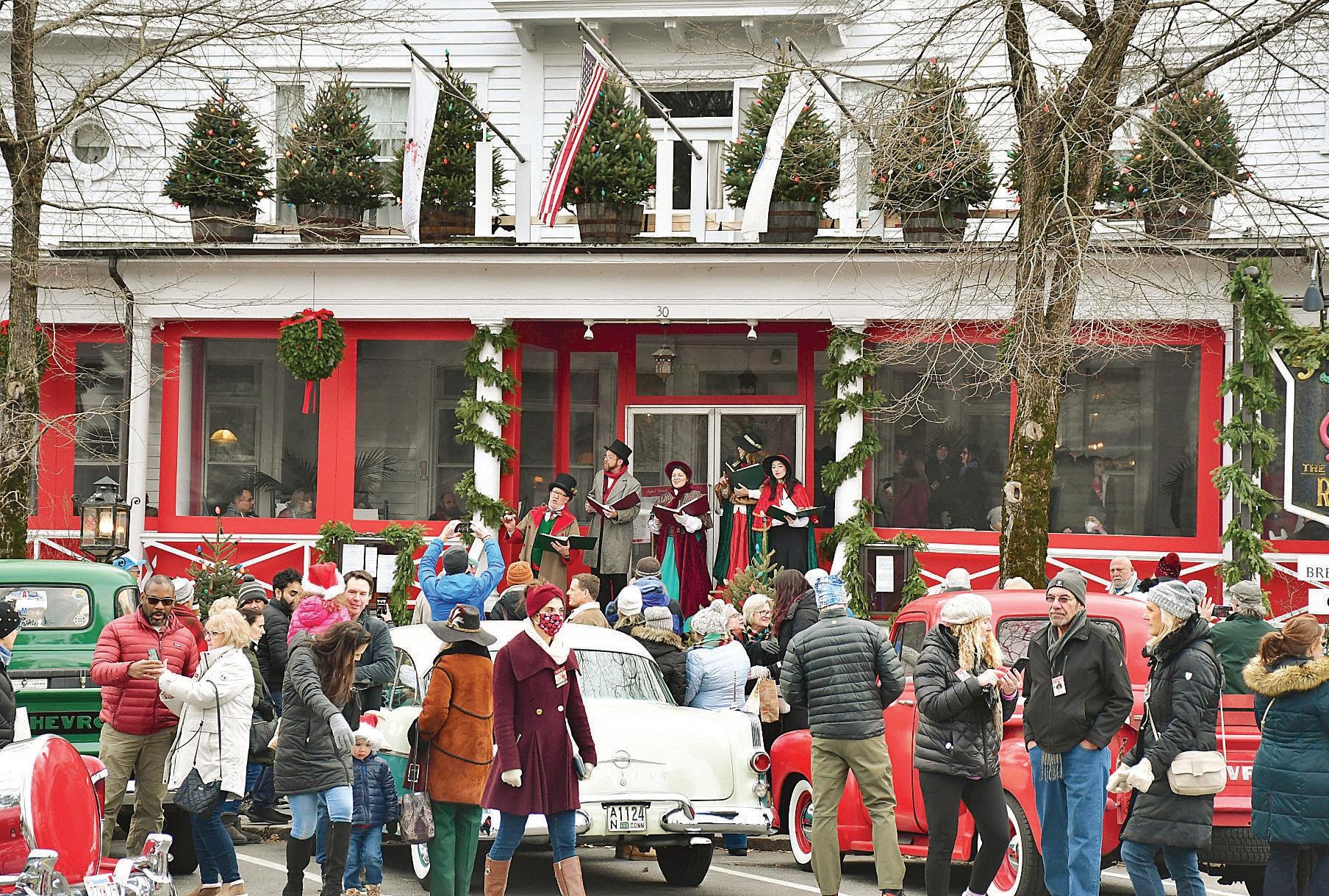
The Red Lion Inn has been around for 250 years, but often overlooked in its rich history is the lodging establishment’s legacy of female ownership.
“Her husband. From the grave!” Owens said. “They’re not going to listen to a request from a woman for God’s sake. Women in the 1770s had no presence in court. They had no rights under the law. Her rights were only her husband’s rights.”
According to Miles, Anna Bingham obtained permission from the Stockbridge Selectman to petition the General Court in Boston to grant her the taverner’s license, but her request was rejected. So she went back to the Selectmen a second time. They agreed to back her again, and Bingham re-petitioned the General Court.
The state agreed to reconsider her case, and on Feb. 23, 1782, empowered two justices of Berkshire County to issue her the license.
“Anna Bingham becomes the first woman certainly in Berkshire County, and as far as I know in Massachusetts, to have a taverner’s license,” Owens said.
According to Miles, Bingham was the also the first woman business owner in Berkshire County. A dispute over financ-
es with an entrepreneur from Hudson, N.Y., is what landed her in front of the Supreme Court twice, the second time in 1797, as she sought to overturn a judgment from the Circuit Court that had originally awarded her adversary $5,000, according to Miles. She lost both times.
Bingham continued having financial problems before and after her Supreme Court appearances, which caused her to lose her taverner’s license in 1793 — she actually operated Bingham’s Tavern illegally for a year, according to Miles.
In 1807 she sold what was then an eight-room inn to Silas Pepoon, who had been one of her co-defendants in the case that ended up before the Supreme Court, A string of owners, all male, followed Pepoon, until the Plumbs came along in the mid-19th century. Mert’s vast collection of items changed the inn’s ambience. The inn “became a museum-like repository of antique furniture, crockery, pewter and teapots,” according to one written account.
“This collection of furniture, china,

A free monthly publication by The Berkshire Eagle 75 South Church Street, Pittsfield, MA 01201 Visit berkshirebusinessjournal.com for advertising information and to subscribe.
NEWS DEPARTMENT
TONY DOBROWOLSKI, Editor 413-496-6224 tdobrowolski@berkshireeagle.com
ADVERTISING DEPARTMENT
KATE TEUTSCH, Director of Ad Services 413-496-6324 kteutsch@berkshireeagle.com
CHERYL GAJEWSKI, Director of Ad Sales 413-841-6789, 413-496-6330 cmcclusky@berkshireeagle.com
Share your news with the Berkshire Business Journal. If you have a company promotion, a new business or a new venture, let the Berkshires know about it. Remember the 5 W’s and that briefer is better. Email text and photos to BBJ@newenglandnewspapers.com. Provide your expertise in the Berkshire Business Journal. Do you have the answer to a persistent question about business and the Berkshires? Do you have ideas and suggestions on how our business community can grow?
If you have a comment to make about doing business in the Berkshires or if you’re looking to raise an issue with the business community, this is the venue for that. We welcome letters up to 300 words and commentary up to 600 words. Send these to Tony Dobrowolski at tdobrowolski@berkshireeagle.com.
Berkshire Business Journal is published monthly by New England Newspapers Inc., 75 S. Church St., Pittsfield, MA 01201. Periodicals postage paid at Pittsfield, MA 01201. Berkshire Business Journal is delivered free to businesses in Berkshire County via third class mail. Additional distribution is made via dropoff at select area newsstands. The publisher reserves the right to edit, reject or cancel any advertisement at any time. Only publication of an advertisement shall constitute final acceptance of an advertiser’s order. All contents are copyrighted by New England Newspapers Inc.
Fortunately, he said, that situation has been largely corrected.
The two new Berkshire bike shops are True Wheels in Sheffield and Bike Man’s Affordable Bike Repair in Pittsfield.
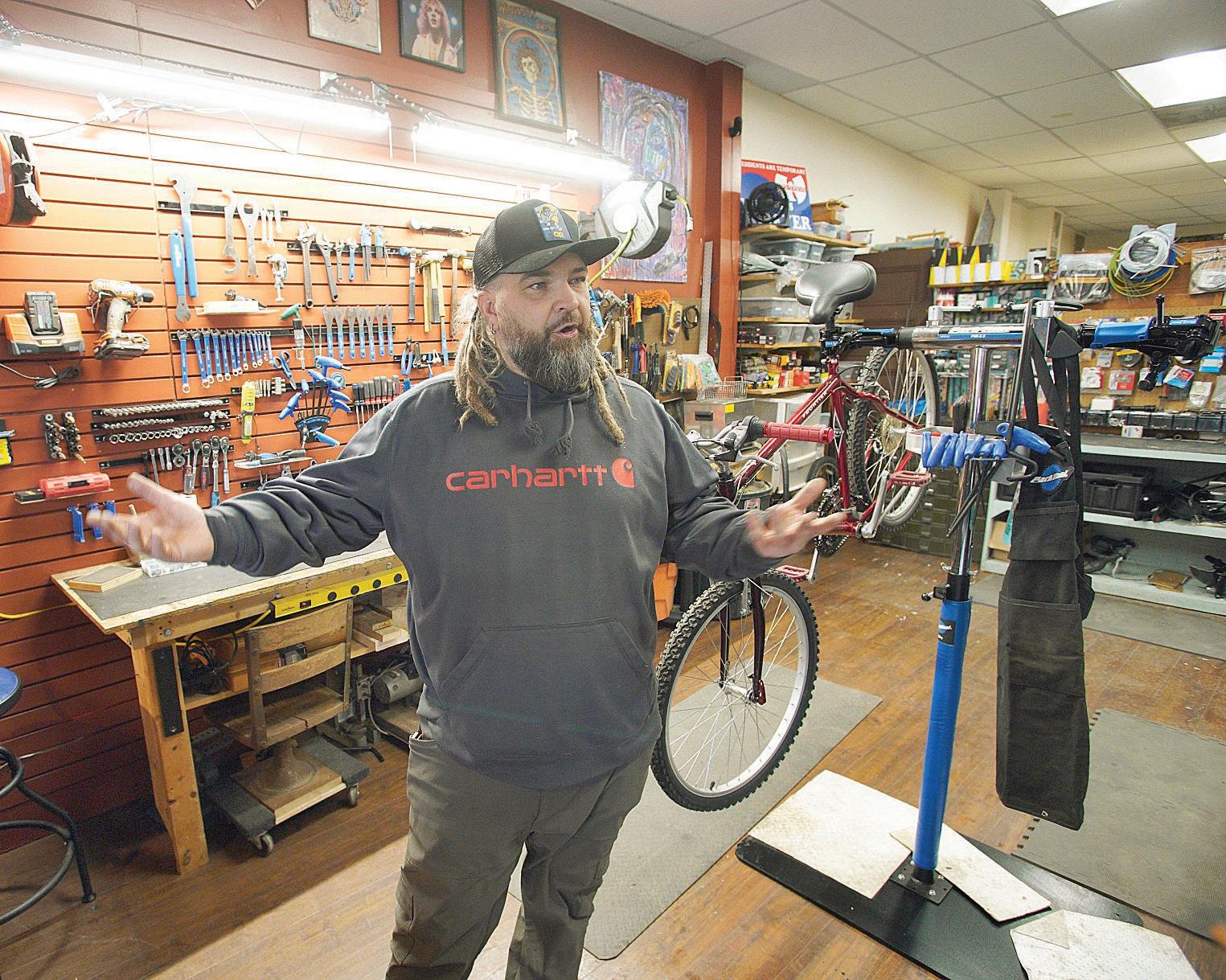
Bike Man’s Affordable Bike Repair opened in April in a storefront at 441 North St. that is also the site of The Funky Phoenix. Owners Gary and Kristina Cardot, who opened the Funky Phoenix in 2015 as a retail store and workshop, added bicycles to their businesses’ unique repertoire when the pandemic affected the store’s operation.
Their original business combined Kristina’s background as an artist with Gary’s mechanical and carpentry kills to make and sell creative, one-of-a-kind furniture and home décor made from up-cycled and repurposed objects. They refer to themselves as “salvage artists”, people who take discarded materials and turn them into everyday items with a creative spin.
“We had been able to survive before, but it became extremely difficult with the pandemic, because we couldn’t open the shop and shows we had planned to attend were cancelled,” Gary said.
It was during that time that Gary rekindled a long dormant passion for cycling.
“I had done a lot of it when I was a kid, but I stopped when I got my driver’s license,” said Gary, who grew up in southeastern Connecticut. “Then during the pandemic, I bought a bike, and everything changed. I became totally absorbed with bikes and cycling.”
Bike Man’s Affordable Bike Repair is a for profit business. It offers bicycle repair services and sells refurbished used bikes (used bikes are priced at under $250). But the the company also has a social mission to make cycling as accessible to as many people as possible. In that spirit, the Cardots have set up a sliding scale for those who cannot afford the full cost of their services.
“We’re very community oriented, and this is something we can do to help make life better here,” Kristine Cardot said.
Bike Man’s Affordable Bike Repair had standard rates for specific repairs. It also offers three overall maintenance packages, from a $75 “select service” option that includes cleaning, lubrication, and adjustments to a $249 “Topshelf” complete refurbishing package in which a bike is dismantled and rebuilt in top condition. A portion of the standard price is used to help cover the cost of the sliding scale jobs. People who are financially able can also voluntarily donate an additional amount for that purpose.
“The price is actually a suggested donation, as reimbursement for labor and for parts,” Gary said. “We obviously prefer that people pay the full amount if they are able to. However, we recognize that not everyone can afford that, so we have a sliding scale. If someone honestly can’t afford the full amount, we offer services on a pay-what-you can basis.”
As he got back into cycling, Gary also became involved in related community activities like forming public bike rides. He’s also become involved in efforts to expand the network of bike paths and access to roads and streets for cyclists. Bike Man’s Affordable Bike Repair also provided public safety checks of bicycles in front of the shop last year. Cardot also became the coach of a middle school cycling club.
All of these moves gave the Cardots an idea for a new business that would utilize Gary’s interest in cycling with the skills he had gained in the military and private sector as a professional mechanic.
“I’m an entrepreneur and saw a need that would serve the demographics in this market,” he said.
Pittsfield has a significant population of low and moderate income residents who need access to bicycle and maintenance services that they can afford,” Gary said. Cycling is more than just a recreational activity for people who fall into these categories, he pointed out.
“There are people who rely heavily on bikes,” he said. “Some depend on bikes as their primary form of trans-
portation, and their bike is essential for employment, mental health, or even survival.”
He added that for those on limited incomes, there are financial barriers to buying and maintaining bikes, especially in today’s high-end market. “They can’t afford to buy a new bike,” he said.
“Or if a bike they own breaks, it can be a real hardship.”
Since turning to bikes, the Cardots aren’t concentrating as much on salvage art, but the Funky Phoenix has retained elements of that genre . In addition to bike-related merchandise and the repair shop, the Funky Phoenix still displays and sells some art pieces, decorative items and other miscellaneous merchandise.
“We call it a bike shop with a unique flair,” Gary saud. “There’s not many bike shops where you can also buy incense or a piece of art or some of the other items we carry.”
Bike Man’s Affordable Bike Repair is open from 12 p.m. to 5 p.m. Friday and Saturday, and other times by appointment. Information: www.bikemanusa. org, 413-347-0571.
FULFILLING LONGTIME GOAL
In Sheffield, the pandemic also led True Wheels owner Joshua Webb to pursue his own longtime goal of owning a bicycle shop. He and his brothers Sam and Ben opened True Wheels at 292 South Main St. this spring. They rents electric bike, also known as e-bikes, and provide bicycle tuning and repairs.
The Webbs lived in New Hartford, Conn., which is just north of Torrington, before moving to Sheffield. The three brothers’ parents, Dale and Phyllis Webb, operate the Magic Fluke, a Sheffield business that makes handmade ukuleles. True Wheels is located in a section of the same building that houses the Magic Fluke.
The Webb family are long time cycling enthusiasts. The brothers went on long cycling trips while growing up, so opening a bicycle shop was a natural step for them.
Joshua joined a cycling club in college, and after graduation began to pursue his goal of opening a bike shop by working for Seven Cycles, a custom bike manufacturer, in Watertown.
He then took a professional detour, working as a lighting engineer at another company in eastern Massachusetts. In 2020 he moved back to Berkshire County and worked remotely for that same company during the COVID pandemic
“I didn’t like working remotely, and left that job with the lighting business,” he said.
Joshua then worked briefly with a group that was planning to open a bike shop in Wassaic, N.Y. But when that backers of that venture decided to pursue another type of business, Joshua left.
“I decided this was the time for me to go ahead open a bike business,” he said.
Joshua recruited his brothers, and they formed True Wheels LLC last year.
True Wheels offer rentals of e-bikes that augment the rider’s peddling with an electric powered motor.
The bikes they rent are made by the Priority brand. They are Class 3 e-bikes which are able to go up to 28 mph with motor assist.
“Priority is a unique brand because they have an innovative belt drive system that makes them very smooth and intuitive to ride,” noted Webb.
Their rates are $68 for a half-day (four hours) or $88 for a full day with a battery charger.
In general, customers start their rides at the store and take routes around Sheffield, Great Barrington and the surrounding area.
Webb added that the e-bikes can be transported to other locations by customers who have vehicles equipped with certain types of bike racks that are sturdy enough to hold them securely.
“We’re also willing to drop off a bike for someone, if they make arrangements,” said Webb.
True Wheels also does bike repairs and tune-ups. Joshua said the repair business is his first love.
“It seems that new innovations are
FROM PAGE 5
mirrors and other examples of early American household equipment is known far and wide as one of the most complete in the country,” stated a newspaper article published in 1927 that is in The Berkshire Eagle’s archives.
“Her teapot collection was extraordinary,”’ Eustis said, “and became the decorative feature at the Red Lion. We’ve retained that and celebrated it. I guess we could give her credit for establishing the foundation for what the inn really looks like and is today.”
Merts Plumb’s collection almost didn’t make it to the 21st century. A fire almost nearly destroyed the inn in 1896, but Mert’s collection was saved by her nephew and future congressman, Allen T. Treadway, and his assistant James H. Punderson, whose daughter Molly was Norman Rockwell’s third wife.
Mert Plumb bequeathed the inn to her nephew in 1916 when she died, 16 years after her husband. The Plumbs were members of the Treadway family that owned the inn for 90 years until the mid-1950s.
After another set of owners failed to make the Red Lion Inn a going concern, the lodging establishment was being considered for demolition when the Fitzpatrick family arrived on the scene in the late 1960s. Jane Fitzpatrick and her husband, Jack, also a future congressman, bought the inn in 1968, partly because they were looking for a site to house Country Curtains, a business
constantly being marketed in the industry, and I appreciate that” he said. “However, what brings me the most pleasure personally is restoring old bikes. I enjoy bringing them back to life and making them useful again. A bike doesn’t have to be fancy: What matters is that you get out and ride it.”
Currently True Wheels is a part time venture for the brothers. Joshua, who also works at the Magic Fluke, said they plan to expand the business over time. “We’re nimble and the space is flexible,” he said.
He noted that the business also plans to become active in the local cycling community, including advocacy on related issues.
“It’s important to increase the infrastructure for bicycling in south county, and we want to become involved in initiatives to advance that goal,” said Webb.
True Wheels is open from 9 a.m. to 5 p.m. Monday, Thursday and Friday. It is open weekends and other times by appointment (413-248-6177), and bookings can be made on its website. Information: 413-2480-6177, true-wheels.square.site.
Plaine’s Bike, Ski and Snowboard at 55 West Housatonic St. in Pittsfield, which had operated as an independent business for over 40 years, is now run by the OvareGroup of Los Angeles, which purchased Kenver Ltd., a long-time outdoor store in South Egremont, for $1.2 million in 2021, according to both a store employee and Marge Cohen, the president of the Berkshire Bike Path Council. The two businesses are being operated under shared management. The general manager of the Kenver store did not return emails and phone calls from the Berkshire Business Journal seeking further comment.
OvareVentures, the local entity that runs Kenver, has been aggressively expanding its presence in the outdoor recreation market by building, acquiring and investing in businesses that can benefit from OvareGroup’s marketing services.
In another recent change, Berkshire Bike & Board expanded into Connecticut in March when the company bought the former Bloomfield Bicycle and Repair Shop in Bloomfield, which is a suburb of Hartford. Founded in 1950, the Bloomfield store was Connecticut’s oldest bike shop, according to Bike News. Berkshire Bike & Board now operates four shops in three states, as it also has a store in Hudson, N.Y.
that they had recently started.
Although the couple owned the inn jointly, Jane Fitzpatrick was the driving force behind its operation, Eustis said.
“Even though Jack’s name was on the ownership it was really her energy, her influence, her standards for hospitality and detail that re-established the Red Lion Inn and in many ways still spreads through the inn today,” Eustis said.
Nancy Fitzpatrick continued the achievements accomplished by her mother, who died in 2013.
“She was the owner of record,” Eustis said, referring to Nancy Fitzpatrick. “She brought her own leadership style, design sense standards and added another layer on to the whole thing.”
Eustis had worked at the Red Lion Inn growing up, but the decision to succeed her stepmother as owner was not part of a preconceived family plan.
“It could have been that one of my brothers stepped up and said I really want to do this,” she said. “But it wasn’t at that particular point in their career or their lives when they really wanted to do it. So it’s not like there was some strategy around this being a female-led company.
“It just worked out that way,” she said. A modern touch combined with a nod to the past, and stewarded by several generations of women owners is what has made the Red Lion Inn what it is today.
“Nancy always said, ‘It’s hard work to keep things the same,’ “ Eustis said. “We’re staying modern by honoring this incredible history.”
PITTSFIELD — A career in real estate differs from most other jobs due to the unique nature of how agents are compensated. Unlike traditional jobs where individuals are paid for their time and efforts, real estate agents only receive payment upon successfully completing the main objective of selling a property. This process can take weeks, months, or even longer in certain markets. As a result, many home buyers and sellers entering the real estate market have questions about how compensation works.
sation serves two purposes: it ensures maximum exposure of the property to a wide range of buyers and it often eliminates the need for the buyer to have more funds available for the purchase of the home.
To comprehend real estate compensation, it is essential to first understand the key tool utilized in the majority of home purchases — the Multiple Listing Service, or MLS.
The Berkshire MLS functions as a comprehensive database of all the homes for sale in a specific region and includes among property details an offer of cooperation and compensation to other agents. It is maintained by the local Realtor association and makes a significant portion of this information publicly available, often feeding into popular home search sites.
When a seller lists their property with a member brokerage and adds it to the MLS, they gain access to a vast pool of potential buyers brought to the market by buyer brokers. This information is accessible not only to fellow agents but also directly to consumers via online searches, if desired. Consequently, buyers can collaborate with any broker and view and make offers on all homes available for sale.
When a seller initially puts their home on the market, the contract between the broker and seller specifies the “total compensation” or commission due upon completion of the sale. In Berkshire County standard contracts there is a separate section that indicates how much of that total compensation will be offered to any buyer broker who represents a willing and able buyer that ultimately purchases the property. This sharing of compen-
It’s important to note that the majority of mortgage lenders do not permit compensation to be added to home loans. Listing brokers’ offers of compensation to buyer brokers provide first-time and low-to middle-income home buyers with a better chance of affording a home and obtaining professional representation in the home-buying process. For many buyers, saving for a down payment is already challenging, and if they had to pay real estate compensation out-of-pocket in addition to closing costs, the dream of homeownership would become even more elusive.
The practice of listing brokers paying buyer brokers promotes efficiency, effectiveness, and accessibility for buyers from all walks of life. This practice has been a driving force behind the thriving American real estate market, contributing to several significant outcomes between 2010 and 2020. Consider these national numbers:
• 88 percent of home buyers were able to purchase their homes through a real estate broker.
• Total housing wealth increased by $8.2 trillion.
• An additional 6.3 million new buyers became homeowners.
According to research data from the National Association of Realtors for the 90 percent of sellers who use a broker, their homes typically sell for an average of 30 percent more compared to homes sold directly by owners. This means that someone working with a professional could potentially sell their home for $390,000 instead of $300,000 if they attempted to sell it independently.
The MLS manages the offer of compensation between agents and diligently ensures comprehensive property marketing. Through rules and compliance measures, the MLS also ensures


the accuracy and up-to-date nature of information, ultimately benefiting the public.
When sellers first list their property in the MLS, they, along with their broker, decide on the fee. Buyers can also choose to compensate their agents if that is preferred. It’s important to note that compensation is always negotiable, and consumers are encouraged to engage in discussions with potential brokers to understand their expected compensation and the services
offered in return, whether buying or selling. The parties then decide which company to hire and determine the amount they are willing to pay for the broker’s services. Sellers also participates in a discussion regarding the compensation to be offered to buyer’s brokers. Access to inventory and free advertising as well as the practice of the listing broker paying the buyer brokers’ compensation incentivizes participation in these local real estate marketplaces and creates
the largest, most accessible and most accurate source of housing information available to consumers. That levels the playing field among brokerages, allowing small brokerages to compete with large ones, and provides for unprecedented competition and benefits among the brokerage community as well as the buyers and sellers that they serve.
Sandra J. Carroll is the chief executive officer of the Berkshire County Board of Realtors and the Berkshire County Multiple Listing Service.
PITTSFIELD — Managing email can be a time consuming task especially for small businesses. But automation tools can help streamline the process and free up valuable time.
One tool that stands out is Zapier, an online automation tool with a wide range of capabilities, including email automation. In this column, we’ll explore how to leverage Zapier to automate email responses, allowing you to focus on reviewing and sending drafts.
your needs.

To begin, sign up for a Zapier account. Zapier offers a free tier that allows you to create up to five automated workflows, known as “zaps”, and run them up to 100 times per month. If you require more extensive usage, Zapier offers flexible paid plans to suit
Once you’re signed up, it’s time to set up the trigger for your email management workflow. For this guide, we will be focusing on gmail as the trigger app. Please note that due to Google’s security protocols, only business gmail accounts — those with a custom domain, like @ mywebsite.com — can fully utilize the gmail integration with Zapier. Select ‘new email” as the trigger event to initiate the workflow whenever a new email lands in your gmail inbox.
Now, let’s talk about automating your email responses. Zapier integrates with ChatGPT, an artificial intelligence language model developed by OpenAI. This integration can be utilized with all
Zapier plans and is currently available to users with a ChatGPT Plus account. By selecting ChatGPT as the action app and choosing “generate text” as the action event, you can utilize the power of AI to automatically generate responses based on the email content.
To ensure the responses are refined and personalized, Zapier enables you to create draft emails for review and editing. With an action to generate a draft email in gmail using the AI-generated response, you can fine-tune the message before sending it out.
To stay on top of your email management process, set up notifications that align with your workflow. Whether it’s push notifications, Slack messages, or any other preferred alert system, notifications help you promptly address new drafts and
ensure timely responses. By embracing automation with Zapier, you can optimize your email management workflow and save valuable time. However, it’s important to remember that automation should not compromise the quality and value of your responses. Take the time to review and personalize the automated messages to ensure that they resonate with the recipient.
Efficient email management is essential for small businesses, and leveraging automation tools like Zapier can be a game-changer. Implement these strategies to streamline your email responses and enhance productivity in your day-to-day operations.
GREAT BARRINGTON — When more than 80 percent of regional entry-and-mid-level cultural employees say they will leave the profession or are unsure about remaining in the field, it points to more than one underlying problem.
The very cultural organizations that enrich the local economy and quality of life too often impoverish the professionals who deliver those experiences. And low wages perpetuate a financial barrier that keeps some people out altogether. It is an issue that is larger than any one region or industry, and certainly larger than any one organization.

Now eight Berkshire and Columbia County cultural non-profits are inviting others to join forces to make gains for employees. Concerned about a long-standing practice of idealistic excuses forlow pay in the arts, these eight entities, Art Omi; Berkshire Art Center; Community Access to the Arts;, Flying Cloud Institute; Jacob’s Pillow Dance Festival; Mahaiwe Performing Arts Center; WAM Theatre, and Williamstown Theatre Festival are collaborating to study and advocate for improvements in employment structures and compensation.
The Berkshire/Columbia Counties Pay Equity Project was released to the public June 14 at the Mahaiwe Performing Arts Center. The project was launched by a small group of participants in a year-long inclusive leadership cohort led by Multicultural Bridge and funded, in part, by the Berkshire Taconic Community Foundation. As a capstone project, the non-profit leaders reflected on national and local efforts that emerged in 2020, such as Change the Museum, We See You White American Theater, and Change Berkshire Culture. As those efforts argue and this study makes clear, outdated views of arts careers as “genteel,” “a privilege,” and “driven by passion,” have masked exploitation and exclusion for too long.
To reflect the equity and inclusion
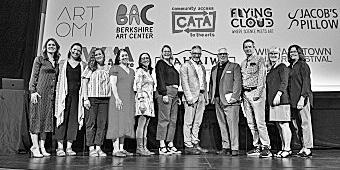
PHOTO BY DANIEL DASHIELL
Members of the Berkshire/Columbia Counties Pay Equity Project. From left, Margaret Keller, executive director, Community Access to the Arts; Danielle King, producer and director of organizational culture, Williamstown Theatre Festival; Emma Whittum, business manager, Williamstown Theatre Festival; Lucie Castaldo, executive director, Berkshire Art Center; Kristin Grippo, program assessment coordinator and teaching institute mentor, Berkshire Art Center; Kristen Van Ginhoven, executive director, WAM Theatre; project consultant Aron Goldman; A.J. Pietrantone, deputy director, Jacob’s Pillow Dance Festival; Jeremy Adams, co-executive director, Art Omi; Janis Martinson, executive director, Mahaiwe Performing Arts Center; Allison Wintner, co-vice president, board of directors, Mahaiwe Performing Arts Center.
values of the project, the study, led by consultant Aron Goldman, sought stories and data to illuminate the employee experience and organizational efforts.
From 12 focus group participants, 188 individual respondents, and 38 organizational respondents, a picture emerged of employees stretched beyond what is bearable. Only a third feel that their cost of living is paid for by their income. More than half work multiple jobs, not by choice, but by necessity. Fifty eight percent depend on supplemental sources of income, often from family members; 61 percent are trying to pay student loans. Most part-time employees in this field have few to no benefits. Prohibitive costs of living and long commutes in the region compound the problems.
Here’s how they put it themselves in the report:
• “I find it impossible to save, make plans for the future, or even make ends meet.”
• “Can personally live on salary but
cannot create a family with it.”
• “I have to rely on my partner to pay our bills and that creates uneven pressure and strains our relationship.”
• “I have no retirement savings and am still paying off college debt. I have no safety net.”
• “I’m sacrificing financial stability along with my mental and physical health.”
• “To not be financially respected is a blow that a lot of us cannot take anymore. Putting your heart and soul into something you are not fairly compensated for takes a serious toll.”
Employees are also aware of the social barriers that low compensation creates for members of groups who lack extra financial supports.
Here are some more examples from the report:
• “The combination of low salary, high barriers to entry (cultural acumen), expectations of uncompensated extra labor; all of this prevents middle-and
lower-class individuals from being able to make careers in the arts, keeping the field a playground for a narrow elite.”
• “I love the arts and many members of the regional communities, but the field is deeply inequitable and not sustainable for a working-class person.”
• “One of the most important opportunities that positive compensation changes provide is for increasing the economic and racial diversity of entry level positions.”
From both employees and organizations, there was also hopeful news and a vision of possibility, with efforts to create full-time work whenever possible, eliminate unpaid internships and unpaid overtime, provide prorated benefits for part-time workers, and more.
Each participating organization in the Pay Equity Project has made tangible commitments to improving conditions for their own employees and the report offers recommendations for non-profits struggling to balance competing demands.
Many organizations, locally and nationally, are taking these issues seriously and seeking solutions, and public discussion will generate mutual learning, collective action, and accountability. We also need to challenge ourselves to rethink the balance between programs and people, resisting the inherent pressure to continually do more with less, when “less” means more burdens on employees. We need to ask public and private funders to provide more operating support to give employees equitable wages. And we need to get started. Changes, made over time and across organizations, will add up to a renewed and more equitable cultural landscape.
Copies of the Pay Equity Project are available on the website of the Non-Profit Center of the Berkshires at www. npcberkshires.org/payequity.
Janis Martinson is the executive director of the Mahaiwe Performing Arts Center in Great Barrington, one of the eight cultural organizations that participated in the Berkshire/ Columbia Counties Pay Equity Project.
LEE — Understanding the challenges and changing regulatory landscape is paramount for new cannabis entrepreneurs success.
Entrepreneurs venturing into the Massachusetts cannabis retail market face a myriad of challenges. The industry has evolved significantly, and raising capital is a daunting task. The market is fiercely competitive, and managing cash flow while paying 280e taxes is a struggle. The 280e tax code prevents cannabis companies from taking normal business deductions, resulting in an effective tax rate of about 78 percent .
To navigate these challenges, entrepreneurs should consider forming strategic partnerships or seeking alternative funding sources. They should also focus on financial management strategies to handle the high tax burden.
The federal government needs to de-schedule cannabis to remove the 280e tax code. Massachusetts has done away with this tax at the state level, saving us around $2 million in taxes last year. Advocacy for policy change at the federal level is crucial for the survival of cannabis companies in a stabilized market.
Regulatory issues in Massachusetts add to the challenges. For instance, each licensed facility requires a unique badge for operation. These badges are not cheap, and the cost adds up, especially when hiring new employees. Businesses should consider advocating for regulatory changes that would place the burden of badge acquisition on the individual, not the business.
Packaging requirements are another area of concern. The cost of childproof, opaque packaging is high, and it contributes to landfill waste. Furthermore, the packaging is often covered with stickers, obscuring

JESSIE WARDARSKI — THE ASSOCIATED PRESS
Knowing
the challenges and the industry’s many regulatory changes are necessary to succeed in the cannabis business in Massachusetts, writes columnist Meg Sanders.
the branding. Businesses should explore sustainable and cost-effective packaging solutions and lobby for regulatory changes that would allow for more sensible packaging requirements.
The cost of packaging is a significant expense for those producing their own products. With price compression in Massachusetts, each unit brings in less revenue, but the cost of packaging remains the same. Businesses should consider investing in marketing and community engagement strategies rather than expensive packaging that ends up in the trash and is covered with labels.
When it comes to hiring, businesses need to understand their model. Investing in employees, providing a fair wage, and creating a strong culture can lead to
better retention. For example, at Canna Provisions, we have retained more than 50 percent of our core employees for at least two years or more, and that’s a direct result of our aim to prioritize employee development and retention strategies to reduce turnover and associated costs. Other businesses can easily follow suit.
Cultivation in Massachusetts is a risky venture at this time. The market is saturated, and differentiation is key to success. Businesses should focus on creating unique, high-quality products and building strong brand identities to stand out in the crowded market.
Many factors are often overlooked when building a business plan. These include testing costs, time out for testing, and the delay between harvest and sale. Businesses should factor in these costs and timelines into their business plans and develop strategies to manage them effectively.
Another challenge is the requirement to lock every gram of THC in a vault overnight. This requirement is costly and illogical, especially when compared to the regulations for alcohol. Businesses should advocate for regulatory changes that would reduce these unnecessary burdens and lead to lower operating costs.
While the Massachusetts cannabis retail market is fraught with challenges, there are strategies businesses can employ to navigate these issues effectively. These include forming strategic partnerships, advocating for policy change, investing in employee development, focusing on differentiation, and lobbying for regulatory changes. With a proactive and strategic approach, and a thoughtful marketing approach that makes paramount a high ROI targeted strategy versus the shotgun sprayand-pray approach, entrepreneurs can navigate the challenges and find success in this evolving industry.
Meg Sanders is the CEO and co-founder of Canna Provisions in Lee.



By A llison M ik A nireicz
PITTSFIELD — TEDx Berkshires is being held at the Berkshire Innovation Center for the first time this month.
The July 22 event titled, “Pushing the Boundaries of What’s Possible” will feature seven speakers who are leaders in their own fields. They will each give a 12-to-18 minute presentation that explores the problems, solutions, and interplay between the steady progress of innovation and change, and each one will be filled with inspiration and passion.
Last month in this space we talked about how TEDx Berkshires began and why it was being held at the BIC.
This month we’re going to take a closer look at each speaker.
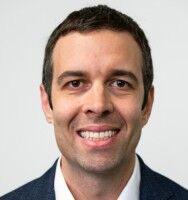
• Ben Downing: Downing is the most recognizable local face among this year’s speakers, having grown up in Pittsfield and represented Berkshire County in the state Senate from 2007-to-2017. The son of late former Berkshire District Attorney Gerard D. Downing, Ben is currently vice president of public affairs at The Engine at Massachusetts Institute of Technology in Boston. The Engine’s goal is to make a more optimistic future possible and faster through the belief that a healthier population, a more accessible and adaptive society, and a more resilient world are all possible through
science, engineering, and leadership. In his TEDx talk, Downing will focus on the companies and technologies creating new materials and processes for how we produce, move, store, and use energy and are working to mitigate the most severe consequences of climate change while also building the backbone of our economy for decades to come.
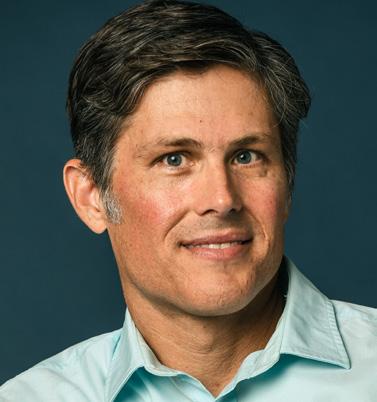
• John Hart. Hart is chair of MIT’s mechanical engineering department and a co-founder of VulcanForms, which is completing the world’s highest throughput additive manufacturing facility (a 3D printing facility) in Devens. In May, The Boston Globe referred to VulcanForms as “The Most Interesting Startup in America.” For more than 30 years, adoption of various 3D printing technologies has grown steadily, and now 3D printing has been used in tens of millions of consumer products, medical and dental devices, jet engines, and more. Yet, a new architecture — of both the 3D printing process, and the complete production system — is needed for true industrialization of 3D printing. In his TEDx talk, “Bringing 3D Printing to Industrial Scale”, Hart will share his vision through the story of VulcanForms.
• Burr Purnell. Purnell is the executive director of social good at VidMob, a New York City-based company of video content for social media platforms, whose
engineering department is located in Pittsfield. VidMob is a member of the BIC. Purnell will speak on the exact topic that he works with everyday, “Your Purpose and Using Business as a Force for Good.” Through his talk participants will learn about the concept of aligning one’s business objectives with a greater social or environmental mission.
• Chris Draft. Draft is a former National Football League player who was a linebacker for six teams between 1998 and 2009. The Stanford University graduate is the founder, president & CEO of the Chris Draft Family Foundation. He will speak on “Changing the Face of Lung Cancer”. Lung cancer claimed the life of Draft’s wife, Keasha, in 2011, and is the reason he started his foundation. Draft is an internationally recognized speaker and community leader who serves as an NFL Ambassador and a national spokesman for many health-related issues.
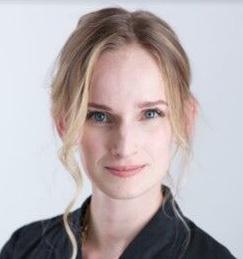
• Sienna Leis. Leis is a venture development manager at MassVentures in Boston, an organization that fills a critical gap in the Massachusetts innovation ecosystem by providing venture capital, grants, and business advice to founders who often lack access to this support. In her talk,” Why Ask Mom When I Have Google: Raising a Child in the 4th Industrial Revolution”, Leis will examine how Industry 4.0 has impacted what it means
to be a child in modern day society and how we can look to children to predict future solutions by giving them a blend of character and technology building blocks to shape a better tomorrow.
• Charlotte McCurdy. McCurdy is a designer and researcher at Arizona State University where she teaches courses at the intersection of climate change and experiential design. Her TEDx talk, “De-Industrial Design: 21st Century Sustainability, Determined Optimism, and Future of Climate Tech” will look at what happens when we take a carbon-centered approach to thinking about climate change.
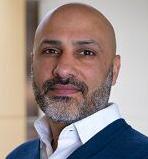
• Shivang Dave. Dave is a passionate advocate for the use of technology to address health care disparities, He is the co-founder and CEO of PlenOptika, a startup he has built into a company that is making an impact around the globe. In his talk,” Innovating to Scale Vision Care Globally: Move Thoughtfully and Make Things”, Dave will discuss how the popular tech-industry bias to “move fast and break things,” often falls short of meaningful impact and can even do more harm than good in the health care setting.
For more information on TEDx Berkshires, go to www.tedxberkshires.com.
Allison Mikaniewicz is the marketing and administrative coordinator for the
LEE — Equitable and fair pay is among the greatest drivers of employee satisfaction so it is an important priority for business leaders.
Recently, there has been significant conversation around wage equity and wage transparency in the Massachusetts State Legislature. In July 2019, the Massachusetts Equal Pay Act went into effect requiring employers to provide equal pay for comparable work, prohibiting employers from asking job applicants about their salary history, and prohibiting employers from requiring employees to refrain from discussing wage information.
MEPA was passed to strengthen prior legislation that was targeted at reducing the persistent wage gap between men and women. Women in Massachusetts earn less than 86 cents for every dollar men make, according to the National Women’s Law Center’s analysis of worker-reported census data. The Boston Women’s Workforce Council places the number at 70 percent and the number is even worse for women of color.
Currently, the conversation on Beacon Hill is around wage transparency. In May, the statewide business association that I lead as board chair, Associated Industries of Massachusetts, expressed support for wage equity and wage transparency at a legislative hearing on two bills. One calls for companies to provide pay ranges in job postings as well as to employees inquiring about other internal positions, and the second would make larger organizations’ collective wage data public, aggregated by industry and broken down by race, gender, and job category.
AIM has provided language to the Legislature that combines the pay transparency and wage equity bills into one piece of legislation that removes some of the problematic provisions from previous versions. AIM’s compromise creates a less costly and burdensome way for businesses to provide information that will not be used to shame employers, but instead to help find ways to achieve equity.
AIM President Brooke Thomson made it clear that wage transparency improves the efficiency of the hiring process for employers at a time when a persistently tight labor market makes every hire an important one.

“You have a better chance of finding qualified candidates if they have a better understanding of the job they’re applying for,” Thomson said. “Employers do not want to waste their time with a candidate only to find out the salary range does not meet their expectations.”
Patricia Begrowicz
The View from AIM
Requiring salary ranges on all job postings may actually help smaller businesses compete with larger businesses for talent by providing additional market data for a specific skill set.
Many online job platforms and several large cities already require companies to post the pay range of open positions. Some prominent Massachusetts employers, including State Street Corporation, have voluntarily begun publishing pay ranges. But only 29
percent of Massachusetts employers list pay ranges in their postings on the employment platform Jobcase, compared to 72 percent in Colorado, which has required the information since 2021, and 61 percent in New York City, where a similar law went into effect in November.
So, will legislating pay transparency actually help close the gap in wages between men and women?
The good news from a paper published by the Harvard Business Review in February is that pay transparency is reducing pay inequities across gender, ethnicity, sexual orientation and other dimensions. However, it also identified some concerning consequences of wage transparency. While pay increased for portions of the populations that are historical-
ly disadvantaged the overall pay for the entire population declined. The paper also reported that while pay transparency brings more equitable pay, it also results in pay that is flatter across an organization and less performance based, suggesting that it may be challenging for a business to retain their highest performers.
There are also indications that wage transparency changes employee behaviors. An October 2022 paper published in the Journal of Economic Behavior and Organization used the National Hockey League as an example. In 1990, the salaries of all NHL players were disclosed publicly for the first time. The pay transparency disclosed that hockey salaries were mostly determined by offensive performance metrics, such as goals and assists. Defensive performance, which is more difficult to measure but equally important, appeared to
have less influence on wages. Not surprisingly, players started focusing more on scoring goals and earning assists and less on playing defense. The overall performance of players in the league declined.
Compensation is one of the most complicated aspects of running a business. As pay transparency becomes the norm, business leaders will need to ensure that each job in their organization has clearly defined performance metrics that are properly linked to compensation, and aligned with what the business needs to succeed. These performance metrics will need constant attention to make sure that they are driving the desired employee behaviors.
Patricia Begrowicz, the president and co-owner of Onyx Specialty Papers in Lee, is chair of the board of Associated Industries of Massachusetts.


By Tony DoBrowolski
The Berkshire Eagle
PITTSFIELD
— A lot has changed in the appliance business over the last 50 years, but in Pittsfield one thing has remained constant: Mike Spelman.
Spelman has co-owned Mike Maytag’s Home Appliance Center on Gordon Street with is exwife and business partner, Sue, since 1992. But his career in the business of fixing and selling appliances actually began 20 years earlier. He remembers the exact date: Dec. 21, 1972.
“I was shocked when I looked at the date,” said Spelman, who turned 73 on June 19.
To put that date into perspective, Richard Nixon had just been elected to his second term as president and Watergate had yet to reach its crescendo. Spelman has been on the job so long that he’s even outlasted the Maytag Corp., which was sold to Whirlpool for $1.7 billion in April 2006 and now serves as a brand of that company.
“I just went day-by-day,” Spelman said summing up his career. “It’s Monday. It’s Friday. Because we’re busy, time flies.
“It’s been very rewarding helping people,” he said. “Everybody’s got like five appliances and it’s a good feeling when you’re helping people and trying to get them good service.”
Spelman began his career in the appliance business as a delivery man at the former Harder
Mike Spelman has been on the job so long that he’s even outlasted the Maytag Corp., which was sold in 2006.
Electric on the corner of First and Fenn streets and then went into repairs.
An electronics technician in the Navy, Spelman likes to fix things.
“I loved to take things apart and see how they worked,”
Spelman told The Eagle. He formed his first business, Mike’s Appliance Repair, while still working for Harder.
“I got tired of making money for them,” doing repair work, he said. “I said, ‘How about if I pay you rent and you give me all the service?’”
Spelman liked the setup — “I’ve got an answering machine, I take some calls. I play golf and whatever. I don’t want to be tied down to a building.”
But Mike and Sue changed their minds and decided to open their own home appliance center after attending a Maytag seminar.
“All the way down there we said, ‘We’re not going to do it, we’re not going to do it,’”
Spelman said. “But after we watched the seminar and talked we were in.”
Maytag’s offer to help the

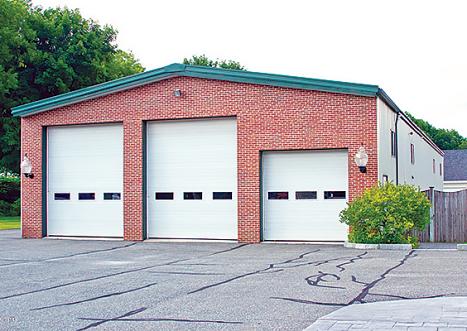

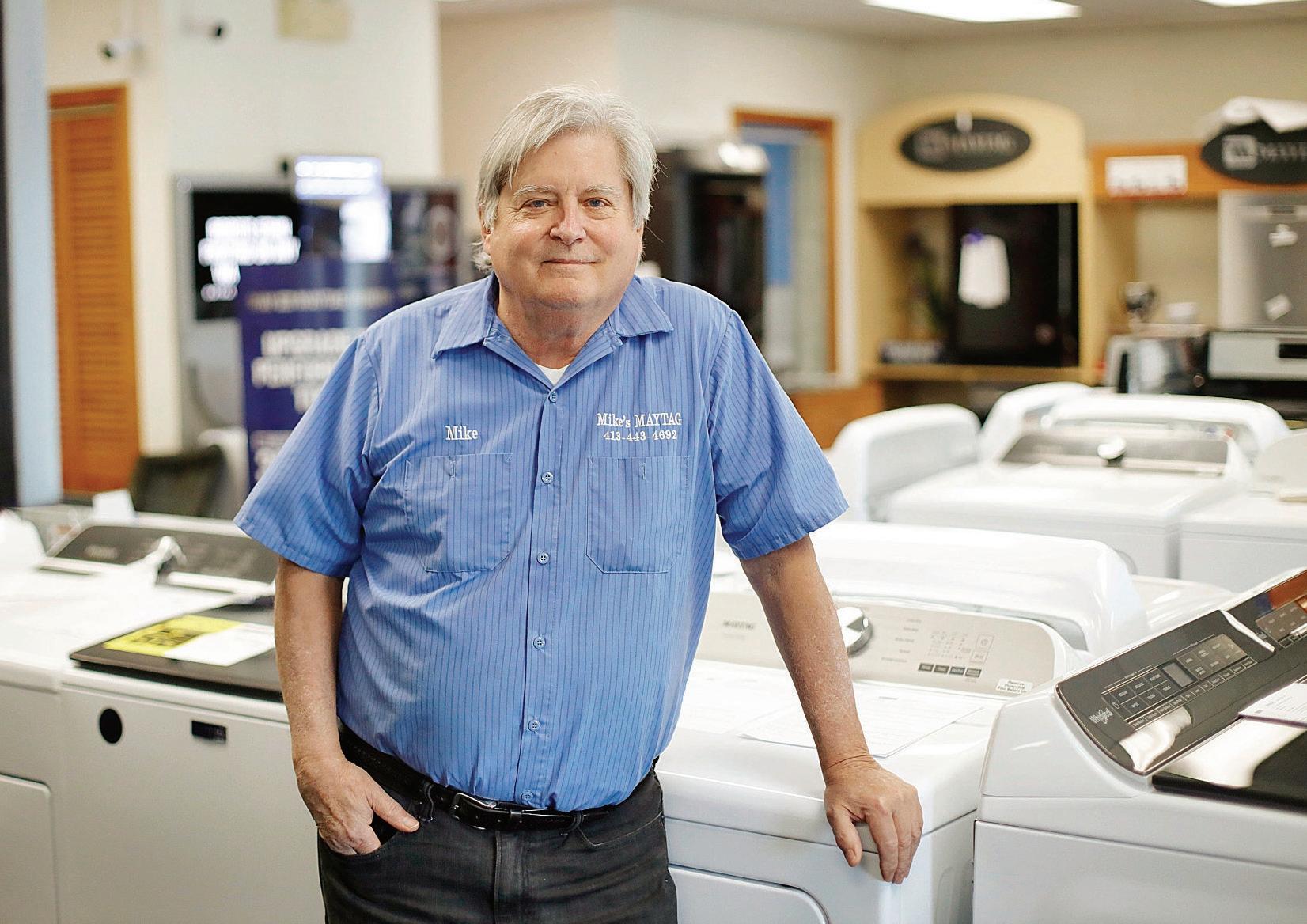
Mike Spelman, owner of Mike’s Maytag Home Appliance Center in Pittsfield, recently celebrated his 50th year in business.
couple set up the business was the selling point. The idea made sense at the time.
“Back in the day there were like 500 Maytag home appliance centers. Now I think there’s about five in the United States,” Mike said (the Spelmans’ store in Pittsfield is one of the remaining few). “They closed because of the big box stores. Of course you didn’t have them back in the day.”
The Spelmans, who married in 1980, have been divorced for 22 years. Navigating relationships post-divorce is never easy, but the Spelmans have remained good friends, which has helped their relationship as business partners. Mike con-
centrates on the repair side of the business, while Sue manages the retail side.
They have two children. Their daughter, Allison, also helps at the family business.
“We like each other,” Mike said, referring to his ex-wife.
“I still care about her and she cares about me. It wasn’t a bad divorce. We just had nothing in common.”
“I’ve been with my girlfriend for 19 years and it still bugs her that I work with my ex-wife. A lot of people think we should write a book,” Mike said. “She’s got a very nice man now, a super guy. I’m happy for her. ... It took a long time for her to find somebody like me.”
Sue, who is sitting nearby, laughs.
“You can leave that part out,” she says, while playfully jostling her ex-husband.
Mike, who is known for his quick quips with customers, wears a shirt with his name on it.
“I’m the front man,” he said. “I’m the funny guy. She’s the serious one.”
“Compared to you anyone is the serious one,” Sue said, jokingly.
As business partners, Mike and Sue have seen a lot of changes since they entered the appliance business.
“The industry has changed incredibly,” Mike said. “I had a guy come in a month ago. He bought a pump for a Maytag washer 48 years ago and it’s still working. Now, if you get 10 to 12 years you did well.
“We used to build appliances in America. Now we assemble them,” he said. “So we don’t have the quality control that we used to have. They’re much more complicated to work on now. You really have to be a technician. Back then you could be a parts changer.”
When will the Spelmans leave the business? They’re not sure.
“I don’t know,” Sue said. “We’re getting tired.”
“I don’t want to die in here,” Mike said.
“Don’t say that either,” Sue said jokingly.
Tony Dobrowolski can be reached at tdobrowolski@berkshireeagle.com or 413-496-6224.
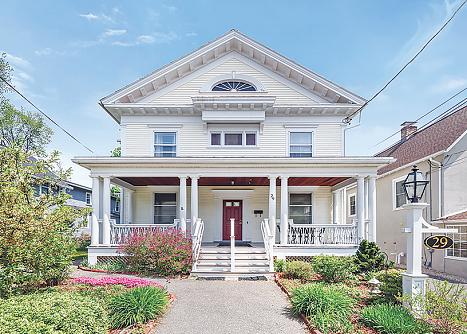

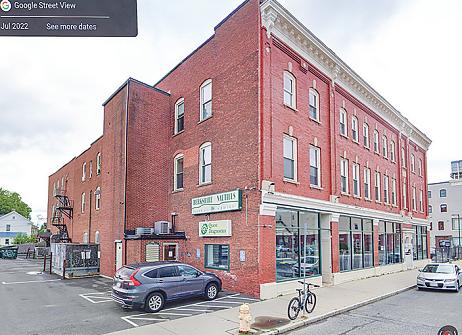
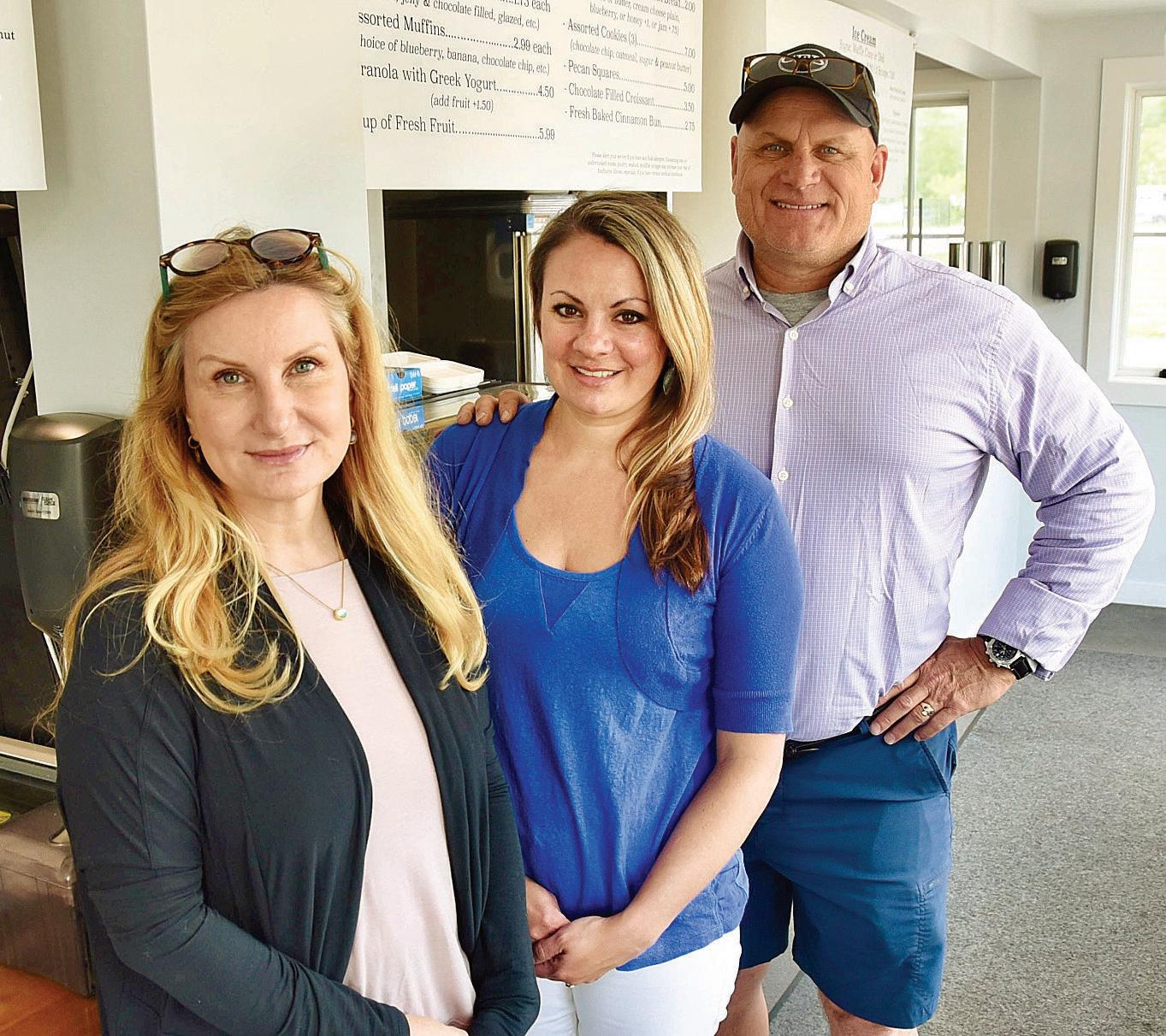
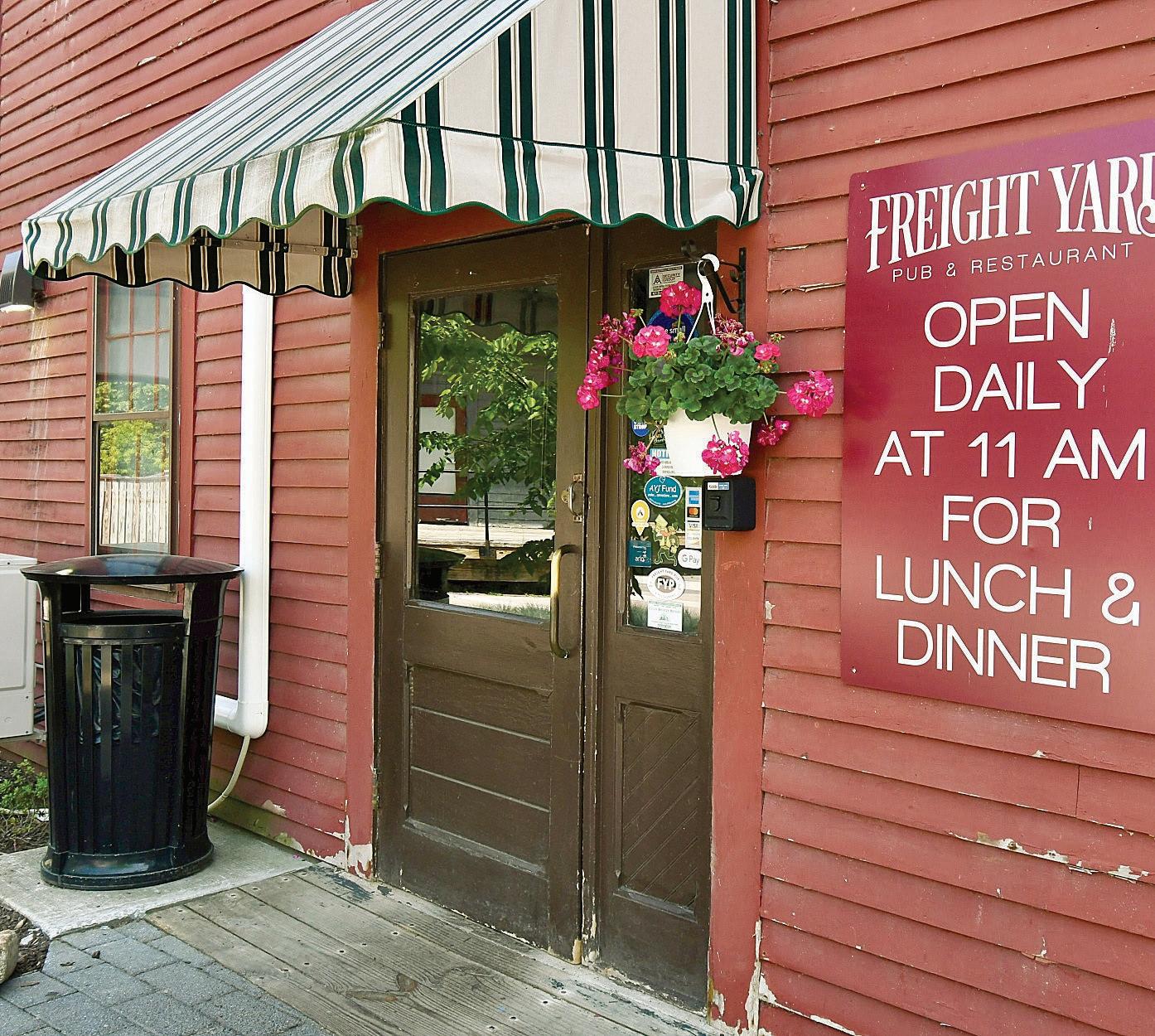
having trouble finding employees.
“So we’ve got a way to go to get back to where we used to be,” he said.
DISTRICT KITCHEN & BAR, PITTSFIELD
Garner also helps operates District, which is owned by the same team that manages Public Eat + Drink.
District was luckier than any other restaurants. The early part of the pandemic was awful, as it was everywhere, but once outdoor dining was allowed, District was able to take advantage of a tunnel near the eatery than runs between buildings.
With a door leading directly from the restaurant into the tunnel, District was able to place carpeting in that spot, set up outdoor decorative lighting and music with plants and heaters, and place some tables outside. Fencing was erected on either end of the tunnel for added privacy.
“It was pretty neat,” Garner said. “People loved it.”
District had to move everything back inside when the winter weather hit. But District was able to hold on to some of its core employees, and gradually hired more as the pandemic began to loosen up.
But those hiring challenges still remain. As a result, managers have been careful not to overwork employees. Hours have been cut back, too. District is now closed on Mondays.
“We don’t want to schedule a lot of double shifts,” Garner said, referring to his employees. “We don’t want them to burn out.”
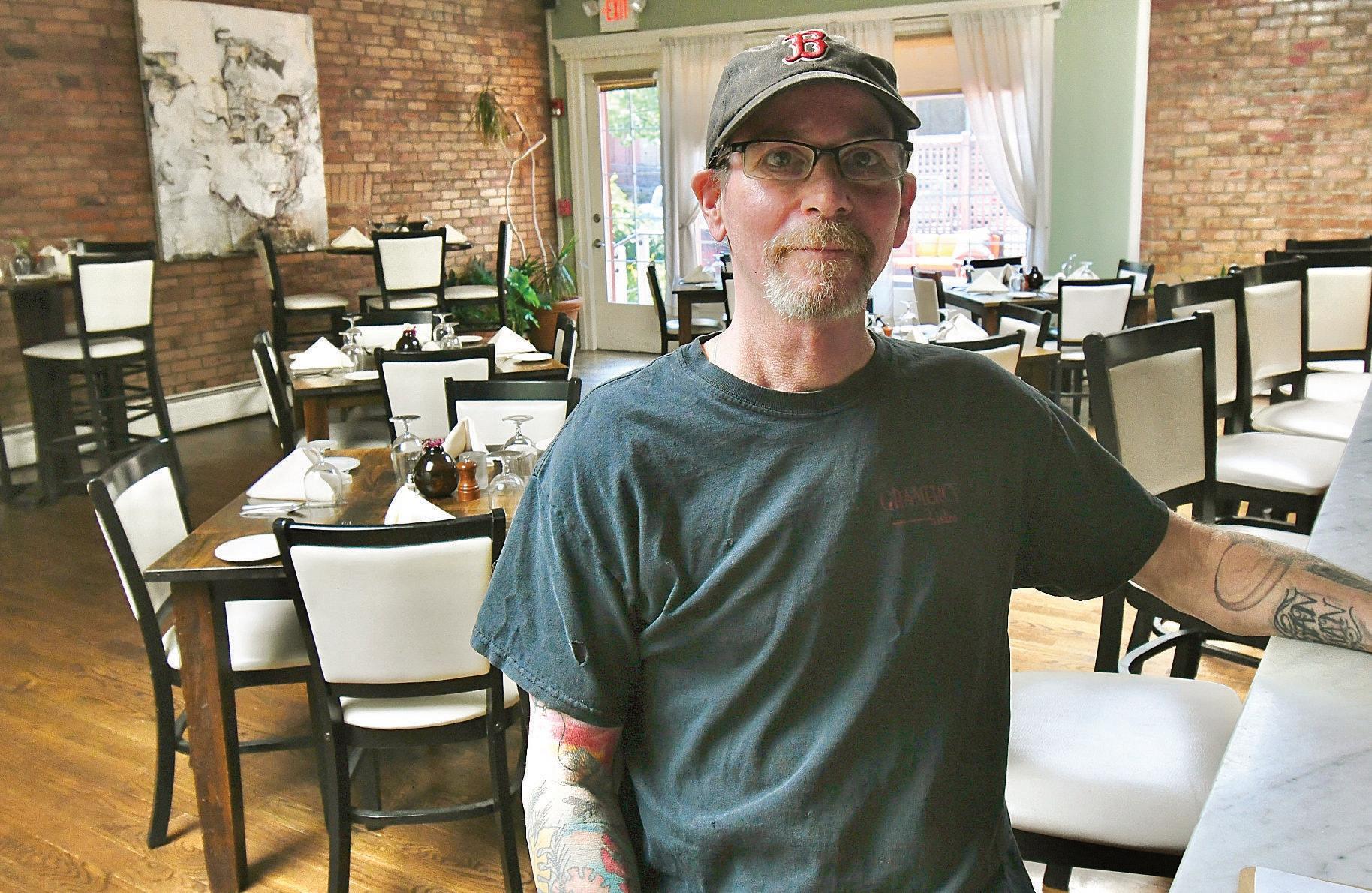
When the pandemic closed all non-essential businesses in early March 2020, including a majority of restaurants in the Berkshires, Gramercy Bistro owner Alexander “Sandy” Smith thought the shutdown would last a month, maybe two.
But after four months it became clear the restaurant would be closed for a long time. With Gramercy’s lease at the Massachusetts Museum of Contemporary Art coming to an end, Smith decided to shutter the North Adams location.
But he didn’t totally shut down the business. He vowed to re-open Gramercy Bistro in a new location, and that
place was in Williamstown.
Smith reopened Gramercy on Oct. 21, 2021 at the corner of Water and Main streets, in a space once occupied by the former Hops & Vines restaurant.
After renovating the space and assembling a team, Smith opened with largely the same menu — a dinner menu, and a menu for Sunday Brunch.
“In the restaurant business, it’s all in the details,” Smith said. “If you don’t have the details right, you’re missing the big picture.”
Nowadays, high food prices and labor issues are combining for another hard time.
“It feels like we’re working twice as hard for half the money,” Smith said.
When the government first began expressing concerns about COVID three years ago, Mazzeo’s read the tea leaves and decided to close two weeks before the mandatory shut down occurred.
“We were getting really nervous about it,” co-owner Tony Mazzeo said.
But in a few weeks, when restaurants were allowed to provide carry-out and delivery services, Mazzeo’s set up an elaborate drive-thru and pick up process that worked quite well for them. They took advantage of the restaurant’s large parking lot on South Street, and using traffic cones and signs, set up a carry-out assembly line.
Customers would call in their orders and pay for them over the phone, then drive to the restaurant and get in the drive-through line. When it was their turn, patrons would pull up, give the attendant their name, then open their trunk from inside of the car. The attendant would put their order in the trunk and close it, and off they went.
“We offered family style meals, and it went over really well,” Mazzeo said. “We were able to keep 15 to 20 employees, and served about 200 meals on a good day.”
When limited indoor dining finally resumed, Mazzeo’s also had an advantage because it has seating for 280 patrons, much more than most other local restaurants. So even at 25 percent of capacity, which is all the state allowed at the time, Mazzeo’s did well.
“And we were still doing the to-go offer,” he said.
But the pandemic has changed restaurant goers dining habits. Mazzeo said some customers now prefer the


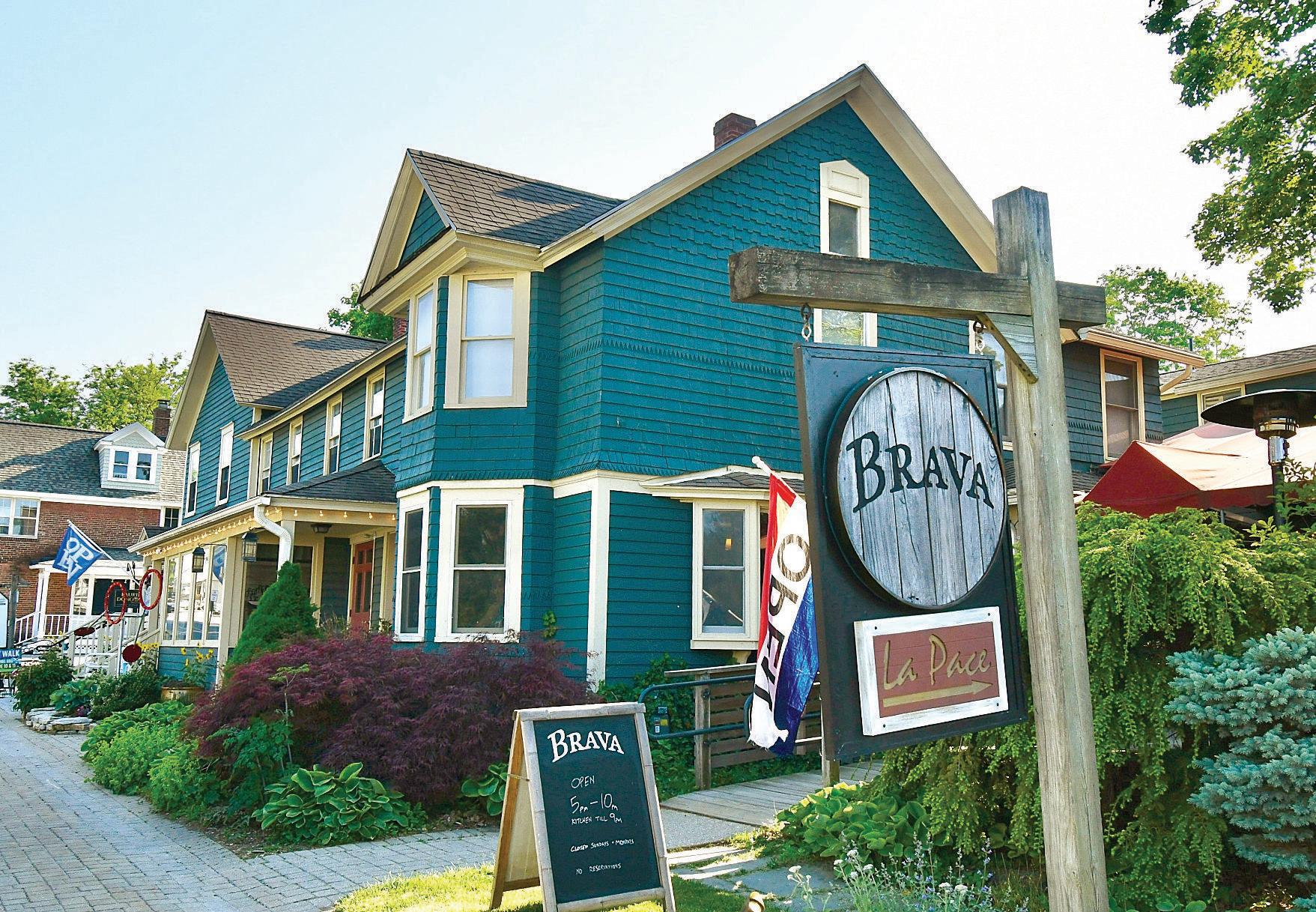
carry-out method, which the restaurant has kept in place, while others are not eating out as much as they used to.
“It has changed people’s habits,” he said. “But it’s getting there.”
ZUCCHINI’S,
During the shutdown, when carry out food service was allowed, Zucchini’s acted swiftly, owner Mickey Soldato said.
“We reinvented ourselves, and went to a take-out business model,” he said. “Failure was not an option. I did what I had to do to keep it sustainable.”
He also used that time as an opportunity to evaluate and make changes to the menu. He tried to take advantage of the relief loans from the federal government to help keep up with costs and payroll.
“We are very grateful to have survived it,” Soldato said. “You just have to get up everyday and grind it out.”
His other two restaurants, Roasted Garlic in Pittsfield and Mario’s in New Lebanon, N.Y. (which has been in the Soldato family for 57 years), also survived through similar efforts.
One other side effect: Soldato had purchased the vacant building where Hobson’s Choice restaurant used to be in Williamstown intending to renovate it and open a new eatery there. But when the pandemic subsided, inflation and labor shortages caused him to change his mind, and he sold the building instead.
BRAVA, LENOX
When the Pandemic hit, Brava was a little Lenox restaurant with a big reputation, but like everyone else, it suddenly had to close.
Owner Whitney Asher said he put his crew on unemployment through late June 2020 and closed down completely.
When take-out food was authorized, Asher skipped it. “To go food has never been a big part of our business,” he said.
But when outdoor dining was allowed, that was different.
Asher said the town offered townowned spaces for nearby eateries to put their tables and greet customers. So he set up six tables in parking spaces right in front of Brava, and six more tables in parking spots just around the corner. That resulted in more seats outside than there are inside.
Although the servers had to walk about 50 yards to the furthest outside table, it worked well when the weather was nice. Rainy days were tough, though.
Between the federal government’s Paycheck Protection Program and state grants, Asher was able to keep his staff paid. It’s a good thing, because between 2019 and 2020, revenues at Brava dropped about 65 percent.
Sensing that this method had an expiration date, Asher bought the former Church Street Café, a vacant restaurant around the corner, that had more seating.
“It is much bigger and has a concrete deck for outdoor dining,” he said. “We had seating for 65 inside and 30 more on the deck.”
In November 2020, Asher moved Brava to the former Church Street Cafe, which helped him endure the rest of the pandemic. But he didn’t forget Brava’s old space on Housatonic Street. In January, he re-opened the old space as Ombra, an eatery that is similar in style to Brava but has a different menu (Ombra means shade or shadow in both Italian and Spanish).
Three years after the pandemic hit, Asher said some diners are still reluctant to eat out.
But “things are getting better,” he said. “I’m hoping for a good [tourist] season, and that it will get busier.”
MEZZE BISTRO + BAR, WILLIAMSTOWN
Bo Peabody, co-owner of Mezze, was living at his home in New York City when COVID came along. The city shut down a couple of weeks before Massachusetts, so he high-tailed it to his home in Williamstown.
He was interested to find the restaurants full when he got to the Berkshires because the state had not issued the shut-

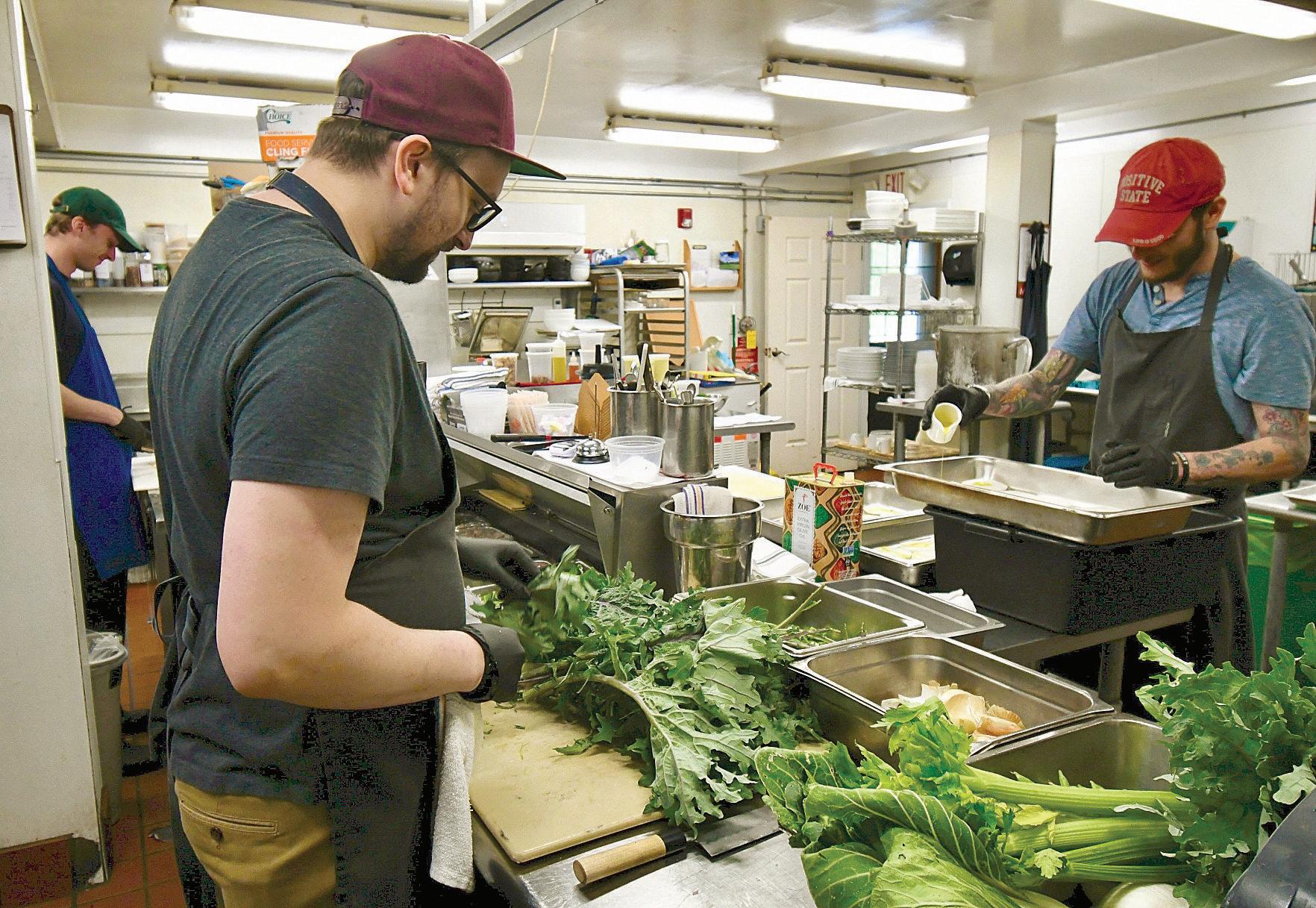
down orders yet.
“Mezze was full of people,” he said. A few days later, it and every other restaurant was closed.
“We thought it a matter of days or maybe a few weeks,” Peabody recalled. “Nobody thought it would turn into what it ended up being.”
But after a month, Mezze managers “sprang into action,” he said.
They provided take-out service when it was allowed then were able to take advantage of outdoor dining when that went into effect. Mezze already had a 30foot deck, but was able to increase its capacity for outdoor dining by setting up 15 picnic tables on a wide grassy area located just across the driveway. They called it “Under the Pines.”
Mezze has seating capacity for around 100 patrons indoors and the tables are spread pretty far apart. So when indoor dining was allowed at 25 percent capacity, the restaurant was ready for that, too.
“The town was extraordinary, basically telling us to open where we can within the guidelines,” he added. “They’d come by and take a look just to be sure it wasn’t too crazy.”
Through PPP loans they were able to keep the salaried staff at work through the worst of it. And since liquor sales have a better profit margin than food, when the state allowed alcoholic beverages to go, that added another welcome stream of revenue.
During that time, to simplify things in the kitchen and cut down on food waste, Mezze offered a pre fixe menu. It allowed the customers to choose a three-course meal. They would choose appetizers, entrees and desserts from among three or four choices for each.
“It was a huge help to our ability to serve a great product more efficiently,” Peabody said. “Like they say, where there’s crisis, there is opportunity.”
Like most restaurant operators, the owners of the Freight Yard Pub and Restaurant and the Trail House Kitchen

& Bar spent the pandemic desperately trying to keep their businesses afloat.
Colleen Taylor, her brother, Sean Taylor, and his wife, Malinda Hayden-Taylor, struggled to keep both businesses alive and some staff employed — largely by packing food for delivery or pickup. On top of that, for about a year, they also worked on opening a new restaurant in the midst of a pandemic something that had been a curse to other eateries. This was poised to capitalize on a new, post-pandemic normal.
The Taylors have owned and operated the Freight Yard Pub since 1992, and the Trail House since 2018.
They bought the old Dairy Queen on Route 8 just south of downtown North Adams for a new vision, after the site was vacant for years. In May 2021, they opened Craft Food Barn, specifically conceived and oriented to serve food to go.
All three eateries have been converted to the same networked computer system so employees will be able to operate the ordering technology at each of the restaurants, allowing them to shift from one to another as needed.
In early 2020, when Gov. Charlie Baker’s emergency shutdown order came down, the Taylors closed the Trail House and concentrated on pivoting the operations of the Freight Yard for pickup and delivery. Sean Taylor noted that they were overwhelmed by the volume of business.
They purchased the old Dairy Queen property to fill that need, investing $470,000 to purchase and renovate the building and repave the parking areas. They financed the project with their own savings, and funds from family and friends, Colleen Taylor said.
After a while, they reopened the Trail House for takeout and delivery. Soon, all three restaurants had added outdoor dining to the takeout service. Then indoor dining resumed and all three places are still doing well.
Today, with Craft Food Barn into its second year, things are going pretty well, although inflation has caused a slight shortage of patron.



By Meg Britton-Mehlisch
PITTSFIELD — When local planners, transportation consultants and politicians excitedly presented the plan for the Berkshire Flyer in 2018, measuring the success of the proposed passenger rail line between Pittsfield and New York was simple.
For the line to be a success it would — over the course of a two-year pilot — need to achieve about 2,600 one-way trips, develop a “last mile” local transportation plan to get visitors to Berkshire County around to their final destination and attract regional partners to help with marketing and coordinating.
A pandemic and a last-minute agreement between Amtrak and CSX over use of the rail line delayed putting the passenger line to the test.
Now some five years on and with the Flyer starting its first full 20-week pilot season, stakeholders say they’re excited to see what the line can really do.
While officials from the involved rail lines, transportation departments and local partners say they’re encouraged by the enthusiasm last year’s truncated season produced, the standards for what will give the Flyer a green light or red light is a lot less clear.
‘DO-OVER’
When the Flyer first left New York City’s Penn Station last July, there was every indication that the shortened season would count as year one of two for state and rail officials measuring the pilot’s success — and the ultimate longevity of the line.
Eddie Sporn, the local coordinator for the Berkshire Flyer,
said state officials have now told local partners that they get a “do-over” due to the quickness in which the late-starting season came together.
“We had no real sense of how it went against expectations because it started late and because it sort of came together quickly and we really didn’t do much marketing in advance,” Sporn said.
“From [the state’s] perspective, last year was not sufficient to get any sort of sense of the viability of the train for the long term,” Sporn added. “So this in effect is year one.”
MEASURING SUCCESS
Making this season year one of the pilot will allow interested parties to see if the Flyer can produce the kind of rider numbers the original feasibility study ballparked for the success of a 20-week season of the line.
Last season, Amtrak reported that over the course of nine weeks 401 people disembarked at the Pittsfield train station on Friday nights and 418 people got on the train at the station on Sunday night. That brings the total ridership for the Berkshire Flyer portion of the line to 819.
Though whether hitting the feasibility study’s 2,600 ridership number will make the Flyer a success in Amtrak’s eyes is unclear.
A spokeswoman for Amtrak said that the passenger rail company currently has no target ridership number for this year’s Flyer season, which started Memorial Day weekend and will continue through Columbus Day weekend.
“We definitely see that there is demand and interest from the
customer standpoint and we do want to see how this season performs,” the spokeswoman said. “Once we evaluate how [this season] goes, then we’ll work with MassDOT and CSX together to determine what will happen in years to come.”
“It’s still too early to say,” she added.
A release by the MassDOT in April termed the first year of the Flyer a “success” but said its future still relies on the interest and loyalty of riders this season.
“The Berkshire Flyer service will continue to be evaluated this year to further understand the feasibility and demand of the service before continuing service in future seasons, deciding on its schedule if it is to continue, and identifying specific infrastructure improvements or service changes that may be necessary,” the release said.
Sporn said that local partners have been told by the state that there is funding in the state budget to support another pilot program next year. The rub is the agreement with MassDOT, Amtrak and CSX — the freight company that owns the rails the Berkshire Flyer uses — times out at the end of this year.
Officials from MassDOT and CSX did not return a request for comment.
Sources with insight on the conversations between the state and CSX say that discussions of another Berkshire Flyer pilot season are happening but those negotiations are currently bogged down in larger discussions about the state’s relationship with the rail company.
“We don’t have approval for

2024 [for a pilot] and the biggest question is if CSX would allow it,” Anuja Koirala, the principal transportation planner for the Berkshire Regional Planning Commission, said. “Their requirement was if we wanted to do summer trains or any other trains they wanted track improvements at the [Joseph Scelsi] Intermodal Transportation Center.”
CSX has told stakeholders that their concern is how passenger traffic from the Berkshire Flyer could impact the company’s freight lines through Pittsfield and potentially complicate existing traffic from the Housatonic Railroad.
The company has said that if the Flyer were to become a longstanding feature of local rail traffic, they would need another station track to be added to the Pittsfield station to allow for freight to bypass any stopping passenger trains.
“We’re relying on MassDOT to negotiate a new agreement … to run the pilot again next year,” Sporn said. “I’m not privy to these negotiations that are taking place on the state level and nobody locally has been involved or asked to be involved.”
OPPORTUNITIES FOR GROWTH
The push and pull of rail and state actors has put local partners in a difficult position when it comes to making improvements on the Flyer’s current operations.
Along with the excitement for the new connection to New York and Pittsfield, Sporn sees the obvious areas for growth.
An earlier arrival time to Pittsfield on Fridays would be more attractive to visitors looking to
eat dinner or catch a show in the county and kick off their weekend.
It could allow Berkshire- based passengers to take the train back to Albany, N.Y., and catch a train into New York City.
It would also allow Pittsfield to enter into an arrangement with Enterprise and Hertz so that passengers could pick up rental cars at or close to the station. That arrangement has eluded the city because the rental companies close their local branches before the train arrives in the station.
“We’re really up a creek with last mile options,” Sporn said.
Sporn was the originator of the idea that grew into the Berkshire Flyer and one of the original members of the 2017 Berkshire Flyer Working Group.
He helped articulate the standards that would measure the line’s success as well as the conditions that would give the line the best chance to reach those measures.
He knows how important the pilot program and tourist travel is for his ultimate goal: seeing the Berkshire Flyer become a daily train that works for Berkshire passengers as well as New York ones.
“We did not set the rules — the rules are set by the state,” Sporn said. “We are living within the rules, we’re doing our best to thrive within the rules that have been set.”
Sporn said that despite the working conditions for the season and the uncertainty of the next, “we’re hoping that based on the ridership that we’d get this year, and the excitement,” that local supporters can “convince the governor and the state that this is a viable service that should be extended year-round.”
If
Fifth graders show off their business ideas at fair
By Tony DoBrowolski
PITTSFIELD — Cotton Candy Cutties. The Corators. Musical Mayhem. Kevin and Justin’s Social Justice Camp.
Few have probably heard of these business proposals before. But if the energy, enthusiasm and innocence associated with being a fifth grader is any indication, someday you just might.
These proposals and several others, all created by fifth graders who attend the city’s eight elementary schools, were on display recently at the Danny Dollar Entrepreneur Fair which took place at Berkshire Community College’s Paterson Field House.
The fair was the culmination of a financial literary initiative between the city’s public schools and children’s book author, literacy advocate and former city resident Ty Allan Jackson. In March, all 425 of the city’s fifth graders were given a copy of Jackson’s book, “Make Your Own Money: How Kids Can Earn It, Save It, Spend It and Dream Big.” In it, a character named Danny Dollar teaches kids how to open a bank account, create a business plan and identify expenses and profits.
“It summarizes how to start a business, and these kids came up with their own business ideas,” said Stearns Elementary School fifth grade teacher Mel Davis. “We have all sorts of ideas: everything from lemonade stands to car washing to dog walking.”
Jackson, who moved from Pittsfield to Fresno, Calif., last October, has been working with the Pittsfield Public Schools for 10 years. He has been returning to the Berkshires ever since he left to hold events such as this one.
Jackson and the school department

also put on an entrepreneurial fair as a pilot program last year, but with a smaller number of students. The success of last year’s program caused them to expand the event this year.
He said his book creates a “blueprint” to show young children how to deal with money.
“What better way to do it than with something that they were already familiar with, which is school,” he said. “You’ve heard of a science fair. Instead of demonstrating how a volcano works you demonstrate your idea for a business. It seemed like a really simple thing.”
Davis said her students at Stearns were passionate about creating their projects.
“It’s because they had freedom of choice,” she said. “Freedom of choice is important.”
“I think it’s innovative and creative, and I think most personally it’s personal,” Jackson said of the student’s choices





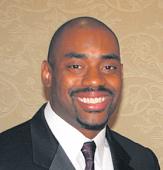
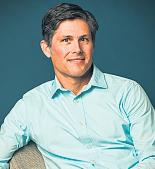
for their business ideas. “It’s personal. That’s the key to this. This is their idea, and they’re utilizing their talents and the things they’re passionate about. That’s why this means so much to them.”
At the fair, youngsters displayed their ideas in booths set up on table spreads across the field house floor and pitched their ideas to whomever walked by.
The ideas ran the gamut of creativity.
Luci Polo and Caydence Provencher, who attend Egremont Elementary School, came up with a business they called Super Nova Treats. They plan to make and sell brownies, and chocolate-covered pretzels and strawberries to people during the summer.
Here’s part of the pitch that they wrote on their proposal form: “Too many lemonade stands. What’s up with that?”
How do they think their items will sell?
“Who doesn’t like a chocolate pretzel?” Polo said.
book author Ty
Trinitee Mayotte, Lylah Marquis and Reagan Terczak, who also attend Egremont, formed Cotton Candy Cutties — named because they make small bracelets out of cotton candy-colored rubber bands.
“We all love making bracelets, we’re all good friends, and we all love pink and blue,” Mayotte said. “That’s why we decided on cotton candy.”
Two friends who go to Stearns, Jahmi Ewaa and Latrell Williamson, made objects out of pipe cleaners for their business, The Corators. They plan to sell their items in parks this summer.
“When I was a little kid I used to make stuff with them,” Ewaa said, showing off their creations.
Bailey Cimini, Amanda Sistrunk and Emma McCullough, also from Egremont, like bright-colored clothing. They formed BAE Tye Dye, which makes tie-dye shirts and socks. The BAE in their proposal’s name represents the first letter of each girl’s first name.
“We have always had a passion for starting our own business,” Cimini said.

Owners Chris



By M att M artinez
PITTSFIELD — When Bottomless Bricks, a place where enthusiasts can buy, sell and exchange Legos, moved into its new home in downtown Pittsfield, some assembly was required.
Owner Erin Laundry, a former contestant on the third season of the television show “Lego Masters,” told The Berkshire Eagle in February that she tentatively planned to open the store in April with her husband, Shane. After signing the lease in March, though, Laundry worked with contractors to get the place in shape.
That work included removing an office from the building at 163 South St. and putting in new flooring, walls and lighting.
“We pretty much revamped the place,” Laundry said. “And that’s taken a little more time than we expected but it was definitely well worth the time before we opened.”
The store did a “friends and family” soft opening over Memorial Day weekend, then held a grand opening event on June 24.
In truth, the grand opening is a reopening — Laundry previously owned a store in Adams of the same name, and offering the same services. That storefront closed during the COVID-19 pandemic. The business had to adapt after the coronavirus made it impossible to host birthday parties — they plan to get the celebrations rolling again in the new space.
The store on South Street doubles as an exchange, allowing people to trade in Lego goods. Laundry said that anyone with vintage items can bring them in and receive payment based on the latest listings on Bricklink.com, an online marketplace for Lego sets and pieces.
Laundry said they pay customers based on the six-month average for a
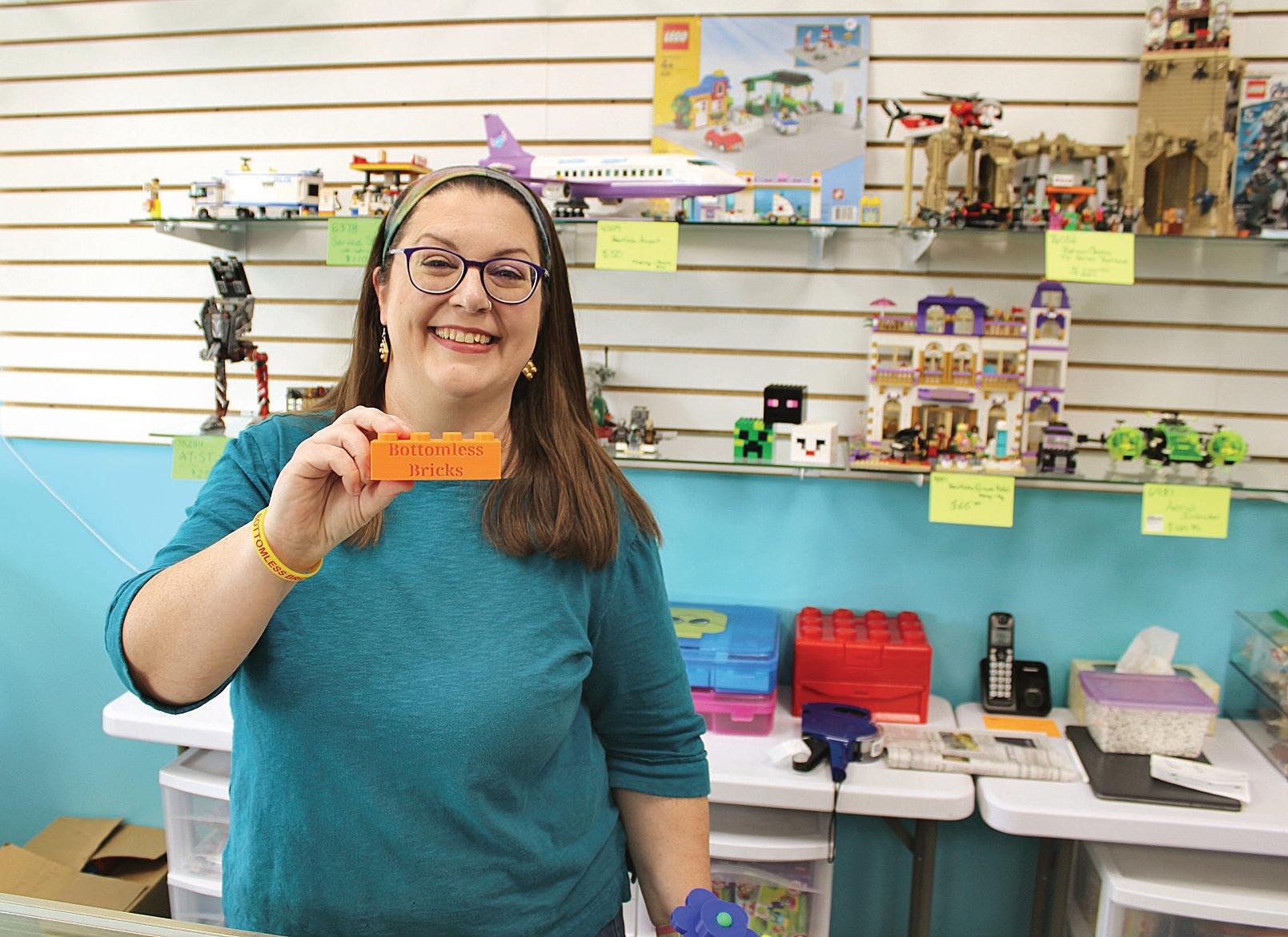
Erin Laundry holds up a 3D-printed Lego brick bearing the name of her store. The brick, along with a set of 3D-printed Lego flowers, were a gift from her partner on the show “Lego Masters,” Liz Puleo and her husband.
given item on the site. For less valuable sets, or even just bulk pieces, they’ll also pay by weight.
So far, “Star Wars” items have been among their most sought after. Laundry said they’re constantly on the lookout for vintage finds from the franchise — with original Death Star sets being their white whale. A search on Bricklink indicates that unused Death Star sets from the Lego “Ultimate Collector Series” can go between $612 and $2,500, depending on the model.
Laundry said that even minifigures


for Star Wars can be highly valuable. The store is currently selling a “shadow ARF trooper,” an “ultra-rare” figure in mint condition that only came in one particular “polybag” — a bag of the figures sold on its own individually from a set — for $350.
When it comes to stormtroopers and characters from the Star Wars menagerie, Laundry said she often gets help from her younger customers matching helmets to figures — even being a self-proclaimed “nerd” and fan of the franchise herself.
“It’s like it’s own rabbit hole,” Laun-
If you go
What: Bottomless Bricks
Where: 163 South St., Pittsfield
Store hours: Wednesday to Friday from 11 a.m. to 6 p.m. and Saturday and Sunday from 10 a.m. to 6 p.m.
Information: Go online to bottomlessbricks.com or email info@bottomlessbricks.com
dry laughed. “I need a kid expert for Star Wars guys.”
In spite of the Star Wars love, Laundry said that just about anything from the 80s and 90s can fetch a fair price. A decent amount of the store’s foot traffic thus far has been adults shopping for themselves, looking for reasons of nostalgia.
“We are that generation that is rebuying our childhood,” Laundry said. “People absolutely love to find those sets — especially early castle sets, pirate ships. We actually had a ‘Black Falcon’s Fortress’ and we didn’t even get it on the shelf.” That set, though, was bought by a kid collecting vintage Legos. For hobbyists (and serious collectors) of all ages, the store is becoming a gathering place.
Laundry said she plans to get an events calendar up for the store soon, hosting events for people to come get together. She hopes to establish a monthly event at Hot Plate Brewing; they hosted a Bricks and Brews event together during the 10x10 Festival in February.
It’s about more than just building LEGO sets, she said.
“Building community is a big part of this,” Laundry said. “Our mission is actually to promote creativity, community and ingenuity.”



By ClarenCe Fanto
LENOX — On a recent Saturday night, if you were looking to grab a table at Antimony Brewing, the pub-style restaurant recently opened at Lenox Commons on Pittsfield Road, you were in for at least a 45-minute wait, if not longer.
The location at 55 Pittsfield Road (Route 7/20) is among the largest restaurant spaces in the county, with 150 seats inside and 125 outdoors in two beer gardens.
Since Antimony opened softly just before the Memorial Day weekend, it appears that owner Rob Trask has found the formula for success in a space that has seen a lot of turnover in the past.
“We are taking a few reservations each day, but it is mainly first-come, first-serve at the moment,” he said.
After the Lenox House restaurant ended its nearly 40-year run in 2002, the spacious site sat vacant for four years until hotel entrepreneur Navin Shah spent $3.2 million to acquire and rebuild it in 2006 for the Bennigan’s chain, which went bankrupt two years later. Thereafter, it has been home to Berkshire Harvest, Tex Mex, Jae’s Asian Bistro and Bobby Mac’s.
The newest restaurant, as Trask explained in an email interview this past weekend, is named after a chemical element, derived from the Greek anti + monos for “not alone” or “not one” because the element is found in many compounds.
As proprietor of the popular 51 Park Restaurant & Tavern in Lee since 2004, Trask said that the name is especially significant — “it originated back in 2018 when we planned to build a brewery behind 51 Park.
“Antimony is a play on the restaurant name and my background in chemical engineering, as it has the atomic number 51. Since it means ‘not alone,’ it becomes a great connection for the vision of the brewery as we strive to bring the community together to share good times over great beer.”
To the joy of craft beer aficionados, brewpubs have grown in popularity across the Berkshires — Hot Plate Brewing Co. opened in Pittsfield
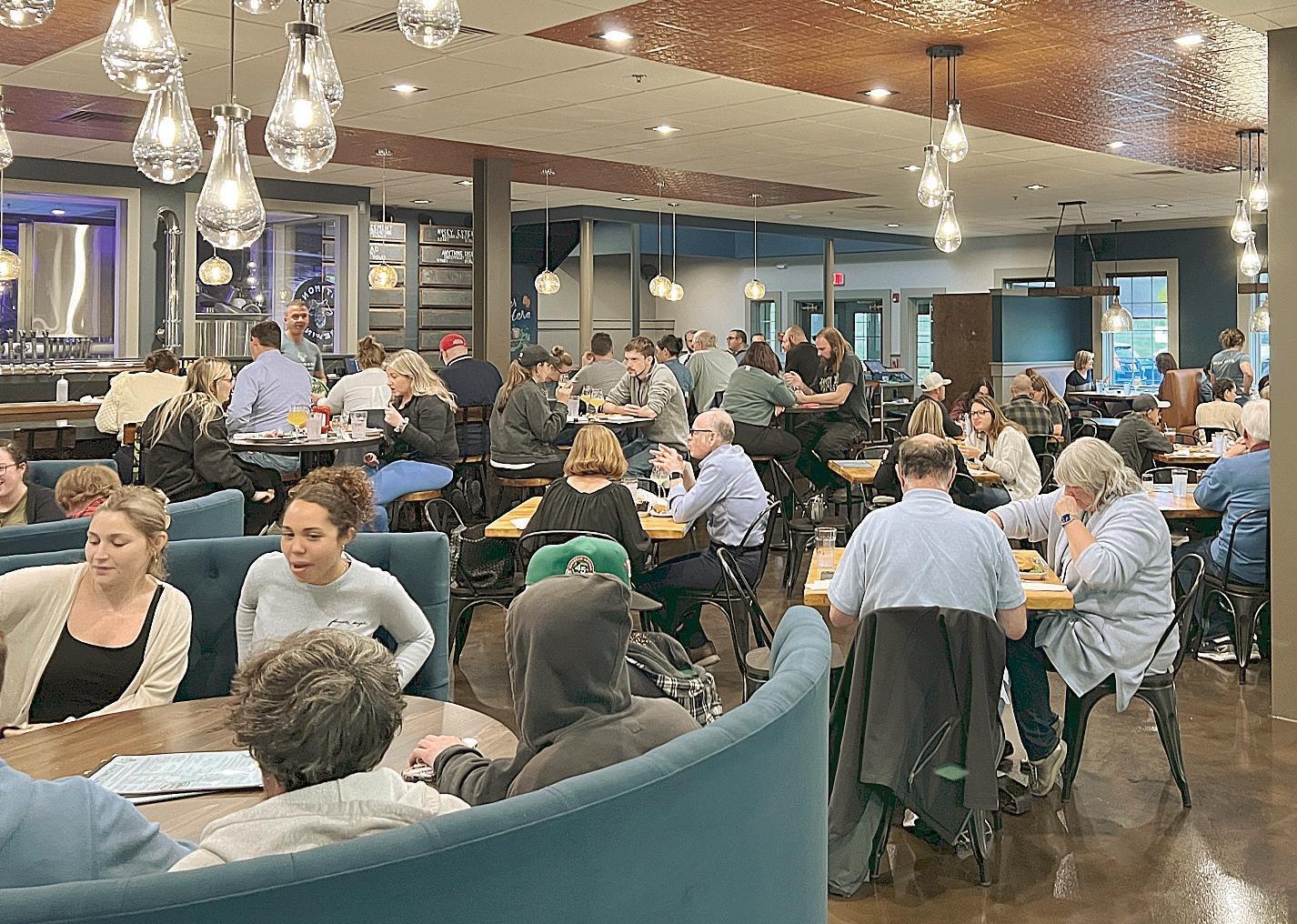
last winter, and Rising Glass Brewing Co. is working to pour its first pint by late summer in North Adams. Already on the scene: Barrington Brewery, Big Elm in Sheffield, Wandering Star in Pittsfield, Shire Beer Co. in Dalton and Bright Ideas in North Adams.
“It’s not a competitive environment. It’s collaborative, but it’s also complementary,” Trask said recently in The Eagle’s Berkshire Business Journal. “Everyone’s got their own style, their own vibe and their space. And that’s what kind of makes it fun for the customers.”
In April 2022, the Lenox zoning board unanimously approved Trask’s special permit application and site plan for Antimony. Trask’s Brewha LLC real estate firm purchased the building from Shah, president of the Berkshire Hotels Group (BHG Group LLC) in May 2022 for $875,000.
Asked how much the restaurant’s transformation cost, Trask demurred, responding, “Too much!”
Trask answered a few questions about the new brewpub and how the first few weeks in business are going. Answers have been lightly edited for length and clarity:
QThe first weeks must be especially challenging. What have you learned, based on guest and staff feedback?
A: We originally planned to open using QR codes for customer ordering in preparation
for any potential labor shortages that we are experiencing in the industry. We quickly learned that this was very difficult on the kitchen staff and was not going to work for the customer experience that we are looking to offer. After our soft opening dinners, we decided to pivot to full service and have continued with this approach since opening.
QAs a result, any menu changes you may be considering?
AWe have taken a few items off the menu that we found were very time consuming for the kitchen. Once the staff has become more seasoned, we will begin offering these items as specials and they may potentially make their way back onto the menu.
Q
Staffing is an industry-wide challenge. What was your experience and how many are you employing?
AWe have hired over 40 fulland part-time staff members over the last several weeks and plan to continue hiring more kitchen and front of house staff as we move forward.
QCan you describe the brewing side of the business?
AJeff Egan, a native to the Berkshires, was hired as our Head Brewer. He has done
What: Antimony Brewing
Where: 55 Pittsfield Road (Route 7/20), Lenox Hours Open: Open yearround from 11 a.m. to 10 p.m. Sunday through Thursday, and 11 a.m. to 11 p.m. Friday and Saturday.
Information: www.antimonybrewing.com
a tremendous job preparing for the opening and has already created some delicious beers that are receiving rave reviews from our customers. We are brewing on a seven-barrel steam brewhouse that can be seen from the taproom. The grain handling is uniquely located on the second floor of the mezzanine that can be seen when entering the taproom. The grain is processed and then conveyed down to the brewhouse on the first floor. We have eight beers on draft at the moment, but are excited to build upon our offerings as we have more time to brew and experiment.
Q
Is the site meeting your needs and expectations?
AThe location has proven to be excellent on one of the busiest roads and centrally in the heart of the Berkshires. We have two large outdoor beer gardens that will seat well over 100 people, so this checked one of the boxes for me as I believe outdoor dining is a great experience for the customer. There is ample parking as the complex has over 250 spaces. Most of the businesses and medical offices are closed in the evenings and on the weekends during our busiest times.
QWhat are the most popular menu and drink choices?
A: On the beer front, our Hazy IPA and Blonde Ale have been the most popular so far. We are also offering a very distinct beer cocktail menu that has been well received. Our top selling food menu items have been our Brisket Eggrolls, Queso Smash Burger and Nashville Hot Chicken Sandwich.
By H eat H er Bellow
GREAT BARRINGTON — A nonprofit that specializes in building affordable housing just took a different approach and bought an existing downtown building to stabilize the rents of six units upstairs.
The Community Development Corporation of South Berkshire last month bought the historic Sumner Block building at 306-310 Main St., the nonprofit announced in a statement.
The block, built in 1900, houses the William Pitt Sotheby’s International Realty in its two storefronts at street level as well as the six, one- and two-bedroom apartments occupied by tenants who work locally.
“With this purchase, the CDCSB plans to ensure that all current tenants receive the protection of an annual lease and complete the renovation of an unoccupied unit,” the statement said, noting that these units are classic “workforce housing.”
The Sumner Block was built by attorney and Civil War veteran Lt. Col. Samuel Barstow Sumner, and for 50 years housed a Woolworth’s as well as a music hall.
The nonprofit paid $1.6 million for the 8,160-square-foot property, according to the Southern Berkshire Registry of Deeds, the same as the price as that most recently listed by William Pitt Sotheby’s in Lenox. The initial asking price was $1.8 million, according
to CDCSB spokesperson Dana Rasso. The seller was Canaan Mountain LLC, whose primary agent is Jean-Paul Champoux, according to state filings.
The purchase comes as the struggle to find affordable rental units and homes in town reaches a fever pitch. It’s affecting the entire economic ecosystem, business owners say.
“It’s crucial that people who work in the area are also able to live here,” said the CDCSB’s Executive Director Carol Bosco Baumann. “We hear from a lot of businesses through our Small Business Technical Assistance program that a lack of workers is one of the biggest impediments to their economic growth and/or stability — and owners
The many restaurants of Lenox Commons
The restaurant site at the entrance of Lenox Commons at 55 Pittsfield Road (Route 7/20) has had many incarnations over the years:
• 1964: Lenox House Restaurant opens; part of the complex then known as the Lenox House Country Shops.
• 2002: Lenox House closes, and the site remains vacant for four years.
• 2006: Building owner Navin Shah demolishes the building and rebuilds it for the Bennigan’s restaurant chain.
• 2008 (June): Bennigan’s national corporation files for bankruptcy, but the local franchise owner continues operations.
• 2009 (April): Bennigan’s closes, and the building reopens two months later as the Berkshire Harvest Restaurant.
• 2010 (March): Berkshire Harvest closes; three months later, Tex-Mex restaurant opens.
• 2012 (summer): After the demise of Tex-Mex, Jae’s Asian Bistro opens.
• 2017 (summer): Jae’s closes, relocating to the Hilton Garden Inn just over the Pittsfield city line].
• 2017 (November): Bobby Mac’s opens, serving casual American “comfort food.”
• 2018 (April): Bobby Mac’s closes.
• 2019 (May): Building owner Shah proposes a retail marijuana business, but opposition from nearby Lenox Woods condo owners quashes the plan in September 2020.
• 2021 (August): South Street Veterinary Services submits application to the Lenox zoning board to transfer its Pittsfield clinic to the Lenox Commons site, but withdraws it two months later.
• 2022 (April): Rob Trask’s proposed Antimony brewpub wins unanimous zoning board approval.
• 2023 (May): Antimony Brewing opens, attracting large crowds in its first weeks.
SOURCE: EAGLE FILES
who have hour-long commutes that exacerbate an already long day.”
The Community Development Corporation of South Berkshire is continuing to look for ways to preserve existing housing. It also tried, unsuccessfully, to buy the Marble Block — on Main Street just to the north — last year in order to stabilize rents.
While the nonprofit will continue building state-subsidized housing projects, Baumann said there’s only so much of that to be done “as large areas of land disappear.” She also said that it isn’t easy to buy existing property given a competitive market and a proliferation of cash offers.
Real estate investor and CDCSB board member Richard Stanley played a critical role in making the purchase happen, according to board President Jim Harwood. Board member and Realtor Tom Doyle also helped negotiate the deal.
In 2021 the nonprofit built a state-subsidzed 45-unit complex off Bentley Avenue, and its new, 49-unit affordable housing complex that opened in June.
By H eat H er Bellow
GREAT BARRINGTON — An experienced developer whose latest purchase is the Marble Block building on Main Street says he has no plans to oust its 10 current residential tenants in order to do the considerable work the building needs.
Craig Barnum, who bought the mixed residential and commercial property on May 18, said he has extended the same lease terms he inherited upon purchase to the tenants of the eight apartments.
“That’s their home,” Barnum said in a recent interview, noting he had already reached out to the residents to let them know about the sale and their continued leases.
But he can’t guarantee, he said, that monthly rents will stay low after all the work is done, including bringing the building up to code. One 1,000-squarefoot apartment goes for $700 a month, for instance.
But Barnum says he is hopeful. He’s had “multiple conversations” with some organizations who he hopes can help him accomplish that, and also is going to explore whether town money is available.
Barnum, who owns “dozens” of rental properties in South County, said collaboration between municipalities, private investors like him and nonprofits is the key to creating more housing units that are affordable, or “workforce.” Workforce housing is for those — like school teachers or nurses, for example — who make too much money to qualify for affordable housing, but not enough to afford what is available.
“That in itself is the market trying to find a new way to solve this problem,” he said. “If this is, in fact, a crisis, let’s allocate capital resources and time for it and really focus on the outcome and the solution.”
The historic block, built in 1902, was “cared for,” he said. But there’s no getting away from the fact that it needs substantial upgrades including new heating and electrical systems, insulation and weatherization. The building, he added, might have to be brought up to various safety and accessibility codes, but it is unclear yet exactly what is needed.
Barnum said he would do all the work “methodically” and within a “reasonable period of time.”
“There’s no emergency now that warrants the need to clear the building [of tenants],” he said.
According to the Registry of Deeds, Barnum paid $1.9 million, which was the asking price listed with Lance Vermeulen Real Estate Inc. The price apparently dropped from $2.25 since last fall, when a nonprofit that develops affordable housing unsuccessfully tried to buy it to renovate it and stabilize those rents in perpetuity.
The fate of the building has been closely watched, given ongoing tension and division about the increasing cost of housing and little availability. A lack of new construction in town over the years was already a problem before the pandemic, and inflation worsened it.
Barnum said the building, like many old structures, does not make efficient use of the space. He says there could be 11 units that are efficient and beautiful, instead of just eight. More units — in any building — also could ultimately bring rents down, he said, as well as adding more housing.
“If we can make our spaces smaller, higher quality,” he said, “it lowers the per-unit cost for everybody and you get more productive output out of the square footage.”
No small feat, Barnum notes, amid increasing inflationary forces combined with interest rates that have doubled, and post-pandemic costs of construction materials and systems.
The Marble Block also includes six commercial spaces. One of its storefronts is Gorham & Norton, a longstanding independent grocer whose
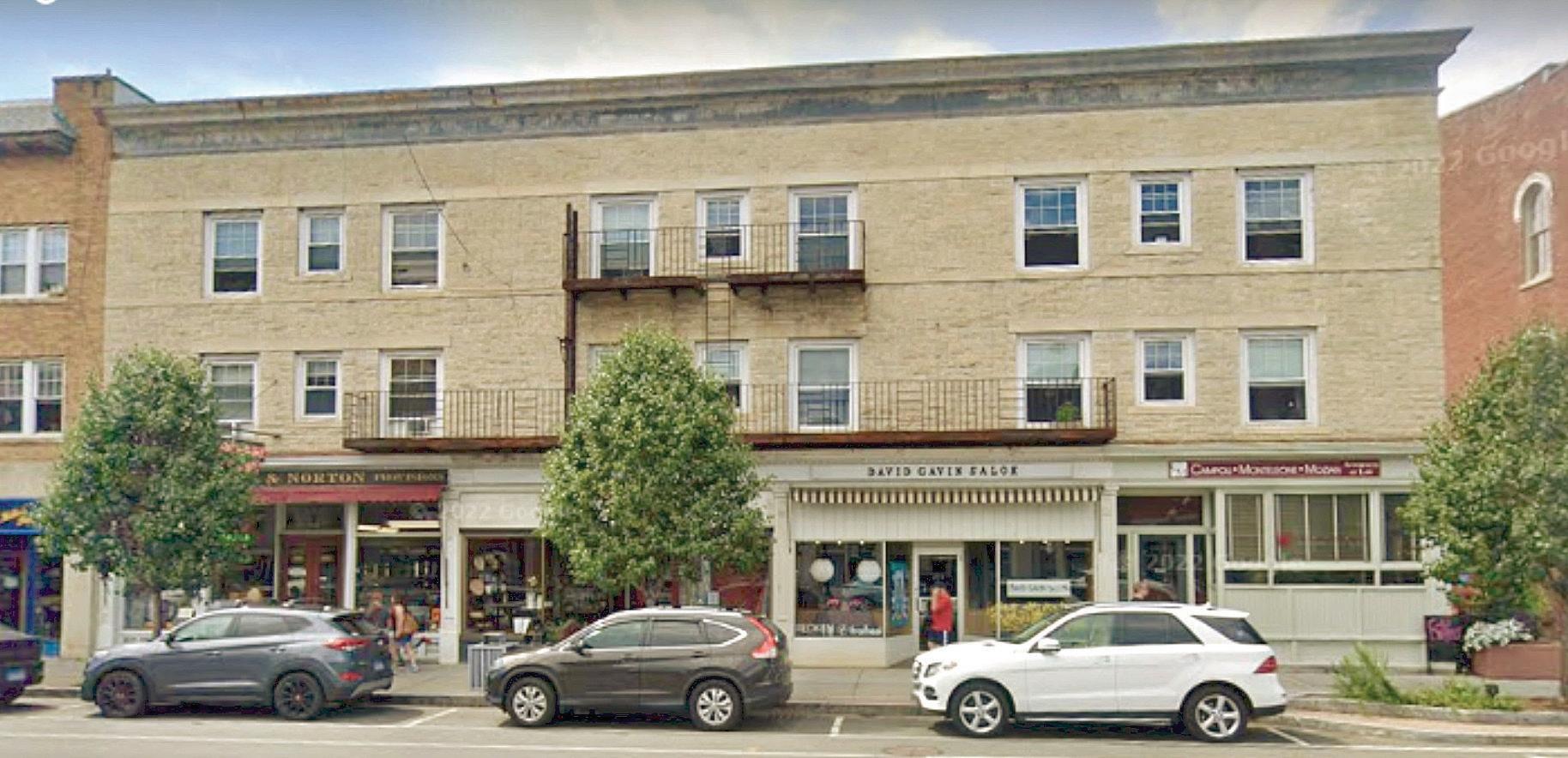
owners John and Diane Tracey sold the block to Barnum.
Joseph McArthur Vance designed the building. Vance’s designs include the Mahaiwe Performing Arts Center and Bascom Lodge on Mount Greylock.
Barnum is a native of Egremont who learned his trade by working with Pittsfield developer David Carver. Apart from owning rental properties, he redeveloped the Bartholomew Block on Main Street in Sheffield in early 2020 to create five market-rate rentals whose monthly cost is within the state’s workforce housing income range. The block includes Roberto’s Pizza and Bakin’ Bakery. He said what made that possible is the pre-pandemic, pre-inflation economy, but he did run into some issues when the pandemic first hit.
He also has bought a handful of Stockbridge Road properties in the last few years including the Cove bowling alley, and the Goodwill building. He bought the Cove at auction in 2021 and is working steadily to upgrade it.
A “firm believer in letting the market work,” Barnum says the market “is suggesting to people like me, to the
By Sten Spinella
WILLIAMSTOWN — It’s a doughnut shop paying homage to cannabis culture, but there’s no weed in the treats.
Maestri’s Munchies, located at 230 Main St., opened on April 20, which is the date marijuana aficionados celebrate cannabis.
Logan Maestri has lived in the Berkshires for the past 15 years, first in North Adams, now Williamstown. He had a funny yet meaningful idea for the shop.
“‘Hey, man, we should put a doughnut shop next to Silver Therapeutics. And we can make it all about weed.’” It’s the kind of idea people come up with when they’re “hella stoned,” as Maestri said the case was for him. But he put his back into it.
“Everybody thought I was crazy,” Maestri said. “The consensus was, it was a hilarious, good idea that just survived the test of time.”
Maestri, who was a Marine, receives federal money from the Department of Veterans Affairs. He said that about 10 years ago, right around the time the first of his two daughters was born, he was struggling with his mental health when he found out he qualified for the VA benefits. That money has allowed him to pursue this dream and other ventures.
“I didn’t have to work anymore, which is a blessing and a curse,” he said. “First time you have enough money to pay all
your bills, but at the same time, you start wasting time, and 10 years goes by, and you’re like, ‘What am I doing?’ You get tired of calling yourself a ‘disabled vet.’ It’s a self-esteem thing.”
Maestri put his name on the store because he wants it to be something his daughters can be proud of.
“I wanted my kids to have a name in this town,” he said. Whatever he did with the shop, he wanted to do it on his own terms, “which meant cannabis is involved in one way or another.”
After coming home from a stint in Fallujah, Iraq, in 2005 and 2006, Maestri worked waiting tables and in residential care.
“Cannabis saved my life,” Maestri said. “It wasn’t even smoking it — that helped reduce my anxiety — but growing it is a really therapeutic thing. It’s hard to think about taking your life when you’re nurturing life.”
IN BUSINESS
He now has a full-fledged doughnut shop. His best friend, Mat Duval, comes in at 1 a.m. to have the doughnuts ready by 8 a.m. Keeping with the theme, doughnuts have names like “Mary Jane,” (dipped in butter and coated with brown sugar) a colloquial term for weed, and “OG Honey,” (buttercream and honey glaze), which references a specific type of cannabis.
On Wednesday, customers came in and out of the store, some stopping to hang awhile.
The space is meant to be in the style of a dispensary, but more like an Amsterdam coffee shop rather than the U.S. grab-and-go model. Maestri and his establishment are relaxed and encourage socializing.
Maestri had the initial idea for his business in 2019. It took him two years and significantly more than the $100,000 he budgeted to get it started.
“I was looking at it from the point of view of a Williamstown resident,” he said. “There’s a certain amount of ‘hoity-toity-ness’ to Williamstown. I moved here because I wanted to move to a nicer town. But there was a certain amount of pushback as far as me coming here. I realized quickly how this town is. The assumption was that I couldn’t afford to live here.”
What does Williamstown need, Maestri asked himself. He said somewhere nonjudgmental, for the “quiet majority.”
“Spring Street is great and everything, but I can’t do a $10 cup of coffee every day, and the kids on Spring Street are not my people,” Maestri said. “My people are wookies and hippies and festivalgoers and people who quietly smoke in their house.”
PASSING THE SUGAR
Maestri once co-owned a CBD company called Veterans Hemp Market. He also founded a nonprofit called HORTIVET. The idea was for him to use his connections in the canna-
municipalities, to the nonprofits, to better interpret your capital to build out more units, in particular workforce housing.”
The beauty of the Great Barrington community, he said, is the “common denominator” that, despite politics, age and income, everyone wants to see more workforce housing.
He thinks it’s folly to buy the narrative that it isn’t good to have “a very nice diversified housing stock.”
“You’re not going to get more workforce housing by shooting arrows at low-low income housing or high-high income housing,” he said. “The market chooses those rents for the high income housing and more units being put into the marketplace, generally speaking, will only help the supply issue, period.”
“It’s not ‘A’ against ‘B’,” he said. “That means, yes, you can have higher-end rentals and you can also have affordable housing.”
Also, Barnum doesn’t like housing segregated by income and thinks people should live “in dignified spaces.”
“Not the lowest cost base,” he said, “but the best equilibrium of dignified and value relative to the price and place that they live in.”
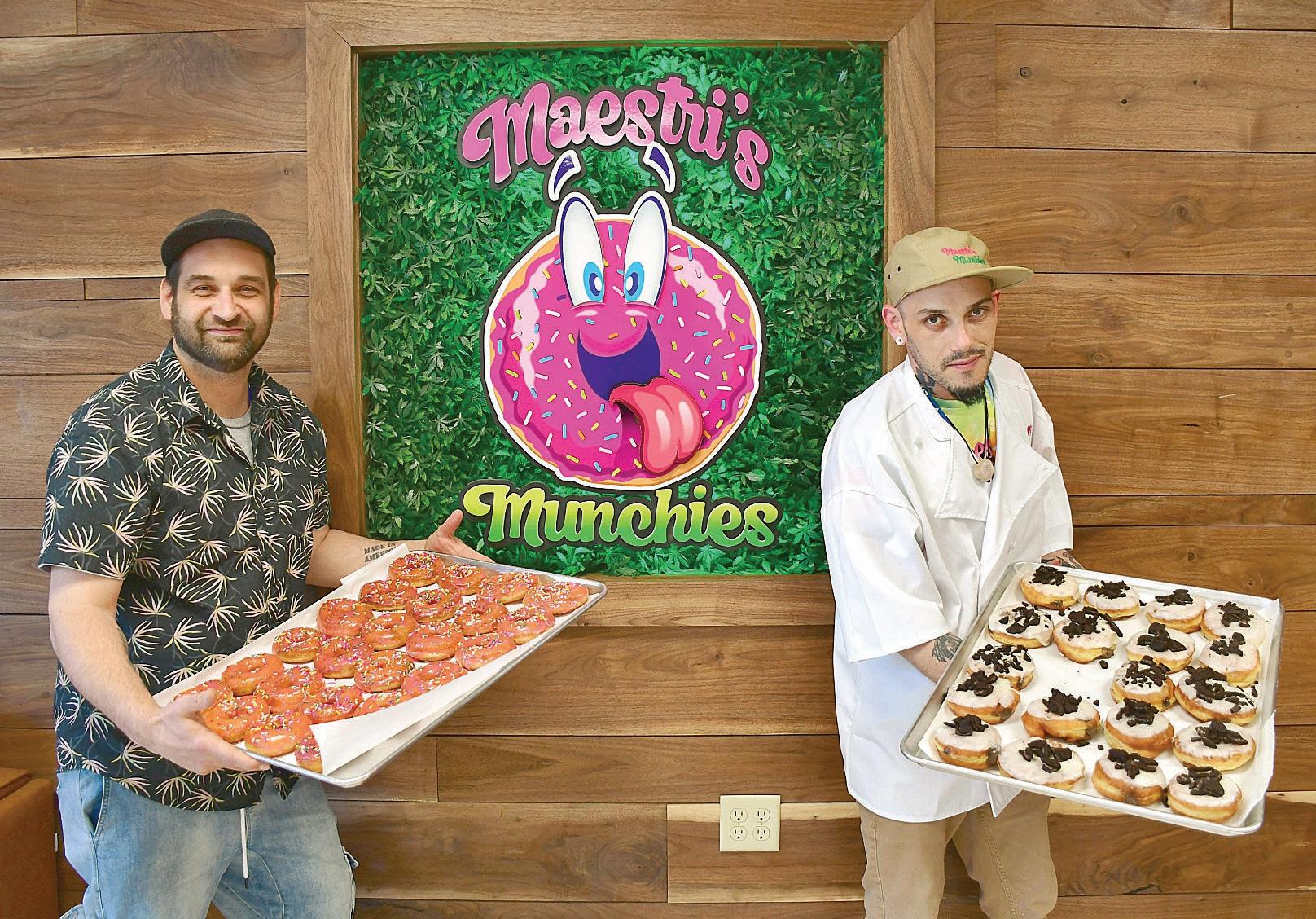
bis industry to acquire grow equipment for vets. Even if the person didn’t want to grow cannabis, Maestri’s organization would provide equipment for whatever they wanted to harvest. It was an extension of Maestri’s belief that growing weed can be therapeutic. His industry connections aid in his new business as well. Maestri has a coffee brand that he wants to get into dispensaries: The packaging says what kind of cannabis strains the coffee pairs well with. He’s been planning popups outside dispensaries and delivering large quantities of doughnuts to cannabis manufacturers, in what looks like a
used cop car, with the words “donut patrol” displayed. The shop recently started selling sandwiches. It’s moving to Thursday through Sunday after its original schedule of Tuesday through Saturday. And he’s thinking about franchising, calling the Maestri’s Munchies model “highly repeatable.”
Maestri’s VA benefits freed him up to open the business. “I find myself in a really unique position as a disabled vet,” he said. “I have money coming in so that my mortgage is covered. I get to deal with this as a passion project rather than deal with it through desperation. As long as this pays for itself, I’m OK.”
After 43 years,
packs it in Pittsfield family business, like many in Berkshires, struggled to
By Tony DoBrowolski
PITTSFIELD — Tom and Kim Taglieri recently learned that their lawnmower wasn’t going to be fixed when they thought it would be.
The person who normally fixes their mower had left the job, and their repair shop was having trouble finding a replacement. It’s a situation the Taglieris can relate to.
Trouble finding employees, a situation that all small businesses in the Berkshire are struggling with, has caused the Taglieris to shut down Alliance Appliance on Fenn Street, which they’ve owned since 1986, ending their 43-year career in the appliance business.
“We were kind of looking at retirement anyway,” said Kim, who is 67 (Tom is 69). “But last year, trying to find help was pretty much impossible. We can’t run this on our own anymore.”
The Taglieris, who have been married for 47 years, have had as many as six employees work with them in the three Pittsfield locations where they’ve run Alliance Appliance. But they’ve been running the business alone since November.
“In November, two of our employees left so it was just the two of us,” Kim said. “We tried to do it with just the two of us, but we said this isn’t working very well.”
One person had been interested in buying the business, but backed out because all they wanted to do was concentrate on service not sales, the couple said.
Alliance Appliance closed on May 26, but the Taglieris remained at the store until June 9 to sort through their inventory.
They plan on selling the building at 579 Fenn St. that they’ve owned since 2005.
Closing the business is difficult for the two Berkshire County natives.
“It’s kind of bittersweet because we were both ready to be done,” Kim said. “But it’s hard being a business for (over 40) years and then just be done.”
Tom, a 1972 Taconic High School graduate, studied appliance repair at the former Northeast Institute of Industrial Technology in Boston, then worked as a repairman for both General Electric and Sears. The couple entered the appliance business full-time in August 1980, originally working out of the front rooms of their then home in Pittsfield.
“I kind of enjoyed the work,” Tom said. “I always just wanted to have my own business.”
They ran a used appliance store on Wahconah Street before purchasing what was then known as Alliance All Appliance in January 1986 when the business was located on Linden Street (Alliance All Appliance opened in 1980). The first thing the Taglieris did when they bought the business was to drop the word “all” from the name.
“It was a tongue twister,” Tom said Friday. “People never got it right.”
In 1988 they moved Alliance Appliance to a larger location at 1400 East St., into a building that they shared with a fitness
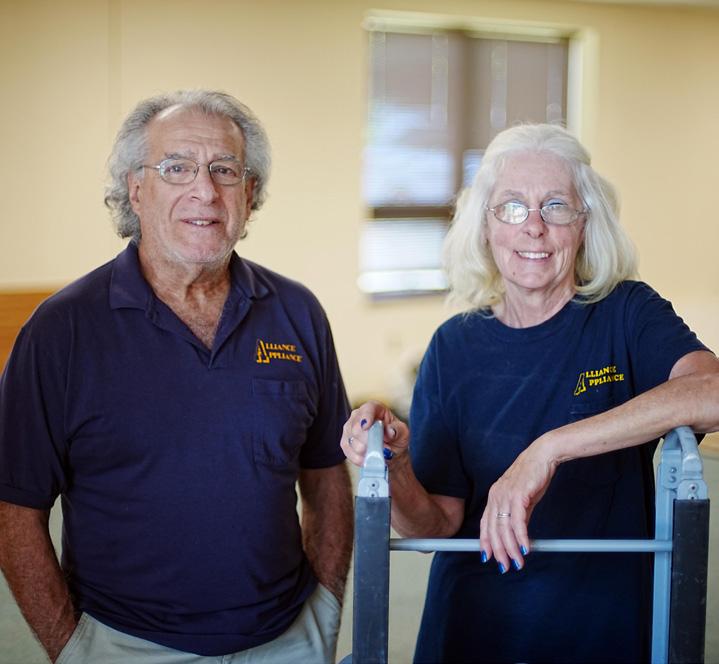
BEN GARVER
Alliance Appliance in Pittsfield has gone out of business after more than 40 years.
Owners Tom and Kim Taglieri have retired.
salon. At that point, Alliance Appliance had two other full-time service technicians that worked with Tom Taglieri.
That, of course, was before small businesses had so much trouble finding employees.
Kim said the hiring issues began when the COVID-19 pandemic hit three years ago, and have never really reversed themselves.
“Not to our knowledge,” Kim said. “The same thing has happened with some friends of ours who own businesses. They’re having a hard time finding help.”
“A lot of small businesses have cut
By Jane k aufman
BECKET — The Becket Arts Center, which has long catered to Berkshire County’s summer set, is stepping up its programming on a year-round basis.
Inside the Greek-styled 168-year-old Seminary Hall, visible change has already taken place fueled in part by changes behind the scenes and walls of the building.
The gift shop, which was previously at the back of the building, has moved to the front. The rest of that room is set up as an art studio and demonstration space with a three-bay sink, easels, some finished pieces and chairs in rows.
The back room, formerly the gift shop, is now an art lounge, with room for a solo art show. There’s a piano in the corner of that room.
On the second floor, accessible by steps or an elevator, the main hall and stage functions both as performance space and as a much larger exhibit space. It has painted copper ceilings and a wooden floor along with large windows.
Seminary Hall was built as a school in 1855. The Becket Arts Center has been leasing it from the town since 1976.
In May there was a children’s art show by students at the Becket Washington Elementary School, reupping an annual tradition that was halted during the COVID-19 pandemic.
“There’s grades of kids who don’t remember their artwork hanging in the gallery because it hadn’t happened in the time they were in school,” said Jenn Beatty, executive director of the Becket Arts Center. She is one of two professionals who now run the organization.
The Becket Arts Center was founded in 1968 and incorporated as a non-profit in 1970. “Our vision is a community connected through art and cultural experiences,” according to its website.
Seminary Hall hasn’t had central heat in recent memory, meaning that the Becket Arts Center, could only schedule programming during the summer. Halfway through the winter, installation of a heating, air-conditioning and ventilation system was complete, and the Becket Arts Center held its first cold-weather events including a reading of Charles Dickens’ “A Christmas Carol,” some musical performances, and a one-man show called “The Show” in March.
Beatty said she hopes the venue can function as a platform for stage one productions — by performers who may want audience feedback before attempting to launch performances in larger venues.
There is a summer music series planned, along with lectures, art demonstrations, poetry readings, and theatrical performances.

Jenn
art show featuring work by students at Becket Washington Elementary School was on display in May.
Actor Ken Cheeseman first walked into the Becket Arts Center during the COVID-19 pandemic to see if the building had a decent internet connection. He needed a better connection in order to teach via Zoom during the shutdown.
“Their internet was just as bad as ours was at home,” Cheeseman said. “So that opened up a conversation,” leading to Cheeseman and his wife, Paula Langton, becoming involved. Some of their friends who have homes in Becket decided to as well.
“The summer crowd gets a lot of great stuff in the Berkshires,” he said, listing summer theater companies and Jacob’s Pillow. “Fortunately, everybody was into this idea of really making it for the full community.”
Now, that the building can be used in all four seasons, he said, “Our plan is to really start to get some stuff going for the off-season as well.”
While the elevator was installed several years ago, and the HVAC and electrical work are finished, there is more work to be done on the building.
Beatty is hoping an engineering study costing up to $10,000 can determine the best course of action to repair the two entrances to the building, which have both been water damaged. That problem was identified by an insulation contractor who said he could not insulate in certain areas of the building because of the presence of moisture.
Voters at the May 13 annual town meeting approved the expense.
Roberta Goldman, a local resident who ran the Becket Arts Center as a volunteer years ago, said she’s wowed by the work of Beatty and the current board.
“It schlepped along,” she said, contrasting the Becket Arts Center of years ago with its current incarnation. “It was always welcoming, but it was funky. Now it’s something unique and special.”
their hours down because they can’t find staff,” Tom said.
The nature of the appliance business has also changed, they said.
Kim recalled that when the couple started out, Tom would often receive gifts from people who couldn’t afford to pay for the repairs.
“He would come home from a service call with four coffee mugs,” Kim said. “He’d say, ‘Well, they couldn’t afford anything so they gave me coffee mugs.’”
“A pottery guy in Sheffield,” Tom said. “We used to go all over the place back then. He gave me four homemade coffee mugs.
“It’s not always been about the money,” Tom said, referring to service calls. “I’ve spent more time having a cup of tea with a little old lady or a little old man that needed the company.”
“I’d call him to see where he was, and he’d say, ‘I’m having a sandwich,’” Kim said.
The Taglieris don’t have any definite retirement plans.
“We picked a good time to retire because we can do a little babysitting and some golf,” Tom said (the couple have two grown children that live in the Berkshires). “I don’t know what I’m going to do in the winter.”
They will miss their customers as much as the people they served will miss them.
“We really enjoyed the customers we had,” Kim said. “They’ve been amazing. We still have people calling here saying, ‘What am I going to do without you?’”
By Tony DoBrowolski
PITTSFIELD — Several Cumberland Farms stores in Berkshire County have come under new ownership as part of a $1.5 billion deal that involves more than 400 convenience stores in the United States.
Five of the chain’s Berkshire outlets — two in North Adams and one each in Dalton, Great Barrington and Pittsfield — are involved in the transaction, according to documents filed at various Berkshire registries of deeds. The combined sale price for the five Berkshire properties is $17.7 million, according to registry documents.
Although the Pittsfield store at 154 First St. is part of the deal, no deed has been filed for the city’s other Cumberland Farms outlet at 885 Dalton Ave., according to registry documents. Documents associated with this transaction are also not filed for the Cumberland Farms store at the corner of Columbia and Elm streets in Adams, a property that Cumberland Farms purchased in 2021.
The other Berkshire stores are located at 1366 Curran Highway and 594 Mohawk Trail in North Adams, 707 Main St. in Dalton, and 140 Main St. in Great Barrington.
The sale will not affect current employment levels at any of the Berkshire County Cumberland Farms locations, according to company spokeswoman Emily Pickering. All the stores will continue to operate under the Cumberland Farms name.
In March, real estate investment firm Realty Income Corp. signed an agreement to acquire a total of 415 single-tenant convenience stores from EG Group, a major independent convenience retailer based in the United Kingdom that purchased the Westborough-based Cumberland Farms chain in October 2019.
The five Berkshire transactions all occurred in mid-May,
around the same time that Realty Income Group closed on 14 Cumberland Farms properties in Central Massachusetts for a total of $72.7 million, according to the Worcester Business Journal.
According to a press release that the two companies released in March, the $1.5 billion “sale-leaseback” deal was expected to close during the second quarter of this year, which began in April. Sale-leaseback deals refer to transactions that occur when a buyer purchases property then leases it back to the former owner who operates a business at that site.
Under the terms of this transaction, EG America of Westborough will continue to operate all of the Berkshire County stores under lease agreements with Obsidian ML 6 LLC, an affiliate of Realty Income Corp., a real estate investment trust based in San Diego.
Three other convenience store brands, Fastrac, Tom Thumb and Sprint are also part of this transaction, but 80 percent of the portfolio’s annualized contractual rent is expected to be generated from the Cumberland Farms stores, according to the press release. The top three representative states in the portfolio are Florida, Massachusetts and New York and 116 of the total properties involved are located in the Bay State.
Of Cumberland Farms’ 581 total stores in the U.S., 210 are located in Massachusetts, 36 percent of the company’s total portfolio.
Cumberland Farms has operated a store in Dalton since 1972, but in 2002 the town’s Zoning Board of Appeals allowed the company to tear down its 4,753-square foot facility and replace it with a 3,039-square foot building that was set farther back from the road. A plan to expand Pittsfield’s store on First Street was announced in 2015.
Berkshire County Real Estate Transactions for May 1-26
ADAMS
Acent Homes LLC sold property at 29 Victory St., Adams, to Properties R US & Investments LLC and Areid Estate LLC, $62,500.
David A. and Lorraine T. Boschetti sold property at 18 Edward Ave., Adams, to Maria Elena Prats Porcar, $290,000.
John A. Ciuk sold property at 108 North Summer St., Adams, to Stacy Ann Kitchell and Timothy W. Kitchell Jr., $160,000.
Secretary of Housing and Urban Development sold property at 54-58 Maple St., Adams, to PB Summer Street LLC, $85,500.
Arielle M. Poirot sold property at 11 Pearl St., Adams, to Elbin Orellana, $225,000.
Berkshire Homes Rentals LLC sold property at 12-18 South Willow St., Adams, to Wenninger Family LP, $155,000.
Debra J. Jozefiak, trustee of the Valerie C. Piantoni RVT, sold property at 4 Edmunds St., Unit A101, Adams, to Rhoda Garret M. Weyr, $230,000.
Ellies Holdings LLC sold property at 4 Bieniek Ave., Adams, to Leon E. Supranowicz, $210,000.
Rex Wayne Martin sold property at 86 Orchard St., Adams, to Evgeny V. Plekhanov and Elisabeth S. Jones, $362,000.
OC Sommer LLC sold property at 39 Commercial St., Adams, to Compass Rose of the Berkshires LLC, $220,000.
Thomas and Joan E. Biros sold property at 9 Richmond Lane, Adams, to Anthony M. Booth Sr., $75,000.
BECKET
David J. and Christine L. White sold property at Mountain Pasture Road, Becket, to Viktor Majzik, $44,000.
Becket West LLC sold property at Jacobs Ladder Road, Becket, to Kenneth C. Faldasz, $29,000.
USA HUD sold property at 98 Werden Road, Becket, to Eric M. Mahoney and Nicole M. Russell, $240,000.
Lukas Behrndt sold property at Excalibur Drive, Becket, to Matthew Liebenow, $12,000.
CHESHIRE
Francis S. Willett sold property at Lakeshore Drive, Cheshire, to David and Tara Strassburg, $285,000. Burton L. Kirk Jr. sold property at Sandmill Road, Cheshire, to Matthew J. Kirk, $20,000.
DALTON
Jonathan H. Schmidt sold property at 57 John St., Dalton, to Justine Wood, $223,250.
CFI Propco 2 LLC sold property at 707 Main St., Dalton, to Obsidian ML 6 LLC, $4,688,106. Tyler James Lecours sold property at 43 Eleanor Road, Dalton, to Madeleine Fortier, $218,500.
David E., Andrea R. and Andrea R. Blessing sold property at 78 Renee Drive, Dalton, to George Waldheim and Deborah Gottung, $362,500.
EGREMONT
Kenver Real Estate LLC sold property at 39 Main St., Egremont, to Jordan Fox Reber, $850,000.
Richard S. Greenberg, trustee of Richard S. Greenberg Revocable Trust, sold property at 23 White’s Hill Road, Egremont and Alford, to Black Bear Holdings I LLC, $705,000.
Gerard Lanoue and Monica Lanoue sold property at 10 Westerhook Road, Egremont, to Conor Gallagher and Zana Thaqi, $507,000.
GREAT BARRINGTON
Gregg O. Wellenkamp and Eric H. Wellenkamp sold property at 7 Omega Road, Great Barrington, to Michael Garrett and Pamela Garrett, $135,000.
Lute V. Hatch Jr. and Kathy M. Hatch sold property at 29 Commonwealth Ave., Great Barrington, to Beth Grace, $439,000.
William P. Zox and Jeannie B. Zox sold property at 24 Manville St., Great Barrington, to Shannon Burns and Paul Beling, $441,000.
Gregg O. Wellenkamp and Eric H. Wellenkamp sold property at 6 Omega Road, Great Barrington, to HLP Realty Holdings LLC, $85,000.
James N. Fingeroth and Patricia L. Fingeroth, trustees of James N. Fingeroth Revocable Trust & Patricia L. Fingeroth Revocable Trust, sold property at 130 Hurlburt Road, Great Barrington, to Richard Vallarelli Jr., trustee of GB Realty Trust, $2,711,500. Marble Block Company sold property at 268-278
Main St., Great Barrington, to Marble Block Realty LLC, $1,900,000.
Laura Berenson and Cynthia Smith sold property at 41 Castle St., Great Barrington, to Blake McDonald and Lauren Schulz, $505,000.
CFI Propco 2 LLC sold property at 140 Main St., Great Barrington, to Obsidian ML6 LLC, $2,705,740.
Anne Okerstrom-Lang sold property at 48 South St., Great Barrington, to Timothy Lovett and Fintan Hanley, $1,425,000.
LANESBOROUGH
Timothy P. and Diana M.D. Norton sold property at 232 Bailey Road, Lanesborough, to Robert Joseph Wenger Jr. and Elizabeth Susan Karr, $585,000.
Trevor E. and Justin D. Clement sold property at Silver Street, Lanesborough, to Brent A. and Lynne Baumgartner, $25,000.
Paul M. and Renee Dodds sold property at 28 National St., Lanesborough, to Charles W. and Marie E. DiGennaro, $377,700.
Sharon M. Robak sold property at 86 Hobomack Ave., Lanesborough, to Natalie Marie Geary, $233,000.
Skyline on Seven LLC sold property off South Main Street, Lanesborough, to Town of Lanesborough, $150,000.
Laura Stern and Maxine Frank, trustees of 101 Silver Street RT, sold property at 101 Silver St., Lanesborough, to Morgan L. Keith, $875,000.
La Vida Grande LLC sold property at 149 Narragansett Ave., Lanesborough, to Smegal Holdings LLC, $510,000.
LEE
Luz D. Salazar sold property at 42 Reservoir Road, Lee, to Vania Pimenta Lillie, $269,900.
Eric M. Wells sold property at 45 Pine St., Lee, to Alice Virginia, trustee of the Alice Virginia Collins 2003 RVT, $120,000.
Stuart A. and Zoe B. Dalheim sold property at 215 Theresa Terrace, Lee, to Richard Lavigne and Stephen P. Concannon, $426,000.
LENOX
Sean F. Ward sold property at 52 West Mountain Road, Lenox, to FP Lend Fund I LLC, $299,000.
Susan Engel, trustee of the Susan Engel Trust, sold property at 4-1 Rolling Hills Condominium, Lenox, to Ava-Lena and Karen June Stambovsky, $295,000.
Judith A. Epstein, trustee of the Judith Epstein RVT, sold property at 2 October Hill Drive, Lenox, to Patricia L. and James N. Fingeroth, trustees of the James N. Fingeroth RVT and the Patricia L. Fingeroth RVT, $849,000.
Thomas Abate sold property at 522 Walker St., Lenox, to Richard Montano, $395,000.
Amy Shaw, formerly known as Amy S. Consolati, sold property at 6 Morgan Manor, Unit 6, Lenox, to Mary Christine Rosensteel, $273,100.
Kelley R. Vickery sold property at 154 Cliffwood St., Lenox, to David M. Joseph and Molly B. Lyon-Joseph, $1,100,000.
Ellen Brodbar, trustee of the Ellen Brodbar RVT, sold property at 2 Meadow Lane, Unit 1-7, Lenox, to Kevin M. Dickson, $300,000.
Tanya Kalischer, personal rep. of the Estate of Angela Kalischer, sold property at 93 Hubbard St., Lenox, to Michael Jeffrey Alexander and Anne Langhorne Keith, $610,500.
Michael and Margaret M. Kopiec, trustees of the Kopiec FT, sold property at 4 October Hill Drive, Unit 2, Lenox, to Diana Gittelman and Prescott B. Winter, $859,000.
MONTEREY
Malcolm D. Griggs and Linda M. Griggs sold property at 6 Bidwell Road, Monterey, to Shire Habitat LLC, $1,850,000.
MOUNT WASHINGTON
Pamela J. Pescosolido, trustee of Pamela J. Pescosolido Revocable Trust, sold property at 399 East St., Mount Washington, to Andrew Morgan and Katrina Morgan, $972,000.
NEW ASHFORD
Norman F. Quinn Jr., trustee of the Norman F. Quinn Jr. RVT, sold property at Beach Hill Road, New Ashford, to Brian and Mary Rojo, $227,500.
NEW MARLBOROUGH
Darren M. Yoos sold property at 93 Berkshire Woods Road, New Marlborough, to Tess L. Segalla, formerly known as Tess L. Yoos, $105,000.
Ryley Hartt and Kristen Hartt sold property at 1553 Hartsville New Marlborough Road, New Marlborough, to Michael B. Mullany, $465,000.
Chabad of Camarillo Inc. sold property at 0 East Hill Road, New Marlborough, to John B. Crawford, trustee of East Hill Nominee Trust, $62,500.
Kathleen McNamara sold property at 994 Hartsville New Marlborough Road, New Marlborough, to Jonathan C. Moore and Ryan James McNamara Moore, $542,423.
David Johnson sold property at Canaan Southfield Road, New Marlborough, to Michael Martin and Ronald Bartenstein, $55,000.
Hilary L. Jadow and David L. Jadow, co-trustees of Henry C. Jadow Qualified Personal Residence Trust Agreement Number One and Julie A. Jadow Qualified Personal Residence Trust Agreement Number One, sold property at 414 Brewer Branch Road, New Marlborough, to Jack Gellen and Sarah Carpenter, $3,100,000.
Adam Rand and Annette Rand sold property at 37 Pine St., New Marlborough, to Paul D. Pfeifer and Ayrea Pfeifer, $410,000.
Beechwood Place LLC sold property at 707 Stratford Road, New Marlborough, to Clucky’s Place LLC, $4,990,000.
Jose Gonzales and Elizabeth Young sold property at 33-35 Hall St., North Adams, to James M. Pedro, $59,500.
Jose Gonzales and Elizabeth Young sold property at 27 Hall St., North Adams, to James M. Pedro, $5,500.
Cindy Koloc and Brittany M. Cardinal sold property at 354 Kemp Ave., North Adams, to Shirah P. Bergman, $180,000.
Donald P., David R. and Wayne F. Andreatta and Ann M. Boulger sold property at 74 East Ave., North Adams, to Frank F. and Terri A. Bird, $260,000.
Diane M. Omelenchuck and Edward J., Michael M., and Nadia N Matney sold property at 270 Eagle St., North Adams, to Nicholas M.R. Anderson, $179,900.
Charles E. and Katherine Swabey sold property at 119 State St., North Adams, to Iman Ghazi, $70,000. Henry D. and Maureen F. Dean sold property at 108 Meadow St., North Adams, to Brian Intraversato, $180,000.
CIRE Corp. of Massachusetts sold property at 38, 40-42, and 48 Eagle St, Units A, B and C, North Adams, to Erela on Eagle LLC, $164,650.
Alison A. Case, trustee of the Revocable Indenture of Trust of Alison A. Case, sold property at 47 Beacon St., North Adams, to Tracy D. Rackauskas and Benjamin N. Dinsmore, $250,000.
Beverly A. Cooper sold property at 170-172 Bracewell Ave., Chase Avenue and Bracewell Avenue, North Adams, to YT Adams LLC, $210,000.
CFI Propco 2 LLC sold property at 1355 Curran Highway, North Adams, to Obsidian ML 6 LLC, $3,293,755.
CFI Propco 2 LLC sold property at 594 Mohawk Trail, North Adams, to Obsidian ML 6 LLC, $3,383,995.
Robert C. Rendo and Rachel Cohn sold property at 243 Union St, Unit 308, North Adams, to Roger Questel, trustee of the Roger Questel LVT, and Ellen Wise Questel, trustee of the Ellen Wise Questel LVT, $412,500.
OTIS
Marion J. Mackie, trustee of the Mackie Family NT, sold property at 536 Lion Hill Road, Otis, to Jamie Wuennemann, $49,900.
Charles J. and Tracy L. Fenn sold property at Route 8, Otis, to Michelle Rosen and Philip Peterson, $86,000.
Catherine J. and Julianna B. Connolly, trustees of the Connolly Family Irrevocable Trust, sold property at Route 8, Otis, to Timothy D. and Sharon R. Opdyke, $99,000.
Keith E. and Rogina A. Modestow sold property at Rainbow Road, Otis, to Karen A. Scetz, $26,500.
Lisa C. Thomas sold property at North Main Road, Otis, to Christopher T. and Candy L. Chaffee, $35,000.
Stephanie Porter Larose, formerly known as Stephanie Porter Leichliter, sold property at 26 Tolland Road, Otis, to Craig Morton, $80,000.
James E. and Sharon Coer sold property at 362 West Center Road, Otis, to Clayton Francis Morrie Sr., $371,000.
Donald T. and Anne O. Garvey sold property at 759 North Main Road, Otis, to Susan Brown Gordon, $77,900.
Jocelyn Chapman, trustee of the Jocelyn Chapman 2002 Trust of Feb. 12, 2002, sold property at 205 Wendell Ave., Unit B, Pittsfield, to James K. and Nancy P. Gilbert, $375,000.
Matthew and Katelyn Kiernan sold property at Hancock Road, Pittsfield, to James J. Geary, $60,000.
Todd C. Phillips sold property at 202 Lebanon Ave., Pittsfield, to LND Investments LLC, $145,000. Jacob D. Van Deusen and Mallory L. Van Deusen, formerly known as Mallory L. Batory, sold property at 58 Franklin St., Pittsfield, to Stephen R. Demastrie and Carly J. Christman, $261,000.
John W. and Jane P. Bresnahan sold property at 593 Lakeway Drive, Pittsfield, to Eric M. Zahn and Cameron A. Allshouse, $1,300,000.
Thomas Charles Dawley Sr. sold property at 15 Cobblestone Cove, Pittsfield, to Thomas C. Dawley Jr. and Kim Dawley, $131,000.
Whaling Capital II LLC sold property at 38-44 Allengate Ave., Pittsfield, to Allengate Properties LLC, $625,000.
Thomas M. Mullaney sold property at 241-243 Second St., Pittsfield, to Heather Kelley and Matthew Vella, $220,000.
Chantelle M. Hill, personal rep. of the Estate of George W. Hill, sold property at 115 Euclid Ave., Pittsfield, to Christopher K. Balaska, $240,000. Mary Christine Rosensteel sold property at 247 Williams St., Pittsfield, to Lara and Robert Bolger, $332,000.
Brandon I. Beldengreen-Karas and Julia I. Beldengreen-Karas, formerly known as Julia I. Kurtz, sold property at 5 Caratina Ave., Pittsfield, to Justin C. Carafotes and Rachel A. Renchner-Kelly, $375,000. Sugar Bears Enterprises LLC sold property at 119 Elm St., Pittsfield, to Fang Tian, $224,900.
David R. Cianflone, personal rep. of the Estate of Louise Forrest Cianflone, sold property at 507 Churchill St., Pittsfield, to Jennifer C. Benson, $310,000. Thomas W. Rumbolt, trustee of the Doesn’t Matter NT, sold property at 214 Tyler St., Pittsfield, to Krzysztof Properties LLC, $115,000.
Megan P. Wilden sold property at 64-66 Boylston St., Pittsfield, to Luana Dias-David, $205,000. John J. and Linda L. O’Brien sold property at 80 Spadina Parkway, Pittsfield, to Douglas J. Moore and Patricia C. Ingham, $489,900.
Henry W. Lingley III sold property at 88 Howard St., Pittsfield, to Alexander A. Lomaglio, trustee of the Alexander A. Lomaglio RVT, $252,500.
Joshua and Annamarie Yerkes sold property at 25 Dodge Ave., Pittsfield, to Dianemarie and William W. Collins, $367,000.
Howard and Bonnie Graff sold property at 210 East Slope Road, Pittsfield, to Jason Brown and Claudia Epelbaum Brown, $1,900,000.
Toshi Abe and Nancy E. Hall, trustees of the Abe & Hall Living Trust, sold property at 33 Maplewood Ave., Unit 102, Pittsfield, to John M. and Kathleen Schubert, $220,000.
Deborah Beachem, personal rep. of the Estate of Donald Duane Beachem, sold property at 338 Springside Ave., Pittsfield, to Nikolaos Dionysopoulos, $113,500.
Lisa Szczepaniak sold property at 32 Madison Ave., Pittsfield, to 555 East Street Realty LLC, $45,000.
Woodrow N. Witter, trustee of the Deming Street NT, sold property at 269 Wahconah St., Pittsfield, to Marta Alicia Brizuela, $72,000.
Patricia A. Fox, trustee of the Patricia A. Fox 2018 FT, sold property at 24 Lucia Drive, Pittsfield, to Molly Margaret Magee and Tyler Montgomery Greason, $330,000.
William and Susan Harrington sold property at 819 Churchill St., Pittsfield, to Andrew J. and Lori J. Plager, $420,000.
Woodrow N. Witter, trustee of the Deming Street NT, sold property at 16 Glenwood Ave., Pittsfield, to Erik M. and Kaliegh S. Walther, $157,900.
Raymond S. and Margaret A. Frenkel sold property at 17-19 Longview Terrace, Pittsfield, to Rebekah A. Frenkel and Thomas and Sarah Butler, $220,000.
CFI Propco 2 LLC sold property at 154 First St., Pittsfield, to Obsidian ML 6 LLC, $3,724,577.
Robert R. and Susan Schwartz sold property at 11 Fieldstone Drive, Unit 55, Pittsfield, to Maxim and Katerina Terlovsky, $481,000.
Joan A. Accuosti sold property at 135 View Drive, Pittsfield, to Stephen and Lori Speelman, $576,500.
Steven and Rachel Stine sold property at 6 Nottingham Drive, Pittsfield, to Walter Chebuske and Elizabeth Cassidy, $449,000.
John J. Atkinson, Colleen Casucci and Laurie K. Atkinson, trustees of the John J. Atkinson RVT, sold property at 224 Eleanor Road, Pittsfield, to James Hespelein, $325,000.
Nathan C. and Shannon R. Davis sold property at 35 Morewood Drive, Pittsfield, to Darcy Jae Pratt Jacobsen, $432,000.
Anthony J. Cimini sold property at 17 Adam St., Pittsfield, to Aspire Alliance LLC, $260,000. Michellene Page and Melinda Hall sold property at 181 King St., Pittsfield, to Melia Teixeira-Ingram, $138,000.
FROM PAGE 20
Bonnie J. Lamori, formerly known as Bonnie J. Ecklund, sold property at 31-33 Montgomery Ave., Pittsfield, to C&A Rentals Management LLC, $200,000.
Mark C. Eccher and Swen A. Preston sold property at 1965 East St., Pittsfield, to Kathleen P. Ochs, $279,000.
Paul J. Harmon, David T. Harmon and Elizabeth A. Foley aka Elizabeth A. Harmon sold property at 135 Birch Grove Drive, Pittsfield, to Todd J. Eisenman, $310,000.
Judith R. DiSantis and Ezio Joseph Fruet, trustees of the Peter F. Fruet 2022 FT, sold property at 6 Bryan St., Pittsfield, to Stephen P. and Mary L. Ross, $365,000.
David F. Boschetti, personal rep. of the Estate of Florence E. Boschetti, sold property at 42 Lillian St., Pittsfield, to Rebecca Peters, $310,000.
Paul J. Murphy and Mary A. Buhl sold property at 54 aka 56 Pembroke Ave., Pittsfield, to Erich A. and Kaylee B. Seebach, $270,000.
Kinnie Marie Taylor sold property at 1949 East St., Pittsfield, to Keenan M. and Kaitlin K. Pallos, $260,000.
Laura M. Donald sold property at 797799 State Road, Richmond, to Christopher Thomas Conlon and Catherine Chelsea Rampell, $1,175,000.
Joan D. Kimple sold property at 1834 Dublin Road, Richmond, to Dustin Buchinski and Asmara Qamar, $705,000.
Rebecca L. Johnson sold property at 181 West Road, Richmond, to Jack and Joanne Weingold, $1,442,000.
Hannah Mele Andrews, trustee of Mark T. Mele Supplemental Special Needs Trust, sold property at 32 Bosworth Road, Sandisfield, to Hannah Mele Andrews, $85,000.
Samuel Okeorji and Akudo Okeorji sold property at 0 Cronk Road and 0 Town Hill Road, Sandisfield, to Todd Nigh and Lynn Elliott, $110,000.
SAVOY
James Demastrie sold property at 78 Loop Road, Savoy, to Nichole Demastrie, $21,250.
The Commonwealth of Massachusetts, by and through the Office of the District Attorney for the Berkshire District, sold property at 72 Jackson Road, Savoy, to
Blair R. Mahar and Greta K. Facchetti, $100,000.
Bruno B. Kissel and Sandra H. Hughes sold property at 96 Chapel Road, Savoy, to David J. Peters, $150,000.
SHEFFIELD
Candice J. Parsons and Mahlon K. Parsons III sold property at 505 Sheffield Plain Road, Sheffield, to Marie C. Humes, $380,000.
Gregory Scott Wilson, trustee of Thomas A. Wilson Living Trust, sold property at 269 East Main St., Sheffield, to Stewart T. Trail Jr. and Jenny Richter Trail, $293,697.75.
Hugh D. Buckhaults Jr. & Cassie M. Buckhaults sold property at 1474 County Road, Sheffield, to Beverly D. Brennan, Allison Rotenberg and Dustin Rotenberg, $532,000.
Michael Buonanno, Linda Buonanno and Daniel Buonanno sold property at 0 and 170 Oak St., Sheffield, to Rebecca Rothman Klein and Oscar Klein, co-trustees of 170 Oak Nominee Trust, $740,000.
Stockbridge
Patricia H. Bakke sold property at 10 Mahkeenac Terrace, Stockbridge, to Cory P. Bertelsen, $655,000.
Betsy and Colin John McKearnan,

Aleah Fisher, an assistant district attorney in the Berkshire District Attorney’s Office, received the Spotlight Award at the Massachusetts District Attorneys Association’s annual statewide conference.
The Spotlight Award is given to prosecutors who demonstrate outstanding service, spirit and professionalism.
“Assistant District Attorney Fisher’s work ethic, professionalism, and openness to continue learning make her a deserving recipient of this award,” said Berkshire District Attorney Timothy J. Shugrue.
Fisher joins Jane Kibby-Pierce, the office’s director of victim witness advocates, as an award winner at this year’s conference. Kibby-Pierce received the award for Victim Witness Advocate of the Year.
The Massachusetts District Attorneys Association is made up of over 770 assistant district attorneys and more than 280 victim witness advocates.
Erin Andrade has been appointed executive director of Swift River Addiction Campus. She has extensive experience in behavioral health and addiction medicine, having worked previously as the leader of an emergency room crisis team, on methadone programming, forensic psychiatry and as a leader of several partial hospital programs.
“Swift River exemplifies what it means to consider the whole person as they begin their path to recovery,” she said. “I am honored to lead this team of outstanding clinicians, nurses and providers.”
Andrade plans to expand services at Swift River Addiction Campus and to continue to modernize them based on the newest science in addiction medicine.
Services at Swift River include medical detox from all addictive substances, medication assisted treatment and substance dependence rehab services.
Greg Saint John has been promoted to senior vice president, deputy chief credit officer and commercial credit director at Berkshire Bank.
An experienced credit officer and banking industry veteran, Saint

John has been with Berkshire Bank since 2010. He will report directly to Executive Vice President, Chief Credit Officer Philip Jurgeleit. He will be based at Berkshire’s regional headquarters in Albany, N.Y.
As a senior credit executive, Saint John will oversee all aspects of credit analysis, underwriting and administration within the commercial banking division. He will also manage Berkshire’s developmental skills, credit and rotational internship and credit training program to attract, develop and retain the next generation of credit professionals.
Saint John began his career at Berkshire Bank over a decade ago as vice president, regional credit officer and later advanced to become senior vice president, regional credit officer for middle market commercial banking. He holds a bachelor of science degree in business administration and finance from Marist College.
Leanne Martin has been promoted to assistant director of day habilitation at Berkshire Family and Individual Resources. In her new role, Martin is responsible for the everyday operation of the day habilitation program, which is designed to support members and their unique needs to increase independence, socialization and participate as active and fully integrated members of their community Martin began working for BFAIR in 2014 as a direct care professional at the day habilitation program in North Adams. In 2020, she was promoted to case manager for the community-based day services program, and later to the day habilitation program in the same role.
Joe Trybus and Mike Arnold have joined the construction team at Central Berkshire Habitat for Humanity. Trybus, who has over 20 years of
and
trustees of the David McKearnan 2002 RVT, sold property at 21 Interlaken Cross Road, Stockbridge, to Richard M. Margaret N. Freije, $785,000.
Starbuck Smith III and Anna O. Smith sold property at 7 Vine St., Stockbridge, to Andre P. and Jennie M. Bernard, $850,000.
Tyringham
Rick Plant, formerly known as Richard Pappenheimer, sold property at George Cannon Road and Four Brooks Farm, Tyringham, to Clinton Elliott, trustee of the Barnhill Trust, $205,000.
Washington
Donna M. Stimpson sold property at 361 Lovers Lane, Washington, to Colin Mark Goundrey, $30,000.
West Stockbridge
Ronald Jeffrey Sunog and Melissa Sunog sold property at 38 West Alford Road, West Stockbridge, to Thomas McCarrick, $380,000.
Michael T. Kusmin and Michelle Picot sold property at 5 Lenox Road, West Stockbridge, to Roger Harris and Robin Gibbs, $875,000.
Williamstown
160 Water LLC sold property at 160 Wa-
Trybus, who owns Berkshire County Modulars and BCM General contracting, is also a member of the Lanesborough Planning Board and chairs the town’s Conservation Committee.
ter St, Unit 112., Williamstown, to David Jowett, $460,000.
John A. Montgomery and Lynn M. Hewitt, trustees of the Montgomery FT, sold property at Sand Springs Road, Williamstown, to Allen W. Whitney, Amanda A. and Jacob R. Dabrowski, $57,900.
Jonathan D. George sold property at 1115 North Hoosac Road, Williamstown, to Tracey A. Van Kempen, $265,000.
Windsor
Stephen A. Lentell sold property at 0 High St., Windsor, to Dennis Dermody, $27,000.
Sean F. Anderson sold property at 77 Windsor Pond Road, Windsor, to Jason Hayer, $102,000.
estate transactions are provided by the Middle Berkshire,
and South Berkshire Registry of Deeds offices.
A certified residential real estate appraiser with prior experience in landscaping and manufacturing, Arnold will serve as the liaison with Habitat’s homeownership team on future work with lotteries conducted by the state Department of Housing and Community Development.
Arnold is joining Habitat as the land and permitting administrator for the
Danielle Gonzalez, a board member of both 1Berkshire and Berkshire Community College in Massachusetts, has joined the Southwestern supervisor license, will serve as lead construction supervisor. He will oversee budgeting, scheduling and planning for Habitat’s builds in central and southern Berkshire County.






















Vermont Health Care Foundation’s Northern Berkshire Advisory Board.
An accomplished human resources professional, Gonzalez has 20 years of comprehensive human resources and operations experience, most recently as the chief human resources officer at Williams College in Williamstown, Mass. She has also held positions in the Berkshires with Cold Spring Coffee Roasters and Jiminy Peak Mountain Resort.
She is a member of BCC’s board of trustees and of 1Berkshire’s board of directors and executive committee.
“We are extremely excited to welcome Danielle to the RAB and look forward to her input as a member of the Williams College community,” said Leslie Morgenthal of Pownal, the advisory board’s chair.
Five of the Northern Berkshire Advisory Board’s seven other members live in Berkshire County: Robin DuFour, Wit McKay, Jane Patton and Victoria Tanner Saltzman reside in Williamstown, and Jason Dohaney lives in North Adams.

Bryana Malloy has joined the MassHire Berkshire Workforce Board as manager of industry relations, according to Executive Director Heather Boulger.
In this role, Malloy will continue MassHire’s work by engaging employers throughout Berkshire County to define their workforce needs and assist with recruitment and retention strategies. She will be coordinating relevant training grants to bring more skilled workers into the workforce and develop a pipeline of future workers, expanding the career ladders within the manufacturing, hospitality and healthcare sectors.
She also will be leading the Business
Market Maker initiative for Berkshire County, connecting hundreds of companies to employment resources.
Since returning to the Berkshires, Malloy has been working as workforce programs/grants manager at Lever Inc. in North Adams. She has also coached McCann Technical School’s cross-country team.
Malloy holds a bachelor of science degree in sustainable food and farming and a certificate in civic engagement and public service from the University of Massachusetts Amherst.
Raanan Hartman, of Pittsfield, has been promoted to district director at Big Y Foods, one of five executive promotions that the regional supermarket chain has recently announced.
Hartman will be responsible for 14 Big Y stories. He started his career with Big Y as an overnight clerk in Pittsfield, then became a grocery clerk before becoming a full-time bakery specialist and night baker.
He went on to become a clerk in seafood, food service/kitchen, meat and bakery before being appointed assistant bakery manager in 1999. He then became a bakery manager, night manager, fresh foods development manager, and an assistant store director before being promoted to store director in 2012. In 2016 he was appointed a district sales and merchandising director.
Hartman is involved with staffing, training and development, operational execution, policy implementation, sales strategies and results, store conditions, and facility upgrades. He reports to Nicole D’Amour Schneider, vice president of supermarket operations.
Big Y’s other promotions include April Carchietta to director of employee experience and organizational development; Chris Elliott to director of
store design and construction; Jamie Swensonto, director of risk management; and Michael Whitehead, director of center store.
Rebecca Busansky has been appointed the new executive director of Berkshire Agricultural Ventures, succeeding interim Executive Director Glenn Bergman.
Bergman will collaborate with Busansky to ensure a smooth transition. Bergman’s leadership during a critical period at BAV resulted in significant advancement for the organization over the past two and a half years.
Busansky previously served as program director at the Franklin County Community Development Corp., an organization that she joined in 2015. At that organization, her work focused on helping local farms thrive and increasing food access. She has also managed the Mass Food Trust Program since its inception in 2018.
Busansky, who lives in Northampton, holds an undergraduate degree from Brown University and has worked in the community economic development field for more than 30 years.
Family nurse practitioners
Michelle M. Bedard and Sharon K. Bigler have joined CHP Berkshires’ primary care services.
Bedard, who lives in Adams, has joined the primary care team at CHP North Adams Family Medical, where she will care for patients 13 years and older. Bigler, a Pittsfield resident, will care for patients of all ages at CHP Lee Family Practice.

Bedard earned her doctor of nursing degree from Elms College, concentrating on adult-gerontology acute care and earning certification in this specialty. She holds a bachelor’s degree in nursing from Southern New Hampshire University and an associate degree in nursing from Berkshire Community College. She also received training as a licensed practical nurse at BCC, where she earned a Clinical Excellence Award in 2014.
She completed her advanced practice nursing rotations at Berkshire Medical Center in the ICU and is a hospitalist. As a registered nurse, she worked for eight years in the BMC emergency department, and previously she worked as a licensed practical nurse and as a certified medical assistant.
Bigler holds a doctor of nursing practice degree and a bachelor of science degree in nursing from the University of Tulsa in Oklahoma. Prior to earning her DNP, Bigler was a critical care nurse, working for 15 years in medical-surgical, cardiovascular, burn, and neurotrauma intensive care units. She has also worked for two years as a registered nurse case manager.
Morrisa Gardner, the general manager of the McDonald’s restaurant in North Adams, has been named a recipient of the company’s outstanding GM Award.
The award is given to the top 10 percent of McDonald’s general managers across the country in regard to sales, team support, customer service and operations.












A recovering addict, Gardner started at McDonald’s as a crew member 12 years ago. She was promoted several times before becoming the restaurant’s general manager.
Gardner, who is 12 years sober, credits a lot of her path toward recovery to McDonald’s and the trust and support her bosses gave her along the way.
She is working on obtaining her GED through Archways to Opportunity — a program that provides crew members tuition assistance and access to free education and career advising services, as well as the chance to learn English as a second language.
Roberta McCulloch-Dews, of Hinsdale, and Lisa Hall Blackmer, of North Adams, have been elected to positions on different boards of the Girl Scouts of Central and Western Massachusetts.
During the organization’s annual meeting recently in Chicopee, McCulloch-Dews was one of 10 new members elected to the Girls Scouts board, while Blackmer was one of four new members elected to the board’s development committee. McCulloch-Dews is vice president of marketing for Greylock Federal Credit Union. She previously served as director of administrative services and public information officer for the city of Pittsfield mayor’s office. She holds a bachelor’s degree in print journalism from New York University and a master’s degree in social and public policy and an advanced certificate in project management from SUNY Empire.
Blackmer is currently serving her seventh term as a city councilor in North Adams, where she currently serves as council president, and has served on the finance, public safety and community development committees. She also serves on the board of the Massachusetts Municipal Association, works as a school business administrator and is a certified treasurer, a certified municipal public procurement officer and a licensed school business administrator.
She holds a bachelor of science degree and an MBA from Massachusetts College of Liberal Arts and a certificate in municipal administration and leadership from Suffolk University.
Jeffrey Murray has been promoted to director of planning and human resources at the Berkshire Community Action Council. Murray joined BCAC in 2015 as an accountant and has quickly risen through the ranks. He holds a master’s degree in accounting, is a certified human resource professional and will complete his ROMA Implementer Certification in June. He is also a member of BCAC’s senior management team.
Marcia Morris was recently appointed chief operating officer at Pathlight, an agency with an office in Pittsfield that provides services to people in Western Massachusetts with developmental and intellectual disabilities.
Morris will ensure overall strategic and operational accountability for the Springfield-based organization’s diverse service delivery programs and related administrative functions throughout Western Massachusetts.
She will also play a key role in implementing new programmatic strategic initiatives and serving as a valuable member of the executive leadership team, providing direction and supervision to division vice presidents.
She previously served as the head of operations for the developmental and brain injuries division at ServiceNet Inc. Her past leadership experience includes oversight of residential group homes, community-based day programs, and shared living programs. Morris also spearheaded the establishment and management of a new clinic offering physical therapy and occupational therapy services.
Christina Rivera has joined Berkshire Welco, also known as The Pass Berkshires, as head of wholesale strategy and market development to continue expanding the cannabis dispensary’s portfolio across Massachusetts.
Rivera will oversee the development and execution of the sales plan to deliver established short-and longterm goals for growing the company’s wholesale footprint. She will work closely with The Pass’ marketing and leadership teams to create compelling strategies that strengthen brand awareness and consumer engagement.
The Pass currently employs more than 75 professionals in the community. The company’s corporate headquarters is in Sheffield.
Rivera, who lives in Springfield, previously served as regional director of wholesale for Tilt Holdings. She also worked on brand development as a wholesale manager at Trulieve and a marketing and outreach manager for Curaleaf.
She holds a bachelor’s degree in business administration and management from Bay Path University in Longmeadow.

Bethany Kieley has been named CEO of Community Health Programs to oversee the countywide health care network that cares for more than 30,000 patients in the region. Her appointment is effective July 17.
Kieley succeeds interim CEO Richard “Rick” Gregg, who has served in that position since last year.
She is currently the chief operations officer at Cornell Scott-Hill Health Center, a large federally qualified health center serving the New Haven, Conn., region. Previously, she worked for nearly 12 years with ProHealth Physicians, a large medical practice network in Connecticut where she became vice president of practice operations, programs and services.
Kieley has also worked as the chief operating officer for Women’s Care Florida. Earlier in her career, she held administrative roles with medical practices in Massachusetts and New Hampshire.
A native of Newport, R.I. who grew up in Claremont, N.H., Kieley holds a master’s degree in business administration from Plymouth State University and completed a health care executive leadership program at Stanford University. She also holds a bachelor’s degree in music and business from DePaul University.
In her community in New Haven, she has served as a volunteer and board member for Literacy Volunteers of Southern Connecticut.
Edward Schumann has been promoted to vice president, compliance, and Lisa Lawler to assistant vice president, portfolio manager at Pittsfield Cooperative Bank, the board of directors has announced.
Schumann joined the Co-op in 2012 and served in a variety of branch administration roles until 2017 when he was appointed the compliance officer. Earlier in his career, he worked for National Iron Bank in branch administration and

loan origination. Schumann holds a bachelor of science degree from Queens College. Lawler was hired in 2022, and has been responsible for all incoming business lending and commercial real estate applications, preparation of commercial loan documentation, loan closing and portfolio management. She attended Berkshire Community College and lives in Dalton with her family. Prior to joining the The Co-op, Lawler worked for MountainOne Bank and TD Bank.
Maggie E. D’Amour has been appointed to the newly created position of senior manager of environmental, social and governance at Big Y Foods Inc. by the company’s board of directors.
D’Amour will coordinate with other teams to establish overall sustainability goals in areas such as energy sourcing, waste management and eco-friendly packaging. She will also collaborate with several groups to develop social responsibility strategies in order to align with Big Y’s diversity, equity and inclusion initiatives, philanthropic partnerships and more.
A third-generation member of the family that founded the company, D’Amour’s career at Big Y started in 2000 as a part time service clerk. She then went on to additional roles such as cashier, floral clerk and then to full time as an employee services representative. In 2016, she was
appointed assistant store director and in 2017 became a store director, a position she held in several supermarkets until assuming her new role for the company.
D’Amour holds a bachelor of arts degree from Providence College and the Food Marketing Institute’s food retailer certification.

Christine MacBeth, the president and CEO of The Brien Center for Mental Health & Substance Abuse Services, is one of 15 executives from around the state who have been elected to the board of directors of The Association for Behavioral Healthcare.
ABH, located in Framingham, is a statewide nonprofit organization that represents 82 community-based behavioral health care providers. All of the new board members were elected to two-year terms.
The board members — experienced industry leaders at provider agencies across Massachusetts — play a pivotal role in advocating for solutions to improve and expand access to mental health and addiction services at a time when workforce challenges are growing.
MacBeth is one of four new board members from Western Massachusetts, and the only one from Berkshire County.
Nikki Carchedi has recently named managing partner at Stone House Properties LLC. She joined Stone House in 2010 and one year later was named to open, manage and grow a satellite office in Chatham, N.Y.
Since then she has proven herself to be a top producing agent as well as functioning as a top level manager able to recruit, train and mentor agents, oversee all company functions and stay current with the constantly shifting trends, practices and regulatory issues occurring in the statWEST and local real estate markets.

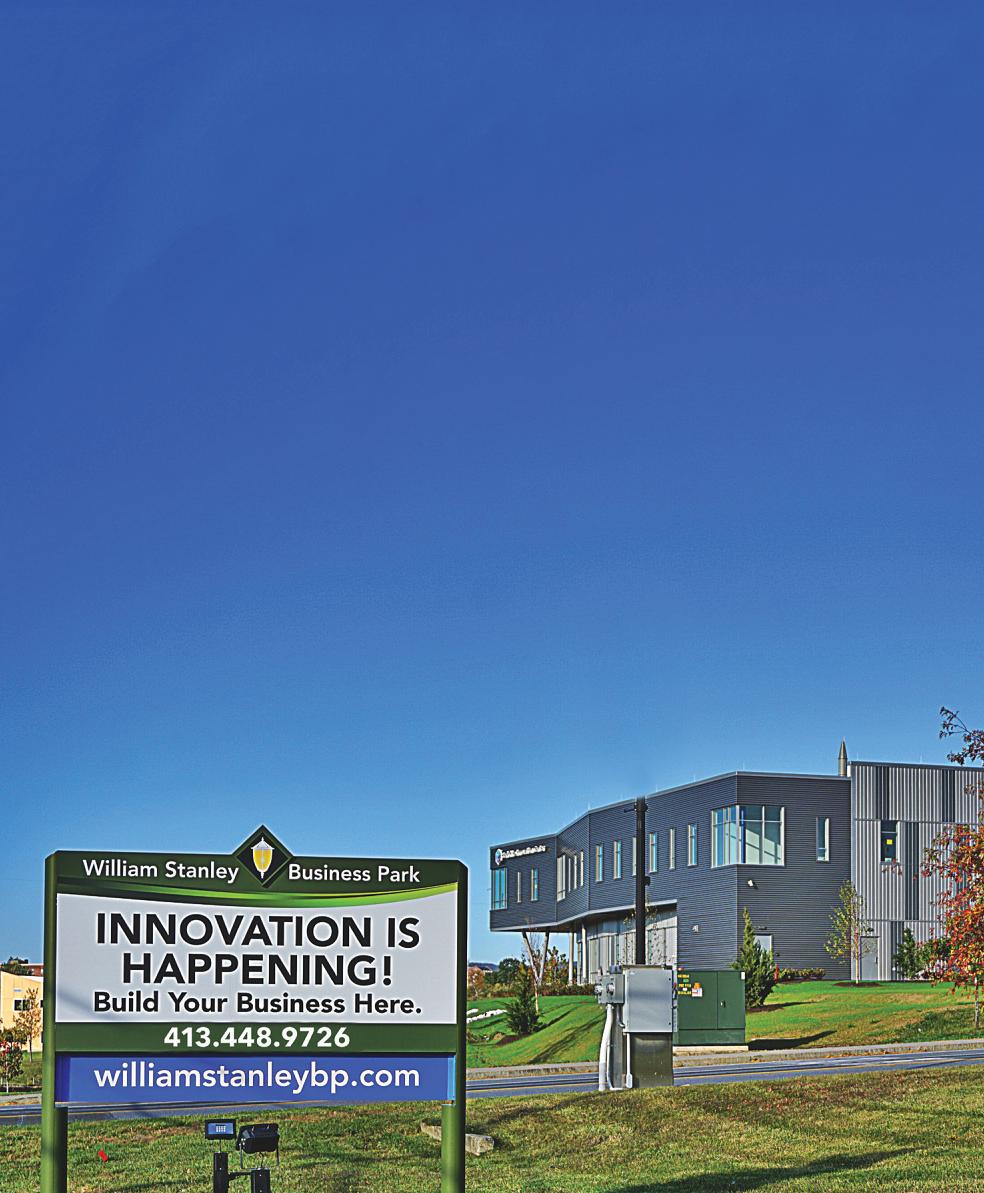


Expanding the deck to accommodate outside diners had been on the back burner long enough, so Al stirred up the process and approached the Pittsfield Cooperative Bank for financing. Together, we cooked up a financing plan providing the key ingredient for the projec t success –a little green.
Some
collaboration 5-stars HHHHH