
Berkshire Business Journal
Developing solutions
Builder sees many paths to navigate housing crisis
By John Bissell
Editor’s note: John Bissell, president of Greylock Federal Credit Union, interviewed David Moresi of Moresi & Associates about the developer’s strategy and perspective on solving the housing shortage.
NORTH ADAMS — David Moresi believes that pragmatic entrepreneurial strategies and innovative approaches are keys to addressing the housing crisis.
In addition to making regulations more responsive to economic necessities, he said, property owners and investors
need to be realistic about their goals and expectations. That applies both to rental and owner-occupied housing.
“If you’re a developer, you have to pony up the money and recognize that your investments are a long-term proposition,” Moresi said. “You can make money, but it takes time to achieve gains. In the meantime you have to be able to keep up with ongoing costs like the mortgage and taxes.”
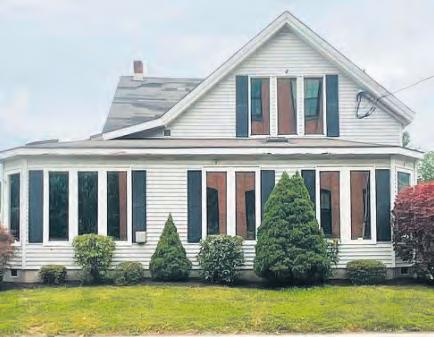
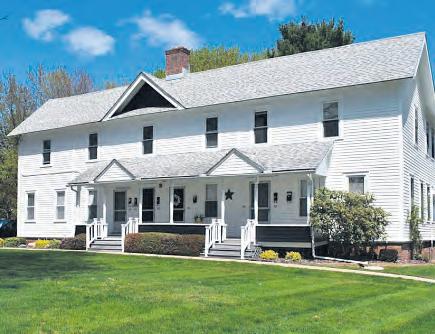
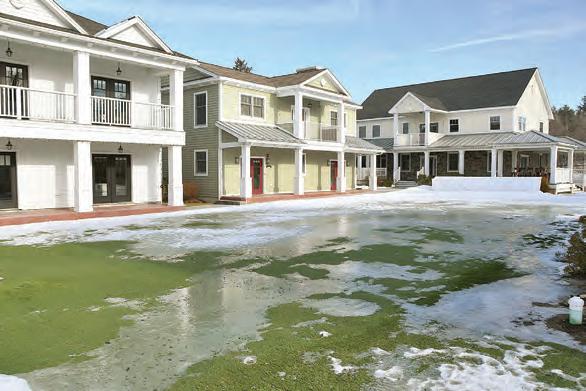
Moresi is applying that philosophy to an initiative that is adding 40 units to the supply of market-rate rental housing in North Adams in three locations.
Moresi’s firm started the project in 2020. Its specific objective has been to increase the stock of rental housing in North Adams within a general price range of about $1,650 to $2,200 per month, including heat.
“We saw an opportunity because there’s an overwhelming need and demand for quality market-rate rental units in North Adams,” he explained.
“As an entrepreneur, I go on the premise that if you build it, they will come,”
Moresi is the founder and principal of Moresi & Associates, a multifaceted commercial and residential real estate
development, construction and property-management firm which was established in 2000.
Based in North Adams, Moresi & Associates currently has a core staff of 50 and develops its own projects as well as providing contracting services for a variety of clients in Western Massachusetts, Southern Vermont and Eastern New York.
Moresi & Associates’ most high-profile project has been the redevelopment and conversion of the former Norad Mill on Route 2 into a mixed-use commercial center, which the company privately financed and developed.
HISTORIC CONVERSIONS
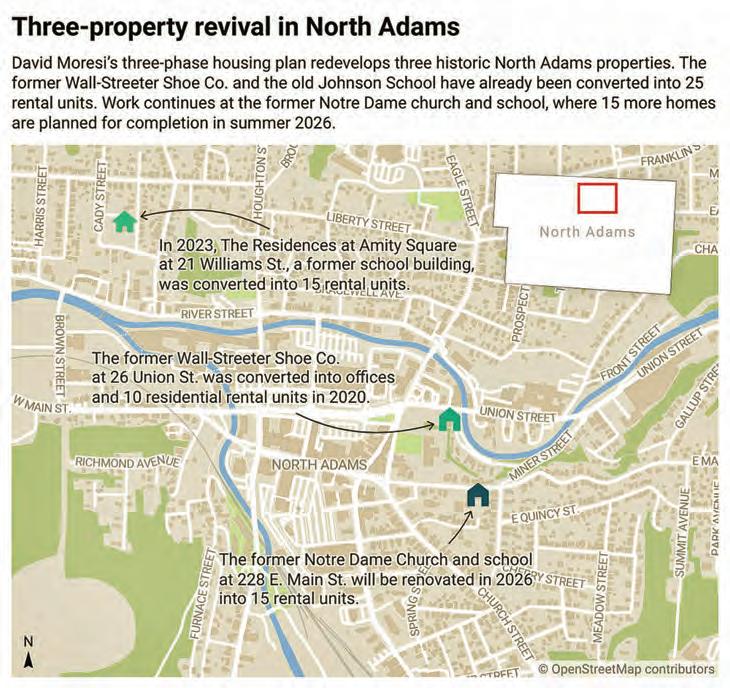
Moresi described the firm’s current housing initiative as a three-phase plan.
“It includes the redevelopment and conversion of three historic properties,” he said.
“Two of these have been completed and are occupied. The third project is scheduled to be finished in summer 2026.”
The completed projects include the former factory and headquarters of the Wall-Streeter Shoe Co. at 26 Union St. into a mix of offices and 10 residential rental units. That project opened
GILLIAN JONES-HECK
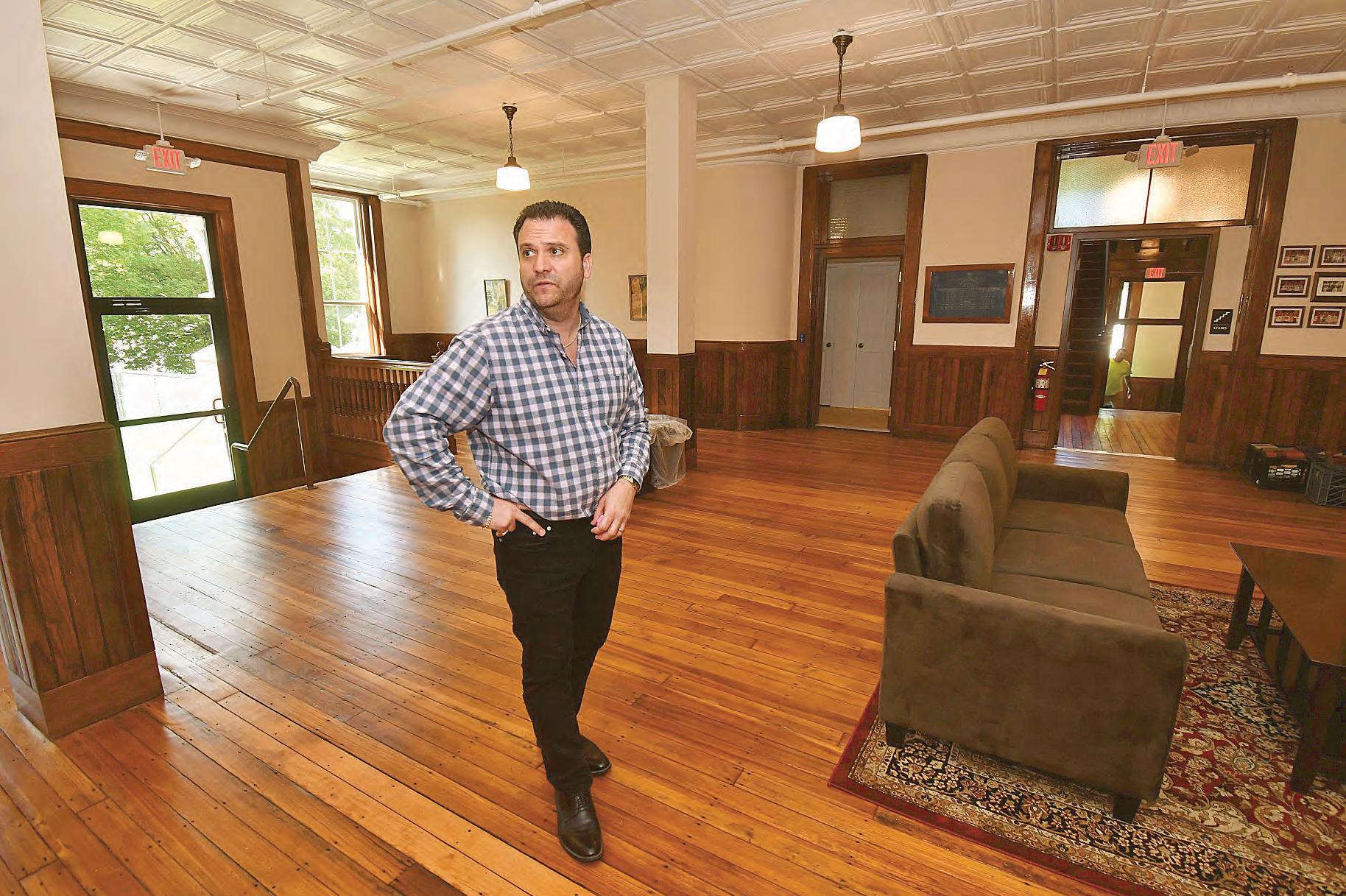
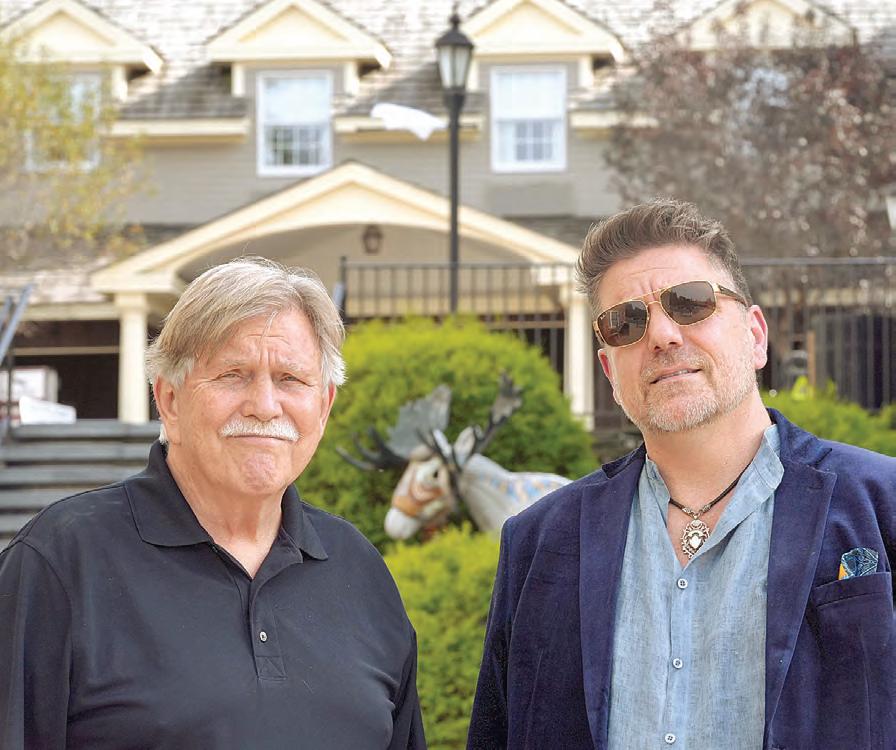
Developer David Moresi is shown in 2023 on the first floor of The Residences at Amity Square, the former Johnson School in North Adams. He purchased that building from the city for $225,000 in 2020 and invested about $2.5 million in renovation and conversion.
in 2020 and is fully occupied.
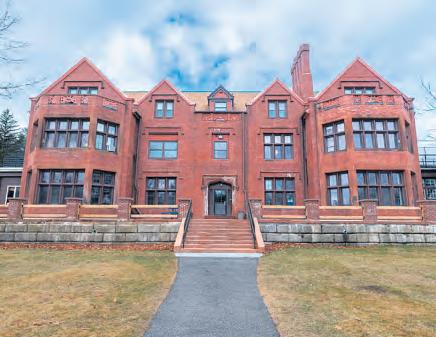
The second project was the renovation and conversion of the 1896 former Johnson Elementary School on School Street for 15 rental units. He purchased that building from the city for $225,000 in 2020 and invested about $2.5 million in renovation and conversion. It was opened for occupancy as the Residences at Amity Square in 2023.
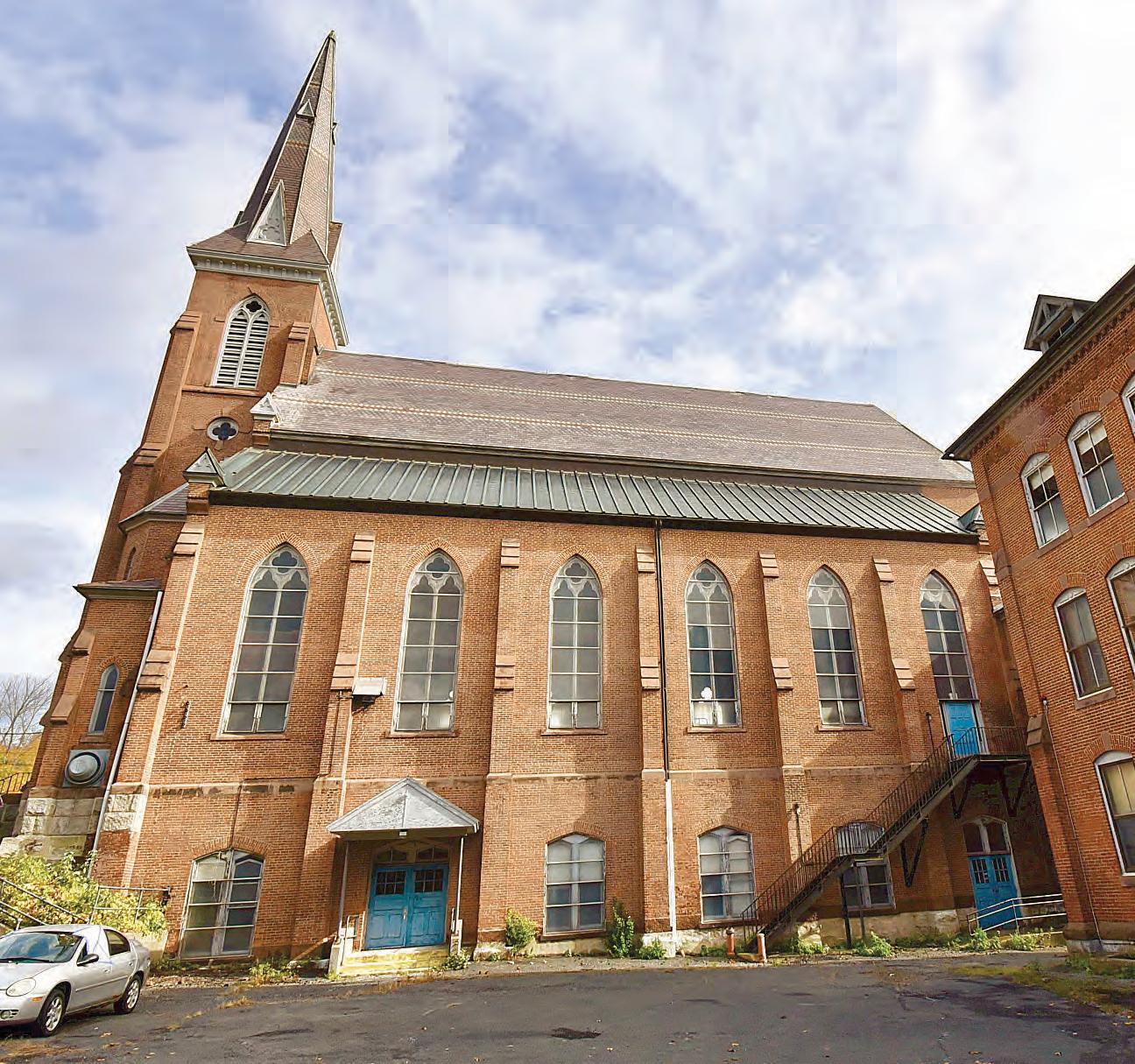
The third project is currently in the construction phase. This is the iconic former Notre Dame church and school on East Main Street. He purchased that property from the city in 2020 for $10,000. He estimated that it will cost about $3 million. The former school portion is being converted into 15 residences. The church building will be slated for some form of public use.
“That’s currently under construction, and we expect it to be completed in the summer of 2026,” said Moresi.
A PRIVATE APPROACH
In the modern era, this type of residential development is often undertaken as a public-private partnership, with developers collaborating with local, state and federal agencies for financing, construction and marketing and management. These often include requirements, such as predetermined formulas of income and eligibility guidelines to develop units for a mix of income levels.
However, other than purchasing the properties from the city, Moresi chose to pursue these projects as private business ventures, obtaining his own financing and setting the parameters without the constraints of outside requirements.
In part, this reflects Moresi’s own philosophy and values. Politically, he describes himself as a “rational conservative.”
“I’m a businessman and I look at what makes sense from a business perspective,” he said.
However, Moresi does see a legitimate role for projects that rely on public funding and other support to develop housing and commercial development projects.
He said it is especially important to ensure that housing is available for all income levels.
“I feel very strongly that housing is a basic right for everyone, at all income levels,” he said. “The government should have an active role in building and managing low-income housing. It can be done by private interests, but the government has a clear role in that.”
Other categories are less straightforward, Moresi said, such as determining what affordable housing is. He noted that there are ambiguities between official guidelines for “affordable” and the perception that market-rate means expensive. While the apartments he has been developing are upscale, Moresi said they fill a need in the market.
“What is considered market-rate and af-
fordable are somewhat interchangeable,” he said. “The rents in the new units we have built may be too high for some people whose incomes are very modest. However, they are definitely affordable for many working people with average incomes.”
Moresi acknowledged, however, that it has become increasingly challenging to build mid-market housing today because of the costs of construction and other factors.
Over the years it has become more difficult to find contractors who are available. Also, the rates of services and materials have outpaced the ability to cover costs through marketing and revenue.
“To be honest, our company has only been able to do this because we’re in a fortunate position,” he said. “Over the years, we’ve added specific capabilities in
MORESI, Page 4

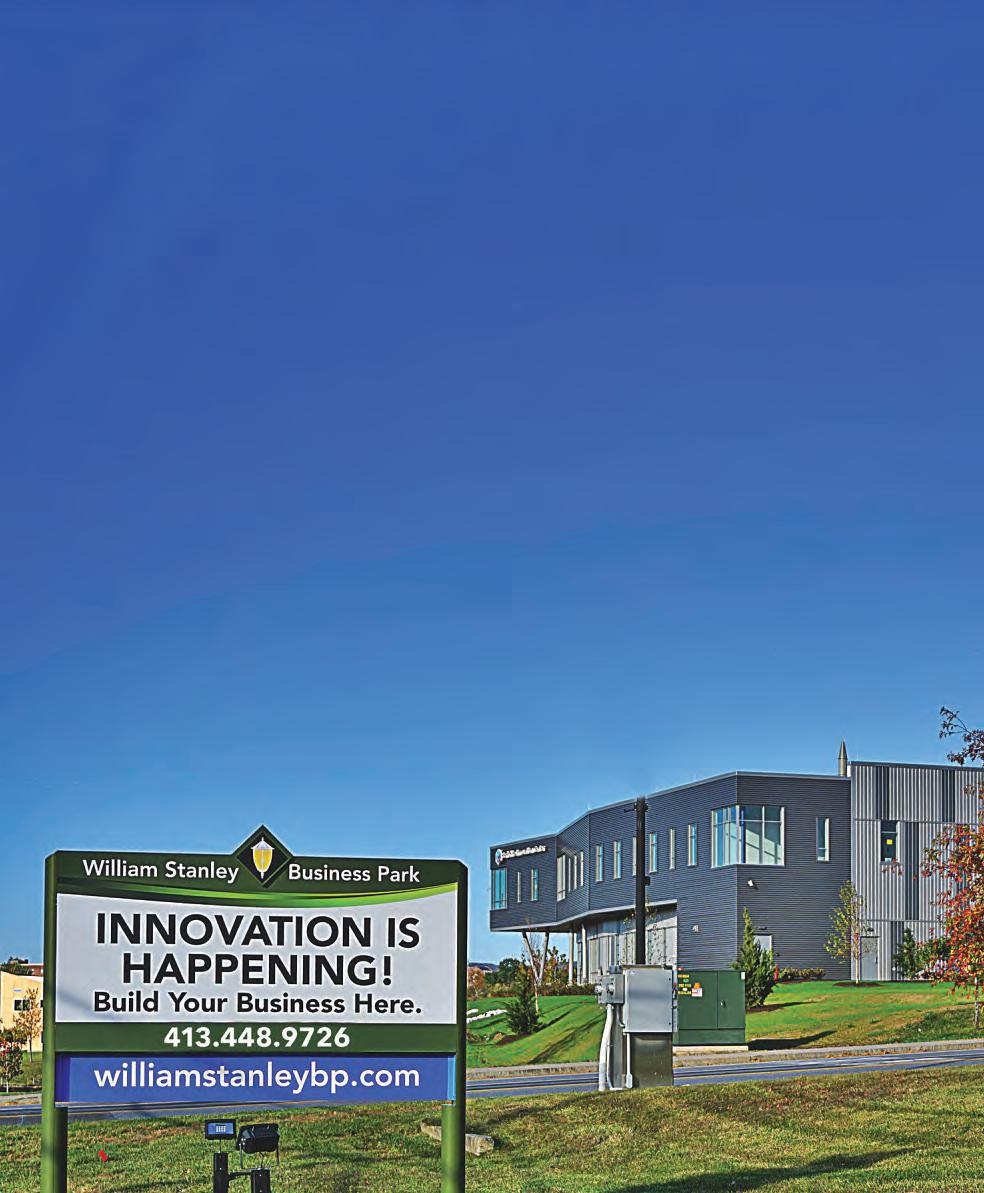

SCOTT STAFFORD
Developer David Moresi purchased the former Notre Dame Church and school in North Adams in 2020. The school building is being converted into 15 residences. The church building will be slated for some form of public use. The project is expected to be completed this summer.
Front pages
Financial ‘merger of equals’
Berkshire Bank, three others unite as Beacon Bank
By ClarenCe Fanto
PITTSFIELD — What’s in a name?
It’s the biggest banking deal in county history. Berkshire Bank, with roots going back to 1846, becomes Beacon Bank on Feb. 9, completing the $1.1 billion merger announced one year ago in an all-stock transaction described as “a merger of equals.”
Beacon combines Berkshire Hills Bancorp, the parent company of Berkshire Bank, and Brookline Bancorp, parent of Brookline Bank, Bank Rhode Island and PCSB (Putnam County Savings Bank), serving the lower Hudson Valley, Westchester County, N.Y., and Fairfield County, Conn.
The result is a combination of four banks into one, rebranded as Beacon.
The regional powerhouse will have about $24 billion in assets, $18 billion in total deposits, $19 billion in total loans, and 145 branches across Massachusetts, Vermont, Connecticut, Rhode Island and New York, including 180 ATMs.
Berkshire Bank currently has 83 branches — 12 scattered around the county and the rest in other parts of Massachusetts, New York, Vermont, Connecticut and Rhode Island.
How will Berkshire Bank’s tens of thousands of customers be affected during the final transition extending from 3 p.m. Friday, Feb. 6, when branches will close, until 9 a.m. Monday, Feb. 9?
Bank officials promise as seamless a transition as possible during the transition weekend.
ATMs will operate normally during the weekend. Berkshire Bank debit cards will not be affected during the transition and beyond. Customers will receive new cards emblazoned with the Beacon Bank logos when their current cards expire.
Likewise, Berkshire Bank checks will remain valid; when customers order a new supply, those will carry the Beacon Bank insignia. Routing numbers for direct deposits will not change.
However, access to online and mobile banking, including bill pay, will be unavailable during the transition weekend. Customers with online bill payments on Feb. 7 and 8 are advised to reschedule those in advance to avoid potential late fees.
Branches normally open on Saturday mornings will be closed during the transition weekend until the 9 a.m. Monday reopening of all branch offices.
Come 9 a.m. Feb. 9, customers will need to sign on to Beacon Bank’s new website for online banking, using their current username and password.
“The Beacon Bank name was very carefully chosen, it took many months to come up with it and a lot of thought was put into it,” said James J. Morris IV, president of the merged bank’s Berkshire and Capital District, New York, region, also including central New York and the state of Vermont. He is based in Albany, N.Y.
The new name “represents what a beacon does — strength, guidance and stability,” Morris told The Eagle in a phone interview. He emphasized that bank clients will be dealing with the same staffers at branches and at the North Street offices in Pittsfield.
As one of the biggest benefits of the merger, he cited the restoration of “local decision-making and local authority.” For example, Morris pointed out, most lending decisions in Berkshire County will be made in Pittsfield rather than in Boston, where Beacon Bank is headquartered.
The combined assets allow for potentially larger loans, he said. The merger
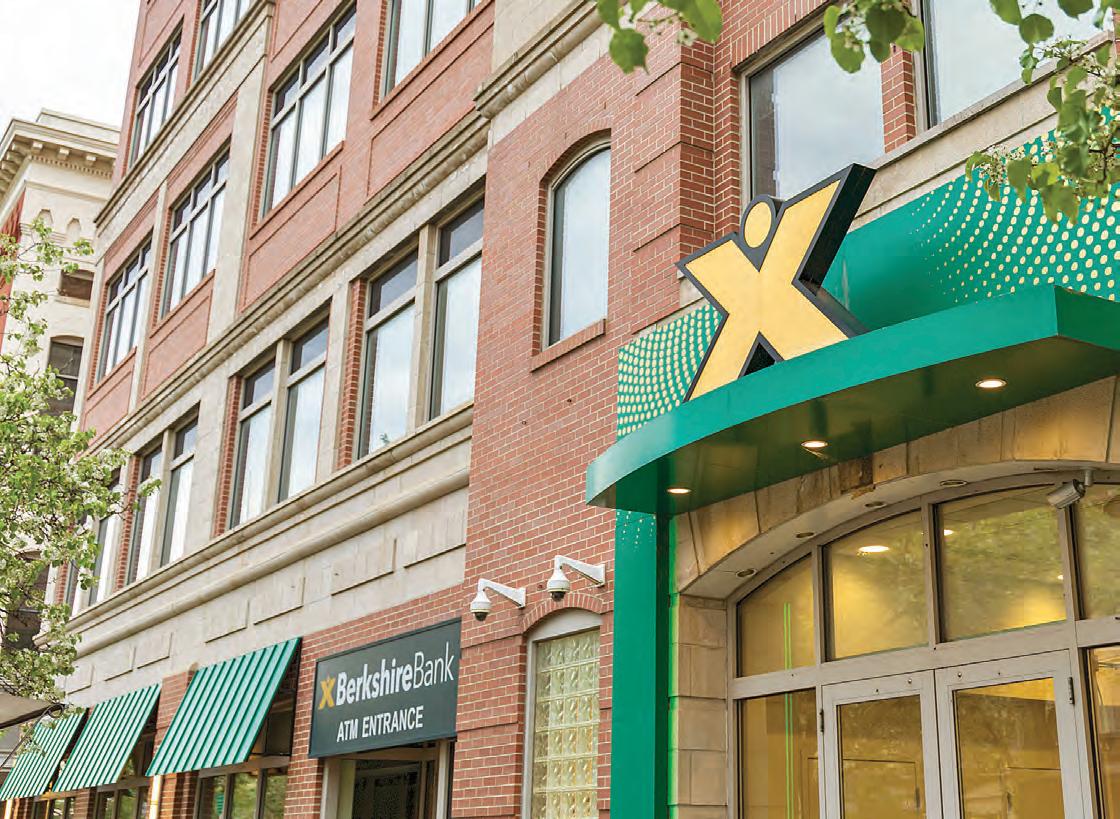
After Berkshire Bank’s conversion to Beacon Bank is completed on Feb. 9, the 99 North St. offices in Pittsfield will be rebranded to reflect the merger involving Berkshire Bank and Brookline Bank. Officials promise a seamless transition on the weekend of Feb. 7-8.
“puts more tools in our toolbox to help our local clients,” Morris said, citing commercial leasing as a new asset.
“I think local lending decisions are the biggest strength that we’re bringing to this merger,” he said. “We’ve been doing this since the transaction closed on Sept. 1 with great success and incredible response times.”
The current network of a dozen branches in Berkshire County will remain in place and most have been upgraded with full renovations and will receive new interior and exterior signage as part of the rebranding, Morris said.
“We’ve made a very substantial commitment to those branches,” he said. “The digital side will be seamless as well.”
Job-related impacts in Berkshire County have been minimized, Morris said, especially for those staffers who work with customers locally.
“With any merger, there’ll be a look at positions,” he said. Affected staffers were offered new roles locally or elsewhere in Beacon Bank’s multistate service area. “I don’t have an exact figure, but it truly has been minimized,” Morris added.
Remaining as executive director of the Berkshire Bank Foundation is longtime Berkshires-based senior leader Lori Gazzillo Kiely.
“We will continue to financially support local communities as well as our robust volunteer program as we have for many years,” she said, noting that it will be renamed the Beacon Bank Foundation in the near future and will maintain community outreach and priorities for charitable giving.
“Our first priority after the conversion is taking care of our existing customers,” Morris stressed. In addition, he said, the goal is to win new customers and build new relationships by showing off “new and improved branches, the brand new look, with the same teams behind the teller counters waiting to help you.”
Despite the growth of digital banking, Kiely said, “in Berkshire County we have a large number of customers who do rely on the branches and like to meet with their local bankers. We have a long history





PROVIDED BY BERKSHIRE BANK
Bank merger
in Berkshire County and many long-term customers who really value the branch network.”
According to Alison Skratt, director of corporate communications, “We have the best of both worlds, the resources of a larger organization and we are organized around local decision-making, which is unusual in the banking world. Branches become more advisory, the places where you can spend time and talk to a person to talk through what you’re trying to accomplish — that’s where the value comes, a physical location, a real person.”
Morris asserted that “the branches perform well and it was an easy decision to make such a heavy, multimillion-dollar reinvestment for the number of customers we have and their long-standing loyalty.”
Berkshire Bank’s parent company had 1,200 employees a year ago; Beacon Bank will have about 2,000.
Before the merger, Berkshire Bank held a nearly 36 percent share of the county’s banking marketplace, followed by Adams Community Bank and TD Bank, each at 17 percent, MountainOne and Lee Bank, each at 10 percent, and smaller shares among Pittsfield Cooperative Bank, NBT Bank, Citizens Bank and TrustCo Bank in that order, according to the Federal Deposit Insurance Corp.’s annual rankings as of last June 30.
Berkshire Bank does not disclose the number of customers and account holders.
In a separate category is Greylock Federal Credit Union, founded in 1935, offering banking and loan services to 106,000
Moresi
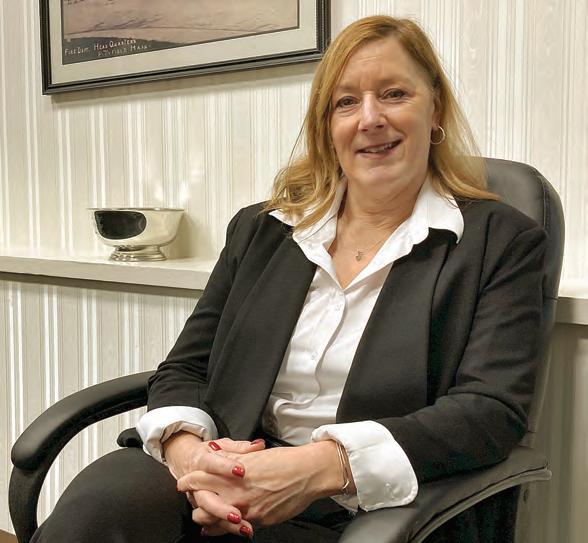
“We will continue to financially support local communities as well as our robust volunteer program as we have for many years,” said Lori Gazzillo Kiely, executive director of the Berkshire Bank Foundation, “and will maintain community outreach and priorities for charitable giving.”
members. It will have total assets of about $1.7 billion — up from the current $1.6 billion — once its recent merger with Franklin First Federal Credit Union in Greenfield is completed.
Greylock’s members are in Berkshire County, other portions of western and central Massachusetts, Columbia County, N.Y., and Bennington County, Vt. Member-owned Greylock adapted its field of membership in late 2022 to be based on “common community bonds instead of geographical constraints.”
Prior to the merger, Berkshire Hills Bancorp Inc., the parent company of Berkshire Bank, had $11.6 billion in assets and 83 financial centers, headquar-
all facets of development, from construction to leasing and marketing to facilities management. So we can handle most of what we need in-house. It’s like a welloiled machine. Frankly, we would not have been able to do these projects otherwise. It would be too expensive.”
Moresi said that full-service models can be developed by others, but not immediately.
“It will take time,” he said. “We’ve been working for 25 years to develop these capabilities.”
THE RED TAPE
Regulations are often cited as a factor in the cost and difficulty of providing housing. Moresi noted that the city of North Adams has generally been helpful and supportive.
“North Adams is a very pro-development community, and they see the value in the projects we do,” he said. “I’ve never found local government to be a barrier. When issues arise, they work with us to solve them in a win-win way.”
However, he is more critical of state regulations and building codes. “A major problem in Boston is that they only see one-size-fits-all approaches across the state,” he said. “They don’t understand the inequities that exist in different communities and regions throughout Massachusetts. The economy and market conditions in Boston are very different than other sections of the state like Berkshire County. What might be feasible for a project in eastern Massachusetts is not practical here.”
He also believes that overall building codes are too stringent.
“For example, they are very aggressive in achieving Net Zero energy standards,” he said. “Homes have to be built for full electrification and accommodate things like being solar ready and requiring EV charging ports. And they are pushing more economical alternatives like gas
tered in Boston.
Brookline Bancorp, a multibank holding company for Brookline Bank, Bank Rhode Island, PCSB Bank and their subsidiaries, also headquartered in Boston, had $11 billion in assets and 65 branches in portions of Massachusetts, Rhode Island and New York.
“We look forward to the new era of our bank and really looking forward to the future,” said Kiely, a 20-year veteran at Berkshire Bank who grew up in the county.
“Ensuring our customers have the smoothest transition possible is our highest priority,” Skratt said.
energy to the wayside. I agree that sustainable building practices are important – but if you want housing to be affordable it’s also important to be practical and financially viable.”
He also contends the state’s policies are unfavorable to landlords.
“It’s not a landlord-friendly state,” he said. “I know numerous landlords that have encountered so many problems that they just tap out. It should be more equitable. All that most renters want is a good place to live they can afford and a good landlord. Our tenants are like family. We treat them like gold. But it’s difficult because there is so much that works against that.”
He also believes that new approaches to construction of housing are needed for both rentals and home ownership.
“It will require significant changes in the way we do things for more housing to be built that people can afford,” he said.
“The market is hot, especially for condos,” he said. “However, for developers, the cost of speculative new home construction is cost prohibitive today. And for people who want to build their own home, that dream is generally out of reach.”
Moresi said it is important to explore diverse methods of creating housing.
“It’s a question many people are trying to answer,” he said. “We have to look at alternative models. This is what people with the entrepreneurial spirit can look at.”
He cited manufactured homes that are built off-site and transported to a location as one less expensive alternative. Another option are kit-built homes that can be assembled in pieces on site.
Moresi also noted that existing housing stock is another solution.
“There are a lot of opportunities in a city like North Adams, where there is a large supply of housing with a median age built in the 1950s,” he said. “There can be incentives for developers to invest in these homes and renovate them and bring them up to modern standards.”
John Bissell is president of Greylock Federal Credit Union.
Timeline: Berkshire Bank
1846: Founded as Berkshire County Savings Bank.
1997: Berkshire Bank created after acquisition of Great Barrington Savings Bank.
2002: Michael Daly becomes president and CEO of parent company Berkshire Hills Bancorp and CEO of Berkshire Bank.
December 2010: Berkshire Bank and Legacy Bank announce plans to merge; the $180 million transaction was finalized in July 2011, leaving Berkshire as the county’s largest bank.
April 2011: Agreement to purchase Rome Bancorp in Rome, N.Y.
October 2011: Agreement to purchase Connecticut Bank & Trust Co.
June 2012: Agreement to purchase Beacon Federal Bancorp of East Syracuse, N.Y.
November 2012: Berkshire Hills Bancorp becomes publicly traded company when stock is listed on the New York Stock Exchange.
July 2013: Agreement to purchase 20 retail bank branches in eastern and central New York from Bank of America.
November 2014: Agreement to purchase Hampden Bancorp of Springfield and its subsidiary, Hampden Bank.
May 2015: Agreement to purchase privately held Firestone Financial Corp. of Needham, which becomes a subsidiary of Berkshire Bank.
June 2016: Agreement to merge with First Choice Banks of New Jersey, expanding into Philadelphia metro area.
May 2017: Agreement to purchase Commerce Bankshares Corp. of Worcester. Becomes largest regional bank to be headquartered in Massachusetts.
November 2017: Signs lease moving corporate headquarters to Boston.
Nov. 26, 2018: Michael Daly resigns as president and CEO of Berkshire Hills Bancorp and CEO of Berkshire Bank, effective immediately.
December 2024: Berkshire Hills Bancorp and Brookline Bancorp announce agreement to merge.
August 2025: Federal and state regulators approve the agreement; the transaction closes on Sept. 1.
Feb. 6, 2026: The merged bank rebrands as Beacon Bank, with a weekend conversion to be completed at 9 a.m. Feb. 9.








JANE KAUFMAN
Business updates
PITTSFIELD
PERC board elects new leadership at meeting The Pittsfield Economic Revitalization Corp. elected a new president and vice president at its annual meeting on Dec. 12.
Longtime president Jay Anderson stepped down after more than 20 years of service. Former Vice President Mark McKenna was elected president, and Mike Willson was elected vice president.
PERC is a nonprofit 501©(3) community development corporation that assists small businesses in Pittsfield. Leveraging state and federal funds, PERC offers technical assistance grants, small business loans, consulting, and access to other resources throughout Berkshire County. Its board of directors is made up of volunteers from local community organizations including Pittsfield Cooperative Bank, Carr Hardware, Smith Watson and Co., Dulye Leadership Experience, and more.
WILLIAMSTOWN
Nursing families group opens trivia event sales
Berkshire Nursing Families will open ticket sales on Saturday for its 22nd annual trivia fundraiser.
The event will be held March 7 at the Williams Inn, with cocktail hour at 5 p.m. and dinner and trivia starting at 6 p.m. The fundraiser typically sells out.
In addition to trivia, the fundraiser includes raffles and a silent auction. Proceeds support BNF’s free programs, including lactation consultations, support groups, playgroups, and educational classes for families in Berkshire County.
Tickets can be purchased via berkshirenursingfamilies.org/trivia. For more information about Berkshire Nursing Families, visit berkshirenursingfamilies.org.
WESTERN MASSACHUSETTS
Women Presidents Org. seeks business leaders
The Western Massachusetts chapter of the Women Presidents Organization is accepting new members who are focused on scaling their businesses and seeking a confidential peer advisory environment.
The organization brings together women leaders from diverse, noncompetitive industries to share business expertise and experience. Through structured dialogue, members gain clarity, refine perspectives, identify strategies, and accelerate both personal and professional development.
The chapter meets monthly.
For more information about membership eligibility and meetings, contact chapter Chair Cathy Crosky at ccrosky@cocg.com or 413-822-1263, or visit women-presidents.com.
PITTSFIELD
$75K grant to support youth employment effort
The MassHire Berkshire Workforce Board has been awarded $75,000 through the Healey-Driscoll administration’s Youth Employment Gateway Cities Learning Community Pilot to support expanded youth employment and career readiness efforts. Through the funding, the MassHire Berkshire Workforce Board will be partnering with Moresi & Associates Development Co., Greenagers, the city of Pittsfield, and others to place 70 youth in employment opportunities in 2026.
The statewide pilot supports four MassHire Regional Workforce Boards working with Gateway Cities and employers to develop innovative approaches to youth engagement, employer partnerships and work-based learning.
NORTH ADAMS
MountainOne Insurance expands into Greenfield
MountainOne Insurance Agency, a subsidiary of MountainOne Bank, has announced its expansion into Greenfield through the acquisition of the Amy R. Morey Insurance Agency.
The independent insurance agency has established a strong presence in the Greenfield area, earning a loyal client base through personalized insurance solutions and a high level of customer service.
Owner Amy R. Morey and Account Manager Noelle Laprade will continue to serve clients from the Greenfield office at 91 Main St., which will soon operate under the MountainOne Insurance brand.
The acquisition will provide ARM clients with access to an expanded range of insurance products and a broader network of insurance carriers, offering more coverage options at competitive rates while maintaining the local service they value.
This acquisition marks MountainOne Insurance’s third expansion in the Pioneer Valley in recent years, following the acquisitions of G.W. Morisi Insurance in Longmeadow and McClure Insurance Agency in West Springfield and Wilbraham.
HANCOCK
Roman’s Bistro & Bar holds grand opening
Roman’s Bistro and Bar, a Latin-infused restaurant at 175 Lebanon Mountain Road, held a grand opening in late December.
Owned and operated by Xion Roman, the bistro emphasizes fresh ingredients and homemade recipes, offering a menu that ranges from soups and sandwiches to pizza — including specialty pies — along with desserts, sides and a children’s menu.
The restaurant is open from 11:30 a.m. to 7 p.m. Sunday through Friday and is closed Saturdays. For more information, visit @romansbistroandbar on Instagram or call 413-347-8227.
LENOX
Second Chance opens local composting site
Second Chance Composting has launched its Residential Community Composting Program in Lenox. Memberships are now open for the new drop-off site at The Barefoot Gardener, 36 Pittsfield Road. The year-round program allows members to drop off household food scraps at their convenience.
Memberships start at $9.99 per month with an annual fee and include unlimited drop-off of household food scraps. All food scraps are accepted, including meat, fish, dairy, bones, and shells. Additional membership options are available for members who wish to receive finished compost.
Second Chance Composting also operates nine other drop-off locations across the Berkshires. Food scraps are collected weekly and processed at the organization’s MassDEP-certified facility in Savoy, where they are turned into compost returned to the community. More information is available at secondchancecomposting.com.
PITTSFIELD
Berkshire Humane Society welcomes board members
Berkshire Humane Society welcomed Lisa Sihvonen-Binder and Susan Tremblay to the board of directors at the nonprofit’s annual meeting.
Sihvonen-Binder brings management and grant-writing expertise to the board. She’s operated a grant consulting practice since 2007, taught Grant Writing for Corporations & Foundations for Bay Path University for 13 years and is a member of the Grant Professionals Association. Her 34 years of professional experience
also includes roles in communications and program management in nonprofit and corporate sectors. She lives in Western Massachusetts.
Tremblay’s background includes sales, marketing and volunteerism. In her corporate marketing career with businesses ranging from a small startup long distance telephone company to Fortune 500, multi-national MCI Inc., she has been responsible for web development, communications, revenue production, sales force productivity, product management and corporate partner deal execution. She lives in Richmond.
PITTSFIELD
Arace & Rice launch new accounting firm
Arace & Rice, PC, a full-service certified public accounting firm founded by Adam Rice and Christine Arace, announces its opening at 25 Ontario St., Suite 2. Both former partners at Killeen, Arace & Quinn, Rice and Arace bring more than 35 years of combined experience serving individuals, businesses and nonprofit organizations.
The independent, veteran- and woman-owned firm offers tax, accounting, financial advisory, and consulting services, emphasizing personalized attention, confidentiality and tailored solutions. Leveraging modern technology and national best practices, Arace & Rice is committed to helping clients achieve long-term financial success.
For more information, visit aracericecpa.com or call 413-847-7935.
PITTSFIELD
BHS wellness program earns state recognition
Berkshire Health Systems has been named an honorable mention recipient in the large group category of the 2025 WorkWell Massachusetts Awards for exemplary worksite health promotion.
The award, presented by the Worksite Wellness Council of Massachusetts in partnership with Healthiest Employers, recognizes BHS’s achievements in providing best-in-class programs and supporting employees through a culture of well-being.
BHS’s Wellness at Work program prioritizes overall health and quality of life. Beyond mere medical treatment, it addresses total costs — absences, disabilities, compensation, productivity and organizational impact.
“This statewide recognition of our Wellness at Work team is well deserved,” said Darlene Rodowicz, BHS president & CEO. “These exceptional health professionals tailor wellness strategies, including assessments, high-risk focus, robust risk reduction, on-site/virtual options, and rigorous evaluation, serving many businesses in the region and our own BHS employees.”
WorkWell Massachusetts Awards is a corporate award program created by WWCMA, a not-for-profit member organization dedicated to the advancement of worksite wellness programs.
PITTSFIELD
Youth leaders can apply for 1Berkshire program
1Berkshire’s Youth Leadership Program is accepting applications for its Class of 2027. Sophomores from any school in the Berkshires and equivalent-aged homeschooled students are invited to apply.
Up to 30 students will be selected for a 10-month program exploring the regional economy and developing their leadership skills.
The program will begin with a three-day, three-night retreat in June where students will meet, build connections, and learn about their individual leadership styles.
Over the following 10 months, students will reconvene for eight full-day sessions at various locations, meeting with local business and community leaders in sectors such as advanced manufacturing, agriculture, health care, outdoor recre-
ation, and the creative economy.
Students will develop leadership traits through activities within the sessions, and as a class, will develop and execute a collective impact project that will enhance life in the Berkshires.
Application deadline is Feb. 13. Visit tinyurl.com/3rujrkdf for more information and an application. Email questions to economicdev@1berkshire.com.
BOSTON
Perinatal organizations in region earn grants
Berkshire Nursing Families in Berkshire County and It Takes a Village in Huntington are among 15 organizations awarded new grant funding totaling $771,000 from the Blue Cross Blue Shield of Massachusetts Foundation through its Perinatal Health Initiative. The initiative is a multiyear program aimed at reducing racial inequities in perinatal health outcomes. The two-year grants range from $25,000 to $60,000.
Berkshire Nursing Families will expand the organization’s support of families who are Black, Indigenous and people of color in Berkshire County by launching perinatal education programs, training new staff to become certified lactation counselors, and building a diverse workforce.
It Takes a Village will partner with the Green River Doula Network to provide community-led perinatal education, perinatal mood and anxiety disorder prevention, labor preparation, postpartum care, breastfeeding support, peer-led support circles, and extended home visits for historically marginalized families in Western Massachusetts.

Afreemonthlypublicationby TheBerkshireEagle 75SouthChurchStreet, Pittsfield,MA01201
Visitberkshirebusinessjournal.comfor advertisinginformationandtosubscribe.
NEWSDEPARTMENT 413-447-7311 news@berkshireeagle.com
ADVERTISINGDEPARTMENT
AMYFILIAULT,AdvertisingManager 413-496-6322 afiliault@berkshireeagle.com
CHERYLGAJEWSKI,Directorof AdvertisingSales 413-841-6789,413-496-6330 cmcclusky@berkshireeagle.com
ShareyournewswiththeBerkshire BusinessJournal. Ifyouhaveacompany promotion,anewbusinessoranewventure,let theBerkshiresknowaboutit.Rememberthe 5Wsandthatbrieferisbetter.Emailtextand photostoBBJ@newenglandnewspapers.com. ProvideyourexpertiseintheBerkshire BusinessJournal. Doyouhavetheanswer toapersistentquestionaboutbusiness andtheBerkshires?Doyouhaveideasand suggestionsonhowourbusinesscommunity cangrow?Ifyouhaveacommenttomake aboutdoingbusinessintheBerkshiresor ifyou’relookingtoraiseanissuewiththe businesscommunity,thisisthevenuefor that.Wewelcomelettersupto300wordsand commentaryupto600words.Sendtheseto BBJ@newenglandnewspapers.com
BerkshireBusinessJournalispublished monthlybyNewEnglandNewspapersInc., 75S.ChurchSt.,Pittsfield,MA01201. PeriodicalspostagepaidatPittsfield,MA01201. BerkshireBusinessJournalisdeliveredfree tobusinessesinBerkshireCountyviathird classmail.Additionaldistributionismade viadrop-offatselectareanewsstands.The publisherreservestherighttoedit,rejector cancelanyadvertisementatanytime.Only publicationofanadvertisementshallconstitute finalacceptanceofanadvertiser’sorder.All contentsarecopyrightedbyNewEngland NewspapersInc.
New owner, same Jiminy Peak
By Jane K aufman
HANCOCK — Jiminy Peak has changed hands, but nothing changes in terms of the way the facility will be run, according to the operators of the ski resort.
That’s because the resort in Hancock and Lanesborough has been run on a leaseback arrangement, meaning that a different entity owns the mountain and the buildings while The Fairbank Group runs the resort.
This is not the first ownership change under this arrangement, which began in 2009.
“This is kind of a nothingburger,” Tyler Fairbank, CEO of The Fairbank Group, told The Eagle. “This is the fourth time that we’ve done something very similar. So it’s essentially a financing arrangement.”
The $17.3 million deed recorded on Dec. 23 at the North Berkshire Registry of Deeds shows a sale from Belmont JP Ski to Store Master Funding XXXV for 25 parcels in Hancock and Lanesborough.
Belmont JP Ski was owned by the late Joseph O’Donnell, who partnered with Brian Fairbank and Tyler Fairbank at the Fairbank Group to run Jiminy Peak.
Belmont bought the property for $18 million on Feb. 1, 2019, from CLP Jiminy Peak. O’Donnell died on Jan. 7, 2024.
Fairbank explained that Belmont decided to go to the market to see what the property would command.
“So whereas before, it was O’Donnell who owned the majority of it, 95 plus percent of it, now it’s another entity that owns that lease,” Fairbank said. “So that’s what you’re seeing.”
Store Master Funding took a mortgage in the same amount it paid for the property from Citibank. Publicly traded Store Capital, parent of Store Master Funding, is also named in a document related to the mortgage.
In 2009, Jiminy Peak Mountain Resort sold the land and buildings for $27 million to CNL Lifestyle Properties Inc. As part
a
Jiminy Peak’s assets and land have been sold, but the resort remains under the control of The Fairbank Group. No changes to the ski operation are expected.
GILLIAN HECK
of the initial transaction, the two signed a lease to allow them to operate the resort for 40 years.
45 YEARS AS SOLE PROPRIETOR
Also recorded at the North Berkshire Registry of Deeds in December is the memorandum of lease, which expires on Dec. 31, 2050, although it can be extended up to four additional fiveyear periods.
“We have a lease on this property for 45 years,” Fairbank said.
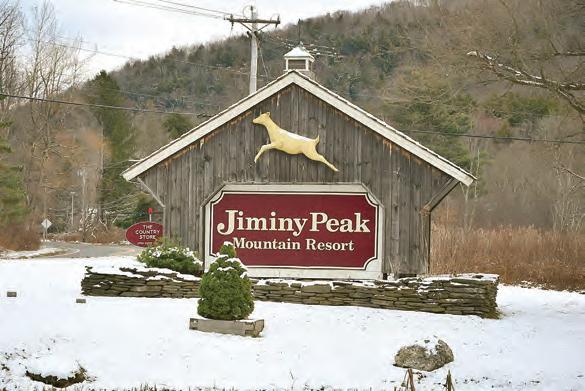
“So that means that we are going to be the sole proprietor here for the next 45 years.”
The sale price doesn’t reflect the value of the business.
“The business is the brand of
Jiminy Peak, for instance, and that would be on top of that $17.3 million value, of which I have no idea what that amount is,” Fairbank said.
Store Capital won’t benefit from any profit, nor will it bear any risk for loss.
“So if we have a year where we’re profitable, we keep the profit,” Fairbank said. “If we have a year that we lose money, then we pay that loss. It’s basically a triple net lease — means that we pay for the taxes, we pay every everything there is to operate here.”
REAL ESTATE IN THE NEIGHBORHOOD
Club Wyndham Bentley Brook has closed its timeshare as of the end of 2025 and the homeowners association is filing for bankruptcy in preparation for a sale of the property at the foot of Jiminy Peak’s chairlift.
The five buildings with 152 units was one of 10 Club Wyndham timeshare resorts slated to close, seven of them on the East Coast.
The timeline on that transaction is unclear.
ABOUT THE NEW LANDLORD
Store Capital describes itself as “a leader in the acquisition, investment and management of Single Tenant Operational Real Estate, or STORE Properties, which is our target market and the inspiration for our name.”
It specializes in sale-leaseback transactions and single tenant, profit-center real estate, with a portfolio of more than 3,500 properties.
It estimates the value of its properties at $3.9 trillion in market value, including more than 2 million properties.
Listed on the New York Stock Exchange in 2014 under ticker STOR, it was acquired for $15 billion by GIC, a global institutional investor, in 2023.
On Jan. 1, Store Capital announced a new CEO, Craig Barnett, as well as the exit of two executive vice presidents taking place last week.
$28M expansion for Lee biomedical facility
By Tara monasT esse
LEE
— Just over two years after acquiring a facility in Lee, Sharp Sterile Manufacturing is investing in a $28 million equipment expansion that will roughly double the site’s production capacity by 2027.
Sharp Sterile Manufacturing, headquartered in Allentown, Pa., mainly serves clients in the pharmaceutical industry by packaging their medicines in sterile vessels for administration, such as syringes and vials.
The expansion will introduce equipment capable of filling vials in batches of up to 100,000 at a time, allowing for a higher volume of production.
“Everything we do is sterile, which is a pretty high bar,” company President James Hamilton told The Eagle. To that end, funds will additionally be used to upgrade the facility, located at 480 Pleasant St., to ensure it complies with sterile manufacturing regulations.
The updated equipment will allow the facility to significantly increase its output, more effectively serving over 200 clients in the biomedical industry, based across the United States, Europe and Asia.
“The more successful our clients are, the more successful we are,” Hamilton said. “I think for all of us here, it’s an exciting time.”
Sharp Sterile Manufacturing first acquired the building in October 2023, purchasing it from Berkshire Sterile Manufacturing, a company founded in 2014 that had previously served as a business partner. Once packaged, the products from the Lee facility are mainly distributed to hospitals throughout America.
The Lee facility is one of nine Sharp Sterile Manufacturing locations throughout the United States and Europe. Since the Lee facility was acquired, Hamilton said that it has served as “a significant growth engine for Sharp” and that the company has already invested $12 million in building improvements over the past few years, as well as purchased additional land adjacent to the facility. Approximately 230 employees currently work at the location.
Hamilton said that the exact number of new jobs provided by the expansion won’t be known until the new equipment is up and running sometime in 2027, though the company expects it will create new labor opportunities.
A press release predicts it will “strengthen opportunities for highly skilled engineering and pharmaceutical manufacturing roles” in the local economy.
The state previously awarded a $500,000 tax incentive to the Lee facility

BEN GARVER
Brian and Tyler Fairbank will continue to run Jiminy Peak Mountain Resort under a new landlord. “This is kind of
nothingburger,” said Tyler Fairbank, right. “We have a lease on this property for 45 years.”
in 2024, which allowed the company to create 20 additional job positions.
“We really appreciate the Berkshire
community,” Hamilton said. “We think we do offer a great employment opportunity for local talent.”
FILE PHOTO
Employees mix a batch of a drug solution for a client at Berkshire Sterile Manufacturing in Lee, in this file photo. The company was recently sold to Sharp Services LLC for an undisclosed amount.
Dalton tradition endures in revived pub
By Dylan T hompson
DALTON — Good food, good times and good memories.
That’s the motto that Robert Collins is bringing to Depot Street with his new bar and grill, Riverside Public House.
“I think it has the potential to [be] a huge cornerstone for families and friends to meet and gather,” he said of the restaurant, which is hosting a grand opening in January.
Riverside Public House has taken over the former Dewey’s Public House location. The beloved bar and grill announced in a Facebook post in July that it was closing. Owned by Joe Dewey, Dewey’s opened in August 2015 and was a popular hangout spot in town. A factor in the decision was Dewey’s health, according to the Facebook post.
At the time, Collins told The Eagle that he was “devastated to lose Dewey’s” and that he felt it was “going to leave a hole in the town for that style of pub fare.” Now, Collins is excited to be continuing the tradition at the Depot Street spot.
“I feel that I’ve definitely brought back and filled the hole that Dalton was needing or that I felt Dalton needed,” he said.
Riverside was in a soft-open mode since around Thanksgiving. Collins said that so far the patronage has been good and he’s received a lot of “support and feedback.”
Collins said that he decided he wanted to open a restaurant toward the end of the summer and started talking with Dewey about what he could do with the place.
“It took us about three months … to negotiate and then do some upgrades and stuff like that,” he said.
Collins, who has no prior experience in the restaurant business, said opening the restaurant was a “whirlwind experience” and that he relied heavily on chef Ryan McIntyre and Jessalyn Donahue, the front of the house manager. McIntyre is a Berkshire native
GILLIAN HECK
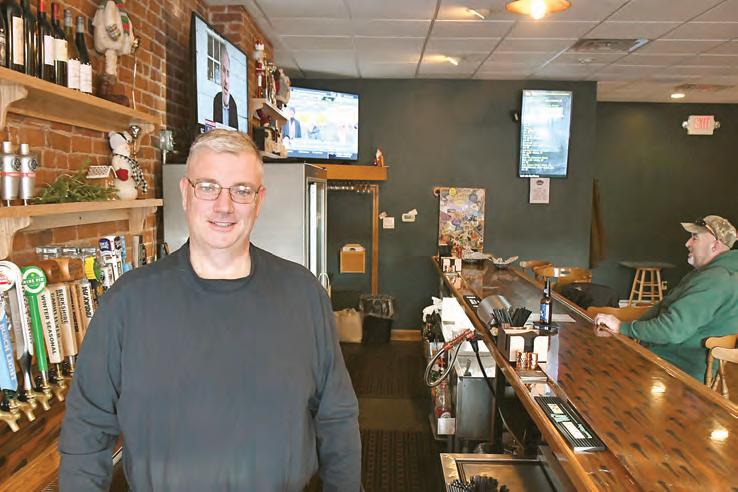
Robert Collins is the owner of Riverside Public House, a bar and grill at the site of the former Dewey’s Public House, which closed last July. “I feel that I’ve definitely brought back and filled the hole that Dalton was needing or that I felt Dalton needed,” Collins said.
who uses a farm-to-table approach with a dedication to quality, freshness and sustainability, according to the restaurant’s website.
Collins has been busy as he also owns REWC Land Management Inc., an environmental construction company, and serves on the Dalton Planning Board. He joked that his wife, Michele, who helped him pick the name, would say he’s been a little crazy, but he is pleased with the team he has put together and how they’ve helped steer him in the right direction.
“A lot of people say some of the smartest people that don’t know everything, hire people that do,” Collins said. “I think I hit that nail in the head.”
He also said that Bill Drosehn, Karen Schmidt and Greg Smith helped refurbish and upgrade the space, which in-
cludes new lighting, shelving behind the bar, black seats and a bar menu screen, which was previously a chalkboard.
“It’s very much been a team effort,” Collins said.
He said he likes the new chairs and tabletops they’ve added, as well as the waitstaff’s uniform of dark black jeans and green tops. “I think that shows a casual, but very classy look to the restaurant,” Collins said.
The restaurant has been tinkering with its menu, wine and beer options. Collins said he hosted a wine and beer tasting for close friends, and they voted on the best ones.
Riverside currently has 18 wines, including an in-house only wine, Markstone, which Collins says “you can’t buy locally.” The restaurant also offers
If you go
What: Riverside Public House, a bar and grill
Where: 16 Depot St., Dalton
Hours: Noon to 10 p.m. Monday, Thursday, Friday, Saturday; noon to 7 p.m.
Sunday
Information: On Facebook @riversidepublichouse; Instagram @riversidepublichouse25; or call 413-684-0900
14 beers on tap and roughly 35 to 45 beers overall with a “good variation and flavors of vodkas, rums, bourbons and whiskeys,” he said.
So far, Collins said menu hits include the beef birria torta sandwich, Riverside smash burger, hollander mussels and prime rib. Burgers and sandwiches range from $4 to $18, appetizers from $6 to $16 and the majority of the pizzas are $20.
Parents are also loving the kids’ menu, which Collins originally did not have, but credits Donahue for advocating for it.
Collins said that the soft opening allowed them to “craft the menu into what I think is hitting on all cylinders.”
The restaurant is also prioritizing local food sources, including Holiday Brook Farm in Dalton.
“Our main goal in the spring … we plan on using as much farm-to-table items that we can get,” Collins said.
When thinking about the future, Collins said he doesn’t have a preconceived notion about where the restaurant will be. He acknowledges that the financial part is important, but he ultimately values the social atmosphere.
“I call it a public house because the definition of a public house is a congregational point for a community,” he said. “I want this place to be a congregational site for the community.”

Creamery in new, but familiar, hands
By Talia l issauer
GREAT BARRINGTON — Seventeen years after he first hauled boxes of ice cream around for SoCo Creamery, Matt Scott is back to doing it twice a week.
But now he’s the boss. Matt and his wife, Caitlin, are the new owners of the Railroad Street business.
After months, if not years, of conversations with longtime owner and mentor Erik Bruun, the couple purchased the shop last April. Bruun stayed on as a consultant through October to help guide them through their first busy summer season.
Matt started at SoCo Creamery in 2009 as a part-time truck driver during a transitional period where he just needed a job. But it quickly evolved into a passion as he learned the rhythms of the business and discovered a love for ice cream-making.
“It was just one of those situations where everything aligned,” Matt said.
He left the Berkshires for an ice cream shop in Brooklyn, a large dairy plant and later a creamery in Red Hook, N.Y.
When the New York operation went bankrupt two years ago, he and Caitlin returned to the Berkshires, and Scott began consulting for other ice cream businesses.
Featuring over 30 flavors of ice cream, in addition to sorbets, SoCo is a longtime favorite for locals and summer tourists alike, and a sponsor of community events. All the dairy used is from a family farm in Vermont, and SoCo makes all its own inclusions from scratch.
When Bruun first joined SoCo in 2015, Matt was considered the “flavor master,” responsible for developing over 100 different ice cream recipes.
“Matt was the person who made the ice cream when I first got involved, and he has a strong belief in the brand and all that sort of thing,” Bruun said in August.
He said he loved his decade at the ice cream shop because he enjoyed brightening people’s days.
“We all impact this community with what we do,” he said. “SoCo makes people’s day.”
Bruun had been thinking about moving on for a long time, but wanted to make sure the business would not only survive but would remain a contributor to the community.
“Erik has a sage-like quality about him where he’s just a very well-spoken, thoughtful person, and we just stayed in
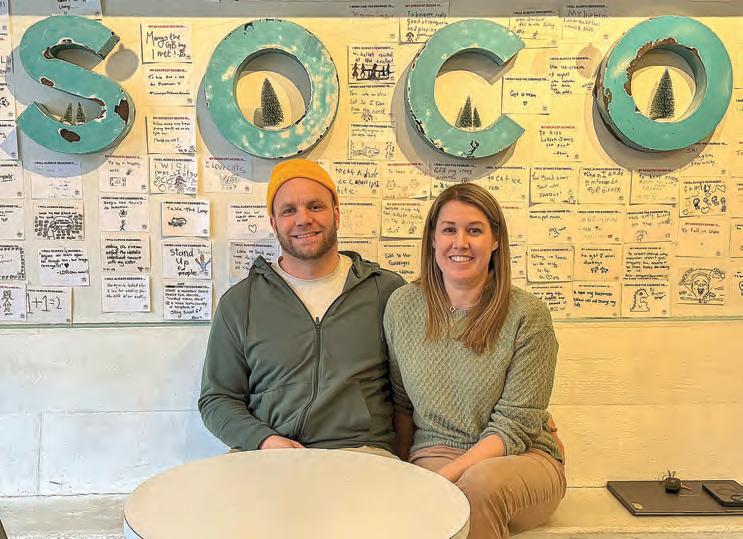
Bruun. Matt Scott previously was the mastermind behind the flavors, including Blueberry Honey Lavender, shown in 2017 at right.

touch and it just aligned in a way,” Matt said. “He wanted to move on, but he also really values SoCo’s position in the community.”
Caitlin, however, had no connection to the ice cream world when they met in 2010, though she loved to help him work. The couple agreed her version of helping out meant stirring the occasional batch and sitting and trying ice cream.
“When Matt and I started dating, he was working at SoCo and would bring me pints of ice cream when we were going out instead of flowers,” she said. “I’m only in the ice cream industry because Matt is, but I used to come help out at the factory back then because it was something fun to do.”
An unexpected benefit of the shop was
inheriting “a crew of exceptional young people” that Bruun had trained well.
“It’s been really fulfilling to interact with people’s first experience with employment and to take on that role as their first employer,” Caitlin said. “To be able to teach kids what it means to be a responsible employee, we’re very lucky that the staff that we have is incredibly intelligent and hard working and naturally exceptional and charismatic.
The company has a year-round staff of seven to nine, which balloons to 16 to 20 during the summer months. During the high season, staffers work to power through the line that is typically out the door; the winter slowdown provides time to make improvements on the business.
The most surprising thing for the cou-
ple has been how much opportunity for community involvement there is. It’s more than just interacting with customers — there are lots of opportunities to contribute to nonprofits, cultural events and school activities.
“I didn’t expect it to be so much,” Caitlin said. “But it’s a really nice thing to be able to give to the community through ice cream.”
Running the shop has been a lot harder than Matt had anticipated — he assumed he could use his knowledge of making ice cream and his network to figure out how the rest worked.
“I really underestimated how complicated and consuming this was going to be,” he said. “In my head, it was extremely simple, like a part-time job, and I immediately was like, ‘Oh man, totally miscalculated.’”
The pair has gotten into a good rhythm and feel good about how everything is going.
“When I was envisioning this, I was like ‘Oh, I know how to make ice cream,’ but all the other things, like payroll and taxes, I totally just glossed over,” Matt said. “Thankfully, Caitlin has filled the gap.”
Caitlin, who works in a school district, is grateful to have summers off because that is when the shop is the busiest and she is able to help out behind the counter.
“It’s just a really joyful business,” she said.
As a family, the store means a lot to them, and it’s not just because their two kids have access to lots of ice cream. Their daughter, who is now 9, had her first taste of ice cream in the shop. Though working together was a new thing for the family, they have loved having a common project to work on.
“Working through this with her has been really good for our relationship and it has been fun,” Matt said.
SoCo lovers shouldn’t expect many changes to the store, aside from a few improvements for the staff, like new equipment and eventually an improved space, but because the business is working, there is no reason to make “dramatic changes.”
“This store has been here for like, a really long time, and it is like a fixture in the community. And because of that, like, there is some community ownership with places like that,” Matt said. “It’s a great little business and a really nice town and we are just going to keep doing what we’ve been doing.”
Haddad buys shuttered Pittsfield dealership
By ClarenCe Fan To
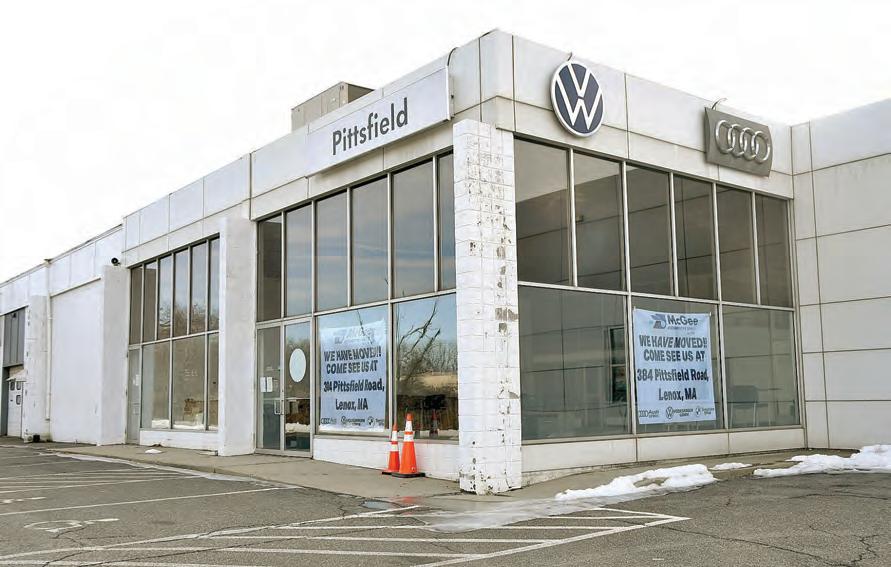
PITTSFIELD — The Haddad Auto Group is set to expand into a new location at the former McGee Automotive Family’s Berkshire Audi, BMW and VW dealerships on Merrill Road.
George L. Haddad’s HGMC Realty LLC, a corporation formed in November, paid $2,550,000 to McGee’s 600 Merrill Road LLC to acquire the property, according to the transaction recorded recently at the Berkshire Middle Registry of Deeds.
The site became available when Rob McGee, head of the family business based in Hanover, transferred his Pittsfield dealerships to their new location on Pittsfield Road in Lenox, which opened last week. Total cost of the new facility was put at $22 million to $24 million, Haddad, the dealer principal of the family business established in 1932, told The Eagle that he is mulling over which of his dealerships could relocate to the more spacious Merrill Road location.
His Subaru and Hyundai stores opposite each other on East Street, formerly Pete’s Mo-
tors sites, need more room.
His GMC site in Adams, formerly McAndrews-King GMC, also may be a candidate for relocation. Haddad also owns a Subaru location in St. Albans, Vt. The Haddad Collision Center is in Pittsfield’s Downing Industrial Park.
The auto group’s flagship facility is Haddad Toyota, on Pittsfield Road in Lenox, totally renovated and expanded in 2016 at a cost of just over $5 million.
It’s his biggest selling brand, Haddad said, followed by Subaru in second place and Hyundai in third.
The Merrill Road site is in great shape, he pointed out, noting that Rob McGee is a friend who left the facility in “turnkey” condition, ready to reopen with minimal work needed other than signage and medallions for whichever brand is relocated there.
Another factor driving his decision, Haddad told The Eagle, is involvement by the automakers’ corporate headquarters.
He said Subaru offers its dealers the greatest flexibility, while Hyundai is far more exacting in its requirements for
Above, Matt and Caitlin Scott purchased SoCo Creamery in Great Barrington last April from longtime owner Erik
ABOVE: TALIA LISSAUER RIGHT: STEPHANIE ZOLLSHAN
GILLIAN HECK

TheStoneHouseProperties C
LocalbusinessleadershavetrustedStoneHousePropertiestonavigatethecomplexitiesof commercialrealestateforwelloveradecade.Wehaveanextensivenetworkofexpertsthatwecancalluponin areassuchaslanduse,commercialbanking,law,accounting,zoningetc.,allofwhichhelpsusgiveourclientsthemost professional,focusedanddetailorientedcommercialrealestateservicesinBerkshireCounty.





































































Lake House venue, NY caterer team up
By Jane K aufman
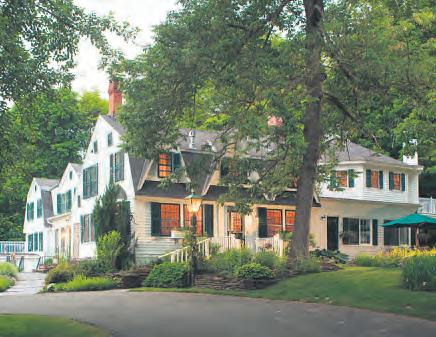
LANESBOROUGH — The owner of Lake House Guest Cottages is teaming up with Mazzone Hospitality to be its exclusive caterer and managing partner of the retreat center and wedding venue on Pontoosuc Lake.
Additionally, the facility is adding a 6,000-square-foot welcome center with a commercial kitchen that will allow the venue to capture corporate retreats.
Owner Eric Taylor said he approached Mazzone Hospitality because of its “large footprint,” and he believes there is potential for growth in catering operations on site.
The plan is to raze the former medical office of Dr. Alice Ling, which Taylor purchased for $275,000 in October, to make room for the welcome center.
The new building at 630 South Main St. (Route 7) will have two apartments on the second floor for staff housing, a commercial kitchen and event space on the first floor and a showroom for Mazzone Hospitality on the ground floor. It’s expected to be finished by Memorial Day.
All contracts for events planned for 2026 will be honored by Mazzone.
Mazzone Hospitality is helping to pay for the $1 million to $2 million building that Taylor’s company, Restorations Inc., will build. Taylor, meanwhile, is also taking a commercial mortgage with Adams Community Bank to finance part of the cost. He did not reveal the amount of the mortgage.
FACES WON’T CHANGE
Events coordinator Nicole Andrus will remain the public face at Lake House Guest Cottages. She has been managing events under Taylor for six years. Since November she’s been working for Mazzone Hospitality.
Cory Williams, property manager, who lives in the caretaker’s cottage, and has
been on site since the cottages opened in 2016, will remain working for Taylor.
Andrus gave The Eagle a tour of the site on Pontoosuc Lake. She calls it “a little village with a tent plopped in the middle.”
It’s an apt description. With 22 bedrooms, the seven cottages sleep 50 to 60 people with events of up to 150 people.
The cottages have an open, New England contemporary feel with peaked roofs, skylights and wooden ceilings. All have full kitchens and multiple bathrooms.
Caterers have had limited use of the large kitchen at the lodge, which doesn’t meet code as a commercial kitchen because it lacks a sprinkler system, Andrus said.
Having the commercial kitchen in the welcome center will allow Mazzone Hospitality, based in Clifton Park, N.Y., to do all of its catering on site and give it a permanent pres-
ence in the Berkshires.
“Mazzone can take it a step further with their contacts and clientele,” Andrus said.
ABOUT THE PROPERTY
Taylor bought the site in 2010,
demolished the condominiums there and built the first four cottages in 2015. He added three more in 2017. He built Proprietor’s Lodge in Pittsfield, on the lake’s southern shore, in 2018.
The COVID-19 pandemic
wiped out the wedding business, but the cottages remained booked during that time. Part of the appeal was their stand-alone nature, full kitchens, outdoor grills and access to boats from the boathouse on site.
In addition to offering lodging, Taylor had a secondary motivation to build the cottages, each with different finishes.
“It became more a living showroom for Restorations Inc.,” he said.
Now that Mazzone Hospitality is on board, Taylor who is a contractor, real estate developer and investor, hopes to see the property reach its potential.
“I’m actually looking to be less hands-on over there,” he said.
ABOUT MAZZONE HOSPITALITY
“We were very excited to receive the call from Eric,” said Justine Ochal, vice president of sales and client relations at Mazzone Hospitality, an entity of Compass Group and a division of publicly held Restaurant Associates.
“We toured the property; the property is gorgeous,” she said. “It ultimately will sell itself.”
Negotiations with Taylor went on for eight to nine months.
“We just we knew that we would be able to help expand it and really bring his vision of bringing more people into that area, filling the space to life,” Ochal said. “So we were very excited when everything came to fruition and we were able to sign the deal.”
Mazzone Hospitality caters at the Saratoga National Golf Club, the Hall of Springs and the 1863 Club at Saratoga Race Course, all in Saratoga Springs, N.Y.; the Kenmore Ballroom and the Albany Capital Center, both in Albany, N.Y.; and the Loft in Troy, N.Y.
About 50 percent of its business in corporate dining and 50 percent in catering, both on premises and off site. It has about 1,000 employees.
Glamping resort sizes up former golf course
By Jane K aufman
LANESBOROUGH — Plans to build a seasonal glamping resort at the former Donnybrook Country Club cleared key municipal hurdles in January.
The Conservation Commission gave a nod to plans to erect 94 platform tents on the parcel at 775 Williamstown Road on Route 7. And the Zoning Board of Appeals also gave its stamp of approval for the project.
The seasonal resort — proposed by developer Under Canvas headquartered in Belgrade, Mont. — still faces more municipal hurdles, but is closer to becoming a reality.
The Board of Health is poised to review the septic plans for the site and the local building inspector will review plans for the decks needed for the tents. The state Department of Environmental Protection has jurisdiction over the water supply and stormwater management plans.
The 160-acre parcel, owned by Matthew Kelly, has 2,700 feet of road frontage along Williamstown and Brodie Mountain roads and includes a nine-hole golf course, clubhouse, maintenance building and storage barns. The golf course closed in 2023. In May, the property was listed as pending at $1.89 million.
Jim Scalise, civil engineer for SK Design Group, presenting for Under Canvas, described each deck as “a tent platform, which is like a residential deck.” On top of the decks, they will erect a temporary seasonal tent in the summer.
“Every fall, it’s broken down, and then

SCREENSHOT / SK DESIGN FOR UNDER CANVAS
Nationally recognized resort builder Under Canvas is proposing 94 canvas tents on platforms to create a glamping resort at the former Donnybrook Country Club in Lanesborough.
every spring it’s rebuilt,” he said. He said the resort’s seasonal operation allows for a lighter construction footprint, simplifying site work and infrastructure such as utilities, which do not require frost protection.
While tents won’t have electric service, each will have a toilet and shower, meaning they’ll need both water and sewer service.
At the Zoning Board of Appeals meeting, Scalise presented information that
members had previously requested, including Under Canvas’ plan for a commercial kitchen.
The kitchen will be used to serve guests individually, but also for events, such as corporate retreats and weddings.
A company representative said it’s unclear how the historic clubhouse will be used, but that occupancy would not exceed 49.
The Zoning Board of Appeals unanimously approved the site plan.
In addition, it set conditions, including that the resort operate no more than 180 days a year, that the setback from property lines be 80 feet, that all construction on the site finish within 15 years, and that no recreational vehicles park at the site once it is operational. The Zoning Board of Appeals did not limit the number of events of up to 250 people.
Under Canvas will build a new communal area and plans to reuse the former golf course buildings for amenities and support as part of the first phase of a threephased construction plan. During this phase, 50 platform tents will be built, with more coming based on demand.
Each tent will have a “comfortable bed,” a restroom, including low-flow fixtures and a pull-chain shower. Low-level solar-powered lighting will be available as well as small USB battery packs so guests can charge their personal devices.
Guests will check in at a communal lobby and staff will use golf carts on existing cart paths to escort them to their tents. The average stay is expected to be two to three nights, ranging from $400 to $600 per night.
Under Canvas has 13 camps in eight states that focus on access to top outdoor locations, often near National Parks. The Lanesborough location will be its third in New England, with one near Acadia National Park and one near Franconia Notch in New Hampshire scheduled to open in June.
PHOTOS BY GILLIAN HECK
Events coordinator Nicole Andrus has been the public face at Lake House Guest Cottages under Eric Taylor for six years. Since November she’s been working for Mazzone Hospitality.
A turf clearing in the middle of the campus accommodates a large event tent at Lake House Guest Cottages in Lanesborough.
Fresh pizza — and a fresh start, too
By Jane K aufman
HANCOCK —
Got a child with a good report card who deserves a personal pizza — on the house? Know a young person in need of their first culinary apprenticeship — or someone who’s been laid off in need of a second chance?
Roman’s Bistro & Bar has you covered.
From Liberty Plaza in Hancock, Xion Roman is attempting to build community in the Berkshires as a way of giving back.
Roman bought the restaurant business and the equipment at 175 Lebanon Mountain Road on Route 20 and has committed to a five-year lease, something he acknowledged as a risky investment.
“We’re here for the long haul,” he said. Roman, 38, hopes Roman’s Bistro & Bar will be a staple in the Berkshires food scene as well as a hub for people starting out or needing a new start, like he did.
This is his second business venture in two years in the Berkshires. His first, Brethren Builders, is also devoted to first and second chances.
But now that he owns the restaurant, it will take most of his time and energy.
He estimates he spends 12 hours a day at work, a month after the business opened on Dec. 10. He’s looking to move closer to the restaurant.
Roman is preparing all of his own sauces, including a house-made tomato sauce with a sweet and complex flavor, barbecue sauce and queso.
He plans to buy from local farms, once the season allows, and said he’s being intentional about sourcing ingredients.
Prior to opening, he spent more than two months renovating the space, replastering the walls, sanding and staining the furniture.
His path to restaurant ownership was anything but straightforward.
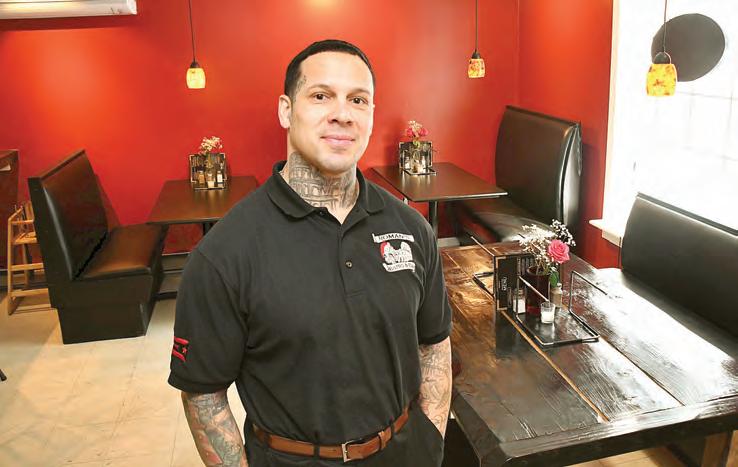
Roman grew up in Puerto Rico in his grandparents’ restaurant in Isabela.
When he was 12, he was forcibly taken to Lowell, and his life spiraled out of control, he said. He spent time in foster homes and in the care of the Department of Youth Services at juvenile detention facilities.
He joined the U.S. Marines as a way out, serving a total of six years in active service and the Marine Corps Reserves.
He was in a car accident while in the reserves, which set him back.
“I struggled with substance abuse,” Roman said. “I struggled with criminality. I struggled with just coping, and it took me a really long time to really find my way in life, and to dig myself out of that hole that I was making for myself by not coping and by not even seeking help.”
Since leaving the Marines, Roman has spent a total of seven years incar-

cerated for convictions of assault and drug charges.
“I was just such a menace to the community,” he said.
While in incarceration, he began “surrendering to the will of God,” he said. “That was the spirit that carried us through, and has still carried me through.”
He chose to make a fresh start in the Berkshires, partly because he learned about Soldier On in Pittsfield, where he first lived. Since moving here, he’s worked in restaurant kitchens across the county.
Now he hopes to provide apprenticeships through MassHire and 18 Degrees.
Out front of his restaurant, there’s an American flag, the Puerto Rican flag and the Puerto Rican nationalist flag all flying alongside the Marine Corps flag — a symbol of all the lives he’s lived.
Roman is on the board of The Path-

If You Go ...
What: Roman’s Bistro & Bar
Where: 175 Lebanon Mountain Road, Hancock, at the Liberty Plaza on Route 20 Hours: 11:30 a.m. to 7 p.m., Sunday-Friday. Closed Saturday Online ordering: romansbistroandbar. com
Menu: Pizzas, appetizers, sandwiches, soups, kids’ menu, espresso, salads and desserts.
Price sample: Steak & Cheese pizza with onions, peppers, mushrooms, drizzled with cheese sauce, $22.99; Cubano sandwich with pulled pork butt, swiss, honey ham, pickles de casa, mustard, $15.99; Latin Street Corn, cobless corn ribs, drizzled with queso de casa, topped with cotija cheese, $12.99; Salad de Casa, spring mix and arugula, pumpkin seeds, blackberries, red onion, tomato, feta, $14.99
finder Network, based in Portland, Ore., which helps justice-impacted families. The publishing house connected with it is publishing his autobiography this summer, “The Order From My Chaos.”
Among Roman’s many tattoos is one of the Coliseum with a gladiator standing in front.
“The gladiator symbolizes someone who has had to fight for their freedom,” he said. “And not only have I had to fight for my physical freedom, but most importantly, I fought for my spiritual freedom, which has really set me free.”
Roman reflected on his long-term goal for the restaurant.
“I want this to be more than just another restaurant,” he said. “Profit is not our main objective. Community is.”






GILLIAN HECK
Xion Roman has just opened Roman’s Bistro and Bar at 175 Lebanon Mountain Road in Hancock in the Liberty Plaza.
Business voices
TechAMP fills the ‘missing middle’

Advanced manufacturing faces a persistent and growing workforce challenge. Engineers are trained to design systems. Technicians are trained to operate machines. But as manufacturing environments become more complex — integrating automation, robotics, digital controls, and data-driven processes — companies increasingly need professionals who can bridge the space in between.
That “missing middle” is where the technologist emerges. It is also precisely the gap the Technologist Advanced Manufacturing Program — TechAMP — was designed to fill.
The Berkshire Innovation Center (BIC) in Pittsfield was designated as the first noncollege educational hub in the nation authorized to deliver TechAMP, a yearlong workforce development initiative designed by the Massachusetts Institute of Technology and funded by the U.S. Department of Defense. That designation positioned the Berkshires as an early proving ground for a new model of advanced manufacturing education — one centered not just on technical proficiency, but on systems thinking, integration and leadership.
BRIDGING THE MANUFACTURING MIDDLE
TechAMP targets experienced technicians and operators — typically those with three or more years on the shop floor — and prepares them to become technologists: professionals who combine hands-on expertise with a systems-level understanding of manufacturing operations. MIT Principal Research Scientist John Liu, one of the program’s architects, has described technologists as “the connective tissue of advanced manufacturing — linking design intent, production reality, and continuous improvement.”
Historically, that connective role has been underdeveloped. Engineers may understand system design, while technicians master specific equipment, but few are trained to optimize how technologies interact across an entire production environment. TechAMP was intentionally built to address that blind spot.
A REGIONAL PARTNERSHIP WITH NATIONAL IMPLICATIONS
What makes the Berkshire implementation distinctive is the formal coordination among three institutions: MIT, the Berkshire Innovation Center, and Berkshire Community College.
The BIC serves as the physical learning hub and regional coordinator. MIT provides the national curriculum architecture and instructional framework. BCC supplies the academic credentialing pathway that enables working adults to translate industry-aligned learning into recognized college credit.
BERKSHIRE
Carolina and Wisconsin.
“This is an illustration of a truly coordinated and orchestrated effort,” said Dennis Rebelo, chief learning officer at the Berkshire Innovation Center. “It sits right at the intersection of higher education, industry and applied innovation — exactly where the future of workforce development needs to live.”
FORMALIZING THE PATHWAY: A YEAR-END MILESTONE
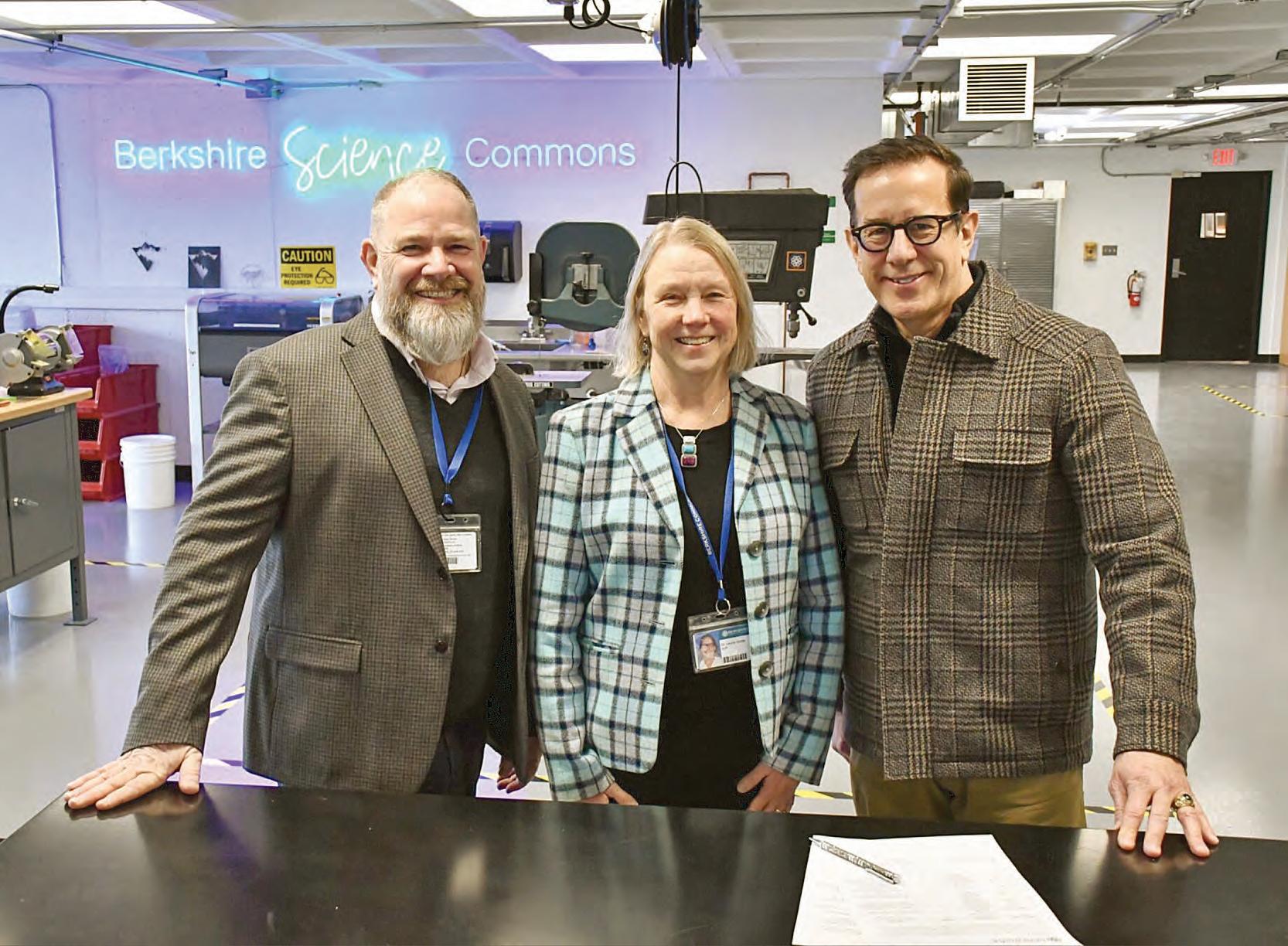
That coordination became formalized during the final week of December 2025. Laurie Gordy, vice president of academic affairs at Berkshire Community College, and Rebelo signed a memorandum of understanding establishing a formal credit-recognition pathway between the MIT-designed TechAMP program delivered at the BIC and BCC’s Mechatronics degree program.
The agreement was the result of months of academic and strategic work. It was driven by Matthew P. Kenny, dean of science and business at BCC, and carefully mapped by Jose Colmenares, who aligned TechAMP’s rigorous curriculum with BCC’s Mechatronics coursework.
“As a member of the MIT Tech AMP Community College Council, I have seen firsthand the program’s deep commitment to addressing the workforce needs of advanced manufacturing centered organizations,” Colmenares said. “This partnership will enable Berkshire Community College and the Berkshire Innovation Center to leverage MIT’s innovative curriculum, creating powerful educational synergies
that strengthen advanced technical talent and build human capital across our region.”
Kenny emphasized the importance of the pathway from a student and community perspective.
“We are thrilled to help create a pathway for TechAMP students to join the Berkshire Community College community,” he said. “This partnership supports our mission of creating clear, supportive pathways that build on students’ strengths and allow them to expand and achieve their goals.”
That work confirmed that TechAMP graduates can earn 28 college credits — nearly one full year of full-time study — without duplicating coursework or leaving the workforce.
“The intent was never symbolic,” Rebelo added. “This was about doing the hard academic work to ensure rigor, relevance, and real value for learners.”
INSTRUCTIONAL DEPTH & EXPERIENTIAL LEADERSHIP
Instruction within TechAMP at the Berkshire Innovation Center is delivered by seasoned industry leaders who bring real-world systems thinking directly into the lab. Instructors include Rich Peters, former chief scientist at SABIC, and Jared Lebos, co-founder of Noble Carbon.
Rather than traditional lecture-based instruction, TechAMP labs are designed as experiential learning environments — spaces where instructors work alongside participants to translate theory into applied problem-solving and continuous improvement.
THE COHORT DOING THE WORK NOW
Perhaps the clearest signal of TechAMP’s relevance is the group of professionals currently enrolled in the program. This year’s cohort includes experienced technicians and technical leaders from across the region’s manufacturing and industrial base: Owen Baranoski, NE-XT Technologies
Jordan Callahan, Noble Carbon
Brett Gibeau, Sinicon Plastics / McCann Technical School
Joshua King, General Dynamics Mission Systems
Gayle Kittle, Boyd Biomedical
Forrest Luscier, General Dynamics Mission Systems
Matt McInerney, Interprint
David Munoz, Tourists Cabins
Lars Nielsen, Tourists Cabins Luis Ortiz, Sinicon Plastics
Brenden Piaggi, Hi-Tech Mold & Tool
Jeff Saalfrank, Instrument Technology
Aron Autenrieth, Unistress
These are professionals already contributing to their organizations and to the regional economy, now investing in deeper systems-level and leadership capability.
FROM EARLY IMPLEMENTATION TO NATIONAL EXPANSION
What’s especially notable is that the work underway in the Berkshires is now informing MIT’s broader efforts to expand TechAMP nationally. Building on early implementations like the one at the BIC, MIT is actively working to bring the program to new regions across the country, with interest emerging in Indiana, Iowa, Louisiana, Maine, North
That expansion reflects not just demand, but confidence — confidence built through early partnerships that demonstrated how TechAMP could succeed outside a traditional college setting, embedded within a regional innovation ecosystem.
As Julie Diop of MIT put it:
“After the success of the BIC Academy, it made perfect sense to team up again with the BIC on TechAMP. We’re thrilled by the quality of instruction, the enthusiasm of the students, and the collaboration with Berkshire Community College. We couldn’t ask for a better partner.”
A NATIONAL MODEL, ROOTED LOCALLY
For Berkshire County manufacturers, the impact is immediate: access to employees trained not just to operate equipment, but to lead process improvement, manage technological change, and drive innovation from within.
For workers, the value proposition is equally clear — career advancement, college credit and nationally recognized training without leaving the region or pausing employment.
As TechAMP continues to scale nationally, the Berkshires are no longer simply adapting to the future of manufacturing. By engaging early, doing the hard coordination work, and investing in people already here, our region is helping to define what that future can look like.
Ben Sosne is executive director of the Berkshire Innovation Center.
INNOVATION CENTER
Matthew Kenny, BCC dean of science and business, left, Laura Gordy, BCC vice president of academic affairs, and Dennis Rebelo, chief learning officer at the Berkshire Innovation Center, signed a memorandum of understanding establishing a formal credit-recognition pathway between the TechAMP program and BCC’s Mechatronics degree program.
Ben Sosne News from the BIC
Cannabis reversal would hurt economy
On a normal week in our Lee store, I can tell you exactly what legal cannabis looks like in the Berkshires. It looks like a shift lead who’s been here for years, training a new hire on compliance before the doors open while a manager sweeps the floor. It looks like a budtender who lives down the street and knows half the customers by name and treats the rest of them like friends before they even get to a kiosk for placing an order. Now picture telling those people their jobs are negotiable. That their livelihoods can be erased by a ballot question.
Because that’s where Massachusetts is headed, now that the secretary of the commonwealth’s office certified signatures to advance “An Act to Restore a Sensible Marijuana Policy,” aimed at repealing adultuse cannabis sales in Massachusetts, meaning it is moving through the formal process that can put it before voters on November 2026.
And if you think this is just a cannabis issue, you’re missing the story. This is an employment issue. A tax base issue. A small-business issue. A tourism-and-hospitality issue. A “What kind of county do we want to be?” issue.
Massachusetts’ legal cannabis industry supported between tens of thousands of full-time
equivalent jobs. That number matters. It represents payroll. Rent. Groceries. Child care. And those jobs aren’t just retail. They include cultivation teams doing agricultural work; manufacturing and processing staff in technical, safety-focused roles; and the retail workers most people see face-to-face. Then comes the second ring of employment: security teams, compliance professionals, construction crews retrofitting facilities, local accountants and attorneys, HVAC techs, electricians, and the long list of vendors who keep a heavily regulated industry functioning.
Here in Berkshire County, cannabis employment is not a rounding error. Based on staffing numbers from the region’s largest employers and the density of licensed operations, it’s estimated the sector directly supports roughly 1,200 to 1,500 jobs in our county — about 2 percent of the local labor force. That’s real concentration for a rural region that already knows how fragile job markets can be. (Those are the jobs this ballot initiative would put on the chopping block, for those in the back and hard of hearing.)
Where the “it doesn’t affect me” argument collapses is taxes. In Lee, the town collected about $240,000 in cannabis tax revenue from July 2024 through June 2025 alone. That revenue helped reduce the burden on local homeowners, as it has since we opened our doors in town in 2019.
I’ve heard it directly from people who live here and felt the difference. I’ve also heard
WhenaPlanTakesShape

it from Lee’s town administrator, Chris Brittan, who told my staff the town has been “really happy” with Canna Provisions’ involvement and partnership. Why is that? Well that’s more for another column in the coming months, but it largely involves showing up.
Showing up for our partners. For our community. And for anyone who values our presence and what we bring to this region by way of everything from philanthropy to sponsoring local events that bring food, live music, and fun to our home right here in Lee.
So when someone says, “Good, shut it down,” my question shifts to what, exactly, replaces that revenue? Higher property taxes? Reduced municipal services? Cuts to public safety, schools, libraries, and road work? Because the bills don’t stop arriving just because a ballot initiative makes someone feel morally tidy.
And then there’s the ripple
effect, the part that should matter to every Berkshire business owner, whether you’ve ever set foot in a dispensary or not. People come to the Berkshires for our natural beauty, our culture, our food scene, our small-town charm. But they also come because Massachusetts is one of the best places in the Northeast where adults can walk into a regulated store, buy tested products, and feel safe doing it.
Those customers don’t just teleport in and out. They stay and eat lunch (our staff is even trained on helping them learn about the great things in our town and in neighboring towns to go spend their money with). They book hotel rooms. They stop at the grocery store. They visit museums. They buy tickets. They tip servers.
They keep the lights on in a region that depends on tourism and seasonal spending. When our staff recommends local restaurants, music venues, and
cultural institutions, we mean it. We’re building a local economy, not just ringing a register. If adult-use cannabis is repealed, that demand doesn’t vanish. It gets redirected straight back into the illicit market, where products are untested, businesses don’t pay taxes, employees have no protections, and municipalities get nothing. A legal industry is hard to build and easy to destroy. Once you hand consumers back to the underground economy, good luck convincing them to return.
Right now, opponents are also alleging deceptive signature-gathering tactics, and the state Ballot Law Commission is involved in reviewing objections. That alone should tell you how serious (and how messy) this fight is going to be.
So this is another call to action, for every reader who cares about jobs, local revenue, and the future of the Berkshires. Pay attention now, not in October when the lawn signs go up. Read the petition. Follow the process. Ask what your town stands to lose. Talk to your local business networks and civic leaders. This isn’t about being “pro-corporate cannabis” or “making cannabis business owners rich” as some of the ludicrous claims from the supporters of the initiative are trying to frame it. It’s about being pro-reality.
And when the time comes, vote like your local economy depends on it.
Meg Sanders is CEO and co-founder of Canna Provisions.

Asophisticated financialplan doesn’tneedtobe complicated.It’swhy wewriteoursina straightforwardway. Weliketomake ourplanseasierto understand.Forall involved. It’swhywe’rehere. We’rehereforyou.








STEPHANIE ZOLLSHAN
A woman harvests the tops of cannabis plants grown in a Berkshire greenhouse in January 2021. The cannabis industry supports between 1,200 and 1,500 jobs in the Berkshires.
Meg Sanders Cannabis Corner
Time to buy into K-shaped economy
Today’s economic environment is historically unusual.
GDP growth was recently measured above 4 percent, while global stock markets have hit all-time highs. Meanwhile, the Consumer Confidence Index declined for a fifth consecutive month in December and sits near lows not seen since the early days of the pandemic. What gives?

Economists have taken to describing the current economy as K-shaped. Like the letter K, you’ve got two offshoots. The upward trajectory is occupied by asset owners who enjoy wealth creation through public and private markets. The downward trajectory is felt by ordinary people subject to rising prices and a weak labor market.
Inflation has cooled from its peak, but prices remain high in key household categories. And the labor market continues to soften.
The average price of a dozen eggs was around $1.50 nationally just five years ago. This price has increased to more than $2.70 as of the most recent Consumer Price Index reading. Homeowners’ insurance has risen more than 14 percent since the end of 2022. New car prices jumped 20 percent between 2021 and 2023 and have not come back down. Across the economy, we are seeing stubbornly high prices.
These rising costs come alongside a labor market in which it is harder to find a job. Since the spring of last year, we’ve seen little to no growth in total employment. We’ve entered a “no hire, no fire” labor market where companies aren’t laying off aggressively but also aren’t creating new opportunities. The labor market is not as healthy as what we saw for several years coming out of

The average price of a dozen eggs was around $1.50 nationally just five years ago. This price has increased to more than $2.70 as of the most recent Consumer Price Index reading. Across the economy, we are seeing stubbornly high prices.
the pandemic.
These facts are not lost on us. According to Dana M. Peterson, chief economist for The Conference Board, “Despite an upward revision in November related to the end of the shutdown, consumer confidence fell again in December and remained well below [2025’s] January peak. Four of five components of the overall index fell, while one was at a level signaling notable weakness.”
Despite these obviously negative economic realities, the stock market continues to hit new all-time highs. Global luxury goods sales grew at about 10 percent per year from 2019 through 2023 and remained high through 2024 and 2025. Rolex reported 11 percent sales growth in 2023 and surpassed $10 billion in revenue.

Although growth in luxury sales have levelled off since the post-pandemic surge, sales levels remain historically high.
Billionaires are wealthier than they’ve ever been, while average people are feeling generally lousy about their financial situation. This dichotomy exemplifies the K-shaped economy.
How can you avoid getting kicked by the K? Own the assets.
I know it sounds counterintuitive, but the only way to keep up is to own the assets that are contributing to wealth creation. Thankfully, there is an easy way to gain access to these assets: You can buy the stock market through simple, inexpensive vehicles such as exchange-traded funds (ETFs) and mutual funds.
In my experience as financial advis-
er, stock market ownership is a major differentiator between people who are getting by and those who are thriving. I don’t mean to oversimplify, but there is a tendency for many hardworking professionals — homebuilders, electricians, teachers, police officers, you get the idea — to avoid the stock market in favor of more certainty.
I can’t tell you how many people have come to me with six-figure amounts in bank CDs earning 3 or 4 percent. They’re generating income and savings, but they’re not using those savings to really grow their wealth.
Of course you want a safety net, and this isn’t a call to speculate or abandon prudence. But avoiding the stock market risks leaving you on the lower trajectory of the K. If you had earned a 17 percent return on your savings last year, wouldn’t you feel a little better about the economy?
The University of Michigan’s Consumer Sentiment Survey sits at about 25 percent below last January’s reading, with respondents most commonly citing high prices and softening labor markets. Declines in confidence have been widespread across different age groups, income brackets and political affiliations. But not for everyone. According to the survey’s director, Joanne Hsu, “One key exception: consumers with the largest tercile of stock holdings posted a notable 11 percent increase in sentiment, supported by continued strength in stock markets.” Billionaires tend to share one thing in common — they own equity. Elon Musk’s wealth is driven by Tesla stock, Warren Buffett by Berkshire Hathaway, Jeff Bezos by Amazon, Mark Zuckerberg by Facebook. And you can own all these companies too. If you can’t beat them, maybe it’s time to join them.
Luke Delorme is director of financial planning at Tableaux Wealth in Stockbridge. Reach him at (413) 264-2404 or Luke@TableauxWealth.com.






JUSTIN SULLIVAN — GETTY IMAGES
Luke Delorme Money Talk
Alliance formed to address polycrisis
By R ev. M ike Denton
Imagine if, in January 2020, we had known how our world was about to change.
Imagine if we had known the COVID-19 pandemic was coming and had 60 days to build the digital infrastructure for remote work, fortify our supply chains, and coordinate a unified response among our businesses, nonprofits, governments, and citizens. What might we have done differently?
Today, in early 2026, Berkshire County is standing in that exact window of opportunity.
We are currently witnessing a cumulative effect of international economic policy, federal and state policy, and budget shifts that, if left unaddressed, will create a local economic and social disaster. For example, the sweeping 2025 budget reconciliation bill has initiated the deepest cuts to programs such as the Supplemental Nutrition Assistance Program (SNAP) and Medicaid in history.
The aid SNAP recipients receive (between $3.5 million and $4 million a month in Berkshire County) is money that goes directly into our local economy and supports grocery stores and related businesses. Medicaid cuts affect our entire medical system and all the organizations and businesses that support it. Rolling back equity-focused programming threatens successful policies and programming that address vulnerable communities.
These aren’t just “nonprofit problems.” When 10 million Americans lose health coverage, deal with increased costs, and millions more see food benefits slashed, the impact ripples through our local economy — from the grocery store clerk in North Adams to the HR manager in Great Barrington dealing with a workforce suddenly plagued by unaddressed health crises and increased housing instability.
We are facing a “polycrisis.” It is not just one cut; it is the cumulative weight of reduced federal grants and programs, higher operating costs, and policy-based disqualifications that are hitting our for-profit and nonprofit sectors simultaneously. There is virtually no organization we would typically turn to for help that isn’t currently watching its own resources thin out.
This is why we have formed the Berkshire Grit Alliance (BGA).
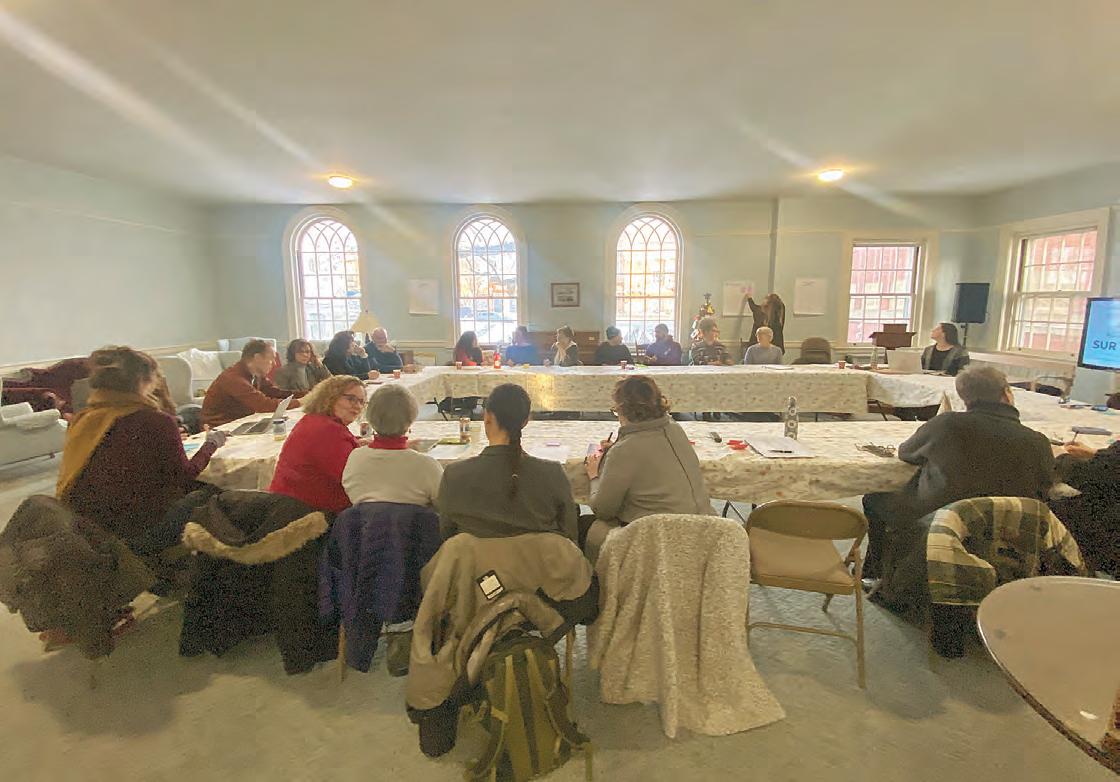
LIANA TOSCANINI
The Berkshire Grit Alliance met in Pittsfield in December to discuss the results of a survey on the impact of federal funding cuts and policies.
Led by a cross-sector coalition (including the United Way, The Nonprofit Center of the Berkshires, Berkshire Regional Planning Commission, the George B. Crane Memorial Center, United Church of Christ, Pittsfield, and other community leaders), the BGA is built on the hard-won wisdom of the pandemic: we can do more together than we can do apart. But for this to work, it cannot be a “nonprofit-only” conversation.
We need the private sector at the table.
We need the “grit” of our community leaders who understand logistics, risk management, and the shared context of Berkshire County.
Our first step has been to collect data.
We began with the nonprofit community and distributed a comprehensive survey to precisely map what our coun-
ty stands to lose. This recent survey of Berkshire-based nonprofits confirmed a high level of volatility in programming, staffing, and funding sources — no surprise given the waves of grant cancellations in the news.
Many respondents had already seen negative impacts not just in terms of federal and state grants, but foundation grants and individual donors, too. This is by no means a Berkshire-specific problem, but we can leverage our collective resilience, determination, and grit to identify Berkshire-specific solutions.
Our plan is to expand the scope of this survey to include for-profit and government organizations and establish a pattern for repeating it several times a year. This information feedback loop will enable us to shift from reacting to
responding, using the lenses of disaster response and mutual aid to protect our most vulnerable neighbors and, by extension, our local economy.
The next few years will be hard. Programs we have relied on for decades may end. However, Berkshire County was built on a foundation of resilience. By building these cross-sector relationships now, we aren’t just bracing for impact; we are building something better.
If we apply our collective “Berkshire grit” today, we will look back at this moment not as the beginning of a decline, but as the birth of a more unified, stronger, and more relevant county.
Rev. Mike Denton is the pastor of United Church of Christ, Pittsfield, and a founding member of the Berkshire Grit Alliance.
Take the smart path to college savings

In addition to grants, scholarships, and loans, choosing the right bank accounts early can play a meaningful role in making college more affordable. Purpose-built savings and checking tools help families stay organized, earn interest, and avoid unnecessary fees while preparing for education expenses. One of the most effective tools is a 529 college savings plan, which allows families to save for qualified education expenses with tax advantages. Earnings grow tax-deferred and withdrawals used for eligible college costs are typically tax-free. Many states also offer tax deductions or credits for contributions. While 529 plans are investment-based rather than traditional bank accounts, they work best when paired with a local savings account that handles short-term education expenses.
High-yield savings or money market accounts offered by banks and credit unions are another smart option. These accounts provide liquidity, competitive interest rates, and FDIC insurance — making them ideal for saving toward near-term costs such as application fees, enrollment deposits, books, or off-cam-

METRO CREATIVE CONNECTION
By pairing financial aid awareness with smart banking choices, families can take a more holistic approach to college affordability.
pus housing. Keeping these funds separate from everyday spending accounts helps families avoid dipping into college savings unintentionally.
For students themselves, a low- or nofee checking account is essential. Many banks offer student checking accounts with minimal balance requirements, online and mobile banking tools, and feefree access to ATMs. These accounts can be used to receive financial aid refunds, pay rent or utilities, and manage day-
to-day expenses while building healthy financial habits.
Some families also benefit from opening a dedicated “college sinking fund” savings account — an account specifically earmarked for predictable annual expenses like tuition gaps, meal plans, or transportation. Automating monthly transfers into this account can reduce reliance on credit cards or private loans when bills come due.
Technology can enhance these savings strategies as well. Budgeting apps and AI-powered tools like ChatGPT can help families model future college costs, set monthly savings goals, and adjust contributions as circumstances change. When combined with the right banking products, these tools turn planning into a proactive — and less stressful — process. By pairing financial aid awareness with smart banking choices, families can take a more holistic approach to college affordability. Saving early, keeping funds organized, and using accounts designed for both growth and flexibility can significantly reduce the financial strain of higher education and put students on stronger footing from Day 1.
Ray E. Smith is the senior vice president, marketing and communications at Pittsfield Cooperative Bank.
Ray Smith Money Matters
Real estate picture brightened in ’25
As we examine real estate sales in 2025 compared to the previous year, there is good news to report. The home sales markets that matter most to Berkshire County residents showed clear improvement. Across the region, single-family residential sales rose 8 percent, with solid growth recorded in North, Central, and South County. The condominium market continued to play an important role in residential housing, posting even stronger gains. Condo sales increased 14 percent in unit volume and 19 percent in total dollar volume. Despite this double-digit growth, average condominium prices rose modestly — less than 5 percent — bringing the countywide average to $503,615.
Not all sectors experienced growth. The land market continued to stall across all parts of the Berkshires. Land sales declined 22 percent in 2025, while dollar volume fell 23 percent. These trends reinforce the broader challenges facing housing production, particularly as building permits and land availability remain constrained. As economists continue to note, housing outcomes are shaped by local conditions. Regions with strong job growth, diverse housing stock, and proactive
local policies tend to recover faster, while areas with limited supply and rising costs face ongoing pressure.
RESIDENTIAL REPORT
In 2025, single-family home sales increased from 1,136 to 1,231 transactions, reflecting an 8 percent year-over-year gain. North County experienced a notable rebound, posting double-digit increases after a slow 2024. Meanwhile, Central and South County continued their pattern of moderate, steady growth seen over the past two years.
Central Berkshire led residential activity, driven by strong performance in Pittsfield, Dalton, and Richmond. Countywide, total single-family dollar volume reached $615 million, up from $547 million in 2024. Average sale prices rose modestly by 4 percent, reaching a countywide average of $499,350, with expected variation by town and region.
CONDO REPORT
Condominium sales rose sharply in 2025 following modest gains in 2024. Total sales increased 14 percent, with 162 units sold countywide. All regions recorded growth. Dollar volume rose 19 percent overall, with double-digit gains in every part of the county, signaling strong momentum in this segment.
Despite higher activity, price growth remained restrained. Average condo prices increased less than 5 percent compared to their 2023 peak.

Northern Berkshire saw modest improvement, with sales rising from 51 to 52 units. However, dollar volume jumped from $15.6 million to $20 million. Central Berkshire posted 14 percent increases in both unit and dollar volume. South County, while the smallest condo market, recorded a statistically significant 88 percent increase in sales, rising from 8 to 15 units, along with a 44 percent increase in dollar volume. Average prices remained flat in Central Berkshire and declined in South County.
MULTIFAMILY REPORT
The multifamily market produced mixed results in 2025. Unit sales declined 9 percent overall, largely due to decreases in Northern and Central Berkshire. Despite fewer transactions, total dollar volume increased 5 percent countywide,
Real estate transactions
ADAMS
Richard E. Collings and Danene Lillie sold property at 52 Leonard St., Adams, to Mary Stout Reynolds, $294,500.
Jason and Erica A. Wall sold property at 22 Maple St., Adams, to Carolyn Chalifoux, $410,000.
Thomas A. Livsey Jr. sold property at 135 Commercial St., Adams, to Zoe Pepi-Lewis and Jennifer R. Pepi, $224,500.
Tracy J. and John F. Sheerin III sold property at 24 Anthony St., Adams, to Samantha Jane Rodriguez and Austin Tyler Scarpitto, $300,000.
Barbara Dubis Merino-Mayper, trustee of the Barbara Merino LVT, sold property at 9 Dubis St., Adams, to Jessica Foster, $287,500.
Susan C. Knapp sold property at 78 East St., Adams, to Gregory Onorato, $325,000.
Judith C. Clarno sold property at 231 East Road, Adams, to Gary and Cindy Bird, $275,000.
Jennifer C. Rivers and William A. Morris sold property at 98-100 Columbia St., Adams, to Star Generation LLC, $149,000.
Alex West and Diana Hope West Maxwell sold property at 5-7 Richmond St., Adams, to 2M Properties LLC, $220,000.
Theresa M. Dudziak, personal rep. of Ralph Joseph Riel, sold property at 34-36 Crandall St., Adams, to Star Generation LLC, $220,000.
Cheryl L. Kuzia-Proodian, Craig E. and Wayne C. Kuzia sold property at 1 Richmond Lane, Adams, to House Hack Helpers LLC, $142,000. Hoosac Inc. sold property at 16-18 Hoosac St., Adams, to 16 & 18 Hoosac Street VFLJ LLC, $250,000.
Ronald L. Russell, personal rep. of Frederic C. Chapman, sold property at 21 Overlook Terrace, Adams, to Kurt Lapine, $145,000.
Trevor W. Crombie sold property at 2-8 Brown St., 33-37 Temple St. and 118-124 Howland Ave., Adams, to PB Summer Street LLC, $880,000.
Rhoda Garret M. Weyr sold property at 4 Edmunds
St., Unit A101, Adams, to Thomas and Nancy Zappula, $260,000.
Patrick R. and Terry Warner sold property at 1 Noble Place, Adams, to Hurricane Properties LLC, $90,000.
Kevin Scott and Kelly Craddock Kelley sold property at 46 East Orchard Terrace, Adams, to Jeffrey A. Romejko and Chelsea M. Neveu, $525,000.
Todd F. Noel sold property at 13 Beecher St., Adams, to Kathleen M. Noel, $49,507.05.
BECKET
David M. Guarducci and Lydia Rollins sold property at 2232 Jacobs Ladder Road, Becket, to Edward Rejuney and Elizabeth Shrader, $775,000.
William J. Maroney III, trustee of the Maroon Dog RT, sold property at 359 Jacobs Ladder Road, Becket, to Melissa and Jenneirose Miller, and Gabriel Decker, $565,000.
Freedom Mortgage Corporation and Michael R. Hartman sold property at 19 Castle Lane, Becket, to Kristine Heenan, $140,000.
Janetlee Blohm sold property at 258 Wells Road, Becket, to Lisa Ruddock, $249,900.
Eleanor Ragone sold property at 606 Leonhardt Road, Becket, to Milton Reiss, $480,000.
Lawrence J. Goetz sold property at Algerie Road and Bonny Rigg Hill Road, Becket, to Stephanie Neul and Christopher Hogue, $490,000.
David V. Nietupski sold property at 234 County Road, Becket, to Brian and Jacqueline Donahue, $585,000.
CHESHIRE
Kelsey L. Kurowski sold property at 136 Ingalls Road, Cheshire, to Maplewood Retreats LLC, $416,500.
Ann Eastland, personal rep. of Kathleen Ann Eastland, sold property at 83 Devonshire Drive, Cheshire, to Shaina Jean Petell and Steven Richard Barbeau, $302,000.
Behrens Investments LLC sold property at 236 North St., Cheshire, to Morya Real Estate LLC, $1,620,000.
CLARKSBURG
rising from $51 million in 2024 to $53.6 million in 2025, driven by strong gains in South County.
After surging during the COVID-era market, multifamily sales have returned to pre-pandemic transaction levels, but at higher price points. Average sale prices for one- to five-unit buildings rose 5 percent, reaching a countywide average of $294,725.
LAND REPORT
Land sales declined from 149 parcels in 2024 to 116 in 2025, a 22 percent drop. Dollar volume fell 23 percent, decreasing from $22.4 million to $17 million. After several strong years, the land market began contracting in 2022 and has declined annually since.
South County land sales surged in 2024 but reversed course in 2025, falling 23 percent. Northern and Central
Donna Bernardi Briggs sold property at 792 Middle Road, Clarksburg, to Cheryl Dorvilier and Caitlin McConnell, $397,500.
Susan Daugherty sold property at 78 Morris Drive, Clarksburg, to Kyle Cahoon, $350,000.
DALTON
Michael J. Kovacs and Christina M. Korney sold property at 67 Oak St. Extension, Dalton, to Jon Rutter, $297,675.
Scott S. and Jennifer M. Doane sold property at 18 Pleasant View Drive, Dalton, to Cindy Hube, $305,000.
Thomas L. and Judith A. Perreault, trustees of the Annette Perreault Trust, sold property at 60 North St., Dalton, to Lisa A. Swigart, $184,000.
Tyler S. Miller sold property at 48 Mountain View Terrace, Dalton, to Joseph L. and Jeanene A. Testa, $275,000.
Mary F. Terio sold property at 60 North St., Dalton, to Robert F. Straznitskas, $187,000.
Emily Marcella Schilling sold property at 70 Lake St., Dalton, to Mary F. Terio, $215,000.
Greylock Federal Credit Union and Kevin D. Sargent sold property at 310 Hinsdale Road, Dalton, to Nesse Green LLC, $170,000.
Town of Dalton sold property at Off North Street, Dalton, to Esther T. and Thomas E. Balardini Jr., $31,500.
Christopher R. Mawhinney, personal rep. of the Estate of Glenn James Mawhinney, sold property at 66 Oak St. Extension, Dalton, to Cory Mathes and Elizabeth Hayes, $265,000.
EGREMONT
Stuart R. Burdsall and Sarah P. Burdsall, trustees of Burdsall Family Realty Trust, sold property at 113 Baldwin Hill N/S, Egremont, to Stuart Burdsall and Julie C. Burdsall, $995,000.
Kevin J. Balestro and Lisa J. Balesro sold property at 14 Miller View Road and 0 Egremont Plain Road,
Berkshire experienced continued, steady declines. High building costs and restrictive codes remain obstacles to expanding workforce-priced housing. As construction costs fluctuate, monitoring building permits and development opportunities will be critical. Current land sales resemble 2018 levels, well below the 2004 peak of 258 annual transactions.
COMMERCIAL REPORT
The commercial real estate market continues to adjust following pandemic-related disruptions. After gains in 2021, a decline in 2022, and recovery in 2023, 2024 brought double-digit decreases in both sales and dollar volume, largely due to weakness in Northern and Southern Berkshire.
In 2025, commercial sales increased 5 percent, with 46 properties sold compared to 44 in 2024. However, dollar volume fell 10 percent, dropping from $29 million to $26 million. Central Berkshire recorded fewer sales than last year, while overall results reflect continued volatility in the sector.
IN SUMMARY
All real estate is local — and in Berkshire County, outcomes are highly regional and town-driven. For deeper context and historical analysis, readers are encouraged to consult the comprehensive MarketWatch report published by the Berkshire County Board of Realtors at berkshirerealtors.net
Egremont, to Jeffrey Gimmel and Nina Gimmel, $609,000.
Silvia T. Ogilvie, trustee of Silvia T. Ogilvie 2008 Revocable Trust, sold property at 0 Jug End Road, Egremont, to Tyler Race and Angela Race, $180,000. Estate of William Kaye sold property at 19B Mill Pond Road and Shun Toll Road, Egremont, to MILL 19 LLC, $2,395,000.
Gerard R. Lanoue, trustee of Lanoue Nominee Trust, sold property at Terra Ferma Drive, Lot 1, Egremont, to Stephen White and Andrea Saville White, $290,000.
GREAT BARRINGTON
Sarah N. Brooke, trustee of Sarah N. Brooke Revocable Trust, sold property at 56 Taconic Ave., Great Barrington, to Colleen Stokes, $625,000.
Robert R. Posey and Dawn N. Posey sold property at Park Street, Great Barrington, to Allison Wucher and Ariel Goldstein, $90,000.
Wainwright Property LLC sold property at 518 Main St., Great Barrington, to Berkshire Mountain Inn LLC, $1,450,000.
Kevin M. Gorey and Susannah M. Gorey sold property at 1049 Main St., Great Barrington, to Michael Olcott and Diane Wilde Olcott, $430,000.
Sophie Morris sold property at 36 Castle Lane, Great Barrington, to James R. Frank and Aramantha Frank, $460,000.
Enid M. Michelman, trustee of Enid M. Michelman 2004 Revocable Trust, sold property at 105 Christian Hill Road, Great Barrington, to Rick Freedman and Rebecca Freedman, $1,150,000.
OBCC LLC sold property at 82 Railroad St., Great Barrington, to Berkshire Real Estate Connections LLC, $323,000.
Ruth C. Blanchard sold property at 54 East St., Great Barrington, to Christopher Rowen and Casey Mae Rowen, $353,000.
GETTY IMAGES
Sanda J. Carroll Real estate
Real estate
Abigail Haupt LLC sold property at 87 Alford Road, Great Barrington, to Benjamin Wallace, $1,500,000.
John D. Mannion sold property at 94 West Ave., Great Barrington, to Sarina L. Tracy and Alexander R. Mankovich, $1,275,000.
Rebecca Tillinghast, Pamela Tillinghast, Elizabeth Tillinghast, Eleanor Tillinghast and Thomas P. Jalkut, trustees of Suzanne S. Tillinghast Bulkeley 2008 Revocable Indenture of Trust, sold property at 14 Cooper Beech Lane, Unit C1, Country Village Condominium, Great Barrington, to Howard D. Arkans and Sue A. Arkans, $915,000.
Jordan R.C. MacIntosh and Emily E. MacIntosh, trustees of MacIntosh Revocable Trust dated Aug. 24, 2023, sold property at 176 Division St., Great Barrington, to Michael Lenner and Kelly Morishita, $680,000.
Rocky/Addy LLC sold property at 11 Roger Road, Great Barrington, to GB Smith Woodlands LLC, $529,000.
HANCOCK
David Mendelsohn sold property at 37 Corey Road, Unit 634, Hancock, to Howard Greenspan, $140,000. James and Carol Shepheard-Walwyn sold property at 37 Corey Road, Unit 843, Hancock, to Michael and Molly Dopsovic, $390,000.
Belmont JP Ski LLC sold property at Corey Road and Brodie Mountain Road, Hancock and Lanesborough, to Store Master Funding XXXV LLC, $17,300,000.
Thomas E. and Mary B. Rocchio sold property at 46 Country Village, Corey Road, Hancock, to Juan Alberto Osorio Zuckerman and Georgina Michel Rodriguez, $400,000.
Andrew J. and Theresa Balcom sold property at Corey Road, Hancock, to James Ferris and Michele Crane, $310,000.
HINSDALE
Valerie M. Angelillo, personal rep. of the Estate of Cynthia Louise Angelillo, sold property at 65 Canterbury Lane, Hinsdale, to Vincent and Kathryn Izold, $480,000.
Catherine D. and David P. Procopio sold property at 715 Peru Road, Hinsdale, to Noah August and Tara Anne Suddaby, $625,000.
Stacey Michiko and Osvaldo Macedo sold property at 1 Maple St., Hinsdale, to Joseph H. and Shelley A. Brazee, $170,000.
Donald J. Menard, personal rep. of the Estate of Monique J. Menard, sold property at 469 Maple St., Hinsdale, to Susan M. Fillio, $165,000.
Brittanie M. Daniels, trustee of the 396 Maple NT, sold property at 396 Maple St., Hinsdale, to Scott M. and Patricia R. Ellis, $454,900.
J.A. Realty Corp. sold property at Forest Hill Drive, Hinsdale, to Kerry P. Raheb, $43,000.
LANESBOROUGH
Melissa A. Larocque, Ronald L. Montini and Karen M. Balardini sold property at 22 Balance Rock Road, Lanesborough, to John Trinder, $384,500. David S. Quick sold property at 73 Narragansett Ave., Lanesborough, to Cody and Margaret Gavin, $585,195.
Sandra Copeland Byrnes and Daniel Jared Copeland sold property at 69 Baker St., Lanesborough, to Aaron Pierce, $221,500.
Debra A. Durfee, personal rep. of Martha Elizabeth Durfee, sold property at 18 Billings St., Lanesborough, to Kurt A. Schultheis II, $295,000.
Debra A. Durfee, personal rep. of Norman Eugene Durfee Jr., sold property at Billings Street, Lanesborough, to Kurt A. Schultheis II, $15,000.
John W. Goerlach sold property at 16 Old Williamstown Road, Lanesborough, to Patricia Barnaby, $140,000.
Dean I. and Dorinda H. Shaw sold property at Goodell Road, Lanesborough, to Glenn and Dirce Giumarra, $130,925.25.
LEE
Candace D. Docimo sold property at 119 Old Pleasant St. and 177 Pleasant St., Lee, to Shane Boles, $290,000.
Marvin and Carol Schwartzbard, trustees of the Marvin Schwartzbard and Carol Schwartzbard Revocable Family Living Trust Agreement, sold property at 660 Mallard Lane, Lee, to Terry Brackett, trustee of the Terry Brackett RVT, $1,600,000.
Lucas M. Withers sold property at 90 Church St., Lee, to Shawn M. and Laura A. Burns, $149,900.
KAB Properties LLC sold property at 50 West Center St., Lee, to Johnpal Singh and Jatinderjeet Sidhu, trustees of the Sidhu Family Living Trust, $990,000.
Mark T. Kelly sold property at 131 Center St., Lee, to Hurricane Properties LLC, $330,000.
Hidden Farm LLC sold property at 2 Park St., Lee, to Scott Strader and Tanya Coventry-Strader, $423,000.
JGC Properties LLC sold property at 208 Main St., Lee, to Mary M. McGehee, trustee of the Mary M. McGehee 2017 RVT, $445,000.
Janeth C. Hendershot sold property at 90 Mandalay Road, Lee, to William J. Maroney III, trustee of the Maroon Dog RT, $550,000.
Amy Lindquist, personal rep. of the Estate of Robert E. Lindquist Jr., sold property at 139 West Park St., Lee, to Silverado Property Holdings LLC, $280,000.
Paul B. Brown, trustee of the BSA RT, sold property at 5, 15 and 17 Fuller St., Lee, to Angel Espinoza-Jimenez, $525,000.
Charles S. Vosburgh sold property at 355 Laurel St., Lee, to Heidi Wells Goyette, $295,000.
Robert J. and Letishia A. Daley, trustees of the Robert J. Daley and Letishia A. Daley RVT, sold property at 1235 Pleasant St., Lee, to The Inhabitants of the Town of Lee, $210,000.
LENOX
Ian A. Hammel, personal rep. of the Estate of Maureen A. Hammel, sold property at 20 Bentrup Court, Lenox, to Sebastien Piekutowksi and Marjorie C. Levine, $618,300.
David and Jacqueline Savir sold property at 813 East St., Lenox, to Michael O’Keefe, trustee of the PNEL929 NT, $2,499,000.
Nina Ziomek sold property at 4 Stone Ledge Road, Lenox, to Lawrence M. and Barbra A. Weisberg, $1,050,000.
Magda G. Hotchkiss sold property at 6 Meadow Lane, Lenox, to Andy McMeekin and Robert Roy Jr., $215,000.
Kelsey H. McMeekin sold property at 879 East St., Lenox, to James Alexander Boden and Jessica Lynn Drohan, $520,000.
Douglas Adam, Stephen Hoff and Sidney Robert Smith V sold property Off Woolsey Road, Lenox, to the Town of Lenox, $250,000.
Robert A. and Phyllis S. Yawitt, trustees of the Robert A. Yawitt 2014 RVT, and Robert A. and Phyllis S. Yawitt, trustees of the Phyllis S. Yawitt 2014 RVT, sold property at 16 Sedgwick Lane, Lenox, to Robert W. and Valerie C. Toalson, $1,725,000.
Nina M. Ziomek sold property at 257 West Mountain Road, Lenox, to Ronald L. Burniske, trustee of the Ronald L. Burniske Revocable Living Trust, $950,000.
Marlene R. and Jason R. Bergendahl, trustees of the Marlene R. Bergendahl RVT, and Susanne M. Grant, Marlene R. and Jason R. Bergendahl, trustees of the Bergendahl FT, sold property at 37 Bentrup Court, Lenox, to Susanne M. Grant, $600,000.
MONTEREY
139 Tyringham Road LLC sold property at 139 Tyringham Road, Monterey, to Helen W. Birney and Micheale M. Taylor, $730,000.
Mount Washington
Dale Whitbeck sold property at 3 Whitbeck Road, Mount Washington, to Linda Beckwith, $70,000.
Gail E. Garrett, trustee of Plantain Pond Road
Nominee Trust, sold property at East Street, Lot 2, Mount Washington, to Thomas J. Torrico and Cathy M. Torrico, $20,000.
Gail E. Garrett, trustee of Plantain Pond Road
Nominee Trust, sold property at East Street, Lot 3, Mount Washington, to Joanna L. Colaneri and Manuel Rodriguez, $55,000.
NEW MARLBOROUGH
Robert Goldenberg and Christine Kiernan f/k/a Christine Wettasinghe, trustees of William E. Cole-Kiernan Veterans Eligibility Trust dated Feb. 23, 2015, sold property at 51 Downs Road, New Marlborough, to David S. Carton and Mindy K. Carton, $600,000.
John R. Mintz sold property at 2201 Canaan Southfield Road, New Marlborough, to Ronald P. Clavette and Theresa M. Clavette, $50,000.
Peter H. Marks sold property at 62 Hill Heights Road, New Marlborough, to Devony Smith, Dennis H. Smith and Deanna Lynn Smith, $495,000.
NORTH ADAMS
Christopher M. and Peter V. Baran sold property at 235 Kemp Ave., North Adams, to Elizabeth Curtis and Nathan Leach, $328,500.
Glenn E. Rougeau, trustee of the Glenn E. Rougeau 2012 RVT, sold property at 102 Marion Ave., North Adams, to Peter J. and Laurie J. Lamarre, trustees of the Peter J. Lamarre and Laurie J. Lamarre 2021 RVT, $370,000.
Valliere Renaud Estate LLC sold property at 297 and 0 Walnut St., North Adams, to Diamond Services and Investments LLC, $150,000.
Carroll D. Sugg sold property at 66-68 Bracewell Ave., North Adams, to Timothy Boody, $80,000.
Caitlin E.V. McConnell sold property at 50½ Williams St., North Adams, to Charles Nadler and Cary L. Kandel, $173,000.
Saime Ozkan sold property at 83 Walker St., North Adams, to Jared Lampiasi, $373,000.
Anthony D. Annichiarico sold property at 55 First St., North Adams, to Garth Roberts, 227,500.
Wayne and Allen Arnold sold property at 178 Kemp Ave., North Adams, to Juliana Boyd, $296,500.
Donna Bernardi Briggs, Richard J. and Ronald J. Bernardi sold property at 20 Kateley Lane, North Adams, to Christopher A. Belleau and Kate Zarnay, $190,000.
Kim Susan Serrano, individually and as personal rep. of George John Barone, sold property at 0 West Mountain Road, North Adams, to Holland Company Inc., $13,000.
David Lemaire sold property at 22 Marietta St., North Adams, to Tina House, $165,000.
Daniel J. Tucker and Carrie A. Clement-Tucker sold property at 38 Wesleyan St., North Adams, to Jesse Pena and Georgette Yannetti, $231,250.
Kyle J. Danforth sold property at 20 Barlow Ave., North Adams, to Brenda Lee Bourelle, $226,300.
Cyrena A. Maxwell, personal rep. of Jeffrey Howard Thayer, sold property at 97 Barth St., North Adams, to Julian B. Muller, $215,000.
Reginald A. Rondeau sold property at 77 Holbrook St., North Adams, to Guy R. Cariddi, $60,000.
Allison R. Palais sold property at 31 Dover St., North Adams, to 31 Dover LLC, $410,000.
Francis B. and Joyce M. Abuisi sold property at 19 Church St., Unit 7, North Adams, to Steven P. O’Rourke, $118,500.
PKC Capital LLC sold property at 81-91 Main St., North Adams, to 81-91 Main Street LLC, $1,124,316.
Beau Anthony Barela and Alex West sold property at 194 East Main St., North Adams, to Hagar Scher and Owen A. Levin, $312,000.
Amy Shapiro, trustee of A&S Realty Trust, sold property at River Street, North Adams, to Douglas A., David A. and Beverly A. Merrick, trustees of the 50 River Street NT, $10,000.
OTIS
East Otis Manor LLC sold property at Route 23, Otis, to John C. and Michele D. Zalot, $75,000.
Carrie S. Dearing sold property at 2059-2067 East Otis Road, Otis, to Anthony Loring, $100,000.
Kenneth M. and Katja H. Mayer, trustees of the Second Restated Kenneth M. Mayer Trust — 2012, and Kenneth M. and Katja H. Mayer, trustees of the Second Restated Katja H. Mayer Trust — 2012, sold property at 38 Norton Road Extension, Otis, to Benjamin and Audrey Gelfand, $719,000.
Shelley J. Whelihan and Donald A. Roy, personal reps. of the Estate of Janet J. Spence, sold property at 1318 East Otis Road, Otis, to BHO Realty LLC, $60,750.
Richard Sgaglio Jr. and William Benefiel sold property at 262 Stebbins Road, Otis, to Beata Pupczyk, $485,000.
Christopher and Michelle Dziubina sold property at 18 Evergreen Drive, Otis, to Bao Chau T. Van and Daniel K. Heiskala, $41,000.
Elan Merkel and Lydia Spevack sold property at 2017 Monterey Road, Otis, to Laurel Herman and Grisel Diaz, $845,000.
K4K LLC sold property at Monterey Road, Otis, to Laurel Herman and Grisel Diaz, $20,000.
Carol Lombardo sold property at 232 Harrington Road, Otis, to Richard Sgaglio and William Benefiel, $630,000.
Cecilia Wagner, personal rep. of the Estate of Dorothy Bartels, sold property at 93 Becket Road, Otis, to Thomas and Julie Rivers, $370,000.
Nicholas G. Himonidis, trustee of the George Himonidis and Helen Himonidis Irrevocable Trust, sold property at 197 Club House Drive, Otis, to Richard Zweig and Eileen Rosendahl, $512,500.
Katelyn Mary Daly, Meagan Rose Daly, Kyle Patrick Moynihan Daly, and Michael H. McBreairty sold property at 233 Stebbins Road, Otis, to Bennett and Maria Doliner, trustees of the Doliner Berkshires Nominee RT, $281,000.
Marilyn Widrow and Beth Clark sold property at 58 Evergreen Drive, Otis, to Bao Chau T. Van and Daniel Heiskala, $340,000.
PERU
Lawrence E. and Diane Love sold property at 86 Hickingbotham Road, Peru, to Deborah Maiolo, $309,000.
David Ryan Hall and Teirza Barber sold property at 7 Garnet Mountain Lane, Peru, to Marc J. Grenier, $271,000.
Grover Carr Furr III sold property at 88 East Windsor Road, Peru, to Ethan Peaslee, $236,000.
Marc Lipsitch and Meira Leah Levinson sold property at 4 Causeway Road, Peru, to Jonathan Ferrin, $692,500.
PITTSFIELD
M&T Bank and Samuel Cudjoe sold property at 43 State St., Pittsfield, to M&T Bank, $196,830.
Alexa D. Oleskiewicz sold property at 206 Dawes Ave., Pittsfield, to Jeffrey E. Demary and Marilee Jeanine Corbitt, $541,865.
Nathan R. and Catherine A. Bovard sold property at 36 Roberta Road, Pittsfield, to David S. Quirk and Roxanne M. Reed, $379,000.
Dennis J. and Paula Mlynarski sold property at 157 Maple Grove Drive, Pittsfield, to NJD Properties LLC, $210,000.
Eric M. Zahn and Cameron A. Allshouse sold property at 593 Lakeway Drive, Pittsfield, to Thomas and Ashley Shepardson, $1,447,500.
Gail Ruth, Gregory John, Kevin Robert, Robert David, and Shawn Michael Downey, and Marybeth Furlano sold property at 39 Highlawn Drive, Pittsfield, to Lori Moore, $314,000.
Stonebridge Enterprises Inc. sold property at 446 Hubbard Ave., Pittsfield, to 446 Charter Enterprises LLC, $500,000.
Eric J. and Frederick W. Kickery Jr. sold property at 245 Onota St., Pittsfield, to Eric Lefebvre, $138,000. Michael P. and Julie A. Mahoney sold property at 36 George St., Pittsfield, to Michael B. Hammond and Susan C. Dibble, $329,900.
Linda M. Trzetziak, personal rep. of the Estate of Carolyn Sue Strnad, sold property at 40 Sampson Parkway, Pittsfield, to Emily June Trafton and Samantha Helen Williams, $380,000.
Richard Mangiardi, personal rep. of the Estate of Karen Marie Rose, sold property at 38-40 Day St., Pittsfield, to Joseph Massaro, trustee of the Mem FT, $200,000.
Lynn M. Browne, trustee of the Laurie and Mae Cormier 2004 Family NT, sold property at 66 Roselyn Drive, Pittsfield, to Timothy S. and Julie F. Craw, $379,000.
Donna M. and Fred W. Santora Sr. sold property at 115 Cloverdale St., Pittsfield, to Dennis Messana, $165,000.
Iris A. Desilets sold property at 32 Velma Ave., Pittsfield, to Kaitlyn E. Ryan and Jared C. Stedman, $339,000.
REAL ESTATE, Page 18

Real estate
William and Jaclyn Andruszkiewicz sold property at 989 Williams St., Pittsfield, to Connor Martens and Valerie Schroeder, $465,000.
Melissa E. O’Dell sold property at 36-38 Chickering St., Pittsfield, to Terrance W. Powell, $365,000.
Lisa Roberts sold property at 81 Dartmouth St., Pittsfield, to Rebecca Bohannan and Bryan Lucas, $164,900.
Jo L. Smith sold property at 131 Union St., Pittsfield, to 555 East Street Realty LLC, $240,000.
House Hack Helpers LLC sold property at 52 Bossidy Drive, Pittsfield, to Alyssa DeGray, $283,000.
Hurricane Properties LLC sold property at 35-37 Copley Terrace, Pittsfield, to Maria Augusta Pastrano Barragan, $315,000.
Dario Xavier Robalino and Mariana Garstea sold property at 381 Williams St., Pittsfield, to Justin R. and Kuo-Jui Bourdon, $460,000.
Henstebo LLC sold property at 2611 South St., Pittsfield, to CR Rental LLC, $230,000.
Michael J. Sommer Jr. and Stephanie L. Campbell sold property at 847 West St., Pittsfield, to Brian Andrew Bresnan, $574,900.
Kenneth N. and Kenneth P. Ferris, trustees of the Ferris RT, sold property at 1664 North St., Pittsfield, to Greylock Federal Credit Union, $275,000.
David D. and Mary B. Ditello sold property at 189 Doreen St., Pittsfield, to Laurence and Janine Roosa, $324,000.
Jacob Trudeau sold property at 135 Lincoln St., Pittsfield, to Pegui Construction Inc., $75,000.
Deborah Ann Borletto sold property at 82 Williamsburg Terrace, Pittsfield, to Deborah Puia, $269,670.
Carberry6 LLC sold property at 113 West St., Pittsfield, to Bruno’s Box LLC, $556,500.
Elizabeth S. and Alison M. Stroll, trustees of the Stroll Family NT, sold property at 235 Dawes Ave., Pittsfield, to Matthew J. Connor, $365,000.
Craig McClintock, personal rep of the Estate of Norman C. McClintock, sold property at 55 Cadwell Road, Pittsfield, to Marcos Santos, $175,000.
Rostone Place LLC sold property at 1 Rostone Place, Pittsfield, to Ziruo Zhuang, $380,000.
George and Patricia A. Reynolds sold property at 712 Barker Road, Pittsfield, to Heather Anne Donnelly, $319,000.
Nolan G. and Christine A. Southard, and Anthony J. and Deborah L. Murphy sold property at 104 Appleton Ave., Pittsfield, to Anna Lotto and Liam Gorman, $383,600.
Joshua R. and Carly Miller sold property at 25 Putnam Ave., Pittsfield, to Caddy Hall LLC, $275,000.
Bruce J. and Kathy Buckley sold property at 70-72 Livingston Ave., Pittsfield, to Michael Mancivalano and Noelle Dumont, $391,900.
Javier Matos sold property at 304 Dalton Division Road, Pittsfield, to Edward G. Hyatt and Amanda L. Saunders, trustees of the Edward G. Hyatt and Amanda L. Saunders RVT, $600,000.
Paul Leo Breault sold property at 919 Tyler St., Pittsfield, to Stephen Andoh, $190,000.
Daniel Clukey sold property at 29 Crystal St., Pittsfield, to Paul J. Pierce, $232,000.
Charles Stewart, Charles E. and Helen S. Cairns sold property at 33 Maplewood Ave., Pittsfield, to Samantha M. Cooper Myers and Emily Olive, $181,000.
James A. Boden and Jessica L. Drohan sold property at 80 McIntosh Drive, Pittsfield, to Fredric J. and Nancy C. DeSantis, Denise M. Johns, and Rebecca J. Lagan, $351,000.
Catherine L. Page, personal rep. of the Estate of Liborio W. Scaccia, sold property at 619 Lakeview Drive, Pittsfield, to Steven J. and Nancy Cutter, $945,000.

Diane M. Koch sold property at 36 Joseph Drive, Pittsfield, to Tyler Miller, $439,900.
Dawn M. Dewkett-Silipa sold property at 16 Garland Ave., Pittsfield, to Harry and Melissa Miller, $372,000.
Vincent F. Monitto Jr., individually and as personal rep. of the Estate of Samuel Vincent Monitto, sold property at 787 Williams St., Pittsfield, to McKenzie L. Doyle and Hunter A. Bassett, $305,000.
U.S. Bank Trust National Association, as trustee, and Sheila M. and William J. Carr sold property at 25 Reuter Ave., Pittsfield, to Poppolis LLC, $120,000.
Berkshire County Management LLC sold property at 48-50 West Union St., Pittsfield, to Carlos T. Wainwright, $221,000.
Nicole M. Larimore sold property at 11 Marco Drive, Pittsfield, to Corey Blanchette and Gabrielle DiMassimo, $310,000.
Marcy L. Greene and Danielle M. Demas-Greene sold property at 18 Velma Ave., Pittsfield, to Jeffrey M. Quispe and Derly S. Toloza Davila, $300,000.
Robert F. Sitzer sold property at 9 Myrtle St., Pittsfield, to Jared Simpson, $420,000.
Bungalow Properties IV LLC sold property at 14 Baystate Road, Pittsfield, to Magdalena Dure, $189,950.
600 Merrill Road LLC sold property at 600 Merrill Road, Pittsfield, to HGMC Realty LLC, $2,550,000.
Debra L. Depson, personal rep. of the Estate of Rosemary Arthur, sold property at 32 Mead Ave., Pittsfield, to Garrett Derosia and Ella Suters, $237,827. Daniels Av LLC sold property at 17-19 Seymour St., Pittsfield, to Eder Firmino Fagundes, $315,000.
Trevor Volastro sold property at 10 Otis St., Pittsfield, to William L. and Elizabeth Schafer, $350,000.
Sharon L. LeBoeuf, personal rep. of the Estate of Janis Calderwood, sold property at 29 Delancy Ave., Pittsfield, to Kalee N. Carmel, $235,000.
Paula A. and Fiona Ostermayer sold property at 31 Lexington Parkway, Pittsfield, to Louise A. Anderson, $423,500.
CSB Service Corp. sold property at 40 Roland St., Pittsfield, to House Hack Helpers LLC, $175,000.
Rutholive Patashnick sold property at 690-692 North St. and 698-700 North St., Pittsfield, to Berkshire Medical Center Inc., $450,000.
Jane Cabot and Rutholive Patashnick sold property at 311 First St., Pittsfield, to Berkshire Medical Center Inc., $150,000.
Jaclyn M. Alibozek sold property at 40 Pembroke Ave., Pittsfield, to Erik Zaroba, $274,900.
Paul K. Warren Jr., Pamela Ann Codey and Kristi Vale-Cruz sold property at 66 Holmes Road, Pittsfield, to Heloisa Miranda Nallin, $223,275.
Compass Equity II LLC sold property at 47-55 Linden St., Pittsfield, to 55 Linden LLC, $633,750.
Kathleen Frank sold property at Brook Street and Cadwell Road, Pittsfield, to Michael Wise, $4,000.
Daryian Rhysing sold property at 674 North St., Pittsfield, to Berkshire Medical Center Inc., $360,000.
Alexis Sprague sold property at 20 Marshall Ave., Pittsfield, to Michael and Cynthia Quinones, $360,000.
Dufrayne LLC sold property at 10-12 Stoddard Ave., Pittsfield, to C&A Rentals Management LLC, $152,000.
Brian J. and Elise A. Mandeville sold property at 47 Gale Ave., Pittsfield, to Radcliffe A. Harewood Jr., $415,000.
RICHMOND
Aaron S. and Sarah Jane Gurwitz and Susan Abramowitz sold property at 144 Shore Road, Richmond, to Charles A. Haylon, $824,000.
John and Yumiko O. Sparkman sold property at 308 Lenox Road, Richmond, to Jason M. Williams and Paul S. Boulais, $472,000.
SANDISFIELD
Kathleen M. McCormick, trustee of 14 Sullivan Realty Trust, sold property at 14 Sullivan Road, Sandisfield, to Monica Rae Ceragioli and Alexander James Lavoie, $3,400,000.
Nicholas G. Himonidis, trustee of George Himonidis and Helen Himonidis Irrevocable Trust, sold property at 197 Club House Drive, Sandisfield, to Richard Zweig and Eileen Rosendahl, $512,500.
W. Stephen Pinney sold property at 34 Cronk Road, Sandisfield, to Johanna Miner, $330,000.
SHEFFIELD
Britta Schellenberg sold property at 1872 South Undermountain Road, Sheffield, to Joseph M. Lurin, Deborah S. Lurin and Paul A. Lipton, $845,000.
Annette Rand sold property at 412 Berkshire School Road, Sheffield, to Jair Giovanny Sanchez Nava and Leidy Lorena Rodriguez Vasquez, $277,500.
Christopher Martin sold property at 0 Cobble Lane, Sheffield, to Peter J. Batacchi and Courtney Logan Batacchi, $85,350.
Option Institute and Fellowship sold property at 2049 South Undermountain Road and 0 South Undermountain Road, Sheffield, to Berkshire School Inc., $640,000.
Penelope Bloodworth sold property at 2105 South Undermountain Road,
Stockbridge, to Shoe On The Head LLC, $225,000.
Blackwater Realty LLC sold property at Iron Mine Road, Lot 1, West Stockbridge, to Sharon Wolmer Portnoi and Alan Scott Portnoi, trustees of Gaga Nominee Realty Trust, $149,990.
Frances A. Rothman, trustee of Frances A. Rothman Living Trust, sold property at Silver Mine Lane, Lot 9, West Stockbridge, to Kenneth Lieblein and Robin Lieblein, $180,000.
Gladys E. Montgomery sold property at 19 Washington Square, West Stockbridge, to Michael N. Kapiloff and Tricia A. Kapiloff, trustees of Michael N. Kapiloff 2002 Revocable Trust, and Max Braden Kapiloff, $542,000.
Aldrich Maple LLC sold property at 55 Maple Hill Road and 0 Maple Hill Road, West Stockbridge, to Thomas Patrick Donahue and Ruth Higgins Ebert, $2,670,000.
WILLIAMSTOWN
Charles O’C. Sloane III sold property at 39 Scott Hill Road, Williamstown, to Paul and Anna Hellman Nessel, $340,000. Nicholas F. Tocci III and Kevin Schumacher sold property at 189 Stratton Road, Unit 2 E-3, Williamstown, to Wendy Smith, $205,000.
Sheffield, to James E.T. Davies and Olivia R. Scanlon, $350,000.
Paul Pisacano and Donna Pisacano sold property at 127 Old Joe Road, Sheffield, to Robert Gaughran and Nina Ramos, $400,000.
STOCKBRIDGE
13 Rattlesnake Mountain RD LLC sold property at 13 Rattlesnake Mountain Road, Stockbridge, to Todd Michael and Maricarmen Sparks, $220,000.
Christopher W. Vasil sold property at 19 Hawthorne Road, Stockbridge, to Lisa and Scott Chasan-Taber, $578,000.
Charlotte Lily Gaspard, personal rep. of the Estate of Clover Swann, and Lucas S. and Kalina Swann, personal reps. of the Estate of Nicholas Swann, sold property at 23 Cherry Hill Road, Stockbridge, to John C. and Katherine M. Morris, $538,000.
Charlotte Lily Gaspard, personal rep. of the Estate of Clover Swann, and Lucas S. and Kalina Swann, personal reps. of the Estate of Nicholas Swann, sold property at Cherry Hill Road, Stockbridge, to Amelia Barbadoro, $94,720.
Pine Street of Lenox Associates LP sold property at 14 Pine St. and Shamrock Street, Stockbridge, to Cadmus Lifesharing Association Inc., $1,600,000.
Charlotte L. Gaspard, trustee of the Swann RET, sold property at Off Cherry Hill Road, Stockbridge, to Amelia Barbadoro, $16,000.
Carol V. Brown, trustee of the Stone Court Condominium Trust, sold property at 41 Main St., Stockbridge, to Neil F. Jensen and Laura S. Gennoy, $105,000.
Nicholas M. Rumis and Mary A. Langeron-Rumin sold property at 55 Main St., Stockbridge, to 55 Main LLC, $2,600,000.
WASHINGTON
Jane Ruscetta sold property at South Washington State Road, Washington, to 0 S Wash State Rd LLC, $40,000. Kenneth Pettibone sold property at Route 8, Washington, to Joshua Corcoran, $95,000.
WEST STOCKBRIDGE
Frederick P. Billieux Jr. and Dawn E. Billieux sold property at 59 High St., West Stockbridge, to Chris May Builders Inc., $145,000.
Stephen L. Bazil, individually, Elizabeth Bazil Stone and Paul Joseph Bazil, trustees of Stephen L. Bazil Irrevocable Trust Dated April 18, 2024, sold property at 76 Lenox Road, West Stockbridge, to Cheryl Feik Ryan and Jay Ryan, $1,450,000. Marcia Miner sold property at 51 Albany Road, West Stockbridge, to Celeste M. Martin and Sarah E. Martin, $825,000. Blackwater Realty LLC sold property at Iron Mine Road, Lots 2 and 3, West
Albert P. Naclerio and Ann W. Grasing sold property at 1541 Green River Road, Unit 1, Williamstown, to Margaret H. Rosenbaum and Thomas E. Cyran, $594,000.
Richard C. and Marilyn T. Schlesinger, trustees of the Schlesinger Family NT, sold property at 860 Stratton Road, Williamstown, to Casey L. Evans, $700,000. Gerard J. and Tenley L. Smith sold property at 462 Henderson Road, Williamstown, to Mary M. Kelly, $210,000.
Valerie Dianne Bailey sold property at 735 Pine Cobble Road, Williamstown, to The President and Trustees of Williams College, $498,750.
160 Water LLC sold property at 160 Water St., Unit 403, Williamstown, to Matthew Brogan and Katherine Hand, $665,000.
Town of Williamstown sold property at 0 Harrison Ave., Williamstown, to Gerard J. and Tenley L. Smith, $40,000.
Deborah B. Edson, trustee of the Deborah B. Edson RVT, sold property at 1 Bulkley St., Williamstown, to Henry William Koster IV and Stephanie Robbins, $629,000.
Peter J. Gaskill sold property at 1993 Cold Spring Road, Williamstown, to Jeffrey P. Gaskill, $342,500.
Richard E. Mayer, trustee of the Mayer FNT, sold property at Hancock Road, Williamstown, to Mountain Stream LLC, $400,000.
Beverly A. Little sold property at 46 Cobbleview Road, Williamstown, to Hugh D. Sullivan, trustee of the Gwen Sullivan IRVT, $434,000.
Sara L. Holden sold property at 127 Lindley Terrace, Williamstown, to Pei-Wen Chen, $475,000.
Daniel B. Bergstresser and Kimberley A. Nicoll sold property at 51 Stoney Ledge Road, Williamstown, to PVI Pono LLC, $730,000.
Daniel B. Bergstresser and Kimberley A. Nicoll sold property at Stoney Ledge Road, Williamstown, to PV2 NOA LLC, $245,000.
Victor R. Abate sold property at Birch Lane, Williamstown, to Michael and Linda Abate Ludwig, $130,000.
Willard T. Chenail sold property at Main Street, Williamstown, to Fang Realty LLC, $6,000.
FT — Family Trust
LLC — Limited Partnership
LT — Life Trust
NT — Nominee Trust
RET — Real Estate Trust
RT — Realty Trust RVT — Revocable Trust
The real estate transactions are provided by the Middle Berkshire, North Berkshire and South Berkshire Registry of Deeds offices.
People in the Berkshires
MountainOne Bank has promoted Peter Barrow to commercial portfolio manager. In this role, Barrow plays a key part in supporting the success of MountainOne’s commercial lending relationships.
Barrow brings financial insight, credit analysis expertise and thoughtful collaboration to the lending process, working closely with commercial loan officers and business clients to ensure financing solutions are well-structured and aligned with business needs. He will also monitor and manage existing loan relationships to support long-term portfolio health and client growth.
Barrow joined MountainOne in January 2022 as a commercial credit analyst and was promoted to senior commercial credit analyst in October 2024. His prior industry experience includes serving as a senior financial specialist at General Dynamics Mission Systems.
Barrow holds a degree in finance from Siena College, now University. He makes his home in East Bridgewater with his wife, Olivia. In his spare time, he enjoys activities with family and friends, outdoor pursuits, and attending local events. He previously served as a coach for the Adams Cheshire Police Athletic Basketball League and as assistant coach for Adams Cheshire Youth Football.
“This role gives me the chance to continue building on the fundamentals I’ve learned and deepen my work with our commercial portfolio,” said Barrow. “I’m grateful for the support of my colleagues and excited to keep growing with MountainOne.”
“Peter’s promotion reflects the consistency and care he brings to his work every day,” said Dick Kelly, senior vice president, senior commercial risk officer, at MountainOne. “His experience and steady judgment strengthen our team and support the continued growth of our commercial credit operations.”
MountainOne Bank, headquartered in North Adams, has full-service offices in North Adams, Pittsfield, Williamstown, and Boston’s South Shore.
Berkshire Family and Individual Resources has promoted Leanne Martin to director of day habilitation services, effective Nov. 5.
Martin has been a member of the BFAIR team since 2014, contributing more than a decade of commitment, compassion and leadership to the agency’s day habilitation programs. Since 2023, she has served as assistant director, where she excelled in managing daily operations, guiding staff development and supporting high-quality program delivery.

“Leanne’s promotion reflects her exceptional leadership, strong communication and deep understanding of both our staff and the individuals we support,” said Erin Shea, VP of quality compliance. “Her growth and accomplishments over the past year have prepared her well for this next step.”
In her new role, Martin will oversee the continued development and enhancement of BFAIR’s day habilitation services, ensuring programs remain person-centered, innovative, and aligned with the agency’s mission.
PJ Gagne has joined Berkshire Money Management as a financial adviser. Gagne brings a values-based approach to financial planning, helping professionals and business owners in their 50s and 60s answer life’s biggest financial questions and move toward
retirement with clarity and confidence.

Gagne specializes in guiding clients through pivotal decisions — such as when to take Social Security, how to protect their children’s future, and how to turn a lifetime of hard work into long-term financial security. His collaborative planning style helps clients understand their best-case scenarios while preparing for uncertainties.
“PJ’s ability to simplify complex decisions and help clients move forward confidently makes him a tremendous addition to our team,” said Allen Harris, founder and CEO of Berkshire Money Management. “His expertise will support our continued growth as we expand services across the region and open our new Williamstown office.”
As the firm announced earlier this year, BMM’s newest location at 136 Water St., Williamstown, will be open by appointment later this month.
Gagne lives in South Hadley with his wife, their children, and pets. He enjoys home projects, coaching soccer, and time with family. He holds a bachelor of arts degree in economics from Fairfield University and is an accredited investment fiduciary (AIF).
Great Barrington Public Theater has announced that Associate Artistic Director Judy Braha will assume the role of co-artistic director alongside founder Jim Frangione.

“I couldn’t have asked for a better partner to help advance the interests of the theater as we move into the next phase of growth as the region’s premiere developmental theater,” Frangione said. “Judy brings a tremendous amount of experience and value to our company and has, in just a few short years, grown and greatly enhanced GB Public Theater’s signature program, Berkshires Voices, where playwrights develop their work, leading to public readings and in some cases workshops and full productions. I look forward to working more closely with Judy to select the next generation of plays to be presented under the GB Public banner.”
Braha joined the theater’s artistic leadership team in 2023 as the associate artistic director after two years directing for the company. She has since then been collaborating with Frangione on the selection of new work for readings and full productions in the summer season. Her portfolio of credits and accomplishments strengthened Great Barrington Public’s creative programming and offered new perspectives to the body of works and events produced each year.
She has been a career director, actor, teacher and artist for social justice for over four decades with directorial credits in theaters and universities throughout New England. She is well known for having led the MFA directing program at Boston University’s School of Theater, retiring in 2022 after 29 years of service at BU.
Braha’s work frequently takes on issues of human rights, with titles including “To Kill A Mockingbird,” “Emilie, La Marquise du Chatelet, Defends Her Life Tonight,” “Othello,” “I Am Lear,” a devised piece on aging. and “Golda’s Balcony.” She is a longtime member of the Society of Directors and Choreographers, and a founding board member of Stage Source, a New England theater resource which was committed to connecting theaters, artists and their communities.
“Judy has the strength of commitment, leadership and passion for theater and how it affects communities that fit hand-in-glove with our founding mission and core beliefs,”
said Founder and Producing Director Deann Halper Simmons. “Her artistic integrity, sense of stage esthetic and ability to make important choices that craft life from the script continues to be a great asset to our company and growth.”
Managing Director Serena Johnson adds, “Judy’s distinguished artistic voice has significantly contributed to the exceptional growth of GB Public in recent years. We are truly excited to have her stepping into this leadership role in the 2026 season.”
Great Barrington Public Theater brings new plays the stage and is committed to prioritizing local artists and keeping theater and the arts accessible to the community. Information: greatbarringtonpublictheater.org.
MountainOne Bank has welcomed two new senior commercial credit analysts, Ann Barnes and Nicholas Fanfan, to its commercial banking division.
In their roles, Barnes and Fanfan evaluate the financial strength of commercial borrowers and prospects, prepare credit analyses to support new and renewed credit requests, and collaborate with commercial lenders on deal structuring and portfolio management. They also assist in monitoring borrower performance to help maintain the long-term quality of the commercial loan portfolio.
Barnes brings over 10 years of experience in commercial lending and collateral oversight. She most recently served as vice president of collateral oversight at Blue Ridge Bank in Richmond, Va. Prior to that, she held leadership roles at Salus Capital Partners in Needham, supporting asset-based lending operations and credit risk management.

Barnes earned a degree in accounting from Bryant University. She lives in Lanesborough with her family and pets. Outside of work, she enjoys exercise, cooking, water sports, interior design, and true crime media.

Fanfan joins MountainOne with experience in commercial credit and lending at Cambridge Savings Bank in Waltham, where he supported credit decision making across commercial real estate, corporate banking, and asset-based lending portfolios. He earned a bachelor of science degree in managerial economics from the University of Massachusetts Amherst. His interests include weightlifting, running and fantasy football.
“It’s a pleasure to welcome Ann and Nicholas to the MountainOne team,” said Marie Harris, vice president, credit administration manager at MountainOne Bank. “Each brings a unique perspective shaped by their experience, and both will be valuable as we continue to meet the needs of our commercial clients and communities.”
Construct, an affordable housing nonprofit in South Berkshire, has named Joey Lindstrom as its new executive director.
Lindstrom succeeds Jane Ralph, who announced her retirement in October. The firm Peter Gray Executive Search helped lead the national search process.
“We are thrilled to welcome Joey Lindstrom as executive director,” said Betty Farbman, president of Construct’s board.
“He brings a wealth of experience in housing justice and leadership, and we are confident he will guide Construct to its
next chapter of growth and impact.” Lindstrom has held leadership roles in the housing justice movement for 25 years. Most recently, he served as chief of program development for housing at the Rhode Island Department of Housing. Prior to that, he was director for field organizing at the National Low Income Housing Coalition. Lindstrom has received the Public Citizen of the Year award from the Wisconsin chapter of the National Association of Social Workers and the Liesl Blockstein Community Leadership Award from Community Shares of Wisconsin. He is a graduate of the University of Wisconsin–Madison and an Army veteran who served in Iraq. Lindstrom officially joined Construct on Jan. 5. He and the staff and board of directors have worked closely to ensure a smooth transition.
“I’m excited to join the team at Construct,” Lindstrom said. “The staff and board have a strong track record of providing housing solutions for vulnerable populations and essential workers in our region. Housing affordability in small towns and rural areas is often overlooked, but Construct has approached this challenge with creativity and determination. My goal is to strengthen the organization’s foundations and policies to expand its impact in the years ahead.”
Attorney Jennifer M. Breen has been promoted to partner at Donovan O’Connor & Dodig LLP effective Jan. 1. A native of North Adams, Breen earned a bachelor of arts degree from Union College in 2001 and her juris doctor from Northeastern University School of Law in 2004.

After her admission to the Massachusetts Bar in 2004, she joined the Middlesex County District Attorney’s Office in Cambridge. In 2007, she returned to her hometown and ran her own successful solo practice for over 13 years before joining Donovan O’Connor & Dodig LLP. Breen focuses her practice on family law. In 2018, she was recognized as one of the area’s outstanding young professionals when she was selected as a member of Berkshire County’s 40 Under Forty list.
Notably, in 2024, Breen was admitted as a Fellow by the American Academy of Matrimonial Lawyers. In order to be eligible for admission as a Fellow in the academy, an attorney must have at least seven years of legal practice with 75 percent of the practice devoted to matrimonial and family law matters and must demonstrate competency in complex matrimonial and family law litigation. Further, prior to being admitted, each applicant is required to pass a test and be interviewed by other Fellows.
In addition to her work as an attorney, Breen remains active in the local community. She served as a city councilor in North Adams from 201115 and has volunteered for various organizations and task forces, including the Berkshire County Domestic and Sexual Violence Task Force and the Pro Bono for the Child Program, as well as Community Legal Aid. Breen resides in Clarksburg with her husband, David Witherell, their three children, and their dog, Bruno.
“We are very pleased to have Jennifer join us as our newest partner,” said attorney Marnie A. Clough, the current managing partner at the firm. “She is a hardworking, talented attorney who is well respected by her clients and peers.”
Donovan O’Connor & Dodig LLP is the region’s oldest law firm with offices in North Adams, Pittsfield and Springfield, as well as Bennington, Vt.
Barrow
Martin
Gagne
Braha
Barnes
Lindstrom
Breen
Fanfan