A legacy of care
For Carr Hardware patriarch Marshall Raser, success was less about sales and more about building relationships. Page 8
A legacy of care
For Carr Hardware patriarch Marshall Raser, success was less about sales and more about building relationships. Page 8

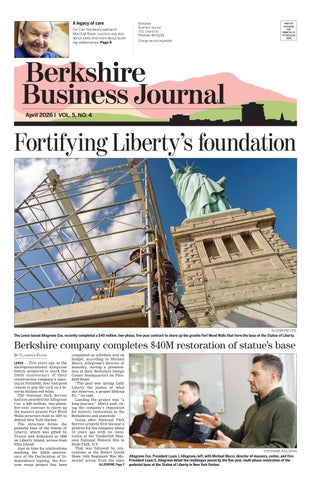
By C larenC e Fanto
LENOX
— Five years ago, as the multigenerational Allegrone family prepared to mark the 100th anniversary of their construction company’s opening in Pittsfield, they had good reason to pop the cork on a favorite Italian red wine.
The National Park Service had just awarded the Allegrone Cos. a $40 million, two-phase, five-year contract to shore up the massive granite Fort Wood Walls structure built in 1807 to defend New York Harbor.
The structure forms the pedestal base of the Statue of Liberty, which was gifted by France and dedicated in 1886 on Liberty Island, across from Ellis Island.
Just in time for celebrations marking the 250th anniversary of the Declaration of Independence signing, the fiveyear mega project has been
completed on schedule and on budget, according to Michael Mucci, Allegrone’s director of masonry, during a presentation at their Berkshire Design Center headquarters on Pittsfield Road.
“The goal was ‘giving Lady Liberty the justice of what she deserves, a proper lifelong fix,’” he said.
Landing the project was “a long journey,” Mucci said, citing the company’s reputation for historic restoration in the Berkshires and statewide.
Going after National Park Service projects first became a priority for the company about 10 years ago with its restoration at the Vanderbilt Mansion National Historic Site in Hyde Park, N.Y.
That was followed by renovations at the Robert Gould Shaw 54th Regiment War Memorial across from the state
Capitol in Boston, honoring the commander of one of the state’s first allBlack units during the Civil War.
Responding to the government’s invitation to bid on the Lady Liberty restoration against at least five competitors, “we thought it was time to go for a project like that, something bigger that still kept us in the Northeast,” Mucci said. Since it was focused on masonry, the company’s skill set and project portfolio played a major role in securing the contract, he noted.
Company President Louis J. Allegrone said his family’s roots as immigrants from Italy from 1917 through the 1920s made this project extra special.
“It gives you pause when you think back to whether my grandfather, Luigi, who started the company and came through Ellis Island ever would have thought we’d be working down on the Statue of Liberty,” he said.
Company founder Luigi Allegrone’s son, Louis C. Allegrone, was a mason by trade and expanded the masonry preservation and restoration business.
His son, Louis J. expanded the firm into the construction services company that exists today. Louis E. (current company vice president) and Anthony (director of design and principal architect), siblings, and their team make up the fourth generation.
A phone call from the National Park Service following a monthlong evaluation and scoring of bids sealed the Lady Liberty deal, Louis E. recalled. “They said, ‘By the way, we’re going to send you over a contract — congratulations, you guys won the job, when can you start?’”
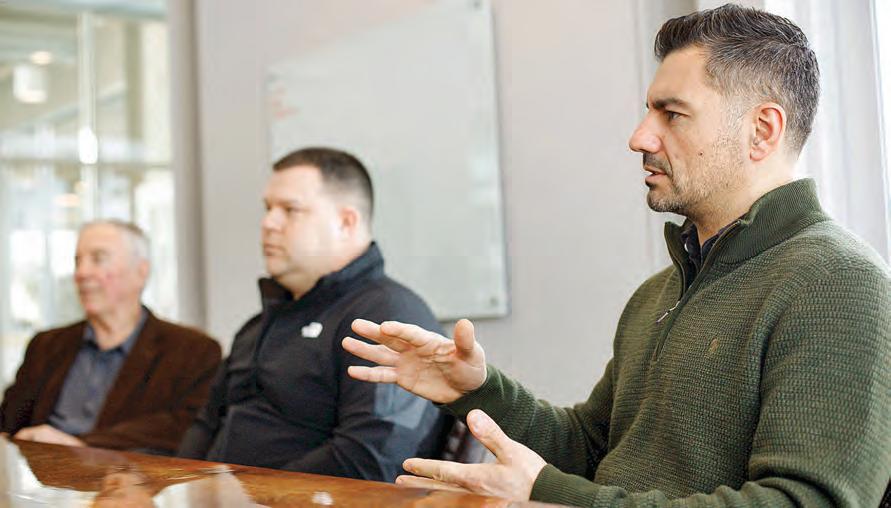
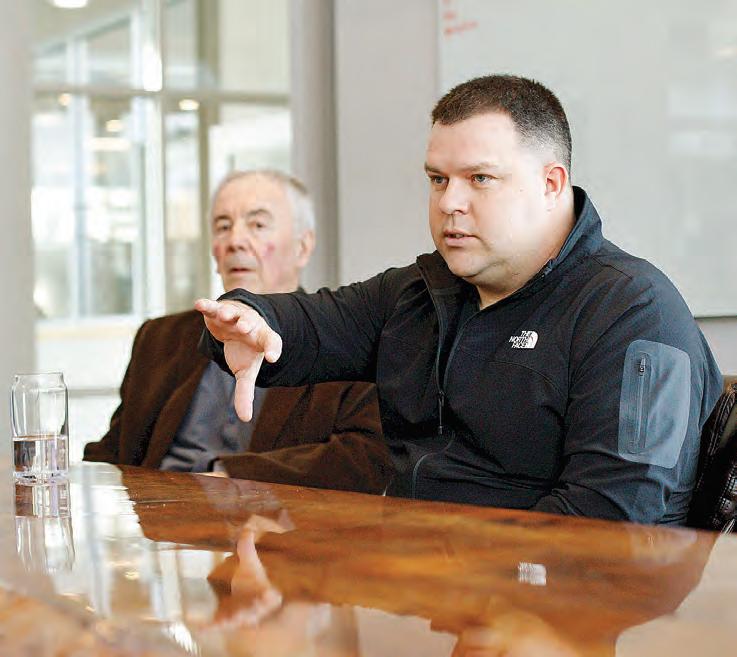
“It was a grim time, COVID had just hit,” said Tony Zaniboni, general superintendent and principal of the company. “You’re working on an island, an area where you’ve never worked before, completely different than working somewhere locally.”
Working with Mucci, the team had reached out to subcontractors and vendors to gather pricing for the bid, which covered restoration of the walls and replacement of the hard deck — also known as a terreplein — surface.
With the contract in hand, the next step was putting together the day-today operations, Zaniboni said, including hiring masons from the union locals in New York City.
While most of the rebuilding work was done during the warmer nine months of the year, Mucci noted, pavers in heated tents on the island allowed production to continue during the winter.
The Liberty Island project was especially challenging since the key vantage points and the museum, a prime tourist attraction, remained open to the public throughout the five-year renovation, restricting work to onethird of the site at any given time.
Completed, Historic Preservation
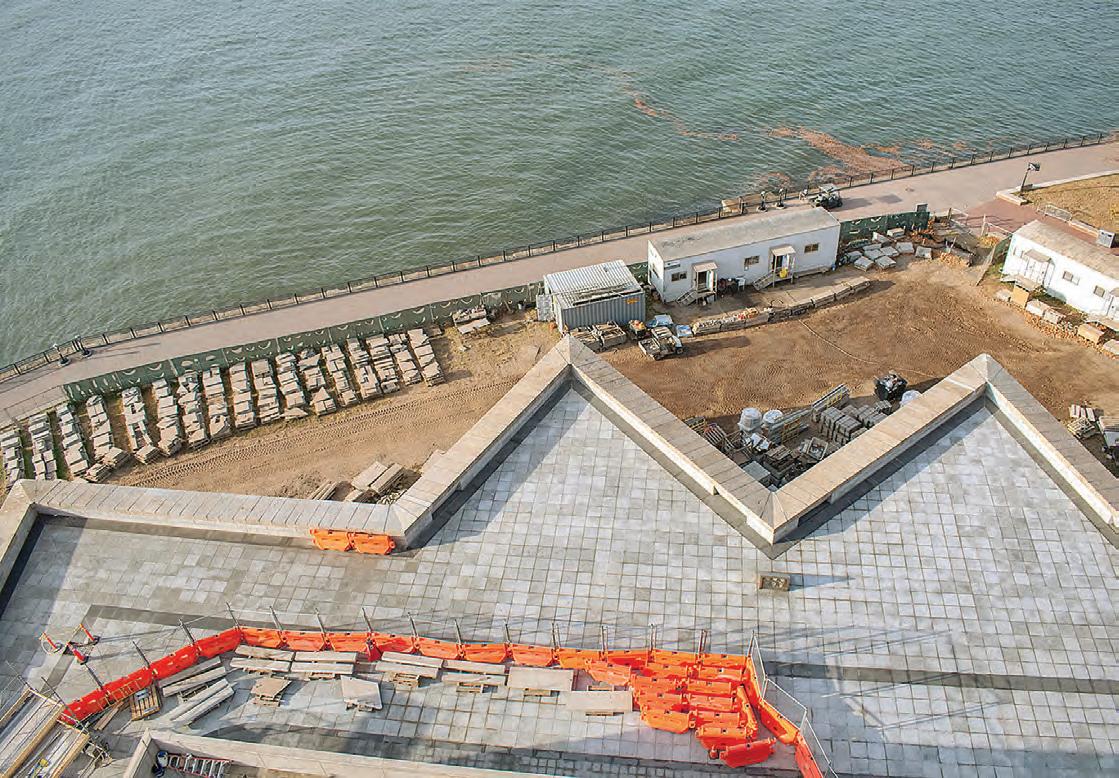
Dealing with as many as 20,000 visitors a day required workarounds, Zaniboni said. A greater challenge was dealing with the elements and the howling winds that are common on the island.
“The pressure of restoring and preserving a national landmark and co-
Dorchester Heights Monument & Hardscape Restoration, Boston MA (2025, construction management)
Mount Greylock Tower Summit Improvements, Adams, MA (2017, construction management)
Grand Staircase Rehabilitation, Empire Plaza, Albany, NY (2016, construction management)
Robert Gould Shaw & 54th Regiment Memorial Upgrades, Boston, MA (2021,construction management)
Vanderbilt Mansion Rehabilitation, Hyde Park, NY (2018, construction management)
Mahaiwe Performing Arts Center, Great Barrington, MA (Multi-phase Projects, construction management)
Naumkeag Estate, Stockbridge MA (Multi-phase Projects, construction management)
Chesterwood Museum Studio Rehabilitation, Stockbridge, MA (2014, construction management)
Beacon Cinema, Pittsfield, MA (2010, construction management)
Onota 74 Residences, Pittsfield, MA (2016, design-build)
ordinating it speaks volumes for the work we do here for adaptive reuse and restoration in the local community,”
Louis E. stressed.
The National Park Service is expected to host a celebration this summer,
Page 4
Above: Masons with Allegrone Cos. reset the granite blocks along the Fort Wood Walls on Liberty Island as part of a five-year restoration of the Statue of Liberty’s 1807 pedestal structure.
Left: Tony Zaniboni, Allegrone’s general superintendent, listed the challenges of the restoration project. “You’re working on an island, an area where you’ve never worked before,” he said, “completely different than working somewhere locally.”
The Howard Building, Pittsfield, MA (2014, design-build)
Iredale Cosmetics Headquarters, Great Barrington, MA (2016, construction management)
Completed, Noteworthy
Jacob’s Pillow: Doris Duke Theatre, Becket, MA (2025, construction management)
Bousquet Mountain Ski Lodge, Pittsfield, MA (2022, design-build)
Lee Bank at Reed/South Street, Pittsfield, MA (2023, design-build)
The First and West Housatonic Apartments, Pittsfield, MA (2026, construction management)
In Progress
Wright Building Block, Pittsfield, MA (design-build)
NYS Capitol Rehabilitation to Eastern Approach, Albany, NY (construction management)
24 North Park, Pittsfield, MA (design-build)
Lake Placid Center of Performing Arts Theatre, Lake Placid, NY (construction management)
Hancock Shaker Village Visitors Center, Pittsfield, MA (construction management)
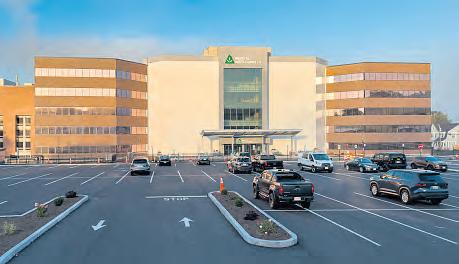
By Nate HarriNgtoN
PITTSFIELD — As part of planning her daughter’s wedding, Beth Reynolds had to get her elderly mother from Marion back to the Berkshires, which is a three-hour drive one way.
Instead of spending sixhours on the road, she called Steve Agar.
Agar is one of the local drivers that are filling the void left because ride share services don’t have the volume of passengers and drivers to work consistently in the Berkshires.
These drivers have spent hundreds of thousands of miles on the road, gone through multiple cars and built a clientele that comes back for their services. That clientele stays with their respective drivers because of the dependability they offer that ride share services or other companies don’t.
“The last thing you want is to pull into the airport and the ride doesn’t show up,” Reynolds said. “But once I got Steve, he’s extremely dependable.”
The private drivers in Berkshire County aren’t regulated by the Department of Public Utilities, which oversees ride share companies and their drivers. That means if a driver were to get in a crash with a client, insurance likely wouldn’t cover that accident.
Agar, a driver based out of Great Barrington, started driv-
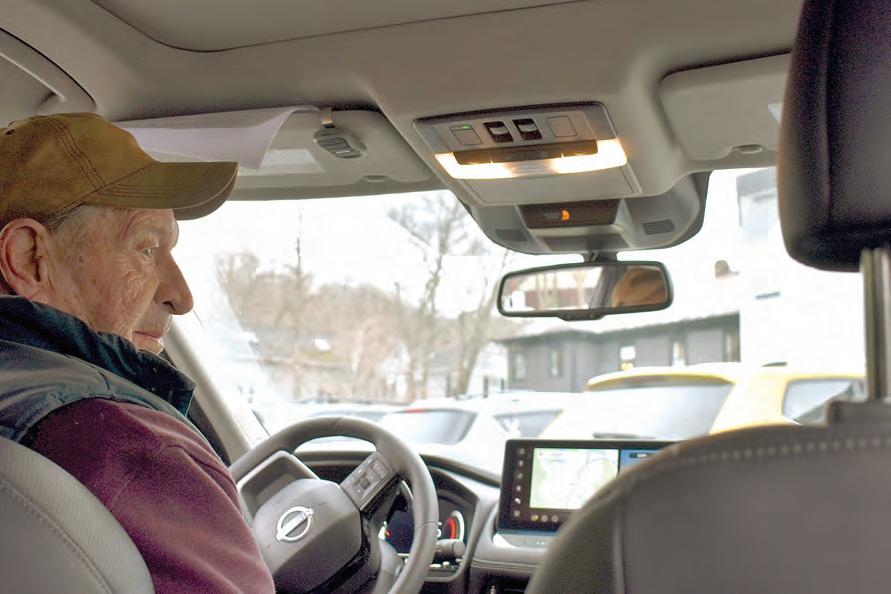
ing a little over a decade ago after selling his heating oil company. He initially drove for a delivery business, but within a year he was driving people not goods.
“I really like it because I meet a lot of great people,” Agar said.
The drives Agar makes range from taking locals to doctor appointments to driving out to Cape
Cod to pick up family, he said.
“I put about 65,000 miles on it every two years,” Agar said. That’s made him go through five cars over the years of driving.
Jason Canning, a driver based in Adams, said he’s driven over 500,000 miles. For context, the Earth’s circumference is just under 25,000 miles.
“I’m on cars number three and four,” he said.
Canning, who started nine years ago, is also on some rideshare apps, but he said a majority of his work comes from his personal driving business.
“Uber and Lyft are great but they have severe limitations,” he said.
The reason ride shares don’t work in Berkshire County?
“Just because of how spread out everything is,” Canning said. “Nobody wants to drive half an hour away for a $5 trip.”
Ride share apps like Uber and Lyft rely on a certain number people to both request and take trips, and when that isn’t the case, service gets spotty for riders and profitability is questionable for drivers.
Tommy Tindall, writing for Nerd Wallet, laid out his experience driving on Uber. Living in the suburbs 50-minutes north of Baltimore, he made about $10.50 an hour, noting his lack of success was at least partially owed to living in a “less populated area.”
It doesn’t help that drivers often don’t know the details of a trip before accepting it, he said. “I know how far away [the ride] is, and I know if it’s more or less than 45 minutes.”
Also, drivers more than 25 minutes away don’t show up as available, Canning said.
It takes about 25 minutes to get from Pittsfield City Hall to the town offices in Adams, the town where Canning is based. So, if you were to request a ride in Pittsfield, Canning won’t show up, even if he was actively on the app.
The dearth of ride-share availability is where drivers like Agar and Canning step up, because people still need rides in Berk-

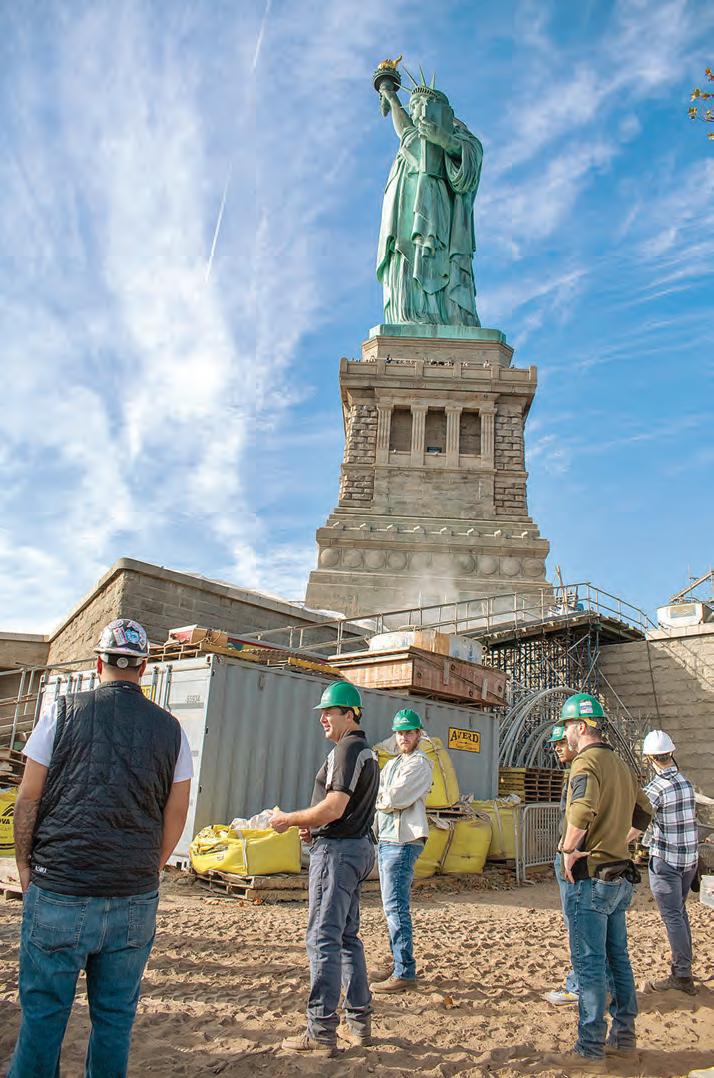
The project was challenging, the leadership team said, since the key vantage points and the museum remained open to the public throughout the five-year renovation, restricting work to one-third of the site at any given time.
FROM PAGE 2 perhaps on July 4.
Among the greatest challenges for the company’s team involved the logistics of getting material to and from the site, Louis J. recalled.
Material, equipment and workers had to be transported by ferries and barges from nearby New Jersey. Work went on year-round; only two days a year were missed when coastal storms were too fierce.
Although work was completed last November, a punch list is pending for March and April to complete landscaping.
“Maintaining quality craftsmanship and a professional manner four hours from here took a lot of time, effort, strategy and conversations,” Mucci said.
Key company personnel were housed onshore “to maintain core values, means, methods and procedures for restoration while bringing local laborers into the program,” he added.
Of the company’s roughly 100 employees, up to 25 worked on site while others were involved in the Lenox headquarters. Overall, there were 200 to 300 personnel involved, including subcontractors.
“The site is very unique, not like working in downtown Manhattan,” Zaniboni said. “We set up the right teams, everybody knew about the preservation goal and historical nature of the company.”
He recalled that barges arriving on the island had to be checked by police officers with sniffing dogs, part of the natural protection and security details at the Statue of Liberty.
The U.S. government’s decision to remain with Allegrone for the final phase of the renovation was based in part on the company’s ongoing construction management of the Dorchester Heights Monument restoration in South Boston.
That two-year, $30 million project was completed last summer. The monument commemorates the March
Guardia you know there’s an option, so you’re not really worried about it, but here you don’t know that.”
4, 1776, fortification by Continental forces, surprising British troops. Two weeks later, the Brits fled, ending the 11-month Siege of Boston.
“Being such a prominent project at an iconic landmark, it sets an example of the company’s growth, especially the masonry division,” said Anthony Allegrone, principal architect. “It’s also great example of the consistency of the company’s services. Looking back over 100 years now, the foundation Allegrone was built upon was masonry, restoration and preservation, the quality of craftsmanship from Day 1.”
“It’s so rewarding to see us as part of the Statue of Liberty project, which is an example of what’s considered sustainable preservation of national landmarks,” he added.
Going forward, the company is currently working on a restoration at the New York state Empire Plaza’s Eastern Approach that began six months ago. It’s a four-year, $70-million project “bringing together all the aspects of what the company does,” Louis E. said.
However, as a company “it’s nice to bring back focus to our projects locally,” he said. “When we get a chance to design, build and redevelop a property here in downtown Pittsfield, like the Wright Building redevelopment project on North Street, bringing life to it, brings it around full circle.”
The 1898 structure, along with the adjacent former Jim’s House of Shoes, is being converted into 35 market-rate apartments, including 20 percent designated as affordable housing, and six storefronts.
Other notable area projects include the 28 studio apartments on West Housatonic Street in Pittsfield, nine units within Zion Lutheran Church on First Street in the city, and the rebuild of the Doris Duke Theatre at Jacob’s Pillow in Becket.
The company first opened on Newell Street, where Allegrone family members grew up. The Lenox headquarters was completed in 2016 on the former site of the Edgewood Motel.
shire County, especially to those airports an hour or two away.
“I don’t think there’s too much in the way of cars from BDL [Bradley International Airport] to here with ride sharing or taxis,” Reynolds said.
That’s where a majority of both drivers’ rides are concentrated, they said, and both have fixed rates for the closest airports.
Canning charges about $125 to drop off at Bradley International Airport in Hartford and $175 to pick up from there. Using Uber, it would cost about $100, but that is before tip and other additional charges ride share services add on. And that’s only if you can get a ride.
“I don’t want to have to figure it out when I do get in,” Reynolds said. “At La
That dependability is why, when Reynolds was coordinating one of her kids’ weddings, she called Agar to drive many of her family members to and from their homes, the hotel they were staying at or the airport.
Reynolds also praised Agar’s flexibility in responding to the rider’s mood, whether it be driving in silence, chatting or listening to music.
“Steve’s good at recognizing that balance,” she said.
The niche for private drivers in Berkshire County is there, but Agar and Canning find themselves continuing the work for different reasons.
“I actually enjoy it,” Canning said. “I just like driving.”








































PITTSFIELD
Prospect Meadow Farm
accepting CSA orders
ServiceNet’s Prospect Meadow Farm is now accepting 2026 CSA orders. The 19-week program runs mid-June through mid-October, delivering biweekly shares of seasonal produce while supporting job training for individuals with disabilities.
Members who choose on-farm pickup will receive 10 percent off their share. Pittsfield farm pickups take place from 1 to 4 p.m. Fridays at the new farm store located at 717½ Crane Ave. A new $100 meat and fruit addon provides biweekly fresh fruit and monthly pork cuts.
Share options include senior/ low-income, half and full size shares, and residential program shares. Visit prospectmeadowfarm.org/farm-csa for details.
PITTSFIELD
Pregnancy Support group elects officers at meeting
Pregnancy Support Services reelected officers during its 53rd annual meeting on March 16.
Officers reelected include Stella Wibby, president; Marilyn Fish, vice president; Mary Helen Lennon, secretary; and Joan Racine, treasurer.
Over the past year, the agency helped 180 families, including 320 children, and distributed 33,500 diapers along with baby and child clothing, formula, food and furniture.
Donations of diapers and other items may be dropped at 34 Depot St, lower level, during office hours, 10 a.m. to 1 p.m., Mondays through Thursdays. Volunteers are also welcome. Information: 413-443-7351.
LENOX Development alliance to host free roundtable
The Berkshire County Development Alliance will host a roundtable on stewardship best practices from 4:45 to 6 p.m. April 14 at Ventfort Hall, 104 Walker St.
The informal session will focus on practical approaches to donor stewardship, with opportunities for attendees to share tips, tools and strategies with fellow development professionals and volunteers.
Open to both experienced fundraisers and those new to development, the roundtable offers a relaxed setting to learn, exchange ideas, and build community.
The event is free to attend. Attendees are asked to bring a snack to share. RSVP by April 10 at 413BCDA@ gmail.com.
WYNANTSKILL, N.Y.
Certified Financial Planner Nate Tomkiewicz has launched Tomkiewicz Wealth Management, a registered investment advisory firm serving clients in New York’s Capital Region, Berkshire County, and virtually nationwide. The firm specializes in fiduciary investment management and comprehensive financial planning, focusing on health care professionals within 10 years of retirement.
After nearly a decade working in the financial services industry, Tomkiewicz founded his own firm to offer personalized, client-first experience. Tomkiewicz Wealth Management was built to address the unique complexities faced by doctors, nurses and medical professionals who often juggle demanding careers with intricate benefit packages, including 401(k), 403(b) and 457(b) plans.
A fee-only fiduciary, Tomkiewicz
Wealth Management offers retirement income strategies, personalized investment management, benefit optimization, tax planning, and health care cost planning. For information, visit tomkiewiczwm.com.
PITTSFIELD
Four members join BIC board of directors
The Berkshire Innovation Center, entering its seventh year, has appointed four new members to its board of directors, reinforcing its commitment to aligning industry, education and innovation across Berkshire County.
The appointments come as BIC expands its regional impact, including its recent selection as a Massachusetts Tech Hub awardee.
Linda Clairmont, former mayor of Pittsfield, serves as executive director of Workforce and Community Education at Berkshire Community College, where she leads regional workforce development and lifelong learning initiatives.
Christopher Montferret is vice president of strategy and business development for the maritime and strategic systems line of business at General Dynamics Mission Systems.
Chris Ferrone is vice president of business development at PrestoArt.ai, where he leads growth strategy for an AI-driven design platform. Ferrone has served on the BIC Finance Committee since 2022.
Richard Glejzer, provost and vice president of academic affairs at Massachusetts College of Liberal Arts, advances academic initiatives that connect liberal arts education with applied learning, workforce readiness and regional industry partnerships.
The BIC extends its gratitude to Ellen Kennedy, BCC president; James Birge, MCLA president; and David Valicenti of Cohen Kinne Valicenti & Cook LLP, as they conclude their service on the board.
LENOX
Zonta Club is accepting applications for $1K grant
The Zonta Club of Berkshire County is accepting applications for the $1,000 Diana “Toni” Fontana Woman in Business Grant, created to support women entrepreneurs who own and operate their own businesses.
The award was created in memory of Fontana, a long-time Zontian and owner of Astro Beef. One recipient will receive a $1,000 cash award to use toward business expenses.
Applicants must identify as a woman and be actively involved in the dayto-day operations of their business. Businesses at any stage are encouraged to apply.
Visit zontaberkshire.org/scholarships for information and an application. The deadline to apply is April 30.
PITTSFIELD
Freeman Center names a new member to board
The Elizabeth Freeman Center has named Mark Lipton to its board of directors.
Lipton brings over four decades of leadership development expertise to the board, according to a statement from the organization. As professor emeritus of management at The New School and Parsons School of Design, Lipton has devoted his career to understanding organizational dynamics.
He continues to lead an executive coaching practice serving CEOs and C-suite leaders, and has advised Fortune 500 companies, philanthropies, nonprofits and technology start-ups.
He currently serves as co-chair of the board of Footsteps, a New Yorkbased nonprofit, and sits on several
other nonprofit boards.
Named among the World’s Top 30 Management Professionals for 2024 and 2025, Lipton is the author of “Mean Men and Guiding Growth.” His research on toxic leadership and workplace abuse patterns brings vital insights to Elizabeth Freeman Center’s work with survivors.
The Elizabeth Freeman Center, which provides services and shelter to victims of domestic and sexual violence in Berkshire County. has offices in Pittsfield, North Adams and Great Barrington.
ADAMS
Berkshire County Arc has received an $80,000 grant from the Healey-Driscoll Administration’s Employment Program for Young Adults with Disabilities.
The statewide program awarded $900,000 to six Massachusetts organizations to provide job training, employment placement and post-placement services for 116 young adults with disabilities.
BCArc will use the funding to support 12 program participants by providing a structured pathway to employment in the health care sector. Through partnerships with Sugar Hill and Craneville Place of Dalton, participants will receive hands-on training for entry-level health care positions.
Training will focus on roles such as certified nursing assistant, dietary aide, home health aide and activities assistant. The acquired skills will be transferable to other health care employers throughout the region.
BCArc provides a range of services to 1,000-plus individuals with intellectual and developmental disabilities and brain injuries throughout Berkshire County and the Pioneer Valley.
PITTSFIELD
The Coolidge Hill Foundation elected its board of directors at its annual meeting in January at Guardian Life Insurance’s Pittsfield office.
The following individuals were elected to serve one-year terms as directors: Sheri L Quinn, president; Jackie McNinch, vice president; Timothy G. Kiely, treasurer; Cindy Shogry-Raimer, clerk/communications director; and Shaun V. Cusson, John C. Donna, Eric Drayman, Sam Haupt, Leticia Haynes, Mary K. O’Brien, Kevin Pink, John R. Semexant, Colin Smith, Kathleen Tisdale, Heather Wells Heim, and Leonid Yantovsky.
Former President Anne McInerny Pinkston was honored for her 40 years of service.
Founded in 1917, the nonprofit Coolidge Hill Foundation is dedicated to funding programs that aid children with disabilities in Berkshire County.
The 2026 grant applications are available and due by March 25. For information, visit Coolidge Hill Foundation on Facebook.
PITTSFIELD
Berkshire District Medical Society is accepting applications for its annual revolving scholarship loan of up to $10,000 per year for students enrolled in medical school or a school of osteopathic medicine. Application deadline is April 30.
Recipients sign agreements pledging to begin repayment of the scholarship loan — unsecured and bearing no interest — the year of graduation, with half of the amount to be repaid in four years and the balance in two additional years.
If the awardee returns to Berkshire County to practice as a primary physician and stays for three years, onethird of the loan would be forgiven for
each year they practice in the county. Recipients must be bona fide residents of Berkshire County and already accepted at an approved medical school in the United States or Canada. Funds will be paid directly to the school.
To apply, visit tinyurl.com/3f2y33xx, or to receive an application, contact Susan Poulin at spoulin@berkshire. rr.com or call 413-207-4551.
NORTH ADAMS
MacKay-Lyons Sweetapple Architects has opened a new office on the grounds of Mass MoCA.
This strategic move deepens the firm’s relationship with the culturally rich Berkshires region and reflects a connection to the New England area, exemplified by its nearly completed FreshGrass Annex at Porches Inn at Mass MoCA.
The firm operates across the United States and Canada, with offices in North Adams and Colorado, and Halifax and Lunenburg, Nova Scotia, Canada. The practice works locally and internationally on cultural, hospitality, academic, and residential projects, providing full architectural, urban design and interior design services.
Since 1985, the practice has built an international reputation for design excellence, confirmed by over 170 awards, including the prestigious 2017 Global Award for Sustainable Architecture.
The four principals include Brian MacKay-Lyons, Talbot Sweetapple, Melanie Hayne and Shane Andrews. Both MacKay-Lyons and Sweetapple are Fellows of the Royal Architectural Institute of Canada.
Afreemonthlypublicationby TheBerkshireEagle 75SouthChurchStreet, Pittsfield,MA01201
Visitberkshirebusinessjournal.comfor advertisinginformationandtosubscribe.
NEWSDEPARTMENT 413-447-7311 news@berkshireeagle.com
ADVERTISINGDEPARTMENT
AMYFILIAULT,AdvertisingManager 413-496-6322 afiliault@berkshireeagle.com
CHERYLGAJEWSKI,Directorof AdvertisingSales 413-841-6789,413-496-6330 cmcclusky@berkshireeagle.com
ShareyournewswiththeBerkshire BusinessJournal. Ifyouhaveacompany promotion,anewbusinessoranewventure,let theBerkshiresknowaboutit.Rememberthe 5Wsandthatbrieferisbetter.Emailtextand photostoBBJ@newenglandnewspapers.com. ProvideyourexpertiseintheBerkshire BusinessJournal. Doyouhavetheanswer toapersistentquestionaboutbusiness andtheBerkshires?Doyouhaveideasand suggestionsonhowourbusinesscommunity cangrow?Ifyouhaveacommenttomake aboutdoingbusinessintheBerkshiresor ifyou’relookingtoraiseanissuewiththe businesscommunity,thisisthevenuefor that.Wewelcomelettersupto300wordsand commentaryupto600words.Sendtheseto BBJ@newenglandnewspapers.com
BerkshireBusinessJournalispublished monthlybyNewEnglandNewspapersInc., 75S.ChurchSt.,Pittsfield,MA01201. PeriodicalspostagepaidatPittsfield,MA01201. BerkshireBusinessJournalisdeliveredfree tobusinessesinBerkshireCountyviathird classmail.Additionaldistributionismade viadrop-offatselectareanewsstands.The publisherreservestherighttoedit,rejector cancelanyadvertisementatanytime.Only publicationofanadvertisementshallconstitute finalacceptanceofanadvertiser’sorder.All contentsarecopyrightedbyNewEngland NewspapersInc.
By I zzy Bryars
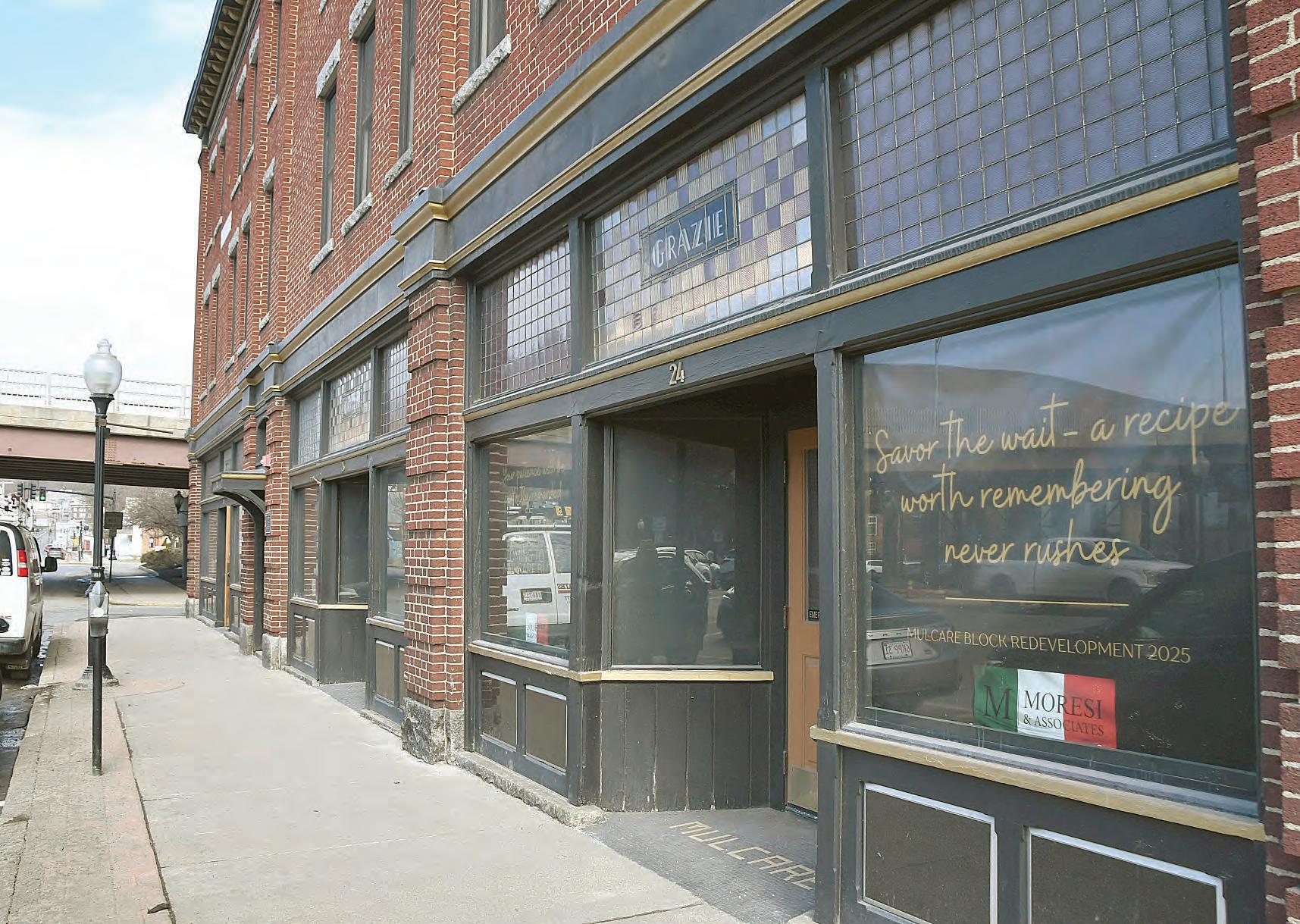
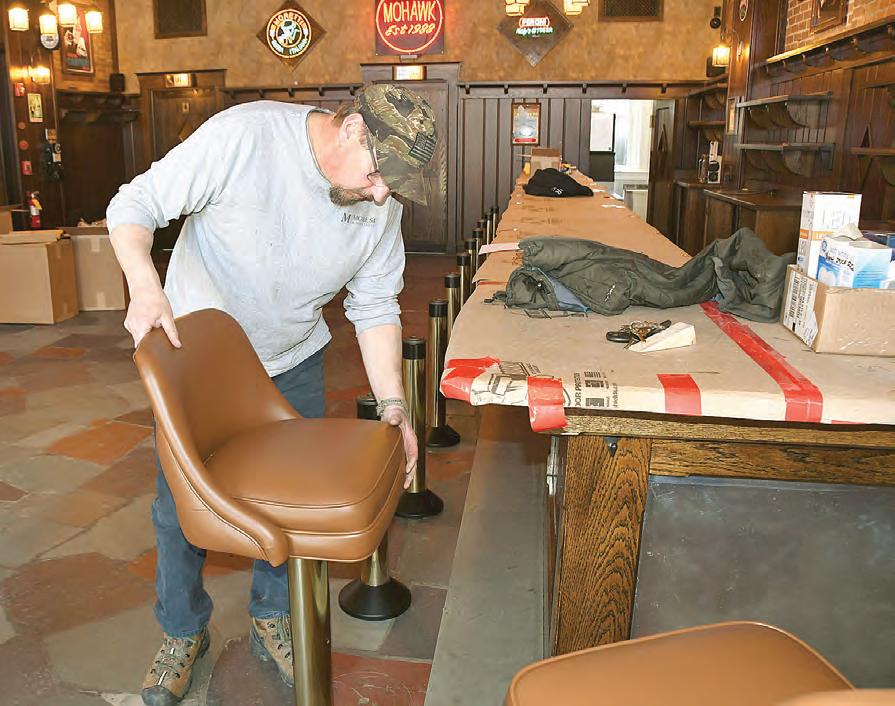
NORTH ADAMS — The former Mohawk Tavern space on downtown Marshall Street will soon transform into an Italian restaurant and wine bar, the latest brainchild of local developer David Moresi.
Moresi, of Moresi Culinary Ventures LLC, announced the plan for his next downtown business venture, Zio Roberto Ristorante and Taverna, at a March 9 meeting of the Planning Board. He described the restaurant concept, set for an end of May opening at the ground floor of 22 to 30 Marshall St., as an old-school, “Italian speakeasy vibe.”
“You can envision oversized lounge chairs, obviously the bar, cocktail tables and a little late or early afternoon aperitivo,” Moresi said at the meeting. “It’s basically an overall traditional Italian dining experience.”
Zio Roberto, which translates to “Uncle Bob,” will be one entity with a designated wine bar and aperitivo, or small plates, area, and a traditional dining room on the other side that will focus on freshly made pasta, he said. There will be two kitchens, one for the small plates and one for the main dining.
“It’s a place where patrons can enjoy a multi-course dining experience and a first-class evening out,” he said.
Moresi also introduced the chefs that will run the kitchen; Peter Belmonte, who has worked for over two decades as an executive chef, including at the Williams Inn for the last few years, and Nicholas Moulton, who previously was the head chef at Mezze Bar +
Bistro in Williamstown, where he brought national attention to Mezze, appearing multiple times on the Food Network.
Anh Phan, the general manager, brings a decade of experience working in the Boston Italian restaurant scene at beloved institutions like Polcari’s and Regina Pizzeria. The restaurant will be in the Mulcare Building, which was purchased by Moresi about a decade ago. The building later
became home to modern Italian restaurant Grazie, which relocated to State Street last year.
The Mohawk Tavern, the space where the Taverna will be, was opened by Moresi’s grandfather in 1933 in another location, and moved to Marshall Street in the 1950s. Moresi’s father operated it until the 1970s when it was sold out of the family.
The goal always was to open an Italian restaurant in North Adams that will “fill a niche”
that Moresi thinks many locals can “probably see” is missing.
“We want that experience where you want to go out for a date night, a birthday dinner, an anniversary celebration, [or] you just want a great evening out,” he said. “You can go to the taverna, have your aperitivo, and then you can move on to dining, and then if you want to go grab an after-dinner drink, you can do that.”
Moresi brought his new venture to the board to ensure the change of use was city-approved, as the bar and restaurant were becoming one entity. At the suggestion of the building department, which flagged it as “a gray area,” Moresi presented his plan to the board and it was approved.
Interior improvements to the “taverna” side include new finishes and equipment within the existing prep kitchen area, a new exhaust hood system, upgraded lighting, a new stone bar top, as well as new interior finishes.
The “ristorante” side also has undergone “significant interior improvements” including custom-built elements, updated wall and ceiling finishes, upgraded lighting and fixtures, and completely new kitchen outfitting.
Minimal changes to the exterior facade of the building will be made, aside from adding some new gold backlit signage, Moresi said.
He wants the new restaurant to be something the entire Northern Berkshire community can enjoy, but also draw in people from across the county and help support the greater downtown business district that was bustling when his grandfather and dad operated the tavern.
“We know North Adams; we’re North Adams natives,” he said. “This is for people to, once again, experience what we have lost in the North Adams marketplace over the years, where we used to have lots of dining experiences, where you could just go out and have an amazing meal in an amazing environment.”
By M aryjane Willia Ms
PITTSFIELD — For Sarah Sayers, life has always revolved around bakeries.
Her parents owned one before she was even born — in fact, she was nearly delivered there.
After that shop closed, her father joined Pittsfield Rye in 1979, the same year Sayers was born. Her mother soon followed, and Sayers spent much of her childhood in the back of the bakery, helping out, watching her parents work and learning the rhythms of the business.
During those early mornings and flour-dusted afternoons, she began to imagine owning a bakery of her own.
Twenty years ago, that dream became reality when Sayers opened Sarah’s Cheesecakes & Cafe.
Last week she celebrated two decades of running the Elm Street shop with her husband and children, serving the Pittsfield community through birthdays, holidays, baby showers, funerals and everyday lunches. he store marked the milestone with a celebration featuring free cupcakes.
“I’m trying not to cry,” Sayers said after she was asked what this milestone means to her. “It’s amazing. This is what people look forward to … we love our customers.”
In a city where many small businesses come and go, Sayers attributes the bakery’s longevity to the work her family puts in and the community that keeps coming back.
“We are a hard-working fam-
ZOLLSHAN
STEPHANIE
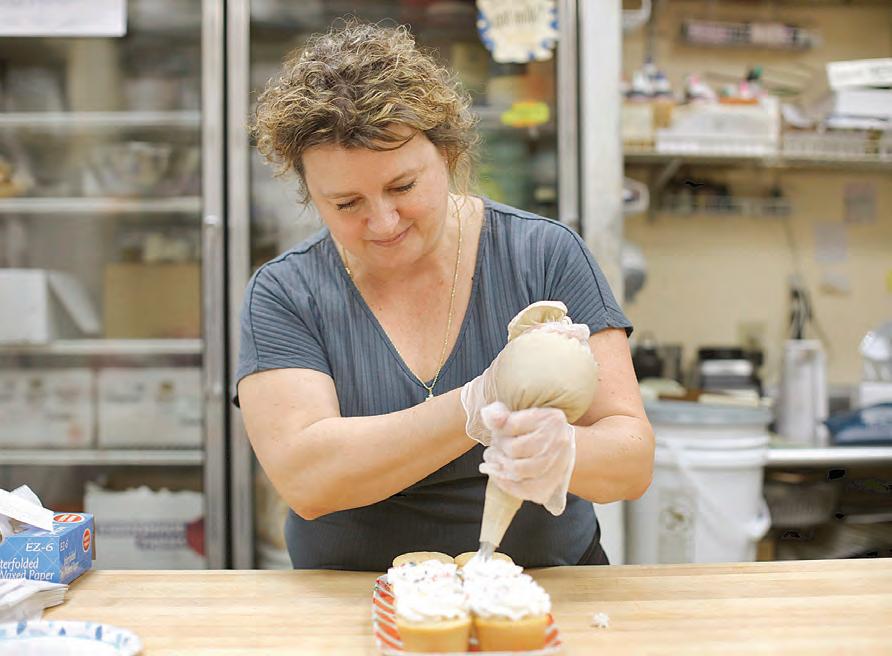
Sarah Sayers, owner of Sarah’s Cheesecakes and Cafe in Pittsfield, frosts cupcakes that the eatery gave to customers for free last month to celebrate the shop’s 20th anniversary.
ily. We have a lot of hard-working customers that come in. We try to keep our pricing as fair as possible,” she said. “Just having a good relationship with our customers … We try to be as friendly as we can, and just try to get to know everybody.”
Sayers said she tries to return that support by staying involved in the community. The bakery has sponsored local youth sports
teams, including the baseball and softball teams her children played on, donated gift cards to fundraisers and events and provided cheesecakes each year to the Christian Center for its Christmas meal.
“We always try to keep the community going with anything that we can do to help,” she said. “We try to do something every single year and keep it going
throughout the year.”
When asked about her favorite memory from owning the cafe, Sayers initially struggled to choose just one.
“There’s been so many fun things,” she said.
Ultimately, she settled on a community day the bakery hosted only a few years after opening that featured a cheesecake-eating contest.
The event was such a hit that it is now inspiring the bakery’s upcoming 20-year anniversary celebration planned for this summer — and the cheesecake-eating contest will be returning as well.
“I think four people braved the cheesecake-eating contest, and it was so much fun,” she said. “Now we have 20 years worth of people that want to be a part of it. So I’m not sure how many we’ll have, but it should be fun.”
Despite the support and longevity, the past two decades have not been without challenges. Sayers said rising food costs have made it difficult to keep prices affordable.
“We do a pickle with every sandwich. And that price has doubled over the past year for just pickles,” Sayers said.
Rather than raising prices across the board, Sayers said she has tried to make smaller adjustments to protect her customers’ wallets, such as no longer including free chips with every sandwich.
“We figured it would be easier to keep the sandwich price the same and then offer people, if they want to buy the chips, they can,” she said. “For those people that don’t want them, they are not paying extra for nothing.” Looking ahead, Sayers said she is grateful for however long the bakery is able to continue serving the community.
“Whatever we got, I’ll take,” she said. “Every day is awesome, you know, to just be here and be able to do this and say that we did it and we’re doing it still is awesome.”

By GreG Sukiennik
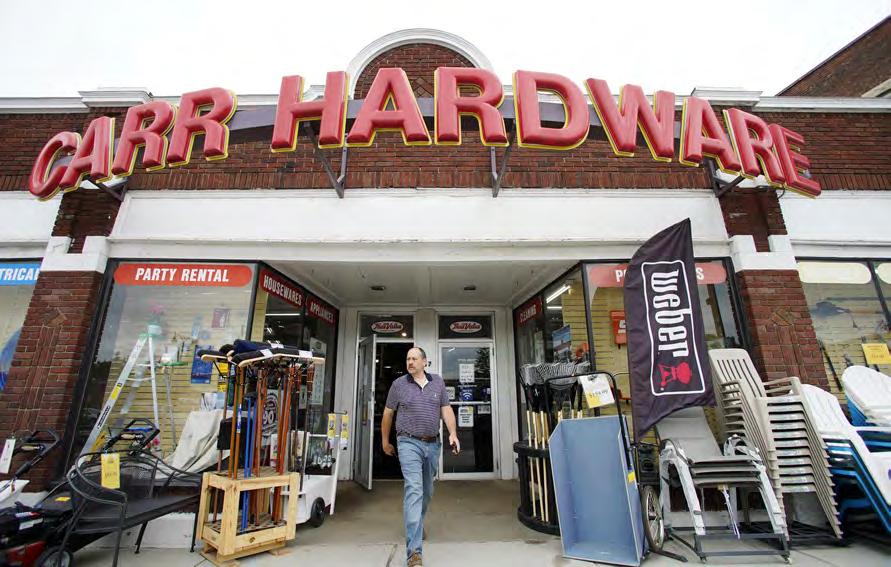
PITTSFIELD — For Carr Hardware
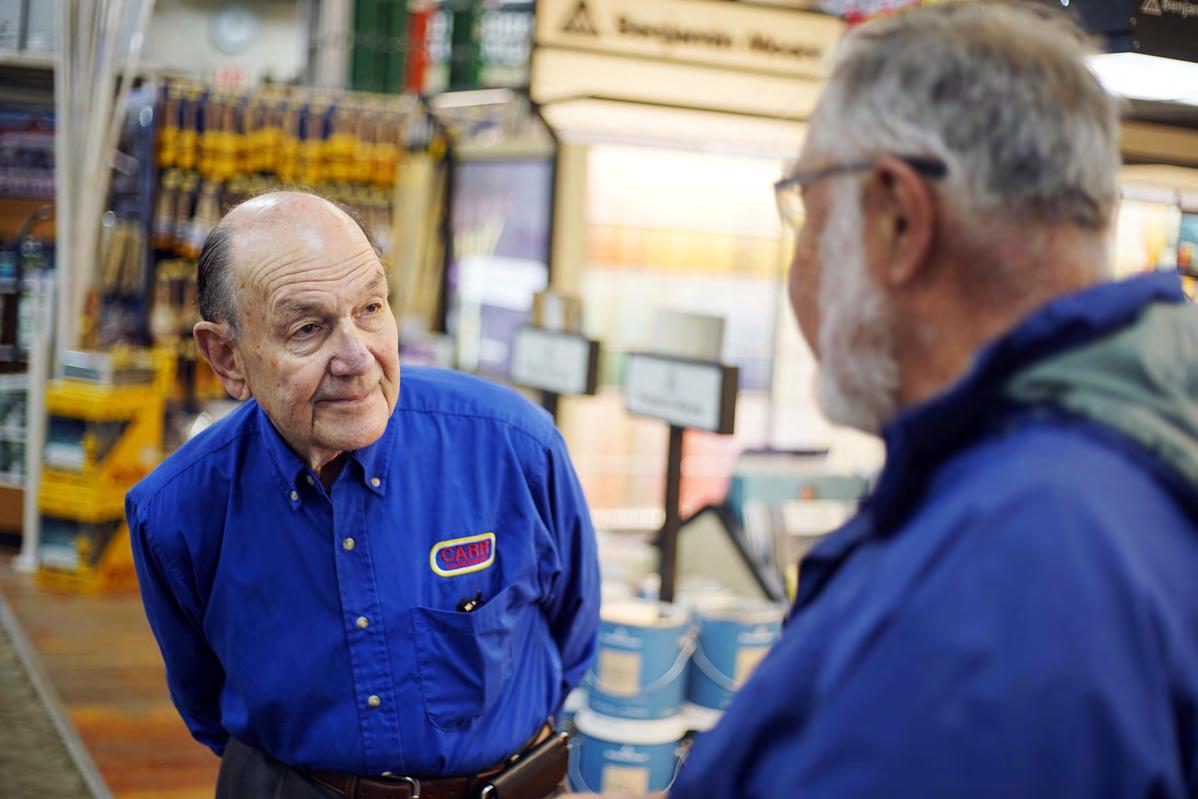
patriarch Marshall Raser, success in the hardware business was less about sales and more about building relationships.
“He believed in a culture of service and taking care of people and doing what was in the best interest of the customer over profit,” Bart Raser, said of his father, who died Saturday at the age of 97. ”His philosophy was: the money would come if you did the right thing.”
Under the family’s stewardship — Bart became a partner in 2000 — the business grew from its North Street roots to six locations in two states and celebrated its 100th birthday in 2024. Throughout that time, Marshall remained committed to downtown Pittsfield, as well as a patron of the region’s performing arts institutions and active community member.
Marshall died last month of kidney failure with his family at his side at Berkshire Medical Center, his son said.
While Marshall had the intelligence and drive to succeed at any field he chose, he was at home in the aisles of the North Street business he purchased with his late older brothers, Nathan and Max, from founder Sam Carr in 1962.
“My dad was an incredibly hard worker,” Bart said. “He worked six days a week until he was 90 because it was never work for him. He loved being engaged, being challenged. He loved being on the sales floor, interacting with customers and telling stories.”
The Raser brothers were the owner-operators of a chain of three hardware stores south of Boston, when they got word that Carr was looking for a buyer and partner. According to Eagle files, the brothers’ business, Max’s Paint & Hardware, had locations in Quincy, Hingham and Scituate at the time.
“So my dad came out to meet Sam Carr,” Bart said. “They built an instant relationship and my dad never left ... he basically bought it on sight.”
What made that decision happen so fast? “I think it was the opportunity, and it was the instant connection with Sam Carr and a love of the Berkshires,” Bart said.
That included the performing arts, not only as an audience member but as a patron. “He loved Tanglewood and Barrington Stage and Jacob’s Pillow, all the cultural venues the Berkshires have to offer,” he said.
When Marshall came to Pittsfield in 1962, the city’s downtown shopping district was in its golden era. Post-war prosperity made North Street a destination, and Carr Hardware was part of a business community that also included England Bros., Holden & Stone, Besse-Clarke, W. T. Grant and J.J. Newberry’s, among others.
One by one, those businesses moved or closed. But Carr Hardware stayed put, and as Marshall became an active member of Downtown Pittsfield Inc., the shopping district’s trade association, he also became an invaluable source of advice and counsel.
For North Street clothier Steven Valenti, that goes back to when he first opened the doors of his men’s shop in 1983.
“His door was always open and
he would go out of his way to make sure you were OK,” Valenti said. “If you needed to talk about something he was all ears.”
“I’m saddened he’s left us but he’s left us with a lot of great valuable information that I and so many others use every day. He was that kind of guy,” Valenti said. “I’m going to miss him but he taught me a lot.”
Marshall was honored by Downtown Pittsfield Inc. with its Robert K. Quattrocchi Man of the Year award in 2019.
Real estate developer David Carver, a lifetime director of Downtown Pittsfield Inc., has also been a Carr Hardware customer since the 1980s.
“What I will always remember about Marshall is his friendly smile and positive attitude that has made doing business there a pleasure,” Carver said in an email, noting that Bart has carried on that legacy. “I also admired his unwavering support for downtown development and through hard work and tenacity,
His door was always open and he would go out of his way to make sure you were OK.
Downtown clothier
Steven valenti, on Marshall Raser
maintaining a highly successful business presence there despite a challenging retail market over the past 50 years.”
Why did Marshall stick with North Street, even as his business expanded across the county, while so many downtown establishments closed or fled?
“In spite of all the challenges of being downtown, it’s still the center of the Berkshires and the hub of Pittsfield and its heartbeat,” Bart said. “And it’s a community business at the end of the
day — we support our community and the community supports us back ... that’s why we stay and why we thrive in that location in spite of its challenges.”
While Marshall was at home at work, he maintained a worklife balance, his son said. In addition to being patrons of the arts, the couple boarded, raised and trained guide dogs for the blind for 40 years. He served on the board of the Lake Onota Preservation Association and was a lifelong member of Rotary, serving as the Pittsfield chapter’s president.
He also was an excellent tennis player, well past what most would consider old age.
“In fact I spent my whole life trying to beat him,” his son said. “It drove me crazy. Even when I was a fraction of his age I couldn’t beat him.”
Raser was a communicant of Congregation Knesset Israel from the time he and his wife moved to Pittsfield. Rabbi David Weiner, who knew Marshall
for 17 years, described him as a community leader and someone “who always asked how you and your family and really meant it.”
“Marshall had reached 97, and it was a long and rewarding and well-lived life,” Weiner said. “He was reconciled. He was at peace with the fact his time had come. Our last meeting was very powerful; he was very much himself and very warm and connected in that moment. And also ready to say goodbye — which was hard, but he did it. That was very moving.”
As his father’s only son and business partner, Bart is honored to have worked by his father’s side.
“For me it was an amazing 35 years every day we worked together,” he said. He was my mentor, my confidant, my best friend ... I was always proud and honored to work with him, and I feel incredibly lucky.”
Born Aug. 28, 1928, Marshall Raser was the son of Joseph and Rose Raser, both Russian immigrants who settled in the Dorchester section of Boston. According to Bart, his grandfather ran away from home in Russia at the age of 14, stowing away on a fishing boat, and spent the next two years trying to reach the United States before settling in Boston.
A graduate of Boston English High School and Northeastern University, Marshall served in the U.S. Army in Iceland during the Korean War and attained the rank of corporal before he was honorably discharged.
He was predeceased by his parents, his brothers Nathan and Max, and by his wife, Marian, who died in 2023. He is survived by his son Bart and his grandchildren, Georgia and Charlie. Services for Raser will be held at 1 p.m. Tuesday at Congregation Knesset Israel, 16 Colt Road, with burial to follow at Knesset Israel Cemetery. In lieu of flowers, donations may be made to the Berkshire Humane Society or the Pittsfield Rotary Club.
By Tara MonasT esse
PITTSFIELD — Hand Crafted Catering & Events had originally planned to make its downtown restaurant debut later in the year, once the weather warmed up.
But after hearing last month that Marketplace Cafe, a popular lunch spot on North Street, had closed recently, the restaurant’s management decided to step up and fill in the gap.
“That’s one of the reasons we moved up our opening date,” said General Manager Robert Quinn Burnell. “We wanted to make sure people were still well-fed and had options here in the downtown area.”
After two years of renovations, Hand Crafted opened the doors of its new Dunham Mall location to customers last month. Catering to local workers looking for a quick morning meal or a midday bite, the restaurant will be serving up a rotating menu of salads, sandwiches and light breakfast fare.
“Not to be dramatic, but it’s a little bit of a food desert out there,” said owner Justin Carafotes, citing the recent closure of both Marketplace and Marie’s North Street Eatery and Gallery. “There’s people clamoring for just a basic sandwich and salad.”
As the fledgling restaurant finds its footing, he said that the menu will be a “soft, slow roll” as new items are added over time. Items will be based on what’s fresh and in-season.
“We like to work with the seasons and do some specials,” Carafotes said.
All sandwiches will be served on schiacciata, a Tuscan sandwich bread that’s baked in-house, and topped with arugula.
From there, customization is the name of the game. Diners are invited to start their sandwich with a basic protein and build it out from there with a variety of sauces and spreads, including Calabrian mayonnaise, garlic aioli, hot honey and whipped feta.
“We set the structure, and then you finish it,” Burnell said. “You have full rein from our list of spreads and different sauces to really make it your own.”
“We’re really excited to start feeding the community in downtown Pittsfield,” he added.
The restaurant will be open from 9 a.m.


Keepyourhomecozyandhealthythiswinter!Sealing outthecoldcanoftentrapdustandallergens,but NorthernElements isheretohelpyoubreatheeasier.
Wespecializein:
• CarrierAirQualitySolutions: Filtersandpurifiers thatcapturemicroscopicparticlessoyourfamily breatheseasier.
• ReliableCarrierHeating: Powerful,consistentwarmth evenonthesub-zeronights.
Giveus a calltodayat (413)515-8385 orvisitusat n-elementshvac.com toscheduleaconsultation!

to 3 p.m., Monday through Friday.
Originally founded in New York City in 2011, Hand Crafted has since expanded to include both kitchens and sit-down restaurants throughout the Northeast.
The company also operates an existing cafe at the Clock Tower Business Center on Pittsfield’s South Church Street.
What: Hand Crafted Catering & Events
Where: 26 Dunham Mall, Pittsfield
Hours: 9 a.m. to 3 p.m. Monday through Friday
On the menu: Tuscan-style sandwiches with customizable spreads and sauces, as well as salads and light breakfast fare.
As Hand Crafted looked to expand, the property just off North Street at 26 Dunham Mall stood out for its sleek design, Carafotes said. And the building, which formerly housed the Amazing Pavilion restaurant before it closed in 2023, already came equipped with a kitchen.
When it came time to move in, “we found the city to be very welcoming,” he said.
He also credited MassDevelopment’s Transformative Development Initiative, or TDI, with providing essential support and funding for the location, as well as Downtown Pittsfield Inc. “I wouldn’t be here without TDI,” he said.
Future growth is planned for the restaurant’s staff, which currently has three employees and is still hiring for more. Carafotes said the restaurant would receive additional hiring support from MassHire, as well as interns from the culinary arts program at Berkshire Community College.
In addition to serving as a restaurant, the Dunham Mall location will also serve as a local headquarters of sorts for the company and a central prep kitchen for its catering services, supplying food for local weddings, film shoots and more. The building is also available to be rented for private events, including birthday parties.
“We do very much want to be here for the community,” Carafotes said.




AccessPlusdeliverssecure, custom-builtinternet solutionsdesignedtosupport mission-criticalconnectivitywhen reliabilitymattersmost.


By Talia l issauer
GREAT BARRINGTON — Since its inception, Ski Butternut has been a family business. It was founded in 1962 by Channing and Jane Murdock, who purchased the former ranch and turned it into a small ski area.
Channing took care of the physical work and Jane handled the finances from home.
“She helped keep him on track, and certainly kept the business on track,” owner Jeff Murdock said of his mother. “I mean, she ran the whole business side.”
Jane died a couple years ago, but her legacy is now literally attached to the side of the mountain; the facility’s new ski lift bears her name.
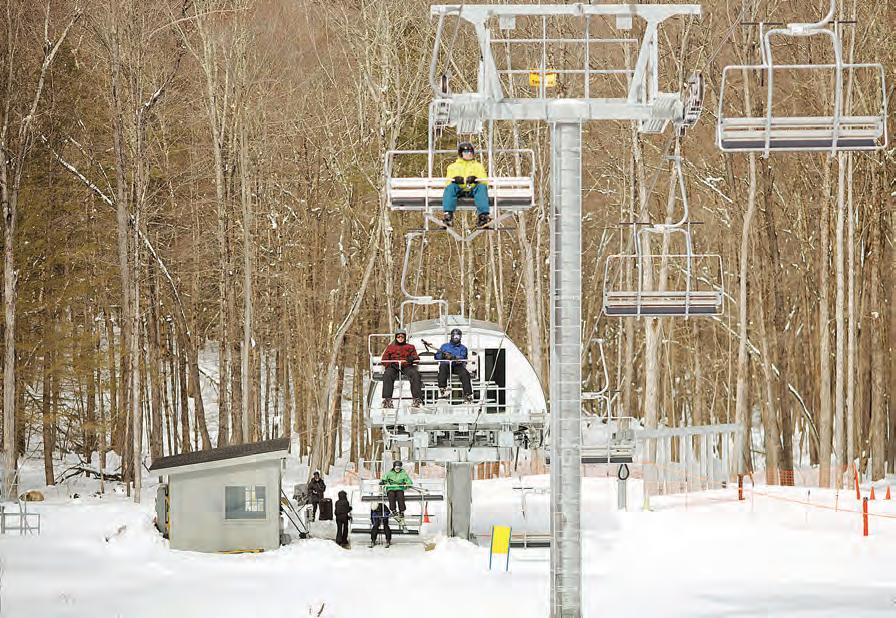
Jane’s Quad lift, which had been in the works for over three years, takes riders to the top of the mountain, replacing a triple-seater that didn’t quite make it to the top. The previous lift was in desperate need of a replacement, as it was from the 1970s, and technology has changed so much — especially in recent years.
The four-seat lift opened this year, marking one of the largest capital investments the mountain has undertaken. Murdock said it was a $4.6 million investment.
Jane’s Quad had to be in a different location than the lift it was replacing to protect sensitive natural areas and support the viability of the mountain itself. Planning began in January 2022, with the DCR helping to identify a terminal location that
Skiers
snowboarders
would minimize environmental impact while improving operational alignment.
The project involved a lot of pre-installation work for the environment, including land clearing and electrical work, which required working with the Massachusetts Department of Conservation and Recreation and the Department of Environmental Protection.
And while a lot of expensive work goes into Butternut each year, most of it can’t be seen by

those enjoying the mountain. This chairlift is something patrons can see and directly enjoy, Murdock noted.
The sight of the new lift still stuns those who worked to get it done.
“I’m still excited to go up there,” General Manager Ron Crozier said. “In the morning, on a snowmobile ride to check trail conditions, I say, ‘Man, this thing just turned out great.’ I just feel proud of the work that everybody did on it.”
To help support the project,
Butternut partnered with Lee Bank.
“They’re so important to southern Berkshire County, not only for jobs, but what they bring to restaurants and retail shops and lodging in the wintertime,”
said Chris Kinne, first vice president of commercial lending at the bank. “This is perfect for us to invest in and for the long-term success of Butternut.”
Engineering, permitting, electrical work, foundations, crane services, and site preparation were mostly completed by Berk-
shire County businesses.
“We try to keep it local whenever we can,” Crozier said. “We want everybody to be successful in the local area, just like we want to be successful. So whenever we can use them close by, we do.”
The response to the new lift has been better than the team imagined.
“It’s important at this time to show what the investment that Butternut is putting into helping support the winter economy, plus what we’ve done to help and Lee Bank has done to help support local businesses,” said Crispin Tresp, director of strategic planning for Ski Butternut.
While a lot of other ski areas are funded by large corporations, Murdock noted, Butternut is self-supporting — with help from community partnerships.
“What you see, we pay for ourselves,” Murdock said.
“To see the reinvestment, I think [skiers] feel renewed by it because there have been a lot of ski areas that have not reinvested and sooner or later, they fall right away,” he said.
The new lift comes a year after another investment came to fruition at Ski Butternut: the opening of Channing’s Bar, named for Jane’s husband and co-founder.
“[Jane] was a dynamic, smart, hard-working woman who balanced family and business,” while Channing was an “outsized personality ... [who] was a little bit of a wild man,” Murdock said.
“He got the bar name; she got the lift.”






By Nate H arri NgtoN
LEE — After enjoying a nice meal at Café Triskele, you can now either pay with credit card, cash or bitcoin.
Café Triskele, at 150 Main St. in Lee, is the first restaurant to accept cryptocurrency as payment in Berkshire County. However, more retailers could soon follow, as point-of-sale platforms begin to make crypto compatible with their systems.
Cryptocurrency is a digital, decentralized form of money that is traded via blockchain, which is a digital ledger held across multiple computers that keeps track of transactions. The layers of redundancy while recording transactions are intended to safeguard the currency, and the digital aspect allows anyone to put money in crypto.
Crypto also acts like a stock, gaining and losing value based on the volume of transactions a given token sees.
As the digital currency has spread beyond its niche appeal, more people are accepting crypto as a valid form of payment.
For the most part, this has been limited to online platforms only accepting the most established digital coins, like bitcoin, one of the first crypto tokens.
But companies like Square, which more than 200,000 stores in the United States use for their point-of-sale system, have begun adding bitcoin to the list of options when customers check out.
Gilbert Clerget, who owns Café Triskele with his wife, sees the new way to pay as a winwin, as paying in Bitcoin circumvents credit card charges and offers a new way for the restaurant to attract customers.
“It’s a kind of a new method of payment that’s coming,” Clerget said. “Financially, it’s like anything else.”
When Square started offering bitcoin compatibility, Clerget was eager to add the option to his restaurant.
Although the digital curren-
cy has many detractors, Clerget compared Bitcoin’s trickle in to retail locations to the initial tepid acceptance of credit cards and other forms of digital payment.
“It’s like paying with your phone, with Apple Pay,” he said. “It’s that for the next generation.”
Right now, three stores in Berkshire County accept bitcoin, according to Bitcoin Cities, with the other two stores being Solomon’s Furniture and Berkshirecat Records.
For customers, the process is simple: Select the option to pay with Bitcoin, scan the QR code from the digital wallet — which functions more or less as a per-
son’s crypto bank account — and then pay.
Right now, a single bitcoin is valued at $71,789, but people can hold parts of a coin. If a customer were to pay for a $100 meal using the crypto option, they would spend 0.00139 of a bitcoin.
The conversion from bitcoin to a U.S. dollar happens automatically, and the retailer accepting the crypto payment can choose whether to receive cash for the transaction or keep the bitcoin the customer paid with.
That choice is one of the reasons Clerget was excited to adopt the new form of payment, as he could collect bitcoin and let the asset appreciate, he said.
to be visible to customers.
Paying in bitcoin also circumvents Massachusetts stringent credit card surcharge laws, Clerget said. “We can actually give like a 3.5 percent discount because we don’t have any credit card fees.”
Restaurants and other retailers in Massachusetts cannot explicitly add a credit card fee surcharge to a bill, but they often adjust their pricing to account for the 1.5 to 3.5 percent purchase fee business incur on credit card transactions.
Retailers using Square who opt-in to accepting bitcoin also appear on a specific crypto compatible map, Clerget said. “It’s like a secondary map for busi-
ness, and I think it gives us some exposure that we don’t have with Google or any other platform.”
More Berkshire County businesses are likely going begin accepting bitcoin as a form of payment too, Clerget said, party because Square is one of the most widespread point-of-sale company and partly because crypto is becoming more accepted.
Although no customers have paid using bitcoin yet, he said, “I believe it’s the beginning of something big, and to be part of it is kind of cool.”
Nate Harrington can be reached at nharrington@berkshireeagle.com or 413-496-6126.
By tara MoNastesse
PITTSFIELD — The North Street flower shop Thistle ’N Thorn Floral is closing, owner Ashley Davidson has announced.
“After a lot of reflection, I’ve made the decision to close my growing floral business,” Davidson wrote in a post last month.
“Between the rising costs of flowers, increasing rent, and the sheer volume of work, the business has become almost too successful for one person to sustain alone,” she added.
Davidson said that she had served as the shop’s only employee in its first year. While the shop added a delivery driver and a part-time employee to answer phones later on, Davidson still handled design, social media content and other responsibilities on her own.
She said she initially had plans to relocate from North Street to a different storefront, but realized that continuing the business “simply wasn’t feasible.”
“I showed up for my community every day, and I am truly grateful for every single person who supported me over the years,” she wrote. “Your encouragement, loyalty and friendship have meant the world to me.”
Over the shop’s nearly twoand-a-half-year run, Davidson said she had befriended customers and received “nothing but amazing reviews from my
clients.” She added that the shop had generated $140,000 in revenue in its second year.
Davidson’s Instagram post said that the company would
honor its existing wedding orders, and that she planned to offer occasional workshops in the future.
Originally located at Lanes-
borough Local, Thistle ’N Thorn Floral moved to its 393 North St. location in late 2023. It shared a gallery space with neighboring business Methuselah Bar and Lounge.
In addition to hosting classes and community events, Thistle ’N Thorn Floral provided arrangements for weddings, funerals, birthdays and other special events. The store also sold wreaths and gift items, according to a Downtown Pittsfield Inc. profile.
The shop was a popular flower provider for Valentine’s Day, shaking up the standard formula of red roses by offering different varieties of colorful flowers. Thistle ‘N Thorn also participated often in local bazaars and events.
Davidson, born and raised in Pittsfield, previously told The Eagle that she was inspired to start her business after arranging flowers for her own wedding.
“I poured my heart into every arrangement, every wedding, every workshop, and every late night spent surrounded by flowers,” Davidson wrote on Instagram. “Being trusted to create for so many of your most meaningful moments has been one of the greatest honors of my life.”
The Cannabis Control Commission’s regulatory reforms that took effect in January aren’t going to save Massachusetts cannabis, but they are welcomed (as is the return of CCC Chair Shannon O’Brien) in the sense that they may remove some of the friction that has been grinding down the operators who are actually trying to build something sustainable. And in a market this challenging, friction is the thing that can kill you quietly.
For a refresher, here’s what changed: retailers can now sell shelf-stable food items. The wasting rules got streamlined. You no longer need two registered agents to destroy product, and you don’t have to break open vape cartridges or grind edibles into dust before disposal anymore.
CORI background checks are now transferable between affiliated licenses if an employee is already badged. Social consumption establishments are moving forward, and municipalities are weighing zoning decisions this spring.
Fellow retailers will likely agree that none of that, on its own, transforms the economics of running a dispensary. Because if you actually run one, you understand that every unnecessary labor hour, every compliance step that exists on paper but makes no operational sense, every rule that costs you time without protecting anyone, really adds up. They don’t add up in dramatic ways that make headlines or even register with customers, but rather in the way that a slow leak eventually empties the tank.
Take the wasting change. Having two badged employees required for product destruction, for every batch, was exactly the kind of requirement that to regulators sounds reasonable but is actually absurd in a busy retail operation with multiple cameras recording the task. One person processing waste under camera is more than sufficient. The documentation recording the waste is still required. We’ve felt the difference of being able to keep staff at our stores focusing on the needs of our customers, and it is a big win. The same applies to our cultivation. Our team is more efficient when they are focusing on our plants.
Now take the ability to sell shelf-stable food. At Canna Provisions, we’ve always built our retail experience around the idea that a cannabis shop should feel curated, not clinical. We carry beautiful glass, accessories, greeting cards, coloring books, all things that belong alongside an award-winning menu of flower, edibles, tinctures, and topicals like ours has. That was never an afterthought, but instead was an intentional strategy. Good retail means understanding what your customers want as well as what product belongs together (think: you don’t walk into a great kitchen store and find nothing but frying pans). Being able to extend that thinking to fun shelf-stable snacks has been a welcome addition, because food and cannabis have always had a natural relationship.
New product categories means new revenue layers for retailers, and that can ultimately mean a better customer experience. And in cannabis, and in this current market, the death of a business often comes from a thousand operational
paper cuts. A staffing requirement here. A compliance redundancy there. A process that looked clean in a regulation but costs you 20 minutes every time you execute it, multiplied by every day you’re open.
So when regulators pull back even a few of those burdens, the right response isn’t celebration. It’s relief. And relief, in cannabis, is something you learn to respect.
This also matters differently for us, as Canna Provisions is employee-owned. When our business gets healthier, that value doesn’t vanish into some distant corporate balance sheet. It strengthens things for the people who show up every day and do the work. Less operational drag means more capacity to invest in training, in vendor relationships, in the kind of product curation and customer experience that actually builds loyalty. It means better jobs. It means deeper roots in the Berkshire economy.
Sure, Massachusetts cannabis is still oversaturated. Margins are still com-
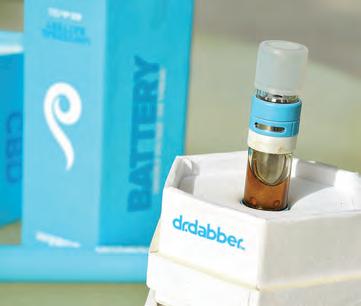
The Cannabis Control Commission recently streamlined wasting rules for businesses. It is no longer necessary to have two registered agents present to destroy product, and it’s no longer necessary to break open vape cartridges, as seen above, or grind edibles into dust before disposal anymore.
pressed. There are still more operators competing in each other’s footprint, and the downward pricing pressure hasn’t eased. We are well past the point where anyone should confuse volume with health. What these reforms have signaled, though, is a willingness from the commission to look at how regulations actually function in practice. Not how they look on paper. How they work on a Tuesday afternoon when you’re short-staffed and there’s a line and you can’t pull two people off the floor to watch each other destroy product. What’s mission critical now is to keep going. There are other areas where regulations are overreaching, costing companies resources that could be used elsewhere.
Massachusetts cannabis doesn’t need more regulatory theater. It needs continued, practical reform that reflects how real businesses actually operate. Less dead weight. More room for serious operators who invest in their communities, take care of their people, and treat customers like adults to survive and grow. Relief isn’t everything. But it’s a start. And right now we’ll take it.
Meg Sanders is CEO and co-founder of Canna Provisions.


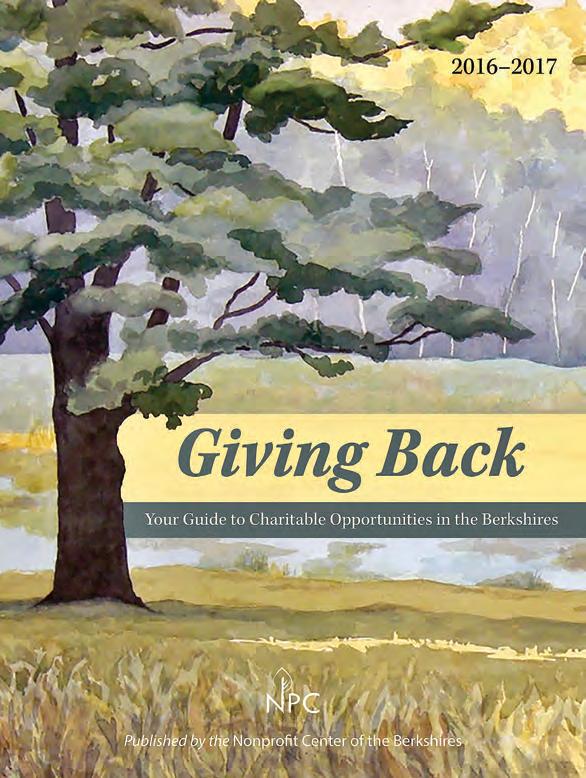
Ten years ago, Berkshire nonprofit leaders were largely on their own. Today, they have a hub, a convener, and a trusted adviser in the Nonprofit Center of the Berkshires.
Founded in 2016 after a flurry of grocery-store requests for advice, I was convinced that the sector needed organized support. After speaking with dozens of community leaders including Jennifer Dowley, former CEO of Berkshire Taconic Community Foundation, former state Rep. Smitty Pignatelli, and Kristine Hazzard, CEO of Berkshire United Way at the time, I hatched a plan to create an organization to help nonprofits connect, learn and grow.
The early days were focused on creating programs from scratch and generating revenue. We raised enough to hire our first staffer who helped me grow the organization into what it is today. As the founder, I took a “family hold back” approach, forgoing a salary for the first five years. Today, with 2.5 staff, NPC provides essential infrastructure, education and sector convening for hundreds of leaders, volunteers and board members.
Looking back, early skepticism gave way to momentum with two signature programs: the Giving Back Guide — distributed each fall to more than 15,000 households— and the Berkshire Nonprofit Awards,
one of the region’s most beloved celebrations of service each May.
Over the decade, NPC has offered hundreds of workshops and webinars, hosted volunteer and resource fairs, processed thousands of referrals and requests for advice, created a board matching service and “Meet the Donors” event, and introduced philanthropy education into local schools.
During the COVID pandemic, NPC pivoted quickly — moving programming online, launching legislative town halls, and hosting Zoom convenings for executive directors. Its work deepened during the crisis, reinforcing its role as a nonprofit “ER” for organizations seeking rapid guidance.
Our secret sauce is responsiveness. We endeavor to get people the information they need as quickly as possible. Those people include nonprofit leaders, board members, people who have recently moved to the Berkshires, the newly retired, consultants, and any member of the community looking for a better understanding of the nonprofit landscape.
Behind the scenes, NPC has catalyzed millions in funding connections, helped recruit executive directors and board members, fostered collaborations, and strengthened advocacy for the sector. “NPC is a force multiplier,” one supporter noted.
Our philanthropy curriculum has engaged middle and high school students in collective giving. Our resource directory, salary surveys, and gala calendar services fill practical gaps. Our 200 nonprofit mem-
bers receive handy directories, program discounts, and marketing support.
Corporate sponsorships, state earmarks, foundation support — including from Barr Foundation — have enabled NPC to remain innovative and responsive while expanding offerings and building internal capacity.
In a county with more than 1,000 nonprofits spanning arts, health, education, housing, agriculture and human services, the Nonprofit Center of the Berkshires has become connective tissue. Nonprofits report feeling less isolated and more connected. The past decade proved the concept. The next decade aims
to amplify it.
NPC’s model is unique in the country. Many nonprofit centers feature physical buildings and shared services. Others operate within a university setting, leveraging classroom space and existing faculty to offer certificate programs. We have no physical office but make a point to visit nonprofits with a “boots on the ground” strategy. We listen, identify gaps and innovate — a strategy that has resulted in an unparalleled breadth of programs. In this past year alone, fledgling nonprofit centers in three different states reached out to NPC, hoping to gain from our experience and letting us know that after extensive research, NPC came out on top as the model to replicate. NPC is currently planning for leadership succession, expanded presence and deeper sector impact. In the meantime, we are stopping to “smell the roses,” celebrating our 10th anniversary milestone by launching a “$10 for 10 years of service” campaign to which anyone touched by NPC can contribute. We invite everyone who has reached out for information or advice, received a free Giving Back guide, or attended a free workshop or event to consider supporting our intended growth. For more information about $10 for 10 and other ways to invest strategically in the future of NPC, visit our donate page on npcberkshires.org. We are stronger together.
This was my son Jack’s third year competing in the Berkshire Robotics Challenge. At 12 years old, he has now spent several months each year building, programming, testing and refining a robot with his teammates, all leading up to a single day of competition.
He had never made the playoff round, and this year, he very much wanted to.
This year, he found himself in the role of the “veteran.” His teammates were younger and were new to the competition. He took the responsibility seriously. Together, the team set out to build something ambitious, pursuing a design that was both creative and, at least for them, unproven.
A few weeks before the competition, however, that plan began to unravel. What they had been working toward simply was not going to function as intended and with time running short, the team made the difficult decision to abandon their approach and start over with a simpler design.
It was the right decision, but not an easy one. Jack understood immediately what it meant: even if everything went perfectly on competition day, their new robot would probably not be able to generate enough points to carry them into the playoff round.
That prediction proved accurate. The team performed well, and their robot did what it was designed to do, but the scores reflected the reality of a latestage reset. As the final round approached, they were out of contention.
With little time remaining and no realistic path to advance, the team gathered in a corner of the gym and went back to work. Together, they decided to attempt one additional challenge — something they had not previously programmed for — and worked collaboratively, under pressure, to adjust their code in real time.
It was a small window, a tight timeline, and an uncertain outcome, but in their final run it worked. They completed the additional task and added meaningful points to their score.
It did not change the standings, and it did not bring them close to advancing, but it did represent something important: the team had responded to a setback, recalibrated, and executed together without prompting, without certainty, and without any guarantee of reward.
This effort did not go unnoticed. At the end of the day, the team was selected to receive the “Spirit Award” — a recognition that reflected not just what

Competitors participate in the 25th annual
recently
the
participants to operate in an environment where change is constant and where success depends as much on how
it does on what they know.
they built, but how they worked together to overcome adversity.
As a parent, I was proud of what they had accomplished. At the same time, as someone who spends a great deal of time working with employers across the region, I found myself reflecting on how closely that experience aligns with what we consistently hear from industry.
While technical skills remain essential, it is often the ability to adapt, communicate, and work through challenges as a team that ultimately determines success.
That realization felt particularly fitting in the context of this year’s event, which marked the 25th anniversary of the Berkshire Robotics Challenge.
Walking through the gym, the milestone was evident not just in the scale of participation or the level of competition, but in the sense of continuity that has developed over time. I spoke with parents who had once participated in the same challenge as students and were now watching their own children navigate the same process, encountering many of the same frustrations, breakthroughs, and moments of growth along the way.
Programs do not sustain themselves for 25 years by
accident. They endure because they continue to deliver value and because they evolve while remaining grounded in a clear and consistent purpose. The Berkshire Robotics Challenge is a strong example of this.
While it introduces students to engineering, coding, and technology — and while those skills are increasingly important — it is clear that something more foundational is taking place.
growing recognition that these capabilities are more essential than ever in today’s workforce.
As technology continues to evolve, particularly with the rapid advancement of artificial intelligence, the tools and platforms that individuals use will continue to change.
While technical skills remain essential, it is often the ability to adapt, communicate, and work through challenges as a team that ultimately determines success.
Throughout the day, you see students working through challenges that extend well beyond the mechanics of their robots. They collaborate, communicate and make decisions under pressure. They adapt when plans fall apart, troubleshoot in real time, and support one another through both frustration and success. These experiences reinforce a set of skills that are broadly applicable and increasingly valuable.
In conversations taking place across Massachusetts, there is a
The ability to think critically, to adapt, to collaborate effectively and to navigate ambiguity is becoming increasingly important across industries.
In that context, the Berkshire Robotics Challenge is not simply preparing students to engage with technology. It is preparing them to operate in an environment where change is constant and where success depends as much on how individuals work together as it does on what they know.
This helps explain why the program has remained so strong over the past quarter century. While the technology has advanced and the applications have expanded,
the underlying lessons have remained consistent — and, if anything, have become more relevant over time.
Here in the Berkshires, we often talk about how to build and sustain a workforce that can support and grow our regional economy. We speak about attracting companies, fostering innovation, and creating opportunities for young people to build careers locally. The Berkshire Robotics Challenge offers a clear and practical example of how that work begins.
It begins with exposure. It grows through experience. And it takes hold through moments like the one Jack and his teammates experienced this year — when a group of students, facing long odds and limited time, chose to keep working, solve a problem together, and push themselves further than expected.
Twenty-five years in, the Berkshire Robotics Challenge stands as a testament to what this community can build — and sustain — together. If we are serious about preparing the next generation for what lies ahead, there is no better place to start than right here.
Ben Sosne is executive director of the Berkshire Innovation Center.

I’ve just returned from a financial adviser conference whose central theme was artificial intelligence. This article briefly discusses how I now believe AI may reshape financial planning for retirement savers.
The first iteration of AI tools has already improved retirement planning. Forward-thinking advisers are using AI note-taking tools, for example. An AI note-taker allows advisers to focus and listen more closely, instead of frantically trying to jot down notes.

A good AI tool will then summarize the meeting, complete with a list of follow-up items.
For DIY investors, chatbots like Claude or ChatGPT are useful tools for researching financial products, tax rules and difficult questions around topics like when to claim Social Security. AI performs better on well-defined questions with clear frameworks, but can still provide misinformation when concepts are too nuanced or when inputs are incomplete.
But AI really has the potential to improve the retirement planning experience when it can combine and analyze separate data sources to gain valuable new insights, opportunities, and vulnerabilities.
Most financial advisers and planners use a handful of software tools that don’t communicate with each other. For example, a typical practice might include a financial planning tool, a customer relationship management (CRM) system, a reporting and billing system, a tax planning tool, a trading platform, and an application for one or more custodians — all operating as separate systems.
One promise of AI is that it can provide a data overlay that pulls all these data sources together into one dashboard, allowing a trained financial

METRO CREATIVE CONNECTION
AI really has the potential to improve the retirement planning experience when it can combine and analyze separate data sources to gain valuable new insights, opportunities and vulnerabilities.
planner to quickly gather information across many platforms in one place.
Let’s say a client wants her advisor to draw $50,000 from her accounts to pay for a new car. The current process for an adviser might be:
1. Review accounts individually to see how much has been withdrawn year to date.
2. Look at last year’s tax return to see typical income.
3. Review CRM notes to see whether there are other expected changes in income based on recent conversations.
If the adviser is lucky, he hasn’t forgotten any other tidbits of financial information that may have come up in one of their many conversations.
New AI tools should allow the advisor to access all these data sources with a single query, “Susan wants to withdraw $50K with minimal tax impact. Review her accounts, tax return, and notes and tell me which accounts should be pulled from for the best tax efficiency.”
A good AI tool might rec-
ommend pulling $20K from an IRA to max out the 12 percent income tax bracket and the remainder from a taxable brokerage account. It might look through the notes to see whether Susan expects a major change in her income.
It is still imperative that the adviser understand the taxability of each account and the interplay of income from accounts, capital gains, and earned income. But AI can help get the job done more efficiently, with a lower likelihood of missing something important. It brings the advice to a deeper level.
This “data overlay” does not seem to be commonplace among financial advisers yet, but it appears to be just around the corner.
AI AND THE DIY RETIREMENT SAVER
AI may carry even greater significance for retirement savers who manage their own finances. Access to high-quality financial guidance has historically been uneven. Those with substantial assets have had
access to sophisticated planning, while others have had to navigate complex decisions largely on their own. For those who are willing to learn, AI has the potential to change that.
I told Claude AI to pretend I was a healthy, single, 62-yearold woman with some savings who wants to retire at 65 and is concerned about longevity and inflation. I then asked whether I should delay Social Security benefits until age 70.
Claude’s response was thoughtful and balanced, something similar to what I as a financial planner would tell a client. It suggested that delaying benefits might make sense given my fear of longevity and inflation. But it also offered this tradeoff: “Between ages 65 and 70, you’ll need to fund five years of retirement without Social Security. That means drawing down your savings more heavily in those early years. Whether that’s sustainable depends on how much you’ve saved. A financial planner can help you model
Put (most of) that tax refund to
whether your portfolio can bridge that gap comfortably.”
This is a huge leap forward from a Google search on the topic, and the answer would almost certainly improve if I provided more data, perhaps even running a Monte Carlo simulation if I offered the data inputs. DIY retirement savers will have more resources than ever to manage their financial lives, but it’s still going to require a lot of work. Rather than a threat to the advisory profession, AI-enhanced financial advice for DIYers looks like a continuation of a long trend toward greater financial access, and is a development worth watching closely from a retirement security perspective.
Will AI replace human advisers? My experience in talking with hundreds of potential clients over the years is that some people will always hire an adviser, and some will always want to do it themselves. For either constituency, AI looks poised to offer a significant upgrade to the financial planning experience. In the past decade, we’ve moved from paper ledgers to spreadsheets to sophisticated planning software. Financial planning software has created massive efficiencies for those who use it. AI appears to be the next chapter in that evolution. Early signs suggest it will expand what’s possible.
That’s a reason for optimism on behalf of retirement savers. Those who work with advisers may find those relationships becoming richer and more proactive. Those who DIY may find better tools than ever to help them navigate the road ahead. Either way, I’m hopeful that AI can help people arrive at retirement with more financial security and confidence.
Disclosure: The author uses AI tools, including Claude, to assist with editing and reviewing written content.
Luke Delorme is director of financial planning at Tableaux Wealth in Stockbridge. Reach him at (413) 2642404 or Luke@TableauxWealth.com.
For many people, tax refund season feels a little like winning a small lottery. The money shows up, and suddenly the possibilities seem endless — new gadgets, a shopping spree, or that spontaneous vacation you definitely didn’t plan for but absolutely deserve. Before you book that last-minute flight or convince yourself that a third streaming subscription is a “need,” it’s worth asking a simple question: What if your refund could do more for you than just disappear?
A tax refund is actually a great opportunity to take a step back and invest in your financial future — even if you’re starting small. First, consider building or strengthening your emergency savings. Life has a funny way of throwing surprises our way, and not all of them are fun. Car repairs, medical bills, or unexpected expenses can quickly derail a budget. Parking your refund in a high-yield money market account gives you the flexibility to access your funds when needed, while earning

Before you book that beach vacation, it’s worth asking yourself a simple question: What if your refund could do more for you than just disappear?
more interest than a traditional savings account. Think of it as your money working overtime — without complaining.
If your emergency fund is already in good shape, your refund can help you tackle higher-interest debt. Paying down credit cards or personal loans may not feel as exciting as a vacation, but the long-term savings on interest can be significant. It’s the financial
equivalent of cleaning out your closet—maybe not glamorous, but incredibly satisfying once it’s done.
You might also consider putting a portion of your refund toward longer-term goals. Whether it’s saving for a home, contributing to retirement, or investing in your education or a side business, even a modest amount can make a meaningful difference over
time. The key is consistency—and your refund can be a great jumpstart.
Of course, not every dollar needs to be “responsible.” It’s OK to enjoy a small portion of your refund. The trick is balance. Set aside the majority to strengthen your financial position, and then use a smaller piece for something fun. That way, you get the best of both worlds: peace of mind and a little reward.
Because let’s be honest — using your entire refund to fund a spur-of-the-moment vacation might feel great in the moment. But when you return home to the same bills and no cushion, that beachside cocktail doesn’t feel quite as refreshing. At the end of the day, your tax refund is more than just extra cash — it’s an opportunity. With a little planning, you can turn it into something that continues to benefit you long after tax season is over. Your future self will thank you. And probably still take that vacation — just a little more thoughtfully planned.
ADAMS
Luis and Teresa Rivera sold property at 176 North Summer St., Adams, to Mr Double A LLC, $115,000.
Jason R. Ziarnik sold property at 164 East Road, Adams, to Christopher Rose, $230,000.
William L. Whitman sold property at 3-5 Melrose St., Adams, to Berkshire Road LLC, $355,000.
Zachary E. Poplaski sold property at 19-21 Second St., Adams, to Haley Sweet, Tyler Sweet and Tamara Lisa Sweet, $268,000.
William Augusta Hyland IV sold property at 21 Enterprise St., Adams, to MK, $173,000.
ALFORD
George H. Meyer and Suzanne M. Meyer sold property at 11 Rowe Road, Alford, to Robin Berthet, $285,000.
EZ Land Holdings LLC sold property at Benton Hill Road, Becket, to Cyril K. and Reny Mathew, $65,000.
Nathaniel J. and Kathleen J. Strother sold property at Hopkins Lane, Becket, to Sara Mabry, $23,500.
Peter C. and Sharon L. Beckwith sold property at 55 Wells Road, Becket, to 55 Wells Road LLC, $20,000.
Arthur and Daisy Birthwright sold property at Hopkins Lane, Becket, to Sara Mabry, $23,000.
Peter Giano and Melissa M. McCarthy sold property at 260 Sherwood Drive, Becket, to Donald J. Lyon and Nancy Chassman, $390,000.
Arthur and Daisy Birthwright sold property at Hopkins Lane, Becket, to Robert N. Lowell, trustee of the 1242 Main Street RT, $21,000.
Russell Burke sold property at 190 Little John Drive, Becket, to Capital Region Home Buyers Group LLC, $6,000.
Michael E. Sayers sold property at 444 Gentian Hollow Road, Becket, to Michael A. and Hope C. Mabry, $60,000.
W. Katherine Hoak, trustee of the W. Katherine Hoak Revocable Living Trust, sold property at 1178 Bancroft Road, Becket, to Robert C. Diprizio, $388,000.
CHESHIRE
Kyle J. and Sara M. Delmolino sold property at 573 Stafford Hill Road, Cheshire, to Thomas and Heather Munkacsy, $530,000.
Lynn Clairmont sold property at 20 Pleasant View Drive, Cheshire, to Kyle and Sara Delmolino, $790,000.
Edwin H. Clairmont, trustee of the Edwin H. Clairmont RVT, sold property at Stewart White Road, Cheshire, to Justin Myerson and Jenna Troio, $110,000.
Joseph A. Wilk sold property at 132 Outlook Ave., Cheshire, to Luke O. and Meredith J. Demers, $535,000.
CLARKSBURG
Monique Rock sold property at 550 River Road, Clarksburg, to Cecil Lipscomb, $80,000.
Paul R. Twomey sold property at 215 Middle Road, Clarksburg, to Wayne G. and Christy Arnold, $50,000.
DALTON
Paul L. and Linda M. Sinopoli sold property at 43 Kimberly Drive, Dalton, to Matthew and Andrea Crawford, $515,000.
Peter J. Brower, personal rep. of the Estate of Peter M. Brower, sold property at 24 Pleasant View Drive, Dalton, to Eric Anderson, $335,000.
Jaclyn N. LaRochelle sold property at 535 Dalton Division Road, Dalton, to Ryan M. Williams, $75,000.
William W. Reed Jr. and Morgan A. Skidmore sold property at 9 Crane Ave., Dalton, to Donald Herklots, $215,000.
EGREMONT
Patricia B. Murtagh sold property at 24 Baldwin Hill E/W, Egremont, to Joseph B. Gold and Claudia MeiningerGold, $1,250,000.
Stanley John Gracyk Jr. and Valerie
Jayne Gracyk sold property at 229 Egremont Plain Road, Egremont, to Robert H. Warner and Linda M. Warner, co-trustees of Robert H. Warner Revocable Trust and Linda M. Warner Revocable Trust, $175,000.
Hayley Farrington and Richard Wykoff sold property at 68 Creamery Road, Egremont, to McGuire McManus and Carter Gage, $380,000.
FLORIDA
Paul D. Thompson sold property at 73 Mohawk Trail, Florida, to Rose M. Rathbun, $25,000.
Keith M. and Beth E. Healy sold property at Tilda Hill Road, Florida, to Samuel James Hutchins, $25,000.

GREAT BARRINGTON
Jacqueline L. Connell, trustee of Jacqueline L. Connell Revocable Trust, sold property at 2 Rose Court West, Unit B-1, Great Barrington, to Marlene Ring, $420,000.
RR AVE LLC sold property at 87 Railroad Ave., Great Barrington, to Camille R. Stanton, $230,000.
Mary M. Cabot, trustee of MMC Great Barrington Nominee Trust, sold property at Monterey Road, Great Barrington, to TDC 1963 RE LLC, $1,078,365.
Estates Transitions Holdings LLC sold property at 4 Thrushwood Lane, Great Barrington, to David Rosenberg and Riva Rosenberg, $1,225,000.
HINSDALE
Kim M. Zurawik sold property at New Windsor Road, Hinsdale, to Christopher Oaks, $30,000.
LANESBOROUGH
Robert M. Hart, Kathy A. Hart and Emily M. Prior sold property at 14 Glassworks Road, Lanesborough, to Rylie J. Fortini, $265,000.
Sherry Albert and Sheri Quinn, personal reps. of Gary R. Albert, sold property at 5 Victoria Lane, Lanesborough, to Kevin J. and Danielle Stant, $745,000.
Robert J. and Mary Jane Massetti sold property at 580 South Main St., Building 2, Unit 1, Lanesborough, to Carmel Kushi, $145,000.
LEE
Paul A. Petersoli Jr. and Judith A.
Petersoli sold property at 125 Old Pleasant St., Lee, to Macy M. Nesbit and William W. Bartlett, $240,000.
William T. Carty sold property at Beaver Dam Road, Lee, to Judith M. Ambery, $120,000.
Golub Properties of Massachusetts Inc. sold property at 88 West Park St., Lee, to M Zabian Five Corp., $1,350,000.
Fox Real Estate Inc. sold property at 40 Fox Run, Lee, to Stephanie and Gregory Kerr, $150,000.
LENOX
John A. and Margaret Roethel sold property at 260 Pittsfield Road, Lenox, to Tara Beavers, $185,000.
Mary W. Noyes and Mary W. Noyes, trustee of the Noyes FT, sold property at 55 Pittsfield Road, Lenox, to Lenox Commons Holdings LLC, $77,965.
Mark R. Ameigh, trustee of the Mark R. Ameigh RVT, sold property at 6 Morgan Manor, Lenox, to John J. Dow III and Denise V. Dow, $382,000.
Larson M. Powell Jr., Anne C. Powell and Miles S. Powell, trustees of the Larson M. Powell RVT, sold property at 9 Bolton Drive, Lenox, to Andy McMeekin and Robert Roy Jr., $392,000.
Richard B. Atwood Jr. and Heather Atwood sold property at 149 Pixley Road, Monterey, to Jackilyn Wells, $200,000.
Gail Ann Heath sold property at 470 Main Road, Monterey, to Steven Klocke and Maureen Mahle, $455,000. REAL ESTATE, Page 18






Daniel Richmond sold property at 42 Sylvan Road, Monterey, to Sara Richmond, $500,000.
NEW MARLBOROUGH
Hasan Dervisevic sold property at 212 East Hill Road, New Marlborough, to 212 East Hill Road LLC, $87,500.
Stinson Weimer Stroup sold property at 62 Hadsell St., New Marlborough, to Jeffrey Mark Rose, Jonathan David Rose and Andrew James Rose, $75,400.
Janett E. Miller and Michael A. Miller Jr. sold property at 893 Cross to Canaan Valley Road, New Marlborough, to Christian Wells and Eliza Ormsbee Oates, $358,000.
Bock Way LLC sold property at 123 Bock Way, New Marlborough, to 123 Bock Way Associates LLC, $1,800,000.
NORTH ADAMS
Alexander L. and Susan M. Daugherty sold property at 19 Church St., Unit 11, North Adams, to Mahesh Ramakrishna Iyer, $103,000.
Robert Paul Bohl III sold property at 42 Harding Ave., North Adams, to Diane Saunders, $325,000.
Mary Cote sold property at 1 Pebble St., North Adams, to E & D Landscaping & Construction Inc., $250,000.
Moshe and Bryna Holender sold property at 23-27 Gallup St., North Adams, to Jason Bailey, $247,500.
Mahesh Ramakrishna and Narayani Mahesh Iyer sold property at 28 Mill St., North Adams, to Kevin R. Dias Jr., $174,250.
Stephanie D. Shelburne sold property at 19 Church St., Unit 14, North Adams, to Peter Rowland, $105,000.
Jonathan Bowlin sold property at 85 Furnace St., North Adams, to Dean M. and Molly K. Laprise, $207,000.
Lynn M. Pecor, personal rep. of Keith Edward Harrington, sold property at 26 Bradford St., North Adams, to Gabrielle Strapponi, $203,000. Benjamin Nardone sold property at 55-57 Hall St., North Adams, to Queequeg Ventures LLC, $231,001.
Lawrence J. Frederick sold property at 454 West Main St., North Adams, to Ericka Flores, $35,000. ER Santos LLC sold property at 129-131 Franklin St., North Adams, to Andi Cili, $310,000.
Philip H. and Mary Ann Bushee sold property at 37 Fuller St., North Adams, to Eyan Raymond, $225,000.
Katherine E. Lovett sold property at 23 Wells Ave., North Adams, to Brandon David Ansley, $156,250.
OTIS
Realty LLC sold property at 1318 East Otis Road, Otis, to Carver Development LLC, $85,000.
Richard and Rebecca Ambrose sold property at West Center Road, Otis, to Brian Thomas and Chelsea Ann Bordonaro, $35,000.
PITTSFIELD
TMR Realty LLC sold property at 31 Eric Drive, Pittsfield, to Elianna Dawson, $405,000. M&J Restorations LLC sold property at 57 Palomino Drive, Pittsfield, to John-Paul Bettencourt, $545,000.
Decoweaver Enterprises LLC sold property at 108 Broadway St., Pittsfield, to Bonnie Brae LLC, $1,400,000.
Karen A. and Richard Lombardi sold property at 21 Sunset St., Pittsfield, to Will and Lindsay Pennington, $129,900.
William E. Blaauw and John R. Conzett sold property at 39 Lexington Parkway, Pittsfield, to Leo A. and Roselyn M. Leone, trustees of the Leone RVT, $545,000.
Edward J. Baptiste sold property at 514 South St., Pittsfield, to H2 Asset Solutions Inc., $161,500.
Thomas P. Auge, trustee of the Bernard G. Auge RVT, sold property at 230 Cheshire Road, Pittsfield, to Jayne E. Deangelis, $70,000. Gerald and Dawn Carol Schwind sold property at 211 Hancock Road, Pittsfield, to Heather A. and John A. Harvey, $361,825.
Berkshire Property Ventures LLC sold property at 283 Tyler St., Pittsfield, to Walison Rosa, $50,000.

Audrey M. Penna, Skylar J. Swanson and PennyMac Loan Services LLC sold property at 14 Calumet St., Pittsfield, to PennyMac Loan Services LLC, $238,950.
Andrew J. Bowman sold property at 70-72 Elm St., Pittsfield, to Fred C. Chittenden Jr., $284,710.
Nicole and Hannah Kibbe sold property at 1028 North St., Pittsfield, to Jason Nocher, $75,000.
Loan Servicer LLC and 20 Gregory Farm LLC sold property at 15 Buel St., Pittsfield, to OBB LLC, $169,000.
Daryian Rhysing sold property at 26 Brookside Drive, Pittsfield, to Sarah Newton, trustee of the Sarah Newton RVT, $595,000.
Deborah J. Giroux sold property at 219 Appleton Ave., Pittsfield, to Matthew W. and Rebecca D. Giroux, $228,000.
Cathleen M. Wilson, personal rep. of the Estate of Beatrice E. Burke, sold property at 48 Plastics Ave., Pittsfield, to V. Peter and Dawn A. Vadnais, $165,000.
Berardino R. and Linda Ventresca sold property at 612 East New Lenox Road, Pittsfield, to Joseph P. Dewey, $330,000.
David W. Moore, trustee of the Lois M. Moore RVT, sold property at 63 Asci Drive, Pittsfield, to Maria Guadalupe Larios Bixcul, $335,000.
Silvana Penna sold property at 46 Lucille St., Pittsfield, to Alan S. Schonfeld, $374,900.
Central Berkshire Habitat for Humanity Inc. sold property at 112 Robbins Ave., Pittsfield, to Glenda Gonzalez-Moreno, $225,000.
David E. Halley and Ann L. Archey sold property at 1107 Barker Road, Pittsfield, to Organic Cultivation Developers LLC, $300,000.
Edward J. Ladouceur Jr. and Constance A. Ladouceur sold property at 61-63 Seymour St., Pittsfield, to Ayman Kacem Amghar, $210,000.
Josephine M. Kelly sold property at 156 Draper Ave., Pittsfield, to Jesse Lunt, $299,000.
Center Property LLC sold property at 79 Center St., Pittsfield, to HoneyBadger Properties LLC, $220,000.
Ann Marie Plankey and Matthew W. Ringie, trustees of the Ringie Plankey FT, sold property at 41 Highland Ave., Pittsfield, to Kyle J. Storie, $210,000.
Hannah Torchia sold property at 639 Lakeway Drive, Pittsfield, to Miranda C. Meyers, $260,000.
Pamela A. O’Connell sold property at 7-9 Kellogg St., Pittsfield, to Rabakka Lahert, $30,000.
Cherie R. Pasquarelli sold property at 90 Cheshire Road, Pittsfield, to Eric T. Carlson, $255,000.
Sophia Buah Peprah sold property at 332334 First St., Pittsfield, to Tim Manhyia Badu, $320,000.
BAP Development Corp. sold property at 247 South St., Pittsfield, to CM, $449,500.
Prime Flips LLC sold property at 50½ Dalton Ave., Pittsfield, to Berkshire Dalton LLC, $116,150.
Christine A. Pellerin and John N. Ryan Jr. sold property at 100 Northumberland Road, Pittsfield, to James and Susan Gelsey, $510,000.
M&T Bank sold property at 43 State St., Pittsfield, to HLP Realty Holdings LLC, $190,000.
Andrew Bonin sold property at 17 Kenwood St., Pittsfield, to Peyton Steinman and Andrew Grygorcewicz, $285,000.
Flying Monkey LLC sold property at 59-61 Orchard St., Pittsfield, to NAMV Holdings LLC, $185,000.
Bette-Anne Garivaltis-Eddy sold property at 100 Elaine Drive, Pittsfield, to Jason B. Deloye and Kirstin R. O’Toole, $392,500.
S.N.O. Real Estate Rentals & Development LLC and Jean-Eudes Abellie sold property at 23-25 Plymouth St., 59½ — 61½ Orchard St., 53½ Orchard St. and 29 East Mill St., Pittsfield, to Flying Monkey LLC, $779,500.
RICHMOND
Susan L. Baker and Renee Vairo, trustees of the Ice House Hill Farm Nominee RT, sold property at 1130 East Road, Richmond, to Gregory Papp and Christina Rossi, $1,850,000.
Michael F. and Wendy K. Venoit sold property at 1335 Swamp Road, Richmond, to Jones Grove LLC, $800,000.
LND Investments LLC sold property at 627 Lenox Road, Richmond, to Jean-Paul and Faye Rapoport Despres, $500,000.
SANDISFIELD
Carol L. Ginsburg sold property at 377 Highland Way, Sandisfield, to Siobhan Pipoli and Thomas Pipoli, $470,000.
SAVOY
Robby R. Morris sold property at 79 Hawley Road, Savoy, to Timothy James Callahan, $255,000.
SHEFFIELD
Neuma Agins sold property at 15 Main St., Unit B, Sheffield, to Sara B. Kiesel, $450,000.
TYRINGHAM
D + P Real Estate Advisors LLC and Gilder Palmer sold property at 83 Main Road, Tyringham, to Four Brooks Farm LLC, $185,000.
D + P Real Estate Advisors LLC, Walter Walker and Reese D.A. Palmer, Walter Walker and Reese D.A. Palmer, personal reps. of the Estate of Anne Spring Denny Palmer; and Walter Walker and Reese D.A. Palmer, trustees of the Gilder Palmer RVT, sold property at Main Road and George Cannon Road, Tyringham, to Four Brooks Farm LLC, $184,000.
WASHINGTON
Andrew M. Prescott sold property at 60 Middlefield Road, Washington, to Francesco G. and Hannah E. Torchia, $502,000.
Andrew Prescott sold property at Middlefield Road, Washington, to Francesco G. and Hannah E. Torchia, $60,000.
Edwin J. Neumuth Jr., trustee of the Edwin J. Neumuth Jr. Living Trust, sold property at 380 Frost Road, Washington, to Kyle and Aliza Kelson, $423,450.
WEST STOCKBRIDGE
Lisa Gamble, trustee of Lisa Gamble Revocable Trust, sold property at 9 Cone Hill Road, West Stockbridge, to Dawn C. Lavin, trustee of Berkshire 4 Nominee Realty Trust, $530,000.
Donna Moore, Peter Negrini, Robert Negrini, William P. Negrini, and Dianna Norton sold property at 21 Great Barrington Road, West Stockbridge, to David A. Ree and Katarina Eriksson-Ree, $459,900.
WILLIAMSTOWN
Gordon R. Holey sold property at 164 Lindley Terrace, Williamstown, to Christopher Cangelosi and Sarah Brill, $300,000.
Steinerfilm Inc. sold property at Simonds Road, Williamstown, to SFB Construction LLC, $7,500.
Claire L. and William J. Mahoney sold property at 100 North Hoosac Road, Williamstown, to John J. Snyder Jr. and Mandy R. Ruest, $262,000.
WINDSOR
Maria Lidia Nieves and Joshua Michael Crim sold property at 961 Peru Road, Windsor, to Daniel C. Weaver, $300,000.
Town of Windsor sold property at 54 Access Road #5, Windsor, to Patricia A. Folino, trustee of the Williams FRT, $5,500.
FT — Family Trust
LLC — Limited Partnership
LT — Life Trust
NT — Nominee Trust
RET — Real Estate Trust
RT — Realty Trust
RVT — Revocable Trust
The real estate transactions are provided by the Middle Berkshire, North Berkshire and South Berkshire Registry of Deeds offices.
As Main Street Hospitality prepares for a year of expansion, the company has appointed Michael Lamb as senior vice president of operations.

Lamb brings decades of leadership and operational expertise from renowned companies in the hospitality sector, including Hillstone, Corner Table, Ralph Lauren, and MCR Hotels. His experience will play a key role in strengthening operational performance and deepening the company’s core capabilities.
In his new role, Lamb will provide leadership to optimize the company’s expanding food and beverage operations, support upcoming property openings, and collaborate closely with the entire Main Street team on strategic initiatives across the portfolio.
Based in Stockbridge, Main Street Hospitality is a hotel management and ownership company with a number of properties in the Berkshires and beyond, including The Red Lion Inn, The Porches Inn, Hotel Downstreet and the Little Lion.
Following an international search, Berkshire Arts and Technology Charter Public School’s board of trustees has appointed Jonathan Igoe as BART’s next executive director.
Igoe has served as interim executive director since August 2023. The college preparatory school serves students in grades 6-12 from across Berkshire County.
Igoe’s appointment follows an enthusiastic recommendation from the Executive Director Search Committee and a unanimous vote by the board of trustees.
He came to the Berkshires to serve as executive director of the Williamstown Youth Center in 2003. He then worked at Overland, an adventure travel program for students, for 14 years as director and managing director, overseeing leader recruitment and training, risk management and communications.
Igoe earned a bachelor’s degree in history from Yale University and a master’s in education from Massachusetts College of Liberal Arts. He has taught history and math in public and private schools in New England.
Berkshire Money Management has announced that Sarah Curtiss, front office coordinator, and Carla Cowdrey, office support specialist, have earned the financial paraplanner qualified professional designation. This expanded role strengthens the company’s ability to deliver supportive, proactive and human experience to clients.
The designation provides a strong foundation in personal financial planning for professionals who support advisory teams and client relationships.
The training covers core areas of financial planning — retirement, investments, insurance, tax and estate planning — giving designees the skills to analyze client information and support holistic planning.
Curtiss joined BMM in 2024 and is based in the Great Barrington office. In her role as front office coordinator, she is often the first point of contact for clients and visitors. Known for her warmth, organization and multitasking skills, she helps create a welcoming experience while also supporting the firm’s social media efforts, scheduling appointments and more.
Cowdrey has been in BMM’s Dalton office for four years, where she is known for her organization, reliability and genuine care for others. As the office support specialist, she is a go-to resource for both clients and colleagues. She plans to use the skills gained through the FPQP program to perform paraplanning tasks, such as shepherding clients through the Social Security sign up process, in support of the firm’s financial planning team.
Christine Canning, executive director of ED4U2 Inc., has been recognized for her long career in English language education with an international honor presented in Dubai.
Canning, a resident of Lanesborough, was named one of “30 People Over 30 Years Who Changed English Language Learning in the UAE, Gulf and Middle East” during a Feb. 8 ceremony at the American University in Dubai. The recognition was awarded by TESOL Arabia, an affiliate of TESOL International Association.
The award honors educators whose work over three decades has helped strengthen English language instruction, teacher training and curriculum development across the region. Canning previously held faculty appointments at United Arab Emirates University, the Higher Colleges of Technology and the Center for Excellence in Research and Teaching in Abu Dhabi. She also helped develop early distance-learning programs serving communities in the Strait of Hormuz and rural Bedouin populations.
Berkshires Jazz has elected Chuck Walker as its new president, succeeding founder Ed Bride, who has stepped down after 20 years leading the nonprofit provider of jazz events, education and advocacy.
At the organization’s annual meeting in February, the board also elected Chris Dodig as vice president. Marilyn Gerhard and Barbara Seddon were reelected as clerk/secretary and treasurer, respectively.
Walker, who joined the board in 2023, has served as vice pres-
ident and chairman of the organization’s Strategic Planning Committee. An award-winning videographer and producer, he is also assistant vice president of Pittsfield Community Television, vice president of The Berkshire Museum board of trustees, and serves on the board of the Berkshire Film and Media Collaborative.
Berkshire Money Management has announced that financial adviser Michael O’Brien has earned the Chartered Retirement Planning Counselor designation.
The designation focuses on real-world retirement strategies, income planning, and the key decisions individuals face as they transition into their next chapter. Known for his calm, approachable style, O’Brien helps clients cut through financial noise and focus on clear, practical planning.
O’Brien works closely with hardworking savers — especially nurses, business owners, and tradespeople — to help them see their best-case scenarios while protecting against unnecessary risk. His collaborative approach emphasizes transparency, clarity and long-term confidence.
He joined BMM as a financial paraplanner and junior adviser in 2024. A lifelong resident of Pittsfield, he holds a bachelor of arts degree in communications with a minor in Spanish from Massachusetts College of Liberal Arts and is also a licensed property and casualty insurance agent.
Berkshire Community Land Trust has promoted Operations Director Beth Carlson to a newly created executive director position.
Carlson, a partner in Silo Media, initially got involved with the organization and the Farmsteads for Farmers initiative through events, video and graphics projects. She became the campaign manager for Farmsteads for Farmers in 2023 and became director of operations in 2024. She began full-time in the new executive director role on Nov. 1, 2025.
Berkshire Community Land Trust and its sister organization, Community Land Trust in the Southern Berkshires, hold over 130 acres in community trust, providing homeownership opportunities to 23 families and two local nonprofits with residential and office facilities. Nearly 100 acres of that land are productive farmland supporting two thriving agricultural businesses that strengthen the local food system and economy.
Carlson served as president of the Dewey Memorial Hall board until recently and is credited with leading the team that brought the organization through COVID and a significant revival. She is a founding board member of the W.E.B. Du Bois Center for Freedom and Democracy. Her Silo Media projects were mostly
for nonprofits and involved fundraising campaigns, social media and consulting.
Berkshire County Arc has promoted Kristi Nastars to chief human resources officer.
Nastars has been serving as the vice president of human resources, and has been with the agency since 2017. She is responsible for overseeing hiring and retention, compliance with all laws and regulations that protect both employees and applicants, as well as benefits for the agency staff.
Nastars has several decades of experience, including many years as part of a Corporate Global HR Management Team as well as 15 years owning and running her own recruiting firm. As a New York state resident, she is a member of the Capital Region Human Resources Association, VFW Auxiliary and Society for Human Resources Management.
She holds both the SPHR and SHRM-SCP national HR certifications and is a Class of 2015 CRHRA Leadership program graduate.

Adam Schnopp has joined Balance Rock Investment Group as a paraplanner, with a goal of further enhancing the organization’s commitment to comprehensive financial planning and exceptional client service.
Schnopp brings a strong analytical background and hands-on experience in financial planning support and investment research. He earned his master of science in finance with a concentration in investments and securities from Southern New Hampshire University and holds a bachelor of arts in business management and marketing from Elms College.
His academic foundation combines rigorous financial analysis with practical business insight and effective client communication skills.
In his role as paraplanner, Schnopp supports Balance Rock’s advisory team through portfolio research, financial projections, planning deliverables, data management and client reporting.
Schnopp’s experience spans traditional financial principles and modern market analysis, allowing him to contribute a well-rounded, comprehensive perspective that aligns with the firm’s fiduciary standards in advisory relationships. His collaborative approach and dependable work ethic make him a valuable addition to the advisory team.
Berkshire Community College has announced the addition of five new staff and faculty members and two title changes.
Thomas Burton-Steele joins BCC as assistant professor of engineering in the division of science and business. He holds a Ph.D. in materials science from the University of Alabama and a bachelor of science degree in materials science and engineering from Virginia Tech.
Burton-Steele’s teaching

and research interests span applied physics, electronics and materials engineering, with a focus on handson, student-centered learning.
Steven Carvalho joins BCC as coordinator of disability services. He earned his doctorate of education in educational leadership and supervision from American International College.
Carvalho has held numerous roles in the Connecticut public school system, including school psychologist, director of pupil and special education services, and supervisor of special education. Additionally, he served as an adjunct instructor at Southern Connecticut State University’s counseling and school psychology department, where he taught courses on assessments and behavioral intervention techniques.

Stacie Klinowski joins BCC as the coordinator of writing across the curriculum in the division of teaching and learning innovation. Klinowski’s background is in writing studies, and she has worked recently as the assistant director and writing across the curriculum coordinator of the University of Massachusetts Amherst writing center.
Kennedy Piper joins BCC as administrative assistant I of the One Stop Center. She brings six years of extensive administrative and clerical expertise to the department.
Piper says she is eager to apply her organizational skills and passion for service to help students navigate and be successful in their academic journeys.
Esra Sahin joins BCC as assistant professor of psychology. Originally from Turkiye, she received her bachelor’s and master’s degrees in psychology in her home country and doctorate in human development and family studies from the University of Illinois. In addition to gaining 10 years of teaching experience at various institutions, she recently worked as a postdoctoral researcher at Utah State University.
Among the title changes, Kolumbia Granger has been named manager of One Stop enrollment operations. She had been the associate director of admissions since she joined BCC in October 2023.
Georgina Riley has been named assistant professor of nursing. She had been adjunct faculty for the nursing, health and wellness division. She joined BCC in August 2023.