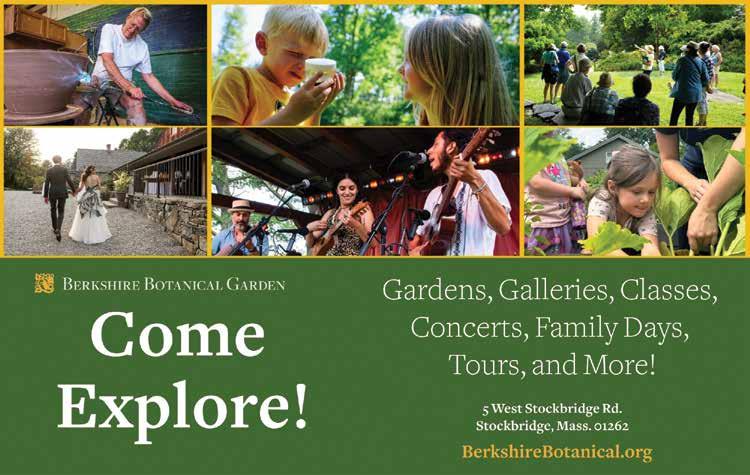
We provide information, education and inspiration concerning the science, art and joy of gardening and its role in preserving the environment.
Established in 1934 as the “Berkshire Garden Center” and revered as one of the older public display gardens in the Northeast, Berkshire Botanical Garden is a not-for-profit, membership-supported educational organization encompassing 24 acres of land at the intersection of Routes 102 and 183 in Stockbridge, Mass. The Garden is open year-round for classes, lectures, workshops, and exhibits, and the display gardens can be visited daily through Oct. 31, 9 a.m. to 5 p.m.
MEMBERSHIP BENEFITS:
•
Senior Horticulturist
•
•
•
•
DIRECTOR’S CORNER | MIKE BECK
Petals, Plots and Pupils: BBG’s 92-Year Learning Legacy
For an organization celebrating its 92nd anniversary, our historical archives can sometimes feel a bit … thin. Two years ago, when we put on a show in the Leonhardt Galleries showcasing the Garden through the nine decades of its existence, we had quite a bit of photographic evidence, but very little textual support for all of the achievements, both large and small, that our little botanical garden could be proud of. Lucky then that there exists a slender pamphlet called, simply, “Berkshire Garden Center — A Brief Chronology from 1934 to 1990.” It was created by longtime BBG staff member and volunteer Anne Braman, who meticulously typed up her notes of milestones gleaned, no doubt, from BBG’s Cuttings archives and (perhaps?) some oral history. Twenty-eight typed pages, printed on thermal paper using an early 1990s word-processing typewriter. I use these “Cliff Notes” of BBG’s history regularly, to look up a fact or event that occurred many moons ago. The names of early directors, donors, the details of special events like our Harvest Festival, quite recognizable from its genesis in 1935 to present day.
But recently I looked through this historical memento for clues about the role education has played at BBG. It is core to our mission after all and has been since our founding. And it is fascinating to see how BBG has embraced its role as garden educator over the decades. Our community has always come to the Garden to learn. But what we were sought out for, and what BBG taught the community, has evolved over time. The earliest planted features at BBG included a “native shrubbery,” according to Braman. And the earliest educational programs involved a “nature walk for children.” Fast forward to the present, and our interest in native plant communities is very much in vogue again. Our focus on teaching the next
generation of garden lovers is as strong as ever, with BBG providing in- and after-school programs in many of our local schools. Other garden education trends have come and gone (and come back again!). While ornamental horticulture, inspired no doubt by the large-scale pleasure gardens dotting the Berkshires landscape in the early 20th century, were in vogue when BBG was founded, just a few years later our predecessors planted a “Demonstration Home Vegetable Garden” that would “show how to supply vegetables for a family of three for summer use, canning and winter storage.” BBG was on the cutting edge of the nation’s Victory Garden movement, winning accolades and prizes as the prospect of war darkened the horizon. It was an educational topic born out of necessity, only to fade away in the fat post-war years when rose gardens, not tomatoes, once again inspired gardeners. But plus ça change … nowadays, Gen Z cottagecore influencers are once again tilling the soil and planting vegetable plots, and who are we not to provide information to this new gardening cohort? (See page 4.)
I am very proud of all the educating we do at BBG, from the dozens of school field trips that take place on site every fall and spring, to our ever-growing Farm in the Garden Camp program. We engage with our students where we find them, whether they are interested in botanical illustration, or botanical cocktail-making. Our featured art exhibits inspire awe in the natural world through the beauty of painting and sculpture, and our travel programs take our garden learners to faraway places full of horticultural wonder. So whether you are interested in the fine points of potato growing or seek a foundation in soil science, BBG continues to be there for you. Come learn with us!
JUNE 1 TO DEC 6 2026
SEASON AT A GLANCE
THROUGH OCT. 31 |
‘GRAND GESTURE — MONUMENTAL VESSELS IN THE GARDEN’
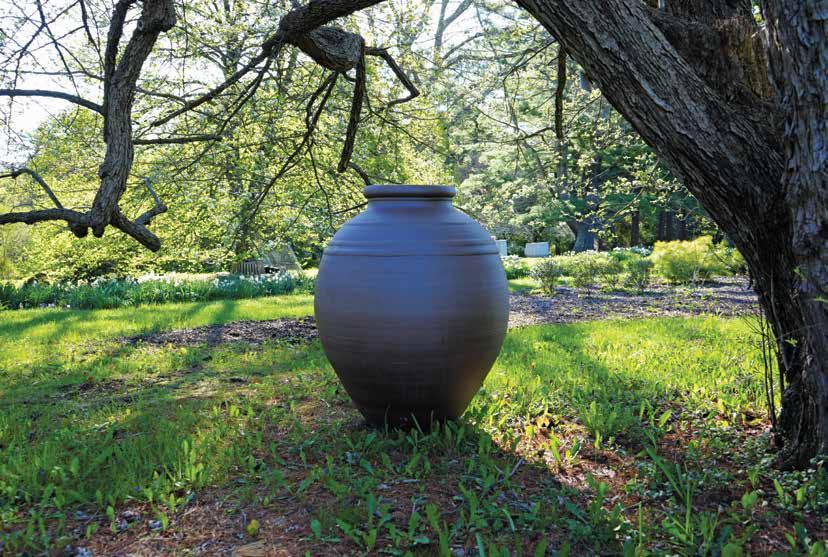
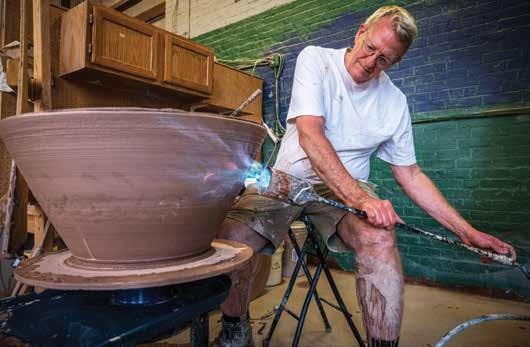
Explore ceramic sculptures by Vermont artist Stephen Procter, displayed among the Garden’s blooms. His large vessels turn simple clay into forms that feel both powerful and approachable, shaping the space around them and inviting quiet reflection. On view daily in the Garden, 9 a.m. to 5 p.m.
JUNE 1 THROUGH SEPT. 1 | GUIDED GARDEN TOURS
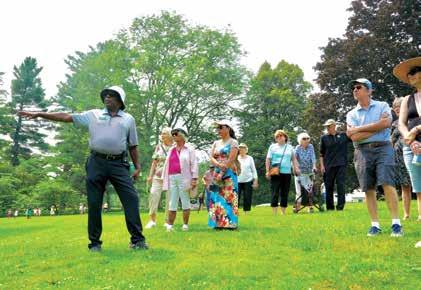
A showcase of horticulture and garden design and a “museum of living things,” Berkshire Botanical Garden’s 24 acres feature dozens of display areas that are educational, functional and highly ornamental. Come and explore with a trained professional. Free with Garden admission. Daily, 11 a.m., weather permitting.
JUNE 6 THROUGH AUG. 23 | ‘GROUNDED IN NATURE: PAINTINGS BY ADAM VAN DOREN’ IN THE LEONHARDT GALLERIES
See paintings that bring together architecture, history and landscape. Trained as an architect, Adam Van Doren creates impressionistic oil and watercolor works of historic buildings in places from New York to Rome. His paintings highlight the connection between structures and their surroundings, using color and detail to capture a strong sense of place. Daily in the Leonhardt Galleries, 9 a.m. to 5 p.m.
Opening Reception: June 5, 5 to 7 pm.
SATURDAY, JUNE 13 | DRAWING ON THE LAND DESIGN SYMPOSIUM
Join us for this second annual symposium at Rockland Farm in Canaan, N.Y., from 1 to 5 p.m. Spend the afternoon exploring landscape design, followed by a guided garden tour at peak June bloom and a wine reception. Open to both professionals and enthusiasts, this program offers fresh ideas and a deeper connection to the natural world.
JUNE 22 THROUGH AUG. 21 | FARM IN THE GARDEN CAMP
At Farm in the Garden Camp, we nurture the seeds of stewardship by connecting children to the Garden, our food system, the environment, and one another.
JUNE 26 | FAMILY FRIDAYS: ROOTED VOYAGEURS
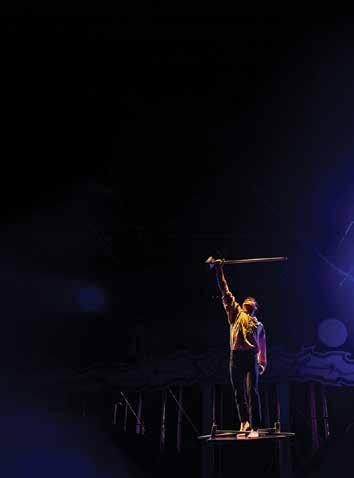
The Rooted Voyageurs will perform a family friendly version of “As You Like It,” transforming our Williams’ Family Amphitheatre into the idyllic Forest of Arden. Free with Garden admission, 11 a.m. to noon.
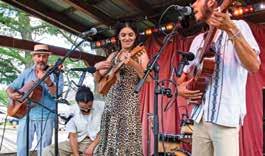
JUNE 29 | MUSIC MONDAYS: THE REJUVENATORS WITH WANDA HOUSTON
Our 2026 live concert performances kick off with The Rejuvenators and special guest vocalist Wanda Houston, bringing their funky New Orleans sound to the Garden, 5:30 to 7:30 p.m.
JULY 6 | MUSIC MONDAYS: EAGLES TROMBONE ENSEMBLE
The Ensemble will entertain and delight with a varied musical program of toetapping pop tunes from the 1940s through the 1990s, 5:30 to 7:30 p.m.
JULY 10 | FAMILY FRIDAYS: THE HISSING BOOTH
An up-close, interactive experience with snakes, reptiles and invertebrates. Learn what defines a reptile, discover fun species facts and personalities, explore proper care, and hear about animals with special needs. Free with Garden admission, 11 a.m. to noon.
JULY 11 | FÊTE DES FLEURS: GARDEN DISCO
Get ready to boogie in bloom at BBG’s annual garden party. Shimmering lights, groovy tunes and fabulous floral hats take center stage. Sip, stroll and spin among peak-season petals while indulging in delicious bites under a festive tent. Come for the disco, stay for the dahlias, and help keep the Garden growing for everyone. 4 to 7 p.m.
(See page 33 for listings of all classes and workshops.)
STAY UP TO DATE ON OUR EVENTS!
JULY 13 | MUSIC MONDAYS: ZOOT ALLURES AND ZYDECO PLAYBOYS
A night of Zydeco and Cajun jams, 5:30 to 7:30 p.m.
JULY 17 | FAMILY FRIDAYS: TOM KNIGHT
Combining elements of Mr. Rogers’ gentle spirit and the unbound creativity of Jim Henson, Knight has created an original show that entertains and enlightens young children and adults alike. Free with Garden admission, 11 a.m. to noon.
JULY 20 | MUSIC MONDAYS: MICA AND MANU
Traditional Argentine rhythms — such as chacarera, candombe and murga — combine with contemporary styles like hiphop, funk and flamenco, 5:30 to 7:30 p.m.
JULY 24 | FAMILY FRIDAYS: ROGER TINCKNELL
Sing, dance and play along in this lively, all-ages concert and workshop. Join Roger for interactive fun with percussion, folk songs and dances celebrating cultures from around the world. Free with Garden admission, 11 a.m. to noon.
JULY 27 | MUSIC MONDAYS: THE LUCKY 5
Hard-swinging jazz fusing classic swing and gypsy jazz into an energetic, foot-stomping sound, 5:30 to 7:30 p.m.
JULY 31 | FAMILY FRIDAYS: AIMEE GELINAS — AFRICAN DRUMMING
Live drumming performances followed by interactive workshops for students. Free with Garden admission, 11 a.m. to noon.
AUGUST 3 | MUSIC MONDAYS: MISTY BLUES
Original and traditional blues with hints of jazz, soul, funk, and tent revival gospel, 5:30 to 7:30 p.m.
AUGUST 7 | FAMILY FRIDAYS: GRUMBLING GRYPHONS — THE MYTH OF PERSEPHONE
A dramatization of the Greek myth of Persephone, bringing to life the story behind the seasons in an engaging, kidfriendly performance. Free with Garden admission, 11 a.m. to noon.
AUGUST 8-9 | THE GROW SHOW
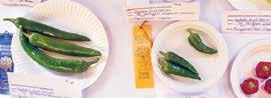
Floral designers and backyard gardeners take center stage at this upbeat, judged showcase of peak summer blooms and harvests. Explore five design divisions and nearly 80 horticulture classes on display in the Exhibition Hall — and enter your own, from a single stem to multiple categories. Participation is free. Free with Garden admission, 9 a.m. to 5 p.m.
AUGUST 10 | MUSIC MONDAYS: SÖREN SMEDVIG
Dynamic jazz standards spanning generations, 5:30 to 7:30 p.m.
AUGUST 14 | MR. TWISTY’S SUPER SILLY MAGIC SHOW
Magic and comedy combine in a high-energy, laugh-filled performance that delights audiences of all ages. Free with Garden admission, 11 a.m. to noon.
AUGUST 17 | MUSIC MONDAYS: PULSO DEL BARRO
Traditional Jarocha music from Mexico and exploration of various other genres from the Caribbean and Latin America, 5:30 to 7:30 p.m.
AUGUST 21 | FAMILY FRIDAYS: REPTILE SHOWS OF NEW ENGLAND
Learn fun facts about reptiles, hold bearded dragons and other small reptiles and get your picture taken with a 12-foot python in this interactive and educational show, 11 a.m. to noon.
AUGUST 24 | MUSIC MONDAYS: MIKE COBB AND THE CREVULATORS
Genre-defying original music that blends Americana roots with the fiery flair of Spanish rebel music, steeped in rhythm and rich storytelling, 5:30 to 7:30 p.m.
AUGUST 29 THROUGH OCT. 30 | ‘INDOOR GARDENING WITH MARIAN MCEVOY’ IN THE LEONHARDT GALLERIES
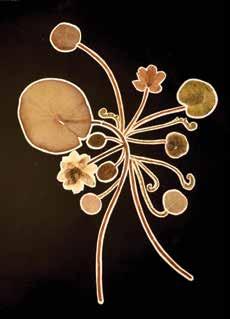
We welcome the collages built from pressed leaves, flowers, seed pods, and stems, some dating back to the 18th century. Opening reception: Friday, Aug. 28, 5 to 7 p.m.
AUGUST 31 | MUSIC MONDAYS: WANDA HOUSTON BAND
Close out the summer season with this dynamic quartet bringing the music of the 1930s to the 1970s. Rhythm, blues and soul, 5:30 to 7:30 p.m.
OCTOBER 10-11 | HARVEST FESTIVAL
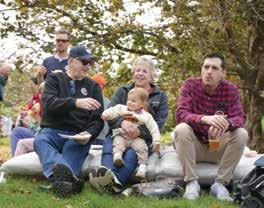
Celebrate fall at one of the Berkshires’ most beloved traditions! Every October, the Garden’s 24-acre grounds are transformed into a lively celebration of community, culture, the natural world, and the region’s agricultural heritage. 10 a.m. to 5 p.m. Admission: Adults $15 | Children 12 and under free
NOVEMBER 1 | ROOTED IN PLACE ECOLOGICAL SYMPOSIUM: FORESTS
A Day of Stories, Seeds and Stewardship, Exploring the Deep Connections Between Culture and Biodiversity at Berkshire Waldorf High School, Stockbridge, Mass.
Rooted in Place is more than a symposium — it’s a call to action for how we engage with the land and each other. This event offers an opportunity to learn, connect and grow. 10 a.m. to 3 p.m.
NOVEMBER 7 TO 14 | GREAT HOUSES AND GARDENS OF SOUTH AFRICA
Join Berkshire Botanical Garden on an exceptional journey to the Cape of Good Hope, where one of the world’s great centers of biodiversity has inspired centuries of garden design.
DECEMBER 4-6 | HOLIDAY MARKETPLACE
Kick off the weekend with our Holiday Wreath Preview Party on Friday, Dec. 4, 5 to 7 p.m. Featuring early wreath shopping, hors d’oeuvres and raw bar, festive drinks, live music, and merriment in the Center House. Pre-registration required. On Saturday and Sunday, shop a festive Exhibit Hall filled with top regional artisans, plus amaryllis, paperwhites, garlands, and unique holiday gifts, open 10 a.m. to 4 p.m.
In Tight Rows, a Timeless Message Takes Root
A new garden has emerged this season that looks as much backward in time as it does forward. In a modest 15-by-40-foot plot carved from what had been Berkshire Botanical Garden’s Fruit Garden, horticulturist Kessa McEwen is cultivating something both practical and symbolic: a Victory Garden for uncertain times.
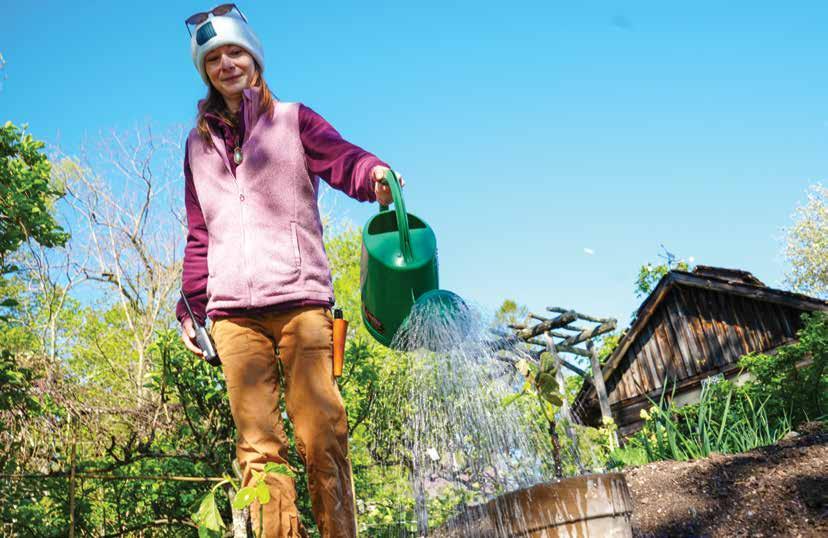
Kessa McEwen waters her figs as the Victory Garden takes shape in early May.
The space itself has long been productive ground, home to figs, quince, raspberries, strawberries, honeyberries, pears, and grapes. More recently, potatoes had been worked into the mix, turning it, informally, into a “fruits and roots” garden. But this season marks a deliberate shift. Inspired in part by a 2010 article in The Heirloom Gardener magazine and shaped by today’s rising food prices and uneasy global climate, McEwen has reimagined the plot as a modern echo of the “war gardens” of the early 20th century.
Those original gardens, first planted widely during the final years of World War I, were born of necessity. At a time when the United States struggled to maintain even a 30-day food supply — and when Europe looked to North America for relief — citizens turned every available patch of soil into productive land. Backyards, vacant lots, rooftops, and public parks were transformed into rows of beans, cabbage, potatoes, and carrots. Ornament gave way to utility. Flowers were largely
The design follows the principles that defined earlier Victory Gardens: efficiency, density and purpose.
absent. Gardening became both a civic duty and a moral cause, promoted with slogans like “Every Garden a Munitions Plant.” After the Armistice in 1918, these plots took on a new name: Victory Gardens. By World War II, the movement had surged again, with home gardeners producing as much as 40 percent of the nation’s vegetables while commercial farms struggled with labor shortages. Not long after its founding in 1934, Berkshire Botanical Garden (originally called Berkshire Garden Center) itself became a vital part of that effort, serving as a hub
where home gardeners learned how to grow high-yield crops in small spaces and preserve their harvests.
That legacy is very much alive in the new Victory Garden.
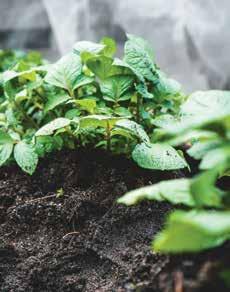
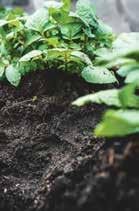
McEwen has planted it with intention and historical resonance. Extending from neat rows of garlic, the garden includes potatoes — red Pontiac, Adirondack Blue, and Yukon Gold — alongside strawberries, Lacinato and Walking Stick kale, Space spinach, Bright Lights Swiss chard, Gigante kohlrabi, lettuces, acorn squash, Chioggia and Guardsmark beets, Purple Top turnips, carrots, rhubarb, shelling beans like Jacob’s Cattle, Mardi Gras bush beans, and a suite of herbs including dill, cilantro, parsley, and basil.
Some of these varieties are new to BBG’s horticulturists, which adds an element of discovery. Others connect directly to the past. “These are exactly the kinds of things my grandparents would have been eating from their garden,” she said.
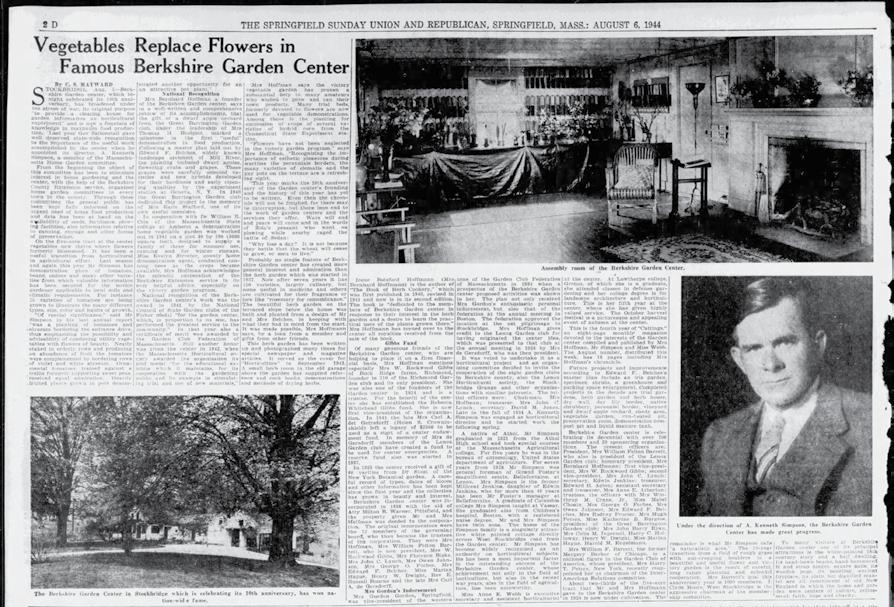
Victory gardens and BBG go way back, as evidenced in this newspaper article from 1944.
“In times of uncertainty, home gardening gives people a tangible sense of purpose. Embodying that here might inspire visitors to produce food at home. It’s a good talking point, but it’s also something deeper. We have a lot of uncertainty right now in the world.”
Kessa McEwen
The design follows the principles that defined earlier Victory Gardens: efficiency, density and purpose. Crops are planted tightly in straight, “rankand-file” rows. Space-saving techniques and trellising help maximize yield in a compact footprint. The emphasis is on foods that are hardy, nutritious and easy to store or preserve.
Still, the garden is not without charm. McEwen looks forward to seeing softball-sized kohlrabi, tri-color beans and the towering Walking Stick kale, which grows to improbable heights. Interplanted herbs promise fragrance as well as flavor.
If BBG’s long-beloved Vegetable Garden (located just across the walkway from the Victory Garden) often leans toward the ornamental — showcasing unusual hybrids and varieties rarely seen at area farmers’ markets — the Victory Garden is deliberately familiar. Spinach, kale, potatoes, carrots: These are staples, approachable crops that visitors recognize and, crucially, can imagine growing themselves.
That accessibility is the point.
“In times of uncertainty, home gardening gives people a tangible sense of purpose,” McEwen said. “Embodying that here might inspire visitors to produce food at home. It’s a good talking point, but it’s also something deeper. We have a lot of uncertainty right now in the world.”
The educational mission is woven throughout. In a nod to the Garden’s wartime roots, visitors can take home printed recipe cards featuring eraappropriate dishes — mashed turnips, creamed spinach anyone? — connecting what’s grown in the soil to what ends up on the table. As the season progresses, McEwen plans to give the harvest for use in BBG cooking classes, share it with campers in the Farm in the Garden program, and, ideally, partner with local organizations to donate surplus produce.
By April, the garden itself was already underway. Mounds had been formed, seeds started in late winter, and early crops direct-sown. Successive plantings of herbs and lettuces will keep the beds productive through the season.
In reviving the Victory Garden, BBG is not simply recreating a historical artifact. It is reactivating an idea: that small-scale, local food production can be both practical and empowering; that gardening can foster resilience as well as sustenance; and that, even in a small 15-by-40-foot plot, the past can offer guidance for the present.
As it did nearly a century ago, the message is simple and enduring: grow what you can, where you can, and in doing so, cultivate not just food, but purpose.
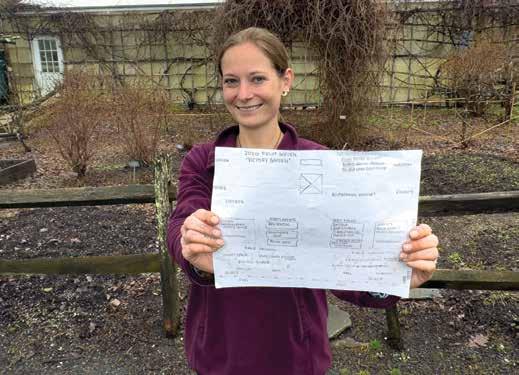
Kessa McEwen, back in April when BBG’s new Victory Garden was just inspiration on a sheet of paper.
Redefining ‘Victory’ in the Garden
At BBG’s 10th annual Rooted in Place Ecological Symposium last Nov. 9, writer and gardener Kevin West — a resident of Monterey, Mass. — invited attendees to reimagine the humble home garden through the lens of the Victory Garden, a oncepatriotic wartime project that, in his view, still holds lessons for today’s world.
“Victory for whom, and against what?” asked West, an East Tennessee native, preserver of food traditions and author of “The Cook’s Garden” (Knopf). For West, the act of tending a garden is a declaration of joy, identity and even resistance. In an age without a single national cause, West said that each gardener defines their own
“victory,” a small but meaningful triumph of care over despair.
“A garden takes up the fight for a better world, one seed at a time.”
Kevin West
“A garden,” he said, “is still a way to shake off the paralysis of despair and do something. A garden takes up the fight for a better world, one seed at a time.”
For West, to grow food is to make a statement: that nourishment, pleasure and beauty belong to everyone. Gardening, he insisted, is not just an agricultural act, it’s a political one, grounded in ancestral knowledge, indigenous wisdom and the quiet persistence of hope.
And as he often recalls from his late mother, Carol Satterfield, a woman who understood the patience of seasons and the stubborn will of life itself: “A seed wants to grow.”
ROOTED IN PLACE
Ecological Symposium
SUNDAY, NOV. 1 | 11 A.M. TO 4 P.M. Berkshire Waldorf High School Stockbridge, MA
Join us for our annual gathering focused on ecology, land stewardship and placebased environmental practice. We’ll bring together scientists, gardeners, artists, and educators to explore how local ecosystems function and how human activity shapes — and can support — the health of those systems.
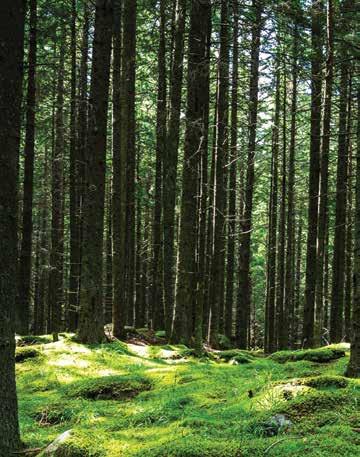
This year’s day-long focus is on forests.
Members: $100 | Non-Members: $130 To register, visit BerkshireBotanical.org
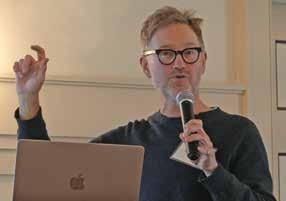
Kevin West at last year’s Rooted in Place Ecological Symposium.
Drawing on the Land
Where Design Meets the Living Landscape
On a June afternoon in the hills of Canaan, N.Y., a different kind of design conversation will unfold. Berkshire Botanical Garden’s second annual Drawing on the Land symposium, held June 13, from 1 to 5 p.m., at Rockland Farm, invites designers, gardeners and curious observers to step beyond the ornamental and into a deeper relationship with the land. Yes, it’s a gathering. But it’s also something more urgent: a moment to reconsider how we shape landscapes in a time of ecological change.
Set against the early-summer
peak of Rockland Farm’s gardens, the program features Preston Montague and Tony Spencer, two influential voices in contemporary landscape design. Their work converges on a shared premise: Gardens are not static compositions but living systems that demand both creativity and humility.
The Practical Side of ‘Wild’
If naturalistic planting feels appealing but elusive, Montague offers a grounded entry point. In his talk, “Designing for the Experience: Composition in Practice,” he will draw on his classical art training to
guide gardeners in deciding what goes where. By simplifying principles like rhythm, proportion and emphasis, and borrowing from art forms like music, he will offer practical ways to “choreograph an experience.” Moving beyond the adage “right plant, right place,” he will show how “placement” shapes visitors’ reactions. He also will share simple tactics to speed decision-making and clarify the design process.
For Montague, thinking of landscape as “experience” was a transformative insight rooted in painting. Just as artists
place each brushstroke with intention, gardeners can reverse-engineer a space — tree here, wall there, color here — to reveal and refine its design.
“Understanding that ‘experience’ is the product, and that tools like rhythm and emphasis can serve as a kind of design code, can be liberating,” he recently told Margaret Roach on her podcast, “especially for those with more leftbrained inclinations.”
You’ll leave inspired, with fresh ideas for your own space, no matter the size.
Designing for a ‘New Nature’
Where Montague focuses on process, Spencer turns to philosophy. Through his platform The New Perennialist, he has popularized a more immersive, emotionally resonant approach to planting design.
At Rockland Farm, his talk, “Wildscaping: Explorations in Naturalistic Planting Design,” will explore how gardens function as extensions of larger ecosystems, not just aesthetic retreats. He recently told us:
Let me start by introducing the concept: Wildscaping is my word for new times. Wild + scaping. It’s about using plant-driven landscape design to create and sustain dynamic garden spaces, filled with beauty and wildlife, to rekindle our relationship to the natural world. Wildscaping is an ecological art form, working in all four dimensions including time. It seeks to bring the human touch of design intention, care and connectivity into the picture across a wide-open field of possibilities. My own projects revolve around linking our cabin home to the surrounding landscape in a symbiotic loop to build a kind of new
nature adapted to handle the extremes of the new climate. This is both a technical and creative endeavor to design integrated functional habitat, which in turn support a wide diversity of life. What does this look and feel like? In terms of planting design, I’ve composed a series of linked gardens with a naturalistic wilder edge, each responding differently to the land, its character and varying conditions. There is no one look and feel, it’s about creating highly atmospheric spaces, supercharged with a vision of nature that changes with the light, the moment, the season, the weather.
His concept of “wildscaping” underscores a broader shift: Gardens are not just about beauty or sustainability, but adaptation and active participation in a changing world.
Bringing It Home
The afternoon doesn’t end with theory. A panel discussion, “Bringing It Home,” moderated by Richard Hayden, will translate big ideas into practice. Joining Montague and Spencer will be Jenna O’Brien and Deborah Munson, offering perspectives rooted in the Northeast’s specific conditions. This is where inspiration will meet application: adapting large-scale or conceptual ideas to home gardens, public spaces and client projects.
Hayden is the senior director of horticulture at the High Line, overseeing the design, care and horticultural practices for its world-renowned gardens. O’Brien is owner and founder of Viridissima Horticulture & Design in Becket, Mass.
Munson is a horticulturist and landscape designer from Falls Village, Conn.
An Immersive Experience
The symposium will conclude with a guided tour of Rockland Farm’s gardens at their June peak, followed by a wine reception with our hosts, Madeline and Ian Hooper. This is a chance to continue the conversation informally.
In an era of increasing ecological pressure, the question is no longer just how we design, but how we belong to the places we shape.
BBG wishes to thank our hosts, the Hoopers; Element, in Lenox, Mass., for donating speaker lodging; and Jack Miller Contractors for sponsoring the symposium.
JUNE
13
Drawing On The Land
Our second annual design symposium takes place on the breathtaking Rockland Farm, in Canaan, N.Y. Members: $170/Non-Members: $200 To register, scan code below or visit BerkshireBotanical.org.
Deborah Munson
Preston Montague Tony Spencer
Richard Hayden Jenna O’Brien
250 YEARS LATER:
The Herbal Roots of American Survival
By Barbara F. Smith, BBG Herb Associate
As our nation celebrates the 250th anniversary of the Declaration of Independence, it’s worth revisiting the vital role herbs played in early American life. Herbs are plants valued for uses beyond ornament, such as cooking, medicine, dyeing and fragrance. For centuries, people relied on herbs as a first response to illness or injury. This article aims to provide some insight into the use of medicinal herbs in colonial America and at the time of the American Revolution.
Plants, particularly herbs, were important to indigenous people and settlers in the “New World” from the start. The earliest English settlers seeking religious freedom in what would become America were not necessarily skilled in farming. Although they brought seeds with them, many crops failed and famine followed, with the few survivors thought to have eaten wild potatoes given to them by the local Native Americans.
Enter Tisquantum (Squanto), a Pawtuxet man who spoke English after time in Europe. He shared Indigenous farming techniques with the Plymouth settlers, including fertilizing exhausted soil with fish to benefit the crops, and he introduced them to many useful native plants. These included Jack-inthe-Pulpit (Arisaema triphyllum), whose roots were a remedy for headache;
Sassafras (Sassafras albidum), whose bark and roots made a beverage that “cooled the blood”; Milkweed (Asclepias spp.), whose roots were used to treat pleurisy; and Goldenrod (Solidago spp.), extolled for stopping bleeding in wounds, also as a yellow dye, to name a few. Foreign medicinal plants like squill and rhubarb also gained popularity during this period. Before modern hospitals or even pharmacies selling medicines existed, early settlers turned to one thing for healing: plants. In those early days and years, colonists would have planted “kitchen gardens” nearby to their homes to raise foodstuffs and the herbs needed for various purposes. Colonists relied on herbal knowledge passed down through generations of family or learned firsthand from Native Americans. In those early days, “a well-tended herb garden could mean the difference between survival and tragedy.”
The creation of gardens and cultivated fields represented ways to tame the wilderness of North America. During the colonial era, New England colonies specialized in mixed farming, blending European, Native American and African techniques, all of which contributed to the development of a robust system that formed the economic foundation of the colonies. Early colonial botanic remedies were composites of several distinct
On your next visit to BBG, stop by the Herb Display Garden to see beds of herbs organized and cared for by the Herb Associates.
traditions tempered by the American environment with its own plants. As the population grew, some colonists studied plants more formally and imported seeds from abroad, gradually reshaping the landscape.
By the start of the American Revolution in 1776, much had changed from the earliest days, but herbal remedies remained central to treating illness and injury. During the Revolution, disease was far deadlier than bayonets or muskets. All told, sickness accounted for 80 percent
of British war deaths. While the British established hospitals, American forces had limited medical infrastructure, and many soldiers were incapacitated by illness. Smallpox, typhus, dysentery, and scurvy were widespread. Washington’s smallpox inoculation campaign proved largely successful, and colonial physicians did what they could despite limited resources.
Examples of European and Native American healing herbs that colonial militia members would have packed for use during the Revolutionary War include:
Yarrow (Achillea millefolium), also known as bloodroot, used to stop blood loss; Calendula (Calendula officinalis) with antifungal and anti-inflammatory properties, used in a salve for cleaning wounds, rashes and burns; Chamomile (Anthemis nobilis), a tea to calm nerves, settle stomachs and treat fevers; Comfrey (Symphytum officinale), also known as knitbone, used in a poultice applied to broken bones or sprains; Lavender (Lavandula vera) with antiseptic and sedative qualities; Horehound (Marrubium vulgare), used
as a cough remedy; and Sage (Salvia officinalis), used in teas for sore throats, digestive issues and fever reduction.
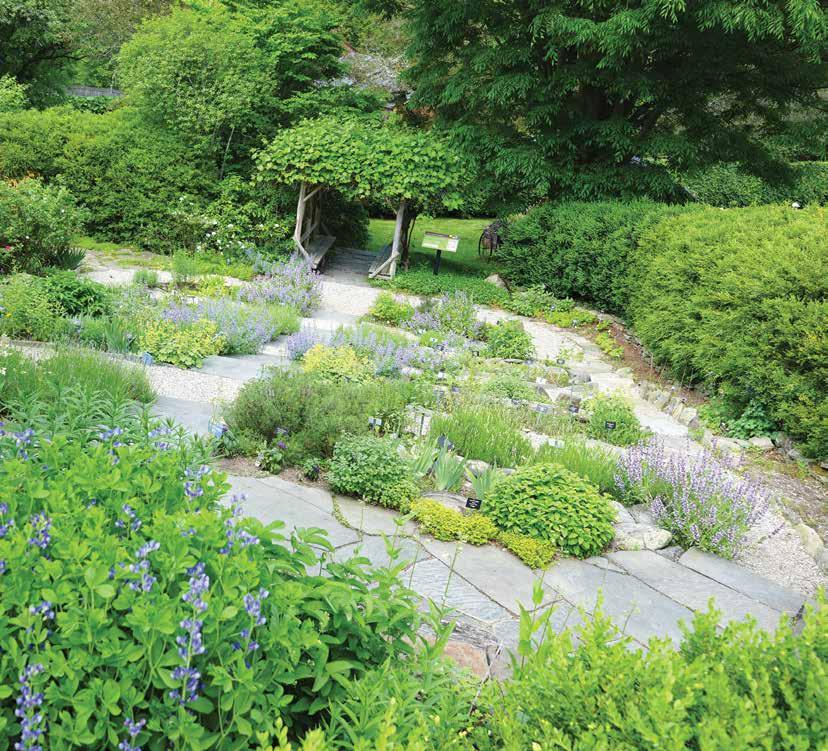
On your next visit to the Berkshire Botanical Garden, stop by at the Herb Display Garden (beside the Center House) to see beds of herbs organized by use and cared for by the Herb Associates, volunteers who tend the beds and make products from their bounty to be sold to benefit the Garden.
Grounded in Nature
Adam Van Doren Brings
Architecture and Landscape Together in New Exhibition
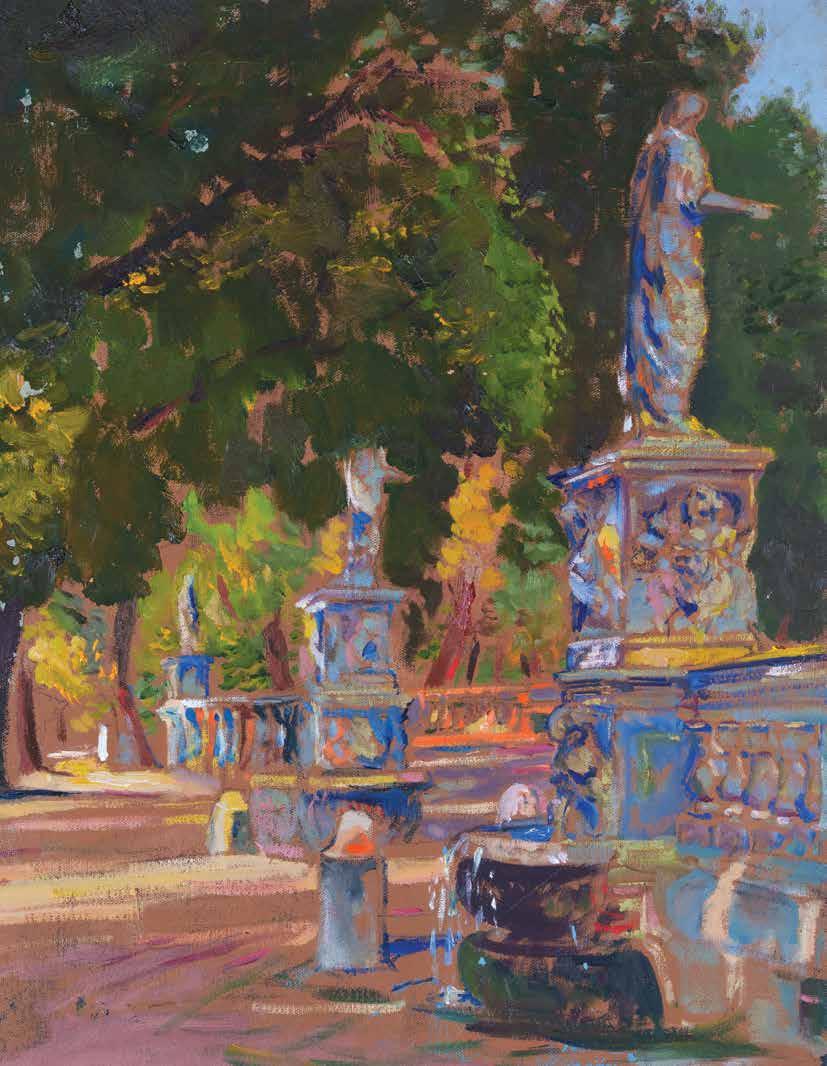
“Roman Gardens with Statues” (Watercolor on wove paper)
On a bright morning in March, snow lies thick across the fields of the Van Doren family property in Cornwall, Conn. Stone walls break through the white landscape, dividing pastures and woods as they have for generations.
From inside the house he designed and built two decades ago, painter and author Adam Van Doren reflects on the places that have shaped his life and work. Across a small brook stands the farmhouse his grandparents bought in 1923.
This deep connection to place — architecture, landscape and memory — is at the heart of Van Doren’s upcoming exhibition, “Grounded in Nature: Paintings by Adam Van Doren,” opening June 6 and running through Aug. 23 at Berkshire Botanical Garden. Curated by art historian Donna Hassler, the show features more than 35 watercolor and oil paintings exploring the three places most central to the artist’s life: New York City, the countryside of northwestern Connecticut and his travels in Europe.
Across these varied locations, Van Doren’s work returns to a consistent set of questions: how structures inhabit space, how light transforms surfaces and how the built environment and the natural world can enhance one another.
To capture these moments, Van Doren often paints outdoors, perched on a portable stool, preferably, he notes, in the shade.
“Working outdoors, en plein air, is central to my art,” says the 63-year-old artist.
A Painter Shaped by Architecture
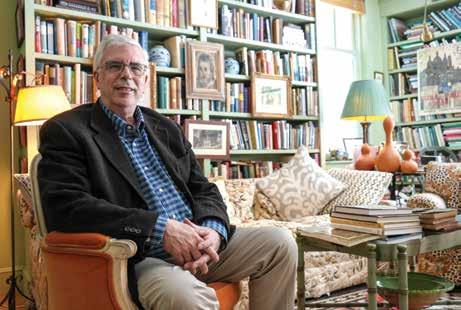
Adam Van Doren, at home in Cornwall, Conn. In addition to painting, Van Doren is the author of several illustrated books combining art and history, including “An Artist in Venice,” “The House Tells the Story: Homes of the American Presidents” and “In the Founder’s Footsteps: Landmarks of the American Revolution.” Van Doren cites artists such as John Singer Sargent, Edward Hopper, Andrew Wyeth and Richard Parkes Bonington as influences, painters who likewise explored the relationship between architecture and landscape.
Van Doren was trained not as a painter but as an architect. He earned his master’s degree at Columbia University, studying under renowned architect Robert A. M. Stern. The Beaux-Arts training emphasized drawing buildings by hand, columns, cornices and shadows meticulously rendered.
For a few years after graduate school he worked in architectural firms. But the pace of the profession soon convinced him that something had to give. “Architects don’t have any time to do anything else,” he says with a laugh. “No other life.”
Painting won out.
Yet the discipline of architecture never left him. If anything, it became the backbone of his artistic approach. Today Van Doren is known for impressionistic watercolors and oils that explore what he calls “the poetry of architecture,” historic structures embedded in their surrounding landscapes.
“From Stern I learned the vocabulary of architecture,” he says. “I can look at a building and know the story behind it. That makes it more interesting to paint.”
A Family Legacy of Words and Ideas
Van Doren grew up immersed in intellectual life. His grandfather, Mark Van Doren, was a Pulitzer Prize-winning poet and professor at Columbia. His great-uncle Carl was also a Pulitzer Prize winner. His father, John, was an editor for Encyclopedia Britannica and taught English at several universities. His mother, Mira, was a painter.
Summers were spent here in Cornwall. Under his grandparents’ care, the property — now about 250 acres — became a gathering place for writers including humorist James Thurber, journalist William Shirer and critic Lewis Gannett. For Van Doren, the landscape is inseparable from family memory.
Nearby, when he was a child, his grandfather would hide a box of jellybeans in a colony of ferns and send the grandchildren out to find it. The fern is still there. He still has the box.
“Whenever I paint that area,” Van Doren said, “it brings back a flood of memories.”
The same landscape inspired Mark Van Doren’s 1946 celebrated poetry collection “The Country Year” and Dorothy Van Doren’s memoir “The Country Wife.”
Two Worlds: City and Countryside
Today Van Doren divides his time between Cornwall and New York City.
During the week he works in Manhattan’s Renaissance Studios building on West 57th Street, once occupied by American Impressionist painter Childe Hassam. His walk to the studio takes him through Central Park, often with a sketchbook in hand.
“On a beautiful day you just can’t help being affected by what you’re seeing,” he says.
Some of those scenes — arched bridges, statuary and the Bethesda Fountain — appear in the BBG exhibition.
Weekends are usually spent in Cornwall with his wife, Charlotte. With some help, he maintains the property himself, armed with weedwhackers, a Gator and an architect’s eye for landscape design. Rather than traditional gardening, he says he shapes outdoor “rooms,” creating vistas and gathering places within the land.
Painting the Poetry of Place
Two art programs have been organized at BBG in conjunction with “Grounded in Nature”:
Friday, July 24, 5:30 p.m. to 7 p.m.
A slide presentation (“American in Nature: Reflections on the Art of Watercolor”) on American master watercolor painters by Mark Mitchell, the Holcombe T. Green Curator of American Painting and Sculpture at The Yale University Art Gallery. The presentation, to be held at BBG’s Center House, will be followed by a reception. For registration and ticket information, visit BerkshireBotanical.org
Saturday, July 25, 10 a.m. to 1 p.m.
A master class in watercolor painting taught by Adam Van Doren. Registration is limited. For more information, visit BerkshireBotanical.org
The BBG exhibition presents Van Doren’s work in three sections: New York, Cornwall and Europe. Guest curator Donna Hassler selected paintings that reflect the geographic rhythm of the artist’s life.
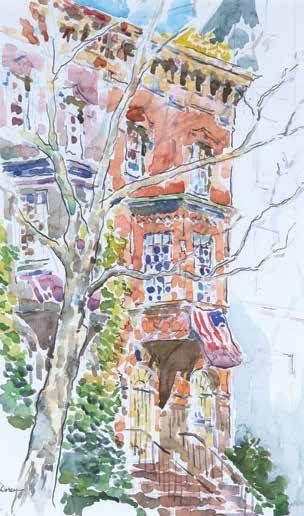
In his New York scenes, Van Doren finds beauty in overlooked details — the curve of a Central Park bridge or the limestone façade of a Gilded Age mansion.
“I don’t think people notice the bridges in Central Park,” he says. “But they’re marvels, the curves, the balustrades, the way they’re woven into the landscape. It’s something to celebrate.”
His Cornwall paintings capture a quieter rural world: barns and stone walls, open pastures and late-afternoon shadows. Each season brings a different palette, though autumn, he says, is a favorite.
The exhibition’s third section highlights Van Doren’s travels in Europe, especially Italy, where he has painted Renaissance
gardens, Venetian canals and Roman ruins. As a visiting artist at the American Academy in Rome, he created a series of paintings of the Roman Forum that later inspired a book collaboration with poet John Tagliabue.
Italy, he says, is a painter’s dream.
“The Mediterranean light is extraordinary. Stucco and marble catch the light in a way New York buildings don’t. In New York, you have to work at it a little harder.”
Learning to See
Painting outdoors brings its own challenges. Passersby stop to watch. Conversations interrupt the process. And the shifting light means watercolors must be executed quickly.
“A good day is when I finish one painting in the morning, have lunch as a reward, and then go out again when the light changes and do another,” Van Doren says.
But speed is only part of the equation. What he ultimately hopes to do is teach viewers “to see.”
“There are colors in shadows,” he explains. “Not just browns or blacks. The shadow should be as beautiful as the subject in the light. There’s more color in the world than we think.”
He often returns to a line from Charles Dickens that he believes captures his mission. “Make them see,” he said.
It is the same lesson he teaches students at Yale University, where he lectures on watercolor techniques.
“I tell them to pretend they don’t know what something is,” he says. “Just look at it as color and shape.”
That simple lesson captures the spirit of the BBG exhibition: paintings that reveal the quiet beauty where architecture meets landscape, past informs the present and memory meets light.
“Manhattan Townhouses” (Watercolor on wove paper)
The Art of the Second Act, According to a ‘Terrible Gardener’
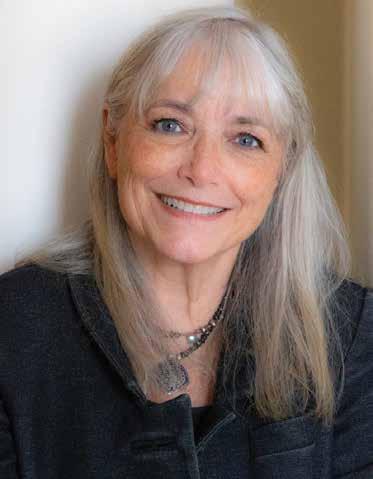
Marian McEvoy and Her ‘Indoor Gardening’
There are second acts, and then there are Marian McEvoy’s second acts: elegant, unexpected and just a little bit subversive.
things. Curtains first. Then furniture. Then, gradually, objects that didn’t quite fit into any category except her own.
“I love decoration. It makes our lives cheerier, happier, richer, nicer, better.”
Marian McEvoy
For decades, McEvoy helped define how the world saw style. As the European editor of Women’s Wear Daily and W in Paris, the founding editor of Elle Décor, and later editor-in-chief of House Beautiful, she didn’t just report on taste, she shaped it. Along the way, she earned a place in Vanity Fair’s International Best Dressed List Hall of Fame, which feels less like an accolade and more like an inevitability.
And then, in 2002, she walked away. Not in a blaze of drama. More like a perfectly timed edit.
She retreated to an 18th-century farmhouse in Wappingers Falls, N.Y., overlooking the Hudson River, and did what comes naturally to someone with a lifelong allergy to visual boredom: She started making
“I love decoration,” she says plainly. “It makes our lives cheerier, happier, richer, nicer, better.”
That sensibility — generous, unpretentious and just a bit mischievous — anchors her upcoming exhibition, “Indoor Gardening with Marian McEvoy” at Berkshire Botanical Garden’s Leonhardt Galleries, on view from Aug. 29 through Oct. 30. It’s a show that promises to feel less like a white-cube art experience and more like stepping into someone’s very particular, very beautiful way of seeing.
“It’s going to kind of look like fall,” McEvoy says. “Burnished colors, bronze and gold and deep brown and black. Not birthday party colors. More … harvesty.”
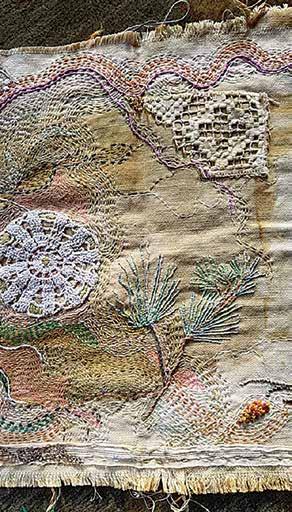
Untitled works of Marian McEvoy.
Gardening, but Make It Obedient
McEvoy describes herself, with relish, as a “terrible gardener.” Plants, she says, are unruly things. They wilt, they wander, they refuse instruction.
So she brought them indoors, and she made them behave.
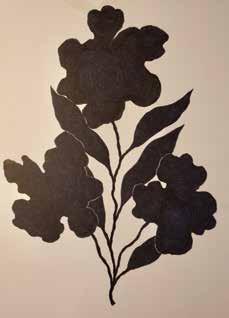
Her collages are built from pressed leaves, flowers, seed pods, and stems, some dating back to the 18th century. These fragments, rescued from forgotten herbariums and sourced everywhere from attics to Etsy, arrive brittle, desiccated and strangely moving.
“There’s something so touching about them,” she says. “All these people collecting and pressing flowers, then forgetting them. And then you see them a century later.”
She pairs these delicate remnants with her own drawings — marker, pen, pencil — until the line between what is real and what is invented begins to blur. A stem might be botanical or sketched. A leaf might be pasted or conjured.
“Sometimes they’re real, sometimes they’re drawn,” she shrugs. “Depends on which side of the bed I get up on.”
The effect is a kind of controlled wildness: nature, but edited.
Which, of course, brings us back to her first life.
August 29 through Oct. 30
Opening reception: Friday, Aug. 28, 5 to 7 p.m.
The Ruthlessness of Taste
Editors are, at heart, decision-makers. Keep it. Cut it. Fix it. Kill it.
McEvoy hasn’t lost the instinct.
“I have no problem tearing things up,” she says. “If they’re not looking good, I don’t look back.”
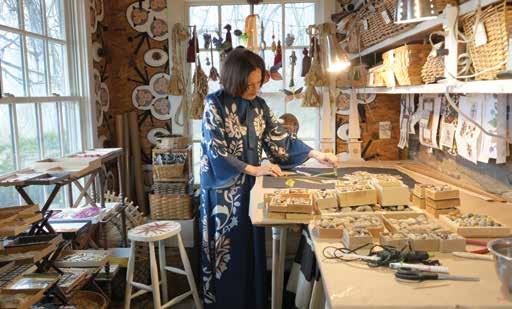
That editorial ruthlessness translates directly into her studio practice. Her workspace, a narrow, glue-filled room lined with particle board walls for pinning ideas and shallow containers with thousands of pressed botanicals large and small, houses more than 25 types of adhesive. (Yes, really.) Larger pieces get the glue gun; smaller ones, a more delicate touch. Her trade requires manicure scissors, medical scalpels, paint brushes, and “a million kinds of tweezers.”
But the real tool is instinct.
“Make a decision,” she says. “Don’t labor it for a month or a week or even a day. If you feel strongly about something, just do it. Get on with it.”
It’s a philosophy that gives her work its snap. Her compositions read clearly, even from across the room. Nothing feels tentative.
“If something isn’t strong or true,” she says, “exit. Get it out of your universe.”
The Ghost of Paris
McEvoy’s eye didn’t develop in a vacuum. She spent roughly two decades in Paris, immersed in a world where beauty wasn’t optional, it was oxygen.
One towering influence: Yves Saint Laurent. “He had the best color sense
of anybody in the history of the world,” she says, with zero hesitation. “Including Matisse.”
What she absorbed wasn’t imitation, but permission, an openness to unexpected combinations, to colors that shouldn’t work but somehow do.
You see it in her upcoming show: the deep browns nudging against off-whites, the black sharpened by flashes of pale ink, the quiet drama of restraint. It’s not loud, but it’s fearless.
“I’m not a Saint Laurent colorist,” she says quickly. “But that idea of unexpected combinations, that stayed with me.”
The exhibition won’t be limited to collages. McEvoy is also showing vessels — urns and vases made from resin, finished with white ink patterns that read like botanical ghosts. Many will be displayed with branches and cuttings from BBG itself, creating a conversation between the living and the preserved.
A Maker, Not a Myth
Despite the résumé, the Paris years, the influence, McEvoy resists grand labels.
“I’m not Ellsworth Kelly,” she says. “I consider myself more of a maker. Maybe a decorative artist.”
The distinction matters to her. Decoration, in her world, is not lesser; it’s essential. It’s about how people live, what they see every day, what quietly lifts them.
And if there’s a throughline from editor to artist, it’s this: She has always cared about what stays in the frame.
Now, at 78 (“What the hell happened?” she says, laughing) she has the added advantage of perspective.
“You’ve done that rodeo before,” she says. “It helps with the new rodeo.”
The new rodeo, it turns out, involves centuries-old flowers, a glue gun arsenal and an unshakable belief that beauty, especially the kind you make with your own hands, is always worth the trouble.
Or, as McEvoy might say: Put it down, move it around, and when it’s right, stop. Don’t overthink it.
Just edit.
Marian McEvoy at home in her studio in Wappingers Falls, N.Y.
Indoor Gardening with Marian McEvoy in the Leonhardt Galleries
In
Grand Gesture: Monumental Vessels in the Garden
All Season Long through October
This season, Berkshire Botanical Garden features the striking ceramic sculptures of Vermont-based ceramicist Stephen Procter, thoughtfully placed among the blooms of the Garden. The Leonhardt Galleries is also featuring his smaller, classically inspired ceramic pottery. We spoke with him before his exhibition opened on May 15.
We couldn’t help but to notice your exhibition title: It is both bold and poetic. What makes a vessel a “grand gesture” in a garden?
Great question! “Grand Gesture” immediately brings to mind largeness, but scale, per se, doesn’t satisfy. More important is the inspiration that motivates and justifies the scale — the animating impulse often includes some mixture of generosity, expansiveness, gratitude, compassion, awe, and love. If the piece is successful, when I look at it I will be reminded of the feelings that inspired it. Yes, it should please the eye, but it must also speak to the gut and the psyche.
Your vessels can weigh 250 pounds and stand five feet tall. Do you ever think, “Well … that escalated quickly”? Ha! Yes, from time to time a piece takes on a life of its own and goes in directions that I did not anticipate. Usually
the result is something extraordinary that I would not have dared, although sometimes it’s a dead end. Fortunately, there are some built-in limitations: Clay simply does not do some things, and I cannot fit anything taller than 6 feet into my kiln! In any case, nothing happens quickly at this scale. The pace is always methodical and meditative. So it escalates slowly!
You’ve described your work as bridging the “seen and unseen worlds.” When your vessels are placed among living plants and shifting light, what invisible qualities are you hoping visitors will sense?
I sometimes describe my practice as a long-term investigation into the mystery of form. Why is it that a particular gesture of curve and volume should evoke awe, another one tears and yet a similar one laughter? Are the vessels transducing ethereal energies? Or does their resonance awaken something latent in the viewer? I suspect that both forces are at play — invocation and evocation. And the context of nature is significant, even essential. The garden is a place of quiet and sanctuary, a sacred space where subtle communication and inner experience can be discerned and integrated.
her New York Times feature on Stephen Procter in 2024, Margaret Roach underscored that monumental pots can be as important as any plant in a landscape. Clearly, she has a good point.
Some clients and viewers hug your pots, speak to them, even give them personal pronouns. What do you make of that deep emotional response, and if your vessels could talk back, what do you imagine they’d say?
I think that the potency of the pots is due to the fact that their “language” is non-verbal. Their mode of communication bypasses the realm of the intellect and goes directly to something deeper. I do think that scale has something to do with their impact: Extraordinary scale is momentarily disorienting. Without reference to something familiar, the viewer is invited to engage with the vessel on its own terms. That kind of moment is rare and bracing and often emotionally vulnerable. But if you insist on words, they might be, “Be here now. I am with you.”
Margaret Roach’s 2024 feature on you in The New York Times highlighted that monumental pots are structural elements, not accessories. What has to shift in a gardener’s mindset?
The first shift is to think “sculpture,” not “pot.” They can create a focal point, anchor a bed, announce a transition, lead a visitor, or create a visual destination. In every case they reinforce the bones of the garden while imparting elevation and grandeur. The second shift is understanding the material: high-fire stoneware is impervious to moisture and withstands freezing temperatures, so the vessels provide presence through all seasons, sometimes more dramatic in winter.
This summer, your ceramics mingle with peonies, pollinators, and the full bloom cycle. How do they behave outdoors versus in a gallery?
Oh, my goodness, so different! The gallery is static. In the garden the vessels are constantly changing. The surfaces, even unglazed, subtly reflect light. Shadows of leaves play on them, they shine in rain, “wear” snow playfully, and take on moss patina over time.
Many of your forms are inspired by seed pods, cocoons, and hives. Are they botanical companions, architectural anchors, or something more mysterious?
I see my vessels as all those things! I love the curves of plants and animals, and we all have absorbed ancient Mediterranean pot forms. My pieces seek to harmoniously reconcile these influences, suggesting, for instance, a pregnant belly while embodying classical proportion. My aim is not replication, but a synthesis that feels at home in nature.
Your surfaces are simple — no flashy glazes. Are your vessels the calm, quiet guest at the garden party?
Before I was seduced by clay in mid-life, I was a classical guitarist. I do not have the personality of a soloist, and what I loved and did best was playing chamber music and accompanying. My musical temperament seems to have carried over into my life as a ceramicist. I want my pieces to be a co-equal participants in the conversation, ready to step forward when called for, ready to support and elevate when needed, but always a steady presence. Calm and quiet guest? Perhaps, but no wallflower!
You’ve said a large vessel can act as a greeter. What welcome do your pots offer at BBG?
At the BBG entry I hope to evoke a big wow. By the pond I hope to create a quieter, more reflective moment. As visitors approach a new garden “room,” I hope to provoke excitement, and peeking through a grove of trees, curiosity.
After all the time you spend on these pieces — three weeks shaping, drying, firing — placing a vessel in the landscape must feel like a parent on the first day of school. True?
Ha! In your three weeks calculation you forget the 30 years figuring out how to do it! Yes, I am always hopeful (and a little anxious) that the piece will be well received. It is not uncommon that we discover once the actual piece is on site that it belongs in a slightly different location than we thought. Once set, everyone knows it instinctively and without hesitation. We set it down, and so often someone in the party exclaims words I love to hear: “It looks like it has always been here!”
Stephen Procter, in his studio in Brattleboro, Vt.
Photo Courtesy of Stephen Procter
In the Garden Classroom
Hands-On Learning in Local Schools
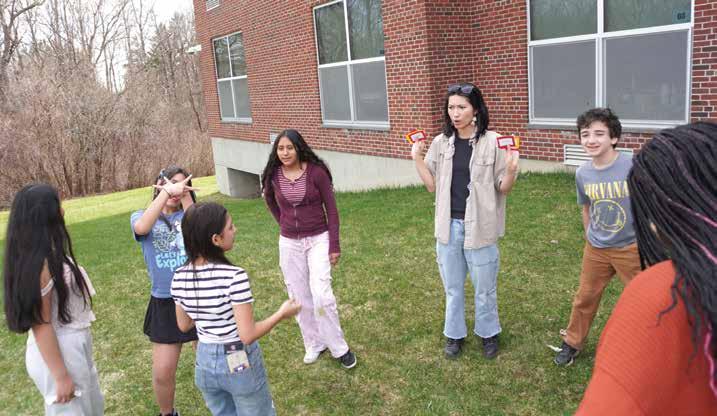
Garden educators are continuing to put down roots across Berkshire County, transforming school garden beds into living classrooms where students discover the power of hands-on learning.
Through the work of Berkshire Botanical Garden’s Education Department, science comes alive in the soil where curiosity, confidence and connection grow alongside the season’s first plants.
From kindergartners to middle schoolers, students in six schools are digging into what it means to grow food and grow together. At Muddy Brook Elementary School, first- through fourth-graders recently explored herbs and harvests. At Reid and Herberg middle schools, students brought science to life through gardening and food-based lessons.
At Reid, for example, students reinforced their understanding of photosynthesis through an interactive relay race, matching inputs like sunlight, water and carbon dioxide with outputs like oxygen and glucose. They also started seeds to take home, extending their learning beyond the classroom.
Across partner schools in Pittsfield, Richmond, Great Barrington and Sheffield, BBG educators blend curriculum
Through the work of Berkshire Botanical Garden’s Education Department, science comes alive in the soil where curiosity, confidence and connection grow alongside the season’s first plants.
with creativity, helping students nurture plants while cultivating responsibility, teamwork and a sense of wonder. These partnerships are made possible through generous support, including a Cooler Communities grant for Reid Middle School, funding from the Pittsfield Education Enrichment Fund for Herberg Middle School, and support from the Berkshire Taconic Community Foundation for Muddy Brook and Undermountain elementary schools.
Learning continues at the Garden itself, where BBG hosts on-site programs, tours and an expanded lineup of youth field trips. These experiences offer guided exploration and handson workshops on topics like composting, pollinators and soil health for schools, homeschoolers and youth organizations.
continued on next page
BBG Garden Educator QunLi Fan leads students in a photosynthesis relay race at Reid Middle School in Pittsfield in April.
Celebrating Earth Day and Arbor Day
To mark Earth Day (April 22) and Arbor Day (April 24), BBG educators led an invasive species removal effort, working with volunteers along the Garden’s Forest Walk. The team also hosted a tree distribution event at the Stockbridge Library, giving away dozens of dogwood, sugar maple and white oak saplings.
Summer Programs
This summer, BBG’s education programs continue at full speed. The popular Farm in the Garden day camp is almost full, following two successful vacation camps in February and April. Campers can look forward to immersive, hands-on experiences, from caring for animals and exploring pond ecosystems to
growing vegetables and preparing shared meals, all designed to foster independence, curiosity and connection.
BBG will also continue its summer partnerships with Morningside Community School, supported by the Mill Town Foundation, and Reid Middle School, supported by 21st Century Community Learning Center funds. Additional offerings include a monthly family series, a firefly program on July 2 and a new moth program on July 24 in celebration of National Moth Week.
Families can also enjoy the return of Family Fridays, held every Friday at 11 a.m. in the Garden’s outdoor amphitheater. These free-with-admission events feature live animal programs, music, storytelling and more.
Why This Work Matters
Afterschool and summer programs like these are more than enrichment; they are essential. They provide safe, supportive spaces where young people build community, develop confidence and engage meaningfully with the natural world.
As federal funding declines, BBG is calling on the community to help sustain and grow this work. Contributions directly support school partnerships and camp scholarships, ensuring more students can learn through doing and become thoughtful stewards of the land.
To support BBG’s Education Department, donations are welcomed. Please contact Jennifer Patton at jpatton@ berkshirebotanical.org. Every gift helps keep the Garden gates open to the next generation of growers, dreamers and doers.
THE LEGENDARY FALL FESTIVAL IN THE BERKSHIRES!
HARVEST FESTIVAL
Side by Side, Community Groups Build a Garden
Berkshire Botanical Garden has launched a new community garden, one that brings together local groups, cultural traditions and a shared goal of growing food for and with the community in Berkshire County.
The project connects Pittsfield Community Food Pantry, Mumbet’s Freedom Farm, Latinas413 and Railroad Street Youth Project at our Larrywaug property, on the north side of our gardens. Backed in part by a Green Pastures Fund grant from the Berkshire Taconic Foundation, the effort blends hands-on food production with cultural exchange and community connection.
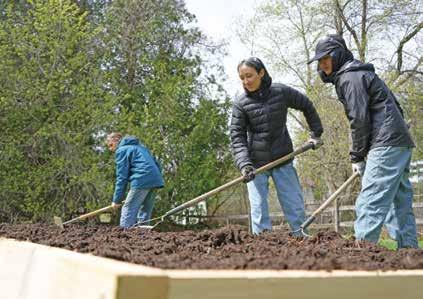
Built on April 6 by Greenagers, the garden includes six raised beds, each eight by four feet and one foot deep. Two of those beds will be tended by the Railroad Street Youth Project, growing fresh produce for local residents and plants started by BBG Director of Youth Programs Margaret Leahy. Pantry volunteers also helped fund an adjacent hoop house, which will be used to harden off plant starts for the community garden, as well as for BBG’s youth camp and school programs.
Mumbet’s Freedom Farm, guided by the legacy of local legend Elizabeth “Mumbet” Freeman, will cultivate a space drawing on Afro-Indigenous, regenerative and biodynamic practices and informed by the wild, native and medicinal plants and cultivars of the Northeast. Expect medicinal plant herbs and flowers for herbal remedies, fruit shrubs and a growing space shaped by both ecological care and cultural knowledge.
Latinas413 is adding its own energy and perspective by inviting an Ecuadorian and Mexican family to plant traditional herbs and vegetables using seeds brought from their countries, introducing new flavors and stories to the garden beds. Altogether, the project is less about rows of plants and more about people sharing skills, culture and fresh food in a space designed to grow all three side by side.
Join us for a Community Garden Open House on Tuesday, Aug. 4, from 4 to 6 p.m.
Members of the South Egremontbased Greenagers help fill the new garden beds with compost and soil.
21 Graduate from BBG’s Horticulture Program
Against the backdrop of our bustling Mother’s Day weekend Plant Sale on May 9, 21 students celebrated a milestone of their own at BBG’s 2025–26 Horticulture Certificate Program graduation ceremony.
Friends, family, instructors, and BBG trustees gathered as Executive Director Mike Beck welcomed graduates and praised their dedication throughout months of demanding coursework and unpredictable weather. He also recognized the students’ contributions to the organization during their time in the program.
BBG Director of Education Jennifer Patton congratulated the graduates on completing the intensive program and encouraged them to continue exploring opportunities in horticulture, whether through advanced studies at BBG, volunteering or future roles with the
organization. She also applauded the faculty for guiding students through the program’s hands-on curriculum.
“Through months of study, patience and hands-on work, these students have nurtured more than plants; they’ve cultivated expertise, curiosity and a lasting connection to the natural world,” said Patton. “The knowledge, skill and care they’ve demonstrated will continue to flourish in every garden they touch.”
Led by experienced horticulturists and landscape designers, the certificate program runs from September through April and combines lectures, workshops and practicums designed to build a strong foundation in horticulture. For many graduates, the ceremony marked not only the completion of a course, but the beginning of a deeper connection to
2025–26 Horticulture Certificate Program Graduates
Level 1
Deborah Amerling
Pallas Augustine
Jinhee Chu
Mary Dugan
Catie Friel
Marion Grant
Angela Humphrey
Richard Kraft
Rebecca Kowalski
Melissa Mattoon
Susan Mullen
Diana Pappas
Justin Phillips
Lee Potter
Kelly Sprague
Dora Wiskirchen
Allie Woodard
Level 2
Christian Branley
Kyra Hart
Ben Perrett
Jane Rebhuhn
“Through months of study, patience and hands-on work, these students have nurtered more than plants; they’ve cultivated expertise, curiousity and a lasting connection to the natural world.”
Jennifer Patton, BBG Director of Education
gardening and the natural world. The event concluded with the presentation of certificates, a celebration of the graduates’ hard-earned achievements and a gift-wrapped copy for each graduate of Doug Tallamy’s newest book, “How Can I Help?: Saving Nature with Your Yard” (Hachette Book Group).
Horticulture students gathered on May 9 to celebrate graduation day in the Center House. Above, Melissa Mattoon receives her certificate from Director of Education Jennifer Patton and Executive Director Mike Beck.
Horticulture Certificate Program and Advanced Certificate in Horticulture and Design
Fall 2026 — Winter Spring 2027
Berkshire Botanical Garden’s Horticulture Certificate Program and the Advanced Certificate in Horticulture and Design are two levels of a non-credit, adult enrichment program designed for the professional, aspiring professional or serious home gardener. Students can choose to either take classes towards receiving a certificate or audit individual classes of interest. Taught by inspiring horticulturists and landscape designers, these in-depth classes provide a strong foundation for all horticultural pursuits, whether you are exploring or advancing career goals or simply acquiring or expanding your knowledge, skills and enjoyment of gardening. Classes include lectures and hands-on workshops/design studios.
Visit BerkshireBotanical.org for more information or to register, beginning July 1.
LEVEL I CERTIFICATE IN HORTICULTURE
Level I courses cover material essential for a foundation in good gardening practices. This certificate provides a strong foundation for all horticultural pursuits, whether exploring or advancing career goals or simply expanding knowledge skills and enjoyment of gardening. The Level I Certificate in Horticulture requires completion of all seven Level I courses and garden practicum.
$1,620 full enrollment for members
$1,820 full enrollment for non-members
(The cost would be $1,710 for members and $1,920 for nonmembers if you were to enroll one course at a time in each individual class.) The certificate program is approximately 96 hours plus 15 practicum hours.
LEVEL 2 CERTIFICATE IN HORTICULTURE & DESIGN
Upon completing the Level I Horticulture Certificate Program, students can work towards an advanced certificate. Level 2 courses expand a student’s horticulture and design knowledge. The Level 2 Certificate in Horticulture and Design requires completion of all 10 Level 2 courses.
$2,080 full enrollment for members
$2,350 full enrollment for non-members
(The cost would be $2,190 for members and $2,470 for nonmembers if you were to enroll one course at a time in each individual class.) The certificate program is approximately 114 hours, not including Rooted in Place, our fall ecological symposium. Prerequisite: Level I Certificate in Horticulture or equivalent. (approximately 96 hours)
Changes may occur, and additional qualifying courses may be added. Classes may qualify for Continuing Education Credits. Visit BerkshireBotanical.org for the most up-to-date information.
What’s Growing on You Lately?
We asked a few of our 2026 Horticulture Certificate Program graduates, “What plant has recently captured your imagination most?” Here’s how they responded:
JINHEE CHU | ELIZAVILLE, N.Y.
In career transition toward landscaping, gardening and animal husbandry.
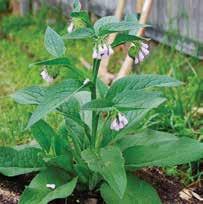
I purchased five cuttings of comfrey ‘Bocking No. 4’ (Symphytum x uplandicum) and started them in my basement greenhouse to plant on my property once spring arrives. My interest in comfrey began when I put together a proposal for a chickens’ garden for our herbaceous perennials class. I discovered the extensive benefits of this plant, including it being a protein-rich fodder for chickens. It’s a terrific nitrogen fixer for the soil; adding the nutrient-rich leaves to compost enhances soil fertility and structure. Since it’s not native to North America, I decided to purchase the sterile/seedless version, which is the No. 4 or the No. 14. This way, I can propagate and control the plant as needed. Right now (early spring), the plants have pushed out these large oval green leaves, and I can’t wait to see the dainty purple flowers that should bloom in the summer. I’m beekeeping for the first time this year, and I’ve read that bees absolutely love comfrey, so I’m excited to see how this plant can benefit both flora and fauna.
DIANA PAPPAS | WEST STOCKBRIDGE, MASS.
Artist, photographer, gardener, writer.
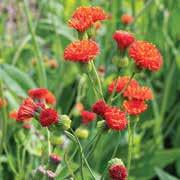
Six or so years ago I saw Emilia coccinea, the aptly-named tassel flower, growing at Untermeyer Gardens in Yonkers, N.Y. It was this unusual color where it isn’t red and it isn’t orange, but it is both at the same time. The seeds are dandelion-esque, a little tuft of a white cloud. I grew these seeds with great success the next year in my New Jersey garden and was quite taken with its growing habit. The flower stem forgets its leaves behind as it reaches for the sky, and from a height, it displays a cluster of charming little tassels, almost floating in thin air. I saved more seeds but forgot about them for years until my family and I moved to West Stockbridge in 2024. I found those seeds squirreled away and took a chance on that old seed last summer. It was so rewarding to reacquaint myself with these gorgeous flowers with that fabulous color between two colors, taking me back to New Jersey and further back to that hot summer day at Untermeyer Gardens when I was so besotted by this unusual flower.
PETER ARNOLD | LAKEVILLE, CONN. Landscaper, arborist, “apple nerd.”
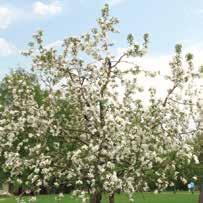
These days it has to be common apple trees (Malus domestica). In late winter, early spring I spend many days up in them, pruning for the season ahead. Free of foliage, you can read the tree more clearly — how it responded to last year’s pruning, where a limb tore out in a storm or where a young buck rubbed the velvet on its antlers too hard. Every apple has a story to tell. Pruning in late winter and early spring means witnessing the season’s mood swings. Sudden snow and bitter wind one week, clear blue skies the next. Songbirds return, and the days get longer. My refrigerator starts to fill with bags of scion wood, and the buds slowly swell from dormancy to silver tip. For me, apple trees mark the change in season in my calendar, with the start of spring meaning pruning and the end of summer and fall meaning harvesting the fruit.
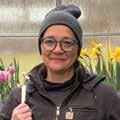
KYRA
HART | LENOX, MASS. Farmer and gardener.
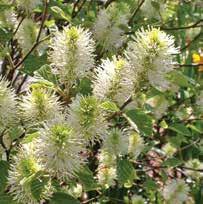
I have recently been finding myself thinking about Fothergilla. Specifically Fothergilla ‘Mount Airy,’ which, given a more sheltered location, does well here in the Berkshires. I have a fondness for this plant because in the spring, when there is still this lull of drab greys and browns and we are so hungry for spring to come alive, it fills in the edges of the garden with this white profusion of little bottlebrush-like flowers that seem to yell, “I’m here, and I’m so excited to be!” I really like the way the shrub blooms more on top with its upright habit and has an almost see-through appearance, the way it almost floats across the landscape.
Then, in the fall, it turns all shades of colors from yellow to orange to red. It is, again, a wonderful contrast of brilliant color during a time of drab browns and greys.
BENJAMIN PERRETT | STOCKBRIDGE, MASS. Superintendent of Buildings and Grounds at Chesterwood.
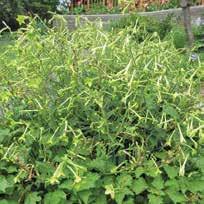
We are currently in the process of restoring the Perennial Border in The Studio Garden at Chesterwood. This project will be completed this June. While working on this project last season I had fallen in love with Flowering Tobacco (Nicotiana alata). It is an annual that is commonly mixed into perennial gardens. Its flowers open at night and are a good source of nectar for moths. I planted it at my house in combination with ferns and Japanese anemone. Last season it gave me so much joy when I would work late to see it glowing in the combination with shades of gray and green. I loved that.
Why Travel with Berkshire Botanical Garden?
As we prepare for this fall’s trip to South Africa, we queried one of our most frequent flyers, BBG Executive Director Mike Beck, about the most common questions we receive from interested botanical garden travelers.
What is BBG’s Garden Travel Program?
BBG has organized trips to many stunning garden destinations both in the United States and abroad over the past dozen years. We believe that these travel opportunities help further BBG’s mission of “providing information, education and inspiration concerning the science, art and joy of gardening.” We focus on destinations known for exquisite horticulture, spectacular landscapes, rare local flora, and fascinating history. I have been very lucky to join some of our past memorable garden tours, venturing to England, Italy, Scotland, and Ireland. Other BBG trips have targeted Denmark, Maine, Barbados, and South
Carolina. Our garden tours are open to BBG members and other gardening enthusiasts, all of whom make a taxdeductible donation benefitting BBG as part of the travel registration. In that way, our travel program helps to sustain all that we do here at BBG.
What can I expect if I join a BBG Garden Travel tour?
BBG has chosen to partner with Lani Summerville, the founder of Classical Excursions, to lead many of its Garden tours. Lani has a background and deep knowledge in art history and architecture, and has an impressive roster of personal connections to the owners and head gardeners of spectacular private estates around the
world. We limit our tour sizes to between 15 and 25 participants, which allows us to travel comfortably by small private motor coaches, stay in small hotels with personalized service and access estates that are not regularly open to the public. We always rely on local expertise by working with local garden experts and guides along the way.
I don’t usually book group travel. How is this different from traveling on my own?
Before joining BBG’s garden tours, I too had never traveled in an organized tour format, and I had hesitations, since I like to think of myself as a very independent traveler. But I have to honestly say that the experience is ideal if you want to
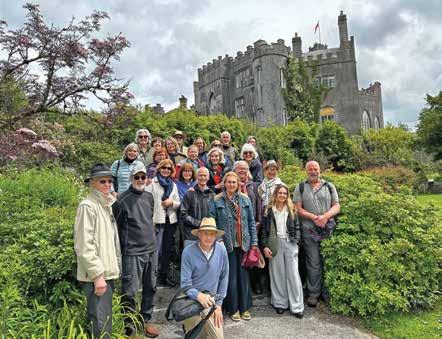
Scenes from our botanical garden adventures to Ireland (Birr Castle, with our hostess, the Countess of Rosse); Italy (Lago Maggiore, Isola Bella) and Scotland (Portmore Estate, Peebles).
really focus on accessing some very special gardens and gain a deep knowledge of a destination’s horticulture. Perhaps it’s not surprising for one to develop a sense of camaraderie from traveling with other like-minded gardening enthusiasts. I have really enjoyed touring with a diverse group of BBG members and volunteers, but always love meeting fellow travelers who don’t yet know of BBG and may be joining us from other parts of the country. The itineraries that Lani puts together are well balanced, focusing on two or three garden destinations per day, which allows time at each location to really connect with a place, its owners and gardeners. The days are broken up with some fun and social lunches (often hosted by the wonderfully engaging hosts at the gardens we visit). Dinners are sometimes “on your own,” which give you an opportunity to explore a locale separate from the group, or perhaps join up with just one or two other tour participants. Lani picks wonderful, comfortable hotels and always has recommendations for additional things to do between garden touring.
Why did you pick South Africa for this year’s BBG travel destination?
We have been planning to go to South Africa for several years now. Lani has told me that in her mind, the gardens there are among the most beautiful she has visited anywhere in the world, and that’s saying a lot! We will be joined on our trip by South Africa based garden designer Gary Searle, who will provide expertise and tons of local information to our group. I’m especially excited by the huge variety of native plants that hail from southern Africa, and I understand that November is one of the best months to see local flora. There’s a delicious food and wine scene in the Cape region that we are heading to. And while it’s quite a distance to travel to Cape Town from the Berkshires, the opportunities to extend the trip and add on, say, a few days of safari in a game park, or touring Johannesburg and other regions of the country, are vast.
Great Houses and Gardens of South Africa
November 7-14, 2026 | Tour arrangements by Classical Excursions
Join Berkshire Botanical Garden on an exceptional journey to South Africa’s Cape of Good Hope, where one of the world’s great centers of biodiversity has inspired centuries of garden design. South Africa is recognized as a global hotspot for plant diversity, with a rich garden history shaped by indigenous flora, colonial influence and evolving horticultural traditions spanning more than 300 years.
This carefully curated tour explores how that legacy unfolded — from early Dutch East India Company gardens to today’s celebrated estates. Highlights include the world-renowned Kirstenbosch National Botanical Garden, internationally admired for its focus on indigenous plants, as well as extraordinary private and historic gardens at Babylonstoren, Vergelegen, Morgenster, Rustenberg, Stellenberg, and the celebrated rose garden at Fresh Woods.
Art and architecture enrich the journey with visits to the Michaelis Collection, Koopmans-de Wet House, Groote Schuur, the Irma Stern Museum, and Groot Constantia, South Africa’s oldest wine estate.
Guests enjoy four nights at the iconic Mount Nelson Hotel beneath Table Mountain, followed by three nights in the heart of Stellenbosch’s wine country on a garden-surrounded estate. Visits to private wine estates, Table Mountain National Park and the famous Penguin Beach complete a journey shaped by history, horticulture and extraordinary landscapes. For details and registration: Olivia@ClassicalExcursions.com 413-446-8728 Discover a
1815 N. Main St., Rte. 7, Sheffield, MA 413-528-2717 Shop and garden open daily Follow us on Instagram for events and updates @shopcampo campodefiori.com
For advertising opportunities, please call 413-298-3926.
Little Builders, Big Bird Adventures!
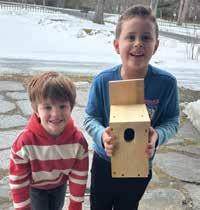
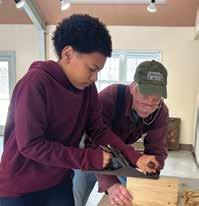
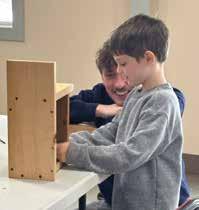
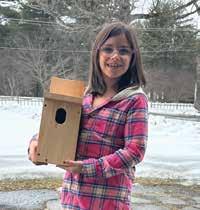
Our Farm in the Garden campers in February became builders and budding ornithologists as they constructed a collection of handcrafted birdhouses for the BBG grounds. In April, our campers installed and numbered each one, officially opening our very own “bird neighborhood” nestled throughout the BBG.
Once summer arrives, the project takes on new life. Campers will visit the houses each week, carefully recording signs of nesting — tracking eggs, hatchlings and fledglings as the season unfolds. Their findings will be submitted to the Cornell Lab of Ornithology’s NestWatch program, allowing our young naturalists to take part in meaningful citizen science while witnessing the remarkable life cycles of local birds up close.
This initiative was made possible by generous community partners. Nate Coon donated and pre-cut the lumber into ready-to-build kits. Ben Barret guided campers as they assembled each house, teaching them how to use drills, hammers and saws safely and confidently. And Ben Nickley of the Berkshire Bird Observatory toured the grounds to identify ideal birdfriendly locations, advise on the number of houses to build, and share an engaging presentation about the species we hope will soon call them home, including bluebirds, chickadees and nuthatches.
Together, what began as a winter building project has become a seasonspanning exploration of habitat, stewardship and discovery.
Saturday, August 8, 1–5 p.m. Sunday, August 9, 10 a.m.–4 p.m. Free with Garden Admission!
All ages and experience levels are welcome to enter this blue-ribbon event. Submit your own entries in the show or stop by and take in the talents of regional gardeners and flower designers.
To learn more or print out your entry card, visit BerkshireBotanical.org/grow-show Continuing a 56-year tradition of
In Remembrance
Jeannene Booher (1936-2026)
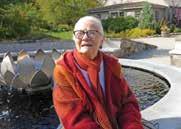
We remember Jeannene Booher with deep gratitude, admiration and affection, a woman whose life was defined by creativity, generosity and an enduring love for beauty in all its forms. Jeannene died peacefully at her home in Otis, Mass., on March 1. She was 90.
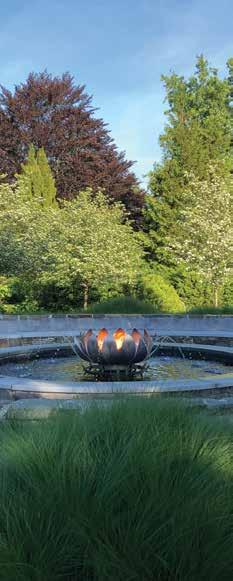
At Berkshire Botanical Garden, her presence is felt in countless ways, perhaps most vividly in the welcoming gathering place she made possible. The fountain in front of the Center House, set within its graceful entry garden of gentle hills, native larches and Winter King hawthorns, stands as a lasting expression of her spirit. When, in 2017, support was needed to complete this space, Jeannene simply said yes. “I’d be happy to give it,” she told us then. And because of her, generations will pause there, reflect and connect.
That gesture was emblematic of a lifetime of stepping forward. With her late husband, Doug Latham, she cultivated extraordinary gardens at their Otis home, inspired in part by BBG itself. What began as admiration grew into deep involvement: volunteer, trustee and devoted supporter. Her leadership helped shape the expansion of the Education Center. She believed deeply that BBG must inspire younger generations, and she delighted in seeing children discover the wonder of plants and flowers.
“Jeannene was a beautiful person inside and out,” said Madeline Hooper, vice chair of BBG’s Board of Trustees. “She always dressed in great style, and her presence was topped with a smile that lit up any room, as well as our BBG board meetings. She was devoted to BBG, and I was privileged to follow her lead when I first joined the board. I think she will be remembered most for her kindness.”
Jeannene’s path to the Berkshires was as remarkable as her contributions here. From her childhood in West Texas — where a young girl studying Vogue magazines dreamed of New York — to a distinguished career as a fashion designer, she lived with determination and elegance. At New York City, she realized that dream, designing for renowned houses and eventually building her own successful label.
Yet beyond her accomplishments, it was her warmth, kindness, and unmistakable style that defined her. She brought light into every room and every gathering, forming friendships that enriched both her life and ours.
Jeannene Booher leaves behind not only a legacy of beauty, but a living landscape of generosity. We are profoundly thankful.
Clara Carolina Archambault (1928-2026)
We remember Clara Carolina Archambault with deep appreciation and quiet admiration, a devoted gardener whose steady hands and generous spirit helped nurture both plants and people. Clara, 97, of Lenox, Mass., died Jan. 30, at Berkshire Medical Center in Pittsfield.
At Berkshire Botanical Garden, Clara found a place where her love of growing things could take root in community. As a volunteer in the Herb Garden, she became part of a tradition grounded in care, patience and shared knowledge. Though she modestly claimed she was still learning to identify herbs in early spring, she found her own essential role: tending the paths, carefully weeding the grass between the stones. It was work that reflected who she was: thoughtful, meticulous and quietly indispensable. Her connection to the Garden extended beyond her weekly visits. Her rhubarb jam recipe lives on through the Herb Associates, still prepared and shared with visitors today.
“At 97 my mother still had lots of plants near her window at Devonshire, including Christmas cactuses, African violets, arrow leaf plants, oxalis, spider plants,” said Donna Drew of Great Barrington. “If anyone at Devonshire had a plant they didn’t know what to do with they would bring it to her.”
Even in her later years, Clara remained a trusted caretaker of growing things, always ready to revive, tend and share.
Her time in the Herb Garden was also marked by friendship. Brought each week by fellow volunteer Liz Leonard and her mother, Clara became part of a circle bound not only by gardening, but by companionship and care. That sense of belonging, so central to BBG, was something she both cherished and helped create.
With her late husband, Leonard W. Archambault, she built a life rich in simple pleasures. They loved to go fishing from their small boat on local ponds. They were active with local archaeology and folk music groups and the Pittsfield Squares dance club.
Clara reminds us that a garden is shaped not only by design, but by devotion. We are grateful for her presence, her care and the living traces she leaves behind here at BBG.
Jeannene Booher in 2023, relaxing at the fountain by the Center House.
Clara Carolina Archambault, enjoying the Bulb Show in 2025.
Volunteering at BBG isn’t fun, if ...
Yes, you heard me right. Volunteering at our amazing gardens and galleries isn’t fun … if you DON’T like:
• meeting new people, making new friends
• learning from a talented professional gardening and educational staff
• interacting with visitors from near and far
• making a contribution to the ecological health of the region
• feeling like an involved and vital member of your community
• being part of a big, active, positive, and enjoyable family
• getting to use your skills and special talents for the public good
• participating in an important cultural center
• being thanked, appreciated and recognized for your spirit of volunteerism
• enjoying the fun of being an insider at festive special events
• experiencing the joy of nature in a spectacular collection of gardens
On the other hand, if you DO like any of these things, then consider becoming a BBG volunteer. We welcome newcomers year round with all kinds of things to do. And you don’t need gardening skills. You can be a docent in our art galleries, a greeter at our Visitor Center, a tour guide, a helper at special events, and more! If you do want to garden, you can join our troop of seasonal helpers. Training is provided for every position.
To learn more about volunteering at BBG, please reach out to River Begas at rbegas@berkshirebotanical.org or 413-305-1714, ext. 28.
Join the fun!
Lauretta Harris President, BBG Volunteer Association
Step into a season of creativity, craftsmanship and garden-driven discovery. From art workshops to expert-led horticulture intensives, immersive botanical field trips, artisan crafts, wellness traditions, and design-forward garden education, this Summer/Fall lineup invites you to grow your skills, spark your imagination and connect more deeply with the natural world.
Scan now to explore our program listings online and to register or visit BerkshireBotanical.org.
Classes, Lectures and Workshops
June
New Garden Designer Workshop and Walkabout
IN-PERSON at BBG
Thursday, June 11, 1 to 3 p.m.
Members: $100 | Non-Members: $120
Join garden designer and author Daryl Beyers, Gardening Certificate Program coordinator at the New York Botanical Garden, for an immersive workshop on garden design inspired by his latest book, “The New Garden Designer’s Handbook: How to Design Useful, Beautiful Gardens from Start to Finish” (Timber Press). The workshop is followed by a walk in the Garden to show participants how certain design principles, concepts and visual keys can be translated into their own home gardens. (This program includes the book plus book talk and signing that begins at 4 p.m.)
New Garden Designer Book Talk and Signing
IN-PERSON at BBG
Thursday, June 11, 4 to 5:30 p.m.
Members: $30 | Non-Members: $45
Garden designer Daryl Beyers will discuss his new book, “The New Garden Designer’s Handbook: How to Design Useful, Beautiful Gardens from Start to Finish” (Timber Press).
As Gardening Certificate Program coordinator at the New York Botanical Garden, he helps guide the program’s curriculum, teaches the popular Fundamentals of Gardening course and courses on container gardening and garden design. He has more than 25 years of professional landscaping experience, specializing in residential garden design and development. As a staff writer, photographer, and editor for Fine Gardening magazine, he authored two special issues on garden design, and he served as a contributing garden editor for Martha Stewart Living. His articles on gardening and garden design have also appeared in Horticulture and HGTV Magazine
ONLINE Our online classes are offered over Zoom. Students receive class log-in information and materials lists, when applicable, once they’ve registered.
IN-PERSON The location of onsite classes is subject to change. Students will be notified as soon as possible if classes require a change in location.
HYBRID These classes are held both online and in person. They feature the lecture portion of class online and a hands-on component in-person and outdoors.
OFF SITE These classes are held off site.
America and Europe: A Virtuous Wine Story
IN-PERSON at BBG
Thursday, June 11, 6 to 7:30 p.m.
Members: $80 | Non-Members: $100
Join Philippe Jeanjean, a WSET Level 3–certified sommelier from Paris, for an enlightening tasting experience that spans two continents. Since the 18th century, classic European grape varieties have found new homes in American soils. Today, regions like California, Oregon, Washington, and the Finger Lakes of New York craft wines that rival Europe’s finest, yet with their own distinct personality. In this class, you’ll taste and compare wines made from the same grape varieties in both Europe and America, discovering how climate, soil and winemaking traditions shape each bottle. Experience the story of wine across the Atlantic. Sip, compare and explore the virtues of both worlds.
Garden Photography and Your Smartphone
IN-PERSON at BBG
Friday, June 12, 1 to 3 p.m.
Members: $30 | Non-Members: $45
Improve your garden photography skills in this workshop led by local photographer and photography educator Thaddeus B. Kubis This comprehensive session will begin with an hour of classroom instruction focused on maximizing the capabilities of your smartphone, followed by an hour-long guided walk through Berkshire Botanical Garden to apply the techniques discussed.
HORTICULTURE
CERTIFICATE PROGRAM
This symbol denotes Horticulture Certificate Program classes, workshops and lectures open both to students seeking credit towards one of BBG’s horticulture certificates as well as the general public. Please visit BerkshireBotanical.org or call 413-357-4657 for additional information.
ADVANCED HORTICULTURE CERTIFICATE PROGRAM
This symbol denotes Advanced Horticulture Certificate Program classes, workshops and lectures open both to students seeking credit towards one of BBG’s horticulture certificates as well as the general public. Please visit BerkshireBotanical.org or call 413-357-4657 for additional information.
FAMILY FRIENDLY PROGRAM
This symbol denotes classses appropriate for both children and adults.
Kitchen classes are sponsored by Guido’s Fresh Marketplace with stores located in Great Barrington and Pittsfield.
Drawing on the Land OFF SITE, Rockland Farm, Canaan, N.Y.
Saturday, June 13, 1 to 5 p.m.
Members: $170 | Non-Members: $200
Experience our second annual Drawing on the Land design symposium at the breathtaking Rockland Farm on Saturday, June 13, from 1 to 5 p.m. Spend an afternoon immersed in landscape creativity as two distinguished designers share their perspectives, followed by an insightful panel discussion. The day concludes with a guided tour of the gardens at the height of their June beauty followed by a wine reception. Whether you’re a professional designer or an inspired enthusiast, this program will spark new ideas and deepen your connection to design in the natural world.
Artist Tour: Stephen Procter’s ‘Monumental Vessels in the Garden’ IN-PERSON at BBG
Friday, June 19, 4 to 5:30 p.m.
Members: Free | Non-Members: $15
Step into a world where clay becomes a living form. Join artist Stephen Procter on a guided tour of his striking ceramic sculptures, thoughtfully placed among the blooms of the Garden. The tour will meet at the Center House, walk through the gardens, and end with the smaller vessels installed in the Leonhardt Galleries.
Rhubarb and Strawberry Cooking Class
IN-PERSON at BBG
Saturday, June 20, 3 to 5 p.m.
Members: $90 | Non-Members: $110
The Berkshires’ growing climate is perfect for rhubarb and strawberries. Sweet, sun-ripened berries and tart local rhubarb are a natural match, each enhancing the other. In this hands-on class led by Miriam Rubin, we’ll explore their balance across a range of dishes: spoon cake with spiced rhubarb-strawberry compote, quick-pickled strawberries with fresh thyme and goat cheese crostini, strawberry gazpacho, and a gluten-free rhubarb-strawberry almond crumble. To drink, we’ll make a refreshing rhubarb-strawberry shrub.
sat jun 27 at 8pm straight no chaser sat jun 20 at 8pm gala: anthony roth costanzo sun aug 2 at 8pm los lonely boys fri sep 25 at 8pm
fleck’s
mahaiwe.org Plus classic movies, comedy, Indigo Room shows & more!
Anthony Roth Costanzo
Shakespeare’s ‘As You Like It’
Presented by The Rooted Voyageurs
IN-PERSON at BBG (Amphitheater)
Saturday, June 20, 6:30 to 8 p.m.
FREE
Join The Rooted Voyageurs as they perform Shakespeare’s raucously classic tale in our outdoor amphitheater. The story begins in the idyllic Forest of Arden, where an unexpected exile transforms into adventure and blossoming love. Filled with disguises, wit and warmth, the beauty of nature and the power of words reign supreme. Bring your own picnic and enjoy! Beverages will be available at a cash bar.
GLENDALE botanicals
design install estate gardens growers
CREATING BEAUTIFUL LANDSCAPES
Summer Watercolor with Perspective
IN-PERSON at BBG
Wednesdays, June 24 to July 29, 10 a.m. to 1 p.m.
Members: $285 | Non-Members: $310
Perspective is the art of representing three-dimensional objects on a two-dimensional surface to convey depth and spatial relationships. Join Pat Hogan for a summer session using BBG’s buildings as compelling subjects. This class focuses not on technical drafting or architecture, but on capturing shapes, light and shadow to suggest believable structure. Participants will sketch and photograph on location around campus.
Garden Nature Walk
IN-PERSON at BBG
Saturday, June 27, 11 a.m. to 1 p.m.
Members: $30 | Non-Members: $45
Plants contain multitudes. They might be potent medicine, delicious food, fine craft, or building material (or all of those things at once), but they also hold stories, memories and connections our human ancestors have formed with the landscape. Join herbalist Alex Klein for a nature walk through the Garden, getting to know some of the plants, both cultivated and weedy, and the way humans and other species have and continue to engage with our green friends. We’ll talk botany, ecology and natural history, as well as medicinal, edible and other uses of common plants in the garden and the “wild.”
Farm-to-Table Lunch Series with Tracy Hayhurst IN-PERSON at BBG
Sundays, June 28, July 26, Aug. 30, and Sept. 20, 11 a.m. to 1:30 p.m.
Individual Class Fee: Members: $90 | Non-Members: $110
June 28: Cooking with Herbs
Using fresh herbs is one of the easiest ways to boost the flavor of your dishes. In this class, we’ll gather a variety of herbs from the herb garden and display garden to use in several different recipes. Class culminates in a delicious lunch!
July 26: Summer Salads
Going way beyond lettuce, we’ll harvest veggies from the garden to create salads that can be served as stand-out appetizers or sides or take center stage as hearty main courses.
August 30: Italian Summer Feast
Using the bounty of the garden in traditional Italian recipes, we’ll create a fantastic multi-course meal!
September 20: Preserving September is peak harvest time and, with fall around the corner, we want to save all the season’s goodness. We’ll cover several different preserving techniques, including fermentation and water-bath canning.
July
Evening Firefly Watch
IN-PERSON at BBG
Thursday, July 2, 8:30 to 10 p.m.
Members: $30 | Non-Members: $45 per adult
Children under 12 FREE
Experience a magical summer firefly light show at the Garden, led by Nicaela Haig, senior teacher naturalist with Mass Audubon’s Berkshire Wildlife Sanctuaries. Learn about the lives and habitat needs of fireflies and view their ephemeral glowing light. After a brief indoor introduction, we’ll take a twilight stroll around the gardens and meadows for firefly viewing while keeping our eyes open for the stars, planets, and listening for twilight birds and mammals! Participants will also learn ways to support firefly health in their yard and community.
250 Years of Trees
IN-PERSON at BBG
Saturday, July 4, 10 a.m. to noon
Members: $30 | Non-Members: $45
Explore 250 years of trees and celebrate America’s semiquincentennial with Levi O’Brien, an ISA-Certified, TRAQ-Qualified arborist. A faculty member at the New York Botanical Garden and Brooklyn Botanic Garden, O’Brien teaches required woody plant courses for horticultural certification, along with in-depth public workshops.
Sunset Yoga in the Garden IN-PERSON at BBG
Thursdays, July 9 through Sept. 10, 5:30 to 6:30 p.m.
FREE
The
This summer, Yoga in the Garden returns to the Fitzpatrick Lawn at sunset. This class is open to all levels and offers a peaceful way to end the day. Sessions are led by Kathi Cafiero, a Kripalu-certified Legacy Yoga Teacher with over 25 years of experience and now in her 13th season at BBG. Please bring your own mat and props. No restroom facilities are available. In case of inclement weather, cancellations will be posted on BerkshireBotanical.com by 3 p.m. the day of class. No registration is required, and all are welcome.
Community Read with Stockbridge Library “The Comfort of Crows” by Margaret Renkl IN-PERSON at BBG
Tuesday, July 14, 6 to 7:30 p.m.
FREE
Join BBG and the Stockbridge Library for a community read of “The Comfort of Crows,” which reflects on the natural world through a year of daily observations. Pick up a copy at the Stockbridge Library or your favorite local bookstore, then gather at the Center House at BBG for a relaxed, engaging discussion.
Summer Field Trip: Untermyer Gardens and Wave Hill
OFF SITE
Wednesday, July 15, 8 a.m. to 6 p.m.
Members: $200 | Non-Members: $230
We’ll board the BBG van for a day trip to Untermyer Gardens, where we’ll tour the Conservancy, including the Walled Garden, Vista Steps, Rock and Stream Garden, and Temple of Love. From there, we’ll continue on to Wave Hill to enjoy a boxed lunch followed by a guided tour. Its 28 acres of gardens and woodland are renowned for their plantsmanship, beauty, and immersive experience of nature. After a full day exploring both sites, we’ll return to the Berkshires.
CURATORIAL TALK
American in Nature: Reflections on the Art of Watercolor IN-PERSON at BBG
Friday, July 24, 5:30 to 7 p.m.
Members: FREE | Non-Members: $15
Mark D. Mitchell, Holcombe T. Green
Curator of American Paintings and Sculpture at Yale University Art Gallery, will speak in conjunction with “Grounded in Nature: Paintings by Adam Van Doren,” on view in the Leonhardt Galleries from June 5 to Aug. 23. Inspired by artists such as John Singer Sargent, Edward Hopper and Andrew Wyeth, Van Doren often works in watercolor, echoing a tradition that integrates the built environment into landscape. Mitchell’s talk will explore this lineage and the work of these influential painters. Watercolor was admired by critics at the turn of the twentieth century as a great American art form. In this talk, American watercolor’s wider history will paint a vivid picture of creativity and immersion in the natural world that continues to delight and inspire.
Mothing in the Garden IN-PERSON at BBG
Friday, July 24, 8 to 10 p.m.
August
Stone Wall Workshop
IN-PERSON at BBG
Saturday, Aug. 1, 9 a.m. to 3 p.m.
Members: $130 | Non-Members: $160
This hands-on class taught by Sam Mercier will teach the basics of planning, prepping and building a stone wall. It is the first of two classes that will be building a section of wall at Berkshire Botanical Garden that becomes part of the permanent landscape. The class will start with a short classroom discussion on stone wall fundamentals. The rest of the day will be spent outside working on the wall. In the field, we will discuss layout and considerations in prepping the base and surrounding grades for a wall. We will talk about techniques and styles for building a lasting wall from start to finish. We will also spend time on tools, shaping stone and splitting stone.
Soilmatics: Nature-Based Movement Practice IN-PERSON at BBG
Mondays, Aug. 3, 10 and 17, 6:30 to 7:30 p.m.
Members: $20 | Non-Members: $30
Members: $30 | Non-Members: $45 per adult Children under 12 FREE
Families are encouraged to join us this National Moth Week in celebrating nature’s unsung heroes! Create your very own antennae, eat a moth-themed snack and play some pollinator games as we wait for darkness, when we will observe some nocturnal friends, joining over 200,000 participants in the citizen science side of moth research!
Master Class: Watercolor with Adam Van Doren
IN-PERSON at BBG
Saturday, July 25, 10 a.m. to 1 p.m.
Members: $100 | Non-Members: $120
Join artist Adam Van Doren, who teaches at Yale and is on exhibit in the Leonhardt Galleries at BBG this summer, for a master class in watercolor. Various watercolor materials and techniques — such as wet-on-wet and dry brush — will be discussed, with references to the methods of the masters, such as John Singer Sargent, Winslow Homer and Edward Hopper. Class will be held outdoors, weather permitting. Participants should have some intermediate experience and bring their own supplies. Must be 18 or older. Limited to 7 students.
Join Sunder Ashni, Somatic Experiencing® practitioner and yogi, for 90 minutes of deep listening to nature and the body. This gentle class invites you to let breath, sensation and impulse guide movement. Drawing on Somatic Experiencing and yogic asana, we’ll cultivate grounding and spaciousness in the heart, body, and mind.
Community Garden
Open House
IN-PERSON at BBG
Tuesday, Aug. 4, 4 to 6 p.m. FREE
Join Mumbet’s Freedom Farm, Latinas 413 and Berkshire Botanical Garden for an open garden afternoon featuring Sunder Ashni’s Plantcestors: Cultivating Relationships with the Plants That Have Raised Us. Ashni, vision builder and steward of Mumbet’s Freedom Farm, will guide participants in reconnecting with plants that shape our cultures, memories and well-being. Through reflection and shared stories — from family recipes to familiar scents and landscapes — you’ll consider the plants that have grown alongside you. The workshop concludes with creating a take-home herbal remedy using plants from Mumbet’s Community Garden.
Pollinator Walk
IN-PERSON at BBG
Saturday, Aug. 8, 11 a.m. to noon
Members: FREE | Non-Members: $15 per adult
Join Nicole Bell, UMASS Extension Educator III - Pollinators, for an easy stroll through the Garden where she will temporarily vial some bees to look at up close and discuss, and talk about native plants and pollinators.
Landscape Design Clinic
IN-PERSON at BBG
Saturday, Aug. 22, 9 a.m. to 4 p.m.
Members: $130 | Non-Members: $160
This seven-hour, fast-paced, information-saturated clinic, will focus on several selected homes/properties in the vicinity of BBG. It may include one or more of the workshop participants, or their client’s properties. Should time permit, we may visit one or more projects completed and/or in-process by the leader. An active discussion format will focus on common design principles, orchestrated and summarized. Problem solving, conceptualizing a landscape master plan and more fully understanding the design process are among the topics to be explored. All attendees will participate in the process of observing and conceptual designing. This field trip is held rain or shine (dress appropriately). It is ideal for making you a better, more engaged client for professional design services, or to advance your ability to know your own mind relative to design.
Cooking with Tomatoes Hands-On Workshop
IN-PERSON at BBG
Saturday, Aug. 22, 3 to 5 p.m.
Members: $90 | Non-Members: $110
It’s tomato season, the most anticipated harvest of the year. In this hands-on class led by Miriam Rubin, we’ll begin with a tomato tasting, exploring varieties, textures, and flavor, along with a look at the growing season. Each participant will make a personal tomato galette with a choice of toppings on pre-rolled dough. While the galettes bake, we’ll cover an easy method for peeling and seeding tomatoes for sauce or freezing, then prepare Ginger Tomatoes and a Tomato and Peach Salad from Rubin’s book, “Tomatoes.”
Pop + Bonsai
IN-PERSON at BBG
Thursday, Aug. 27, 5 to 7:30 p.m.
Members: $100 | Non-Members: $130
Serving the Berkshires since 1981
Let’s reimagine the centuries-old Japanese art of bonsai, emphasizing individual expression beyond classical tradition. This approach embraces playful, lighthearted and sometimes humorous ways of working with miniature trees as artistic form. In this workshop led by artist and horticultural therapist Brian Mikesell, you’ll have creative freedom to shape your own bonsai. Step beyond your horticultural comfort zone and into a hands-on creative challenge. All materials are included, and you’ll take your finished bonsai home.
Summer’s Beauty: A Meditative Experience on the Joy of Connecting with Nature
IN-PERSON at BBG
Saturday, Aug. 29, 4 to 5 p.m.
Members: $20 | Non-Members: $30
Join Sandrine Harris and meditation centered on beauty and our connection to the natural world. This outdoor program offers mindful prompts, quiet reflection and optional sharing in a supportive setting. No prior experience is necessary; all adults 20-plus years are welcome.
September
Herbaceous Plants
IN-PERSON at BBG
Tuesdays, Sept. 8 through 29, 5:30 to 8:30 p.m. (Certificate Students Final Presentation is Nov. 3, 5:30 to 8:30 p.m.)
Members: $230 | Non-Members: $260
This intensive class led by Lee Buttala explores the world of herbaceous plants, from their identification, selection and use in the garden through their basic botany, life cycle and propagation. Participants are asked to create a final project highlighting a genus or plant family related to the curriculum. A part of the Level 1 horticulture core curriculum, this class is essential for the committed gardener and includes lectures, hands-on activities, field study, and group discussion. The class aspires to give participants a deeper understanding of annuals, perennials and ornamental vegetables and their role in the garden. Students should dress for outdoor field study. All students participating in this class as part of the Horticulture Certificate Program are required to complete a final project.
Fall Beginner Watercolor
IN-PERSON at BBG
Wednesdays, Sept. 9 to Sept. 30, 10 a.m. to 1 p.m.
Members: $200 | Non-Members: $230
This four-week class, taught Pat Hogan, will focus on the building blocks of watercolor: shape, color, value, and edges (also called the four pillars of watercolor). We’ll explore mixing vibrant color, making expressive brushstrokes and building strong compositions. Think of a composition as interlocking shapes — like a jigsaw puzzle — each distinct, fitting together to form a complete painting.
Drafting for Garden Design
IN-PERSON at BBG
Saturdays, Sept. 12 through Oct. 3, 9:30 a.m. to 12:30 p.m.
Members: $230 | Non-Members: $260
This studio intensive introduces students to the fundamentals of scaled site planning and basic drafting. The course covers reference materials, drafting tools, paper types, line weights, lettering, and scale reading, alongside demonstrations of professional techniques. Students will begin drafting site plans and exploring map-making. In the second half, participants will develop a graphic landscape palette to represent trees, shrubs, perennials, groundcovers, and hardscape elements such as stone terraces. Taught by Tom Smith of Springfield Technical Community College.
known as Blue Spruce and Douglas Fir, these are two of the thousands of species we specialize in. Discover how our passion is inspiring one beautiful property after another. or visit
Brian Callahan, horticulture teacher at Taconic High School, will introduce you to lawn care best management practices with a focus on creating healthy, sustainable home lawns. Participants will learn how to select appropriate turfgrass species for their site, along with proper mowing, watering, fertilization, and soil management techniques that promote strong turf growth and resilience. The course also emphasizes practical strategies to reduce pesticide use, including cultural practices, pest prevention and integrated pest management approaches. Ideal for homeowners and landscape professionals looking to maintain high-quality lawns with fewer chemical inputs.
Calendula
& Kindred: Crafting Herbal Oils, Salves and Skin Elixirs
IN-PERSON at BBG
Saturday, Sept. 12, 2 to 4 p.m.
Members: $45 | Non-Members: $60
Welcome late summer and early fall with calendula, a beloved herbal ally. In this hands-on workshop led by Nicole Irene, you’ll create plant-infused skincare using calendula and seasonal companion herbs. Learn the essentials of herbal oil infusion and turn your blends into a salve, lip balm and botanical perfume oil roller. We’ll cover herb selection, carrier oils, and safe infusion and preservation techniques, along with traditional uses and gentle energetics for skin support. Enjoy herbal tea and community in a relaxed setting as you build a small home apothecary. You’ll leave with three finished products and the confidence to keep working with herbs at home. All materials included; no experience needed.
Family Workshops
Saturday, Sept. 12: Family Harvest
Step into the camp garden and harvest the remaining vegetables and cut flowers together with your family.
Saturday, Oct. 24: Goodnight Garden
It is time to put the camp garden to sleep for the winter, including planting cover crops and adding a layer of compost to the beds. Learn about the ways in which we set the garden up for success in the spring!
Wednesday, Nov. 11 : Garlic
Planting
Find your spot, dig and place those powerful garlic plants into the earth for a winter crop that will bring us flavor for cooking in camp all summer long.
From Leaf to Stone: Concrete Leaf Casting Workshop
IN-PERSON at BBG
Fridays, Sept. 18 and Sept. 25, 2 to 4 p.m.
Members: $110 | Non-Members: $140
Join Krissy Romano, Visitor Center manager at Berkshire Botanical Garden, for a two-part leaf casting workshop. In the first session, you’ll select a leaf, prepare a sand form, and apply and shape concrete to create your cast. In the second, you’ll reveal your piece, refine its form, and learn techniques for painting and sealing. You’ll leave with a finished garden sculpture to take home.
Stitched Gardens: Plant Dyes and Book Art
IN-PERSON at BBG
Saturday and Sunday, Sept. 19 and 20, 9 a.m. to 4 p.m.
Members: $200 | Non-Members: $230
Join Berkshire artist and writer Suzi Banks Baum in our Mother Earth Lodge for a hands-on workshop. We’ll harvest peak-season color from BBG’s gardens, create natural dyes and use them to dye thread and paper. With simple embroidery stitches, you’ll embellish book pages to create a small handmade book that carries the garden’s beauty into winter. You’ll be introduced to natural dyeing, receive resources for further study and take part in poetic journal prompts and conversation about daily creative practice. A materials fee of $15 is payable at the workshop. Please bring an apron and lunch.
Gardening for Baby Boomers: 10 Ways to Garden Smarter as We Get Older
IN-PERSON at BBG
Saturday, Sept. 26, 1 to 3 p.m.
Members: $30 | Non-Members: $45
Even dedicated gardeners eventually ask how long they can maintain the beds and borders they’ve created over time. Led by Chris Ferrero, this program offers a fresh look at garden design, plant selection, ergonomic tools, and practical techniques to help you adapt your garden to changing needs — without sacrificing beauty. The focus shifts the question from whether we can keep gardening as we age to how we can continue doing it well.
October
Understanding Woody Plants IN-PERSON at BBG
Tuesdays, Oct. 6 through Oct. 27, 5:30 to 8:30 p.m.
(Certificate Students Final Presentation is November 3, 5:30 to 8:30 p.m.)
Members: $230 | Non-Members: $260
This course, taught by Jenna O’Brien, will focus on the bones of the garden with a survey of ornamental woody plants for residential landscape design. Students will become familiar with the many garden-worthy woody plants that thrive in Zone 5, including ornamental shrubs, small flowering trees, shade trees and broadleaf and needle evergreens. The course covers plant ID, selection, siting, cultivation and possible design uses. Students should dress for outdoor field study. All students participating in this class as part of the Horticulture Certificate Program are required to complete a final project.
New
England Native Plant Design IN-PERSON at BBG
Thursdays, Oct. 8 through 29, 5:30 to 8:30 p.m.
Members: $230 | Non-Members: $260
This course, led by Bridghe McCracken, will help students better understand the principles and practices of ecological gardening with a focus on native plant communities. Students will learn the native plant palette, resources needed to identify these communities and habitats and methods of introducing native plants into gardens. Identifying and controlling invasive plant species, in addition to restoring areas that have been impacted by invasives, will also be highlighted. Gardeners will learn how to enhance garden spaces with native plants that create sustainable and low-maintenance gardens.
Watercolor Plus IN-PERSON at BBG
Wednesdays, Oct. 14 to Nov. 18, 10 a.m. to 1 p.m.
Members: $285 | Non-Members: $310
This six-week class, led by Pat Hogan, will introduce new materials and techniques to your watercolor practice. We will continue to build on strong composition and add some fun techniques designed to free your creativity and help you stay loose, juicy, and inspired. Those “new” materials are in your kitchen, your backyard and right here at the BBG!
SEASON 2026
Free Event COMMUNITY DAY
SATURDAY, MAY 23
FIREFLIES by Matthew Barber
JUNE 19–JULY 19
TWELFTH NIGHT by William Shakespeare JULY 4–26
CIRCUS & THE BARD: THE NEXT CHAPTER
Co-created by Allyn Burrows, Robin Eldridge & Pedro Reis JULY 16–26
SHAKE IT UP: THE REMIX
Co-created by Allyn Burrows & Jacob Ming-Trent JULY 29–AUGUST 2
FRANKIE AND JOHNNY IN THE CLAIR DE LUNE by Terrence McNally
JULY 30–AUGUST 23
HAMLET by William Shakespeare AUGUST 13–30
MIDSUMMER DREAMERS
Created & Performed by Nick Nudler & Kirsten Peacock
SEPTEMBER 1–3
PLAYS IN PROCESS AN INTRODUCTION TO NEW WORKS
SEPTEMBER 1–3
THE NORWEGIANS by C. Denby Swanson
SEPTEMBER 4–OCTOBER 4
CELEBRATING JEWISH PLAYS
OCTOBER 9–11
A Lively, Costumed Reading PRIDE AND PREJUDICE
DECEMBER 18–20
LENOX, MASS.
Justin Durham, Circus & The Bard, 2025.
Photo by Nile Scott Studios
Gardening for Biodiversity with Native Plants: Providing Habitat for Pollinators, Birds and Other Essential Wildlife
IN-PERSON at BBG
Saturday, Oct. 24, 10 to 11:30 a.m.
Members: $30 | Non-Members: $45
In this talk, Amy Meltzer will explore the current biodiversity crisis and the evolutionary relationships among native plants, insects, birds, and fungi that support ecosystem survival. She will show how native plantings and ecological landscape practices can restore biodiversity, build resilience, and help slow climate change, while creating beautiful, thriving gardens. July 31–August 16
Inner Harvest Meditation: A Contemplative Journey in Autumn
IN-PERSON at BBG
Saturday, Oct. 24, 4 to 5 p.m.
Members: $20 | Non-Members: $30
The fall season invites a shift in energy and intention, moving from summer’s fullness and towards winter’s slowing. Join BBG’s mindfulness facilitator Sandrine Harris for a gathering to contemplate and explore the meaning of autumn. No experience needed and all adults 20-plus years are welcome.
Herbal Alchemy: Oxymel Workshop
Crafting Oxymels for Wellness & Seasonal Support
IN-PERSON at BBG
Saturday, Oct. 31, 1 to 3 p.m.
Members: $45 | Non-Members: $60
Step into herbal alchemy and explore oxymels, an ancient blend of honey and vinegar used to extract and preserve plant properties. In this hands-on workshop, herbalist Nicole Irene introduces the history, uses and versatility of oxymels as a foundation for the home apothecary. You’ll taste a variety of prepared blends, learn how different herbs support the body through seasonal shifts, and explore the basics of creating balanced formulations. Working with a curated selection of herbs, roots and spices, you’ll craft your own oxymel to take home in an intuitive, exploratory process. All materials are included; no experience necessary.
by Matthew López directed by Eric Hill choreography by Isadora Wolfe
by David Auburn directed by Isadora Wolfe
by Chess Jakobs directed by Gerry McIntyre
November
Rooted in Place: Ecological Symposium
OFF SITE at Berkshire Waldorf High School
Sunday, Nov. 1, 11 a.m. to 4 p.m.
Members: $100 | Non-Members: $130
Join us for our annual gathering focused on ecology, land stewardship and place-based environmental practice. We’ll bring together scientists, gardeners, artists, and educators to explore how local ecosystems function and how human activity shapes — and can support — the health of those systems. This year’s day-long focus is on forests.
The
Language of Flowers:
A Fall Harvest in Watercolor & Colored Pencil
IN-PERSON at BBG
Monday, Tuesday and Thursday, Nov 2, 3, and 5, 10 a.m. to 4 p.m.
Step into the quiet poetry of autumn, where seeds scatter, pods open, and bark tells its slow, textured story. In this class, we’ll explore the delicate dialogue between watercolor and colored pencil—a technique that blends fluid spontaneity with fine, intentional detail. This class, taught by Anastasia Traina, is open to both beginners and experienced artists, offering guidance in observing, simplifying, and translating nature’s quiet transformations onto paper.
Invasives: Plants and Insects
IN-PERSON at BBG
Saturday, Nov. 7, 9:30 a.m. to 3:30 p.m.
Members: $130 | Non-Members: $150
This full-day course, taught by Jen Werner, explores how and why pests become invasive and how agencies and working groups determine invasive status and control regulations. Participants will examine several recent invasive introductions, including identification, host plants and management strategies. You’ll also learn how to stay informed about emerging invasives and how to choose effective prevention and control methods for your specific site. The course includes an overview of pest life cycles, identification clues, and core principles of pest management.
Plant Health Care
IN-PERSON at BBG
Tuesdays, Nov. 10 through Dec. 1, 5:30 to 8:30 p.m.
Members: $230 | Non-Members: $260
Taught by Jen Werner, this program explores the key factors affecting plant health, including insects, diseases, pathogens, and abiotic stress. You’ll learn basic diagnostic techniques and how to prevent problems through thoughtful site preparation, plant selection, and placement. The course also covers managing issues using biological, cultural, and chemical strategies, with an emphasis on integrated pest management.
Rendering
IN-PERSON at BBG
Saturdays, Nov. 14 and 21, 9:30 a.m. to 3:30 p.m.
Members: $230 | Non-Members: $260
Rendering is a drawing skill used to communicate garden designs clearly to clients, adding depth and dimension so flat sketches become dynamic, lifelike images. Taught by Tom Smith of Springfield Technical Community College, this studio course builds on drafting skills and focuses on the softer side of design drawing. Students will use B-range pencils to practice illustrative techniques such as sections, elevations and plan obliques. Designed as the next step after drafting, the class is open to both garden designers and artists with Drafting for Garden Design or equivalent experience.
Art Making with Invasive Plants
IN-PERSON at BBG
Saturday, Nov. 14, 10 a.m. to 1 p.m.
Members: $100 | Non-Members: $130
Led by Mayuko Fujino, this workshop reframes invasive plants not only as ecological threats, but as materials for creative exploration. By transforming species such as multiflora rose and Japanese barberry (removed through land management at BBG) into paint, participants engage in a practice that encourages reflection, care and responsibility. Drawing on the artist’s perspective as a Japanese immigrant and conservation advocate, the workshop also considers parallels between ecological and social coexistence. Participants will create their own plant-based paint and receive resources to continue the practice at home.
Crafting a Holiday Wreath from Fresh and Dried Botanicals
IN-PERSON at BBG
Saturday, Nov. 21, 10 a.m. to 1 p.m.
Members: $100 | Non-Members: $130
If you’ve admired the wreaths at BBG’s Holiday Marketplace, this three-hour workshop will teach you how to craft your own botanical masterpiece. Led by Chris Ferrero and assisted by BBG’s master wreath designers, the session includes an introduction to design principles, bow-making, and wiring techniques, followed by hands-on practice. Using the same large balsam wreath forms and materials as the BBG designers, you’ll create your own decorated holiday wreath to take home.
December
Plant Design Studio
IN-PERSON at BBG
Saturdays, Dec. 12 and 19, 9:30 a.m. to 3:30 p.m.
Members: $230 | Non-Members: $260
Taught by Tom Smith of Springfield Technical Community College, this course focuses on designing planting plans for both private and public garden spaces. Through a series of exercises on form, color and texture, students will explore how to manipulate space using plants while considering their characteristics in specific design contexts. Drawing inspiration from the style of a house and addressing the horticultural needs of each plant, students will present their projects and participate in constructive critiques. The class is hands-on, with several design projects completed throughout the course.
Soil and Soil Amendments
IN-PERSON at BBG & ZOOM
Saturday, Dec. 12, 11 to 3 p.m. IN-PERSON
Tuesdays, Jan. 5 through 26, 5:30 to 7:30 p.m. on ZOOM
Members: $230 | Non-Members: $260
This course, taught by Monique Bosch, will explain how plant growth is affected by soils, from drainage to pH and nutrients. Learn how to evaluate soils, improve those that are less than ideal and amend soils for specific garden uses. Fertilizers, soil amendments, making and using compost, moisture management, and the pros and cons of mulching will be covered. Students need to get a soil sample before class and bring the results to the first class.
The Quieting: Winter Solstice Meditation Gathering
IN-PERSON at BBG
Saturday, Dec. 19, 4 to 5 p.m.
Members: $20 | Non-Members: $30
Winter invites us to slow down and turn inward. Join meditation facilitator Sandrine Harris for our annual Winter Solstice gathering as we embrace the stillness and welcome the return of the light. Please bring a candle and holder to this peaceful event. No experience is necessary. This gathering is open to all adults 20-plus.
We offer hardy field-grown plant materials, including Chinese or Kousa dogwood; the native Berkshire strain of Cornus florida; native birch; hybrid lilacs; viburnums; hydrangea paniculata selections; American Fringe trees; witchhazels; blueberries; winterberries; espaliered fruit trees; mature apple and pear trees; extensive selection of herbaceous, tree and Itoh or intersectional peonies.
how will you
Rare Finds. Beautiful Gardens.
A one-of-a-kind weekend where gardners and design lovers discover rare plants and exceptional pieces they won’t find anywhere else — all in support of Project SAGE.
Your appreciation for rare plants, exceptional craftsmanship, and inspired garden design helps provide safety, support, and a pathway forward for survivors of domestic violence throughout Northwest Connecticut. By being part of this extraordinary weekend, you help meaningful change take root.
Secrets 2026 benefitting Project SAGE MAY 16TH GARDEN TOURS MAY 17 TH RARE PLANT + GARDEN ANTIQUE SALE tradesecretsct.com