
Our Sympathy
We are truly sorry for your loss and send you our warmest thoughts and support.
This booklet aims to provide some practical help and advice during the early days of your bereavement.
Please don’t hesitate to ask questions if you are unclear about any matter, we will always be pleased to help you.
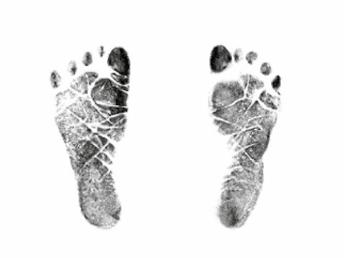
Baby Footprints
These are my tiny footprints, so perfect and so small. These tiny footprints, never touched the ground at all.
Not one tiny footprint, for now I have my wings. These tiny footprints were meant for other things.
You will hear my tiny footprints in the patter of the rain. Gentle drops like angel tears, of joy and not from pain.
You will see my tiny footprints in each butterfly’s lazy dance. I’ll let you know I’m with you, if you give me just a chance.
You will see my tiny footprints in the rustle of the leaves. I will whisper names into the wind and call each one that grieves.
Most of all, these tiny footprints are found in Mummy and Daddy’s heart Because even though I’m gone now, we’ll never truly part.
Emma, February 2003
Introduction
There are no words that can truly ease the pain of losing a baby, we want you to know that your grief is valid, your love is real, and your baby will always matter.
This booklet has been created to support you through this incredibly difficult time. Inside, you will find gentle guidance and practical information to help you navigate the days ahead. You are not alone, and while every journey through grief is unique, there is support and understanding available to you.
We hold you in our thoughts and extend our deepest sympathy for your loss.
Grieving the Loss of a Baby
The loss of a baby is not only the loss of a life, but also the loss of dreams, hopes, and the future that you imagined. It is a grief that often goes unseen by the world, yet it is profoundly real and enduring.
You may feel a wide range of emotions - shock, sadness, anger, guilt, numbness, or even moments of peace. All of these are natural responses to an unnatural loss. There is no right or wrong way to grieve, and no timeline for healing.
This grief may touch every part of your life - your relationships, your sense of self, your body, and your spirit. It may come in waves, sometimes gentle, sometimes overwhelming. Whilst nothing can take away the pain, know that you are not alone; others have walked this path and found ways to carry their love and their loss side by side. Your baby mattered. Your grief matters, and you deserve space, support, and compassion as you navigate this journey.
The Bereavement Support Office
Our Bereavement Support Officers at West Suffolk are here to offer practical guidance. If needed, they can assist you with the registration of your baby and provide information about funeral options, should you wish to explore them.
The office is open Monday-Friday 09.30 - 15.30
Telephone: 01284 713410
Or if preferred, email: bereavement.support@wsh.nhs.uk
We encourage you to ask any questions you may have - no matter how big or small. If the midwives or doctors are unable to provide an answer, our bereavement support officers, or the chaplaincy team may be able to help.
Please don’t hesitate to reach out.
We are here to support you in any way we can.

Jasmine Suite – Labour Ward
Maternity Bereavement Team
Our Maternity Bereavement Team provides compassionate, specialised care to families who have experienced the loss of a baby during pregnancy, at birth, or shortly after. Their role is both emotionally supportive and practically helpful, ensuring that grieving parents are not left to navigate this experience alone.
Many parents find it helpful to talk with someone about their baby’s death and the questions that may arise. If you received care on the labour suite, a member of the bereavement team will aim to speak with you or contact you by phone as soon as possible. This may happen before, during, or shortly after your admission.
If we are unable to meet with you in person at that time, we will usually reach out by telephone within a few days of your discharge.
Please know that our support is not limited to those currently in hospital. We are here for anyone affected by the loss of a baby, including parents whose care has been transferred to another hospital. You are always welcome to contact us directly.
We can offer you guidance, information, and emotional support during this difficult time and connect you with ongoing support through a range of voluntary organisations that specialise in baby loss and bereavement care.
We are also available to assist with practical matters, such as exploring funeral options, how to register your baby’s birth (if needed), and helping you make funeral arrangements in a way that feels right for you.
Maternity Bereavement Team
Telephone: 07971 793956
Spending time with your baby and making decisions
Deciding what you want for your baby is a deeply personal process, and it’s important to take the time you need. Legally, if a baby is born alive and later passes away, the birth must be registered.
In the time following your baby’s death, you will be offered the opportunity to spend time with them. Some parents choose to hold or see their baby straight away, while others may need more time or may choose not to. There is no right or wrong way to feel. What matters most is that you are supported in whatever you decide.
If you wish, your baby can stay with you while you are in hospital. When you feel ready to say goodbye, whether that is during your stay or after you return home, your baby will be gently transferred to the care of the hospital’s mortuary team.
If at any point you would like to see your baby again, this can be arranged. You are welcome to return to the hospital to spend more time with your baby, either alone or with family members.
To arrange this, please contact the Labour Suite Coordinator on 01284 713272 or the Maternity Bereavement Team on 07971 793956.
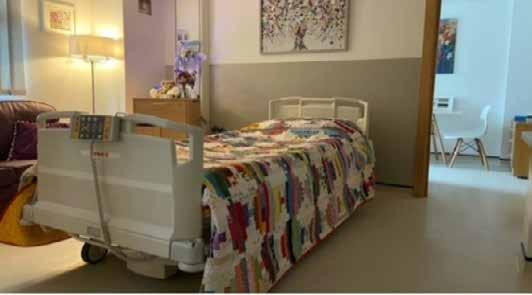
Jasmine Suite – Labour Ward
Taking your baby home and creating memories
Some parents choose to take their baby home for a short time, or until funeral arrangements are in place (unless the coroner is involved). This can be a meaningful part of saying goodbye, and we are here to support you in making that decision if it feels right for you.
You may wish to dress your baby in clothes of your choosing or wrap them in a special blanket. If you don’t have anything with you, your midwife or nurse can provide clothing and blankets.
Many families also choose to leave small items with their baby, such as a toy, a letter, a card, or a photograph. These can always stay with your baby if that brings you comfort.
Spiritual and pastoral support
Everyone’s needs are different after the loss of a baby, and for some, spiritual, pastoral or religious support can bring comfort and meaning.
The Chaplaincy Service at West Suffolk NHS Foundation Trust is a team offering compassionate pastoral, spiritual, and religious care for everyone.
If you would like your baby to be named or blessed, our chaplains would be honoured to support you. A member of the maternity team can help arrange this for you.
If you would like to speak with a chaplain at any time, please let a member of staff know, they will be happy to contact the chaplaincy on your behalf.
Chaplaincy
Telephone: 01284 713771
Email: info.chaplaincy@wsh.nhs.uk
The chaplains are on duty Monday - Friday, 8.30am - 4.30pm
Out of hours, contact switchboard 01284 713000 and ask for the on-call Chaplain.
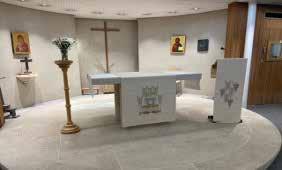
West Suffolk Hospital Chaplaincy
Annual Remembrance Service
Each year, a special remembrance service is held at the Southgate Community Centre to honour and remember babies who have died.
During the service, you are invited to light a candle in memory of your baby.
Parents and families are welcome to attend the service in any year, or every year, if they wish.
For more information about the next service, please contact the chaplaincy team or the maternity bereavement team.

Book of Remembrance
A Book of Remembrance is kept in the chapel of multi faith space at West Suffolk Hospital, for quiet reflection. You are welcome to visit as often as you wish, a chaplain can open the book for you to view the entry made in memory of your baby. You are able to add your baby’s name and date of birth to the book, this is entirely your choice - there is no obligation.
There is also a separate book where you are invited to write a personal message, letter, or note to your baby. If you would like help with this, please don’t hesitate to ask a member of staffwe are here to support you.
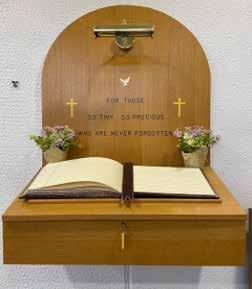
Book of Remembrance
Keepsakes and memory boxes

The midwife caring for you during labour, or the nurse supporting your baby in the Neonatal Unit, will be aware of the deep sadness you are experiencing. While you may feel unsure about keeping physical mementoes at this time, many parents later find comfort in having something tangible to remember their baby by.
These keepsakes may include items such as photographs, ink hand and footprints, an identification bracelet, or a lock of hair. With your consent, these can be carefully collected and placed in a special memory box, kindly provided through the hospital’s charity.
Please know that this is entirely your choice. You are welcome to accept all, some, or none of the keepsakes offered. Whatever you decide, you will be supported with compassion and respect.
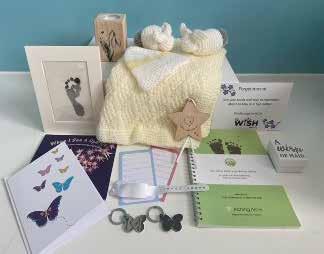
Maternity Memory Box
Photographs
Your midwife or nurse will gently discuss the option of taking photographs of your baby (if this is possible). Photographs are never taken without your consent. You may choose to have staff take photos for you, or you may prefer to use your own phone or camera, either instead of, or in addition to, those taken by staff. These images can become treasured memories, even if you’re unsure about them at the time.
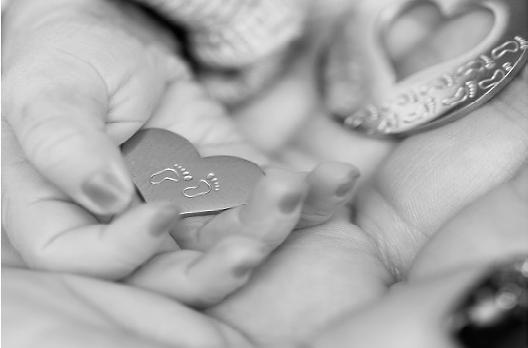
A lock of hair
If it is possible, and you wish, a small lock of your baby’s hair can be gently taken and kept as a keepsake. Some parents find comfort in placing it in a locket or keeping it in a safe place. If you would prefer that your baby’s hair is not cut, please let your midwife or nurse know, your wishes will always be respected.
Naming or blessing your baby
Choosing a name for your baby can be a meaningful and healing act, even for very small or early babies. It can help give identity and focus to your love and memories. If your baby’s sex is not known, you may choose a name that feels right for either gender, or you may choose not to name your baby at all. This is a deeply personal decision, and whatever you choose will be respected.
Some families find comfort in having a brief naming or blessing ceremony. If this is something you would like, the chaplaincy team is here to support you. Your midwife or nurse can help arrange this with the chaplaincy or another person appropriate to your faith or beliefs.
Teardrop sticker – a symbol of sensitivity
A small teardrop sticker may be placed on the outside of your maternity notes. This gentle symbol lets staff know that you have experienced the loss of your baby, helping to prevent unintentional and painful questions. The sticker is not placed on your general medical records (only on your maternity notes) and is used solely to ensure you are treated with the sensitivity and care you deserve.

Registration
In England, all births, stillbirths, and neonatal deaths must be registered with the Registrar of Births and Deaths.
If your baby was born alive or was stillborn after 24 weeks of pregnancy, registration must be completed before burial or cremation can take place. There is no legal requirement to register a baby who was not born alive before 24 weeks of pregnancy.
What the Registrar will ask for
• The Registrar will ask for the following information:
• The mother’s full name, date and place of birth, occupation, and any previous names (including maiden name, if applicable).
• The father’s full name, date and place of birth, occupation, and any previous names (if you wish to include the father’s details).
• The date your baby was delivered.
You may choose to have your baby’s first name(s) and surname entered into the stillbirth register. This is entirely your decision.
Registering a stillbirth
A doctor or midwife present at birth will complete a Medical Certificate of Stillbirth, which will then be forwarded to the registrar’s office by the Maternity Bereavement team.
You will then need to make an appointment with your local Registration Office to register the stillbirth within 42 days of your baby’s delivery. (Contact details for registration can be found on page 20.)
If you have any questions about the registration process, you can speak with your local registrar or contact the Bereavement Support Office at West Suffolk Hospital for guidance.
You can register a stillbirth outside of the county it happened in. However, the process may vary depending on the specific regulations of the county and the type of stillbirth registration. It is advisable to contact the local register office or registrar for guidance.
Registering a neonatal death
If your baby was born alive but sadly passed away shortly after birth - even if only for a brief time - the Maternity Bereavement Team will liaise with the coroner’s office and make a referral if needed.
Depending on the outcome of the coroner’s involvement, the death may or may not need to be registered by the parents. In some situations, the coroner’s office will handle the death registration directly. If parents are required to register the death themselves, the Registrar’s Office will contact them once they have been notified by the coroner.
If you have any questions about the registration process, you can contact your local registration office or the Maternity Bereavement Team at West Suffolk Hospital for guidance.
You can register a stillbirth outside of the county it happened in. However, the process may vary depending on the specific regulations of the county and the type of stillbirth registration. It is advisable to contact the local register office or registrar for guidance.
Baby loss certificates
If your pregnancy ends before 24 weeks you can request a certificate in memory of your baby.
It’s free to get a certificate but totally optional, you do not need to request one if you’d prefer not to. If you’ve lost more than one pregnancy, you can apply separately to get a certificate for each baby loss.
You can a baby loss certificate by visiting www.gov.uk/request-baby-loss-certificate
Certificates you will receive
A white certificate (for burial or cremation) will be given to you free of charge. This is required before a funeral can take place and should be given to your chosen funeral director.
You may also request a Stillbirth Certificate, which includes your baby’s details and your own. This is available free of charge at the time of registration, with additional copies available for a small fee.
If you are married, either parent may register the stillbirth. If you are not married, both parents must attend the appointment together if you wish to include the father’s details in the register.
Suffolk Registration Offices
Any death which occurs in Suffolk can be registered at any of the registration service points in the country (see below or visit www.suffolk.gov.uk/births-deaths-and-ceremonies for more information).
REGISTRATION OFFICE
BURY ST EDMUNDS 7 Angel Hill
BURY ST EDMUNDS, IP33 1UZ 0345 607 2060
FELIXSTOWE
(contact Ipswich for an appointment)
HAVERHILL
(contact Bury St Edmunds for an appointment)
IPSWICH
(Suffolk Register Office)
LOWESTOFT
(Waveney Office)
NEWMARKET
(contact BSE for an appointment)
SAXMUNDHAM
(contact Woodbridge for an appointment)
STOWMARKET
SUDBURY
WOODBRIDGE
(The Melton Registration Office)
The Town Hall, Upper Cliff Road, West FELIXSTOWE, IP11 2AG
The Burton Centre, Camps Road, HAVERHILL, CB9 8HB
Endeavour House, 8 Russell Road, IPSWICH, IP1 2BX
607 2060
607 2050
Riverside Business Centre, 1 Riverside Road, LOWESTOFT, NR33 0TQ 0345 607 2070
Foley House, Wellington Street, NEWMARKET, CB8 0HY 0345 607 2060
County Offices, Street Farm Road, SAXMUNDHAM, IP17 1AL 0345 607 2090
Milton House, Milton Road South, STOWMARKET, IP14 1EZ 0345 607 2080
The Town Hall, Old Market Place, SUDBURY, CO10 1TL 0345 607 2010
26a Quayside, WOODBRIDGE, IP12 1BH
0345 607 2090
If the Coroner is involved
If your baby is born showing signs of life but sadly passes away, the Maternity Bereavement Team will consult with the coroner’s office. If the coroner requests a referral, one will be made via the Medical Examiner Service. If a cause of death is already known, a doctor will complete a Medical Certificate of Cause of Death, which will be included with the referral.
Once the coroner has reviewed the referral and any accompanying documents, they will inform the Maternity Bereavement Team of the next steps. The team will then update you. If the coroner is satisfied with the cause of death, they may issue a short, written inquest. Once this is complete, they will notify the Registrar’s Office. You may then be contacted to register the death, or in some cases, the coroner may complete the registration directly.
If the cause of death is unclear, the coroner will order a postmortem examination to help determine it. This examination does not require parental consent, but your doctor or midwife will inform you if it is taking place.
Importantly, you do not need to wait for the death to be registered before making funeral arrangements. The coroner’s office will notify the Maternity Bereavement Team once your baby can be released, allowing the funeral to proceed.
Urgent burial for religious or cultural reasons
If you wish to arrange a burial quickly due to religious or cultural beliefs (especially near a weekend or bank holiday), the local registrar may be able to issue a Certificate for Burial to allow this, provided the coroner is not involved and cremation is not planned.
Funeral options
Saying goodbye to your baby, whether through a funeral or another personal act of remembrance, can be an important part of grieving and healing. For some, it offers a way to honour their baby’s life, however brief. For others in your family, it may also help acknowledge their own grief and loss.
There is no right or wrong way to do this. Take your time and choose what feels right for you and your family.
Support and guidance
If this is your first experience of bereavement, you may feel unsure about what to do or what options are available. You are not alone. The maternity bereavement team, the bereavement support officers, and the chaplaincy service are here to offer information, guidance, and emotional support. You may also wish to speak with someone from your own religious or spiritual community.
Burial or cremation
One of the first decisions you may need to make is whether you would like your baby to be buried or cremated. If you choose cremation, please be aware that in some cases, especially with very small babies, it may not be possible to recover ashes.
You can arrange a funeral privately through a funeral director. If you choose burial, you also have the option of arranging it yourself, including on private land, without the involvement of a funeral director.
Taking your baby home for a private burial
Some parents choose to take their baby home for a private burial. Legally, this is allowed. If this is something you are considering, please ask for the leaflet “A Guide to Taking Your Baby Home”. You will also be asked to complete a form confirming that you have read the guidance and are comfortable taking responsibility for the burial arrangements.
If your baby was born before 24 weeks and showed no signs of life, there is no legal requirement to take further action after the burial.
If your baby was born after 24 weeks, or was born alive at any gestation, you will need to complete the Certificate for Burial or Cremation provided by the registrar. Once the burial has taken place, this form should be returned to the registrar’s office.
Hospital arranged woodland burial
In partnership with West Suffolk Hospital, a dedicated area at the Culford Woodland Burial Site has been set aside for the burial of babies born before 24 weeks of pregnancy. Babies are gently laid to rest in a casket together in small group plots, each marked with a plaque bearing the name of a wildflower, offering a peaceful and natural place for remembrance.
In accordance with the scheme of management of the woodland, the decoration of the grave is not allowed such as memorabilia, name plaques or trinkets, except for cut flowers.
If your baby was born alive, even if before 24 weeks, they cannot be included in a group burial at this site.
The burial usually takes place at 3pm on the last Thursday of each month. Families are welcome to attend.
For more details, please refer to the Woodland Burial leaflet or speak with the bereavement support team on 01284 713410, who will be happy to guide you.

Private funerals
If you would prefer to arrange a private funeral, you are welcome to contact a local funeral director of your choice. They can support you in planning an individual cremation or burial that reflects your wishes and beliefs.
You may wish to speak with several funeral directors to explore your options and discuss costs before deciding who you feel most comfortable with. The Bereavement Support Office at the hospital can also provide information and guidance to help you through this process.
The funeral service can be as personal and meaningful as you wish. It may include religious or spiritual elements, or it can be entirely non-religious. You can choose someone close to you, such as a religious leader, family member, or friend - to lead the service. Funeral directors can also provide a minister or celebrant if you prefer.
To proceed with the funeral, the funeral director will need the Certificate for Burial or Cremation provided at registration. If your baby was not registered (for example, if they were born before 24 weeks and not alive), the hospital will provide a special certificate to allow the funeral to take place.
Post-mortem examinations
One of the most difficult questions parents face after the loss of a baby is how it happened. In some cases, a post mortem examination may be recommended to help understand more about the cause of death. This is a detailed medical examination of your baby’s body and internal organs, carried out with great care and respect.
We understand how distressing it can be to consider a postmortem. However, it can sometimes provide answers that may help you come to terms with your loss, inform future pregnancies, or contribute to medical understanding that may help other families.
A post mortem examination will only be carried out with your written consent unless it is required by law. You will be given both written and verbal information to help you make an informed decision, and you will be supported throughout. You will have some time to change your mind.
In some situations, if your baby has been referred to the coroner and they determine that a post-mortem is necessary, it will proceed without needing your consent. The maternity bereavement team will inform you if this happens.
Post mortem examinations may also be helpful in confirming antenatal diagnoses, such as abnormalities seen on scans, especially if a pregnancy was ended for medical reasons.
Where the post-mortem takes place
If a post mortem examination is requested by the coroner, it will usually be carried out at a specialist paediatric mortuary by a pathologist of their choosing. Your baby will then be returned to West Suffolk Hospital or taken to your chosen funeral director’s chapel of rest.
If you have given written consent, the examination will be carried out at Addenbrooke’s Hospital by a specialist in baby and infant post-mortems. The procedure is carried out with the utmost sensitivity and respect.
How long will it take?
Once consent is received, the examination is usually carried out promptly on a weekday. Your baby is typically returned to West Suffolk Hospital within a week. If the coroner is involved, this process may take longer.
When will the results be available?
The results of a post mortem examination, that you have given consent for are usually available within 14 weeks, depending on the complexity of the examination and any additional tests required. Once the report is ready, you will be invited to return to the hospital to meet with a consultant obstetrician and the bereavement midwife to discuss the findings.
Please be aware that, even with a post mortem examination, a clear cause of death is not always found.
Hospital review (PMRT)
When a baby dies after 22 weeks of pregnancy, many parents want to understand why. To help provide answers, a team at West Suffolk NHS Foundation Trust will carry out a detailed review of the care you and your baby received.
This review is part of our commitment to learning, improving care, and supporting families through their grief.
What the review involves
The hospital review team will:
• Examine your medical records, test results, and postmortem findings (if one was carried out with your consent)
• Speak with the staff involved in your care
• Review relevant clinical guidelines and policies
• Address any questions or concerns you may have
The review may highlight areas where care could be improved, or it may confirm that appropriate care was given throughout.
Your involvement matters
Your thoughts, questions, and experiences are an important part of this process. If you feel able, we welcome you to share your perspective before the review takes place. To support you, we have provided a key contact:
Maternity Bereavement Team
Labour Suite
West Suffolk NHS Foundation Trust
Hardwick Lane, Bury St Edmunds, Suffolk IP33 2QZ
Mobile: 07971 793956
Keeping you informed
It may take several weeks to gather all the necessary information for the review. We understand this can feel like a long time to wait. If you would like to meet with a consultant before the review is complete, this can be arranged through your key contact - though please note that we may not yet have new information to share at that stage.
Once the review is complete, a consultant will meet with you to discuss the findings. If you prefer, the report can also be sent to you by post or email.
If you have questions
If you have any questions before leaving the hospital, please speak with a member of staff. Once you are home, your key contact will be in touch to offer continued support.
External review (MNSI)
If your baby died at full term (from 37 weeks of pregnancy), an external investigation may be carried out by the Maternity and Newborn Safety Investigations (MNSI) programme. This is an independent service that investigates certain types of baby loss to help understand what happened and improve maternity care across England.
When an MNSI investigation may happen
An MNSI investigation may be offered if:
• Your baby was believed to be alive at the start of labour but was stillborn during labour (intrapartum stillbirth), or
• Your baby died within the first week of life (early neonatal death), regardless of the cause.
• All NHS Trusts are required to report these incidents to MNSI. If an investigation is appropriate, your consent is essential before it can begin.
Your involvement and support
Your key contact will:
• Ask for your permission to share your contact details with the MNSI team
• Introduce you to a named investigator who will be your point of contact
• Explain how you can be involved (if you wish).
• You can choose how much or how little you want to be involved. Some families prefer not to take part, while others choose to engage later in the process. If you decide not to consent, the hospital will carry out its own internal review instead.
For more information, you can visit the MNSI website: www.mnsi.org.uk
Further Investigations Following a Neonatal or Child Death:
The Child Death Review (CDR) Process
If your baby or child dies, a Child Death Review (CDR) will be carried out in line with national guidance. This process is designed to ensure that every child’s death is reviewed thoroughly and sensitively, with the aim of learning and improving care.
In Suffolk, the CDR team is led by a dedicated nurse who acts as your key contact. They will:
• Coordinate the review process
• Be a point of contact for you and other professionals
• Offer support throughout and beyond the review
Contact the CDR Team
Monday - Friday, 8am - 4pm (on-call 4pm - 8pm)
Phone: 01473 770089
Pager: 07623 951892
If a death occurs outside these hours, the team will follow up on the next working day.
The Child Death Overview Panel (CDOP)
All child deaths under the age of 18 are reviewed by a Child Death Overview Panel (CDOP). This is a multi-agency group that looks at deaths in a broader context to identify patterns and prevent future tragedies.
CDOP reviews are anonymous - your child’s name and identifying details are not shared
The panel includes professionals from public health, child health, social care, and the police.
You will not attend the panel, but you may be invited to share your thoughts or concerns beforehand.
If any specific learning or recommendations arise that relate to your child’s death, these may be shared with you.
CDOPs do not produce individual reports, but they publish an annual report summarising findings and recommendations. These reports are public but do not contain any personal information.
National Child Mortality Database
Information from CDOP reviews is submitted to the National Child Mortality Database, which helps identify trends and improve care across the country. This ensures that learning is shared widely and that steps are taken to reduce preventable child deaths in the future.
Support Organisations
The Miscarriage Association
www.miscarriageassociation.org.uk
Provides information and support for women who have suffered a miscarriage, ectopic pregnancy or molar pregnancy.
Helpline: 0303 003 6464
Email: info@miscarriageassociation.org.uk
The Stillbirth & Neonatal Death Society www.sands.org.uk
SANDS operate throughout the UK supporting anyone affected by the death of a baby and promoting research to reduce the loss of babies’ lives.
Helpline: 0808 164 3332 | Telephone: 0207 4367 940
Email: helpline@sands.org.uk
West Suffolk SANDS hold regular monthly support meetings at Southgate Community Centre, Caie Walk, Bury St Edmunds, IP33 2PJ. There is a SANDS memorial statue in Nowton Park that you can visit, which is a special place for families to take to sit and remember their much loved baby or babies. To find out more email: westsuffolk@sands.org.uk
Petals
www.petalscharity.org
Pregnancy Expectations Trauma and Loss Society provides a specialist counselling service dedicated to the psychological care and wellbeing of their clients.
Telephone: 0300 688 0068
Email: counselling@petalscharity.org
The Lullaby Trust
www.lullabytrust.org.uk
Confidential support for those affected by the sudden and unexpected death of a baby.
Helpline: 0808 802 6868 | Telephone: 020 7802 3200
Email: support@lullabytrust.org.uk
Cruse Bereavement Care www.cruse.org.uk
This promotes the wellbeing of bereaved people and enables anyone suffering bereavement caused by death to understand their grief and cope with their loss.
Helpline: 0808 808 1677 | Local branch: 01473 230888
Time Norfolk www.timenorfolk.org.uk
Provides free confidential help and support to anyone who has experienced pregnancy loss through miscarriage, termination, ectopic pregnancy or stillbirth.
Helpline: 03333 058552 | Telephone: 01603 927487
Email: info@timenorfolk.org.uk
ARC – Antenatal Results and Choices
A national charity helping parents and healthcare professionals through antenatal screening and its consequences and choices.
Helpline: 0207 713 7486
Email: info@arc-uk.org
Government Website
For information following a neonatal death or stillbirth including financial assistance.
Register a stillbirth GOV.UK (www.gov.uk)