BY ETHAN FRIEZE
Collective Identity at the Festival of Britain: Presenting the Self in the Anglo-Jewish Exhibition 1851-1951’sArt Section
History of Art MADissertation September 2024, HART0143
HVBF5
Supervisor: Tamar Garb
Word count: 13559
Abstract
This dissertation will explore ideas of collective identity at the Festival of Britain, particularly in the context of minority communities. The dissertation will be a combination of documentation of empirical information, visual analysis, and theoretical application. Its focus will primarily be on the Anglo-Jewish Exhibition 1851-1951. The exhibition was held as a part of the Festival and was split into two sections – the Main Section and theArt Section, the latter of which will provide artworks for visual analysis. The central research question of the dissertation will be whether theArt Section presented a coherentAnglo-Jewish identity. This will be explored in comparison to collective identity at the Festival more broadly as well as presentations of minority communities – particularly those from the Commonwealth. The dissertation will apply theory from Roland Barthes’ Mythologies and Jacques Derrida’s Archive Fever as means of interpreting collective identity at the Festival, supplemented by other writings on topics of postwar universalism – such as Gerd Hurm’s Reassessing Roland Barthes’s Myth of The Family of Man, and Becky Conekin’s The Autobiography of a Nation
There is a significance in the dissertation and its findings due to an absence of existing literature about the exhibition’s Art Section and its place within the context of the Festival of Britain and postwar presentations of collective identity.
List of Illustrations
Fig.1.1 Cover of Catalogue for the Art Section of the Festival of Britain’s Anglo-Jewish Exhibition 1851-1951
Fig.1.2 Accompanying Leaflet for the Anglo-Jewish Exhibition 1851-1951
Fig.1.3 Back page of Catalogue for the Art Section of the Festival of Britain’s Anglo-Jewish Exhibition 1851-1951
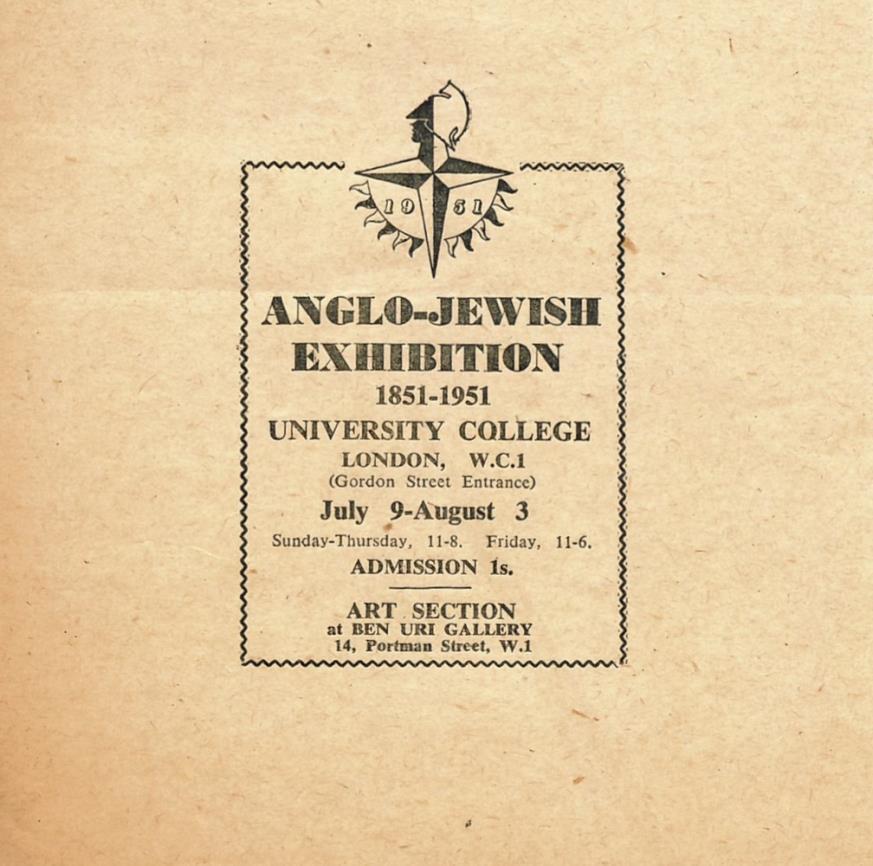
Fig.1.4 Advertising poster for the Festival of Britain’s Anglo-Jewish Exhibition 1851-1951
Fig.1.5 Photograph of the Main Section of the Festival of Britain’s Anglo-Jewish Exhibition 1851-1951
Fig.1.6 Photograph of the Main Section of the Festival of Britain’s Anglo-Jewish Exhibition 1851-1951
Fig.1.7 Photograph of the Main Section of the Festival of Britain’s Anglo-Jewish Exhibition 1851-1951
Fig 1.8 Photograph of Dr Redcliffe Salaman, Ethel Solomon and Hugh Harris at the opening of the Festival of Britain’s Anglo-Jewish Exhibition 1851-1951’s Art Section
Fig.2.1 Queues outside Johannesburg's The Family of Man Exhibition (1958)
Fig 2.2 The Trinidad All-Steel Pan Percussion Orchestra perform at the Festival of Britain (1951)
Fig.2.3 Label on presses of Lord Kitchener’s Festival of Britain – London is the Place for Me Single
Fig.2.4 Prototype drawing for the Festival Star - Abram Games (1948-51)
Fig.2.5 'Join the Royal Armoured Corps' - Abram Games (1941)
Fig.2.6 'Salute the Soldier: Save More, Lend More' - Abram Games (1944)
Fig.2.7 'Your Talk May Kill Your Comrades' - Abram Games (1942)
Fig.3.1 The Rabbi and His Grandchild - Mark Gertler (oil on canvas, 50.8 x 45.9 cm,1913, Southampton City Art Gallery)
Fig.3.11 Talmudic Discussion - Mark Gertler (oil on canvas, 76.2 × 92.5 cm,1911, Private Collection, on long-term loan to Ben Uri Collection)
Fig.3.2 Refugees – Orovida (oil on canvas, 76.1 x 63.5 cm,1947, Ben Uri Gallery)
Fig.3.21 1933-1938 (Buy only German) - Hermann Fechenbach (linocut, 1943)
Fig.3.22 Der Fuhrer - Hermann Fechenbach (linocut, 1943)
Fig.3.23 You are Also Guilty (1933 Jewish victims) - Hermann Fechenbach (linocut, 1942)
Fig.3.3 Runswick Bay – Arthur Friedenson (oil on canvas, 102.5 × 153.7 cm,1907, Tate Collections)
Fig.3.31 The Hay Wain - John Constable (oil on canvas, 130.2 × 185.4 cm, 1821, The National Gallery)
Act One
Scene One
4 October 1936
The basement of the Kahns’ house in the East End of London. The room is warm and lived in. A fire is burning. […]
Sarah Kahn is in the kitchen washing up, humming to herself. She is a small, fiery woman, aged thirty-seven, Jewish, and of European origin. Her movements indicate great energy and vitality. She is a very warm person. Harry Kahn, her husband, comes down the stairs, walks past her and into the front room. He is thirty-five and also a European Jew. He is dark, slight, rather pleasant looking, and the antithesis of Sarah. He is amiable but weak. From outside we hear a band playing a revolutionary song.
The opening stage directions of Anglo-Jewish playwright Arnold Wesker’s 1958 play Chicken Soup with Barley presents a certain image of Jews in Britain during the mid-twentieth century. Wesker sets the scene of the mythical Jewish East End whose present-day aura exists largely through beigel shops and Stars of David on the external walls of buildings since repurposed several times over, like ghost signs that have faded away yet still leave a mark The Kahns are defined by their immigrant status – Sarah ‘Jewish, and of European origin’ and Harry ‘also a European Jew’. Though they live in Britain, speak English, and are integrated into life in the East End, they are still expressed through their difference. Wesker’s vision of the Kahns is one that does, in truth, mirror the reality of many British Jews of generations past – particularly so in the case of his own parents 1 However, it is not the only such reality. Of
1 (Pascal 2016)
course, the play was not intended as a definitive expression ofAnglo-Jewry, rather a particular narrative centred on a certain facet of the Jewish community in Britain. However, if it were to have been envisioned as a catchall representation of the Anglo-Jewish experience, it would surely need to exhibit the multiplicity within it. Such a task of broad self-presentation of a communal group would best manifest through means that present the complexities within the group.
Act Two
Scene One
Late April 1946 – the war has come and gone.
The scene is now changed. The Kahns have moved into an LCC block of flats in Hackney – the 1930s kind with railings. The working class is a little more respectable now; they have not long since voted in a Labour Government. […]
‘The war has come and gone. // The scene is now changed’ These stage directions can be read beyond the literal interpretation of the semantics of theatre. The scenes of the Battle of Cable Street presented throughout the firstAct have passed. The fascists were defeated – both at home and abroad. There is a postwar optimism at the start of this second Act - the Kahns live in housing provided by the council, ‘the working class is a little more respectable now’, there has been a change of government This idea of optimism was one that was pushed by the Labour Government under the Attlee premiership This projection of optimism from the Government culminated in public displays of hope, such as with 1946’s Britain Can Make It - an exhibition held at the Victoria and Albert Museum presenting Britain’s prospects in industrial design.2
Just a year after the end of The Second World War, this was a way to convey the optimism that
2 (Maguire and Woodham 1997)
the Government hoped would help revitalise a Britain drained financially by the war effort. If Britain Can Make It was about pride and optimism in Britain’s industries, then 1951’s Festival of Britain was about pride and optimism in its people. Conceived after the success of 1946’s show, the Festival of Britain was devised to be the force to unite and enthuse Britain. Wesker himself recalled in the Mary Banham and Bevis Hillier edited Tonic to the Nation that the Festival portrayed a ‘communication of courage’, avowing that ‘you came away feeling you could dance just like (Gene) Kelly’as a result of its optimistic ‘spark’ 3
Act Three Scene One
November 1955. […]
Evening, in the same LCC flat. Harry sits in a chair – huddled by the fireplace, listening to Ravel’s La Valse on the radio. He smokes more than ever, it is his one comfort. Sarah is sitting by the table struggling to fill out an official Government form – she talks a lot to herself.
By the third and final act, Wesker’s main characters are an assimilated pair. Indistinguishable from how any other British character might be portrayed, they are described through their despair, and with Government bureaucracy as the symbol for their anguish. The vigour of the Kahns of Act One has waned away, and the enthusiasm of Attlee’s postwar administration has passed. Britain’s people reflect the wider society from which they are members. Wesker observed through his play the instability of identity in Britain. The British Jew presents themselves through a duality – the Anglo-Jewish Self is both an Other and a part
3 (Banham and Hillier 1976) p.187
of the broader community. Of course, not all British Jews in this time were working-class Socialists who had immigrated from Eastern Europe. The story of Britain’s Jewish community is much more complex For one, the community’s oldest congregation since its return from centuries of expulsion was of Sephardic rite, founded by those fleeing persecution in Spain and Portugal. Beyond this, the collectiveAnglo-Jewish identity is also not one necessarily defined through religious practice. Defining such a collective is not as easy as it might seem on the surface, particularly in the case of a diasporic group As such, presenting a multi-faceted group identity from within requires acknowledgement or inclusion of various internal aspects, lest any agenda or singular perspective be the lens through which it is shown – that is, that successful curators of exhibitions displaying collective identity are unlikely to demonstrate a consistent and unified notion of identity throughout. Whilst the ways in which these expressions of the Self take place may not be through conscious decisions, they can still offer interpretations that reveal aspects of shared identity based on the group’s experiences
This dissertation will question instances of self-presentation in Britain centred around the Festival of Britain. The main research question of the dissertation will be whether there was a coherent presentation of Anglo-Jewish identity at the Art Section of the Anglo-Jewish Exhibition 1851-1951. Whilst there will be particular focus in this research question on the exhibition’s Art Section, it will also explore other instances of collective identity and representation at the Festival – including minority groups within Britain, and those from the Commonwealth By doing so, this dissertation aims to assess narratives of collective identity that have been overlooked in the established literature about the Festival of Britain. The dissertation will be broken into three chapters. Firstly, the dissertation will document the empirical information about the Anglo-Jewish Exhibition 1851-1951 - the first chapter will present findings about the exhibition and its conception and will place it within the Festival of
Britain. The dissertation’s second chapter will look more broadly at the Festival and presentations of collective identity, exploring the Festival of Britain’s official narrative, particularly in the context of the British Empire and Commonwealth. The final chapter will look closely at some of the artworks exhibited in the Art Section, investigating particularities of howAnglo-Jewry was presented through artworks in the exhibition. Theoretical writing will be applied throughout the second and third chapters as means of interpreting the Festival, its reception, and the artworks of the Anglo-Jewish Exhibition 1851-1951’sArt Section
1. In the Beginning: The Genesis of the Anglo-Jewish Exhibition 1851-1951
i. Introducing the Research
The following research has come from a desire to tell the story of an exhibition entirely overlooked in discussions of collective identity in postwar Britain. The significance comes in the subject’s lack of primary and secondary literature, as well as an absence in the documentation and recording of its contents In short, this chapter aims to collate archival material and piece together theArt Section of the Festival of Britain’s Anglo-Jewish Exhibition 1851-1951. 4 The exhibition is unique within the context of the Festival, both in concept and execution, as an example of curated self-expression by a minority community in Britain. This is particularly potent in the social climate of Britain following the end of the Second World War and the decline of the British Empire At a time when minorities in Britain had been largely defined through the Empire and the Commonwealth, the only reference to religious or ethnic diversity at the Festival of Britain was one distinct from the country’s imperial exploits.5 The aimof thisresearchisto provide aninsightinto howexpression ofcollectiveidentityinpostwar Britain was undertaken, and who was able to define and set such presentations of collective identity. This research will assist in evaluating how the concept of collective identity was approached through the exhibition and the implications of its presentation.
In terms of sources, archival collections that contain papers and objects relating to the exhibition have been key in unearthing information and details about its planning and reception. Namely, the Ben Uri Collection and Research Unit archive; the records of the Board of Deputies of British Jews; and the Papers of Hugh Harris at the University of Southampton
4 In line with the exhibition’s title, the terms ‘Anglo-Jewish’and ‘Anglo-Jewry’will be used throughout as references to all Jews living in Britain and the Commonwealth, rather than specifically just England See (Pieren 2011) or (Endelman 2002)
5 (Heinonen 2015) p.79
have been the main sources of primary material. These three collections house papers that document the exhibition’s conception, publicity around it, and correspondence regarding the exhibition. Through these, it has been possible to outline the development of the exhibition and how it was received. This outline tracks the conception of the exhibition and the arenas in which it began as a talking point, through the publicities and practicalities of the show, into its reception. Using these sources at the centre of the research was necessary to build a degree of background to this unusual exhibition
The starting point for the following investigation was the exhibition’s catalogue. Published in coordination with the exhibition, the catalogue is the only extensive documentation of the works that were exhibited. Available to freely access on the Ben Uri Collection website, the catalogue lists the artworks on display categorised by artist and, in most cases, alongside the owners who had lent pieces for the exhibition 6 However, besides the reproduction of Simeon Solomon’s Isaac Offered on the cover (fig.1.1), the catalogue contains no imagery of the artworks exhibited. As a result, attached to this dissertation is an appendix of identified artworks that featured in the exhibition. Gathering this visual reference of the exhibition’s contents has helped to develop an impression of the imagery used in the artworks that goes beyond speculation based on the pieces’respective titles.
ii. ADiverse Britain at the Festival?
The Festival of Britain took place between May and October of 1951, and was conceptualised as both a commemoration of the 1851 Great Exhibition, and the country emerging successfully from the Second World War 7 The Festival was a large-scale public messaging mechanism used to present curated visions of Britain. The Festival of Britain is
6 (Ben Uri Gallery 2020)
7 (Leventhal 1995) p.446
inescapably tied to the ‘Tonic to the Nation’ epithet, a phrase supposedly coined by the its Director General, Gerald Barry, reflecting the optimism presented by the Festival 8 In Tonic to the Nation, Adrian Forty suggests that ‘A Narcotic to the Nation’ might be more apt in retrospect, suggesting the Festival’s role was one to ‘delude the population into believing that Britain’s economic health was sound’.9 The Festival’s projection to the public as an idealised and illusionistic success story of recovery hid many realities of the true state of Britain at the time – a country still on rations and facing domestic and international crises 10
The role of religion at the Festival of Britain was largely one of underlying presence, but through a particular lens of Christian primacy. The Christian-centric nature of religion at the Festival was highlighted through the prominence of churches as hosts of ceremonies and services that took place during the Festival, and its references in accompanying literature produced for the Festival of Britain Reference to Britain as a ‘Christian community’ with Christianity an ‘inseperabl[e] part of [its] history’ can be found in The Official Book of the Festival of Britain 1951 – a publication that itself opens with remarks from theArchbishop of Canterbury 11 Christianity was presented at the Festival as interwoven within all aspects of Britain, standardised as the status quo. As such, it had been made clear that non-Christian religious aspects ‘would not be included’ in the South Bank’s central People of Britain and Lion and Unicorn pavilions.12
Diversity in Britain is unavoidably tied to the British Empire. Particularly following the Second World War, Britain’s demographic makeup had begun to shift in the years leading up to the Festival of Britain. However, the narrative of Britain and its people presented at the Festival was one steeped in ancient history.As Becky Conekin notes in The Autobiography of
8 (Forty 1976) p.26
9 (Forty 1976) p.26
10 (Conekin 2003) p.16
11 ‘The official guide book to the Festival of Britain.’83.480/9 Museum of London Archives p.20
12 ‘Letter fromA.Cohen to James Parkes, 3rd November 1950.’MS60/15/52 f2. University of Southampton Special Collections.
a Nation, ‘the official Festival’s understanding of who was British is clear- those people whose ancestors came here as Normans, Saxons, Iron Age Celts, Romans, Vikings or as Stone Age ‘colonists’’ 13 Conekin asserts that this presentation of the British people erases the existence of generations of émigrés in the country and ‘clearly excluded Black British subjects’.14 The exclusionary nature of this depiction of Britain’s peoples and definition of ‘Britishness’reflects attitudes developed by narratives and discourse around the British Empire. Furthermore, in terms of exhibitions relating to the Empire or the Commonwealth at the Festival, representations of peoples from former British colonies were confined to a ‘primitive’ art exhibition organised by the Imperial Institute.15
Given religion’s place at the Festival as solely from a Christian perspective, and the minimising narrative of Britons, both in the British Isles and its colonial Dominions, it seems unusual that the Jewish community of Britain was able to carry out such an exhibition. The Festival’s Anglo-Jewish Exhibition 1851-1951 was held from the 9th of July to the 3rd ofAugust in two sections – the Main Section, held at University College London; and the Art Section, exhibited at the Ben Uri Gallery, based at the time on Portland Street in Marylebone.16 Aleaflet was produced for the exhibition, which set out the rationale for the two sections - the stated aim of the exhibition was ‘portraying the life of the Jewish Community […] within the context of the larger community – during the period 1851-1951’.17 This period is noted in the leaflet as having seen ‘the complete emancipation of British Jewry and its integration and acceptance as citizens, in the fullest sense of the term, into British political and social life.’.18 Within the broader rationale of the Festival of Britain, the exhibition’s aim appears incongruous. An
13 (Conekin 2003) p.101
14 (Conekin 2003) p.101
15 (Conekin 2003) p.196
16 ‘Small poster of the Anglo-Jewish exhibition.’MS136/AJ36/2. University of Southampton Special Collections.
17 ‘Leaflet on the Anglo-Jewish exhibition.’MS136/AJ36/4. University of Southampton Special Collections.
18 ‘Leaflet on the Anglo-Jewish exhibition.’MS136/AJ36/4. University of Southampton Special Collections.
exhibition presenting the narrative of a minority community within Britain, presented by themselves, was unlike anything else at the Festival
iii. Exhibiting Jewish Identity
In terms of displays centred around Jewish collective identity in Britain, the AngloJewish Exhibition 1851-1951 was not the first of its kind. 1887, 1906, 1923 and 1927 all saw exhibitions of Jewish objects and artworks held in London. The 1887 show, the Royal Albert Hall’s Anglo-Jewish Historical Exhibition, had a particular sole focus on British Jewry. The others, however, held at the Whitechapel Gallery, dealt more broadly with Jewish artists. The 1906 and 1927 exhibitions were both titled as an Exhibition of Jewish Art and Antiquities, whilst the 1923 show was presented as an Exhibition of Works by Jewish Artists. It is notable that there has been a consistent distinction between art and artefacts in these shows, such as with the Festival of Britain’s two-sectioned exhibition There is a separation between decorative yet functional objects being designated as ‘historical’, and art itself as a distinct category to exhibit.As well as these shows, in February of 1951, a Festival of Jewish Arts took place in Glasgow, which was ‘conceived as a response to, and timed to coincide with, the Festival of Britain’ 19 This festival was intended to challenge existing perceived narratives and stereotypes of Jews more broadly, and, whilst positioned around the Festival of Britain, featured artists without real connections to Britain – such as Marc Chagall and Amadeo Modigliani.20
The conception of the Anglo-Jewish Exhibition 1851-1951 came about initially through suggestions and comments made in meetings of the Board of Deputies of British Jews. The first mention of such an exhibition was in an Executive Committee Report of 15th February
19 (Spiro 2019) p.96
20 (Spiro 2019) p.108
1950 which noted that “The Board is in touch with the authorities responsible for the section of the Festival of Britain Exhibition which is concerned with the traditions and culture of the people of Britain, with a view to ascertaining whether the contribution of the Anglo-Jewish Community can appropriately be included.”.21 Later in 1950, in a report written on 15th October, an update was issued about the prospects of the exhibition:
“The question of whether theAnglo-Jewish community can participate in some way in theFestivalof Britainhasbeen discussedwithleadingofficialsconcerned with theorganisation oftheFestival.It appears,however, that astherewillbenodirectrepresentationofanyreligious denomination in the Festival, it will not be possible for Anglo-Jewry to have direct participation. The discussions, however, have indicated that Anglo-Jewry could be associated with the Festival in the form of a Jewish book and art exhibition on a large scale, depicting the Jewish contribution in the historical, literary and educational fields. It would require the full co-operation of all appropriate Jewish institutions and experts to bring such an exhibition into being and the Committee recommends that the president in association with his colleagues should investigate the possibility of arranging such an exhibition.” 22
This delineation between ‘direct representation’ at the Festival and the type of exhibition suggested also reflects correspondence from November of that year between Board of Deputies President DrAbraham Cohen and James Parkes, President of the Jewish Historical Society of England. Cohen wrote: “We have been informed that religious aspects would not be included, […] contributions of citizens of the Jewish faith will be included in the general aspect - not as Jews but as British citizens. [...] It seems that if the Jewish community are to play a part in the Festival it would best be in the fields of literature and history”, with no mention of any sort ofArt Section.23
21 Executive Committee Report. 15th February 1950. ACC/3121/A/035. Ben Uri Research Unit archive.
22 Executive Committee Report. 15th October 1950. ACC/3121/A/035. Ben Uri Research Unit archive.
23 ‘Letter fromA.Cohen to James Parkes, 3rd November 1950.’MS60/15/52 f2. University of Southampton Special Collections.
Key figures in the organisation of the exhibition gathered into committees. Whilst minutes for any meetings of these specific committees are not available, evidence for committee gatherings can be found in the records of the overarching organisations from which they formed. Minutes from a Board of Deputies meeting on 20th May 1951 acknowledged this degree of separation from the Board itself, noting that “The President reported that plans were well in hand for the holding of an Anglo-Jewish Exhibition as part of the Festival of Britain. Although the effort was initiated by the Board it was, in fact, a communal effort administered by a separate body which had been set up to arrange the Exhibition”.24 The membership of the exhibition’s organising committee was well publicised. Most of the publications produced for the exhibition listed the Executive Committee, such as can be seen in an accompanying leaflet from the Main Section (fig.1.2), with Hugh Harris serving as the Chairman. Harris’papers have provided a significant amount of the primary information about the exhibition
Additionally, a distinctArt Committee was established, as named at the back of the Art Section’s catalogue (fig.1.3).25 Chairman of the Art Committee was Cyril J. Ross, who additionally served as Treasurer on the exhibition’s Executive Committee. Ross was also Treasurer for the Ben Uri Gallery at the time, an indication of the strong link between the organisation of theArt Section and the gallery in which it was held.Alongside Ross, a number of other individuals were both involved with the Ben Uri Gallery and the exhibition’s Art Committee – former Ben Uri Chair Ethel (Mrs Robert) Solomon, Vice President Alfred Wolmark, BenUri CommitteemembersAlexanderMargulies andGilbertSolomon, andformer Vice President Archibald Ziegler. The Committee also included influential dealer Siegfried Oppenheimer and the Ben Uri-associated ‘Whitechapel Boy’ Joseph Leftwich, the latter of whom wrote the catalogue’s foreword.26 Furthermore, a number of members of the Art
24 Executive Committee Minutes. 20th May 1951. ACC/3121/A/035. Ben Uri Research Unit archive.
25 This is distinct from the Ben Uri Gallery’s Arts Committee, though some individuals were members of both groups.
26 (Dickson and MacDougall 2004) p.29
Committee had works exhibited in the exhibition’s Art Section itself – namely, Alfred Wolmark,Archibald Ziegler, Hans Feibusch, Benno Elkan, and Gilbert Solomon. It is clear that the group of individuals involved in setting the narrative of Anglo-Jewish identity in the Art Section were fully incorporated in the British cultural milieu, yet also united in their collective Jewish identity.
iv. TheAnglo-Jewish Exhibition 1851-1951
The two sections of the Anglo-Jewish Exhibition 1851-1951 were distinct in their composition. The Main Section of the exhibition is significantly better documented than the Art Section and was the focus of most of the exhibition’s publicity. This is evident in the advertising poster for the exhibition (fig.1.4), as the heading of the poster directs prospective attendees to the University College London site, with the information about the Art Section found in small type at the bottom of the print. Furthermore, the central image on the poster is a photograph of an object from the Main Section of the exhibition – a tray presented by Congregation of Spanish and Portuguese (Bevis Marks Synagogue) to the Lord Mayor of the City of London.27
It is evident that the Main Section of the exhibition was curated with a clear method of presentation of Anglo-Jewish identity through tangible means In lieu of a catalogue for this section, the book of notes was published for it under the title A Survey of Some of the Aspects of Anglo-Jewish Life illustrated in the Anglo-Jewish Exhibition. At the opening of the book of notes is a passage explaining the publication’s objective – “to indicate some of the various facets of Anglo-Jewish life, vis-à-vis the general community and to give some illustrations of the manner in which British citizens of the Jewish faith play their full part in public and social 27 (Victoria and Albert Museum 1956) p.25
affairs while still retaining their religious identity.”.28 The book is split into a broad set of short chapters which cover topics encompassed within the exhibition – through artefacts and objects that relayed the narrative of Jewish emancipation in Britain. The book starts with topics related to religious aspects of Jewish life in Britain – ‘Bevis Marks – The Roots of the Community’, ‘The United Synagogue and other religious organisations’, ‘The Chief Rabbinate’, and ‘AngloJewish religious leaders’. These chapters are ones that delineate the British Jewish community through definition as a faith group The next group of chapters defines British Jewry through social community – ‘Jews’ College’, ‘Jewish education’, and ‘Jewish social welfare’. Following these are chapters that explore Jewish political matters – ‘The Fight for Political Emancipation–TheLastStage’, ‘“TheDeputies”–TheRepresentativeBodyofBritishJewry’, ‘The Anglo-Jewish Association’, ‘Zionism – Great Britain and Palestine’ and ‘Jewish Lord Mayor’. The book then continues by noting Jewish involvement in broader British society, through chapters titled ‘Some Great Lawyers’, ‘Jews in Public Life’, ‘Some Jewish Benefactions to the Nation’, and ‘Jewish Population Figures’. The concluding chapters centre on academic sides of the Jewish community - relating to history, literature, and scholarship through the chapters ‘Books’, ‘Historical’, ‘The Land of Israel’, ‘The Hebrew University’, ‘Fiction’, ‘Jewish contributions to English Letters’and ‘Literary Exhibits of Special Interest’. Whilst the chapters of this book offer an overview of the Main Section of the exhibition, insights into its contents and curation in the gymnasium at University College London can be found through photographs of the show. These photographs (figs.1.5, 1.6, 1.7) demonstrate how the Main Section was presented – sectioned into parts with titles that reflect the chapters previously listed. These are visible in fig.1.5 as headers for ‘Board of Deputies of British Jews’ and ‘Jews’College’ displays, and in fig.1.6 for ‘The United Synagogue’. Another photograph
28 ‘Survey of Some of the Aspects ofAnglo-Jewish Life illustrated in the Anglo-Jewish Exhibition’ACC3121 C10/6/1/1. Records of the Board of Deputies of British Jews. p.1
of the exhibition, fig.1.7, shows the display for ‘Social Welfare’. Kathrin Pieren notes in Migration and Identity Constructions in the Metropolis: The Representation of Jewish Heritage in London between 1887 and 1956 of the thematic pathway through the Main Section, writing that ‘the set route started with the final struggle for political emancipation marked by portraits of famous Jews, such as the first Jewish Sheriff and Lord Mayor of London. On the left hand, the trail displayed the central communal organisations in separate bays, from the Board of Deputies to B’nai B’rith, under broader headings such as Education and Youth.’.29 Exhibits in the Main Section were largely functional or documentary in purpose For example, books and letters were shown in the exhibition alongside ritual objects and photographs. Objects that might be considered as ‘art’ in a contemporary exhibition context were either honorific portraits, such as those seen as parts of the displays in fig.1 5, or caricatures – namely produced by ‘Spy’for Vanity Fair – seen in the backgrounds of both fig.1 5 and fig.1 6 30 In contrast to the Main Section, theArt Section of the exhibition does not appear to have had a fixed thematic separation. Very little information about the layout and curation of theArt Section is available.
A book celebrating the Ben Uri Gallery’s 50th anniversary only briefly references the Art Section of the exhibition, reading as follows – “1951 was a year of great activity. It was Festival of Britain year and the community organised an Anglo-Jewish Exhibition - the historical section of which was presented at University College, and the art section at the Ben Uri Gallery. For this exhibition the Society assembled 130 works from many public and private collections to show the contribution made by Anglo-Jewish artists over the past 100 years. Artists ranged from Abraham Solomon, born in 1824 to talented painters of the younger generation.”.31 The book also contains the only description on how the Ben Uri was decorated fortheArt Section–“TheGallery wascompletelyredecorated,and therather drabyellowwalls
29 (Pieren 2011) p.228
30 Sidney Salomon, ‘The Anglo-Jewish Exhibition’, Jewish Affairs, Vol. 6 No. 8, August 1951, MS136/AJ36/86.University of Southampton Special Collections. p.28
31 (Ben Uri Society 1966) p.31
were repainted in light colours”.32 Furthermore, photographic documentation of theArt Section is near non-existent. Even then, the one surviving photograph of the Art Section’s opening offers little in terms of information about the show. This photograph (fig.1.8) shows Ethel Solomon and Hugh Harris alongside Dr Redcliffe Salaman, an art collector who lent a significant number of works to Ben Uri for the Art Section.33 The photograph does not, however, show any of the actual artworks or the layout of the Ben Uri Gallery, just the heads and shoulders of the aforementioned figures The one note about the curation of theArt Section that was specified was in the minutes of a meeting of the Ben Uri Gallery’s Arts Committee. In the meeting, it was said that theArts Committee had agreed for the gallery to be used for the Art Section “with the proviso that one room should be devoted to a selection from the Permanent Collection, in order to stress the important part that the Ben Uri Society had played in the community during the past 35 years.”.
34
Not only were both sections of the exhibition unmatched examples of displays of selfexpression from a minority community at the Festival of Britain, but its conception and the planning of the exhibition developed entirely from within the community. In terms of the Main Section of the exhibition, its contents were in line with historical exhibitions of its type, presenting the British Jewish community through its institutions, notable communal figures, and contributions to aspects of wider British society. The Main Section was clearly the central focusofpublicityaroundtheexhibition and,aspreviouslynoted,therewaslittledocumentation about the Art Section The personnel involved in the Art Section were closely tied to the Ben Uri Gallery and it was made clear that the hosting of this section at the gallery would be on the condition of an emphasis on the Ben Uri’s significance in the realm ofAnglo-Jewish art. Unlike
32 (Ben Uri Society 1966) p.31
33 (Ben Uri Gallery 1951) pp.9-11
34 Minutes of the Arts Committee. 30th April 1951. ART/09/01. Ben Uri Research Unit archive.
previous exhibitions of Jewish art and artefacts that took place since Jewish emancipation in Britain, both the Main and the Art Sections of the Anglo-Jewish Exhibition 1851-1951 were conceived with the intention of having a particularly British focus. In line with the aims of the Festival of Britain, the exhibition was to present the Jewish community within the context of broader British society.
2. Immigration and Identity at the Festival: Who was ‘British’?
i. The Collective Identity of Britain
The notion of a national ‘British’ identity has been a fluid construct throughout centuries of redefinition of ‘Britain’and variability of the terms that aim to define the country and those who inhabit it. What has come to be understood as the multinational state of the United Kingdom of Great Britain and Northern Ireland has only existed in its present form since 1922 and the Irish Free State ConstitutionAct.35 In the centuries prior, the flux of control overtheseparatenationswithin these islands - thatbeingEngland,Scotland,Wales, andIreland –hadalternatedbetween sovereign and coloniallydependantkingdoms.36 Assuch,thequestion of who is ‘British’ has never really had a neat answer. This problem of collective identity becomes even more muddled when considering the British Empire’s widespread subjugation of nations and their consequent adoption into ‘British’ communality, through British imperial citizenship.37 The collective identity of those in the empire was simply that they lived under the British flag.
38
The 1926 Balfour Declaration39 laid out the recognition of the British Empire’s Dominions as ‘separate political entities’, and established the Commonwealth.40 The status of those in countries of the Commonwealth was redefined in the British Nationality Act 1948 under a ‘commonwealth citizenship’, whilst allowing Dominions to have their own distinct citizenship.41 1948 was also the year in which the HMT Empire Windrush arrived with hundreds of West Indian passengers at the Port of Tilbury from Jamaica, the symbolic marking
35 (Gamble and Wright 2009) p.2
36 (Ellis 2014) p.105
37 (Gorman 2006) p.2
38 (Gorman 2006) p.3
39 Not to be confused with the 1917 Balfour Declaration, which supported a "national home for the Jewish people" in Palestine.
40 (Gorman 2006) p.213
41 (Gorman 2006) p.213
of the start of a new generation of Britons arriving from across the Commonwealth.42 Meanwhile, in that same year, formalised Apartheid began in SouthAfrica with limitations on freedom of movement just one aspect of the brutal regime of racial segregation 43 The Commonwealth experience was not a universal one. Afew years earlier, the Dominions of the Commonwealth were all fighting under the Union flag and by 1948, they had largely begun to move away from colonial rule to govern themselves independently – with the reality of that process being different in each country Whilst the legislation of 1948 envisioned a Commonwealth united with a shared identity, the former British Empire was more fractured and fluid than it ever had been. Partitions and withdrawals led to migration across new Commonwealth borders whilst labour shortages in Britain brought former ‘subjects’ to the United Kingdom.44 The reality was that the Britain of 1951 was demographically different and there was a new diversity to the population of Britons living in the isles.
ii. The ‘People of Britain’?
This reality was a stark contrast to the narrative presented at the Festival of Britain’s central South Bank pavilions. As previously mentioned, the ‘people’ of the official Festival’s People of Britain were those of Britain’s early history.45 In terms of the historical idea of ‘Britishness’ presented at the Festival, the South Bank exhibition’s accompanying souvenir guide asked a number of rhetorical questions about what it called ‘one of the most-mixed people in the world’.46 It asked ‘who are these British people? What differing breeds of ancestors have contributed to such a rare miscellany of faces as confronts the visitor in any London bus? Where did those various ancestors come from? And how did they reach this
42 (Mead 2007) p.113
43 (Ross 1999) p.122
44 (Dummett and Nicol 1990) p.114
45 (Conekin 2003) p.192
46 (Anonymous 1951) p.63
land?’.47 Conekinnotesthatdisappointmentwouldmeetthereaderif they expected theanswers to these questions to ‘incorporate some recognition of the impact the British Empire had on Great Britain’.48 As such, the answers given tells a story from prehistory through to the Celts who came ‘looking for new land’, the Romans who ‘came, and conquered’, theAnglo-Saxons who ‘settled in […] and mingled’, and the Vikings and Normans who were ‘absorbed’into the British people and land.49 Conekin later observes that the ‘story of the ancient origins of the British ‘land and people’ excluded thousands of immigrants past and present’ and ‘did not include imaginings of British people’s encounters with people of colour in the lands the British had conquered […] nor did it engage in the sticky issue of people from those places who considered themselves British.’.50
Perhaps in presenting the British people in this way, the power dynamics of empire are inverted. At a time in which Britain was necessarily introspective about its role in widespread colonialsubjugationfollowing thedefeatof expansionistfascism, posturing itself asahistorical subject to invaders pushed a certain narrative about the British Empire and Commonwealth’s role.51 By presenting Britain as subject to invaders with a land that ‘absorbs’those who conquer it, the nature of the British Empire’s relationship with its Dominions is sanitised 52 Subjugation and invasion from other populations is described through light-hearted language and as a part ofthe‘contribut[ion] totheshaping’of Britain.53 Thisappearstoperpetuateapaternalisticview of empire and imply that the function of colonised countries is absorption of aspects from their coloniser. Furthermore, in preliminary discussions over the Festival, a debate within the Festival Council saw the argument that “the whole purpose of the Festival would be destroyed
47 (Anonymous 1951) p.63
48 (Conekin 2003) p.192
49 (Anonymous 1951) p.65
50 (Conekin 2003) p.193
51 (Conekin 2003) p.197
52 (Conekin 2003) p.65
53 (Conekin 2003) p.65
if it did not demonstrate to the world Britain’s greatest contribution to civilisation namely, the foundation of the British Empire.”.54 This point in the planning stages shows that the absence of the Commonwealth in presentations of collective British identity was not an oversight, rather its omission was an active decision. Furthermore, Alayna Heinonen stresses in the 2012 paper Contested Spaces in London: Exhibitionary Representations of India, c. 1886-1951, that offices of Empire-Commonwealth pleaded to include overt exhibitions of imperial sentiment within the Festival of Britain’s planning – with a planned development on a proposal showing international “British contributions to civilization” 55 Beyond the active exclusion of people from the Commonwealth from the Festival of Britain’s narrative, there was such a disconnect between the planners of the Festival and the reality of Britain that they had even intended to present the subjugation of people from the Empire through a positive light. There was no place within the Festival’s official narrative for minority identities or acknowledgements of diversity in Britain and the reality of the Commonwealth
iii. Barthes and Universalism
The dissonance between the lived reality of Britain in 1951 that the Festival of Britain’s visitors were experiencing and the projection in its exhibitions can be explained through a mythologised universalism at the Festival. In Roland Barthes’ 1957 collection of essays, Mythologies, the author wrote of the Family of Man exhibition whose global tour took place between 1955 and 1965. The Family of Man was a travelling international photography exhibition - the work of Edward Steichen who conceived, designed, and curated the show.56 The exhibition was a collection of nearly 500 images from 68 countries with the intention of
54 “Festival of Britain 1951. Executive Committee. Commonwealth Participation. Memorandum from the Secretary, Leonard Crainford,” 27 May 1949. CAB/124/1220. The NationalArchives.
55 (Heinonen, Contested Spaces in London: Exhibitionary Representations of India, c. 1886-1951 2012)
56 (Zamir and Hurm 2018) p.1
demonstrating a shared identity across all humans.57 Starting at New York City’s MoMA, The Family of Man was exhibited in 48 countries, with successes in its attendance and the sales of its book - which has continued to be in print.58
However, the exhibition’s universalist approach that had brought such global appeal was precisely what Barthes had issue with. Barthes’ central argument in his essay is that ‘History’ is removed in presenting a universalist portrait of humanity.59 Barthes argues that removing historical contexts and the individual unique experiences of groups in an attempt to universalise them presents a myth that erases realities of marginalisation.60 Applying Barthes’ argument to the Festival of Britain appears to line up with Conekin’s conclusions about the Festival’s lack of representation or acknowledgement of the Empire or Commonwealth.61 Conekin argues that the images of the ‘plucky, determined people, residing on the island nation of Great Britain […] were not flexible enough to incorporate the British citizenry that lived beyond the UK’s shores’ and suggests that ‘perhaps […] the liberal thinkers and planners behind the Festival felt that the best way to handle the issue of Empire/Commonwealth was to publicly ‘pretend it never happened’.’
62 The universalist Britain presented at the Festival, like in The Family of Man, erased the elements of History that are difficult to approach
Barthes’ essay has, however, been challenged and his narrative of the exhibition has been problematised. In Reassessing Roland Barthes’s Myth of The Family of Man, Gerd Hurm breaks down Barthes’criticism of the exhibition by utilising a quote from David Damrosch. In reference to the book version of the exhibition, Damrosch asserts that ‘Barthes had […] missed the real drama of the exhibit […] From the middle of the volume onward, page after page juxtaposes scenes inAmerica with scenes in SouthAfrica, Eastern Europe, andAsia, endorsing
57 (Zamir and Hurm 2018) p.1
58 (Zamir and Hurm 2018) p.1
59 (Barthes and Lavers 2009) p.122
60 (Barthes and Lavers 2009) p.123
61 (Conekin 2003) p.197
62 (Conekin 2003) pp.197-8
literacy, voting rights, and human rights generally.’.63 Damrosch continues by affirming that The Family of Man was ‘promoting an activist agenda of social change, aimed squarely against forces of political and economic oppression around the world.’.64 Hurm observes a number of oversights from Barthes in his analysis of the exhibition – omitting the exhibition’s focuses on women’s rights, its imagery of the atomic bomb, and the juxtaposition of photographs with quotes such as those from Bertrand Russell’s talk titled ‘Man’s Peril from the Hydrogen Bomb’.65 Hurm also notes in his piece that Barthes himself has applied a universalist strategy through his writing, employing French biases and criticisms of the exhibition only applicable to the Paris inception of the show.66 These biases remove the possibility that the exhibition might possibly be received differently in its different host cities.
Particularlynotable inthissensewasthe exhibition’s 1958incarnation inJohannesburg, South Africa. There was a significance in the universalism of The Family of Man being exhibited during the Apartheid regime. Furthermore, entrance to the exhibition was not segregated.67 This can be seen in a photograph in which a racially diverse queue had been pictured waitingin line fortheshow,with prospective black visitors integratedwithin thequeue (fig.2.1) 68 In Rethinking Sekula from the Global South: Humanist Photography Revisited, Tamar Garb writes that The Family of Man offered encouragement and reassurance to contemporaryblackSouthAfrican photographers – citingreflectionsfrom PeterMagubaneand Alf Khumalo.69 Moreover, Garb notes of the effect of the exhibition on anti-Apartheid journalists.LiberalPartymemberPatrickvanRensburg’s wieldingoftheexhibition intheRand Daily Mail, heading an article Humanity versus Apartheid: Healing the divisions in the family
63 (Hurm 2018) p.24
64 (Hurm 2018) p.24
65 (Barthes and Lavers 2009) pp.27-33
66 (Hurm 2018) pp.26-7
67 (Garb 2014) p.47
68 (Garb 2014) p.46
69 (Garb 2014) p.51
of man, and JamesAmbrose Brown’s article ‘We Are One’in the Johannesburg Sunday Times sawthe exhibition’splaceas inopposition toApartheid It isevident that,aswith the challenges to Barthes’ writings on the Family of Man, the dismissal of the universalist narrative of the Festival of Britain should be considered through the complexities of receptions and contexts of audience.
iv. “People are Welcome from Everywhere”: Optimism from the Dominions
The hopeful reactions to the Family of Man’s universalist narrative mirrored the optimism at the heart of the Festival of Britain. Despite its absence of Commonwealth representation, there is evidence that communities from the Commonwealth and those that migrated to Britain from the Dominions had embraced this vision of an optimistic universalist country that the Festival projected. As with Hurm and Damrosch’s observations on the short fallings of Barthes’ criticisms of The Family of Man, and through Garb’s observance of the South African reaction to the exhibition, it could be said that Conekin’s reflections on The People of Britain fail to consider the reception of the Festival from those who are not the neutral, decontextualised viewer - specifically by those from the Commonwealth.
Music was a particular mode of expression of optimism and joy at the Festival for those from the Commonwealth and minority communities within Britain Formed to perform at the Festival, the Trinidad All-Steel Pan Percussion Orchestra (TASPO) (fig.2.2) left for Britain on the S.S. San Mateo on 6th July 1951, performing at the South Bank later that month.70 The group’s trip to the Festival was sponsored by the local community in Trinidad and Tobago, having had a request for Government71 funding rejected – supposedly as a result of their financing of a team at the Pan American Olympics exhausting such funding.72 The
70 Port-of-Spain Gazette, 7th July 1951, p.1
71 This being the Government of Trinidad and Tobago.
72 Trinidad Guardian, 13th April 1951, p.1
community’s drive to raise the money required to make the journey was with the intention of having TASPO ‘represent the Colony at the Festival’ 73 It is clear that not only was there awareness of the Festival of Britain in the public consciousness of the Commonwealth, but also a grassroots enthusiasm and demand for involvement and self-representation of collective identities of the Dominions at the Festival. Furthermore, the Festival of Britain provided a source of inspiration for musicians that had moved from the Caribbean - Calypso musicians Lord Kitchener and Lord Beginner both migrated to Britain on the HMT Empire Windrush and released songs titled Festival of Britain and 1951 Festival of Britain, respectively.74
Kitchener’s track demonstrates a buoyant reaction to the Festival - one that expresses a pride in Britain and a collective British identity. The song begins with the line “The Festival of Britain is here, people are welcome from everywhere”, and its refrain is repeated throughout –“Britain forever, true in every way; for you are welcome to the Festival, that is what the British does say” These two lyrics express a reception of the Festival as an openhearted celebratory event, accessible to all. The song is full of praise for the Festival, its exhibitions, and infrastructure built in conjunction with the event. Moreover, Kitchener’s song expressed the belief that the Festival was the start of an economic upturn in the country – “and after these new mass activities, we expect to have dollars in quantities; it will help the financial situation, in this country of Great Britain” – evidence that may substantiate Adrian Forty’s ‘Narcotic to the Nation’epithet.75 A similar song in Yiddish was put out by Chaim Towber and the Johnny Franks Orchestra, expressing optimism and enthusiasm for the Festival of Britain, further denoting the reach of the Festival’s hopeful sentiments 76
73 Trinidad Guardian, 14th April 1951, p.2
74 It should be noted that only Lord Kitchener’s song is readily available to access. Lyrics referenced are not fully confirmed, as they are speculated from the recording. https://www.youtube.com/watch?v=c8i-RFTGIHI (accessed 29 August 2024)
75 (Forty 1976) p.26
76 The song notes of British industry and the country’s success in the Second World War. Very little information can be found about the song beyond its recording. https://www.youtube.com/watch?v=uF7eTTI3VgU (accessed 29 August 2024)
v. The Festival Star and Émigré Patriotism
The labels on presses of Kitchener’s song (fig.2.3), which was paired on a single record with a track titled London Is the Place for Me, featured the Festival Star (fig.2.4) - the official emblem of the Festival of Britain. The emblem is a four-pointed star with the head of an androgynous depiction of Britannia, the personification of Britain, atop the symbol. The four points, perhaps representing the nations of Britain, don the colours of the Union Flag – red, white, and blue. Its shape quotes a compass rose, possibly evoking the far-reaching nature of the Commonwealth and its nautical, imperial history The Festival Star is the most recognisable and versatile icon of the Festival of Britain. The emblem was emblazoned on a wide variety of merchandise produced for the Festival, and all official publications and advertising for events associated with the Festival of Britain.77
The designer of the emblem was Abram Games Born in Whitechapel to Jewish immigrants who had emigrated from what was the Russian Empire, Games was the son of individuals who found refuge in Britain. There is a particular significance in the involvement of Games in producing a symbol as an insignia of national British identity. During the Second World War, Games, concerned by accounts from Germany, was determined to contribute to the British war effort 78 This led to his involvement as a poster designer in the Public Relations Directorate of the Government’s War Office.79 In this role, Games produced posters encouraging recruitment and contribution towards the war effort. (figs.2.5, 2.6, 2.7). In the section of Bryan Cheyette and Laura Marcus’ Modernity, Culture and ‘the Jew’, titled Remembering to Forget: Racism and Anti-Racism in Postwar Britain, Tony Kushner notes of trends in wartime Britain of ‘frustration and irritation about Jewish difference and a blaming of the victim’.80 Kushner continues by asserting that whilst there was ‘an awareness of, and a
77 (Feaver 1976) p.40
78 (Games 2019) p.21
79 (Games 2019) p.24
80 (Kushner 1998) p.228
reaction to, the destruction of European Jewry amongst ordinary people in Britain during the war’,it‘varied in itsimpactand intensity’, and that ‘theBritishstatewasreluctant to emphasise the fate of the Jews under the Nazi onslaught in its propaganda’– propaganda that Games was involved in producing.81
Clearly there was a dissonance between popular thought in Britain and that of British Jews – particularly those who were first- or second-generation immigrants to the country - over motivations for the Allied war effort. However, both motivations resulted in a sense of British patriotism. Whether through the feeling of direct threat of invasion on the home front for the broader British population, or the knowledge of British Jewsthat the country’s war effort aimed to defeat those who were persecuting their kind, the campaign engendered a national pride in Britain and its institutions. This contrasts to attitudes of some in the First World War, during which a significant number of Jewish refugees from Eastern Europe, identified as ‘friendly aliens’, felt indifferent about taking part in the war.82 Games’British identity was undoubtedly tied to his Jewish identity and surely influenced his design for the Festival’s emblem. Games was one of a number ofJewswhowere involved in realising a vision of British national identity at the Festival – another of whom was designer Misha Black. Black was born in Baku and moved to Britain as an infant in 1912 83 Like Games, he was involved in wartime messaging, producing propaganda exhibitions ‘instructing home audiences with practical information and inspiration and sending messages to enemies and allies.’.84 It is perhaps then unsurprising that Black contributed to multiple key parts of the Festival of Britain – the firm he headed, Design Research Unit (DRU), designed the exhibition in the Dome of Discovery and the Regatta Restaurant, and Black was the South Bank Exhibition’s joint lead architect.85
81 (Kushner 1998) p.228
82 (Shukman 2006) p.8
83 (Atkinson 2020) p.37
84 (Atkinson 2020) p.45
85 (Atkinson 2020) p.47
Ideas of national identity at the Festival and who fitted into the category of ‘British’ was something that was largely limited to references to ancient invaders and settlers of the British Isles, actively avoiding reference to the British Empire’s existence, actions, and consequences. Whilst the Festival’s representation of the Commonwealth and its peoples was near non-existent, it is clear that there was an awareness and optimism about the Festival of Britain in the Commonwealth and amongst minority communities in the country Furthermore, first- and second-generation Jewish immigrants were involved in the character of the Festival - particularly, Abram Games and Misha Black who were both notable designers of national messaging during the Second World War. These interactions and involvement with the Festival and its principles suggest that minority communities’ receptions of universalist presentations ofBritish identityrelieson context– acutely incaseswherecertain associations ofawelcoming and supportive Britain had lead to patriotic attitudes
3. Self-Presentation or Projection: TheAnglo-Jewish Visions of theArt Section
i. The Ben Uri Society and Leftwich’s Catalogue Foreword
The only comprehensive documentation of the Anglo-Jewish Exhibition 1851-1951’s Art Section is its catalogue, produced for sale at the price of two shillings.86 The catalogue opens with a foreword by Joseph Leftwich. Leftwich was a member of the exhibition’s Art Committee, born to Polish-Jewish parents in the Netherlands in 1892 and raised in Germany before emigrating to East London at the age of seven.87 One of the ‘Whitechapel Boys’, Leftwich was deeply engaged within the Jewish artist scene of the twentieth century 88 As such, he was closely associated with the Ben UriArt Society, whose gallery hosted the exhibition.89 The Ben Uri Society was founded in 1915 by refugee artist Lazar Berson in Whitechapel, along with other Jewish immigrants to Britain, as a Jewish art society.90 Having set up their own gallery in 1925, financial troubles meant that the Ben Uri Society’s first site in Great Russell Street shut down the following year, before finding a new home on Portman Street in 1944 –the location that would go on to host the Art Section of the exhibition.91
Leftwich emphasises a significance of the Ben Uri Society in the story ofAnglo-Jewish art throughout his foreword. In contrast, the sole mention of the Festival in the text appears in thefirstparagraph,onlyin the context ofLeftwich expressingthat thegallery’sfounders “could not have foreseen that […] the Ben Uri would […] be able to house this Anglo-Jewish Art Exhibition arranged in connection with the Festival of Britain.”.92 Leftwich continues by referring to previous exhibitions - namely the 1906 Whitechapel show, the 1887 Albert Hall
86 (Ben Uri Gallery 1951) p.2
87 (Ben Uri Gallery 2020)
88 (Dickson and MacDougall 2004) p.30
89 (Ben Uri Gallery 2020)
90 (Mazower 2001) p.44
91 (Wiener 2001) p.66
92 (Leftwich 1951) p.3
exhibition, and the Glasgow Festival of Jewish Arts that had taken place earlier in 1951. Leftwich highlighted the differences between these shows and the Art Section, particularly in saying that 1887’s paintings were “meant to show portraits of Jewish worthies, rather than creative art” and that “both in Whitechapel and Glasgow there were not only Anglo-Jewish artists, but also what M.H. Spielmann93 called “a number of foreign artists of repute who have joined their English brethren to stiffen their ranks.””.94 He further stressed that “the present Exhibition is designed to show the contribution of Jewish artists living and working all or most of their life in Great Britain and the British Dominions.” 95 It is noteworthy that Leftwich included specific references to the Commonwealth Dominions and its Jewish artists96 , as well as those who found refuge in Britain “mostly as a result of the Hitler persecution and the war, and have become naturalised and a part of Anglo-Jewish life”, particularly as these such individuals were excluded from the official narrative of the Festival of Britain 97
Whilst he involved biographies of some of the exhibiting artists and a few brief references to the style and subjects of works in his foreword, Leftwich omitted any reference to any thematic thread within the Art Section A review of the exhibition in the Manchester Guardian refers to ‘older pictures’and ‘rooms containing […] more modern works’, suggesting that the Art Section may have been curated chronologically 98 This reflects the previously mentioned condition set by the Ben Uri to have a room dedicated to their permanent collection.99 Another review, this time in the Zionist Review, refers to the show as a ‘visual chronicle in which it is possible to read the emotional and intellectual ideas of the past century’,
93 Marion Spielmann (1858 – 1948) was an art writer and critic, editor of The Connoisseur and the Magazine of Art.
94 (Leftwich 1951) p.3
95 (Leftwich 1951) p.3
96 Leftwich mentions “the Australian E. Phillips Fox, and the South Africans Moses Kottler, Lippy Lipschitz and lrma Stern”. It should be noted, however, that none of these artists exhibited in the Art Section In the exhibition, Canadian nationalAbraham Lozoff and Australian Joseph Friedenson appear to be the only Dominion national artists.
97 (Leftwich 1951) p.5
98 Manchester Guardian, 14th July 1951, MS136/AJ36/50. University of Southampton Special Collections. 99 Minutes of the Arts Committee. 30th April 1951. ART/09/01. Ben Uri Research Unit archive.
again implying a curatorial approach to the Art Section centred around the progression of time.100
The selection of works in the Art Section was broad in subject and varied in media. The catalogue separates the artworks into two categories – Paintings and Drawings; and Sculpture. These two groupings are presented alphabetically by artists’surnames without images, with a moredetailedcollection ofbiographies towardsthe endof the catalogue.Assuch,the following analysis of works from theArt Section aims to find significance in their selection, through the context of the show’s ‘Anglo-Jewish’ framework. As a curated self-presentation of collective identity, what visions of British Jewry do the works exhibited project, if any? The following three works will be analysed – The Rabbi and His Grandchild by Mark Gertler (fig.3.1), Refugees by Orovida (fig.3.2), and Runswick Bay by Arthur Friedenson (fig.3.3) These works will serve as reference points to discuss further trends in the selection exhibited in the Art
Section 101
ii. “My ‘Jew’Picture” – Mark Gertler’s The Rabbi and His Grandchild
Asignificant number of works that were on display incorporate overtly Jewish themes and imagery. Whether through depictions of Old Testament scenes - such as in Moses byAlva, Simeon Solomon’s Isaac Offered and Abraham and Isaac, and Fred Kormis’ Adam and Eve; or visuals of Jewish practice and liturgy - as in Isaac Snowman’s The Wailing Wall, Jacob Kramer’s Day of Atonement, and Simchat Torah – Rejoicing of The Law by Solomon Hart; the connection of the subjects of these artworks to a visual representation of a distinctness of Judaism or ‘Jewishness’ is clear. Retrospectively one of the most notable paintings exhibited, the ‘Jewishness’of The Rabbi and His Grandchild byGertler comes not through a recognisable
100 Zionist Review, 27th July 1951, Press Cuttings = 1944-1979 f1 Ben Uri Research Unit archive.
101 See appendix for images of artworks from the exhibition not discussed in detail.
OldTestament narrative or Jewish custom, rather through its racial typing.The painting depicts an old, bearded man wearing a skullcap sat next to a young girl, as he strokes her chin The title of the piece identifies the man through his occupation and designates the supposed relationship between the two figures. However, literature on the painting has revealed the true nature of the narrative presented by Gertler. In Signs of a Struggle: Process, Technique, and Materials in the Early Work of Mark Gertler, 1911–18,AvivaBurnstock andSarah MacDougall write of Gertler’s construction of the piece. Burnstock and MacDougall note that the ‘Rabbi’ was in fact a model hired by Gertler, whom he had previously employed for the painting Talmudic Discussion (fig.3.11), and the girl was Dora Plaskowsky, the eight-year-old daughter of Gertler’s butcher.102 Furthermore, Burnstock and MacDougall assert that the two subjects were not even painted in the same sittings, with another face revealed to have been in an earlier layer underneath the final composition 103 Though the painting presents itself as an authentic portrait of its subjects, it is clear that Gertler had forged a fictitious narrative of the picture and the supposed relationship between its subjects.
Even more revealing is evidence found in letters written by Gertler at the time that he was working onthe painting - in correspondence with ‘fellow artist and muse’Dora Carrington, Gertler revealed his typing of the model.104 In his letters, Gertler referred to the model as “the Old Jew” and “the Jew” interchangeably, and to his painting as his “‘Jew’ Picture”.105 Of course, given the work’s title, it is understood that the man in the painting is Jewish – naturally, he is identified as a Rabbi. However, Gertler, in the production stages of the painting, consistently employed ethnic epithets that would usually be read through antisemitic difference, such as the typing of Charles Dickens’ Fagin.106 Perhaps Gertler has done this in
102 (Burnstock and MacDougall 2020) p.17
103 (Burnstock and MacDougall 2020) p.17
104 (Burnstock and MacDougall 2020) p.10
105 (Burnstock and MacDougall 2020) p.17
106 (Steyn 1999) p.47
order to further Other the subjects of his painting from even himself – whilst Gertler himself is Jewish, the Rabbi figure is the embodiment of a “Jew”.107 Furthermore, in the essay The mythical edges of assimilation: Mark Gertler, Juliet Steyn references the painting through a lens of the repression of assimilation, asserting that Gertler’s depictions of Jewish men and women are presented by an ‘expression of suffering’, and that ‘repression and suffering are the dominant themes in the relationship’ between the two figures in the painting.108 Steyn concludes the essay by noting that the works of Gertler, ‘when installed it is always the art of the Other’ and that ‘Jew is inscribed before the work, which is then read through that discourse.’.109
It is clear that in exhibiting works such as The Rabbi and His Grandchild and others that present a visible ‘Jewishness’ or an overtly Jewish narrative or custom, there was a conscious decision to present a Jewish ‘Otherness’ at the exhibition 110 It can be said that the Othering of Jews in the Art Section is done to display a pride in tradition and difference After all, the stated aim of the exhibition was to ‘portray[-] the life of the Jewish Community’, and with that comes its unique traditions 111 However, in order to make this visible to a potential non-Jewish audience who might require more overt and recognisable manifestations of what it is to be Jewish, it can be said that the Art Committee had stumbled into exhibiting works that employed racial typing of ‘Jewishness’.
iii. Migration and The Shelter of Maternal Care – Orovida’s Refugees
Whilst Orovida’s Refugees is a work whose thematic significance within the exhibition is clear from its title alone, the real significance can be found in its imagery The composition
107 (Burnstock and MacDougall 2020) p.17
108 (Steyn 1999) p.120
109 (Steyn 1999) p.133
110 (Steyn 1999) p.133
111 ‘Leaflet on the Anglo-Jewish exhibition.’MS136/AJ36/4. University of Southampton Special Collections.
of the painting is cramped with each figure looking in a different direction, indicating even further crowdedness out of frame. The subjects of the painting are a diverse group of people from a varying range of ages - three naked children are held by three androgynous yet maternal figures. The appearance of the maternal and child figures, however, appears to suggest that these figures are not biologically related individuals. Whilst the title of the piece designates all of these individuals as refugees, the maternal figures may also be read as proxies for the adoptive nations of the children.
Additionally, there is a semantic relationship between the maternal and place that can be read in this work. In Nira Yuval-Davis’ Gender & Nation, Yuval-Davis notes of the connection of immigrant communities to their ‘mother country’.112 It can also be said that the ‘mother country’as a concept is tied to reproductive biology, the relationship between a person and the country they originate from is reliant on circumstance – that being the place in which they happened to have been born in. Moreover, the idea of the country as a place gendered as female implies an emancipation of émigrés in their flight to another country. To use these semantics of a mother-and-child relationship, are those who flee their ‘mother country’left to live culturally or communally orphaned, or are fostered or adopted within a new environment?
The diversity in Orovida’s picture could indicate that the latter is true.
The child at the centre of the painting sits holding what appears to be a Matryoshka doll, suggesting an Eastern European origin of the child, grasping onto a symbol of his ‘mother country’ – one that itself is a female-gendered object. In this painting, the woman and the maternal are representations of care. In Moral Boundaries, Joan C. Tronto writes of care through dependence and autonomy asserting that humans’‘autonomy occurs only after a long period of dependence’ and that ‘humans are best described as interdependent’.113 This
112 (Yuval-Davis 1997) p.17
113 (Tronto 1993) p.162
interdependence of refugees, such as those depicted in Orovida’s painting, is one of reliance on acceptance from both state and communal levels. Those who seek refuge in other countries are dependent on the care of their adoptive nation and the existing population living within it At the exhibition, whilst there were numerous depictions of male-centred Jewish tradition, particularly those portraying liturgical customs, there was also a consistent presence of the maternal figure.
Further relevance to the work can be found in the fact that Orovida, a female artist, has depicted these maternal figures – this is in contrast to male artists in the Art Section who depicted mother-and-child scenes such as Bernard Meninsky with Mother and Child and his two Family Group works, and Michael Salaman’s Mother and Child. The role of the mother in Judaism is prominent given the traditionally matrilineal nature of the religion 114 It should be said, however, that there were a significant number of female artists who were exhibited in the Art Section along with Orovida, most of whose works were not in fact centred around maternal figures or themes.115 Whilst Orovida’s painting in particular employs this in a literal sense, it is certain that other paintings in the show hold similar symbolic meaning. From a particularly British perspective, these images of maternal care draw parallels to the Kindertransport – the rescue effort that brought thousands of Jewish children to the United Kingdom from the imminent threat of the Nazis.116 It should be noted, however, that imagery explicitly related to the Holocaust is completely non-existent at the exhibition. It could be argued that the optimism and hopeful buoyance that the Festival of Britain aimed to demonstrate did not lend itself to works that dealt with such grave themes and imagery. That is not to say there was an absence of artworks produced by artists exhibited in the Art Section that utilised such imagery. For example,HermannFechenbach produced a multitude ofprintsas arefugeefromNaziGermany
114 (Isseroff 2023) p.777
115 Namely - Lily Delissa Joseph, Dorothy Belasco, Mary Cohen, Ruth Collet, Clara Klinghoffer, Freda Salvendy, Marie Salaman, Rebecca Solomon, Helen Wicks, and Else Fraenkel.
116 (Levy 2023) p.268
that explicitly involved images of Nazi figures and their persecution of Jews (figs.3.21, 3.22, 3.23). However, his only piece in the Art Section of the Anglo-Jewish Exhibition 1851-1951 was one titled Old Jewish Quarter – Jerusalem, as opposed to any of his works that used this type of imagery.117
Overall, there was a prominence in the Art Section of works that incorporate imagery of maternal care. Semantics of discourse around belonging and care suggest that these works reflect a presentation of theAnglo-Jewish community through its history of migration Visuals of maternal figures embracing and caring for children are proxies for refugees finding safe havens in adoptive countries. Despite what would come to be known as the Holocaust having taken place in just the decade prior, and the fact that Britain became a place of refuge for many facing persecution as a result, there was likely a conscious decision not to include explicit depictions of it in theArt Section, perhaps to maintain the Festival’s theme of optimism
iv. “Part of Our Way of Life” – Arthur Friedenson’s Runswick Bay
Areview of theArt Section in the Daily Worker concludes with the following assertion - ‘There is no Jewish way of painting. But there is a British tradition. This these achievements have enriched and belong to. They are part of our way of life.’ 118 This review of the exhibition reveals a reception of the Anglo-Jewish Exhibition 1851-1951 that had been targeted in its conception.As expressed, the aim of the exhibition was to show the Anglo-Jewish ‘within the context of the larger community’, something that was evidently understood through reviews of the works in the show.119 Arthur Friedenson’s Runswick Bay is one of a number of landscape paintings that featured in the Art Section The association of landscape paintings to a certain idea of ‘British’art goes back to the seventeenth and eighteenth centuries, with artists such as
117 No photograph or information otherwise of this piece is available, so its imagery is speculated from its title.
118 Daily Worker, 25th July 1951, Press Cuttings = 1944-1979 f1 Ben Uri Research Unit archive.
119 ‘Leaflet on the Anglo-Jewish exhibition.’MS136/AJ36/4. University of Southampton Special Collections.
Thomas Gainsborough and George Stubbs as typifying British art through to J. M. W. Turner and John Constable of the nineteenth century who became synonymous with the genre 120 The pastoral landscapes depicted in the works of these artists presented sentimentalised scenes of British rural life. These became the epitome of British Romantic art, presenting a sublimity of nature and the relationship between the figure and their environment.121
The composition of Runswick Bay is typical of British Romantic painting, though the work was painted around a century after the Romantic movement. In the foreground, a mother and child dressed in smocks walk down a hill surrounded by chickens and bare-branched trees, whilst holding onto a rustic wooden handrail. The two figures overlook a hazy scene of mountains with houses spread along the titular bay of water. The influence of Constable’s Hay Wain (fig.3.4) is clear in Friedenson’s piece. The painting has echoes of Constable’s depiction of a rural farm and its figures within the idyllic countryside setting filled with chimney-clad stone houses Many of the other landscape pieces in the Art Section also draw elements from artists like Constable – be it the expanse of trees, the peaked roofs, rustic wooden objects, or the view out to the horizon.
There is a certain association between Jewish communities in Britain and urban areas.
Perhaps this is perpetuated by the mythical status of the ‘Jewish East End’and reflective of an actuality of communities having formed through migration by boat.122 Whilst there are a few landscape paintings in theArt Section that depict scenes of urban environments, most examples of the genre at the exhibition are of rural scenes, subverting this association ofAnglo-Jewry to the cities The inclusion of landscape works in theArt Section can be read as a projection of an assimilated Anglo-Jewish community. Whilst groups of artworks in the Art Section presented a Jewish ‘Otherness’, or symbolised the community through its immigrant origins, the
120 (Rosenthal 1982) p.10
121 (Grindle 2008) p.122
122 (Finestein 1996) p.33
landscape paintings of the exhibition portray an assimilation and embracing of British culture and traditions. Particularly in the case of Runswick Bay, the Art Section’s aim of showing the contribution of Anglo-Jewish artists ‘within the context of the larger community’ was carried out through paintings that present Jewish artists as following the same traditions and artistic lineage as many other British artists.
Thesepaintings typifya dualityof theAnglo-Jewishcommunity presentedatthe AngloJewish Exhibition 1851-1951 This duality is one that both displays theAnglo-Jewry as unique and integrated within British society. However, it could be said that this is exactly how the community was intended to be received through the exhibition. Held at a point following a significant influx of Jewish immigrants to Britain, the exhibition was an opportunity to present both an individuality and a successful integration of Anglo-Jewry in wider British society To present this integration through landscape painting is to place Anglo-Jewish artists within the historical development of British art, despite differences in heritage
v. Exhibition asArchive – TheArt Section through Derrida
Jacques Derrida’s 1995 book Archive Fever offers a method through which the Art Section’s seemingly disjointed idea of collectiveAnglo-Jewish identity can be interpreted. One such way of interpreting the exhibition is through Derrida’s notion of ‘aporias’ within the archive.123 Derrida’s aporias are contradictions and tensions that are exposed through the ‘conditions of archivization’.124 The concept of aporias signifies that archives are not presentations of their subjects in a singularity – there are complexities within an archive. For the purpose of the application of Derrida’s ideas, the Anglo-Jewish Exhibition 1851-1951’sArt Section will play the role of the archive. In this sense, the exhibition’s aporias are the
123 (Derrida and Prenowitz 1996) p.29
124 (Derrida and Prenowitz 1996) p.29
multiplicities of Anglo-Jewish identity presented in the Art Section. Whilst the Main Section of the exhibition may have had a more concrete historical narrative expressed through artefacts and historical objects, there is not one fixed narrative of Anglo-Jewry presented in the Art Section. Though the Art Section was marketed as a chronological expression ofAnglo-Jewish art, and possibly curated as such, the manifestation of it as an archive of the community was not a consistent one. The Art Section showed the community through aporias – different, yet assimilated; maternal, yet patriarchal; refugees, yet British. What is it anyway to have a unified idea of communal identity? No group is a monolith, even if there are many shared aspects of identity within it. Particularly in a diasporic community such as Anglo-Jewry whereby the communal group has developed and grown at different times and through different circumstances.
This gives further relevance to Archive Fever given the central role of Judaism and ‘Jewishness’in the work The concept of Jewishness in Archive Fever is expressed through an idea that it pervades Judaism as a religion. Derrida expresses that Jewishness “can survive Judaism. It can survive as a heritage.” – making a distinction between Judaism as a faith and Jewishness as a delineator of identity 125 This manifested in the exhibition as a result of, not in spite of, its aporias. TheAnglo-Jewish nature of the artist was not dependant on their levels of religious observance, nor a liturgical significance of their subject matter. In the case of many of the works in theArt Section, the Jewishness of the artist is untraceable – that being that there is nothing within the artwork that distinguishes neither the piece nor the artist as Jewish. Despite this, the identifier persists. Whilst Derrida uses circumcision as an archival signifier of Jewishness, specifically in the case of Jewish males, perhaps in the case of the exhibition’sArt Section this is less appropriate. Inclusions of artists in the exhibition was surely not as a result of artists declaring their Jewishness, besides the fact that many of those exhibited were no
125 (Derrida and Prenowitz 1996) p.72
longer alive at the time of the show. Rather, the members of the Art Committee would have already been aware of the artists’ Jewish identity The presence of communal institutions and groups such as the Ben Uri Society allowed for an organic coordinating of artists of a collective identity and their works.
The idea of Anglo-Jewry presented in the Art Section was one that reflected the undefined nature of what was being exhibited. Exhibiting ‘Anglo-Jewish art’ is not like exhibiting a movement or genre - the link between the artworks presented is neither technical nor through imagery. In can be said that the link is archival. The artists’ collective identity presented itself in different ways across theArt Section, and the exhibition is an archive of how such a complex collective identity was presented through visual art, informed by waves of immigration and assimilation. Even if this was not through explicit symbolism and conscious expressions of a unique Anglo-Jewish identity, the artworks exhibited were undoubtedly influenced by contexts of Jewish life in Britain.
Conclusion
It is evident that the Festival of Britain presented an idea of collective British identity that was universalist in nature and its official narrative entirely ignored the realities of Britain’s diversity in 1951. At the Festival, the relationship between Britain and its Commonwealth Dominions was completely absent from any form of exhibition. However, there are examples that demonstrate that the relationship between those from the Commonwealth and the Festival was one of positivity and hope. Particular instances from those from the Dominions provide evidence of engagement with the Festival of Britain, both from those in Britain and in the Commonwealth who were otherwise excluded from the Festival’s official narrative.
Barthes’ Great Family of Man essay from his book Mythologies and Gerd Hurm’s Reassessing Roland Barthes’s Myth of The Family of Man offer perspectives on exhibitions that project ideas of universalism. Barthes argued that by presenting universalist notions of human experience, contexts of ‘History’ are removed. Hurm, in response, observed that Barthes’ reflections on the international travelling exhibition were focused on its Paris incarnation. This argument is further enhanced through Tamar Garb’s Rethinking Sekula from the Global South: Humanist Photography Revisited Here, Garb refers to reception of the exhibition’s Johannesburg edition as a means of hope against Apartheid, with the show’s universalist imagery and the racially integrated nature of its admissions a key aspect in founding such reactions.
Barthes’ thoughts around universalism in the context of the Family of Man exhibition draw parallels with those made in Becky Conekin’s Autobiography of a Nation in which she examines portrayals of Britain and its people at the Festival of Britain. Conekin asserts that those from the Commonwealth and immigrants ‘past and present’ were discounted from the vision of the ‘People of Britain’ and that the Festival did not ‘engage in the sticky issue of
people from [the Commonwealth] who considered themselves British’.126 Conekin, however, does not mention any such minority community-led involvements with the Festival of Britain – such as the Trinidad All-Steel Pan Percussion Orchestra’s locally-funded performance at the South Bank, Lord Kitchener and Lord Beginner’s songs about the Festival, or this dissertation’s central Anglo-Jewish Exhibition 1851-1951. Whilst both Barthes’and Conekin’s arguments do have validity, they also both fall at the same hurdle – writing from the perspective of a universal, decontextualised viewer Neither author considers that those from different communities with distinctive contextual perspectives may receive events such as the Festival of Britain or the Family of Man exhibition in different ways.
In a similar vein to the examples of grassroots self-expressions of collective identity by those from Commonwealth, the Anglo-Jewish Exhibition 1851-1951 was entirely conceived, funded, and exhibited by the community itself. Through its two sections – the Main Section, and the Art Section – the exhibition’s committee members put together renderings of AngloJewry with the aim of appealing to both those within and out of the community. Whilst there had previously been group exhibitions of Jewish artists held in Britain, the Art Section’s particular focus on Jewish artists with a specific connection to Britain and the Commonwealth was a first. It can be said that Anglo-Jewish identity was presented through more conscious means in the Main Section than in the Art Section – with the Main Section having showed Anglo-Jewry through artefacts and objects with displays demonstrating tangible aspects of the community, its institutions, and broader contributions to British society.
TheArt Section of the Anglo-Jewish Exhibition 1851-1951, however, was not a unified presentation of Anglo-Jewish identity. In contrast to the Main Section, there did not appear to be a consistent way that British Jewry was to be expressed. As noted, exhibiting the category of ‘Anglo-Jewish art’is not straightforward, such is the case in presenting a show whereby the
126 (Conekin 2003) p.193
connection between the artists is through a shared ethnic, national or religious identity. However, the works exhibited in the Art Section reveal the multiplicities of Anglo-Jewish identity A particular complexity of identity in the Art Section is the conflict between presentationofAnglo-Jewryasdifferentand as assimilated.Thiswasexploredthrough analysis of three artworks from the exhibition.
Firstly was Mark Gertler’s The Rabbi and His Grandchild, which facilitated discourse about ‘Othering’ the Self in the Art Section Numerous works in the Art Section present a uniqueness to the Anglo-Jewish community, through depictions of Jewish customs and narratives from the Torah. In Gertler’s painting however, this is done through construction of a ‘Jewish’racial type. It is clear from Gertler’s own writings that this was a conscious decision, referring to the painting and its male subject through the epithet of ‘Jew’despite the title of the piece denoting more specifically the subject as a Rabbi. Orovida’s Refugees was the second artwork discussed, relating the relevance of the maternal figure in the exhibition and its relationship to ideas of care and belonging - particularly in the context of migration. Furthermore, Orovida’s painting offered an opportunity to discuss ideas of the significance of the maternal figure in a literal sense within Jewish identity – specifically in the context of matrilineal tradition. It was also said that perceptions of Britain as a place of refuge and a safe haven may result in a pride and patriotism of British traditions and identity. This embrace of British ideas of national identity was discussed in the context of Abram Games’Festival Star, created as the symbol of national identity for the Festival of Britain by a second-generation immigrant to the country Finally, Arthur Friedenson’s Runswick Bay was used as an example of one of many landscape paintings in theArt Section. It was argued that exhibiting landscape paintings was a means of demonstrating an assimilatedAnglo-Jewish community. Friedenson’s picture was a particularly stark example of this, drawing from Romantic artists, with John
Constable’s The Hay Wain a clear pointofinspiration. Itcan besaid thatinclusionsoflandscape paintings byAnglo-Jewish artists demonstrated the embracing of British traditions of art.
Derrida’s Archive Fever offered a theoretical framework from which to interpret theArt Section as a form of archive and to explore ideas of ‘Jewishness’. Derrida’s notion of ‘aporias’ within an archive, contradictions and multiplicities, was used as a way to view the non-uniform nature of the presentations of Anglo-Jewish identity. Furthermore, Derrida’s assertions of ‘Jewishness’as a form of identity that goes beyond Judaism as a religion is a relevant point of comparison. This is due to the fact that a significant number of works in the Art Section have no explicit visual link to Judaism, despite the collective Jewish identity of those exhibiting.
Ofcourse,thesubjectsofthisdissertationareparticularly positionedwithin thecontexts of the decade following the Second World War. However, its findings are applicable to other presentations of collective identity. In terms of the implication of these findings, it could be said that they affirm a notion that when exhibiting expressions of a collective identity, whereby this identity is not defined by a certain artistic movement or aesthetic, the multiplicities and nuances of such an identity should be expressed. Arecent example of such an exhibition is the
Tate Modern’s 2023 A World in Common curated by Osei Bonsu. This exhibition of contemporary African photography was a conceptualisation of collective identity across an entire continent.As such, a particular effort was made to display a non-monolithic presentation of this shared identity, given the diversity and nuances within the broad category of contemporaryAfrican photography artists. Similarly, the Anglo-Jewish Exhibition 1851-1951’s Art Section was an expression of shared identity which, whilst not unified or consistent throughout, produced coherent and legible visions of British Jewry.
Word count: 13559
FIGURES
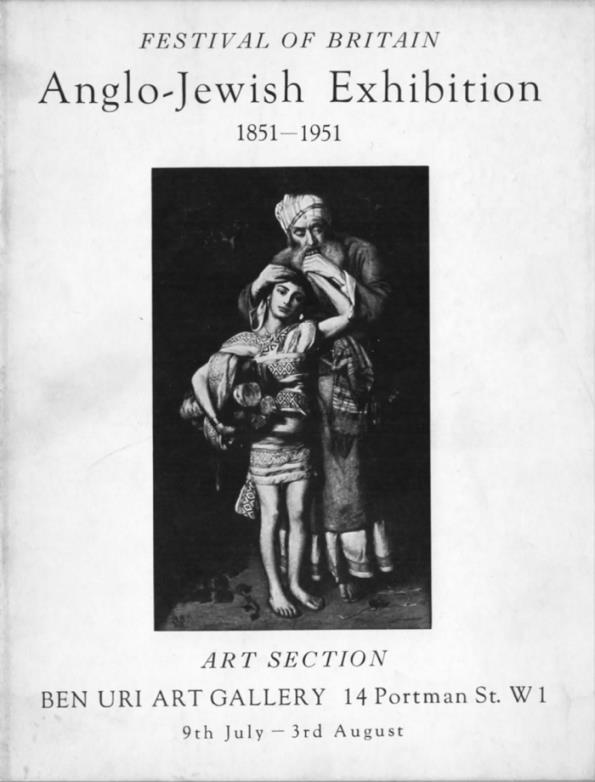
Fig.1.1 Cover of Catalogue for the Art Section of the Festival of Britain’s Anglo-Jewish Exhibition 1851-1951
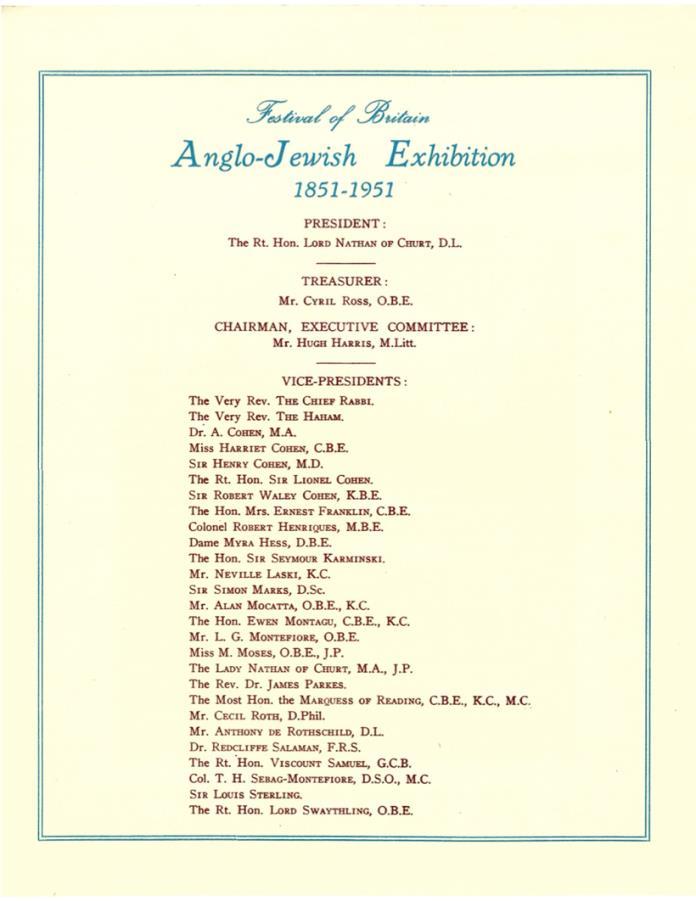
Fig.1.2 Accompanying Leaflet for the Anglo-Jewish Exhibition 1851-1951
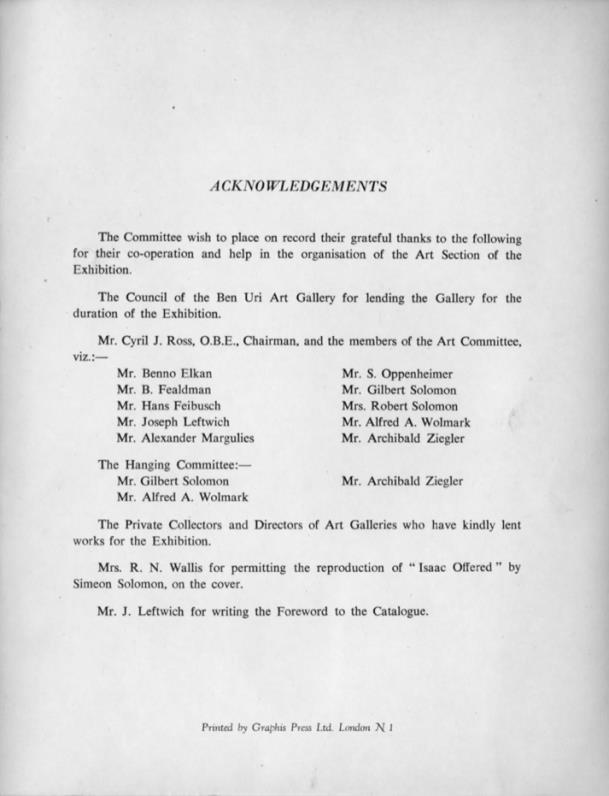
Back page of Catalogue for the Art Section of the Festival of Britain’s Anglo-Jewish Exhibition 1851-1951
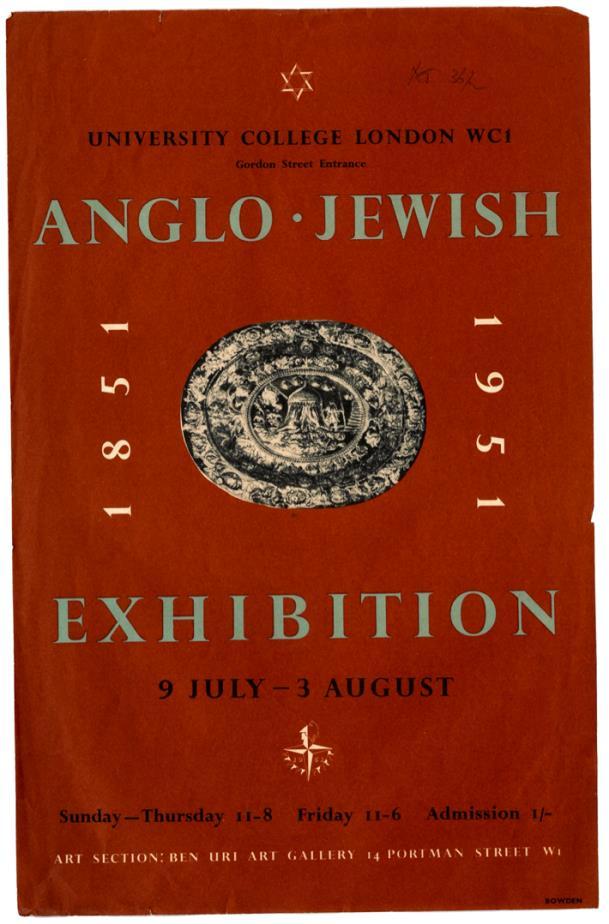
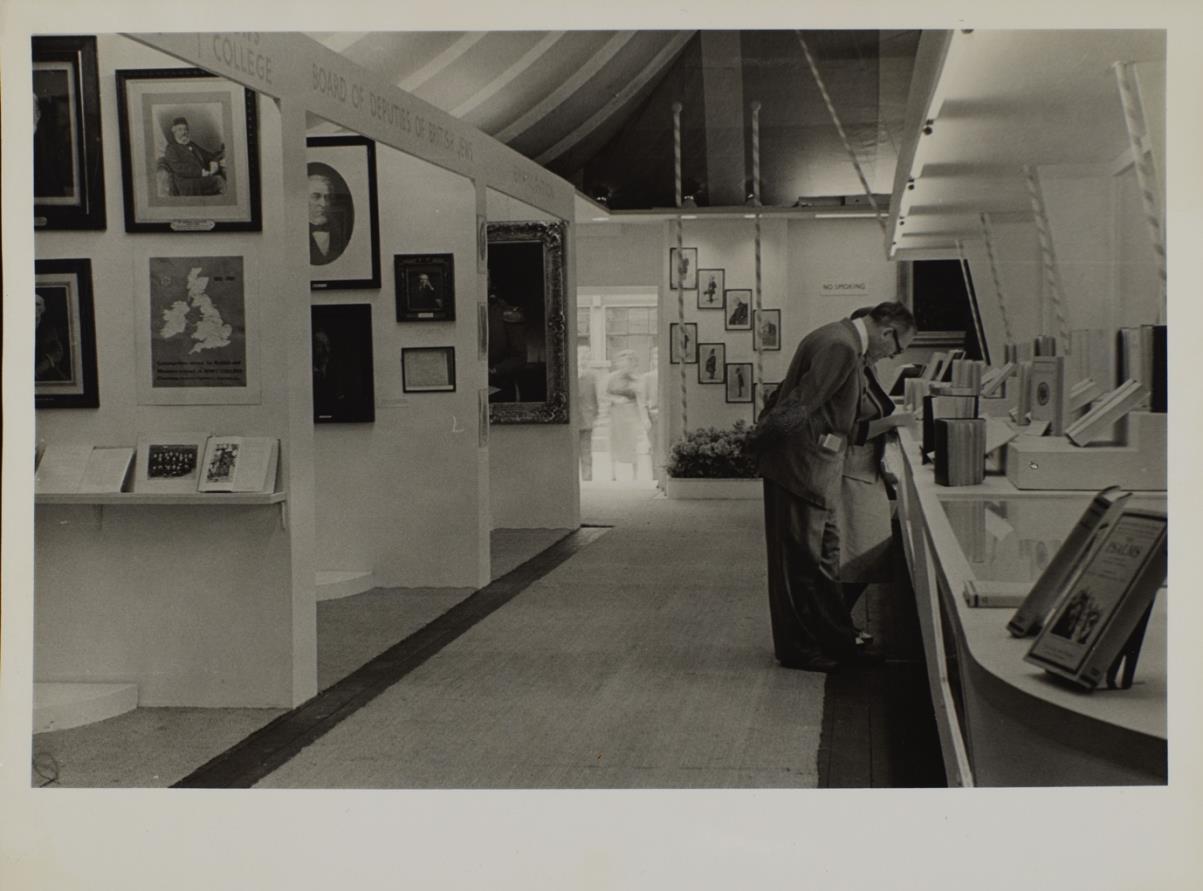
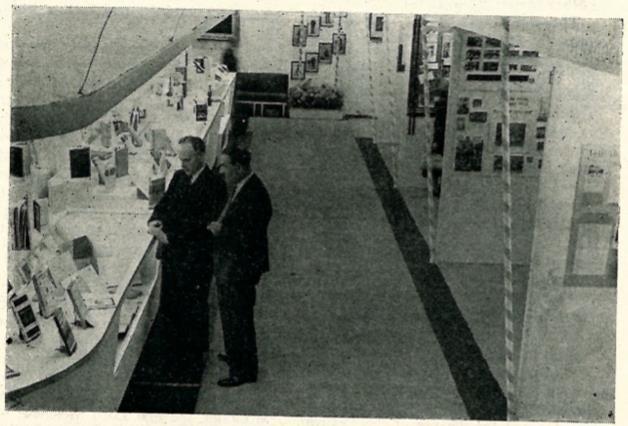
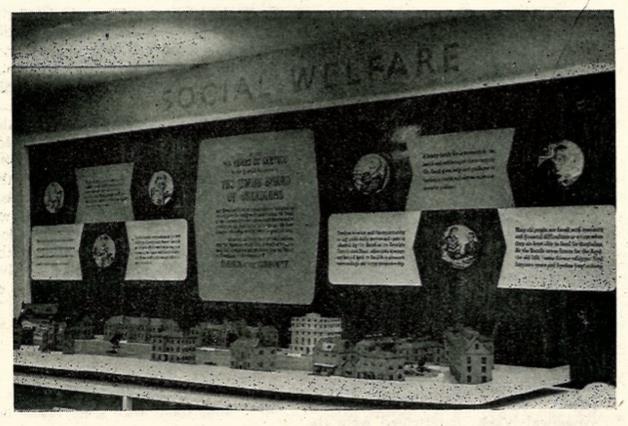
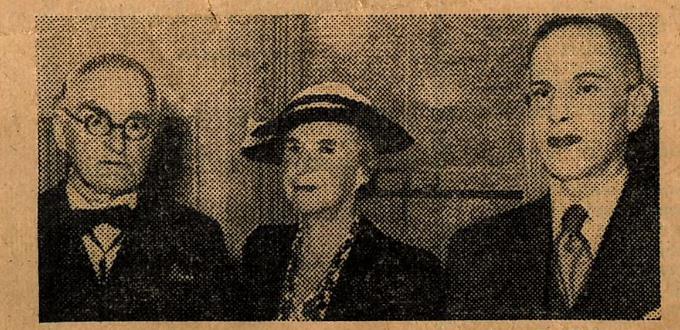
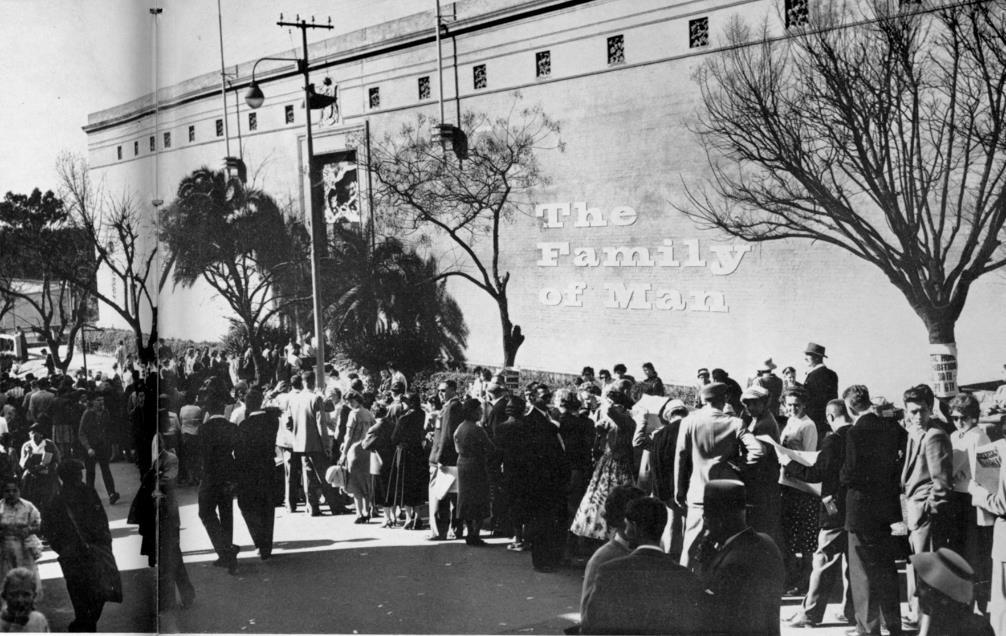
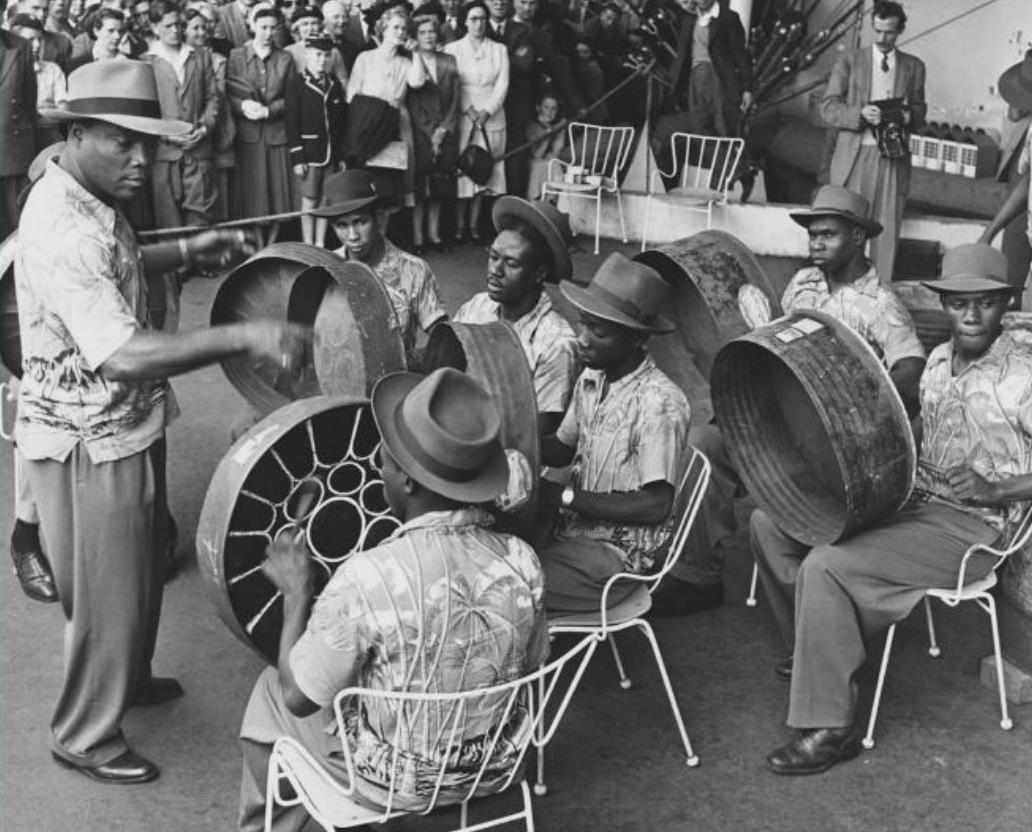
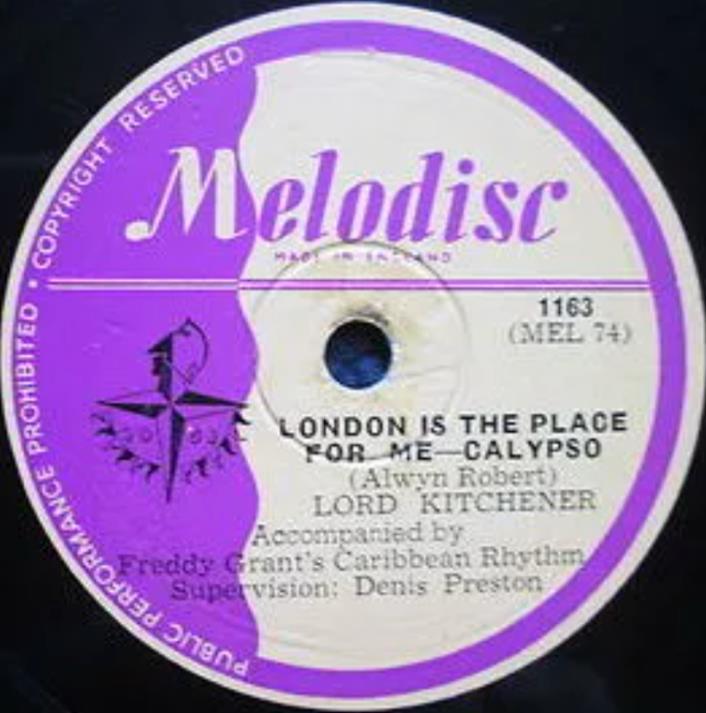
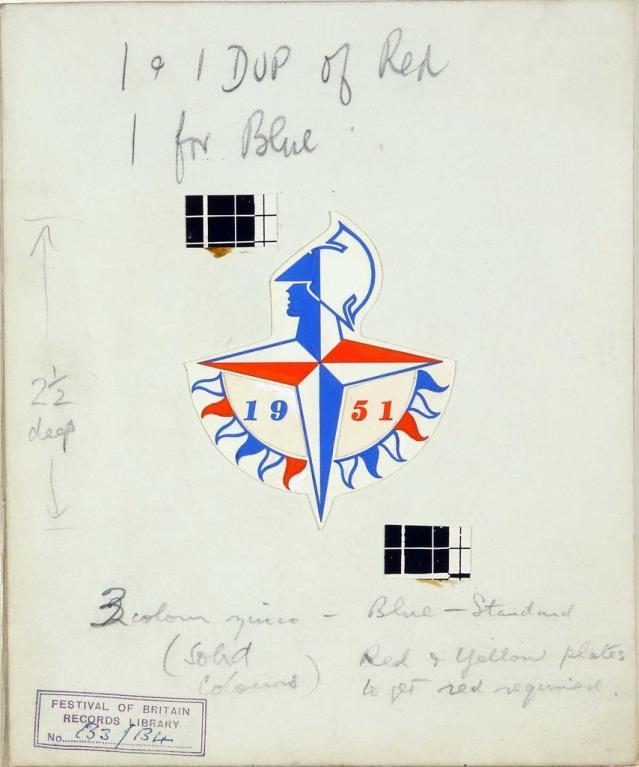
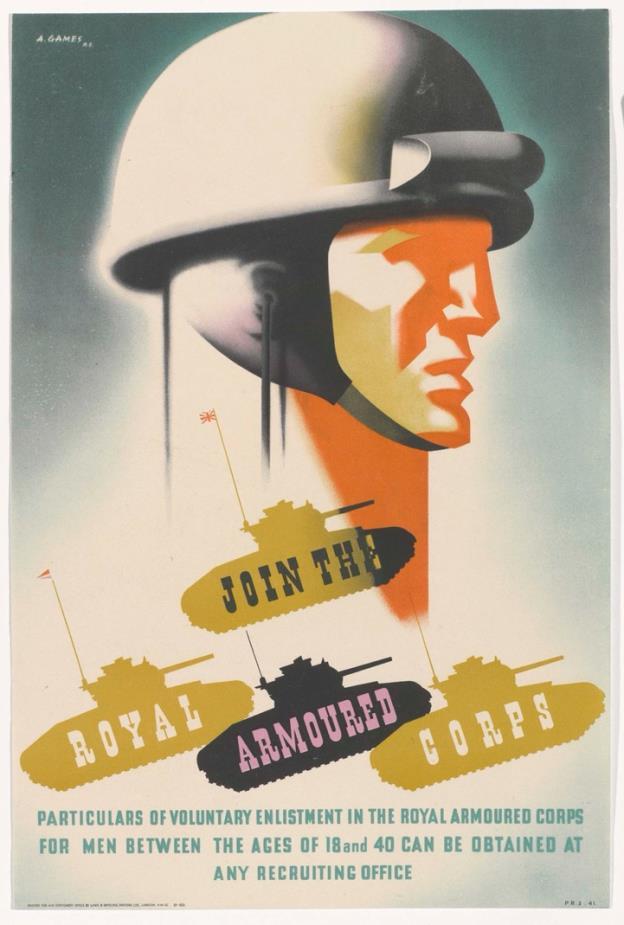
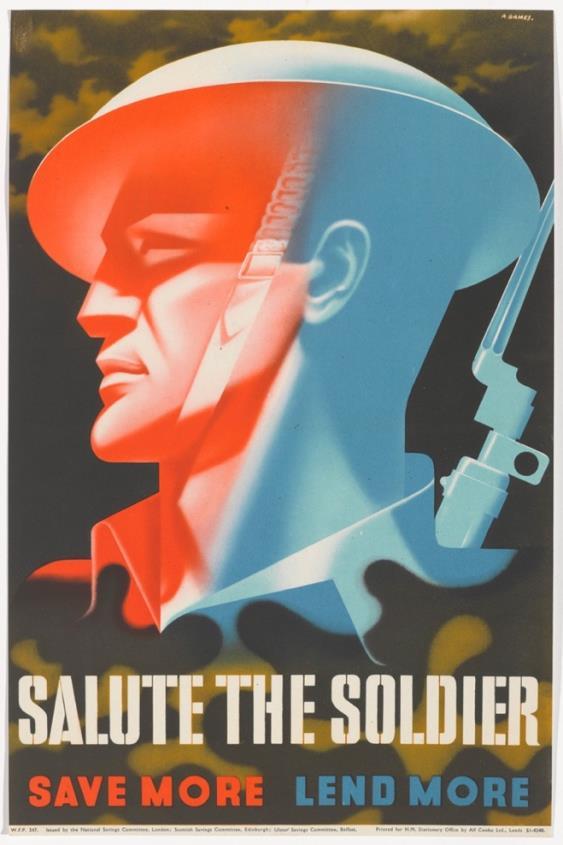
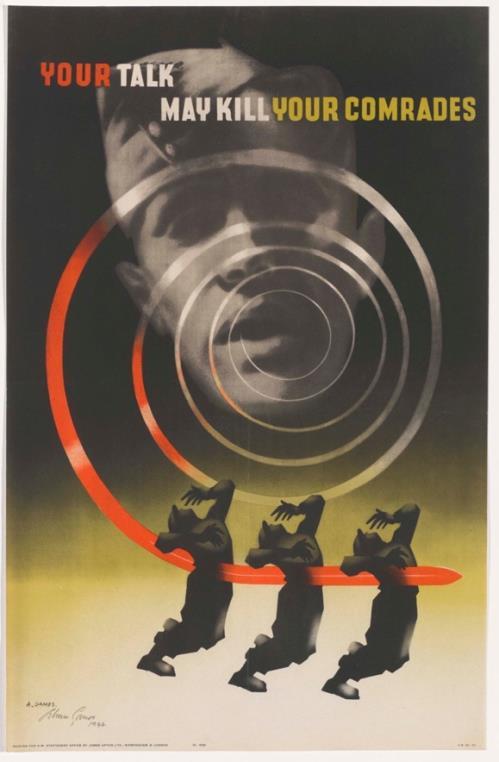
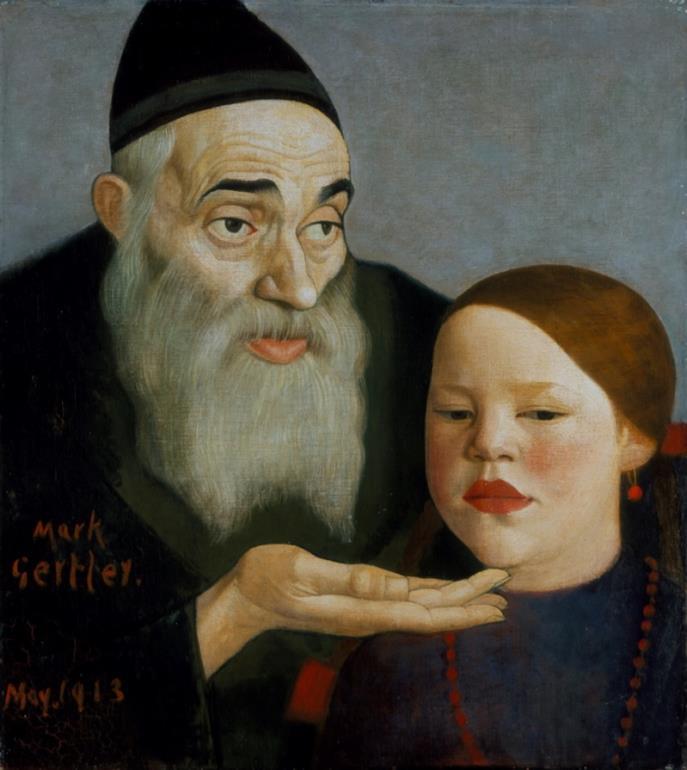
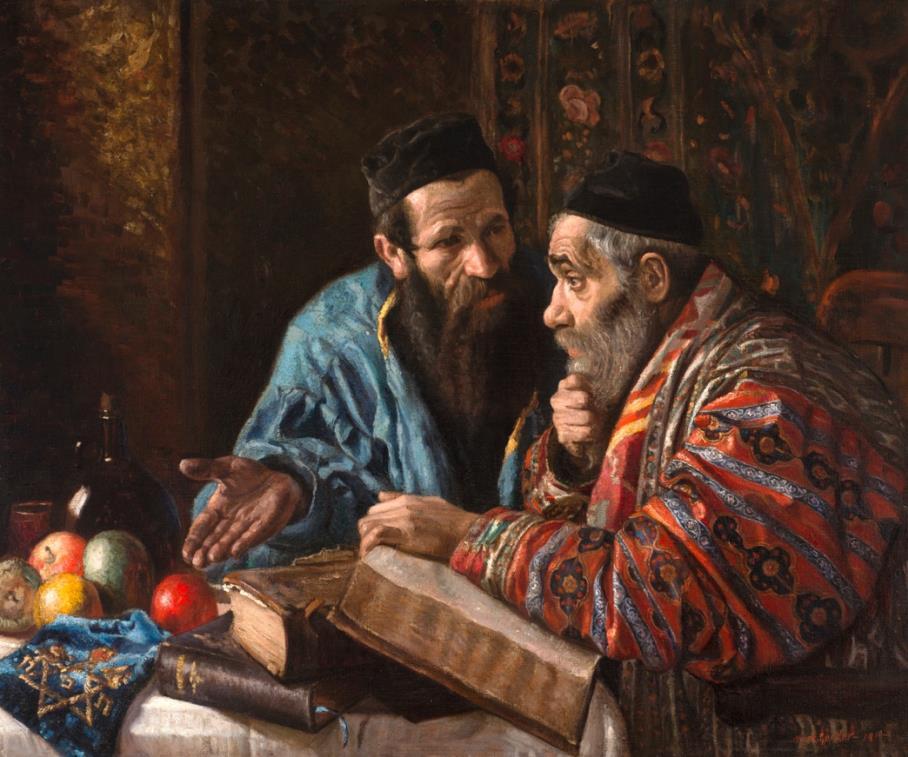
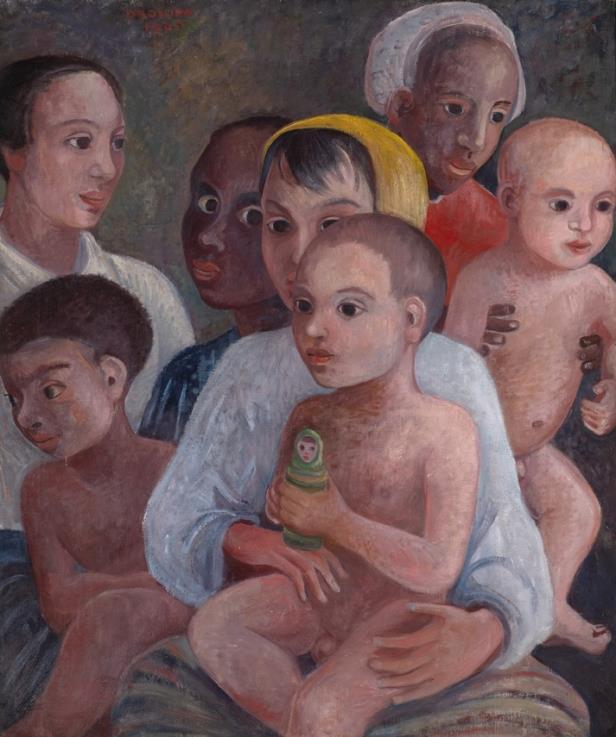
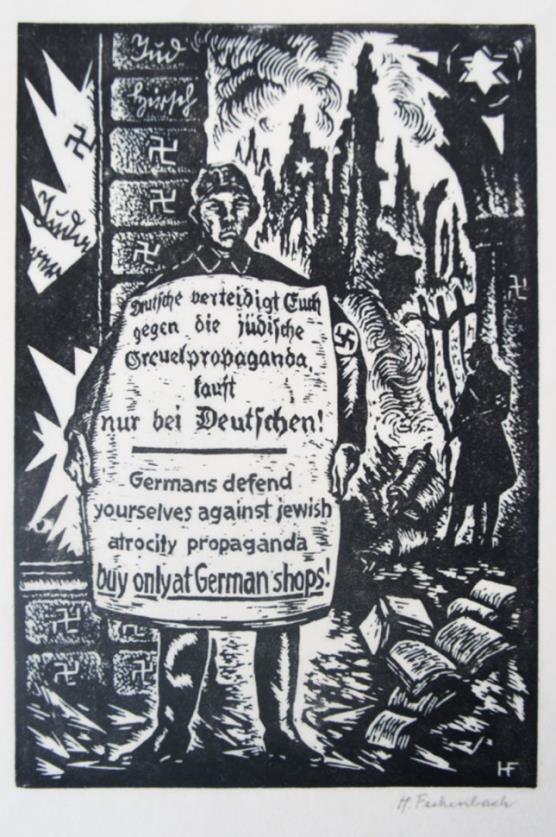
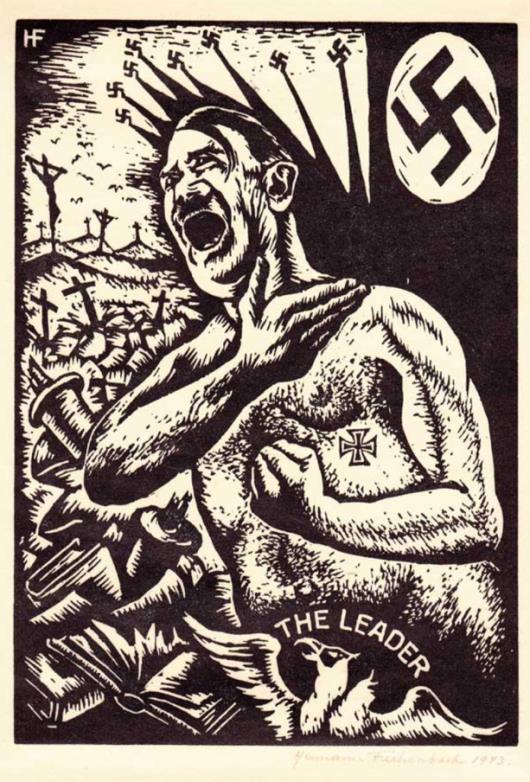
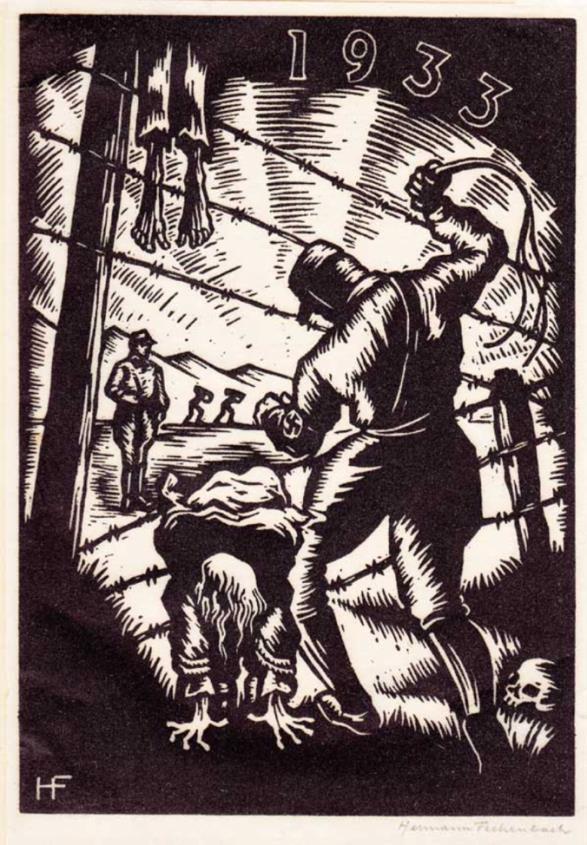
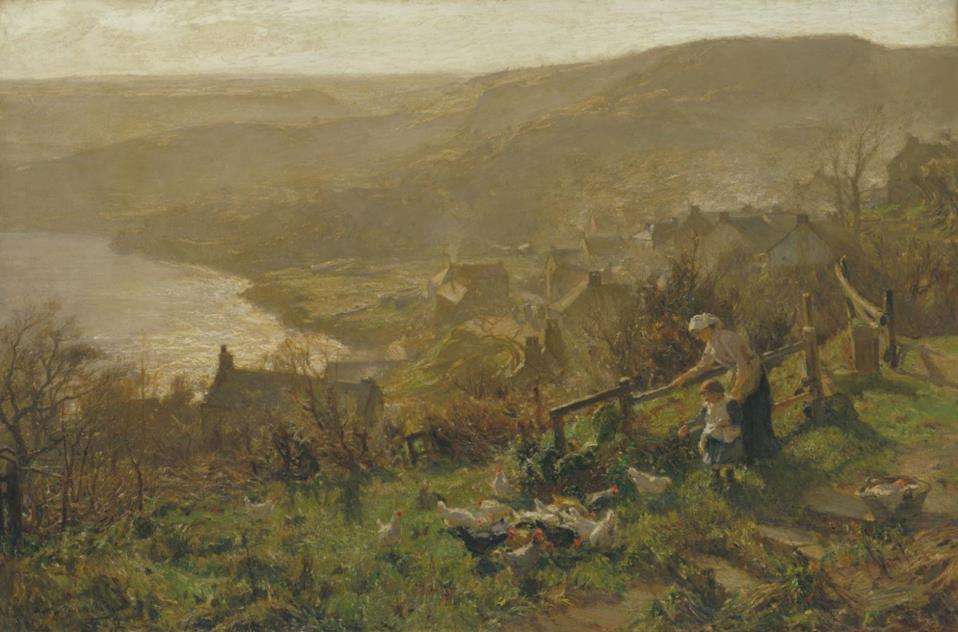
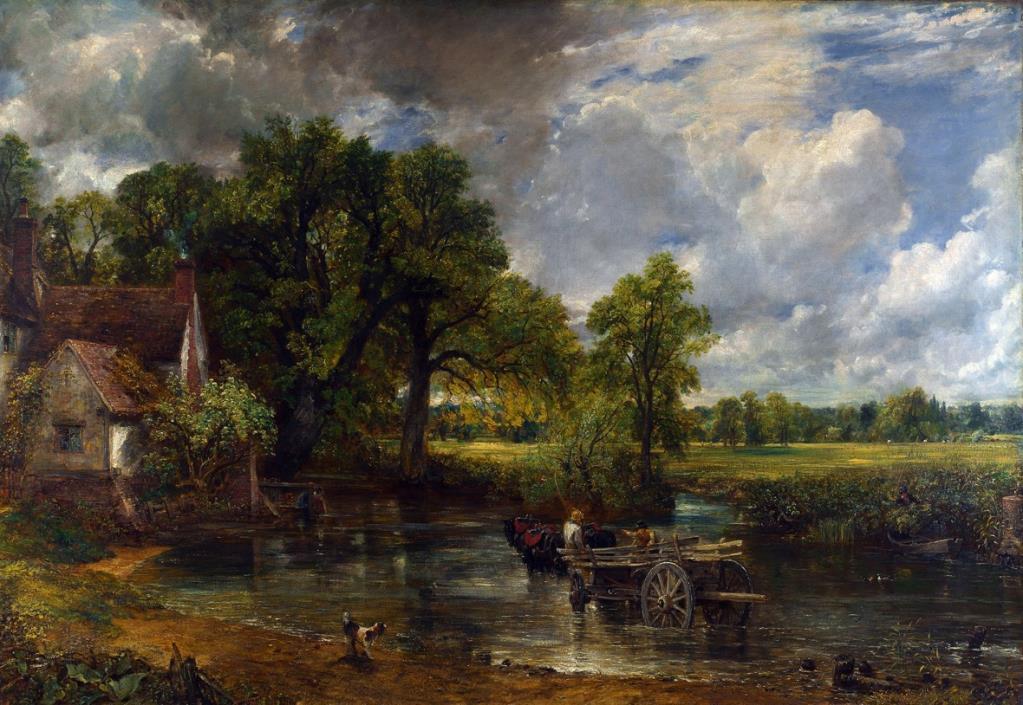
Bibliography
Anonymous. 1951. “The People of Britain.” In The South Bank Exhibition, by Ian Cox, 63-5. London: H.M. Stationery Office.
Atkinson, Harriet. 2020. “‘Lines of Becoming’Misha Black and Entanglements through Exhibition Design.” Journal of Design History 34:1 37-53.
Banham, eds. Mary, and Bevis Hillier. 1976. A Tonic to the Nation. London: Thames and Hudson.
Barthes, Roland, and trans.Annette Lavers. 2009. Mythologies. London: Vintage Books.
Ben Uri Gallery. 2020. “Ben Uri collection exhibitions: Exhibitions featuring works from the collection.” Ben Uri collection. Accessed July 22, 2024. https://www.benuricollection.org.uk/view_exhibition.php?exhibitionid=10.
. 1951. Festival of Britain Anglo-Jewish Exhibition 1851-1951 Art Section Catalogue. London: Ben Uri Gallery.
. 2020. Max Sokol 1895-1973 Head of Joseph Leftwich. AccessedAugust 13, 2024. https://benuri.org/artworks/categories/5/1655-max-sokol-head-of-joseph-leftwich/. Ben Uri Society. 1966. Ben Uri Gallery 1915-1965. Fifty Years Achievement in the Arts. London: Ben Uri Society.
Burnstock,Aviva, and Sarah MacDougall. 2020. “Process, Technique, and Materials in the Early Work of Mark Gertler, 1911–18.” British Art Studies 15.
Conekin, Becky E. 2003. The Autobiography of a Nation: The 1951 Festival of Britain. Manchester; New York: Manchester University Press.
Derrida, Jacques, and trans. Eric Prenowitz. 1996. Archive Fever: A Freudian Impression. Chicago; London: University of Chicago Press.
Dickson, Rachel, and Sarah MacDougall. 2004. “The Whitechapel Boys.” Jewish Quarterly 51:3 29–34.
Dummett, Ann, andAndrew Nicol. 1990. Subjects, Citizens, Aliens and Others. London: Weidenfeld and Nicolson.
Ellis, Steven. 2014. The Making of the British Isles: The State of Britain and Ireland, 1450–1660. London: Routledge.
Endelman, Todd M. 2002. The Jews of Britain, 1656 to 2000. Berkeley: University of California Press.
Feaver, William. 1976. “Festival Star.” In Tonic to the Nation: Festival of Britain, 1951, by eds. Mary Banham and Bevis Hillier, 40-57. London: Thames and Hudson.
Finestein, Israel. 1996. “The Jews in Hull, between 1766 and 1880.” Jewish Historical Studies 35 33-91.
Forty,Adrian. 1976. “Festival Politics.” In Tonic to the Nation: Festival of Britain, 1951, by eds. Mary Banham and Bevis Hillier, 26-40. London: Thames and Hudson.
Gamble,Andrew, and Tony Wright. 2009. “Introduction: The Britishness Question.” In Britishness: Perspectives on the British Question, by Andrew eds. Gamble and Tony Wright, 1-9. Chichester: Wiley-Blackwell.
Games, Naomi. 2019. Abram Games: His Wartime Work. Stroud:Amberley Publishing. Garb, Tamar. 2014. “Rethinking Sekula from the Global South: Humanist Photography Revisited.” Grey Room 55 34-57.
Godfrey, Mark. 2007. Abstraction and the Holocaust. New Haven; London: Yale University Press.
Gorman, Daniel. 2006. Imperial Citizenship. Manchester: Manchester University Press. Grindle, Nicholas. 2008. “New Ways of Seeing: Landscape Painting and Visual Culture.” In The History of British Art Vol. 2 1600-1870, by ed. David Bindman, 121-143. London: Tate Publishing.
Heinonen,Alayna. 2015. “ATonic to the Empire?: The 1951 Festival of Britain and the Empire-Commonwealth.” Britain and the World, 8:1 76-99.
Heinonen,Alayna. 2012. Contested Spaces in London: Exhibitionary Representations of India, c. 1886-1951. PhD Thesis, Lexington: University of Kentucky.
Hurm, Gerd. 2018. “Reassessing Roland Barthes's Myth of The Family of Man.” In The Family of Man Revisited: Photography in a Global Age, 23-46. London; New York: I.B. Tauris.
Isseroff, Judah. 2023. “Election, Favoritism, and Freedom:Towards a Modern Jewishtheology of Matrilineal Descent.” Modern Theology 39:4 775-795.
Kushner, Tony. 1998. “Remembering to Forget: Racism andAnti-racism in Postwar Britain.” In Modernity, Culture and 'the Jew', by Bryan eds. Cheyette and Laura Marcus, 226241. Cambridge: Polity Press.
Kushner, Tony. 1991. “The end of the ‘Anglo‐Jewish progress show’: Representations of the Jewish east end, 1887–1987.” Immigrants & Minorities 10:1-2 78-105.
Leftwich, Joseph. 1951. “Anglo-JewishArtists 1851-1951.” In Festival of Britain AngloJewish Exhibition 1851-1951 Art Section Catalogue, by Ben Uri Gallery, 3-5.
London: Ben Uri Gallery.
Leventhal, Fred. 1995. ““ATonic to the Nation”: The Festival of Britain, 1951.” Albion 27:3 445-453.
Levy, Mike. 2023. Get the Children Out! Unsung heroes of the Kindertransport. London: Lemon Soul.
Littler, Jo. 2006. “'Festering Britain': the 1951 Festival of Britain, decolonisation and the representation of the Commonwealth .” In Visual Culture and Decolonisation in Britain, by eds.Anandi Ramamurthy and Simon Faulkner, 21-42. London: Routledge. Maguire, eds. Patrick J., and Jonathan M. Woodham. 1997. Design and Cultural Politics in Postwar Britain: The Britain Can Make It Exhibition of 1946. London; Washington: Leicester University Press.
Mazower, David. 2001. “Lazar Berson and the origins of the Ben UriArt Society.” In The Ben Uri Story from Art Society to Museum and the influence of Anglo-Jewish Artists on the Modern British Movement, by Ben Uri Gallery, 37-59. London: The Ben Uri Gallery.
Mead, Matthew. 2007. “Empire Windrush: Cultural Memory andArchival Disturbance.” MoveableType, Vol.3, ‘From Memory to Event' 112-128.
Pascal, Julia. 2016. Sir Arnold Wesker Obituary. 13 April.AccessedAugust 23, 2024. https://www.theguardian.com/stage/2016/apr/13/sir-arnold-wesker-obituary.
Pieren, Kathrin. 2011. Migration and Identity Constructions in the Metropolis: The Representation of Jewish Heritage in London between 1887 and 1956. PhD Dissertation, London: Centre for Metropolitan History, Institute of Historical Research, School of Advanced Study, University of London. Rosenthal, Michael. 1982. British landscape painting. Oxford: Phaidon. Ross, Robert. 1999. A Concise History of South Africa. Cambridge: Cambridge University Press.
Shukman, Harold. 2006. War or Revolution: Russian Jews and Conscription in Britain, 1917. Elstree: Vallentine Mitchell & Co Ltd.
Spiro, Mia. 2019. “Exhibiting Jewish Culture in Postwar Britain: Glasgow's 1951 Festival of JewishArts.” Shofar: An Interdisciplinary Journal of Jewish Studies, 37:3, Winter 2019, 95-130.
Steyn, Juliet. 1999. The Jew: Assumptions of Identity. New York: Cassell.
Tronto, Joan C. 1993. Moral Boundaries: A Political Argument for an Ethic of Care. New York; London: Routledge.
Victoria andAlbert Museum. 1956. Catalogue of an exhibition of Anglo-Jewish art and history : in commemoration of the tercentenary of the resettlement of the Jews in the British Isles held at the Victoria and Albert Museum 6 January to 29 February 1956. London: Victoria and Albert Museum.
Wesker,Arnold. 2011. Chicken Soup with Barley. London: Methuen Drama. Wiener, Julia. 2001. “'Mr Ben Uri' - Barry Fealdman's Years as Secretary 1950-1976.” In The Ben Uri Story from Art Society to Museum and the influence of Anglo-Jewish Artists on the Modern British Movement, by Ben Uri Gallery, 66-72. London: The Ben Uri Gallery.
Yuval-Davis, Nira. 1997. Gender & Nation. Thousand Oaks: SAGE Publications Ltd. Zamir, Shamoon, and Gerd Hurm. 2018. “Introduction: The Family of Man Revisited.” In The Family of Man Revisited: Photography in a Global Age, by eds. Gerd Hurm, Anke Reitz and Shamoon Zamir, 1-22. London; New York;: I.B. Tauris.
Appendix
The following is the most complete collated group of images of the artworks of the AngloJewish Exhibition 1851-1951’s Art Section that has been compiled as a part of this dissertation’s research. Headings and captions are as written in the catalogue. Whilst not all the works are fully confirmed as the correct pieces exhibited, this appendix aims to give an insight as to what the exhibition broadly looked like. Huge appreciation goes to Sarah MacDougall of the Ben Uri Gallery for her assistance in identifying artworks.
PAINTINGSAND DRAWINGS
JANKELADLER
THE IRISH GIRL lent by Mr Harry Craps
STANDING GIRL lent by Mr Charles Aukin
SELF PORTRAIT lent by Mr Derek Coleman
ALVA
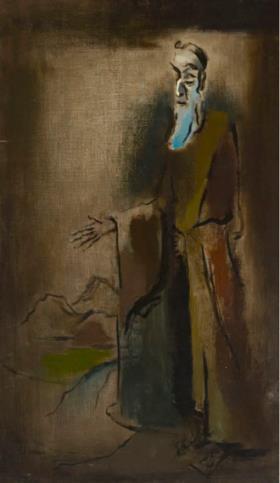
MOSES Ben Uri Permanent Collection J.H. AMSHEWITZ
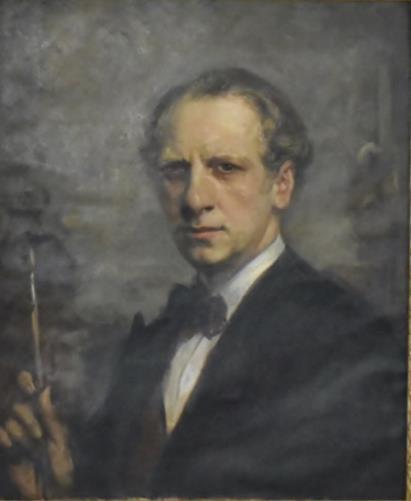
SELF PORTRAIT lent by Mrs Amshewitz PORTRAIT OF ISAAC ROSENBERG lent by Jews’College
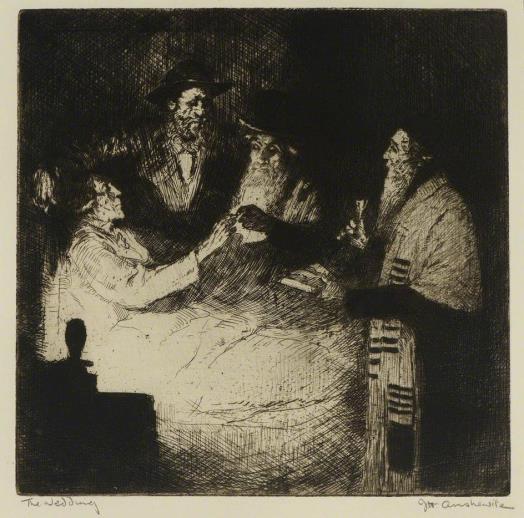
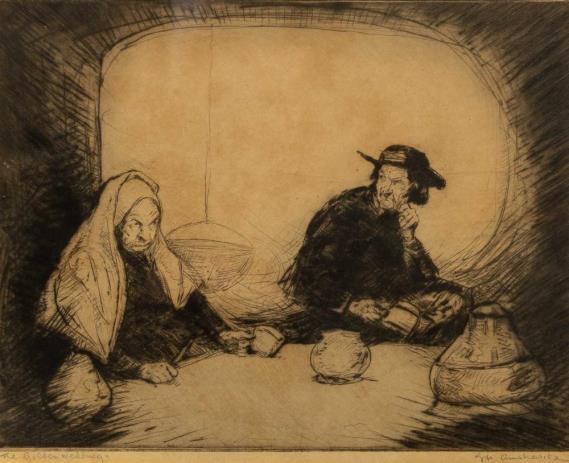
MARTIN BLOCH
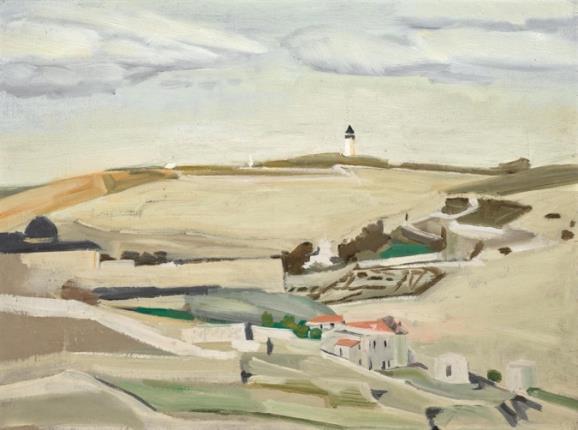
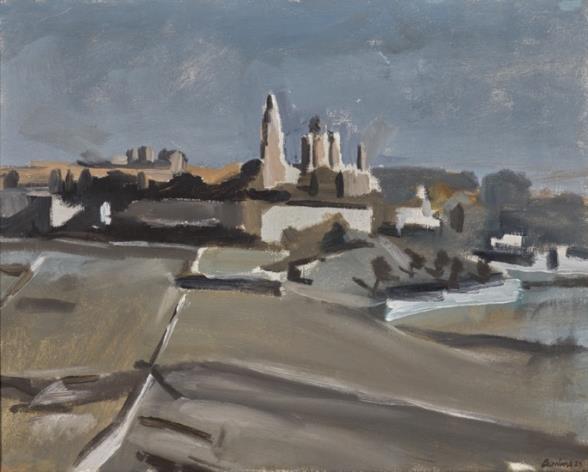
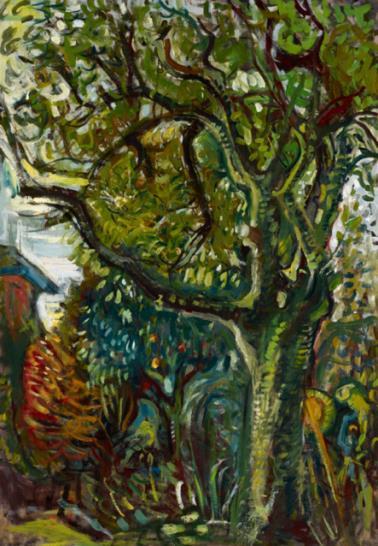
PEAR TREEAFTER PICKING Ben Uri Permanent Collection
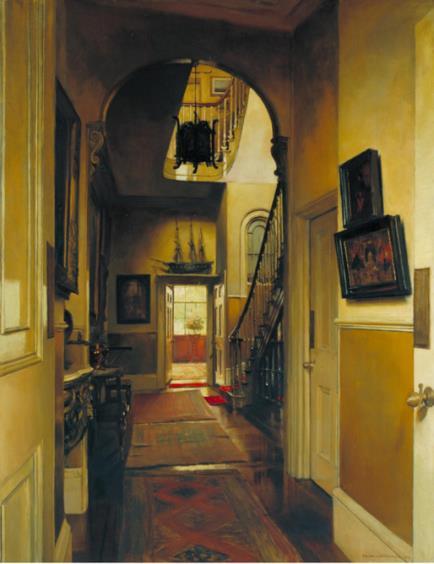
KENSINGTON INTERIOR lent by the Tate Gallery
VEERE – THEAVENUE lent by Mr Gerald Emanuel
THE PINK HOUSE – DINAN lent by Mr Gerald Emanuel
HERMANN FECHENBACH
OLD JEWISH QUARTER – JERUSALEM
HANS FEIBUSCH
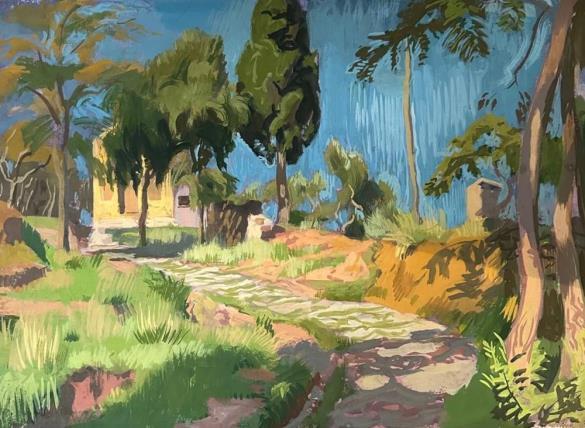
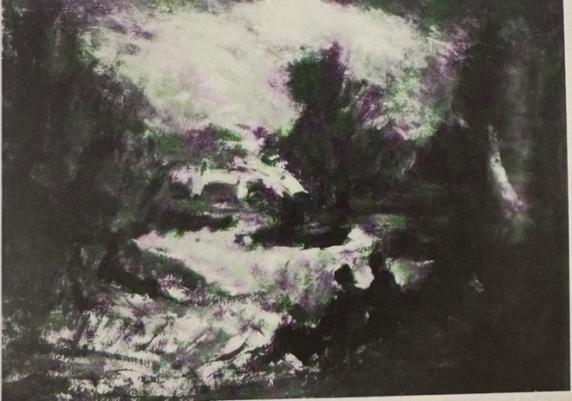
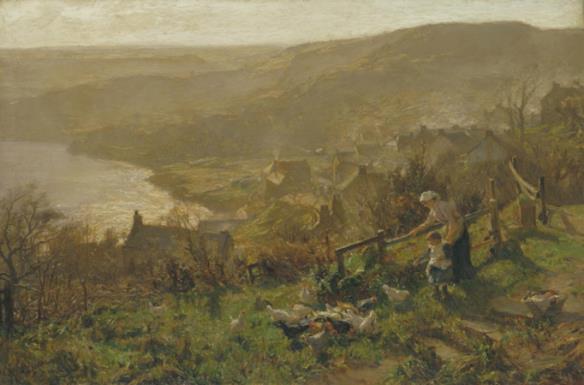
RUNSWICK BAY lent by the Tate Gallery
JOSEPH FRIEDENSON
THE BREAKING-UP OFAUSTRALIA lent by Mrs Fossett
YOUNG AUSTRALIA lent by Mrs Fossett
BARNETT FREEDMAN
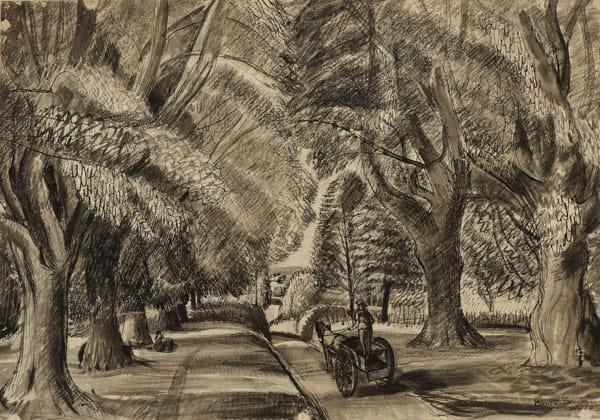
COUNTRY LANE Ben Uri Permanent Collection
MARK GERTLER
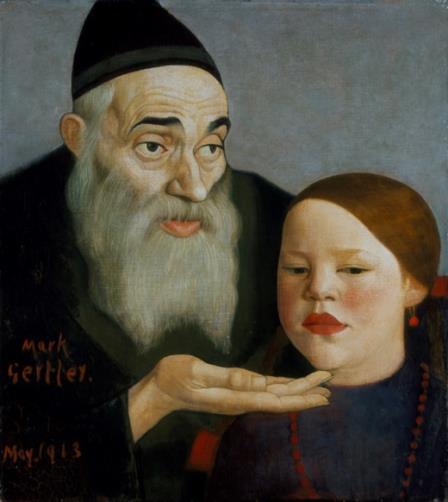
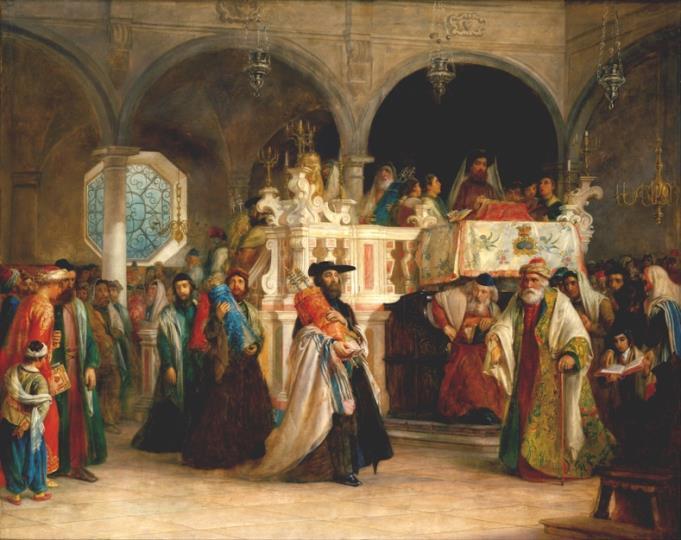
JOSEF HERMAN
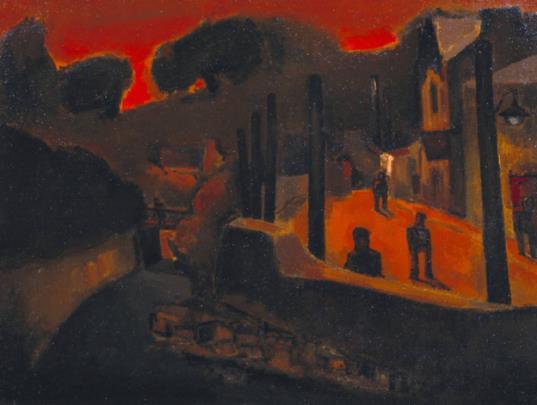
EVENING IN YSTRADGYNLAIS lent by Dr M Roland
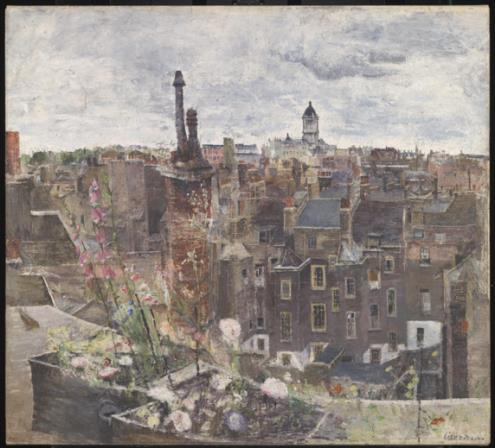
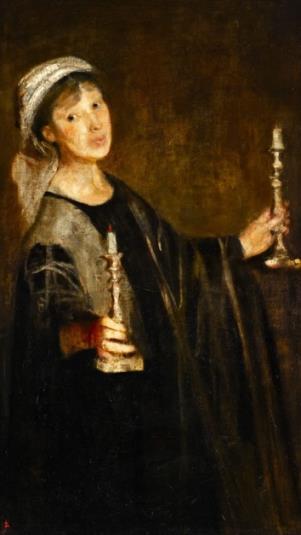
PORTRAIT OF THEARTIST Ben Uri Permanent Collection MORRIS KESTELMAN STILL LIFE
KRAMER
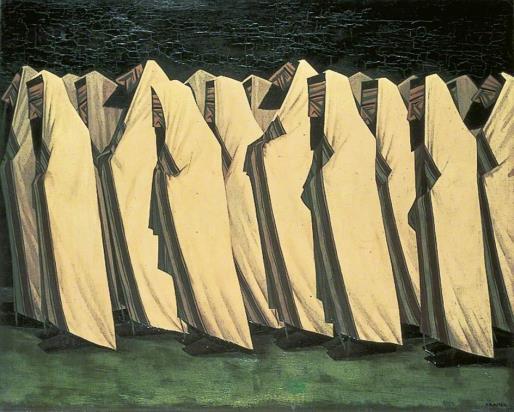
DAY OFATONEMENT Ben Uri Permanent Collection
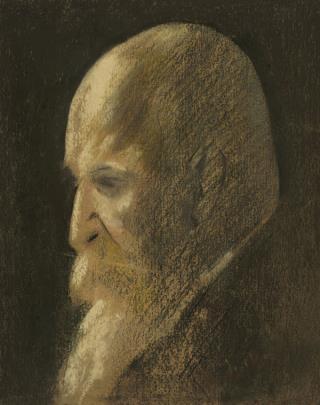
LORD ROTHSCHILD Ben Uri Permanent Collection HEAD OF WOMAN lent by Dr and MrsA Caplan
EDMOND KAPP
CONCERTO lent by Mr and Mrs David Wise THEATTACK lent by R H R Glyn Baron
KALMAN KEMENY CLIFTON GARDENS
CLARA KLINGHOFFER
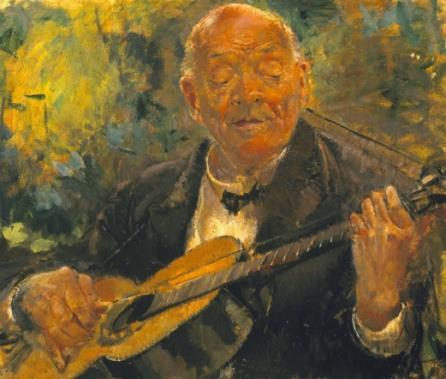
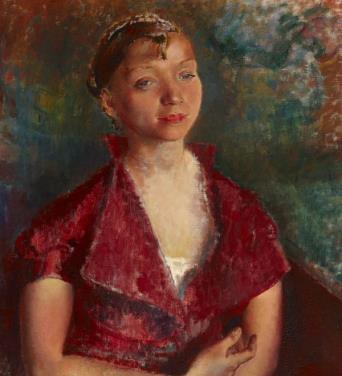
MAYER
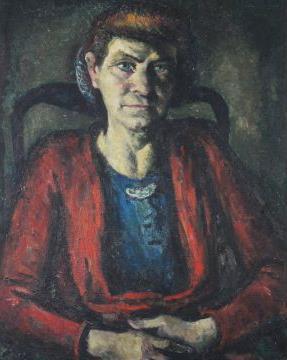
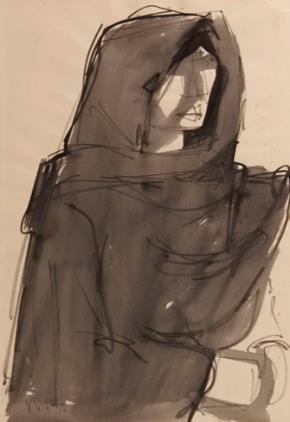
LADY IN BLACK
ANA MAYERSON
SABBATH AFTERNOON lent by Mr S Oppenheimer
MORDECAI
WOMAN lent by Mr S Oppenheimer
BERNARD MENINSKY
LANDSCAPE lent by Mrs Meninsky
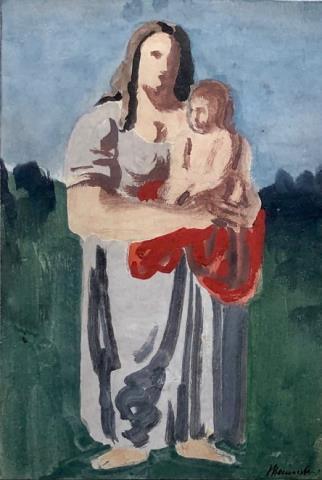
MOTHER AND CHILD lent by Mrs Meninsky
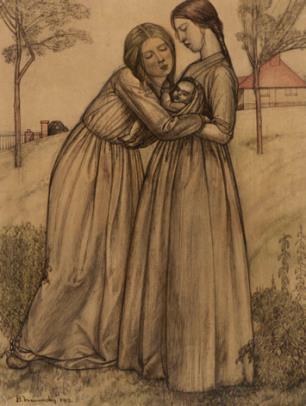
FAMILY GROUP Ben Uri Permanent Collection
LANDSCAPE lent by MrAlfred Wolmark
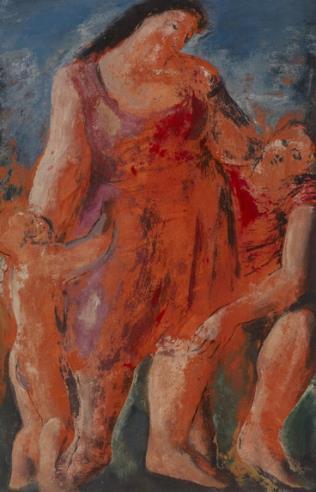
FAMILY GROUP Ben Uri Permanent Collection
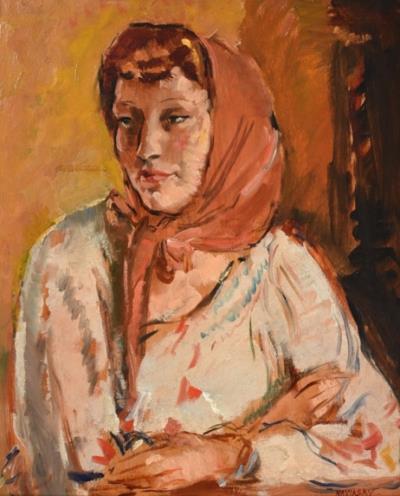
WIFE OF THEARTIST
JOSEPH OPPENHEIMER
PROF. ALBERT EINSTEIN lent by Mr and Mrs Alex Margulies
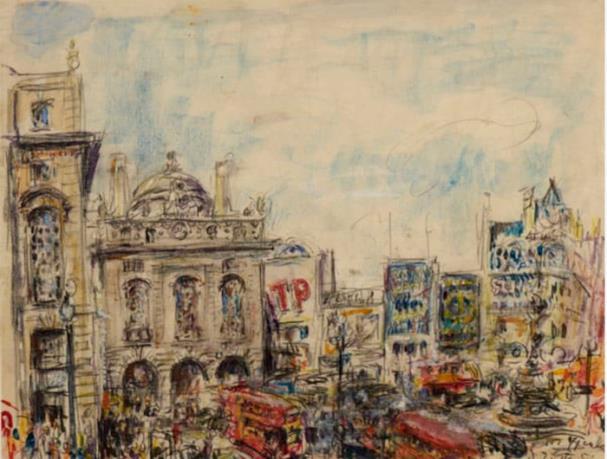
PICADILLY CIRCUS
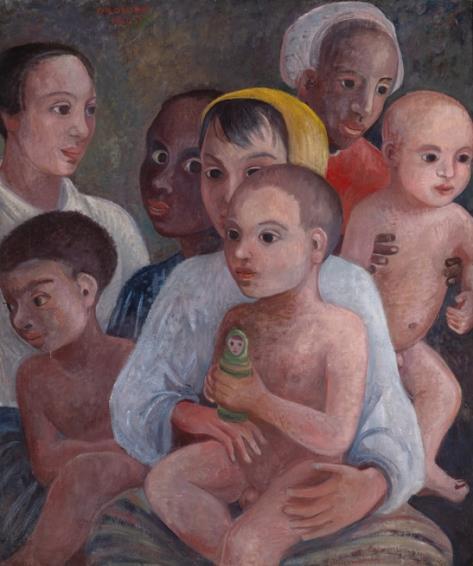
REFUGEES
LEOPOLD PILICHOWSKY
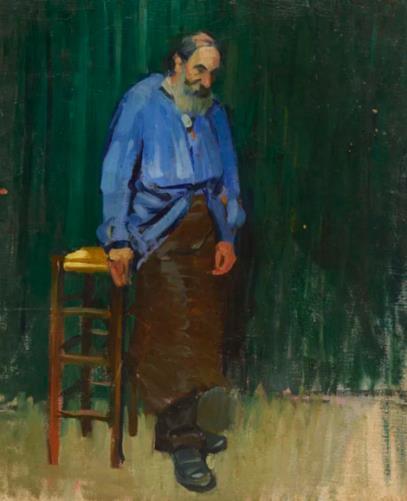
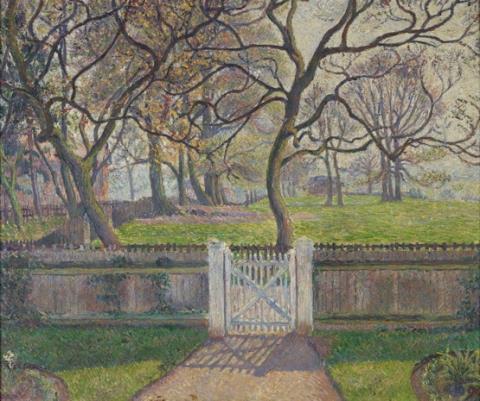
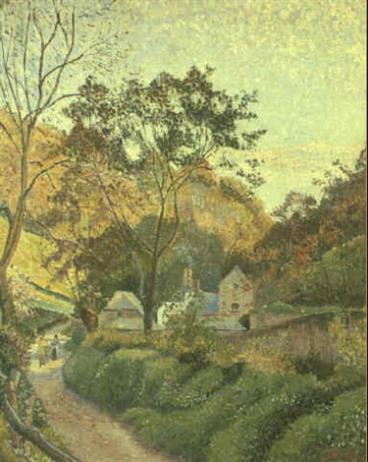
SIR WILLIAM ROTHENSTEIN
CONTEMPLATIVE FIGURE lent by Mrs Robert Solomon THE RABBIS lent by Dr Redcliffe Salaman
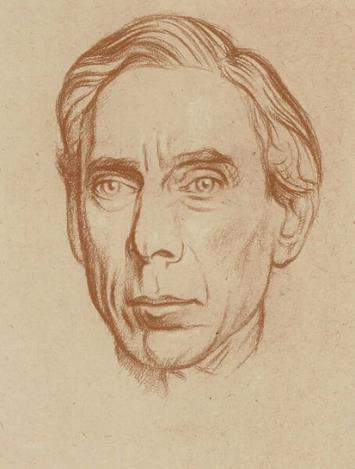
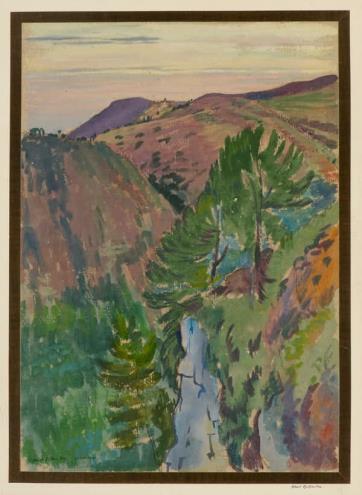
LANDSCAPE Ben Uri Permanent Collection
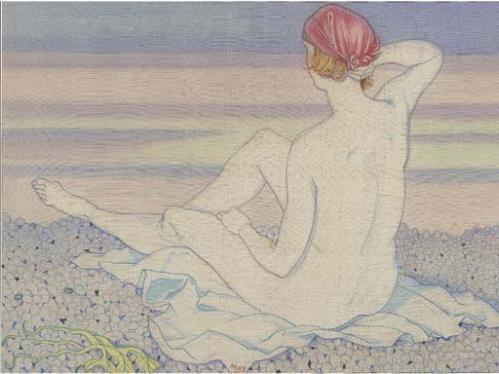
ISAAC ROSENBERG
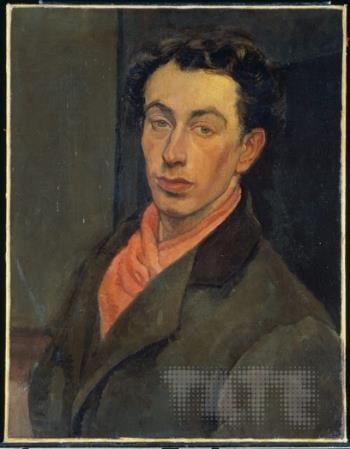
SELF PORTRAIT lent by Mr David Burton
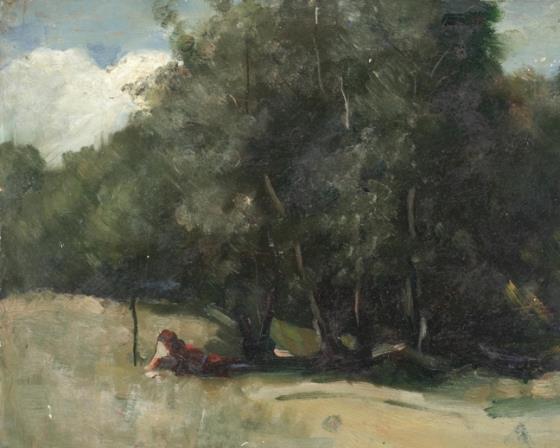
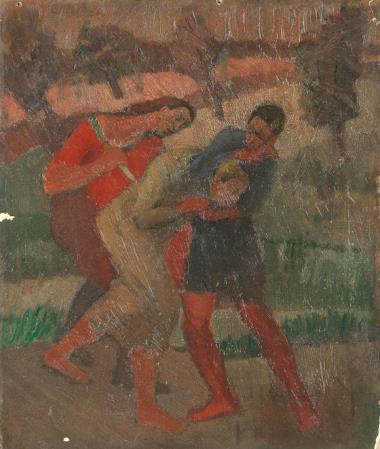
THE MURDER OF LORENZO lent by Mrs Robert Solomon
CLAUDE ROGERS
STACKING CORN lent by Mrs Robert Solomon PORTRAIT OF MARGERIE FEW lent by the Contemporary Art Society
FREDA SALVENDY
THE CART lent by Mrs Robert Solomon
MARIE SALAMAN CARMEN (miniature)
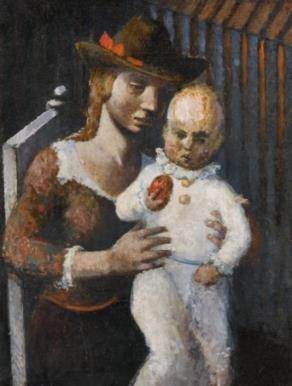
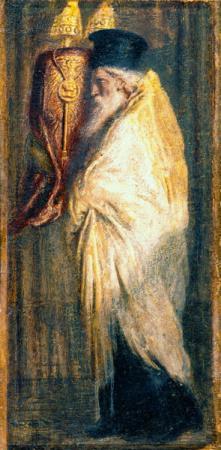
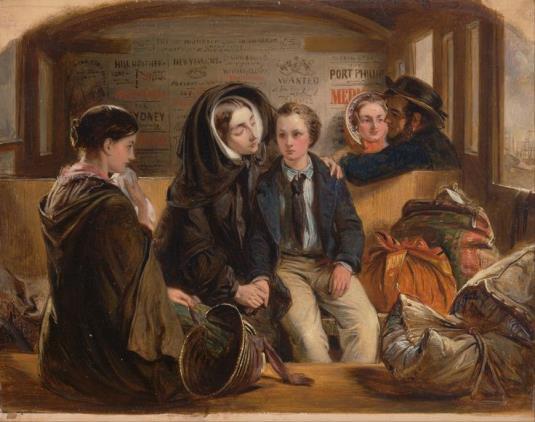
DEPARTURE THRID CLASS lent by Dr Redcliffe Salaman
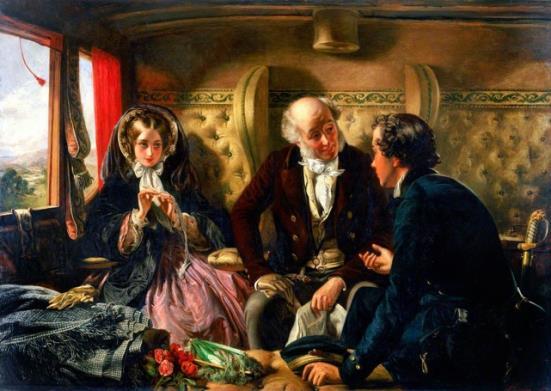
RETURN FIRST CLASS lent by Dr Redcliffe Salaman
VAUXHALL GARDENS lent by Mrs Robert Solomon
GILBERT SOLOMON
GIRL READING lent by Dr Redcliffe Salaman
ICI ON RASE lent by Dr Redcliffe Salaman
SUSSEX DOWNS lent by Mrs Robert Solomon
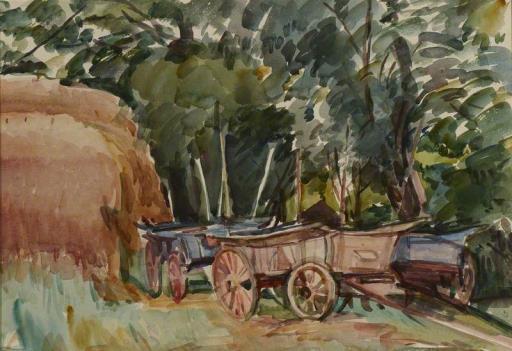
REBECCA SOLOMON
PEN AND INK
DRAWING lent by Dr Redcliffe Salaman
THE CLOWN lent by Mr Hyman Solomons
SIMEON SOLOMON
ISAAC SALAMAN lent by Mrs John Simmons
PICTURE IN CIRCULAR MOUNT lent by Mrs John Simmons
LADY IN PINK BALL DRESS lent by Walker’s Galleries
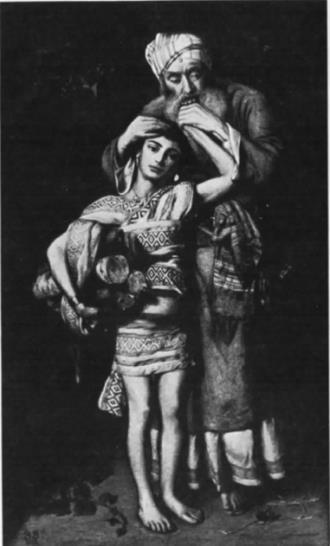
IN THE SUMMER TWILIGHT – BEATRIX lent by Walker's Galleries A HEBREW MAIDEN MOURNING lent by Miss C Davis
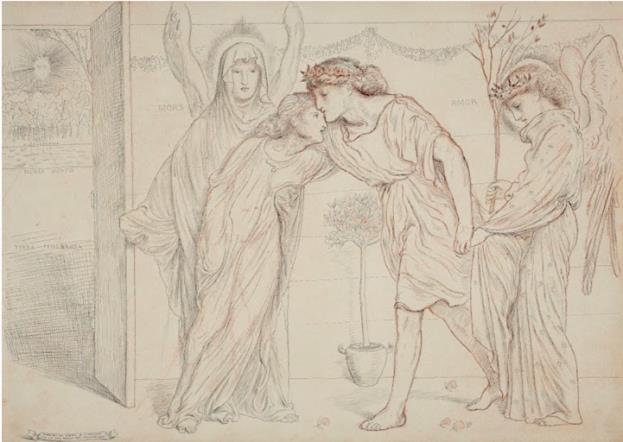
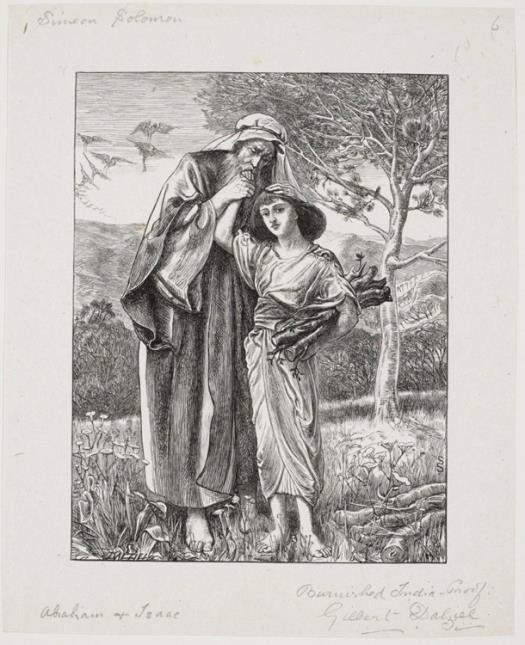
THEALLEGORY lent by the Royal Society of British Artists
PORTRAIT OF MRS ERNEST D LOWY lent by Mrs E D Lowy
BIRCHINGTON SANDS lent by The Hon. Mrs. Ewen Montagu
PORTRAIT OFA BABY lent by The Hon. Mrs. Ewen Montagu
JOHN SIMMONS
SKETCH OF CONCARNEAU lent by Mrs John Simmons
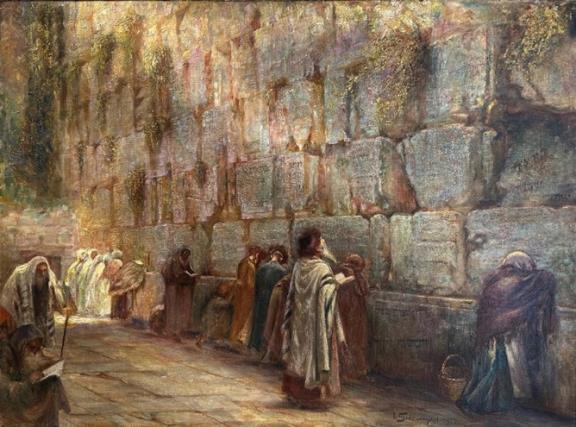
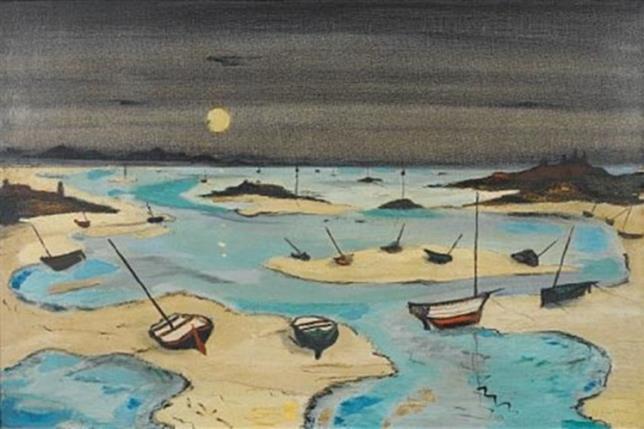
INCOMING TIDE
S VAN
ETCHINGS
HELEN WICKS THE STRIPED PEIGNOIR
MAURICE SOCHACHEWSKY SAFED
ALFRED AWOLMARK
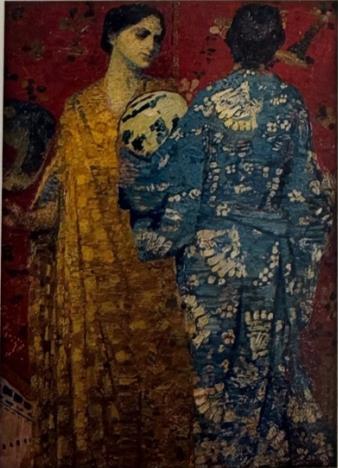
A DECORATIVEARRANGEMENT PORTRAIT OF MR KRONBERG
ARCHIBALD ZIEGLER
WILLIAM GOLDMAN – NOVELIST HABOHAV SYNAGOGUE – SAFED
SCULPTURE
JACOB EPSTEIN
ACTRESS Ben Uri Permanent Collection